Comet Records presents the Tony Allen & Afrika 70 reissue series with the classic late seventies first four solo albums of Tony Allen remastered and restored: Jealousy, Progress, No Accomodation for Lagos & No Discrimination, all coming in an heavy Deluxe Tip-On Jacket.
Tony's solo album, No Discrimination, marks an important turning point in Tony Allen's musical life. Tony had recently left Fela's band, which was clearly an emotional yet necessary change as Allen sings of love and brotherhood throughout his fourth solo album. No Discrimination, both in composition and sound, is a blueprint for the future of Afrobeat, decades ahead of its time. The songs are a mixture of old and new - fusing the classic Afrobeat compositional style with modern production and ideas. Classic tunes like "No Discrimination" and "Ariya" pushed boundaries for what Afrobeat could be, which a wave of Afrobeat bands would pick up on decades later.
With No Discrimination, Tony begins to move Afrobeat into the future, which he would continue doing for the rest of his career.
Tony Allen was a musical and compositional visionary, and this album finds him beginning to explore that vision outside of Fela's immense gravitational pull. They are the start of a new era in Tony's fruitful career as a solo artist, opening the floodgates for his distinctive Afro-Funk sound and laying the foundation for the next generation of Afrobeat musicians to come.
out of Stock
Last delivered 5 years ago available to reorder, subject to availability
Hammer Films has long held a special place in the hearts of horror fans, defining the British genre during the 1950’s with classics such as Dracula and The Curse of Frankenstein. Composer James Bernard scored both and went on to compose the music to a host of horror films for Hammer during the Sixties and Seventies. His distinctive clashing harmonies, often doubling the musical theme a tone higher, raise the on-screen action to a frenzied pitch, terrifying 20th Century cinema goers to the degree that his scores have become synonymous with the titular monsters.
In 1970, Kevin and David met whilst they were working in the Labour Exchange Office on Aytoun St, Manchester. Both played guitar and had been searching for other musicians who played atmospheric music. Kevin had been playing in small clubs in Manchester and David performed in a few local bands. One evening, they jammed together at Kevin’s family home, and quickly realized that their playing blended together to form the basis of the sound they had been looking for. In the late ‘70s, the music scene in Manchester was bursting with new bands and music.
However, Kevin and David had little in common with the local acts, being disciples of a more meditative approach. They followed a path of their own, reaching for an otherworldly sound that they heard from artists like John Martyn, David Crosby, Erik Satie, Terry Riley, Eberhard Weber, Alice Coltrane, and Ralph Towner. They experimented combining their acoustic guitars and David’s bass with various effects pedals and techniques to try and achieve a warm and expansive sound that rides the line between ambient, jazz, and psychedelic folk Music.
Towards 1981, they had written eleven songs and accompanied a few with Moog synthesizer laid down by Rob Baxter. All were recorded on cassette decks in their simple home studios. They named this collection of music “Light Patterns”, after a poem Kevin had written. With Light Patterns complete, they set out to find a label to represent their music. They started playing a few gigs in Manchester; Band On The Wall, the Gallery, and other venues, such as Rotters which local promoter Alan Wise had organized. They set up with small amps along with their effects and played as though they were back at home. As Kevin remarks, “It was unusual, to say the least, to play such venues in a low volume chilled out way. However, people listened, often in shocked curiosity, and some even asked for tapes.”
Peter Jenner, of Blackhill Enterprises, eventually picked up the album for his new label, “Sheet”. Peter had managed lots of experimental bands and solo artists, including Pink Floyd in their early Syd Barrett days. He always favored outsiders! The tapes were taken to Strawberry Recording Studios in Manchester, who were surprised when Kevin and David walked in with just a couple of home-produced cassette tapes. Fortunately, they liked them and agreed to master the album. It was then sent to Portland Recording Studios in London for final mastering to vinyl. George Peckham, aka “Porky”, did the pressing with a personal message in the deadwax; “Kaftans, Candles and be Cool Man”. The artwork for the album cover was done by the late Barney Bubbles, a truly visionary artist.
After the album’s release, the pair continued to play together regularly until David moved away from the city. Kevin still resides near Manchester in the rolling hills outside of the city. He continues to experiment with dreamy music in his loft, and we are set to share a selection of his ethereal archival and current compositions in the coming months. David lives a quiet life in a small coastal town in the South, he likes to sail and is an avid cricket fan. We’re excited to make Light Patterns accessible again for the first time in nearly 40 years, remastered from the original tapes. As the original press release said, “Put the album on, lie back and enter the land of no floors”.
out of Stock
Last delivered 9 months ago available to reorder, subject to availability
Analha was one of the first approaches I had with the design of analog basses and drums, to understand the way in which we can involve so many sounds and transform them to our own liking, to give it its own narrative, a sense, an identity in which it can be navigated about different styles without problem.
They are two pieces that make up totally different break paths where "Mi ama Dic K no" A1 is my own exploration and vision of the break beat, three melodies written in F # that count the subtlety, while the bass contrasts in an aggressive idea to the beat of many changing rhythms in the drums, which sorfs between a Mpc, 808, Dsm & V Modular ; Classic trip hop voices samples that guide the way this own idea progresses on the breaks and pads that generate a more complete environment with a very energetic atmosphere that is constantly on the rise in the active and natural development of the track.
Towards the B side "Run mami run" B1 is composed by a classic intro of acid cut while some seconds of drums interpose which are accompanied by a radio narration of a chase, a return change is present with a vinyl spin between voices from GTA & WU TANG CLAN which make an intro for an infusion of breaks fully aligned to the beginnings of oldskool drum and bass which are accompanied by voices recorded, treated and edited to connect more directly between the spaces interrupted by the glitch acid chords.
Among contrary structures "Analha" contains hidden but marked criticisms, it is a project that comes from 2018 and ended at the beginning of 2019 which made him think about how to involve more than music within his own sound narrative.
The sonorous identity of rachiid today is different, he understands his environment but does not believe in adapting, he tells us that each exploration and discovery during these years have led him to think how this first release was born until now but is not connected at all with what nowadays, describes his sonority today as changeable, essential and highly with IDM, experimental and breaks.
out of Stock
Last delivered 2 years ago available to reorder, subject to availability
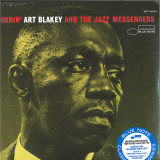
More than any other album in the canon of Art Blakey & The Jazz Messengers, 1958’s Moanin’ — featuring the great drummer with trumpeter Lee Morgan, tenor saxophonist Benny Golson, pianist Bobby Timmons, and bassist Jymie Merritt —was the perfect crystallization of the band’s bluesy, soulful sound, and it still stands today as perhaps the most quintessential hard bop recording of all-time.
Originally self-titled, the album was later renamed Moanin’ due to the popularity of Timmons’ unforgettable opening track. The album also introduced several indelible Golson compositions that would become standards of the jazz songbook including “Along Came Betty” and “Blues March.”
This Blue Note Classic Vinyl Edition is all-analog, mastered by Kevin Gray from the original master tapes, and pressed on 180g vinyl at Optimal.
out of Stock
Last delivered 4 years ago available to reorder, subject to availability
Jimmy Tamborello returns with a collection of 10 pop-infused vocal hymns – simultaneously perfect dance floor fillers and lullabies. "Away" is the second of two Dntel albums to be released in 2021 by Morr Music in collaboration with Les Albums Claus. While "The Seas Trees See" showcased Tamborello's more intricate and quiet side, "Away" embraces his love for pop music. A genre which like no other has been resonating the advancements of technology from the very beginning. Songwriting was sequenced and computerized on such a large scale that it would change the sonic aesthetics of the charts forever.
Dntel is a musician who changed pop music forever – and still works in this never-ending labour of love, both effortless and highly focused, constantly tweaking the universe of our musical perception. Whether beatless or uncompromisingly embracing the limelight of collective ecstasy with one of his most remembered tunes "(This Is) The Dream Of Evan And Chan", his almost forgotten anthem "Don’t Get Your Hopes Up" or his work as James Figurine. "Away" features 10 of these extravaganzas – uniting his audience once more in hope and future-bound optimism.
"I grew up with 80s techno-pop – these influences always come through in my music", Jimmy writes from Los Angeles. For this album, though, "I was thinking more of 80s indie pop or labels like 4AD. It is a mix of those influences along with trying to figure out what elements of my own discography I still connect with. I wanted it to reflect old Dntel records as well as the techno-pop band Figurine I used to be in. I have always considered my music basically being techno-pop, but not referring to pop as popular music – I just like pretty melodies. But with the Dntel moniker, I never had the ambition to produce music for a really big audience.”
It is exactly that looseness in approaching music which makes Tamborello’s style of composing so unique. On "Away" he combines a healthy dose of distortion with the most-sticking melodies, vocals and bitter-sweet lyrics he ever came up with – performing all vocals himself, with the help of technology. "My voice has a limited range. When I applied this vocal processing it seemed to bring out the emotions more. I don’t see it as the same as the more artificial, autotuned style of modern pop music. I think it still sounds like it could be a real person singing, just not me."
Using this technique, Dntel disembodies himself from his own art, welcoming all kinds of interpretations re. his current state as an artist. "Somehow this processed voice feels closer to how I see myself than my normal voice, for better or worse…", he writes. Pop music is a fragile entity, making its kingpins vulnerable. Many emotions reveal a lot of the originator’s personality –this is something one has to be prepared for. On "Away", Jimmy Tamborello finds the perfect way of marrying his unique musical personality with both the demands and possibilities of pop music. Just listen to "Connect" and you’ll know what we’re talking about. A perfect, yet timeless album for less than perfect times.
out of Stock
Last delivered 5 years ago available to reorder, subject to availability
Ramona Córdova is a sound artist — passionate about writing, communicating, linguistics, behavioural & social psychology, observation & investigative research, photography, sound recording, and design. Their artist focus is on project-based sound and visual media, public engagement and live performance — although they are best known for their music and are typical regarded as a singer songwriter. Ramona Córdova intends to speak to the challenges of living under systems of oppression while inspiring introspection and personal growth toward the maturing of our societies. Ramona is Haitian-Filipina, Puerto Rican, born in Kingman, Arizona, USA and is inter-feminine trans non-binary.
"When I first started working on Naïve I was completely consumed by all of the technical details involved in making a 'professional studio recording' on my own - one which could not be refuted or disregarded as subpar. My only other hope was to tell some sort of story with whichever songs i could piece together. The content and message of which were much less important to me.
The story that Naïve ended up telling comes from a cohesion of themes, ceaseless in my personal experiences living day to day in the world. Although the album dares to tread on tact while speaking poetically and lyrically about issues such as systemic oppression, racism, misogyny, policing and patriarchy - I think the album really just wants to reflect - to serve as a reflection - in order to foster healing and healthy growth towards maturing. I feel it commanding a kind of firm kindness as a reminder to love yourself enough to accept others, by way of accepting yourself.
Pressed onto this 180-gram vinyl are 10 songs I wrote while living in many different places around the world. Spontaneous recordings of inspired notions of song, written one rainy evening up high above the vineyards in Banyuls-sur-Mer became Men on the Mountain. A Scrap of paper holding jots about a sudden storm on a hot day in August while helping friends on their farm in Puglia became Mouth of Autumn and Peace Through Violence. As I dressed myself into the fragile reality of the United States, I became flooded by its manipulative social governing systems. As the monuments of slave-owners, colonisers, and white supremacists came crashing down in the name of responsibility and accountability, The Bridge Works was built, a song about crossing bridges towards empathy and equality. Civil rights activist and American-Football quarterback, Colin Kaepernick, taking the knee during the United States national anthem pre-game ceremony, brought about So Long. The incessant murdering of black, brown, and transgender citizens brought Woke, Scared I'll Bite You, and The End. The murder of Eric Garner and the feeling of being choked-out and suffocated under the weight of systemic oppression brought about Still.
From all of this birthed the collection of songs that is Naïve, a title given to the album by French Ghanian artist Eden Tinto Collins. Although written both in Europe and the U.S., most of the songs were performed and recorded at the end of the year 2018 in Philadelphia, during the American-Holidays season. Still, Loving Him, and The End were written in Philadelphia, but produced in Vlorë, Albania. This helped serve as a reminder that the issues these songs speak of are not isolated to the United States of America." - Ramona Córdova
out of Stock
Last delivered 5 years ago available to reorder, subject to availability
"Ry Cooder" - Ry Cooder (voc, g, mand, b); Van Dyke Parks (p); Bobby Bruce (v); Chris Ethridge Roy Estrada, Max Bennett (b); John Barbata, Richie Hayward (dr); Milt Holland (dr, perc); Gloria Jones (backing voc)
By the time he was aged 22, Ry Cooder was already a veteran of the music business and in great demand as a studio musician and sideman. Shortly after signing a contract with Warner Music in 1969, he released his first album under his own name, placing his confidence in the musical talent he had developed since being a child and on the rare value of his favourite instrument, the steel guitar.
The present LP that carries his name is a fascinating blend of blues, folk, rock ’n’ roll and pop – a unique mixture, which combines superb songs, virtuosic playing and somewhat bizarre yet imaginative arrangements. For material, Cooder, the son of folklorist parents, dug out ten gems coming from over six decades, right back to the 1920s – by legends such as Woody Guthrie, Blind Blake, Sleepy John Estes and Leadbelly, as well as a more up-to-date Randy Newman composition. As magnificent as his choice might be, it is the exuberant charm of his own instrumental composition "Available Space" that almost steals the show here. Expansive and unbiased, Cooder plays an ironic game made up of wordless irregular phrases, which promise the listener something new and ultimately circle in an infinite loop.
Cooder’s need to prove himself, moderated by his veneration for the past, helps to create a completely original work that will prove rewarding for the adventurous listener.
This Speakers Corner LP was remastered using pure analogue components only, from the master tapes through to the cutting head. More information under pure-analogue
All royalties and mechanical rights have been paid.
Recording: 1970 at various studios by Bob Kovacs, Doug Botnick, Rudy Hill and Jim Lowe
Brian Leeds a.k.a. Huerco S' West Mineral label present a groggy Midwestern ambient doozy with Chat, the first collaborative release by Pontiac Streator and Ulla Straus
Pontiac Streator previously appeared as a guest on the first West Mineral LTD release, Pendant's Make Me Know You Sweet, while Ulla Straus is perhaps best known for her part on the cultishly adored bblisss compilation tape which introduced Huerco S.'s Pendant alias to the world at large.
Their first album together is a bedroom-crafted confection where drowsy blues and raga smudge with lounging exotica themes in a blunted style to properly heavy-lidded effect.
Chat was recorded on July 5th in Pilsen, Chicago on Ulla's bed after a long week spent dancing with friends, staying up all night typing in chatrooms, and hate-watching Fox news. The results channel that experience into four lop-sided creations that feel satisfyingly burned out and immersive, like the murmur of zonked chat between close friends.
In four parts; Chat One thru Chat Four, the record unfurls with a muggy mid-fi tension between its illusive fidelities, kindling a smoky atmosphere that colours listening spaces with seductive smells
and a muggy, keening tension that recalls the minutes before sundown
This balmy feel of the surreal comes out in a sylvan patina of sweetened cicadas and curling pads urged along by a stream of wooden drums, variously recalling Spencer Clark on some kind of
Aguirre soundtrack mission in the tropics, a heatsick Rainforest Spiritual Enslavement piece, or, in the dream-pop drift of the last part, like Leven Signs smudged by Muslimgauze.
Coolly serving to expand West Mineral LTD's remit after that spellbinding Pendant album and a 12" of ectoplasmic dubs from uon, the flux of arid/fluid textures and para-dimensional fidelities in
Chat feels somehow calming yet fraught with a somnambulant appeal that's dangerously easy to
Crystal Winds legendary sophisticated soul LP first released on the privately pressed Cash Ear label in 1982, it's mad to me these amazing tracks have never made it to 45 yet so time to put that right, the classiest of classy 70s soul sides for your Djing and listening pleasure, you all know how much I love floaty 70s joints, not sure it gets better than this.
The key figures behind Crystal Winds were Paul Coleman and M.C. (Morris) Brown, both alumni of the band Rasputin's Stash which had had two albums out in the mid-'70s which had done reasonably well for Atlantic subsidiary Cotillion and Chicago indie Gemigo, respectively.
Between them, keyboardist Coleman and saxophonist Brown wrote the vast bulk of the album (guitarist Martin Dumas co-wrote Lover's Holiday with Brown, and one J.Lagrone is added to the credits of So Sad and Signs of Winter's Time) and handled the male lead vocals, with the distaff element provided by Theresa Davis. Brown wrote the horn arrangements, the pair did the string arrangements, and legendary concertmaster Rich Tufo (associated with Curtis Mayfield and other Curtom acts including Linda Clifford) was also on hand for the album (credited with conducting and orchestrating both strings and horns). Guitarist Dumas had also been a member of Rasputin's Stash, as had drummer E.Frank Donaldson (who plays on two tracks).
out of Stock
Last delivered 5 years ago available to reorder, subject to availability
According to the artist himself, zake's first solo album of 2020 was recorded and produced during "a four-day excursion in several secluded areas" in South Carolina. As a result, listeners can expect to hear babbling brooks, birdsong and the gentle rustling of leaves beneath Zake's alluring mixture of enveloping ambient chords, unearthly drone tones, opaque electronics and slowly-shifting, heavily processed neo-classical movements. The results are hugely immersive and undeniably enjoyable, with each of the four tracks delivering a head-in-the-clouds journey that ripples with becalmed, atmospheric intent. In other words, it's the kind of ambient music you can get lost in. More please!
out of Stock
Last delivered 5 years ago available to reorder, subject to availability
After the release of ‘Kuarahy’ concurred with the blast of the worldwide pandemic and all the consequences it has generated, WHITE STONES - Martín Mendez’s project (OPETH’s bass player) - are ready to launch their second record.
When WHITE STONES released ‘Kuarahy’ they became the first Spanish band signed to Nuclear Blast Records, cementing their first album as an unprecedented milestone. Now, with ‘Dancing Into Oblivion’, the band returns with a more compact sound, having been hard at work ensuring the utmost attention to every detail for a result that is even better than the first record.
The topics covered on this second album draw on the feelings that Martín himself affirms he has lived through during the lockdown imposed by the covid-19 pandemic. “I started it very calmed in March when »Kuarahy« was released and the lockdown started. I wrote the new record and it just flowed so well. It’s my point of view, of the feelings I had during the lockdown period, in this weird year. I took advantage of the moment and I feel excited about it”, reveals the musician.
The most outstanding musical elements on this new record are the disparate genres that manage to co-exist. There is an element of aggression, that can be seen rearing its head in an instrumental frenzy, as well as soft and delicate intricacies that develop an atmosphere which surrounds the listener. There are distinct dynamics among the songs, with interludes allowing the listening to take a breath and appreciate what they’re hearing.
The writing process of ‘Dancing Into Oblivion’ has been pretty similar to the previous ‘Kuarahy’ but with some clear changes. Martín composed all of the instrumentals for the album but, as he says, “I’ve left sections open to the interpretation of each of the other musicians, both in the drums and in the vocals. Eloi wrote the lyrics this time and we then workshopped them together whilst working out the vocal parts to get the final result in the studio”.
WHITE STONES once again recorded at Farm Of Sounds Studios (Barcelona), owned by their singer Eloi. They were satisfied with the sound of ‘Kuarahy’ and the experience of the recording of that album and the comfort of making everything with their own tools made it all easier. “Everything has been ‘homemade’ because it’s a way of working and a philosophy I like. You have more control and you can better enforce your ideas”, Méndez explains -who also created the cover for ‘Dancing Into Oblivion’ together with Sandra, his partner for many years.
The final mix and mastering of this second album was done by Jaime Gómez Arellano at Orgone Studios (UK) because the band were more than satisfied with the work he did on ‘Kuarahy’ and they wanted to repeat that great experience. Eloi, as the singer and also the guy who recorded the music sent to Orgone Studios, acknowledges “the recording had more experience and a better sound quality because we made better decisions during the pre-production thanks to a higher level of self-awareness of ourselves as a band. Jaime knew us better too, so that simplified the process and in turn helped to make »Dancing Into Oblivion« as good as it can be”.
The line-up has been enhanced with the participation of the multifaceted Joan Carles Marí Tur on drums (who also plays in other bands like FACE THE MAYBE). The guitar solos were the job of Joao Sassetti (who was already a member of the touring line-up of WHITE STONES). Sassetti lives in Portugal and he couldn’t be in the studio in Barcelona, so he recorded his solos and digitally sent them over for integration into the final songs. The recording of the instruments has been more organic and as Boucherie says. “The original sound has been retained as much as posible in each and every element” and it has brought a natural/raw touch for ‘Dancing Into Oblivion’ just as the band had hoped and expected.
New York City 4-piece deliver a modern blues rock masterclass on their feisty debut album.
“A timeless classic rock sound that revels in lean riffs and raw emotion.” – Afropunk
In an age where artistic merit is awarded to those who shout the loudest, Dakota Jones pride themselves on an unwavering ability to leave a lasting impression. Spearheaded by Tristan Carter-Jones fierce and unashamedly uncensored songwriting, the band’s fast-growing reputation as formidable live act has stamped Dakota Jones with the hell-hath-no-fury power of Chaka Khan, the wild spontaneity of Janis Joplin, and the honey-dripping sensuality of Marvin Gaye. Their debut album’s message of proud black heritage and triumphant queerness manifests itself in Carter-Jones’ ability to challenge norms of adulthood and femininity as she takes a deep dive into some of life’s most visceral emotions.
Tristan Carter-Jones: “I’m a black, queer woman expressing myself through love and music. Some folks still find that to be a transgressive act in and of itself. I work to fight that idea. I write a lot about my
Continued over…
sexuality and the ways in which I express it. Songs about sex and love bounce back and forth between songs about heartache, hangovers and self-medication, and the pleasure and pain of truly finding yourself. I don’t think we get to hear these things from a woman’s mouth as often as we should.”
Serving as an instant tone setter, the album opens with the line "Stretch marks from growing pains" with Carter-Jones lamenting the woes of adjusting to adulthood on lead single ‘Did It To Myself’ - her husky and commanding vocal instantly asserting its place in the spotlight. The atmosphere soon turns steamy on the flirtatious title track ‘Blacklight,’ whilst fantasising over a modern-day Bonnie & Clyde love affair the funk-laden ‘We Playin Bad Games’ packs a punch with its tale of free spirits entwined in a haze of late-night revelry.
Elsewhere, stories of caustic heartache twist the knife into wounded blues guitar riffs on ‘Like That’ and ‘Black Magic (That Power)’, in which Carter-Jones’s stoical voice never once faulters as she mourns the memories of a previous flame. Personal prayer ‘Lord Please’ recites empowered words of reassurance, and solidarity in the face of injustice erupts into a rallying cry for change on the classic sounding ‘Noise’ – written as a reaction to the 2016 US election. “I woke up after the election feeling pure panic and fear in my body,” remembers Tristan. “I wanted people in a place of privilege to stand up for what I was feeling, stand up for injustice, stand up for all of the things we need to change as a country. I wanted their rage, and I wanted their noise.”
Finally, the band’s tender tropes of togetherness eventually boil into gritty, guitar-slung balladry on hidden bonus track, ‘California,’ where, knees buckling under the weight of past trials and tribulations, Carter-Jones sets out on one final journey of self-discovery, hastily pulling out from reality and leaving only a dust cloud in her wake.
Production comes courtesy of the Grammy-winning John Wooler, ex Virgin Records A+R and founder of the Blues label Pointblank who has worked with everyone from John Lee Hooker and John Hammond to Isaac Hayes and Van Morrison. The album also features a wealth of hugely talented and accomplished musicians, including backing vocalist Kudisan Kai, former backing vocalist for the likes of Elton John, Chaka Khan, Anita Baker, Natalie Cole, Beck, Sting, Mary J. Blige and Jill Scott. Also present; Grammy winning keyboardist Jon Gilutin, who has spent years working with some of the industry’s most respected and iconic artists including Linda Ronstadt, James Taylor, Lady Gaga, Willie Nelson, Aretha Franklin, Diana Ross, Jackson Browne, Celine Dion, Bonnie Rait and Carole King. You’ll also hear the talents of acclaimed guitarist Michael Toles. Most well-known for being a part of the Stax Records group The Bar Kays, and for his contributions on famous records by Issac Hayes, Al Green, BB King, Johnny Taylor, Rufus Thomas, Albert King to name just a few.
Dakota Jones are a rising funk, soul and blues rock band from Brooklyn, New York City. Comprising of Tristan Carter-Jones (vocals), Scott Kramp (bass) Steve Ross (drums), and acclaimed musician Randy Jacobs (guitar) - former member of Was(Not Was) who has recorded for Seal, Bonnie Raitt, Tears for Fears, Elton John and many others. Though Carter-Jones and Ross first met in 1999 whilst at primary school, the band formed years later following a series of home jam sessions in 2016. The band’s collective alias originates from Carter-Jones’s middle name, ‘Dakota’. Dakota Jones have since released a string of acclaimed singles and EPs as well as received international attention for their track, ‘Have Mercy’ after it featured on Netflix’s 2019 film, Always Be My Maybe starring Ali Wong and Randall Park – and now after years of hard work and determination, the band are finally set to reveal their long awaited debut album. “We’d been regularly releasing EPs, waiting for our chance to come, and wondering what that would look like,” says Carter-Jones. “We didn’t realise until we started making this record that we needed to stop waiting for some break to come along, and just do it ourselves, independently.”
“Black Light really dives into a place of funk soul and everything that comes with it. There’s joy and dancing, sleek guitar licks and funky bass slaps. There’s pain and longing, and there’s the feeling of relief when you come out of that place and find your joy and purpose again. Black Light is my story.”
ADAM’S APPLES – hailed, rather appropriately, from Brunswick, New Jersey, and cut two singles for Brunswick Records in the late Sixties. “Don’t Take It Out On This World” was released in 1967 and despite positive reviews in Cash Box it failed to hit Stateside. But, almost a decade on, it was reborn in the UK where it dominated the Northern Soul scene in 1976. It was almost purpose-made for Wigan Casino where it echoed around the cavenous ballroom with its chugging beat and haunting harmonies. It is the perfect spine-tingling, All-Nighter sound that has never diminshed in popularity.
THE COOPERETTES – were a girl group from Philadelphia comprising of the four Cooper sisters. They signed a contract with Brunswick Records in 1966 and scored a local hit with their first single “Goodbye School”. Their second disc “Everything’s Wrong” was also a strong seller in Philly and, as is so often the case, their final 45 for Brunswick – the Northern Soul anthem – “Shing-A-Ling” failed Stateside. It was perfect for the adrenalin-fueled all-nighter scene and was adopted by The Torch in Stoke-on-Trent. It became so popular that Brunswick reissued the track in 1975 to fulfill UK demand!
LA-based rockers The Bronx return for their sixth studio album 'Bronx VI' which comes out worldwide on Cooking Vinyl August 27th. Bronx VI builds on the legacy The Bronx has established in its near two-decade existence, but which definitely proves the door to what’s next has not just been kicked down, but chopped up and burned to a cinder. Yes, the first four tracks – “White Shadow”, “Superbloom”, “Watering The Well” and “Curb Feelers” – bristles with the wild and untamed energy that’s defined the band from the off, but then – all of a sudden, as “Peace Pipe” kicks in – the pace and mood shifts to something a little less aggressive. Elsewhere, “Mexican Summer” and its (relatively) chilled-out mariachi vibes serve as an homage to the band’s alter-ego, Mariachi El Bronx (and was written while that incarnation of the band was on tour), while fatalistic closer “Participation Trophy” masks the Caughthran’s existential dread behind searing riffs and a catchy, defiant and exuberant melody. “The feelings I got when writing for this sixth record is the same type of feeling I got writing “Heart Attack American”. It all comes from the same place and it’s all still 100% genuine and real. Believe me – I’m still feeling the raw emotion that I felt when this band first started. That’s just who I am, that’s who we are as people. You can’t fake stuff like that when it comes to music or art. You have to stay connected. You’ve just got to be real” - Matt Caughthran, vocalist. Bronx VI was produced by Joe Baressi (Melvins, Tool, Bad Religion).
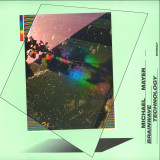
Michael Mayer’s latest EP, Brainwave Technology, comes at you purposeful, stealthy and sly. It’s a glorious left turn for the redoubtable producer, one that sees his typically lean and lithe productions buffed to a metallic, futurist sheen. There’s a gleam in the eyes of tracks like “Brainwave Technology” and “Alpha” that speaks of serious fun, of the intersection of the pleasure zone and the frontal lobe.
“Brainwave Technology” itself is informed by Mayer’s deep dive into the thorny terrain of artificial intelligence, transhumanism and posthumanism. Inspired by reading German philosopher Richard David Precht, Mayer found himself heading down the “proverbial rabbit hole,” as he describes it, “watching hours of YouTube material by self-proclaimed prophets of these ‘inevitable’ changes to come.” Never one to be taken in by the egotist’s dance, Mayer’s cynicism about the whole endeavour is tempered, a little, by the deeper questions that these figures gesture towards: “Is it really an evolutionary step that man and machine become one? Or is it rather a marketing plot by Silicon Valley billionaires?”
On “Brainwave Technology”, Mayer plays the charlatans at their own game, turning their logic against them by exposing the fruitiness of their ‘visions’. “I chose irony as my sword with which I chopped off some quotes from some of those batshit crazy prophets and self-promoters,” he explains of the drooling psychobabble he drops in the track’s lacuna. There’s a sense of humour here – how could you not laugh at these hungover egotists? – but there’s levity too, a sense that Mayer’s using sound to expose the contradictions and double-speak at the heart of these half-formed ideas. It’s a Burroughsian tactic, to slice into the heart of the voice to see what hidden truths surface.
It was Burroughs, too, who once said that “when you cut into the past, the future leaks out”; Brainwave Technology cuts into the logic of the futurologist to leak out the messiness of modern reality. On “Alpha” and “Gamma”, Mayer seems to conjure up the stark, ominous music that’d soundtrack a science fiction reinterpretation – or preinterpretation – of our modern malaise, all funereal wreaths of electronic noise and clatterboxing beats. As the EP resolves with “Device For The Young At Heart”, Mayer’s questions are piling up: “Do we want to become immortal and live on as a download? Do we really give up on Earth and put all our effort into colonising Mars?” There are no answers, of course, but plenty of imaginings-to-be. Brainwave Technology soundtracks both dystopian and utopian possibilities of what could come next.
out of Stock
Last delivered 5 years ago available to reorder, subject to availability
Get on Down is proud to present A Wolf in Sheep's Clothing, the debut album by Black Sheep, available for the first time ever as double vinyl release. On the initial release of this classic it was 'The Choice Is Yours' that blew the roof off with even the most of novice rap fans gravitating to the song's energy. The cut has gone on to be featured in a long list of films and commercials (including the KIA campaign with the hip hop hamsters). Singles like 'The Choice Is Yours' and 'Flavor of the Month' made a perfect landing strip for those to delve deeper into the duo's debut. Often humorous ('Strobelite Honey'), often serious ('Black with No N.V (No Vision)', Black Sheep were able to craft an album that displayed their witty sensibilities while also staying conscious in true Native Tongue form. From the moment the album starts with Prince Paul introducing the 'lowlifes of the family tree' you know you are in for something special....and different. Mista Lawnge's production is every bit as textured as fellow counter parts Tribe or De La, while standing out as being completely original and fresh. Tracks like 'Butt in the Meantime', 'Try Counting Sheep' and 'La Menage (Featuring Q Tip)' are great examples of the duo's original style - complex layered beats (everything from Jazz, Soul and Rock all meshed together perfectly) to compliment Dres' distinct voice and word play. With other standout album cuts like 'For Those That Slept' and 'To Who It May Concern' it seemed as if they had an endless bag of treats, each offering something different while preserving the groups style. Polar opposite to what other groups at the time were doing, Black Sheep hit a homerun with their debut that few hip hop acts would ever reach. VH1 called 'The Choice Is Yours' one of the Top 100 Hip Hop tracks of all time and with not one bad or filler track, this full album certainly ranks as one of the best hip hop releases of the 90s.
out of Stock
Last delivered 5 years ago available to reorder, subject to availability
Ephat Mujuru exemplifies a unique generation of traditional musicians in Zimbabwe. Born under an oppressive colonial regime in Southern Rhodesia, his generation witnessed the brutality of the 1970s liberation struggle, and then the dawn of independent Zimbabwe, a time in which African music culture - long stigmatized by Rhodesian educators and religious authorities - experienced a thrilling renaissance. Under the tutelage of his grandfather, who was a respected spirit mediumand mbira master, Ephat showed an early talent for the rigors of mbiratraining, playing his first possession ceremony when he was just ten years old. By then, guerilla war was engulfing the country and his grandfather Muchatera tragically became a victim of the violence, a devastating blow to the young musician. In the midst of the liberation struggle, mbira music became political. Eventually, the Rhodesians were defeated, but rather than return to the past, the nation of Zimbabwe was born and a new future unfolded. Ephat threw himself into the spirit of independence, singing of brotherhood, healing, and unity: crucial themes during a time when the nation's two dominant ethnic groups, the Shona and the Ndebele, were struggling to reconcile differences. Ephat's band would eventually follow the popular trend and add electric instruments. But before that, he and Spirit of the People released two all-acoustic albums, and they may well be the most exciting and beautiful recordings he made in his career. Mbavaira, the second of these albums, was released in 1983. As the independence years moved on, there would be fewer and fewer commercial mbira releases. But for the moment, Ephat had the required stature and reputation. Also, with the energy and drive we hear in these recordings, the album could easily rival the pop music of its day. Within a few years after the release of Mbavaira, it and albums like it became harder to find in Zimbabwean record stores. Ephat adapted to the times and formed an electric band. They recorded more albums over the years but none of them have the particularly delicious energy of Spirit of the People in the first years of Zimbabwe's independence.
Double Ultra Clear LP, Gatefold Jacket, Insert, Printed Inner Sleeves
A graduate from the prestigious Berklee College of Music, Ashe has been lauded by the likes of The FADER who raved about her ‘effortless voice’; People called her music, ‘deeply emotional yet so fun,’ Consequence of Sound
described her songs as, ‘accessible yet emotional’ and NME declared she’s ‘a
formidable new force in the pop world,’ among other accolades. Ashe’s touring resume includes performances at Coachella with Big Gigantic, and opening
slots for The Chainsmokers, LAUV, Louis The Child, Lewis Capaldi and more.
On TikTok Ashe gained 1 million followers, hitting over 2.5 billion video views
and 2.5 million videos created. On Instagram she has over 950K followers and
growing, approaching 520K followers on Twitter, and over 7.3 million monthly
listeners on Spotify. Her double EP Moral of the Story Chapters 1 & 2 is out now.
In 2020, Ashe also released the single ‘Save Myself,’ which garnered over a
million streams a week last summer, while the official music video saw #SaveMyselfMV trend on Twitter worldwide after its debut, including the U.S. at #5.
She recently contributed an original song, ‘The Same,’ to the new film and
soundtrack, To All The Boys I’ve Loved Before, her second placement in the
wildly popular Netflix franchise.
Ashe made her stunning late-night TV debut alongside Niall Horan on The Late
Late Show with James Corden, taped at London’s famed Royal Albert Hall and
her daytime debut on Ellen at the top of 2021. ‘Till Forever Falls Apart’ is the
first hint of more exciting new music which Ashe and FINNEAS recently performed on Jimmy Kimmel Live! Ashe’s debut album Ashlyn includes 14 songs
which she describes as ‘...deeply reflective and honest, full of stories of my
experiences with fear and pain and turning those hard things into joy and independence.
I’m an experiential writer and there was no way I was going to make an album
that didn’t address my personal journey, from my brother’s death this last year
to my own experiences with emotional abuse. I think you have to be vulnerable
to create something really great and I believe I did that. Writing this album was
also an opportunity to show that I’m not just a songwriter and a singer but a
producer and a musician with a very clear vision for my art.
Joni Mitchell refers to herself like a bee, gathering stories like pollen and trying
to make honey from it, ‘whether or not the flavor suits people is something
beyond my control.’ I really tried to take that approach to writing this album,
making something I loved above everything else. I couldn’t be more proud of
Ashlyn and I hope many people happen to love it too.”
Birgit Minichmayr captures the imagination and holds centre-stage on
‘As An Unperfect Actor: Nine Sonnets by William Shakespeare’. This
won’t come as a surprise to people in the German-speaking world,
where the Austrian actor is well-known from countless appearances on
TV and a substantial filmography. Perhaps equally unsurprising is the
deep experience she can bring to Shakespeare: as an ensemble
member of the Burgtheater company in Vienna, she has repeatedly lived
out the searingly dramatic lives of the Bard’s characters, notably the
daemonic anger of Lady Macbeth, the sadness of Ophelia and even the
uncomfortable truths of the Fool in King Lear.
What might be more of a surprise, however, is the exhilarating musicality
she shows on this, her first complete album as a vocalist. One could
have predicted the crystal clarity, meaning and intent in her words - the
desolation in her voice in “the very birds are mute... the leaves look pale”
in Sonnet 97, for example. And yet there is more, much more, not least
Minichmayr’s uncannily instinct to find artful and felicitous ways to shape
musical phrases.
Composer/ pianist Bernd Lhotzky has provided a wonderful array of
musical contexts. As Minichmayr says: “He got so deep into the meaning
of each sonnet, his music made it different every time. And we talked a
lot about the colour, the meaning of each poem.” The opening track, ‘My
Mistress’ Eyes (Sonnet 130)’ is a masterfully deft piece of gender-fluid
irony. In the poem, a man is describing possibly the ugliest woman he
has ever seen - while also declaring that she is the one he loves.
Lhotzky gives us an acerbic version in that most male-led of dances, the
tango, complete with bandoneon, in which the words are sung by... a
woman. Minichmayr then gives a masterclass in how to end a song as
she hits, holds and nails the words “false compare” with triumphant
fearlessness.
Throughout the course of the album, we are magically transported to
new musical and emotional places. As Minichmayr says: “Through
singing, through just doing it, I was able to find deep love, or deep
sadness. I was really touched by it.”
One of the secrets to this album’s success is Lhotzky’s wish to find
melodies which have a certain ease and straightforwardness about
them. He says that he approaches all music - whether he is listening to it
or writing it - with one simple and direct question: “What story is this
telling me?” Lhotzky is known for his work in the field of early jazz, but
the range here is far broader, with allusions to such examples of fine
songwriting as Brassens, Robert Plant and James Taylor.
LP pressed on 140g black vinyl.
“One of the vital pieces in the jigsaw puzzle of ’90s British rock music.” Pat Gilbert, Mojo magazine While his own name has yet to grace an album front cover, for more than a twenty years Gem Archer has been a key contributor to some of the UK’s highest profile guitar bands, beginning with Oasis in 2000, Beady Eye in 2009 and the touring version of Noel Gallagher’s High Flying Birds since 2015.
Before all that there was Heavy Stereo, caught up in the mid ‘90s music maelstrom where their only album ‘Déjà Voodoo’ took its place alongside Paul Weller’s ‘Stanley Road’, The Charlatans’ ‘Telling Stories’, Super Furry Animals’ ‘Fuzzy Logic’, Supergrass’s ‘I Should Coco’, The Boo Radley’s ‘Giant Steps’, Ride’s ‘Carnival Of Light’ – and, of course, ‘Definitely Maybe’ and ‘(What’s The Story) Morning Glory?’ by Oasis. It is easy to understand why any album could get overlooked in such exalted company. ‘Déjà Voodoo’ and the four singles – ‘Sleep Freak’, ‘Smiler’, ‘Chinese Burn’ and ‘Mouse In A Hole’ – all display Gem’s deeply held affection for old-school rock’n’roll values. In 1994/95, the outside world came into sync with his fondness for The Jam, Sly Stone, Hendrix, The Beatles, the Stones, The Small Faces, Motown, Stax, glam rock, punk rock and all other points on the compass of rock’n’roll cool, which coalesced into what became known as Britpop. And while those influences are in ‘Déjà Voodoo’ for all to hear, the album is far from derivative; this is a collection of well-constructed pop songs that still retain their swagger and zest.
Unavailable since it was first released on Creation Records in 1996, this new 25th anniversary 180g clear vinyl edition is a faithful recreation of the original 12-track LP.
Mono Junk's cult label DUM Records is back with a new five track Various Artists EP that again packs a vital punch. He appears himself along with some fellow legends of the scene.
First up, Morpholgy is a consistent performer who has continued to serve up quality electro since 2009 and here serves up a hot new piece. 'Vector Plant' is busy and industrial, slick and metallic as it unfolds and burrows deep into your veins. Then comes the A2, Irwin Berg featuring Freestyle Man (aka Finnish Moodmusic boss Sasse aka Klas Lindblad) with a track made in 1995 and never released before. This pair worked together and made a cult electro record for Sähkö Recordigs in 1998 and this one is just as impactful. It is frosty and frazzled, slow motion but high impact and full of distorted lines and heavy drums.
Next is Mr Velcro Fastener who were the first kings of electro to come out of Finland and between 1999 and 2006 were famous all over the world. Their brand new cut 'Almost There' is a deep one that is riddled with bleeping melodies and has smeared chords bringing a sci-fi feel. Then it is Mono Junk's turn to dive into the vaults with an unreleased track from 2005. 'Feeling or Destroy' is a physical number with crashing hits and snaking, gurgling bass that is dark and dystopian. Last of all comes Irwin Berg with Mono Junk as New York City Survivors. Says the DUM boss, Our unreleased track here was made after the New York City Survivors - Static Light CD 2002' and it is a turbo charged track with screwed up grinding bass, icy hi hat rhythms and menace in its grooves.
WALES WALLACE – was riding high in the Billboard Hot 100, as part of the Chicago group The Steelers, when he signed to Brunswick Records in 1969. The group had hit with “Get It From The Bottom” but Wallace fancied a solo career. He recorded three discs for Brunswick subsidiary’s Bashie, Dakar and in 1972 he launched the BRC label with “Somebody I Know”. This fabulous slice of Chicago crossover soul was produced by Eugene Record and has soared in demand in recent years.
WALTER JACKSON – signed to Columbia in 1962 and released a slue of records, initially on the parent label, and then its subsidiaries Okeh and Epic including “Where Have All The Flowers Gone” and the awesome “It’s An Uphill Climb To The Bottom”. After label hops to Cotillion, USA and Wand, Jackson found himself at Brunswick in 1973 where, later that year, he released the amazing “Let Me Come Back”. This rare, crossover-delight, was written by the legendary Jeff Perry and produced by Carl Davis and Sonny Sanders, add to that Walter’s supreme vocals and you have one of the finest Chicago mid-temo recordings of the early Seventies.
Produced by and featuring Aesop Rock. “I wrote half of these songs when my energy was either headed in the wrong direction or already there. I wrote the other half while my energy was moving in a direction I’m more excited about, that I find to be more enriching. They’re all still my songs though. My mother, and lots of my relatives, used to call me “Angelito.” Little Angel. The taijitu is the symbol for yin and yang. Opposites that make a whole. Given the dualistic/duelistic nature of the songs on the record, put it all together and what do you get, Anjelitu.” - Homeboy Sandman
Shadow Kingdom Records is proud to present Hour of 13’s long-awaited
fourth album, ‘Black Magick Rites’, on CD and vinyl LP.
‘Black Magick Rites’ is the sweet sound of salvation...through damnation.
Hour of 13’s first full-length offering in over eight years, ‘Black Magick Rites’
was available digitally on the first of November 2020 for only 24 hours. Just as
uniquely, ‘Black Magick Rites’ also marks the first Hour of 13 album where he
handles not only all instruments, but also all vocals.
Indeed, Davis’ vocals evoke an ancient nostalgia, of doom metal before it was
“”doom metal”” - of the days when bands like Black Sabbath, Pagan Altar, and
Witchfinder General simply followed their respective muses wherever it took
them. And for Davis, ‘Black Magick Rites’ sees him taking his Hour of 13 muse
toward a rougher, more rock ‘n’ roll expression and yet tinged with an emotive
melancholy that resonates deeply within the soul.
No, no flavor-of-the-week “”occult rock”” cliches here, for Davis still prizes
blue-collared authenticity in his doom, but he likewise never lets it hamper his
immediately recognizable songwriting, which here ever so subtly inches closer
to classic deathrock territory (think the likes of early Christan Death and Voodoo Church).
Naturally, with a title like ‘Black Magick Rites’, an indulgence in occultism is expected, and you can literally feel the fingers of the black beyond reaching out
to you across every electric minute of this 44-minute monolith.
Having taken a break from music for a few years, South London’s ME REX began life in 2018 in the home of songwriter Myles McCabe experimenting with shouty, electronic bedroom pop. Armed with a slew of “surging gargantuan hooks” and themes of friendship, forgiveness, joy and dinosaurs, McCabe was quickly joined by longtime friends Kathryn Woods (guitar/vocals), Phoebe Cross (drums/vocals) and Rich Mandell (bass/keys/vocals). Now, graduated from producing songs at home to recording at Resident Studios in North London with Mandell behind the mixing desk: ME REX spent the latter half of 2020 bashing down the doors to the indie world with double EP ‘Triceratops/Stegosuarus’. Finding their penchant for constructing delicate threads of vocal layering to convey feelings of calm while building on luscious swathes of reverberated guitar and keys on single ‘Rites’, the band are not afraid to explore different musical concepts: shaping material that strays from traditional album and single structures that results in a sound that could easily find a home on the big screen as they do behind closed doors. Described as “making for both a potent and cathartic listen all round” by DIY magazine — as well as seeing praise from Stereogum, BBC 6Music, Radio X, Amazing Radio, For The Rabbits and Circuit Sweet — ME REX are back with a new and ambitious project ‘Megabear’, an album made up of 52 tracks that has no beginning or end but exists as a cyclical body of work.
New Kscope CD Edition Of 1997 Top 30 Album This Strange Engine
“Atmospheric, melodic music that played to all of that band’s strengths... Marillion’s finest album of the last 15 years” - Classic Rock Marillion formed in 1979 and have sold over 15 million albums worldwide.
Rightly regarded as legends of progressive rock, the band have continued to evolve and have been keen to embrace the possibilities of the internet, using innovative ways to interact with listeners resulting in an incredibly loyal legion of fans around the world.
Originally released in 1997, ‘This Strange Engine’ was a top 30 hit in the UK and reached #10 in the NL album charts. The album features the singles “Man Of A Thousand Faces” and “80 Days” and shows the band exploring a revitalized sound featuring more acoustic elements.
‘This Strange Engine’ is the first of three recordings that Marillion made on a contract with Castle between departing EMI in 1995 and eventually going independent in 2000. Widely regarded as one of the most well produced Marillion albums, it finds the band in transition, ditching some of the lengthier compositions of previous albums in favour of a more succinct, commercial sound.
Southern Avenue Announces New Album, ‘Be The Love You Want’. Out August 27 via Renew Records/BMG, produced by Multi-Grammy Winner Steve Berlin
(Memphis, TN) – Memphis soul powerhouse Southern Avenue has announced the release of their third full-length album. BE THE LOVE YOU WANT was produced by multi-GRAMMY® winner, Steve Berlin (Los Lobos, Deer Tick, Susan Tedeschi, Jackie Greene), and co-produced by Ori Naftaly. The album, arriving via Renew Records/BMG on August 27, 2021, is preceded by today’s release of the sultry first single, “Push Now,” available at all DSPs and streaming services.
BE THE LOVE YOU WANT is Southern Avenue’s most ingenious and personal effort thus far. Since their inception, the band has produced a wide-ranging collection of original music – predominantly co-written by Israeli-born guitarist Ori Naftaly and powerhouse lead vocalist Tierinii Jackson – that links them to their home city’s glorious past while at the same time, demonstrates their ambitious intent to evolve Memphis music to contemporary effect.
BE THE LOVE YOU WANT sees Southern Avenue teaming up with artists like multi-GRAMMY® award-winning pop superstar Jason Mraz and certified Platinum producer Michael Goldwasser from Easy Star All-Stars on “Move Into The Light” for a churning, funk-blasted burner. Besides writing with him on the first single, the band also collaborated with Cody Dickinson from North Mississippi Allstars for the song “Heathen Hearts.” The songwriting core grew within the band as well, as drummer Tikyra Jackson and bassist Evan Sarver collaborated to co-write “Let’s Get It Together” and “Pressure.”
The band brilliantly bridges the power of Memphis soul with jamband liberation, gospel blues, and R&B to craft their own timeless brand of American music. The ambitious sonic approach expertly complements BE THE LOVE YOU WANT’s rich themes of self-love, self-empowerment, personal accountability and the desire to push through towards something greater in life.
There is a moment near the top of jaimie branch's FLY or DIE LIVE, the new album recorded by the trumpeter's quartet at in Zurich, Switzerland on January 23rd, 2020, which feels like it bears the weight of both that specific pocket of time, and a prophecy for all that was soon to come. branch and her Fly or Die crew - cellist Lester St. Louis, bassist Jason Ajemian, and drummer Chad Taylor - had just kicked off the concert at Moods, with the opening tracks off their then-new studio album FLY or DIE II: Bird Dogs of Paradise, the second of which, "Prayer for Amerikkka" is among the best political songs written during the Tr*mp Era, and when the moment in question pops off.
Things become intangible. On his 3d album "Take Care Of Me", Murena Murena does an about-turn: his new songs are silhouette vehicles in the reverse of all traffic formulas that strive for speed and progress. You can also do it with your back on the floor, you can also go backwards! In Murena Murena's Augmented Reality Roll, language, rhythm and harmony always turn and expand in the opposite direction. The direction we / they came from. If the idea of a monoposto was to replace the front passenger with a rear-view mirror, and from then on to let the driver run the distance forwards and backwards in the driver's eye, then you can also carry out a U-turn while sitting on a chair with eyes painted on the lids. A mandrill will quickly become the Sphinx. And a hawk moth sees just as much as a fire bug. Dry sump lubrication in the box: camshafts driven by a spur gear cascade ensure additional turbulence of the helium mist in the crankcase through their rotary motion. Of course, that's hard to believe. Gone, the wet sump lubrication of ,Shame Over,! You, listener, now have to grab the ropes yourself and perform wave-like movements, pull the ropes and let them pop. If your eyes go black, you have both hands free again.
In the early months of 2020, when the COVID-19 outbreak ravaged his home country of Italy, prolific composer Bruno Bavota did what we all would eventually do: isolated and waited. What followed was a year of fear, anxiety, and dread. Eventually, fear gave way to fatigue, and the anxiety metamorphosized into nervous energy. The compulsion to create became more powerful than the compression and weight. And so were born Apartment Songs and Apartment Loops. Representing two separate but intersecting paths of Bavota's creative journey, Apartment Songs is a suite of sparse solo acoustic piano works, while Apartment Loops are expansive explorations for synthesizers and outboard effects processors. Though in theory the two sets should sound disconnected and unrelated - given their disparate creative approaches and instrumentation - it's Bavota's uncanny sense of melody and space that easily unites them as two halves of a singular vision.
Fractal City, the latest Cubenx album is a collection of terrestrial jams and arachnean ambient ballads that are particularly apt for urban listening. If its predecessors cracked the musical codes in force and shone by the versatility of their references, this new opus offers its listener an intense and symbolic sound environment.
The raw material of Fractal City was first conceived as a series of sound patches, designed to run in parallel with Canadian digital artist Maotik's installation. Broadcasted in real-time by generative patches reacting to various external and non-human data, those musical excerpts have been rendered in hundreds of nuances and extended over infinite durations. This unusual approach confers to the recording of the finished album's outstanding immersive strength.
Recorded live on a single track over a short period of a few weeks, the nine compositions of Fractal City capture the obsessions of its author for postmodern urban landscapes, and the revelation of new perspectives on the city of Paris.
The opening piece `Ssarg´ seems to hide the figure of the Mexican ambient producer Jorge Reyes. Cubenx built a cocoon of energetic layers, a new home of the mystical kind harmoniously integrated in a flourishing rainforest ecosystem.
`Transect ´refers to the urban development model of the same name, which is based on a division of the city into autonomous "fractal" zones. It also echoes the concept of "metro polarities" which considers the city as a mosaic of social groups. "By cycling in the evening with a friend, we could get away from the city centre to the suburbs of Paris. The contrasts are striking. You move from chic districts to bedroom communities, from industrial zones to improvised caravan camps. But there is a kind of energy in this heterogeneity that pushes you to always pedal further."
A few miles away, it would look like Art and urbanism have tried to level the cultural and social discrepancies of the outskirts of Paris. "Architectural sites like the Arcades of Bofill are splendid. There are completely extravagant projects, which seem to emerge from nowhere."
These buildings with ambitious aesthetics off the beaten tourist track, deteriorate over time and often remain far from the expectations of the local population. A feeling of nostalgic beauty is particularly perceptible on the slowest and most introspective ballads of the album as 'Urban Decay', 'Hagel' or 'Axe Majeur'. The producer leaves nonetheless no room for melancholic emptiness. "Every time, I have the impression that urban culture is taking its rights back and that young people appropriate the places in one way or another."
Just like `Transect', ` Quantified' and `Fractal City' present themselves as mirrors of a daily urban life in constant motion. All three are empowered by an overheated factory, which dispatches hypnotic beats and burst of analogue compressors with a clinical precision and direct them straight away to the reptilian areas of their listener's brains.
The sequencing leaves however space and time to take breath and makes way for aerial sonic excursions of spiritual and enlightened nature. On `Human Dilemma', Cubenx shows some concerns to opening the Pandora's box of transhumanist theories. While a long cosmic wave gives the listener a feeling of perfect fullness, a dizzying guitar distortion cast doubts on long term outlooks. `Smash Other' on the other way alternates gentle dissonances over an ocean of white noise and concludes the album on ethereal note.
With ´Fractal City", Cubenx eludes his irreconcilable love for shoegaze pop song and techno to concentrate exclusively on the production of mutant experimental materials. The result is an uncanny musical object, rich in image and sensation. Cubenx give us a guiding framework, enthralling enough to engage the listener to a tour of town. But he leaves it to the sole listeners to design their own projection of the city.
out of Stock
Last delivered 5 years ago available to reorder, subject to availability
Formed in Dublin in 1968 few would dispute that Thin Lizzy helped define the genre Hard Rock.
The band scored 8 top 20 hits over 8 years and place no less than 8 albums in the UK top 20, 3 of which would make the top 10 and 4 the top 5.
From the mid-70s onwards, they championed the use of two lead guitars, it gave them a unique sound which evolved down the years and influenced the likes of Def Leppard, Metallica and Iron Maiden
After numerous line-up changes, Thin Lizzy called time in 1983
With 1986 just 4 days young lead singer and main songwriter Phil Lynott died aged 36. All music’s John Dougan wrote, “As the band’s creative force, Lynott was a more insightful and intelligent writer than many of his ilk, preferring slice-of-life working-class dramas of love and hate influenced by Bob Dylan, Bruce Springsteen and virtually all of the Irish literary tradition.”
This 2-LP set contains all that is great about the band – the tracklisting overseen by Lizzy Expert Nick Sharp covers what is the best of the band’s output throughout the years.
out of Stock
Last delivered 5 years ago available to reorder, subject to availability
Manchester UK's Space Afrika make music of what they term "overlapping moments" - oblique mosaics of dialogue, rhythm, texture, and shadow, half-heard through a bus window on a rainy night. Honest Labour, the group's first full-length since 2020's landmark hybtwibt? (have you been through what i've been through?) mixtape, expands the project's palette with classical strings, shimmering guitar, and visionary vocal cameos, leaning further into their enigmatic fusion of ambient unrest and cosmic downtempo. It's a sound both fogged and fragmented, at the axis of song craft and sound design, born from and for the yearning solitudes of life under lockdown. The album title is tiered, alluding to a legendary patriarch from co-founder Joshua Inyang's Nigerian family tree (who was lovingly called "Honest Labour" for his loyalty and resilience) as well as the nature of self-designated work, such as Space Afrika's music - a "labor of love" in its truest sense. With fellow co-founder Joshua Reid recently relocated to Berlin, the pair began sharing files last fall, piecing together poetic vignettes of looping haze and found sound, inspired by the notion of "records that leave an impression, and help the listener deal with their life." As the isolation of Covid compounded with the worsening winter, the songs skewed increasingly introspective and emotive, reflecting a mood of dissipating futures and the infinite nocturnal unknown. The artists cite two core motivations for Honest Labour: to transcend the sum of their influences, and "to show what we're capable of." Both ambitions are entirely realized. The collection's 19 tracks flow with a synergy and sophistication as rare as they are radical, untethered to the dusty dub-techno templates of Space Afrika's early years. These are interstitial anthems, expressionistic and open-ended, delirious but deliberate, attuned to the drift and dreamstate of the present moment: "Ultimately this is an homage to U.K. energy, and an album about love and loss."
out of Stock
Last delivered 4 years ago available to reorder, subject to availability
JJ DOOM is the artist name for producer/vocalist Jneiro Jarel and British-born, mask-wearing maverick DOOM (AKA MF Doom).The nine track EP features tracks from the expanded Butter Edition of the duos debut album 'Key To The Kuffs' including DOOM collaborations with Clams Casino, BBNG, Del The Funky Homosapien, Beck, Thom Yorke & Johnny Greenwood. Originally released in 2014 as a limited edition picture disc, now available in 180g black vinyl.
"On paper, a full collaborative album from NYC's notorious rap villain DOOM and space age production from Jneiro Jarel can't fail. In practice it's even better. DOOM is in the form of his life here." Mojo
"No less quotable than he was in '99... heavy on the diabolical brainiac grifter guise that's fueled his post-KMD creativity for some 15 years, balancing knowledge and absurdity like a master." Pitchfork
"... it's poetry. The way he freeforms his verses and puts it all together, I don't think anyone else quite does it like that... GUV'NOR was my single of 2012. It's genius, that tune." Thom Yorke, Dazed
Following “La Contra Ola” (BJR015), Bongo Joe presents 'La Ola Interior', a compilation exploring the ambient side of the Spanish electronic music produced in the 80’s, bringing together 19 little-known and innovative pieces from the golden age of Spanish electronic music !
It gathers musicians from various horizons and of many generations, who shared the desire to create an immersive soundscape and to combine electronic music with non-Western musical traditions. As a general rule, the Anglo-Saxon tropism did relate the spanish peninsula’s ambient music to the Balearic Sound, that is to say to the relaxing music played in Ibiza’s nightclubs. But this music takes place in the productive territory of experimental musics, and particularly in its two main breeding grounds: the tape recording underground and the independent musicians-producers scene.
Inseparable from the processes of self-publishing, distribution and exchange of music that were then taking place in Spain in an artisanal way, the vast underground movement of cassettes was divided between an "ethno-trance" combining industrial beats and oriental sounds on the one hand (Esplendor Geométrico, Miguel A. Ruiz / Orfeón Gagarin) and unclassifiable low-fi tinkerers on the other hand (Camino al desván, Eli Gras, Mataparda, Victor Nubla). Hyperactive, this scene is radical and strongly dominated by the hardest musical styles, but the ambient, influenced by the German Kosmische Musik and "krautrock", also develops here.
The second vein of Spanish ambient comes from some of the independent labels of the peninsula (DRO, GASA, El Cometa de Madrid, EGK) whose activity will mark the return of some of the most adventurous musicians-producers of the 70s. Some were influenced by American minimalism (Luis Delgado / Mecánica Popular, Suso Saiz, Javier Segura), others by Fourth-World Music conceived by Jon Hassell and Brian Eno (Finis Africae, Jabir). Having passed through folk, ancient, traditional or contemporary music, and being familiar with improvisation and studio techniques, these artists come from a mutant hippie culture, capable of phagocyting many musical styles from electronic ambient to ethnic improvisation and modal jazz.
These two scenes and generations that make up LA OLA INTERIOR intersect around a common interest in non-Western musical traditions. Their exploration may be that of the tribal origins of electronic rhythms or the Arab heritage of Spain. Above all, it is a dreamy exoticism, an immobile journey as the sounds, rhythms or instruments of these traditions are scrutinized by Western practices (avant-garde music, electronic technology). The result is a hybrid music, filtered and reinvented, neither Western nor extra-Western, with a pronounced taste for the fusion of opposites, which we have called "Acid Exoticism" because of its permanent search for trance or contemplation. Atmospheric, contemplative and serial, these musics still plunge us today into a sensorial journey, at the same time interior and distant, organic and technological, between exotic reminiscences and interior visions.
out of Stock
Last delivered 4 years ago available to reorder, subject to availability
Francesco Cavaliere and Tomoko Sauvage embody a tactile audio visual display, radiating the color green into sounds and painting meditative music. By transforming collected objects into invented instruments and scenography, each motif becomes a dedication to a specific situation, an anecdote or a symbol, sometimes real and other times absurd, that the artists have encountered through their travels and conversations: the Chinese myth about a man wearing a green hat, naming convention of Japanese traffic lights, or even the imaginary chants of frolicking twin dolphins. This inspired the duo’s personal research on experimenting with raw and synthesized idiophones, stage landscape design, spontaneous field recording and organized improvisation.
For their installation and performance, Cavaliere and Sauvage assemble a green cabinet of curiosities - instrumentarium combining water, glass, clay, bamboo xylophones, metallophones and synthesizers. Tomoko describes in an interview: “When you are actually surrounded by green musical instruments, it has a calming effect as if you were looking at a forest or mountain.” Surrounding themselves with amulets and fluorescent fluids, the duo transcend into a musical imagination that connects scores, choreography and sculpture. Motions like crisscrossing the stage, feeling the presence of a perfectly plump leaf as it strikes a glass bowl, minerals slipping through fingers, all resonate to the soothing sounds of splashing water. There’s an intuitive yet methodical nature to this conceptual approach to composition reminiscent of the fluxus art movement. The pair’s initial motif was to play Henning Christiansen’s Green Music, whose score turned to be nonexistent. By then, their green dream was already flourishing in their mind, retracing the path of so-called environmental music from Walter Tilgner, Knud Viktor, to the likes of Kankyo-Ongaku and Hiroshi Yoshimura.
Since there is a strong visual element to their work, witnessing this captivating site specific performance may be imperative in understanding the range and influence of the color green and the impact on the sounds they create together. On ‘Viridescens’, the first release by Cavaliere and Sauvage, we are invited to experience these recordings in a more musical context. Acting like an intermediary, the duo transport us to their special planet, enlivened by animal voices, wind, and aquatic creatures dancing across a luminous aurora.
out of Stock
Last delivered 4 years ago available to reorder, subject to availability
It may be his fifth album, but Saturday Night, Sunday Morning marks the start of chapter two for Jake Bugg. Arguably his most complete and coherent record to date, Saturday Night, Sunday Morning manages to combine a love of ABBA, the Beach Boys, Supertramp and the Bee Gees, with a contemporary pop sound: one that’s already spawned his most ubiquitous song in years via euphoric lead single, All I Need. “I knew what I was looking for this time around,” the 27-year-old says, firmly. “And I feel like I accomplished it.” It’s almost 10 years since a two-fingered Bugg burst onto the scene with his eponymous debut, one that topped the UK album charts and saw the then 18-year-old from Nottingham fêted as the next Bob Dylan. A Rick Rubin-produced follow up, Shangri La, quickly followed. But progress stalled with Bugg’s third, largely self-produced, record, On My One, in 2016. “I was having a hard time on that third record,” Bugg admits, five years removed. “The support from the industry wasn’t what it was. All those people telling you how great you are weren’t there anymore. It does feel like the rug’s been swept from under your feet.” What that record provided, however – along with its comparatively stripped-back follow up, Hearts That Strain (2017) – was a much-needed course corrector: one that set Bugg on the upward trajectory he finds himself on today. “When I came to terms with that was when I left the ego at the door,” he says. “It didn’t work out. But it led here. And this is probably my strongest record." It’s testament to Bugg’s rediscovered confidence that Saturday Night, Sunday Morning – a nod to the debut novel by Nottingham author Alan Sillitoe – sees him working with some of his highest profile collaborators to date, most notably American songwriters Andrew Watt and Ali Tamposi, best known for their work with pop heavyweights Post Malone, Dua Lipa, Miley Cyrus, Camila Cabello. “I was looking for how I can incorporate my sound for a more modern era. And I kind of struck gold working with Andrew Watt and Ali Tamposi,” Bugg says. Convening in LA, the first track the trio wrote together is the jealousy-inflected About Last Night, a song about the “insecurities you go through as a young person in a relationship with someone.” “It’s got such dark undertones, which I love,” Bugg says, of a song that showcases a newly discovered, Beach Boys-esque falsetto. “But it’s also very, very pop. That’s what I’ve always loved. With ABBA, with Supertramp. I love pop music. But when you can get it to be dark, I love it even more.” It’s a trick the trio repeated again on Scene, Bugg’s personal favourite from the album and a song that best encapsulates the combination of old and new: Watt’s George Harrison-esquire guitar brushing up against contemporary melodic choices by Tamposi. “I love writing with her,” Bugg says of the Havana hitmaker. “She brought that women’s perspective. And I knew that I’d got that balance of what I wanted. That old school chorus with contemporary verses. That to me was my favourite song when I wrote it, and it still is.” Perhaps the biggest example of Bugg’s newfound ego-less approach to writing, however, came in the shape of Downtown, a song that grew from an idea by Jamie Hartman (Celeste, Lewis Capaldi, Rag'n'Bone Man), and sees Bugg deploy the higher range of his voice to ethereal, ’60s Bee Gees effect. “Usually, the initial spark of an idea comes from me. And when it doesn't, it sometimes loses my attention,” Bugg admits. On Downtown, however, he relished his role as arranger: “Because there were a lot of moving parts and chords, it was almost like a puzzle,” he says. “I’d never approached a song like that before. “What I’ve been enjoying on this record is the collaborative process,” he continues. Working with people, writing with people. Because I’ve realised all I really want to achieve is to be the best writer I can possibly be. And I think by working with other people, it allows you to learn a lot as well.” It’s a theory Bugg has put to the test during lockdown, when he was approached by his manager about writing the soundtrack to an upcoming documentary, The Happiest Man In The World, about Brazilian footballer Ronaldinho. “It’s kind of a completely different experimental outlet,” Bugg explains of his first ever score. “I approach my own work quite professionally. But with this I can just switch off and go into a different world. And it’s been brilliant – I’ve had to learn different styles of guitar: bossa nova, samba. It’s a bit Vangelis, who’s probably my favourite artist – which may surprise people.” Possibly. But you get the impression that surprising is what Bugg likes to do. “I don’t like to be stuck doing the same thing,” he admits. “And that’s what this record Saturday Night, Sunday Morning was. I wanted to push myself. I’m always learning new influences. I’m careful not to get stuck on the same thing. “It’s not going to be right every time. It’s not going to be good every time,” he continues. “But if that’s the process it takes to get to this record, where people are loving the songs again, then that’s the journey we have to take.” For Jake Bugg, chapter two starts now. New album ‘Saturday Night, Sunday Morning’ is out August 20th on RCA Records
Airplay from Mary Ann Hobbs, Liz Alker and Tom Ravenscroft and beyond
Reviews in Mojo, The Wire, Quietus, Uncut and more
On October 9ththe multi-instrumentalist Jack Wyllie (Portico Quartet/Szun Waves) presents his new project Paradise Cinema. It was recorded in Dakar, Senegal in collaboration with mbalax percussionists Khadim Mbaye (saba drums) and Tons Sambe (tama drums).
The impressionistic and dream-like quality of 'Paradise Cinema' is a stunningly effective realisation of Wyllie's experience, in ahypnagogic state of aural consciousness:
"I had a lot of nights in Dakar, when the music around the city would go on until 6am. I could hear this from my bed at night and it all blended together, in what felt like an early version of the record."
Atmospherically 'Paradise Cinema' is vaporous and enigmatic, but also percussive; existing in a paradoxical sound-space that's amorphous,yet still purposeful, serene, but propulsive and aesthetically sharp.
Khadim Mbaye and Tons Sambe, provide the rhythmic backbone of the record. There are traditional elements of mbalax rhythm, but it is often deconstructed or played at tempos outside of the tradition, so while it hints at a location it occupies a space outside of any specific region.
'Paradise Cinema' is also informed by notions of hauntology – a philosophical concept originating in the work of French philosopher Jacques Derrida– on possible futures that were never realised andhow directions taken in the past can haunt the present.
On the album's title Wyllie comments, "there are a handful of old cinemas in Dakar – these big modernist buildings dotted around the city built around independence. They're old and derelict now, but feel to me like monuments to that period, when the city was flooded with utopian ideas about its potential futures."
As such it sits closely to 4thworld music – situated in an imagined culture and time that never came to pass. And while it contains rhythmic references to Senegal it combines these elements with ambient and minimalist music to produce a sound that sits outside of any tradition.
Setting the tone for the long-player's themes is the optimism-driven, balmy beauty of 'Possible Futures', where rich-toned drums throb and levitate in a stratospheric ether.
Like a time-lapse video of plants in bloom, 'It Will Be Summer Soon' is the sound of anticipation and growth. Rhythmically it flickers and flutters, evoking rainfall, or the blurred wings of a bird in in flight.
Casamance moves through field recordings drifting in and out of focus, beats pitched-down low and unfurling saxophone, whilst the ambient 'Utopia' was made mainly with processed saxophone and suggests a longing for a perfect world.
Galloping percussion juxtaposes with a wistful mood on 'Liberté' – a title that referencesa derelict modernist cinema in Dakar of the same name– a hauntological landmark, made more poignant by the its name being part of the French national motto.
Tying into the cover artwork, Jack explains, "the 'Digital Palm is a telecommunications mast disguised as a palm tree in central Dakar. As a modern piece of technology that on first glance looks natural, it mirrors the combination of modern and acoustic elements."
Perhaps eliciting a time that never came, or maybe still in hope of it yet to come, 'Eternal Spring' concludes the LP's otherworldly beauty with hypnotic drums powering a subtly-building, sparkling and powerful crescendo.
Jack Wyllie is a musician, composer, electronic producer who draws on influences of jazz, ambient, and the trance-inducing repetition of minimalism.
Wyllie performs and records in Portico Quartet, Szun Waves (withLuke Abbott and Laurence Pike)and Xoros. He has also collaborated with Charles Hayward, Adrian Corker and Chris Sharkey and released on Ninja Tune, Babel, Leaf, Real World and Gondwana.
Khadim Mbaye and Toms Sambe play in various mbalax groups in Dakar. Khadim has also toured internationally with Cheikh Lo.
out of Stock
Last delivered 5 years ago available to reorder, subject to availability
Bored At My Grandma's House is the moniker of 19-year old Leeds-based Amber Strawbridge, starting out as an exercise in passing time when she was quite literally bored at her Grandma's place. First single & EP opener 'Showers' is about time alone & listening to your mind - “Do you ever think of showers as like a new beginning?“ is a poignant opening line, about that therapeutic space for you to really think and let your thoughts surface. In Amber's own words "showers are a kind of therapy in my opinion, they give you time to reflect and think without influence from anything external."
Born in Whitehaven, Cumbria to musical family, and raised on the likes of Bowie & Pink Floyd there was always plenty of opportunity to mess around on the various instruments lying around the house. Attempts at proper music lessons went awry as Amber shunned the rules & rigidity, and so instead she gradually taught herself piano, guitar & drums. After time travelling in Cambodia, teaching English & helping with projects in various villages, Amber stayed with her Grandma & began to use the aeons of spare time to make tunes on Garageband & upload them to soundcloud. As a wave of BBC Introducing support rolled in, coupled with a move to Leeds to study music, the bedroom set-up evolved & a full EP began to take shape.
Playing all the instruments & self-recording most of the EP at home, Amber took the tracks to Alex Greaves (Working Men's Club, Bdrmm) at the Nave studio for live drums & some final mixing flourishes, leaving an EP full of lo-fi charm but with a studio feel. Inspired by Slowdive, Wolf Alice & Alvvays, Sometimes I Forget You're Human Too showcases Amber's singular vision of indie-pop, on an EP that deals with topics like humanity, nostalgia & the current refugee crisis.
Speaking on the EP title Amber says "Sometimes I forget you’re human too is the realisation that everyone is the same. In the sense that we are all human, everyone has issues and problems to face, everyone makes mistakes and has success. I used to compare myself to others a lot and think ‘wow they have their life together’ or ‘how are they so happy all of the time’ but that’s not the case it’s just what you can see on the outside ...so it’s kind of an EP of self assurance and reminding myself that it’s ok to not have it together all the time because no one does as we’re all just human after all"
The EP is just the start for Bored At My Grandmas House "I’ve already got a few tracks which I’m thinking could be potentially for an album, I’d definitely like to do a bigger project next and have the sound I’d like in mind. I’ve recently just got a band together so hopefully when live shows are resurrected I’ll have a few of those!" 2021 is looking to be anything but boring for Amber Strawbridge.