With a new project called Don Juan 73, in which Magne met up with his old crony Roger Vadim again after the wreckage of the latter's low-key Hollywood escapade. The filmmaker's project with screenwriter Jean Cau was a rereading of the legend of Don Juan, now transformed as a female in the shape of Brigitte Bardot. Together, Magne and Bergman wrote several songs based on a fusion of cultures: an English rock voice (Mister Eye) over romantic melodies, all of it structured with themes that had a stoned atmosphere (Swedish Dream, for flute and orchestra), plus power-packed pieces that cast sidelong glances at Carl Orff.
Two of our favorite records that we here at Real Gone Music have reissued in the last few years were the debut pair of records (both originally released in the early ‘70s) by legendary Brazilian percussionist Airto; each album serves up a savory, bubbling stew of Brazilian folk, fusion jazz and bossa nova spiced with a hint of tropicalia. While Airto’s contributions on each record were, of course, front and center, there was another player on those records that almost stole the show: one Severino Dias de Oliveira a.k.a. Sivuca, a small, wizened man (often somewhat uncharitably described as “gnomish”) whose dazzling virtuosity on accordion, guitar, and keyboards—coupled with a powerful singing voice that belied his small stature—made one instantly sit up and take notice. Further investigation revealed that stealing the show was nothing new to Sivuca; championed by Oscar Brown, Jr., he was the instant star of tours by both Harry Belafonte and Miriam Makeba among others. Sivuca started making records back in the mid ‘50s, and recorded for a number of labels in the States, including Reprise and RCA, but it is this record, made in 1973 for the Vanguard label, that is the one that collectors worldwide have zeroed in upon. And with good reason; it offers the same beautiful blend of styles found on those Airto records, but with an emotional shading all its own, a joyfulness paradoxically infused with melancholy, best expressed on Sivuca’s mesmerizing take on Bill Withers’ oft-covered “Ain’t No Sunshine,” which is likely to become your favorite version.
out of Stock
Last delivered 5 years ago available to reorder, subject to availability
In the late ‘80s, a wave of British musicians raised on ‘70s UK pop, Caribbean sound system culture, reggae, lovers rock and Motown/Philly soul music fell in love with synthesisers, drum machines and 8-track recorders. The street soul generation had arrived.
Originally released as a white label 12” in 1989, ‘You’ve Gone’ is the sole release from Bassline, the studio project of Southeast London-raised musician Tony Henry, not to be confused with Tony Henry from Manchester jazz-funk/R&B band 52nd Street. Featuring the singer Lorraine Chambers, it’s one of the true jewels of the UK Street Soul scene. As Lorraine’s heartsick soul vocal glides over sunrise synths, dusty drums, elegant electric piano figures and a reggae indebted bassline, ‘You’ve Gone’ captures the optimism and strength of the era perfectly.
‘You’ve Gone’ was championed by Choice FM UK (now Capital XTRA), Kiss FM, and DJ Trevor Nelson. Tony went from selling white labels out the trunk to booking in Live PAs for Lorraine with London sound systems like Rampage and up north in the street soul loving cities of Manchester and Birmingham. “When Lorraine did PAs up there, she went out on stage like she was Beyoncé.”
The son of a Jamaican father and an English mother, Tony grew up around the London sound system scene. He taught himself bass guitar, keyboards, and production, before playing in the reggae band Chakwanza (Swahili for “the first”). In Chakwanza, Tony rubbed shoulders with Aswad, Barry Boom, Steel Pulse, Maxi Priest, Gregory Issacs, Dennis Brown, Ghettotone and Saxon Sound, before focusing on a career in banking over music. “Music was my first love, but it couldn’t have afforded me the sort of level of - let’s be blunt and pragmatic about it - financial success that would have allowed me to support my family.”
Outside of office hours, Tony continued to work on music at home, sometimes serving as a session bassist with local bands. In the late 80s, a work colleague mentioned her sister Lorraine Chambers was a singer. Tony and Lorraine recorded “You’ve Gone” over two sessions. “Lorraine went into the booth, put her headphones on and got into the song. My daughter turned to me and said, ‘Daddy, she can really sing!’”
Despite the success of ‘You’ve Gone’, they never recorded together again. “The world changed, and for me, it changed as well. My younger kids were born, and work started getting more intense. I got a bit more successful and was living a mad, kind of crazy life.”
Thirty-two years on, ‘You’ve Gone’ finally receives an official reissue comprising the lauded original mix, an alternate version and Tony’s Back to Bass-ics remix. Fittingly, in recent months, Tony and Lorraine have re-connected in the studio writing new material.
out of Stock
Last delivered 6 months ago available to reorder, subject to availability
Little do we know about Moondance, in fact when these tracks just showed up in the inbox one day, we said "Moon who?".
All we got was a link to a dropbox folder with three tracks signed Moondance.
One thing is for sure though, the music peaks volumes and that is why we didn't hesitate to sign all three of them.
The title track, 'Never Found Love' comes in two different shapes. While the original is a colourful, rich, and jazzy piano driven house track with a vocal to tie it all together, the Amen Mix is an off-kilter dub inspired version, it sounds like something straight out of a Innerzone Orchestra jam session
Moondance's own theme, 'The Moon Dance (2020)' sounds like the perfect blend between house and techno, carefully dipped into a pot with equal parts of forward thinking Detroit style and organic house.
out of Stock
Last delivered 4 years ago available to reorder, subject to availability
The collaborative debut of American minimal techno pioneer Troy Pierce and Colombian audiovisual artist Natalia Escobar aka Poison Arrow was conceived in reverse: first they created a collection of shadowy surrealist videos, then wrote music inspired by them. This inverted process proved remarkably fruitful. Shatter is a simmering, slow-burn noir odyssey inspired by the Greek myth of Echo and Narcissus, traversing subtle shades of sleepwalker dub, metallic lament, broken beats, and erotic negative space. It's an effectively unsettling evocation of the legend's core theme: “There is nothing more complex than a shattered heart, or a heart that can't love.”
Considering their shared background trafficking in darkened dance floor modes, what's most striking about Pierce with Arrow's partnership is its rhythmic restraint. The album's 10 tracks seethe and shudder between glamor and gloom, with only occasional dread-steeped metronomes mapping the malaise to a grid. They speak of pursuing a “spatial approach” with this project, which manifests in the music's immersive design and patient execution, each mangled clang and rippling pool of bass allowed to reverberate
its full flickering waveform.
out of Stock
Last delivered 5 years ago available to reorder, subject to availability
Electric Jalaba comprises six accomplished musicians with an empathy thatfeels telepathic and a groove that immerses. In Arabic, the mother tongue ofMoroccan-born singer and guimbri player Simo Lagnawi, a leading practitionerof Gnawa music in Britain, they call this indefinable quality, "El Hal" - "Thefeeling". "It's the feeling that comes when we're playing and totally forgetting where weare," says producer and bassist Olly Keen. "The feeling of being grabbed by themusic and lost in the groove." 'El Hal / The Feeling' is the new third album fromElectric Jalaba and their first release in five years. It's a multi-faceted work thatfinds the band tighter than ever, deploying a vast cache of influences across ninetracks improvised and developed in their south London studio then deftlyproduced by Keen. Some tracks pay homage to the origins of Gnawa music,whose repertoire of Arabic-language praise songs contains remnants of WestAfrican dialects - Bambara from Mali, Fulani and Hausa from the Sahel region -that point to a centuries-old migration. "The trance-inducing effect of Gnawa was what hit us first. It was visceral, heartstopping," continues Olly, whose siblings - producer / keys player Henry Keen,guitarist / multi-instrumentalist Nathaniel Keen and singer / multi-instrumentalistBarnaby Keen - make up Electric Jalaba alongside revered Anglo-Italian kitdrummer Dave De Rose and Simo on vocals, krakeb and guimbri. "Simoselected the chant from the traditional song suites and, as a band, we extendedthese short pieces of ceremonial music and experimented with sound andstructure," explains Olly. Tracks include the Juno-led dancefloor single 'CubailiBa', 'Agia Hausa', a multi-layered wig-out that partly takes its inspiration fromSenegal's fiercely percussive mbalax rhythms and 'Daimla', a gloriously dubbyode to Allah and iconic maalems including the late Mahmoud Guinea. "There's avery strong rhythmic element within the band but because of our differentperspectives but the melodic components are really unique as well," says Henry.That feeling of being outside of yourself but totally within yourself at the sametime... That's what all of us, collectively, are striving for."
out of Stock
Last delivered 5 years ago available to reorder, subject to availability
Soft Cell’s 2002 reunion album ‘Cruelty Without Beauty’ is set for reissue in new expanded and remastered 2CD format, as well as being released on vinyl for the very first time.
Long regarded by many fans as an overlooked masterpiece, the album features a lyrical outlook that was as true to Soft Cell’s maturity and perspective back in 2002 as it is relevant and accurate to the world situation in 2020. Harshly honest, fatalistic and bleakly humorous, Cruelty Without Beauty also preserves the band’s highly distinctive and edgy sound, and stands alongside their greatest work.
The new 2020 version includes tracks originally destined for the album, but for various reasons not on the final cut. It also includes brand new 2020 versions of album highlights Monoculture, Together Alone, Darker Times and Last Chance, updated this year by Dave Ball. Also included are a number of unreleased live versions of album tracks, plus rare remixes.
Cruelty WithoutBeauty, Soft Cell’s fourth studio album, and the first since their original split in 1984, happened after Marc Almond and Dave Ball reunited in the studio after Dave’s ‘other’ band The Grid (with Richard Norris). They worked with Marc on some tracks from his 1991 Tenement Symphony album, which eventually opened the door for some live Soft Cell dates and areunion in 2001. As well as this album release in 2002, the band toured thealbum extensively in the UK, and across Europe and the US, including many festival appearances throughout 2002 and 2003.
The album includes the singles Monoculture and a cover of Frankie Valli & The Four Season’s classic The Night, which became the band’s first Top 40 hit since since 1984.
Most recently in 2018, Soft Cell sold out London’s O2 Arena and were the subject of a career retrospective BBC documentary. They have recently signed to BMG and are currently recording a brand-new album, set for release in 2021. Before then, all of their classic Phonogram-era albums will be reissued in new expanded editions via Universal Music.
Marc Almond commented at the time of the album release ‘I always felt it was an unfinished story, and I’m glad we’re able to write another chapter’.
Dave Ball also commented ‘As soon as we work together, we become Soft Cell, you know’. I don’t know what the magic element is, but it just seems to be there’.
out of Stock
Last delivered 5 years ago available to reorder, subject to availability
The collaborative debut of American minimal techno pioneer Troy Pierce and Colombian audiovisual artist Natalia Escobar aka Poison Arrow was conceived in reverse: first they created a collection of shadowy surrealist videos, then wrote music inspired by them. This inverted process proved remarkably fruitful. Shatter is a simmering, slow-burn noir odyssey inspired by the Greek myth of Echo and Narcissus, traversing subtle shades of sleepwalker dub, metallic lament, broken beats, and erotic negative space. It's an effectively unsettling evocation of the legend's core theme: "There is nothing more complex than a shattered heart, or a heart that can't love." Considering their shared background trafficking in darkened dance floor modes, what's most striking about Pierce with Arrow's partnership is its rhythmic restraint. The album's 10 tracks seethe and shudder between glamor and gloom, with only occasional dread-steeped metronomes mapping the malaise to a grid. They speak of pursuing a "spatial approach" with this project, which manifests in the music's immersive design and patient execution, each mangled clang and rippling pool of bass allowed to reverberate its full flickering waveform. Guest appearances by austere techno producer Konrad Black ("Obsidian Glass") and drum n bass institution dBridge ("It's A Love Story, After All") flow seamlessly into the whole, subtle sculptural accents on a dimly lit descent through purgatories of longing and lust. But the shadows recede for the record's closing cut, "Narcissus," which swells elegiacally in a mass of devotional drones over a muted heartbeat, like Narcissus gazing upon his reflection in holy awe: elusive true beauty, finally beheld, by itself.
out of Stock
Last delivered 5 years ago available to reorder, subject to availability
They Say: “Exploring the wide range of moods and sounds produced by percussion”.
We say: MPCs at the ready because this does exactly what it says on the tin, to devastating effect. Oh, and the sleeve is stunning.
Originally released in 1979, Percussion Spectrum was produced by the legendary percussionists Barry Morgan and Ray Cooper. With dope beats taking in diverse styles, from funk and soul and jazz through to Latin, Brazilian, samba and Afro-Cuban, this is an amazing sample source filled with killer drum-breaks and percussion flares. Unsurprisingly it’s one of the most sought-after records from the Themes catalogue.
This library LP is a library in itself, with its mix of short themes of single beats, short breaks and some longer, more fully-formed DJ-friendly tracks. Trust us when we say that this is a box full of percussion firework ready to be thrown onto the dancefloor at the just right moment. We don’t have anywhere near enough space to describe all 34 tracks (there isn’t even enough room on the labels to list them all!) so we’ll pick out some favourites.
Favourites like opener “Impulsion”, a percussive masterclass with drum upon drum upon drum making it feel like a neat prototype to the percussive underscores of Peter Lüdemann and Pit Troja’s eternal The Now Generation LP. And the dramatic “Fast Action” is exactly that, racing along on a rapid roll of congas, cymbal crashes and throbbing kicks. “The Chaser” is classic library cop-funk with dilapidated drum figures, and the outrageously funky “Heat On” is the perfect accompaniment to your wild action sequences.
A real highlight is “Runaway”, and not just because it sounds like nothing else on the record. Here are drums and percussion in that tight funk style that just cries out to be sampled. “Percussion Power” is an extended, near-three minute suite of funky drum solo after funky drum solo that just aches to be looped: open drums to die for people! “Shivers” is a tense, apprehensive underscore with shock stabs that builds to a climax whilst “Drums On Parade” is a showcase of head-nod drums and cymbals in march time. Did someone say “funky”?
Side B starts with a stroll down “Samba Street”. With the noise of the crowd in the background, this is riotous, authentically drawn samba that sounds like it’s been beamed straight in from Rio in full flow. Drop this at midnight and watch the cobwebs fly off any dancefloor. Prefer it without the fake crowd? “Samba Street (b)” has you covered.
The simple, innocent “Child’s Themes” (all five of them) provide a nice, sweet respite from all the funk. Nursery sounds tinged with only a touch of melancholy. The gentle marimba solo of “Tropical Peace” only adds to the sense of serenity we get from the relatively calm second side. The album closes out with a veritable toolkit of tom toms, snare drum rolls, timpani, vibraphones and chiming bells.
Percussion Spectrum is a joyous collection of sounds, as bright, beaming and downright funky as the vibrant cover. The Themes series is known for each record having its own particularly striking sleeve, which was unusual for library records at the time, and Percussion Spectrums’s multi-coloured drumsticks make for one of the most eye-catching.
As with all of our other Themes re-issues, the audio for Percussion Spectrum comes from the original analogue tapes and has been remastered for vinyl by Be With regular Simon Francis. As usual Richard Robinson has taken the same care with restoring the original sleeve from archive scans. This is another one ticked off the list of library records that should be out there for anyone who wants a copy.
out of Stock
Last delivered 5 years ago available to reorder, subject to availability
They Say: “Contemporary scores for visual effect”.
We say: Synth-heavy, low-slung space-funk masterpiece.
The creator of the romping tunes that became the iconic themes to the BBC’s Grandstand programme and their televised Wimbledon Tennis Championship coverage, Keith Mansfield was perhaps KPM’s most prolific artist from the mid 1960s right the way through the 1980s. As well as the sort of pop orchestral sound that is all over these classic library records, he could also turn his hand to raw, edgy rock and funk. Quentin Tarantino is a big fan, going as far as including some of Keith’s work on the soundtracks to Kill Bill and Grindhouse.
This is it. This is THE ONE for us: Keith “The Man” Mansfield’s Vivid Underscores from 1977. A sample freak’s wet dream and one of Be With Rob’s favourite ever KPM records. A must for fans of Brian Bennett’s Voyage (yes, THAT good). And no, we’ve no idea either why it took us this long to get round to tackling this monster of a record. But then again some things are worth waiting for.
Attention! Calling all crate diggers, DJs, beat heads, Hip Hop junkies, MF DOOM fans! Behold! Vivid Underscores makes sampling easy. Prepare to be up all night, every night, chopping, looping and splicing these endless grooves and spacey synths. The highlights are too many and too mind-blowing so we’ll pull out a few particular highlights. Trust us, this library LP is just jaw-dropping.
“High Velocity” sets the tone with its aggressive horns, wah-wah guitars, funky baseline and wobbly synth refrain. So good and so hypnotic that Memphis Bleek just had to swipe the ominous, frazzled intro for “What You Think of That” featuring Jay-Z. Also, for real drama, the 1985 Lakers retrospective “Return to Glory” used it to soundtrack the footage from the legendary game five of the NBA finals at the Forum. Heady days. “Crash Course” - Stetsasonic horn refrain? Beautiful - jazzy chase-funk, amazing warm keys, percussion and funky horns - all action.
The more restrained “Matter Of Urgency” is an utterly amazing, brass-heavy underscore. The grandiose, uplifting “Dawn Of Aquarius” still sounds like the future with its tense, thundering drums, killer bassline and swirling synths. Version II loses the drums and percussion but is no less startling. “Staying Power” closes the first side with a relentless, pounding groove which *will* snap your neck. Be warned.
“Trucking Company” is a pacey, synth-and-string masterpiece and its accompanying parts (a–c) mess with the formula to great effect. Part (a) adds echo delay to really dazzle and part (c) plays the breezy, beautiful middle section without the tension. “Hot Cargo” and “Espionage” are both tense spy-funk themes par excellence. “Interplay” is a quiet killer, with flutes over a glistening piano refrain just waiting to be looped. The intro to the menacing “Omen” might’ve been sampled by 7L & Esoteric for their classic “So Glorious” but the entire 5 minute track is a mini-drama masterpiece, one only Mansfield could create.
Even though its a mix of short themes in-and-amongst longer, full-length tracks, Vivid Underscores is still thoroughly listenable from start to finish. That’s not something that can be said of all library records and it still manages to serve as rich resource to keep even the keenest samplers busy for a while.
As with all of our KPM re-issues, the audio for Vivid Underscores comes from the original analogue tapes and has been remastered for vinyl by Be With regular Simon Francis. And as usual, the sleeve reproduction duties were handed over to Richard Robinson, the current custodian of KPM’s brand ident
out of Stock
Last delivered 5 years ago available to reorder, subject to availability
They Say: “New directions in contemporary scoring”.
We say: Contempo is one of the best full album listens in the KPM 1000 library. Succinct smoking soul, super tight breaks and string-drenched sleaze composed by the library master, Keith Mansfield.
The creator of the romping tunes that became the iconic themes to the BBC’s Grandstand programme and their televised Wimbledon Tennis Championship coverage, Keith Mansfield was perhaps KPM’s most prolific artist from the mid 1960s right the way through the 1980s. As well as the sort of pop orchestral sound that is all over these classic library records, he could also turn his hand to raw, edgy rock and funk. Quentin Tarantino is a big fan, going as far as including some of Keith’s work on the soundtracks to Kill Bill and Grindhouse.
Many library records are a game of two halves and Contempo is certainly one of those. The first side cooks on a high funk breaks flame whilst the flip is something altogether more tranquil, yet no less groovy. It lays back with dreamier, post-coital grooves.
Rugged funk opener “The Fix” confidently displays its low slung languid grooves with heavy drums, horns and bass. Smokin’ in slow motion. The punchy “What’s Cooking” follows and has a lighter, more whimsical touch. But the drums still roll and the clavs wiggle in fascinating opposition to those horns. The dark and moody intro to “Cut To Music” gives way to a more inclusive, relaxed funk that’s all irresistible bass and stabbing horns. The mid-tempo “Man Alive” signals the time to really get down. A percussive monster jam. If you can’t strut to this then we really can’t help you! Closing out the A side, fresh guitar licks drip all over the slick drums of “Funky Footage”, with a New Orleans piano vibe coming on to really light a fire.
Whilst the dramatic crime funk of the A side is enough on its own to have earned this record its place in the great library record canon, it’s undoubtedly the more smoothed out B side for which Contempo is rightfully adored and celebrated. It’s so chilled and mellow, with beautifully arranged, sweeping strings, sax solos aplenty and a real 70s soundtrack feel. Think Love Boat, CTI label, Bob James, Grover Washington Jr.-type jams.
The super sleek and sexy jazz funk of “Breezin’” is as light and magical as you’d hope. An open-air masterpiece, its indulgent sound is just a taster of the sophisticated funk to follow. The elegant, romantic feels of “Good Vibrations” (used brilliantly by Odd Future’s Mike G for “Swiss Army”) is a string-drenched, wah-wah fuelled ode to living your best life. Nonchalantly. Whilst it keeps a very West Coast feel, the blaxploitation strut is certainly more Blackbyrds than Brian Wilson. “Sun Goddess” will blow your mind with the sensuous sound of glorious horns and beautiful keys. The luxurious “Love De Luxe” and its horizontal grooves have been much sampled, but here it proves that it doesn’t need any help to get you in an intimate mood. Closer “Snake Hips” is a cool mid-pace slouch. Just divine.
Originally released in 1976 but, like the very best KPM records, wonderfully timeless, Contempo is also no mere LP-length collection of loosely related tracks. This is a rare example of a library record that is a genuinely great listen from start to finish.
As with all of our KPM re-issues, the audio for Contempo comes from the original analogue tapes and has been remastered for vinyl by Be With regular Simon Francis. And as usual, the sleeve reproduction duties were handed over to Richard Robinson, the current custodian of KPM’s brand identity.
: Contempo (KPM) (LP)
out of Stock
Last delivered 5 years ago available to reorder, subject to availability
Lydmor's new album 'Capacity' is a musical maze full of alluring mysteries. At the same time, it is part of a process of liberation, which is about opening oneself up and discovering one's capacity. For her previous album, Lydmor travelled to Shanghai. But on her new album, Lydmor has mostly travelled deep into herself. 'Capacity' is a contrasting musical work where fiction and reality merge into a multifaceted sound universe. It is the electronic pop artist's most personal, complex and conceptual album to date. There is almost a David Lynch'ish cut about 'Capacity'. The album is like a winding maze where it is difficult to decipher what is real and what is an illusion. Like a book with countless narratives. Without conclusions. Ambiguous. Full of alluring mysteries, dreams, reflections and messages about gender, identity, love, guilt and liberation. Rich in contrasts: Black/white. Silence/noise. Weakness/strength. Fiction/reality. Labyrinth/compass.
Multiple media has compared the quirky voice to the likes of Grimes, Kate Bush or Björk but inevitably the comparisons fall short. (Kaltblut Magazine) - With brutal honesty, unbelievable vulnerability and yet dreamy, she sings the soul out in her pulsating electronic pop songs. The soft, bright voice is deceptive. Denmark's "hidden gem" is a must-listen. (Flux FM) - She is every bit as innovative as Madonna ever was when she started out. Lydmor ticks all the boxes; the girl has everything. For my money she’s the most ground-breaking, inventive artist in Europe right now, possibly in the world. (God Is In The TV, UK) - A unique artist who somehow manages to combine sophisticated and subtle balladry with strident electronic pop, I’ve declared previously that I believe she is only one step away from becoming a big name. Perhaps the feelings are supposed to be mutually inclusive, as the song swings musically from simply cold to complexly hot. It is one that does try to combine both sides of her song writing persona, the introverted balladry and the more elaborate, extrovert electro-pop. (Nordic Music Review) - Revolting pop pathos, primed with pumped up beats. (Negative White, Switzerland)
out of Stock
Last delivered 5 years ago available to reorder, subject to availability
Be assured that even dawning on sixty and with a career spanning more than 30 years, Popa Chubby continues to fight against the injustices of this world !
And the least we can say about 2020 and the COVID-19 pandemic is that it offered him the “magnificent” inspiration that fed into the creation of his new album “Tinfoil Hat”! As he writes himself, this record’s creation was self-evident from the beginning of the first lockdown in March.
Back at his base in the Hudson Valley and following his last show played in Florida, our man immediately wanted to send a message of empathy and support to his fans, and that’s how the song “Can I Call You My Friends?” was conceived. The reaction was so sudden, warm, and intense that he found there was enough material for continuing this “dialogue” by composing other songs that today form the framework for “Tinfoil Hat.”
The whole thing was entirely “homemade,” recorded and played by Popa Chubby with the extra Guts and Soul that great causes often bring to life. “Tinfoil Hat” and the 11 songs that make it up were born from a mixture of love, despair, fear, frustration, pain, joy, sorrow, resolution and the leap into the great unknown imposed by the coronavirus that has been with all of us all since last
March. The Trump administration’s chaotic and reckless management of the crisis provided Popa Chubby with the inspiration for uncompromising lyrics. Like those of the title song (supported by, to say the least, an explicit clip) or themes such as “You Ain’t Said Shit,” “No Justice, No Peace,” or “Another Day In Hell.”
Without forgetting to pass on messages of hope (“Someday Soon, Change Is Gonna Come”) or even for good behavior in the face of the virus with “Baby Put On Your Mask.” In the album notes, he writes, “Like all of you, this pandemic has pushed me to the very edge of my humanity. But the music, the sweet music, has put me back on the right path once again. So I offer this work with humility and the deep devotion I have for you!”. That says it all!
Heady power pop trio Portable Radio announce the release of their debut eponymous LP on March 12th 2021 on Crimson Crow Records. Lead track and first single Hot Toddy, out in February, introduces the album with its ethereal brooding pop arrangement.
Some years ago, the world started to go weird – and that’s when the then duo, Portable Radio, decided it was as good a time as any, to start making first steps.
Phil … and Mof … shared some messages and a love of melodies, and as a gift to friends and those feeling the weight of everything, recorded a version of Brian Wilson’s gorgeous opus, ‘Love & Mercy’. The result was enough for them to start writing songs, and the blueprint for Portable Radio was born – hope, empathy, fun, love, and mercy.
Phil had cut his teeth in the Beep Seals and Mof was a DJ and student of pop, and in each other they both wanted to make music that was a tonic for the times; what transpired was a clutch of songs that were filled with uplifting, rich harmonies – stirring power pop inspired by Todd Rundgren, Wings, Carole King, Electric Light Orchestra, NRBQ, Emitt Rhodes, ‘70s West Coast AOR, The Zombies, and of course, The Beach Boys.
The duo released their Baroque Pop debut single with You Are The Cosmos recordings – the double A-Side of ‘Seven Hills’ and ‘Parades’. A cult following started and some shows and radio sessions ensued, joined by extended family – tap room-Mozart Jim Noir, shed-pop wizard Aidan Smith, and Phil’s previous bandmate, the supremely talented Ian Smith (Beep Seals/Alfie).
Soon, Robyn Gibson (The Junipers/Bob Of The Pops) joined the ranks for their star turn and appearance on the ‘12 String High’ compilation. The two becoming a trio, the output cranked up, seeing the release of the debut Portable Radio EP (produced by Jim Noir) and the Christmas Selection Box, all loaded with killer hooks, washes of dreamy harmonies, and just a sprinkling of cynicism because no-one is impervious to the all-encompassing weirdness of the last couple of years.
All of these things were the groundwork for the imminent full-length, self-titled debut, out in March 2021. The LP (vinyl/download/streaming) is full to bursting with big choruses, reflective popsike, FM ready pop, melancholic ballads, with each song is treated like it’s going to be a single.
Overview:
British hard-rock heroes, Thunder, release their 13th studio album ‘All The Right Noises’ on 12th March 2020. The album is a return to the full-throttle sound of Thunder that has seen them create a hugely successful 30+ year career at the forefront of British rock, all built around the lifelong friendship of vocalist extraordinaire Danny Bowes and songwriting genius and guitarist Luke Morley. ‘All The Right Noises’ is an intense confection of illicit charms that reasserts their authority as the number one band in the land. Recorded in the months leading up to the first Covid-19 lockdown, it was originally due for release in September 2020. Strange to reflect then on how much of the new material appears to address the challenging new world we now inhabit. On the album, Luke says “ All the songs were written and recorded pre-Covid. But it is interesting how if you look at some of the tracks through the prism of Covid they still make a
lot of sense.” The volcanic lead single from the album, ‘Last One Out Turn Off The Lights’ could easily be mistaken for world-ending lockdown rage. But, says Luke, “That was directly about Brexit, but you could apply it to everything else.” The track is indicative of both the ferocity and message of the album as a whole, with subjects tackled including depression, mental health, and diversity
‘All The Right Noises’ follows on from 2019’s stripped back and reimagined album, ‘Please Remain Seated’ which continued their consecutive Top 10 UK Album Chart run since their ecstatically received comeback six years ago. It is another chapter in the band’s incredibly successful history that has seen them create a succession of some of the most highly-regarded rock albums of the past 30 years. The key to their renown: brilliantly conceived top-drawer material. Thunder is the last of the true British rock giants.
Overview:
British hard-rock heroes, Thunder, release their 13th studio album ‘All The Right Noises’ on 12th March 2020. The album is a return to the full-throttle sound of Thunder that has seen them create a hugely successful 30+ year career at the forefront of British rock, all built around the lifelong friendship of vocalist extraordinaire Danny Bowes and songwriting genius and guitarist Luke Morley. ‘All The Right Noises’ is an intense confection of illicit charms that reasserts their authority as the number one band in the land. Recorded in the months leading up to the first Covid-19 lockdown, it was originally due for release in September 2020. Strange to reflect then on how much of the new material appears to address the challenging new world we now inhabit. On the album, Luke says “ All the songs were written and recorded pre-Covid. But it is interesting how if you look at some of the tracks through the prism of Covid they still make a
lot of sense.” The volcanic lead single from the album, ‘Last One Out Turn Off The Lights’ could easily be mistaken for world-ending lockdown rage. But, says Luke, “That was directly about Brexit, but you could apply it to everything else.” The track is indicative of both the ferocity and message of the album as a whole, with subjects tackled including depression, mental health, and diversity
‘All The Right Noises’ follows on from 2019’s stripped back and reimagined album, ‘Please Remain Seated’ which continued their consecutive Top 10 UK Album Chart run since their ecstatically received comeback six years ago. It is another chapter in the band’s incredibly successful history that has seen them create a succession of some of the most highly-regarded rock albums of the past 30 years. The key to their renown: brilliantly conceived top-drawer material. Thunder is the last of the true British rock giants.
It didn’t always crave mayhem and destruction. There was even a time when it knew peace.
For centuries, its home was safe. Hidden away in the wintery recesses of MACS0647-JD, Alania provided peace and plenty. But that was before The Invasion. Before the Caucasians desecrated all that was sacred in their campaign for intergalactic dominance.
As one of the chosen, it was taken and forced to endure the horrors of captivity. Every memory and allegiance to its former identity was mercilessly reprogrammed. Forged in the fires of greed and death, Bad Robot was reborn.
Now, blinded by rage and bound to a power-hungry master, it leaves only blood and bones in its wake. One thing is certain: no one is safe. Bad Robot is coming for you.
out of Stock
Last delivered 2 years ago available to reorder, subject to availability
Cool Ghouls - a band fledged in San Francisco on house shows, minimum wage jobs, BBQ's in Golden Gate Park and the romance of a city’s psychedelic history turns 10 this year. What better a decennial celebration than the release of their fourth album, At George's Zoo!
How did San Francisco's fab four arrive at George's Zoo? The teenage friendship of complimentary spirits Pat McDonald (Guitar/Vox) and Pat Thomas (Bass/Vox) serves as square one. The Patricks were munching on Eggo-waffle-sandwiches and downing warm vokda in suburban Benicia (San Francisco bay) years before McDonald would hear George Clinton address his fans as "Cool Ghouls". The boys played their debut gig as Cool Ghouls at San Francisco's legendary The Stud in 2011, but there's no doubt the musical moment cementing the band's trajectory was much earlier at the 18th birthday party for boy-wonder Ryan Wong (Guitar/Vox) - at the Wong household.
You might remember the Ghouls' earliest days... McDonald’s hair hung luxuriously past his waist, Thomas dreamt of no longer having to crash on friends' couches to call SF home and Wong looked forward to turning 21. Cool Ghouls' Pete Best, Cody Voorhees, thrashed wildly – but briefly - on the drums and Alex Fleshman (Drums), who still claims he's not really "a drummer", turned out to be a really good drummer. Thomas would sleep pee on tour. Those were golden days!
Flash forward to today and everything is up in flames. No shows, parties or bars. Cool people are streaming out of SF. It's been 2 years since the last time Cool Ghouls have even played. The STUD is gone, The Eagle Tavern is for sale and The Hemlock has been demolished for condos. Your boss is an app. Fascism is no-knocking down the door. There's a pandemic.
Fortunately for us, the Ghouls got an album in before it all went to shit, and they made it count. At George's Zoo includes 15 of the 27 tunes they managed to eke out while simultaneously working through major life moves. It was a 5-month, all out, final sprint down the homestretch (to Ryan's moving day) with affable engineer Robby Joseph, at his makeshift garage studio in the Outer Sunset (pictured on the cover). Instead of recording the entire album over a few consecutive days - like they'd done with Tim Cohen, Sonny Smith and Kelley Stoltz for the first three LPs - the band took it slow by working through a few songs each weekend after rehearsing them the week before. Robby would cue up the tape, McDonald would throw some steaks on the grill and they'd get to work - much to the neighbor, George's, chagrin.
These guys have a real commitment to elevating as songwriters, musicians and ensemble players. It's always been for the music with Cool Ghouls and this long-awaited self-produced outing is a track by track display of the ground they've covered and heights they can achieve. Their vocals and trademark harmonies are front and center and out-of-control-good. Ryan's guitar solos are incredible. The horns by Danny Brown (sax) and Andrew Stephens (trumpet) hit in all the right places. Maestro, Henry Baker (Pat Thomas Band / Tino Drima), plays keys throughout. There's even a mesmerizing string section ("Land Song") by sonic polyglot, Dylan Edrich.
None of this growth is to the detriment of the fun, natural, feeling that fans have come to expect from the band. This is a fully realized Cool Ghouls album. It paints a remarkable portrait of SF's homegrown heroes and the many corners they've explored over the last decade. The songwriting, harmony and playing are nothing if not solid. The lyrics are keen. Robby's recording and mixing sound great start to finish and even better after mastering by Mikey Young. It's a triumphant addition to their catalogue. Recommended for Stooges and Beach Boys fans alike. Listen and see!
Yes, many things have changed since 2011. Who knows what the 20's will have in store for life on Earth, let alone the Cool Ghouls? We at least know that 2021 has At George's Zoo for us, a beautiful keepsake from the Before Times when we used to stand in living rooms together while bands played.
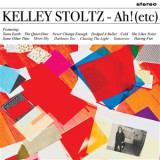
First pressing of 400 units comes as yellow vinyl! "I was guzzling wine at my favorite bar in San Francisco, the Rite Spot, and the entertainment that night was some local opera singers singing along with a big video screen showing a collage of various operatic moments with subtitles. One particular subtitle, 'Ah!-(etc)' made me laugh, I thought it was a perfect description of life - the joy of existence against the etcetera of it all, the struggle. With a heavy head of rose' it seemed like ecstatic poetry! I scribbled it on a napkin and thought it might make a good title for something" And so the mystery behind the title of Kelley Stoltz new record is solved. Less of a mystery is the quality contained therein_ after 12 self-titled releases and a several more under pseudonyms, Stoltz is the word for "one-man-band-home-recording-pop-songs of idiosyncratic character." A quick follow up to his more power pop and pub rock LP only "Hard Feelings" offering in the summer, "Ah-(etc)" finds Stoltz returning to his sweet spot, writing songs that never were, but should have been in the 60's and 80's. As with other LPs Stoltz makes virtually every noise on the album which was written and recorded in 2019 at his Electric Duck Studio in. San Francisco. A few friends popped in to play along_ Stoltz former bandmate, Echo & the Bunnymen's Will Sergeant adds electric guitar to "The Quiet Ones" a sort of Scott Walker lyrical take on strangers and neighbors. Karina Denike formerly of Dance Hall Crashers adds gorgeous vocals on the bossanova groover "Moon Shy", where Sergeant pops up again in a spoken word role on the outro. Allyson Baker of SF's Dirty Ghosts sings on "She Like Noise", a song Stoltz wrote for her in celebration of her love of seeing live bands. The album was mastered by Mikey Young in Australia.
Los Saicos created a raw, wild and visceral sound, the Southern Hemisphere equivalent of the garage rock that was coming out of the US and their anthem 'Demolición' is one of the most insane '60s punk songs of all time. Unavailable on a 45 for over a decade, here it is again! The archaeology of rock'n'roll is much like any other form of digging. Significant finds demand the re-addressing of previously considered certainty. You can hear direct links to both The Stooges and The Cramps here and several more equally enthralling combos. The latter spawned several generations of individuals who would dig deep to previously (mostly) unheard seams of music and other forms of culture that have since become part of the mainstream fabric. When Los Saicos' front man Erwin Flores was asked how aware he and his friends were of what was happening in Britain and the US at the time, here's what he had to say: "We knew the Beatles, they were our idols. We heard the Rolling Stones after recording 'Demolición' and also Bob Dylan and others. The primitive nature of our songs is something that came spontaneously out of my head. The band had no problem with assimilating and arranging it. We thought of ourselves as bad boys and that must have been a driving force." "Primitive to the point of primordial, Los Saicos are an important benchmark. Not were. Who ever thought there could be a combo out there in Peru that would make The Sonics sound like Simon and bloody Garfunkel? There is quite possibly some other music out there, someplace, that could well make us re-address this consideration, but until then, cherish this short course of Saicotherapy."
Obviously is the new album from beloved band Lake Street Dive. It includes the new single ‘Nobody’s Stopping You Now’, a letter of encouragement from lead vocalist Rachael Price to her teenaged self, co-written with bassist Bridget Kearney. Lake Street Dive has figured out how to write tunes that reflect this particularly turbulent chapter in our shared history. The album track ‘Making Do’, which was released at the end of last year, speaks to the world that future generations are inheriting while exploring the lasting impacts of climate change and our responsibility to address it (featuring a cameo from Senator Ed Markey who co-sponsored the Green New Deal).
As Price puts it, “You’re trying to express your anxieties, your feelings, your sadness, your happiness, all of these things – your authentic state of being in a song. But you’re also trying to create something people will listen to over and over again. That’s the unique fun thing about music, putting these messages into three and a half minute snippets, dropping whatever truth we can and hoping it’s the type of thing that people want to ruminate on.”
Obviously was produced by Grammy Award-winning producer, songwriter, and multi-instrumentalist Mike Elizondo who is best known as a songwriting collaborator for Dr. Dre, Eminem, and 50 Cent and has also served as a record producer for Fiona Apple, Mary J. Blige, Carrie Underwood, and 21 Pilots, among many others. Utilizing Elizondo’s hip-hop record-making expertise coupled with the permanent addition of keyboardist Akie Bermiss, Lake Street Dive’s wide-ranging taste in pop, rock, R&B, and jazz have blended together to make an impressively cohesive sound, combining retro influences with a contemporary attitude. “We’ve been a band for so long that we didn’t want to just become a feedback loop of our own ideas,” recounts Kearney. “It felt like a really good time to bring another person like Mike Elizondo, and he really opened us up. He encouraged us to make bolder arrangement choices, take those chances and try those things. The record really is a success in what we set out to do: continue to challenge ourselves, continue to grow, and do things we’ve never done before.”
The members of Lake Street Dive founded the group in 2004 while attending the New England Conservatory of Music in Boston. The band features Rachael Price (lead vocals), Mike “McDuck” Olson (trumpet, guitar), Bridget Kearney (bass) and Mike Calabrese (drums) as well as their newest member Akie Bermiss (keyboards), who has been a touring member of the group since 2017. Since the band’s inception, they have released six studio albums. Their 2018 self-produced record, Free Yourself Up, debuted at #4 on the US’s Top Album Chart and charted #8 on the Billboard 200. In addition, the album’s hit single ‘Good Kisser’ peaked at #5 at Americana radio and appeared in the Top 20 at AAA radio, both career peaks for the band. The group has toured worldwide performing at major music festivals including Bonnaroo, New Orleans Jazz Festival and Newport Folk Festival while preforming alongside artists such as T Bone Burnett, The Avett Brothers, Robert Finley, Jack Johnson and Trombone Shorty.
White Void is absence of direction and sense in life. It’s a description of the fundamental disharmony between the individual's search for meaning and the meaninglessness of the universe.
Eclectic hard rockers White Void are a curious bunch. Forged in the space between the occult rock of the seventies, the no-excuses-hard rock of the eighties and the British New Wave movement, they balance on the event horizon that separates old from new. Aggression from melody. Dream from drive.
Add to that the fact that the bandmembers of White Void have their backgrounds in Norwegian black metal, chiptune electronica, pop music and blues, and you’ll see why “Anti” is an album that’s hard to pin down. It’s darkly melodic, it’s driven, and it’s infused with earworms, hooks and licks. Boasting a shameless attitude, though, it comes forth as deeply true to the core of our shared hard rock heritage.
In the center of White Void stands Lars Are Nedland, long time member of Borknagar and Solefald. Leading a team of musicians including Tobias Solbakk of Ihsahn fame, electronica staple Vegard Kummen and blues rock virtuoso Eivind Marum, he navigates the waters of hard rock riffs, new wave harmonies and blues rock solos with determination and elegance.
Still, “Anti” probably doesn't sound like you think. It’s an album riddled with contrasts and references, musically as well as philosophically. The concept is based on Albert Camus’ Absurdism and deals with how you cope with an existence that is in its core absurd. Musically it draws on the past while forging towards the future. And the result? Well, enter the Void to find out!
Dylan Henner is back on Dauw with his new album "Great Prairie Plains: studies of American Minimalism". The album is a celebration of two pieces of music that he loves and have been hugely important to his musical life and education.
The album starts with an arrangement of Terry Riley's In C. During his school-time, Henner was allowed by his music teacher - with plenty of persuasion, in an environment of mostly much straighter classical music - to study this piece. He not only had a deep familiarity with it, but also the pdf scores that he transcribed for his homework. The arrangement was created mostly with the marimba, as an instrument that can layer very deeply without muddying the frequency range and also includes some synths, piano and a VST choir.
“I tried to balance my boundless admiration for the piece with a personalised arrangement. It would be pointless to copy Riley's original - it's too good - but I can at least try to do well by it.”
Alongside In C is an arrangement of Su Tissue's 2nd Movement, from her near-mythical "lost" album Salon de Musique. After trying to buy a copy of this record for years - they are so scarcely found he suspects he never will – Henner wondered if the next best thing would be - instead of owning a copy - to create his own copy. He started this arrangement with as much faith as he could. According to Henner, Su’s work is too rare to warrant changing, but instead should be honoured with autencitiy.
“It's not until the end of the piece that my arrangement begins to take a different shape to Su's. Once I started playing along on the piano, the rest fell into place.”
Dylan lives in Brighton, works as a photographer's assistant for his day-job and plays analogue synths, tuned percussion and cello. Last year Dylan released well-received albums on Dauw and AD 93 (fka Whities) among others. Even though he is a relatively new name, with these albums he already came to the fore as a promising artist within the electro-acoustic field.
a 01. In C [Terry Riley]
[b] 02. 2nd Movement [Su Tissue]
[a] 01. In C [Terry Riley]
[b] 02. 2nd Movement [Su Tissue]
When Linda Smith purchased a 4 track cassette recorder in the mid-1980s she was playing guitar in a band called the Woods, and thought it would be useful for sharing demos with her bandmates. In the end, the new hobby followed her from New York back to her native Baltimore, and over the next decade she’d release several albums worth of delicate, bewitching solo music on cassette. Till An- other Time: 1988-1996 is the first retrospective collection of Smith’s charmingly lo-fi music.
Sparse and gentle, Linda’s music is tinged with lovelorn melancholy despite the sweetness of her voice. Over ‘60s pop-indebted melo- dies on tracks like “A Crumb Of Your Affection”, she delivers ob- servations with an earnest softness. Elsewhere, her voice takes on a post punk deadpan, as on “I See Your Face.” The effect of both modes is a haunting charm, equally reminiscent of early Cherry Red Records and ‘60s yé-yé.
With a no-nonsense approach to recording, Linda recorded almost all of her songs at home. There was a creative freedom that came with recording on tape, and unbeknownst to her, this was a conclu- sion that many musicians were reaching at the time.
Unfortunately, the independence that made at-home recording ap- pealing to Linda also made it difficult for her to reach a wider au- dience. Relying on niche publications, cassette trading, and word of mouth to share music, Linda released a few 7”s on labels like Slumberland and Harriet but remained relatively local in terms of reach. Nevertheless, one can trace a direct line from Linda Smith to the ubiquity of bedroom recording today.
The American rock/metal band Alter Bridge released their third album AB III in 2009. It was a new venture in which they combined progressive metal and hard rock. The album received acclaim from many music critics. Rob Laing from MusicRadar called it “one of the guitar albums of the year” and Rick Florino from Artistdirect gave the record a perfect 5 out of 5 score and said “it’s a sprawling masterpiece that illuminates just how brilliant this band truly is”. “Isolation”, the band’s most successful single to date, is one of the many highlights the band recorded for this album. It doesn’t matter if you like to call it a metal or a hard rock album, because it’s the music that speaks for itself.
Alter Bridge was formed by Creed bandmembers Mark Tremonti, Scott Phillips and Brian Marshall. They recruited vocalist Myles Kennedy, and have since released five albums, all of which charted in both the UK as well as the US charts.
Alto saxophonist, composer and producer Logan Richardson’s career has been marked by his deep engagement with the Black American improvised music tradition as much as by his fearlessly open-minded embrace of the contemporary sounds of the global diaspora and his keen gaze towards the future.
‘AfroFuturism’ (his fifth solo album) synthesises all those elements together into a stunningly audacious statement that is epic in its scope while providing a deep, intimately personal view into its creator’s inner life.
The core of the album is a series of towering alt-rock/trap/wonky beat soundscapes created Logan’s extensive range of keyboards, synthesizers and programming along with the latest iteration of his Blues People band - Igor Osypov
on guitar and Peter Schlamb on vibes and keys, with Dominique Sanders on bass and sharing production duties, and the thunderously virtuosic drumming of Ryan J. Lee and Corey Fonville rounding out the rhythm team.
Logan intersperses these with an array of diverse sonic interludes, scraps of found audio, unexpected, limpid pools of introspective strings performed by Ezgi Karakus and quiet glades of hushed balladry from long-time collaborator, vocalist Laura Taglialatela. Over all, his unmistakable keening voice on alto sax provides the constant narrative thread. “I was trying to get back deeper to the core of my artistic voice: using fresh production processes to mix in my interconnected influences and all the sounds I hear, while trying to find a sense of roots.”
As one of today’s most singular voices in contemporary music, with AfroFuturism Richardson delivers not only a hugely impressive statement, but one with a direct and urgent message for the future that is rooted in his own and the larger contemporary Black American state of affairs, while reminding us of his musical unpredictability. One can only imagine what he’ll do next.
The dusty streets of apartheid-era Soweto, 27 July 1987. The politically charged funeral of a young activist who fled South Africa to became a commander in the military wing of Nelson Mandela's African National Congress. Police await in armoured cars. The funeral is restricted by specific government decree.
The man being buried is Peter Motau, assassinated in neighbouring Swaziland on the orders of South Africa's most notorious government-sanctioned killer, Eugene de Kock, orders carried out by his secret police unit in a bloody ambush.
For De Kock and the apartheid government, Peter Motau was a terrorist. For the singing, chanting mourners at his funeral, he was a freedom fighter, a hero from the streets of Soweto itself.
ZA87 is a raw audio document of one extraordinary day under apartheid. A father mourns, himself breaking the regulations declaring any political statements at the funeral illegal. Young activists, the "Comrades", sing in praise of the banned ANC's military wing, sirens blare, helicopters hover overhead, a police officer orders all television and photojournalists to leave. Nigel Wrench's microphone remains. Also there is Winnie Mandela, on behalf of the ANC's exiled leadership. Banned from speaking at the funeral, she speaks instead into Wrench's microphone and stages a remarkable intervention as the police seek to detain activists.
The authorities sought to keep the events of that day away from the eyes and ears of anyone who wasn't there. ZA87 breaks that silence.
Nigel Wrench is an award-winning journalist whose career began in South Africa under apartheid. He is the winner of a Sony Award for "Out This Week", BBC Radio's first national lesbian and gay news programme, and a New York Radio Award for BBC Radio 4's "Aids and Me", chronicling his experience of living with HIV. "Few journalists have quite so intimately captured the essence of their era's great moral panics as Nigel Wrench" (The Quietus).
ZA87 is the follow-up to Wrench's acclaimed first cassette on The Tapeworm, ZA86, "a remarkable documentation of South Africa under apartheid in 1986" (Boomkat), "chilling and at times stunningly beautiful" (The Quietus), "stylistically not dissimilar to Adam Curtis's 2015 documentary 'Bitter Lake', its hypnagogic float through the rushes feels curiously vivid, free of the dating or distancing effect further media packaging might bring" (The Wire).
My Fair Lady is a 1964 American musical drama film adapted from the 1956 Lerner and Loewe stage musical that was based on George Bernard Shaw’s 1913 stage play Pygmalion. It stars Audrey Hepburn as Eliza Doolittle, a Cockey working-class girl whom phonetics professor Rex Harrison (played by Henry Higgins) attempts to transform into someone who can pass for a cultured member of high society. The film became an instant classic, winning
8 Academy Awards and achieving commercial successes well. This soundtrack features all the songs from the film, plus 11 bonus tracks. It is released as a limited edition of
1000 individually numbered copies on transparent purple swirled vinyl.
Hot on the heels of last year’s drone masterpiece, The Free Territory (FTR 457), comes this hot bowl of noodles from Manchester’s most elegantly wasted quintet. And while there might be apt comparisons to be made to some of the best current psych purveyors, the central thrill provided by these sounds makes me think of naught but prime Bay Area ballroom scene acid spew.
The guitar lines unspool like electrical cables filled with acid punch, and remain crackling in the air for moments longer than you imagine they can remain afloat. The keys have a bit of a German overtone, but it’s the same sort of one that led to the flash of Popol Vuh’s United Artist albums (which are themselves, at heart, paeans to the Bay.) The sound here is the sort of thing true believers recall as the highest moments of Man in live concert flight. Raging, raving guitars to soak your soul once and for all.
Don’t fear the downpour. Revel in it.
-Byron Coley, 2020
As darkness falls, once familiar territory is rendered alien and foreboding; full of weird and terrifying possibilities. These are Night Lands.
Recorded live in the rehearsal room last December, the newly expanded 4 piece Dead Sea Apes lock into spooky nocturnal grooves, augmented by Nik Rayne (The Myrrors) who was over in the UK for the recording of 'Night Lands'
Night Lands is comprised of 3 off-the-cuff improvised pieces, where Dead Sea Apes effortlessly mind meld with Rayne. Taking for a deep knowledge and love which you can hear seep through - At times Amon Duul (both!) at others times Earth with touches of what you imagine the Velvet Underground sounded like in the DOM - all touched with the presence of Bo Anders Persson
Star Composer of the 1960s (Les Tontons Flingueurs, Fantômas, Angélique marquise des anges), Michel Magne was caught in 1974 in the bankruptcy of his recording studio in Hérouville. He then launches to the lyricist Boris Bergman: “Nothing works, let’s make a great religious record!”
The result will be a mystical-psychedelic bombshell, where Magne amalgamates Jewish, Arad and African music with pop rhythms. A year after their collaboration on Roger Vadim’s Don Juan 73, Bergman offers him texts that function like a modern tale, carried by the abrasive voice of New York bluesman Artie Kaplan, creator of the smashing Bensonhorst Blues. Released in indifference in late 74, Moshe Mouse Crucifixion is resurrected today, remastered up close. Its modernity is more contemporary than ever. “All the current
mergers, from north to south, east to west, already seem to be present” confirms Boris Bergman. Moshe Mouse Crucifixion is more than an album, it’s the missing link in French pop.
Melbourne’s Cool Sounds return with their fourth full-length album Bystander, out February 12. Warm and deftly balanced, Bystander moves through indie rock and alt-country with an alert effortlessness.
Cool Sounds’ signature lead guitar lines are in dialogue with lead singer and songwriter Dainis Lacey’s lyrics, which are at turns introspective, self-aware, irreverent and unflinchingly observant. Bystander was written during a European summer and recorded in three weeks over the following Australian one, produced by Lacey alongside Dylan Young (Way Dynamic). While it can sound serene, Bystander isn’t always as laid back as the warm weather might suggest: this album sees Cool Sounds more attuned to their surroundings than ever. While Lacey has always been interested in storytelling, these songs bring lyrics into sharp focus – for the first time the words were all written before the music, and he took notes in the band’s cramped tour van on the autobahn and while wandering through small towns in France and Italy, reflecting on his home while away from it.
Bystander sees Cool Sounds explore the contemporary moment and the everyday with nuance and dexterity, never losing sight of the intimacy and charm that characterises their work. An exercise in observation and reflection, Bystander takes snapshots and zooms in, underlines phrases, and asks its listener to continue paying close attention.
Cool Sounds are Dainis Lacey, Nick Kearton, Ambrin Hasnain, Steve Foulkes, Jack Nichols, Pierce Morton
Produced by Dainis Lacey and Dylan Young
Engineered by Dylan Young
out of Stock
Last delivered 5 years ago available to reorder, subject to availability
Anohni has shared an emotive cover of Gloria Gaynor's 1978 classic 'I WIll Survive'. The track was a staple of her early live shows and opens with a graceful string arrangement by Maxim Moston, paired with piano performed by Anohni. Prior to the track being widely available on streaming platforms, Anohni shared a video incorporating live footage alongside messages dedicated to groups and causes that Anohni has long been an activist and advocate for. During the clip, Anohni dedicates the song to "the sacred gay people"; "all endangered Black trans lives"; "those in the US who die from medical neglect"; "the coral reefs of the world, now rotting"; "all those awaiting execution in US death chambers"; "Black lives tortured and stolen by American cops" and more. The messages reflect Anohni's longer values and work as an artist, trans activist, environmentalist and advocate for social justice. Alongside the release is a statement from Anohni, on the track being the subject of a licensing offer she turned down due to the platform in question hosting misleading pro-Trump ads. Further on the track, Anohni explains: "It was the first song I ever sang in nightclubs in NYC when I was 20 years old. I sang it hundreds of times. In those days I sang it thinking of Marsha P. Johnson and the underground queer community struggling to survive in the face of AIDS. Now it seems to me like an anthem for the future of life on earth." 'I Will Survive' follows a brace of releases from Anohni this year: most recently 'R.N.C 2020', a track inspired by the Republican National Convention which took place in August and the dread Anohni felt while watching it. Prior to that, Anohni released a 7" consisting of two covers, one of Bob Dylan's 'It's All Over Now, Baby Blue' with a b-side of Nina Simone's 'Be My Husband'.
out of Stock
Last delivered 5 years ago available to reorder, subject to availability
Back in October 2009, Strut’s Inspiration Information series was in full swing. Following an acclaimed collaboration between Mulatu Astatke and The Heliocentrics, Finnish maverick Jimi Tenor hit the studio for a mouth-watering head to head with Afrobeat drumming legend, Tony Allen.
Tenor had already built a reputation as a fascinating enigma in modern day music. Consistently one of the most inspired and unpredictable live artists around, his work since his breakthrough album ‘Intervision’ (Warp, 1997) had involved open-minded projects ranging from live film soundtracks and orchestral pieces to a series of Afro-based albums with his band Kabu Kabu. Enjoying a burgeoning revival, Tony Allen had continued to attract new fans. Celebrated as the creator of the Afrobeat rhythm and a lynchpin of Fela Kuti’s Africa 70 band, his work at the time of this recording had included the first album as The Good, The Bad & The Queen with Damon Albarn and his debut recording for World Circuit Records, ‘Secret Agent’.
Recorded at Lovelite Studios in Berlin during November 2008 ith further sessions in Finland and Paris, the Tenor / Allen collaboration whipped up a raw, heavy analogue sound mixing the full range of Allen’s Afrobeat repertoire with Tenor’s off-kilter brew of dark humour, tongue-in-cheek lyrics and tight, firing musicianship. The sessions involved key members of Tenor’s Kabu Kabu band and Berlin-based guest MC Allonymous with tracks evolving naturally from jamming ideas together over five intense days of recording, fuelled by plenty of African food and whisky. Tenor’s trademark range of home-made instruments rubbed shoulders with vintage keyboards and traditional African percussion.
The resulting set became one of the best recordings that both artists produced during this period. Tracks range from Jimi’s S&M tableau, ‘Darker Side of Night’ to the apocalyptic commentary on our times, ‘Path To Wisdom’ and the hilarious lampooning of the UK immigration system, ‘Mama England’, composed on the Tenor tour bus. The album also featured fusions based around more traditional low-slung Afrobeat structures (‘Sinuhe’, ‘Got My Egusi’) and ended with the epic freestyle juggernaut, ‘Three Continents’, a life affirming, mesmeric groove built around another rough-as-nails Allenko rhythm base. 'Inspiration Information: Jimi Tenor / Tony Allen' is re-released on 22nd February 2021 and is dedicated to the memory of the great, incomparable Tony Allen.
First reissue of long out-of-print and sought after release from 2009
Unique fusion of Afrobeat drumming and psychedelic Jazz
Vinyl cut from original sessions
out of Stock
Last delivered 5 years ago available to reorder, subject to availability
Back in 2018, Four Flies Records unearthed the previously unheard 'Africa Oscura', considered by many as the "dark side" of 'Zoo Folle' – Giuliano Sorgini's masterpiece (reissued by Four Flies Records in 2016) – and partly recorded during the same session in 1974.
The original work portrays a fictional and mysterious continent, providing a soundtrack tinged with dark
moods and cosmic shades. 'Africa Oscura' was entirely recorded by the composer, who played all instruments in his studio in Rome. This resulted in a formal spareness, a minimalism that gives it a
modern quality, something which makes it stand the test of time, or at least resonate with contemporary taste.
Since its release, 'Africa Oscura' has become a classic – a pivotal release not only within Sorgini's discography, but also one that made his name more known and accessible to a new generation of music professionals, DJs and fans of electronic music.
Four Flies have thus decided to celebrate its modernity with a double 12" featuring 7 reworks by six of Italy's most visionary DJs/producers: Jolly Mare, L.U.C.A. (aka Francisco), pAd, Painé, and Quiroga & Dario Bass.
The original tracks have been reworked with different approaches, sometimes into full reinterpretations, and with demanding dance floors in mind. The result is a stunning collection of electronic, cosmic, downtempo and Balearic reworks that preserve the spirit of the original versions while projecting them into the future.
out of Stock
Last delivered 4 years ago available to reorder, subject to availability
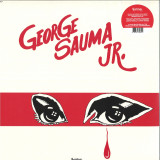
Favorite Recordings proudly presents an exclusive eponymous LP by Brazilian singer and composer George Sauma Jr., originally produced in 1985. Imagine a never-marketed release on which you’d hear not only the beautiful and genuine George’s songs but also the work from two figures of the Brazilian Music Golden Age: Arthur Verocai and Junior Mendes! A much-needed album for all Brazilian connoisseurs.
Back in the days, George Sauma Jr. was a young artist from Rio de Janeiro, learning on his side how to play chords and compose songs since he was 10. Still at the university, he’s influenced by Brazilian artists like Cassiano or Tim Maia, deeply fascinated by the arrangements and the “levada” (the groove) of all these new Brazilian songs. Simple and romantic music that resonated to his soul and creativity.
Around 1985, the story took an unexpected turn. George tells: “Dna Deyse Lucidy, the mother of Junior Mendes was a candidate for deputy and went to my father’s company to advertise. When I saw her, I shouted, “I’m a big fan of your son!” ” Of course, she could not praise more the work of her son. On her advises, George went to his studio on Rua Siqueria Campos at Copacabana. Junior loved the project and sent him to Arthur Verocai to improve the arrangements. Without money, the decision was taken to record everything at Junior Mendes’ studio on an 8-channel mixer. It was a small set-up but the emotions were there! George surely had other plans for some of his songs but without the budget, they ended up doing everything the best they could. And they did very fine with a top-notch team of musicians: Paulo Black on Drums, Arthur Verocai on Guitar, Ricardo Do Canto on Bass and Helvius Vilela on Keyboards.
Leaving the studio with the tapes, George tried to knock doors of international labels, but none did even dare to give him an answer. With less than 1000 copies pressed back in the days and without any distributor or label behind him, he went with proud to record stores, but received nothing than a strong reality check regarding the difficulties for a young Brazilian artist to achieve something on the saturated market of the 80s. Even for free, record stores didn’t want it. In the end, he ended up giving copies to friends and families, knowing deep inside that the songs were good! George tells: “I decided to leave, calm and conscious. I’ve still made three more albums, however on tapes, as it was more affordable. This time, just for my pleasure…”.
Thirty-five years after, it’s with great emotion that this first album by George Sauma Jr. is now made available as Vinyl LP with its original offset printed innersleeve & CD
out of Stock
Last delivered 23 months ago available to reorder, subject to availability
Hawkwind have always been associated with music festivals, most notably the free festivals, where Dave Brock has said that, at
those events, the band is not shackled to appease an audience by giving them what they expect and have paid to see. With that obligation removed, the band can relax and experiment more than usual and gigs become even more fun. Their sessions, where they played for free, sometimes with the Pink Fairies, at Canvas City, outside the official site of the Isle Of White Festival in 1970, are a matter of legend and Nik Turner gained much attention when he painted his face silver and was much photographed as a result. During his set, Jimi Hendrix referred to him as 'the cat with the silver face'. However, when we think of Hawkwind and festivals, the word Stonehenge leaps to the fore.
The band always loved being there, enjoying the whole event as well as the freedom of how and when they played. This was not a time of business, but a time of fun. The most important one of these was Stonehenge 1984, which proved to be the last festival before the authorities moved in the following year to block the festival from being set up and Hawkwind ended up playing a few miles away instead. It was the sad end to an era. It had taken place twelve times and, had it been allowed one more time, it would have become a public event and the powers that be were determined to prevent that from happening. Happily, the 1984 festival was recorded and filmed and the Hawkwind Solstice Eve and Solstice Morning were both preserved...and we should be grateful for that.
The fact that Hawkwind were playing for free didn't mean it was a basic show. As well as the line-up of Dave Brock, Harvey Bainbridge, Huw Lloyd Langton (who played the evening session, but not the following morning), Nik Turner, Alan Davey and Danny Thompson, there were half a dozen dancers, a mime artist and fire spitting. A free event, it was the ideal time to introduce the new rhythm section to the band in the form of Danny Thompson on drums and Alan Davey on bass, with Harvey moved to keyboards. A move which was to have a long term affect in the way he made music, leading to his solo career, as well as years playing synths for Hawklords, in years to come, after his stint as the Hawkwind keyboards player came to an end.. Danny fitted the bill comfortably and drummed for the band until he left in 1988, to be replaced by Richard Chadwick. Danny went on to play for other bands including Bedouin and Pre Med. He also recorded a cassette album called Skinwalker. Alan made a good team alongside Dave Brock and it can be seen on the video just how pleased he was to be playing alongside Dave Brock, a man whom he had only met for the first time in November 1982, backstage at the Ipswich Gaumont. He went on to be the longest serving Hawkwind bass player, before moving on to pursue solo projects and form a nmber of bands. So in terms of the line-up, Stonehenge 1984 had a notable impact on the formation of the band for a number of years and, indeed, the destinies of Harvey, Danny and Alan. As if that were not enough to make the event special in the annals of Hawkwind, they played an interesting and varied main set in the evening, featuring a blend of old and new Hawkwind songs, along with numbers from Inner City Unit and
Bob Calvert's Lucky Leif And The Starfighters album. In keeping with the relaxed atmosphere, there was a considerably extended
version of Ghost Dance, lasting around ten minutes. The sunrise set was special too, with a long, laid-back, jam at dawn, in fitting with the occasion.
A lovely and relaxing start to the day and the kind of jam they couldn't really play to a paying audience. It's good to have the
memories of this significant festival gathered together in three formats.
Enjoy this special set, which commemorates a special event, not only in the history of Hawkwind, but of the saga of Stonehenge festivals.
*** UNRELEASED AOR / YACHT ROCK FROM 1979 AS FEATURED ON PRAISE POEMS 7***
It is a rare occurrence, especially when you consider that we are writing this in the year 2020, that an unreleased AOR/Yacht Rock album surfaces after 40 years. The Tramp crew first heard about it while discussing Penn Central's inclusion of their song "Sometimes" on "Praise Poems Vol.7".
The band Penn Central was formed about 1978 by Gary Phelps and his younger brother Shawn Phelps. They had been playing together in a few different groups in the Erie, Pennsylvania area since Gary returned there from Penn State in 1974. In 1978 Shawn was going to college at Edinboro State University, just south of Erie, where he met Curt Salvador, a student from the Pittsburgh area. They began playing together in a local Edinboro group when Shawn introduced Curt to Gary. Gary, Shawn, and Curt began to collaborate and soon Gary brought in friend and former high school bandmate Allen Bennett who was an accomplished musician on trumpet and percussion. Shawn then found Dave Lindgren who was playing drums in various bands locally and Penn Central was formed.
The group began rehearsing and playing small venues together. Soon, they began to work on original songs that Gary and the band were writing. They decided in 1979 to record some of the original music at a small independent studio in Erie that was owned and operated in by Keith Veshecco and John Mazza. Soon after recording 7 songs there, a large FM radio station, WDVE, in Pittsburgh sponsored a contest for local bands for a compilation album of local groups. Because of Curt's roots in Pittsburgh, he entered the Penn Central song "Sometimes" in the contest and it earned a spot on the 10 track album that was released in 1980. The band subsequently played in the area for the next few years before drifting apart as the members left college, began new careers, and started raising families. Gary, his brother Shawn, and Curt continued playing together and with other group configurations and as solo artists off and on since that time. They remain friends and share musical ideas to this day.
Key selling points:
- previously unreleased album from 1979
- all songs taken from the original reel-to-reel master tapes
- including full album download code
“Our first ever show in the UK was the opening slot at Brixton Academy so this is just totally emblematic of the support that has grown overseas we are ever grateful for. It’s still the greatest show we have ever played and we will never forget that night. See you all soon! Stay safe.” DMA’S
On March 6th, 2020 a sold-out audience filled the O2 Academy Brixton’s cavernous space from wall-to-wall. The band played the biggest headline show of their career to date half a planet away from home, yet the show conjured the atmosphere of an intimate homecoming celebration.
The O2 Academy Brixton show was immediately hailed as one of the highlights of the band’s career so far, and it has taken on whole new significance given the events that have followed. For many fans it was their final show before live music events were halted.
From early favourites ‘In The Air’ and ‘Lay Down’ to new material such as ‘Silver’ and ‘Life Is A Game Of Changing’ from ‘THE GLOW’ The show is documented in the ‘Live at Brixton’ album, which will be released almost a year to the day later on March 5th. ‘Live at Brixton’ will be released on a striking smoke-effect pink/orange limited edition double vinyl. Its design was inspired by a flare that was set off during the show. The album offers a chance to reminiscence on the life-affirming power of live shows, and also an inspiring reminder of what we’re all looking forward to returning to.
The Pet Parade,” the title track to Fruit Bats’ newest album, might be a surprising opening track for longtime fans of Eric D. Johnson’s beloved indie folk-rock project. The six-and-a-half-minute tone poem smolders and drones over just two chords, inspired by the strange and silly community events that he saw growing up outside of Chicago, in La Grange, Illinois, in which people dressed up and showed off their pets. Decades later, The Pet Parade emerges in troubled times, living within what Johnson refers to as the beauty and absurdity of existence. While many of the songs on The Pet Parade were actually written before the pandemic, it’s impossible to disassociate the record from the times. As an example, producer Josh Kaufman (Bob Weir, The National, and Bonny Light Horseman, in which he plays with Johnson and Anaïs Mitchell) was brought in for his deep emotional touch and bandleading abilities. However, Johnson, Kaufman, and the other musicians on The Pet Parade drummers Joe Russo and Matt Barrick (The Walkmen, Fleet Foxes), singer-songwriter Johanna Samuels, pianist Thomas Bartlett (Nico Muhly, Sufjan Stevens), and fiddler Jim Becker (Califone, Iron & Wine) were forced to self-record their parts in bedrooms and home studios across America. Still, says Johnson, “The songs have enough intimacy that it doesn’t sound like it was made a million miles away.” Such tension and turmoil also impacted the lyrics of The Pet Parade. While “Cub Pilot” and “Here For Now, For You” began as more traditional love songs from a personal “I” to a specific “you” Johnson quickly realized that these songs needed to comfort broader audiences, changing the words to a more inclusive “we” and “us.” So too in “The Balcony,” a song ostensibly about a particular space in his grandmother’s apartment, but one that evolved into a metaphor on patience. At times upbeat and reassuring (“Eagles Below Us”) and at times quietly contemplative (“On the Avalon Stairs”), The Pet Parade marks a milestone for Johnson, who celebrates 20 years of Fruit Bats in 2021. In some ways still a cult band, in other ways a time-tested act, Fruit Bats has consistently earned enough small victories to carve out a career in a notoriously fickle scene. And Johnson himself who has played in The Shins, composed film scores, gone solo and returned back to the moniker that started it all, and most recently, earned two GRAMMY® nominations with Bonny Light Horseman doesn’t take this long route of life’s pet parade for granted. “I’m still really excited to make records,” he says. “Lucky and happy and maybe happier that things went slower for me. I’m savoring it a lot more.
No other pairing in the history of Darkwave ever matched the unfettered creativity, resolve, and DIY attitude from the collaboration between the two creative minds that compromise Lebanon Hanover.
The meeting of the Swiss musician Larissa Georgiou, aka Larissa Iceglass and British artist William Maybelline a decade ago in the latter’s hometown of Sunderland in the UK, was a monumental occasion, reverberating throughout the European music scene and even across the Atlantic.
Lebanon Hanover would emerge from the peak of the world-wide minimal wave revival, with their 2011 split 7-inch record with La Fete Triste issued as the catalog debut of Europe’s most ubiquitous Techno-Industrial EBM labels, Aufnahme + Wiedergabe
With Berlin as their new physical home, William and Larissa would soon, however, join the Fabrika Records family. From here, they would go on to release two full-length albums through the Athens based label, starting in early 2012 with their winter debut LP The World Is Getting Colder, and it’s All Hallows Eve follow up Why Not Just Be Solo.
It was Lebanon Hanover’s 2013 third studio outing Tomb for Two that would go on to cement the duo’s legacy, with the album’s single “Gallow Dance” becoming a post-punk anthem for the times, with artwork became the band’s defacto logo. Not only that, the song “Sadness is Rebellion”, also featured on the album, became the band’s official Mantra.
Two years would pass before the release of 2015’s critically acclaimed fourth record, “Besides the Abyss”. In the intervening years, William and Larissa, initially a couple, would find other partners, and relocate to Athens.
Meanwhile, Lebanon Hanover as a live act would expand rapidly in popularity, exceeding capacity during their performances at Wave Gotik Treffen in Leipzig, and performing sold-out shows across Europe and the UK.
With the playful Babes of the 80s maxi-single released in the interim, three years would pass before the next record from Lebanon Hanover, with 2018’s Let Them Be Alien, the band’s fifth studio album.
At the dawn of the global pandemic, where dystopian nightmares that were only ever seen before within the pages of books and flashes of silver screen celluloid, has become a daily reality, a new kind of darkness envelops the world. It was at this Lebanon Hanover returned, sharing a glimmer of hope with the single “The Last Thing,” the duo’s first song from their forthcoming sixth studio album Sci-Fi Sky.
Spanning an epic journey across ten tracks that wander through industrial landscapes, and ascend beyond the atmospheric aether, Sci Fi Sky is Lebanon Hanover’s most cohesive artistic statement to date. With their icy hearts on their sleeves, this is the culmination of a decade’s worth of musical creativity radiating from the minds of both Iceglass and Maybelline, and altogether an otherworldly beacon of hope in a time of sheer darkness.
out of Stock
Last delivered 5 years ago available to reorder, subject to availability