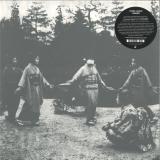
The drowsiest and earliest inklings ofthe slowcore movement can be traced to Codeine's 1991 debut. Combining theLouisville scene's relaxed tempo withdoom metal's distorted slurry, the albumis a depressing masterpiece of hushedvocals, noisy guitar, and punishing drums.Remastered from the original analog tapesand recreated in painstaking detail,FrigidStars LPis the NYC trio's fuzziest andmost affecting work."A deft musical approximation of thesound of water turning to ice, the guitarsare so weighed down with distortion thatthey struggle to march from one chord tothe next."-Pitchfork
Cerca:wat
When a limited edition 45 single landed on the desk of Jazz Room Head Honcho Paul Murphy he contacted the guys straight away. "Do you want a 45 piece of wax released on Jazz Room Records?" Bells were ringing!
The A Side is a Latin Afrosound version of the Sun Ra Classic "Watusa". Featuring members of the Los Angleles based Afro Latin Beat Collective "Jungle Fire".
You might have noticed this getting quite a few spins on the Gilles Peterson show on BBC 6 Music.
The B Side is a funky version of the Charles Mingus composition "Meditations On Integration".
Rush releasing July 2025.
Far Out Recordings continues its reissue campaign of the late Argentinian guitarist Agustin Pereyra Lucena's work with the first-ever vinyl reissue of his singular 1988 private press album, Puertos De Alternativa, now his most sought-after LP. The album features some of Agustin’s most uniquely beautiful compositions, including “Luces de Valeria” and “Preparativos Maritimos,” alongside Baden Powell's “Pequeño Vals” and “O Cego Aderaldo (Nordeste...),” and “Tema Barroco” by his longtime collaborator, Guilhermo Reuter.
By 1988, Agustín had established himself as one of Argentina’s foremost interpreters of Brazilian music. The seventies saw success with his group Candeias, and he gained recognition in Brazil, forming friendships and collaborations with luminaries such as Vinicius de Moraes, Baden Powell, Dorival Caymmi, Toquinho, and Maria Bethania. Following the era of dictatorship in South America, Agustín spent the late seventies and early eighties, living and touring in Norway as part of his European travels with his group Agustín Pereyra Lucena quartet.
Recorded after returning to his native Buenos Aires, Agustin Peyera Lucena’s Puertos de Alternativa emerged from this confluence of diverse experiences and influences, revealing an artist deeply connected to his environment. The album's title, meaning "Alternative Harbours," reflects Agustín's particular affinity for water. He observed that much of his favourite music originated from places with rivers and seas nearby, noting, "There is a flow near water that influences guitar playing for sure."
With a profound connection to both instrument and environment, Agustín’s music is often difficult to place. The album begins rooted deeply in South American soil, drawing clear inspiration from Brazilian guitar masters like Heitor Villa Lobos, Garoto and Baden Powell. But, as it progresses, a sense of journey unfolds, evoking new landscapes and horizons – from the crystalline beauty of glacial Norway to the gentle currents of the Rio de la Plata.
The ensemble on Puertos de Alternativa features notable Argentinian musicians, including drummer Osvaldo Avena, flautist Rubén Izarrualde, and saxophonist Bernardo Baraj.
Mastered by Stuart Hawkes at Metropolis Studios from the original master tapes which had been lovingly kept by Agustin’s nephew José Lucena Perreyra
Tracklist & Credits:
A1. Luces De Valeria (Agustin Pereyra Lucena)
Guitar, Vocals – Agustin Pereyra Lucena
Piano, Bass, Drums, Vocals – Guillermo Reuter
Tamboril – Julio Said
A2. Pequeña Valsa (Baden Powell)
Arranged By Flute – Lucho González
Drums – Osvaldo Avena
Flute – Alejandro Santos
Guitar – Agustin Pereyra Lucena
Tambora – Eduardo Avena
A3. Planicie (El Llano) (Agustin Pereyra Lucena)
Arranged By Flute – Lucho González
Flute – Rubén Izarrualde
Keyboards, Acoustic Bass, Percussion, Arranged By Keyboards – Guillermo Reuter
Guitar – Agustin Pereyra Lucena
A4. Tema Barroco (Guillermo Reuter)
Guitar – Agustin Pereyra Lucena
Percussion – Guillermo Reuter
A5. O Cego Aderaldo (Nordeste...) (Baden Powell)
Guitar – Agustin Pereyra Lucena
B1. Tres Que Quedaron (Agustin Pereyra Lucena, Andrés Laprida)
Drums – Osvaldo López
Flute – Rubén Izarrualde
Piano, Keyboards, Bass, Directed By – Guillermo Reuter
Soprano Saxophone – Bernardo Baraj
Electric Piano, Arranged By – Andrés Laprida
Guitar, Electric Guitar, Vocals – Agustin Pereyra Lucena
B2. Preparativos Maritimos (Andrés Laprida, Agustin Pereyra Lucena, Guillermo Reuter)
Guitar, Vocals – Agustin Pereyra Lucena
Keyboards, Acoustic Bass, Percussion, Arranged By – Guillermo Reuter
B3. Puertos De Alternativa (Agustin Pereyra Lucena)
Guitar, Effects – Agustin Pereyra Lucena
B4. Casi-Numbe (Luis González Cárpena, Agustin Pereyra Lucena)
Bass – Lucho González
Bass Flute – Rubén Izarrrualde
Berimbau – Horacio Veros
Keyboards, Piano, Vocals, Drums, Arranged By – Guillermo Reuter
Guitar, Vocals, Arranged By – Agustin Pereyra Lucena
Dune Castle presents - From A Darebin Cave by Cantrips, an acid folk odyssey. Recorded live with a 7-piece band over two days, "From a Darebin Cave" features members from Surprise Chef, Don Glori, Karate Boogaloo, and more.
Centered around the nylon guitar and voice of Patrick Ryan (Cantrips), this album draws inspiration from late 60s/early 70s acts like Nick Drake, Terry Callier, and Donovan. The album also incorporates string arrangements reminiscent of Frank Sinatra's "Watertown" and late 60s psychedelic pop. This unique sound was crafted by two keyboardists emulating a string quartet with synthesizers, complemented by drums, percussion, double bass, and pedal steel guitar.
The lyricism delves into themes of isolation, loneliness, regret, and joy, inspired by the natural beauty of the Darebin Parklands surrounding the Dune Castle studio, and takes influence from Romantic poets such as Mary Oliver, William Blake, and Pablo Neruda.
Limited Repress arrived !
We would like to remind you that this project is non-profit and that the proceeds will be donated to an Italian association that helps children with cancer and support their families.
Remastered by Hotrebor
Artworks by Federico Chiari
Executive Producer Andrea Cozzaglio
Read the book : Loopera
and watch the movie !
Erstmals veröffentlicht 2010 - 'Barking' (Reissue).
Underworld sind ein echtes Unikat, das auf den größten Festivals und Veranstaltungen der Welt als Headliner auftritt, in Underground-Techno-Clubs und Lagerhäusern spielt, Theaterproduktionen vertont oder Kunstgalerien, stillgelegte Schuhläden und japanische Kaufhäuser bespielt.
- Ltd. 2LP: (180g schweres schwarzes Doppelvinyl. Auf halber Geschwindigkeit geschnitten und sorgfältig auf höchste Audioqualität getestet. Double-Gatefold mit dem klassischen Design der Originalpressung und neuem LP-Cover-Rücken-Artwork, das neben den anderen 2025er LP-Reissues der Band ein einheitliches Bild ergibt.)
Enjoy The Ride Records and Enjoy The Toons Records, with WaterTower Music, present the limited edition vinyl release of A Minecraft Movie (Original Motion Picture Soundtrack), featuring original songs and a score by Grammy- and Emmy-winning composer Mark Mothersbaugh. The soundtrack is led by "I Feel Alive," written and produced by Jack Black, Mark Ronson, and Andrew Wyatt, with Black on |ocals and contributions from Danielle Brooks, Dave Grohl, Troy Van Leeuwen, and Roger Manning.
Black also contributes to three additional songs throughout the film. Other featured artists include BENEE performing "Zero to Hero" (written by Bret McKenzie), Dayglow with the indie-pop track "Change Song," and rock band Dirty Honey's "When I'm Gone," which embodies Jason Momoa's character. Mark Mothersbaugh's score blends original compositions with nods to C418's iconic Minecraft game music, balancing quirky character themes with high-energy action sequences. The soundtrack is pressed on 2xLP limited edition colored vinyl across seven variants representing characters and themes from the film, with voxel-inspired center labels, housed in a gatefold jacket with a 12" x 12" double-sided full-color insert.
- The World Doesn't Need Another Band
- I Only Ever Wanted To See You Fail
- A Figure On The Stairs
- Slow Torture Of An Hourly Wage
- Trouble Don't Last
- You're Never Safe From Yourself
- Your Cult Is On Fire
- My Toxic Friend
- Your Taste Makes You Strange
- Marty As A Youth
- What's The Worst Thing You Heard?
- No One Absolves Us In The End
- Richard In The Age Of The Corporation
- There Must Be A Pill For This
SKY BLUE VINYL[23,49 €]
The Reds, Pinks & Purples is a San Francisco indie band led by Glenn Donaldson (The Ivy Tree, Skygreen Leopards, Art Museums and Painted Shrine). For fans of_ Guided By Voices, The Chills, Teenage Fanclub, The Shins, The Replacements, Leonard Cohen, The Go-Betweens, Robert Wyatt. Having penned over 200 songs in the last six years, The Reds, Pinks and Purples release a collection of tracks previously unreleased on physical format that continues to romanticise the wonders and woes of the world. With song titles that read like chapter sub-heads for a post-Douglas Coupland novella, 'The Past Is A Garden I Never Fed' takes The Reds, Pinks and Purples central orator Glenn Donaldson through the turmoil of small talk and everyday water cooler moments with a fine sense of pathos and irony. Set to a soundtrack that swerves between the dark days of Television Personalities and Byrdsian twang to the Jarvis Cocker-styled rhetoric and vocal tenderness of 'Richard In the Age Of The Corporation' with hints of everything from Husker Du's fuzzed splendour to the chiming majesty of The Chameleons it's an empowering listen. The pathos and irony of the glorious track 'The World Doesn't Need Another Band' sets out the band's store, it's a measured and quietly outspoken rant at lacklustre opposition peppered with a gorgeous guitar break. Meanwhile, 'I Only Ever Wanted To See You Fail' rumbles with an Eddie And The Hot Rods pre-punk riff before dissolving into a tale of self-doubt and remorse, bemoaning others' good luck. 'Toxic Friend' is from the book of the TVP's Daniel Treacey with an upbeat chorus that smacks of all that was good in old school indie in a hail of fuzzy logic and guitars. From humble beginnings as a home recording project, The Reds, Pinks and Purples has blossomed into a sporadic live unit with tours on both sides of the Atlantic and appearances at Pitchfork Fest London and Woodsist Fest as well as support slots for indie legends such as Destroyer, Guided By Voices, and The Feelies. "Donaldson's best work hides allure within a bigger picture, like a jangle-pop egg hunt" Pitchfork.
- Wake Up Little Sparrow
- Ay Mama
- We All Know
- Little Yellow Spider
- A Ribbon
- At The Hop
- My Ships
- Noah
- Sister
- Water May Walk
- Horseheadedfleshwizard
- An Island
- Be Kind
- Owl Eyes
- The Good Red Road
- Electric Heart
- Untitled
- This Is The Way
- It's A Sight To Behold
- The Body Breaks
- Poughkeepsie
- Dogs They Make Up The Dark
- Will Is My Friend
- This Beard Is For Siobhan
- Rejoicing In The Hands
- Fall
- Todo Los Dolores
- When The Sun Shone On Vetiver
- There Was Sun
- Insect Eyes
- Autumns Child
- Untitled
- See Saw
- Tit Smoking In The Temple Of Artesan Mimicry
- Something Incomprehensible
- Law Enforcement Agency
- Reptition Of Human Errors
- Let Me Explain
- Save Your Dignity
- No Brain /No Pain
- Discord
- Monofaces
- Better To Forget
Ende der Achtziger hatte sich Thrash Metal auch in Deutschland etabliert und spielte weltweit sogar eine führende Rolle. Bereits zu dieser Zeit war es einigen Bands nicht mehr genug, einfach nur schnell und aggressiv zu spielen. Der Thrash Metal wurde in vielen Fällen anspruchsvoller und technischer. In den USA trieben das Watchtower auf die Spitze, in Deutschland folgten gleich mehrere Bands auf dem Aaarrg-Records Label (Mekong Delta, Target).
Während andere Acts erst noch straight agierten und dann im Verlauf ihrer Karriere mit progressiven Elementen liebäugelten (Holy Moses, Deathrow, Destruction), schnürten die Hamburger MEGACE schon nach der Bandgründung 1988 ein anspruchsvolles Thrashpaket. Mit der Sängerin Melanie Bock hatte man zudem ein besonderes As im Ärmel, denn sie kann Beides: Das kehlige Thrash-Shouting und melodischen Gesang. Das hob MEGACE direkt von anderen Bands ab, was ihnen direkt eine Chancen bot, die auch genutzt wurden.
Nach einigen Demotapes, die auch von der internationalen Presse gelobt wurden, erhielten sie einen Plattenvertrag bei 1MF Records, das Label des ehemaligen Sänger von Angel Dust und Scanner, S.L. Coe. Im Juli 1991 wurde dann in den Dust Music Studios (Dark Millenium, Torchure, Morbid Jester, Sacrosanct) das Debütalbum „Human Errors“ aufgenommen, welches in der Presse durchweg gelobt wurde und auch heute noch Fans auf der ganzen Welt hat. 2025: Golden Core veröffentlicht die erste (offizielle) Neuauflage dieses Genreklassikers. Die CD-Version enthält die bisher unveröffentlichten Aaarrg Records Demos, die im Studio von Ralph Hubert (Mekong Delta) 1989 aufgenommen wurden. Die CD enthält ein 16seitiges Booklet, die LP einen bedruckten Einleger. Separate Master für LP und CD!
Black Truffle is pleased to announce a new edition of Kassel Jaeger’s Fernweh, returning François J. Bonnet’s electroacoustic project to the label five years after the acclaimed Meith (BT069). Originally released on Giuseppe Ielasi and Jennifer Veillerobe’s impeccably curated Senufo Editions in 2012, Fernweh stands near the beginning of the gradual expansion of Bonnet’s approach after the austere acoustic textures of Aerae and Algae (both released on Senufo), leading to the lush, layered environments of recent solo works on Shelter Press and the epic electronic expeditions undertaken in duo projects with Stephen O’Malley and Jim O’Rourke.
A major work in the Kassel Jaeger oeuvre, stretching over two LP sides, Fernweh draws together synthesized and musique concrète materials into a drifting assemblage. Its title’s meaning is close to the concept of ‘Wanderlust’, fitting for this music that moves freely and unexpectedly between what Bonnet calls ‘climates’. Beginning with fizzing electronics whose rhythm of gradual approach suggests breaking waves, the clinical atmosphere is soon haunted by intangible traces of lived reality. Textures call up wind, water, insects, the crunch of feet on sand or the clinking of glasses, yet they can never be identified with any certainty. At times these concrete elements possess a vivid ‘closeness’; at others, the sounds shade into a formless distance. Though the listener forms no clear picture from the concrete sounds, these elements aerate the music, lending it their space.
Drawing from the rigorous formal language and conceptual apparatus of the French musique concrète tradition—with which Bonnet, as director of the GRM and researcher into its deepest archival recesses, is intimately familiar—the music of Kassel Jaeger is equally informed by how underground experimental music has rethought electroacoustic techniques, with Fernweh at times calling up the grit and grime of para-industrial eccentrics like Maurizio Bianchi or the Toniutti brothers, and at other moments suggesting the slow-moving grandeur of early Olivia Block. Subtle features of dynamics and rhythm act as connective tissue between the numerous ‘scenes’, with wave-like envelopes, rapid pulsations, and short, tape-loop patterns all recurring throughout the piece, shared ambiguously between electronic and concrete sounds. Amid these shifting, often inharmonic textures, the electronic elements sometimes cohere into melodic shapes and chordal patterns, cutting through the fog in distorted arcs or underpinning the layered surface with slow-moving harmonies. Like his friend and collaborator Jim O’Rourke, Bonnet displays a radical openness at odds with academic tradition, allowing unabashed emotion to coexist with rigorous experimentation. As Fernweh dies away with mysterious shudders, listeners are left at once moved and unsure of exactly what they just heard.
Originally published by Tomlab in 2001, “Seleya” is the second full- length issued by Kristian Peters’ Novisad project. Twenty-four years after its initial release, the album’s thirteen loop-based arrangements continue to resonate with striking clarity. Keplar presents Seleya with a previously unreleased bonus track from 2004 and a fresh vinyl cut by LUPO.
These evocative miniatures feel haunted with the passage of time, bearing traces of the exploratory studio workflows, tactile imperfections, and emerging technologies that would have given birth to them: plain DAW manipulations, aliasing digitalia, the tones and timbres of the “misused” equipment ambient musicians utilized before Ableton, Eurorack, and the rise of the boutique electronics that have streamlined electronic music production.
In our present epoch, these compositions feel almost eerily nostalgic, documenting the sort of trembling, wide-eyed spirit and enviable naivety that characterizes cultural production as it ventures into new waters, unfettered by the sediments of established methodology and trend. This tendency to avoid aesthetic orthodoxy results in music that refuses to settle into predictability. Subtle frequencies drift and collide, counterpoint loops run in quiet opposition, and elegant dissonance gives rise to unexpected harmony. The album’s emotional power lies in these tensions, in the way it balances melancholy with beauty and familiarity with complexity.
- A1: I Got My Brand On You
- A2: I'm Your Hoochie Koochie Man
- A3: Baby, Please Don't Go
- A4: Soon Forgotten
- A5: Tiger In Your Tank
- B1: I Feel So Good
- B2: Got My Mojo Working
- B3: Got My Mojo Working, Part 2
- B4: Goodbye Newport Blues
"At Newport" (Chess LP-1449) is one of Muddy Waters’ most celebrated albums. The blues portion of the 1960 Newport Jazz Festival took place on Sunday afternoon, July 3, at the end of the long weekend of jazz performances (and teenage riots too). The program included standout shows by John Lee Hooker, Jimmy Rushing, Sammy Price, Otis Spann, and Butch Cage & Willie Thomas, as well as Muddy Waters and his band, who were billed as “Muddy Waters and His Orchestra”.
Detroit’s own Brian Kage returns with Timeless Times Remixed, a interstellar re-imagination of his album "Timeless Times" featuring an all-star lineup of remixers. Timeless Times Remixed brings together some of the finest minds in house and techno, delivering deep, timeless grooves with Detroit soul.
Brian Kage, a staple of Detroit’s electronic music scene, brings together a heavyweight lineup of producers to rework key tracks from his latest album. The legendary Delano Smith infuses Detroit Techno City with his signature deep and hypnotic touch, while Scotland's Milton Jackson reworks Just The Groove with a dose of his classic rolling house energy. The collaborative Reference (Luke Hess & Brian Kage) Remix of Nordhouse leans into peak time dub-techno atmospheres, while Detroit's newest and finest young talent from the Submerge crew Max Watts takes Galaxian into raw, driving 808 Electro terrain.
This essential four-tracker bridges deep house, techno, electro, and dub, while staying true to the classic and timeless sounds of Detroit’s roots.
2023 Repress
It's the quiet ones we should watch, they always say. Which is particularly astute advice right now, when loud, constant self-declaration and saturated 'brand' visibility have become the norm. But above the babble and brightness, some voices will always speak quiet volumes - with calm eloquence and the kind of certitude that comes from valuing the playing out, not just the prize.
Sweden's José González is just such a voice. He first charmed his way into the UK's earshot via the murmurous and elegant, classically finger-picked folk pop of his 2005 album, Veneer, which has since sold over a staggering 430, 000 copies in UK alone. Two years later came In Our Nature, a further exploration of José's influences (Argentinian Folklore, the '60s US folk tradition and the British pastoral folk-pop style of the same era), on which he resisted the temptation to beef up his alluringly introvert aesthetic. The albums made the UK Top 10 and Top 20 respectively.
Conceived as the natural third part in an acoustic trilogy, Vestiges & Claws is a(nother) hushed and delicate solo set that forefronts the artist and guitarist's compellingly intimate vocal style and intricate playing technique, but it's often strikingly rhythmic in nature and cohere's perfectly, with hand claps and taps on the body of his instrument underlining the songs' mantric rise-and-fall pattern, while elsewhere, over-dubbed guitar parts and multi-tracked vocal harmonies entwine to sweetly immersive effect.
The title refers to both cultural practices and biological features that survive despite having lost their original function, and to currently useful tools, ie the 'claws' of modern life.
Vestiges & Claws was recorded almost entirely by José and self-produced, mostly in his Gothenburg home, using computer plug-ins to achieve a warm, analogue sound. He prefers working alone, mainly for artistic reasons. 'There were a couple of things that enabled me to complete this record: one was curiosity, to be able to play percussion and do a lot of harmonies and also to produce and mix the album; the other was aesthetics. I love to listen to Arthur Russell and Shuggie Otis, to music that has been done mostly by one person in their solitary state.'
As José sees it, the record is his personal, 'zoomed-out eye on humanity on a small, pale blue dot in a cold, sparse and unfriendly space. The amazing fact that we are all here, an attempt at encouraging us to understand ourselves and to make the best of the one life we know we have - after birth and before death.
- A1: Goin On A Plane Today
- A2: Flyin (Like A Fast Train)
- A3: Palace Of Okv In Reverse
- A4: Like Exploding Stones
- B1: Mount Airy Hill (Way Gone)
- B2: Hey Like A Child
- B3: Jesus On A Wire
- B4: Fo Sho
- C1: Cool Water
- C2: Chazzy Don't Mind
- C3: (Shiny Things)
- C4: Say The Word
- D1: Wages Of Sin
- D2: Kurt Runner
- D3: Stuffed Leopard