One of the most quietly influential underground artists of recent times, Yamaneko returns with Spirals Heaven Wide, his fourth full-length album. Since breaking through in 2014 with his cult debut album Pixel Wave Embrace, Yamaneko has been one of the key artists re-contextualising ambient music for a new generation, crafting fragile compositions that draw as much from the angular shapes of grime, techno and keygen music as they do the soothing soundscapes of new age cassettes, ambient records and video game soundtracks. Written during Yamaneko’s last winter in London before relocating to Tokyo, Spirals Heaven Wide is his longest and largest-sounding release to date, combining some of his most evocative long-form pieces with the kind of haunting miniatures that made his early music so distinctive. The majority of the tracks were written after Yamaneko's first run of audio-visual shows at the end of 2018, and so are rooted in the same kind of live workflow and production methods that he explored with those sets. As with last year’s Afterglow EP, Spirals Heaven Wide is underpinned by a underlying influence of euphoric dance music, with distant trance and hardcore signifiers - both key influences on Yamaneko from an early age - visible through the album’s thick blankets of wind and fog. These influences come fully to the forefront on ‘This Spring of Love' and 'Fall Control’, two of the most outright spine-tingling tracks Yamaneko has released to date. Elsewhere, the album explores his love of emo music’s bittersweet melancholy, a fascination with constellations and the cosmos and an increasing love of writing extended, long-form compositions: a side of Yamaneko first explored on 2017’s Spa Commissions collection and continued on his contribution to respected ambient series Longform Editions.
quête:wave form
Following up the last People of Earth release from Stefan Ringer was a tall order, but we decided to call on French producer Hugo LX to take on the task. Presenting “The Free Form” EP. Spacey and deep, just the way we like it. Thick, bouncy bass lines lead the way on each track. Add live trumpet, keys, percussionists and you have one incredible record.
West coast composer, artist, and producer Kaitlyn Aurelia Smith has chartered a pioneering career with multiple critically-acclaimed albums since 2015. Following the release of The Kid in 2017, Smith focused her energy in several directions. She founded Touchtheplants, a multidisciplinary creative environment for projects including the first volumes in her instrumental Electronic Series and pocket-sized poetry books on the practice of listening within. She's continued to explore the endless possibilities of electronic instruments as well as the shapes, movements, and expressions found in the physical body's relationship to sound and color. It is this life-guiding interest that forms the foundational frequencies of her most recent full-length, The Mosaic of Transformation, a bright, sensorial glide through unbound wave phenomena and the radiant power discovered within oneself. "I guess in one sentence, this album is my expression of love and appreciation for electricity," says Smith. While writing and recording, she embraced a daily practice of physical movement, passing electricity through her body and into motion, in ways reflecting her audio practice, which sends currents through modular synthesizers and into the air through speakers. Not a dancer by any traditional definition, she taught herself improvisatory movement realizing flexibility, strength, and unexpectedly, a "visual language" stemming from the human body and comprised of vibrational shapes. Understood as cymatics, as Smith says, "as a reference for how frequencies can be visualized," much like a mosaic. Smith describes her first encounters with this mosaic; "the inspiration came to me in a sudden bubble of joy. It was accompanied by a multitude of shapes that were moving seamlessly from one into the other...My movement practice has been a constant transformation piece by piece. I made this album in the same way. Every day I would transform what I did yesterday...into something else. This album has gone through about 12 different versions of itself." As it has arrived, in a completed state, The Mosaic of Transformation is a holistic manifestation of embodied motions. Smith's signature textural curiosity that fans have grown to adore pivots naturally into a proprioceptive study of melody and timbre. Airy organ and voice interweave with burbling Buchla-spawned harmonic bubbles. "The Steady Heart" quivers to life, peppering blasts of wooden organ between winding vocal affirmations. As with a body, moving one portion requires a balance and counterbalance; here, subtle tonal twitchy signals fire in conjunction with coiling arias to create a mesmeric core. When the beat arrives at the midway mark, a swooping and jittery waltz, a sense of stasis in motion, a flow state, is sonically achieved. As soon as it syncs, it disappears back into the swirling ebbs of electric force. Other tracks stray into more ruminative physical realms. "Carrying Gravity" is built around string-like pads that expand and contract like a solar plexus, becoming taught and then loose. If the record could be summarized in a single movement, it is the 10-minute closing suite, a rapturous collage called "Expanding Electricity." Symphonic phrases establish the piece before washes of glittering electric peals and synthesized vibraphone helix into focus. Soon, Smith's voice grounds it all with an intuitive vocal hook, harmonized and augmented by concentric spirals of harp-and-horn-like sounds. Smith's music doesn't capture a specific emotion as much as it captures the joys of possessing a body, and the ability to, with devotion and a steady open heart, maneuver that vessel in space by way of electricity to euphoric degrees.
Notes From The Forest Floor was originally premiered in a different form in July 2015 at The ICA as part of an evenings event dedicated to the work of Italian composer Giacinto Scelsi. Played in almost pitch dark the hour long piece was played prior to a concert of work by and inspired by Scelsi. Chris responded to Scelsi's microtonal works using recording of insects and other wildlife/environmental sounds from La Selva tropical rain forest reserve in Costa Rica. An edited shorter piece from this installation was on the Scelsi Ep titled Invertebrate Harmonics which gathered great reviews from the Quietus to the Vinyl Factory. Whilst working with Chris again this year having had the stereo ICA installation version sitting on his hard drive for 5 years Adrian Corker asked Chris if he would be interested in releasing it.Chris was soon after heading back to Costa Rica working with David Attenborough and offered to make new recordings and develop the original piece.
Georgia Rodgers Line Of Parts was originally premiered at Huddersfield Contemporary Music Festival in 2019 as part of the Huddersfield Professional Development Programme for Female Composers of Electronic Music project. Originally having trained a an acoustician Rodgers work is concerned with" timbral detail". She has had work performed by ensembles such as Apartment House and The Riot Ensemble but for Line of Parts worked with the Huddersfield Immersive Sound System(HISS) using its network of 48 channels and 66 speakers.The piece and stereo mix down of this work is composed of field recordings made in the Cairngorms and North London, sine waves and voice.
Good Company Records awakens from a deep slumber to present two new West Coast dreamscapes, proudly written and recorded on Noongar boodja (its local country). Up first is GCR009, the debut LP from Leaving (Rupert Thomas), featuring deep drones and gutsy ambience recorded between 2013 and 2017 - available digitally and as a limited edition 12” (release forthcoming). Thomas’ inimitable wavescaping is complemented by local photographer Duncan Wright’s aerial landscape on the cover, and speaks to the record’s special connection to its country – sound and image forming the perfect package for a cheeky meditation on your morning commute, first brew of the day in hand, or cuddled up somewhere comfy, resonating harmoniously with your beloved.
GROUNDSWELLS’ is the third chapter in Wren’s seasonal lore exploration, and their first through Gizeh Records. These six melancholy-shrouded sonic ruminations swell between intimate performances devoid of adornment, and evolving soundscapes of auditory ruin. Tracing an elemental arch, 'GROUNDSWELLS' captures Wren delving into earthen awakenings.
Launching into a monochromatic dirge, ‘Chromed’ announces the LPs stylistic intentions, forgoing the trappings of traditional harmony with deliberate pendulums of pitch and tone. Swarms of percussion drag the track to its conclusion in a collage of insidious feedback, with oscillations sculpted by the record’s producer, Scott Evans of Kowloon Walled City.
Elsewhere, swift variance is displayed in Wrens’ deft handling of genre and form, refusing to be solely one of either. The record courses between rigid post-punk, broad waves of dreaded sludge, and austere choral reverberations. Pulsating Krautrock themes present in their previous work are revisited, with a focus on embracing archetypal motorik technique, as the LP stretches compositions to their furthest tensions through profuse repetition, straining the cracks between.
Inviting physical, elemental surrounds into ‘Subterranean Messiah’, Wren allow space for the sudden cloudburst of Middle Farm Studios in the introductory passage via location recording, embracing the interplay between source and locality. Combined with the painterly fretwork and ghostly chants of Fvnerals, the collaboration seeks an emotive new path of melodic vulnerability. In contrast, the closing elegy is layered with disharmonious cycles of agonised cello from Jo Quail. As with other conclusions on the LP, the track's commitment to strained repetition is rewarded with sonic climaxes of blackened psychedelia, led by stalagmitic spirals of atonalism.
Throughout the LP, Wren draws from their long-standing apologue, with a partnership of vocalists showcasing a lyrical and vocal interplay thick with a dense lore new to their compositions. 'GROUNDSWELLS' brings Wren to an equinox in their earthly contemplations. Ruminating on the decaying inanition that engenders renewal, this record is a revelry in the cyclical, repetitious infinity of planetary permanence.
LIMITED COKE BOTTLE CLEAR VINYL + DL.
The lead-off and title track of Brock Van Wey's 38th bvdub album Wrath and Apathy establishes itself with a noir hued Rhodes piano and idly lurching beats that provide an intoxicating beginning, which is, fittingly obstructed by a resonant synth-line that paces the song to new heights.
Van Wey's fans have come to covet the ebb and flow between such sprawlingly emotive passages, and Wrath and Apathy has these in mass.
It takes its time, like most of Van Wey's works, to get where it's going, and his musi- cal style to the already initiated is that of intently watching the ocean waves, with each wave bringing its own unique shape, texture, and in this case, aural reward.
Wrath and Apathy is loosely based on the events of Haruki Murakami's novel Kafka on the Shore. Like most of Van Wey's recent n5MD works, comes in the form of four spaciously captivating and deeply immersive long-form journeys.
For years, Frente Cumbiero has served as the torchbearer of a new wave of experimental exploration in the diverse modern-day cumbia canvas. Led by Mario Galeano Toro, a Colombian native and accomplished veteran of Bogotá's rich music scene, the group first connected with listeners outside of South America via their head-exploding 2010 debut on Names You Can Trust. "Pitchito" would become a cult favourite, a catalyst for the Brooklyn-based label, and soon after a bonafide rarity. Those beginnings of Frente Cumbiero focused on an honorary recognition of the massive musical impact that the many formations of cumbia have had over the decades within Colombia. Subgenres such as gaita, porro, vallenato, and caracolito, to name just a handful, have all played their part within the evolution of the country's tropical music lineage. That deep-digging determination coupled with a truly unique and talented musicianship has informed Frente's music, some of the most forward-thinking and reverential examples of the current tropical scene. It has led to some incredible opportunities and collaborations in Europe, Asia and the States, including genre-defying recordings with London's Mad Professor and Japan's Minyo Crusaders.
Still, Galeano Toro's assemblies with Frente Cumbiero have been scarce amongst his other exploits, splitting time as player and producer in other ground breaking projects like Ondatropica and Los Pirañas over the recent years. After three 45 single releases together with NYCT, the time away has left everybody wanting for more. Now, reassembled and seasoned with years of touring and gigging in a multitude of projects, the group's current quartet of Galeano Toro (keys and synths), Pedro Ojeda (timbales and percussion), Marco Fajardo (tenor sax) and Sebastián Rozo (bombardino) is a stripped down powerhouse of unadulterated psico-tropi swing, a beautiful Colombian musical stew, incorporating a host of flavors from the melting pots of the Pacific, Caribbean and Atlantic pathways. The final result is of course quite unclassifiable, simply a new breed of good music and a dancefloor delight.
The Danish label/imprint arbitrary announces the release of Framework 3 (arbitrary11) by Mads Emil Nielsen. Framework 3 is the latest instalment in Nielsen’s sequence of graphic scores and recordings. The series includes the Danish composer’s own subjective translations of visual materials and sound pieces accompanied by visual notations.
On this release he collaborates with Katja Gretzinger and Nicola Ratti. Published as a limited edition art print folder, Framework 3 consists of risographed scores and recordings on 10” vinyl and CD – with recordings by Nielsen, along with graphic scores by Gretzinger and contributions by Ratti.
Raised in a family of architects Nielsen has for several years been occupied with the question of “how do you intuitively sonify an image?” along with the complementary processes of translating sounds and music into illustrations and scores. In early 2019, he produced various drawings and sound pieces which formed the starting point for the three tracks on this 10” vinyl EP. The audio is derived from synthesizer recordings and basic electronic sound sources (sine waves, feedback, noise) and percussive loops combined with recordings made in the studios at EMS (Elektronmusikstudion, Stockholm).
The audio material was translated by graphic designer Katja Gretzinger into a series of visual notations made while listening to the music. Gretzinger developed various symbols, forms and structures, such as points, bars, 3D balls, irregular patterns / “swarms” and regular patterns (vertical hatchings). These were combined with found image materials and cut-outs from old prints and layered with large geometric forms, which define the individual character of each of the three parts. The resulting 18-page graphic score is included in the release in the form of risograph printed sheets.
Nielsen then invited musician Nicola Ratti, who is also trained as an architect, to create sonic re-interpretations of the graphic score. Ratti reinterpreted the imagery as a selection of sound elements positioned in a three-dimensional area; which he visualized as the space between the composer / artist, Ratti himself and the loudspeakers. These recordings are included on the CD.
1, 2, 3 written & produced by Mads Emil Nielsen, Copenhagen / Berlin, 2019 / 2020 (reworked and combined with a live recording from Standards, Milan, September 2019). Recording by + thanks to URSSS. CD: 1, 2, 3 written & produced by Nicola Ratti, Milan, 2020.
Scores by Katja Gretzinger. Artwork/design (packaging, discs, text) by Mads Emil Nielsen.
- A1: Curiouser And Curiouser
- A2: Better For Us Never
- A3: Wanderlust
- A4: Plain Song
- A5: Ribbons And Tie
- B1: Descent
- B2: Paper Dolls
- B3: Silent Society
- B4: The Boy With The Stars In His Eyes
- B5: Fail To Bloom
- C1: Anais Lullaby
- C2: The Boy (Reprise)
- C3: Dew
- C4: Run
- C5: Fail To Bloom Part Ii
- D1: Obsessed
- D2: Reason
- D3: Tinkerwish
- D4: Wanderlust (Direct Action Remix)
Lamunai Records presents Curiouser and Curiouser, a treasure trove of millennial music era from a duo pop group called Santamonica from Jakarta, Indonesia.
The concept of this album is making music from a trip to the adventures of Alice In Wonderland, an eclectic mix of pop, bossanova, electronics, waltz and shoegaze. From Astrud Gilberto and Antonio Jobim, Pizzicato Five meets My Bloody Valentine or Stereolab's 60s sensitivity to Broadcast. A collection of multi-layered analog audio sets, the noise of Joseph Iyup's noisy guitar combined with Anindita's fairy voice melodious lines of strange lyrics wrapped in curling beats, very dynamic, very rich. Listening to the album, on several tracks, we can hear French Pop's acrobatic 5/4 beats until the roar of the wall of
sound becomes a combination that is difficult to imagine at the time and is still very relevant to listen to now.
Now, for the first time ever, one of the phenomenal albums of the 2000's Indonesia wave is now available in a limited format in 2xLP-Gatefold-Marble colors vinyl with an additional 1 song that has never been released before.
‘Life Guarding’ offers a first glance into an upcoming album by Wolfgang Tillmans. The song finds Tillmans in open waters, lyrically exploring wor(l)ds as they appear like undertows and tie in the listeners by his candid approach to accept whatever the drift throws at him and leaving him exposed at his most vulnerable. It seems no coincidence that the video Tillmans’ shot and directed for the song finds a similar approach to ‘liquidity’ in visual language. Shifting the lens between micro and macrocosms, collages of body parts, fruit and insects, we find him equally paying attention to the waves of the Atlantic Ocean as well as to the ’same’ water in the form of drops, evaporating on a hot kitchen plate. This current shape of ‘Life Guarding’, in equal measures upbeat and melancholic, emerged in sessions with Tillmans’ long term musical collaborators Tim Knapp and Jay Pluck in early 2019 at Trixx Studios in Berlin, that were further developed and produced by Tim Knapp and Bruno Breitzke. ‘Growing’ was originally part of Wolfgang Tillmans’ sound, light and video installation ‘South Tank’ at Tate Modern in 2017. This summer finally sees the independent release of this collaboration with the L.A.-based duo Wreck and Reference. The song also features excerpts of Fred Weyrich’s lyrics for German singer Alexandra’s 1968 hit ‘Sehnsucht’ (Longing). ‘Growing’ involved the band placing samples of Tillmans’ singing and spoken word over a kick drum-driven techno track made with synthesizers, acoustic drum recordings converted to digital drums, and noisy samples of jangling keys. ‘Wreck and Reference’ are an experimental music project from California by Felix Skinner and Ignat Frege. Drawing upon the blown-out intensity of black metal and noise rock, they eschew traditional guitar-centric instrumentation to construct songs with digital samples, drums, and voice. To date, the band has released four EPs and four full-length albums, and has contributed to the producti
Dark Morph is a collaboration between sound and visual artists Carl Michael von Hausswolff and Jón Þór "Jónsi" Birgisson. Today they have announced a new release ‘Dark Morph II’, for release on May 1st via Pomperipossa Records – the Swedish record label led by von Hausswolff’s daughter, Anna von Hausswolff.
The release is dedicated to the oceans of planet earth and to the lifeforms that live in and around them, with the duo stating: “The exploitation of the oceans, in conjunction with the heavy pollution (from plastic waste to nuclear radio-activity) has to stop, and be replaced by collaborative manners co-operating with all life on or globe.”
Carl Michael von Hausswolff is a renowned artist, active in the art and music world with solo and collaborative projects for many years, and Jónsi’s work in the Icelandic group Sigur Rós, as well as his collaboration with composer Alex Somers, is recognised across the globe. Dark Morph formed when the two artists met aboard the M/Y Dardanella ship in Fiji invited by TBA21–Academy in 2018. The ship is a creative platform equipped with sound and video recording systems, and the result of the duo’s first voyage was released in May 2019 at the Biennale di Venezia. This second album consists of material recorded in Fiji and Tonga and was produced and mixed in GeeJam Studios in Jamaica in January 2019.
Albert Ayler’s 1969 album New Grass has been misunderstood from the day of its release. The album fi nds Ayler experimenting with soul music and digging back into his R&B roots (he started his career playing saxophone with Chicago bluesman Little Walter), fusing it with the avant-garde free jazz (the one element of the record which garnered consistent praise) and adding the vocals of Rose Marie McCoy, The Soul Singers and Ayler himself. As if predicting the divisiveness of the record to follow, Ayler speaks directly to the listener and explains that New Grass is nothing like his albums before — that it is of “a different dimension of his life” — in the album opener “Message from Albert.”
New Grass deserves reconsideration, if not for the heavy grooves and surprising arrangements, then for its bravery in challenging norms of the time; by the ‘60s, jazz was well-accepted as a uniquely American art form, while soul as a genre was very much still seen as primitive. Ayler melds them together and creates something novel, adventurous, and completely his own. At the time of its release, despite its divisive reception, New Grass helped break down the unnecessary walls dividing genres and revealed music’s potential freedoms. The album has gone on to infl uence generations of Jazz, R&B, Funk, Hip Hop, Post Punk, No Wave and unshrinking artists like Pharaoh Sanders, Alice Coltrane, Funkadelic, Jungle Brothers, Red Krayola, Sonic
Youth and Mark E. Smith.
Third Man Records can’t recommend this record highly enough. We are confi dent that it won’t take but one listen for you to understand New Grass is an undeniable healing force
- A1: Main Theme Of Streets Of Rage 4
- A2: Character Select
- A3: They're Back
- A4: The Streets
- A5: Chill Or Don’t
- A6: Overflow
- B1: Call The Cops
- B2: Funky Hq
- B3: The Commissioner
- B4: The Storm Boat
- B5: Nora
- C1: Ghost Fair
- C2: Estel Round 1
- C3: The Undergrounds
- C4: On Fire
- C5: Barbon
- C6: Chow Time
- C7: Do Joe
- D1: Shiva
- D2: Aphex Train
- D3: Estel Round 2
- D4: An Exhibition
- D5: Double Divas
- D6: Rising Up
- F3: Next Of Kin Showdown
- F4: Staff Roll
- F5: It's Extra
- E1: Maximum
- E2: 25 Years Ago
- E3: Dj Kwashi
- E4: A Ki Ra
- E5: Lift The Ground
- E6: Mrs Y
- F1: Ti Un Fou
- F2: Mr Y
Generation Series 013: Streets of Rage 4 The Definitive Soundtrack comes to wax! Experience all 35 memorable tracks on three 12” 150g vinyl, with every song specifically remastered for the analog format.
Exclusive to the vinyl is a cover co-illustrated by Hitoshi Ariga and Ayano Koshiro, who worked on the past Streets of Rage titles alongside their brother, legendary composer Yuzo Koshiro.
The vinyl comes with a booklet containing liner notes from every composer, including Olivier Deriviere, Yuzo Koshiro and Motohiro Kawashima, as well as both Hitoshi Ariga and Ayano Koshiro, and members of the development team.
The second volume of Nothing Is Real’s self-titled compilation builds on their towering reputation as leading lights within the global electronic music community. As the label’s first release distributed by the respected Dutch record label and store Bordello A Parigi, the collection is set to further establish their international presence and spread their eclectic sound far and wide.
Bringing together diverse influences from across the spectrum of electronica and into new wave and ambient music, Nothing Is Real stand at the forefront of modern dance music as sonic innovators that continue to push boundaries with each offering.
Curated by Alberto Iovine and Alessandro Fumagalli, also known under the stage name Modular Project, this four-track collection takes listeners on a journey through the outer atmosphere of techno, expanding and evolving the genre into new forms along the way.
Cantor’s opening track kicks things off with a hypnotic, driving groove built on acidic synths before Niv Ast & Roe Deers bring a human touch to the proceedings with a vocal-led heater that recalls classic ‘80s sounds. Dharma pairs shuffling rhythms with extraterrestrial soundscapes that recall Squarepusher and Aphex Twin, before Argia closes the record with force and momentum, surrounding voltaic synthesizers and tribal drums with expressive atmospherics.
Of course, Dubblestandart have been keeping a version of the dub flame alive for the last two decades. Formed in 1988 as a reaction to the stagnant Austrian pop scene, the group was heavily inspired by the Black Ark, On-U Sound and Jah Shaka, infusing such dub influences within their heady blend of hardcore reggae and new wave, which soon brought them into the European public's consciousness and as a kind of "European" version of the famous DUB SYNDICATE. Soon, they were so in demand as to be backing Lee Scratch Perry, dub poet Lilian Allen, Dillinger, Ari Up, Ken Boothe, Marcia Griffiths, Chezere and orthers. Well, Austria's / Viennas's finest moments in dub working and collaborating with the new technological dimension of modern dub : Paolo Baldini from Italy. Baldini's stunning excursion into deep dub, chilling dub and dubble-tough dub will reach the DubFiles into perfection @ DUB ME CRAZY. Paolo Baldini's handling of this mission has been exemplary: his production and remixing skills are pleasingly individualistic, retaining plenty of originality and professionalism without seeming stoic, dull or contrived. His collaborations with Mellow Mood, Hempress Sativa, Dub Fx and others are showing faith of what DUB is living for. Since 2007 Paolo Baldini works under the top level name "Alambic Conspiracy" and became world class dub extraordinary performer, bass player, mixologist, producer and provocateur!
Black Truffle’s documentation of the prolific recent work of legendary American composer Alvin Lucier continues with Works for the Ever Present Orchestra. This is a very special release for the composer, as it presents pieces written for the thirteen-member Ever Present Orchestra, formed in 2016 exclusively to perform Lucier’s works. At the heart of the ensemble are four electric guitars, an instrument Lucier began composing for in 2013 with Criss-Cross (recorded by two core members of the Ever Present Orchestra, Oren Ambarchi and Stephen O’Malley, for whom it was composed, on Black Truffle 033). Through the use of e-bows, the guitars take on a role akin to the slow sweep pure wave oscillators heard in many of Lucier’s works since the early 1980s, but with added harmonic richness. Like much of Lucier’s instrumental music, the pieces recorded here focus on acoustic phenomena, especially beating patterns, produced by the interference between closely tuned pitches. The work presented here is some of the richest and most inviting that Lucier has composed. Though all of the pieces clearly belong to the same continuing exploration of the behaviour of sound in physical space and make use of related compositional devices, each takes on a strikingly different character. Titled Arc, for the full ensemble of four guitars, four saxophones, four violins, piano and bowed glockenspiel inhabits a world of sliding, uneasy tones, punctuated by a single piano note. Where Double Helix, for four guitars, rests on a pillow of warm, low hum, EPO-5, for two guitars, saxophone, violin, and glockenspiel possess a limpid, crystalline quality. Accompanying the four new compositions are two adaptations of existing pieces for radically different instrumentation, demonstrating Lucier’s excitement about the new possibilities suggested by this dedicated ensemble. Works for the Ever Present Orchestra is an essential document of the current state of Lucier’s continuing exploration, as well as offering a seductive entry-point for anyone who might yet be unacquainted with his singular body of work.
Presented in a deluxe gatefold sleeve with cover artwork and liner notes from Alvin Lucier. Includes a download code featuring hi-res vesions of the LP material. The download code also includes the bonus Adaptions for the Ever Present Orchestra featuring two pieces (“Two Circles” and “Braid”) that are not included on the LP version. Mastered by Rashad Becker. Design by Lasse Marhaug.
“Here we have new music by an artist you may have heard but have never heard of, reason being the Austro-Balinese surf goth formally known as The Hands would now like to be referred to as Dully. Yes, Dully. The ESP Institute proudly presents his second official release which can only be described as independent gothic technotic antipop. Enjoy!” –DJ Harvey
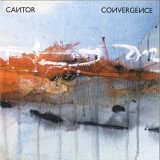
After releasing on Correspondant, Traffico Music and Mortordiscs, the new Cantor EP ‘Convergence’ is published by his own label Underground Pacific. Convergence is an emblematic rendering of Cantor’s attitude in sonic form – a sampling from his consciousness.
Pared down to four arresting tracks, influenced by new wave and post punk, including a remix by the legendary Alexander Robotnick, Convergence presents auditory concepts through which to explore the fundamentals of Cantor’s music: distortions, psychedelia, romanticism and sonic cheerfulness.
The vinyl edition is carefully tended featuring a unique contribution of the Italian artist Fabio Baggio (artbajo).
The Bees are a textbook case of the chew and spit cycle that was the late 80’s South African music industry. Although their unknown story is likely unique, it is just as likely that it is no different to that of many other young artists who dreamed of getting their music heard at the time.
By 1988, the independent record label was no longer as uncommon as it had been at the beginning of the decade. As the 80s went on, more seasoned A&R reps and Producers that had gained experience and connections from their work under major labels would be trying to cash in on a market they helped create. Without the need of big rooms or expensive recording equipment, the digital advancements allowed many Producers to open or work in smaller studios and promote unknown artists under their own imprints. They would then have their catalogs marketed and distributed by the same major labels they had been working for just years prior. This would open up the possibility of a new era of stars as potential talent no longer had to be pitched to major labels in hopes of them taking a chance on a new signee over their already established artists. With the market growing and a struggle to keep up with the demand for new sounds this agreement would allow the major labels to put new emerging artists or groups on their catalog with little investment and high reward if it happened to be a hit.
ON Records was just one of the independent players at the time. Ronnie Robot had just signed the unlikely trio The Bees in hopes of adding a hit group to his label roster that consisted of solo acts. Despite the debut’s fresh house inspired sound, it failed to catch on was outsold by the bubblegum disco the label was known for. Over the years unsold back stock and promos would build up with the distributor. Luckily this allowed sealed copies from the label’s catalog to survive into the 90s when the distributor’s stock was unloaded and picked up by legendary Johannesburg jazz shop Kohinoor. Here sealed copies of the Bees first attempt sat under appreciated for over 20 years before becoming a hot title after they started circulating online and became club staples. This is how the first album of an unknown group with no success was able to become a collectors item and earn a reissue over 25 years later.
With their first record behind them The Bees were ready move forward and get back into the studio. A suggestion from producers had the trio change camps and go work with the newly formed Creative Sound Recordings, the label that promised “Music for the Future” and ended up being an essential studio in the early years of Kwaito. They would work with producer Chris Ghelakis and guitarist George Vardas, while a young Marvin Moses sat behind the desk. Musically the sophomore album was as good as a follow up as you could get. Building on the first album, Mashonisa delivers catchy melodies backed by heavy drum programming that would score points with any Pantsula. The Black Box inspired “ Never Give Up” was one of two tracks chosen to be pressed as the promo for the album, hoping to trick listeners with their catchy version of the hit( A year later the label would release their first volume of Black Box covers sang by neo soul diva BB, it would be a great seller). The label printed up an unknown amount of these in a last attempt to push the release in Shabeens and on Radio. The cheaper route of flooding the market with promo copies would only pay off 25 years later when unplayed copies started being rediscovered and had survived the years in a quantity that original run of the full album could not. Once again it was clear that with no mainstream appeal, the quality of the music on its own was not enough to garner any success at the time. The album flopped worse than their first and failed to make it past it’s initial run, making it one of the harder titles to get from the CSR catalog.
Mashonisa would be the last attempt from the Bees. They would disappear from the scene as quickly as they appeared. Of the three members it is only known that lead Singer Solomon Phiri continued in music fronting a wave dance group before he mysteriously vanished in 1993, never to be heard from again. Through a combination of luck and circumstance the group, which is unknown in South Africa to even the most plugged in musicians, producers and radio hosts of the time, managed to finally get some of the recognition they deserved 30 years later. Unfortunately this small blip of fame would happen with none of the band members present to give their side of the story, or even aware of how their two albums became popular enough to be printed on different continents in a new millennia. The Bees suffered the same fate as countless other artists of the time, who thanks to emerging independent labels and willing producers were given an opportunity to have a short career, only to be replaced by the meat grinder of the music industry when they failed to produce a hit.
Following up on the waves made by his latest Diaphragm EP, Cri Du Coeur injects his signature high-octane sound into another techno venture. This one comes in the form of the electrifying 4-track EP Warning on the Belgian producer’s fledgling-but- headstrong label Arkham Audio. Featuring three remixes interweaving threatening cosmic soundscapes with pounding industrial beats, this latest EP pulls no punches in delivering a menacing wall of sound. The A-side opens with Cri’s original mix for Warning, showing off his signature style of making jumpy, liquid 303 basslines bounce around a consistent dark pad sound. The combination emanates a lingering sense of dread intensified by warped delayed vocal samples and high-voltage buzzing underpinning the whole experience. Following up is a remix from American producer Dustin Zahn, who delivers a pulsa- ting battleground of modular noise. The essence of the track is the controlled chaos of the abstract mechanical whirring and wailing born from Zahn’s extensive synthesis experience, having worked as a remixer for Adam Beyer, Chris Liebing, Dubfire and many other high-profile acts. UK producer Mark Broom dedicates two remixes for the B-side of the EP. The first is a dark, atmospheric groove with expert attention to detail paid to the percussive effects and the controlled movement of the synth parts, creating a powerful ebb and flow of soundscapes and textures and a set of unique builds and drops. Closing off the EP, Mark Broom’s second track is a track more faithful to Cri’s original, opting to beef up the kick and switch up the pattern for an original clap intonation and, naturally, Broom’s own signature offer of complex intertwined synth effects. The result is an anthemic warehouse filler that feels saturated with organic layers of electronic foliage.
When people talk about Italian dance music, they tend to focus on Rome and Napoli rather than Bologna. Yet the city in Northern Italy not only played a key role in the development of “Italo-house” in the late 1980s and early ‘90s, but also boasts a vibrant contemporary scene. To prove the point, Boogie Café has put together “Bologna On The Move”, a four-track selection of sizzling hot cuts from some of the city’s latest wave of deep and soulful dance music talents.
Leading the charge is Sam Ruffillo, a producer who first appeared on Boogie Café last year following an impressive 2018 debut on Irma Dance floor. He kicks off proceedings with the infectious “U Make Me Sing”, a heavyweight slab of rolling breakbeat goodness rich in tight vocal samples, jazzy guitar licks and wonderfully warm and weighty bass.
Later in the EP Ruffilo returns to action alongside Brine, another rising star with links to legendary Italian label Irma. “Request Line” is a fine slab of chunky, U.S garage-influenced deep house that sees the duo pepper swinging drums and toasty bass with heady organ stabs, cut-up vocal samples and trippy electronics.
Fittingly, Brine gets a chance to showcase his skills as a solo producer via “Star Chaser”, a looser and jazzier house excursion that doffs a cap to the glory years of jazz-funk whilst championing rich deep house synth riffs, jaunty bass and more spaced-out vocal snippets.
You’ll hear a similar jazz-funk influence at the heart of the EP’s only contribution from Red Rooster founder and former House of Disco artist D’Arabia. The most experienced of the three artists on show, he offers up “Straight Outta Fire”, a bouncy, deep and percussive affair that wraps drowsy male vocals, sustained chords and harmonica samples around disco-influenced house beats and what may well be the squelchiest bassline ever to emerge from Bologna.
DJ Support:
Bedmo Disco, Lord leopard, Melon Bomb, Dave Harvey, Haze City, Aroop Roy, Lay Far , Danvers, Kassian, Dave Jarvis,
Jimmy The Twin & Cengiz.
This Spring, Life And Death hits a half century of releases with a suitably standout album from leftfield innovator Autarkic. Terms and Conditions is a 10 track window into the Tel Aviv artist's rich, wildly-infused electronica.
Critical acclaim has followed Nadav Spiegel's every move since he debuted in 2015. He is impossibly hard to pin down, and brings real songwriting ability to club tracks that colour far outside the usual lines. Weird dub, psychedelic rock, all forms of wave, sideways pop, swampy techno, Middle Eastern subtleties and plenty experimental in-between sounds all inform his work. It defies convention in ways many cannot, and has come on labels like Disco Halal and Turbo, as well as Life And Death with the Heavy Dreamer EP in 2018.
2016 and 2017 brought his first two albums, Can You Pass The Knife? and I Love You, So Go Away, both on Disco Halal. Both were full of intensely emotional wave, synth and lo-fi sounds that fizzed with innovation. Says the artist of its follow up, "Terms and Conditions was created to celebrate the moment in time that is now. The moment we became peasants in a new digital-feudal world, happily giving away our privacy for the privilege of owning a smart phone."
Terms and Conditions is a unique melting pot, a reimagining of familiar sounds in unfamiliar ways, and is another standalone record from Autarkic.
WRWTFWW Records is excited to announce the official reissue of Motohiko Hamase’s remarkable ambient/environmental/minimalism project #Notes of Forestry, available for the first time since 1988. The album is sourced from original masters and available on vinyl and CD with liner notes from the artist. This marks the third release from the ESPLANADE SERIES which focuses on the works of Yoshio Ojima, Motohiko Hamase and Satsuki Shibano. One of the most fascinating and peculiar works from the golden era of Japanese ambient, #Notes of Forestry was initially released in 1988 by Newsic, the cult label started by Tokyo’s Wacoal Art Center (also known as Spiral), home, notably, of Yoshio Ojima who co-produced the album. Conceived by Jazz bassist turned experimentalist Motohiko Hamase, the magnum opus offers an enchanting mix of free-form pastoral electronics, otherworldly percussions by Yasunori Yamaguchi, and delightfully allusive piano played by none other than Satsuki Shibano (Sound Process’ Wave Notation 3). Vibrant, sometimes eerie, and absolutely captivating, #Forestry captures Hamase’s quest for musical freedom, he explains: “Inside the body of a musician, music is always transcendentally resonating. More than language, music reigns. When creating music overlaps with the moment my body performs, I strive to be as close as possible to the feeling of musical freedom. I feel that this notion lies at the foundation of this album". Musical freedom, here, provides an essential escape, extending the path uncovered by pivotal releases such as Midori Takada’s Through The Looking Glass, Satoshi Ashikawa’s Still Way, and Yutaka Hiros’s Nova. #Notes of Forestry is reissued in conjunction with Motohiko Hamase’s Technodrome and Anecdote albums,
Kristian Craig Robinson, aka Capitol K, is a multi-instrumentalist and record producer with a long history in London’s most interesting under-the-radar music places and spaces. With a musical story like his, you can expect side streams. New record ‘Birdtrapper’ is “the sound of an initiation rave in a utopian hidden village”, and his latest exploration of Mediterranean audio mythos following from ’Goatherder’ (2018). The six track mini-album was similarly formed from ritualistic improvisations performed in Malta (where Capitol K was born), using home-made flutes, reed pipe, bamboo percussion, drum machine, bass guitar, but this time features a wider use of synthesizers, with the alternative dance floor in mind. Where ‘Goatherder’ was an awakening of genetic primitivism, ‘Birdtrapper’ is an evocation of sonic bird callers, proto-rave abandon, ambient resonance and an ecstatic captive state, along with the previous work's visions of hunters, temples and scrub land music
‘Goatherder’ caused a quiet kind of quake and was beloved by The Quietus, BBCR3 and 6Music. Vinyl Factory described it as “like a series of manipulated field recordings that have an ancient, ritualistic quality … Goatherder shimmers with Balearic strangeness, rooted in an earthy outer-national dance music tradition”. For the last seven years K has been behind the consoles at the heavily influential Total Refreshment Centre, recording and mixing records with the likes of Trash Kit, The Comet Is Coming, Rozi Plain, Alabaster DePlume, Dry Cleaning, Flamingods Cykada, Ibibio Sound Machine, BAS JAN and John Johanna. It’s not just recording. He’s also become an influential if understated mentor to a new wave of producers and bands. His experience in studio environments is long and storied, including stints at Studio Plateaux on an island in the middle of the Thames and in the Royal Symphonia’s squatted rehearsal rooms. Capitol K has released seven albums and the 'Birdtapper EP' follows a legacy of influential releases on early 2000s electronica labels including Planet Mu and XL. Aside this he also runs the record label Faith & Industry. It’s a friends and family, love not money affair and he has released music by Champagne Dub, John Johanna, Super Best Friends Club, Blue House & Clémentine March.
- A1: Harold Berty - Django
- A2: Ti L'afrique - Pop Soul Sega
- A3: Claudio - Qui Fine Arrive
- A4: Paul Labonne - Ti Malgache Ti Madras
- A5: Georges Gabriel - Pop Sega
- A6: The Features Of Life - Soul Sabattah
- B1: Roland Fatime - Silvie
- B2: Jean-Claude - Machin Sex
- B3: Joss Henri - Apollo Pop 76
- B4: Coulouce - Beau Pere
- B5: John Kenneth Nelson - Change To Maniere
- B6: Lelou Menwar - Capito
- B7: Daniel Delord - Maria
Killer 13-track compilation of 70's music from Mauritius that evolved from the original sega genre - the music of the slaves as well as their descendants, sung to protest against injustices in Mauritian society.
Created at the crossroads of Afro-Malagasy, the 70s strain fused Western and Indian cultures, pop, soul and funk arrangements, syncopated polyrhythms, saturated guitars, psychedelic organs and Creole vocals. Although the exact origins of sega remain unknown, it contains vocal and percussive practices that originated from Madagascar, Mozambique and East Africa. A social escape and a space for improvisation, satire and verbal jousting, it transcended everyday life and made room for the expression of conflicts and the transgression of taboos.
The main instrument of sega is the ravanne, a large tambourine-like drum made of a large wooden frame and goat skin. It is accompanied by the maravanne, a rectangular rattle filled with seeds, and other homemade forms of percussion. Eric Nelson a solo guitarist and arranger, set up the band Features Of Life which, in the mid 70’s, gave birth to a new sound. Fuzzy distorted guitars and funky beats invite each other to play over the unbridled beats created by fabulous drummer Raoul Lacariate.
The band accompanied a new wave of singers, including the atypical Joseph Roland Fatime aka Ti L’Afrique, a hyperbolic and hyperactive character, a fan of blues and James Brown who launched an explosive raw, and funky style of sega.
**LP FORMAT IS VERY LIMITED - PLEASE BE AWARE THAT UNFORTUNATELY THERE MAY BE CUTS TO ORDERS**
For Los Angeles' The Black Queen, the depths of isolation and loss have always functioned as a gateway to being born anew. Much has transpired since the band released their cold, cutting debut album Fever Daydream (a record that Revolver described as 'a haunting exploration of the darker side of pop music'). But throughout it all, the trio of Greg Puciato (former frontman of the now-defunct The Dillinger Escape Plan), Joshua Eustis (of Telefon Tel Aviv, Puscifer, and Nine Inch Nails), and Steven Alexander (a tech member for Nine Inch Nails, Ke$ha, and A Perfect Circle) have emerged as triumphant and intense as ever, documenting their journey via the synth-streaked industrial anthems of their sophomore release, Infinite Games.Formed in 2011 after a chance meeting between Puciato and Eustis backstage at a Dillinger show in which they both realized they were huge fansof each other's work, The Black Queen became a labor of love for its members to explore sounds and emotions that they couldn't quite fit into their full-time projects. Injecting a pained, twilit edge into slick new-wave tracks as fit for the dance floor as they are for some imagined dystopian skyline, the trio have managed to channel their scattered, eclectic influences into a surprisingly cohesive vision. 'We've got a pretty weird cross section,' Puciato says of the band's musical chemistry. 'We can go out for food and listen to Power Trip on the way there, then Baltimore club music on the way back, and then talk about how killer Maxwell's Embrya album was, and then get sidetracked and talk about the Celeste video game soundtrack, then all have to be quiet so that we can grab a voice recording of some weird sounding radio interference. It's all over the place and unusually far reaching,and there's a lot of passion for discovery.'After releasing their 2016 debut album Fever Daydream to critical acclaim however, the trio underwent several major upheavals that cast the project in a completely new light. Puciato's main project The Dillinger Escape Plan disbanded. Chris Cornell of Soundgarden killed himself while Puciato was on tour with him. Eustis put out music under his beloved Telefon Tel Aviv monikerfor the first time since his former bandmate Charles Cooper died in 2009. Thetrio's storage space was robbed. Puciato suffered a relapse into crippling anxiety and paranoia. Once again, in the face of tragedy, The Black Queen had to rebuild everything from the ground up.The first step was acquiring a new studio space, which immensely helped the band get back into the rhythm of freely collaborating with one another, and experimenting with sounds for as long (and as loud) as they wanted. The resulting album, Infinite Games, marks a massive leap forward for The Black Queen. Not only are the band's icy R&B instincts more sharply pronounced; they've also rendered their morbid electronics in more lush detail than ever before, filling out the corners of their songs with chilling ambient passages
that create a wide-screen backdrop for Puciato's eerie, tortured vocals. 'I think this album is actually hookier, but more insidious in that it reveals itself over time,' Puciato says about Infinite Games. His choice of words says something about the album's creeping, pitch-black approach to pop music.With this release, the group have also announced a new undertaking in the form of their new label, Federal Prisoner. Resisting the more marketing-centricapproach that feels standard at this point for the record label game, the goal of Federal Prisoner is to provide an outlet for projects that emerge naturally from The Black Queen's own creative endeavors and collaborations with otherartists. In a way, Federal Prisoner solidifies TBQ's commitment to creating music on their own terms, following the same organic sense of inspiration that led them to forming in the first place. As Puciato puts it, 'It's just an expression of passion and individualism in a way that opens more doors for us to create and to own what we create with minimal compromise. It's as much an act of refusal as it is a statement of intent.'Infinite Games, the second album from experimental Los Angeles synth-pop trio The Black Queen, comes out on September 28th
2x12"
Having made initial waves on Cold Recordings and Osiris, Eric Baldwin returns now to Tectonic to release his eponymous album ’Cocktail Party Effect’, bringing his South London roots to Berlin for an all-weekender, under strobe lights.
Drawn by his appetite for powerful rhythmical forms and inspired by the likes of Daphne Oram, The Residents and Captain Beefheart - Eric takes uses background in sound design, knowledge of hacking VST software and adapted spring reverbs and other hardware, to create a truly unique vision of contemporary electronic music. It sits somewhere between Jeff Mills, Aphex Twin & Squarepusher - held together by a connective UK Bass Music spinal chord. A weird but intriguing beast.
We open the track with Japanese cocktail recipes, before moving into the only vocal track of the album, ‘Talking To Bricks’ featuring Bristol vocalist Redders on fine form - charged with disjointed energy and run ragged across a technologically charged dancehall style beat. The LP progresses through the rolling breaks and bleeps of ‘For The Memory Exchange’, into an IDM side-step in the shape of ‘Brutalism’, moving into the gentle, beautiful flickering glitches of ‘PDA’, before we get to the hyperactive twitching alien charge of ‘War On Codex’.
Taking a leap in another direction, we reach ‘Cause For Bad Shelving’, which sounds a bit like Squarepusher when he was on late 90s, immaculate form - taking the tempo up a few notches, while building melancholy. ‘Lack Of Wrong Format’ then gives us a moment to breathe, before diving into ‘Deerhorn’ which brings us right back to the dancefloor. Things are then turned inside out with the jittery wonder of ‘I Get It (Lost Banknote)’, redirected via the industrial clangs of ‘Low_Rise’, before rounding off our sonic adventure with the ponderous tones of ‘Loner’ - which leave you glowing and drifting off into space.
A bold album that’s just brim with a strong sense of originality, direction and grand narrative. From international dancefloors to post-clubbing ear-worms, Cocktail Party Effect is just getting started and you’ll be hearing his name more and more now.
*More downbeat wickedness on the excellent Fasaan!*
This double A-sider is the fruit of a long gestating collaboration with fellow Malmö-based record collector/selector & producer Simon alias Rizzolo DJ (alias Moisture). Closely intertwined with the label in various ways since the start, his path to producing started with re-edits and a more wild-haired approach to deejaying, finally landing into his own groove with the 2018 album A Freak Is Born. Released as a privately pressed cassette, the album featured two tracks co-produced with Fasaan founder Prins Emanuel.
On that first album, the palette was a lo-fi reverie of minimal waves crashing into depths of goth and heights of camp. Here for the 12" format, we instead get the full onslaught of power tools gleaming in the blast of strobe lights. The weight of GAMMUT unfolds and delivers exactly what the title suggests: a complete scope of percussive barrage unleashed in tight locked grooves and smattering reverberations. In addition to that, we are treated with a spine-tingling re-imagining of the concept of a bass drop.
For ORGONE, a 1984 track by Norwegian group Fra Lippo Lippi serves as the backbone of the composition. Championed by cosmic DJ Daniele Baldelli and here pitched down to wrongspeeder tempo, Moisture uses the original song to bridge the gap between his roots in the re-edit scene as well as in the cosmic tradition. Thedry mechanical bassline is flanked by hollow percussion that eventually propels into a crystal-chimmering microcosm of orgone energy.
► One half of duo Lumisokea and persistent sonic explorer ANDREA TAEGGI (Opal Tapes, SM-LL, Type, Präsens Editionen) debuts on OOH-sounds with a new solo album under-the-influence of mushrooms.
► Recorded at Willem-Twee synthesis studios in Holland, Mycorrhiza is a lucid excursion into a new form of 'ritual-computer-music' — gamelan from the future.
►Master + Cut by Helmut Erler, D&M Berlin. Limited Edition of 200, 12" black vinyl housed in gold cardboard sleeve with 'ad-hoc' fluo sticker.
Of course this is not the first album born under-the-influence of mushrooms, but apparentlyTaeggi doesn't take them here as he rather observes the cognitive and intelligent behavior of mycorrhizal fungal roots—one of the great mysteries inhabiting the forest soil, and from which a network of beneficial underground relationships with plants sprouts. Known as Mycelium, this fascinating wood-wide-web very much resembles the intricacy of the human neural system—transporting carbon, water and nutrients from one tree to another. A mutualistic symbiosis that Taeggi similarly establishes with the rather rare arsenal of sound machineries he had access to at Willem-Twee synthesis studios in Holland—a center for experimentation inspired by Berio and Maderna's Studio di Fonologia RAI in 1950s Milan.
In the process of tweaking and feeding electric impulses and sound signals into instruments of the likes of the iconic ARP 2500/2600 and a number of testing/measuring units from the 50/60s—originallynot conceived as musical instruments—Taeggi engages into an exchange of nutrients and information, while abruptly sabotaging un-welcome elements, hence accelerating the sound superhighway towards spectral psychedelic tension—a process he seems to be extremely in control of. Taking a step aside from his usual minimal approach to address more complex structures and augmented mind-sets, Mycorrhiza sounds at times like gamelan from the future: a lucid excursion into a form of "ritual-computer-music" with a conspicuous penchant for detail,alluding to a continuitybetween pseudo-cerimonial and laboratory-like computer music, steering clear from any reference to a specific creed or religion—imagine Stockhausen drinking the Amazonian sacred brew Ayahuasca..
The swarming micro-movements of "Cuttleburrs" multiply in a series of crescendos marked by sudden falls, saturated drums incursions and tense sonic clusters, introducing the more explicit gamelan percussive tones and compositional forms of "Kodama" and "Icaro". Recorded on the ARP 2500, "Mycorrhiza" uses white noise generators, resonant bass and spring reverb to conjure up a magical fungal diorama, which expands into the spooky shadows of skeletons and demons of "Phantasmagoria" and the spectral mystics of "Oculus Cordis"—the Eye of the Spirit — in which Taeggi grapples with the same sine-wave generators that Stockhausen used in his seminal "Studie I" and "Studie II".
During a karaoke-fuelled haze in the seedy parts of Oslo, Legs 11 was formed based on a shared love of synth pop, post-punk, new wave and house music. Drawing on these influences, the band has created a diverse musical universe, ranging from dark repetitive guitar driven tracks, via infectious pop gems, to deep yet melodic dancefloor-orientated grooves. After exploring the indie-dance themes on their debut album "Another Wave" (2017), it's now time to dive into the world of (electro) pop!
Legs 11 have drawn on many different influences throughout their 15 year history. Still, at the heart of the band's musical universe, there has always been a deep love for pop-music! On their new ten-track album "The Colour Of My Heart", Legs 11 show us ten shades of their brightly pop-coloured heart.
L/F/D/M, "Richard Smith", Brighton based producer who comes
to Alley Version after several killer releases for labels like Cititrax/Minimal Wave, Optimo Trax and collaborations with
Factory Floor’s Dominic Butler on Powell’s Diagonal Records.
“Club Germs On My Clothes” is a 4 tracks EP in which are recognizable elements of ebm, minimal wave, industrial, jackin, shaped in experimental hardware-driven raw-techno forms.
Pressed on 12″ White Coloured Vinyl. Limited Edition of 150 Copies.
Maxx Mann were the gay New Wave duo of Frank Oldham Jr (vocals, lyrics) and Paul Hamman (music) from New York City formed in 1981. Frank studied voice and acting at the Herbert Bergdorf School idolizing Eartha Kitt, Nancy Wilson, Johnny Mathis and Shirley Bassey. Paul was playing piano for a cabaret singer at a bar in Greenwich Village where Frank met him and their friendship began. Paul and Frank worked together 3 to 4 times a week recording their debut self-titled album released in 1982, limited to 500 copies.
Songs provide interesting insights into the homosexual experience before the AIDS crisis: cruising backroom bars, BDSM and one-night stands. The music is "Neo-realistic rock" heavily influenced by punk, titillating, synthesized body and soul with Frank’s dramatized vocal stylings. The original press release sent to radio stations stated, "Because this is a completely innovative sound, we hope you will give it several listenings. It is adventurous, daring, and certain to cause reactions from your listeners.” For this first time vinyl/CD reissue we’ve added two bonus instrumental tracks, so the album now contains all four original vocal cuts and their corresponding instrumental versions. Paul sadly passed away in 1986 aged 33 from AIDS-related illness and we dedicate this reissue to him. All songs have been remastered by George Horn at Fantasy Studios. Each copy is housed in an exact replica of the 1982 jacket and includes a fold-post poster with photos, lyrics and notes by Frank Oldham Jr.
Following his last EP for the label, "Immaculata", VOITAX mainstay Makaton returns to form with his second solo EP - "Crime Wave". His meticulously crafted brand of techno spans over four dance-floor cuts, covering all the bases for the mind, body and soul.
Early support by A Made Up Sound, Aiken, Ancient Methods, Blue Hour, DVS1, Etapp Kyle, Eric Cloutier, Inigo Kennedy, James Ruskin, Mark Broom, Marcel Dettmann, P.E.A.R.L, Peder Mannerfelt, Phase Fatale, Pfirter, Psyk, Positive Centre, Rhyw, Scalameriya, Stephanie Sykes, SLAM, UVB, and Vincent Neumann
To coincide with the announcement, the pair have shared a video for the album’s title track directed by Sam Davis and Tom Andrew, who has previously received two UK Music Video Awards nominations for his work with Avery. Speaking about the video, Andrew explains, “We were keen to capture a visual representation of the tempo and atmospheric emotion of the track and make a video exploring the notion of collaboration. A super-motion approach allowed us to explore details of motion shared between two people, in tactile actions of aiding and supporting.” Cortini adds, “The video embodies the volatility and hidden nature of the music’s subject and meaning. A meaning that is ultimately personal and unique the listener/spectator.” Watch the clip .
Beginning as a collaborative experiment before the pair had even met, Avery and Cortini then worked remotely and free of concept or deadline over several years. The result, finally completed when both artists were touring with Nine Inch Nails in 2018, is a quietly powerful album rooted in trust, process and experimentation. The first fruits of their labour were unveiled last year when ‘Water’ and ‘Sun’ appeared online, subsequently released as a very limited 7” run that was sold at FYF Festival and Mount Analog in Los Angeles, and Phonica Records in London. Both tracks are included on the album.
“It was very much a shared process”, notes Avery. “I would like to credit Alessandro with his belief that music has a life of its own, as well as the importance he places on the first take... That even something that may be considered out-of-step by some should be respected. Some of the tracks were borne simply out of a tiny synth part, or a bit of tape hiss that we had recorded. And that approach taught me a lot. It’s a record that’s been worked on hard, but not laboured over.”
“I was a big fan of Daniel’s, and his work always spoke to me in a certain way,’’ explains Cortini. “Then, when we started working together, it just clicked. It’s very hard to explain, but I can always hear the love in his work, and that is true on this record. After our first collaboration, we just kept sending each other music and maintaining that dialogue. Next thing you know, we’re sitting in a hotel room in New York and had finished the record in three hours.”
The collaborative album follows Avery’s second record Song For Alpha, released in early 2018, and last year’s expanded edition B-sides & Remixes. Mixmag called the sophomore LP “A beautiful maturation of Avery’s work as a producer,” while The Guardian hailed its “Majestic, cavernous techno” and Loud & Quiet praised Avery as “A producer fast approaching the peak of his powers,” “This album cements Daniel Avery as one of the best,” wrote DIY. The London-based producer will perform at BBC Radio 3’s Unclassified Live on April 3rd, a new series of concerts in the Southbank Centre's Queen Elizabeth Hall presented by Unclassified host and presenter Elizabeth Alker and conducted by André de Ridder – tickets are available here. Avery has also just been announced in the first wave of acts for London festivals Re-Textured and the inaugural Wide Awake, taking place in April and June respectively.
Cortini released his most recent solo album Volume Massimo on Mute in July 2019, following Fine, the Italian artist’s final album under his SONOIO alias, which came out the previous year. The Quietus called the former “an album that showcases just how much Cortini‘s aesthetic has developed since his early days,” while Exclaim! hailed it “a melodic exploration of textures and layers … an instrumental masterpiece that adds to an already incredible body of work by the gifted and skilled composer.”
Nantes-based Australian drummer and percussionist Will Guthrie returns to Black Truffle with Nist-Nah. Like his previous solo record on the label, the abrasive hip-hop concrète of People Pleaser 'BT027', Nist-Nah finds Guthrie branching out in a new direction, this time in a suite of six percussion pieces primarily using the metallaphones, hand drums and gongs of the Gamelan ensembles of Indonesia.
The music presented here is grounded in Guthrie’s travels in Indonesia and study of various forms of Gamelan music, from the stately suspended temporality of the courtly Javanese Gamelan Sekatan, to the delirious, thuggish repetition that accompanies the Javanese trance ritual Jathilan, to the shimmering acoustic glitch of contemporary Balinese composer Dewa Alit and his Gamelan Salukat.
However, far from an exercise in exoticism, Nist-Nah develops out of Guthrie’s extensive work with metal percussion in recent years (as heard, for example, on his 2015 LP for 'IDEAL', Sacrée Obsession), where gongs, singing bowls and cymbals are used to build up walls of hovering tones and sizzling details.
Though Guthrie is broadening his palette to explore Gamelan instrumentation and pay tribute to his love of this sophisticated yet elemental percussion music, the pieces presented here are equally informed by Guthrie’s interests in free jazz, electro-acoustic music and diverse experimental music practices, exploring long tones, extended techniques, and non-metered pulse.
'Nist-Nah' presents a variety of approaches across its six pieces, from the crisp, precise rhythmic complexity of the opening title track to the droning textures of ‘Catlike’ and ‘Elders’.
On the epic closing ‘Kebogiro Glendeng’, Guthrie offers an extended, layered rendition of a Javanese piece belonging to a repertoire primarily used for warmups, beginner’s groups and children first learning Gamelan, elegantly gesturing to his own amateur status while using the piece’s insistently repeated melody as an extended exploration of the hypnotic effects of repetition, falling in and out of time with himself to create woozy, narcotic effects until the piece eventually dissolves into a wavering fog.
- A1: Marc Melià – Permanent Waves (04 26)
- A2: Pletnev – Marc O’polo (06 31)
- A3: Douglas Greed – Vancouver (04 11)
- A4: Middle Sky Boom – Missing Drive (05 13)
- B1: Thomass Jackson – Mithra (07 07)
- B2: Goldmoon - Bells (04 08)
- B3: Krikor – Sally Hardesty (05 34)
- C1: Morgan Blanc – Werde Der Du Bist (04 52)
- C2: Cora Novoa – Virtual Aesthetics (04 35)
- C3: Nsdos – Al-G (05 43)
- C4: Rebeka Warrior – Ich Komme Zurück (04 49)
- D1: Theus Mago – Idealistic Stone (07 33)
- D2: The Populists – Prehistoric Lemurs (05 19)
- D3: Acid Love Triangle – Instant Track (06 42)
Back in 2018, Lumière Noire celebrated its first anniversary with a compilation featuring thirteen exclusive tracks by an eclectic group of electronic musicians – a family portrait of sorts. A few months later, a second volume of From Above, compiled by the label's artistic director (and DJ) Chloé, once more brings thirteen established acts together with promising upstarts. The first compilation was the embodiment of the label policy advocating for both artistic excellence and a widening of electronic aesthetics – bopping from deviant house music to adventurous IDM and to the rigor of dancefloor techno, among other electronic explorations. Some of the artists featured are now closely associated with Lumière Noire, while others were more established performers such as Benedikt Frey, Lauer, Jonathan Fitoussi, Il Est Vilaine, Dave e Brun (half of Swayzak) and Frank Agrario, as well as upcoming artists such as C O N T R A (a side project by none other than Iñigo Vontier), Sutja Gutierrez, Théo Muller, Markus Gibb, Bajram Bili, and a sprinkling of UFOs circling the genre (Suuns' Ben Shemie, Drvg Cvltvre, and electro-acoustic combo Lumi). This group photo laid down a number of paths for a label in perpetual evolution.
Since then, the Parisian entity has continued to grow within the international electronic scene, releasing Local Suicide's Leopard Gum EP, Iñigo Vontier's first LP, and planning another slew of releases for 2020. The lineup for this second volume of From Above is once again equally intriguing, offering a crescendo-like track listing over a double LP format, which is a feat of sorts for a "Various Artists" compilation.
Marc Mélias' fascinating, unsettling Permanent Waves gets the proceedings going with a contemplative track that provides a serene opening to the odyssey on which From Above will be taking the listener. Pletnev continues on with the playful, hooky Marco O’Polo, a fundamentally techno track built over a seductive 90s-inspired breakbeat. Douglas Greed (whom Chloé remixed on BPitch a few years back, and had himself remixed track from her album Endless Revisions featuring Ben Shemie’s vocals), supplies Vancouver, a slice of ambiance à la Boards of Canada, supported by a gripping breakbeat. The rhythmic arpeggio of Israeli producer's Middle Sky Bloom makes his contribution a hypnotic, disconcerting slice of dark disco. Thomass Jackson, a safe bet in the new wave of the Latin-American electronic music blowing its sometimes hot, sometimes cold wind, proposes Mithra, a dancefloor incantation to the Antiquity's bull god. With Bells, Goldmoon delivers a track that is both melodic and nostalgic, tinged with rhythmic samples, Moog basses and solar backgrounds. Longtime friend of Chloé, Krikor, who has released two albums on L.I.E.S. Records (Pacific Alley and Saudi), offers a moment of respite with Sally Hardesty (a nod to fans of horror movies), a heavenly and bewitching track that, paradoxically, hints at the highly energetic second half of the compilation. Discovered with Confidences EP released on Lumière Noire, the young French producer Morgan Blanc asserts himself here with Werde Der Du Bist ("Become who you are"), a song with luminous chords and midtempo rhythms to start the second half of the compilation by raising the tension. Galician producer, DJ and designer Cora Novoa continues the rollercoaster's ascent with her Virtual Aesthetics, which once again brings those acid tones – this time without the vertigo. Equally corrosive, but tenser and more percussive, the uncategorizable NSDOS' AL-G attempts to give order to a chaotic electronic world full of violence and danger. Rebeka Warrior (half of the duo Kompromat alongside compatriot Vitalic), takes on a more nostalgic vibe with Ich Komme Zurück, a French/German techno chant evoking a secret dream of a track from a bygone era. Three years after the release by Lumière Noire of Moderna and Theus Mago's stroboscopic Dog Is Calling You, Theus Mago makes a solo comeback with Idealistic Stone, a most acid of club tracks, rattled by the modulations of the inevitable TB 303. French electro-rock saltwarth Yan Wagner's dancefloor alter ego The Populists' Prehistoric Lemurs gives an almost Orientalizing twist to Kraftwerk's techno-pop. To close things off, the collection's last track, the appropriately-named Instant Track by impromptu encounter between Hervé Carvalho (Acid Arab), Jacques Bon (Smallville) and Demian (Kompakt) Acid Love Triangle, releases the pressure with a long, bittersweet reverie that leaves the listener, at the end of these thirteen musical adventures, to rest languorously on an artificial and welcoming shore.
‘Visions’ is a new collaborative album from BADBADNOTGOOD co-founders, Matthew Tavares and Leland Whitty. The Grammy Award winning, multi-platinum producers have been performing and writing music together for 10 years. They have achieved international acclaim with BADBADNOTGOOD and Tavares’ recent solo single ’Self-Portrait’ has been championed by tastemakers such as Gilles Peterson and Benji B. ‘Visions’ is the latest upshot of their incredibly fruitful partnership.
Recorded in Toronto, it was produced by Tavares and Whitty - with Tavares also mixing the album and arranging strings. After a three-week writing period it was played in its entirety in one continuous studio session; almost all the tracks on the album are the first take. Tavares is on piano and guitar, Whitty on saxophone and flute. The rhythm section of Julian Anderson-Bowes on bass and Matthew Chalmers on drums completes the players. They make an impressive collective and are performing at the peak of their powers.
Conceptually the album is a canvas for a combination of composition and group free-form improvisation. Tavares and Whitty are the sole composers, but with some tracks collectively improvised, there is also a group dynamic running through the album. The outcome is a sublime melting pot of modern jazz, impressionist classical music and Arthur Verocai-esque arrangements. It is a sound that is hard to date; it is certainly of the now but is also reminiscent of a lost classic. Similar to the process of its creation, the optimal listening experience for ‘Visions’ is in its entirety. As a coherent body of work it draws the listener in with waves of intensity and crescendos that release back into tranquility - there is both darkness and light in the album’s narrative arc. There is also rawness and honesty to the music, which makes it feel like an intensely personal and intimate offering.
“The combined forces of Frederik Valentin & Loke Rahbek first found a way into the world in 2017 with the album 'Buy Corals Online'. Together they now present 'Elephant', an eight-track album that composes an inquisitive space with it's parts.
The economy of movement across Rahbek and Valentin's new collaborative album makes for a gentle transmission of its abstract intimacies. This presence, which we caught glimpses of on their previous work 'Buy Corals Online', is shaped by the delicate interplay between acoustic instrumentation and synthetically rendered sounds. Hauntingly melodic at times, the album feels like a suite of uncanny lullabies that grant access to realities that can only be found in dreams.
Rahbek and Valentin are always leading us somewhere and showing us something—one piece of the scene at a time, coming and going with different parts of a puzzle that eventually settles into a complete form. And through all this we perceive an inviting restlessness on their behalf, encouraging us to stray further and further into the private space of 'Elephant'. Valentin is perhaps best known for his work in the exquisite atypical pop group Kyo, though his widereaching music and videography practices covertly underpin his flagship projects.
Most recently, Valentin has been working with Yung Lean as both producer on his 'Nectar' album as Jonatan Leandoer127 as well as on their commission for Sweden's Cullberg Ballet. As Croatian Amor, Rahbek has made similar forays into unworldly pop and his work with Christian Stadsgaard as Damien Dubrovnik has been as critical as their cofounding of Posh Isolation.
Modest interventions from processed field-recordings and semi-erupting synths invite you to zoom in enough to hear the human hand. An attention to listening, to how sounds cradle the small movements and gestures that naturally accompany the playing of guitar, piano, and viola, is acutely developed by Rahbek and Valentin.
It's in this way that 'Elephant' persuades us that even small stories unfurl into the most intricate and tremendous of sagas"
‘Thema’ was recorded in 2018 by Alexi Baris from Vancouver, BC Canada. This LP features depictions of micro organisms squirming under the lens as well as the interior (travelling?) world of the person looking into it, so like “lives in relief”.
Beyond the mechanically lurching, magnified phytoplankton – glimpses of satisfaction, natural harbour echo, a creaking research boat bow cutting waves, transitory sounds.
When Elena Colombi launched the Osàre! Editions label in the autumn of 2019, she explained that the label would become home to bold, daring, future-facing music rooted in experimentation and free-spirited musical abandon. These are all descriptions that could apply to the label’s latest release, a retrospective album of little-known works by Greek musician and producer Thanasis Zlatanos.
Many will not have heard of Zlatanos, or Nekropolis, the band he fronted alongside dear friend and regular collaborator Trygve Mathiesen, yet the music he made during the 1980s was otherworldly, intergalactic and undoubtedly alluring. These songs and instrumentals made extensive use of analogue synthesizers and lo-fi drum machines, as well as Zlatanos’s trusted Gibson Les Paul guitar and his own distinctive voice.
Stylistically, the musician and producer refused to settle on a specific sound, preferring instead to create inspired, often mind-altering pieces that join the dots between wave music, skewed leftfield pop, ambient, prototype electronic and Madedonian folk music. Operating for much of the period from a crumbling house earmarked for demolition, Zlatanos kept up a daily music-making vigil that resulted in a vast vault of music, most of which has remained unissued since the 1980s.
The breadth of and width of Zlatanos’s distinctive approach is laid bare on Retrospective, a compilation album prepared by Colombi and the artist himself that draws on tracks from his numerous albums, those by Nekropolis – whose sophomore set “The New Europeans” was banned in Norway – and his epic archive of previously unheard material.
The artist’s singular but wide-ranging musical vision is free for all to see across the 13 tracks stretched across the vinyl version of the album (digital buyers also get a further four superb cuts). It veers attractively from the ghostly, traditional-meets-futuristic new age electronica of “The Crystal Sight (Excerpt)” and the doom-laden coldwave throb of “Master Chameleon”, to the undulating, soft-touch creepiness of “Surreal Moment”, the Vocoder-laden operatic poignancy of “The New Barbarians” and the squally guitar solos and effects-laden electronics of “The Light”.
Words from the artist___:
"I live in the Internet. Visits from outer space make me compose. I breathe here. I am the master chameleon, the psychedelic clown. I am not here anymore, neither in the picture, nor the reflection. Our bed is a boat that takes us tomorrow without us.
Here is an album of dreams and digital emotions. Analogue recordings made with a Prophet, a Moog Rogue, a tape recorder and a Gibson Les Paul guitar.
As far as I can remember I have always been in a recording studio. I listen to, understand and live my life through songs and music. I have worked alone and with friends such as Trygve Mathiesen. Although I am a guitarist, I continue to work with synthesizers on music that blends elements of Macedonian folk music, recordings from the streets and embryonic electronic sounds.
Some of my albums have been critically acclaimed, others banned by radio stations. For years I worked on endless recording sessions in a crumbling house that should have been torn down. The music on this retrospective compilation was recorded at various points between 1982 and the present day. Some of the compositions first appeared on previous albums, while others have never been released before. They were sat on tapes waiting for a saviour. Now that saviour has arrived and they can be free.
For further proof of Zlatanos’s unique sonic approach, check the startling contrast between the bass-laden slacker pop headiness of “No Expectations” and the spacey ambience of “The Dead Don’t Remember”. Considered together, the selected pieces and those elsewhere on Retrospective forms a snapshot of a genuinely unique and visionary musician, composer and producer. It’s a celebration of someone whose work has previously been overlooked."
The second installment in the Gravitational Waves series, The Belligerents Vol. 2 puts the label's experimental and always forward-thinking sound on display. This time, label head Dj Nephil and his slew of machines take to Side A, alongside the mysterious System Disorder, and Swordsmith who delivers us a slice of raw, industrial action in the form of Autorobo. Hannibal III makes his return to the label, sharing Side B with some exciting names - Diana Berti - the alias of Violet Poison, and Anna Funk Damage. Gravitational Waves is back with a vengeance.
Since 2000 Mapstation has been the moniker for the solo work of TAL Label founder Stefan Schneider. Schneider has won international acclaim as a founding member of KREIDLER and to rococo rot as well as through unique collaborational works with artists such as Joachim Roedelius (Cluster/Harmonia), Bill Wells, Katharina Grosse, Dieter Moebius (Cluster/Harmonia) Sofia Jernberg or Jochen Irmler (Faust). There has not been a new Mapstation release since 2009's THE AFRICA CHAMBER which had former FELA KUTI member NICHOLAS ADDO-NETTEY on percussion.
The new album PRESENT UNMETRICS, is not entirely a stand-alone creation either. There are guest appearances by THOMAS KLEIN (KREIDLER) on percussion, MICHAEL ACHER (THE NOTWIST) on Sousaphone and an outstanding vocal contribution from japanese singer HACO, all deeply woven into the digital topographics of the music.
PRESENT UNMETRICS offers a collection of radically subtle music. The guiding principle of the album was to construct direct and nuanced tracks which embody a sense of open-ended incompleteness and heterogenous dynamics.
Out of sync bass arpeggios, infused with uneven rythms, fractured synth stabs and intimate melodies, frequently created here with a Schlumberg sine wave generator, are continuously engage with experimentation, both on sound and structure.
Expertly pieced-together and produced in timeless fashio, PRESENT UNMETRICS displays all the coherence and artistic authority of an album on a constant quest so vital to the music of Mapstation. An album that couldn't have been made by any other than Mapstation.
The hyper talneted Stellar Om Source (NOT NOT FUN, RVNG, NO 'LABEL) blowing up new styles on this one!
"If there is one thing that leaps out from Stellar OM Source’s music, it is the sense of a highly active mind at work. There is an indivisible feeling that a real person is behind this dynamic flurry of tones, waves, vibrations and modulations. On I See Through You, the first full Stellar OM Source release in over four years, the spark that first LP piqued the interest of so many listeners is glowing stronger than ever.
In the 2010's, Christelle Gualdi carved a name as one of the most essential live electronic musicians around, dazzling dancers and home listeners in kind with her bombastic, acidic hardware jams. Circumstances outside her control forced a stop for the Stellar OM Source project. It was touring, including two shows in the summer of 2019 at Dekmantel Festival and Listen! that Gualdi credits as year highlights, which proved to be the integral jump-start to the engine.
Inspiration came rushing back thanks to the human connection of performing. Seeing a younger generation connect with her put fresh charge into the circuitry of her gear. All this accrued into new material on the road, and thus I See Through You was born.
The spirit of 2013’s cult favourite Joy One Mile is alive and well on I See Through You. There is once again immediacy, urgency and lust. But Stellar OM Source stepping into a comparatively more poppy and playful mode on these four tracks could also throw some. Fundamentally she says, it comes from a similar place, and ends with an enmeshed and positive outcome. Gualdi credits both “1995 rave” and “the clarity, bass and breath” of hi-def hip-hop productions as being twin northern stars for her to follow.
The artwork comes from friend and highly respected photographer & director Pierre Debusschere, whose work similarly flits between arresting close-ups and, well, the widescreen luxe of Beyoncé videos. “I’m definitely not a purist anymore,” Gualdi laughs – and with club-ready impact meeting human warmth, this shows in abundance.
“Night Alone” wastes no time in getting the listener up to speed. Is that an LFO sample running through “Night Alone”? Is this a lost Metro Area classic? Is that Stellar OM Source taking a diversion into searching Ibiza-rousing vocal for a moment, or did we imagine that in a heat haze? Where are the kicks? Oh there they are. How many elements are buried and revived within just over five minutes?
It’s hard to tell. Before we know it, “Lost Codes” is up and away, keeping pulses racing. A pitter-patter of baby kicks feel like a pre-tremor before a welting electro-Italo lead crashes into play. With fizzing energy, rasping synths and a frisson of danger, fans of Unit Moebius and The Hacker will be doing somersaults of joy.
“White Echoes” wastes kicks off the flip side with low gurgles descending briefly like a UFO reverse parking into the spot SOS had vacated. Soon, 303s are twisting like Chinese burns while warm chords offer a salve. The mood maintains on “Wild Palms”, the only song on this record not to feature additional mixing work from Peaking Lights’ dub-wise sensei Aaron Coyes.
True to form, the B2 is all Stellar: elements switching up and out, with all the fun and frenzy of capital-L Live action. Kick drums and bassline darting back and forth like a synchronised swimming routine, all elements in concert. The momentum of a runaway mine cart that you can’t help but strap yourself to. I See Through You is one for the dancers who have given Stellar OM Source the motive to move forward once again."
“Osondi owendi. What is cherished by some is despised by others. One man’s meat is another man’s poison. Different strokes for different folks. To each their own. Osondi owendi.
It’s a conventional aphorism in the Igbo language but if you utter the word “osondi owendi” in Nigeria today, the first thing that comes to anybody’s mind is the cucumber-cool highlife music maestro Chief Stephen Osita Osadebe and his legendary album that takes its name from the adage. Released in 1984, Osondi Owendi was instantly received as Osadebe’s magnum opus, the crowning event of an exalted career stretching back to the early years of highlife’s emergence as Nigeria’s predominant popular music.
Stephen Osadebe first appeared on the music scene in 1958 as a spry, twenty-two year-old vocalist in the Empire Rhythm Skies Orchestra, directed by bandleader Steven Amechi. With his dapper suits, urbane Nat King Cole-influenced vocal stylings and jaunty, uptempo, calypso-scented dance tunes, he personified the frisky spirit and anxious aspirations of a young, educated generation that had come of age in the wake of the Second World War, in a Nigeria that was rapidly shaking off British colonization and marching towards an independent future. 1959 would be the year that he truly made his mark in the business with his debut solo single “Lagos Life Na So So Enjoyment.” A giddy exhortation of the music, sex, fun and freedom availed by life in the big city, the song became a sensation and an anthem, and Stephen Osadebe became the leader of his own popular dance band, the Nigerian Sound Makers.
Osadebe would ride this wave of acclaim through most of the nineteen sixties, but a change in direction would be called for at the dawn of the seventies. As Nigeria emerged from a devastating civil war, so did a new generation of youth inspired by rock and funk, confrontational sounds reflective of a more violent, less idealistic era. All of the sudden, the idioms of the post-WWII dance orchestras that nurtured Osadebe’s cohort seemed quaint, the stuff of nostalgia. Osadebe needed to evolve to respond to the new tumultuous, turned-up times.
His response? He cooled it down.
Abetted by a new crop of fire-blooded young players, Osadebe slowed his music to a mellow, meditative tempo, brought forward the lumbering, Afro Cuban-accented bass and percussion, from the rockers he borrowed searing lead lines on the electric guitar. Over this musical bedrock, doesn’t so much as sing as he dreamily muses, coos, sighs aphorisms, words of wisdom and inspiration. “When one listens to my music, all I say appears meaningful,” Osadebe explained his lyrical approach, “at times they are in the form of proverbs which provoke much thought afterwards.” The result is a blend that is both rollicking and soothingly languid. Osadebe christened the style Oyolima—a tranquil, otherworldly state of total relaxation and pleasure. Osondi Owendi represents oyolima at its finest, and possibly Nigerian highlife in epitome.
Osondi owendi. What is cherished by some is despised by others. In some way, the album’s title constitutes a paradox. Because Osondi Owendi is a record that it’s almost impossible to imagine being despised by anybody."
'RIDE THE WAVE' is one of the most celebrated V.A. series of ORACULO RECORDS and is coming back.
On this new third edition darkwave substyles as synthwave, post-punk and ebm are perfectly represented again by Vore Aurora (USA), A Silent Noise (Italia), Pawns & Anatomy (USA), SM.Forma (Spain) and Werther Effekt (Brasil/Germany). All tracks have been specially remastered for LONG CUT vinyl by Eric Van Wonterghem at Prodam Berlin.
- A1: Red Earth
- A2: Raw Gold
- A3: Citrine Sun
- A4: Cadmium Vert
- A5: Cerulean Blue
- A6: Indigo Dore
- A7: Magenta Rose
- A8: Omega Prism
- B1: Red Earth (Instrumental)
- B2: Raw Gold (Instrumental)
- B3: Citrine Sun (Instrumental)
- B4: Cadmium Vert (Instrumental)
- B5: Cerulean Blue (Instrumental)
- B6: Indigo Dore (Instrumental)
- B7: Magenta Rose (Instrumental)
- B8: Omega Prism (Instrumental)
Sound is a potent force that can awaken your purpose and re-balance your spirit. It has the power to relax, as well as inspire you, through the positive therapy of sound vibrations. Elemental Resonance is a trailblazing meditation album where vibrational sound practitioner, Tracie Storey, combines the energy waves made by music, with positive words of love and harmony to produce inner peace, deep relaxation and a higher spiritual connection.
Storey explains “The idea for this album came to me 2 years ago when I was living in Montreal, Canada. I’d been learning to form shapes, textures and colour with sound and going deep within the architecture of my own inner space. These powerful compositions have really helped me on my journey. Creating transformative tools are now part of my life’s work, using the medium of vibrational sound which transcends all boundaries”.
Storey guides you through a series of mindful meditations - each connected to the seven energy chakras - and each supported by sound vibrations, colours to visualise, and positive affirmations to re-balance your entire being and bring you waves of calmness, strength, warmth and joy.
Released on Celestial Being, label boss Felix Buxton (Basement Jaxx), says “I’m thrilled to support this project, everywhere I look people are discovering more about Vibration and how it affects them.
Tracie is leading the way forward for new generations, uncovering more of our potential as humans. This is a great way to switch off the world and switch on to your deeper self.”
Storey has been active as a vibrational sound practitioner, for the past 5 years. Previous to six years training under Master Fabien Maman, who’s one of the world's leading experts on vibrational sound therapy, founder of the Tama-Do Academy.
She also travelled the globe as a DJ on the international dance scene (releasing on Ministry of Sound and producing mixes for the likes of Kiss FM).
- A1: Miss Love (First Version)
- A2: Here Come I, Here Is Me (First Version)
- A3: Hospitals
- A4: One Moment It Will Last
- A5: North South East The West
- B1: The Rose (First Version)
- B2: Mister Nothing
- B3: Looking For
- B4: Roots Of Life
- B5: What's There Left
- C1: Twinkling Stars
- C2: Blinded By The Lies
- C3: Bullshit
- C4: Foolin
- C5: How's About The Aims In Life
- D1: Intro (Live In Queekhoven 1982)
- D2: Miss Love (Live In Queekhoven 1982)
- D3: Here Come I, Here Is Me (Live In Queekhoven 1982)
- D4: The Rose (Live In Queekhoven 1982)
- D5: Something Between You & Me (Live In Queekhoven 1982)
Early Days maps out Nine Circles interpretation of Cold Wave and Minimal Synth. Unbelievably the tracks are mostly from a brief time period, ’80—’82. Alienation and uncertainty course through the 2LP with heavy Yamaha chords, metallic machine beats and brittle vocals.
Nine circles was formed in the early 80s by Peter Van Garderen and Lidia Fiala. In 1980 there was a band called Genetic Factor. This band split up when their three members got girlfriends and they started to make music together with their girls. So at that time there were 3 bands living together in one house.
One of the couples were Peter van Garderen and Lidia Fiala. Lidia had been writing lyrics since she was 15 years old. Nine Circles was born. Within 2 years they wrote about 60 songs.
Also living in the house was Richard Zeilstra, who had a job at the VPRO radio, hosting a show called „Spleen“ where he gave New Wave bands a chance to play. He asked bands to send tapes to him and the best bands had the opportunity to play live at the radio and also got the chance to be on the „Radio Nome“ compilation. Peter and Lidia sent their tape to him and were the only ones from this house to be on the show. Richard knew their music was special. Nine Circles never played a live show on stage, only one concert live at the radio which is also featured on this LP.
Two years later Peter and Lidia split up and Nine Circles disappeared. In 2009 Lidia’s son googled her name just for fun and found a lot about the band Nine Circles. Lidia was surprised, she never knew how popular Nine Circles have been over the years. She got herself on Facebook and since then she got in touch with many people and decided Nine Circles should come back! Peter was not able to join the band these days, he had a different life but he was supporting Lidia and liked that she enjoyed doing music again. Peter still had all the old recordings and sent Lidia a lot of the music they made together back in the days. The best tracks are collected on this 2LP.
Together with Per-Anders Kurenbach Lidia revived Nine Circles. They recorded new material (released on the album „Alice“) and played live until Lidia had to stop playing live for health reasons in 2016. Nevertheless they‘re working on a follow-up album called „Emerge“ which is planned to be released in 2020 and hopefully Lidia will be able to go on stage again soon.
- A1: Desencanto - Contraviento
- A2: Tras Tus Ojos - Jaime Roos Y Estela Magnone
- A3: De Los Relojeros - Eduardo Darnauchans
- A4: Kabumba - Hugo Jasa
- A5: El Chi-Li-Ban-Dan - Eduardo Mateo
- B1: En Este Momento - Travesía
- B2: Capítulos - Mariana Ingold
- B3: Llamada Insólita - La Escuelita
- B4: Y El Tiempo Pasa - Hugo Jasa
- B5: Bombinhas - Leo Masliah Y Jorge Cumbo
- B6: A Ustedes - Fernando Cabrera
Synth ambiences, acoustic landscapes, deep songwriting and subtle candombe percussions combine in most of the musical output released in Uruguay during the 80s. A very unique sound was developed within the narrow boundaries of Montevideo by just a small group of very talented artists. These sounds reverberated in singer-songwriting, jazz fusion approximations, experimental music and the work of musicians at the intersections of these worlds.
In “América Invertida”, ethereal vocal arrangements and acoustic guitars cohabit with synthesizers and drum machines; Candombe and Latin American music form a fellowship with new wave and dream pop.
"América Invertida" is presented with obi strip, deluxe artwork finishing and insert including extensive liner notes and previously unseen photos. Most of the tracks are reissued here for the first time.
This compilation is the fruitful output of a collaboration with Montevideo based label Little Butterfly, the first of many to come
"The first series comprises six related movements, usually organised in pairs, electronic sounds with instrumental and more rarely, concrete sounds: Incidences/resonances brings into play controlled resonances akin to sounds of concrete origin in a process that helps to expand the variable electronic sound sources.
Here, 'incidents' are opposed to one-off 'accidents' in the second movement: Accidents/Harmoniques (Accidents/Harmonics). In the second movement, very short events of instrumental origin change the harmonic tone of the continuum they interrupt or overlap.
Moreover, the high notes are underplayed, which stimulates the attention given to other phenomena generally hidden by the melodic form applied to the instrumental play. Géologie sonore (Sound Geology) is similar to a flight over an area where different 'sound' layers come to the surface one after the other.
When seen from high above, instrumental and electronic sounds seem to fuse ... Dynamique de la resonance (Dynamics of Resonance) is a microphonic exploration of a single sound resonating through different forms of percussion. L'Etude élastique (Elastic Study) places together various sounds produced by 'touching' elastic or instrumental skins (baloons, doumbeks) or vibrating strings and a number of instrumental gestures close to this 'touch', using electronic processes to generate white noise.
Conjugaison du timbre (Conjugated Tone), the last movement in the series, uses the same substance to apply rhythmic forms onto a perpetually varying tone continuum. "The second series of movements draws its inspiration from concrete and electronic sources rather than instrumental ones. Incidences/battements (Incidences/Beatings) is a reminder of the first movement in the first series which then quickly moves into Natures éphémères (Ephemeral Natures): ephemeral play on instrumental and electronic sounds, singled out by their internal trajectory rather than by the material itself. Matières induites (Induced Matters): just as molecular effervescence triggers a changes of state, it seems that the different states of these sound materials can be generated by each other or through induction processes.
In Ondes croisées (Crossed Waves), the pizz vibrations interfere with somehow 'visible' water drops on the surface of a similar material. Pleins et déliés (Downstrokes and Upstrokes) can be listened to as the energies absorbed in the motion of bouncing bodies, while hollow 'bubbles' and points bring together some people's gravity and others' downwards movements. The work finishes with Points contre champs (Reverse Angle Points).
Here, the notion of perspective of the different sound threads weaving a kind of network, or field, traps the occasional iterative elements in the foreground and progressively absorbs them, giving more space for the angle - and the chanted sound - to grow." (B.P.).
J A surfaces on RUBBER with six disorienting wave tracks, reigniting the catalogue after a short hiatus. Crafted by Andrea Noce (Eva Geist, As Longitude) and Jonida Prifti (Acchiappashpirt, Opa Opa), these productions find elegance in their noir aesthetic and sketch-like composition, breathing filmic atmospheres of its creative process and the hedonist self alike. Straying away from the societal drift for efficiency and make belief, this record was produced over a timespan of five years, while shifting between Berlin and Rome. Dancing and loafing, mirrors were splintered and scattered shards reflected a new light. Here, Noce her serpentine sense of melody guides uncharted signatures of reverberating syncopated drums, while soundscapes move in and out as apparitions fogging the mind. The poetic spoken-singing of Prifti subdues the tracks, through a linguistic form where Albanian and Italian intertwine, channeling her scientific field into art. Cleverly processed, the vocals take on many shapes, blurring lines between instrumentation and recognition, creating meaning where language ends.
Since forming in 2006 post-punk experimentalists Sebastian Melmoth have been on a thoughtful and adventurous musical journey. In a constant state of aural evolution, the London-based four-piece has a delivered a string of albums and EPs that variously touch on everything from garage-rock, grunge and lo-fi pop, to electro, new wave, dark ambient and music concrete, all the while drawing on a myriad of literary and artistic influences.
The band’s first release for Artificial Dance digs deep into their admirable and eye-opening catalogue and draws together some of the Amsterdam-based label’s favourites from the more electronic end of the band’s output. Entitled “The Dynamics of Vanity” – a comment on Western culture’s obsession with rehashing the past and the band’s own in-built distrust of artistic naval-gazing – the set is not a ‘best of’ retrospective but rather a ‘sort of’ selection of stylistically interconnected cuts that gives a very specific snapshot of the band’s work.
Check for example “Icarus”, a drowsy, hypnotic and sample-laden soundscape that effortlessly joins the dots between post-rock, pitched-down electronica and early morning ambient, or the slowly unfurling throb of thought-provoking opener “The Engineering of Consent”, a swelling, melancholic post-jazz meditation on propaganda and governmental mind control featuring spoken word samples from William S Burroughs in conversation with Brion Gysin, Timothy Leary, Les Levine and Robert Anton Wilson.
The showcased songs are typically hard-to-pin-down, too, with the re-imagined gothic horror break-up cut “Prosopagnosia’ and slow-burn audio addition of “Waiting For Godot” being joined by the wide-eyed morning dream-pop hallucinations of “Seeds (Descent Into Decadence)”. It all adds up to a collection that expertly showcases one engaging thread – of many – running through Sebastian Melmoth’s esoteric body of work.
My Music is a stellar spiritual soul / jazz-funk gem, recorded by keyboardist-singer Samuel Jonathan Johnson in 1978. The epitome of a cult classic, it didn't do much upon its release but steadily found an audience over the decades that followed. It eventually worked its way into the culture, and latterly the wantlists, of wave after wave of soul aficionados.
This is music that shares the jazzy R&B DNA of contemporaries like Roy Ayers and is an intoxicating blend of mellow moments and more groove-heavy tracks. Spacey keys and lush production give it a luxurious, enveloping warmth.
My Music opens with the gorgeous title track: an indulgent slow jam opus. Introducing us to Johnson’s compelling musical vision, it features a rich mélange of production techniques. Dripping in strings, horns, backing singers, popping funk bass lines and swooshing synth waves, it’s an unusually structured cosmic two stepper that has an irrepressible groove. Accordingly, it’s been a favourite with the diggers and it was sampled by The Alchemist for Jadakiss’s “We Gonna Make It” (and it was also used on Ras Kass’s “Home Sweet Home”… but that’s a story for another time).
The up-tempo “Sweet Love” bubbles over with joy, its uplifting lyrics backed by infectious bass and jazzy Fender Rhodes lines. It follows a cover of “What the World Need’s Now Is Love”, taken at a funereal pace that transforms it into a heartfelt plea for love and understanding. Essential in these dark days.
After a full-minute-long opening of lush cinematic strings and horns, “Because I Love You” makes space for Samuel’s voice, accompanied by some keys and just a sprinkle of guitar. It builds back up and then mellows its way out to a jazz lounge finish (in all the right ways). The feel-good ebullience of the Stevie Wonder-esque “It Ain’t Easy” closes out the LP’s first side.
The second side bursts open with the heavy bounce and disco-funk basslines of “You”, a slightly off-beat string-laden dancer with insistent horns and a piano-assisted groove. Next up is “Just Us”, a legendary steppers track that could be heard oozing out of deep soul radios and funk sound systems back in the late 80s.
“Yesterdays and Tomorrow” is a moving original ballad that is followed by an exquisite high-stepping paean to mom in the form of “Thank You Mother Dear”. The thumping easy-glide of “Reason For The Reason” brings the album to a close.
Respectfully mastered by Simon Francis and cut by the master Pete Norman, this reissue of Samuel Jonathan Johnson’s sole LP sounds as sumptuous as that scarlet gown on the front cover. The sleeve artwork was lovingly restored by the Be With team. My Music is a luxurious and rare collection of songs that now has an opportunity to reach beyond its cult audience.
Reissue of the fantastic debut LP from France's pioneer avant-electronic unit ART & TECHNIQUE. Originally released in 1981 by Hi-Tech records. Haunting obscure minimal electronic sounds, ambient and atmospheric ventures, abstract minimal wave with some ethnic elements. And excellent use of rhythm boxes, sound generators and strange vocals, reminds of 23 Skidoo's “7 songs”, early Muslimgauze, O Yuki Conjugate´s sound and the atmospheres of Jon Gibson or Jon Hasell.
Re-mastered by former member Bernard Filipetti. Limited edition of 300 copies.
The music of Chel White is celebrated in Automaton, a collection of mostly unreleased recordings from 1985 to 1991, by this innovative animator, film maker and visual artist.
Having studied music theory in grade school, White taught himself drumming and played in a new wave band until, in 1981, together with Dan Gediman, they formed the minimal wave duo Process Blue (Alternative Funk, 1985 / Dark Entries, 2018). Here their experimentation went way beyond playing drums.
His interest in industrial music, fostered in the late '70s and early '80s while working in factories as a way to put himself through college, informed his use of electronic instruments, tape manipulation, noise and unconventional percussion.
By 1985, as a now solo artist buoyed by newly affordable audio sampling technology, White tapped into his earlier teenage fascination with the art and films of both the Surrealist and Dada movements - in particular their disparate and fragmented imagery and sound - as a means to create striking new sonic palettes.
Science & Industry - a track largely influenced by Balinese monkey chanting and the consumer excess of American in the 1980's - is a clear example of "music collage". Photocopy Cha Cha, made for the short animation film Choreography for Copy Machine (Berlin International Film Festival, 1992 / Sundance Film Festival, 2001) moved his music into the realm of early multi-media.
Experimenting further, tracks like Liquid Shadows and Pensive provide minimalist moments, before the drone-like Dream #630 and Forest Song point to a future that included music video works (David Lynch/Thom Yorke).
Aura Dinamica prep Speed + Noise pt. 1, the first instalment in a two part compilation featuring Svreca, BNJMN, Boddika, Somne & more. The boutique label operated by Italian producer Federico Maccherone AKA Somne & British artist Oscar Morgan, under his Portrait alias, will release the first part of the label’s debut compilation in November 2019. The second part will arrive early 2020, and features contributions from François X, Shifted, Mod21, Inland & more.
With their debut, MME dUO send us across an impulsive sound collage omniverse of enigmatic Dada - long live imperfection! Formerly working together as Sculptress of Sound, Cologne based Patricia Koellges and Tamara Lorenz make use of a variety of instruments and devices: DIY electroacoustics, small synths, loopers, tuning forks, electric bass, percussion and voice are thrown into the game and shape a sound that’s as diverse as it is striking. The four sides of the record are the four seasons of the year. The cover artwork depicts an oddly shaped honey locust situated just outside MME dUO’s rehearsal room; homebase for a year of recordings for awholerunboom. From spring to winter the album opens up a wayward palette of experimental music. Sweet Cold Night could be a soundtrack for a movie scene of ourselves trudging through a swamp. CutCut somehow sounds as if caught in a loop early in the morning after an extensive club night. RZCK, a deliberately stumbling forward percussion piece is the longest of the 21 tracks. Several video clips go along with awholerunboom, one of which features the artists going through some kind of a ritual exercise inside of a two person costume, trying to put things straight it seems. The track itself Isn’t It Isn’t functions by way of permutations of spoken phrases and it might actually make you wonder if Gertrude Stein had gone electric. Mixed and mastered by Volker Hennes. Cover artwork by MME dUO. Edition of 300.
Gyedu-Blay Ambolley was born on the 11th Street in Sekondi, Ghana 72 years ago. On the cover photo you can see on the right side the house of his birth which was also his parental home. The Ghanian legend’s latest release shows off a pride of heritage, and his honed talent for mixing highlife with other genres like rap, Afro-funk and Disco Ghanaian highlife. Gyedu-Blay Ambolley returns with 11th Street, Sekondi, his 31st album since his debut in 1973. The charismatic stage personality, no stranger to mixing humour into his music and who has performed alongside Afrobeat legend Fela Kuti and highlife bandleader Ebo Taylor, has been a record collector’s staple since his appearance on the seminal Ghana Soundz compilation on Soundway in 2002, which re-introduced the world to his trademark ‘Simigwa’ style. Highlife, which started in Sierra Leone and Liberia, took hold in Ghana in the 1940s as a coming together of the musicians fed up with the foxtrot and quickstep parties originally hosted by English colonists. It began with big band horns and happy lyrics, popularised by artists such as E.T Mensah, before opening up in the ‘50s and ‘60s with a wave of guitardriven, socially conscious and more danceable Afro-funk hits -- a product of the easy movement of people between Nigeria and Ghana. It was then that Ambolley’s trademark baritone vocals burst onto the scene, under the tutelage of close personal friend Ebo Taylor.
Ambolley’s latest album, 11th Street, Sekondi, named after the area of West Ghana in which he grew up, is a look back at the area and musical styles that shaped the musician’s life. Black Woman is a funky number that opens the album with Ambolley on a tenor sax solo, while tracks like Little Small Girl showcase his renowned James Brown-influenced vocal flourishes. Soul, jazz, blues and comedy are present -- in keeping with his fervent belief that music must always be entertaining for the listener. The album is the second of his to be released on German label Agogo records, after acclaimed 2017 hit, Ketan. It also stays true to highlife's social ambitions, with reflections on the misguided pursuit of European ideals ahead of African values. Ambolley's career has been filled with accolades, including a Lifetime Achievement Award from the Charles R Drew University in Los Angeles, and formal recognition from the Ghana Embassy in Washington DC for producing the first ever commercially recorded rap album.
2LP Gatefold Sleeve.
Lost Ethnography of the Miscanthus Ocean” contains six of their earlier works from 2013 to early 2014. The original release was on cassette from Guruguru Brain which was sold out less than a month. There is a new added D2. Miscanthus Ocean only for the LP version. The album is dedicated to Grass Mountain and the incredibly hot, humid summertime in Taipei. This is also the echo of their instrumental trio period before they moved on to digital composing.
Band Info:
Formed in Taipei, Taiwan in 2013, comprised of member Lu Li-‑Yang and Lu Jiachi, Scattered Purgatory is a name
derived from a Taoist ritual which expiates the souls of the innocent from a state in between life and death and then at last, release.
Growing up in Taipei, where two wheeled transportations are popular, the basin city of such population density and humidity had
inspired their sound distinctively differentiates from the US west coast desert drone. If we use Taiwan new cinema wave in 80s as
the analogy, the massive use of longshots of those films expressed a different halo from the Western Spaghetti; Scattered
Purgatoryʼ’s sound expresses soundscape to the world by using a familiar approach ‒– but with an oriental narration geographically
and spiritually.
With their third album ‘Fluid Motion’, Melbourne’s 30/70 are set to soar into higher territory as the face of Australia’s newest wave of soul-influenced brilliance.
From the swirling opening pads of “Brunswick Hustle” all the way through to the sax-laden shimmer of “Flowers” at its close, ‘Fluid Motion’ is an instant classic, effortlessly shifting between neo-soul and languid, Dilla-esque tendencies, astral-facing jazz textures and authentic vignettes of UK club music history.
It’s a formula that those already caught in 30/70’s celestial web are fully aware of; first defined on the local heat of their 2015 debut ‘Cold Radish Coma’ and majestically expanded upon with their critically acclaimed 2017 release ‘Elevate’ on Bradley Zero’s Rhythm Section INTL (mixed by Hiatus Kaiyote’s Paul Bender). ‘Elevate’ did exactly that - elevating both the scope of the band’s sound as well as their standing in the local and international community.
Since the last record was released, the music has brought the band on world tours and to the attention of the wider public and key tastemakers alike. Strongly supported by the likes of Gilles Peterson, Tom Ravenscroft, Jamie Cullum, Matthew Halsall and Bradley Zero, the UK has become something of a second home for 30/70.
London in particular has openly embraced the soulful sounds of Melbourne, as evidenced by Gilles’ latest Brownswood compilation ‘Sunny Side Up’ which features three tracks from 30/70 members: Ziggy Zeitgeist, Horatio Luna and Allysha Joy. The record is a follow up to his era-defining survey of the UK Jazz scene ‘We Out Here’, the compilation that kickstarted a whole generation of London’s under-the-radar Jazz kids to global headlining heights. It would appear we’re about to witness this same effect take place for the Melbourne contingent, of which 30/70 lead the charge. The city’s invasion is well and truly upon us.
While London is undoubtedly in love with what’s happening in Melbourne right now, this is no one way love affair. The 30/70 collective have had their ears to the ground and plugged into the sound of the UK underground. This new album takes inspiration from the syncopation of Broken-Beat, the immediacy of Grime’s and Dub’s sonic aesthetic to create something that is a truly global amalgamation of local sounds, finessed by Allysha Joy’s instantly recognisable vocals; the rawest and realest of voices.
Following on from the release of a spilt EP from rising stars Gramrcy and Gaunt late last year, GlassTalk Records returns in 2019 with the sophomore EP from Bristol's Henry Greenleaf, "Patent".
The unassuming producer has been making waves with his bassy 130bpm productions which seem almost custom-made for the later hours of dark club settings.
Since his debut release on Par Avion last November, Greenleaf has been focused on increasing the sonic scale and clarity of his work; something that's apparent on the whole of "Patent" but especially on the opener, "Inch". A true 'creeper' of a track, the groove and harmonic arrangement of the 3-minute build-up is somewhat
entrancing but then gives way to a head-wringing breakdown.
True to his previous output, Henry doesn't sit still stylistically on "Patent". The EP's second track, "Tare", moves away from the 4x4 structures of "Inch" and into more syncopated territory previously occupied by producers like Mickey Peace or Paleman. "Tare" is a masterclass in polyrhythms with all manner of kicks, claps and vox samples skittering over each other. This deft use of drum programming is complemented by serene and uplifting synth sections, cleansing the tonal pallet before the beat forcefully drops back in.
On the B-Side, "Caved" keeps the energy and the tempos high with supremely processed high hats and a rumbling low-end landscape. Here Henry Greenleaf's adoration of Paula Temple's music shines through more than ever. Much like her output, it's kind of hard to know which way is up in "Caved" with its ever-shifting
palette of sounds and grooves.
Closer and EP title track "Patent" is probably the vastest song Greenleaf has created during his recent mission to grow his productions in scale. It's a mammoth techno track with a pulsing low-end juxtaposed against some sporadic & icey synth pads.
This release solidifies Henry Greenleaf's already hard-to-dispute status as one of the leading lights of the 'Bristol sound'. Almost impossible to define; his work sits in that amorphous sweet spot where techno, dubstep, garage and a load of other UK influences bleed into each other to form something unique. Put your headphones on and let the grooves swallow you up.
Planning the imminent arrival of the 50th release on Touchin’ Bass, label boss Andrea Parker was digging through the warehouse during a stock take and it became apparent that there was something missing. There was a gap in the catalogue numbers. Where was TB036? Searching the archives it transpired that, for one reason or another (not least Parker’s inability to count), there actually wasn’t one.
So what better way to backfill this now documented gap than to welcome the multitalented guitarist and drummer, mathematician and multidisciplinary improviser Maria Gamboa Perez into the Touchin’ Bass fold with an updated focus for 2019.
Perez combines elements of rage, chaos, tension and anguish to form a visceral style. Her musical terrain and talent is shaped by dissonance and NO art. Under the moniker NonZero!, Perez brings Matrix Equation to the fore; a heavy 8 track EP with electro aesthetics from none other than Carl Finlow Scarletron/Silicon Scally/Voice Stealer.
Beginning her artistic career as a teenager playing as a bassist and guitarist in groups with influences from Noise, Avant Garde and the No-Wave, Perez was introduced into several areas of electronic music during the club culture years in Madrid and opted for styles such as Electro or Industrial, at which point she began to be interested in the introduction of rhythm boxes together with traditional drums.
Her passion for sound synthesis and musical exploration led Perez to introduce electronics into a solo project under the pseudonym NonZero!. Under this name she aims to make electronic music her field of sound research and for years has been continuously searching for existing relationships between sound and mathematics, focusing on the perceptual limit between music and noise.
Matrix Equation indulges in an evidential brooding angst, shifting between abstraction and the kind of elevated introspection carefully harvested over the years. With dramatic frontage in parts, blasts of boisterous energy and machine mayhem, its deployment of surprise, shifting focus and spontaneity operate in an assured statement.
Splintered beats and a foreboding sense of tension give way to a more DJ friendly logic of instinctive introductions and codas of gradual builds and breakdowns as Finlow further reworks the results to great effect.
One of the greatest enigmas of the music scene in mid to late 1970s Harare was The New Tutenkhamen, a band which played an eclectic brand of Zimbabwean township music combining
traditional rhythms and western influences. The band included some luminaries of Zimbabwean township music. Elisha Josamu was an alumnus of the fabulously-named Hallelujah Chicken Run Band (alongside Thomas Mapfumo), and Green Jangano’s long-running Harare Mambos, and would later form Two Plus Two with bassist Christopher “Chex” Tavengwa. Jethro Shasha played the drums, and would arguably become the New Tutenkhamen’s most famous export, making continental waves working with likes of Salif Keita. Paul Sekerani played the rhythm guitar, with Amos Chatyoka on the organ, while the enigmatic Maggie Mbuli provided vocals and F. Manda played the sax. The New Tutenkhamen recorded I Wish You Were Mine at Teal Records, produced by Crispen Matema, a talented jazz drummer in his own right who had played drums on the all-time classic Skokiaan, and had backed Louis Armstrong on his 1960 Rhodesia visit. Combining the
heavyweight producing talents of Matema and the writing chops of Josamu, The New Tutenkhamen band created an album howcasing various musical styles popular at the time. From the afro-jazz jam session aesthetics of “Tutenkhamen Theme”, “Big Brother alcom” and “Forever Together”, to the almost Van Morrison-sounding “Sunday Morning”; from the upbeat rock ballad “True Love”, to the funk-infused dance song “Togetherness”; from the bouncy jazz
exhortations to work hard in “Ane Nungo”, to the brassy, raunchy foot-stomper “Me & Dolly”. The title track “I Wish You Were Mine” is a ska-infused ballad that wouldn’t be out of place in post-war
Birmingham, while the star of the show is “Joburg Bound”, itself a fast-paced rock piece with Motown undertones and funky guitar lines. As a collective effort, I Wish You Were Mine provides a fascinating insight into a fraught time in Zimbabwe’s history, and the bands plying their trade through the turmoil, making music for young people, by young people.
NO MORE don't need much of an introduction - the legendary Kiel-based (No)Wave / PostPunk band project took the worlds dancefloors by storm with the release of their seminal single "Suicide Commando" in 1981 which was later re-introduced to the Techno / Electro youth of the world, when Munich's DJ Hell famously reinterpreted the tune in 1998.
Still actively touring and releasing on a regular NO MORE are now making their debut on the freshly launched Intrauterin Recordings-offshoot EL CABALLO SEMENTAL..
The labels cat.no. 001 is a first time on vinyl release taken off NO MORE's "The Return Of The German Angst" digital mixtape and sees one of the bands hit tunes being reworked in a unique, highly captivating manner, pressed exclusively as a limited to 200 copies whitelabel edition on purple / violet vinyl.
"123456789 (baze.djunkiii + Herr Brandt Dream A Nudream Remix)" exceeds the bands natural musical realm by far and transfers the song into MoombahGoth / DubWave territories previously unheard of, not only for a classic band like NO MORE.. The rework picks up latest developments from the urban and bass music world whilst keeping the haunted vibe of the original songs chorus intact, slighty references NuBeat / PostPunk and Dub, adds lush, dreamy Cosmic guitar textures and even winks to the underground whistle and rave posse with a sweet as candy piano breakdown.
In their conjunctional remix work we see Intrauterin Recordings-founder baze.djunkiii, quality electronic music activist and prolific DJ for more than 20 years, and Herr Brandt, founding member of the classic German Wave / Indie / Alternative outfit The Convent as well as of the praised underground Synth Pop / Minimal Wave band Sonnenbrandt, effortlessly merge the best of two musical worlds to create something new and captivating, like they used to do on the decks with their former BETA-ZERFALL parties which were the main and initial reason the two of them and NO MORE came together in the first place.
a A- 123456789 BAZE.DJUNKIII + HERR BRANDT DREAM A NUDREAM REMIX
French wielder of exotic machine music Epsilove debuts a full EP of sensuous, melodic electro on Dekmantel. Formerly one-half of Syracuse, Isabelle Maitre depicts a vision of daring, yet euphoric vocal-led, dreamy electro that oscillates with sturdier, warehouse sounds full of heaving 808s, and experimental qualities.
‘Time is the longest distance’ preaches the qualities that brought Antinote’s Epsilove to the distinguished status she has today. It is the sound of chic dancers, shuffling-together leisurely under neon lights, pressing against each other along to nostalgic acid basslines, interstellar synths, and dreamy, cinematic vocals. Rich with harmony, emotion, and cold-wave sensuality. ’Sea Snakes’ pulses faster under a Drexciyan dream-state, painting kaleidoscopic motifs, as the 808 rattles out multi-paced tempos, driving levels of uncompromising Detroit velocities, through to Lynchian-mirror-world listlessness. It’s an acid-acid test of colourful, pulsing electro.
On the remixes are fellow Parisian’s Ali Bobo (Bruits De La Passion) and Shelter (Bigwax Records), who rework ‘Time is the longest distance’ into something more sinister, reflecting the dystopic IDM aesthetics of early Rephlex Records with playful, darkened electronics. The more elusive pairing of French producer HAJJ (Dawn Records) and Lastrack (BFDM) meanwhile, team up to turn ‘Sea Snakes’ into something that harkens towards the world of Warp-like experimental and progressive contemporary post-trap, and breakbeats.
"À dix mètres sous moi, l'eau invisible. Entre l'eau et la brume, pas de frontière, la brume aussi lourde que l'eau, l'eau aussi irréelle que la brume. Passage dans un autre monde, transition par une osmose où toute forme ancienne est désagrégée et dissoute.” Raymond Abellio, Heureux les Pacifiques (1946)
Nark, aka Kevin Kauer, has headed up the Bottom Forty imprint since 2017 working with artists such as Doc
Sleep, La Fracheur & Léonard de Léonard, Ali X, Ximena, Alisu and Shit whilst maintaining the philosophy
oflaying down tripped-out, eccentric productions without conformity. Inspired as a young gamer and fueled by
the inspirations of travel and gigs today, Nark has cultivated a set of sounds and ideas that have come
together to form his creations today which include releases on labels such as Nein Records, 2MR and Bottom
Forty in addition to remixes on Soul Clap, Friends with Benefits and Love Story. ‘Do You See Yourself’ sees
Nark invite Mexico’s Thomass Jackson who holds releases on Feines Tier, Gomma and his Calypso Records
imprint in addition to Ali X and Palomo.
Title track ‘Do You See Yourself?’ lays the foundations for the EP delivering entrancing modulations, chuggy
rhythms and eerie vocals taking small stabs at vanity culture, while ‘The Playing Field’ seethes rattling
percussion, acid fueled synths and hypnotic chanting alleviating the senses. The Playing Field’ was inspired by
a long night out listening to Optimo DJ in a dark warehouse and it was made later that morning as something
to fit into a long, building and cathartic set.
On the flip, Thomass Jackson’s remix of ‘Do You See Yourself?’ maintains the stirring style deploying stabbing
bass notes, meandering waves and undulating unearthly atmospheres until Ali X x Palomo round things off
with an infectious remix fusing shaky, 808 drums, effervescent grooves and bright 303 flavours throughout.
Dutch techno duo D&S - or Dennis & Stephan to their parents - hail from Rotterdam and have a penchant for the classic sounds of Detroit. Their previous releases on SK Black, Orbis Records, Indigo Aera's AEX compilations, ARTS and Girada Unlimited have earned them support from the likes of Adam Beyer, Marco Bailey and Ilario Alicante, and this tasty new EP for Abstract Reasoning looks set to find similar favour.
The pitter-patter of classic drum machine hi-hats drive the title track along with swooping, filtered pads and gentle licks of acid, the track gradually evolving into a veritable bubble bath of 303 goodness and gated synth swells. Incidence continues the theme, with gentle cymbal rides splashing over continually evolving acid blips and bleeps while mystical waves of chord melody envelope your senses in a foggy haze.
The second half of the EP flips the script beautiful with two broken beat tracks that show they have a real prowess for melody as well as rhythm. Lost In Sequence's thumping kicks are punctuated by the rolling tribal percussive elements and looming, sorrowful pads. Intricate rhythms and beautiful use of reverb and other FX create a dreamy atmosphere throughout. Partisan sees a morphing, resonant synth motif pulse over another pleasingly thick kick rhythm, and swirling, ethereal layers of atmosphere. All in all it's a superb release that has something for the dancefloor as well as the home stereo.
What are the best non-physical landfills for discarded thought? Do waves transition between naturally occurring substrates and audio signals? Does adrenal fatigue and replenishment in the human brain relate to cycles of euphoria and dysphoria in music? What is the mental effect of visual versus aural repetition? Is all music fictional? Can the language of objects and memories impregnate sound? Are bodies out of fashion? What is the music production equivalent to a green screen in film? What is the best non-physical preservation method for sound? Is film editing a way of ordering memories? Is repetition therapeutic? Are all films fictional? Have physical forms slipped into obsolescence? Did Erik Satie have an anxiety disorder? Is background music parasympathetic? Are physical players more virtuosic than virtual instruments? Is thought finite? Is physical music a fetish? Is reality fictional? What is the most elegant way to float between corporeal and ethereal forms? Do memories deteriorate and fade like audio signals exposed to the elements? Can thought exist without the body?
And we used to be such a nice record label .... BKV 026 swells up from the Bristol swamp in the forms of post-human industrial duo Bad Tracking. Here they have assembled variously, one spacious black metal intro (with original screams), an industrial-pop earworm not unlike Depeche Mode imploding in a feedback tunnel, two itch-tek dancefloor riddims namecheking local venue bans and I just don't know what to call 'Wellspring' really, the end of days? Well you had it coming anyway…..
Known in town for upsetting local MPs and lisencees with their live performances as 'naked technology sex slaves' think cassette-induced self harm, total nudity, blood from ears, Bad Tracking are the most visceral thing we've seen in this new wave of Avon experimental - a breath of life into the longstanding tradition of industrial performance art (and an antidote to idle BR club culture). Lyrically touching on censorship and tech // sonically they use feedback as a punishing instrument of anguish and expression.Widower EPis truly chewed nail sonics, more human than all your noise records, genuinely more scary than your edgelord power electronics nonsense, more forward than all yer government funded experimental think-records.
You may remember Bad Tracking from their remix of 90s soundsystem legends Bush Chemists on Bokeh last year. It sounded like they played the original through 1,000 knackered tape decks and added one kick drum. It was total sacrilege and we loved it. Bad Tracking is Gordon Apps aka reputed jungle/drumfunk producer Relapse (who also moonlights as Avon Terror Corp's Olivia Mutant John, buy his shit) and poet / VHS video artist Max Kelan (who has lent his visuals to MVs from Hodge, The Pop Group, OM Unit, Young Echo to name only 4). They've released on tRewdindForward family labels like Mechanical Reproductions and champions of bad taste and good music - Fuckpunk.
- A1: Main Theme
- A2: Steel Thy Shovel
- A3: One Fateful Knight
- A4: Strike The Earth! (Plains Of Passage)
- A5: The Rival (Black Knight - First Battle)
- A6: For Shovelry! (Boss Victory)
- A7: The Starlit Wilds (Campfire Scene)
- A8: The Adventure Awaits (Map Screen)
- A9: In The Halls Of The Usurper (Pridemoor Keep)
- A10: The Decadent Dandy (King Knight Battle)
- A11: High Above The Land (The Flying Machine)
- A12: The Spin Controller (Propeller Knight Battle)
- A13: An Underlying Problem
- B1: The Claws Of Fate (Mole Knight Battle)
- B2: No Weapons Here (Village)
- B3: Watch Me Dance!
- B4: Spin Ye Bottle (Minigame)
- B5: A Thousand Leagues Below (Iron Whale)
- B6: The Bounty Hunter
- B7: Of Devious Machinations (Clockwork Tower)
- B8: The Schemer (Tinker Knight Battle)
- B9: The Destroyer (Tinker Tank Battle)
- B10: The Donor's Despair (Hall Of Champions)
- C1: Backed Into A Corner (Hall Of Champions Boss)
- C2: The Requiem Of Shield Knight
- C3: Waltz Of The Troupple King
- C4: The Defender (Black Knight Village)
- C5: Courage Under Fire - Armorer Village
- C6: Fighting With All Of Our Might
- C7: Flowers Of Antimony (The Explodatorium)
- C8: The Vital Vitriol (Plague Knight Battle)
- C9: La Danse Macabre (Lich Yard)
- C10: The Apparition (Spectre Knight Battle)
- D1: A Cool Reception (The Stranded Ship)
- D2: The Stalwart (Polar Knight Battle)
- D3: End Of Days (Endgame Map Screen)
- D4: The Fateful Return (Tower Approach)
- D5: The Inner Struggle (Tower)
- D6: The Forlorn Sanctum (Tower Lair)
- D7: The Possessor (Enchantress Battle)
- D8: The Betrayer (Enchantress Final Form)
- D9: A Return To Order (Ending)
- D10: Reprise (Credits)
Shovel Knight began as a modest, yet highly promising Kickstarter project in March 2013. Billed as 'a groundbreaking love letter to 8 bits!' by Indie developer Yacht Club Games, this 2D side-scrolling platform game released in June 2014 to universal praise and accolades. Fans and industry professionals praised Shovel Knight for its charming retro-2D visuals, humorous story, fun characters and strong gameplay design, which all came together to offer a game that is nostalgic yet very modern. The efforts of Yacht Club Games paid off when Shovel Knight was won the prestigious 'Best Independent Game' award at The Game Awards 2014. The game's chiptune soundtrack, composed by Jake Kaufman and Manami Matsumae, is integral to the game's modern-retro identity and has been similarly praised for its outstanding arrangements, memorable melodies and strong technical composition. This definitive soundtrack contains all music from the original Shovel Knight game released in June 2014, with a vinyl tracklist crafted by Jake Kaufman himself. The package cover and inner-gatefold have been designed exclusively for the soundtrack by Hitoshi Ariga; an interview with co-composer Manami Matsumae; and character artwork from the game.
Fleeing her Soviet ruled home of Tbisili at a young age with her parents, Saze grew up as a nomad living in Russia, France, Canada and the USA before finally settling down and pursuing a career in NYC. A classically trained musician and dancer, before long the Georgian turned her back on corporate life to pour her heart and soul into the arts. Becoming a diligent and versatile electronic music producer, DJ and live act, Sophia Saze is as comfortable sculpting intricate and atmospheric productions in the studio as she is decimating dancefloors with robust Techno and frenetic Breaks. Reflecting on her turbulent life and how it’s formed her own identity, Saze composed her aptly titled debut album, ‘Self’. Released on cassette in two instalments, ‘Part I’ dropped in June and was critically acclaimed with support from the likes of BBC 6MUSIC’s Tom Ravenscroft, Mixmag, DJ Mag, XLR8R, Resident Advisor, Future Music, Attack Magazine, TRAX, Tsugi, Ransom Note and Groove Magazine, with the latter drawing a parallel between hers and Burial’s music. Completing the journey, ‘Part II’ meanders through genres like Ambient, Hip Hop and Breaks, and features very personal insights including handpicked samples from Soviet television shows and VHS cassette recordings from her childhood. Hidden allusions of her classical music education bring up distant memories and melt together the organic but thoroughly electronic ambience. Crackles, hushes and hisses are elaborated so well that the record virtually gushes over the ears like mountain torrents. It appears peaceful and quiet, then rousing and it is sparked with bewildering sounds. It lets scattered beats arise from the thicket and drown again in streams of noise. But
rRoxymore's long-anticipated debut album, Face To Phase, was born of her annual creative hibernation practice. Whereas her previous appearances for Don't Be Afraid - Thoughts Of An Introvert, Parts 1 & 2 - revealed inner worlds of saturated colour and natural expressiveness, she retreated into her studio at the turn of winter 2018 occupied with the idea of dismantling the dancefloor-centric pressure paradigm.
The resulting album, Face to Phase, finds rRoxymore methodically and mindfully stripping back to fundamentals: rumbling minimalist dub, sparse polymetric drums, boldy unpredictable melodic narratives and subtleties which hover out-of-reach or disappear into vapour. Forged by the spirit of club music cultures, Face To Phase favours deep listening; resisting the temptation to reflect on the past or project towards the future, it's an album that is firmly rooted in the contemporary.
Sparked by her own archive of field recordings, and produced primarily but not exclusively in the box, Face To Phase adds several facets to rRoxymore's already wide repertoire. The pensive and beatless opener "Home Is Where The Music Is" was inspired by her longtime friend Planningtorock, while "Forward Flamingo" is a spiraling dream-state of house music dissociation; elsewhere "Energy Points" remains anchored to the ocean floor, radiating heavy dub waves, "Passages" is a ghoulish skeleton of UK break beats, "What's The Plan" closes the album in a blissfully blunted fashion, while twisting, shape-shifting rhythms push and pulse "PPS21" into series of ever-evolving shapes and forms.
Through and in between the eight songs of Face To Phase, rRoxymore fortifies her status as a seasoned artist, grounded by over a decade of live performance and touring, collaboration, composition and experimentation. With a new live performance collaboration with a percussionist set to debut the LP at Atonal on 1st September, rRoxymore is primed to expand her reputation even further as one of the most vital and distinctive artists on the fringes of contemporary club culture.
If Not Now When is the first release by Tizzy on Slivers. Created over 12 months in the Deep Blue Studios of Vancouver, Canada, the backbone of the 808 takes the listener on a journey through past and present. The purposefully short tracks on ‚If Not Now When' invoke the history of artists such as J Dilla, Madlib, and Prefuse 73 in its journey.
Tizzy has quietly been behind the scenes of releases and performances for a number of artists on Hybridity Records, the New Forms Festival, and a number of other projects over the past 20 years. Tizzy has performed and presented in festivals such as MUTEK, Transmediale, ISEA, the FCMM, the New Museum and Next Wave under a number of different monikers.
First run of limited black and white vinyl versions of this huge cold war themed classic. Includes Devil's Dancers amongst other tracks. Huge!!
Minimal Wave proudly presents a newly remastered deluxe double album of archival material by pioneering 80s minimal electronic duo Oppenheimer Analysis. Oppenheimer Analysis formed in London, England in 1982 by Andy Oppenheimer and Martin Lloyd. Their first meeting though was at the 1979 World Science Fiction Convention in Brighton. They quickly became good friends, sharing an interest in the work of David Bowie, electronic music and early synthesizer bands such as the Human League and Soft Cell. They also shared a love of old science fiction movies, 1950s graphics and comic book imagery and a fascination with post-World War II propaganda, the politics and aesthetics of the Cold War, and the social impact of the atomic bomb. Over the next few years Andy and Martin frequented the growing club scene, including Studio 21 on Oxford Street, and became involved in the developing Futurist and New Romantic style sub-cultures. During this period Martin recorded as Analysis, both alone and with David Rome of Drinking Electricity. They released their first single, 'Surface Tension/Connections' on David's Survival label in 1981. In 1982, Oppenheimer Analysis began writing and recording together at Feedback Studio in Battersea, and performed several times at The Bell, Islington, the 1983 World David Bowie Convention in Hammersmith, the Starzone Birthday Party at Camden Palace, the 1984 European Science Fiction Convention in Brighton and other live venues. Their first demo tape and twelve song 'New Mexico' cassette were sold at gigs and by mail-order, and were reviewed in Melody Maker, Sounds and Soundmaker.
For the years to follow, Oppenheimer Analysis became recognized among electro-music aficionados as a pioneering duo who influenced countless other bands during the club and home-recording era of the early 1980s and beyond. Their cassettes became massively collectible. In 2005 they re-formed with the release of a self-titled four song 12' EP of selections from the New Mexico cassette, including 'Cold War' and 'The Devil's Dancers'. This marked the first release on Minimal Wave. Now in 2015, we're happy to present the entire New Mexico collection, newly remastered and cut to vinyl for the first time ever, to celebrate our 10 year anniversary. This first edition of 1000 copies is pressed on deluxe 'nuclear' style black and white 160 gram vinyl, housed in a glossy gatefold silver and black printed sleeve, featuring all the song lyrics on the inside of the sleeve. Release date: May 16th, 2015. This quintessential reissue has been produced in loving memory of Martin Lloyd.
Aaaron continues his journey through mystic synthesis with his 5th ep for connected , “Cosmic Soul”. It seems with each release he gathers more depth to his music and minimises his style and production to naked artwork in sound where each instrument has its space for the the listeners imagination. Abstract yet magnetic , tribal and futuristic. Sink in the shadows and rise on the waves.
1.COSMIC SOUL A rhythm section playing robotic funk against an esoteric drone meets a melancholic piano refrain and pleading vocal monotones that go dubwise. The landscape of the track rises and falls to a vocal and piano breakdown with electronic flutes piping in the distance , peppered with percussive stabs throughout as the emotive waves surge to find earth. Quite beautiful. 2.MERCY Synthetic textures reminiscent of Blade Runner 2049 form a backdrop for a skeletal drum figure, as soft Kraftwerk like notes filter in and out and a skinny sequencer drifts across the track like crosstown traffic. A vocoder pulse and dreamy synth horns hold the scene in the shade of a hot sunny day as the city flies by in stop motion. 3.ITS NOT OVER Imagine a classical symphony based on 2 or 3 chords , revolving and hypnotising by its simplicity and gradually rising in sonic temperature. Set against a drumscape of toms and unnaturally pitched and distorted snares and phasing plastic synth percussion like a drifting cloud of locusts. The vocal “Its not over between you and me” is haunting and irresistible and the song draws you in, mystified by its simplicity . Devoid of frills , cold and heartbroken yet the embers of passion still glow. Innocently executed , Aaaron at his futuristic high.
“Requiem” is the name of the new Cold Beats Records release. The reference number 14 of the catalan label is written by L´Avenir, the cold synth side project of veteran electronic musician and sound artist Jason Sloan. Known throughout the space and ambient music scenes for his contemplative electronic soundscape work for close to two decades; Sloan founded L’Avenir in 2012 to explore his long time love of synthnpop and dark minimal wave music created purely from analog and vintage equipment. While still retaining the atmosphere of his solo records, the music of L’Avenir is rooted in the tradition of the minimal, analog, synthesizer music of the late 70′s and 80′s ( Fad Gadget, Depeche, Click Click, Chicago’s Wax Trax Records scene etc…). Growing up through the original scene while it was happening, it’s no suprise that Sloan’s music would eventually move in this direction. While releasing over a dozen solo albums and E.P.’s under his own name, Sloan has played live all over the US, Canada and Europe including the influential Live Constructions radio program at Columbia University, STEIM in Amsterdam and Philadelphia’s The Gatherings concert series, one of the country’s oldest continuing ambient and electronic music series. Sloan is a Professor teaching full-time in the Interactive Arts department along with being the founder and program coordinator for the Sound Art concentration at the Maryland Institute College of Art in Baltimore, Maryland. L’Avenir returns with Requiem, the fourth, full-length album for Barcelona’s Cold Beats Records. Requiem finds L’Avenir visiting themes of postmodernity, alienation and spiritualism while expanding the sonic palette far beyond his minimal synth beginnings. The music of L’Avenir has, at times, been compared to 4AD era Clan of Xymox or mid-period Depeche Mode. But while echoes of the former can be heard, L’Avenir brings a uniquely fresh perspective unheard in other bands of the genre. Requiem features eight new songs and is available on limited edition blood red vinyl. Requiem is L’Avenir’s sixth release was written and recorded between February 2018 and January 2019 in a Minimal Space, (Baltimore). Limited edition of 300 copies lacquered pressed on 140 gr. high quality red vinyl and digital album.
Her polyrhythmic compositions integrate a wide array of musical genres, including Afrofuturistic electro and techno, classical solo piano and Detroit legacy house; all memorable journeys into deep, abstracted sound.
Hosting a monthly radio show on the renowned NTS, Afrodeutsche entrances listeners with her idiosyncratic combinations of dark electro, breaks, footwork, ghetto tech and jacking house.
Forever evolving a fully live hardware show, Afrodeutsche has already appeared alongside celebrated producers Dopplereffekt and Carl Craig, with many more to come.
Her remix of Montreal producer Marie Davidson’s ‘Day Dreaming’ was released earlier this year on Ninja Tune. 2019 sees her releasing genre-defying new material and touring across Europe, with appearances confirmed at Dekmantel (Amsterdam), SONAR (Barcelona), and Dimensions (Croatia).
Praised by the Guardian for enacting a new wave of club music, named by Dummy Mag as one of 2019’s most exciting artists, Afrodeutsche’s spectacular debut album ‘Break before Make’ will be released on all formats in the Autumn of 2019 on the legendary Skam label.
Philippe Cam is the Thomas Pynchon of the electronic music world. Little is known about him and only a couple of pictures have been put online since he emerged on this planet to write his first and only album18 years ago. We know he worked as a sailor and that’s it. If you dig deeper you might find out that he worked as a DJ in the beginning of the 90ies in Brussels and began to study electronic music there and also began to write music for theaters and ballets.
The American distributor Forced Exposure once wrote that about him: „Philipe Cam is a star in his own field. He is among the few people who have succeeded to write hypnotic dance music without a conventional beat still conveying a thrilling, dramatic feel. Cam has developed an accurate, intense and complex formula of modulation-techno. Starting with music similar to Pan Sonic in 1996, his music turned towards a more elegant form of minimal music. Abstract soundtracks lead to an organic form of music, which was equally influenced by modern techno as Wolfgang Voigt's Studio 1/Gas or Basic Channel/Maurizio. Cam's music corresponds heavily to the Cologne scene, where his music is appreciated and played throughout the clubs by the likes of Michael Mayer, Tobias Thomas and various other DJs as well as experimental djs from the A-musik corner.“
So what’s new with his music? Basically the art of filtering is still his passion. Maybe he can be less associated with techno and the themes of his new tracks emerge in a more distinctive pattern? Well that’s hard to say, we would comment the energy of his early techno days in Brussels have returned here in a fierce way with some oft he tracks. The rhythmic movements are classy and stick with you. Whereas other tracks look for a distinctive relaxation of some kind.
We are releasing the album as a double clear vinyl with cover art by Yvette Klein who also designed the cover for his Philippe Cam’s album 18 years ago. Graphics for "Rotterdam" come from Cologne designer Daniela Thiel. We also would like to thank the cultural department of Cologne for supporting us to finance the album and to see the artistic value in this piece of minimalism.
The album kicks off with the mellow and soothing "Cocoa Beach". A Gentle beat that moves like bodies swaying in the hot summer sun. The clock moves a step forward and then a step backward as evolution takes a rest.
"Manga" feels like an acceleration to the moon, the contemplative moments come in spurts and hide in the intervals of the chords which are on the loose. Philippe Cam is the most energetic person in the world when it comes to core activity, this is head banging stuff for the ambient lounge.
"Short Summer" is a heavy and violent recognition. As intensive as it is it knows when to stop and disappear. In the ear and brain of the listeners it leaves an indisputable echo which lingers on for minutes. We suggest not to make a pause but jump directly into "Vermillions Sands".
What can be said about into "Vermillions Sands"? Be prepared some Terry Riley might lure around the corner to offer you some oranges on a silver plate, but don’t eat them. This is luring and beautiful at the same time. Maybe the best ambient track ever written and yet who can ever venture to say that without making a fool of himself. "Vermillions Sands" comes in waves and they could be longer we think.
"Rotterdam" the home of Philippe Cam for a long time but not anymore. He moved away. So that changes the perspective. But when was the track written? "Rotterdam" seems mechanical and rusty and spooky and divided. This arrangement is very different to all the other tracks so far and is almost dub in style but way more fractured. A steady stop and go emerges. But the longer it runs the better it gets. At minute 6 the brain resets itself and tries to grasp what has happened so far, reconstruction as a result of its own phantasmic imagination and hardly true at all, wonderful. Applause included!
Here comes "Bis", a short episode of a track and before we can comment on it, it is already over.
"The Game" is a mule of a track. It has a quiet stubborn sequence that bites and kicks you in the back without any change in near sight. We can hear a voice whispering, which sounds like a miniature vocoder featuring the voice of a child calling out - never stopping. This is treadmill to some extend but starts to breathe towards the middle of the track and slowly changes perspective. In fact there are some changes taking place here which go beyond a sound design that works heavily on the stereo image. Stick with it and the experience will be a great one.
"Ultimate Fly For Halloway" somehow orchestrates how you might feel after you climbed a 8000 meter high mountain and reached the top. A rejoicing off a special kind. Lava for the ears. No cheerleader murder plot sorry.
"Last Track" is a perfect example of a true minimalistic pice of music that manages to make contact with other genres and does this with elegance, determination and a lot of soul.
key selling points: The key selling point is the fact that Philippe Cam once was referred to as one of the main protagonists of the minimal music scene along with Wolfgang Voigt's Studio 1/Gas and Basic Channel/Maurizio. A true artist with a vision which is very rare.
Philippe Cam has picked up the sound he was famous for but has developed it further without selling out to any genre and expectation that rules our daily business.
Exactly this is the strength of the album to create a vivid world of impressions by using instruments in a whole different way than all software developers would suggest.
"Rotterdam" is a piece of art that can set off a firework when you listen to it and it owes nothing to anyone.
The latest addition to Furanum's discography arrives as an EP entitled "White Cold Skin" that simultaneously marks the emergence onto the scene of Beuthen OS. In keeping with the central ethos of the label, the figure behind the guise interrogates and ably materializes the industrial aesthetics of raw power and dystopic bleakness within the confines four diverse yet thematically coherent compositions.
The exploration of said dichotomy is cogently on display within the eponymous track, where an immediately evident presence of inordinate subsonic force is gradually complemented by the imposing throes of harsh yet carefully crafted analog cyclicality. Linearly hurtling toward its final destination, it relentlessly batters the listener with exhilaratory waves of cold sweat in its wake.
In contrast, "J131" and "Porobieni" present far more dispersed and unorthodox rhythmical structures as they maintain the omnipresent sense of part thrilling, part foreboding unease that permeates the record. Propelled by a pervasive pendulatory sway, the former radiates barely repressed power as it exerts its existential narrative, while the latter seems to speak to the ritualistic submission of willing bodies continually broken on the rhythmic wheel of a self-perpetuating cycle of sonic gratification.
Finally, recorded live and serving as an apt epilogue, a beatless yet by no means any less compelling droning rendition closes out the record. Whereas overt melodic content was hitherto eschewed in favor of rhythmic complexity, the piece more than delivers on this front, thrusting the audience into an ever encompassing and vividly visceral collage of throbbing textures as it progresses towards the revelatory unconcealment of a recondite core.
Mastered & cut by Kassian Troyer at Berlin's Dubplates & Mastering,
Tim returns on home label Offworld Records with a classic 4-track EP of future-focused ethereal techno and electro. A-side opener Dystopia paints a bleak post-apocalyptic image that flows into the uplifting pad-driven 303 cut Enrichment. Driving electro vibes feature on title track Echo Waves, closing out with the late-night Detroit atmospheres of Form Fatigue. Essential deep techno release on limited colour vinyl!
* Back on vinyl officially for the first time since 1973
* Reissue of this RARE Nigerian landmark Psy-funk album
* Comes with insert containing exclusive liner notes
* Strictly limited to 500 copies worldwide, comes with obi-strip
Tidal Waves Music now proudly presents the first OFFICIAL reissue of this landmark Nigerian album. This RARE classic (original copies tend to go for large amounts on the secondary market) is now finally back available as a limited vinyl edition (500 copies) complete with the original artwork and exclusive liner notes/pictures provided by Ofege's founding member 'Melvin Ukachi' who also supervised this reissue.
Ofege was formed in the early 1970s by a bunch of teenagers at the St. Gregory's College in Lagos Nigeria. They were largely influenced by the guitar solos of Carlos Santana, Jeff Beck & Jimmy Page while closer to home, they were influenced by the music of 'BLO' (Berkley Jones, Laolu Akins and Mike Odumosu), 'Monomono' (led by Joni Haastrup), The Funkees, and Ofo The Black Company.
Due to their vibrant combo of sweet harmonies, hooks & fuzz, Ofege would become one of the most legendary Nigerian groups of all time, with expressive sales and national stardom. At the turn of the century (and because of tracks appearing on various psychedelic music compilations) Ofege would receive international acknowledgment for being the first of their kind and the ultimate West-African psychedelic funk band!
Their first album was recorded while the band members were still in high school (average age of 16), Ofege's debut album 'Try And Love' was originally recorded and released in 1973 on EMI Nigeria.
'Try And Love' is wild and uncompromising blend of soul, funk and rock with complex and groovy rhythms. Ofege succeeded in creating a debut album drenced with fuzzy guitars, plaintive/wailing vocals and a backbeat as influenced by James Brown as it is by Fela Kuti. It's a unique, raw and beautiful take on the psychedelic sound. The ingenuity allied with the inexperience of its members makes this album a real treasure.
Originally released in 1983 on independent label For Sale (sub-label of the highly influential Baby Records, home of some of the most striking italo-disco ever), this album is quite a different monster. Produced, composed and arranged by Maestro Gian Piero Reverberi (once part of the progressive cult heroes Le Orme and then the man behind the ‘classical gone disco’ project Rondò Veneziano) Presage lives in a ‘twilight-zone’ where new-wave, post-prog and disco weirdness collides. Some of these numbers could have been easily played at the Hacienda in Manchester or even used as a soundtrack for some mid-eighties Argento movie. Part of the musicians used to be involved in the prog band from Genova Struttura & Forma, while others spent time behind the desk with some minor disco stars. All in all quite an unusual heavy rare-groove collection.
After 10 years of vinyl pressings on Lapsus Records it's now time for our first ever "vocal" release!
Many of our Lapsus Radio (Radio 3) followers may already be aware of our fondness for synth-pop, however as a label we have never dabbled with this often unfairly maligned genre, until now...
From the moment we first heard the material from British artist Circa 2000 something magical transpired. William Wiffen's production blueprint signals a new twist in this forty-year old genre. ‘Thoughts In Vias’ –the album released in 2017 on Computer Club, the sub-label of influential Sheffield label Central Processing Unit– offered the first opportunity for us to witness the work of Circa 2000, the UK producer and composer residing in the costal city of Brighton. After his debut, in 2018 William released the ‘The Sun To The Waxing Moon’ EP on the multifaceted Chilean platform Infinito Audio, in which he delved into his more experimental production side.
Circa 2000 now joins Lapsus Records to present ‘Faith Healer’, his most personal work to date and a palpable tribute to the work of Scottish composer Alex Harvey, during his time leading The Sensational Alex Harvey Band. ‘Faith Healer’ is a seven-track album that revisits the nascent days of new wave and synth. It is an exercise in raw and analogue electronics that transports us back to the golden era of synthetic electronica, in which bands like Deux, Victrola and Monoton redefined minimalism and underground pop.
‘Faith Healer’ will be released in July and available on limited edition vinyl and all digital formats. As always, the Basora studio has once again provided us with stunning artwork for this release.
Kognitiv Records is about music that connects with the listener on a deeper level, evoking emotion. Music plays a large part in so many lives and guides us through all emotional states as a form of therapy. So join us for your own Kognitiv Therapy.
Label boss DeVante delivers the third release for Kognitiv Records titled “Experimental”. He has invited Italian powerhouse duo Marvin & Guy to remix.
“Experimental” is a track that follows the storyline of an experiment. Whether it be a social experiment or science experiment, the emotional journey can be very similar. Feelings of uncertainty, tension, suspense, contentment and/or grandeur feature throughout this track. DeVante allows listeners to take their own journeys through all his tracks, so have a listen and find out where “Experimental” takes you!!
Marvin & Guy are making waves worldwide for their signature sound and it is an absolute pleasure to welcome them to Kognitiv Records. The boys have delivered a gem of a remix suitable for all occasions. Not only is it a great track to listen to in your day to day life, their remix tears the roof off a dance floor. Marvin & Guy have a strong ability of fusing current musical trends with nostalgic 80’s sounds and we love everything they do. We are sure you will too!
“Experimental” is Kognitiv Records first venture into the world of vinyl. There are very limited copies being pressed, so be sure to grab yourself a piece of Kognitiv Records history.
Kognitiv Records will donate a percentage of profits from every release to a different mental health charity in an effort to create further awareness and provide support to people suffering from mental illness.
Yeketelale is the third album from Franco-Ethiopian group uKanDanz, combining a heady brew of rock energy, saxophone zigzags and Ethiopian melodies, all fronted by veteran singer Asnake Gebreyes grooving harder than ever.
In Ethiopia, sons follow fathers and, together, their names tell a story. Some discographies are the same way. After Yechelal (''It's Possible''), Awo (''Yes!''),here's Yeketelale (''It Continues''), the third album from Ukandanz.
The adventure that links Damien Cluzel (guitars) and Lionel Martin (tenor sax), the two founders of the group, with the Ethiopian singer Asnake Guebreyes continues and, with this album, takes on new colors and a new dimension. It is a polished synthesis that keeps the rock energy of their first recordings and gives even more space to the subtle vocal ornamentations that mark great Ethiopian singers. Add to that a groove that is more danceable than ever, carried by Adrien Spirti's synth bass and Yann Lemeunier's drums, and you have the magic formula of Yeketelale.
This came about slowly over the course of a dialogue that began in the early 2000s when Damien Cluzel, arriving with a circus in Ethiopia, met up with the occupant of the next room in their hotel. A stroke of luck: this was Francis Falceto, high priest of the Ethiopiques collection (Buda, 30 volumes to date) which had introduced to the West the treasures of swinging Addis, the capital that vibrates to the sound of big brass orchestras. With him, he dives into the capital's nightlife and meets a galaxy of musicians. The singer Asnake Guebreyes is among them.
Recruited by the famous Police Orchestra at the tender age of 16, he already had all the power, energy and class of his role model, Tlahoun Guessessé ''the Ethiopian James Brown''. He began his solo career at the beginning of the 1990s with several major successes, most famously an explosive duo with the singer Fekker Addis.
This experience made a big impact on the French guitarist. Having learned how to blend in with a uniquely Ethiopian groove, he was now ready to take it to other places and in other directions. In his old friend Lionel Martin, he found an ideal partner to engage in such experiences. But they needed a singer. The idea of Asnake Guebreyes was mentioned. Then Francis Falceto called and suggested going to see him at the Addis Music Festival. Ukandanz, a rock version of Ethiopian groove, was born.
Some pieces, like the disturbing Yene Hassab, call to mind Herbie Hancock's experiments in the seventies, as well as the Juju guitars of the Gulf of Guinea. Others, like the dark Fetsum Deng Ledj Nesh, allow Asnake's voice to soar above the synthetic waves, like a siren song for a freighter in distress. Dance and trance are not left out, with inspiration from the inexhaustible Ethiopian traditional repertoire. In a nod towards Asnaké's first album (Ahadu, also reissued by Buda) Ukandanz returns to its track Ajiré, transfigured by the guitar, claps and synthetic bass and takes us back to the glory days of breakdancing. Listening to the two versions gives the key to understanding the unique touch of Ukandanz and of the rich musical colours of Yeketelale (''It Goes On''), a fusion musical journey that brings the electric spark of the Frendj (Westerners) to Ethiopian lyricism.
Roman Lindau, Sascha Rydell and Monomood release four effervescent cuts on their newly formed Colorcode Records imprint entitled ‘Some Reds’.
Colorcode Records, the compelling imprint run by Berlin based producers, Roman Lindau, Sascha Rydell and Monomood present their forward-thinking and intriguing musical philosophy within this new project. ‘Some Reds’ sees the former Fachwerk keymember Roman Lindau make his first appearance on the label following the inaugural release from Sascha Rydell and Monomood that picked up support from the likes of Truncate, Cosmin
TRG, Anastasia Kristensen, DJ Bone and many more. Colorcode Records look to reference a color for each release with that color attributing to particular style with ‘red fixating on a proper 4 to the floor and dancefloor focused techno sound’. – Colorcode.
Monomood’s ‘Step Balance’ begins proceedings with pulsating kicks fused gracefully with shooting oscillations and sweeping grooves keeping the constant energy flowing before ‘Soul Taker’ from Roman Lindau deploys an organic, percussive sequence, eccentric modulations wavering underneath and sharp vocal chants.
On the flip, Sascha Rydell’s ‘Don’t Know Who We Are’ sets a deep and twisted mood balancing reverberating low-end, slashing synths and meticulously arranged rhythms until Monomood’s ‘Dispoad’ rounds off the pack with intense modulated bleeps, clattering highs and robust sound design.
Onward and upwards - the Belgian dubstep imprint Overdue maintains its super-heated release schedule with full force. With a meticulously curated artist roster and continued support by the likes of Mixmag and other vital institutions, this release yet again perfectly aligns with their vision of subculture sound system music. Spearheaded by a positively prolific artist, their fourth record features Teffa on the controls. Following up on some massive 12" releases on crucial labels such as White Peach Records and Foundation Audio, the up and coming artist furthers his status as a versatile and highly capable producer with three tracks of unadulterated sound system pressure - including a weighty collaboration with Chad Dubz.
Arming the record, "Shell It" heads straight into the matter at hand, precision engineered weaponry clocking in at 140 BPM. Drums like mountains, effortlessly heaving immense amounts of low-end, smoothly embedded on silky pad swells. Fusing old-school elements with the present like few others, the lively arrangement does the rest to keep the crowd aflame without end. Music with an attitude - rewinds assured.
Fasten your seatbelts as the record kicks into overdrive once again with "Sludge" as faint police sirens and reverberate into oblivion only for it to implode into an instant dubstep classic. Driven by its ridiculously effective and minimal instrumentation, the underground unravels itself in sonic form. Spacious pressure wave emissions, especially primed for the dance.
Stepping up to the title track, "Illegal" tops off the 12" most beautifully - packed with Grime and Breaks influences and mesmeric melodies. As unshackled 808's pound away alongside a murderous set of percussions, the electronic soundscape treads through hypnotic harmonies and dance-inducing groove - Teffa signature style at it's finest.
Soundway Records presents the eponymous debut LP from in-demand Amsterdam five piece The Mauskovic Dance Band – fusing no-wave dance punk, Afro-Caribbean rhythms and space disco in a “controlled explosion” (The Quietus).
Entirely self-produced, the band has reiterated their favourite elements of the 70s and 80s legacy of the Afro-Latin psychedelic music of Colombia and Peru, interpreting it through the context of modern day Amsterdam. The output is a lo-fi No Wave groove all its own - rooted in a deep love of champeta, Palenque, psychedelic cumbia, chichi, classic afrobeat and picó soundsystem culture.
Since the release of their “Down In The Basement” EP on Soundway Records in early 2018, the band have found themselves on a hectic European touring schedule – not to mention being involved in other side projects. Following stints with Turkish psychedelic folk rock group Altin Gün, and touring with the re-formed 70s Zamrock outfit W.I.T.C.H., Nic Mauskovic also teamed up with Dutch neo-psychedelic artist Jacco Gardner to form the “cinematic Balearic disco” duo of Bruxas (released by Dutch institution Dekmantel) – and together, they mixed The Mauskovic Dance Band debut album in Lisbon.
Lead single Space Drum Machine encapsulates the band’s prototypical brand of busy rhythmic patterns interwoven with insistent synth stabs and vibrant disco toms, layered with an elastic guitar riff drawing inspiration from Kenyan kikuyu and benga styles. High-pitched vocals describe being on a flight together and inciting each other to press a button of unknown consequence with “push it, push it” - and push it they do, at breakneck pace. And of course, the undeniable influence of Amsterdam’s hotbed of underground dance producers shines through as it does on all tracks - with the vintage psychedelic swirl of synthesiser, lo-fi drum machines and tape recording.
Berlin based trio Keller Crackers collective likes to shape haunting esoteric sounds, in which self-built instruments dance with ritualistic synthesised rhythms, field recordings, psychoacoustic drones and poetical spoken silhouettes.
After a self-released MC and a mesmerising tune called “Anem” out in February 2019 on the custom-made Kashual Plastik 007 double-vinyl compilation, now they give birth to their own debut record “KC”, a four track EP resulting from various improvisational studio sessions, a bag full of spontaneous visionary DIY sound fashion that melts meandering serialism, foggy ‘Chris & Cosey’-ness, exoticism and freely expressed emotions. Some pieces are given time to evolve, being dragged through long arrangements and slow transitions, while others are playful and short. To close up the magic circle, the release includes a tripping Tolouse Low Trax signature remix.
The opening tune “Specialised” swings on a trance-like hypnotic bass line, while a self-made kalimba played through a tape delay and overtones from a DIY circuit bended device inject dynamics and colour to the composition. Out of the sonic depth, the spoken words of Sylvana Wickman emerge enchanting and unreal, naming a series of technical terms, assembling a deep notion on the specialised society we live in.
“Cow Tongue” follows, a fleeting composition of crackling electronic clicks jumping off a micro-modular device. They got overdubbed again by Sylvana’s voice, delightfully reciting phrases from a recipe of regional delicacies.
The A side of KC`s first strike finishes with a spaced-out synth bass and the lo-fi beats of a Yamaha RX15 drum machine. They are the gripping foundation of “Aithouses Anamonis“, which means “Waiting Rooms”. It describes the scene of a man sitting in a waiting room observing the consumerist behaviour by the folks around him.
The B-side opens with a Tolouse Low Trax remix of “Specialised”, elevating the original with the bass line of “Aithouses Anamonis“, while melting the all into a dark nebulous Tolouse Low Trax signature stripped down funk for endless nights in neon lights.
For their final track “Colours”, Keller Crackers invited a steady free member of their live shows to record with them: free jazz musician Robert Würz. He tuned his flute enthralling over a suspenseful bass line formed in a whirlwind of synth-sounds. The whole frenzy gets divine through sliding chords that rise from a self-built guitar.
A musical bouquet for open spirits, that value charming minimal wave zones, undefinable post-industrial psychedelics and hallucinogenic poetry reflections on the current state of our mechanical times.
Repress
In 1981, Alexei Borisov, a history student at the Moscow State University, formed his first band "Prospekt (Avenue)", drawing inspiration from kitchen table talks and new wave music coming from the West. They broke up in 1984 and a year later Borisov joined forces with Ivan Sokolovsky, an electronic music enthusiast and a connaisseur of rare synthesizers, to introduce the new and "updated" version of the band. By becoming Notchnoi Prospekt (Night Avenue), Borisov and Sokolovsky started moving towards industrial music and viscous, psychedelic synth pop.
In 1986, after a few conceptual, revolutionary albums as Notchnoi Prospekt, various solo projects and collaborations, the duo reunited in the studio to record their only instrumental album "Kurorty Kavkaza" (Resorts of the Caucasus). Built around the hypnotic meshing of afro-caribbean drum machine percussion and vintage Soviet and Italian synthesizers' vivid sonic palette, the resulting record was something that was absolutely different from Borisov and Sokolovsky's dark signature sound and wasn't well received both by the public and underground scene.
Until now, these tracks were never released and Notchnoi Prospekt never performed them live. Shortly after the recording session the duo focused on a return to their industrial roots that resulted in a number of monumental albums including "Kisloty" that became an instant underground classic.
"Kurorty Kavkaza" lay dormant and forgotten decades, and thirty three years after its recording, it gets the deserved official release.
Black Truffle is honoured to announce the first ever vinyl reissue of David Rosenboom’s legendary Brainwave Music, originally released on A.R.C. Records in 1975 and here expanded to a double LP with the addition of over 40 minutes of contemporaneous material. Pioneer of live electronics, innovator in music education, collaborator with artists as diverse as Jon Hassell, Jacqueline Humbert, Terry Riley and Anthony Braxton, Rosenboom is renowned for his ground-breaking experiments with the use of brain biofeedback to control live electronic systems.
Each of the three pieces that make up the original Brainwave Music LP integrates biofeedback with musical technology in different ways. In the side-long opening piece “Portable Gold and Philosophers’ Stones”, four performers have electrodes and monitoring devices attached to their bodies to receive information about brainwaves, temperature, and galvanic skin response. This information is analysed and fed into a complex set of frequency dividers and filters, manned by Rosenboom, but essentially played by each of the performers through their psychophysiological responses to the situation. The result is a slowly unfolding web of filtered electronic tones over a tanpura-esque fundamental, possessing the unhurried, stately grandeur of an electronic raga. In “Chilean Drought”, three different variations of a text about a drought in Chile, each read by a different voice in a different style, are associated with the Beta, Alpha, and Theta brainwave bands. Alongside an insistent piano accompaniment, we hear a constantly shifting combination of the three vocal recordings controlled by the relative preponderance of each of the brainwave bands in the soloist whose brainwaves are being monitored. “Piano Etude I (Alpha)”, the earliest piece included here, is based on research into the link between Alpha brain wave production and the execution of repetitive motor tasks. As Rosenboom plays a very rapid, incessantly repeated pattern in both hands – deliberately designed to be difficult to execute without being in an alert, non-thinking state similar to that associated with strong Alpha brainwave production – two filters controlled by monitoring his brainwaves process the piano sound, moving gradually higher in frequency as the average Alpha amplitude increases, resulting in a hypnotic, constantly shifting blur of repeated notes reflected through the shimmering, watery lights of the filters. For this reissue, the original LP is supplemented with an additional LP containing an unreleased 1977 live recording of Rosenboom’s “On Being Invisible”, in which the composer himself performs on an array of electronics that are fed information from his brainwaves. Stretching out over 40 minutes, the piece begins in similar territory to “Portable Gold and Philosophers’ Stones” but eventually becomes far wilder, building up to pointillistic bleeps and dense layers of electronic fizz that unexpectedly cut to near-silence. As Rosenboom explains, the piece creates a situation in which the ‘performer’s active imaginative listening became one of the ways to play their instrument, as well as an active agent in how self-organizing musical forms might emerge.’ Enriched with archival images and new notes from the composer, this expanded reissue of Brainwave Music is essential listening for anyone interested in the history of live electronic music and alive to the possibilities it might still contain.
Project Runaway brings together two of Tel Aviv's new breed of talented DJ / producers in a meeting of tripped out, expansive, psychedelic, club music. Landing on Especial to expand horizons is Met, their debut EP of deep, percussive dubs for late night tribes. A name on many leftfield lips, Alek Lee's journey continues following two acclaimed solo releases for the wonderful Antinote crew and new project, Shame On Us (alongside Naduve and Yovav Arzi) for that brightest star, Hivern Discs. Teaming up with the sound production skills of Stephan Bazbaz they create Project Runaway. Holding down his own citywide residencies, Bazbaz has developed a studio mastery of minimal dub, crispy house and trippy techno via a growing stream releases on numerous labels, as well as setting up his own No Wave records in 2016. After their welcoming, simple, yet wall quacking remix of Persian (EES031), Met, or 'dead' in Hebrew, bring their strands together as one sound. In original form, a vibrating drum takes on bass backbone is broadened with tight layers of percussion overtones and warped vocal interplay. Lee's psychedelic imaginings are a perfect fit across Bazbaz's wide production expanse, before horns raise the heat to extreme. For deeper DJs and big system dwellers, Met (Dub) does as it should, stripping away and opening wide. Hand percussion and vox ride the channels, coming in and out of the mix, while dub stabs transfix and could run for days. A meeting of minds, drums, psychedelics and pure club love.
Eno Williams, frontwoman of Ibibio Sound Machine, uses both English and the Nigerian language from which her band's name is derived for the dazzling new album Doko Mien. Long lauded for jubilant, explosive live shows, Ibibio Sound Machine fully capture that energy on Doko Mien, the followup to their Merge debut Uyai.
In a glowing piece in the New York Times, those songs were praised for following 'in the tradition of much African music, [making] themselves the conscience of a community.' By pulsing the mystic shapes of Williams' lines through further inventive, glittering collages of genre, Ibibio Sound Machine crack apart the horizon separating cultures, between nature and technology, between joy and pain, between tradition and future. That propensity for duality and paradox seems common in people whose lives span continents.
Williams was born in the UK, but grew up in Nigeria, always steeped in her family heritage. She obsessed over West African electronic music, highlife, and the like, but was equally empowered by Western genres such as post-punk, disco, and funk. The London octet have enveloped themselves in that maximalist quilt proudly since their 2013 formation. Though it can often bring with it news of stress and uncertainty, the modern world further brings all these disparate traditions into connection.
'Everyone has everything now,' says multi-instrumentalist Max Grunhard. 'Everyone has immediate access to every genre, picking things up from everywhere—like magpies.' And while they haven't suddenly left their African roots behind, Doko Mien does find increased representation of English lyrics in the ratio. By sharing more directly with more universal lyrics, the record feels more anthemic, reaching for grander heights.
'We wanted to give people a reason to sing along, to find their soundtrack every day,' Williams says. 'We wanted everyone to feel as if they're part of the music as well.'
Late album highlight 'Guess We Found a Way' addresses the change with a coy smile. 'Guess we found a way to speak to you/ Guess we found a way to say what's true/ To say what's real,' Williams coos over glistening chains of reverberant synth and diamond dust percussion, before returning to Ibibio in the chorus. Perhaps the best example of the group's ability to convey meaning across language and tradition, to blend past and future into a singular present comes on 'She Work Very Hard'. The traditional Ibibio folk tale bobs over the waves of tuned percussion, chunky synth, and pinprick highlife-esque guitar, while Jose Joyette's drums and Derrick McIntyre's bass funk groove bring everyone to the dance floor. 'These stories won't be forgotten. Feel the music: it speaks to everybody,' Williams says. 'We can travel back in time together, while convening on a futuristic, present tense. We hope that we can give people that reason to wake up, that one song to sing and dance and be happy.'
Doko Mien: Tell me everything. On their new album, Ibibio Sound Machine provide the perfect companion, ready to digest as much as possible and then further unfurl beauty and hope. They remember and honor the past and charge forward toward the future, all while intensely expanding the present.
180g Limited
Life is but an Empty Dream is the seventh full length from long-form ambient composer OKADA.
By pressing play, Gregory Pappas, the man behind the moniker, requires your full attention. Waves of crashing sound swirl around viscus beats and cavernous staccato piano. Sound becomes broken to be reconstructed many times over. This is not the lovesick nor heartbroken OKADA we've witnessed before. This is a cathartic, disillusioned, OKADA, out the other side, worse for wear but building anew.
The proximal six-minute opening to the album expounds destruction and disintegration, chaos and rebirth. The eye of this storm then disseminates wide allowing a female vocal breath to imply "again." Have these destructive waves ultimately lead to pleasure? Or moments of rage that have eventually lead to acceptance? It is evident that there is a need, a yearning, an ache, that percolates to the surface on Life is but an Empty Dream. This, mind you, has all happened in the first ten minutes of the album.
Pappas, as with all OKADA albums, has put every fiber of his being into the creative process. Such focus and shroud that hangs over the album lead us to assume Pappas' is in an antithetical state than the one apparent on 2016's ode to the blossom- ing relationship Love Telepathic.
Life is but an Empty Dream features four long from tracks that effortlessly progress through extended vignettes encompassing ambient, post-industrial, chillwave and even IDM. Life is but an Empty Dream also has the distinction of being the first OKADA album to be pressed to vinyl and will be available on May 24th
A product of the transformative power of dance music, Ede moved Berlin after he experienced something magical while dancing to Ame at
Berghain. So enchanted was he by the pivotal moment that he set his sights on making music to be released by Innervisions… And that happened
three years later when his track ‘Jenny’ made it into the label’s ‘Secret Weapons 11’ compilation. Ede’s dark, new wave style has also
piqued the interest of Jennifer Cardini, who signed his music to a V/A on her Correspondant Music label recently. Now the producer joins the
TAU family for a full EP, featuring four original cuts.
‘Raum’ jumpstarts the collection with menacing allure. Whirring analogue forms the core of this deadly track, keeping it tight in the low end
while various layers of synth fizz and snarl. An urgent riff joins the fray, adding depth and energy. Across almost 10 minutes Ede showcases his
ability to create a dark atmosphere and imbue his music with spinetingling theatrics. Fans of the riff will be pleased to find a beatless version of
‘Raum’, which will be useful for creating dramatic moments during DJ sets no doubt.
On side B, ‘Zeit’ brings the pace down slightly. A melancholy synth line evokes feelings of sorrow, while the beat pumps along. Ede uses the full
8 minutes of this track to really build the tension, finally unleashing it halfway through. This could easily be used on the soundtrack for a cyborg
action movie set in the future.
Last up, ‘Unendlichkeit’ is a further demonstration of Ede’s love of futurism, new wave and film noir circa 2080. Here he tells a story with the
machines, each one adding their contribution to the narrative which gets more and more chaotic as the tune progresses.
A very impressive EP, and we’re sure you’ll agree it’s something quite special.
An LP of tracks, taken from various cassette releases, by Belgian synthwave luminaries The Misz (Jan Van den Broeke and Dries Dekocker)! 600 copies on 180 grams vinyl.
The Misz formed in Gent in 1983 by Jan Van den Broeke and Dries Dekocker at a time when they had both just relocated from the country. They lived on the same street and collaborated freely with the limited equipment they had, which always centered around the Fostex 250 4-track tape recorder. They used an unknown monophonic synthesizer, casio synths, roland drum machines, hand drums and guitars through effects pedals, improvising with their voices and often and included friends for additional voices and sounds. They captured these sonic experiments and sometimes released them on cassette in editions of 100-200. They were also included on numerous cassette compilations throughout the 1980s on labels like Mad In Belgium, The Cassette Factory, 3RIO Tapes, Minimart production, Fraction Studio, Cauchy Productions, Home Product, R.R. products, ZNS Tapes, and Body Records. They described themselves as young, immature and bit strange yet totally bold and fearless. They sang about what surrounded them from world politics and environmental catastrophes to love and lust. The songs on The Lonely Crowd span from various cassette releases and have been remastered from their original reel to reel tapes.
Debut album from Bay Area producer - 10 tracks spread across 2 slabs of vinyl and a bonus flexi disc.
Vin Sol is a third-generation San Franciscan of Salvadorean descent who has released on Unknown to the Unknown, Clone, Delft, Honey Soundsystem, and Ultramajic. His DJ sets expertly span the genres of house, electro, techno, italo, disco, soul, funk, and whatever other finds he digs up. He's also a musical partner of Matrixxman, AKA Charlie Duff, with whom he started the Soo Wavey label. His current focus is on the wild monthly party and label Club Lonely, which he runs with Primo Pitino and Jeremy Castillo. 'Planet Trash' consists of 10 tracks spread across 2 slabs of vinyl and a bonus flexi disc. Vin started working on the album in the winter of 2017 while taking a break from making club tracks. Simultaneously he also wanted to disconnect from the grip of the internet and 24 hour news cycle. Spending more time outside, he became entranced by the Bay Area fog. Sutro Tower wholly enveloped in mist is a view that inspired the ambient tracks on the album. You will also hear hints of the Latin freestyle and classic acid that informed Vin's youth. By spring of 2018 Vin headed to Berlin to finish the album and work on a collaboration with Matrixxman, an homage to SF musical institution Bottom of the Hill that kicks off side C. Vin's musical approach is honest, using the tools of the trade to both innovate upon and pay respect to classic forms. All songs have been mastered for vinyl by George Horn at Fantasy Studios in Berkeley. Each copy is housed in a jacket using photos by Vin Sol, and designed by Kevin McCaughey of Boot Boyz Biz. It includes a 4-color giant newsprint fold-out poster and golden flexi disc.
-
1
Breach One
9' 36''
2
Interlude One
3' 26''
3
Breach Two
7' 05''
4
Breach Three
9' 32''
5
Interlude Two
2' 29''
6
Breach Four
7' 34''
Breach dives into chaotic systems and reflects on the recent events of protests and riots in the world, exploring the build up and release of tension and energy in a new form of pitch black metal electronics and polyrhythmic structures.
Zeno van den Broek is a Dutch-born, Copenhagen-based composer and artist. Van den Broek works in a multi-sensory way to research and express physical, social and acoustic notions. He utilises audiovisual means to create site and concept specific works. This trans-disciplinary method has a strong conceptual foundation, originating from a background in architecture, which enables Zeno to comprehend and reveal the richness and complexity of spatial, visceral and physical perception. He works with a characteristic artistic language based on minimalist and fundamental elements such as sine waves, lines, noise and grids.
Warehouse find !
Sascha Rydell and Monomood drop two silky cuts on the brand new Colorcode imprint.Colorcode Records, the galvanizing new label run by former Fachwerk members Roman Lindau, Sascha Rydell and Monomood is all about extending their eclectic and intriguing, musical vision.
To do so they combine color schemes with the music and create an exciting and colorful platform for their versatile output. Every genre has a reference to a color, blue is a dub orientated sound, red is focused on proper 4 to the floor and groovy techno, green is an experimental sound and yellow a more house focused sound and it won’t stop here, There won’t be any restrictions by these four colors as Colorcode is constantly trying to explore new genre boundaries.
The two Artists on this record can already look back on over twenty releases on the likes of Fachwerk, Baum Records, Etui Records or Shtum and continue their musical journeys into the depths of colorful sound experimentation without creative restriction.
Sascha Rydell’s ‘SR 80’ kicks things off with fluctuating modulations, delicate atmospherics and euphoric, chord progression that alleviates the senses before Monomood’s ‘No Tangent’ rounds things off with dubby textures, tantalizing high hats and deep, undulating bass variations reverberating throughout the track.
Almost four decades since it’s domestic release, Karen Marks’ 1981 single Cold Café has finally reaped it’s deserved international credit to become one of Australia’s most recognised minimal wave recordings. Efficient Space now showcases the Melbourne artist’s brief but entire discography, including two previously unheard demos, all produced with experimental synthesist Ash Wednesday (The Metronomes, Modern Jazz, Thealonian Music). A rarity in the then male dominated industry, Marks found her footing in music, first through rock journalism and then in band management. Formally of Adelaide, newly arrived synth-punks JAB (Johnny Crash, Ash Wednesday and Bodhan X) approached her for representation, subsequently contributing tracks to seminal 1978 snapshot Lethal Weapons and playing the Crystal Ballroom’s opening night. Wednesday and Crash would soon dissolve JAB, enlisting Mark Ferry and Sean Kelly to create Models. Still under Mark’s management, Models became one of the fastest rising new bands of the punk movement, playing to full houses of dedicated and frenzied fans everywhere. Sadly, internal frictions forced Wednesday and Marks to leave after two years, with Crash following three months later. Her creative relationship with Wednesday fortified with the co-production of his 1980 machine-pop prank Love By Numbers, her swooning chorus uplifting his deadpan count to 100, before the two collaborated on Marks’ own recording persona. Immortalised by the icy Oz wave of Cold Café, her Astor issued 7″ also boasted the caffeinated flip Won’t Wear It For Long - a should be hit with guitar from future Icehouse member Robert Kretschmer.
2023 Repress
A heaven-made match is now complete with Gerry Read's debut EP for Pampa Records. The British producer's distinctively twisted, lo-fi sound, combined with Pampa's deep-vein instinct for quality quirks, ushers in a new phase for two of house music's most celebrated names. The opening bars of 'It'll All Be Over' are immediately evocative, hinting at the patchwork style to come. Twangy banjo strings and a foot-stomp beat seem to herald a folksy arrangement, but that isn't to be. Soft floaty pads rise up to form an unlikely partnership, softening sharp edges and adding sophisticated melodic expression. Once a compressed vocal sample is introduced, the entire structure reveals itself and begins to spin and loop in the style of iconic French house productions. Propelled further along by the endearing drama of flooded bass drum kicks, falsetto voices and xylophone pings, 'It'll All Be Over' is immediately memorable and expertly architectured. Read's second cut, 'Satyricon,' is woven in the spirit of micro-house. Sharp waveform cuts, timely pauses, loops of noodling keys and hints of percussion shakers combine for a low-slung psychedelic effect. With the sunniness of a vintage folk-pop sample and sultry snatches of Spanish dialogue added atop a deep mid-tempo shuffle, Read secures his place alongside the Bradocks and Leclairs who came before him. On the flipside, Pampa's figurehead takes an expert turn at the controls of 'It'll All Be Over (DJ Koze remix).' The original's jagged edges are buffed out, and shined up into a gleaming disco house anthem. With its artfully timed strumming breakdowns and cowbell accents, it is an appetising teaser of the forthcoming summer.
Point B Biog 2018
Starting out on legendary Electro label SCSI AV and Orson Records in the mid noughties, Point B began to earn himself a reputation through his intense dance floor-focussed EPs and pensive, experimental long players. By sewing together influences ranging from 70s sci-fi films to traditional middle eastern music, he wove a unique sonic fabric. Later that decade and after absorbing the waves of dubstep and post-garage that washed up on the shores of South London, his sound matured into something that can deliver club euphoria and introspective melancholy.
With his last commercial release back in 2014, a four year hiatus passed whilst he worked on other music projects. During that time he built up a collection of handcrafted synth patches, some of them employing modular synthesis techniques. The ensuing sketches formed the basis of his latest work: Smash Hits. This is arguably Point B's most direct and focussed record to date. Opting for a techno template, he consciously kept the sound palette narrow, concentrating his efforts on the groove, energy and production fidelity. This is a statement record that demonstrates his creative control and programming playfulness.
'Statement' is the new 12' released for Femur by the Swedish duo Kord formed by Johan Sturesson (former Frak and Monster Apparat member) and Annie Gylling. This new sonic artifact is an ode to crude and primitive sounds and was recorded with the help of an old 8 track studio and many analogical synthesizers, drum machines, weird effects and vocals. The four tracks range from low-fi to wave featuring the fascinating vocals in Swedish by Annie Gylling making this a very unique and personal record.
See Through is a new collaboration between Aidan Baker (Nadja), Faith Coloccia (Mamiffer, Mara, Sige Records) and renowned percussionist Jon Mueller.
The project was brought to life through Baker exploring textural rhythms created by sampling small, sharp and abrupt sounds on the electric guitar and then sequencing them in a drum machine to form the bedrock of the tracks. Mueller then added his particular, signature brand of intricate, hypnotic percussion to the mix and the compositions began to grow and take shape. The pair agreed that the pieces needed a more human touch and Coloccia was invited onboard, contributing processed vocals via looping, tape manipulation and microphone feedback.
The result is an other-worldly record that seamlessly flows from beginning to end, immersing the listener in waves of ambient movements and soporific beats. There is a trance-inducing aspect to this work, deserving to be consumed in one sitting and allowed to manifest itself for the duration. The trio have crafted a piece of work that stands up to the quality and integrity of their combined back catalogues and indeed adds something completely new for fans to discover and devour.
Not So Much return with a trip inducing two-tracker of electro-tinged, Gaunt workouts.
‘She’s Not Patsy’ opens up the EP with metallic hits, glitching crashes and cartoon styled sound effects interweaving to give a futuristic, constantly morphing state to this formidable track.
On the flip side, out come the cosmic canons for ‘Spacebirds’. Extra-terrestrial blasts, unearthly synths and spinning pulses surge around this far-away galaxy, tied together with a thumping beat and crashing percussion that will burst supernatural waves out across the dancefloor.
As a musical act, Xeno & Oaklander (Sean McBride and Liz Wendelbo) conflate a rich love of analog synths, melody, and mythology with eloquent nuance and a nod to the heritage they draw from. While that construct is the duo's immediate kiss and crush, there's a deeper importance to their collaboration which began in 2004. As evidenced in their debut Vigils (2004), McBride and Wendelbo's artistic dynamic is more than just a mutual love for electronics but a contrast between architectural precision and painterly expression. From the film scores to the traditional albums they've recorded in their Brooklyn studio, they've both spurred and fostered the global synth wave revival through a commitment to analog-only production and performance as well as a strident respect for the medium.
On their latest album Hypnos and first for the Dais imprint, the duo leveraged the talents of visual artist and live sound engineer Egan Frantz to mix the album. It's a touch that adds both punch and balance, allowing their inherent conceptual voices to converge into a collage with defined edges and warm, synapses of frequency and beat.
'Musically, Hypnos is a return to polyphony after several years of using strictly monophonic synthesizers,' McBride says about the album's ethos. 'This has brought dense harmonies and a more complex counterpoint to the composition. Staying with the same equipment and processes without the inveterate compulsion to update and refashion allows for a clearly perceivable genealogy with our previous work.'
'I felt the desire to tell mythical stories, I also wanted my voice to sit strongly in the mix,' Wendelbo explains. 'I channeled the spirits of 60s French Pop chanteuse Françoise Hardy and 80s New Wave New York icon Tina Weymouth.' Her intentions are best evidenced on the tracks 'Angelique,'and 'Insomnia,' the former a spry track sung in French, against a springy rhythm. Laden with expanding and contrasting frequency and a penchant for strategic rhythm, Hypnos juxtaposes dance with distance, creating an immersive oeuvre that exudes contrast and control.
d
Mark Is Releasing A New Ep Called Integriert Euch Nicht. It Features Two Tracks Taken From His Berghain Debut And A Freshly-composed Drum & Bass Missile. 'fucking Sick Of Myself Since Day One (hot Desk Mix)' And 'hats Off To Herr. F' Were First Performed At Mark's 2018 Berghain Live Set During Ostgut Ton Nacht. The Former Is A Breakcore-adjacent Call To Arms For The Self-loathing, The Latter An Antarctic Shiver Of Predator- Mode Idm-illektro. 'integriert Euch Nicht (commercial Jump Up Mix)' Features Singing From Blackest Ever Black Alum Silvia Kastel. Mark Wrote The Vocal Parts With Sine Waves Before Kastel Recorded Each Tone Individually, Creating Microtonal Clusters In The Vein Of Luigi Nono. The Sax-like Sounds Are Wilted Woman Playing The Aerophone, An Electronic Woodwind Instrument. Otherwise, It's Mark's Most Deliberately Straight Ahead Drum & Bass Track To Date, Trading The Beat Science Of Former Releases For A Stubbornly Boneheaded Approach In Line With The Title's Message. Integriert Euch Nicht Is Something Of A Spiritual Successor To Last Year's Tech/gentrification/real- Estate-investment Themed Integrier Dich Du Yuppie And A Ruffer, More Floor-focussed Elaboration Of The Techniques Tested On His Unterton Debut The Least Likely Event Will Occur In The Long Run. Under His Klon Dump Alias, Mark Has Also Previously Released A Psych-mnml Double Ep Called Klon Dump Vs. The Open Air On A Colourful Storm And Two Rooms, A Tape Of Sound Art Improv And Knackered Pop-strumentals On Bristol-based Imprint Nocorner. When Not Playing Solo, Mark Also Accompanies Blackest Ever Black's Carla Dal Forno On Live Electronics.
Wehbba collaborates with ghetto tech legend DJ Deeon, to deliver another superlative EP on Drumcode.
Since his debut on Drumcode in 2017, Brazil's Wehbba has become one of the most dependable and impressive artists on the roster. Last year saw two standout EP's 'Eclipse' and 'Catarse' drop on the imprint, alongside 'Just', his strong contribution to A-Sides Vol.7. He also made his mark playing Drumcode events at OFF Week, Resistance Ibiza and the much talked about double header in Manchester and Bristol when DC took over Warehouse Project and Motion respectively.
A true master craftsman in the studio, his first contribution for 2019 is typically impressive. A huge inspiration to Wehbba since his nascent raver days, ghetto tech icon DJ Deeon contributes a fierce vocal to 'We Have Bass', after a serendipitous hook up in São Paulo. A peak career moment collaborating with one of his original heroes and the artist responsible for the classic 'Freak Like Me', the resulting percussive-heavy cut kicks like a rodeo bull. 'Third Wave' is coffee geek Wehbba's homage to his favourite brew, constructing the production to mirror the experience of a caffeine fix, as a loopy trance-inducing groove leads to powerful synth stabs that are heavy on impact. 'Steamroller' is a stripped back slice of techno driven by the Brazilian's Korg MS-20 and found form after it initially begun as a studio jam inspired by Richie Hawtin's 'Minus Orange'.
A Jean-Michel Jarre fan stretching back to his childhood, 'Another Mistake' was conceived after Wehbba saw the French legend in concert last year and was subsequently able to meet him backstage through a mutual friend. While creating the track, the producer imagined Jarre playing the main layers of the hook on his famous Laser-harp, eliciting an almost celestial quality with the melody. This is a stirring slice of techno fit for stadiums. The EP ends with 'Purge', the artist's stream-of-consciousness expression recorded in one-take and a beautiful beat-less way to conclude the work.
Australia based Brit Jamie Blanco serves up Kilsha's superb second EP and capitalises once more on a fine recent run of form.
Blanco has previously released on Felix Dickinson's Cynic as well as Futureboogie and more recently on Pelvis & Tone Dropout. He is one half of Ess O Ess as well as a solo artist making waves with his wonderfully off kilter sounds, and has played all over the planet in the last couple of years. Eclectic in taste and inspired by Balearic beats as much as driving percussion and acid, he is all set for a busy 2019.
Right from the off, 'Unit of Pleasure' gets in your affections with its mix of original live recorded percussion, aircraft noise and hypnotic bass. It's a wilfully diverse mix of sounds and scenes that is utterly compelling. The excellent 'Progressive View' then dips into broken beat and classic electro territory, with raw synths and cavernous hits driving things forward over a rhythmic b-line.
Keeping up the unpredictable mood of the EP, 'Grapefruit Agenda' is a tripped-out piece of left of centre house music, with paranoid melodies and circling pads amping up the energy and taking you on a real journey. The superb 'XOX18' closes things out with downtempo electro moods that are futuristic and dystopian, all with an effective analogue edge.
These four tracks confirm Blanco is a fascinating artist with a fresh take on dance music and provide another superb instalment for the supremely promising Kilsha Music.
- Limited vinyl only release - Including postcard with download code for another new album from Jacek Sienkiewicz.
IMOW, or 'In My Own Wave' - Atmospheric, cinematic, stirring and utterly engaging, this is surely Sienkiewicz's most personal work to date and very possibly his best!
IMOW, or 'In My Own Wave' is a moody record. Although overtly experimental in form, it's quite different to Sienkiewicz's abstract, improvisational albums recorded with Max Loderbauer or AtomTM. Clocking in only 35 minutes and comprising of eight tracks, 'IMOW' is several years of work distilled into a dense, concise whole. Atmospheric, cinematic, stirring and utterly engaging, this is surely Sienkiewicz's most personal work to date and very possibly his best: his constant struggle to find a perfect balance of flesh and machine, or to translate human emotions to sound by means of a modern studio is manifested here in its purest, most consistent and, surprisingly, very accessible form. From subtle drones, through chants and rhythms echoing in mountainous chambers, to innumerable insect-like sounds and tiny details, it's an encephalogram recorded to tape (or disk). With all its complexity, it's not overwhelming: the meticulously constructed compositions leave both space for the sounds to breathe, and for the listener to fully experience it, without being bored, tired, wishing for less or being hungry for more. And there's beauty in this record, and hope - in the world of overpowering darkness and constant noise 'IMOW' feels like a peaceful trip into the untouched nature with all its wonders - offering in equal parts rest, strength and inspiration.
Here is the debut release from this emerging London collective "Momenta", comprising of UK Garage pioneer DJ Fen (Love Bug), musician/ producer Tom Funk and former vocalist for Cinematic Orchestra, Niara Scarlett,
"Momenta" are certainly a musical force set to make waves with this soulful slice of London. The original RnB mix on Side A grooves with an old school vibe but yet with Neo- Soul elements and vocal textures reminiscent of the likes of Erikah Badu and Mary J Blige, delivered with precision and 21st century soul attitude. Broken Beat DJ and producer R. Frandinho features on the flip side with a broken beat mix phat enough kick up any dance floor in the "Bruk Step" scene.
A very limited press of 300 7 inch copies will go on sale in March, pre-order your copy to avoid any missing this one.
Stefan Smith has channeled an elevated reverence for process, texture and synth-extrapolation with the forthcoming release of his self-titled LP on the Sapiens imprint. A relative new-comer to the land of rapid fire releases and dance floor formulae, Smith is deeply steeped in the art of music creation, performance and theory.
As a graduate of Mills College's revered music department, Smith's prosaic understanding of music partially explains his migration to Sapiens, a label headquartered in Paris, France, which, under the direction of techno luminary, Agoria, has been expanding the realm of possibility for what a techno label can become. Collaborating with musicians, visual artists, film directors, shamans and sound designers, the young Sapiens platform releases may include political speeches, radio hits, dance floor tunes, sensorial or cognitive music or a gentle computer
virus'. Smith's LP contribution will definitely fall on the more delicious end of this spectrum, having woven a synth-lovers dream tapestry.
The nine tracks composing the album, Stefan Smith', draw the listener in on a river of oscillators, which push just past the banks of perceptible sound with with flawless production and loving sound treatment. The idea behind the album is very raw and organic. Stefan Smith focuses on atmosphere, mood, tones, and frequencies, rather than melodies. His productions are a response to the subliminal, and about feeling.
This album came together from a natural flow of working with computers and synthesisers, and also from the musical connection fostered Sebastien Devaud (Agoria). His approach to the album's production was to edit as little as possible, keeping the original feeling of chance and temporality intact. We can sense here Smith's intuition as sound designer, a role which has enabled him to work with artist Nicolas Becker and through this association further contribute work to the Philippe Parreno 'Anywhen' exhibition in Tate Modern Turbine Hall. The feedback
generated by studio experimentation gives birth to new ideas for aural shapes and textures. If one were only to lie back and identify the various wave forms, like butterflies and birds flittering through dappled sunlight, in each track's canopy of bountiful synth elements the mind's eye would dance with the steady intervals of Smith's real-time probe of his machinery, however, deep tracts of emotion and effortless grooves won't allow for a purely sensory listen. In the spirit of exploration, enjoy the ride.
The third studio album from the Ghent-based Club Mayz is set for vinyl release in late February 2019 on Wool-E Discs.
The Gift of Surrender is a synth-wave record that's rooted firmly in the 80s yet glowers with its own moody, melancholic character. A dreamy trace of hope lends the LP the depth of character of a film soundtrack.
Lakker Return To R&s With Their Stunning New Album, Época. Following 2016's Conceptual 8 Track Maxi-ep struggle And Emerge' (using Field Recordings Of Tv And Radio Broadcasts From The Dutch National Av Archive) Época Is A Bracing Return To Form, Combining Caustic Electronics With Fresh Inspiration From The Prepared Piano Of John Cage, Plaintive Folk Melodies, The Explorative Label Sublime Frequencies And The Raw Rhythms Of Kampala's Nyege Nyege Tapes.
Following A Restorative Creative Break To Pursue Their Own Solo Projects (as Arad And Eomac Respectively) The Duo Finally Returned To The Studio, Finding Themselves Working More Closely Than Ever Before. "we Wrote This Record Together, In The Studio As A Duo." Ian Explains "previous Records Involved A Lot Of Time Working On Tracks Individually, But Época Was Written Almost Entirely Together In The Studio - It Felt Much More Fun, More Organic And Democratic." We Allowed It To Happen Rather Than Push Or Pressure It" Dara Adds.
The Natural Evolution Of The Tracks And Their Rougher, Looser Production Sound Parallels The Duo's Interest In Two Separate Ideas: Ambient And Natural Sound, Especially The Background Noise - A Sense Of Time And Place - That Is Inherent In Old Recordings Of Folk And Classical Music, And An Interest In Herd Dynamics And Flock Patterns / Murmurations, Both In The Natural World And In Human Society. The Movements Which Affect The World At Large Through Cultural And Political Shifts. "like The First Starling That Causes A Wave In A Murmuration," Ian Explains "we Are Really Interested In How This Is Also Reflected In Human Society - A New Idea Appears And Then Reaches Critical Mass And Resonates Through Society As A Whole, And Change Happens (positive Or Negative)."
The Rich And Deep Work Of Época Finds The Duo Reinvigorated From Their Hiatus, Using Their Own Voices Extensively For The First Time, Alongsides Regular Vocal Collaborator Eileen Carpio. As Dara Explains "we Had Been Experimenting With Our Own Voices In Our Solo Music, So It Felt Like This Was The Moment To Step Out From Behind The Curtain And Put Our Own Vocals Front And Centre In A More Natural Way". This Leads To An At Times More Melodic And Poppier Feeling, Balanced Out By The Off Kilter Rhythms And Blasts Of Feedback And Weathered Reverbs That Intertwine Throughout The Record.
Once Again The Duo Look To The Outside World For Sonic Inspiration. Alongside The Use Of Physical Modelling Synths The Album Contains Recordings And Samples Of Violin, Guitar And Bodhrán, The Stringboard Of A Piano At Ems Stockholm, Phone Recordings Of Family Gatherings In Dublin And 1970's Dance Music From Jaipur.
'época' Is A Rich, Challenging Album Of Diverse And Intense Soundscapes That Expands On The Scope Of Lakker's Already Multifaceted Music That Finds Them At The Peak Of Their Artistic Powers.
'we Are Living Through Volatile Times, And As Musicians It Is Impossible To Avoid That Being Reflected In Our Work. Época Is A Our Personal Response To The Atmosphere Of These Times And The External Political And Cultural Events That Are Shaping Our World. Some Positive And Hopeful, Some Despondent And Angry, And Some Reflective And Introspective.'
It's safe to say that Detroit, a city steeped in economic, cultural and musical history, will soon weave its way into your soul should you spend any sustained time there. This rings all too true for Monty Luke. He has immersed himself in Detroit's scene since moving to the Motor City in 2008. His new eight track LP, released via Dogmatik, showcases the style of a new generation of Detroit producers carrying the beacon for a deep, Detroit sound that blends analogue weight and punchy drum programming together with masterful synth work and raw emotion.
Even at first glance the polarised artwork, an aerial map of Detroit, shows the more introspective nature of this Motor City ingrained release, with Luke purposefully steering away from writing club ready material. Introductory track 'City Lights' gives a first taste of this, combining swelling synths, dreamlike arps and crisp percussive hits. There's a real weight to the bass synth that compliments Abi B's soulful vocals all too well. 'Anton's Room' & 'Crime Wave' follow suit -the former with itslayered gritty bass, expansive stabs, glitchy bleeps and undulating arps and the latter creating a sonic swell between your ears manifested by a surging, panned arp, alongside sirens and punchy, gunshot like snares. Inspirations from Moodymann to Theo Parrish are clear to be seen in tracks like 'Move', taking a range of jazzy loops and samples and chopping them into a low slung, bouncing MPC laden jam.Progressing into the 2nd half of the album there's a transition from deep, Detroit house into harder hitting, electro territory. 'Willie Maze' with its killer drum programming, reverberating Rhodes and dynamic bass and 'Roja', combining emotive late-night chords and melancholic synth melodies, really honeinon that pensive, thought-provoking aesthetic. One of the highlights, 'Wasteland', is the best example of this transition -interlacing a commanding electro drum pattern with squelching, synth melodies and Serene Arena's introspective lyrics.
Then taking it full circle, closing track 'Block Is Hot (Black Hole Mix)' -co-produced by King Britt in Philadelphia (alongside City Lights, Crime Wave & Willie Maze), returns to the 4/4 path with a thumping party track, carrying through that raw nature emanating from the dark melodies and Monty's adlibbed vocals.
'Hard Work/ Not Hype' is a record flying the flag for those underground artists working tirelessly behind closed doors to produce material that's based on feeling, emotion and skill, rather than riding off the back of an inflated, socially constructed image. Monty Luke, as someone that follows that mantra, has been able toconstruct an album showcasing this, creating a real weight and depth to this release; it's raw, powerful and thought provoking, expertly capturing the soul of Detroit -the city that's had such a profound effect on him
DETROIT SWINDLE
Ouch that's HOT! Bring it on.
KRISTIAN RAEDLE/ INNERVISIONS
Yes please. Very nice.
AYBEE
Fanatastic Work Monty!!
ASHLEY BEEDLE
Thanks for sending over the Monty Luke album to listen too. It's a great
contemporary album with of course Detroit running through it's veins! It
really pulls you in and I think the arrangements and productions are great.
Fave tracks are City Lights, Roja, Willie Maze and Block Is Hot.
LAURENT GARNIER
Oh yes..This is so elegant and sexy. Love it Would love to play it
OSUNLADE
This one is a guilty pleasure vibe..hate that I love every song equally
This EP focuses on the group's prescient dance-floor DIN-sync workouts which share sensibilities with contemporaneous early Detroit experiments by Juan Atkin's Cybotron, Ron Hardy's visionary Kikrokos tape edit, Shoc Corridor's extended 808
exercises, and 90s Techno Pop by Haruomi Hosono. Rounding off the EP is the existential electronic soul ballad Words. Remastered from the original reels, 45rpm DMM pressing.
Kansas City, 1983: a band formed, wires connected and synapses fired. Three friends, tired of guitar/bass/drums rock started jamming with newly acquired synths and Roland TR 808. They called themselves Short-Term Memory. Thanks to the vanguard technology of the time, these electronic instruments spoke to each other, and Jim Skeel, John Paul & Robert Duckworth could program their instruments, riding the DIN-sync wave. Weekly jams became more ambitious, and in 1983 they released their first album Every Head Needs Cleaning on their own Silly Poodle Music label. Over the 80s members drifted in and out of the group, and they released two cassettes, an LP and a 7' EP. By the 90s Jim Skeel was at the helm, the only original member, and joined by Tim Higgins he continued to record in MIDI mode for a few years before pulling the plug, leaving recordings and memories that resisted the great fadeout of time, and today sound vibrant and more visionary than ever.
Nyami Nyami Records present a lost piece of Zimbabwean musical history: the only album from local legends the New Tutenkhamen, combining Jazz, Soul, Folk and Township rhythms. There are only 2 known copies of the original LP - this reissues make the music available again for the first time in over 40 years.
The New Tutenkhamen included many stars of Zimbabwean township music: Elisha Josamu was an alumnus of the fabulously-named Hallelujah Chicken Run Band (alongside Thomas Mapfumo), and Green Jangano's long-running Harare Mambos, and would later form Two Plus Two with bassist Christopher 'Chex' Tavengwa. Jethro Shasha played the drums, and would arguably become the New Tutenkhamen's most famous export, making continental waves working with likes of Salif Keita. Paul Sekerani played the rhythm guitar, with Amos Chatyoka on the organ, while the enigmatic Maggie Mbuli provided vocals and F. Manda played the sax.I WISH YOU WERE MINE was recorded at Teal Records and was produced by Crispen Matema, a talented jazz drummer in his own right who had played drums on the all-time classic 'Skokiaan', and had backed Louis Armstrong on his 1960 Rhodesia visit. Combining the heavyweight producing talents of Matema and the writing chops of Josamu, the New Tutenkhamen band created an album showcasing various musical styles popular at the time.
From the afro-jazz jam session aesthetics of 'Tutenkhamen Theme', 'Big Brother Malcom' and 'Forever Together', to the almost Van Morrison-sounding 'Sunday Morning'; from the upbeat rock ballad 'True Love', to the funk-infused dance song 'Togetherness'; from the bouncy jazz exhortations to work hard in 'Ane Nungo', to the brassy, raunchy foot-stomper 'Me & Dolly'. The title track 'I Wish You Were Mine' is a ska-infused ballad that wouldn't be out of place in post-war Birmingham, while the star of the show is 'Joburg Bound', itself a fast-paced rock piece with Motown undertones and funky guitar lines.
The Conspiracy Hailed From Mount Pleasant, A College Town In The Center Of Michigan. Originally Formed As The Allusions, They Became Nino & The Nomads Before Changing Their Name To The Conspiracy In 1966. For The Next Few Years The Group Stayed Busy On The Live Circuit. "we Were Booked All Over The State," Remembers Singer Aquilino Soriano. "every Weekend We'd Be Somewhere. We Were About Two And A Half Hours From Detroit, So We'd Go Down South, We'd Go Up North, We'd Go Everywhere. There Was This Network Of Teen Clubs Where Kids Didn't Have To Be 21 And Everybody Could Go. It Was Fantastic." In 1967 The Group Had What Aquilino Describes As "probably Our Apex Moment". Kustom Amplifiers Sponsored A Statewide Battle Of The Bands Tournament, And The Conspiracy Battled Through Several Rounds Of Competition To Make It All The Way To The Finals In Saginaw. "it Was A Statewide Thing That Culminated There," Remembers Aquilino. "question Mark & The Mysterians And A Couple Of Others That Were Notables Were Also In It - And We Won It! We Got Our Award From Bob Seger." The Prize Was Thousands Of Dollars Worth Of Gigs And A Tuck And Roll Kustom Pa System, Which The Band Put To Use As They Moved Forward Into 1968, Brimming With Confidence. A Roving Capitol A&r Man Caught Their Show In Cadillac, Michigan, And Encouraged Them To Write Some Original Songs And Go Into The Studio. So In 1968 That's What They Did. `dream World' And `with You' Were Recorded At A Studio In Grand Rapids And The Session Turned Out Exceptionally Well. "it Just Floored Me That We Didn't Sit Down And Write Some More Songs," Says Aquilino, "because I Thought We Did A Pretty Good Job." `dream World' Is Particularly Great With A Soulful Lead Vocal, An Insistent Fuzz Guitar Line, Waves Of Hammond Organ, A Catchy, Harmonized Chorus And An Insistent Dance Groove. Shades Of The Doors, The Young Rascals, The Blues Magoos And Src. A Mixdown Of The Tape Was Forwarded To Their Contact At Capitol Records, But Ultimately No Deal Was Signed. "we Were Just Starting To Separate From High School," Remembers Aquilino. "it Was The Start Of That Transition. I Was Class Of '67, They Were Class Of `68. There Was The War In Vietnam. You Could Go To College To Avoid The Draft. It Was A Lot Of Decisions And I Guess What Happened Is Nothing Really Happened From Us Recording. I Mean They Liked It, They Made Us An Offer, But I Think That The Parents Weren't Really Happy With That. I Think That There Was Some Dissent In The Band Too." The Conspiracy Broke Up In Early 1969 And The Tape Of The Only Original Songs They Ever Played Remained Unreleased And Unheard Until 2018, When Soriano Brought The Original 1" 8-track Session Tape Into Earthling Studios In El Cajon, California, Where It Was Mixed And Mastered By Mike Kamoo For This Release. "getting This Out On Vinyl - It's What We Dreamed Of!" Aquilino Grins. "even If It Took Fifty Years To Happen!" Mike Stax
- A1: I Made A Date (With An Open Vein)
- A2: I Can Tell You're Leaving
- A3: Ferrari In A Demolition Derby
- A4: Ain't Nothing Wrong With A Little Longing
- B1: Excursions Into Assonance
- B2: Everytime I Close My Eyes (We're Back There)
- B3: Love Is A Velvet Noose
- B4: My Husband's Got No Courage In Him
- B5: Riding
- B6: Lord Bless All
Alt. folker Will Oldham - better known as Bonnie 'Prince' Billy - is set to drop a joint record with gently psychedelic crew Trembling Bells
Just four years after their debut album Carbeth, Trembling Bells are amassing a formidable body of work at a startling velocity. Just twelve months after the release of their critically acclaimed third album The Constant Pageant, the Glasgow quartet return to share the billing with a similarly restless creative spirit. A few thousand miles separate Will Oldham and Trembling Bells' drummer and principal songwriter Alex Neilson, but their stories intersect as far back as 2005, when the young Leeds-raised Neilson found himself playing drums on Alasdair Roberts' No Earthly Man, with Oldham producing. In time, a friendship between mentor and student became one between two kindred musicians. Neilson augmented his work with free-psych-drone practitioners Directing Hand by playing with the Bonnie 'Prince' Billy band. The drummer's eagerness to experience new epiphanies yielded unforgettable memories. In Big Sur, he recalls, 'we took mushrooms at midnight, then visited a natural hot spring built into the dramatic cliffs overlooking the Pacific Ocean. The stars were as vivid as frozen fireworks.' All of which is worth dwelling on, because without that background of mutual openness and empathy, it's hard to imagine The Marble Downs existing.
Neilson recalls a conversation about a 'collaboration' in the summer of 2010, though stresses that it 'was nothing too formal at first'. By the end of that year, a limited-edition seven-inch New Year's Eve Is The Loneliest Night of the Year showed what an inspired match the vocals of Trembling Bells singer Lavinia Blackwall and Will Oldham made. The cut-glass precision of the classically-trained student of medieval music and the worldly, careworn tones of Oldham created an unlikely chemistry. It must have seemed that way to Neilson too. He set about assembling a cache of songs with the purpose of further harnessing that chemistry. The result is an album that has, once again, redrafted the boundaries of what Trembling Bells can achieve together. Indeed, genre-lines aren't terribly helpful this time around. Yes, Trembling Bells' love affair with traditional music remains a constant — most emphatically so on the unaccompanied Blackwall/Oldham two-hander, My Husband's Got No Courage In Him. Then there is Blackwall's musical setting of Dorothy Parker's poem Excursion Into Assonance — and the thorough-going new-found classicism of Neilson's increasingly assured songwriting. Albeit delivered with Trembling Bells' rain-lashed sense of abandon, Love Is A Velvet Noose sounds like a standard of sorts — a warped consequence of Neilson's increasing fascination with the songbooks of Cole Porter and Hoagy Carmichael. 'I'm not saying I stand any chance of emulating them,' he adds, 'but the appreciation is definitely there.'
The knowledge that Oldham and Blackwall would be sharing centre-stage on The Marble Downs gave Neilson extra impetus to flex his songwriting muscles. I Can Tell You're Leaving finds both vocalists on irresistible form, dissecting their dying relationship with no heed to the other's feelings. 'You treat me like a child,' sings Oldham. 'I need a man,' she responds, barely catching breath. 'Now like Merle Haggard, you'll see the fighting side of me,' he later promises. 'I guess that's one of the lighter moments on the album,' ponders Neilson, 'I was trying to get a Planet Waves-era Bob Dylan feel there, with the piano and walking bassline.'
Here and elsewhere, the band — Blackwall, Neilson, bassist Simon Shaw and guitarist Mike Hastings — has never sounded more psychically attuned to one-other. On the slow-reveal sonic establishing shot of I Made A Date (With An Open Vein), two minutes of manic modal chaos elapses before Oldham takes the narrative reins of a majestic call-and-response folk-rock epic. The electrifying free-folk portent of Riding — a revival of the Palace Brothers classic — is no less compelling, calling to mind the words of broadcaster Stuart Maconie when he praised Trembling Bells for their ability to invoke simultaneously 'the charm of folk music and the power of rock.' Ditto Ain't Nothing Wrong With A Little Longing, in which Neilson slams down a four-to-the-floor beat over a synergy of demonic krautrock keys and a dialogue between Oldham and Blackwall that scales Nancy & Lee levels of romantic intrigue.
With nine songs gone and one remaining, the album's sonic undulations find an arresting denouement in the form of an inspired cover. Adapted from Robin Gibb's 1970 solo masterpiece Robin's Reign, Lord Bless All sees Trembling Bells tease out the hymnal qualities of Gibb's original with a slow volcanic upswell which — on four minutes — explodes into heavy psychedelic technicolour. What pleases Alex Neilson when he listens back is 'a sense of a common vocabulary and identity being forged.' If, by that, he means that there isn't another band on the planet that quite sounds like Trembling Bells, it would be hard to disagree. The evidence is right here.
'I didn't know anything about Trembling Bells. I just heard them and was knocked out. I instantly became a fan.' Paul Weller
'Trembling Bells are my kind of band.' Joe Boyd
"Jesus fucking shit! These jamz claw so hard at the tatties below methinks the Lord misnamed them, having intended to say Trembling BALLS." Will Oldham
'A poetic incantation of British identity far brighter than Michael Gove's GCSE syllabus.' Stewart Lee
'This time, I'm attempting to reclaim the art of songwriting from the charity shop bargain bin.' Alex Neilson
One year on from the passing of label co-founder and artist Alex Smith, Flash as a Rat returns with its 6th instalment.
Digby, co-founder and brother to Alex, continues the siblings' form for emotionally intelligent and sound focussed minimal.
'Briefmacken' bumps through waves of kicks and glitches to arrive at moments of peaceful clarity, whilst 'Constantly' swings with off kilter hisses and pops around a metallic organ sequence, making it's claustrophobic way towards a beautifully layered string section at the crescendo.
The typically pared back artwork this time inverts the colour scheme from the brothers' first ever release on their own label, marking the record simultaneously the ending of one chapter and the beginning of the next.
Book/ Cd/ 7''/ Flexi
There are still precious few women at the helm of record labels, let alone Indian women, but Vinita stands out as a proud anomaly... a champion of the underdog, an underdog herself, a surrogate mother to unsung musicians, a relentless workerbee, a fan, a carer, a catalyst...' (Richard Milward, from the Rocket Girl 20 book)
2018 marked the 20th anniversary of Rocket Girl, one of the most eclectic and resilient small independent labels in the UK, steered single-handedly by Vinita Joshi. To celebrate this milestone, in March 2019 Rocket Girl will release a very special collection of music and literature, comprising a 16-track CD compilation of Vinita's artists past and present, a collectable 7' and flexi disc, exclusive Anthony Ausgang print, full 20 track download, plus a strikingly illustrated 70-page hardback book uncovering the history of the label.
Based on extensive interviews with Vinita, with contributions from many of her bands (Füxa, God is an Astronaut, Coldharbourstores, Pieter Nooten), the book's text is written by Faber author and long-time Rocket Girl supporter Richard Milward. Beginning with Vinita's formative years in Rugby in the 1970s and 1980s, the story covers not only the eventful history of Rocket Girl but also Vinita's teenage initiation into the music industry: managing The Telescopes, founding Ché with Nick Allport out of the ashes of Cheree, before finally going it alone and setting up her own label in 1998. It is both an inspiring and bittersweet tale. Vinita's staying power alone in such a challenging industry is worthy of its own tribute: she has built a record label on her own terms from scratch, she has overcome the loss of loved ones, survived a breakdown at the height of her label's popularity, and all in all her immense love of music, her strength and positivity in the face of adversity blazes throughout the book. Along the way we learn of the hits (and why Kurt Heasley's vocal cords seemed to be malfunctioning during the Lilys' Top of the Pops appearance), the near-misses (including a never-before-seen letter from Richey Edwards of the Manic Street Preachers), the triumph of Vinita's first self-released LP A Tribute to Spacemen 3, her heartbreak losing Jason DiEmilio of The Azusa Plane in 2006, plus sad revelations concerning Television Personalities' Daniel Treacy's condition following his brain trauma in 2011...
Regular Rocket Girl designer Xiaofei Zhang has been given access to Vinita's vast collection of personal photographs, letters, flyers, press clippings and other keepsakes, arranging these alongside the text to give the book the feel of a technicolour scrapbook, a vivid chronicle of indie music past, present and future.
As Milward writes: 'The artists Vinita has worked with over the years are undisputed luminaries of alternative music, and stand up to any major indie label's roster: Spacemen 3, The Telescopes, Bark Psychosis, Disco Inferno, Lilys, Low, Bardo Pond, Mogwai, Cocteau Twins' Robin Guthrie, My Bloody Valentine's Kevin Shields, Patti Smith, Jonathan Richman, Television Personalities, to name just a handful.' Likewise, the artists featured on the accompanying CD compilation reveal just how far-ranging Vinita's taste is, and how loyal her bands have been to her over the years. The disc opens with a special 'Rocket mix' of Silver Apples' 'Susie' - the band that adorned the A-side of rgirl1, the label's first 7'. From here, there are cuts from Rocket Girl stalwarts like Füxa and Bell Gardens, as well as tracks contributed by friends and supporters of the label, such as Andrew Weatherall and Mogwai. Arguably the most notable track (certainly the most poignant) is the Television Personalities' 'All Coming Back', one of just a few unreleased songs recorded before Treacy's accident, and released here with Daniel's sister's blessing.
Vinita began her career selling Loop/Telescopes flexi discs on New Year's Eve 1988 and, in homage to this bygone format, she has included a 7' flexi (featuring 'Fight For Work', an outtake from Mogwai's most recent LP, Every Country's Sun) as well as a standard 7' bringing together rare tracks from two Philadelphia bands she has championed since their formation: Bardo Pond and The Azusa Plane. The three discs are housed in pockets found in the book's inside covers, and there are yet more gifts: an exclusive print by Anthony Ausgang (the instantly recognisable artist behind MGMT's Congratulations and Füxa's Electric Sound of Summer covers), plus a free download code for all tracks featured across the various formats of the collection.
Vinita's story is anything but ordinary, and this extraordinary collection is the most fitting tribute to the label's legacy so far: a treasure trove of rare tracks and unheard stories for Rocket Girl devotees, a comprehensive introduction to the label for the uninitiated, and both an inspirational chronicle and cautionary tale for anybody interested in the history of British independent music in the past thirty years...
ESS - Sometimes we need to revisit the past to discover the future. That's why we are so happy to present the incredible Electronic Speech Systems 'Capsule Collection' (by Dublin's electro modular warrior DeFeKT). A selection of his finest works from his three only releases in 2011 on 'New Flesh', 'Takeover Recordings' & 'AC Records' have been remastered to form an electro tour de force.
We pull the trigger with his deadliest of weapons 'Trigger My Sequencer'. A full throttled four-to-the-floor doppler dance werk out. The expelling of his drexciyan demons continues with the polar cap melting 'Thermo Drive', a deep dive into aquatic funk & electro dub waves.
On the flip, slicing chord stabs and pulsing signals launch us back into the milky way with 'Halley's Comet'. The fusion of Kraftwerk inspired grooves & pulsing alpha juno synth lines pair perfectly to make it a certified electro cult classic. Lastly JX10 brings it home with a beautiful arrangement and showcase of perfectly executed electronic architecture, leaving us speechless.
ESS - Sometimes we need to revisit the past to discover the future. That's why we are so happy to present the incredible Electronic Speech Systems 'Capsule Collection' (by Dublin's electro modular warrior DeFeKT). A selection of his finest works from his three only releases in 2011 on 'New Flesh', 'Takeover Recordings' & 'AC Records' have been remastered to form an electro tour de force.
We pull the trigger with his deadliest of weapons 'Trigger My Sequencer'. A full throttled four-to-the-floor doppler dance werk out. The expelling of his drexciyan demons continues with the polar cap melting 'Thermo Drive', a deep dive into aquatic funk & electro dub waves.
On the flip, slicing chord stabs and pulsing signals launch us back into the milky way with 'Halley's Comet'. The fusion of Kraftwerk inspired grooves & pulsing alpha juno synth lines pair perfectly to make it a certified electro cult classic. Lastly JX10 brings it home with a beautiful arrangement and showcase of perfectly executed electronic architecture, leaving us speechless.
- A1: Void
- A2: Pulse
- B1: The Waves
Limited Edition heavyweight 180g Vinyl EP - PURSUIT by KWALIA, available now! Following the success of his 'Wallflower' and 'Cloak' LP's, breakthrough artist Jordan Rakei has teamed up with classical composer Richard Melkonian for something entirely new, releasing their debut EP 'PURSUIT' under the name 'KWALIA'. Joining the dots between their respective musical sensibilities, a hybrid sound incorporating free moving jazz rhythms, Rakei's soulful vocals and Melkonian's Armenian harmonies came to fruition. A deep, melodic and emotive journey, the EP features string quartet, woodwind live band and heavy synths throughout. 'PURSUIT' is an authentic blend of two entirely different musical worlds that complement one another in an entirely new way. Rakei's expressionist lyrics unashamedly explore questions about faith, God, identity and power structures. Several of these themes came about through discussions between Rakei and Melkonian and the musical structures of each track follow this free-form enquiry; ideas are allowed to flow, unexpected tangents form and no predetermined song-form is ever adhered to. Running at 22 minutes in length, the EP is comprised of three long compositions.
"On Pursuit, they continue the fruitful partnership with three-long compositions that meld meandering jazz rhythms with Rakei's achingly beautiful vocal work". - XLR8R
"'The Waves' is a superb fusion of their disparate influences, the mellifluous arrangement in a perpetual state of flux, grinding dissonance leading to soothing ambience.
Jordan Rakei's vocal continually strains against the rules, displaying the same daring that flooded through Tim Buckley's late 60s work." - CLASH
Written and produced by Jordan Rakei and Richard Melkonian
Recorded, mixed and mastered by Rick David at Pink Bird Recording Co.
* Walton kicks off 2019 for Tectonic with 4 cuts of pirate radio infused dancefloor orientated DJ tools. 'Inside EP' follows on from Walton's exceptional 'Black Lotus' LP, which dropped on Tectonic last summer, gaining widespread acclaim - even rated as The Guardian's 'Contemporay Album Of The Month'!
* What we have here is 4 tracks that all sit around the 130bpm mark, providing grime sonics to a techno compatible form. Built for those who don't really give a f**k if you call it techno, grime or bass blah blah so long as it bangs in the dance and moves those feet.
* Sampling snippets of MC's chatting between tracks, each track takes a mostly functional approach, building raw elements in a simple but effective fashion. 'Bullet #2' sets the scene, kicking off with a radio style wheel up - before dropping into rolling 4/4 square wave power moves. 'Inside' follows the mood, building towards a more rolling technoid construct. 'More Cowbell' bangs out like an old 4/4 grime anthem with a contemporary production sonic, while 'Gunshot Clap'
closes out the EP, with its swooping square wave stabs and background shouts from behind the mic.
- A1: Daisy Fields
- A2: Sruthi Dub Resonance
- A3: Barefoot
- A4: Pollinator (Eternal Opuscule #120)
- A5: Stamens (Eternal Opuscule #121)
- B1: Oregano In Dub Minor
- B2: Sunken Forest
- B3: Daisy Dub
- B4: Beat Resonance (Eternal Opuscule #118)
- B5: Gyration (Eternal Opuscule #119)
- C1: Time Zone Conversations
- C2: Deeping Breathely
- C3: Oregano In E-Minor
- C4: All That Spins (Eternal Opuscule #124)
- D1: Sruthi Box Resonance
- D2: Galaxea
- D3: Be As You Are
- D4: Be As You Will (Eternal Opuscule #126)
- E1: Sundog Suite
- E2: Pear Strings
- E3: Pair Of Seeds (Eternal Opuscule #122)
- F1: Spiral Activator
- F2: Final Oscillator (Eternal Opuscule #117)
- F3: Sundog Reprise (Eternal Opuscule #125)
It gives me the greatest honour to finally be able to announce the release of this amazing triple vinyl masterpiece by log(m) and Laraaji on Invisible, Inc.
It's been over a decade since Laraaji first joined forces with log(m) in their Canadian studio in early 2007. In those ten years the trio recorded many hours of music. Over time these recordings, beginning essentially as live jams, were polished, dissected, processed, re-arranged and then finely and painstakingly distilled down to the 105 minutes of music that now form this album, which finally reached completion just earlier this year. The wait has been more than worth it.
The Onrush Of Eternity is a melding of minds like no other. Ever the pioneer of experimental ambience, Laraaji's signature hammered dulcimer, zither, mbira, auto harp, sruthi drone box and of course his exceedingly positive vibes are here combined with log(m)'s unique vision of gronky hi-tech psychedelic space dub. The resultant voyage into deeply meditative ambience and trance-inducing dub is as unexpected an outcome as it is a bona fide "Eureka" moment. It sounds neither like log(m) OR Laraaji....but of course like both. It is one of those rare collaborations that is, without a doubt, even greater than the sum of its already great parts.
Log(m) started making waves in the early '90s as Legion Of Green Men with their visually striking 12"s, complete with eternal opuscules (locked grooves) and mathematically inspired titles, all lovingly issued on their own Post Contemporary imprint. These deservedly got the attention of Richie Hawtin who promptly asked the duo for an album on his own classic Plus 8 Records. 20+ years later and the music (much like their name) has morphed into something more sophisticated: even more complex, atmospheric and deeper than ever.
Laraaji's reputation of course precedes him: he first came to wider attention when Brian Eno released his "Day Of Radiance" as part 3 of his Ambient Series in 1980. Since then, Laraaji has released over 40 albums, yet his stellar path seems still to be on the ascendant - a recent landmark being the 2017 "Sun" series of albums for the wonderful All Saints' Records.
This unique triple LP in tri-fold sleeve is limited to 200 copies on coloured vinyl and 300 copies on black vinyl featuring ten of log(m)'s signature eternal opuscules and cryptic engravings on all three discs.
Panoptique is probably one the most prolific guy from the electronic punk scene in France, member of the collective Simple Music Experience, member of the formations Violent Quand On Aime, Les Simplists, Succhiamo or United Assholes with his old roomates Maxime and Yasade... Just to say he is a guy to follow, understand ! So we are very proud to present on the Seven Series two super tracks from him and United Assholes, two super cool songs in the Minimal-Wave/Synth-Pop punkish style which were originally released on cassette on Lost Dogs Entertainement in 2017. « Objectif Jeune » is a little ballade with dirty bassline, tiny riff, and melancolic voice. « Là, Les Chachats, Là, Les Chienchiens » is a sleezy hypnotic rhyme with dirty voice on repeat and crazy synth lines jam. For the artwork we digged into the arcade of the web to discover this special painting of the
netherland realistic artist Jeanne Illenye who is specialised into painting animals and still lifes. Limited to 300 copies, don't sleep !
Emotional Rescue is delighted to offer this compilation of music from Elaine Kibaro and her particular coalesce of chanson, folk, balearic and touch of disco, all encased in her strong French and North African roots.
The music included here, released between 1979 to 1989, is an expression of her development, of music changes matching growth in life, conveyed through her emotions in song. Opening with the spoken word Introduction from her debut album, "Mirrors" and the folk rock of melodies of Le Reveil from the 1981 follow up, Au Soleil, her early works are characterised by band, orchestra and choirs complimenting her voice as one.
This is further heard on the mystical Sorciere, psyche percussion of Secret, the marching Le Guerrier and the inclusion her first "hit" with Aurore, appearing her in all it's extended, off-kilter guitar meets organ form.
Exploring sensitivity and desires the compilation matches these earlier folk and world inspired songs with her move towards electronic production that accompanied a return some 4 years later, adding balearic and even pop dance found on 1985's Le Long De Fleuve Amour and the following 1989 opus, in Kiroel.
L'Amour Pour Bouclier and Ne Doute Pas lift her music higher towards lovers' heights, with word, melody, and rhythm giving the desire to dance and be free, while her continuing exploration of chanson and spoken word takes on new meanings via the new wave meets estoric Douleur, while the emotionally charged soundscape of Kiroel brings balance.
Inspired by the purity of song, Kibaro's music's has a timeless essence to behold, a voice and words found through life experience - beauty, discovery, nature and dreams.
A love and hope in music, her quest for the infinite potential in song.
The Orbitants run into galaxy exploring the unknown. Space ambient track from the electro soldier The Exaltics, explores the parallel worlds with his iconic sound. The electro duo Faceless Mind, straight outta North Europe kicked it with 'Viggen Formations': heavy bassline, highly evocative and hypnotic synth. Follow up the B1. Keep on going with the well-crafted formula DJ Vietnam and Haterparisi. Generated arpeggios by modular square-waves with syncopated beats reminding their techno background tells the experience of an alien abduction. Discover the raw surfaces of the B side which feels both organic and apocalyptic. 'Intergalacid' by Umwelt, a mix of acid-rave and electro to create some high impact sonic weaponry. Highly recommend for the strongest dancefloor!
- A1: Konzert Für Sig-Pressluftwerkzeuge (1971, Mix February 2018) 3:36
- A2: Rollin' (1973, Master February 2018) 2:42
- A3: Waves Of Montreux (1977, Master February 2018) (Pm Music) 9:17
- A4: Baustellenmusik (1979) 10:29
- A5: Swisspack (1979) (Pm Music) 2:28
- B1: Rhythm'n Bees (1980) 3:02
- B2: Birds Of Cochin (1998) 4:00
- B3: Coalburner's Delight (1998) 4:32
- B4: Printit (1998) 5:04
- B5: Paradise Garden (1998) 4:35
- B6: Stony Broke Night (1998) 5:52
11 never-heard tracks from Synthzerland pioneer Bruno Spoerri, released for the first time on vinyl, with liner notes by the artist. WRWTFWW Records is very delighted to announce the release of Rare & Unreleased 1971-1998, a collection of never-heard and hard-to-find works by Swiss music pioneer and synth super wizard Bruno Spoerri. The album is sourced from original masters and available on a vinyl LP cut at Emil Berliner Studios (formerly the in-house recording department of Deutsche Grammophon), housed in a 350g sleeve with a superb artwork by Nicolas Eigenheer, and packed with track-by-track liner notes by Mr. Spoerri. Rare & Unreleased 1971-1998 gives a fascinating glimpse into Bruno Spoerri's incredibly inventive repertoire, collecting tracks from projects as diverse as commissioned music for trade fairs, the Swiss railroads, or the union of Swiss cheese makers(!), soundtracks for TV shows about ecology, live synth improvisations at Montreux Jazz Festival, and sound installations for art exhibitions. Always the adventurer, Spoerri records a pneumatic drill for the irresistible electronic bossa of 'Konzert für SIG-Pressluftwerkzeuge", mixes train sounds and the EMS Synthi-100 for the joyful lo-fi funk of 'Rollin'", lets overheating synthesizers take a life of their own to create the sci-fi ambient of 'Waves of Montreux", and works with bees, pigs and various birds for the environmental music bliss of 'Rhythm'n bees' and 'Birds of Cochin". Synthzerland rejoice, it's time for another captivating journey of sound exploration on Planet Spoerri! Bruno Spoerri celebrated his 83th birthday in August this year. He is still experimenting, recording, customizing audio gear, improvising on stage and in the studio, collaborating (Julian Sartorius, Franz Treichler of Young Gods, Marco Repetto of Grauzone, Roger Girod...), inventing new sounds and finding new creative outlets.
- A1: As I Breathe On The T. T. C
- A2: Anna King
- A3: Space Age Punks
- A4: God Is A Machine
- A5: Feable
- A6: Got To Get Off The Earth
- B1: *Electronic Pink Panther
- B2: Human Question
- B3: Traffic
- B4: Loneliness
- B5: Jungle Chant
- B6: Hidden Melodies
- C1: This Time
- C2: Come On Over
- C3: Old Hollywood
- C4: A Kiss Without Lust
- C5: You Are The Special One
- C6: The Movement
- C7: Nuclear Waste
- D1: Fusion
- D2: Shadows
- D3: Interlude (Demo)
- D4: Feable (Demo)
- D5: Anna King (Demo)
- D6: Come On Over (Alt Version
Drama were the Canadian duo of Eric Simpson (Vocals, Bass Guitar, Guitar) and Don Stagg (Keyboards). Formed in in Mississauga, Ontario in 1978, the pair had previously played together in progressive psych bands Majik and VIIth Temple. Almost every Saturday, Eric and Don would record one song on a TEAC 4 track tape recorder after a couple of takes with very little over dubbing. The pair were influenced by what was playing on the radio during the recording sessions. Everyone else at that time was in a rock or pop band yet Drama were making electronic music. The pair released their debut LP 'Loneliness' on Psycho Records in 1979. There were 500 albums made and about 200 ended up in the garbage as band members shuffled from apartment to apartment. This was followed by a 4-track 7' later that year featuring live drums and additional guitar.
Seance Centre says it best, 'On Loneliness, the pair traded in their velvet and chord charts for thin ties and a cheap drum-machine. The LP still carries a whiff of patchouli, but the sound stings of solder and electricity, and inhabits a nascent zone somewhere between krautrock and new-wave. The vocal cuts are all clustered on the A-side, starting with an ode to the inefficiency of the Toronto Transit Commission - some things never change! The dystopian sci-fi themes are par for the League, and highlights are the love ballad 'Anna King' and the charming 'Feable'. The instrumentals on the B-side feel decidedly more Teutonic, and have a certain CBC charm that sounds like JP Decerf recording for Parry Music. It even opens with a slinky stoned Pink Panther.' For this first time vinyl reissue we've expanded to a double LP with a bonus album of the 4 songs from Old Hollywood 7' and 9 previously unreleased tracks and demo versions. All songs are remastered for vinyl by George Horn at Fantasy Studios in Berkeley. The vinyl comes housed in a jacket with original photo by Don Stagg taken from his apartment rooftop overlooking Toronto of a young teenager sniffing glue and includes an insert with photos and liner notes by Drama.
One thing The Vryll Society aren't short of is admirers, Lauded at just about every turn by press and public alike, the release of their debut LP for Deltasonic Records is hotly anticipated thanks to the promise this band have shown through their live sets and recent single releases.
Discovered and nurtured by the late and much missed Deltasonic founder Alan Wills, they fitted the type for him perfectly. He instantly saw in them similar attributes he'd previously found in the early days of The Coral and The Zutons. The confident swagger, the solid union formed by their band-of-brothers gang mentality, their willingness to stand outside the conventional and often stifling jangly Liverpool scene, and the work ethic. Always the work ethic.
Wills instilled in The Vryll Society something which has become over the ensuing years a key element of what they are, what they've become, and of the music they produce. He gave them belief. A belief that hard work and determination will bring them to the place they wanted to reach.
'Alan taught us that all you need to conquer the world is a rehearsal room, your instruments, a good work ethic and a positive attitude and you'll get there. He kind of taught us the rules and the attributes that you need to have to be successful so we've just continued on that path' says frontman Mike Ellis.
Ellis has stated that it was that attitude and that work ethic which got them through the subsequent tragic loss of their friend and manager in 2014, driving them forward through those times, propelling them to harder work, and bonding them even closer together as a unit.
That unit have spent the intervening time creating and honing their own brand new-psych sound, and building up a fanbase with their superlative live shows. Drawing from an eclectic palette of influence from deep funk to Krautrock, electronica and prog, they've created a heady, intoxicating, pin sharp, and tightly wound mellifluous groove, washed over with cyclical motifs, acres of effects laden guitar hooks, and shimmering, textural technicolour soundscapes. It is at once blissful, dizzying and madly infectious. It's that eclecticism, that kaleidoscopic swirl of influences which brings together hip hop flavours, with the prog stylings of names such as Aphrodite's Child and The Verve - pre Urban Hymns - when the drugs were still working. The dynamic leaps and folds through all these influences is where you find The Vryll Society's own brand perfect pop. Its all there in the loops, in the hooks, the drive and the vibe of this unique band. But this isn't frippery, these aren't throwaway cheap thrills for our disposable times. No, this is heavier. This is music too feed your head.
Live too, The Vryll Society are a formidable force. That gang mentality binds them together over the ideas formed by spending long hours together in the rehearsal every day. Hotwiring these ideas into the heads of the crowd through extended psych jams and deep solid grooves gives a different show every time, and with each and every set, the offer gets better. Recent travels have seen them take SXSW 2017 by storm as guests of BBC Introducing as well as major festivals such as Glastonbury and Leeds/Reading.
The songs that fill the delicious grooves of Course Of The Satellite weren't so much written as devised or developed, brought together organically over months in the band's underground lair, or over weeks in Liverpool's Parr Street Studios. Working closely with producers, Wills' right hand man and Deltasonic brother-in-arms Joe Fearon and Tom Longworth, the album took shape organically, biding its time and finding its way. The result is a work of impressive confidence and stature. It's a record that believes in itself, and for all the right reasons. This is an effortlessly cool album, the sort of record that makes friends easily. The world is ready, willing and more than able to take The Vryll Society even deeper to their heart. The path Alan Wills showed them awaits. It's a path that leads to greatness.
a1 | Course Of The Satellite
a2 | A Perfect Rhythm
a3 | Andrei Rublev
a4 | Glows And Spheres
a5 | Tears We Cry
a6 | When The Air Is Hot
b1 | The Light At The Edge Of The World
b2 | Shadow Of A Wave
b3 | Soft Glue
b4 | Inner Life
b5 | Give In To Me
- A1: Dave Porter - Breaking Bad Main Title Theme (Extended)
- A2: Rodrigo Y Gabriela - Tamacun
- A3: Working For A Nuclear Free City - Dead Fingers Talking
- A4: Glen Phillips - The Hole
- A5: Darondo - Didn't I
- B1: Mick Harvey - Out Of Time Man
- B2: The In Crowd - Mango Walk
- B3: Ticklah - Nine Years
- B4: Fujiya & Miyagi - Uh
- B5: The Silver Seas - Catch Yer Own Train
- C1: The Walkmen - Red Moon
- C2: The Be Good Tanyas - Waiting Around To Die
- C3: Los Cuates De Sinaloa - Negro Y Azul: The Ballad Of Heisenberg
- C4: Calexico - Banderilla
- D1: Far East Movement - Holla Hey
- D2: The Black Seeds - One By One
- D3: Blue Mink - Good Morning Freedom
- D4: Yellowman - Zungguzungguguzungguzeng
- E1: Chuy Flores - Pollos Hermanos Veneno
- E2: Los Zafiros - He Venido
- E3: Vince Guaraldi & Bola Sete - Ginza Samba
- E4: Teddybears Feat. Eve - Rocket Scientist
- F1: Prince Fatty - Shimmy Shimmy Ya
- F2: Son Of Dave - Shake A Bone
- F3: The Association - Windy
- F4: Quartetto Cetra - Crapa Pelada
- F5: America - A Horse With No Name
- G1: Alexander - Truth
- G2: Ana Tijoux - 1977
- G3: Bang Data - Bang Data
- G4: Fever Ray - If I Had A Heart
- H1: Apparat - Goodbye
- H2: Thee Oh Sees - Tidal Wave
- H3: Taalbi Brothers - Freestyle
- I1: Whitey - Stay On The Outside
- I2: The Peddlers - On A Clear Day You Can See Forever
- I3: Knife Party - Bonfire
- J1: Tommy James & The Shondells - Crystal Blue Persuasion
- J2: The Limeliters - Take My True Love By The Hand
- J3: Marty Robbins - El Paso
- J4: Badfinger - Baby Blue
First time on vinyl
10th Anniversary of the Breaking Bad TV Series
5 x 10' vinyl in 5 different jackets, 1 relating to each season
Each 10' is the same colour, Strictly Limited Edition Albuquerque Crystal Coloured (transparent with a hint of turquoise) Vinyl!
Lift off box-set with Breaking Bad logo on front with special drip-off varnish
Exclusive Breaking Bad Poster & Pollos Hermanos plastic ID badge
Booklet with exclusive pictures and extensive liner notes by Thomas, the musical supervisor of Breaking Bad
One run only of this very exclusive BOX-SET
Individually numbered the manufacturing qty for Worldwide is est 4000 with 800 for the UK - we could get some more
PLEASE ORDER BY 12.00 TUESDAY 25 SEPT TO BE GUARANTEED YOUR QTY
Available worldwide
Weight ESTIMATED 950g
All the essential Breaking Bad songs by Badfinger, Calexico, Far East Movement, America, Fever Ray, Apparat, Whitey, Knife Party, The Peddlers and others
Various dialogies by Walter, Jesse, Skyler, Mike, Gus, Saul and many more
This release will be heavily promoted on social media, including the social media accounts of Breaking Bad (facebook, over 11 million followers!!!).
MOV proudly presents the OST - BREAKING BAD (MUSIC FROM THE ORIGINAL SERIES) 5 x 10' BOX-SET!
A TOP PRIORITY RELEASE with WORLDWIDE RIGHTS!
So far only the score music has been released on vinyl and now finally, for the very very first time, the original soundtrack music is released on vinyl!
Breaking Bad is widely regarded as one of the greatest television series of all time and celebrates its 10th anniversary in 2018.
The legion of fans have been waiting for this to be released for a long time. There will be a huge demand for this exclusive BOX-SET!
This release was never released in any other format (CD, vinyl, digital) before and will only be available on vinyl!
OST - BREAKING BAD (MUSIC FROM THE ORIGINAL SERIES) is presented in a beautiful Lift off box-set with Breaking Bad logo on front with special drip-off varnish. The box-set includes a selection of defining songs, devided in five 10' records on coloured vinyl, each representing a season with accessory artwork. The numbered box-set also includes a booklet, poster and Pollos Hermanos plastic ID Badge. Next to all essential Breaking Bad songs by Badfinger, Calexico, Far East Movement, America, Fever Ray, Apparat, Whitey, Knife Party, The Peddlers and others, the 10' records also include various dialogies by Walter, Jesse, Skyler, Mike, Gus, Saul and many more. The box-set is a ONE-RUN-ONLY and is STRICTLY LIMITED!
Breaking Bad is an American neo-western crime drama television series created and produced by Vince Gilligan. The show originally aired on the AMC network for five seasons, from January 20, 2008 to September 29, 2013. The series tells the story of Walter White (Bryan Cranston), a struggling and depressed high school chemistry teacher diagnosed with lung cancer. Together with his former student Jesse Pinkman (Aaron Paul), White turns to a life of crime by producing and selling crystallized methamphetamine to secure his family's financial future before he dies, while navigating the dangers of the criminal world. The title comes from the Southern colloquialism "breaking bad", meaning to "raise hell" or turn toward crime. Breaking Bad is set and filmed in Albuquerque, New Mexico.
Walter's family consists of his wife Skyler (Anna Gunn) and children, Walter, Jr. (RJ Mitte) and Holly (Elanor Anne Wenrich). The show also features Skyler's sister Marie Schrader (Betsy Brandt), and her husband Hank (Dean Norris), a Drug Enforcement Administration (DEA) agent. Walter hires lawyer Saul Goodman (Bob Odenkirk), who connects him with private investigator and fixer Mike Ehrmantraut (Jonathan Banks) and in turn Mike's employer, drug kingpin Gus Fring (Giancarlo Esposito). The final season introduces the characters Todd Alquist (Jesse Plemons) and Lydia Rodarte-Quayle (Laura Fraser).
Breaking Bad is widely regarded as one of the greatest television series of all time. By the time the series finale aired, it was among the most-watched cable shows on American television. The show received numerous awards, including 16 Primetime Emmy Awards, eight Satellite Awards, two Golden Globe Awards, two Peabody Awards, two Critics' Choice Awards and four Television Critics Association Awards. For his leading performance, Cranston won the Primetime Emmy Award for Outstanding Lead Actor in a Drama Series four times, while Aaron Paul won the Primetime Emmy Award for Outstanding Supporting Actor in a Drama Series three times; Anna Gunn won the Primetime Emmy Award for Outstanding Supporting Actress in a Drama Series twice. In 2013, Breaking Bad entered the Guinness World Records as the most critically acclaimed show of all time.
Digging 80s pop obscurities has long been part of Emotional Rescue's mission statement and the unearthing of this cover of the Talking Heads classic by the little known, Italian new wave band Politrio for a limited 7" press is a worthy addition.
Formed by guitarist, songwriter and producer Giorgio Canali alongside Massimo Sbaragli and Roberto Zoli for the short-lived project. With just one album released of new wave, pop rock, it was their contribution to an Amnesty International benefit LP that spawned this excellent version of Byrne, Franz and Weymouth penned classic. Coming out of the CBGBs scene of post-punk downtown NYC, the song, released on their aptly titled 1977 "77" debut album, has gone on to become one of the defining songs of it's time. Further enhanced with their mesmeric performance in the 1984 Stop Making Sense film and album, it has been ripe for reinterpretation. Politrio's version keeps and captures much of the original, but with their own swing, rhythm, Italian-English vocal delivery, rock guitar, bells and keys. While remaining instantly recognizable, this is a unique version, with the straightened drumming giving it some added punch and kick.
This is backed by a systematically cool, delicate but additional re-edit by the Berlin based Italian duo Dama and Budino aka Double Wave. Rising names in the Berlin scene they are part of the Oscillator collective, label and parties and can be heard at some of the best parties right now.
Letting the instrumental interplay of funky, slap bass and rock guitar have more time to shine, the edit builds and drops, dubs and builds again to the vocals and lyrics known so well, offering an alternative sing-a-long for the more wonky DJs and dancers out there.
We are excited to release a 6-track EP from San Francisco based DJ, producer, and remixer Sepehr Alimagham. The San Jose native has been a fixture in the Bay Area house and techno scene for quite awhile now — on the dance-floor, behind the decks, in the studio, or all of the above. Early influences like Boards of Canada, Aphex Twin and post-hardcore bands later in high school started his affinity for off-kilter, underground music. In 2017 he began performing live PA sets, utilizing his immense production backlog to perform vivid and electric sets, from potent dance music to psychedelic and esoteric soundscapes.
"Body Mechanics" is six tracks of acid drenched dance music that ebb and flow from floor filling club thumpers to more cerebral soundscapes. Inspired by the new wave of the acid sound as well as nostalgia from his formative years in the San Francisco music scene, 'Body Mechanics' takes a functional, yet psychedelic approach to 303 styled techno and electronica. Attention demanding basslines, indiosyncratic structures and hallucinatory atmospheres provide an effective framework for Sepehr's vision. The themes of the track titles take root from a series of dreams Sepehr had with a common atmosphere of strange characters and textures, akin to scenes from David Lynch's 'Twin Peaks'. All songs have been mastered by George Horn at Fantasy Studios in Berkeley. The vinyl comes housed in a jacket featuring a dark and inviting cyborg hand holding a rose designed by Nicole Ginelli.
Earlier in the year, Red Light Radio co-founder Hugo van Hejiningen and Identified Patient joined forces to debut their new musical project, Stallion's Stud. Artificial Dance is ready to release the first fruits of the duo's studio collaboration.
The four-track EP digs deep into their shared love of electronics, post-punk era experimentation, DIY music culture and dubbed-out drum machine rhythms. The results are undeniably dark and intoxicating, with former punk singer Hugo fronting proceedings via mind-altering vocals and twisted lyrical flows.
Opener 'Promising Promises' sets the tone for what follows, with Hugo's spoken vocals wrapping themselves around ricocheting industrial dub rhythms and raw, delay-laden electronics. The delay trails to oblivion remain a force to be reckoned with on the creepy, fuzz-fuelled cold-wave doom of 'Instrumental Aria', while the throbbing and clanking 'Unpredictable' and 'Voice of No' ratchet up the intensity by several notches via end-of-days guitars, heavyweight bass and face-melting percussion.
vailable on 7-inch red vinyl single (includes free digital copy on MP3). Vinyl is limited to 500 copies.
Les Disques du Crepuscule presents All Through the Night, the first of two of newly recorded 7-inch coloured vinyl singles by The Passengers, the late 1970s new wave group from Brussels who subsequently became cult Factory/Crepuscule band The Names.
In 1978, with the Brussels scene still in the grip of raw punk, The Passengers offered a fresh, pop-oriented sensibility, mingled with the darker accents of later post-punk. This was young music in every sense, with none of The Passengers older than 22, shaped more by American than British influences, notably the Velvet Underground, whose radical style was in turn echoed by late Seventies bands like Richard Hell and the Voidoids, Talking Heads and Television. The presence of Isabelle Hanrez on vocals also made comparisons with Blondie inescapable.
With their first gigs in the five-piece quickly became a local sensation, and in March 1978 won a battle of the bands known as the 'First Belgian Punk Contest' - only to reject the prize (a one-off single deal) as a cynical commercial ploy. Instead, the band chose to tape All Through the Night for Brussels punk imprint Romantik Records, only for the label to fold before this came to pass.
The Passengers parted company soon after, with Michel Sordinia, Marc Deprez and Christophe Den Tandt becoming The Names on Factory Records, while Hanrez formed own pop-punk outfit, Isabelle et les Nic-Nacs. Four decades on, the original Passengers quintet decided to record and issue the singles denied a release at the time, recorded and played as if it were still 1978!
Cover portrait by Eric de Merkline. Design by Atomluft.
Available on 7-inch clear vinyl single (includes free digital copy on MP3). Limited to 500 copies.
Les Disques du Crepuscule presents All Through the Night, the first of two of newly recorded 7-inch coloured vinyl singles by The Passengers, the late 1970s new wave group from Brussels who subsequently became cult Factory/Crepuscule band The Names.
In 1978, with the Brussels scene still in the grip of raw punk, The Passengers offered a fresh, pop-oriented sensibility, mingled with the darker accents of later post-punk. This was young music in every sense, with none of The Passengers older than 22, shaped more by American than British influences, notably the Velvet Underground, whose radical style was in turn echoed by late Seventies bands like Richard Hell and the Voidoids, Talking Heads and Television. The presence of Isabelle Hanrez on vocals also made comparisons with Blondie inescapable.
With their first gigs in the five-piece quickly became a local sensation, and in March 1978 won a battle of the bands known as the 'First Belgian Punk Contest' - only to reject the prize (a one-off single deal) as a cynical commercial ploy. Instead, the band chose to tape All Through the Night for Brussels punk imprint Romantik Records, only for the label to fold before this came to pass.
The Passengers parted company soon after, with Michel Sordinia, Marc Deprez and Christophe Den Tandt becoming The Names on Factory Records, while Hanrez formed own pop-punk outfit, Isabelle et les Nic-Nacs. Four decades on, the original Passengers quintet decided to record and issue the singles denied a release at the time, recorded and played as if it were still 1978!
Cover portrait by Eric de Merkline. Design by Atomluft. e
NYC's Disco powerhouse West End Records should need no intro. The home of too-numerous-to-list club classics for over 30+ years is still impacting today on what we know to be club culture. The label started by one Mel Cheren (RIP) with assistance from Larry Levan and more way back in 1976 is still held in such high regard today with it's catalogue constantly being played, rediscovered, reinterpreted and loved by waves and waves of new fans and admirers.
From the West End vaults we are pleased to present Ednah Holt's 'Serious, Sirius Space Party', a thundering, slo-mo, bass-heavy slab of NYC electronic funk that will sound familiar to those who paid close attention to what the maestro Larry Levan was doing in his sacred booth at the Garage in 1981, or to those who tuned in to peep what the master Afrika Islam was doing on his now semi-religious, hip-hop blueprint 'Zulu Beat Show' on WHBI. That's right, you can guarantee if those 2 guys were playing your record in the city at the same time then you had an underground 'hit' on your hands. The fact that it crossed over from the discotheques to the streets and back again speaks of the appeal of this super heavyweight jam, the legendary team up of Kenton 'Kenix' Nix, Larry himself on the mix, and former Ritchie Family vocalist Ednah Holt makes for some heady listening. One for the after hours dancers, B-Boys and B-Girls and lovers of the downtempo workout. A true and essential NYC classic.
All tracks featured re-mastered, re-pressed and re-released with the permission of and in conjunction with West End Records, New York City / BMG.
Too Pure and Beggars Arkive reissue 'Peng!' and 'The
Groop Played Space Age Batchelor Pad Music' on clear
vinyl.
'Peng!' is the band's 1992 debut album. 'The Groop
Played Space Age Batchelor Pad Music' is an 8-track
mini album, released in 1993.
Often noted as being one of the most influential and
original bands of the 90s, Stereolab were formed by
Tim Gane and Laetitia Sadier in London in 1990 and
released 13 studio albums, 15 EPs and numerous
singles. Simon Reynolds commented in Rolling Stone
that the group's early records form 'an endlessly
seductive body of work that sounds always the same,
always different.'
They are often noted as being one of the most
influential and original bands of the 90s. Theirs is a
rich, overflowing palette, readily able to blur the gulf
between Os Mutantes and the BBC Radiophonic
Orchestra; merge Krzysztof Komeda with the Velvet
Underground, Francoise Hardy with Neu! and Burt
Bacharach with Esquivel. A deluxe blend, in other
words, with ingredients plucked assiduously from
pop's coolest outposts: 50's lounge, Rive Gauche
chanson, Brazilian tropicalia, North American art rock,
East European film music, Krautrock. hi-fi test
recordings, mood music and more. Somehow they
distil these apparently incongruent components into
an ageless exotica that is all their own.
FANTASTIC TWINS, the solo artist formerly known as The Twins, has always carried an air of transmutability - not only in a name creating its own hall of mirrors, but also in a constantly fluctuating sound, from the first spoken word interludes recorded as The Truly Fantastic Dessagne Twins From Saint-Etienne (for the Pachanga Boys' infamous 'We Are Really Sorry' album) to myth-building solo releases on Hippie Dance and Optimo Music, as well as style-bending remixes for La Mverte Vs Capablanca, Moscoman and - most recently - fellow Hippie Dancer Rebolledo.
Following the echo-drenched 'Holiday' on 'A Very Nice Combinado Volume Dos', the project from Julienne Dessagne has embarked on yet another transforming journey, leading to the latest outing with the well-suited title THE NEW YOU. Its four tracks prove Dessagne's ongoing commitment to an open sound aesthetic that works the techno blueprint from the inside out, mutating from foreboding, post-industrial landscape to dazed interzone opera in a heartbeat.
Uncanny rave polaroids from last night's ill-memorized peak floor flash up on opener SHAKE IT's mental screen, while follow-up HEY tries to herd its nervously rushing percussion to no - albeit banging - avail. The title track slowly implodes in reverse, pitting Dessagne's obsessing, molting vocals against a stubbornly no-wave-ish synth bassline and octave-hopping freeform keyboards blown to gaseous smithereens. Post-punk closer TIME SCIENCE kicks into motion with a confused diary entry turned subconscious commentary - while the psych guitar gently weeps all over the neatly arranged furniture. Welcome back, newcomers!
Reclaiming her original moniker of Kittin, electroclash pioneer - formerly known as Miss Kittin - presents Cosmos, a continuous twelve-track LP of organic, leftfield electronica due 2 November on Dark Entries. Throughout her illustrious career, Kittin has carved a considerable niche for herself, assimilating references from New Wave and 90s techno to form an inimitable sound that resonates with electronic music fans the world over. Despite being most recognizable with 'Miss' before it, Kittin was in fact her original artist name - the prefix often added without her consent at promoter's will and eventually becoming the norm.
Cosmos is her most spiritual release yet, influenced by her time in the French countryside after a bout of touring exhaustion. She gives up any formulas from her past; verses/chorus, pop or club beats, to come to the essence of chords and textures, peeling away the non-essential to find joy in music yet again. In retrieving her chosen name from more than 20 years ago, Kittin also returns to the essence of her musical journey. By liberating herself from the constraints of formal structure she opens the door to a new set of aesthetics, exploring her influences without restraint. Sonically, the voice acts a central instrument, whilst the album drives continuously forward with no breaks, paying homage to her love for ambient and electronica whilst wandering calmly into the unknown. 'With Cosmos everything is energy. We go back to the core with curiosity and freedom.' - Kittin
Edizioni Mondo as a label, has the goal to produce music that is descriptive of concepts, images and environments. Inspired by library music, a genre frequently used as theme or background music in radio, film and television in that very same period, the name MONDO has its roots in 'MONDO MOVIES", an Italian movie genre born in the 60's. Mondo movies are characterized by documentary-like content that addresses several topics from around the world ("mondo"). Numero nove comes courtesy of ROTLA. Also known as Mario Pierro and Raiders of the Lost Arp, 'Waves' is his third contribution to Edizioni Mondo. Downtempo, trippy, playful and pardon us, balearic, it's the soundtrack to the fading summer or the one starting somewhere else in this universe. Accompanied by remix works from label head L.U.C.A. and balearic (again!) mastermind Mark Barrott with his Sketches form an Island Healing Hands, it's the most balearic (three's a charm) record you will hear this side of the summer (wherever you are).
'Shlom Hatzibur' - 'Yanshuf al Anaf Gavoha' a repress of a long lost new wave single along with edits by 'The Models' and 'Mule Driver'.
'Shlom Hatzibur', a band formed by Yuval Banay and Oren Elazary, was active between 1984-1985. This was the year in which the band 'Mashina' paused their activity. ('Mashina' was established in 1983 - and is considered by many ones of the most influential rock bands in Israel). In 1984, they independently published two singles, one of which was 'Yanshuf al Anaf Gavoha'.'Yanshuf al Anaf Gavoha' (Owl on a High Branch) represents a rare moment in Israeli musical history and culture: a moment of disillusionment and expression of personal voice, contemporary sound, and rhythm which stood out during a turbulent political period.
During the First Lebanon War, in the 80s, a generation of young people traveled on the weekends from the battlefields of southern Lebanon and flocked to the rising nightclubs in Tel Aviv. From army discipline to individual freedom, from the threat of death to the city's vibrancy. It is a song of adolescence in a divided and alienated society, and its reissue is more relevant than ever.
The song mixes industrial rhythm with Post-Punk, Rock and Ska. The unusual musical production and the use of a drum machine were influenced prominently by the musical soundtrack played in Tel Aviv's record shops and alternative nightclubs (eg, 'Fuzz', 'Penguin').
"Cliché's Principle' exhibits the two-sided aura of an artist long familiar with the cultivation of DIY ethos: an effortless expulsion of playful immediacy and the unfolding of a musician well versed in unpretentious composition. Lucy Cliché's five track EP for Fleisch Records is a jacking romp through 120-125bpm electro/new-beat, swooning through downcast ambience, lobotomised vocal samples and sweat-drenched hardware rhythms.
Lucy's musical oeuvre piles high; as a figure in the Sydney underground for the past 15 years she has always explored sounds that playfully antagonize the status-quo; the dysfunctional no-wave approach of her band Naked On The Vague and the manipulated tape ambience of Half High echo throughout Cliché's Principle in the form of chorus buzzed synth chords, abstract drones and ethereal evocation. While there is the strong presence of a live veteran at work behind the machines, Cliché's Principle holds five tracks produced purely with the intention of paving the dance-floor.
HINOSCH are a duo of Koshiro Hino from Osaka and Stefan Schneider from Düsseldorf, they first (met and) began their collaborative work of musical interaction and exploring contrasting possibilities in 2017. After a number of concerts in the EU and in Japan a debut EP (HINOSCH EP/TAL05) was released in late 2017. Fully instrumental, their first full-length album HANDS offers a more steeply focussed approach than its largely improvised predecessor.
Encouraged by the momentum generated during a number of on-the-spot recordings in Osaka, where Schneider had held a residency in April 2017, the overall sound of the album has been honed down through meticulous studio engineering. One of the outstanding qualities of HANDS certainly is an unprejudiced approach of sound and song structures. The instrumentation is condently reduced to a small range of analogue and digital machines. Snatches of tape-loops deliver lower-pitched vocal and drum machine samples. This characteristic technical set up soon proved ideal in order to dene a tactile vocabulary of fully unsynchronized rhythm patterns. The word tactile perfectly conjures that quality which is the very essence of HANDS. It is the result of the manner in which interdependent threads of rhythm units are deliberately disconnected to form a cohesive, soulful and exible whole. Most tracks on HANDS are devoid of a central motif and examine an unpredictable dialogue. A fantasy of constant change and a search for musical suggestions is the most vital ingredient in this abstract environment.
The album title HANDS refers to physical aspects of electronic music production. Every live concert of Hinosch usually starts out with a hand shake between Hino and Schneider. The general process of collective music making, programming, button pushing, playing, recording, decision making, all demand utmost concentration. The image on the front of the abum sleeve (designed by Takashi Makabe) reects the general approach of HANDS: layers of tuckled fabrics confronting one another to articulate a form for themselves to no other end than their own orchestration.
After having emerged from the ever thrilling Osaka music scene onto the international playgrounds of electronic music just a few years ago Koshiro Hino's solo activities as YPY and his involvement with the band GOAT have already garnered him a very favourable international reception. Stefan Schneider has over the years produced and collaborated with a.o. Joachim Roedelius (Cluster), Arto Lindsay, Klaus Dinger (NEU!), Dieter Moebius (Cluster), Alexander Balanescu, John McEntire (tortoise), Katharina Grosse, Bill Wells and St.Etienne.
If you check the credits of The Rolling Stones' Goats Head Soup LP from 1973 you'll find a certain "Pascal" listed on the percussion section. That is none other than Los Angeles based artist Nicolas Pascal Raicevik (1933-1994), aka 107-34-8933, aka Head, aka Nik Pascal, aka Nik Raicevic. Besides his hitting the bongoes on the Stones album, Nik was a great artist on his own, both as a painter and as a musician. As a musician, he was a pioneer in the use of synthesizers, preceeding the Berlin school by some years when his Head LP was released on on Buddah in 1970. Buddah probably saw in Head the opportunity to cash in some money from the remains of the psychedelic scene - the three tracks on the LP are named after drugs used in the late sixties. The sounds, however, are accomplished works that show Raicevic as one of the most interesting pioneers in the use of synths. The album probably didn't do too well, since Buddah didn't renew the contract with Raicevic, who instead took his own way releasing his works on his very own Narco Records and Tapes label. Between 1968 and 1975 Narco would issue 4 LPs credited either to Nik Raicevic (Beyond The End... Eternity) or Nik Pascal (The Sixth Ear, Magnetic Web and Zero Gravity) plus one credited to 107-34-8933 (Numbers, which is in fact the same LP as Buddah's Head, albeit with different cover art). Copies of these LPs came with an ironic sticker over the shrinkwrap that read "Do not listen to this LP if you are stoned".
Nik's last album, Zero Gravity (Narco NR123) came under the Nik Pascal name and had a fantastic side long piece on the title track which reminisces of the works of Cluster. B side features four tracks that also bear some Conrad Schnitzler reminiscences. This was to be Nik's last LP before he would sell all his synths to ex car racer and future electronic/ambient music star Steve Roach.
Besides his musical explorations, Nik was also an interesting painter. His paintings are auctioned from time to time, and are consciousness expanding works influenced by abstract cubism and surrealism, some kind of Salvador Dalí on drugs exploring the outter and inner space. All the artwork on the sleeves of his LPs is done by himself. Spacey landscapes and psychedelic colours that fit perfectly to the music they contain.
"Nik Raicevic's music is at the intersection of radical psycho-electronic weirdness and kraut kosmische music (in particular the scifi-hypno-minimal modules of Conrad Schnitzler in Grun, Rot and Blau). It presents mega epic & tripped out electronic improvisations.
"This is an absolute must for collectors and fans of visceral, neurotic soundscapes."
"As far as late-60s / early-70s American Bedroom' Electronic Music goes, these LPS have to be among the first transmissions from this sector, made all the more attractive when coupled with Raicevic's alien topographIes - the covers are high-color portrayals of Venusian lanes, knotted growths, & future-past architecture in a style you might equate with Vintage' sci-fi pulp-novel covers - & copious Downer' sentiment. This music is imbued with a sort of lonely, anti-social sensibility that's about as far as you can get from the Academic' Early Electronic vector. I will say that if the Steve Birchall, Cellutron & the Invisible, and/or Pythagoron™ seed your garden, this will likely do the same."
Never reissued before on vinyl format, the Wah Wah reissue features original sleeve artwork made of paintings and drawings by Nik himself, and reproduction of the famous ironic "Do not listen if you are stoned" sticker. Limited edition, 500 copies only.
Low Flung presents a new four tracker rich with dreamy soundscapes, emerging bass adventures and subtly dub leaning drum machine rhythms. As the head of the impeccably curated Moontown Records, Low Flung aka Danny Wild has been a driving force in uncovering and releasing amazing Australian recordings since 2012. As a producer and artist Wild is extremely accomplished, releasing a stack of EPs and just recently his debut LP 'Blow Waves' on Ken Oath Records. You may also remember his contribution to the first volume of the Domestic Documents compilation 'Quietreakin Outly'
On the A side we are treated to two long form cuts 'Deep Dribble' and 'Shallow Sleep'. The former is a beautiful leftfield digi-dub amalgamation. A heavy hitting bassline emerges from the misty textures before a killer rhythm appears. On 'Shallow Sleep' we indulge in over 12 minutes of brain tingling ambience, rich with field recordings and textures. The B side looks to the quirkier side of Wild's productions. On 'Exotic Dirt (Blend 43 Dub)' and 'Air Dry' off kilter rhythms and zonked out skanking synth chords take full charge while maintaining a sense of warmth
Sit back or stand up, day or night, different moods for all open minds in this stunning EP from one of Australia's unsung heroes!
American composer and multi-instrumentalist Alvin Curran has remained one of the great emblems of experimental music for the last half-century. In 1966, along with Frederic Rzewski and Richard Teitelbaum, Curran co-founded Musica Elettronica Viva, a seminal gesture in collective free improvisation. In the early '70s, his solo work would become a crucial bridge between minimalist traditions on both sides of the Atlantic.
Canti E Vedute Del Giardino Magnetico, Curran's solo debut, was recorded by the artist himself and issued on Ananda, the small Italian imprint started by Curran and fellow composers Giacinto Scelsi and Roberto Laneri. The piece itself was put together in the winter of 1973 and presented for the first time at Teatro Beat 72 (Rome's The Kitchen).
Encouraged by the work of Terry Riley, La Monte Young, Charlemagne Palestine and Simone Forti, Curran binds the listener to aberrant notions of place and time: blending field recordings (wind, high-tension wires, beach waves, etc.) with simple and often primitive instruments. Across two sidelong tracks, Giardino Magnetico forms a lyrical collage of synthesizer, glass and metal chimes, plastic tubes, brass and the composer's alluring voice - converging in an immersive realm of Curran's inner / outer experiences.
This first-time vinyl reissue is recommended for fans of Harry Bertoia, Michel Redolfi and Lino Capra Vaccina.
'Garage bands suddenly obtain cult status and become the antithesis of their initial appeal'
Garage Class were a group of reluctant outliers who produced one of the finest contributions to the wave of UK DIY music that emerged during the late 70s and early to mid-80s.
Hailing from Alsager in North West England and comprised of Tim Shutt (vocals) Phil Murphy (lead guitar) Clive Williams (guitar) Lynne Sanders (bass) and Phil Bourne (drums / bass on studio recordings) Garage Class originally went by the name of The Pits before their then manager Steve Hurt imposed an alias which, though unpopular within their ranks, would nevertheless reflect the shambolic art they would eventually capture on their first and only single.
As The Pits the group offered a loutish inflection on glam-punk flamboyance, evoking Johnny Thunder hitting the north and remaining disowned yet undeterred in a dreary old boozer. But as Garage Class the group distilled a roughcast and homespun primitivism that felt quintessentially their own. In this they proved too unruly to be assimilated into any wider scene. Early gigs descended into acrimony and recognition proved elusive. Yet what they managed to make back then now sounds like an extraordinary article of underdog ambition.
Released in 1984, four years after it was originally recorded, the Terminal Tokyo single is an unlikely triumph of exceptional messthetic punk. Though raw and unpolished the songs here are precariously pop-minded and indisputably anthemic. The titular A-side reveals the dry and detached drawl of Shutt aka The Subliminal Kid, a sharp, jaded and poetic voice that has some of the most iconic lines never heard in punk. Accompanied by second-hand guitars, on-the-fly handclaps and a chorus like a terrace chant this is the cult hit that never was, a heroically artless masterpiece that has all the ragged character and misfit euphoria of Swell Maps and The Buzzcocks if they were more impulsive and boisterous, and left to their own devices in the remote margins of a Cheshire town. The original B-side is here substituted for I Got Standards, a track that, until now, has somehow remained unreleased. An ideal twin to Terminal Tokyo there's the same brusque and dog-eared quality to the band's delivery, as well as the same upfront emphasis on strong hooks and insistent momentum. Yet again, Shutt is on impeccable form, perfecting an inflated, adolescent antagonism that has all the sardonic, malcontented charm of similarly 'shirty' buggers like Dan Treacy (Television Personalities), Patrik Fitzgerald and Mark Perry (Alternative TV).
Although never accepted in their own time both tracks represent a brief but inspired moment of fervent imperfection, one that epitomized the best of a diffuse and autonomous underground movement spearheaded by The Desperate Bicycles and built upon by the likes of Amos & Sara, The Homosexuals, The Cleaners From Venus and Family Fodder. Like them Garage Class were situated at a point where punk, art, humour and a sense of stubborn independence all intersected.
In the years since Terminal Tokyo has accumulated a retrospective appeal among certain trusted circles, with Jon Dale celebrating the single in his exhaustive and essential Story of UK DIY for Fact Magazine, and original copies regularly changing hands for a foolish forty quid or so. With this inaugural release on the Outer Reaches label Terminal Tokyo is not only restored for the very first time but given a worthy expansion courtesy of JD Twitch (Optimo).
Continuing his own fascination with the fringe history of UK DIY - documented on his own outstanding compilation Cease & Desist: DIY! (Cult Classics From The Post Punk Era 1978-1982) and in his re-edits of Crass Records classics for an early release on RVNG INTL - Twitch reinterprets I Got Standards as an incisive, dubwise outing that pictures Jaki Liebezeit and Muslimgauze on a bender in England's provinces, tasked with remixing the raw product of local punks. A new slant on Garage Class' crude magnificence, built to play loud on contemporary soundsystems.
Although the latter part of 1980 spelled the end for Garage Class with members moving on to other projects (Bourne fell in with The Colours Out of Time, Murphy went on to front The Regular Guys and Shutt eventually left to form Happy Refugees) this reissue attempts to give their fleeting time together and the unique single statement they made the treatment it deserves. If this means Garage Class have obtained cult status, their initial appeal remains. Just listen for yourself.
Mang Dynasty are the collective force of Bill Brewster and Ray Mang. Both should need no introduction! Together they combine to form the mighty Mang Dynasty, and deliver 'Crash the Box' - a riot of afrobeat, house and disco stylings, laced expertly with horn stabs and vocal chops, guaranteed to light up any club or festival stage. On the remixes are two exciting up and coming producers currently making waves: Lord Leopard offers a chunky, abstract bumping house version that's good for the floor.
Tee Mango takes a loopy disco excursion, with squelchy synth stabs and party starting vocal."
Daniel Terndrup Is A Los Angeles-based Dj And Producer. A Longtime Record Collector And
Digger, Daniel Has Become A Local Authority On Bygone Music. He Hosts Regular Radio Shows
On Dublab (crosseyed & Painless) And Nts (heat-wave) While Also Throwing A Weekly Party
For Heat-wave In Collaboration With Wyatt Potts At Former Hollywood Stripclub, Gold
Diggers. Daniel Started Making Music A Decade Ago As One Half Of Cosmic Kids. Alongside
Ron Poznansky, He Made A Name For Himself Producing Heady House And Astral Dance Tunes,
And Releasing Records With Cult Labels Throne Of Blood, Let's Play House And Dfa. In Addition
To Racking Up Plays On Original Cuts, The Duo Was Regularly Tapped To Deliver Remixes For
Heavyweights Like The Rapture, Holy Ghost!, Poolside And Superhumanoids.
After A Handful Of Releases With Cosmic Kids, Daniel Pivoted Toward His Own Project As Daniel
T. His Solo Output Is Inspired By Everything That You Might Find Leafing Through His Record
Collection: Funk, Post Punk, New Age And Pop Of Yesteryear (think: Compass Point All Stars To
Yellow Magic Orchestra). The Music He Releases As Daniel T. Is A Reflection Of His Global Taste,
But Indelibly Filtered Through His Southern California Surroundings
Blurb Attached
Following His 2015 Solo Debut Tetrachromat, Released On Friends Of Friends Sister Label
Young Adults, Daniel T. Returns With A New Album Called Heliotrope, Out This Summer On
Cascine. In Contrast To The Steady Dance-oriented Tempos Of Tetrachromat, Heliotrope
Moves Across More Dynamic Landscapes, All United Under Daniel's Sun-soaked Sensibility.
From The Breezy Bounce Of call,' To The Lithe Cover Of Tatsuro Yamashita's Classic windy
Lady,' He Effortlessly Wades Into Pop Territory. Elsewhere, On The Neon Glow Of moonlight
Bounce' (inspired By Dan's Near-religious Love Of Roller-skating) And The Ebullient First Single
'heat-wave', His Trademark Mid-tempo Swing Shines As Bright As His Synths. Heliotrope Is A
Reflection Of His Global Taste, But Indelibly Filtered Through His Southern California
Surroundings
- 01: Adrift
- 02: Become Real
- 03: Cipher
- 04: Lithic
- 05: Isolation Waves
- 06: Vanta
- 07: Across Time
- 08: Hymnal
- 09: Blood Rain
- 10: Prima
- 11: Fragility
- 12: Bodied
- 13: The Circle Is Complete
Planet Mu are excited to announce Ital Tek's 'Bodied', the follow up to his acclaimed 2016 album 'Hollowed'. Stepping in a different direction from that album, It's as if Hollowed's detailed world has been fleshed out and filled with the spectre of human voices.
As on his last album, the sounds on 'Bodied' are highly designed, but this time barely a whisper of dance music remains. Instead it's built around acoustic elements and ghostly choral arrangements, refracted and transformed into atmospheric, alien forms which are given the time to settle and transform. Rhythm is used only as a tool to give his world a sense of dark, mechanical momentum.
Alan explains; "After completing 'Hollowed' I had over a year away from writing any of my own material. I was working, composing music for a video game and a number of different projects. I needed to find a way back in and I rediscovered the joy of music being a release as opposed to a job. I was getting up really early and sketching out lots of ideas very fast, squeezing in quick bursts of writing at the beginning or end of long studio day spent working on other musical projects."
"It was important for me to define the world that the album was going to inhabit before taking it any further, so I put a much greater focus into the sound design and palette than I had before. I wanted to make the music sound very physical, geometric, and monolithic, as if it inhabited a physical space."
"On 'Bodied' the music focuses on the interplay between the minuscule and the vast, beauty and brutalism. With this album I was much more concerned with dynamics and the discipline of holding tension; the use of space and silence to provide a counterpoint to the intensity."
"Most importantly, I was keen for there to be a human acoustic foundation, so I did a lot of live recording of cello, violin, harp and guitar - anything I could get my hands on. I was certain that I wanted there to be a greater vocal presence - nothing lyrical or at the forefront but to give it an underlying organic quality - to impart some humanity into the music."
As Ital Tek moves further from his roots, he's creating new sounds and spaces in which his music can exist. It's up to the listener to decide what kind of world 'Bodied' evokes, but it's certainly one that's beautiful and rewarding to spend time in.
Adel Akram presents the 'Time and Place' EP due 10th of August on his own
'When Are We Now ' imprint, a newly launched platform for music and sonic
arts. With a background in shaping landscapes and creating permacultural
environments, Adel became a multidimensional and interdisciplinary artist
creating visuals whilst exploring waveforms and rooms. As well as providing
visuals for Herrensauna and AnnaMelina's and Varg's Flora project at atonal
Festival last year, his music appears in the upcoming movie M/M by Drew
Lint.
Now, as former founder of the Bremen based label ZCKR Records, Adel contin-
ues the idea of a label as an archive to document his surrounding and the
process of examination with different media, arts and questions about our
current position in time.
The first release excerpts entries from his personal audio log, recorded
during the last two years and reveals his keen but dreamy and vibrant access
to sound.
- 1: Landing
- 2: Beneath The Ice
- 3: Endless Tide
- 4: Station Life
New 4-track Ep From Austin, Texas Analogue Hardware Enthusiast Bill Converse. Immersed In The Early Days Of The 90s Midwest Rave Scene, Bill Began Djing At A Young Age In Lansing, Michigan. Luminaries Such As Claude Young, Traxx, And Derrick May Were Key Early Influences. Techno, Noise, Ambient And Tape Processing Are All Part Of His Uncanny Sound Palette. His Debut Album 'meditations/industry' Was Released On Cassette In 2013 And Edited For A Vinyl Release On Dark Entries In 2016 Followed By Two 12' Singles 'warehouse Invocation' And '7 Of 9' The Same Year. In 2017 Converse Released His Second Album 'the Shape Of Things To Come' Followed By The Double Ep 'salt Of Mars'.
'hulled' Is A 25 Minute Journey Spread Across 4 Tracks Of Glacial Abandon. All Tracks Were Recorded Directly To Tape With No Overdubs, Made At Converse's Home Studio. Bill Says These Tracks Represent 'ocean Waves In Stormy Conditions, Dark Grey Blue Water, Or More Generally Speaking Something Ominous And Beautiful.' The Songs On This Album Reveal A Sublime Influence From Detroit Techno, Idm, And Acid. Built Around Vintage Synthesizer Lines And Gritty Drum Machine Percussion, The Tracks Ebb And Flow Like The Effect Of Sun Shimmering On Water, Woozy, Gauzy And Ephemeral. All Songs Were Mastered For Vinyl By George Horn At Fantasy Studios In Berkeley.
Each Ep Is Housed In A Die-cute Jacket Designed By Eloise Leigh With Peachy Pink Patterns Landing On An Alien Water Planet And Seeing Mysterious Playing Forms Under The Turquoise Water. Each Copy Includes A Postcard Featuring Photo Of Bill With Notes.
Cat.no.: De 222
Format: Ep
Tracklisting
Cryovac Recordings is proud to release its' 20th edition on random colored vinyl. Cryovac is a gathering of minds that work together to create a physical record of their sound in this time. We go our own way in production and arrangement for our personal vision to endure. Our goal is to add a new layer to the Detroit soundscape.
D.J. Roach is a techno activist with a rhythm agenda of percussive techno. His banging and clanging romps rock through breakdowns and back again. Conga and claps work together to form a shaky funk. what is needed for a healthy dancefloor.
A.Garcia's subtle drone rides waves of synth in an offering of minimal ease. His moody atmosphere turns tone in soulful harmony; while simple drumming builds to a nonchalant bop. The rise and fall of the elements allow you to examine the track on all sides. Garcia smoothes out an early morning gem that is taylormade for a smoke.
Lucrecia Dalt's Anticlines is a volume of bodily and geological substrates within poetic theory and sound. It is a place where skins and minerals dissolve and commingle, where gaseous subterranean leaks inflate lungs, where brain cavities echo interplanetary waves bent from passing through atmospheres.
A former geotechnical engineer from Colombia currently residing in Berlin, Dalt's concern with boundaries and edges shape the lyrics and music of Anticlines, her sixth album. Paying careful attention to pace, breath, and texture, Dalt microtonally shifts the distance between speech and song while using traditional South American rhythms to support her contemporary electronic composition.
Lucrecia arrived at the atmosphere of Anticlines after several months of studying and creating new patches for the Clavia Nord Modular, forming a rhythmic feedback flow with it, a Moogerfooger MuRF, and her voice. The overall effect of cavernous space backdroping Dalt's intimate vocal phrasing rewards contemplation, supported in the physical formats of Anticlines by a lyric booklet documenting Lucrecia's collaboration with Australian artist Henry Andersen.
The album opens with Edge,' bordering on a pathological circlusion of self upon other. The lyrics depart from the Colombian myth of El Boraro, an Amazonian monster who turns its victims insides to pulp before sucking them dry and inflating their bodies like balloons to lifelessly float away. Tar' ponders human dependence on earth at the boundary of the heliopause, where to inhale might be like breathing tar. Dalt's distant and obscured vocals end with, we touched only as atmospheres touch.'
The sonic rise and fall of Analogue Mountains' is inspired by martian traces found in Antarctica embedded by meteorite ALH84001, suggesting that we might well be living in mountains transferred from Mars.' The steadily winding music on Concentric Nothings' descends with the lyrical exercise of dissolution let my touch be indistinct and instinctive.'
Interspersed with the lyrical pieces of Anticlines are instrumental interstitials that demonstrate preceding concepts — as if to say, this is what antiforms sound like, and this is what the universe's indifference sounds like.' Dalt's ongoing experiments with visual artist Regina de Miguel support these ideas, their practice allowing the objects of their attention to slip in and out of being.
Mystic of matter, Lucrecia Dalt has previously performed and worked with Julia Holter and Gudrun Gut, her slippery spoken word and performative nature recalling the work of Laurie Anderson, Robert Ashley, Asmus Tietchens, or Lena Platonos. While touching stones, The Thing by Dylan Trigg, Cascade Experiment by Alice Fulton, and Wretched of the Screen by Hito Steyerl are but a few formative scripts that support Dalt's exploration of the betwixt and between.
In preparing a live set for Anticlines, Dalt plans to stage an uninterrupted configuration, like a kind of alienated lecture, aiming for gestures that create tensions with non-existent objects.' Dalt intends to provide meaning and a place for the listener to meditate or relate to the concerns and ideas' she presents.
- Lucrecia Dalt is a Colombian recording artist, songwriter, and producer.
- After studying civil engineering in Colombia, Dalt worked at a geo-technical company for two years and has since lived in Barcelona and Berlin, where she currently resides.
- She has released five solo albums and has collaborated with musicians Julia Holter, Laurel Halo and Rashad Becker, to name a few.
- Dalt has composed for sound design installations and performance pieces for institutions such as the Santa Monica Art Centre, Reina Sofia Museum and the Maisterravalbuena gallery of Madrid, in collaboration with visual artist Regina de Miguel.
- Anticlines is Dalt's sixth solo record, and her first on RVNG Intl., following the release of 2015's Ou.
- Anticlines explores the boundaries and limitations of human consciousness. The album's poetic lyrics were written collaboratively between Dalt and Henry Andersen during a weekend in Brussels, Belgium.
On her Unterton debut, Their Specters, Borusiade offers four different takes on atmospheric, industrial electronics and chopped rhythms, composed around the themes of ecological and human self-destruction. 2018 has already been an active year for the Romanian-born, Berlin-based electronic musician, who released her debut LP A Body on Co´meme in March and has since toured her live set throughout Europe. Known for a hybrid sound between noisy electronics, techno, post-punk, and dark disco, she has also released EPs and 12's on labels such as Minimal Wave sublabel Cititrax and Jennifer Cardini's Correspondant. EP opener 'Forewarned Is Forearmed' sets the tone as a massive drum march, stomping forward between rolling snares, clanging metal percussion and guttural drones, while evolution-themed 'Common Ancestor' is a tribal head-nodder, with booming sustained kicks offset by overdriven snare brushes and fluttering synths. New forms from a primordial sonic pool. On 'Doublethink' wailing synths and stuttering rhythms vie for dominance in a storm of off-kilter techno, while the mammoth, slow melodic closer 'Atlas' moves to the pace of waves crashing and hypnotic, detuned, interwoven melodies. Big sounds for the end of days.
N8noface Was The Vocalist For Underground Synth-punk Legends Crimekillz. He Is The Younger Brother Of Tucson-bred Modern Boogie Rocket Man Zackey Force Funk, Both Now Residing In Long Beach, Ca.in 2017, Hit+run Released N8's Visceral Debut Album Stories Of Those, As Well As Demos And Demons Vol. 1, A Ten-track Collection Of Home Demos Recorded Between 2015-2016. On Dia De Los Muertos 2017, Noface Also Unleashed The First Single From His Forthcoming New Album True Story, The Haunting Double A-side Lathe Cut idgaf / Say Goodbye.'
True Story, The 14-track Lp Due This August, Reads Like A Collection Of Compelling Mini-narratives, Brief Yet Honest Tales Of Personal Struggles, Anti-establishment Rants, Dead End Loves, And Real-life Tragedies. N8's Minimal Wave Sound Is Not About Nostalgic Lo-fi Nor Home-recorder Formulas, But His Own Instinctive Style That Defies Categorization And Comparisons. The Result Is A Distinct Sound Of Rapid-fire Hardcore Punk Moshing With Awkward Pop Music. Standout Tracks On The Dense 18-minute Album Include not Like You', bad Day', men Who Dress Well' And glasgow Smile'.
Goatherder is the seventh album from underground London producer Kristian Craig Robinson, AKA Capitol K. This ace manipulator of audio and punk warlord of groove has crossed a tapestry of styles and approaches with his own secret compass since 1998.
Along with everything from Chinese pop to the marching band music of the United Arab Emirates in his early musical vocabulary, the influence of rave, new wave, grunge, and noise-core would collide to create a bold new sound. His early studio experiments gave birth to his debut, Sounds of the Empire (Planet Mu, 1999) built upon a heady balance of samples and live sources that placed Capitol K at the forefront of the UK's electronic scene. The follow-up, 2002's Island Row, was released via XL Records, with lead single Pillow becoming a daytime Radio 1 crossover. Nomad Junk (2005) combined Asian field recordings into a vibrant psychedelic collage, while Notes From: Life On The Wire With A Wrecking Ball (2008) paid homage to London's squats and free anarchistic artistic spaces of which K was a part for many years. Andean Dub (2012) was an exploratory South American-influenced album of heavy synth laden cumbia sound system tracks.
The last seven years have seen Capitol K's stature as a producer elevated with his establishment of the renowned Total Refreshment Studio and recording work with musicians such as the Mercury Music prize nominated The Comet Is Coming, global dance act Ibibio Sound Machine (Merge), the pan-Arabic Flamingods (Moshi Moshi), Serafina Steer and her BAS JAN project, and contemporary folk artist Rozi Plain, among many more.
This latest work was developed and recorded in his native Malta, where he built a studio in a cave (a former goat stable). K gathered bamboo instruments collected around the world, including an ancient Quecha reeded pipe (his new-found lead instrument), and various resonating vessels and percussive objects including dry fennel storks collected from Punic troglodyte sites, and atonal flutes built from fresh cut farmland reed. Ritualistic improvisations took place over a series of seasonal visits, awakening genetic memory and plant communication.
Back in London the tracks were interfaced and expanded with post-industrial machine beat and bass guitar lock down. Homage is paid to New Age synthscapes, while a Spirit Jazz overtone arrives from K's recent years as the sonic muscle behind a plethora of luminous albums born in his Total Refreshment Studio. Goatherder follows on from the 2016 collaborative incarnation LOOSE MEAT and sonically abridges 2012's Capitol K album Andean Dub.
Outside of studio production and his solo repertoire as Capitol K, Kristian has toured as guest musician with multiple bands over the last 15 years, including Brazil's Cibelle (Crammed Discs), Archie Bronson Outfit (Domino) (whom he also co-produced), and recently Du Blonde (Mute Records).
His last project, Loose Meat, was a collaborative album of poetic dance music received lots of radio play in the UK and toured across the country for a year, performing a number of festivals.
He established the Faith and Industry record label which handled his subsequent releases and through which now he releases a number of other artists that he develops and produces.