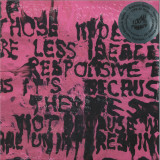
Any moment can crash your emotional state of mind. You are looking for help. You can’t find it with-inside of you. A Diamond shines twice a day. The night can be day and vice versa. We love you, no doubt. Our friends love you too. Do you love yourself? A Zebra is not a unicorn but is still unique. Who are you to tell us We can’t do it? EUPHORIC SPIRITS EUPHORIC SPIRITS Women are strong and full of love and positive energy. This life is a gift and you should genuinely use it. Read a book. Internet TV connects your brain to something not valid; remember that. We still love you. You are beautiful. Come with us to hidden spheres and find your inner voice. Shock, Projection, Ideals, Sorrow, Disaster, Fundamental, Weak, Strong, More, Less.
We love you. Follow us to the planet of our inner fears, and we do magic. It will become another planet. Together forever. We love you.
out of Stock
Last delivered 13 months ago available to reorder, subject to availability
Angelo is an EP, named after a car, featuring nine songs Brijean have crafted and carried with them through a period of profound change, loss, and relocation. It finds percussionist and singer Brijean Murphy and multi-instrumentalist/producer Doug Stuart processing the impossible the only way they know how: through rhythm and movement. The months surrounding the acclaimed release of Feelings, their full-length Ghostly International debut in 2021 which celebrated tender self-reflection and new possibilities, rang bittersweet with the absence of touring and the sudden passing of Murphy's father and both of Stuart's parents. In a haze of heartache, the duo left the Bay Area to be near family, resetting in four cities in under two years. Their to-go rig became their traveling studio and these tracks, along with Angelo, became their few constants. Whereas Feelings formed over collaborative jams with friends, Angelo's sessions presented Murphy and Stuart a chance to record at their most intimate, "to get us out of our grief and into our bodies," says Murphy. They explored new moods and styles, reaching for effervescent dance tempos and technicolor backdrops, vibrant hues in contrast to their more somber human experiences. Angelo beams with positivity and creative renewal _ a resourceful, collective answer to "what happens now?". Angelo the car is a 1981 Toyota Celica they got off Craigslist during their first stint in Los Angeles, where Murphy and Stuart have since settled. "Such a bro-y, `80s dude car, it's been super fun to drive around in a new town," Murphy says. "He's older than us, he's a classic, he's got a story." It is a spiritual vehicle with a cinematic appeal, first dropping them off in an alleyway for the scene-setting intro, "Which Way To The Club." The question is quickly resolved by "Take A Trip" as a cruising bassline mingles with crowd sounds, hand-claps, cuíca hiccups, whip-cracks, even a horse neigh. Brijean have found some club on this cross-dimensional trip - the kind of imagined space or chamber within one's self capable of "shifting a fraction of who you are," says Murphy. They wrote the track with the simple intention to be "as free as we could be," adds Stuart, likening the flip on the B section to a realm unlocked: "What if the world changed completely? You open the door to a new room." Next is "Shy Guy," a motivational anthem for the wallflowers among us. Murphy sets up the daydream: "We are in junior high, we're on the dance floor, what's going down, who is dancing, who is not, how are we gonna make them dance?" The narrator, the MC, hypes up the room as conga-driven rhythms bounce between languid synth and guitar lines. "Show me how to move...I feel something...I know you feel it too," Murphy sings sweetly, calling back to the opening lines of Feelings, and this time the audience chants it back. It is easy to picture Brijean performing this one - something they only got to do a handful of times until more recently, opening shows for Khruangbin and Washed Out, an experience they found informative. Murphy explains, "It was inspiring to be out there and let loose more. To see how people can expand their expression on stage gave me more liberty with how I viewed my musicianship. My role for so long was to be a backup percussionist, so why would I ever leave the drums, you know? But then after playing all these runs, you see these artists and realize you can, you have permission." "Angelo" and "Ooo La La" deliver the danciest stretch in Brijean's catalog to date. The title track adopts a deep house pulse replete with strings, hi-hats, and kicks. The latter opts for a funkier groove that foregoes verses in favor of warbled hums and extended breakdowns. What follows is perhaps the duo's dreamiest run, a comedown initiated with the honey-hued interlude "Colors" drifting into "Where Do We Go?", a tropicália reverie where Murphy contemplates the passage of time and space. It all culminates in "Caldwell's Way," a fond farewell to their Bay Area community - "a part of my life that I knew couldn't come back," says Murphy. Above shimmering organ sounds, lush strings, and the birdcall of their former neighborhood, she wistfully articulates the uncertainty of moving on by remembering the characters dear to them. There's the wisdom of their neighbor, Santos, who refused payment when helping them move out: "I'd rather have 100 friends than 100 dollars." And the song's namesake, Benjamin Caldwell Brown, a friend and club night cohort for many years. "I'm only miles away, maybe I'm just feeling lonely," the line resigns to warm nostalgia, and "Nostalgia" runs the closing credits to this healing and transportive collection.
out of Stock
Last delivered 3 years ago available to reorder, subject to availability
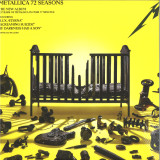
"The new full length album from the legendary Metallica, their first since 2016's ""Hardwired... To Self Destruct"".
“72 seasons. The first 18 years of our lives that form our true or false selves. The concept that we were told ‘who we are’ by our parents. A possible pigeonholing around what kind of personality we are. I think the most interesting part of this is the continued study of those core beliefs and how it affects our perception of the world today. Much of our adult experience is reenactment or reaction to these childhood experiences. Prisoners of childhood or breaking free of those bondages we carry,"" comments Hetfield."
In his South London flat, James Howard gestures apologetically at the mess of books, lined A4 paper and stationary at his desk. “I butcher poetry for a living,” he explains, “It isn’t a pretty job, but someone has to do it.” This being 2022, every emerging musician needs a side-hustle to keep the house warm. In the daytime, our host writes study guides to help teachers teach poetry to pupils who would rather be elsewhere. “I make sure the poems are clinically dead by the time they reach the schools.”
An explanation punctuated by a mildly contrite shrug makes you want to lean forward and remind Howard about some of the stuff other people are doing for a living. And, more to the point, aren’t doing. Which brings us to the real matter at hand. For Howard, foregrounding his own songs hasn’t always come naturally. An enthusiastic collaborator, he made two well-received albums with his previous band Blue House and played with the likes of Rozi Plain, Alabaster dePlume and his wife Dana Gavanski, as well as running his own music night with Sam Tyler in London, Incredible Society. It’s important to mention these creative hook-ups because Howard feels that, in one way or another, they all helped to give form and shape to the lilting lunar lullabies that would ultimately comprise his ravishing solo debut Peek-A-Boo.
Across 8 concise vignettes, Chantal Michelle alchemizes acoustic instrumentation with a spectrum of layered feedback and field sounds, depicting fractured beauty amongst a precarious reality.
Chantal’s work is characterized by intoxicating juxtaposition and enriched with an array of source material to construct immersive narrative. Much of the work here was recorded during her time in New York City, perhaps a pre-requisite to the heightened tension at play.
Opening with lucid choral vocals, a mysteriously seductive anaesthesia disseminates before evaporating into surging feedback, vocals dissolving as quickly as they appeared.
It’s this oscillation between states that permeates throughout the work. Whether it’s the esoteric rumbling of acoustic drones, or the radiant fusion of distorted chords amongst the warming sounds of tropical atmospheres, moments of serenity are conjured up in a space so bliss that their endings incite an immediate nostalgia. Fleeting melodies are pierced by shattering cries of feedback; gossamer tones engulfed in saturated noise.
Amongst the instrumentation, buzzing field sounds tremor with hyperreal peculiarity and hallucinations shape noise into sounds of the familiar; the rumbling of an overheard aeroplane or the whirring of distant grasshoppers. Similarly, recurring motifs elicit a false sense of security in their subliminal familiarity, soon exposed as echoes, a reverberation of what was left behind.
At the approaching climax, the blissful onset anaesthesia has worn off, interrupted by a powerful chorus of deep, gothic synthesis that fuels post-apocalyptic fever dreams, an unnerving and mesmerising symphony. The unresolved tension leaves us in a state of delirium, questioning if the tranquillity we experienced was ever really there.
Chantal was immersed in Fleur Jaeggy’s The Water Statues whilst recording, and its imprint is woven into the sonic fabric of Broken to Echoes; a sublime liminal dream-state, pervaded by haunting visions. It’s a view of the world captured from inside the enclosure of a cell membrane. Through translucent mesh, we see the billowing tension of our surroundings, protected only by the most delicate walls.
Chantal Michelle is a sound artist, musician, and composer based between the United States and Europe. She works with acoustic instrumentation, synthesis, field recordings, and voice to form densely textured aural landscapes. Her work is characterized by tension, disparate sounds, and non-linear arrangements. It has been realized as multichannel installations, live performances, and recorded material.
She has released three albums to date: Pulse, Puls-ar, Procession (Dinzu Artefacts, 2022), Night Blindness (Quiet Time, 2021) and the collaborative Aunis (Injazero, 2019), all to critical acclaim. The Wire called Night Blindness “a dynamic and engrossing narrative,” and Aunis received praise in The Guardian as “a virtually unprecedented palette of synth sounds.”
Alessandro Cortini (Nine Inch Nails/How To Destroy Angels) composed the Forse series using a Buchla Music Easel. Forse, meaning "maybe" In Italian, is a series of 3 double LP releases Cortini recorded for Imprec to release in 2013.
"All pieces were written and performed live on a Buchla Music Easel, in the span of one month. I found that the limited array of modules that the instrument offers sparked my creativity. Most pieces consist of a repeating chord progression, where the real change happens at a spectral/dynamic level, as opposed to the harmonic/chordal one. I believe that the former are just as effective as the latter, in the sense that the sonic presentation (distortion , filtering, wave shaping, etc) are just as expressive as a chord change or chord type, and often reinforce said chord progressions.
Of all the years with Nine Inch Nails the period spent writing and recording the instrumental record Ghosts I-IV is probably the one which changed my approach to music making the most. After that record I started getting more into instrumental composition, although I tried to approach it in a different way. While we had a vast array of tools and instruments at our disposal then, I decided to approach my pieces limiting myself to one instrument only, as I found myself being more decisive when faced with a limited creative environment."
With the verve of the early onset of a love affair, Julian Muller’s and MRD’s first release on NALI isn’t shy of evoking deep feelings on the backdrop scattered bass lines. The four-track EP draws from transcendental soundscapes and blends them with well-crafted solid techno. Hopeful, revolutionary and yet club driven, the vocals are pop-leaning with a hint of the aesthetics of popularized club culture that came up in the late 90ies. A promising kick-start for the freshly conceived label and its musical agenda.
out of Stock
Last delivered 3 years ago available to reorder, subject to availability
‘’Ace Todmorden label makes a significant discovery on its own doorstep: a superb cache of ‘loner folk’ songs recorded in the early-70s by Hebden Bridge’s answer to Nick Drake’’ UNCUT PLAYLIST
"This is music that can confidently hold its own with pioneers such as Davey Graham, Michael Chapman, Bert Jansch and Jackson C Frank, as influenced by jazz, blues and steel guitar as any of the old songbook classics from ancient Albion.” Benjamin Myers
"Defiantly Northern and out of this world" Folk Radio
Anti-counter culture loner folk from a teenage attic in the heart of rural Northern hippiedom.
Today the valley town of Hebden Bridge in West Yorkshire is world-renowned as something of a bohemian backwater. It wasn’t like this back in the late 1960s and the early 1970s, when a disparate selection of radicals, drop-outs, heads, musicians, artists and writers started to be attracted to the Calder Valley. Local lad and future poet laureate Ted Hughes called the area “the fouled nest of industrialisation”.
Over time, those seeds of radicalism and collectivism ensured Hebden Bridge evolved into a place where people could be themselves and all shades of individual oddness not only tolerated but actively encouraged. But back at the turn of the dreary 1970s it remained a monochrome world defined by its unforgiving surrounding landscapes, where the old gritstone over-dwellings were stained with soot and rain lashed down for weeks.
It was here that Trevor Beales, who was born in 1953, grew up, and from where he drew musical and lyrical inspiration.
Perhaps it was this dual nationality heritage, unusual in the valley’s largely white working class population at the time, that gave the teenager Trevor Beale’s music an outsider’s perspective. The discovery of Bob Dylan, Django Reinhardt, The Byrds and James Taylor at a young age, lead to him picking up a guitar at the age of ten, and he was soon writing his own originals and performing them at local (though often remote) folk clubs and pubs.
Recorded in the attic of the family home at Ivy Bank in Charlestown on the verdant wooded slopes at the edge of Hebden Bridge between 1971 and 1974, these early recordings are collected here for the first time and mark Trevor Beales long-overdue solo debut.
In these songs is a suffer-no-fools sense of realism that is defiantly Northern, yet also expresses a worldliness that belies Beales’ young years, whilst also showcasing an inherent storyteller’s ear for narrative. Here is a postcard from the past at that crucial musical period of transition, when the idealistic exponents of the 1960s emerged into an austere new decade that was to be shaped by strikes, rising unemployment and economic upheaval.
Two aspects of this music make it remarkable: Beales’ natural ability showcases a sophisticated guitar-picking style that was leagues ahead of many of his (older, more recognised) contemporaries. This is music that can confidently hold its own with pioneers such as Davey Graham, Michael Chapman, Dave Evans, Bert Jansch and Jackson C Frank, as influenced by jazz, blues and steel guitar as any of the old songbook classics from ancient Albion.
Secondly, his lyrics are a far cry from either the naïve bedroom scribblings of a teenager who has barely left his upland home, nor do they fall foul of the type of lazy cliches and sub-Tolkien imagery that was still in abundance in the early 1970s. Most remarkably the earliest songs here were laid down less than a year after he left school (an unearthed report written by his headteacher on July 3rd 1970 noted he had “a considerable ability and interest in music”, though his education ended abruptly when he simply walked out of a science lesson one sunny day while at sixth form, never to return).
Trevor’s music is grounded in reality – his reality. ‘Then I’ll Take You Home’, for example, considers the Guru Marajai, who encouraged his acolytes to give over their worldly possessions, yet who drove a Rolls Royce and lived like a playboy. Unsurprisingly, this latest in a long line of spiritual charlatans found several followers in Hebden Bridge, and Beales casts a disdainful eye over the growing popularity for such false prophets.
With its ancient narratives and propensity for myth-making, folk has certainly produced it’s fair share of cult figures who have enjoyed rediscovery or career resurgence and with this debut compilation of home recordings, rescued from cassette tapes, Trevor Beales might just be the latest addition. Certainly he was the real deal.
Crucially, Beales' music is never jaded or cynical, but instead possesses a poet’s ear, a strong sense of self and some sound critical faculties. And much of it recorded at an age when he could neither vote nor order a pint of heavy.
Trevor Beales died suddenly and unexpectedly on March 29th 1987, aged 33. He left behind Christine and their young child Lydia.
A gorgeous and gripping portrait of Fenne's last two years, Big Picture was pieced together in an effort to self-soothe. Tracked live in co-producer Brad Cook's North Carolina studio, the album delineates the phases of love and becomes a map of comfort vs claustrophobia. Though its creation took place amid personal and global turmoil, the ruminative yet candid Big Picture is Fenne's most cohesive, resolute work to date, both lyrically and sonically. "This isn't a sad album _ it's about as uplifting as my way of doing things will allow," she says. "These songs explore worry and doubt and letting go, but those themes are framed brightly." With confidence and quiet strength, each track provides an insight into Fenne's ever-changing view of love and, ultimately, its redefinition _ love as a process, not something to be lost and found. While the album was written alone in Fenne's Bristol flat - a fact intentionally reflected in its compact sonic quality - Big Picture was transformed from a solitary venture into a unifying collaboration during the recording process when she was joined by her touring band, Melina Dutere of Jay Som (mixing), Christian Lee Hutson (guitar and co production), and Katy Kirby (vocals). Notably, these 10 songs are Fenne's first and only to have been written over the course of a relationship; 2018's On Hold and 2020's BREACH both confront the pain of retrospection, saying goodbye to a love that's gone. Big Picture does the exact opposite _ rooted firmly in the present, it traces the narrative of two people trying their hardest not to implode, together. "This album is an observation of the way I think about love, the selfexamination that comes with closeness and the responsibilities involved in being a big part of someone else's small(er) world," summarizes Fenne. "It was written in a place of relative emotional stability - stability that felt unstable because of its newness, but also because of the global context. 2020 was the year of letting go, but we'd all already let go of so much and nothing felt like mine anymore. Writing always did, though, so that's what I chose to do."
A gorgeous and gripping portrait of Fenne's last two years, Big Picture was pieced together in an effort to self-soothe. Tracked live in co-producer Brad Cook's North Carolina studio, the album delineates the phases of love and becomes a map of comfort vs claustrophobia. Though its creation took place amid personal and global turmoil, the ruminative yet candid Big Picture is Fenne's most cohesive, resolute work to date, both lyrically and sonically. "This isn't a sad album _ it's about as uplifting as my way of doing things will allow," she says. "These songs explore worry and doubt and letting go, but those themes are framed brightly." With confidence and quiet strength, each track provides an insight into Fenne's ever-changing view of love and, ultimately, its redefinition _ love as a process, not something to be lost and found. While the album was written alone in Fenne's Bristol flat - a fact intentionally reflected in its compact sonic quality - Big Picture was transformed from a solitary venture into a unifying collaboration during the recording process when she was joined by her touring band, Melina Dutere of Jay Som (mixing), Christian Lee Hutson (guitar and co production), and Katy Kirby (vocals). Notably, these 10 songs are Fenne's first and only to have been written over the course of a relationship; 2018's On Hold and 2020's BREACH both confront the pain of retrospection, saying goodbye to a love that's gone. Big Picture does the exact opposite _ rooted firmly in the present, it traces the narrative of two people trying their hardest not to implode, together. "This album is an observation of the way I think about love, the selfexamination that comes with closeness and the responsibilities involved in being a big part of someone else's small(er) world," summarizes Fenne. "It was written in a place of relative emotional stability - stability that felt unstable because of its newness, but also because of the global context. 2020 was the year of letting go, but we'd all already let go of so much and nothing felt like mine anymore. Writing always did, though, so that's what I chose to do."
A gorgeous and gripping portrait of Fenne's last two years, Big Picture was pieced together in an effort to self-soothe. Tracked live in co-producer Brad Cook's North Carolina studio, the album delineates the phases of love and becomes a map of comfort vs claustrophobia. Though its creation took place amid personal and global turmoil, the ruminative yet candid Big Picture is Fenne's most cohesive, resolute work to date, both lyrically and sonically. "This isn't a sad album _ it's about as uplifting as my way of doing things will allow," she says. "These songs explore worry and doubt and letting go, but those themes are framed brightly." With confidence and quiet strength, each track provides an insight into Fenne's ever-changing view of love and, ultimately, its redefinition _ love as a process, not something to be lost and found. While the album was written alone in Fenne's Bristol flat - a fact intentionally reflected in its compact sonic quality - Big Picture was transformed from a solitary venture into a unifying collaboration during the recording process when she was joined by her touring band, Melina Dutere of Jay Som (mixing), Christian Lee Hutson (guitar and co production), and Katy Kirby (vocals). Notably, these 10 songs are Fenne's first and only to have been written over the course of a relationship; 2018's On Hold and 2020's BREACH both confront the pain of retrospection, saying goodbye to a love that's gone. Big Picture does the exact opposite _ rooted firmly in the present, it traces the narrative of two people trying their hardest not to implode, together. "This album is an observation of the way I think about love, the selfexamination that comes with closeness and the responsibilities involved in being a big part of someone else's small(er) world," summarizes Fenne. "It was written in a place of relative emotional stability - stability that felt unstable because of its newness, but also because of the global context. 2020 was the year of letting go, but we'd all already let go of so much and nothing felt like mine anymore. Writing always did, though, so that's what I chose to do."
Juan Pablo Torres was one of the best trombone players in the Latin-jazz community of the second half of the 20th century.
He was the director of Algo Nuevo and a member of Irakere, two of the leading exponents of Afro-Cuban jazz in the 1970s and 1980s. He has also directed various Cuban supergroups such as Estrellas de Areito and Cuban Masters.
Almost all of his albums were made for Areito de La Habana, Cuba.
‘Cuba Disco’ was the only album released in his name in Europe; recorded in Milan in 1984 and produced by Aldo Pagani. In Italy in the same year he participated in two records by Pino Daniele and one by Astor Piazzolla.
Accompanied by his faithful Gruppo Algo Nuevo, with the addition of some guests such as the Italian jazz guitarist Angelo Arienti, his traditional Afro-Cuban vein is contaminated by disco and balearic moments; as in the case of the magnificent ‘Bermuda Triangle’ which anticipates the current atmosphere of Nu Genea.
Limited edition. Released from the transfer of the original master tape.
out of Stock
Last delivered 15 months ago available to reorder, subject to availability
Last year's Big Time brought Angel Olsen to a deeper, truer sense of self than ever before. Borne from the twin stars of grief and love, the album delivered beautiful sense of certainty, the sure-footed sound of an artist fully, finally at home with herself. But within that wisdom comes the realization that there is no finish line, no destination or static end point to life while you're living it, and Forever Means collects songs from the Big Time sessions that hold this common theme. They are, in Olsen's words, "in search of something else." "I was somewhere traveling," says Olsen, "stopped for a few days and wandering the city, and I was thinking `what does `forever' really mean? What are the things I'm seeking in friendship or love, and how can `forever' be attainable if we're always changing?'" Sitting with the reality of that entropy, Olsen realized "maybe the secret to ongoing love is to embrace change as part of love itself, that forever must have something to do with playing, looking, constantly searching things out for yourself, never letting yourself think you're finished learning or exploring." `Forever'", says Olsen, "remains curious while trying also to be kind and honest." All this packs into the four precious songs that comprise Forever Means, songs from Olsen's roads traveled and the ones ahead. "Nothing's free / like breaking free" Olsen sings, comfortable with the costs of her clarity, her heart and voice fixed on the present, the future, the not-yet-known and the beautifully unknowable
Last year's Big Time brought Angel Olsen to a deeper, truer sense of self than ever before. Borne from the twin stars of grief and love, the album delivered beautiful sense of certainty, the sure-footed sound of an artist fully, finally at home with herself. But within that wisdom comes the realization that there is no finish line, no destination or static end point to life while you're living it, and Forever Means collects songs from the Big Time sessions that hold this common theme. They are, in Olsen's words, "in search of something else." "I was somewhere traveling," says Olsen, "stopped for a few days and wandering the city, and I was thinking `what does `forever' really mean? What are the things I'm seeking in friendship or love, and how can `forever' be attainable if we're always changing?'" Sitting with the reality of that entropy, Olsen realized "maybe the secret to ongoing love is to embrace change as part of love itself, that forever must have something to do with playing, looking, constantly searching things out for yourself, never letting yourself think you're finished learning or exploring." `Forever'", says Olsen, "remains curious while trying also to be kind and honest." All this packs into the four precious songs that comprise Forever Means, songs from Olsen's roads traveled and the ones ahead. "Nothing's free / like breaking free" Olsen sings, comfortable with the costs of her clarity, her heart and voice fixed on the present, the future, the not-yet-known and the beautifully unknowable
Long before today's 'rebellious' pop idols, singers Frank Sinatra,
Dean Martin and Sammy Davis Jr. plus Actor Peter Lawford and
Comedian Joey Bishop had entered showbiz legend as the
genuinely hellraisin' Rate Pack. The handle proved a gift to
journalists chronicling the life and high times of the all-male quintet
whose leading lights were, without a doubt, three of the greatest
entertainers of the 20th Century. Captured on this 3LP compilation
album are some excellent musical memories performed at their best
Marcos Díaz has been part of Buenos Aires underground for many years, being in projects like Bosques and making solo music under the pseudonym Entidad Animada (animated entity). Under this project, Marcos has explored sounds that involve a mix of feedback/distortion through synthesizers, guitars and drum machines that hint at the influence of Stereolab, Spacemen 3, and mid-nineties shoegaze. However, there are also ambient soundscapes with a slight rubbed of the ritualistic psychedelia of the Popol Vuh. The display of colours in his music comes together in the midst of a playful, relaxed and optimistic environment that is simultaneously melancholic. Because of the nature of those pieces, but also because in Entidad Animada there is also space for collage sounds that blend randomly with textures of a primitive analog sound, which inevitably causes a paradox between what is alive and what is inert. And it is because Entidad Animada is precisely that, a spectrum or a vision, a ghost. And these sounds are proof of his existence.
Pruebas de existencia (proofs of existence) is a collection of recordings that Marcos has made in recent years and that we have selected for this album, his first work on Umor Rex. A couple of these pieces were only released digitally, while the others have been on ltd cassette editions through Fuego Amigo Discos in Argentina. Pruebas de existencia is an Umor Rex compilation and remastered edition.
Guitar, sampler, synthesizer, organ, bass, drums & electronic beats, vocals, recording and mixing by Entidad Animada in Buenos Aires. Mastered by Rafael Anton Irisarri at Black Knoll Studio, NY. Cover photography Natch Tablescape (1979) by Langdon Clay. Layout by Daniel Castrejón, Mexico City.
On Giver Taker, the gorgeous debut album by Anjimile, death and life are always entwined, wrapping around each other in a dance of reverence, reciprocity, and, ultimately, rebirth. Giver Taker is confident, intentional and introspective. Anjimile Chithambo (they/them, he/him) wrote much of the album while in treatment for drug and alcohol abuse, as well as while in the process of living more fully as a nonbinary trans person. Loss hovers over the album, whose songs grieve for lost friends ("Giver Taker") and family members ("1978") along with lost selves ("Maker," "Baby No More," "In Your Eyes.") But here, grief yields an opening: a chance for new growth. Each song on the album is its own micro-journey, adding up to a transformative epic cycle created in collaboration with bandmate Justine Bowe of Photocomfort and New-York based artist/producer Gabe Goodman. "1978" and "Maker" both begin as Sufjan Stevens-esque pastoral ballads with Chithambo's mesmerizing voice foregrounded against minimal instrumentation and swell into the realm of the majestic through the addition of warm, steady instrumentation (informed by the mix of 80's pop and African music Chithambo's Malawi-born parents played around the house) and harmonies by Bowe. "In Your Eyes" starts out hushed and builds to a crescendo via a mighty chorus inspired by none other than the Lion King. The allusion is fitting: each song encapsulates a heroic voyage, walked alone until accompanied by kindred souls. The choirs present throughout are equally deliberate. Chithambo grew up as a choir boy himself, and several songs (notably "Maker") grasp not only towards reconciliation between his trans identity and his parents' strong religious beliefs, but towards reclaiming his trans identity as an essential part of his own spirituality.
Eric D. Johnson rarely lingers at one location too long. As a kid growing up in the Midwest, Johnson's family moved around a lot, but it wasn't until he became a touring musician years later that motion became a central part of his identity. That transient lifestyle stoked an enduring reverence for the world he watched pass by through a van window. A sense of place is a unifying theme he's revisited with Fruit Bats throughout its many lives. From the project's origins in the late '90s as a vehicle for Johnson's lo-fi tinkering to the more sonically ambitious work of recent years, Fruit Bats has often showcased love songs where people and locations meld into one. It's a loose song structure that navigates what he calls "the geography of the heart." "The songs exist in a world that you can sort of travel from one to another," says Johnson. "There are roads and rivers between these songs." Those pathways extend straight through the newest Fruit Bats album, aptly titled A River Running to Your Heart . Self-produced by Johnson_a first for Fruit Bats_with Jeremy Harris at Panoramic House just north of San Francisco, it's Fruit Bats' tenth full-length release and one that finds the project in the middle of a creative resurgence. After two decades of making music, hard-earned emotional maturity has seeped into Johnson's songs, resulting in a more complex sound that's connected with audiences like no other previous version of Fruit Bats. A River Running to Your Heart represents the fullest realization of that creative vision to date. It's a sonically diverse effort that largely explores the importance of what it means to be home, both physically and spiritually. And while that might seem like a peculiar focus for an artist who's constantly in motion, for Fruit Bats, home can take many forms_from the obvious to the obscure. Lead single "Rushin' River Valley" is a self-propelled love song written about Johnson's wife that clings to the borrowed imagery of the place where she grew up in northern California. Then, there's the gentle and unfussy acoustic ballad "We Used to Live Here," which looks back to a time of youthful promise and cheap rent. But the wistful "It All Comes Back" is perhaps the most stunning and surprising track on the album, Johnson's production skills on full display. Built upon intricate layers of synths, keyboards, and guitars, it's a pitch-perfect blend of tone and lyricism that taps into our shared apprehensions and hopes for a post-pandemic life. "We lost some time / But we can make it back / Let's take it easy on ourselves, okay?" sings a world-weary but ultimately reassuring Johnson in the song's opening lines. It's the kind of performance that makes you hope Fruit Bats stays in this one place, at least for a little while longer.
Eric D. Johnson rarely lingers at one location too long. As a kid growing up in the Midwest, Johnson's family moved around a lot, but it wasn't until he became a touring musician years later that motion became a central part of his identity. That transient lifestyle stoked an enduring reverence for the world he watched pass by through a van window. A sense of place is a unifying theme he's revisited with Fruit Bats throughout its many lives. From the project's origins in the late '90s as a vehicle for Johnson's lo-fi tinkering to the more sonically ambitious work of recent years, Fruit Bats has often showcased love songs where people and locations meld into one. It's a loose song structure that navigates what he calls "the geography of the heart." "The songs exist in a world that you can sort of travel from one to another," says Johnson. "There are roads and rivers between these songs." Those pathways extend straight through the newest Fruit Bats album, aptly titled A River Running to Your Heart . Self-produced by Johnson_a first for Fruit Bats_with Jeremy Harris at Panoramic House just north of San Francisco, it's Fruit Bats' tenth full-length release and one that finds the project in the middle of a creative resurgence. After two decades of making music, hard-earned emotional maturity has seeped into Johnson's songs, resulting in a more complex sound that's connected with audiences like no other previous version of Fruit Bats. A River Running to Your Heart represents the fullest realization of that creative vision to date. It's a sonically diverse effort that largely explores the importance of what it means to be home, both physically and spiritually. And while that might seem like a peculiar focus for an artist who's constantly in motion, for Fruit Bats, home can take many forms_from the obvious to the obscure. Lead single "Rushin' River Valley" is a self-propelled love song written about Johnson's wife that clings to the borrowed imagery of the place where she grew up in northern California. Then, there's the gentle and unfussy acoustic ballad "We Used to Live Here," which looks back to a time of youthful promise and cheap rent. But the wistful "It All Comes Back" is perhaps the most stunning and surprising track on the album, Johnson's production skills on full display. Built upon intricate layers of synths, keyboards, and guitars, it's a pitch-perfect blend of tone and lyricism that taps into our shared apprehensions and hopes for a post-pandemic life. "We lost some time / But we can make it back / Let's take it easy on ourselves, okay?" sings a world-weary but ultimately reassuring Johnson in the song's opening lines. It's the kind of performance that makes you hope Fruit Bats stays in this one place, at least for a little while longer.
out of Stock
Last delivered 3 years ago available to reorder, subject to availability
Light in the Attic Records is proud to present the next installment of the Nancy Sinatra Archival Series with the first ever reissue of the classic 1972 album Nancy & Lee Again. Recorded during a 1972 reunion between Nancy and the enigmatic Hazlewood, the album contains some of the pair's most enduring and ambitious duets including the epic "Arkansas Coal (Suite)," the sensual "Paris Summer" and the incredibly powerful Dolly Parton-penned "Down From Dover." Equal parts daring, psychedelic, cinematic, and sweet, Nancy & Lee Again reveals with each track a timeless, natural chemistry between two artists who would remain influential for generations to come. Nancy & Lee Again is available in a variety of formats, including vinyl and CD. The vinyl LP is presented in an expanded gatefold jacket and is accompanied by a 20-page booklet, featuring an array of photos from the legendary singer, actress, and activist's personal collection, as well as in-depth Q&A with Nancy Sinatra, conducted by the reissue's GRAMMYr-nominated co-producer, Hunter Lea (also available in the CD package). All formats have been beautifully designed by Darryl Norsen of D. Norsen Design, and include two bonus tracks, "Machine Gun Kelly" (first time on vinyl) and the previously unreleased "Think I'm Coming Down." Nancy, the eldest daughter of Frank Sinatra, had been working with the Oklahoma-born songwriter since 1965, when she topped the pop charts with "These Boots Are Made For Walkin'." Over the next five years, the two artists forged a prolific relationship in the studio, with Hazlewood writing and producing many of Nancy's solo hits. Soon, the duo found success with a series of duets, including "Sand," "Summer Wine," and "Some Velvet Morning" - all of which appeared on their highly-influential 1968 debut. Not long after the critical acclaim and chart success of Nancy & Lee died down, however, Hazlewood unexpectedly relocated to Sweden, leaving his musical partner in the proverbial dust. America, meanwhile, was in the midst of a cultural shift, as the Vietnam War waged on. By the turn of the decade, the musical landscape had changed significantly. "Trivial music and not profound music became unimportant," recalls Nancy, speaking to Hunter Lea. "It was a tough time." And yet, despite the circumstances, the stars somehow aligned for the duo to record some of their most magnificent music together. Returning to Los Angeles for the project, Hazlewood - who reprised his role as producer - chose to take a new direction with the duo's sophomore album. Nancy recalls, "It was more dramatic; it was more fun to do, more challenging to do_. It was more grandiose." Nancy & Lee Again remains a creative high point in the careers of Sinatra and Hazlewood and, upon its release, garnered rave reviews from Billboard, Record World, and Cash Box, among others. Yet, Nancy & Lee Again never received the spotlight it so utterly deserved. "We didn't have label support at all in those days," recalls Nancy. "Without the strength of a label, records die. We were old. We were old-fashioned. We were just not what was happening. It's a very ageist kind of business." Nevertheless, she adds, "I think it's a very good album. I think it's timeless." Now, after years of being a sought-after rarity, this gem in the Sinatra-Hazlewood canon can finally get its due.
Light in the Attic Records is proud to present the next installment of the Nancy Sinatra Archival Series with the first ever reissue of the classic 1972 album Nancy & Lee Again. Recorded during a 1972 reunion between Nancy and the enigmatic Hazlewood, the album contains some of the pair's most enduring and ambitious duets including the epic "Arkansas Coal (Suite)," the sensual "Paris Summer" and the incredibly powerful Dolly Parton-penned "Down From Dover." Equal parts daring, psychedelic, cinematic, and sweet, Nancy & Lee Again reveals with each track a timeless, natural chemistry between two artists who would remain influential for generations to come. Nancy & Lee Again is available in a variety of formats, including vinyl and CD. The vinyl LP is presented in an expanded gatefold jacket and is accompanied by a 20-page booklet, featuring an array of photos from the legendary singer, actress, and activist's personal collection, as well as in-depth Q&A with Nancy Sinatra, conducted by the reissue's GRAMMYr-nominated co-producer, Hunter Lea (also available in the CD package). All formats have been beautifully designed by Darryl Norsen of D. Norsen Design, and include two bonus tracks, "Machine Gun Kelly" (first time on vinyl) and the previously unreleased "Think I'm Coming Down." Nancy, the eldest daughter of Frank Sinatra, had been working with the Oklahoma-born songwriter since 1965, when she topped the pop charts with "These Boots Are Made For Walkin'." Over the next five years, the two artists forged a prolific relationship in the studio, with Hazlewood writing and producing many of Nancy's solo hits. Soon, the duo found success with a series of duets, including "Sand," "Summer Wine," and "Some Velvet Morning" - all of which appeared on their highly-influential 1968 debut. Not long after the critical acclaim and chart success of Nancy & Lee died down, however, Hazlewood unexpectedly relocated to Sweden, leaving his musical partner in the proverbial dust. America, meanwhile, was in the midst of a cultural shift, as the Vietnam War waged on. By the turn of the decade, the musical landscape had changed significantly. "Trivial music and not profound music became unimportant," recalls Nancy, speaking to Hunter Lea. "It was a tough time." And yet, despite the circumstances, the stars somehow aligned for the duo to record some of their most magnificent music together. Returning to Los Angeles for the project, Hazlewood - who reprised his role as producer - chose to take a new direction with the duo's sophomore album. Nancy recalls, "It was more dramatic; it was more fun to do, more challenging to do_. It was more grandiose." Nancy & Lee Again remains a creative high point in the careers of Sinatra and Hazlewood and, upon its release, garnered rave reviews from Billboard, Record World, and Cash Box, among others. Yet, Nancy & Lee Again never received the spotlight it so utterly deserved. "We didn't have label support at all in those days," recalls Nancy. "Without the strength of a label, records die. We were old. We were old-fashioned. We were just not what was happening. It's a very ageist kind of business." Nevertheless, she adds, "I think it's a very good album. I think it's timeless." Now, after years of being a sought-after rarity, this gem in the Sinatra-Hazlewood canon can finally get its due.
New Born is a group of four Italian immigrants who all lived in the area around Ulm/Bavaria.
Primarily they sang more Italian songs and were more on the traditional side of Italian music.
This record is a perfect example of what can happen when the drummer says “Let´s jam” to the musicians. The outstanding track “Galaxy” came out, the vibe of it is like an early piano house track and a hybrid of cosmic and disco.
The original copy of the record is nowadays a highly requested collector´s item, that skyrocketed in terms of prices. Originally released as a 45 single in 1981 the record was pressed in a very small run. Try to find a unicorn it’s easier.
We decided not to do only a simple reissue of it, we asked the creme de la creme of cosmic disco to make us a new born version of the track “Galaxy”. Camp Cosmic aficionados “Albion” & “Spacelexx” are responsible for two mesmerizing versions of this song. On top, we pressed the whole record as a 12″ from the original master tapes.
out of Stock
Last delivered 3 years ago available to reorder, subject to availability
Tape
"And we"re coming out of dreams / And we"re coming back to dreams" is the first thing you hear Bill say as you remake your acquaintance on YTILAER. Right out the gate, he"s standing in two places at once: meeting up with old friends behind the scenes and encountering them on the record, finding himself coming round the bend and then again as someone else on down the line. Like the character actor he played on Gold Record, writing stories about other people, telling jokes about everyone, and in singing them, becoming the songs. "You do what you"ve got to do / To see the picture" Bill"s got a full band sound going on this one, with him and Matt Kinsey on guitars, Emmett Kelly on bass and backing vocals, Sarah Ann Phillips on B3, piano and backing vocals and Jim White on drums. Jim and Matt sing on one song, too, and some other singers come in, too. Bill plays some synth here and there, and Carl Smith drifts in and out of the picture with his contra alto clarinet, as do Mike St. Clair and Derek Phelps on brass. Somehow in between them all, you might think you hear the distant sound of a steel guitar. And you might - but you might not, too. In this company, Bill continues his journey, tunneling underneath the weathered exterior of what seems to be and into the more nuanced life everything takes on in the dark. With Bill"s voice making the extraordinary leaps and bounds that measure the lives of the songs, the band follow him through passages that seem to invent themselves; other times playing with deeply soulful grooves and/or desperate intensity, as these moments come and go. There"s nothing they can"t do. "I wrote this song in five and forever / I"m writing it right now" Bill sings on "Natural Information" - an admission of the everyday alchemy he"s forever trafficking in. Time passes, triangulating the encounters that went into any one record with two out of any three others, all of it made flesh, new constitution, in our stereo speakers. If every album is its own life, it stands to reason that they"re invariably passing in the night. Cascading images flowing from the stream of consciousness. Turning like pages from the journal, unspeakably personal, then suddenly become tall tales, like a book pulled off the shelf, completely unbound. Headlines flow through. Mirror images, mirthful ones. Bill"s lyrics strain at the lines on the page, not content to separate the printing of the fact from the myth or be confined to ink on paper. They want to fly free. And they do. "I realize now that dreams are real" On YTILAER"s inner sleeve, alongside his lyrics, Bill celebrates the "exhilaration and dread" of cover artist Paul Ryan"s paintings. Paul"s another one met up with again down the road, his indelible cover imagery on Apocalypse and Dream River now an axis of meaning in the Callahanian world - and in the bright colors found in these new images, a parallel to Bill"s recognitions here. "A breath of exquisite air as we come up from drowning", sounds like the desired hope for those hearing the songs of YTILAER.
out of Stock
Last delivered 3 years ago available to reorder, subject to availability
When Leon Michels and El Michels Affair released their rst record, Sounding Out The City, in 2005, it was hard to guess what was next for Michels and his then-introduced, now-patented "cinematic soul" sound. Now, four EMA studio albums and scores of tribute and remix projects later - all while producing for some of the biggest names in the industry - Michels has trademarked his sound, with each project taking audiences somewhere new and pushing the boundaries of what he is known for. The man is a river, not a lake and this time he takes his golden touch into the realm of hip-hop laying down a musical bed for one of the greatest to ever rhyme into a microphone: Black Thought of The Roots crew. Releasing on Big Crown Records, the LP is called Glorious Game and it is a remarkable debut partnership in more ways than one. Michels provides his bottom-heavy, soul-tinged production for Black Thought who gives us some of the more personal and transparent verses we've ever heard from him. Michels and Black Thought have been in each other's orbit for a while now. The two first met in the 2000s when Thought was first getting familiar with the contemporary soul scene. "Out of that whole world, Menahan Street Band was probably my favorite," recalling the funk and soul group Michels was a founding member of back in 2007. Fast forward a few years and musicians from that collective - Dave Guy on trumpet and Ian Hendrickson-Smith on sax - are now full time players with The Roots. This connection eventually led Leon and Thought to doing a few fundraising events around NYC and Philly together. "Before long, Black Thought was coming around the studio and would jam with us from time to time," Michels explains. "Then, fast forward to 2020 and COVID lockdowns, he just hit me up out of the blue, wanting me to send him stuff to write to. We both were looking to stay busy" Being that Black Thought is the co-founder and emcee for, hands down, the best live-band group in hip-hop. Michels took a decidedly different approach to this project and instead of sending recorded tracks of live compositions, he pulled out the sampler and sampled himself and some records from his collection. "I'm a big fan of soul music," as if Michels has to remind us. "And part of hip-hop's appeal to me has always been the sample-based production" For Glorious Game, Michels would make wholly composed and recorded soul songs in his studio, sample himself, then chop and/or loop up his sounds and create instrumentals for Black Thought. On some tracks he took a more traditional hip-hop approach, starting from samples of other people's music but then adding live instrumentation on top. But for the most part, it's him reinterpreting his own compositions into something new. The result is an organic feel of loop-based tracks that breathe and uctuate enough for Black Thought to ex on. "What I write about is determined by the equation of the producer's energy and my energy," Black Thought says. "It's about where we meet." So armed with Michels sampled and re-sampled soul cinematics, Black Thought rhymes through personal memories.
out of Stock
Last delivered 3 years ago available to reorder, subject to availability
When Leon Michels and El Michels Affair released their rst record, Sounding Out The City, in 2005, it was hard to guess what was next for Michels and his then-introduced, now-patented "cinematic soul" sound. Now, four EMA studio albums and scores of tribute and remix projects later - all while producing for some of the biggest names in the industry - Michels has trademarked his sound, with each project taking audiences somewhere new and pushing the boundaries of what he is known for. The man is a river, not a lake and this time he takes his golden touch into the realm of hip-hop laying down a musical bed for one of the greatest to ever rhyme into a microphone: Black Thought of The Roots crew. Releasing on Big Crown Records, the LP is called Glorious Game and it is a remarkable debut partnership in more ways than one. Michels provides his bottom-heavy, soul-tinged production for Black Thought who gives us some of the more personal and transparent verses we've ever heard from him. Michels and Black Thought have been in each other's orbit for a while now. The two first met in the 2000s when Thought was first getting familiar with the contemporary soul scene. "Out of that whole world, Menahan Street Band was probably my favorite," recalling the funk and soul group Michels was a founding member of back in 2007. Fast forward a few years and musicians from that collective - Dave Guy on trumpet and Ian Hendrickson-Smith on sax - are now full time players with The Roots. This connection eventually led Leon and Thought to doing a few fundraising events around NYC and Philly together. "Before long, Black Thought was coming around the studio and would jam with us from time to time," Michels explains. "Then, fast forward to 2020 and COVID lockdowns, he just hit me up out of the blue, wanting me to send him stuff to write to. We both were looking to stay busy" Being that Black Thought is the co-founder and emcee for, hands down, the best live-band group in hip-hop. Michels took a decidedly different approach to this project and instead of sending recorded tracks of live compositions, he pulled out the sampler and sampled himself and some records from his collection. "I'm a big fan of soul music," as if Michels has to remind us. "And part of hip-hop's appeal to me has always been the sample-based production" For Glorious Game, Michels would make wholly composed and recorded soul songs in his studio, sample himself, then chop and/or loop up his sounds and create instrumentals for Black Thought. On some tracks he took a more traditional hip-hop approach, starting from samples of other people's music but then adding live instrumentation on top. But for the most part, it's him reinterpreting his own compositions into something new. The result is an organic feel of loop-based tracks that breathe and uctuate enough for Black Thought to ex on. "What I write about is determined by the equation of the producer's energy and my energy," Black Thought says. "It's about where we meet." So armed with Michels sampled and re-sampled soul cinematics, Black Thought rhymes through personal memories.
out of Stock
Last delivered 3 years ago available to reorder, subject to availability
A Wednesday song is a quilt. A short story collection, a half-memory, a patchwork of portraits of the American south, disparate moments that somehow make sense as a whole. Karly Hartzman, the songwriter/ vocalist/guitarist at the helm of the project, is a story collector as much as she is a storyteller: a scholar of people and one-liners. Rat Saw God, the Asheville quintet's new and best record, is ekphrastic but autobiographical and above all, deeply empathetic. Across the album's ten tracks Hartzman, guitarist MJ Lenderman, bassist Margo Shultz, drummer Alan Miller, and lap/pedal steel player Xandy Chelmis build a shrine to minutiae. Half-funny, half-tragic dispatches from North Carolina unfurling somewhere between the wailing skuzz of Nineties shoegaze and classic country twang, that distorted lap steel and Hartzman's voice slicing through the din. Rat Saw God is an album about riding a bike down a suburban stretch in Greensboro while listening to My Bloody Valentine for the first time on an iPod Nano, past a creek that runs through the neighborhood riddled with broken glass bottles and condoms, a front yard filled with broken and rusted car parts, a lonely and dilapidated house reclaimed by kudzu. Four Lokos and rodeo clowns and a kid who burns down a corn field. Roadside monuments, church marquees, poppers and vodka in a plastic water bottle, the shit you get away with at Jewish summer camp, strange sentimental family heirlooms at the thrift stores. The way the South hums alive all night in the summers and into fall, the sound of high school football games, the halo effect from the lights polluting the darkness. It's not really bright enough to see in front of you, but in that stretch of inky void - somehow - you see everything. The songs on Rat Saw God don't recount epics, just the everyday. They're true, they're real life, blurry and chaotic and strange - which is in-line with Hartzman's own ethos: "Everyone's story is worthy," she says, plainly. "Literally every life story is worth writing down, because people are so fascinating." But the thing about Rat Saw God - and about any Wednesday song, really - is you don't necessarily even need all the references to get it, the weirdly specific elation of a song that really hits. Yeah, it's all in the details - how fucked up you got or get, how you break a heart, how you fall in love, how you make yourself and others feel seen - but it's mostly the way those tiny moments add up into a song or album or a person.
out of Stock
Last delivered 3 years ago available to reorder, subject to availability
Kristian Matsson has never remained in one place for very long. Having spent much of the last decade touring around the world as The Tallest Man on Earth, Matsson has captivated audiences using, as The New York Times describes, “every inch of his long guitar cord to
roam the stage: darting around, crouching, stretching, hip-twitching, perching briefly and jittering away…Mr. Matsson is a guitar-slinger rooted in folk, and his songs are troubadour ballads at heart.”
Now, Matsson returns as The Tallest Man on Earth with Henry St., his sixth studio album following 2012’s There’s No Leaving Now, full of “vivid imagery, clever turns-of-phrase, and devastating, world-weary observations” (Under The Radar) and 2015’s Dark Bird Is A
Home, his “most personal record… surreal and dreamlike” (Pitchfork). Henry St. notably marks the first time he recorded an album in a band setting. “My entire career I’ve been a DIY person––mostly fueled by the feeling that I didn’t know what I was doing, so I’d just do everything myself.”
But now, longing for the energy that’s only released when creating
together with others, Matsson invited his friends to come and play.
Nick Sanborn (of Sylvan Esso) produced Henry St., which includes contributions from Ryan Gustafson (of The Dead Tongues) on guitar, lap steel and ukulele, TJ Maiani on drums, CJ Camerieri (of Bon Iver) on trumpet and French horn, Phil Cook on piano and organ, Rob
Moose (of Bon Iver, yMusic) on strings and Adam Schatz on saxophone.
Caroline Polachek released her solo debut Pang back in 2019 after having been the lead singer of the acclaimed band Chairlift for more than 10 years. Immediately upon release Pang received major hype and critical acclaim, but in the years since, it has practically achieved a monolithic status in modern art pop.
Not surprisingly, expectations are huge for her sophomore album Desire, I Want to Turn Into You, but with excellent singles like "Billions" and "Sunset", it is evident that Polachek is a headstrong and original pop star who is here to stay!
Multi-Award winning, hugely influential musician Feist returns with Multitudes, her sixth solo album and first since 2017’s Pleasure.
Multitudes was produced by Feist with longtime collaborators Robbie Lackritz (The Weather Station, Bahamas, Robbie Robertson) and Mocky (Jamie Lidell, Vulfpeck, Kelela). Blake Mills (Bob Dylan, Fiona Apple, Perfume Genius) and Joseph Lorge came in to mix, with Mills as a co-producer in the final stages.
Multitudes took shape soon after the birth of her daughter and sudden death of her father, a back-to-back convergence of life-altering events that left the Canadian singer/songwriter with “Nothing performative in me anymore.” As she cleansed her songwriting of any tendency to obscure unwanted truths, Feist slowly made her way toward a batch of songs rooted in a raw and potent realism which is touched with otherworldly beauty.
Largely written and workshopped during an intensely communal experimental show of the same name through 2021 and 2022, the songs on Multitudes developed in parallel with and were deeply influenced by the mutuality of the unconventional experience. The production, developed by Feist with legendary designer Rob Sinclair (David Byrne’s American Utopia, Peter Gabriel, Tame Impala) was formulated to bring people together as they re-emerged from lockdown while providing an outlet for connection between artist, art, and community.
ASHRAIN ist eine brandneue Power Metal Band, die vom japanischen Gitarristen und Produzenten Nozomu Wakai (Tommy Aldridge, Paul Shortino und Alcatrazz) gegründet wurde.
Für Ashrain konnte Nozomu hochkarätige Musiker wie Peter Baltes (ex-Accept), Iuri Sanson (Vo, ex-Hibria) und Andy C (Dr, ex-Lords of Black) gewinnen, zusammen haben sie das Debutalbum „Requiem Reloaded“ aufgenommen, ein absolutes Power Metal Meisterwerk mit hohem Tempo, eingängigen Melodien sowie orchestralen Elementen.
Second Editions is pleased to present two new complementing works by René Margraff and Malte Cornelius Jantzen, as a double a-side split album.
Margraff utilizes various beautiful ramblings from the one and only AL and weaves them together two floating pieces that are both a reflection and caricature on what punk (what about ambient?) actually is in the age of ever-bloodsucking tabloid consumerism and commercial image branding, and how to keep your head up as a protagonist/heroine.
Jantzen's side pays homage to a time when a kickflip down a flight of stairs mostly ended in bruised hands and knees. In what can barely be considered field recording, the sound of skateboard decks and wheels on cement and railing, the occasional shouts and murmurs form a "real-time listening piece" (aka a moment), most aptly titled after AL's acclaimed debut album.
Second Editions is coming full circle and is calling it a day. Limited to 100 copies. Half on "not punk pink" and other half on "complicated green" cassette shells. For good luck and good vibes!
Malice was one of the more noteworthy bands of the ‘80s Los Angeles metal scene. License to Kill was their second album and was originally released in 1987. Max Norman produced, engineered, and mixed the album, he’s best known for producing several Ozzy albums during the ‘80s, as well as Megadeth’s Countdown to Extinction, and albums of various other metal bands like Y&T, Armored Saint, Savatage, and Lynch Mob a.o.
Old-school Megadeth fans will be tickled to discover that Mustaine and Dave Ellefson are credited with background vocals on two songs. Another guest appearance was made on this album by Tommy Thayer of Kiss. Founder Jay Reynolds later joined Dave Mustaine’s band Megadeth for a brief spell, and after that became a member of Metal Church.
License To Kill is available as a limited edition of 1000 individually numbered copies on translucent blue coloured vinyl
Time to resound the trumpet as Australian blackened sludge veterans Lo! return with another grand infernal vision, captured in capital riffs and gargantuan grooves! After the universal acclaim of the band's 2017 studio endeavour Vestigial the Australian interstate quartet show no intention of slowing down with The Gleaners_a soul-ripping hell-ride across nine visceral anthems; an affair of raw violence with a touch of sophisticated madness. Lo! herald the end of the existing order of things, executing crushing judgement upon those tyrants who put the poor to powder. On The Gleaners Lo! firmly continue in the vein of their much-lauded third album, setting an over-arching storyline with multiple characters to a symphony of sonic death and destruction. "Vestigial opened up the writing arena for Lo! in many ways," explains guitarist and main-songwriter Carl Whitbread about the predecessor of The Gleaners. "We created an album of anthems without losing the groove or viciousness of performing live, using defined characters and themes that are revisited and interwoven across the record, while also experimenting with atmospheric and cinematic samples to breathe life into the recording." Above all, this record is nothing but a firm rattling of your cage - and who could expect something else from the minds of this Australian quartet who have been churning out nothing but stellar sludgy blackened hardcore over the past twelve years? Like a Hieronymus Bosch painting, the storyline of The Gleaners has little of a focal point, the characters crawl all over the place - its chaos is complete - but somehow its impact is phenomenal. Lo! have gone and done it again, creating a terrifying vision of the infernal madness of our reality that shakes you to your core! FFO Converge, Baptists, Black Breath, Mastodon, Trap Them, LLNN Ltd red single coloured vinyl w/ poster!
Brazilian experimental multi-instrumentalist Carla Boregas follows plates for Bokeh Versions and Hive Mind with a ghostly set of deep listening electronics that plays like a symphony for an imagined woodwind orchestra.
Carla Boregas is best known from her tenure in São Paulo's genre-bending experimental post-punk scene, playing in long-running outfit Rakta as well as other related offshoots. Her solo material has been knottier to unpick, here developing ideas from a collection of unfinished fragments and notebook scribbles exploring the possibility of finding a wind instrument that could be played collectively by several musicians. Coinciding with the pandemic, however, she soon realised the inherent risks involved with sharing breath and so the concept took a different direction, with added resonance.
Boregas developed a synthetic alternative, layering vocals and environmental recordings to suggest wind instrumentation without attempting to mimic it. The sounds here are airy, but rarely diegetic - on the title track, Boregas uses analog arpeggios and plucked, sustained tones to approximate the kosmische world of Ash Ra Tempel or more recently Emeralds, as if trapped in a wind tunnel, moved forward by an unseen force.
There's a whisper of the ancient past that harmonises with Wojciech Rusin's speculative medieval gasps, and Bloedneus & de Snuitkever's severely underheard ‘Milli Mille’, an examination of the ancient Greek aulos. On ’Grafia Do Invisível' the sound is completely different again, but the concept remains, using precise analog drones and minuscule timbral shifts to imitate the character of a wind instrument and simultaneously harmonise with the deep listening meditations of Éliane Radigue and Kali Malone.
A voice enters the frame on 'Sopro’, chopped into deviated gulps and syllables, creating a language that's unfamiliar and percussive. The use of breath is subtle, and vocalisations criss-cross between synths and faint whistles, forming an expression that's different from its predecessors but intrinsically interlinked. This is where ‘Pena Ao Mar’ excels, by viewing breath and its application in electronic music from multiple angles simultaneously. Fans of Lucy Duncombe, Lucrecia Dalt, or Sarah Davachi - don't miss this one.
The Flaming Lips veröffentlichten 2002 "Yoshimi Battles the Pink Robots", welches das meistverkaufte Album der Band ist und in den USA mit über 700.000 verkauften Alben mit Gold ausgezeichnet wurde.
Das Album enthält einen der kultigsten Songs der Band - "Do You Realize?" - sowie die Singles Fight Test, Ego Tripping at the Gates
of Hell und den Titeltrack. Die 20th Anniversary Deluxe Edition 5 LP Vinyl Box Set enthält das Originalalbum, B-Seiten, Demos und Radiosessions sowie weitere Raritäten. Die Vinyl-Box enthält 56 Tracks, von denen über 30 bisher unveröffentlicht sind, und 40, die zum ersten Mal auf Vinyl erhältlich sein werden.
When we established Balmat in 2021, neither of us could have imagined that within two years, we’d be putting out an album by one of our musical heroes: Mike Paradinas, aka µ-Ziq. The British producer has been an inspiration to label co-founders Albert Salinas and Philip Sherburne since the 1990s. In fact, his album-length remix project The Auteurs Vs µ-Ziq was one of the very first pieces of electronic music that Philip bought, way back in 1994. To have the opportunity to release his music now feels like a real full-circle moment.
Paradinas, of course, needs no introduction. Under a slew of aliases, chief among them µ-Ziq, the British artist revolutionized leftfield electronic music in the 1990s—coincidentally, this year marks the 30th anniversary of his debut album, Tango N’ Vectif, for his friend and sometime collaborator Aphex Twin’s Rephlex label—and his label Planet Mu has built up a formidable catalog of visionary, forwardlooking records, mapping virtually every corner of the electronic spectrum. With 1977, he turns the clock backward in a sense, and not just with the album’s title: Rooted in classic ambient and electronic sounds, these 15 tracks evoke the anything-goes spirit of the early ’90s, before the tools and tropes had calcified into cut-and-dried styles.
There’s no shortage of familiar sounds on 1977. There are echoes of raves and chillout rooms and transmissions from the fringes of techno; there are detuned synths and glistening reverb tails and, above all, gauzy vox pads, the eerie glue that holds it all together. The title, he says, is meant to invoke a general sense of nostalgia, bookmarking a year in his boyhood when he became more selfaware. More than anything, 1977 sounds like µ-Ziq distilled: Stripped of his signature breakbeats and customary chaos, Paradinas’ first-ever strictly (well, mostly) ambient album presents the essence of his music in a whole new light.
Along the way Paradinas touches on dark-ambient drones (“Marmite”), horror-film themes (“Belt & Carpet”), jungle breaks (“Mesolithic Jungle”), and even house music (“Houzz 13”), which marks the first bona fide dance-floor moment on Balmat to date). Yet the album never—to our ears, anyway— feels expressly retro. Rather, Paradinas plucks timeless sounds out of the ether and gives them a gentle tap, spinning them into unexpected new orbits. At times, 1977 feels like an experience of extended déjà vu: When we first listened to it, we had the sense that we already knew this music. It was as though we had heard it years ago, perhaps on a battered cassette tape lent to us by a friend, and been searching for it ever since. We hope you feel the same.
out of Stock
Last delivered 3 years ago available to reorder, subject to availability
Civilistjävel! returns to Copenhagen label FELT with a four track EP following on from 2022's Järnnätter album.
Equally well placed next to the Biosphere / early Fax +49-69/450464 camp as well as various decades of electro-acoustic drone practitioners, Fyra platser (Four Places) also includes a trip-hop leaning collaboration with Cucina Povera. Whilst Järnnätter drew influence from the cyclical, chasmic nature of dub techno, Fyra platser hones further in on the ‘between’ areas in a minimal, reductivist fashion. The rhythms are there to follow but are primarily beatless and more expansive, though skewing perceptions of time in the same trademark manner.
Three locations in the Nordingrå area of the Swedish high coast are exorcised and channelled through sound. ‘Kolugn’ is a deliberately grainy, sepia-tinged continuation of the likes of Robert Rutman’s work across the 70s American avant-garde. It sits in contrast to the more obviously synthesis-led direction of fellow longform piece ‘Valmsta’. The location slowly changes to Finland via Athens, scenes of cafe conversations and hazy polaroids informing the lyrics of ‘Louhivesi’. The result sounds like a 90s illbient record dropped around 30 bpm and the stylus has caught on a perennial 8-bar loop. The balance of Cucina Povera’s cold, reverb-heavy vocal inflections drive the track into another dimension. If Moral were the Scandi Joy Division, this pairing must be the Scandi Massive Attack.
out of Stock
Last delivered 3 months ago available to reorder, subject to availability
Die achtfachen GRAMMY-Gewinner veröffentlichen ihr langersehntes 12tes Studioalbum mit dem Titel „72 Seasons“.
Das Album beinhaltet 12 brandneue Songs, produziert von James Hetfield, Lars Ulrich und der Rock-Produzenten-Ikone Greg Fidelman (U2, Slipknot, Johnny Cash, Slayer, Red Hot Chili Peppers, uvm.) Als Vorgeschmack auf das Gesamtwerk dient der bereits veröffentlichte Song „Lux Æterna“. Mit 77 abwechslungsreichen Minuten bietet das Album darüber hinaus jedem Fan die Möglichkeit, sich vollkommen in das Werk fallenzulassen.
Den Titel erklärt James Hetfield wie folgt: „72 seasons. The first 18 years of our lives that form our true or false selves. The concept that we were told ‘who we are’ by our parents. … Prisoners of childhood or breaking free of those bondages we carry.”
Zusatzinfo:
Zeitgleich mit der Bekanntgabe des Albums und dem Release von „Lux Æterna“ kündigen Metallica auch ihre M72 Welt-Tournee an, die sich über die Jahre 2023 und 2024 erstrecken wird. Im Zuge dessen werden jeweils 2 Shows in Hamburg und München gespielt, jede davon mit einer gänzlich anderen Setlist und Support-Acts.
out of Stock
Last delivered 2 years ago available to reorder, subject to availability
Die achtfachen GRAMMY-Gewinner veröffentlichen ihr langersehntes 12tes Studioalbum mit dem Titel „72 Seasons“.
Das Album beinhaltet 12 brandneue Songs, produziert von James Hetfield, Lars Ulrich und der Rock-Produzenten-Ikone Greg Fidelman (U2, Slipknot, Johnny Cash, Slayer, Red Hot Chili Peppers, uvm.) Als Vorgeschmack auf das Gesamtwerk dient der bereits veröffentlichte Song „Lux Æterna“. Mit 77 abwechslungsreichen Minuten bietet das Album darüber hinaus jedem Fan die Möglichkeit, sich vollkommen in das Werk fallenzulassen.
Den Titel erklärt James Hetfield wie folgt: „72 seasons. The first 18 years of our lives that form our true or false selves. The concept that we were told ‘who we are’ by our parents. … Prisoners of childhood or breaking free of those bondages we carry.”
Zusatzinfo:
Zeitgleich mit der Bekanntgabe des Albums und dem Release von „Lux Æterna“ kündigen Metallica auch ihre M72 Welt-Tournee an, die sich über die Jahre 2023 und 2024 erstrecken wird. Im Zuge dessen werden jeweils 2 Shows in Hamburg und München gespielt, jede davon mit einer gänzlich anderen Setlist und Support-Acts.
out of Stock
Last delivered 3 years ago available to reorder, subject to availability