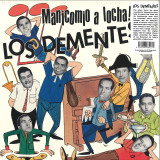
This album marks the debut recording for Venezuela's Velvet label by pianist Ray Pérez and his trombone-led salsa band Los Dementes. Heavy dance numbers and the distinctive vocals of Perucho Torcat make this historic 1967 rarity a sought-after collector's item. Now the LP has been lovingly restored, mastered from the original tapes, with its original artwork intact, preserving the legacy of Los Dementes for today's generation of salsa lovers everywhere. First time reissue. Salsa pianist, vocalist, composer and arranger Ray Pérez, acquired his nickname "Loco" by being a free, independent spirit, an innovator and iconoclast who was initially branded as "crazy" for the freshness and audacity of his sound. Amazingly, he is not that well known in the US, where he spent some time in the late 1960s and salsa was king during the 1970s. Yet he was quite popular in his home country from the beginning, especially amongst the working class of Caracas and Maracaibo, who adopted Cuban music played by New York Puerto Ricans as their own and called it "salsa" years before the term was employed by US labels like Fania as a marketing tool. Pérez is revered in Venezuela, as well as in Mexico and Colombia, and his storied career, which spans seven decades and thousands of concerts, has yielded more than 35 albums recorded by his various bands, including Los Dementes, Los Kenya, and Los Calvos, all of which are collector's items today. At the start of 1967 Pérez debuted Los Dementes, with vocalists Claudio Zerpa and Perucho Torcat backed by an ace band featuring only trombones in the brass section. Titled "¡Alerta mundo! Llegaron los 'The Crazy Men'" the record was released on the small Venezuelan label Prodansa. Soon after, Prodansa folded and Los Dementes were left without representation or much compensation for their efforts, being paid only in records. In the end of February of that year, Pérez returned to Caracas from a stint in Maracaibo in order to finish his first LP with the well-established and larger Velvet label, entitled "Manicomio a locha". In the first quarter of 1967, Velvet unleashed a trilogy of salsa records in order to compete with rival label Palacio and their recent success with Federico y su Combo Latino: "Porfi '67 Salsa & Boogaloo" by Porfi Jiménez y su Orquesta, "Guasancó" by Sexteto Juventud and lastly "Manicomio a locha". The LP begins appropriately with the boisterous title track, written by the band's conguero Carlos "Nené" Quintero, who would become a legend in coming years. Torcat describes a jam session in mental institution and introduces the band, with tasty solos by trombonist Rufo García followed by Ray on piano. Already you can hear something was different about Ray and his "Crazy Men"-a sound as wild and innovative as what was happening in New York with Eddie Palmieri, but with a more unhinged, raw feeling in line with Willie Colón and other younger Nuyorican bands. Next up is an intriguing track sung in a mix of Italian, English, Spanish and Papiamento by Pérez himself, performed in the complicated rhythm of the mozambique, an Afro-Cuban carnival beat developed in the early 1960s. This is followed by the heavy dancer 'Rico guaguancó', penned by Angelito Pérez, which changes from the guaguancó to the mozambique rhythm mid-way through, proving that Los Dementes were "different from the rest" as the lyrics say. 'Puerto Libre', sung by Torcat, is dedicated to the Venezuelan island of Margarita in the Oriente region, and the independent spirit of its working people. The rhythm changes from guaguancó to guajira and back again but remains danceable all the way through. The side closes out with a "3 in 1" medley inspired by the popular formula of the mosaicos of Billo's Caracas Boys, seamlessly knitting together several different tempos, rhythms, moods and compositions. Side two starts strong with the fierce yet satirical 'Corte e' patas', then 'Alma Cumanesa', a typical folk song refashioned as a guaguancó. This is followed by the funky 'Guajira con Boogaloo'. The tune echoes the sound of young Latin New York, pointing out the connection between Cuban and African American soul music. The pace picks up again with 'Fiesta de trombones', a hot descarga and then the album closes with another medley. Though this marks the end of a rather short album, it also signaled the emerging success of Los Dementes and their involvement with the salsa boom in Venezuela, quickly selling out of its initial run of 1000 records and making for a memorable debut on the Velvet label. Now this rare and sought-after LP has been lovingly restored, mastered from the original tapes, with its original artwork intact, preserving the legacy of Los Dementes for today's generation of salsa lovers everywhere.
Buscar:we do it for love
LP black vinyl repress with download card included. CD is available and in stock now (FIRECD289). Ahead of its time, ‘And Don’t The Kids Just Love It’ was Television Personalities’ influential debut album released in 1981 and features ‘I Know Where Syd Barrett Lives’. The legendary lo-fi release sees them produce British inspired 60s pop and post-punk that captured the period and ‘sounds remarkably prescient’ (Pitchfork’s Best 100 albums of the 1980s). With the formidable Daniel Treacy at its core, Television Personalities remain one of new wave’s longest serving and seminal artists with a career spanning over three decades. The indie visionaries directly influenced virtually every major pop uprising of the period including artists as diverse as The Jesus and Mary Chain, Pavement and Creation’s Alan McGee. “They provided the inspiration and motivation for me to start the label.” Alan McGee, Creation Records. “A remarkably influential album that holds up extremely well.” Allmusic. Track Listing 1 This Angry Silence 2 The Glittering Prizes 3 World Of Pauline Lewis 4 A Family Affair 5 Silly Girl 6 Diary Of A Young Man 7 Geoffrey Ingram 8 I Know Where Syd Barrett Lives 9 Jackanory Stories 10 Parties In Chelsea 11 La Grande Illusion 12 A Picture Of Dorian Gray 13 The Crying Room 14 Look Back In Anger
For the next instalment in our split series, we handed the reins over to two producers whose work has kept us continually inspired over the last few years. At the helm of the A-side, Berlin big-room havoc-wreaker AMOTIK puts on the burners right away with two riotous jams that scream nothing but sonic aggression. On the flip, the mysterious, genre-unbound Janice sweeps us into his psychedelic, non-formulaic techno mindset. True to AMOTIK's minutely balanced, well-integrated blends of punishing kick drums and sunken harmonics, metronomic destroyer "Narangi" swings the pendulum sharp and clean, from deep down a thick sludge of reverb-soaked, FX-topped percussive armada to bleeps n' bloops barrage fire, whereas quake-inducing tides of 909 thunder hail down upon the dance floor with unrelenting frenzy. The dusty bone-bruiser "Hara" picks up the torch and it's in no calmer mood. A slowed-down, breaks-loaded churner, this one relies on a fine engineering of lo-freq moves and pure hardware-processed filth to establish a murky motel, cinematic narrative of sorts. Up with the fracturing wares, here's Janice rocking the flip upside down with the aptly-titled "Mass Formation Hypnosis". Doing what's written on the tin, the faceless producer rushes us headfirst into the boiler for a thorough, unfaltering brainwash. Smelling of leather, grease and coal, this one's bristling with a delectably rugged palette of unambiguous electronics: an ultimate shelling of chest-rattling drum work, in-your-face bass uppercuts, trumpeting stabs and menacingly altered vox. The final salvo, "Names and Excuses", tops it all off on an ominously droney tip, flinging us right away into the frothing mouth of a deadly machine giant, hurtling and tumbling down mazy bowels of washed-out ambient techno via rhyzomatic gutters of brooding abstract motifs and no-frills heavyweight pound. Hectic. ''XVII'' comes adorned with a duly outstanding frame to shine, and will be pressed on 180g audiophile quality vinyl. Once again a way for RYC to openly declare its aspirations and goals, in letting people know that quality, passion and love for the music is all that matters.
Sniffany & The Nits are a deranged, genuinely troubling punk band
from London featuring members of Joanna Gruesome, Ex-Void and
The Tubs. Their debut album, ‘The Unscratchable Itch’, is released
via PRAH Recordings.
Drawing a through line between the British post-punk of The Fall and
the new wave of insolent hardcore typified by bands like Lumpy &
The Dumpers, The Nits have developed a knack for writing unhinged
punk earworms.
But it’s Sister Sniffany, and her singular lyrical and performance style,
who elevates the band beyond the sum of their influences. Her lyrics
inhabit the same world as her “macabre, visceral” (It’s Nice That)
cartoons - a world of hidden humiliations, girl abjection, crumpled
lager cans, clam chowder and lumpy, over-stuffed dollies.
Over the course of ‘The Unscratchable Itch’, Sniffany ventriloquises a
cast of pathetic, unbalanced characters: A secretarial administer tails
her Casanova husband to a suburban swingers party: “I can smell
him from here: a mix of Vaseline, foot cream and Stella beer.” A poor
old grandmother’s glasses fog up as she chastises her
granddaughter: “You self-entitled selfish little twat! / Left me to die in a
popcorn-walled flat! / Spotty little smelly little prick! / Making your poor
grandmother sick!”
But these characters aren’t detached, impersonal creations. As
Sniffany explains: “In Sniffany & The Nits I like to exorcise and exhibit
the deeply shameful parts of myself that I see as the toxic aspects of
my own femininity.” These are confessional songs about love
addiction, jealousy, possession, self-loathing and “egg smashingfury.” Though occasionally they are literally just about Sex & The City,
red-pilled incels or grandmothers.
O Williams (drums), Max ‘Wozza’ Warren (bass) and Matt Green
(guitar) have been entrenched in the UK DIY scene for years, having
played in the aforementio ned bands, as well as countless others.
Warren also runs the influential left-field label Gob Nation - a home
for ‘egg punks’ across the country. As such, the band veer between
atonal no-wave guitar assault, straight-up hardcore, goth/anarcho or
whatever takes their fancy, while remaining identifiably Nit-like.
Always grounded by a pounding, pogo-ing rhythm section, The Nits
provide the perfect backdrop for Sister Sniffany’s wild, relentless live
performances. See them live at 2022’s End of the Road Festival.
Cream vinyl LP.
Inspiration Information Is Presented In An Opaque Metalic Silver Pressing. Well before Shuggie Otis cut his debut album, musicianship and performance had long been a part of his life. The son of rhythm and blues legend Johnny Otis, Shuggie learned to play guitar as early as the age of two, and performed professionally with his father's band at eleven. Throughout his long and illustrious career he performed on records for the likes of Frank Zappa, Al Kooper, Etta James, and George Duke, to name a few. Despite only moderate success upon its initial release, Shuggie Otis' third album Inspiration Information turned into underground smash decades later and has since maintained a level of cult status normally reserved for mysterious, unearthed legends like Sixto Rodriguez or Lee Fields. Inspiration Information is also noteworthy among Shuggie's other releases, as it was entirely self-produced, as opposed to being overseen by his father Johnny Otis. Shuggie's signature blend of baroque funk is on full display, but with a heavy dosage of psychedelic soul blended in, resulting in an album that's equally swarthy, lush, funky, and emotional; gathering all the best bits of Marvin Gaye, Love, Miles Davis, and even Os Mutantes. Inspiration Information is more than worthy of all acclaim awarded to it, despite the delayed reverence. Track Listing: A1. Inspiration / Information A2. Island Letter A3. Sparkle City A4. Aht Uh Mi Hed B1. Happy House B2. Rainy Day B3. XL-30 B4. Pling! B5. Not Available
Los Cotopla Boyz: Millennial Cumbia For The End Of The World. The newest psychedelic space ranger Cumbia band from Bogotá's infamous DIY scene have been sent to earth to save the party! Los Cotopla Boyz make the walls sweat, they set fire to your feet on the dance floor. It all started in Bogotá, which you might say is the tropicanibal venue par excellence, a place that has brought life to acts like Frente Cumbiero, Los Meridian Brothers, Romperayo, Chúpame el dedo, Dub de Gaita, Los Pirañas, Onda trópica and León Pardo, among other eccentricities that have taken the world and stand out not only for their virtuosity but also the connection that lives between that salvaging of traditional folklore and lysergic futurism that expands hypnotically around the world. From this musical hotbed that emerged in the second decade of the new millennium, there is now a new generation to continue the tropicanibal scene, with groups such as La Sonora Mazurén, La Tromba Bacalao, Los Yoryis, El Conjunto Media Luna and, of course, Los Cotopla Boyz, a five-piece that formed in Bogotá in 2018 but inhabit a post-pandemic dystopian multiverse where their mission is to save the party. So their live performances have that illusion of frantic Power Rangers singing about their adventures, as if these were epic chants, except instead of heroic feats they sing with humor about their everyday lives, like the drama “N’sync” about that chat where they leave you on read, or “Me Malviajé con las Ganlletas” about the hallucinogenic experimentation of ingesting cannabis and flipping out. These experiences also lead to songs like the clumsy love lost of “Dama tu Wasap,” the cathartic “Tren de Cotopla” and the ode to excess that is “Raspafiestas,” that moment in your life when the night seems eternal and you only want to go from one party to the next until the world ends. These songs, together with “Plankton (Abanico Sanyo)” and “El Peruanito” are part of Mamarron, Vol. 1, a compilation of seven millennial cannon shots inspired by Los Mirlos, Los Hechizeros Band, Anan, Wendy Sulca, La Sonora Cordobesa, Bad Bunny, Yandel and Los Corraleros de Majagual, tracks laid down on their debut record that saw the light in 2020 in the middle of the pandemic and will be re-released in 2022 by AYA records (ZZK Records imprint.) As well as being pressed on vinyl the album will include the bonus track “El Peruanito” remixed by Colombian producer Santiago Navas and taken from Mamarrón, Vol. 2, their album of remixes by figures such as Frente Cumbiero, Cerrero, Prendida, Sonido Confirmación, DJ Rata Piano and Felipe Orjuela, local producers and musicians with a global scope and vision who expand the raspafiesta universe to the limits of the world. Los Cotopla Boyz are a sweaty, schizophrenic cumbia experience that has been witnessed by emerging Bogotá clubs like Matik-Matik, Boogaloop, El Chamán, Tejo Turmequé, Videoclub and the festival Hermoso Ruido, providing nights of wild abandon to the beat of an outrageous big cumbia sound, a ritual of release giving those present a maximum catharsis that has no compare, not even the most animalistic moves of any metaller shaking his powerful mane. Los Cotopla make the walls sweat, they set fire to your feet on the dancefloor, drawing amorphous moves from their fans on exquisite nights. Tracks SIDE A: 1. Plankton (Abanico Sanyo) 2. El Peruanito 3. Dame tu Wasap 4. N’sync SIDE B: 1. Tren de Cotopla 2. Me Malviaje con Ganlletas 3. Raspafiestas 4. El Peruanito (Santiago Navas Remix)
12” black vinyl, lyrics insert, edition of 250. Let’s Whisper started many moons ago as a home recording project between Colin Clary and Dana Kaplan, during time off from their other outfit, The Smittens. Since then, the line up of the Vermont outfit has expanded, and now includes Brad Searles, The Essex Green’s Jeff Baron and Emma Kupa of Mammoth Penguins/Standard Fare. In addtion, Jeff’s bandmate from The Ladybug Transistor, Gary Olson, produced, engineered, plays trumpet and sings on the record. The In-Between Times is a leap forward for Let’s Whisper, taking the lush orchestration familiar to fans of The Essex Green and Ladybug Transistor. It’s a tender, brave, and earnest album, exploring grief, gender, and goodbyes. The times between pronounced transitions: life and death, pre- to post-testosterone, the storm to the calm after. Tracklist: A1) You Are Loved A2) The Thing That Defines You A3) Sing! A4) Simple Times A5) Hey You A6) This Might Not Be A Crush A7) 40 Ways To Love You B1) Balloon In The Sky B2) Long Run B3) I Don’t Know What I Would Do Without You B4) Hey There B5) When We Were Young B6) The Year Of Getting High
Elvis Presley,Carl Perkins,Jerry Lee Lewis&Johnny Cash
Million Dollar Quartet (The Complete Session In Its Original
The "Million Dollar Quartet" is a recording of a celebrated impromptu
session that brought rock & roll icons Elvis Presley, Johnny Cash, Jerry
Lee Lewis, and Carl Perkins together for the first and only time
2LP set in gatefold sleeve edition - 180g coloured vinyl (disc 1 red, disc 2 yellow).
On December 4, 1956, these four young musicians gathered at Sun Records in
Memphis for what would be one of the greatest jam sessions ever. This essential
double LP edition (gatefold open cover) presents that legendary event in its
entirety, while maintaining the original recording sequence.
Rock & roll was born of gospel, country, doo-wop, blues, pop, and cowboy songs,
all of which can be heard here. Included here are several popular numbers from
that period, such as "Rip It Up," "Don't Forbid Me," and "Out of Sight, Out of Mind,"
plus some of Elvis' own songs ("Don't Be Cruel," "Love Me Tender," and
"Paralyzed"), and covers of Chuck Berry's "Brown-Eyed Handsome Man" and "Too
Much Monkey Business," as well as traditional tunes, and some classic country
and bluegrass songs penned by Hank Snow, Faron Young, Gene Autry and Bill
Monroe.
The joyous spontaneity and the fly- on- the- wall feel of the occasion make for
fascinating listening. This set represents a memorable slice of American culture
and allows listeners to experience a historic moment of the original rock & roll
era.
Been Stellar is what you get when you leave the youth alone in a
metropolis; they grow up, they make noise
Crackly, bright and distorted - stories of violence, love, and a new, un-glamorous,
New York City. 12" EP pressed on red transparent vinyl. Hailing from the suburbs
of Detroit, the beaches of Los Angeles, and Brazil by way of Sydney, Nando Dale
(guitar), Laila Wayans (drums), Sam Slocum (vocals), Nico Brunstein (bass) and
Skyler St. Marks (guitar) have positioned themselves at the glimmering rotten
center of tonight's rock and roll. Each member so distinctly themselves, it must
be assumed that such a diverse and unlikely gang were drawn tight together in
their first year of university by nothing short of serendipitous fortune and a
shared, waggish sense of humor.
They are a band of friends - sharing, crying, fighting, and kissing - wreaking havoc
together and laughing like how only the jaunty youth can afford to. Been Stellar's
arrangements come textured, swooping - pushing past you at a downtown pace
and off to find a better night. The songs are of their own time and space, offering
a New York City - Been Stellar's New York City - the sounds of growing up young.
What do notions of freedom and movement mean to us as we experience unprecedented restrictions on travel, culture and socialisation? Henry Keen’s Freedom In Movement offers a soundtrack to both remember and look forward to freedom through music, movement and community.
The memory and feeling of the Plastic People dancefloor were often in Henry Keen's thoughts as he produced the tracks on this new LP. Inspired by the London club nights he frequented – Balance, CDR, and CoOp – Freedom in Movement is Henry’s first vinyl self-release, an embodiment of self-expression that compliments his contributions to projects Electric Jalaba and Soundspecies.
The soulful tracks on the album pick up where Henry Keen’s 70's Baby (Maddjazz Recordings, 2017) record and EPs as The Room Below on the Don't Be Afraid label left off, bringing a range of tempos to get heads nodding while hips and feet work out. Lovingly made, the collection of songs offer meditations on questions evoked by the record's title and respite from the heaviness of challenging times.
The lead single from the album is Dexter’s Breakfast, featuring London-based woodwind expert, and previous collaborator Ben Hadwen on baritone/tenor saxophone, and flute.
Dexter’s Breakfast was released digitally on 25th June 2021 and gained support from the likes of Adam Rock (Jazz Re:freshed), Kev Beadle (Mind Fluid), Simon Harrsion (Basic Soul), Psycut (Music Is My Sanctuary) and Laani and Papaoul (Worldwide FM) amongst others
- A1: Rock This Mother
- A2: Talk To Me Girl
- A3: You Can Find Me
- A4: Check This Out
- A5: Jesus Going To Clean House
- A6: Hope You Understood
- A7: Is It What You Want
- A8: Love Is Everlasting
- A9: This Is Hip-Hop Art
- A10: Opposite Of Love
- A11: Do You Know What I Mean
- B1: Saving All My Love For You
- B2: Look Out Here I Come
- B3: Girl You Always Talking
- B4: Have A Great Day
- B5: Take My Hand
- B6: I Need Your Love
- B7: Your Town
- B8: Talk Around Town
- B9: Booty Head/Take A Little Walk
- B10: I Love My Mama
- B11: I Never Found Anyone Like You
Cassette[11,72 €]
As the sun sets on a quaint East Nashville house, a young man bares a piece of his soul. Facing the camera, sporting a silky suit jacket/shirt/slacks/fingerless gloves ensemble that announces "singer" before he's even opened his mouth, Lee Tracy Johnson settles onto his stage, the front yard. He sways to the dirge-like drum machine pulse of a synth-soaked slow jam, extends his arms as if gaining his balance, and croons in affecting, fragile earnest, "I need your love… oh baby…"
Dogs in the yard next door begin barking. A mysterious cardboard robot figure, beamed in from galaxies unknown and affixed to a tree, is less vocal. Lee doesn't acknowledge either's presence. He's busy feeling it, arms and hands gesticulating. His voice rises in falsetto over the now-quiet dogs, over the ambient noise from the street that seeps into the handheld camcorder's microphone, over the recording of his own voice played back from a boombox off-camera. After six minutes the single, continuous shot ends. In this intimate creative universe there are no re-takes. There are many more music videos to shoot, and as Lee later puts it, "The first time you do it is actually the best. Because you can never get that again. You expressing yourself from within."
"I Need Your Love" dates from a lost heyday. From some time in the '80s or early '90s, when Lee Tracy (as he was known in performance) and his music partner/producer/manager Isaac Manning committed hours upon hours of their sonic and visual ideas to tape. Embracing drum machines and synthesizers – electronics that made their personal futurism palpable – they recorded exclusively at home, live in a room into a simple cassette deck. Soul, funk, electro and new wave informed their songs, yet Lee and Isaac eschewed the confinement of conventional categories and genres, preferring to let experimentation guide them.
"Anytime somebody put out a new record they had the same instruments or the same sound," explains Isaac. "So I basically wanted to find something that's really gonna stand out away from all of the rest of 'em." Their ethos meant that every idea they came up with was at least worth trying: echoed out half-rapped exhortations over frantic techno-style beats, gospel synth soul, modal electro-funk, oddball pop reinterpretations, emo AOR balladry, nods to Prince and the Fat Boys, or arrangements that might collapse mid-song into a mess of arcade game-ish blips before rallying to reach the finish line. All of it conjoined by consistent tape hiss, and most vitally, Lee's chameleonic voice, which managed to wildly shape shift and still evoke something sincere – whether toggling between falsetto and tenor exalting Jesus's return, or punctuating a melismatic romantic adlib with a succinct, "We all know how it feels to be alone."
"People think we went to a studio," says Isaac derisively. "We never went to no studio. We didn't have the money to go to no studio! We did this stuff at home. I shot videos in my front yard with whatever we could to get things together." Sometimes Isaac would just put on an instrumental record, be it "Planet Rock" or "Don't Cry For Me Argentina" (from Evita), press "record," and let Lee improvise over it, yielding peculiar love songs, would-be patriotic anthems, or Elvis Presley or Marilyn Monroe tributes. Technical limitations and a lack of professional polish never dissuaded them. They believed they were onto something.
"That struggle," Isaac says, "made that sound sound good to me."
In the parlance of modern music criticism Lee and Isaac's dizzying DIY efforts would inevitably be described as "outsider." But "outsider" carries the burden of untold additional layers of meaning if you're Black and from the South, creating on a budget, and trying to get someone, anyone within the country music capital of the world to take your vision seriously. "What category should we put it in?" Isaac asks rhetorically. "I don't know. All I know is feeling. I ain't gonna name it nothing. It's music. If it grabs your soul and touch your heart that's what it basically is supposed to do."
=
Born in 1963, the baby boy of nine siblings, Lee Tracy spent his earliest years living amidst the shotgun houses on Nashville's south side. "We was poor, man!" he says, recalling the outhouse his family used for a bathroom and the blocks of ice they kept in the kitchen to chill perishables. "But I actually don't think I really realized I was in poverty until I got grown and started thinking about it." Lee's mom worked at the Holiday Inn; his dad did whatever he had to do, from selling fruit from a horse drawn cart to bootlegging. "We didn't have much," Lee continues, "but my mother and my father got us the things we needed, the clothes on our back." By the end of the decade with the city's urban renewal programs razing entire neighborhoods to accommodate construction of the Interstate, the family moved to Edgehill Projects. Lee remembers music and art as a constant source of inspiration for he and his brothers and sisters – especially after seeing the Jackson 5 perform on Ed Sullivan. "As a small child I just knew that was what I wanted to do."
His older brother Don began musically mentoring him, introducing Lee to a variety of instruments and sounds. "He would never play one particular type of music, like R&B," says Lee. "I was surrounded by jazz, hard rock and roll, easy listening, gospel, reggae, country music; I mean I was a sponge absorbing all of that." Lee taught himself to play drums by beating on cardboard boxes, gaining a rep around the way for his timekeeping, and his singing voice. Emulating his favorites, Earth Wind & Fire and Cameo, he formed groups with other kids with era-evocative band names like Concept and TNT Connection, and emerged as the leader of disciplined rehearsals. "I made them practice," says Lee. "We practiced and practiced and practiced. Because I wanted that perfection." By high school the most accomplished of these bands would take top prize in a prominent local talent show. It was a big moment for Lee, and he felt ready to take things to the next level. But his band-mates had other ideas.
"I don't know what happened," he says, still miffed at the memory. "It must have blew they mind after we won and people started showing notice, because it's like everybody quit! I was like, where the hell did everybody go?" Lee had always made a point of interrogating prospective musicians about their intentions before joining his groups: were they really serious or just looking for a way to pick up girls? Now he understood even more the importance of finding a collaborator just as committed to the music as he was.
=
Isaac Manning had spent much of his life immersed in music and the arts – singing in the church choir with his family on Nashville's north side, writing, painting, dancing, and working various gigs within the entertainment industry. After serving in the armed forces, in the early '70s he ran The Teenage Place, a music and performance venue that catered to the local youth. But he was forced out of town when word of one of his recreational routines created a stir beyond the safe haven of his bohemian circles.
"I was growing marijuana," Isaac explains. "It wasn't no business, I was smoking it myself… I would put marijuana in scrambled eggs, cornbread and stuff." His weed use originated as a form of self-medication to combat severe tooth pain. But when he began sharing it with some of the other young people he hung out with, some of who just so happened to be the kids of Nashville politicians, the cops came calling. "When I got busted," he remembers, "they were talking about how they were gonna get rid of me because they didn't want me saying nothing about they children because of the politics and stuff. So I got my family, took two raggedy cars, and left Nashville and went to Vegas."
Out in the desert, Isaac happened to meet Chubby Checker of "The Twist" fame while the singer was gigging at The Flamingo. Impressed by Isaac's zeal, Checker invited him to go on the road with him as his tour manager/roadie/valet. The experience gave Isaac a window into a part of the entertainment world he'd never encountered – a glimpse of what a true pop act's audience looked like. "Chubby Checker, none of his shows were played for Black folks," he remembers. "All his gigs were done at high-class white people areas." Returning home after a few years with Chubby, Isaac was properly motivated to make it in Music City. He began writing songs and scouting around Nashville for local talent anywhere he could find it with an expressed goal: "Find someone who can deliver your songs the way you want 'em delivered and make people feel what you want them to feel."
One day while walking through Edgehill Projects Isaac heard someone playing the drums in a way that made him stop and take notice. "The music was so tight, just the drums made me feel like, oh I'm-a find this person," he recalls. "So I circled through the projects until I found who it was.
"That's how I met him – Lee Tracy. When I found him and he started singing and stuff, I said, ohhh, this is somebody different."
=
Theirs was a true complementary partnership: young Lee possessed the raw talent, the older Isaac the belief. "He's really the only one besides my brother and my family that really seen the potential in me," says Lee. "He made me see that I could do it."
Isaac long being a night owl, his house also made for a fertile collaborative environment – a space where there always seemed to be a new piece of his visual art on display: paintings, illustrations, and dolls and figures (including an enigmatic cardboard robot). Lee and Issac would hang out together and talk, listen to music, conjure ideas, and smoke the herb Isaac had resumed growing in his yard. "It got to where I could trust him, he could trust me," Isaac says of their bond. They also worked together for hours on drawings, spreading larges rolls of paper on the walls and sketching faces with abstract patterns and imagery: alien-like beings, tri-horned horse heads, inverted Janus-like characters where one visage blurred into the other.
Soon it became apparent that they didn't need other collaborators; self-sufficiency was the natural way forward. At Isaac's behest Lee, already fed up with dealing with band musicians, began playing around with a poly-sonic Yamaha keyboard at the local music store. "It had everything on it – trumpet, bass, drums, organ," remembers Lee. "And that's when I started recording my own stuff."
The technology afforded Lee the flexibility and independence he craved, setting him on a path other bedroom musicians and producers around the world were simultaneously following through the '80s into the early '90s. Saving up money from day jobs, he eventually supplemented the Yamaha Isaac had gotten him with Roland and Casio drum machines and a Moog. Lee was living in an apartment in Hillside at that point caring for his dad, who'd been partially paralyzed since early in life. In the evenings up in his second floor room, the music put him in a zone where he could tune out everything and lose himself in his ideas.
"Oh I loved it," he recalls. "I would really experiment with the instruments and use a lot of different sound effects. I was looking for something nobody else had. I wanted something totally different. And once I found the sound I was looking for, I would just smoke me a good joint and just let it go, hit the record button." More potent a creative stimulant than even Isaac's weed was the holistic flow and spontaneity of recording. Between sessions at Isaac's place and Lee's apartment, their volume of output quickly ballooned.
"We was always recording," says Lee. "That's why we have so much music. Even when I went to Isaac's and we start creating, I get home, my mind is racing, I gotta start creating, creating, creating. I remember there were times when I took a 90-minute tape from front to back and just filled it up."
"We never practiced," says Isaac. "See, that was just so odd about the whole thing. I could relate to him, and tell him about the songs I had ideas for and everything and stuff. And then he would bring it back or whatever, and we'd get together and put it down." Once the taskmaster hell bent on rehearsing, Lee had flipped a full 180. Perfection was no longer an aspiration, but the enemy of inspiration.
"I seen where practicing and practicing got me," says Lee. "A lot of musicians you get to playing and they gotta stop, they have to analyze the music. But while you analyzing you losing a lot of the greatness of what you creating. Stop analyzing what you play, just play! And it'll all take shape."
=
"I hope you understood the beginning of the record because this was invented from a dream I had today… (You tell me, I'll tell you, we'll figure it out together)" – Lee Tracy and Isaac Manning, "Hope You Understand"
Lee lets loose a maniacal cackle when he acknowledges that the material that he and Isaac recorded was by anyone's estimation pretty out there. It's the same laugh that commences "Hope You Understand" – a chaotic transmission that encapsulates the duality at the heart of their music: a stated desire to reach people and a compulsion to go as leftfield as they saw fit.
"We just did it," says Lee. "We cut the music on and cut loose. I don't sit around and write. I do it by listening, get a feeling, play the music, and the lyrics and stuff just come out of me."
The approach proved adaptable to interpreting other artists' material. While recording a cover of Whitney Houston's pop ballad "Saving All My Love For You," Lee played Whitney's version in his headphones as he laid down his own vocals – partially following the lyrics, partially using them as a departure point. The end result is barely recognizable compared with the original, Lee and Isaac having switched up the time signature and reinvented the melody along the way towards morphing a slick mainstream radio standard into something that sounds solely their own.
"I really used that song to get me started," says Lee. "Then I said, well I need something else, something is missing. Something just came over me. That's when I came up with 'Is It What You Want.'"
The song would become the centerpiece of Lee and Isaac's repertoire. Pushed along by a percolating metronomic Rhythm King style beat somewhere between a military march and a samba, "Is It What You Want" finds Lee pleading the sincerity of his commitment to a potential love interest embellished by vocal tics and hiccups subtlely reminiscent of his childhood hero MJ. Absent chord changes, only synth riffs gliding in and out like apparitions, the song achieves a lingering lo-fi power that leaves you feeling like it's still playing, somewhere, even after the fade out.
"I don't know, it's like a real spiritual song," Lee reflects. "But it's not just spiritual. To me the more I listen to it it's like about everything that you do in your everyday life, period. Is it what you want? Do you want a car or you don't want a car? Do you want Jesus or do you want the Devil? It's basically asking you the question. Can't nobody answer the question but you yourself."
In 1989 Lee won a lawsuit stemming from injuries sustained from a fight he'd gotten into. He took part of the settlement money and with Isaac pressed up "Saving All My Love For You" b/w "Is It What You Want" as a 45 single. Isaac christened the label One Chance Records. "Because that's all we wanted," he says with a laugh, "one chance."
Isaac sent the record out to radio stations and major labels, hoping for it to make enough noise to get picked up nationally. But the response he and Lee were hoping for never materialized. According to Isaac the closest the single got to getting played on the radio is when a disk jock from a local station made a highly unusual announcement on air: "The dude said on the radio, 107.5 – 'We are not gonna play 'Is It What You Want.' We cracked up! Wow, that's deep.
"It was a whole racist thing that was going on," he reflects. "So we just looked over and kept on going. That was it. That was about the way it goes… If you were Black and you were living in Nashville and stuff, that's the way you got treated." Isaac already knew as much from all the times he'd brought he and Lee's tapes (even their cache of country music tunes) over to Music Row to try to drum up interest to no avail.
"Isaac, he really worked his ass off," says Lee. "He probably been to every record place down on Music Row." Nashville's famed recording and music business corridor wasn't but a few blocks from where Lee grew up. Close enough, he remembers, for him to ride his bike along its back alleys and stumble upon the occasional random treasure, like a discarded box of harmonicas. Getting in through the front door, however, still felt a world away.
"I just don't think at the time our music fell into a category for them," he concedes. "It was before its time."
=
Lee stopped making music some time in the latter part of the '90s, around the time his mom passed away and life became increasingly tough to manage. "When my mother died I had a nervous breakdown," he says, "So I shut down for a long time. I was in such a sadness frame of mind. That's why nobody seen me. I had just disappeared off the map." He fell out of touch with Isaac, and in an indication of just how bad things had gotten for him, lost track of all the recordings they'd made together. Music became a distant memory.
Fortunately, Isaac kept the faith. In a self-published collection of his poetry – paeans to some of his favorite entertainment and public figures entitled Friends and Dick Clark – he'd written that he believed "music has a life of its own." But his prescience and presence of mind were truly manifested in the fact that he kept an archive of he and Lee's work. As perfectly imperfect as "Is It What You Want" now sounds in a post-Personal Space world, Lee and Isaac's lone official release was in fact just a taste. The bulk of the Is It What You Want album is culled from the pair's essentially unheard home recordings – complete songs, half-realized experiments, Isaac's blue monologues and pronouncements et al – compiled, mixed and programmed in the loose and impulsive creative spirit of their regular get-togethers from decades ago. The rest of us, it seems, may have finally caught up to them.
On the prospect of at long last reaching a wider audience, Isaac says simply, "I been trying for a long time, it feels good." Ever the survivor, he adds, "The only way I know how to make it to the top is to keep climbing. If one leg break on the ladder, hey, you gotta fix it and keep on going… That's where I be at. I'll kill death to make it out there."
For Lee it all feels akin to a personal resurrection: "It's like I was in a tomb and the tomb was opened and I'm back… Man, it feels so great. I feel like I'm gonna jump out of my skin." Success at this stage of his life, he realizes, probably means something different than what it did back when he was singing and dancing in Isaac's front yard. "What I really mean by 'making it,'" he explains isn't just the music being heard but, "the story being told."
Occasionally Lee will pull up "Is It What You Want" on YouTube on his phone, put on his headphones, and listen. He remembers the first time he heard his recorded voice. How surreal it was, how he thought to himself, "Is that really me?" What would he say to that younger version of himself now?
"I would probably tell myself, hang in there, don't give up. Keep striving for the goal. And everything will work out."
Despite what's printed on the record label, sometimes you do get more than one chance.
Nothing is explained in the mysteries around us, but some art touches their soul: last year, Justin Tripp, one half of the US-American impro electronic duo Georgia and London-based electronic artist Zaheer Gulamhusein man behind projects like Waswaas and XVARR -joined forces as STRING. Together they went on a virtual vacation and never came back. As the virtual is fully real due to its virtuality, they created a truly authentic aural hardware journey, hauntingly adventurous, calm, and surprising.
Without defining the scope, STRING tumbled through a dark musical zone that stretched to the horizon, letting the sound shape itself while falling discreet into an appealing abstract space. Hovering clockwise shortly above the ground, they formed impossible geometric musical figures - weightless, fluid clouds, made up of relations between asymmetrical elements. Like in nature, their collaborative work avoids identical characteristics. In an expression of respectful admiration, they softly celebrate the irregularities between their specific genetic musical fingerprints, creating eight light binding clouds of dawn. A meditative musical voyage that transports cosmic particles of idealistic Berlin school ambient right into the heart of their electronic machines. All tunes swing calm but constitutive, dancing around synthesized surfaces that form obsessed flaming orbs of fear and hope, of matter and antimatter.
A shared love for hardware and the ethos of improvisation guided STRING into an experimentation, in which each party aligns closely to the core ideas of co-operative, in-the-moment electronic music, tied across the eight tracks in a sequence.
Finding a home with the highly esteemed Hamburg based label V I S, STRING’s debut “Last Index Of…“ will enter the earth in double vinyl and cassette format, plus tripping on at the digital platforms.
(Text written by Michael Leuffen) the sound shape itself while falling discreet into an appealing abstract space. Hovering clockwise shortly above the ground, they formed impossible geometric musical figures - weightless, fluid clouds, made up of relations between asymmetrical elements. Like in nature, their collaborative work avoids identical characteristics. In an expression of respectful admiration, they softly celebrate the irregularities between their specific genetic musical
fingerprints, creating eight light binding clouds of dawn. A meditative musical voyage that transports cosmic particles of idealistic Berlin school ambient right into the heart of their electronic machines. All tunes swing calm but constitutive, dancing around synthesized surfaces that form obsessed flaming orbs of fear and hope, of
matter and antimatter.
A shared love for hardware and the ethos of improvisation guided STRING into an experimentation, in which each party aligns closely to the core ideas of co-operative, in-the-moment electronic music, tied across the eight tracks in a sequence.
Finding a home with the highly esteemed Hamburg based label V I S, STRING’s debut “Last Index Of…“ will enter the earth in double vinyl and cassette format, plus tripping on at the digital platforms.
(Text written by Michael Leuffen)
Combining powerful and heartfelt vocals with thundering guitar riffs, Essex-based Blues Rock band When Rivers Meet offers originality with both talent and winning personalities. Grace Bond leads with her incredible vocals, as well as bringing ranched-up mandolin and violin instrumentals. Her husband Aaron Bond commands attention with his imaginative guitar and cigar box playing and complements with compelling vocal harmonies… a winning formula. Since bursting on to the UK music scene with their debut The Uprising EP in April 2019 followed by their second EP Innocence of Youth in May 2020, husband and wife Grace and Aaron Bond have released two critically acclaimed studio albums We Fly Free (2020), followed by their sophomore album Saving Grace (2021). When Rivers Meet were the first band to win four awards at the UK Blues Awards 2021 and another three awards in 2022, including “Blues Band of the Year” on both occasions. Last year WRM were voted Best New Band at Planet Rock’s The Rocks Awards 2021, and in 2022 won the “Blues Power Award” and “Album of the Year” (Saving Grace), beating Iron Maiden who came second place. In 2021, the husband-and-wife duo show their chemistry on stage, performing 17 dates along with powerhouse bass and drums on their first UK Headline Tour to mostly sold-out crowds, receiving rave reviews for their captivating stage presence and blistering performances. Tour dates: 14-Oct / Cardiff Clwb Ifor Bach - 16-Oct / Gloucester Guildhall - 21-Oct / Huddersfield The Parish - 23-Oct / York The Crescent - 27-Oct / Southend-on-Sea Chinnerys - 29-Oct / Liverpool Arts Club - 30-Oct / Milton Keynes The Stables The E.P
Track listing:
(The Uprising EP): Freeman; Like What You See; Tomorrow; Kill For Your Love
(Innocence Of Youth EP): Innocence Of Youth; A Dead Man Doesn’t Lie; My Babe Says That He Loves Me; Fire; Want Your Love We Fly Free: Track listing: Did I Break The Law; Bound For Nowhere; Walking On The Wire; I'd Have Fallen; Battleground; Kissing The Sky; Breaker of Chains; I Will Fight; Bury My Body; Take Me To The River; Friend of Mine; We Fly Free Saving Grace: Track listing: I Can't Fight This Feeling; Never Coming Home; He'll Drive You Crazy; Don't Tell Me Goodbye; Do You Remember My Name; Have No Doubt About It; Eye of The Hurricane
(Friend of Mine pt.2); Testify; Shoot The Breeze; Lost & Found; Talking in My Sleep; Make A Grown Man Cry Flying Free Tour Live: Track listing: Did I Break The Law; Walking On The Wire; My Babe Says That He Loves Me; Battleground; Don't Tell Me Goodbye; Free Man; Lost & Found; Innocence of Youth; Bury My Body; Tomorrow; Kissing The Sky; Want Your Love; Testify
Black Vinyl[24,33 €]
The combination of big riffs, driving rhythms, thick yet lithe bass lines and rich vocal melodies has made for some of the greatest music of all time, and in the hands of Kings Of Mercia this recipe is intoxicating. Best known as the founding guitarist for Fates Warning, Jim Matheos is incapable of stifling his creativity. In early 2021, he started working on the songs that would become Kings Of Mercia’s self-titled debut album, bringing his distinct style yet doing something a little different. Churning out songs, Matheos’ next concern was to find the musicians who would help him realize the material, and his first priority was a vocalist. Enter FM vocalist Steve Overland. The combination of Matheos’ riffs and Overland’s vocals makes for perfect bedfellows. Behind the kit for the record is the legendary Simon Phillips (ex-Toto, Derek Sherinian), one of Matheos’ favorite drummers. Rounding out the group is bassist Joey Vera - Matheos’ Fates Warning bandmate - who brings his trademark style and professionalism to the table. With these players involved it was an easy, stress-free process throughout, making music for the love of it, and coming up with something that sounds familiar yet new, expanding the repertoire of all involved. This means songs like the half-acoustic ballad, half-swaggering “Too Far Gone” or the beautiful “Everyday Angels”, and the soaring “Wrecking Ball”, which opens the record on a high note, all brought to life in dynamic style. The hardest part of the whole process was coming up with a name for the band. It made sense to self-title the record due to it being the band’s debut, and given how much life there is in the songs it would not be surprising if it did not become the first of many, the combination of those involved creating something special, and with Matheos’ permanent creative hunger you may well be hearing a lot more from Kings Of Mercia.
- 1: Radiant Boys
- 2: Steam
- 3: 1 2 I Love You
- 4: Grooving In Green
- 5: Crow Baby
- 6: The Undertow
- 7: Strange Head
- 8: Slow Drip Lizard
- 9: Walk Into The Sun
- 10: Deep
- 11: Kill The Delight
- 12: Big Soul Kiss
- 13: Lights Go Out
- 14: Love Hit
- 15: Don't Take It Lightly
- 16: Electric Shades
- 17: The Face Of The Dragonfly
- 18: Snake Dance
- 19: Deep
- 20: High Times
- 21: Close To The Heart
- 22: South Country
- 23: Avalanche Of Love
THE MARCH VIOLETS came out of Leeds in the early 80"s, label-mates of Sisters of Mercy. Releasing six singles, they were a constant presence in the UK indie charts, hitting the top two spots with Snakedance, Deep and Walk Into The Sun. They never got around to recording an album - their only "80"s long-players, Natural History in the UK and Electric Shades in the USA, were compilations. Eventually they signed to a major label and were groomed for a USA breakthrough, performing in the 1987 Some Kind of Wonderful movie. However they were asked to make too many compromises and split up. Their early eighties career was thankfully well-documented by the BBC, who broadcast six sessions between 1982-86 - three for John Peel, and one each with Kid Jensen, Janice Long and Richard Skinner. Chronicling their development with lead singers Simon Denbigh, Rosie Garland and Cleo Murray and backed by bassist Lawrence Elliot and guitarist Tom Ashton, these sessions include nine unreleased songs and alternative versions of their indie hits. Here is the unheard history of The March Violets.
- E1: You Turn Me On I’m A Radio (Live)
- E2: Big Yellow Taxi (Live)
- E4: Woodstock (Live)
- F1: Cactus Tree (Live)
- F2: Cold Blue Steel And Sweet Fire (Live)
- F3: Woman Of Heart And Mind (Live)
- F4: A Case Of You (Live)
- F5: Blue (Live)
- G1: Circle Game (Live)
- G2: People’s Parties (Live)
- G3: All I Want (Live)
- G4: Real Good For Free (Live)
- G5: Both Sides Now (Live)
- H1: Carey (Live)
- H2: The Last Time I Saw Richard (Live)
- H3: Jericho (Live)
- H4: Love Or Money (Live)
- A1: Banquet (2022 Remaster)
- A2: Cold Blue Steel And Sweet Fire (2022 Remaster)
- A3: Barangrill (2022 Remaster)
- A4: Lesson In Survival (2022 Remaster)
- A5: Let The Wind Carry Me (2022 Remaster)
- A6: For The Roses (2022 Remaster)
- B1: See You Sometime (2022 Remaster)
- B2: Electricity (2022 Remaster)
- B3: You Turn Me On I’m A Radio (2022 Remaster)
- B4: Blonde In The Bleachers (2022 Remaster)
- B5: Woman Of Heart And Mind (2022 Remaster)
- B6: Judgement Of The Moon And Stars (Ludwig’s Tune)
- C1: Court And Spark (2022 Remaster)
- C2: Help Me (2022 Remaster)
- C3: Free Man In Paris (2022 Remaster)
- C4: People’s Parties (2022 Remaster)
- C5: Same Situation (2022 Remaster)
- D1: Car On A Hill (2022 Remaster)
- D2: Down To You (2022 Remaster)
- D3: Just Like This Train (2022 Remaster)
- D4: Raised On Robbery (2022 Remaster)
- D5: Trouble Child (2022 Remaster)
- D6: Twisted (2022 Remaster)
- I1: In France They Kiss On Main Street (2022 Remaster)I
- I2: The Jungle Line (2022 Remaster)
- I3: Edith And The Kingpin (2022 Remaster)
- I4: Don’t Interrupt The Sorrow (2022 Remaster)
- I5: Shades Of Scarlett Conquering (2022 Remaster)
- J1: The Hissing Of Summer Lawns (2022 Remaster)
- J2: The Boho Dance (2022 Remaster)
- J3: Harry’s House/Centerpiece (2022 Remaster)
- J4: Sweet Bird (2022 Remaster)
- J5: Shadows And Light (2022 Remaster)
- E3: Rainy Night House (Live)
Joni Mitchell was at a turning point 50 years ago. After making four acclaimed albums with Reprise Records, including her 1971 masterpiece Blue, she left the label to join the brand-new Asylum Records in 1972. Over the next seven years, Mitchell would record some of the most acclaimed music of her career while changing her musical direction by adding more jazz elements into her song writing. The evolution culminated in 1979 with Mingus, her collaboration with jazz titan Charles Mingus, and her studio last album for Asylum.
The Asylum Albums (1972-1975), the next instalment in the Joni Mitchell archive series, explores the beginning of that prolific era. The collection features newly remastered versions of For The Roses (1972), Court And Spark (1974), the double live album Miles Of Aisles (1974), and The Hissing Of Summer Lawns (1975). All four were recently remastered by Bernie Grundman. The Asylum Albums (1972-1975 will be available on 23rd September on 5-LP 180-gram vinyl (Limited Edition Of 20,000) and as a 4CD set. The cover art for the set features a previously unseen painting by Mitchell. The set also includes an essay by friend and fellow Canadian Neil Young.
The Asylum Albums (1972-1975), follows Mitchell’s musical evolution over four albums as she embraced more jazz-inspired pieces and moved away from the folk and pop of her early years. It includes essential tracks like her first Top 40 hit, “You Turn Me On, I’m A Radio” and her highest-charting (#7) single “Help Me,” plus favourites like “Free Man In Paris,” “Raised On Robbery” and “In France They Kiss On Main Street.” Mitchell has been intimately involved in producing the collection, lending her vision and personal touch to every element.
l b6. Judgement Of The Moon And Stars (Ludwig’s Tune) 2022 Remaster
[x] e1. You Turn Me On I’m A Radio (Live) [2022 Remaster]
[y] e2. Big Yellow Taxi (Live) [2022 Remaster]
[2022 Remaster]
[xa] e4. Woodstock (Live) [2022 Remaster]
[xb] f1. Cactus Tree (Live) [2022 Remaster]
[xc] f2. Cold Blue Steel And Sweet Fire (Live) [2022 Remaster]
[xd] f3. Woman Of Heart And Mind (Live) [2022 Remaster]
[xe] f4. A Case Of You (Live) [2022 Remaster]
[xf] f5. Blue (Live) [2022 Remaster]
[xg] g1. Circle Game (Live) [2022 Remaster]
[xh] g2. People’s Parties (Live) [2022 Remaster]
[xi] g3. All I Want (Live) [2022 Remaster]
[xj] g4. Real Good For Free (Live) [2022 Remaster]
[xk] g5. Both Sides Now (Live) [2022 Remaster]
[xl] h1. Carey (Live) [2022 Remaster]
[xm] h2. The Last Time I Saw Richard (Live) [2022 Remaster]
[xn] h3. Jericho (Live) [2022 Remaster]
[xo] h4. Love Or Money (Live) [2022 Remaster]
The Crystal Furs are a queer indie pop/rock band from Portland, OR. They write melodic, textured songs about anxiety, architecture, lesbians, and queer feels - loud music for quiet hearts. In Coastal Light is the band’s fifth album, following on from 2020 LP Beautiful and True, and hears them honing their blend of grungey riffs and 60s-girl-group vocals. As featured on: KEXP, WFMU, BBC Radio, Freeform Portland, KBOO Portland, Portland Radio Project, Chasing Infinity on WRUW, Get In Her Ears, Grrls Like Us “Had Portland’s (via Forth Worth) The Crystal Furs been around in the late 80s – early 90s there is a possibility they would have been signed to Sarah Records, home of OG jangle pop bands like The Field Mice and The Sea Urchins. Then again with their sunny, bright melodies, they might have found themselves riding the charts alongside The Bangles.” 50Thirdand3rd “It’s something of a well-worn expression, that adult life is about ‘finding oneself’, but it certainly seems for the Buchanans, and their band, that all of the changes in their life have enabled them to do just that. And what they’ve found are winning alt. indie-pop purveyors in the mould of Helen Love. Beautiful And True is an album whose title could not be clearer: it is what it says it is.” Get In Her Ears “Think of those jangly C86 tunes mixing genteel harmonies, spiraling keyboards, melodic guitar/ bass sounds and wistful vocals and you begin to get the drift here.” Into Creative “From the opening tones of the Farfisa organ on ‘Comeback Girls’ the lo-fi indie pop shines through, with jangly guitars, unassuming instrumental breaks and a naturalistic production that puts the Furs right there in the room with you.” Cambridge Music Review“Retro without being jaded, cute without being cliched what The Crystal Furs do so well – and demonstrate deeply on both tracks in this release – is as we’ve said pair light, sparkling and downright danceable melodies with dark-hearted lyrics emerging from shadowy inner worlds and harder lived experiences.” Popoptica 1. Winter Stars 2. Charlatan 3. Miss Hughes 4. California Misses You 5. Stay With Me 6. Mr Moses 7. Rose-Colored Glasses 8. We Never Sang 9. Please Fade Away10. Girl in the Background
Of all the celebrated home recording artists that haunt the pages of
Bandcamp and the basements of the DIY touring circuit, few have had an
output as eclectic, enigmatic, and consistent as The Cradle's Paco
Cathcart
In a departure from The Cradle's more lo- fi works, "Radio Wars" bounces from
track to track with a polished exuberance as Cathcart delivers some of their
catchiest music to date. Pumping with auto- tuned nursery rhyme hooks and
densely-programmed drum machine beats, the album boasts a sonic palette that
owes as much to the production of DJ Rashad and the erratic vocal approach of
Playboi Carti as it does to Cathcart's more familiar Dub and Gamelan influences.
It's a musical world that draws you in quickly and leaves you deeply immersed
throughout its 22 - track running time.
As with previous releases, Cathcart's lyrics celebrate and reflect on the profundity
of day-to-day city life experiences. The words are delivered through deceptively
simple refrains that often mask challenging subject matter. Radio Wars was
written and recorded in NYC in the lead up to and during the COVID-19 pandemic,
a time which included the run up to the electoral defeat of a fascist president,
historic protests against police abuse across the country, as well as the early
months of the pandemic, when NYC was at the center of the outbreak. Social and
political dissonance, alluded to in the album's title, was at a high, and that air of
contradiction can be heard throughout, bleeding into moments that feel intimate
and reflective. Coupled with bold production choices and feverish energy
throughout, "Radio Wars," is a Cradle album of and for the times.
Tracks: Lights Off / Tell Me What You Want / Ha Ha Ha! / Black River Side / My
Right Side / American Spirit / I Went in and You Came Out / Radio Wars / Let’s
Clean Up / City Life / Numb Time / I Love that Music / It’s Not Related / What’s in
Between / I Love the World I’m In
Musician and sound/video installation artist Steve Batespresents a solo ambient/noise album ofmelodic smear, radiostatic blur, panoramic noise clouds and dissolving tones. Made primarilyunder the self-imposed 'limitation' of a Casio SK-1, this is his first entirely solo full-length albumin almost a decade. All The Things That Happen showcases the more deliberate, intensive, noise-clustered side of Bates' wide-ranging sonic sensibilities and practices. An isolation record (like so many), itcombines an ineffable melancholy with claustrophobictension and simmering political rage.Powerfully composed from layers of glistening distortion-drenched melody, pulsing and droningoscillation, bursts of blown-out chords, sweeps of static and sheets of crackling hiss, Bates hasmade an impressively dynamic, ardent and iridescent noise album of real depth and underlyingdevastation."This was supposed to be an ambient record; quiet, minimal and sad. These tracks all startedoff that way but I kept reaching for more texture and noise. Somehow the noisier the record got,the less sad it was also. I was listening to, and loving, a lot of music by Andrew Chalk and I hadfinished a year-long run of listening to Eno's 1 and 4. I preferOn LandtoMusic for Airportsalthough I love both.On Landjust has a darkness and uncertainty that appeals to me. Addingmore noise also got me excited about ways this material could be played live even though italso felt like that could never happen again.In 2022, I opened for Godspeed You! BlackEmperor in Saskatoon to give it a try and waspleasantly pleased to hear it all live and loud."A fixture of Winnipeg's burgeoning punk and social justice community in the 80s-90s, Batesplayed in hardcore and indie rock bands (Pull My Daisy, Bulletproof Nothing) prior to foundingthe Send + Receivefestival in 1998. A crucial development in putting Winnipeg on the map foravant music and sound art, Bates helmed Send + Receive for seven years, then moved toTiohti:áke/Montréal, became Sound Coordinator at Hexagram (Concordia University), releasedsolowork on Oral and two albums with his Black Seas Ensemble on Dim Coast, and pursuedmyriad other ongoing audio research, installation and collaborative projects. Relocating toTreaty 6/Saskatoon the year before pandemic,All The Things That Happenis Bates' mostrecent purposive and purely 'recorded' work.Thanks for listening.
Now available on vinyl, Heartmind is Cass McCombs' biggest album in
years, garnering the best reviews of his career to date
UNCUT ALBUM OF THE MONTH - "One of the most impressive bodies of work of
the century so far."
MOJO ALBUM OF THE MONTH - "On a mission to find out where the heart and
mind intersect.....there is real emotional impact here."
Songs like "Karaoke" are a god-level burst of powerpop perfection, as fetching as
anything Cass has ever cut: Cass triangulates a perch of his very own out among
The Go-Betweens, The dB's, and The Cure,and vibrates there, a beacon. And then,
of course, there is the song's playful if painful lyrical conceit — the lover who is
making all the sacred motions of commitment but whose feelings may be no
more deep or real than someone simply reading the lyrics for "Vision of Love" or
"Stand by Your Man" from some crowded bar's TV screen.
Cass recorded these songs in multiple sessions on both coasts, in Brooklyn and
Burbank. The great Shahzad Ismaily not only cut the staggering "Unproud
Warrior" and four others here but also played lots of bass. Buddy Ross tracked
"New Earth," a paean of post- humanity renewal with several sharp wisecracks.
Ariel Rechtshaid — now a dozen years into his collaboration with Cass, which
began with 2009's Catacombs—captured Cass' scintillating guitars on "Belong to
Heaven," a thoughtful consideration of what we all lose when we lose an old
friend to the inevitable end. The steadfast Rob Schnapf (who previously produced
McCombs' ANTI- debut, Mangy Love) mixed and merged it all. Wynonna Judd
(yes, that one) offers harmonies, while her beau Cactus Moser provides some lap
steel. Joe Russo, Kassa Overall, Danielle Haim, Nestor Gomez are featured on the
album, too.




