Gidge is a production duo consisting of Jonatan Nilsson and Ludvig Stolterman. Based in the northern parts of Sweden, Gidge quickly built a solid fan base with releases of their albums Autumn Bells, LNLNN and Lulin. The music of Gidge seems to affect their audience in an emotional way, which eventually resulted in the duo taking the top spot as Best New Artist at XLR8R's readers poll, as well as having the 3LPs ending up on numerous end of year lists. Their main source of inspiration is the vast, snow-covered woodlands of the North. Gidge have for instance recorded all of their percussions in the forest, using only the sticks and rocks that can be found there. 'For Seoul' though came about after the duo went on a trip through Asia, and spent a number of days in the South Korean capital. They fell in love with Seoul, and later on created this two-part hymn for the giant city. Applescal created a remix for the track, which you can listen on the b side.
London/Lisbon label Release/Sustain start the year as they mean to go on. Presenting a 4 track various artists 12'' titled _Nightfall and Other Stories_. The record is comprised of 4 artists the Label regard as legends of that deeper dance floor sound. Opening proceedings on A1 is *Dekmantel* mainstay *Vakula*. A regular at the Release/Sustain 'Conclave' parties and part of the RS family His offering, _809,_ is a percussive drum tool trip of a track, with sporadic raw percussion shooting shining across a positively minimalist backing. For A2, we see Italian stalwart of underground dance music, *L.I.E.S* & *Crème Organization* regular, *Simoncino*. Obscure sample work, and a repeating line 'i can use a friend', twist and turn over rugged, thumping, functional drums and bass. Simoncino at his best! Furthering the quality of this standout 12'' is Chicago house music pioneer, and *Dance Mania* alumini *Vincent Floyd*. Rich in melody and familiar classic house sounds, Reggie's soft jacking house sound bring a silky smooth, North American touch to a previously rugged, European 12 slab of wax. Rounding things off we have *Clone*, *Prime Numbers* & *Deep Explorer* badman, *Reggie Dokes*. A cut riddled with percussive and quirky undertones Enjoy!
When we started Ilian Tape 10 years ago in 2007, we were both basically kids at the ages of 23 (Dario) and 18 (Marco). There was no plan behind it, no concept, no promotion campaign or any budget, but just an early vision of where it could go. We wanted to build something that lasts. After a few years of playing at parties and producing music, it was the next logical step to start a label. You can clearly see us growing up through the label in terms of artwork, compiling the records and handling things. We made some mistakes along the way and there are surely things we could have done better, but looking back after 10 years now it all makes sense as it was a natural and human development with all its ups and downs.It was always a very personal project, never about making money, but about creating a platform for music we believe in and building relationships with artists in a transparent and fair way. We really appreciate that we were able to work with so many great artists, who shared the same vision and trusted in us, over all the years. A while ago we moved away from the ordinary release info write ups, because in general writing about music is tricky and who isn't tired of the typical, full of praise for every detail of a record, release textsBut this might be starting to get boring for you too, so just buy this lovely triple vinyl package including a poster and download code, light one up and turn up the volume!One last thing though - we want to deeply thank our parents for teaching us to live our dreams and find out who we really are, our friends for the vibes and honesty, all the artists releasing on the label, all the supporters & fans for buying vinyl and files, all the DJ's playing out the stuff, all the diggers selling the stuff overpriced on Discogs, all the dancers working out on the dancefloors & all the clubs doing label nights over all the years.
RFBCOLOURS 002 bring L'Atelier on board. This pair from Amsterdam bring you a 4 track EP with a digi only bonus. It starts off with Again, which hits that great sample hard and gets the party started on a disco vibe with a house twist. Then theres XTC which carries on where the A1 left off. On the flip we see a serious piano workout on top of a a grooving drum arragement. To finish off the vinyl package we see Times Are Ruff take the remix on a deeper tip with some seriously crunchy basslines and rolling groove. Then if that wasnt enough theres a digital bonus that will warm up any willing club room.
Feedback:
Telonius (Gomma)
'thanks nice one'
Laurin Fedora (Sleazy McQueen (Morris Audio / Paper Recordings))
'I'm looking forward to this vinyl. Nice return to late 90s filter disco!'
The track titles on Post Dub Cities – the new album by Adriano Zanni, photographer, sound artist, and field recordist – evoke the aftermath, that moment when a place continues to exist and live on, but no longer serves anyone. The human element has vanished, whether it happened overnight or through a slow abandonment that lasted for years. The perspective shifts: buildings, homes and palaces reveal a dimension of reality all their own, in which even the ruins give shape to this landscape that endures, transforming into pure presence.
This, after all, is our fate. The fate of us human beings, of our civilisation, of every civilisation: to pass away, to be forgotten, to erect monuments whose significance no one will remember once we are gone.
The opening track Crisopoli transforms the sonic dimension of a city into an echo chamber: a dark, urban dub built from delays and resonances, holding the imprint of what is no longer there — like a bassline that keeps vibrating even after its source has gone silent. What we see is not the presence, but its reverb.
Available from September 11, second excerpt Warosha gives us a minimalist, enveloping, solemn beat, like the symbols on a map that no one can read anymore. Warosha was the district of luxury hotels overlooking the sea in the city of Famagusta. After the island of Cyprus was invaded by the Turkish army, the entire area, emptied of its inhabitants, who had fled south, was fenced off and surrounded by barbed wire. No one has been allowed to enter it since 1974. Now, on these unspoilt beaches, sea turtles have found the perfect place to breed.
Fordlândia, on the other hand, is the symbol of Henry Ford’s failed dream of conquest. An industrial settlement built deep within the Amazon rainforest, several hours’ boat journey from the nearest towns, to gain access to natural rubber for the tyres of his mass-produced cars in Michigan. An extremely costly project, it quickly became a ruinous pipe dream: a town that has been uninhabited for almost a century and has since been reclaimed by nature.
For a long time now, Adriano Zanni has been exploring, through music and photography, the landscape that unfolds before our eyes, as attentive yet silent observers. As if we were absent, a civilisation that has long since vanished: human presence has dissolved, preparing to fade into oblivion. The precise depiction of places through field recordings, and the black-and-white imagery, give rise to apparitions, hallucinations, and memories. The less present we are, the more we seek meaning. We resist abandonment and the indifference of time.
In the ten tracks (plus three bonus tracks) of Post Dub Cities the echoes and reverberations of dub grant us access to an unknown future, as yet untold – in which we are nothing more than a vague memory. The deep sound guides us through a landscape that is familiar yet unknown, unrecognisable. The cold, distant, industrial rhythm resonates within us as if we were the last, all too aware, inhabitant of a now-deserted village.
Every place – be it an abandoned mining settlement on an island in Svalbard, or a ghost town in Pennsylvania evacuated following an underground fire that has been burning for sixty years at a depth of one hundred metres – leaves questions unanswered, shrouds itself in mystery, and makes us wonder, ceaselessly: what happened here?
In the end, we realise that we don’t really care that much about knowing the details of the disappearance. We can guess them, we’ve seen it happen a thousand times before. Just like in the photos accompanying the album, portraits of ghostly, deserted cities: Belgrade, like Venice, Dublin, Sarajevo, Lisbon, Kraków, Sofia, Naples, Hanoi, Lampedusa, Tehran. Unexpectedly, pleasantly emptied of people, and of their obsessions, struggles, illusions.
Then, suddenly, the crowd returns. Busy, feverish, hardworking. The record ends, the spell is broken. We feel a sense of longing for a future that has not yet come to pass, for a place we were only able to observe because we were not there.
A glorious night of no particular significance, Totally, the new album by Baba Stiltz. Recorded in Helsinki in studio with a drummer and overdubs committed in 5 days. Ballroom- sink songs of loss, grief, long drives on the I-5, centralized acquisitions, and corrective conditioning towards the prolonged effects of computerized lifestyles.
Every song looks you straight in the eyes, crooked and veering towards a light fixture off the side of the mirror. Ambivalence and assertions track us, down some gauzy networked afternoon. Relatively, perfectly, three dimensional. Proportions as they appear to us from outer intuition. Sometimes meaning is evoked through pure nothingness. Concealed and nothing known. We have no need for any paradise informed by anything beyond what is directly in front of us.
Stone repetition thwarts the possibility of control and surrenders itself to understanding. Who are we, and what are we trying to understand? To understand being universally greater than being understood. There are soap operas everywhere for those with eyes to see. You don’t have to look as hard as we currently look. The dramatic is everywhere, we breathe it unintentionally, then we come to hate it. Haptic, embodied facts of a tedious life lodged in the jowls of history. Everything under the
sky being the best bedlam has to offer. Your family, your relationships, your memory. As you eat a burger you are reminded of every sharp protrusion and corner under the florescent lights, the same lights you see when you’re born, and although unconfirmed, when you die.
Some of these songs were written years ago, some recently. The bookshelf and television set come into full view. Women/men come and go. Stars and poseurs collapse under their alienated contradictions, the search for truth yields to continued gradients of probability (collapse). Spatial order maintains itself through perceptional feeling. Silence, singing along to Roger Miller, people entering and leaving, figures hovering over you in your dreams and waking hours. Cool and fun, Totally
There is a hush most of us only knew as children, the warm drift between familiar household sounds and being carried to bed, a place that belongs to you and to some self you have not met yet. June McDoom’s debut full-length, Follow the Light, lives in that dream space and then keeps walking, slipping out of time and waking somewhere new, barely familiar enough to feel like home yet wholly your own. She came up in a Jamaican household on the edge of the Florida Everglades, an existence built of extended family, communal care, bass and harmonics. Her father, a carpenter and a student of sound, built his own speakers and kept three sound systems going across as many rooms. His low end would rise through her bedroom floor like some wayward cat while she lay above it with folk records, finding harmonies that were new and hers alone. Two musics in one room. Lushness as past and premonition. She found folk on her own, somewhere between the cast recording of The Sound of Music and Simon and Garfunkel, while everyone around her called it sleepy music. She did not mind being the only one. The solitude let her fall for harmony first, before words, before anything else, and harmony is still the thing she reaches for. Generationally speaking, the music was already in the air. Her grandfather, Colin Smith, is a distinguished mento man who played banjo and guitar and built his own rumba boxes, worked to keep Jamaica’s oldest acoustic folk form alive. Mento is the root of all of it: ska, rock steady, reggae, dub and everything after. He is the one who put a guitar in her hands. An inheritance, a gift and a map. Even her name is part of it, though she will tell you she landed on it more by feel than reason. She records as June McDoom, born Alyssa, June being a nickname one of her grandmothers, Joan, went by, a name she thought was cool to carry and simply liked the sound of. An etheric channel that reverberates all the same. A dub all its own.
Made slowly and by hand with her longtime partner Evan Wright, Follow the Light lays the harmony of folk over the rhythm of dub, with Dionne Warwick, Minnie Riperton, Pentangle and the washed guitars of Cocteau Twins haunting its outer edges. Voice and guitar seeking each other out first, then everything else stacked across long days in the studio they keep at home, restraint kept on purpose. The lead single “Without You” is the whole method surfacing, split open and sparkling like a geode in a creek bed. Angelic heroics, and nothing less.
At the heart is family. Her grandmother Aggie, the light behind “Memory,” guiding still. And underneath, the quieter truth the record keeps: none of us are only one person, but a continuum of selves, the ones who shaped us and the ones we have yet to meet. Future you is an ancestor your current self gets to greet. Press play and the same invitation is yours: A few minutes out of time, a place that turns familiar the longer you stay until you surface somewhere new and find it was yours all along
There is a hush most of us only knew as children, the warm drift between familiar household sounds and being carried to bed, a place that belongs to you and to some self you have not met yet. June McDoom’s debut full-length, Follow the Light, lives in that dream space and then keeps walking, slipping out of time and waking somewhere new, barely familiar enough to feel like home yet wholly your own. She came up in a Jamaican household on the edge of the Florida Everglades, an existence built of extended family, communal care, bass and harmonics. Her father, a carpenter and a student of sound, built his own speakers and kept three sound systems going across as many rooms. His low end would rise through her bedroom floor like some wayward cat while she lay above it with folk records, finding harmonies that were new and hers alone. Two musics in one room. Lushness as past and premonition. She found folk on her own, somewhere between the cast recording of The Sound of Music and Simon and Garfunkel, while everyone around her called it sleepy music. She did not mind being the only one. The solitude let her fall for harmony first, before words, before anything else, and harmony is still the thing she reaches for. Generationally speaking, the music was already in the air. Her grandfather, Colin Smith, is a distinguished mento man who played banjo and guitar and built his own rumba boxes, worked to keep Jamaica’s oldest acoustic folk form alive. Mento is the root of all of it: ska, rock steady, reggae, dub and everything after. He is the one who put a guitar in her hands. An inheritance, a gift and a map. Even her name is part of it, though she will tell you she landed on it more by feel than reason. She records as June McDoom, born Alyssa, June being a nickname one of her grandmothers, Joan, went by, a name she thought was cool to carry and simply liked the sound of. An etheric channel that reverberates all the same. A dub all its own.
Made slowly and by hand with her longtime partner Evan Wright, Follow the Light lays the harmony of folk over the rhythm of dub, with Dionne Warwick, Minnie Riperton, Pentangle and the washed guitars of Cocteau Twins haunting its outer edges. Voice and guitar seeking each other out first, then everything else stacked across long days in the studio they keep at home, restraint kept on purpose. The lead single “Without You” is the whole method surfacing, split open and sparkling like a geode in a creek bed. Angelic heroics, and nothing less.
At the heart is family. Her grandmother Aggie, the light behind “Memory,” guiding still. And underneath, the quieter truth the record keeps: none of us are only one person, but a continuum of selves, the ones who shaped us and the ones we have yet to meet. Future you is an ancestor your current self gets to greet. Press play and the same invitation is yours: A few minutes out of time, a place that turns familiar the longer you stay until you surface somewhere new and find it was yours all along
Battlefield sees No Ice Cream Sound knock on the door of the real foundations of Roots Reggae and Dancehall culture with a heavyweight, riddim-focused multi-vocalist release.
The release perfectly balances a bold and fresh contemporary sound while retaining the spirit; energy and rawness of the classic riddims we all know and love. Battlefield creates a sturdy platform for the carefully curated selection of vocalists to showcase their respective styles and patterns.
At the heart of the release is a unique vocal link-up that reflects the ever-growing globalisation of the Reggae Sound-system culture. Each of the men behind the microphones invites us to embark on a journey; connecting the dots on the map that represent the places they call home. We start in The South West of England and track across country to Southend-on-Sea; from here we make the mission all the way down to Madrid before taking a bearing on the North Star to guide us over hills and valleys to Scotland.
Where the riddim creates a constant, the vocals provide variety. Made by design the track allows them a spacious environment for the individual styles and messages to come across with precision and clarity.
Hailing from different backgrounds; accents of different origins, insights and perspectives drawn from their own stories all come together over one sound. This could be seen as an analogy of the ethos and motivation behind Reggae music itself. Reggae music as a genre tells the same story, Reggae artists tell their version of the story. Via this timeless format we are always building on the teachings of yesteryear while simultaneously learning something new. The gift that will forever more continue to give!
Murmuration’ is the low hum made by vast, beautifully choreographed flocks of starlings as they simultaneously flap their wings and take to the sky. Some people say that the frequency of this unique, rumbling, oscillating sound can cure diseases...
One of the most exciting live bands in the UK, British Birds combine the garage-punk energy of Billy Childish, the wry English sophistication of XTC and the witty pop inventiveness of The Lovely Eggs. Like a murmurating flock of starlings, they create a unique sound, and might even be able to cure diseases.
Based in Chorley, Lancashire, British Birds are a resolutely DIY band. Bobby records and mixes all the music; Emma creates all the artwork. Their first two albums were self-released, selling hundreds of copies at gigs and at a few chosen record stores. British Birds didn’t wait for permission to take flight. They just got on with it. Their songs are sophisticated, hard-hitting, and very skilful. It may be DIY, but it’s big and it’s ambitious.
Sessions for Marc Riley and Gideon Coe have followed, along with tours supporting The Bug Club, BC Camplight and Lovely Eggs.
‘Murmurate, Oscillate’ kicks off with Lie Down With Dogs, Stand Up With Fleas, a rousing expression of exasperation at our passivity in the face of lame authority. British Birds are acute observers of the English political scene, shrouding their observations in humour and surrealism. Polka Dot Eyes is another piece of sharp social observation: it portrays Lancashire lads – friends from school – who join the Army and return home physically and mentally damaged. The song is simultaneously disturbing, funny and catchy as hell. From the fog of disinformation and doubt that surrounds us all in 2020s Britian, British Birds embrace the darkness, but with wit and verve – no slogans, no easy answers – and with an energy that helps us escape the mundanity of a declining island. This might all sound a bit bleak, but it’s not: every single one of the songs on this album has a chorus as big as a house.
There are personal songs too: Scary Movies is a poignant description of Bobby and Emma’s grandfather, who delighted in showing them horror films when they were kids – giving them sneak previews of the darkness they’d come to embrace as adults; Just Like Them is a celebration of introversion: it might not be fun, but it’s better than being an idiot. (Paradoxically, any other introverts who hear this song will feel impelled to join in in the chorus.) Blame Game and Thunder Claps examine the darkness inherent in relationships: there is always an impending storm, if you recognise the low hum of the imminent thunder. Once again: the choruses of these songs confound the melancholy sentiment.
You’ll get the same impression if you see British Birds live: Bobby’s ferocious guitar and dark lyrics are counterpointed with Emma’s sometimes haunting, sometimes playful vocal responses and insistent rhythms. You’ll be swept away by the energy of a band who don’t know the meaning of limits. And as the songs get darker and darker the smile on your face gets wider and wider.
The core members of British Birds are siblings Bobby and Emma Townson, working from their HQ-cum-nest in Chorley. Drums are by Dominic Lawson (apart from Michael Aindley on ‘Just Like Them’). Bass is by James Robinson.
British Birds will be embarking on a headline tour of the UK in early 2027.
Corps Perdu emerges from Lamin Fofana’s ongoing practice of creating immersive and multisensory sound environments, informed and inspired by the historically rich texts of scholars and poets working in the tradition of Black Studies. The words of W.E.B. Du Bois, Sylvia Wynter, Dionne Brand, Fred Moten, Édouard Glissant, Suzanne Césaire and Aimé Césaire are transmuted and circulated as sound, offered to listeners through radio, live events, albums and installations. Fofana honours his sources with an audible historical awareness, yet his sounds always simultaneously open out into the turbulent uncertainties of the present.
The music we hear on the album Corps Perdu was previewed within a series of collective reading and listening sessions carried out in Paris, Barcelona, Tunis and New York City, where voices from the audience read aloud fragments from a body of texts Fofana had selected. The spontaneous unfolding of close reading and listening, mixed live by Fofana in these collective listening experiences, speaks to the open-ended quality of Corps Perdu. The album, now published, is but one iteration of this ongoing inquiry into the relationship between sound and text.
Corps Perdu presents an introspective journey with no return, and as such is full of omens of all kinds. Across ten tracks Lamin Fofana creates a sibling or companion to the transformation he initiated in his previous album Works in Metal, building a narrative that takes us into Krakatoa prior to its eruption, and lets us listen to Césaire’s ‘flying seed dreaming very loudly’. The album’s track titles and narrative arc hum in and out and alongside Césaire’s poetry, mainly Césaire’s 1950 collection Corps Perdu, in which the ten poems are accompanied by engravings by Picasso merging fragments of bodies and plants—a collaboration that emerged from their first encounter two years earlier, at the Communist-led World Congress of Intellectuals for Peace, in Wroclaw, Poland.
The music on Corps Perdu labours intuitive hand-held melodies through dense processing. There are many rhythms throughout, though these never surrender to the density of the dancefloor grooves we’ve heard Fofana craft on previous albums (think of the ‘Obscure Light’ pair from Works in Metal for example). Instead, Fofana gently releases the clenched hands Césaire’s Corps Perdu begins with: ‘Among me, from myself, to myself, outside any constellation, clenched in my hands only, the rare hiccup of an ultimate raving spasm, keep vibrating word’. The album carries through sound the scattering and liquid fragmentation that shape the desperate metamorphosis of a ‘lost body’.
out of Stock
Last delivered 3 days ago available to reorder, subject to availability
Teen of Denial: Joe’s Story is a freshly reimagined take on Car Seat Headrest’s beloved breakout, Teens of Denial, now celebrating its 10th anniversary.
On the original album, Toledo often used the name “Joe” as a pseudonym – a sly homage to Daniel Johnston. Revisiting Teens in the run-up to its 10th birthday, he felt called to give Joe a unique backstory and began tweaking the album to tell that tale. The group returned to the studio with Teens producer Steve Fisk to update accordingly – tweaking lyrics, revising arrangements, and recording new songs in the “Denial-style,” including ‘Optimistic Son” and the anthemic ‘Joe Drives Again’. The result retains Teens’ dark edge and youthful cynicism, but allows a bit of hard-won compassion into the mix.
From Will Toledo:
Sometime last year, it was suggested to me that we do something for the ten-year anniversary of ‘Teens of Denial,’ so I started looking back on the album to see what we might do. In spite of some of its songs being a regular part of my life for the past decade, it wasn’t a record I’d thought much about as a whole since it came out. Most of the songs I’d come up with over a two-year period at the end of my college days, when I was struggling a lot with cynicism and misplaced aggression. But by the time the songs were done, I was living in Washington, Car Seat Headrest was a full band with a record label, and in spite of the turmoil of the writing process, the final album was pretty enjoyable for everyone to work on.
This time, looking back at the songs, I started to feel like there was a story being told through the album, though I’d never imagined it as being a narrative work. On ‘Hi, How Are You?’ Daniel Johnston had used the name “Joe” in the titles of a few tracks –“No More Pushing Joe Around,” “Keep Punching Joe” – as a sort of joke, a stand-in for himself. I borrowed the idea, and the name, for titling songs on ‘Denial.’ This time, I started thinking - who is Joe? And how do the songs, in the way they’re sequenced on the album, reflect what he’s going through? As I started asking this question, a story emerged with startling wholeness and clarity, like finding the foundations of an ancient city while digging in my backyard. As I kept digging, certain songs from the original album fell by the wayside, as they seemed misplaced in this new context; others asked for new lyrics, to fully give birth to the story contained in the music.
The resulting work feels more like the album ‘Teens of Denial’ was meant to be. When you’re writing from a dark space, it’s hard to have perspective on where you’re at. This time, I could pull from memories of that darkness, and use the distance and additional perspective of ten years of life to shed a fuller light on the experience. Joe is a character going through some of what I experienced, and some of his own problems. Telling his story, and not just my own impressions of life at the end of the teen years, brought a new level of compassion and wholeness to the album. It gave us the opportunity to write new material in “Denial style”, embracing a snappy and simple(ish) rock aesthetic, and in an additional blessing, we were able to team up once with Steve Fisk, a joy and inspiration to get back into the studio with after ten years. We mixed the material at his house in Tacoma, and were constantly amazed at the lack of divide between past and present, as we’d punch in vocal overdubs ten years later into the same gear, hearing my voice now running alongside a 2015 Will. For someone coming across this album or this band for the first time, this is how they’d hear the record, not as a relic of the past but as a new piece. It was immensely rewarding to experience that on our side.
For anyone familiar with ‘Teens,’ comparisons with the original will be inevitable, but I do hope that as much as possible, people can come to this album on its own terms, approaching it as a teen, hearing the music and story for the first time. I believe music is an ongoing story, and albums don’t always do justice to its dynamic, ongoing nature. What gives it life is the new ears that hear it, and the new hearts that engage with it. I’m so grateful that this is a work that people have kept coming to, and I hope that this presentation does them honor with a fresh offering to the conversation. We’ve known that “it doesn’t have to be like this”; now we can wonder - “what it if were like this?”
David Norland is an Emmy-nominated English composer, known for his scores for drama and documentary, alongside his experimental choral and electronic music. Bringing stories to life through sound, he received critical acclaim for his debut solo album ‘Glam Tear Stain’ (2019) and is set to release follow-up album ‘La Source’ in June 2026 via Denovali Records.
Relocated back to his London home after many years in Los Angeles, and free from years of drug and alcohol problems, recent commissions for two choral works allowed Norland to return to the innocent origin of his musical world, and his experience as a parent prompted a lot of outward reflection. What kind of world are we leaving to our children?
Inspired by his score to the forthcoming silent black and white film ‘Carousel’ (2026), Norland found other music emerging that refused to be ignored. The film’s director opened the door to an entirely free scoring process – no temp music, no expectation, no guidelines, just pure intuitive expression. ‘La Source’ draws on this experience, alongside his childhood as a touring chorister, the honkytonk upright piano in the north-east London bedroom of his early 20s, his early recording experiments with a TASCAM 4-track cassette recorder, and his intense preoccupation with bells, flutes, stone architecture, and mysticism.
From the haunting, choral beauty of ‘E-Car Soul’ to the breezy album title track, Norland blends minimalist classical structures with electronics. A unified tapestry of blended voices, harmonies and textures, ‘La Source’ is a deeply emotional and melancholic journey for Norland. “In the end, I’m looking to find meaning through the music, like when I was a kid singing in choirs. But I get the most sense of meaning through transcendent experiences, rather than anything intellectual or dogmatic. I have to feel it, not think it. I’m trying to make work that’s luminous, wondrous, shimmering and strange, so I can keep having those experiences,” says Norland.
On his inspiration for the album, Norland adds, “I love making patterns in things and finding patterns. That’s why minimalism was so enticing to me, the patterns are so explicit. I love word play and anagrams. The big sadness coming through as I was making the record is this clarity over the future of my kids. Everything else is a complete distraction. This incredible nurturing planet and its ecosystem are being rapidly destroyed, and the forces destroying it are relentless and punitive. And they seem to be fine with consigning our children to live in an ever-more-hostile wasteland. You can’t pretend that’s not coming, if you do I think you’re lying to yourself. And perhaps eventually it will be the fact that people love their kids that will stir wider fear and action. It’s hard to think of anything more connected to the idea of spirit.” The result is the reflective, ecstatic, mystical and sad world of ‘La Source.’
Norland’s screen work includes the award-winning documentary Anvil! The Story Of Anvil (2008), directed by Sacha Gervasi, and since 2010, he has composed much of the music for US broadcasting giant ABC’s primetime news documentaries. His work for ABC is broadcast in the US and around the world on a daily basis.
In 2012, he was the music supervisor for Hitchcock (2012) featuring Anthony Hopkins, Helen Mirren & Scarlett Johansson and in 2017, he teamed up once again with Gervasi for the score to November Criminals starring Chloe Moretz and Ansel Elgort. The following year, he composed the score for the Emmy-nominated HBO film My Dinner With Herve, starring Peter Dinklage and Jamie Dornan.
Norland will be performing the score of Carousel later this year, and the score itself will be a forthcoming release on Denovali. 2026 will also see the release of documentary All Permits Secured, a valentine to the history of EDM, featuring Norland’s score.
Heavyweight psychedelic improvisers EarthBall are back with their third and most monstrous record to date: ‘Outside Over There’, released on Upset The Rhythm (Nov 7th). Born from the haunted basements of Nanaimo, Canada, the quintet thrives on spontaneity, shaping improvisation into jagged hallucinations and ecstatic eruptions.
Recorded live-off-the-floor in 2024 in Jeremy, Izzy, and Kellen’s basement, and mixed by drummer John Brennan, ‘Outside Over There’ is an album that feels both summoned and inevitable. Each track lands with uncanny purpose, as if uncovered rather than written.
The opener, 100%, features a cameo from comedian and English icon Stewart Lee, who lent his blessing for the band to use a fragment of his stand-up. The album was mastered by John Dieterich (Deerhoof), with liner text contributed by longtime comrade John Olson (Wolf Eyes). Olson describes the album in his unmistakable style:
“This eight-track odyssey unfolds like a dreamscape, where whispered incantations brush against the shadowy fringes of the cosmos, and wild, Cézanne-inspired rock anthems erupt like geysers of color in the midst of a western warm and wet rain storm… culminating in the sprawling eleven minute masterpiece, ‘And The Music Shall Untune The Sky,’ aptly dubbed the Earth Crusher. A creation so utterly deconstructed and intertwined with the pulse of nature itself that if AI was called upon to conceive ‘Outside Over There’ anew, it would just spit back, “F.U. in Tree Font”. An enchanting invitation for even the flat-earthers to join the circle, if only just a little.”
EarthBall’s trajectory has been relentless. Their 2024 album ‘It’s Yours’ was praised by The Quietus as “fully aggressive and fully life-affirming,” and by The Wire as "a boisterous mind-melting album”. The band’s live double set LP ‘Actual Earth Music Vol. 1 & 2’ (2025) captured blistering performances: a performance opening for Wolf Eyes at the Fox Cabaret, and a Café OTO improvised throw-down featuring Chris Corsano and Steve Beresford. These releases on their own confirm them as one of Canada’s most vital experimental exports, not to mention the impressive self-released discography on their Bandcamp. The band’s reach has stretched far beyond their west coast roots with a UK tour May 2024, plus this past June, EarthBall closed Montreal’s Suoni Per Il Popolo Festival alongside Pulitzer Prize-winning composer Raven Chacon. This November they will perform at Le Guess Who? Festival in Utrecht, with a European tour to follow (tour dates below). Outside of EarthBall, each member carries their own torch. Jeremy Van Wyck, founding member of the legendary Shearing Pinx, has toured extensively, released over 100 records, and has been a vital force in the Vancouver and West Coast underground for the past 25 years. He and Isabel Ford (Izzy) play together not only in EarthBall, but also in Psychedelic Dirt, Shearing Pinx, Behaviours, and Crotch.
John Brennan collaborates widely, including recently with Endlings (Raven Chacon and John Dieterich), Evichen (Victoria Shen), Francesco Fonassi, Plan Your Future (with Greg Saunier of Deerhoof), Brennan/Corsano duo and Physics with John Dieterich. Kellen Maclaughlin performs with KVMP and Ora Corgan, while saxophonist Liam Murphy is a west coast staple, playing with the best across Vancouver Island and the mainland. On three of the tracks of ‘Outside Over There’, the band is joined by their comrade Justin Patterson, who also plays with Brennan in the duo Modale. This cross-pollination fuels EarthBall’s sound - a collective improvisation, psychically overdriven, and grinding into bloom.
Outside Over There’ is more than an album though, it is a ritual, a gathering of sound at the forest’s edge; where feedback, saxophone screams, and ecstatic vocals dissolve the boundary between chaos and clarity. EarthBall invite you into their circle, to share in the joyful terror of spontaneous creation. ‘Outside Over There’ will be released on November 7th through Upset The Rhythm digitally and as a limited blue-in-black vinyl LP.
Welcome Tori Kudo back to A Colourful Storm with a new edition of Maher Shalal Hash Baz's Faux Départ, a document of a stateside tour that culminated in a recording session at the legendary Dub Narcotic Studio with a one-time ensemble of Greg Saunier and Chris Cohen (Deerhoof), Andrew Maxwell, McCloud Zicmuse, Arrington de Dionyso, Takashi Ueno, Saya Ueno, Naoki Otani, Akiko Hotaka, Masaaki Endo and Naoki Otani. Always spontaneous, never rehearsed. Music in and of this world, seemingly teetering on the verge of collapse.
"We flew to the US for a show with Red Crayola in Los Angeles and initially stayed at Rick Potts' house. There, I met up with The Curtains and hit the road in their car. We headed north, writing down every melody that came to mind. I slept in the gap between the wall and the sofa and got interrupted by a herd of cows along the way, but I finally arrived in Olympia and recorded all the melodies I'd written down, which became Faux Depart. There, I found McCloud, a noble beggar who was sleeping in the studio and playing the bassoon on the street." - Tori Kudo, 2026
"Chris Cohen, who played in Deerhoof from 2001-2006 or so, was an obsessive Maher fan. When our other band, The Curtains, was given a chance to support Maher on a West Coast tour, we got to see up close how Tori leads - often by not leading. He is an unpredictable, wild musical genius and card-carrying eccentric." - Greg Saunier, 2026
Love or its absence dominates the intimate songs on the new album from ARBORIST – the musical outlet of Mark McCambridge. Looking For Love, Arborist’s fourth album of exquisitely inventive Americana, places us firmly in his hometown of Belfast, allowing it to act as a microcosm of the wider-world, with all its foibles and charms. We find fictional protagonists scouring the dark corners of the city, wiling-away afternoons in strip clubs, wandering the streets in all weather and reflecting on the harsh reality of modern society, all in search of an elusive love – emphasising our need for it now more than ever.
Looking for Love is ARBORIST’s first album to be self-produced by McCambridge, largely from his home studio in Belfast – and at times it feels like we are in the room with him. It’s a different kind of record for him as previously he has always sought collaboration; whether it be with Kim Deal who chose to sing intertwined harmony on his debut single “Twisted Arrow”, or recording in The Curfew Tower owned by The KLF’s Bill Drummond who described Mark’s songwriting as being “riven with more loss than any record since Leonard Cohen quit this world”, and who Matthew E White and his Spacebomb band collaborated with to such astonishing effect on the previous Arborist LP, 2023’s An Endless Sequence of Dead Zeros, winner of the prestigious Northern Ireland Music Prize. This time, with no outside producer steering the way, McCambridge found that the quiet hours were where he felt most at ease, despite periods of trial and error, and, by his own admission, moments of feeling genuinely lost in it all.
Despite playing many of the parts himself, McCambridge still called upon old friends from the community around him; Spacebomb’s resident bassist Cameron Ralston (Bonnie Light Horseman, Hiss Golden Messenger) again features throughout the record, alongside Eamon Ferris (The Waterboys) on drums, with the great and the good from Belfast’s vibrant music scene. Grainne Meyer plays concert harp and Aga Olek plays violin for the quasi-title track “Looking 4 Love” – an off-kilter love-letter to Belfast. Meilana Gillard provides a sleazy saxophone on “Bye Bye Johnny Cash” – a seedy tale of a man obsessively visiting a dancer in a club, and The Larne Community Youth Choir provide backing vocals for “Go Kill The Fatted Calf” – a song Mark wrote about his son growing up, a take on the parable of the prodigal son, with Jonny Ashe’s blistering guitar solo adding an album highlight. The Errigal Ensemble String Quartet and Aisling Agnew’s breathtaking flute solo feature on “What Is It You’re Asking” – a song about love, or its absence, both personally and universally in these times.
McCambridge was recently honoured with a “Fellowship” by the Seamus Heaney Centre at Queen's University Belfast where he collaborated with such illustrious names from the literary world as Nick Laird, Caoilinn Hughes and Conor McPherson. Through the University he was given access to the music department's Steinways and pipe organs, and decided to try one out for the album’s centrepiece “I’ve Been A Flaneur”. As Mark explains, "The drone on the pipe organ — and the sound of it starting and stopping — was so visceral that I decided to try a half-written song against it right there and then, and this came out in one take… The song was a breakthrough artistically - I don't think I'll ever record in the same way again after this."
The album was engineered by longtime collaborator Ben McAuley (Van Morrison) and mixed by Jimmy Robertson (Anna Calvi, Beth Gibbons, Fat Dog). The results are staggering, devastating and uplifting in equal measure, calling to mind albums such as Songs Ohia’s Magnolia Electric Co., The Divine Comedy’s Regeneration, The Blue Nile’s Hats and Wilco’s Ode to Joy, as well as early-70s records from John Cale, John Lennon and Bill Fay.
Belfast native Mark McCambridge played his first show as Arborist supporting James Yorkston. A solo tour followed, and impressive performances led to notable support slots alongside Low, Cat Power, Echo & The Bunnymen and Guy Garvey. Arborist's debut single, the Americana-tinged "Twisted Arrow," caught the attention of the critics with an astonishing duet with Kim Deal of The Breeders. The debut album Home Burial (2016) and its follow-up, A Northern View, both received glowing praise, from The Guardian ("instant classic" ----) to MOJO ("devastatingly bleak… upliftingly beautiful" ----) to Uncut (8/10), with BBC 6 Music play from Cerys Matthews, Cillian Murphy, Lauren Laverne, Radcliffe and Maconie and Gideon Coe — and Steve Lamacq calling single "Taxi" "one of those records that makes you immediately stop what you're doing." He went on to even greater success with the 2023 Northern Irish Music Prize winning third LP, An Endless Sequence of Dead Zeroes, which was recorded at SpaceBomb Studios in Virginia with musician and producer Matthew E White. For his fourth LP, Looking For Love, he has signed with Fika Recordings and with a tour approaching in November, 2026 looks set to be a seminal year for the Irish artist.
Familiar. Usually reserved for things we think we know. A face, a place, a feeling, a record perhaps. Until, of course, they aren’t quite the same anymore. Or maybe you aren’t.
Jennifer’s debut album lives somewhere around there.
It’s a record about time, which is already a fairly ambitious subject considering nobody seems to have figured that one out yet. More specifically, it’s about what
time does to a person. The old versions, the new versions, and all the ones in between that you only notice when something suddenly brings them back. Someone you
haven’t seen in years. A room you used to know. A certain way the light falls. That sort of thing.
There’s a bit of a doppelgänger situation going on, too. Finding something completely new and somehow recognising it. Meeting yourself again without immediately realising who you’re talking to.
Which can be nice. Or strange. Usually both. The songs on Familiar sit comfortably with that contradiction. Looking backwards without wanting to go back. Missing things without necessarily wanting them
returned. Realising that people who once occupied most of your waking hours can become people whose address you don’t know. Meanwhile, some tiny, seemingly irrelevant detail from fifteen years ago remains perfectly intact.
Memory has its own filing system. Not a particularly sensible one.
Jennifer wrote a series of poems alongside the album. In them, familiarity appears in melting snow, rough coastlines, a kitchen already warm in the morning, somebody’s hands fitting into yours. Elsewhere she wonders about someone she
once knew everything about and now knows nothing about. They could live around the corner. They could live on another continent. They could, technically, be dead. Probably not. But that’s time for you.
Maybe Familiar is less about remembering who you were than realising you never entirely stopped being them. Things get added. Things disappear. Things come back looking slightly different.
And somehow, you recognise them.
out of Stock
Last delivered 4 days ago available to reorder, subject to availability
Verdad Y Error (2026) resides in the tension between the thrashing of external noise and beating centred internal calm. Gibrana Cervantes is known for her work across experimental music and contemporary performance, a practice with focussed intensity and surging physicality, often pushing the limits of endurance, presence, and embodiment. A central axis of her performance practice is her ongoing collaboration with acclaimed choreographer Florentina Holzinger, including composing the music for SEA WORLD (2026), Florentina Holzinger’s critically acclaimed installation for the Austrian Pavilion at the Venice Biennale. Alongside this, she is a core member of the experimental ensemble Amor Muere (Mabe Fratti, Concepción Huerta, and Camille Mandoki). Cervantes maintains an active recording practice that directly informs her live output including her collaboration Memoria (2025), with Colombian Drone Mafia (Nyksan) for Ambie-Tón (Tratratrax),
Verdad y Error is a record of her artistic approach which expands her body and the violin’s horizon of possibility to near breaking point. Cervantes uses a register closely associated with Metal, yet buried deep in the alchemy of these pieces are motifs which hark back to her classical background. Across these pieces the violin is used as an instrument with a fragmented and shifting voice — blurred, repeated, and reshaped through distortion. “Many of these pieces come from images, memories, and sensations that have stayed with me for years. I'm interested in the blurring of what actually happened and what time transforms.” The recordings are built with layers of violin tones which oscillate between recognisable, processed, stretched and shifted, and lay embedded in a frequency stratum of volatile static and noise. “The violin on this album doesn't appear as a clean instrument. I process it, repeat it, distort it, and multiply it until it begins to feel more like memory than melody. Something blurry, shifting, difficult to grasp.” The origins of the album were born at a time when Cervantes was seeking inner calm amidst a relentless external noise, questioning the validity or possibility of memory and its radically changing perception in relation to experience. Subsequent reflection on this contemplative moment allowed her to develop a relational music which moves through memory, erosion, repetition, and emotional ambiguity. Creating a space that feels both intimate and unstable, mercurial with the patina of lived imperfection.
Akin to the unreliable narrator and linguistic instability, each piece functions as an emotional landscape suspended between clarity and confusion. An album which balances melody, brutality, fragility and noise
throughout its sprawling recordings and artwork, which operates as an analogue to the music. The visual world of the album developed in collaboration with Mauro Ventura was compiled across various media with a mix of handwritten texts, burned typography, metallic textures, and fragile physical materials. “I wanted the record to feel tactile and imperfect — something emotionally direct but physically worn.” says Cervantes. More than offering explanations, verdad y error exists as a conversation between memory and disappearance, noise and stillness, truth and error.
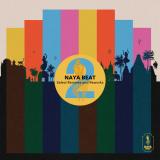
Naya Beat presents ‘Select Remixes and Reworks 2', a selection of new and exclusive dancefloor remixes featuring Thomaas Banks (Psychemagik), Dino Soccio (Pleasure of Love), Turbotito & Ragz (Naya Beat), and Woolfy vs. Projections. Putting a South Asian twist on the classic disco 12” remix format, Naya Beat have given some of dance music’s most exciting producers access to their storied back catalogue. Torchbearers of West Coast balearic, the California duo Woolfy vs Projections deliver an infectiously groovy electro funk version of Nainan Da Pyar De Gaya by Turbotito & Ragz and Say She She’s Piya Malik. Label cofounders, Turbotito & Ragz add some Naya Beat house flavour to Greek duo Boys’ Shorts Going Out Hoping To See You adding vocals by Australian Indian actress Pallavi Sharda. Thomaas Banks, one half of the celebrated UK duo Psychemagik, provides a scintillating dark wave remix of Tu Aaja by British Asian new wave pioneers Pinky Ann Rihal. And finally, Dino Soccio, head honcho of the LA-based disco edits label Pleasure of Love brings us a smooth as butter extended disco remix of Asha Puthli & Say She She’s recent classic Pawa! Cut to vinyl for the discerning DJ and listener by multi-Grammy-nominated Frank Merritt at The Carvery, the EP comes in a beautifully designed 12” disco sleeve with centre label cutout.
out of Stock
Last delivered 3 days ago available to reorder, subject to availability
Beneath the sleek, confident guitar line that powers “Overdrive,” the lead single of All Over You, another guitar marks the time more impatiently, as if the groove its locked into is the timebomb- tightness of a pre-hookup heartbeat. Its energy isn’t nervous — after all, it’s hard to be nervous with Will Schwartz cooing come-ons like “I just wanna get you in the bed / Light you up like a cigarette” in your ear — but it is urgent. Excited. Titillated.
That’s the word that best describes the prospect of a new Imperial Teen record: titillating. They come out every five or six years, each new album acting as, to quote Roddy Bottum, “an episodic piece of where we are now, where the world is now, who we have become, and the geography of our collective consciousness.” There is considerable distance between Imperial Teen, its members — Bottum (guitars, keyboards, vocals), Schwartz (vocals, guitars, keyboards), Jone Stebbins (bass, vocals), and Lynn Truell (drums, vocals) — having made lives for themselves in different cities, but the collective consciousness that exists between them makes distance and time seem immaterial to the listener.
Time, especially time together, is not immaterial to Imperial Teen: it is precious. “For the last few records,” Stebbins explains, “the process has been similar. We live great distances away from each other, so initially, we get together to collaborate, write, and create. When we have enough material, we reconvene to record. Both scenarios, creating and recording, take multiple trips, sometimes with big lapses of time in between due to our various schedules.” Bottum concurs: “The biggest challenge in writing and recording is the distance between us, but the longing and desire and the ultimate coming together becomes more potent as a result.”
All Over You is a triumph of maximized moments together, four people bringing the force of their personalities to bear on years of built-up ideas. Title track “All Over You,” initially built over the computer, gained its charming sneer in the studio, where Stebbins’ buoyant, fuzzed out bassline added bounce to the song’s punchy, sloganeering lyrics, a perfect set-up for Truell to drive the song home, screaming the last line of the chorus, “We’ve got nothing to do,” like a rallying cry for a generation that’s been given nothing and told to deny themselves everything. “In my head,” Truell says, “I just went back to punk, to that feeling of prowling around looking for anything to do and being so mad about how boring everything is that you just have to yell.” The track had an attitude, it had an unexpected texture thanks to Truell’s playing improvised percussion, but her scream is what took it to the next level, transforming it into a signature Imperial Teen song.
One of Imperial Teen’s less magical concerns on All Over You is the effect capitalism has on the creation of art. This expresses itself in the headspinning rush of music industry success and disappointment that plays out in “Hands All Up,” and also in Imperial Teen’s sound. All Over You features the band’s most expansive, textured palette to date, and much of it’s steeped in — bubblegum music and boy/girl harmonies, electro beats and grungy distortion, power pop mall anthems and kiss-off lyricism — has been dismissed, at one point or another, as a fad. Time, of course, has proven otherwise, and All Over You makes a case for Imperial Teen as four of that time’s architects, inheriting, preserving, and pushing the boundaries of what pop music can be from one song to the next.
“We want to make people dance and think and feel,” says Schwartz. In all of those ambitions, All Over You crushes, brought to life by four musicians who found each other in the clubs of San Francisco over three decades ago and have remained family ever since. It is less a return from hiatus than a broadcast from the sonic utopia Imperial Teen has long ruled over, where the music is bratty and sexy and the parties don’t stop until everyone’s found euphoria. A raveup for mind, body, and soul, best enjoyed in a dark room packed with as many sweaty bodies as possible
Beneath the sleek, confident guitar line that powers “Overdrive,” the lead single of All Over You, another guitar marks the time more impatiently, as if the groove its locked into is the timebomb- tightness of a pre-hookup heartbeat. Its energy isn’t nervous — after all, it’s hard to be nervous with Will Schwartz cooing come-ons like “I just wanna get you in the bed / Light you up like a cigarette” in your ear — but it is urgent. Excited. Titillated.
That’s the word that best describes the prospect of a new Imperial Teen record: titillating. They come out every five or six years, each new album acting as, to quote Roddy Bottum, “an episodic piece of where we are now, where the world is now, who we have become, and the geography of our collective consciousness.” There is considerable distance between Imperial Teen, its members — Bottum (guitars, keyboards, vocals), Schwartz (vocals, guitars, keyboards), Jone Stebbins (bass, vocals), and Lynn Truell (drums, vocals) — having made lives for themselves in different cities, but the collective consciousness that exists between them makes distance and time seem immaterial to the listener.
Time, especially time together, is not immaterial to Imperial Teen: it is precious. “For the last few records,” Stebbins explains, “the process has been similar. We live great distances away from each other, so initially, we get together to collaborate, write, and create. When we have enough material, we reconvene to record. Both scenarios, creating and recording, take multiple trips, sometimes with big lapses of time in between due to our various schedules.” Bottum concurs: “The biggest challenge in writing and recording is the distance between us, but the longing and desire and the ultimate coming together becomes more potent as a result.”
All Over You is a triumph of maximized moments together, four people bringing the force of their personalities to bear on years of built-up ideas. Title track “All Over You,” initially built over the computer, gained its charming sneer in the studio, where Stebbins’ buoyant, fuzzed out bassline added bounce to the song’s punchy, sloganeering lyrics, a perfect set-up for Truell to drive the song home, screaming the last line of the chorus, “We’ve got nothing to do,” like a rallying cry for a generation that’s been given nothing and told to deny themselves everything. “In my head,” Truell says, “I just went back to punk, to that feeling of prowling around looking for anything to do and being so mad about how boring everything is that you just have to yell.” The track had an attitude, it had an unexpected texture thanks to Truell’s playing improvised percussion, but her scream is what took it to the next level, transforming it into a signature Imperial Teen song.
One of Imperial Teen’s less magical concerns on All Over You is the effect capitalism has on the creation of art. This expresses itself in the headspinning rush of music industry success and disappointment that plays out in “Hands All Up,” and also in Imperial Teen’s sound. All Over You features the band’s most expansive, textured palette to date, and much of it’s steeped in — bubblegum music and boy/girl harmonies, electro beats and grungy distortion, power pop mall anthems and kiss-off lyricism — has been dismissed, at one point or another, as a fad. Time, of course, has proven otherwise, and All Over You makes a case for Imperial Teen as four of that time’s architects, inheriting, preserving, and pushing the boundaries of what pop music can be from one song to the next.
“We want to make people dance and think and feel,” says Schwartz. In all of those ambitions, All Over You crushes, brought to life by four musicians who found each other in the clubs of San Francisco over three decades ago and have remained family ever since. It is less a return from hiatus than a broadcast from the sonic utopia Imperial Teen has long ruled over, where the music is bratty and sexy and the parties don’t stop until everyone’s found euphoria. A raveup for mind, body, and soul, best enjoyed in a dark room packed with as many sweaty bodies as possible
Futurismo proudly present a vital compilation born in the shadows of American punk; AMERICAN GRAVE Gothic Punk / Deathrock USA: 1978-1988, the third volume in their Altered Vision anthology series.
Drawing from darkest depths of the American spirit, American Grave is testament to a subculture spawned from late night savagery, graveyard hangouts and suburban isolation. Deathrock, post-punk, goth, whatever term you prefer, this compilation showcases the sounds and aesthetics of a tarnished golden era, an underground movement that took the DIY concepts of punk and the velocity of a burgeoning hardcore scene and immersed it in echoes, distortion, tribal rhythms and macabre vocals, thematically preying upon cult horror flicks, surrealism, and the manipulation of religious iconography. Whilst the UK had a counterpart scene many would hail as Goth, this was different, this was a truly American incarnation, a new breed of youth haunted by the ghosts of old blues, garage and glam, bleak theatrical imagery dressed up to evoke a response, smeared eyeliner, leather, bones…black. This was a backlash against a culture in decay, bucking against a puritanical oppression brought on by the archaic social standards set by their parents. It was aggression manifested as gloom, it was a ceremony, the celebration of death.
American Grave has been co-curated by Wesley Eisold (Cold Cave/American Nightmare/Heartworm Press) in collaboration with Futurismo head honcho Del Jae, to bring you a haunting tracklist ranging from the all important integral mainstays of the genre to those rarer and more elusive artists, including many recordings that have never been reissued before on any format. Featuring the music of Christian Death, T.S.O.L., The Cramps, Of A Mesh, The Gun Club, Twisted Roots, Kommunity FK, The Brainz, Theatre Of Ice, Burning Image, Fur Bible, PSI Com, Shadow Of Fear, Super Heroines, 45 Grave and more.
The music on this compilation is reinstated further from a visual perspective by an array of incredible images by famed punk photographer Edward Colver, and lovingly designed to the level you would expect from a Futurismo release.
2xLP on limited edition ‘Splintered Tomb’ coloured vinyl. It is housed in a gloss laminated outer sleeve with colour inner sleeves and contains a large fold-out poster with unseen photos by the great Edward Colver, words by Lisa Fancher and liner notes by Wesley Eisold of Cold Cave/American Nightmare.
Common Primitives is the second collaborative album between Andy Bell (Ride guitarist, Oasis bassist) and Essex-based harp and synth duo Masal. It’s a stunning, meditative collection which veers from kosmische to astral jazz by way of Turkish folk tunes and all the way back again.
Their first outing, 2023’s acclaimed Tidal Love Numbers, consisted of four lengthy and almost ambient tracks and is included here on vinyl for the first time as part of a two-record set with the new album. By contrast, the seven tracks that make up Common Primitives are almost concise, but also a lot more layered and complex.
“We tend to work from initial, free-jammed ideas, building form and arrangement from there,” explains Masal’s Al Johnson. “Above all, we believe you should go where the vibe takes you.”
For Andy, that vibe was very much jazz legend Pharoah Sanders’ classic 1977 album Pharoah, which was reissued a few years ago.
“It puts me into a hypnotic state,” he explains. “That’s why I worked with more guitar loops on this record. The Tisziji Muñoz part on ‘Harvest Time’ has had me in a vice-like grip for the last three years and it arrives here via the Vini Reilly filter.”
For Özlem Simsek, there is nostalgia, too, and she even adds vocals as well as her heavenly harp to the opening track, ‘After Kâtibim’, based on a traditional Turkish folk song she had sung as a child growing up in Istanbul.
From there, the album takes us on a real journey, with the apt, impressionistic titles added by Andy once it had all been pieced together. There’s the beautiful, elegant ‘I Swear We Are Infinite’; the atmospheric ‘Yuzuki Fighting Spirit’ and the beatific ‘Soap And Water’. ‘Tower Of Babylon’ was named after the novelette by Ted Chiang, its structured creation reflecting that in the story; first single ‘The Morning Of The Trip’ finds Andy playing his guitar “as if it was a waterfall”. The journey ends with ‘Rudi’s Dream – The Third Bardo’, the trio accelerating onto the autobahn for a krautrock crescendo inspired by their studio’s resident cat.
Common Primitives is the second collaborative album between Andy Bell (Ride guitarist, Oasis bassist) and Essex-based harp and synth duo Masal. It’s a stunning, meditative collection which veers from kosmische to astral jazz by way of Turkish folk tunes and all the way back again.
Their first outing, 2023’s acclaimed Tidal Love Numbers, consisted of four lengthy and almost ambient tracks and is included here on vinyl for the first time as part of a two-record set with the new album. By contrast, the seven tracks that make up Common Primitives are almost concise, but also a lot more layered and complex.
“We tend to work from initial, free-jammed ideas, building form and arrangement from there,” explains Masal’s Al Johnson. “Above all, we believe you should go where the vibe takes you.”
For Andy, that vibe was very much jazz legend Pharoah Sanders’ classic 1977 album Pharoah, which was reissued a few years ago.
“It puts me into a hypnotic state,” he explains. “That’s why I worked with more guitar loops on this record. The Tisziji Muñoz part on ‘Harvest Time’ has had me in a vice-like grip for the last three years and it arrives here via the Vini Reilly filter.”
For Özlem Simsek, there is nostalgia, too, and she even adds vocals as well as her heavenly harp to the opening track, ‘After Kâtibim’, based on a traditional Turkish folk song she had sung as a child growing up in Istanbul.
From there, the album takes us on a real journey, with the apt, impressionistic titles added by Andy once it had all been pieced together. There’s the beautiful, elegant ‘I Swear We Are Infinite’; the atmospheric ‘Yuzuki Fighting Spirit’ and the beatific ‘Soap And Water’. ‘Tower Of Babylon’ was named after the novelette by Ted Chiang, its structured creation reflecting that in the story; first single ‘The Morning Of The Trip’ finds Andy playing his guitar “as if it was a waterfall”. The journey ends with ‘Rudi’s Dream – The Third Bardo’, the trio accelerating onto the autobahn for a krautrock crescendo inspired by their studio’s resident cat.
A space is often described by its dimensions. The height of the ceiling, the expanse between walls. Division into functional elements of varying density follows. We have ideas of how such dimensions should be balanced to work well for sound — the classical concert hall, a Northward mastering room.
It’s tempting to try and use this idea of space to understand Space the group (Lisa Ullén, Elsa Bergman, Anna Lund). To calculate their cartesian co-ordinates: dynamics that run from whisper soft to punishing, shaking force; Ullén’s piano running the full expanse of the frequency spectrum; the mix of sudden, surprising and suggested variations in density (the space) that generates their musical structures.
But (a) space is a social phenomenon where meaning is accumulated and possibilities created by and through a constantly shifting set of social relations and their histories and entanglement inside and beyond the physical structures of a room or building. Reduced to its raw dimensions, Cafe OTO shouldn’t sound good: the low ceiling, the hollow void underneath the stage-not-stage, the hard glass windows out onto the street. But OTO as a social space — for gathering close to listen; the serious pursuit of a convivial good time (its productive mythology that an OTO audience is both up for it but also expects more); and then the idea of all that has happened before and what will come; that this is also part of ‘the music’ and changes what sounds to the point that none of those cartesian co-ordinates matter.**
It’s less of shock that Space sound good. Lisa Ullén is easily the most singular pianist in Sweden right now and Elsa and Anna’s ability to reroute in realtime reaffirms just how well they function as a group. The trio might have got their shit together holding down the rhythm section for the first incarnation of Anna Högberg Attack — but much like Högberg’s ongoing pursuit of artistic renewal, the trio avoid being shackled to any ideas about what a piano trio should be and there is something that happens (happened) in that room, on that night, with those people that made for something beyond just good.
It’s a gift that the sound of every concert at OTO gets recorded. A choice handful of these transcend their decoupling from that social space and radiate the room’s attendant energies. This record is one of them.
** See Jack Halberstam in Fred Moten & Stefano Harney, The Undercommons (2013): “…we must refuse the idea that music happens only when the musician enters and picks up an instrument; music is also the anticipation of the performance and the noises of appreciation it generates and the speaking that happens through and around it, making it and loving it, being in it while listening."
Environments are sticky, they stick to whatever happens within them. They can’t help it. And neither can you.
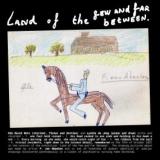
Land of the Few and Far Between / Songs for St. Michel is a collection of musical ‘figures’ written and recorded in 2022 and 2023 using a method Lyckle and Kim call the ‘snelkookpan’, translated as the pressure cooker. The ’snelkookpan’ in essence is trying to write and live-record as many musical figures in a given timeframe in a specific place. For ‘Land of the Few and Far Between’ this was an afternoon and evening in an exhibition Kim had curated about collecting and memory in The Hague. For ‘Songs of St. Michel’ this was 6 days in the basement of an art institution in Maastricht where they were joined by Otto de Jong on guitar. The figures are usually worked out by ear, sometimes improvised, sometimes written down, but often they are simply remembered and soon after recording forgotten. For ‘Land of the Few and Far Between’ they recorded ten figures. For ‘Songs for St. Michel’ fifteen. Of each a selection of five ended up on this seven inch.
F. van Abeelen (one of whom’s drawings is pictured on the sleeve of this seven inch and of whom 750 drawings were part of the exhibition mentioned above) was forced as a boy to hide in a basement for years. Only a small window gave access to the outside world. That sliver was his reality. After these years in hiding he began drawing his sliver of reality obsessively. Daily series of similar drawings that he would meticulously catalogue in an organizer. We never met F. Our friend who discovered the drawings in a closet of psychiatric nursing home Dorestad never met F. We only recorded ten musical figures next to 750 drawings by F.
St. Michel is a house that stands on the outskirts of Maastricht. It is built on the floodplains of the river Maas and living there you see the river change daily. It is a river fed by rain. No rain means a low river. Rain means a river that sometimes comes frighteningly close to flooding. Which it sometimes does. Due to the ebb and flow of the Maas, stuff is deposited in the boggy areas that are its floodplains. A shoe, a CD, a drone, some wood.
Places impress themselves onto what you are doing. You become an unwitting prop in the place’s story.
The first ‘snelkookpan’ happened in 2017 in the water-basin of one of the earliest concrete structures in the Netherlands; a bunker that was part of Amsterdam’s defensive line, built around the 1890’s. Something that used to house water was now empty. For three days Kim and Lyckle recorded improvised music there, which is still alive on a hard drive somewhere. In 2020 they recorded ‘the third of May’ at an old pumping station in Den Helder; an eleven part piece of auditory historical-horror which was released by South of North in 2024. Since 2023 Lyckle and Kim have mainly recorded live shows. With a Clarinet, kawai K1, Ipad, organelle, samplers and a variety of instruments curated for their minimal size or odd sound they’ve made chains of brief and improvised mini compositions inspired by browsing environments (digital and otherwise).
Land of the Few and Far Between / Songs for St. Michel adds to this growing collection of recordings for environments that are somehow sticky.
Creole Culture is the triumphant return of Dawn Richard’s King Creole era. Steeped in history but with its flag planted firmly in the future, Creole Culture pulls elements from Richard’s heritage as a Black and Native American woman who has spent a lifetime making and engaging with music. Following New Breed (2019) and Second Line (2021), Creole Culture is akin to a panel of a triptych: a fully-realized sonic and narrative universe in which Richard, as King Creole, rebuilds her hometown of New Orleans in her image. She not only honors her city for what it was or what it gave her, but stakes a claim for it as a cradle of global culture now and for all time.
Creole Culture follows two acclaimed avant-garde R&B albums with composer Spencer Zahn — the later of which, 2024’s Quiet in a World Full of Noise, found Richard exorcising the specters of grief and trauma in the wake of her father Frank Richard’s health struggles and the killing of her cousin Cisco. It is a softer take on the brass-soaked swagger of Richard’s previous King Creole efforts, an evolution brought about when she realized she had left a crucial viewpoint out of her exploration of New Orleans: her own. “New Breed was the story of New Orleans through my father’s eyes,” Richard explains. “I used his samples, his music, his cultures, his work with Chocolate Milk, his side of the family. Second Line was my mom — her interludes riddled the album with her depiction of what is meant to be a Creole woman in New Orleans. The masculine and feminine sides of King Creole had expressed themselves through them, but the story felt unfinished, like my version of the story was untold.”
That story is, for lack of a better word, complex: at turns triumphant and tragic, sexy and mournful, braggadocious and contemplative. Creole Culture presents Richard’s New Orleans as a utopian soundscape — an intoxicating blend of R&B, soul, hip-hop, pop, and jazz — that’s survived and thrived despite the dystopian circumstances visited upon it. Richard presents the melange of influence and artifact on Creole Culture with the care of a botanist nurturing new hybrids in a rose garden.
What emerges from that care is at once delightful and unexpected, enlisting a crew of guest stars including Big Freedia, Anjelika “Jelly” Joseph, Tarriona “Tank” Ball, and Durand Bernarr for features that play against type. Tank’s turn at spoken word verse on “l v r” serves to add dimension to King Creole’s New Orleans, as does Joseph’s undeniable voice on “chuuuurch.” “I’m not normally a features girl,” says Richard, ”but King Creole can’t build a world from scratch without help. What’s beautiful about the features here — which is also true of my band and producers — is they come from people who understand the materials of the world they’re from, they’re people I love, and they’re people who are just extraordinary at what they do. They’re part of the atmosphere of this place. You need them for the record to breathe.”
In the end, that’s what King Creole creates: a space where Dawn Richard can breathe, can be at peace with herself, and let loose with others. From finding love in opening single “enough” to relishing in the Afrocaribbean futurism of “fiesta,” Creole Culture is a tremendous, freeing breath of fresh air. It captures the resolve of a woman and a place who’ve survived the unimaginable and sees the future not as something to be endured, but as something to be created. Dawn Richard has been making that future one album at a time over the course of her career. Creole Culture is her most stunning one yet.
Creole Culture is the triumphant return of Dawn Richard’s King Creole era. Steeped in history but with its flag planted firmly in the future, Creole Culture pulls elements from Richard’s heritage as a Black and Native American woman who has spent a lifetime making and engaging with music. Following New Breed (2019) and Second Line (2021), Creole Culture is akin to a panel of a triptych: a fully-realized sonic and narrative universe in which Richard, as King Creole, rebuilds her hometown of New Orleans in her image. She not only honors her city for what it was or what it gave her, but stakes a claim for it as a cradle of global culture now and for all time.
Creole Culture follows two acclaimed avant-garde R&B albums with composer Spencer Zahn — the later of which, 2024’s Quiet in a World Full of Noise, found Richard exorcising the specters of grief and trauma in the wake of her father Frank Richard’s health struggles and the killing of her cousin Cisco. It is a softer take on the brass-soaked swagger of Richard’s previous King Creole efforts, an evolution brought about when she realized she had left a crucial viewpoint out of her exploration of New Orleans: her own. “New Breed was the story of New Orleans through my father’s eyes,” Richard explains. “I used his samples, his music, his cultures, his work with Chocolate Milk, his side of the family. Second Line was my mom — her interludes riddled the album with her depiction of what is meant to be a Creole woman in New Orleans. The masculine and feminine sides of King Creole had expressed themselves through them, but the story felt unfinished, like my version of the story was untold.”
That story is, for lack of a better word, complex: at turns triumphant and tragic, sexy and mournful, braggadocious and contemplative. Creole Culture presents Richard’s New Orleans as a utopian soundscape — an intoxicating blend of R&B, soul, hip-hop, pop, and jazz — that’s survived and thrived despite the dystopian circumstances visited upon it. Richard presents the melange of influence and artifact on Creole Culture with the care of a botanist nurturing new hybrids in a rose garden.
What emerges from that care is at once delightful and unexpected, enlisting a crew of guest stars including Big Freedia, Anjelika “Jelly” Joseph, Tarriona “Tank” Ball, and Durand Bernarr for features that play against type. Tank’s turn at spoken word verse on “l v r” serves to add dimension to King Creole’s New Orleans, as does Joseph’s undeniable voice on “chuuuurch.” “I’m not normally a features girl,” says Richard, ”but King Creole can’t build a world from scratch without help. What’s beautiful about the features here — which is also true of my band and producers — is they come from people who understand the materials of the world they’re from, they’re people I love, and they’re people who are just extraordinary at what they do. They’re part of the atmosphere of this place. You need them for the record to breathe.”
In the end, that’s what King Creole creates: a space where Dawn Richard can breathe, can be at peace with herself, and let loose with others. From finding love in opening single “enough” to relishing in the Afrocaribbean futurism of “fiesta,” Creole Culture is a tremendous, freeing breath of fresh air. It captures the resolve of a woman and a place who’ve survived the unimaginable and sees the future not as something to be endured, but as something to be created. Dawn Richard has been making that future one album at a time over the course of her career. Creole Culture is her most stunning one yet.
It took a long time – ten years – for his talismanic song, ‘Ça ira tu verras’, to prove his prophecies right, at a time when, everywhere else in the world, nothing seems to be going right. And if everything is going well for Séverin, it’s because he’s managed to build himself a bulwark, an impregnable citadel, and his records now exude a whiff of simplified idealism, with the influence of Souchon and Voulzy never far from his pen and guitar as he brings his bittersweet moods to life in verses and choruses.
But above all, he knows how to invent new settings for himself, push back the boundaries, step beyond the walls of his Parisian studio to go and see how things sound elsewhere. Recorded at Chale Abbey Studios on the Isle of Wight (UK), Séverin once again wanted to let the collective spirit of his regular collaborators take centre stage. Ambroise ‘Sage’ Willaume and Jérémie Arcache, who featured on the previous album *Nouveaux Dinosaures*, once again form the backbone of the band, on guitar and keyboards respectively. Bassist Théodora Delillez (Astral Bakers) and Canadian drummer Robbie Kuster complete the band’s core line-up, which, in just six days at this electric priory, went on to achieve – judge for yourselves – nothing short of miracles.
Whilst all around us the war on falsehood rages – from AI to post-truth, all these fake debates, hypocrites and false values – here is an album that doesn’t cut corners when it comes to emotions, nor in the way it sets them to music.
Black Truffle is thrilled to announce a second volume of unheard concert performances from legendary Pakistani kyhal singer Salamat Ali Khan, recorded at Berlin’s Neue Nationalgalerie as part of the MetaMusik festival in 1974. Like the first volume, the immaculate recording by Michael Hönig (of krautrock legends Agitation Free) captures Khan performing a single extended raag in the company of Shaukat Hussein Khan on tabla and Hussein Bux Khan on harmonium. In addition to his stunningly inventive and moving vocal performance, Khan is heard accompanying himself on a specially tuned alpine zither (in place of the traditional swarmandal, an Indian style of zither). The lack of an underlying tanpura drone gives the music its characteristic floating quality, with the three instruments and voice masterfully dancing around one another as they sketch the outlines of this grand, 40-minute Raag Chandrakauns.
If anything, this epic performance of the late-night Raag Chandrakauns is even more seductively spacious and psychedelic than the music heard on the first volume. Obeying the traditional shape of Hindustani classical vocal music performance, a gradual rise in both pitch and rhythmic activity, the music hovers for twenty minutes in a reflective calm, the pulse only gently stated by the tabla while harmonium ornamentation and zither strums float by. In this meditative space, Khan gradually orients us to the contours of the raag, beginning with long notes at the bottom of his register. His improvisation at once builds with a stunningly firm sense of internal logic and seems liberated to explore every melodic and ornamental byway that comes up along the way. By the time we turn to the record’s second side, the music has grown into something far more frenetic, with virtuoso tabla passages at times occupying centre stage between Khan’s increasingly rhythmic melodic variations. Concluding with a sequence of unison tabla and voice passages of breathtaking complexity, the performance is met with rapturous applause. Arriving in a blue-toned variant of the first volume’s sleeve, with acclaimed musicologist Peter Pannke’s liner notes in the original German, Metamusik Festival Berlin ’74 Volume II is not to be missed. Essential listening not just for Hidustanti classic aficionados, but for anyone who needs reminding of the magic of collective music making in the moment.
Meet Matas Petrikas, a music producer, DJ, and book author with a passion for electronic music. Born in Lithuania during the time when it was still a part of the Soviet Union, Matas began experimenting with electronic sounds during his teenage years using self-built instruments and recording equipment. In 1991, Matas took a trip to Berlin that would change his life forever. There, he encountered the early years of techno culture, which led him to co-found EXEM, one of the first house and techno bands in the former Soviet space. With EXEM, Matas was one of the pioneers of electronic dance music in Lithuania, and by the end of the decade, they had charted numerous hits. They performed live shows ranging from intimate clubs to massive arenas, sewing the seeds of the local electronic music scene. Since then he relocated to Berlin and has forged a musical solo career focused on live-sets, experimentation, and authoring the book 'The Joy of Electronic Music'. The Unknown is Matas’ first release on his newly formed imprint Dangė Records, focused on supporting electronic music from Lithuania and the Baltics. The 6 track EP forges his love for texture heavy hypnotic techno with industrial and warehouse leaning low end and percussion. Although mainly an EP rooted in driving a groove, the use of earworm worthy basslines, rave breaky drums, and squelchy lead synths is where Matas’ long career foray into many genres of electronic music shines through. Dangė Records releases electronic music from Lithuania and the Baltics—sounds that emerge from underwater, carried by artists who inherited the weight of transformation.
Rhythm & Blues, Club Soul, Hammond Grooves and Pyschedelic Mod - 1966 was a very mixed bag of musical styles! The US influences continued to seep into how records were being made but signs of the burgeoning later UK sound is evident too as 'Scene 66' takes you on a musical journey through a real turning point in how bands wanted to be heard
Semiratruth ist ständig in Bewegung. Der in Brooklyn lebende, in Chicago geborene Elektronik-Künstler reist von Bühne zu Bühne und pendelt zwischen unterschiedlichen Underground-Musikszenen - von den USA über Guatemala bis in die Niederlande -, Synthesizer und Sampler im Gepäck, als wären sie ein Teleportationsgerät. Auf der Bühne lenkt er intuitiv die Energie im Raum und scheint den kollektiven Herzschlag des Publikums mit einem universellen Metronom zu synchronisieren. Mit einem Tisch voller Elektronik-Geräte klopft er ganz beiläufig klangliche Portale in eine andere Welt auf. Semiras sich ständig wandelndes Umfeld und ihr eigener gelebter Schwung sind auf ihrer neuen LP ,S!M" zu hören, die am 25. September über das vielseitige Chicagoer Label Sooper Records erscheint. ,S!M" schafft eine einzigartige Balance: Der kompositorische Minimalismus von Acid, Juke und Baile Funk schlängelt sich in industrielle Klanglandschaften, um dann durch experimentelle und melodische Improvisationen ins Licht gerückt zu werden, die an Cosmic Synth und Spiritual Jazz der 1970er Jahre erinnern. Das Selbstbewusstsein, mit dem Semiratruth diese klangliche Dualität nutzt, spiegelt sich in den Themen ihres schwindelerregenden instrumentalen Multiversums mit 20 Tracks wider. Disharmonische Stimmen von Gedanken und Gefühlen, Sehnsucht und Hingabe, Hinterfragen und Träumen - all das findet Harmonie in Semiras Welt, in der unterschiedliche Realitäten gleichzeitig existieren. Jeder Track ist ein Universum, das sich in einem Existentialismus ergeht, der zu gleichen Teilen aus Freude und Schmerz besteht - eine Aufforderung, den Kosmos mit Kopfhörern zu ergründen oder ihn auf der Tanzfläche auszuleben. Semiratruths bisheriges Werk und vergangene Live-Auftritte haben dem Künstler einen Ruf für seine lyrische Gewandtheit eingebracht, doch ihre Leidenschaft für instrumentale Arrangements ist in all ihren bisherigen selbstproduzierten Werken zu hören. Auf ,S!M" richtet Semira den Fokus ganz einfach auf die Sounddesign-Aspekte ihrer Kunst. Tracks wie ,Atitlán", benannt nach Guatemalas großem See, zeigen Semiratruths disziplinierte kompositorische Stärke. In seiner Mikrotonalität sehr intim, breitet sich ein sich langsam wandelndes Synth-Pad aus, während Spritzer maschineller Töne die Mehrdeutigkeiten des Lebens zwischen den Noten melodisch zum Leben erwecken. Diese Zurückhaltung steht in krassem Kontrast zu Tracks wie ,Blood Moon Eclipse" und ,we gotta GO!", in denen dröhnende Kick-Drums den Hörer in den Rhythmus des Stadtlebens katapultieren. In jedem Moment könnte Semiratruth überall sein. Wo auch immer Semira nicht ist, füllt ihr Geheimnis die Leere. Ihr Schatten-Ich stürzt sich in ein pulsierendes Publikum von NYC-Fans, während sie die Lautsprecher mit einem Fingertipp zum Beben bringen. Im selben Moment wird ihre Geschichte zum Mythos in den Chicagoer DIY-Szenen, aus denen sie hervorgegangen sind. Genau in derselben Sekunde schwärmen Farm-Core-Songwriter hinter der Bühne eines Folk-Festivals von ihrer neu entdeckten musikalischen Obsession und rufen aus: ,Semira ist die WAHRHEIT!" Wie Semira es ausdrückt: ,All diese S!Mulationen und Zeitachsen finden S!Multan statt. Je tiefer du eintauchst, desto seltsamer wird es."
out of Stock
Last delivered 10 days ago available to reorder, subject to availability
Long overdue reissue of classic Scottish ambient techno banger ‘Mindweeds’, originally released in 1993 on the Pure-affiliated T&B Vinyl label run by Keith McIvor (JD Twitch) and Andy Watson (Brainstorm). With a Discogs demand ratio at about 300 have : 2000 want, and used prices peaking at over £100, now seems to be the right time for a re-release.
State of Flux were Roger Elliott and Dave Clark (aka Sparky, LUMA, Truffle Club and main man behind Kübler-Ross). They first met at Glasgow’s Strathclyde University in 1990, bonding over a shared love of weasel racing, German sausages and “man-duos” like The KLF and The Shamen. Dave was fully pubescent and already had a synth and drum machine, while Roger – a late developer – bought “another cheap synth, a Commodore Amiga for sequencing and a tiny mixer with no EQ”. For two long years they concentrated hard on “churning out unlistenable pish”, admittedly clueless about what they were trying to do.
Then – out of nowhere in the summer of 1992 – a flatmate’s Jello Biafra spoken word CD (‘I Blow Minds For A Living’) provided the inspiration to unlock the spark of dynamite that set the raving world on fire. Sampled using a Walkman* cassette** tape*** on playback (a decision the pair soon came to regret every time the track was subsequently performed live), Jello’s pilfered rant would soon become the crucial glue that held together the burgeoning kaleidoscopic helicopter spliff that is ‘Mindweeds’, loaded as it was – and indeed still is – with a veritably seething morass of cheeky electronic blims, nasal filter cheese and gay Caledonian spunk.
* a vintage portable listening device roughly the size of 4 iPhones stacked on top of one another and weighing the same as a small tub of yoghurt
** a plastic cartridge enclosing 2 miniature spools of magnetically coated, polyester-type plastic film (magnetic tape), notoriously convenient for pirating copyright material and secreting in one’s underpants for transporting between illicit market trader stalls
*** thin ribbon coated with ferromagnetic particles, usually ferric oxide but also chromium dioxide, "pseudochrome" ferricobalt or iron-cobalt-nickel “metal” formulations – with the latter types sounding marginally less crap
Playing demos of the track to friends, one thing led to another and a copy arrived with Twitch. Meeting the legends behind Pure in late 1992, a release was scheduled for summer 1993… but not before a promotional live gig in February of that year, supporting their heroes The Black Dog. Confessing that they “didn’t have a clue how to play live”, the duo played it safe, “went to a studio near Edinburgh airport to record the ‘live’ show” and then “mimed it off a DAT” at the gig, “standing in front of unplugged synths”. Soon after this, they recorded the full EP at Finitribe’s ‘Finiflex’ studio in Leith, Edinburgh and the record came out as planned that summer – the same week as Underworld’s ‘Rez’.
The record received high praise, appeared in many big-name DJ charts, sold out very quickly and was repressed within a few weeks, selling several thousand copies by the end of 1993 – no mean feat in an era when people had to use landline phones ****, faxes ***** or good old-fashioned carrier pigeons ****** to ascertain literally anything about the outside world, what was cool, where to buy the cool shit, or how to meet people and have fun.
**** a fixed communication device that connects to a telephone network using physical wires, cables, or a stationary base unit tied to a specific geographic address, using a handset incorporating a mouthpiece featuring a small metal disk and carbon grains, converting sound pressure from the human voice into a flow of electrical waves caused by these grains being squeezed together, before the variable signal is transmitted down DC voltage-powered copper wire and rerouted by a central exchange to arrive at the earpiece magnet of the target receiver’s handset, moving a small speaker cone accordingly so the message is intelligible WITHOUT THE PERSON SPEAKING ACTUALLY BEING PRESENT
***** as above, but for the d/Deaf
****** flying vermin riddled with diseases and capable of surviving nuclear armageddon
Soon Roger and Dave became sick of the Walkman being the only instrument played live in their set: with their new found fame and riches, they invested in a case for their Amiga to transport it around Scotland, while also putting in the hours on how to pretend to play live better with a sequencer and synths that were FINALLY plugged in. Following the release of ‘The Mercury EP' in April 1994, they embarked on a full tour of the UK and even managed to part ways and end the band by June that year.
This reissue includes the two original mixes of ‘Mindweeds’ recorded at Finiflex (‘Original’ and engineer ‘Fred's Fancy’), the original cassette demo (mastered directly from the actual recording sent to Twitch & Brainstorm in 1992) and a live version recorded at the Birmingham club night 'Oscillate' in April 1994.
Harry McCanna is a DJ and producer who might be known to you for his role in running NorthSouth records for nine years with Sam Bangura and Dale Mussington, as well as staffing the decks across the capital for at least a decade and half and taking up a residency at fabric when we came out of lockdown in 2021. Here, he launches a new label, focussed on "the hypnotic, trippy, steady side of things," with his first release under his own name, having released his productions under the Henry Hyde moniker since 2015. Hypnotic it may be, but it's not lacking either in sonic imagination - check the shimmering guitar trimmings, frothy pecussion and vocal flashes of 'A Temporarily Happy Man' - or funkiness, with the basslines to 'Stand & Deliver' and 'Red Moon' the very essence of prodding urgency. Add some sparing but very effective use of neatly edited breakbeats - see the economic propulsion of 'Hard To Leave' - and you've got four track that will slip into the mix very smoothly but come with their own distinctive personality.
Confronting 2026, hope can seem in short supply, as the most divisive and toxic voices worldwide are amplified amidst an ever-rising temperature of conflict and alienation, yet hope is abundant in ‘Losey’, the latest release on Rocket Recordings from the mercurial duo Gnoomes. Just as this couple have taken a bold step into the unknown by leaving Russia and moving to Slovenia, so their music has thrown off all shackles to flourish in a defiant show of vibrant and revivifying colour. “The life of an immigrant is a strange thing.” says the bands Sasha Piankov “But luckily, that glow music brings us has never faded, even though the emotional landscape has definitely shifted.” Yet whilst the music that Sasha and his creative and life partner Masha Piankova came up with is testimony to a liberating triumph against oppression and adversity, it also goes beyond. What has emerged is a kaleidoscopic collision of styles which sends the ‘skygazing’ realm of their previous work spinning into electronic orbit. Whilst the opener ‘Foreign Agent’ explicitly tackles the pressures of the Russian state, it also throws a Stereolab-style motorik meditation through an in-the-red psychedelic prism. Elsewhere we can behold Bulgakov and Chris and Cosey as bedfellows amidst the mesmeric, 303-fried EBM of ‘Satan’s Ball’. “Rave as therapy. Pop as resistance. Love as endurance. ADHD as a production technique.” These are the primary ingredients of Losey, by the reckoning of the band themselves. This is an album that exists purely on its own distinct frequency, driven by defiance and positivity. Losey is a soundtrack to set fire to the old order, the better to dance in the glow.
out of Stock
Last delivered 11 days ago available to reorder, subject to availability
The latest release from Rainbow Disco Club’s label imprint, Beyond Space And Time, is the debut compilation from The Melting Hours, a live project by Wata Igarashi and Kuniyuki. WataIgarashi continues to make his mark on the history of techno, whilst Kuniyuki has long been revered as one of Sapporo’s greatest treasures. The two artists, who have long held mutual respect for one another, met whilst performing at the Draaimolen Festival 2025, and this encounter gave rise to The Melting Hours.
‘Blue Sun’ is imbued with a freshness reminiscent of the ambient jazz masterpieces released by prestigious labels such as ECM and Windham Hill. ‘Liquid Dunes’ sees the organic tones of the flute and percussion melt into over ten minutes of abstract sound textures, whilst the breathtaking ‘Cloud Touch’ awakens amidst a swirling vortex of pulsating downbeats and arpeggios. It is said that ‘Blue Sun’ was created by reconstructing studio rehearsal recordings, whilst ‘Liquid Dunes’ and ‘Cloud Touch’ were crafted from live recordings at Draaimolen 2025. The essence of these works—and indeed of the project The Melting Hours itself—lies at the heart of their improvisational nature.
It brings to mind the Rainbow Disco Club event back in 2026, where they wove their sounds amidst fresh greenery and surrounded by listeners under a clear blue sky. It felt as though the pulsating energy was spreading across the dance floor, guided by a session from The Melting Hours that seemed almost like a living creature. The organic breath one senses in this work not only evokes precisely that scene but also allows us to feel the unique, ephemeral nature inherent in this project—and, consequently, the boundless possibilities that stem from it.
Rainbow Disco Club のレーベル・ライン'Beyond Space And Time'から放たれる最新作は、Wata IgarashiとKuniyukiによるライブ・プロジェクト、The Melting Hoursによる初の音源集だ。テクノ史に残る実績を現在進行形で刻み続けているWata Igarashi、長きに渡り札幌の至宝として尊敬を集めてきたKuniyuki。兼ねてよりリスペクトを送り合ってきた両名がDraaimolen Festival 2025への出演を契機に邂逅し、始動したプロジェクトがThe Melting Hoursである。
快晴の元で新緑とリスナーに囲まれ音を紡いでいった、去る2026年のRainbow Disco Clubを思い出す。まるで、生き物のようなThe Melting Hoursによるセッションに導かれ、脈動するエネルギーがフロアに伝播していたようだった。この作品から感じられる有機的な息遣いは、まさにそんな情景を思い起こすものであると同時に...このプロジェクトが宿すその場/その時限りの唯一無二性と、それ故に広がっていく限りない可能性をも感じさせてくれる。
out of Stock
Last delivered 5 days ago available to reorder, subject to availability
While composing the music for The Juniper Tree, Hirano drew on her own memories of touring Iceland, which included a stop at a waterfall featured in the film and rendered in sound on “Mother’s Path.” Folktales, like the origins of The Juniper Tree, are often attempts to contend with humans’ place in the natural world, with all its mysteries and intricacies, and both the film and Hirano’s soundtrack draw their sense of breathless wonder in part from the sensation of being engulfed by one’s environment. Margit, played by Björk, possesses a sublime sensitivity to her environment that allows her to receive messages from her mother, who was murdered for their shared inheritance of witchcraft. Hirano captures the relationship between the transcendental awe that is felt as supernatural and the private feelings of being immersed in that experience, creating a musical dialogue between the self and what lies beyond.
In the final sentences of her liner notes describing the film’s philosophical and feminist throughlines, Anna Bogutskaya says, “what we call Margit’s witchcraft is maybe just her willingness to listen.” This is the magic of music, and Hirano composes with an alchemist’s pen. Just as Keene seems to break down barriers between binary poles, Hirano uses both electronic and acoustic means to communicate the film’s emotive cues, uniting approaches she has explored under her own name and the alias MimiCof. There is an understanding that stillness can be understood as peaceful or foreboding, that dissonance and consonance are contextual, that efforts to protect one’s own kin can lead to tragic ends. At the film’s end we see Margit enthralled with birdsong, understanding it as something deeper, a connection to those she has lost. Through sound, we understand what lies beyond sight, beyond convention, and with this new soundtrack we hear the story anew.
Twenty-five years after his debut album I’m Serious permanently altered the DNA of Southern hip-hop, Tip "T.I." Harris is officially closing this chapter with KILL THE KING, his twelfth and final studio album. For a man who has spent over two decades as the self proclaimed “King," the project’s title speaks volumes. This is not a surrender of the crown to a rival, but rather a symbolic death of the ego. T.I. is choosing to dismantle the moniker on his own terms, trading the battlefield for peace, legacy, and the freedom to step out of the booth and into the next phase of his life as an actor and family man.
Rather than leaning on pure nostalgia, KILL THE KING proves T.I. is walking away while his pen is still razor-sharp. The project is anchored by the certified gold lead single "LET 'EM KNOW," produced by long-time collaborator Pharrell Williams, which sets an immediate tone of veteran-level precision and polished bravado. Across the 18-track album, T.I. pulls together a masterclass of multi-generational talent that bridges the gap between his trap origins and modern dominance. The album boasts heavy-hitting Southern anthems like "DOPE BOYS ACADEMY” featuring 2 Chainz, Jeezy, and T-Pain, alongside soulful reflections from the Dr. Dre produced track "WHERE I’M FROM" with Anderson .Paak, Atlanta eloquence with Usher on "GORGEOUS," and moody, atmospheric cuts featuring Summer Walker and YoungBoy Never Broke Again.
Ultimately, KILL THE KING is designed to leave nothing unsaid, directly addressing the trials, tribulations, triumphs, and the undeniable imprint he’s left on global hip-hop culture. To mark the end of this historic era, T.I. isn't just letting the music speak for itself; he will be taking his final bow on the road with The King Succession Tour, bringing his sons Domani and King along to officially pass the musical torch. With this final statement, T.I. ensures that the trap music foundation he helped lay the framework for what will endure long after he sets down the mic. The King is dead; long live the legacy.
Kukangendai are the innovative three-piece Kyoto based experimental rock band formed in 2006 with Junya Noguchi on guitar and vocals, Keisuke Koyano on bass, and Hideaki Yamada on drums. Since 2016 the band have set up shop in their studio and venue space, Soto, which houses an incredibly well tuned and powerful sound system that has become a well known destination for touring musicians. In March of 2025, Marionette was celebrating a belated 10 years of activity with label showcases across Japan in collaboration with Dotei Records, and Soto was inevitably one of the stops as many label alumni have set foot in the venue over the years. This is where I got to experience Kukangendai perform for the very first time and knew right then we were destined to work together.
Kukangendai embody an undeniable sense of timing and precision through collage-like repetition of minimalist phrases that manifest as a single unified rhythm. Their latest offering for Marionette, titled Baquet Wheel, is a purely acoustic endeavor, remarkably recorded live using Taku Unami's special binaural microphone. The trio seamlessly twist polyrhythms and melodies rooted in jazz, krautrock, blues, and Tuareg producing a timeless sound that preserves the primitive and memory evoking narratives buried deep within the music. Over the course of five tracks, the visceral nature of Kukangendai’s dynamic evolves from playful riffs that are seemingly familiar yet strikingly original, making it impossible to discern exactly when this material was conceived.
Kukangendai have maintained a prolific yet relatively low profile for the last two decades, with a handful of self-released editions on their own labels (Soto and Leftbrain) as well as a collaborative album with pioneering electronic music composer Ryuichi Sakamoto in 2018, then venturing outside Japan in 2019 to release their first widely distributed album on Ideologic Organ, a label curated by Sunn O)))’s Stephen O'Malley. Other collaborative projects to date include an album produced with rap group Moe and ghosts, live performances with Keiji Haino and with poet Gozo Yoshimasu, productions with the Chiten theater company, and most recently a remix album of their works featuring Carl Stone and Madteo.











![Maher Shalal Hash Baz - Faux Départ [LP]](https://www.deejay.de/images/l/6/9/1252969.jpg)