Nicaraguan-American artist Dagmar Zuniga makes music that feels both intimate and expansive: songs drift like disrupted signals, carried by harmony, tape hiss, and a strong sense of touch. Her debut solo album in filth your mystery is kingdom / far smile peasant in yellow music — written and recorded in New York, Norway, and Athens, Georgia over a period of five years on her longtime companion, the Tascam 424 — was uploaded to Bandcamp and YouTube in January 2025, quickly garnering over two hundred thousand views and the attention of artists such as Mount Eerie, who invited her to tour with them that summer. This year, what was once a jewel of tapped-in algorithms and message boards will meet the world at large, with in filth arriving digitally on March 4, and physically on April 10, via AD 93.
in filth is an atmospheric, devotional collage where one voice multiplies into a chorus of selves, sometimes delicate, sometimes severe; an effect created by Zuniga’s masterful layering of texture and complex harmonies. Synths glitter out like spears of sunlight from beneath clouds of moody, time-distorted guitars, and songs spin about themselves like tightly-wound music boxes, making use of a kind of hypnotic repetition, before melting apart into their components or slipping into the following track.
Zuniga began recording to tape as a teenager, drawn to the physicality of the medium — how a tape recording is fragile, mutable, and alive. Though her ethereal sound may draw easy comparisons to other female pioneers of psychedelic folk, she is influenced just as much by the darker sounds of Syd Barrett and The Fall. Like Barrett, Zuniga is a painter, and she is interested not only in recording music but in creating a full, self-contained artistic universe: she creates her own artwork, merchandise, music videos, and bootleg tapes of new and unfinished music that she exclusively sells at live shows (“If something is not material, it does not exist,” she insists). Her world has not gone unvisited, garnering her a monthly show on NTS Radio ‘World of Pain’, as well as a forthcoming appearance at Rewire Festival in April 2026.
Though Zuniga’s work explores themes of solitude and suffering, the suffering in her songs is not borrowed or displayed; it is held, then opened outward through empathy — an exacting practice of attention that insists on shared ground. Solitude, in her work, is not withdrawal but a starting point for connection. Likewise, over time, her recording process has become increasingly communal, with in filth featuring musicians Hayes Hoey, Austyn Wohlers (Tomato Flower), and Zach Phillips (Fievel Is Glauque). Newer recordings widen the circle even more. For Zuniga, collaboration is a way to “find a place between worlds,” echoing Badiou’s idea of love as a vision refracted through the prism of difference. Meaning emerges there — in the space between voices, between artist and listener. “I hope my music helps people work through difficult experiences,” she says. “The same way it helps me.”
Writings on the topic that go off in all directions, mind-numbing lectures given by academics, and testimonies, most of them heavily doctored, from those who “lived through that era”: so many people today fantasize about the early days of punk in our country… This blessed moment when no one had yet thought of flaunting a ridiculous green mohawk, taking Sid Vicious as a hero, or – even worse – making the so-called alternative scene both festive and boorish. There was no such thing in 1976 or 1977, when it wasn’t easy to get hold of the first 45s by the Pistols or the Clash. Few people were aware of what was happening on the fringes of the fringes at the time. Malcolm McLaren was virtually unknown, and having short hair made you seem strange. Who knew then that rock music, which had taken a very bad turn since the early 1970s, would once again become an essential element of liberation? That, thanks to short and fast songs, it would once again rediscover that primitive, social side that was so hated by older generations? Who knew that, besides a few loners who read the music press (it was even better if they read it in English) and frequented the right record stores? Many of these formed bands, because it was impossible to do otherwise. We quickly went from listening to the Velvet Underground to trying to play the Stooges’ intros. It’s a somewhat collective story, even though there weren’t many people to start it.
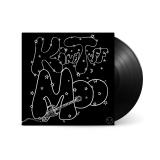
The Guilty Razors were among those who took part in this initial upheaval in Paris. They were far from being the worst. They had something special and even released a single that was well above the national average. They also had enough songs to fill an album, the one you’re holding. In everyone’s opinion, they were definitely not among the punk impostors that followed in their wake. They were, at least, genuine and credible.
Guilty Razors, Parisian punk band (1975-1978). To understand something about their somewhat linear but very energetic sound, we might need to talk about the context in which it was born and, more broadly, recall the boredom (a theme that would become capital in punk songs) coupled with the desire to blow everything off, which were the basis for the formation of bands playing a rejuvenated rock music ; about the passion for a few records by the Kinks or the early Who, by the Stooges, by the Velvet mostly, which set you apart from the crowd.
And of course, we should remember this new wave, which was promoted by a few articles in the specialized press and some cutting-edge record stores, coming from New York or London, whose small but powerful influence could be felt in Paris and in a handful of isolated places in the provinces, lulled to sleep by so many appalling things, from Tangerine Dream to President Giscard d’Estaing...
In 1975-76, French music was, as almost always, in a sorry state ; it was still dominated by Johnny Hallyday and Sylvie Vartan. Local rock music was also rather bleak, apart from Bijou and Little Bob who tried to revive this small scene with poorly sound-engineered gigs played to almost no one.
In the working class suburbs at the time, it was mainly hard rock music played to 11 that helped people forget about their gruelling shifts at the factory. Here and there, on the outskirts of major cities, you still could find a few rockers with sideburns wearing black armbands since the death of Gene Vincent, but it wasn’t a proper mass movement, just a source of real danger to anyone they came across who wasn't like them. In August 1976, a festival unlike any other took place in Mont-de-Marsan – the First European Punk Festival as the poster said – with almost as many people on stage as in the audience. Yet, on that day, a quasi historical event happened, when, under the blazing afternoon sun, a band of unknowns called The Damned made an unprecedented noise in the arena, reminiscent of the chaotic Stooges in their early adolescence. They were the first genuine punk band to perform in our country: from then on, anything was possible, almost anything seemed permissible.
It makes sense that the four+1 members of Guilty Razors, who initially amplified acoustic guitars with crappy tape recorder microphones, would adopt punk music (pronounced paink in French) naturally and instinctively, since it combines liberating noise with speed of execution and – crucially – a very healthy sense of rebellion (the protesters of May 1968 proclaimed, and it was even a slogan, that they weren’t against old people, but against what had made them grow old. In the mid-1970s, it seemed normal and obvious that old people should now ALSO be targeted!!!).
At the time, the desire to fight back, and break down authority and apathy, was either red or black, often taking the form of leafleting, tumultuous general assemblies in the schoolyard, and massive or shabby demonstrations, most of the time overflowing with an exciting vitality that sometimes turned into fights with the riot police. Indeed, soon after the end of the Vietnam War and following Pinochet’s coup in Chile, all over France, Trotskyist and anarcho-libertarian fervour was firmly entrenched among parts of the educated youth population, who were equally rebellious and troublemakers whenever they had the chance. It should also be noted that when the single "Anarchy in the UK" was first heard, even though not many of us had access to it, both the title and its explosive sound immediately resonated with some of those troublemakers crying out for ANARCHY!!! Meanwhile, the left-wing majority still equated punks with reckless young neo-Nazis. Of course, the widely circulated photos in the mainstream press of Siouxsie Sioux with her swastikas didn’t necessarily help to win over the theorists of the Great Revolution. It took Joe Strummer to introduce The Clash as an anti-racist, anti-fascist and anti-ignorance band for the rejection of old-school revolutionaries to fade a little.
The Lycée Jean-Baptiste Say at Porte d’Auteuil, despite being located in the very posh and very exclusive 16th arrondissement of Paris, didn’t escape these "committed" upheavals, which doubled as the perfect outlet for the less timid members of this generation.
“Back then, politics were fun,” says Tristam Nada, who studied there and went on to become Guilty Razors’ frontman. “Jean-Baptiste was the leftist high-school in the neighbourhood. When the far right guys from the GUD came down there, the Communist League guys from elsewhere helped us fight them off.”
Anything that could challenge authority was fair game and of course, strikes for just about any reason would lead to increasingly frequent truancy (with a definitive farewell to education that would soon follow). Tristam Nada spent his 10th and 11th unfinished grades with José Perez, who had come from Spain, where his father, a janitor, had been sentenced to death by Franco. “José steered my tastes towards solid acts such as The Who. Like most teenagers, I had previously absorbed just about everything that came my way, from Yes to Led Zeppelin to Genesis. I was exploring… And then one day, he told me that he and his brother Carlos wanted to start a rock band.” The Perez brothers already played guitar. “Of course, they were Spanish!”, jokes their singer. “Then, somewhat reluctantly, José took up the bass and we were soon joined by Jano – who called himself Jano Homicid – who took up the rhythm guitar.” Several drummers would later join this core of not easily intimidated young guys who didn’t let adversity get the better of them.
The first rehearsals of the newly named Guilty Razors took place in the bedroom of a Perez aunt. There, the three rookies tried to cover a few standards, songs that often were an integral part of their lives. During a first, short gig, in front of a bewildered audience of tough old-school rockers, they launched into a clunky version of the Velvet Underground's “Heroin”. Challenge or recklessness? A bit of both, probably… And then, step by step, their limited repertoire expanded as they decided to write their own songs, sung in a not always very accurate or academic English, but who cared about proper grammar or the right vocabulary, since what truly mattered was to make the words sound as good as possible while playing very, very fast music? And spitting out those words in a language that left no doubt as to what it conveyed mattered as well.
Trying their hand a the kind of rock music disliked by most of the neighbourhood, making noise, being fiercely provocative: they still belonged to a tiny clique who, at this very moment, had chosen to impose this difference. And there were very few places in France or elsewhere, where one could witness the first stirrings of something that wasn’t a trend yet, let alone a movement.
In the provinces, in late 1976 or early 1977, there couldn’t be more than thirty record stores that were a bit more discerning than average, where you could hear this new kind of short-haired rock music called “punk”. The old clientele, who previously had no problem coming in to buy the latest McCartney or Aerosmith LP, now felt a little less comfortable there…
In Paris, these enlightened places were quite rare and often located nex to what would become the Forum des Halles, a big shopping mall. Between three aging sex workers, a couple of second-hand clothes shops, sellers of hippie paraphernalia and small fashion designers, the good word was loudly spread in two pioneering places – propagators of what was still only a new underground movement. Historically, the first one was the Open Market, a kind of poorly, but tastefully stocked cave. Speakers blasted out the sound of sixties garage bands from the Nuggets compilation (a crucial reference for José Perez) or the badly dressed English kids of Eddie and the Hot Rods. This black-painted den was opened a few years earlier by Marc Zermati, a character who wasn’t always in a sunny disposition, but always quite radical in his (good) choices and his opinions. He founded the independent label Skydog and was one of the promoters of the Mont-de-Marsan punk festivals. Not far from there was Harry Cover, another store more in tune with the new New York scene, which was amply covered in the house fanzine, Rock News (even though it was in it that the photos of the Sex Pistols were first published in France).
It was a favorite hang-out of the Perez brothers and Tristam Nada, as the latter explained. “It’s at Harry Cover’s that we first heard the Pistols and Clash’s 45s, and after that, we decided to start writing our first songs. If they could do it, so could we!”
The sonic shocks that were “Anarchy in the UK”, “White Riot” or the Buzzcocks’s EP, “Spiral Scratch” – which Guilty Razors' sound is reminiscent of – were soon to be amplified by an unparalleled visual shock. In April 1977, right after the release of their first LP, The Clash performed at the Palais des Glaces in Paris, during a punk night organised by Marc Zermati. For many who were there, it was the gig of a lifetime…
Of course, Guilty Razors and Tristam were in the audience: “That concert was fabulous… We Parisian punks were almost all dressed in black and white, with white shirts, skinny leather ties, bikers jackets or light jackets, etc. The Clash, on the other hand, wore colourful clothes. Well, the next day, at the Gibus, you’d spot everyone who had been at this concert, but they weren’t wearing anything black, they were all wearing colours.”
It makes sense to mention the Gibus club, as Guilty Razors often played there (sometimes in front of a hostile audience). It was also the only place in Paris that regularly scheduled new Parisian or Anglo-Saxon acts, such as Generation X, Siouxsie and the Banshees, the Slits, and Johnny Thunders who would become a kind of messed-up mascot for the venue. A little later, in 1978, the Rose Bonbon – formerly the Nashville – also attracted nightly owls in search of electric thrills… In 1977, the iconic but not necessarily excellent Asphalt Jungle often played at the Gibus, sometimes sharing the bill with Metal Urbain, the only band whose aura would later transcend the French borders (“I saw them as the French Sex Pistols,” said Geoff Travis, head of their British label Rough Trade). Already established in this small scene, Metal Urbain helped the young and restless Guilty Razors who had just arrived. Guitarist for Metal Urbain Hermann Schwartz remembers it: “They were younger than us, we were a bit like their mentors even if it’s too strong a word… At least they were credible. We thought they were good, and they had good songs which reminded of the Buzzcocks that I liked a lot. But at some point, they started hanging out with the Hells Angels. That’s when we stopped following them.”
The break-up was mutual, since, Guilty Razors, for their part, were shocked when they saw a fringe element of the audience at Metal Urbain concerts who repeatedly shouted “Sieg Heil” and gave Nazi salutes. These provocations, even still minor (the bulk of the skinhead crowd would later make their presence felt during concerts), weren’t really to the liking of the Perez brothers, whose anti-fascist convictions were firmly rooted. Some things are non-negotiable.
A few months earlier (in July 1978), Guilty Razors had nevertheless opened very successfully for Metal Urbain at the Bus Palladium, a more traditonally old-school rock night-club. But, as was sometimes the case back then, the night turned into a mass brawl when suburban rockers came to “beat up punks”.
Back then, Parisian nights weren’t always sweet and serene.
So, after opening as best as they could for The Jam (their sound having been ruined by the PA system), our local heroes were – once again – met outside by a horde of greasers out to get them. “Thankfully,” says Tristam, “we were with our roadies, motorless bikers who acted as a protective barrier. We were chased in the neighbouring streets and the whole thing ended in front of a bar, with the owner coming out with a rifle…”
Although Tristam and the Perez brothers narrowly escaped various, potentially bloody, incidents, they weren’t completely innocent of wrongdoing either. They still find amusing their mugging of two strangers in the street for example (“We were broke and we simply wanted to buy tickets for the Heartbreakers concert that night,” says Tristam). It so happened that their victims were two key figures in the rock business at the time: radio presenter Alain Manneval and music publisher Philippe Constantin. They filed a complaint and sought monetary compensation, but somehow the band’s manager, the skilful but very controversial Alexis, managed to get the complaint withdrawn and Guilty Razors ended up signing with Constantin with a substantial advance.
They also signed with Polydor and the label released in 1978 their only three-track 45, featuring “I Don't Wanna be A Rich”, “Hurts and Noises” and “Provocate” (songs that exuded perpetual rebellion and an unquenchable desire for “class” confrontation). It was a very good record, but due to a lack of promotion (radio stations didn’t play French artists singing in English), it didn’t sell very well. Only 800 copies were allegedly sold and the rest of the stock was pulped… Initially, the three tracks were to be included on a LP that never came to be, since they were dropped by Polydor (“Let’s say we sometimes caused a ruckus in their offices!” laughs Tristam.) In order to perfect the long-awaited LP, the band recorded demos of other tracks. There was a cover of Pink Floyd's “Lucifer Sam” from the Syd Barrett era – proof of an enduring love for the sixties’ greats –, “Wake Up” a hangover tale and “Bad Heart” about the Baader-Meinhof gang, whose actions had a profound impact on the era and on a generation seeking extreme dissent... On the album you’re now discovering, you can also hear five previously unreleased tracks recorded a bit later during an extended and freezing stay in Madrid, in a makeshift studio with the invaluable help of a drummer also acting as sound engineer. He was both an enthusiastic old hippie and a proper whizz at sound engineering. Here too, certain influences from the fifties and sixties (Link Wray, the Troggs) are more than obvious in the band’s music.
Shortly after a final stormy and rather barbaric (on the audience’s side) “Punk night” at the Olympia in June 1978, Tristam left the band ; his bandmates continued without him for a short while.
But like most pioneering punk bands of the era, Guilty Razors eventually split up for good after three years (besides once in Spain, they’d only played in Paris). The reason for ceasing business activities were more or less the same for everyone: there were no venues outside one’s small circuit to play this kind of rock music, which was still frightening, unknown, or of little interest to most people. The chances of recording an LP were virtually null, since major labels were only signing unoriginal but reassuring sub-Téléphone clones, and the smaller ones were only interested in progressive rock or French chanson for youth clubs. And what about self-production? No one in our small safety-pinned world had thought about it yet. There wasn’t enough money to embark on that sort of venture anyway.
So yes, the early days of punk in France were truly No Future!
out of Stock
Last delivered 6 months ago available to reorder, subject to availability
Bristol experimental band SUGAR HORSE are delighted to announce that their third album, Not A Sound In Heaven, will be released on 10th April 2026 via Fat Dracula Records.
To celebrate the news, the band are sharing the bruising lead single ‘Secret Speech’, available to stream on all good digital service providers from 12th February 2026.
Also announced today are a run of April 2026 UK album headline tour dates and an appearance at StrangeForms Festival 2026, with tickets on sale now (see below for full listings).
“We are fortunate enough to live in what is generally known as ‘The West’,” says front man Ash Tubb of the lyrical themes behind the new track. “I say fortunate with gritted teeth, because I know—as I’m sure the reader knows—that living in the West isn’t always rosy. The vast majority of people struggle everyday to feed, clothe and house themselves. Let alone receive adequate healthcare, schooling and workers’ rights.”
“We are, however, where all the world’s wealth is hoarded. We are at the centre of Empire. The people outside of this empire—those of the Global South—have had their resources extracted and their populations exploited by our own governments, with very little given back in return. This won’t go on forever. It will inevitably end, as all great empires do.”
“We in The West have a choice to make in the meantime; either help create a new, fairer world, or let the greed of our ruling classes become the undoing of all of us.”
The first glimpse of new material from the quartet, ‘Secret Speech’ starts as Not A Sound In Heaven means to go on—a politically-charged wrecking ball of a song that smashes its way through the often unbelievable chaos and brutality of the 21st century with vitriolic malice.
How do you capture the machinations of the geo-political industrial war machine—and all the horrors that go with it—in the studio, without seeming trite or crass? That’s the question that Sugar Horse have posed themselves on their forthcoming third album Not A Sound In Heaven, and they must surely be one of the only bands in existence capable of delivering on just that premise with both musical substance and cutting philosophical insight.
“Ever since I was born I can remember visions of war, famine, and death being beamed directly into my living room via the magic of television,” says Tubb of the record. “These visions were accompanied by newsreader narratives designed to either humanise or dehumanise the people involved. We humanise our government’s allies and dehumanise their enemies. This is taken as common sense, or even wisdom to some degree. People watch the news and accept it as fact, simple and true.”
“As a person gets older they move in one of three different directions with this acceptance of reality; They embrace what they’re being told, they fall into a kind of trust free nihilism or they learn that there are deeper narratives at play.”
“Not A Sound In Heaven is an aged acceptance of the latter. An acceptance of sitting at the centre of a global empire of both military and economic dimensions. An acceptance that the stories we’re told as a nation, or what’s generally in the zeitgeist, isn’t necessarily reality itself.”
“How does a person cope with the weight—and, frankly, the guilt—of a society that perpetuates such distinct inequalities? A society that thinks a bit of killing abroad is fine, as long as it improves the lives of people at home. You can see why so many choose to embrace it. Hell, nihilism seems pretty sensible. Once a person decides upon pursuing a degree of truth however, things get a bit depressing. Beyond depressing...maddening.”
“This album explores this kind of breezy, frivolous subject matter in a manner that will no doubt be uplifting to the listener and massively financially rewarding for the artist.”
The new album follows on from their standalone AA single ‘What’s Your ETA? Let’s Have A Tear Up’/‘Would You Like Me To Be The Cat?’ which was released late last year as a surprise double drop.
It seems almost inevitable that at some stage Blue Matter and The Green Ray would be working together, and we’re delighted to say that this is now about to happen. When Blue Matter co-boss, Nick Saloman, was living in Walthamstow, he sat in with The Green Ray many times at the late-lamented Plough Inn on Wood Street (now a mini-supermarket). In more recent times Nick’s band, The Bevis Frond has played live with them on several occasions, and without wishing to disrespect any former members, the current Green Ray line-up sounds as good as they’ve ever sounded, if not, dare we say, even better than before. The Green Ray was originally assembled in the mid-90s by Ken Whaley & Richard Treece, two key members of Walthamstow legends, Help Yourself. During the last 30 years or so, they have released 7 albums and one 12” single.
Sadly, the line-up has changed quite frequently due to the passing of several of their number. Ken & Richard passed away some years ago, and more recently bassist Jeff Gibbs departed this world. However, now under the all-seeing eye of guitarist Simon Whaley, the current line-up is continuing to fly the East London freak flag high. Not long ago Simon asked us if Blue Matter would like to issue their latest offering, and we came back with a resounding “yes please”. ‘Orchard House’ is a superb album, full of great playing and great songs. There are shades of Mighty Baby and Help Yourself (at their trippiest), plus a West Coast atmosphere which put us in mind of Quicksilver and The Grateful Dead. It’s taken some time to happen, but at last Blue Matter & The Green Ray have come together to issue an unmissable album. So don’t miss it.
A cocktail of rebellious queer vocal fragments, deceptive percussive granules and swaying hammered vibrations, upsammy and Valentina Magaletti's first collaboration trembles with suspense. The seeds of 'Seismo' were sown following a commission from Amsterdam's Rijksmuseum to soundtrack an exhibition of work from the Museum Boijmans van Beuningen in Rotterdam and the duo didn't want to approach their collaboration flippantly. So, wandering the museum's maze of rooms, they recorded various improvised percussive sounds with their arsenal of microphones, using the space to inform various rhythms and textures that were sculpted later into electroacoustic vignettes. This was just the starting point, though; as Magaletti and upsammy began performing together, the project evolved and 'Seismo' began to take shape. The duo had struck on a salient aesthetic concept, using mostly digital and acoustic mallet instruments to blur the boundary between their roles and create friction between the synthetic and the authentic. And the finished record is a phantasmagoric push-and-pull between its various conflicting elements: harmony and dissonance, randomness and predictability, openness and constraint. 'Seismo' isn't the first time that upsammy has studied her environment in search of revelation. On her acclaimed second album, 2024's 'Germ in a Population of Buildings', the Amsterdam-based DJ, producer and multidisciplinary artist erected her complex, unorthodox rhythms and eerie melodies around a modernist frame of field recordings collected in various cityscapes, countering heavyweight basslines with subtle, microscopic sounds. London-based Italian vanguard Magaletti, meanwhile, has applied her unique logic to innumerable projects at this point, working with everyone from batida icon Nídia and hardcore-dub outfit Moin to French writer Fanny Chiarello and British bass scientist Shackleton. For years she's approached the drums with criticism, attempting to challenge any preconceptions, something that's most visible on 2020's 'A Queer Anthology of Drums'. And both artists' thoughtful perspectives are welded together seamlessly on 'Seismo', a dizzying suite of eight eccentric statements that's fragile but never insecure, gauzy but not indistinct. An unnerving sense of space characterizes 'It Comes to an End' as Magaletti's in situ improvisations herald for upsammy's microscopic glitches and chiming pitch-bent melodies. It's almost unbalancing to witness the track's impossible dimensionality, the interplay between reverberant marimba hits and bone-dry synths, or percussion that's been recorded and processed in consciously different settings. A new architecture emerges in the sound itself that the two artists scan and explore meticulously, testing its boundaries with undulating hybridized rhythms on the invigorating 'Superimposed' and offsetting the powdery drums with liquified smacks and alien voices. The duo's vibrations are knotted with piano flourishes on 'Hyperlocalize', balanced with artificial clanks and clangs that disappear into the track's sonorous atmosphere, replaced by whispers and half-hallucinated insectoid chirps. 'Seismo' is an album that feeds off the energy generated by its juxtapositions: the tension and anticipation that's melted by rapid, hyperactive movement and the finely drawn rhythms disrupted by a layer of indistinct, barely perceptible microsounds. It's a collaboration that sounds like two minds challenging each other but not wrestling, each peering from their own distinct vantage point and imagining a third landscape shaped by optimistic, queer vibrations.
out of Stock
Last delivered 5 months ago available to reorder, subject to availability
The cycle of life and nature is a precious and wondrous thing. We are born. We learn. We live. We die. And after death, another life awaits. When the world succumbs to the cold, dark grasp of winter, the promise of a spring birthing everything anew keeps hope alive. Such is the journey we make, and such is the lifespan of “Faþir”. Heaving, pulsating, filled with contrasts: ardent hostility and fiery revenge, blossoming life and lush fertility, soul-wrenching grief and deep anguish. Such is the path we walk under the guidance of the deities – the helping hand of a father, the nurturing wisdom in times of need. But sometimes, a treacherous god leads us into death and despair, albeit always with an underlying purpose. Such is “Faþir”.
With eloquence, elegance, and emotion, L. Swärd has created another monolith of sublime art to add to Forndom’s impeccable discography. This highly awaited follow-up to 2016’s “Dauðra Dura” is nothing short of a modern masterpiece, rooted in ancient ways. Expressive vocals and strings soar atop a foundation of unyielding drums, like spirits dancing in the skies yet bound to the human pulse. Never surrendering its strong connection to our mortal world, “Faþir” carries a deeply sacred dimension – a glimpse of the divine, seen through a lens of devotion and veracity. The joining of death and life, if you will.
The thick atmospheres and vast inner landscapes Forndom creates are more prevalent than ever, and from the first trembling string introduction of “Jakten” to the last wistful beat of “Hemkomst”, one is transported to another time, another place, and another mindset – leaving behind the calamity, stress, and superficiality of the modern world, and rediscovering the lost wisdom hidden behind the veil of passing years.
Crypt of the Wizard is proud to make available two legendary underground albums by Slutet on vinyl and digital formats. Here we present the debut self titled LP Slutet - Slutet
Slutet originated in Uppsala well over a decade ago, first emerging as a loose idea around 2010. The original cluster of strangely like minded individuals - Dingir, Ryttersson, J.P., Sviatopolk, were equally set on starting a cult as they were a band, the former emerging as a loose collective known as The End Commune, while the latter eventually began rehearsing together as Slutet on September 1, 2013.
From this constellation three notorious demo tapes sprung which were self-released in very limited numbers, and only available by trading bodily fluids, blood, and/or hair for the cassettes. “A very loose guess but we made probably around 20-30 hand-drawn/custom demo tapes of the first three releases. We got blood and hair from many places, actually the very first offering was from INDONESIA. Slovakia, Germany, USA, Argentina, Norway, Canada, Finland followed.... if my memory serves..... hazy years indeed”
J.P. left early 2015. Later that year, after trying the band as a bass-drum-vocals outfit for a while, Fjalar joined on guitar. This is the classic constellation. Dingir, Ryttersson, Fjalar, Sviatopolk. The same troupe playing to this very day.
While the difficulty of obtaining the demos certainly added to the band’s bottomless mystique, the subsequent release of the self-titled compilation / LP secured their reputation as one of the most interesting and unorthodox bands recording under the somewhat ill-fitting moniker of ‘underground black metal’.
First released as a cassette by Berlin label Teratology Sound & Vision, and later on vinyl in an edition of 100 by Goatowarex, the self-titled LP is the definitive document of the very early and very wild years of the band as they begin to take form, fulminating against whatever was on offer.
“Between September 2013 and September 2014 we rehearsed and recorded 3 very crude demo cassettes; although sub-par in many musical and performance-wise aspects, the passion seeping through those recordings were evidently very real.”
How do losers dance? According to Helmut, almost weightlessly, with soft feet, warm gestures, sometimes alone, sometimes together. Content Creatures, Helmut's fourth album, evokes the pop archetype of the "beautiful loser", who had almost disappeared from view in so-called late capitalism. In a present in which even suffering is often similarly instrumentalised and tailored to clicks like a competitive sport, this album sets a counterpoint: those who listen to it suddenly want to be enchanting losers again, useless and joyfully messing up, losing something beloved, having their hearts broken, giving up a dream, sinking into beauty.
You don't sink alone. Comforting harmonies envelop you, the voices of friends appear, accompany you for a while and then disappear again. Warm grooves, floating synths and delicate guitar lines characterise an indie sound that remains open and breathes.
Self-produced for the first time in his home studio in Neukölln, 'Content Creatures' sounds thoughtful and light at the same time. The album will be released digitally and on vinyl on 10 April 2026 on Berlin-based label St.Vladimir. There are four songs on one side and four songs on the other. The cover is adorned with an exceptionally pretty guinea pig. Helmut shows the special in the seemingly ordinary: a child's pet, the most ordinary of all, is his cover star and headstrong protagonist.
Wie tanzen Verlierer? Wenn man nach Helmut geht, dann fast schwerelos, mit weichen Füßen, warmen Gesten, manchmal allein, manchmal gemeinsam. Content Creatures, Helmuts viertes Album, evoziert den Pop-Archetypus des "beautiful loser", der im sogenannten Spätkapitalismus fast aus dem Blick geraten war. In einer Gegenwart, in der sogar das Leid oft ähnlich durchinstrumentalisiert und auf Klicks getrimmt ist wie ein Leistungssport, setzt dieses Album einen Kontrapunkt: Wer es hört, möchte auf einmal gern wieder ein bezaubernder Verlierer sein, nutzlos und freudvoll abkacken, etwas Geliebtes verlieren, das Herz gebrochen bekommen, einen Traum aufgeben, in Schönheit versinken.
Man versinkt nicht allein. Tröstende Harmonien legen sich um einen, die Stimmen von Freundinnen tauchen auf, begleiten einen ein Stück weit und verschwinden wieder. Warme Grooves, schwebende Synths und feine Gitarrenlinien prägen einen Indie-Sound, der offen bleibt, atmet. Erstmals in seinem Neuköllner Homestudio selbst produziert, klingt "Content Creatures" bedacht und leicht zugleich.
Das Album erscheint digital und auf Vinyl am 10.04.2026 auf dem Berliner Label St.Vladimir. Es hat vier Songs auf der einen und vier Songs auf der anderen Seite. Das Cover ziert ein außergewöhnlich hübsches Meerschweinchen. Helmut zeigt das Besondere im scheinbar Gewöhnlichen: Ein Kinderhaustier, das normalste von allen, ist bei ihm Coverstar und eigensinnige Protagonistin.
On Psalm Funk, Bnnyhunna deepens the artistic language he first articulated on his celebrated debut Echoes of a Prayer. Rather than retracing familiar ground, the Amsterdam-based composer and producer expands his palette, allowing rhythm and space to carry as much narrative weight as harmony and lyricism.
While Echoes of a Prayer felt personal and devoted, Psalm Funk opens things up. Gospel harmonies stay central to his music, but now they are energized by smooth funk rhythms and heightened by the flexibility of jazz improvisation. Bnnyhunna moves between styles effortlessly, in a way that nothing seems borrowed, but everything feels lived in.
At the center of the record is an understanding of space. Silence acts not as an absence but as a structure. Breath, restraint, and patience shape the music just as much as basslines and backbeats. This awareness of dynamics allows the album to grow without losing its focus. It signifies a subtle but important change in Bnnyhunna as an artist, moving from inward reflection to forward momentum, from prayer as personal dialogue to prayer as a physical expression. The clarity, discipline, and emotional depth that marked his debut remain, now directed into something more rhythmically confident and spiritually uplifting.
Fusing gospel, funk, jazz, and African rhythmic traditions, Psalm Funk serves as both a meditation and an outpouring. It invites deep thought while demanding a physical response.
The album includes collaborations with American saxophonist Braxton Cook, trumpeter Sheila Maurice-Grey of Kokoroko, 3DDY, and Reggie Dartey, among others. The singles "Sorry Not Sorry" and "Waiting For You" have already hinted at the project's range, while the latest single, "The Heart Part 2," further expands on the album's dynamic and emotional scope.
To celebrate the release, Bnnyhunna will tour the Netherlands in April, with performances in Amsterdam, Rotterdam, and Nijmegen before heading to the UK for a show at The Great Escape.
Released in October 2024, Bnnyhunna's debut album Echoes of a Prayer was created as a dialogue with God, a personal call expressed through sound. The record resonated both with fans and media, gaining support from platforms like 3voor12, Rolling Stone Africa, and Afromixx. It reached the airwaves of BBC Radio 1 in the UK, KEXP in the US, J-Wave in Japan, and 3FM in the Netherlands, and landed in playlists such as BUTTER, Morning Rhythm, and Vanguard.
In 2025, Echoes of a Prayer earned the Edison Pop award for Soul/R&B/Funk and received Grammy consideration for Best Alternative Jazz Album. On stage, Bnnyhunna established his presence with performances at festivals such as Lowlands, Couleur Cafe, Brick Lane Jazz Festival, Dour, and Super Sonic Jazz, as well as his first tour in Japan.
Upcoming live shows:
10/04/26 - BIRD, Rotterdam (NL)
11/04/26 - Doornroosje, Nijmegen (NL)
12/04/26 - Tolhuistuin, Amsterdam (NL)
13/05/26 - The Great Escape, Brighton (UK)
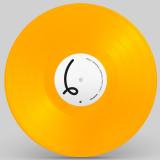
Orange Vinyl with exclusive illustrated notes/lyric insert ltd to 300 w/w.“Zimmerman conjures up a kind of Arcadian folk surrealism that is utterly his own” MOJO Never released before collection featuring Ian A Anderson & Maggie Holland recorded 72-80 is among Tucker’s finest - Free-ranging, Playful, Intimate - his Songpoet imagination unbound and in full bloom now on colour Vinyl for first time with (exclusive to this version) illustrated lyric insert with notes from Tucker.Recorded between 1972-80 this is the first ever release for ‘I Wonder If I’ll Ever Come True’ a stunningly beautiful, homegrown collection by Songpoet Tucker Zimmerman and friends. The range and depth is astonishing. From the heady surreal journey of ‘It All Depends’ Upon the Pleasure Man’, to the uplifting Gene Clark-esque 'So It Goes’, to some of his most beautiful & touching love songs in ‘Let’s Start Over Again’ & ‘Song’. Only one song has seen the the light of day before now - ‘Taoist Tale’ from his 1984 album ‘Word Games’. This recording from a decade earlier loses no power in its folkier stripped down style driven by Tucker’s strong narrative.
While living in bucolic seclusion in Belgium with Marie-Claire, Tucker invited visiting musicians (Derroll Adams, Wizz Jones, Maggie Holland, Dave Evans, Ian Anderson) into his home studio to play and live tape whatever songs he had at hand. Maggie Holland and Ian A Anderson feature, while Tucker found a freeing simplicity in just guitar, ’70s organ, bass and piano. We are so grateful to Ian A Anderson, who carefully kept and curated these recordings from 50 years ago. “Every time I would leave, Tucker would hand me another tape full of songs”. Ian worked with Tucker and ourselves to present this wonderful album. The collection is among Tucker’s finest - free-ranging, playful, intimate - his Songpoet imagination unbound and in full bloom. The ethos, the playing, the freedom, feels like Ronnie Lane’s time in the Welsh Borders. Unhurried, liberated, down-home and cosmic. Extraordinary music made among friends.
"Startling collection of intimate, home-recorded songs from the cult singer-songwriter adored by David Bowie and Big Thief alike.
When I first interviewed Tucker Zimmerman back in 2015 neither of us had any idea that, a decade later, he would be venerated by a new coterie of young fans, touring with maximal folk-rockers Big Thief and recipient of a concerted reissue campaign by the wonderful Big Potato Records. Last year I eulogised the “Arcadian folk surrealism” of his 1974 LP *Over Here In Europe but, if anything, this informal collection of intimate home-studio recordings is even better. Recorded between 1973 and 76 whilst living in Belgium and hosting such visiting folk musicians as Derroll Adams, Wizz Jones, Maggie Holland, Dave Evans, and Ian A. Anderson this is the kind of assured, organic freewheeling folk music that has the mellow, introspective rough-edged feel of some lost private-press LP, the kind rightly revered by Endless Boogie’s Paul Majors as “real people” music. A true find.” Andrew Male MOJO 4/5
“Here's a charming oddity: an unreleased album dating from the mid-Seventies by an American-born songwriter beloved of David Bowie and, more recently, Adrianne Lenker of the folk-rock band Big Thief. Zimmerman's a bohemian type who eschewed the big time for a life of gigging around Europe. He, his wife, Marie-Claire, and a handful of friends recorded these songs in seclusion in the Belgian countryside, and what songs they are. Slide On could have come from the Byrds when they discovered country music, Let's Start Over Again captures the dreamlike experience of being in love with unsettling clarity. This is a real unearthed gem.” 4/5 The Times
We've got a bit of an obsession with Hozan Yamamoto here at Mr Bongo! A legend of Japanese jazz, he is rightly regarded as a true master and was recognised as a "living national treasure" by the Japanese government in 2002. Over five decades he pushed the genre into new directions, absorbing fusion, funk, spiritual jazz and many other sounds, resulting in a discography studded with gems of rare beauty. Exploring his back catalogue has taken us on an engrossing journey that now sees us reissuing another work from this ground-breaking musician.
Though not translating perfectly into English 'Akuma Ga Kitarite Fue Wo Fuku', (kitarite has not been a modern expression in Japanese) roughly means 'The Devil Comes Playing The Flute' / 'The Devil Is Coming While Blowing The Whistle' or 'Devils Flute’. It is the original soundtrack to Kôsei Saitô’s 1979 mystery and suspense movie, ‘Devil’s Flute’. The film is based on a story by the famous author, Seishi Yokomizo, and is centred around a much-loved fictional Japanese detective, Kosuke Kindaichi. A Japanese Sherlock Holmes that has been popular for generations.
Hozan Yamamoto was invited to compose the soundtrack directly by the producer of the film, Haruki Kadokawa. Mr Kadokawa also hired keyboard player and producer Yu Imai as assistant producer on the project, resulting in a stunning cosmic, breaks and beats-laden, funk, disco soundtrack extravaganza.
When it comes to the soundtrack and the technology of the time, Hozan Yamamoto and Yu Imai got inventive, tripped out, funked up, and experimented, creating a quirky soundtrack masterpiece that needed to be heard more outside of Japan. Differing from the more traditional Japanese music orientation of some of his other albums such as 'Beautiful Bamboo-Flute' (also released on Mr Bongo) the album showcases a number of genres, from lush atmospheric incidental music to disco and funk grooves, experimental nuggets, drum and flute workouts, to neo-classical and more.
A special record that showcases the further depths of this wonderful musician's talents.
The 10,000 strong party drew together DJs, fans, listeners, singers, live acts and MCs together to showcase every shade and style encompassing a 174 heartbeat. As the Finsbury Park fun continues and round two promising even bigger stage takeovers and a myriad of artist weaponry, we present an equally bursting drum & bass double disc, the 'Hospitality In The Park 2017' LP. In the same vein as our all- day summer special, this huge 70 track mash- up spans across a full 360' perspective of the genre; representing the established, up and coming, soulful, obscure, liquid, innovative, dark, techy, neuro, jungle style and everything in between.
Included are over 25 brand new exclusives from reputable drum & bass titans Danny Byrd, S.P.Y, Makoto and Keeno, there are VIPs from Metrik and Nu:Logic, remixes from Hugh Hardie, Total science, Camo & Krooked and Calibre, and a 'Bullet Proof' banger from Krakota. Across two mixed CDs we've drawn for this year's surefire summer weapons with Fred V & Grafix, The Prototypes, 1991, High Contrast, The Upbeats, Breakage in the mix. With this year's Incubator stage pulling artists that are rising through the ranks, up and comers' Whiney, Unglued, GLXY and Kyrist bring exciting new offerings to the compilation.
Both fans and artists came together from all over the globe last year and we expect no less in 2017. Equally, this compilation gives an international perspective covering all corners of the globe from Japan's Mountain, the USA's Flite and Ownglow, the Netherlands Black Sun Empire and New Zealand's Shapeshifter. Drum & bass is stronger than ever and it's here to stay. See you at the park!
out of Stock
Last delivered 86 days ago available to reorder, subject to availability
DOODSESKADER clearly haven’t had enough of redefining boundaries – they’ve only just gotten started. Tim De Gieter and Sigfried Burroughs return on April 3rd, 2026 with their third full-length album, The Change Is Me, a rollercoaster that can only be described as the unstable lovechild between witch house, hip-hop, industrial dream pop, and stadium rock that can’t decide if it wants to watch the world burn or shout from the rooftops that we need to save it. Their combination of grungy 90s melodies with distorted synths, sludgy bass, hard tuned vocals, rapping, singing, and explosions of undiluted rage at the current state of the world leave you wondering just exactly what it was you smoked last night, and if it was too much or not enough. The Change Is Me is an album that grabs you by the arm and asks if you’re ready to go on a grand adventure, then pulls you into its chaos before you can say “yes” or “no.”
Tim and Sigfried aren’t just breaking the boundaries between genres; they’re breaking out of their own Year cycle, a path they had laid out for themselves at the band’s inception in 2020. Up until now, the duo had set out to document their “journey to getting better” through writing one album each year: Year Zero (2020), Year One (2022), and most recently Year Two (2024). After spending eight months throughout 2024 and 2025 writing, recording, producing and mixing Year Three, the band scrapped the finished record entirely. Playing shows while simultaneously navigating the process of mixing Year Three created a sort of disconnect – the people that they were when they wrote that record and the people that playing shows made them become were no longer one and the same. “We’re people with faults and strengths, and we realized we needed to accept it. That’s equal parts bleak and liberating. If you’re so focused on self-improvement, you can’t even applaud yourself for how far you’ve come,” the band explains. “This project is meant to be a document of us and of the human condition, not a self-improvement handbook designed to keep us all stuck on what may or may not have happened to us or because of us in the past.”
DOODSESKADER chose instead to embark anew on a week-long creative journey in Tim’s own Much Luv Studio with one goal in mind: to make an album that captures who they are right now. Finally writing everything together in the same room for the first time in years, the process of bringing "The Change Is Me" to life was captured by Diana Lungu in their latest documentary, "Now I Know You See Me", out December 2nd, 2025.
"The Change Is Me" marks the beginning of DOODSESKADER’s shift into a more positive era, both musically and conceptually. Over the course of the 40-minute record we hear the two friends unite in a fight against a world that grows more and more disappointing, a concept made crystal clear in tracks like “Celebrity Culture Simp Farm,” “It Keeps On Stinging,” and of course the album’s epic closer “Suffering In Technicolor.” While their previous albums saw them trying to outrun their pasts and arrive at a better version of themselves, here the search for some external or internal revelation that will “make them better” is no more. It’s been replaced by the realization that change isn’t something we force: it’s gradual, and more importantly, it’s something that’s already there – we just need to reach out and accept it.
The band’s live appearances over the last several years have been instrumental in shaping their ideology. On stage is where the duo find connection; not only with the audience, but also with each other. Their sold-out release shows at Ancienne Belgique (2022) and VierNulVier (2024) have proven that they are one of Belgium’s must-see acts. Abroad, their energy has translated into a month-long EU/UK tour with French band Alcest in 2024, as well as appearances at festivals such as Roadburn Festival (NL), Eurosonic (NL), Hellfest (FR), Mystic Fest (PL), Jera On Air (NL), ArcTanGent (UK), Fluff Fest (CZ) and more.
"The Change Is Me" is out April 3rd, 2026 on DOODSESKADER’s own label, 45 Records.
Chris Acker’s latest collection of songs, Famous Lunch, is in his words, a “growing pains album.” When writing the record, the New Orleans' based folk musician found himself hunting for a voice that wasn’t just an imitation of the one he’d been using on the last 30 songs he’d made. “At the same time, I worked hard to find a certain voice for myself over the previous 3 records and I didn’t want to abandon that.”
While the album finds him continuing to transcribe life’s fleeting and provocative banalities with refreshing grace, the songs on Famous Lunch are intentionally more absurd, stylizing his lyricism as both poetic and disarming simultaneously— commencing with “Sh*t Surprise”—an earworm with a vernacular that stays true to its title. Inspired by George Saunders and Sasha Pearl (and wanting to make a song that sounds like Eagles saying the word “sh*t” over and over), “Sh*t Surprise” is the most Chris Acker song possible, in that its earnestness arrives in spades and comes varnished with a one-of-a-kind, spectacular gnarliness. “We’d match our breath in the upstairs room and we’d hold together ‘til I smelled like you,” Acker sings, before nose-diving into that unforgettable chorus about stepping in a smelly, disgusting pile of sh*t.
More than anything else, Famous Lunch finds Chris Acker at his most sentimental and grateful, as he sings about Bunn coffee machines, gas pumps smelling like “the underside of a fingernail” in August, “10-inching” bread, stealing country club lawn-mower motors, father-son fables, impatient buffet lines, and a broom that “hasn’t been used since the last time I used it.” Acker’s eye for detail remains, and his lexicon includes phrasings that spin out like a hypnotic wash cycle. Seeing the world through his eyes, language remains something worth falling into—growing pains and all.
Salix is a bold new departure for modular synthesist Loula Yorke, seen here using an antique reed organ to explore the ancient roots of willow trees in magic, myth and medicine, as well as inviting another musician into her recording studio for the first time, clarinettist Charlotte Jolly.
The EP forms a sonic archive of a singular instrument: an antique free reed organ left behind by a previous encumbent of Asylum Studios, (the artists' co-operative in Suffolk where Yorke's Truxalis labelmate and life collaborator, Seiche, has a studio space). The organ is in poor condition and fascinatingly, painfully detuned. Yorke's recordings bring out its host of unusual quirks exacerbated by age and neglect: the powerful rhythmic creaking of the wooden treadles; the bone-shaking resonance emanating from its body at specific pitches; unexpected exclamations of harmonic collision from within the carcass redolent of a human voice; the piercing, shrieking whistles of broken reeds, and the powerful timbres unlocked via Yorke's experiments with various combinations of stops.
The three tracks that form Salix are inspired by a local weeping willow tree, a constant companion photographed over the course of a year. Boughs caught in a gyre. A maiden in mourning. Branches that gesture in the wrong direction. A tree turned upside down. A hand-woven willow basket, an old technology to gather and store. The journey of a lovelorn bard through the underworld, a bundle of willow under one arm for protection.
For the opening track, The Carrier Bag Theory of Fiction, Yorke recorded herself playing a simple unaccompanied improvisation on the organ, the only ornamentation being the processed sounds of the keys being struck and returning to their positions.
For Bundle of Styx, a spell of protection is cast and then broken. Yorke invited virtuoso clarinettist Charlotte Jolly into the studio to test combining the breathy textures of both brass and natural reeds, the instruments uniting and obsuring each other in turn during this one-take improvisation. The organ's unpredictable sharpened tunings take centre stage here, with Jolly using them as a point of departure to conjure a set of peerless harmonic improvisations live in the moment. Throughout the improvisation, Yorke, a self-taught musician, unpracticed on the organ, supports and challenges, freely admitting that she's not always sure what effect her decisions to move up and down the keyboard or pull out certain stops will have. Jolly's genius lies in her ability to meet and build on every uncertain pitch thrown her way, saying of the experience, "I love that Loula isn't classically trained, I can't predict at all what she's about to do."
For the final track, With the Red Dawn, Yorke has come up with another unique combination of textures, this time bringing her own specialism in modular synthesis to the fore. A ten-minute reed organ drone characterised with ever-shifting bass swells and overtones is layered with tuned sines, often shudderingly wave-folded, that ebb and flow both in intensity and harmonic colour according to the duty cycles of eight interrelated LFOs. These recordings are collaged with Yorke's singing voice and a langorous, ascending sequence across two octaves on Jolly's clarinet, all arranged to form a cohesive whole far greater than the sum of its parts. Smatterings of untuned percussion and a fragment of a conversation between the duo left in the final mix cements Yorke's unprecious DIY aesthetic into the release.
At its heart, Salix is like watching the wind in the willows; hundreds of thousands of identical tiny leaves moving in confluence on its branches; at once one thing and many things; moment-to-moment our perception makes out different individuals parts within this expanse of texture, before sinking back into the whole.
Heavyweight psychedelic improvisers EarthBall are back with their third and most monstrous record to date: ‘Outside Over There’, released on Upset The Rhythm (Nov 7th). Born from the haunted basements of Nanaimo, Canada, the quintet thrives on spontaneity, shaping improvisation into jagged hallucinations and ecstatic eruptions.
Recorded live-off-the-floor in 2024 in Jeremy, Izzy, and Kellen’s basement, and mixed by drummer John Brennan, ‘Outside Over There’ is an album that feels both summoned and inevitable. Each track lands with uncanny purpose, as if uncovered rather than written.
The opener, 100%, features a cameo from comedian and English icon Stewart Lee, who lent his blessing for the band to use a fragment of his stand-up. The album was mastered by John Dieterich (Deerhoof), with liner text contributed by longtime comrade John Olson (Wolf Eyes). Olson describes the album in his unmistakable style:
“This eight-track odyssey unfolds like a dreamscape, where whispered incantations brush against the shadowy fringes of the cosmos, and wild, Cézanne-inspired rock anthems erupt like geysers of color in the midst of a western warm and wet rain storm… culminating in the sprawling eleven minute masterpiece, ‘And The Music Shall Untune The Sky,’ aptly dubbed the Earth Crusher. A creation so utterly deconstructed and intertwined with the pulse of nature itself that if AI was called upon to conceive ‘Outside Over There’ anew, it would just spit back, “F.U. in Tree Font”. An enchanting invitation for even the flat-earthers to join the circle, if only just a little.”
EarthBall’s trajectory has been relentless. Their 2024 album ‘It’s Yours’ was praised by The Quietus as “fully aggressive and fully life-affirming,” and by The Wire as "a boisterous mind-melting album”. The band’s live double set LP ‘Actual Earth Music Vol. 1 & 2’ (2025) captured blistering performances: a performance opening for Wolf Eyes at the Fox Cabaret, and a Café OTO improvised throw-down featuring Chris Corsano and Steve Beresford. These releases on their own confirm them as one of Canada’s most vital experimental exports, not to mention the impressive self-released discography on their Bandcamp. The band’s reach has stretched far beyond their west coast roots with a UK tour May 2024, plus this past June, EarthBall closed Montreal’s Suoni Per Il Popolo Festival alongside Pulitzer Prize-winning composer Raven Chacon. This November they will perform at Le Guess Who? Festival in Utrecht, with a European tour to follow (tour dates below). Outside of EarthBall, each member carries their own torch. Jeremy Van Wyck, founding member of the legendary Shearing Pinx, has toured extensively, released over 100 records, and has been a vital force in the Vancouver and West Coast underground for the past 25 years. He and Isabel Ford (Izzy) play together not only in EarthBall, but also in Psychedelic Dirt, Shearing Pinx, Behaviours, and Crotch.
John Brennan collaborates widely, including recently with Endlings (Raven Chacon and John Dieterich), Evichen (Victoria Shen), Francesco Fonassi, Plan Your Future (with Greg Saunier of Deerhoof), Brennan/Corsano duo and Physics with John Dieterich. Kellen Maclaughlin performs with KVMP and Ora Corgan, while saxophonist Liam Murphy is a west coast staple, playing with the best across Vancouver Island and the mainland. On three of the tracks of ‘Outside Over There’, the band is joined by their comrade Justin Patterson, who also plays with Brennan in the duo Modale. This cross-pollination fuels EarthBall’s sound - a collective improvisation, psychically overdriven, and grinding into bloom.
Outside Over There’ is more than an album though, it is a ritual, a gathering of sound at the forest’s edge; where feedback, saxophone screams, and ecstatic vocals dissolve the boundary between chaos and clarity. EarthBall invite you into their circle, to share in the joyful terror of spontaneous creation. ‘Outside Over There’ will be released on November 7th through Upset The Rhythm digitally and as a limited blue-in-black vinyl LP.
Released in November 2023, "Piranha" is the electrifying collaboration album between Brooklyn's own CJ Fly, the lyri-cal virtuoso of Pro Era fame, and masterful producer Stoic. Dive deep into the sonic depths of this mesmerizing pro-ject as CJ Fly's razor-sharp lyricism cuts through the beats crafted by Stoic with surgical precision for a sonic feast that devours everything in its path.
With guest appearances including the likes of Mick Jenkins, Nyck Caution, Lord Apex, Blvck Svm and AMARAH, as well as young legend Lord Sko on one of the bonus tracks featured on this deluxe edition, each track on "Piranha" is a testament to the raw talent and creativity of its collaborators.
With Stoic's immersive production providing the perfect backdrop for CJ Fly's impassioned delivery, "Piranha" is an album that demands your attention from start to finish, a tidal wave sure to leave a lasting impression on hip-hop heads everywhere.
The new album by L.Y.R., their third commercial release, begins with the idea that the furthest points of light - stars - can only be seen in the dark. It’s a kind of contradiction that finds musical expression in these new tracks, the band always navigating towards sightings of hopefulness and constancy in an increasingly bewildering and storm-battered world.
The term dark sky reservation has its origins in environmentalism, and several tracks on the album deal with the messed-up weather of our contemporary planet, both meteorological and psychological, from descriptions of an earth deluged by thunderstorms to the soggy back-gardens of suburbia, a climate crisis brought on by rampant urbanism. In that context, dark sky reservations are those regions of the landscape where light pollution is discouraged and even outlawed, to allow scientists and casual stargazers to peer into the cosmos and see the glory of the constellations, patterns of light that have entranced and mystified us for hundreds of thousands of years.
It’s from those designated zones that human beings get a sense of their place in the universe, and experience the wonder of the here and now against a context of eternity and infinity. An alternative to the hectic craziness of everyday life, so often virtual and synthetic, the dark sky reservation is a place of refuge and dreaming, and like L.Y.R.’s music, such spaces are earmarked for contemplation and thoughtfulness.
L.Y.R. is author and current British poet laureate Simon Armitage, singer-songwriter Richard Walters and multi-instrumentalist & producer Patrick Pearson.
Macclesfield 3-piece Cassia make their extremely welcome return with the announcement of their most ambitious release yet in new studio album everyone, outside - out April 11th.
The album marks a bold new chapter, and recently served up a tropical-tinged first offering in ‘heat’ - with today serving a superb Round Two with the stomping, insatiable, hook-laden new single ‘friends’.
everyone, outside takes Cassia’s sound to new heights. Written fresh off the back of two years of relentless touring, the band channelled every ounce of their renowned live energy into the album, returning to a studio they built themselves in Macclesfield, after creating their previous album in Berlin. The journey provided an added twist, recording the majority of tracks live on TikTok, giving fans a unique, inclusive experience to be part of the process.
The album’s title is a metaphor for embracing your truest self and reflection of a band who are at their happiest outside. It’s a message that speaks to the idea of reconnecting with nature and Britain’s finest summers. As frontman Rob explains, “That title, ‘everyone, outside’ started as a song about how weird it is that we stay inside all the time when being out in nature always makes us feel better. Over time, it came to mean more than that - like a metaphor for being your truest, most natural self, unburdened, like when no one’s watching.”
Drawing influences from a host of genres and cultures, everyone, outside reveals Cassia’s venn diagram of global sounds and intimate storytelling. A trip to Mexico during the writing process injected the record with a new energy, while their time spent in their new space back home gave the band a freedom to try new instruments, new sounds, acquire new tools to hone their production skills - and to simply have fun and explore. “The time we spent in Berlin taught us so much, but coming back home to Macclesfield allowed us to really focus on making something that felt like it came from us. No distractions, just pure creativity,” says drummer Jacob Leff.
Cassia’s rise has been impressive. From their early days busking the streets of Cornwall to playing major festivals, touring the world and receiving critical acclaim from BBC Radio 1, Radio X, The Independent, Rolling Stone UK, Clash & many more, the band has carved out a unique niche. Their sound, influenced by the African music Rob’s father introduced him to, combined with the indie heritage of nearby Manchester, combines the positivity of bands like Foals and Vampire Weekend, with the jazz-tinged afrobeats of Fela Kuti and Ebo Taylor.
After signing to Distiller Records in 2018, the band gave up their full-time jobs and ventured to Bath to record their debut album, Replica. Tracks such as ‘Right There’, ‘Drifting’ & ‘100 Times Over’ have amassed millions of streams, seeing the band sell out multiple headline Tours both in the UK and Europe. Playing to a homecoming capacity crowd at Manchester’s O2 Ritz, as well as sold out headline shows at London’s KOKO & The Garage, the band have accrued a huge, loyal following and their live shows earned them a nomination for Best Live Act at the AIM Awards alongside Idles and DMA’s, as well as making them the winners of Reeperbahn’s Anchor Award in 2022.
Cassia will tour the UK in May 2025, playing songs from the new album and some of their biggest tracks - headlining Leeds, Bristol, a newly added night in Southampton, a special Manchester homecoming, Glasgow, Birmingham, & a huge show at London’s HERE @ Outernet - dates below & Tickets Here. The band will also take things Stateside this year for their first ever run of headline shows in the US & Mexico.
out of Stock
Last delivered 6 months ago available to reorder, subject to availability
long content, you may need to expand row to see all... • Warren Zevon’s final concert, recorded August 9, 2002 at the Edmonton Folk Music Festival, available for the first time
• Features “Werewolves Of London,” “Poor Poor Pitiful Me,” “Lawyers, Guns & Money,” “Play It All Night Long,” and more
• Double LP with etched 4th side and liner notes fromlongtime Zevon band member and friend Matt Cartsonis, who accompanied Warren during this performance
• Available for on opaque metallic silver vinyl
One of my favorite repeatable moments in our sets was looking over when he was singing that line from “Don’t Let Us Get Sick”: “I’m lucky to be here with someone I like . . .” to find him looking at me. That’s some pure and precious stuff, and I’m immensely grateful for the memory.
—Matt Cartsonis from his liner notes
Luckily, 2025 Rock & Roll Hall of Fame inductee, Warren Zevon left us with a treasure trove of nearly four decades of incredible songs and performances. Neither Warren, nor his long-time band member, accompanist, and friend Matt Cartsonis, nor the 14,000 people in attendance at the Edmonton Folk Music Festival knew this would be Warren’s final concert—it was just another great performance from an exceptional songwriter and artist. Epilogue: Live At The Edmonton Folk Music Festival offers you the chance to experience it for the first time, or relive it if you were there.
Featuring Warren on guitar, harmonica, and piano, with Cartsonis adding guitar, dulcimer, fiddle, harmonies and more, the pair run through classics like “Werewolves Of London,” “Poor Poor Pitiful Me,” Lawyers, Guns And Money,” and “Play It All Night Long.” The set also features a performance of the song “Dirty Life And Times,” only ever played twice! The pair found room in the set to pay tribute to Canada with a cover of Joni Mitchell’s “A Case Of You” and the traditional, “Canadee-i-o.”
Available on double metallic silver Vinyl (with etched fourth side), Epilogue: Live At The Edmonton Folk Music Festival has been mastered and restored by multiple Grammy-winning engineer Michael Graves and Jordan McLeod of Osiris Studio with Matt Cartsonis. Cartsonis also adds poignant liner notes about the performance, and insight into his musical relationship and friendship with Zevon.
Epilogue: Live At The Edmonton Folk Music Festival is a gift from a truly legendary singer and songwriter. Play it all night long, indeed.
A meteorite and a lost EP from an experimental electronic talent escape their grim fate: remain unknown to human civilization forever.
Around 2015, Gareth Smyth (aka Lumigraph) produced two tracks before uploading them on his Soundcloud page under the name “Canyon Diablo”, a tribute to a meteorite that crashed in Arizona 49,000 years ago. Amazed, the future co-founder of M+M Disques barely had time to download them onto his hard drive before they were deleted... until today.
Behind the extraterrestrial sounds of this 2-tracker, Lumigraph seems to want to establish communication with planet earth using its own means. In the dubby “Flamingo Drive”, he patiently builds up his sluggish groove before bringing in a reassuring and catchy bassline. On the B-side, the avant-garde “America Song” combines industrial rhythms, drone guitar, and Pierre Henry-ish noises.
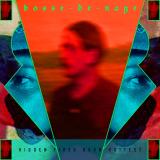
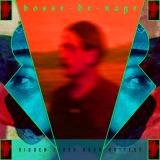
There's a tendency in metal to mistake aggression for honesty, volume for depth. To confuse the performance of darkness with its actual weight. Hidden Fires Burn Hottest, the new album from San Francisco-based post-black metal band Bosse-de-Nage, sidesteps this entirely. It’s the group’s most fully realized work yet, precisely because it refuses to be pinned down.
Bosse-de-Nage have been working with The Flenser for over fifteen years. They were one of the first bands the label ever partnered with and have the longest active relationship in the label's history. But unlike most bands who build momentum through constant touring and visibility, Bosse-de-Nage has largely existed apart from the music world's usual machinery. They've evolved on their own terms, in relative isolation, allowing the work to develop without outside pressure or influence. What began rooted in black metal anonymity has mutated into something that actively defies categorization. The aggression is still there, but it's no longer the point. Hidden Fires Burn Hottest finds the band treating emotions like physical objects, feelings with spatial properties. “No Such Place"" describes a space that can't exist but does anyway, somewhere between thought and location. ""Immortality Project"" examines infinite possibility not as promise but as problem, endless options collapsing under their own weight. These songs don't use metaphor to describe emotion. They make emotion into something you could theoretically touch.
Tracked by Jack Shirley (Deafheaven, Oathbreaker) at Atomic Garden East and mixed and mastered by Richard Chowenhill of Agriculture, Hidden Fires Burn Hottest was years in development, with some tracks beginning in 2018.
The long writing process offered time that most records don't get. Time to live with ideas, revise endlessly, to let structures settle. For the first time, lyricist Bryan Manning wrote everything in advance, creating a surplus to pull from rather than working under deadline pressure. The difference shows.
Coming off Further Still, an album built on constraint and economy, Bosse-de-Nage sought the opposite: sprawl, strangeness, fewer rules. Space for ideas to develop without rushing them. Dynamics that move through quiet as much as noise. Presence earned through atmosphere instead of volume. The record even includes ""Mementos,"" which might be considered the first love song the band has ever written.
Nothing here coheres into a theme. These are pieces pulled from low moments and private feelings made public through sound. The band has never been interested in positivity, in music that resolves cleanly or offers comfort. But bleakness doesn't mean humorlessness. There's something darkly funny running through much of it, even when it shouldn't be.
Hidden Fires Burn Hottest doesn't explain itself. It just insists: what you feel is as real as what you can see."
There's a tendency in metal to mistake aggression for honesty, volume for depth. To confuse the performance of darkness with its actual weight. Hidden Fires Burn Hottest, the new album from San Francisco-based post-black metal band Bosse-de-Nage, sidesteps this entirely. It’s the group’s most fully realized work yet, precisely because it refuses to be pinned down.
Bosse-de-Nage have been working with The Flenser for over fifteen years. They were one of the first bands the label ever partnered with and have the longest active relationship in the label's history. But unlike most bands who build momentum through constant touring and visibility, Bosse-de-Nage has largely existed apart from the music world's usual machinery. They've evolved on their own terms, in relative isolation, allowing the work to develop without outside pressure or influence. What began rooted in black metal anonymity has mutated into something that actively defies categorization. The aggression is still there, but it's no longer the point. Hidden Fires Burn Hottest finds the band treating emotions like physical objects, feelings with spatial properties. “No Such Place"" describes a space that can't exist but does anyway, somewhere between thought and location. ""Immortality Project"" examines infinite possibility not as promise but as problem, endless options collapsing under their own weight. These songs don't use metaphor to describe emotion. They make emotion into something you could theoretically touch.
Tracked by Jack Shirley (Deafheaven, Oathbreaker) at Atomic Garden East and mixed and mastered by Richard Chowenhill of Agriculture, Hidden Fires Burn Hottest was years in development, with some tracks beginning in 2018.
The long writing process offered time that most records don't get. Time to live with ideas, revise endlessly, to let structures settle. For the first time, lyricist Bryan Manning wrote everything in advance, creating a surplus to pull from rather than working under deadline pressure. The difference shows.
Coming off Further Still, an album built on constraint and economy, Bosse-de-Nage sought the opposite: sprawl, strangeness, fewer rules. Space for ideas to develop without rushing them. Dynamics that move through quiet as much as noise. Presence earned through atmosphere instead of volume. The record even includes ""Mementos,"" which might be considered the first love song the band has ever written.
Nothing here coheres into a theme. These are pieces pulled from low moments and private feelings made public through sound. The band has never been interested in positivity, in music that resolves cleanly or offers comfort. But bleakness doesn't mean humorlessness. There's something darkly funny running through much of it, even when it shouldn't be.
Hidden Fires Burn Hottest doesn't explain itself. It just insists: what you feel is as real as what you can see."
Blue Lake reveals his most ambitious album yet, which finds its visionary creator Jason Dungan harnessing the collective alchemy of his band, with ten spirited tracks that resonate with a powerful directness, evoking an ecological connection to the wider world.
The solo project (Blue Lake), now on its fifth album, found its name and inspiration via Don Cherry's 1974 live album, sparking a creative epiphany in Dungan, who set off on a path into his own untapped sonic world, guided by what he cited as the emotional potential found within non-lyrical composition. With a newly inspired ethos aimed toward creating direct and simple instrumental music imbued with a deep sense of feeling, Jason began combining an array of musical elements that gave rise to his highly revered album 'Sun Arcs' (2023), with its "ornate, zither-led lattices" (Pitchfork, Best New Music). Conceived in the blissful isolation of a Swedish cabin set in the woods, this was music that soundtracked spring in full bloom. Then, in contrast to the solitary approach of 'Sun Arcs', the highly lauded mini-album 'Weft' (2025) began to set the tone for a more band-oriented approach to delivering the Blue Lake sound. Jason had by this time experienced a special collective energy with his band during a swathe of live performances, which he then sought to harness and distill on 'The Animal', leading him to take the project into a traditional recording studio (The Village) and its limitless potential along with his gifted cohorts.
'The Animal' at its core vividly celebrates human collaboration and is deeply rooted in a sense of community and non-hierarchical connectivity. The group's creative alchemy transcends outwards and beyond the musicians performing together, to summon an inclusive, existential and ecological connection to the wider world and its inhabited spaces. The album contemplates the idea of the human as an animal as Dungan explains: "I'm quite fascinated in thinking about humans more as part of the animal environment and not as something that's so separated into a "human" realm, or sitting on top of a hierarchical pyramid. So the Animal is also me, or us - that we are just living, existing, in the same way as a piece of moss or a sparrow or a cow.
'The Animal' is a form of musical metamorphosis, still acoustic, yet more amplified, elevating it to new dimensions. The Blue Lake project takes on a new lease of life to encompass collaboration with Jason Dungan bound in a universal connectivity, resulting in his most ambitious album to date. A harmonious rejoicing that cements his reputation as a transformative presence in contemporary music.
Moo is the first wide release on my new label MUP! When I decided to make a new record, it only seemed right to go back to what brings me the most joy, which is, Rock & Roll music. I got my Tascam 388 fixed, the same tape machine I had used to record my first album, King Tuff Was Dead. It had been sitting in my parent’s house in Vermont for the past 14 years, but I had finally dragged it out to LA. I stopped caring if there were mistakes. There’s not enough mistakes. I played my old, blue, Gibson SG, Jazijoo, and she spewed mangled electrified gold. For once, I sang and I didn’t hate my voice. I played the drums badly and bounced them in mono to one track and it sounded like glorious shit. I wish it sounded even worse. Rock & Roll is the music of rodents and bugs. It should sound like it crept from a decrepit trashcan or a crypt or a toilet. It is not chill or vibey, autotuned or on the grid. It is not perfect, which is why it’s perfect. And I don’t care if it’s dead or alive, cool or uncool: when I hear it, and when I play it, as a chubby and balding 43 year old punk weirdo, I FEEL ENERGIZED. All in all, MOO is a full circle moment. A return to form. A return to rock. A return to Vermont. A return to myself. Reconnecting the dots. Restarting the engine. Plugging in the stack. Finally letting King Tuff be King. Fucking. Tuff.
Moo is the first wide release on my new label MUP! When I decided to make a new record, it only seemed right to go back to what brings me the most joy, which is, Rock & Roll music. I got my Tascam 388 fixed, the same tape machine I had used to record my first album, King Tuff Was Dead. It had been sitting in my parent’s house in Vermont for the past 14 years, but I had finally dragged it out to LA. I stopped caring if there were mistakes. There’s not enough mistakes. I played my old, blue, Gibson SG, Jazijoo, and she spewed mangled electrified gold. For once, I sang and I didn’t hate my voice. I played the drums badly and bounced them in mono to one track and it sounded like glorious shit. I wish it sounded even worse. Rock & Roll is the music of rodents and bugs. It should sound like it crept from a decrepit trashcan or a crypt or a toilet. It is not chill or vibey, autotuned or on the grid. It is not perfect, which is why it’s perfect. And I don’t care if it’s dead or alive, cool or uncool: when I hear it, and when I play it, as a chubby and balding 43 year old punk weirdo, I FEEL ENERGIZED. All in all, MOO is a full circle moment. A return to form. A return to rock. A return to Vermont. A return to myself. Reconnecting the dots. Restarting the engine. Plugging in the stack. Finally letting King Tuff be King. Fucking. Tuff.
On her new album, Two Whole Summers, Half A Life, Lisa Bassenge is once again accompanied by her trusted fellow musicians, pianist Jacob Karlzon and bassist Andreas Lang, with whom she has already realised numerous projects. Typical of Bassenge, the repertoire comprises a seemingly wild yet harmoniously connected mix of pop, singer-songwriter and jazz elements. The spectrum ranges from Elliott Smith to Duran Duran, from Billie Holiday to Björk. ‘It's always about the expressiveness of the songs – that's the common thread for us,’ emphasises the Berlin-based artist. The album features a track by Hank Williams as well as Madonna's ‘Frozen’ and “Catch” by The Cure. Two original compositions are also part of the recording: the title track ‘Two Whole Summers, Half a Life,’ a tribute to the power of friendship and youth, and the neo-folk ballad ‘I'm Getting Old.’ Both works impressively underline Lisa Bassenge's own artistic signature. For over two decades, Lisa Bassenge has stood for stylistic openness and a characteristic voice that lends new nuances to every song. Despite all the diversity, jazz remains the tonal basis. The Scandinavian-style relaxed sound of Karlzon and Lang lends the interpretations a soft, atmospheric depth.
DJ Support: Garnier, Opolopo, Worldwide FM, Marcia Carr, Bill Brewster, Timeout Moscow, Craig Smith, Delfonic, Tony Nwachukwu, Marcel Dettmann, DJ Rocca, Shuya Okino, Borrowed Identity, Titonton Duvante, Alex Attias, Rainer Truby, Sol Power All-Stars, Kyri R2, Robert Luis, Severino Panzetta, Lars Behrenroth, Kassian, Alkalino, Getdown Edits, Moodymanc, Gerd, Lea Lisa, Young Pulse, Mark de Clive-Lowe, Mark Grusane, Alex Barck….
International dance music heavyweight, producer and DJ Alexander Lay-Far returns with a powerful new chapter - Lay-Far Dance Orchestra (LFDO) - a fully-fledged live band project that reconnects him with his jazz-funk and fusion DNA while pushing dance music forward with unmistakable groove, musicianship and emotional weight. Formed in early 2024, LFDO is no nostalgia exercise. With Lay-Far at the helm as bassist, bandleader, composer, arranger and sound engineer, the orchestra has already been turning heads with explosive live performances, reinventing classic Lay-Far cuts, and now unveil their first album “Skybreak” with all new and original material written and produced by Lay-Far together with his bandmates and star guests, including Lipelis, Antoha MC and Seven Davis Jr. This work shows the departure from the predominantly electronic sound of Lay-Far's previous solo albums in favour of live instrumentation recorded to analogue tape and effortlessly bridging the gap between Jazz, Library Music, Disco-Funk, House, Broken Beat and Drum’n’Bass. “Skybreak” is dynamic, passionate, spiritual, cinematic, playful, heartfelt, life-affirming, dreamy and deeply romantic. Ultimately, there’s something profoundly romantic in recording and releasing such music in this day and age!
“Take Flight (Part 1)” is opening the album with style. It takes us on a beautifully orchestrated journey, blending the sensuality of Library Music with high-octane Jazz-Funk and raw b-boy breaks, propelled by breathtaking flute and Rhodes solos of Timur Nekrasov and Maxim Glonti. This aural symbiosis of “beauty and the beats” will become more and more prominent as the album unfolds.
It’s time for “Aquarius Love” created with the inimitable artist and vocalist Seven Davis Jr. (Secret Angels, Ninja Tune). In this composition cinematic soul and heavy jazz meet the restless energy of live drum & bass with deep and heartfelt vocals - timeless sound combined with a timeless message about love and life!
Next is “Head In The Clouds” - a theme for an imaginary rom-com, an ode to all the dreamers - sweet, light, naive and heartwarming. Space-Disco-Funk at its best!
“Where You From” is a fiery Soulful House number with heavy Afro-Latin influences recorded in collaboration with Lipelis. It’s full of Sun, joy and passion. Its irresistible rhythm is emphasised by funky octave bass, wah-wah guitar, catchy piano riffs, guitar solo by Lipelis and seemingly light conscious message delivered by Lay-Far and Maryag. Summer is here!
Now the album takes an unexpected twist in the form of “The Harp of Boom” which at first glance appears to be a classic-sounding Boom-Bap banger. Yes, It’s loud, raw, and gritty, yet it gradually evolves into something delicately-touching and deeply-soulful thanks to a memorable flute melody and lush string arrangement. Definitely recorded with tongue in cheek.
Next is “Feel The Moment” a remarkable collaboration with one of the most recognisable and distinctive Russian artists, singer, trumpeter and cultural icon Antoha MC. It’s a feel-good song, hopeful, life-affirming and bittersweet. A stylish excursion into Brit-Funk and Soviet Jazz-Fusion sound, drawing inspiration from the likes of Atmosfear, Light Of The World or Soviet Jazz bands like Allegro and Arsenal, but reimagining the influences through the modern West London broken beat lens.
The spectacular music journey continuous with “Take Flight (Part 2)” - it’s all about the deep infectious jazz-funk groove, heavy beats, rolling percussion and the glory of the soloing instruments - saxophone and flute by Timur Nekrasov, demonstrating the wide range of emotions from thoughtful and lyrical to restless and borderline vicious. One for freestyle dancing!
As the album draws to an end a vibrant musical triptych “Soul Constant” awaits, mixing together the deep and sensual mood of spiritual jazz with heavy syncopated drum’n’bass rhythms by Michail Fotchenkov, lush orchestration, expressive saxophone solos and the ending which can simply be described as “aural bliss”. It’s breath-taking!
A pleasant bonus is the exclusive version of “Where You From” by Lipelis himself, who is taking it into dub territories, further enhancing the rhythm section and enriching the song with his trademark playful synth flourishes and dreamy guitar solos for maximum effect (and appeal).
The album “Skybreak” by Lay-Far Dance Orchestra is the work of real artistry and craftsmanship with timeless sound that’s not only deeply-rooted but also forward-thinking.
out of Stock
Last delivered 4 months ago available to reorder, subject to availability
A joke that doesn’t make you laugh is just a sentence. Music that doesn’t make you dance and feel is just noise aimed in your direction. To make a circuit where energy flows freely, you must have feedback. Without feedback, connection is absent. As Limousine Dream enters the Age of Aquarius, we open up. Instead of trying to grow, we let it grow. Instead of building a pyramid, we see a constellation where we are all stars, and every star can equally stand out and fit in. We invite you to join us, just like we want to join you. This is where we begin our Life Spiral.
out of Stock
Last delivered 8 days ago available to reorder, subject to availability
&Co. debut on A Quiet Village. The US-based trio drop the third release on Quiet Village’s eponymous imprint March 20th. &Co. Is a project from multi-hyphenate and Bianca Chandon founder, Alex Olson, pianist, composer and producer Alberto Bof (known for his work on ®Oscar ®Bafta ®Golden Globe and ®Grammy award winning ’A Star is Born’) and DJ/fashion luminary, Paul Takahashi. The trio’s second release, ‘Staycation’ follows 2015’s ‘Best of Friends’, and sees these rare talents create a two-tracker that explores a uniquely evocative, cinematic and dubby Balearic aesthetic. ‘Staycation began as a follow-up to the first EP, Best Friends.
As a result, ‘Staycation’ came together in fragments. The first track was built over a handful of short studio sessions, each only about an hour long, driven by brainstorming and reworking ideas. With Alex away, Alberto and I continued refining the piece in Los Angeles, sharing updates for Alex’s approval until it was completed. The track remained unmastered and was quietly circulated to a small circle as a promotional piece. The second track, “Lean Like a Cello,” was initially conceptualized together. However, with Alex now based in New York and less available, we completed the arrangement in Los Angeles, sending versions back and forth for Alex’s input and feedback. Nearly a decade later, the idea resurfaced, and the recordings were finally mastered and released. A friend, Justin Van Der Volgen, handled the mastering. What began as a plan to give the tracks away as a promo evolved when Justin encouraged the group to shop the release. With help from Eric Duncan of Rub N Tug, the music reached Matt (Edwards, aka Radio Slave/ 1/2 of Quiet Village).
Ten years after the first sessions, Staycation arrives as a document of distance, collaboration, and time. A project shaped as much by separation as by shared intention.’ (Paul Takahashi, Feb 2026)
A piece of art from a powerhouse creative team operating at the intersection of skate culture, music, design and fashion, ‘Staycation’ by &Co. Arrives on The Quiet Village 12” and digital/streaming on March 20th.
out of Stock
Last delivered 89 days ago available to reorder, subject to availability
Artist, painter, curator Leo Vincent, is fired up off the back of supporting Soulwax, on their recent Paris and Netherlands shows. Proudly presenting two debut songs “Hello it’s me again” and “Loving isn’t easy”, co-produced with the brothers, David & Stephen Dewaele, of Soulwax/2manydjs.
Seven years ago, Leo Vincent bluffed his way into a video editing job at DEEWEE. Despite being told to not touch or ruin their gear, he later resurfaced with demos that sounded like he had anyway.
"Don’t know much about history”
"Don’t know much about biographies"
But we do know that by the time Leo Vincent arrives in your town, he will probably have destroyed two more Tascam 8-tracks.
Brussels-based, failed goalkeeper-turned-painter-turned-cameraman-turned-musician Leo, doesn’t seem to be afraid to leave his faders in the red zone for an unorthodox period of time while repairing the pitch knob. Some say it’s disco for night janitors. Some say it’s glam-rock for ravers. Others haven’t found the time to listen yet because they have real jobs.
But to fully grasp Leo Vincent's essence, imagine yourself sitting in the home cinema of the late Marc Bolan while watching a documentary on Scatman John, directed by Jacques Tati and scored by Ween, using only the instruments of Cabaret Voltaire.
out of Stock
Last delivered 6 months ago available to reorder, subject to availability
The latest from master editor Mr. K, a jazz-funk classic backed by a Philly sure shot!
Debuting in 1975, the jazzy RnB instrumental ‘Always There’ from original Earth Wind and Fire saxophonist Ronnie Laws was a hidden gem until Side Effect’s vocal version took off the following year, one of many cover versions to come (Incognito’s hit the pop top ten in the ’90s). Mr. K's edit streamlines the original, mimicking Side Effect’s distinctive horn stab intro and adding a DJ-friendly drums-only outro. With original 7-inch releases being either fragile styrene or unreasonably short, this extended vinyl pressing is very welcome.
A song that needs no introduction—coming from the very best there is—the O’Jays backed by MFSB! ‘For the Love of Money’ rides one of the most immense bass lines ever committed to wax and, while that would be enough to carry a track on its own (see the Armada Orchestra’s cover), here we have the talents of the timeless O’Jays vocals to top things off. Mr. K has found the perfect balance between the Lp and single versions, giving us the very best DJ-friendly 7" mix that should never leave your bag.
out of Stock
Last delivered 71 days ago available to reorder, subject to availability
Motown Records: The Supremes, Stevie Wonder, The Miracles, Marvin Gaye, Martha Reeves and The Vandelas and, of course, The Temptations. It is antithetical to mention any of those without the others. The community of artists started as the Sound of Young America, but as history has proven, it became the sound, the look and the inspiration of so much more. And now, little nuggets of Motown's influence can be found the world over. David Ruffin, founding member of Motown superstars The Temptations, went on to become a successful solo artist even after he left the group. In 1969, Ruffin released two fantastic solo records, My Whole World Ended and Feelin' Good. Between 1970 and 1971 he recorded what was to be his third long playing solo record. However, his career was suddenly put on hold when Motown, for reasons unclear, shelved the album that had been dubbed David. The record had even been assigned a catalog number and final artwork. Ruffin returned in 1973 with a brand new LP titled David Ruffin (treated officially as his third LP) and the previously recorded album David sat on the shelves, unheard for decades. This deluxe 2xLP set features the original, rare David LP, plus an LP of bonus tracks and mono single mixes all packaged in a beautiful gatefold jacket, featuring extensive liner notes and striking color photographs of Ruffin. His red and yellow suede suit featured in the interior gatefold LP jacket is an absolute must-see! The record was cut and pressed at Third Man's Detroit HQ, just a couple miles away from the original Motown HQ. For the first time ever on vinyl, Third Man is proud to present the essential, true third LP from the Temptations' mighty David Ruffin.
‘Call To Arms & Angels’ is the title of the twelfth studio album from South London collective Archive.
A 17-track double CD / triple LP recorded at RAK studios in London and released on Dangervisit/PIAS.
Deluxe editions of the album also include a bonus ‘Super8’ album of new and exclusive instrumentals, as featured in the band’s ‘Super8’ documentary that will accompany the release of the album.
Produced by Archive and long-time collaborator Jérome Devoise, ‘Call To Arms & Angels’ is the band’s first studio set since 2016’s ‘The False Foundation’.
Talking about the new album, Darius Keeler says, “Writing our twelfth studio album was an extraordinary time for the band. The song writing became an unfolding narrative as the world got stranger and more disturbing every day. With people’s freedoms being pushed to the brink, the suffering Covid caused and the terrible events in the US lead by Trump and the rise of the Right, anything seemed possible.
“To reflect on these times as artists brought up a darkness and an anger, but also a strange kind of inspiration that was at times unsettling. It really made us appreciate the power of music and how lucky we are to be able to express our feelings in this way.
“It seems there is light at the end of the tunnel, but there are always shadows within that light.”
Deluxe 2CD album plus ‘Super8’ bonus CD in 40-page casebound Polaroid bookpack.
2CD album.
Deluxe vinyl box set with white coloured vinyl 3LP (exclusive to this box set), ‘Super8’ bonus LP on white vinyl (exclusive to this box set), deluxe 3CD with Polaroid booklet and 12” x 12” art print.
Triple LP on gold vinyl in triple gatefold sleeve.
Triple LP on green vinyl in triple gatefold sleeve.
Triple LP on black vinyl in triple gatefold sleeve.
out of Stock
Last delivered 7 months ago available to reorder, subject to availability
With »News from Planet Zombie«, The Notwist return to view after years of exploration and experiment with an album rich in both melancholy and positivity, sketched across a suite of thrilling, fiercely committed pop songs. It’s an album reflecting a chaotic world, but responding with warmth and generosity, to achieve creative and spiritual consolidation. Recorded in their home base of Munich, it reconnects with the security of the local to explore the troubles of the global: a guiding impulse writ large across this album’s eleven songs. It’s also the first studio album since 1995’s »12« that the entire band recorded together in the studio in its expanded live formation.
A new album by The Notwist is always a curious endeavour; their musical language is as consistent and resilient as the contexts for creativity are unpredictable and ever shifting. For »News from Planet Zombie«, the core trio of Markus and Micha Acher and Cico Beck embraced the plural possibilities of writing together, bringing songs to the collective and then arranging, rehearsing and recording that material live, in the studio.
The result is an album that’s energised, fully in ›the now‹, with spectacular moments where you can hear the magic bubbling up in the dynamic between the Achers, Beck, and fellow members Theresa Loibl, Max Punktezahl, Karl Ivar Refseth, and Andi Haberl. If »Teeth« begins »News from Planet Zombie« quietly and reflectively, by »X-Ray« everyone’s supercharged, blasting out future anthems with the collective energy cranked up high. The chiming keys of »Propeller« skim the instrumental’s surface like stones across burbling water; »The Turning« clangs its way into one of the album’s most heartwarming melodies.
»News from Planet Zombie« was recorded over one week at Import Export, a non-profit space for arts and music. You can tell, too; there are some pleasingly rough edges here, as though The Notwist’s striving for hazy perfection means they’re also confident enough to let the songs breathe and mutate between our ears. That openness to chance also takes in guest turns from friends both local and international, reflective of a cosmopolitan Munich: Enid Valu joins in on vocals, while Haruka Yoshizawa guests on taishōgoto and harmonium, Tianping Christoph Xiao on clarinet, and Mathias Götz on trombone.
The Notwist aren’t best known for cover versions, but »News from Planet Zombie« features two: a gorgeous version of Neil Young’s »Red Sun« (from 2000’s »Silver & Gold«), which the group originally developed for a theatre play directed by Jette Steckel, and a take on Athens, Georgia folk-pop gang Lovers’ »How the Story Ends«. They slot into the album’s narrative perfectly, nestling in like old friends, revealing The Notwist as poetic interpreters. Played well, the cover version is both acknowledgement of fellow travellers and act of generosity, and The Notwist nail both aspects here.
And that narrative, the way the album plays out? »News from Planet Zombie« acknowledges the distress of our current geopolitical impasse, while reminding us there are collective ways forward. Fed through the figure of the zombie, Markus Acher explores our anxieties: »In the title and some lyrics I reference B- and horror-movies, which is a reference to the crazy world at the moment, which seems to be like a really bad and unrealistic B-movie.« But there’s a reminder here not to lose the thread entirely, that these things, too, will pass.
»The river here in Munich I often go to has been there forever and will be there long after us,« Acher reflects, pinpointing an important source of succour for him, »always the same but always changing. Very calming, but also always reminding me that like this river time only flows into one direction and you can’t go back. Every moment is very precious.«
Artwork by Marie Vermont
The Notwist:
Markus Acher: vocals, guitar
Micha Acher: bass, sousaphone, euphonium, trumpet
Cico Beck: electronics, keyboards, guitar, recorder, percussion
Theresa Loibl: bassclarinet, clarinet, piano, harmonium, organ
Max Punktezahl: guitar
Karl Ivar Refseth: marimbaphone, vibraphone, glockenspiel, congas, percussion
Andi Haberl: drums, dulcimer
+
Enid Valu: vocals on 1, 2, 3, 4, 5, 7, 9, 10, 11
Haruka Yoshizawa: taishōgoto on 6, harmonium on 9, 10, 11
Tianping Christoph Xiao: clarinet on 4, 10, 11
Mathias Götz: trombone on 4, 10, 11
With »News from Planet Zombie«, The Notwist return to view after years of exploration and experiment with an album rich in both melancholy and positivity, sketched across a suite of thrilling, fiercely committed pop songs. It’s an album reflecting a chaotic world, but responding with warmth and generosity, to achieve creative and spiritual consolidation. Recorded in their home base of Munich, it reconnects with the security of the local to explore the troubles of the global: a guiding impulse writ large across this album’s eleven songs. It’s also the first studio album since 1995’s »12« that the entire band recorded together in the studio in its expanded live formation.
A new album by The Notwist is always a curious endeavour; their musical language is as consistent and resilient as the contexts for creativity are unpredictable and ever shifting. For »News from Planet Zombie«, the core trio of Markus and Micha Acher and Cico Beck embraced the plural possibilities of writing together, bringing songs to the collective and then arranging, rehearsing and recording that material live, in the studio.
The result is an album that’s energised, fully in ›the now‹, with spectacular moments where you can hear the magic bubbling up in the dynamic between the Achers, Beck, and fellow members Theresa Loibl, Max Punktezahl, Karl Ivar Refseth, and Andi Haberl. If »Teeth« begins »News from Planet Zombie« quietly and reflectively, by »X-Ray« everyone’s supercharged, blasting out future anthems with the collective energy cranked up high. The chiming keys of »Propeller« skim the instrumental’s surface like stones across burbling water; »The Turning« clangs its way into one of the album’s most heartwarming melodies.
»News from Planet Zombie« was recorded over one week at Import Export, a non-profit space for arts and music. You can tell, too; there are some pleasingly rough edges here, as though The Notwist’s striving for hazy perfection means they’re also confident enough to let the songs breathe and mutate between our ears. That openness to chance also takes in guest turns from friends both local and international, reflective of a cosmopolitan Munich: Enid Valu joins in on vocals, while Haruka Yoshizawa guests on taishōgoto and harmonium, Tianping Christoph Xiao on clarinet, and Mathias Götz on trombone.
The Notwist aren’t best known for cover versions, but »News from Planet Zombie« features two: a gorgeous version of Neil Young’s »Red Sun« (from 2000’s »Silver & Gold«), which the group originally developed for a theatre play directed by Jette Steckel, and a take on Athens, Georgia folk-pop gang Lovers’ »How the Story Ends«. They slot into the album’s narrative perfectly, nestling in like old friends, revealing The Notwist as poetic interpreters. Played well, the cover version is both acknowledgement of fellow travellers and act of generosity, and The Notwist nail both aspects here.
And that narrative, the way the album plays out? »News from Planet Zombie« acknowledges the distress of our current geopolitical impasse, while reminding us there are collective ways forward. Fed through the figure of the zombie, Markus Acher explores our anxieties: »In the title and some lyrics I reference B- and horror-movies, which is a reference to the crazy world at the moment, which seems to be like a really bad and unrealistic B-movie.« But there’s a reminder here not to lose the thread entirely, that these things, too, will pass.
»The river here in Munich I often go to has been there forever and will be there long after us,« Acher reflects, pinpointing an important source of succour for him, »always the same but always changing. Very calming, but also always reminding me that like this river time only flows into one direction and you can’t go back. Every moment is very precious.«
Artwork by Marie Vermont
The Notwist:
Markus Acher: vocals, guitar
Micha Acher: bass, sousaphone, euphonium, trumpet
Cico Beck: electronics, keyboards, guitar, recorder, percussion
Theresa Loibl: bassclarinet, clarinet, piano, harmonium, organ
Max Punktezahl: guitar
Karl Ivar Refseth: marimbaphone, vibraphone, glockenspiel, congas, percussion
Andi Haberl: drums, dulcimer
+
Enid Valu: vocals on 1, 2, 3, 4, 5, 7, 9, 10, 11
Haruka Yoshizawa: taishōgoto on 6, harmonium on 9, 10, 11
Tianping Christoph Xiao: clarinet on 4, 10, 11
Mathias Götz: trombone on 4, 10, 11
out of Stock
Last delivered 7 months ago available to reorder, subject to availability
The beauty, confusion, complexity, and intensity of their youth - lived under the shadow and around the scars of conflict - are entangled in the industrial dance-punk hybrid encoded in the record's DNA, aptly entitled Crystalpunk. "This record is us waving a flag for that generation -- the ones who inherited confusion, resilience, and a fractured sense of self." They're waving that flag as intensely as possible too. For the uninitiated, Chalk mainlines the reaction between genres, eras, and cultures, commuting this collision into their sound. The Belfast group could comfortably power an underground warehouse party after-dark, incite a mid-day festival mosh-pit, or shake an arena on any given evening.
Their power has seamlessly translated to the stage with the group packing venues and delivering alternately sweaty and electrifying performances to a growing rabid fan base. As a group, they've sold out shows across the UK, EU and USA, notched festival performances such as Glastonbury, SXSW, BBK, Trans Musicals and more across 11 countries and were handpicked to tour alongside IDLES and Fontaines D.C.. Coming from dissimilar backgrounds and rallying together naturally, Ben and Ross first crossed paths in film school. As the story goes, Ben had noticed a framed poster of Dublin disruptors Gilla Band in one of Ross's Instagram photos and felt a kinship before ever actually speaking to him.
"Nobody else at our school was into experimental noise guitar bands, so that was all I needed to see," laughs Ben. Emerging in 2022, Chalk initially made waves with songs like "Them," "Velodrome," and "Static." Ultimately, they come-of-age and tell a story that resonates beyond borders. Not just a portrait of the band, but one of their home, a complicated place where the sacrifices made and risks taken by activists, artists, ravers and punks created the only environment that a band like Chalk could emerge from. Crystalpunk is not about choosing a side, it's about choosing the future.
So… what are we actually supposed to tell you about HCL? Honestly, it’s a pretty nice story. A collaboration the way it’s meant to be.
HCL stands for Horkheimer, Consti aka Zeitstill, and Delenz — not hydrochloric acid, but liquid music. One shared idea of sound, without a fully mastered plan. Most of the tracks were born during long studio sessions — long nights, extended jams, ideas taking shape naturally. No big concept, just working it out together and seeing where things go (or not).
After the first two HCL tracks found their way onto various samplers — including the 25 Years of Live at Robert Johnson compilation and Freeride Millennium’s own Queer Base Vol. 2 — it felt like the right moment to take the next step and release the first pattern. Not as a conclusion, but more as a checkpoint. This is far from the end. There are more patterns, more sessions, more ideas already waiting to be published.
Describing the genre is, as always, not that easy. It drifts somewhere between techno and all the other things orbiting around it. Purely electronic music, rooted in the club, but not obsessed with functionality. In a way, it reminds us of the early 2000s — deep, slightly twisted, hypnotic, driving but never aggressive. Music that takes its time, creates space, and pulls you in rather than pushing you forward.
For moments that are meant to last — tracks you don’t want to hear mixed out. For getting lost on the dancefloor, for forgetting the noise and madness outside for a while, for drifting into yourself and letting time fly. Honest club music, built for immersion.
Enjoy the music. Enjoy yourself. Love.
Yours, HCL
out of Stock
Last delivered 7 months ago available to reorder, subject to availability
Joyce Manor are California pop-punk legends and I Used To Go To This Bar is this epochal band operating at the top of their game. They continue to deliver relentlessly satisfying rock music in a manner that makes it look simply effortless. The Torrance, California-hailing trio of Barry Johnson, Chase Knobbe, and Matt Ebert are at a point in their career where their position as one of the most beloved rock bands is a foregone conclusion. Their seventh album finds the group continuing to find rich new veins to tap in their short-and sweet songcraft without losing an ounce of bite that gained them such repute in the first place. I Used To Go To This Bar further situates Joyce Manor in the rich lineage of their influences and inspirations. Think AFI"s rapid-fire burn, Weezer"s indelible power-pop acumen, and the dusky emotionalism of The Smiths while further establishing them as leading lights in the current rock landscape. The fresh burst of inspiration that fuels I Used To Go To This Bar proves that Joyce Manor are far from content to rest on such laurels, moving forward with their sound and style in a way that reminds you of how they got to this point in the first place. Catch them live at Coachella 2026.
out of Stock
Last delivered 7 months ago available to reorder, subject to availability
‘Call To Arms & Angels’ is the title of the twelfth studio album from South London collective Archive.
A 17-track double CD / triple LP recorded at RAK studios in London and released on
Dangervisit/PIAS.
Deluxe editions of the album also include a bonus ‘Super8’ album of new and
exclusive instrumentals, as featured in the band’s ‘Super8’ documentary that will
accompany the release of the album.
Produced by Archive and long-time collaborator Jérome Devoise, ‘Call To Arms &
Angels’ is the band’s first studio set since 2016’s ‘The False Foundation’.
Talking about the new album, Darius Keeler says, “Writing our twelfth studio album
was an extraordinary time for the band. The song writing became an unfolding
narrative as the world got stranger and more disturbing every day. With people’s
freedoms being pushed to the brink, the suffering Covid caused and the terrible
events in the US lead by Trump and the rise of the Right, anything seemed possible.
“To reflect on these times as artists brought up a darkness and an anger, but also a
strange kind of inspiration that was at times unsettling. It really made us appreciate
the power of music and how lucky we are to be able to express our feelings in this
way.
“It seems there is light at the end of the tunnel, but there are always shadows within
that light.”
Deluxe 2CD album plus ‘Super8’ bonus CD in 40-page casebound Polaroid
bookpack.
2CD album.
Deluxe vinyl box set with white coloured vinyl 3LP (exclusive to this box set), ‘Super8’
bonus LP on white vinyl (exclusive to this box set), deluxe 3CD with Polaroid booklet
and 12” x 12” art print.
Triple LP on gold vinyl in triple gatefold sleeve.
Triple LP on green vinyl in triple gatefold sleeve.
Triple LP on black vinyl in triple gatefold sleeve.
out of Stock
Last delivered 7 months ago available to reorder, subject to availability






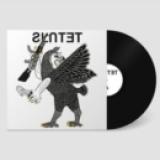






![CJ Fly & Stoic - Piranha [deluxe] (LP)](https://www.deejay.de/images/l/1/2/1220612.jpg)