Melbourne/Geelong quartet School Damage began as a bedroom recording project for Carolyn Hawkins (Chook Race, Parsnip) and Jake Robertson (Ausmuteants, Frowning Clouds etc). They released a cassette for Moontown Records in 2013, then were joined by Jeff Raty on drums and Dani 'Damage' Hakim on bass.
Taking cues from pop outfits such as The Vaselines, The Particles and Young Marble Giants, School Damage's sound is defined by wobbly keyboards, weaving bass lines, and lyrical content focused on the vagaries of modern life.
Following on from last year's excellent debut album through Chapter, School Damage return with a new EP for Upset The Rhythm titled 'Sings... Four Songs About One Cat'. As titles go this one hits it on the head, School Damage tell the tale of a very independently-minded feline that they share their life with called Lumpy (also known as Scump). As Jake from the band explains, 'Lumpy is incredibly naughty, she's not very cuddly and she definitely plays by her own rules. The songs here are a mix about us having anxiety as pet owners - whether she'll run away, or if we're suffocating her by our constant need of attention... and also about how much she enriches our lives.'
For a cat who spends much of her time scratching up record spines, it seems fitting that Lumpy will now grace the cover and sentiment of her very own 7'. Maybe she's just been making room all this time for as many copies as possible of her hit record.
On The 50th Anniversary Of The Band's Inception At An Event In Harlem, Ny To Commemorate Malcolm X's Birthday On 19 May 1968, Influential Spoken Word Artists, Poets And Commentators The Last Poets Are Set To Make A Glorious And Relevant Return With Their First Album In Over 20 Years, 'understand What Black Is'.
Produced By Ben Lamdin (nostaglia 77) And Brighton Legend Prince Fatty, Whose Speciality Is Traditional Reggae And Dub Production's, 'understand What Black Is' Is A Ten-track Album Which Speaks Of A Revolutionary Struggle Defined By Both Race And Identity, That Has Never Sounded More Relevant. Released On Studio Rockers, There Will Also Be An Accompanying Single Featuring Remixes Of The Title Track "understand What Black Is" By Mala (south London Collective Digital Mystikz) And Uk Dance Music Innovators Dego And Kaidi.
Since The Initial Line-up Of Dahveed Nelson, Gylan Kain And Felipe Luciano Formed In East Harlem's Marcus Garvey Park, The Last Poets Have Produced Under Various Guises Over The Subsequent Years. However, It Was Their Seminal Output, Namely 1970's 'the Last Poets' Under Both Umar Bin Hassan And Abiodun Oyewole That Secured Their Legacy, Becoming One Of The Most Important Influences In Early Hip Hop.
Throughout The Last 20 Years, The Band Have Remained Largely On Hiatus. But Their Influence Could Still Be Felt With Their Tracks Being Sampled By The Notorious B.i.g, Nwa, A Tribe Called Quest, Dr.dre And Snoop Dogg. Umar Has Recorded Various Solo Albums And Featured On Common And Kanye West's Grammy Nominated 'the Corner'. Abiodun Appeared On The Red Hot Organization's Album, Stolen Moments Which Was Named "album Of The Year" By Time. He Also Conducts Weekly Open House Poetry Readings, Where He Constructively Critiques Upcoming Poets, Helping To Nurture Them. He Has Also Conducted Classes At Columbia University, Where He Teaches Creative Writing.
The Inauguration Of Donald Trump As Us President In 2016 Inspired Hassan And Oyewole To Resurrect The Group To Create A Brand New Record, Modern And Edgy, And Deeply Relevant And Reflective Of Our Times.
Tracks On 'understand What Black Is' Include 'how Many Bullets', Which Bridles With Defiance As Oyewole Works Through A Litany Of Injustices Suffered By Black People In The Us: " You've Tried
To Blow My Brains Out With Bigotry, Chopped Off My Wings, So I Couldn't Fly Free, And Dared Me To Be Me, Took My Drum, Broke My Hands, Yanked My Roots Right Up Out Of The Land, And Riddled My Soul With Jesus" 'what I Want To See' Describes A Utopia - A Refuge From Hurt And Those Who'd Make "our Vision Blurred, And Our Faith Obscure", Whilst The Title Track 'understand What Black Is' Aims To Transcend Ethnicity: "understand What Black Is....it's The Source From Which All Things Come...black Is A Hero, Not A Villain."
The Album Even Takes Reference From Prince's 2003 Album Of Instrumentals, 'news', Which Hassan Drew Comparisons From With His Own Childhood Experiences: "that Poem Took Me About A Year To Write....i Just Kept Writing And Writing But Not Getting Too Far And Then I Heard That Album And The Musicianship Was Amazing. I Was Left Wondering If It Was Jazz, Classical, Rock Or Maybe Something New But All Those Images That I Write About Came To Me From Listening To That Album. I Loved Prince In That Movie Purple Rain Because My Father Was A Talented Musician But He Was Into Brutalising Mama At Times And In The Movie There's A Jerome And My Name Is Jerome, So It Was Like He Was Telling My Life Story As Well."
The Album Acts As A Body Of Work Between Individual Members Each Speaking Of Their Own Personal Journeys, But Feeding Into The Much Larger Narrative Of Struggle And Oppression, Alongside A Fervent Hunger For Social Change. These Are Struggles And Tests Of Personal Resolve That Have Directly Shaped And Moulded The Bands' Unique Sound Over The Course Of An Impressive 50 Years, And Their Powerful And Influential Commentary Remains As Relevant As Ever.
Coletivo Vandalismo kick-start a new 12" series for the Contort Yourself label. Hailing from the city of Porto the duo also DJ under the name GAM and released their debut LP on Lake Haze's Eye For An Eye label. Their music has an immediacy that seems to stem from a background in live performance as opposed to polished studio sessions - an improvisational punk aesthetic that manages to carry this EP so strongly. Wild, crashing fx and unrecognisable vocal distortions layer atop wonky 90bpm drum machine grooves and the pair even show off what may be their turntablism skills on 'Zombie Zombie'. There's a nod to early concrete on the closing track 'Black Sun's Demise' with whirring, mechanical noise motifs suddenly jolting us into punishing gabber-at-33-minus-8 territory. The DIY spirit is alive and well here and the feeling that things could fall apart at any minute just adds to the tension.
Following on from their 'Ususmood' EP in February, Finnish duo Shuffless return to Paris based record store and distribution company Synchrophone this May to deliver the enigmatic 'Puoliaskel'.
Taking inspiration from music, nature and the elements that surround them, Jukka Hänninen and Mika Hanka aka Shuffless have quickly garnered the attention of many within house and techno since making their production debut in 2016. Written at the Vislampi Studio, located in Ruutana City, Finland, using a combination of hardware gear from the likes of Roland, Korg and Arturia, here we see the duo reveal their latest work with four diverse and expansive cuts set for release this Spring as they return to Syncrophone's in-house imprint. Opening up the EP, Hänninen and Hanka fluently introduce 'Chi', a complex and evolving cut that effortlessly fuses deep, rich chords, and delicate, skipping hi-hats, before easing into the flowing groove of 'Lahti' with its jazz-tinged melodies and heady tones guiding the production into lighter territories.
On the flip, 'Nime Ñvailla' introduces a matrix of hazy textures amongst crunchy percussion licks and dubbed out atmospherics as the duo return to deeper, darker realms, before title cut 'Puollaskel' punctuates the package in classy fashion, laying down gritty analog percussion, resounding kicks and subtly programmed nuances to conclude an excellently worked EP.
Truly nuts and really kind of essential... the Starship Commander had his whole approach to the Synthesiser Voice technique. B-Boys/Girls delight. Check the instrumental cut, Mastership - a head nod synth voyage of the highest order. Limited copies. TIP!
.
'How are you doing, Earthling' That's how Omer Coleman, Jr. addressed his public in the 80s, driving around Kansas City, Missouri in the electric space-car built especially for his alter ego Starship Commander Wooooo Wooooo.
Left Ear Records went back to Coleman's original master tapes for their vinyl reissue of the Commander's 1981 private press album Mastership, a lost electronic funk classic. Coleman performs in an alien voice that comes not from electronic filtering but from his own natural vocal distortions. This visitor from Mars wants people to be happy and, like his song goes, 'Laugh and Dance.' It's an endearing and very personal space-age funk that blends George Clinton and Kraftwerk in a vision of a better and happier world.
Born and raised in Kansas City, Coleman was musically inclined from an early age. His parents couldn't afford to buy him a real drum for orchestra, so he took up electrical wiring and wood shop instead, which fed his muse in a different direction. Omer built enormous speaker cabinets. In the late '70s he was a DJ, and ran a Mobile Disco business that took him across the country, hosting parties. After a trip to California, he came back to Kansas City inspired to dress up as Commander Wooooo Wooooo.
The future commander began working at the Armco Steel Mill in Kansas City when he was 18. He was inspired by older machinists who demanded perfection in their work and in their character. It was while he was working at the steel mill that Coleman came up with Starship Commander Wooooo Wooooo. One day coworker John Manley came up to Coleman with a vision of an electric car, and built it. His coworkers built all of his equipment, from lighting and fog machines to big steel eyeglasses. Coleman's sister, a seamstress, created his outfits.
Coleman started his own label in 1985 but took some time off from music to raise his children, and when they came of age his son recorded with Coleman as a gospel vocalist. When his son was killed in an auto accident in 2004, it took something out of him, and he stopped making music. But he's starting to get the feeling again.
Now 62, he's currently enjoying his retirement from a long stint with the IRS. The former Commander is in the middle of a house project where he's using metal ceiling tiles to line his walls. It's starting to look like a spaceship. Coleman promises, 'There is a real good possibility that we have not seen the last of Starship Commander Wooooo Wooooo!
Pat Padua'
Ryuji Takeuchi provides Instruments Of Discipline with an EP of noisy, hypnotic tracks, ranging from giddy, stomping, left-field techno to melancholic ambience; the EP's title 'One's Sentiment' provides a thoughtful angle to this at times cacophonous collection, for while they are bristling with noise there is something contemplative about the pieces, expressed in a way that suggests more than one thought trying to take life at the same moment, Ryuji finds space for conflicting voices both spatially and in terms of mood, the first three tracks, 'Ambivalence', 'Sadness' & 'Sorrow' crawl with competing elements, synth lines drool over and meld with throbbing kick patterns, anxiety & excitement are tightly wound in focus as tracks build and develop, leaving the listener to navigate these abstract planes, intoxicated; while the final track 'Regret' is a compelling piece of noisy, ambient minimalism that allows for an austere pause after the eruption of the initial works. It becomes evident that Ryuji's journey as a producer, through periods of hard-techno, deep-minimalism and the more abrasive ventures on HueHelix, has created a powerful and nuanced voice that is fully on display in 'One's Sentiment'.
Ryuji Takeuchi - Artist Bio
Ryuji Takeuchi (Local Sound Network / LSN, HueHelix) was born in Osaka, in the late 90s, he moved to the United States where he discovered Techno, House and Electro Music, influencing his desire to produce & DJ. His first wave of releases on LK Records, Arms, Mastertraxx, FK Records, SWR, Innervate, I.CNTRL, Impact Mechanics, Silent Steps, GSR & Brood Audio to name a few, were straight-up, hard techno,
In 2011, Ryuji started his own imprint, 'Local Sound Network / LSN', a platform for a new generation of both Japanese & global electronic music & later on, in collaboration with Tomohiko Sagae, Go Hiyama & Kazuya Kawakami, the label, 'HueHelix / HHX', developing further the voice of Japanese techno & experimental electronics, with a focus on distorted, industrial sounds.
In 2012, Ryuji launched the 'Local Sound Network Digital Solutions / LSNDS' series born from a desire to both discover and introduce a wider range of electronic music to the world.
Ryuji Takeuchi provides us with an EP of noisy, hypnotic tracks, ranging from giddy, stomping, left-field techno to melancholic ambience; the EP's title 'One's Sentiment' provides a thoughtful angle to this at times cacophonous collection, for while they are bristling with noise there is something contemplative about the pieces, expressed in a way that suggests more than one thought trying to take life at the same moment, Ryuji seems to find space for conflicting voices both spatially and in terms of mood, the first three tracks, 'Ambivalence', 'Sadness' & 'Sorrow' seem to crawl with competing elements, synth lines drool over and meld with throbbing kick patterns, anxiety & excitement are tightly wound in focus as tracks build and develop, leaving the listener to navigate these abstract planes, intoxicated; while the final track 'Regret' is a compelling piece of noisy, ambient minimalism that allows for a pause after the . It is testament to Ryuji's journey as a producer through periods of hard-techno, electronic minimalism
Japanese vocal performer Hatis Noit will release her enigmatic EP Illogical Dance via Erased Tapes worldwide on 23rd March 2018.
The arresting 4-track record creates unique song-worlds with transcendent vocal interpretations that at once deconstruct and recombine Western Classical, Japanese folk and nature's own ambience atmosphere. Illogical Dance also features Björk-collaborators Matmos, who were so impressed with Hatis Noit's recordings, they volunteered to edit the lead track Illogical Lullaby.
Hailing from the distant Shiretoko, a small town in Hokkaido, which is the largest island in north Japan, Hatis Noit's accomplished range is astonishingly self-taught, inspired by everything she could find from Gagaku — Japanese classical music — and operatic styles, Bulgarian and Gregorian chanting, to avant-garde and pop vocalists. The sounds she created on Illogical Dance, co-produced by Haruhisa Tanaka and Matmos, bring to mind the experimental vocal patterns of Meredith Monk with the attentive production of Holly Herndon.
It was at the age of 16, during a trek in Nepal to the Buddha's birthplace, when she realised singing was her calling. While staying at a women's temple in Lumbini, one morning on a walk Hatis Noit heard someone singing. On further investigation it was a female monk singing Buddhist chants, alone. The sound moved her so intensely she was instantly aware of the visceral power of the human voice, a primal and instinctive instrument that connects us to the very essence of humanity, nature and our universe.
The name Hatis Noit itself is taken from Japanese folklore, meaning the stem of the lotus flower. The lotus represents the living world, while its root the spirit world, therefore Hatis Noit is what connects the two. For Hatis Noit, music represents the same netherworld with its ability to move and transport us to the other side, the past, a memory, our subconscious. It is the same for Illogical Dance, a set of transformative songs that taps into our most primal instincts.
The human voice is our oldest, most primal yet most powerful instrument. I use it to describe nature's many sounds, a language that isn't logical. Yet it forms a beautiful conversation that isn't restricted to words like the human language is. I want my music to remind us of that.' — Hatis Noit
Wanting to interpret and mimic the sounds Hatis Noit hears in nature, Illogical Dance is as unpredictable, beautiful and mysterious as the world around us. Each track is made up from multi layers of vocals, all improvised and without words, before being carefully pieced together. Astonishingly no samples are used throughout, even the sound of crushing leaves came from Hatis Noit's own vocal chords.
The result is a stunning array of sound sculptures that see her switching between multiple styles with great ease. From the sweet operatics on Illogical Lullaby, the manipulated vocal loops duplicating electronic production on Anagram c.i.y. to the primordial chanting call to arms of Angelus Novus, a 10-minute odyssey that features whispering and leaves crunching, it showcases Hatis Noit's full range and introduces a truly original artist.
Previously only available in Japan, Illogical Dance will receive a worldwide release on 23rd March 2018 including a first edition on 12' vinyl. After participating in a ceremony for memorial and appreciation tailored to the withdrawal of the evacuation area in Fukushima on 31st March 2017, Hatis Noit collaborated with renowned visual artist Nobumichi Asai on a project titled INORI (prayer) which they premiered live as part of an Erased Tapes showcase at Mutek Japan in Tokyo.
Having recently moved to London and performed a first string of UK shows, followed by a special live performance at the Milan Fashion Week and Mutek Japan appearance, Peter Broderick has invited Hatis Noit to support him at the Jazz Cafe on April 15th. She's also been announced as part of this year's Sea Change Festival line-up, and asked to participate in a workshop with the London Contemporary Orchestra.
Welsh producer Odeko first appeared on Mr. Mitch's forward-looking Gobstopper imprint with the A.I. influenced EP "A History With Samus" in 2016 immediately snagging a "producer to watch" tag from Fact magazine and a premiere at SPIN. In early 2017, his second EP "Digital Botanics / Construct Conduct" arrived confirming his sound and setting the stage for him to start working on this - his debut album "Rose Tinted Vision Implant" that is set in a post-Ballard, post-Gibson, post-Miéville, alternate reality. "Rose Tinted Vision Implant" sees the Bath-based producer creating a cutting edge sonic world inspired by "speculative fiction, time/reality shifting stories and dystopian shit." The entire record is structured around, and expands upon his passion for the "future," underpinning the music via a underlining narrative. "Rose Tinted Vision Implant" starts with "The User" (aka the listener/ protagonist depending on your perspective) of the 'Optic.Rose' going through the process of getting an implant is made by a mega corporation, (think "whatever Elon Musk's legacy will be 200 years from now" says Odeko "not necessarily evil or good, just a world owning superpower."). And then we follow "The User" who has unfortunately received a bad egg through stages of that devices degradation. Sonically we're there to observe. We open ("Anomaly Detection") with a precursory scan and move onto installation ("OpticRose_0_1_Installation")
through to a battery change and a recalibration. From this point, the 'presence' begins to take over the implant and the tracks verge into a more cerebral range. Odeko notes "its a bit of a satire on corporate brands pushing these great products that everyone is obsessed but that are detrimental to both the world, and how we perceive reality. Our relationship with social media and tech could go down a dangerous path if we loose sight of things. I'm going quite far here for the sake of the concept, but things like VR, AR, the want for body tech, mixed with our desire to be connected, emotionally, digitally, physically, wirelessly could lead us to a world where everyone has implants, or some kind of tech built into them." Sonically its a record that explores a post-IDM, post-Grime, post-Ambient, post-Glitch, post-Retro-House, post-Instrumental Grime, take on electronic music, like Gobstopper's Mr. Mitch himself and his label mates Orlando, Lloyd SB, Tarquin, Clu, rAHHH and Loom, Odeko is making a kind of post-genre music. Yes it's a cerebral concept under the music but as popular shows like Black Mirror have shown - critiquing our new future can be fun, unusual and highly rewarding. Welcome to the world of Odeko.
The Works of John B. McLemore, the star of one of last years biggest podcasts, S-Town, which is coming out on Dais. The story behind this release is truly fascinating.. the music itself is ambient remixes of Tor Lundvall's best works, but with John's idiosyncratic slant on them, with some having been woven together using the horde of clocks he use to keep in his basement. This story is really worth a read if you get a chance."In September 2012, I received an e-mail from someone named John B. who said he had assembled a lengthy remix of my music, which also incorporated some of his own material. John asked if I'd mind if he posted this recording on YouTube, to which I agreed. He also mentioned that there was a second part to his mix that was "roughed out", but never completed. I was curious to hear both parts, so shortly afterwards, John mailed me two CDrs which I enjoyed very much. The recordings were hypnotic and haunting, evoking images of vast fields at twilight. I was especially fond of the second disc which had a darker atmosphere and featured more of John's original material, beginning with ghostly clock chimes and ending with a mysterious piece using dried seed pods and other cryptic sounds that slowly built-up into an intense, almost claustrophobic environment.
My correspondence with John lasted about two months. In one of his final e-mails, John said "I have to observe that your paintings seem to have a great deal of loneliness involved in them... even multiple characters seem to be together alone, so to speak... I really appreciate looking at your paintings as well as your music, I think I have connected with the spirit of them both as much as anyone can." He went on to discuss his struggles with depression, caring for his aging mom and his concerns about the future. I tried to encourage his music as a possible outlet, perhaps as a means to help transform his feelings of loneliness into a more content solitude. Always easy to say, but as I well know, not always easy to do.
In his last e-mail in late October 2012, John sent me a beautiful slideshow of his Fall flower beds and his dogs. I was touched and I told him how much watching his video had brightened my day. That was the last time I heard from him.
Last year, I visited John's YouTube channel to see if Part One of his mix was still posted, which it was, and still remains. I was shocked and saddened to read in the comments section that he had passed away. The comments also suggested that John had received some sort of national attention recently. This quickly led me to the S-Town podcast. Although I had mixed reactions after listening, I was thankful that S-Town shed more light on John and his remarkable life... but somehow, I just couldn't place the person in the podcast with the person I had corresponded with. Had I not listened to S-Town, I would have remembered John as a very private, somewhat dark and lonely person. He may have been these things, but there was obviously far more to him than that.
After finishing the final episode, I decided to play the second, unreleased CDr of John's recordings for the first time in years. Listening to his clock chimes ringing in the dark was an eerie and chilling moment. I was reminded of a line from my song "29" which says "I live with dreams and a lonely mind, my clock is set to a different time". I wondered what those lyrics might have meant to him.
John had mentioned that he wasn't satisfied with his final mix, but I felt his work was too special not to be heard. I hope that these recordings offer another glimpse into the creative mind of a unique, complex and gifted individual who tragically left this world all too early."
Tor Lundvall
January 17th, 2018
JOHN B.'s NOTES:
This is what was intended to be the second part of my Tor Lundvall Remix series. Unfortunately I am dissatisfied with it due to a few defects, and it is highly unlikely that I will ever be able to complete it. Still it serves as a testament to my interest in the work of Tor Lundvall that I made it this far. Defects are as follows: The first movement is too 'fussy', and the first section of the fifth movement seems a bit long and may bore the listener, but since it consisted of so many slow moving textures, I don't know how I could redo it and still achieve what I was wanting to accomplish. Additionally, this recording was done just days before my Father died, and there are many feelings of guilt associated with the time spent on it. If you are receiving this recording, either you are one of my better friends, or you are a great admirer of Tor Lundvall, and requested that I send it to you.
1st Part: Basically a track of me fiddling around with old clock bells, and air turbulence mixed with Tor Lundvall and Field Recordings of rain, birds, cicadas, frogs and such.
2nd Part: My interpretation of Lundvall's Dark Spring. This track was inspired by the music of Carl Michael von Hausswolff.
3rd Part: Very ambient Field Recordings inspired by the work of Francisco Lopez.
4th Part: A Very Quiet passage consisting of delicate Field Recordings.
5th Part: Music performed entirely by me inspired by the Darker paintings of Tor Lundvall. Most of the instruments on this piece consisted of dried seed pods from the plant; Showy Rattlebox (Crotolaria Spectabilis), that I had collected and dried the previous Fall. There are other sounds from my own environment as well.
This mix was assembled in the Late Fall of 2003. There are some very Quiet passages in this piece, so it requires a nearly Isolated listening environment... It should be heard After Midnight, in the Late Fall of the year, and, not surprisingly, a Very Long Attention span is a Prerequisite.
Black To Comm's Marc Richter returns under his Jemh Circs guise for a 2nd album of sonic abstractions. In contrast to Black To Comm's analogue tape and vinyl based sound, in Jemh Circs he works with digital sources by primarily sampling modern Pop Music (and various other oddities) on YouTube (et al.) and sending chunks of it through a variety of arcane transformations and mutations.Using similar esoteric methods as on his 2016 debut album but with very different results the record deconstructs the hypermodern sound of Pop Music with a Post Punk attitude, energy and primitivism. Richter's combining disparate elements that shouldn't really work together but somehow all the chaos is making strange sense creating a collection of oddly diverging sonic vignettes with a surreal and anarchic spirit. This is music deeply rooted in the present but still difficult to pinpoint to a certain year or style."(untitled) Kingdom" converts a seemingly one-dimensional concept into a complex puzzle of ideas, sounds and narratives, completely assimilating the original sources and transforming them into novel entities with an unexpected melodic and rhythmic quality.Some press clips for previous releases:The overall effect is quite remarkable. Each track is like a hologram of pop music itself, a tiny part that reflects the whole. You almost feel that you could open them out and re-create entire popular music cultures. We'll be grateful for that when the next solar storm fries all of our hard drives. (Ian Sherred / The Sound Projector) In that way Jemh Circs is a record about process - not just how Richter loops and distorts and mutates his samples, but how the sounds of pop music create a particular sonic signature, one that gets more interesting the farther they're pulled from their original context. (Marc Masters / The Out Door) Recycling random audio off YouTube, Jemh Circs' process couldn't be less sentimental, but the results turn out to be sneakily emotive. (Philip Sherburne / Pitchfork)
Mikkel Metal returns to Copenhagen's Echocord this May with his new mini LP 'Just Enough Light', comprising six originals from the Danish artist. Copenhagen based producer and DJ Mikkel Metal has been a beacon of light in the Danish electronic music scene and further afield for nearly two decades now, with the Dub Techno imprint from his hometown, Echocord, being the predominant home for his output, whilst also releasing material on Cologne's Kompakt, Tartelet, Semantica and Avant Roots, a telling sign of the quality embodied in his work. Here though we see Mikkel deliver a mini album concept in the shape of 'Just Enough Light' and opener 'Awake' perfectly sets the tone with emotive, dynamically unfolding atmospherics, tension building bass drones and spiraling dub chords subtly easing us into the project. 'Bregnan' then stirs in some classing Dub-Techno tropes with billowing stab sequences, lumpy subs and off beat high hats carrying the hypnotic groove for six and a half minutes. 'Jech' then strips things back to an almost beatless amalgamation of murky chords and modulating synth whirrs. Opening the flip side of the release is 'Include' which embraces a brighter feel via ethereal pad swells, jazztinged synth melodies and bumpy 909 rhythms before 'Konkin' edges back into the eerie, brooding aesthetic with bubbling echoes, broken drums and menacing bass swells at its core. 'Restore' then closes the package on a stripped-back vibe, laying focus on an ever- eveolving singular dub chord to ebb and flow around thunderous subs, kicks and bright hats.
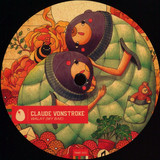
Our boss Claude VonStroke is the busiest guy we know. When he's not traveling the world or curating an event, he's in the studio every day putting in hours upon hours, relentless in perfecting his craft. He's had a slew of hits the past couple years in the form of remixes and collaborations, and now with the 'Walay (My Bae)' EP, Claude gets back to some inventive and somewhat 'out of the box' solo works.
The title song leads with a melodic riff and an funky vocal that sounds like a defective cyborg is proclaiming love for his partner, 'Walay.' This quasi-human uses the slang 'My Bae' to try and pass for human and we almost believe in his passion. The sound harkens back to old classic rave tracks but also pushes very modern production techniques.
On the flip, 'Raw Nerve' is an emotional exploration in both sounds and lyrics. A melancholy VonStroke dives deep into his insecurities and fears with sonically mutated lyrics like 'I'm feeling so sad, I'm feeling real bad today. When I see you on the street I dont want to compete.' You can feel the social instability oozing out of the vocal only to come back at the close with a violently hard bassline embodying the personal angst and frustration that goes along with not 'fitting in.'
Coco finally available on double vinyl for the first time. With his unmistakable sound-mix of Jazzand Swing samples and electronic music, Parov Stelar has secured his own unique position in the world of music.
The double vinyl starts off where his former successful LP's ended. On the other hand he is consequently developing his established jazzy sound, by adding new stylistic elements to his tunes. Also his dancefloor-productions, which
have been published only as singles, now find a debut to a greater extent on this album. They meet with Stelar's melancholic-melodious trademark-sound, which is well known from his earlier albums, but now also spiced up with Hip-
Hop beats and synthpads. An electrifying album to fall for. The two vinyls are originally thought of as one with tracks that can be danced to and one with tracks just for listening. Nevertheless the line between those two approaches becomes blurred in Parov Stelar's newer compositions. The
album makes your feet tap more and more with every track. The musician himself sees the LP as a 'book for musical readers' which is classically defined in introduction, middle part and end. Because of streaming hit singles the
consumer behaviour changed, people don't listen to albums the same way they used to. The whole experience that includes refelecting on less prominent tracks somehow got lost. Parov Stelar sets 'Coco' as a statement against this habit.
In recent times Alex Pletnev has been making his mark on the musical stratosphere with an array of works from from cold wave edits, through gorgeous adaptations of african and world music to tribal techno originals. He joins us as Pletnev for "Aztec Code / Daywalker", a 12" combining his abundant influences to take us to bizarre, far-off places.
"Aztec Code" is a pure dance thing. Inspired by the fat kicks and live bass lines of the Big Beat era, Pletnev combines a jumping beat with african percussion and a charismatic vocal that seems to call out from between the palm fronds of somewhere steamy as we work up a sweat. Tenderly crafted with samples taken from almost 10 records, one-shots, drum layers and melodic licks are treated and mixed, giving rise to a warm, lush atmosphere perfect for circling a fire deep in the tropics.
On the flip, "Daywalker" is a completely original, synthesised outing. A sleazy lead line charms and slithers upwards between layers of syncopated tabla and a sultry acidic groove. The tune spins and twists around this central oriental theme, ever-evolving as layers of detailed percussion and ad-libbed melodies intensify the tone.
Sound artist Eva Geist joins Fleeting Wax label head Mehmet Aslan to spin "Daywalker". The pair create a sonic bridge between the two originals. Their hazy rework dubs out some electronic elements, adding contorted sound design, distant vocals, lofi samples and an italo leaning bass. A mystic incantation for spaced out late morning moments.
In this opus, KID has gathered its favourite MCs: Troy Berkley (Be), Demolition Man (UK), Jamalski (US), Senior Wilson (ES), Echo Minott (Ja) and Eva Lazarus (UK) - as well as the musicians Dubamix (Fr), Dubmatix (Can) and Crew Fogata Sound.
"The kind of melancholia I'm talking about, by contrast, consists not in giving up on desire, but in refusing to yield. It consists, that is to say, in a refusal to adjust to what current conditions call 'reality' - even if the cost of that refusal is that you feel like an outcast in your own time." (Mark Fisher, Ghosts Of My Life, Zero Books 2014, p. 24) In Ghosts of My Life: Writings on Depression, Hauntology and Lost Futures', the author Mark Fisher outlines - to put it in a big way - a resistant melancholy. This stands in contrast to leftist melancholy resignation', as well as something which Fisher does not talk about: its common masculine counterpart, habitual post-left cynicism - as in seen it all before'. Fisher calls this hauntological melancholy. Haunting, spooks, ghosts and apparitions are an almost constant presence on I Started Wearing Black', the second album by the Cologne-based artist Sonae (pronounced so-nah'). The term hauntology shares a fate with retro-futurism when it comes to inflationary overuse and abuse. It's a conceptual container that looks good and can hold a lot, indeed, too much. Furthermore, hauntology has its peak season behind it, a term on the threshold of its expiration date. Nevertheless, I would like to rehabilitate hauntology and use it properly to characterize I Started Wearing Black', because the term is rarely as compelling to describe music as is the case here. The most recent other example could be Asiatisch' by Fatma Al Qadiri, but with a completely different frame of reference. What are the ghosts of this music It rustles, crackles, ruffles, crunches, rattles, scrapes, sometimes a beat emerges from the constant noise, sometimes an obscure voice mumbles incomprehensibly, sometimes a melancholy piano figure is prevented by this noise from coming too much to the foreground. It definitely is eerie - to bring into play another term used by Fisher in the title of his latest book, The Weird and the Eerie'. In British pop-jargon, eerie first occurred to me more often when referring to particularly leftfield, spooky and... well... ghostly dub, a bass-heavy, echoing noise, from Augustus Pablo to Creation Rebel to Burial. Unlike the Wald & Wagner records by Wolfgang Voigt, Sonae is not a kind of neo-romantic veiling with a tendency for escapist nebula. It is more a noise of latency. The noise signals a latent - not necessarily acute - threat, a latent uneasiness about... yes... about what About a System Immanent Value Defect' That's the name of a track on I Started Wearing Black' where something that sounds like a French Horn (or a foghorn) battles for attention through or against the background noise. An email from Sonae: The piece 'System Immanent Value Defect' should actually be called 'I See Turkey'. I wrote it for my fellow student Elif - she is a pianist and Gezi Park activist from Istanbul. Through her I witnessed the inner conflict and agitation that political circumstances can create: her feelings of guilt when there was an attack, with her safe in Germany as a student, watching the events from afar. It was horrible. When her mother begged her not to come home because she feared for her safety, I felt a cold shiver run down my spine. I started with the piece from this mood, beginning with the piano, then the noise (modulated sinusoidal curves), which reminded me of waves and the then heatedly discussed Mediterranean sea: atmospheric, melancholy motifs. In contrast is the anger, the pressure, represented in corresponding sounds - hopefully audible! - During this time I started to think about world views as they can be found around the globe, in how far they held by societies and their political representation. I realized that I know of no political system that is actually about the people and what would do them good. It's always about positions, power, money. I thought that was a lot more frightening on a global scale than merely viewing Turkey in isolation. That's why the piece is called "System Immanent Value Defect", because our world suffers from precisely that. Everywhere, it's all about the wrong things.' Between the wrong things there are happy moments. In the title track, after 184 seconds of rattling and hissing, a beat is unleashed, like an arrow released from a spanned bow, a beatific relief, if there is such a thing. White Trash Rouge Noir' first meanders along spookily, then after 144 seconds it transforms itself into a distant cousin of Einstu¨rzende Neubauten's Yu¨ Gung', but there is no Big Male Ego to be fed here, and the black in the album title is a completely different type of black from that of the Neubauten. Furthermore, I Started Wearing Black' was finished long before the black dresses were worn at the Golden Globes as a sign of protest against sexual violence. Sonae writes that she herself started wearing black some time ago. Her reasons are so-called personal ones: ... resulting from an individual situation (lovesickness), I started to wear black (gaining weight and feeling ugly).' The political dimension of gaining weight, feeling ugly and therefore dressing in black in I Started Wearing Black' lurks within the noise and never becomes explicit and only rarely manifest - or a manifesto. Sonae writes about the track We Are Here': A piece for minorities... in this case, considering the current pop-feminist discourse, explicitly for women. Female artists have long been saying loud and clear that 'we are here' and 'electronic music is not a boys club!' But this pop-feminist moment should only be seen as one part of the dedication of the piece. It is for minorities, for the oppressed, who didn't belong enough.'
Do you like Love songs After spending a lifetime spent avoiding this subject in song, Joel Sarakula finally admits that he does. On his new album "Love Club" Sarakula relives the golden age of Soulful and Romantic Pop music and connects it with a modern aesthetic. While a deeper message of love and peace flows through the record, Joel Sarakula is no old fashioned hippie: ",Love Club' is about connecting to reality and re-framing the idea of romantic love and loss in the present, loveless age ". Featuring eleven songs touching all genres from disco to blues, from soul to soft-rock, Joel Sarakula's "Love Club" is a profound pop statement.
Joel Sarakula has travelled the world in search of his muse, experiencing everything from being a victim of Caribbean carjackings to performing in the remote fishing villages of Norway, via the dive bars of Europe and the US. It was the hodge-podge musical tapestry of England's capital that finally drew him to a settling point, in the wake of seemingly never ending run of shows. With personal tastes that span from the more avant-garde to soul and pop greats like Sly Stone, Todd Rundgren and Hall & Oates, there are clear nods to contemporaries like Unkown Mortal Orchestra, Erlend Oye and Toro Y Moi in terms of ambition and style.
With his last two albums "The Golden Age" and "The Imposter" collecting strong radio plays at BBC Radio 2, BBC 6, BBC London, XFM Joel Sarakula has been play-listed nationally in Europe including Flux FM, WDR 5, Radioeins, Bayern 2, Deutschlandfunk and Deutschland Kultur Radio in Germany as well as in Benelux and Italy and Spain. He is a regular fixture on the live festival and club circuit in the UK, Europe and internationally including appearances at SXSW, Primavera Sound, Glastonbury, The Great Escape, Liverpool Sound City, Scala London, Tallinn Music Week, V-ROX (Vladivostok) and Reeperbahnfestival Hamburg.
"Love Club" is Sarakula's bold and unashamedly emotional next step. In essence the album is a homage to the soulful singer & songwriter artistry of the Seventies filtered through a darker contemporary lens - fitting for these uncertain times. "I always shied away from generic love songs," the Sydney, Australia born songwriter admits, "but on this record I embraced the subject wholeheartedly... and intellectually, looking at themes of love, lust, loneliness and everything in-between." Take the first single "In Trouble", co-written with Michele Stodart of The Magic Numbers, as the best example for Joel Sarakula's unique, and honest approach to making music. "We Used To Connect" questions the changing nature of relationships in our social-media addicted world: 'We used to connect in the real world too, now the touch of your hand is a digital cue'.
"Coldharbour Man", on the other hand, examines the identity of the song's narrator and the artist vs. fan dynamic all wrapped up in a disco love song: "There's a lot going on in this particular track. I feel my writing has grown emotionally...", explains Joel Sarakula. "Just best to listen yourself and make up your own interpretation!: 'We met in a song come to life like some fantasy cliché, though I'm known for my moves in the dark you flooded sunshine on my day'. Then there's "Baltic Jam", capturing romantic love and loss in authentic 70s confessional singer & songwriter style and of course "Dead Heat", a song about how there is struggle in the most perfect relationship pairings as the match is so even: "I recall an ex-girlfriend of mine... when we first met, we thought we hated each other but we eventually flipped that emotion and realised we had a deep passion and love for each other, there just was a lot of underlying sexual tension!" : 'It's a battle we could only win, if we lose. We'd be stronger if these lonely ones became two'.
More than a year in the making, Joel Sarakula recorded "Love Club" in various studios around London and Berlin capturing soulful performances from his many musical comrades on vintage analogue equipment. "This record has truly been a labour of love. Recording and privately sharing these performances amongst my collaborators started to feel like a bit like a club - I guess that lead to the album title! I was surprised how much I actually enjoyed the 'love-making process' and I look so much forward to playing these new songs on stage with my band." We can't wait, Joel Sarakula.
2018 marks our first step into album territory, releasing the sophomore album 'High life' of Heist's very own Detroit Swindle, to be released end of May. This single features the album cut 'Flavourism' with vocals from Seven Davis Jr. Here, the single is presented with remixes by the amazing Pépé Bradock and Boston-to-NYC house duo John Barera & Will Martin.
Flavourism is as much a throwback track to classic Detroit Swindle territory, as it is a look into their contemporary view on soulful deep house. The vibe is set by Seven Davis Jr.'s distinctive vocals, accompanied by warm 'side-chained' pads and a rubbery live synth-bassline. Fans of 'The Wrap Around' will definitely feel a nod to that 2012 classic with those Prophet pads. If you've seen their live performance with Seven Davis Jr. during Dour festival in 2015 or heard their remix for SDJ's track 'Friends' on Classic Music Company, you might already anticipate a collaboration that works like a charm.
When deciding on a remixer for this project, the boys wanted to do something special. Ask someone special. And so it happened that they asked Pépé Bradock: someone who stood at the root of European house music and has pioneered in the genre, carefully curating his own style into something that surpasses genres. Here, he delivers both a stunning and deep interpretation of the original, with added harmonies, a touch of lo-fi and his own signature electronics. On top comes the 'acapella', stripped from all percussion and leaving the vocal and all of Pépé's lovely weirdness.
The single further features US house duo John Barera & Will Martin, who have already released some amazing music on Dolly, or John's own ' Supply records'. Not surprisingly, they deliver a great clubby house cut with some Chicago flavour, dubbing and out the vocal to a basic mantra: 'I'll always keep'.
Keep an eye out for High Life out soon with more collaborations. For now, please enjoy Flavourism.
Best Regards,
Heist Recordings.
Musique Pour La Danse takes a short break from reissuing rare and essential music to bring you a selection of four new and exclusive tracks from the French underground entitled Equipe de Danse. Curated by label co-manager Ed Isar, a DJ and promoter active in the Paris underground since more than a decade, this EP brings together different producers and styles, highlighting the diversity and the creativity currently flowing through the French scene and providing DJs and ravers with quality tunes to work with and dance to.
Automat - Disco Trax
Everyone has a story about how one electronic music experience changed their lives forever, for Ed it was seeing Automat live in Paris in 2006 when he was 18. Automat's Electrospectif LP is still one of the best and most underrated French electro albums of the 21st century. Hearing Disco Trax many years later and realizing this fast-paced banger never got pressed on vinyl was the spark that encouraged Ed to work on this EP. This is irresistible jakbeat with electro and italo influences, timeless and compelling.
Cuften - bgt55ujp0
Cuften is a unique artist from Normandy who prefers being called a musician rather than a producer: he creates and records all his music live on a 100% hardware setup with absolutely no computers involved. With IDM and acid influences as well as a passion for hardcore, his music bridges the gaps between Aphex Twin, Marc Acardipane and Legowelt. This track is a perfect introduction to his world where hard hitting kicks get bodies moving while acid madness gets minds melting and it's actually his first tune ever released on vinyl. Keep an eye out for Purusu, Cuften's own record label which he runs with the help of Ed, a strictly underground affair that is already gathering support from established DJs around the world.
Sina - Faith
This is the very first track by Sina pressed on vinyl and what a belter it is! He is part of the new wave of electronic music activists in Paris with his Subtyl parties that were among the first to encourage today's ravers to side-step the clubs and go party in warehouses half a decade ago. We immediately signed Faith upon hearing it for the first time, spellbound by pounding and dreamy atmosphere, full of dramatic and ecstatic moments. This track exists in a techno universe of its own, as gritty as it is melodic. It never fails to get a reaction from the crowds and has been a staple of Ed's peak time sets lately.
Raymond D Barre - I Don't Know Dave
He's an up and coming producer and live performer from Paris who released a great EP on Nocta Numerica in 2016 and has several projects in the works. Clocking at 108 BPM, this tune is the downtempo cut on the EP. Driven by an 808, structured by FM bass and embellished with some lovely acid touches, this track could be described as 21st century orientalist New Beat or perhaps Egyptian Lover on codeine. Either way, this nod to Belgian vibes and BPM did not go unnoticed by both label managers and this fun and quirky track is often the highlight of downtempo sets.
Points of interest
- Four essential and totally exclusive tracks outside the beaten path and the usual formulas, a great snapshot of the French underground in 2018
- Various Artists, different vibes, something for everyone
- A Musique Pour La Danse release (Frankie Bones, Orlando Voorn, Cron aka Todd Sines, Break The Limits aka Bay B Kane, ..), a label founded and curated by Olivier Ducret of Mental Groove (Miss Kittin, Orbe, Donato Dozzy, Brodinksi...) and Ed Isar (33RPM +8% and Radio Belleville in Paris), releasing forgotten and unforgettable dance music of yesterday and tomorrow.
out of Stock
Last delivered 2 years ago available to reorder, subject to availability
pulsewidthmod,creates tracks that are very epic and driving in nature; all of which are recorded as live techno jams using Elektron's Dark Trinity and an MS20 mini. Her influences from Techno to Industrial, EBM, and Belgium New Beat leaves the listener with some menacing drums and a juxtaposition of both pleasing and disorienting melodies.
Serpentine Servitude explores the idea that perhaps the serpent in the garden of eden was really being humanities servant. Who was this creator character to dictate which fruit was ok for us to eat Who was he or they to say that if we ate the fruit we would be tainted and forever separate from divine love All this did was create the idea in our consciousness that we were tainted. It is of my personal belief that the idea that we are sinful is the original sin. This God character who created beings in his own image and then dictated how they were to live their life kind of sounds like an over controlling father. Where is mother in all this The album started with the track 'Original Sin' which was originally titled 'acid'. Seems somewhat appropriate since the concept of original sin seems to be a violation on humanities consciousness
Born in Cameroon, Vicky began banging the drums at the age of 9. By 13 he had moved onto bass and within a couple of years he was playing every night from 10pm to 5am in the Castel Douala Cabaret. At the age of 19 Vicky moved to Paris to study Banking and Commerce and cram in even more music. He took classes at Épinay-sur-Seine Conservatoire music school and it was here that he met Bandmates of his Dikalo project.
Word spreads and he soon becomes one of the most sought after bass players in the Afro arena. His session work features on many scenes stars, Manu Dibango, Eko Tala AM, Kemayo, Sammy Massamba, Toto Guillaume and many more. A chance meeting with the Gibson brothers also see him play on two of their hit albums. In the 80's Vicky moved to the US for spell and excels as a session bassist and touring musician.
We pick up the story in 1981. With his stature as a musician and bass player riding high he takes a detour to Nigeria to record with the Afrodisia label in Lagos. The "Thank U Mamma" album is the result. It is repressed for the first time, here in 2018 on the revitalised Afrodisia label.
Musical proceedings open up with the heartfelt ode to his mother "Thank U Mamma", smooth pop meets afrobeat boogie. "Marina Drive" slows things down with its smoldering jazz. Side Two opens with "Its Not Serious" a catchy vocal number underpinned with funky guitars and striding basslines. "Stormy Rain" is lazy guitar jazz swansong. We close off the album with the ever so funky "You". Slick funk grooves powered along with a dose of slap bass. As a side note Vicky actually plays left handed but with a "upside down" right handed bass. This upside-down precursor making his effortless slap playing even more impressive.
Vicky went on to record a two other albums and still tours and plays as an ever-in-demand session musician.
Le Galaxie are: Michael Pope, Dave Mc Gloughli, Alistair Higgins, Anthony Hyland, and newly
minted fifth member May Kay Gegharty who, having guested on the second album Le Club,
came fully on board for their third album, 'Pleasure'.
Le Galaxie have recently returned with Pleasure,' their first single from their forthcoming
third effort. Pleasure' is a dangerously charged sensuous slice of dance pop featuring the
vocals of May Kay (Fight Like Apes) - the calling card for an album that sees the band
producing a new body of work, to be enjoyed as much between your ears as between the
throbbing floors and laser lit ceilings of venues and festivals across the globe.
Recorded in their own studio with ultra-producer Blende, Pleasure' points to Le Galaxie's
evolution from purveyors of dance floor bangers to creators of well-crafted songs. The
affecting, almost master- and servant-like vocal exchange between Michael Pope and
vocalist May Kay demonstrates a self-confidence and maturity of a band in control.
With trademark grooves, synth, and bass distilled into songs like Pleasure,' Le Galaxie are
set to move beyond the scorched tarpaulins of Bennicassim and Lovebox this year, with tour
dates in the US, Ireland and beyond.
In those times of newfound experimental conformity, it is sometimes needed to go back to simplicity. This may be where DJ OIL is leading us to. You think you know what you can expect but common ground is not always in your head, it is sometimes under your feet.
This is the second 12' of the BREF AVENIR collection (to be released digitally later this month), our Southern activist using well-known tropes and samples to provide necessary confusion.
TELEPHUNK is nothing else than a monster breakbeat funk (away from the new Lynn Collins dictatorship), unfashionably cool if you see what we mean. If PARESSE is its twin dark sister, locking electro in its black music roots whilst remaining strangely 'European', then FALL is its downer baggy brother.
The Lucid Dream return in April with the release of new single 'SX1000', the first taster from the recently completed 4th album.
Driven by fans raising £10,000 to hell replace all equipment robbed after a Paris show in early 2017, a new album became the instant focus for The Lucid Dream in the summer of 2017.
The track is a slice of pure acid house, and will again see them acknowledged for venturing into pastures new, setting themselves apart from 'genres', 'scenes' or what any other band are currently doing.
'SX1000', as with the whole album, was penned over the summer by Mark Emmerson (vocals/guitar/synths), using only the classic Roland 303/808 synths, bass and vocals as tools for writing.
Inspiration for the writing was formed via continuous listening to the Chicago to UK acid house works of 1986-1992, the focus predominantly on the groove. 5 months on from those writing sessions and The Lucid Dream have competed their 4th album in 5 years, this track a perfect indicator as to what awaits. A record made for the dancefloor.
The Lucid Dream formed in Carlisle, Cumbria, in 2008. A string of sold-out 7s was followed by the debut longer player, 'Songs Of Lies and Deceit', in August 2013. The album gained critical acclaim from the likes of Uncut, Q, Rocksound, Clash, The Quietus, and leading French culture magazine, 'Les Inrocks', to name a few. The initial vinyl pressing of the debut album (500 copies) sold out within 2 days, and was backed by a main stage slot at Kendal Calling, and supports to Death In Vegas and A Place To Bury Strangers (full UK tour).
The bands 2nd album ('The Lucid Dream') was released in March 2015 to further acclaim. This included 2 BBC 6 Music sessions, and press from Uncut, The Skinny, Louder Than War, and Drowned In Sound, who named the album #7 UK album of 2015. Further supports to Clinic and A Place To Bury Strangers coincided.
3rd album, 'Compulsion Songs' was released in September 2016, on Holy Are You Recordings. The vinyl pressing of the album sold-out within a day, prompting an immediate 2nd press, with pre-sales of the album topping 1,000 before release. The album was backed by a headline UK tour, and a main slot at Liverpool International Festival of Psychedelia (for which they were singled out for major plaudits from The Quietus, The Skinny and Drowned In Sound). The album again received acclaim from the likes of Mojo, Uncut, Classic Rock Magazine, BBC Radio 2 (Huey Morgan) and across the board on BBC 6 Music (Lauren Laverne, Marc Riley, Tom Ravenscroft, Gideon Coe, Stuart Maconie).
Includes 12' Vinyl and Deluxe CD album, 30 page hard back book
Now that I've been to Nashville,' Kylie Minogue says with audible affection, I understand. It's like some sort of musical ley-line...'
Golden, Kylie's fourteenth studio album, is the result of an intensive working trip to the home of Country music, a city whose influence lingered on long after the pop legend and her team returned to London to finish the record: We definitely brought a bit of Nashville back with us,' she states. The album is a vibrant hybrid, blending Kylie's familiar pop-dance sound with an unmistakeable Tennessee twang. It was Jamie Nelson, Kylie's long-serving A&R man, who first came up with the concept of incorporating a Country element' into Kylie's tried-and-trusted style. That idea sat there for a little while, with Minogue and her team initially unsure about how to bring it to life. Then, when Grammy-winning songwriter Amy Wadge's publisher suggested Kylie should come over to collaborate in Nashville, a city Kylie had previously never visited, something clicked. You know when you're so excited about something,' she recalls, that you repeat it an octave higher and double the decibels I was like that. 'Nashville! Yes! Of course I would!'. I hoped it would help the album to reveal itself. I thought 'If I don't get it in Nashville, I'm not going to get it anywhere.''
Kylie's Nashville trip involved working alongside two key writers, both with homes in the city. One was British-born songwriter Steve McEwan (whose credits include huge Country hits for Keith Urban, Kenny Chesney and Carrie Underwood), and the other was the aforementioned Amy Wadge, another Brit (best known for her mega-selling work with Ed Sheeran). It was then a truly international project: Golden was mainly created with African-German producer Sky Adams and a list of contributors including Jesse Frasure, Eg White, Jon Green, Biff Stannard, Samuel Dixon, Danny Shah and Lindsay Rimes, and there's a duet with English singer Jack Savoretti.
However, the album's agenda-setting lead single Dancing was, significantly, first demoed with Nathan Chapman, the man who guided Taylor Swift's transition from Country starlet to Pop megastar. If anyone knows how to mix those two genres, Chapman does. Nathan was the only actual Nashvillean I worked with. He's got a huge studio in his house, which is probably due to his success with Taylor... there's plenty of platinum discs of her, and others on his walls.' There's something of the spirit of Peggy Lee's Is That All There Is, of Dylan Thomas' Do Not Go Gentle Into That Good Night, even of Liza Minnelli's Cabaret about Dancing, a song which not only opens the album but sets out its stall, providing a microcosm of what is to come. You've got the lyrical edge, that Country feel, mixed with some sampling of the voice and electronic elements, so it does what it says on the label. And I love that it's called 'Dancing', it's immediately accessible and seemingly so obvious, but there's depth within the song.'
The experience of simply being in Nashville was an overwhelming one, before Kylie had even arrived. Once I knew I was going to Nashville, people talked about the place with such enthusiasm. They said without doubt I would love it and, I would come back with songs. They were sending lists of restaurants, coffee shops and bars. It really was a beautiful and genuine response and it felt like I was about to have a life changing experience and in a way, I did.' The reality came as something of a surprise, when she found a far more modern metropolis than the vintage one she'd envisaged. I thought it would be like New Orleans: little houses and bars, with music spilling out onto the street. It reminded me more of Melbourne: apartment blocks going up everywhere! The main strip, Broadway, where the honky tonk bars are, that's where the street was filled with music and it was just amazing.' Mainly, Minogue remembers the heat and humidity. It was 100 degrees. It was like it was raining with no rain.' She also relished the chance to wander around unrecognised, visit a few venerable music bars and soak in the atmosphere. I didn't get to the Grand Ole Opry or the music museums but I managed to go to a couple of the institutions there like The Bluebird Cafe and The Listening Room, and just by being there, through some kind of osmosis, you get this rejuvenated respect for The Song, and the writing of The Song. There's no hoo-hah around it. There's a singer-songwriter there, talking about the song and singing the song, to an audience who are there to listen. Although, I have to confess I was guilty of starting to clap too soon during a long pause at the end of one of the songs. The guy made a bit of a joke out of it and got a laugh from it, but I thought 'Of all people in the audience, no...''
It's probably no coincidence, therefore, that every track on Golden is a Kylie co-write, making it arguably her most personal album to date. The end of 2016 was not a good time for me,' she says, referring to well-documented personal upheavals, so when I started working on the album in 2017, it was, in many ways, a great escape. Making this album was a kind of saviour. I'd been through some turmoil and was quite fragile when I started work on it, but being able to express myself in the studio made quick work of regaining my sense of self. Writing about various aspects of my life, the highs and lows, with a real sense of knowing and of truth. And irony. And joy!'
The songwriting process allowed Kylie to get a few things out of her system. Initially, she admits, it was cathartic, but it also wasn't very good. I think I was writing too literally. But I reached a point where I was writing about the bigger-picture, and that was a breakthrough. It made way for songs like Stop Me From Falling and One Last Kiss. It also meant I had enough distance to write an autobiographical song, like A Lifetime To Repair, with a certain amount of humour. The countdown in that song: 'Six-five-four-three, too many times...'. I don't know if that will be a single, but I can just imagine a girl with framed pictures of past boyfriends, and kind of going 'Oh god, when am I going to get this right'' When she listens back to Golden, Kylie can vividly hear the Nashville in it. It is, she'll agree, probably the first time that a Kylie album has sounded like the place it was made. You wouldn't normally relate my songs to the cities. Can't Get You Out Of My Head sounds more like Outer Space than London. But Shelby '68, for example, was written in London but it was done with Nashville in mind. It's about my Dad's car, and my brother recorded Dad driving it! I don't think I'd have written a number of the songs, including Shelby '68 and Radio On without having had that Nashville experience.'
The latter, she says, is about music being the one to save you.' Throwing herself into the making of the record, she says, crystallised that idea. If there's one love that will always be there for you, it's music. Well, it is for me, anyway.' That song, in particular, carries nostalgic echoes of the golden age of Country, as heard through Medium Wave transistors and tinny home stereos in the distant past. Like any child of the Seventies, Kylie had a basic grounding in Country music, mainly absorbed from older family members. My Step-Grandfather was born in Kentucky and though he lived most of his adult life in Australia, he never stopped listening to his beloved Country artists.' If there's any classic Country singer whose imprint can be heard on Golden, it's Dolly Parton.
Kylie saw Dolly live for the first time at the end of 2016, at the Hollywood Bowl. It was like seeing the light,' she beams. It was incredible. Everyone, whether they know it or not, is a Dolly Parton fan. When I was in Nashville, I did pick up a T-shirt that said 'What Would Dolly Do' Maybe that should be my mantra.' And, whether consciously or otherwise, there's a timbre and trill to Kylie's vocals on Radio On that is distinctly Parton-esque. My delivery is quite different on this album,' she says. A lot of things are 'sung' less. The first time I did that was with Where The Wild Roses Grow. On the day I met Nick Cave, when I recorded my vocals, he said 'Just sing it less. Talk it through, tell the story.' This album wasn't quite to that extreme, but a lot of the songs were done in fewer takes, to just capture the moment and keep imperfections that add to the song. I remember on my last album, a lot of producers were trying to take out literally every vibrato they heard. And that's not natural to my voice. I mean, I can make myself sound like a robot, but it's nice to sound like a human!' Working within the Country genre also gave Kylie permission to write in the Nashville vernacular. Because we were going there, I wasn't afraid to have lines like 'When he's fallen off the wagon we'd still dance to our favourite slow song', 'Ten sheets to the wind, I was all confused', 'I'll take the ride if it's your rodeo'. The challenge of bringing a Country element to the album made the process feel very fresh to me, kind of like starting over. I started to look at writing a different way, singing a different way.'
If ever Kylie lost confidence in the Country-Pop concept, and found herself pondering This is great, but back in the real world - my real world - how will this work', Jamie Nelson was there to badger her into sticking to the path. We found a way to make it a hybrid with what we'll call my 'usual' sound. It had to stay 'pop' enough to stay authentic to me, but country enough to be a new sound for this album. The closer we zoomed in, and the more we honed it, I knew Jamie was right. We sacrificed good songs that weren't right for this album, because we wanted it to be as cohesive as possible. The songs that were hitting the mark were these ones, so we decided to be strong, and that's how we wrapped up the album. What he said, that stuck with me, was that 'I'd hate to get to the end of this and really wish we'd gone for it.'' Having worked with Kylie for so long, Nelson was able to put this latest shift of direction into perspective. He said 'You've traditionally done it throughout your career. You had your PWL time, then you did a complete turn when you went to deConstruction, then another complete turn with Spinning Around, and R&B dance-pop, and then another turn with Can't Get You Out Of My Head, icy synth-pop, and this is another one.' He was right. It felt like the right time to have a change sonically. New label, new stories to tell, and a new decade almost upon me.'
Kylie Minogue will, it's scarcely believable, turn 50 this year. This looming milestone is partly behind the album's title, and title track. I had this line that I wanted to use: 'We're not young, we're not old, we're golden' because I'm asked so often about being my age in this industry. This year, I'll be 50. And I get it, I get the interest, but I don't know how to answer it. And that line, for my personal satisfaction, says it as succinctly as possible. We can't be anyone else, we can't be younger or older than we are, we can only be ourselves. We're golden. And the album title, Golden, reflects all of this. I liked the idea of everyone being golden, shining in their own way. The sun shines in daylight, the moon shines in darkness. Wherever we are in life, we are still golden.' One of the album's shiniest moments is Raining Glitter, an exuberant banger which ventures closest to Kylie's traditional dance-pop comfort zone. Eg White, who is one of the producers and writers and a great character, was talking about disco one day. I said 'I love disco, but you know the brief.' We needed to be going down the Country lane, so to speak. But we managed to bring them both together. When I wrote it, I was thinking about the Jacksons video for Can You Feel It where they're sprinkling glitter over everyone. And I think there's a Donna Summer record that's got that feel to it. I think that's my job: I basically leave a trail of glitter after every show I do anyway.'
Kylie is looking forward to the challenge of incorporating the Golden material into her live shows. Mixing these songs in with my existing catalogue is going to be fun. And it could be fun to do some of those songs with just a guitar. It'll make my acoustic set interesting...'Her incredibly loyal fans - to whom one Golden song, Sincerely Yours, is intended as a love letter' - will, she believes, have no problem with her latest stylistic shift. My audience have been with me on the journey, so I shouldn't be afraid that they won't come with me on this part. I've had fun with it, and I'm sure they will too.'
The time spent making Golden has, Kylie says, been a time of creative and personal renewal. I've met some amazing people, truly inspiring writers and musicians. My passion for music has never gone away, but it's got bigger and stronger.' And if there's an overriding theme to the record, it is one of acceptance. We're all human and it's OK to make mistakes, get it wrong, to want to run, to want to belong, to love, to dream. To be ourselves.'
I was able to both lose and find myself whilst making this album.'
Originally from the United Kingdom, funky soul-jazz veterans The New Mastersounds have been touring USA, Europe and Japan for over a decade and return here with their twelfth studio album, recorded in New Orleans and Denver and featuring a slew of musical guests.
"Renewable Energy" expands on the NMS template while still providing plenty of the band's trademark sounds. Guitarist Eddie Roberts, drummer Simon Allen, bassist Pete Shand and keyboardist Joe Tatton are joined on this 11-track effort by a number of guests: Sam Bell, one of the founding members of NMS precursor The Mastersounds who also guested on two previous NMS albums, plays percussion on most of the tracks. Mike Olmos and Joe Cohen of the West Coast Horns once again provide added horn action as they did on "Made For Pleasure" from 2015, while Adryon de León from LA band Orgone contributes vocals on "Gonna Be Just Me". Uptempo numbers "Tantalus" and "Yokacoka" see the band flexing their playing chops over a tightly-wound rhythm, while "Green Was Beautiful" and "Groovin On The Groomers" are toe-tapping slabs of soul jazz. The band's cover of James Gang's "Funk 49" takes the album in a fuzzed-out psych-rock direction with Eddie singing the lead, while the moody Hancock-esque inflections of "Stash" and the sweet mellow vibes of "Swimming With My Fishies" add the final brushstrokes of colour to the canvas.
Emotional Rescue delves deep in to the past with the release of the first ever recordings by UK post-industrial, ambient pioneers O Yuki Conjugate (OYC). Recorded in Nottingham in 1983, the EP's four tracks showcase OYC's early sound: a beat-driven, lo-fi that places them alongside the early British electronic pioneers.
OYC, celebrating their 35th anniversary this year, are known for their "dirty ambient" sound - but it wasn't always thus. In their earliest incarnation OYC explored a more industrial approach characterised by tortured analogue drum machines, one-finger synth lines, played bass, tape loops and even flute. This naive sound template lasted until their debut album 'Scene in Mirage' (1984) before being jettisoned in favour of more ambient explorations.The story behind these recordings is one of brotherly love between bands. OYC swapped time in their rehearsal space for a day's use of a four-track cassette portastudio owned by their associates, Metamorphosis. Three of the tracks included were recorded on May 1st 1983 at The End Room (literally a studio at the back of one of OYC's parents houses) with the remaining track (live favourite "The Clattering Song") being produced a couple of months later.
To date OYC have remained largely unknown in the UK due to their wilfully obscure approach. They have released a series of very well regarded studio albums and innumerable spin-off and side projects that has recently seen a revival of interest in their early years, including appearances on Cherry Red's compilation of formative UK electronic scene 'Close to the Noise Floor' and Optimo's compilation of Fourth World-style music 'Miracle Steps'.
Accepting their fate as musical outsiders, OYC continue to make music with little reference to the wider world. This EP makes a fine addition to that body of work.
From the darkest corners of the RCA vaults we bring you this super rare and wonderful, tripped out cosmic-psych rarity on 45!
From 1977 this double-header is an Eastern themed, moog driven oddity from the mysteriously monikered Kamel Oil Company. Written by the legendary Bob Azzam, Eddie Barclay (founder of Barclay Records) & Greek record company owner Antoine Flamaritis, 'Mustapha' is an exotica soaked orchestral monster with choir vocals and string arrangements that only the big boys could call in. This is a serious left-field nugget from the vaults of one of the biggest majors, one ends up thinking - 'how did this come about!'. On the flip-side we have 'Petrolo En Bruto', which is the real gem here, undoubtedly this one will appeal to fans of the far flung reaches of world music and psych, even those of you who dig the various flavours of Funk from around the globe. A truly special and unique record here, often sought after by the deepest of the crate diggers and obscure sound searchers on a promo 45, this rare EP now sees a fully legit reissue. Made in conjunction with Above Board distribution and RCA this reissue is sourced from their vaults using original materials and remastered and repressed to the highest standard for 2018 and featuring all original 1977 RCA label artwork.
* To celebrate the second anniversary of Khemia Records we are pleased to welcome back In Aeternam Vale, the legendary French artist who inaugurated the imprint on a split Ep with Bronze Teeth in March 2016.
* This is the first single-artist Ep produced by the label, initiating a new series that will run parallel to the V/A editions.
* The tracks 'Dave' and 'Circles' form an elliptical conundrum composed of various references including Kubrick's alchemical allegory 2001 A Space Odyssey, (sampled in French) with it's existential narrative of a schizophrenic artificial intelligence lurking in the shadows. The Deus ex Machina wondering if mankind is still useful to machines, or perhaps even dangerous to them The infamous Seveso chemical disaster at the pharmaceutical laboratory ICMESA caused by human error, the glowing blood-red sphere of HAL 9000, the all-seeing eye of the sentient super-computer and the circular composition of the toxic compound 2,3,7,8 Tetrachlorodibenzo-p-dioxin (TCDD), released into the atmosphere at Seveso. With this cryptic feedback loop, Laurent Prot is suggesting that the new technologies we are developing now, for use in our near future could result in catastrophe when human control is lost to the self-learning of AI. The homicidal consequences of a machine take-over find visual form in the bleak, dystopian aesthetic of Evelyn Bencicova's cover artwork.
"The more I hear this the more I'm loving it. As a starter while we wait for the main course which will be the album this is just perfect."Craig Charles on S.T.A.Y. (feat Eric Boss)
"It's fabulous and it sees the return of one of my favourite UK vocalists - the pocket rocket that is Gizelle Smith" - Craig Charles on S.T.A.Y. (feat Eric Boss)
"such a powerful singer...a real british soul talent" - Eddie Piller (Acid Jazz)
Radio support:
BBC 6 Music: Craig Charles - 'STAY' (25.11.17) (2.12.17) (9.12.17), 'Sacred of Something' (13.01.17)
KCRW (USA): Garth Trinidad - STAY. Jazz FM (UK): John Osborne - Sweet Memories'
3Fach (playlisted), Delite (playlisted), Mi Soul , NTS, Solar, 1BTN, Radio Krimi, Ibiza Sonica, Radio Pepper, Republic 100.3, Kane FM, WUTK 90.3, Juice brighton (playlisted) , Colourful Radio, Crackers Fresh, Radio Cardiff, Starpoint Radio,
DJ: Felix Da Housecat, Benoit C, Yamwho,Doc Scott, Basement Freaks, Dom Servini, Mat The Alien, All Good Funk Alliance, Marc Hype
With his new album 'Trail Of Intuition' Danish singer and songwriter Jacob Bellens once again is shimmering somewhere in-between electronically influenced songwriting and synthpop music, using his characteristic voice to reflect on his life's journey. Since the age of five, making music means creating a parallel universe to Jacob Bellens. It's his very own space, where he can be himself and always retreat to, no matter what happens. Out of this universe the Copenhagen based musician has released numerous songs and albums with his previous bands I Got You On Tape and Murder, with side projects and features as well as a solo artist. 'Trail Of Intuition' is his fourth solo album and the second one that's internationally signed with hfn music. Unlike the songs for his previous release 'Polyester Skin", which he wrote mostly on piano and guitar before sending them to producer Kasper Bjørke for final production, Bellens wrote all the songs for 'Trail Of Intuition' on his computer. You could see him sitting in front of his laptop in coffee shops across Copenhagen, with his headphones on, letting the basic programming and pre-production of the songs become an essential part of the writing process. The final production was made mostly by Rune Borup, who he knows back from the I Got You On Tape days and his friend Lars Iversen (The Asteroids Galaxy Tour), with whom Bellens also had the band project Goblins. The new album is a collection of snapshots of the whole range of feelings for which Bellens digs into the pool of his own experiences.
In an interview with Jazz Magazine in the early 1970s, Dharma, as a collective voice, outlined their method: 'we try to reach, within free jazz, the same sort of rhythmic cohesion as in Bop, a cohesion based not exactly on tempo, but something which feels like tempo. A kind of underlying pulse'. Evidence of these ideas can be heard immediately on listening to Mr Robinson, the first album by the Dharma Quintet, for whom community living seemed obvious, in order to add to the aforementioned cohesion. Through this, the group members played together on a daily basis, trying out things which were worked on day in, day out. They were also listening to a lot of records, with of course a preference for free jazz, but not forgetting Miles Davis in his electric period, notably for the keyboards of Keith Jarrett and Chick Corea. To which should be added esthetical-political concerns based on a refusal of hierarchy, and a desire to escape from a restrictive academic approach... It was within this framework that Jef Sicard and Gérard Coppéré (saxophones, flute, bass clarinet), Patricio Villarroel (electric and acoustic piano), Michel Gladieux (bass) and Jacques Mahieux (drums) formed the first version of a collective united by structured intentions. Because, within Dharma, individual improvisation cannot be envisaged outside of a clearly designated framework, even non-tempo. The result is a beneficial cohesion, and moments of great beauty born of a collective excitement and giving rise to ambiances which seemed almost possessed. The use of modes could seem to link Mr Robinson to the spiritual jazz of the past but that is without taking into account the fact that the benevolent spirit of Eric Dolphy seems to watch over this album. In France, a similar desire for cohesion could be found in the Cohelmec Ensemble, who had parallel preoccupations, to the point where their bassist, François Méchali, ended up by joining Dharma: there is unfortunately no recorded trace of this, just the memories. As a quintet, with however some personnel changes, Dharma recorded three albums (there is also one as a trio, under the name of Dharma Trio), which are all of fundamental importance (Dharma would also accompany, and to great effect, the songs of Jean-Marie Vivier and Colette Magny). Individually, the members would record with musicians passing through (notably Anthony Ortega, Dave Burrell) and participated in other key groups including Machi Oul and Full Moon Ensemble.
Alien Ensemble's trombone man Mathias Goetz caused quite a splash when he released his eponymous debut LP under his Le Millipede moniker back in 2015: The multi-instrumentalist's initial offering was clearly something else, impossible to grasp, a musical vessel beyond genre, beyond style or era, seemingly beyond space and time even, a vessel that carried an almost cosmic kind of song-craft - music with no fixed stamp of origin, though it did somehow feel like an Alien Transistor release. Followed by remix album Mirror Mirror, which comprised reworks by 1115, Protein, LeRoy, Olaf Opal, and Saroos, to name a few, it's now time for album #2: The Sun Has No Money.Let's face it: There's nothing as majestic as the sun. At least not in our world. If it runs out of juice one day, it's game over: The End. Light's out. For everyone. At that point, it wouldn't even matter if you're rich or poor. We're all equal under the sun. Same level. And yeah, this might not be major news, but then again... we're talking about the sun. The sun! Guess it's about time to acknowledge its power and superiority, right In fact, you can feel it on your bicycle: pedaling at night, when it's on duty in other hemispheres, and you're working hard at the dynamo, sweating, you can actually feel how powerful it is. In the end you get off the bike all recharged, a tune on your lips - and somehow feeling like a miniature version of the sun yourself. And whenever you feel like that, that's exactly the right moment to grab a melodica and get to work.Following an initial warm-up round sans electricity, this new album soon begins to glow: Mathias Goetz aka Le Millipede doesn't need pedals, he boosts circulation by single-handedly* playing tons and tons of different instruments - it actually feels like thousands, easily. And thus begins a show that has countless levels to it: There are various sonic illusions... and yet Le Millipede doesn't hide anything: He's also willing to show the inner workings, the actual recording process and everything else. In short: he goes meta. Makes songs about making songs. That's right: why not use all these beautiful means to address the issue of money It's not the sun that casts shadows, all it does is recharge, fuel: growth & thriving, that's the sun's area of responsibility. And yet there came a man whose plan was simple: steal the fruit from your garden, only to sell it right back to you, for money. We can hear the sea gulls crying in the distance, as somebody is throwing breadcrumbs up into the wind that carries their voices...It's not the sun that casts shadows - all it does is radiate light. And yet there came a time when someone blocked those rays of light. Now if you're some kind of Diogenes, you'll simply say, Move at least a little out of the sun.' But if you're a teacher, you'll maybe light up your pipe and use that to lighten up. What matters is that the percussion parts, in this case, resemble some serious musique concréte. The sun doesn't know shadows - all it knows, is itself. And yet somebody entered the picture and built an entire city. A city full of streets, so that houses can cast shadows into these avenues. Plus, there's music in the streets, music originally written inside the walls of said houses.One of those streets is known as the Tin Pan Alley: a place that got its name from a music writer who compared the sound of so many pianos to the banging of tin pans. That sound: that's one side of the road that is this album. Some of these melodies appear to be shadows of earlier tunes, dating back to, say, 1898 or even before that, melodies that were first registered in the Tin Pan Alley publishers' offices back in 1912 or 1917. We actually get to see this Alley at that point in time. We see the ropes, the workings. How things come together, the actual act of creation. Suddenly, we can hear the shadows!
Okay, so one side of this street is America. The US of A. The opposite side: Russia. And smack dab in the middle: Europe. A pothole in the center. All the back-and-forth that occurs between these two poles ultimately depends on the movement of the sun. Night and day, taking turns, commuting in and out of sight. We get to meet Prokofiew's and Scriabin's ghost, among other spirits, reframed and published by Le Millipede's own imaginary label imprint on the historic Tin Pan Alley. Indeed there are moments on this album when Le Millipede seems to be playing Scriabin's clavier a` lumie`res (tastiera per luce), when his performance seems to be based on synesthesia, a wild cross-pollination of colors and sounds. In case you didn't know this: In the States, Prokofiew goes by the name Brian Wilson, and Scriabin's also known as Sun Ra - yet another guy who's usually broke, but gets to spend a lot of time out in the sun. Together, these assorted protagonists ask the people of the Antilles for Mutabor dance-tokens and send postcards to Moondog in Germany, right back into the darkness. On the postcards you can see people dancing the Biguine...Firing foreign fossil fuels from all pipes (Brennelementsteuer!), Le Millipede controls the very center of this hustle and bustle: going as far as to employ some southern Chopped & Screwed styles, he's 100% current and zeitgeisty! Houston, we've got a problem: there's some kind of myriapod, centi- or millipede on the loose! Well, give me another sip of lean, sizzurp, dirty Sprite, and on goes the journey in the Pullman coach. Let's follow the sun! Keep on moving, keep things motorik! Here comes the Trans-Eureka-Express. Cherish the backpacking days! A piercing rhapsody of sound (bohrende Rhapsodie), we'll remember them fondly! And thus things move on, the sun, the days, the earth: rise, set, action, round and round... onwards eternally. The sun: the biggest loop known to mankind. As if it was some kind of sonic Rube Goldberg contraption, time seems to be stretching out while listening to that hmmm. After all: time is a lot (a lot!) more than just money. And yeah, the sun is the real big shot on (or rather: above) Planet Earth. Le Millipede's live line-up also includes Markus & Micha Acher (The Notwist etc.), Nico Sierig (Joasihno), and Manuela Rzytki (G. Rag & die Landlergschwister, Kamerakino etc.).
*sole exception: Evi Keglmaier (Zwirbeldirn, Hochzeitskapelle) plays the viola. Words/sun worship: Pico Be
New York City has had a long history of dance music fused with confrontational performance. Whether it came from within the late 70's No Wave canon projected through venues like the Mudd Club or the downtown avant-garde galleries such as The Kitchen, the feeling that influences and infects Brooklyn-based duo Wetware's overall being as a cohesive and confrontational unit is as much enigmatic as it is familiar. Formed in 2015, Wetware eased into its performative role with their live shows around their home base of Brooklyn, NY.
Vocalist Roxy Farman, who's familiar voice was last seen on Drew McDowall's 'Unnatural Channel' album, stole audience's attention from the moment they started, using her body in tandem with her voice as a weaponised vehicle for the band's anxiety filled performance. Matthew Morandi cut his teeth in the electronic music world through his solo tech-industrial project Jahiliyya Fields and partner to Inhalants, the techno collaboration of Morandi and Max Ravitz (Patricia). The synergy that developed between Farman and Morandi has been explosive. Wetware's live antics and behaviour has caused alarm and envy amongst their local audiences, causing Wetware the group to 'not be missed' on any particular bill that they are allowed to take part in.
Wetware stepped out from their live persona and self-recorded a selection of songs that viewers had grown accustomed to and were debuted on the flawlessly curated Primitive Languages imprint. Shortly following their recorded premier was an EP collection of demo recordings on the much praised Bank NYC label. Once the band reconciled with documenting their work, they set out, with the help of engineer Kris Lapke (Alberich / Hospital Productions) to formalise their most recent output in the context of their first full length album entitled 'Automatic Drawing'.
Given Wetware's penchant for endurance, as displayed by their 3 hour long production at Koenig & Clinton Gallery in the Summer of 2017, one would expect the usual restlessness on Wetware's debut full length. All of the apprehension and unease in Wetware seems to have been channeled into a string of cohesive electronic statements found on songs 'Frequent Dreamlands' and 'Ode to Joe'. Industrial dance rhythms bounce around Farman's poetic stance on 'Where Ever You Were', causing flashbacks of an early 80's dystopia that jumps around a confusing, uncomfortable backdrop. Inter-spliced with modular electronic instrumentals like the album's opener 'Pantomime', Wetware's devastating portrait is that of a society in peril.
Scandinavian duo KSMISK return to Norwegian techno imprint PLOINK to drop their debut album this
February. Real names Truls Kvam and Robin Crafoord, KSMISK made a name for themselves as Trulz & Robin with releases on Planet Noise and Cymasonic, not to mention Prins Thomas' Full Pupp and Rett I Fletta. Since launching their KSMISK project in 2015 the pair have returned to some of these labels whilst also dropping two releases on renowned Bergen-based techno label PLOINK, of which 2017's 'Magma EP' is the precursor to their inaugural album 'Mikrometeorittene'.
Opening the package is the ominous and beatless 'Lonsdaleite', setting the tone for an otherworldly aesthetic throughout. Off-kilter kicks then rain down in 'Silicate' as sinister drones ebb in and out of the mix before meandering back into a ghostly ambient cut named 'Vesta'. Crunchy percussion and tantalising atmospherics then make up 'Blitz', moving into the twisted and syncopated 'Marinate' until the raw sounding 'Spherules' exhibits a compelling groove combined with echoing effects. The dusky 'Wustite' sees the album retreat from 4/4 once again, returning for the effervescent 'Westergas' before concluding on a melancholic outro entitled 'Chondrites'. For this release 2x12' LP PLOINK will release 100 numbered and limited grey vinyl as well as the usual black vinyl.
When we started The Bunker New York label in 2014 there was a short list of artists whose music we knew that we wanted to get out into the world. Lori Napoleon, aka Antenes, was high up on that list, although at the time the Brooklyn-based Chicago native had yet to release her recorded music at all. Five years on, after acclaimed records on L.I.E.S. and Silent Season, residencies at Issue Project Room and Bell Labs plus a busy global touring schedule as both a DJ and live performer, we are proud and excited to present Lori's Ante Meridiem EP under her Antemeridian production moniker. She tells us that the Antemeridian project is a special outlet for her more melodic synthesizer compositions and the name Antemeridian refers to morning light and the meridian lines of the planet, the view you would have from above if you were already in the sky/space/seeing the atmosphere also from a great distance.'
.
With this EP, Antemeridian has created nothing less than a masterwork of synthesis comprising unique soundscapes unbelievably detailed and crisp. We asked Lori to tell us a bit about her production techniques, which include home-built machines from unorthodox source materials including vintage switchboards and telecommunications equipment. She actually built her first synthesizer out of an antique telephone switchboard we donated to her from The Bunker HQ! I use a combination of synths and controllers/sequencers that I've made along with commercially available/ bought or modded analog synths and field recordings that have gone through a number of effects chains. There may be a crackling sound that emerged from the modular which made me think about a flame sparking and burning out, recalling a very organic process in nature - but in a composition it's a drum element. Perhaps the sense of detail comes from how I work on finding sounds before arranging them in a track so when I find one with little nuances and textures, then I'll be inspired to compose with it. Visceral sounds are very important to me, and sounds that you may not instantly identify with this or that synth model - which is why I like the idea of designing my own palette for portions of tracks.'
This is the first album of Borusiade, in which she takes her music to a new level, finding her very own expression, that is making us first shiver then sweat, then chill and finally melt.
Cómeme starts 2018 by proving again to be a safe haven and a sanctuary for sensitive plants and unique characters devoted to music - just like Miruna Boruzescu aka Borusiade - from Bucharest - who conquered the radio stations of our parallel worlds and utopian desire. 'Dream catcher' was the name of the show, and 'Jeopardy', a nocturnal EP, her first release on vinyl.
Now, after adventurous travels through night clubs, theatres, windy cities, snowy fields and merciless deserts her desires and imagination have manifested themselves in her very first album, carrying the intriguing title: 'A Body'
The record sleeve features the back of her head, making us wonder what she sees, on the other side. Her visions unfold through 8 pieces of music that follow a dreamlike narrative of associations and transformations. Somber synthetic atmospheres, sparse and spatial rhythmical arrangements, strangely seductive melodies and lysergic ally pulsating bass lines lead us away from a dystopian present towards a sensorial experience we long to repeat as soon as it's over.
'A Body' is a deeply poetic work in which again and again you will hear Borusiade's voice, sometimes dissolving and recreating meanings in mantra-like repetitions, sometimes layering itself to pagan choirs of smooth ecstasy. Then again you will also hear that voice close to you, singing, sharing an experience or a thought. It is always soft, effortless and unpretentious, but always strong, clear and precise, like the voice that speaks to you in an altered state of consciousness. It seems to come from the same person that is holding your hand, when everything else seems to fade into uncertainty while wandering through strange times and places...
Starting with the song CLUSTER the effect is kicking in, we sink into the universe of the album through this throbbing ambience that seems populated by a reverberated ant colony that broke into a synthesizer. The introduction of this album is a complex emotional soundscape that is followed by a song: BREATHE, which sounds like a classic you never heard. With its catchy melancholia, it creates a déjà vu like strange familiarity of the unknown - a memory from the future. And though our minds were just twisting and turning in an overflow of information, we suddenly leave our bodies and observe ourselves breathe.
Other tracks, like DORMANT are more focused on the narration of the body and its state. Words, describing it in many ways, softly and incessantly repeated, are mixed deeply into the soundscapes of a track that features a bass drum so soft it could be a heartbeat. Foggy moments like these dissolve in a track like AN ACUARIAN FEELING, which is queer synthesizer love, shifting in shape and momentum, a ray of light that pushes itself through the nightly atmosphere that was preceding these moments, a similar landscape in different times - a choir enters, cheerful drums, climbing and descending melodies and rhythms of hope. Just like the utopian vision in the title track A BODY, that stands at the end of this journey, which in itself just opens another new horizon.
'Intimate Connetion' by Kleeer on US 7' single is one record that's been indemand in recent times and has seen it's value soar in price. The rare 7' mix has never been previously released in the UK. 'Intimate Connection' is one of the smoothest of cuts of the early 1980s and that has a groove that glides effortlessly with great ease. For us in the shop it epitomises the changeover sound from full live bands to electronic based recordings with the amazing Deodato at the production helm overlording the groups synthesisers & drum machines. On the flip with 'Tonight' the jam continues with great aplomb and features it's distinctive vocoder lead. This was always one of the finest double headers of the 1980s and one that we're proud to be re-releasing in 2018
"The more I hear this the more I'm loving it. As a starter while we wait for the main course which will be the album this is just perfect."
"It's fabulous and it sees the return of one of my favourite UK vocalists - the pocket rocket that is Gizelle Smith" - Craig Charles (BBC)
"such a powerful singer...a real british soul talent" - Eddie Piller (Acid Jazz)
Radio support:
BBC 6 Music: Craig Charles - 'STAY' (25.11.17) (2.12.17) (9.12.17), 'Sacred of Something' (13.01.18) (17.02.18)
KCRW (USA): Garth Trinidad - 'STAY'
Jazz FM (UK): John Osborne - 'Sweet Memories'
Delite Radio interview w/ Chris Forbes
Colourful Radio interview w/ DJ Sly
3Fach (playlisted), Delite (playlisted), MiSoul , NTS, Solar, 1BTN, Radio Krimi, Ibiza Sonica, Radio Pepper, Republic 100.3, Kane FM, WUTK 90.3, Juice brighton (playlisted) , Colourful Radio, Crackers Fresh, Radio Cardiff, Starpoint Radio,
DJ: Felix Da Housecat, Benoit C, Yamwho,Doc Scott, Basement Freaks, Dom Servini, Mat The Alien, All Good Funk Alliance, Marc Hype
Online and print press: Blues & Soul, Echoes, Afropunk, EARMILK, The Cocoa Diaries, Vents Magazine, FIP, Wax Poetics, FleamarketFunk, Monkeyboxing, Monkeyboxing, Blue In Green Radio, Groovement, Reductive Reviews,
These rolls, these hums, these sudden rushes, this song, these peaceful circlings, these sudden outbursts, these returns to quiescence - what do they remind us of
This piece's trajectory could also be a representation of the dramatic unfolding of a day - of a life - from sunrise (climate 1) to night-time (landscape 4) via restless encounters, transitions (1 to 3) that announce the drama climaxing in landscape 3, before reaching its denouement in climate 4... A whole concrete 'story'.
The subterranean properties inherent to listening gently shift our ideas...
François Bayle
First performance: 19 March 1979 - Grand Auditorium of Radio-France,
Ina-GRM's Cycle Acousmatique. .
Toupie dans le ciel (1979), 21'
A wave is swaying on two minors thirds. This constantly uniform yet constantly varied swaying revolves in a swarm of sharp designs that blink on and off in a layer of growing density and mobility.
Distance, speed, pressure, density, temperature, colour, intensity, are the "themes" of the 27 short interconnected cells flowing together though this seemingly unified movement.
Occasionally, a breach in the texture reveals skyes dotted with little comets. In the centre, a slow gliding picks up the distant harmonics of a basic chord. Toward the end, this gliding returns with a fiery burst.
Fine lines and whirs are generated from the song of a spinning antique top.
To end on a lighter note the title Toupie dans le ciel - Spinning Top in the Sky reminds us of Lucy in the Sky with Diamonds by The Beatles as well as Lucy, the oldest Australopithecine (3 million years), our African grandmother in the Erosphere...
The overall title Erosphere alludes to the desire inherent to the listening experience, and to the very primitive cues that sustain the auditory attention and are the basis of all musical pleasure.
François Bayle
First performance: 21 January 1980 - Grand Auditorium of Radio-France,