Kevin Saunderson’s E-Dancer combine with DJ Minx to create an instant classic and am anthem for a long hot summer.
If is a triumphant colloboration between Techno godfather Kevin and his son Dantiez, who as well as being part of E-Dancer co-wrote and co-produced this latest gem from Detroit’s electronica lineage.
The result is an insanely catchy proud homage to the Motor City’s Techno roots propelled by one of by one of those unforgettable Reese bass lines.
The Electrifying Mojo, Juan Atkins, Carl Craig, Mayday, Stacey Pullen, UR, Ken Collier, MK, Moodyman, Jeff Mills, Terrence Parker and Octave One are amongst the Area Code 313 legends name checked in the lyrical romp.
DETROIT made its’ debut at the city’s recent Movement celebration of all things Techno and was acclimated as a gem by those who understand that you can’t tell the Motor City’s how to play its’ music. Kevin followed this up with a DJ trip to Ibiza where DETROIT created Detroit mayhem.
“WHATTUPDOE —WE’RE THE D”
out of Stock
Last delivered 32 days ago available to reorder, subject to availability
One of the treasures of listening to this album is hearing their signature sound moving through the culture of the 60s while holding onto what made them…well…them. Even as the album art veered towards a counter-culture sensibility, the music inside was not letting the listener mistake them for anyone else but themselves… always Booker T. & The MGs. 1967’s Hip Hug-Her is one of their most beloved records, with its toe tapping into the pop world. Spawning two significant hits, their cover of the Young Rascals “Groovin” and the title track, which many recognize as the iconic opening and closing credit sequence music for the movie ‘Barfly.’
Greta Kline's musical output as Frankie Cosmos exemplifies the generation of musicians born out of online self-releasing. Kline initially built a reputation with her prolific catalogue of bedroom recordings and as a performer and advocate of New York's All Ages DIY scene. The beauty in Kline's writing does not lie within immense statements and large gestures, but instead can be found in her ability to examine situations and relationships with heartbreaking sincerity. In 2014 Kline released her first studio album, Zentropy. Within months of its release, Zentropy became one of the most critically acclaimed independent albums of the year and was named New York Magazine's #1 Pop album of 2014. In 2015 Kline signed to Bayonet Records, immediately releasing an EP where she experimented with writing in an electronic setting. The EP Fit Me In was well received and garnered a Best New Track from Pitchfork. Kline then began recording her next album appropriately titled, Next Thing. Like Zentropy, Kline approached Next Thing by fleshing out several old home recordings, and by writing half of the album from scratch. Next Thing explores new emotional and instrumental territory for Kline.
The discovery of Doris Dennison's score represents a genuine musicological breakthrough—what once would have been "a tree falling in the woods" thirty years ago now holds the potential to render "a thunderous clap in our minds." While researching Anna Halprin's lesser-known collaborators, scholar Tom Welsh uncovered the archives of AA Leath, one of Halprin's principal dancers. Buried within these materials was Dennison's handwritten score for Earth Interval, dated May 1956. Born in Saskatchewan, Canada, in 1908, and raised near Seattle, Dennison (1908-2009) encountered John Cage while teaching Dalcroze eurythmics at the Cornish College of the Arts. She joined Cage's earliest percussion quartet—alongside Margaret Jansen, the composer and his wife Xenia—in the group widely regarded as having performed the first complete concert of percussion music in the United States. This historic December 1938 concert was followed by tours and the landmark May 1941 performance at the California Club, comprising Cage and Lou Harrison's Double Music, the premiere of Cage's Third Construction, and Harrison's 13th Simfony.
As Bradford Bailey observes in his extensive liner notes, Earth Interval demonstrates "an extraordinary balance of elements that imbues the piece with a sense of clarity, directness, and constraint that is both distinct and ahead of its time." The work's most remarkable innovation lies in its approach to extended techniques, particularly Dennison's notation for the central movement: "In 2nd movement, 1st player lowers + raises a gong into a tub of water while beating." This technique, absorbed from Cage's experimental vocabulary, generates what Bailey describes as "fields of acoustic abstraction that bend and warp time through sustained resonances, beat, and space." The temporal sophistication of these manipulations anticipated Karlheinz Stockhausen's Mikrophonie I (1964) and Annea Lockwood's water-based sound investigations by over a decade. After joining Mills College as dance accompanist, Dennison maintained crucial connections to the Bay Area's experimental scene, collaborating with figures like Merce Cunningham and programming Cage's music throughout the 1950s.
Comprising three movements—Land Form, Air Tide, and Earth Play—Earth Interval is scored for recorder, drums, gongs, maracas, muted gongs, and bowl gongs. In total, the piece is just under eight minutes: "a fleeting glimmer of moment in time, a life spent at the cutting edge, and a singular creative vision that packs a powerful punch." When viewed in historical context, placed in contrast to roughly contemporaneous avant-garde percussion works by Cage, Harrison, Louis Thomas Hardin (Moondog), and Harry Partch, or important precursors like Edgard Varèse's Ionisation (1931) and Henry Cowell's Ostinato Pianissimo (1934), it's clear that Dennison was following her own path. Earth Interval is not derivative. It is a precursor to what was yet to come, alluding to developments of avant-garde and experimental music that wouldn't begin to appear on the cultural landscape until the 1970s and '80s, with the emergence of Post-Minimalism and more idiosyncratic artists and ensembles like Midori Takada, Ros Bandt, Peter Giger, Frank Perry, Christopher Tree, Michael Ranta, Gamelan Son of Lion, and Niagara.
This recording by Chicago's Third Coast Percussion, captured in March 2022, represents the first complete documentation of this pioneering work. The ensemble's interpretation reveals the piece's remarkable contemporaneity while maintaining its historical specificity. Where Cage, Harrison, and Partch employed "self-consciously off-kilter polyrhythms," Dennison's rhythmic sensibility anticipates minimalist developments by nearly a decade, yet integrates "forceful rests, as well as sharp shifts in sonic character, tempo, and meter, that break the momentum and breathe a sense of life into the piece's structure." This positions her work closer to Post-Minimalism decades before its emergence. The architectural approach demonstrates Dennison's understanding that "the composer almost entirely disappears" in favor of phenomenological listening experience, creating what might be called an egoless music that places its realities and meaning entirely in the ear of the beholder. The present recording, realized by Chicago's distinguished Third Coast Percussion ensemble, represents a significant achievement in experimental music scholarship and performance practice. As specialists in the Cage tradition and contemporary percussion repertoire, Third Coast Percussion approached Earth Interval with the historical sensitivity and technical precision required to illuminate Dennison's subtle compositional innovations. The March 2022 recording sessions, engineered by Colin Campbell, capture both the work's intimate chamber music qualities and its bold exploration of extended techniques. The ensemble's interpretation reveals the piece's remarkable contemporaneity—its ability to speak directly to current musical concerns while maintaining its historical specificity.
This recording serves multiple scholarly functions: it provides the first complete documentation of Dennison's compositional voice, offers insight into the broader network of experimental music practitioners surrounding Cage and Harrison, and demonstrates the sophisticated level of compositional thinking that was occurring within the Bay Area's dance-music collaborations of the 1950s. The work's emphasis on phenomenological listening—what might be called an "egoless" approach to musical experience—places it within a lineage of American experimental music that prioritizes perceptual process over compositional personality. The work's original obscurity—limited to AA Leath's performances at venues like the 1957 Pacific Coast Arts Festival at Reed College—paradoxically allowed it to remain "entirely on its own terms," free from the constraints of historical categorization. Drawing on Jacques Derrida's Archive Fever, the argument emerges that "the archive can acknowledge, celebrate, and resurrect" overlooked voices, transforming our understanding of experimental music history. The present Blume edition, featuring Third Coast Percussion's authoritative interpretation, includes a lavishly illustrated 16-page booklet designed by Bruno Stucchi / dinamomilano, containing complete scholarly apparatus, historical photographs, and detailed production notes. This recording enables "cross-temporal intersectionality," allowing Dennison to "belong to a newly formed and more dynamic understanding of the present and past," demonstrating how forgotten voices can reshape entire historical narratives when given proper scholarly attention and performance advocacy.
Second album from North East indie rockers Fortitude Valley! "We're still very much the same band," says Fortitude Valley's Laura Kovic, describing the band's triumphant return with second album Part Of The Problem, Baby. "But the dials have all just been turned up a bit." That much is immediately apparent from the off - whereas 2021's self-titled debut was a breezily charming coalescence of effortless pop hooks and indie-punk energy, this new effort announces itself with guts and a road-earned sense of self-confidence. It's the sound of a band growing into itself; with a smartly effervescent approach to songwriting and a seemingly inexhaustible supply of swoon-inducing indiepop hooks. Over the course of Part Of The Problem, Baby's ten glorious offerings, we get treated to a miscellany of pop cultural sources of inspiration as a means of tackling themes like distance, personal growth and self-determination. For Kovic, an Australian-born musician living in the UK for almost two decades, the first of those is clearly a big one. "When I was a teenager I couldn't wait to get away," she explains, referencing her upbringing in Brisbane, "and now I can't wait to go back each time. My life is now just repeatedly visiting and then feeling sad when I leave, but knowing in my heart that I am where I'm supposed to be." Louder, wiser, in tune with each other and their identity as a collective_ Fortitude Valley may well remain the same band, but Part Of The Problem, Baby is a step forward on every level.
Emotional Especial reaches a landmark with its 50th release. Started in 2012 as a “dancier & trippier”, club friendly spin off, sub label to Emotional Response, it has gone on to forge a path, releasing a myriad of artists including the opening release by Jamie Paton (Cage & Aviary / ESP Institute) to Richard Sen (Bronx Dogs), the debut of Khidja (Malka Tuti / DFA) and on to unearthing the breaks masters Alphonse (Klasse Wrecks) and Junior Fairplay (Crimes Of The Future), the uplifting Italo influenced Lauer (Robert Johnson), the new wave anthem of Sfire (featuring Sophie), plus perfect remixes bt Kris Baha (CockTail D’amore) and INHALT (Dark Entries), the NYC pop-rave-vox of Kim Ann Foxman, through to showcasing upcoming artists like Berlin’s Giraffi Dog (Aiwo Recs) and the global acid adventures of Akio Nagase (Chill Mountain) to most recently, the slo-mo trance muscle of 53X and post-rave uplighters of Remotif (Space Lab) and DJ 1985.
As with every 10th release on the label, the label present a various artists “Showcase” of what and where the label is. Aptly it is recent signing 53X who opens Gracias Especial with the bounce of Radar. Finland’s Jonne Lydén debut EP on Especial, Zen ’23 came out of nowhere, more than simply riding a zeitgeist of the “Trance Revival”, his all-live analogue symphonies drop the bpms, presenting widescreen beats, darkroom bass, sirens and tripped out vox all mix to propel a singularly driven.
Taking things much deeper has been the hallmark of Jamie Paton’s remixes for the label. As well as providing the opening EP in 2013, designing every sleeve and producing 20 remixes and counting another 2 for the label here, it’s impossible not to associate Especial with Jamie’s music. First, he reworks rising star DJ, but recent break out producer Chez De Milo, with a trademark dub excursion that takes the ethnic origins of Kremer to a space echo wonderland. Space is the place, the lulling beats, see you falling through the gaps, true dub style.
Alphonse makes a rightful return to Especial, with Raze Rave highlighting the allusive producers’ unique understanding of the varied history of rave culture via a techno-suite of soundscapes, perfectly mixing uplifting breaks, memory inducing vocal samples and dub bass, with a nod to the pop sensibility that rave encompassed, while being that allusive “lost chord” moment of man and machine.
The finale returns to the trance acid expanse of 53X, with the mastery of label stalwart Jamie Paton. An apt marriage, Paton takes the title cut from Lydén’s debut EP and crafts a trademark durge-dub, where TB303 and space echo intertwine with the De Witte vocal, hinting at touches of dub, new wave, trance and acid house all in one melting pot of sound the label optimistically termed “Protoid” back at inception of summer 2013.
out of Stock
Last delivered 4 months ago available to reorder, subject to availability
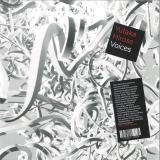
WRWTFWW Records is very excited to announce its third release from visionary Japanese ambient/experimental/environmental composer/producer Yutaka Hirose, this time with brand new album Voices, available on limited edition heavyweight-sleeved double LP as well as double CD, both with liner notes from the artist.
Voices finds Yutaka Hirose expanding his signature spatial layering into a three-dimensional videography of sound, blending field recordings, electronic manipulations, and abstract narratives. The 12-track album is a journey through a crumbling library where books whisper, history collides, and sonic textures weave new realities. Chaos, memory, and transformation – Hirose’s voices echo throughout the space, creating a fully immersive sonic experience.
The pioneering experimental and abstract electronic piece with deep hints of ambient and IDM is beautifully represented by the original artwork by Koji Shiroshita and Mifuku gracing the double LP and double digipack CD sleeves.
Voices marks Yutaka Hirose’s third full-length release on WRWTFWW Records, following his kankyõ ongaku classics Nova + 4 (an expanded version of his genre defining Soundscape 2: Nova album) and archival compilation TRACE: Sound Design Works 1986-1989, both available in vinyl, CD, and digital formats.
out of Stock
Last delivered 14 months ago available to reorder, subject to availability
Vines, the solo project of New York-based multi-instrumentalist and composer Cassie Wieland, offers a window into her inner world through expansive swaths of sound. She pieces together a celestial mix of synths, percussion, strings, and vocoded voice, making music that is at once deeply personal and cinematic in scope. This diaristic approach first took shape with her 2023 EP Birthday Party, and is crystallized on her debut LP, I’ll be here. With the sweeping and vulnerable I’ll be here, Vines arrives fully formed as an artist who crafts deeply resonant and open music–the kind that invites listeners in to listen, reflect, and share in the journey of learning through living.
“It was through making music that I was able to meet myself,” Wieland said. “Anything I’m going through or feeling is something that somebody else out there can relate to, and that’s really special to me.”
I’ll be here is both a culmination of years spent creating gossamer soundscapes and an opening to a new journey for Wieland as an artist. The album grew out of her years as a composer and songwriter, and builds on the language she developed on Birthday Party, which transformed the tumultuous feelings of the passing of time into minimalist meditations. It was just a start, though–a prologue, a development of the kind of language and ideas she wanted to express. With I’ll be here, she digs deeper and writes music that feels more sprawling, further solidifying her singular voice.
Wieland’s musical composition process is similar to journaling, lending itself to the music’s honesty. When she writes, she makes room for all the ideas she has; in these sessions, there are no wrong ideas, and she allows the music to be attuned to the experiences she’s having at the time. With I’ll be here, Wieland zeroes in on themes of anxiety, loneliness, navigating human connection, and having to grow up from a young age, ultimately coming to a place of acceptance. And though it began as a journal written in solitude, her collaborators shape the music with her.
Working with friends, in fact, was a crucial part of bringing the record to life. “Everything that was supposed to happen came together so easily because of the people involved,” Wieland said. I’ll be here was co-produced and recorded with Wieland’s longtime collaborator Mike Tierney, a four time Grammy-nominated engineer who has worked with artists across the contemporary classical and experimental scene like minimalist pioneer Steve Reich, LA’s preeminent classical ensemble Wild Up, and various bands on Bang on a Can’s Cantaloupe Music label. Percussionist and composer Adam Holmes and violinist Adrianne Munden-Dixon are two other longtime collaborators who are frequent fixtures of her live show. Holmes plays synths, drums, and banjo; in live settings, his kit is loaded with elements of the songs that are then triggered by MIDI, making the music an interactive, evolving experience. The album’s gentle, filamented edges are colored by Munden-Dixon, whose poignant string melodies elevate Wieland’s introspective compositions, as well as cellist Helen Newby, saxophonists Julian Velasco and Jordan Lulloff, and bassist Pat Swoboda.
Wieland takes an economic approach to writing music, building the swirling and immersive landscapes of Vines through short melodies, lyrics, and phrases. As each element layers and interweaves, they grow into sprawling webs of ghostly sound. Prior to Vines, Wieland composed pieces for other people to play using a minimalist’s sensibility, writing slowly unfolding melodies for instruments like violin and saxophone. In recent years, she sharpened her solo style across a variety of singles and covers which have garnered significant attention on social media for their emotional resonance (“being loved isn't the same as being understood” in particular went massively viral on TikTok in 2024). Birthday Party, her debut as Vines, brought her writing to a much more intimate space, centering on her vocoded voice cloaked in feathery reverb. A series of recent singles, meanwhile, including “I am my home,” showcase the way that Wieland’s music is born from the story of her innermost feelings, extending far beyond just the self.
Though Wieland’s music often deals with dark themes, it unfolds with tender melancholy, the kind that feels like a warm embrace. On “Evicted,” Wieland wonders if she’s getting sick or moving on, if she’s lost or found. Her vocals expand with each lyrical repetition, as the instrumentals slowly encircle and the music’s rhythm grows and bursts into a heart-wrenching, yet radiant wave reminiscent of post-rock bands like Explosions in the Sky. “Tired” follows a similar trajectory, building from a looping, melancholy rhythm and floating lyrics into a solemn resignation. Elsewhere, Wieland takes a more ruminative approach: “Omw” begins with twinkling piano and melancholy strings that gradually transform into an undulating mass. It is a song born out of the warm feeling of reminiscence, the slight return of hope that comes with nostalgia.
With any searching journey, there is also a point of understanding. The title track closes the album with the freedom of acceptance. A marching drum beats steadily beneath Wieland’s open vocals, moving forward, ever onward as it flies into the ether. In Wieland’s delicately textured music, there is room to come into yourself, and learn to love whomever that is. I’ll be here is a special space that can be all your own, one in which to feel what needs to be felt. “This is music for your story,” Wieland said. “I want you to use it how you need it.”
Car Button Cloth' is an extraordinary affair of musical and emotional extremes, a soundscape spanning “the most beautiful piano-led mourning in the history of the broken heart” that switches into perky jangle-pop for fleeting moments and contains the ultimate self-deprecating classic ‘The Outdoor Type’, penned by Smudge cohort Tom Morgan, as well as a cover of the bluegrass standard ‘Knoxville Girl’ and ‘If I Could Talk I’d Tell You’ co-written with The Vaselines’ Eugene Kelly. All bases are covered. “One of the most distinctive voices of the ‘90s” The New York Times. To further unravel where Evan’s head was at during the period of its creation, this deluxe double album comes with a record of exquisite and typically eclectic scene setting covers that occupied B-sides and alternative format versions, plus other super rare offcuts, live takes and remixes. A diet of Volcano Suns, Glen Campbell, The Jacobites, The Sir Douglas Quintet and Whitney Houston influenced Evan’s thinking and added further colour to an album that remains something of a Dorian Gray-style masterpiece. The first side of extras is rounded off with the never before released ‘Arise’, originally set for the remake of Great Expectations and later realised as Rancho Santa Fe on solo album ‘Baby I’m Bored’.
Enjoy The Ride Records in conjunction with Universal Music Group proudly presents Afroman - The Good Times.
The Good Times was released in the summer of 2001; the album climbed the Billboard charts and was certified gold within a month of its release.
The Good Times includes the Certified Platinum singles "Because I Got High" and "Crazy Rap (Colt 45 & 2 Zig Zags)," along with 9 other tracks that will take you back to that early aughts summer, blasting the radio with the windows down (or with the windows rolled up while you baked out your car - we don't judge).
The Good Times is a limited edition 2xLP pressed on colorful vinyl. The packaging features new center label art on the B(lunt) Side, as well as a screen-printed D(ank) Side. Housed in a wide-spine jacket with a 12" x 24" single-sided full-color insert.
After roughly 15 years out of the game, Marc Kushin makes a highly anticipated return with his Ely Muff project - a label favourite since its inception - debuting proper on Love Love with 4 tracker 'Human Nature'. Kushin's proto-tekno take on the early breakcore sound was a stand-out of a particularly noisy strain of hardcore which emerged in the UK in the late 90s and early 00s, releasing on the likes of Headfuk, One Inch Punch, Deathchant, as well as Kushin's own labels Kinky Stump and Dead Pig, run alongside longtime collaborator Tantrum.
Unpretentious, unserious and completely unapologetic, 'Human Nature' features four tracks of brutal hardcore spiral tekno, distorted and mangled but retaining groove and swagger. The EP features two re-released classics from Kushin's back catalogue: the pumped-up pirate radio pastiche of 'Hold Tite The P, No Need For London' and the feedback-laden blunt lobotomy of 'Automatic Predator', two decades on from their original releases in 2005 on Capsule Core and One Inch Punch. Complementing them are tracks 'Human Nature' and 'Cycle Dirty', previously unreleased spasmoid gems from the same era, unearthed and seeing the light of day for the first time.
All four tracks have been lovingly (re)mastered by Love Love's own Ben Pest for a maximal sonic experience, shining a light on this criminally overlooked corner of UK rave heritage.
This new "Experimental Chapter" by DJ Narciso comes as no surprise, really. Autonomous in the motorization of his music, pushing for progress within the framework of an undeniable (inescapable?) heritage. Twisting and bending sound every step of the way, Narciso definitely keeps in touch with the dancefloor, offering the always much needed transcendence through distinctive, non-linear melodies and patterns. The artist pursues a direct link with bodies in motion but seldom in the expected, institutionalized way club culture is being largely promoted.
This is challenging dance music, proud statements of difference. Narciso's previous record was named "Diferenciado". Now we get "Dificuldades", a track that simultaneously carries the weight of being somewhat odd and the difficulties of life. Check how the piano is venting, freestyle, communicating a feeling, and then lets itself get stuck in a loop, but that's exactly when the groove really starts flowing. And then another layer. It's like direct speech.
A common assertion of pride is found in the origin of the artists. The ghetto as a place where any transformation projects more power precisely because of... inherent difficulties. As others (including himself) did in more or less obvious ways, Narciso clearly states "I come from the ghetto" ( "Não Sabes" ). Twice the value. At least. Almost every segment of music in this album ends up sounding heavily emotional, reaffirming what may be - perversely - a well-known characteristic of Portuguese music: melancholy.
"Não Quero" begins side B as a march maybe more significant than a thousand words, such is the ominous tone of its texture. Next track is another lunar tarraxo, pulling down the shades. Then, "Dor de Barriga" lets things loose again, steering clearly off road, shouting this way and that until a peaceful resolution comes. In "Livra-me Desta", vocal snippets blend into synth snippets, disembodied voices abandon all traces of humanity and finally mutate into different entities that, towards the end, again sound vaguely human but now we find ourselves doubting. Closer "Bob" is a rather classic percussion track with plenty of echo, reverb and an unconscious nod to dodecaphonic music. Unlikely? No, the structural ADN of this music is made up of elements western and eastern, southern and northern. To say all-over-the-place is usually not flattering but in this case the expression translates as wonder, surprise, The Unexpected, and reveals Narciso perfectly at ease inside the nucleus of creation.
The extroverted blend of attitude, energy, and ostentatiousness that spills from the New York Dolls’ self-titled debut can be seen in full view on the album cover. Depicting the quintet in its hallmark flash-and-trash apparel and in drag appearance, the 1973 album scared away a considerable amount of potential listeners while capturing the attention of a sizable audience that recognized the band for what it was: zeitgeist pioneers who helped develop the punk and glam rock movements.
Named by Rolling Stone the 301st Greatest Album of All Time and by Mojo the 49th greatest album of all time, New York Dolls receives long-overdue audiophile treatment on Mobile Fidelity’s numbered-edition 180g 45RPM 2LP set. Sourced from the original master tapes, pressed at Fidelity Record Pressing in California, and housed in a Stoughton gatefold jacket, this collectible version marks the first time the group’s career-making statement is available to be experienced in audiophile quality.
Far from harboring the crude elements that became associated with the punk scene, New York Dolls benefits from keen production overseen by none other than Todd Rundgren. Though more accustomed to working far higher-caliber musicians, Rundgren — taken by the New York Dolls’ charisma and cool, if not their instrumental approach — fully understood the ensemble’s aesthetic. He captured what went down at New York City’s Record Plant with an astute blend of live-on-the-floor feel, raw authenticity, and professional acumen.
On Mobile Fidelity’s definitive-sounding reissue, you can hear those facets as well as key details, dynamics, and textures with previously unimaginable insight. Rundgren preserved generous degrees of grit, grime, and grease while bestowing the raucous music with elevated levels of separation, solidity, and impact every landmark recording deserves. His vision extends to introducing choice accents — barroom piano notes, Moog synthesizer passages, Buddy Bowser’s honking saxophones — that add to the songs’ appeal without interfering with the primary architecture.
Afforded extra groove space on this pressing, the tenor, presentation, and attack of both vocalist David Johansen and now-iconic guitarists Johnny Thunders and Sylvain Sylvain come across with stunning vibrancy and vitality. The New York Dolls often seem headed off the rails and into the red, but somehow, the strut, swagger, and sloppiness — and the associated sleaze and scruff, scrape and snarl, frenzy and feverishness those characteristics entail — remain together as a whole that shakes its collective fist at the frustrations, isolation, disarray, and disillusionment of youth chaos and urban decay.
Kicking off its debut with “Personality Crisis,” cited by Rolling Stone as one of the 500 Greatest Songs of All Time, the band makes obvious its grasp of alienation, deviance, displacement, and suburban disaffection — as well as its capacity to play hanging-by-a-thread boogie, noisy rock ‘n’ roll, and Brill Building-inspired pop. The lipstick-kissed New York Dolls possesses traits many of its harsher predecessors would overlook: joyfulness and melody, topped with a knack for knowing how and where to take a song inside of three-and-a-half minutes.
Dive and dash with the belligerent “Looking for a Kiss”; stomp your feet and clap your hands to the big choruses of “Jet Boy”; surrender to the demands and provocations of the coded “Vietnamese Baby”; decide whether “Bad Girl” yearns to explode or implode. It’s one of several tunes here that allude to the world coming to end. Of course, that doesn’t mean there isn’t time for a fling before everything burns. “There’s no place I gotta go,” yowls Johansen. And he means it.
Adorned with tonal crunch, glitter, and gristle, New York Dolls takes pride in its brashness and brattiness. The rambunctious effort, which earned the band the distinction of being voted both “Best New Group of the Year” and “Worst New Group of the Year” in the pages of Creem, displays knowing reverence for the blues without calling attention to the style. The folk-laden “Lonely Planet Boy” is nothing if not a collision of heart-on-the-sleeve emotions and the desire in the face of challenges to maintain a tough-skinned exterior. An interpretation of Bo Diddley’s “Pills,” complete with shivering harmonica and clattering rhythms, announces there’s no cure for what infects this band. It’s that contagious. And how.
His deliveries gushing with campy fun, playful irreverence, and sheer decadence, Johansen doubles as the equivalent of an open fire hydrant that spouts at will. He’s at once tender and vicious, serious and tongue-in-cheek. On arguably his finest hour on the album, Johansen’s phrasing, passion, and lyrical ambiguity alone turn “Trash” into an insistent glam-rock gem whose echoing harmonies and girl-group references stamp it a pop classic.
Too much, too soon? Only for those averse to some of the finest rock ‘n’ roll ever put on tape.
An adversarial network of ideas, electronic post-punk trio The Wants welcome the possibility that embracing friction can give rise to something cathartic and unexpected. Formed by Madison Velding- VanDam and Jason Gates in 2017, and with the addition of Yasmeen Night in 2021, The Wants' sound is defined by the push and pull of its members' processes: floating rhythms upheaving grounded songwriting, pulsing synths overwhelming live instrumentation. Their new record, Bastard, is an evolution of many of the seeds planted in their debut record, Container (2020), with a refined sense of acerbic emotional urgency and sonic experimentation. Drawing from a deep well of influences across decades and genres, The Wants forge an unlikely alliance of sounds that feels both radical and inevitable. Velding- VanDam channels both the raw power and snark of Public Image Ltd. and The Smiths' romance, while Gates draws intensity from bands like Bauhaus and Throbbing Gristle, and inspiration from experimental techno. Night's sound bridges inspiration from '90s alternative rock like Smashing Pumpkins and Garbage between the nocturnal trip-hop atmosphere of Massive Attack. The result sits in its own category—too raw to be pure electronic music, too mechanised to be straight rock— drawing favorable comparisons to early PIL and contemporaries like Model/Actriz while remaining distinctly their own beast.
out of Stock
Last delivered 14 months ago available to reorder, subject to availability
Mobile Fidelity's UltraDisc One-Step 180g 45RPM 2LP Set Plays with Authoritative Tonality, Airiness, and Clarity:
Pressed on MoFi SuperVinyl and Strictly Limited to
3,000 Numbered Copies
1/4” / 15 IPS Dolby A analogue master to DSD 256 to analogue console to lathe
Joni Mitchell is the only artist who could’ve made Hejira. The legendary singer-songwriter said as much when discussing the album decades after its release. Yet that fact seemed obvious from the moment the gold-certified effort streeted in fall 1976. An adventurous travelogue, probing narrative, and offbeat homage to freedom, Hejira remains an inimitable entry in the catalog of recorded music — a spare, gorgeous, meditative series of sonic vignettes comprised of floating harmonic pop, cool jazz, soft rock, and sensitive vocal elements that beckon feelings of motion, discovery, and self-examination.
Sourced from the original analog master tapes, pressed at Fidelity Record Pressing on MoFi SuperVinyl, and strictly limited to 3,000 numbered copies, Mobile Fidelity's UltraDisc One-Step 180g 45RPM 2LP set presents the record ranked the 133rd Greatest of All Time by Rolling Stone with definitive detail, richness, accuracy, and directness. Marking the first time the revered LP has received audiophile treatment, it's one of six iconic 1970s Mitchell records Mobile Fidelity is reissuing on vinyl and SACD.
Playing with a virtually nonexistent noise floor, dead-quiet surfaces, and superior groove definition, this collectible reissue reproduces in enveloping fashion the tones, textures, and craftsmanship that help Hejira function as the equivalent of a liberating trip down an open road with nothing but blue sky, natural landscape, and fresh air in the immediate vicinity. Passages bloom, carry, decay as they do amid an acoustically optimized environment. Soundstages extend far, wide, and deep, with black backgrounds and pinpoint images adding to the realism.
The reference-grade immediacy, airiness, and presence put in transparent perspective Mitchell’s dense strings of words, stream-of-conscious-like phrasing, and unhurried albeit forward momentum. Likewise, the instrumental contributions of her A-list support musicians — a cast that includes L.A. Express members John Guerin, Max Bennett and Tom Scott, plus Neil Young, Victor Feldman, and Abe Most — emerges with breathtaking clarity and dimensionality.
While Mitchell, whose intimate vocals and abstract guitar parts center everything, Mobile Fidelity's restoration of Hejira further reveals the visionary breadth of guitarist Larry Carlton and bassist Jaco Pastorius. Though heard on only four tracks, Pastorius' fretless bass epitomizes the fluid, subtle, flexible, roomy, and shape-shifting characteristics of songs that often appear to transpire out of nowhere akin to the formation of a puffy cumulus cloud overhead. In sync with Mitchell’s voice, Pastorius’ fusion hovers and floats, suspended in a fog you want to deeply inhale. The "grace notes" Mitchell desired on Hejira can now be heard in full. Ditto the luxurious tapestries of alinear lines, fills, and supplements unreeled on Carlton’s six-string.
Visually, the packaging of this UD1S set complements its identity as the copy to own. Housed in a deluxe slipcase, the LPs come in foil-stamped jackets with faithful-to-the-original graphics. This version is for listeners who desire to become immersed in everything about Hejira, including the unforgettable album cover — a pastiche of 14 different photos Mitchell used a Camera Lucida to assemble into one image that’s anchored by a portrait of her in a stoic pose — and the interior shots of Mitchell skating on a frozen Wisconsin lake wearing a pair of black skates, black shirt, and fur cape.
The notion of skating, feeling an awakening wind whipping against your face, and losing yourself to the surroundings are extremely apt for Hejira, which Mitchell wrote after a sequence of trips and relationships prompted her to reflect on the complicated conflicts between independence and marriage, success and satisfaction, duty and desire — and, more specifically, “the cost of being a woman.” The Canadian native delved into such themes before. But never as she does on Hejira, whose liberating, running-away aura doubles as another of Mitchell’s rejections of tradition as well as a suggestion of a better alternative.
At once observational and personal, expansive and insular, cheerful and poignant, Hejira spans a sea of human conditions, emotions, and circumstances. It addresses drifting, isolation, pleasure, place, time, and surroundings with strikingly poetic discourse matched with music that, save for the crooned ballad “Blue Motel Room,” forgoes conventional structures and choruses.
The jazz-based arrangements, marked by scaled-down percussion and all manner of bent, rounded, and unsettled notes, hint that Mitchell has no exact destination in mind. Excursions such as the moody “Furry Sings the Blues,” funky “Coyote” and edgy “Black Crow” throw open previously locked doors to possibility and journey. They signal it’s time for a welcome departure from norms and the past, one that leads to a heightened sense of clarity and perspective. Or, as Mitchell said upon choosing the album title, it’s time for “leaving the dream, no blame.”
Following their debut album, Bay Area industrial duo Gridlock quickly pushed their creative boundaries. They restructured their live setup, incorporating new technology that expanded their sonic possibilities.
Their first experiment with upgraded digital tools resulted in the track Enzyme for Pendragon Records’ Quadraphobia compilation. Soon after, they embarked on a short West Coast tour before returning to the studio to craft their next album, Further.
Embracing real-time audio editing, Further developed rapidly, defined by its signature distorted percussion. Initially met with little feedback from their label, the album gained final approval after a live performance at the CMJ festival.
Released in early 1999, Further exceeded expectations, earning critical acclaim and charting in the the RPM charts. It became a landmark in the evolution of industrial music, blending emotional depth and cerebral complexity with brute force.
Gridlock continued evolving through two more albums before disbanding, leaving their work rare and highly sought after. Now, in tribute to Mike Wells, who passed away in 2022, Viasonde is reintroducing Gridlock’s music with the blessing of Wells’ family.
Following the 2024 reissue of The Synthetic Form, Further will be released on July 11th on clear vinyl with greyscale splatter. Half of the proceeds will go to the American Foundation for Suicide Prevention in Wells’ honor.
out of Stock
Last delivered 8 months ago available to reorder, subject to availability
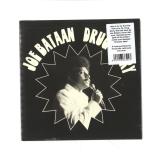
Joe Bataan's extensive discography was expanded in 2022 with the release of some old recordings from the King of Latin Soul that had never been previously published. After the success of his album "Riot!" (1968), Bataan had easy access to a studio whenever inspiration struck to record a new song sketch or even a complete track. Sometimes, he would finish the recording entirely and offer it in its final version to Fania for release. This usually worked, although on some occasions, the song was rejected. In the case of 'Drug Story,' the track was recorded without a clear final purpose, even though Bataan hoped it would become part of an album. When the Fania executives heard the result, they immediately rejected it, thinking it promoted drug use. The tapes were filed away and lost in oblivion until they ended up in a thrift store in New York. From there, they were rescued by a Latin music specialist and later sold, eventually making their way to the Vampisoul archives. The song was finally released in its entirety in 2022 on the LP "Drug Story" by Now Again. It features a long, slow vocal intro that evolves into a more uptempo track with two very distinct parts, to the point that it almost feels like two different songs. It transports us to the best moment of Joe Bataan's career, with all of his classic ingredients, delivering a track as good as his most famous songs. Bataan himself takes on the lead vocals and piano, Bobby Rodríguez handles the flute, sax, and bass, Pete 'Choki' Quintero plays the drums, and William Howes Jr. plays the electric guitar with wah-wah effects. Vampisoul strongly believes that the song deserved to be released as a single as well, and that its structure was perfect for each side to have a separate identity. So here it is, for the first time on a 45, 'Drug Story,', parts one & two, the long lost track by Joe Bataan. Pure Latin soul, recorded at the peak of the artist's career!
out of Stock
Last delivered 14 months ago available to reorder, subject to availability
Bob Marley & The Wailers' Rastaman Vibration Analogue Productions' UHQR, the pinnacle of high-quality vinyl! 45 RPM 2LP Ultra High Quality Record release limited to 4,500 copies Mastered from the original tapes by Ryan K. Smith at Sterling Sound Pressed on 180-gram at Quality Record Pressings using Clarity Vinyl® Includes "12 x 12" 8-page booklet featuring new liner notes by musician and Marley biographer Leroy Jodie Pierson (APO Records Direct-To-Disc AAPO 005), plus exclusive photos by Kim-Gottlieb Walker Purest possible pressing and most visually stunning presentation and packaging!
When Rastaman Vibration was first released in America in 1976 it did what some in the music industry considered nearly impossible at the time. It took Bob Marley into the Top Ten alongside disco records and corporate rock, points out Rolling Stone, which rates the album 4 stars. Despite the good cheer of the title track and the upbeat "Roots, Rock, Reggae," Rastaman Vibration contains some of Marley's most intense images of oppression, paranoia and despair. Tracks such as "Who the Cap Fit," "Crazy Baldhead" and "War" are offered by the Wailers with dire urgency as Marley's brutal visions are echoed by his own church choir, the I-Threes.
More than four decades later, neither Marley's music nor his message has lost its sting. Now, Analogue Productions presents perfection — Rastaman Vibration cut at 45 RPM in UHQR format on 180-gram 2LP Clarity Vinyl. This Ultra High Quality Record release will be limited to 4,500 copies, with gold foil individually numbered jackets. For Bob Marley, 1975 was a triumphant year. The singer's Natty Dread album featured one of his strongest batches of original material (the first compiled after the departure of Peter Tosh and Bunny Wailer) and delivered Top 40 hit "No Woman No Cry." The follow-up Live set, a document of Marley's appearance at London's Lyceum, found the singer conquering England as well. Upon completing the tour, Marley and his band returned to Jamaica, laying down the tracks for Rastaman Vibration (1976) at legendary studios run by Harry Johnson and Joe Gibbs.
At the mixing board for the sessions were Sylvan Morris and Errol Thompson, Jamaican engineers of the highest caliber. Of the material on Rastaman Vibration, "War," for one, remains one of the most stunning statements of the singer's career. Though it is essentially a straight reading of one of Haile Selassie's speeches, Marley phrases the text exquisitely to fit a musical setting, a quiet intensity lying just below the surface. Equally strong are the likes of "Rat Race,""'Crazy Baldhead," and "Want More."
These songs are tempered by buoyant, lighthearted material like "Cry to Me," "Night Shift," and "Positive Vibration." Not quite as strong as some of the love songs Marley would score hits with on subsequent albums, "Cry to Me" seems like an obvious choice for a single and remains underrated. This UHQR is remastered at 45 RPM by Sterling Sound's Ryan K. Smith from the original analog master tapes. Each UHQR will be pressed at Acoustic Sounds' industry-leading pressing plant Quality Record Pressings (QRP) using hand-selected Clarity Vinyl® with attention paid to every single detail. These records will feature the same flat profile that helped to make the original UHQR so desirable. From the lead-in groove to the run-out groove, there is no pitch to the profile, allowing the customer's stylus to play truly perpendicular to the grooves from edge to center.
Clarity Vinyl allows for the purest possible pressing and the most visually stunning presentation. Every UHQR will be hand inspected upon pressing completion, and only the truly flawless will be allowed to go to market. Each UHQR will be packaged in a custom clamshell box and will include a booklet detailing the entire process of making a UHQR along with a hand-signed certificate of inspection. This will be a truly deluxe, collectible product. In addition to the UHQR booklet the package will contain a 8-page 12" x 12" booklet containing new liner notes by musican and Marley biographer Leroy Jodie Pierson as well as exclusive photos by Kim-Gottlieb Walker. Pierson is a past performer for Blues Masters at the Crossroads, the two-night historic blues festival at Blue Heaven Studios in Salina, Kansas. He's also recorded a Direct-To-Disc blues album for APO Records. (AAPO 005) Rastaman Vibration — now a landmark production on 180-gram 45 RPM Analogue Productions UHQR Clarity Vinyl!
2025 repress. Expo 70, held in Osaka, was a pivotal event for the Japanese people and their relationship with the rest of the world, demonstrating both the nation's ongoing economic recovery from World War Two and the creative spirit of Japanese society and its artists. The event gained international acclaim for its adventurous architectural design, visual art and electronic music. Some of Japan's most renowned composers were involved, but also present were the now-legendary rockers, the Flower Travellin' Band. A series of performances, billed as "Night Events" were held at the Expo; the most radical of these was "Beam Penetration and Mad Computer, plus the Minimal Sound of Motorcycles", but its anti-establishment feel and general madness took the Expo organizers by surprise and it was cancelled after only one night, despite being scheduled for a longer run. An air of myth developed around the event, but a recording of the event has been discovered and this release is the result. And what an event it was: a night-time sound-bomb with a fabled band, electronic sound and 50 motorcycles with horns blaring,spotlights, electronic billboards and a robot ― all flashing, roaring andhowling at the night sky. This release comprises a CD, a 10-inch record with fold-out sleeve and large obi, plus fascinating notes in Japanese and English by Kenichi Yasuda, an expert on Japanese rock music, and Koji Kawasaki, a renowned researcher of Japanese electronic music, as well as rare photos.
Compiled by Philip King
“And then came the rise of synth pop : blokes with dodgy haircuts hunched over keyboard-operated
machines stuffed with wires and do-it-yourself tone oscillators making sounds like a brood of geese
passing gas in a wind tunnel. Whoopee! This is the way the ‘70s ended : not with a blood-curdling bang
bang but with a cheap, synthesized, emasculating whimper.”
NICK KENT, NME.
All The Young Droids: Junkshop Synth Pop 1978-1985 is a new compilation that charts the
underbelly of the epoch-defining sound of the synthesiser in 80s popular music. Compiled by Philip
King (previously seen compiling All The Young Droogs, Glitterbest and Boobs - The Junkshop
Glam Discotheque), the music here connects the dots between DIY synth enthusiasts grappling with
new, cheap synthesisers at the tail-end of punk and wannabe, jobbing songwriters enthral to the new
music pioneered by Gary Numan, Depeche Mode and Daniel Miller’s Mute Records. Featuring rare
tracks of auto-didactic progressive pop music, proto-techno punk, shoot-for-the-stars-land-in-the-gutter
chart flops and heralded, underground synth classics, School Daze paints a picture of beautiful failure.
Complete with extensive sleeve notes written by King and never before seen imagery, all 24 tracks
were remastered by RPM in-house engineer Simon Murphy, many from vinyl copies due to lost master
tapes. The story told on All The Young Droids is one of the dawning opportunity presented by both the
emergence to the market of cheaper analog synthesisers and the distribution networks plus indie labels
that exploded with the advent of punk music in 1976. While the music that sprouted out all over the
globe in the wake of these factors was decried as fake, plastic, a refutation of punk’s guitar-led
revolution, it’s telling that much of the music on All The Young Droids.. was created in bedrooms,
ramshackle studios and home-made set ups with often borrowed equipment. In the era of record labels
jumping to capitalise on the success of The Sex Pistols, The Clash (both on major labels, of course)
these artists struggled to stand out from a new gold-rush with next to no budget or PR team. With radio
and labels desperate for the new Yazoo, what resulted was a testament to necessity being the mother
of invention.
At the time, the synthesiser was the music of the future, a shiny new machine that could paint like an
orchestra with a single finger and a 4-track. In the hands of Manchester avant-pranksters Gerry & The
Holograms it’s a pulsing, sardonic weapon.. the only instrument on the Messthetics classic lampooning
of New Wave fashion. In Hamburg, a 16 year old Andreas Dorau used it to write and record (with his
female classmates on vocals) a global smash in Fred Vom Jupiter (later licensed to Mute Records).
The hard-to-find English version (Fred From Jupiter, natch) is included here. Many artists with alreadystoried careers caught the bug and recorded synthesiser-fuelled peons to space, computers, the future
and, of course, love-interests. Harry Kakoulli, late of Squeeze, recorded a solo album in 1979 that
included the incredible power-synth-pop smash-that-never-smashed I’m On A Rocket. Similarly, Ian
North of Neo and American Power Pop stalwarts Milk ’n’ Cookies bought a Korg MS20 and used a
tape machine to record We’re Not Lonely, an absolute lost-classic of minimal synth pop. We’re Not
Lonely also features on the Junkshop Synth Pop sampler 7” twinned with John Howard unreleased
track You Will See, released April 12th 2025.
There are plenty of compilation debuts in evidence. Sole Sister were a mysterious trio who were
featured on the Scaling Triangles compilation of female-fronted, queer-adjacent post-punk /
underground music that also featured The Petticoats. Selwin Image were from San Francisco and
featured members of the recently defunct power pop/punk group The Pushups. Their stupidly catchy
The Unknown fizzes with New Wave energy - think XTC to Sparks but remains unreleased until now.
Dream Unit’s A Drop In The Ocean is an early synth wave cut, positively teaming with Joy Division
instrumentation, previously only released on a long-forgotten and super rare, self-released EP.
Incandescent Luminaire’s Famous Names belies an archetypal struggle of a small-town trying to
make it in a cruel industry but is a thrilling New Romantic-Synth Wave cross over with a OMD
gloominess that’s a joy to hear. Feminist Minimal Wave track I Am A Time Bomb by performance artist
Peta Lilly and Michael Chance is a revelation destined for new found cult status. It was released on 7”
and lost until now.
The flipside to the subterranean, never-made-it synth pop mentioned above are the ambitious, even
fruity attempts at success that have a perennial elegance to their confidence. New Jersey-ite Billy
London (real name Ed Barth) tried to cash in on the synth boom with Woman, released by a major
label, a lurching new wave track built on the Louie Louie rhythm and a wonderfully camp Lou Reedstyle sleazy vocal before exploding in the synthesised chorus. The song bombed but with a chorus like
this, you have to wonder why? Ex-Glitter Band member John Springate’s My Life is truly epic, with
doomed chord progressions and massive sounding drums turning into at least 3 different songs in the
course of the track. Before you wonder what’s going on the song resolves with a glorious return to the
main refrain.
The dry-ice-dressed dance floor is well catered for too. Design’s Premonition and Vision’s Lucifer’s
Friend are stone-cold minimal synth bangers, well loved but given a new lease of life here. The
Warlord’s The Ultimate Warlord was released in 1978, a homespun proto Hi NRG banger that was
later re-recorded by The Immortals in Canada who had a club hit with it. One-man- band Disco
Volante’s No Motion was re-issued by Synth wave label Medical in 2012 but makes its first vinyl
compilation appearance here. Close your eyes and you can imagine what Lawrence of Felt would have
sounded like with some cheap Korgs a little earlier in his career. Gibraltar-based trio The Microbes
imagined a computer programming people to dance - how prescient - and ended up with a propulsive,
robo-funk track with splendid rubbery bass playing over a tectonic drum machine. Previously picked up
by Belgian label Stroom TV, Dee Jay Bert & Eagle’s heavily Euro-accented I Am Your Master
demands the listener to “come to paradise!” In a frankly terrifying manner.
All The Young Droids is the first compilation to peel away from the narrative that dour, Minimal Synth
and Cold Wave were the only musical children of the first rush of synth pop. Philip King and School
Daze Records describe a much more complicated world: along with the austere, Brutalist children of
Daniel Miller (who produced Alan Burnham’s Bowie-Low-influenced Science Fiction here) was a
plethora of desperate cash-ins, accidental mainstream hits, ambitious pop dramas and major label
punts that went nowhere. Crucially, the compilation blurs the line between junk and treasure. What if the
two things are interchangeable. What if it’s all science fiction?
out of Stock
Last delivered 14 months ago available to reorder, subject to availability
Australia’s Winston Surfshirt shares his fourth studio album, WINSTON, gifted to the world on July 25 via Sweat It Out. The semi self-titled record is complete with 11-tracks of doting adoration and tidbits of love told through the playful, unique sonic fusions that Winston does so well. Seamlessly sliding between smooth R&B tones and hip hop inflections to juiced up disco-house, WINSTON delivers an homage to his foundational sound while refining a new chapter in territory untouched. As the name suggests - this record is Winston to its core, more than ever before.
Award-winning producer and composer Giorgi Koberidze offers up a head-spinning debut of Georgian modern classical music shot through with 360° electroacoustic textures.
Giorgi Koberidze is an electronic and classical music composer from Georgia. He currently serves as a professor of music at Tbilisi State Conservatoire, as well as at Ilia State University, and the private music school "303 Herz". Giorgi's work is rooted in the Georgian musical tradition, cross-pollinating indigenous instrumentation with electronic and western classical timbres. He recently won first prize in the Tbilisi Conservatoire Composers Awards, and received Georgia's most prestigious cultural gong, the Tsinandali Award.
The Album was premiered in Georgia at the Kutaisi Film Festival, and later showcased at the Tbilisi Film Festival. Working from graphic scores, Giorgi's ensemble includes strings, woodwind and traditional instruments from the Caucasus (doli, chuniri). Fleeting voices, field recordings and skittering percussion converge to paint a storied map of Tbilisi, and its surrounding terrain of forested polyphony and microtonal peaks and crags.
Each listen of the album is projectively rich, like a dizzying series of sonic inkblot images. The piece is designed to be absorbed in the surround sound of darkened movie theatres, conjuring a multiverse of narratives in the half-light of sensory acuity. At home, Giorgi invites listeners to set aside time to experience the record in a dark, comfortable space absent of external stimuli.
This album was made with the support of the Tbilisi State Conservatoire. The recordings were funded by Nicolas Jaar. Thank you. We are beyond proud to present this incredible project.
Recommended for fans of Pierre Bastien, Roméo Poirier, Jan Jelinek.
Introducing 'A Drama on Richard Street' - an album born from a journey of rediscovery and creative challenge. Influenced by a yearning for simplicity and heartfelt melodies, this collection is a love letter to soulfulness. Dive into the soulful world of Menahan Street Band's 'The Crossing' and the rejuvenating energy of 17-year-old inspiration. Join us on this musical voyage, where we stepped away from complexity to embrace the beauty of simplicity. 'A Drama on Richard Street' is a testament to the power of soulful music and the joy of heartfelt melodies. Listen and let your soul groove to its rhythm.
Following his well-acclaimed previous EP ‘A Drama On Richard Street’, supported by TSF Jazz, Somewhere Soul, and BBC 6, Tremendous Aron introduces his new project ‘Carlos & Lola’, a 6-track EP. This latest endeavor, akin to "A Drama On Richard Street," reflects a pivotal moment in the German producer's musical journey. Feeling stagnant while studying music, he instinctively reverted to the music he cherished during his teenage years, ranging from the eclectic offerings of "Daptone Records" to artists like The Menahan Street Band. Inspired by the documentary "Summer of Soul," Tremendous Aron incorporates fragments from it into his compositions, alongside influences from Molly Lewis, The Altons, and Ruben Gonzales. This EP promises a captivating blend of soulful melodies and vibrant rhythms, showcasing Tremendous Aron's evolution as an artist.
out of Stock
Last delivered 8 months ago available to reorder, subject to availability
The album, celebrating its 40th anniversary in 2025, features legendary singles like
"Blind in Texas" & "Wild Child", as well as fan favourites like "Ballcrusher", "Jack
Action" & "Widowmaker." Known for their over-the-top theatrics & electrifying stage
presence, W.A.S.P. & their anarchic frontman Blackie Lawless took the world by
storm--but it was their music that won them a legion of devoted fans.
This new black vinyl edition of 'The Last Command' features audio that has been
remastered at half-speed for a superior & impeccable listening experience, breathing
new life into an album that helped defne 1980's heavy metal.
"One thing is for certain, in the annals of metal there are very few bands like W.A.S.P."
Metal Hammer
In 2024, W.A.S.P. celebrated the 40th anniversary of their explosive, eponymous debut
'W.A.S.P.' With a relentless schedule of shows planned throughout 2025 as well as
appearances at numerous festivals, the band remain as ferce & vital as ever &
continue to dominate stages worldwide.
Madfsh previously issued 'The Last Command' on black-&-yellow vinyl as an exclusive
for UK RSD. This new edition, featuring the same remastered audio, is now presented
on classic black vinyl & made widely available, ensuring that fans everywhere can
experience this landmark album in its fnest form.
The highly anticipated 3rd full-length by this Finnish band. Morbific is a rotten-to-the-core Death Metal trio deformed in the filthy and profaned boneyard of Kitee in early 2020, featuring Olli (guitar), Jusa (vocals / bass) and Onni (drums). The band’s Pestilent Hordes demo was unleashed in the summer of 2020, and it rapidly gained them some following amongst the finest gourmets of the variety of festering, moldering and disgusting Death Metal that’s malignantly influenced by Autopsy, Rottrevore, Deteriorot, Mortician, Grave, Maimed, Undergang, Impetigo and ancient Finnish masters of death and decay, such as Funebre and Disgrace. Shortly after, in the spring of 2021, the debut full-length Ominous Seep of Putridity saw the odious light of day to unanimous praise by both the fans and the media. Just a year later, and now aligned with Memento Mori, Morbific released their second full-length, Squirm Beyond the Mortal Realm. Aptly titled, the album quickly became a cult favorite of utterly uncomfortable, slimy Death Metal. Now, Morbific are prepared to eclipse such a sewer-dwelling “highwater” mark with Bloom of the Abnormal Flesh. Whereas its not-inconsiderable predecessor confronted the listener with a blown-out, almost demo-level feel, the Finns’ third full-length proves that they can move and mesmerize and maim no matter what the soundfield is. And on Bloom of the Abnormal Flesh, it’s a raw-yet-robust show of strength, “classic” Death Metal production in a most late 80’s fashion; just witness that gurgling, fuzz-tinged bass and feel its radioactive waves envelope you. But production is one thing and songwriting is another, and with the latter, Morbific are truly hitting their stride here. Lumbering and stomping, with well-timed bouts of disgusting gallop or even ragged blasts, their songwriting twists and indeed squirms with off-kilter insanity; some would call it chaos, if not for the exceptionally tight musicianship on display here, with the sum result being an uncomfortableness that bubbles up from a deeper gutter. Thankfully, Bloom of the Abnormal Flesh conveys its dark, disgusting and unconventional aura across every element -said chops simply heighten these sensations- and is, thus far, Morbific’s best melding of form and content. Cro-Magnon as ever but somehow enlightened in the creepiest sense possible, Morbific continue their reputation as Finland’s filthiest and Death Metal’s untrendiest weirdoes. Vividly captured by Chase Slaker’s cover artwork, Bloom of the Abnormal Flesh is the foulest stench only for the brave!
Neapolitan composer, producer, and keyboardist Giorgio Lopez sets sail on Berlin-based label Cosmic Romance with his “Sud des Îles”. Navigating between 80s-inspired grooves, French boogie, and sun-kissed atmospheres, the record unfolds like a musical travelogue, following fictional skipper Georges Taty and his crew of musicians aboard the sailboat “Sud des Îles”, caught between racing waves, late-night jams, and dockside dreams.
From the whirling groove of "Voyager Sans Bouger" to the breezy atmosphere of "Toujours Distante", the eight tracks on Sud des Îles invite listeners to drift away in rhythm and reverie through a songwriting that is both infectious and evocative. Stories of escapes (real or imagined), romantic illusions, and nostalgia-tinted euphoria weave together, propelled by Giorgio Lopez’s arrangements and distinctive keyboard work, as well as by the well-crafted production, carried out together with Executive Producer and label owner Ed Longo.
Featuring lead vocals by Stella, Master Phil, Amanda Roldan, and Bernardino Femminielli, together with the “équipage de Sud des Îles” itself - a tight-knit ensemble of acclaimed musicians from Berlin and Naples – “Sud des Îles” is an invitation to ride the waves to a neon-lit night on a faraway island: no passport required.
out of Stock
Last delivered 12 months ago available to reorder, subject to availability
On At Tubby’s Dougie Poole plays stripped down live versions of his most treasured songs in a venue beloved by musicians for its’ intimacy & acoustics as well as its’ exceptional treatment of touring musicians. This set was a natural for release as a live album as it was a special night for the band. One of those nights when the music, audience and space all come together. It was recorded right from the board with minimal mixing work in post from Dougie himself.
The version of Dougie’s live band on At Tubby’s features main stays Mike Etten on electric guitar and Connor “Catfish” Gallaher on pedal steel. On the night’s first song “Los Angeles,” Etten’s classic country licks and Catfish’s soaring slide lines perfectly compliment Dougie’s formidable acoustic work and golden baritone. You can tell these three have been playing together for years and are road tested in this formation. They tackle some of Dougie’s most loved songs, from rave-up’s (“Beth David Cemetery” & “Vaping on the Job”) to country balladry (“Must Be in There Somewhere,” “Don’t You Think I’m Funny Anymore”) and all points in between.
There are some tracks here that might be new to fans of Dougie’s recent albums. “Toshiba Sky” is a one off digital single from 2020 and “Wild Motion” is a track Dougie wrote for L.A.’s Drugdealer, who recorded it for their 2020 album Raw Honey. Live at Tubby’s also sees the recorded debut of a new Dougie composition, “Heaven Sent an Angel” which closes out the set on a heartfelt note. At Tubby’s brings the listener to a spacial place and time, and will be a thrilling listen for fans old and new.
Black Vinyl LP. The world has changed, we shouldn't try and pretend otherwise. While we were shut away in isolation our routines shifted, social patterns evolved, and our hopes and dreams were twisted into cobwebs we're still trying to wipe from our fingers. Ziúr tentatively approached this on her last album Antifate, an ambitious and complex hybrid pop fever dream that looked back to a Medieval escapist fantasy as the scent of revolution seemed to hum in the air. But when restrictions were eased, she found herself staring down a discombobulated society that had trapped itself in a spiral of microwaved nostalgia and detached, narcotic repetition. Eyeroll then is Ziúr's musical panacea, a tincture to wake us from our creative slumber and prompt external connection and reflection. It's a polyphonous hex that demands human interaction, and Ziúr's hand-picked alliance of collaborators - Elvin Brandhi, Abdullah Miniawy, Iceboy Violet, Juliana Huxtable, Ledef, and James Ginzburg - each provide distinct voices that together herald a bewildering sonic epoch. Ziúr's palette had to evolve to match the scope of the project, but it was pure necessity that informed the album's defining tone. Recording mostly at night, Ziúr was conscious of the noise she was making so developed a unique way to record organic percussion. Using a set of rototoms - low profile tunable drums - she scratched, scraped and gently tapped the skins to build up the undulating and unstable rhythmic backdrop for each track. It's the first sound we hear on the opener 'Eyeroll', rattling like lost marbles against Elvin Brandhi's primal croaks and screams. And when Brandhi's twisted articulations form words, Ziúr matches the energy with chaotic thuds and serrated blasts of saturated electronics. "I roll the shittiest cigarette," she squeals like she's about to start a mosh pit at Paris's GRM Studios. Without pause, Abdullah Miniawy takes over on 'Malikan', building on the promise of material with Simo Cell, Carl Gari and HVAD with corrosive trumpet blasts and charged, politically incendiary Arabic vocals. Inspired by pre-Islamic poetry and the Qu'ranic chanters he heard growing up in Saudi Arabia and Egypt, he spins labyrinthine stories that cross between the worlds, breaking down physical and spiritual borders simultaneously. Miniawy's scope is expanded even further on his second collaboration, 'If The City Burns I Will Not Run'. "If it rains and the city drowns," he utters over gaseous electronics, "I will not run away, but I will be anxious for the heart of one close to me." After a supple vocal turn from Manchester's Iceboy Violet on 'Move On' and a surreal interlude from poet- DJ-artist-theorist Juliana Huxtable on '99 Favor Taste', Brandhi returns with two more hyperactive collaborations: ,'Nontrivial Differential' and 'Cut Cut Quote'. On the former she slices into Ziúr's skeletal jazz eruptions, screaming and crooning interchangeably, fluxing between the rap battle and the cabaret. The latter is completely different meanwhile, with Brandhi settling into her role as front-woman and groaning dizzying improvised passages that sound like grunge crossed with psychedelic no-wave. Brandhi's spiky musical history has prepared her well for this collaboration; she's a prolific producer and has been using her voice spontaneously since debuting with father-daughter improv duo Yeah You in the mid 2020s. She's found an ideal foil in Ziúr, a producer who matches her restless energy and willingness to bend formality, and leaves an indelible mark on Eyeroll. But the album's most tender moments are from Ziúr herself, who winds the album down on 'Hasty Revisionism', growling over collapsible beats and cascading strings, and comes to an unexpected conclusion with country coda 'Lacrymaturity'. Its feverish amalgamation of country music and euphoric, experimental electronics might seem incongruous at first, but in context with the rest of the album is the only possible conclusion. With Eyeroll Ziúr is making a firm statement about togetherness, humanity, and the renewal of hope when all seems lost. By bringing together such a wide but philosophically harmonic team of collaborators, she's conducted a body of work that speaks to the creative fringe in no uncertain terms. Now's the time to throw away what you think you know, and build bridges you didn't think you need. Now's the time for action. She may have spent her entire career avoiding the solipsistic trappings of "queer art", but by assembling a communal statement that questions so many normative assumptions about music, politics, and beyond, Ziúr has chanced upon her queerest album yet. Cringe? Eyeroll.
out of Stock
Last delivered 15 months ago available to reorder, subject to availability
“Everytime I try” by DJ Chus & Cevin Fisher was one of the biggest worldwide club hits in Summer 2023. That catchy acid-inspired synth line, along with Chus’ signature driving percussion and Cevin’s iconic voice preaching such an inspired message was a peak hour favorite immediately upon release.
And now comes the well-deserved and much anticipated remix treatment. Wheats adds some minimal leaning deep tech flavor with an appealingly mutated effect added to the vocal; Audio Junkies retains the acid based synth line but strips it down and then builds it back up with some new melodic elements that will open up the track to a dancefloor community that looks for more eclectic house music sounds; and finally the 12” includes the Viot remix where this emerging Brazilian producer adds building hypnotic rhythmic elements that give the track an early morning feel to go along with its already established peak hour energy. Rounding out the 12” is the original DJ Chus extended mix, released on vinyl now for the first time as part of this remix package.
This release comes in special yellow colored vinyl.
out of Stock
Last delivered 6 months ago available to reorder, subject to availability
The Night/Tainted Love, is the latest 45 release from BDQ featuring Sarah Orpen on vocals, and is taken from the forthcoming album The Ultimate BDQ, for this single we decided to go big or go home, both of these tunes are our absolute favourites, and were so much fun to record.
The Night is an all time banger and an absolute floor filler, the Frankie Valli version is a brilliant tune, so we thought why not bring this album project to a close with a female vocal version, and Sarah as usual knocked it out of the park with her slamming vocal take on this fabulous classic.
Tainted Love is a tune that we all agreed would be fun to record, and we weren’t wrong its no mean feat to approach a tune of this magnitude with the full respect it deserves, the bass line thunders along driving the tune like an express train in a hurry to deliver the goods, and yet again Sarah was well up to the task, this tune fits a lot of punch into its 2 minutes 18 seconds, we hope you enjoy it as much as we do
Albums are usually released and then a couple of single releases are taken from the album, however we decided to flip this usual way of doing things on its head, we have released almost all of the tunes on 45 first, and now we are busy compiling them into the album, which i have to say is sounding great.
This release brings this covers project to a close with a bang, the album will bring all of them together as one with some updated mixes with subtle changes to the 45s.
Emotional Rescue completes the series of non-defined reissues where the label licenses an all-time favourite, remasters and then reappraised with new interpretations by contemporary producers for today’s collectors.
After the series started back in 2019 with Hawkwind’s sprawling psychedelic electronics, featuring deep drone mixes by the esteemed digger Cherrystones (ERC074), the bouncing cosmic-Balearics of Thomas Leer with wonderful reworkings by friend and producer Bullion (ERC075) and then the post punk dubs of The Embrace and Timothy J Faiplay’s brooding italo-dub excursions (ERC076), there was always one artist and producer left out. Finally, then the percussive excursion of the early 80s band The Impossible Dreamers and their cult B side jam, Spin, coming with 9 minutes percussion-dub extravaganza of an extended reversion, plus a dub heavy reprise, by label go-to Dan Tyler (Idjut Boys /Noid), under his NAD moniker.
Started by a group of friends while at Exeter University that centered around Caroline Radcliffe, James Hood, Justin Adams and Nick Waterhouse, their debut 12” record is one of just three on the 100 Things To Do label. The other two releases have already been covered with the Hamburger All Stars ‘Swinging London’ 12” (ERC114) of 2022.
Recorded before the move to West London, ‘Life On Earth’ was a raw post punk vocal pop cut, with influences of dub, funk, hip-hop and African music shining through, there were in their own words, “young music fans starting out, with no agenda”.
However, it was on the B side that things got interesting. Enamored by the growing trend of extended 12” singles, they decided, with the A side wrapped up, to have some studio experimentation by recording a drumming jam, with all the members playing percussion, followed by some overdubbing. Memories are hazy, but at the time the band was an 8-piece, so the results a chaotic explosion, capturing the essence of that time. Featuring Nick and James on 4 hand piano, plus Caroline on Oboe, with some additional hollering and wooping vocals, Spin was a 5-minute burst of energy.
In effect, self-released in 1982, the band didn’t expect much to come of it, but the 12” acted as a calling card leading them to London and later signing for RCA. At the same time, Spin was being discovered in the early eighties alternative club world. On a trip to New York, the track was heard being played Downtown, and on enquiring it was discovered the DJ was playing a 7” that was never an official release but cut in the US solely for the club DJs there.
Its resonance extended further, to Italy and the Cosmic club of the resident, an ever-searching Danielle Baldelli, before being picked up a few years later by a young Andrew Weatherall during his pursuit of an alternative “Balearic” beat during the late eighties Summers of Love and has even recently received the Joe Clausell edit treatment back again in NYC.
For the remake to fit the label series, it was only right to ask label friend Dan Tyler to do what he does so well, putting the original through his array of dub machines and pedals, extending and cutting with aplomb to create an incendiary ‘Reversion’ that will send dancefloors literally in a spin. Teasing the percussion incandescent, looping and teasing, the piano held back before finally releasing in a haze of dub effects.
This is followed by the ‘Riddim Reprise’. Working with London based drummer Matt Bruce (Claptrap), this is the perfect DJ tool, taking the original idea of the band, to just jam see what happens, twisting it full of space echo and reverb, to offer a perfect 12” Extended Mix.
out of Stock
Last delivered 15 months ago available to reorder, subject to availability
Motel d'amour - A Lost Electro-Funk Gem from the NDW Era Resurfaces
When we first collaborated with Collage member Markus Kammann on the EP project "Mit den Puppen tanzen" at the end of last year, we never imagined what would follow: Kammann approached us with a completely unreleased full-length album by his former band. Upon receiving the first three preview tracks, we were floored. One of them was "Nachtcafé" - a track that kicks off with a funky bassline layered over the punchy rhythm of a Roland TR-808. Add shimmering synths and Katrin A. Kunze's sharp, distinctive vocals, and we instantly knew we were hearing something special.
For a label dedicated to rediscovering lost treasures, this was exactly what we'd been searching for. The next two tracks - "Rendezvous" and "Casanova" - were just as compelling. When Kammann sent us the full album, we realized we were holding an electro-funk grail from the late golden days of the German Neue Deutsche Welle (NDW). We were listening to "Motel d'amour".
"Motel d'amour" is a concept album, offering a sharp, vibrant perspective from a confident, intelligent, and radiant young woman eager to experience nightlife, love, and music. Kunze's lyrics paint vivid scenes of flirtation ("Nachtcafé", "Rendezvous"), encounters with men ("Casanova"), the pulse of nightlife ("Die Nacht ist noch jung"), love ("Rotes Licht für rote Liebe"), one-night stands ("Motel d'amour"), and more. Rarely has a German album from that era captured emotional nuance and social dynamics so insightfully. Without veering into the overly personal, Kunze's direct, daring lyrical style was groundbreaking at the time - and remains refreshingly bold today.
While German listeners will fully appreciate the lyrical depth, the music speaks volumes on its own. Kunze's words are masterfully complemented by the production of Markus Kammann and Jürgen Grah. As heard on the in-demand "Mit den Puppen tanzen", their creativity seemed boundless. Each track is tightly composed, catchy, and full of character. While many German bands at the time leaned into rock, Kammann drew from the deep grooves of Earth, Wind & Fire, The Isley Brothers, Brothers Johnson, The Commodores, and the electro-futurism of Afrika Bambaataa's "Planet Rock" and "Looking for the Perfect Beat". The result: tracks with unmistakable electro-funk flair, powered by the classic 808 drum sound.
Though primarily rooted in funk and electro, the album retains flashes of NDW aesthetics - "Wir haben getanzt heut' Nacht" being a prime example. The instrumentation is a dream list for vintage gear lovers: Yamaha keyboards, Roland Juno-60, vocoder, Micromoog, Hohner D6 Clavinet, Fender bass, and a Telecaster guitar all feature prominently.
Recorded in 1985 at the high-profile Delta Studio by Richard Rossbach, the album attracted interest from Polydor. However, the label proposed using the compositions for a solo project with singer Inga Humpe (of Neonbabies), who was already signed to their roster. This would have required replacing Kunze as the vocalist, an idea the group firmly rejected. As a result, "Motel d'amour" was shelved, and Kammann, Grah, and Kunze moved on to form Cold End.
The album cover features a rare archival photo of Katrin A. Kunze - rediscovered by Kammann and now finally seeing the light of day, 40 years later.
We believe Motel d'amour deserves recognition alongside cult German classics like P!OFF?, 1. Futurologischer Congress' "Wer spricht?", Ami Marie's "Verrückt nach Glück", the funkier cuts of Cosa Rosa, or Piet Klocke's groove classic "Heute ist nicht sonst". It's a record that fits into adventurous DJ sets but also rewards a full, start-to-finish listen.
A note on audio quality: Sadly, the original master tapes were lost. The tracks were restored from a vintage TDK cassette. Thanks to modern digital tools, we were able to remaster them to a high standard - but in some songs light distortions remain. We appreciate your understanding and hope you enjoy this lost and undiscovered gem.
out of Stock
Last delivered 15 months ago available to reorder, subject to availability
Motel d'amour - A Lost Electro-Funk Gem from the NDW Era Resurfaces
When we first collaborated with Collage member Markus Kammann on the EP project "Mit den Puppen tanzen" at the end of last year, we never imagined what would follow: Kammann approached us with a completely unreleased full-length album by his former band. Upon receiving the first three preview tracks, we were floored. One of them was "Nachtcafé" - a track that kicks off with a funky bassline layered over the punchy rhythm of a Roland TR-808. Add shimmering synths and Katrin A. Kunze's sharp, distinctive vocals, and we instantly knew we were hearing something special.
For a label dedicated to rediscovering lost treasures, this was exactly what we'd been searching for. The next two tracks - "Rendezvous" and "Casanova" - were just as compelling. When Kammann sent us the full album, we realized we were holding an electro-funk grail from the late golden days of the German Neue Deutsche Welle (NDW). We were listening to "Motel d'amour".
"Motel d'amour" is a concept album, offering a sharp, vibrant perspective from a confident, intelligent, and radiant young woman eager to experience nightlife, love, and music. Kunze's lyrics paint vivid scenes of flirtation ("Nachtcafé", "Rendezvous"), encounters with men ("Casanova"), the pulse of nightlife ("Die Nacht ist noch jung"), love ("Rotes Licht für rote Liebe"), one-night stands ("Motel d'amour"), and more. Rarely has a German album from that era captured emotional nuance and social dynamics so insightfully. Without veering into the overly personal, Kunze's direct, daring lyrical style was groundbreaking at the time - and remains refreshingly bold today.
While German listeners will fully appreciate the lyrical depth, the music speaks volumes on its own. Kunze's words are masterfully complemented by the production of Markus Kammann and Jürgen Grah. As heard on the in-demand "Mit den Puppen tanzen", their creativity seemed boundless. Each track is tightly composed, catchy, and full of character. While many German bands at the time leaned into rock, Kammann drew from the deep grooves of Earth, Wind & Fire, The Isley Brothers, Brothers Johnson, The Commodores, and the electro-futurism of Afrika Bambaataa's "Planet Rock" and "Looking for the Perfect Beat". The result: tracks with unmistakable electro-funk flair, powered by the classic 808 drum sound.
Though primarily rooted in funk and electro, the album retains flashes of NDW aesthetics - "Wir haben getanzt heut' Nacht" being a prime example. The instrumentation is a dream list for vintage gear lovers: Yamaha keyboards, Roland Juno-60, vocoder, Micromoog, Hohner D6 Clavinet, Fender bass, and a Telecaster guitar all feature prominently.
Recorded in 1985 at the high-profile Delta Studio by Richard Rossbach, the album attracted interest from Polydor. However, the label proposed using the compositions for a solo project with singer Inga Humpe (of Neonbabies), who was already signed to their roster. This would have required replacing Kunze as the vocalist, an idea the group firmly rejected. As a result, "Motel d'amour" was shelved, and Kammann, Grah, and Kunze moved on to form Cold End.
The album cover features a rare archival photo of Katrin A. Kunze - rediscovered by Kammann and now finally seeing the light of day, 40 years later.
We believe Motel d'amour deserves recognition alongside cult German classics like P!OFF?, 1. Futurologischer Congress' "Wer spricht?", Ami Marie's "Verrückt nach Glück", the funkier cuts of Cosa Rosa, or Piet Klocke's groove classic "Heute ist nicht sonst". It's a record that fits into adventurous DJ sets but also rewards a full, start-to-finish listen.
A note on audio quality: Sadly, the original master tapes were lost. The tracks were restored from a vintage TDK cassette. Thanks to modern digital tools, we were able to remaster them to a high standard - but in some songs light distortions remain. We appreciate your understanding and hope you enjoy this lost and undiscovered gem.
out of Stock
Last delivered 15 months ago available to reorder, subject to availability
Posatronix, a prominent figure from Detroit, is well-known for his contributions to the electronic music scene and is a vital part of the AUX88 universe. His track "Shake It" has become a classic and a staple on dance floors both locally and globally. The song features infectious beats that perfectly capture the essence of Detroit's techno heritage while infusing it with Posatronix's unique flair. With its driving rhythm and catchy hooks, "Shake It" invites listeners to lose themselves on the dance floor, making it an enduring anthem for party-goers around the world. This track showcases Posatronix's exceptional production skills and solidifies his status as a key player in shaping the sound of modern electronic music.
out of Stock
Last delivered 80 days ago available to reorder, subject to availability
The debut album from Addy Weitzman, ‘Light Months Will Fly Over Us’ explores new-wave, romantic pop and art rock with elegance and ambition, drawing from Weitzman’s scattered network of collaborators, as well as a “frighteningly vast” personal archive of compositions. Sequenced by Seth Troxler and released on his Slacker 85 label, it represents a pivot in musical direction for the imprint, and a showcase for the songwriting craft Weitzman honed as a member of cult electro duo Footprintz, and Montreal synth-pop projects The Beat Escape and Dawn to Dawn.
The title Light Months Will Fly Over Us is derived from a line in a poem by the Russian writer Anna Ahkmatova. Weitzman was immediately struck by its “hopefulness, its mystery… it gives the feeling of being suspended, hanging in a dream-like state”. This interpretation has been translated to the album, rich in memorable songwriting that nonetheless invites the listener to lean in further. Delicately mixed by engineer Pierre Guerineau, known for his work alongside Marie Davidson, each of the eight tracks gently interrogates life’s greater mysteries; fear, love and salvation, each defining and revealing the human soul.
Opener ‘End of The Line’ invites us into an immediately lush space of lounge lizard existentialism, soft brass and piano helping Weitzman introduce “where the journey begins and the fantasy dies”. Across orchestral arrangements arranged by Adam Wilcox, whose sensitive, ambitious compositions are weaved throughout the album, ‘Beyond The Speed of Life’ brings to mind the laments of Scott Walker. Navigating vulnerability via grandeur, Weitzman’s earnest vocals flourish in wide-eyed call-and-response with the object of a transcendent love affair.
Alongside collaborator, Richard Lamb, the next chapter of the LP plunges into contrasting machine-driven moods; the wry, bubbling ‘Entertainment Is All I Wanted (And I Found It)’ is imbued with the playfulness and experimentation of 80s electronic pioneers such as Fad Gadget, while the tougher, icier ‘Stranger To Your Kind’ shifts in a more instrumental direction, recalling Weitzman’s dancefloor experience, as well as contemporaries such as Matthew Dear.
Album centerpiece and striking first single ‘Running & Returning’ is the first of a suite of three tracks in collaboration with Weitzman’s The Beat Escape and Dawn to Dawn bandmate, Patrick Boivin. Blending lush saxophones and angular guitars with a wistful melodic touch and lyrics, its irresistible art-rock rhythm provides the foundation for one of Weitzman’s most involving vocal performances.
It’s followed by an anthem for existential absurdity: ‘Ice Cream Candle’ provides a driving acceptance that “the more and more you learn, the less you understand”; Weitzman submits to this uncertainty with equal grace on ‘No Man’s Land’, as baroque invocations of “words swept through the fields” and meeting “where the water lilies grow” give way to a blistering guitar solo, humbly riding hypnotic percussion.
For the compassionate finale of Light Months Will Fly Over Us, Weitzman narrates the experience of ‘Gabrielle’, a woman slipping between rooms between shuttered blinds in the towering city, “where cigarettes and roses fill the air.”
As lyrically delicate as it is musically ambitious, Light Months Will Fly Over Us is a sublime debut album, enriched with care, love and much-needed enchantment.
out of Stock
Last delivered 16 months ago available to reorder, subject to availability
It's rare that a certain sound is entirely an artist's own. Although undeniably a stew of impeccable influences - from blues to folk to Latin to dusty funk, soul and hip-hop - one cannot hear a Tommy Guerrero song without immediately recognising it as his - and his only.The cult skater from San Francisco is globally renowned as one of the original members of the legendary "Bones Brigade" team. And as an accomplished multi-instrumentalist, his laid-back soul is beloved by all who've basked in its blissful glow.There's something elemental about this music that really stirs the soul. Strikingly beautiful and instantly addictive, it's a kind of funk-fuelled, melody-driven, groove-based magic. There's a serenity and heart in the playing that radiates warmth and splendour, as if crafted for endless sunsets. His albums that surfaced on Mo Wax at the turn of the century have been treasured since their release and it's two of his most vital LPs that we're honoured to reintroduce.The originals were quietly pressed on to a single piece of vinyl so we've worked closely with Tommy this year to bring you these fresh, limited editions. They have been lovingly remastered, cut nice and loud on to heavyweight double vinyl and presented in deluxe gatefold jackets.A Little Bit Of Somethin' is a quietly majestic gem. Brimming with Guerrero's horizontal "loose grooves", these brief but innovative instrumentals demonstrate a rich variety and, as such, comprise an LP that is aptly titled. An enchanting start-to-finish listen, it was instantly regarded as essential upon release via Mo Wax in 2000. It has aged remarkably well.Throughout this inspired collection, simplicity is key. In deploying it, Guerrero presents a beautifully crafted melodic soundscape. The distinctive, mellifluous approach of his guitar style, blending Brazilian, Cuban, Mexican, soul and jazz motifs, is at once startlingly new and tantalisingly familiar. Set against unrushed percussion, the music releases a crystal clear stream of healing frequencies to create a fragile, hypnotic atmosphere.Each track clocks in at around three minutes and, with a lack of studio polish or commitment to traditional song structure, it's a wonder how this enigmatic record demands your attention. However, through its gentle dynamism and impressive playing, it does just that. Whilst resolutely low-key, this lo-fi aesthetic feels genuinely organic and remarkably personal, its powerful intimacy truly connects. It's what makes this album so beloved of those lucky enough to be already familiar with it. From Margaret Kilgallen's truly iconic cover artwork to the music contained within, it's all brilliantly effortless.Guerrero's musical ideas are consistently compelling throughout, making it impossible to select highlights. The album's laconic drift touches upon jazz-fusion workouts and slow-mo hip-hop drums, Tortoise-style experimental post-rock and cinematic sound textures. It's at once hazy, light and bouncy yet sombre and bluesy. The Latin soul of El Chicano blends with the breezy jazz of Grant Green. By employing guitars and drum machines to create a stripped down rhythmic tapestry of spellbinding, addictive songs, there are even traces of The Durutti Column. A little bit of country, a little bit of rock & roll. A Little Bit Of Somethin', indeed.
out of Stock
Last delivered 15 months ago available to reorder, subject to availability
Apersonal Music, the Barcelona-based imprint known for its sun-drenched blend of house and disco since 2010, proudly presents the new EP by one of its longest-standing artists: Cisco Cisco. Portuguese duo Cisco Cisco are renowned for crafting emotional and uplifting house and disco, filled with hypnotic sampling and shimmering effects. Their sound has become a signature of Apersonal’s catalog, and The Heat EP is a glowing continuation of this.
On the A side “Why Can’t I Be You?” brings classic disco energy to the table — lush, melodic, and full of that heartfelt groove Cisco Cisco do so well. Plus returning to remix duties alongside Cisco Cisco is Ron Basejam, whose unmatched ability to transform disco originals into
dancefloor monsters shines once again. His remix of “Why Can’t I Be You?” stretches nearly eight minutes, slowly building and wrapping the listener in a deep, infectious groove.
On the B side “The Heat” is a bold detour into early-2000s French electro house, evoking the raw drive of the 2000s. “Under the Bridge” channels the spirit of a Generation X Parisian house party, with filtered synths and punchy basslines reminiscent of Daft Punk’s earliest work. And rounding out the EP Rayko delivers on his finest style, bringing a darker, late-night vibe to the release. His remix of “The Heat” is a driving, immersive journey blending electro and techno influences tailored for the deeper hours on the floor.
out of Stock
Last delivered 4 months ago available to reorder, subject to availability
Berlin’s ZentaSkai continues his slew of limited-run 200-copy vinyl releases via his Mask Records this July, presenting the ‘JIMMY’ EP, and following up last year’s ‘Bob’ EP and two instalments from his Cuddling Monsters project with Laura Merino Allue.
Across the four tracks on ‘JIMMY’, ZentaSkai delves deep, placing mysterious, foreboding synths over crunchy taped drums and exploring a variety of tempos. Dub influences are rife, its elements echoing across carefully laid-out Techno grooves while minimal shifts subtly build the energy. With ‘JIMMY’, ZentaSkai once again offers a journey through sound already supported by Luke Slater, Blasha & Allatt, Truncate, Elisa Bee, and many more. ZentaSkai (aka No Mad Ronin, Matt Nowak, and MASK) is a German DJ and producer active since 1997. Based out of his studio in Berlin, ZentaSkai runs the Zaijenroots label and, since 2017, the Mask sub-label, which houses his stunning 2023 ‘Architecture of the Mind’ LP as well as his Cuddling Monsters alias - with other credits including a release on Jerome Sydenham’s Ibadan Records and support from the likes of Richie Hawtin, Joseph Capriati, Marcel Dettmann, Luke Slater, Laurant Garnier, DVS1, Ben Sims and Radio Slave.
out of Stock
Last delivered 7 months ago available to reorder, subject to availability
"I Became Birds feels like emo once again flipping the switch on its eternal energy source." - PITCHFORK // "One of the most arresting and interesting rock albums in recent memory." - SPIN // "Composed of self-deprecating wails, crashing guitar riffs, and a flicker of lyrical hope that almost feels naive _ in other words, the perfect foundation for classic emo catharsis." - STEREOGUM //// With I Became Birds, Florida's Home Is Where push their unique blend of whirlwind hardcore aggression and warm, open-hearted folksy melancholy to even further heights. Frontperson Brandon MacDonald's Dylan-esque eccentricities are on full display here, from the occasional blast of harmonica (like on early standout "Long Distance Conjoined Twins" or the disaffected, despondency-soaked closer "The Old Country") to their knack for abstractly evocative neurosis-as-poetry. But far from being a copycat act, Home Is Where's wearily raw-throated aesthetic and dynamically vivid compositions feel idiosyncratic and vital. The bittersweet folk melodies seep deeply into the band's DNA, adding an element of accessibility and immediate nostalgia to otherwise churning and angular song structures and sonic assaults. Vocals range from an intimate, gentle, and disarming croon to a full-bodied expectoration of the soul, oftentimes in the same song (like "Sewn Together from the Membrane of the Great Sea Cucumber," which splits the difference between mournful, gothic post-punk and staccato-heeled screamo with aplomb). A devastating rhythm section and nimble, versatile, yet powerful guitar work assist with the record's genre-bending, which ranges from maniacal chemical mixtures to gymnastic flips, twists, and turns. And yet, even amid the din, Home Is Where find ample time for hooks-- the oddball effervescence of lead single "Scientific Classification of Stingrays" and the shimmering, propulsive, delightfully off-kilter late-album stunner "Assisted Harakiri" are more than proof of that. Ultimately, I Became Birds shows Home Is Where hitting an early high-water mark. A brisk record-- six songs in roughly 17 minutes-- it never takes a dip in enthusiasm and inventiveness. Home Is Where's inexhaustible creativity and restless energy is bound to serve them well, and I Became Birds is all the proof anyone needs.
Playing with a Different Sex was the debut album by seminal post-punk band Au Pairs, released in 1981.
Described retrospectively by AllMusic as ‘one of the great post-punk records’, a review by Record Mirror on its release said the band’s ‘critique of all forms of possession and sexual stereotyping assumes a devastating power’. Themes include sexual politics and the torture of women imprisoned in Northern Ireland during The Troubles of the 1970s, as well as a stunning cover of David Bowie’s ‘Repetition’ about domestic violence. It peaked at No. 33 in the UK, and features the single ‘It's Obvious’, which reached No. 37 on the US Club Play Singles chart. Playing with a Different Sex is available as a numbered limited edition of 750 copies on turquoise coloured vinyl and contains an insert.