quête:wen swingin

Genres
Tout
  • 1
Gap Mangione - Diana In The Autumn Wind (LP)

Gap Mangione's monumentally influential Diana In The Autumn Wind. AKA BEWITH200LP. And, without question, Be With's White Whale.

They said it could never be done. And with good reason.

We've spent the past 12 years trying to license this legendary 1968 recording from Gap and, after much work, it's finally here. Remarkably, this is the first ever vinyl reissue of Gap Mangione's Diana In The Autumn Wind, produced with the full and extensive participation of Gap. An exceedingly rare album, it's been coveted by funk, soul, jazz and hip-hop sample fiends for decades.

It's unarguably *the* most sought after album for J Dilla / Madlib sample collectors. It has also been brilliantly sampled by A Tribe Called Quest, Large Professor, Ghostface Killah, Kendrick Lamar and Talib Kweli.

But this record is so much more than a sample-spotters curio. It's solid gold throughout. Bursting with killer funky-jazz grooves and tracks adorned with warm electric piano, the release is notable for featuring some extremely significant players at the very outset of their careers; Tony Levin, at 21, whose superb playing on both acoustic and electric bass was the harmonic mainstay of the trio and Steve Gadd, at 23, one of the greatest drummers of his generation.

With acceptable copies of this holy grail changing hands for $400, to call this reissue "much-needed" underplays just how vital it is. Gap's story is told in his words alongside rare photos across a sumptuously designed 2-page insert and, to augment this deluxe edition further, its all wrapped up in a beautiful, no-expense-spared luxury tip-on sleeve, as per the original hens-teeth release. And, while we're talking packaging, just take a look at that cover - a work of art in and of itself.

The tracks are short but complex, with that extraordinary rhythm section backing the beautiful piano, organ and electric piano work of Gap. It's like the best ever library funk breaks record you never heard - but all your favourite golden age rap producers were all over it, long ago. It's a stunning blend of the vibrant, driving music of the Gap Mangione Trio coupled with the sensitive composition and superb orchestration of Gap's legendary brother, Chuck Mangione, who helmed an amalgam of seemingly disparate elements – rock, big band jazz, solo improvisation and "classical" music - into a spectacularly cohesive whole that has aged wonderfully well. As Gap himself notes in the liners, "with this group I was able to explore and add new and exciting elements from rock, Brazilian and then-current pop music."

Opener "Boy With Toys" triumphantly swaggers out the gate, all big band horns, flutes and dextrous organ work. The synthesis of everything going on is nothing short of stunning. When one wise YouTube commentator called this tune "old school superhero music", Gap agreed. Rap luminaries did, too, amongst them Talib Kweli, who rapped over DJ Scratch's chopped up intro for "Shock Body" on his Quality album back in 2002.

You've barely recovered from that incredibly affecting opener when you get hit over the head with the exquisite title-track. And now you see how two of the greatest beats of all time emerged from one single track produced nearly 50 years earlier. Unforgettably utilised by Dilla for Slum Village's heartbreakingly good "Fall In Love" and then Madlib for his "Official" beat for Dilla to rap over, on the Jaylib record. Regardless of the records it went on to spawn, this is just a staggering tune in its own right. Be beguiled by the flutes and the flutter tonguing, the counter-melody from the trombones, the soprano sax solo. All of it. Simply beautiful.

The questing organ and horn workout "Long Hair Soulful" deserves a lot more attention, overshadowed somewhat by the opening two monsters but no less fantastic. It swings, it grooves and Gadd and Levin truly cook. Up next, Gap's wonderfully percussive, mellifluously piano-heavy cover of "Yesterday" by some fellas called The Beatles. It's a subtly arresting gem. "The XIth Commandment" is damn fine, with thick, gorgeous electric piano and snappy drum work underpinning chaotic soundtracky horns. To close out the side, "St. Thomas" showcases the "fourth" member of the Gap Mangione Trio, conga drummer Dhui Mandingo. Having performed with the Trio since 1965, Dhui‘s African-based and jazz-latin-influenced style amazed listeners and its way to hear why.

Opening the B-Side, standard "You're Nobody Till Somebody Loves You" breezes along in the late-night jazz club fashion before things get super deep with the outstanding and - up to now - un-sampled "Pond With Swans". It's simply heavenly, and how its moody, melancholic intro has yet to be pilfered is anybody's guess. It oscillates between gentle, sombre movements and bombastic grooves, equally hypnotic and joyous. The rendition of "You Are My Sunshine" is yet another showcase for Gap's virtuoso playing and Gadd's mastery of the pocket. Indeed Gadd's drumming on "Free Again" is nothing short of neck-SNAPPING! Ghostface took it for not one but two "Iron's Theme" tracks across his seminal Supreme Clientele. It's got that Galt MacDermot "Coffee Cold" feel. Suuuuuper cool. The frantic "Dream On Little Dreamer" hurtles along and must've surely had the whole room absolutely swinging from the chandeliers back in Rochester in the late 60s. The album closes with the magnificent Graduate Medley, featuring memorable renditions of "Scarborough Fair", "The Sounds of Silence" and "Mrs. Robinson". The warm electric piano lines of the former were sampled by The Ummah (Dilla again!) for Tribe's "Pad & Pen" from their reappraised final album, The Love Movement, as well as by Large Professor on his much-loved "The LP (For My People)".

Under the watchful eye - and extremely attentive ears - of Gap Mangione himself, the audio for Diana In The Autumn Wind has been carefully remastered by Be With regular Simon Francis, with a few much needed tweaks here and there, according to the artist's wishes. At the prestigious Abbey Road Studios, Cicely Balston's expert skills have made sure nothing is lost in the cut whilst the records have been pressed to the highest possible standard at the always stellar Record Industry in Holland. The artwork restoration has taken place here at Be With HQ and has that drop-dead gorgeous cover artwork popping like new. Buy on sight!

En stock

Disponible en stock et prêt pour l'expédition
32,73
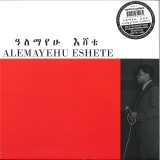
ALEMEYEHU ESHETE - ETHIOPIAN URBAN MODERN MUSIC VOL.2

Repress.

"Alèmayèhu Eshèté is no less than one of the great voices of the heyday of modern Ethiopian music, the swinging sixties which, in this country, went on until the fall of the Emperor Haile Sellassie 1 in 1974. On a par with Tlahoun Gèssèssè, Bzunèsh Bèqèlè or Mahmoud Ahmed, Alèmayèhu is a star at the top level of the constellation that once lit up the wild nights in the capital."

19,75
Cheeba’s Funky Rock Ensemble - Drug-Crazed London Hippies / You Wanna Ride? (7")

Cheeba’s Funky Rock Ensemble are back with two sides of funky rock breaks for hairy b-boys !

After the great feedback of their debut release 18 months ago, they went back into the studio soon afterwards to record some more slices of hip-hop orientated funky-psyche beats aimed at the dancefloor. Since then, both new tracks have been on a one-off dubplate and getting aired all over the country to an enthusiastic reception - so it’s about time we got them out there for everyone else to, like , just dig, maaaaan !

DRUG-CRAZED LONDON HIPPIES takes you down to the seedy back street clubs of late 60s swinging Soho - to the early discotheque scene and the psychedelic experience of numerous young rock groups and their fans. With heavy fuzz, funky beats and dirty flute loops this takes you straight to those hedonistic dancefloors in the early hours.

YOU WANNA RIDE ? Stays in the same era and same counter-culture, but on the other side of the Atlantic with the free festival vibe of alternative lifestyles in California. More fuzz-rock sounds, blended with heavy beats , screaming hammond and wordless female vocals to take you on a deep trip - to lose yourself in a field as the sun rises.

pas en stock

Commandez maintenant et nous commanderons l'article pour vous chez notre fournisseur.

18,07

Last In: 3 months ago
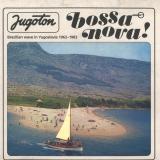
Various - Jugoton Bossa Nova  2x12"

Various

Jugoton Bossa Nova 2x12"

2x12inchEVERLAND-YU009LP
Everland
20.01.2026
 
20

Rich musical history of Yugoslavia reveals a long-lasting love for the music of Latin America.
Entwined in Afro-Cuban rhythms, ballrooms were shakin', swayin' and swingin', gathering musicians who were heavily into jazz bands and orchestras, most notably in Ljubljana, Zagreb, and Belgrade. Jazz could be heard on the streets of Split way back in 1919 when dancing became a symbol of freedom. Radio was the most loved household item, newest sheet music was in demand and collecting records was hip like today. In the aftermath of Second World War, jazz went underground but little by little, things changed and Ella, Satchmo, Dizzy and Miles came to visit, among others. Music festivals shaped the music for entertainment and variety of popular styles showed influences from all over the world. In the early sixties, one particular rhythm crashed on the coast of the Adriatic Sea: the rhythm of bossa nova!

In the whirlwind of various musical styles, Latin American music still played important part of the scene in the early sixties Yugoslavia. Beguine, tango, rhumba, samba, calypso, mambo and cha-cha-cha all found their place on the festivals inspired by famous Sanremo, festival of Italian popular song that largely shaped the musical taste of Europe. It was the era of instrumental rock, R & B and rock'n'roll - sounds of "imperialist America" now played freely on imported and hand-made electric guitars. While dancing halls had been turning into concert venues, bossa nova has come! Eydie Gorme with Blame It on the Bossa Nova and Paul Anka with Eso Besso (That Kiss!) tried to make us learn some new dance moves but it was Joao Gilberto's gentle singing and his new way of playing samba songs, along with Tom Jobim's modern dissonant harmonies and poetry of Vinicius de Moraes that created the magic. When American alto saxophonist and flautist Bud Shank visited Zagreb and Ljubljana in 1963 (with Boško Petrović in his quintet) "it was the first time we heard bossa nova!" remembers Stjepan Braco Fučkar. Jugoton, the biggest record company in Yugoslavia, released 4-track EP Bossa Nova by Bogdan Dimitrijević and his ensemble that same year! While not being fully accepted or understood completely, the archives of Jugoton reveal to us various interpretations of this new trend from their vast catalogue.

pas en stock

Commandez maintenant et nous commanderons l'article pour vous chez notre fournisseur.

38,61

Last In: 4 months ago
Various - Dolores: Salsa & Guaracha From 70's French West Indies

In Guadeloupe, many people think that jazz and ka music are like a ring and a finger. To some extent, the same could be said about so called Latin music and the music played in the French West Indies.

Both aesthetics were born in the Caribbean and bear so many connections that they can easily be considered cousins. In constant dialogue, there are lots of examples of their fruitful alliance and have been for a while. The English country dance that used to be practiced in European lounges came to be called kadrille in Martinique and contradanza in Cuba. They both featured additional percussion instruments inherited from the transatlantic deportation. Drawing from shared feelings about the same traumatized identity – later to be creolized – it would be hard not to assume that they were meant to inspire each other. The golden age of the orchestras that graced the Pigalle nights during the interwar period further proves the point. As soon as the 1930s, Havana-born Don Barreto naturally mixed danzón and biguine music in a combo based at Melody's Bar. In the following decade, Félix Valvert, a conductor who was born and raised in Basse-Terre in Guadelupe, also worked wonders in Montparnasse with La Coupole, which was an orchestra made up of eclectic musicians. Afro- Caribbean performers of various origins were often hired on rhythm and brass sections in jazz bands, which used to enliven the typical French balls of the capital. In the 1930s and onwards, Rico’s Creole Band was one of them.


Martinican violinist-clarinettist Ernest Léardée, who would become the king of biguine music as well as the main figure of French Uncle Ben's TV commercials (a dark stigma of post-colonial stereotypes), had musicians from the whole Caribbean sphere play at his Bal Blomet – and they all enchanted "ces Zazous-là" (according the words of Léardée's biguine-calypso piece). In les Antilles (French for French West Indies), music history started to speed up in the 1950s, when trade expanded and radio stations grew bigger. The Guadelupean and Martiniquais youth tuned in their old galena radio sets to South American and Caribbean music. As for the women traders, les pacotilleuses, they bought and sold goods across different islands (the "passing of items through various hands" was thought to be most pleasurable) and brought back countless sounds in their luggage. Such was the case of Madame Balthazar, who once returned from Puerto Rico with the first 45rpm and 33rpm to ever enter Martinique.

Out of this adventure was created the famous Martinican label La Maison des Merengues, a music business she opened and undertook with her husband and which proved to be a major landmark. At the end of the 1950s, in Puerto Rico, Marius Cultier competed in the Piano International Contest playing a version of Monk's Round 'Midnight. He won the first prize and this distinction foreshadowed everything that was to come. Cultier, the heretic Monk of jazz, was quickly praised for writing superb melodies, always tinged with a twist that conferred a unique sound to his music. It didn't take long for the gifted self-taught musician to get to play with Los Cubanos, making a name for himself thanks to his impressive maestria on merengues.

The rest is history. Besides, in the late 1950s, Frantz Charles-Denis, born into the upper middle class in Saint-Pierre and better known by his first name Francisco, went back home after working at La Cabane Cubaine – a club located rue Fontaine where he had caught the Latin fever. Francisco's music was therefore heavily marked by his Cuban cousins' influence, which gave the combos he led a specific style and also led to renewal. Things were swinging hard in La Savane, located in the main square in Fort-de-France. He set up the Shango club close by and tested out the biguine lélé there, a new music formula spiced up with Latin rhythms. Soon afterwards, fate had him fly to Puerto Rico and Venezuela.

As for percussionist Henri Guédon (percussions were only a part of his many talents), he was born in Fort-de-France in May 22nd 1944, the day marking the celebration of the abolition of slavery. As an old man, he could remember that in " his father's Teppaz, a lot of hectic 6/8 music was constantly playing...". In the opening lines of his Lettre à Dizzy, a small illustrated collection of writings published by Del Arco, he highlighted the huge impact that cubop had on him as a teenage boy, around 1960. He eventually turned out to be the lider maximo in La Contesta, a big band steeped in Latin jazz. He was also the one who originated the word zouk to describe music which brought the sound of the New York barrio to Paris. It was the culmination of a journey that started in Sainte-Marie: "a mythical place for bélé, the equivalent of Cuban guaguancó". In the early 1960s, the tertiary economy developed to the detriment of agriculture. Yet rural life was where roots music emerged in Martinique and in Guadeloupe.

Record companies played a major part in the process of Latin versions sweeping across the islands – before reaching everywhere else. Producer Célini, boss of the great Aux Ondes label, and Marcel Mavounzy, both the head of Émeraude records - a firm which was founded in 1953 - as well as the brother of famous saxophonist Robert Mavounzy, were big names to bear in mind. Although there were many of them - all of whom are featured on this record - Henri Debs was definitely the major figure in the recording adventure. He proved to be so influential that he even got compared to Berry Gordy. In the mid 1950s, when he acquired his first Teppaz, he worked on his first compositions: a bolero and a chachacha. Then, he became the one man who made people discover Caribbean music, from calypso to merengue. He was among the first ones to rush out to San Juan, Puerto Rico, to buy records and distribute them through a store run by one of his brothers in Fort-de-France. He had members of the Fania All Star come and perform there, which he was madly proud about. He was also the first one to pay attention to Haitian music, such as compas direct and various other rhythms which would soon flood the market. As a result, many of the combos hitting his legendary studio would end up boosted by widespread "Afro-Latin" rhythms. However, he never denied his identity: gwo ka drums were given a major role, although they were instruments which had long been banned from the "official" music spheres. The present selection bears witness to such a creative swarming. Here are fourteen tracks of untimely yet unprecedented cross-fertilization: all types of music rooted in the Creole archipelago have found their way, whatsoever, to the tracklisting. Whether originating from the city or being more rural, they all go back to what Edouard Glissant, in an interview about the place of West Indian music in the Afro-American scope, called "the trace of singing, the one which got erased by slavery." "It is so in jazz, but also in reggae, calypso, biguine, salsa... This trace also manifests through the drums, whether Guadelupean, Dominican, Jamaican or Cuban... None of them being quite the same. They all point to the idea of a trace, seeking it out and connecting to each other through it. This is the hallmark of the African diaspora: its ability to create something new, in relation to itself, out of a trace. It may be the memory of a rhythm, the crafting of a drum, a means of expression which doesn't resort to an old language but to the modalities of it." The opening track features one of the emblematic orchestras of this aesthetic identity, criscrossing many music types from the archipelago. The 1974 Ray Barretto guajira – Ray Barretto was a major New York drummer influenced by Charlie Parker and Chano Pozzo – is magnificently performed by Malavoi, a legendary Fayolais group (i.e from Fort-de-France). Additionally, the compilation ends on a piece by Los Martiniqueños de Francisco. It symbolically closes the circle as it is a genuine potomitan of Martinique culture which also functions as a tireless campaigner for Afro-Caribbean music. Practicing the danmyé rounds (a kind of capoeiria) to the rhythm of the bèlè drum, it delivers a terrific Caterete, a kind of champeta of Afro- Colombian obedience which was originally composed by Colombian Fabián Ramón Veloz Fernández for the group Wgenda Kenya. The icing on the cake is Brazilian Marku Ribas, who found refuge in Martinique in the early 1970s, bringing his singing to the last trance-inducing track. These two "versions" convey the whole tone of a selection composed of rarities and classics of the tropicalized genre, swarming with tonic accents and convoluted rhythms. It is the sort of cocktail that the West Indians never failed to spice up with their own ingredients. For instance, the Los Caraïbes cover of Dónde, a famous Cuban theme composed by producer Ernesto Duarte Brito, has a typical violin and features renowned Martinique singer Joby Valente and his piquant voice.


The track used to be – or so we think – their only existing 45rpm. The meaningful Amor en chachachá by L'Ensemble Tropicana, a band which included Haitian musicians among whom was composer and leader Michel Desgrotte, also recalls how Latin music was pervasive in the tropics in the mid-1960s. They were the ones keeping people dancing at Le Cocoteraie in Guadelupe and La Bananeraie in Martinique. Around the same time, another "foreign" band, Congolese Freddy Mars N'Kounkou's Ryco Jazz, achieved some success on both islands by covering Latin jazz classics – such as their adaptation of Wachi Wara, a "soul sauce" by Dizzy Gillespie and Chano Pozo whose interweaving of strings and percussions can have anyone hit the dancefloor. How can you resist Dap Pinian indeed, a powerful guaguancó by Eugene Balthazar, performed by the Tropicana Orchestra and published by the Martinique-founded La Maison des Merengues? It also acts as a symbol of the maelstrom at work. Going by the name Paco et L'orchestre Cachunga, Roger Jaffory used to play guaguancó too: his Fania-inspired Oye mi consejo is one example of his style. Baila!!!!! Dancing was also one of the Kings' focus points. Oriza is a Puerto Rican bomba and a "classic" originally composed by Nuevayorquino trumpeter Ernie Agosto, which reserves major space for brasses, giving it a special sheen.

Emerging from the New York barrios crucible was also La Perfecta, a Martinique group originating from Trinidad, whose name directly references the totemic Eddie Palmieri figure as well as his own band, also called La Perfecta. Here they borrow Toumbadora from Colombian producer and composer Efraín Lancheros and interpret it by emphasizing percussions, which set fire to the track even more than the wind instruments. The same goes for Martinique's Super Jaguars, who use Tatalibaba – a composition by Cuban guitarist Florencio "Picolo" Santana which was made famous by Celia Cruz & La Sonora Matencera – as a pretext for sending their cadences into a frenzy. In a more typically salsa vein, the Super Combo, a famous Guadelupean orchestra from Pointe-Noire that was formed around the Desplan family and had Roger Plonquitte and Elie Bianay on board, adapt Serana, a theme by Roberto Angleró Pepín, a Puerto Rican composer, singer and musician also known for his song Soy Boricua. Here again, their vision comes close to surpassing the original. In the 1970s, L'Ensemble Abricot provided a handful of tracks of different syles, hence reaching the pinnacle of the art of achieving variety and giving pleasure. They played boleros, biguines, compas direct, guaguancó and even a good old boogaloo - the type they wanted to keep close to their hearts for ever, "pour toujours", as they sang along together in one of their songs. Léon Bertide's Martinican ensemble excelled at the boogaloo which had been composed by Puerto Rican saxophonist Hector Santos for the legendary El Gran Combo.


Three years later, in 1972, Henri Guédon, with the help of Paul Rosine on the vibraphone, tackled the Bilongo made famous by Eddie Palmieri. Such a classic!!!!! And so were the Aiglons, the band from Guadelupe: choosing to execute Pensando en tí, a composition by Dominican Aniceto Batista, on a cooler tempo than the original, they noticeably used a wonderfully (un)tuned keyboard in place of the accordion. On the high-value collectible single – the first one released by Les Aiglons under the Duli Disc label – there is a sticker classifying the track under the generic name "Afro". Now that is what we call a symbol. Jacques Denis

pas en stock

Commandez maintenant et nous commanderons l'article pour vous chez notre fournisseur.

21,43

Derniere entrée: 86 jours
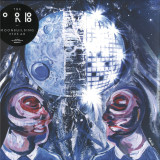
The Orb - Moonbuilding 2703 Ad

The Orb

Moonbuilding 2703 Ad

2x12inchKOM330
Kompakt
31.01.2025

The long-awaited new full-length from legendary electronic pioneers THE ORB with cover design from iconic graphic wizards THE DESIGNERS REPUBLIC • A fascinating sonic journey over four epic tracks, constantly switching between psychedelic flourishes and beat-driven focus

Veritable pioneers of electronic music, iconic act THE ORB returns to Kompakt with the new full-length MOONBUILDING 2703 AD - another major slice of psychedelic synth bliss, obscure loops and deep ambient textures tossed in swinging breakbeats and powerful basslines. Installing a forward momentum rather unusual for a genre-defying project like this, the latest effort from masterminds Alex Paterson and Thomas Fehlmann follows their 2005 album success on Kompakt, the cheekily named "Okie Dokie It's The Orb On Kompakt" (KOMPAKT CD 45), as well as several contributions to our Speicher and Pop Ambient series - but more importantly, it finds the legendary duo at the peak of its creativity, ringing in another essential phase in what can only be called a ground-breaking career.

True to form, the new offering MOONBUILDING 2703 AD features a small track list, but turns each one of its four cuts into a mini epic in its own right. Opener GOD'S MIRRORBALL hits the ground floating, employing a handful of cozy statics to great effect before finally discharging into an intricate mosaic of atmospheric melodic sketches and gripping rhythms. With a hypnotic runtime of more than 14 minutes, it immediately establishes a blueprint for the other album tracks to follow, perfectly illustrating the vast extent of the artists' vision and their impressive skills in luring in listeners - welcome to THE ORB's sonic labyrinth, where nothing is what it seems and the unexpected waits just around the corner.

Likewise, follow-up track MOONSCAPES 2703 BC presents itself as a uniquely versatile affair sitting comfortably between ambient flourishes and beat-driven focus, holding as many twists and turns as a caper movie, but carefully grounding every single one of its cliffhangers in its impeccable flow. With a runtime of approximately 9 minutes, LUNAR CAVES is the shortest jam of the bunch - and also the most ethereal, keeping its rhythmic content to a bare, pulse-like minimum and opting for enticing, freewheeling synth textures instead. Album closer and title cut MOONBUILDING 2703 AD introduces a surprisingly jazzy vibe mingling rather well with the wealth of electronic tricks up its sleeve - even indulging in abrasive bass sweeps and a breathtaking multitude of different rhythm sections constantly switching places. It's a fitting closing act for a full-length as multifaceted as this, as idiosyncratic as possible and as muscling as needed.


• Das langerwartete neue Album der legendären Elektronikpioniere THE ORB mit einem Coverdesign der gefeierten Graphikschmiede THE DESIGNERS REBUBLIC • Eine faszinierende Klangreise über vier epische Tracks hinweg, permanent zwischen psychedelischen Schlüsselreizen und beatgetriebenem Fokus changierend

Mit THE ORB kehren echte Pioniere der elektronischen Musik zu Kompakt zurück - der Langspieler MOONBUILDING 2703 AD präsentiert erneut einen grossen Wurf in Richtung psychedelischen Synthie-Segens, obskurer Loops und porentiefer Ambient-Texturen, geschwenkt in schwungvollen Breakbeats und wirkmächtigen Basslines. Mit einem für genresprengende Projekte wie diesem hier eher unüblichen Vorwärtsdrang beerbt das neue Album von den Großmeistern Alex Paterson und Thomas Fehlmann ihren 2005er Erfolg auf Kompakt, das augenzwinkernd benannte "Okie Dokie It's The Orb On Kompakt" (KOMPAKT CD 45), sowie einige Beiträge zu unseren Speicher- und Pop-Ambient-Serien - viel wichtiger allerdings, daß wir das legendäre Duo auf der Höhe ihrer Schaffenskraft antreffen, eine neue wesentliche Phase einläutend in einer Laufbahn, die nur als bahnbrechend bezeichnet werden kann.

In bekannter Manier hat das neue Werk MOONBUILDING 2703 AD eine eher kleine Tracklist vorzuweisen, baut dafür aber jeden seiner vier Tracks zu Mini-Epen von eigenem Recht um. Der Eröffnungsakt GOD'S MIRRORBALL schwebt einem da vor Ohren, zuerst nur mit einer Handvoll gemütlichen Rauschens bewaffnet, später dann in ein feingliedriges Mosaik von atmosphärischen Melodieskizzen und mitreissenden Rhythmen explodierend. Mit einer hypnotisierenden Lauflänge von über 14 Minuten etabliert das Stück die Blaupause für die folgenden Ereignisse, perfekt die enorme Reichweite der künstlerischen Vision und ihre Fähigkeit zur massenhaften Verführung nichtsahnender Tänzer illustrierend - willkommen in THE ORB's Klanglabyrinth, wo nichts ist wie es scheint und das Unerwartete um jede Ecke lauert.

Ähnlich präsentiert sich der Folgetrack MOONSCAPES 2703 BC als einzigartig vielseitige Angelegenheit, bequem zwischen ambienten Ornamenten und beatgetriebenem Fokus sitzend und mit sovielen Drehungen und Wendungen wie ein Gaunerfilm - doch stets seine Cliffhanger im makellosen Flow erdend. Ein wenig über 9 Minuten lang, ist LUNAR CAVES der kürzeste Entwurf in der Gruppe - und auch der ätherischste, hält er doch die Rhythmusanteile auf einem puls-ähnlichem Minimum und optiert stattdessen für freilaufende Synthie-Texturen. Das letzte Kapitel des Albums schließlich ist auch der Titeltrack: MOONBUILDING 2703 AD besitzt eine überraschend jazzige Note, die sich ziemlich gut in den Reichtum an elektronischen Tricks einfügt, welche hier aus dem Ärmel geschüttelt werden - sogar in rauem Bass schwelgend und eine atemberaubende Vielfalt an Rhythmussektionen aufrufend, die ständig die Plätze tauschen. Es ist ein passender Abschluss für ein derart facettenreiches Album, so idiosynkratisch wie möglich und so anschiebend wie nötig.

pas en stock

Commandez maintenant et nous commanderons l'article pour vous chez notre fournisseur.

26,01

Last In: 6 months ago
SUN AND SAIL CLUB - SHIPWRECKED

SunandSail Club

SHIPWRECKED

12inchHPSLTD321
HEAVY PSYCH SOUNDS
25.10.2024

Red vinyl, limited to 300 copies. After a nine year hiatus SUN AND SAIL CLUB are back and they've come back swinging! This album is more aggressive than the previous album, as if that was even possible. Same line-up as before featuring Scott Reeder (FU MANCHU/SMILE) on drums, Scott Reeder (KYUSS/THE OBSESSED/FIREBALL MINISTRY) on bass, Bob Balch (FU MANCHU/SLOWER/BIG SCENIC NOWHERE/YAWNING BALCH) on guitar and Tony Adolescent (THE ADOLESCENTS) on vocals. The album starts with a mellow jazz guitar piece and then proceeds to rip your face off until the end of the album, which closes with another solo jazz guitar piece. "Shipwrecked" is their strongest album yet. Fully realized and to the point. Fast and dissonant. "This album is a compilation of riffs collected over a nine year period. Most of the songs were written last year but some of them have been floating around for a while. There is a general sense of unease throughout. I wanted to make an album that went one step further than "The Great White Dope." The songs are faster and more intense at times. It's basically the soundtrack of me beating the shit out of my guitar. Then you factor in Scott Reeder on drums, Scott Reeder on bass and Tony Adolescent on vocals and you've got something more than I could have imagined by myself. This album is raw and pummeling. If you're a glutton for punishment this might be your desert Island record." - Bob Balch Recorded at Jim Monroe's The Racket Room, Casa De Balch, and Scott Reeder's The Sanctuary

pré-commande25.10.2024

il devrait être publié sur 25.10.2024

22,27
SUN AND SAIL CLUB - SHIPWRECKED

SunandSail Club

SHIPWRECKED

12inchHPSLP321
HEAVY PSYCH SOUNDS
25.10.2024

After a nine year hiatus SUN AND SAIL CLUB are back and they've come back swinging! This album is more aggressive than the previous album, as if that was even possible. Same line-up as before featuring Scott Reeder (FU MANCHU/SMILE) on drums, Scott Reeder (KYUSS/THE OBSESSED/FIREBALL MINISTRY) on bass, Bob Balch (FU MANCHU/SLOWER/BIG SCENIC NOWHERE/YAWNING BALCH) on guitar and Tony Adolescent (THE ADOLESCENTS) on vocals. The album starts with a mellow jazz guitar piece and then proceeds to rip your face off until the end of the album, which closes with another solo jazz guitar piece. "Shipwrecked" is their strongest album yet. Fully realized and to the point. Fast and dissonant. "This album is a compilation of riffs collected over a nine year period. Most of the songs were written last year but some of them have been floating around for a while. There is a general sense of unease throughout. I wanted to make an album that went one step further than "The Great White Dope." The songs are faster and more intense at times. It's basically the soundtrack of me beating the shit out of my guitar. Then you factor in Scott Reeder on drums, Scott Reeder on bass and Tony Adolescent on vocals and you've got something more than I could have imagined by myself. This album is raw and pummeling. If you're a glutton for punishment this might be your desert Island record." - Bob Balch Recorded at Jim Monroe's The Racket Room, Casa De Balch, and Scott Reeder's The Sanctuary

pré-commande25.10.2024

il devrait être publié sur 25.10.2024

20,38
PINHEAD GUNPOWDER - UNT LP

Pinhead Gunpowder

UNT LP

12inchGO89RED
1-2-3-4 GO!
18.10.2024

“Pinhead Gunpowder started writing songs in 1990 and made our first 7-inch the following spring. Nearly every year since, we’ve met up to play. Some years we recorded—five albums and eleven EPs— and some years we played shows. “But since 2010, we’ve been playing just for ourselves, something bands forget to do. Rather than ‘writing for the new album’ or rehearsing to get ready for tour, we went back to the basement every year. We lived in the house we’d built, remembering how we’d made the music for each other in the first place.We played all over the world—well, at least Oakland, Singapore and New York—but only for each other. We worked on the reissues of our back catalog, too and found ourselves fonder of each other and more family-like than ever. “A new record and tour was only a matter of time, but between the members’ other bands projects, and families, that was hard to find. When we finally did, we were all surprised. We think it’s our best yet—our catchiest, most collaborative, and most poignant.” — Aaron Cometbus Pinhead Gunpowder is Billie Joe Armstrong, Aaron Cometbus, Jason White and Bill Schneider. Unt is fourteen brand new songs recorded in 2023 by Chris Dugan (Green Day, Weezer, Iggy Pop, Samiam, Swingin’ Utters etc) and mastered for all formats by Nick Townsend (Cheap Trick, Bad Religion, Iron Maiden etc) at Infrasonic Sound.

pré-commande18.10.2024

il devrait être publié sur 18.10.2024

31,89
Various - Tonight I'll Go Down Swingin': A Tribute To Don Heffington

Don Heffington was a musician's musician. Starting his professional career in the late 70s and early 80s as a part of Emmylou Harris' Hot Band and seminal alt-country pioneers Lone Justice, Heffington went on to a session career that included work with Bob Dylan, Dwight Yoakam, The Jayhawks, Dave Alvin, The Wallflowers, and many, many more. Heffington was also a prolific songwriter, and here, his colleagues and friends pay loving tribute to those songs in a benefit for the Sweet Relief Musicians Fund (Heffington passed away in 2021 from Leukemia). Artists such as Jackson Browne, Fiona Apple, Buddy Miller, Dave Alvin, Watkins Family Hour, Peter Case, and others interpret Don's quirky songs. In the words of Jackson Browne: "I think of (Don) as inhabiting the same Los Angeles as Warren Zevon, Lowell George and Tom Waits.”

pré-commande18.10.2024

il devrait être publié sur 18.10.2024

29,62
STIV BATORS - DISCONNECTED

Stiv Bators

DISCONNECTED

12inchMR456
MUNSTER
12.07.2024

HIGHLIGHTS Originally released in 1980, this was Stiv Bators' first solo album. Now reissued with 2 bonus tracks, not available on the original version, a slightly different picture on the cover (the actual unfiltered photo as used on the 1980 issue) and a booklet with extensive liner notes and photos. Bators was the man who destroyed Rocket from the Tombs, from which he hijacked half the members to found one of the most influential American punk bands to have existed, The Dead Boys. Stiv had turned in his broken teeth for a more power pop oriented solo career. This is not an album recorded by a has-been former punk idealist; instead it's a true step forward into another unknown arena packing all the glare and attitude that remained from the last. The music is more similar to 60's power pop than the vicious punk rock that Bators became known for originally, while a member of The Dead Boys. New generations continue to discover it. It still holds up very well and sounds as fresh and vibrant as ever. DESCRIPTION On August 11th of 1980, Stiv Bators, David Quinton Steinberg, George Cabaniss and Frank Secich flew to Vancouver, in British Columbia, Canada. They were there to do the West Coast leg of the "URGH! A Music War" tour. On the bill of the tour were Pere Ubu, Magazine, the Members, and they were billed as Stiv Bators and the Dead Boys or just the Dead Boys. After the tour they were supposed to embark on a 6-week tour of Australia, New Zealand, and the Far East. During the beginning of the Urgh Tour the Australian Tour was abruptly canceled. Greg Shaw who owned Bomp Records decided that since the band were already going to be in California that they should do Stiv's solo album which they had planned to do after returning from Down Under. So, Bators and the rest of the group set up camp at the infamous Tropicana Motel in West Hollywood and Greg booked them into Perspective Studios in Sun Valley, CA. Before going into Perspective, they went into Andy Chappel's Stone Fox rehearsal studio in North Hollywood, CA for a few days to rehearse the songs and arrange them for the album. "We had 'Evil Boy' (Zero-Secich), David Quinton's 'Make Up Your Mind' and my song 'A Million Miles Away'. We also rearranged mine and Stiv's 'The Last Year' changing the key from D to F# and making it much easier to sing in a power pop vein. In addition, we had 'Swinging A Go-Go' another great contribution by George Cabaniss. Stiv and I had written two more for the album 'Ready Anytime' and the album closer 'I Wanna Forget You (Just the Way You Are)'. We also had a moody dark instrumental (written by Cabaniss-Quinton-Secich) that we were playing around with for some time. Stiv was supposed to write lyrics for it, but he never got around to it, so we left it as an instrumental. It had a great vibe and reminded me of the John Cassavetes 1956 film "Crime in The Streets" and was thus christened that. The last song we picked for the LP was 'I Had Too Much To Dream (Last Night)' which was the one cover we did that suited Stiv's voice perfectly. After a few days of rehearsing at Stone Fox, we went into Perspective Studio in Sun Valley, California. Greg hired Thom Wilson (who would later become a famous punk rock producer of Offspring, Iggy Pop, Dead Kennedys, T.S.O.L., Bad Religion and many others). Stiv co-produced with Thom and Andy Chappel and Thom did the engineering." Frank Secich recalls. In September, after the "Disconnected" mixing sessions, Stiv went to Baltimore to film "Polyester" with Movie Director John Waters and actors Tab Hunter and Divine. Stiv then went to the UK to record with the Wanderers doing their LP "Only Lovers Left Alive". He wanted to have both bands going simultaneously but logistically and practically they all knew that could never work. The "Disconnected" Band would do one last tour to support the album release of "Disconnected". The LP was released by Bomp Records on Monday December 08th, 1980. Later that night, John Lennon was murdered in New York City. So many of the principal characters involved in the creation of "Disconnected" have passed on. Stiv Bators (June 3rd, 1990), Greg Shaw (October 2nd, 2004), Thom Wilson (February 8th, 2015), and George Cabaniss (July 17th, 2020). But "Disconnected" lives on and on and has left quite a legacy for itself. There have been over 100 cover versions internationally of the songs from "Disconnected" and it has been in print and reissued in various forms in many countries around the world. New generations continue to discover it. It still holds up very well and sounds as fresh and vibrant as ever.

pré-commande12.07.2024

il devrait être publié sur 12.07.2024

20,38
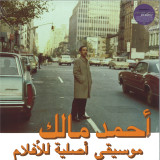
Ahmed Malek - Musique Original De Films, Volume Deux

Habibi Funk is thrilled to share a second collection of deep grooves and unreleased songs from Algeria's Ahmed Malek, often compared to Italian heavyweight Ennio Morricone. Malek’s music effortlessly switches between thematic jazz, funk, reggae and Algerian folk – creating indelible soundscapes that intersect the musical innovations made in African jazz by Mulatu Astatke, Bembeya Jazz National along with some of Europe’s finest experimental composers like Piero Piccioni and Janko Nilovic. “Musique Originale de Films, Volume Deux” is out June 28th, 2024 via Habibi Funk.

Whenever an interview asks about a “memorable moment” in Habibi Funk label history, one we always reference is how we got in touch Ahmed Malek’s (22K Spotify Followers, 285K Spotify Monthly Listeners) music and subsequently his family. It all started with us coming across Ahmed Malek’s music on YouTube in 2012. We were mesmerized by how effortlessly the music would switch between jazz, funk and Algerian folk while counterweighting it with an undertone of melancholia. Musical perception is different for every person, but there is a chance that his music will touch you in one way or another. At the time, we had just started the Habibi Funk label and we felt Ahmed’s music might be a good fit for the sound we were trying to highlight. Fast forward three years: we had become captivated with the idea of reissuing some of Ahmed Malek’s music. We knew some people had tried to locate his family but, but with no success. In the end it was an incredible amount of luck that made it possible for you to read these words and listen to Ahmed’s music. We were on a DJ gig in Beirut playing old Arabic records and we mentioned our passion for Ahmed Malek’s music to a friend. She said she knew one person in Algier, and as much as it would be a shot in the dark, she could ask her if she had an idea of how to find Malek’s family. Two weeks went by before we heard back, and what we got was incredibly good news - her Algerian friend was the neighbor of Ahmed Malek’s daughter! We’re not spiritual people, but it felt like the universe wanted to see the release happen. We started to speak with Henya, Ahmed Malek’s daughter and she was more than happy with our idea. She assured us that her father would have loved the plan as well. She provided us with tons of awesome material, from great photos, to unseen video footage and unreleased tracks. Eventually we visited Henya in Algeria and we licensed some of her father’s music, first for one (Habibi 003), then for another (Habibi 005), then we eventually organized an exhibition in June/July 2019 – Planète Malek – Une Rétrospective – at the Musée Public National D’Art Moderne & Contemporain in Algiers, focusing on Ahmed Malek’s artistic life. We also produced a small movie about him that our friend Paloma Colombe shot and directed. “Musique Originale de Films, Volume Deux” is a deep collection of unreleased songs and stemmed grooves from the Algerian master, from jazz, funk, psych to reggae rhythms and Latin flavors, all under the sonic umbrella of “Planète Malek;” and to quote the maestro, “I didn’t choose music, music chose me.” Lead single is the subtlety funky “Thème Rythme Léger,” out May 3rd along with LP Pre-Order (coincided with Bandcamp Friday for a larger impact) a delicate sonic dance between flute, piano and Spanish guitar with a Bossainfluenced groove. The steady, swingin’ drum groove is cloudlike - definitely toe-tapping friendly so just grab a partner to feel the Rhythme Léger. Second single out May 17th is the reggae-infused “L’Empire Des Rêves” – a sultry sax melody weaves through a prismatic rocksteady thematic groove. 3rd and final single “Thème Djalti feat. Aïda Guéchoud” – is a true Western-inspired ode to his Italian counterpart Ennio Morricone. “Thème Djalti” features the haunting vocals of Aïda Guéchoud, and combines elements of baroque and Bossa-jazz in a timelessly thematic way that seems grandiose yet remains uniquely personal to your ears. Swelling strings, trumpet, fem vox, flute, and plucked guitar expertly arranged, feels like you’re riding a horse into the sunset. Focus track “La La La” is fiery afro-arab-funk of the highest order! Put on your dancing shoes as Ahmed cuts the rug and gets us grooving along. Sonically the cut sounds like if Ahmed ran into The JB’s and Fela Kuti at a Cymande concert. Driving guitar and organ solos vie over pulsating bass riffs and afro-funk drumming that’ll have you out on the dance floor in no time. As always, both vinyl and CD come with an extensive booklet featuring background and interviews with Ahmed compiled through found newspaper clippings and newsreels, also including unseen photos, scans and more. “Ahmed Malek: Musique Originale de Films, Volume Deux” will be out everywhere June 28th.

pas en stock

Commandez maintenant et nous commanderons l'article pour vous chez notre fournisseur.

22,48

Last In: 5 months ago
MARINA ALLEN - EIGHT POINTED STAR

Das dritte Album von Marina Allen mit starkem und lebendigem Songwriting, wunderschön instrumentiert, hochmelodisch und mit einer unvergleichlichen lyrischen Perspektive vorgetragen. Mit zwei gefeierten Alben hat die in Los Angeles lebende Singer-Songwriterin eine frühe Ernte eingefahren, aber ihr drittes Studioalbum birgt den bislang größten Ertrag. Verglichen mit den anschwellenden Kompositionen von Allens zweitem Album Centrifics oder der unschuldigen Ruhe von Candlepower, ist die Welt von Eight Pointed Star tiefgreifender und offener. Schimmernende Gitarren verziehren die Canyons und Staub wird von der rot vernarbten Erde aufgewirbelt. Allens Gesang ist rein und kristallin, während die Instrumentierung reichhaltig ist und vor Helligkeit nur so strotzt. Man kann hören, wie die Musik Zufriedenheit ausstrahlt und der Produktion von Chris Cohen Raum für eine volle Band bietet. Allens künstlerische Zuneigung gilt vor allem Sängern, die ihrer Meinung nach wirklich singen können, von The Roches bis Karen Dalton, Joanna Newsom und Meredith Monk. Aber diese Einflüsse verschwinden wie Gespenster auf dem Dachboden, wenn sie selbst zu singen beginnt. Allen hat eine Stimme, die es mit dem Kanon aufnehmen kann - unnachahmlich - und sie hat noch nie so entschlossen geklungen wie hier. Ein strahlender, klarsichtiger moderner Klassiker des alternativen Folk und Americana. Für Fans von Aldous Harding, Fiona Apple und Waxahatchee. Klassich schwarzes Vinyl mit DLC oder Digisleeve CD.

pré-commande07.06.2024

il devrait être publié sur 07.06.2024

23,49
Double H Productions - The Swinging In The Trees EP

Who remembers the UK rapper MC Duke from Music Of Life? That all-time classic ‘Miracles’ as well as being sampled in untold rave tunes in the early 90’s including Prodigy’s ‘Everybody In The Place’ which uses his lyric ‘Can’t beat the system, go with the flow’. Well, did you know that MC Duke and his DJ, Leader One, went on to create jungle a few years later?

This was their first jungle release before they went on and formed Hard Disk where they released the rest of their output. An EP that has the essence of the hip hop sample culture, showcasing how creative you can be with the right record collection at your disposal.

Raw East London jungle from 1993 repressed on limited edition heavyweight royal blue vinyl in a Vinyl Fanatiks housebag. Vinyl only.

pas en stock

Commandez maintenant et nous commanderons l'article pour vous chez notre fournisseur.

14,92

Last In: 3 years ago
Flair - Chasin' The Rain

Heels & Souls Recordings step back to 1988 for their sixth reissue, relicensing and remastering Flair's anthemic soul number 'Chasin' The Rain.' For the uninitiated, strap yourself in for six blissful minutes of heavy bass licks, soaring vocals, and infectious synth lines.

Consisting of Janet Rose (aka UK Soul queen JB Rose), Joe Matz, Peter Bielig, and Peter Shindler, Flair was a predominantly German affair, with Rose being the only UK band member and Bieling living in London during the late '80s. This is a curious detail considering 'Chasin' The Rain' is often lauded today as a UK Soul classic - partially due to its release on the prolific UK label Champion. However, it's squeaky-clean production values, and the fact it was mixed and mastered at the famous Jankowski studio in Stuttgart by three Germans, reveals a somewhat different story.

The track has that UK street soul heavy low-end, but with a synth-pop flavour sprinkled in the mix - swinging synth lines and gated snares aplenty. Yet from chatting to Peter Bielig, who's been instrumental in getting this record reissued, the sounds sweeping across the Atlantic from the likes of Jam and Lewis, who blended R&B, funk, soul and pop, were clearly a big influence too.

Those were heady days for four young twenty-something musicians, with Peter recalling cherished memories these tracks bring back, telling of his and JB's PA sessions at London's Gulliver's nightclub. However, while 'Chasin' The Rain' had all the hallmarks of a chart-breaking hit, Champion prioritised other projects and the record never broke. Sadly the group disbanded after only two releases, and this musical gem was consigned to the crates of those in the know. Soon after, Peter Bielig went to Jamaica to work at Tough Gong Studios, working on albums for Rita Marley Music. He now lives in Brazil, producing local artists in his studio in Salvador.

Unfortunately, the master tapes were nowhere to be found, so we had the maestro, Sean P, rip and restore a mint copy of the record, with award-winning mastering engineer Cicely Balston working her studio magic for that added punch.

pas en stock

Commandez maintenant et nous commanderons l'article pour vous chez notre fournisseur.

13,03

Last In: 17 months ago
Lewis Taylor - Stoned Part I 2x12"

Stoned Part I was the first self-released album from lost soul phenomenon Lewis Taylor. His third album proper, it was initially released on his own label Slow Reality in 2002 and it's been licensed to Be With for this long-awaited double LP release, its first ever vinyl edition. The songs are varied, hook filled and outstanding. Beloved by his legions of diehard fans, it's nothing short of a masterpiece.

After parting ways with Island, and without a label deal, Lewis went back to his home studio and began to record Stoned Part I in 2001. Co-written and co-produced with longtime collaborator Sabina Smyth, Lewis sings and plays all the instruments on this beautiful, emotional and very human album. It represents Lewis at his most accessible and finds him in the middle ground between his two Island releases. In some ways, Stoned Part I distills the best of his musical sensibilities. The flawless production is dense, layered and very early-2000s slick. The bottom end is thick, funky and sexy.

The complex, proggy-soul of title track "Stoned" opens the album and instantly captivates. Deep swinging funk with truly sweet soulful vocals, complemented by wah-wah guitar and swelling acidic synths. As Lewis himself told us, the ad libs at the end of the track were a nod to Paul McCartney at the end of "Hey Jude". Fan favourite "Positively Beautiful" has shades of Curtis and Marvin; its richly layered harmonies propelled by a simple, metronomic click-track that gives way to a more fully fleshed beat for the magnificent coda.

The slow, sweeping majesty of "Lewis IV" is all moody atmosphere, featuring dense, richly textured music and heavenly multi-tracked harmonies. The stop-you-in-your-tracks incredible "Send Me An Angel" could have been a huge AM radio hit, beautifully crafted sophisticated soul-pop songwriting in the vein of the very best Sade records. Yep! *That good* The smooth, psychedelia-lite "Til The Morning Light" is a gorgeous, sun-dappled love song, layered with Lewis' distinctive honey drenched vocals and, again, the type of record you could've easily heard all over the radio at the time of initial release.

The remarkable, wide-eyed "Shame" packs so many shifting styles into one song, it has to be heard to be believed. Opening in a laconic, breezy style, not unlike a Dallas Austin or Rodney Jerkins produced R&B hit of the day, it morphs into a heavy psych-soul Soulaquarians wig-out (the solo bearing an uncanny resemblance to Carlos Santana’s on "She’s Not There") before elegantly sliding into string-assisted symphonic soul and then back around again. And again. Sheer brilliance. The sublime, gentle head-nod funk-soul of "When Will I Ever Learn" (Part 1) is a strikingly well-turned-out tune, a neat, sweet bass-driven guitar-soul jam that ensures our jaw won't be leaving the floor anytime soon. "Lovin’ U More" sounds like a classic turn-of-the-century Neptunes production, the likes of which they'd lay on for JT BITD. A Latin-tinged groover with more than a little Nile Rodgers-driven slick funk stylings, it's yet another instant Lewis bomb with those gorgeous harmonies and chart-friendly irresistible key-changes to boot. Another indisputable (non-)HIT!

The funky seductive swagger of "From The Day We Met - Part II" opens the final side of wax, giving way to the gigantic buzzing synth-funk beast "Lovelight", a track so insouciantly mighty it should have been a massive hit for someone. Wait, what's that? Robbie Williams covered it? Ah, OK, well, I guess that says something about the effortless pop genius contained within. Containing a seemingly unnoticed nod to Kraftwerk’s "Computer World", it's Lewis's favourite song on the album. It's easy to hear why: "Sabina’s production totally nails it. I love the restraint and the subtlety, and that mixture of warmth and sweetness from the singing against the slightly cold, yet beautiful airy-ness of the backing track." To close this phenomenal album, the twisted electronic soul of "Sheneverdid" marries Lewis's beautiful falsetto to his virtuoso playing and an easy-cum-ominous musical backdrop. Stunning.

Simon Francis’s vinyl mastering, approved by Lewis himself, presents the eleven tracks over a double LP so, as ever, it sounds sensational. The records have been cut by Cicely Balston at Air Studios and pressed at Record Industry. Allow Lewis Taylor to get you Stoned.

pas en stock

Commandez maintenant et nous commanderons l'article pour vous chez notre fournisseur.

30,21

Last In: 2 years ago
John Hicks Trio - I’ll Give You Something To Remember Me By

In the late 1980s, the renowned American jazz pianist, composer, and arranger John Hicks formed one of the most influential ensembles consisting of musicians that had played music at the highest level all their lives and gained their status as both stand-alone artists and important sidemen. Each of them had participated in many of jazz’s great moments and all shared the ability, documented on many albums, to inspire their fellow musicians to even greater heights. The ‘John Hicks Trio’ had several line-up changes over the years that included greats such as Clifford Barbaro (Strata East, Blue Note, Sun Ra Arkestra, Charles Tolliver), Clint Houston (Prestige, Nina Simone, Roy Ayers, Azar Lawrence), Ray Drummond (Freddie Hubbard, Art Blakey, Lalo Schifrin), Marcus McLaurine (Muse, Verve, Weldon Irvine, Kool & The Gang) and Victor Lewis (Steve Grossman, Stan Getz, Charles Mingus, Cedar Walton, Chet Baker).

On the album we are presenting you today (I’ll Give You Something To Remember Me By from 1988) the trio consists out of some of the biggest and best players in the jazz, funk and soul scenes:

On piano we have the Atlanta based trio’s bandleader JOHN HICKS (1941-2006). He served as a leader on more than 30 albums and played as a sideman on more than 300 other recordings. After being taught piano by his mother, Hicks went on to study at Lincoln University of Missouri, Berklee College of Music, and the Juilliard School. After playing with a number of different artists during the early ’60s (including Oliver Nelson and being part of Pharoah Sanders’s first band) he joined Art Blakey & The Jazz Messengers in 1964. In the early ’70s he taught jazz history and improvisation at Southern Illinois University before resuming his career as a recording artist. Next to his many solo recordings for labels such as Strata East and Concord, Hicks would collaborate with all the big names in the scene, including Archie Shepp, Mingus and Alvin Queen. In 2014 & 2015, J Dilla paid homage to John Hicks by sampling two of his songs.

On drums we have the legendary IDRIS MUHAMMAD (1939-2014) who to this day is still considered as one of the most influential drummers covering a multitude of genre-transcending styles. Born in New Orleans, he showed early talent as a percussionist and began his professional career while still a teenager, playing on Fats Domino’s ‘Blueberry Hill’. He then toured with Sam Cooke and would later go on to work with Curtis Mayfield. Next to his landmark solo recordings for Prestige Records, Idris would collaborate with iconic musicians and acts from the likes of Manu Dibango, Ahmad Jamal, Melvin Sparks, Charles Earland, Walter Bishop, Ceasar Frazier, Roberta Flack, Gato Barbieri, Nathan Davis, Sonny Rollins, Lou Donaldson, Galt MacDermot, Lonnie Smith…and countless others. Idris Muhammad’s work was sampled by renowned performers such as Drake, Beastie Boys and Fatboy Slim.

On bass we have CURTIS LUNDY (born 1955) who originates from Florida. Lundy is a well-respected bass player (and a master of his instrument), choir director, arranger, composer and producer who was part of performances and recordings of renowned acts and artists such as Pharoah Sanders, Frank Morgan, Cole Porter, Chico Freeman, Khan Jamal… and many others!

On I’ll Give You Something To Remember Me By (recorded at the legendary Dutch Studio 44 in March 1987 and released on Limetree Records in 1988) the listener is treated to eight majestic tracks of the highest caliber (including an excellent Thelonious Monk cover-tune) and features a remarkable outing of advanced musicianship by three jazz-giants in their prime, delivering an inspirational gem of an album.

These recordings sound as successful, young and vibrant as ever! Expect supercharged ragtime Post Bop with striking notes, no-holds-barred musicianship, high swinging solos, screaming choruses and plenty of solid virtuosity to spare. The up tempo none stop Latin beat is complimented by the terrific drum solos of Idris Muhammad and the rhythmic bass strokes of Curtis Lundy. This electrifying set of tracks makes this release a bonafide hit and a must have for any self-respecting jazz fan or collector.

pré-commande10.03.2023

il devrait être publié sur 10.03.2023

29,62
Eighth Ray - Axis Of Love

Emotional Rescue finally gets around to reissuing some House music with the start of a 3 x 12 series from Miami's Dancefloor Records. Covering House and Freestyle, this is music as worthy as any other explored to date.Founded by British ex-pat Jeffery Collins in 1983, Dancefloor Records was the culmination of a music industry journeyman's long career from swinging sixties London to bohemian seventies NYC before relocating to the sunnier climbs of Miami.Taking in the City's unique mix of American, Latin and Caribbean sounds, Dancefloors early success came via a long association with reggae turned disco star King Sporty. While his legacy will be looked at in future, this series concentrates on Dancefloor's shift to the growing club sounds emanating from Chicago and NYC.First is the little is known Eighth Ray. As often the case, a project by a group of musician friends who went on to release under various pseudonyms. From the opening spoken word intro of Axis Of Love, the spaced-out 4/4 and spiritual, pulsing arps, this could be mistaken for the then in-vogue 'Italian House'. With Rimini in its sights, the vocals are the journey, underpinned by simple, up'n'back bass and Mateo and Matos style keys, pure 6am sunrise. Backed with the deeper 8th Ray, the EP eschews the bumpin' House then coming from NYC and looks to the sound system vibes out across the Atlantic. Deep House before the term had grabbed hold, been twisted and contorted and donned head-to-toe in black. Simply, real House music.

pas en stock

Commandez maintenant et nous commanderons l'article pour vous chez notre fournisseur.

15,92

Last In: 15 months ago
ANDREAS TOFTEMARK QUARTET - A NEW YORK FLIGHT

Andreas Toftemark is a young and talented Danish saxophonist and composer, who has spent the last 8 years of his life making a career for himself abroad; with 1 year in Sweden, 3 years in Amsterdam and 4 years in New York - where he was very inspired and influenced by the capital of jazz. Toftemark has studied with prominent names, such as Joel Frahm, Ben Wendel, Sam Yahel and Eric Alexander. He has performed around the world and he has played with many internationally acclaimed jazz musicians, like Peter Bernstein, Rodney Green, Ethan Iverson and Paul Sikivie. The six tracks on 'A New York Flight' are melodic and driven by the rhythmic open-mindedness that jazz is moving towards today. This is something that can be heard on both the two tracks that Andreas Toftemark has composed himself and on the four jazz standards which the quartet also play. It is swinging and at the same time open to the individual interpretations of both the listeners and of the musicians. The overall subject of the songs are love and passion, whether it's the love for New York - or perhaps the regained love for Denmark...? - or the love expressed on the track, which was the first single from the album, and which also has the most mysterious title of all of the tracks on the album, '2223', which is a row of numbers that seem to follow Toftemark in love and in friendships. Andreas Toftemark Quartet consists of some of the absolutely finest young musicians on the contemporary Danish jazz scene; Felix Moseholm on bass, Andreas Svendsen on drums, Calle Brickman on piano and, of course, Andreas Toftemark himself on sax. Each one of them is an overwhelming joy to listen to, and brought together in a band, they bring music to a both sincere and playful level.

pré-commande30.09.2022

il devrait être publié sur 30.09.2022

24,33
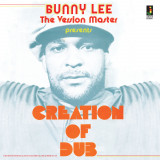
Bunny Lee - Creation Of Dub

King Tubby and Producer Bunny ‘Striker’ Lee are intertwined in the birth of Dub Music. After discovering a mistake that made a ‘serious joke’ (more of which later...) they went on to release the first pressings of this new musical genre namely ‘Dub Music’. Tubby’s vast knowledge of electronics and Bunny’s vast catalogue of rhythms would lay the foundations of what today is taken as a standard... the Remix / Version cuts to an existing vocal tune.

Osbourne ‘King Tubby’ Ruddock was born in Kingston, Jamaica on 28th January 1941 and grew up in the High Holborn Street area of downtown Kingston. He studied electronics at Kingston’s National Technical College and also on two correspondence courses from the U.S.A... When he had qualified Tubby began repairing radios and other electrical appliances in a shack in the back yard of his mother’s home. His work in the early days included winding transformers and building amplifiers for Kingston’s Sound Systems. Tubby built his first Sound System in 1957 playing jazz and Rhythm & Blues at local weddings and birthday parties. His reputation as a man who knew and understood both electronics and music grew steadily and as the sixties drew to a close. Tubby purchased his own basic two track equipment. He installed this alongside his dub cutting machine, a homemade mixing console and his impressive collection of Jazz albums in the back bedroom of his home at 18 Dromilly Avenue which he christened his music room.

Tubby and Striker were at Treasure Isle Studio’s one day while Ruddy from Spanish Town was working with the engineer Byron Smith....

“Tubby and myself was talking when Ruddy was cutting some dub but Smithy (engineer) made a mistake through we were talking and forgot to put in the voice. It was two track recording in those days. Ruddy said ‘No Man! Make it stay! and so they cut the rhythm. When I went over to Ruddy’s that Saturday night a dance was in progress and when they played the vocal to the tune... then he said we’re going to play ‘Part Two’. They never called it ‘Version’..and then he played the rhythm track. The song was a catchy song and everybody started to sing along and the deejay started to toast so everything went down well. On Monday morning I went up and I said ‘Tubbs the mistake we made was a serious joke. It mash up Spanish Town! The people went wild. So you have to start to do that now ‘cause when the man put on the ‘Part Two’ everyone start singing this song. It played about twenty times. I said you try Tubbs!’...Well the next Saturday night now when Tubby strung up down the farm U Roy said he’s going to play ‘Part Two’ but Tubby did it different now. He started with the voice then dropped it out and let the rhythm run and then he brought in the voice in the middle and from there Tubby started to get really popular.’’
Bunny ‘Striker’ Lee

Dynamic Sounds upgraded to sixteen track recording in 1972 and Tubby purchased, again with the help of a deal brokered by Bunny Lee. The old four track equipment and the MCI console from their Studio B. The four tracks now gave him far wider scope to work with and he began to create a new musical form where the bass and drum parts were brought up while the faders allowed Tubby to ease the vocal and rhythm in and out of the mix. It was only a matter of time before Tubby’s dub plate experiments began to make it on to vinyl and the first ever long-playing King Tubby releases would feature a collection of his mixes to a selection of Strikers rhythms. So please sit back and enjoy this historic set of sounds, mixed by King Tubby and Mr Prince Phillip Smart and another set of scorcher Bunny Lee rhythms.

pas en stock

Commandez maintenant et nous commanderons l'article pour vous chez notre fournisseur.

13,40

Last In: 15 years ago
New Life Trio - Visions Of The Third Eye

The music world is most fortunate that the past two decades have witnessed the rediscovery of mind-opening music that went under-recognized when originally released, and the wellspring of musical content produced by a generation of brilliant musicians. One such musician was the late great drummer Steve Reid, whose reissued eclectic recordings on his own Mustevic Sound label gave his career a second wind.

Though teased on a well-received compilation, one Mustevic release never saw reissue: New Life Trio’s Visions Of The Third Eye, a tremendous collaborative effort between Reid, guitarist Brandon Ross and bassist David Wertman.

Due to overwhelming demand, Early Future Records and Finders Keepers Records are proud to announce a second limited edition pressing of the classic and final Mustevic recording. The release also includes a 20-page written zine featuring an in-depth testimonial and interview with Brandon Ross, and an explorative essay by Finders Keepers’ Andy Votel, as well as a wealth of archival photos, scores and reviews.

Reid’s long and varied career began in his native New York City, where he was involved early on as a member of the Apollo Theater House Band and the R&B scene of the 1960s, including recordings with Martha Reeves and James Brown. In the late 1960s, Reid spent three years in West Africa absorbing musical traditions and experimenting with artists such as Fela Kuti, Guy Warren and Randy Weston. After a stint in prison for dodging the draft as a conscientious objector, the drummer came out swinging in the 1970s. He worked regularly as a session and Broadway musician even while immersing himself into the jazz world, from the straight-ahead styles of Freddie Hubbard and Horace Silver to the otherworldly sounds of Sun Ra and Charles Tyler.

The do-it-yourself ethos of the New York Loft Scene inspired Reid to create his own label, Mustevic Sound, on which he began releasing his own recordings and those of a couple of friends. One of these trusted friends was David Wertman, a young bassist from New York who released his own Kara Suite on Mustevic in 1976.

New Life Trio’s story began when Wertman moved from New York to the more sedate but creatively vibrant town of Northampton, Massachusetts. Here Wertman met Brandon Ross, a young guitarist from New Jersey who had relocated there with his brother to join a coterie of New York expats who had found a comfortable, collaborative environment amidst the liberal college towns in the area, including avant-garde legends Archie Shepp and Marion Brown. Wertman and Ross became friends and began to perform together regularly, both formally and informally.

A string trio of Wertman, Ross and violinist Terry Jenoure was set to record, but Jenoure dropped out just prior to the date. This led Wertman to call his friend Steve Reid to come join the two at the Tin Pan Hollow Studios in Vermont to record what would become Visions Of The Third Eye on December 6, 1978. Originally conceived as an all-acoustic date, the recording would morph slightly when Ross added electric guitar muscle on a number of pieces. Reid would then take the helm and release the recording in 1980, giving a very auspicious birth to what has now become a classic spiritual jazz recording.

Fast forward to 1995…..New Life Trio gets a belated second wind from Stuart Baker’s inclusion of the Ross-voiced “Empty Streets” on his Universal Sounds of America compilation. The brief, haunting lead track just hinted at what the full Visions Of The Third Eye album had to offer. Audience awareness resulted in the pursuit of out-of-print original LPs, thus the rarity of Visions Of The Third Eye led to it becoming a kind of “holy grail” record for collectors of jazz and creative music. The album’s cover image was even incorporated into the cover of Freedom, Rhythm & Sound (SJB, 2009), a wonderful coffee table book presenting album covers from those revolutionary decades in Black creative music. The recording’s legend was cemented.

New Life Trio’s legend continues to grow partly due to the brevity of its existence. The triumvirate of Reid, Ross and Wertman would never work together again. Each member would continue along his own path, finding success in numerous projects. Reid’s career was reinvigorated with the reissue of the bulk of his Mustevic Sound recordings in the early 2000s, which led him to a rewarding partnership with Four Tet’s Kieran Hebden until Reid’s untimely passing in 2010. Wertman balanced life between Florida and Massachusetts as a regular in the local jazz scene, recording numerous projects with his wife, Lynne Meryl, before passing away in 2013. The fantastically creative Ross has remained active in the New York creative music scene with a number of projects, most notably with Henry Threadgill, Cassandra Wilson and Harriet Tubman, a wildly eclectic co-led band with underpinnings of rock, dub and free jazz.

pré-commande10.06.2022

il devrait être publié sur 10.06.2022

26,51
Friimen Muzik Company - Free Man

Rare Nigerian Afrobeat-Funk from 1976.

First vinyl reissue since 1976.

First Ever Release Outside Of The African Continent.
Comes With Insert/Liner Notes.
180g BLACK vinyl limited to 500 copies (w/obi strip) - Non-Returnable.
THE FRIIMEN MUZIK COMPANY (also known as FRIIMEN) was formed after the Biafran war in 1973-1974 in the town of ABA in the eastern part of Nigeria. Aba was the Number 1 Music Hub in the entire Eastern Region of Nigeria. While bands and artists like ‘Ofege’ and ‘Fela Kuti’ ruled the LAGOS scene, bands like ‘Friimen’ and ‘The Apostles’ were ruling the ABA scene.
Before forming the band, most of its members were already working together as freelance session musicians backing up solo artists on several recordings and concerts (or were playing in military bands that gradually became civilian bands because the war had just ended). FRIIMEN members’ credits were numerous and they played, wrote or performed on recordings from well-known acts like The Funkees, The Jets, The Apostles…and countless others.
When they started concentrating on writing their own songs, the group instantly took off and became an overnight hit that resulted in them doing multiple successful nationwide tours. FRIIMEN would go on to record three albums: Free Man (1976), We Can Get It On (1978) and Merry Man (1979). All three albums were released on the Aba based label Anodisc Records (THE key label to be on if you wanted your music heard and out there), Anodisc also released hit records by ‘Sweet Unit’ and ‘Voice Of The Cross’ but The Friimen Muzik Company was the label’s signature band.
The Friimen Muzik Company was so solid that every new group or artist wanted the Friimen to back them up in the recording studio. As a result, Anodisc Records received tons of demo cassettes from aspiring artists…the label would then first consult the Friimen members to see if these new acts were worthy of giving a chance to record and release an album for Anodisc. Over the course of the years the band went through several line-up changes…but in 1980 the band finally broke up and their story came to an end.
The album we are presenting you today (Free Man from 1976) was recorded at the famous Decca Studios in Lagos and comes swinging right out of the gate with a set of no less than EIGHT monster tunes. Expect nothing less than crazy afrobeat and over the top melodic funk influenced by a wide array of artists (both local and international). Mesmerizing solos, captivating grooves, impeccable sequences that turned many heads…everything you need to get a dancehall into a complete uproar. The musicians’ skills are just plain incredible! FREE MAN is a quintessential record that every serious collector or fan needs to have in his/her collection.
This reissue also comes with an insert featuring pictures of the band and extensive liner notes from band-member Arthur Freds.
Tracklist:
Release Yourself , Free Man , My Dreams , Funky Workshop , Word of the Lord , We'll Get Our Share , You Can't Change Anything , Gimme Some Time

pré-commande25.03.2022

il devrait être publié sur 25.03.2022

34,45
Lewis Taylor - Lewis Taylor 2x12"

Lewis Taylor

Lewis Taylor 2x12"

2x12inchBEWITH099LP
Be With Records
16.08.2021

’Angelo lost his shit over it. Aaliyah’s 3rd favourite track of all time is on it. David Bowie rocked up with it to a TV interview, declaring it “the most exciting sound of contemporary soul music”.

In 1996, Lewis Taylor released his self-titled masterpiece. A true modern classic, it’s an album that was years ahead of its time. Forget 25 years ago, it could easily have been made in 2021. An effortless blend of neo-soul, sophisticated pop, smart grooves and laid-back white funk, it enjoyed rapturous reviews from critics and music legends alike. But the album never managed to make an impact and given what was likely a token vinyl release at the time, the original records have long since been near-impossible to find. Lewis Taylor’s Lewis Taylor remains a holy relic for some and criminally unknown to most.

Lewis Taylor’s impeccable influences created a dazzling sonic palette: the LP as a whole suggests the visionary brilliance of Prince; the vocal stylings evoke the yearning power of Marvin Gaye; the effortless guitar playing shares the virtuosity of Jimi Hendrix; the haunting tones conjure Tricky; the innovative production and engineering invite comparisons to studio mavericks like Todd Rundgren and Brian Eno; the multi-layered, complex harmonies flash on Pet Sounds-era Brian Wilson; the dark, drama is reminiscent of both Scott Walker and Stevie Wonder; the complex arrangements create textures and moods with the feel of Shuggie Otis on Inspiration Information; the bold experimentation is akin to progressive artists like Faust and Tangerine Dream; the atmosphere is in conversation with Jeff Buckley’s Grace… and we could go on. That might all sound like marketing hyperbole, but not as far as Be With is concerned. It is a genuine wonder how an album this good could’ve passed so many people by.

But despite all the reference points, the similarities are really only skin-deep because the album sounds truly original. It occupies its own distinct, strange universe that feels dark and brooding one moment, bright and joyous the next. Ultimately, Taylor sounds like Taylor.

Although you wouldn’t know it from the credits, the album wasn’t the work of Lewis alone. Sabina Smyth gets an executive producer credit on the original sleeve, but in fact she worked with Lewis on the production and arrangements, did a lot of the backing vocals and she co-wrote Track, Song, Lucky and Damn with Lewis.

Lewis clarified all this in a Soul Jones interview with Dan Dodds in 2016. He explains how not giving Sabina the credit she was due at the time was an unfortunate consequence of where his head was at and he’s now trying to set the record straight.

Together they created an exquisite and sensually-charged record, with a freshness to the writing that makes the songs catchy, melodic-yet-deep and sometimes even funky. The music is predominantly guitar-led and a mixture of organs and synths, live drum loops and electronic percussion make for a sort of modern soul backing orchestra.

On the surface the album is gorgeously laidback, but beneath the lush, sometimes slick, production there’s a murkiness in the seriously gritty funk/hip-hop instrumentation. Lewis Taylor can be a claustrophobic listen. Even its one-word, often seemingly throw-away track titles add to the sense of unease. In its most positive moments, there’s still a sense that things aren’t quite right. The magic comes from this compelling tension.

The languid, strutting “Lucky” is a sensational opening statement. Sinuous electric guitar winds around the shaking percussion with a killer bass line rattling your bones, and Lewis’s voice is sublime. Its six-and-a-half unhurried minutes manage to distill the work of Marvin, Al Green and Bobby Womack because yes, it’s *that* good. Up next is the tough, dusty drum and jazzy, unsettling psych-guitar workout of “Bittersweet”. Aaliyah described it the “perfect song”, which says it all. By turns loping and soaring, tightly coiled and blasting free, 25 years on its discordant, swaggering majesty still sounds like future R&B.

The swinging, blue-eyed funk of “Whoever” oozes sophisticated sunshine soul for hazy days before “Track” sweeps in. The music tries to lift us up, beyond the reach of the vocals trying to drag us back down as Taylor sings “my mood is black as the darkest cloud”. The spare, dubby electro-soul of “Song” closes out the first half of the album with barely contained dread as it creeps towards the lush, synth-heavy coda.

The smouldering “Betterlove” eases us into the second half, coming on like a languorous response to the call of “Brown Sugar”, before sliding into the shuffling, softly-rocking “How”. Somehow the remarkable “Right” manages to both warm things up and smooth things out even more. Taut yet luxurious, it’s definitely not wrong.

“Damn” was to have been the album’s title track and you might also be able to hear its influence on D’Angelo’s Voodoo, maybe most obviously in the chaotic closing moments of “Untitled (How Does It Feel)”. Building to a screeching wall of noise that suddenly cuts dead, “Damn” sounds like the natural end to the album, with the celestial a cappella “Spirit” serving as a heavenly reprise.

When it came to the sleeve, art director Cally Callomon heard Taylor’s music as “sideways off-camera glances at a plethora of influences he had” and wanted to interpret that visually: “I went off into night-time London to see if I could find his song titles in off-beam low-fidelity photographs. I even found a shop called Lewis Taylor”. With a slide for each of the album’s ten tracks, nine of them are on the inner sleeve and the slide for “Damn” makes the front cover. It should’ve been the album’s title, but concerns over distribution in the US scuppered this.

One of UK soul’s most fascinating artists, Andrew Lewis Taylor is an enigmatic figure and a hugely under-appreciated talent. A prodigious multi-instrumentalist who got his start touring with heavy blues/psych outfit the Edgar Broughton Band, he released two albums of psychedelic-rock as Sheriff Jack before Island signed him on the strength of a demo alone. But Taylor was destined to be one of those artists unable (or unwilling) to be pigeonholed and despite the best efforts of Island’s publicity department the music never sold in the quantities it needed to or deserved to. Island eventually let him go in the early 2000s and in June 2006, Lewis Taylor retired from music.

Typical for the mid-90s, this CD-length album was squeezed onto a single LP for its original vinyl release. Simon Francis’s fresh vinyl mastering now spreads out the ten tracks over a double LP so nothing is compromised. And as usual, the records have been cut by Pete Norman and pressed at Record Industry. The original artwork has been restored at Be With HQ and subtly re-worked to work as a double.

This sprawling psychedelic soul opus really is a forgotten should-be-classic. We know that there are those of you who know, and as for the rest of you, we’re a bit jealous that you’re getting to hear Lewis Taylor for the first time.

pas en stock

Commandez maintenant et nous commanderons l'article pour vous chez notre fournisseur.

26,01

Last In: 4 years ago
ART BLAKEY & HIS JAZZ MESSENGERS - CHIPPIN' IN

- North American version on CLEAR vinyl (2XLP) - Limited DOUBLE 180g Vinyl Edition (500 copies) with obi strip - Rare Dutch studio recordings, one of Art's last sessions before he passed away - Comes with insert/liner notes // Art Blakey (1919-1990) actually needs little introduction, the American Jazz drummer and bandleader made a name for himself in the 1940s & 1950s playing with contemporaries such as Miles Davis, Dizzy Gillespie and Charlie Parker. He is often considered to have been Thelonious Monk's most empathetic drummer (he played on both Monk's first recording session in 1947 and his final one in 1971). In the decades that followed Blakey recorded for all THE labels that mattered in the field of jazz (Columbia, Blue Note, Atlantic, RCA, Impulse!, Riverside, Prestige, Verve, etc.). His collaborations were numerous and include working with equally legendary artists such as Sonny Rollins, Max Roach, Chet Baker, John Coltrane_.and countless others.Art Blakey was a major figure and a pioneer for modern jazz, he assumed an aggressive swing drumming style early on in his career and is known as one of the inventors of the modern bebop style of drumming. His signature polyrhythmic style was amazing, exuding power and originality, creating a dark cymbal sound punctuated by frequent loud snare and bass drum accents in triplets or cross-rhythms. A loud and domineering drummer_but Blakey also listened and responded to the others in the band. He was an original, an important drummer you'd hear_and would recognize immediately.Art Blakey was inducted into the Downbeat Jazz Hall of Fame (1981), the Modern Drummer Hall of Fame (1991), the Grammy Hall of Fame (1998 and 2001) and was awarded the Grammy Lifetime Achievement Award posthumously in 2005. He was sampled and remixed by renowned acts such as Raekwon, Black Eyed Peas, A Tribe Called Quest, Digable Planets, Buscemi, KRS-One and Madlib.In the mid-1950s he and Horace Silver formed `The Jazz Messengers': a group that Blakey would perform and record with for the next 35 years. Originally formed as a collective of contemporaries_but over the years the band became known as an incubator for young talent that included artists such as Freddie Hubbard, Wayne Shorter, Cedar Walton, Chuck Mangione, John Hicks_and MANY others. Art Blakey went on to record dozens of albums with a constantly changing group of Jazz Messengers. Blakey's final performances were in July 1990. He died on October 16 of lung cancer. The legacy of Art Blakey and his band is not only the music they produced, but also the opportunities they provided for several generations of jazz musicians.Released on the legendary Dutch jazz label Timeless Records and one of his final recordings_on the album we are presenting you today (Chippin' In) you'll find ten sublime tracks recorded at Rudy van Gelder's Recording Studio in February 1990. Art Blakey passed away just 8 months after these tracks were cut and you can't hear any signs of him slowing down at all. For these specific recordings, The Jazz Messengers were expanded from its usual quintet or sextet into a septet and they showcase their energetic signature sound with remarkable style, musical knowledge, a dash of good humor and camaraderie you'd expect from a world class band who have entertained, thrilled and amazed for almost five decades. The line-up on these fantastic sessions includes non-other than Essiet Okon, Geoff Keezer, Dale Barlow, Javon Jackson, Frank Lacy, Steve Davis and Brian Lynch_impressive to say the least!Chippin' In sounds as successful, young and vibrant as ever! Expect supercharged hard bop with striking notes, no-holds-barred musicianship, high swinging solos, screaming choruses and plenty of solid virtuosity to spare. This electrifying set of tracks contains both originals and several eclectic versions of standards_making this release a bonafide hit and a must have for any self-respecting jazz fan or collector.

pré-commande30.07.2021

il devrait être publié sur 30.07.2021

35,76
Kelan Philip Cohran & The Hypn - Kelan Philip Cohran & The Hypn

Cuernavaca / Stateville / Frankincense And Myrrh / Apsara / Ancestral / Spin / Zincali


Approaching his eighty-fifth birthday, sharp and lean, Phil Cohran lives a couple of blocks from the lake on the north side of Chicago. His modest apartment is filled with a palpable richness. His cornet and trumpets, zithers, French horn, harp and frankiphones (an electric kalimba of his own invention); his beloved telescope; African art; a mural of the Chinese monastery where Muslim monks bestowed on him the name Kelan ('holy scripture'); hand-printed posters from the culture wars of 1960s Chicago; all reflect a life dedicated not just to music, but also to science and astronomy, to history and activism. In its range of subject matter the track-list of Kelan Philip Cohran & The Hypnotic Brass Ensemble embodies this invigorating and all-embracing curiosity: a Mexican hill-town filled with perfume and flowers... an Illinois state prison where Cohran taught inmates in the 1960s... heavenly dancers in the temples of Cambodia... a tribute to a sixteenth-century Venetian musicologist. Welcome to the musical world of Kelan Philip Cohran.
Cohran was born in Mississippi and grew up in St Louis. In the immediate post-war years St Louis was a jazz heartland, home of stalwarts like Clark Terry and Oliver Nelson (both of whom he played with), not to mention a genius called Miles Davis. In 1950 Cohran moved to another heartland, Kansas City, where he played trumpet in one of the hardest swinging swing-groups, led by Jay McShann (who famously had given Charlie Parker his first job). With McShann he spent 'the best year of my life', touring as far as Mexico and playing proto-rock'n'roll in Texas with the likes of Big Mama Thornton on vocals. Back in St Louis Cohran led his own group, the Rajas Of Swing, whose show involved wearing red jackets, grey slacks, blue suede shoes and turbans.
Then in the mid-50s he moved to Chicago. He had a small group with a friend, the legendary tenor saxophonist John Gilmore, whose regular gig was to play at Sarah Vaughan's weekly 'birthday' parties, an excuse for the Sassy One to splash the cash and have some fun. ('What, Sarah Vaughan would sing with you and John Gilmore' 'No way, Sarah didn't sing, she was too busy partying.') And in 1959, through Gilmore, he was invited to join Sun Ra's Arkestra, at a crucial period in the evolution of that extraordinary group. Effortlessly wrapping traditions as divergent as boogie-woogie and electronica in an Afro-centric, intergalactic mythology of his own making, Sun Ra casts a huge shadow across conventional narratives of jazz history. 'With Sunny', Cohran simply says, 'I found my own voice'.
You can hear the emergence of this voice on the LP Angels And Demons At Play, recorded in 1960 - Sun Ra's masterpiece from the period. On the track Music From The World Tomorrow, against the urgent whipped and chopped percussion of the Arkestra, it is Cohran's zither, initially bowed and then plucked and strummed, which is the track's magic ingredient. More profoundly it was Sun Ra's example - his defiant self-confidence and sense of purpose - that set Cohran on his own (to quote another Ra composition) 'pathway to unknown worlds'. Indeed this spirit of self-belief led Cohran to turn down the invitation to accompany the Arkestra when Sun Ra moved east in 1961.
Staying in Chicago, Cohran founded the Affro-Arts Theater and performed with the Artistic Heritage Ensemble, recording the group for his own Zulu Records imprint. (Co-members went on to become Earth Wind & Fire; Cohran taught the group's leader Maurice White the mysteries of the frankiphone). The AACM, a musicians' collective of immense influence and importance, had its first meeting in Cohran's front room. With Oscar Brown Jr and Gene Page he wrote and performed in a show celebrating the nineteenth-century Afro-American poet Paul Lawrence Dunbar. He taught music tirelessly in schools and prisons. His studies into music theory and history led him to the discovery of a key book in his life, Gioseffo Zarlino's treatise on harmony, published in Venice in1558. Astronomy is another passion and another area of expertise. One of the gems of the Cohran discography is African Skies, with its lovely harp playing, commissioned by the Chicago Planetarium in 1993.
In Chicago he also raised a large family. Many of his children have gone on to become professional musicians; eight of them are the Hypnotic Brass Ensemble. For each of them, their first teacher was their father, who famously insisted on giving them music lessons not just for several hours after school, but for several hours before school as well. Their father's music was all around them as children; they all vividly remember lying in bed at night not being able to sleep because their father was rehearsing with the Jazz Workshop downstairs.
For the Hypnotic Brass Ensemble, the voyage to where they are now - whether tearing up festivals from Glastonbury to Melbourne, or touring with Gorillaz, or recording their first album on Honest Jon's - has involved a necessary stepping away from their father's shadow. Phil Cohran is the first to recognise this, happily allowing their sound - heavy on the funk, with the urgency of hip hop never far away - to blossom.
But likewise this album is for all of them a natural step. Recorded in Chicago in June 2011, the idea was beautifully simple - 'my music and their band' as Phil puts it, 'we don't have to rattle on more than that'. Only to point out perhaps that here - in the majestic surge of Zincali, for instance, or in the sheer verve and bounce of Cuernevaca - is music not just filled with the warmth of home. This is music that plumbs the depths and rings with joy.

'Cuernevaca is a town in the mountains south of Mexico City. I was there in 1950 when I was on the road with Jay McShann's band. It's a place close to paradise, a city filled with the fragrance of flowers. I always wanted to go back... In 1974 I taught workshops at the prison in Stateville, the Big House where Al Capone spent time. There's a huge wall around the prison, and once I took Hypnotic there - ha - to see what the future holds for them... Makeda, the Queen of Sheba, sent a caravan of gifts to King Solomon - a caravan that took more than a day to pass one point - and the main gifts were Frankincense And Myrrh... I wrote Apsara in 1967, when Jackie Kennedy was in the news with her visit to the temple of Angkor Wat in Cambodia. Apsara were celestial beings, dancers who brought forth the civilization of ancient Cambodia, by dancing in the holy nectar called Amrita... Ancestral is a meditation drone written for my Friday-night residence at the Ethiopian Diamond Restaurant in Chicago's Rogers Park... Spin is the latest of these compositions. Everything in the cosmos spins, from the smallest objects we can see in a microscope to the largest galaxies. Spin is the motion of all things whether it looks like it or not... Zincali is a name Spanish gypsies call themselves. 'Zin', East Africa; 'cali', the people. One of the offshoots in my research into Moorish Spain has led me to Gioseffo Zarlino, the sixteenth-century master of music at St Mark's in Venice. It's said that Bach lost his sight reading Zarlino's treatise on counterpoint. His greatest composition is his setting of the Song of Songs - 'Nigra Sum', 'I am black'. This is my tribute to Zarlino and to the zincali.'

pas en stock

Commandez maintenant et nous commanderons l'article pour vous chez notre fournisseur.

16,13

Last In: 4 years ago
Byron Stingily & Teddy Douglas - We Belong Together

It is with extreme pleasure that we, Basement Boys Records proudly announce our 100th single release and 30th year in the music business as an active recording label!

Holding down our 100th release is the legendary multi-faceted singer/songwriter/producer Byron Stingily. As one third of the Chicago-bred, world renown trio, Ten City and as its primary lead vocalist, Byron’s velvety falsetto graced such House Music staples as “Devotion”, “That’s the Way Love Is”, “My Piece of Heaven” along with scores of other classic House music favourites. As a solo artist, Byron went on to create such memorable House jewels as “Get Up” & “It’s Over” a classic collaboration with the Basement Boys for his project on Nervous Records.

“We Belong Together” contains four mixes. The Monday Night Vocal Dub and Instrumental are up first, with percolating congas and swinging violins that accentuate the well-paced drums and percussion of this delectable mix. The brassy horns sing in tandem with Byron as he tugs on the heartstrings with his romantic, chromatic vocal adlibs and signature riffs. The sugar-laden strings and sparkling pianos brings to mind the 90's Ten City production of Marshall Jefferson.

DJ/songwriter/musician/producer, Maurice Fulton is one of House music’s true originals, back where he started. Maurice had the first release on Basement Boys Records with Sticky People "Kong". A man with a mind-blowing complexity behind all that is deep, dark and funky.

Fulton’s mix takes a more soulful tech approach employing a host of electro sounds. A fervent polyrhythmic vortex of percussive wind chime effects, married with classic snares, tom toms & hi-hats, deep sub bass and a meaty kick all define this masterful alignment of electro and acoustic elements. At the midway point, Maurice turns the suspense-filled symphonic intro from the previous mixes into this electro breakdown groove fest sure to drive dancers into a frenzy complete with Byron’s heartfelt lyric.

Closing it out the Main Mix in all its glory, hi-powered, dense bottoms and percussive elements, sweet R&B “boogie” style chords, neatly placed horn accents with Byron slaying the lyric as he always does in his exquisite, soulful pleading falsetto telling the object of his affection, “We Belong Together”.

pas en stock

Commandez maintenant et nous commanderons l'article pour vous chez notre fournisseur.

11,13

Last In: 7 months ago
The Who - The Who Sell Out

The Who

The Who Sell Out

2x12inch27997711435
UMC
23.04.2021

Following recent super-deluxe editions and multi-format releases of classic Who albums – ‘My Generation’, ‘Tommy’ and ‘Quadrophenia’, and the success of ‘Live at Fillmore’, we follow with The Who Sell Out – this set shaping up to be the most superlative of all…!!
Released in December 1967 – the album reflected a remarkable year in popular culture. As well as being forever immortalised as the moment when the counterculture and the ‘Love Generation’ went global, 1967 produced tremendous musical upheavals as “pop” metamorphosed to “rock”.

Originally planned by Pete Townshend and the band’s managers, as a loose concept album including jingles and commercials linking the songs styled as a Radio London broadcast – born out of necessity as the band’s managers wanted a new album and there weren’t enough songs.

The original plan was to sell advertising space on the album – Jaguar cars, Coca-Cola etc. The jingles pay tribute to the pirate radio stations and expose the myths of ‘pop-culture’ and mock consumer society – way ahead of their time…

The homage to pop-art is evident in both the advertising jingles and the iconic sleeve design – created by David King (art director at the Sunday Times) and Roger Law (who invented Spitting Image) producing four giant images for each band member – Odorono deodorant, Medac spot cream, Charles Atlas and Heinz baked beans (Roger apparently caught pneumonia from sitting in the cold beans for too long).

Photography by renowned portrait photographer David Montgomery (rare out-takes included)

The album is a bold depiction of the period in which it was made – the tail-end of the ‘swinging-60s’ meets pop-art mixed with psychedelia and straight-ahead pop craft. It’s glorious blend of classic powerful Who instrumentation, melodic harmonies, satirical lyrical imagery crystallised for what was only the group’s third album – the ambition and scope is unrivalled by the Who, or any others from that period.

Within the bold concept, were a batch of fabulous and diverse songs – I Can See for Miles (a Top Ten hit) is a Who classic, Rael, a Townshend ‘mini-opera’ with musical motifs that reappeared in Tommy and the psychedelic blast of Armenia City in the Sky and Relax are among the very best material of the 1960s.

One of the most extraordinary albums of any era – it’s The Who’s last ‘pop’ album. Two years later came Tommy – a double concept album about a deaf, dumb and blind kid…

“We were hoping to get free Jaguars. We got fifty tins of free Baked Beans”

Pete Townshend

pré-commande23.04.2021

il devrait être publié sur 23.04.2021

29,37
Abdallah Oumbadougou - Anou Malane

Historic cassette of first Tuareg guitar studio recording. Newly restored and remastered. Tuareg guitar gets the electronic treatment, with a reissue of the cassette by legendary Nigerien composer Abdallah Oumbadougou. Produced in Benin in 1995, “Anou Malane” is one of the first studio recordings of Tuareg guitar. The genre, known for minimal folk ballads performed on acoustic guitar, is transformed with a full-on 90s swinging groove. Abdallah Oumbadougou is one of the original creators of Tuareg guitar music. Active in the Tuareg rebellion in the 1990s, his early compositions were politically charged, addressing the fighters scattered in the desert. These low-fi recordings were recorded on boomboxes, and found their way throughout the diaspora, passed through clandestine networks of cassette dubbers. In exile, Abdallah traveled to Benin to record an official release with Nel Oliver, a West African producer known for his work on a number of seminal boogie and afro-funk records. Oliver’s influence is heavily felt on the recordings with early digital techniques of programmed drum effects and backing synthesizer, transforming Saharan political ballads into Afro-boogie anthems for the discotheque. The resulting album went on to become a classic and pushed Tuareg guitar and the rebellion into the public consciousness

pas en stock

Commandez maintenant et nous commanderons l'article pour vous chez notre fournisseur.

23,49

Last In: 5 years ago
Various - Africa Airways Five (Brace Brace Boogie 1976 - 1982)

It's that time again. The skies are calling and its time to board our trusty jet for the 5th outing of Africa Seven's premiere class compilation Africa Airways. For volume 5 its time to brace yourselves for 10 slices of Afro boogie goodness.

We up the boogie time groove with The Black Bells Group (the first band of lead singer Sidney 'Patrick Duteil' who went on to become the godfather of French hip-hop and a well know TV presenter. Here the groove is swinging... the perfect opener. Next up is German-based Cameroonian musician and cousin of Manu Dibango, Charly Kingson with this bass-synth boogie stomper. Big brass and jazzy trumpets add layers of sparkle too.

Next its time for some highlife inspired boogie from Ghanian Gyedu Blay Amboley. Highlife fused with reggae, disco, boogie and jazz just as the lyrics say.

Next we pair up with Africa Seven friend Eko once more under his Dikalo guise. The Cameroonian master musician is on fine form with his heavy brass and deep percussion with a driving afro boogie groove. To round off Side A its off to Cameroon again to groove with Jean 'Mekongo President'. Think Bernard 'Chic' Edwards on the bass with some African style and you can see it's the bottom end groove and afrobeat drums that power this gem along.

We open the second side slowly and purposefully with the highly sought after 'French Girl' from Fotso. Drippy bass synth grooves and a wondrous percussion and drum shuffle pair with piano riffs to make this a unique sounding track. Our friend Tala AM is next with the foot-stomping 'Sugar Lump'. JK Mandengue is next with most definitely the catchiest chorus you will hear today. Nigerian Jide Obe gets synth and clavinet rich with his doe to sensible dating advice 'Too Young'. We close off the album with a track from label good friend Jo Bisso under his Mulamba guise. Sounding like a long lost TV theme from a late night TV show circa 1977. Let's get down and boogie with the brand new dance in town folks... the Dashiki.

Until Volume Six takes flight it is time to unbuckle those seat belts folks.

pas en stock

Commandez maintenant et nous commanderons l'article pour vous chez notre fournisseur.

19,29

Last In: 7 years ago
Lance Ferguson - Rare Groove Spectrum

Lance Ferguson's Raregroove Spectrum is a collection of newly recorded versions of classic funk, soul, jazz and latin vinyl rarities, which features some of Melbourne's finest musicians across the album, including past and present members of The Bamboos, The Putbacks and Hiatus Kaiyote.

As the man at the helm of many musical projects over the years including Cookin' On 3 Burners, Menagerie & his solo project Lanu, Lance is no stranger to the art of imaginative musical re-interpretation, be the material soul, funk and jazz based or the works of James Blake, Roxy Music and Prefab Sprout.

For Raregroove Spectrum, Lance explains that much of the inspiration for the re-works comes from his experience as a DJ, "Some of these versions can almost be looked at as DJ re-edits, sometimes we're extending what may be a really short track into something longer, or teasing out the elements in a song that really make it work on a dance-floor. It's essentially what someone does with a club re-edit, except we went the extra step and re-recorded the whole thing with a live band".

In other cases, top-shelf classics have been re-imagined in different guises: James Mason's 'Sweet Power, Your Embrace' as a sun-drenched Samba, or Anderson Paak's sure shot tune 'Am I Wrong' given an 1980's style Boogie/Jazz Funk makeover. Stir into this musical gumbo stew the raw Deep Funk of 'Egg Roll', the swinging Mod R&B of Googie Rene's 'Smoky Joe's La La' to the epic, widescreen Jazz-Funk of Pleasure's 'Joyous' - Rare Groove Spectrum provides new perspectives on the obscure to the well-loved, from old-school to new sounds - this is rare grooves re-grooved... beautifully.

pas en stock

Commandez maintenant et nous commanderons l'article pour vous chez notre fournisseur.

16,77

Last In: 6 years ago
Wendell Harrison & Phillip Ranelin - A Message From The Tribe

Re-mastering by: Ray Staff at Air Mastering, Lyndhurst Hall, London

Genius work from the Detroit underground of the 70s - one of the greatest records ever on the now-famous Tribe Records label, and a masterpiece of soul, jazz, and righteous spirit! The session's headed by tenor player Wendell Harrison - and it's got an all-star Motor City lineup that includes Marcus Belgrave on trumpet, Phil Ranelin on trombone, Jeamel Lee on vocals, Charles Eubanks on electric piano, and Charles Moore on flugel horn. The tracks have a spacious spiritual approach that recalls some of the later Archie Shepp on Impulse - a blend of soul jazz with slight touches of electric instrumentation, some vocals, and a very progressive spirit overall - stepping proud in the new freedoms of the 70s, yet still swinging and very groovy.

pas en stock

Commandez maintenant et nous commanderons l'article pour vous chez notre fournisseur.

27,69

Last In: 7 years ago
Various - Spider-Jazz - KPM Cues Used In The Amazing Animated Series -  That We Are Not Allowed To Mention For

Way back in 1967, an animated superhero cartoon was released into the world. It was created by Grantray-Lawrence Animation and was based on a web-spinning, crime fighting blue and red dressed character that had originated in1962, in Marvel Comics by Stan Lee and Steve Ditko. This amazing series (that we're not allowed to mention the name of for legal reasons) ran on ABC TV in the USA, then Canada, then a few years later started to spread its web further, running here in the UK throughout summer holidays, after school and possibly early mornings at weekends in the late 1970s. The series then got released on VHS video (and probably Betamax too) in the mid 1980s and still continues to spin its animated magic around the world through further broadcasts, YouTube and DVDs.

The series was notoriously low budget, with animated errors everywhere and numerous scenes, sequences and backgrounds being re-used all the time, often across the same episode. Even a certain spider logo on a costume would appear with six legs, then eight legs later on, then back to six again in the same show.

Series One opened with a newly written spider theme, a classic, hooky song all about doing whatever spiders can, and had, as Big George (RIP) once pointed out to me, a set of session singers falling slightly out of time with the backing track after the first verse. Series One also featured background music by jobbing composers Bob Harris and Ray Ellis but these cues and master tapes are now believed to be lost.

After Series One the company Grantray-Lawrence went bankrupt, so the amazing spider series (that we're not allowed to mention for legal reasons) was taken on by producer Steve Krantz. He brought in new talent, including animation director Ralph Bakshi who later went on to turn a Robert Crumb strip cartoon into the feature Fritz The Cat. Krantz also slashed the already cripplingly small spider budget, and brought in the idea of using economic library music. Here, thanks possibly to an independent sync agent (it has been suggested that a company called Music Sound Track Services may have been the one) production turned to the KPM catalogue. This was one of the few really established library catalogues around at the time with a modern edge, it was full of fabulous, modern dramatic music tracks - often all on the same LP. But more importantly all the tracks were far longer than the one minute musical cuts that many of the fledgling USA library companies were issuing at the time. Not only would this KPM music be efficient, affordable and very easy to use, it would also mean syndication worldwide would not be held up by any future musical issues. Krantz produced two amazing spider series (that we're not allowed to mention for legal reasons), and both were smothered with KPM music. In fact barely a spider second goes by without music playing in either the background or foreground.

For many years I - and many nostalgic others - have been thinking about putting this vinyl album together. For many enthusiasts this really is formative music - a junior foray into hip swinging crime jazz and esoteric musical grooviness. I've also read on line accounts by DJs from WFMU on the trail of original spider master tapes, and there's even a whole forum dedicated to Spidey-Jazz'. Then recently I was looking at an old spider tracklist and realized that several of my favourite KPM cues were there including Syd Dale's Hell Raisers' and Walk And Talk', both from one of the most elusive and desirable KPM albums of all time (yes, you just try and find yourself a copy of KPM 1002 right now), so I decided to push on and get the album made.

So, what features on this Spider-Jazz Lp Well it's music from the amazing TV series we are not allowed to mention for legal reasons, BUT, not music from Series One. No, but it is all from Series Two and Series Three. From looking at archival cue sheets, over 50 tracks from various early KPM 1000 series albums were used across episodes. I've distilled this down into one exciting and enthralling LP, and if this works a further Spider Jazz album may well swing in to production. If you're interested (and I'm sure you may well be) cues here came from KPM1001, KPM1002, KPM1015, KPM1017, KPM1018 and KPM1043 and were composed by master library composers of the era - Dale, Hawkshaw, Hawksworth, Mansfield etc.

And if you are listening over there in the USA, you may well recognize many of the cues here not just from the amazing TV series (that we're not allowed to mention for legal reasons) but also from classic 1960s and 1970s NFL highlight shows that we are allowed to mention.

pas en stock

Commandez maintenant et nous commanderons l'article pour vous chez notre fournisseur.

17,44

Last In: 8 years ago
The Deirdre Wilson Tabac - The Deirdre Wilson Tabac

Recorded in Philadelphia in 1969, The Deirdre Wilson Tabac's sole album is a beautiful blend of funk, jazz and soulful pop. Possessing the complex grooves, thrilling breaks and ethereal weirdness that The Rotary Connection pedalled so brilliantly, the LP failed to connect with audiences upon its original release.

In the decades since, it has deservedly attracted a considerable cult following. However, almost inevitably, it has become increasingly tricky to pick up a copy in good condition for anything less than eye-watering sums. As such, we're delighted to present the first officially licensed vinyl reissue of this undoubted masterpiece of freaky funk-rock, limited to just 500 copies.

The Tabac were, in fact, a trio. Discovered, managed and produced by Svengali Sonny Casella (who'd earlier managed garage band The Magic Mushrooms), they comprised Deirdre Wilson, Stu Freeman (formerly of said Mushrooms) and Barbara Payne (formerly with the James Brown Revue). They were backed by session players including jazz guitarist Chuck Anderson, bassist Hugh McDonald and keyboardist Roy Bittan (who went on to be a long-term Bruce Springsteen sideman).

Their first single coupled two fine Casella compositions, each featuring powerhouse vocal workouts, the supremely funk-fuelled blues beat of "The Other Side Of Life" and the psychedelic-flavoured "Look In My Face" - both of which are featured here. This 7" picked enough up airplay to merit an album, which duly appeared early the following year, but, as is often the way with these lost classics, it received barely any press. Correspondingly, sales where low and the trio didn't last long.

And herein lies the real tragedy. The rest of the LP deserves to be heard from start-to-finish - it's that good. A beguiling mix of funky folk and rocky jazz tracks, with some deep, string-drenched harmony soul ballads and a handful of remarkable covers elegantly presented througout. Indeed, they put some sauntered head-nod funk into The Beatles' "Get Back" whilst tearing through a version of "Sittin' On The Dock Of The Bay" which gives Otis' original a real run for its money.

But the real standout cut for most - with its soulful, haunting vocals, swinging hammond organ and stabbing horns, is the incredible 6/8 time jazz dancer "I Can't Keep From Cryin' Sometimes." Staggering.

pas en stock

Commandez maintenant et nous commanderons l'article pour vous chez notre fournisseur.

23,07

Last In: 8 years ago
Nat Wendell - Theoretics Ep

"Theoretics, the theoretical part of a science or an art. Hugely inspired by early house & garage, Berlin based Nat Wendell serves up 3 raw-emotive, straight to the point house joints to launch his new imprint; Depth of My Soul - which is his art in physical form. With swinging snares and it's subby bass; "The Way (Part 2)" is an energetic, club ready track with a driving kick & consistent lead that's progresses as the track builds. Theoretics kicks off the B-side and delves deeper whilst still maintaining its dancefloor-ready appeal. The subtle euphoric vocal samples & prominent chords give you something to hold onto, whilst the rhythm keeps you moving. Providing you with a more soulful offering, "Release Your Soul" is reminiscent of a classic 96' style house track, with all the right elements to match. Snappy snares, smooth chords and a warm baseline.

pas en stock

Commandez maintenant et nous commanderons l'article pour vous chez notre fournisseur.

8,78

Last In: 7 years ago
Vermont - I I

Vermont

I I

12inchKOM361
Kompakt
10.02.2017

Following their much-acclaimed surprise debut album VERMONT from 2014, Motor City Drum Ensemble's Danilo Plessow and Innervisions' Marcus Worgull reunite for more synth daydreaming on the suitably titled II'. The new outing continues where the first full-length left off, strolling further down the luminous and undulating path that the duo turned into, influenced in equal measures by kosmische, krautrock, minimal wave and synth soundtracks.
This latest batch of instrumental cuts opens with the strictly balearic vibe of NORDERNEY, a softly swinging, light-footed recording with a keen sense for structure. Featuring a guest performance from Robbert Van Der Bildt (aka Kaap) on guitar, it's a telling starting point for the album that - similar to Vermont's self-titled debut - successfully navigates between economic, careful studio arrangements and playful, incidental exploration further pushing into jam session territory. Van Der Bildt's guitar returns on the plucky, curious UFER, where Vermont showcase a renewed sense for jazz-like improvisation - same as on the cuts DSCHUNA, CHANANG and WENIK, which also include contributions from Dermot O'Mahony and Tadhg Murphy on strings.
Still, Vermont's synth contraptions remain the album's main attraction, with the extensive array of gear encompassing an entire panopticon of analog bling - from Arp Oddysey and Moog Prodigy to Fender Rhodes, Juno and Prophet, list-studying gear heads will find lots to drool upon. Consequently, tracks like CHEMTRAILS, UNRUH or GEBIRGE err on the machine side of things, expertly interweaving arpeggiated sequences for maximum atmospheric effect. Foreboding, slightly menacing synth motives as on SKORBUT or CHEMTRAILS are perfectly balanced with the casual ambient of HALLO VON DER ANDEREN SEITE and the nostalgic warmth of DEMUT - while the gentle push of the masterful KI-BOU even carries a whiff of classic deep house, linking the Vermont project to Plessow and Worgull's main careers as dance floor movers and shakers.
Continually intriguing, immersive and texturally rich, each one of Vermont's new pieces betray the experience, precision and determination of the producers involved - while opening up Worgull and Plessow'a vocabulary for patient experimentation and subtle discoveries. A musical treat for synth aficionados - and everyone else, if you ask us.

pas en stock

Commandez maintenant et nous commanderons l'article pour vous chez notre fournisseur.

16,93

Last In: 8 years ago
  • 1
Articles par page:
N/ABPM
Vinyl