
pré-commande26.03.2021
il devrait être publié sur 26.03.2021
29,37 €
il devrait être publié sur 26.03.2021

Acid Jazz present ‘Circles: The Ultimate Fleur De Lys’, the
definitive compilation centred around one of the greatest 60s
bands.
Atlantic Records, Andrew Loog Oldham, Shel Talmy, Cream,
Isaac Hayes and Tony Blackburn - all these and so many more
turn up in the story of Southampton band the Fleur De Lys. You
may not have heard of them and if you have it may be just
because of their glorious cover of the Who’s ‘Circles’, an
ultimate freakbeat anthem that this compilation is named after,
but the singles they released in the second half of the 1960s
are one of the greatest collections of singles by any band,
ranging from R&B through freakbeat and psych and back into
club soul.
Emerging from the English South Coast’s competitive club
scene they signed to Rolling Stones’ manager Andrew Loog
Oldham’s pioneering indie label Immediate where they
recorded two singles before being taken under the wing of
Frank Fenter, who worked out of the UK Polydor office running
the UK arm of Atlantic. The group went through numerous line
up changes as they recorded a series of singles which are now
some of the most collectible of the era.
Acid Jazz and Countdown Records have been the custodians of
the Fleur De Lys catalogue for the last decade and this
compilation is the culmination of that work, containing all the
singles that they released for Immediate, Polydor and Atlantic
(where they pipped Led Zeppelin to become the first UK signed
band to that legendary label).
Issued on CD and gatefold coloured double vinyl, the album
has been produced with the full co-operation of the group’s
Keith Guster, allowing us access to previously unseen photos
and illustrations. Compiled by Eddie Piller and Dean Rudland
and the band’s official biographer Paul ‘Smiler’ Anderson, who
has contributed an extended note that tells the band’s story in
compelling detail.
il devrait être publié sur 26.03.2021

The Peacers are back with their third album. The time has
been kind. Three years since they went about their
sophomore release, ‘Introducing the Crimsmen’. That
second Peacers record was made by the second Peacers
line up, after two thirds of the first gang made for the door
after the first album. In came Bo Moore, Shayde Sartin
and Mike Shoun but, after they’d finished making
‘Introducing the Crimsmen’, singer Mike Donovan moved
out of his old San Francisco digs to the east coast and
made two solo albums.
The Peacers were consistently great no matter who they
were, delivering Mike D’s irrepressible subterranean pop in
a full colour spectrum of moods from purple to blue-black
to sometimes white. ‘Blexxed Rec’ is a different time in the
band’s life - a second album from the same line up, plus
with a country in between them. Also Bo, who had one
song on the last one, brought three in for this one and
Shayde’s got the closing number. Suddenly, three singersongwriters under The Peacers’ flag.
The Peacers send out a mad variety of the thrills and chills
of modern rock, whether glam-tinged (‘The Thunder Is an
Electrical Love God’), psyched-out (‘Colors for You’,
‘Dandelion’), folky (‘Irish Suit’), riding the knife blade of
post-garage fusion (‘Blackberry Est’, ‘Ms. Ela Stanyon’s
School of Acting’) or pumping the winning strains of their
own pure pop sound (‘Ghost of a Motherfucker,’ ‘Bic Sitar,’
‘Make It Right’) and melting it all together.
Recorded in SF and Hudson NY with The Peacers’
production ear for small and curious detail in full spectrum,
‘Blexxed Rec’ is a blessed event for all you rock and roll
people.
il devrait être publié sur 26.03.2021

Citizen have always eluded definition. The Toledo, Ohio-based four-piece have been making dynamic, wide-ranging guitar music for over ten years, challenging expectations with each new album and refusing to fit neatly in a box. On their fourth full-length, Life In Your Glass World, Citizen have crafted their most singular work to date completely on their own terms—proving that only the band themselves can define their identity.
This definition meant taking the entire process home to Toledo, Ohio – the Glass City – and creating everything in-house. Recorded in vocalist Mat Kerekes’ home studio in his garage, Citizen’s need to continue moving forward creatively went hand in hand with their desire to be fully in control of their creative destiny. The new process afforded the band time to focus on each song’s individual mood, making their sig-nature blend of aggression and melody all the more pronounced, and even capturing appealing imperfections. The result is an album that represents the members’ vision in its purest form, something that feels distinctly Citizen while also marking the start of a fresh chapter.
One of the most immediately striking elements of the direction on Life In Your Glass World is the band’s attention to rhythm. Many of the songs feature undeniably danceable beats and sharp, groove-laden guitar lines, which give both the barnburners and the brooding atmospheric tracks a pulsating heart. The band’s desire to assert themselves is palpable both in the music and Kerekes’ lyrics, mirroring not only their creative frustrations but also a long year of personal upheavals. It’s fitting for Life In Your Glass World, a record that proves Citizen’s true identity is rooted in the raw energy of constant evolution.
il devrait être publié sur 26.03.2021

Re-release! Mit vier Alben in fünf knapp Jahren hat dieses explosive Trio immer größere Erfolge gefeiert und sich Respekt bei Rock-Fans ebenso wie bei Anhängern des Jazz erspielt. Blühendes Lob kam dabei zum Beispiel von David Fricke, dem leitenden Redakteur des Rolling Stone (US) Magazins und dem erfahrenen Autor Richard Williams, der seinen Bericht zum Berliner Jazz Festival mit den Worten eröffnete, dass das HEDVIG MOLLESTAD TRIO während deren Late-Night-Gigs einen Weg gefunden habe, um ihn davon zu überzeugen, dass sich ,headbangen gut anfühlt". Das Trio kehrt mit seiner unverkennbaren Fähigkeit zurück, die Kraft des Heavy Rock mit elektronischen Jazzklängen zu verbinden und präsentiert uns sein neues Album ,Black Stabat Master", auf dem nun auch neue und freiere Gefilde betreten werden. Frontfrau Hedvig Mollestad Thomassen präsentiert sich hier nicht nur als Riffmeisterin, sondern auch als Sologitarristin und wird früheren Vergleichen mit Tony Iommi und Jimmy Page mehr als gerecht. * "Hedvig Mollestad macht instrumentalen Jazzrock so spannend, wie er schon lange nicht mehr war. Ihr Spiel ist virtuos-fiebrig und zugleich nordisch unterkühlt, lässig kann sie in ihren Improvisationen gefühlte tausend Melodien aufflackern lassen, um doch immer wieder mit verblüffenden Wendungen am Ausgangspunkt anzukommen. In ihrem Trio bündelt sie die volle Kraft von Heavy-Rock und Elektro-Jazz, ihre volumenstarken Auftritte erinnern an die großen Momente des Hardrock der siebziger Jahre, wirken jedoch zu keinem Zeitpunkt anachronistisch." Berliner Festspiele 2019
il devrait être publié sur 26.03.2021

In its review of pianist Shai Maestro’s ECM leader debut ‘The Dream Thief’, All
About Jazz spoke of “a searching lyrical atmosphere, emotional
eloquence and communal virtuosity that serves the music.”
All of which also applies to ‘Human’, where Maestro’s outgoing, highly-communicative
band with fellow Israeli Ofri Nemya on drums and Peruvian bassist Jorge Roeder becomes a quartet with the inspired addition of US trumpeter Philip Dizack.
Shai’s expansive pianism is well-matched by Dizack’s alert, quick-thinking approach to
improvising. And, as ever, Maestro is taking the music forward while also respecting its
sense of tradition. Near the end of a programme comprised almost entirely of Maestro
originals, exploring a range of temperaments, the quartet offers its own take on Duke
Ellington’s “In A Sentimental Mood”, while Shai’s tune “Hank and Charlie” pays tribute to
the musical empathy shared by the late Hank Jones and Charlie Haden.
‘Human’ was recorded at Studios la Buissonne in the South of France in February 2020,
and produced by Manfred Eicher.
Shai Maestro: piano,
Philip Dizack: trumpet,
Jorge Roeder: double bass,
Ofri Nehemya: drums
il devrait être publié sur 26.03.2021

Das Broken Heart Syndrom ist keine erfundene Störung. Das Phänomen hat einen Namen: Tako Tsubo (oder "Krakenfalle" auf Japanisch). Es ist eine Erschütterung der Sinne, ein emotionaler Burnout... Es schwächt die Hauptpumpkammer des Herzens, ausgelöst durch intensiven emotionalen Stress: ein Erdbeben oder eine Naturkatastrophe oder etwas weniger (buchstäblich) Erderschütterndes wie der Verlust eines geliebten Menschen oder die Angst, die man empfindet, wenn man von einem Liebhaber verschmäht wird. Die moderne Wissenschaft hat noch kein Heilmittel gefunden. Tako Tsubo ist ein Trennungsalbum, und "Mataharis" romantische Ader, basierend auf der Idee einer idealisierten Heldin - ist einer mehr in der Realität verankerten Landschaft gewichen. L'Impératrice haben sicherlich ihre Vorliebe für Dance, Groove auf einem virtuosen Bass, Vintage-Synthies und glitzernde Melodien behalten. Aber sie haben sich die Freiheit gegeben, andere Länder zu erkunden, zur Seite zu treten. Was die Eleganz der Produktion angeht, so haben sich L'Impératrice wieder mit Renaud Letang (Jarvis Cocker, Liane La Havas, Feist) zusammengetan, wobei der mächtige Neal Pogue (Outkast, Stevie Wonder, Tyler the Creator) sein Können beim Mixing beisteuerte. Vielleicht am überraschendsten ist die tiefe Erkundung der Wege des Herzens, und insbesondere der linken Herzkammer. Ambivalente Liebe, Euphorie, Kummer und Wahnsinn: so viele Symptome, die zusammengenommen auf eine schlechte Dosis Tako Tsubo hindeuten. Es ist ein Syndrom, das das Herz beschädigt zurücklässt, überflutet, angeschwollen. Und lebendiger denn je.
Commandez maintenant et nous commanderons l'article pour vous chez notre fournisseur.
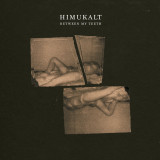
Dark, psychosexual electronics lurk between the teeth of Ester Kärkkäinen, the Las Vegas based artist also known as Himukalt. For the past six years, she has tirelessly pursued an avenue of bleak industrial productions that parallel the extremist works of Genocide Organ and Atrax Morgue. She has built a considerable reputation for uncompromising, full-frontal noise, releasing albums on Total Black, Malignant Records, Found Remains, and Foul Prey, amongst others. Between My Teeth was originally a cassette which came out in 2018 as a tiny edition on the Greek imprint Several Minor Promises and sold out immediately upon release. Himukalt returns to The Helen Scarsdale Agency with the necessary reissue of Between My Teeth as a vinyl edition with expanded artwork.
The album is a maelstrom of ill-tempered noise and blackened frequencies, sutured to a foundation of primitive, raw rhythms. Kärkkäinen cuts up her own voice with the digital equivalent of a rusted razor blade through her proclamations of misery, rage, and desire. The albums' opening track "Cataclysm" a turgid industrial production with Kärkkäinen adopting two distinct voices that, while they remain mostly indecipherable in content, the context presumes an inevitable, catastrophic and emotionally violent collapse in the relationship between two people. A tense rhythm clicks below the full spectrum bursts of harsh noise on "She Went Mad" followed by the smoldering power electronic moves of "I No Longer Belong" and "Not Proper." And the death disco groove of "Mine" is far more hellish than danceable through its scalded distortion and Kärkkäinen's vocal mantras about bodily self-loathing.
Another bold, declarative album in the ever impressive Himukalt discography. Remastered by James Plotkin and features a 12 page booklet of Kärkkäinen's signature collaged xerography.
il devrait être publié sur 19.03.2021

A quick, spontané voyage to the French Riviera ca. 1968, good times long before things went south, Organi’s “Parlez-vous Français?” is a woozy, tripping, soothing sojourn: DIY dream pop, hazy psychedelia, blurred-but-steady beats dripping down the golden boulevard, complete with mystical chants, a dash of half-remembered Franglais that goes down like some vintage eau-de-vie. There’s a fine massage waiting behind those venetian blinds. Pay half an hour, you’ll be relaxed and revived after 22 minutes. Très irrésistible when streamed, Organi’s haunting, hard-boiled French lesson is even better with that classique vinyl crackle in the mix.
Following the cinematic title skit with its bass loop appendix, Oakland-based producer and multi-instrumentalist Mike Walti (and his songwriting partner Maryam) aka Organi invites singer Jessica Bailiff along for the majestic entrée, an interpretation of Philamore Lincoln’s 1970 tune “The North Wind Blew South” (doesn’t it always?), adding anticon. heavyweights Jel and Odd Nosdam on synths and bass for à la mode enhancements and additional bric-à- brac.
Whereas the theme tune “Organi” comes with big drums, big organ, seductive overtones, pure hypnosis, “Whispers” is the soundtrack to some kind of psychedelic campfire tableau vivant: all brumeux, hazy, with spare guitar, Gauloises or Gitanes dangling, a glass of Bordeaux waiting on the dusty old amp, and featuring guest vocalists Yea-Ming Chen & Susy Borhan. It gets even more Parisienne after that: a French woman just knows how to look classic, even when all she’s got is some attitude, a ramshackle tambourine, a craving for old Sukia weirdness and those budget-couture “4 Dolla Jeans”...
Clearly in love with analog equipment, Organi turn The Vaselines’ “Slushy” into a slow- moving, bottomless lullaby – “... you'll never miss what you never had” –, and the femme fatale minimalism of “Stay The Night” is too magnétique and alluring: A fuckin’ sexy chanson, très léger and yet such a hard-knockin’ head-nod anthem, it’ll make you stay for sure, hungry for la petite mort.
Before the expansive denouement – a bank robbery in style: with bangs and a bucket bag (“Danger Walked In”) – the session gets super loose on “The Getaway,” head scarves and berets shimmering in the cabriolet, and featuring Jena Ezzadine on vocals & Headnodic on bass.
Mike Walti aka Organi is an Oakland-based musician and producer. A third generation Bay Area native, Walti has been running wyldwood Studios in Oakland CA for 10+ years (recording artists like Why?, Latyrx, Del, Dan The Automator, and Big Freedia, to name but a few). A longtime friend of Odd Nosdam, he loves to work with analog equipment (“We just love us some analog!” “Just listen to those relays purr...”). Recorded and mixed by Mike Walti at wyldwood, and mastered by Odd Nosdam.
il devrait être publié sur 19.03.2021

Dvne are a band of great contrasts, weaving titanic heaviness and intricate gentleness together, complex lyrical ideas with engaging storylines, and this has only been expanded upon and concentrated on second album Etemen Ænka. “It is a very dense and layered album which will reward multiple listens, and while this is becoming a recurring aspect of our music, we feel that we went further with it this time. It’s also a very polarising album, emotionally speaking. The heavy sections are, well, very heavy, while the clean sections are much more intricate and delicate and in a way wouldn’t be out of place in a Studio Ghibli anime soundtrack.” , explains the band. Their name is a reference to the timeless sci-fi epic Dune by Frank Herbert, this is very much a genre that they happily inhabit, and is once again reflected in the lyrical content of the record. While wanting to create a universe of their own, they also cover more serious topics related to the society we live in, and while Asheran was very much focused on their relation to their surroundings and the environment, Etemen Ænka focuses much more on social issues and more specifically on inequalities and the human relationship with power.
il devrait être publié sur 19.03.2021

- The definitive overview of one of Canada's unsung musical heroes - Rare/previously unreleased recordings, photos, and interviews - Lyrics, discography, and filmography - Audio re-mastered by John Baldwin Mastering - Artwork by Christi Belcourt and Alanna Edwards - Liner notes by Kevin Howes (Voluntary In Nature) - Contributions from the Dunn family, Bob Robb, and Alanis Obomsawin (OC) // How did you first experience the poetry, music, and film of Willie Dunn? In a Montreal coffeehouse during the mid-1960s? On a CBC Indian Magazine broadcast with host Johnny Yesno? At a Toronto record store or Native Friendship Centre at the turn of the 1970s? Waiting outside of the Mohawk Nation Longhouse? Maybe in your parent's record collection on the Rez? A White Roots of Peace gathering? Pow wow? The Mariposa Folk Festival? Or was it that Save James Bay Benefit back in '73? On a good friend's stereo? Sitting around a crackling campfire? How about an old NFB film reel or VHS tape in high school? Or while attending Manitou College? A German concert hall in the 1980s? Maybe a direct action protest on the colonial streets of Canada? Busking in Ottawa during the 1990s? College radio? At Willie's celebration of life service in 2013 alongside Alanis Obomsawin and Willy Mitchell? LITA's Grammy-nominated Native North America (Vol. 1) compilation or the very anthology you hold in your hands? There should be no judgment for coming to things when you do. All that's important is remaining open to life-changing messages such as these_ Willie Dunn shared truth through song and celluloid. His original composition, "I Pity the Country," is an unparalleled statement on the greed and hate created by humankind, recorded in 1971 and still unfortunately needed today. "It's like the reason you're supposed to make music," said Kurt Vile about the song to MOJO Magazine in 2015. With "Charlie," Willie was the first to deliver the devastating story of Chanie Wenjack and the Canadian residential school system to the music community, nearly 50 years before the much-celebrated Secret Path, yet ignored outside of Indian Country and the folk festival circuit. Dunn's film technique, featured in 1968's The Ballad of Crowfoot (NFB), predates the "Ken Burns effect" to great effect. Are you catching the drift? Willie Dunn was not only a trailblazing leader in his time, but well ahead of the curve, simply without the PR push and big money backing of major label players. "He was our Leonard Cohen," said singer-songwriter Eric Landry about his musical hero. The only difference is that Willie refused to play the Hollywood showbiz game. In talent, he is Cohen, Dylan, and Cash rolled into one and along with Buffy Sainte-Marie, Floyd Red Crow Westerman, and A. Paul Ortega, brought a new set of perspectives and realities to the folk music tradition. Willie spoke directly to his people and Mother Earth through his creations, not only from experience but by examining his roots and connecting with the world in which he lived. We are humbled to help honor Willie Dunn. May he never be forgotten_ PEACE
il devrait être publié sur 19.03.2021

In the late ‘80s, a wave of British musicians raised on ‘70s UK pop, Caribbean sound system culture, reggae, lovers rock and Motown/Philly soul music fell in love with synthesisers, drum machines and 8-track recorders. The street soul generation had arrived.
Originally released as a white label 12” in 1989, ‘You’ve Gone’ is the sole release from Bassline, the studio project of Southeast London-raised musician Tony Henry, not to be confused with Tony Henry from Manchester jazz-funk/R&B band 52nd Street. Featuring the singer Lorraine Chambers, it’s one of the true jewels of the UK Street Soul scene. As Lorraine’s heartsick soul vocal glides over sunrise synths, dusty drums, elegant electric piano figures and a reggae indebted bassline, ‘You’ve Gone’ captures the optimism and strength of the era perfectly.
‘You’ve Gone’ was championed by Choice FM UK (now Capital XTRA), Kiss FM, and DJ Trevor Nelson. Tony went from selling white labels out the trunk to booking in Live PAs for Lorraine with London sound systems like Rampage and up north in the street soul loving cities of Manchester and Birmingham. “When Lorraine did PAs up there, she went out on stage like she was Beyoncé.”
The son of a Jamaican father and an English mother, Tony grew up around the London sound system scene. He taught himself bass guitar, keyboards, and production, before playing in the reggae band Chakwanza (Swahili for “the first”). In Chakwanza, Tony rubbed shoulders with Aswad, Barry Boom, Steel Pulse, Maxi Priest, Gregory Issacs, Dennis Brown, Ghettotone and Saxon Sound, before focusing on a career in banking over music. “Music was my first love, but it couldn’t have afforded me the sort of level of - let’s be blunt and pragmatic about it - financial success that would have allowed me to support my family.”
Outside of office hours, Tony continued to work on music at home, sometimes serving as a session bassist with local bands. In the late 80s, a work colleague mentioned her sister Lorraine Chambers was a singer. Tony and Lorraine recorded “You’ve Gone” over two sessions. “Lorraine went into the booth, put her headphones on and got into the song. My daughter turned to me and said, ‘Daddy, she can really sing!’”
Despite the success of ‘You’ve Gone’, they never recorded together again. “The world changed, and for me, it changed as well. My younger kids were born, and work started getting more intense. I got a bit more successful and was living a mad, kind of crazy life.”
Thirty-two years on, ‘You’ve Gone’ finally receives an official reissue comprising the lauded original mix, an alternate version and Tony’s Back to Bass-ics remix. Fittingly, in recent months, Tony and Lorraine have re-connected in the studio writing new material.
Commandez maintenant et nous commanderons l'article pour vous chez notre fournisseur.

Die vierte Platte führt den Pfad des 2009-er Drittwerks „Foulest Semen Of A Sheltered Elite“ mit erneut druckvollem, aber nie zu poliertem Klang sowie eher andersweltlicher und unheilvoller denn frostig-rauer, aggressiver Stimmung – wie sie die ersten beiden THE RUINS OF BEVERAST-Platten „Unlock The Shrine“ und „Rain Upon The Impure“ noch dominierte – fort. Es fällt auf: „Blood Vaults“ ist weniger Black Metal als jemals zuvor bei THE RUINS OF BEVERAST, besitzt noch weniger Blast-Passagen als sein Vorgänger, bedient sich dafür häufiger einer spürbaren Death-Doom-Ästhetik.
il devrait être publié sur 12.03.2021

Cool Ghouls - a band fledged in San Francisco on house shows, minimum wage jobs, BBQ's in Golden Gate Park and the romance of a city’s psychedelic history turns 10 this year. What better a decennial celebration than the release of their fourth album, At George's Zoo!
How did San Francisco's fab four arrive at George's Zoo? The teenage friendship of complimentary spirits Pat McDonald (Guitar/Vox) and Pat Thomas (Bass/Vox) serves as square one. The Patricks were munching on Eggo-waffle-sandwiches and downing warm vokda in suburban Benicia (San Francisco bay) years before McDonald would hear George Clinton address his fans as "Cool Ghouls". The boys played their debut gig as Cool Ghouls at San Francisco's legendary The Stud in 2011, but there's no doubt the musical moment cementing the band's trajectory was much earlier at the 18th birthday party for boy-wonder Ryan Wong (Guitar/Vox) - at the Wong household.
You might remember the Ghouls' earliest days... McDonald’s hair hung luxuriously past his waist, Thomas dreamt of no longer having to crash on friends' couches to call SF home and Wong looked forward to turning 21. Cool Ghouls' Pete Best, Cody Voorhees, thrashed wildly – but briefly - on the drums and Alex Fleshman (Drums), who still claims he's not really "a drummer", turned out to be a really good drummer. Thomas would sleep pee on tour. Those were golden days!
Flash forward to today and everything is up in flames. No shows, parties or bars. Cool people are streaming out of SF. It's been 2 years since the last time Cool Ghouls have even played. The STUD is gone, The Eagle Tavern is for sale and The Hemlock has been demolished for condos. Your boss is an app. Fascism is no-knocking down the door. There's a pandemic.
Fortunately for us, the Ghouls got an album in before it all went to shit, and they made it count. At George's Zoo includes 15 of the 27 tunes they managed to eke out while simultaneously working through major life moves. It was a 5-month, all out, final sprint down the homestretch (to Ryan's moving day) with affable engineer Robby Joseph, at his makeshift garage studio in the Outer Sunset (pictured on the cover). Instead of recording the entire album over a few consecutive days - like they'd done with Tim Cohen, Sonny Smith and Kelley Stoltz for the first three LPs - the band took it slow by working through a few songs each weekend after rehearsing them the week before. Robby would cue up the tape, McDonald would throw some steaks on the grill and they'd get to work - much to the neighbor, George's, chagrin.
These guys have a real commitment to elevating as songwriters, musicians and ensemble players. It's always been for the music with Cool Ghouls and this long-awaited self-produced outing is a track by track display of the ground they've covered and heights they can achieve. Their vocals and trademark harmonies are front and center and out-of-control-good. Ryan's guitar solos are incredible. The horns by Danny Brown (sax) and Andrew Stephens (trumpet) hit in all the right places. Maestro, Henry Baker (Pat Thomas Band / Tino Drima), plays keys throughout. There's even a mesmerizing string section ("Land Song") by sonic polyglot, Dylan Edrich.
None of this growth is to the detriment of the fun, natural, feeling that fans have come to expect from the band. This is a fully realized Cool Ghouls album. It paints a remarkable portrait of SF's homegrown heroes and the many corners they've explored over the last decade. The songwriting, harmony and playing are nothing if not solid. The lyrics are keen. Robby's recording and mixing sound great start to finish and even better after mastering by Mikey Young. It's a triumphant addition to their catalogue. Recommended for Stooges and Beach Boys fans alike. Listen and see!
Yes, many things have changed since 2011. Who knows what the 20's will have in store for life on Earth, let alone the Cool Ghouls? We at least know that 2021 has At George's Zoo for us, a beautiful keepsake from the Before Times when we used to stand in living rooms together while bands played.
il devrait être publié sur 12.03.2021

Nachpressung! Der Name FRIERSON mag dem ein oder anderen bekannt vorkommen. Es war der Nachname von WENDY RENE, deren Werk 2012 von Light In The Attic zur Compilation ,After Laughter Comes Tears" zusammengetragen wurde. Und tatsächlich ist JOHNNIE FRIERSON ihr Bruder, ein weiteres Mitglied des Mittsechziger-Stax-Quartetts THE DRAPELS. Doch ,Have You Been Good To Yourself" wird für jeden, der den eher treibenden R&B von JOHNNIE und seinen Geschwistern erwartet, eine Überraschung sein. Die ultrararen Home Recordings sind eine Mischung aus Spoken Word, Folk und Gospel, die direkt auf Kassette aufgenommen wurden und von FRIERSONs religiöser Kindheit und seiner Karriere im Musikbusiness beeinflusst sind, die 1970 jäh unterbrochen wurde, als er als Soldat nach Vietnam gesendet wurde. Der Schatzsucher Jameson Sweiger fand ,Have You Been Good To Yourself" auf einer Zusammenstellung mit dem Titel ,Real Education" und unter dem Namen KHAFELE OJORE AJANAKU in einem Secondhandladen in Memphis, doch offensichtlich stammte die Aufnahme von FRIERSON. Die Tapes waren nicht weit gekommen: ursprünglich wurden sie in Eckläden und auf Musikfesten in der Umgebung von Memphis verkauft, wo FRIERSON weiterhin auftrat und eine Gospel-Radiosendung moderierte, während er hauptberuflich als Mechaniker, Hilfsarbeiter und Lehrer arbeitete. Die sieben Songs auf ,Have You Been Good To Yourself" sind offenkundig religiös; einige, so wie ,Out Here On Our World", sind durchdringend und eindringlich; andere, wie das selbstkritische ,Have You Been Good To Yourself" sind eher meditativ. Sie spiegeln die schwierige Situation wider, in der sich FRIERSON zur Zeit der Aufnahmen befand, verstört durch seine Zeit beim Militär und in tiefster Trauer um den frühzeitigen Tod seines Sohnes. ,Er war wirklich auf der Suche nach einer Antwort für sich", erinnert sich FRIERSONs Tochter Keesha in Andria Lisles Liner Notes. ,Und komponieren und Musik spielen waren seine Lösung". Remastert und zum ersten Mal professionell veröffentlicht, bleibt die Botschaft FRIERSONs, der 2010 verstarb, ungetrübt.
il devrait être publié sur 12.03.2021

Nachpressung! Der Name FRIERSON mag dem ein oder anderen bekannt vorkommen. Es war der Nachname von WENDY RENE, deren Werk 2012 von Light In The Attic zur Compilation ,After Laughter Comes Tears" zusammengetragen wurde. Und tatsächlich ist JOHNNIE FRIERSON ihr Bruder, ein weiteres Mitglied des Mittsechziger-Stax-Quartetts THE DRAPELS. Doch ,Have You Been Good To Yourself" wird für jeden, der den eher treibenden R&B von JOHNNIE und seinen Geschwistern erwartet, eine Überraschung sein. Die ultrararen Home Recordings sind eine Mischung aus Spoken Word, Folk und Gospel, die direkt auf Kassette aufgenommen wurden und von FRIERSONs religiöser Kindheit und seiner Karriere im Musikbusiness beeinflusst sind, die 1970 jäh unterbrochen wurde, als er als Soldat nach Vietnam gesendet wurde. Der Schatzsucher Jameson Sweiger fand ,Have You Been Good To Yourself" auf einer Zusammenstellung mit dem Titel ,Real Education" und unter dem Namen KHAFELE OJORE AJANAKU in einem Secondhandladen in Memphis, doch offensichtlich stammte die Aufnahme von FRIERSON. Die Tapes waren nicht weit gekommen: ursprünglich wurden sie in Eckläden und auf Musikfesten in der Umgebung von Memphis verkauft, wo FRIERSON weiterhin auftrat und eine Gospel-Radiosendung moderierte, während er hauptberuflich als Mechaniker, Hilfsarbeiter und Lehrer arbeitete. Die sieben Songs auf ,Have You Been Good To Yourself" sind offenkundig religiös; einige, so wie ,Out Here On Our World", sind durchdringend und eindringlich; andere, wie das selbstkritische ,Have You Been Good To Yourself" sind eher meditativ. Sie spiegeln die schwierige Situation wider, in der sich FRIERSON zur Zeit der Aufnahmen befand, verstört durch seine Zeit beim Militär und in tiefster Trauer um den frühzeitigen Tod seines Sohnes. ,Er war wirklich auf der Suche nach einer Antwort für sich", erinnert sich FRIERSONs Tochter Keesha in Andria Lisles Liner Notes. ,Und komponieren und Musik spielen waren seine Lösung". Remastert und zum ersten Mal professionell veröffentlicht, bleibt die Botschaft FRIERSONs, der 2010 verstarb, ungetrübt.
il devrait être publié sur 12.03.2021

In the cinema, the composer must go to meet the filmmakers, enter their world, but without giving up his own. This is the difficulty or the paradox of music for the image. By collaborating with directors from a wide variety of backgrounds, I think I have indirectly discovered a lot about myself. It helped me to progress, to explore territories that were not naturally mine. Cinema is a laboratory where I have sought to construct original orchestral formulas combining Corsican polyphonies, musicians from jazz, variety, classical, or even rappers. Like the world today, a fragmented world where all cultures mingle. So said Bruno Coulais, one of the most innovative composers of contemporary cinema, during the tribute paid to him in 2011 at the Cinémathèque de Paris
In 1978, Bruno Coulais, a young composer of concert works, discovered in film music a new means of expression, a way of bringing the demands of his writing to the masses. François Reichenbach, then Josée Dayan, Jacques Davila, Souleymane Cissé or Laurent Heynemann, first on television and then in the cinema, lead him of his own accord in the discovery of this new world.
In 1995, he composed the music for Microcosmos. This centimeter-scale initiatory journey offers him the opportunity to reveal the full dimension of his writing. He injects into his score a strange lyricism, between wonder and fantasy, confirming the lesson learned from François Reichenbach: "to any documentary image, music brings a part of fiction".
The success of Microcosmos established the musician and made him the indispensable composer of other natural tales, notably alongside Jacques Perrin (Le Peuple migrateur, Oceans, Les Saisons, etc.). Other long-term relationships will be forged, in particular with Benoît Jacquot, with whom he has worked for more than a decade, not to mention Frédéric Schoendoerffer, James Huth or Jean-Paul Salomé.
In addition to great popular successes such as Les Choristes, Brice de Nice or Sur La Piste Du Marsipulami, it is hardly surprising that this insatiable curiosity has found in the animated cinema the most inspiring playgrounds, in particular through his collaboration with two exceptional designers, Henry Selick and Tomm Moore.
The first, American director of The Nightmare Before Christmas produced by Tim Burton, invites Bruno Coulais to sign in 2009 the magnificent score of Coraline (film nominated for the Oscars). 10 years later, he is about to find him for a new and beautiful Wendell & Wild adventure. For Irishman Tomm Moore, Bruno Coulais has already composed the music for two Oscar-nominated films, The Secret of Kells (2009) and Song Of the Sea (2014), and in 2020 he will sign the score for Wolfwalkers.
Whether it is about author's films or more mainstream films, Bruno Coulais maintains the same standards, always considering his art as a window open to the world. Much less wise than it seems, he reveals in it a gift of a modern alchemist and a very personal way of mixing the most diverse cultures in universal harmony at work.
Commandez maintenant et nous commanderons l'article pour vous chez notre fournisseur.
Repress
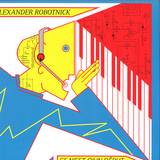
Alexander Robotnick (aka Maurizio Dami) is an Italian electronic musician. He made his debut on the Italian music scene as the founding member of Avida, a dance-cabaret band featuring Daniele Trambusti and Stefano Fuochi.In 1983 he attained international popularity with his track Problemes d'amour, published first by the Italian label Materiali Sonori and then by Sire-Wea. Problemes d'amour went on to become a cult track of the disco scene. It became quite an import hit in America's underground club scene, and sparked the mini-LP Ce N'est Qu'un Debut that same year (originally released on Materiali Sonori in 1984 (Italy). It consists of 6 captivating tracks including the hit Problemes d'amour as well as the track Dance boy dance which has appeared on other cult disco compilations.
Commandez maintenant et nous commanderons l'article pour vous chez notre fournisseur.
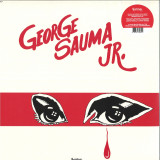
Favorite Recordings proudly presents an exclusive eponymous LP by Brazilian singer and composer George Sauma Jr., originally produced in 1985. Imagine a never-marketed release on which you’d hear not only the beautiful and genuine George’s songs but also the work from two figures of the Brazilian Music Golden Age: Arthur Verocai and Junior Mendes! A much-needed album for all Brazilian connoisseurs.
Back in the days, George Sauma Jr. was a young artist from Rio de Janeiro, learning on his side how to play chords and compose songs since he was 10. Still at the university, he’s influenced by Brazilian artists like Cassiano or Tim Maia, deeply fascinated by the arrangements and the “levada” (the groove) of all these new Brazilian songs. Simple and romantic music that resonated to his soul and creativity.
Around 1985, the story took an unexpected turn. George tells: “Dna Deyse Lucidy, the mother of Junior Mendes was a candidate for deputy and went to my father’s company to advertise. When I saw her, I shouted, “I’m a big fan of your son!” ” Of course, she could not praise more the work of her son. On her advises, George went to his studio on Rua Siqueria Campos at Copacabana. Junior loved the project and sent him to Arthur Verocai to improve the arrangements. Without money, the decision was taken to record everything at Junior Mendes’ studio on an 8-channel mixer. It was a small set-up but the emotions were there! George surely had other plans for some of his songs but without the budget, they ended up doing everything the best they could. And they did very fine with a top-notch team of musicians: Paulo Black on Drums, Arthur Verocai on Guitar, Ricardo Do Canto on Bass and Helvius Vilela on Keyboards.
Leaving the studio with the tapes, George tried to knock doors of international labels, but none did even dare to give him an answer. With less than 1000 copies pressed back in the days and without any distributor or label behind him, he went with proud to record stores, but received nothing than a strong reality check regarding the difficulties for a young Brazilian artist to achieve something on the saturated market of the 80s. Even for free, record stores didn’t want it. In the end, he ended up giving copies to friends and families, knowing deep inside that the songs were good! George tells: “I decided to leave, calm and conscious. I’ve still made three more albums, however on tapes, as it was more affordable. This time, just for my pleasure…”.
Thirty-five years after, it’s with great emotion that this first album by George Sauma Jr. is now made available as Vinyl LP with its original offset printed innersleeve & CD
Commandez maintenant et nous commanderons l'article pour vous chez notre fournisseur.

Johnny Cash had a birth certificate marked J. R. Cash because his parents couldn’t decide what to call him. Their environment was the recurrent poverty that reigned in Thirties America, a background of depression where J. R. went to work in flooded fields, learned music and sang along with other cotton pickers, picking up jobs here and there, and finally signing up for three years in the Army.
In 1954 he went back to civilian life, married Vivian Liberto, and went through the studio doors at Sun Records, where Sam Phillips recorded his first hits. In ’57 he joined Columbia Records and a decade later married June Carter (of The Carter Family) in 1968. The following years were complicated by drugs, alcohol and constant tours, yet the pair remained together until June passed away in 2003. Johnny Cash only survived another four months.
His original country music showed empathy for those who had been rejected, and his vision of the misery around him. But he also had an especially warm baritone, and it gave Johnny Cash an immense and faithful audience. He sold 90 million albums, confirming him as one of the greatest artists in music, all genres included.
il devrait être publié sur 05.03.2021
