21 months have passed since Hannes and his collaborator, friend and producer Marcus White (Anna of the North, Seinabo Sey) released the debut EP “Summer 3000”. A debut that brought him straight to festival Way Out West’s main stage supporting Seinabo Sey, a virus-cancelled Europe tour and unanimous praise from critics like German COLORS. Trailing the likes of Kevin Abstract, King Krule, Dijon, Choker & Omar Apollo - Hannes truly creates something brand new combining his mesmerizing fragile voice, insane lyrics, nylon-string guitar, drum-machines & odd samples. The first single from forthcoming EP “When the city sleeps” is a song about waking up from a slumber was released May 21st and is called "Snooze".
Cerca:wes the mes
Black Flower is a vibrant, hypnotic mix of Ethio jazz, afrobeat, psychedelia and oriental influences, inspired by Mulatu Astatke, Fela Kuti and varied western musical traditions.
Limited version on smokey coloured vinyl.Black Flower is a vibrant, hypnotic mix of Ethio jazz, afrobeat, psychedelia and oriental influences, inspired by Mulatu Astatke, Fela Kuti and varied western musical traditions.
- A1: Willie Ninja - I’m Hot (Louie Vega & Josh Milan Remix)
- A2: Willie Ninja - I’m Hot (Expansions Nyc Dub)
- B1: Willie Ninja - Hot (Louie Vega’s Why Because I’m Hot Original Mix)
- C1: Ralph Falcon - Break You (Radio Slave Remix)
- D1: Ralph Falcon - Break You (Original Mix)
- E1: The Messenger - End This Hate (Tensnake Remix)
- E2: The Messenger - End This Hate (Todd Edwards Original Mix)
- F1: Beltram Presents Phuture Trax - Future Groove (Agent Orange Dj Rework)
- F2: Beltram Presents Phuture Trax - Future Groove (Maxed Out Original Mix)
- G1: Kim English - Unspeakable Joy (Dr Packer Remix)
- G2: Kim English - Unspeakable Joy (Maurice Joshua Original Mix)
- H1: Byron Stingily - You Make Me Feel Mighty Real (Kevin Mckay Remix)
- H2: Look Out - Let Your Body Go (Franky Rizardo Remix)
part 2[37,77 €]
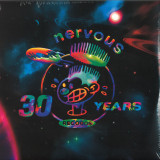
Nervous Records, the iconic label synonymous with the rise of house from the streets of New York City, will mark 30 years in the music industry by releasing the celebratory compilation LP ‘Nervous Records: 30 Years’ on October 1st (Part 1) and October 15th (Part 2).
Featuring original mixes of the label’s biggest tracks, plus remixes by some of its most celebrated acts, ‘Nervous Records: 30 Years’ is both a celebration of the past and of the future. Featuring a who’s who of electronic dance music, the long player sees names including Louie Vega, David Morales Darius Syrossian, Tensnake, Monki, Franky Rizardo, Danny Howard and more take on iconic Nervous cuts: ‘You Make Me Feel Mighty Real’, ‘Treat Me Right’, ‘Future Groove’, ‘Feel Like Singing’, ‘Get Up Everybody’, ‘Break You’, ‘Hot’, ‘End This Hate’, ‘Unspeakable Joy’, ‘Can Ya Tell Me’, ‘Jerk It’, ‘The Anthem’, ‘It Makes A Difference’, ‘Learn 2 Luv’ and ‘Don’t You Ever Give Up’.
The album marks one of the most enduring, extraordinary legacies to grace America’s illustrious music history, not just in electronica but far beyond. Founded in 1991 by Michael and his father Sam Weiss, and recognizable immediately by its distinctive character logo, the label grew rapidly, in no small part due to Michael Weiss’ practically unmatched passion for discovering new music.
“Louie Vega and Kenny Dope woke me at 4am on Tuesday night, Wednesday morning from their studio telling me they had something really different that I needed to hear,” Michael recollects. “I asked if they could play it over the phone. They said if I wanted to hear it I had to come to the studio. So of course I got myself up, got dressed and went there. That “really different track” ended up being ‘The Nervous Track’, a tune that became our signature release and was also highly instrumental in the emergency of London’s ‘Broken Beat’ movement.”
The label’s willingness to take chances on fresh sounds and innovative concepts rising up from the melting pot sidewalks of NYC ensured a body of work that has become a living musical history of the city. House cuts ‘Unspeakable Joy’ and ‘Nitelife’ (Kim English), ‘Get Up (Everybody)’ (Byron Stingily) and ‘Feel Like Singing’ (Sandy B) bump up against hip-hop anthems like ‘Who Got Da Props’ (Black Moon) and “Bucktown” (Smif-n-Wessun) and reggae cut ‘Take It Easy’ (Mad Lion); soulful flows from Mood II Swing (Kim English ‘Learn 2 Luv’, Loni Clark “Rushing”), Armand Van Helden (‘The Anthem’) and Nuyorican Soul (‘Mind Fluid’) sit alongside seminal techno singles like Winx’ ‘Don’t Laugh’. The young artists and producers who joined the Nervous Records’ family have gone on to become some of the most hallowed and celebrated dance acts of all time: Louie Vega, Kenny Dope, David Morales, Tony Humphries, Roger Sanchez, Armand Van Helden, Kerri Chandler, Kim English, Byron Stingily, Josh Wink, to name just a handful.
“We did a release with Josh Wink under his Winx alias entitled ‘Nervous Build-Up’,” Michael said. “It did well and it was obvious how talented Josh was. Subsequent to that release I was pretty persistent in asking him to continue to play me his new demos. During one phone conversation he said, “Mike I’m gonna play you something over the phone but don’t laugh when you hear it.” That demo ended up being ‘Don’t Laugh’, which became one of our biggest international hits and still to this day is one of America’s earliest and most impactful techno hits.”
As much a celebration of the label’s future as it is of their past, Nervous Records: 30 Years is but a marker in the imprints’ history, a clear sign of where they’ve been and also where they’re going. With 30 years behind them, the label’s determination to unearth new raw diamonds in the rough is as unwavering as ever.
“I’ve always been one to look at what others are doing (the industry at large) and think, “ok, are they doing this specific thing for a reason, or doing it because everyone else is doing the same thing” and make my decision based on that,” says Nervous Records’ General Manager Andrew Salsano. “In an age where data metrics and analytics reign supreme, I remain steadfast that they should be complementary to your decision and not the sole indicator to make one. So many songs today are written with 15 second hooks in mind for social media, and while there’s nothing wrong with that business model you will always be chasing the wave instead of carving out your own path and identity.
“My primary focus for the sound of the label has and will continue to revolve around signing good songs and music that has the ability to react at the street level first. The best results come from artists that are firstly given a bit of local love that grows into a global impact. Fresh ideas that express child-like curiosity and artists showing vulnerability in their music are also something I look for, artists and producers that are not making music with certain markets in mind, but rather their own style and signature that is unique but able to straddle the fine line of underground and overground.”
Still as raw, as underground and as finely tuned to the dance floor as they ever have been, perhaps the secret to the success - and the longevity - of Nervous Records has something to do with that hard, dogged, no-holds-barred NYC edge that runs through the veins of the label. With the next generation of producers rising from the clubs of New York, one thing is certain; Nervous Records will be there to find them, nurture them and bring them to the world at large, over the next decade and beyond.
- A1: Josef Strauss: Phönix-Marsch, Op. 105
- A2: Johann Strauss Jr.: Phönix-Schwingen, Walzer, Op. 125
- A3: Josef Strauss: Die Sirene, Polka Mazur, Op. 248
- A4: Hellmesberger Jr.: Kleiner Anzeiger, Galopp, Op. 40
- A5: Johann Strauss Jr.: Morgenblätter, Walzer, Op. 279
- A6: Eduard Strauss: Kleine Chronik, Polka Schnell, Op. 128
- B1: Johann Strauss Jr.: Die Fledermaus: Overtüre08:42
- B2: Johann Strauss Jr.: Champagner-Polka, Op. 211
- B3: Ziehrer: Nachtschwärmer, Walzer, Op. 466
- B4: Johann Strauss Jr.: Persischer Marsch, Op. 289
- B5: Johann Strauss Jr.: Tausend Und Eine Nacht, Walzer, Op. 346
- B6: Eduard Strauss: Gruß An Prag, Polka Française, Op. 144
- C1: Hellmesberger Jr.: Heinzelmännchen
- C2: Josef Strauss: Nymphen-Polka, Op. 50
- C3: Josef Strauss: Sphärenklänge, Walzer, Op. 235
- C4: Johann Strauss Jr.: Auf Der Jagd, Polka Schnell, Op. 373
- C5: Neujahrsgruß / New Year's Address / Allocution Du Nouvel An
- C6: Johann Strauss Jr.: An Der Schönen Blauen Donau, Walzer, Op. 314
- C7: Johann Struass Sr.: Radetzky-Marsch, Op. 228
In 2022, the Vienna Philharmonic's New Year's Concert could once again take place in front of an audience. However, 2G-plus rules and an FFP2 mask requirement applied throughout the Gesellschaft der Musikfreunde building in Vienna. Standing room was not offered this year and the number of seats in the Golden Hall was limited to 1,000.
Daniel Barenboim performed with the Vienna Philharmonic as a young pianist as early as 1965, and he has also conducted them since 1989. He already took the podium at the tradition-steeped New Year's Concert in 2009 and 2014. Barenboim's engagements as head of the Berlin State Opera Unter den Linden and the Staatskapelle Berlin, as founder and director of the West-Eastern Divan Orchestra, and as a pianist show him to be a true musical citizen of the world. As such, he is also an exceptionally good fit for Vienna's world-class orchestra and the message of the New Year's Concert: hope, friendship and peace for the whole world.
At the start of the new year, the Vienna Philharmonic once again presented a cheerful, upbeat and contemplative program of symphonic waltzes, polkas and marches by the Strauss dynasty and its contemporaries. The 2022 program showed a clear reference to the fantastic and fairytale-like. In addition to the phoenix, a siren and an indeterminate number of brownies and nymphs, there was also Johann Strauss' waltz "One Thousand and One Nights".
Six pieces had their premiere at a New Year's concert in 2022. The "Phoenix March", the Polka mazur "The Siren" and the Polka française "Nymph Polka" were performed by Josef Strauss. Eduard Strauss was represented with the quick polka "Kleine Chronik", Carl Michael Ziehrer with the waltz "Nachtschwärmer" and Joseph Hellmesberger with the character piece "Heinzelmännchen" among the repertoire novelties.
There is the 50th anniversary of the UNESCO World Heritage Convention to celebrate in 2022, which Austria also joined 30 years ago. In the intermission film of the concert, the twelve Austrian World Heritage sites showed themselves from their best side. Schönbrunn Palace in Vienna, on the World Heritage List since 1996, was also the setting for the ballet interlude with ten dancers from the Vienna State Ballet to the waltz "One Thousand and One Nights." The second performance was created at the Spanish Riding School, which has been designated as a UNESCO Intangible World Heritage Site since 2015. Eight magnificent Lipizzaner stallions and their riders demonstrated the high school of classical horsemanship to Josef Strauss's "Nymph Polka".
The phoenix, a very special bird from ancient Greek mythology, burns at the end of its life cycle, only to rise again from its ashes. The Vienna Philharmonic Orchestra paid tribute to it twice. The concert began with the "Phoenix March", followed by the waltz "Phoenix Swing". Such a concert opening - with a march and a waltz - should be a sign. It is to be hoped that a rebirth and renewal in the new year can really take place.
Habibi Funk presents a selection of works by Algerian-born, Amazigh artist Majid Soula. Majid’s music blends the best of Arab-disco, highlife and groovy funk into something wholly unique.
Born in Kabylie, Algeria - a place that remains fundamental to his career - Majid Soula is a self-made musician, artist and producer. With no formal music education, Majid’s tenacity has led to a career that is still blossoming. His synths, driving drums, guitar & strong lyrics make a unique sound. A strong proponent for the rights of the Amazigh, he has a band that to this day plays shows, most linked to cultural events of the Amazigh diaspora in France, as well as in Belgium, Russia the UK and Sweden. He was part of a new wave of widely popular and successful Kabyle artists in the 1980s, such as Ait Menguellet, Lounès Matoub, Takfarinas, Idir and many more.
Habibi Funk as a label is dedicated to re-releasing music from “The Arab World”, but this release shows how reductive this term can be, as the countries from North Africa and West Asia being summarized under this term include a vast number of languages and identities. Obviously, headlines sometimes come with limited space, and one can’t avoid using terms that paint a half-finished picture. That being the case, however, we are even more happy that Majid Soula liked our idea to work on a release of a selection of his music with us. The tracks here are incredible and need to be introduced to a new generation of listeners.
For Majid Soula music is more than just entertainment. He considers himself an activist through music, and foremost a “chanteur engagé”, as he says of himself: „I take my inspiration from the daily life of my people and I share all their aspirations, mainly the official recognition of Tamazight as a language, culture and identity.”
He still works on new music in his small home studio in Belleville and occasionally plays concerts for the Amazigh community of the city.
We sincerely hope that for you reading this and listening to Majid’s album, his music will have the same revelatory feeling it had on us, and that this will be part of a momentum that will allow Majid to keep on working, playing, and sharing his message for many years to come.
Legendary Brazilian group Orquestra Afro-Brasileira are reborn for first new album in over fifty years, produced by Beastie Boys collaborator Mario Caldato Jr.
Led by maverick composer Abigail Moura, Orquestra Afro-Brasileira were one of the most influential yet overlooked groups in Brazilian music history. Operating for almost thirty years until 1970, they released just two albums - the first of which, Obaluayê, has recently been reissued by Day Dreamer Records - and left behind a legacy of Afro-Brazilian consciousness that continues to resonate today.
Combining Yoruba spirituality, folk tales, Candomblé chants and West African percussion with the instrumentation of the big band jazz tradition in the United States, the Orquestra placed Afro-Brazilian heritage in a new and vital context. Weaving emancipatory narratives into complex poly-rhythms and powerful, syncopated horn lines, the group educated and enlightened all those who saw them perform.
For Abigail’s protégé and percussionist on the group’s 1968 album Carlos Negreiros, the message of the group’s music had a profound impact: “I became aware of what it is to be black,” he says, “discovering the extraordinary potential of the Afro-Brazilian culture in the making of the national ethos.” Now the last remaining member of the original Orquestra, Carlos was tracked down by producer Mario Caldato Jr. - whose credits include Beastie Boys, Marcelo D2 and Seu Jorge among others - to oversee the first new album of Orquestra Afro-Brasileira material since 1968.
“I was overwhelmed with the percussive rhythms, beautiful deep vocals and combined energy,” Caldato Jr. explains. “It felt like the most authentic Brazilian roots music I had ever heard. It was raw and dynamic, a pure organic sound and energy. It was a spiritual experience.”
Alongside arranger Caio Cezar, Carlos assembled his Orquestra to record five tracks at Berna Ceppas’ Estudio Maravilha 8 studio in Rio De Janeiro. With percussion, horns and vocals cut in single takes over three days, the session captured the intuitive, pure and natural spirit of the group in full flow.
Following the success of the initial session, five additional tracks were recorded at the iconic Estudio CIA dos Tecnicos in Copacabana to complete the album. Mixed by Caldato Jr., 80 Anos is a contemporary incarnation of Abigail Moura’s vision, bristling with the flair of the original recordings.
"“Music is a borderless language”
This is our gargantuan motto at Fauve Records.
With this mission statement arose a new project called ? WEST & ? EAST.
Born from the desire to link the world of the West & the East. The idea was to ask two artist/band to collaborate on a split EP, with one original track each and finally to remix each others’ work.
For Volume 1, it is with a humble esteem that we present you to Mameen 3, the duo soFa & Cheb Runner, from Belgium & Morocco face to face with the Indonesian future legend called Dea from Indonesia. We are extremely happy to launch the new series with this extraordinary collection of retro-futuristic club music filled with treasury oddities."
Over the course of the decade, Meatbodies’ Chad Ubovich has been
a perennial candidate for MVP of West Coast’s fertile rock scene. The
LA native could be seen peeling off guitar solos in Mikal Cronin’s
backing band, supplying the Sabbath-sized low end for Ty Segall and
Charlie Moothart as the bassist for Fuzz, and, of course, fronting his
own Meatbodies. Today the recently dormant experimental noise /
freak-rock outfit has announced their return with 333—a corrosive
stew of guitar scuzz, raw acoustic rave-ups, and primitive
electronics that charts Ubovich’s journey from drug-induced darkness
to clear-eyed sobriety. 333 simultaneously reflects on how the world
he re-entered was still pretty messed up—if not more so. “These lyrics
are dark, but I think these are things that a lot of people are feeling
and going through” he says. “Here in America, we’re watching the
fall of U.S. capitalism, and 333 is a cartoonish representation of that
decline.”
In mid to late 2019, the band—Ubovich and drummer Dylan
Fujioka—had a new album in the can, ready to be mixed. But
when COVID hit, like so many other artists, they put their release
on hold as they rode out the pandemic’s first wave. During that idle
time, Ubovich discovered a cache of demos that he and Fujioka had
recorded in a bedroom back in the summer of 2018, and he really liked
what he heard. In contrast to Meatbodies’ typical full-band attack, it
was deliriously disordered. “It sounded gross, like a scary Magical
Mystery Tour,” he recalls proudly. After subjecting them to some
mixing-board freakery, Ubovich fast-tracked the songs into becoming
this third release of theirs, 333. It proves Meatbodies have greatly
expanded their palette, opening new portals to explore. And for an
album that wasn’t supposed to exist, 333 is the ultimate testament to
Meatbodies’ renewed vitality.
HIGHLIGHTS: For the first time a sample of the essential work of Mesías Maiguashca, covering a period that goes from 1967 to 1989. This release includes historical pieces of electronic music, such as "El mundo en que vivimos" (1967) or "Ayayayayay"(1971), which are early references for electronic music in Latin America. DESCRIPTION: Mesías Maiguashca is a relevant figure on the map of contemporary avant-garde composers. Born in Ecuador but currently based in Germany, he has been a composer who, since the 60s, would constantly expand his possibilities in fields such as electronic music (where he stands out as a pioneer), mixed works, expanded interdisciplinary pieces and the creation of unconventional instruments, where the encounter between his country of origin's popular folkloric tradition and the new European music has produced a universe of tension, as fascinating as it is startling. Mesías Maiguashca: Música para cinta magnética (+) instrumentos (1967-1989) presents for the first time a sample of the essential work of Maiguashca, covering a period that goes from 1967 to 1989. This is the first of a new collection, a new series of albums that seeks to document the extensive recorded work of Maiguashca, with pieces that date from the mid-60s to the present. This first release is a good introduction to understand the various aesthetic options developed by the artist throughout his career. It includes his historical pieces of electronic music, such as "El mundo en que vivimos" (1967) or "Ayayayayay"(1971), which are early references for electronic music in Latin America, and also mixed pieces, such as "Intensidad y altura" (1979) for six percussionists and magnetic tape, "The wings of perception" (1989) for a string quartet and tape, and "Nemos Orgel" (1989) for organ and magnetic tape. As the critic Fabiano Kueva has pointed out: "During six decades of musical creation, Maiguashca has outlined diverse aesthetic axes, raising questions about the aural experience and generating a sound flow, a permanent oscillation between Latin America and Europe. Therefore, the blend of Western and non-Western concepts, techniques and timbres, the literary references or the historical approach are perceived as a complex gesture that reveals the tensions, the memories, the place of the artist." Mesías Maiguashca studied at the Quito Conservatory, the Eastman School of Music (Rochester, N.Y.), the Di Tella Institute (Buenos Aires) and the Musikhochschule Köln (Cologne). He has made recordings at the WDR music studio (Cologne), Center Européen pour la Recherche Musicale (Metz), the IRCAM (Paris), the Acroe (Grenoble) and the ZKM (Karlsruhe). In 1988, together with Roland Breitenfeld, he founded the K.O.Studio Freiburg, a private initiative for the cultivation of experimental music. He has been living in Freiburg since 1996. Mesías Maiguashca: Música para cinta magnética (+) instrumentos (1967-1989) is released as a double vinyl LP, in a limited edition of 300 copies, including photos and detailed information on the pieces. Liner notes by Mesías Maiguashca and Fabiano Kueva. Mastering: Alberto Cendra at Garden Lab Audio. Desing by Martín Escalante. Project carried out thanks to the Ibermúsicas fund.
Through his dedication to the Los Angeles grassroots projects that gave so much stability and focus to many younger musicians, artists and the community, Horace Tapscott became a neighbourhood hero at a time when the world wanted his presence. He stayed in Los Angeles and focused instead on building a community, rarely giving interviews and instead focusing on passing on the message from his mentors. He shaped a unique sound with his arkestra and community minded musicians. It was a close-knit family that emanated a sound that was deep and unique, flowing with a creative spirit that definitely comes through on this album.
In 1961 he founded the Pan-African Peoples Arkestra, which aimed to preserve, develop and publicise African-American music through the ever-growing family that emanated within many of the deprived areas of Los Angeles. Through his subsequent collaboration with Bruce Albach, a producer and founder of Nimbus West Records, they sought to document the importance of this music alongside many artists who were energetically linked to the ethos and understanding which came from the collective dialogue.
Here the composer leads four extensive arrangements through his 16 piece orchestra, featuring many of the Nimbus West artists including Adele Sebastian, Jesse Sharps and Linda Hill. The music weaves the sound of afro-futuristic music through changing tempos and a relentless dynamic expressive sound that is complex and beguiling with a deep spiritual sound throughout all four tracks.
The ceremonial ‘Peyete Song no. III’ is a great swirling evocative piece from the large collective, with amazing solos from especially Horace Tapscott who seems to find a sound from the piano that is from another dimension. The arrangement airs an important message of a people and their rituals.
Horace Tapscott gives Cal Massey’s composition ‘Nakatini Suite’ a splendid futuristic big band interpretation. The composition had been earlier illuminated by both Lee Morgan on his ‘Lee-Way’ album and John Coltrane on his ‘Believer’ album titled ‘Nakatini Serenade’. Through the more expansive soundscape, the interpretation allows for some great interplay between saxophonist Jesse Sharps and drummer Everett Brown Jr. with the whole orchestra led by Horace Tapscott capturing the essence of Cal Massey’s message.
Vocalist Adele Sebastian opens up the free probing arrangement ‘Quagmire Manor at 5am’ composition with a similar delivery as with her ‘Day Dream’ from the classic ‘Desert Fairy Princess’ album before the music takes off onto the mothership adding a sense of what time and space within the manner was about amongst many great musicians and artists. Their journey and moments encapsulated within the music.
There are certain albums you hear something new every time you revisit the music and this is one of those albums. An important part of Afro-American history; the politics and art which surrounded the album. If you get a chance check out the film ‘Horace Tapscott, Musical Griot’, by filmmaker Barbara McCullough, or buy the book ‘Songs Of The Unsung’: The Musical & Social Journey of Horace Tapscott’. Mark Jones/UK Vibe
THE NIGHT FLIGHT ORCHESTRA is back! The band that formed as an idea of friends from several well known rock/metal bands (SOILWORK, ARCH ENEMY, MEAN STREAK) back almost a decade ago and has been dropping jaws ever since. With 5 albums already under their belt, 2 nominations for the Swedish Grammies, countless live shows and praises from fans and media alike, TNFO have steadily upped their game when it comes to paying tribute to a decade that influences all sorts of people and even industries to this day - the 80s. With hits like ‘Domino’, ‘Lovers In The Rain’, ‘West Ruth Ave’, ‘Divinyls’ or ‘This Time’, the band manages to maintain a variety of vibes and emotions within every album. From hard rockers, poppy digressions to progressive epics, disco-esque songs and almost cheesy yet loveable ballads.
Enter 2020, TNFO had just released their recent record, ‘Aeromantic’, and kicked off their European tour in support of it, when the Covid-19 pandemic hit. Björn Strid, the AOR dictator helming this exceptional collective called NFO, recalls “We made it one week into the tour after some absolutely amazing shows and then it all went south and we had to go home. Just about everyone on the tour got sick when they came home, with varied conditions.”
The band didn’t step back and accept the situation but decided to do what they do best instead: “It was pretty clear after some months into the Covid madness, that it was here to stay and that we weren’t gonna be able to tour for quite some time. So we made the best out of it. The remedy was simply to hit the studio again as soon as everybody was well again. It ended up being an incredibly creative 1,5 years and so many amazing songs came out of it.”
That being said, the second part of the ‘Aeromantic’ saga really captures what this band is all about: being in motion and romanticizing traveling, sometimes even with a broken heart - accompanied by the good things in life. Namely with songs like ‘White Jeans’, yet another jaw dropping classic rock gem about hot young love, cramped with nostalgia, or ‘Change’, which encompasses all the vibes you know from your favorite decade: Urgency, emotion, warmth and excitement. But also groovy danceable songs like ‘Chardonnay Nights’, a groovy, dreamy, yet uplifting homage to parties and hot love, or ‘Burn For Me’, a true feel good anthem for the summer - driving people to dance in the streets, all worries aside, to a brighter future.
On the other hand there are tracks like the almost progressive ‘Amber Through A Window’. A little throwback (at least titular) to the NFO’s epic 2017 album ‘Amber Galactic’: “Amber is with us wherever we go and I think she’ll keep coming back. She’s our mascot of escapism. The song was very interesting to compose. It takes you on quite a journey with key changes and goes from minor to major when you least expect it and throws you between different set of emotions. At the same time it feels pretty direct and operates like a mini epos. Really happy with how it turned out“, cites Strid.
Besides all this, the band has also stepped up their game when it comes to music videos for their timeless anthems. “White Jeans” for instance features Swedish TV personality Fredrik Lexfors and is a sweet little homage to the LGBTQIA+ community. “Fredrik is a good friend of mine and has loads of experience in the musical/theatre world and is super creative. He created this character called ”Kantorn” (The Cantor) some years ago and became a hit on YouTube. He has a very twisted and unique way of singing and acting, which is very funny. He was a part of Sweden’s Got Talent TV Show and went really far and became a crowd favorite. Fredrik has a lot of friends in the LGBTQIA+ community and I also have quite a few. We saw it as a joyful tribute and we’ve only gotten really good response. It’s of course also humorous but has a very nice balance and a very positive message.”
The bold and jovial video for “Burn For Me” on the other hand maybe among the biggest and best productions, the NFO ever recorded for the depths of the internet: “I’ve had this idea to film a ”Dancing in the Streets” video, where curious people come out of the woodworks and join the party in the streets. It’s a very classic 80’s scenario and very common in videos back then. Sort of the video to IRENE CARA’s ”Fame”. You don’t see it very often these days. We felt that it was needed and after “Burn For Me” was done I immediately envisoned it being the perfect ”post corona dancing celebration in the streets-song”.”
Those two videos are by far not everything the band will have to offer visually, but we won’t tell any more just for now. To be continued…
With all that new greatness up their sleeves, NFO are ready to take the world by storm – again! Even though coming up with a setlist for their scheduled tour starting in September may prove to become problematic according to the AOR Dictator: “Making a setlist might end up being a nightmare haha… I would be up for doing only songs off »Aeromantic I« and »Aeromantic II« since that’s really where we’re at right now, but I think most of our the Midnight Flyers would like to hear some old stuff, too. Maybe we could get away with it as long as we play “West Ruth Ave” as the ending song and create the good old conga train?”
In the most literal sense, globally renowned whistler Molly Lewis makes her gorgeous
and curious compositions out of thin air.
New entrees into the Exotica canon; sprawling, would-be Spaghetti Western scores;
and a dash of Old Hollywood glamour - the whistle-led songs on her debut EP ‘The
Forgotten Edge’ are as complex, delicate and indelible as anything performed with
viola or piano.
“Whistling is like a human theremin,” said Lewis, an Australian native who’s spent the
last several years in LA and whose performances there and around the world are
changing any preconceived notions of whistling by the room-full.
That’s not to say Lewis is all serious and snooty about the craft. Quite the contrary.
Her sense of humour is witty, self-deprecating and zany. She’s as likely to reference
the slapstick Leslie Nielsen film series ‘Naked Gun’ for music video concepts as she
is a classic piece of noir cinema.
Look no further than the equatorial and breezy opening cut ‘Oceanic Feeling’, a
lovely walk across the flotsam-sprinkled sands in the rum-pumping vein of Les
Baxter. Meanwhile, the title track - and really, the entire collection here - is a loving,
albeit rather haunting, salute to one of Lewis’s heroes, the Italian composer and
musician Alessandro Alessandroni, whose whistle and guitar you hear on the title
theme of Ennio Morricone’s ‘A Fistful of Dollars’. Lewis and her ensemble create
classic cinema for your mind.
Her own love for the artform began when, around the age of twelve she was given
the CD ‘Steve ‘The Whistler’ Herbst Whistles Broadway’. Something contained in it
clicked. “It wasn’t that I was immediately obsessed, but I knew it was something I
could do well,” Lewis said.
The daughter of a musician mother and a documentary filmmaker father who often
focused his films on niche communities and topics, Lewis recalls watching a
television documentary with her parents about The International Whistlers
Convention in Louisburg, North Carolina. “My dad said, ‘If you ever make it into the
competition, I’ll take you there’,” Lewis said. Turns out, there was no bar to entry, just
a small fee. And so, several years later, she and her father travelled to the
convention. New to the form, Lewis didn’t take home one of the bigger prizes but they
were awarded the prize for Whistler Who Traveled The Greatest Distance. “We really
just used the trip to drive around the United States,” she said.
After studying film in Australia, Lewis moved to Los Angeles to be close to the film
industry. There, her circle of artist friends grew naturally and with providence - her
unique talent drawing more and more recognition. And over the last few years,
Lewis’s Café Molly events at LA spots like Zebulon, Non Plus Ultra and The Natural
History Museum have become fabled, elegant happenings with appearances from
guests like John C. Reilly, Karen O and Mac DeMarco.
Recorded with a crack team of friends and musicians during 2020’s quarantine, ‘The
Forgotten Edge’ is rife with incredible performances from Thomas Brenneck (Sharon
Jones & The Dap-Kings / Budos Band), Joe Harrison (Charles Bradley, Lee Fields),
Eric Hagstrom (Brainstory), Abe Rounds (Meshell Ndegeocello, Andrew Bird, Blake
Mills), Leon Michels (El Michels Affair), Gabriel Rowland and Dave Guy.
When his mother brought Stanley Turrentine’s Salt Song LP back from a trip to Canada, Julien Lourau, then a teenager, was impressed by the scope of the sound and the groove of the saxophone. He was also charmed by the lush arrangements and funky sound of the record, typical of releases on the CTI label. Created by producer Creed Taylor, CTI left an imprint in the minds of 70s jazz fans much like Blue Note did in the 60s, and it even ended up releasing work by artists who started out on this mythical label such as Stanley Turrentine and Freddie Hubbard. The two even shared the same sound engineer, the great Rudy van Gelder.
Yet CTI, though highly prolific during its 15 years of activity, has not benefitted from the same aura as its predecessor. “To breathe life into this album, I listened to a wealth of CTI releases and discovered some I had never heard before. I noticed, oddly, that many of today’s musicians know very little about CTI - a label unfairly considered as minor.”
The choice of tracks was determined by Julien’s personal tastes, always keeping in mind a desire to help people discover them yet focusing on the joy of actually playing them too.
"The album is made up of 9 pieces. Mathieu Débordes got everything down to the nearest note before we even attempted to play them. CTI didn’t hold back in fuelling their compositions with brass and violins, but I erased this aspect and pared things down to a bass, drums and two keyboards."
English drummer Jim Hart, someone Julien worked with during his London years, propels the group - from hard-bop polyrhythms with “drum & bass” inflections to a reworking of classic Red Clay.
Sylvain Daniel on the bass and Arnaud Roulin on the analogue keys are two musicians close to the saxophonist, and that he met when they were students in 1999 while organising a master class at the Conservatoire de Nantes. Since then, they have become his esteemed companions.
The collaboration with young pianist Léo Jassef began on this recording, where he also plays the Prophet 5. The dynamic and overlap of the many keyboards played by Arnaud and Léo bring the record a richness of timbre and harmony that the strings and brass provided on the CTI recordings.
For the final track on the record, Julien called upon his friend of 30 years, guitarist Bojan Z, for a fresh, Gospel take on Love and Peace, a track recorded by Quincy Jones in 1969, which here, is dedicated to Bojan’s recently departed brother.
“When it comes down to it, this album really is as I had imagined it, with, luckily, a few unexpected turns. I created a playlist I then claimed as my own. But in the end, I must admit that I would have loved to have composed some of these tracks.”
If your brain has a shortlist of bands that instantly evoke New Wave, Suburban Lawns deserve a slot right next to the likes of Devo, Talking Heads and the B-52's. After putting out two singles on their own Suburban Industrial imprint, the Lawns signed to I.R.S. Records and released their debut LP in 1981. While the band gained cult status thanks in part to a Jonathan Demme-produced music video which aired on Saturday Night Live, their self-titled album would sadly be the five-piece's only full-length statement.
Suburban Lawns' asymmetrical aesthetic is personified by co-vocalist Su Tissue, whose mesmerizing stage persona was at once childlike and terrifying. Her unique style embodies the awkward/arty female singer of the Reagan era, while the group's male vocals – courtesy of Frankie Ennui, Vex Billingsgate and John McBurney – maintain the satirical themes of Southern California's postwar mirage of limitless sprawl.
Suburban Lawns' catchiness can be attributed to their drum-tight performance and taut songwriting. Listen to the vocal trade-offs on "Anything," which could have easily come out on any purely Punk label from LA at the time, while Tissue's deadpan delivery on "Janitor" glides into the best art-warble this side of Lene Lovich, broaching the possibility of nuclear annihilation with a murmured "Boom, Boom, Boom, Boom."
From a West Coast scene dominated by 7-inch singles and EPs, the Suburban Lawns' lone LP remains in a class with precious few. It's not surprising that they found acceptance in the Hollywood punk scene, despite their Long Beach roots, and would influence other bands such as Minutemen. This is not a disc that will get parked in your collection hoping to get pulled once in a while; this is a record you will play.
Rock ‘n’ roll is often hard to define, or even to find, in these
fractured musical times. But to paraphrase an old saying,
you know it when you hear it. And you always hear it with
The Wallflowers. For the past 30 years, the Jakob Dylanled act has stood as one of rock’s most dynamic and
purposeful bands - a unit dedicated to and continually
honing a sound that meshes timeless songwriting and
storytelling with a hard-hitting and decidedly modern
musical attack.
That signature style has been present through the
decades, baked into the grooves of smash hits like 1996’s
‘Bringing Down the Horse’ as well as more recent and
exploratory fare like 2012’s ‘Glad All Over’.
But while it’s been nine long years since we’ve heard from
the group with whom he first made his mark, The
Wallflowers are silent no more. And Dylan always knew
they’d return. “The Wallflowers is much of my life’s work,”
he says simply. That life’s work continues with ‘Exit
Wounds’, the brand-new Wallflowers studio offering. The
collection marks the first new Wallflowers material since
‘Glad All Over’.
‘Exit Wounds’ is an ode to people - individual and
collective - that have, to put it mildly, been through some
stuff. “I think everybody - no matter what side of the aisle
you’re on - wherever we’re going to next, we’re all taking a
lot of exit wounds with us,” Dylan says. “Nobody is the
same as they were four years ago. That, to me, is what
‘Exit Wounds’ signifies. And it’s not meant to be negative at
all. It just means that wherever you’re headed, even if it’s
to a better place, you leave people and things behind, and
you think about those people and those things and you
carry them with you. Those are your exit wounds. And right
now, we’re all swimming in them.”
- A1: Africa Is My Root - Osayomore Joseph And The Creative Seven
- A2: Ta Gha Hunsimwen - Akaba Man The Nigie Rokets
- A3: Popular Side - Akaba Man And The African Pride
- B1: Iranm Iran - Victor Uwaifo And His Titibitis
- B2: Sakpaide No 2 - Victor Uwaifo And His Titibitis
- B3: Ta Ghi Rare - Akaba Man The Nigie Rokets
- C1: My Name Is Money - Osayomore Joseph
- C2: Ogbov Omwan - Akaba Man The Nigie Rokets
- C3: Aibalegbe - Victor Uwaifo And His Titibitis
- D1: Who Know Man - Osayomore Joseph And The Ulele Power Sound
- D2: Obviemama - Victor Uwaifo And His Titibitis
- D3: Ororo No De Fade - Osayomore Joseph And The Ulele Power Sound
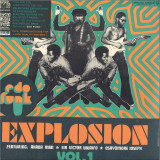
Analog Africa Presents Edo Funk Explosion Vol. 1, available on
2xLP/Gatefold LP with 20-page booklet / CD with 36-page booklet. It was
in Benin City, in the heart of Nigeria, that a new hybrid of intoxicating
highlife music known as Edo Funk was born.
It first emerged in the late 1970s when a group of musicians began to experiment with different ways of integrating elements from their native Edo culture
and fusing them with new sound effects coming from West Africa s night-clubs.
Unlike the rather polished 1980 s Nigerian disco productions coming out of the
international metropolis of Lagos Edo Funk was raw and reduced to its bare
minimum.
Someone was needed to channel this energy into a distinctive sound and Sir
Victor Uwaifo appeared like a mad professor with his Joromi studio. Uwaifo
took the skeletal structure of Edo music and relentless began fusing them with
synthesizers, electric guitars and 80 s effect racks which resulted in some of the
most outstanding Edo recordings ever made. An explosive spiced up brew with
an odd psychedelic note known as Edo Funk.
That’s the sound you’ll be discovering in the first volume of the Edo Funk Explosion series which focusses on the genre’s greatest originators; Osayomore
Joseph, Akaba Man, and Sir Victor Uwaifo: Osayomore Joseph was one of the
first musicians to bring the sound of the flute into the horn-dominated world
of highlife, and his skills as a performer made him a fixture on the Lagos scene.
When he returned to settle in Benin City in the mid 1970s - at the invitation of
the royal family - he devoted himself to the modernisation and electrification
of Edo music, using funk and Afro-beat as the building blocks for songs that
weren’t afraid to call out government corruption or confront the dark legacy of
Nigeria’s colonial past.
Akaba Man was the philosopher king of Edo funk. Less overtly political than Osayomore Joseph and less psychedelic than Victor Uwaifo, he found the perfect
medium for his message in the trance-like grooves of Edo funk. With pulsating
rhythms awash in cosmic synth-fields and lyrics that express a deep personal
vision, he found great success at the dawn of the 1980s as one of Benin City’s
most persuasive ambassadors of funky highlife.
Victor Uwaifo was already a star in Nigeria when he built the legendary Joromi
studios in his hometown of Benin City in 1978. Using his unique guitar style as
the mediating force between West-African highlife and the traditional rhythms
and melodies of Edo music, he had scored several hits in the early seventies,
but once he had his own sixteen-track facility he was able to pursue his obsession with the synesthetic possibilities of pure sound, adding squelchy synths,
swirling organs and studio effects to hypnotic basslines and raw grooves. Between his own records and his production for other musicians, he quickly established himself as the godfather of Edo funk.
What unites these diverse musicians is their ability to strip funk down to its
primal essence and use it as the foundation for their own excursions inward to
the heart of Edo culture and outward to the furthest limits of sonic alchemy.
The twelve tracks on Edo Funk Explosion Volume 1 pulse with raw inspiration,
mixing highlife horns, driving rhythms, day-glo keyboards and tripped-out guitars into a funk experience unlike any other.
The Go! Team return with their new album ‘Get Up Sequences
Part One’ out via Memphis Industries and featuring the singles
‘Cookie Scene’, ‘World Remember Me Now’ and ‘Pow’.
On ‘Get Up Sequences Part One’, Ian, Ninja, Nia, Simone, Sam
and Adam have created a musical world distinctly of their own
making. A place where routine is outlawed and perfection is the
enemy. Where Ennio Morricone meets The Monkees armed
with flutes, glockenspiels, steel drums and a badass analogue
attitude. We’re talking widescreen, four-track, channel hopping
sounds that are instantly recognisable.
In The Go! Team's world, old’s cool, the future’s bright and
melody is the star. Just check the second cut ‘Cookie Scene’
with a bouncing flute and junk shop percussion it introduces
guest rapper Indigo Yaj, who delivers an old school vocal that
continues this sonic trip. ‘Pow’ channels Curtis Mayfield and
enter stage centre, the inimitable Ninja in full flow and you don’t
stop, you won’t stop to this flute driven free for all.
By way of demonstrating The Go! Team’s old’s cool manifesto
comes the ‘needle-in-the-red’ ‘I Love You Better’, a defiant
message to an ex love, spelling out exactly how he’s messed
up - and then there’s those steel drums. Following that comes
the soda fountain soul courtesy of ‘A Bee Without Its Sting’, a
groovy protest song that makes its point with a tambourine.
The musical wagon train then takes you into the widescreen
windswept Western that is ‘Tame The Great Plains’, heading off
into a polyrhythmic panorama that’s full of hope. Slappin’ you
back to reality comes ‘World Remember Me Now’, a timely
reminder that when you’re lost in the routine of life, you can
always count on The Go! Team.
The Go! Team return with their new album ‘Get Up Sequences
Part One’ out via Memphis Industries and featuring the singles
‘Cookie Scene’, ‘World Remember Me Now’ and ‘Pow’.
On ‘Get Up Sequences Part One’, Ian, Ninja, Nia, Simone, Sam
and Adam have created a musical world distinctly of their own
making. A place where routine is outlawed and perfection is the
enemy. Where Ennio Morricone meets The Monkees armed
with flutes, glockenspiels, steel drums and a badass analogue
attitude. We’re talking widescreen, four-track, channel hopping
sounds that are instantly recognisable.
In The Go! Team's world, old’s cool, the future’s bright and
melody is the star. Just check the second cut ‘Cookie Scene’
with a bouncing flute and junk shop percussion it introduces
guest rapper Indigo Yaj, who delivers an old school vocal that
continues this sonic trip. ‘Pow’ channels Curtis Mayfield and
enter stage centre, the inimitable Ninja in full flow and you don’t
stop, you won’t stop to this flute driven free for all.
By way of demonstrating The Go! Team’s old’s cool manifesto
comes the ‘needle-in-the-red’ ‘I Love You Better’, a defiant
message to an ex love, spelling out exactly how he’s messed
up - and then there’s those steel drums. Following that comes
the soda fountain soul courtesy of ‘A Bee Without Its Sting’, a
groovy protest song that makes its point with a tambourine.
The musical wagon train then takes you into the widescreen
windswept Western that is ‘Tame The Great Plains’, heading off
into a polyrhythmic panorama that’s full of hope. Slappin’ you
back to reality comes ‘World Remember Me Now’, a timely
reminder that when you’re lost in the routine of life, you can
always count on The Go! Team.
Re-mastering by: Cicely Baston at Alchemy/Air Mastering, Lyndhurst Hall, London
A two-LP set on Theresa, Rejoice features Pharoah Sanders in excellent form in 1981. Sanders sounds much more mellow than he had a decade earlier, often improvising in a style similar to late-'50s John Coltrane, particularly on "When Lights Are Low," "Moments Notice," and "Central Park West." The personnel changes on many of the selections and includes such top players as pianists Joe Bonner and John Hicks, bassist Art Davis, drummers Elvin Jones and Billy Higgins, vibraphonist Bobby Hutcherson, trombonist Steve Turre, trumpeter Danny Moore, a harpist, and (on "Origin" and "Central Park West") five vocalists. The music always holds one's interest, making this one of Sanders' better later recordings. Scott Yanow/AMG
COLTRANE'S classic "Moments Notice" is a complete gas! Sanders like Coltrane, pulls and holds attention with his entrances. Bobby Hutcherson's and Hicks solo's are heated and models of vivid imagination. The three put forth some of the very best solo...'s in the entire album.
Then there's the arresting new talent introduced here -GEORGE V JOHNSON JR., whose marvelous lyrics and vocal work are truly auspicious! He sings with James Moody on occassion and is happily remindful of the insistent giftness of the late EDDIE JEFFERSON. Johnson's three stanzers close with "Relax dig the sounds of Coltrane's Music. Coltrane fills your heart with love and harmony. Trane played with magic. Listen to the melodies and you will see momently. When you here the message of his song!". There's no doubt in my mind that henceforth George V Johnson should and will be sought for his own gift to the music. He sang the song for Sanders at the Village Vanguard, and Sanders "felt that George ought to be heard".Thank you, Pharoah Sanders for Sharing.... by Herb Wong