'Garage bands suddenly obtain cult status and become the antithesis of their initial appeal'
Garage Class were a group of reluctant outliers who produced one of the finest contributions to the wave of UK DIY music that emerged during the late 70s and early to mid-80s.
Hailing from Alsager in North West England and comprised of Tim Shutt (vocals) Phil Murphy (lead guitar) Clive Williams (guitar) Lynne Sanders (bass) and Phil Bourne (drums / bass on studio recordings) Garage Class originally went by the name of The Pits before their then manager Steve Hurt imposed an alias which, though unpopular within their ranks, would nevertheless reflect the shambolic art they would eventually capture on their first and only single.
As The Pits the group offered a loutish inflection on glam-punk flamboyance, evoking Johnny Thunder hitting the north and remaining disowned yet undeterred in a dreary old boozer. But as Garage Class the group distilled a roughcast and homespun primitivism that felt quintessentially their own. In this they proved too unruly to be assimilated into any wider scene. Early gigs descended into acrimony and recognition proved elusive. Yet what they managed to make back then now sounds like an extraordinary article of underdog ambition.
Released in 1984, four years after it was originally recorded, the Terminal Tokyo single is an unlikely triumph of exceptional messthetic punk. Though raw and unpolished the songs here are precariously pop-minded and indisputably anthemic. The titular A-side reveals the dry and detached drawl of Shutt aka The Subliminal Kid, a sharp, jaded and poetic voice that has some of the most iconic lines never heard in punk. Accompanied by second-hand guitars, on-the-fly handclaps and a chorus like a terrace chant this is the cult hit that never was, a heroically artless masterpiece that has all the ragged character and misfit euphoria of Swell Maps and The Buzzcocks if they were more impulsive and boisterous, and left to their own devices in the remote margins of a Cheshire town. The original B-side is here substituted for I Got Standards, a track that, until now, has somehow remained unreleased. An ideal twin to Terminal Tokyo there's the same brusque and dog-eared quality to the band's delivery, as well as the same upfront emphasis on strong hooks and insistent momentum. Yet again, Shutt is on impeccable form, perfecting an inflated, adolescent antagonism that has all the sardonic, malcontented charm of similarly 'shirty' buggers like Dan Treacy (Television Personalities), Patrik Fitzgerald and Mark Perry (Alternative TV).
Although never accepted in their own time both tracks represent a brief but inspired moment of fervent imperfection, one that epitomized the best of a diffuse and autonomous underground movement spearheaded by The Desperate Bicycles and built upon by the likes of Amos & Sara, The Homosexuals, The Cleaners From Venus and Family Fodder. Like them Garage Class were situated at a point where punk, art, humour and a sense of stubborn independence all intersected.
In the years since Terminal Tokyo has accumulated a retrospective appeal among certain trusted circles, with Jon Dale celebrating the single in his exhaustive and essential Story of UK DIY for Fact Magazine, and original copies regularly changing hands for a foolish forty quid or so. With this inaugural release on the Outer Reaches label Terminal Tokyo is not only restored for the very first time but given a worthy expansion courtesy of JD Twitch (Optimo).
Continuing his own fascination with the fringe history of UK DIY - documented on his own outstanding compilation Cease & Desist: DIY! (Cult Classics From The Post Punk Era 1978-1982) and in his re-edits of Crass Records classics for an early release on RVNG INTL - Twitch reinterprets I Got Standards as an incisive, dubwise outing that pictures Jaki Liebezeit and Muslimgauze on a bender in England's provinces, tasked with remixing the raw product of local punks. A new slant on Garage Class' crude magnificence, built to play loud on contemporary soundsystems.
Although the latter part of 1980 spelled the end for Garage Class with members moving on to other projects (Bourne fell in with The Colours Out of Time, Murphy went on to front The Regular Guys and Shutt eventually left to form Happy Refugees) this reissue attempts to give their fleeting time together and the unique single statement they made the treatment it deserves. If this means Garage Class have obtained cult status, their initial appeal remains. Just listen for yourself.
Buscar:west ep
Originally from West Yorkshire, but now resident in Manchester, composer, bassist and producer Phil France is probably best known as a key collaborator alongside Jason Swinscoe in the Cinematic Orchestra, where he co-wrote, arranged and produced on classic albums including Everyday, Man With The Movie Camera, Ma Fleur and also the triple award winning soundtrack for The Crimson Wing nature documentary. In 2013 France released his debut solo album, The Swimmer (GOND016), an emotive, epic record influenced by the great second wave of film composers including John Carpenter and Vangelis, as well as minimalist composers such as Steve Reich and Philip Glass
Five years later, France presents the follow up, the enigmatically titled, Circle, which again represents a very personal journey for the artist. For France the album is an extension of work he began on The Swimmer. A process he has described as: " blocks of sound containing intricate minimal arpeggiated patterns and electronic textures that develop and shift in subtle, original and melodic ways. The trancelike quality, mood and electronic character of title track Circle led France to think of the circular patterns which eventually became a potent concept for the album. "Ideas and fashions repeat themselves in cycles. Events are said to travel 'full circle' and this is important to me because it represents my own recent personal and musical journey after 15 years touring as bassist and composer with The Cinematic Orchestra. I consider circles to be a strong symbol of unity, strength and inclusiveness and ultimately I've aspired to make something beautiful with those values at its heart".
The album opens with the title track, Circle, built on a minimal looped pattern with melodic embellishment and shifting additional harmonic textures. Bells was developed from the arpeggiator and offers a nod to the melodicism and atmosphere of French electronic music. The Jackal features an idea originally developed for The Crimson Wing score but which finally bears fruit here. Cathedrals features an improvised intro, Philip Glass inspired organ and vocal textures inspired by the work of Colin Stetson. Finally, the album ends with a reprise of Circle this time featuring layered pianos. But it isn't the conclusion of the journey, for France: "The Circle is infinite - During the process of making this record, I have been constantly reminded that nothing ever stays the same and that all is in constant flux. The challenge for me is always to respond positively, be aware of and seize the opportunity for progression constant change provides" And it is that sense of movement and flow, but also calm and beauty that permeates Circle and make it such a worthy successor to The Swimmer.
Planet Mu Are Very Happy To Be Releasing 'vicious Circles', The Debut Ep By Sinjin Hawke And Zora Jones, Who Aside From Producing Music Also Run The Audio-visual Production Unit 'fractal Fantasy'. Zora Released Several Collaborations On Last Year's 'visceral Minds 2' Including 'dark Matter' With Planet Mu's Jlin, While Sinjin Has Collaborated With Dj Rashad, Just Blaze And Mikeq, And Also Produced Music For Monoliths Like Kanye West And Frank Ocean. Remarkably, Given The Breadth Of Their Work, 'vicious Circles' Is Their First Collaborative Ep, And The First Time Either Have Released A Vinyl Record Too. The Ep Is A Great Showcase For The Duo's Emotional, Maximalist Chimeras Of Abstract Pounding Beats. From The Punchy, Circular, Grandiose Build-ups Of Opener 'vicious Circles', To The Unyielding Melancholy Of 'god' With Its Sinister Bulgarian Choir Sample Against A Peak Timbaland-era Rhythm, The Record's Potent Synths And Manipulated Vocals Are Both Simultaneously Fierce And Friendly. 'source Of Conflict' Is A Poised Dance Between Pulsing Ambient Textures And Drilling Beats, While 'lurk 101' Pits A Volley Of Abstracted Juke Toms Up Against A Hammering Drumline. 'babyboysosa' Feels Like Drum-less Drill, Manipulating Vocals Into Strange Alien Shapes Over A Bassline Before Spiraling Toms And Hi-hats Start To Form A Forceful March. The Ep Concludes On The Love Anthem 'and You Were One' With A Chipmunked Vocal Running Through Its Wonky Chorus Of Bent Notes And Chords.
Another very special EP on Al Zanders A to Z label
Teaming up this time with vocalist Sheyi, for a one-off foray into Broken Beat territory.
The story of its inspiration begins with a trip to Notting Hill Record & Tape Exchange...
After asking for some broken beat, the assistant ventured a withering opinion that "won't be monotonous enough, try the house music section instead"
Turns out it was Phil Asher of Co-op fame - who, after establishing a genuine desire for said genre - sold Al a bunch of West London music which became the influence for this EP.
Allowing Sheyi to shine over a bare bones, syncopated rhythm track on the title cut and an equally stripped down 'Satisfy' Al amps up the groove, with the G.I.T dub, which was made for IG Culture's radio show.
Limited run on these - don't snooze !
(180 gram pressing, blue coloured vinyl) Musique Pour La Danse presents CRON aka TODD SINES 'Scalable Architectures', the classic 1995 EP remastered. For fans of Dopplereffekt, Drexciya, Keith Tucker, Mid-West Electro A highly sought after EP equally blowing your mind and the floor. Cron is a project where Todd Sines focused on his long-running passion for electro music by exploring a specific set of machines composed of a Synton Vocoder SPX216, a Yamaha DX 100 and an Arp Avatar in a vibe completely different from his .xtrak alias or productions released under his own name. The record visual presentation was equally important as it features 3-D objects created Todd Sines through intentional misuse of mathematical functions, creating unique forms and 'scalable architectures'. Please find the complete 1995 liner notes below for more informations. Comprising of an intro + five highly danceable futuristic electro tracks of deep, sharp-edged electric grooves and hypnotic warm cuts that are each an exploration of a 'less is more' approach to production.
"For the final part of SchleiBen 5 - 8, Emotional Response welcomes two Scottish based artists to close out the series. In Jon Keliehor you have a world and music traveler with history from psychedelic rock to fourth world exposure, alongside one of the best electronic producers of the last decade, Lord Of The Isles. As the drummer of West Coast folk rock / psychedelic band The Daily Flash, Keleihor spent much of the mid-60 based in and out of Seattle and Los Angles, playing alongside the likes of Jefferson Airplane, Cream and The Doors, before an increasing interest in meditation and philosophies outside of the 'rock' realm led him to England in the early 70s where he become involved in dance theatre. Teaching Advanced Rhythmic Music Studies at the London Contemporary Dance School, his music composition style became influenced by his studies of world music. Finally settling in Glasgow for over 20 years, while running the Luminous Music label and Gamelan Naga Mas, his earlier recordings for labels like Indipop, Touch and Bruton have seen a recent revival, with music appearing recently on contemporaries Optimo Music and Invisible Inc. The wonderful recordings included here span over 3 decades, from sessions at the Luminous Studio at The Diorama Theatre, London in the early 80s, through to recent field-work based recordings in the Cairngorms. Reconfigured and updated, a common thread appears through the pieces - a sense of longing and appreciation - as Jon's knowledge of outer-national instrumentation alongside equally extensive travels around the globe gives the recordings a seamless blend of organic craft. The tonal consonances within unlikely combinations of instruments, with tuned glasses (tarang), tabla, jaw harps, clay flutes and ocarinas, Chinese instruments that include Xiao-Bo and Xiao-Ping, large Noah bells, small and larges gongs all employed, the recordings have been reconstructed, edited and updated via sampling and digital processing. Featuring the playing of John "Jhalib" Millar - the extraordinarily gifted musician and tabla player - who has appeared with an EP on sister label, Emotional Rescue (ERC029), sadly recently deceased, the contribution acts as a tribute and more. To close, the music of Lord Of The Isles is an excellent companion to Jon's work. Neil McDonald's list of club-based releases on labels CockTail D'Amor, Ene, Firecracker, Permanent Vacation, ESP Institute and Phonica is comprehensive and exemplary, however within his productions has often been an other-worldly element, a space between the beats and occasional fully ambient pieces. Approached originally for series one of SchleiBen, the 7 pieces included were worth the wait, a journey in themselves and the perfect completion. Spanning almost 5 years, the majority were written during an extended exile in the Cairngorms. The lifting, ethereal, but melodic nature of the music fits that aesthetic. Blue skies, snow, long walks, space to think, but with a longing and appreciation of family and friends. The solitary nature found in SchleiBen 8 and the geographical incidence of both artist's recordings including sessions in the Scottish Highlands fits the series ideals and is a nice closure. Enjoy and listen. "
You know when the dj drops something so special you're mentally forced to ask for the track and the reply you get is 'its my own unreleased track'. That's how I (Art Alfie) stumbled upon all three of these. About ten years ago I witnessed Van Rivers & The Subliminal Kid (Peder Mannerfelt) turn Berghain upside-down with the dark techno epos 'Mars Attacks'. Around the same time I had the luck to see Nils Westerlund boogle minds with the broken beat psychedelics of 'Suspiria' at a Stockholm Open Air. Last but not least, a couple of years ago I heard 'Thicker Than Blood' for the first time, like the Sirens in greek mythology, it lured people on to the dance floor at Stockholms classic summer hot spot F12. I've been playing these tracks ever since and Im beyond happy I get to share them with the world at this point. //Art Alfie
- A1: La Tuna Club (S. Mantequilla' Font)
- A2: Azul Trompeta (S. Mantequilla' Font)
- A3: Whisky Jazz (S. Mantequilla' Font)
- A4: Jamboree (S. Mantequilla' Font)
- A5: Blue Note (S. Mantequilla' Font)
- A6: Full De Ases (S. Mantequilla' Font)
- B1: Moanin' (Timmons)
- B2: Not Problem (Marray)
- B3: Blues 3/4 (S. Mantequilla' Font)
- B4: Atmosfera (S. Mantequilla' Font)
- B5: Vat 69 (S. Mantequilla' Font)
- B6: Balada (S. Mantequilla' Font)
Salvador Font studied violin, clarinet, composition and harmony at the Conservatori Municipal de Barcelona, but very soon started to gain notoriety as a saxophonist in the rich jazz scene of 1940s Barcelona. Font would soon be playing tenor sax and clarinet in the Orquesta Gran Casino. He was in his early twenties and his hot swing technique was already praised through the citiy's scene, he would grow to be considered the best saxophonist in Spain by playing in many orchestras and combos, among them: José Puertas', Antonio Vilá's Virgina, Bonet de San Pedro's band, Pierre Michel, El Lirio Campestre, Los Marios, Luis Rovira y su orquesta, Orquesta brasileña Fon-Fon, Jaime Camino, Los Embajadores, Italo Leone's... With these and others, Font toured constantly, visiting many countries and even staying on some for long seasons: Mexico, Morocco, Switzerland, Egypt... Hungarian violinst of Turkish ancestry Kurt Dogan gave him the "Mantequilla" surname - he felt "Mantequilla" (which means "butter") fit Font's mellow yet swinging improvisation style.
Mantequilla y su conjunto
In the early sixties, "Mantequilla" had the chance to lead his own combo, Mantequilla y su conjunto, with which he was to record the three splendid EPs that are compiled on the present album. All these 7" have become elusive collector pieces in the record market, with sellers demanding from 200 to as much as 950 euros per copy.
In 1961 "Mantequilla" was at his best moment, his gigs at the Jamboree Jazz Cava had brought him back to the first line of Barcelona's jazzmen after he had been working abroad for a long time, and was approached by the Belter label to record an EP. On the sessions he was accompanied by Manolo Mercedes on trumpet, Pedro Ferré on piano, Rafael Lizandra on double bass and Rafael Verdura on Drums. The material chosen for the disc were four original compositions by Salvador Font which had a high West Coast flavour all over: "La Tuna Club", "Whisky Jazz" and "Jamboree" named after famous jazz clubs and "Azul Trompeta", dedicated to Manolo Mercedes.
In late 1962, after spending some time in Madrid working as members of the Italo Leone combo, "Mantequilla" and pianist Manuel Gas came back to Barcelona for the recording of the second "Mantequilla" EP, also on Belter. We find again Manolo Mercedes on trumpet, Pedro Ferré on piano and Rafael Lizandra on double bass, the drummer this time was José Farreras. Another news is that Manuel Gas also sat on piano and vibraphone. The songs chosen for the occasion were two tunes from the Art Blakey Jazz Messengers repertoire: Bobby Timmons' classic "Moanin'" and the Jacques Marray track "No Problem" from the soundtrack of the Les liaisons dangereuses film (mispelled "Not Problem" on the sleeve and label), plus the Salvador Font penned "Blue Note" and "Full de ases" - on "Full de ases" "Mantequilla" trades his sax for the violin, which he also mastered under high influence from Stephane Grapelli. The record was released on Belter in early 1963 and showed "Mantequilla" adding a certain aggressivity to his sound, in a soloist style which has been compared to that of tenor saxophonists Barney Wilen or Benny Golson.
1965 was the year of release of Mantequilla y su conjunto's third EP, now on the Discophon label. Mercedes and Farreras are again present in the recording sessions, joined by Ricardo Miralles on piano and Enrique Ponsa on double bass. Four original Font compositions make up the fantastic EP: "Blues 3/4", "Atmósfera", "Vat 69" and "Balada".
There would be a further EP on Belter, released in 1971 as Mantequilla Group it was a cash-in operation to take some redits of the ye-yé discothèque phenomenon, it gets quite afar in style from the jazz works of Mantequilla y su conjunto, so we just left it aside for the present edition.
"Mantequilla"'s career would continue, in 1968 he would settle in Majorca and form a swing band with Bonet de San Pedro and Manuel Bolao. He played in local orquestras and also with first class world acts like Gerry Mulligan, Tete Montoliu, Errol Gardner, a.o. He was even approached by Henry Mancini to play sax on The Pink Panther Theme in a gig Mancini did with his orchestra in Palma de Mallorca in 1975, He also joined his son Salvador Font (a demanded drummer himself who has played with Máquina!, Orquestra Mirasol, Música Urbana, Gary Burton Quartet, Georgie Fame, and many others) and his peers Carles Benavent, Emili Baleriola, Josep Mas 'Kitflus' and Jordi Bonell with whom he recorded his acclaimed "Mantequilla" album in 1987.
Now, for the first time ever, the legendary three ultra rare and imposible to find EPs by Mantequilla y su conjunto are compiled in a lavish vinyl LP with remastered sound, featuring liner notes and photos and a fantastic period inspired, three backflaped, front laminated sleeve. It is a stricly limited edition of only 500 copies and they are expected to sell out very soon, do not miss your chance of getting yours - it may be the last chance of chasing the Mantequilla sound on vinyl at a reasonable price!
l
New Zealand based EBM auteur Body Beat Ritual makes his debut on Bergerac with an incendiary EP of full throttle intense dark wave bangers. Growing up in North West England immersed in hardcore punk and rave culture led to musical experiments and Body Beat Ritual is his unique splicing of both aesthetics.
Using a combination of hardware, audio samples and midi sequencing, Body Beat Ritual reclaims the moment when underground musicians in Manchester, Chicago and Ghent put down their guitars and picked up drum machines and sequencers bringing the intensity, rawness and aggression of the band environment to the dancefloor. Mortal Sin is a certified smasher. Absolute dancefloor decimation whenever it's played out. No more description necessary. No Mercy evokes the Lost Boys vibe with an equally high octane raw workout. Trent Reznor meets Jeff Mills at a DAF gig on a flatliner. The EP closes with Body Politics which lowers the tempo to a chuggier zone, with an ode to female empowerment which keeps up that Body Beat pressure and intensity.
LOYOTO are the East-Berlin born Eva Be and Cle from the western part of the formerly dived city. Both started their DJ and producer career almost at the same time in the heart of the then developing scene, the very center of Berlin, just after the wall came down. Originally rooted in very different styles of music, they encountered for the first time DJing together in 2011, finding common ground in more than just music - a gig, that should lead to more: They decided to combine their talents and knowledge and build a studio together. Here, and during legendary back2back DJ sets, they finally united their different musical backgrounds - dub/reggae and underground house music - and defined their very own sound.
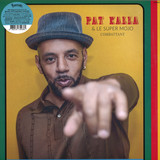
Favorite Recordings proudly presents Combattant, first EP by Pat Kalla produced by Bruno Patchworks' Hovart (aka VOILAAA).
PAT KALLA is a musician, singer and storyteller. Patrice of his birth name, in tribute to the great Lumumba! Lover of words, French language, and music of course. Born in Lyon, from a Cameroonian father, musician and political activist, and a French and literary mother, he explores from his childhood the Soul, the Slam, the Funk ... and the art of telling stories, life being a great one...
After years of touring alongside many bands (Conte & Soul, Legend of Eboa King, Mento Cloub, Voilaaa Sound System), and several acclaimed titles on the two albums by Voilaaa, he comes back with this project to put a bit of primordial lightness in a rainy world: A tribute to the African culture in honor of a father with "Sawa" origins, the tribe from the people of Makossa.
Jojo Ngallé, Moni Bilé, Pain, Manu Dibango, Franco, Rochereau, Kabaselé, Fela, François Nkotti & The Black Style, all these legends' vinyls have turned on the family turntable and the collection has whetted the child's appetite. Through this new trip, he revisits styles that are sometimes little known to Western audiences, such as High-Life, Makossa, Angolan Music, Afrobeat, Afro-Disco and others. We could talk about Franc CFA', we could talk about Jacques Foccart, but we will rather dance, because "the dancer seems naive, but his feet must be connected with earth to understand history..."
Backed by the "Super Mojo Disco", a hyperactive band from Lyon with deep groove and positive energy, Pat Kalla offers us an anti-crisis project, where swaying and feel-good humor is mandatory! An album soon in the crates, beware « c'est médicament » (it's medicine)!!
- A1: Heron Dance
- A2: Twilight Song
- A3: Yes—Singing
- A4: Dragonfly Song
- A5: A Homesick Song
- A6: The Willows
- A7: Lullaby—Lahel
- B1: Long Singing
- B2: The Quail Song
- B3: A Teaching Poem
- B4: A River Song
- B5: Sun Dance Poem
- B6: A Music Of The Eighth House
Music and Poetry of the Kesh is the documentation of an invented Pacific Coast peoples from a far distant time, and the soundtrack of famed science fiction author, Ursula K. Le Guin's Always Coming Home In the novel, the story of Stone Telling, a young woman of the Kesh, is woven within a larger anthropological folklore and fantasy. The ways of the Kesh were originally presented in 1985 as a five hundred plus page book accompanied with illustrations of instruments and tools, maps, a glossary of terms, recipes, poems, an alphabet (Le Guin's conlang, so she could write non-English lyrics), and with early editions, a cassette of field recordings' and indigenous song. Le Guin wanted to hear the people she'd imagined, she embarked on an elaborate process with her friend Todd Barton to invoke their spirit and tradition.
For Music and Poetry of the Kesh, the words and lyrics are attributed to Le Guin as composed by Barton, an Oregon-based musician, composer and Buchla synthesist (the two worked together previously on public radio projects). But the cassette notes credit the sounds and voices to the world of the Kesh, making origins ambiguous. For instance, The River Song' description reads, The prominent rhythm instrument is the doubure binga, a set of nine brass bowls struck with cloth-covered wooden mallets, here played by Ready.' According to writer and long-time friend of LeGuin, Moe Bowstern (who pens the liners for the Freedom To Spend edition of Kesh), Barton built and then taught himself to play several instruments of Le Guin's design, among them the seven-foot horn known to the Kesh as the Houmbúta and the Wéosai Medoud Teyahi bone flute.' Barton's crafting of original instruments lends an other-worldly texture to the recordings of the Kesh, not unlike fellow builders Bobby Brown and Lonnie Holley. Bowstern notes, Other musician / makers have crafted their own Kesh instruments after encountering the earlier cassette recordings that accompanied some editions of the book.' Both Barton and Le Guin are sensitive to the sovereignty of indigenous Californians and were careful not to trample the traditions of the Tolowa people who lived in the valley long before the Kesh. You research deeply, and then you bring your own voice to the table,' said Barton. Within the Kesh culture, the numbers four and five shape the lives, society and rituals. Barton composed loosely around these numbers, patiently listening to the land of Napa Valley for signs and audio signals from the natural elements. Todd incorporated ambient sounds of the creek by Le Guin's house and a campfire they built together. The songs of Kesh are joyful, soothing and meditative, while the instrumental works drift far past the imaginary lands. Heron Dance' is an uplifting first track, featuring a Wéosai Medoud Teyahi (made from a deer or lamb thigh bone with a cattail reed) and the great Houmbúta (used for theatre and ceremony). A Music of the Eighth House' sends gossamer waves of the faintest sounds to float on the wind.' Like the languages invented in the vocal work of Anna Homler, Meredith Monk, and Elizabeth Fraser, the Kesh songs and poems play with the shape of voice.
The Music and Poetry of the Kesh cassette was meant to accompany and enhance the experience of reading Always Coming Home. Presented in this edition as a long-playing album, where only traces of the book linger (the jacket offers some of Le Guin's illustration, and a letterpressed bookmark featuring the the narrative modes of western civilization and the Kesh valley is included), the music alone breaking the silence of what might be. It can transport—offering a landscape for imagining a future homecoming. One in which we are balanced, peaceful, and tend to the earth and its creatures. A line from the Sun Dance poem reminds us, We are nothing much without one another.' Freedom To Spend gives new life to the recordings of the Kesh people in the first ever vinyl edition of Music and Poetry of the Kesh, out on LP, and digital formats on March 23, 2018. The LP will include a deluxe spot printed jacket with illustrations from Always Coming Home, a facsimile of the original lyric sheet, liner notes by Moe Bowstern, multi-format digital download code and a limited edition bookmark letter pressed by Stumptown Printers in Portland, OR.
This past Monday, January 22, Ursula passed from this realm to another leaving a life spent building and exploring other worlds while challenging social concepts of the real word she inhabited.
Freedom To Spend had been working under Ursula's enthusiastic endorsement and with Todd Barton, her musical collaborator on Kesh, to give the music that accompanied her 1985 epoch a new life. With the Le Guin family's encouragement to move forward with our planned release, we are humbled to play this small role in sharing Ursula's work.
As Pete Swanson, one third of Freedom To Spend, stated, Ursula's legacy is her work which transformed the world, and this is another piece of the universe that her imagination birthed becoming real.' Listen to A Teaching Poem / Heron Dance' below.
Tom Dicicco returns under his newly launched Veyg moniker with four mesmerising house cuts entitled 'My Sweet Soul' arriving on his eponymous vinyl only label Veyg Times.
Run Out Run founder Tom Dicicco's output includes ppearances on labels like Juju & Jordash's Off Minor, John Osborn's Dred Records, Anthony Parasole's The Corner and renowned Dutch techno staple Delsin. The British producer started producing under his Veyg alias earlier this year as a means of exploring more adventurous productions spanning house, techno, disco, and beyond. His second outing once again demonstrates how
versatile he is as a producer.
Following the 'Screaming Ghosts' collection highlighting the music of C Cat Trance, Emotional Rescue and Malka Tuti return with the first of two EPs where the band's music is given over to a selection of artists, friends and collaborators for reinterpretation, re-editing, replaying and remixing to provide a modern outlook on the bands mixture of East meets West musicology.
Very much the vision of Malka Tuti and close to their ground-breaking releases of the last two years, the genius is out of the bottle with a who's who representing both labels. First, Autarkic go supergroup in enlisting Tel Aviv's White Screen for a cover of Screaming (To Be With You). Totally replayed, this is the perfect opening, with wide-screen production, updated arrangement and decimal delivering vocals setting the standard.
Following comes an effusive, simple and on-point remix of Dalbouka by the inspiring ledge that is JD Twitch. Platitudes aside - enough has been said by others - but the fact Twitch is as enthusiastic and driven as ever is testament enough. The simplicity and genius of his rework, where 909 is added alongside fx to speaker shaking effect, shows that less can be much more.
In Sneaker (DJ) we have a name moving steadily from the (cult) periphery to become one to consistently check and respect. Following EPs for Rat Life and Bahnsteig 23, the singularity of his reversion is audacious and entrancing. Brevity, purity and ultimately intensity of percussion, horns, bell and guitar. Enter.
To end volume 1 comes Die Orangen. Kris Baha and Dreems' bromance of Aussie label (red) heads, united in post-industrial explorations. With a deep, expansive album incoming on Malka Tuti, their brooding, rattling, ghostly mix is one for late night thinkers, that steps up to encapsulate an EP that successfully marries old and new, bringing C Cat Trance's music present.
- A1: Late Show Theme
- A2: Morning Sun (Feat. Nanna.b)
- A3: Quest For Love
- A4: Talking With Gawd
- A5: Do My Thing (Feat. Kapok & Illa J)
- A6: No Sleep Til Mtl
- B1: Liftin' Up (Feat. K-Maxx)
- B2: All Alone (Feat. Illa J & Moka Only)
- B3: Returning The Flavour (Feat. Trian Kayhatu)
- B4: Change Of Heart (Feat. Illa J)
- B5: El Himno De La Barbería
- B6: Rituals
Comprised of Vancouver producers and multi-instrumentalists Nick Wisdom and Astrological, Canadian duo Potatohead People boast a number of noteworthy accolades thanks to a their signature sound drawing influences from 90's boom-bap, future soul, classic jazz, deep house and boogie/funk. Beginning with a series of EP's, including their landmark "Kosmichemusik" EP, Potatohead People's productions quickly made their way to artists like Illa J who tapped the duo to produce his now critically acclaimed self-titled album, as well as producers like Kaytranada (who co-produced Illa J's "Strippers" with the pair). Supporters such as Soulection, Nightmares on Wax, Pomo, DJ Spinna, Big Boi, and Phife Dawg have also played formidable roles in championing the sound of Potatohead People worldwide.
Now with three years since their last release, 2015's critically acclaimed debut album Big Luxury, Potatohead People are back their long awaited new album Nick & Astro's Guide To The Galaxy (due out May 11th via Brooklyn label Bastard Jazz) The record picks up right where the pair left off, showcasing a leap forward in production chops, musicality, and songwriting. The first single "Quest For Love" "with it's neck snapping drum break, lush rhodes chords, cosmic synths, guitar & horn flourishes and unexpected musical changeups bring in the hip-hop infected musicality the duo has become so loved for, while Nick & Astro collaborate vocally on top. "Morning Sun" featuring Danish vocalist (and Anderson.Paak collaborator) Nanna.B is in part a melancholy piece with knocking drums, an infectious bassline and a soulful, shimmering hook, while "Do My Thing" featuring Canadian singer Kapok and Illa J is a neck-snapping Hip-Hop joint perfect for the dancefloor. "Liftin' Up" featuring San Francisco's K-Maxx ventures into West Coast boogie territories, while the album's closer "Rituals" goes for a deeper more atmospheric electronic vibe.
Eight years after releasing his renowned Narrominded Split LP with Legowelt, Garçon Taupe returned with the acid drenched EP 'The White Spider' that came out on Enfant Terrible sublabel Gooiland Elektro in 2017. It sold out at the head quarters within three months and is now followed up with 'Kiklop EP' through his home base Narrominded. Stylistically, Kiklop EP follows the tracks of the Split LP with it's typical mix of electro beats, eighties synths and acid. The B side offers some serious dance floor material with Dok, followed by the slower and dirtier title track. The record will appeal to fans of DMX Krew, Ceephax Acid Crew and the Westcoast Sound of Holland. Mastered by Ma Spaventi.
It's rare to come across a debut album that delights and surprises in equal measure, but that's exactly what you can expect from Human Call, the first full-length excursion from daydreaming dancefloor fusionists Earthboogie.The East London-based duo of Izak Gray and Nicola Robinson has previous form when it comes to creating beautiful, funk-fuelled fusions of soundsystem-ready rhythms, humid instrumentation and intergalactic audio explorations. To date, they've released a pair of fine EPs on Leng, both of which did a splendid job in showcasing their unique musical vision.Even so, this vision has never been clearer than it is on Human Call, a vibrant eight-track missive that fixes the sticky tropical cheeriness of African and South American dance music - be it Afro-disco, Afro-funk or samba - with a wide range of complimentary sounds, styles and influences, from spacey analogue electronics, sun-kissed Balearica and hazy West Coast jazz-rock, to chunky dub disco, snappy retro-futurist house and bouncy, dub-fuelled club workouts.Throughout, Gray and Robinson showcase an impressive level of musicianship, variously combining crunchy drum machine hits and dusty old synthesizers with razor-sharp electric and acoustic guitars, rich bass, cascading saxophone solos and hazy, life-affirming vocal harmonies.The result is a string of memorable highlights, from the sticky tropical-house-meets-dub disco futurism of 'Human Call' and fuzzy disco-funk righteousness of opener 'Overground', to the post-punk disco jauntiness of 'Stargazing' and samba-infused dancefloor bliss of Nina Miranda collaboration 'Silken Moon'. Cheery, absorbing, imaginative and hugely entertaining, Human Call offers a perfect snapshot of Earthboogie's distinctive musical world.
Japanese vocal performer Hatis Noit will release her enigmatic EP Illogical Dance via Erased Tapes worldwide on 23rd March 2018.
The arresting 4-track record creates unique song-worlds with transcendent vocal interpretations that at once deconstruct and recombine Western Classical, Japanese folk and nature's own ambience atmosphere. Illogical Dance also features Björk-collaborators Matmos, who were so impressed with Hatis Noit's recordings, they volunteered to edit the lead track Illogical Lullaby.
Hailing from the distant Shiretoko, a small town in Hokkaido, which is the largest island in north Japan, Hatis Noit's accomplished range is astonishingly self-taught, inspired by everything she could find from Gagaku — Japanese classical music — and operatic styles, Bulgarian and Gregorian chanting, to avant-garde and pop vocalists. The sounds she created on Illogical Dance, co-produced by Haruhisa Tanaka and Matmos, bring to mind the experimental vocal patterns of Meredith Monk with the attentive production of Holly Herndon.
It was at the age of 16, during a trek in Nepal to the Buddha's birthplace, when she realised singing was her calling. While staying at a women's temple in Lumbini, one morning on a walk Hatis Noit heard someone singing. On further investigation it was a female monk singing Buddhist chants, alone. The sound moved her so intensely she was instantly aware of the visceral power of the human voice, a primal and instinctive instrument that connects us to the very essence of humanity, nature and our universe.
The name Hatis Noit itself is taken from Japanese folklore, meaning the stem of the lotus flower. The lotus represents the living world, while its root the spirit world, therefore Hatis Noit is what connects the two. For Hatis Noit, music represents the same netherworld with its ability to move and transport us to the other side, the past, a memory, our subconscious. It is the same for Illogical Dance, a set of transformative songs that taps into our most primal instincts.
The human voice is our oldest, most primal yet most powerful instrument. I use it to describe nature's many sounds, a language that isn't logical. Yet it forms a beautiful conversation that isn't restricted to words like the human language is. I want my music to remind us of that.' — Hatis Noit
Wanting to interpret and mimic the sounds Hatis Noit hears in nature, Illogical Dance is as unpredictable, beautiful and mysterious as the world around us. Each track is made up from multi layers of vocals, all improvised and without words, before being carefully pieced together. Astonishingly no samples are used throughout, even the sound of crushing leaves came from Hatis Noit's own vocal chords.
The result is a stunning array of sound sculptures that see her switching between multiple styles with great ease. From the sweet operatics on Illogical Lullaby, the manipulated vocal loops duplicating electronic production on Anagram c.i.y. to the primordial chanting call to arms of Angelus Novus, a 10-minute odyssey that features whispering and leaves crunching, it showcases Hatis Noit's full range and introduces a truly original artist.
Previously only available in Japan, Illogical Dance will receive a worldwide release on 23rd March 2018 including a first edition on 12' vinyl. After participating in a ceremony for memorial and appreciation tailored to the withdrawal of the evacuation area in Fukushima on 31st March 2017, Hatis Noit collaborated with renowned visual artist Nobumichi Asai on a project titled INORI (prayer) which they premiered live as part of an Erased Tapes showcase at Mutek Japan in Tokyo.
Having recently moved to London and performed a first string of UK shows, followed by a special live performance at the Milan Fashion Week and Mutek Japan appearance, Peter Broderick has invited Hatis Noit to support him at the Jazz Cafe on April 15th. She's also been announced as part of this year's Sea Change Festival line-up, and asked to participate in a workshop with the London Contemporary Orchestra.
It's taken almost 3 years to get the man like Medlar back on Delusions fol- lowing his 2015 release with Dan Shake but finally it's come together. That release, along with his regular output for Wolf, Riverette and For Discos Only has helped cement Medlar's reputation as one of the leading UK un- derground house producers and led to official remixes and approved edits for legendary labels TK Disco and West End no less! The Medlar seal of quality has led to support from such influential heavyweight selectors as DJ Harvey, Gilles Peterson and DJ Koze.
Kicking things off we see Medlar in straight up dance floor mode on title track NRG, coming through with a drum-heavy workout that utilises a gnarly bassline, echoing synth stabs and rasping hats to excellent effect.
Flip over for his own Dub Version which strips things back further placing all the emphasis on the bassline and going heavy on the Space Echo for a tripped out, dubby warehouse vibe tailor made for the freaky hours.
Closing the EP we have the aptly named Tripped which drops the BPM's for a low-slung mood-setter to warm up the floors with. A simple groove lays the foundation for a rolling bassline while chiming synths weave in and out of the spacious mix.