Lael Neale's minimalist drone pop draws inspiration from the Transcendentalists, the alienation of modern life, and a rich array of musical influences-ranging from Dionne Warwick and John Lennon to primitive American gospel and Spacemen 3. Her expansive new record, Altogether Stranger, due May 2, was written and recorded in the early morning quiet of Los Angeles. Clocking in at just 32 minutes, the 9-song LP covers an unexpected breadth of musical and lyrical terrain-from garage rock nursery rhymes and creation myths to Motorik dance dirges and solitary Omnichord meditations. A brilliant lyricist, Neale has a unique ability to uncover the extraordinary within the mundane, tackling themes of polarity that recur throughout her work-country vs. city, humanity vs. technology, isolation vs. society. This album is her third collaboration with producer Guy Blakeslee who helps expand the tonal palette while staying true to Neale's commitment to the raw immediacy and hand-made intimacy of home recording. Altogether Stranger - a stunning album filled with dreamlike reverie, Neale's crystalline voice, and echoes of the Velvet Underground - was conceived after four years of oscillating between rural solitude and urban chaos. It finds Neale perched at the piano in a hilltop bungalow, looking down on a rare curve of Sunset Blvd. Here, in this daily ritual of writing, singing, and painting-what David Lynch referred to as "the Art Life"-she creates the space for her most adventurous work to date. Born and raised in Virginia's idyllic countryside, Neale brought the high-lonesome sound of her home state with her when she moved to California to pursue music. After years of writing songs on guitar and playing small venues in Los Angeles, she discovered the Omnichord in 2019, which sparked a new creative direction. This led to her 2021 Sub Pop debut album, Acquainted With Night. That album's 2023 follow-up, Star Eaters Delight, deepened the collaboration with Blakeslee, infusing minimalist soundscapes with a heightened electric energy. The album found a devoted audience, and Neale's subsequent tour included sold-out shows in Los Angeles, New York City, London, and Paris, multiple trips across Europe, and a West Coast run supporting kindred spirit Weyes Blood. This marked yet another return to Los Angeles. Indeed, Los Angeles is not just the backdrop of Altogether Stranger but a lead character. The album's accompanying film - created with Neale's faithful Sony Handycam - builds on her ongoing series of videos, telling the story of Neale as an alien in a suit of mirrors stranded on Earth. Wandering through modern-day LA, she finds both absurdity and beauty in our fragile, untenable way of life. Over the long year it took to write Altogether Stranger, Neale vacillated between childlike optimism and existential melancholy. While she may not have been able to reconcile these opposing states, Altogether Stranger represents an ambitious breakthrough for this singular, self-sufficient artist.
Googling “paradise house”, the first results to pop up are an endless list of European b&b’s with whitewashed lime façades, all of them promising “…an unmatched travel experience a few steps from the sea”. Next, a little further down, are the institutional websites of a few select semi-luxury retirement homes (no photos shown, but lots of stock images of smiling nurses with reassuring looks). To find the “paradise house” we’re after, we have to scroll even further down. Much further down.
It feels like yesterday, and at the same time it seems like a million years ago. The Eighties had just ended, and it was still unclear what to expect from the Nineties. Mobile phones that were not the size of a briefcase and did not cost as much as a car? A frightening economic crisis? The guitar-rock revival?! Certainly, the best place to observe that moment of transition was the dancefloor. Truly epochal transformations were happening there. From America, within a short distance one from the other, two revolutionary new musical styles had arrived: the first one sounded a bit like an “on a budget” version of the best Seventies disco-music – Philly sound made with a set of piano-bar keyboards! – the other was even more sparse, futuristic and extraterrestrial. It was a music with a quite distinct “physical” component, which at the same time, to be fully grasped, seemed to call for the knotty theories of certain French post-modern philosophers: Gilles Deleuze, Félix Guattari, Paul Virilio... Both those genres – we would learn shortly after – were born in the black communities of Chicago and Detroit, although listening to those vinyl 12” (often wrapped in generic white covers, and with little indication in the label) you could not easily guess whether behind them there was a black boy from somewhere in the Usa, or a girl from Berlin, or a pale kid from a Cornish coastal town.
Quickly, similar sounds began to show up from all corners of Europe. A thousand variations of the same intuition: leaner, less lean, happier, slightly less intoxicated, more broken, slower, faster, much faster... Boom! From the dancefloors – the London ones at least, whose chronicles we eagerly read every month in the pages of The Face and i-D – came tales of a new generation of clubbers who had completely stopped “dressing up” to go dancing; of hot tempered hooligans bursting into tears and hugging everyone under the strobe lights as the notes of Strings of Life rose up through the fumes of dry ice (certain “smiling” pills were also involved, sure). At this point, however, we must move on to Switzerland.
In Switzerland, in the quiet and diligent town of Lugano, between the 1980s and 1990s there was a club called “Morandi”. Its hot night was on Wednesdays, when the audience also came from Milan, Como, Varese and Zurich. Legend goes that, one night, none less than Prince and Sheila E were spotted hiding among the sofas, on a day-off of the Italian dates of the Nude Tour… The Wednesday resident and superstar was an Italian dj with an exotic name: Don Carlos. The soundtrack he devised was a mixture of Chicago, Detroit, the most progressive R&B and certain forgotten classics of old disco music: practically, what the Paradise Garage in New York might have sounded like had it not closed in 1987. In between, Don Carlos also managed to squeeze in some tracks he had worked on in his studio on Lago Maggiore. One in particular: a track that was rather slow compared to the BPM in fashion at the time, but which was a perfect bridge between house and R&B. The title was Alone: Don Carlos would explain years later that it had to be intended both in the English meaning of “by itself” and like the Italian word meaning “halo”. That wasn’t the only double entendre about the song, anyway. Its own very deep nature was, indeed, double. On the one hand, Alone was built around an angelic keyboard pattern and a romantic piano riff that took you straight to heaven; on the other, it showcased enough electronic squelches (plus a sax part that sounded like it had been dissolved by acid rain) to pigeonhole the tune into the “junk modernity” section, aka the hallmark of all the most innovative sounds of the time: music that sounded like it was hand-crafted from the scraps of glittering overground pop.
No one knows who was the first to call it “paradise house”, nor when it happened. Alternative definitions on the same topic one happened to hear included “ambient house”, “dream house”, “Mediterranean progressive”… but of course none were as good (and alluring) as “paradise house”. What is certain is that such inclination for sounds that were in equal measure angelic and neurotic, romantic and unaffective, quickly became the trademark of the second generation of Italian house. Music that seemed shyly equidistant from all the rhythmic and electronic revolutions that had happened up to that moment (“Music perfectly adept at going nowhere slowly” as noted by English journalist Craig McLean in a legendary field report for Blah Blah Blah magazine). Music that to a inattentive ear might have sounded as anonymous as a snapshot of a random group of passers-by at 10AM in the centre of any major city, but perfectly described the (slow) awakening in the real world after the universal love binge of the so-called Second Summer of Love.
For a brief but unforgettable season, in Italy “paradise house” was the official soundtrack of interminable weekends spent inside the car, darting from one club to another, cutting the peninsula from North to centre, from East to West coast in pursuit of the latest after-hours disco, trading kilometres per hour with beats per minute: practically, a new New Year’s Eve every Friday and Saturday night. This too was no small transformation, as well as a shock for an adult Italy that was encountering for the first time – thanks to its sons and daughters – the wild side of industrial modernity. The clubbers of the so-called “fuoriorario” scene were the balls gone mad in the pinball machine most feared by newspapers, magazines and TV pundits. What they did each and every weekend, apart from going crazy to the sound of the current white labels, was linking distant geographical points and non-places (thank you Marc Augé!) – old dance halls, farmhouses and business centres – transformed for one night into house music heaven. As Marco D’Eramo wrote in his 1995 essay on Chicago, Il maiale e il grattacielo: “Four-wheeled capitalism distorts our age-old image of the city, it allows the suburbs to be connected to each other, whereas before they were connected only by the centre (…) It makes possible a metropolitan area without a metropolis, without a city centre, without downtown. The periphery is no longer a periphery of any centre, but is self-centred”.
“Paradise house” perfectly understood all of this and turned it into a sort of cyber-blues that didn’t even need words, and unexpectedly brought back a drop of melancholic (post?)-humanity within a world that by then – as we would wholly realise in the decades to come – was fully inhuman and heartless. A world where we were all alone, and surrounded by a sinister yellowish halo, like a neon at the end of its life cycle. But, for one night at least, happy."
out of Stock
Last delivered 3 months ago available to reorder, subject to availability
Now and again, an album project with no home comes along out of the blue, demanding to be licensed and shared with the world.
It was unearthed on one of Paper's digging trips. BOM's album sounded like nothing else out there, only the future. Shrouded in mystery and country-of-origin unknown, Africa runs through its DNA, but sometimes mysteries are best left...
Ase - a Yoruba philosophy signifying the power that makes things happen and produces change; given to Gods, ancestors, spirits, humans, animals, plants, rocks, rivers, songs and prayers.
BOM takes influence from all corners of Africa and its diaspora, blending them with 25 years of Western electronic music into a melange of forward facing, leftfield afro futurism.
The album features one of Africa's brightest rising stars, Luka Productions (from Mali), cosmic poet Sirius Rush (UK) and master drummer & vocalist Felix Ngindu (DRC/Liverpool) for a journey into kaleidoscopic Afro-tech funk. Gqom, Shangaan electro and township funk rub shoulders with hip-hop, bass, deep house and dub for a psychedelic celebration of collaboration and possibility.
As geographical and musical barriers are broken down, BOM's 'Ase' album is leading the charge; London to Lagos, Lisbon to Sao Paulo, Bamako to Berlin, BOM captures the sound of the underground.
out of Stock
Last delivered 18 months ago available to reorder, subject to availability
Running Back’s Double Copy subsidiary for house music history returns with four musical masterpieces from Chicago, London and an international cast from Italy on its first various artist sampler.
Originally released on Roy Davis Jr.’s Undaground Therapy outlet, Destination Heaven by the enigmatic Earth Boys project delivers a piece of cloud-nine-deep-house that was a staple at Frankfurt’s Wild Pitch Club and during the early days of its successor Robert Johnson. Produced by Cloudy Eyes and Cole Brooks, we unfortunately have never heard from the duo again. Luckily, Family of Few have been a little bit more productive. Also known as Mind Readers, Kevin Elliot and Billy ‚Jack“ Williams produced some of the more tender moments on Detroits 430 West label. Intervoles is amongst the most peculiar and catchy tracks that slow-burning dance floors can hope for.
The flip side turns the attention to the conclusions that Europe drew from its US-role-models. Released in 1992 on Rena Records with the involvement of New York’s JoVonn (a distinct genius of deep grooves himself), the keyboard skills of Pierre Audetat and the production work of I. Betti, M. Clemente and W. Brown, Dummy Head is one of a kind. Swirly echoes, dubby textures and a heavy bass line mate on the Edit Mix of I Have Been Wanting You to create one of the very first examples of fully formed dub-house.
Similar pioneering properties can be ascribed to the work of Rob Mello. We don’t have enough room here to list all his merits, but rest assured that the UK’s house scene wouldn’t be the same without him (Luxury Service Records, Classic et al). Under the Karim guise, Mello delivered a unique stroke of genius. Distilling the essence of deep house, while looking far into the future, In My Mind is many things at once: broken beat, electro, house with embracing chords, and – if you will – a warm-up banger. and does, what all the tracks in here do: turning heads then, turning heads now. Hardcore Deep House!
out of Stock
Last delivered 6 months ago available to reorder, subject to availability
Jazz & Milk-Labelhead und Freestyle-DJ-Koryphäe Dusty aus München meldet sich mit seiner neuen EP "As Above So Below" zurück, die gefühlvoll, warm und grenzüberschreitend Deep-House-Grooves mit Elementen aus Jazz, Dub und westafrikanischen Rhythmen kombiniert, die einen Sound erzeugen, der ebenso introspektiv wie dancefloortauglich ist. Die EP ist eine berauschende Mischung der rohen Stimmkraft und den perkussiven Rhythmen des ghanaischen Künstlers King Owusu (Jembaa Groove), der die Bühne mit Legenden wie Ebo Taylor und Pat Thomas teilte, und erscheint zum 20-jährigen Labeljubiläum in 2025. Support kommt von Peter Kruder, Severino, Don Letts, Opolopo und dem jüngst verstorbenen DJ Harvey. Dusty legt weiterhin weltweit - Johannesburg bis Istanbul, Manila bis London - auf, veranstaltet die Jazz & Milk-Labelabende in München und Köln und eine Radiosendung auf dublab.de moderiert.
"Full support of EP!" - DJ Harvey, Klymax Bali, International Feel, Pikes
"Very nice! Thank you!" - Peter Kruder, Kruder & Dorfmeister
"Great EP! Love it!" - Ruff Stuff, Shall Not Fade
"SEXY... DEEEEEP." - Severino, Horse Meat Disco
"Warm and deep - very nice!" - Opolopo
"Good to go on Culture Clash Radio!" - Don Letts, BBC Radio 6 Music
out of Stock
Last delivered 19 months ago available to reorder, subject to availability
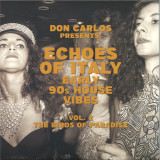
Volume 1 of this expertly curated project of 90s Italian House - put together by Don Carlos.
If Paradise was half as nice… by Fabio De Luca.
Googling “paradise house”, the first results to pop up are an endless list of European b&b’s with whitewashed lime façades, all of them promising “…an unmatched travel experience a few steps from the sea”. Next, a little further down, are the institutional websites of a few select semi-luxury retirement homes (no photos shown, but lots of stock images of smiling nurses with reassuring looks). To find the “paradise house” we’re after, we have to scroll even further down. Much further down.
It feels like yesterday, and at the same time it seems like a million years ago. The Eighties had just ended, and it was still unclear what to expect from the Nineties. Mobile phones that were not the size of a briefcase and did not cost as much as a car? A frightening economic crisis? The guitar-rock revival?! Certainly, the best place to observe that moment of transition was the dancefloor. Truly epochal transformations were happening there. From America, within a short distance one from the other, two revolutionary new musical styles had arrived: the first one sounded a bit like an “on a budget” version of the best Seventies disco-music – Philly sound made with a set of piano-bar keyboards! – the other was even more sparse, futuristic and extraterrestrial. It was a music with a quite distinct “physical” component, which at the same time, to be fully grasped, seemed to call for the knotty theories of certain French post-modern philosophers: Gilles Deleuze, Félix Guattari, Paul Virilio... Both those genres – we would learn shortly after – were born in the black communities of Chicago and Detroit, although listening to those vinyl 12” (often wrapped in generic white covers, and with little indication in the label) you could not easily guess whether behind them there was a black boy from somewhere in the Usa, or a girl from Berlin, or a pale kid from a Cornish coastal town.
Quickly, similar sounds began to show up from all corners of Europe. A thousand variations of the same intuition: leaner, less lean, happier, slightly less intoxicated, more broken, slower, faster, much faster... Boom! From the dancefloors – the London ones at least, whose chronicles we eagerly read every month in the pages of The Face and i-D – came tales of a new generation of clubbers who had completely stopped “dressing up” to go dancing; of hot tempered hooligans bursting into tears and hugging everyone under the strobe lights as the notes of Strings of Life rose up through the fumes of dry ice (certain “smiling” pills were also involved, sure). At this point, however, we must move on to Switzerland.
In Switzerland, in the quiet and diligent town of Lugano, between the 1980s and 1990s there was a club called “Morandi”. Its hot night was on Wednesdays, when the audience also came from Milan, Como, Varese and Zurich. Legend goes that, one night, none less than Prince and Sheila E were spotted hiding among the sofas, on a day-off of the Italian dates of the Nude Tour… The Wednesday resident and superstar was an Italian dj with an exotic name: Don Carlos. The soundtrack he devised was a mixture of Chicago, Detroit, the most progressive R&B and certain forgotten classics of old disco music: practically, what the Paradise Garage in New York might have sounded like had it not closed in 1987. In between, Don Carlos also managed to squeeze in some tracks he had worked on in his studio on Lago Maggiore. One in particular: a track that was rather slow compared to the BPM in fashion at the time, but which was a perfect bridge between house and R&B. The title was Alone: Don Carlos would explain years later that it had to be intended both in the English meaning of “by itself” and like the Italian word meaning “halo”. That wasn’t the only double entendre about the song, anyway. Its own very deep nature was, indeed, double. On the one hand, Alone was built around an angelic keyboard pattern and a romantic piano riff that took you straight to heaven; on the other, it showcased enough electronic squelches (plus a sax part that sounded like it had been dissolved by acid rain) to pigeonhole the tune into the “junk modernity” section, aka the hallmark of all the most innovative sounds of the time: music that sounded like it was hand-crafted from the scraps of glittering overground pop.
No one knows who was the first to call it “paradise house”, nor when it happened. Alternative definitions on the same topic one happened to hear included “ambient house”, “dream house”, “Mediterranean progressive”… but of course none were as good (and alluring) as “paradise house”. What is certain is that such inclination for sounds that were in equal measure angelic and neurotic, romantic and unaffective, quickly became the trademark of the second generation of Italian house. Music that seemed shyly equidistant from all the rhythmic and electronic revolutions that had happened up to that moment (“Music perfectly adept at going nowhere slowly” as noted by English journalist Craig McLean in a legendary field report for Blah Blah Blah magazine). Music that to a inattentive ear might have sounded as anonymous as a snapshot of a random group of passers-by at 10AM in the centre of any major city, but perfectly described the (slow) awakening in the real world after the universal love binge of the so-called Second Summer of Love.
For a brief but unforgettable season, in Italy “paradise house” was the official soundtrack of interminable weekends spent inside the car, darting from one club to another, cutting the peninsula from North to centre, from East to West coast in pursuit of the latest after-hours disco, trading kilometres per hour with beats per minute: practically, a new New Year’s Eve every Friday and Saturday night. This too was no small transformation, as well as a shock for an adult Italy that was encountering for the first time – thanks to its sons and daughters – the wild side of industrial modernity. The clubbers of the so-called “fuoriorario” scene were the balls gone mad in the pinball machine most feared by newspapers, magazines and TV pundits. What they did each and every weekend, apart from going crazy to the sound of the current white labels, was linking distant geographical points and non-places (thank you Marc Augé!) – old dance halls, farmhouses and business centres – transformed for one night into house music heaven. As Marco D’Eramo wrote in his 1995 essay on Chicago, Il maiale e il grattacielo: “Four-wheeled capitalism distorts our age-old image of the city, it allows the suburbs to be connected to each other, whereas before they were connected only by the centre (…) It makes possible a metropolitan area without a metropolis, without a city centre, without downtown. The periphery is no longer a periphery of any centre, but is self-centred”.
“Paradise house” perfectly understood all of this and turned it into a sort of cyber-blues that didn’t even need words, and unexpectedly brought back a drop of melancholic (post?)-humanity within a world that by then – as we would wholly realise in the decades to come – was fully inhuman and heartless. A world where we were all alone, and surrounded by a sinister yellowish halo, like a neon at the end of its life cycle. But, for one night at least, happy.
out of Stock
Last delivered 87 days ago available to reorder, subject to availability
Bienvenue Recordings is back on wax with two originals and a deep driving remix from the home base. We are delighted to present Gratts ‘The Lifestyle EP’ via the label, a high quality addition to his plentiful repertoire of dance delights.
Gene Tellem met Gratts in the South Australian city of Adelaide in 2022 while visiting family and touring the country for some gigs. Gratts, originally from Belgium, also finds himself in the sun for similar reasons. Being from two different French speaking parts of the world, able to communicate in a familiar way but in a whole new place really laid down the vibe for this release. Songs as much for the radio as the club, for a cold wintry night or on the shores of an Australian sunset.
'Sunsets (FBI Mix)' is Gratts & Biancolato's tribute to Sydney veteran DJ Simon Caldwell's long running 'Sunsets' radio show on FBI Radio. Gratts and Caldwell DJ'ed together in Sydney on various occasions, whereas Biancolato is a veteran Melbourne DJ and producer. The track was inspired by the dubby West-Coast deep house sound from the turn of the millennium. Adelaide's Lesley Williams provides the vocal mantra.
'Sundays With U (Neapolitan Mix)' is a jazzy and percussive venture, loosely inspired by the West London bruk sound and Charles Webster. Andreas Poppelbaum, Gratts' studio neighbour in Berlin can be heard on soprano sax. The lyrics are performed by Italian friend Ambra, who delivers them in the Neapolitan dialect.
'Sundays With U (GT Remix)’ is Gene Tellem pulling at all the elements that make the original a scorcher, stretching it out, turning the stomp up, and offering a version for a deep dance floor moment. The voice, sax, atmosphere with the snap on the one. One moment it starts, and soon you won’t know how long it’s been that your eyes are closed, body moving through the room.
out of Stock
Last delivered 4 months ago available to reorder, subject to availability
Multi-talented artist Poppy Ajudha will be announcing her sophomore album, titled ‘Poppy’, which will be released 22nd November 2024. This follows Poppy’s triumphant return to releasing music this year with the release of 'My Future', following a two year hiatus. ‘Poppy’ was created alongside Mike Malchicoff (Kanye West/King Princess) with contributions from the likes of producers Maestro (Rihanna), Fred Ball (Alicia Keys/Raye/Mariah Carey), Grades, (Kali Uchis, Dua Lipa, Britney Spears), and Travis Sayles (Ariana Grande).
Poppy says: “I can’t believe I’m writing this, but my sophomore album is finally coming out! After numerous trips back and forth from London to LA, millions of revisions to perfect each song and a lot of moving the track listing around, I’ve made an album I’m so in love with, with people who I felt truly seen by, who I respected and found a natural synergy with. I really put everything into this album, it is a reflection of my growth over the last 2 years, an outward pouring of my raw vulnerability, the inner workings of my chaotic brain and the deep desire I have to challenge myself with everything I do. I’m really proud of what we made, and I hope that when you hear it, it means something to you too.
Thank so much to all the special people who contributed to the making of this project, the producers, engineers, musicians, visual creatives, the friends who listened to me while I processed my life in order to write it down, I wouldn’t have been able to manifest this dream without you.”
Alongside the announcement of her upcoming album, Poppy has also released new single ‘Lean On Me’, a bold pop banger about the importance of community and showing support for each other even during challenging moments. ‘Lean On Me’ was written by Poppy with production from Wesley Singerman (Kendrick Lamar/Anderson Paak).
On ‘Lean On Me’, Poppy says: “We realise true friendship in the moments we are most vulnerable with each other. When I wrote ‘Lean On Me’ I was going through a breakup and struggling to make sense of my world. My friend who was experiencing their own kind of grieving found the time to give me the advice I needed, and the next day I wrote this song about the power of friendship, community, unconditional love and showing up for each other through our hardest times.”
Vibrations and frequencies of Chicago, Detroit and West London permeate "IF IT AINT DEEP" the new 6 track "mini-LP" from RIC MIRANDA. Diverse flavors of Detroit Techno, Broken Beat, and Deep House highlight the many genres and musical movements that have influenced RIC's musical career.
out of Stock
Last delivered 20 months ago available to reorder, subject to availability
Four of the freshest Blaze remixes come together on wax for the first time on Slip ‘N’ Slide, ‘Blaze Remixed’. The West London label is home to some of the best house music that crossed the Atlantic from the 90s onwards, and today the imprint continues to refresh Blaze’s legendary catalogue with remixes from leading industry figures. Up first, British producer Atjazz takes the cool feel of ‘So In Love’ from the minds of Kevin Hedge & Josh Milan as Black Rascals, adding his signature genre-crossing style. Jimpster’s take on ‘Wonderland’, featuring Josh Milan on vocals as Alexander Hope, stabilises the track while allowing the free-flowing feel of the OG to shine through. Brooklyn native DJ Spinna’s remix of ‘How Deep Is Your Love’ capitalises on Hope’s powerful vocals, supported by impeccable synth-laden production, before vinyl aficiando Natasha Diggs closes out this Blaze collection with her remix of ‘Breathe’; Diggs stays faithful to the original’s iconic saxophone and trumpet-led sound, sprinkling in her tasteful flair for smooth grooves and delicious synthwork at every turn.
out of Stock
Last delivered 20 days ago available to reorder, subject to availability
Nigerian electronic musician and violist Ibukun Sunday debuts on Phantom Limb with Harmony / Balance, a brooding, introspective take on Afro-ambient music that follows two acclaimed digital-only albums for Phantom Limb imprint Spirituals.
Based in Lagos, Ibukun Sunday has expertly positioned himself between the rarely-married cultures of ambient and West African musics. He entwines his compositions with field recordings from his native Nigeria and deeply considered philosophies of existence, humanity, and society. The themes of Harmony / Balance derive from Swami and Hare Krishna founder A. C. Bhaktivedanta and his work Bhagavad-Gita Eng: “As It Is”, a script on the duality of human nature. In Bhaktivedanta’s text, two cousins - warriors from the sacred Hindu text the Mahābhārata - and their armies are pitted against each other. The humility, self control, and devotion of one cousin against the arrogance, envy, and pursuit of power of the other. Bhaktivedanta writes that from this battle we see the necessity to cultivate and nurture our love and faith, but to simultaneously understand our selfishness and hubris. Appropriately, in Ibukun Sunday’s music, a heavy, apocalyptic dread contrasts fascinatingly with passages of light. The static-spiked, corrosive sound design of Harmony / Balance conjures darkness, but its skipping rhythmic patterns and melodic contours are made of beautifully vibrant colours.
Though Sunday excels in the kind of drawn-out elegance also found in the work of Kali Malone, William Basinski or Fennesz, and also in a magisterial repetition akin to Terry Riley or Manuel Göttsching, his unique practice, classical training, and core culture shine through in a pure and singular way. Scattered throughout Harmony / Balance are unexpected melodic antiphonies closely aligned with African music, interspersed between huge, spacious drones and field recordings.
Lead track “Arrayed On The Battlefield” evokes mythical and deific wars with hissing, buzzing synthesis that could be dystopian if not for a levitational, sunlit harmonic structure. It rolls and shimmers, transcendent frequencies alive with rhythm. Later, “Enemy Of My Enemy” employs shimmering, meditative chord pads and blissful negative space, while towards the end of the record, “To Fight With” could have been taken from a Denis Villeneuve sci-fi - the fizzing, fiery distortion at its peak gradually, carefully yields a rumbling, distant thunder as it closes. Throughout the record, Sunday’s education as a classical viola player is also evident. A honed musicality and developed ear for harmonic resonances lend the work a measured eloquence, even amidst deep, spiritual intuitiveness. This intensely personal and powerfully expressive creativity is key to the grace with which he crosses divides.
Ibukun Sunday is a solo electronic musician and violist based in Lagos, Nigeria. He has released two albums with Phantom Limb’s digital-only imprint Spirituals, which enjoyed rightful acclaim as unique and powerful works of experimental ambient music. He also performed at Phantom Limb’s 5th anniversary celebrations in 2023, playing alongside Richard Skelton at St. John’s on Bethnal Green in London, UK.
Red in Clear Vinyl. First compiled as a double CD in 2002, Moon's Milk (in Four Phases) is a suite of four EPs that Coil released seasonally via their in-house Eskaton imprint across 1998. The line-up for these sessions were John Balance, Peter "Sleazy" Christopherson, Drew McDowall, and William Breeze. Recorded primarily at their home studio in Chiswick, London on the eve of a permanent relocation to the small seaside town of Weston-super-Mare, the collection has long loomed as a pivotal and pinnacle work in the group's discography, but has never been officially reissued, or repressed on vinyl. Time has only ripened its tapestry of regal strangeness.Arranged sequentially in tribute to the equinoxes and solstices, Moon's Milk captures Coil at a revelatory crossroads, leaning deeper into improvisation, spontaneity, and sound design. "Moon's Milk or Under an Unquiet Skull" initiates the proceedings on Spring Equinox, a two-part netherworld organ séance woven from vocal drones, cathedral keys, seasick strings, and opiated undertow. From there, Summer Solstice skews lighter but no less incantational, with Balance embracing his voice-as-instrument across lucid dream torch songs ("Bee Stings"), purgatorial spoken word ("Glowworms/Waveforms"), sultry chamber pieces ("Summer Substructures"), and falsetto ravings ("A Warning From The Sun (For Fritz)").Autumn Equinox exudes more of a pensive and twilit mood, from the Rose McDowall-sung folk ballad "Rosa Decidua" ("I hear your voice sing near to me / I've put away the poisoned chalice (for now) / And lie down amongst the flowerbeds") to hall-of-lords hallucination "The Auto-Asphyxiating Hierophant" to the liminal string-plucked classic "Amethyst Deceivers," featuring excellent alien guitar by Breeze layered with Balance's oft-quoted couplet: "Pay your respects to the vultures / For they are your future."The album's final chapter, Winter Solstice, is its most swooning, remote, and ceremonial. Opener "A White Rainbow" stirs strings, layered choral vocals, and shivering rhythm into an imploding burial hymn. "North" oscillates bleakly, a ghost in the machine murmuring opaque prophecy ("This black dog has no owner / This black dog has no odour"), while "Magnetic North" is its inverse, a guided meditation of gently flickering software and surreal chakra poetics ("Red rose filling the skull / Yellow cube in the lower pelvis / Silver moon crescent below the navel"). The suite fades to grey with a traditional English carol ("Christmas Is Now Drawing Near"), rendered like an executioner's song by Rose McDowall's doomed, beautiful voice.The Dais box set includes the entirety of the rare Moon's Milk Bonus Disc CD-R / 2019 Threshold Archives CD, which includes three collaborations with Thighpaulsandra. This material is as rich and intoxicating as the previous four phases, ranging from electro-acoustic singing bowl rituals ("Copal") to dissonant electronic recitations of visionary Angus MacLise poetry ("The Coppice Meat") to ominous classical melancholia ("Bankside"). Once again, Coil confirm the vastness of their confounding, infinite alchemy, explored and refined across decades of experimentation - both sonic and bodily. From post-industrial to post-everything, theirs is an art untethered, in the wilds of its own design.
out of Stock
Last delivered 14 months ago available to reorder, subject to availability
Extra Soul Perception proudly unveils a new collaboration between two of the most captivating artists from the future soul and R&B scene. "Undercover Lover" is the culmination of three years of an organic creative partnership between Jamma-Dee and Qendresa - one that has manifested itself just in time to soundtrack summer in LA and London; their respective homes.
Following Jamma-Dee's celebrated debut album, "Perceptions," and Qendresa's recent midnight soul bomb, "2 Much", "Undercover Lover" is a highly anticipated release that emerges as an effortlessly smooth summer anthem.
The genesis of "Undercover Lover" was Jamma-Dee's irresistibly heavy beat, which underpins an intricate mirage of interlocking rhythms and textures, with the eclecticism that has cemented the producer as a mainstay of the West Coast soul-funk scene. Qendresa's songwriting prowess shines through in seamless hooks and vocal melodies that flow effortlessly over the production with bold and uncompromising energy. Gary Gritness's live bassline, introduced during an impromptu studio session, injects a deep groove into the track.
At the engineering helm, K15's expertise further elevates the record with a resonating richness and vitality. An instrumental version on the B-side allows listeners to experience the production and bassline on a deeper level.
The resulting sound is a collaborative effort that transcends borders and genres, delivering a record that is as heartfelt as it is infectious.
"Undercover Lover" stands as a testament to the power of collaboration and creativity, embodyingExtra Soul Perception's mission to facilitate transformative musical exchanges between artists worldwide.
.
About Extra Soul Perception:
Extra Soul Perception is an artist development program that operates as a label, music agency, event curator, and producer of international musical residencies. With a mission to facilitate artistic collaboration across borders, Extra Soul Perception has garnered acclaim for its innovative approach to fostering creativity and diversity within the music industry.
out of Stock
Last delivered 21 months ago available to reorder, subject to availability
Dive into the spiritual depths of Carnatic Music (Southern Indian classical music) - An enchanting journey of devotion and transcendence pulsates with raw sincerity and profound spirituality, casting a spell that transcends boundaries of belief.
Originally released on CD in 2000 from South Indian Carnatic music label and reissued on vinyl and digital first time in 2019 by Time Capsule. New 2024 repress vinyl has different tracks on the B side and it still remains as the reverse cut as the 2019 version.
2024 new vinyl repress with different track list on the side B. Reverse Cut Vinyl - This record plays from the inner groove to the outer groove. Comes with a hype sticker.
Born into a musician family steeped in the south Indian tradition of vocal music, the Mumbai-raised singer took advantage of the city’s cosmopolitism to study northern Hindustani disciplines, one of the few vocalists to train in both. Now revered as one of the greatest living exponents of Carnatic music, she received an Oscar nomination for her work on Ang Lee’s Life of Pi.
Within the first minute of opener Sada Bada (Slokam), Jayashri’s intensely spiritual vocals give a clear indication of why she has been increasingly embraced by a new generation of western listeners who’ve made the natural leap from ambient soundscapes to new age and devotional music. Accompanied on the following Bhajeham Bhajeham by a hypnotic rhythmic backing of mridangam drums, bells and the drone of a tambura, over its epic twenty-minute length she stretches her voice into a variety of spellbinding forms – her softly enunciated dedications to Shiva enveloping you with their immersive warmth and cosmic beauty. Keshvaya Namaha is an invocation to Lord Vishnu, the protector of creation and one of the other major deities of the Hindu tradition, while Raghavam recites the names and attributes of two of his most popular avatars: the heroic Rama and the playful, loving Krishna.
One of the album’s new-found devotees is label boss Kay Suzuki: “every time I listen I’m amazed at how such a small ensemble can create such a deep musical landscape. The incredible production plays a big part. That intricate percussion sounds so clear and sits in all the right pockets rhythmically and sonically. Just by following this groove I’m put into a timeless zone, but when her voice hits on top of that gorgeous drone sound and I focus on the details of her small melodies within melodies, my heart centres and I find myself in a blissful place.”
As professor of cultural and political theory in Universicty of East London, Jeremy Gilbert states in the album’s liner notes, the mesmerising sincerity and deep spirituality of these songs present an intense and spiritual charge that will appeal to an audience well beyond believers and devotees of Hinduism.
out of Stock
Last delivered 12 months ago available to reorder, subject to availability
*REMASTERED ROUGH TRADE 4 TRACK E.P LIMITED TO JUST 500 COPIES*
Everything on “Up Home!” is bigger, richer; the guitars are huge, as though they’re being played through the clouds, massive gusts of blue-green noise that move across the stereo spectrum like weather systems. “Baby Milk Snatcher” is built around face-flattening dub bass, with glinting piano and shards of guitar ricocheting through the song. “W.O.G.S.” is delirious to the point of expiration; “One Way Mirror” is their attempt at weird, lopsided ‘anti-funk’, the song’s melody crushed by avalanches of six-string interference. And the closing “Up” is AR Kane’s masterpiece, a disembodied thud pulsing at its heart as a six-note guitar melody spirals ever onward, Ayuli’s voice lost in its own reverie, hymning escapism via references to Jamaican political activist Marcus Garvey’s ‘black star line’.
• Jon Dale, lead review in Uncut Magazine
who grew up together in Stratford, East London. From the off the pair were outsiders in the culturally mixed (cockney/Irish/West Indian/Asian) milieu of the East End, with Alex and Rudy’s folks first generation immigrants from Nigeria and Malawi, respectively. The two of them quickly developed and fostered an innate and near-telepathic mutual understanding forged in musical, literary and
artistic exploration. Like a lot of second-generation immigrants, they were ferocious autodidacts in all kinds of areas, especially around music and literature. Diving deep into the music of afro-futurist luminaries such as Sun Ra, Miles Davis, Lee Perry and Hendrix, as well as devouring the explorations of lysergic noise and feedback from contemporaries like Sonic Youth and Butthole Surfers, they also thoroughly immersed themselves in the alternate literary realities of sci-fi and ancient history (the fascination with the arcane that gave the band their name), all to feed their voracious cultural thirsts and intellectual curiosity.
It was seeing the Cocteau Twins performing on Channel 4 show the Tube that spurred A.R. Kane into being - “They had no drummer. They used tapes and technology and Liz Fraser looked completely otherworldly with those big eyes. And the noise coming out of Robin’s guitar! That was the ‘Fuck! We could do that!
The duo debuted with the astonishing ‘When You’re Sad’ single for One Little Indian in
1986. Immediately dubbed a ‘black Jesus & Mary Chain’ by a press unsure of WHERE to put a black band clearly immersed in feedback and noise, what was immediately apparent for listeners was just how much more was going on here – a tapping of dub’s stealth and guile, a resonant umbilicus back to fusion and jazz, the music less a conjuration of past highs than a re-summoning of lost spirits.
The run of singles and EPs that followed picked up increasingly rapt reviews in the press, but it was the ‘Up Home EP’ released in 1988 on their new home, Rough Trade that really suggested something immense was about to break. SimonReynolds noted the EP was: Their most concentrated slab of iridescent awesomeness and a true pinnacle of an era that abounded with astounding
landmarks of guitar-reinvention, A.R. Kane at their most elixir-like.
If anything, the remastered ‘Up Home’ is even more dazzling, even more startling than it was when it first emerged, and listening now you again wonder not just about how many bands christened ‘shoegaze’ tried to emulate it, but how all of them fell so far short of its lambent, pellucid wonder. This
remains intrinsically experimental music but with none of the frowning orthodoxy those words imply. A.R. Kane, thanks to that second generation auto-didacticism were always supremely aware about the interstices of music and magic, but at the same time gloriously free in the way they explored that connection within their own sound, fascinated always with the creation of ‘perfect mistakes’ and the possibilities inherent in informed play.
out of Stock
Last delivered 2 years ago available to reorder, subject to availability
Reel People Music breaks new ground, in more ways than one, with the launch of fresh compilation series Broken, Deep & Dope. A spin-off from acclaimed compilation brand Soulful, Deep & Dope – introduced back in 2015 – this new series sees the much-loved independent imprint pushing further at the boundaries of soulful music. All with that customary Reel People feeling.
Broken, Deep & Dope 2024, the series’ first instalment, unleashes 20 superlative examples of the soulful ‘bruk’ (broken beat), nu beat and nu jazz sound that has so innovatively informed contemporary dancefloors around the world since its inception back in late Nineties West London.
Bringing together classic cuts from the Reel People Music stable (including those by Daz-I-Kue, Monkey Brothers and Reel People) and key productions from some of its closest affiliates and biggest inspirations (such as Vikter Duplaix, Jazzanova, Bugz In The Attic, Kaidi Tatham, and Sean McCabe), this white-hot selection nips and tucks beautifully between stuttered Latin and Afro rhythms, deep house-edged jams and soaring flights of soul-jazz fancy.
Reel People Music is a label borne out of the soulful success of acclaimed collective Reel People but representing so much more. Launched in late 2009, the imprint has built a fiercely loyal international fanbase through its passion for artist development, musicianship, song-craft and authentic soulful groove.
Broken, Deep & Dope 2024, with its scattered yet compulsive beats, frisky basslines and acrobatic melodies, promises to further expand Reel People Music’s reputation for soulful depth and drama. Gathering old and new favourites from some of the world’s finest taste-making DJs and producers, this is another scorching, oh-soul essential hustle. End of.
out of Stock
Last delivered 7 months ago available to reorder, subject to availability
ora’s most innovative modern exponent bathes in communion with a re-imagined classical guitar, unveiling a new and previously unsuspected musical universe. In a meeting between instruments, not traditions, these maestros emerge from quite different and distant musical worlds. Ballaké Sissoko’s kora tradition and lineage traverse the once powerful West African empire known as Kaabu. South African Derek Gripper’s roots are in European classical guitar but infused with a unique jeli music mastery that takes guitar’s modern history in a captivating new direction.
But we are not hearing these traditions in dialogue: these masters meet on the sonic groundings of the kora, instrument of the griots, resonant vessel of the sacred and profane, sound carrier of history and wisdom. Through two decades of commitment and study, it is to this terrain that Gripper brings his guitar to meet its multi-stringed cousin.
The two men do not share a spoken language, but if it is true that music speaks universally, then they were already involved in profound dialogue long before they met for the series of London concerts which yielded this recording session – a session which matches deep communion with sparkling improvisation, which pushes a living tradition into brand new sonic spaces, and opens a live and direct channel of communication between kora and guitar. In the complex web of theme and variations spun by Sissoko’s twenty-two strings and Gripper’s six, a new African string theory is elaborated.
“Musically we tested each other,” says Sissoko, explaining that the most magical aspect of their encounters are spontaneity. “We have the mastery of our instruments, the technique and a good ear. Derek is very curious, that’s very important.”
“He’s just such a good listener,” says Gripper about Sissoko. “It’s not what he plays, it’s how he plays it. He’s an amazing interpreter, the prime master of timbre.”
Recording by Taylor Pollock at Platoon Studios, London.
Mixed, edited and produced by Derek Gripper.
Mastered by Murray Anderson at Milestone Studios, Cape Town.
Produced for vinyl by Chris Albertyn and Matt Temple at Matsuli Music.
Mastered for vinyl and lacquers cut by Frank Merritt at The Carvery, London.
Vinyl pressed at Pallas GmbH, Germany.
Sleeve notes by Francis Gooding, French translation by Paulo Goncalves.
Cover design by Toby Attwell at Twoshoes, Cape Town.
out of Stock
Last delivered 2 years ago available to reorder, subject to availability
"After an acclaimed run of performances at the National Theatre in 2018, Hadestown returned to London in February 2024 for its long-awaited West End premiere at the Lyric Theatre, Shaftesbury Avenue.
This Grammy award winning recording represents the Broadway show in its entirety. It features vocal performances by Reeve Carney (Spider-Man: Turn Off the Dark); Tony nominees Eva Noblezada (Miss Saigon), Patrick Page (Spring Awakening), and Amber Gray (Natasha, Pierre and the Great Comet of 1812); and Tony winner André De Shields (The Wiz).
Following two intertwining love stories - that of young dreamers Orpheus and Eurydice, and that of King Hades and his wife Persephone - Hadestown, the 8x Tony-winning musical (including Best Score and Best Musical) by celebrated singer-songwriter Anaïs Mitchell, invites audiences on a hell-raising journey to the underworld and back.
Mitchell's beguiling melodies and innovative director and Tony Award nominee Rachel Chavkin's poetic imagination pit industry against nature, doubt against faith, and fear against love.
Performed by a vibrant ensemble of actors, dancers, and singers, Hadestown delivers a deeply resonant and defiantly hopeful theatrical experience. This album was produced by Grammy® winner David Lai (the 2009 West Side Story Cast Album) alongside Todd Sickafoose and Anaïs Mitchell, who also collaborated on Mitchell’s celebrated modern folk album Young Man in America. This is a new 2LP version in standard packaging making it cheaper than previous deluxe versions. 2 x 140g discs in a gatefold sleeve"
London-based four-piece Adult Jazz announce their first full-length album in a decade, So Sorry So Slow, out 26 April 2024 via Spare Thought. Alongside the announcement comes lovesick new single ‘Suffer One’ featuring Owen Pallett, a cautious excavation of self and sexuality, clambering across a gorgeously shapeshifting, filmic five-minutes.
Containing some of the band’s most abrasive but gentle, beautiful and melismatic work to date, So Sorry So Slow has many defining characteristics: romance, panic, devotion and remorse, threaded together by an intentionally laser-focused love. It’s deeply personal, bruised and candid in its expressions of tenderness, and deeply pained in its concurrent reflections of ecological regret. Across its hour-long runtime, a delicate, frenetic energy and glacial heaviness coexist, the band pitting those paces against one another. In their richly experimental timbre, dancing strings and fluttering falsettos prang against a bed of brass drones like a wounded bird.
“We started writing in 2017 and began recording in 2018,” says vocalist Harry Burgess. “We genuinely thought it might be finished in 2018! But things kept developing and, having resolutely not struck while the iron was hot, there was no real external push to rush things after that, so we just kept letting things shift and unfold until it felt right. Listening back to my voice notes it’s nice to notice that there are fragments of ideas from the whole period 2017-2023 which have shaped the record.”
Recorded in bursts at studios across London and in the band members’ flats, at Konk, on the Isle of Wight and in Sussex, So Sorry is unambiguous in its evolution. Sonically, there are sparks of the arrhythmic brightness that afforded the band’s critically acclaimed debut album Gist Is its cult adoration, for fans of Arthur Russell and Meredith Monk, but with a blossoming, melancholic darkness often overhead. Piano sprees and luscious string sections appear like low-hanging stars on a night-time drive, whilst plunging vocal distortions and humming brass loops resurrect heavy limbs in a bad dream.
“I usually have objects as kind of totems for ideas,” explains Burgess. “The album initially started out to do with performance… the totem was a head mic, one of the subtle skin-tone ones, discreet on the forehead of a West End star. A number of the first songs in their original forms were almost musical theatre piano ballads. I think that was really a device to write about my life as the ‘main character’ (pre internet-speak reframing): regrets about romance, relationships - unsustainable relationships with the self and others.”
“However, once we started writing, the ideas about unsustainable personal relationships, loving unevenly and heartbreak conflated with a more expressly ecological regret. Like contending with big feelings of loss, endings, beauty, desolation, and with how much joy the earth contains in it. Feeling so much gratitude bound up in waves of sadness. Maybe witnessing a slow-motion goodbye to all that, or its last gasps. I love the earth and the life it supports so much. I love how ecosystems fit together - even the brutal stuff. It may be basic to say, but now is the time to be laser focused on that love. I was thinking about human centrality on earth, us as the ‘main character’, the way that is served by faith and romanticism, and the subsequent disingenuous understandings of our position in the ecosystem, as only stewards somehow, rather than subjects. The totems at this point: a herald’s horn, lorry inner tubes, archaeological tools. I guess from doom, industry, history respectively.”
“Now I would say the record is about gripping. Totems being: crampons, rope, drips, desalination equipment, accruing various survival tech. I think gripping sums up both of the threads. There’s the emotionally correct clinging to the earth that is the substrate of everything we value, or the delusional clinging to our imagined dominant position. But also the practical, technological aspects of creating a sustainable relationship, of remaining here. Then I think of romance again.”
So Sorry So Slow comes out 26th April 2024 on Spare Thought, mixed by Fabian Prynn at 4AD Studios and mastered by Alex Wharton at Abbey Road.
Adult Jazz is Harry Burgess, Tim Slater, Steven Wells and Tom Howe.
out of Stock
Last delivered 2 years ago available to reorder, subject to availability
We Release JAZZ is very happy to announce an exciting new body of work by Joseph Deenmamode aka Mo Kolours. The singular musical spirit’s new 21-track album Original Flow is available as a double LP housed in a heavy 350gsm sleeve with original artwork by Mo Kolours himself and the classic WRJ obi strip, as well as in digipack CD and digital formats.
A catalog of critically acclaimed records, including his self-titled debut (2014), ‘Texture Like Like Sun’ (2015), 2018 album ‘Inner Symbols’ and three companion EPs, established Deenmamode as a prodigious musician and vocalist. Pitchfork extolled his “hypnotic, tribal-infused dance grooves”, DJ Mag appreciated the “colourful celebration of soundsystem culture”, and Resident Advisor advocated that “no one sounds quite like Mo Kolours”. Musical analogies were drawn by The Guardian as “The best album Curtis Mayfield never made with A Tribe Called Quest and Lee Perry” and Mojo as “like Marvin Gaye produced by J Dilla”.
Five years ago, Deenmamode moved to the Japanese countryside. Far away from familiarity, he contemplated his place and further questioned his identity. “I had none of my ‘own’ people around. I had time to really find what makes me tick musically. Japan has helped me go back to those subconscious leanings, really go deep, and reflect the aspects that make up my story”.
The tracks on ‘Original Flow’ have been constructed from sessions, improvisations and soundbites captured around the world during this time; collecting contributions from musicians including Deenamode’s brothers Reginald Omas Mamode and Jeen Bassa plus Andrew Ashong, Charles Bullen, Dwaye Kilvington, Eddie Hick, Stefan Asanovic, Myele Manzanza, Ross Hughes, and Tom Dreissler. Deenamode says “I’m proud of this album’s creative process. Coming from a tradition of scouring through hours of records, I wanted to create my own samples, to find that perfect loop that no other producer could put their hands on. I decided to invite a group of friends and acquaintances, who also happen to be incredible musicians, to a studio in Crystal Palace to improvise based on some loose ideas I had. We spent all day, and recorded everything”.
‘Original Flow’ is an album of UK street-soul nouveau, future indigenous jazz fusion, Rasta Segga, Nyahbinghi jazz, Malagasy Hebrew hip hop. While retaining a spirit of exploration and improvisation, it sees Deenmamode grow and flex beyond beat tape brevity, expanding composition and stretching his musical muscle to play live with other musicians. Themes of empowerment, overcoming adversity, and mental liberation coexist with notes from ancient history, futurism, and science, as well as musings on family and togetherness.
‘Magik Momentum’ springs from a discussion that features at the start of the song, an inspiring mentor answering a question from Deenmamode about improvisation and what role it plays in life when planning and manifesting the future. ‘Rockets to Mars’ questions the lack of care for the billions of people with nothing, while governments plan to explore space. “This sparked a comparison in my mind to a Sonny Okuson song that I would reference when performing. Okuson’s song talked of the lack of resources in many communities in the world, while governments go to the moon”.
He says the music behind ‘The News These Days’ is “possibly my favourite on the album”. Looped like he would a late sixty jazz-fusion sample, there was nothing added and the track was complete within a matter of minutes. “It was the first and best moment from the entire Crystal Palace session”, he adds. The album’s contrasting title track with minimal instrumentation played solo by Deenamode. While frustratingly searching for gems in past recordings, he thought in a burst of ego, “I don’t need no-one else to make a dope beat!” picked up his ravanne, (the traditional frame drum of his fathers home-land of Mauritius), pressed record, and started to play. He says, “In my thoughts were the rhythms of the Nubians in Upper-Egypt and Sudan, the swing of the huge drums played by Mauritanian women, of-course the Sega beat of Mauritius, and the ever inspiring beat of James Yancey”.
Driven by UK broken beat, Cuban congas, Nigerian and Mauritian inflections, ‘Love Vibration’ follows the concept that all emotions carry a vibratory frequency and pays homage to the frequency of creation and the power of love. The two part ‘Tatamaka’ tells of the history of Deenmamode’s ancestors, the maroons of Mauritius. “We are people who managed to run from our oppressors and find refuge in a corner of the island called ‘Le Morne’ where they could not reach us. One bloody day they came in numbers to re-capture, to revenge. Many of us chose to jump to our deaths, rather than be taken back into subjugation. The poem by Creole Richard Sedley Assonne says; “there were hundreds of them, but my people, the maroons chose the kiss of death over the chains of slavery”. Tatamaka was the name of a famed maroon leader who was murdered for claiming his, and our people’s freedom. The song is the imagined journey of escape and freedom by an ancestor of the maroons of Le Morne”.
Born in the west midlands and raised on the traditional sega music of his father’s Indian Ocean homeland of Mauritius alongside records by the likes of Jimi Hendrix, Santana and Michael Jackson; his influences expanded with late 90s jungle and drum and bass nights in Bristol, experiments at art college in Camberwell, and the rich culture of Peckham, “at the time we called it the Afro Quarters of London” says Deenmamode, adding hip hop, dub, soul and soundsystem styles to his individual sound.
He explains, “I love drum music, from hand-drums to 808s. I love music from the ancient past, heritage music, indigenous music, traditional music passed down from the beginning of time. Music from the body, hand claps, grunts and foot stomps. Music with audible depth, busy, bustling, highly charged. Music from the soul, the music from beyond. I love music from the islands and the mountains. The music of the streets, hustle music, alleyway beats. Club music”.
He describes the creative process as thinking in images. “The visual world and the world of sound seem to intermingle in my thought process. When I play the drum with my eyes closed, a world of imagery dances and moves with beat. Improvised drumming feels like I am listening to what I want to hear, rather than trying to play what I want to hear. Following the rhythm and finding new pathways to walk within the patterns is what I experience. In this way I often feel I am just a listener, instead of the player”.
Original Flow is pressed on biovinyl, a sustainable alternative to traditional vinyl. Biovinyl replaces petroleum in S-PVC by recycling used cooking oil or industrial waste gases, resulting in 100% CO2 savings in bio-based S-PVC production. Furthermore, it is 100% recyclable and reusable, embracing the circular economy ideology.
out of Stock
Last delivered 2 years ago available to reorder, subject to availability
Nia Archives is the star at the forefront of the latest era of jungle. Since her emergence in 2020, her collagist soundscapes have helped bring the sound to a new generation of clubgoers (though fair warning: don’t call her a “revivalist” – she’s the first to point out that the scene never went away). So when it comes to talk of the 24-year-old producer, DJ, singer and songwriter’s much-anticipated debut album, the odds are you’re thinking of a full-length record of weightless jungle tracks with basslines so intense they’ll leave your ears ringing.
But the reality of the Bradford-born, Leeds-raised artist’s first ever album – while very much replete with that exquisite jungle sound she does so well – is also doing something a little different. On the thrilling and freeing Silence Is Loud, Nia Archives is looking to make music for beyond the rave. As she explains: “I think music can be experienced in different ways, and there’s different kinds of music for different scenarios. Say you’re at a festival listening to music with thousands of other people, that can feel really uniting. But then you might listen to an album on your own in the bus, or in a taxi; and this project is definitely more a record to sit and listen to than a collection of club tracks.” Nia is intent that Silence Is Loud is taken in as a full body of work of something “more song-focussed, putting interesting sounds on jungle.” It means that this is a record which finds gloomy Britpop, warm Motown, soaring indie, a love for Kings of Leon’s Aha Shake Heartbreak, skittering IDM, Madchester, classic rock, old skool hardcore and more, woven and fused into her ragga and junglist tapestry, all layered with feeling, imbued with her songwriterly lyricism about loneliness, relationships, family, navigating her 20s, and the intense potential power of silence.
The vast sonic palette on Silence Is Loud comes down to Nia’s broad array of influences through her life. With her Jamaican heritage, Nia remembers hearing jungle as a child via her nana, as well as at Bradford Carnival, where she was drawn to the soundsystem culture, dancing carefree on the floats in the parade. The first album she ever bought was Rihanna’s debut, Music of the Sun, and she also went to Pentecostal church back then, and was obsessed with gospel. Aged 16, she moved to Manchester, where she didn’t really know anybody: and so, her solution to meeting people was going out. “Partying was a huge part of my life,” she says, “They used to do little freestyle cyphers at the house parties and I would join in – that’s kind of how I got into singing.” She had found music boring at school, but in meeting all these new people she became interested in making her own music as a hobby. “I was making boom-bap kind of stuff which I didn’t really like in the end,” she laughs, “My lyrics are quite deep, so on a hip-hop beat it all sounds really depressing. I wanted people to dance to my music.” And so she began experimenting with faster tempos alongside that melancholy songwriting, teaching herself how to make beats on Logic: “It’s all been a lot of trial and error, really.”
Nia went to study music in London, and was also interested in visual art, making collages and VHS: “Before the music, I was trying to make a visual archive of my life and the people around me,” she explains, “And then my music was like my diary, and a sonic archive, as well.” Hence, she paired the word “archives” with her middle name, Nia. To this day, in her spare time she’s working on pulling together a documentary on the global nature of the jungle scene.
Back on those first two EPs, Headz Gone West (2021) and Forbidden Feelingz (2022), she honed that junglist sound, painting it with new flecks of colour and vibrance. It was only after she started releasing work that she realised pursuing music could be a viable life path for her. The decision has been paying off ever since. Nia Archives placed third in the prestigious BBC Sound Poll for 2023, alongside garnering a nomination for the Brit Awards’ Rising Star prize, plus wins at the DJ Mag, NME, the MOBOs and Artist and Manager Awards. She has also toured the world – be it North America, Europe or Asia – and even opened a show in London as part of a little something called Beyoncé’s Renaissance World Tour. She’s renowned as a party-starter in her own right, too, with takeovers at Glastonbury, Warehouse Project and her own Bad Gyalz day event. She’s done official remixes for the likes of Jorja Smith, had a huge summer hit with her Yeah Yeah Yeahs rework ‘Off Wiv Ya Headz’, and worked with brands like Corteiz, Nike, Flannels, Burberry, FIFA and Apple. In just three years, it’s fair to say that Nia Archives has become a need-to-know name in dance music.
But Nia is not interested in being one fixed thing. Building on the terrain from her third EP, Sunrise Bang Ur Head Against Tha Wall, the universe of Silence Is Loud is not totally unfamiliar territory; but it’s still emblematic of a bolder scope than we’ve heard from the artist before. Working with Ethan P. Flynn (the songwriter and producer known for his work with FKA twigs and David Byrne), the resulting record is an impressive feat of deftly-sculpted textures; sometimes big and euphoric, like the wobbly, lusty bass of ‘Forbidden Feelingz’, or elsewhere notably gentle and quiet – see: the gorgeous, surprisingly drumless ‘Silence Is Loud (Reprise)’, a heartfelt number that sits somewhere in the school of Adele. “I really sharpened my songwriting skill on this project,” Nia says, “I was really intentional about what I was writing about, and I really loved co-producing with Ethan. His process is so different to anyone I’ve worked with before, and he’s got a kind of DIY set-up like me.” Flynn’s flat overlooks the Barbican, adding that unquantifiable futurist urban quality that the area holds to the music. The pair enjoyed the collaborative process so much that the album was done within three and a half months.
Perhaps this is why Silence Is Loud maintains an exuberant immediacy while still being sleek and spacious, interspersed with flourishes of metallic beats, lush melody and topped with her sugary but powerful vocal, floating over it all. There is an intimacy to the record, perhaps in part due to Nia writing most of her lyrics while sitting in bed in her flat in Bow (once a bedroom producer, always a bedroom producer). You can hear it on the refrain for lead single ‘Crowded Roomz’, which finds rippling guitar lines cutting taut through the beats as Nia refrains: “I feel so lonely crowded rooms.” The song is an examination of life on tour, constantly surrounded by people, but not necessarily those she can be herself around; more than that, the track is exemplary in the category of sad bangers.
Silence Is Loud often finds itself in that push and pull between melancholy and euphoria. There’s a celebration of her unconditional love for her younger brother (the title track), a rumination of an evening with an Irish boy she met by Temple Bar (‘Cards On The Table), or a letter to herself on the light and airy ‘Unfinished Business’, even coming to terms with a lover having a past they haven’t quite processed yet (“nobody comes with a clean slate”). The latter was recorded the week after a music festival, and accordingly captures Nia’s vocal in its not quite healed, husky state.
Nia’s work is always a snapshot of where she’s at when she’s making it. This might not be the debut album you were expecting, but that’s what makes Silence Is Loud so special. Nia Archives has learned the rules of her sound, and is unafraid to break them, pushing jungle and herself into new, unchartered territories that, in turn, go some way to map the history of the greats of British dance music. More than that, it plants her firmly in that lineage.
out of Stock
Last delivered 17 months ago available to reorder, subject to availability
First compiled as a double CD in 2002, Moon's Milk (in Four Phases) is a suite of four EPs that Coil released seasonally via their in-house Eskaton imprint across 1998. The line-up for these sessions were John Balance, Peter "Sleazy" Christopherson, Drew McDowall, and William Breeze. Recorded primarily at their home studio in Chiswick, London on the eve of a permanent relocation to the small seaside town of Weston-Super-Mare, the collection has long loomed as a pivotal and pinnacle work in the group's discography, but has never been officially reissued, or repressed on vinyl. Time has only ripened its tapestry of regal strangeness. Arranged sequentially in tribute to the equinoxes and solstices, Moon's Milk captures Coil at a revelatory crossroads, leaning deeper into improvisation, spontaneity, and sound design. "Moon's Milk or Under an Unquiet Skull" initiates the proceedings on Spring Equinox, a two-part netherworld organ séance woven from vocal drones, cathedral keys, seasick strings, and opiated undertow. From there, Summer Solstice skews lighter but no less incantational, with Balance embracing his voice-as-instrument across lucid dream torch songs ("Bee Stings"), purgatorial spoken word ("Glowworms/Waveforms"), sultry chamber pieces ("Summer Substructures"), and falsetto ravings ("A Warning From The Sun (For Fritz)"). Autumn Equinox exudes more of a pensive and twilit mood, from the Rose McDowall-sung folk ballad "Rosa Decidua" ("I hear your voice sing near to me / I've put away the poisoned chalice (for now) / And lie down amongst the flowerbeds") to hall-of-lords hallucination "The Auto-Asphyxiating Hierophant" to the liminal string-plucked classic "Amethyst Deceivers," featuring excellent alien guitar by Breeze layered with Balance's oft-quoted couplet: "Pay your respects to the vultures / For they are your future." The album's final chapter, Winter Solstice, is its most swooning, remote, and ceremonial. Opener "A White Rainbow" stirs strings, layered choral vocals, and shivering rhythm into an imploding burial hymn. "North" oscillates bleakly, a ghost in the machine murmuring opaque prophecy ("This black dog has no owner / This black dog has no odour"), while "Magnetic North" is its inverse, a guided meditation of gently flickering software and surreal chakra poetics ("Red rose filling the skull / Yellow cube in the lower pelvis / Silver moon crescent below the navel"). The suite fades to grey with a traditional English carol ("Christmas Is Now Drawing Near"), rendered like an executioner's song by Rose McDowall's doomed, beautiful voice. The Dais box set includes the entirety of the rare Moon's Milk Bonus Disc CD-R / 2019 Threshold Archives Copal CD, which includes three collaborations with Thighpaulsandra. This material is as rich and intoxicating as the previous four phases, ranging from electro-acoustic singing bowl rituals ("Copal") to dissonant electronic recitations of visionary Angus MacLise poetry ("The Coppice Meat") to ominous classical melancholia ("Bankside"). Once again, Coil confirm the vastness of their confounding, infinite alchemy, explored and refined across decades of experimentation - both sonic and bodily. From postindustrial to post-everything, theirs is an art untethered, in the wilds of its own design.
out of Stock
Last delivered 2 years ago available to reorder, subject to availability
Despite being one of the best kept secrets in house music, K4B Records is one of the most influential labels of the 90’s. Now the impressive discography is available digitally for the first time, with each record written and produced by Kingsley O. An Englishman of West-African heritage, Kingsley had moved to the states to pursue his musical aspirations of working with the finest soul vocalists, and his productions went on to inspire dancefloors both sides of the pond. Kingsley wrote some of the most loved songs of the 90’s underground, and by bringing emotive vocals to the dancefloor he defined the K4B sound. The sharp and rugged drums, rolling bass and melodic keys paired with the dynamite punchy vocals of amazing vocalists, such as Maydie Myles and Dawn Tallman, found success on the US Garage scene as well as being hugely influential as UKG began to explode, cementing K4B’s musical legacy in the house music hall of fame.
This special 2 x 12” vinyl package offers a consolidated dose of some of the standout records released by K4B from two of their most prominent artists, Maydie Myles and K London Posse. Whether this is a revisit to K4B’s catalogue or an introduction to new listeners, this first edition of a series of vinyl releases is the perfect way to dip your toes into the illustrious back-catalogue of this legendary label.
out of Stock
Last delivered 6 years ago available to reorder, subject to availability
Except from Rachid Taha, who allowed himself a few forays into the teeming, vibrant heaths of techno, no raï singer other than Cheb Malik has ever ventured into this terrain known for its abundance of sound. If you know about Malik Adouane's ancestry, this is hardly surprising. Born in Librecourt, near Lens, he comes from a union between an Italo-Celtic mother who instilled Western sounds into his ears and a father, a former miner born in Biskra (north-east Algeria), a palm grove near the desert, musically renowned for its lively diwan that could be called Saharan opera. In addition, the town is renowned for its chakhchouka, a dish called after its rich blend of various ingredients and spices. Just like Malik’s music, as he was a fan of James Brown, Barry White, classical Arabic and raï music. He had been thinking about it from the beginning, but the dream took a long time to materialize. In January 1986, many raï idols turned up in Bobigny, France, for a historic and seminal festival. In the midst of the audience, the young man, dressed in black leather, provided security for the concerts of many stars before becoming one himself. He would rub his eyes, not because he was dazzled, but because they were clouded by a nostalgia that remained him of itself. So, with his head full of sounds warmly recommended by the best DJs, he set out, a little provocatively, to position himself at the cutting edge of music with a new concept called "After raï". It combined the sweet and precious past with an almost uncontrollable creative audacity. It's a balm made in a test-tube-studio from a mix of Arabic melodies and lyrics - a kind of "Arabeat", and the arrogant modernity produced by samplers, electronic spinning, roaring bass and guitars made for house music. The pinnacle of the record is a masterful cover of Isaac Hayes' Shaft, which set dancefloors on fire in Paris, London, Ibiza and New York, and became internationally known thanks to its presence on a Paris Dernière compilation curated by French musician and DJ Béatrice Ardisson along with Claude Challe's iconic Buddha Bar series. Now, shall we dance?
EP compilation of essential UK house cuts recorded between 1987 - 1990. TIP!
Before British house and techno found its’ distinctive groove at the turn of the 1990s, one act led the way: Bang The Party, a trio who emerged from London’s vibrant underground party scene in the mid 1980s and proved, beyond any doubt, that UK producers could make music every bit as magical as the pioneering productions put forward by their counterparts in Chicago, Detroit and New York.
By the time long-running DJs and party promoters Kid Batchelor and Leslie Lawrence joined forces with trained engineer Keith Franklin at legendary North-West London reggae studio Addis Ababa in 1987, they’d spent years as DIY dance music activists in Britain’s capital city. They channelled these experiences and their love of imported house and techno sounds into a new project, Bang The Party, in the process becoming the first British act to appear on Transmat, a reflection of the quality and authenticity of their music.
The latest Rush Hour Reissue Series release offers a snapshot of some of the numerous gems nestled in the Bang The Party catalogue, delivering a much-deserved celebration of one of Britain’s most significant early acid house collectives. It features four fully remastered cuts recorded and released between 1987 and 1990 – on-point and far-sighted club workouts that sound as fresh and timeless now as they did when Britain was sweltering under its infamous ‘second summer of love’.
Fittingly, the EP begins with ‘I Feel Good All Over’, the group’s ground-breaking debut single. Dedicated to their home city and one of the earliest UK interpretations of house music, the track exists in the grey area between Chicago house and New York ‘garage house’ – all jaunty organ stabs, jacking Windy City beats, restless bass and soulful vocalizations. ‘Jacques Theme’, which follows, originally nestled on the B-side of that single release. An early, acid-flecked expression of hip-house with a British twist, breakdance-friendly bongo patterns and a dose of Larry Heard-inspired deep house dreaminess, the track remains an under-appreciated classic whose rap verses reflect the popularity of hip-hop in London at the time.
1988’s ‘Release Your Body’, Bang The Party’s most celebrated early release, was reissued in the United States by Transmat, reflecting the strong working relationship between Derrick May and Kool Kat Records’ Neil Rushton. A hypnotising affair propelled forwards by sweat-soaked drum machine beats, jacking fills and an addictive bassline, the track offers another near perfect distillation of the band’s Black American musical influences while delivering something genuinely new and fresh.
Rounding off the EP is a choice cut from Bang The Party’s sought after 1990 album Back To Prison. Doused in the star-lit synth sounds of the Motor City with jaunty organ stabs inspired by the kind of New Jersey jams championed at East Orange institution Club Zanzibar, ‘Let It Rip’ is a superb slice of deep house soul featuring a lead vocal every bit as emotive as anything laid down by Robert Owens. Like the rest of Bang The Party’s output, it has stood the time better than anything laid down by their London contemporaries.
out of Stock
Last delivered 87 days ago available to reorder, subject to availability
Three songs taken from Chip Wickham's spiritual jazz album Blue to Red get reshaped by Photay, Medlar, and Chip Wickham himself. The result is a lush ep, every bit as good as the combination of a wonderful original track and an uber-talented remixer could be.
Photay has deconstructed the peaceful Blue to Red to turn it into a bomb—a storming dance track that keeps the spiritual vibe intact. The extra beatless version soothes your ear while creating a certain sense of anticipation.
The original version of Interstellar blends fusion jazz with the sound of West London's seminal broken beat scene. Medlar has plucked the track apart, then rebuilt it by adding some extra perc and synth sounds to the bass-driven beats. The result is some deep and heavy and funky business.
And finally, Chip recovered a take of wonderful astral slow jam The Cosmos that didn't make it onto the album, one with no drums, and cooked up a roomy cosmic dub, full-on Space Echo.
It will be out in a limited transparent vinyl 12"
out of Stock
Last delivered 2 years ago available to reorder, subject to availability
A Flor de Piel, the new album from singer-songwriter and composer Maria Monica Gutierrez (aka Montañera), is a meditative journey of self-discovery across oceans, time, and the traditional confines of genre. Originally from Bogota, Colombia, Gutierrez began the album as a way to explore her identity after a difficult move to London left her feeling untethered in a strange new place. The result is an examination of the immigrant's experience through a rich sonic lens of ambient pop textures, inspired by sources as disparate as Colombian traditional music, traditional Senegalese music, and whalesong from the depths of the Atlantic. The album begins with the title track "A Flor de Piel," Gutierrez's indelible vocals floating above a vast expanse before being joined by deep, silky bass and the plucks of a koto-like stringed instrument. "The song was inspired by traditional Japanese music," Gutierrez explains, "It's about making my heart a little lighter; I know that inside of me I can be as light as mist in heat, I can be fragile as the song of a sparrow." That sentiment perfectly encapsulates much of what makes A Flor de Piel so special. The album comes with a message of healing for all people, without forgetting the centuries of struggle and hurt that form the bedrock of modern society. The track "Santa Mar," for instance, is inspired by the musical traditions of afro-pacific women in Colombia, and the crucial role that they play as peacebuilders in the region. Backed by a hypnotic beat, the song features contributions from marimba player Cankita, alongside Las Cantadoras de Yerba Buena, an all-female vocal group that utilizes traditional Afro-Colombian music to preserve their history and promote peace. Standout track "Como Una Rama" is a futuristic take on bullerengue, a traditional style of music and dance originally developed by Maroon communities on Colombia's Caribbean coast. Deeply affecting, the song combines Gutierrez's indomitable voice with electronics that recall Steve Reich's rhythmic minimalism. "Cruzar," the final track on the album, feels almost like a lullaby, with a meditative harmonic style and trance-like vocal melody. "The lyrics," Gutierrez explains, "are a personal reminder of what is important to me: healing, letting go, breathing, evaporating, forgetting, changing, crystallizing." Across the 40-odd minutes of A Flor de Piel, Gutierrez triumphs at recontextualizing traditional sounds and sentiments into a modern form using synth-based and electronic textures. It's a fitting representation for the personal struggles that the artist endured during her move to London. Rather than dwelling solely on the past Guitierrez uses A Flor de Piel to summon the strength of past generations, and forge a new path forward. As she describes it, "The album has accompanied me through inner journeys of finding myself in a new territory _ of redefining myself, of remembering who I am _ in a strange place." As we drift towards an increasingly frightening and uncertain future, perhaps Montañera's A Flor de Piel is exactly what we need: something to give us strength, to bring us peace, and to accompany our journey into a strange new place.
A.R. Kive collates the three most astonishing works from that most miraculous of duos - A.R. Kane - comprising the ‘Up Home’ EP from 1988 that signified the band’s dawning realisation of their own powers and possibilities, their legendary debut LP ‘sixty nine’ (1988) and its kaleidoscopic, prophetic double-LP follow up ‘i’ (1989).
In founder-member Rudy Tambala’s new remastering, the music on these pivotal transmissions from the birth of dream pop, have been reinvigorated and re-infused with a new power, a new depth and intimacy, a new height and immensity. Vivid, timeless and yet always timely whenever they’re recalled, these records still force any listener to realise that despite the habits of retrospective myth-making and the
safe neutering effects of ‘genre’, thirty years have in no way dimmed how resistant and dissident to critical habits of categorisation A.R. Kane always were. Never quite ‘avant-pop’ or ‘shoegaze’ or ‘post-rock’ or any of those sobriquets designed to file and categorise, A.R. Kive is a reminder that those genres had to be coined, had to be invented precisely to contain the astonishing sound of A.R. Kane, because
previous formulations couldn’t come close to their sui generis sound and suggestiveness. This is music that pointed towards futures which a whole generation of artists and sonic explorers would map out. Now beautifully repackaged, remastered and fleshed out with extensive sleeve notes and accompanying materials, ‘A.R. Kive’ reveals that 35 years on it’s still a struggle to defuse the revolutionary and inspirational possibility of A.R. Kane’s music.
A.R. Kane were formed in 1986 by Rudy Tambala and Alex Ayuli, two second-generation immigrants who grew up together in Stratford, East London. From the off the pair were outsiders in the culturally mixed (cockney/Irish/West Indian/Asian) milieu of the East End, with Alex and Rudy’s folks first generation immigrants from Nigeria and Malawi, respectively. The two of them quickly developed and fostered an innate and near-telepathic mutual understanding forged in musical, literary and artistic exploration. Like a lot of second-generation immigrants, they were ferocious autodidacts in all kinds of areas, especially around music and literature. Diving deep into the music of afro-futurist luminaries such as Sun Ra, Miles Davis, Lee Perry and
Hendrix, as well as devouring the explorations of lysergic noise and feedback from contemporaries like Sonic Youth and Butthole Surfers, they also thoroughly immersed themselves in the alternate literary realities of sci-fi and ancient history (the fascination with the arcane that gave the band their name), all to feed their voracious cultural thirsts and intellectual curiosity.
It was seeing the Cocteau Twins performing on Channel 4 show the Tube that spurred A.R. Kane into being - “They had no drummer. They used tapes and technology and Liz Fraser looked completely otherworldly with those big eyes. And the noise coming out of Robin’s guitar! That was the ‘Fuck! We could do that! We could express ourselves like that!’ moment”, recalls Tambala - and through a mix of
confidence, chutzpah, ad hoc almost-mythical live shows and sheer innocent will the duo debuted with the astonishing ‘When You’re Sad’ single for One Little Indian in 1986. Immediately dubbed a ‘black Jesus & Mary Chain’ by a press unsure of WHERE to put a black band clearly immersed in feedback and noise, what was immediately apparent for listeners was just how much more was going on here - a
tapping of dub’s stealth and guile, a resonant umbilicus back to fusion and jazz, the music less a conjuration of past highs than a re-summoning of lost spirits.
The run of singles and EPs that followed picked up increasingly rapt reviews in the press, but it was the ‘Up Home EP’ released in 1988 on their new home, Rough Trade that really suggested something immense was about to break. Simon Reynolds noted the EP was: Their most concentrated slab of iridescent awesomeness and a true pinnacle of an era that abounded with astounding landmarks of guitar-reinvention, A.R. Kane at their most elixir-like.
If anything, the remastered ‘Up Home’ that forms the first part of ‘A.R. Kive’ is even more dazzling, even more startling than it was when it first emerged, and listening now you again wonder not just about how many bands christened ‘shoegaze’ tried to emulate it, but how all of them fell so far short of its lambent, pellucid wonder. This remains intrinsically experimental music but with none of the frowning orthodoxy those words imply. A.R. Kane, thanks to that second generation auto-didacticism were always supremely aware about the interstices of music and magic, but at the same time gloriously free in the way they explored that connection within their own sound, fascinated always with the creation of ‘perfect mistakes’ and the possibilities inherent in informed play.
‘sixty nine’ the group’s debut LP that emerged in 1988 had
critics and listeners struggling to fit language around A.R. Kane’s sound. As a title it was telling - the year of ‘Bitches Brew’, the year of ‘In A Silent Way’, the erotic möbius between two lovers - and as originally coined by the band themselves, ‘dream pop’ (before it became a free-floating signifier of vague import) was entirely apposite for the music A.R. Kane were making. Crafted in a dark small basement studio in which Tambala recalls the duo had “complete freedom - We wanted to go as far out as we could, and in doing so we discovered the point where it stops being music”. There was an irresistibly dreamy, somnambulant, sensual and almost surreal flow to ‘sixty nine’s sound, but also real darkness/dankness, the ruptures of the primordial and the reverberations of the subconscious, within the grooves of remarkable songs like ‘Dizzy’ and ‘Crazy Blue’. Alex’s plangent vocals floated and surged amidst exquisite peals of refracted feedback but crucially there was BASS here, lugubrious and funky and full of dread, sonic pleasure and sonic disturbance crushed together to make music with a center so deep it felt subcutaneous, music constructed from both the accidental and the deliberate, generous enough to dance with both serendipity and chaos. ‘sixty nine’ remains - especially in this remastered iteration - ravishing, revolutionary.
The final part of this ‘A.R. Kive’ contains 1989’s astonishing double-LP ‘i’ which followed up on ‘sixty nine’s promise and saw the duo fully unleash their experimental pop sensibilities over 26 tracks, plunging the A.R. Kane sound into a dazzlingly kaleidoscopic vision of pop experiment and play. Suffused with new digital technologies and combining searingly sweet and danceable pop with perhaps the duo’s strangest and boundary-pushing compositions, the album did exactly what a great double-set should do - indulge the artists sprawling pursuit of their own imaginations but always with a concision and an ear for those moments where pop both transcends and toys with the listeners expectations. Jason Ankeny has noted that “In retrospect, ‘i’ now seems like a crystal ball prophesying virtually every major musical development of the 1990s; from the shimmering techno of ‘A Love from Outer Space’ to the liquid dub of ‘What’s All This Then?’, from the alien drone-pop of ‘Conundrum’ to the sinister shoegazer miasma of ‘Supervixens’ — it’s all here, an underground road map for countless bands to follow.” Perhaps the most overwhelmingly all-encompassing transmission from A.R. Kane, ‘i’ bookended a three year period in which the duo had made some of the most prophetic and revelatory music of the entire decade.
After ‘i’ the duo’s output became more sporadic with Tambala and Ayuli moving in different directions both geographically and musically, with only 1994’s ‘New Clear Child’ a crystalline re-fraction of future and past echoes of jazz, folk and soul, before the duo went their separate ways. Since then, A.R. Kane’s music has endured, not thanks to the usual sepia’d false memories that seem to maintain interest in so much of the musical past, but because those who hear A.R. Kane music and are changed irrevocably, have to share that universe which A.R. Kane opened up, with anyone else who will listen. Far more than other lauded documents of the late 80s it still sounds astonishingly fresh, astonishingly livid and vivid and necessary and NOW.
Odd Holiday are purveyors of a rare breed of hip hop, both anchored in golden-era lyrical dexterousness and aligned to the contemporary movement of minimal soulful production. Their music is deeply emotive, seasoned, and undeniable.
L.I.S.A is the debut release by the semi-nomadic duo consisting of Mattic, a Charlotte, NC native currently residing in France and producer Daylight Robbery! who has one foot in the burgeoning jazz scene of London, UK and the other in the boom bap foundation of Brooklyn, NY. L.I.S.A represents the meeting of two forces who are at the top of their game and supremely comfortable in their craft, merging into something which feels both timeless and brand new.
Today, powerhouse mande jazz ensemble Balimaya Project announce
their second album When The Dust Settles to be released by New Soil in partnership with Jazz re:freshed on July 21, 2023
A dynamic maturation of the group's thrilling big band sound, When The Dust Settles is a personal and cathartic expression of grief, rage, love and joy.
Fusing West African rhythmic tradition with the energy of London's jazz continuum, the album celebrates the restorative power of Black male brotherhood among diaspora communities in London.
Led by composer/arranger and UK-based Djembe player Yahael Camara Onono, Balimaya Project have established themselves as one of the most exciting and forward-thinking ensembles in Britain.
Enlisting guest vocalists Afronaut Zu, Obongjayar and Fassara Sacko across ten groove- laden and punchily percussive tracks, each song on When The Dust Settles engages intentionally with the significance of folkloric rhythms to illuminate themes that include the death of Camara Onono's older brother, losing a child, becoming a father, migration, survival and a search for truth.
As Camara
Onono describes: "One thing that's really linking us is that concept of family and the bonds are getting stronger every time ... It was important to me to go deeper and address not just tradition and culture, but also address emotion."
Now, this release is really special. Warsaw's finest producer, envee (yes spelled in lower case) has been around the block since the early 2000s and is arguably Poland's #1 producer of underground dance music...with soul.
With a sound that often leans towards the UK underground, we thought that we should enlist one of envee's (and our) fave producers to remix his new Local Talk release; Manchester’s finest Zed Bias.
We asked Zed to give us that deep, soulful 2-Step rub but with a slight jazz edge and boy did he deliver.
Not only did he remix one of the tracks, he got so inspired and remixed both tracks...don!
It's proper UK deep UK 2-step / garage that will work in any (!) decent club. Yup it's that good.
We of course need to mention the original mixes from envee himself.
Sum Luv is a warm and melodic hip hop / soul jam with a slight Dilla(ish) backbeat. A proper tune!
Styrax sounds like a killer jazz-funk banger straight out the Bugz In The Attic playbook with jazzy Rhodes, breakbeats, big strings, and a bad bassline. West London meets Wars aw...bam!!
out of Stock
Last delivered 2 years ago available to reorder, subject to availability
London-based artist Forest Drive West lands on superb Munich label Ilian Tape here with a new hand-stamped 12". He is someone who has mastered hi-fidelity minima bass music over the last few years, mostly on Livity Sound. This time out he offers four more of his intricate and masterfully designs cuts across two sides of vinyl as part of the ITX Series. As always there is a perfect balance between light and dark, physical groove and emotive synth work that pulls you in deep to his unique musical world. Do not sleep on this one.
out of Stock
Last delivered 19 days ago available to reorder, subject to availability
Nearly five years on from their acclaimed debut, Bennett Wilson Poole reveal the follow up. It's been a long time coming, but...
That eponymous first album was only ever intended as a one-off collaborative project — a serendipitous series of events which began with a late evening session where the trio wrote ‘Hate Won't Win’. A response to the murder of MP Jo Cox, it was something of a fresh take on Crosby Stills Nash and Young’s classic protest song ‘Ohio’. The release saw Bennett Wilson Poole embraced by the Americana community, playing live on the Andrew Marr show and crowned as ‘UK Artist of the Year’ at the 2019 UK Americana Awards, in front of a watching crowd including Graham Nash himself.
The new album came together in similar fashion; Robin (Bennett) and Danny (Wilson) started writing new songs late into the night whilst on tour to promote the first record — a tour which unfolded from a three-night residency in a London pub into a year-long odyssey culminating in a headline show in Hall One at King’s Place — and before they knew it, there were enough songs to begin recording an unplanned second album.
Where the first record drank deep from 70s US west coast folk-rock, the second has been heavily spiked with 1960s British psychedelia, even featuring a cover by legendary counterculture artist John Hurford (whose credits include 60s artwork for Oz Magazine and International Times).*
Tony Poole’s meticulous and inspired production has spun Robin and Danny’s fresh batch of songs into a delicate web of musical delight. Fans of the ‘spot the reference’ game Tony started on the first record won’t be disappointed this time either, as there are plenty more to be found here.
As with the first album, the lyrics don’t shy away from current affairs – by the end of that year of touring, the band were already playing “I Wanna Love You (But I Can’t Right Now)”, reflecting on the state of US politics, yet optimistic that the problems are only temporary.
Many of the tracks on the new album feature live rhythm section Fin Kenny (drums) and Joe Bennett (bass) for the first time on a BWP record.
The title of the album comes from the lyrics of ‘Help Me See My Way’, the first single, a prayer for strength in difficult times, the trippy animated video for which was originally issued during lockdown. The dreamy positivity of the line "I saw a star behind your eyes" is tempered with the plea "don't let it die away", a message which feels as important as ever two years on.
All three collaborators have had critical acclaim in their own right. Danny Wilson’s credentials go back to his days in Grand Drive with brother Julian, and his consistent high calibre output with his Champions of the World led them to sweeping the board at the first UK Americana Awards with Album, Artist and Song of the year awards richly deserved; Tony Poole’s Starry Eyed and Laughing were hailed as “the English Byrds” on the back of their two CBS-released albums in the mid-seventies and he has since built an enviable reputation as producer and engineer; Robin Bennett has been relentlessly turning out timeless songs from his Oxfordshire base in bands from Goldrush to The Dreaming Spires
For a quarter of an hour, Zürich was the navel of the world. Let's look back: at New York's CBGB's, pre-punks were shredding away, Malcolm McLaren, as a man with a fine-tuned taste for the hip, imported the sound to London, where his sweetheart Vivienne Westwood dressed the test-tube band The Sex Pistols. A few pop magazines later (we are in an analog world!) punk bands sprouted everywhere, like shiny pimples on poorly fed teenagers. Contrary to legend, even back then, it was often those with a musical background who were the most successful. One such example, Henrich "Wüste" Zwahlen, who had learned the violin, attended a jazz school and went into prog-rock before joining the Nasal Boys, one of the first punk bands in Zürich. The scene included the female band Kleenex (cover: Fischli of art heroes Fischli/Weiss), whose minimalism was praised by the London music press, while the world's most important rock theorist, Greil Marcus, wrote an ode highlighting Zürich's role as the birthplace of Dadaism. A fertile ground for the militant youth movement that exploded in 1980 and stirred up the city of banks, protestantism and boredom with raw wit and expressive violence. Gathering at concerts of local bands and fueled by endogenous and artificial substances - they paid homage to exuberance and self-indulgence.
The mantra of "everything-is-possible" was driven forward on the musical front by progress in terms of means of production: analog electronic instruments were no longer reserved for hippie nerds, who sat in front of large plug-in boards like autistic-psychedelic switchboard operators connecting cables for their sound carpets. Now snazzy stage personnel elicited fast-paced sounds from handy devices often made in Japan. Kraftwerk was fashionable, the Zurich duo Yello experimented with new synthetic sounds, and the groundbreaking album "Alles Ist Gut" by the Düsseldorf based duo D.A.F. (Deutsch Amerikanische Freundschaft) was released, which chanted its program of provocation times danceability with lines such as "Tanz den Jesus Christus, tanz the Mussolini, tanz the Adolf Hitler." In England meanwhile, electronically backed New Romantic bands were replacing New Wave. The Human League, Heaven 17, Duran Duran, OMD, Depeche Mode or Visage stormed the charts.
In Zürich's underground, the duo Aboriginal Voices caused a stir at that time. A couple, good-looking, styled, looking cool into the cold neon light, with a danceable beat and sequenced electro sounds, to which Micheline gave a very unique touch when she sang in French and English. Micheline had a classical piano education, had left home early, worked as a lighting technician in a strip joint and at Booster, the hottest boutique in town (one of the relicts that still exists). Voilà: a musician who was as stylish as she was tough. She was already playing with Wüste in the band "Doobie Doos", a band where everyone played an instrument they didn't master. In 1980 the Aboriginal Voices were formed, initially with vocalist Magda Vogel (of later UnknownmiX fame), who was trained as a classical singer.
Frustrated by organizational friction and constant hassles with band lineups, Wüste and Misch decided to do everything as a twosome: self-mixed, self-styled, self-produced. With the top-of-the-line Linn drum machine clocking the beat, Wüste's guitar and Micheline on the Yamaha synthesizer created a unique sound of danceable electronic music. Whereby the Aboriginal Voices acted as a kind of proto-influencer, receiving the latest equipment to try out, especially since they made it a point not to work with tapes, but to design everything for live shows. They had an interface built for the legendary Roland MC-4B, who sequenced the modular Roland System 100M but where one output controlled a light show synchronized with the sound. A pioneering act that fit well into the DIY spirit of punk, with its self-distributed tapes and fuck-you attitude towards the cretins of the music industry. Consequently only two cassettes and an EP were released. There was something futuristic about the sound, the vestiary style and the electronics, while the attitude remained rebellious. Of course something so deeped in the Zeitgeist wasn't meant to last. Wüste moved to New York, Micheline stayed in Zurich, both still active in the music scene to this day.
Sven Regener, head of the band Element of Crime and one of Germany's most successful pop writer said a few years ago when asked if he knew of any Swiss music: "Of course! In 1983, a Swiss band called Aboriginal Voices played with us at a festival in Zurich. Great, avant-garde electro-pop. That was my first encounter."
If you ever saw them live, you never forgot them, and so over the years you belonged to a teeny-tiny circle of insiders, happy to be joined after all these years by new aficionados who appreciate the sound of that quarter-hour, when Zurich was ravishing, creative and exciting.
- Thomas Haemmerli
out of Stock
Last delivered 3 years ago available to reorder, subject to availability
As a self-described “sponge for club music”, London-based Bristol transplant Ian DPM has cut a singular figure in both the West Country and the capital in just a handful of years. Already situated as the tastemaker behind music curation platform Definite Party Material, co-owner of Scuffed Recordings, and Noods Radio and Rinse FM resident, Ian DPM’s emergence as a producer has marked him as an expansively curious, bass-forward figure at the bleeding edge of genre boundaries.
After retreating to his hometown of Portsmouth during lockdown to absorb the blueprints of ‘90s techno, Ian emerged with a new phase of experimentation: techno-inspired and indebted, yet eschewing loops and grids for a loose-limbed, open minded engagement of the form.
Taking inspiration from the iconic carnival rides that are inseparable from their high-octane happy hardcore soundtrack, “One For The Waltzers” begins with a distant rumble of muffled breakbeats that inch ever closer. But rather than dizzying lights and in-the-red maximalism, “One For The Waltzers” gradually reveals its knowingly deep shimmy and groove. It is a drum-heavy and rhythmic production, masterfully using negative space to showcase every contour of its slowed-down rave horns and acid house synth lines.
“KE01” inhabits the flipside of the same sonic world “One For The Waltzers”. Here, feverish percussive energy contrasts against pensive melodic synth chords. It’s a heady warehouse affair, familiar and complex, referential yet contemporary, and only adds to the momentum that Ian DPM is gathering.
out of Stock
Last delivered 3 years ago available to reorder, subject to availability
V.I.V.E.K announces his second release on the self-named VIVEK label. Known for his cult label, SYSTEM MUSIC, this label focuses more on eclectic 140 bpm outside the realm of the dance floor.
The 4 track EP explores broken beat, ambience, melody and rhythm at 140, something that has been missing over the last few years within the genre. Colours is not only the EP title, but a reflection of the diversity of the tracks. Musicality sits at the heart of this with a nod to easy listening.
“The main focus of this release was to take me out of my musical comfort zone. I wanted to work with other musicians as well as push myself to inhabit new creative ideas.” - V.I.V.E.K
Whether it’s as an artist, label owner, a deep-drawing world-touring selector or system-building soundman behind some of London’s most important dances, V.I.V.E.K has an inherent drive to push things forward and contribute to the craft of music with serious attention to detail. A life-long frequency student dedicated to soundsystem culture, he has total respect for the heritage, value and rich variety of true music, an ability to totally arrest your full attention and imagination with his music... And has done so since he emerged in the early 2000s.
Musically pressed and blessed on key imprints such as his own System Music, Deep Medi, Tectonic and iconic reggae imprint Greensleeves, V.I.V.E.K’s creations are a crucial brew of bass styles encompassing everything from heavyweight bass hypnosis to flighty, steppy garage hybrids via sweet dub soul and all-out low-end pressure. His self-built custom soundsystem, SYSTEM, meanwhile, is a unique force of nature in UK bass music culture; the most prominent modern system to be established this decade, it’s a whole new chapter in the UK’s longstanding and illustrious history of barrier-breaking soundsystem communities. As such, it attracts committed fans from around the globe and selectors from across the system spectrum.
His label System Music has the same treasured, trusted status; not only as a source of legit never-to-be-repressed artefacts that prize the real value of music, but also as a key platform for encouraging forward-thinking, powerful system music from across the OG – freshmen continuum. Karma to Kromestar, Sleeper to SP:MC, LAS to Egoless: System Music’s celebration of bass music’s sonic scope and nurturing of talent and craft ensures its consistent buy-on-sight ranking.
Most importantly it’s as a selector that V.I.V.E.K’s position is the most vital. The selective tailor of rich, immersive and eclectic sessions, few DJs dig as deep, join the dots or draw for dubs quite like this West London operator. Accentuating his influence as a producer, engineer, dubsmith, label curator and system builder; his creative excursions as a DJ, both on the dancefloor and the airwaves as a broadcaster on the likes of Rinse FM, galvanise his status as one of the most respected, influential and singular artists who is driven by nothing but craftsmanship, unity and the sense of culture that UK bass music needs to thrive and inspire.
out of Stock
Last delivered 3 years ago available to reorder, subject to availability
Following in the footsteps of the landmark 1966 double-quartet recording by Joe Harriott and John Mayer, Indian born musician Amancio D'Silva produced some of the most adventurous and sophisticated recordings within the canon of 'indo-jazz', a term used to define a pioneering east meets west synthesis that reflected the shifting musical and cultural landscape of post-war Britain. An experiment which reached a pinnacle in 1972 with D'Silva's seminal recording Dream Sequence by Cosmic Eye (The Roundtable TRZY001), an adventurous fusion of modal jazz and Indian classical music viewed through the psychedelic lens of swinging London. Exotic third-stream jazz conceived by a visionary composer whose virtuosic technique and deeply emotive guitar playing defined his two earlier and now legendary 1969 UK jazz albums Integration and Hum Dono with Joe Harriott, both recorded for the much celebrated Lansdowne label.
Also recorded in 1972 although not released at the time was Konkan Dance, an unofficial sequel to Dream Sequence that further explored the unchartered possibilities of an Indian music-jazz fusion. Featuring many of the same personnel, this session also included support from Don Rendell and Alan Branscombe, two giants of the UK jazz scene who add serious credentials to D'Silva's singular and intimate compositions. For reasons unknown the album was cancelled by Lansdowne at the time and never saw the light of day until being resurrected again in the 2000s. The Roundtable are pleased to once again showcase this important artist and present a new addition of this incredible and almost forgotten piece of the Amancio D'Silva story. Pressed on 180g vinyl and packaged in a custom 1960s-style flip-back sleeve.
Unreleased British Jazz from 1972.
Sequel to Cosmic Eye - Dream Sequence
Includes liner notes and rare photos.
Custom Flipback sleeve.
180g Vinyl
out of Stock
Last delivered 3 years ago available to reorder, subject to availability
"Her voice is a mesmerizing thing, deep and plummy enough to shake
trees and stir hearts" " PitchforkThis wildly acclaimed Istanbul-based
artist, delivers an unforgettable 4th album Anadolu Ejderi (Anatolian
Dragon)
Building upon her mellange of Turkish psychedelia, empowered commentary and
retro-futurist sonics, her vision is more personal and uncompromising than ever
before.Courage. Bravery. Daring. Those are the watch words that guided Turkey's
Gaye Su Akyol when she was making Anadolu Ejderi, her first full-length release in
four years. Already lauded for her startling, innovative mix of Turkish psychedelia
and folk song, surf music and E 90s Western rock, a global sweet spot where
Anatolian music heroine Selda Ba can rubbed shoulders with Kurt Cobain, Akyol
was ready to expand her vision after a relentless period on the road.
ONLINE. LondonJazz News - Album review due PRINT
Mojo magazine - Album review due (should be a half-page) + Album included with
a photo in the "Coming Next Month …" section at the end of their reviews pages
(December 2022) / Uncut magazine Album review due (January 2023 issue) +
Album mentioned in 'Coming next month' box in review section (December 2022)
+ pitched her for a 'I'm New Here' feature, is being considered / The Wire
magazine - Want her to do the 'Inner Sleeve' column + still considering her for a
feature at a later stage + might be included in a possible Istanbul feature + is
being considered for an album review / Songlines magazine - 'Spotlight' (1 page)
feature due (issue out December 2022) + album review due (issue out December
2022) / New Internationalist magazine - Considering her for a 'Spotlight' feature +
Might review the album / Hi-Fi Choice magazine Album review due (January 2023
issue, out 1 December 2022))
When British Airways got privatized and listed on the London Stock Exchange, somewhere in Canada the first Starbucks outside of the US opened, and the Walt Disney Company signed an agreement with the French Prime Minister to construct Disneyland Paris. In the sky above southern Argentina, Equatorial Guinea, Cameroon, Sudan, Ethiopia, Djibouti, northern Somalia, and the Atlantic Ocean a hybrid solar eclipse materialized for 7.57 seconds, whilst Margaret Thatcher performed for 45-minutes on Soviet television. Some days later, The Simpsons cartoon first appears as a series of shorts on The Tracey Ullman Show, Diego Maradona wins his first Italian soccer championship with Napoli, and Eighteen-year-old West German pilot Mathias Rust lands a private plane on Red Square in Moscow. In the mists of the world's first conference on artificial life at the Los Alamos National Laboratory, the first Kentucky Fried Chicken restaurant in Mainland China opens in Beijing, and Prozac gets approved for use as an antidepressant in the United States. Much give way for the future, down there in 1987, the year that marks the title of Benedikt Frey’s freshest mini album, out into the world on R.i.O., the label he runs with some pals in the North of Berlin. It’s a dubby melancholic conqueror, wistfully, repetitive, drilling, absorbing, spooking. It makes you dream. Not particular of the year 1987. But it’s all there: The Red Square, the untouched land of the Val d'Europe, Diego on fuego. Six dark-ish tracks in trance, melancholic dub, downbeat heaven, journey music depths, all full of light and yet so dark. Futuristic dramas linked to a speculative past. In our dreams all might look different. The eclipse may last 27- minutes. You meet Neuromancer cyberpunks and blade running Ghost dogs, all taught to hack by Phrack. Cristal clear melodies, sampled voices, and veiled basslines, analogue scopes, and digital ropes, longing for a past that storm into the future. A time where deep listening widens the acoustics into infinity, while neon glows charm the light smog. Benedikt Frey been down there. Or maybe not. His latest music tells stories from the bygone, vested with the forthcoming. Come in and look out. There is nothing to see, yet so much to hear.
out of Stock
Last delivered 2 years ago available to reorder, subject to availability
Bad Colours is back with his sophomore album, "Always With U," out on Bastard Jazz Recordings in November, 2022. The London-born, Maryland-raised, Brooklyn-based DJ, songwriter, producer, and multi-instrumentalist - aka Ibe Soliman - continues to build on the well-deserved acclaim from his 2021 debut LP, "PINK," as well as a slew of standalone singles and collaborations with the likes of Shabazz Palaces, Jarv Dee, and Stas THEE Boss.
"Always With U" sees Ibe further develop his talents as a songwriter and producer, while maintaining the signature balance of banging dance music and dense bars that he's quickly becoming known for. The album expands Ibe's role to a collaborator, band leader, and all-around star-of-the-show; it's certainly still a dance record, but there's also so much more. Live instrumentation accompanies every track, with the notable contributions of Nigerian bassist Akin-Alade Ogo heard across the album, as well as the NY-based saxophonist Carras Paton on the jazzy, upbeat house number, "Heartache + U."
The lead single, "Maybe I Should Move to LA," sees the proudly Brooklyn-based Bad Colours contemplate a move out West – an idea that came about following a trip to LA for the 20 Years of Bastard Jazz anniversary party (which he DJed) in November last year. Bright pads, a thumping four-on-the-floor beat, and a catchy vocal line make it the perfect accompaniment to a top-down joy-ride up PCH. The album's second single, "You Don't Know," features frequent collaborator and PNW darling Jarv Dee, as well as KAS and JVDE who have both been making waves in the Brooklyn scene (KAS for his work with Grammy- nominated producer Harmony Samuels featured on BET, and JVDE as the lead-singer of alternative band Blind Benny). "You Don't Know" turns up the heat with Jarv and KAS trading dense, rapid-fire verses over a high-tempo beat and detuned vocal; the kick cuts out for the bridge, replaced by syncopated keyboard stabs and JVDE's stacked vocals. "You Don't Know" is high-energy hip house at its finest: Super catchy and irresistibly dancey.
The two singles are emblematic of the rest of the album, which largely alternates between vocal and hip house, sometimes jazzy, other times touching on R&B or dancefloor influenced pop. Dave Giles II and Cor.Ece (who recently both contributed to Beyoncé's chart-topping "Renaissance" LP and Honey Dijon's "Work" single) feature on "Flow," while Toribio (of the acclaimed Brooklyn band Conclaves) provides vocals for "Do Better;" both tracks are on the mellower side, reminiscent of late-90s New York mid-tempo garage. Rising artist N.O.V. features on the second track, "Ready," rapping over a bass-heavy beat; MarcusHarmon makes a return after appearing on "PINK," with smooth vocals on the romantic "Come Closer." Aforementioned JVDE can be heard throughout the album, contributing to "You Don't Know," "Flirtation Avenue," and "Easy Come, Easy Go."
While Ibe's career has spanned nearly two decades - as both a DJ (alongside the likes of James Murphy, Mark Ronson, and Q-Tip) and producer (for Kendrick Lamar, Faith Evans, Keyshia Cole, and Rick Ross, among others) - the Bad Colours name only came into being in early 2020, with the debut LP, "PINK," being released in February, 2021 on the Brooklyn tastemaker label Bastard Jazz. By tapping into his deep network of artist friends, Ibe compiled a treasure-trove of vocal samples, snippets, sketches, and fresh instrumental loops into a beautiful debut record that touches on hip-hop, house, and left-field electronic, while remaining danceable.
A slew of singles throughout 2020 and 2021 included "Feelin' Like," featuring the Seattle rapper Jarv Dee, has become an underground hit, popping up everywhere from Best Buy ads, Hulu's "Woke," celebrity Peloton instructor Emma Lovewell's playlist, and even as a soundtrack to the Mayor of Madrid's TikTok video. Most recently, "Feelin' Like" had a prominent placement in the #1 Netflix film "Spiderhead," directed by Joseph Kosinski ("Tron: Legacy;" "Top Gun: Maverick") and starring Chris Hemsworth, Miles Teller, and Jurnee Smollett. The breakout success of "Feelin' Like" further led to a collaborative EP with Jarv Dee, titled "BLAKHOUSE," which saw additional features from fellow PNW natives Shabazz Palaces ("Clouds," featured in Hulu's "Shoresy") and Stas THEE Boss ("Black Skin"). This year, Bad Colours dropped the early Summer banger "Hit The Breaks," and served as the musical director for the influential MADE New York festival, a two-day fashion, music, and arts event presented by Public School NYC and Paypal, that saw performances by Nas, Heron Preston, and Bearcat among others.
"Always With U" is a testament to Bad Colours' versatility as a producer and artist, which has allowed him to bring together such a diverse group of friends and collaborators. Yes, the house and hip-hop roots remain, but "Always With U" shows an evolution of the Bad Colours sound into masterfully crafted dancefloor sounds. It's a truly stunning follow-up from an artist undoubtedly on the rise. The album is out on all platforms, via Bastard Jazz Recordings, November 11th, 2022.
out of Stock
Last delivered 3 years ago available to reorder, subject to availability