Bring me a record, and I’ll show you a record! Laced Records and Gearbox Software have peeped in the oven and the extended Borderlands 2 soundtrack on piping hot wax is nearly ready to serve.
The seminal first-person looter-shooter returned in 2012, expanding upon the first game. Players were pitted against the quippiest antagonist of them all, corporate dictator Handsome Jack, as they battled across Pandora to just find that one killer Maliwan Shock Sniper Rifle...
The game’s music team comprised Jesper Kyd (Assassin’s Creed, Hitman), Sascha Dikiciyan & Cris Velasco (dual and individual credits include Quake 2 & 3, Unreal Tournament, Mass Effect 3, God of War 3, and Deus Ex: Mankind Divided) and Raison Varner (Borderlands series), all of whom collaborated on the 2009 original. Together they honed the series’ Western-tinged, electronic and guitar-driven sound to create a fan-favourite soundtrack.
46 tracks (23 from the OST, 23 from the extended soundtrack and DLC) have been specially mastered for vinyl and will be pressed to audiophile-quality, heavyweight 180g black discs.
Search:west
JP Harris has a secret: his name is actually “Squash.” Long before Harris
became a well regarded honky-tonker, he used his childhood nickname
while playing archaic “old-time” American tunes at underground fiddlers’
gatherings, engrossed in this punkish folk music world.
‘Don’t You Marry No Railroad Man’, his debut recording of traditional music
under the moniker JP Harris’ Dreadful Wind and Rain, features ten tracks spanning the breadth of American old-time repertoire. Harris wades between ancient ballads that traveled from the British Isles to Appalachia like “Barbry Ellen,” to droning banjo ditties such as Hobart Smith’s entrancing “Last Chance,”
here played on one of Harris’ coveted homemade banjos. Harris also works as a
serious carpenter which adds a unique authenticity to his versions of the classic
“House Carpenter” and lesser known “The Little Carpenter.”
Alongside Harris’ haunting vocals, the album prominently features the lowtuned fiddle and harmony singing of his longtime friend and Old Crow Medicine Show member Chance McCoy, who produced the record at his West Virginia studio in an old barn. On this sparse and arresting recording, Harris isn’t
mining his roots as a marketing pitch, he has the chops to back it up. In fact,
this collection of songs made him who he is today. Welcome home “Squash.”
Drug Store Romeos formed at college in nearby Farnborough when childhood friends Jonny (Gilbert) and Charlie (Henderson) pinned an ad about finding a bassist for their new band to the school’s notice board – Sarah (Downie) replied and quickly proved herself a better vocalist than either of them. The trio spent the subsequent 24 hours discussing their love of Stereolab over messenger and watching Portishead and Mild High Club videos in the college’s computer lab. The band soon cut their teeth playing live at college, at Guildford Boiler Room and Aldershot West End Centre, rather than the familiarly trodden paths in London although they did frequent Brixton Windmill as often as three times a week at one point; carrying all of their equipment back to Fleet by train as none of the band were old enough to drive. The 3am walk home from Fleet station, with amps and flight cases slung over their shoulder, would become a rite of passage; the quiet countryside influencing their hushed atmospheric sound and nocturnal aesthetics as much as their shared affection for Suburban Lawns, Broadcast, and Tom Tom Club. Lyrical abstractness / concrete meaning. Danceability / lyingdownability. Minimalism / fullness. Introspective melancholy / playfulness. Lo fi / hi fi. Drug Store Romeos play with the senses and flip the expectations, finding the sweet spot every time.
Gaspard Augé hat schon immer brillant reißerische, musikalische Welten geschaffen, in denen man sich
verlieren kann. Am bekanntesten ist er als eine Hälfte von Justice, dem Duo, das Mitte der 2000er Jahre
Rock und Rave vereinte und dessen Dancefloor-Smashes eine ganze Generation definierten. Sein diesjähriges
Solo-Debütalbum „Escapades“ besiegelt seinen Ruf als Meister des Maximalismus, ein elektronischer Autor,
dessen imaginäre Soundtracks ein erfrischender Ruck aus der Realität sind. Seine köstlich massiven Traumlandschaften beschwört Bilder von progressiven, heidnischen Ritualen im Orbit oder Spaghetti-Western auf
einer Raumstation herauf. Seien wir ehrlich, der Zappa-artige Produzent hatte nie vor, eine introspektive
Platte zu schreiben: „Ich war schon immer davon besessen, überlebensgroße Musik zu machen“, sagt er.
„Vor allem, weil es mehr Spaß macht“.
Das letzte Mal hörten wir von Augé, als er und Xavier De Rosnay von Justice einen Grammy 2019 für ihr
Album ”Woman Worldwide” gewannen, ein Überarbeitungspaket ihres Katalogs aus dem letzten Jahrzehnt.
”Das Tolle an den Grammys ist, dass man im Voraus nicht weiß, ob man gewonnen hat oder nicht, also kam
es völlig überraschend”, sagt Augé. Es war eine verdiente Anerkennung für ihre gemeinsame, bahnbrechende
Arbeit. ”Wir haben uns einfach gefreut und dachten: ’Wir müssen etwas richtig gemacht haben’”, sagt
Augé. ”Und wir dachten: ’Okay, jetzt können wir dieses Kapitel abschließen’.”
Transmeridian is the first album from Departure Lounge (ex-Bella Union) in 19 years. It features all four original members plus a guest appearance from legendary REM guitarist, Peter Buck, one of many long-standing admirers of a band that embodied a lost age of reflective, experimental pop music coming to the fore at the turn of the Millennium alongside The Beta Band, Tunng, Boards Of Canada and Gorky’s Zygotic Mynci.
The surprise new album, named after the defunct ‘golden age of aviation’ cargo airline for which singer/guitarist Tim Keegan’s dad was chief pilot, is released on Violette Records (formed by Michael Head (Shack, The Pale Fountains) and Matt Lockett ) on digital and vinyl formats on Fri 26 March 2021.
Originally scooped up by Simon Raymonde’s Bella Union label (labelmates with John Grant’s Czars) following the self-funded release of their debut album Out Of Here (1999), Departure Lounge’s sophomore outing, Too Late To Die Young (2002) was equally acclaimed and was honoured as the first ever Album Of The Week on the emergent BBC 6 Music. The band toured extensively in the UK, Europe and the US, including outings with The Go-Betweens, Morcheeba, Paul Heaton and Robyn Hitchcock, peers whose stylistic contrasts reflect the eclectic nature of Departure Lounge themselves.
Calling a halt in late 2002, citing family and geographical reasons (drummer Lindsay lives in Nashville, where their second album Jetlag Dreams (2001) was recorded), the four members remained firm friends and occasional collaborators, before reuniting in late 2019 for shows at The Green Door Store, Brighton and The Lexington, London, ostensibly to support the digital reissues of their first three cult-classic albums. With no plans other than to make some new music, the next day they set off for Middle Farm Studios, Devon.
Tim Keegan (vocals/guitar), Chris Anderson (lead guitars/keyboards/bass), Lindsay Jamieson(drums/keyboards) and Jake Kyle (bass/guitar/drums) channelled their evident joy at being back together into a complete 13-track album, largely conceived and recorded in just one 24-hour session in the company of studio owner and co-producer, Peter Miles. Ranging from soulful Americana to piano and mellotron-fuelled melancholia via pastoral musings on the nature of post-youth and eerie Spaghetti Western-tinged instrumentals, the next leg on the Departure Lounge journey is a multi-mood expression of pure artistic freedom.
The ‘leak’ of instrumental track Al Aire Libre (remixed by Parisian groovemeister Kid Loco) in October 2020 gave little away as to what fans could expect from a new Departure Lounge record, the track going gracefully everywhere and nowhere on a whistled Latino breeze. First single proper, Mercury In Retrograde, covered in the twinkling lights of a music box Casio CZ101 melody, turned the clock back - this was an old live favourite that never got past the studio door. Unfinished business brought to a happy conclusion, the single returned Keegan’s honest and distinctive lyrical voice back to British music at just the time listeners needed it.
It was an emotional thread, rather than one musical style, which gave the first three Departure Lounge albums their coherence. The songs told the story of the band. Transmeridian has the same sense of deeply connected musical energy. The purring, campfire acoustica of Timber and So Long bear no obvious resemblance to the ethereal, end-of-the-evening, piano-led interlude Paging Marco Polo, whilst the quasi-glam stomp of Mr Friendly would normally have no business sharing space with the strange, spacey Gurnard Pines (named after an abandoned holiday camp on the Isle Of Wight). Yet the journey’s ebb and flow, accelerations and pauses make for compelling, grown-up listening. Australia, showcasing the chiming Rickenbacker 12-string of Athens, GA’s finest guitar slinger, leaves no doubt that Departure Lounge’s pop sensibilities also remain solidly intact.
These four friends from different musical backgrounds came together originally with the stated aim of ‘creating music to soothe the troubled soul’. Citing their love of (and placing on record their debt to) influences including Robert Wyatt, Nick Drake, Talk Talk, Lou Reed, Arvo Pärt and Cocteau Twins, the band’s diversity of taste is reflected in the music they create.
Transmeridian is only the second full-length LP released by Violette Records, formed by Michael Head (Shack, The Pale Fountains) and Matt Lockett as a platform for Head’s work and developing into a respected independent label as well as multi-disciplinary event organiser, drawing in outsiders working in music, literature, art and design. The label continues to host live events whenever possible and recently initiated an ELP (halfway between and EP and an LP) vinyl series, putting out acclaimed releases by The Pistachio Kid and Studio Electrophonique.
Lucky Brown is the alias and stage persona of American composer Joel Ricci, who conducts myriad combinations of musicians drawn from his Seattle Washington based Westsound Recording Collective in dynamic and spiritual public and private happenings. Via his dozens of self-produced experimental deep funk vinyl singles released by Tramp Records over the past 13 years, he has been hailed by music mavens worldwide as a deep funk pioneer.
Deep Blues EP Some Kinda Blues by the Mosquito Hawks is the fruit of a one-off early morning session in a practice room at the Seattle Drum School in 2010 featuring luminaries from the Seattle funk community including fiery guitar phenom Jabrille "Jimmy James" Williams of Delvon Lamarr Organ Trio renown, versatile drummer Jens Gunnoe and dynamic bass player Bob Lovelace. Rounding out the horn section is longtime friend and collaborator Thomas Deakin, who's singular tenor tone will be familiar to owners of the Space Dream and Mystery Road records. A tantalizing glimpse of the session was released by Tramp as a single under the name T.D. & The Jimmy James 3 on the extremely limited edition Mosquitohawk imprint, but this EP offers us time to appreciate the transformative alchemy of the session in its entirety. The new EP makes room for highlights that just couldn't have been contained on one 45, such as the remaining 7 minutes of brutal jamming of Mosquito Eater, the New Orleans street party shout of Hydrangea and the exalted kind of blues of Some Kinda Blues.
On this album, Ricci proves once again that he has developed his own trademark production and sound whose depth and honesty form a basis from which his work will ever remain timeless. Although this is just a 5-track EP we truly hope that the Mosquito Hawks gets at least as much attention as all of Ricci's other marvelous projects he did for Tramp during the past 15 years.
Blue Lab Beats sind momentan eines der gefragtesten Produktionsduos der Welt und stehen für einen Sound, dem sie selbst den Namen Jazztronica gegeben haben und in dem Elemente von Jazz, Hip-Hop, Soul, Funk, R&B, Boom-Bap und Musik der afrikanischen Diaspora zusammenfließen.
Ihre erste EP bei Blue Note enthält fünf großartige Tracks, darunter den Kracher “Blow You Away (Delilah)”.
Die fröhliche Nummer ist unüberhörbar von westafrikanischem Highlife und Afrobeat inspiriert und featuret den aus Ghana stammenden, aber heute in London ansässigen Sänger Ghetto Boy, der als “Prinz” der dortigen Afrobeat-Szene bezeichnet wird. Ein weiteres Highlight ist der Track “Nights In Havana”, der
Hörer/innen mit souligen Jazzfusion-Klängen und einem Solo des jungen Gitarristen Alex Blake in karibische Gefilde lockt. In der slicken Titelnummer “We Will Rise” setzt sich der Bostoner Saxofonist Braxton
Cook in Szene, der schon mit Rihanna und Solange Knowles auf der Bühne stand. Das letzte Wort auf der
EP hat in “Tempting (Dance 2)” schließlich der momentan omnipräsente Rapper Kojey Radical, der auch
auf dem neuen Album von Sons Of Kemet glänzt
- A1: I May Never See You Again - Saba Alizadeh
- A2: Sorna Lorestan - Ehsan Abdipour
- A3: Char - Hooshyar Khayam & Bamdad Afshar
- A4: Rotenburg 2020 - Otagh Band
- A5: Et Cetera - Pedram Babaiee
- B1: Pipe Dreams - Metempsychosis Sote
- B2: Balal Balalom - Parastoo Ahmadi
- B3: Naked City - Rojin Sharafi
- B4: Kolber - Siavash Molaeian & Kasra Faridi
- B5: Divar - Mina Momeni
Tehran - Iran's cultural melting pot with a population of 15 million. There is a broad and lively music scene here, about which little is known in the West. Here, traditional music from Baluchistan in the south or Kurdistan in the west meets the hip trends of the metropolis.
"This Is Tehran?" invites you to discover this music scene and marvel at its diversity. From Contemporary Classical Sounds with Saba Alizadeh on the Iranian spiked fiddle Kamanche or Siavash Molaeian together with Kasra Faridi on the piano to the well-known experimental electronic musician Ata "Sote" Ebtekar.
The electronic beats of a cooperation of Ehsan Abdipour and Andreas Spechtl stand naturally next to almost jazzy sounds of a Parastoo Ahmadi or Mina Momeni. The Otagh Band invites you to the dark, trip-hop laden Rotenburg, which they wrote about the cannibal of Rotenburg.
"This Is Tehran?": a showcase of Iranian music that makes one curious and invites you on a musical journey, as we have certainly not imagined!
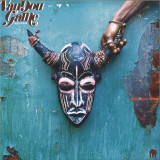
African, funky, sarcastic, bewitching, green, ecstatic: these words collide to describe Vaudou Game and all of them are true.
Noussin is the fourth album of the french Afro Funk band. Forced into lockdown, like much of the planet, Peter Solo and his Vaudou Game had no choice but to retreat into the studio. A reunion to once again invoke the spiritual forces of the Voodoo Deities. A reunion that was Initially imagined for an EP…yet these spiritual forces behind that imagination yearned for something more, and as we all know, these forces are impossible to push away once they have decided to stay.
Under the strain enforced by the current socioeconomic climate, as much as by the environmental peril that faces us all today - they diverted the course of the groove towards daring new vibrations. Without extinguishing or diminishing its highly communicative power, they released Vaudou Game from its origins of pure Afro-Funk to gradually engage into compositions which crystallized themselves into tones resembling more rock than funk.
On this fourth album, with an entirely revisited line-up, Peter Solo separates for the first time in his career from his brassy guard, leaving saxophone, trumpet and trombone outside to invite an arsenal of keyboards to define, with him, this new voodoo sound. A sound, as usual, built on vintage and precise analogical material - grime even on the white side of the tape, a blunt instrument used to blanket anything that strived to shine too much in the mix.
Graced with tapered guitars stringing out rhythmic bumps or withdrawing a few beats to indulge in infectious solos, this album is boisterously alive with vintage 70's Funk, infused with a few digressions into other ethers of the funk timeline, nicking different sounds and frequencies to render the black and white keys of an inspired keyboard to reach new euphoric levels of melodic acidity.
Tearing off the enigmatic mask to reveal his true face: on a few titles, Peter Solo ventures outside of his sacred voodoo range to reconnect with his London years, these titles feature small nods to the time he spent in “The Smoke” where the incantations of British music culture were written within him.
Noussin which means “Stay strong” in Mina, a dialect spoken in the south-west of Togo. Noussin, a message of hope as much as a call to come together to weather the turmoil and to come out better on the other side. Don’t let them grind you down…Noussin!
The final album in Pastor T.L. Barrett’s 1970s four-part suite of gospel funk LPs, Do Not Pass Me By finds the fiery preacher getting spaced out on God’s love. Accompanied by his Youth For Christ Choir, the eight-song record is buoyed by the seven- minute opus “Father Stretch My Hands,” later sampled by Kanye West on 2016’s The Life of Pablo.
“The term ‘Front Porch Singin’’ may actually be a metaphor for
many creative and conceptual musical ideas. But, for us, this title
has become more of an attitude than anything else. What if the
four of us were sitting on a porch together and someone begins to
sing a favorite old Gospel song, like ‘Swing Down Chariot’, or a
country and Western standard like ‘Red River Valley’, and
everyone else just joined in?
“That is what happened at RCA Studio A. But, as usual under
producer Dave Cobb’s leadership, this album turned into so much
more. The Front Porch Singin’ attitude remained prevalent
throughout, as songwriters, musicians, Dave and all four of us
kept coming to the table with terrific creative ideas to enhance our
Front Porch experience.
“This project is quite honestly one of the most heartfelt albums we
have ever recorded. Perhaps it is because we recorded these
songs in the middle of a raging pandemic that changed the face of
America and obviously took a huge toll on those of us in the music
business. It was a bit strange to social-distance from each other in
the studio, but we believe it drew us all closer and, in doing so, we
may have inadvertently recorded the perfect project for this time
period. These songs, whether new or old, reflect a certain
optimism and a deep-seated faith that God will work all of this out
as we move forward. ‘Life is beautiful’, as one song says. We must
embrace it and celebrate it with all of our being.
“Join us on The Front Porch and, if it is God’s will… Let’s keep on
SINGIN’.” - The Oak Ridge Boys
Produced by six-time Grammy award-winning producer Dave
Cobb (John Prine, Brandi Carlile, Chris Stapleton, Sturgill
Simpson, Jason Isbell & the 400 Unit), who also co-wrote several
of the songs on the album.
The Oak Ridge Boys are members of the Country Music Hall of
Fame and The Grand Ole Opry. They are Grammy, ACM, CMA
and Billboard Award winners. They have had 12 gold, three
platinum and one double platinum album, more than a dozen
national Number One singles and over 30 Top Ten hits.
May 28 will see prolific Japanese vibraphonist, multi-percussionist and composer Masayoshi Fujita mark a new sonic direction with his forthcoming album Bird Ambience on Erased Tapes.
Bird Ambience brings several fresh changes for the artist. Until now, Fujita would separate his acoustic solo recordings from the electronic dub under his El Fog alias and experimental improvisations with contemporaries such as Jan Jelinek, Bird Ambience sees him unite all of these different sides to his work for the first time, into one singular vision. He also makes a lateral leap from his signature instrument the vibraphone, on which he created his acclaimed triptych Stories (2012), Apologues (2015) and Book of Life (2018), to the marimba, which takes centre stage on his new album alongside drums, percussion, synths, effectors and tape recorder.
“The way of playing the marimba is similar to the vibraphone, so it was kind of a natural development for me and easier to start with, yet it sounds very different”, explains Masayoshi. “The marimba bars are made with wood and it has a wider range than the vibraphone, which gives me a bigger sound palette with more possibilities. I play the instrument with bows and mallets, and sometimes manipulate it with effects.”
Bird Ambience also marks his liberation from fastidious preparation for past solo releases to new endeavours in improvisation. “I prioritised trying to capture the wonder which happens during those occasional magic improv moments. Sometimes the mic-ing and placement of instruments was pretty rough; things weren’t perfect and everything was done quickly, but it turned out as the final recording. Overall when I
couldn’t decide between two takes, I told myself to go with the first”, Masayoshi recalls.
Arranged with a perfect Kanso-like balance, the unhurried pace of Bird Ambience allows each sound and phrase enough time to be mindfully absorbed and savoured. This subtle but affective work carries ethereal remnants of Midori Takada’s minimalism, the static atmospheres of Mika Vainio, To Rococo Rot’s organics and the bucolic electronics of Minotaur Shock. Fujita vaporises contemporary and classical, ambient and dismantled dub, controlled noise and fragments of jazz into an atmospheric, static mist, which he skilfully coerces into new forms.
After 13 years in Berlin, Masayoshi recently relocated to a new home and studio in the rural Japanese mountain village of Kami-cho, Hyogo, following his life-long dream of creating music in nature. Even though the album was entirely recorded in Germany before he left, it has this palpable sense of reverie found in the natural world. From there we can only imagine the kind of impact his new life in rural West Japan will have on future works.
Incredible Bongo Band was formed by MGM A&R Michael Viner in 1972 to record the soundtrack to a now virtually anonymous B-Movie entitled 'The Thing With Two Heads'. "The IBB" transformed from a loose studio collective to an instrumental pop covers consortium, interpreting classics of the day in their inimitable percussive fashion. Viner recorded them at MGM studios during downtime, assembling line-ups from whichever musicians were available at the time, leading to a unique blend of multi-talented musicians that included Jim Gordon, King Errisson, Jerry Scheff, and Perry Botkin Jr. The full bands' line-up is shrouded in mystery, but their legacy is undeniable. They spawned cult-classic records that would become a goldmine for hip hop breaks and attain sampling immortality.
'Apache', which was written and made famous by the British band The Shadows, is legendary in the worlds of dance music and hip hop. It was a staple for DJs such as Kool Herc and Grandmaster Flash as they invented their world-shaking take on the art of DJing at the Bronx block parties of the ‘70s. Over the years it has become a hip hop and breakers anthem and is revered as 'the break' of all time (at least in the top three) with the rhythms of this LP even helping to coin the term 'breakbeat'.
“Bongo Rock” is significant, for being one of the musical cornerstones of rap ... it is certainly one of the most sampled LP’s in history, if not the most sampled. Almost every history-minded hip-hop DJ has a copy, and the first few bars of “Apache,” can send crowds into overdrive.” According to Kool Herc, the stylistic pioneer many people consider to be the father of hip-hop music, the Bongo’s “Apache” is “the national anthem of hip-hop.” NY Times.
Sampled over 600 times, including... Nas, Beastie Boys, Moby, Mick Jagger, Kanye West, Sugarhill Gang, Jay-Z, Aphex Twin, DJ Shadow, Massive Attack, Ultramagnetic MC’s, Unkle, LL Cool J, 2 Live Crew, 4 Hero, Fatboy Slim, to name a few…
The real story of “The IBB” is far greater than the recordings themselves and ultimately shows how a distinctly powerful musical performance can get the recognition it deserves, no matter how anonymous its origins.
PURPLE COLOURED VINYL
Mdous Musik hat ihre Wurzeln zwar in traditionellen Tuareg-Melodien, gibt aber auch immer wieder Einflüsse von u.a. Eddie Van Halen preis. Neben Mdou besteht die Band aus Bassist und Producer Mikey Coltun, Drummer Souleymane Ibrahim und Gitarrist Ahmoudou Madassane. Zusammen haben sie längst auf ausgiebigen Touren bewiesen, dass sie nicht nur heimische Hochzeitsfeiern rocken können, sondern ebenso Festivalbühnen auf der anderen Seite der Erdkugel. Dabei beherrschen sie sowohl den hypnotischen Boogie von Black Sabbath der Masters of Reality-Ära, als auch den erhabenen elektrisierenden Groove von Black Uhuru. Mdou Moctar lebt in Agadez im Niger, einer eher ländlichen Gegend, die wie eine kleine Oase mitten in der Sahara wirkt. Hier entsteht auch ein Großteil seiner Musik, die ihn in West-Afrika zu einer echten Berühmtheit hat werden lassen. Verbreitet haben sich seine Sounds dort nicht durch das Internet und Social Media, sondern über die Speicherkarten aus Mobiltelefonen, die wie Tapes weitergegeben und getauscht werden und wie analog-digitales Lauffeuer durch das Land gehen. Den internationalen Durchbruch schaffte Mdou Moctar 2019 mit dem Album "Ilana: The Creator". Mit seiner vierköpfigen Band reiste Moctar anschließend durch die Welt und wurde schnell zum inoffiziellen Botschafter seines Landes. Nun liegt der langerwartete Nachfolger vor.
The award-winning storytellers at DONTNOD invite you on another twisting adventure with Twin Mirror.
In this psychological thriller, Sam Higgs is coming back to Basswood, his childhood town, to attend his best friend’s funeral. It quickly becomes obvious that this little West Virginian city holds numerous dark secrets. The former investigative journalist will employ his deductive skills to uncover the mysteries surrounding the city and its inhabitants. Confronted with his past, Sam will be torn between his quest for truth and his desire to reconnect with loved ones. Who can he really trust?
Twin Mirror™ is available on PlayStation®4 (PlayStation®Store), Xbox One™ (Microsoft®Store), PC (on Epic Games Store) and compatible with PlayStation®5, Xbox Series X, and Xbox Series S.
David Wingo got his start composing music for films on David Gordon Green's debut 2000 feature GEORGE WASHINGTON and since that time he has worked with Green on a majority of his films, including collaborations with the band Explosions In The Sky on PRINCE AVALANCHE and MANGLEHORN. In 2010 he scored Jeff Nichols' TAKE SHELTER and has since scored all of Nichols' films, including MUD, MIDNIGHT SPECIAL, and the Academy Award-nominated LOVING. 2018 saw Wingo moving into television, providing the score for both Showtime's KIDDING and HBO's Emmy Award-winning BARRY, for which he received an Emmy Nomination in 2019 for Outstanding Music Composition for a Series.
- That’s Me, Just A Sweet
- Melody
- Side Effects
- Religion (U Can Lay Your
- Hands On Me)
- The Stage
- Bklynldn
- Tommy
- Princess Leia
- Flyin’
- Forever
- Control
- Skyline, Be Mine
- Magazine Launch (Demo)
- Elevator Girl Ft. Ivy Sole
- Obsession
- T-Shirt
- Side Effects (Acoustic)
- Religion (U Can Lay Your
- Hands On Me) (Acoustic)
- The Stage (Acoustic)
- Bklynldn (Acoustic)
- Forever (Acoustic)
Shura announces a deluxe version of her acclaimed 2019 album
‘forevher’, released via Secretly Canadian.
‘forevher: Deluxe Edition’ is released on cassette and features the
eleven original album tracks with nine extras. These include acoustic
versions of five album tracks recorded and produced with Sam Evian
and featuring Hannah Cohen on backing vocals, previous Bandcamp
single ‘magazine launch (demo)’, last year’s collaborative single
‘elevator girl’ featuring Ivy Sole and two unreleased tracks including
‘obsession’.
On ‘obsession’, Shura explains: “‘obsession’ was one of the songs I
wrote whilst I was writing ‘forevher’. I always wanted it to be a duet
between two women but it never came to fruition during the recording
process. Then, when I toured ‘forevher’ in Europe, Rosie Lowe came
with us and we’d always spoken about wanting to collaborate on
something together and I suddenly remembered this song, which I loved
but had somehow never finished. I sent the track across to Ro and when
she sent back her rough take I was like ‘YES. this is it.’”
With ‘forevher’, Shura’s immediately identifiable way with love, touch and
how we talk about it reached even greater creative heights. Having
moved from West London to New York following her adored 2016 debut,
,Nothing’s Real,, it’s all mirrored in a lyrical journey from rejection and
loss to desire, long-distance love and the prospect of how we make
something real actually work.
In 2020, Shura emerged as one of contemporary pop’s accidental
trailblazers. A frank, funny voice in the LGBTQ+ community whose
contribution to the paradigm-shift in the cultural landscape cannot be
underestimated.
Written primarily about Shura’s relationship with her girlfriend and their
long-distance conception, ‘forevher’ traces everything from the initial pull
of desire to that first real life meeting (‘the stage’), before recognising
when the connection develops into something scarily meaningful. It’s a
classic NYC-to-London love story but one told through the totally modern
filter of dating apps, unanswered texts, Skype chats and MUNA gigs.
And whilst how to live - and love - as a queer woman has always been
integral to Shura, it’s remarkable to hear these stories twisted through
such a gorgeous amalgam of influences: Joni Mitchell and Minnie
Riperton, Bon Iver and Frank Ocean, Prince and Ariel Pink. Through
these inspirations, Shura’s own modern, outlier perspective found a
newer, more daring approach to sound and song.
Tangerine Dream have been a fundamental influence on electronic music since Edgar Froese founded the band in West Berlin, 1967. Providing the groundwork for multiple electronic music genres including ambient and electronica, inspiring musicians & other art forms.
The group have also received seven Grammy nominations, written over 100 studio albums & were led by Froese, who developed an instantly recognisable synth-based instrumental music based on a meditative musical experience that came to prominence in the 70’s and 80’s.
‘Chandra: The Phantom Ferry Part 1’ told the story based on a manuscript found in 1977 in a military camp in Greenland. This is the continuation of the Chandra Story, exciting and unique music developed from a mysterious unusual story, completely composed & performed by Edgar Froese.
Presented on vinyl for the first time, the album has been lovingly remastered by Harald Pairits especially for vinyl and repackaged using the original design in association with Bianca Froese-Acquaye.
May 28 will see prolific Japanese vibraphonist, multi-percussionist and composer Masayoshi Fujita mark a new sonic direction with his forthcoming album Bird Ambience on Erased Tapes.
Bird Ambience brings several fresh changes for the artist. Until now, Fujita would separate his acoustic solo recordings from the electronic dub under his El Fog alias and experimental improvisations with contemporaries such as Jan Jelinek, Bird Ambience sees him unite all of these different sides to his work for the first time, into one singular vision. He also makes a lateral leap from his signature instrument the vibraphone, on which he created his acclaimed triptych Stories (2012), Apologues (2015) and Book of Life (2018), to the marimba, which takes centre stage on his new album alongside drums, percussion, synths, effectors and tape recorder.
“The way of playing the marimba is similar to the vibraphone, so it was kind of a natural development for me and easier to start with, yet it sounds very different”, explains Masayoshi. “The marimba bars are made with wood and it has a wider range than the vibraphone, which gives me a bigger sound palette with more possibilities. I play the instrument with bows and mallets, and sometimes manipulate it with effects.”
Bird Ambience also marks his liberation from fastidious preparation for past solo releases to new endeavours in improvisation. “I prioritised trying to capture the wonder which happens during those occasional magic improv moments. Sometimes the mic-ing and placement of instruments was pretty rough; things weren’t perfect and everything was done quickly, but it turned out as the final recording. Overall when I
couldn’t decide between two takes, I told myself to go with the first”, Masayoshi recalls.
Arranged with a perfect Kanso-like balance, the unhurried pace of Bird Ambience allows each sound and phrase enough time to be mindfully absorbed and savoured. This subtle but affective work carries ethereal remnants of Midori Takada’s minimalism, the static atmospheres of Mika Vainio, To Rococo Rot’s organics and the bucolic electronics of Minotaur Shock. Fujita vaporises contemporary and classical, ambient and dismantled dub, controlled noise and fragments of jazz into an atmospheric, static mist, which he skilfully coerces into new forms.
After 13 years in Berlin, Masayoshi recently relocated to a new home and studio in the rural Japanese mountain village of Kami-cho, Hyogo, following his life-long dream of creating music in nature. Even though the album was entirely recorded in Germany before he left, it has this palpable sense of reverie found in the natural world. From there we can only imagine the kind of impact his new life in rural West Japan will have on future works.
Leo Ceccanti should be a familiar name to all followers of the Claremont 56 label. Alongside sometime studio partner Gianluca Salvadori, he was responsible for two delightfully distinctive Almunia albums released on the label, 2011’s New Moon and 2013’s Pulsar. Both sets were filled with golden, sun-kissed sounds, psychedelic grooves and immersive, life-affirming soundscapes.
Now he’s decided to go it alone as Leo Almunia, delivering a debut album for Claremont 56 that’s every bit as alluring, wide-eyed and evocative as those he made with Salvadori. In keeping with his previous work, the album blends layered acoustic and electric guitars with toasty bass, dreamy synthesizers and grooves that variously touch on hypnotic house, chugging mid-tempo disco, sunset-ready Balearic beats and, on the glistening, life-affirming album highlight ‘Wishing Star’, loose-limbed jazz breaks.
What’s most significant about Ceccanti’s personal musical style is not the blend of stylistic influences he draws on – think psychedelic rock, progressive rock, jazz-rock, new age ambient and slow-motion disco – but rather the way he uses it to paint vivid aural images that genuinely linger long in the memory.
After opening with the duelling guitars and chunky dub disco grooves of ‘Sinking Fields’, Ceccanti sashays between magical moments of rush-inducing positivity, heart-tugging poignance and heady nostalgia.
Along the way, you’ll find numerous sonic highlights. On the intoxicating 21st century psychedelia of ‘Panerea’, jangling chords and eyes-closed psych-rock guitar solos ride a chugging, thickset electronic bassline, while ‘Il Cormorano’ is a metronomic, flash-fried workout rich in fuzz-tone guitar motifs, bluesy riffs and echoing instrumental touches.
He cannily joins the dots between Mid-West Americana and throbbing, psychedelic disco-chug on ‘Loveblind’, while ‘Minor Circle’ sits somewhere between Santana, the Pat Metheny Band and sunrise-ready Balearic blues. Arguably even better is the saucer-eyed brilliance of ‘Brillo De Luna’, where a dubbed-out electronic beat becomes enveloped in life-affirming acoustic guitar chords, exotic slide guitar motifs and string-bending solos. If John Lennon had ingested MDMA rather than LSD before writing ‘Across The Universe’, it would probably sound like this.
Then there’s the album’s crowning moment, closer ‘Can’t Hold a Lover’. A heart-aching, largely ambient instrumental that channels the loneliness and anguish felt by many of those separated from their nearest and dearest during the pandemic, it sees Ceccanti brilliantly wrap a variety of sun-bright guitar textures and solos around some of the loveliest synthesizer chords you’re every likely to hear. On an album packed with effervescent, mood-enhancing musical highs, it’s a rare moment of bittersweet bliss.
Cousins Gilberto and Karin Rodriguez have been steadily synthesizing a unique type of musical and cultural fusion together as Almas Fronterizas. Blending their lived experiences in Mexico City, Los Angeles and the San Francisco Bay Area with a musical lineage paying homage to their Indigenous roots, they've created a representative musical offering, a modern day psychedelic sonic painting of analog blues, rock, and brown-eyed soul.
The group's first several releases, via their own imprint Discos Pistolas y Saguaros, solidified their space in a wide encompassing and constant changing West Coast music scene, yet stood out with an experimental freedom and independent hustle that found kindred spirits in New York City record label Names You Can Trust.
Now, after a suitable time marinating together with NYCT, a natural continuation of the group's ethos is presented in the form of two new songs on 7-inch vinyl. Featuring a third cousin in Carlos Rodriguez on trumpet, plus percussive powerhouse Ahkeel Mestayer on timbales, conga and maracas, Brian Tuley on flute, Devin Hollister on bass and horn arrangements by La Doña's Cecilia Peña-Govea, the tracks were recorded in Berkeley by Mike Walti and mixed down in Brooklyn for a true coast to coast collaboration. Out in the front, Gilberto's vocals drive drop-top down, wide open and honest in melancholic blue notes, whether he's motoring down the highway over northern soul-with-a-hook A-side, "Cruel Desperation," or cruising on the avenue in the slow-motion B-side ballad burner, "Linda Morenita," it's another showcase of the tremendous range of style and engaging expression that this group can hit.