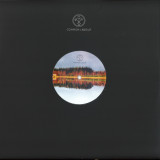
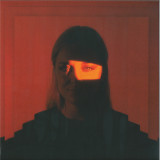
Anonymous British funk studio outfit Ultrafunk was spearheaded by Blues & Soul magazine proprietor John Abbey, who ran a fashionable record shop and label called Contempo in London’s West End during the 1970s; he conceived of the group as the UK counterpart to US studio bands like Mfsb. Arranger Gerry Shury, who had worked with Barry White and Maurice Gibb of the Bee Gees, drafted guitarist Chris Rae and bassist Frank McDonald (who often composed library music together) and future Rubettes drummer John Richardson to form the group, in situ. A lack of band photos, suggestive song titles and a predilection for American cover tunes led many to believe the band was US-based. Their self-titled debut LP is where the myth all begins, with a number of truly atmospheric and cinematic hard funk instrumentals, given added textural depth through full orchestration, including covers of Bill Withers’ “Use Me” and Stevie Wonder’s “Living In The City.” Though not quite as compelling as the better-known follow-up set, Meat Heat, there is still plenty to savour on Ultrafunk, making this debut companion disc a must-have for all true funk aficionados.
Cerca:west
‘Danse Cette Zik!’ by Parbleu is the debut LP from this enigmatic group of musicians and is a multi-cultural fever dream, wherein energized expanses of dynamic disco, futuristic funk, and cinematic jazz fusion are colored over by warming vibes of Caribbean dub, Latin tropicalia, and sunshine Afrobeat. Evocative instrumentals intertwine with breathtaking vocal performances, which move between sleepy-eyed soul serenades, mystical melodic chants, and expressive diva enchantments while pads swell in support—sometimes sparkling like ocean glass, other times raining down like a Morricone symphony.
Pianos and guitars converse via funk flourishes, reggae riffs, and jazz rock solos as blazing fusion synthesizers set the air aflame. Drums move between kinetic dancefloor urgency and islander rhythm relaxation and hand percussions both organic and electronic evoke rainforest ceremonials while basslines revel in 70s fusion fire and Italo synth-funk squelch. And the entire experience has been expertly captured and magically crafted by the sorcerers of sound at the West Hill Studio, resulting in a thrilling adventure of imagined exotica, one equally adept at scoring coastal paradises, filmic deserts, riviera cruises, or nightclubs sweltering in the light of a mediterranean moon.
(Words by Octagon Eyes)
Common Labour finally returns to the record press with their milestone tenth 12″! The four-tracker by pothOles perfectly balances crisp percussions and bassy grooves with evocative sprinkles of synthetic harmony.
His buddy Yaniel joins the party, collaborating on two tracks. The guys go way back to 2003 with their boy band days as the A.M. Specialists trio (comprising Samuli Kemppi, Yaniel, & pothOles). Most renowned for “Polar Zoo”, Danny Tenaglia’s power play at the Vinyl Club back in the day.
As you hear, their musical alchemy hasn’t dwindled one bit though. Much like the fading autumn light of a forest lake, this is tasteful deep-house at its most nostalgic and seductive. Big thanks to Fabio Monesi, Iron Curtis, Katerina, Roberto Rodriguez, Session Victim, and everyone else showing the love! Don’t miss out on the limited edition of 200 copies worldwide for the “It’s Been a While” EP.
2024 repress.
Dive into the spiritual depths of Carnatic Music (Southern Indian classical music) - An enchanting journey of devotion and transcendence pulsates with raw sincerity and profound spirituality, casting a spell that transcends boundaries of belief.
Originally released on CD in 2000 from South Indian Carnatic music label and reissued on vinyl and digital first time in 2019 by Time Capsule. New 2024 repress vinyl has different tracks on the B side and it still remains as the reverse cut as the 2019 version.
2024 new vinyl repress with different track list on the side B. Reverse Cut Vinyl - This record plays from the inner groove to the outer groove. Comes with a hype sticker.
Born into a musician family steeped in the south Indian tradition of vocal music, the Mumbai-raised singer took advantage of the city’s cosmopolitism to study northern Hindustani disciplines, one of the few vocalists to train in both. Now revered as one of the greatest living exponents of Carnatic music, she received an Oscar nomination for her work on Ang Lee’s Life of Pi.
Within the first minute of opener Sada Bada (Slokam), Jayashri’s intensely spiritual vocals give a clear indication of why she has been increasingly embraced by a new generation of western listeners who’ve made the natural leap from ambient soundscapes to new age and devotional music. Accompanied on the following Bhajeham Bhajeham by a hypnotic rhythmic backing of mridangam drums, bells and the drone of a tambura, over its epic twenty-minute length she stretches her voice into a variety of spellbinding forms – her softly enunciated dedications to Shiva enveloping you with their immersive warmth and cosmic beauty. Keshvaya Namaha is an invocation to Lord Vishnu, the protector of creation and one of the other major deities of the Hindu tradition, while Raghavam recites the names and attributes of two of his most popular avatars: the heroic Rama and the playful, loving Krishna.
One of the album’s new-found devotees is label boss Kay Suzuki: “every time I listen I’m amazed at how such a small ensemble can create such a deep musical landscape. The incredible production plays a big part. That intricate percussion sounds so clear and sits in all the right pockets rhythmically and sonically. Just by following this groove I’m put into a timeless zone, but when her voice hits on top of that gorgeous drone sound and I focus on the details of her small melodies within melodies, my heart centres and I find myself in a blissful place.”
As professor of cultural and political theory in Universicty of East London, Jeremy Gilbert states in the album’s liner notes, the mesmerising sincerity and deep spirituality of these songs present an intense and spiritual charge that will appeal to an audience well beyond believers and devotees of Hinduism.
Kwamé Bâ aka Fényan
Music producer, keyboardist and professional dancer based in France.
Coming from a Senegalese bloodline and growing up in Martinique (West indies), Fényan is deeply rooted in Black music. Epitome of a childhood in the West indies. A Caribbean Tale about Kreyol langage, about legacy and resilience, about turning victimhood into proactivity.
Douvan Douvan can be translated by "avant garde" in Kreyol. It is a story about People growing up and facing themselves, and their elders in order to move forward in their enlightenment.
It is your story.
- A1: World Standard - Fellini & Rota
- A2: Masumi Hara - Your Dream
- A3: Normal Brain - M.u.s.i.c
- A4: Hiroyuki Namba - Who Done It? (Part 2)
- B1: Yasuaki Shimizu - Crow
- B2: Hiroyuki Namba - Tropical Exposition
- B3: Imitation - Exotic Dance
- B4: Pecker - Sha La La
- C1: Ep-4 - Db
- C2: Earthling - You Go On Natural
- C3: Masumi Hara - Camera
- D1: Geinoh Yamashirogumi - Rinne Kohkyogaku Meikei
- D2: D-Day - Ki·ra·i
- D3: Ryuichi Sakamoto - A Wongga Dance Song
Ever since he made his first trip to Japan to DJ, Optimo Music founder JD Twitch has been bewitched by Japanese music, and particularly the vibrant, imaginative, and often far-sighted sounds which emerged from the island nation during the 1980s. Now he’s put years of digging in Japanese record shops to good use on Polyphonic Cosmos, the latest release on his compilation-focused Cease & Desist imprint.
Subtitled ‘A Beginners Guide to Japan In The ‘80s’, the collection offers a personal selection of Japanese gems recorded and released between 1981 and ’86 – a period when advances in recording and musical technology offered the nation’s artists and producers a whole new tool kit to employ. When combined with the unique musical culture of Japan, where local traditions are frequently fused with Western styles to create timeless, off-kilter aural fusions, this embrace of locally pioneered music technology had spectacular, often unusual results.
Eight years in the making, Polyphonic Cosmos provides an endlessly entertaining musical snapshot of Japanese music of the early-to-mid ‘80s with all of the open-minded eclecticism and sonic twists that you would expect from the Glasgow-based DJ.
Compare and contrast, for example, the gently breezy, morning-fresh folk-plus-electronics bliss of ‘ばら二曲 Baranikyoku (Fellini&Rota)’ by World Standard – the most familiar alias of long-serving musician/producer Sohichiro Suzuki – and the hallucinatory, slow-motion tribal rhythms, post-punk rhythms and tape delay-laden electronics of Imitation’s ‘Exotic Dance’. Or, for that matter, the tipsy mid-‘80s electronic reggae of Pecker’s ‘Sha La La’, the grungy but melodic post-punk strut of ‘You Go On Natural’ by Earthling (a track Twitch accurately describes as “sheer unrelenting groove”), and the unearthly, swirling sonics, new age instrumentation and flotation tank vocals of prolific (and seemingly mysterious) act Geinoh Yamashirogumi’s ‘Rimme Kohkyogaku Meiki’.
It’s a credit to JD Twitch’s curatorial skills that the quality never dips, and sonic surprises lurk around every corner. Consider for a moment the hard to describe, far-sighted audio immersion of D-Day’s ‘Ki-Ra’ – all languid post-pop guitar, enveloping chords, spoken word vocals, shuffling 808 beats and marimba melodies – and the two contributions from video games soundtrack specialist (and driving instrumental synth-pop specialist) Hiroyuki Namba.
The collection naturally includes some selections that have long been favourites in Twitch’s DJ sets – see Masumi Hara’s ‘Your Dream’ – as well as a handful of tracks from artists who may be more recognisable to those with only rudimentary knowledge of Japanese musical culture. The great Yasuaki Shimizu, whose work as Mariah has become far better known in recent years thanks to reissues of some of his most magical albums, is represented via ‘The Crow’, a picturesque chunk of horizontal, hard-to-define jazz-not-jazz smokiness, while the collection fittingly concludes with a sublimely funky, oddball electronic workout from Yellow Magic Orchestra legend Ryuichi Sakamoto (the frankly incredible ‘Wongga Dance Song’).
Matt Anniss
Pleasure Planet's kaleidoscopic debut album has been a long
time coming, but good things come to those who wait.
Developed over years of late-night studio improvisations,
'Pleasure Planet' is an affectionate and colorful patchwork of
the New York City-based trio's knotted in§uences that's
suspended between the rave and the chill-out room, weaving
glistening pads and chunky basslines into vocal earworms
and warm, saturated rhythmic cycles. Bandmates Andrew
Potter, Kim Ann Foxman and Brian Hersey enter into a
lysergic dialog with their discrete personal musical histories,
drawing inspiration from vintage EBM, ambient music and
heady early '90s West Coast rave sounds and launching
these classic elements into a transcendent new sonic
universe.
Introducing Foreign Tech Division a mysterious and confident new label curated with the purpose of taking your listening experiences to new places in mind.
First up is MSRG; After solo appearances and eps on Solar One Records and Analog Concept Records, MSRG debuts his first full length vinyl album Part Time Hover Lp. Lovers of Detroit classic electro with warm analogue frequencies will feel right at home in the midst of these 9 compositions designed with intricate machine formulas that glide through aquatic and celestial aesthetics, dipped in both dark and colorful tones.
Whether you seek bold and funky sci fi grooves, or temples into the lush and mental with mysterious vocals (featuring Roger Versey);
MSRG's Part Time Hover has you covered with the electro essentials, and features the fine mastering of Johanz Westerman for the smooth listen you can enjoy again and again.
Chamber music masterpiece with electronics
Albert Alan Owen was born in Wales in 1948 to parents of Welsh and Latvian heritage. His family later moved to Zimbabwe, where his father took up a teaching position. There, Owen was deeply influenced by local music and culture, while also exploring American RnB and jazz. It was during this period that he became acutely aware of the harsh inequalities under British colonial rule, which instilled in him a lifelong aversion to discrimination and racism.
In 1967, Owen returned to Europe to pursue his studies and enrolled at the Royal Academy of Music in London. He went on to spend time in Paris, studying composition with the eminent Nadia Boulanger and piano under Jacques Février, a favorite pianist of Ravel’s and Poulenc’s. Owen's focus shifted almost entirely to composition, and the acquisition of a Fender Rhodes electric piano marked the beginning of a divorce from his classical Western training. This transition allowed him to merge his passion for African and African-American music with the impressionistic styles of Ravel and Debussy while exploring the innovative realm of electroacoustic composition.
These formative experiences framed Owen’s career as a composer and educator at the Royal Academy of Music and London’s Working Men’s College. He eventually returned to Wales, where he continues to reside.
In 1979, 29-year-old Albert Alan Owen released Keyboards & Strings, a light magical chamber music masterpiece.
Transcending the formal conventions of its era, Keyboard & Strings is an acoustic and electric piano piece, where the violin is met by synths and electronics.
As is often the case in Albert Alan Owen’s most intimate works, there is a sense of ethereal beauty that emerges from the music, akin to the emotional state one might experience while contemplating a Félix Vallotton landscape or the unfathomable mystery of dawn’s first light.
Quiet, profound, and immersive, Keyboard & Strings stands out as an electronic-age tone poem, a rare gem that transcends time and place.
Following two revered albums, ‘Dissolve’ in 2017 and ‘Avalanche’ in 2019, London-based electronic songwriter and producer Tusks, aka Emily Underhill, has returned with her third: ‘Gold’.
‘Gold’ took form slowly over several months spent rewriting and reworking; half created at home in the middle of London and half during two solitary trips to Devon, where many of the songs found their inspiration. In need of some space, away from a shared house that had just been through a pandemic together as well as from a relationship that was coming to an end, she travelled to the south-west. It was here that she would get the bulk of her writing done, recognising there were some things she would have to work through alone, and in no small part it came to her in the form of a torrential storm. Bringing the album back to London, Tusks partnered with producer Tom Andrews to bring the tracks to life from studios like Ten87 in Tottenham and SS2 Recording in Southend.
What better way to herald Soul4Real’s first foray into the blues: two wonderful sides by the late great Magic Sam!
Born Samuel Gene Maghett in Mississippi in 1937, in his teens he made the familiar migratory journey north where he established himself – along with the likes of Otis Rush – as one of the great exponents of the ‘West Side’ Chicago blues sound.
In 1967, Sam signed to Delmark and cut his first LP, the critically acclaimed ‘West Side Soul’ from which the two tracks featured here are taken. “Every Night and Every Day” is delivered in his familiar style, whereas “That’s All I Need” reveals a more soulful side to Sam’s vocals, pointing towards the blues-soul style that was to dominate the genre into the 70s and beyond.
His tragic death, aged just 32 in 1969, deprived the world of a wonderful blues talent, but he left a fine legacy of influential and inspirational work admired by fans and musicians alike.
Following the success of their first release with Serpico’s ‘Just Can’t Stop’, Moonworks are reissuing a highly sought-after UK house 12” from The Outsiders, originally from 1995.
The Outsiders’ Beyond The Ego EP is a lost London gem born from the UK capital’s rich musical heritage and the transatlantic influence of deep house. Produced by two close friends Mark Mellor and Paul Murphy within 48 hours in their Westbourne Grove home studio, its fusion of US house production techniques with a myriad of UK influences has cemented its status as a timeless and unique treasure.
The record received few plaudits on release but has since become a sought-after underground rarity, with scarce original copies trading hands for hefty prices. Whether you draw for the euphoric Warp Factor 9 Mix, the stripped back Ego Dub or the sun-kissed grooves of Do Dat Scat and Shu Bop, the record epitomizes the tasteful and quirky sound of UK house music from the 90s.
Moonworks have once again worked closely with the original artists to restore and remaster these tracks to modern standards, as well as revamping the original artwork in their own style.
‘Diré’, Idrissa Soumaoro new album, comes as a surprise to Malian and international audiences. Composer, singer, guitarist and master of the kamalen n’goni Idrissa Soumaoro presents here a beautiful collection of songs on his third album, Diré, named in honor of the town where he met his wife and where his first daughter, who is no longer with us, was born.
In 1971, after his studies at the INA in Bamako, Idrissa was transferred to Diré to teach music at the lPEG (Pedagogical Institute of General Education). He was 22 years old when he arrived in Diré. Idrissa has always been nostalgic for this beautiful place in the 333 Saints of Timbuktu region. As Idrissa sings in ‘Diré taga’ (Going to Diré), the track that opens the album, the city evokes deep emotions for the artist, as if it were a long-lost friend or lover. Celebrating the memory of the city of Diré leads the artist to retrace stories and lived situations that marked and animated him in years gone by: ‘I really miss the people, the colleagues, the friends and that period. Despite the time that has flown by, I would ardently wish to see Diré again’. Today, at the difficult time Mali is experiencing, remembering the city of Diré in the 1970s also means for the artist not giving up hope for peace: ‘The memory of Diré, a beautiful town in northern Mali, strengthens my hope for peace, union and real independence for the happiness of my people’; as he sings in ‘Sababou’, ‘Without hope, there is no life. Together we will succeed’.
The ten highly original compositions of the album are strongly based upon traditional music of Mali, but Idrissa’s life experiences, travels, education, collaborations and personal musical career have led him to compose and perform music with other influences. As Idrissa quotes: ‘My inspiration generally comes from the donso n'goni, a Bambara instrument played by and for hunters throughout Mali. This is a pentatonic instrument, similar to the blues exported to the USA by black African slaves. I've also spent so much time playing a variety of music that my music also reflects rumba, salsa (as well as Bamanan blues and a few derivatives: jazz, country, soul, rhythm and blues) etc. I have looked for and hope to have found my own form of expression from these influences’.
Throughout the album, his strong, clear voice sings in French, Bambara and English. It rides seamlessly upon a complex rhythmic sea of distinctly West African stringed instrumentation and percussion with accents of flute and balafon. There are keyboards in a few songs, but these, happily, do not dominate the music as we hear so often in today’s music. This album presents the music of a mature artist who has ‘been there, done that’ and returned to celebrate his country, his roots and his dreams in a flawlessly produced collection of songs of love, reassurance, fatherly advice and hope.
The album already has a long history: it was initiated in 2012 by Marc-Antoine ‘Marko’ Moreau, former producer and manager of Amadou and Mariam. Moreau had plans to produce the album and invited Idrissa Soumaoro to start recording in Manjul's studio in Bamako. When Moreau suddenly passed away, work on the album was still missing. The pandemic still added time for the production to continue. With the help of Climax Orchestra, arrangements and orchestrations were finalized in France. At the artist's behest, 'Diré' will finally be presented to the public by Mieruba, the independent label based in Ségou, the home of the blues in Mali. 'Let's stand together so that Mali can flourish': from conception to production and distribution, this is the message that 'Diré' carries.
At its best, Bristol's scene has been marked out by the artists with an independent spirit. Not just the self-reliant DIY approach to getting the music out there, but a unique, inventive slant on emergent sounds which feed into the city's storied reputation. Flynn & Flora embody that idea, having come up in the nascent Bristol jungle scene while offering something wholly different to their peers in fabled crews like Full Cycle and More Rockers.
The duo were absolutely connected to the wider community, but they followed their own path, and the records reflect that. They're not as widely name checked as the likes of Roni Size, Krust, or Smith & Mighty, but their legacy is just as rich with personality and flair, offering that indefinable twist which sets West Country rhythms apart from the sounds in London or elsewhere. City Road wanted to recognise that fact with a modest 12" which cherry picks four crucial early cuts from Flynn & Flora's archives, before they went on to produce three LPs and a series of 12"s up to the mid 00s.
"We knew as much as anyone else at that particular time," recalls Flynn. "Samples, hip-hop breaks, bass lines. You've got your synth, your drum machine. It's all you needed. So that's what we did."
- A1: Casper, Favorite, Kollegah - Mittelfinger Hoch 3 36
- A2: Kollegah - Halbautomatik 4 06
- A3: Casper - Elefant (Ich Bleib Stehen) 3 51
- A4: Favorite, Olli Banjo - Krieg 4 39
- A5: Kollegah, Favorite, Farid Bang - Westdeutschlands Kings 2 50
- B1: Shiml - Unter Null 2 58
- B2: Favorite - Superman 3 55
- B3: Selfmade Records - Skit 0 32
- B4: Slick One, Edo Maajka - Bruderkrieg 3 28
- B5: Casper, Favorite - 2X Mehr Wie Du 4 10
- C1: Kollegah, Sun Diego - G's Sterben Jung 4 24
- C2: Shiml, Montanamax - Er & Ich 2009 3 32
- C3: Favorite - Lebenswerk 3 30
- C4: Casper - Vatertag 3 38
- D1: Shiml - Mit Jedem Atemzug 4 33
- D2: Kollegah, Favorite - Jebiga 2 58
- D3: Casper, Marteria - Rock 'N' Roll 3 44
- D4: Casper, Favorite, Kollegah, Shiml Dampfwalze - 6 19
Nach den ersten Charterfolgen von Kollegah, Favorite und Shiml folgt der zweite Labelsampler von Selfmade Records, "CHRONIK II", auf dem auch Selfmade-Neuzugang Casper erstmals vertreten ist.Auf 18 Tracks erlebt man die vier höchst unterschiedlichen Rapper Casper, Favorite, Kollegah & Shiml in Höchstform, sowohl solo, als auch auf gemeinsamen Songs. Nachdem die erste Hälfte des Samplers in erster Linie nach vorne geht und Spaß macht, werden gegen Ende auch sanftere Töne angeschlagen.Mit Olli Banjo, Marteria, Edo Maajka, Farid Bang, MontanaMax & SunDiego konnte man sich außerdem erstklassige Features an Land ziehen, die "CHRONIK II" endgültig zur Pflicht für jeden Deutschrap-Fan machen!Produziert wurde der Sampler zum Großteil vom mehrfachen Gold- und Selfmade-Hausproduzenten Rizbo, sowie von Newcomerproducer TiKay One. Weitere Produktionen stammen von Bjet, Alper, Joshimixu & Mauvais Garcon."CHRONIK II" macht die Ausnahmestellung von Selfmade Records im Deutschrap eindrucksvoll deutlich. Wer glaubt, deutsche Rapmusik sei nicht mehr interessant, wird hier vom Gegenteil überzeugt. Nie war ein Labelsampler vielseitiger und musikalisch hochwertiger.Neben der CD liegt "CHRONIK II" als besonderer Bonus die DVD "Selfmade Vol.1" bei. Diese DVD ist keineswegs nur Beilage, sondern ein vollwertiges, eigenständiges Produkt mit 2 Stunden Material. Sie enthält neben einer ausführlichen Tourdokumentation, Studioimpressionen und nie gesehenem Making Of-Material exklusive Einzelbeiträge aller Künstler. So sieht man etwa Casper als Reporter auf der Berlinale oder Favorite bei einem außergewöhnlichen Konzert in einer JVA.
Warehouse Find - Test Pressing!
Time to welcome Kresy to the label with three original tracks of immaculate left of centre house. With only a clutch of releases his name may be new to many but if you dig deeper you'll find he's definitely moving the right circles. His debut release on John Talabot's Hivern Discs gave some broad exposure, picking up spins from the likes of Four Tet's Keiren Hebden, Jenifer Cardini and Nick Hoppner. Remix requests followed too with releases on Exquisite Pain, Southern Fried and Lovemonk all getting the Kresy treatment.
2014 looks equally busy with material forthcoming on Jay Shepheards Retrofit as well as DJ dates taking in Corsica Studios and Panarama Bar.
On his Freerange debut Kresy kicks off with Sweet Dangerous MC's, a shuffling, raw, 90's inspired cut which treads firmly forward rather than backward. The beats are crunched and jacked to perfection while the pads hiss and fizz all the while punctuated by the sweet dangerous MC in person.
Next up is Last Cocktail Of Stallone where echoes of Studio54 combine with the stomp of jacking Chicago house to produce a fresh fusion for 2014.
Flipping over we have a brilliant reinterpretation of Last Cocktail Of Stallone by west coast house heroes Vin Sol and MATRiXXman. Here the duo clearly had a fun session firing up the hardware drum machines and delays, reworking the rhythm track into a steady yet subtly massive warehouse jam primed for the dancefloor.
Finally, we're treated to the elegant beauty of Midnight In Manhattan where melancholic piano chords lay the foundation for an echoing sax riff to take centre stage. An original, interesting and above all deep slice of house that demonstrates Kresy's diversity and talent perfectly.
Their newest release “For Barney, Who Was A Bad Dog, But A Good Boy, And Very Much Loved” comes from Brooklyn-based Dekalb Works (debut ‘Duologue’ on Where To Now? Records), the collaborative project of Austin Peru (Vision Fortune) & Daniel Creahan (Sweat Equity / Alien D).
The release summarizes a series of experimentations between live performance contexts and sample-heavy collage work. Since starting their residency on Radio alHara, Dekalb Works found themselves drawn to the act of performing, whether as a live act or DJing, and the space between these two often overly rigid modes.
“For Barney…” draws heavily on the sonic palette of American country and western music, treated through the lens of heavy studio processing and the production techniques of dub, ambient, and trip-hop. Recording hours-long live improvisations with guitar, piano, or drum machines and samplers, they pillaged these sessions as source material. Whereas previous work focused on the voice and the interaction of text, voice and music, these recordings pulled from the sounds of musicians playing together in a room. The arrangement process remains the same, chopping and manipulating small samples and momentary gestures into dense, rhythmic collages.
(comes with a poster) The Klein blue horizon, gliding seagulls, a ferry purring between two languid islands, dotted with ultra-white villages and ancient ruins... These idyllic visions run through Glika, the ultimate musical project of Les Cyclades. An exciting electronic odyssey from West to East, from Belgian effervescence to Greek mysticism.
In 2020, confined to the neighborhoods of Yser and Mystère in Brussels, Alex and Ludo dream of Greek islands, of scorching sun on their skin, of salty baths, chilled ouzo and braised octopus. But everywhere, time stands still. Must one necessarily move to travel? To levitate? In the absence of Elsewhere, the Franco-Canadian duo will compose the imaginary soundtrack to their escape.
Glika (which means "sweet" in Greek) perfectly synthesizes the musical influences of Les Cyclades: a cosmic saxophone inherited from Alex’s dub and free jazz past, an architect-pastry chef-botanist from Normandy, and Ludo’s "Balearic" tracks, a musician-performer-wine lover who frequented his first raves in 1995 in Houston, Texas.
From a hedonistic encounter on a friendly terrace in the 19th arrondissement of Paris to their chosen exile in Brussels, these hypersensitive jacks-of-all-trades first danced and mixed records. Before creating their own phantasmagorical sonic territories, where cinema and poetry meet more or less human voices, brass instruments, synthesizers and analogue drum machines.
A searing fragment of Greek filmmaker Theo Angelopoulos's "Eternity and a Day" preludes Glika. Then, on Yser Mystère - the names of the two stations on tram 51 that physically linked Alex and Ludo's psyches during the lockdown - Alex's astral sax balances out the industrial mechanics of a locomotive, against a backdrop of urban soundscapes.
And then a rising bpm dominates Alocasia, with its deep and sensual light foot. So sunny. From one track to another, there are interludes influenced by Xenakis, Vangelis and Jean-Michel Jarre. Seminal heroes of the Cyclades... But soon, the duo unleash hostilities at the helm of Epigone, their meta-techno anthem. "I know", "You know", echoes Alex.
Laughs of friends, "mouth noises," and "bizarre rhythms" still dominate Parc Fou, while DRAM eyes the minimalist techno of Detroit. So dear to Ludo's heart... And what about PAME, that post-modern Greek epic.Or Glossa, a timeless track that finishes with a fascinating - because diffracted - elegance, this multi-sensory journey through Les Cyclades. Let's close our eyes. Silencio! Hay Banda!
By Eléonore Colin, journalist (and friend!!)
Since releasing on Reinforced at the age of 16, Dominic Stanton has always remained one of most influential producers in the west London broken beat scene. Those early adventures via numerous successful aliases laid the foundations for Dom's sound, eventually leading to the launch of 'Sonar's Ghost' in 2013.
Welcoming Sonar's Ghost to Metalheadz is now long overdue, so it's a pleasure to be showcasing 'The Fall and Rise Of...' as part of the Metalheadz Platinum series this July. Consisting of 5 collabs, 4 of them making the vinyl cut, the release draws inspiration from the rich heritage of jungle and breakbeat, effortlessly weaveing together intricate rhythms and immersive textures. Outrage & Scale feature on 2 tracks each, whilst Acid_Lab also gets in on the virtual collaboration bringing together a complimentary selection of styles.
Repress!
If there is one artist that has truly become synonymous with Jazz re:freshed over the years, it is the energy, the skill, the showmanship, the innovation, the genius that is Kaidi Tatham.
The vibe behind the west London/broken beats/nu-jazz scene as a core member of Bugz In The Attic, Kaidi's 5ive continues the lineage of jazz, fusing it with his own twisted funk, boogie and eletronica.
The 10 year anniversary of its first release sees Kaidi's 5ive presented for the first time ever on vinyl.