Hot on the heels of last year’s Mermaids reissue retrospective, Hull’s deep listening house forerunners return: this time revisiting a pair of originals as well as previously unreleased versions.
It’s testament to the depth of feeling that Steve Cobby and David McSherry can conjure, that these tracks sound as potent and impactful as they did when they first came out - and not just for the dance. Throughout their 30+ years, the Yorkshire duo have produced ten albums amid many more collaborations, and transformed the remix into an artform, putting their fingerprints on everyone from Busta Rhymes to The Orb to Radiohead.
This EP collection finds them at the full scope of their powers: from disembodied mood music, to tripped-out dubby beats and raw house sessions for the club. The title track Subtle Body sounds like it drifted in through the window in the middle of a snowy night. Its layered chimes, looped delay feedback and floaty chords (played on a Wurlitzer Electronic Piano that Steve bought from Bill Nelson), mark it out as an enduring piece of ambient music, and a favorite for film-makers, able to soundtrack both haunted memories and afterparty comedowns with finesse. It precedes an unreleased instrumental version of Nightfall from Fila Brazillia’s 2002 album Jump Leads (named Mixmag’s chill album of the year), and as an instrumental, the chunky electro bass and mix of ephemeral tones and bird-like chirrups are brought clearly into focus. The attention to detail is what makes Fila Brazillia’s sound palette so rich, and Nightfall a certified smokers’ anthem.
On the B side, the tempo and temperature rises, and we’re treated to The Light Of Jesus, a favorite from Fila Brazillia’s 1994 debut LP Old Codes: New Chaos. Atop a bumping house groove, the song weaves together smooth organ pads and electrified guitar licks with syrupy bass and gospel-tinged exaltations from Charles Bukowski. The EP rounds out with Room ‘96, a live house jam from Hull’s Room nightclub, and a veritable time capsule back to the halcyon ‘90s rave days, when the lights were still on, everyone was home, and anything seemed possible.
The songs here on Subtle Body might be a window into a time long past, but they remain in the present: and as long as bodies seek pleasure, and dancers want to keep going til sunrise, Fila Brazillia will endure, and soundtrack those moments for us all to get lost in.
out of Stock
Last delivered 7 months ago available to reorder, subject to availability
Die Wahl-New-Yorkerin Yaeji hat sich in den letzten Jahren als Produzentin, Sängerin und DJ mit ihren introspektiven Dance-Floor-Hymnen eine ganz eigene Nische geschaffen. Nach der Veröffentlichung ihrer Debüt-EPs, sowie den Singles "Raingurl" und "Drink I"m Sippin On" in 2017, war sie auf Charli XCXs 2019er Album "Charli" zu hören, remixte Songs für Dua Lipa oder Robyn, kollaborierte mit dem Seouler-Künstler OHHYUK, verkaufte weltweite Headline-Touren aus und eröffnete ihren eigenen Lifestyle Webstore JI-MART. Ihr Sound und ihre Einflüsse sind dabei so vielschichtig wie ihre Herkunft. Geboren im Jahr 1993 in New York reicht ihr Stammbaum von Seoul über Tokyo bis nach Atlanta - Einflüsse die sich in ihrer Musik in Form von koreanischem Indie-Rock und Electronica, 2000er Hip-Hop, sowie Leftfield Bass und Techno wiederfinden. Mit ihrem 2020er Mixtape "WHAT WE DREW“ schärfte Yaeji noch mal ihre Vision als Musikerin, die kreativ losgelöst von Sprachen Genre-Grenzen zu sprengen vermag - kein Wunder, dass sie daraufhin von Pitchfork 2022 zu einer der "25 Artists Shaping the Future of Music" ernannt wurde. Die nahe Zukunft wird sie ebenfalls prägen. Schließlich erscheint am 7. April nun endlich das Debütalbum "With A Hammer" bei XL Recordings. Entstanden innerhalb von zwei Jahren in New York, Seoul und London kurz nach der Veröffentlichung des Mixtapes und während den Lockdowns ist es eine Ode an die Erforschung ihrer selbst, setzte sie sich doch dabei mit ihren eigenen Emotionen auseinander - besonders mit ihrer eigenen, in ihr brodelnden Wut. Während sie textlich zwischen englisch und koreanisch springt, nutzt sie erstmals auch Live-Instrumente, sei es in Form von einem Ensemble an Musikern oder auch zum ersten Mal sie selbst an der Gitarre. "With A Hammer" beinhaltet darüber hinaus auch Features der Produzenten und engen Verbündeten K Wata und Enayet, sowie Gast-Vocals der Londonerin Loraine James und von Nourished by Time aus Baltimore.
out of Stock
Last delivered 3 years ago available to reorder, subject to availability
A Wednesday song is a quilt. A short story collection, a half-memory, a patchwork of portraits of the American south, disparate moments that somehow make sense as a whole. Karly Hartzman, the songwriter/ vocalist/guitarist at the helm of the project, is a story collector as much as she is a storyteller: a scholar of people and one-liners. Rat Saw God, the Asheville quintet's new and best record, is ekphrastic but autobiographical and above all, deeply empathetic. Across the album's ten tracks Hartzman, guitarist MJ Lenderman, bassist Margo Shultz, drummer Alan Miller, and lap/pedal steel player Xandy Chelmis build a shrine to minutiae. Half-funny, half-tragic dispatches from North Carolina unfurling somewhere between the wailing skuzz of Nineties shoegaze and classic country twang, that distorted lap steel and Hartzman's voice slicing through the din. Rat Saw God is an album about riding a bike down a suburban stretch in Greensboro while listening to My Bloody Valentine for the first time on an iPod Nano, past a creek that runs through the neighborhood riddled with broken glass bottles and condoms, a front yard filled with broken and rusted car parts, a lonely and dilapidated house reclaimed by kudzu. Four Lokos and rodeo clowns and a kid who burns down a corn field. Roadside monuments, church marquees, poppers and vodka in a plastic water bottle, the shit you get away with at Jewish summer camp, strange sentimental family heirlooms at the thrift stores. The way the South hums alive all night in the summers and into fall, the sound of high school football games, the halo effect from the lights polluting the darkness. It's not really bright enough to see in front of you, but in that stretch of inky void - somehow - you see everything. The songs on Rat Saw God don't recount epics, just the everyday. They're true, they're real life, blurry and chaotic and strange - which is in-line with Hartzman's own ethos: "Everyone's story is worthy," she says, plainly. "Literally every life story is worth writing down, because people are so fascinating." But the thing about Rat Saw God - and about any Wednesday song, really - is you don't necessarily even need all the references to get it, the weirdly specific elation of a song that really hits. Yeah, it's all in the details - how fucked up you got or get, how you break a heart, how you fall in love, how you make yourself and others feel seen - but it's mostly the way those tiny moments add up into a song or album or a person.
out of Stock
Last delivered 3 years ago available to reorder, subject to availability
Like a phoenix rising from the molten vinyl ashes of European pressing plants that are being overrun by Taylor Swift represses, DABJ are back with their first release in what seems like an eternity.
For this one they welcome Modman to the family, who some of you may have heard before on Jerome Hill's Don't Recordings. Four cold as ice Techno and Electro modular jams aimed squarely at the more discerning dancefloors, on which they have already been causing quite a stir over the past few months.
Strictly limited numbers on this one so don't hang around.
out of Stock
Last delivered 19 months ago available to reorder, subject to availability
A four track full colour special edition vinyl from Mella Dee.
The lead ‘Riptide’, features original vocals from synth-pop trailblazer and founder of New Order/Joy Division Bernard Sumner. A slice of euphoria streaked with melancholy,
'Big Eff Off Groove' was the first track of the EP to be released as a single, following on it's massive Summer of 2022 where it garnered support across some of the biggest festival stages and clubs internationally. Mella Dee speaking on the record describes it as “Exactly what it says, heavy hitting no frills groove, complete with full on dubbed out effects. Enjoy.”!
Followed up with two cuts of rolling house music on track 'Find Love Yourself', the 'Deeper Love Mix' explores Mella Dee’s affinity for the murkier corners of dance music, whilst the original mix is a deep-in-the-dance groover paired with a haunting Little Dragon vocal sample.
out of Stock
Last delivered 2 years ago available to reorder, subject to availability
Matador makes his debut appearance on Crosstown Rebels with his absorbing new EP ‘My Yellow Coat’, accompanied a remix from NYC house and techno favourite Levon Vincent.
An outstandingly technical live artist, DJ and producer, Matador, real name Gavin Lynch, has a prolific discography with releases on renowned labels such as Minus, Hot Creations, and Cocoon. A resident at Richie Hawtin’s iconic ENTER series in Ibiza, the past decade has seen the Irish talent tour the globe consistently with performances at some of the world’s most prestigious festivals and clubs, including Awakenings, TimeWarp, and Neopop, while featuring in Resident Advisor’s ‘Tip 20 Live Acts’ on three separate occasions. ‘My Yellow Coat’ marks his first appearance on Damian Lazarus’ Crosstown Rebels, describing the debut as “a result all round” with the imprint featuring as a personal favourite of his over the years.
The EP features two original tracks, ‘My Yellow Coat’ and ‘What You Say Is So’, showcasing a dynamic approach to electronic music with a deep dive into rich beds of emotive and spellbinding tones. Title track ‘My Yellow Coat’ is a slow-blooming and delightfully suspenseful production guided by the track’s charming vocals as soft synth melodies and refined percussion build gracefully across its eight-minute duration. . Novel Sound boss Levon Vincent’s dynamic interpretation of the title cut welcomes a new side to his expansive sound, building on his distinctive sound palette and welcoming a shift towards faster realms.
out of Stock
Last delivered 2 years ago available to reorder, subject to availability
Public Image Ltd. (PiL) will release Hawaii on 7” limited edition vinyl on 31st March. The release follows an incredibly brave and well received performance on The Late Late Show Eurovision Special on Friday 3rd February, in which John Lydon’s heartfelt emotions were visibly on show.
The track is the most personal piece of songwriting and accompanying artwork that Lydon has ever shared. The song is a love letter to John's wife of nearly 5 decades, Nora, who is living with Alzheimer’s. A pensive, personal yet universal love song that will resonate with many, the song sees John reflecting on their lifetime well spent and in particular one of their happiest moments together in Hawaii. The powerfully emotional ballad is as close as John will ever come to bearing his soul. “It is dedicated to everyone going through tough times on the journey of life, with the person they care for the most,” John says. “It’s also a message of hope that ultimately love conquers all.” Celebrating their 40-year anniversary in 2018, Public Image Ltd. haven’t been going quite as long as John and Nora, however, the band is widely regarded as one of the most innovative and influential bands of all time.
PiL’s music and vision has earned them 5 UK Top 20 singles and 5 UK Top 20 albums. With a shifting line-up and unique sound - fusing rock, dance, folk, pop and dub – Lydon guided the band from their debut album First Issue in 1978 through to 1992’s That What Is Not, before a 17 year hiatus. Lydon reactivated PiL in 2009, touring extensively worldwide and releasing two critically acclaimed albums This is PiL in 2012 followed by their 10th studio album What The World Needs Now… in 2015, which peaked at number 29 in the official UK album charts and picked up fantastic acclaim from both press and public. (The album also peaked at number 3 in the official UK indie charts and number 4 in the official UK vinyl charts). What The World Needs Now… was self-funded by PiL and released on their own label ‘PiL Official’ via Cargo UK Distribution. John Lydon, Lu Edmonds, Scott Firth and Bruce Smith continue as PiL. They are the longest stable line-up in the band's history and continue to challenge and thrive. PiL will be releasing their new album ‘End Of World’ this year. Details to be announced soon…
“Uncharacteristically soul-bearing” - Pitchfork
“a swooning, poignant ballad awash with memories of happier times… He’s remarkably tender as he croons: “Don’t fly too soon / No need to cry, in pain / You are loved.” It’s the vulnerability that is most striking. Lydon’s love for his wife shines through like sunrays breaking through clouds, casting everything in a golden light: “I remember you,” he reassures her. He’s backed by harmonising chants of “aloha”, the Hawaiin term that is both a greeting and a farewell. It’s a message from the heart, overflowing with spirit and compassion. What better word for what Lydon is trying to convey here?” - The Independent
“a beautiful and rueful ballad written by 66-year-old Lydon to his wife Nora, who suffers from Alzheimer’s. It’s a peach of a track: both pensive and personal, it reflects on one of their happiest times together in Hawaii. “Remember me/ I remember you… You are loved,” not-so-Rotten sings over a lush soundscape of gently twanging guitars vaguely reminiscent of Fleetwood Mac’s Albatross.” - Telegraph
"Hungarian guitarist Gabor Szabo (1936-82) issued only three live recordings during his lifetime. Significantly, the first of these, The Sorcerer (1967), remains the most popular album in the guitarist’s all-too abbreviated discography. But there were also More Sorcery (1968) and Gabor Szabo Live with Charles Lloyd (1974), offering Szabo totally in his element and at his bewitching best.
Several more of Szabo’s concert recordings have surfaced in the intervening years, including this one, superbly captured for radio broadcast live in 1976 at the 600-seat Agora Ballroom in Cleveland, Ohio. It is a revelation. There is a sense here that concert patrons may have been hearing an altogether different Gabor Szabo than record buyers.
For one thing, Szabo is heard fronting what is likely his own group, rather than an army of studio musicians. In 1976, Szabo was leading a tremendous quartet with George Cables (or Joanne Grauer) on piano, Tony Dumas on bass and Sherman Ferguson on drums. Szabo had not had a band with this much jazz clout since his famed quartet with Jimmy Stewart in 1967-68 – and it is a union worth savoring: Szabo’s records during this period were light, at best, on jazz.
It’s unclear if any of these musicians are on the Agora date, but as Dumas’s “It Happens” opens the program, it’s a good bet, at least, that the bassist is on board here. But as Szabo’s ’76 quartet is not known to have recorded a studio record, Live in Cleveland is the closest thing to what a mid-seventies Szabo jazz album would sound like.
Gone, are the strings, vocals and concessions to commercial consideration so prevalent on so many of Szabo’s studio records at the time. What is present, though, is fine craftsmanship, tremendous interplay, and the exciting improvisation that good jazz always yields.
This particular concert was part of Sansui’s “New World of Jazz,” a series of 13 hour-long jazz concerts recorded at Cleveland’s iconic Agora Ballroom and broadcast over 40 FM radio stations. The series was sponsored by Sansui Electronics, a Japanese manufacturer of audio and video equipment, which previously sponsored a similar series of rock concerts recorded at the Agora as well.
Sansui was promoting its matrix QS 4-channel sound system – offering, what was considered at the time, superior diagonal separation and stereo compatibility. The firm, partnering with Agora Ballroom and Agency Recording Studio owner Hank LoConti (1929-2014), was looking to take advantage of what they rightly felt was the then-current jazz renaissance.
Each show’s 16-track master tape was mixed through the Sansui QS 4-channel encoder,” according to an August 1976 Billboard article detailing the arrangement, “for distribution to the 40 FM stations throughout the United States that bought the series” – allowing for three commercial spots for local dealers to advertise."
The recording is available for the first time on CD and VINYL. Mastering by grammy-nominated Jessica Thompson.
Darling West decamped for a tiny island on Norway’s west coast to begin writing what was to become Cosmos, their fifth studio album. For the first time, the band’s core – married couple Mari and Tor Egil Kreken – have included band members Thomas Gallatin and Christer Slaaen in the songwriting and production process. As a larger united, Darling West has really evolved. Cosmos is indeed the sound of expansion. West coast, cosmic folk, americana… Call it what you will – there are even hints of afro blues on here – but where the band once fit firmly in the folk/americana category, you might as well just call it pop these days. Cosmos was recorded and produced in its entirety by Darling West. Vocal guests on the album include Matthew Logan Vasquez (Delta Spirit) and Jarle Bernhoft, while David Wallumrød, Lars Horntveth and Torjus Vierli all excel on keys. Finally, the one and only Rob Moose (Paul Simon, Bon Iver, Sufjan Stevens, Phoebe Bridgers) provides strings on “Till Night Turns to Day” and “Old Man”. The listener is also awarded plenty of what we’ve come to love from Darling West: Mari Kreken’s gorgeous voice and Tor Egil Kreken’s incredibly versatile playing (guitar, bass, banjo, etc.) playing. The sum of these parts makes up a magical record, with songs and melodies that will stay on your mind for the unforeseeable future. While many struggled to keep their heads up during the pandemic, the band did their best to contribute positively, and came out on the other side with a growing, dedicated fanbase, due to their incredibly popular “Family Sessions” on Youtube. A recurring concept where they featured a host of friends and other artists, thus creating a community – or family – which is still going strong. The music on Cosmos searches outward, while the lyrics look inward. The resulting record includes elements of pop, while it pushes the envelope for what Norwegian americana can sound like. Cosmos is also about loving yourself, and there are of course a handful of love songs about shaky relationships – as we’ve come to expect from Darling West. The band continues to develop their unique musicianship and Cosmos is indeed another masterstroke from the band.
Die Fans von Britney Spears dürfen sich freuen: Zum 20-jährigen Jubiläum ihres unvergesslichen zweiten Album "Oops ! I did it again" erscheint der Longplayer in einer limitierten Picture-Disc-Vinyl Version.
The "Punctual Problems" EP is the first solo release of Paul Prier, who has already accompanied artists such as Charlotte Gainsbourg, Christine & The Queen or Woodkid on stage or in the studio.
The record is in perpetual balance between a learned music, inspired harmonies and an impeccable production and the desire to propose a pop record accessible to all.
Ex-member of the electro-pop duo Toys and decisive stage man on the keyboard for Charlotte Gainsbourg, Christine & The Queens and Woodkid, Paul Prier is the brand new signature of the Research and Development house (Jacques, Miel de Montagne, PPJ). With his first EP "Punctual Problems", the Parisian finally presents himself alone, with the audacity to turn his phobias into strengths and the elegance to make them light.
We can better appreciate what Punctal Problems means - and what drives its engine. All the technique (his classical and jazz training), the hard work (an obsession with detail that is the lot of arrangers), the erudition (always ready to talk about harmonies with Stevie Wonder or choruses with Thundercat), are here only to serve the beauty of simple and limpid melodies, that we will hum everywhere. Inner dialogues, self-critical and tender at the same time, disguised as love songs so that everyone can project themselves into them. "It's harder to make a really good, sophisticated pop song that speaks to everyone than an ultra-codified jazz song reserved for a niche. In pop, anything goes, so it's all a matter of dosage. That's why Paul Prier can do a hundred versions of a song before he finds the right one... and too bad if it's the first.
out of Stock
Last delivered 3 years ago available to reorder, subject to availability
“Wild Boy …” is a reissue of the well-known 2016 release curated by Brian Chidester, renowned researcher and biographer of Eden Ahbez. Especially for this album, Brian wrote an interesting text about Abi’s life, which definitely became the decoration of the release.
With the new 2020 re-release, we went a little further and kept what is commonly referred to as studio cuts. It’s a few more minutes in the studio with ahbez himself, full of emotion and life. In addition, to the delight of fans, the edition includes an additional composition Nature Boy (Mantovani Orchestra).
Especially, it is worth noting the outstanding mastering prepared from practically decomposed tapes by the Grammy-nominated Jessica Thompson, which guarantees the deepest and warmth possible sound. Jessica a huge ahbez fan and we’re highly appreciated for what she has done to save his music for the future.
Eden Ahbez is definitely at the origin of psychedelic music and this release can be taken as further proof. Over the past twenty years, the iconic figure of the world’s first hippie Eden ahbez has become famous primarily for his 1948 song “Nature Boy”, praising universal love, and his amazingly solo album from the 1960s called “Eden’s Island” – one from the first concept albums in the history of music and probably the first psychedelic music album. “Wild Boy: The Lost Songs Of Eden Ahbez” deepens understanding of the origins of the psychedelic movement in the 1950s.
The disc contains a musical selection of works by Eden ahbez himself, written by him in the period after Nature Boy. The inclusion of songs such as “Palm Springs” – Ray Anthony Orchestra and “Hey Jacques” by Erta Kitt gives the listener the chance to discover for the first time the little-known recordings of world-famous artists composed by Eden ahbez. Through “Wild Boy” and “Surfer John” you can hear the author’s handling of absurd rock and exotic experimentation, as well as sweet psychedelic pop like Monterey (with Paul Horn on flute). Overall, Wild Boy: The Lost Songs Of Eden Ahbez offers an overview of the lost works of 1949-1971 with seven unpublished recordings and eight rare singles.
If in 2020 you are missing the hallucinogenic content in Eden Ahbez, it amazingly makes up for that deficiency with simple chords, expansive arrangements, and lyrics about travel, relaxation, free love, and spirituality. Thus creating the standard of psychedelic music. Eden Ahbez’s songs weren’t only fantasy and his personal philosophy was the real thing that he lived.
reviews:
“This carefully and extensively researched compilation culls covers by top notch mainstream artists juxtaposed with unreleased Eden recordings. What might sound like a mixed bag is actually more like a chronological, musical non-fiction novel about Eden Ahbez. While Eden was writing hundreds of songs and performing live and making recordings in various styles, his songs were also being picked up by popular artists like Nat King Cole and Eartha Kitt who recorded with a more polished mainstream style. There are also some early rock n roll style recordings here. Eden’s professionally recordings often end up as Novelty Pop records such as “Child of Nature” and “The Clam Man” but if you read between the lines and listen to the lyrics it is pretty eye-opening that he is singing about Eastern-religion-style and pre-hippie philosophies about being at one with the planet Earth.
All of this is explained in the lengthy liner notes inside the lp along with a few choice photos that establish Eden as a founding father of Southern California mystic/psychedelic music.” – Tiki_News
“Eden Ahbez’s life philosophy was summed up in the lyrics of his most famous song, “Nature Boy,” a 1948 hit for Nat King Cole: the song describes a “strange enchanted boy” who wanders the world in search of truth. “The greatest thing you’ll ever learn,” he concludes, “is to love and be loved in return.” Ahbez was a pre-cursor of California’s beatniks and hippies, and an exalted icon of ex-otica via his rare 1960 album Eden’s Island. Beyond “Nature Boy” and Eden’s Island, though, there were nu-merous lesser-known Ahbez record-ings. Ahbez biographer Brian Chidester has been doing an exemplary job of archiving and documenting that catalog of work. The Exotic World of Eden Ahbez (reviewed in UT#38) appeared a few years ago, gathering together 14 Ahbez-related rarities” – Ugly Things
The undisputed kings of garage rock are back! It’s been 22 years since the last Headcoats album, but now Billy, Bruce, and Johnny return with a brand-new studio album!
Recorded last year at Ranscombe Studios in Rochester. Billy, Bruce, and Johnny kindly answered some pertinent questions…You got back together recently as Thee Headcoats Sect to make the ‘Tribute to Don Craine’ EP. What was it like working with each other again after all this time? BILLY: It was 'fab' and 'gear.' BRUCE: The weirdest thing for me was how weird it wasn't.
It was like time compressed, but to the 'good old days', early on. I was wary that it 'wouldn't be like Thee Headcoats', but it was. JOHNNY: I'm with Bruce and Billy on that one. I think we were all surprised how it all just worked. If I remember correctly, we kicked off role playing like we detested each other. Then we got started and well, you can hear the result.
What were the first songs you ran through when you got in the studio? BILLY: That’s a very good question. No idea. BRUCE: I can't remember. They all sound the same to me. JOHNNY: Bill had stuff on his phone that went “KSSHHCCCKSSHHHH”! So, we did that first. You’ve also paid tribute to Don with a track on the Irregularis album – ‘Oh Leader We Do Dig Thee’.
He was, along with the other members of Downliners Sect, a big inspiration to Thee Headcoats. When did you first become aware of his music and what was he like to work with? BRUCE: We were given (or possibly lent) a reissue of the Sect's first LP around 1977, marketed as 'Punk From The Vaults', which certainly floated our boats and definitely popped our corks, due to the somewhat aggressive yet carefree nature of the tunes and sound in general. Ollie, our old bassist, found an ad in a trade magazine for them with a contact number for a Michael O'Donnell, which I excitedly called almost immediately.
T'was none other than Don his'self and we managed to convince him into venturing down to Rochester to record some tunes with us which became the first Headcoat Sect EP. We were fairly starstruck and presented him with a brand new 'dearstalker' (or 'Headcoat', as they were now known). He was very accommodating and a great laugh and spent the evening with us, regaling us with tales of yore. I recorded a lot of it on cassette, which I may still have somewhere. Gawd bless Don
Lyburnum Wits End Liberation Fly was the one and only full-length album by experimental post-punk innovators, Moss Icon . Recorded in 1988, Lyburnum would not be released until 1993 - several years after Moss Icon 's demise. Originally released on Vermiforn - the esoteric noise label founded by Sam McPheeters of Born Against - the vision that Moss Icon 's Tonie Joy had for Lyburnum failed to manifest in its finished product. Of the process of preparing Lyburnum for its eventual release, Joy recalls, "My creative mind was well into its next chapter, onto an apocalyptic order referring to Joy's post- Moss Icon band, Universal Order of Armageddon . Getting Lyburnum to look like what I envisioned in my mind became an uphill battle that involved misplaced photos, misunderstood instructions by the printer, increasing apathy, and lack of advanced printing knowledge (on my part), amongst many other technical and creative issues. With a deadline near it ended up being an it-is-what-it-is situation. Some corrections were attempted for the second pressing the following year, but a further lack of coordination between various parties saw it losing even more of the original vision." Despite these challenges and shortcomings, Lyburnum Wits End Liberation was instantly cherished as a feral masterpiece - a singular entity that would become a defining influence on post-hardcore and emo in the 1990s and beyond. Nothing before sounded like this, and nothing since has quite captured the same mysterious fury. Now, finally, Moss Icon 's seminal Lyburnum Wits End Liberation Fly LP will be released exactly as it was always intended to look, sound, and feel. The artwork has been fully restored, and includes previously unpublished photos that were inadvertently missing from the original release. Brilliantly remastered by Alan Douches at West West Side Music, the vinyl has been newly cut by Bob Weston at Chicago Mastering Service, and pressed onto audiophile-grade vinyl at Record Technology Inc.
CRYSTAL CLEAR VINYL
Lyburnum Wits End Liberation Fly was the one and only full-length album by experimental post-punk innovators, Moss Icon . Recorded in 1988, Lyburnum would not be released until 1993 - several years after Moss Icon 's demise. Originally released on Vermiforn - the esoteric noise label founded by Sam McPheeters of Born Against - the vision that Moss Icon 's Tonie Joy had for Lyburnum failed to manifest in its finished product. Of the process of preparing Lyburnum for its eventual release, Joy recalls, "My creative mind was well into its next chapter, onto an apocalyptic order referring to Joy's post- Moss Icon band, Universal Order of Armageddon . Getting Lyburnum to look like what I envisioned in my mind became an uphill battle that involved misplaced photos, misunderstood instructions by the printer, increasing apathy, and lack of advanced printing knowledge (on my part), amongst many other technical and creative issues. With a deadline near it ended up being an it-is-what-it-is situation. Some corrections were attempted for the second pressing the following year, but a further lack of coordination between various parties saw it losing even more of the original vision." Despite these challenges and shortcomings, Lyburnum Wits End Liberation was instantly cherished as a feral masterpiece - a singular entity that would become a defining influence on post-hardcore and emo in the 1990s and beyond. Nothing before sounded like this, and nothing since has quite captured the same mysterious fury. Now, finally, Moss Icon 's seminal Lyburnum Wits End Liberation Fly LP will be released exactly as it was always intended to look, sound, and feel. The artwork has been fully restored, and includes previously unpublished photos that were inadvertently missing from the original release. Brilliantly remastered by Alan Douches at West West Side Music, the vinyl has been newly cut by Bob Weston at Chicago Mastering Service, and pressed onto audiophile-grade vinyl at Record Technology Inc.
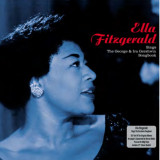
When Ella Fitzgerald began recording her series of albums devoted to the work of
America’s greatest song writers, she elevated the art of Jazz singing into a new
dimension while celebrating a unique musical heritage bequeathed to the world of
popular music. Norman Granz encouraged the bold decision to record five albums all
featuring the extraordinary output of songs composed by the brothers George and Ira
Gershwin during the Golden Age of popular song. Gershwin show tunes had long been
a staple diet for bandleaders, pop-vocalists and star-instrumentalists eager to perform
such exhilarating material as Strike Up The Band, Oh, Lady Be Good!, S’Wonderful and
I Got Rhythm. But there was also a gamut of ballads and romantic dance themes
needing to be interpreted with greater sensitivity. Ella was more than capable of
focusing on lyrics and caressing melodies of songs like Someone To Watch Over Me, A
Foggy Day and Embraceable You. They are among the 53 Gershwin classics she
recorded over an eight month period in 1959 and now featured in this superb collection.
MC/Lyricist Raw Poetic (aka Jason Moore) announces Space Beyond The Solar System, his new album out December 9th on 22nd Century Sound, and presents its lead single, “A Mile In My Head,” featuring legendary saxophonist Archie Shepp. Although Space Beyond The Solar System could be considered a concept album by its outcome, its inception started from a string of experiments between Moore and frequent collaborator/producer Damu the Fudgemunk. These initial sessions had no specific direction but became the catalyst for what would become a prolific wave of Raw Poetic projects; five of which have been released since 2020.
It was these initial sessions and the demos they produced that convinced Shepp—who is also Raw Poetic’s uncle—to record what would eventually become 2020’s Ocean Bridges, a collaborative album from Raw, Damu, and Shepp, praised by The FADER as “modern masterpiece at the intersection of rap and jazz.” The trio’s collaboration continues on Space Beyond The Solar System, which boasts three tracks featuring the jazz legend, including today’s “A Mile In My Head,” a sprawling and thought-provoking album stand-out.
At two hours, absorbing Space Beyond in its entirety may be overwhelming for most, especially in the present day, but Raw and Damu are very aware of this. With a total of over 40-plus years of experience between the vocalist and producer, the two of them went down memory lane taking every influence and experience in their personal histories to extract ingredients for a groundbreaking statement. Space Beyond The Solar System is their most comprehensive environment to date.
The creation of Space Beyond sparked a conversation between Raw and Damu about their creative chemistry, with Raw likening their direction to a “space beyond the solar system.” His comment was a eureka moment for the two artists, giving their wandering efforts a sense of definition that was needed. “I think we’ve been exploring music beyond our limits for a few years,” says Raw Poetic. “It’s hard to tell where we’ll land, but we are constantly pushing our way out of the norm. Hence the title, ‘Space Beyond the Solar System.’ It’s just to say, this is new territory for us. Where the sky was once the limit, now it’s just the start.”
Steve Gunn and David Moore’s Let the Moon be a Planet is a volume of improvisatory exchanges between classical guitar and piano, and a meeting place where two artists become acquainted through instrumental dialogue without a single expectation distracting them from the joy and open field possibility of collaboration.
A project enveloped by an aura of reciprocity, Let the Moon Be a Planet unfolded from an invitation to connect between two New York-based musicians who admired each other’s work but had never intersected: guitarist and songwriter Steve Gunn, whose solo, duo, and ensemble recordings represent milestones of contemporary guitar- guided material, and pianist and composer David Moore, acclaimed for his minimalist ensemble music as the leader of Bing & Ruth.
The exchange began remotely as Gunn and Moore responded to one another’s solo improvisations, embarking on a synergistic progression of deep listening and connection through musical conversation. “We were both fans of each other’s music and this was a chance to try a different process which was much more open,” says Moore. “It felt like something I needed personally as an artist, to not be so controlling over the final output, and to truly collaborate with somebody else.”
Similarly for Gunn, who was exploring new pastures and passages in classical guitar when the dialogue began, the project was an invitation for pure conversation and exchange, creating space for him to revisit foundational forms with his playing: “I was trying to break out of what I was doing, to have something that just pulled away all the elements of usual structured things.”
Let the Moon Be a Planet intertwines the trajectories of two musicians acclaimed for pushing the boundaries of their instruments, unified by a shift away from what they recall as more “detail- oriented” approaches to composition. Fueled by the magnetism of their call and response exercise, Gunn and Moore set out on a nomadic songwriting venture without an intended destination.
“We didn’t know it was going to be an album,” Gunn explains. “There was never pressure on us to complete or make something. It was interesting to start realizing that this could be an album and to take a step back... to arrive at a project after the fact.”
ASSASSINS did what many bands do: they grabbed a moment out of the air and slammed it onto tape machines and hard drives with relentlessness, cunning, and an attitude.
It was in Chicago, mid 2000’s, and though there was energy in the music scene, it wasn’t coalescing into anything you could use as a heading in the musical encyclopedia. Drag City, Thrill Jockey, Bloodshot, Tortoise, Andrew Bird, 90 Day Men – amazing labels and bands, but discrete and siloed and separated by boundaries that weren’t very real.
In the midst of that complicated morass, ASSASSINS generated a collection of songs that became the album YOU WILL CHANGED US. And it did.
There was confidence built into the fabric of the project: 5 members, 2 singers, massive synced video walls and samples streaming from laptops swirling in three dimensions around the stage. They could go from subtle atmospheric moments to a gargantuan wall of sound instantly. It was hard to do- months in cold practice rooms troubleshooting sections of songs or reworking synthesizer patches put the band through a self-imposed boot camp. And it brought them together as a sort of hive-mind focused on one thing: that these songs could connect. They could cut through the noise and share a state of mind with other human beings.
And it worked. Those early shows were mind bending. It was fun, loud, drunken, and rewarding- that time together, before the record deal, before the tragic let down of being traded and gobbled up by the major label system. The years after that got more difficult, more complicated, more human.
Leading us here: the musical journey of the Assassins has ended. With the up-coming release of their second and final album THE YEAR THAT NEVER CAME, we finally get to hear, and feel, the final statements of their inspiring chemistry.
In July of 2021, founding member, songwriter and singer Joe Cassidy unexpectedly passed away. THE YEAR THAT NEVER CAME is the culmination and end point of a collaboration that started in the early 2000’s with a chance meeting and excited conversation with Aaron Miller at a gig in Chicago. Quickly joined by David Golitko on keyboards, Merritt Lear on vocals and guitar, and Alex Kemp on bass.
It was Miller who saw Joe Cassidy’s song writing in a new context. Cassidy had been known for his beautiful, post- pop inflected BUTTERFLY CHILD, a thoughtful, regal project where Joe’s emotions could soar. Miller saw a different context for that voice- not dreamy, but immediate, not just hopeful, but demanding. He took Joe’s open hand and suggested that it could be a fist, raised in the air, with a crowd of other people doing the same.
At the time of his death legendary composer and songwriter Jimmy Webb (who wrote such hits as ‘Wichita Lineman and MacArthur Park) said Joe ‘was a creative and generous producer but, more importantly, he was a creative and generous friend.’
With the release of THE YEAR THAT NEVER CAME, this band, this relentless creative force, has to finally relent. No one in the band could see a future ASSASSINS that doesn’t include Cassidy. So in one last act of will, for the love of their friend, they did the rigorous work of finishing the songs that they had started together for the second album.
Assassin’s obsession with the notion of time, from YOU WILL CHANGED US to THE YEAR THAT NEVER CAME, flows from the most natural question we all have to ask ourselves: what do I do now? Because: how we react today to life’s unpredictability - that is the tomorrow we build for ourselves.
The sound of the classic period of Psychic TV - featuring Peter Christopherson and Geff Rushton (John Balance) of COIL, this full show is interspersed with recordings of the Pagan marriage between Genesis and Paula P-Orridge conducted by Sveinbjörn Beinteinsson Allsherjargodi. Psychic TV at their most esoteric, their most ritual, and often most extreme, a perfect accompaniment to the legendary 'Dreams Less Sweet' album of the same year "Thee First Will To And Testament Ov Psychick TV. All our works remain interconnected, interfaced, and intentional. Thee Process is thee Product". These recordings ov a live disconcert by Psychic TV in Reykjavik, Iceland that took place November 1983 organised by HÖH and GRAMM Records, to whom, eternal and infernal thanks all ways. Out of print for 23 years, this is the ultimate edition for Psychick Youth - meticulously remastered, with the track order finally arranged into what was the original show. Available as ltd white vinyl 2LP w/ inserts, classic black 2LP w/ inserts and CD in glossy digipak with 12-page booklet.
If you were smart enough to get your grubby paws on the first Scrap Metal compilation, you probably have a pretty good idea of what you’re in for with our second installment. Featuring long-lost gems from ultra-rare 45s and private press singles—plus one previously unreleased banger—Scrap Metal 2 maintains a steady NWOBHM course. Packed with infectious outliers and supremely talented one-and-done metal warriors from the crucial British movement of the late ’70s and early ’80s (and some killer American obscurities inspired by them), this collection delivers all the fist-pumping, riff-mongering and flashy solos of heavy metal’s golden age. As always, every track has been officially licensed and every artist gets paid. As a late entry into the NWOBHM sweepstakes, JJ’s Powerhouse was formed in Merseyside, England, by guitarist Jon “J.J.” Cox with members of his previous band, Quad. Much like the opener to the original Scrap Metal comp, you can hear early Metallica coursing through this legendary ripper. Coincidentally, this ultra-rare 45 was released in ’83, the same year as Kill ’Em All. Taking their name from a 1978 sci-fi novel by Marion Zimmer Bradley, Welsh super troopers Storm Queen reveled in animal-print clothing and flying Vs. The Motörhead-meets-Priest anthem “Raising the Roof” is the flipside to their only single, which the band self-released in 1982. Led by guitarist Dave Morse, Storm Queen’s earliest lineup included bassist Bryn Merrick (RIP), who would go on to join The Damned. Roaring out of Birmingham, England, in 1975, Jameson Raid palled around with fellow Brummies Black Sabbath and named themselves after a failed 19th century attack that helped kick off South Africa’s Second Boer War. Their three-song 1979 debut featured the infectious “It’s a Crime,” which comes across like a deadly hard-glam version of Budgie. Still fronted by vocalist Terry Dark, they’re going strong as of 2022. A.R.C., a punky proto-metal group from the UK, released the boozy single “Home Made Wine” b/w “The Chase” in 1979 and—as far as we know—were never heard from again. They’re not to be confused with a gang of Tolkien enthusiasts also called A.R.C., who released two NWOBHM singles in the early ’80s and actually were heard from again. Nonetheless, the A.R.C. we have here was led by a thirsty lad named Klaus Brunnenkant, who liked to rock n’ roll all night and party every day. Both sides of Metropolis’ sole single bear the legend, “Unauthorized duplication shall result in getting your ass beat.” This San Jose metal squad released their only single in 1986 and dedicated it to Metallica bassist Cliff Burton, who had recently been killed in a bus accident. “The Raven” is the serpentine NWOBHM- and Edgar Allan Poe-influenced flipside to “Time Heals Everything,” and yeah, you can hear the guitars going out of tune on the solo, but that’s part of the charm. Of the two dozen or so metal bands that have called themselves Prowler over the years, we’re pretty sure this particular Prowler is the only one from San Diego. These dudes take a thrashier approach than most of the bands here on Scrap Metal 2: “Temporary Insanity” strikes a deft balance between early Anthrax and early Testament, with just enough hard rock swing to keep it from getting overly staccato. Self-released in ’86 as the band’s only single, the song is the flip to “I Love It.” Not much is known about Christian Steel beyond this: They put out their only single in 1983, which boasted “Need Your Love” as the flip to “I Don’t Want To.” The former, included here, sounds kinda like a dizzy, more metallic version of ’70s Jersey rockers Starz, who famously influenced the likes of Mötley Crüe, Poison and Twisted Sister. Ohio guitarist/vocalist Marty Soski’s career dates back to at least 1969 with the Inside Experience track “Be On My Way,” which we unearthed for our own Brown Acid: The Third Trip. This time, we’ve got a monster Soski cut that he recorded under the name Black Rose. Released in 1982, the absolutely smokin’ “Sidewinder” was the A-side on the band’s sole single. The main riff isn’t far off from Y&T’s major-label banger “Mean Streak,” which was released the following year. When Dark Age titled their 1987 album The Youngest Metal Band in the World, they weren’t even sort of kidding. Legend has it that “Star Trippin’,” which was released as a single a year earlier, was written by guitarist CJ Rininger when he was just 12 years old. His brother Dave, the vocalist, was two years younger. Old photos of the band—complete with pineapple haircuts—seem to bear this story out. Either way, the song is pure flash metal, conjuring Sunset Strip sleaze all the way from Ohio. By now, all you heads know Los Angeles magic men Sorcery from their storied appearance in—and soundtrack for—the death-defying Ozploitation flick Stunt Rock. What we have here in “Whales” is a previously unreleased track from the same 1978 recording sessions. It’s a little bit Zeppelin, a little bit prog, and a whole lotta thundering riffage. Why this languished in the vaults for so long is anyone’s guess. Better late than never!
If you were smart enough to get your grubby paws on the first Scrap Metal compilation, you probably have a pretty good idea of what you’re in for with our second installment. Featuring long-lost gems from ultra-rare 45s and private press singles—plus one previously unreleased banger—Scrap Metal 2 maintains a steady NWOBHM course. Packed with infectious outliers and supremely talented one-and-done metal warriors from the crucial British movement of the late ’70s and early ’80s (and some killer American obscurities inspired by them), this collection delivers all the fist-pumping, riff-mongering and flashy solos of heavy metal’s golden age. As always, every track has been officially licensed and every artist gets paid. As a late entry into the NWOBHM sweepstakes, JJ’s Powerhouse was formed in Merseyside, England, by guitarist Jon “J.J.” Cox with members of his previous band, Quad. Much like the opener to the original Scrap Metal comp, you can hear early Metallica coursing through this legendary ripper. Coincidentally, this ultra-rare 45 was released in ’83, the same year as Kill ’Em All. Taking their name from a 1978 sci-fi novel by Marion Zimmer Bradley, Welsh super troopers Storm Queen reveled in animal-print clothing and flying Vs. The Motörhead-meets-Priest anthem “Raising the Roof” is the flipside to their only single, which the band self-released in 1982. Led by guitarist Dave Morse, Storm Queen’s earliest lineup included bassist Bryn Merrick (RIP), who would go on to join The Damned. Roaring out of Birmingham, England, in 1975, Jameson Raid palled around with fellow Brummies Black Sabbath and named themselves after a failed 19th century attack that helped kick off South Africa’s Second Boer War. Their three-song 1979 debut featured the infectious “It’s a Crime,” which comes across like a deadly hard-glam version of Budgie. Still fronted by vocalist Terry Dark, they’re going strong as of 2022. A.R.C., a punky proto-metal group from the UK, released the boozy single “Home Made Wine” b/w “The Chase” in 1979 and—as far as we know—were never heard from again. They’re not to be confused with a gang of Tolkien enthusiasts also called A.R.C., who released two NWOBHM singles in the early ’80s and actually were heard from again. Nonetheless, the A.R.C. we have here was led by a thirsty lad named Klaus Brunnenkant, who liked to rock n’ roll all night and party every day. Both sides of Metropolis’ sole single bear the legend, “Unauthorized duplication shall result in getting your ass beat.” This San Jose metal squad released their only single in 1986 and dedicated it to Metallica bassist Cliff Burton, who had recently been killed in a bus accident. “The Raven” is the serpentine NWOBHM- and Edgar Allan Poe-influenced flipside to “Time Heals Everything,” and yeah, you can hear the guitars going out of tune on the solo, but that’s part of the charm. Of the two dozen or so metal bands that have called themselves Prowler over the years, we’re pretty sure this particular Prowler is the only one from San Diego. These dudes take a thrashier approach than most of the bands here on Scrap Metal 2: “Temporary Insanity” strikes a deft balance between early Anthrax and early Testament, with just enough hard rock swing to keep it from getting overly staccato. Self-released in ’86 as the band’s only single, the song is the flip to “I Love It.” Not much is known about Christian Steel beyond this: They put out their only single in 1983, which boasted “Need Your Love” as the flip to “I Don’t Want To.” The former, included here, sounds kinda like a dizzy, more metallic version of ’70s Jersey rockers Starz, who famously influenced the likes of Mötley Crüe, Poison and Twisted Sister. Ohio guitarist/vocalist Marty Soski’s career dates back to at least 1969 with the Inside Experience track “Be On My Way,” which we unearthed for our own Brown Acid: The Third Trip. This time, we’ve got a monster Soski cut that he recorded under the name Black Rose. Released in 1982, the absolutely smokin’ “Sidewinder” was the A-side on the band’s sole single. The main riff isn’t far off from Y&T’s major-label banger “Mean Streak,” which was released the following year. When Dark Age titled their 1987 album The Youngest Metal Band in the World, they weren’t even sort of kidding. Legend has it that “Star Trippin’,” which was released as a single a year earlier, was written by guitarist CJ Rininger when he was just 12 years old. His brother Dave, the vocalist, was two years younger. Old photos of the band—complete with pineapple haircuts—seem to bear this story out. Either way, the song is pure flash metal, conjuring Sunset Strip sleaze all the way from Ohio. By now, all you heads know Los Angeles magic men Sorcery from their storied appearance in—and soundtrack for—the death-defying Ozploitation flick Stunt Rock. What we have here in “Whales” is a previously unreleased track from the same 1978 recording sessions. It’s a little bit Zeppelin, a little bit prog, and a whole lotta thundering riffage. Why this languished in the vaults for so long is anyone’s guess. Better late than never!
Lyburnum Wits End Liberation Fly was the one and only full-length album by experimental post-punk innovators, Moss Icon. Recorded in 1988, Lyburnum would not be released until 1993 several years after Moss Icon’s demise.
Originally released on Vermiforn – the esoteric noise label founded by Sam McPheeters of Born Against – the vision that Moss Icon’s Tonie Joy had for Lyburnum failed to manifest in its finished product. Of the process of preparing Lyburnum for its eventual release, Joy recalls, “My creative mind was well into its next chapter, onto an apocalyptic order referring to Joy’s post-Moss Icon band, Universal Order of Armageddon.
Getting Lyburnum to look like what I envisioned in my mind became an uphill battle that involved misplaced photos, misunderstood instructions by the printer, increasing apathy, and lack of advanced printing knowledge (on my part), amongst many other technical and creative issues.
With a deadline near it ended up being an it-is-what-it-is situation. Some corrections were attempted for the second pressing the following year, but a further lack of coordination between various parties saw it losing even more of the original vision.”
Despite these challenges and shortcomings, Lyburnum Wits End Liberation was instantly cherished as a feral masterpiece a singular entity that would become a defining influence on post-hardcore and emo in the 1990s and beyond.
Nothing before sounded like this, and nothing since has quite captured the same mysterious fury. Now, finally, Moss Icon’s seminal Lyburnum Wits End Liberation Fly LP will be released exactly as it was always intended to look, sound, and feel. The artwork has been fully restored and includes previously unpublished photos that were inadvertently missing from the original release.
Brilliantly remastered by Alan Douches at West West Side Music, the vinyl has been newly cut by Bob Weston at Chicago Mastering Service, and pressed onto audiophile-grade vinyl at Record Technology Inc.
Lyburnum Wits End Liberation Fly was the one and only full-length album by experimental post-punk innovators, Moss Icon. Recorded in 1988, Lyburnum would not be released until 1993 several years after Moss Icon’s demise.
Originally released on Vermiforn – the esoteric noise label founded by Sam McPheeters of Born Against – the vision that Moss Icon’s Tonie Joy had for Lyburnum failed to manifest in its finished product. Of the process of preparing Lyburnum for its eventual release, Joy recalls, “My creative mind was well into its next chapter, onto an apocalyptic order referring to Joy’s post-Moss Icon band, Universal Order of Armageddon.
Getting Lyburnum to look like what I envisioned in my mind became an uphill battle that involved misplaced photos, misunderstood instructions by the printer, increasing apathy, and lack of advanced printing knowledge (on my part), amongst many other technical and creative issues.
With a deadline near it ended up being an it-is-what-it-is situation. Some corrections were attempted for the second pressing the following year, but a further lack of coordination between various parties saw it losing even more of the original vision.”
Despite these challenges and shortcomings, Lyburnum Wits End Liberation was instantly cherished as a feral masterpiece a singular entity that would become a defining influence on post-hardcore and emo in the 1990s and beyond.
Nothing before sounded like this, and nothing since has quite captured the same mysterious fury. Now, finally, Moss Icon’s seminal Lyburnum Wits End Liberation Fly LP will be released exactly as it was always intended to look, sound, and feel. The artwork has been fully restored and includes previously unpublished photos that were inadvertently missing from the original release.
Brilliantly remastered by Alan Douches at West West Side Music, the vinyl has been newly cut by Bob Weston at Chicago Mastering Service, and pressed onto audiophile-grade vinyl at Record Technology Inc.
Gargantuan volcanoes erupting with primal force, fountains of molten lava bursting sky high and massive boulders hurtling capriciously through the air. These potent and violently alluring images in the documentary series The Living Planet captivated Raoul Björkenheim's imagination in 1986. The search for a band name had come to an end. -”I was mesmerised. The name Krakatau sounded like a drum fill to me”. After studying at the Helsinki Conservatory for a year and the Berklee College of Music in Boston for three, Björkenheim relocated to Finland where he played in bands with Jone Takamäki, Antti Hytti and Tom Nekljudow, and later went on to work with composer and drummer Edward “Eetu” Vesala (1945-1999). His always original and highly demanding Sound & Fury workshops were a pivotal hotbed in the local improvised music scene, but after four years of Vesala's strict leadership Björkenheim felt a need to leave Sound & Fury behind and direct all of his attention towards Krakatau. The lineup on the first album “Ritual” consisted of reed virtuosos Jorma Tapio and Tapani Rinne, the bassist Sampo Lassila and two drummers, Michel Lambert and Heikki “Lefty” Lehto. “Krakatau’s debut album was very challenging to make, as I felt that it might be my one and only chance to record my own music, so I wanted it to be as intense and effective as possible”, says Björkenheim, “I was lucky enough to work with an incredibly talented cast of musicians. I can still listen to the album and feel satisfied that it really works. The first guitar solo illustrates what was to become my modus operandi: to try and play the electric guitar in unexpected ways.” Svart Records will release an expanded double LP version of Krakatau’s Ritual. Limited to 500 copies and due out on March 24th, the album contains an album’s worth of previously unheard material recorded in 1987 in Studio Helsinki and at the Finnish Broadcasting Corporation studio.
Steve Gunn and David Moore's Let the Moon be a Planet is a volume of improvisatory exchanges between classical guitar and piano, and a meeting place where two artists become acquainted through instrumental dialogue without a single expectation distracting them from the joy and open field possibility of collaboration. A project enveloped by an aura of reciprocity, Let the Moon Be a Planet unfolded from an invitation to connect between two New York-based musicians who admired each other's work but had never intersected: guitarist and songwriter Steve Gunn, whose solo, duo, and ensemble recordings represent milestones of contemporary guitar-guided material, and pianist and composer David Moore, acclaimed for his minimalist ensemble music as the leader of Bing & Ruth. The exchange began remotely as Gunn and Moore responded to one another's solo improvisations, embarking on a synergistic progression of deep listening and connection through musical conversation. "We were both fans of each other's music and this was a chance to try a different process which was much more open," says Moore. "It felt like something I needed personally as an artist, to not be so controlling over the final output, and to truly collaborate with somebody else." Similarly for Gunn, who was exploring new pastures and passages in classical guitar when the dialogue began, the project was an invitation for pure conversation and exchange, creating space for him to revisit foundational forms with his playing: "I was trying to break out of what I was doing, to have something that just pulled away all the elements of usual structured things." Let the Moon Be a Planet intertwines the trajectories of two musicians acclaimed for pushing the boundaries of their instruments, unified by a shift away from what they recall as more "detail-oriented" approaches to composition. Fueled by the magnetism of their call and response exercise, Gunn and Moore set out on a nomadic songwriting venture without an intended destination. "We didn't know it was going to be an album," Gunn explains. "There was never pressure on us to complete or make something. It was interesting to start realizing that this could be an album and to take a step back_ to arrive at a project after the fact." Calibrating their focus to connect with a spectrum of inner and external emotional realities, the duo found their way into a world where the most subtle of gestures can eternally flow. Let the Moon be a Planet is an ode to experimentation over outcome; it holds a candle light to the corners of introspection and captures the patterns that flicker within. Cast across the compositions of the album is a gritty, filmic grain _ a quality that emerged partially from recording "without the greatest microphones" or their usual studio environments. For both artists, this lo-fi sensitivity felt integral to the record and its production, and they worked closely with engineer Nick Principe to preserve its otherworldly haze in the final mixes. Across the record's eight compositions, the rippling impulses of Gunn and Moore's inner worlds converge in the spirit of two strangers wandering the same path, engaged in a daydream state of natural back and forth. Melodic tableaux arise, drift and disperse across serene open spaces, painted in earthy hues of nylon string and balmy, undulating keys _ side by side, the duo converse in tessellating motifs and gestures of lucid introspection, cultivated by a shared desire for intuitive play. "This project was such a simple idea," says Gunn. "It got down to the very core of where I am or where I was, and where I'm trying to be as a musician. Making this record became a very beneficial ritual for me, almost a meditative process." As Moore recalls, "Our only motivation for making these tracks was that it felt good to make them and there was nothing else behind it_ I don't know that I've ever made a record that came about so naturally." While Let the Moon Be a Planet was envisioned through a deeply collaborative process, it uncovered a path for Gunn and Moore to respectively return home as musicians. Imbued with the forces of interconnection and balance, the record is an exploration of creative synergy while following the currents of inner experience _ of looking outwards to arrive at one's natural self. Steve Gunn and David Moore's Let the Moon Be a Planet will be released March 31, 2023 in LP, CD, and digital editions. The album represents the first volume of Reflections, a new series of contemporary collaborations orchestrated by RVNG Intl. A portion of the proceeds from this release will benefit St. John's Bread and Life, whose mission is to respect the dignity and rights of all persons by ensuring access to healthy, nutritious food and comprehensive human services resulting in self-sufficiency and stability.
Cairo, late 2013. In a city in turmoil, where the curfew had just been lifted after a second coup d'état, where the walls were still covered in dreams and revolt, where even the clubs of the city-centre echoed with anti-Islamist and anti-army slogans, I was deeply touched by the voice of Abdullah Miniawy at the 100Copies music studio, a stone's throw from Tahrir Square. A singer, writer, poet, poetry-slammer and student from the El-Fayoum oasis, this spokesman for Egyptian youth was shaking up the music scene and social networks with his hypnotic voice and unique blend of electro, sufism and jazz music, both punk and psychedelic, secular and avant-garde. Three months later, Abdullah's first on-stage revelations took place at the La Voix est Libre festival in Cairo with the "Jimi Hendrix of oud", Mehdi Haddab, followed by his first meeting with composer and saxophonist Peter Corser at the D-CAF festival (Downtown Contemporary Art Festival), created in the aftermath of the revolution by leading figure in theater Ahmed El-Attar. After three years of administrative battles, while censorship was making a comeback in Egyptian artistic circles, Abdullah finally arrived in Paris where he recorded an initial version of Purple Feathers with Peter Corser, which was broadcast on Soundcloud.
In 2017, gripped from the very first seconds by these soaring vocal and instrumental performances, Erik Truffaz accepted our invitation to become involved with Peter's hypnotic loops and Abdullah's electric vocals, and was soon joined by the visceral strings of cellist Karsten Hochapfel. Five years later, Le Cri du Caire is still turning heads, and often moving audiences to tears. Both free and spiritual, sensitive and elusive, their music elevates the soul to giddy heights and flies towards what may well be one of the shortest paths from zero to infinity.
out of Stock
Last delivered 23 months ago available to reorder, subject to availability
Over the past 20 years, The New Pornographers have proven themselves one of the most excellent bands in indie rock. The group's ninth album and first for Merge establishes them alongside modern luminaries like Yo La Tengo and Superchunk when it comes to their ability to evolve while still retaining what made them so special in the first place. A dazzling and intriguing collection of songs, "Continue as a Guest" finds bandleader A.C. Newman and his compatriots Neko Case, Kathryn Calder, John Collins, Todd Fancey, and Joe Seiders exploring fresh territory and shattering the barriers of their collective comfort zone. Newman began work on "Continue as a Guest" after the band had finished touring behind 2019's "In the Morse Code of Brake Lights". Themes of isolation and collapse bleed into this album, as Newman tackles the ambivalence of day-to-day life during the COVID-19 pandemic. But Newman says that the album's title track also addresses the concerns that come with being in a band for so long. "The idea of continuing as a guest felt apropos to the times," he explains. "Feeling out of place in culture, in society, being in a band that has been around for so long_not feeling like a part of any zeitgeist, but happy to be separate and living your simple life, your long fade-out. Living in a secluded place in an isolated time, it felt like a positive form of acceptance: find your own little nowhere, find some space to fall apart, continue as a guest." Newman discovered new vocal approaches within his own talent. There are new and rich tones to Newman's voice throughout Continue as a Guest, from his dusky lower register over "Angelcover" to his slippery slide over the glimmering synths of "Firework in the Falling Snow," to bold tones he embraces on the soaring "Bottle Episodes." Another sonic change comes courtesy of saxophonist Zach Djanikian, whose tenor and bass luxuriate all over Continue as a Guest's alluring chassis, especially on the menacing build of "Pontius Pilate's Home Movies." Along with Newman's usual collaborators, several songwriters contribute. The bursting opener and first single "Really Really Light" is a co-write with Dan Bejar (Destroyer, the New Pornographers). Then there's "Firework in the Falling Snow," a collaboration with Sadie Dupuis of Speedy Ortiz and Sad13. Even as Newman embraces a collaborative spirit more than ever, his new album is a testament to his ability to discover new artistic sides of himself. "Continue as a Guest" sounds like a thrilling path forward for The New Pornographers, with songs that generate a contagious feeling of excitement for the future as well.
Over the past 20 years, The New Pornographers have proven themselves one of the most excellent bands in indie rock. The group's ninth album and first for Merge establishes them alongside modern luminaries like Yo La Tengo and Superchunk when it comes to their ability to evolve while still retaining what made them so special in the first place. A dazzling and intriguing collection of songs, "Continue as a Guest" finds bandleader A.C. Newman and his compatriots Neko Case, Kathryn Calder, John Collins, Todd Fancey, and Joe Seiders exploring fresh territory and shattering the barriers of their collective comfort zone. Newman began work on "Continue as a Guest" after the band had finished touring behind 2019's "In the Morse Code of Brake Lights". Themes of isolation and collapse bleed into this album, as Newman tackles the ambivalence of day-to-day life during the COVID-19 pandemic. But Newman says that the album's title track also addresses the concerns that come with being in a band for so long. "The idea of continuing as a guest felt apropos to the times," he explains. "Feeling out of place in culture, in society, being in a band that has been around for so long_not feeling like a part of any zeitgeist, but happy to be separate and living your simple life, your long fade-out. Living in a secluded place in an isolated time, it felt like a positive form of acceptance: find your own little nowhere, find some space to fall apart, continue as a guest." Newman discovered new vocal approaches within his own talent. There are new and rich tones to Newman's voice throughout Continue as a Guest, from his dusky lower register over "Angelcover" to his slippery slide over the glimmering synths of "Firework in the Falling Snow," to bold tones he embraces on the soaring "Bottle Episodes." Another sonic change comes courtesy of saxophonist Zach Djanikian, whose tenor and bass luxuriate all over Continue as a Guest's alluring chassis, especially on the menacing build of "Pontius Pilate's Home Movies." Along with Newman's usual collaborators, several songwriters contribute. The bursting opener and first single "Really Really Light" is a co-write with Dan Bejar (Destroyer, the New Pornographers). Then there's "Firework in the Falling Snow," a collaboration with Sadie Dupuis of Speedy Ortiz and Sad13. Even as Newman embraces a collaborative spirit more than ever, his new album is a testament to his ability to discover new artistic sides of himself. "Continue as a Guest" sounds like a thrilling path forward for The New Pornographers, with songs that generate a contagious feeling of excitement for the future as well.
Did you know that miracles happen every day? We don't always see it that way We look at the state of the world and think, "It'll be a miracle if we make it out alive." But miracles are what humans do. We're Earth's most inventive and unpredictable species, when we're allowed to be. Also the most destructive. Miracle-Level is Deerhoof's mystical manifesto on creativity and trust. It celebrates the infinite small wonders of existence that spontaneously present themselves, when not obstructed by our death-driven masters. Musically, Miracle-Level is vulnerable, brave, and brimming with spicy surprises. Deerhoof's 19th album is also their their first to be recorded and mixed in a recording studio. Production was entrusted to Mike Bridavsky, at No Fun Club in Winnipeg, Manitoba. This is also their first album written entirely in Satomi's native language. Deerhoof once again speak in a secret code that only their fans understand, in which hooks abound, and genre is nonexistent.
Lloyd Cole & The Commotions – Cole, Blair Cowan, Lawrence Donegan, Neil Clark and Stephen Irvine – were formed in Glasgow in 1982, where Buxton-born singer-songwriter Cole was studying Philosophy and English at the University of Glasgow -Their sound swam against the tide of shiny 80s synthesisers, offering intense, melodic, guitar-based pop, topped with droll words packed with literary references.
Given just how loved debut album Rattlesnakes was, it would have been hard for whatever followed to be received as warmly – yet Easy Pieces made a good first of it. It was to sell twice as many copies in its first two weeks as Rattlesnakes had to date, giving the group a Top 5 chart placing on its release in November 1985. Recorded with 80s super-producers Clive Langer and Alan Winstanley, its first two singles, the brooding, gospel influenced Brand New Friend and the forever-jaunty Lost Weekend reached the UK Top 20.
This re-issue faithfully replicates the original 1985 Polydor Records UK release with printed inner sleeve and is pressed onto high quality 180g vinyl.
The sound of the classic period of Psychic TV - featuring Peter Christopherson and Geff Rushton (John Balance) of COIL, this full show is interspersed with recordings of the Pagan marriage between Genesis and Paula P-Orridge conducted by Sveinbjörn Beinteinsson Allsherjargodi. Psychic TV at their most esoteric, their most ritual, and often most extreme, a perfect accompaniment to the legendary 'Dreams Less Sweet' album of the same year. "Thee First Will To And Testament Ov Psychic TV. All our works remain interconnected, interfaced, and intentional. Thee Process is thee Product". These recordings of a live disconcert by Psychic TV in Reykjavik, Iceland that took place November 1983 organised by HÖH and GRAMM Records, to whom, eternal and infernal thanks all ways.
- 2023 Edition - Pressed on Clear Red Wax - LP housed in an expanded Stoughton tip-on gatefold jacket - Includes fold-out poster, sticker and insert, along with a download card for full album, non-album single B-side "The Cowboy Song" and an unedited October 1978 BBC audio interview with John Lydon // Reissue of the pioneering group's debut album First Issue. In 1976 Johnny Rotten and the Sex Pistols set the agenda for punk's year zero with 'Anarchy In The UK', a song that summed up the spirit, sound and attitude of the band in one shocking package. Two years later, the Sex Pistols were in tatters, but Rotten was as unsentimental as you'd hope. He reverted to his real name - John Lydon - and set about forming a band whose very identity kicked against press and media manipulation. Featuring bassist Jah Wobble, drummer Jim Walker and guitarist Keith Levene, his new group were Public Image Limited. The public image would be limited. PiL were a very distinct prospect from the Pistols, founded with a greater thought for rhythm, and with a sound that turned the page from snarling punk to a more experimental sound fusing rock, dance, folk, ballet, pop and dub. But that's not to say Lydon's new outfit lacked vitriol. 'Public Image' hits out against the notorious British tabloid press, who never gave Lydon an easy ride, and against his own Sex Pistols public image - "You only saw me for the clothes I wore". The debut single (and the album that followed) operated as a theme song and a manifesto: "_my entrance/My own creation/My grand finale/My goodbye," as the lyrics had it. It is, essentially, the sound of four people letting loose in a studio - and not caring what anyone else thought. The album was never officially released in the USA back in the day, its sound considered too un-commercial by major-labels for an American release. First Issue has been lovingly reproduced from the original UK 1978 release and this special reissue also comes with a clutch of post-punk era treasures. The 2023 LP edition includes an expanded gatefold jacket, an archive replica fold-out poster, a PiL sticker, insert, and Download Card for the album, the archival BBC interview, and "The Cowboy Song." All of which were approved and coordinated with John Lydon and his personal management.
Critically-acclaimed, criminally-overachieving Glasgow-based singer and guitarist Alasdair Roberts is known as a superlative original songwriter as well as an interpreter of traditional songs from Scotland and beyond. For the past twenty years, his recordings have alternated between these two complimentary poles, with "pop" records such as The Amber Gatherers and A Wonder Working Stone nestling in his expansive back catalogue alongside "folk" albums such as No Earthly Man and What News (with Amble Skuse and David McGuinness). Additionally, all of these records possess a further dimension, derived from their collation of songs together into one album-length statement. This is part of Alasdair"s great achievement in his career - for him, this thing of music and song hasn"t come the eons it"s travelled to simply entertain. These impulses fully present and well honed, Alasdair returns to his roots with Grief in the Kitchen and Mirth in the Hall, his fifth full-length collection of traditional song. Recorded live in the studio, it is an entirely solo collection of twelve traditional ballads and songs sparsely arranged for acoustic guitar, piano and voice. The majority of the songs originate in Alasdair"s homeland of Scotland, with a couple from Ireland and one from Prince Edward Island on Canada"s eastern seaboard too. The record takes its title from a line in the final verse of one of its songs, "The Baron o" Brackley" - a ballad of feuding clans and matrimonial betrayal from the north-east of Scotland. Grief in the Kitchen and Mirth in the Hall: it"s a title which goes some way towards encapsulating many of the record"s themes. Collectively the songs treat of various conflicts and tensions - those of gender; of class, status and position; and of geography and tribal belonging - and the roles and responsibilities expected at the various intersections of these constructs. That we should never forget! As with many of Alasdair"s recordings, Grief in the Kitchen and Mirth in the Hall contains ballads aplenty: tragic ("Bob Norris"), supernatural ("The Holland Handkerchief") and dramatic ("Eppie Morrie"). There are love songs ("The Lichtbob"s Lassie") and anti-love songs ("Kilbogie"). There are rare, seldom-heard pieces ("Young Airly") and much more well-known ones ("Mary Mild," a version of "The Queen"s Four Maries"). Woven through all of this - a thread of levity, perhaps - is a triptych of zoological allegories - a panegyric to a mystical steed ("The Wonderful Grey Horse"), a lament for a lost cow ("Drimindown") and a paean to a regal waterbird ("The Bonny Moorhen"), which serves to highlight the intersection of the mythic, the eternal and the mundane at which we all find ourselves in every day of our life on Earth. Grief In the Kitchen and Mirth in the Hall was masterfully recorded by Sam Smith at Green Door Studios, Glasgow over an economical two days, and mixed in one day. Its brevity on all levels is an aspect of its expression. Alasdair"s renowned acoustic fingerstyle guitar is understated yet questing, ever in service to the needs of the song, underpinning his soulful tenor voice. Three songs eschew his habitual acoustic guitar in favour of simple piano arrangements. The spare setting and Alasdair"s deeply committed performance gently reminds of the meanings and melodies of these old songs, chosen instinctively and with care, for all to hear and sing in 2023, and the world beyond that is ever coming.
blueblue is the latest full-length from multi-instrumentalist and all-around vibe wizard, Sam Gendel. The record, out via Leaving Records, is a concise, tightly wound song suite whose 14 tracks each correspond to a pattern within sashiko, a traditional style of Japanese embroidery. This conceit remains playfully ambiguous — to what extent, if at all, is Kagome (woven bamboo) meant to evoke the pattern of the same name, for example? But there is an intuitive sense, throughout blueblue, that Gendel has, in this instance, narrowed his focus. To say that blueblue feels richly textural might be a little on-the-nose, thematically, but alas…it does. There is an intimacy, a humility, and a strength at play here that typifies the work of a master craftsman. Only an artist could make it sound so effortless.
A Los Angeleno by way of Central CA, Gendel is by now an institution. Across a dizzying slate of solo releases and collaborations, he has amassed a reputation for not only virtuosic musicianship (primarily as a saxophonist, though the songs that would become blueblue were all initially composed on guitar), but also for his mercurial and prolific output — a corpus of work, which, while obviously indebted to jazz and hip hop (and the farther flung, experimental corners of both) is, in a word, unpindownable.
The bulk of blueblue was recorded in isolation in a makeshift studio built in a cabin floating atop a tributary of Oregon’s Columbia River. Having sketched out a set of guitar melodies, Gendel recorded the album in five-or-so weeks, during which time he became well-acquainted with the river’s tidal rise and fall. This organic rhythm, which daily lifted the house to meet the horizon, later setting it down gently upon the riverbed, permeates t
Nach dem Erfolg des offiziellen Anno 1800-Vinylsoundtracks feiern Black Screen Records und Ubisoft Mainz die populäre Aufbausimulation mit "The Four Season": Der opulente zweite Soundtrack entführt in die lebendigen musikalischen Welten der vier Erweiterungssets des Spiels und erscheint pünktlich zum 25jährigen Jubiläum der Traditionsmarke am 31.03.2023, natürlich auf audiophilem 180g Doppelvinyl. Alle neuen Musikstücke werden zur gleichen Zeit auf Spotify verfügbar sein. Das Album wird erneut in wunderschönem Klappcover mit Artworks von Ubisoft Mainz ausgeliefert und kommt mit kostenlosem Download-Code für den digitalen Soundtrack, inklusive 8 Bonustracks. Musikalisch dokumentiert die Doppel-LP nicht nur die enorme inhaltliche Abwechslung der vier Anno 1800-"Seasons", sondern auch die stilistische Bandbreite der Komponisten Steffen Brinkmann, Jochen Flach, Armin Haas, Alexander Röder, Tilman Sillescu und Matthias Wolf (Dynamedion). Die Stücke erzählen von versunkenen Schätzen und reichen Ernten, von Expeditionen in die Arktis und ins gefährliche Land der Löwen, von der Eroberung des Reichs der Lüfte oder dem überwältigenden Ausblick von den majestätischen Dächern der Stadt. Kurzum: Die Welt von Anno 1800 und der facettenreichen Spielerweiterungen wird als akustische Reise erlebbar gemacht. Anno 1800 ist eine von Ubisoft Mainz entwickelte und von Ubisoft veröffentlichte Aufbausimulation, in der Spieler die industrielle Revolution anführen, Metropolen errichten und mit Diplomatie, Handel oder Krieg um die Vorherrschaft wetteifern. Das erfolgreiche PC-Strategiespiel begeistert mehr als 2,5 Millionen Spieler auf der ganzen Welt mit einer Kombination aus bewährten Spielelementen, innovativen Neuerungen und dynamischem Spielverlauf in einer der spannendsten Epochen der Menschheitsgeschichte.
Nach der Veröffentlichung der 2CD-Version des Albums Moonage Daydream im letzten Jahr, wird der Soundtrack nun am 31. März als 3LP Vinyl veröffentlicht.
"Moonage Daydream" beleuchtet das Leben und Genie von David Bowie, einem der produktivsten und einflussreichsten Künstler der jüngeren Musikgeschichte.
Auf Spielfilmlänge nimmt uns Brett Morgen mit in die Welt Bowies, erforscht anhand von großartigem, vielfältigem und nie zuvor gesehenem Filmmaterial, Live-Auftritten und Musik (Morgen sichtete vier Jahre die Archive des David Bowie Estates) seine kreative, musikalische und spirituelle Reise.
Durch den Film führt uns dabei die Erzählerstimme von David Bowie selbst.
Das Begleitalbum zu "Moonage Dream" enthält Songs aus Bowies gesamter Karriere, darunter bisher ungehörtes Material, speziell für den Film und dieses Album angefertigte Mixe und Gesprächspassagen Bowies.
Zu den Highlights des Tracklistings zählen ein bisher unveröffentlichtes Live-Medley von "The Jean Genie / Love Me Do / The Jean Genie", aufgenommen beim berühmt-berüchtigten letzten Ziggy-Stardust-Konzert im Londoner Hammersmith Odeon 1973 und mit Jeff Beck an der Gitarre. Weitere Raritäten sind eine frühe Version
des Hunky-Dory-Favoriten "Quicksand" und eine bisher unveröffentlichte Live-Version von "Rock 'n' Roll With Me", mitgeschnitten bei der legendären "Soul Tour" 1974.
The axolotl is a species of salamander native to Mexico, living in a state of larva and having the capacity to regenerate damaged organs. This brief introduction doesn’t tell us if the axolotl sings. But, for the one that concerns us here: yes indeed.
In Paris, at the end of the 1970s, Etienne Brunet and Marc Dufourd would improvise regularly, inspired by some other saxophone-guitar duos: Claude Bernard-Raymond Boni firstly, then Evan Parker-Derek Bailey. When Jacques Oger (a saxophonist whom Brunet had met at a workshop given by Steve Lacy at the Châteauvallon festival in 1977) joined the duo Brunet-Dufourd, Axolotl was born.
Iconoclastic, the trio was bound to please Jac Berrocal, and he proposed to record their first album on the label ‘D’avantage’. In spring 1981 three days were just enough for Oger (tenor and barytone saxophones), Brunet (alto saxophone, bass clarinet and ‘things’) and Dufourd (electric guitar) to complete Axolotl, the first album by a group which would record ... two.
If there was a collective of iconoclasts, the trio would be there with some relatives: Alterations, Fred Frith, John Zorn, the ROVA Saxophone Quartet... and then because we mention a collective, Axolotl steps (considerably) beyond the domain of free improvisation to lean towards jazz (“Illusion”, “Paris, froissé”), No Wave (“Ombre pilée”, “Trottoirs défunts”), contemporary (“Oreiller”, “D’autres seuls”), and even what we could call ... acid fun (“Dehors”).
Above all, Axolotl wanted to really get to grips with sound via an expression as direct as it was liberating, as can be heard on “Ozone, flocon, torsion”, producing a noise that, even today pierces the brain. All we can hope is that now, thanks to this wonderful reissue, listeners will be able, like the axolotl, of regeneration.