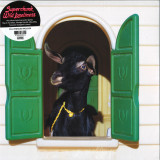
Tapping into the seductive unease of the unexplained, Modula lands on Tartelet Archives with Paranormal Phenomena – The Icelandic Expedition, a nine-track album that evokes alien synth- electro and New Age soundscapes.
During a trip to Iceland in February 2020, Naples native Filippo Colonna Romano (Modula) experienced the raw power of the island’s otherworldly natural forces. Inspired by his field recordings and a rekindled interest in sci-fi, Paranormal Phenomena – The Icelandic Expedition was born. Steeped in haunting LA synthesis and cinematic tension, the album is an imagined soundtrack to a supernatural thriller, cast in the icy tones of the Roland JD-800.
“When I went to Iceland I was so excited about the ambience and sounds,” says Modula. “I felt everything was stronger than normal; the wind was brutal, the waves fast and noisy. I came to the conclusion that what I had captured all sounded strangely eerie and otherworldly. I decided to compose music that had the same vibe as the field recordings – cold and strange, mysterious and alien.”
The album includes nine tracks each representing a scene in the “movie” ranging from alien synth-electro to New Age ambient moods and soundscapes, inviting the listener on a journey through cold landscapes and into dark caves where unknown creatures lurk in the shadows. Paranormal Phenomena leads logically on from Modula’s previous work for Bordello A Parigi and Firecracker, not to mention his Alba – Tempesta – Notturno EP on Tartelet Records which drew on field recordings from the jungles of South America. Merging extreme environments with a rich palette of classic outboard gear, Modula’s music transports listeners through space and time. Given the heavy motion-picture theme present in Paranormal Phenomena – The Icelandic Expedition, the album is a fitting release to inaugurate Tartelet Archives, a new sub-label to Tartelet Records focusing on electronic obscurities and sounds from the past.
"Drums from heaven, keys from Mars, a bass made from mother earth's soil and guitars from a guy who's time-traveling from German Kraut in the last 60ies into the next 60ies and who happens to gift us today with this funky, dirty, pulsating, delicious music that's everything which music is supposed to be: ALIVE! (Note to self: Always keep a copy of this record in your suitcase!)." (Malakoff Kowalski)
"Afrokraut" is a stylistic expression of Krautrock, primarily associated with Can, and their creative use of time and space in music. "A Guide To Afrokraut III" is David Nesselhauf´s third and last contribution to the dusty shrine of this long forgotten style.
Next to "Afrokraut" (2016) and "Afrokraut II: The Lowbrow Manifesto" (2018), this album completes a humble sonic Trypticon in honour of David Nesselhauf's musical heroes. Experimentation was key in the immersive process of producing this album, which encompasses elements of Funk, Afrobeat and Krautrock as well as otherworldly Drones, early Elektronische Musik and even field recordings.
Inspired by the unfinished manuscript 'History Deletes Itself' by the late science fiction author Joseph Sabiers, Nesselhauf decided to produce a b-movie soundtrack to the original plot, ignoring the fact that there will likely never be a movie to this music.
In the original script, a virus has infected history, the resulting changes of historical facts leading to an unpredictable present and future for mankind. Every attempt to solve the problem – including time travelling – only worsens the situation. But three planets at the end of the known universe seem to be unaffected by the phenomenon, they become a sanctuary known as 'Afrokraut III'. Three brothers arrive there to start new lives. They are introduced to The Guide, their mysterious advisor...
The striking parallels to today's uncertainties, a strong feeling of hope and the idea to never stop exploring (come what may) certainly have encouraged the making of this album, which sees a belated release due to the obstacles everyone faces right now.
David Nesselhauf lives in Hamburg/Germany and appears as a bass player/songwriter in bands like Hamburg Spinners, The Drawbars, Diazpora, and Angels Of Libra.
*MILKY CLEAR VINYL - 300 COPIES ONLY FOR WORLD!!* Technology + Teamwork’s fizzling synths, interweaving textures and punchy rhythms are beguiling on their long-awaited debut album We Used To Be Friends. However, at the heart of it all it’s the connection between the group’s two members, Anthony Silvester and Sarah Jones, the friendship the much-travelled duo have managed to maintain for nearly 15 years and a showcase of the slow-burning construction of the electronic world that they’ve surrounded themselves with. We Used To Be Friends is ultimately the tale of two storied artists in their own right, holding onto each other through personal and career twists and turns, relocations and broader movements through respective phases of their lives. Silvester and Jones first met and then collaborated as part of biting post-punk five-piece XX Teens in 2008, eventually breaking off to forge their own path together even as the latter’s demand as a drummer grew. Performing with everyone from Hot Chip, Harry Styles and Bloc Party among many others, Jones has been a constant percussive presence across the sphere of alternative UK pop music – she’s also found time for her own solo project Pillow Person and played on records by the likes of Puscifer and Kurt Vile. Silvester meanwhile has performed in art galleries across Europe including: Fridericianum in Kassel, Kölnischer Kunstverein in Cologne, and Vleeshal in Middelburg, as well as providing sound design and composing work for several art films. Technology + Teamwork is the constant throughout all of that though. “Technology + Teamwork's name perfectly describes how we work” Silvester explains. “Sometimes the teamwork is between each other and sometimes it’s between us and the technology.” Although going by the name Technology + Teamwork as far back as 2014, two events conspired that pulled the project into focus for the pair of them: firstly, Silvester spent a year constructing a soundproof studio shed on the border of London and Essex where he lives. Secondly, inevitably, the pandemic brought the globe-trotting Jones back home to just seven miles away from her long-time collaborator and friend. “We probably hung out more than we had for a few years” says Silvester. “Also, after all her Pillow Person releases Sarah had gotten really good with recording vocals and knowing what did and didn’t work and had a really good home studio set up. We still worked separately though, exchanging ideas via email and WhatsApp.” As with many artists through 2020 and early 2021, working separately was a new necessity that they were forced to adapt to. However, it became clear that there were creative benefits to it. “It really changed our sound and our sounds became a lot more focused as a result” Jones says. “I wanted to use the same ideas of improvisation that I might use while playing the drums for myself and apply that to melodies and lyrics.” The album bristles with hyperpop modernity. You can hear it in the manipulated vocals most prominently on Big Blue’s disco strut and on Moving Too’s heady mix of pitched up voice and burrowing sub bass. However, the pair also looked to San Francisco and the West Coast synthesis movement of the 60s, Silvester inspired by the likes of Suzanne Ciani and Don Buchla. The plaintive lo-fi and melancholy of Amsterdam incorporates Mutable Instrument’s Marbles by Émilie Gillet which – inspired by Buchla’s own synthesis work – outputs random voltages to give the track an air of unpredictability. It’s something that occurs throughout the album, the duo revelling in the happy accidents that disrupt the flow of their hook-laden pop. “The ‘Buchlian’ ideas of music having randomness and uncertainty, completely freed us up” Silvester explains. “It felt a bit like having more members in the band, machines that didn't do what you expected or intended.” Perhaps more subtly, is the influence of 17th and 18th century Baroque music, with Silvester drawing a line between it and the 90’s R’n’B he and Jones both love – exemplified perhaps best on K+B’s percussive claps and sultry grooves. The portentous juddering synthpop of the title track, meanwhile, alludes specifically to Handel’s Sarabande. It’s typical of an album that only needs a scratch of its seemingly glossy surface to unearth a myriad of contorted touchstones and reference points that’ve fermented beneath it. Thematically there’s an anxious sense to the record, with tracks often balancing above a quiet sense of unerring tension even at their most bombastic. Moving Too is the result of an existential doubt that hit Silvester while out cycling, with the outro refrain "it's not enough to die you also have to be forgotten" a take on something Samuel Beckett once said. These worries are echoed on the album’s closing track What A Year, which borrows a lot of lines from the late drag performer and fashion designer Dorian Corey including the grimly defiant "you're gonna leave your mark somewhere in this world just by getting through it”. Those clouds offer a counter point to We Used To Be Friends, but then isn’t that what great pop albums do? Technology + Teamwork undoubtedly love the craft of the hook and the song, but they always position themselves left of centre, prepared to scuff things up, pull something out of shape or manipulate something to leave it sounding warped. Much like their friendship, nothing here is particularly linear – and it’s all the better for it. Bio: Anthony Silvester & Sarah Jones first collaborated as part of biting post-punk five piece XX Teens in 2008, eventually breaking off to forge their own path together even as the latter's demand as a drummer grew. Performing with everyone from Hot Chip, Bat for Lashes, Harry Styles and Bloc Party (among many others), Jones has been a constant percussive presence across the sphere of alternative UK pop music - she's also found time for her own solo project Pillow Person and played on records by the likes of Puscifer and Kurt Vile. Silvester meanwhile has performed in art galleries across Europe including Fridericianum in Kassel, Kölnischer Kunstverein in Cologne, and Wleeshal in Middelburg, as well as providing sound design and composing work for several art films. Technology & Teamwork is the constant throughout all of that though. "We Used To Be Friends" proves that Technology & Teamwork undoubtedly love the craft of the hook and the song, but they always position themselves left of centre, prepared to scuff things up, pull something out of shape or manipulate something to leave it sounding warped. Much like their friendship, nothing hear is particularly linear - and it's all the better for it.
Dam-based don Retromigration steps into the big leagues letting loose his debut album on WOLF Music. An LP that has long been in the works and for good reason too. Fourteen expertly executed tracks that range from hazy beats and jazz-tinged broken rhythms to club-ready groovers, deep excursions, soulful footwork and even some jungle energy. A flavour for every occasion and damn it tastes good.
With an envious run of releases on the likes of Handy, Healthy Scratch, wewillalwaysbealovesong and WOLF in a relatively short space – Retormigration is hot property and it’s clear to see why. A distinctive style and energy permeate his tracks with a breadth of influences on offer, from hip hop, to jazz, soul to funk. You just know a long player from this player is going to cover all bases.
His debut LP, Straight Foxin’, is a carefully curated and crafted journey showcasing the creative explosions firing off in Retromigration’s brain. Joining the dots between genres, taking elements from here, ideas from there – twisting and turning yet never out of place. Take the opening three tracks, all tied together by a deep fondness for jazz but served up in different styles, ‘Kunta’ with that hazy beatsy blend, ‘Formant’ leaning into the realms of broken beat and DnB and ‘Be Someone’ cruising with the off-kilter house.
Elsewhere there’s prime examples of Retromigration’s signature sample-laden house with deeper cuts like ‘Mada’ and ‘Bouncer’, sitting side by side with more soulful explorations such as ‘New Cribs’ and ‘ITWT’.
Not one to be pigeonholed, another course of Retromigration’s expansive taste gets served up with four high energy hits. The bouncing footwork flavours of ‘Kush Love’ ft. Passion Deez and ethereal excursion ‘What If’ lead into a captivating nod to the heydays of jungle and DnB on ‘Mild Fever’ and ‘Bad Knees’ respectively.
Straight Foxin’, mad flexin’ – Retromigration has laid down the law with this LP, a debut album done right.
the EP FACE I is an evolution from the previously released album JAHRE. it fits into the narrative of urban life and our own personal development. both chronology and emotions are explored here and adapted with lyricism and atmospheric digital and analog sound.
it starts with 1984, beginning of our emotional journey and also literary (GEORGE ORWELL) fixpoint of the electronic adaptation. we feel a kind of lightness in our society, upswing and freedom determine everyday life for a large part of germany. we are free, everything seems possible! almost we move through an utopia. new prosperity and contentment let us blossom, no digital friends and in-between worlds alienate our seemingly naive and peaceful being.
in TMV a first individual emotional world comes to the fore, the mood is mixed and seems fragile. euphoria and melancholy mix to an undefined state of emotional and musical confusion. LYRIK gets a first big space here and carries from the part of confusion into a part of detachment. despite the ambivalence of the first moment, the scene ends in a transcendental, positively driving state of letting go and rest ...
the next part takes us away from the familiar and seemingly peaceful MOMENTS. we jump into the year 2184! 200 years later we are sitting here now, society has turned into an emotional desert like in ORWELLS fiction. a lonely CYBORG sits in the ruins of our once joyful cathedrals and sings about his tearing apart. he can't be without, but also can't be with his own anymore. like a cursed of two worlds he sits stranded in space and time.
the conclusion is made by TMVA, here we get into a very intimate emotional farewell to a lost and unfulfilled love. the calm tempo lets everything flow out that has confused and driven us for years. who or what do we want to become emotionally? are we even capable of letting ourselves fall after decades of searching and disruption? are we already dying? in the end only art and the love of it remains to save us.
Heres some new Detroit Hip Hop on FXHE approved by Omar S!
Sonny Dulphi & Pat2Dope is the Hi Tech to Hip Hop. They have the same energy as Milf Melly and King Milo from Hi Tech, in fact Milf Melly and Sonnydulphi are Cussins.
This Double 7" comes in a Dope ASS Dual 7" Booklet in plastic jacket.
KAU is an instrumental project based in Brussels consisting of André Breidlid (drums), Matteo Genovese (bass) & Jan Janzen (keys). Representing various European backgrounds, their coming-together is in the spirit of the city they grew up in.
Taking inspiration from jazz, they create a head-bobbing atmosphere using bassy beats and catchy melodies. By implementing acoustic instruments, the trio stays true to an organic and rich sound, granting themselves the liberty for improvisation & spontaneous happenings. Influenced by artists like BADBADNOTGOOD & Christian Scott, their music is contemporary, powerful, and audacious.
The EP "III" is the collaboration between the three core members of the band and Maxime Dereux, talented French saxophonist already guested on "II". Having built strong musical ties over the course of the last years, the idea to make more music together arose naturally without a shadow of a doubt.
The result is a 4 track EP with a high concentration of powerful riffs and sharp themes. The title song 'Mad Max' perfectly represents madness incarnated. On "Moonwalker" they go to new places with ever-changing melodies and sax lines. 4 minutes of holding on to your seat in anticipation of the next measure.
This EP also features Brussels born and bred rapper "Jay MNG" who has made a name for himself around many concert halls & festivals in Belgium. Having collaborated notably with Commander Spoon and Kuna Maze, the polylinguistic rhymes of Jay MNG left a mark on this emerging music scene. Enraged, banging in whatever language that may be, Dutch, French or English, he manages to make a massive impact on the atmosphere of the tracks and add his own flavour.
Omni AM presents the long-awaited reissue of “Can We Get / Keep Doing That.” This timeless record sent dance music in a new direction. Euphoria Record’s vaults are open and finally, for the first time since 1997, this seminal tech-house classic is available to everyone for the very first time in over 25 years. This 1997 indie record was Euphoria Records second release – and their first international record. Whether you agree with it or not, many people consider this one of the pioneering records of American Tech-House. Both sides and several mysterious alternate versions have graced the decks of DJs like Evil Eddie Richards, Terry Francis, Derrick Carter, Tyler Stadius, and Magda. The list goes on.
We were lucky. Curve Pusher lovingly remastered the original four tracks from the 1997 studio masters. Then, he went a step further, and remastered some previously unreleased versions – including a live version in Chicago that encapsulates what Omni AM was back then: ambient house. There’s a bit of Chicago, a bit of London, a bit of New York, and a bit of Tokyo in every second of these classic, genre-defining tracks.
A1.
“Can We Get” happily sits with the finest works of Ron Trent, Chez Damier, and Mood II Swing – and goes further, as Omni AM has never feared genre definitions. It opens with classic deep house chords, floating synth pads, and sparse vocals. The bassline is deep and warm. Marky Star and Adam Collins expertly work the percussive effects but always keep the theme simple and clear. Everyone knows this is a classic house track because it hypnotizes you.
A2.
“Keep Doing That” continues the theme with another classic late-night killer. However, this one is totally different – almost industrial, yet clearly housey and ambient. It drives deep into a tough groove that just builds and builds. The dub-influenced bass line gives way to a more angular synth riff that both offsets and adds to the track's forward thinking sound design. It’s dark and dirty, yet terribly sexxxy at the same time. It was and always will be mesmerizing. Once again, musical magic by Marky Star and Adam Collins.
B-Sides
The flip side features two remixes of “Keep Doing That” by UK tech-house legend Mark Ambrose. His bubbly, psychedelic take on the track pumps up the percussive Chi-town groove while going in a distinctly London afterhours direction. Trippy, for sure. Fun for all, for sure. These remixes are guaranteed to make your afterhours weird.
Angelo is an LP, named after a car, featuring nine songs Brijean have crafted and carried with them through a period of profound change, loss, and relocation. It finds percussionist/singer Brijean Murphy and multi-instrumentalist/producer Doug Stuart processing the impossible the only way they know how: through rhythm and movement. The months surrounding the acclaimed release of Feelings, their full-length Ghostly International debut in 2021 which celebrated tender self-reflection and new possibilities, rang bittersweet with the absence of touring and the sudden passing of Murphy’s father and both of Stuart’s parents. In a haze of heartache, the duo left the
Bay Area to be near family, resetting in four cities in under two years. Their to-go rig became their traveling studio and these tracks, along with Angelo, became their few constants. Whereas Feelings formed over collaborative jams with friends, Angelo’s sessions presented Murphy and Stuart a chance to record at their most intimate, “to get us out of our grief and into our bodies,” says Murphy. They explored new moods and styles, reaching for effervescent dance tempos and technicolor backdrops, vibrant hues in contrast to their more somber human experiences. Angelo beams with positivity and creative renewal — a resourceful, collective answer to “what happens now?”
Angelo the car is a 1981 Toyota Celica they got off Craigslist during their first stint in Los Angeles, where Murphy and Stuart have since settled. “Such a bro-y, ‘80s dude car, it’s been super fun to drive around in a new town,” Murphy says. “He’s older than us, he’s a classic, he’s got a story.” It is a spiritual vehicle with a cinematic appeal, first dropping them off in an alleyway for the scene-setting intro, “Which Way To The Club.” The question is quickly resolved by “Take A Trip” as a cruising bassline mingles with crowd sounds, hand-claps, cuíca hiccups, whip-cracks, even a horse neigh. Brijean have found some club on this cross-dimensional trip — the kind of
imagined space or chamber within one’s self capable of “shifting a fraction of who you are,” says Murphy. They wrote the track with the simple intention to be “as free as we could be,” adds Stuart, likening the flip on the B section to a realm unlocked: ”What if the world changed completely? You open the door to a new room.”
Next is “Shy Guy,” a motivational anthem for the wallflowers among us. Murphy sets up the daydream: “We are in junior high, we’re on the dance floor, what’s going down, who is dancing, who is not, how are we gonna make them dance?” The narrator, the MC, hypes up the room as conga-driven rhythms bounce between languid synth and guitar lines. “Show me how to move...I feel something...I know you feel it too,” Murphy sings sweetly, calling back to the opening lines of Feelings, and this time the audience chants it back. It is easy to picture Brijean performing this one — something they only got to do a handful of times until more recently, opening shows for Khruangbin and Washed Out, an experience they found informative. Murphy explains, “It was inspiring to be out there and let loose more. To see how people can expand their expression on stage gave me more liberty with how I viewed my musicianship. My role for so long was to be a backup percussionist, so why would I ever leave the drums, you know? But then after playing all these runs, you see these artists and realize you can, you have permission.”
“Angelo” and “Ooo La La” deliver the danciest stretch in Brijean’s catalog to date. The title track adopts a deep house pulse replete with strings, hi-hats, and kicks. The latter opts for a funkier groove that foregoes verses in favor of warbled hums and extended breakdowns. What follows is perhaps the duo’s dreamiest run, a comedown initiated with the honey-hued interlude “Colors” drifting into “Where Do We Go?”, a tropicália reverie where Murphy contemplates the passage of time and space.
It all culminates in “Caldwell’s Way,” a fond farewell to their Bay Area community — “a part of my life that I knew couldn’t come back,” says Murphy. Above shimmering organ sounds, lush strings, and the birdcall of their former neighborhood, she wistfully articulates the uncertainty of moving on by remembering the characters dear to them. There’s the wisdom of their neighbor, Santos, who refused payment when helping them move out: “I’d rather have 100 friends than 100 dollars.” And the song’s namesake, Benjamin Caldwell Brown, a friend and club night cohort for many years. “I’m only miles away, maybe I’m just feeling lonely,” the line resigns to warm nostalgia, and “Nostalgia” runs the closing credits to this healing and transportive collection.
On April 7th electronic luminary Nathan Fake presents the new longplayer ‘Crystal Vision’ on his own Cambria Instruments imprint, which features collaborations with Clark and Wizard Apprentice.
This is music for music’s sake – recorded without angles, agendas and themes – so Fake was free to simply continue honing his craft and express himself non-literally. Aptly titled, there’s a clarity of execution and ambition, and a peak effectiveness to the record that just sounds right.
Continuing to set a personal bar higher and topping his own best, the mark of master craftsperson is everywhere, but that doesn’t mean it’s polished; There’s plenty of rawness evident, with spiky sonics keeping ears on high alert – full of endorphin-flooded rave energy.
Following a short, scene-setting ‘Arrival’ – a simple major chord arpeggio played on a Jupiter 6 which sounds like curtains opening at dawn, things begin apace with ‘The Grass’, which hurtles like a precision-tuned bullet train through Arctic tundra. The undulating effect of compression is emphasised by the classic techno trope where 2 rhythms jar yet interlock, creating an exquisitely disorientating strobe-like flutter. On the track’s guest, Fake comments, “I fell in love with Wizard Apprentice's ‘I Am Invisible’ and felt our musical styles were similar. Their vocals are smooth and clear and sharp at the same time. They’re like a calm within the storm.”
Inspired by Italo disco but sounding wholly alien and futuristic, ‘Vimana’’s fizzing buzzsaw arpeggiated bassline, popping snares and bright whirling melody are equally an electro trance melange, with an effervescent major chord Arp that kicks in midway.
Reminiscent of what used to be called ‘funky techno’ but with sparklier sounds, ‘Boss Core’ blinds like sunshine bouncing off ice. Using his trusty Boss DR550 drum machine, and inspired by Autechre's ‘Vose In’, the track peaks by reaching that melancholic/euphoric axis for which he is loved.
With chugging slow breakbeats not a million miles from Board Of Canada or trip hop, ‘Crystal Vision’ rolls along, with the melody opening up, revealing more hidden notes as it progresses, building into a fractal, kaleidoscopic mosaic.
An emotional outpouring with serotonin surging through the circuitry, classic breakbeats and layers of lazers, ‘Bibled’ has all the hallmarks of a classic. This is a bonafide festival-set closing, hugging-your-mates, moment – or, with its guitar solo, “a power ballad” – as Nathan calls it.
A minimalistic moment of calm midway through the album, ‘CMD’’s gently comforting dreamscape is conjured with FM stacked and detuned sine waves which are left to breathe, whilst the chunky Chicagoan house jack of ‘Hawk’ brings to mind classic Relief records, but even more detuned and wibbly, and laden with synths.
As the title suggests, ‘Amen 96’ is in Fake’s own words, “me having a go at jungle. I grew up listening to it, and I remember as a teenager it sounded like the most intense and otherworldly music ever. It still does. This track is an experiment to see how my melodic style works against amen breaks”. Closer to the braindance end of the spectrum than ‘proper’ jungle (and all the more interesting for it), Fake channels the spirit of Squarepusher but makes it his own, brimming with melodious twinkle.
A collaboration with Nathan’s close friend and genuine musical hero Clark. ‘Outsider’ finds this dream team alchemising pure gold that’s bigger than the sum of their parts. Skittering, intense, far-reaching end epic, the pair close proceedings on a grandly dramatic note. In 2020 Nathan released the album ‘Blizzards’, which was described by The Quietus as “his best work”, and “his best LP yet” yet by Resident Advisor. The equally well received ‘Blizzards Remixes’ EP which featured Afrodeutsche and Irene Dresel followed in 2021, as did a nationwide UK tour.
An in-demand remixer, Fake has added his magic to tracks by Radiohead, Clark, Perc, Jon Hopkins, GoGo Penguin, Dominik Eulberg, Christian Löffler and Damian Lazarus, working for labels including Ninja Tune, Domino, Warp, Blue Note and Kompakt.
Exploring the unknown can be both exciting and intimidating, and that's exactly what electronic music producer Oleka, captures in his new underground industrial techno EP, "Xenisation” on Snork Enterprises.
This four-track release follows a traveler as he ventures into unfamiliar territory, where every step is a new discovery. From pulsing beats to metallic soundscapes, the EP takes listeners on a journey through the highs and lows of traveling to a new place. "Xenisation" sets the stage with its accentuated beat and crisp synths, evoking the feeling of a long journey ahead. "Fjord" takes the listener on a journey to the furthest reaches with its driving futuristic rhythms. "Sudor" ratchets up the intensity with its pounding drums conveying the sense of excitement and anxiety that comes with exploring new worlds. Finally, “Point Nemo” brings the journey to a close.
"Xenisation" is a must-listen for fans of underground industrial techno. Oleka's signature sound is on full display in this snorky crafted release, making it another thrilling addition to a decent techno collection.
In the mid-70s, Bob Shad’s cult New York Jazz label Mainstream Records turned to the burgeoning underground Disco scene and released a handful of great singles produced by the likes of Tommy Stewart, Jimmy Roach or Bert DeCoteaux. Featuring artists from the early Disco hotbed including South Side Coalition, Chocolate Syrup and Three Ounces of Love, these singles, proving Shad's great flair, accompanied the rise of the New York club and block party culture that was going to revolutionise the musical landscape a few years later. Most of the singles are officially reissued here on vinyl for the first time, with Three Ounces of Love's "Disco Man" full mix previously unissued on vinyl. Remastered by Colorsound Studio in Paris, with liner notes by Charles Waring and artwork by Thomas C. Bradley
Funk and Soul in the early 70s were mutating to a new sound spearheaded by such labels as Philadelphia International Records (PIR), Scepter and Salsoul: Early Disco was taking off and Its sound was earthier and more urban, mixing the nascent Disco beat with strong funk and soul elements. New York was at the epicentre of the phenomenon, thanks to its thriving club scene and also to a new wave of DJs from the Bronx who started playing the music at block parties along with James Brown and Mandrill. bubbling under was a cohort of small independent labels that released some great music on 7" singles to meet the growing demand. Industry veteran Bob Shad and his label Mainstream Records started investigating this new scene and asked his circle of independent producers to bring him their latest production for release. For the occasion, he set up two sub labels, IX Chains and Brown Dog.
Among the producers who'd heard Shad's call were Tommy Stewart who came up with The South Side Coalition's funky '(Don't You Wanna) Get Down Get Down' in 1975 and Prophecy's 'What Ever's Your Sign' a year later. Seasoned arranger/producer Bert DeCoteaux (Patti Austin, Maxine Brown, The Main Ingredient) brought Lenny Welch's soulful 'A Hundred Pounds of Pain' and the superb mid-tempo instrumental 'Nothing Between Us' by The Electric Ladies. Arranger Jimmy Roach came with his latest single with The Dramatics ('No Rebate on Love') whom he'd worked with at Volt and with Three Ounces of Love on their aptly titled single 'Disco Man,' whose unissued long version merging Side 1 and 2 is released here on vinyl for the first time. The sister group would go on to sign with Motown in 1978 and release their sole album self-titled 'Three Ounces of Love.'
Other highlights on 'Mainstream Disco Funk' include The Grand Jury's 'Music is Fun To Me' with its languid funky rhythm arranged by Ted Bodnar, a producer and studio engineer who'd work with Sir Joe Quarterman, Blair and Al Johnson. Also featured on the set is Crystal Image's superb 'Gonna Have a Good Time (part 1 & 2) which typifies the blend of urban funk, glitzy strings and metronomic beat that were signature elements of early Disco.
The style would keep getting more commercial over the years and reach overkill in the late 70s but the block party scene which more than embraced this breakbeat-filled genre would soon morph into hip hop in the second half of the 70s with the help of a few key industry figures such as Sylvia Robinson (Sugar Hill Records). By that time, Bob Shad had ceased releasing records and relocated in Los Angeles but he left behind a small treasure trove of superb obscure singles which are now making their LP debut on 'Mainstream Disco Funk' for the delight of all funk and disco lovers.
Welcoming Hermanez to Satya has naturally induced the label to transcend musical boundaries by opening up the creative parameters to more electronic artistry. Taking spring by storm, Hermanez has adopted 009 with grace and unequivocal individuality. With his full-body thrilling tracks, he empowers the listener to Rewire their listening programming, refreshing their palette with a high-energy burst of sexy flavors.
“The urge for freedom during the lockdown was a big thing for me. I personally had a production burst. Everyone needed to deal with what happened, so I did it in my own way by purely doing the only thing that kept me moving forward: creating a space to stock a feeling. Rewire is a story that is beyond words, as it is made up of healing sounds. Although there were cultural contradictions these past years, what mattered most for me was and still is people’s love for music. Overall, 009 was inspired by the beautiful collision of people and their experiences.” - Hermanez
Through defined grooves, rolling bass lines, granular uplifting synths and pad use, Rewire is literally wired with deeply hypnotic and mystical atmospheres. Hermanez truly strikes and presents us with four dance floor weapons.
When the body starts moving
And the mind stops racing,
The heart ends up pumping
And a smile keeps spreading.
Our programming is now rewiring
Our perspectives now expanding,
With all 5 senses heightening
Because of what is resetting,
Recalibrating and realizing.
Rewiring to a new reality.
- Ty Alexander
You Can Can is an echoed affirmation, an album which traces song forms around silence, field recordings, and degraded analog memories. This is folk music transmogrified and mutated, as if recorded and reconstructed in Pierre Schaffer’s GRM studio.
Not your typical Mariposa folk duo, the group is comprised of Toronto avant-music scene stalwarts, vocalist Felicity Williams (Bernice, Bahamas) and bricolage artist and synthesist Andrew Zukerman (Fleshtone Aura, Badge Epoch). The album feels like a somnambulant conversation, fragmented and half-remembered with Williams’ vocals traveling through a landscape of field recordings and Zukerman’s saturated concrète topographies. It is an electro-acoustic assemblage, both analog and digital, comprised of air, electricity, minerals, wood, and water. Although the album nods towards traditional forms of folk and musique concrète (if at this point it can be called a traditional form), it is outwardly and inwardly contemporary; non-linear, citational, opaque, and sui generis. In a way it feels like a sonic index of the narrative experiments found on the infamous Language school-related publisher The Figures, in the work of Lyn Hejinian, Clark Coolidge, and Lydia Davis. In the musical continuum, the album picks up where Linda Perhacs left off in the early 70’s—explored by Gastr Del Sol in the ‘90s—a convergence of rural acoustic idioms and urban avant-electronics. This is country music for the discerning cosmopolitan citizen of the 21st Century.
RIYL: Luc Ferrari, Brannten Schnüre, William Basinski, Oval, Eric Chenaux, Emmanuelle Parrenin About Everything In Time and Failure Figures, Felicity Williams says:
Everything In Time is indebted to the language of Brazilian author Clarice Lispector (as translated by Alison Entrekin). Drawing on insights from psychoanalysis, we trace the roots of melancholy to render them available to consciousness; words from the ghostly realm of the transpersonal filter through dreams and shine a beam of light onto a lone trillium in a forest at night. Other influences include the experience of not knowing, of being subject to a gestation outside of one’s control. This is an ode to the power of naming to obliterate, to set free.
Failure Figures is a meditation on the radical contingency of reality and the vicissitudes of the will. With Slavoj Zizek as my guide (think: “Hegel for dummies” - I’m the dummy in this scenario), I wander through the valley of the shadow of death, and take heart. The last verse refers to an experience I had recording at a studio in Brussels. I was singing in French, with which I have some fluency, and the producer was complaining to the artist whose song it was that my delivery was not convincing. Thinking I was out of ear shot, he said in French, “c’est comme elle n'est pas là”; I was pronouncing the words correctly, but I failed to express anything. So what or whom is responsible for conveying meaning, if not the form of the word itself? And if the connection between meaning and form is broken, how do we fix it?
Gratitude to Thom Gill (guitar) and Daniel Fortin (bass) who joined us on the recording of Failure Figures. Thanks as well to my old roommate Christopher Willes, who unwittingly left behind his hand bells deep in the hall closet. We unearthed them by accident, and the bells became an important sound element. Thanks to other past roomies Robin Dann and Claire Harvie, whose childhood piano and guitar respectively still reside with us, and were used in the recording. Field recordings were made in Toronto, Canada and Celestún, Mexico in 2020.
ENARCHY is the debut album by Leipzig-based producer and singer Maria die Ruhe. It is the result of a deep and thorough look the
artist took into both her own inner workings and the world around her. In 14 tracks, she explores different types of energy,
oscillating between head and heart. Final destination of this sometimes painful process of self- exploration is the embodiment of
her own power and creativity; the realization, that she manifests her role as catalyst, healer, and fighter for freedom and equality
by reporting on her experiences. These songs are about nothing less than that. And you can also dance to them.
In a musical sense, Maria surpasses herself compared to previous releases. She is bolder, more explorative and dissolves genre
boundaries. Acoustic instruments like the cello and the piano unite playfully with electronic beats. Her expressive voice speaks and
sings from the lowest lows to the loftiest heights. Her self-disclosing lyrics communicate the deepest messages of the soul. One can
tell right away: something is at stake here, this is about a real human living through something real, and now reporting from the
front lines of the human experience.
With lines like „Things are changing all the fucking time“ (ENARCHY) she posts a reminder for the current zeitgeist and the resulting
global uncertainty. „Some things need to be destroyed before they can heal“ is a demand for openness towards change, even if it is
challenging, requires energy, and leaves behind some scars.
In ART IS THE ONLY REAL TRANSLATION OF LIVING FOR ME, Maria uses sentences like „I’ve been trying to please you, I got headaches
and I still don’t fit“ to express her desperation with existing structures of injustice and the lack of livability of the artist lifestyle.
„Ah, you’re an artist - and what do you do professionally?“ Everyone loves music and art! When, o when, will the understanding
follow that there need to be people who make this art as a central part of their lives?
Frustration takes turns with hope and a growing acceptance of the self. In EQUALISTA, Maria discusses antiquated conditions like the
inequality between the sexes in a kind of manifesto, with a simple proposal for solution: „Let’s both be selfish and raise our
energies, to create a whole world with all the things we need.“
In WE BELONG TO NEVER, Maria sings about the everyday horror of toxic relationships. Lines like „Disengagement and rage, I’ve become such a slave.“ express the despair of the emptiness that results from a lack of affection. She also describes treacherous
narcissistic manipulation: „You cut me small just to feel tall.“
In SKIN, she confesses: „I’m not as enough as everyone else.“ and describes the long and painful way from rejecting her own body
to loving herself unconditionally. „I hate what I feel, while I pretend to be free“ means she doesn’t want to be reduced down to
her body, doesn’t want to be seen as an instagrammable, thoroughly designed product; she wants to be acknowledged as an
individual.
In LOST, she poses a question that many are currently forced to ask themselves: „What do we do with all this solitude?“ Maybe
making use of the reclusion by exploring the shadow self. „Can you cope with the truth?“
The conclusion: energy is being freed up through the means of self-experience and living through the personal darkness -
ENARCHY. The realization: every human being is self-determined and should simply do what they feel. It is everyone’s right to
choose their own life’s path. Here, intuition serves as a signpost. This is both feminine and strong.
ENARCHY celebrates an embodied anarchy by working through the personal shadow and the genuine, healthy integration of the
struggle survived - not as a destructive rebellion, but as a testament of shameless, joyful self-empowerment.
„In the end, I want to be alive, because in reality, I’m free.“
A release that doesn't bow to genre conventions, deeply emotional at its core. Sometimes cinematic, often infectious, and always loosening limbs on the dance floor. This is Man Power music.
Geoff Kirkwood's first vinyl release of 2023 comes courtesy of Helsinki's Echocentric Records. Kirkwood is just as comfortable writing and presenting experimental symphonies, ambient hauntology, and audio-visual orchestral performances as Bed Wetter or delivering raucous kinetic techno as MPX. For everything in between, he is Man Power
High Focus Records are excited to share a new full length offering from prolific Brighton based producer Mr Slipz, this time with a fresh label signing, Australian rapper Nelson Dialect. A landmark release and signing for High Focus with Nelson being the first international signing on the label. UK listeners might have first heard Nelson collaborating with Verbz & Mr Slipz on the song ‘Hope’ from their acclaimed LP ‘Radio Waves’ released on High Focus in 2020. Nelson has a cult following in his own right in Australia, and previously released music on the legendary U.S label Fat Beats to great acclaim. Now teaming up with one of the most exciting and respected UK producers, Nelson & Mr Slipz deliver ‘Ever Since’. A statement piece by two artists with well over a decade spent on their craft which sounds as urgent and refreshing as if it were their first time releasing music. The album’s title is a reference to the endless quest for a timeless sound, reflecting the creative partnerships which spark from a seemingly forever existing thread of music. The two artists crossed paths whilst Nelson was on tour in Brighton, and a chance introduction to Slipz made this album a reality. As fate would have it, due to a cancellation of plans and changing of schedules during Nelson’s tour, the pair ended up in the studio for 8 days straight together which is when the bulk of the album was created. They each saw this as a cosmic alignment and thus played into the albums astrological artwork themes and overarching concept. Striving to capture the lightning in a bottle moment, what resulted musically on this album was an inspired surge of energy and intense creative output that is felt across the entire LP. Equal parts personal and lyrically dextrous, Nelson explores a multitude of concepts over the hard hitting drums and jazzy samples producer Mr Slipz is renowned for through his previous work with artists including Verbz, Kofi Stone, Vitamin G & Datkid among many more. The album features a slew of impressive guest verses including label mates Vitamin G & Verbz on the emphatic ‘Oxford Scholars’. Two legends Jehst & Confucius MC combine on ‘Smooth Ride’. Bronx pioneer & D.I.T.C legend A.G delivers a show stopping verse on ‘Trembling the Marrow’. There are hypnotic singing performances by Indira May on ‘First Date’ & ‘Open Book’ as well as Hiatus Kaiyote back up vocalist Jace XL on the soul stirring anthem “Figure Out What’s Right”. U.S rappers SickInTheHead & Cazeaux O.S.L.O round out the impressive guest list on the album with their inspired verses. Listeners caught their first glimpse of the duo with their debut single ‘Only Just Begun’. A whirlwind 3 verse tune showcasing the relentless wordplay and imagery Nelson is regarded for over a moody, hard hitting Slipz production. With a buzz already around what Nelson Dialect & Mr Slipz are brewing, the duo have just released their second single ‘Oxford Scholars’ featuring label mates Vitamin G & Verbz
British musician, multi-instrumentalist, producer and DJ cktrl returns with the release of his new EP ‘Yield’. Born from a desire to change the narrative around contemporary Black British music, the boundary-pushing musician aims with this project to prioritise the art of bonafide musicianship. A stark departure from cktrl’s previous work, ‘Yield’ is a celestial and palpably more inward body of work that harkens back to the pre-electric age of modal jazz while simultaneously pulling in elements from the disciplines of classical and baroque music. Speaking on the project’s sonic identity, cktrl says: “I want to be able to show that you can make things from scratch again that have that feeling and beauty without having to sample an old record. Even though that’s an art-form within itself, I want to show raw orchestration and instrumentation can be the sole source” The origins of the title came from a period where cktrl was looking to find solace in himself after an introspective period of grief and heartbreak. As an intentionally instrumental project with minimal vocals, cktrl wants prospective listeners to see these new songs as guided meditations where they can wholly insert themselves in it. Eliciting and reaping whatever feelings come to the fore. Speaking on what ‘Yield’ means to him as a concept, cktrl explains: “Some people who I've asked to define the word ‘yield’ have looked at it from a harvest point of view, whereas others have seen it as something to submit to, to render, like you're giving up yourself. I see it as a barometer for how you feel - no matter if you're at your lowest or your highest vibration, you still need to show up for yourself. You still have to be present. It’s about getting the best from yourself no matter where you are in life” The new project is the follow up to last year’s ‘Zero’ which featured collaborations with esteemed contemporaries like the GRAMMY-nominated Mereba and anaiis. Upon the project’s release, it was met with a plethora of critical acclaim from highly regarded publications and platform such as British Vogue, Dazed, CRACK Magazine, Resident Advisor, NOTION, Harper's Bazaar and ES Magazine for its sprawling and experimental scope, spanning avant-garde jazz, classical music, alternative R&B and electronica. cktrl has a tune for every occasion: as content making beats by himself at home in Lewisham as he is amongst this generation’s fashion and cultural vanguards. Music has been a part of his life for as long as he can remember: from clarinet lessons throughout his school life to fond memories from his NTS days. Moulded by a unique blend of his West Indian heritage, years of classical training in both the clarinet and saxophone, cktrl strives to do what hasn’t been done before. His approach to creation is decidedly wide-ranging and broad. In fact, where sonic descriptions might fail to encompass the breadth of cktrl’s scope, three words surface when he unpacks his musical aims: freedom, range and feeling. Elsewhere, throughout his career, cktrl has been recognised and heralded by fashion and film VIPs as he firmly embeds himself within the black cultural renaissance emerging here in Britain. Acquiring a global network of creatives that include the late Virgil Abloh, Bianca Saunders, Tremaine Emory, Saul Nash, Maximilian Davis, Ahluwalia, Stephen Isaac Wilson, Sean Frank, Campbell Addy, Ib Kamara and Jenn Nkiru who secured him a cameo in Beyoncé’s ground-breaking film ‘Black Is King’.
Ava Max is ready to take her already extraordinary rise to the pinnacle of pop success to even greater heights with her first new single of 2022, “Maybe You’re The Problem,” and her upcoming album DIAMONDS AND DANCEFLOORS. With over 11B worldwide streams, an array of smash collaborations, and multiple RIAA gold and platinum certifications in the US alone, the first-generation Albanian American artist has fast proven a true pop superstar, hailed for her seismic voice, idiosyncratic high fashion mindset, and undeniable knack for cinematic, theatrical popcraft. 2018 saw Max make her explosive arrival with the blockbuster success of the RIAA 3x-platinum certified hit, “Sweet but Psycho.” Currently boasting more than 3.5B global streams, the track took the world by storm, spending three weeks in the top 10 on Billboard’s “Hot 100” while reaching #1 in more than 20 countries around the world and earning diamond certification in Brazil, France, Poland, as well as multi-platinum certification in Australia (5x), Austria (3x), Belgium (2x), Canada (6x), Denmark (3x), Germany (2x), Italy (3x), the Netherlands (2x), New Zealand, Norway (9x), Portugal (2x), Spain, Switzerland (4x), and the United Kingdom (3x). Joined by an official video that has now garnered over 770M views, “Sweet But Psycho” further earned Max a long string of international honors, including the 2019 MTV Europe Music Awards’ coveted “Best Push Artist” award, “Best New Artist” nominations at both the 2019 MTV Video Music Awards and the 2019 MTV Europe Music Awards, and an iHeartRadio Titanium Award marking over 1B spins in 2020 alone.
Max kept up the pace with a series of smash singles, including the RIAA gold certified “So Am I,” “Salt,” and “My Head & My Heart,” as well as the platinum certified title track to her acclaimed full-length debut, Heaven & Hell. The RIAA gold certified album made spectacular chart debuts around the globe, earning over 11B worldwide streams and gold, platinum, and multi-platinum certifications in over a dozen countries. 2021 saw Max unveil “EveryTime I Cry,” declared by PAPER as “an undeniably uplifting banger.” What’s more, Tiësto & Ava Max’s worldwide hit anthem, “The Motto,” has proven an undeniable international blockbuster since its November 2021 release, reaching the top 5 on Billboard’s “Dance/Electronic Songs” chart while earning close to 500M worldwide streams thus far.
Named to Forbes’ prestigious “30 Under 30” list in 2021, Ava has been feted with a wide range of media attention from such high profile outlets as VOGUE, Rolling Stone, Vanity Fair, Billboard, PAPER, to name but a few, while also delivering a long run of show-stopping performances on CBS’s The Late Late Show with James Corden, NBC’s TODAY, ABC’s Jimmy Kimmel Live!, Good Morning America, and Dick Clark’s New Year’s Rockin’ Eve with Ryan Seacrest 2020, the MTV Europe Video Music Awards, and more. A truly international artist, Max has teamed up with a stunning assortment of diverse musicians around the world, spanning Norwegian DJ/producer Alan Walker and Spanish superstar Pablo Alborán to David Guetta, Jason Derulo, AJ Mitchell (for the RIAA gold certified “Slow Dance”), and country stars Thomas Rhett & Kane Brown (the RIAA gold certified “On Me”). Now, on “Maybe You’re The Problem” – and more exhilarating new music to come – Ava Max is poised to push pop even further, setting a direct course toward the top and beyond with her newly announced upcoming album DIAMONDS AND DANCEFLOORS, out January 27th2023.
For this uniquely personal retrospective spread over twelve vinyl discs, Sven Väth takes us back to the early days of his DJ career. On What I Used To Play we meet great pioneers of electronic music, gifted percussionists, obscure wave bands, and innovative producers of a bygone 'new electronic' era. Rough beats and irresistible grooves from the identification stage of house, techno, and acid remind us not just how far electronic music has evolved over the past four decades, but how great it was to dance to EBM, techno, and house for the very first time.
If there is one protagonist of the electronic music scene who has remained curious, innovative and at the very cutting edge of music for over four decades, it's Sven Väth. His multi-layered artist albums and Sound of the Season mix compilations have been defining the genre for over two decades, and even today, he is constantly on the lookout for the next top tune to add to the highlights of his next set. At least, that's the case when he's not producing them himself as an artist or remixer. "Actually, it's always been part of my DNA to think ahead," and nothing had been further from his mind than looking back at his past, but when in spring of 2020 the international DJ circuit had to be scaled down to virtually zero, the 'restless traveler' suddenly had time. Time to stop and reflect on "how it actually was back then, at the very beginning of my career..."
"It was a great trip and with every track, beautiful memories came flooding back".
In the London apartment, he had just moved into, Sven has set up a "little music room", where he cocooned himself for several days, "to look way back for the first time and review my musical journey through the eighties, so to speak."
The interim result was six thematically oriented playlists with a grand total of 120 tracks from 'early 80s' to 'Balearic late 80s', together with excursions into afrobeat, European new wave, and EBM sounds and a few epochal techno/house tracks from the USA in between. From these 'Best of Sven Väth's favorites', the project What I Used To Play crystallized. Sven remembers how the Cocoon team reacted to his proposal: "They found the idea of making a compilation out of it MEGA from the beginning and everyone said 'Sven, go for it', but then, of course, the work really started, namely, to clear the rights and to get clean sounding masters of the up to 40-year-old tracks. There was also disappointment, of course. We couldn't clear certain titles because the rights holders in the USA had fallen out with each other or simply disappeared from the scene. In short, it wasn't easy, but now I can safely say we got the most important tracks."
Finally, after two years of research, curation, design, and administrative fine-tuning, the "little retrospective" from 1981 to 1990 is available. The exquisitely packaged, and three-kilo heavy box set is not only physically impressive, WIUTP is also the definitive record of Sven Väth's musical development. On each of the twenty-four sides of vinyl, you can trace track by track, what influenced him during which phase, and how he took off as a DJ from his parents' Queen's Pub straight into the spotlight at Dorian Gray. There and at Vogue (later OMEN), Sven became the style-defining player in the DJ booth that he still is today.
1981 - 1990: Future Sounds of Now
In the early eighties, the crowd in clubs like Vogue and Dorian Gray danced to what nowadays we call 'dance classics' - mainly disco, funk, soul, and chart pop. It was up to a new generation of DJs, including Sven Väth, the youngest protagonist in the Rhine-Main area at the time, to create their own club-ready music mix. Good new tracks and potential floor-fillers were rarities that had to be sought out and found, in order to prove oneself worthy.
Without MP3s, internet streaming, or other digital download possibilities, music didn't just gravitate to the DJ, instead, it had to be tracked down. In well-stocked record stores in Frankfurt and Wiesbaden or even in Amsterdam, London, or New York, Sven and friends sourced the material for countless magical nights. On WIUTP we can follow Sven's very personal journey through this wild, innovative era in which synth-pop, funk, hip-hop, and disco were successively replaced as 'club music' by house, techno, acid, and breakbeat. By the end of the decade, it was clear to see that these once exotic 'fringe' phenomena would soon become 'mass' phenomena.
Early 80s
Dirty Talk by the Italian-American duo Klein & M.B.O. represents the most innovative phase of the Italo-disco genre in the early eighties like no other track. Mario Boncaldo (I) and Tony Carrasco relied entirely on the original synthetic drum and percussion sounds of the Roland TR-808, coupled with the raunchy vocals of Rossana Casale and guitar accents of Davide Piatto. Of course, other tracks from this period were also influential in style, most notably Unit by Logic System, which worked as the perfect soundtrack to the laser lighting system at the legendary Dorian Gray club. With stomping beats and robotic rap interludes, Bostich by Yello also belongs on Sven's eternal playlist - after all, it caught the attention of Afrikaa Bambaataa, who invited the Swiss duo to perform at the Roxy in New York in 1983.
EBM Wave - Mid 80s
From today's point of view, the almost ten-minute-long, downtempo track Giant by Matt Johnson's band project The The, would probably not be considered an obvious club classic. However, a closer (re)listen reveals the rhythmic intricacies of the percussion overdubs by JG Thirlwell (aka Foetus) on Johnson's composition, and it becomes clear why this exceptional piece of music is one of Sven's absolute favorites. Other classics from this phase include Kaw-Liga by the mysterious The Residents, the hypnotic-synthetic Our Darkness by Anne Clark (and David Harrow), and last but not least, the somber, monotonous anthem Where Are You? by 16Bit, one of Sven Väth's projects together with Michael Münzing, Luca Anzilotti from 1986.
US House - Late 80s
You certainly can't talk about Chicago house without mentioning Frankie Knuckles. The resident DJ at the Warehouse not only gave the name to an entire genre, but also produced epochal floor fillers on the Trax label like the timeless Your Love, sung (and moaned) by Jamie Principle. Acid house protagonists Phuture also hail from Chicago, and on We Are Phuture (also released on Trax) we hear the chirping acid sounds of the legendary Roland TB-303 in full effect. Another featured classic is No UFO's by Detroit's Model 500 aka Juan Atkins, who is rightly considered the 'Godfather of Techno' even if the genre-defining track from 1985 still breathes with the spirit of hip-hop and electro from the first breakdance era.
Afrobeat
Le Serpent, by Algerian-born Abdelmadjid Guemguem, is a track that sounds completely different from everything else on WIUTP. Made in 1978, it's a monumental, rousing groove created without bass or synths, just with five congas! Even though Guem sadly passed away in 2021, his immortal, acoustic beats are understood all over the world and will continue to enrich many thousands of DJ sets for years to come. Another classic that not only Sven appreciates beyond measure is Hugh Masekela's Don't Go Lose it, Baby. In addition to being one of the most important jazz pioneers, the trumpeter and freedom fighter from Johannesburg was very experimental, integrating electronic sounds into his music in later years, in a similar vein to Miles Davis and Herbie Hancock. Dutch jazz pianist Jasper van't Hof's afrobeat project Pili Pili has also aged well. The trance-like, almost sixteen-minute-long track of the same name, manages to fill a whole side on the seventh of twelve vinyl discs in the WIUTP box.
UK-US-Euro - Late 80s
Time for a change of scene, in the truest sense of the word, and from a musical perspective, this section is like landing on another planet. First up is Andrew Weatherall's classic remix of Primal Scream's Loaded, featuring the iconic Peter Fonda sample (lifted from the 1966 biker film Wild Angels) that came to personify the mood triggered by the British Second Summer of Love in the late eighties: "We wanna be free to do what we wanna do, and we wanna get loaded...". This period also saw the emergence of M/A/R/R/S whose only single, 1987's Pump Up The Volume, became a club classic with support from DJ legend CJ Mackintosh. In this most eclectic of sections, we also encounter New York house and reggae producer Bobby Konders and his seminal Nervous Acid.
Balearic - Late 80s
Those who know him, know that Sven had already lost his heart to the 'magic island' of Ibiza as a teenager, so with that in mind, the WIUTP project couldn't end without a Balearic chapter. Inspired by Manuel Göttsching's E2-E4, the immortal, eponymously titled Sueño Latino belongs in there without question. Equally popular on the island was, and still is Break 4 Love by Raze, which thinking about it, would also fit perfectly into the house chapter. Last, but not least, there's an overdue reunion with Sven Väth himself, in his role as frontman of the successful Frankfurt trio OFF. Together with Michael Münzing and Luca Anzilotti (later of Snap!) this 'Organization For Fun' created the off-the-wall club hit Electric Salsa in 1986 which incidentally turned into an international chart smash, putting Sven in the enviable position of having to decide between pop stardom and a DJ career. Well, we all know how that decision turned out and the rest, as they say, is history. A not insignificant part of his story is What I Used To Play. Enjoy!
Mal-One’s seventh single sets out to tell the listener in 3 minutes and 21 seconds, everything that it is not. But in doing so by default or design, becomes everything it says it is not!!!
So here it is for your listening pleasure. The non-Punk, Punk single. As Mal-One is asked at the end of the song what this song is all about…seems he runs out of time….
Hope you enjoy the illusion…..
Let me tell you what these songs all about…
This is not a song about Young Parisians
This is not a song about an Outside View
Ripping Her to Shreds, Hong Kong Garden
One Chord Wonders or a Freak Show
This is not a song about Complete Control
This is not a song about Less Than Zero
New Rose, Defiant Pose
Sex & Drugs & Rock & Roll
This is not a song about the Blitzkrieg Bop
This not a song about Top of the Pops
God Save the Queen, Something Better Change
I’ve Got a Right or Life’s A Gamble
This is not a song about London Girls
This not a song about Identity
An Alternative Ulster, Baby Does Good Sculptures
Or Everybody being Happy NowaDays
Hey Mal-One…..Yeah
So what’s this song about ?
Do you really want to know ?
Yeah well let me tell ya
On behalf of re:discovery records, it is with great excitement that we announce the release of Stryke – The Introspection Trilogy (1994-2022). rd011 features a track that is very close to my heart. My senior year in high school. I was heavily into chill-out music at the time. Labels like FAX, Instinct Ambient, Reflective, Astralwerks, em:t, Silent, Moonshine, Rising High, Warp, Exist Dance, Visible, Eye Q and others were giving me such a wide array of beautiful sounds of more subdued techno and rhythmic ambient music. I was buying every compilation I could at the time that looked remotely different based on the artwork, the unusual artist names or the tracks. I was soaking in everything I could under the chill-out style. That year 1994 I picked up the 2nd edition of Moonshine's 'United State of Ambience 2'.
It has so many good tracks on it. One track that always held a special place in my heart was Stryke's 'Introspection pt.1'. The simple but catchy melody layering. The easy atmosphere made me feel like I was floating in the ocean. The deep 808 bass notes (I hope one day you and I will hear this on an amazing sound system). The amazing strings reach a crescendo nearing the end. This track has so many simple but beautiful sounds on it. It's a great example of what I call sequencer-styled electronic music. At a time when producers layered tracks in more of a sequence then building or placing sounds. In 2021 I was able to get a hold of Greg Chin to see if he was interested in putting the track on my label and letting it breathe freely on its own side alone as the highlight of an EP. Greg was enthusiastic about the opportunity and told me that he always wanted to complete the trilogy he had in mind of a part 2 and 3. The ominous and eerie part 2 adds a terrific tension to the finale of part 3. The last being almost an updated part 1 really concluded the trilogy for me. Both parts melded together on side B pushing near 17 minutes. I want to thank Greg for letting us be a home to complete his journey.
Nous'klaer audio presents Oceanic's debut album Choral Feeling. A rhythmically diverse electronic album full of sonic explorations and beautiful moments, all bound together by a sense of colour. The album touches on the core of what music can be for: a sense of togetherness, finding meaning in moments, a way to cope with loss and soundtracking dreams about a different future. The music on this album reflects that in the most personal way. Each track consists almost entirely of his friends' voices, recorded and transformed into the sounds you'll hear. No, you can But how Just think of anything How can it just be anything Why does it need to be more Because they're afraid of it. They're not afraid of the words Then what are they afraid of The power behind the words How can words have power If you say something, only you, maybe I can hear it. Perhaps someone sitting over near that tree can hear it too. If we say it together, maybe we can reach past that tree and reach that rock. But if us and a million others say them same thing, all at the same time. Then every tree and every rock everywhere will hear us. Trees and rocks don't have ears. No they don't but they do. Why don't they just cover their ears Because then they need to do that every time we use our voice. And use them we did and use them again we shall. They got tired of covering their ears, so they decided to cover our mouths. Won't they hear us now? We're safe here. For how long will we be safe? For now. Perhaps until later. Just try. Read the words like I've written, but do so like the birds in the trees. You are my sunshine A little louder You are my sunshine, my only sunshine, you make me happy When skies are grey You'll never know dear How much I love you Please don't take my sunshine away Beautiful. Shall we go teach the others When will we have enough to free ourselves We'll always have more than they do. We only need to not forget I'll never forget Sing it again. Artwork by Bob Verhoeven. Text by Gregory Markus.
Bernard Szajner is a French composer, musical theorist, visual artist. He is credited with the invention of the laser harp, which he patented.
Between 1979 and 1983, Szajner released five albums of innovative and Avant-garde electronic music. He became renowned as a light and visual effects technician with artists such as Magma, Gong, Stomu Yamashta and The Who.
During the 1970s, he became a pioneer in the field of using laser technology as an artistic tool. As a measure of his success, he became renowned by his work with companies such as Cartier and Renault. In 1980, inspired by the novel, Nova, by Samuel R. Delany, he first created the laser harp. The laser harp became so successful that Jean-Michel Jarre ordered a version from Bernard Szajner for his tour of China. Despite all this, Szajner would only occasionally use this instrument in his own performances. He has stated that he would rather the public not know him solely for his work on the laser harp, and that it not be allowed to take precedence over his work in musical composition that it enables. This is also why he continues to develop other instruments which use other innovative methods of interaction, such as tactile or holographic.
Towards the end of the 1980s and disgusted with the music industry, he chose to abandon music entirely, and shifted his focus towards digital and visual arts, and theatre.
From Bernard Szajner : “These tracks are my preferred ones .... Ever ! ... For a long time I've been waiting for a record label to release what corresponds to what I like playing these days... Until Sleepers records decided to release this compilation which contains most of the tracks I enjoy playing live on stage ! At last my wish is fulfilled !”
'Intensely textured, interlocking guitar riffs weave together on New Bright Object, the debut album from Berlin and Edinburgh-based duo I’m Not You.
Working under the name I’m Not You, artist Alex Gibbs (bass & vocals) and sound designer Niall McCallum (guitar & drums) have honed a sound that draws in equal measure from jazz funk of Weather Report and the math rock of Don Caballero. Their debut album, New Bright Object is their most developed statement to date, an intricate, robust and unique collection of songs born from serpentine jam sessions in rural idylls.
The duo make no secret of their admiration for bands like Battles and Tortoise. They reference Jim O’Rourke’s lounge numbers and the droll lyricism of Modern Lovers’ Jonathan Richman. There’s a touch of Vini Reilly in their sparse and serpentine guitar lines. A hint perhaps of Mogwai. All these names place New Bright Object within a constellation of albums made with bigger budgets for wider audiences.
New Bright Object opens In a flash of light, comet-like, with the sound of ‘Mr. Wind- Up Bird’. The threads they weave are full with intent, as moments of density rise like hills from the track’s quieter valleys. It’s easy to imagine the pair looking out over the rolling fields of the garden studio in East Lothian where they recorded the album, as they assiduously try and draw their own landscapes in sound.
Similarly, there is a crispness to ‘A Certain Arrangement Of Atoms’ - every clipped hat, rim-shot snare and tightly wound tom a fine-tipped mark on the score. It is intricate and precise, a result perhaps of Niall’s attention to detail. Then there is the piano, Alex’s grandmother’s, slightly out of tune, which adds a few expressionist strokes to this pointillist composition. The piece loosens, until all we’re left with is the bass.
Although the album orbits around the pendulum sway of ‘The Older I Get’, it is ‘What Cats Think About’ that stands out most. That it does is by design – a nod to the Sun City Girls and albums that like to throw their listeners a curveball every now and then. Pleasantly ramshackle, confusingly domestic, agreeably strange.
All this speaks to the spirit of the album and the creative relationship between two best friends whose differences seem to have been the only things they could agree on.'
An aura of mystery is hidden on this magnificent album released on EMI Nigeria in 1974 and today a collector’s cult object was the only one named Moonrakers Band.
Steve Black tells: “We were the original members of The Moonrakers and were based in Zaria, then in 1972 we left band management and started The Elcados. The original management of The Moonrakers sold the name to his elder brother who had a club in Kano and they brought Prince Bola Agbana to get other musicians to continue The Moonrakers while we moved in as The Elcados.”
Moonrakers Band and Elcados were the two bands that inflamed northern Nigeria in the early 70s with a more rocking and virtuoso sound, and especially with tons of rare grooves, then everything else around it.
Coming to the album content tracks like Wait For Me, Cut Your Coat According To You Size, Yara Manyan Gobe, but also Enia Sa Pele and Move on, will make floating camels appear on the dancefloor, or in your house.
Fresh off the heels of 2021’s collaborative LP, Gotham from Talib Kweli and Diamond D, the BX icon returns with his sixth studio album, The Rear View. Comprised of 13 tracks, the album proves that without a shadow of a doubt, Diamond D’s reputation as the best producer on the mic remains unrivaled.
Never one to bogart the spotlight, Diamond is joined by a supporting cast of guest appearances that include Westside Gunn, Dre (Cool & Dre), Posdnuos (De La Soul), Ashtin Martin, Stacy Epps and KP, with a momentous introduction from the great Chris Rock. To boot, Diamond adds to the unblemished production value with additional board work from the likes of Nottz, Focus, D.R.U.G.S. Beats and Mr. Brady.
"I took my time crafting this LP to make sure every track could stand on its own as a possible single,” says Diamond. “Every feature and track was carefully selected from an elite group of artists and producers that I had the honor of working with. The end result is top tier bar work over pristine production,” he concludes.
Presented together for the first time, American composer John McGuire’s Pulse Music series (1975-1979) blurs the popular narrative that Minimalism was a reaction against Europe’s angular, intellectual, inscrutable high-modernism. McGuire, born in California, studied at Occidental College in Los Angeles and UC Berkeley before going to Europe to study with Karlheinz Stockhausen, Krzysztof Penderecki, and Gottfried Michael Koenig. His compositions lock serialism’s warped geometries onto an evenly spaced grid, perfectly preserving serial music’s multi-dimensionality while smoothing its wildest disjunctures and sharpest angles. If serialism is Montreal’s Habitat 67 modular housing complex, McGuire’s Pulse Music compositions are the primary-colored grids of Le Corbusier’s L’Habitation apartment complex — an exuberant expression of the same materials and principles.
Every layer of pulses is made distinct through its timbre, register, and tempo. We hear them as a plurality, organized like stars in the sky. Every so often the sky rotates and the stars appear in a different arrangement. Our ear naturally starts to draw connections and, as it sweeps between one layer and another, what was discrete becomes continuous. Pulses become flows; quantitative reality becomes qualitative experience.
Nearly 10 years on since his last solo LP, Berlin techno icon Marcel Dettmann arrives on Dekmantel with an expansive album captured in a flash of inspiration.
In many ways Fear Of Programming is a reflection on the artistic process – the critical hurdles one has to overcome, the constant strive for originality, the ability to capture inspiration in its pure moment of inception. Bar the closing title track (and we all know Marcel loves a surprise closing), these 13 tracks came together during a period in which our hirsute host was able to immerse himself in studio practice and set the intention to record an album’s worth of material every single day. From the resulting mass of work there were many options to choose from, and Fear Of Programming stood out as one of the most complete statements on Dettmann’s approach in the here and now.
Unconcerned with an overarching concept, it was the work in the studio which drove the musical direction. No labouring over knotty arrangements, no painstaking mix downs – just honest expression, a moment caught, a groove locked, a stroke of synth sent pirouetting over a cavernous bed of texture. The results are varied, and while you might well hear plenty of bruising machinations in line with the techno Dettmann has made his name on, there are plenty of other shades expressed across the album.
Ambient sojourns, beatless epics and angular electronica have equal footing with strident, floor-friendly workouts. Standout piece ‘Water’ offers an icy ballet of swinging minimal and drip-drop melodics fronted by Ryan Elliott on lesser-spotted vocal duties, urging, ‘give me a sign, just a little something to let me know that you’re mine’. It’s playful, but still underpinned with the sincerity that comes with Dettmann’s work.
Running on instinct, Dettmann presents an honest version of himself in the here and now, speaking through the sonics and not over-thinking the results. His decades of experience helming a thousand techno parties speak for themselves, while his evolution as a musical entity through collaboration and his own BAD MANNERS label demonstrate his appetite for change. Indeed, the working method which resulted in the album also spurred him on to create a live set beyond his well-established DJ practice. Without resorting to a conceited overhaul, Fear Of Programming opens up the idea of what Dettmann represents in the modern techno landscape.
• Gil Scott-Heron’s “Pieces Of A Man” is one of the most important albums in the history of black American music. Although it didn’t set the charts alight, it stands as a masterpiece alongside contemporary works such as Marvin Gaye’s “What’s Going On”, Curtis Mayfield’s debut LP, Funkadelic's “Maggot Brain” and Isaac Hayes’ “Shaft”. All were brilliant in their way, but lyrically Scott-Heron was on a different level from almost every other writer.
• It was a landmark album with its bold, poetic lyrical content allied to progressive and melodic music, and it saw producer Bob Thiele help Gil and his musical partner Brian Jackson paint the picture they needed to get their message across. Thiele put Gil and Brian together with Ron Carter, Hubert Laws and Bernard Purdie, giving them the musical heft they wanted.
• For many years the focus was on ‘The Revolution Will Not Be Televised’, which was included in the Grammy Hall Of Fame in 2014, but this focus sometimes overshadowed the heights which Gil reached throughout the album. Today ‘Home Is Where The Hatred Is’ and ‘Lady Day And John Coltrane’ are also considered standards, whilst the album’s title track is a prescient and heart-breaking warning about the way in which big business dehumanises its workers.
• The album reached its landmark 50th year in 2021 and we decided that we would create this special edition to celebrate its incredible sound. The original master tape was taken to Frank Merritt at The Carvery in London, who cut it as a double disc 2 x 45 RPM record, in an all-analogue chain. The original record - especially side two - was long, and serving it up this way allowed the music a greater level of fidelity.
• The release is packaged in the original album’s gatefold sleeve.
Red Hot Chili Peppers announce their brand new studio album, Return of the Dream Canteen which will be released October 14th on Warner Records. The surprise announcement was dropped at Denver’s Empower Field to rapturous response as the North American leg of their critically and commercially acclaimed global stadium tour kicked off.
The news of Return of the Dream Canteen's imminent release marks the band’s second album of 2022, hot on the heels of the platinum-selling chart topper Unlimited Love which was released in April debuting at #1 in the UK. It will also be the band's second Rick Rubin produced album of 2022, and reinforces their reputation as a band at their absolute peak, riding the crest of an undeniable creative wave.
Continuing to win over audiences across the generations, the band performed a run of sold-out UK/EU dates earlier this year, including two nights at London Stadium. "A scorching European touch-down from the California legends" – CLASH
We went in search of ourselves as the band that we have somehow always been. Just for the fun of it we jammed and learned some old songs. Before long we started the mysterious process of building new songs. A beautiful bit of chemistry meddling that had befriended us hundreds of times along the way. Once we found that slip stream of sound and vision, we just kept mining. With time turned into an elastic waist band of oversized underwear, we had no reason to stop writing and rocking. It felt like a dream. When all was said and done, our moody love for each other and the magic of music had gifted us with more songs than we knew what to do with. Well we figured it out. 2 double albums released back to back. The second of which is easily as meaningful as the first or should that be reversed. 'Return of the Dream Canteen' is everything we are and ever dreamed of being. It’s packed. Made with the blood of our hearts, yours truly, the Red Hot Chili Peppers.
Melancholia is a made-up medical condition manifested in an incessant moment of reflection. The newest album is a soundtrack to different stages of it and the accompanying feelings. The extremes of those got illustrated by Wojtek Łebski who designed the graphic identity of the album.
"I wrote this music during the last 3 years which for me and to many others were the most bizarre time on the planet we live. Lots of dilemmas, problems, ups and downs, self-doubt and permanent anxiety I transformed into different frequencies of sound. From the very first song, you can hear my fascination with the bass and half-step music scene. Thanks to Mr Envee who mixed the album, it sounds exactly how I imagined - deep and worm. Welcome to the journey." - says the author.
Teielte is a very important person to U Know Me Records - his debut album was the first one in the history of the label. To honour the album properly, the "Melancholizm" was labelled with the number UKM 100 and it will be released exactly 12 years after the famous debut of Taielte's album "Homeworkz".
The album will be released in two versions - classic black LP and limited colour LP. What's special about the limited edition is that every copy is different and is numbered by hand (100 copies). Also, both versions have different covers designed by Wojtek Łebski
25 years of KOMPAKT is no reason to get hysterical. Then again, it's a nice occasion to have a laid back look at the situation in electronic music today. Minimal techno in all it's varieties is now established as the worlds best dance music, as you may know. So far, so good. What's next Nothing. Dance on!
I've gain two essential insights with the passage of time. First off, that music which over the years only knew 'faster, better, stronger' and 'forwards ever - backwards never' can constantly repeat, quote and loop itself without killing itself. A music that suspends the meaning of time and eventually can set a parallel, better universe of fantasy against the twisted grimaces of reality. Again and again.
And secondly, that getting older living in/with this music is a quite relative term to which ideally a serenity of age can ring a bell. This shows that 25 years after 1993 so many protagonists, enthusiasts, DJs, musicians, relentlessly rave fighters - with all personal advancement - are still there and still celebrate, play or produce this/theirs music; and compete themselves and their music just with that.
Two such heroes of the neat and tidy bass drum culture are with no doubt T.RAUMSCHMIERE aka MARCO HAAS and REINHARD VOIGT. From day one, those two figureheads have given live-techno the glam of stage-diving rock 'n' roll, long before vodka and beer prevailed as alternative lube for ecstatic dancefloors.
Even better they both now raise the glass at the longest techno-bar in the world named KOMPAKT EXTRA/SPEICHER. With DREI MILLIONEN KO¨LSCH, Reinhard Voigt continues to establish his savvy 'way into sound', which he's pursued for a few years now on his many releases. He's turning genre cliche´s into a very personal take with his defiant mix of the deepness of a lonesome cowboy and his implicit faith in the dancefloor and gives the music a very personal touch of ennnoblement of the faith in itself. Technos dignity shall be inviolable.
For me, AUGEN ZU by T.RAUMSCHMIERE is one of the most beautiful masterpieces of bass-heavy 'Umta Umta' techno. A few strikingly brilliant vocal lines from the master himself, put through the machines and combined with a relentlessly sequencer that says it all. This cheers my heart and we will always need such tracks to remind us of ourselves. And to forget about ourselves. Smash hits of unreason! Or the prettiest declaration of love to a music which gets its magical moments from what's happening between the bass drum-beats. But only by this when the bassdrum remains linear and will do so forever. Both Marco Haas and Reinhard Voigt know that. Because after techno comes always techno.
Wolfgang Voigt - May, 2018 Wolfgang Voigt - May, 2018
25 Jahre KOMPAKT sind kein Grund sich aufzuregen. Aber dennoch ein schöner Anlass, einen gelassenen Blick auf die Lage der elektronischen Musik zu werfen. Denn der globale Minimal-Techno, in seinen unterschiedlichen Spielarten, hat sich bekanntlich längst als beste Tanzmusik der Welt etabliert. Recht so. Was nun Gar nichts. Weitertanzen.
Zwei essentielle Erkenntnisse haben sich bei mir im Laufe der Zeit durchgesetzt: Erstens - dass eine Musik, die über Jahre nur ein »Höher, Schneller, Weiter« oder ein »Forwards Ever - Backwards Never« kannte, sich ständig wiederholen, selbst zitieren und loopen kann, ohne daran zu ersticken. Die Bedeutung von Zeit und Vergänglichkeit im besten Sinne außer Kraft setzen und der hässlichen Fratze der Realität eine parallele, bessere Welt der Fantasie entgegensetzen kann. Immer wieder.
Und zweitens: dass »Altern in/mit dieser Musik« ein sehr relativer Begriff ist, dem bestenfalls Altersgelassenheit etwas sagt, Alter. Das zeigt sich immer wieder im schönsten Sinne, wenn 25 Jahre nach 1993 so viele Akteure, Enthusiasten, DJs, Musikanten, unkaputtbare Kampfraver, bei aller persönlichen Weiterentwicklung, immer noch da sind und immer noch diese/ihre Musik abfeiern, auflegen oder eben produzieren und sich und ihr Tun auch nur daran messen lassen müssen.
Zwei solche Recken der gepflegten Bassdrumkultur sind zweifelsohne T.RAUMSCHMIERE aka MARCO HAAS und REINHARD VOIGT. Zwei Rampensäue der ersten Stunde, die Live-Techno den Glam des Rock'n'Roll Stagedivings gegeben haben, lange bevor Vodka und Bier sich als alternative Gleitmittel eines ektatischen Dancefloors in der Breite durchgesetzt hatten.
Umso schöner, dass sich eben diese Beiden mal wieder an der längsten Techno-Theke der Welt, genannt KOMPAKT EXTRA/SPEICHER über die beiden Seiten einer Schallplatte hinweg musikalisch zuprosten. Mit dem Track DREI MILLIONEN KÖLSCH setzt REINHARD VOIGT seinen smarten »way into sound« fort, den er schon seit ein paar Jahren auf diversen Veröffentlichungen konsequent verfolgt. Mit einer trotzigen Mischung aus lonesome cowboyhafter Deepness und dem unbedingten Bekenntnis zum Dancefloor schafft er es, den Klischees des Techno eine sehr persönliche Note der Veredelung des Glaubens an sich selbst zu geben. Die Würde des Techno ist unantastbar.
Der Track AUGEN ZU von T.RAUMSCHMIERE ist für mich eines der schönsten Meisterstücke in der Tradition des oktavbassgeschwängerten Umta-Umta Techno. Einige wenige markant brilliante Textzeilen, vom Meister selbst in deutscher Sprache durch die Maschinen geschickt, gepaart mit einem Sequenzer der keine Gefangenen macht, lassen keine Fragen offen. Da geht mir Herz und Rucksack auf. Solche Tracks werden wir immer brauchen, um uns an uns selbst zu erinnern. Um uns immer wieder selbst zu vergessen. Smash-Hits der Unvernunft! Oder die schönste Liebeserklärung an eine Musik, die ihre magischsten Momente immer aus dem gezogen hat, was zwischen den Bassdrumschlägen passiert. Das funktioniert aber nur, wenn die Bassdrum gerade ist und es für immer bleibt. Und Marco Haas und Reinhard Voigt wissen das. Denn nach Techno kommt immer noch Techno.
High-powered disco intensity is what this new slice of long-form goodness from Mr. K is all about, in the form of two neglected cuts rescued and fully refurbished by the master.
For our exclusive edit, Danny has boiled the Dynamic Superiors’ “I Can’t Stay Away (From Someone I Love)” down to its most concentrated form, leaving us with a hard-charging, peak time, disco climax that leaves dancers no choice but to work up a serious sweat. Matching the intensity of the legendary breakdowns in “I’m Here Again,” “Don’t Leave Me This Way,” or even “You Make Me Feel (Mighty Real),” “I Can’t Stay Away” is also an essential gay disco classic, with lead singer Tony Washington being a groundbreaking, proudly out lead singer whose voice surely influenced an up and coming Sylvester at the time. Check out his ad-libs, which Mr. K has made the focal point of his edit, and the similarities between Washington and Sylvester are inescapable. Released as a single in 1977, the song peaked at 27 on Billboard’s Hot Dance/Disco chart. Krivit’s edit uses the longer album version, which is appearing here in 12-inch long form for the first time.
The intensity follows through on our flip, another patented Mr. K extension that jumps right into the juiciest parts of the cut and doesn’t let up. “Hit and Run” was first released on a single by the obscure Opus 7 in 1979 but didn’t make as much noise as the slower, funkier tune it was paired with, “Bussle.” This edit rescues and rejuvenates the cut by eliminating everything but the transcendent ride out, extended to a glorious eight minutes in order to fully enjoy its pumping bass and Philly-style group harmonies.
This exclusive 12-inch has been mastered and pressed to our usual exacting standards, another killer club weapon for the serious DJs and dancers
Helsinki quartet OK:KO releases their third album "Liesu" with We Jazz Records on 15 April. The band, led by drummer/composer Okko Saastamoinen and including saxophonist Jarno Tikka, pianist Toomas Keski-Säntti and bassist Mikael Saastamoinen (of Superpostion & Linda Fredriksson "Juniper") is a scene favourite in Finland and has recently garnered some international attention with their melodic, dynamic and original approach. The OK:KO sound is adventurous yet accessible, and contemporary yet rooted in the lineage of acoustic small group jazz.
When listening to OK:KO, you can feel that their influences also come from out of the musical realm. After all, isn't this just how it should be? Making music from your own life. Here, you can tell that the landscape of rural Finland, its poetic, at times even melancholy beauty, is ever present. It's folk song country. But don't be fooled, these guys form a real flesh and blood jazz band. That means that the music just starts when the first note hits, and onwards from there, we're in for a wild ride.
Whether punchy like on "Anima", solemn like on "Arvo", or just trekking out there a skiing lane of their own like on "Vanhatie", what you'll get is pure OK:KO. Melodic, interactive, honest and forward-reaching contemporary jazz music. That is something we appreciate – a lot!
Vinyl editions available on opaque white / black vinyl, with inside-out 3mm spine sleeve and a polylined black inner sleeve.
CircoLoco Records is proud to present the Monday Dreamin’ Vinyl Box Set, a 5-LP collection releasing on May 20, 2022.
Featuring heavy-hitting releases from visionaries of every era of CircoLoco’s 20-year party history, including Carl Craig, tINI, Kerri Chandler, Rampa, Sama' Abdulhadi, and other icons, the acclaimed debut compilation album from CircoLoco Records is presented in matte full color sleeves with box artwork designed by TOILETPAPER.
With support from DJ’s worldwide and accolades including back-to-back Essential New Tune awards from BBC Radio 1’s Pete Tong for Seth Troxler’s “Lumartes,” and DJ Tennis’ “Atlanta,” Monday Dreamin’ has already carved out a unique place in the world of dance music having been featured in the digital world of Los Santos in Rockstar Games’ blockbuster Grand Theft Auto Online: Los Santos Tuners which also featured Monday Dreamin’ artist Moodymann as a new character in the world.
Monday Dreamin’ is the first project from the pioneering partnership between global club culture icons CircoLoco and the creators of some of the world’s most popular and critically acclaimed video games, Rockstar Games, a partnership aimed at elevating and supporting dance music through the collective power of the two entertainment brands.
Sub Signals Vol.2 is a deep dive into underground bass, guided by artist and producer Gaudi. Featuring predominantly unreleased originals and versions by some of the biggest names in the worldwide dub collective, it intricately combines analogue elements with digital grooves to stunning effect.
Much more than just a compilation, the Sub Signals series is a celebration of the evolution of the sound of dub, from its original roots in reggae to its fusion with a much wider spectrum of sounds and influences. Gaudi curated the first volume back in 2006 for the cult Canadian label Interchill, sourcing tracks and dubs from High Tone, Zion Train, Manasseh, Almamegretta, Noiseshaper, Creation Rebel, Greg Hunter, Dubadelic and more.
15 years on, Gaudi has created the second volume, blending contributions by established reggae names Steel Pulse, Dennis Bovell and African Head Charge with next generation dub producers Alpha Steppa, Radikal Guru and Paolo Baldini Dubfiles, headline acts Groove Armada, Dub FX and The Orb with underground artists Deadbeat, Pitch Black and SUBSET, to create a seamless 75 minute mix.
“With Volume 2, I wanted to create a deep vibrational experience by shaping an aural trajectory that encompassed the many aspects of dub and its related sub-frequencies. To achieve my goal, I reached out to the artists I regularly work with to ask for contributions, in some cases digging in their archives to find what I was looking for.”
As a solo artist, Gaudi has recorded over 20 albums, while as a producer he has hundreds of productions under his belt. He has worked with legends of the reggae and electronic music worlds including Lee "Scratch" Perry, Horace Andy, Dub Pistols, Hollie Cook, Youth, Mad Professor, Prince Fatty, Lamb, Trentemøller and Nusrat Fateh Ali Khan.
Dedicated to the sound of dub in its many forms, Gaudi’s latest excursion of his Sub Signals series is pure bass therapy, designed to excite your eardrums and worry your woofers.
Brazilian talent Classmatic is next up on Hot Creations with the two-track Toma Dale. Having already set dancefloors alight at the hands of label heads Jamie Jones and Lee Foss, the eagerly anticipated release drops this April.
Toma Dale achieves exactly what Classmatic set out to do. The track opens proceedings with enticing congas that instantly transport you to Latin America. Punchy drum pads pounce in and combine with the percussion to create a highly energetic base, as finely cut Spanish vocals are embedded to fuse everything together. Bape pays homage to the Hot Creations sound. Warm, soft, bouncy kick drums lead the track, joined by subtle acid sounds that tantalise the ears. The breakdown is perfectly placed with the addition of mesmerising vocals that fade in and out before the punchy, bass-heavy drums are hauled back in.
Classmatic has built up a lot of traction over recent years, catching the eyes and ears of major heavyweights in the field, releasing under such labels as Solid Grooves and Hottrax and in 2021 he remixed Cloonees’ major hit, When The Sun Goes Down. Receiving support from artists such as Seth Troxler, Michael Bibi, Pete Tong and Loco Dice to name a few, it comes as no surprise when we say there is a bright future ahead for the talented artist.
Like every record Superchunk has made over the last thirty-some years, Wild Loneliness is unskippably excellent and infectious. It’s a blend of stripped-down and lush, electric and acoustic, highs and lows, and I love it all. On Wild Loneliness I hear echoes of Come Pick Me Up, Here’s to Shutting Up, and Majesty Shredding. After the (ahem, completely justifiable) anger of What a Time to Be Alive, this new record is less about what we’ve lost in these harrowing times and more about what we have to be thankful for. (I know something about gratitude.
I’ve been a huge Superchunk fan since the 1990s, around the same time I first found my way to poetry, so the fact that I’m writing these words feels like a minor miracle.) On Wild Loneliness, it feels like the band is refocusing on possibility, and possibility is built into the songs themselves, in the sweet surprises tucked inside them. I say all the time that what makes a good poem the “secret ingredient” is surprise. Perhaps the same is
true of songs. Like when the sax comes in on the title track, played by Wye Oak’s Andy Stack, adding a completely new texture to the song. Or when Owen Pallett’s strings come in on “This Night.” But my favorite surprise on Wild Loneliness is when the harmonies of Norman Blake and Raymond McGinley of Teenage Fanclub kick in on “Endless Summer.”
It’s as perfect a pop song as you’ll ever hear sweet, bright, flat-out gorgeous and yet it grapples with the depressing reality of climate change: “Is this the year the leaves don’t lose their color / and hummingbirds, they don’t come back to hover / I don’t mean to be a giant bummer but / I’m not ready / for an endless summer, no / I’m not ready for an endless summer.” I love how the music acts as a kind of counterweight to the lyrics.
Because of COVID, Mac, Laura, Jim, and Jon each recorded separately, but a silver lining is that this method made other long-distance contributions possible, from R.E.M.’s Mike Mills, Sharon Van Etten, Franklin Bruno, and Tracyanne Campbell of Camera Obscura, among others. Some of the songs for the record were written before the pandemic hit, but others, like “Wild Loneliness,” were written from and about isolation.
I’ve been thinking of songs as memory machines. Every time we play a record, we remember when we heard it before, and where we were, and who we were. Music crystallizes memories so well: listening to “Detroit Has a Skyline,” suddenly I’m shout1singing along with it at a show in Detroit twenty years ago; listening to Overflows,” I’m transported back to whisper-singing a slowed-down version of it to my young son, that year it was his most-requested lullaby.
Wild Loneliness is becoming part of my life, part of my memories, too. And it will be part of yours. I can picture people in 20, 50, or 100 years listening to this record and marveling at what these artists created together beauty, possibility, surprise during this alarming (and alarmingly isolated) time. But why wait? Let’s marvel now. - Maggie Smith
Greyscale's most personal release and perhaps the most important for label owner grad_u aka Aleksandr Martinkevič. Earlier this year, Alex was diagnosed with cancer. Certainly a horrible thing to hear and there has definitely been some low moments in certain stages of the journey. At just 36 years old, many of us are shocked that such a young person can develop cancer. After some research he found out that younger and younger people are randomly getting cancer studies show. An alarming trend to learn about. However, there has also been a lot of other learning and different new levels of appreciation for the simple things in life as a new higher level of inspiration in making music has manifested. And this new release encapsulates that. Alex has also felt a duty to make things better for others. Focusing on what can be improved as he wants to highlight research, treatment and the overall communication of this disease to more people in the electronic music scene. Part of the proceeds from this new album will be donated to the National Cancer Institute in his homeland of Lithuania.
Alex wants everyone to know that catching these signs early and getting regular checkups are your best chance at beating cancer. Thankfully Alex did this also and his treatments have gone well. Alex plans still stay steadfast with his label and his life. Simplifying things with the love from his family and friends, focusing on his hobbies
along with making sure he makes his health his #1 personal priority.
The name for this full length release is titled 'T2NO'. grad_u's most introspective work yet features 8 emotional tracks overall. The honesty expressed in this album is blunt and to the point. These tracks take you on an audio journey thru grad_u as he expresses his feelings thru the entire process in each stage.
Beginning with two wonderful ambient tracks named 'Genetic Mutation' & 'Carcinogen'. In the opener, Chords rain over you as a beautiful ambient melody peeks out underneath it followed by a more stark and hazy field of interference. From the gentle opener to the more tension filled follower, the personal journey of grad_u is
developing before your ears. The b-side of 'Neoplasm' is a bit more somber but also has a ray of light in it.
Introspective as it can get, this is a true journey through an uncertain future. 'MRI scan' needs no explanation....
The second half of the album begins the understanding of what grad_u was going thru. 'Malignant Transformation' gives off that feeling of the human body working thru the science. Fight or flight becomes the theme for this track. 'Adenocarcinoma' almost gives off the sound of cells rebuilding themselves. Sci-fi meets real life in this epic battle. 'Resection' continues this scientific sounding reflection on the body healing with sounds of movement and time. As if the body is working itself out. Lastly and triumphantly comes the closing
track 'Waking up to a New Life'....
The emotional journey of this album isn't for the faint of heart. It leaves nothing to the imagination. It works thru all the emotions that can come with such and life changing event like having cancer. We want to thank grad_u for sharing his story with us. This story can happen to anyone...
"I would like to take this opportunity to express my great gratitude to doctors A. Dulskas, G. Jurevičienė, V. Sidorov and all staff in Abdominal Surgery and Oncology Department at NCI. Thank you for your expert care and for saving my life.
Also, big big thank you my family and closest friends for all their love and support during this difficult period of time and always being there for me."
Special thanks to Lithuanian Council for Culture, associations AGATA and LATGA for support of this special project.
Part of proceeds from the album will be donated to National Cancer Institute, Lithuania