Rage, confusion, despair, self-deception, and introspection Madi Diaz cycles
through the full spectrum of emotions on History Of A Feeling,
her debut on ANTI-.
It’s an album that undeniably marks Diaz’s status as a first-rate songwriter, a
craft she’s spent years refining, and one wherein Diaz establishes herself as an
artist capable of distilling profound feelings with ease.
Diaz pulls from a range of folk, country, and pop leanings she is as much influenced by Patty Griffin and Lori McKenna as she is the sonics of PJ Harvey
and directness of Kathleen Hanna. On History Of A Feeling, the Nashville based
songwriter comes to terms with the dissolution of a meaningful relationship.
By the end of it, she wills herself into a self-reflective state where she doesn’t
hate herself for being so heartbroken.
The songs on History Of A Feeling, are the most direct and introspective songs
Diaz has ever written. In the few times she’s gotten to perform them live in
front of an audience, Diaz describes the experience as one where she feels
acutely present even though she’s singing about emotions that started to take
root years ago.
It’s relatable to anyone who has experienced heartbreak and great change in
some manner, and this profound sense of intimacy and camaraderie she seamlessly weaves into the songs was important to her.
“I wanted it to sound conversational, like I had just walked over to your house
and we’re sitting and at the end of your driveway talking just like we’re hashing it out in the same way that you’d call a best friend at one in the morning
because you needed to talk about what just happened.”
The new school meets the old school. Riding those crystal-clear waves off the back of their standout EP for WOLF Music, New Zealand duo Manuel Darquart double down with this 10-inch remix package containing a classic reworking from the master of dream house, Don Carlos and a sleazed up street soul workout from themselves.
No introduction is needed when you see Don Carlos’ name in the mix. A legend of the Italian dream house movement that has influenced so much of what we’ve heard since, not least the productions of the Manuel Darquart guys. A dream (house) matchup some might say.
Step one, Carlos sprinkles his magic on ‘Keep It DXy’ switching up the drum programming and adding those Balearic flurries that add a considered dose of dreaminess to whatever he touches, think summery sweeping strings and echoing synth stabs.
On the flip the Manuel D guys go full sleaze, weak at the knees for their ‘Sleazy Sunday Mix’. Imagine a street soul, Balearic lovechild and you’re on the right track. Start suppin’ a margarita and you’re getting closer. Sun-lounger on the sand, Adriatic in front of you, last night’s euphoria still a buzz in the brain and you’ve hit the spot.
out of Stock
Last delivered 3 years ago available to reorder, subject to availability
It may be his fifth album, but Saturday Night, Sunday Morning marks the start of chapter two for Jake Bugg. Arguably his most complete and coherent record to date, Saturday Night, Sunday Morning manages to combine a love of ABBA, the Beach Boys, Supertramp and the Bee Gees, with a contemporary pop sound: one that’s already spawned his most ubiquitous song in years via euphoric lead single, All I Need. “I knew what I was looking for this time around,” the 27-year-old says, firmly. “And I feel like I accomplished it.” It’s almost 10 years since a two-fingered Bugg burst onto the scene with his eponymous debut, one that topped the UK album charts and saw the then 18-year-old from Nottingham fêted as the next Bob Dylan. A Rick Rubin-produced follow up, Shangri La, quickly followed. But progress stalled with Bugg’s third, largely self-produced, record, On My One, in 2016. “I was having a hard time on that third record,” Bugg admits, five years removed. “The support from the industry wasn’t what it was. All those people telling you how great you are weren’t there anymore. It does feel like the rug’s been swept from under your feet.” What that record provided, however – along with its comparatively stripped-back follow up, Hearts That Strain (2017) – was a much-needed course corrector: one that set Bugg on the upward trajectory he finds himself on today. “When I came to terms with that was when I left the ego at the door,” he says. “It didn’t work out. But it led here. And this is probably my strongest record." It’s testament to Bugg’s rediscovered confidence that Saturday Night, Sunday Morning – a nod to the debut novel by Nottingham author Alan Sillitoe – sees him working with some of his highest profile collaborators to date, most notably American songwriters Andrew Watt and Ali Tamposi, best known for their work with pop heavyweights Post Malone, Dua Lipa, Miley Cyrus, Camila Cabello. “I was looking for how I can incorporate my sound for a more modern era. And I kind of struck gold working with Andrew Watt and Ali Tamposi,” Bugg says. Convening in LA, the first track the trio wrote together is the jealousy-inflected About Last Night, a song about the “insecurities you go through as a young person in a relationship with someone.” “It’s got such dark undertones, which I love,” Bugg says, of a song that showcases a newly discovered, Beach Boys-esque falsetto. “But it’s also very, very pop. That’s what I’ve always loved. With ABBA, with Supertramp. I love pop music. But when you can get it to be dark, I love it even more.” It’s a trick the trio repeated again on Scene, Bugg’s personal favourite from the album and a song that best encapsulates the combination of old and new: Watt’s George Harrison-esquire guitar brushing up against contemporary melodic choices by Tamposi. “I love writing with her,” Bugg says of the Havana hitmaker. “She brought that women’s perspective. And I knew that I’d got that balance of what I wanted. That old school chorus with contemporary verses. That to me was my favourite song when I wrote it, and it still is.” Perhaps the biggest example of Bugg’s newfound ego-less approach to writing, however, came in the shape of Downtown, a song that grew from an idea by Jamie Hartman (Celeste, Lewis Capaldi, Rag'n'Bone Man), and sees Bugg deploy the higher range of his voice to ethereal, ’60s Bee Gees effect. “Usually, the initial spark of an idea comes from me. And when it doesn't, it sometimes loses my attention,” Bugg admits. On Downtown, however, he relished his role as arranger: “Because there were a lot of moving parts and chords, it was almost like a puzzle,” he says. “I’d never approached a song like that before. “What I’ve been enjoying on this record is the collaborative process,” he continues. Working with people, writing with people. Because I’ve realised all I really want to achieve is to be the best writer I can possibly be. And I think by working with other people, it allows you to learn a lot as well.” It’s a theory Bugg has put to the test during lockdown, when he was approached by his manager about writing the soundtrack to an upcoming documentary, The Happiest Man In The World, about Brazilian footballer Ronaldinho. “It’s kind of a completely different experimental outlet,” Bugg explains of his first ever score. “I approach my own work quite professionally. But with this I can just switch off and go into a different world. And it’s been brilliant – I’ve had to learn different styles of guitar: bossa nova, samba. It’s a bit Vangelis, who’s probably my favourite artist – which may surprise people.” Possibly. But you get the impression that surprising is what Bugg likes to do. “I don’t like to be stuck doing the same thing,” he admits. “And that’s what this record Saturday Night, Sunday Morning was. I wanted to push myself. I’m always learning new influences. I’m careful not to get stuck on the same thing. “It’s not going to be right every time. It’s not going to be good every time,” he continues. “But if that’s the process it takes to get to this record, where people are loving the songs again, then that’s the journey we have to take.” For Jake Bugg, chapter two starts now. New album ‘Saturday Night, Sunday Morning’ is out August 20th on RCA Records
Artvertisement is Bradbury’s third album and second release for ANTI-,
following his critically acclaimed 2019 LP Talking Dogs & Atom Bombs.
Bradbury wrote Artvertisement while touring in support of Talking Dogs, and
recorded the album at Trace Horse Studio in March of 2020 over the strange,
anxious handful of days between Nashville’s devastating March 3rd tornado
and the start of the COVID-19 shutdown.
The title Artvertisement was inspired by Bradbury’s difficult experiences navigating the polished, often soulless Nashville music industry, where record label
executives would laud his songwriting some going so far as to call him a genius
but ultimately turn him away because his music wasn’t commercial.
While music is still his primary focus, Bradbury has leaned into working on visual art, which, like his music, draws out both the darkness and the humor of the
everyday. His art aligns aesthetically with his music. His portraits are abstract,
while his smaller sketches veer more toward humor and commentary. He sells
his art on a “pay what you want” model, explaining that he is as happy to sell a
painting for a nickel as he is for five hundred dollars.
It may not be the kind of financial model that lands him a high-rise office overlooking downtown Nashville, but that’s always been the antithesis of what
Bradbury is about. “Do no harm but take what you need,” he says.
“Holding on to success, holding onto money... What does it matter? We’re all
going to die someday.”
Inspired by the Golden Age of Hollywood but grounded in East London
culture sees Eloise release ‘Somewhere In-Between’ - her debut physical
release - and the follow up to critically acclaimed EP ‘This Thing Called
Living’, released in the summer of 2019.
Eloise has already managed to accumulate over 25M streams; 100K fans across
her social media channels, perform more than 100 live shows, as well as receiving kudos from Billie Eilish for her lyricism and songwriting.
“Somewhere In-Between is my love letter to love and its woes. It’s mainly a
collection of songs that I wrote from a place of hindsight, reflection and acceptance. A lot of the themes of this body of work are of longing and aching for
yesterdays and its possibilities.
I think that the different shades and angles of romance aren’t often enough
explored. We so often hear songs about the hurt or the lust and I know when
I’ve been heartbroken in the past, I didn’t feel like there was enough music that
represented the specific types of things I was feeling.
That’s why I wanted to write these songs. I want people who hear them to feel
heard. I want people to know that love is so messy and we don’t always get
it right and that’s okay. We are all humans without a clue, trying to navigate
staying happy and alive... And if you’re lucky, love is what happens in between.
The world is filled with love songs and we might not need anymore but love
and I have been going steady for 21 years now and it will probably always be
my muse.”
Last spring, Devendra Banhart and Noah Georgeson started to make a record that was like nothing they had made before _ an ambient album that would be both a haven from a suddenly terrified world and a heartfelt musical dialogue between two artists who have been friends and collaborators for over two decades. Refuge is an album of profound meditative beauty which offers the listener a much-needed sense of peace and renewal. But while it was recorded in 2020 its roots go back much further _ all the way to the start of their friendship and, beyond that, to the shared sounds and ethics of their childhoods. Devendra grew up in Venezuela while Noah, six years older, is a native of Nevada City, California. But as they got to know each other, they realised that they had a similar history in the New Age subculture of the 1980s: a world of meditation, Eastern music, the Bhagavad Gita and The Whole Earth Catalog. Childhood memories were coloured by the aromas of health food stores and the sound of New Age labels like Windham Hill Records. Noah, whose production and mixing credits include Joanna Newsom and the Strokes, came on board as co-producer of Devendra's 2005 album Cripple Crow and they have been working together ever since. It was while making Devendra's 2019 album Ma that the pair finally decided to make their ambient record. Despite complicating logistics, 2020 created an emotional craving for music with this contemplative, therapeutic quality. Inspired by both memories of the past and the needs of the present, Refuge is an act of companionship and generosity which gives the listener room to breathe. "We're hoping to create a sense of comfort and coming back to the moment," Devendra says. "It's really important to have a little bit of space between us and our anxieties and impulses. What you do with that space is up to you." Dorian Lynskey May 2021
out of Stock
Last delivered 4 years ago available to reorder, subject to availability
Motown Collected brings together the biggest names in the rich history of this legendary label. From very early singles to the artists that made Motown a household name for decades to come and the cross-over pop success of the late 70’s and 80’s. Featuring legendary artists like Marvin Gaye, Stevie Wonder, The Supremes, Jackson Five, Smokey Robinson and The Commodores, as well as gems from the likes of Marv Johnson, Barrett Strong, The Marvelettes and Tom Clay and pop superstars Rick James, Michael Jackson, Diana Ross, Lionel Richie and Debarge: just a selection of the 33 incredible tracks featured on Motown Collected.
The documentary Hitsville: The Making Of Motown’, featuring Motown founder Berry Gordy and many of this artists, will premiere in cinemas across Europe this summer as well.
RELEASE: 23-7-2021
MOV proudly presents new Collected compilation albums in collaboration with Universal Music. Motown Collected is the first one, available as a limited edition of 3000 numbered copies on white vinyl. It includes an insert with photos and credits.
out of Stock
Last delivered 5 years ago available to reorder, subject to availability
Tiga's drops BUGATTI. Another irresistible one-liner on the dance-floor that can't be missed or forgotten.
So much sex and attitude, so few elements. A staccato kick-snare rhythm, a robo-funk synth line, a futuristic pad, a detuned ride, a cheeky vocal hook and a one-note acid line that brings it all together. That's it. All you need if you know what you're doing and have an experienced pair of Canadian Electro-godfather balls intact. Tiga has made a career out of being catchy: from Sunglasses to Mind Dimension, from Plush to Pleasure From the Bass, from You Gonna Want Me to Let's Go Dancing. How does he do it
It's his ability to drop a clever turn of phrase that separates him from the pack, but the strength and character of his production choices keep things clear of kitsch and make him a perennially hot-tipped cool-commodity everywhere from the great American EDM stage to the hallowed-haus of Panorama's deep underground credibility. His career is like a Veyron - stable AND insane.
So listen to it, get it stuck in your head. This track is crazy dope, it doesn't sound like anyone else, and it's the most hip-hop thing all you house DJs are likely to fit into your sets this weekend so go on, get loose and take it for a ride.
This is what Tiga had to say about the Vinyl-Only remixes 12" :
For this, my most personal record, i hand selected remixers of the highest order. Cliff Lothar, absolute legend, and current king of the enigma groove, delivers an absolute masterpiece. It's seriously a 10 on 10, and I never say that. Vinyl only bitches. Perth Drug Legend, somebody else who I kinda know and yet totally don't know (or I guess I just thought I knew) slams the 'gatti with raw tribal funk: again suitable for a warehouse or a particularly forward-thinking car dealership. Rebolledo, one of the few men i actually trust, comes in with a slightly electrofied extended party mix. God I'm happy. Full disclosure: there were a few people who did remixes that were rejected. I will reveal their names publicly in good time. Good day. T.
out of Stock
Last delivered 75 days ago available to reorder, subject to availability
’Angelo lost his shit over it. Aaliyah’s 3rd favourite track of all time is on it. David Bowie rocked up with it to a TV interview, declaring it “the most exciting sound of contemporary soul music”.
In 1996, Lewis Taylor released his self-titled masterpiece. A true modern classic, it’s an album that was years ahead of its time. Forget 25 years ago, it could easily have been made in 2021. An effortless blend of neo-soul, sophisticated pop, smart grooves and laid-back white funk, it enjoyed rapturous reviews from critics and music legends alike. But the album never managed to make an impact and given what was likely a token vinyl release at the time, the original records have long since been near-impossible to find. Lewis Taylor’s Lewis Taylor remains a holy relic for some and criminally unknown to most.
Lewis Taylor’s impeccable influences created a dazzling sonic palette: the LP as a whole suggests the visionary brilliance of Prince; the vocal stylings evoke the yearning power of Marvin Gaye; the effortless guitar playing shares the virtuosity of Jimi Hendrix; the haunting tones conjure Tricky; the innovative production and engineering invite comparisons to studio mavericks like Todd Rundgren and Brian Eno; the multi-layered, complex harmonies flash on Pet Sounds-era Brian Wilson; the dark, drama is reminiscent of both Scott Walker and Stevie Wonder; the complex arrangements create textures and moods with the feel of Shuggie Otis on Inspiration Information; the bold experimentation is akin to progressive artists like Faust and Tangerine Dream; the atmosphere is in conversation with Jeff Buckley’s Grace… and we could go on. That might all sound like marketing hyperbole, but not as far as Be With is concerned. It is a genuine wonder how an album this good could’ve passed so many people by.
But despite all the reference points, the similarities are really only skin-deep because the album sounds truly original. It occupies its own distinct, strange universe that feels dark and brooding one moment, bright and joyous the next. Ultimately, Taylor sounds like Taylor.
Although you wouldn’t know it from the credits, the album wasn’t the work of Lewis alone. Sabina Smyth gets an executive producer credit on the original sleeve, but in fact she worked with Lewis on the production and arrangements, did a lot of the backing vocals and she co-wrote Track, Song, Lucky and Damn with Lewis.
Lewis clarified all this in a Soul Jones interview with Dan Dodds in 2016. He explains how not giving Sabina the credit she was due at the time was an unfortunate consequence of where his head was at and he’s now trying to set the record straight.
Together they created an exquisite and sensually-charged record, with a freshness to the writing that makes the songs catchy, melodic-yet-deep and sometimes even funky. The music is predominantly guitar-led and a mixture of organs and synths, live drum loops and electronic percussion make for a sort of modern soul backing orchestra.
On the surface the album is gorgeously laidback, but beneath the lush, sometimes slick, production there’s a murkiness in the seriously gritty funk/hip-hop instrumentation. Lewis Taylor can be a claustrophobic listen. Even its one-word, often seemingly throw-away track titles add to the sense of unease. In its most positive moments, there’s still a sense that things aren’t quite right. The magic comes from this compelling tension.
The languid, strutting “Lucky” is a sensational opening statement. Sinuous electric guitar winds around the shaking percussion with a killer bass line rattling your bones, and Lewis’s voice is sublime. Its six-and-a-half unhurried minutes manage to distill the work of Marvin, Al Green and Bobby Womack because yes, it’s *that* good. Up next is the tough, dusty drum and jazzy, unsettling psych-guitar workout of “Bittersweet”. Aaliyah described it the “perfect song”, which says it all. By turns loping and soaring, tightly coiled and blasting free, 25 years on its discordant, swaggering majesty still sounds like future R&B.
The swinging, blue-eyed funk of “Whoever” oozes sophisticated sunshine soul for hazy days before “Track” sweeps in. The music tries to lift us up, beyond the reach of the vocals trying to drag us back down as Taylor sings “my mood is black as the darkest cloud”. The spare, dubby electro-soul of “Song” closes out the first half of the album with barely contained dread as it creeps towards the lush, synth-heavy coda.
The smouldering “Betterlove” eases us into the second half, coming on like a languorous response to the call of “Brown Sugar”, before sliding into the shuffling, softly-rocking “How”. Somehow the remarkable “Right” manages to both warm things up and smooth things out even more. Taut yet luxurious, it’s definitely not wrong.
“Damn” was to have been the album’s title track and you might also be able to hear its influence on D’Angelo’s Voodoo, maybe most obviously in the chaotic closing moments of “Untitled (How Does It Feel)”. Building to a screeching wall of noise that suddenly cuts dead, “Damn” sounds like the natural end to the album, with the celestial a cappella “Spirit” serving as a heavenly reprise.
When it came to the sleeve, art director Cally Callomon heard Taylor’s music as “sideways off-camera glances at a plethora of influences he had” and wanted to interpret that visually: “I went off into night-time London to see if I could find his song titles in off-beam low-fidelity photographs. I even found a shop called Lewis Taylor”. With a slide for each of the album’s ten tracks, nine of them are on the inner sleeve and the slide for “Damn” makes the front cover. It should’ve been the album’s title, but concerns over distribution in the US scuppered this.
One of UK soul’s most fascinating artists, Andrew Lewis Taylor is an enigmatic figure and a hugely under-appreciated talent. A prodigious multi-instrumentalist who got his start touring with heavy blues/psych outfit the Edgar Broughton Band, he released two albums of psychedelic-rock as Sheriff Jack before Island signed him on the strength of a demo alone. But Taylor was destined to be one of those artists unable (or unwilling) to be pigeonholed and despite the best efforts of Island’s publicity department the music never sold in the quantities it needed to or deserved to. Island eventually let him go in the early 2000s and in June 2006, Lewis Taylor retired from music.
Typical for the mid-90s, this CD-length album was squeezed onto a single LP for its original vinyl release. Simon Francis’s fresh vinyl mastering now spreads out the ten tracks over a double LP so nothing is compromised. And as usual, the records have been cut by Pete Norman and pressed at Record Industry. The original artwork has been restored at Be With HQ and subtly re-worked to work as a double.
This sprawling psychedelic soul opus really is a forgotten should-be-classic. We know that there are those of you who know, and as for the rest of you, we’re a bit jealous that you’re getting to hear Lewis Taylor for the first time.
out of Stock
Last delivered 5 years ago available to reorder, subject to availability
Limited Coke Bottle Green vinyl, 250 copies only for the UK. Any future pressing will be on black vinyl. Massage feature Alex Naidus from Pains At Being Pure At Heart. Recorded by Lewis Pesacov (Fool’s Gold, Foreign Born, Peel’d). Massage was supposed to be low-stakes, no big deal "anti-ambition," as Andrew Romano, guitarist and vocalist, put it. The L.A.based jangle-pop group's first album, 2018's Oh Boy, was a sweet and simple weekend warrior's affair, or more specifically, an every-other-Monday one, as the band members gathered to bash out songs that offered messy but heartfelt tribute to their chosen heroes: The Feelies, the Go-Betweens, Twerps, Flying Nun. For Romano, not taking things too seriously is a dead-serious affair: “Nothing kills the kind of music we want to make faster than the sense that a band is trying too hard,” he says. The kind of music Massage makes sunny, bittersweet, tender is less a proper genre than a minor zip code nested within guitar pop. Take a little "There She Goes" by the La's, some "If You Need Someone" by the Field Mice; the honey-drizzled guitars from The Cure's "Friday I'm In Love," a Jesus & Mary Chain backbeat, and you're almost all the way there. Indie pop, jangle pop, power pop whatever you call it, pushing too hard scares the spirit right out of this sweet, diffident music, and Massage have a touch so light the songs seem to form spontaneously, like wry smiles. Still, on their sophomore effort, Still Life, they manage to take a quantum leap forward in songwriting, production, and depth, all somehow without seeming to try. These 12 deft songs are full of late-summer sunlight and deep shadows, pained grins and shared jokes, shy declarations of love and quietly nursed heartbreak. Still Life resurrects a brief, romantic moment in the late-'80s, right after post-punk and immediately before alt-rock, when it seemed like any scrappy indie band might stumble across a hit. When Andrew Romano and Alex Naidus first met in 2007, Naidus had just joined a band with his friends Kip Berman and Peggy Wang that was about to stumble into many of them. When Naidus finally left Pains for L.A. in 2013, two hit albums and a few world tours later, he started playing with Romano to recapture the no-stakes, suburban-garage joy of making music for its own sake. It was "friendship incarnate," Naidus remembers. The other members came from within the friend circle Gabrielle Ferrer (keyboard/vocals) is Romano's sister-in-law, Michael Felix (drums) is one of Naidus’ best friends, and David Rager (bass) is a childhood friend of Felix’s. When Felix moved to Mexico City in early 2020, Naidus’ wife, Natalie de Almeida, stepped in. The result is the finest batch of songs they've ever produced. From Naidus' velvet-lined JAMC tribute "Half A Feeling" to Ferrer's Let It Be-era Replacements-tinged lament "The Double" to Romano's "In Gray & Blue," these are gold-standard indie-pop gems from emerging masters of the form. Still Life glows with the sincerity and unfakeable warmth of the era they so lovingly channel. Like the best Gin Blossoms chorus you still remember, the songs on Still Life stir big, pure emotions, but beneath them, uneasy truths about adulthood linger, just below the surface. Maybe the exact mix of ringing guitars and two-part harmonies can chase those feelings away, or redeem them, for at least a minute or three. Massage won't stop trying.
Last spring, Devendra Banhart and Noah Georgeson started to make a record that was like nothing they had made before _ an ambient album that would be both a haven from a suddenly terrified world and a heartfelt musical dialogue between two artists who have been friends and collaborators for over two decades. Refuge is an album of profound meditative beauty which offers the listener a much-needed sense of peace and renewal. But while it was recorded in 2020 its roots go back much further _ all the way to the start of their friendship and, beyond that, to the shared sounds and ethics of their childhoods. Devendra grew up in Venezuela while Noah, six years older, is a native of Nevada City, California. But as they got to know each other, they realised that they had a similar history in the New Age subculture of the 1980s: a world of meditation, Eastern music, the Bhagavad Gita and The Whole Earth Catalog. Childhood memories were coloured by the aromas of health food stores and the sound of New Age labels like Windham Hill Records. Noah, whose production and mixing credits include Joanna Newsom and the Strokes, came on board as co-producer of Devendra's 2005 album Cripple Crow and they have been working together ever since. It was while making Devendra's 2019 album Ma that the pair finally decided to make their ambient record. Despite complicating logistics, 2020 created an emotional craving for music with this contemplative, therapeutic quality. Inspired by both memories of the past and the needs of the present, Refuge is an act of companionship and generosity which gives the listener room to breathe. "We're hoping to create a sense of comfort and coming back to the moment," Devendra says. "It's really important to have a little bit of space between us and our anxieties and impulses. What you do with that space is up to you." Dorian Lynskey May 2021
"The title 'The Big Picture' is about seeing things from a positiveperspective, the album wants to be an optimistic pill although a bigreflection of what I have been, what I lived and what I have become atthis very moment. I feel in an age where I feel fine looking at the pastas much as looking forward to the future." -AFFKT Inspiration strikes in a myriad of waves. AFFKT's new album bringstogether all the best feelings and elements of the Spanish producer'screativity into one cohesive release. New concepts and styles that deliver the energy needed to be released after a forced pause. Sonically speaking 'The Big Picture' is probably his most expansiveand multifaceted electronic-driven album to date. AFFKT's carefullyconstructed retro-futuristic electronica definitely suggests the quaintand unique forms of body music bringing ties with rock, pop andcertainly more organic sounds. The musician is creating a new path, anew future by travelling to the past. This new LP is redefining its ownnew genre somewhere between techno, indie dance, industrial andnew wave inspirations.
out of Stock
Last delivered 4 years ago available to reorder, subject to availability
These two brothers started with a group called “The Rock N’ Roll Trio” and one listen to those tracks lead into one direction - authentic, powerful, and dynamic rock n’ roll. And successfully, I may add.
Essentially, there was no need to change their entertaining formula when composing for Ricky Nelson and most of Ricky’s rockers came directly from the Burnette Brothers. So they continued their success for Ricky, to much critical acclaim and considerable esteem with some of Billboard’s significant achievements and milestones.
James Burton cut his teeth on the guitar solos he would create from these Burnette rockers, with the guitar break on “Believe What You Say” to be arguably one of the finest. James Burton credits the Nelson family for his success to this day.
There were a total of 19 songs that Ricky recorded by the Burnette Brothers; 8 of which Johnny had written/co-written until his early passing in August, 1964 at the age of 30 years old. His brother Dorsey died in August, 1979 at the age of 46 years old but not before writing/co-writing the remaining 11 tracks that Ricky recorded.
A few special notes here are worth mentioning:
“Hey Daddy” cut by Billy Burnette (at age 7) is the son of Dorsey. Billy fondly recalls cutting his first record with Ricky Nelson and his band, with Ricky singing harmony along with Billy. He was absolutely thrilled.
“Tired Of Toein’ The Line” written by Rocky Burnette (at age 27) is the son of Johnny. Released in 1980, song hit big overseas and number 1 in Australia. Ricky had recorded it at the same time but didn’t release it, respectful of Rocky’s potential success. Rocky still remembers Ricky’s consideration and kindness to this day.
“Lucky Boy” was written by Johnny & Dorsey Burnette and Ricky recorded it during his final Curb Sessions in September, 1985 as a tribute to the Burnette family - as well as it being a great rocker!
2021 marks 10 years since the release of We Are The Ocean's second album, 'Go Now And Live', which features long-term fan favourites such as 'The Waiting Room', 'What It Feels Like' and 'Now And Then'. To celebrate the occasion, we're pressing the album onto vinyl for the very first time, and in a beautiful two-colour splatter limited variant, and including the rare bonus track 'Distances'. Alongside this reissue - now on it's second pressing on a turquoise marble 12" vinyl, with the first pressing selling out on release
Joshua is the follow-up album to Olympic. While the second album, typically, often shows what critics call “maturity”, here Simon has released instead an album of adolescence. The musician opened up his own memory box to contemplate his childhood souvenirs, and dust them off of all nostalgia. At that time, he would VHS-record movies from TV and tape record soundtracks directly from the TV speaker, so he could listen to them in his bedroom. This is when he “discovered the power of music, the way it makes you enter another world, far from reality. I wanted to pay tribute to the era I shaped myself in – the ’80s and ’90s”. Tangerine Dream, Kraftwerk and Soft Machine. Logically, these are the sonic signatures that seem to haunt the album. The timeless pioneers of synthetic music constitute the sound references, without any established chronological timeline, that blend with the atmosphere of typically “French Touch” movie soundtracks – long before the term was even coined. “I use a musical palette that acts as a flashback to my favourite teenage movies: the synth sounds of Close Encounters of the Third Kind; the synth pads in Jean-Jacques Cousteau’s fascinating documentaries about the sea world; the melodies in the manner of François De Roubaix; the themes that evoke the soundtracks of late-night TV sessions (those by Verneuil, those with Belmondo, Depardieu, etc.); and the sci-fi ambiences like in Blade Runner.” In short, an aesthetic was decided on by Simon very early on: French analog synths instead of North American symphonic orchestras.
The name Joshua has two meanings for French 79: one is linked to the idea of nostalgia, the other to adventure. On the one hand, the computer in the 1983 movie Wargames, and on the other, the boat of French sailor Bernard Moitessier.
The track titled Joshua synthesizes the spirit of the album – an odyssey, a neverending crossing of the world in search of oneself, a spontaneous escape into the future, under the benevolent eye of the past. This epic invites everyone of us to a specific place in our imagination, which is also the source of an indescribable pleasure for French 79: a gust of wind, a sailboat ride, a skateboarding trick, the smell of freshly fallen snow, or the dull roar of an impatient audience.
The same aesthetic preferences are found in the videos that illustrate Joshua’s first tracks: for Hold On, the skateboarder chose to recall the cult ’90s skate videos that he would watch on repeat as a teenager, while Hometown hints at Close Encounters of the Third Kind. Although he now calls Marseille home, Simon continuously draws with passion from the anachronic contemporaneity of his childhood in the Eastern French region.
“I need escape to be able to create. A two or three-day sailing trip gives me enough inspiration to lock myself in the studio for a week when I’m back on dry land.” His boat takes him far away from everything, far from the Old Port where she moors, the rest of the time Simon would escape by walking the streets of his city or climbing the Alpine mountains.
Not only does the new version French 79 reveal a few biographical pieces of Simon henner's history, but it also inaugurates the first vocal track for the musician. One feels a guilty pleasure when hearing him take the lead on the first track, The Remedy. The electronic fugue that opens the album sets the tone: Simon has found the cure for his inner turmoil and wants us to discover our own treatment too. Hold On is a sonic explosion that celebrates the feeling of freedom - what's more of a teenage dream than this feeling - and it eventually command one to feel the same way too. Echoing Olympic, the electronic argonaut invites his muse again, singer Sarah Rebecca. On By Your Side and Touch The Stars, the native of Ocean Springs, Mississippi, now based in Paris, hoisted the mainsail of dream pop. First, though a dialogue that surfaced their unfailing attachment to the bonds of friendship, then through the light hearted atmosphere that leaves us with no choice but to believe in our own dreams and do anything possible to fulfill them. The quest for peace in the midst of the daily din is heard in both Code Zero and the title track Joshua, two majestic journeys in search of hedonism, combined with introspection.
out of Stock
Last delivered 4 years ago available to reorder, subject to availability
First ever vinyl reissue of rare private pressed Florida Funk/Soul from 1980. Featuring founding members of 'The Winstons' (the 'Amen Break', most sampled track in electronic/hip hop music). 180g Black Vinyl Edition limited to 500 copies, comes with obi strip and insert featuring unseen pics & liner notes. Streetlife was a short-lived soul-funk band from the Tampa Bay area and released just one album in 1980. The group was composed out of several dynamic musicians (ranging from street players to college professors) but at that time nobody knew (yet) that their Nite Songs LP would become such a much sought-after private pressed holy grail within the record collecting community! Streetlife was founded in 1979 by Sonny Pekerol and Phil Tolotta who were both members of the top-selling 1960s Washington DC Grammy Award-winning hit band 'The Winstons'. Their track Amen, Brother is the most widely sampled instrumental in the history of the electronic music & hip hop genres_it would become known as the Amen Break. When `The Wintstons' story came to an end, Sonny Pekerol (founding member and originally playing the bass - then successfully evolving into the manager and promoter) and pianist/vocalist extraordinaire Phil Tolotta would continue their musical friendship/collaboration under the name `Streetlife'. Their high-energy sound got the attention of local crowds in no time_so the decision to record and cut a vinyl album came as a natural thing. Nite Songs (produced by Sonny & Phil, who also wrote the bulk of the songs) saw the light in 1980 and quickly gained attention and airplay (receiving radio & television coverage nation-wide). Described as the hottest band from the state of Florida, `Streetlife' had the magnetism to captivate you, be it on concerts, nightclubs or on vinyl. Other members included: Octavia (responsible for the amazing lead & backing vocals on the album), Mark Halisky (on keyboards & the writer of two songs on Nite Songs), Ray Butler (on drums), Mike Milhoan (on trumpet), Bryan Mann (on the guitar) and Stephen Nathan (playing the trombone, flugelhorn & doing the arrangements). Charles Davis also played bass in the band for a while (he and bandmate-drummer Ray Butler were members of the `Washington Jamb Band' back in 1977). Mike Flore (Sax) and Ramon Lopez (from the well-known `Stan Kenton Orchestra') would also join them on the Nite Songs recordings. Collectively `Streetlife' had more than 75 years of experience_and these extraordinary talents (with almost as many varying backgrounds) are meticulously coming together on the album we are presenting you today. The entire album is filled with sexy (yet strong) unique vocals that make the listener experience a lot of emotions, aggressive `slap & thumb' bass lines & small yet groovy horn sections _one can clearly hear the influences of artists like Otis Redding, Curtis Mayfield, as well as several Motown, acts like Marvin Gaye softly slipping in. If you like your songs either slow, sexy and groovy or prefer them fast-paced and more experimental & cosmic_look no further, Nite Songs has it all. This is THE perfect combination of slick soul, blasting Hammond B-3 organ funk, smooth jazz and melancholic R&B piano works. This album just begs for a prominent space in record collections fans and crate diggers worldwide!
out of Stock
Last delivered 5 years ago available to reorder, subject to availability
After the release of the charts hitter “Don’t Need Your Love” earlier this year it’s now time to follow up with the last two songs out of the reel to reel tape
recorded by The Words at Talun & Trc Studios in Indianapolis in 1982. I feel I really need to explain what went on with the original recordings though. Please be
patient and ber with me. A magnetic tape recorder is made basically by two parts, one electronic and one mechanical. I’ll leave the electronics out of this as it
has no relevance here, to talk about what occurred with the mechanical, specifically with the “heads”, which are the most important part of the recording
action. They are components to be treated with great care, especially when they need to be cleaned; their good condition strictly depends on the functioning
of the entire recorder and - in part - also on the life of the tape. In this case the tape was found god knows where and played again exactly 40 years after the
recording session, on a reeltape player which had good part the “heads” very damaged. The artists themselves transferred it on digital doing it with what they
had on hand, that is basically nothing. It resulted in a stereo soundfile which had the right channel completely flat. Basically the music could be heard on the
left ear only, full of that noise only a cheap and malfunctioning Akai could provide. It took a hell of a restoration to make this second release possible and we
hope you will appreciate the undertaking well beyond the music, that is awesome on its own. Thanks to the first release we think you already know a lot about
Herman Slaughter and The Words of Wisdom. For those who are new to these artists, this awesome band started earning some good popularity at the
crossing of the seventies and eighties. Stable artists at the legendary Lamp - the so called “Naptown’s Motown” - these guys were part of the sparkling funk
soul scene of Indianapolis alongside the likes of The Vanguards and The Fabulous Souls. Support The Words of Wisdom and bring home one of the last slices
of original soul from Napptown’s legacy
"Red Rocks 2020 covers an amazing range of music from Rateliff’s celebrated career, music that had never been performed together live before the ill-fated tour including several jewels from And It’s Still Alright, and Rateliff solo albums, In Memory of Loss, Falling Faster Than You Can Run and the Shroud EP, along with “Still Out There Running,” a haunting and urgent track from 2018’s much loved Night Sweats LP, Tearing at the Seams.
The stellar cast of musicians includes Rateliff (guitar) with fellow Night Sweats Joseph Pope III (bass), Mark Shusterman (keys), Patrick Meese (drums, keys, guitar) and Luke Mossman (guitar), along with James Barone (drums, guitar), Joy Adams (cello), Rachel Sliker (viola), Adrienne Short (violin), and Chris Jusell (violin).
In addition, close friend Kevin Morby joins Rateliff and the band here for an amazing version of Leonard Cohen’s “There Is A War”."
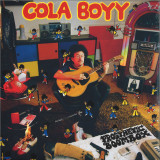
There’s liberation on the dance floor in the songs of Matthew Urango – glimpses of revolution that glimmer beneath the disco ball. “I want my music to bring people together,” says the Californian pop innovator, best known as Cola Boyy. “Because standing together is our best chance at fighting this shit show.” The shit show in question is a broken, brutal system the acclaimed multi-instrumentalist has witnessed up-close. Urango was born with spina bifida and scoliosis in Oxnard, California: a town in which almost 30,000 are estimated to live in poverty. Prosthetic Boombox, his eagerly awaited debut album, might at first glance seem a joyous confetti-burst of pop eclecticism, engineered to sound like “scanning between stations on a car radio, landing on all these different sounds and styles” as Urango puts it. Dig deeper, though, and you’ll discover a simmering sense of rebellion. “The working class are injured, struggling to pay rent and struggling to put food on the table,” he says. “I want to represent that.” Prosthetic Boombox
achieves that goal in a thrilling flurry of inventive indie, funk and soul: take Urango’s car radio analogy, place it in a time-travelling Delorean with Prince in the passenger seat, and you’re half-way there.
Look no closer than Prosthetic Boombox’s euphoric opener, the Avalanches-assisted ‘Don’t Forget Your Neighbourhood.’ The track – which Urango says mixes “the Beach Boys, French disco, house keys and ragtime piano, kinda like the Cheers soundtrack!” – ends with lyrics urging listeners to “fight for your town with your fist closed, strike it and make it more than just a memory.” It’s a reminder that the working classes need to “turn our fists against our oppressors instead of each other,” he explains. After that emphatic introduction comes a horn-laced funk wig-out titled ‘Mailbox’ – a song that gives Dua Lipa’s Future Nostalgia a run for its Studio 54-themed money, featuring rising Londoner JGrrey. Elsewhere, ‘Song for the Mister’ ventures into smooth R&B territory, before ‘Roses’ – a collaboration with Myd of Ed Banger fame – offers a bouquet of bustling disco guitars and infinite bisous of Connan Mockasin’s band drops in on the immaculate ‘Go the Mile’. Urango saves his most introspective moment for the album’s starry closer. ‘Kid Born in Space’, a cosmic collaboration with MGMT frontman Andrew VanWyngarden, sees the artist reflect on what he once had to overcome as a disabled person of colour. “I see them looking down on my dreams of being,” he sings tenderly. “I hear them making fun of my voice, but I keep on moving forward, I refuse to live in anyone else’s shadow.” Prosthetic Boombox, on this subject, is more than an album title – it’s a statement of intent.
“The message of my music is that our class is exploited, oppressed and murdered on the daily. That’s not right, and the system that enables that deserves to be wiped off the face of the earth,” he says. “The only way that happens is if we’re united. That’s the point of my music – to relate to people and unite them.” And what unites more than raucous, irresistibly danceable pop? Prosthetic Boombox is a riot of joyous grooves and catchy hooks for good reason. “I want to reach and spread my message to as many people as possible. You can’t do that if you’re some obscure motherfucker, you know?” he laughs. Don’t bet on him being an “obscure motherfucker” for long.
out of Stock
Last delivered 5 years ago available to reorder, subject to availability
Certain Sound Records are pleased to announce the release of the brand-new album from Montener The Menace – Anyone Home?
Anyone Home is the hotly anticipated follow-up to “I Have a Hidden Hobby” and is comprised of 14 superb tracks featuring an ensemble of legendary figures from both the US and UK Hip Hop scenes with appearances by Masta Ace, Rah Digga, Craig G, Keith Murray, Edo.G, Micall Parknsun, Cracker John, AG & Guilty Simpson to name just a few.
Production is handled by such heavyweights as Domingo, Roccwell, Keynotez and all cuts are provided by the legendary JabbaThaKut.
The album campaign was launched with the release of 3 excellent singles – High Noon, The Struggle and Take it Back all of which were met with extremely positive reviews from blogs and magazines alike, in addition to this acclaim the tracks have received airplay on a global scale via stations such as Shade45 and Itch FM.
Montener showcases his massive progression as an artist since his previous release with great confidence while still maintaining his trademark sense of humour that fans have come to love and adore. He demonstrates great diversity throughout by being able to touch on some difficult subjects such as suicide and mental health and parenthood as well as his more traditional upbeat content.
“Its gonna make a great impact on the scene, just what we need, when we need it most.” – Skinnyman
The third release from Fred Laird was recorded during the period June 2020 and January 2021 on 24trk home studio recording. It is also the first album recorded purely as a solo artist with the occasional guest and draws more from a roots style music (trad it isn’t) than previous more psychedelic releases.
‘Inspiration for the album came from listening to the self-recorded primal music of Hasil Adkins and the first solo Link Wray album for Polydor. The idea of these guys just doing what they wanted back of beyond seemed more akin to me sat in a box room during lockdown feeding off a diet of Billy Chong Kung Fu horror flicks, David Lynch, Noir crime movies, Jean Cocteau and the works of Yukio Mishima.
Musically the sound draws from early Bad Seeds or Crime and the City Solution, Gallon Drunk, Bohren and Der Club of Gore, The Cramps, Hasil Adkins and various other trash inspired twilight creatures. I also wanted to try and create that spooky organ sound that dominates the midnight movie classic ‘Carnival Of Souls’, so there’s quite a lot of organ and piano going on. I also got my hands on a baritone guitar to give the songs more of a deep growly twang!
Vocals are provided by Daisy Atkinson for the Jean Cocteau dedication ‘Orphee’ which is the nearest thing to a pop song on the album and the echoey almost Sister Lover’s sound of the title track. I got sick of my own shit voice and I just thought a female voice would give it a more fragile ethereal vibe.
Mike Blatchford provides formidable saxophone to the album’s last three tracks which were recorded on his mobile phone 300 miles away and synched into the music. The big blasted swing blues of ‘The Big Duvall’ is a dedication to Andy Duvall of Carlton Melton – a big guy who needed a big song. Who knows how big the song could have been in a proper studio. I could have dedicated it to John Wayne but Wayne couldn’t chop down trees with his bare hands like Andy can….’
"His desperate need for a torrent, a precipice, a railroad track - no matter what, but instantly - made him appeal for the very last time to the topography of his past. And when, in front of him, a grinding whine came from behind the hump of the side street, swelling to full growth when it had overcome the grade, distending the night, already illuminating the descent with two ovals of yellowish light, about to hurtle downward - then, as if it were a dance, as if the ripple of that dance had carried him to stage centre, under this growing, grinning, megathundering mass, his partner in a crashing cracovienne, this thundering iron thing, this instantaneous cinema of dismemberment - that's it, drag me under, tear at my frailty - I'm travelling flattened, on my smacked-down face - hey, you're spinning me, don't rip me to pieces - you're shredding me, I've had enough...Zigzag gymnastics of lightning, spectogram of a thunderbolt's split seconds - and the film of life had burst." One-time vinyl pressing (no digital). Recommended for fans of Werkbund, Main, General Elektro, Heith, Experimental Audio Research.
Phonophobia is a record that inspired thousands of dirty punks all over the world, and having the chance to re-release it is such a honour for us. I don't think we need to introduce this record and this band to any of the people who are reading these lines, but a few words are necessary to explain the value of this product. Phonophobia has originally been recorded and mixed at Southern Studios in London in August 1991. This version has been remixed and remastered by Dean Jones and Phil Vane with additional production at Springvale Studios in Ipswich in October 2009. The sonic assault is now more than ever ear damaging, so prepare your turntable and your eardrums for this final violent assault!
As one half of Red Axes, Dori Sadovnik could perhaps already stake a claim as one of the most prolific men in electronic music. A natural artist, Sadovnik is the sort of musician who never stops recording, a creator ahead of a consumer, well-adapted to a frenetic lifestyle.
This particular impulse has been funneled into a project known as Kapitan, an already expansive collection of tracks clocking in anywhere between 130 and 150 beats-per-minute.
As for a home, it just so happened that DJ Tennis, friend, collaborator and founder of Life and Death, was processing similar instincts, borne out of his love and association with the nineties heyday of IDM, pioneered by labels such as Warp and Rephlex.
“I don't really know what led me there but I had a feeling that I needed to be in the mountains”, explains Sadnovik. “I'm not a nature guy, nor do I feel particularly spiritual, but I was always struck by the harmony of it all. Everything is in the mix.”
This all-encompassing, blissful philosophy is deeply felt throughout this journey, a fluid blend of analogue and digital sounds rendered as organic as the landscape that inspires the album. Interlocking rhythms evolve into unexpected chamber pieces and bubbling acid lines blossom into rave psychedelia on opening tracks such as ‘Weird Day’ and ‘Flowers’, progressing to the sound of ‘Takak’, which inspires meditations on enormous bass weight, as mantras creep in from the surrounding forest of sound.
In the album’s second-half, this sincere sense of awe expands further still. Centrepiece tracks ‘In The Valley’ inspires a true sense of wonder and transcendence, complex rhythms blending with wide-eyed reverence. ‘Smile’ is trippy and innocent while ‘Elleven’ crackles with whispering energy over whiplash breakbeats. Concluding with ‘Heart’, Sadnovik reduces the pace to a stepping, heavy rhythm, commanding a deep sense of respect for the untamed wilderness that has served as such a unique muse.
out of Stock
Last delivered 5 years ago available to reorder, subject to availability
Grouplove announce surprise release of their fifth studio album, This Is This, featuring lead single “Deadline” - celebrated with a live performance of the single on CBS’ The Late Late Show with James Corden.
“We hope this album gives people the permission to fucking scream or headbang or punch walls,” says Grouplove. “It's important to stay emotional. The whole rainbow is important. If we just live in the light blues, are we really alive? I'm not. I need to feel it all.”
Following their GRAMMY-nominated album Healer, This Is This was produced by Grouplove and collaborator Ricardo Acasuso – with additional songs produced by Dave Sitek (Yeah Yeah Yeahs) and Malay (Frank Ocean). The album was written and recorded during the global pandemic, fueled by all the upheaval and hardship of the past year. Recording this album proved both cathartic and powerfully creative for Grouplove, the sound of five friends finally letting go of all the anxiety, sadness, and frustration they’ve all had to endure.
Grouplove is: Hannah Hooper, Christian Zucconi, Andrew Wessen, Daniel Gleason, and Benjamin Homola.
Above the Earth, Below the Sky is the first full-length studio album by American post-rock band If These Trees Could Talk. It was independently released on March 11, 2009 and then re-released by The Mylene Sheath on vinyl the following year. Metal Blade picked up the release in January 2015, and now due to significant demand. has again repressed for 2021 in all new colors. The album was recorded, mixed and mastered by Tim Gerak at Mammoth Cave Studio in Akron. The album was produced by Zack Kelly and Tim Gerak.
In view of the immense Black Lives Matter mobilisation in reaction to the murder of George Floyd and the comparatively meagre societal reaction to the attack in Hanau, the question arises: How come our society does not show the same empathy and solidarity towards its own fellow citizens with Kurdish, Turkish, Bulgarian, Bosnian, Afghan migrant backgrounds or members of the Roma and Sinti?
How limited is our postcolonial discourse if we are unable to address the racist exploitation of those who repair our cars, deliver our parcels or harvest our asparagus?
It’s all a sham. Shake it off like a biometric photograph. Shake off that false consciousness. The Black Diaspora is a transatlantic lie invented by music curators and journalists. Embrace this nuanced return to structures and superstructures, to articulations and historical constellations as analytical tools.
Allow me to dampen your expectations. This is not the sound of decolonisation. This is no compilation of BLM protest songs. This is no celebration of Black emancipatory struggles. You will not be able to play this at your hip post-pandemic house party. This will not go down well with your woke friends. This is music for the square in the room. For that reluctant BAME/Person of Color repelled by your fetishisation of the African-American experience.
This is music for gated communities. This is Fehler Kuti singing of class relations, not of identities and positionalities. This is Fehler Kuti resisting.
Listen to these songs of infrastructure and appraisal of the welfare state. Join me in mourning the broken promises of prosperity for all. Send that “Ausländer“ of your mind to heaven. Colonialism fucked you up. Platform Capitalism is keeping you in chains. Are we to unionise all human and non-human workers at Amazon? Will modernity always have that "forever nigger“? What about those dispossessed field hands harvesting your asparagus?
All is lost. The system is rigged. Because all histories, gestures and identities have been absorbed into this late capitalist apparatus we call diversity. It can integrate anything and anyone. It made me. It is the price of the ticket. And it is unable to challenge its own premise of an atomised society. As if you and I had so little in common.
They will try and help you. They will build a museum for your history and a scholarship program for your future. I warn you. Don‘t let them give you a name. Resist appellation. Don’t get that German passport. Don‘t eat asparagus.
Fehler Kuti, Spring 2021
All songs by Julian Warner. Produced by Markus Acher and Tobias Siegert.
recorded and mixed by Tobias Siegert at Minga Records, july – december 2020 mastered by Moritz Illner at Duophonic
Cover art and photography by Andreas Neumeister. Layout by Sascha Schwegeler.
Fehler Kuti “Professional People” is part of the same multiverse as “The History of the Federal Republic of Germany as told by Fehler Kuti und die Polizei”. A production by Julian Warner. In cooperation with Münchner Kammerspiele. Funded by the Department of Arts and Culture of the City of Munich. Released by Alien Transistor.
out of Stock
Last delivered 5 years ago available to reorder, subject to availability
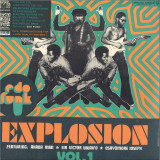
Analog Africa Presents Edo Funk Explosion Vol. 1, available on
2xLP/Gatefold LP with 20-page booklet / CD with 36-page booklet. It was
in Benin City, in the heart of Nigeria, that a new hybrid of intoxicating
highlife music known as Edo Funk was born.
It first emerged in the late 1970s when a group of musicians began to experiment with different ways of integrating elements from their native Edo culture
and fusing them with new sound effects coming from West Africa s night-clubs.
Unlike the rather polished 1980 s Nigerian disco productions coming out of the
international metropolis of Lagos Edo Funk was raw and reduced to its bare
minimum.
Someone was needed to channel this energy into a distinctive sound and Sir
Victor Uwaifo appeared like a mad professor with his Joromi studio. Uwaifo
took the skeletal structure of Edo music and relentless began fusing them with
synthesizers, electric guitars and 80 s effect racks which resulted in some of the
most outstanding Edo recordings ever made. An explosive spiced up brew with
an odd psychedelic note known as Edo Funk.
That’s the sound you’ll be discovering in the first volume of the Edo Funk Explosion series which focusses on the genre’s greatest originators; Osayomore
Joseph, Akaba Man, and Sir Victor Uwaifo: Osayomore Joseph was one of the
first musicians to bring the sound of the flute into the horn-dominated world
of highlife, and his skills as a performer made him a fixture on the Lagos scene.
When he returned to settle in Benin City in the mid 1970s - at the invitation of
the royal family - he devoted himself to the modernisation and electrification
of Edo music, using funk and Afro-beat as the building blocks for songs that
weren’t afraid to call out government corruption or confront the dark legacy of
Nigeria’s colonial past.
Akaba Man was the philosopher king of Edo funk. Less overtly political than Osayomore Joseph and less psychedelic than Victor Uwaifo, he found the perfect
medium for his message in the trance-like grooves of Edo funk. With pulsating
rhythms awash in cosmic synth-fields and lyrics that express a deep personal
vision, he found great success at the dawn of the 1980s as one of Benin City’s
most persuasive ambassadors of funky highlife.
Victor Uwaifo was already a star in Nigeria when he built the legendary Joromi
studios in his hometown of Benin City in 1978. Using his unique guitar style as
the mediating force between West-African highlife and the traditional rhythms
and melodies of Edo music, he had scored several hits in the early seventies,
but once he had his own sixteen-track facility he was able to pursue his obsession with the synesthetic possibilities of pure sound, adding squelchy synths,
swirling organs and studio effects to hypnotic basslines and raw grooves. Between his own records and his production for other musicians, he quickly established himself as the godfather of Edo funk.
What unites these diverse musicians is their ability to strip funk down to its
primal essence and use it as the foundation for their own excursions inward to
the heart of Edo culture and outward to the furthest limits of sonic alchemy.
The twelve tracks on Edo Funk Explosion Volume 1 pulse with raw inspiration,
mixing highlife horns, driving rhythms, day-glo keyboards and tripped-out guitars into a funk experience unlike any other.
out of Stock
Last delivered 5 years ago available to reorder, subject to availability
Blue Vinyl
Lynch protégé and Twin Peaks sound designer Dean Hurley coaxes an incredible puzzlebox of atmospheres and mood pieces on this killer contribution to our Documenting Sound series, now remastered and pressed on vinyl for what is, perhaps unsurprisingly, the most cinematic and neon-lit instalment in the series. Like a
smudged and overdubbed copy of the BoC Maxima tape, with added iridescence.
Across almost 40 minutes we transition from aerosolised synths to romantic chromatics, thru to Nurse WIth Wound-style severed rhythms and fading glimmers of hope, ‘Concrete Feather’ epitomises Dean Hurley’s prized knack for nuanced instrumental story-telling in the finest and most engrossing style we could imagine. Against the backdrop of the Hollywood film industry that has primed us for as long as we can all remember, the music spans a panorama of lush, mirage-like choral pads and starry flickers thru to gloaming
nightmare sequences and screwed drums, while touching on some of the dankest synth tones this side of his ‘Anthology Resource’ volumes or indeed his soundtrack work for Twin Peaks: The Return. It’s full of dread and a slowly unfolding sense of tragedy.
“Having a regular practice of recording is probably the single most important element to my craft. It’s a way of dropping indiscriminate mile markers while constantly moving forward in time without ability to pause.
Over the years, working for David Lynch taught me a great deal about this and the concept and importance of experimentation. I’ve found myself clinging to those lessons during this time and using them as tools for both productivity and balance. His notion of experimentation is a simple one, yet incredibly profound. It was one of the very first words I heard him say during our initial meeting, and I never stopped hearing the term daily over the subsequent 13 years working together. An ‘experiment’ can provide a legitimate mental back-entrance into the act of creation. It can position an approach toward discovery as opposed to effort, and eliminate the thought that one needs to ‘will’ something into existence. It also aids in calming the judgmental
side of a brain from stepping on/interfering with expression…after all, experiments are not about success or failure, they’re simply about learning. In the Lynch school of thought, multiple experiments then become firewood…and with firewood, one can not only build but actually sustain a fire…even turn it into a multipleacre blaze or more.
Dean Hurley
Vinyl kommt in blau, Klappcover und bedruckter Innenhülle! Die meisten Dinge im Leben entstehen zufällig. Die große Liebe, eine schicksalhafte Begegnung und manchmal auch eine zweite Karriere. Oliver Perau alias Juliano Rossi hätte 1996 sicherlich nicht damit gerechnet, dass er 2021 immer noch als Rossi unterwegs sein würde. Damals hatte sich gerade die alternative Rockband Terry Hoax, die Perau 1988 mit einem Freund gegründet hatte, nach acht europaweit erfolgreichen Jahren aufgelöst. Doch Perau wollte sein Versprechen, bei der ersten Ausstellung des befreundeten Fotografen Olaf Heine zu singen, halten. Also fragte er den Jazzpianisten Lutz Krajenski, ob man zusammen alte Swing-Klassiker präsentieren könnte. Schließlich war Perau seit frühster Kindheit begeistert von Sammy Davis jr., Dean Martin, Burt Bacharach, Barbra Streisand, Tom Jones und Frank Sinatra. So stand Perau im Sommer '96 mit dem eilig ironisch hinzugefügten Künstlername Juliano Rossi vor Galeriebesuchern und Terry-Hoax-Fans und sang entrückt What the world needs now von Bacharach. "So viele entsetzte Gesichter habe ich selten gesehen" sagt Perau lachend und ergänzt nach kurzer Pause "aber für mich war es wie eine Offenbarung". 25 Jahre später veröffentlicht Juliano Rossi sein fünftes Album, Terry Hoax gibt es auch wieder und zusätzlich tourt Perau seit 9 Jahren durch Pflegeheime und macht Musik für Menschen mit Demenz. Ein sehr ungewöhnliches und in dieser dreigleisigen Konsequenz sicherlich einzigartiges Sängerleben, dass offensichtlich glücklich macht. So jedenfalls wirkt Herr Rossi und sein neues Album "Drunk On Love". Aus der Zeit gefallene glamouröse Songs irgendwo zwischen The Doors, Burt Bacharach und Dean Martin.
With his ongoing commitment to like-minded archivist label Finders Keepers Records, industrial music pioneer Steven Stapleton further entrusts us to lift the veil and expose “the right tracks” from his uber-legendary and oft misinterpreted psych/prog/punk peculiarity shopping list known as The Nurse With Wound List.
Following the critically lauded first instalment and it’s exclusively French tracklisting both parties now combine their vinyl-vulturous penchants to bring you the next ‘Strain Crack & Break’ edition which consists of twelve lesser-known German records that played a hugely important part in the initial foundations of the list which began to unfold when Stapleton was just thirteen years old.
From the perspective of a schoolboy Amon Düül (ONE) victim, at the start of a journey that commenced before phrases like kosmische and the xeno-ignant Krautrock tag had become mag hack currency, this compendium is devoid of the tropes that united what many would accurately argue to be the greatest progressive pop bands in Europe
(namely CAN, Neu! and Kraftwerk) and rather shatters the ingredients across a ground zero landscape for both inquisitive fans and socially rehabbing musos to begin to assemble a unique self-styled identity. If Krautrock was the music that journalist told us lurked behind schlager (German pop) in the 1970s, then this record includes the music that skulked behind Krautrock and perhaps refused to polish its backhanded name belt.
Including lesser-known artists like the late Wolfgang Dauner, whose career proceeded and outlived the kosmische movement while consistently informing and outsmarting them whenever they got stuck in their metronomic ruts, or how about Fritz Müller, the man who
was to Kraftwerk what Stuart Sutcliffe was to The Beatles but had more in common with Yoko and quite rightly couldn’t give a stuff about the Fab Four’s Hamburg roots.
Elsewhere we have a plethora of German bands made for German audiences as they try and shed secondhand flower power Americanisms and feel the benefits of much harder drugs and the realisations of difficult second album budgets while Kommune 1
newsflashes wipe smiles from everybody’s faces and replace them with opioid chic or acid-sarcastic grins. Bonzo Cockettes show us their Big Muffs and drummers ask for extra mics while Conny Plank goes for parliamentary office and gives babies good firm handshakes for the camera.
‘Strain Crack & Break: Volume Two’ is the sound of Steve Stapleton’s sponge-like mind and the dividends of anyone who was brave enough to even peek inside those brick-thick gatefold covers never mind drop the needle.
Over forty years since Nurse With Wound’s first album was released, Finders Keepers Records and Steve Stapleton take connoisseurs of our kind of music back to the disused elevator shaft towards ground zero. Arriving at the same checkout from different departments, Finders Keepers and Nurse With Wound continue to sing from the same hymnal with this ongoing collaborative attempt to officially, authentically and legally compile the best tracks from Steve’s list, where many overzealous erds have faltered (or simply, got the wrong end of the stick).
After ‘Strain Crack & Break: Volume One’ merely scratched the surface of this DIY dossier of elongated punk-prog peculiarities, this second lavish metallic gatefold double vinyl compendium drives a much deeper groove which, in accordance with Steve’s wishes, focusses exclusively on individual tracks of German origin - the country whose music forged the prototype of the NWW inventory in the form of his secondary school vinyl wantlist in the early 1970s, comprised of disassembled free jazz, unshowered stoner psych, hypnotic prog, deranged monk funk and fuzzed out Deutschmark bin bonzo beats.
out of Stock
Last delivered 3 years ago available to reorder, subject to availability
Limited edition gold vinyl edition.
Hamburg's funk adventurers at the top of their game with special guests Ice-T, Charlie Funk, Peter Thomas, Gizelle Smith, Lee Fields, JSwiss & the Mocambo Kidz.
Original press release note (2019):
Carrying blistering funk lines in their fingers and worldly influences in their hearts, the unique and distinctive Mocambo sound is not one to be confused with retro bands trying to recapture an era. Eschewing traditional recording methods, this DIY crew are committed to driving forwards, and 2066 sees them at the height of their powers, broadcasting a call for unity.
After reaching new audiences worldwide and earning critical praise for their two long players on Brooklyn's Big Crown Records in their tropical guise as Bacao Rhythm & Steel Band, the band have reassembled and refocused in their original form, the workhorses behind dozens of 45s on the Mocambo label and beyond. Crossing generations, this album introduces some of the world's youngest funk talent to step up and rub shoulders with soul and rap legends, soul sisters, an elder statesman composer/arranger and a brand new emerging artist out of New York.
As with all Mocambo releases, the two sides of the record have been meticulously sequenced by the
band. Side A welcomes us aboard with joyous instrumental stomper Preaching To The Choir, and a call to build bridges from Mocambo chanteuse and percussionist Nichola Richards, duetting with emerging rap talent, New York MC JSwiss. B-girls and b-boys are called to the dancefloor as Superstrada and Concrete Stardust commence, all buzzing synth lines and relentless drums. New Jersey legend and Big Crown associate Mr Lee Fields is guest of honour for Where Do We Go From Here before a horn workout brings us to a close with Macumba. It's time for a breather.
The B side kicks off with the grand return of the Golden Girl of Funk, Gizelle Smith, a sister who's been busy taking on the world. Composer and presenter Peter Thomas narrates a Return To Space to mark the centenary of the debut of his score to sci-fi show Space Patrol, which first broadcast in 1966. We're back down to Earth and the mean streets for the furious drums and car chase workout of Golden Shadow. Today slows down the pace for a reflective ballad with Nichola front and centre - and here's the next generation: the Mocambo Kidz sing along to their parents' instrumentation for Here We Go, a new kids' block party anthem... with no sleep 'til bedtime. The album closer makes it clear that the Mocambos are nowhere near powering down as Ice T and Charlie F unk bring their A-game for an old school attack which, since you're up bouncing anyway, gives you no excuse not to flip the LP and drop the needle right back on to Side A. Onwards!
A summation of their journey so far and a celebration in anticipation of what's to come, the album is set
to take its place in a legacy of open minded, organically recorded music, showering listeners with the crew's maze of tantalising sounds pulled from funk, afro, hip hop with cinematic composition and storytelling.
out of Stock
Last delivered 4 years ago available to reorder, subject to availability
The Turbo Guidance quest keeps going on. Our musical roughnecks decided to seek help from a wizard. They needed to empower their earing sense and their dancing skills like mutant elves. Luckily the mighty Mali-I was living in the nearby forest and had something special to share...
In his hightower, it took Mali-I years to find and cook secretly the delicate mixture. It's forbidden to name the ingredients, but once you taste it you immediately feel the bouncy chords and dub delays rising. Play the mighty sound of the "Fallow Tales" and enter into the blue magic power. Full versatility to expand your mind and to reach a parallel astral plane. Exactly what our heroes need to face the coming storm. Next step is going to be darker...
*Sprinkle your ears with the red powder to increase the musical experience*
Vinyl sweetly pressed in 400 limited copies (no repress business) with a riso insert printed in two colors (blue and black) on a Munchen Pure Rough paper 150g/m2 (at Studio Fidele, Paris).
out of Stock
Last delivered 5 years ago available to reorder, subject to availability
Kojaque follows his critically acclaimed cult concept record, ‘Deli Daydreams’, with an
expansive, urgent debut album. In this landmark debut, Kojaque mines both his
emotional interior as an artist, and the external forces of a love triangle barrelling
towards chaos. ‘Town’s Dead’ is a mind-bending, explosive and expansive trip,
documenting a tumultuous love triangle that unfolds across New Year’s Eve in a
place where gentrification poses as much a threat as the violence of street dealers.
Sonically, the record smashes any previous expectations, stretching an aural palate
that leaps from rage to solace, from clattering musical combustions to tender
ruminations. The tremendous scope and scale of ‘Town’s Dead’ demonstrates an
artist utterly untethered to assumptions about what a particular voice or genre should
be, and instead explores radical musical territory. Dark corners of parks, bedrooms,
clubs, streets and psyches are excavated and pouring over the rubble is an artist
who refuses to conform, unafraid of the vulnerabilities that are exposed when the
voice rings true, because there’s just no point in being anything else.
Kojaque is part of a new wave of Irish artists flooding the world with blistering and
sophisticated literature, film and music - ideas and work that emerged from a social
revolution stonewalled by late-stage capitalism. Welcome to that state of mind, where
the path less travelled is the only one worth taking.
On the announcement of his debut album Kojaque has said: “‘Town’s Dead’ comes
from the potential that I see in Dublin and in the people I’m surrounded by day in and
day out. There’s nothing but talent and ambition among young people, I’m constantly
reminded of that through the art and music that I see being made but I think so often
the city grinds you down, it takes your hope and your ambition. I know that it can
change because so many of my friends express the exact same wants, desires and
frustrations with living in Ireland. If so many of us are on the same page then I know
that things can change, there just needs to be some sort of catalyst to kick start that
change and for me that’s always been art and music. Time and time again, amazing
art continues to be made in spite of the struggles and setbacks that are presented
when living here. The title track and the album is a fight against what can sometimes
feel inevitable, it’s a rejection of what people tell you is your destiny as a young
person in the city, Town’s NOT dead it’s just Dormant.”
CD housed in digisleeve containing 12-page lyric and photo booklet.
Black double vinyl housed in 5mm wide spine single sleeve with 12-page lyric and
photo booklet.
“Hints of Odd Future and its offspring... Kojaque is not your average rapper” - i-D
“Dublin’s hip-hop community are making waves right now... an intimate introduction
to the world this bold artist inhabits” - Clash
“Social realist rhymes set to silky hip-hop” - NME
“Likeable and funny” - Trench
“The Dublin MC forcing us to face real life; both the gory and the glory” - Wonderland
“Ireland’s freshest hip-hop hope, Kojaque, serves ‘soft hip hop’ with a side order of
poetry and performance art” - Notion
Transmeridian is the first album from Departure Lounge (ex-Bella Union) in 19 years. It features all four original members plus a guest appearance from legendary REM guitarist, Peter Buck, one of many long-standing admirers of a band that embodied a lost age of reflective, experimental pop music coming to the fore at the turn of the Millennium alongside The Beta Band, Tunng, Boards Of Canada and Gorky’s Zygotic Mynci.
The surprise new album, named after the defunct ‘golden age of aviation’ cargo airline for which singer/guitarist Tim Keegan’s dad was chief pilot, is released on Violette Records (formed by Michael Head (Shack, The Pale Fountains) and Matt Lockett ) on digital and vinyl formats on Fri 26 March 2021.
Originally scooped up by Simon Raymonde’s Bella Union label (labelmates with John Grant’s Czars) following the self-funded release of their debut album Out Of Here (1999), Departure Lounge’s sophomore outing, Too Late To Die Young (2002) was equally acclaimed and was honoured as the first ever Album Of The Week on the emergent BBC 6 Music. The band toured extensively in the UK, Europe and the US, including outings with The Go-Betweens, Morcheeba, Paul Heaton and Robyn Hitchcock, peers whose stylistic contrasts reflect the eclectic nature of Departure Lounge themselves.
Calling a halt in late 2002, citing family and geographical reasons (drummer Lindsay lives in Nashville, where their second album Jetlag Dreams (2001) was recorded), the four members remained firm friends and occasional collaborators, before reuniting in late 2019 for shows at The Green Door Store, Brighton and The Lexington, London, ostensibly to support the digital reissues of their first three cult-classic albums. With no plans other than to make some new music, the next day they set off for Middle Farm Studios, Devon.
Tim Keegan (vocals/guitar), Chris Anderson (lead guitars/keyboards/bass), Lindsay Jamieson(drums/keyboards) and Jake Kyle (bass/guitar/drums) channelled their evident joy at being back together into a complete 13-track album, largely conceived and recorded in just one 24-hour session in the company of studio owner and co-producer, Peter Miles. Ranging from soulful Americana to piano and mellotron-fuelled melancholia via pastoral musings on the nature of post-youth and eerie Spaghetti Western-tinged instrumentals, the next leg on the Departure Lounge journey is a multi-mood expression of pure artistic freedom.
The ‘leak’ of instrumental track Al Aire Libre (remixed by Parisian groovemeister Kid Loco) in October 2020 gave little away as to what fans could expect from a new Departure Lounge record, the track going gracefully everywhere and nowhere on a whistled Latino breeze. First single proper, Mercury In Retrograde, covered in the twinkling lights of a music box Casio CZ101 melody, turned the clock back - this was an old live favourite that never got past the studio door. Unfinished business brought to a happy conclusion, the single returned Keegan’s honest and distinctive lyrical voice back to British music at just the time listeners needed it.
It was an emotional thread, rather than one musical style, which gave the first three Departure Lounge albums their coherence. The songs told the story of the band. Transmeridian has the same sense of deeply connected musical energy. The purring, campfire acoustica of Timber and So Long bear no obvious resemblance to the ethereal, end-of-the-evening, piano-led interlude Paging Marco Polo, whilst the quasi-glam stomp of Mr Friendly would normally have no business sharing space with the strange, spacey Gurnard Pines (named after an abandoned holiday camp on the Isle Of Wight). Yet the journey’s ebb and flow, accelerations and pauses make for compelling, grown-up listening. Australia, showcasing the chiming Rickenbacker 12-string of Athens, GA’s finest guitar slinger, leaves no doubt that Departure Lounge’s pop sensibilities also remain solidly intact.
These four friends from different musical backgrounds came together originally with the stated aim of ‘creating music to soothe the troubled soul’. Citing their love of (and placing on record their debt to) influences including Robert Wyatt, Nick Drake, Talk Talk, Lou Reed, Arvo Pärt and Cocteau Twins, the band’s diversity of taste is reflected in the music they create.
Transmeridian is only the second full-length LP released by Violette Records, formed by Michael Head (Shack, The Pale Fountains) and Matt Lockett as a platform for Head’s work and developing into a respected independent label as well as multi-disciplinary event organiser, drawing in outsiders working in music, literature, art and design. The label continues to host live events whenever possible and recently initiated an ELP (halfway between and EP and an LP) vinyl series, putting out acclaimed releases by The Pistachio Kid and Studio Electrophonique.
out of Stock
Last delivered 5 years ago available to reorder, subject to availability
The mysterious Black Fan is back again! After his recent 7“ with Greymatter, he goes bigger this time and releases a proper 4-track 12“. We know that Black Fan has already released on respected labels like Wolf Music and Local Talk. We also know that he loves vintage analog studio gear as much as we love his old school touched tunes. But we don’t know what „RVBD“ means. And what’s with „tiger fisted“? Maybe we will find out! In the meantime enjoy this proper old school release.
out of Stock
Last delivered 5 years ago available to reorder, subject to availability
Documented during peak isolation times in Los Angeles, between December 2020 and January 2021. These pieces were performed as Live AV pieces from 2017-2019, at Coaxial Arts, Zebulon and Desert Daze 2019, but not documented in a release until later. Signal processing and sequencing frameworks built in Max 8 with signals generated from Prophet '08, a broken AW16G, 0-coast, Max, and a MC-909. With the context of the electromagnetic medium, the absence of live performance and moving visuals and the new "spirit" of the pestilent times, "Cutting Them All Off" should barely be represented as reworks of the originally performed pieces. What was once pulsing and blasting out of PA speakers live is now referenced as a distant past document. These pieces (for better or for worse) have been removed and cut-off from their contextual source and can only be presented in their displaced/liberated state. Like a fish out of water gasping for air, or the only drunk survivor of a car crash that was his fault.
Christopher Reid Martin started Rotary ECT in 2016. The project focuses on highly active signal processes on synchronized Audio -> Visual signals, with many signals being constructed to self-generate. Much like a rotary machine's rotation, the process is consistent and signalled when turned on. Much like electroconvulsive therapy, a human need to be there to actively monitor and attend to the process and generation of the signals being emitted.
Christopher currently works for Cycling '74, is a curatorial/programmer at Coaxial Arts Foundation and ⅓ of curators (alongside J.Prey and J. Rivera) behind the ephemeral stream Cathode TV/Cathode Cinema. Christopher continues to show gallery works, both virtual and physical, digital and video works and performs in other numerous events and projects such as Bailouts, CGRSM (with Gabie Strong), Shelter Death, Gate (with Michael Morley) and Via Injection. He has performed and collaborated with artists Joseph Hammer, Bryce Loy (RIP), Tetuzi Akiyama, Christopher Thompson, James Roemer, Andrew Scott, Gabie Strong, Michael Morley, Lev Abramov and many others.
Question everything. Consider your sources. Be wary of ulterior motives, insidious media narratives and even your own unconscious bias. Trust sparingly and try to make smart, informed choices. As the world slides further into ruin, it’s more important than ever to be vigilant and fight back. Luckily, Hacktivist are back to help cut through the noise and bullshit, tooled-up and ready to attack with renewed vigour and reinforced ranks. With Jot Maxi and J. Hurley now sharing the vocal and lyrical load, drummer Rich Hawking and bassist Josh Gurner bringing the beats and rhythms, and guitarist and production don James Hewitt fleshing out the group’s genre-fluid muscle, new album Hyperdialect arrives less like a mission statement and more as a flaming musical Molotov, declaring all-out war. “Hyperdialect isn’t an album for people to just casually listen to,” J insists, “we’ve taken things to the next level, which I didn’t even think was possible. We spit the truth. *We are the truth.*” In 2016, when Hacktivist initially set sights on their enemies with debut album Outside The Box, the world wasn’t fully equipped to heed their warnings and pay attention to its timely rallying cries. They return into a very different one, however – a world that’s sadly now all-too-finely-attuned to the horrors they first forecasted four years ago. “It’s becoming clear that we are on the brink of some type of revolution,” says Jot, with no small dose of conviction or optimism. “Hacktivist are here to bring truth and positivity – the silver lining of a society clouded in poisonous fear. Hacktivist also represents a voice that isn’t afraid of saying what needs to be said. We’re already living in the future. We have the choice to either be shaped by it or to stand up and shape it ourselves. Which path will you take?” It was with those battle lines clearly drawn and ambitions duly set that Hacktivist entered into the creation of Hyperdialect. Starting almost two years ago and developing on the acerbic sonic filth introduced by 2019 singles Reprogram and Dogs Of War, the five-piece felt fired up by their new working dynamic and the collective process involved, with each member actively encouraged to contribute ideas until the best outcome was reached. Unusually, for such a group of bloody-minded insurrectionists, this democratic approach worked wonders – a testament to how much they were all on the same page on these 12 tracks.
French House legend - Boston Bun (Ed Banger / Circa ‘99) is set to release his debut album - ‘There’s A Nightclub Inside My Head’ this coming April. Containing 8 unreleased tracks, ‘Whenever You’re Ready’ and the Annie Mac favourite ‘Nobody But You’, the album conceptualised during last year's lockdown & provides an introspective space for the producer and his listeners to enjoy.
‘Sometimes it’s great to take a break, sometimes it’s not. If you were on planet Earth during the year of 2020, you know what I’m talking about. I took that time to visit the nightclub inside my head. The last one open, actually. The booth, the sound system, the stairs, the bar, the smell, the noise of my left shoe on the sticky floor, everything was exactly how I left it. It got me a bit emotional to be honest, so I started thinking about the right soundtrack that could fit in that space. And here it is. I hope you’ll enjoy the night.’ - Boston Bun
‘There’s A Nightclub Inside My Head’ is for everyone, anyone who needs a moment to reflect, dance or simply be present with themselves. A chance to be transported to your own secure space, to interpret and visualise the music however you wish.
out of Stock
Last delivered 4 years ago available to reorder, subject to availability