UK-Singer-Songwriter Conchúr White kündigt sein Debütalbum “Swirling Violets” an, das über Bella Union erscheint.
Der aus der Grafschaft Armagh stammende Act bewegt sich auf seinem Debütalbum auf den elf Songs zwischen Dream-Pop und Folk, die allesamt Sehnsucht, tragische Romanzen und merkwürdige Parallelwelten zum Thema machen. Das intime, facettenreiche Debüt ist an einigen Stellen mitunter sogar unheimlich und doch sofort zugänglich und berührend.
Zur Ankündigung hat Conchúr White die Single “I Did Good Today” veröffentlicht. Die verträumten Melodien lösen sich voller Sehnsucht in einem emotionalen Refrain auf, der teils zwanghaftes Bekenntnis, teils Plädoyer ist. “I Did Good Today is a song about craving validation but understanding that such approval can come at the expense of honesty or integrity. Musically I reference the likes of Midlake, Aldous Harding and Bleachers.”
“Water Tiger” is the debut album from oqbqbo & Scandinavian Star, compiling their previously released singles with 3 new songs. In 2020 the couple released their first collaborative work, the double single “Airdrops / Coercion” just as the the first wave of Covid lockdowns set in action across Europe and the rest of the world. The music offered a kind and compassionate stance to the turmoil that swept across the world in those months. Later that year the single “Wakening” was released on Rift One, a compilation by Year0001. In 2022 they returned with another double single “Dandelions / Sleep Lines”. “Water Tiger” compiles all those with 3 new songs; Free Fall, Colibri and Water Tiger. oqbqbo is the moniker of Russian born artist Nastya Sipulina. Scandinavian Star is Malthe Fischer, producer and part of pop outfit Lust For Youth. They live together in Copenhagen, Amager with their daughter Freja Rei. Together they make uplifting and bubbly dance music that inhabits its own world whilst playfully referencing both euro dance and contemporary club music. The LP version comes on white vinyl, housed in a white, stickered disco sleeve, with hand-stamped and numbered white labels, a fold around two-sided color cover and an obistrip. ltd to 300 copies
out of Stock
Last delivered 2 years ago available to reorder, subject to availability
SOURCED FROM THE ORIGINAL MASTER TAPES: 2LP SET PRESENTS 1991 ALBUM IN 45RPM SPEED FOR FIRST TIME.
PCM Digital Master to Analog Console to Lathe.
Dire Straits never made a big to-do about its final run. In classic understated British fashion, the band simply let its music speak for itself. And how. Originally released in September 1991, On Every Street became the group’s swan song – a lasting testament to the influence, musicianship, and integrity of an ensemble whose merit has never been tainted by cash-grab reunions or farewell treks. It remains an essential part of the Dire Straits catalog and a blueprint of the distinctive U.K. roots rock the collective played for its 15-year career.
Sourced from the original master tapes, housed in gatefold packaging, and pressed at RTI, Mobile Fidelity’s 180g 45RPM 2LP set of On Every Street presents the album like it has always been meant to be experienced: in reference-grade audiophile sound. Recorded at AIR Studios in London and produced by Dire Straits leader Mark Knopfler, it features all of the band’s sonic hallmarks – wide instrumental separation, visceral textures, seemingly limitless air, broad soundstages, atmospherics that you can almost reach out and feel. Each element is made more vibrant, physical, and lifelike on this collectible reissue, which marks the first time this 60-minute work has been available at 45RPM speed.
Afforded generous groove space and black backgrounds, the songs from On Every Street burst with nuanced details and vibrant colors. Dire Straits’ playing appears to float, their intricate performances organized amid hypnotic, fluid, three-dimensional arrangements. Mobile Fidelity’s definitive-sounding set also brings into transparent view Knopfler’s finely sculpted guitar lines, expressive tones, and laid-back vocals – as well as the balanced accompaniment from his band mates. Here’s a record on which you can hear the full blossom and decay of individual notes, and imagine the size and shape of the studio. It is in every regard a demonstration disc. And it happens to be filled with timeless fare.
Remarkably, On Every Street almost never came to light. Dire Straits initially dissolved in September 1988 after touring behind its blockbuster Brothers in Arms and suffering the departure of two members. At the time, Knopfler professed his desire to work on solo material; bassist John Illsley also explored side projects. But Knopfler’s decision in 1989 to form the country-leaning Notting Hillbillies reignited a spark to reconvene his primary band and craft a fresh batch of songs. Six years removed from Brothers in Arms, Knopfler, Illsley, keyboardist Alan Clark, and keyboardist Guy Fletcher teamed with A-list session pros – steel guitarist Paul Franklin, percussionist Danny Cummings, saxophonist Chris White, guitarist Phil Palmer included – to create what still stands as an unforgettable farewell.
The platinum record brings the band full circle in that it returns Dire Straits to a quartet formation; finds the group refreshingly out of step with the era’s prevailing trends; and sees Knopfler and Co. knocking out song after song with the deceptive ease of a punter tossing back a pint at a pub. That subtle cool, clever poise, and innate control – signature traits that no other band ever matched – dominate On Every Street. Knopfler’s clean, virtuosic six-string escapades unfurl with dizzying melodicism and economical efficiency. Led by his winding fills and focused solos, Dire Straits traverse a hybrid landscape of rock, jazz, country, boogie, blues, and pop strains with near-faultless prowess.
More than any other entry in the group’s oeuvre, On Every Street welcomes quick detours down back alleys and into the depths of human souls. What makes it more brilliant is its staunch refusal to cater to commercial expectations or take advantage of prior successes; every passage feels true, every measure echoed in the service of song. It’s evident in the humorous satire of “Heavy Fuel,” closeted desperation of the witty “Calling Elvis,” and shake-and-bake bounce of “The Bug.” It pours from the album’s darker corners, as on the high-and-lonesome melancholy of the title track and bruised emotionalism of “When It Comes to You.”
Hinting at the open-minded approaches and boundless curiosity he’d embrace as a solo artist, Knopfler doesn’t limit himself when it comes to style or subject matter. Look no further than “You and Your Friend,” a shuffle whose all-inclusive lyrics encourage an array of interpretative meanings. Another of the album’s deep cuts, “Iron Hand,” comes on as one of the band’s most memorable moments – the narrative addressing the abuses of power at the 1984 Battle of Orgreave during the U.K. miners’ strike. Given cinematic heft by the expert production, the true-fiction account puts into perspective the richness, poetry, and depth of On Every Street.
“Every victory has a taste that’s bittersweet,” sings Knopfler on the title track. At least that bittersweetness seldom sounded so damn good on record.
Van Halen did more than announce to the world the earthshaking arrival of a revolutionary guitarist. Performed by an enterprising California quartet that took its name from two of its principal members, the 1978 debut ripped headlines away from punk, injected fresh energy into a then-moribund rock 'n' roll scene, reimagined how heavy music and throwback pop could coexist, and invited everyone to experience the top-down pleasures of a beach-front Saturday night every day of the week no matter where they lived. Painstakingly restored by Mobile Fidelity Sound Lab, and the first of a multi-album series in an exciting partnership between the famous reissue label and Van Halen, Van Halen delivers feel-good thrills and hormonally charged desires like never before.
Limited to 12,000 numbered copies, pressed on dead-quiet MoFi SuperVinyl at RTI, and mastered from the original analogue master tapes, Mobile Fidelity's ultra-hi-fi UltraDisc One-Step 180g 45RPM 2LP collector's edition pays tribute to the record's merit and allows fans to experience Van Halen's original blend of raw power, Hollywood flair, and vaudeville fun for generations to come. Playing with reference-setting sonics that elevate a 10-times-platinum landmark whose importance cannot be quantitatively measured, this definitive version provides a clear, clean, transparent, balanced, and turn-the-volume-up-to-11 view of an album that birthed entirely new styles. Since MoFi's unique SuperVinyl compound allows you to crank the decibels to your wildest desires without risking noise-floor interference, prepare to not only hear but feel Van Halen in your chest, no fifth-row concert seat necessary.
The premium packaging and gorgeous presentation of the UD1S Van Halen pressing befit its extremely select status. Housed in a deluxe box, it features special foil-stamped jackets and faithful-to-the-original graphics that illuminate the splendor of the recording. No expense has been spared. Aurally and visually, this UD1S reissue exists as a curatorial artefact meant to be preserved, touched, and examined. It is made for discerning listeners that prize sound quality and production, and who desire to fully immerse themselves in the art – and everything involved with the album, from the iconic cover art to the meticulous finishes and, yes, of course, Eddie Van Halen's pioneering fretwork and his brother Alex's double-bass percussion.
Indeed, could a piece of music that transformed how countless guitarists approached their instrument be more fittingly named than "Eruption"? Likely not, and in just 102 seconds, Eddie Van Halen rewrote, reimagined, and reconfigured a vocabulary last significantly updated a decade earlier by fellow six-string wizard Jimi Hendrix. Akin to the Washington State legend, Eddie Van Halen developed his own techniques and tones all the while making his seismic accomplishments seem effortless. Devoid of the pretence, ego, and showiness that infected many of his imitators, the Dutch native sticks to a straightforward approach that underlines the authority, prowess, and visionary scope of his playing and then-unheard-of finger-tapping skills. Throughout Van Halen, he establishes himself as an instant idol – a savant whose otherworldly combination of breadth, poise, feel, speed, force, and melody seems beamed in from another galaxy.
As does nearly every song on the record, whose cohesiveness and dynamic put into perspective the advanced chemistry and one-for-all spirit the youthful band had out of the gates. Having paid its dues for years in bars and clubs – going as far as recording a 24-track demo for Kiss bassist Gene Simmons at Village Recorders only to be spurned by management companies that felt its music wouldn't go anywhere – Van Halen finally got a deserved break when Warner Bros. executives signed the group in 1977. The subsequent recording sessions further testify on behalf of the band's synergy and alignment. Completed in just a few weeks with producer Ted Templeman, Van Halen was primarily cut live in the studio with minimal overdubs and edits. The explosiveness, energy, and electricity remain definitive, and as heard on this UD1S set, put the group on a private stage – humming amplifiers, Frankenstrat guitar, bright spotlights, sweaty headbands, and then some.
Van Halen yielded just one hit in the form of a Top 40 single (a breathless cover of the Kinks' "You Really Got Me") but practically every song on the revered LP has become a staple. Named the 202nd Greatest Album of All Time by Rolling Stone and considered by countless experts as one of the best debuts in history, the record displays what can happen with four distinct talents gel and strive for the same purposes. In Van Halen's case, the latter almost always involved partying, freedom, sex, and, in the immortal words of singer David Lee Roth, living "life like there's no tomorrow." The celebration manifests from the opening notes of the strutting "Runnin' with the Devil" – announced with the blare of droning car horns, Michael Anthony's robust bass line, and Alex Van Halen's thumping drumming – and continues through the conclusion of the white-hot "On Fire," goosed by Eddie Van Halen's race-track-ready lines, Roth's flamboyant deliveries, and the rhythm section's cat-like pounce.
Picking out individual highlights on Van Halen is akin to trying to count all the stars in a clear nighttime desert sky: There are far too many to identify, once you see one you notice another dozen you didn't spot before, and the cluster is best enjoyed as a whole. What's evident over repeat listens is the sheer diversity, a fact that's often overlooked: The high harmonies and background funk of "Jamie's Cryin'"; the insistent cane-and-a-tophat shuffle and doo-wop shoo-bop vocal break on "I'm the One"; the throwback acoustic blues that spreads into fast-paced, single-entendre wildfire on the Roth-led standout interpretation of John Brim's "Ice Cream Man." Like the man says, on Van Halen, all the flavours are guaranteed to satisfy.
More About Mobile Fidelity UltraDisc One-Step and Why It Is Superior
Instead of utilizing the industry-standard three-step lacquer process, Mobile Fidelity Sound Lab's new UltraDisc One-Step (UD1S) uses only one step, bypassing two processes of generational loss. While three-step processing is designed for optimum yield and efficiency, UD1S is created for the ultimate in sound quality. Just as Mobile Fidelity pioneered the UHQR (Ultra High-Quality Record) with JVC in the 1980s, UD1S again represents another state-of-the-art advance in the record-manufacturing process. MFSL engineers begin with the original master recordings, painstakingly transfer them to DSD 256, and meticulously cut a set of lacquers. These lacquers are used to create a very fragile, pristine UD1S stamper called a "convert." Delicate "converts" are then formed into the actual record stampers, producing a final product that literally and figuratively brings you closer to the music. By skipping the additional steps of pulling another positive and an additional negative, as done in the three-step process used in standard pressings, UD1S produces a final LP with the lowest noise floor possible today. The removal of the additional two steps of generational loss in the plating process reveals tremendous amounts of extra musical detail and dynamics, which are otherwise lost due to the standard copying process. Every conceivable aspect of vinyl production is optimized to produce the most perfect record album available today.
MoFi SuperVinyl
Developed by NEOTECH and RTI, MoFi SuperVinyl is the most exacting-to-specification vinyl compound ever devised. Analogue lovers have never seen (or heard) anything like it. Extraordinarily expensive and extremely painstaking to produce, the special proprietary compound addresses two specific areas of improvement: noise floor reduction and enhanced groove definition. The vinyl composition features a new carbonless dye (hold the disc up to the light and see) and produces the world's quietest surfaces. This high-definition formula also allows for the creation of cleaner grooves that are indistinguishable from the original lacquer. MoFi SuperVinyl provides the closest approximation of what the label's engineers hear in the mastering lab.
Referred to as "one of Reggae's quietest superstars" Jackie Mitto aka "The Keyboard King" had a remarkable path in Reggae music, a protege of Sly Stone, he started his career as part of Studio One's in house recording band and later went on to work with artists such as Bob Marley, UB40, Barry White, Peter Tosh and Oscar Peterson. This album was the result of a rare occasion of being on tour in Africa and establishing musical connections with musicians from Ghana, recorded in Accra and mixed in London. Predominantly instrumental, this album is essential to any dub conscientious record collection, as it culminates the career of a Reggae legend whilst under new influences in West Africa resulting in an unmistakably characteristic modern dub sound. Re-issued on vinyl with remixes previously only availably on CD format.
out of Stock
Last delivered 2 years ago available to reorder, subject to availability
The 12 track album was written and produced since the turn of 2013 and mixed with Erol Alkan at 'The Phantasy Sound', the label's own studio in London.
A difficult trick to master but like Carl Craig's 'More Songs About Food And Revolutionary Art', Plastikman's 'Consumed' or more recently the work of Four Tet, the album works as a cohesive whole rather than a disparate collection of tracks. Innovative and forward thinking, Drone Logic manages to draw influences from beyond the dancefloor via My Bloody Valentine, NEU! and Chris Carter while still having the techno pulse to scale the walls of any club. The wide array of plaudits and early adopters of Avery's music is proof of this, ranging from acid house legends like The Chemical Brothers, Andrew Weatherall and Richie Hawtin to the best of the new breed in Maya Jane Coles, James Holden and Factory Floor.
out of Stock
Last delivered 20 months ago available to reorder, subject to availability
Tempo Records presents another new sublabel; TempoDubs; focussing on Techno, House and Electro. First up is the legendary Techno producer: Orlando Voorn; he's is one of the first European musicians to establish an active link with Detroit, and since the end of the 80s has proven himself as one of the most original and versatile producers of electronic music.
Dutch-Detroit producer Orlando Voorn numerous pseudonyms such as Basic Bastard, Frequency, Fix, Baruka, Balance and his Detroit Ignitor Records release as Tank with the cult Electro classic "Bite Before You Bark" track, which might be his most well known production so far.
On this release you will find the Orlando Voorn's re-fix of "Bite Before You Bark", a track with a well crafted stripped down "Detroit Electro" version. Furthermore this versatile release shows Orlando Voorn's diversity in genre's such as Electro, Techno and yes even a quality Drum and Bass / Jungle track called "So Far So Good".
This beautiful crafted LIMITED EDITION crystal clear vinyl 12" comes in a new designed Tempo Records "Logo" high quality "Kraft" outer sleeve + a white innersleeve.
All tracks mastered by Stuart Hawkes of Metropolis Mastering, London.
out of Stock
Last delivered 2 years ago available to reorder, subject to availability
The first-ever LP box set gathering the entire 10 albums collection of Obscure Records produced by Brian Eno’s.
Curated by Gavin Bryars
Originally issued between 1975 and 1978, nearly 50 years on the output of Obscure remains radically forward-thinking - offering glimpses of a future yet to be fully seen - and amounts to one of the most important, influential, and creatively accomplished album series ever conceived.
Co-curated by Eno and the composers Gavin Bryars and Michael Nyman - issuing the recording debuts of Bryars, Nyman, John Adams, Christopher Hobbs, David Toop, Max Eastley, Jan Steele, Simon Jeffes / The Penguin Café Orchestra, and Harold Budd, in addition to important works by John Cage, Tom Phillips, and John White - Obscure’s collective output is a groundbreaking landmark in the histories of Minimalism, modern composition, and Experimental music, and laid much of the groundwork for the soon to emerge movement of Ambient music.
Illuminating the remarkable, and largely otherwise undocumented, creative ferment within and between the British and American scenes of experimental music during the mid to late 1970s, this collection - made in full collaboration with all of the composers or their estates - contains the entire 10 album output of Obscure, the majority of which have been out of print for years, with a number having never received a CD reissue.
Offering each of Obscure’s albums, completely remastered and housed in faithful replicas of their original covers and liner notes, as well as a 80-page book (LP dimension) for LP-BOX SET, filled with rare photos, archival material and texts by - among others - Gavin Bryars, Bradford Bailey, David Toop, Max Eastley, Richard Bernas, and Tom Recchion, this historic collection marks the first time this seminal series has received a complete LP repress.
mule musiq welcomes british producer jimmy wallace, presenting his debut album “red, yellow, black” - a nine track strong record that partly leaves the dancefloor behind.
since childhood, music has been a strong influence on the 33-year-old artist. his mother, a music teacher, exposed him to classical sounds from an early age.
but it was hearing the electronic tones of the french touch movement, which really ignited his mu-sical journey. a year later he started to dj, acting out his love for four-to-the-floor grooves in local clubs. today you'll find him on the bill with artists like ruf dug, mr scruff, or bradley zero, heating up the dance floors.
as a producer he has already released a handful of stunning eps, including one for sweden’s finest house label studio barnhus, and one for london’s revered rhythm section international imprint.
both feature house tunes with an edge, house tunes with a love for the roots of the genre along-side more reflective, ambient moments. he also runs the label tartan records, where he publishes dancefloor focused white labels.
his music has been championed by titans of the scene such as palms trax, ryan elliott, dj tennis, gilles peterson, dixon, and hunee. axel boman even coined his debut ep as “one of the very best demo emails ever received at label studio barhnus hq”.
an advance praise, that wallace now acknowledges with an album full of deeply crafted music. some tracks lean towards the dancefloor, like the swung sounds of “bubbles”, the hypnotic mael-strom of “good morning”, or the epic, jazzy moments of “labyrinth”.
the theme of nature is evident throughout, with field recordings and environmental sounds he rec-orded on the road, being fused with his own musical ideas.
tracks like “waterfall” and “tokyo street”, draw influence on time spent in asia, whereas "dhq", "by the river", and "by the lake" are inspired by his childhood and hometown in the shropshire country-side. “i’ve been writing ambient and more nature focused material for a few years now without really having a plan for it.
finally, this year after writing the tune “labyrinth” i felt i had a body of work which was both diverse and cohesive enough to bring together on a record. so, the album represents moments of time i have spent in various outdoor spaces around the world, using sound to try and turn these experi-ences into musical format.” wallace discloses.
the result is a mesmerizing long player featuring an evocative, emotional story arc that avoids ste-reotypes and straight party orientated narration. “having written plenty of club music for the past few years, i wanted to show a different side to my sound.
something more intimate, private, experimental which can be listened to away from the party.” he reveals on the meditative, blissful “red, yellow, black” - an album, which has the power to transport listeners to places and spaces new – for inspiration, relaxation, and dancefloor moments off the beaten path
out of Stock
Last delivered 10 months ago available to reorder, subject to availability
Wenn kurz vor dem Ende einer Tour die Stimme des Sängers versagt, würden die meisten Musiker wohl abbrechen. Jack White bat auf der letzten Raconteurs-Tour lieber The Kills-Sängerin Alison Mosshart, für ihn einzuspringen. Diese provisorische Lösung kann heute mit Fug und Recht als die Geburtsstunde der First-Indie-All-Star-Super-Group The Dead Weather gesehen werden. Eigentlich wollten Jack und Alison gemeinsam mit Raconteurs-Bassist Jack Lawrence und Queens of the Stoneage-Gitarrist Dean Fertita nur eine gemeinsame Single aufnehmen. Nach nur drei Wochen war daraus ein ganzes Album geworden. Die elf Songs auf Horehound bieten mehr als nur die Summe der verschiedenen Bandmitglieder. Völlig ohne Zwang spielt jeder von ihnen das, wonach ihm ist. Hart, aggressiv, schmutzig und sexy trifft die Musik auf Alisons unterkühlte Stimme und Jack White hat endlich wieder die Gelegenheit genutzt, sich ans Schlagzeug zu setzen.
Experience the captivating soundscape from one of 2023’s biggest blockbusters on the Spider-Man: Across the Spider-Verse (Original Score) vinyl. The sequel to 2019’s Oscar-award winning Spider-Man: Into the Spider-Verse broke the global box-office on release, and the critically acclaimed, viral hit-making score is now available on vinyl and CD for the first time.
Academy Award, Golden Globe and BAFTA-nominated composer Daniel Pemberton returns to expand upon the Spider-Verse’s iconic, multi-versal soundscape with a genre-defying score that seamlessly combines a 100-piece orchestra with DJ scratching, operatic vocals, techno beats, punk rock, acid-house-inspired Indian percussion, soaring synth solos, and even…a prominently sampled goose. From the Gwen Stacy’s fan favorite motif to Spider-Man 2099’s internet-breaking theme music, the film and its intricately-woven score is sure to transport you into some wildly unexpected parallel dimensions.
This double vinyl release comes pressed on two white and dark purple marbled LPs, featuring highlights from the score hand-selected by Daniel Pemberton. The package includes a stunning soft-touch gatefold jacket with spot gloss, a double-sided collectable poster and two printed sleeves with custom art – plus, an 8-page art booklet featuring liner notes from Daniel Pemberton and art from the film.
Kacy & Clayton first met Jeff Tweedy in the backroom of the Fillmore Auditorium in San Francisco in September 2016. The band had been invited to open for Wilco on night 4 of their annual 5-night run. While waiting for their soundcheck, Jeff appeared through a curtain backstage and introduced himself. In the conversations that followed, Kacy Anderson, Clayton Linthicum and Jeff Tweedy discussed their mutual appreciation of Davy Graham and Jeff’s understanding of Saskatchewan’s geography. Those conversations would eventually blossom into an invite to stop by Wilco’s studio, the Loft, a visit they made only weeks later. In January 2017, Kacy & Clayton returned to the Loft with a rhythm section and a batch of new songs. Over the course of 8 days, the band recorded 9 songs with Jeff Tweedy producing and Loft house engineer Tom Schick at the helm. These 9 songs are what would become the band’s fourth album, The Siren’s Song. While writing and recording The Siren's Song, Kacy & Clayton found inspiration in the music of Sammi Smith, The Everly Brothers, Link Wray's chicken shack LPs, country records with harpsichords, The Sir Douglas Quintet, Gene Clark, Jeannie C. Riley, as well as British traditional singers like Peter Bellamy and the Watersons. The Siren's Song is a product of these influences and an extraordinary progression in the band's own sound.
Born in Roma in 1959, Guiseppe “Peps” Cotumaccio arrived in South Africa when he was two years old. He was the mastermind behind the band “Sweet Reaction”, singing and playing keyboards.
In the early 80’s, the group used to back various artists including one of the South African top singer “Neville Nash”. Both artists were on the same record label: Music Team. Throughout his lengthy career, Peps has collaborated with Johnny Clegg, Ronnie Joyce, Sipho "Hotstix" Mabuse, P.J. Powers, Mark Alex, Neville Nash, and Mara Louw just to name a few.
The lead singer of the band, Dion Williamson, started performing in Johannesburg’s nightclubs and got quickly very successful, always in demand! People loved his gravel and sensual voice as he used to sing some of Joe Cocker’s popular songs. Unfortunately, during the Apartheid, the South African Government were not allowing black and white audiences, and the band split.
On this BIG5 Boogie#2, Enoch Ndlela produced 2 Modern Soul killer tracks.
Recorded in 1981, "Take it easy", where the music is evidently influenced by Willie Hutch (Easy does it - 1978) offers Dion a way to fully explain himself doing his own version of the tune. And what an explosive result!
On the same side of this 12”, our 2 Frenchies in Cape Town aka Simbad & Fred Spider enjoyed delivering us a fat broken beat version of the track, while the very “En Vogue” Aroop Roy from London turned it into a funky house summer hit.
Side B starts with a superb composition from the band: “African Sunrise” where Dion Williamson is on top, this tune is a bomb!
To finish this E.P, the well-known Kid Fonque from Johannesburg, who freshly moved to London working for the glorious house record label Defected, couldn’t wait to produce a super groove deep house refix. The result is a second essential dancefloor release from Voom Voom Records!
out of Stock
Last delivered 6 months ago available to reorder, subject to availability
With a voice of pure gold and a startling sensitivity for heartfelt pop songwriting, on No Reino Dos Afetos (In the Realm of Affections), Berle firmly embraces earnestness, through starry-eyed Brazilian love songs, ambient vignettes, warm, home-cooked beats and gentle strokes of MPB genius.
Maceió, the capital of Brazil’s Alagoas state on its sprawling east-coast, is home to pastel coloured colonial houses, white sand beaches and a brilliant young composer, poet and multi-instrumentalist named Bruno Berle.
With a voice of pure gold and a startling sensitivity for heartfelt pop songwriting, on No Reino Dos Afetos (In the Realm of Affections), Berle firmly embraces earnestness, through starry-eyed Brazilian love songs, ambient vignettes, warm, home-cooked beats and gentle strokes of MPB genius.
“It’s an album that was built from my desire to find beauty”, Berle explains - his simple, graceful words mirroring the graceful simplicity in his music. But amongst the simplicity, the compositions, arrangements and productions on No Reino Dos Afetos tingle with nuance and detail.
On the contemporary R&B inspired lead single “Quero Dizer” - produced by Berle and longtime friend and collaborator Batata Boy - the swirling, lo-fi, kalimba and guitar-fronted beat is turned into a feel-good hit by the ingenuity of Berle’s honey-soaked vocal melody.
Powerfully intimate, “O Nome Do Meu Amor” (My Love’s Name) is a guaranteed tearjerker, with Berle’s stunning voice soaring over gently plucked acoustic guitar and the textural flutter of soft movement, as if we hear him writing the song in the moment.
Drawing upon a close-knit, collaborative scene of Maceió artists and musicians, (of which Berle and Batata Boy are vital members), Berle also recorded some of his friends songs on the album, including João Menezes’ “Até Meu Violao”, the album’s beautifully laid back sunshine soul opener, which has all the charm of early-70s João Donato.
Having cut his teeth in soft-rock group Troco em Bala, and more recently finding himself embedded in both Rio and Sao Paulo’s contemporary music scenes - collaborating with the likes of Ana Frango Eletrico, who took the photo for the album cover - No Reino Dos Afetos is as musically diverse as Bruno himself. It’s hazy indie rock (“É Preciso Ter Amor”), calming ambient and field recording (“Virginia Talk”) as well as Berle’s own take on West African High Life (“Som Nyame”).
Instantly recognisable as a truly special artist, Berle’s character fills every corner of the sound, which is unsurprising considering he played most of the instruments.
Flora Yin Wong’s ravishing interiority finds lucid expression on an absorbing second album for Modern Love, manifesting her instrumental storytelling in a syncretic bind of supernatural themes with hyperrealist, concrète sound design.
Through ten parts, Flora crystallises the ennui that followed an uncanny, disorienting trip to East and Southeast Asia. “On an unexpected stopover in Hong Kong after five years away, my friends took me to a Bazi reader one night - something I was curious about, but much of a ritual for them - ” Flora recalls. “My father told me that when I was born, he had obtained an auspicious reading that since stayed like a guiding talisman with me. It was almost past midnight but people were still lined up, rather shaken and visibly upset, to see the old man. He had kind eyes and asked me why I was there and I said I was at a crossroads. He asked me my time and date of birth, and told me to pick one of his four little white canary birds as a vessel for divination.”
This was the final stretch of an ultimately aimless few months across the continent, including a 20 year overdue return with her father to his adoptive family in his hometown Kuala Lumpur - for many reasons, ended up as a strange and uncanny trip. She spent solitude in a haunted house during the quiet snowfall of Kyoto, where she might have offended some spirit... and nights in mountain temples with South Korean monks, and an equally strange feeling return to the Island of the Gods.
“It culminated in what felt like a final disillusionment with Asia - sudden deaths and a breakdown in beliefs - somewhere I never really have or will be able to connect with. The process of the reading summoned a final blow to my gut - an overwhelming sense of rootlessness, and understanding that all there is is emptiness and entropy. No birth-divined protection, just a measurement of the night sky based off nothing and everything.”
Heavy with a sense of nightmarish dissociation and grief, Flora read about Giuseppe Tartini’s ‘Violin Sonata in G Minor’, aka the Devil’s Trill Sonata, a notoriously tricky c.18th composition which attempted to transcribe music heard in a dream, which the composer felt he could never fully bring into reality. It’s this soporific motif that binds and underpins ’Cold Reading’, finding Flora chasing the dragon of fleeting fantasy through passages of etched melancholy, pinched with hypnagogic jerks that linger in the memory.
From her use of the ‘Devil’s Trill’ Sonata in ‘All My Dreams are Nightmares’ through evocations of subtropical humidity in the Bryn Jones-esque, resonant hand-played percussion of ‘Konna’ and ‘Banjar’, to a breathtaking dreampop denouement ‘Nectar Dripping’ and the Enya-like lush of ‘Beautiful Crisis’, Flora blooms her ideas with an openended ambiguity so often missing from so called Ambient music, ushering the listener into a soundworld that disturbs and displaces, just as much as it calms.
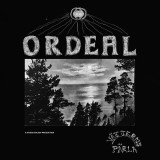
As an important agent of Gothenburg’s underground scene, Dan Johansson has been a member of several experimental harsh noise projects such as Sewer Election, and lo-fi indie folk bands like Enhet För Fri Musik and Amateur Hour. Ordeal is his latest solo output, and might as well be ashes stuck in the blast furnace's edges of his last longing career. Not by means of summing up genres or as a culmination of his musical development, but as a profound music piece weaved in his own household.
With not much more than a synthesizer, Vätterns Pärla is built by trembling, dissonant drones stained in feedback and reverberation, thickly textured by the no-fi quality of the recording, depicting a menacing atmosphere congested with heavy fumes. In Johansson's words, Ordeal "takes inspiration from the early 80’s albums of Maurizio Bianchi, filtered through a Gothenburgian no-fi bleakness. It’s an album for inner voyage, childhood memories, and places that now lost purpose and meaning”.
There's certainly intimacy and nostalgia, yet a claustrophobic, hypnotic ambiance wraps it all up in a contained and narrow space. Emphasis is put on texture rather than on detail, on color rather than on progression, on suspense rather than on conclusion. Tension varies stiffly, sometimes a drone layer dismantles and the mood seems to filter, but ragged edges are never polished. We can feel the walls and the air, which although tarnished, can be breathed in somehow. It's as if waking up in a dark room and having to recognize it with our ears and tact, testing its dimensions and its surface. The stillness in the chamber is like the stillness between gasps of storms.
Without visible stars, an enclosed share of night sky hides a heavy load of industrial debris underwater. These remnants are maybe the pearl regarding the album's title. It all can seem like a dream, a grim mechanical soundscape deafened by hefty, yet sporadic winds. Soil strives to make something grow, but sprouting is kept suspended, held by a dismal presentiment. Long shadows on the ground prove that darkness is about to befall. And as these shadows stretch, almost about to break up in a loud strike, the noise turns white.
The words "Wolde Senayet" are scrawled in silver ink across a black-and-white image of Peter Tosh on the cover of Best Of 1978 - 1987. these words are an honorific Rastafarian title meaning "Son of Thunder", which does this collection justice. The 14-track compilation is seamless in their quality and are more than representative of Tosh's vision - one that has been adopted and reworked in all sorts of reggae subgenres since his death.
Listen to classics like "Bush Doctor," "Mystic Man," "Oh Bumbo Klaat," "The Day the Dollar Die," and ofcourse the single version of "(You Gotta Walk And) Don't Look Back" with Rolling Stones frontman Mick Jagger.
Best Of 1978 - 1987 is available on vinyl for the first time as a limited edition of 2000 individually numbered copies on silver coloured vinyl. This 2LP is housed in a gatefold sleeve, including a 4-page photo booklet.
American blues musician Buddy Guy is an exponent of Chicago blues and influenced many prominent guitarists, including Jimi Hendrix, Jimmy Page (Led Zeppelin), Eric Clapton, and John Mayer. His 1998 album Heavy Love is one of his fine blues-rock records. Besides two songs of his own material, he covered classics including Willie Dixon “I Just Want to Make Love to You", Tony Joe White "Did Somebody Make a Fool Out of You", ZZ Top "I Need You Tonight". It is heavier compared to many of his other recordings, but he still finds his way back to the blues.
Heavy Love is available as a 25th anniversary edition of 1500 individually numbered copies on pink & purple marbled vinyl, housed in a gatefold sleeve.
It's the one you've been searching for....new white label action from Klasse Wrecks in the form of BOY1. The boy-wonder behind the music is none other than Seoul's favourite soulful son, Mogwaa. It's dubbed out pianos, forget-me-not vocal hooks and classic breaky House with a sprinkle of acid to sweeten the pot.
out of Stock
Last delivered 3 months ago available to reorder, subject to availability
Serge Devant returns to Crosstown Rebels with his mesmerising new single ‘A Little Bit Of Love’, complete with a remix from Art Department & MDL Child. Thanks to his fresh house sound, New York resident Serge Devant has turned the heads of tastemakers like Jamie Jones and Damian Lazarus for several years. A regular on Crosstown Rebels dating back to his label debut in 2015, dropping a string of EPs on the label since, he arrives in fine form once again as he unveils his latest single.
His brilliant ‘A Little Bit Of Love’ is an inventive rhythm that soon sweeps you up with its wavy beats and slick hits. Gorgeous chords are draped over it next to steamy vocals to ensure a truly emotive dance floor trip, while the dub version strips out the lead vocal to lay the focus on the remaining musical elements. The remix comes from Jonny White, aka pioneering underground artist and No. 19 Music boss Art Department, and fellow Canadian talent MDL Child. They flip the production into seven minutes of emotionally intense house music with muted acid lines undulating throughout the mix, while immense percussive energy and lush cosmic keys make for a fulsome dancefloor rush.
out of Stock
Last delivered 7 months ago available to reorder, subject to availability
Errare Humanum Est comes from the Latin proverb "To err is human" as a musician and a human-being, you are constantly facing "mistakes" on your compositional work and your instrumental interpretation, Felipe Gordon presents his second conceptual album under this premise, you should accept and make mistakes as a crucial part of art and life. During late 2022 and beginning of 2023, the musician and producer worked on a new long play in his home studio "El Dorado" in Bogot?, Colombia. Trying to create a whole new concept and universe he re-visited some forgotten musical sketches, going from breakbeats, synthesis, boom bap, deep acid and house music Felipe presents us his new album, a melting pot of musical ideas, again not trying to achieve a club track filled long play but a whole listening experience, not focusing only on dancing matters but also on every day musical enjoyment. With the forward-thinking distribution and collaboration from the Rotterdam based power house, Clone Records and looking for a way to create a more independent environment for his releases, Felipe is creating his own "Wide Awake", a new record label focused only on sharing and creating a platform for his constant output. As in "A Landscape Onomatopeya" (Felipe's first LP) Primer Ocaso took over the editorial design on their talented hands, creating an amazing Gatefold 2X12'' - 140 Gr Solid White Album edition
out of Stock
Last delivered 23 months ago available to reorder, subject to availability
In 1996, she kicked off her notable career with "Heads Carolina, Tails California," a single that immediately made her a household name.
Following the success of her debut, Jo Dee posted nine No. 1 hits and sixteen Top 40 songs and has been recognized by the ACM Awards, CMA Awards and GRAMMY Awards. As Jo Dee's resume grew, she proved to be a trendsetter and history-maker, becoming the first female in country music history to celebrate three consecutive multi week, charttopping songs.
Jo Dee Messina has amassed quite a number of hits, including five chart-toppers.
All of them are here on this chart busting collection, highlighted by the opening track "Heads Carolina, Tails California" and followed by the double platinum tunes "Bye- Bye" and "I'm Alright" as well as the chart topper "Bring On The Rain" with fellow label mate Tim McGraw. Jo Dee Messina's hits appear on vinyl for the first time ever in a spectacular splattered blue and orange on white vinyl
Woods are in bloom again, inviting you to disappear into a new spectrum of colors and sounds and dreams on Perennial. Formed in Brooklyn in 2004, Woods have matured into a true independent institution, above and below the root, reliably emerging every few years with new music that grows towards the latest sky. Operating the Woodsist label since 2006 and curating the beloved homespun Woodsist Festival for the musical universe they’ve built, Perennial is the sound of a band on the edge of their 20th anniversary and still finding bold new ways to sound like (and challenge) themselves. Perennial grew from a bed of guitar/keyboard/drum loops by Woods head-in-chief Jeremy Earl, a form of winter night meditation that evolved into an unexplored mode of collaborative songwriting. With Earl’s starting points, he and bandmates Jarvis Taveniere and John Andrews convened, first at Earl’s house in New York, then at Panoramic House studio in Stinson Beach, California, site of sessions for 2020’s Strange To Explain. With a view of the sparkling Pacific and tape rolling, they began to build, jamming over the loops, switching instruments, and developing a few dozen building blocks. The album’s resulting 11 songs, 4 of them instrumental, are in the classic Woods mode--shimmering, familiar, fractionally unsettling--but with the half-invisible infinity boxes of Earl’s loops burbling beneath each like a mysterious underground source. From source to seed to bloom, each loop unfolds into something unpredictable, from the jeweled pop of the aching “Little Black Flowers” to the ecstatic starlit freak-beat of “Another Side.” They are blossomings both far-out and comforting, like the Mellotronic cloud-hopping of “Between the Past,” or sometimes just plain comforting, like the widescreen snowglobe fantasia of the instrumental “White Winter Melody,” touched by Connor Gallaher’s pedal steel. Woods have long used the studio as a place of songwriting, naming 2007’s At Rear House after their shared dwelling and recording space. But Perennial also carries with it an even longer view of Woods. Emerging from the process alongside the music was Earl’s reflection that “perennial plants and flowers are nature’s loops,” an idea rolling under the album’s lyrics like the loops themselves. It certainly applies to the band, too, who have quietly tended to a long, committed project of being a band in the weird-ass 21st century, both individually and communally. Though separated by coasts, the communal sprit carries through Earl, Taveniere, and Andrews’ collaboration, a living embodiment of the freedoms rediscovered every time a new collectively created piece of music emerges. For nearly two decades, Woods have survived subgenres, anchored in the fertile soil below hashtags like lo-fi and freak-folk and psychedelic and indie, and built a shared history that’s something to marvel at. As the flagship band for Woodsist, they’ve accumulated a striking extended family of collaborators (and Woods alum) that have made the label one of the most dependable imprints in the kaleidoscopic low-key underground. It’s a glow that’s transferred whole to the blissed-out Woodsist Fests held in Accord, New York in recent years, which have folded in a wide range of diverse sounds, from the the jazz cosmoverse of the Sun Ra Arkestra and adventurous legends Yo La Tengo, to a hard-to-even-count family tree of contemporaries, like Kevin Morby (who served a few tours of duty as Woods bassist) and Kurt Vile (who released his 2009 debut on Woodsist), a living community in sound. Perennial carries all of this, shaped by decades, but made in the moment, and here right now. The smell of the flowers doesn’t remain, but sometimes the flowers do. Jesse Jarnow Recorded and mixed by Jarvis Taveniere at Panoramic House in Stinson Beach, CA with additional recording at The Ship in Los Angeles, CA and Cottekill Bird Sanctuary in Stone Ridge, NY. Produced by Jarvis Taveniere and Jeremy Earl. Mastered by Timothy Stollenwerk at Stereophonic Mastering in Portland, OR. Jeremy Earl - vocals, guitars, drums, percussion, sk-5, mellotron, vibraphone, autoharp, loops Jarvis Taveniere - guitar, bass, upright bass, hammond, vocals John Andrews - piano, organs, mellotron, drums, vocals Connor Gallaher - Pedal Steel Kyle Forester - sax, wurlitzer
Woods are in bloom again, inviting you to disappear into a new spectrum of colors and sounds and dreams on Perennial. Formed in Brooklyn in 2004, Woods have matured into a true independent institution, above and below the root, reliably emerging every few years with new music that grows towards the latest sky. Operating the Woodsist label since 2006 and curating the beloved homespun Woodsist Festival for the musical universe they’ve built, Perennial is the sound of a band on the edge of their 20th anniversary and still finding bold new ways to sound like (and challenge) themselves. Perennial grew from a bed of guitar/keyboard/drum loops by Woods head-in-chief Jeremy Earl, a form of winter night meditation that evolved into an unexplored mode of collaborative songwriting. With Earl’s starting points, he and bandmates Jarvis Taveniere and John Andrews convened, first at Earl’s house in New York, then at Panoramic House studio in Stinson Beach, California, site of sessions for 2020’s Strange To Explain. With a view of the sparkling Pacific and tape rolling, they began to build, jamming over the loops, switching instruments, and developing a few dozen building blocks. The album’s resulting 11 songs, 4 of them instrumental, are in the classic Woods mode--shimmering, familiar, fractionally unsettling--but with the half-invisible infinity boxes of Earl’s loops burbling beneath each like a mysterious underground source. From source to seed to bloom, each loop unfolds into something unpredictable, from the jeweled pop of the aching “Little Black Flowers” to the ecstatic starlit freak-beat of “Another Side.” They are blossomings both far-out and comforting, like the Mellotronic cloud-hopping of “Between the Past,” or sometimes just plain comforting, like the widescreen snowglobe fantasia of the instrumental “White Winter Melody,” touched by Connor Gallaher’s pedal steel. Woods have long used the studio as a place of songwriting, naming 2007’s At Rear House after their shared dwelling and recording space. But Perennial also carries with it an even longer view of Woods. Emerging from the process alongside the music was Earl’s reflection that “perennial plants and flowers are nature’s loops,” an idea rolling under the album’s lyrics like the loops themselves. It certainly applies to the band, too, who have quietly tended to a long, committed project of being a band in the weird-ass 21st century, both individually and communally. Though separated by coasts, the communal sprit carries through Earl, Taveniere, and Andrews’ collaboration, a living embodiment of the freedoms rediscovered every time a new collectively created piece of music emerges. For nearly two decades, Woods have survived subgenres, anchored in the fertile soil below hashtags like lo-fi and freak-folk and psychedelic and indie, and built a shared history that’s something to marvel at. As the flagship band for Woodsist, they’ve accumulated a striking extended family of collaborators (and Woods alum) that have made the label one of the most dependable imprints in the kaleidoscopic low-key underground. It’s a glow that’s transferred whole to the blissed-out Woodsist Fests held in Accord, New York in recent years, which have folded in a wide range of diverse sounds, from the the jazz cosmoverse of the Sun Ra Arkestra and adventurous legends Yo La Tengo, to a hard-to-even-count family tree of contemporaries, like Kevin Morby (who served a few tours of duty as Woods bassist) and Kurt Vile (who released his 2009 debut on Woodsist), a living community in sound. Perennial carries all of this, shaped by decades, but made in the moment, and here right now. The smell of the flowers doesn’t remain, but sometimes the flowers do. Jesse Jarnow Recorded and mixed by Jarvis Taveniere at Panoramic House in Stinson Beach, CA with additional recording at The Ship in Los Angeles, CA and Cottekill Bird Sanctuary in Stone Ridge, NY. Produced by Jarvis Taveniere and Jeremy Earl. Mastered by Timothy Stollenwerk at Stereophonic Mastering in Portland, OR. Jeremy Earl - vocals, guitars, drums, percussion, sk-5, mellotron, vibraphone, autoharp, loops Jarvis Taveniere - guitar, bass, upright bass, hammond, vocals John Andrews - piano, organs, mellotron, drums, vocals Connor Gallaher - Pedal Steel Kyle Forester - sax, wurlitzer
Fortunea Records continues its release schedule of 2023 with the 4th edition of their VA-series ‚Fortunea Cookies‘ to highlight the status quo in Austrian house music.
A band that is generating buzz in this country right now is Spitting Ibex. Their music is a mixture of funk and heavy rock, in the style of Red Hot Chili Peppers, Prince and Rage Against The Machine. Currently they are touring with their brand-new album ‚E.G.O.‘ through Europe and Peletronic had the honor to remix the title-track of their
previous record ‚Love Hate Fear Fate‘. In this ‚Disko Miks’ he transforms the song into a driving house weapon.
In 2021 Nick Hanzo released his ‚Candy Places‘ EP. And on this record was a memorable abstract lo-fi house track called ‚Saturn Nate’ that gets on FC4 a treatment by Klaus Benedek. In this new version he accelerates the speed and focuses even more on the aspect of space travel with the addition of sound fx, pads, pianos and a Italo disco-inspired baseline.
Of course this release has not only remixes of previous tracks, but also 2 originals!
The B-side features Dzc. again with her ‚Expressions‘ of night culture. Caution! This will catapult the crowd up to new heights. An energetic peak-time tune that delves deep into 90s house and trance sonic images.
And finally Markus Quittner returns from Linz and brought his ‚Game‘ to the table. A board full of bouncing dices, strong drum patterns and funky orchestrations. A pleasure for the ears.
Fortunea Cookies Vol. 4 will come out this summer on white limited vinyl. Don’t sleep on this!
out of Stock
Last delivered 18 months ago available to reorder, subject to availability
"One Sunday afternoon in 1990, I had a phone call from Keith saying that Sarah Records had received the demo cassette the two of us had recorded on a 4-track in a friend's shed and were interested in putting out two of the songs as a single. T
hey were Clearer and Alison. Delighted by this news, we booked some recording time with a studio we'd regularly used in our previous incarnation as Feverfew, the White House in Weston-super-Mare.
This was the first time we'd ever played a note of music that was using someone else's money, so the pressure was being felt. We recorded Clearer, Fearon and Chelsea Guitar, with Clearer becoming Sarah 55, the first of eight singles for the band across two labels. At that time, we were still toying with a name for ourselves and had settled with the Art Bunnies.
While driving us back home from Weston, though, I declared that I really couldn't see how people would take us seriously with a name like that. Disappointed, Keith (Girdler) then got out a piece of paper upon which he'd written several other contenders. These included Opal Trumpet, the Smiling Monarchs and (thankfully) Blueboy."
A Colourful Storm presents Blueboy's singles collection and the band's final retrospective release. Beautiful gatefold sleeve designed by Sarah Records' own Matt Haynes with original artwork insert, postcard and liner notes by Paul Stewart.
out of Stock
Last delivered 3 years ago available to reorder, subject to availability
Next Pressing on White Vinyl, single LP w/ printed inner sleeve + lyric insert and Download card. The Armed return with their first new album in over three years and Sargent House debut, ULTRAPOP. The album reaches the same extremities of sonic expression as the furthest depths of metal, noise, and otherwise "heavy" counterculture music subgenres but finds its foundation firmly in pop music and pop culture. As is always The Armed's mission, it seeks only to create the most intense experience possible, a magnification of all culture, beauty, and things. The band goes on to explain, "crafting vital art means presenting the audience with new and intriguing tensions-sonically, visually, conceptually. Over time and through use, those tensions become less novel and effective-and they become expectations. The concept of "subgenre" becomes almost the antithesis of vitality in art-itself a fetishization of expectation. ULTRAPOP seeks, in earnest, to create a truly new listener experience. It is an open rebellion against the culture of expectation in "heavy" music. It is a joyous, genderless, post-nihilist, anti-punk, razor-focused take on creating the most intense listener experience possible. It's the harshest, most beautiful, most hideous thing we could make." ULTRAPOP follows their recent contribution to the Cyberpunk 2077 soundtrack "Night City Aliens" and 2018's critically acclaimed album Only Love, which landed on 'Album of the Year' lists from The Atlantic, Pitchfork, Rolling Stone, Vice, Stereogum, and many more. The album was co-produced by the band's own Dan Greene in collaboration with Ben Chisholm (Chelsea Wolfe) and features contributions from Mark Lanegan, Troy Van Leeuwen (Queens of the Stone Age, A Perfect Circle), Ben Koller (Converge, Killer Be Killed, Mutoid Man) and many more. Kurt Ballou (Converge, High on Fire, Russian Circles) remains at the helm as executive producer.
Long Island Sound follow up their acclaimed debut album and accompanying remix EP with Don’t Let Me / Air a limited white label release featuring 2 brand new dancefloor-certified anthems that signal a new era for the duo in both style and effect, while certifying them as masters of their house domain.
The Dublin-based duo of Rob Roche and Tim Nolan have made impressive strides as Long Island Sound for close to a decade now, honing their swooning dance craft via beloved EPs on their Signs Of Space imprint while becoming mainstays of their island’s club and festival circuit thanks to multiple acclaimed DJ sets.
Last year, they reached an impressive feat that few Irish dance acts have before them by releasing their debut album Lost Connection.
A 7-track opus that fused dynamic electronic sounds with contemporary styles of house, techno, and breaks, it signalled an exhilarating new direction for the duo that showcased their exceptional artistry in melody and production and subsequently earned them great acclaim.
An accompanying 5 track remix EP followed this year, featuring quality club reworks of various album cuts from producers Cromby, James Shinra, Mor Elian, and Benjamin Damage.
Signing off on that notable era, the duo moves swiftly on with this limited 2 track white label of unadulterated festival-ready house epics that have been highlights of their sets over the past year.
Don’t Let Me glides along a chromatic world of lasered synths, pitched diva croons and shuffling pistons before a breathtaking swell of cinematic rave harmonics reaches a magnificent combustible peak that’ll have you gasping for Air.
The flip cracks the window open, dialling down the frenzy with a magnificent swooning melody sits on top of a growling Reese bassline and mechanized 2-step beat where a romantic ambience grows.
Limited stock. First come first served!
DJ Support:
Pete Tong Radio One Support 21.07.2023
Tim Sweeney supports 'Don't Let Me' on his Beats in Space podcast on Apple Music
John Digweed supports 'Air' on his recent Compiled and Mixed podcast for Apple Music
Jenny Greene 2FM Ireland supports 'Don't Let Me'
Long Island Sound Guest Mix on Jenny's 'The Greene Room' on 2fm Ireland
out of Stock
Last delivered 20 months ago available to reorder, subject to availability
A historic collaboration by two of jazz music's greatest artists on 180g Double LP Set! Impex Records' deluxe production captures the amazing outdoor acoustics with fine detail and wide dynamic range. The beautiful gatefold jacket is coated in a vintage high-gloss lacquer.
The White House Sessions, Live 1962 contains inspired performances of classic tunes "Take Five", "Castilian Blues", "Lullaby of Birdland", and "I Left My Heart In San Francisco".
"Bennett's vocals are particularly natural and present-sounding... Brubeck's group in its prime, with Paul Desmond on Alto, Eugene Wright on bass and Joe Morello on drums... Bennett/Brubeck is nonetheless a record I found myself playing more times than I expected to before sitting down to write this. There's something about a live performance from a time when life was so much simpler, even if more jittery and dangerous because of the cold war, that makes you want to go back in time and enjoy it all again."
This two LP set is beautifully re-mastered and the original artwork has been carefully replicated.
Two remarkable visionaries at the peak of their powers, Dave Brubeck and his quartet and Tony Bennett (both with his group and with Bennett with trio) give hot performances of some of their biggest hits: Brubeck's revved up "Take Five," and Tony Bennett's soulful "I Left My Heart in San Francisco."
Playing the popular White House Sessions concert on the Washington Mall for President John F. Kennedy, these titans of popular jazz have a great time informing, joking and playing the lights out. You'll want to play the grooves out of Impex's impeccably produced issue of this lost treasure. Quiet surfaces, incredible dynamics, full frequency responses and deluxe packaging will provide years of listening and viewing pleasure.
Julian Cannonball Adderley's only Blue Note album, Somethin' Else, would likely forever be famous in music lore if just for the presence of Miles Davis. The iconic composer/trumpeter steps into the role of sideman on the 1958 set, one of just a handful of times he'd make such a move after the calendar passed the mid-1950s. Yet evaluating Somethin' Else strictly on Davis' involvement misses the big picture. Plain and simple, Adderley's jubilant work remains a jazz landmark due to the chemistry of its Hall of Fame personnel, enthusiasm of its participants, and sophistication of its arrangements – not to mention the reference-grade production and inclusion of the definitive renditions of two all-time jazz standards.
Limited to 6,000 numbered copies, pressed on dead-quiet MoFi SuperVinyl at RTI, and mastered from the original master tapes, Mobile Fidelity's ultra-hi-fi UltraDisc One-Step 180g 45RPM 2LP collector's edition pays tribute to the record's merit and includes the bonus track "Allison's Uncle." Offering reference-calibre sonics, this spectacular collector's version provides a clear, transparent, ultra-dynamic, and up-close view of a cornerstone effort that witnesses Adderley and Davis sharing horn duty alone for the only time in their fabled careers – an arrangement that occurred as a result of Adderley having joined Davis' majestic sextet a year prior.
The premium packaging and beautiful presentation of the UD1S Somethin' Else pressing befit its extremely select status. Housed in a deluxe slipcase, it features special foil-stamped jackets and faithful-to-the-original graphics that illuminate the splendour of the recording. No expense has been spared. Aurally and visually, this UD1S reissue exists as a curatorial artefact meant to be preserved, touched, and examined. It is made for discerning listeners that prize sound quality and production, and who desire to fully immerse themselves in the art – and everything involved with the album, from the iconic photos to the gorgeous finishes.
The vibrant potency reveals itself openly on an analogue set that provides full-range reproduction of an ensemble that also includes pianist Hank Jones, bassist Sam Jones, and drummer Art Blakey. Each and every snare hit, downbeat, and cymbal splash registered by the latter take on realistic proportions, blooming and decaying as they would right in front of you on a stage. Jones' foundational bass lines register with uncommon depth and palpability, the litheness of the strings and fullness of the instrument epitomizing the definition of rhythm. Stellar, too, are the surefooted 88s. Sublime in scale, tonality, and attack, with the delineation such you can practically separate the white and black keys in your mind. As for that liquid interplay between Adderley and Davis? Breathtakingly lifelike in timbre, naturalism, purity, and presence. This collector's version takes you there – there being Rudy Van Gelder's legendary New Jersey studio in March 1958 to witness it all unfold, again and again.
For reasons that extend far beyond the outstanding playing and flawless repertoire, Somethin' Else is without question a record you'll always want to watch and hear come together. As veteran critic Bob Blumenthal observed writing about the album four decades after its release, "The instant rapport achieved by the quintet is thus the product of much shared and common history, though the tensile strength that they create throughout created a totally unique feeling that can be attributed to the sensitive musicianship of all concerned, including the supposedly hard bopping leader and drummer." Such inimitable feeling, or emotion, courses throughout every passage, and no where more obviously than on "Autumn Leaves" and "Love for Sale."
Without question, the discreet interpretations of the Johnny Mercer and Cole Porter songs, respectively, found on Somethin' Else have long been considered part of jazz's alluring mystique. Adderley and Davis bring contrasting approaches to the table yet sound of a singular mind on "Autumn Leaves," with the latter's muted trumpet and the headliner's lush alto saxophone dovetailing into a performance that endures as a blueprint for expression, counterpoint, sophistication, fluidity, and linearity. Blues, melody, and romance pour from their horns. Their bandmates, picking up on the intimate vibe and calm mood here – as well as on the spry, head-over-heels spirit of "Love for Sale" – join in on the conversation with sharp economy and float-on-air roundedness.
Not to undersell the other three numbers, all deserving five-star status. Twelve measures in length, the title track offers a slow burn in swing. Written by Adderley's brother, Nat, the 12-bar "One for Daddy-O" transmits funk flavors. The closing "Dancing in the Dark" pops with lushness and temptation, its stream of bold colours and understated textures calling for a moonlight twirl, or at least fantasies suggestive of a memorable night. Somethin' else, indeed.
Be With present the first ever reissue of the ultra rare double pack DJ promo of Malcolm McLaren & Bootzilla Orchestra's "Call A Wave". Originally slipping out in 1989 to a select few, there were rumoured to be only ever 300 copies pressed. Indeed, the entire package never got a proper release and now goes for a small fortune.
Say what? Bootsy Collins, Jeff Beck and Malcolm McLaren, all in one band, composing over a Barry White sample? And that's just the original. But you can forget about that for now. Here we have the incredibly sought-after "DFC Dance Mix", mixed by Massimino Lippoli of Morenas / Sueño Latino fame for the legendary DFC Italy. It's a throbbing, vital, dramatic slice of dreamy ambient house. A deep, entrancing track that's both blissful and dancefloor dynamite. It features the iconic, disaffected female vocal chopped up over elegant piano snatches, Beck's ace guitar stylings over rolling, heavy drums and a killer, hypnotic bassline with sparkling harp coming and going. It's exotic, otherworldly and brimming with that very special late 80s/early 90s Mediterranean vibe. Yes, it's Balearic, it's House. Above all else, it's a pure uncut slice of halcyon summer days, pressed on wax.
But on side B we also have the mesmeric "Breakdown Mix", again mixed by DFC Italy. For some, *this* is the mix to have - and who are we to argue? This time, the vocals are treated so they're uttered backwards, contributing to the wonderfully disorienting magic of this particular mix.
And how could we forget the equally iconic "Orbital Mix"? Not by the actual group Orbital, but courtesy of S'Express's Mark Moore & William Orbit, no less. A brilliant, beautiful remix that's perhaps more musical. They make more obvious use of the sample from the original Barry White track ("I'm Gonna Love You Just a Little More Baby") that Malcolm was inspired by. Flip over to Side D to find the duo's uber-horizontal "Return To The Deep Ambient Mix", a floaty, beatless gem that'll leave you swooning.
To round out this quite astonishing package, the "New Age Mix", again coming from the DFC Italy camp, elegantly sends us off into the cosmos with minimal percussion and maximum vibes.
Every mix on this DJ double pack is truly killer. Simon Francis remastered the original audio for this release and Cicely Balston's precise cut for Alchemy at AIR Studios ensures this 2x12" well and truly pumps. The immaculate Record Industry pressing will ensure this incredibly sought-after masterpiece finds a home in many more DJ boxes this and every summer. For the artwork, we've recreated the original DJ promo, a plain white gatefold sleeve complete with the iconic burnt orange hype sticker. Hold tight. Roof down, tops off.
out of Stock
Last delivered 3 years ago available to reorder, subject to availability
Mighty Baby evolved out of the Action, club favourites who released a number of poor-selling singles. Dropped by Parlophone, musical chairs saw Ian Whiteman (keyboards/flute) and Martin Stone (guitar) join and the music now blended progressive psychedelia with longer pieces dominated by instrumental prowess rather than Reggie King’s soulful vocals. King departed and guitarist Alan King and Whiteman began to share vocal duties on newly penned material like ‘Egyptian Tomb’ and ‘House Without Windows’ that, in retrospect, can be seen as reflecting light from the dark star of the Grateful Dead.
“Mighty Baby” was first released on the Head label on 7th November 1969 in a superb gatefold sleeve with artist Martin Sharp serving up the arresting front cover that looked like a lion being showered in blood. The album received positive reviews, with International Times stating “The music has a hundred characters… Eastern, Oriental, country, folk, rock, blues, pop etc. etc… At this moment in time Mighty Baby’s record is simply THE best thing in its class.”
The album is now seen as a progressive rock classic; cohesive, with no low spots, the inventiveness and musical prowess on a par with the equally revered, albeit jazzier, prog rock band Cressida. This latest edition from Ace, not only replicates the gatefold sleeve of the original but also contains an inner sleeve replete with memorabilia from the collection of Richard Morton Jack
“Mighty Baby” is a must-have purchase not only for fans of the band but those who want to discover this classic progressive rock album for the first time.
Bardo, False Chronicle of a Handful of Truths, or simply Bardo, is a 2022 Mexican epic black comedy-drama film co-written and directed by Alejandro G. Iñárritu. The film stars Daniel Giménez Cacho alongside Griselda Siciliani and follows a journalist/documentarian who returns to his native country of Mexico and begins having an existential crisis in the form of dreamlike visions.
Bardo premiered at the 79th Venice International Film Festival in competition for the Golden Lion. Critics praised the performances, cinematography, and direction. It received a nomination for Best Cinematography at the 95th Academy Awards.
Bryce Dessner, of The National, made the score and wrote; "We recorded the score in Mexico at the beautiful Sony Music Studios in Mexico City and Topetitud Studio in Coyocan. The process of recording the music for Bardo and working with amazing Mexican musicians, including Brass bands from Oaxaca and musicians from the National Symphony, in the studio was an incredible joy for me and something I will remember for the rest of my life."
The soundtrack of Bardo also contains songs by David Bowie, Genesis, José José a.o. The 2LP is available as a limited edition of 750 individually numbered copies on green (LP 1) and white (LP 2) coloured vinyl, housed in a gatefold sleeve and includes 2 printed innersleeves.
Svitlana Nianio has been active in the Ukrainian and Polish underground music scenes since the early '90's both as a solo artist and a prominent member of the now disbanded avant-rock outfit Cukor Bila Smert (Sugar White Death). Her music draws on aspects of modern composition and traditional Slavic music, with songs and experiments from that early period culiminating in the 1999 album Kytytsi (Koka Records, Poland). Prior to that in 1995, Nianio recorded Lisova Kolekciya (Forest Collection) live in a simple home studio setting with Olexander Yurchenko and Konstantin Nazarenko.
Less indebted to folk tradition than Kytytsi, Lisova Kolekciya was performed using Casio keyboards, electronics, and voice, positioning itself more inline with Terry Riley's Shri Camel in its otherworldly reinterpretation of the ancient through modern means. Retaining aspects of traditionl music in its use of spare instrumentation and haunting vocal melodies, this largely unknown album pushes at the edges of what folk music might be, resulting in music previously described as being "deeply rooted in primeval myths, creating a world of magic realism, in which the temporal dimension and the other world constantly move and permeate."
Issued here officially for the first time after an extremely limited private cassette edition handed out to friends in 1996 - where the recording was twinned with the album Znayesh Yak Rozkazhi (Know How Tell Me) - Lisova Kolekciya comes packaged in a full colour offset printed sleeve featuring artwork by Svitlana Nianio and is limited to 300 copies. 100 copies are housed in a special edition sleeve handmade by Faraway Press and are only available to order direct from the label.
out of Stock
Last delivered 13 months ago available to reorder, subject to availability
From Elvis in Memphis retains the distinction of being the most cohesive, passionate, mature, and emotionally invested record Elvis Presley ever made. Named one of the 500 Greatest Albums of All Time by Rolling Stone, the white-soul landmark features backing by "The "Memphis Boys" and teems with rhythm-heavy country, gospel, R&B, and blues. Lauded for its natural, open sonics, the 1969 set now comes across with remarkable clarity, presence, and warmth courtesy of a premium restoration befitting a king.
Mastered from the original master tapes, pressed on MoFi SuperVinyl at RTI, and strictly limited to 10,000 numbered copies, Mobile Fidelity's UltraDisc One-Step 180g 45RPM 2LP box set of From Elvis in Memphis unearths the ravishing inner detail, sticky rhythms, and brilliant arrangements of Chips Moman's inspired production. In short, this unparalleled reissue unlocks the spirit and gestalt of the recording and takes you inside American Sound Studio. It also brings you up close and personal with Presley's singing – widely considered by many to represent the finest of his career – located dead-centre amidst the instrumental hurricane. Equally impressive are the contributions of the aforementioned Boys, and how their Southern-brewed playing – a balance of leisure with swiftness, grandiosity with concision, freedom with control – dovetails with Presley's vernacular.
The lavish packaging and gorgeous presentation of the UD1S From Elvis in Memphis pressing befit its extremely select status. Housed in a deluxe box, it features special foil-stamped jackets and faithful-to-the-original graphics that illuminate the splendor of the recording. No expense has been spared. Aurally and visually, this UD1S reissue exists as a curatorial artifact meant to be preserved, pored over, touched, and examined. It is made for discerning listeners that prize sound quality and production, and who desire to fully immerse themselves in the art – and everything involved with the album, from the images to the finishes.
Sharing much in common with the full, rich, orchestrated Stax Records sound, From Elvis in Memphis oozes with choice nuances and distinctive flourishes that on this ultra-hi-fi edition not only arise with previously unheard transparency and sharpness, but complement and serve the whole. Take the specific tonalities and blending of violas, cellos, and horns that communicate mood and serve as counterpoints. Or lively performances of the backing quintet, and how the piano and Hammond organ trace the lines of the melodies and Presley's lead. Listen to the uplifting support provided by the cadre of backing vocalists (more than a dozen credited), unrivalled in Presley's canon and a precursor to the approach he'd soon adopt in Las Vegas.
Of course, From Elvis in Memphis precedes the icon's transition into his glitzy jumpsuit phase – and follows his merciful move away from the hoary soundtrack work that consumed nearly a decade of his creative life and prompted a rebirth that began in 1968. As the bridge between eras, the record seizes on Presley's rejuvenated attitude and commitment to quality, facets that drip from the fervency with which he delivers every word. For the same reasons, and for the fact it traces back to Presley's original roots and hip-shaking guise, the album further remains a cornerstone of American music history.
Writing about the work's 40th anniversary for Rolling Stone, James Hunter correctly observed: "From Elvis in Memphis represented the full-on immersion in the Memphis idea of Elvis Presley, the American singer second only to Frank Sinatra for the ability to conjure a particular sonic universe with his merest vocal utterance. And from the album's first song, in which a bluesy Elvis espies a woman 'Wearin' That Loved On Look,' to its last, in which a more straight-up-pop Elvis regrets the injustices of life 'In the Ghetto,' his fully engaged, newly energized voice finds its most logical album setting in years."
Incredibly, Presley and company completed more than two dozen cuts for From Elvis in Memphis. One, "Suspicious Minds," turned into the vocalist's final chart-topping single and lingers as one of his most beloved rock n' roll numbers. Even though it never formally appeared on the record, the non-album song is included here as a bonus track and attains newfound depth, energy, and swagger. Coupled with the other dozen tracks – including the sultry "Power of My Love," balladic take of Dallas Frazier's "True Love Travels on a Gravel Road," and driving cover of Hank Snow's I'm Moving On" – it makes for the finest Elvis listening experience available.
When I first heard Natalie Rose LeBrecht's time-suspending, air-ionizing music, more than twenty years ago, I thought "this kid is on to something." She's been proving that thought right ever since. Her recordings, from the teenage 4-track tapes she made as Greenpot Bluepot to the recent albums under her own name, have been fascinating dispatches from her progressively deeper dives into her gorgeous, weird, wildly idiomatic aesthetic. Holy Prana Open Game is a jewel of intensely personal cosmic music, created through a remarkable process of openness, craftiness, addition and subtraction. It belongs to a tradition of albums that document a rich, meditative sound as it rises up to join the world outside its creators' minds: Alice Coltrane's Universal Consciousness, Harmonia's Musik von Harmonia, Philip Glass's North Star, Talk Talk's Laughing Stock.
"Meditative" is specifically the idea here: Holy Prana Open Game had its origins in the fourteen days LeBrecht spent silently meditating in her home's small music room in the summer of 2019. "I came out of that bursting with the will to create new music," she says, and she created it sound-first. LeBrecht taught herself to program an analog synthesizer's timbres from scratch, and built a new set of glacial, heady compositions out of them, eventually singing to accompany the keyboard parts she was playing.
Then she closed her eyes at her computer, "let my mind be clear and open, imagined light pouring down through me, and began auto-writing to my memory of the music playing through my mind. Most of the lyrics emerged this way, and then I used my conscious mind to refine them a bit at the end." One other song came along with LeBrecht's new pieces, a cover that seems wildly unlikely from the outside and makes total sense in its context: it's a version of Atoms for Peace's "Amok" (which had been created by improvisation and editing, too), mutated into her own idiolect.
In early March of 2020, LeBrecht recorded Holy Prana Open Game's analog synth parts with Martin Bisi at his studio in Brooklyn--and then the world shut down. As you may have gathered, LeBrecht is very much a spiritual, head-in-the-stars type. She is also extremely hardcore, and if making the art she wants to make means doing things the hard way, she cracks her knuckles and gets down to it. Within weeks, she had taught herself how to record, mix and edit with a digital audio workstation. She recorded her vocal parts (sometimes multi-tracked into a radiant choir) at home, assembled a rough mix of the album, and sent it off to her collaborators.
LeBrecht spent some years studying with and assisting La Monte Young and Marian Zazeela at their legendary sound-and-light installation, the Dream House. As with their work, her singular, precisely focused vision is shored up by its openness to artistic voices beyond her own. For Holy Prana Open Game, she worked with the Australian guitarist Mick Turner and drummer Jim White (both of Dirty Three, the Tren Brothers and innumerable other projects), as well as woodwind player David Lackner, a longtime presence on her recordings.
Turner and White have been playing together in one context or another since 1985; in the summer of 2020, they were only blocks from each other in Melbourne, Australia, whose strict lockdown meant they couldn't meet up to record together. So both of them, as well as Lackner, recorded their improvisational additions to LeBrecht's rough mixes individually, often without hearing each other's contributions. "I had asked them to play as much as they could on each track," she says, "and told them that I would edit it all down in post, so I had a lot of source material of theirs to work with."
LeBrecht arranged and edited the recordings from all four of their homes to flow together like breath across the duration of her suite. Prana, one of the album's central conceits, is in fact the Sanskrit word for breath, with the connotation of the breath of life. Like LeBrecht's music, prana flows at its own pace, and demands stillness to take in fully--but it's also subtly playful and surprising, a force that can be as light as air or as immersive as the atmosphere itself.
Long out of print (10 years!), this new edition of Soul Jazz Records' classic Delta Swamp Rock, features a killer all-star line-up of seminal artists who all first blended rock, soul and country together to create a stunning new sound of southern American music in the 1970s.
Featuring the Allman Brothers, Dan Penn, Leon Russell, Tony Joe White, Johnny Cash, Bobbie Gentry, Big Star, Link Wray, Area Code 615 and loads more!
This album comes as a superb limited-edition gold vinyl double vinyl release complete with extensive original sleevenotes, interviews and exclusive photography, all spread over a 12-page full-size magazine and two bespoke inner sleeves. The works!
Delta Swamp Rock is an interstate southern road-trip through the United States of America where country, rock and soul met at the crossroads - an exploration of the musical and cultural links between the cities of Memphis, Muscle Shoals and Nashville in the 1960s and 70s.
At the start of the 1970s, a new type of music emerged out of the southern states of Alabama, Tennessee, Georgia, Mississippi and Florida. Southern rock, the creation of young blue-collar white Americans, blended rock, soul, country and blues music together to present a new vision of the south – a post-civil rights southern identity complete with a celebration of the regions natural landscape and its way of life.
The Allman Brothers and Lynyrd Skynyrd epitomised the definitive southern rock groups – a mixture of blues-rock and country with a southern rebelliousness and attitude. Unfortunately both The Allman Brothers and Lynyrd Skynyrd were to be struck by tragedy, which would affect the movement’s rise and fall.
The backstory to southern rock is the fact that a number of the people involved in its creation had been central to the production of southern soul music in the 1960s mainly in Memphis, Tennessee, and the small town of Muscle Shoals (population around 10,000) deep within the bible-belt, liquor-free, deeply segregated state of Alabama, creating 100s of R&B hits on an almost daily basis.
Here in Muscle Shoals, with its proximity to Memphis and Nashville, an all-white group of in-house musicians, (famously referred to by Lynyrd Skynyrd in the song ‘Sweet Home Alabama’ as the ‘Swampers’), created countless classic soul records for the likes of Aretha Franklin, Wilson Pickett, Etta James, Clarence Carter and more during the 1960s.
This album charts the rise and fall of southern rock from its funky swamp roots in southern soul to its phenomenal success in the first-half of the 1970s, including its influence on Nashville’s ‘outlaw’ country and tracing it right back to the arrival of rock and roll in the 1950s - the first meeting of black and white American music at the crossroads.
Kikagaku Moyo call their sound "psychedelic" because it encompasses a broad spectrum of influence: classical Indian music, Krautrock, traditional folks, & 70s rock. "House In The Tall Grass" features a more refined Kikagaku Moyo - soft vocals, warm Sitar, & the masterful balance between loud & soft & chaos & order, taking the listener on an unexpected psychedelic journey, where their traveling songs blend the interplay of the guitars, sitars, & voices suspended beyond belief.
out of Stock
Last delivered 2 years ago available to reorder, subject to availability
'Malombo music is an indigenous kind of music. If you listen to it, you can feel that it can heal you, if you’ve got something wrong. It’s healing music.'
Lucky Ranku
"Lucas ‘Lucky’ Madumetja Ranku (1941-2016) was one of the greatest African guitarists of his generation. He first made his name with the Malombo Jazz Makers – the successor group to the legendary Malombo Jazzmen, formed in Mamelodi township by guitarist Philip Tabane, drummer Julian Bahula and flautist Abbey Cindi. When Tabane left the Jazzmen in 1965, Bahula and Cindi called on Lucky to replace him, and the Malombo Jazz Makers were born. Building on the popularity and success of the original Malombo Jazzmen, the Malombo Jazz Makers become immensely popular, touring widely, winning numerous jazz competitions, and recording two successful albums for the Gallo label.
The deep and hypnotic Down Lucky’s Way was their third album. Recorded in 1969, it was the first Malombo Jazz Makers album to feature additional instruments, and the first to feature Abbey Cindi on soprano saxophone as well as flute. But more than anything else, Down Lucky’s Way is a transfixing showcase for Lucky Ranku’s sui generis guitar virtuosity. Quite different from their previous recordings, the album shifted the Jazz Makers’ sound toward hypnotic, extended compositions, layered by organ bass and guitar overdubs. Of all the Malombo Jazz Makers recordings, Down Lucky’s Way is the deepest of mood, and the richest of vision.
However, through one of the erasures that are ubiquitous in South African musical history under apartheid, it seems that the record may not ever have been properly issued. Original copies are outrageously rare – only a few are known among collectors. When we asked Lucky about the album, he was unaware it had ever been released, and had never seen a copy. Perhaps it was pulled; perhaps it was pulped; perhaps Gallo simply took their eye off the ball. Nobody knows, but it is not impossible that the apartheid authorities were involved, for by 1969, the Malombo Jazz Makers were well known to them.
Julian Bahula’s introduction of malopo drums to the music of the original Malombo Jazzmen was a moment of crucial political and cultural radicalism for South African jazz. Traditionally used by BaPedi people for healing, the malopo drums of Malombo music re-centered jazz
around indigenous sounds and culture, and over the next decade, the Malombo Jazz Makers became deeply involved in political opposition to apartheid. Their recovery of indigenous sounds made them the musical standard bearer for the Black Consciousness movement, and they toured South Africa clandestinely with the writer and anti-apartheid activist Steve Biko. They also broke apartheid laws by playing with the white rock group Freedom’s Children, sometimes appearing on stage in masks or made up with UV paint to avoid detection by the authorities; they appeared regularly at the rule-bending Free People’s Concerts organized by David Marks, where Marks’ clever exploitation of a loophole – mixed audiences were prohibited from attending ticketed concerts where anyone was being paid, but the law said nothing about private functions played by artists for free – meant people could come together in defiance of apartheid laws. The notorious Special Branch would raid their concerts; Lucky remembered police storming an auditorium, throwing smoke bombs.
Eventually the political situation became too dangerous, and the band were being actively sought by the police. Though Abbey Cindi remained in South Africa, both Julian Bahula and Lucky Ranku went into political exile in the UK, where Bahula founded the group Jabula with Lucky and former members of Cymande, Steve Scipio and Michael ‘Bami’ Rose. With Jabula, Julian and Lucky worked tirelessly for the anti-apartheid movement, raising funds and awareness all over Europe and in the US. They played with Dudu Pukwana’s Spear in the joint formation Jabula-Spear, and worked together in Bahula’s Jazz Afrika formation, and Bahula organized the first Concert for Mandela in 1984 (it was Jabula that supplied the chorus for The Special A.K.A.’s hit single ‘Nelson Mandela’). Lucky also played and recorded with Chris McGregor’s South African Exiles Thunderbolt group. After the fall of apartheid, they both remained living and working in the UK. In 2012 the South African government awarded Julian Bahula the Gold Order of Ikhamanga for his cultural work during the struggle against apartheid.
Until his death in 2016, Lucky continued to play with countless groups and musicians. putting together the band Township Express with Pinise Saul, and leading his own African Jazz Allstars. The influence of his playing on the international perception of South African township music was immense, and he was held in the highest regard by his peers – ‘Lucky was a guitarist who could bring any house down’, said Michael ‘Bami’ Rose.
But despite his continuous presence on the UK live circuit over four decades, Lucky Ranku never recorded an album as leader. And so as well as restoring an important lost piece of South African musical heritage, Down Lucky’s Way is a precious opportunity to hear one of Africa’s foremost guitarists stretching out, in focus and in his element."
First issue since 1969 of the Malombo Jazz Maker’s unknown third album.
Liner notes featuring interviews with Julian Bahula and Lucky Ranku.
Fully licensed from Julian Bahula.
The 2022 American drama miniseries George And Tammy was created by Abe Sylvia and directed by John Hillcoat. It stars Jessica Chastain and Michael Shannon as country music legends Tammy Wynette and George Jones, chronicling their tumultuous relationship and intertwined careers.
The 26-track soundtrack features iterations performed by Chastain and Shannon of songs made famous by Tammy Wynette and George Jones, including Wynette's “Stand By Your Man” and “D-I-V-O-R-C-E”, as well as Jones' “He Stopped Loving Her Today” and “The Race Is On”. Chastain and Shannon recorded their own vocals for the show and performed them live on set. The songs were produced by T Bone Burnett, who won several Grammy Awards and rose to fame as guitarist of Bob Dylan's band during the Seventies.
George And Tammy is available as a limited edition of 500 individually numbered copies on gold coloured vinyl, housed in a gatefold sleeve.