Every once in a while, a library record's absurd level of perfection will be enough to throw up your hands and pack it all in. "How will I ever find this record in the wild?!", you may despair. And, yes, up until now, Michel Gonet's Phasing News Volume 2 was such a work of this ridiculous standard. Not just hyper-rare, but hyper-brilliant. Its high points transcend the "library" genre. This is a record that has always been so so hot on secondary markets. And it's easy to hear why! It's a big big French library classic with mad crazy demand.
Opening with "Mondial Scoop (Number III)", it continues on from where the dramatic tracks of Phasing News Volume 1 left off. The group of "Phasing Percussions" get under your skin, sample material for days here. "Phasing Leitmotive A" and "Phasing Leitmotive B" hypnotise with their analogue synth loops. Yet it's "Phasing March", closing out the side, that is absolutely sensational. Timpani drums merge with open breaks making for an irresistible neck-snapping tour de force.
Side B starts with "Devil Dance A", an unbelievably infectious bass instrumental whilst "Devil Dance B" adds more percussion and bass flourishes and is all the more funky for it.
And now for the main event. "Flower Dance A". What can we even say? An instantly captivating, sparkling keys loop and glittering percussion neatly arranged atop a very strong bassline and drums, all lean and potent. The melody was lifted wholesale by The Soulsavers for "Rumblefish" back in 2002 and you can't really blame them. "Flower Dance B" removes the bassline for a lighter feel but that loop still burrows inside your brain. It's perfect.
"Happy Smith (Number II)" was used by Madlib for Erykah's "My People" (!!!) whilst the set closes out with a group of tense, phased workouts.
The audio for Phasing News Volume 2 has been remastered by Be With regular Simon Francis, ensuring this release sounds better than ever. Cicely Balston's expert skills have made sure nothing is lost in the cut whilst the original, iconic Tele Music house sleeve has been restored here at Be With HQ as the finishing touch to this long overdue re-issue.
out of Stock
Last delivered 3 years ago available to reorder, subject to availability
CNPY007 marks a strong return to Canopy for Sam Redmore, on the second edition in the Alafia series where he impresses with two powerful and inspired re-imaginings of these tropical synth future-classics.
Tough afro-centric broken beats meet dirty fuzz basslines. Chic-esque guitars and icy synths swirl among horn crescendos and steel drums. Sam assembled a troupe of tight players who deliver slick performances which sincerely compliment the original arrangements, while he turns the electronic tropical funk factor to full - Inspired music reinvented for inspired dancefloors!
out of Stock
Last delivered 2 years ago available to reorder, subject to availability
"It's so difficult to produce the feel and the excitement of the classic northern sound, but The Faithful Brothers were born to do it and they do it so well." Craig Charles, The Craig Charles Funk & Soul Show, BBC Radio 6 Music.
Is there a Northern Soul scene in Tel Aviv? The surprising answer is – yes, there is. If you're a soulie and in town, look for the Tel Aviv Soul Club, and you might find yourself swaying across a talcum-powder covered floor to Tel Aviv's own unique blend of classic Northern Soul 45s and early 1960s R&B sounds.
Chances are that those 45s will come out of the record boxes of one of the brothers Neeman, Johnnie and Bin. Sons of an Israeli diplomat, they travelled abroad extensively as children, in the 1960s and 1970s, discovering the wonderful world of rare soul music on the way. Tel Aviv Soul Club, aka TASC, is the brainchild of Yashiv Cohen, a DJ who, in 2006, lured the brothers Neeman, whose massive soul collections been hitherto confined to their respective living rooms, into playing their records to the Tel Aviv public. Yashiv is also the lead singer of Men of North Country (MONC), a Tel Aviv band with a distinct sound, blending rock, British pop and soul, that has recorded two albums for the London based label Acid Jazz Records, and toured Europe numerous times.
Since Neeman means Faithful in Hebrew, Yashiv woke up one morning with the crystallization that MONC must create a spin-off, a more puristic soul band, called the Faithful Brothers. There the biological Neeman/Faithful brothers would be joined by some of the members of MONC and a few more musical brothers from Tel Aviv to create new, original soul and R&B music. With a nod to the Northern Soul slogan "Keep The Faith", the name seemed too perfect to waste. The fact that the Neeman brothers were collectors, and not musicians, did not bother a man of vision like Yashiv. One day, he sent Johnnie some lyrics he wrote, asking him to compose music for it. Well, Johnnie called Bin, and they met in Johnnie's record room. With Johnnie playing some of the few chords he knew on his dusty old acoustic guitar, out came Teenage Frost, the first-ever musical composition of the Neeman brothers, recorded by MONC.
It took a few more years, but gradually the brothers succumbed to their fate, to continue their musical progression, from collectors to DJs to musicians. Johnnie took his guitar, Bin took to the piano, and the brothers began pouring out some of their influences, creating new songs. It is finally all coming together. The Faithful Brothers – now an eight-piece band, complete with a mighty brass section – release their first album "The Faithful Brothers".
Federica Grappasonni aka Mistura Pura is an Italian DJ, composer, singer, vinyl collector and music producer. She started to play and produce music at the age of 19 in Bologna, Italy. Before becoming a DJ she wrote and performed her songs live, either as a duo or with a complete band. In the ‘Acid Jazz’ era she was totally immersed in Bossanova, Jazz-funk and Jazzy Hip Hop music. At the time she wrote poetry and songs, singing melodies that burned in her mind. ‘Ed è…’ is one of the first songs she wrote. While ‘Vamo Vive’ is the result of the mix of more songs connected as part of her repertoire, made as a later piece of her musical puzzle.
At the end of the ‘90s and for the following decade Federica became known in the so called ‘lounge scene’ as a selector with Mistura Pura DJ sets in great demand, she gained residencies in the most beautiful and cool places in Milan, the isle of Panarea, Eolian Islands, and Sicily. Coming into the present day she decided to edit and rework some of her repertoire with both songs being revisited while keeping the original voice she recorded at the time and with the support of the pianist and co-arranger Alberto Napolioni and the flautist Carlo Nicita whom worked very well to define the harmonies of the musical works. After 25 years from that period and during the pandemic, Federica repeatedly told herself as a loop ‘go to live Fede’. It was during a walk on the beach that she remembered capturing a frame of a couple of children building a castle in the sand on the Adriatic sea with all the meaning and poetry that this image portrays; a sense of freedom, innocence and truth. In this sense ‘Vamo Vive’ and ‘Ed è…’ is a gentle scream of hope in a time when humanity was closed and living like prisoners in their own houses.
out of Stock
Last delivered 3 years ago available to reorder, subject to availability
Owl Records has another 12" that will get your head swiveling and booty shaking. It comes from the BBC 6 Music host, TV legend turned funk and soul tastemaker Craig Charles who has put totters a couple of sizzling edits. First up he layers a classic Hot Chocolate sample over a rolling and rubbery beat and bassline that will pump any dance floor. On the flip is a more slow and seductive sound in 'Rok On' with its funky bass and sleazy vocals over low-slung and slo-mo beats. Add in the playful trumpets and muted string and you have a brilliantly curious and compelling cut.
out of Stock
Last delivered 7 months ago available to reorder, subject to availability
The last time Canadian underground techno tastemaker Rennie Foster had a record on a French label it was the historic F-Communications. Back then Rennie’s penchant for bringing warehouse nostalgia together with hi-tech futurism was a consistent theme and in 2023 this fusion based musical concept is realized further toward the future through a new EP release, Cryptic Layers on Parisian imprint Skylax Records.
The record opens with Let It Go, a simple title for a complex and dreamy piece of lo-fi rave house featuring clattering breaks, ear worm vocals and a drastic bassline driving the whole custom vehicle. Then the similarly, simply titled Just Do It explodes into action with an inspired mix of Detroit inspired dub techno chords, fierce amen breaks and a hip-house energy akin to both current urban style and authentic musical roots. These tracks sound like they could have been released at any time during the past decades but still sound current, or even futuristic. Apparent is craft, design and an understanding of dance music from the perspective of obsession, experience and passion.
The remixes come from absolute legends in the world of techno, representing Rennie’s other home-base territories, the techno cities Detroit and Tokyo. Japanese electronic music icon Ken Ishii provides a storming acid remix of Just Do It with liquid 303 bass, anxious and trip vocal snips, and punchy drums that will sound absolutely ace in a club. Detroit third wave pioneer Sean Deason closes out the record with a crisp dose of hi-tech funk that is sure to be a DJ weapon with it’s hypnotic energy and timeless production style.
The digital only portion of Cryptic Layers begins with a second version from Ken Ishii, this time sans vocals leaving the acid stripped down and bare. Two more original tracks by Rennie Foster are also on offer. Sadlands is an organ laden deep house, synth-wave, contrasting piece of melancholic dream dance while I Say Peace signs off the project in a layered classic house style with early rave stabs and grooving after-hours appeal.
out of Stock
Last delivered 11 months ago available to reorder, subject to availability
Funky Badboy techno. Opening with a funky electro hard house shaker from Ixindamix... Doublscotch is back too with a superb electro techno groover, minimal and very efficient... The Flip from CD is a big fat funky techno / house killer. A must have for the smiling morning at open airs ! For sure that's the best disco song of the year !!
out of Stock
Last delivered 2 years ago available to reorder, subject to availability
A.R. Kive collates the three most astonishing works from that most miraculous of duos - A.R. Kane - comprising the ‘Up Home’ EP from 1988 that signified the band’s dawning realisation of their own powers and possibilities, their legendary debut LP ‘sixty nine’ (1988) and its kaleidoscopic, prophetic double-LP follow up ‘i’ (1989).
In founder-member Rudy Tambala’s new remastering, the music on these pivotal transmissions from the birth of dream pop, have been reinvigorated and re-infused with a new power, a new depth and intimacy, a new height and immensity. Vivid, timeless and yet always timely whenever they’re recalled, these records still force any listener to realise that despite the habits of retrospective myth-making and the
safe neutering effects of ‘genre’, thirty years have in no way dimmed how resistant and dissident to critical habits of categorisation A.R. Kane always were. Never quite ‘avant-pop’ or ‘shoegaze’ or ‘post-rock’ or any of those sobriquets designed to file and categorise, A.R. Kive is a reminder that those genres had to be coined, had to be invented precisely to contain the astonishing sound of A.R. Kane, because
previous formulations couldn’t come close to their sui generis sound and suggestiveness. This is music that pointed towards futures which a whole generation of artists and sonic explorers would map out. Now beautifully repackaged, remastered and fleshed out with extensive sleeve notes and accompanying materials, ‘A.R. Kive’ reveals that 35 years on it’s still a struggle to defuse the revolutionary and inspirational possibility of A.R. Kane’s music.
A.R. Kane were formed in 1986 by Rudy Tambala and Alex Ayuli, two second-generation immigrants who grew up together in Stratford, East London. From the off the pair were outsiders in the culturally mixed (cockney/Irish/West Indian/Asian) milieu of the East End, with Alex and Rudy’s folks first generation immigrants from Nigeria and Malawi, respectively. The two of them quickly developed and fostered an innate and near-telepathic mutual understanding forged in musical, literary and artistic exploration. Like a lot of second-generation immigrants, they were ferocious autodidacts in all kinds of areas, especially around music and literature. Diving deep into the music of afro-futurist luminaries such as Sun Ra, Miles Davis, Lee Perry and
Hendrix, as well as devouring the explorations of lysergic noise and feedback from contemporaries like Sonic Youth and Butthole Surfers, they also thoroughly immersed themselves in the alternate literary realities of sci-fi and ancient history (the fascination with the arcane that gave the band their name), all to feed their voracious cultural thirsts and intellectual curiosity.
It was seeing the Cocteau Twins performing on Channel 4 show the Tube that spurred A.R. Kane into being - “They had no drummer. They used tapes and technology and Liz Fraser looked completely otherworldly with those big eyes. And the noise coming out of Robin’s guitar! That was the ‘Fuck! We could do that! We could express ourselves like that!’ moment”, recalls Tambala - and through a mix of
confidence, chutzpah, ad hoc almost-mythical live shows and sheer innocent will the duo debuted with the astonishing ‘When You’re Sad’ single for One Little Indian in 1986. Immediately dubbed a ‘black Jesus & Mary Chain’ by a press unsure of WHERE to put a black band clearly immersed in feedback and noise, what was immediately apparent for listeners was just how much more was going on here - a
tapping of dub’s stealth and guile, a resonant umbilicus back to fusion and jazz, the music less a conjuration of past highs than a re-summoning of lost spirits.
The run of singles and EPs that followed picked up increasingly rapt reviews in the press, but it was the ‘Up Home EP’ released in 1988 on their new home, Rough Trade that really suggested something immense was about to break. Simon Reynolds noted the EP was: Their most concentrated slab of iridescent awesomeness and a true pinnacle of an era that abounded with astounding landmarks of guitar-reinvention, A.R. Kane at their most elixir-like.
If anything, the remastered ‘Up Home’ that forms the first part of ‘A.R. Kive’ is even more dazzling, even more startling than it was when it first emerged, and listening now you again wonder not just about how many bands christened ‘shoegaze’ tried to emulate it, but how all of them fell so far short of its lambent, pellucid wonder. This remains intrinsically experimental music but with none of the frowning orthodoxy those words imply. A.R. Kane, thanks to that second generation auto-didacticism were always supremely aware about the interstices of music and magic, but at the same time gloriously free in the way they explored that connection within their own sound, fascinated always with the creation of ‘perfect mistakes’ and the possibilities inherent in informed play.
‘sixty nine’ the group’s debut LP that emerged in 1988 had
critics and listeners struggling to fit language around A.R. Kane’s sound. As a title it was telling - the year of ‘Bitches Brew’, the year of ‘In A Silent Way’, the erotic möbius between two lovers - and as originally coined by the band themselves, ‘dream pop’ (before it became a free-floating signifier of vague import) was entirely apposite for the music A.R. Kane were making. Crafted in a dark small basement studio in which Tambala recalls the duo had “complete freedom - We wanted to go as far out as we could, and in doing so we discovered the point where it stops being music”. There was an irresistibly dreamy, somnambulant, sensual and almost surreal flow to ‘sixty nine’s sound, but also real darkness/dankness, the ruptures of the primordial and the reverberations of the subconscious, within the grooves of remarkable songs like ‘Dizzy’ and ‘Crazy Blue’. Alex’s plangent vocals floated and surged amidst exquisite peals of refracted feedback but crucially there was BASS here, lugubrious and funky and full of dread, sonic pleasure and sonic disturbance crushed together to make music with a center so deep it felt subcutaneous, music constructed from both the accidental and the deliberate, generous enough to dance with both serendipity and chaos. ‘sixty nine’ remains - especially in this remastered iteration - ravishing, revolutionary.
The final part of this ‘A.R. Kive’ contains 1989’s astonishing double-LP ‘i’ which followed up on ‘sixty nine’s promise and saw the duo fully unleash their experimental pop sensibilities over 26 tracks, plunging the A.R. Kane sound into a dazzlingly kaleidoscopic vision of pop experiment and play. Suffused with new digital technologies and combining searingly sweet and danceable pop with perhaps the duo’s strangest and boundary-pushing compositions, the album did exactly what a great double-set should do - indulge the artists sprawling pursuit of their own imaginations but always with a concision and an ear for those moments where pop both transcends and toys with the listeners expectations. Jason Ankeny has noted that “In retrospect, ‘i’ now seems like a crystal ball prophesying virtually every major musical development of the 1990s; from the shimmering techno of ‘A Love from Outer Space’ to the liquid dub of ‘What’s All This Then?’, from the alien drone-pop of ‘Conundrum’ to the sinister shoegazer miasma of ‘Supervixens’ — it’s all here, an underground road map for countless bands to follow.” Perhaps the most overwhelmingly all-encompassing transmission from A.R. Kane, ‘i’ bookended a three year period in which the duo had made some of the most prophetic and revelatory music of the entire decade.
After ‘i’ the duo’s output became more sporadic with Tambala and Ayuli moving in different directions both geographically and musically, with only 1994’s ‘New Clear Child’ a crystalline re-fraction of future and past echoes of jazz, folk and soul, before the duo went their separate ways. Since then, A.R. Kane’s music has endured, not thanks to the usual sepia’d false memories that seem to maintain interest in so much of the musical past, but because those who hear A.R. Kane music and are changed irrevocably, have to share that universe which A.R. Kane opened up, with anyone else who will listen. Far more than other lauded documents of the late 80s it still sounds astonishingly fresh, astonishingly livid and vivid and necessary and NOW.
An aura of mystery hangs over Jacky Giordano, a studio musician who has mostly worked for library music.He is the one behind the amazing label Freesound (Schifter, Philopsis, Challenger), but as well on Montparnasse 2000 with Pop in Devil's Train (reissued on Le Tres Groove Club), on Timing (Timing N?1 and Timing N?5, under the nickname Jacky Nodaro), on Musax with Boucles Rythmiques (under the nickname Joachim Sherylee, reissued as well on Le Tres Groove Club) or Black Devil Disco Club whose paternity for this record is still disputed between him and Bernard Fevre. Jacky Giordano wasn't an altar boy, far from it, and will have sadly been more known for his troubles with justice than for his music.This is his work for the label l'Illustration Musicale (IM) which can now be rediscovered thanks to this new reissue on Le Tres Groove Club.Organ Plus (IM26) is the sequel to Organ (IM 24), also reissued by Le Tres Groove Club. The title is misleading here, an organ not being preponderant part of the record which honours the Fender Rhodes, string machine, bass synth and clavinet. 'Be Careful', 'Riffologic', 'Twillight' : Jacky Giordano offers slow tempo jazz-funk, without losing his melancholy and low-fi groove that make his tracks immediately recognisable regardless the record label or nickname.
New Zealand disco-boogie outfit Flamingo Pier plant some Brooklyn roots with their fresh new ‘Beneath the Neon EP’ on Razor-N-Tape. Known for parties in East London and their massive hometown festival, as well as previous releases on Soundway, the Kiwi collective deliver a trio of new songs that solidify and expand their signature danceable blue-eyed indie-soul sound.
Lead off single 'How 2 Feel' shows a clubbier side of the band, with a pulsating house rhythm track and layers of angular synth stabs, vibey horn lines, and vocal chants. 'Beneath the Neon' and 'Remedy' are more familiar Flamingo Pier territory, upbeat indie disco anthems that boast incendiary vocal hooks, funky guitar work, and crisp production by Luke Walker.
Rounding out the EP are remixes by Chicago house legend Glenn Underground, and RNT co-head JKriv, whose mix features a guest appearance by Afro-boogie royalty Steve Monite.
Oozing with hazy sun, Beneath the Neon is the perfect soundtrack to soak up the dog days of summer.
out of Stock
Last delivered 5 months ago available to reorder, subject to availability
Reel People Music are excited to present a limited edition 7” Vinyl release of the Opolopo remixes of Mothers Favorite Child & Saeeda Wright’s “Purple Funk, a tribute to the legendary Prince. Of course it had to be pressed on a stunning translucent purple disc !
Music producer and songwriter Paris Toon, founder of Mothers Favorite Child, has teamed up with the ever so soulful vocalist Saeeda Wright for this updated version of Purple Funk. Saeeda Wright who previously performed and recorded with PRINCE adds delightful new layers of depth and nuance with her stylish vocals whilst the one and only Swedish fire starter Opolopo steps forward in real style to deliver his classic bounce to a remix that is set to shake global dancefloors for many a year to come.
out of Stock
Last delivered 18 months ago available to reorder, subject to availability
E DA BOSS (THE PENDLETONS, MYRON & E, LUCID PARADISE) first made his STAR CREATURE debut with his group LUCID PARADISE. He returns with THE WHOLE TRUTH & ISHTAR plus an E. LIVE remix. The A Side gets the E. LIVE jazz funk remix treatment while the B Side comes heavy with a boogie bomb foot stomping floor filler produced by THE WHOLE TRUTH. A stomping floor filler.
out of Stock
Last delivered 3 years ago available to reorder, subject to availability
: Daft Punk, SAULT, BADBADNOTGOOD, Surprise Chef. Eraserhood Sound's mysterious, intergalactic house band Fantasy 15 are finally ready to unleash their debut LP, Zoltandia. After years of rising anticipation which saw the group release a handful of now-sold out, highly sought-after 45s, Fantasy 15 have delivered a modern synth-funk opus. The album, named after the group's remote home planet, is a dazzling display, and features an audacious blend of soul, funk, disco, boogie, house, hip hop, New Wave, and much more. Zoltandia is a true sonic journey, a concept album that tells the fantastical tale of the beloved freedom fighters Fantasy 15. The group, whose true identity has always been a mystery, push the limits of their musical experimentation further than ever. Leading single "Interplanetary Lover" features the show-stopping Kendra Morris on lead vocals, and serves as the group’s first proper love song. Elsewhere, the title track "Zoltandia" features chanting group vocals and a disco-boogie groove that nods to legends like William Onyeabor and Kiki Gyan.
YMO DRUMMER YUKIHIRO TAKAHASHI'S SOPHISTICATED CITY FUNK CLASSIC FROM 1978 CO-PRODUCED BY RYUICHI SAKAMOTO AND FEATURING HARUOMI HOSONO, MINAKO YOSHIDA AND TATSURO YAMASHITA. RELEASED FOR THE FIRST TIME OUTSIDE OF JAPAN - WITH REMASTERED AUDIO, LP COMES WITH OBI AND FOUR PAGE INSERT
Wewantsounds is delighted to announce the release of Yukihiro Takahashi's debut solo album 'Saravah!'. One of the key Japanese albums of the 70s, it was released in 1978 at a key time when, following his tenure with Sadistic Mika Band, Takahashi had just joined the nascent line up of Yellow Magic Orchestra. A sophisticated mix of Disco Funk, synth Pop, Ambient, French Exotica and Bossa Nova, the album has the stylish feel of a night out clubbing in Paris circa 1978. It’s the missing link between the City Pop scene of the late 70s and the synth sound of YMO which was about to revolutionise the world. Newly remastered by renowned engineer Mitsuo Koike, the LP features original artwork with photos by Masayoshi Sukita (David Bowie's Heroes), a 4-page insert and a new Introduction by Benjamin Barouh (Saravah records).
The month before recording the YMO debut album that would help alter the course of music, Yukihiro Takahashi entered the studio with his fellow band-members Ryuichi Sakamoto and Haruomi Hosono to record 'Saravah!' together with the cream of the Japanese scene. He drew his inspiration from globe-trotting French musician Pierre Barouh who had introduced Bossa Nova in France in 1966 with "Samba Saravah" (featured in soundtrack the Oscar Winner A Man And A Woman which he co-wrote) and subsequently launched Saravah Records.
'Saravah' starts off with a couple of French and Italian exotica classics ('Volare' and 'C'est Si Bon') with delicious touches of synth while 'Saravah!' a nod to Pierre Barouh, is a languid Bossa Nova with beautiful soulful strings arranged by Ryuichi Sakamoto. The album gets hotter with 'La Rosa' a superb mid tempo ambient funk featuring Takahashi's beat backed by Haruomi Hosono's bumping bass line, Sakamoto's Hammond Organ and Shigeru Suzuki's fluid guitar.
The first side ends with an amazing exotica-synth version of the standard 'Mood Indigo', announcing the midi revolution that was to come before things get funkier on Side Two starting with Ryuichi Sakamoto's superb up-tempo Disco instrumental ‘Elastic Dummy’ featuring soulful strings and horns with solos by Sakamoto and guitarist Tsunehide Matsuki. The album then moves on to the ambient synth pop of ‘Sunset’ before switching back to Disco Funk with 'Back Street Midnight Queen’ which. like 'Elastic Dummy' has become a dancefloor cult classic over the years.' Saravah! ends on a perfect note with the beautiful 'Present' a perfectly crafted pop song which Takahashi wanted to do in a City Pop mode, featuring a superb melody and high-class arrangements. The perfect soundtrack to an early morning stroll in the Paris streets as illustrated by Masayoshi Sukita's photos featured on the album cover.
A sophisticated album full of glitz and fun, 'Saravah!' gives a unique insight into the versatility the YMO musicians and how funky they could play under Yukihiro Takahashi's influence. This was a key time when the three musicians were just transitioning to a sound that would be dominated by synthesizers and 'Saravah' catch them just at that fascinating moment.
out of Stock
Last delivered 7 years ago available to reorder, subject to availability
RYUICHI SAKAMOTO'S LANDMARK 1981 ALBUM REISSUED FOR THE FIRST TIME IN DECADES OUTSIDE OF JAPAN. THE ALBUM WILL BE REISSUED IN ITS RARE JAPANESE EDITION TOGETHER WITH A 2-LP LIMITED EDITION FEATURING THE ALBUM PLUS A 2ND LP FEATURING ITS NEVER-RELEASED FULL INSTRUMENTAL MIX, ALL REMASTERED BY BERNIE GRUNDMAN.
Wewantsounds is proud to announce the reissue of Ryuichi Sakamoto's third solo album "Hidari Ude No Yume" (Left Handed Dream), originally released in 1981 on the Alfa label. Save for a small-scale Dutch vinyl release in 1981, it is the first time the album's original Japanese edition is released outside of Japan (the European release on Epic Records included significantly different tracks and mixes). Newly remastered from the original tapes by renowned engineer Bernie Grundman, this LP edition comes with original artwork featuring a striking cover shot by famous photographer Masayoshi Sukita (sourced from the original negative), OBI strip and 4-page insert with new introduction by journalist Anton Spice. The album will also be released as a 2-LP limited edition gatefold including the album's full instrumental mix.
Ryuichi Sakamoto's third album, "Hidari Ude No Yume" was recorded at the legendary Alfa Studio 'A' in Tokyo during the Summer of 1981. it came after "B-2 Unit" in 1980 and his debut album "Thousand Knives Of" in 1978, the very year Sakamoto was invited by Haruomi Hosono to join Yellow Magic Orchestra alongside Yukihiro Takahashi. In the process, they became global stars as the group rewrote the rules of electronic pop and toured around the world, yet Sakamoto was keen to remain active as a solo artist.
?In 1981, the musician decided to record an album rooted in Pop, following "B-2 Unit" which had a more of an experimental edge and his landmark electro debut from 1978. For this new album entitled "Hidari Ude No Yume," Sakamoto invited British producer Robin Scott, who had had huge hit with 'Pop Muzik,' to co-produce. They entered the Alfa studio in July 1981, accompanied by a handful of musicians. These included his fellow YMO musicians Haruomi Hosono and Yukihiro Takahashi, keyboard programmer extraordinaire Hideki Matsutake who'd been on Sakamoto's first two albums and became YMO's unofficial fourth member, violinist Kaoru Sato, saxophonist Satoshi Nakamura and American guitarist Adrian Belew who'd played with David Bowie, The Talking Heads' "Remain In Light" and more recently, Tom Tom Club’s debut (co-writing 'Genius Of Love').
?Together, they created a fascinating mix of pop, ambient and electronic music with elements of avant garde and traditional Japanese music, the whole firmly rooted in a solid groove. Sakamoto wanted to give the album a spontaneous feel and decided to let ideas flow and evolve organically during the sessions as musicians would develop them together. From the funk of 'Relâché' to the new wave feel of 'Venezia' and the ambient minimalism of 'Slat Dance,' the album is remarkably consistent while displaying a wealth of global influences as shown by the diversity of instruments featured on the credits: Marimba, didgeridu, traditional Japanese instruments such as the Sho and Hichiriki flutes.
?The album was released in Japan in 1981 and Epic Records picked it up for Europe a year later but decided to release it in a significantly altered version. The sequencing was completely reshuffled and two tracks, 'Saru No Ie' and 'Living In The Dark' were completely dropped while three others, ‘Relâché’, ‘Tell 'em To Me’, ‘Venezia’ were heavily remodelled with english lyrics and became 'Just About Enough', 'Once In A Lifetime' and 'The Left Bank'. Last but not least, a new English-sung track, 'The Arrangement,' was added, making the album nine tracks instead of ten for the Japanese edition.
Altogether this International version called "Left-Handed Dream" was a very different album from the Japanese one and although both were successful at the time and further established Ryuichi Sakamoto as a global solo artist, the Japanese edition of "Hidari Ude No Yume" remains largely unknown to international ears.
Wewantsounds is now delighted to release this original Japanese edition for the first time in decades as a single LP together with a 2-LP limited-edition set adding, as a bonus, its fascinating instrumental mix, discovered in the label's vaults a few years ago (Note that 'The Garden Of Poppies', 'Slat Dance' and 'Saru No Ie' are instrumentals but for the consistency of the album we kept them on the Instrumental Mix). "Hidari Ude No Yume" is an essential album in Ryuichi Sakamoto's rich discography. It is now available in its purest original Japanese form.
out of Stock
Last delivered 5 years ago available to reorder, subject to availability
Following the success of Hiroshi Sato's reissue, Wewantsounds is proud to announce an ambitious programme to release Akiko Yano's albums outside of Japan starting with her 1981 synth-pop masterpiece 'Tadaima.', co-produced by Ryuichi Sakamoto and featuring YMO. The reissue includes original artwork by cult illustrator King Terry, a 2 page insert and OBI Strip (LP) plus a new introduction by renowned Electro DJ Joakim. Japan's best kept secret, Akiko Yano is one of the most ground-breaking artists to come out of the 70s Japanese music scene along with HaruomiHosono, Ryuichi Sakamoto. A piano child prodigy, Yano started her solo recording career in 1976 at just 21, recording her debut album "Japanese Girl" with no less than Little Feat as the backing band. This album created a stir on the Japanese scene and Yano was on the map. She went on to record a series of superb albums mixing Funk, Electro and City Pop featuring the cream of Japanese (and sometimes American and English) musicians; The fact she was producing, writing and composing herself made her a true maverick in a very male-dominated industry. These albums, incredibly, have never been released outside of Japan to this day. "Tadaima." ("I'm home" in Japanese) recorded in 1981 is Yano's fith studio album co-produced by her then husband Ryuichi Sakamoto and featuring all the musicians from YMO (HaruomiHosono, Yukihiro Takahashi and Sakamoto), the group she was touring with at the time. "Tadaima." is Yano's first attempt to leave the acoustic piano aside and delve into the synth sounds of the early 80s. The result is a fascinating electro pop masterpiece showcasing her talent as a writer, musician and singer, creating her own unique universe. Mixing Japanese and English lyrics, Yano crafts perfect pop songs such as "Tadaima" "I Sing", "HarusakiKobeni" (which became one of her most famous songs after its use in a Japanese cosmetics ad), while "Taiyo No Onara" is a suite composed of nine short stories written by Children. Contributors on Tadaima also include ShigesatoItoi, one of Japan's most famous copywriters (for Studio Ghibli among others) who wrote two tracks on the album and his friend legendary illustrator TeruhikoYumura - aka King Terry - who revolutionised underground manga in the 70s with his 'heta-uma' (bad-good) style, as showcased on the album's striking artwork. 'Tadaima.' is the perfect entry point to Akiko Yano's unique body or work.
The reissue comes with the original obi strip artwork, extensive liner notes and a new introduction from Joakim
EXPANSION continues its series of 10' CLASSICS back to back with the coolest CONTEMPORARY takes of one awesome track. First off is the 70s masterpiece by the NORMAN CONNORS, as originally recorded by CARLOS GARNETT - a jazz funk, timeless 'rare groove' and '100 mile an hour dance' classic previously only a single as an edit and LP track but glorified here complete with a stunning vocal performance by JEAN CARNE.
The new version is by 'Queen Of The Broken Beat' BEMBE SEQGUE (pronounced 'segue-way'), a singer, composer, DJ and poet influenced by DOUG & JEAN CARNE who has worked with I.G. CULTURE, LIKWID BISKIT and DEGO from 4 HERO. She was an intrinsic part of the vibe that created the West London Broken Beat scene working extensively with KAIDII Tatham (Agent K) Orin Walters * Daz `IQ - Bugz In The Attic, MARK de-CLIVE LOWE etc as well as appearing on Seiji and G-force's album released on Re-inforced.
Bembe's 'live ' take on the classic released to acknowledge a rare live appearance in London by Norman Connors at the Royal Festival Hall. LIMITED EDITION RELEASE
Whoop whoop, it’s the sound of the inimitable KRS One’s ‘Sound of da Police’ and the mind bogglingly clever ‘Hip Hop vs Rap’, reissued here for the first time ever on 7 inch vinyl, housed in an original artwork picture sleeve this is a must have for anyone in the know.
First up ‘Sound of da Police’. A song that spoke out against the long running history of the Black community experiencing police brutality, violence and racism at the hands of those that were meant to be protecting them. The hard-hitting words from KRS touch on the history of slavery and it’s manifestation into systemic racism throughout the ages since.
“Change your attitude, change your plan
There could never really be justice on stolen land”
Couple that with a rough breakbeat, chopped through the MPC alongside choice funk samples and that legendary police siren ‘Whoop, Whoop’ and you had a certified golden era rap classic that ignited the fire in the belly of many across the globe.
On the flip, ‘Hip Hop Vs Rap’. A bumping hip hop loop lays the foundation for KRS to work his genius melding all manner of classic hip hop lines that are the perfect ammunition to cut up on the decks and results in a flow that certifies that hip hop is the culture that you live and breathe.
“Rap is something you do,
Hip-Hop is something you live!”
It’s a true, headsy b-boy gem which deserves a place in every collection.
out of Stock
Last delivered 3 years ago available to reorder, subject to availability
The 16th release from Heat Rock is here! Featuring a duo of 80s Funk remixes from DJ Organic (Phoenix, USA) who takes a Clinton classic to the club, while Nick Bike (Vancouver, Canada) walks a fine line between House and Hip-Hop with his Rick James flip. There's a big BPM difference between the sides which makes this one a must-have
DJ tool. Doubles are recommended!
out of Stock
Last delivered 2 years ago available to reorder, subject to availability
Monsieur Dimitri from Paris works his magic on Casbah 73's organic disco grooves with a remix treatment that surpasses all expectations.
'To Be Free' and 'Doing Our Own Thing' had a fantastic response when released on 12", at the end of 2019. It received wide support from people in the know like Red Greg, Danny Krivit, Folamour, Soul Clap, Kenny Dope and many others. The first pressing quickly sold out and the tracks were sounding strong on discerning dancefloors until, well, "The Thing" hit and everything stopped.
Despite this, the record has continued to grow by word of mouth, and so we thought it would be wonderful to have a 7" version with an edit or even a remix of the jazzy funky disco banger 'Doing Our Own Thing'. No one better than Dimitri from Paris for the job, one of the DJs who happened to tell us he loved the track. His two-part edit of 'Doing Our Own Thing' is a bomb that will make people dance for years to come.
out of Stock
Last delivered 14 months ago available to reorder, subject to availability
The UK’s cosmic, psychedelic-funk ensemble issue their first album on maverick producer Madlib’s label, Madlib Invazion. The Heliocentrics’ albums are all confounding pieces of work. Drawing equally from the funk universe of James Brown, the disorienting asymmetry of Sun Ra, the cinematic scope of Ennio Morricone, the sublime fusion of David Axelrod, Pierre Henry’s turned-on musique concrète, and Can’s beat-heavy Krautrock, they have – regardless of the label on which they’ve released their music - pointed the way towards a brand new kind of psychedelia, one that could only come from a band of accomplished musicians who were also obsessive music fans. Drummer Malcolm Catto and bassist Jake Ferguson are the Heliocentrics’ masterminds and producers, and they are obsessive weirdos in today’s musical climate, searching, progressive humans who are often out-of-time with current trends. They have been playing together for nearly two decades and their collective drive is to find an individual voice. The Heliocentrics search for it in an alternate galaxy where the orbits of funk, jazz, psychedelic, electronic, avant-garde and “ethnic” music all revolve around “The One.” With Madilb’s label Madlib Invazion for Infinity of Now, the Heliocentrics have returned to develop their epic vision of psychedelic funk, while exploring the possibilities created by their myriad influences, Latin, African, and more.
out of Stock
Last delivered 6 years ago available to reorder, subject to availability
2024 BLACK VINYL REPRESS.
One can hardly imagine the genre-busting, culture-crossing musical magic of Outkast, Prince, Erykah Badu, Rick James, The Roots, or even the early Red Hot Chili Peppers without the influence of R&B pioneer Betty Davis. Her style of raw and revelatory punk-funk defies any notions that women can’t be visionaries in the worlds of rock and pop. In recent years, rappers from Ice Cube to Talib Kweli to Ludacris have rhymed over her intensely strong but sensual music.
There is one testimonial about Betty Davis that is universal: she was a woman ahead of her time. In our contemporary moment, this may not be as self-evident as it was thirty years ago – we live in an age that’s been profoundly changed by flamboyant flaunting of female sexuality: from Parlet to Madonna, Lil Kim to Kelis. Yet, back in 1973 when Betty Davis first showed up in her silver go-go boots, dazzling smile and towering Afro, who could you possibly have compared her to? Marva Whitney had the voice but not the independence. Labelle wouldn’t get sexy with their “Lady Marmalade” for another year while Millie Jackson wasn’t “Feelin’ Bitchy” until 1977. Even Tina Turner, the most obvious predecessor to Betty’s fierce style wasn’t completely out of Ike’s shadow until later in the decade.
Ms. Davis’s unique story, still sadly mostly unknown, is unlike any other in popular music. Betty wrote the song “Uptown” for the Chambers Brothers before marrying Miles Davis in the late ‘60s, influencing him with psychedelic rock, and introducing him to Jimi Hendrix — personally inspiring the classic album ’Bitches Brew.’
But her songwriting ability was way ahead of its time as well. Betty not only wrote every song she ever recorded and produced every album after her first, but the young woman penned the tunes that got The Commodores signed to Motown. The Detroit label soon came calling, pitching a Motown songwriting deal, which Betty turned down. Motown wanted to own everything. Heading to the UK, Marc Bolan of T. Rex urged the creative dynamo to start writing for herself. A common thread throughout Betty’s career would be her unbending Do-It-Yourself ethic, which made her quickly turn down anyone who didn’t fit with the vision. She would eventually say no to Eric Clapton as her album producer, seeing him as too banal.
In 1973, Davis would finally kick off her cosmic career with an amazingly progressive hard funk and sweet soul self-titled debut. Davis showcased her fiercely unique talent and features such gems as “If I’m In Luck I Might Get Picked Up” and “Game Is My Middle Name.” The album Betty Davis was recorded with Sly & The Family Stone’s rhythm section, sharply produced by Sly Stone drummer Greg Errico, and featured backing vocals from Sylvester and the Pointer Sisters.
MAJOR REISSUE OF MAKOTO KUBOTA'S SUNSET GANG ALBUMS RECORDED IN THE 70S WITH HARUOMI HOSONO FOR THE SHOWBOAT LABEL AND FEATURING HIS BLEND OF JAPANESE FOLK, BLUES AND R&B WITH HAWAIIAN, OKINAWAN AND NEW ORLEANS INFLUENCES. THE ALBUMS ARE RELEASED IN COLLABORATION WITH MAKOTO KUBOTA AND COME WITH ORIGINAL ARTWORK, REMASTERED BY MAKOTO KUBOTA HIMSELF.
"Dixie Fever" recorded in Hawaii in 1976 was co-produced by Haruomi Hosono. Like its predecessors, 'Sunset Gang' and 'Hawaii Champroo', 'Dixie Fever' continues to explore American and Island music through a Japanese prism with a skilful mix of blues, swamp funk and America adding an exotic edge to the whole. It is the first time the album is released outside of Japan and the LP features original artwork with OBI and insert plus remastered audio by Makoto Kubota himself....
Back in 2015, Japanese DIY house pioneer Soichi Terada stepped back into the limelight courtesy of Rush Hour's 'Sounds From The Far East', a Hunee curated retrospective of material first released on his own Far East Recording label in the 1990s and early 2000s. Buoyed by the positive response and renewed interest in his work, Terada went back into studio to record his first new album of house music for over 25 years, Asakusa Light.
Developed over 18 months, Terada tried to recreate the mental and physical processes that led to the creation of his acclaimed earlier work. Those familiar with Terada’s celebrated, dancefloor-focused sound of the 1990s – a vibrant, atmospheric, and emotive take on deep house powered by the twin attractions of groove and melody – will find much to enjoy on Asakusa Light.
“I tried to recall my feelings 30 years ago, but when I tried it, I found it super difficult,” he explains. “I didn’t even know what I thought about myself five years ago, and the mental metabolic cycle seems to be faster than I thought. I tried different methods, including digging up my old MIDI data and composing by remembering old experiences. With the help of Rush Hour, I found some of the light from my heart that I had 30 years ago. I nicknamed the light I found in my heart, ‘Asakusa Light’.”
Produced using the very same synthesizers and drum machines that powered his 1990s work, the album is a joyous, colourful and life-affirming collection of timeless house music that not only recalls Terada’s own impeccable back catalogue, but also that of similarly celebrated contemporaries such as the Burrell Brothers or Ben Cenac (Dream 2 Science, Sha-Lor).
Terada, who has spent much of the last two decades writing video game music, has always had a gift for combining warm, undulating synthesizer basslines and perfectly programmed machine drums with stirring chords, smile-inducing melodies and mellow musical flourishes. It’s this immersive, sun-kissed and tuneful trademark style that takes centre stage on Asakusa Light, an album for the ages.
The set begins with the alien-sounding chords, soft-touch percussion and dawn-friendly warmth of ‘Silent Chord’ and ends on a high via the bouncing string stabs, starlight chords and thickset grooves of ‘Blinker’; in between, you’ll find a deluge of effortlessly feelgood music that’s the aural equivalent of a dopamine rush at sunrise.
There are subtle variations aplenty throughout the album – see the 8-bit lead lines and pulsing electronic textures of ‘Takusambient’, the vintage Tony Humphries flex of ‘Diving Into Minds’ and the effortlessly funky ‘Marimbau’ – but it’s the uniquely atmospheric, vivid and tactile nature of Terada’s loved-up sound that resonates. After well over 30 years in house music, the light in his heart is shining brighter than ever.
out of Stock
Last delivered 76 days ago available to reorder, subject to availability
Amanaz were serious, and they made a serious stab at an album. They titled their album Africa, according to original band member Keith Kabwe, “because of how it was shared and how its inhabitants were butchered and enslaved, its resources stolen… all the atrocities slave drivers committed. “ Thus, their “Kale,” a blues sung in Nyanja, that traced the continent’s arc from slavery to Zambia’s independence closes the album. Kabwe and rhythm guitarist John Kanyepa have a winsome softness to their vocals, which sit politely aside the feral growl of drummer Watson Baldwin Lungu, bassist Jerry Mausala and bandleader/lead guitarist Isaac Mpofu. Africa’s vibe ranges from anxious (“Amanaz”) to escapist (“Easy Street”) to straight-up pissed-off. On the “History of Man,” his voice whiskeyburned, his distorted guitar buzzing like swarming hornets, Mpofu indicts his species.
There’s a darkness to Africa not found on any other Zamrock records, and a melancholy drifts throughout, specifically on Mpofu’s more restrained “Khala My Friend,” which stands as an effective, bleak situation for the Zambian everyman, the average citizen of a struggling, new nation, who might have had relatives in conflict-torn countries on the horizon, who might have been struggling to find his next meal, who might have seen a bleaker future than his president promised. Then there’s the clear Velvet Underground-influence on the nostalgic “Sunday Morning,” which, as Kabwe
recalls, was the first song written for the album, back in 1968, when Velvet Undergound and Nico was a new release - and the underground funk of “Making The Scene.” The album also tackles traditional Zambian music and early-‘60s rock – punctuated, of course by Kanyepa’s wah-wah and Mpofu’s fuzz guitars. But every time Amanaz get too deep, too violent, they come back with an accessible song and woo their listener back to the groove. “Green Apple” is a civil song, featuring Kanyepa’s sighing guitar. It is a perfectly arranged album, from the dichotomy of Mpofu’s and Kanyepa’s lead and rhythm guitars, to the vocal harmonies, to the rhythm section’s sense of space and time, which allows Africa’s funk to build. Inexplicably, Africa was given two separate mixes and two separate presses: one version is dry, with the vocals and drums mixed loud, the other slathered in reverb, with the vocals and drums disappearing into the mix, and with the guitar solos mixed much louder. We’ve presented them both here as they each have their appeal: it’s up to the listener to pick the one he or she prefers. This is a highpoint of the Zamrock scene and we hope that this can be seen as its definitive reissue.
Attarazat Addahabia & Faradjallah's album came to us as quite a mystery. Our friends from Radio Martiko got access to the studio archive of the Boussiphone label and a reel labeled “Faradjallah” was among the items they had found there. After listening to the selection of reels they borrowed, Radio Martiko felt it was not a fit for their label and helped us licensing it from Mr. Boussiphone instead. We knew nothing about the band. We just had the reel with the music but very little information. What we knew was that the music was incredible and very unique. Gnawa sounds were combined with funky electronic guitars, very dense layers of percussions and female backing vocals more reminiscent of musical styles further south than Morocco. We started asking around whether anyone knew the band with no immediate success until we asked Tony Day, a musician from Morocco who helped us during our search for Fadoul’s family. His sharp memory came through once again, remembering all the names of the Attarazat Addahabia band members and even how to contact the bands singer and leader Abdelakabir Faradjallah. After visiting him at his home in Casablanca with our Moroccan colleague Sabrina multiple times, he shared his personal story. His father arrived in Casablanca from Aqqa at the age of six and his mother came from Essaouira. Abdelakabir was born in the neighbourhood of Benjdia in 1942. Abdelakabir Faradjallah studied fine arts in Casablanca, graduating in 1962. He also played soccer in the second team of "Jeunesse Societe One". His brother-in-law Ibrahim Sadr worked for one of the biggest football teams of the time in Morocco called "Moroco Sportive Union", which allowed him to travel to France occasionally. While Ibrahim was never part of the band he brought along a few instruments from trips.
Yet the majority of the instruments they could not afford to buy were build by Faradjallah and Abderrazak, Faradjallah's brother who passed away early. For instance they had built a Spanish guitar and a drum made of wood barrel and sheepskin by themselves.During the 1950s Faradjallah was booked as a singer for surprise parties with friends. He started to write his first songs including "L’gnawi" in 1967 and wanted to make people discover Gnawa culture, or maybe rather his take on the culture to be more exact. Faradjallah recalls his first interaction with the genre in the streets of the Dern neighbourhood, where he used to go to elementary school. Gnawa is one of the essential musical genres of Morocco. It combines ritual poetry with traditional dances and music linked with a spiritual foundation. Musically a lot of influences originated from West Africa as well as Sudan. Gnawa is usually played by a selection of specific instruments such as the qaraqab (large iron castanets centrally associated with the music), the hajhouj (a three string lute), guembri loudaâ (a three stringed bass instrument) and the tbel (large drums). People would put shells on their clothes and instruments and use incense at their parties. "Sidi darbo lalla - lala derbo khadem..." came from Gnawa verses Faradjallah used to sing when he was 14. The lyrics tackle a global (im)balance of power and the question of social status in this course. The band Attarazat Addahabia was formed in 1968. The original line-up included 14 members, all from the same family. They played their first small concerts here and there starting in 1969. Later in 1973 they performed bigger shows for instance at the Municipal Theatre followed by the "Al Massira Show" at Velodrome Stadium in downtown Casablanca. Their first album "Al Hadaoui" (the one you are listening to) was recorded at Boussiphone studios in 1972 and was never released before. Nobody seems to remember the exact reason why Boussiphone ended up deciding not to put the album out. The album's title track also served as the basis for Fadoul's "Maktoub Lah", who frequented the same circles as the band for some time.
Their shows sometimes could go as long as 12 hours, starting at 5pm in the afternoon, with an occasional break here and there. In the 1980s the band took a brief break. Faradjallah recalled the reason for that break like this: "Zaki, the bands drummer, had fallen in love with a young girl from Mohammedia. Soon after, he fell very ill. The group members were convinced that the girl had given him ‘s'hor’ (a kind of local Moroccan version of "black magic"). For four years, the whole group stopped playing. It was unthinkable to find another drummer to replace Zaki, even temporarily." So they waited four years for Zaki to "get back on his feet" before going back on stage. Apart from very few gigs here and there Faradjallah stopped playing music in the mid 1990s. Some members from the younger generations formed a new band and still play frequently to this day. Faradjallah runs a television repair shop coupled offerings beverages and snacks in the Belevedere /Ains Sbaa district of Casablanca. While Faradjallah was primarily a musician, he would work for the local cinema and paint their posters for new movies by hand and he designed all artworks and cover posters of the band.
And this eventually led to him participating actively in our first exhibition dealing with Habibi Funk’s work in Dubai 2018. He helped us by creating calligraphic complementations on large photo prints for that show.
The life-affirming energy at the heart of Sven Väth‘s recent album Catharsis is revisited, reanimated, and remixed by some of the most exciting names around, closing the circle on a superlative burst of
recent work that has not only given us the epic original LP, but also the extraordinary compilation What I Used To Play.
Roman Flügel, Benjamin Damage, Robert Hood, Planetary Assault Systems, Mano Le Tough… do we need to go on? This hand-picked list of luminaries have answered the call and certainly don’t disappoint, each fusing their signature sound with Sven‘s DNA to create a wild, uncompromising companion piece to the original album.
True to form, the running order is very much rooted on the dance floor, Silvi‘s Dream, revisited by Damiano von Erckert, explodes like a Balearic sunrise. Dreamy strings with a touch of Detroit create a lovely atmosphere while the beautiful piano sound goes right into your heart and appears as if you could feel the warm sun on your skin. Roman Flügel’s acidic rework of What I Used To Play is a homage to the 80s and the early sound of electronic music which creates nostalgic feelings and offers a greatly produced retro soundscape à la Kraftwerk. Staying close to the original, but with the perfect amount of spin, it’s a symbiotic interplay of synthetic bass pads, and a tiny bell melody. Robag Wruhme’s cranking minimal funk takes us down The Worm-hole. A concise interference sound builds
up sustained tension, tangled but structured, deep and yet driving. Robag took over the deep and dirty rhythms of the original perfectly and delivers a versatile piece. This opening salvo oozes quality and
sets things up perfectly for the electrified celebration of hi-octane technology come.
Jonathan Kaspar‘s growling interpretation of We Are provides a melancholic atmosphere with fascinating percussion parts. Zaps shoot through the air like small laser pistols while we let ourselves
be carried away by the bass, the frisky vocal stutter effect is the icing on the cake. Speeding things up, the euphoric trance that engulfs Krystal Klear’s epic version of Feiern. Expansive strings increase up
to ecstasy and guide us to a love-filled unity. This remix is sure to be an excellent peak-time smasher for the open-air season. On to a wild ride of pure techno with Benjamin Damage, who delivers a dry and uncompromising Berlin Techno version of Mystic Voices. Harder pace but the string synthesizer harmony brings light to an otherwise gloomy environment. Next up is Luke Slater’s PAS Deep Heet Mix to add a retro nineties vibe to proceedings on Nyx. Entering a rough space with gigantic clap impacts, we are blessed with straightforward Techno. Shimmering and spooling, this groove hits the
mark. Then, as if it was ever in doubt, Sven‘s lofty place in the techno firmament is underlined by a peak-time contribution by non-less than Detroit legend Robert Hood. Unmistakable, you must recognize the signature Robert Hood drive on Butoh. Chord stabs fulfill the Detroit feeling with offtaking string elements and high-energy vocal transformations. It’s a warm embrace that triggers emotions. Planetary Assault Systems then blasts things ever deeper into the cosmos on a second outing of Nyx. Reduced and to the point but of course, true to form, with powerful tribal percussion parts and intensive cutting hi-hats.
From there on in, the collection gradually re-enters the atmosphere, burning with a phosphorescent, melancholy glow. Harald Björk extrapolates Being In Love into a hypnotic groove for the early hours. A playful and atmospheric electronica interpretation to soothe our souls due to disharmonious synth pads and a dreamy deformation of the original melody. Mano Le Tough harnesses the ethno-rhythms
and brooding energy of Catharsis into a low-slung, tribal stomper. Anomalous organ parts ring out and link up with a trance-like sequence, summer feelings arouse as you feel like you can almost smell Ibizan air. The collection comes full circle with a second equally seductive interpretation of Silvi‘s Dream by Florian Hollerith. Stripped-down and hypnotic, the homage to Sven's girlfriend Silvi is extended as a reverence to Sven himself. Sven's profound vocal clearly infuse time and space and leave a forever-lasting memory of love.
By accident or design, it somehow leaves us with the reassuring sense that, although this specific part of the journey may be drawing to a close, the mission of the man behind it all most definitely isn't.
written & produced by: Sven Väth & Gregor Tresher
out of Stock
Last delivered 3 months ago available to reorder, subject to availability
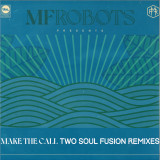
‘Make The Call’ comes with an extended version and remixes from the legendary Two Soul Fusion duo of Louie Vega and Josh Milan. These remixes bring something new and special to the track with each creating a subtly different mood for the dance floor, for the radio and for the house party.
MF Robots is a songwriting, production and performing duo created by former Brand New Heavies founder Jan Kincaid and BNH vocalist and multi-instrumentalist Dawn Joseph. The pair left the Heavies in 2014 to record their own compositions and have been wowing audiences and record buyers with their effortless blending of Soul, RnB, Funk, Disco and Jazz ever since.
Louie Vega is one half of the House music dons Masters at Work and Josh Milan is a Grammy nominated vocalist, musician and composer who also collaborate in Vega’s collective ‘Elements of Life’. With both at the forefront of production, composition and remixing for more than three decades, the House, Boogie and Instrumental versions they have produced for ‘Make the Call’ are off the scale here.
out of Stock
Last delivered 3 years ago available to reorder, subject to availability
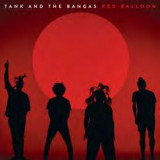
Gerade erst Grammy-nominiert als “Best New Artist” haben Tank And The Bangas ihr drittes Studioalbum aufgenommen. Zu dem vor R&B-, Hip-Hop-, Jazz-, Funk- und Soul-Grooves aus allen Nähten platzenden
Album luden sie diesmal Gäste wie Questlove, Lalah Hathaway, Big Freedia, Jacob Collier, Trombone Shorty, Jamison Ross und Wayne Brady ein.
Die in New Orleans ansässige Band mit der energiegeladenen Frontfrau Tarriona “Tank” Ball wurde 2017 durch den NPR Tiny Desk Contest auf YouTube berühmt (sensationelle 12,5 Millionen Aufrufe). „Red Balloon“ entstand jetzt in Folge der pandemiebedingten Unterbrechung des anstrengenden Tour-Pensums der Band. Die Pause gab den Musikern Raum zum Atmen und die Chance für ein kreatives Kräftesammeln. Das Werk zeigt die Band auf einem neuen künstlerischen Level, produziert wurde es von der Band selbst
und aufgenommen in New Orleans und Los Angeles.
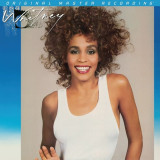
Whitney did more than turn Whitney Houston into a pioneering sensation known around the world by her first name. Originally released in June 1987, the singer's blockbuster sophomore record became the first album by a female artist to debut at No. 1 on the Billboard 200 chart — a position it claimed for a total of 11 weeks en route to selling more than 10 million copies in the U.S. The Diamond platinum effort also contains four No. 1 Hot 100 hits that, when combined with the three chart toppers from her 1985 debut, gave her seven consecutive No. 1 singles — an accomplishment that no other artist has accomplished. Commercially and creatively, Whitney stands on hallowed ground — especially now that the record plays with a sound that puts into perspective just how extraordinary, engaging, and vital Houston's music remains.
Mastered from the original master tapes and pressed on MoFi SuperVinyl at RTI, Mobile Fidelity's 180g 33RPM SuperVinyl LP of Whitney invites listeners to experience the Rock & Roll Hall of Fame inductee's pivotal album in audiophile quality for the very first time. Free of the dynamic limitations and tonal flatness prevalent on prior vinyl and CD pressings, it lets the music breathe and reveals the copious detail, nuance, and texture within the immaculately produced songs. MoFi's SuperVinyl profile offers further advantages in the forms of a nearly inaudible noise floor, dead-quiet surfaces, and superb groove definition.
In addition to featuring extreme clarity and immediacy, this numbered-edition reissue does wonders for the attribute that inspired more than 20 million people around the globe to add Whitney to their record collections: that inimitable voice. Houston's trademark mezzo-soprano — an acrobatic instrument equally capable of taking off on fantastic flights and unwinding for hushed meditations — benefits from the fantastic airiness and transparency afforded by this meticulously restored edition. Whitney has never sounded or looked better. The crossover landmark deserves nothing less.
Issued just two years after Houston's breakthrough debut, Whitney immediately signalled the genre-defying singer's intent to continue to push ahead and expand her palette. Shot by photographer Richard Avedon, the album cover depicts an iconic image of Houston — captured with a gleaming smile, bright eyes, teased-out afro, toned arms, and a right hand that appears to wave a friendly hello — whose active, athletic profile stands in contrast to the extremely formal sit-down shot of her that graces her '85 record. The change is telling: Whitney overflows with unfettered joy, rhythmic vibes, and deep-seated emotions that forever endeared her to the hearts and minds of countless listeners — and which set the standard for the wave after wave of divas that followed in her footsteps.
It's no coincidence that the first track on Whitney is the declarative "I Wanna Dance with Somebody (Who Loves Me)." Like Michael Jackson's "Billie Jean" and Madonna's "Material Girl," the feel-good smash is one of the quintessential '80s gems — a lithe, melodic, celebratory release of pent-up energy and loneliness that glides across club floors, shouts to the rooftops, and shrugs off any concerns about vulnerability or embarrassment. Houston's swooping voice moves in sync with the sleek beats and dipping-and-diving synths. She practically takes her fellow musicians by their hand and leads them in a blissful dance that nobody would dare sidestep. Focusing on Houston's singing — a task made challenging only because of the impossible-to-ignore hooks and grooves — showcases the virtuosic facets of not only her register but her control, discipline, smoothness, and warmth.
That she replicates those feats for the entirety of the nearly 53-minute-long album makes Whitney that much more special. Houston reaches back and channels her childhood gospel training on the R&B-flared "So Emotional"; effortlessly slips into Quiet Storm mode on the duet with her mother, gospel great Cissy Houston, on "I Know Him So Well"; flirts with smooth jazz and collaborates with tenor saxophonist Kenny G on the lush "Just the Lonely Talking Again"; conjures dreamscapes and shadow-boxes with supple funk on a romantic cover of the Isley Brothers' "For the Love of You"; and, for the majestic power ballad "Didn't We Almost Have It All," displays the sky-scraping reach of her vocals amid a grand arrangement made even bigger by Houston's sweeping performance and triumphant finish.
Houston's once-in-a-generation talents weren't lost on the adoring public, radio deejays, or industry experts. In addition to harbouring four No. 1 hits and receiving nominations for four Grammy Awards, Whitney generated another Top 10 success in the guise of the Afro-Cuban-leaning "Love Will Save the Day." The album also netted Houston four American Music Awards; two Billboard Music Awards; back-to-back People's Choice Awards; a Soul Train Award; and various other accolades. It all makes the crux of the Washington Post's July '87 review of the album appear prophetic: "Her voice sounds stronger still and the songs are varied but so consistent she could garner 10 Top 10s out of a field of 11."
That claim still holds true. A brilliant fusion of pop, R&B, smooth jazz, and soul, Whitney is a showstopper – and one of the key reasons Houston is the most-awarded female artist of all time.
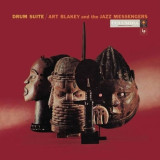
One of the inventors of the modern bebop style of drumming, Blakey is known as a powerful musician and a vital groover; his brand of bluesy, funky hard bop was and continues to be profoundly influential on mainstream jazz.
For more than 30 years his band, Art Blakey & The Jazz Messengers included many young musicians who went on to become prominent names in jazz. Recorded in 1956, Art Blakey's Drum Suite is a wonderful hybrid of African, Latin, and hard bop rhythms that prefigures the concept of Afro-beat by at least a decade. The sheer energy, not to mention its very special and fresh-sounding intimacy, make it especially astounding.
Even more amazing is that the three parts of the suite -- Blakey's "The Sacrifice," Ray Bryant's "Cubano Chant," and Oscar Pettiford's "Oscalypso" -- were recorded straight through live, and were only intended to be a pre-take run-through. As is obvious here, Blakey and company nailed the whole thing right out of the box.
Groundbreaking for its time, and still sounding vital, powerful, and visionary, the Drum Suite album is somewhat of a lost masterpiece that deserves a fresh audience.
"Art Blakey's first release for Columbia Records is essentially two records. Side one is a percussion ensemble playing what would, ten years later, be called Afro-Cuban drumming. Side two is the mid-fifties version of the Jazz Messengers featuring Jackie McLean on saxophone. Side one features Blakey, Jo Jones and Charles Wright on drums, Candido and Sabu on bongos, and Oscar Pettiford and bass and cello. The group plays three compositions, one by Blakey, one by Pettiford and one by Ray Bryant, fusing African, Cuban, and calypso percussion into a well-integrated suite.
"The group recorded a run through and it was so perfectly executed that they used the practice run for the release, unedited except to add some Swahili chants by the percussionists during a few passages. One cannot help but think of Olantunji's Drums of Passion, another Afro drumming landmark, here. Blakey's drum suite was recorded at Columbia's 30th Street studios in New York in 1957 and is in mono. The almost stereoscopic image is truly remarkable. Mastered by Kevin Gray and pressed at RTI, Drum Suite is a valuable record of one of the most important figures in jazz history. Recording: 9/10. Music 9/10." - Dennis Davis, Hifi+
"...The three-part suite was laid down in one take with no arrangements, and begins with a few tympani thwacks followed by an African chant. Soon the ensemble kicks in and the group takes off an a sweaty Afro-Cuban-bop journey that will leave you breathless, as the thing crackles with terrific energy. Side Two is more conventional hard bop, but given this group's mastery of if not invention of the style, these tracks are extremely satisfying. Kevin Gray's remastering is detailed and immediate, with plenty of bit and air, if not the widest dynamic range. For anyone interested in percussion of this genre, this is not to be missed." - Wayne Garcia, The Absolute Sound
Julian Cannonball Adderley's only Blue Note album, Somethin' Else, would likely forever be famous in music lore if just for the presence of Miles Davis. The iconic composer/trumpeter steps into the role of sideman on the 1958 set, one of just a handful of times he'd make such a move after the calendar passed the mid-1950s. Yet evaluating Somethin' Else strictly on Davis' involvement misses the big picture. Plain and simple, Adderley's jubilant work remains a jazz landmark due to the chemistry of its Hall of Fame personnel, enthusiasm of its participants, and sophistication of its arrangements – not to mention the reference-grade production and inclusion of the definitive renditions of two all-time jazz standards.
Limited to 6,000 numbered copies, pressed on dead-quiet MoFi SuperVinyl at RTI, and mastered from the original master tapes, Mobile Fidelity's ultra-hi-fi UltraDisc One-Step 180g 45RPM 2LP collector's edition pays tribute to the record's merit and includes the bonus track "Allison's Uncle." Offering reference-calibre sonics, this spectacular collector's version provides a clear, transparent, ultra-dynamic, and up-close view of a cornerstone effort that witnesses Adderley and Davis sharing horn duty alone for the only time in their fabled careers – an arrangement that occurred as a result of Adderley having joined Davis' majestic sextet a year prior.
The premium packaging and beautiful presentation of the UD1S Somethin' Else pressing befit its extremely select status. Housed in a deluxe slipcase, it features special foil-stamped jackets and faithful-to-the-original graphics that illuminate the splendour of the recording. No expense has been spared. Aurally and visually, this UD1S reissue exists as a curatorial artefact meant to be preserved, touched, and examined. It is made for discerning listeners that prize sound quality and production, and who desire to fully immerse themselves in the art – and everything involved with the album, from the iconic photos to the gorgeous finishes.
The vibrant potency reveals itself openly on an analogue set that provides full-range reproduction of an ensemble that also includes pianist Hank Jones, bassist Sam Jones, and drummer Art Blakey. Each and every snare hit, downbeat, and cymbal splash registered by the latter take on realistic proportions, blooming and decaying as they would right in front of you on a stage. Jones' foundational bass lines register with uncommon depth and palpability, the litheness of the strings and fullness of the instrument epitomizing the definition of rhythm. Stellar, too, are the surefooted 88s. Sublime in scale, tonality, and attack, with the delineation such you can practically separate the white and black keys in your mind. As for that liquid interplay between Adderley and Davis? Breathtakingly lifelike in timbre, naturalism, purity, and presence. This collector's version takes you there – there being Rudy Van Gelder's legendary New Jersey studio in March 1958 to witness it all unfold, again and again.
For reasons that extend far beyond the outstanding playing and flawless repertoire, Somethin' Else is without question a record you'll always want to watch and hear come together. As veteran critic Bob Blumenthal observed writing about the album four decades after its release, "The instant rapport achieved by the quintet is thus the product of much shared and common history, though the tensile strength that they create throughout created a totally unique feeling that can be attributed to the sensitive musicianship of all concerned, including the supposedly hard bopping leader and drummer." Such inimitable feeling, or emotion, courses throughout every passage, and no where more obviously than on "Autumn Leaves" and "Love for Sale."
Without question, the discreet interpretations of the Johnny Mercer and Cole Porter songs, respectively, found on Somethin' Else have long been considered part of jazz's alluring mystique. Adderley and Davis bring contrasting approaches to the table yet sound of a singular mind on "Autumn Leaves," with the latter's muted trumpet and the headliner's lush alto saxophone dovetailing into a performance that endures as a blueprint for expression, counterpoint, sophistication, fluidity, and linearity. Blues, melody, and romance pour from their horns. Their bandmates, picking up on the intimate vibe and calm mood here – as well as on the spry, head-over-heels spirit of "Love for Sale" – join in on the conversation with sharp economy and float-on-air roundedness.
Not to undersell the other three numbers, all deserving five-star status. Twelve measures in length, the title track offers a slow burn in swing. Written by Adderley's brother, Nat, the 12-bar "One for Daddy-O" transmits funk flavors. The closing "Dancing in the Dark" pops with lushness and temptation, its stream of bold colours and understated textures calling for a moonlight twirl, or at least fantasies suggestive of a memorable night. Somethin' else, indeed.
"Don't Stop" is the third album retrospectively released by Ghia. As the subtitle "Early Works & Artefacts 1984-1987" implies, it features some of their earliest compositions as well as tracks that were recorded during the same period as their "Curaçao Blue" LP.
The album is a fusion of diverse music styles. Listeners will delight in a range of genres, including electro, funk, soul, jazz-funk, synth pop, and even rap/hip-hop, all woven together as a cohesive work that remains mostly instrumental. As a whole, "Don't Stop" represents Ghia's funkiest and most experimental release to date. Notably, the LP features a rap version of Hermann Hesse's controversial German poem "Armer Teufel am Morgen nach dem Maskenball" ("Poor Devil the Morning After the Costume Ball") from 1926, accompanied by a drum machine rhythm and funky guitar. This poem depicts a person who drank too much the night before, telling the story and describing his hangover. The title track "Don't Stop" and the thrilling minimal electro-funk tune "3 A.M. at Moëf Gaga" both evoke old-school electro influences. The latter references the Spanish discotheque Moëf Gaga, located on the Balearic coast, which the dynamic duo of Lutz Boberg and Frank Simon frequented during their 1980s holidays. While the exact music played at 3 A.M. is unknown, listening to Ghia's track will undoubtedly capture the mood of the place.
One of the key tracks of the album is "Message From The Other Side", which could easily be noted as one of the nicest European synth-funk instrumental pieces ever. The track is based on a sick synth bass line, sparkled with DX7 chord hits, funky guitar, and a delightful "marimba" solo in the last third. The solo was actually played on Boberg's keyboard, using a special sound cartridge. This particular track had to be edited and technically revised by Marian Tone and DJ Scientist as the existing demo version of the song could not be used as is. With its stunning groove, this track will surely be a DJ's favorite.
Listening to the complete album, there is more of Boberg's keyboard wizardry: could you believe that the trumpet solo on "Jump In The Water" as well as the short but stunning slap bass solo on "Talk Too Much" were both played by on the DX7? However, this new release, unlike the jazzy "Curaçao Blue", is not about solos or virtuous playing - it clearly shows the duo's direction towards more electronic composition and clear song structures. The versions of "September Garden", "When The Rain is Falling" as well as "Talk Too Much" are actually instrumental mixdowns of vocal songs. And again, we get a blissful take of "Close To You", here a version from 1986. This soulful jazz-funk ballad could already be heard on "Curaçao Blue" while the final vocal version with singer Lisa Ohm can be found on the recently released "This Is" LP. This shows that the Ghia composers, Boberg and Simon, were perfectionists - tracks were reworked again and again, making them better and better.
The album was mastered and restored with great care, and we are pleased to provide you with a perfect example of mid 1980s home-recording pleasures, tinged with a youthful spirit and providing a sound that cannot be recaptured anymore nowadays. Alongside "This Is" and "Curacao Blue" it should be another perfect addition to any 80s groove collection as well as a great pick for DJs that love and play disco, leftfield electro and funk. The LP is limited to 500 copies.
out of Stock
Last delivered 3 years ago available to reorder, subject to availability
Codek is the brainchild of Jean-Marie Salaun who grew up in Paris influenced by the folklore of the inner city. In 1978 he joined art rock group SpionS and collaborated with Robin Scott (M 'Pop Music'). He began working as Codek, a play on the brand name Kodak with the 'Me Me Me' single released in 1980. In 1981 the 'Tam Tam'/'Closer' single was released on West African Music, a tiny label from the Ivory Coast, and re-released a year later by Island Records in the UK (where the B-side was re-named 'Tim Toum'). 'Tam Tam' was inspired by Burundi drummers playing in the plaza in front of Beaubourg where the song was recorded. Jean-Marie enlisted one of the drummers from the circle, Georges Atta Dikalo, to lay down percussion for the song. The female singers were from the French Caribbean and added falsetto tribal chants. Claude Arto achieved complex rhythmic patterns using a modular synthesizer and heavy processing. Jean-Marie recorded himself beating his chest for the thump noises. The recording of spanned over two years. They started on 16-track in Studio d'Auteuil, where Jean-Marie blew the woofers, before resuming in Studio Centre Georges Pompidou with an added 8-track recorder.
In 2017 we reissued the 'Tam Tam'/ 'Closer' single and shortly after the 24-track master tapes were discovered in Paris by original engineer Gérard Chiron. We arranged for graphic designer Maycec to pick up the tapes and immediately began to think of remixers for this project. First up is producer and DJ Daniele Baldelli who gave the original single a spiritual home in the Cosmic 80s scene of Italy. Here he's teamed up with Marco Dionigi for two remixes. Remix A goes full on funky disco baseline while Remix B a more balearic affair. We remember Justin sharing a memory of DJing the original Island Records promo at the Mudd Club in 1981 so we had to ask him for remix. He teamed up with his Whatever/Whatever production partner Bryan Mette and delivered an hypnotic pulsing house remix and an extended edit. All songs have been mastered for vinyl by George Horn at Fantasy Studios in Berkeley. The jacket is new twist designed by Eloise Leigh on the 1981 edition artwork by Angela Boy, inspired by primitive electronics and African paintings.
After taking time out from working together to focus on separate musical projects, maverick composer Alan Roberts (Jim Noir) and crowd-rousing vocalist Leonore Wheatley (International Teachers of Pop / The Soundcarriers) have re-joined forces to introduce Co-Pilot. Each the other’s wing person, they’re plotting an escape through Manchester’s claustrophobic grey skies with the pencil case colour of a hand-sewn multi-coloured primary school patchwork quilt. “We are both the creators in charge of navigating Co-Pilot’s overall sound which changes from track to track,” Leonore hints at what to expect. “There are about 6 different genres on one album, it's a pick n mix record!”
Happy in the haze of many boozy hours the album was recorded over just a few months whilst holed up and hanging out in Al’s city centre Dookstereo studio. The former Mill allowed the pair to relax, laugh and create without constraint. Armed with their original demos and vocal recordings from Al’s flat, they’d nip by the offie to pick up some Dutch courage before setting to work: building arrangements from a drum beat and basic chord pattern, the pair were so in tune they rarely spoke, allowing only the music to lead the way. “We’d communicate through nods of agreement or grimaces of dismay,” Leonore recalls. “Using the instruments with Al in production mode, we let the sound dictate the process whilst being drunk enough to follow it.”
The sound of life coming full circle after honing their separate crafts, Leonore had previously played keys and vocals in Jim Noir’s live band before moving on to front International Teachers of Pop for two critically lauded albums of joyous dancefloor filling bangers - their self-titled debut (2019) and Pop Gossip (2020). During that time Al would further expand Jim Noir’s universe with AM Jazz, which was celebrated as the no.1 album in Piccadilly Records’ ‘End of Year Review’ (2020), followed by the Deep View Blue E.P. (2021) cementing his status as one of Manchester’s finest songwriters.
As Leonore added her vocal magic to Al’s early demos of what would eventually become Co-Pilot’s ‘Spring Beach’ and a crooked original version of closing track ‘Corner House’, the vibe was prophetic “like the ending of Grease as Danny and Sandy take flight through the clouds”, letting their imaginations fly. The songs were the catalyst to spark a new phase of the pair working together, picking up where they left off. “From messing about with sounds during rehearsals in the very beginning it was always clear we liked the combination of sounds we made,” Leonore recalls.
Powered by a ‘try anything’ approach, Co-Pilot blends the musical DNA of what you’ve come to expect from each of the pair’s previous flight paths. “Whatever is switched on or nearby gets used. There's no 'correct' for us. If it sounds good, record it,” Al tells. United through typically turbulent wonky pop and lurking samples, whether culled from 70s TV themes or recreations of past and found sounds (see Al’s 60s tropicalia guitar on ‘Brick’, or the innocent ‘Swim to Sweden’ which opens with an ice cream van jingle Al recorded from his bedroom window) their process offers up a bucket load of Easter eggs. The album even features snippets from dearly departed pal Batfinks whilst ‘Motosaka’ is perhaps the most expensive 2-minutes on the album, featuring a Columbia Records Japan-cleared sample of Ryuichi Sakamoto’s ‘Thousand Knives’. Its synth squelches and Tom Tom Club funk also received the blessing of Haroumi Hosono, Godfather of Japanese Electronica, who agreed to being sampled in an original version of the song. “We just kept listening back and hitting gold,” Al recalls. “I was thinking ‘yeah, not sure what this is but I like it! We were buzzing with what we had made.”
But the sound wouldn’t come without self-imposed instrumental challenges. Thanks to an old mellotron sample on ‘Move To It,’ the moog riff and nautical accordion breaks on ‘Swim To Sweden’ and the 6/8 and 7/8 jaunt of ‘Brick’, time signatures were lovingly skewed to create Co-Pilot’s unique mood. “It was a bastard getting the drums right,” Leonore reveals, “but I like the wonkiness”. Levelling up through the lyrics, the words of smoky and evocative ‘She Walks In Beauty’ are based on a Lord Byron poem, with the sentiment of remembering Leonore’s late grandparents. “I wanted to see how much I could get away with just singing on one note, and how I could harmonically change everything else around it vocally,” she says. Elsewhere ‘Can You See’ was written from the perspective of a concerned sister to a brother which tells of keeping someone safe. “The lyrics are quite metaphorical about day-to-day happenings, people loved and lost. Others are rhythmic nonsense! It’s up to the listener to figure out what’s true.”
It’s clear from Al’s productive production techniques and Leonore’s knack for vocals and lyricism, Co-Pilot’s course is engineered by two aeronautically adept sonic storytellers. “We share a pretty similar sense of humour,” Al tells, “It is funny listening to this quite serious album but knowing we were giggling as we recorded it all. It’s been great to have another brain to bounce off.” Their destination might be unknown, but the clouds are about to part for a sound that is light years ahead. “You'll like at least one song,” Leonore suggests, “and hopefully them all.”
out of Stock
Last delivered 3 years ago available to reorder, subject to availability
Nina Kraviz returns to Rekids with remixes of ‘Taxi Talk’ from David Löhlein and Sterac Electronics.
In the years since Nina Kraviz dropped some of her earliest music on Radio Slave's Rekids, she has become a bonafide global superstar. Founding two record labels трип (trip) and Galaxiid, she regularly headlines the world's largest music festivals and has continued to stay at the forefront of electronic music.
'Taxi Talk', initially released on Kraviz’s lauded eponymous debut LP in 2012, still stands the test of time with its spoken word vocals and smoky deep house grooves. Remixing the track alongside its reissue is Vision Ekstase founder and Lehmann Club resident David Löhlein who turns in a fresh remix, and Dutch techno mainstay Steve Rachmad, who unearths a remix made under his Sterac Electronics guise that had, until recently, been unreleased.
Löhlein’s remix sees the Stuttgart-based artist reach for his trademark ’snake sound’, delivering a sleek version flipped into a quick and urgent cut with pulsating synths and dynamic minimal drum funk. Sterac Electronics brings a distinctive sense of electric funk with a boogie-tinged remix full of colourful synths and hip-swinging drums that cannot fail to light up the floor.
out of Stock
Last delivered 6 months ago available to reorder, subject to availability
Betty Davis was a musical maverick with vision. Image, substance, sex, and grit combined with a badass band that could deliver the funk bed backbone to the sultry music between the sheets. After cutting two notorious discs for the Just Sunshine label (Betty Davis and They Say I’m Different), and Nasty Gal for Island Records, Davis went to work on her most personal and expressive record yet. After capturing 10 hard-hitting tracks in 1976 at the remote Studio In The Country (Louisiana), a creative difference with her then label caused the platter to be unexpectedly shelved. Davis would cut one final album and soon retreat from the music business, completely disappearing from the public eye.
Is It Love Or Desire is a little-known gem in the Davis catalog. Mastered from the original tapes, and untouched for over 30 years, this release features detailed liner notes, the originally intended artwork housed in a lavishly packaged digipak, rare photos, archival material, and recent interviews with Davis and her skin-tight band Funk House.
Never bootlegged, never released, never heard until now, the secret story of this lost album will finally enter the history books and cement this bold soul sisters contributions to music and popular culture. Its time to get down…
Carl Finlow keeps on keepin' on. Not only is Finlow one of the most respected names in electro, a producer who boasts a sprawling catalogue that takes in a wide variety of aliases, but he's also spent recent years establishing himself as a mainstay for Sheffield's Central Processing Unit label. Soft Robotics, the new EP from Finlow's Silicon Scally project, is the fifth Silicon Scally release in five years to boast one of CPU's instantly-recognisable black-and-white covers.
The reason that Silicon Scally and CPU keep linking up is simple; they're a perfect fit for one another. Central Processing Unit has established itself as a haven for post-Drexciya producers since launching in 2012, and there are few artists better than Finlow at building on the Detroit group's sound. The union bears fruit once more on Soft Robotics, an EP of lithe machine-funk jams that will both do damage in the dance and also reward more concentrated home listening.
Things begin at a steadier speed than one might expect. Rather than barrelling off with the kind of sinewy roller one associates with the CPU name, Soft Robotics' title-track takes things at mid-pace. The groove reveals itself without hurry, Silicon Scally adding or subtracting elements - twitchy modular loops, pensive pads, the occasional blurt of low-end - atop the chugging bass/drums groove. It's a track which wins you over with guile rather than force.
As the name of subsequent cut 'Jitters' intimates, this one picks things up a little after 'Soft Robotics'. The tempo is higher here, the central beat more nervy. At their cores, though, 'Jitters' and 'Soft Robotics' are kindred spirits. Here, another slyly insistent bit of drum programming comes swirled up with all sorts of extraterrestrial tones, from little nuggets of melody supplied by the keys to electrifying synth stabs and percussive squelches.
Things limber up further still on first B-side 'Spin Ratio'. The track's 808 kicks are punchier than those of the A-side jams, and there's a dizziness to the bass tone which gives 'Spin Ratio' an intriguingly off-kilter feel. Atop the booming beat we find ourselves hypnotised by cells of melody and harmony interlocking or moving apart - particularly the staccato module at the track's heart. Sure enough, 'Spin Ratio' is the Soft Robotics joint which cleaves closest to Drexciya, invoking other Detroit disciples like Jensen Interceptor in the process.
After Soft Robotics picks up speed in the middle, closer 'Super Fluid Tones' brings us back to where we started. This track returns to the more measured delivery of the record's opener - there's a steady pulse to the drums, and once again Silicon Scally packs the mix with so many intriguing whizzes, bangs, blips and blurts that it's impossible not be won over by this tune's construction. 'Soft Robotics' and 'Super Fluid Tones' bookend Soft Robotics very nicely, and Silicon Scally's smart pacing gives the EP a lovely ebb and flow.
The ever-excellent Carl Finlow drops a Silicon Scally release via Central Processing Unit for the fifth year running. Like its predecessors, Soft Robotics is an excellent and deftly-crafted collection of modern machine-funk.
RIYL: Drexciya, Jensen Interceptor, Fleck E.S.C., The Advent
out of Stock
Last delivered 16 months ago available to reorder, subject to availability
A central figure in Seattle’s fading disco scene, radio DJ, producer, engineer, writer and multi-instrumentalist…Tony Benton was the driving force behind the Seattle soul-funk sound during the late 70s & 80s. Starting off his career at the age of ten he learned how to play the piano and then finally got to take a music class in the 7th grade. Having access to an electric piano made him fall in love with the thought that he could make his own music. At the age of 16 Tony and his friends already formed their first band called ‘Crystal Clear’ and were making up songs in his basement.
Things would really start off when Tony Benton teamed up with his group to form the avant-boogie group Teleclere who went on to release their first single in 1982 (Fantasy Love / Ultra Groove). That’s when Tony started playing all of the other instruments and thus earning him the title ‘multi-instrumentalist’. Teleclere was all about creating and performing original music, there was no music scene in Seattle at that time for a black artist or group who played original compositions. Rap-music was also emerging and clubs slowly started to switch from live performances to deejays.
Through the success of their independent EP release, Teleclere followed up a year later with their Affection/Defection album which created a serious hype. This gave them the chance to regularly open at concerts for national artists in halls and clubs. They played at nightclubs, bars, festivals, private parties and did mini tours in the Washington State cities & Canada…including opening for Grammy-award winning soul-star Peabo Bryson (performing for a crowd of 3,000 in their hometown Seattle)
Sadly, radio would not play their music so folks never really had the chance to hear it unless they saw them perform live (they always won the crowd over). To add insult to injury, venues and the likes started to mainly book cover bands playing top 40 music. Disappointed by this Tony Benton became a radio personality but would continue to record and perform under the name ‘Teleclere’ with various players and vocalists for many years to come. Only a handful of his tracks recorded were released in the end.
Thankfully we are left with the unique audio-document that is the Affection/Defection LP. The album took the scene by storm in 1983 and sounds like a sci-fi space odyssey unfolding on an intergalactic dance floor…a chopped and slapped slice of 80ies electro-funk, sensual soulful serenades, pulses of Innervisions-worthy bass, top of the line vocals and a plethora of vocoder magic. Also included is the hit ‘Steal Your Love’ that was featured on the acclaimed 2014 Light In The Attic compilation ‘Wheedle’s Groove Volume II: Seattle Funk, Modern Soul And Boogie 1972-1987’.
Tidal Waves Music (in collaboration with the Numero Group) now proudly presents the first ever vinyl reissue of this fantastic private pressed Seattle electronic soul/funk album (originally released in 1983 on Telemusic Productions). This rare record (original copies tend to go for large amounts on the secondary market) is now finally back available as a limited 180g vinyl edition (500 copies) complete with the original artwork and obi strip.
-15 year anniversary and first time on vinyl with brand new artwork, including previously unseen pieces from the Tame One archive.
-Remixed and remastered audio for a fresh listening experience. -Featuring guest appearances from Sean Price and Del Tha Funky Homosapien - One half of legendary graffiti rap group The Artifacts. -140 gram black vinyl, matte flood jacket with spot uv, 12x12 double sided insert with black poly lined inner sleeves. Rough, rugged and raw. Nothing better describes one's listening experience when they first heard Tame One & Parallel Thoughts, “Ol Jersey Bastard”. It was 15 years ago when Tame One came to "The Paradigm", the recording studio of Freehold's own Parallel Thought. One session turned into two, then quickly turned into three, resulting in a twice-weekly recording ritual that spanned three years. This ritual would give birth not only to this album, but three (Acid Tab Vocab & Parallel Uni-Verses w/ Del Tha Funky Homosapien) instilling a lifelong creative partnership. But let's focus on "Ol Jersey Bastard," Tame One's homage to the almighty and original OL Dirty Bastard. It was not the cleanest record to listen to, but it was true to Tame One's style and vision. He was not constrained by working with a group or having to answer to a label. As a side note, Amalgam Digital, the joke of a label who originally released this album wouldn't let us follow through with our original artwork concept. So the new cover and layout created by close friend Michael Interrante is Tame’s original concept. We also were able to include original scans of unseen artwork, tags & lyrics from Tames archive. This was unfiltered raw hip-hop, showcasing Tame One's unparalleled ability on the mic. Sometimes that called for no hook or maybe a 54 bar verse, traditional song structures were out the window. That being said, coming back to this album all these years later as producers, we wanted to elevate the album's listening experience. We cleaned up the mixes, so you might notice Tame sounds a little clearer, or those beats might knock a bit louder. It was what was needed to further elevate the music while not compromising our and Tame’s vision. Further demonstrating that music is a living, breathing piece of art. Always able to evolve. We hope you enjoy it!