With S.I.K. (Sociedad Internacional de la Kumbia), Conjunto Media Luna maps a constellation of sounds, friendships, and underground connections stretching across Colombia, Mexico, the United States, and beyond.
Produced in Bogotá between 2024 and 2026 by Iván Medellín, the album draws energy from rebajada culture, low-end frequencies, vinyl obsession, rap, and the hypnotic pull of cumbia. Accordion melodies, sampled fragments, drum machines, and sound system pressure intertwine throughout the record, creating a world where tradition is constantly reimagined through contemporary urban culture.
Featuring contributions from artists such as La Gallo 3:20, Turbo Sonidero, Amantes del Futuro, Mextape, León Pardo, Mismo Perro, and Hito de Piedra, S.I.K. unfolds as a dialogue between scenes that have spent years exchanging records, ideas, aesthetics, and frequencies.
The artwork comes from Mateo Rivano, one of the key visual architects of Bogotá's experimental tropical underground, whose imagery perfectly captures the album's blend of street mythology, sonic futurism, and tropical psychedelia.
Part sound system manifesto, part love letter to the global kumbia underground, S.I.K. is dedicated to everyone expanding the culture from their own corner of the map, through music, dance, graphics, fashion, and noise.
Edition of 600 copies, not sealed
Made with Love by Little Beat More 2026
Published by Little Beat More
DJ Deep and Traumer continue the Get-Rooted journey with a new four-track EP that once again reflects the label’s concept: two artists sharing their individual perspectives while complementing each other’s musical language.
The release opens with DJ Deep’s original version of “Come Get It”, a timeless House cut deeply inspired by the spirit of the early ’90s, with a subtle nod to the legendary sound of Murk. Traumer then delivers his own interpretation of the track, transforming it into a more contemporary and forward-looking production while preserving its original essence.
Bridging the two versions is a dedicated DJ Tool, designed to seamlessly transition from one interpretation to the other, or to be used creatively in the mix alongside other records.
The EP closes with “Le Coton”, an elegant and sophisticated House track whose timeless groove perfectly rounds off this third Get-Rooted release.
A defining electroclash anthem returns to wax. Tiga & Zyntherius's cult classic Sunglasses at Night gets the deluxe vinyl treatment, featuring the iconic original 12" mix that set dancefloors ablaze in the early 2000s-plus a thunderous rework by techno titan Chris Liebing, who injects it with deep, industrial muscle for the modern floor.
Whether you're chasing nostalgia or sonic intensity, this is a must-have release for collectors, selectors, and nocturnal creatures alike.
Dark Entries is Elbow Deep in the Hoopla thanks to J.D. Slater. Legendary actor, director, and composer J.D. Slater is sometimes known as “the Lou Reed of gay porn.” Slater cut his teeth in the New York punk scene, even opening for the Talking Heads and Blondie at CBGB with his project Frenzy. A true polymath of the erotic, he co-founded Raging Stallion Studios with Chris Ward in 1999, which has remained a prolific outlet in the world of gay pornography. Elbow Deep collects the scores from three late 1990s fisting-focused Club Inferno films: At Arm’s Length, Hand Over Fist, and Heads or Tails. Never before released, these works show Slater digging deeper into the electronic music production techniques that were blossoming in that era, like loop-based sampling. Says Slater, “Suddenly I could have access to every instrument in the world. My whole concept of sound and structure evolved with the technology.” The works here are trance-inducing groovers, laced with acid and dosed with brooding ambience. Check out the Gregorian vibes on “Grand Fuck,” the legato lurch of “Stallion Funk,” or the frosty atmospheres of “At Arm’s Length.” Elbow Deep in the Hoopla comes with an insert featuring an interview with J.D. Slater. Starkly sexy, these tracks remind us of Slater’s creed: “The main rule for writing a porn score is to remember what you are writing for.”
'The Shadow BoxerÔ - a tale of oppression, discipline, and inevitable revenge - is re-interpreted by British producer Heritage, whose musical style perfectly aligns with the Shaw Cuts squad.
Ku Ding trained in Tai Chi under Master Yeung for over a decade. This discipline prioritizes health, self-defense and above all, the virtue of tolerance. 'Looking Back, Moving ForwardÔ mirrors this holistic training for body and mind through its broken rhythms, dreamy pads, and warm bass.
Despite facing relentless harassment at work from his tyrannical boss Jin Dasheng, Ku Ding remains calm and endures the humiliation. The playful percussions, vocal snippets, and powerful low-end grooves of 'DancehallÔ underscore the protagonist's deep-rooted discipline and resilience.
However, after his lover A Bao is killed and both his master and his friend Hu Binglian are successively murdered, he is forced to rise up and fight back using his martial arts prowess.
'2003Ô comes in swinging, fueling Ku Ding with the perfect mindset for the battle ahead via punchy drums and an energetic bassline.
Driven to mete out justice, Ku Ding prepares for his revenge without betraying his sacred tolerance. The complex breakbeat patterns of 'HaywireÔ carried by recurring, subtle chords, give him a final boost. But can this rational approach succeed? You better find outÉ
Dark Entries is ecstatic to announce Terminal Fascination, a retrospective release of the music of Camille O’Grady, subversive artist, leather witch, punk poet, and gender saboteur. O’Grady cut her teeth in New York’s burgeoning punk scene at clubs like CBGB’s, where her band Leather Secrets would share the stage with acts like Television. She became one of the few women to be welcomed into the Mineshaft, Wally Wallace’s legendary Manhattan gay BDSM club. Towards the end of the 70s, she would trek west to San Francisco to be with her partner, performance artist and gallerist Robert Opel, who was tragically killed in 1979. O’Grady would pass away from COVID in 2020, with her voluminous works across various media - text, image, and sound - having been unpublished during her lifetime.
Working with O’Grady’s estate, Dark Entries has assembled thirteen of her finest recordings, including instant classics like “James Dean to the Rescue,” “Tourniquet,” and, of course, “Toilet Kiss.” Two songs, “Angel with a Key” and “Love Comes Like a Cutthroat,” were recorded at a studio in Los Angeles for a 7” release that never materialized, while the rest of the material was recorded live in 1979 at The Ambush, a San Francisco leather club. O’Grady’s songs, often written from the perspective of a gay man, explode like a genderfuck version of Patti Smith, like Buffy St. Marie in leather, like the hedonic utopianism of the 1960s dragged (blissfully) through the broken glass of the 1970s. The release of Terminal Fascination coincides with the publication of ‘A Cross-Worlds Angel,’ a 300-page book of O’Grady’s work by Phillip Zimmerman. The record includes an insert featuring liner notes, lyrics, and photographs. Celebrate Camille O’Grady, the artist Jack Fritscher described as an “earth mother, a leather lioness of the arts.”
“What Robot Says L” on What Robot Says Records is a deeply immersive Dub Techno journey crafted for demanding listeners who seek atmosphere, precision, and emotional depth beyond conventional dancefloor music. Across four carefully sculpted tracks, the release moves through shifting moods and textures, balancing raw energy with subtle elegance while exploring the deeper and more hypnotic side of techno.
A1. Nicolas Barnes – Dusted Maze opens the EP with a smooth and introspective approach, combining delicate textures, refined grooves, and floating harmonic layers that capture the timeless spirit of classic Dub Techno through a modern lens.
A2. Continuing the journey with TM Shuffle, Monoder – Vihreesametti delivers a warmer and more fluid interpretation of the genre, blending rolling grooves, dub-driven chords, and sophisticated sound design into a deeply immersive experience.
On the B-side, B1. Denizo – Versus follows with dark dub pressure, stripped-back rhythmic architecture, and evolving ambient detail, creating a hypnotic late-night atmosphere filled with tension and movement.
B2. Closing the EP, The Open Circle – Shinkai dives into deeper and more mysterious territory, emphasizing submerged atmospheres, minimal rhythmic tension, and profound spatial depth that slowly unfolds with every listen.
WRSL1 – “What Robot Says L” is not designed for casual listening, but for those who appreciate Dub Techno as an evolving exploration of mood, space, and sonic detail — a refined and highly immersive statement from some of the genre’s most skilled contemporary artists.
but wait a minute.. Does anybody know What Robot Says?
Following the acclaimed Milano Undiscovered, Italia Undiscovered and Italia Synthetica series comes Italo International: a new collection celebrating the enduring legacy of Italo Disco. Eight exclusive tracks by established European artists reimagining one of Italy's most influential musical movements with originality, respect, and a contemporary vision.
Italo International is a journey through the many shades of elegant and visionary electronic music, moving between Italo Disco, Synth Pop and dancefloor-oriented sounds. The talented and steadily rising Polish producer Rafał Lachmirowicz, aka Also Playable Mono; Hungarian artist Gianni Durante, aka Electro Potato, who for years has been bringing back the sound of early-Eighties Italo Disco with passion and a contemporary sensibility; Norwegian Tommy Holsen, aka DJ TinTin, who together with the Eighties band Go explores the classic sounds of Nordic Synth Pop; British producer Mark Wilkinson, aka Kid Machine, who for over fifteen years has been creating productions made for the dancefloor; Tyrell Corporation, the alias of Dutch producer Alden Tyrell, who joins forces with Italian duo Italoconnection to rework a track destined to set the dancefloor on fire; Swedish multidisciplinary artist Tobias Bernstrup, who for three decades has been reinventing the more sophisticated side of Italo Disco with elegance and a distinctive vision; the Dutch project Sfera Celeste Project, which blends Moroder-inspired sounds with a hypnotic minimalism reminiscent of Jeff Mills; and, closing the journey, British artists Heartbreak, Ali Renault and Sebastian Muravchik, with a poignant and slow-burning excursion into the melancholic world of Synth Pop.
‘Unfindable Ring', out October 23 on Bayonet Records, is an adventurer’s epic. The arc of the journey, like any good Spirited Away or Neverending Story, lands its wide-traveled protagonist right back at home before bedtime. Grumpy, like many great hero tricksters before him, has always been a project of juxtaposition: upbeat radio-ready hits whose buoyant, goofy hooks belie the dark thoughts they describe. Much of this, Schmitt acknowledges, owes its due to the matter-of-fact morbidity of the trans experience in America. It’s from these experiences—personal, romantic, political, and existential—that the tale of ‘Unfindable Ring’ unfolds.
Ambition and play have always defined the Grumpy sound. Late last year, the Fader praised their “demented, hooky” EP, “Piebald,” whose innovative fuzz-pop confections earned them coverage in NPR and the New York Times. Stereogum heralded them as “wonderfully weird,” and Paste designated them “the best of what’s next.”” Through boisterous collaborations with the likes of Sidney Gish and Claire Rousay, they’ve effortlessly ingratiated themselves with the titans of DIY, and, more recently, Schmitt has become an unlikely favored collaborator of chart-topping country giant Zach Bryan, who named his new record––which prominently features Schmitt’s harmonies–– conspicuously, ‘With Heaven On Top.’
In Grumpy, Heaven Schmitt is joined by Anya Good, Ellie Long (Kid Lake), Austin Arnold, Diego Clare (D.A. Crimson), and Lane Rodgers, who each contribute to every step of the process—engineering and recording, mixing, drafting artwork, producing, and making music videos. A kind of interdisciplinary thieves’ guild, the project, while once Schmitt’s solo eponym, is a labor of communal love.
“We are living these happy lives, and there are people we come across who don’t know us at all who want us to die,” Schmitt, explains. Often the visibility of the joy itself is what prompts the vitriol––“I’m so happy I could die,” Schmitt belts over and over on the chorus (a familiar figure of speech, sure, but one which, upon any scrutiny, shows Schmitt’s hand in the macabre.) A middle finger to fate, Good started asking, “What are you going to do with your One Beautiful Life?” Grumpy is going to keep playing, touring, searching, finding.
No Home is the new album by Lane Hartley, releasing October 23rd 2026 on Royal Oakie Records. Produced in collaboration with David Hartley of The War On Drugs & Adam McDaniel (Animal Collective, Angel Olsen, Geologist), the album was recorded at Drop of Sun Studios in Asheville and features contributions from North Carolina’s tight knit music community–including Mary Lattimore, Seth Kaufman of Floating Action & Dream Sitch, David Hartley, Jack Victor Johnson, and more.
After recording his debut album Naming Horses, Lane left Los Angeles and returned home to the Carolinas, eventually landing in Asheville. It wasn’t too long until the songs started flowing and Lane found himself reaching out to Adam McDaniel at Drop of Sun Studios–a vaunted space that’s been at the heart of indie-rock the past few years, bringing to life recent albums from MJ Lenderman, Wednesday, Fust, and more. McDaniel introduced Lane to David Hartley, and what originally started with discussions to record one song quickly turned into a plan to track a whole album live with a six piece band. Once in the studio, co-producer McDaniel encouraged the group to lean on intuition–“All of the players on this record really brought it to life in such a cosmic way. They instilled so much childlike wonder and fun into the making of the album. It inspired me to keep going” says Lane.
Lyrically the album is a collection of vignettes about people who’ve become alienated from their deepest desires of connection, belonging, intimacy, and autonomy–inspired both by Lane’s own life and the lives of people he’s loved. The unique character of the album emerged when Lane made the decision to pair the dark lyrical content with bright & lush arrangements, inspired by Gene Clark’s No Other, Neil Young’s After the Gold Rush, and Amen Dunes’ Love. In Lane’s words, “The content of the songs got way darker, and my reaction was to make the songs catchier, and to lean harder into the music that influenced me. I wanted each song to feel like a room in a haunted house, with a beautiful garden growing outside”.
Album opener “I Am Not Ashamed” was inspired by the anti-memoir of actress Barbara Peyton, a 1950’s Hollywood starlet who met an untimely end; “It’s about knowing that whatever you’ve done to survive, you still deserve love” says Lane. “Mother” pairs lyrics about ancestral trauma with the sunshine-pop influence of Colin Blunstone, featuring backing vocals from Lane’s sister Barrett Hartley. “It's about coming to terms with the fact that the people meant to protect us are dealing with their own trauma…”
Meanwhile, “All Of This Is Yours” and “Tone Poem” form the spiritual center of the album, an attempt to transmute anger & pain to bittersweet acceptance in the wake of a breakup. “I feel like on the surface this is essentially a breakup album, a lot of these songs are about mourning the end of a relationship and reflecting on what went down. I was falling in love and getting my heart broken, then waking up and driving across the country and doing it all over again.” “Love Is Not A Song” was inspired by Margo Guryan’s Love Songs, pairing bright piano with playful lyrics about an old man who’s been beaten down by life but still believes his greatest love is yet to come. Last but not least, title track “No Home” sums up the album’s key theme of alienation, “It all goes back to this feeling of wanting to belong to someone or somewhere, wanting to belong in your own body.”
The songs of Jules de Corte are condensed, folky gems with an almost effortless charm. Poised between the intimate and the universal, between lightness and darkness, they touch on religion, love, loss, and the small dramas of everyday life. Yet they resist easy translation. Packed with wordplay, de Corte’s signature alliterations, humor, and local cultural references, the songs inevitably lose something in another language. Still, when a Belgian quartet of improvisers takes them on, joined by American songwriter Bonnie ‘Prince’ Billy, the songs are reborn rather than merely transposed: literal fidelity gives way to interpretation, and what is lost in words is often gained in spirit.
Even without tracing every change, their overall effect is fascinating. Songs are slowed down, often doubled in length, and filled with unexpected musical intrusions. They gain fuller arrangements and are placed in an entirely new context. Replacing de Corte’s piano with guitar can create a radically different vibe, as in “Mariska.” An added solo can heighten the contrast between childlike perspective and the almost matter- of-fact brutality of “Little Anita.” In “The Stranger,” another use of contrast unsettles the everyday harmony, transforming it with a subtle, disorienting twist.
Ultimately, these performances show that interpretation is not successful simply because it is literal. With the groundwork laid by Linus, Bonnie ‘Prince’ Billy further liberated the songs from their original versions. Lyrics and melodies become malleable, shaped by his recognizable cadences, timbre, and personal quirks. Like his collaborators, he allows himself the freedom to bend the material to his own approach. There is no radical break between this performance and his other records. Listeners familiar with the originals may be puzzled at first; for those new to de Corte, it is a wholly different experience.
Does it really matter that the original “Little Jesus, Mighty God” is a 100-second nugget combining playful naivete with biblical fervor? In the hands of these five explorers, the song becomes an intriguing contemplation, with subtle musical shades and a recitation in which every syllable carries a maturity that offers a new perspective. Then there is “The Outsider,” which feels as genuine as any original American folk song. The musicians’ process is more than reinterpretation—it is reimagination, bringing new musical compatibility and emotional depth. Whether that depth was there from the start, waiting to be uncovered, or created in the process is beside the point. What matters is that Linus and Bonnie ‘Prince’ Billy have made the essence of these songs their own, paying homage yet dancing to their own tune.
Linus is the Belgian duo of guitarist and banjo player Ruben Machtelinckx and reedist and synthesiser player Thomas Jillings. Across five previous albums — Onland (2014), Linus + Skarbø / Leroux (2015), Felt Like Old language at the crossroads of folk, jazz, minimalism, chamber music and free improvisation. Their music is adventurous, shaped by a particular sensitivity to texture, timbre and the subtle interaction between musicians.
What began as a duo gradually grew into a flexible musical world, bringing Linus together with musicians such as Nils Økland, Ingar Zach, Niels Van Heertum, Øyvind Skarbø and Frederik Leroux. Yet each new constellation has remained recognisably Linus: music in which carefully considered forms leave space for intuition, interaction and the unexpected.
For their sixth album, Linus takes a new step by moving into the world of song and text. Inspired by a shared love for the late Dutch songwriter Jules De Corte, the album is a reimagining of De Corte’s unique repertoire. More than simply interpreting De Corte’s songs, they absorb and reshape them, bringing them into dialogue with their own musical language. In keeping with this open approach, they are joined by celebrated vocalist Bonnie “Prince” Billy. With albums such as 1999’s I See a Darkness appearing on several greatest album lists, Bonnie “Prince” Billy is a cult figure in the alternative folk scene, and his highly intuitive way of singing seamlessly matches the subtle interplay Linus has developed over more than a decade.
IRST ALBUM IN 10 YEARS.
TOURING WITH TROPICAL FUCK STORM IN NOVEMBER (DATES BELOW).
PRODUCED BY DAN LUSCOMBE (THE DRONES) WHO IS ALSO PART OF THE LIVE BAND.
PREVIOUS ALBUMS ON HARDLY ART/SUB POP AND REMOTE CONTROL.
VERY LIMITED BLACK VINYL AND INDIES ONLY PINK VINYL . NON-RETURNABLE.
‘Jarrod Quarrell, creator of Lost Animal, is one of the most underrated songwriters in Australia and one of our all-time favourites. He creates poetic expressions. His work is very interesting in a highly original way and richly emotional. The songs reveal themselves more over many listens and always feel fresh. His powerful, beautiful, transformative, and unforgettable songs possess the vast depth of the human spirit.’ - GIMMIE GIMMIE GIMMIE ZINE
‘Quarrell has developed a collaged techne that embodies a heart-on-sleeve attitude. Lush melodic delays wash with an influx of lyrics that pierce with uncanny imagery and diction.’ - VICE
It’s not every day you hear about a new Lost Animal album. In fact, it’s been ten years between drinks. The debut Ex Tropical (Hardly Art/Sub Pop) was released in 2011, and followed by You Yang (Remote Control) in 2016. So what happened, and where’s frontman/mastermind Jarrod Quarrell been for the last ten years?
From the horse's mouth, “I don't give a fuck about productivity”. A humbling reply. It confirms Quarrell's MO: here’s an artist as a non-conformist. And when he does see fit to bless us with his unique vision of what music can sound like, it has the ability to completely charm and disarm. Amongst a sea of rock bands, LA is essentially a solo act. Simply put; LA is JQ. But on the other hand, amongst an ocean of solo acts, LA possesses the grandiosity of a full band, punk in spirit, but without being fast, or heavy.
Armed with keys and synths, timbres align more with what a toucan might listen to, as opposed to what's heard commonly throughout Melbourne's gig economy. Strings are gently plucked and horns are tenderly blown. These are the colourful brush strokes that decorate the upper frequencies. They’re the ticket to a far away land;exotic, and potentially very dangerous. If the crew from Hear My Eyes are reading this, consider Lost Animal performing Give Some Get Some as the soundtrack to the next time you screen The Hangover Part 2. Yeah, the one where shit gets super fried in Thailand.
The album examines the underbelly of what a ten year journey might rub up against. As one may expect, a lot of that action is below the belt. Tracks like Do That Thing, and In
Rewinding, a few things have happened in the past ten years that are worth illuminating. Shags is no longer commandeering the bass full time. Though he does make an appearance on a couple tracks. The main difference from present day to yesteryear LA is Dan Luscombe (The Drones). Luscombe has jumped into the role of producer (and also part of the live band). One could say he’s a producer of the Spector-ilk: playing a hands-on approach and assisting Quarrell's song crafting. He may have suggested to add a chorus or two, but the chord progressions remain distinctly Lost Animal. You'll recognise them easily by their beauty, combined with either fragility or rigidity. Luscombe is arguably the defining force that made this album happen. Perhaps he had Quarrell at gunpoint. Yet to be confirmed. Regardless, thank fuck for Luscombe because it may have been another decade.
But the album's defining feature is arguably Quarrell's lyricism. He may not cross-examine where he's been, but his voice does unmask where he is: absolved and reincarnated. The decade-long journey has resulted in him looking inwards and unlocking himself. The album's many mantras suggest that he may be a bird (I'm a Bird Now), or that he is living on another planet (Never is Forever). Whatever and wherever he may be,
Give Some Get Some invites the listener to reflect on their own journey over the past decade. Because the game's got a price. So ask yourself what have you taken, and what have you given? Life ain't a box of chocolates. It's a bowl of berries. And when fruit symbolizes temptation, get some.
IRST ALBUM IN 10 YEARS.
TOURING WITH TROPICAL FUCK STORM IN NOVEMBER (DATES BELOW).
PRODUCED BY DAN LUSCOMBE (THE DRONES) WHO IS ALSO PART OF THE LIVE BAND.
PREVIOUS ALBUMS ON HARDLY ART/SUB POP AND REMOTE CONTROL.
VERY LIMITED BLACK VINYL AND INDIES ONLY PINK VINYL . NON-RETURNABLE.
‘Jarrod Quarrell, creator of Lost Animal, is one of the most underrated songwriters in Australia and one of our all-time favourites. He creates poetic expressions. His work is very interesting in a highly original way and richly emotional. The songs reveal themselves more over many listens and always feel fresh. His powerful, beautiful, transformative, and unforgettable songs possess the vast depth of the human spirit.’ - GIMMIE GIMMIE GIMMIE ZINE
‘Quarrell has developed a collaged techne that embodies a heart-on-sleeve attitude. Lush melodic delays wash with an influx of lyrics that pierce with uncanny imagery and diction.’ - VICE
It’s not every day you hear about a new Lost Animal album. In fact, it’s been ten years between drinks. The debut Ex Tropical (Hardly Art/Sub Pop) was released in 2011, and followed by You Yang (Remote Control) in 2016. So what happened, and where’s frontman/mastermind Jarrod Quarrell been for the last ten years?
From the horse's mouth, “I don't give a fuck about productivity”. A humbling reply. It confirms Quarrell's MO: here’s an artist as a non-conformist. And when he does see fit to bless us with his unique vision of what music can sound like, it has the ability to completely charm and disarm. Amongst a sea of rock bands, LA is essentially a solo act. Simply put; LA is JQ. But on the other hand, amongst an ocean of solo acts, LA possesses the grandiosity of a full band, punk in spirit, but without being fast, or heavy.
Armed with keys and synths, timbres align more with what a toucan might listen to, as opposed to what's heard commonly throughout Melbourne's gig economy. Strings are gently plucked and horns are tenderly blown. These are the colourful brush strokes that decorate the upper frequencies. They’re the ticket to a far away land;exotic, and potentially very dangerous. If the crew from Hear My Eyes are reading this, consider Lost Animal performing Give Some Get Some as the soundtrack to the next time you screen The Hangover Part 2. Yeah, the one where shit gets super fried in Thailand.
The album examines the underbelly of what a ten year journey might rub up against. As one may expect, a lot of that action is below the belt. Tracks like Do That Thing, and In
Rewinding, a few things have happened in the past ten years that are worth illuminating. Shags is no longer commandeering the bass full time. Though he does make an appearance on a couple tracks. The main difference from present day to yesteryear LA is Dan Luscombe (The Drones). Luscombe has jumped into the role of producer (and also part of the live band). One could say he’s a producer of the Spector-ilk: playing a hands-on approach and assisting Quarrell's song crafting. He may have suggested to add a chorus or two, but the chord progressions remain distinctly Lost Animal. You'll recognise them easily by their beauty, combined with either fragility or rigidity. Luscombe is arguably the defining force that made this album happen. Perhaps he had Quarrell at gunpoint. Yet to be confirmed. Regardless, thank fuck for Luscombe because it may have been another decade.
But the album's defining feature is arguably Quarrell's lyricism. He may not cross-examine where he's been, but his voice does unmask where he is: absolved and reincarnated. The decade-long journey has resulted in him looking inwards and unlocking himself. The album's many mantras suggest that he may be a bird (I'm a Bird Now), or that he is living on another planet (Never is Forever). Whatever and wherever he may be,
Give Some Get Some invites the listener to reflect on their own journey over the past decade. Because the game's got a price. So ask yourself what have you taken, and what have you given? Life ain't a box of chocolates. It's a bowl of berries. And when fruit symbolizes temptation, get some.
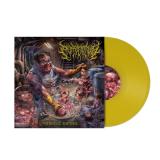
Brutal, uncompromising Slam from Greece. Years of obsession, ignorance, and absolute contempt spent keeping slam locked in its lowest, most primitive caveman state. Through collapse, and complete disregard for ourselves, we persevere. The "Embryectomy" project clawed its way from a deranged slam duo into a fully armed three-body beatdown slam monstrosity through uncompromised fury alone. No trends. No mercy. No concern for acceptance. Anyone who stood in the wreckage with us knows what it took to get here. We are now signing with Unique Leader Records. What you will endure in our next release is not meant to inspire or connect. It was composed in a chaotic state of antipathy, and absolute emotional absence. This is the most brutal material we have ever created—not for everyone, not for growth, but for those who understand that misanthropy is the only constant. We thank Unique Leader Records, who pushed us beyond what we thought possible: brutality to its limit while stripping away anything human. No benevolence. No empathy. No relief. Only violence, executed with intent.
At the foot of the mountain. Our gaze is inclined toward the summit.
Toward the ascent. The destination that awaits us.
From the valley, we look up at the summit: our destination. But also the path: the true destination.
We can already trace our route, and we are already imagining ourselves walking up there. Along the small ridge, just above the tree line. There, we take a short break and look for the exact spot in the valley where we were standing earlier. It is strange to grasp that we have actually climbed this mountain. To look down from up here at the place where we were just moments ago – the same place we looked up from, toward the place where we are standing now.
And now, knowing what it is like to be up here, we remember what we imagined it would be like back then. What we believed it would mean to stand here.
Along the way, our gaze wanders back and forth. Up toward the mountain, down into the valley, sometimes only at our shoes. We keep walking, one step after another. Our thoughts detached. Our body functioning purely mechanically.
Step left. Step right. Step left. Step right.
Our mind has completely detached itself, and our thoughts race at an immense speed. They summon the most different moments. Moments from our lives. Moments that shaped us, that made us who we are. Or are we perhaps simply trying to understand who we are and how we got here?
It is strange that reaching the summit and looking down could make us believe that we have finally reached, or are striving toward, some superior, triumphant position. When in fact, it is really only about looking at the path we inevitably have to take. Processing impressions from a certain distance. Reconsidering what we have experienced, without losing sight of what lies ahead.
Our gaze turns back toward the summit.
Is there a destination?
An ascent? A summit? A descent? The return?
Or is it only about the insights we encounter along the way?
Am Fuß des Berges. Unser Blick ist zum Gipfel geneigt.
Auf den Aufstieg. Das Ziel, das uns erwartet.
Vom Tal aus blicken wir auf den Gipfel: unser Ziel. Aber auch den Weg: das wahre Ziel. Unsere Route kann man jetzt schon abstecken, und wir stellen uns bereits vor, wie wir dort oben laufen. Über den kleinen Grat, leicht oberhalb der Baumgrenze. Dort machen wir eine kleine Pause und suchen genau die Stelle im Tal, an der wir vorhin noch standen. Es ist verrückt, zu begreifen, dass wir diesen Berg tatsächlich hinaufgestiegen sind. Von hier oben auf den Ort hinunterzusehen, an dem wir eben noch waren – an denselben Ort, zu dem wir hinaufgeblickt haben, als wir noch dort unten standen. Und jetzt, da wir wissen, wie es ist, hier oben zu sein, erinnern wir uns daran, was wir uns damals darunter vorgestellt haben. Was wir geglaubt haben, es würde bedeuten, hier zu stehen.
Unterwegs wandert unser Blick hin und her. Hinauf zum Berg, hinunter ins Tal, manchmal nur auf unsere Schuhe. Wir gehen weiter, einen Schritt nach dem anderen. Unsere Gedanken losgelöst. Unser Körper funktioniert rein mechanisch. Schritt links. Schritt rechts. Schritt links. Schritt rechts.
Unser Geist hat sich völlig losgelöst, und unsere Gedanken rasen mit einer ungeheuren Geschwindigkeit. Sie rufen die verschiedensten Momente herauf. Momente aus unserem Leben. Momente, die uns geprägt haben, aus denen wir geworden sind, wer wir sind. Oder versuchen wir vielleicht einfach nur zu verstehen, wer wir sind und wie wir hierhergekommen sind?
Es ist schon seltsam, dass das Erreichen des Gipfels und der Blick nach unten uns glauben lassen könnten, dass wir endlich eine überragende, triumphale Position erreicht haben oder anstreben würden. Dabei geht es doch eigentlich nur um den Blick auf den Weg, den wir zwangsläufig beschreiten müssen. Eindrücke mit etwas Abstand zu verarbeiten. Erlebtes noch einmal Revue passieren zu lassen, ohne den Blick nach vorne zu verlieren.
Unser Blick wendet sich wieder dem Gipfel zu. Gibt es ein Ziel? Einen Aufstieg? Einen Gipfel? Einen Abstieg? Die Rückkehr? Oder geht es nur um die Erkenntnisse, die uns unterwegs begegnen?
Recorded spontaneously in Brooklyn and created entirely without written compositions, this album is an essential release for fans of ambient music, spiritual jazz, meditation, and deep listening. Features Isaiah Collier on drums and tenor sax and produced by Sonny Daze.
=============================
A spontaneous musical transmission exploring healing, unity, laughter, and limitless possibility.
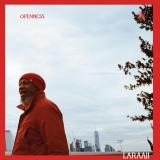
Recorded in Brooklyn, New York in 2025, Openness is a fully improvised full-length album from legendary ambient pioneer and sonic mystic Laraaji. Created without pre-written compositions or arrangements, the recording captures a rare moment of collective presence, where every sound emerges from intuition, listening, and trust in the unknown.
Guided by what Laraaji describes as a state of openness, the album unfolds as a meditation on timelessness, inexhaustible supply, right guidance, seamless unity, prosperity, healing, gratitude, understanding, relationship, and transformation. Moving fluidly between meditative vocals, Fender Rhodes, Moog synthesizer, zither, gong, and piano, Laraaji channels a deeply personal yet universal musical language intended for a global audience seeking connection, renewal, and inspiration.
A defining element of the recording is Laraaji's celebrated Laughter Meditation, woven throughout the performance as both a musical and spiritual practice. His joyful vocal expressions become an instrument unto themselves, creating moments of release, playfulness, healing, and communal connection. The laughter serves as a reminder that openness is not only a path toward deeper awareness, but also toward celebration, recreation, gratitude, and collective well-being.
The session features acclaimed saxophonist and composer Isaiah Collier on drums and tenor saxophone, bringing a responsive, exploratory energy to the recording. Producer Sonny Daze opens the album with a spoken invocation and shapes its expansive atmosphere throughout with the legendary Roland Space Echo RE-201, adding warmth, depth, and cosmic texture to the music's unfolding journey.
Described by Laraaji as a "vital music transmission," Openness was revealed spontaneously in the studio while remaining fully present to each new moment. The result is an immersive listening experience that feels both ancient and immediate—a celebration of right community, right recreation, right medicine, and the transformative power of creative freedom.
"This music is revealed and recorded spontaneously in Brooklyn, NY, with the attending presence of dear Sonny Daze and dear Isaiah Collier. Being totally in the new moment and allowing fresh communication to arrive, I remained open while touching various studio instruments. Being in channeling mode throughout the recording session, I sensed the world audience for whom this vital music transmission is intended."
Hector Gannet have always known that place and music are inseparable. For songwriter and guitarist Aaron Duff, North Shields high on England’s north east coast, shaped by fishing, shipbuilding, and the sea, is not just a backdrop but a source. Everything flows from it: the imagery, the politics, the particular stoicism of people who absorb more than their share and keep moving anyway.
‘The Great Shakedown’, their third album, is where that source runs deepest. Featuring bold brass arrangements alongside choir and church bells recorded live at the 17th-century Christ Church in North Shields, the album is Hector Gannet’s most ambitious and most searching work. The brass is a constant throughout: driving the Dexys-style urgency of the title track, lounging through the jazz-tinged Big White Telephone, surging euphorically through singles The Mother Tongue and Seven Signs.
The singles capture something essential about the album, euphoric on the surface, quietly devastating underneath. Beneath its propulsive brass lies an examination of stoicism as both armour and wound, of shared language used to avoid saying the very things that need to be said. It’s a quality that runs through the whole record, which looks at human history and art, the ordinary and the extraordinary, the actions of those in power and the communities who live with the consequences. It is both communal and euphoric - a powerful rallying cry for people at a time when we need it most.
For more than two decades, Vidmantas ?epkauskas has occupied a singular position within European underground culture. As the driving force behind Opium Club and gallery 1986 in Vilnius, founder of Ant Bangos, Alfavilnius and OLE festivals, curator, label owner, promoter, DJ and artist, he has spent much of his life creating the conditions for other people's music to be heard.
It makes sense then that he has no shortage of friends and collaborators in play. Across ten tracks, V presents shades of Italo, krautrock, post-punk, minimal synth, industrial pop and neon-noir romanticism, arriving somewhere between the dancefloor and a dream-state. The cast of collaborators both contextualize and help sharpen the vision.
First and foremost, much of the album was crafted alongside Frankfurt's Philipp Lauer, whose friendship with V grew through marathon studio sessions. Curses lends his unmistakable blend of dark romance and theatrical energy to "Is This What You Want?", Australian cosmic journeyman Dreems joins for the kaleidoscopic "Blitz Disc," Domenique Dumont brings their unmistakable emotive touch to "Avventura," while Lithuanian artists Noyus and Ruta MUR, both distinctive voices from the country's queer scene, whose vocals add another dimension to the record's emotional palette. As V puts it, "These are the people I've been vibing with."
That he finally delivers a full-length LP with such elusive qualities is more than a clue to his character. The title itself, a nod to Magritte's famous paradox and his years living in Brussels, suggests that any attempt to define V through a single image is destined to fail. At once playful and philosophical, 12:55 (Ceci n'est pas une V) questions ideas of identity and artistic value while marking the closing chapter of the musical persona that followed ?epkauskas' earlier success as Vidis. Neither retrospective nor statement of intent, it feels like a connected set of reflections spanning a lifetime of influences.
The vibraphone may have gone quiet, but the groove hasn't. Roy Ayers passed away on March 4, 2025, in New York City, at the age of 84, but the man they called the Godfather of Neo-Soul left behind a vault deep enough to keep dancefloors moving for generations. BBE Music now hands the keys to Berlin's own Delfonic, whose second volume of reworks digs even further into that treasure chest for six fresh, floor-ready reimaginings. The series began when Delfonic shared a spontaneous edit with BBE founder Pete Adarkwah, and listener demand for a vinyl pressing turned the idea into a full official release. Volume 1 sold out fast and moved through collector circles at speed; Volume 2 arrives with even higher expectations attached, and record heads who missed out the first time won't want to sleep twice. Everything here is pulled from deep, previously-vaulted Ayers sessions. The reworks draw from BBE's celebrated Virgin Ubiquity compilations, a trove of unreleased Roy Ayers recordings cut between 1976 and 1981. These are the rarer cuts serious collectors have been chasing for years, now given a second life courtesy of BBE Music Delfonic is the alias of Markus Lindner, a Berlin lifer. He's been DJing professionally since 2004, building his name across Berlin and wider Europe with a sound rooted in hip-hop but stretched across many genres. For anyone who needs the primer: Ayers pioneered jazz-funk through his group Roy Ayers Ubiquity and was widely regarded as the godfather of neo-soul. His breakthrough came young; he got his first vibraphone mallets at age five after watching Lionel Hampton's band, and by 1963 he had his own recording contract. His records have been sampled for decades by artists including Mary J. Blige, A Tribe Called Quest, Common, and Kanye West, cementing him as one of the most sampled figures in soul-jazz history; a status that only grows with every year that passes. About BBE Music: This is a label with real archival credibility on Ayers specifically. BBE has held the license to the Virgin Ubiquity sessions since 2004, and this rework series is a natural extension of that decades-long relationship. Buyers trust the BBE stamp on soul-jazz reissues and edits precisely because of that history and the care, thought and quality that goes into every physical release, as BBE celebrates 30 years of real music for real people.
Repress 2026
Two years after releasing the acclaimed Crash Recoil, Anthony Child aka Surgeon returns to Tresor with new LP, Shell~Wave. Retaining the minimal equipment list and studio-version-of-live-show-sets approach of the previous album in order to focus on the work itself, Shell~Wave is a deeply personal document of both where Surgeon is and has been, converging three decades of experience with a continued curiosity in the untested.
“To make this project, I had to dig really deep in terms of what my relationship was to techno; I’ve been involved with it for a really long time and there’s a lot about it I feel dislocated from, so I had to really think hard about what techno is to me. I often get asked “what is techno to you?” but I can’t answer that with words; this album is the answer.” From the complex, twisting track Infinite Eye to the caustic Soul Fire, the eight tracks that make up the body of the album are single-take explorations of the vast, hard yet minimal techno Child is synonymous with.
Neatly dividing the record in two, the emotional centre of the record comes in the form of Dying, a vibrating, beatless piece that with a mantra-like vocal loop steeped in reverberating effects. Further echoes of dub production appear throughout the record as tracks like Divine Shadow, and Empty Cloud have an almost ever-present mist of reverberation, driven by the appearance of a new delay unit in the equipment list; while much of the philosophy of Crash Recoil’s creation is present, the process and the instruments have changed as Child again switches up his approach to studio work.
This insistence on trying novel techniques doesn’t preclude returning to old ones, as this use of modern digital machines with live, hands-on takes that are as inspired by 60s producer Joe Meek and 70s reggae as they are by this year’s synthesiser expos.
“For me, it’s an interesting experience returning to old techniques again after 30 years. I’m always exploring and finding myself back at the beginning. Connecting the present with the past.”
This philosophy of ‘time travel’ is inherent to the music itself as the synchronised loops repeat while the delay and effects branch out, forming unique eddies; distinct quantum moments within the circular whole; the future leaking through the spaces between the sounds. All of the concepts on the album are perfectly communicated through the painting by Taiwanese artist Jazz Szu-Ying Chen which suggests the movement of water, sound waves, and the chitinous shells of sea creatures.
For South Central’s premier singer, songwriter, and producer, success was never an overnight accident; it was a blueprint executed with meticulous precision. With his highly anticipated project, Labor of Love, Blxst delivers a masterclass in modern West Coast R&B and Hip-Hop, proving that true artistry requires both sweat and soul. The album serves as a sonic manifesto on the price of ambition, the weight of loyalty, and the delicate balance of maintaining romance while building an empire. It stands as a definitive evolution of the distinct sound Blxst pioneered, blending crisp, trunk-thumping 808s with soulful, nostalgic chords and his signature, effortlessly smooth vocal runs.
Entirely self-produced and co-written, Labor of Love bridges the gap between the sun-drenched grit of Los Angeles street culture and the vulnerability of late-night bedroom playlists. From the bounce of celebratory anthems to introspective, late-night drive confessionals, Blxst curates a tracklist that feels both deeply personal and universally resonant. It explores the sacrifices made in the pursuit of greatness, paying homage to the sonic pioneers of LA while firmly cementing his own place as the vanguard of the city's modern sound. It is a celebration of independence and the self-made mentality, reminding listeners that he remains the chief architect of his own destiny.
Ultimately, Labor of Love is a testament to the grind, capturing the sleepless nights and tested relationships that pave the road to success. Blxst puts his heart on the line to show that the work itself is where the true passion lives, creating an album for the city, for his family, and for everyone who stays dedicated to their craft. More than just a collection of radio-ready hits, this project is a cohesive, cinematic experience from one of music's most reliable hitmakers. It is a definitive reminder that Blxst isn't just riding the wave—he is directing the current.
2026 Repress
In the ever-expanding universe of deep house, Julius Steinhoff is far from being a stranger. Half of the dynamic duo Smallpeople, founder and one of the steersmen behind Hamburg's Smallville empire (record store/ label/ party curator around the globe) as well as a producer and DJ in his own right, Steinhoff is closely associated with a group of like-minded people that unite fresh ideas and individualism with a certain consciousness of tradition. That 'Flocking Behaviour' is well embodied in Steinhoff's debut album by the same name. After a string of 12-inches for the likes of Live at Robert Johnson, Geography or his own-brand Smallville and the very well-received Smallpeople long-player 'Salty Days", Julius Steinhoff makes a submission that is all his. Rooted in the elegiac variety of the big three (New York, Chicago & Detroit) and a romantic concept of house music that is at times utopian, the album gathers eight tracks that evoke late nights, hazy mornings and walks on thin air. But 'Flocking Behaviour' is by no means anachronistic: Tracks like 'Under A Waterfall' could be made in just the same manner by a puerile Baby Ford in 1989 as they represent a swaying dance floor in 2014. 'Treehouse' or the title track 'Flocking Behaviour' are experiences that make you feel like meeting new people who instantly greet you like old friends. With someone that works and lives in the here and now, Steinhoff seemingly has no interest in revisionism, complains or antagonism, his approach is welcoming and caring, embracing and mesmerizing. Along the way, his musical apparatus never makes use of cheap tricks or antique clichés.
“Negative Music / The Poorest! If they still know silence at all, then only as holes in the continuum of noise…” — Günther Anders, 1965
Editions Mego presents GETGETGET, a new release by Thomas Brinkmann which serves as an inquiry into silence, code, and the limits of perception.
The title GETGETGET references the trilogy of ‘Get’ lp’s made by Rehberg under his PITA moniker; Get Out, Get In and Get On. The music is based on material by Rehberg and Brinkmann morphing these two identities into a third colour, a disappearing color.
Emerging from a live performance at the label’s 30th anniversary in Berlin, the work unfolds as both sonic artifact and conceptual system: a study in what remains when sound is reduced, extracted, and reconstituted.
Taking inspiration from Günther Anders’ notion of “negative music”—composition through absence—Brinkmann’s approach aligns with Heinrich Böll’s idea of “collected silence”: silence not as void, but as a material framed against the constant pressure of noise. In GETGETGET, pauses are not gaps but structural elements, cut from a continuum and reinserted as signals.
The two side long tracks weave a dark abstract and ‘twisted’ presence where the ghosts of the machines and their operators fuse into a fantastical whole. One can hear traces of both Brinkmann and Rehberg logic which seems to fuse in a hallucinatory manner.
Brinkmann’s work reflects a broader condition: the translation of material processes into informational ones. As images detach from bodies and code separates from matter, sound too loses its fixed resonance. What remains is circulation—of signals, of data, of meaning—within systems that increasingly define perception itself.
GETGETGET is an album where absence is equal to presence, a metaphor with suggestive tones of the influence Rehberg had and continues to have in the world of the radical experimental electronic avant garde. The “zero” is not empty; it is what makes everything else work.
Donato Basile AKA DJ Plant Texture always wants his music to tell a story, and with his debut EP on Tresor Records, entitled Life, he’s now trying to tell the biggest story there is. According to the artist, “Life is about the fear of growing up”; both the anxiety itself and acknowledging and moving past it.
This narrative seems to have struck a chord with those who have heard the track, “People want to reflect themselves in the music; something personal. Lots of people have been in touch after hearing it; I guess they feel something melancholic in it. Personally, I imagine the track is like the life of a person; going from being born through childhood and youth and onwards, so perhaps they hear this?”
Having used an MPC since the early 2000s, Basile feels an intuitive connection to the hardware he uses, and so the creative process is very spontaneous: “I know where everything is so the music is made immediately. I make everything in the first ten minutes; after that if it’s not right then I just abandon it and start something else.” This immediacy, and familiarity with his equipment is apparent on the A-side, where Basile’s previous life as a drummer comes to the fore and tracks like Cycles and Ripetivo display his native understanding of groove but also how to stir things up - the three A-side tracks find classic techno rhythms seemingly falling apart only to snap back into place even stronger. The B-side finds Donato exploring more of his melodic side with WTT and the aforementioned title track showing Plant Texture’s love of breakbeat and classic techno.
The three digital bonus tracks continue this exploration of melody and syncopated beats - The EXP Days echos the wistful feeling of Life, as Basile meditates on the times spent at EXP, his record shop in Bari, which functioned as a meeting place for electronic producers in the area.
Among the most influential hip-hop artists to emerge in the rapid creative expansion of the early 1990s, Queens duo Organized Konfusion helped reshape rap's aesthetic horizons with the 1991 release of a groundbreaking self-titled album. A dizzying display of lyrical dexterity and forward-thinking production, Organized Konfusion helped lay the foundation for what would become underground hip-hop, with intricate wordplay and cerebral rhyme structures. Both Pharoahe Monch and Prince Po shine throughout the album, revealing
the immense talent that would later establish Monch as one of hip-hop's most revered voices and spark Po's collaborations with producers like Danger Mouse, Madlib, Large Professor, Oh No, and more. From playful nostalgia to sharp social commentary to surreal linguistic explorations, the duo navigates chaotic drum breaks with dense rhyme patterns, vivid imagery, and ever-shifting narratives. After decades of limited availability and unofficial bootlegs, this is the first official vinyl reissue of Organized Konfusion since its1991 release. Featuring three rare bonus tracks, this 35th anniversary edition is available on 2LP and CD, giving a long overdue spotlight to one of hip-hop's most important albums.
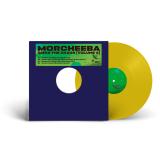
Morcheeba return with the second EP in their Remix The Chaos project - a year long series of releases reworking all the tracks from their 2025 studio album Escape The Chaos. Volume 2 is headlined by London art-rockers Django Django who inject a fresh garage pulse into Hold Me Down and prolific producer Rex The Dog who transforms the Latin subtleties of Dead To Me into an extended electro powerhouse.
Elsewhere, experimental producer Daedelus takes Cooler Heads into leftfield IDM territory, and regular Morcheeba remixer Merther Hum turns the album title track Escape The Chaos into deep, refined dub.
Ready in equal parts for the dancefloor or your sofa late at night, these bold reinterpretations push Morcheeba’s seminal sound further towards electronic music’s outer edges. Presented on rubber duck yellow vinyl in classic disco bag packaging, Remix The Chaos (Volume 2) is just the latest in a series of unmissable releases from the trip-hop titans.
Thematically, the album revolves around movement - excursions, outings, journeys, and the various vehicles and vessels that make them possible. It is music for those who drive, sail, walk, and fly. For those already on the move, and for those who are about to set off.
Each track functions as a vehicle of its own, collectively built and designed for different conditions and purposes. You can travel solo or collectively. The album is introduced by the single "ULYSSE."
Tropical Soldiers In Paradise:
Lush as tropical forests inhabited by fruit bats, fluorescent frogs, and giant millipedes. Comforting as paradise beaches from a screensaver. Absurd and psychedelic as the mission of Lieutenant Colonel Channon and the First Earth Battalion, where the paranormal abilities of warrior monks revolutionize the armies of the world.
A structure without status, uniforms without uniformity, and unity powered by diversity.
Tropical Soldiers In Paradise play crooked lounge (if such a genre existed). Their music blends a generous dose of improvisation with hip-hop-rooted beats and a distinctly new-wave approach to jazz. Since 2018, TSiP have released three albums and performed countless concerts on both intimate and major stages, bringing joy and solace to audiences along the way.
“My Love” is one of its key tracks on “Summer End”, the current album by French singer & songwriter Al Sunny. Now that summer really has ended, Al Sunny asked a few producers and DJs from all over France to deliver their interpretation “My Love”. Featuring a wonderful organic take by Ludovic Llorca aka Art of Tones this EP is available digitally and as limited four track 12inch vinyl edition including the Art of Tones, Hugo LX and Jared mixes.
Art of Tones
Art of Tones is the house and disco project of acclaimed French producer Ludovic Llorca. Launched in 2006, the alias quickly earned international recognition through its distinctive combination of soulful musicianship, powerful grooves and dancefloor energy. His catalogue includes releases on respected labels such as 20/20 Vision, Local Talk, Glitterbox, GAMM and Toy Tonics, establishing him as a highly regarded producer and remixer within the global house scene.
Hugo LX
Hugo LX is a Paris-based DJ and producer whose musical universe moves effortlessly between deep and soulful house, downtempo beats, jazz, hip-hop and ambient influences. Known for his refined production style and wide-ranging musical knowledge, he has released music on respected labels including NDATL, MCDE, Balance and People of Earth, alongside projects on his own Doma Music imprint. Both behind the decks and in the studio, his work is defined by warmth, subtlety and a deeply personal approach to electronic music.
Jared
Jared is a French DJ, producer and event curator based in Bordeaux, with a strong connection to house music and club culture. Over the years, he has performed at a wide range of events and international stages, including Tomorrowland, developing a reputation for energetic and carefully constructed DJ sets. His musical approach combines a deep understanding of the dancefloor with warm grooves, contemporary production and an enduring passion for house music.
The Future Bubblers compilation brings together artists from across the Academy cohort and wider applicant community, with sounds spanning jazz, soul, electronic, hip hop, folk, experimental and everything in between. It’s a snapshot of the boundary-pushing talent emerging through the Future Bubblers community. This rollout is designed to put the people who make independent music possible at the heart of the release: listeners who choose to support artists directly, record shops that nurture culture locally, and the community that has grown around Future Bubblers over the last decade.
There's a moment during every great dance floor experience when the music takes over and everyone becomes part of something bigger. "SHOUT!", the latest release from 2SoulFusion Presents Ascension, captures that feeling in its purest form. Featuring the powerhouse voices and ad-libs of Dames Brown and Dawn Tallman, along with an all-star ensemble of master vocalists including Josh Milan, Rahsaan Patterson, Lisa Fischer, Cindy Mizelle, Audrey Wheeler, Ramona Dunlap, and Lea Lorien, this joyful anthem is an invitation to let go, lift your spirit, and celebrate through music.
Produced, written, arranged, and mixed by 2SoulFusion—Louie Vega and Josh Milan—"SHOUT!" draws inspiration from the communal spirit of gospel while embracing the energy and freedom of house music. Driven by simple yet powerful affirmations—"Shout," "Sing," "Move," "Love," "Get Up On Your Feet," "Listen Up," and "Let This Music Take You Higher"—the song transforms into an experience where every voice becomes part of the celebration. It's a journey of anthemic hooks, soaring harmonies, infectious grooves, and unforgettable melodies designed to ignite dance floors, uplift hearts, and remind us that music has the power to unite people through rhythm, joy, and love.
The inspiration for "SHOUT!" was born from a creative exchange between Louie Vega and Charaf Tajer, founder and creative director of the internationally acclaimed fashion house Casablanca. Introduced by longtime friend Joseph Capriati, Charaf shared a bold vision—to bring together the worlds of fashion, gospel, and house music for one unforgettable Casablanca runway presentation in Paris.
Louie Vega recalls: “Charaf was introduced to me by my friend Joseph Capriati, who said Charaf was looking to meet me about an idea he had. His vision was to marry fashion, gospel, and house music within Casablanca's collection. At first, he wanted me to DJ and play gospel house music. I said, 'Instead of playing existing music, why don't I create an original song with a gospel house flavor?' I immediately got together with my 2SoulFusion partner Josh Milan, and together we came up with 'SHOUT!'”
That vision came to life during Casablanca's spectacular Paris presentation inside a breathtaking cathedral, where Louie Vega premiered the original twelve-minute and nine-second composition live. As the music echoed through the cathedral, Dames Brown joined the London House Gospel Choir in a soul-stirring performance while the models walked the aisle on Casablanca's carpet made of their signature green color and a dashing vibrating giant mirror echoing the runway visually. Renowned DJs Luciano and Chloé Caillet were among those who walked the runway, while friends of Charaf Tajer and special guests—including Jaden Thompson, Folamour, Dimitri From Paris, Kapela, and many others—were in attendance, making it an unforgettable gathering where music, spirituality, fashion, and culture merged into one extraordinary experience.
Inspired by that magical evening in Paris, Louie Vega and Josh Milan returned to the studio to expand the original composition into the powerful recording heard today. Built around rich live musicianship, Josh Milan's keyboards, organ, piano and synth bass provide the foundation alongside Axel Tosca's expressive grand piano recorded live, Sherrod Barnes' soulful guitar, and Gene Perez's unmistakable bass groove. Together they create an infectious, organic driving sound that allows the vocals to soar while delivering the unmistakable musical depth and musicianship that define 2SoulFusion.
Leading the celebration are Dames Brown and Dawn Tallman, whose commanding performances are elevated by an extraordinary choir of world-class vocalists. Dames Brown's spirited sermon and ad-libs, and Dawn Tallman’s powerful ad-lib vamping out together with the soaring harmonies of Lisa Fischer, Cindy Mizelle, Audrey Wheeler, Rahsaan Patterson, Ramona Dunlap, Lea Lorien, and Josh Milan, recreate the feeling of a joyful gospel congregation—not confined to four walls, but alive on dance floors around the world. Every chorus encourages listeners to get up, listen up, feel it, sing, move, love, and become part of the experience. Recorded between Honeycomb Studios in Pennsylvania, The Hub Ibiza and Manhattan Center Studios, New York City, and mixed at The Hub Ibiza, "SHOUT!" reflects the continuing vision of the Ascension project, where spirituality, musicianship, community, fashion, and dance music become one.
Opening the release is Bonifaz ‘Encore’ a sample heavy slice of filter-house with a sprinkling of French touch,
laid out across five and a half minutes with with a chuggy bass line, dubby synth stabs and an amalgamation of
choppy vocal chants all dynamically evolving and unfolding throughout amongst a crisp, robust rhythm section
that carries the groove throughout.
On the flip side, Uit de Hoogte offers up 'Whooop!' built around a acid-tinged synth hook with envelope
fluctuations through, sweeping resonant synth flutters, heavily swung drums and intricately processed vocal
lines resulting in a high-octane workout perfectly primed for the peak time hours on the dance floor.
Time to turn on and turn it up, theres a brand new Carlton Melton in the offing… its been a good couple of years since the West Coast space/sike travellers have dropped new music.
‘Phantomize beyond the window, into the portal, the panes of eternal returns, wooden spirals, roots into the realms of everything and nothing, the reason beings’
With Anthony Taibi fully ensconsed in the metaphorical Melton Dome, this four piece is ready to soar, go deeper and wider into the sike psyche than on previous recordings, now fully recording live with drums, bass, guitars and keys...recorded at 3D Light in Freshwater, CA by Anthony Tiabi in 2025, and mastered by the inimitable John Mcbain in 2026.
We have a single LP of 40+ minutes spanning 4 tracks, that have textures, and waves and patterns to lull you into some fever dream of motorik psych! Touchstones like Träd, Gräs Och Stenar / Kandodo / Guru Guru / Eno & Fripp / Birds of Maya / Parson Sound come into view.
There are moments of gentle ambience bordered by speaker shredding guitar soloing, whole passages of Krautrock inspired jams that have form and focus.. you blink and your live flashes before you, the record ends, you want more..
There are moments of gentle ambience bordered by speaker shredding guitar soloing, whole passages of Krautrock inspired jams that have form and focus.. you blink and your live flashes before you, the record ends, you want more.. Carlton Melton masterfully blend hypnotic, long-form psychedelic jams with drone and Krautrock influences.
Band:
Rich Millman
Andy Duvall
Clint Golden
Anthony Taibi
Announced to celebrate summers solstice.. released on the Autumn equinox.. with a full UK tour to boot..
On Oath's latest, the imprint keeps the jazz-fuelled atmospheres going with 'Seven Dogs', an EP that serves up an astonishing excursion through deeply hypnotic melodies and idiosyncratic grooves, courtesy of an iconic link-up between Rteph88 aka Robin Taylor-Firth and Steve Cobby.
Taylor-Firth and Cobby are musicians whose careers are so richly storied, broad-ranging, and impactful that it's difficult to summarise their output and impact in so few words. Both Taylor-Firth and Cobby firmly established themselves in the 90s, being involved in some of the era's most prominent and celebrated groups and for releasing some truly era-defining records. As such, their discographies reach far and wide, from house and techno cuts through to downtempo, drum'n'bass and leftfield, there is little that is left uncovered, and this spirit remains with them both as they continue to explore the outer parameters of their sounds.
Taylor-Firth, a songwriter, arranger, and producer, is perhaps best known for his long association with Warp Records and its sublabel Nucleus, and for his work as a member of Nightmares on Wax, where his signature keyboard playing style became a staple of the group's legendary sound. Alongside this, he has hundreds of songwriting and arranging credits on a dizzying array of records, and was a member of house music group Anon and Pio Bo alongside Richard Barratt - to name but a few selected highlights of his extraordinary career. Cobby's career is distinguished by his multitude of releases under a variety of aliases, along with his helming of a number of imprints, including Pork Recordings and his most recent label Déclassé. Experimenting with a wide variety of genres and sounds, perhaps his best-known work was with the duo Fila Brazillia alongside Dave McSherry, who released a plethora of immersive and innovative records in the 90s and beyond.
'Seven Dogs' represents a shared passion, vision, and musicality, two languages borne of similar spaces but reaching through time, space, and existence in creating a richly veiled musical experience that draws from lifetimes spent within the nucleus of music's soul. The EP speaks of the present as such as the past and indeed future, hinting with motifs that feel right at home within sun-kissed skies and within the walls of the chill out rooms. 'Early Doors', the EP's opener, displays the core fundamentals of the unfolding experience, namely the intrinsic relationship between keys and drums and how they express tone and mood. The piano gently caresses, ethereally floating with space to grow, as the drums lightly swing into life, providing an engrossing and rhythmically diverse groove that nods as much as it dives. The title track lands next and leads with a more driving feel. Sonically, the track leads with an oozing bass sequence that worms through the mid range before retreating under an array of compelling piano chords. The drums once again provide a strong backbone, allowing the melodic elements up top to fully express themselves - in a myriad of ways, murmuring and clamouring all at once.
'Visiting Hobo' brings the groove down a few notches. Slightly sombre in its delivery, the piano and bass interchange above a sparse yet hard-hitting groove, with as much emphasis placed on the emptiness as on the melodically full sections. The piano has a certain tonality here, with the notes containing a large amount of textural reverb that helps the track feel alive, almost growing out of the speakers. Wrapping things up is 'Titled', which begins with the keys and an array of whimsical features. The drums allow themselves time to grow into being, but when they do, they simmer within an enriching melange. It's a fitting end to a record that abounds with sonic consideration, environmental and emotive feeling, where two technicians bring their best and serve up four tracks of such sublimeness and thoughtfulness. One to drift deep within, on those hot summer days….
If the name The Midnight Hour isn't immediately familiar, the music almost certainly is. Ali Shaheed Muhammad is a founding member of A Tribe Called Quest, one of the most beloved groups in hip hop history. Adrian Younge is the Los Angeles-based composer, multi-instrumentalist, and producer who has shaped the sound of some of the most critically admired records of the past two decades. Together, they have been architects of the sound that serious listeners point to when they try to describe what great music feels like.
The music they had been making together had a life of its own. By 2018, it had become The Midnight Hour: their self-titled debut album, recorded to tape with a live rhythm section and a full orchestra, and released to widespread acclaim. In 2020, the duo were deep into sessions for a second album. But then the world shut down, the recordings were shelved. The album never came and remained unfinished and unheard. But now, via their Jazz Is Dead label, The Lost Tapes have been unearthed
If the name The Midnight Hour isn't immediately familiar, the music almost certainly is. Ali Shaheed Muhammad is a founding member of A Tribe Called Quest, one of the most beloved groups in hip hop history. Adrian Younge is the Los Angeles-based composer, multi-instrumentalist, and producer who has shaped the sound of some of the most critically admired records of the past two decades. Together, they have been architects of the sound that serious listeners point to when they try to describe what great music feels like.
The music they had been making together had a life of its own. By 2018, it had become The Midnight Hour: their self-titled debut album, recorded to tape with a live rhythm section and a full orchestra, and released to widespread acclaim. In 2020, the duo were deep into sessions for a second album. But then the world shut down, the recordings were shelved. The album never came and remained unfinished and unheard. But now, via their Jazz Is Dead label, The Lost Tapes have been unearthed
With his last three records all landing within a calendar year (2024-25), enigmatic Swedish producer Civilistjävel! (aka Tomas Bodén) is on a hot streak of releases, his singular vision increasingly ambitious and expansive. There are few artists working at this level so consistently right now, reinventing, revising and continually developing their language. Following on from 2025’s radically re-worked ‘Versions’ (of Mayssa Jallad’s ‘Marjaa…’), Bodén returns to break further fresh ground with his new album, ‘Älvgång’. Featuring contributions from Soccer Committee, Carrier and guest (aka Jabu’s Jasmine Butt), ‘Älvgång’ foregrounds a more brittle and insistent rhythm-based sound, whilst comprising his most broad-ranging collection of material to date.
‘Älvgång’ grew out of a series of sketches made from late ‘24 and throughout the whole of ‘25 at Stockholm’s renowned EMS Studios, which gave Boden free rein to its extensive collection of vintage analogue equipment and rare modular synthesizers such as the Serge and Buchla systems. As a loose framework of tracks began to take shape, so did a reflection of sorts, on family and foundations, underpinned or influenced by sounds that drifted into Tomas consciousness around this time - ancient Swedish pastoral music, Georgian lithurgical chants, gongs, chimes. An idea settled into place, a dedication to his Grandfather, as the earlier release Fyra Platser (tr. ‘Four Places’) was to his Grandmother. Älvgång is grounded with the sense of time and place of an old family photograph, with the tracks over each side bearing one of two names that are more or less the same location - Strinne was the old name for a this loose collection of villages. These days it is more commonly known as Bjärtrå. Metaphorically speaking, the river runs through both.
Civilistjävel! conjures so many adjectives and descriptors, ‘glacial’ and ‘ambient’ frequently among them - but while not altogether untrue, such terms belie the tension and drama so often present in Tomas’ music. Listening to ‘Älvgång’ is not a passive experience. The eight tracks here feel like a patchwork of memories that bathe in the same ethereal, otherworldly glow of Tarkovsky’s polaroids’.
The machine pulses that dominate this landscape are reigned in and tempered by a human hand; lithe, untethered coils, breathing in and out. ‘Strinne Ett’ sets out with purpose, sensing awe and wonder through the murk, but as the final tone unfurls like a question mark, another chapter begins, unfolding/building like a Tarjei Vesaas novel. These lyrical, abstract miniatures combine to reveal a wider context, fragile humanity standing alone against nature.
Guest appearances on Civilistjävel! records have become a regular occurrence (including recent collaborations with Mayssa Jallad, Laila Sakini, Cucina Povera, Thomas Bush, Eldon + Withdrawn), but are used sparingly and with increasing precision. On ‘Strinne Tre’ Mariska Baars’ (Soccer Committee) voice feels like a balm, a clearing. But as her simple, three-word incantation drifts further into fog, the meaning changes, and her words seem to curdle. Carrier’s beats widen the parameters on ‘Strinne Fyra’, a skittering promise that builds tension then refuses to release it; all false starts, Photek gongs, and trinkling modulars. Jabu’s Jasmine Butt pulls all the threads together for the final track, Thomas Tallis’ ghost walking over offset machine impulses, that work against their own symmetry.
Side two begins inquisitively, scanning bleached, alien surroundings, its sparse pads recalling Aphex Twin’s ‘Selected Ambient works Vol 2’. 'Bjärtrå Två’ picks up the baton from ' Strinne Fyra’ with a ruptured Simmons SDS200 analogue drum synth set free from its shackles, the rhythm eventually slotting into the spaces that were hiding in plain sight. What follows seems like an epiphany; ‘Bjärtrå Tre’ is achingly beautiful, a euphoric, winding ascent that leads to devotional plainsong. ‘Bjärtrå Fyra‘s final unheralded shift feels both tragic and haunting.
After almost twenty years of releasing music, Sven Tasnadi finds himself circling back to some of the sounds that first drew him into house music. Explorer was written at home following a longer break from producing and after moving out of his studio, a change of setting that coincided with a shift in priorities. "The tracks on this EP came together at home after a longer break from music and after I moved out of my studio," he explains. "Musically they are very deep and minimal, at times almost meditative. They were inspired by a new chapter in my life as well as my never-ending love and connection to artists like Lawrence from Smallville and Frank & Tony from Scissor and Thread."
That sense of returning to something runs through the whole record. For much of Tasnadi's career, producing and DJing were closely connected, with many releases naturally shaped by the club. Things have changed. "DJing is no longer my main focus, so I can dedicate myself to these deep and minimal sounds again, free from pressure or expectations," he says. "In a way, after almost twenty years of releasing music, things have come full circle for me."
"Atlas (Chapter 1)" and "Atlas (Chapter 2)" grew from the same initial idea but followed separate paths during production. Chapter 2 came first, while Chapter 1 emerged later from a variation Tasnadi discovered while the track was still essentially a loop. "I was still looking for the right theme for the original idea when another version suddenly opened up," he recalls. He saved that variation for later so he could stay focused on the first version. When he returned to it, the two had developed distinct enough identities to stand independently. Their shared DNA is still audible in the restrained rhythms, slowly shifting details and the way small changes carry much of the movement.
The title track moves further into dub techno, another longstanding passion for Tasnadi. "Explorer is almost a classic dub techno track," he says. "Subtle movements within a constantly repeating pattern create a particular atmosphere. It feels like the track could just keep going forever." It is a patient approach to repetition that he connects to artists such as Moritz von Oswald and his friend Daniel Stefanik.
"Megasektor", one of the first tracks Tasnadi made at home with a new equipment setup, brings the EP into deep house territory. "To me it's almost classic deep house, or at least how I define deep house for myself." Warm, compact and gently propulsive, it provides a natural closing point for a record that is ultimately less about changing direction than reconnecting with an instinct that has always been there.
Explorer captures Tasnadi at a point where making music has become more personal again. The four tracks come from following ideas for their own sake and from rediscovering the deeper, more minimal sounds that have stayed with him throughout his career.
Dis Fig, producer and vocalist Felicia Chen, embraces every facet of heaviness. Chen is driven by a desire to express deeper emotions through meticulously crafted, innovative production and expressive vocals. On acclaimed collaborations with The Bug, The Body, and Asian Dope Boys, Chen"s sound is indelible. Her solo work utilizes electronic, industrial, and bass-forward music as filters for sonic plentitudes, unbounded and wholly her own. Every granule of sound is in service of alchemizing intense emotion and vulnerability. What To Make Of These Mortal Hands is an ambitious widening of Dis Fig"s scope, traversing tectonic dynamic shifts and heartrending arrangements in a filmic study of humanity"s capacity to create both beauty and devastation. Dis Fig has a preternatural ability to ground massive sounds with tactile rhythms and her instinctually connective voice. The album is a staggering display of innovative songcraft and unfathomable emotion-a musical world like no other.
Dis Fig, producer and vocalist Felicia Chen, embraces every facet of heaviness. Chen is driven by a desire to express deeper emotions through meticulously crafted, innovative production and expressive vocals. On acclaimed collaborations with The Bug, The Body, and Asian Dope Boys, Chen"s sound is indelible. Her solo work utilizes electronic, industrial, and bass-forward music as filters for sonic plentitudes, unbounded and wholly her own. Every granule of sound is in service of alchemizing intense emotion and vulnerability. What To Make Of These Mortal Hands is an ambitious widening of Dis Fig"s scope, traversing tectonic dynamic shifts and heartrending arrangements in a filmic study of humanity"s capacity to create both beauty and devastation. Dis Fig has a preternatural ability to ground massive sounds with tactile rhythms and her instinctually connective voice. The album is a staggering display of innovative songcraft and unfathomable emotion-a musical world like no other.
Division 81 Records is proud to present Step Like a Giant, a collection of songs from acclaimed Swedish vocalist and songwriter Cecilia Stalin, capturing a remarkable period of her artistic journey on the vibrant UK jazz scene of the early 2010s.
Best known worldwide as the unforgettable voice of Koop, Cecilia has long been celebrated for her ability to blend jazz, soul, and lyrical storytelling into performances of extraordinary warmth and depth.
Step Like a Giant shines a light on that creative era, revealing an artist whose songwriting is every bit as compelling as her unmistakable voice.
Inspired by the spiritual legacy and boundless imagination of John Coltrane, the album is both a tribute and a personal statement. Rich with soulful vocals, adventurous harmony, and emotionally resonant compositions, Cecilia honors Coltrane's fearless pursuit of expression while crafting music that is entirely her own.
These recordings capture the intimacy and creative energy of a thriving musical community, offering listeners a timeless collection that feels as relevant today as when it was first created.
Beautifully presented on vinyl by Division 81 Records, Step Like a Giant is an essential release for jazz collectors, longtime Koop fans, and listeners drawn to soulful, contemporary songwriting.