Turkey’s first stereo LP. A foundational recording of Anatolian psychedelia. Audio transferred from the original analog master tapes, mastered and lacquer cut by Frank Merritt at The Carvery, London, and pressed on 180g heavyweight black vinyl at Record Industry in the Netherlands.
Released by the legendary Yonca Müzik label in 1973 as Turkey’s first stereo LP, Türküz Türkü Çağırırız! now returns as the first official reissue. The album captures Mazhar Alanson and Fuat Güner at a pivotal moment before their later success with MFÖ, one of Turkish pop-rock’s most influential and enduring groups.
Mazhar and Fuat first met in 1966 through a shared love of The Beatles’ Rubber Soul. Inspired by the close vocal harmonies of The Beatles and Crosby, Stills & Nash, they initially believed this music could only work in English. Producer Ergin Bener encouraged them to develop their own musical language in Turkish.
Previously members of Kaygısızlar, the pioneering group that accompanied Barış Manço, Mazhar and Fuat explored a more intimate Turkish folk-rock sound on this album. Zafer Dilek’s arrangements bring his distinctive guitar and keyboard work to a recording in which acoustic guitars, organ and electric guitar touches frame Anatolian melodies. Country-rock influences and the English-language “Upside Down” add to its range.
The title roughly translates as “We are Turks, and we sing Turkish folk songs” — reflecting a search for a new, distinctly Turkish musical identity. The album draws on works by Âşık Veysel, a defining voice of Turkish folk poetry, and Yunus Emre, the great Anatolian Sufi poet.
“Adımız Miskindir Bizim” was sampled on Action Bronson’s “Easy Rider,” while Stones Throw producer Oh No sampled “Sür Efem Atını.”
Samurai Music heralds a new seam of spacious, rhythmically curious exploration with the launch of the Saibai sub label, opened in mesmerising fashion by Brendon Moeller.
The overarching premise of Saibai is to nurture a more delicate, meditative inversion of Samurai's physical, dense sound, leaning less on the dynamics of the dancefloor while holding true to the intricate drum play and dubby principles that bind the label's sound together.
In this open-eared, inquisitive environment, Moeller is the perfect fit as an artist with decades of diverse offerings across all kinds of dubwise manifestations. On SAIBAI1, the US-based, South Africa-born producer stretches out with a live-sounding drum palette and exquisitely rendered synth work loaded with detail, character and organic flourishes. It's a light-footed approach with plenty of air flowing through the mix, but there's considerable weight in every notch of the production, not least the imposing channels of sub bass coursing beneath the frequency range.
SAIBAI1 is a feast for the senses, wholly immediate and front-loaded with fascination, setting the perfect tone for Saibai as a platform for charming, immersive electronics that take a fresh diversion from the fundamental core of Samurai's sharply defined sonic focus.
Luke Una introduces a new series of original, dancefloor-focused productions on his É Soul Cultura imprint, in partnership with Mr Bongo. True to the label’s ethos, the series pushes sonic boundaries into deeper, more expansive territories, delivering forward-thinking music for discerning dancefloors. The first release brings together UK garage royalty Zed Bias and the underground talents of MJK, as we’re served up a double hit of hypnotic, futuristic techno and house.
Zed Bias is an artist that needs little introduction. The main moniker of Manchester’s Dave Jones, over the past 25+ years he’s cemented himself as a crucial figure in UK garage and dance music as a whole. He’s remixed hundreds of artists including Whitney Houston, The Streets and Azymuth, been nominated for a MOBO award and, through his more experimental take on 2 step garage, helped lay the foundations for the development of bass music into dubstep. For this new release he teams up with Ghanaian-British producer and DJ, MJK. Earmarked as ‘One To Watch’ by DJ Mag, and similarly championed by Mixmag, MJK’s sound draws from the worlds of bass, grime, house and beyond.
Opening track ‘Keep On Livin’’ sees Zed Bias and MJK coming together in the studio. Passed to Luke by his manager If Khan, it’s a sonic alchemy rooted in black heart soul music yet seen through a prism of bass futurism. A heads-down cut of driving techno, with nods to Detroit, and firm UK foundations, that is both bass-heavy and otherworldly. It’s a simple yet effective, entrancing combination of percussion, bass, and keys, peppered with old soul samples that lock you into a groove and never let go. A track built for dancefloors big or small.
On the flip, MJK steps up solo with ‘Late to Camberwell’, diving into deeper, late-night territory. Known for his three-deck DJ mixing style, MJK has a real understanding of how to layer elements to keep people moving. A swirling cosmic feel reverberates through ‘Late to Camberwell’. Drum hits, shakers and synth loops are weaved together in style, creating a dose of deep, immersive rolling house. In Luke’s own words, “I found it very exciting to hear a new artist create such a beautiful sound that reminded me of Detroit and Artwork's late ‘90s techno alias Grain. It’s stripped-back raw house music of the highest calibre”.
The Hacker teams up with Rein for ‘We Come Alive’ on Rekids. French producer The Hacker joins forces with vocalist, songwriter, and producer Rein for ‘We Come Alive’ on Rekids, arriving 19th June 2026. A longstanding figure within the underground, The Hacker helped shape the early electroclash movement through his analogue-heavy sound and influential releases on labels including Turbo Recordings and Dark Entries, while Rein has built an international reputation through a darkwave-influenced sound that blurs underground and crossover electronics, alongside releases on Boysnoize Records and live appearances with Front 242 and Nitzer Ebb.
Built as a tribute to the dance floor “We Come Alive” explores the feeling of liberation and connection that only exists late at night. Think an Alison Moyet-inspired vocal over stripped-back machine funk somewhere between LFO and Kraftwerk.” - The Hacker & Rein
The Hacker & Rein’s ‘We Come Alive’ pairs sharp, angular rhythms with punishing low-end pressure as acid lines twist through scintillating percussion and jacked-up drums. Amid the machine-heavy intensity, Rein’s vocals cut through the mix with clarity and emotion, lending a euphoric edge to the track’s raw, strobe-lit energy.
Michael Forzza unveils Obscure, a two-track EP navigating the darker edges of atmospheric techno with precision and intent.
A) Obscure is a peak-time weapon built on powerful percussive drive and a commanding groove. The rhythm pushes forward with controlled intensity, locking the dancefloor into motion. As the track evolves, the rhythmic pressure gradually recedes, allowing a shadowed melodic atmosphere to emerge in the final moments, adding depth and contrast without losing its dark identity.
B) Torture ventures into a more industrial realm. Dense textures, mechanical tension and hypnotic repetition shape its core, creating a sustained rhythmic strain. Then, when the pulse finally withdraws, the structure opens into a striking melodic finale, transforming the track into a suspended, almost cinematic closing atmosphere.
With OBSCURE, Michael Forzza explores the fragile line between impact and introspection, pressure and release. A release crafted for intense peak-time moments and the shadows that follow.
Français
Michael Forzza dévoile Obscure, un EP deux titres qui explore les territoires les plus sombres de la techno atmosphérique avec précision et intensité.
A) Obscure est un véritable track peak time, porté par une puissance percussive affirmée et un groove implacable. La tension rythmique s’installe et maintient le dancefloor sous pression, avant de s’effacer progressivement en fin de morceau pour laisser émerger une atmosphère sombre et mélodique, apportant profondeur et contraste.
B) Torture s’aventure dans une dimension plus industrielle. Textures denses, tension mécanique et répétition hypnotique construisent une montée intense. Puis, lorsque la pression rythmique disparaît, le titre bascule vers une finale mélodique surprenante, transformant l’énergie brute en une atmosphère finale plus immersive.
Avec OBSCURE, Michael Forzza joue sur l’équilibre entre impact et relâchement, puissance et émotion. Un EP taillé pour les heures sombres et les dancefloors exigeants.
Jungle by Night Speaks Out on their latest full length album, Bar Dancing: An Ode to Friendship, the Dance Floor, and the Voice
Since their teenage years, the Amsterdam-based groove collective Jungle by Night has been conquering music venues and festivals with their ever-expanding mix of styles—krautrock, nu-disco, electro-pop. After six largely instrumental studio albums, the group—now consisting of six musicians—changes course on their seventh long-player. On Bar Dancing, set for release in early 2027 via the Amsterdam-based Rush Hour label, the band does something they have never done before: they sing.
Where brass, percussion, and synths previously told the stories, lyrics and vocals now demand their space as well. It gives the band room to put words to the topics that occupy their minds: the pitfalls of digital addiction, the dark sides of fake news, toxic masculinity, and the connection they experience while touring together.
The title Bar Dancing captures the essence of the album. It is an ode to friendship, connection, and the night. The record radiates the atmosphere of a pub where you sit at the bar discussing life, only to find yourself dancing in that very same bar moments later. Analog and warmly produced, the album builds on influences from '80s pop, krautrock, and Neue Deutsche Welle. Think of the playfulness of Talking Heads, the dub influences of UB40, the electronic layers of Air, and the tight "computer love" of Kraftwerk.
Band member Hy Tienson explains: "For the first time, we are literally giving a voice to our thoughts. It makes the music more personal, more direct, and more layered, without losing that signature, uplifting Jungle groove."
With Bar Dancing, Jungle by Night delivers an album that invites both listening and dancing. It marks a new phase for the band, taking another step forward with a renewed sound and their own lyrics.
In an engrossing lattice of polyrhythmic beat science and deep atmospheric meditation, Samurai Music is thrilled to welcome Marco Shuttle to the fold for the Sumud EP.
Since his early years locked into the 00s London techno scene, Marco Sartorelli has developed as an artist entirely on his own terms. Through the rush of new ideas and cross-pollination that has characterised cutting-edge techno over the past 20-odd years, Sartorelli has travelled as Marco Shuttle from one considered stylistic concept to the next. On his own Eerie label and across expansive releases for respected outposts such as Spazio Disponibile, Incensio and Astral Industries, he's taken an exploratory approach to rhythm and spatial design while always drawing on intentional thematic frameworks, creating distinctive and immersive dance music in the process.
As Samurai Music continues to celebrate the rich seams of inspiration where deep techno and drum & bass intersect, Sartorelli's malleable, mysterious strain of drum work fits right in and sets a captivating tone for the label's operations in 2026. 'Sumud' is a steely drum mantra dealing in fractured patterns with the primal patina of the early Artificial Intelligence era, while 'Las Dunas de Taroa' leans on gently pulsing melancholia undulating at a half-time pace. 'Iso 50' taps into raw, analogue minimalism once more, evoking the sound of Roman Flugel's Ro70 records in their icy, alien formation. Completing the set, we're guided towards the tense electronica of 'Polylayering What I've Got', where uneasy melodic chimes interlock with intricately programmed drum machines.
There's a distinct sense of golden-era, mid-90s electronica coursing through Sumud EP, but Sartorelli shrouds the classic tools at his disposal in his subtle signature atmospherics, pushing towards a plain of expression that transcends time.
New 10th anniversary fully remastered special silver-vinyl edition of Soul Jazz Records" ground-breaking Venezuela 70 featuring Vytas Brenner, Pablo Schneider, Angel Rada, Miguel Angel Fuster and many more. Venezuela 70 was the first ever compilation of its kind to take a look at the fascinating music scene created in Venezuela in the 1970s, a stunning blend of Funk, Latin Rock, European electronic experimentalism, Jazz and more! Venezuela during the 1970s was both a modern cultural and economic powerhouse in Latin America, rich from vast oil supplies. Situated at the northern part of South America, with neighbouring Colombia to its west, Brazil to its south and a north coast bordering the Caribbean. The country"s position and wealth led to an explosion in cultural activity during this time. Taking musical influences from all these surroundings as well as healthy doses of American musical sounds, the 1970s saw the evolution of a new generation of creative Venezuelan artists such as Vytas Brenner, Angel Rada, Pablo Schneider and Miguel Angel Fuster, who all explored the possibilities of creating a stunning "melting pot" mix of underground rock, synthetic electronics, funk, jazz and Latin American while simultaneously exploring their links with Venezuelan roots music, creating a new sound.
Cristi Cons returns to Amphia with Out of Cycle Part 2, expanding the narrative beyond fixed frameworks.
Cristi Cons continues his exploration of fluid musical identity with Out of Cycle Part 2, released via Amphia, the label which he co-founded and runs alongside Vlad Caia.
Conceived as a continuation of Out of Cycle Part 1 released back in 2021, the new installment deepens the concept of operating outside predefined structures, both in form and in sonic direction. Rather than adhering to a single aesthetic, the album reflects a wide spectrum of influences, capturing an evolving artistic language shaped by intuition, experimentation, and long-term musical curiosity.
The title Out of Cycle acts as both a statement and a method: stepping outside familiar loops, resisting categorization, and allowing the music to exist beyond rigid expectations. This philosophy extends into the production itself, where subtle variations in structure, tone, and pacing reveal a process driven less by formula and more by exploration.
Across the album, rhythmic frameworks shift between hypnotic, club-oriented patterns and more introspective passages, while textures unfold with a focus on depth, movement, and spatial detail. Each track functions as part of a broader continuum, yet maintains its own identity, highlighting a deliberate departure from cyclical repetition in favor of a more open-ended approach.
Released on vinyl and digital formats, Out of Cycle Part 2 marks another chapter in Cristi Cons’ ongoing dialogue between club functionality and deeper listening contexts. While rooted in stereo composition, the project also opens the possibility for further reinterpretation, reflecting an interest in how the same material can evolve across different listening environments.
With this record, Cristi Cons continues to trace a distinct artistic trajectory, one that prioritizes depth, individuality, and an ongoing expansion of his musical language as it evolves beyond established forms.
Dedicated to my dear friend Laurentiu Gavrila (Funk-e).
2026 RepressK S R introduces X, a brand-new series dedicated to various artist collaborations, presented exclusively as split EPs. The first release brings together Sev Dah and Decka, delivering stripped-down, fierce and powerful techno weapons.
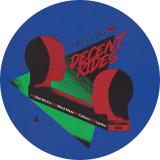
The Austrian imprint Fortunea Records took a little break to fill up their batteries and comes back now this summer with a release by the Bavarian duo Decent Rides. They are around for a couple of years and are also the masterminds behind the label Interloot Records.
On the ‚Like We Do‘ EP they are your guides for a versatile house infiltrated tour. The title-track is an energetic floorfiller with modulated synth sequences and heart stomping drum patterns. Definitely the killer app on this wax.
The second track on the A-side features the tune ‚Mind Maze‘. A funky bouncing bassline, reverberant almost siren sounding tones, staccato vocal samples and high accentuated hats make you blister your feet from your high intensively dance moves.
On track B2, the duo adds further "Colours" to the record. This melancholic deep house tune exudes a beautiful, somber, and yet captivating atmosphere that is impossible to resist. This track could be very effective when played during sunrise or sundown.
And finally, they round off this release with cosmic dub sounds and shimmering chords. "Lembo" invigorates the senses. Every beat on this tech house track is an invitation to let go and feels you the pulse of the underground scene.
Go check this out!
Limited to 200 records. There will be no repress!
Mastering by Patrick Pulsinger.
Speak to Orlando Higginbottom, aka TEED, and themes of love and obsession with electronic music quickly emerge, rooted in a childhood shaped by classical training and underground dance culture. His project Totally Enormous Extinct Dinosaurs, initially a joke, grew into a global success, taking his melodic, vocal-driven dance pop to clubs and festivals worldwide. Since relocating to Los Angeles in 2015, the city"s sounds and "pre-gaming" nightlife culture have inspired his upbeat, club-focused DJ-Kicks mix. The compilation includes new exclusive tracks by TEED alongside exclusives from Joe Goddard, Jacques Greene, Austin Ato, Casino Times, and Oscar Farrell.
Internationally acclaimed underground hit record that has been championed by who's who of the good dance music circle in the last 3 years since its first release. Lately it has been picked up and hammered by Jane Fitz. The only way was to give it a new life with fresh new remixes by DJ Sneak, Elia Nafzger, Basic 7 and new deeper subliminal version by Tripmastaz Enterprises.
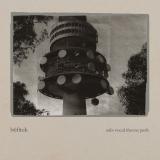
Portal Replica welcomes cult Australian duo, B(if)tek, onto the label with a first-time-on-vinyl release of their debut album ‘Sub-vocal Theme Park’ released in 1996 exclusively onto CD. The 2x12” release includes the original album, plus additional never-heard-before 'lost' tracks from the pair. The album has been mastered by Rashad Becker at Clunk Studios (DE) and pressed to 180g heavyweight vinyl.
Kate Crawford and Nicole Skelty’s pioneering electro-femme outfit ‘B(if)tek’ can be traced back to 1994 in Canberra, where lack of blueprint blossomed their playful and bizarre experimentations in techno — ‘feminism with a wink and a bleep’. Thirty years on, the uniqueness and ingenuity of B(if)tek’s deep analogue exploration endures.
“Monstrous clowns dressed as princes whose role is to laugh at themselves and entertain outlandish beings, suffocated by etiquette, conspiracy and lies, bound by confession and remorse … and beyond that, the auto-da-fe and silence.” – Ferdinand (Pierrot), from the film “Pierrot Le Fou” .
Photography by Kate Crawford.
Design by Jesse Sappell.
Mastered by Rashad Becker at Clunk Studios, DE.
Suck The Pit is the first release from Brush on the Sone imprint. An album that covers Please reach out via mail if you wish to purchase the record or inquire the digital files.
Telling a tale of house music’s early days or roots without mentioning Tony Humphries as a club DJ, remixer and radio disc jockey would make it an incomplete, forged and most of all a bit of a yawn.
Born in Brooklyn in 1957, Humphries’ musical journey is synonymous with New York City’s dance music history and the evolution from uptempo soul music to house: from being a dancer at David Mancuso’s infamous Loft parties to becoming a mobile DJ and getting the call from Shep Pettibone to become his right hand at
the then new Kiss FM radio station, followed by countless remix offers and a legendary residency at Newark’s Club Zanzibar. Next to that one, is was especially his work as a radio disc jockey for said station during most of the 1980s until 1994 that gave him majestic clout. Breaking new records week in, week out,
putting New Jersey acts like Adeva and Jomanda or countless up-and-coming producers from there on the musical map, while simultaneously playing the hottest imports from Europe, trax from Chicago, dance classics and all things straight from New York’s music factory that never seemed to stop.
Going to his vast and almost complete archive of radio shows from way back when he graced those airwaves, we at Running Back Records have pickedNew Release Information original recordings that symbolize his importance as an industry giant and ambassador of this style of music.
„But one thing I would like to point out is that, as a DJ, the music I play is not my music. I want to make it perfectly clear that it is music that is released, and it’s everyone’s music. I do not take any other credit than being the middle person exposing this music.“
(Tony Humphries in: What Kind of House Party Is This?, Jonathan Fleming, 1996)
The Dead Mauriacs is the project of French artist Olivier Prieur, "Paravents et miroirs, une cérémonie" is a live soundtrack.
The Dead Mauriacs describe their music as "Exotica Concrete" - their music is composed of field recordings made on a daily basis, as well as a diverse collection of sounds, including piano, Indian harmonium, violin, ukulele, didgeridoo, pieces of wood, glass, paper, and metal plates. The album is a spectacular 40-minute sound collage, assembled by sampling Exotica music represented by musicians and arrangers such as Les Baxter and Arthur Lyman, who were active in the 1950s.
"Exotica is a musical genre or sub-genre that emerged in the 1950s in the United States with musicians and arrangers like Les Baxter or Arthur Lyman. It is an extraordinary music because it is false: bird calls imitate bird songs, you can hear the sound of the waves, it is a Western fantasy, particularly North American, of a world and an imagery that never existed. It is a music associated with mass tourism, mass entertainment, consumerism. Arthur Lyman recorded about 30 records in 10 years in Waikiki. With his band, they played and recorded under a geodesic aluminum dome. The dome belonged to the owner of the hotel he played for every night. They did this at night to avoid noise. It's music that is both profoundly naive and totally flawed. In this, it is seductive and intellectually interesting. It is music that could easily be criticized today, but it is an imaginary in itself, like the Italian film music of the 1960s and 1970s." (Excerpt from the calax's interview)
The Dead Mauriacs are not only involved in music, but also in a wide range of other creative endeavors, including video and painting. He also repsonsible for the artwork of this LP. The inside of the product is also accompanied by an 8-page interview with Mauriacs and compiled his amazing artworks.
The Dead Mauriacs
Paravents et miroirs : une cérémonie / Screens and mirrors: a ceremony
Side A
Courte dérive, une ouverture / Short drift, an opening
Le retour des insectes électriques / The return of the electric insects Les oiseaux étranges / The strange birds Tension, terreur factice / Tension, false terror
Dénouement malais / Malaysian ending
Rituels et vanités 1 / Rituals and vanities 1
Rituels et vanités 2 / Rituals and vanities 2
Italiens dʼHambourg / Italians in Hamburg
Side B
Secrets pour piano / Secrets for piano
La suite Monory, Padoue-Le Caire-Nassau / The Monory Suite, Padua-Cairo-Nassau Hommes à découper / Men to cut out Lassitude moite / Clammy weariness
Le soleil artificiel du pont croisière / The artificial sun on the cruise deck
Pirogues et palmiers, vus de la scène / Pirogues and palm trees, seen from the stage La traversée / The crossing Rideau / Rideau
Fields recordings : Semproniano and Siena, Italy, Figueira, Portugal, Charentes, France. An electrical wire with a frequency shifter gave birth to the insects. Real and fake piano. Everything made with a computer and a midi keyboard.
Music premiered at Hörbar, Hamburg, 28th of December 2017. Music (and video) Olivier Prieur.
Thanks to Thorsten Soltau and all people at Hörbar.
Hello to Felix Kubin & Marie-Pierre Bonniol, Julia & Jan Warnke. Kisses to Hélène.
San Francisco duo Vin Sol and Johnny Five, aka Triple Five Sol, unveil their Puppy Cuts imprint with the ‘Sounds From The Pound Vol.1’ EP. It follows their debut EP release on Dark Entries in 2025 and their appearance on a Nervous Records compilation in 2024.
“Puppy Cuts is my new label with Five. After our last record on Dark Entries we decided to start our new label. Deep house and acid steeped in New York Chicago and Detroit vibes” - Vin Sol Triple Five Sol’s ‘Sounds From The Pound Vol. 1’ kicks off with ‘Blocked’, a stripped-back groover with an understated 303 offset by chopped-up gospel samples, before culminating in a jacking vibe. ‘Come Over Mackin’ is next, deep and soulful chords weave through tough drums marked by rimshots saturated in reverb, before the crushed up pads and grainy rhythm of ‘Grocery Bag’ continues. ‘Roll Models’ then closes primed for the dancefloor with an irresistible organ bassline doused in a sustained, dub-like chord, along with more vocals full of feeling.
Another Taste is back with their follow up album: Another Taste II delivers eight new cuts of boogie, funk, and obscure disco influenced productions, recorded live to tape. Comes with Download code.
After lighting up renowned clubs like KOKO London, Jazz Café London,Tresor Berlin, New Morning Paris, and festivals like Love Supreme (UK), Lost Village (UK), Nuits Sonores (FR), Hamburg Jazz (DE), Lowlands (NL), ADE Amsterdam - the band has surfaced from the studio anew, mixing myth with music.
If their debut record in 2024 was an introduction to their musical range, Another Taste II is the full immersion. The two-sided album plays like a neon-lit cab ride where the radio is set to groove. Expanding their palette with sharper songwriting, denser arrangements, and a fictional universe.
The album showcases Another Taste’s collective at full strength: Barend Lippens, Bobby van Putten, Bob Roche, Teun van Zoggel, Sarina Voorn, Diogo Carvalho, and Florian Verhagen. Together they summon a sound that is electrifying, communal, and unmistakably theirs, joined on “Peace Call” by Arp Frique and the Perpetual Singers, and bolstered throughout by a dedicated brass section.
Another Taste II is engineered and mixed by Bobby van Putten, mastered at The Carvery by Frank Merritt, with artwork and design by Timo ter Braak, Walt van der Veen and Robert Reinartz.
The new album presents a collaborative creation that’s both timeless and unpredictable, pulling listeners deeper into the band’s universe with every spin.
Life and Death launches Peak Time Archives, a new vinyl and digital various artists series shining a light on rising producers and the next wave of label-affiliated talent.
This first edition moves across the full spectrum of the dancefloor. Jennifer Loveless — Guardian 'Artist To Watch', Mixmag Track of the Year recipient, and alumni of !K7, Future Classic and Butter Sessions — opens with "Satisfaction", a warm, body-moving indie dance reinterpretation that feels at home as much at Ibiza sunset as it does on a festival main stage.
UK mystery producer ROKAR follows with "Bedroom Headliner", a garage-rooted house cut that blurs the line between intimate and euphoric, already earning BBC Radio 1 plays and support from Marco Carola, Skream and Chloé Caillet.
Rudy With A Hoodie & J-Land deliver "The Rhythm", a driving, hypnotic peak-time weapon built for main stages, drawing on the analog warmth of Red Axes and DJ Tennis.
Mexico City's PAURRO closes the record with "Chik Fresa" — playful, punchy indie dance with personality to spare, from an artist who has performed at Tresor and Boiler Room and released on Cómeme and Nervous.
Four tracks. Four distinct voices. One dancefloor.---
Following the release of Chris Liebing's 'Evolver' album this spring, German duo FJAAK rework 'Higher Things' which appeared on the full-length, releasing via CLR on 29th May 2026. Long established as a formidable force within Techno, FJAAK are known for crafting high-impact, floor-focused tracks, often via their self-titled imprint, with the Berlin artists now joining a star-studded cast on Chris Liebing's latest full-length, including photographer and film director Anton Corbijn on photography, and collaborations with Charlotte de Witte, Luke Slater, The Advent, Speedy J, Terence Fixmer, Pascal Gabriel, and
Daniel Miller.
Their remix reshapes 'Higher Things' around a rattling dub techno framework, where molten chords soften the weight of mechanical kicks while resonant stabs and swelling textures steadily intensify. The result is a hypnotic yet forceful reimagining, balancing atmospheric depth with anthemic, warehouse-ready pressure.
The original version of Chris Liebing's 'Higher Things' appears on his debut solo LP, 'Evolver', released 27th March 2026 on CLR. Marking a distillation of over three decades at Techno's core, the album pairs introspective depth with immediate, floor-driven impact, bringing together contributions from the likes of Luke Slater, Charlotte de Witte, Speedy J and The Advent, while ultimately remaining rooted in Liebing's singular vision, channeling the raw, industrial energy of classic club spaces into a refined, forward-facing long player.
LOS ANGELES—To celebrate the 40th anniversary of the celebrated Talking Heads and Jonathan Demme’s concert film Stop Making Sense, the set will be re-released as a 2LP and 2CD/Blu-ray set this summer.
Released last year, the sold-out Deluxe Edition of the soundtrack will return as a 2-LP black vinyl on Rhino and 2-LP crystal clear vinyl at retail. Both variants feature a 12-page booklet with liner notes from all four band members –Tina Weymouth, David Byrne, Chris Frantz, and Jerry Harrison—and band photos. The 2CD/Blu-ray version includes the entire 28-page booklet from last year’s Deluxe Edition and a Dolby Atmos mix of the complete concert, mixed by Jerry Harrison and E.T. Thorngren, who also mixed the original release. Both will be available on July 26. Pre-order now.
The band appeared together for a sold-out screening and Q&A last night at the Pantages Theater, the same theater at which Stop Making Sense was recorded. They were joined by Blondshell, who performed “Thank You For Sending Me an Angel.” Another special screening with the band will occur in Brooklyn at the King’s Theater on June 13, with the Q&A hosted by Questlove and The Linda Linda’s performing “Found a Job.” The two events cap off a banner year of celebrations for what many consider to be the best concert film of all time.
The inspiration for Stop Making Sense came when director Jonathan Demme saw Talking Heads perform during the band’s 1983 tour for Speaking in Tongues. Afterward, he approached them with the idea of making the show into a concert film. They agreed and worked together over the next few months to finalize the details. Ultimately, Demme filmed three shows at Hollywood’s Pantages Theater in December 1983 to create Stop Making Sense.
The concert film presents a retrospective of the band up to that point, with a performance that weaves together songs from all six of its studio albums. The show progresses methodically, opening with Byrne onstage performing “Psycho Killer” alone with a drum machine. After each song, he’s joined by a new band member until Weymouth, Frantz, and Harrison are all on stage with him. The group continues to grow throughout the concert as members of the stellar touring band are added: keyboardist Bernie Worrell, percussionist Steve Scales, guitarist Alex Weir, and backup singers Lynn Mabry and Ednah Holt.
The band performs 18 songs in Stop Making Sense, including its recent single at the time, “Burning Down The House.” That summer, the song was in heavy rotation on radio and MTV, helping the song become the band’s first top 10 hit in America. It was, however, a different song from Speaking in Tongues that was destined to deliver one of the film’s signature moments. Talking Heads would perform “Girlfriend Is Better” wearing the now iconic, oversized suit inspired by costumes worn in traditional Japanese theater. For good measure, a picture of David Byrne in the suit also graces the album cover.
Stop Making Sense focuses mainly on music by Talking Heads but does include a few songs recorded outside the band: “Genius Of Love” by Tom Tom Club, “What A Day That Was” and “Big Business” from Byrne’s 1981 album, The Catherine Wheel. Limited edition vinyl versions of both of these albums, along with Harrison’s The Red And The Black, were released for this year’s Record Store Day.
When it arrived in September 1984, Stop Making Sense was an artistic and commercial triumph. The film had people dancing in theatre aisles, and the soundtrack sold over two million copies. Just last year, the Library of Congress added Stop Making Sense to the National Film Registry in recognition of its cultural, historical, and aesthetic significance.
Weymouth praises Demme as a collaborator: “…Jonathan was a very enthusiastic, highly adaptive, and imaginative guy who was just as good a listener as he was a talker and collaborator. From the get-go you just got the impression he was as flexible as he was disciplined. Being team players, that boded well for a great relationship and a great film!”
Harrison says the film still holds up today: “To me, Stop Making Sense has remained relevant because the staging and lighting techniques could have been created in a much earlier time period. For example, Vari-Lights, lights with motors to re-aim them, had just come into vogue. Had we used them, there would have been a timestamp on the film, and it eventually would have felt dated...The absence of interviews, combined with the elegant and timeless lighting, created a film that can be watched over and over.”
Byrne says it’s interesting that this album was – for many people – an introduction to Talking Heads. “We had done a live album before this, but coupled with the film, and with the improved mixes and sound quality, this record reached a whole new audience. As often happens, the songs got an added energy when we performed them live and were inspired by having an audience. In many ways, these versions are more exciting than the studio recordings, so maybe that’s why a lot of folks discovered us via this record.”
Frantz recalls the sheer joy surrounding the entire Stop Making Sense experience. “I’m talking about real, conscious, transcendent joy… I’m talking about what the Southern gospel people call ‘getting happy,’ which means ‘to be filled with the Spirit.’ That is what happened to us onstage every night, and from my seat behind the drums, I recognized that this was happening to the audience too. Joy was visible in front of me and all around me every night.”
ALERT: BIG 90s ITALIAN RAVE COMP - a lot of very in demand tunes on here.
Navigators
Franco Falsini and the Interactive Test Universe
There are musicians who follow their time.
And then there are those who seem to move along a different trajectory—like navigators crossing sonic eras without ever truly belonging to any one of them. The story of Franco Falsini belongs to the latter. It is a story that begins long before raves, before techno, before the word “electronic” had even become a recognizable musical genre. A story that moves across continents, technologies, and sonic visions, eventually arriving at a small creative laboratory born in Italy in the early 1990s: Interactive Test. This compilation is a fragment of that universe. But as often happens with the hidden histories of music, understanding it requires going back. Far back.
The Beginning: Machines, Tape and Space
In the late 1960s Franco Falsini leaves Italy and moves to the United States. It is not merely a geographical journey—it is also a journey into a new idea of music. At the time, synthesizers are only just emerging from research laboratories. Multitrack tape recorders allow musicians to build entire sonic worlds on their own. Technology is still far from standardized: every studio is almost an experimental workshop. In Virginia, Falsini builds one of his own. Among cables, oscillators, electric guitars and reels of magnetic tape, a kind of music begins to take shape that resembles nothing else being made at the time. It is not simply rock, and it is not yet truly electronic. It moves somewhere in the space between the two. Out of these explorations emerges Sensations' Fix, the project through which Falsini releases a series of albums during the 1970s. Records that seem to come from a parallel dimension: cosmic landscapes, electronically treated guitars, synthesizers drifting like satellites. Many years later those albums would be rediscovered as visionary works. But at the time they were simply the result of relentless curiosity. A curiosity that would never fade.
The City That Never Sleeps
In the 1980s Falsini’s trajectory leads him to New York. The city is a sonic organism in constant transformation. In its clubs and recording studios something entirely new is beginning to take shape: music built from drum machines, sequencers, and samplers, created for the body before the living room. It is the dawn of modern dance culture. Falsini works as a sound engineer, producer and experimenter. From close range he observes electronic music transforming into a global language. Machines become more accessible, computers begin entering studios, and rhythm takes on an increasingly central role. Yet even in this phase Falsini does not simply follow what is happening. He absorbs. Observes. Reimagines. When he eventually returns to Italy, he brings back not only technical experience but also a clear vision: the conviction that electronic music is an open space, a territory still waiting to be explored.
Tuscany, Early 1990s
At the beginning of the 1990s something is happening in Italy as well. In clubs, abandoned industrial warehouses and clandestine parties, a new scene is beginning to form. It is rave culture: a spontaneous movement bringing together DJs, producers and listeners in a collective experience driven by rhythm, technology, and creative freedom. It is within this context that Franco Falsini, together with his brother Riccardo, creates Interactive Test.
The name almost sounds like a scientific experiment. In many ways, it is. Interactive Test does not emerge as a traditional record label. It begins as a laboratory—a place where ideas, sounds and musical identities can be tested and explored. Around the Falsini studio in Tuscany a small constellation of artists and DJs begins to gather, helping to shape the sound of Italy’s emerging electronic scene. Among them are Andrea Giuditta, Francesco Farfa, Gabry Fasano, Roby Mastelloni, Roby J and many others. Each brings a different musical sensibility. But they all share the same intuition: electronic music is not a genre. It is a language.
The Laboratory of Identities
One of the most fascinating aspects of the Interactive Test universe is its constant play with identity. Franco Falsini releases music under several different names: Open Space, Youth Wave, Agent Fylfoyt, Man Myth Magic. These are not simply pseudonyms.
They are different sonic perspectives, as if each project were a window opening onto a parallel musical universe. Open Space, for example, explores more atmospheric and visionary territories. Youth Wave moves between electronic groove and club-oriented rhythms. Other projects experiment with digital psychedelia or hypnotic techno textures. Interactive Test becomes something more than a label. it becomes an ecosystem.
Domestic Machines, Infinite Worlds
Looking back today at the technology used in those productions, one might almost smile. Many tracks were created on Amiga computers, MIDI sequencers and analog synthesizers wired together in home studios—tools that appear modest when compared to today’s digital possibilities.
Yet precisely these limitations became a creative force. Every sound had to be built, shaped and reinvented. Sequences developed slowly, almost like living organisms. The tracks did not always follow traditional dance music structures; often they felt like genuine sonic journeys. Music built from space.
A Hidden Constellation
Many of the records released by Interactive Test in the 1990s remained for years almost invisible objects, circulating quietly among DJs, collectors, and devoted listeners. Yet it is precisely this underground existence that helped preserve them. Listening again today, one perceives something rare: the feeling of music that does not fully belong to its own time. Music suspended between different eras. Perhaps because it comes from a vision that both precedes and transcends trends.
Continuing the Journey
Looking at Franco Falsini’s entire path—from the electronic psychedelia of Sensations’ Fix to the rave culture of the 1990s—a surprisingly coherent line emerges.
A line defined by exploration.
Each project, each pseudonym, each record appears as a new route within the same great sonic voyage.
Interactive Test was one of its stations.
A laboratory.
A community.
A creative platform.
This compilation gathers some of its traces.
Not as a simple archive of the past, but as a map of a musical territory that continues to expand even today.
Following in the steps of last year's mysterious "Beyond the Garage" 12 inch, L.I.E.S. throws another curveball with a 30 track continuous LP from veteran West Coast producers, Vinny+Charlie. Each side running 20 minutes, this can best be described as a smoked out, haze filled afterparty beat tape on wax. Obscure samples, dusty sp-12 crushed beats, head nodding loops, sweet low rider soul..chopped, sped up, slowed down and ready to wreck your system. Limited edition white label housed in a lp jacket with custom art by LA artist SOB STORY. 300 copies worldwide.
A record that feels introspective and timeless, balancing dancefloor functionality. With Early Reflections Pt. 2, Insect O. continues the journey with the same quiet confidence and emotional depth that made the first chapter so compelling. Once again rooted in Dub Techno and Dub House, this second installment feels like a natural continuation, deeper in mood, even more immersive in detail, and beautifully refined in its execution. The result is a record that feels introspective and timeless, balancing dancefloor functionality with a deeply emotive listening experience. Insect O. proves once again that true depth does not come from excess, but from restraint, sensitivity and a strong understanding of space and motion.
REPRESSED !
Patrick Keel is a multi-instrumentalist, composer, producer, and performer. The Pool was his solo project, the sum of fifteen years of experience in live bands, studios, and home recording. Patrick was heavily influenced by the radio of the early and mid 1960's in Dallas. The British bands and Black soul of the era gave him a distinct style, and shaped his musical attitude. The New Wave/Punk/D.I.Y. attitudes of the late 1970s inspired him to express himself in a new way. 1980 saw the release of "Pool One," a sixty minute home-produced cassette. "Pool Two" followed in 1981, which received much praise and little distribution. In 1982 he released a 5-song self-titled vinyl EP of tight, skeletal, synthetic dance music.
In 1983, 'Dance It Down/Jamaica Running' 12' EP was released on Moment Productions. Based on response from D.J.'s in New York and the Bronx, Patrick went back in the studio and remixed two songs from the self-titled EP for rapping, scratching and break dancing. "Jamaica Resting" was sped-up, extended, and reconfigured as "Jamaica Running". The whirlpool synth-strut of 'Dance It Down' came out of the studio as 'Dance In Dub', with a heavier kick and extended dub outro. These spacious versions were optimal for DJ play, slotting regularly in sets at hip clubs like Danceteria. For this reissue we've added two bonus European remixes from the 1984 12' of 'Dance It Down/Jamaica Running', released on Nunk records from Belgium. Both songs employ the use of a Boss DR-55, Korg MS-20, Korg PolySix, and a Prophet 5, and were mixed on a 16- track Ampex recorder. The Pool's spartan, self-assured songs are experiments you can dance to.
All songs have been remastered for vinyl by George Horn at Fantasy Studios in Berkeley. The record comes housed in a newly designed jacket by Eloise Leigh, updating the magenta and blue grid and Pool logo of the Moment Productions release. Each copy includes a 12-page booklet with a never seen before photos, press clippings and notes.
Dr. Caligari was notoriously out of his mind — a genius fixated on experiments and a former lecturer at the Department of Experimental Phonetics. His students, Spacelunch included, spoke of him with cautious admiration: “Too smart to be normal; too bold to stop.” His laboratory looked like a hand-welded cosmos: cables everywhere, diodes, and the soft hiss of electricity.
“What’s that?” Spacelunch nodded toward the large glass dome.
“My new invention that allows sound to become tangible. Care to take a look?”
The Professor and Cat carefully stepped inside.
“You’re about to be the first to witness the voice of space!”
“Hey, we didn’t sign up for this!”
“Doesn’t that make the experiment more interesting?”
Caligari smiled and turned a dial. Their bodies stretched like strands of pasta and vanished. An instant later, they found themselves in another dimension: towers of transistors and coils rose into the sky, the air thrummed with low-frequency oscillations, and every flash of light carried the rhythm of a sonic lattice. Almost at once, the image wavered like old film, went black, and then snapped back to the laboratory. Caligari sat at the console, eyes fixed on the monitors. “It worked,” he whispered. “Perfect phase alignment!”
Nonna Fab returns with the third release on his imprint, Movement and Soul Records, with a 5 track club-focussed EP 'Journey To The Outer Atmosphere'.
Following the success of his last release, we see a deeper dive into the more dance-floor orientated sound that Nonna is curating, spanning deeper soulful house across the release with influences of broken beat, jazz and percussive dance music.
The opening track 'Dawn Chorus' is a trip into a more natural soundscape and deeper arrangement of sound. A perfect track to take a steady dance-floor to higher heights.
The A2, 'Low Winter Sun', aptly named deep house music with no frills. Proper sub-bass tuned for tuned-up soundsystem use.
'Meditations' which is the final track on the A side has clear broken beat influences, percussive, deep and rhythmic. A breather for the dance floor.
The title track of the EP, 'Journey to The Outer Atmosphere' is a big peak time house journey to the cosmos. Expansive synths, 909 kit and if timed well, certified to blow the dance floor up. Clear François K inspiration here.
The final track of the release, 'First Light', is proper deep house music named suitably for an early sun rise roller with a huge hammond organ solo, enough to keep the leavers in the building.
A little over a year ago Tim Reaper made his first appearance in the town LoDubs is based in, Portland, Oregon, at the always forward thinking westside venue Barn Radio. The bill was rounded out by yours truly, Jon AD, who set the standard for the night, which was a boggy, thick warehouse vibe, even though the venue was more of a tightly packed repurposed storefront with an overactive fog machine.
This stop turned into a bit of a several day stopover for the TR, who saw the town, met up with other Portland people, and after that was left with a bit of a aural vision of the whole experience, the DIY ethos of the Portland, and the desire to document these impressions on the label of his bill mate for the aforementioned night, LoDubs.
Shortly thereafter "Triumphant March" arrived at the LoDubs mailbox, and reverb heavy, oozing slab of Jungle funkiness.
Upon realizing this would be good material for a dubby remix, the next step was reaching out for people to do so, and Beatrice M was at that time really getting noticed with their take on Dub. This year has seen them really move up the ranks, needless to say.
Big release outta Casablanca, Morocco from Cee ElAssaad.
We here at Local Talk have been big fans of Cee's deeply organic and uplifting House productions for a good while, so we're mighty happy to present this new release.
The A side starts up with a massive organ house workout that has been played on repeat at Mad Mats residency at the Soulmates club in Stockholm over the last 6 months or so. A peak time jam!
To add more fire we asked Emmaculate to throw down a remix for us, and it doesn't hold back. Deep, bumpy and utterly funky. Again...those house organs are fully at work!
On the B side Cee goes to church with deep but slight jackin' 4/4s over some heavy gospel preaching.
To enhance the gospel experience, our friend from Amsterdam, Marcel Vogel makes a long overdue guest visit on Local Talk and delivers a big gospel intro that moves into a jazzy and thumpin' house affair.
Bristol-born, London-based DJ, producer, trailblazer and label head, Conducta announces his brand new EP, SOUNDBOY JOHNNY slated to drop on the 29th May via Up Ya Archives Records.
The new single sees Conducta link up with one of Jamaica’s most original and exciting artists, for a high-tempo cut that channels UK breakbeats into a bassy club roller. Built around an irresistible hook that sticks, ‘Low Can U Go’ sets the tone for the wider project, with BLVK H3RO’s vocal collaboration bringing a fresh edge to accompany the raw, driving intensity Conducta is known for.
The EP, SOUNDBOY JOHNNY sees Conducta lean further into the sounds shaping his recent DJ sets, channelling his long-standing love of jungle and breakbeat into a focused body of work. Across the project, he experiments with faster tempos and chopped breaks, stepping into new territory as a producer. As his first solo release of the year, it marks a confident return with a clear sense of direction, underlining his versatility across different sonic spaces.
Kercha’s debut album ‘Open The Door’ arrives this April via DNO Records. The Black Sea artist’s mystical, disorienting style has set the tone for the label since he dropped the inaugural release six years ago. Now, across 16 tracks — including collabs with Mystic State, Congi, NST, Khromi and Finnoh — his smoky sampledelic dubstep is tighter, heavier, and more curious than ever, with a new sense of danger and bubbling rage that feels fit for our chaotic times.
Themes of movement and change course through the LP. On the opening gambit ‘A Path Into The Unknown’, twinkling arpeggios emerge from the gloom like stars lighting the way. Tracks like the eponymous ‘Open The Door’ and ‘Mind Extraction’ deliver that classic Kercha sound, where left-field samples dart in at right angles. ‘Dangerous Road’ weaves between the call and response action of grotty stabs and devilish subs. ‘Take A Break’, featuring Mystic State, goes on the attack with searing acid. ‘Can’t Wait For Today’, though lethargic in its pace, sees San Francisco-based rapper Finnoh deliver stream-of-consciousness bars that skewer our present and nudge us to revolution.
Work took place over the course of several years, during which Kercha relocated with his family from Russia to Georgia, where he now resides in the capital, Tbilisi. “Sometimes I wrote music while travelling on a bus, sometimes late at night while my family was asleep, sometimes just sitting on the grass in a park, and of course in my home studio as well,” he says. “By the time the album was finished, it included music from different periods, and it may vary in sound and concept.”
Any major upheaval in life will result in moments of hardship, but also hope. Both can be found throughout ‘Open The Door’. There’s times when the darkness threatens to envelope everything: during the cold, crackling ‘Disclosed’ and the eerie, dystopian ‘Infection Of Lies’; on ‘Trigger Activation’, with its grunting lows and broken glass hook, and ‘Ballistics’, where a wall of sub-bass is pierced by shrapnel stabs.
The balancing light comes on ‘4 AM’, featuring Nottingham duo Congi, when clashing swords and cinematic strings, meet a soft Rhodes piano — the juxtaposition between heavy low-end and floaty keys and vox reflecting those moments of transcendence often found in the early hours. From the injection of garage energy on ‘Bubs’, with Edinburgh’s Khromi. And on with ‘My Feeling’, featuring South Russian vocalist NST, which closes the album on a deep but expansive note, bookending the experience with more starlight synth tones.
“It’s a reflection of my life journey and the changes connected with emigration and overcoming various difficulties,” explains Kercha. “This period means a lot to me, which is why the album includes tracks from the time of preparing to leave up to adapting to a new country.”
Still, he wants listeners to be able to derive their own understanding. “I think the essence lies in the ability to contemplate, not in any predetermined meaning,” he says. “I can only say one thing: thank you for appreciating what I do and for your support. I hope it inspires you to make the same firm decisions to change for the better as it did for me.”
Out via 4 x 12” vinyl, ‘Open The Door’ is a captivating artistic statement, showcasing the journey of an artist with a truly original signature sound — a rarity that should be treasured and celebrated.
Rhythms of postmodern realism at the very bottom of the DNO.
Baby T is a space away from her work as B.Traits in which Brianna Price can lean more into the junglist, drum ‘n’ bass and hardcore sounds which she loves so dearly. With BSHEE02, the second drop on Price’s own Banshee label, Baby T delivers a darkside masterclass of an EP. This record is a quartet of system blowers which doesn’t let up for a single second from start to finish.
Opener ‘Times Up’ is urgent from the off - the initial strains of this joint find sirens wailing in the monitors over a twitchy kick/drum/hats combo. From here on it’s distilled raver perfection, the drums taking us on a wild Wipeout-style ride as the subbiest of bass skulks at the bottom of the mix. Imagine a more technoid take on the classic breakbeat freerides of Skanna and you’re not far off the ‘Times Up’ sound.
A remix of ‘Times Up’ from man like Aloka leans with devilish glee into the murky underworld that lurks beneath Baby T’s original. Aloka’s version is extremely eerie in a manner which makes you think of the darkest corners of a DMZ party. When things really kick into gear, driven by an irresistible kick dembow, the effect is hypnotic - think the dubwise junglism of the UVB-76 cohort.
BSHEE02’s B-side kicks off with ‘Coercive Control’. This is a cut which delivers on its title in spades, putting the listener in a trance with an interplay of low-slung bass, whirligig synth tones and more of those perfectly executed broken beats. The acid starts to kick in around the minute mark, and it turns out to herald a total earworm of a lead melody.
There’s plenty of dimly-lit malevolence to BHSEE02 closer ‘Dense Dickwood’s grinding atmospherics and gurgling bass throbs. However, Baby T opting for a half-time drum break here gives the cut a vibe not dissimilar to the weightiest jams of classic Massive Attack - that is, until an absolutely remorseless switch-up occurs halfway through, delivering volley after volley of intense drum hits.
Give me some crystal meth, put it in a line and snort it - there you go."
Ella Fitzgerald meets Gangsta Rap and the Beach Boys encounter their despotic father. AMERICAN PSYCHE by Raymond Pettibon & Oliver Augst is an ABC of Jazz standards and nostalgia on speed, "that the world will never forget."
You can't put Bebe Rexha in a box. From her Grammy-winning songwriting roots on Eminem's "The Monster" to global chart-toppers with David Guetta and Florida Georgia Line, Rexha has established herself as a premier musical chameleon. With her latest project, Dirty Blonde, she officially enters a new era as an independent powerhouse. Now signed to EMPIRE, the Brooklyn-born star has crafted a 13-song "genre kaleidoscope" that serves as her first-ever visual album, representing a total creative rebirth and a departure from the major-label system she's known since she was a teenager.
Recorded across London, Tokyo, and Europe, Dirty Blonde captures the energy of Rexha's global travels. The project seamlessly blends heavy-hitting dance floor anthems with deep, personal storytelling. With the lead single "New Religion" she takes us straight to the club by reimagining the iconic dance record "Insomnia" by Faithless. On "Tokyo," she explores a drum & bass pulse inspired by a late-night rendezvous in Japan, while "Cike Cike" (produced by long-time collaborator DJ Snake) sees Rexha embracing her Albanian heritage by mixing traditional linguistic roots with modern 808 basslines.
At the emotional core of the album is the lead single, "I Like You Better Than Me." The track strips away the pop-star veneer to tackle themes of insecurity and self-scrutiny, blending raw lyrics with a pop-rock edge. From the Jersey-bounce-meets-country vibes of "Drink and a Little Love" to her vulnerable reflections on fame, Dirty Blonde is a celebration of an artist who is finally playing by her own rules. As Rexha firmly asserts, "The old Bebe is dead," leaving behind a focused, stronger creator who is making the music she truly loves.
Tasty Recordings return with another set of straight up, party starting firepower. Five delectable edits cooked up in the kitchen of a handpicked selection of producers, that know a thing or two about splicing the spice into your life.
Fresh from a run of must-check EPs on Syncrophone Recordings, Black Jazz Consortium man Fred Peterkin inaugurates a new label, Base. The New York-based producer appears to be the man at the helm, since his next scheduled release also appears on the freshly minited imprint. He begins with 'There & Back (Long Player)', a languid, mid-tempo chunk of string-laden deep house classiness, before opting for a breezier, dreamier and sunnier sound on the impeccable 'Something For The Road'. Peterkin's ability to fuse looseness, heaviness and subtly soul-flecked instrumentation comes to the fore on EP highlight 'Rhythm & Movement', while 'BTA10711 (4am Mix)' tiptoes the fine line between dubby deep house and spacey, far-sighted futurism.
Real heads with good memories and a lifelong love of good grooves might remember that the original mixes of 'Disco Glory' first appeared on DJ Garth's Wicked imprint in 1996. Top DJ dogs like Danny Tenaglia, Francois K and Doc Martin all used to drop them on the regular and ensuing remixes even made their way onto Sony Pictures' 'Groove' soundtrack. The DJ Garth & ETI mixes have long been out of print, so fetch a pretty penny on the second-hand market, which means it's great news that the 30th anniversary is marked with a fresh return to wax. The Acid Rock mix is psychedelic and trippy, the Look To The Moon dub is a dark and dubby tech sound that could be brand new, and the Ye Olde Organ Grinder mix has a moody and retro house charm.
Two lost cuts from the orbit of Tony Humphries surface at last, pulled straight from acetates in his private archive and pressed here for the first time. Unearthed like messages from the booth itself, they capture that raw, transitional moment when club music was still inventing its own language night after night.
On the A-side, Kerri Chandler with “Kerri Kaoz Beats”, a stripped, swinging tool full of basement pressure and early-morning intent. No excess, no compromise, just Kerri doing what Kerri does best. Flip it over for Dee Dee Brave – “My My Lover (Tony Humphries Dub)”, a previously unheard Humphries reconstruction that stretches the vocal into something deeper, moodier and unmistakably floor-ready. Spacious, patient, and quietly euphoric.
Two pieces of house history that never made it past the acetate stage until now. Not revisions, not edits, but originals finally stepping into the light. Essential documents from the roots that still point forward.