Search:wild child

Styles
All
Hainbach - Voice Magnetic

Hainbach

Voice Magnetic

CassetteSEIL048CS
Seil Records
05.05.2023

Voice Magnetic by Hainbach is the enigmatic Berlin based artist’s sonic diary of 2022. On his sixth release on Seil Records, Stefan Goetsch collages the sounds he made and the ones that surrounded him over the course of twelve months into a powerfully intimate ambient experience.

In his studio or on travels — Hainbach always is working on new material and allows the locations he records his tracks in to find their way into the music. Consequently, on many tracks you can can hear the outside bleeding in — seagulls and waves on "Izmir", the voices of his children while record the piano or the sirens of Neukölln’s police cars in background.

The connecting threads between these pieces are magnetic tape and the human voice — hiss and breath. The result are 15 immersive ambient pieces that make up Voice Magnetic. Often short like the moments that spark them. Fading and intricate, honest and pure.

Based out of Berlin, Germany, electro-acoustic music composer and performer Hainbach creates shifting audio landscapes, using esoteric synthesizers, nuclear test equipment, magnetic tape and a collection of idiophones. Hainbach has become known for his immersive live shows and an unique sound that is both abstract yet very much a corporal experience. Otherworldly and intimate, raw and heartfelt. On his wildly popular YouTube channel, Hainbach shares his love for experimental music techniques and his passion for forgotten machines with a wide audience. Inspiring over one hundred thousand each week to explore synthesis, electronics - and to leave beaten paths.

pre-order now05.05.2023

expected to be published on 05.05.2023

12,56

Last In: 2026 years ago
Watain - The Wild Hunt LP 2x12"

Nach ihrem bislang erfolgreichsten Album 'The Agony & Ecstasy of Watain' in 2022 (Top 10 in Schweden & Deutschland) und pünktlich zur neuen Europa-Tour im Mai und den Festivals im Sommer 2023 legt die schwedische Black-Metal-Band Watain ihren Klassiker von 2013 jetzt auch in limitierter Vinyl-Deluxe-Auflage neu auf: 'The Wild Hunt" kommt auf oxblood-rotem Doppelvinyl im exklusiven Gatefold-Sleeve.

pre-order now21.04.2023

expected to be published on 21.04.2023

38,19

Last In: 2026 years ago
Eden Ahbez - Wild Boy: The Lost Songs Of Eden Ahbez LP

“Wild Boy …” is a reissue of the well-known 2016 release curated by Brian Chidester, renowned researcher and biographer of Eden Ahbez. Especially for this album, Brian wrote an interesting text about Abi’s life, which definitely became the decoration of the release.
With the new 2020 re-release, we went a little further and kept what is commonly referred to as studio cuts. It’s a few more minutes in the studio with ahbez himself, full of emotion and life. In addition, to the delight of fans, the edition includes an additional composition Nature Boy (Mantovani Orchestra).
Especially, it is worth noting the outstanding mastering prepared from practically decomposed tapes by the Grammy-nominated Jessica Thompson, which guarantees the deepest and warmth possible sound. Jessica a huge ahbez fan and we’re highly appreciated for what she has done to save his music for the future.
Eden Ahbez is definitely at the origin of psychedelic music and this release can be taken as further proof. Over the past twenty years, the iconic figure of the world’s first hippie Eden ahbez has become famous primarily for his 1948 song “Nature Boy”, praising universal love, and his amazingly solo album from the 1960s called “Eden’s Island” – one from the first concept albums in the history of music and probably the first psychedelic music album. “Wild Boy: The Lost Songs Of Eden Ahbez” deepens understanding of the origins of the psychedelic movement in the 1950s.
The disc contains a musical selection of works by Eden ahbez himself, written by him in the period after Nature Boy. The inclusion of songs such as “Palm Springs” – Ray Anthony Orchestra and “Hey Jacques” by Erta Kitt gives the listener the chance to discover for the first time the little-known recordings of world-famous artists composed by Eden ahbez. Through “Wild Boy” and “Surfer John” you can hear the author’s handling of absurd rock and exotic experimentation, as well as sweet psychedelic pop like Monterey (with Paul Horn on flute). Overall, Wild Boy: The Lost Songs Of Eden Ahbez offers an overview of the lost works of 1949-1971 with seven unpublished recordings and eight rare singles.
If in 2020 you are missing the hallucinogenic content in Eden Ahbez, it amazingly makes up for that deficiency with simple chords, expansive arrangements, and lyrics about travel, relaxation, free love, and spirituality. Thus creating the standard of psychedelic music. Eden Ahbez’s songs weren’t only fantasy and his personal philosophy was the real thing that he lived.

reviews:

“This carefully and extensively researched compilation culls covers by top notch mainstream artists juxtaposed with unreleased Eden recordings. What might sound like a mixed bag is actually more like a chronological, musical non-fiction novel about Eden Ahbez. While Eden was writing hundreds of songs and performing live and making recordings in various styles, his songs were also being picked up by popular artists like Nat King Cole and Eartha Kitt who recorded with a more polished mainstream style. There are also some early rock n roll style recordings here. Eden’s professionally recordings often end up as Novelty Pop records such as “Child of Nature” and “The Clam Man” but if you read between the lines and listen to the lyrics it is pretty eye-opening that he is singing about Eastern-religion-style and pre-hippie philosophies about being at one with the planet Earth.
All of this is explained in the lengthy liner notes inside the lp along with a few choice photos that establish Eden as a founding father of Southern California mystic/psychedelic music.” – Tiki_News
“Eden Ahbez’s life philosophy was summed up in the lyrics of his most famous song, “Nature Boy,” a 1948 hit for Nat King Cole: the song describes a “strange enchanted boy” who wanders the world in search of truth. “The greatest thing you’ll ever learn,” he concludes, “is to love and be loved in return.” Ahbez was a pre-cursor of California’s beatniks and hippies, and an exalted icon of ex-otica via his rare 1960 album Eden’s Island. Beyond “Nature Boy” and Eden’s Island, though, there were nu-merous lesser-known Ahbez record-ings. Ahbez biographer Brian Chidester has been doing an exemplary job of archiving and documenting that catalog of work. The Exotic World of Eden Ahbez (reviewed in UT#38) appeared a few years ago, gathering together 14 Ahbez-related rarities” – Ugly Things

pre-order now31.03.2023

expected to be published on 31.03.2023

26,85

Last In: 2026 years ago
SSPS - THE LIFE & TIMES OF GIGI BLACK 4x12"

4x LP and Zine (ft. photos, historical text and track narrations by the artist) set. Nation bring it.
An essential delve in to the retrospective works of SSPS. Limited edition. No repress. HUGE TIP ON THIS!

" You can't fake the funk, as they say and SSPS is pure funk embodied in all he does, the man oozes the funk 24-7!
One of my earliest encounters with SSPS was at one of the infamous Rubulad parties out in Brooklyn....
the man was decked out extravagantly...a cross between Blowfly and some futuristic being zapped
down to earth directly from the P-Funk mothership. Who was this masked man?
The disco vampire, was beating fast disco tracks relentlessly while slamming in his 707 over the records in real time...
not an easy feat, the beauty of the imperfections making it that much more exciting hearing the gallop and wild energy
he was bringing to the crowd, we were eating it up. This is SSPS, fearless in his approach and execution,
a modernist looking to the future but rooted in the past, an artist committed to his art...
all presented with unhinged emotion. It's all or nothing...everything on the table....do or die...the true epitome of style!!!!

Declaring someone a "cult figure" or a "legend" is a huge weight to carry and is often a term that is carelessly thrown around,
but those of us who have dwelled in this "underground" over the last 30 years can say with confidence that SSPS is just that
to many of us, no questions asked, it's not up for debate.

Now, many years later we see the culmination of his electronic works from 2002-2021 committed to record in this 4xlp,
16 track boxed set (plus 45 page booklet) titled SSPS, "The Life and Times of GiGi Black" thus solidifying
Mr. Nicholson's place in the secret world of dance not dance music.

The only way to describe this offering is "full spectrum electronic musical madness" not to be categorized,
never to be pigeonholed, full of surprises and straight from the gut with a direct hit to the heart.
We could go on about the production processes, about his Furr City studio space or his cross country excursions
for work with a truck packed with paintings (but also his music equipment) plugging in and recording during his
pit stops in Motel 6's across the US. But again it doesn't do justice to simply have a small peek inside the man's mind...
the music is beyond the mind. The process is the process and nothing has or can stand in the way of what the SSPS
has done in his long musical life. Punk Rock, Hardcore, House, No-Wave, Industrial, Jakbeat/Slow-Beat and Noise.
it's all there for the taking, it's all intertwined. If you want it, you will find it within SSPS's works.

Nicholson's path is the embodiment of true culture within "dance music" cultivated from years of learning, experimenting,
and pushing the limits with total commitment and immersion. "The Life and Times of GiGi Black" is true life experience,
it is a reflection of someone delving deep into his craft and presenting it with care in opposition to the fast, disposable,
self gratifying click bait culture we see dominating the pages today. The proof is here, drop the needle, enter the world of SSPS.


n G2 1000 Truths Balearic Inaugural Mix

out of Stock

Order now and we will order the item for you at our supplier.

72,48

Last In: 3 years ago
Lou Reed, Nico & John Cale - Le Bataclan 1972 (2x12")

A1/I'm Waiting ForThe Man 2/Berlin 3/The Black Angel's Death Song B 1/Wild Child 2/Heroin 3/Ghost Story4/The Biggest, Loudest, Hairiest Group Of All C 1/Empty Bottles 2/Femme Fatale 3/No One Is There 4/Frozen Warnings D 1/Janitor Of Lunacy 2/I'll Be Your Mirror 3/All Tomorrow's Parties 4/Pale Blues Eyes (Rehearsal) - Bonus track 5/Candy Says (Rehearsal) - Bonus track.


• Complete iconic concert of the former Velvet Underground members

• Fully remastered and speed corrected

• Extra tracks

• Gatefold sleeve

• Full colour printed inner bags with photos from the concert.

pre-order now17.02.2023

expected to be published on 17.02.2023

30,88

Last In: 2026 years ago
Tricky - Adrian Thaws LP 2x12"

Tricky

Adrian Thaws LP 2x12"

2x12inchK7317LPC
!K7 Records
17.02.2023

Repress !

One of music's most unpredictable characters Tricky is back with his new album Adrian Thaws, released in conjunction with !K7 Records and his imprint False Idols.
'Calling it Adrian Thaws is saying you don't really know me,' says Tricky, explaining the title of his 11th album. 'So many times people have tried to put a finger on me and every album I
go to a different place.'It's typical of one of music's most unpredictable characters that the first album to bear his
birth name is one of his least introspective. Adrian Thaws is a vivid, attention-grabbing set of songs which roamfrom hip hop to house, jazz to blues, rock to reggae. It was recorded in
Tricky's home studio in London, where he's living again after almost two decades in New York, Los Angeles and Paris, and features an international crew of collaborators: Francesca
Belmonte, Nneka, Mykki Blanco, Bella Gotti, Tirzah, Blue Daisy and Oh Land. It's designed to be played loud.
'I suppose this is my club/hip hop album,' he says. 'I've only heard my music a few times in a club but I grew up in clubs from when I was 14: blues parties, hip hop clubs, a few raves. I'm
not known for doing club music but this album has some club tracks on it — well, what I would consider club music.'
Tricky makes complicated music because Adrian Thaws has had a complicated life. Born in 1968, he grew up in an extended family that was both black and white, urban and rural, containing strong women and volatile men. His choice of cover versions is revealing. Janet Kaye's 1979 lovers rock classic Silly Games reminds him of his childhood in Bristol's Knowle West district. London Posse's 1990 track Gangster Chronicle harks back to his musical apprenticeship with the Wild Bunch and Massive Attack under the name Tricky Kid before he launched his solo career with 1995's startling Maxinquaye. Tricky has always used music to explore the different, sometimes contradictory facets of his
background and personality. 'I can be anything I want when I do an album,' he says. 'I could be a woman, I could bea man. It's great to be able to be all these different things.'

pre-order now17.02.2023

expected to be published on 17.02.2023

35,25

Last In: 2026 years ago
Mötley Crüe - Crücial Crüe - The Studio Albums 1981-1989 (5x12")
 
51

Nach der erfolgreichen "The Stadium Tour" von MÖTLEY
CRÜE mit DEF LEPPARD, bei der sie in diesem Jahr vor
über einer Million Fans in Nordamerika gespielt haben,
kündigt BMG die Veröffentlichung des limitierten Box-Sets
"Crücial Crüe: The Studio Albums 1981-1989" mit den
ersten fünf Platin-Alben von MÖTLEY CRÜE auf farbigem
Vinyl an: "Too Fast For Love" (weiß/schwarz Splatter),
"Shout At The Devil" (gelb/schwarz Splatter), "Theatre Of
Pain" (pink/schwarz Splatter), "Girls, Girls, Girls"
(cyanblau/schwarz Splatter) und "Dr. Feelgood" (Coke
Bottle Green/Oxblood Splatte). Die 5LP Box kommt in
einem edlen schwarzen Schuber

pre-order now17.02.2023

expected to be published on 17.02.2023

142,82

Last In: 2026 years ago
Nyte Skye - Vanishing

Nyte Skye

Vanishing

12inchSRR10
Sonic Ritual
10.02.2023

Ever dream you're in a spaceship on a never-ending journey to an unknowable destination? That's how Nyles Lannon often thought of life in the early part of the pandemic, when time seemed to stand still, before the vaccines or even knowing when there might be any. But whether that spaceship is a desolate prison or a vessel for escaping to a better world depends on how you use it. With literally nowhere to go, the Film School guitarist and his then-12-year-old son Skye, on drums and modular synths, would jam most evenings in Nyles's home studio, just to have something to focus their minds on and counter the tedium of "remote learning." What started out as a way to keep his talented kid busy became a means to process the anxiety and disorientation of that strange, scary stretch of time. The result is Vanishing, a ten-song album of moody melodies, new wave beats, droney rock, and even an electrogroove instrumental interlude, by the father-son project they named Nyte Skye.

The emotional toll of lockdown, our collective grief, the literal darkness that engulfed the sky thanks to devastating wildfires brought on by climate crisis—these are heavy subjects, but the songs also convey how we managed to keep each other sane, and inspired, through it all. Film School devotees will find plenty to love; so will fans of the Police (Stewart Copeland being one of Skye's major

influences), the Cure, Spiritualized, and Elliott Smith. The album's opener, "Dream State (I'm Vanishing)," is a wistful synth-driven indie gem about disappearing into an alternate universe where worries don't exist. "Doing Time," with its massive washes of 12-string guitar and sophisticated syncopated beat, is a shoegazey meditation on holding onto a child's sanguine outlook in the face of adversity. If dream pop track "Take Me Up Again" is the album's bounciest, its counterpoint is "Faded," whose bittersweet melody and gentle rhythm bely themes of physical and emotional frailty.

Ultimately, not only did working on Vanishing help the duo cope with a uniquely challenging situation, but just being stuck at home helped stoke their creativity. "Music was the only thing I did during the pandemic, besides online school," Skye says. "It gave us all this time we didn't have before to make the album." For Nyles—knowing they might never have that kind of time again—to be able to put out a record with his son is, simply, "a dream come true."

Vanishing was written, recorded, and produced by Nyles Lannon and Skye Lannon and mixed by Dan Long, with additional contributions from Zach Rogue (Rogue Wave), Nichole Kreglow (backup vocals), lyricist Neil Rodenmeyer (Lupa Rosa), and Ian McDonald (FUTRVST).

pre-order now10.02.2023

expected to be published on 10.02.2023

26,01

Last In: 2026 years ago
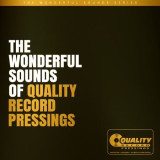
Various - The Wonderful Sounds of Quality Record Pressings (3x12")
 
27

Celebrate the technical expertise of the world's finest LP pressing plant — Quality Record Pressings — with the finest LP sampler ever assembled!

The Wonderful Sounds Of Quality Record Pressings includes music hand-picked by Acoustic Sounds CEO Chad Kassem and classical music tracks chosen by the team at Reference Recordings.

Every song meets the criteria of excellent performance, perfect recording and flawless mastering. What better way to celebrate such a monumental anniversary for one of the absolute leading brands in analog high fidelity than with this to-die-for LP sampler? Contains most genres of music — blues, jazz, classical, R&B and female vocal. From now on, you'll only need to carry one demo record around with you.

Vinyl expert Michael Fremer, of Analogue Planet and Stereophile, gives you a track-by-track tour of the history and production of the songs on this special album.

What separates our world-renowned Quality Record Pressings LPs from other manufacturers? Since Acoustic Sounds CEO Chad Kassem launched QRP in 2011, the focus has been on producing consistently virtually silent vinyl playing surfaces, as well as reproducing details that were hallmarks of vintage labels — the "deep groove" label of Blue Note LPs, for example.

The craft of pressing fine vinyl is perfected in such details. Such as plating lacquers within 24 hours of their arrival at the plant. Cut grooves are prone to change with temperature fluxuations, high humidity and time. The sooner that lacquers are plated, the better the fidelity of the final pressing. Other keys include using a proprietary silver spray formulation, made fresh daily. And incorporating computer microprocessors on our presses to precisely control press functions with absolute precision. And an imbedded temperature sensor in the dye cycles the press with just as much control. The result — more consistency in each LP, high fidelity and reduced distortion. The ultimate sonic advantage.

pre-order now30.12.2022

expected to be published on 30.12.2022

147,02

Last In: 2026 years ago
ERNEST HOOD - BACK TO THE WOODLANDS LP

Written and recorded between 1972 and 1982 in Western Oregon, Back to the Woodlands is a previously unreleased, and nearly lost, album made by Ernest Hood during the same era as his near mythical album Neighborhoods . A visionary combination of field recordings, zithers, and synthesizers, Back to the Woodlands offers an unprecedented depth of access to this singular artistic mind. Born into a musical family, Ernest Hood began a promising career as a jazz guitarist during the 1940s, touring internationally with his brother Bill Hood and the saxophonist Charlie Barnet , before contracting polio in his late twenties. The disease left Ernest unable to play the guitar and confined him to a wheelchair for the rest of his life. It also forced him to adapt and innovate around his musical practices in the face of adversity; Hood's value of sound matured with a remarkably democratic and nonhierarchical approach and application. Taking up the zither, a less physically-demanding stringed instrument to the guitar, embarking upon the unprecedented process of incorporating field recordings into his work as early as 1956, and eventually discovering the synthesizer, Hood's music became imbued with optimism and subtle cultural critique. This ethos and technique - refined over the coming decades - would lay the groundwork for a sprawling body of radio work, mail order recordings for homebound listeners, and Neighborhoods , self- issued as a small vinyl edition in 1975. Where Neighborhoods , a nostalgic opus, drawing from a well of collective memory of the 1950s, is defined by traces of human activity, Back to the Woodlands leaves the modern world behind, delving into Hood's love for nature. Only recently discovered in his archives, the album dramatically expands his concept of "musical cinematography," imagistically triggering states of sensory memory from within its zither and synthesizer melodies, intertwined with field recordings made during Hood's extensive travels throughout Oregon. If Neighborhoods is a retreat into the gauzy joys of a romanticized past, Back to the Woodlands is an immersion in the timeless sanctuary of the natural world. A fascinating counterpoint to its predecessor, Back to the Woodlands brings us even closer to Hood's belief in the transportive qualities of sound; that field recordings could serve as a vehicle for the imagination and liberation, particularly for those with similar mobile disabilities as his own. Across the album's twelve compositions, the rippling instrumental harmonics - shifting between abstraction and playful melody - fold so seamlessly into the birdsong, bubbling brooks, and other environmental ambiences, that they often give the impression of having been recording within the landscapes toward which they whisper. Falling somewhere between the immersive calm of healing music and New Age, the creative field recording practices of sound ecologists world building for Folkways, and the jazz infected ambiences during Obscure / Editions EG's highest heights, Back to the Woodlands sculpts an singular proximity of music for its moment; a form of ambient sonic realism that draws the consciousness toward its surroundings as much as within. Working closely with his estate to maintain his original vision, Freedom to Spend has restored and remastered this never before released, lost masterpiece by Ernest Hood from the original tapes. Ernest Hood's Back to the Woodlands will be issued on vinyl, as well as on CD in combination with its contemporary Where the Woods Begin , with new liner notes by Michael Klausman . On behalf of Ernest Hood and Freedom To Spend, a portion of the proceeds from this release will benefit Oregon Wild, an organization dedicated to protecting and restoring Oregon's wildlands, wildlife, and waters as an enduring legacy for future generations.

out of Stock

Order now and we will order the item for you at our supplier.

22,48

Last In: 3 years ago
PUPPIES IN THE SUN - IGHT BECAME LIGHT

Light Became Light is the debut album from Puppies in the Sun, a project composed of Alberto Cendra (synthesizers) and Cristóbal Pereira (drums), both originally from Peru and currently based in Rotterdam. Friends since childhood, they crossed paths again in Barcelona by sheer coincidence. This spontaneous pulse is also what dictated the beginnings of the project's characteristic sound: lengthy improvisational and sound exploratory sessions which are summed up in the project's first two EP's (Unheard EP and The Church of Puppies in the Sun, 2018). Like other well-known duos, Puppies in the Sun maximizes their compact instrumentation to establish themselves as a (noise) rock band without the presence of guitars or bass guitars. Far from being a limitation, this has provided them with great freedom. The lower end of the album's soundscape is triggered on Cendra's synthesizer scheme by Pereira's drums. This being one of the characteristics that emerge from the organic, minimal and spontaneous style of the band. As if it was a rocket, Light Became Light takes off in search of a sound and a space that pays tribute to cosmic rock and synthesizer music without leaving the melodic rawness of noise rock or even black metal behind. Some might also perceive an atmosphere that owes its existence to techno parties and a slight wink towards folk imagery. If there is anything that makes their sound iconic is the call for constructing wild and festive ambiances, state of trance and agitation. Light Became Light was recorded and mixed by Oscar Moreno at El Purgatorio (Madrid, Spain). In the middle of an intense heat wave, Puppies in the Sun locked themselves through the course of two weeks to record and process various analog and digital synthesizers, pianos, drums and vocals, to later mix Light Became Light in a classic analog console. Light Became Light is being published by Buh Records on 12" Vinyl in a limited edition of 300 copies. The artwork was done by the band itself and designed by Fernanda Binvignat.

pre-order now23.12.2022

expected to be published on 23.12.2022

30,21

Last In: 2026 years ago
Rocky Votolato - Wild Roots

With his first release since 2015, Seattle based Indie-folk hero Rocky Votolato returns with Wild Roots, an intimate concept album inspired by and written for his family. Each song a letter dedicated to a specific family member and focused on a special memory or moment in time. After losing his child in December of 2021 in a tragic car accident, the entire album, and especially the song “Becoming Human”, now a posthumous love letter, takes on an even deeper while devastatingly bittersweet meaning. The production on Wild Roots is hushed, handcrafted, and warm — an intimate and personal experience that brings the nature of Votolato’s storytelling to life in very authentic and genuine ways. Produced, engineered, and mixed by Votolato himself, the record is a deliberate construction of his conceptual vision and new phase of his recording career. Additionally, the record features a stellar cast of renowned musicians whose contributions perfectly compliment the delicate nature of these songs — Abby Gundersen (William Fitzsimmons) on piano, string arrangements, and vocal harmonies, James McAllister (Sufjan Stevens, The National) on drums and percussion, Phil Wandscher (Whiskeytown, Jesse Sykes and the Sweet Hereafter) on electric guitar, and Marcel Gein (Perry O’Parson) on electric guitar. In many ways, Wild Roots is not only a break in silence for Votolato, but the opening of a new chapter — one that feels laser focused on what really matters in life. Whether discovering Votolato for the first time or adding another record to your collection, Wild Roots resonates on the most simple and important human levels — a sharing of experience that encourages us to keep believing in ourselves and in the magic of this life, no matter how harsh and difficult it can be.


Track list: 1. Evergreen 2. 23 Stitches 3. Glory (Broken Dove) 4. There is a Light 5. X1998x 6. Becoming Human 7. Breakwater 8. Little Black Diamond 9. Archangels of Tornados 10. The Great Pontificator 11. The Wildest Horses 12. Little Lupine 13. Bella Rose 14. Southpaw 15. Texas Scorpion (The Outlaw Blues)

pre-order now02.12.2022

expected to be published on 02.12.2022

24,79

Last In: 2026 years ago
JOHN IVERSON - MANY WORLDS INTERPRETATION LP

Many Worlds Interpretation is a collection of cosmic Americana for electronics, guitar, and percussion culled from Jon Iverson’s extensive home-studio archive. 1984, Los Osos, California. In a small cinderblock cottage, hand-painted with bright psychedelic flora, Jon Iverson created vibrant new worlds. He spent long days and nights immersed in sound, perfecting home recording on his 8-track reel-to-reel, combining his love for kosmische and Berlin School electronics with an infatuation with ethnographic sounds and expansive guitar music. In a duo with fellow sonic traveler Thomas Walters, Iverson released missives from the studio on a self-titled LP released on country legend Guthrie Thomas’ Eagle Records. That release featured
three electro-acoustic compositions (“Naningo”, “River Fen”, and “Fox Tales”) as well as a gathering of guitar duo tapestries. Many Worlds Interpretation re-imagines those interplanetary works alongside several unreleased compositions that also feature synthesizer, guitar, and percussion, creating a re-visioned album which leans into Iverson’s electronic studio wizardry.

All songs have been carefully transferred from analog tape to high resolution digital, retaining their vintage studio warmth, but mixed and mastered for modern ears and audio systems. The album is pressed at 45rpm, further enhancing the audiophile experience.

Artist Statement

I worked in a Harley Davidson parts warehouse in the summer of 1976 in the San Francisco Bay Area. The goal was to save enough money to buy transportation for college and a Teac 4 track 1/4" reel to reel tape machine. By September there was a rusting monkey-vomit green car in the driveway and shiny new Teac with a Sony condenser microphone in the bedroom. At this point I had been playing guitar for a dozen years and like most children of the sixties, dreamed of joining
a band.

Went to college instead to study business.

But all was not lost. 1978-1979 was spent as Weird Al Yankovic's roommate and we recorded and created enough songs to play shows around San Luis Obispo, California, where we were attending college. Many of those recordings have yet to be heard by the public, including the first performances of My Bologna and many other parodies of pop songs of the day. We sent tapes to Dr. Demento, we auditioned for The Gong Show and were barred from playing at the local college after one memorable performance. Wild times.

I, however, was more intent on working on "serious" music, with albums from Vangelis, Tangerine Dream and Jean Michel Jarre providing inspiration. DJing at the local college radio station and then public radio outlet provided exposure to an endless stream of obscure albums (Sky Records from Germany was a particular favourite). Most of them would never make it to the air, but my buddies and I would pass them around like exotic treasure.

Fast forward a couple more years and I had picked up a Mini-Moog and eventually a Prophet V synthesizer as well as starting a collection of instruments from around the world. The Teac and synths formed the basis for a growing DIY studio that had taken over a modest-size garage (pictured on the cover) that had been converted into a two room cottage in Los Osos, California.

The Teac was eventually joined by a rented Otari 1/2" 8-track and then finally a vintage MCI JH-100 2" 16-track. The compositions on this album were recorded on these three machines between 1982 and 1989. At some point an Apple II computer with Alpha Syntauri sound card and keyboard were added and then later the first personal computer sampling hardware/software kit, the Decillionix DX-1. The DX-1 forms the rhythm track for “Fox Tales” and the Alpha Syntauri was programmed to create the pulsing synth for “Naningo”. “River Fen” was tracked with both the Alpha Syntauri and the Prophet V.

I knew this music wasn't commercial, but didn't care. It was inspiring working with the first computer-based synths and semi-pro gear. Home studios were still rare in the early 80s until the Tascam Portastudio blew the DIY door wide-open. But I was more interested in sound quality so stuck with reels of tape instead of lower fidelity cassettes.

During the time these songs were recorded, I was also collaborating with my good friend and mandolinist, Tom Walters. “River Fen”, “Naningo” and “Fox Tales”, were solo recordings that also ended up on the first Iverson & Walters album, First Collection. The other four pieces on this new LP were never fully finished or released until now.

— Jon Iverson, September 2022

out of Stock

Order now and we will order the item for you at our supplier.

32,56

Last In: 3 years ago
Various - Blorp Esette Volume One

Los Angeles Free Music Society (LAFMS) formed in the mid-1970s as a loose-knit experimental music collective and multimedia publishing vehicle. Founded by teenage Le Forte Four members Chip Chapman, Joe Potts and Rick Potts and soon joined by Tom Recchion of Doo-Dooettes, LAFMS incorporated free improvisation, modular synthesizers, tape music, sampling, musique concrète, homemade instruments, noise, mail art and avant-rock in permissive and anarchic sessions at the Raymond Building and Poo-Bah Record Shop in old Pasadena. Inspired by The Residents, LAFMS self-released records and periodicals, organized performances and connected with fellow outsiders via post in the years before punk. Their uninhibited, egalitarian ideal of music-making and DIY distribution would influence generations of underground musicians.

In 1977, LAFMS released Blorp Esette, one of several compilations tracking the collective's growth and wild-eyed experimentation. Ace Farren Ford, an early LAFMS recruit from the Poo-Bah circle, produced the album and solicited cover artwork by Don Van Vliet (Captain Beefheart). Ford appears in various configurations alongside members of Smegma, Le Forte Four and "unknown artist" (as the credit for more than one piece reads). The Residents, showing their affinity with LAFMS, contributed "Whoopy Snorp" for their first non-Ralph Records release. Blorp Esette shows the artists grasping for new, non-idiomatic voicings and collaborative modes, anticipating LAFMS affiliates and offshoots such as Airway, Human Hands and Monitor. A second volume would come out in 1980, featuring Ford's punk band The Child Molesters. If you're looking for the missing link between mid-'70s art practice and outsider music, then look no further.

This first-time vinyl reissue is limited to 500 numbered copies. Comes with inserts.

pre-order now25.11.2022

expected to be published on 25.11.2022

26,85

Last In: 2026 years ago
2 Many DJs - As Heard On Radio Soulwax Pt. 2 2x12"
  • 01: Emerson, Lake & Palmer – Peter Gunn (Live)
  • 02: Basement Jaxx – Where’s Your Head At (Head-A-Pella)
  • 03: Peaches – Fuck The Pain Away
  • 04: The Velvet Underground – I’m Waiting For The Man
  • 05: Polyester – J’aime Regarder Les Mecs
  • 06: Sly And The Family Stone – Dance To The Music
  • 07: Ready For The World – Oh Sheila (A Capella)
  • 08: Dakar & Grinser – I Wanna Be Your Dog
  • 09: Ural 13 Diktators – Disko Kings
  • 10: Bobby Orlando – The “O” Medley
  • 11: Felix Da Housecat – Silverscreen-Shower Scene
  • 12: The Stooges – No Fun
  • 13: Salt ‘N Pepa – Push It
  • 14: Hanayo With Jürgen Paape - Joe Le Taxi
  • 15: The Jets – Crush On You (A Capella)
  • 16: Funkacise Gang – Funkacise
  • 17: Soul Grabber – Motocross Madness
  • 18: Lil Louis And The World – French Kiss
  • 19: Zongamin – Serious Trouble
  • 20: Garbage – Androgyny ‘Thee Glitz Mix’ By Felix Da Housecat
  • 21: Frank Delour – Disc Jockey’s Delight Vol. 2
  • 22: The Residents – Kaw-Liga (Prairie Mix)
  • 23: Carlos Morgan – Shake Your Body
  • 24: Alphawezen – Into The Stars (Firebirds Remix)
  • 27: Destiny’s Child – Independent Women Part 1 (A Capella)
  • 28: 10Cc – Dreadlock Holiday
  • 29: Dolly Parton – 9 To 5
  • 30: Röyksopp – Eple
  • 31: Arbeid Adelt – Death Disco
  • 32: Jeans Team – Keine Melodien Feat. Mj Lan
  • 33: Skee.lo – I Wish (A Capella)
  • 34: Maurice Fulton Presents Stress – My Gigolo
  • 35: The Breeders – Cannonball
  • 36: The Cramps – Human Fly
  • 37: The Wildbunch – Danger! High Voltage
  • 38: Op L Bastards – Don’t Bring Me Down
  • 39: Adult – Hand To Phone
  • 40: Vitalic – La Rock 01
  • 41: Queen Of Japan – I Was Made For Loving You
  • 42: New Order – The Beach
  • 43: Detroit Grand Pubahs – Sandwiches (A Capella)
  • 44: Lords Of Acid – I Sit On Acid (Soulwax Remix)
  • 45: Streamer Feat. Private Thoughts In Public Places – Start Button
  • 25: Interstellar – Concepts
  • 26: Nena – 99 Luftballons

Das ikonische belgische DJ-Duo 2ManyDJs, bestehend aus den Brüder Stephen und David Dewaele, feiert das 20-jährige Jubiläum ihres Albums 'As Heard on Radio Soulwax Pt. 2' mit einer besonderen Re-Issue. 2002 erschien es ursprünglich nach einer Reihe von Radioshows der beiden Brüder, damals vor allem bekannt als die Köpfe hinter der Electronic/Indie-Rock Band Soulwax. Die Re-Issue erscheint mit dem Foto von Richard Young auf dem Cover, das ursprünglich als Cover vorgesehen, aber nach Rechtsstreitigkeiten mit Tipp-Ex verfremdet wurde.

out of Stock

Order now and we will order the item for you at our supplier.

30,67

Last In: 4 months ago
DJ Piper - A Dream In A Dream

“A Dream In A Dream” is the debut LP by DJ Piper, also known as Felix Wagner of techno superstar duo FJAAK.
One might be surprised about this all hip-hop instrumental album looking at Felix’ all dance music focussed musical resumé. Nevertheless, he has been crafting rap beats ever since he started producing as a teen, but had his childhood friends freestyle over the tracks solely. It took until 2020 when he teamed up with Lukas and
Jonathan Nixdorff of Kommerz Records to release his first solo track “Iluminay”, which was part of “Kommerz Season 1: Anti-Virus” compilation and shared by B-Real of Cypress Hill right away.

Now, 2022, marks the right moment to share his debut album, a waltzing ode to hip-hop’s golden era. The Berlin- Spandau original merges the legacies of both Pete Rock and Dr. Dre, while funky breakbeats meet laid back SoCal “Chronic” vibes. 12 instrumental tracks and 2 skits strong, his album tells the story of a young man, who lives up to his wildest teenage dreams. Most of the track ideas came up while being on tour with FJAAK. Between international transit areas, making inspirational new friends and bizarre encounters all over the world, beat making became DJ Piper’s safe space to process all the positive madness around him. As a result, “A Dream In A Dream” breathes that raw, untamable creative energy around Felix’ extraordinary day-to-day life, while being heavily influenced by the sound of his childhood, 90s and 2000s rap.

To visualize “A Dream In A Dream” DJ Piper and Kommerz Records joined forces with Raman Djafari, a childhood friend of the artist, who illustrated music videos for Dua Lipa and Elton John (no joke!) and worked for New Release Information Adult Swim. Raman’s supernaturalistic aesthetics bring life to DJ Piper’s somewhat psychedelic, somewhat nostalgic fantasy, locating the album in an otherworldly version of Spandau, hometown to both of the artists.
As one half of FJAAK Felix became an icon of Berlin techno conquering major festival stages and mainstream audiences while heavily representing underground D.I.Y. mentality up to this very day. As an initiator of Spandau20 label and collective, Felix pushes his creative family and day 1’s regardless of commercial potentials.
The same ethos and love for culture fuels the DJ Piper project. No matter if it’s FJAAK or DJ Piper, techno or hiphop… Integrity is key!

out of Stock

Order now and we will order the item for you at our supplier.

18,45

Last In: 3 years ago
Buffalo Hunt - Ambitions Of Ambiguity

Actress Stephanie Hunt (Friday Night Lights, Californication) presents her
debut collection of sublime indie pop
Produced and engineered by Matt Pence at Echo Lab (Jason Isbell, Midlake, Sara
Jaffe), with contributions from Kelsey Wilson (Wild Child, Sir Woman), Dancy
Jenkins (Texas Gentlemen), and Shakey Graves, Ambitions of Ambiguity features
the single Life not On My Terms, and a faithful duet of Redd Stewart's Country
chestnut Which One Of Us Is To Blame? sung with Shakey Graves.

pre-order now18.11.2022

expected to be published on 18.11.2022

26,01

Last In: 2026 years ago
ERNEST HOOD - BACK TO THE WOODLANDS LP

Written and recorded between 1972 and 1982 in Western Oregon, Back to the Woodlands is a previously unreleased, and nearly lost, album made by Ernest Hood during the same era as his near mythical album Neighborhoods . A visionary combination of field recordings, zithers, and synthesizers, Back to the Woodlands offers an unprecedented depth of access to this singular artistic mind. Born into a musical family, Ernest Hood began a promising career as a jazz guitarist during the 1940s, touring internationally with his brother Bill Hood and the saxophonist Charlie Barnet , before contracting polio in his late twenties. The disease left Ernest unable to play the guitar and confined him to a wheelchair for the rest of his life. It also forced him to adapt and innovate around his musical practices in the face of adversity; Hood's value of sound matured with a remarkably democratic and nonhierarchical approach and application. Taking up the zither, a less physically-demanding stringed instrument to the guitar, embarking upon the unprecedented process of incorporating field recordings into his work as early as 1956, and eventually discovering the synthesizer, Hood's music became imbued with optimism and subtle cultural critique. This ethos and technique - refined over the coming decades - would lay the groundwork for a sprawling body of radio work, mail order recordings for homebound listeners, and Neighborhoods , self- issued as a small vinyl edition in 1975. Where Neighborhoods , a nostalgic opus, drawing from a well of collective memory of the 1950s, is defined by traces of human activity, Back to the Woodlands leaves the modern world behind, delving into Hood's love for nature. Only recently discovered in his archives, the album dramatically expands his concept of "musical cinematography," imagistically triggering states of sensory memory from within its zither and synthesizer melodies, intertwined with field recordings made during Hood's extensive travels throughout Oregon. If Neighborhoods is a retreat into the gauzy joys of a romanticized past, Back to the Woodlands is an immersion in the timeless sanctuary of the natural world. A fascinating counterpoint to its predecessor, Back to the Woodlands brings us even closer to Hood's belief in the transportive qualities of sound; that field recordings could serve as a vehicle for the imagination and liberation, particularly for those with similar mobile disabilities as his own. Across the album's twelve compositions, the rippling instrumental harmonics - shifting between abstraction and playful melody - fold so seamlessly into the birdsong, bubbling brooks, and other environmental ambiences, that they often give the impression of having been recording within the landscapes toward which they whisper. Falling somewhere between the immersive calm of healing music and New Age, the creative field recording practices of sound ecologists world building for Folkways, and the jazz infected ambiences during Obscure / Editions EG's highest heights, Back to the Woodlands sculpts an singular proximity of music for its moment; a form of ambient sonic realism that draws the consciousness toward its surroundings as much as within. Working closely with his estate to maintain his original vision, Freedom to Spend has restored and remastered this never before released, lost masterpiece by Ernest Hood from the original tapes. Ernest Hood's Back to the Woodlands will be issued on vinyl, as well as on CD in combination with its contemporary Where the Woods Begin , with new liner notes by Michael Klausman . On behalf of Ernest Hood and Freedom To Spend, a portion of the proceeds from this release will benefit Oregon Wild, an organization dedicated to protecting and restoring Oregon's wildlands, wildlife, and waters as an enduring legacy for future generations.

pre-order now11.11.2022

expected to be published on 11.11.2022

22,48

Last In: 2026 years ago
Non Band - Non Band

Non Band

Non Band

12inchTAL004EPX
TAL
07.11.2022

2022 limited edition of this Japanese no wave gem from 1982. With extended liner notes and interviews with band members about the recordings of the album, as well as unpublished photographs from 1981 by Jibiki Yuichi.

The Japanese punk rock movement known as Tokyo Rockers began in the summer of 1978. It incubated an independent music culture as well as a host of fascinating, individualistic musicians. One of the more striking units was the male-female duo Maria 023. NON played bass for them, and it was here that she first attracted attention. However, Maria 023 was short-lived, and NON would not reappear until the following year, August 1979, on stage at the legendary concert event "Drive to 80s". Her unbilled performance at the event consisted of several songs for solo bass and vocals, and her combination of intensity and a distinctly female emotionality made a striking impression. In the months that followed, NON continued to play solo and she became a pivotal presence among the female rockers on the scene at the time.

Finally she shifted from solo to group performance, and formed NON BAND. After several member changes, the line-up stabilized into a unique trio with Kinosuke Yamagishi on violin and clarinet, and Mitsuru Tamagaki on drums. It was with this line-up that the group reached a musical peak. At the same time, the Japanese punk and new wave rock scene was moving in a new direction, as a second generation of artists appeared and mushrooming independent labels began to play an increasingly important role. I myself started a label called Telegraph Records in 1981 and worked hard on record releases and building a distribution network.

Since starting the label, I had wanted to release a record by NON BAND. There were many vicissitudes before it could happen, but in February 1982 NON BAND's first album was released as a 10-inch LP on Telegraph Records, the label's fifth release. In the early Japanese indies scene, if a release sold 1000 copies it was counted as a significant success. The NON BAND album went through several repressing and sold 2000 copies. The album was a hit and the band's critical reception and popularity suddenly took off.

The shows that followed the release of the album were given a boost by the addition of two female rockers, the guitarist Kummy and keyboard player Mitsuwa. The group was reaching a real musical peak and everyone expected more great developments, but just six months after the release of the album the group would grind to a halt. Members quit the band one after another, and with no possible replacements to be found, NON herself faded away from the scene.

NON BAND's career in the early Japanese indies scene was thus short-lived. But their sole album was reissued twice on CD, and remained popular with listeners. However, the group's history was to have a second chapter.

NON ended up returning to her hometown, snowy Hirosaki in the far northern prefecture Aomori. There she raised two children and took over the running of the family business, an arts supplies store. Her thoughts turned once again towards music, and in 1999 she took up her bass again and began to sing. She invited two fabulous musicians, Keiji Haino and Tatsuya Yoshida, to Hirosaki, and performed together with them as well as solo. This marked the beginning of a new phase for her, and she played live in Tokyo and released a solo album, "ie". She got back in touch with Yamagishi and Tamagaki and reformed NON BAND. They added Emi Sasaki on accordion and began to play a handful of gigs each year, bringing a mature depth to their undiminished power and dazzling a new generation of fans. In 2012 the group released an album of recent live performances entitled " NON BAND Liven' 2009-2012". I released the album on the newly reanimated Telegraph Records.

NON still lives in the north, in Hirosaki. The city is famous for its summer Neputa festival. The first track on this album, "Duncan Dancin'" is almost a theme song for NON BAND, but its rhythm is taken from the ohayashi music that is performed in this festival, as large floats and troupes of dancers wind their way through the streets. The title refers to the legendary dancer, Isadora Duncan. The image perfectly represents NON herself: Isadora Duncan dancing to the earthy rhythms bubbling up out of the north land.

Nov 9, 2016 Jibiky Yuichi (Telegraph Factory)

In order to achieve a meticulous sound quality the reissue version is cut on 12" vinyl instead of the original 10" format. The original cover artwork has been reproduced and there are liner notes by Jibiky Yuichi with unpublished photos of NON BAND.

out of Stock

Order now and we will order the item for you at our supplier.

25,00

Last In: 3 years ago
JAIRUS SHARIF - WATER & TOOLS LP

Freedom is both an integral and multi-layered topic for improvised music, describing its mechanics, aesthetics, and values and often an underlying political dimension as well. In the case of free jazz specifically, the word carries additional weight given the music's deep connection to the black liberation movement of the 1960's and 70's.

The passionate and unclassifiable work of Calgary-based improviser Jairus Sharif embraces each of these definitions of freedom and others, albeit strictly on its own personal and idiosyncratic terms. Since early 2020, the 34 year-old autodidact has been generating a steady stream of homespun solo recordings that forge unprecedented connections between hip-hop abstraction, cosmic skronk, outsider jazz, and staunch post-punk DIY ethos.

Leading up to the pandemic, Sharif's immersion in spiritual and exploratory jazz had culminated in him deciding to purchase an alto saxophone. Unbeknownst to him this instrument would be a catalyst for him to discover his own ardently individualistic artistic voice.

Prior to that point, he had always been somewhat of a solitary musical traveler. In 2002, he acquired his first instrument—a pair of Technics 1200s — but struggled to find local collaborators that had equal investment in hip hop culture. Ultimately, Sharif picked up the guitar, turning to the resilient local punk community, that had also nurtured both of his mothers some time earlier.

As Black Lives Matter gained momentum in the wake of George Floyd's murder, Sharif was suddenly flooded with an acute awareness of his own identity. It compelled him to zealously plunge headlong into open-ended spontaneous solo creation. Water & Tools, his strange and stirring debut for Toronto's Telephone Explosion Records (home to full-lengths from the likes of Brodie West's Eucalyptus, Mas Aya, and Joseph Shabason), offers a glimpse into this ongoing hermetic journey.

As Sharif dedicated himself to uncovering his own deeper musical truths, he assembled a home studio in his basement, cobbling together a drum kit from bits his bandmate had left at his house pre-pandemic, chaining effects together and outfitting the entire space with microphones. Somewhere between the chaos of child's treehouse and the tidy import of a shrine, this space (pictured on the album's back cover) consecrated his own imagination. He laid it out to maximize access to any and every tool in his arsenal, providing him a freedom to explore that he had never permitted himself to consummate before.

Within this cozy private universe, his recent purchase—the saxophone—assumed new meaning. It furnished a tangible connection to the black radicalism that mobilized free jazz, but also something far more personal. From a technical standpoint, the instrument was completely unfamiliar to him, yet rather than this being a hindrance to Sharif, his inexperience opened fruitful path forward, unencumbered by preconceptions. Resolving to shirk formal training, convention, and build his own understanding of it from scratch, allowed him to access his most raw, fundamental creative impulses. The Saxophone's inseverable bond with breath compounded this effect, echoing revelatory discoveries he had been making about breathing through yoga, research, and psychotherapy. Of course, the parallels with BLM's harrowing rallying cry—“I can't breathe”—were not lost on him either.

Water & Tools is a dense, contradictory statement with a blustery surface that shelters a soulful heart. It's generous music, exuding profound vulnerability—grappling with the loss of one his mothers, Lisa—all the while brimming with electric wide-eyed wonder. Almost every one of the nine pieces seems to carry some semblance of a groove, while remaining completely untethered from pulse. For Sharif, this collection is an expression of newfound lucidity, however for the listener his sonic concoctions act as powerful psychotropics. At points, there's a timelessness that's conveyed through the music's processional, ritualistic tenor, and yet there's an endless amount of wild, futuristic detail waiting to unspool at any given moment. Similarly, while this recording emerges from Sharif's private pilgrimage and personal emancipation, he also leaves room for collaboration. Woven throughout Sharif's one-man-ensemble textures, one finds Maxmilian Turnbull (of Badge Epoque, U.S. Girls, and Cosmic Range infamy) providing sundry keyboards and treatments, as well as his mixing skills.

Whether conjuring effusive psychedelia or plumbing introspective depths, the music that Jairus Sharif produces is singular, visceral, and wondrously unpredictable. Water & Tools sketches a raw, firsthand account of his nascent explorations within his own unbridled imagination.

pre-order now31.10.2022

expected to be published on 31.10.2022

22,65

Last In: 2026 years ago
Daniel Lanois - Player, Piano LP

Daniel Lanois

Player, Piano LP

12inch4050538837377
Modern Records
21.10.2022

Press play on Lanois’ captivating new instrumental collection, Player, Piano, and you’ll be transported, too. Each song here is a portal, an invitation to lose yourself in the moment and disappear into a world of imagination and memory. Lanois recorded the entire collection himself, capturing a series of gentle, exotic piano performances at his studio in Toronto with the help of co-producer Dangerous Wayne Lorenz, and the results are both intimate and expansive all at once. Melodies unfold slowly with patience and grace; ethereal arrangements drift around them like fog rolling through the mountains. More than just an album, Player, Piano is a gateway into a cinematic sonic universe full of mystery and wonder, a place where the lines between reality and fantasy blur and deep truths and desires reveal themselves in profound and unexpected ways.


“Making this record transported me,” says Daniel Lanois. “I got to travel to Cuba and Mexico and Jamaica. I got to visit with the ghosts of Erik Satie and Oscar Peterson and Harold Budd. I got to go back in time to my work with Brian Eno and Kate Bush and Emmylou Harris. And I did it all without ever leaving my studio.”

pre-order now21.10.2022

expected to be published on 21.10.2022

25,00

Last In: 2026 years ago
What Are People For? - What Are People For?

What Are People For? make the perfect kind of dystopic dance music for our times. Born from a collaboration between artist Anna McCarthy and musician/producer Manuela Rzytki, the band could be the illicit lovechild of Tom Tom Club and Throbbing Gristle, displaying the ideal balance of hip shaking vibes and dark provocative content.

On their collaborative debut, McCarthy and Rzytki share songwriting duties. The album was produced by Rzytki herself. They are joined by Paulina Nolte on backing vocals and Tom Wu on drums, while Keith Tenniswood mastered the record.

The whole project stems from a publication and exhibition by McCarthy laying the foundations for the content and lyrics of the album, which is humorous, poetic and political. As a lyricist, McCarthy uses her storytelling ability to explore anxieties and desires, digging into free surreal word associations reminiscent of Su Tissues’ tongue in cheek experiments with Suburban Lawns, but also explosive and gripping like a Kae Tempest rap.
Rzytki’s precise sonic palette and talent at penning structured bangers perfectly complement McCarthy’s playful and subversive language manipulations. Rzytki's beats are rooted in old school Hiphop loop principles and an authentic love for the analog. Her use of an array of synthesizers and other "real" instruments adds to WAPF's depth, soul and sincerity.

The album opens with a joyful anthem, full of energy and melodic hooks. The audience is confronted with the quintessential titular question What Are People For? and told that they are just a mere disposable commodity. Throughout the album, lyrical themes revolve around underground aspects of society, violence, political ideologies, sexuality and mysticism. The content is deep but the album is as danceable as it is biting.

73, with its drum machine hysteria and hypnotic synth basses is a a text collage written on the 73 bus through London, consisting of situations and conversation snippets encountered along the way. Drones indulges in the narrator’s paranoia as they feel they are being watched by cigarette machines, whilst the haunting choir is half spoken, half sung, ending on the orgasmic chanting of the word “mummy”. Nursery Rhyme brings more soothing incantations. There is definitely an affinity for fairytales, albeit adult ones and especially the anarchistic ones such as The Moomins, who were a consistent influence on the band. The artwork for the record, created by McCarthy, is a beautiful children's book-style painting of the group in a forest, seemingly about to engage in a magical encounter to which we are invited.

WAPF? have absorbed and digested a variety of influences. Trip hop, Punk and Techno are rubbing shoulders on Party Time. 1977 was coined “Summer of Hate” in the UK and unsurprisingly in WAPF?’s Summer of War, ethereal singing alternates with a powerful marching Garage/Grime chorus reminiscent of street protests and UK culture.

Mz. Lazy starts like an invitation to meditation and references Gertrude Stein’s book Ida in which she develops the idea that publicity is a new religion and people are now famous for being famous. Repressed anger explodes into violence and freedom at the end of the song as our heroine eventually grabs an axe to destroy her oppressors.
Fantasize, on its part, is raw, sexual and liberating while the closing track Bring Back the Dirt is a welcome hymn into a world that is becoming more and more sanitised.

While exploring deep subject matters throughout their album, WAPF? manage to remain satirical, exciting and funny. Each and everyone of their songs have a cathartic quality.

The visual identity of the band is intrinsic to their appeal. Live, they are eccentric, wild and unapologetic, wearing see-through costumes, bright miniskirts and intricate headpieces while delivering their songs with sharp intensity. Their performances radiate queer sexiness and transcend B52's thrift store aesthetics, creating a space for collective dreaming.

WAPF? is a rare combination of contemporary punk energy, irresistible groove, absurdist dry humour and astounding depth of field. They have the mighty power to create a party with their music and soon you will find yourself lifting your arms as if controlled by an external force, to chant: WAPF? WAPF? WAPF?

– Marie Merlet (Malphino, Little Trouble Girls, London)

pre-order now21.10.2022

expected to be published on 21.10.2022

18,45

Last In: 2026 years ago
Lee Tracy & Isaac Manning - Is it What You Want

As the sun sets on a quaint East Nashville house, a young man bares a piece of his soul. Facing the camera, sporting a silky suit jacket/shirt/slacks/fingerless gloves ensemble that announces "singer" before he's even opened his mouth, Lee Tracy Johnson settles onto his stage, the front yard. He sways to the dirge-like drum machine pulse of a synth-soaked slow jam, extends his arms as if gaining his balance, and croons in affecting, fragile earnest, "I need your love… oh baby…"

Dogs in the yard next door begin barking. A mysterious cardboard robot figure, beamed in from galaxies unknown and affixed to a tree, is less vocal. Lee doesn't acknowledge either's presence. He's busy feeling it, arms and hands gesticulating. His voice rises in falsetto over the now-quiet dogs, over the ambient noise from the street that seeps into the handheld camcorder's microphone, over the recording of his own voice played back from a boombox off-camera. After six minutes the single, continuous shot ends. In this intimate creative universe there are no re-takes. There are many more music videos to shoot, and as Lee later puts it, "The first time you do it is actually the best. Because you can never get that again. You expressing yourself from within."

"I Need Your Love" dates from a lost heyday. From some time in the '80s or early '90s, when Lee Tracy (as he was known in performance) and his music partner/producer/manager Isaac Manning committed hours upon hours of their sonic and visual ideas to tape. Embracing drum machines and synthesizers – electronics that made their personal futurism palpable – they recorded exclusively at home, live in a room into a simple cassette deck. Soul, funk, electro and new wave informed their songs, yet Lee and Isaac eschewed the confinement of conventional categories and genres, preferring to let experimentation guide them.

"Anytime somebody put out a new record they had the same instruments or the same sound," explains Isaac. "So I basically wanted to find something that's really gonna stand out away from all of the rest of 'em." Their ethos meant that every idea they came up with was at least worth trying: echoed out half-rapped exhortations over frantic techno-style beats, gospel synth soul, modal electro-funk, oddball pop reinterpretations, emo AOR balladry, nods to Prince and the Fat Boys, or arrangements that might collapse mid-song into a mess of arcade game-ish blips before rallying to reach the finish line. All of it conjoined by consistent tape hiss, and most vitally, Lee's chameleonic voice, which managed to wildly shape shift and still evoke something sincere – whether toggling between falsetto and tenor exalting Jesus's return, or punctuating a melismatic romantic adlib with a succinct, "We all know how it feels to be alone."

"People think we went to a studio," says Isaac derisively. "We never went to no studio. We didn't have the money to go to no studio! We did this stuff at home. I shot videos in my front yard with whatever we could to get things together." Sometimes Isaac would just put on an instrumental record, be it "Planet Rock" or "Don't Cry For Me Argentina" (from Evita), press "record," and let Lee improvise over it, yielding peculiar love songs, would-be patriotic anthems, or Elvis Presley or Marilyn Monroe tributes. Technical limitations and a lack of professional polish never dissuaded them. They believed they were onto something.

"That struggle," Isaac says, "made that sound sound good to me."

In the parlance of modern music criticism Lee and Isaac's dizzying DIY efforts would inevitably be described as "outsider." But "outsider" carries the burden of untold additional layers of meaning if you're Black and from the South, creating on a budget, and trying to get someone, anyone within the country music capital of the world to take your vision seriously. "What category should we put it in?" Isaac asks rhetorically. "I don't know. All I know is feeling. I ain't gonna name it nothing. It's music. If it grabs your soul and touch your heart that's what it basically is supposed to do."

=

Born in 1963, the baby boy of nine siblings, Lee Tracy spent his earliest years living amidst the shotgun houses on Nashville's south side. "We was poor, man!" he says, recalling the outhouse his family used for a bathroom and the blocks of ice they kept in the kitchen to chill perishables. "But I actually don't think I really realized I was in poverty until I got grown and started thinking about it." Lee's mom worked at the Holiday Inn; his dad did whatever he had to do, from selling fruit from a horse drawn cart to bootlegging. "We didn't have much," Lee continues, "but my mother and my father got us the things we needed, the clothes on our back." By the end of the decade with the city's urban renewal programs razing entire neighborhoods to accommodate construction of the Interstate, the family moved to Edgehill Projects. Lee remembers music and art as a constant source of inspiration for he and his brothers and sisters – especially after seeing the Jackson 5 perform on Ed Sullivan. "As a small child I just knew that was what I wanted to do."

His older brother Don began musically mentoring him, introducing Lee to a variety of instruments and sounds. "He would never play one particular type of music, like R&B," says Lee. "I was surrounded by jazz, hard rock and roll, easy listening, gospel, reggae, country music; I mean I was a sponge absorbing all of that." Lee taught himself to play drums by beating on cardboard boxes, gaining a rep around the way for his timekeeping, and his singing voice. Emulating his favorites, Earth Wind & Fire and Cameo, he formed groups with other kids with era-evocative band names like Concept and TNT Connection, and emerged as the leader of disciplined rehearsals. "I made them practice," says Lee. "We practiced and practiced and practiced. Because I wanted that perfection." By high school the most accomplished of these bands would take top prize in a prominent local talent show. It was a big moment for Lee, and he felt ready to take things to the next level. But his band-mates had other ideas.

"I don't know what happened," he says, still miffed at the memory. "It must have blew they mind after we won and people started showing notice, because it's like everybody quit! I was like, where the hell did everybody go?" Lee had always made a point of interrogating prospective musicians about their intentions before joining his groups: were they really serious or just looking for a way to pick up girls? Now he understood even more the importance of finding a collaborator just as committed to the music as he was.

=

Isaac Manning had spent much of his life immersed in music and the arts – singing in the church choir with his family on Nashville's north side, writing, painting, dancing, and working various gigs within the entertainment industry. After serving in the armed forces, in the early '70s he ran The Teenage Place, a music and performance venue that catered to the local youth. But he was forced out of town when word of one of his recreational routines created a stir beyond the safe haven of his bohemian circles.

"I was growing marijuana," Isaac explains. "It wasn't no business, I was smoking it myself… I would put marijuana in scrambled eggs, cornbread and stuff." His weed use originated as a form of self-medication to combat severe tooth pain. But when he began sharing it with some of the other young people he hung out with, some of who just so happened to be the kids of Nashville politicians, the cops came calling. "When I got busted," he remembers, "they were talking about how they were gonna get rid of me because they didn't want me saying nothing about they children because of the politics and stuff. So I got my family, took two raggedy cars, and left Nashville and went to Vegas."

Out in the desert, Isaac happened to meet Chubby Checker of "The Twist" fame while the singer was gigging at The Flamingo. Impressed by Isaac's zeal, Checker invited him to go on the road with him as his tour manager/roadie/valet. The experience gave Isaac a window into a part of the entertainment world he'd never encountered – a glimpse of what a true pop act's audience looked like. "Chubby Checker, none of his shows were played for Black folks," he remembers. "All his gigs were done at high-class white people areas." Returning home after a few years with Chubby, Isaac was properly motivated to make it in Music City. He began writing songs and scouting around Nashville for local talent anywhere he could find it with an expressed goal: "Find someone who can deliver your songs the way you want 'em delivered and make people feel what you want them to feel."

One day while walking through Edgehill Projects Isaac heard someone playing the drums in a way that made him stop and take notice. "The music was so tight, just the drums made me feel like, oh I'm-a find this person," he recalls. "So I circled through the projects until I found who it was.

"That's how I met him – Lee Tracy. When I found him and he started singing and stuff, I said, ohhh, this is somebody different."

=

Theirs was a true complementary partnership: young Lee possessed the raw talent, the older Isaac the belief. "He's really the only one besides my brother and my family that really seen the potential in me," says Lee. "He made me see that I could do it."

Isaac long being a night owl, his house also made for a fertile collaborative environment – a space where there always seemed to be a new piece of his visual art on display: paintings, illustrations, and dolls and figures (including an enigmatic cardboard robot). Lee and Issac would hang out together and talk, listen to music, conjure ideas, and smoke the herb Isaac had resumed growing in his yard. "It got to where I could trust him, he could trust me," Isaac says of their bond. They also worked together for hours on drawings, spreading larges rolls of paper on the walls and sketching faces with abstract patterns and imagery: alien-like beings, tri-horned horse heads, inverted Janus-like characters where one visage blurred into the other.

Soon it became apparent that they didn't need other collaborators; self-sufficiency was the natural way forward. At Isaac's behest Lee, already fed up with dealing with band musicians, began playing around with a poly-sonic Yamaha keyboard at the local music store. "It had everything on it – trumpet, bass, drums, organ," remembers Lee. "And that's when I started recording my own stuff."

The technology afforded Lee the flexibility and independence he craved, setting him on a path other bedroom musicians and producers around the world were simultaneously following through the '80s into the early '90s. Saving up money from day jobs, he eventually supplemented the Yamaha Isaac had gotten him with Roland and Casio drum machines and a Moog. Lee was living in an apartment in Hillside at that point caring for his dad, who'd been partially paralyzed since early in life. In the evenings up in his second floor room, the music put him in a zone where he could tune out everything and lose himself in his ideas.

"Oh I loved it," he recalls. "I would really experiment with the instruments and use a lot of different sound effects. I was looking for something nobody else had. I wanted something totally different. And once I found the sound I was looking for, I would just smoke me a good joint and just let it go, hit the record button." More potent a creative stimulant than even Isaac's weed was the holistic flow and spontaneity of recording. Between sessions at Isaac's place and Lee's apartment, their volume of output quickly ballooned.

"We was always recording," says Lee. "That's why we have so much music. Even when I went to Isaac's and we start creating, I get home, my mind is racing, I gotta start creating, creating, creating. I remember there were times when I took a 90-minute tape from front to back and just filled it up."

"We never practiced," says Isaac. "See, that was just so odd about the whole thing. I could relate to him, and tell him about the songs I had ideas for and everything and stuff. And then he would bring it back or whatever, and we'd get together and put it down." Once the taskmaster hell bent on rehearsing, Lee had flipped a full 180. Perfection was no longer an aspiration, but the enemy of inspiration.

"I seen where practicing and practicing got me," says Lee. "A lot of musicians you get to playing and they gotta stop, they have to analyze the music. But while you analyzing you losing a lot of the greatness of what you creating. Stop analyzing what you play, just play! And it'll all take shape."

=

"I hope you understood the beginning of the record because this was invented from a dream I had today… (You tell me, I'll tell you, we'll figure it out together)" – Lee Tracy and Isaac Manning, "Hope You Understand"

Lee lets loose a maniacal cackle when he acknowledges that the material that he and Isaac recorded was by anyone's estimation pretty out there. It's the same laugh that commences "Hope You Understand" – a chaotic transmission that encapsulates the duality at the heart of their music: a stated desire to reach people and a compulsion to go as leftfield as they saw fit.

"We just did it," says Lee. "We cut the music on and cut loose. I don't sit around and write. I do it by listening, get a feeling, play the music, and the lyrics and stuff just come out of me."

The approach proved adaptable to interpreting other artists' material. While recording a cover of Whitney Houston's pop ballad "Saving All My Love For You," Lee played Whitney's version in his headphones as he laid down his own vocals – partially following the lyrics, partially using them as a departure point. The end result is barely recognizable compared with the original, Lee and Isaac having switched up the time signature and reinvented the melody along the way towards morphing a slick mainstream radio standard into something that sounds solely their own.

"I really used that song to get me started," says Lee. "Then I said, well I need something else, something is missing. Something just came over me. That's when I came up with 'Is It What You Want.'"

The song would become the centerpiece of Lee and Isaac's repertoire. Pushed along by a percolating metronomic Rhythm King style beat somewhere between a military march and a samba, "Is It What You Want" finds Lee pleading the sincerity of his commitment to a potential love interest embellished by vocal tics and hiccups subtlely reminiscent of his childhood hero MJ. Absent chord changes, only synth riffs gliding in and out like apparitions, the song achieves a lingering lo-fi power that leaves you feeling like it's still playing, somewhere, even after the fade out.

"I don't know, it's like a real spiritual song," Lee reflects. "But it's not just spiritual. To me the more I listen to it it's like about everything that you do in your everyday life, period. Is it what you want? Do you want a car or you don't want a car? Do you want Jesus or do you want the Devil? It's basically asking you the question. Can't nobody answer the question but you yourself."

In 1989 Lee won a lawsuit stemming from injuries sustained from a fight he'd gotten into. He took part of the settlement money and with Isaac pressed up "Saving All My Love For You" b/w "Is It What You Want" as a 45 single. Isaac christened the label One Chance Records. "Because that's all we wanted," he says with a laugh, "one chance."

Isaac sent the record out to radio stations and major labels, hoping for it to make enough noise to get picked up nationally. But the response he and Lee were hoping for never materialized. According to Isaac the closest the single got to getting played on the radio is when a disk jock from a local station made a highly unusual announcement on air: "The dude said on the radio, 107.5 – 'We are not gonna play 'Is It What You Want.' We cracked up! Wow, that's deep.

"It was a whole racist thing that was going on," he reflects. "So we just looked over and kept on going. That was it. That was about the way it goes… If you were Black and you were living in Nashville and stuff, that's the way you got treated." Isaac already knew as much from all the times he'd brought he and Lee's tapes (even their cache of country music tunes) over to Music Row to try to drum up interest to no avail.

"Isaac, he really worked his ass off," says Lee. "He probably been to every record place down on Music Row." Nashville's famed recording and music business corridor wasn't but a few blocks from where Lee grew up. Close enough, he remembers, for him to ride his bike along its back alleys and stumble upon the occasional random treasure, like a discarded box of harmonicas. Getting in through the front door, however, still felt a world away.

"I just don't think at the time our music fell into a category for them," he concedes. "It was before its time."

=

Lee stopped making music some time in the latter part of the '90s, around the time his mom passed away and life became increasingly tough to manage. "When my mother died I had a nervous breakdown," he says, "So I shut down for a long time. I was in such a sadness frame of mind. That's why nobody seen me. I had just disappeared off the map." He fell out of touch with Isaac, and in an indication of just how bad things had gotten for him, lost track of all the recordings they'd made together. Music became a distant memory.

Fortunately, Isaac kept the faith. In a self-published collection of his poetry – paeans to some of his favorite entertainment and public figures entitled Friends and Dick Clark – he'd written that he believed "music has a life of its own." But his prescience and presence of mind were truly manifested in the fact that he kept an archive of he and Lee's work. As perfectly imperfect as "Is It What You Want" now sounds in a post-Personal Space world, Lee and Isaac's lone official release was in fact just a taste. The bulk of the Is It What You Want album is culled from the pair's essentially unheard home recordings – complete songs, half-realized experiments, Isaac's blue monologues and pronouncements et al – compiled, mixed and programmed in the loose and impulsive creative spirit of their regular get-togethers from decades ago. The rest of us, it seems, may have finally caught up to them.

On the prospect of at long last reaching a wider audience, Isaac says simply, "I been trying for a long time, it feels good." Ever the survivor, he adds, "The only way I know how to make it to the top is to keep climbing. If one leg break on the ladder, hey, you gotta fix it and keep on going… That's where I be at. I'll kill death to make it out there."

For Lee it all feels akin to a personal resurrection: "It's like I was in a tomb and the tomb was opened and I'm back… Man, it feels so great. I feel like I'm gonna jump out of my skin." Success at this stage of his life, he realizes, probably means something different than what it did back when he was singing and dancing in Isaac's front yard. "What I really mean by 'making it,'" he explains isn't just the music being heard but, "the story being told."

Occasionally Lee will pull up "Is It What You Want" on YouTube on his phone, put on his headphones, and listen. He remembers the first time he heard his recorded voice. How surreal it was, how he thought to himself, "Is that really me?" What would he say to that younger version of himself now?

"I would probably tell myself, hang in there, don't give up. Keep striving for the goal. And everything will work out."

Despite what's printed on the record label, sometimes you do get more than one chance.

out of Stock

Order now and we will order the item for you at our supplier.

11,72

Last In: 3 years ago
Various - SEX– We Are Not In the Least Afraid of Ruins 2x12"
 
23
also available

Mohair Blue Vinyl[46,18 €]


The second installment of gems and nuggets straight from the infamous jukebox at Malcolm and Vivienne's King's Road SEX boutique.

Compiled again by Marco Pirroni (Adam and The Ants, Siouxsie and the Banshees) another collection of carefully curated tracks that were played on rotation at 430 kings road Chelsea, throughout 1974-1976.

Years in the making, this follow up to Marco’s 2004 “SEX: Too Fast To Live Too Young To Die” continues to complete the jukebox playlist with tracks contributed from those friends who frequented the shop - Jordan Mooney (RIP), Paul Cook, Steve Jones and Sam Bully amongst others – remembering those all-important songs that soundtracked the shop and left lasting impressions on them over 47 years ago.

Another wild ride and a kaleidoscope of jukebox bangers from The Animals to Max Bigraves, Nico to Burundi Black, these tracks undoubtedly played a heavy influence on SEX’s customer’s young ears many who would go on and change the musical world forever - Sex Pistols, The Clash, Chrissie Hynde, Siouxsie Sioux to name just a few.

Artwork supplied by Personality Crisis with unpublished photographs from Jane England, a student at the time but already understood the cultural significance and beauty of both the shop and Jordan Mooney who the compilation is dedicated to.

pre-order now14.10.2022

expected to be published on 14.10.2022

44,50

Last In: 2026 years ago
Various - SEX– We Are Not In the Least Afraid of Ruins 2x12"
 
23
also available

Black Vinyl[44,50 €]


The second installment of gems and nuggets straight from the infamous jukebox at Malcolm and Vivienne's King's Road SEX boutique.

Compiled again by Marco Pirroni (Adam and The Ants, Siouxsie and the Banshees) another collection of carefully curated tracks that were played on rotation at 430 kings road Chelsea, throughout 1974-1976.

Years in the making, this follow up to Marco’s 2004 “SEX: Too Fast To Live Too Young To Die” continues to complete the jukebox playlist with tracks contributed from those friends who frequented the shop - Jordan Mooney (RIP), Paul Cook, Steve Jones and Sam Bully amongst others – remembering those all-important songs that soundtracked the shop and left lasting impressions on them over 47 years ago.

Another wild ride and a kaleidoscope of jukebox bangers from The Animals to Max Bigraves, Nico to Burundi Black, these tracks undoubtedly played a heavy influence on SEX’s customer’s young ears many who would go on and change the musical world forever - Sex Pistols, The Clash, Chrissie Hynde, Siouxsie Sioux to name just a few.

Artwork supplied by Personality Crisis with unpublished photographs from Jane England, a student at the time but already understood the cultural significance and beauty of both the shop and Jordan Mooney who the compilation is dedicated to.

pre-order now14.10.2022

expected to be published on 14.10.2022

46,18

Last In: 2026 years ago
RACHAEL DADD - KALEIDOSCOPE LP

On 14 October 2022, wildly creative free-form songwriter Rachael Dadd is to release her brand new studio album 'Kaleidoscope' via Memphis Industries and follows 2019's 'Flux', which was released to much acclaim and which she was touring when the pandemic struck. Like so many people disconnected from their communities and struggling through the lockdowns, Rachael Dadd turned inwards, seeking escape through music and connection through song writing, and her hope is that when people listen to 'Kaleidoscope' "they will feel held and find space to breathe, grieve and celebrate." "This album is a lot more honest and personal than 'Flux'" she shares, "but I feel the songs are universal as they are largely rooted in truth and love. If I had to pick a favourite album it would be this one because of the magical rekindling of human connection when me and my band got back in a room together again. All that magic went into these songs." Co-produced "intuitively, boldly, and playfully" by Rachael and Rob Pemberton (The Staves, Emily Barker, Maja Lena), 'Kaleidoscope' includes musical collaborators such as Maja Lena (Low Chimes), long-time collaborator Emma Gatrill (Willy Mason), Alex Heane (bass), Charlotte West (synths), Alex Garden (strings) and 'Flux' producer Marcus Hamblett (Villagers, James Holden, The Staves), giving the record "just the right colour combination, just the right pattern of shapes, plenty of space where needed and finally landing in a sound world that feels fresh and open and true" reflects Rachael.

pre-order now14.10.2022

expected to be published on 14.10.2022

17,86

Last In: 2026 years ago
RACHAEL DADD - KALEIDOSCOPE LP

On 14 October 2022, wildly creative free-form songwriter Rachael Dadd is to release her brand new studio album 'Kaleidoscope' via Memphis Industries and follows 2019's 'Flux', which was released to much acclaim and which she was touring when the pandemic struck. Like so many people disconnected from their communities and struggling through the lockdowns, Rachael Dadd turned inwards, seeking escape through music and connection through song writing, and her hope is that when people listen to 'Kaleidoscope' "they will feel held and find space to breathe, grieve and celebrate." "This album is a lot more honest and personal than 'Flux'" she shares, "but I feel the songs are universal as they are largely rooted in truth and love. If I had to pick a favourite album it would be this one because of the magical rekindling of human connection when me and my band got back in a room together again. All that magic went into these songs." Co-produced "intuitively, boldly, and playfully" by Rachael and Rob Pemberton (The Staves, Emily Barker, Maja Lena), 'Kaleidoscope' includes musical collaborators such as Maja Lena (Low Chimes), long-time collaborator Emma Gatrill (Willy Mason), Alex Heane (bass), Charlotte West (synths), Alex Garden (strings) and 'Flux' producer Marcus Hamblett (Villagers, James Holden, The Staves), giving the record "just the right colour combination, just the right pattern of shapes, plenty of space where needed and finally landing in a sound world that feels fresh and open and true" reflects Rachael.

pre-order now14.10.2022

expected to be published on 14.10.2022

19,12

Last In: 2026 years ago
Ginger Wildheart & The Sinners - Ginger Wildheart & The Sinners LP

Ginger Wildheart & The Sinners’ self-titled debut album is an energetic album that celebrates rock’n’roll and as Ginger explains it is in “the spirit of the music that we all collectively love, from childhood to the present day. The latest single, "Six Years Gone" by Georgia Satellites is the first song Ginger wanted to play with the band back when this was just an idea. “I became a bit obsessed with the song while in LA for Lemmy’s funeral, and carried it around in my heart from then until we all congregated at the studio.” Ginger Wildheart & The Sinners were formed in August 2019 when Ginger joined forces with Neil Ivison and Nick Lyndon from the band Stone Mountain Sinners. The line up was completed with drummer Shane Dixon (Tri-City Fanfare) and as Ginger explains “Me and The Sinners met for the very first time in the studio, in preparation for recording an album together. We figured out that if we can’t get along with each other then the music would be ultimately worthless. So we went to the pub and got drunk together. The next morning the music started flowing with ease. This is the sound of friendship.”

pre-order now07.10.2022

expected to be published on 07.10.2022

20,59

Last In: 2026 years ago
FUXA - Covered In Stars

Fuxa

Covered In Stars

12inchRGIRL116LP
ROCKET GIRL
07.10.2022
  • 1: Help Me Please
  • 2: Mr.x
  • 3: Cluster Fuxa
  • 4: Sun Is Shining
  • 5: Shadazz
  • 6: Mary
  • 7: Real Wild Child
  • 8: Mari

Limited edition picture disc in full colour printed sleeve

Covered In Stars featuring members of Luna, Spacemen 3, Slowdive, Spectrum, Add N To (X), The Vacant Lots, Spiritualized, Slipstream and more.

This is a wonderfully colourful, beautiful fun and powerfully transcendent album by Fuxa, Featuring driving drum machines, gritty fuzz bitten guitars on The Sun Is Shining and Mary, 80's neon midnight post-punk disco grooves on Shadazz and perfectly blissed out floating in space vibes (Help Me Please and Cluster Fuxa). The synths shimmer and elevate, guitars attack and sparkle and the vocals deliver dark romanticism which evoke often David Cronenberg inspired fantasies such as photographs of car crashes, crushes on perfect strangers and unknown futures. 
 - Simon Scott (Slowdive)


Fuxa returns in 2022 with a new album  'Covered In Stars'
 
Eight new songs and several years in the making, of what can best be described as a full on sonic explosion. Mixing space-rock elements, krautrock rhythms, punchy beats and swirling electronic sweeps and beeps that would make for a perfect soundtrack for any warp speed travelling cosmonauts with phasers set to fun!!
 
For the past 25 years Fuxa front man Randall Nieman has no doubt been on a cosmic journey in sound and space. from his early beginnings a part of Detroit locals Windy and Carl as a guitarist/synth player, running and releasing close to 100 releases on his own label Mind Expansion, to later joining Sonic Boom's (Spacemen 3) group Spectrum for close to a decade. Performing the songs that Spacemen taught him touring across North America and Europe as well as recording and releasing several releases with Sonic under the Spectrum moniker. 
Randall has since worked with and released numerous amounts of material with the likes of Martin Rev (Suicide), The Telescopes and Dean and Britta (Luna) to name a few.
 
It is no surprise that Randall would once again build this new album with friends that he became close to over the years musically and there's certainly no shortage of indie royalty star power on this album
 
Produced by Randall Nieman, Richard Formby and Stefan Persson.
Mastered by Simon Scott (Slowdive)
This album features guest appearances from Britta Phillips and Dean Wareham (Luna), Ann Shenton (Add N to (X)), Mark Refoy and Jonny Mattock (Spiritualized, Slipstream), Roger Brogan (Spectrum/Dean Wareham), Jared Artaud (Vacant Lots) and more! Each adding an unmistakable and timeless element that Fuxa's core members have created. 
It would be hard not to notice the sheer aesthetic glory of this release as once again Randall has chosen the amazing James Marsh (most would remember him as the phenomenal artist responsible for all the Talk Talk albums over the years. His artwork is not only featured on the jacket but on both sides of the limited edition picture disc vinyl.
Covered in stars is a celebration of 25 years of music and friendships made along the way. 

Ladies and gentlemen, welcome to the Fuxa! 

pre-order now07.10.2022

expected to be published on 07.10.2022

19,96

Last In: 2026 years ago
Hexvessel - No Holier Temple

“If you can imagine a late 1960s folk-rock approach allied to a doomy atmosphere with added touches of lo-fi psychedelia, then you’re getting close to the timbre of Finland’s Hexvessel. There are clearly nods towards King Crimson, Black Sabbath, the Beatles, HP Lovecraft and The Doors, but what the band have managed to do is create something that belongs specifically to them.” – Malcolm Dome, Prog Magazine Hexvessel’s fan-favorite album from 2012, No Holier Temple, gets a luxury 10-year anniversary reissue via Svart Records! No Holier Temple was Psychedelic Forest Folk band Hexvessel’s second full-length album, released to critical acclaim, cult status and some of their biggest sales figures to date. The Finnish “mushroom-devouring pixies” follow up to 2011’s critically acclaimed debut album, Dawnbearer, was described by Roadburn Festival as “a passionate, urgent and gorgeously strange musical spell.” Hexvessel’s break-through album No Holier Temple reached new heights for the band with two Emma Gala (Finnish Grammy Awards) nominations. No Holier Tample also won two Femma awards, which is the Alternative Finnish Grammy Awards. Hexvessel played the prestigious Roadburn Festival in The Netherlands for the first time that year in the church venue of Het Patronaat. The festival sold out in 7 minutes. No Holier Temple also landed in the Main Finnish Charts at #20 and in Alternative charts at #7. No Holier Temple fuses the acoustic 70s folk vibe of its predecessor into a more psychedelic, electric, doom-folk sound with Manzarek-like keys, screeching rhythmic Velvet Underground violins, Miles Davis trumpets and hypnotic freakouts. Weaving the uncanny songs together are the narrative vocals of Mat McNerney, who on this album has matured into the bastard child of Burke Shelley, young Jon Anderson and Paul Simon. Inspired by the progressive, spaced-out haze of bands like Amon Düül II, Van Der Graaf Generator and Ultimate Spinach, whose song “Your Head Is Reeling” they cover with religious abandon. Their sound now expands outward from their eerie, signature, ritual-esque intros into a genre-twisting cauldron of otherworldly rock and the late-night, dreamy spoken-word of artists such as Jim Morrison (An American Prayer) and Ken Nordine.

pre-order now07.10.2022

expected to be published on 07.10.2022

28,19

Last In: 2026 years ago
Lee Tracy & Isaac Manning - Is it What You Want LP

As the sun sets on a quaint East Nashville house, a young man bares a piece of his soul. Facing the camera, sporting a silky suit jacket/shirt/slacks/fingerless gloves ensemble that announces "singer" before he's even opened his mouth, Lee Tracy Johnson settles onto his stage, the front yard. He sways to the dirge-like drum machine pulse of a synth-soaked slow jam, extends his arms as if gaining his balance, and croons in affecting, fragile earnest, "I need your love… oh baby…"

Dogs in the yard next door begin barking. A mysterious cardboard robot figure, beamed in from galaxies unknown and affixed to a tree, is less vocal. Lee doesn't acknowledge either's presence. He's busy feeling it, arms and hands gesticulating. His voice rises in falsetto over the now-quiet dogs, over the ambient noise from the street that seeps into the handheld camcorder's microphone, over the recording of his own voice played back from a boombox off-camera. After six minutes the single, continuous shot ends. In this intimate creative universe there are no re-takes. There are many more music videos to shoot, and as Lee later puts it, "The first time you do it is actually the best. Because you can never get that again. You expressing yourself from within."

"I Need Your Love" dates from a lost heyday. From some time in the '80s or early '90s, when Lee Tracy (as he was known in performance) and his music partner/producer/manager Isaac Manning committed hours upon hours of their sonic and visual ideas to tape. Embracing drum machines and synthesizers – electronics that made their personal futurism palpable – they recorded exclusively at home, live in a room into a simple cassette deck. Soul, funk, electro and new wave informed their songs, yet Lee and Isaac eschewed the confinement of conventional categories and genres, preferring to let experimentation guide them.

"Anytime somebody put out a new record they had the same instruments or the same sound," explains Isaac. "So I basically wanted to find something that's really gonna stand out away from all of the rest of 'em." Their ethos meant that every idea they came up with was at least worth trying: echoed out half-rapped exhortations over frantic techno-style beats, gospel synth soul, modal electro-funk, oddball pop reinterpretations, emo AOR balladry, nods to Prince and the Fat Boys, or arrangements that might collapse mid-song into a mess of arcade game-ish blips before rallying to reach the finish line. All of it conjoined by consistent tape hiss, and most vitally, Lee's chameleonic voice, which managed to wildly shape shift and still evoke something sincere – whether toggling between falsetto and tenor exalting Jesus's return, or punctuating a melismatic romantic adlib with a succinct, "We all know how it feels to be alone."

"People think we went to a studio," says Isaac derisively. "We never went to no studio. We didn't have the money to go to no studio! We did this stuff at home. I shot videos in my front yard with whatever we could to get things together." Sometimes Isaac would just put on an instrumental record, be it "Planet Rock" or "Don't Cry For Me Argentina" (from Evita), press "record," and let Lee improvise over it, yielding peculiar love songs, would-be patriotic anthems, or Elvis Presley or Marilyn Monroe tributes. Technical limitations and a lack of professional polish never dissuaded them. They believed they were onto something.

"That struggle," Isaac says, "made that sound sound good to me."

In the parlance of modern music criticism Lee and Isaac's dizzying DIY efforts would inevitably be described as "outsider." But "outsider" carries the burden of untold additional layers of meaning if you're Black and from the South, creating on a budget, and trying to get someone, anyone within the country music capital of the world to take your vision seriously. "What category should we put it in?" Isaac asks rhetorically. "I don't know. All I know is feeling. I ain't gonna name it nothing. It's music. If it grabs your soul and touch your heart that's what it basically is supposed to do."

=

Born in 1963, the baby boy of nine siblings, Lee Tracy spent his earliest years living amidst the shotgun houses on Nashville's south side. "We was poor, man!" he says, recalling the outhouse his family used for a bathroom and the blocks of ice they kept in the kitchen to chill perishables. "But I actually don't think I really realized I was in poverty until I got grown and started thinking about it." Lee's mom worked at the Holiday Inn; his dad did whatever he had to do, from selling fruit from a horse drawn cart to bootlegging. "We didn't have much," Lee continues, "but my mother and my father got us the things we needed, the clothes on our back." By the end of the decade with the city's urban renewal programs razing entire neighborhoods to accommodate construction of the Interstate, the family moved to Edgehill Projects. Lee remembers music and art as a constant source of inspiration for he and his brothers and sisters – especially after seeing the Jackson 5 perform on Ed Sullivan. "As a small child I just knew that was what I wanted to do."

His older brother Don began musically mentoring him, introducing Lee to a variety of instruments and sounds. "He would never play one particular type of music, like R&B," says Lee. "I was surrounded by jazz, hard rock and roll, easy listening, gospel, reggae, country music; I mean I was a sponge absorbing all of that." Lee taught himself to play drums by beating on cardboard boxes, gaining a rep around the way for his timekeeping, and his singing voice. Emulating his favorites, Earth Wind & Fire and Cameo, he formed groups with other kids with era-evocative band names like Concept and TNT Connection, and emerged as the leader of disciplined rehearsals. "I made them practice," says Lee. "We practiced and practiced and practiced. Because I wanted that perfection." By high school the most accomplished of these bands would take top prize in a prominent local talent show. It was a big moment for Lee, and he felt ready to take things to the next level. But his band-mates had other ideas.

"I don't know what happened," he says, still miffed at the memory. "It must have blew they mind after we won and people started showing notice, because it's like everybody quit! I was like, where the hell did everybody go?" Lee had always made a point of interrogating prospective musicians about their intentions before joining his groups: were they really serious or just looking for a way to pick up girls? Now he understood even more the importance of finding a collaborator just as committed to the music as he was.

=

Isaac Manning had spent much of his life immersed in music and the arts – singing in the church choir with his family on Nashville's north side, writing, painting, dancing, and working various gigs within the entertainment industry. After serving in the armed forces, in the early '70s he ran The Teenage Place, a music and performance venue that catered to the local youth. But he was forced out of town when word of one of his recreational routines created a stir beyond the safe haven of his bohemian circles.

"I was growing marijuana," Isaac explains. "It wasn't no business, I was smoking it myself… I would put marijuana in scrambled eggs, cornbread and stuff." His weed use originated as a form of self-medication to combat severe tooth pain. But when he began sharing it with some of the other young people he hung out with, some of who just so happened to be the kids of Nashville politicians, the cops came calling. "When I got busted," he remembers, "they were talking about how they were gonna get rid of me because they didn't want me saying nothing about they children because of the politics and stuff. So I got my family, took two raggedy cars, and left Nashville and went to Vegas."

Out in the desert, Isaac happened to meet Chubby Checker of "The Twist" fame while the singer was gigging at The Flamingo. Impressed by Isaac's zeal, Checker invited him to go on the road with him as his tour manager/roadie/valet. The experience gave Isaac a window into a part of the entertainment world he'd never encountered – a glimpse of what a true pop act's audience looked like. "Chubby Checker, none of his shows were played for Black folks," he remembers. "All his gigs were done at high-class white people areas." Returning home after a few years with Chubby, Isaac was properly motivated to make it in Music City. He began writing songs and scouting around Nashville for local talent anywhere he could find it with an expressed goal: "Find someone who can deliver your songs the way you want 'em delivered and make people feel what you want them to feel."

One day while walking through Edgehill Projects Isaac heard someone playing the drums in a way that made him stop and take notice. "The music was so tight, just the drums made me feel like, oh I'm-a find this person," he recalls. "So I circled through the projects until I found who it was.

"That's how I met him – Lee Tracy. When I found him and he started singing and stuff, I said, ohhh, this is somebody different."

=

Theirs was a true complementary partnership: young Lee possessed the raw talent, the older Isaac the belief. "He's really the only one besides my brother and my family that really seen the potential in me," says Lee. "He made me see that I could do it."

Isaac long being a night owl, his house also made for a fertile collaborative environment – a space where there always seemed to be a new piece of his visual art on display: paintings, illustrations, and dolls and figures (including an enigmatic cardboard robot). Lee and Issac would hang out together and talk, listen to music, conjure ideas, and smoke the herb Isaac had resumed growing in his yard. "It got to where I could trust him, he could trust me," Isaac says of their bond. They also worked together for hours on drawings, spreading larges rolls of paper on the walls and sketching faces with abstract patterns and imagery: alien-like beings, tri-horned horse heads, inverted Janus-like characters where one visage blurred into the other.

Soon it became apparent that they didn't need other collaborators; self-sufficiency was the natural way forward. At Isaac's behest Lee, already fed up with dealing with band musicians, began playing around with a poly-sonic Yamaha keyboard at the local music store. "It had everything on it – trumpet, bass, drums, organ," remembers Lee. "And that's when I started recording my own stuff."

The technology afforded Lee the flexibility and independence he craved, setting him on a path other bedroom musicians and producers around the world were simultaneously following through the '80s into the early '90s. Saving up money from day jobs, he eventually supplemented the Yamaha Isaac had gotten him with Roland and Casio drum machines and a Moog. Lee was living in an apartment in Hillside at that point caring for his dad, who'd been partially paralyzed since early in life. In the evenings up in his second floor room, the music put him in a zone where he could tune out everything and lose himself in his ideas.

"Oh I loved it," he recalls. "I would really experiment with the instruments and use a lot of different sound effects. I was looking for something nobody else had. I wanted something totally different. And once I found the sound I was looking for, I would just smoke me a good joint and just let it go, hit the record button." More potent a creative stimulant than even Isaac's weed was the holistic flow and spontaneity of recording. Between sessions at Isaac's place and Lee's apartment, their volume of output quickly ballooned.

"We was always recording," says Lee. "That's why we have so much music. Even when I went to Isaac's and we start creating, I get home, my mind is racing, I gotta start creating, creating, creating. I remember there were times when I took a 90-minute tape from front to back and just filled it up."

"We never practiced," says Isaac. "See, that was just so odd about the whole thing. I could relate to him, and tell him about the songs I had ideas for and everything and stuff. And then he would bring it back or whatever, and we'd get together and put it down." Once the taskmaster hell bent on rehearsing, Lee had flipped a full 180. Perfection was no longer an aspiration, but the enemy of inspiration.

"I seen where practicing and practicing got me," says Lee. "A lot of musicians you get to playing and they gotta stop, they have to analyze the music. But while you analyzing you losing a lot of the greatness of what you creating. Stop analyzing what you play, just play! And it'll all take shape."

=

"I hope you understood the beginning of the record because this was invented from a dream I had today… (You tell me, I'll tell you, we'll figure it out together)" – Lee Tracy and Isaac Manning, "Hope You Understand"

Lee lets loose a maniacal cackle when he acknowledges that the material that he and Isaac recorded was by anyone's estimation pretty out there. It's the same laugh that commences "Hope You Understand" – a chaotic transmission that encapsulates the duality at the heart of their music: a stated desire to reach people and a compulsion to go as leftfield as they saw fit.

"We just did it," says Lee. "We cut the music on and cut loose. I don't sit around and write. I do it by listening, get a feeling, play the music, and the lyrics and stuff just come out of me."

The approach proved adaptable to interpreting other artists' material. While recording a cover of Whitney Houston's pop ballad "Saving All My Love For You," Lee played Whitney's version in his headphones as he laid down his own vocals – partially following the lyrics, partially using them as a departure point. The end result is barely recognizable compared with the original, Lee and Isaac having switched up the time signature and reinvented the melody along the way towards morphing a slick mainstream radio standard into something that sounds solely their own.

"I really used that song to get me started," says Lee. "Then I said, well I need something else, something is missing. Something just came over me. That's when I came up with 'Is It What You Want.'"

The song would become the centerpiece of Lee and Isaac's repertoire. Pushed along by a percolating metronomic Rhythm King style beat somewhere between a military march and a samba, "Is It What You Want" finds Lee pleading the sincerity of his commitment to a potential love interest embellished by vocal tics and hiccups subtlely reminiscent of his childhood hero MJ. Absent chord changes, only synth riffs gliding in and out like apparitions, the song achieves a lingering lo-fi power that leaves you feeling like it's still playing, somewhere, even after the fade out.

"I don't know, it's like a real spiritual song," Lee reflects. "But it's not just spiritual. To me the more I listen to it it's like about everything that you do in your everyday life, period. Is it what you want? Do you want a car or you don't want a car? Do you want Jesus or do you want the Devil? It's basically asking you the question. Can't nobody answer the question but you yourself."

In 1989 Lee won a lawsuit stemming from injuries sustained from a fight he'd gotten into. He took part of the settlement money and with Isaac pressed up "Saving All My Love For You" b/w "Is It What You Want" as a 45 single. Isaac christened the label One Chance Records. "Because that's all we wanted," he says with a laugh, "one chance."

Isaac sent the record out to radio stations and major labels, hoping for it to make enough noise to get picked up nationally. But the response he and Lee were hoping for never materialized. According to Isaac the closest the single got to getting played on the radio is when a disk jock from a local station made a highly unusual announcement on air: "The dude said on the radio, 107.5 – 'We are not gonna play 'Is It What You Want.' We cracked up! Wow, that's deep.

"It was a whole racist thing that was going on," he reflects. "So we just looked over and kept on going. That was it. That was about the way it goes… If you were Black and you were living in Nashville and stuff, that's the way you got treated." Isaac already knew as much from all the times he'd brought he and Lee's tapes (even their cache of country music tunes) over to Music Row to try to drum up interest to no avail.

"Isaac, he really worked his ass off," says Lee. "He probably been to every record place down on Music Row." Nashville's famed recording and music business corridor wasn't but a few blocks from where Lee grew up. Close enough, he remembers, for him to ride his bike along its back alleys and stumble upon the occasional random treasure, like a discarded box of harmonicas. Getting in through the front door, however, still felt a world away.

"I just don't think at the time our music fell into a category for them," he concedes. "It was before its time."

=

Lee stopped making music some time in the latter part of the '90s, around the time his mom passed away and life became increasingly tough to manage. "When my mother died I had a nervous breakdown," he says, "So I shut down for a long time. I was in such a sadness frame of mind. That's why nobody seen me. I had just disappeared off the map." He fell out of touch with Isaac, and in an indication of just how bad things had gotten for him, lost track of all the recordings they'd made together. Music became a distant memory.

Fortunately, Isaac kept the faith. In a self-published collection of his poetry – paeans to some of his favorite entertainment and public figures entitled Friends and Dick Clark – he'd written that he believed "music has a life of its own." But his prescience and presence of mind were truly manifested in the fact that he kept an archive of he and Lee's work. As perfectly imperfect as "Is It What You Want" now sounds in a post-Personal Space world, Lee and Isaac's lone official release was in fact just a taste. The bulk of the Is It What You Want album is culled from the pair's essentially unheard home recordings – complete songs, half-realized experiments, Isaac's blue monologues and pronouncements et al – compiled, mixed and programmed in the loose and impulsive creative spirit of their regular get-togethers from decades ago. The rest of us, it seems, may have finally caught up to them.

On the prospect of at long last reaching a wider audience, Isaac says simply, "I been trying for a long time, it feels good." Ever the survivor, he adds, "The only way I know how to make it to the top is to keep climbing. If one leg break on the ladder, hey, you gotta fix it and keep on going… That's where I be at. I'll kill death to make it out there."

For Lee it all feels akin to a personal resurrection: "It's like I was in a tomb and the tomb was opened and I'm back… Man, it feels so great. I feel like I'm gonna jump out of my skin." Success at this stage of his life, he realizes, probably means something different than what it did back when he was singing and dancing in Isaac's front yard. "What I really mean by 'making it,'" he explains isn't just the music being heard but, "the story being told."

Occasionally Lee will pull up "Is It What You Want" on YouTube on his phone, put on his headphones, and listen. He remembers the first time he heard his recorded voice. How surreal it was, how he thought to himself, "Is that really me?" What would he say to that younger version of himself now?

"I would probably tell myself, hang in there, don't give up. Keep striving for the goal. And everything will work out."

Despite what's printed on the record label, sometimes you do get more than one chance.

out of Stock

Order now and we will order the item for you at our supplier.

23,49

Last In: 3 years ago
Wild Billy Childish & The Singing Loins - Song of The Medway

Billy & The Loins reunite for a tribute 7” to founding Loins member Chris Broderick. Billy recorded the first two Singing Loins LPs with Chris Broderick and Arf' Alan in his bathroom at May Road, Rochester in 1991 and 1993. The lads then decided to record an LP of folk variations of Billy’s own tunes, called At The Bridge. The Singing Loins then went their own way recording many LPs. Fast forward to late 2021 and the singer Chris was diagnosed with blood cancer. Before his passing in January 2022, he let Arf (and later Loin Rob), know that he wished them to carry on the group. That said Billy proposed a memorial 45 (and an LP to follow). The tracks: ‘The Song of the Medway’ is about their hometowns of Rochester, Chatham, Strood and Gillingham, all on the banks of the River Medway. Chatham's ancient Dockyard was where Nelson’s Victory was built. The Broken and the Lost of the Old Long Bar celebrates a drinking hole on Chatham High Street (which once boasted more pubs and brothels in a single mile than anywhere in the world). Especially written by Billy for this return of The Singing Loins, the songs are at once brand new and ancient. TRACKLISTING 1 - Song of The Medway 2 - The Broken and the Lost of the Old Long Bar

pre-order now23.09.2022

expected to be published on 23.09.2022

8,61

Last In: 2026 years ago
LEAN YEAR - SIDES LP

Lean Year

SIDES LP

12inchWVLP217
Western Vinyl
09.09.2022

There is a moment on Sides, the new album from Richmond, Virginia-based duo Lean Year, in which a hospital room floor is filled with white chrysanthemums. This imagery, based on an opiate-induced hallucination experienced by vocalist Emilie Rex's mother as she recovered from surgery, is a perfect encapsulation of the band's second album: dreamlike and beautiful, yet burdened with cold, stark reality. Sides is a harrowing journey through realms of grief and memory, a meditation woven into a tapestry of synth pads, woodwinds, and Rex's instantly recognizable voice. The duo of Rex and Rick Alverson - who also works as a film director (The Mountain, Entertainment, The Comedy) - originally set out to write an album about conflict, but during the writing and recording process, they were confronted with a number of personal tragedies. Alverson lost both of his parents in rapid succession, Rex's mother received a cancer diagnosis, and the couple's beloved family dog, Orca, died. These events transformed the album into an exploration of loss - an attempt at processing the painful, complex, and private emotions that bubble to the surface when confronted with death. "We thought we'd do a concept album called Sides where we could reflect on all of the division in the world, and some in our own families, but then COVID transformed everything / everyone, and we suffered our own specific losses. The record became about loss and grief," Rex explains. "In this way, the title Sides was still appropriate: our individual grief and collective grief, the margins of before and after, the act and feeling of during and enduring. It felt like straddling a threshold between two opposing sides - the moment before conflict and the moment after it passes, life and death, the act of living and the memory of the act. Grief feels like a contention between what you knew and what you now know, and often both feel real and unreal at once." Sides - produced by Alverson alongside Erik Hall (In Tall Buildings) and featuring contributions from Elliot Bergman (Nomo, Wild Belle) and Joseph Shabason (Destroyer, The War on Drugs) - as a distinctly cinematic quality, perhaps due in part to Alverson's other career. Moments of jazz, slowcore, and dirgelike R&B find their way into the sorrowful, ambient suite, lulling the listener into a state of calm while the lyrics speak of ghosts, childhood, and mortality. Despite the gravity of the subject matter, Sides succeeds in mastering a balancing act between pathos and pop. Each song is indelible and haunting, with melodies that have the kind of broad appeal reminiscent of Karen Dalton, Aldous Harding, and FKA twigs.

out of Stock

Order now and we will order the item for you at our supplier.

22,48

Last In: 3 years ago
American Aquarium - Chicamacomico

CHICAMACOMICO is a record about loss. Over a six-month span at the end of 2019/beginning of 2020, I lost my grandmother, my mother and watched as the world fell into a 2+ year pandemic that decimated businesses, relationships and dreams. This is a record about dealing with those losses. My hope is these songs serve a salve for anyone else experiencing loss. A reminder that you are not the only one that lost a friend this year, or a parent, or a loved one. There's a special kind of hope that comes from that realization. I am not alone. I wrote this record in the February 2020 on the northern coast of Hatteras Island in a small beach town called Rodanthe. In the summer, this area is an extremely popular vacation destination packed with tourists, but in the winter, it was a desolate ghost town. The perfect backdrop for the record I was trying to write. Over the course of two weeks these songs would take shape and come to life, and it quickly became obvious that the overall theme would be dark. During my stay I realized that the town used to be named Chicamacomico until the locals changed it in the name of ease and progress. In that moment, I knew I had the name of my record. We enlisted Brad Cook (Bon Iver, Nathaniel Ratliffe, Waxahatchee) to produce the record and traveled to Sonic Ranch, a world-renowned recording complex tucked in the middle of a 1,700-acre pecan orchard, in the Texas border town of Tornillo. Over the course of ten days, we watched these songs go from simple folk ruminations into fully formed band arrangements. In my sixteen-year career I have never been prouder of a set of songs, lyrically or stylistically. The songs have weight, but they aren’t weighed down. It’s a sad record, that makes you feel good. It's a culmination of nearly two decades of work. Chicamacomico sounds like nothing we've ever done yet it sits comfortably amongst the rest of our catalog. My records are chronological observations and I feel like this record perfectly represents the highs and lows of the last few years. Themes: Loss, Death, Darkness, Suicide, Divorce, Losing A Child, Losing A Parent, Losing A Spouse, Addiction, Recovery

pre-order now19.08.2022

expected to be published on 19.08.2022

24,58

Last In: 2026 years ago
Gav & Jord - Writings Ov Tomato

Jon K & Elle Andrews' MAL imprint returns with its second release - a long rumoured excursion from Equiknoxx skippers Gavin “Gavsborg” Blair and Jordan “Time Cow” Chung operating under the Gav & Jord masthead for the first time. It’s their most probing x tight set of productions thus far - showcasing that naturally wild rhythmic mutability that’s earned them followers in every corner of the experimental paradigm over the last few years.

‘Writings Ov Tomato’ ties off a loop between Equiknoxx and their early supporter Jon K, who was pivotal in bringing their productions to the attention of Sean Canty at DDS, who went on to release their by-now seminal ‘Bird Sound Power’ album a good half-decade ago. This new set of tracks came about after MAL urged to the duo to explore any under-excavated musical territory they’d been thinking about since they began to tour the world, and the result is this incredible, purely instrumental LP that romps between Autechrian mutations, avant R&B swangers, Jersey-style sluggers and proper, wig-flipping club missiles.

Who else would boot off a new LP with a track titled ‘Childish House Mafia’? The fact it sounds like Actress formulating an industrial noise tape using ritual chants just makes it all the more screwy. The title track returns the duo to more familiar ground, with prickly “Bird Sound Power” drums notched up a few BPM and spliced with whirring trap hats and disorienting synths. ‘A Yow Jon K’ is a Kingston-fried take on sun-bleached Miami electro, with a rolling beat filled out by Gav & Jord’s hard boiled soundboard x foley crunches, before ‘Pig Pilot’, the record’s most substantial cut, loops JBC Radiophonic Workshop convulsions around a booming 4/4 that wouldn’t sound completely out of place at Berghain’s Klubnacht. Saturating the hook and allowing ferric hats to fill in the gaps, the pair manage to fabricate a sound closer to 1970s library music than Villalobos, and we’d wager you ain’t ever heard owt like it.

Combine all this with lower-key slithering industrial-ambient moments like the plughole-wonked outro ‘Brent Bird’ (named after Gav’s producer brother), the tuned tinkle of ‘No Sweat in my Sweatpants’ and the airborne elegance of ‘Appinness’, and you’ve got another Equiknoxx joint that draws from the syncretic mosaic of Afro-Latin-Sino-US influences and re-contextualises them into remarkably odd and effective structures that dance in the integers of a myriad styles.

out of Stock

Order now and we will order the item for you at our supplier.

26,51

Last In: 3 years ago
Iona Lane - Hallival LP

Iona Lane

Hallival LP

12inchILR001LP
Hudson Records
07.07.2022

'Hallival' is the long awaited debut album from Leeds based folk singer
and songwriter Iona Lane, Having found herself fascinated by folklore
and folk stories from across the UK 'Hallival' is inspired by natural
landscapes, scientific discoveries, equality, human relationships and the
supernatural, all tied together by a strong sense of place and a love for
being in wild places - creating something truly special.The name 'Hallival'
is taken after one of the mountains on the Isle of Rum, which inspired the
writing for the opening track 'Western Tidal Swell'
Karine Polwart and Julie Fowlis, amongst others, selected 'Western Tidal Swell' to
win Feis Rois'/NatureScots' In Tune With Nature competition in 2020.With Andy
Bell on production, Iona and her band ventured to Watercolour Music (Ardgour,
Highlands) for a week of recording in April 2020. The studio was chosen due to
it's stunning location - every day the team woke up to herds of deers guarding the
studio, ever changing weather and phenomenal views over to Ben Nevis 'Hallival'.
The lead single from the album 'Humankind', featuring Jenny Sturgeon on
backing vocals, was written from the depths of the Lake District in Wasdale just
before the first lockdown. Being the closing track on the album, it reflects on how
important humans are to each other and the kindness that we can bring
particularly whilst feeling isolated, a feeling that we all know too well after the
past couple of years.
'Schiehallion' was written after discovering the Schiehallion Experiment that was
carried out in 1774. During the experiment scientists from the Royal Society used
the shape and location of Schiehallion to calculate the mass of the Earth for the
first time. After a summer of calculations on the hill, the scientists and locals had
a party in a nearby bothy. The fiddler got so drunk that they burnt their violin and
the bothy to the ground. 'Schiehallion' features Lauren MacColl on fiddle and
Rachel Newton on harp.
Stemmed from being read 'Stone Girl Bone Girl, The Life of Mary Anning' by
Laurence Ann Holt as a child, Iona's song 'Mary Anning' focuses on the life of the
groundbreaking paleontologist who lived and worked in Lyme Regis in the 1800s.
Mary made vast contributions to the scientific world, however, due to her being a
woman she was unable to present her findings and would often end up selling
them to her male colleagues. Up until very recently Mary Anning has had little
credit for her work.
Having studied under the tuition of Nancy Kerr, Jim Moray and Stuart McCallum,
Iona has been praised throughout the scene for her delicate yet powerful vocals,
which have captivated audiences up and down the country.
Iona was chosen by Karine Polwart to receive the Taran Guitars Young Players
Bursary 2020. Since receiving the bursary luthier Rory Dowling, of Taran Guitars,
has designed and built a bespoke instrument for Iona's music.

pre-order now07.07.2022

expected to be published on 07.07.2022

19,54

Last In: 2026 years ago
Strawberry Guy - Sun Outside My Window

Tiptoe between the toadstools of Liverpool’s city parks, and amongst the foliage you might find a Strawberry Guy, contemplating his next chord-progression. Composing hi-fi symphonies from within his humble abode, the Welsh-born songwriter is ready to share the fruits of his labour with debut album Sun Outside My Window. A timeless vista of ethereal balladry looking towards 19th Century musical maestros and works of art, it brings new meaning to the term ‘Modern Classic’ and is the most optimistic of lockdown records yet.
“It’s about seeing the simple things in life and them making you happy,” tells Alex Stephens, the Guy behind the Strawberry. “I remember this day when I was really down… looking out the window, the sun beaming in was beautiful, it made me want to go outside – it was simple but made me so happy in that instance.”
A one-man impressionist, painting majestic soundscapes, Strawberry Guy blends truthful lyrics with lush arrangements to conjure new emotive worlds. Inspired by composers of the Romantic period, or Debussy, Ravel, and other classical artists of the 1800s, his wonderland moves like a Monet painting where arpeggios dance between meadows of dazzling dynamics and dramatic key changes. As former keyboard player of The Orielles and Trudy and The Romance, the light through his floor to ceiling windows has caused a dramatic Greenhouse Effect and now ripening on solo terms, his innocent uploads of ‘Without You’ and ‘F-Song’ comfort 2 million Spotify listeners a month. ‘Mrs Magic’ has received 40 million streams, landing at #13 in its chart and countless fan-created videos have appeared on YouTube. “Throughout history composers have tried to capture emotion, painting their own impressionist pictures with musical brush strokes… I guess I’m just trying to do the same and people enjoy that,” he suggests modestly.
Named by musical friends Her’s after his impeccable taste in milkshakes, Strawberry Guy upturns ‘bedroom artist’ perception, as each idea is crafted into a widescreen wonder where vocals tag-team instrumentals and countermelodies flourish within the Georgian walls of his Liverpool flat’s small space. “I want it to sound like I’ve squeezed an 80-piece orchestra into my room, and for listeners to wonder how all those strings got there,” he says. “Working on the 4-part harmonies, the orchestra became real; I began believing in myself.”
Imitating nature’s effect on emotion, like 70s songwriters, or the fantastical soundtracks accompanying vibrant scenes in the Japanese animated Studio Ghibli films and video games, landscape is brought to the fore. Monet’s picturesque Meadow at Giverny features as the album’s accompanying artwork – perhaps a reminder of the rural Welsh countryside views through his childhood home’s window; “I was inspired by how calm and peaceful the image felt. Its painted lines show real-life scenes in a magical way, which to me reflects my music.”
Just as the first Strawberry Guy EP Taking My Time To Be offered a slowing down for the soul, Sun Outside My Window is musically unhurried, written and recorded over 2 years. “Recording as a lone berry meant I could run with my emotions in the moment and deliver something true; it would have been an entirely different album had it been recorded in a studio,” he says.
Modern Classic? Only time will tell. For now this Guy’s happy-sad world is here to get the juices flowing and with, pandemic permitting, a US tour in 2022, life looks a whole lot sweeter. Until then, take it slow, be at one with the wilderness and remember, when life gives you lemons, swap them for Strawberries.

out of Stock

Order now and we will order the item for you at our supplier.

21,72

Last In: 3 years ago
Minru - Liminality

Minru

Liminality

12inchMORR183-LP
Morr Music
01.07.2022

Minru is the project of Caroline Blomqvist, a Swedish musician based in Berlin. Woven from light and shadow, the interplay of her folk and indie-rock blend appears from a personal space of finding life after death. On her debut LP »Liminality« she paints melody in soft tones, whispering secrets to navigate feelings of loss.

Built around winding layers of acoustic guitar, piano, and strings, Minru is a surprisingly uplifting and stirring testament to Blomqvist’s own suffering from the passing of someone close to her. Returning to Berlin from Sweden feelings of grief, confusion, and pain travelled with her, and these emotions prompted the journey both of and within the album, heard as a dreamlike actualisation of wandering lost between them. "I read that Carl Jung used the word "»Liminality«” to describe the psychological process of transitioning. I instantly felt seen; it reflected my own experience and the feelings I carried whilst making the album – a sense of the old certainties being gone, but the new not being quite there yet,” she says.

Defined as "the threshold separating one space from another" »Liminality« moves between feeling the ground beneath your feet fall away, fighting through the darkness and the doubt, and the emerging shades of hope and light as you painstakingly make peace with mortality and find yourself as a person again. "I am happy to have encapsulated this moment of time in sound," Blomqvist says, "it will always be there as a memory."

Flourishing from a preferred position of solitude, »Liminality« sees Blomqvist’s vision radiate with intensity from her home-based studio in Neukölln - a small, 2-room apartment with squeaky old wooden floors. Capturing the intimacy of the space, she recorded vocals and synth on gear partly borrowed from friends (to swiftly reunite it with its owners), and the songs flow with a stream of consciousness as feelings become entwined with melody. Time-restraint drew the process to a natural close, preventing Blomqvist from losing herself to experimentation. “Maybe I would have been stuck in »Liminality«, trying out sounds forever,” she suggests of the way ‘Into the well’s instrumental swims into a warm stream of synth pads. "It’s the cosiest moment on the album,” she says, “Cosy is a feeling I always strive for in life."

Finished and self-produced at a Berlin-Lichtenberg recording studio alongside musical friends (Povel Widestrand, Tobias Blessing, Sunniva Lilian Shaw Of-Tordarroch, Marlene Becher and Liv Solveig Wagner), the result is beautifully detailed and rich like the folk of her Swedish roots. First picking up a guitar as a kid and becoming obsessed with it, she would skip school to spend extra hours mastering the instrument, grappling to perfect the ‘Stairway to Heaven’ intro. “As a child I was fascinated by my dad’s acoustic guitars around the house and would hit the strings to make them sound,” she recalls. After attending music high school in Gothenburg and playing in bands during her teens, Blomqvist later moved to Germany. As well as enjoying walks at Tempelhofer Feld and coffee at Leuchtstoff café, she performed with Tuvaband, Adna, and Tara Nome Doyle and played in Berlin venues Loophole and Schokoladen, where music became her world. With the passing of time she felt a growing urge to find an outlet for her own songs; Minru was the answer along with her first »Yearnings« EP.

Now writing whenever she returns to Sweden, within the calm and stillness of her family’s mountainside cabin, her skilfully constructed arrangements summon the comforting atmosphere of home. “I hope listeners will feel inspired to slow down a bit, create, draw, cook something. Just be in the moment that is now.” »Liminality« is the kind of record that rewards attention. Give this album your time, it will give you its soul.

pre-order now01.07.2022

expected to be published on 01.07.2022

21,64

Last In: 2026 years ago
Items per Page:
N/ABPM
Vinyl