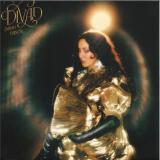
The mysterious Witness of Venus takes command of the Zazù spacecraft and continues his cosmic exploration. With Lost & Found, he drifts into a dreamlike sound world inspired by a specific sound of the trance and techno of the 1990s — the one that evokes wonder without excess.
As the label’s second release, Lost & Found is a gentle tribute to a timeless spirit of dance music, where the dancefloor becomes a place not only to move, but to dream.
Search:witness
Debuting on Token with his 'Blind Witness' EP, Pierce serves high-intensity cuts produced with finesse and flare. An architect of wide dimension, the producer works meticulously not only on the bite of his elements but the textures that glue everything together. Diving into immersion, Pierce executes four surgically precise tracks that burst at the seams and onto the dancefloor.
The balance of design to compliment each element is a tough feat, but Pierce funnels his expertise into very precise intention, making 'Blind Witness' a force to be reckoned with already so early in the year.
Dutch record label, shop and club platform One Eye Witness presents a lively new entry in their V/A series with WITNESS08. Honing in on more fresh talent from across the globe, Amsterdam’s wandering eye gathers producers Sinqmin, Salomee, Kate08 and elusive duo The Evil B-Side Twins (DJ Tool & Yazzus) for another trip into tech house — and beyond!
Kate08’s “Sticky Toffee” is suitably viscous, burbling and oozing its way across shifting sections. The London artist delicately balances percussion atop warbling bass tones and synth lines that pop in and out. Salomee gets moody on “Night Behaviour”; lurking in the shadows, the track’s acid squelch and interlocking melodies point to the psychedelic, with a purring bassline that keeps things grounded.
The Evil B-Side Twins lay in wait on the flip, springing into action with the tightly-wound “Spindrift”. Propelled by a spiky break and cascading delays, its 303 lines sound like rubber, bouncing between the other synths deployed by the duo. All manner of FX trickery is woven into the production: the Twins layer up and load the track with intricate details. Supplying an unexpected respite from the club action, final cut “Aesthetics For Destination” marks the debut foray into hip-hop for OEW. Produced by Seoul-based Sinqmin and featuring the sultry vocals of 문선 (MOONSUN), the track’s sparse beat and ghostly samples make for a mellow, head-nodding end to another hit from the label.
WITNESS08 — More talent, more trax!
Lady Wray verwöhnt uns mit einem unaufhaltsamen Two-Sider, während sie und der Grammy-nominierte Produzent Leon Michels (Clairo / El Michels Affair) ihrem kommenden Album den letzten Schliff geben. Die A-Seite "Be A Witness" zeigt eine der neuen Richtungen, die Lady Wray mit ihrem Sound einschlägt. Nicoles Gesang erhebt sich über einer basslastigen Drum-Machine und Nick Movshons funkigen Basslines und macht den Song zu einem echten Mid-Tempo-Tanzflächenfüller. Lady Wray singt über eine Liebe, die dazu bestimmt ist, zu geschehen, feiert die Freuden, die damit einhergehen, und verbreitet die guten Vibes bei jedem, der in Hörweite ist. Die B-Seite "Best For Us" ist ein wunderschönes Stück über Liebe, Engagement, Absicht und das Überwinden von schwierigen Zeiten. Synthesizer und Hintergrundgesang schweben über Homer Steinweiss' charakteristischem Schlagzeug und bilden die perfekte Kulisse für Coles weltbekannte Stimme.
And another! One Eye Witness rounds up 4 more acts to deliver the latest instalment of their V/A series, WITNESS07. The EP brings together names from across Europe: here fresh faces — the likes of Bristol’s JoeLy — rub shoulders with more established dancefloor exponents such as SameSame from Germany and Rome’s Christopher Ledger, all utilising the hypnotic tech house aesthetic championed by O.E.W.
Young Adults’ “It’s Only Temporary” kicks the EP into gear, a perky cut loaded with bounce. The The Hague duo employ a rubbery bassline and sound palette with plenty of boing, whilst working in a playful nod to a certain 1997 Loveparade anthem. Christopher Ledger gets classy on “Change That”, its slinky, steady break keeping hips in motion whilst tricky dubwise FX swirl across the stereo field. JoeLy slows things down and reigns it in with “Transitional”: beneath the filter sweeps, a seductive, sliding acid bassline is accompanied by augmented 303 action. As punchy as it is textural, the fittingly titled “Novel End” by SameSame seems draped in gauze — delicate drones wrap the drums in a soft cocoon, offering something a little more cerebral. WITNESS07: A tech house Tour de Europe, brought to you by Amsterdam’s all-seeing eye!
MADE IN JAPAN*
*Each size is based on Japanese standards.
The size may be small. Take one size smaller.
Material:
Outer fabric: 100% nylon taffeta (surface: fluorinated water repellent, reverse side: acrylic coating)
Lining (Body): 100% polyester (Tricot raised lining)
Lining (sleeves): 100% polyester
MADE IN JAPAN*
*Each size is based on Japanese standards.
The size may be small. Take one size smaller.
Material:
Outer fabric: 100% nylon taffeta (surface: fluorinated water repellent, reverse side: acrylic coating)
Lining (Body): 100% polyester (Tricot raised lining)
Lining (sleeves): 100% polyester
MADE IN JAPAN*
*Each size is based on Japanese standards.
The size may be small. Take one size smaller.
Material:
Outer fabric: 100% nylon taffeta (surface: fluorinated water repellent, reverse side: acrylic coating)
Lining (Body): 100% polyester (Tricot raised lining)
Lining (sleeves): 100% polyester
Four years after they went all the way to Antarctica, Flat Worms are back in gen pop with the rest of us - but, as intoned on the album opener "Sigalert," "back again like I never was." Is this a nod to the way time passes over our sorely vexed synapses? Or are we to believe that there"s hope to be found in this broken world? Kick back with Witness Marks and see what other traces Flat Worms have left us in the dust. The album title alone leaves a foreboding impression. But look closer - "witness marks" aren"t something out of a forensic analysis - they"re actually practical; scratches placed in old clocks designed to aid continued maintenance further in time. Sure, there"s big questions and more on the board; primarily if we"re at all distinct from the absurdity coming down around us, or just another character in the mirror? Flat Worms are looking inward this time, outlining personal space in relation to themselves and others - sometimes even people they barely know. Among the slabs of slategrey outrage, the flowers of compassion are blooming, and the simmering power of their trio grows exponentially. Working once again with Ty Segall, Flat Worms continue to find new answers by digging into themselves and playing their kind of rock: hard and flat, bass and drums thrusting stalwartly forward with conviction, guitar twisting and spinning in outrage, deadpan vocals decrying a dire set of circumstances. The democracy of working together, so often messy and frustrating, was found to be a powerful release for Justin, Tim and Will. Acting as one, Flat Worms navigated challenging times by coming together, finding release in the clockwork repetitions of practice and the shared creative space they occupied together against the encroaching world. In the short century of their existence, Flat Worms have agitated against the status quo with a disquieting lyric bent, to emphasize the psychosis of the times. These are positions taken within songs, sung out to individuals in the world. As evidenced by the lyrics, "But I know I can always see you at the show Even though it"s only temporary and it"s time to go." . . .Witness Marks surveys an evolving sense of community. Flat Worms are dedicated to persevering and using the power of their collective. Come witness!
Dallas diamond Zack Witness drops a bumper package of peak time ‘Hood House’ club cuts ready made to rock any dancefloor they’re put before. Gospel flavours mix with booty business, disco house heaters sit side by side with RnB flexin ghetto gold - all with that Zach Witness magic woven deep in their grooves.
An exclusive Garbage release created especially for Record Store Day 2023! Presented on vinyl for the first time, this 12’’ single includes the rare track ‘Witness to Your Love’, as well as three previously unreleased tracks. The release has been pressed on transparent coloured vinyl and is accompanied by an exciting, vibrant artwork.
Sleek new t-shirt from US techno and house underground stalwart label Fixed Rhythms. They've been pumping out releases by Marcela Dias Sindaco, Jdotbalance, Eamon Harkin, Escaflowne, JR2k, Alien D, Russell E.L. Butler, and Sweater On Polo to name a few, and there are tons more on the horizon. This year marks the 5 year anniversary of the label, so a merch drop is in order. Printed on high quality Comfort Colors white t-shirts. Preorder only, so don't sleep on this!
Size S - 2XL
Sleek new t-shirt from US techno and house underground stalwart label Fixed Rhythms. They've been pumping out releases by Marcela Dias Sindaco, Jdotbalance, Eamon Harkin, Escaflowne, JR2k, Alien D, Russell E.L. Butler, and Sweater On Polo to name a few, and there are tons more on the horizon. This year marks the 5 year anniversary of the label, so a merch drop is in order. Printed on high quality Comfort Colors white t-shirts. Preorder only, so don't sleep on this!
Size S - 2XL
Sleek new t-shirt from US techno and house underground stalwart label Fixed Rhythms. They've been pumping out releases by Marcela Dias Sindaco, Jdotbalance, Eamon Harkin, Escaflowne, JR2k, Alien D, Russell E.L. Butler, and Sweater On Polo to name a few, and there are tons more on the horizon. This year marks the 5 year anniversary of the label, so a merch drop is in order. Printed on high quality Comfort Colors white t-shirts. Preorder only, so don't sleep on this!
Size S - 2XL
Sleek new t-shirt from US techno and house underground stalwart label Fixed Rhythms. They've been pumping out releases by Marcela Dias Sindaco, Jdotbalance, Eamon Harkin, Escaflowne, JR2k, Alien D, Russell E.L. Butler, and Sweater On Polo to name a few, and there are tons more on the horizon. This year marks the 5 year anniversary of the label, so a merch drop is in order. Printed on high quality Comfort Colors white t-shirts. Preorder only, so don't sleep on this!
Size S - 2XL
Sleek new t-shirt from US techno and house underground stalwart label Fixed Rhythms. They've been pumping out releases by Marcela Dias Sindaco, Jdotbalance, Eamon Harkin, Escaflowne, JR2k, Alien D, Russell E.L. Butler, and Sweater On Polo to name a few, and there are tons more on the horizon. This year marks the 5 year anniversary of the label, so a merch drop is in order. Printed on high quality Comfort Colors white t-shirts. Preorder only, so don't sleep on this!
Size S - 2XL
As one of the three co-founders of Washington D.C. production and DJ trio Black Rave Culture, James Bangura is no stranger to situating electronic music within its most purposeful and potent contexts. With this new duo of tracks, however, Bangura taps into a deep, personal internality, metabolising visceral experiences and personal transitions into unexplored phases of his musical life.
The bass-forward “Harrar” is a complex organism which operates on two planes: a sweat-drenched 150pm symphony of synth pulses, fidgety percussion, shimmies and distorted vocals, that falls into lockstep with a
meditative, dubby bass tone that calmly swells and recedes. Emerging out of Bangura’s high intensity hardware jam sessions with friends and collaborators, both the depth and energetic fizz of “Harrar”’ are signified by its name, borrowed from Harrar Coffee & Roastery--a beloved Ethiopian coffee house and community meeting place in Washington D.C. that radiates warmth and familiarity.
“Witness Dub” occupies less of the senses, exploring a state of liminality through a contemplative deep house signature. Having emerged from an extended period of active duty in the military, Bangura had to navigate civilian life for the first time, causing him to process multiple culture shocks that stretched across culture, language, communication and identity. “Witness Dub” finds Bangura at this crossroad, juxtaposing the steady propulsion of kicks and drums with pensive minor key chords, as he begins to explore the other side of the self, letting the energy guide the music.
Coalmine Records, in partnership with Duck Down Music, is excited to announce the upcoming release of the deluxe edition of Sean Price & Small Professor’s collaborative classic, 86 Witness. Released as a limited edition gatefold 2XLP with both the main and instrumental versions, the album boasts several packaging accoutrements that involve an artwork overhaul designed with metallic inks. For those unfamiliar with 86 Witness, the album is a testament to both Hip-Hop's Golden Era and the unbelievable talents of Sean Price, one of the genre's biggest and best voices who was taken from us far, far too soon. His hilarious, tack-sharp rhymes are complemented by the imaginative and dusty production of Small Pro, who may just be rap's best kept secret. Like his previous projects, 86 Witness is brimming with classic lines and lyrical barbs from P. What's different here, however, is the depth of his references in addition to his incredible chemistry with Small Pro. From the verses to the beats, they have provided so many musical Easter eggs that each listen tips off something you've yet to discover. And that's not even mentioning the ambitious lineup of guests featuring Your Old Droog, Guilty Simpson, Rockness Monsta, Elucid, Castel, Reef the Lost Cauze, Curly Castro, Zilla Rocca, and more.
- A1: Bear Witness (Feat Dj Revolution - Intro)
- A2: Refrigerator P (Feat Rock & Dj Revolution)
- A3: Latoya Jackson (Feat Quelle Chris & Dj Revolution)
- A4: Midnight Rounds (Feat Elucid & Castle)
- A5: P's Theme (Interlude)
- B1: John Gotti (Feat Ag Da Coroner, Guilty Simpson & Your Old Droog)
- B2: Think About It (Feat Illa Ghee, Rock & Dj Revolution)
- B3: Word To Mother (Feat Dj Revolution)
- B4: John Gotti (Feat Reef The Lost Cauze, Curly Castro & Zilla Rocca - Philly Blunt Remix)
- B5: Refrigerator P (Feat Rob Kelly - Peaky Blinders Remix)
- C1: Bear Witness (Intro - Instrumental)
- C2: Refrigerator P (Instrumental)
- C3: Latoya Jackson (Instrumental)
- C4: Midnight Rounds (Instrumental)
- C5: P's Theme (Instrumental)
- D1: John Gotti (Instrumental)
- D2: Think About It (Instrumental)
- D3: Word To Mother (Instrumental)
- D4: John Gotti (Philly Blunt Remix - Instrumental)
- D5: Refrigerator P (Peaky Blinders Remix - Instrumental)
Side C/D / Disc 2: Instrumentals
Coalmine Records, in partnership with Duck Down Music, is excited to announce the upcoming release of the deluxe edition of Sean Price & Small Professor’s collaborative classic, 86 Witness.
Released as a limited edition gatefold 2XLP with both the main and instrumental versions, the album boasts several packaging accoutrements that involve an artwork overhaul designed with metallic inks.
For those unfamiliar with 86 Witness, the album is a testament to both Hip-Hop's Golden Era and the unbelievable talents of Sean Price, one of the genre's biggest and best voices who was taken from us far, far too soon. His hilarious, tack-sharp rhymes are complemented by the imaginative and dusty production of Small Pro, who may just be rap's best kept secret.
Like his previous projects, 86 Witness is brimming with classic lines and lyrical barbs from P. What's different here, however, is the depth of his references in addition to his incredible chemistry with Small Pro. From the verses to the beats, they have provided so many musical Easter eggs that each listen tips off something you've yet to discover. And that's not even mentioning the ambitious lineup of guests featuring Your Old Droog, Guilty Simpson, Rockness Monsta, Elucid, Castel, Reef the Lost Cauze, Curly Castro, Zilla Rocca, and more.
a 1 Bear Witness (Intro) feat. DJ Revolution
i 9 John Gotti (feat. Reef the Lost Cauze, Curly Castro & Zilla Rocca) Philly Blunt Remix
j 10 Refrigerator P (feat. Rob Kelly) Peaky Blinders Remix
Live At Robert Johnson proudly presents the new »Holographic Witness« EP by Niall Mannion aka Mano le Tough!
Please enjoy four very special tracks made by experienced Irishman Mannion near beautiful Lake Zurich. Four tracks to jump into like Zurich folks jump into the Limmat to get carried away. Now here's YOUR chance to get carried away too!
Let's start with the hypnotic grooves of »Holographic Witness« with its subtle handclaps and percussions turning this bass-line driven monster to further heights - a bass-line quite reminiscent of that special Miami sound made famous by the Murk guys back in the early 90ies. Add some balearic guitar riffings and wait until that mighty bass drum comes back in after 6 minutes and you'll find yourself dreaming on a dancefloor in heaven.
Niall continues with more pounding drum sounds in next tune »Kakooja«. Stabbing synths sounds dominate this track while Niall manages to create another dreamy vibe again for this monotonous (in a very positive way that is) work of art - a dreamy vibe which can be found on any of Niall's EP's tracks. This leads us directly to »Last Floating Figh, Liufe Floating« where Mr. Mannion floats into much quieter shores. It's a very meditative affair which makes you want to listen to it over and over again once the tune comes to an end. We think that Señor Villalobos might unleash this one very soon onto some European dancefloor … don't you think?
On »Weather Master«, this EP's last track, Niall masters the art of trippy sounds for a fourth time building another dreamy hypnotic groove that is just beautiful. Maybe too beautiful for this world … we don't know, but what do we know? We're fans. Fans of Mano Le Tough who does not seem so tough at all considering his first offering for Live At Robert Johnson.
Maybe you should consider becoming a fan too - in case you aren't already …
Sláinte, Niall! We raise our glasses respectfully!
Wonky noir specialist, Kercha, is back with five spun-out cuts, merging dubstep, jazz, garage, techno and a whole lot of weird.
‘Disarray’ is as discombobulating as its title suggests, a slinky beat hidden among umpteen odds and ends from Kercha’s cabinet of curiosities. A subby wiggle here, a far-off siren there, the warm tinkling of a Fender Rhodes, and was that someone falling down the stairs? Our only constant allies are a vaguely disturbing vocal and a bass clarinet that’s definitely up to no good.
‘Witness’ employs a similar palette but switches tactics, stripping back to the basics as faint whispers and the ever-growing presence of a whirring alarm suggest something dangerous might be lurking around the corner.
‘Conjugate’ is more direct, the percussion elevated from its usual backseat as thudding kicks and taught snares make their presence felt among the digi-dub wobbles — a theme repeated on digital bonus track ‘New World’, though there, jagged mid-bass lines provide an extra dollop of screwface-inciting muck.
And bringing this leg of DNO’s journey to a close is ‘Long Way’, which rumbles along like a lonely night train, its chugging bassline matched with eerie engine whistles, the rhythmic clink of a cowbell and, somewhere deep in the mix, the familiar clickety-clack of tracks.
Weaving together disparate worlds like some interdimensional architect, Kercha simultaneously places us among the inebriated haze and freewheeling expression of a basement jazz club, and the 10-tonne rhythms that have fuelled DNO’s parent party The Mine for the past decade, and will continue to do so into the future.
Rhythms of postmodern realism at the very bottom of the DNO.
• First ever vinyl LP of Gunfire Dance • Remastered for vinyl • Tracks produced by The Damned’s Brian James & Rat Scabies • Limited pressing 450 copies with printed inner sleeves • Reviews & Advertising in Vive le Rock, Record Collector & Classic Rock. Gunfire Dance we're born sometime in the mid 80's. Playing every sweaty rock'n'roll dive from Birmingham's Barrel Organ to regularly selling out London's Marquee to New York City's infamous C.B.G.B's and back again along the way being produced by Brian James and Rat Scabies and sharing bills with the likes of Jayne County...Thee Hypnotics...Dogs D'Amour...D Generation...And various alumni of The Heartbreakers, Hanoi Rocks and Lords of the New Church.....The bands mixture of Dolls'y R'n'B swagger and Raw Power era Stooges venom was out of step with both the 'Hair Metal' and 'Grunge' era's they straddled.... They imploded in New York City in 94... R.I.P. Ant..Side 1. 1. Blue 2. Bliss Street 3. Bird Doggin' 4. Easy Come (You've Just Gone) 5. Break It up 6. Pretty As Sin Side 2.1. Suit And Tie 2. Make You Cry 3. It Hurts 4. Burnin’ Ambition 5. Gimme Back My Heart 6. Archway Of Thorns.
- A1: Take It Slow
- A2: Lend A Hand
- A3: So You Wanna Change The World
- A4: Looking For An Old Friend
- B1: Spirit Of A Workin' Man
- B2: Midnight Rider
- B3: Be Good To Yourself
- B4: Half Glass Woman
- C1: Dancin' With The Devil
- C2: Can I Get A Witness
- C3: Walk Tall Man
- D1: It's Alright
- D2: Set Me Free
- D3: Better Run From The Beast (Vinyl Bonus Track)
Whether it be on the banks of the Mississippi River or deep in the heart of the English countryside, rock 'n' roll lives, breathes, and burns on the outskirts. Hailing from Rome, GA, at the foothills of the Appalachian Mountains, The Georgia Thunderbolts rise up with a scorching signature style steeped in soulful southern swagger. On, Can We Get A Witness, their full-length debut for Mascot Records, the quintet—TJ Lyle vocals, harp, piano, Riley Couzzourt [guitar], Logan Tolbert [guitar], Zach Everett [bass, keys], and Bristol Perry [drums]—conjure a tried-and-true spirit through a fresh fire.
“We all grew up on rock music,” Riley says. “Rock ‘n’ roll comes back around, but longevity depends on grinding it out. That’s what we want to do. We try to put in the work our favorite bands did. If I could think of three words to describe us, they would be ‘Hardworking, Determined, and Humble’.”
Gigging tirelessly, they cut their teeth by playing with Black Stone Cherry, The Kentucky Headhunters, Blackberry Smoke, Tyler Bryant & The Shakedown, Atlanta Rhythm Section, Molly Hatchet and The Cadillac Three. The band began when Bristol and Riley initially bonded over rock ‘n’ roll in high school. By sophomore year, they had a regular jam schedule, and eventually joined up Zack, TJ, and Logan to round out the group. They share a wide swath of inspirations, ranging from southern gospel to Hank Williams, Jr., Neil Young, Little Feet, Waylon Jennings, Ray Charles, Merle Haggard to the hard rock of Ozzy Osbourne, Audioslave, Bad Company and of course, The Allman Brothers & Lynyrd Skynyrd.
The band recorded at the iconic Barrick Recording Studio in Glasgow, KY, with producer Richard Young. The album comprises of thirteen undeniable anthems, beginning with opener “Take It Slow.” Distilling whisky-soaked riffs, wild harmonica, and pulse-pounding drums into a simmering groove, it struts out of the gate with confidence and charisma. “There’s a message to what we’re doing,” Bristol leaves off. “It’s okay to be yourself. If you’re going through hard times, the music will always be there. We’d love to remind everyone of that.” The Georgia Thunderbolts embody the blue-collar working man who has put their foot down on the accelerator towards the rock ‘n roll American dream.
"The Witness" markiert eine gewitzte, unkonventionelle Linkskurve und zeigt Suuns in ihrer angenehmsten, offensten Form. Selbst aufgenommen und selbst produziert über den Großteil des Jahres 2020, ein Jahr voller Streit, Einsamkeit und Reflexion, zeigt "The Witness" die Band mit einer Lupe über ihren eigenen Standardzustand des Spielens und Auftretens. Es ist eine rasche Abkehr vom Vorgänger-Album "Felt" und erfreut sich daran, zufällige Ideen in ihren embryonalen Demo-Versionen zu ernten, als ob man ein glorreiches Feuerwerk in den Himmel entlässt. Mit dem Ausstieg von Max Henry als Vollzeitmitglied im Jahr 2018 und dem Wohnort-Wechsel von Ben Shemie, der jetzt einen Ozean entfernt in Paris lebt, manifestierte sich eine neue Herausforderung für das Trio, sich wieder zu finden, sowohl sozial als auch kreativ. Mehr als jede andere Suuns-Platte verwendet "The Witness" eine Jazz-Mentalität, die einen kontinuierlichen Vibe über die Vorstellung von separaten Kapiteln stellt. Es gibt eine Ebene der Entspannung, des Akzeptierens der Urinstinkte der Band und einen konzentrierten Versuch, diese Instinkte zu maximieren und zu überarbeiten. Für eine Band, die für ihre kryptische Anziehungskraft bekannt ist, markiert "The Witness" das bisher großzügigste, reduzierteste und berührendste Werk von Suuns.
Amsterdam producer Kaap steps forward on his own De Lichting imprint with three twisted jams of deep and playful techno. The passionate gearhead, known for his dubby takes on house and techno, started his Working Titles playground back in 2017 by running a niche cassette outlet Yield on the side. In late 2018 he merged into the prolific De Lichting collective and is a frequent guest on Indigo Aera's AEX series. After many years of hard work, Kaap's new solo EP is surfacing, and it's worth the wait. Over the course of three tracks, Kaap shows high levels of creativity. The first track 'Razor' is a bouncy bass wobbler, its rubbery acid lines and crispy percussion make it an ideal party starter. Title track 'Omen' reaches for deeper grounds, a deep and murky groover enlightened by tactical bleepy rhythms. Kaap's love for dub-techno triumphs on the lengthy b-side as a closer on this EP. With over ten minutes of hazy atmospheres and mesmerizing pads, it builds and builds towards the rolling fields of euphoria.
Danish-Swedish quartet VOLA are back with a new studio album featuring their iconic blend of futuristic progressive rock, electronica and modern metal, topped off with clear, beautiful vocal lines. Their third studio album 'Witness' will be released on 21st May via Mascot Records.
Bringing on board Grammy award-nominated Jacob Hansen (Volbeat, Amaranthe, Delain) early on in the process with his hi-fi approach to mixing, this inspired VOLA to push their versatile capabilities into the direction of creating a very contemporary album & atmosphere.
There is always an underlining cinematic aesthetic to VOLA that explodes in front of you upon listening to them. But it then entices you deeper within the rabbit hole, following their story further until you are taken in by its hold.
'Witness' invites you on a journey that pursues characters being held witness to major changes in their lives.
Tim Gick's already-warped patchwork editing of the entire Crazy Doberman output thus far turns increasingly glitched out across the splattered quiltwork of a nine track LP on Aguirre. Any coherent sense of time departs early on the A-side; kicked off with the familiar sound of the Dobes' synth throb and Love-cry woodwinds on top of completely fried electric guitar squiggling, all suspended in spiritual foam; then battered to bits on the greasy flat top of the record's b-side.
Ringing modular synth sirens evoke alarmingly huge Southern watersnakes swimming on top of Oconee river. Total trip zone across two sides: brownouts in the sequence of events, dubby fadeouts, and bright jump cuts in space. Teases of cartoon barrlehouse tickling on the keys of a farmhouse piano and tape melt psychedelia. The recording session in Athens, Georgia was a total "CHUGFEST" recalls Frank Hurricane, the Appalachian juggalo folkie king, who joined the session with the Lafayette, Indiana crew. The presence of Hurricane's own "Life is Spiritual" mirth bulworks the record with a muddy, barefoot hippy hopefullness, steadying the log flume through the notcturnal psychic murk toward the holy morning dew. (J. Russ)
A Credible Eye Witness teams up with enigmatic Ghost Ride to create a new aesthetic and musical identity to his ACEW project. Loud yet energetic "Stellar Tunes" introduces four dancefloor electro cuts characterized by European noir tones and US funk sororities. From the Detroitish influences of opener "Sound Odyssey" to the ultimate 90's groove of synth pop 'Political Collapse', passing through the cosmic analog style of emotional "Purple Sky" or the hammering vibes of psychedelic "Obsidian", the 12' brilliantly combines acid abstract sounds, experimental and structural elements that underline the mastery of Emilio Urbano in developing original and intricate electro music. 'Stellar Tunes' sees the Italian moving on a bit from his first productions to explorate funkier landscapes. Expect nothing but electro at its finest!
Following the success of 'Stellar Tunes', Italian maestro A Credible Eye Witness and his partner in crime Ghost Ride have returned into the studios to bring you this very special phenomenon. Top notch 'Random Research' introduces four tracks of pure electro madness, starting off with well named 'Synthesis', a fusion of both producers creative talent into one of a kind track that celebrates their immoderate taste for mind blowing electro modulations! Pounding 'Magnetic Force' offers a powerful electro monster based upon hammering beats and hypnotic vocals. A pure Dj tool, perfect to drop in the middle of set exactly when you want to lead your crowd into harder areas. Textured 'Metis' on the flipside continues where 'Magnetic Force' stopped to offer more psychedelic and urban melodies. Combined to a groovy bass line, the track appears to be a real winner while 'Leda' slows down the rhythm for more relaxing and no-nonsense electro tinted with acidic loops. The 'Random Research' EP sees two uncompromised artists explore uncharted territories, unusual dancefloor paths to take the listener to a higher level of electro. A must have 12'' ahead of its time, even better than 'Stellar Tunes'. Are you prepared enough for that
The Works of John B. McLemore, the star of one of last years biggest podcasts, S-Town, which is coming out on Dais. The story behind this release is truly fascinating.. the music itself is ambient remixes of Tor Lundvall's best works, but with John's idiosyncratic slant on them, with some having been woven together using the horde of clocks he use to keep in his basement. This story is really worth a read if you get a chance."In September 2012, I received an e-mail from someone named John B. who said he had assembled a lengthy remix of my music, which also incorporated some of his own material. John asked if I'd mind if he posted this recording on YouTube, to which I agreed. He also mentioned that there was a second part to his mix that was "roughed out", but never completed. I was curious to hear both parts, so shortly afterwards, John mailed me two CDrs which I enjoyed very much. The recordings were hypnotic and haunting, evoking images of vast fields at twilight. I was especially fond of the second disc which had a darker atmosphere and featured more of John's original material, beginning with ghostly clock chimes and ending with a mysterious piece using dried seed pods and other cryptic sounds that slowly built-up into an intense, almost claustrophobic environment.
My correspondence with John lasted about two months. In one of his final e-mails, John said "I have to observe that your paintings seem to have a great deal of loneliness involved in them... even multiple characters seem to be together alone, so to speak... I really appreciate looking at your paintings as well as your music, I think I have connected with the spirit of them both as much as anyone can." He went on to discuss his struggles with depression, caring for his aging mom and his concerns about the future. I tried to encourage his music as a possible outlet, perhaps as a means to help transform his feelings of loneliness into a more content solitude. Always easy to say, but as I well know, not always easy to do.
In his last e-mail in late October 2012, John sent me a beautiful slideshow of his Fall flower beds and his dogs. I was touched and I told him how much watching his video had brightened my day. That was the last time I heard from him.
Last year, I visited John's YouTube channel to see if Part One of his mix was still posted, which it was, and still remains. I was shocked and saddened to read in the comments section that he had passed away. The comments also suggested that John had received some sort of national attention recently. This quickly led me to the S-Town podcast. Although I had mixed reactions after listening, I was thankful that S-Town shed more light on John and his remarkable life... but somehow, I just couldn't place the person in the podcast with the person I had corresponded with. Had I not listened to S-Town, I would have remembered John as a very private, somewhat dark and lonely person. He may have been these things, but there was obviously far more to him than that.
After finishing the final episode, I decided to play the second, unreleased CDr of John's recordings for the first time in years. Listening to his clock chimes ringing in the dark was an eerie and chilling moment. I was reminded of a line from my song "29" which says "I live with dreams and a lonely mind, my clock is set to a different time". I wondered what those lyrics might have meant to him.
John had mentioned that he wasn't satisfied with his final mix, but I felt his work was too special not to be heard. I hope that these recordings offer another glimpse into the creative mind of a unique, complex and gifted individual who tragically left this world all too early."
Tor Lundvall
January 17th, 2018
JOHN B.'s NOTES:
This is what was intended to be the second part of my Tor Lundvall Remix series. Unfortunately I am dissatisfied with it due to a few defects, and it is highly unlikely that I will ever be able to complete it. Still it serves as a testament to my interest in the work of Tor Lundvall that I made it this far. Defects are as follows: The first movement is too 'fussy', and the first section of the fifth movement seems a bit long and may bore the listener, but since it consisted of so many slow moving textures, I don't know how I could redo it and still achieve what I was wanting to accomplish. Additionally, this recording was done just days before my Father died, and there are many feelings of guilt associated with the time spent on it. If you are receiving this recording, either you are one of my better friends, or you are a great admirer of Tor Lundvall, and requested that I send it to you.
1st Part: Basically a track of me fiddling around with old clock bells, and air turbulence mixed with Tor Lundvall and Field Recordings of rain, birds, cicadas, frogs and such.
2nd Part: My interpretation of Lundvall's Dark Spring. This track was inspired by the music of Carl Michael von Hausswolff.
3rd Part: Very ambient Field Recordings inspired by the work of Francisco Lopez.
4th Part: A Very Quiet passage consisting of delicate Field Recordings.
5th Part: Music performed entirely by me inspired by the Darker paintings of Tor Lundvall. Most of the instruments on this piece consisted of dried seed pods from the plant; Showy Rattlebox (Crotolaria Spectabilis), that I had collected and dried the previous Fall. There are other sounds from my own environment as well.
This mix was assembled in the Late Fall of 2003. There are some very Quiet passages in this piece, so it requires a nearly Isolated listening environment... It should be heard After Midnight, in the Late Fall of the year, and, not surprisingly, a Very Long Attention span is a Prerequisite.
John B. McLemore
September 10, 2012
- A1: Something From Nothing
- A2: The Feast And The Famine
- A3: Congregation
- A4: What Did I Do/God As My Witness
- B5: Outside
- B6: In The Clear
- B7: Subterranean
- B8: I Am A River
Profit Prison is the solo work of Seattle-based Parker Lautenschlager, previously in the hardcore band Marrow, power electronics act Anteinferno, and black metal cult Bhereg. Conceived in 2016, Profit Prison explores lyrical themes of isolation, estrangement, deprivation and paranoia against an aural backdrop of synthpop, post-punk and abstract industrial music. Inspired by Franz Kafka as much as Kraftwerk, Profit Prison achieves a cold minimalism that speaks to the nightmarish dystopia in which it was created. The debut Myra was released on cassette by Dominick Fernow's Hospital Productions in 2017.
On March 29 Avant! will release the 12' vinyl debut Six Strange Passions. Six tracks where Hi-NRG disco beats and 70's throbbing synths melt with trembling, reverberated vocals and dark dungeon synth passages.
Limited edition of 300.
Artwork by Italian Noise legend Matteo Castro (Lettera 22, Kam Hassah, Second Sleep label)
I feel unstoppable, I feel unstoppable, I feel unstoppable, singen Superfood auf ihrem zweiten Album.
Und diesen Anflug von Unaufhaltsamkeit kann man tatsächlich spüren. Schließlich kann man seine
gesamte musikalische DNA nicht einfach neuschreiben und den fanatischen Indie-Bombast des
Debüts für eine neue Morgendämmerung hinter sich lassen - so wie es das Duo auf Bambino tut -
ohne dass einem eine übermenschliche Dosis Selbstvertrauen durch die Venen schießt.
Produced by Dallas Austin, Jermaine Dupri, Babyface, Jon-John Organized Noize, and Sean 'Puffy' Combs, CrazySexyCool (1994) is the second studio album by American girl group TLC. The album peaked at three on the Billboard 200 and spent over two years on the Billboard album charts, and spawned two Billboard Hot 100 number one singles, including the worldwide smash hit, 'Waterfalls', and earned them two Grammy Awards.CrazySexyCool has sold over 23 million copies worldwide, becoming the best-selling album by an American girl group, and the second best-selling album worldwide by a girl group behind Spice Girls' Spice. The album was certified Diamond, making TLC the first girl group in history to be awarded Diamond status.
All four singles from the album reached the top 5 of the Billboard Hot 100, two of them ('Creep' & 'Waterfalls') reaching number one.
Following up his debut on the label, JC Laurent successfully returns with this memorbable four tracker, Southside' EP. Using his influences from deep within Berlin and detroit, he resumes where he left off, continually blurring the lines between techno and house with an uncanny ability to make it look easy.
similar to 2013's From Nice to Berlin', we have been fortunate to cast an extremely well respected, and in-demand producer to join forces on this release. last time it was Fred P, and now Uk's Tom Dicicco provides a heady, seductive remix of the title track. Tom has been busy releasing on labels such as Run Out Run, Stockholm LTD, Ear to Ground, Inner Surface and The Corner. additionally, his globetrotting dJ skills have found him inside Berghain and also a standout appearance at Boiler room in london. we love his work and glad he's a part of it.
Hidden Recordings again focuses on quality over quantity with another master- fully curated vinyl. southside' ep looks to be the next classic in the already well stocked and established history of the imprint.
Reinterpretationen der grandiosen HTH020 EP von Akkord. The Haxan Cloak (Tri-Angle Records) zaubern aus Elementen aller 4 Tracks der Original-EP ein darkes, 10-minütiges Masterpiece, das sich allen Soundklassifikationen entzieht. Hospital-Labelmacher Vatican Shadow knöpft sich die beiden Tracks "Typeface" und "Greyscale" vor und vereint sie zu einem bedrohlich-komplexen Techno-Trip.
- A1: Countdown To Armageddon
- A2: Bring The Noise
- A3: Don't Believe The Hype
- A4: Cold Lampin With Flavor
- A5: Terminator X To The Edge Of Panic
- A6: Mind Terrorist
- A7: Louder Than A Bomb
- A8: Caught, Can We Get A Witness
- B1: Show Em Whatcha Got
- B2: She Watch Channel Zero!
- B3: Night Of The Living Baseheads
- B4: Black Steel In The Hour Of Chaos
- B5: Security Of The First World
- B6: Rebel Without A Pause
- B7: Prophets Of Rage
- B8: Party For Your Right To Fight
35th anniversary edt[41,98 €]
'The Roundhouse Tapes' contains a captivating Opeth performance from
the Camden Roundhouse, London, UK, on November 9th, 2006 (a gig
which also featured Goth metal legends Paradise Lost), & sees mainman
Mikael Akerfeldt & co in scintillating form, churning out a selection of
classics from their illustrious career to date
Since their formation in 1990 in Sweden, Opeth has risen to the forefront of the
metal world over the years; bringing many aspects of progressive rock/metal to a
whole new audience by combining soft acoustic ambience with complex, melodic
& heavy guitar often familiar to forms of death/black metal, perfectly concocted
into a completely peerless sound. A constant factor of their success is that the
band have never been afraid to experiment with their song- writing, taking us
through some truly magical & hypnotic soundscapes from blackened death/prog
debut opus, 'Orchid' back in 1995, through to the highly accomplished prog/rock
outfit witnessed in recent years
2026 Repress
Deadbeat & Tikiman's occasional collaborative performances have since blown the minds of many audiences
Deadbeat. Tikiman. Infinity. Dub. A quadrangle of such obvious statement and perfect musical inference may very well never have been uttered for those of the wholly weeded out persuasion. Indeed, when the great book of Dub music is written the names Scott Monteith and Paul St Hilaire will undoubtedly figure highly in its chapters devoted to recent years. Monteith, the last great prodigal son of the doctrine handed down from the Blue Mount of Lord Scratch and King Tubby, St Hilaire the undisputed voice of a generation, those fanatical warrior monks, followers of the most Holy House of Ernestus and Von Oswald incarnate.
Having developed a fast friendship from their very first meeting in Montreal at the premier Micro Mutek event a decade ago, Deadbeat and Tikiman's occasional collaborative performances have since blown the minds of audiences from Berlin to Tokyo and many points in between. No great surprise then that their first album length venture is a Tour de Force of Dub music of the highest order.
Nearly a year in the making, the genetic code of Deadbeat's Infinity Dubs series gets shot through with a Dreader than Dread Kingstonian logic, hi hats dropping back from the three to the one, Tikiman at his most militant, poetic, fierce, and flowing. These are the recordings of two lions uncaged, and none who bare witness shall escape their fiery judgement.
If music is truly eternal, here be two voices which shall echo in infinity with all the weight, reverence, and dire power unleashed with every tectonic bass hit, and every whimsical turn of phrase. And if these eight burnt offerings are any indication of what happens when these two sit down for a session of smoke and reasoning, here's hoping they choose to do it frequently. Dub without end. Ad Infinitum.
“Dance Music That Hurts” — the motto of Work of Intent.
Hurts, because it goes straight to your heart.
There’s no better way to put it.
His productions are rooted in the UK underground,
dripping with both techno and pop sensibilities.
This is “big room” like you’ve never experienced it before—
music you can’t ignore, driven by storytelling and raw emotion.
He’s found a home on labels such as Monkeytown, Turbo, and REKIDS, and continues his relationship with Laurent Garnier’s COD3 QR .
Founder of the clandestine edit factory *Emotional Weaponry*,
he continues to receive support from industry heavyweights.
Former manager of *DAYTIMERS*, the UK-based collective championing
South Asian sounds, stories, and voices,
and a highly sought-after mix engineer for some of the UK’s most exciting prospects.
We’re beyond happy to welcome Roshan Chauhan aka Works Of Intent to the family.
Feels like the beginning of a long, dramatic love story.
Credits:
Written and produced by *Works of Intent*
Distributed by *One Eye Witness*
- 1: Gypsy Woman
- 2: Little Anna Mae
- 3: I Can't Be Satisfied
- 4: I Feel Like Going Home
- 5: Train Fare Home
- 6: Sittin' Here And Drinkin
- 7: You're Gonna Miss Me (When I'm Dead And Gone)
- 8: Mean Red Spider
- 9: Streamline Woman
- 10: Muddy Jumps One
- 11: Little Geneva
- 12: Canary Bird
- 13: Screamin' And Cryin
- 14: Where's My Woman Been
- 15: Rollin' And Tumblin' Part 1
- 16: Rollin' And Tumblin' Part 2
The Definitive Origins of the Chicago Electric Blues. Witness the birth of a legend. This essential collection captures Muddy Waters at the most pivotal moment of his career: the transition from a Mississippi Delta traveler to the "King of Chicago Blues." Muddy Waters was an ambitious young man who saw little future in Mississippi. In 1943, he headed for the bright lights, big city of Chicago, where he soon connected with blues giant Big Bill Broonzy, who began featuring Muddy as an opening act at his club dates. Within a year, Muddy had switched to electric guitar and formed his first blues combo, quickly becoming an established figure on Chicago's club scene. In 1947, Muddy came to the attention of the fledgling Aristocrat Records, just as Leonard Chess-then running a nightclub called the Macomba Lounge-invested in the company. Working frequently with pianist Sunnyland Slim, Muddy recorded a split session with him for Aristocrat in December 1947. This collection begins there: eight Aristocrat 78 rpm releases (sixteen sides), recorded between 1948 and 1950 and presented here in chronological order of release. Just three years later, Leonard and his brother Phil Chess would buy out Aristocrat's remaining partners and rename the label Chess Records-ushering in a new era of Chicago blues that would reverberate around the world. Includes extensive liner notes by Muddy Waters expert Fred Rothwell.
- 1: Pulse Repetition
- 2: Absolute Elsewhere
- 3: The Proxy
- 4: Progress Report
- 5: Buran
- 6: Tesseract
- 7: Backscatter
- 8: Frequency Shift
On a remote gravel-covered spit of land on the east coast lie the abandoned buildings of a government facility for weapons testing and experiments with radar.
In the mid 1960s this site witnessed the construction of an over-the-horizon radar, a technological marvel bouncing signals off the ionosphere, built to covertly monitor the activities of other nations.
The reflectivity of the ionosphere is a function of frequency, time of day, time of year and of the solar cycle. In essence, a sympathy for the celestial was required to fully exploit this man made construction.
Plagued by noise that created false returns on the monitors, the intended performance was never achieved, and despite several investigations the system was shut down and eventually dismantled in the early 1970s.
The long dormant Cobra is now a nature reserve.
- A1: Intro Lectric Chile Goat
- A2: Abierto
- A3: Organism
- A4: Thank You Mk
- B1: Tatanka
- B2: Interlude Train Of Thought
- B3: It Gets Heavy
- B4: Thin Brown Layer
- C1: Interlude So Many Years Ago
- C2: Terra Unfirma
- C3: Gettin It Together
- C4: Another Brother Gone
- C5: Broken Blood
- D1: Interlude And The Day Goes By
- D2: Lost Unfound (3:32)
- D3: The Color Of Life
- D4: Falling Awake
2026 Repress
It’s rare that a certain sound is entirely an artist’s own. Although undeniably a stew of impeccable influences – from blues to folk to Latin to dusty funk, soul and hip-hop – one cannot hear a Tommy Guerrero song without immediately recognising it as his - and his only.
The cult skater from San Francisco is globally renowned as one of the original members of the legendary “Bones Brigade” team. And as an accomplished multi-instrumentalist, his laid-back soul is beloved by all who’ve basked in its blissful glow.
There’s something elemental about this music that really stirs the soul. Strikingly beautiful and instantly addictive, it’s a kind of funk-fuelled, melody-driven, groove-based magic. There’s a serenity and heart in the playing that radiates warmth and splendour, as if crafted for endless sunsets. His albums that surfaced on Mo Wax at the turn of the century have been treasured since their release and it’s two of his most vital LPs that we’re honoured to reintroduce.
The originals were quietly pressed on to a single piece of vinyl so we’ve worked closely with Tommy this year to bring you these fresh, limited editions. They have been lovingly remastered, cut nice and loud on to heavyweight double vinyl and presented in deluxe gatefold jackets.
Soul Food Taqueria continued Guerrero’s guitar soul but represented a step forward with its polished production and greater complexity of instrumentation. Denied the promotion it deserved upon release, it flew under the radar. It is now the most wanted record of his wondrous back catalogue.
Guerrero’s atmospheric touch and subtle guitar provide lush, glimmering pieces of musical texture. Within his spacious compositions, uniquely arranged instruments flourish alongside each other to create a languid soundtrack for halcyon days.
As ever, the diversity on display is beguiling. From bossa nova, samba and cumbia rhythms to understated folk, funk and soul grooves, this is another exotic set of mellow gold; perfectly represented by ESPO’s memorable artwork. Furthermore, the title’s hybridity reflects the intoxicating sweep of stylistic flavours served up, reminding us that, however tricky it is to categorise Guerrero’s special blend, it’s always a pleasure to indulge in something so creative and adventurous.
Dubby, bass-heavy instrumentals give way to moody folk-soul – witness “It Gets Heavy”, featuring melancholic vocals from Gresham Taylor – whilst “Thank You MK” is a gentle ode to the tropics, featuring ethereal instrumentation, bright bass and warm, jazzy guitars. The second half in particular contains a number of stunning ambient tracks – check “Lost Unfound”, “Another Brother Gone” and “Broken Blood” - built around minimalist, laid-back grooves and detailed guitar orchestrations which wouldn’t be out of place on the latest Jonny Nash release.
Guerrero closes this flawless set with a moment of true beauty. Restrained and graceful, “Falling Awake” is a pared back piece containing meditative guitar melodies set against melancholic piano arrangements. It brings proceedings to the most peaceful close. Seductively good, it reminds you just how great simplicity can sound.
NO WAY BACK MAGAZINE
BETTER WAYS FORWARD THROUGH MUSIC AND SUBCULTURE STORIES, 1979-1994 - LEARNING FROM, NOT LONGING FOR
After all of the fun had - and, if we may brag a bit - the acclaim for NWB001, we're back with a follow-up.
So here's NWB002. Our start and end points shift this time (1979–1997 vs 1977-1989) but again the focus is on revolutionary moments in music and subculture.
We've got pieces from The Face, i-D, Time Out, Village Voice, Rolling Stone, Mixmag, The Observer and - a particularly big pleasure - Collusion magazine. We've got brilliant photography, too, documenting seminal afterdark moments. And we've put it all together with much love, craft and attention to detail.
This is material that lets us experience culture in its rawest form. In-the-moment and before endless layers of post-rationalisation have kicked in. Breakthrough events in dance music, hip-hop and pop – and parallel shifts in art, design and fashion. Inspirational, ground-level creativity and enterprise that set the scene(s) for subsequent decades.
We hope you enjoy reading NWB002 as much as we enjoyed bringing it together.
Inside No Way Back 002
Behind The Groove - the epic 1983 feature by Steven Harvey in David Toop's Collusion magazine, charting the NYC disco underground
Photographer Steve Eichner documenting the club kids scene at The Limelight, Palladium, Tunnel and Club USA
Year zero reporting as The Face's Sheryl Garratt visits Chicago in 1986, witnessing the emergent house sound
The Mudd Club - 'disco for punks' as Rolling Stone put it; the Lower East Side party which arguably spawned a thousand indie discos
In the 'socialist city' of Sheffield, meanwhile, Jon Savage heads for a night of sharp clothes and even sharper moves at Jive Turkey
Paul Morley writing in Time Out in 1988 on the tension materialising between glossy style mags and the the monochrome music press
The House That Rap Built - Village Voice celebrates the short but sweet glory years of hip-house
Mixmag in 1992 on the 'return of sex' to clubs like Roxy and the Sound Factory
Images and commentary from Eddie Otchere, rewinding to jungle's halcyon days
Kodwo Eshun reporting on jungle's full-throttle ascent for i-D in 1994
+ Editor’s notes, supporting commentary, playlists, and covers, spreads and imagery from original titles
ISSN - 2977-8530
- A1: They Found One Of My Graves (05:17)
- A2: Pre-Historic Metal (04:19)
- A3: Siberian Thaw (06:45)
- A4: Deeply Rooted (04:58)
- B1: The Dry Wells Of Hell (06:12)
- B2: So I Marched To The Sunken Empire (03:21)
- B3: Eat Eat Eat Your Pride (04:51)
- B4: Eon 4 (05:24)
In a year which marks the 40th anniversary since the initial formation - under the moniker of Black Death - of what would subsequently grow into influential genre legends, 2026 marks the return of the imperishable Norwegian duo of Fenriz & Nocturno Culto for their new opus of high calibre old metal, under the banner of ‘Pre-Historic Metal’. As Fenriz himself proclaims of the title’s symbolic origin, “Prehistoric is a loose term. I just figure it’s our VIBE, our take on things & it’s more a statement that we use old style to create something new”.
‘Pre-Historic Metal’ contains eight tracks of primal epics & gargantuan riffs with organic sound & the ever-present permeating spirit of the 70’s & 80’s, for a new continuation of the mastery witnessed on 2024’s ‘It Beckons Us All’. This next chapter in Darkthrone’s extensive & ongoing catalogue presents a vast odyssey through the sonic landscapes of Thrash, Black, Heavy & Doom Metal &, adorned with a punishing & “in your face” guitar presence, Darkthrone stirs the cauldron of savage creativity with a nod to the writing methods which were indicative of their earlier works of the late 80’s, but with a more refined craft.
'Pre-Historic Metal' was recorded at Chaka Khan Studios, Oslo, with production work conducted by Ole Øvstedal, Silje Høgevold & Mads Luis. Mastering was carried out by Jack Control at Enormous Door, & Maor Appelbaum Mastering.
This edition of 'Pre-Historic Metal' is presented on black vinyl.
- A1: Passage I (Small, Soft Feet Running Across Wooden Floors In The Morning)
- A2: Passage Ii (Listening To Lullabies While Holding Hands)
- A3: Passage Iii (Slow Days Of Togetherness)
- A4: Passage Iv (Watching You Quietly Eat An Apple In The Shade)
- B1: Passage V (Sounds From Your Rituals Playing In The Garden Near The Old Tree Which Has Witnessed Your Childhood)
- B2: Passage Vi (While You Slept, The Thought Of Not Yet Knowing How To Braid Your Hair Brought Quiet Tears)
- B3: Passage Vii (When You Learned To Stand In Your Own Light)
- B4: Passage Viii (Fifteen Years Passed And A Full Circle Moment Surrounded Us, Where The Ocean Meets The Mountains)
Passages in Time, the third album from Kasper Bjørke Quartet, traces the contours of a blend of spiritual jazz reverence and the calming grandeur of '80s ambient. Inspired by Christopher Nolan's observation that "time is the most fundamental part of our human experience," the compositions are approached as fragments of time and memory. Meditations on the elusive nature of time form the heart of the work, merging freeform jazz improvisations with cyclical synthesizer patterns that mirror its quiet undulations.
Dreamy synths intertwine with guitar, harp, trumpet, flugelhorn, saxophone, and flute, creating a spacious environment for contemplation. The music invites reflection on the choices that shape our lives and the lives of those closest to us, and on the quiet weight of our priorities within the brief span we call life on this planet. Each passage unfolds as a fleeting moment suspended in time. The subtitles hint at fragments from someone's diary, tender observations of love, parenthood, and connection. Together, the passages form a musical memoir of sorts, where memory and emotion are gently woven into the compositions.
Passages in Time does not impose structure or meaning, it reflects them, offering an open space as the instruments drift in and out of focus, tracing time's subtle rhythms and inviting the listener to infuse their own memories and meaning into these passages.
The album also marks a transformation for the Quartet project itself. Langstrakt (Claus Noreen), part of the original ensemble, continues to operate the synthesizers alongside Bjørke, while the wider constellation of contributing musicians has evolved. Strings and piano give way to flute and saxophone by Oilly Wallace, guitars by Danish ambient composer Anna Roemer, trumpet and flugelhorn by Malthe Kaptain, and cascading orchestral harp by Katie Buckley, principal harpist with the Icelandic Symphony Orchestra.
The cover painting is by American artist Marcus Leslie Singleton, courtesy of V1 Gallery, and reflects the meditative and timeless atmosphere of the music.
Passages in Time is released on Bjørke's own imprint, Sensitive Records, following the two previous Quartet albums released on Kompakt Records: The Fifty Eleven Project (2018), a debut that introduced Bjørke's ambient and neoclassical explorations, and Mother (2022), which expanded the ensemble's sound with emotive choir compositions and guest appearance by Sofie Birch (Unsound / Stroom). Together, these three albums trace a journey of artistic growth, from introspective experimentation to a fully realized, contemplative expression of time, memory, and human connection.
- 1: Snake
- 2: Moses Kill
- 3: Golden Arm
- 4: Lunch
- 5: Special Power
- 6: The Void / Madison
- 7: White Shirt
- 8: Radiator
- 9: Icepick
- 10: <
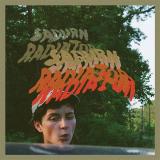
Intimacy is manifested in every moment of Radiator, the debut album from Philadelphia's Sadurn. This feeling of closeness, of being able to lend your every sense to one's confessions of internal conflict, is due in large part to the circumstances under which this album was created. Much of the world fell apart in 2020, but Sadurn tucked themselves away in a Pocono's cabin, creating and recording what would become their first full-length. Within the confines of their close quarters, passing animals as the only auditory witness to a makeshift recording studio created by moving furniture, Sadurn created an album that will break your heart and then slowly piece it back together.Sadurn started as the solo project of Genevieve ??DeGroot. Picking up guitar in 2015, DeGroot started writing songs, eventually playing DIY shows throughout the city of Philadelphia. With time, the direction, sound, and members of Sadurn changed. The beginning of 2020 was meant to serve as their debut as a four member band (Jon Cox on guitar/tenor guitar, Tabita Ahnert on bass, and Amelia Swan on drums), but the world had other plans and the group adapted.Taking influence from artists like Gillian Welch, Alex G, and Jason Molina, Sadurn's emotive indie rock explores the struggles and eventual beauty of grappling with multiple emotional realities, particularly when it comes to relationships. That conflict, the idea of being forced to choose, even when terrified, is present on singles like "Radiator" and "Golden Arm." The latter is an unhurried ballad that shows its truest colors with time, eventually blossoming with unexpected admissions of desire and uncertainty. Indecision, heartbreak, and attempting to live out your days against the actual backdrop of a gradually worsening hellscape is a shared commonality among us all, but on Radiator Sadurn breaks down walls that others so often put up. It's a fleeting, impactful glimpse at one's whole heart, and its sweeping, special nature is evident from the moment the album opens.
- A1: Another World
- A2: Fleeting
- A3: I’m Bored
- A4: Easy Man
- A5: Killincs
- A6: My Sister’s Loom
- B1: Mountain Song
- B2: Belljar Convenience
- B3: Fated To Pretend
- B4: Waiting Game
- B5: A Light
A Profound Non-Event, the debut album by Sydney-based three piece Daily Toll, comprises 11 songs traversing three years of forged friendships, collaborative experimentation and a shared love of growing through words and song.
Those attuned to the ever-vibrant Australian underground may already be well familiar with Daily Toll, their consistent live presence since their inception in 2021 embroidered by a handful of (mostly) home-recorded, (mostly) digital self-releases that have steadily accumulated an appreciative following. Initially the project of self taught musician, poet & artist Kata Szász-Komlós(they/them) and Jasper Craig-Adams(he/him), and expended to a three piece with the more recent addition of friend Tom Stephens(he/him), Daily Toll represents the union of three unique creative dispositions, of relationships blooming through the push and pull of creative practice. Mapping the band’s existence through their recorded output is to bear witness to the flux of three people learning to respond to one another and gently ossify into a collective vision that at once calls to mind folk song intimacy, post-punk dynamics and the artful poeticism of an adjacent Flying Nun legacy.
If those earlier recordings reflect a band imagining themselves into being in real time, A Profound Non-Event observes a clear shift in both conviction and approach. Recorded in just three days with Alex Bennett at the purely analogue Sound Recordings studio in Castlemaine and holing up at night in the century old cottage situated beside the studio, sheltering from the late-June wind and rain within walls littered with instruments and microphones, lighting fires to stay warm. Kata describes the experience as defined by “candle light and creative camaraderie”, an idyllic account of a collection of songs that glide with an undeniably warm, easy charm, evidenced in particular in the record’s second half as the tone turns increasingly introspective, the very sound of a cold evening’s drift into night. When contrasted with the moody swirl and sing-song bounce of the opening trio of tracks, there’s clear evidence of a band not simply in the process of becoming, but committed to finding their truth in that process.
Still, if Daily Toll display a reluctance to be wholly defined, then album centerpiece ‘Killincs‘ (positioned in the middle for a reason) might just be their Rosetta Stone. A verbose rumination on unsettled feelings of isolation and longing, exploring the challenges in making peace with one's decisions amidst the uncertainty of an often harsh world and the realisation that some things remain best unresolved - “I have the keys still, but I’ve buried the path”.
Gregor Tresher is finally back on his own imprint with a track that once more showcases his impeccable songwriting skills and even though he manages to deliver a song that fans will recognize as a Tresher production, it's not a repetition of his earlier works in any way, but another step forward in his ever evolving sound.. "Sleeping Giants" has been a secret weapon in Gregor´s DJ-sets, often dropped as the closing track if the night was really a special one. It's a journey driven by arpeggios and layered drumming that culminates just before a mysterious vocal sets the tone for the second coming. Gregor is obviously back on top of his game. And well, then there´s the B-Side: A world renowned DJ and producer, and a dear friend of Gregor and the BNS family delivered a remix that can only be described as pure perfection. It forces the original track on to the most massive warehouse floor you can imagine. Mr. Enrico Sangiuliano invites you to witness a true masterclass in remixing by delivering nothing short of an absolute peaktime monster, while keeping the vibe of the original respectfully intact. Ladies and Gentlemen, we give to you: Sleeping Giants!
- 1: (I’m Afraid) The Masquerade Is Over
- 2: Let Your Conscience Be Your Guide
- 3: Hitch Hike
- 4: Pride And Joy
- 5: Can I Get A Witness
- 6: Once Upon A Time (With Mary Wells)
- 7: Stubborn Kind Of Fellow
- 8: How Sweet It Is (To Be Loved By You)
- 1: It Takes Two (With Kim Weston)
- 2: I’ll Be Doggone
- 3: Ain’t That Peculiar
- 4: Ain’t No Mountain High Enough (With Tammi Terrell)
- 5: I Heard It Through The Grapevine
- 6: Ain’t Nothing Like The Real Thing (With Tammi Terrell)
- 7: You’re All I Need To Get By (With Tammi Terrell)
- 8: Too Busy Thinking About My Baby
- 1: What’s Going On
- 2: Mercy Mercy Me (The Ecology)
- 3: Inner City Blues (Make Me Wanna Holler)
- 4: Trouble Man
- 5: Let’s Get It On
- 6: You Are Everything (With Diana Ross)
- 1: Distant Lover
- 2: I Want You
- 3: Got To Give It Up
- 4: Heavy Love Affair
- 5: Sexual Healing
- 6: Sanctified Lady
Marvin Gaye always dreamed of being a smooth crooner, “sitting on a stool, possibly behind a piano,” delivering velvety songs like Nat King Cole. But Motown had other plans. Pushed between raw R&B and polished pop, Gaye fought to find his own voice, eventually rising to become one of the greatest soul singers in history.
Motown Records released the first Marvin Gaye record in 1961 "(I'm Afraid) The Masquerade Is Over", a single intended for (radio) promotion from the singer's debut album. This was followed up by the officially released "Let Your Conscience Be Your Guide" a week later. Gaye scored his first real hit with "Stubborn Kind of Fellow" in 1962, which he had co-written himself, joking about his alleged stubbornness. He found his own unique style with the single released at the end of the year: "Hitch Hike". The foundations were now laid for an enormous series of chart successes: "Pride And Joy", "Can I Get A Witness", "How Sweet It Is (To Be Loved By You)" and "Ain't That Peculiar" are all Motown classics from 1963-1965 which are still being regularly played today after all these years. The duets he recorded with Kim Weston ("It Takes Two"), especially Tammi Terrell and Diana Ross were certainly at least as good.
He scored his biggest ever hit with "I Heard It Through The Grapevine" in 1968. "What's Going On" from the same titled album became a number 1 hit in the USA. The album was received as a masterpiece and is regarded as one of the most important records in pop history. In 1973, the artistically and commercially very successful, "Let's Get It On" album was mainly a musical ode to Marvin's love for his new muse Janis Hunter. His journey continued after a turbulent relationship, addiction and a dramatic creative rebirth in Belgium, where he crafted the global hit “Sexual Healing in 1982.
Marvin Gaye left behind timeless hits, groundbreaking albums, and a legacy that shaped the sound of modern soul. His story, from ambition to artistry, from struggle to brilliance, remains as powerful as the music he created.
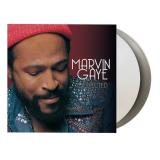
Music On Vinyl proudly presents a special coloured vinyl edition of the Marvin Gaye Collected album which is available as a limited edition of 10.000 individually numbered copies on white (LP1) and silver coloured vinyl (LP2) and includes a booklet with liner notes.
vladimir dubyshkin has always stood sideways from the rest of the techno world whilst attaining the highest achievement for a musician: having an unmistakable signature sound.
possessing a level of instinct that can only be called supernatural, vladimir is the sort of visionary who can chop up some vocals, mix them with an insane melody that no ordinary person could ever dream to imagine, and turn it into a surreal circus that feels like the entire room has tipped over.
along with contributions on several concept albums and hot steel compilations, trip has been honoured to have released five of vladimir's solo masterpieces: ivanovo night luxe, the botox queen, pornographic novel, budni nashego kolhoza and cheerful pessimist. each one expands the strange, addictive universe only he could map out.
his new record, "jane doe's secret" is sharply futuristic, charged with quirky rave energy. "jane doe" might be a placeholder, but this collection of tracks is far from it. it's a reminder of how rare it is to witness someone create their own gravitational field.
Looking back in hindsight to the activity and accomplishments of Axis is with much pride - to witness the relationship between the music and listener evolving to this point.
The Director's Cut reissue project is about manicuring detail. It?s about a rare opportunity to enhance what we've done so that the relationship strengthens for the long term''
- Jeff Mills
'The Director's Cut' series by Jeff Mills
2024 Repress !
"Looking back in hindsight to the activity and accomplishments of Axis is with much pride - to witness the relationship between the music and listener evolving to this point. The Director's Cut reissue project is about manicuring detail. It?s about a rare opportunity to enhance what we've done so that the relationship strengthens for the long term'' - Jeff Mills
- A1: Comdex
- A2: Ufo
- A3: Flying Machines (Commentary By Jeff Mills)
- B1: A-Set
- B2: Flying Machines
"Looking back in hindsight to the activity and accomplishments of Axis is with much pride - to witness the relationship between the music and listener evolving to this point.
The Director's Cut reissue project is about manicuring detail. It?s about a rare opportunity to enhance what we've done so that the relationship strengthens for the long term''
- Jeff Mills
- 1: Lake Walk
- 2: Lazy Daisy
- 3: Ups & Downs
- 4: Silently
- 5: There Was A Nice Sunset
- 6: Somewhere Good
- 7: Slow Island
- 8: Movin’ On
If – in some parallel universe (or perhaps a not-so-distant-future version of the one we’re already sentenced to living in) – the evil overloads of artificial intelligence were actually successful in their attempts to create convincingly enjoyable “original music,” more specifically tasked with wholly encapsulating my own personal tastes by data-chugging some cocktail of – oh, I don’t know – the posters on my wall, the records in my “most listened to” pile, the mixtapes I made for others, intensive physical scans of my auditory cortex, amygdala, hippocampus, heart strings, whatever else they have splayed out on their autopsy table with the intention of generating one all-encompassing “perfect band” based on the fruitful sum of their findings – that band, for me, would be (or would at least sound exactly like) the Tara Clerkin Trio. It is, quite simply, without exception, the music I wish to hear.
Formed in Bristol UK (where none of them are from yet all of whom are deeply engrained) in 2020, the Tara Clerkin Trio – as it somewhat democratically exists today, despite the singular authority implied by its name – consists of the titular Tara Clerkin, her partner Sunny Joe Paradisos, and Sunny’s brother, Patrick Benjamin. I’ll confess, I don’t know what their respective roles are within the operation and there’s only a very small part of me that cares to learn, as one of my favorite qualities in an objective listening experience is the mystery of who is playing what, which sounds are “authentic” versus synthesized, which chunks are performed “live” in a room together versus meticulously Frankenstein’ed from measure to measure, or how exactly the overall sound is so (seemingly) effortlessly achieved. Though, I suspect, if and when I do witness a live performance by this band at any point, my enjoyment of the music will not be lost in my better understanding of it.
With two extraordinary mini-albums – In Spring (2021) and On The Turning Ground (2023) – making a splash on London’s formidable World of Echo label in wake of their self-titled 2020 debut, this upcoming Somewhere Good LP is, in many ways, the band’s most realised work. In running their usual gauntlet of idiosyncratic (*an overused adjective for which here there is regrettably no sufficient alternative) approaches, Clerkin & co. colour in and outside of compositional lines over the course of 40+ celebratory minutes - never wallowing, despite inherently somber subject matters of self-defeat, disease, displacement, restlessness, gentrification - allowing their arrangements and improvisations ample space and time to situate, stretch out, breathe, cross-pollinate, and ultimately take deeper hold on the listener’s imagination – all while somehow sounding more like themselves than ever before.
Of course, there are traceable influences herein, if one felt that such comparisons were necessary to properly examine and enjoy this music (they aren’t)… Being the big dumb American from the small boring town that I am, cornfed on ‘90s alternative radio with the enchantingly exotic sounds of Maxinquaye and Mezzanine emanating from my chunky tube television, I can’t help but to make a blatantly obvious reference to a “Bristol sound”, ie the whole trip-hop trip, the pastoral crooning over the suggestive urban grime of cracked electro/piano treatments, the digitally-yet-primitively reconstructed James Bond soundtrack string-beats, etc.. But the Tara Clerkin Trio is so infinitely much more than that. There are elements of avant-pop, modern classical, kraut-folk, audio verité, dare I say indie rock (and not of the beer guzzling, masturbatory fuzz-flex variety but perhaps more like a Trish Keenan-fronted Faust, Adrian Sherwood at the mixing desk of If You’re Feeling Sinister, or – in expanding on our alternate reality – a world in which High Llamas cut a full-length for Warp Records with Andrew Weatherall on coffee duty).
The hazy, unmappable skyline-mirage of droning harmonium, upright bass, peculiarly accentuated wind instruments, acoustic guitar, hushed yet literally mighty keys combine to hypnotizing effect. The band may make underlying nods to jazz, sure, but it’s not appropriation, it’s that they have the actual chops to build it out. Beneath the janky samples and oddball percussive embellishment lies actually great drumming. Beyond the manipulated vocal witchery and woefully reflective plain-spoke moments are Tara’s subtly inspired melodies, sung with what might honestly be the glue to the whole crazy equation. A calming consistency throughout the otherwise unpredictably dynamic, boldly intuitive, uniquely British exploration of this (their own) universe in song. – Ryan Davis (Chicago, February 2026)
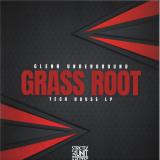
Strictly limited advance copies of GLENN UNDERGROUND's forthcoming album, due out in Spring 2026. Stickered white labels for hardcore fans and the impatient. A long awaited followup to the last "Tech House" release on PEACEFROG back in 1996, 8 tracks packing an "atmospheric punch". (STRICTLY JAZ UNIT MUZIC)
Since the days of the disco demolition and the emergence of the four to the floor.....
Sound has traveled from the hands of Heard, Knuckles, Hardy, Chip, Jefferson, Hunt, Terrible Ted, and a host of others but has been Perfected in Underground!
Presenting...
Grass Root (Tech House LP)
On Strictly Jaz Unit Muzic.
Since the last Tech House release on Peacefrog Records in 1996 the fire never stopped burning under the fingers of the Chicago Maestro. Circumnavigating the globe and archiving life experiences bottled up to the point of combustion
Witness now the dawning of the Strictly Jaz Unit Muzic release: Grass Root (Tech House LP)
This Eight song bequeath to your eardrums packs Atmospheric Punch, Omni Directional Drive, Crispy Hi-hat, Thumping Kicks, Punchy Deep Bass and Emotional Content to rattle your limbs..
- 1: The Sickle
- 2: Left Hand Path
- 3: Bharanzar Pt. 1
- 4: Crescent Moon
- 5: Right Hand Path
- 6: Bharanzar Pt. 2
- 7: B.o.p
- 8: The Witness
- 9: Coda
Transparent orangenes Vinyl. Unter dem Titel "II - Incarnate" legen SHAYTAN ihr zweites Album vor - und festigen ihren Mix aus Doom/Stoner und klassischem Heavy Metal mit orientalischen Einflüssen. Wo das Debüt "Chapter One" (2024) noch als Beschwörungsformel diente, steht das zweite Album für die Manifestation allen Übels in düsteren, aber auch melodischen Klängen. Musikalisch bleibt die Band ihren Wurzeln treu, erweitert den Sound aber durch noch atmosphärischere Klangbilder, die auch durch den intensiveren Einsatz von Hammondorgel und wuchtigeren Bass-Sound getragen werden. Die Produktion stammt von Charles Greywolf (Hammer King, Godslave).
Following up after the recent Circadian Rhythms release is Sebastian S under his Caustic 14 alias with a yummy yummy 2x12” six tracker full of speedy bleep science breakbeat and colorful jungle techno compositions that could only be made in BRUXHELL (Brussels).
The selection is a patchwork of various unreleased works from around 1993 to 1996. A silent witness of these rave-days said the following about the production process of the tracks on this new Basic Moves release:
“We were eager to share our individual sound universes with each other and see where it would take us. These compositions emerged during many sleepless nights spent watching videos of science fiction series such as Babylon 5 or Star Trek, scrutinising each episode while composing.”
DJ Normal 4 appears first time on the label with 10” record consisting different flavored genre tracks for the ears of the curious listeners, and die-hard music lovers. Tim has been creating electronic music for a long time and has appeared in some of the key music events around the globe. With a high level of skill and accuracy this artist is able to tackle music of many styles which also can be witnessed on this record. This is the second ten inch record the label has welcomed to its catalogue so you can imagine the level of excitement in the air. From the A side going into the electro approach right to the trance infused B side, this disc is guaranteed to feel absolutely correct in the record bag if these are the genres of music that resonates with you.
- 1: No Me Jodas
- 2: The City Begins
- 3: Sirena
- 4: Yellow Sun
- 5: Viva La Rosa
- 6: Enemy Without
- 7: You're A Ghost
- 8: Albuterol
- 9: Mi Concha
- 10: Public Works
- 11: Public Luxury
Downtown Boys have pushed relentlessly forward as an artistic and political project since their founding. Singer Victoria Marie and guitarist/singer Joey La Neve DeFrancesco first met at union meetings while working together at a hotel in Providence, RI, writing many of the band's early songs about labor organizing and exploitative workplaces. The quintet is completed by Joe DeGeorge (sax/synth), Mary Jane Regalado (bass), and Joey Doubek (drums). Over years of touring, and three acclaimed albums, Downtown Boys have continued to grow as artists, musicians, and organizers. Now, the band has arrived with Public Luxury, an enthralling album that keeps politics front and center while summoning the band's most urgent and powerful sound to date. The definition of Public Luxury falls very much in line with that of the title of the second Downtown Boys LP, Full Communism. Straight up, Public Luxury means, "everything for everyone." It's the stubborn insistence that a better world is possible, while fully recognizing the horrors we witness daily, and the individual and collective responsibility to resist the nihilism and hopelessness we all feel. Sentiments like "everything for everyone," and "we will have it all" perfectly represent the cathartic, communal live experience this cadre of multi-instrumentalists create. These sentiments also encapsulate the inclusive, joyful sonic fusion that defines the album: anthemic punk and indie rock mix with Latin traditions, drum machines blend with acoustic drums, saxophones punctuate riffs, and layers of synths add flourishes from new-wave to industrial. The amount of ground covered on Public Luxury can't be overstated, and yet the album feels totally vital and cohesive. Public Luxury is a revisitation of the band's past for the sake of their future. It was co-produced by DeFrancesco with recording engineer and longtime Downtown Boys supporter Seth Manchester (Lambrini Girls, Lightning Bolt, Model/Actriz) at the Pawtucket, RI studio and arts space Machines With Magnets, not far from the band's first home of Providence, RI. Victoria Marie's grandmother-a monumental figure for the band throughout their existence-passed away in May of 2025, and her influence looms large over the album; the songs "No Me Jodas" and "Sirena" are crystallized representations of the love between a woman and her ancestor. Beyond the loss, rage and frustration of the present, Public Luxury points boldly towards a vibrant, open-hearted vision of both music and the world: "Our music is simply for anyone and everyone who believes in the new future we can make together," Victoria Marie declares. "A world that will be awkward, inconsistent, yet truly free when it comes to all that matters."
- A1: Are You Sure?
- A2: Bloodlines
- A3: How We Met
- A4: Something Red
- A5: Portraits
- A6: The Toast
- A7: Death And The Cold Cold Ground
- A8: The Bride
- B1: Something Very Bad Is Going To Happen
- B2: The Archives
- B3: The Witness
- B4: Secrets
- B5: Welcome To The Family
- B6: Something Dead
- B7: Mother
- B8: Just Married
Something Very Bad is Going to Happen is a brand new 2026 Netflix horror series produced by the Duffer Brothers, the creative minds behind the global hit Stranger Things. From the Executive Producers of Stranger Things, and the Director of Baby Reindeer, Something Very Bad is Going to Happen is on Netflix from March 26th. Created by Haley Z. Boston.
The music for the series is composed by Grammy Award-winning musician and composer Colin Stetson, renowned for his idiosyncratic use of saxophone in his projects. He has collaborated with acclaimed artists such as Bon Iver, Arcade Fire and The National, amongst others. Scoring Something Very Bad is Going to Happen builds on Stetson's extensive experience in film and game music. He has composed soundtracks for films like the psychological horror Hereditary (2018) and the dark thriller The Menu (2022), as well as the epic Rockstar game Red Dead Redemption 2 (2018). For this series, Stetson delivers a suspenseful soundtrack, perfectly complementing the Duffer Brothers' signature storytelling. A must-have release for fans!
The soundtrack of Something Very Bad is Going to Happen is available as a limited edition on red vinyl and includes an insert.
The Éthiopiques series returns! Essential archive recordings from an extremely fruitful period in Ethiopian music.
Before “Swinging Addis” took over the world, there was Moussié Nerses Nalbandian — the Armenian-born composer who shaped modern Ethiopian music. Mentor, arranger, and pioneer, he laid the foundations of Ethio-jazz.
This Éthiopiques volume revives his forgotten legacy, recorded live by Either/ Orchestra First issue ever with new exclusive photos and in depth liner 8-page insert.
“Ethiopian jazzmen are the best musicians that we have seen so far in Africa.
They really are promising handlers of jazz instruments.”
Wilbur De Paris
(1959, after a concert in Addis Ababa)
አዲስ፡ዘመን። *Addis zèmèn* **A new era.**
The time is the mid-1950s and early 1960s, just before "Swinging Addis" bloomed – or rather boomed – onto the scene. Brass instruments are still dominant, but the advent of the electric guitar, and the very first electronic organs, are just around the corner. Rock’n'Roll, R’n’B, Soul and the Twist have not yet barged their way in. Addis Ababa is steeped in the big band atmosphere of the post-war era, with Glenn Miller's *In the* *Mood* as its world-wide theme song, neck and neck with the Latin craze that was in vogue at the same period. Life has become enjoyable once again, with the return of peace after the terrible Italian Fascist invasion of Ethiopia (1935-1941). The redeployment of modern music is part and parcel of the postwar reconstruction. *Addis zèmèn* – a new era – is the watchword of the postwar period, just as it was all across war-torn Europe.
The generation who were the young parents of baby boomers** were the first to enjoy this musical renaissance, before the baby boomers themselves took over and forever super-charged the soundtrack of the final days of imperial reign. Music is Ethiopia's most popular art form, and very often serves as the best barometer for the upsurge of energy that is critical for reconstruction. Whether it be jazz in Saint-Germain-des-Prés or the *zazous* who revolutionised both jazz and French *chanson* after the *Libération*, be it Madrid's post-Franco Movida, or Dada, the Surrealists and *les années folles* that followed World War I, the periods just after mourning and hardship always give rise to brighter and more tuneful tomorrows. Addis Ababa, as the country's capital, and the epicentre of change, was no exception to this vital rule.
**Two generations of Nalbandian musicians**
Nersès Nalbandian belonged to a family of Armenian exiles, who had moved to Ethiopia in the mid-1920s. The uncle Kevork arrived along with the fabled "*Arba Lidjotch*", the** "*40 Kids*", young Armenian orphans and musicians that the Ras Tafari had recruited when he visited Jerusalem in 1924, intending to turn their brass band into the official imperial band. If Kevork Nalbandian was the one who first opened the way of modernism, pushing innovation so far as to invent musical theatre, it was his nephew Nersès who would go on to become, from the 1940s and until his death in 1977, a pivotal figure of modern Ethiopian music and of the heights it. Going all the way back to the 1950s. Nothing less. And it is Nersès who is largely to thank for the brassy colours that so greatly contributed to the international renown of Ethiopian groove. While the younger generations today venture timidly into the genealogy of their country's modern music, often losing their way amidst a distinctly xenophobic historiographical complacency, many survivors of the imperial period are still around to bear witness and pay tribute to the essential role that "Moussié Nersès" played in the rise of Abyssinia's musical modernity.
Given the year of his birth (15 March 1915), no one knows for sure if Nersès Nalbandian was born in Aintab, today Gaziantep (Turkiye/former Ottoman Empire) or on the other side of the border in Alep, Syria... What is certain is that his family, like the entire Armenian community, was amongst the victims of the genocide perpetrated by the Turks. Alep, the place of safety – today in ruins.
Before Nersès then, there was uncle Kevork (1887-1963). For a quarter of a century, he was a whirlwind of activity in music teaching and theatrical innovation. *Guèbrè Mariam le Gondaré* (የጎንደሬ ገብረ ማርያም አጥቶ ማግኘት, 1926 EC=1934) is his most famous creation. This play included "ten Ethiopian songs" — a totally innovative approach. According to his autobiographical notes, preserved by the Nalbandian family, Kevork indicates that he composed some 50 such pieces over the course of his career. This shows just how much he understood, very early on, the critical importance of song as Ethiopia's crowning artistic form. Indeed, for Ethiopian listeners, the most important thing is the lyrics, with all their multifarious mischief, far more than a strong melody, sophisticated arrangements or even an exceptional voice. (This is also why Ethiopians by and large, and beginning with the artists and producers themselves, believed for a long time — and wrongly — that their music could not possibly be exported, and could never win over audiences abroad, who did not speak the country's languages).
Last but not least, one of Kevork's major contributions remains composing Ethiopia's first national anthem – with lyrics by Yoftahé Negussié.
Nersès Nalbandian moved to Ethiopia at the end of the 1930s, at the behest of his ground-breaking uncle. Proficient in many instruments (pretty much everything but the drums), conductor, choir director, composer, arranger, adapter, creator, piano tuner, purveyor of rented pianos,... he was above all an energetic and influential teacher. From 1946 onwards, thanks to Kevork's connexion, Nersès was appointed musical director of the Addis Ababa Municipality Band. In just a few years, Nersès transformed it into the first truly modern ensemble, thanks to the quality of his teaching, his choice of repertoire, and the sophistication of his arrangements. It was this group that would go on to become the orchestra of the Haile Selassie Theatre shortly after its inauguration in 1955, which was a major celebration of the Emperor's jubilee, marking the 25th anniversary of his on-again-off-again reign.
At some point or other in his long career, Nersès Nalbandian had a hand in the creation of just about every institutional band (Municipality Band, Police Orchestra, Imperial Bodyguard Band, Army Band, Yared Music School…), but it was with the Haile Selassie Theatre – today the National Theatre – that his abilities were most on display, up until his death in 1977. To this must be added the development of choral singing in Ethiopia, hitherto unknown, and a sort of secret garden dedicated to the memory of Armenian sacred music, and brought together in two thick, unpublished volumes. Shortly before his death (November 13, 1977), he was appointed to lead the impressive Ethiopian delegation at Festac in Lagos, Nigeria (January-February 1977).
His status as a stateless foreigner regularly excluded him from the most senior positions, in spite of the respect he commanded (and commands to this day) from the musicians of his era. Naturally gifted and largely self-taught, Nerses was tirelessly curious about new musical developments, drawing inspiration from the very first imported records, and especially from listening intensely to the musical programmes broadcast over short-wave radio – BBC *First*. A prolific composer and arranger, he was constantly mindful of formalising and integrating Ethiopian parameters (specific “musical modes”, pentatonic scale, and the dominance of ternary rhythms) into his “modernisation” of the musical culture, rather than trying to over-westernise it. It even seems very probable that *Moussié* Nerses made a decisive contribution to the development of tighter music-teaching methods, in order to revitalise musical education during this period of prodigious cultural ferment. Flying in the face of all the historiographical and musicological evidence, it is taken as sacrosanct dogma that the four musical modes or chords officially recognised today, the *qǝñǝt* or *qiñit* (ቅኝት), are every bit as millennial as Ethiopia itself. It would appear however that some streamlining of these chords actually took place in around 1960. It was only from this time onward that music teaching was structured around these four fundamental musical modes and chords: *Ambassel*, *Bati*, *Tezeta* and *Antchi Hoyé*. A historical and musical “details” that is, apparently, difficult to swallow, especially if that should honour a *foreigner*. Modern Ethiopian music has Nersès to thank for many of its standards and, to this day, it is not unusual for the National Radio to broadcast thunderous oldies that bear unmistakable traces of his outrageously groovy touch.
Lunfardo presents “Aurora" introducing the fourth conceptual album that deep dives into Uruguayan culture and misticism once again.
On March 3, 1976, Ángel María Tonna, owner of the ¨La Aurora¨ ranch in Paysandú, observed a strange flash of light near his shed. Upon approaching, he found a spaceship suspended 75 meters high, with an intense circular light that caused radiation effects later discovered in the ground. Simultaneously, a blackout occurred in the nearby cities of Paysandú and Salto, and several witnesses of lights crossing the sky were documented in the local press by major newspapers such as El Telegrafo.
Thereafter, Neil Armstrong, the first man to walk on the moon, visited Uruguay and the ranch several times, eight times to be exact. He shared photos of flying objects with Tonna and left a drawing in the house depicting space and "supreme beings." Despite UFO reports throughout Uruguay, ¨La Aurora¨ remains a mystical place. The truth is out there, or as it is sayed beneath there.
“Aurora EP¨ immerses us in two sides divided between Molen and Qasio. Side A invites us to explore the inexplicable in an abduction, a “close encounter” (Encuentro cercano) that transports us directly on a journey through outer space but also immerses us in the mysteries of "Ulimen." Side B offers a profound guide to worlds of "dark matter” (Materia Oscura), disconcerting presences, “orbs”(Orbes), and galaxies above our heads
Default Mode by Raleigh & Takenaga continues the newly established X series – Harmony’s platform for new voices and limitless exploration. Hailing from Prague, the duo embodies the next wave of adventurous sound design and musical talent from the imprint’s home town.
Incentive Program opens the EP’s A side with a drifting, trance-tinged flow wrapped in sweeping pitch movements and fractured vocals. The track sets a shadowy, almost sinister atmosphere, pulling all witnesses into its slow-burn gravity. It’s a steady build, tipping the floor over the edge. Stiff Envelope pulls you into its depths as it continues to build tension with resonating synth hits that quiver over a powerful trance foundation. With a few moments of silence that let its unsettling atmosphere settle across the stereo field before swinging back in at full force, this one is tailor-made for big systems.
B side’s Ground Floor carries on with metallic swells and shimmers that ring underneath the surface as the tension built on the A side bursts, settling into a grounding four-on-the-floor moment and leaving just enough time to breathe before Raleigh stirs up a concoction of devious vocals, snappy percussion, and a seductive bassline that lifts the mood tastefully. Takenaga wraps up the record with Head Count, a razor-sharp blend of crisp percussive cuts and stuttered crumbles that are seeking the perfect pitch all the way, climbing up and down. Heads are counted on a lively groove that radiates playful momentum and commands the dance floor to get in formation, keeping a tight rhythmic focus. Infused with the pulse of UK club culture, this track delivers a fresh and forward-thinking sound perfect for adventurous turntables.
The Break Cracker returns with a double sided delight for all funky, latin and soulful DJs with some tried and tested sure shots - showcasing two sides of latin club sounds
On one side- an extended version (33% extra!) of a Latin-soul crossover classic from New York in the late 60s. Originally issued on a Fania LP and then on their subsidiary Uptite label for a 45 release. It really gained attention in forward thinking soul clubs in the early 2000’s with its soulful vocals combined with a familiar riff - and now the original 45 now commands a hefty price tag - with sales up to the four figures GBP bracket
The flip sees an edit of a lesser known 1970s Latino funk bomb - chopped and looped for devastating dancefloor action - as witnessed on dub plate action over the last 6 months at select clubs and venues. From B-Boys to Jazz Dancers - to the Salsa familia - this whips up an instant storm anywhere !
Following a string of acclaimed collaborations, including Agua Dulce with percussionist Laura Robles and Mapambazuko alongside Congolese guitarist Titi Bakorta, Peruvian artist Alejandra Cárdenas (aka Ale Hop) returns with her most personal work to date yet, A Body Like a Home. Marking her first album under her birth name, the project is a sonic memoir exploring the tangled realms of trauma, recovery, and love through autobiographical soundscapes.
A Body Like a Home is the artist at her most exposed. Comprising 13 songs and 15 poems, the album sees her set aside collaborative fusions for solo catharsis, channeling years of turbulence - intergenerational scars left by colonialism, racism, domestic violence, and alcoholism - into a work that oscillates between brutality and tenderness. Cárdenas states: “I grew up under Alberto Fujimori’s dictatorship, when a veil of hopelessness seemed to settle over everything. This is the backdrop of the album. The songs and poems trace the inevitable loop between private wounds - addiction, domestic violence, fractured intimacy - and Peru’s national scars, carved by colonialism. It’s not a straight story or a resolution. Writing and composing became a ritual of digging for meaning, into what’s buried, disguised, or renamed, until the body itself became a living archive.
” At the heart of the album is Cárdenas’s own voice - part witness, part confessor - reciting over layers of electric guitars, electronic textures, the haunting violin of Mexican musician Gibrana Cervantes, and a collage of field recordings, from rainfall, muffled whispers, broken glass, to archival protest footage from Peru. The result is a work that resonates like a diary written in sound.
The first single, "Motherland", is a searing testimony where Cárdenas voice cracks under the weight of history and personal loss. Amid a storm of distorted guitars, she traces the cyclical legacies of colonialism, from state massacres branding Indigenous bodies as “terrorists” to the spiral of addiction as an unavoidable future. The lyrics draw parallels between political and domestic violence: a mother’s drunken knife pressed to her chest, and a motherland where racism is currency. She utters: “sacrifice demands a body.” Yet, amid the wreckage, a willful grip on love and faith persists. Ultimately, A Body Like a Home is a document of transformation. Tracks like "Evangelina" and the title piece "A Body Like a Home" hold space for resilience, spirituality, and love, while "Early Road" and "Going South" thread subtle nods to Peruvian folklore, opening up bright vignettes into a sense of belonging.
The poetry chapbook accompanying A Body Like a Home (five of its pieces are also recited on the album) extends the work, building a parallel architecture. Oscillating between the documentary and the mythic, the intimate and the forensic, the profane and the oniric, these poems practice a theology of the ordinary, where everyday objects - cameras, knives, moth-eaten cotton - are charged withspiritual and historical weight. Here, the body is land, house, battlefield, collective pain, geological territory; and trauma is, in contrast, archival, cellular, ritualistic, inherited. Read alongside the music, the stories refract across two mediums: songs give them breath and poems give them bone.
After two self-produced EPs, Sarah Maison (2018) and Soleils (2021), and the EP Karma (2021) with Anoraak, French singer, musician, author, composer, arranger, and producer Sarah Maison finally unveils her first album, DIVAD, the fruit of four years of creation. Sarah opens up, tackling personal themes through an exploration of the soul and existential questions. She also ventures into more autobiographical subjects such as melancholy, derealization, the search for meaning, and the breakdown of romantic or friendly relationships: often through coded language but always with a touch of humor. DIVAD is a manifesto of artistic independence, boldly and uncompromisingly fusing French chanson, Egyptian music, 70s disco, synth-pop, and English pop. Her influences draw on musical history while reinventing it, bringing together Alan Vega and Martin Rev, the 70s Egyptian band Al Massrieen, the king of Iranian psychedelia Kourosh Yaghmei, as well as Brigitte Fontaine and Françoise Hardy. Each track is a cinematic tableau, where the artist"s theatrical voice, both imperious and vulnerable, carries an intimate narrative with universal overtones. Co-produced with Steve Surmely (sound engineer) and Timotée Pédron (sound designer), the album blurs the lines and asserts an artist who defies categorization. Throughout these twelve tracks, we witnessa rebirth, with Sarah fully embracing her character as a dark, grandiose, and tragicomic diva straight out of a Dario Argentofilm, a sort of tribute to her Italian muses. Danceable, elegant, and elusive, DIVAD is a flamboyant work that reflects Sarah Maison"s image: free, sunny, and daring.
DJ Sakee’s debut solo 12″ EP “Gravitate” for Dance Data captures the energy that defines what people have come to expect from a DJ SAKEE all vinyl set. The title track is built around an infectious sample that demands your attention, embodying the irresistible pull of his live sets—once you’re drawn in, there’s no turning back.
Raised in the center of the Inland Empire in Southern California, Alek Tzul (aka DJ SAKEE) is one of the several DJs contributing to the vinyl-only act currently in Los Angeles. Known for initially playing DIY warehouse parties, and a few cities outside of California, anyone who has witnessed a performance knows he has a driving passion for his craft on turntables and within his music production.
His debut solo 12″ EP “Gravitate” for Dance Data captures the energy that defines what people have come to expect from a DJ SAKEE performance. The title track is built around an infectious sample that demands your attention, embodying the irresistible pull of his live sets—once you’re drawn in, there’s no turning back.
Right now, right this second and of course right this moment while you listening to it or even while reading this line of text may be witnessed the real royalty of the underground of Thailand - DOTT. Pakarapol, the mastermind behind this release has made his name in concrete actions towards the development of the local and international scene whether it’s to play sweaty basements or grand festivals, releasing quality music or being one of the driving forces behind the record store called “More Rice” which is located in the heart of the capital city - Bangkok. On the title track of the release there has been intensive remix work done by the Uruguay’s own diamond level producer Luis Malon. Luis has brought his view and vision of how things are done and has flawlessly executed this doing so. With this Thai - Uruguayan connection the release is born for our ears and souls to indulge in and of course without any doubt to raise that dust from the floors, roofs or any given surfaces once the low ends of the record starting to give off its vibrations.
Ode To Native Tongues” attempts to capture the feeling of coming of age between the years of 1989 -1993 (and beyond) while listening and witnessing the legendary Native Tongues crew releasing timeless classic albums and singles. Told through the experience of seeing the early episodes of “Yo! MTV Raps”, a friend sharing De La Soul’s first album, sharing that album with my cousin who in exchange shared Queen Latifah’s music or finding out about “Bonita Applebum” by Tribe at my high school’s homecoming dance. Evoking nostalgia as well as tell a story of how this music served as the soundtrack woven into the fabric of my youth, my coming of age, was the aim.
Everything’s For Sale” was inspired partly by a story of an elderly couple who went brokhaving to pay for their medicine.“Everything’s For Sale” speaks to how the value of money permeates all facets of this modern life, and as such it seemed only natural for it to reach into my creative world. This time however I wanted to make a song that cross examined how this super ficiality has affected music culture, let alone how it has rendered some in our society invisible -- a clear sign of a society void of compassion. The Platurn beat with a moving guitar riff pushed this song further, providing me the cover of a funky beat to dive into a topic that might not normally move an audience. Part cheat code for slipping in a conscious message to the audience without raising the alarm of the listener who may not be expecting anything more than entertainment.
Now under number 26 we are proud to present Niki IL B the prolific producer from Italy who does not need an introduction due to his legendary work output over the years. Labyrinth of Echoes is an extended play that has landed on the town of Sakskøbing, it tells a story of the feelings deeply rooted in each of us and allows us to intensely feel the synth pads and the drum work created around it. Niki has definitely brought his A game for this one as every single work is unique and manages to capture the essence of his artistic soul that we are witnessing on this 12”. From Pestorama to Street of Rapa this disc is oozing with talent that the artist has demonstrated us flawlessly.
A nice mix of funk, hip-hop and reggae influences go into the melting pot on the latest SuckaSide, with 'Even After All' proving to be a laid back, blunted jam that's backed up with some hard hitting, sturdy beat manouevres. On the edgier sounding flip, meanwhile, a female MC spits with impressive ferocity while a lovely warm - and somewhat familiar - analogue-edge loop works its magic. Both are key components for use at different points in the jam, some badly needed heavy weaponry that Donald Trump can't withdraw from service here.
Mama is here. This producer hailing from Italy has been making waves in the underground music community landing a strong string of releases on the prolific labels for you to check out. Now it is time for him to present to the world of “Sottopasso”, the 4 track EP with quite wide range of sound yet all absolutely in line with vision of the label and with utmost touch of freshness starting from A1 and finishing to B2. All the tracks names are with Italian flavor and is very close to the artist’s heart and resonate with the memories and experiences that personally shaped the man we are witnessing today. The artwork as always executed by the legend of the graffiti art Gkoner, which is showing a spooky entrance that one is about to enter if one dares too. This work has found its home on the label with a sense of proudness of Mama and excitement for it to find homes to its rightful owners brings a lot of positive feelings.
It’s a follow-up long in the making as Ukrainian artist Volodymyr Gnatenko re-enters Kalahari orbit.
Somewhere between submerged video game OST and ritual incantation, Mershiy LP recalls the finest psychoacoustic ambient dub the ‘90s had to offer. Less direct than the previous album, allowing space for IDM introspection and some proper contemplation. A mind-melt but keeping it widescreen and pretty meticulous throughout.
Imagined vistas shot in pristine 4K, impeccably crafted with close listening in mind. Repeated listens reveal more insectoid detail and a knack for detailed sonic immersion.
A 6-track zone-out where diaphanous texture makes way for ominous dread as the narrative unfurls. Balancing urges and inclinations with a fathomless churn of acid, trance, dub and pointelist electronics.
Written and Produced by Volodymyr Gnatenko
Design by Susanne Janssen.
Mastered and cut by Anne Taegert at Dubplates And Mastering.
Distributed by One Eye Witness.
2025
Following the success of his ‘Love Dub So’ EP, Nick Barber’s Doof project returns to Mysticisms, delving back to his earliest recordings of his ground-breaking Trance project, presenting tracks from his previously cassette only release ‘The Love Mixes’.
A youth that had captured the psychedelia of Pink Floyd, Gong, Hawkwind and on to Psychic TV, as a self-taught guitarist, his first trip to India and Thailand in 1989 and witnessing the early electronic dance music at the Full Moon parties, had seemed rudimentary in nature compared to musicality of psychedelic rock.
Returning to England, the electronic / rock crossover of The Shamen’s ‘Progeny’ parties – featuring DJs like Paul Oakenfold and Mixmaster Morris with the live acts of Orbital and Ramjac Corporation – offered something new that turned his head, before finally finding his crew in the legendary squat / underground Pagan parties. There, residents Lol and Yaz first played the new electronic Trance sound, introducing Barber to the music of Eye-Q, Dance To Trance and the hugely influential Pete Namlook.
Recorded between 1990 – 1991, while living in Cambridge to study Philosophy, these are the first versions of tracks that formed the basis of his debut EP on Novamute, in 1993. Working with minimal equipment – an Akai sampler, Roland monosynth, Yamaha delay pedal, all sequenced on an Atari black and white PC and single MIDI output and then recorded straight to an 8-track Tascam cassette multitrack – the exuberance and rawness of the music are full of the excitement and naivety of youth.
Never intended for public release or initially even as a demo, Barber would play the music off the Tascam multitrack for friends at after parties. Dubbing a handful of cassettes himself and personally drawing the covers, around a dozen cassettes were handed out to mates. Eventually one copy found its way to Mute Records, who were looking to launch their dance offshoot, Novamute. Re-edited mixes of Gift Of The Gods and The Nagual appeared on his debut EP and history was made, before Doof went on to release for luminaries like TIP Records and Dragonfly and a career touring the globe was launched.
Remastered from the original tapes, this EP offers a snapshot of that time, the energy and joy of these early recordings is clear and overwhelming. Where Ambient, House and Techno met the birth of electronic Trance that truly stand up some 30 years later as originals then and now.
Trance The Mystery.
Unsighted is the Brooklyn based project of Nicolás Sierra ,and Mutante returns with a new sonic manifesto: an EP that channels the rough energy of EBM, the analog sensibility of Minimal Synth and the hypnotic pulse of New Beat.
This EP is a distorted time capsule, where corrosive basslines, martial rhythms and analog synths coexist in constant tension. It is a statement without nostalgia but with retro DNA, designed for sweaty dancefloors, smoky basements and minds that vibrate on the fringes of the mainstream.
Foreboding EP is a collection of tracks that don't ask for permission, they hit you straight on, like a post-industrial alarm on eternal loop.
Repress! with New Artwork
FELT’s sixth volume extracts another fascinating mineral from Guy Brewer’s Carrier alias, further descending the wormhole of darkside minimalism with his most obfuscated rhythmic explorations yet.
FATHOM witnesses Guy Brewer’s unrelenting distillation of precision electronics develop beyond prior incarnations into unclassifiable mutations. Carrier is his sonic vessel in this new era, liberating his prior restrictions to highlight the outer kinetic recesses of experimental sounds that finds a natural home on Perko’s ever-evolving FELT imprint.
The title track twitches along in hallucinatory abstraction, circling the depths with glitched-out programming and fogged-out atmospherics. The Cusp narrows its gaze, meditating on a tense drum rollage that teeters on mellowed menace. Markers then forms a mechanised rinse-out of rumbling subs and plummeting steppers momentum. Trooper unfurls in a finale of future-shocked half time rollage and arpeggiated textures that affirms Carrier’s unwavering vision in sound and style.
Blissfull sounds.. moving freely between drum machines & synths to more organic instrumentation with rich arrangements never losing sight of a light ethereal feel. Check!
Sjunne Ferger was a swedish jazz and blues drummer, shifting more towards jazz after working with Don Cherry. From his ‘FAT’ Studio near the central Swedish town of Örebro, Sjunne Ferger crafted a small but radical legacy of genre bending music. With an open minded ‘anything goes’ attitude born from his jazz roots, compiled here are songs charting a transition from fusion beginnings via his debut 7″ with group ‘Exit’ through to a more blissful synthetic sound palette. Hypnotic ambient pieces written for short film swirl amongst the electronic & electrified- unreleased versions of ‘Destiny’ and ‘Candlelight’ hint at his sound to come, while the album culminates in the highlights ‘Night Rituale’ and ‘Childrens Mind’ -Intoxicating mixes of Sjunne’s influences & inspiration, they unknowingly hint at Mkwaju Ensemble and other key Japanese contemporaries, and bear witness to the Swede’s deep Eastern philosophical outlook. Retaining his own unique sound throughout, ‘Childrens Mind’ is a primer for Sjunne Ferger’s ‘Mindgames’ LP reissued on Strangelove later in 2021.
Zuul supplies pressure control’s debut release, Routine Machine.
Following releases on Exarde and White Scar, the Laik label-head’s signature sound takes a menacing turn. In a departure from his usual output he delivers a grizzly 5 tracker filled with EBM, New Beat and Wave affined floor-fillers; all fraught with tension, straight out of the Kirkstall strip.
Fitting for peak-time, warm-ups and rub-downs, the EP is filled with snarling, left-of-centre bombs. All reminiscent of the golden-era sound forged in Frankfurt and Ghent circa 88-91, with new-school stylings for the modern day working disk-jockey.
Constructed exclusively for dark and discerning dance floors.
You can run, but you can’t hide.
Credits:
All music by Ollie Burgess
Pressing and distribution by by One Eye Witness
Design by Al Robertson
Mastering by Marco Pellegrino
Words by Josh Bayat
WRWTFWW Records is honored to announce the first ever vinyl release of Joe Hisaishi’s original soundtrack for the critically acclaimed and all around classic 1993 Japanese yakuza/crime/thriller movie Sonatine. The legendary album comes in a limited edition housed in a luxurious heavyweight sleeve with selective varnish printing and a special paper obi belt.
The celebrated Sonatine was directed, written and edited by Takeshi Kitano, who also takes center stage as the main protagonist of the thrilling yakuza film. Director, screenwriter, comedian, actor, tv personality and icon, 'Beat' Takeshi is also known for Boiling Point, Hana-Bi, Battle Royale, Johnny Mnemonic, Ghost in the Shell and many many more.
Considered one of the greatest ever, Joe Hisaishi is a composer, musical director, conductor and pianist behind over 100 film scores including Kitano’s A Scene at the Sea, Kikujiro, and Brother, as well as his famed work for director and animator Hayao Miyazaki’s Studio Ghibli masterpieces Castle in the Sky, My Neighbor Totoro, Princess Mononoke and the list goes on. Little known fact: his first ever produced-album is a collaboration with percussionist Midori Takada (Through the Looking Glass): MKWAJU Ensemble’s MKAWJU also released on WRWTFWW Records.
The Sonatine movie score showcases the composer’s more contemplative, minimalistic, and intimate side in a superb and deeply evocative neo-classical and ambient musical journey. The depth and emotional resonance of the compositions make for an exceptional and timeless soundtrack. It is known to be one of Hisaishi’s own favorites.
Sonatine (Original Soundtrack) by Joe Hisaishi follows the release of the soundtrack of Takeshi Kitano’s Violent Cop (1989), as well as music from another groundbreaking Japanese movie, Shin’ya Tsukamoto’s Tokyo Fist (1995). Collect them all on WRWTFWW Records!
Following the release of the single Maqlab, the Marseille-based duo Caïn و Muchi presents their debut full-length album Dounia دنيا.
This takes listeners on a journey through a rich tapestry of industrial gloom woven of dubstep, grime, and contemporary hip-hop. In this album, these ‘labels’ matter as much as they don’t, given the heavy mutations they undergo, in a That’s Hara Kiri fashion (RIP Sd Laika).
At the heart of this record lies a dense yet harmonious sound palette, featuring meticulous vocal processing of lead singer Vanda’s voice, which engages reflection on their shared and individual lives.
As the album progresses, the lyrics reveal layers of stress and trauma linked to colonial experience, intertwined with multiple references to North African ghost stories and legends.
The result is a resonant experience, where the wraithlike and glacial instrumentals crafted by the duo encapsulates the introspective act of witnessing the turmoil of our current world.
Impressing the next set of colossal armaments onto wax, 'Order / The Mould' introduces a multitude of esteemed producers from London's musical melting pot to the high-grade Sentry artist roster. Fusing the sounds of bass music heavyweight Boylan and the enigmatic Logos, Slimzee the Grime visionary and co-founder of Rinse FM as well as the trio of veteran producers USF top off this epic collaboration. Following up on the latest anthem with Killa P and Long Range on the microphone and the label boss Youngsta himself on the controls, the 14th vinyl release of the esteemed UK imprint once again demonstrates its eminent value.
An exemplary no-holds-barred sound system eclipse, 'Order' kicks off with granular foley and restrained percussive ambience, invoking the impending militant pressure excursions with haunting precision. As the mammoth bassline unloads onto your listeners with unbridled might and the full force of the law, the ensuing staccato pressure artillery leaves no headroom behind - dance floor levitation at its finest. Witnessing the B-Side, 'The Mould' incorporates meticulous breaks alongside the scattered percussion and thunderous bassline foundation, not for the faint of heart. Two murderous sound system cuts, primed and ready for the dance.
Torn Hawk is no newcomer…he’s been lurking in the corners, creeping in and between various arts worlds for well over a decade: spoken word slice of life narrations as heard on NTS Radio and Trilogy Tapes; more guitar-oriented song structural work on Mexican Summer; extensive videography (PPU Party Volumes One and Two along with music videos for Torn Hawk as well as Bicep, Xosar, and more); and more beat-focused work as seen on Unknown To The Unknown and as is featured here on his 12” for Fixed Rhythms.
Euphoria in a concrete rainforest. The joys of plumbing the depths of your own inner darkness. 80s synth sounds with soaring guitars and police sirens and rhythmic vocal snips. Distorted bass line bombers. S l o w e d down breakbeats. Offkilter, stomping grooves for the seasoned freaks. Mid-tempo heavy hitters fit for those thirsty for slime and hungry for grit. Step inside and get your fill!
Credits:
Mastered by Dietrich Schoenemann.
Design by Nick Owen.
Distributed by One Eye Witness.
Rebūke’s original cut gets a three-way rework.
Konstantin Sibold, ZAC and CARMEE combine their creative energy to remix ‘Along
Came Polly’ by Irish producer Rebūke. This new incarnation transposes the original riff onto a more potent instrumental, with the added intensity of an extended breakdown. Bear witness to a sonic metamorphosis.
Single sided Vinyl!
Exploration, collaboration and curiosity define the rhythm at the beating heart of Mehmet Aslan’s exemplary compositions. The Swiss-born producer of Turkish heritage has already forged a singular path through production, DJing and full-band performances, navigating the more esoteric corners of Berlin’s club culture without sacrificing his musical heritage or innate creativity.
A conceptual new LP ‘Auguri’ follows on from 2021’s gnomic, ornate ‘The Sun Is Parallel’, which saw Aslan musically associate with the likes of Valentina Magaletti and Niño De Elche. ‘Auguri’ also has its foundations in collaboration, born out of a musical lab at Lyon’s annual
Nuits Sonores, the forward-thinking festival with whom Aslan has maintained a lengthy creative relationship.
The resulting audio-visual performance, ‘Bird Signals For Earthly Survival’ introduced Aslan, to the Greek filmmaker Stratis Vogiatzis. Drawing on the philosophy of Donna Haraway and envisioning new ways of being, of living on earth, Aslan and Vogiatzis crane their necks to the sky to witness flocks of birds performing spectacular movements in unison. Fluid and ancient, their organic waltz provides inspiration for Aslan’s extension of the project, spanning sonic shades of electro, ambient and modern folk psychedelia.
On the coastline of Vogiatzis’s home country of Greece, as in many places across the world, climate change threatens to effect the ancient migration pattern of millions of birds, just as their fellow beings on terra firma become increasingly entangled in a man-made disaster of their own creation. In unison, ‘Auguri’ is adorned by artwork from designer Xavi Bou. Known for his ‘ornithographies’, this striking visual captures avian life not only as a force, but a wry observer.
“We need to transform our connections with other living beings to protect the Earth and live together harmoniously”, reflects Aslan. “Personally, this project has made me more sensitive to this issue. I wanted to give back in return for the inspiration I've received."
Perhaps upending expectations of a more traditional ‘ambient’ album, Aslan commits some of his finest compositional work and understated songwriting to this urgent imperative, creating original music that nonetheless, has nature flowing through it. ‘Critters’ presents a spectral sound collage on which Aslan himself speaks from the texts composed at the residency, conjuring visions of “the birds flying… shape of the future”. Meanwhile, the undulating, psychedelic ‘Pigeon Blinks’ takes inspiration from more domestic scenes, charting the unexpected roosting and hatching of an egg on a kitchen window, while ‘Auguri’ gives the album it’s title in connecting to a higher plain, demonstrating Aslan’s ability to lure melody and catharsis from looping hypnosis.
Opener ‘Spectra’ provides a forceful, almost industrial breakbeat that establishes the exigency of the album as well as its sense of wonder, while ‘Euphoria’ reaches the potency of its promise slowly, with Aslan’s modular melodies meeting the flourishing percussion of guest player and multi-instrumentalist, POPP. Finally, ‘Aura’ delivers a cinematic conclusion, mixing an elegiac organ motif, haunting guitar chords and the prophetic sense of a scorched earth. Here, with patience and soaring production, Aslan once more makes the abstract and the unthinkable somehow tangible, mixing in sampled birdsong.
Accordingly, ‘Auguri’ is being released in accordance with EarthPercent, the music industry’s climate foundation, co-founded by Brian Eno. A portion of the album’s publishing will be credited as part of ‘The Earth As Your Co-Writer’ initiative, allowing artists to directly credit The Earth in their new compositions. Here, streaming and publishing from Aslan’s recorded sounds are automatically paid back to a number of vital initiatives worldwide.
Leaning into some of the most vital questions and anxieties of our time, ‘Auguri’ is not a project without a sense of hope. From studio to sea, Mehmet Aslan continues to look to the skies and beyond.
Not so long ago in 2017, the first release on Michiel Claus' and Ailsa Cavers' Basic Moves saw the light of day and especially the shine of night. Produced by founding father Walrus, BM01 set the tone for a record label that focuses on releasing hidden archives from the 90s, whilst combining them with modern club music from the here and now. By highlighting the musical heritage of the Belgian electronic music scene, the label illustrates the continuity between past and present, history and shaping identities of 21st-century artists, undeniably building on the strong foundations of their forerunners. Seven years and nineteen releases later, Basic Moves is rounding off the series with BM20, a final double 12'' by one of the major figures from the Belgian underground: Circadian Rhythms also known as Dj Deg. After many years of collecting, deejaying and producing music, his musical spectrum ranges from synth, library and wave, to jazz, funk and disco, from house to techno. His journey started in clubs like Bocaccio (1988 - 1993), and La Gait? (1979 -1989), where young Deg came across deejay's like Olivier Pieters or Eric Beysens who made him choose the path of becoming a devoted disc jockey himself. BM20 is a sonic witness of Deg's first musical encounters with his machines, revealing a withdrawn selection of six bedroom patchwork tracks produced between the years of '93 & '99, a time without the internet or user manuals to help you solve the riddles of technology. Though only at the very beginning of his creative process, Deg's unique personality is nevertheless already clearly identifiable: blending techno with jazz, where the sharp edges of 16-step drum-sequences are smudged and bent in different directions. In the lower countries, the second half of the 90s was a period of fast & funky, happy Detroit, 140 BPM techno. Whenever Deg was not oscillating between record shops or gigs and had a moment on his own, mostly during morning hours after the club, he would spend his leftover energy in the studio. Either by himself or with his loyal ally Mike DMA, he would benefit from these moments to slow down and give space to a different, introverted sound - processing moods, feelings and thoughts. This record therefore gathers only a few of many (unrecorded) one-shot live sessions which were never intended to be shared - and only existed for the love of music and its power to take you beyond all things known. Thank you Deg for sharing your music and giving us a glimpse of your universe. Without your productions, your memorable warm-ups and closing sets - many of us would not be where we are now, and Basic Moves might never have been founded. As a last note to a closing song, BM20 is about being fully committed to the music and the club, a medium and place of fruitful settings for encounters, creativity and growth. Where dreams and ideas have a chance to exist, being almost ready and thought out to shape future times to come - and many party nights. Gurl, December 2023
Anthony Linell's Lundin Oil project suggests a politic and an aesthetic in one swift movement. We may make certain deductions about each, but we must work backwards from where they meet.
Through the brutalising industrial mechanisms to which titles cryptically allude, we are given an exponentially urgent image of devastation. This is projected, pitch-perfectly, into a rapacious and erosive aural demonstration that barely meet metrical demands.
Exploit Divisions, the first Lundin Oil release since 2016, redoubles this threatening realisation. The album pivots between seismic static waves and jagged rhythmic noise, seeking a wider vantage with melodic drone ensembles. A ferocious departure from his primary work, Exploit Divisions is a purposeful reminder of the savagery of brevity.
Recorded by Anthony Linell in Sofia, Sweden 2022-2024
Visual by AL
Mastered by Giuseppe Tillieci at EnissLab, Rome
We are proud to welcome Myungho Choi to the family of Sakskøbing for our twenty-third release. Residing in the big apple New York and baptised in the early 90’s of the warehouses of the Midwest we can safely say the man has seen and experienced the music first hand. Boss of Transit records with the first official vinyl release dating to 1999, Myungho has acquired a ton of knowledge through the years of digging and listening to the music on any medium it came on. Having an opportunity to witness his heroes and get inspired by them sufficiently to create his own story within the sound frequencies.
The EP is a boat of smooth sailing but with the turbo jets attached to it, to get to any needed destination as comfortable as possible. Heavy influenced by the sounds of Detroit and Chicago, having grew up with an abundance of the music that comes from there resulted in JET, the formation of the artist’s skill and knowledge which has been executed on the canvas that is a beautiful to look at and pleasure to listen - the 12” vinyl record we are beholding today.
House Gospel Choir is a London-based vocal group which debuted in
2014 at Glastonbury Festival Founded by Creative Producer and vocalist,
Natalie Maddix, the choir combines two distinct musical genres - House
and Gospel (It's literally in the name!)
House Gospel Choir is a voice for those that can sing but...don't always know the
words. It's a home for anyone who has ever found themselves lost in music at a
festival, or in a night club... or on the tube on the way to work. Their mantra
applies to the audience too, who are always encouraged to join in with call and
response, handclapping, dancing and simply having a good old time. So next time
the invitation goes out, come along to a HGC show and witness an authentic and
electrifying House meets Gospel experience like no other.
2024 brings a brand new album of dance/R&B/gospel music including featured
artists Rudimental, Afronaut Zu, Joe Smooth, Janice Robinson and Beverley
Knight. A very special studio recording.
UK national and regional radio servicing of two singles in advance of album
release
Specialist dance/R&B radio stations airplay
Singles are "You" (May) and "Glow" (July)
Social media campaign Digital marketing with Ads across Facebook/
Instagram
Press reviews, articles across general music mags and newspapers
Online music blogs and websites reviews and news items etc.
Live headline shows and festival over the summer Club promotion
Since its founding back in 2014, Blume has carved a unique place in cultural landscape, issuing free-standing works, spanning the historical and contemporary, that represent singular gestures of creativity within the field of experimental sound. Joining their broad efforts in building networks of context and understanding that already includes the works by Werner Durand, Sarah Hennies, Bruce Nauman, John Butcher, Jocy de Oliveira, Mary Jane Leach, Valentina Magaletti, Alvin Curran, Julius Eastman, Alvin Lucier, and shortly after returning with the first ever vinyl release to attend to James Tenney’s legendary “Postal Pieces”, the label is now offering a brand new, ambitious work by the American composer Ben Vida, entitled “Vocal Trio”, conceived, performed, and recorded in Bremen, Germany, during the Spring of 2022. A truly stunning work of compositional conceptualism, combining the ideas of systems based synthesis with real-time vocal collaboration - issued in a highly limited vinyl edition of 200 copies mastered by Stephan Mathieu, featuring specially commissioned liner notes by Bradford Bailey and a leporello insert offering the piece visual score - it’s a landmark in contemporary experimental practice and arguably the most forward-thinking and exciting piece by one of the most exciting American artists working today.
Ben Vida first emerged during the mid 1990s within a loose constellation of experimental musicians, centred around a performance series of improvised workshops at the Myopic Bookstore in Chicago, alongside Jim O'Rourke, Kevin Drumm, Chad Taylor, and the other future members of Town and Country - Jim Dorling, Joshua Abrams, and Liz Payne - the band within which he would gain widespread recognition over the following years. Like many other members of that scene, Vida remains a restless product of a fleeting context - Chicago during the 1990s and early 2000s - continuously undermining concrete notions of idiom and signifier within a practice that witnessed him rendering bristling abstractions within Pillow, glacial melodies with Town and Country, the art-rock mayhem of Bird Show Band, and the angular, driving indie rock of Joan of Arc, before becoming immersed in a practice of systems based synthesis, beginning in the 2010s, that guided much of his first decade of output as a solo performer and composer.
As early as 2013, he began to incorporate acoustic sound sources - specifically the human voice - into his work. It was this shift, evolving and refining itself over the last decade, that underscores radically the leap in his practice represented by “Vocal Trio”, a work that encounters Vida composing for the human voice with the ideas that allow for synthesis - transferring the underlying concepts and structures of both subtractive and additive synthesis to the acoustic realm - without using a synthesiser.
During the Spring of 2022 Vida was in Bremen, Germany, collaborating on a dance piece with the choreographer Fay Driscoll, when the production fell into delays. Finding himself with time on his hands, a space at his disposal, and the company of two dancers - Amy Gernux and Lotte Rudhart - who were also singers, the idea for the piece - to utilising the larynx as audio paths (multi-harmonic or harmonically pure) while conceptualising each person’s mouth as a filter to sculpt the timbre and resonance of a given tone - began to take shape in his mind. Considering how typographical scores might be developed into a non-linguistic social framework, Vida drafted a single page of text - what became the score for “Vocal Trio” - accompanied by a set of harmonic suggestion and loose parameters, seeking a core meaning from each word's phonic make-up by each of the three singers (Vida, Gernux and Rudhart) singing as slowly as possible.
At the core of the pulsing vocal drones - intoxicating, harmonically rich long-tones - that make up the duration abstraction of “Vocal Trio”, is Vida’s regard for music as a social space. It is an experiment that seeks liberation through the act of collective music making, by challenging the terms through which the act of composing is perceived and then relinquishing control. The piece’s rehearsals were simply the three performers hanging out, allowing their knowing each other and natural dynamics to contribute to its form as the score, before recording during a single afternoon at the end of a number of days sharing company and space.
Creatively visionary and groundbreaking on numerous terms, as well as being intoxicatingly beautiful and remarkably listenable, Ben Vida’s “Vocal Trio” represents a striking step forward for one of the most ambitious and outstanding sonic artists working in the United States today. Issued by Blume in a highly limited vinyl edition of 200 copies mastered by Stephan Mathieu, featuring specially commissioned liner notes by Bradford Bailey and a leporello insert offering the piece visual score, this is hands down one of the most important contemporary records we’re likely to encounter in 2024.
Two producers Adria & Torrent are gathered together from their musical hub in sunny city Barcelona to present us the new release. The tale of friendship and the pursuit of them nonstandard sounds have resulted in this body of work under the name “Cicatrices De La Noche”. To translate it in English, it means scars of the night. On A side we can witness theirs solo works and their unique approach to sound design. While on the B side the maestros have gathered together in a collaborative volcano of production.
Esencia is beyond proud to share the fourth and final album by Culross Close. Like previous albums it’s both inward and outward facing, something for the individual and the group and ‘Learning To Let Go’ follows this tradition.
Becoming Present is a peaceful refrain, littered with percussion and devotion,encouraging the listener to sit with what is, while Reactive State taps into something else entirely. It’s a hard-hitting ride filled with percussion and decimated drums, woven into a serenading flute that captures the mind for the song’s duration.
The mood changes with Attachments. A tale of two halves, twisting between hypnotic and swirling. Surrender requires time and immersion, as the listener bears witness to an enthralling interaction between drums and keys,eventually drifting into the soul-inflected Grounding.
The magic in Letting Be unfolds naturally. From the majestic string and harp arrangements, to the metronome of the percussion, each musician finds equanimity, place and peace in the composition. Letting Go…well, that speaks for itself.
The album closes with Forward, Only. This is the sound of a group of musicians comfortable in their stride and confident in their thinking. Ready to move with whatever happens.
GEMiNii Family is grooving and is very happy to welcome new internationals members like OHM HOURANI, Luc Ringeisen & GEMiNii LTD.
Ohm Hourani is a boundary-pushing artist known for weaving intricate sonic landscapes that defy genre conventions. With a background in both classical and electronic music, Hourani's soundscapes transport listeners to otherworldly realms where organic and synthetic elements intertwine harmoniously.
Luc Ringeisen, known for his groundbreaking contributions to the legendary Club der Visionär, skill-fully navigates the realms of electronic music with his innovative sounds. Immerse yourself in his latest work to witness the mesmerising fusion of beats and textures that characterise his distinctive sonic landscape.
GEMiNii LTD, also known as BioN and Berten De Beukelaer, along with Arisha, are visionary artists whose work transcends boundaries. Their creations, rooted in the depths of imagination, blend intricate patterns with vivid colors to evoke emotions and spark contemplation. They deliver a very sophisticated and ambient piece, intertwining analog pad voices and flute, taking us on a journey in celebration for music lovers.
2024 Repress
Witness the fusion of two distinctive creative forces in the "Demons & The Ghost" EP, an unparalleled collaboration between VOXNOX's core artists, Blame The Mono & DLV.
This groundbreaking 4-track EP is an explosive blend of raw energy and unmatched creativity, designed to ignite dance floors across the globe. Prepare yourself for a sonic journey as Blame The Mono & DLV unleash a bold and unforgettable testament to the VOXNOX sound. Don't miss it - destined to become a classic.
Lewis Fautzi new alias Non Cyclic's debut album happens in his own imprint and is the reflection of the profile stablished beforehand of a faster and more physical techno.
Non Cyclic delivers a free tour to the depth of his creative mind, an invitation to his own fantasy universe where abstract and spacey pads combine with fast, complex and violent kicks, frantic and melancholic melodies.
Through the complete Enigma LP we can experience an adventure through the vast unknown of outer space and always keeping in mind that we are part of an ever-evolving world that seems boundless and offers endless opportunities to explore and innovate. Non Cyclic did exactly that by creating his own approach through a vigorous work ethic and commitment that we are fortunate to witness.
Companion’s fourth full-length excursion comes from Naarm newcomer Declan. Following the release of his debut single Aqueduct on CMPN003, Declan returns to the label with an entrancing 5-track EP that gently unwinds through boundless, sun-drenched dreamscapes. Awash in the golden hues of 90s chill-out tent culture, Soul Arch embarks on a trance-inducing trip that fuses new age influences, balearic spirit and feverish, hypnotic repetitions.
The release gracefully shifts between moments of restraint and hidden depths, soaring to elevated and distant peaks. The effect is expansive, characterised by protean vocal samples, pulsing pitter-pat percussion and weightless pads as though gently breathing. Suited for late-nights beneath dust shrouded stars and the peaceful mornings after, Soul Arch is best listened from start to finish, with one eye cast towards the sunrise.
All tracks written and produced by D. McNamara
Mastered by P. Twigg
Artwork by X. Ford-Legrand
Design by G. Butterfield
Worldwide distribution by One Eye Witness
© Companion 2024
Ghastly and hallucinatory – 'last liasse' is a sign of the times, alternative pop record by helen island. Within this debut album, the artist captures the saccharine gaze of digital escapism through characteristic filtered high notes, cut-up genres, and processed vocals. Providing a comprehensive overview of helen island’s self-distributed initiatives, with the ethos of the Parisian Simple Music Experience collective, the twelve tracks set a solid musical score that resonates with the age to come.
Marino Scarabelli, the creator of unforgettable progressions in “Are You Loving” and “Love In A Summer Night”, so characteristic and unique that can still give us goosebumps, sat down in the studio again and composed another italo banger. Traditionally, he was joined by Stefano Brignoli, who wrote the lyrics and lent his voice, and that’s how we witnessed the creation of new bomb by Some Bizarre.
But this is not the end of the sensation, because Linda Jo Rizzo joined the band as a guest and you will hear her in female vocal parts, as befits real, indigenous Italo disco. The whole thing was produced by A.P. Mono in collaboration with Marino Scarabelli. For dessert, a very nice remix by Electro Potato.
Reality is overwhelming. The future remains a big question mark while the present seems to be increasingly crude, twisted and bleak. Inevitably witnessing and feeding off this malaise, Bruno presents "Quemando Iglesias," an EP born in the vertiginous years of 2020 and 2021. It will be the first of many manifestos that Desencanto will have to deal with the disillusions of today's world: political, social, economic and also those left by old loves.
Growing up in the 90s in rural upper Austria, Jakobin spent his time with skateboarding and listening to lots of hip hop before witnessing the halcyon days of the Vienna downbeat era and later being introduced to Austrias club culture. Pursuing his growing passion for collecting vinyl, he started spinning his first records in the region and later moved to the Austrian capitol.
There he quickly connected with likeminded people. Quickly getting immersed in the Viennese electronic music scene, he started producing and DJing with his longtime friend Domino under the moniker Jakobin & Domino and became founding members of Luv Shack Records in 2011. After a number of successful releases he started his solo career and began working on his live setup. His growing collection of analog gear helped shaping his productions. An overview of his current sound is expressed on his new record ‚Forever More‘. Heavily influenced on 90s UK house productions this 3-track EP will activate your senses and move your body with its groovy basslines and drums, creating an irresistible rhythm.
Kenn-Eerik is an Estonian versatile sound artist and musician working in Tallinn. His passion for music began in early childhood when he witnessed accordion playing as a six-year-old boy. Encouraged by this musical experience, he learned various instruments over the years, engaged in choir singing, and participated in the activities of several bands. Even today, he is part of a band called Käsi which was created with friends from teenage times.
Kenn-Eerik became interested in electronic music during high school when he composed the first songs – inspired by dubstep and dub. Wanting to cultivate his technical music skills, he went to study sound technology at the Viljandi Academy of Culture. Along with his studies in Viljandi, he acquired his first drum machines and synthesizers, which, in addition to his personal creative activities, were also used to compose music for dance performances.
While his first DJ sets consisted mainly of dubstep, with minor detours into the areas of techno and house, by now this relationship has become the opposite – techno and house beats have become more concrete and present, but the influences of dub and dubstep are still there.
Over the years, Kenn-Eerik has played in several Tallinn clubs such as Ulme, Ups, Asum, Uni, Hall, etc. His live debut took place at the festival Kuru Plirr (2015). In addition to DJ and live sets, cooperation with several theaters operating in Estonia has deepened over time, where he has composed soundscapes based on original music.
Kenn-Eerik’s music can be characterized as a search for a certain state. His sound language is centered on organically flowing synth lines and minimalistic rhythms, which combine the deeper areas of techno, house, ambient and experimental music. Kenn-Eerik does not directly set genre restrictions for himself, nor does he limit himself in the choice of choosing instruments – anything that inspires and drives will be used, starting from analog synthesizers and ending with recorded sewer pipe sounds.
- A1: Dj Efx (Beta Test) - Star Trax
- A2: Wechselspannung - 220V (Extract)
- A3: Jupiter 6 - A8
- B1: The Ultraviolet Catastrophe - The Trip (Trip Harder)
- B2: Electroliners - Loose Caboose
- C1: High Lonesome Soundsystem - Champion Sound
- C2: Single Cell Orchestra - I Hear The Dj’s Here
- C3: Jim Hopkins - C’mon Now
- D1: Central Fire - Kamba (The Lost Mix)
- D2: Dj Emma - The Duster (Fuck Off And Dance Mix)
Vol.003[28,53 €]
In the late 1980s, Disco was taking a backseat to the burgeoning psychedelic scene in San Francisco, marking a pivotal shift in musical culture. A dynamic transformation was underway as the younger generation sought a fresh auditory adventure, all while the devastating AIDS epidemic cast a somber pall over the city's nightlife. Amidst this evolving backdrop, a subtle yet distinct sonic movement quietly emerged within the confines of San Francisco’s vibrant club scene, often referred to as "The Beat." Although Hip-Hop, New Wave, Gothic, Punk, and the burgeoning Modern Rock genre held considerable sway, the pre-RAVE clubs in SF witnessed the fusion of these genres into a unique amalgam of sound that insiders dubbed “The Beat.” This musical tapestry encompassed everything from Hip-Hop and Freestyle to Industrial, New Wave, Boogie, Miami Bass, and Techno – the unifying thread being the distinctive vibe that characterised this eclectic mix.
As House, Techno, and Raving gradually gained prominence along the West Coast, a distinctive interpretation of these evolving sounds took root. Drawing inspiration from influential hubs like New York, Chicago, Detroit, Europe, and notably the UK, which saw a wave of talented young DJs migrate to California, San Francisco became the backdrop for its own version of the second Summer of Love. While the exact chronology might spark debate – some recalling '92, while others leaning towards '93 – what remains indisputable is the era spanning from 1990 to 1994, an unparalleled epoch of exuberant dancefloor revelry on the western shores.
In the face of limited backing from major labels or established independent dance music entities of the time, a grassroots movement of labels and producers emerged organically, ardently championing this distinct sound and catapulting it onto the global stage. This sonic identity was deeply influenced by “the Beat,” acting as a creative wellspring that informed the musical landscape. While the tracks compiled in these volumes might not encompass the entirety of this transformative musical epoch, they offer a vivid snapshot of the melodious tapestry that coloured San Francisco and the broader West Coast during that era. Each track featured stands as a 100% Sure Shot that was played heavily by DJ Spun back in those very heady days.
The second installment of this remarkable journey into the underground scene maintains the same profound level of depth and significance as its precursor. Showcasing tracks from Electroliners, High Lonesome Soundsystem, Single Cell Orchestra, DJ Emma, and Spun's own Central Fire project, all harmoniously enclosed within the captivating and arresting artwork by Villain Standard, this release stands shoulder to shoulder with its forerunner. Beyond a mere compilation, it's an indispensable extension of the narrative that has indelibly shaped the culture of underground American dance music within the region, embodying the era and the individuals involved. This is the authentic underground sound that reverberated across San Francisco and its surrounding environs, a truly distinctive and exceptional moment in time and space.
This is Fugazi's third full-length record, released in 1993.
This 12" LP was re-cut from the Silver Sonya masters in April 2009 at Chicago Mastering Service. This pressing is on CRYSTAL VELLUM colored vinyl. Non-Returnable.
Ian MacKaye vocals & guitar
Guy Picciotto vocals & guitar
Joe Lally bass
Brendan Canty drums
TAKAHIRO MUKAI is a Japanese electronic music composer who has about 60 official releases to his name. This is 8 pieces of brooding, modular electronic, rhythmic hypnosis from a contemporary maestro of the experimental electronics tape circuit underground.
We’re honored to publish another chapter of his ever-evolving communique with machines. Early DJ support by DJ Voices. Inorganically mesmerizing, full of shadows, plumbing the depths of modular telekinesis…perhaps “Out Of Place” for some, right in time for the deep listeners….
Limited edition of 100 professionally dubbed and manufactured C50 cassettes.
Mastered by Dietrich Schoenemann.
Design by Nick Owen.
Distributed by One Eye Witness.
Neroli is back with a new album project by long time hero and music mastermind Kirk Degiorgio. This project links the Planetary Folklore aesthetics and Kirk’s praised contribution to The First Circle, the beautiful ‘Leave Everything Behind’, in a very spiritual and ethereal way.
Born after witnessing Pharaoh Sanders performance at We Out Here festival in 2022, ‘Robe Of Dreams’ represents Degiorgio’s tribute to the artists that shaped his musical world.
- A1: Il Principe Delle Modificazioni
- A2: Il Respiro Si Blocca
- A3: Il Castello (Dedicato A F Kafka)
- A4: La Notte È Piena Di Echi
- A5: Madame Edwarda Parte 1
- A6: Madame Edwarda Parte 2
- A7: L’uomo È Morto
- B1: Spiragli In Spazi
- B2: L’isola Nuda
- B3: Un Passo Precipitato
- B4: Effigi Inquietanti
- B5: Al Dio Ignoto
- B6: Potrebbe Dire Il Tipografo Hans
- B7: Contenta Dei Deserti
From a research work started in full lockdown three years ago, finally sees the light (or darkness) Echi Senza Fine, a remastered collection of sound material by Tasaday. Inspired by the controversial media story in 1971 of the discovery of a tribe in the Philippines that apparently had technology that had stood still in the Stone Age, the project officially borrows the name Tasaday in 1984 from the evolution of Nulla Perreale, in turn union of Die Form (musical part) & Orgasm Denied (performative part).
To put it in the words of Marcello Ambrosini, the Tasadays find in Die Form the controlled destruction of the form after its careful design and construction, while in Nulla Iperreale the spontaneity free from any possible superstructure. They declare themselves new primitives, not in the perspective of a nostalgic return to a pre-industrial or prehistoric external world, but in the exception of an inner experience in stark contrast to the leviathan of the single utilitarian thought that has dominated the West for centuries.
Their production-action does not allow itself to be tempted by the repetitiveness used by many industrial groups of those years, thus resulting seminal in the evolution of the scene. Their impulse to go further and not remain caged in the format of the new wave is witnessed by their particular sound vocabulary that sees, along with the use of conventional instruments, the use of DIY tools such as Chopper Vox and highly sui generis tools, like the Camolofono, cariole loaded with sheets, stones, tubes, chains and “garbage” of various shapes and sizes.
A discography dotted with primordial electronic experiments that reaches the new millennium through several vinyl records and an endless number of cassettes. From this undefined and mysterious number of tapes that is born Echi Senza Fine: 14 tracks (+ 2 digital bonuses) remastered, collected by Asymmetrical, who also edited the release insert, a collage of visual and textual material from their fanzines. A series of 300 transparent vinyl + Insert.
The moons of Saturn are the inspiration for this brooding, often soaring and searching odyssey of dark electronica.
The second largest planet in the solar system after Jupiter, and the sixth planet from the sun, Saturn is orbited by 53 confirmed moons, with another 29 that are unnamed and still being studied.
Saturnian is a suite of thirteen choral tracks taking their names from some of Saturn's known moons; Dione, Daphnis, Phoebe, Prometheus, Rhea, Janus, Titan, Enceladus, Tethys, Telesto, Mimas, Hyperion and Iapetus, all named after figures from Greek and Roman mythology, each loaded with their own turbulent back stories. It is the debut release by Holmes + atten Ash, written, recorded and produced remotely in Edinburgh and Bristol by the duo Simon Holmes and Paul Nash.
Their project began during the 2020 lockdown. For Simon, time was spent exploring the Pentland Hills south of Edinburgh. For Paul, the Mendip Hills, south of Bristol. Both would experience the darker side of our human impact on the environment. Simon observed the wilderness as a wasteland, finding discarded, rusting metal littering the Pentland Hills while Paul witnessed the decimation of the ancient woodland of the Mendips' King's Wood due to the destructive tree fungus ash dieback.
These field trips fuelled a desire to navigate not just the landscape, but the duo's emotional place within it. Their collaboration led to a concept album that explores the outer reaches of the solar system, while simultaneously grounding them in a specific place. Looking inwards as much as outwards, theycreated soundscapes based on deeply imagined and felt connections to their surroundings.
After Simon had created a choral piece to accompany Luke Jerram's enormous, world touring artwork Museum of the Moon, Saturnian was a natural progression. When Simon was sent an initial score for the ethereal track Enceladus, composed by Paul in Bristol, he added choral arrangements recorded in Edinburgh. Their shimmering, tense opus continued to evolve from there. Just as the discarded bed springs and abandoned car parts that Simon stumbled upon in the Pentland Hills seemed to him at once "horrible but also oddly beautiful", Saturnian melds together melancholy and levity, fusing moments of dark angst with a celestial calm.
Opening with the glistening, hopeful brightness of Dione, increasingly urgent rhythms give way to digital, otherworldly calls from what might be rainforest creatures chirping into life with robotic squawks and delicate keyboard lines on Phoebe, followed by slowed down, monastic song on Rhea. Tethys is a hypnotic blur of synthesiser and soft chanting, while Rhea is a mysterious, echoing chasm, lifted by melodic, gentle male vocals. Janus has a glowing, effervescent energy, swiftly followed by a sense of tension on Titan, which throbs with driving percussive unease.
The album artwork is a pencil drawing created by Edinburgh artist Simon Kirby. It was made by a robot drawing machine, using custom algorithms that bring to life recordings of the sound of magnetic waves near Saturn's icy moon, Enceladus. The lines in the centre of the drawing are distorted by sound captured by the Cassini spacecraft which studied Saturn for over a decade.
Much like Saturn and its frozen, rocky moons, this debut album from Holmes + atten Ash is mysterious and beguiling, with a hint of foreboding in the depths of its powerful beauty and epic scale.
Clear Vinyl
The debut album from Samuel Coates, AKA Setaoc Mass, crystallises the expansive, left-field vision that's been brewing in his techno-focused discography. Now, downtempo, drum & bass and electro-influenced soundscapes come through strong, as the Manchester-born, Berlin-residing artist combines a decade of dance floor experience and a lifetime of wide-ranging music tastes. The album's 14 tracks transcend the dance with rhythmic and tonal adventure. The urgency of Coates' techno records remains, though now suspended in an unbound space that switches between unpredictable body music and eyes closed moments of escape. Timeless melodies recall the golden era of UK electronica, while ultra-modern production drives the record's microscopic details home. A lovingly crafted collection of the tracks that have been kept for when the time is right. It's the sound of Samuel Coates, then Setaoc Mass - vulnerable but visceral music that demands your full attention.
Having crested the west coast modular-ambient wave in just a few releases - including 2018's Sharing Waves on the influential LA experimental imprint Leaving Records - Sean Hellfritsch has swapped the mossy analog synth improvisations of his prior output for refined melodic arrangements dressed in sprightly dawn-of-digital textures. Big Earth Energy plumbs the depths of Hellfritsch's multimedia mind and naturalist heart, spinning an impressionistic narrative world off of cultural touchstones like the PC game MYST, and the work of Studio Ghibli composer Joe Hisaishi. Inspired by the aforementioned, and guided by Hellfritsch's experience as an animator and filmmaker, Big Earth Energy is the soundtrack to a hypothetical video game with a pointedly ecological premise, and a twist of psychedelic charm. In Hellfritsch's imagined virtual journey, the player assumes the perspective of a treefrog sixty-five-million years ago, hopping epochs with each new level, forming a comprehensive picture of the massive changes the planet has gone through over the eons. The ultimate goal of the game is not to amass resources, defeat enemies, or gain power, but to fully witness the unfolding of one of the biggest systems of energy imaginable - or as the album's creator puts it - "to explore the incomprehensibly vast energetic expression and mystery that is Earth." Big Earth Energy is steeped in exploratory RPG intrigue, possibility, and contemplation, lovingly overlaid with Miyazaki-an sentiments and aesthetics. The through-composed, organic, meandering synthesis heard on previous Cool Maritime albums has been fully replaced by meticulous polygonal arrangements that recall the computerized sheen of late 80s work by composers like Hiroshi Yoshimura, and Yoichiro Yoshikawa - using true-to-period gear no less. Even given its referentiality, Big Earth Energy comes off as forward-facing where so much reminiscent music remains fixed to a bygone moment in pop culture. Hellfritsch has created a musical world where the endless verdancy of the biosphere finds its parallel in the golden age of early 1990s video games, and late 80s Japanese environmental music, all while pointing to a hopeful planetary and artistic future that vindicates the motives of all of these muses.
- A1: Les Pensees
- A2: L'usine A Disques (Duke Ellington & Louis Armstrong Remix)
- A3: Dreader Than Dread (Feat L'entourloop & Skarra Mucci)
- A4: Who's The Real Skinhead? (Ska Edit)
- B1: Old Mob Blues (Feat Shaolin Beatmaker)
- B2: Design Of The Future (Feat Dizzy Dustin (Ugly Duckling)
- B3: Streets Of Neryhi
- B4: The Earth Is My Witness (Feat Caminuksuk (Bloc)
The Architect is an artist that travels through styles: Swing, Jazz, Electro, Soul, Funk and Hip Hop... A real digger of hidden samples, he is also beatmaker for the famous collective L'Entourloop! 2019 marks its big comeback, with the announcement of a new album and a new immersive live under the name of The Architect & the Unique Orchestra. The 1st EP of the beatmaker The Architect entitled "Foundations" is finally available on vinyl more than 6 years after its original release in 2013 !
Berlin-based, Dutch-born Steffi possesses near-boundless prowess. As a DJ, she’s proved her effortless mastery of disco, house, electro, and techno; as helm of labels Klakson and Dolly, she’s long maintained her status as tastemaker; as a producer, she has graced us with three solo LPs and numerous 12”s. Dark Entries is now honored to unveil the debut of her project Crushed Soul, a moniker she had used only once in 2013 for an Ostgut Ton compilation track. The mutual esteem of Steffi and DE has been previously fruitful, with Steffi providing a remix for Cute Heels’ 2016 EP on DE, but this is their first full-length collaboration.
The Family of Waves EP represents both familiar and novel pastures for Steffi. While her love of electro and classic Detroit techno have been oft-evident, here we witness the darker shades of new wave and industrial creep to the forefront. This turn for the twisted feels not just natural, but predestined, an inevitable succumbing to morbid forces. But Steffi also views Family as “a playful association...a mix of my past and new modern waves". There is a kernel of whimsy, even joy, lurking within the record’s temporal jumblings. The A-side opens with “Gravitational Field”, which juxtaposes its gnarled bassline with unearthly percussives and a recurrent resonant gong. The wild sonic palette speaks Steffi’s singular voice. “Scalar Property” continues the paranoid propulsion with an unhealthy dose of what can only be described as Metroid-funk, its staccato bass jabs interlaced with ghastly vocal pads. The B-side contains a diptych of slower tracks that juggle reference points both retro and futurist. In “Family of Waves”, a churning EBM-esque bassline battles acerbic yelps. On this track, the collision of past and present is most pronounced, as if A Split Second were covering Mike Parker. “Diffusion of Heat” closes the EP with what feels like a perfect synthesis of Steffi’s musical passions: funky, warbling chord stabs; intricate rhythmic diversions; the ecstasy of repetition. Here, disco, new wave, and techno marry harmoniously, if only to inform us of the disharmony of our present.
All songs have been mastered for vinyl by George Horn at Fantasy Studios. The sleeve and accompanying postcard were designed by Eloise Leigh using video art stills by Goldenliustra.
We are proud to release ‘Fortunate Isolation’ the sophomore album from Borusiade. Born and raised in Bucharest, Romania, Borusiade aka Miruna Boruzescu started DJ-ing in 2002 as one of the very few female DJs in the city’s emerging alternative clubbing scene. Influenced by a classical musical education, a bachelor in film direction and fascinated by raw electronic sounds, Borusiade first combined these universes in the construction of her DJ sets and starting 2005 also in her music production. A sound of her own has slowly crystallized, often dark with poignant bass lines, obsessive themes and by all means melodic. She has released EPs on labels like Pinkman, Unterton, Cititrax, Correspondant and Cómeme, who released her debut album ‘A Body’ in 2018.
‘Fortunate Isolation’ is perhaps Borusiade’s most personal release to date. Eight songs that capture a bystander witnessing the world as it undergoes drastic changes. We have disconnected ourselves from ecology, humanity, preservation, care for what surrounds us, for what is still alive. Borusiade adds, “| know that this place, our home has went through so many other extinctions, but | believe things will find their own way on this planet only once we are gone. Entropy creates a time-line but also a transformation - a new beginning.” The album’s sound is gloomy and powerful mixing sonic film sequences, rhythmic excursions and soothing yet obsessive vocals that touch one’s deepest senses. Lyrically the songs tackle themes of forgotten memories, spirituality, mortality, and destruction. All songs have been mastered by George Horn at Fantasy Studios in Berkeley. Each copy is housed in a jacket designed by Eloise Leigh with decaying daguerreotypes against a rust color palette and includes an insert with lyrics.
It’s a properly transcendent Kalahari debut as S.A.M. makes nods to ’90s Eurodance and deeper, spiritual invocations.
At the helm of multiple labels, but this marks a Kalahari debut for the Danish artist. Sometimes anthemic, sometimes operating from a more meditative space, but always serving as an outlet for ecstatic release. Rapturous big room ascension into more contemplative territory.
Channelling some divine NRG in the vocal hooks, like much of their work, an air of blissed intent cloaks the whole thing. This is a suite of tech and deep house that strikes a balance between the introspective and direct, the metaphysical and corporeal.
Pitting sonic immersion against forward momentum has almost become a blueprint for any Kalahari release, and here, we bear witness to a prime example. Heady stuff.
Show less
Composed by Christina Vantzou between 2023 and 2025 after being commissioned by INA GRM, »The Reintegration of the Ear« defines listening as a radical, embodied act of attention: a slower kind of presence rooted in care, intimacy, and reflection. Performed with John Also Bennett, Oliver Coates, Roman Hiele, and Irene Kurka, the work moves through intuition, breath, and resonance, forming an acoustic ecology between perception and expression.
Paired with »Observations, Edits, a Cure for Restlessness«, a companion suite of domestic fragments and temporal drift featuring harp by Sissi Rada, Ben Bertrand's bass clarinet, and others, time here is embodied, a porous medium where sound floats, reforms, and reveals itself as both instrument and witness.
A cocktail of rebellious queer vocal fragments, deceptive percussive granules and swaying hammered vibrations, upsammy and Valentina Magaletti's first collaboration trembles with suspense. The seeds of 'Seismo' were sown following a commission from Amsterdam's Rijksmuseum to soundtrack an exhibition of work from the Museum Boijmans van Beuningen in Rotterdam and the duo didn't want to approach their collaboration flippantly. So, wandering the museum's maze of rooms, they recorded various improvised percussive sounds with their arsenal of microphones, using the space to inform various rhythms and textures that were sculpted later into electroacoustic vignettes. This was just the starting point, though; as Magaletti and upsammy began performing together, the project evolved and 'Seismo' began to take shape. The duo had struck on a salient aesthetic concept, using mostly digital and acoustic mallet instruments to blur the boundary between their roles and create friction between the synthetic and the authentic. And the finished record is a phantasmagoric push-and-pull between its various conflicting elements: harmony and dissonance, randomness and predictability, openness and constraint. 'Seismo' isn't the first time that upsammy has studied her environment in search of revelation. On her acclaimed second album, 2024's 'Germ in a Population of Buildings', the Amsterdam-based DJ, producer and multidisciplinary artist erected her complex, unorthodox rhythms and eerie melodies around a modernist frame of field recordings collected in various cityscapes, countering heavyweight basslines with subtle, microscopic sounds. London-based Italian vanguard Magaletti, meanwhile, has applied her unique logic to innumerable projects at this point, working with everyone from batida icon Nídia and hardcore-dub outfit Moin to French writer Fanny Chiarello and British bass scientist Shackleton. For years she's approached the drums with criticism, attempting to challenge any preconceptions, something that's most visible on 2020's 'A Queer Anthology of Drums'. And both artists' thoughtful perspectives are welded together seamlessly on 'Seismo', a dizzying suite of eight eccentric statements that's fragile but never insecure, gauzy but not indistinct. An unnerving sense of space characterizes 'It Comes to an End' as Magaletti's in situ improvisations herald for upsammy's microscopic glitches and chiming pitch-bent melodies. It's almost unbalancing to witness the track's impossible dimensionality, the interplay between reverberant marimba hits and bone-dry synths, or percussion that's been recorded and processed in consciously different settings. A new architecture emerges in the sound itself that the two artists scan and explore meticulously, testing its boundaries with undulating hybridized rhythms on the invigorating 'Superimposed' and offsetting the powdery drums with liquified smacks and alien voices. The duo's vibrations are knotted with piano flourishes on 'Hyperlocalize', balanced with artificial clanks and clangs that disappear into the track's sonorous atmosphere, replaced by whispers and half-hallucinated insectoid chirps. 'Seismo' is an album that feeds off the energy generated by its juxtapositions: the tension and anticipation that's melted by rapid, hyperactive movement and the finely drawn rhythms disrupted by a layer of indistinct, barely perceptible microsounds. It's a collaboration that sounds like two minds challenging each other but not wrestling, each peering from their own distinct vantage point and imagining a third landscape shaped by optimistic, queer vibrations.
UILTY RAZORS, BONA FIDE PUNKS.
Writings on the topic that go off in all directions, mind-numbing lectures given by academics, and testimonies, most of them heavily doctored, from those who “lived through that era”: so many people today fantasize about the early days of punk in our country… This blessed moment when no one had yet thought of flaunting a ridiculous green mohawk, taking Sid Vicious as a hero, or – even worse – making the so-called alternative scene both festive and boorish. There was no such thing in 1976 or 1977, when it wasn’t easy to get hold of the first 45s by the Pistols or the Clash. Few people were aware of what was happening on the fringes of the fringes at the time. Malcolm McLaren was virtually unknown, and having short hair made you seem strange. Who knew then that rock music, which had taken a very bad turn since the early 1970s, would once again become an essential element of liberation? That, thanks to short and fast songs, it would once again rediscover that primitive, social side that was so hated by older generations? Who knew that, besides a few loners who read the music press (it was even better if they read it in English) and frequented the right record stores? Many of these formed bands, because it was impossible to do otherwise. We quickly went from listening to the Velvet Underground to trying to play the Stooges’ intros. It’s a somewhat collective story, even though there weren’t many people to start it.
The Guilty Razors were among those who took part in this initial upheaval in Paris. They were far from being the worst. They had something special and even released a single that was well above the national average. They also had enough songs to fill an album, the one you’re holding. In everyone’s opinion, they were definitely not among the punk impostors that followed in their wake. They were, at least, genuine and credible.
Guilty Razors, Parisian punk band (1975-1978). To understand something about their somewhat linear but very energetic sound, we might need to talk about the context in which it was born and, more broadly, recall the boredom (a theme that would become capital in punk songs) coupled with the desire to blow everything off, which were the basis for the formation of bands playing a rejuvenated rock music ; about the passion for a few records by the Kinks or the early Who, by the Stooges, by the Velvet mostly, which set you apart from the crowd.
And of course, we should remember this new wave, which was promoted by a few articles in the specialized press and some cutting-edge record stores, coming from New York or London, whose small but powerful influence could be felt in Paris and in a handful of isolated places in the provinces, lulled to sleep by so many appalling things, from Tangerine Dream to President Giscard d’Estaing...
In 1975-76, French music was, as almost always, in a sorry state ; it was still dominated by Johnny Hallyday and Sylvie Vartan. Local rock music was also rather bleak, apart from Bijou and Little Bob who tried to revive this small scene with poorly sound-engineered gigs played to almost no one.
In the working class suburbs at the time, it was mainly hard rock music played to 11 that helped people forget about their gruelling shifts at the factory. Here and there, on the outskirts of major cities, you still could find a few rockers with sideburns wearing black armbands since the death of Gene Vincent, but it wasn’t a proper mass movement, just a source of real danger to anyone they came across who wasn't like them. In August 1976, a festival unlike any other took place in Mont-de-Marsan – the First European Punk Festival as the poster said – with almost as many people on stage as in the audience. Yet, on that day, a quasi historical event happened, when, under the blazing afternoon sun, a band of unknowns called The Damned made an unprecedented noise in the arena, reminiscent of the chaotic Stooges in their early adolescence. They were the first genuine punk band to perform in our country: from then on, anything was possible, almost anything seemed permissible.
It makes sense that the four+1 members of Guilty Razors, who initially amplified acoustic guitars with crappy tape recorder microphones, would adopt punk music (pronounced paink in French) naturally and instinctively, since it combines liberating noise with speed of execution and – crucially – a very healthy sense of rebellion (the protesters of May 1968 proclaimed, and it was even a slogan, that they weren’t against old people, but against what had made them grow old. In the mid-1970s, it seemed normal and obvious that old people should now ALSO be targeted!!!).
At the time, the desire to fight back, and break down authority and apathy, was either red or black, often taking the form of leafleting, tumultuous general assemblies in the schoolyard, and massive or shabby demonstrations, most of the time overflowing with an exciting vitality that sometimes turned into fights with the riot police. Indeed, soon after the end of the Vietnam War and following Pinochet’s coup in Chile, all over France, Trotskyist and anarcho-libertarian fervour was firmly entrenched among parts of the educated youth population, who were equally rebellious and troublemakers whenever they had the chance. It should also be noted that when the single "Anarchy in the UK" was first heard, even though not many of us had access to it, both the title and its explosive sound immediately resonated with some of those troublemakers crying out for ANARCHY!!! Meanwhile, the left-wing majority still equated punks with reckless young neo-Nazis. Of course, the widely circulated photos in the mainstream press of Siouxsie Sioux with her swastikas didn’t necessarily help to win over the theorists of the Great Revolution. It took Joe Strummer to introduce The Clash as an anti-racist, anti-fascist and anti-ignorance band for the rejection of old-school revolutionaries to fade a little.
The Lycée Jean-Baptiste Say at Porte d’Auteuil, despite being located in the very posh and very exclusive 16th arrondissement of Paris, didn’t escape these "committed" upheavals, which doubled as the perfect outlet for the less timid members of this generation.
“Back then, politics were fun,” says Tristam Nada, who studied there and went on to become Guilty Razors’ frontman. “Jean-Baptiste was the leftist high-school in the neighbourhood. When the far right guys from the GUD came down there, the Communist League guys from elsewhere helped us fight them off.”
Anything that could challenge authority was fair game and of course, strikes for just about any reason would lead to increasingly frequent truancy (with a definitive farewell to education that would soon follow). Tristam Nada spent his 10th and 11th unfinished grades with José Perez, who had come from Spain, where his father, a janitor, had been sentenced to death by Franco. “José steered my tastes towards solid acts such as The Who. Like most teenagers, I had previously absorbed just about everything that came my way, from Yes to Led Zeppelin to Genesis. I was exploring… And then one day, he told me that he and his brother Carlos wanted to start a rock band.” The Perez brothers already played guitar. “Of course, they were Spanish!”, jokes their singer. “Then, somewhat reluctantly, José took up the bass and we were soon joined by Jano – who called himself Jano Homicid – who took up the rhythm guitar.” Several drummers would later join this core of not easily intimidated young guys who didn’t let adversity get the better of them.
The first rehearsals of the newly named Guilty Razors took place in the bedroom of a Perez aunt. There, the three rookies tried to cover a few standards, songs that often were an integral part of their lives. During a first, short gig, in front of a bewildered audience of tough old-school rockers, they launched into a clunky version of the Velvet Underground's “Heroin”. Challenge or recklessness? A bit of both, probably… And then, step by step, their limited repertoire expanded as they decided to write their own songs, sung in a not always very accurate or academic English, but who cared about proper grammar or the right vocabulary, since what truly mattered was to make the words sound as good as possible while playing very, very fast music? And spitting out those words in a language that left no doubt as to what it conveyed mattered as well.
Trying their hand a the kind of rock music disliked by most of the neighbourhood, making noise, being fiercely provocative: they still belonged to a tiny clique who, at this very moment, had chosen to impose this difference. And there were very few places in France or elsewhere, where one could witness the first stirrings of something that wasn’t a trend yet, let alone a movement.
In the provinces, in late 1976 or early 1977, there couldn’t be more than thirty record stores that were a bit more discerning than average, where you could hear this new kind of short-haired rock music called “punk”. The old clientele, who previously had no problem coming in to buy the latest McCartney or Aerosmith LP, now felt a little less comfortable there…
In Paris, these enlightened places were quite rare and often located nex to what would become the Forum des Halles, a big shopping mall. Between three aging sex workers, a couple of second-hand clothes shops, sellers of hippie paraphernalia and small fashion designers, the good word was loudly spread in two pioneering places – propagators of what was still only a new underground movement. Historically, the first one was the Open Market, a kind of poorly, but tastefully stocked cave. Speakers blasted out the sound of sixties garage bands from the Nuggets compilation (a crucial reference for José Perez) or the badly dressed English kids of Eddie and the Hot Rods. This black-painted den was opened a few years earlier by Marc Zermati, a character who wasn’t always in a sunny disposition, but always quite radical in his (good) choices and his opinions. He founded the independent label Skydog and was one of the promoters of the Mont-de-Marsan punk festivals. Not far from there was Harry Cover, another store more in tune with the new New York scene, which was amply covered in the house fanzine, Rock News (even though it was in it that the photos of the Sex Pistols were first published in France).
It was a favorite hang-out of the Perez brothers and Tristam Nada, as the latter explained. “It’s at Harry Cover’s that we first heard the Pistols and Clash’s 45s, and after that, we decided to start writing our first songs. If they could do it, so could we!”
The sonic shocks that were “Anarchy in the UK”, “White Riot” or the Buzzcocks’s EP, “Spiral Scratch” – which Guilty Razors' sound is reminiscent of – were soon to be amplified by an unparalleled visual shock. In April 1977, right after the release of their first LP, The Clash performed at the Palais des Glaces in Paris, during a punk night organised by Marc Zermati. For many who were there, it was the gig of a lifetime…
Of course, Guilty Razors and Tristam were in the audience: “That concert was fabulous… We Parisian punks were almost all dressed in black and white, with white shirts, skinny leather ties, bikers jackets or light jackets, etc. The Clash, on the other hand, wore colourful clothes. Well, the next day, at the Gibus, you’d spot everyone who had been at this concert, but they weren’t wearing anything black, they were all wearing colours.”
It makes sense to mention the Gibus club, as Guilty Razors often played there (sometimes in front of a hostile audience). It was also the only place in Paris that regularly scheduled new Parisian or Anglo-Saxon acts, such as Generation X, Siouxsie and the Banshees, the Slits, and Johnny Thunders who would become a kind of messed-up mascot for the venue. A little later, in 1978, the Rose Bonbon – formerly the Nashville – also attracted nightly owls in search of electric thrills… In 1977, the iconic but not necessarily excellent Asphalt Jungle often played at the Gibus, sometimes sharing the bill with Metal Urbain, the only band whose aura would later transcend the French borders (“I saw them as the French Sex Pistols,” said Geoff Travis, head of their British label Rough Trade). Already established in this small scene, Metal Urbain helped the young and restless Guilty Razors who had just arrived. Guitarist for Metal Urbain Hermann Schwartz remembers it: “They were younger than us, we were a bit like their mentors even if it’s too strong a word… At least they were credible. We thought they were good, and they had good songs which reminded of the Buzzcocks that I liked a lot. But at some point, they started hanging out with the Hells Angels. That’s when we stopped following them.”
The break-up was mutual, since, Guilty Razors, for their part, were shocked when they saw a fringe element of the audience at Metal Urbain concerts who repeatedly shouted “Sieg Heil” and gave Nazi salutes. These provocations, even still minor (the bulk of the skinhead crowd would later make their presence felt during concerts), weren’t really to the liking of the Perez brothers, whose anti-fascist convictions were firmly rooted. Some things are non-negotiable.
A few months earlier (in July 1978), Guilty Razors had nevertheless opened very successfully for Metal Urbain at the Bus Palladium, a more traditonally old-school rock night-club. But, as was sometimes the case back then, the night turned into a mass brawl when suburban rockers came to “beat up punks”.
Back then, Parisian nights weren’t always sweet and serene.
So, after opening as best as they could for The Jam (their sound having been ruined by the PA system), our local heroes were – once again – met outside by a horde of greasers out to get them. “Thankfully,” says Tristam, “we were with our roadies, motorless bikers who acted as a protective barrier. We were chased in the neighbouring streets and the whole thing ended in front of a bar, with the owner coming out with a rifle…”
Although Tristam and the Perez brothers narrowly escaped various, potentially bloody, incidents, they weren’t completely innocent of wrongdoing either. They still find amusing their mugging of two strangers in the street for example (“We were broke and we simply wanted to buy tickets for the Heartbreakers concert that night,” says Tristam). It so happened that their victims were two key figures in the rock business at the time: radio presenter Alain Manneval and music publisher Philippe Constantin. They filed a complaint and sought monetary compensation, but somehow the band’s manager, the skilful but very controversial Alexis, managed to get the complaint withdrawn and Guilty Razors ended up signing with Constantin with a substantial advance.
They also signed with Polydor and the label released in 1978 their only three-track 45, featuring “I Don't Wanna be A Rich”, “Hurts and Noises” and “Provocate” (songs that exuded perpetual rebellion and an unquenchable desire for “class” confrontation). It was a very good record, but due to a lack of promotion (radio stations didn’t play French artists singing in English), it didn’t sell very well. Only 800 copies were allegedly sold and the rest of the stock was pulped… Initially, the three tracks were to be included on a LP that never came to be, since they were dropped by Polydor (“Let’s say we sometimes caused a ruckus in their offices!” laughs Tristam.) In order to perfect the long-awaited LP, the band recorded demos of other tracks. There was a cover of Pink Floyd's “Lucifer Sam” from the Syd Barrett era – proof of an enduring love for the sixties’ greats –, “Wake Up” a hangover tale and “Bad Heart” about the Baader-Meinhof gang, whose actions had a profound impact on the era and on a generation seeking extreme dissent... On the album you’re now discovering, you can also hear five previously unreleased tracks recorded a bit later during an extended and freezing stay in Madrid, in a makeshift studio with the invaluable help of a drummer also acting as sound engineer. He was both an enthusiastic old hippie and a proper whizz at sound engineering. Here too, certain influences from the fifties and sixties (Link Wray, the Troggs) are more than obvious in the band’s music.
Shortly after a final stormy and rather barbaric (on the audience’s side) “Punk night” at the Olympia in June 1978, Tristam left the band ; his bandmates continued without him for a short while.
But like most pioneering punk bands of the era, Guilty Razors eventually split up for good after three years (besides once in Spain, they’d only played in Paris). The reason for ceasing business activities were more or less the same for everyone: there were no venues outside one’s small circuit to play this kind of rock music, which was still frightening, unknown, or of little interest to most people. The chances of recording an LP were virtually null, since major labels were only signing unoriginal but reassuring sub-Téléphone clones, and the smaller ones were only interested in progressive rock or French chanson for youth clubs. And what about self-production? No one in our small safety-pinned world had thought about it yet. There wasn’t enough money to embark on that sort of venture anyway.
So yes, the early days of punk in France were truly No Future!

What's the point of the howl of string to speaker, the hammering of stick-on skin? Is it transcendence, elevating the human spirit by catharsis in sound? Or is it summoning chaos, a purgatory in which to bask in all that’s unclean, the better to feel alive?
Why not both? Because that’s what’s on offer on Diet Of Worms, the second Rocket release by The Shits, Leeds via Newcastle’s titans of disgust and deliverance. This is a feast for the senses in the worst way possible - primal rock boiled down to its essence and flung full in your face. Using repetition, tortured vocal invective and heads-down intensity as blunt instruments, these eight tracks are an unprecedented torrent of acidic salvation. Whilst lurking somewhere on the decadence-destruction axis between the nihilism of prime Stooges and the bloody blackout of Braimbombs, Diet Of Worms is possessed of a legitimately uncompromising hostility that both elevates and debases it to co-ordinates unknown.
There are revelations here in the riffage and the rancour, even if they are the kind that occur in the bleary miasma of the lock-in, or witnessing the streetlight blur of the subsequent stagger home. Even more single-minded and remorseless than the band’s Rocket debut ‘You’re A Mess’, this is a record that demands full immersion. Whether it’s ‘Then You’re Dead’ hammering on a pulverising garage-stinking riff until it begs for mercy, or ‘Change My Ways’, whose Creedence-In-Hell swagger and lurch is that of abjection transmuted into joy, this is psychedelia forcibly removed from its comfort zone of pastiche, and thrust into a bad-trip realm of the vivid and nightmarish.
But rarely has the process of making beauty and horror indivisible seemed like so much fun. If Werner Herzog was right, and the only harmony in the universe is that of overwhelming and collective murder, then The Shits are the true music of the spheres.
Black Ice Vinyl[26,85 €]
On his sixth LP In Another, Toronto-based, Japanese-born, musician and composer Masahiro Takahashi (髙橋 政宏) continues the collaborative expansion of his sonic universe that listeners witness on his 2023 release, Humid Sun. Here he enlists a rotating ensemble of ten guest artists from Toronto’s vibrant music community, including his labelmate Joseph Shabason, who also serves as the album’s co-producer and engineer.
Spurred by his longtime admiration for chamber pop spanning the High Llamas and Free Design to the Beach Boys, Takahashi deviates from the underlying processes of his past two outings, trading Ableton sequences for lead sheets, focusing on creating robust melodic and harmonic foundations first. This difference is audible straight away; the album opens with a dialog between upright piano and plucked double bass that’s so gentle and transparent you can hear the breath of the players.
Black Vinyl[26,85 €]
On his sixth LP In Another, Toronto-based, Japanese-born, musician and composer Masahiro Takahashi (髙橋 政宏) continues the collaborative expansion of his sonic universe that listeners witness on his 2023 release, Humid Sun. Here he enlists a rotating ensemble of ten guest artists from Toronto’s vibrant music community, including his labelmate Joseph Shabason, who also serves as the album’s co-producer and engineer.
Spurred by his longtime admiration for chamber pop spanning the High Llamas and Free Design to the Beach Boys, Takahashi deviates from the underlying processes of his past two outings, trading Ableton sequences for lead sheets, focusing on creating robust melodic and harmonic foundations first. This difference is audible straight away; the album opens with a dialog between upright piano and plucked double bass that’s so gentle and transparent you can hear the breath of the players.
- 1: Taste For Damnation
- 2: Italian Dark Sound
- 3: Slaughter
- 4: M.i.m. Mayhem
- 5: Hypnopriest
- 6: Cellar
- 7: The Lost Son Of Sylvester Anfang
- 8: Mountain Devil
DYING VICTIMS PRODUCTIONS is proud to present MIDYRASI’S KULT’s highly anticipated debut album, Italian Dark Sound, on CD and vinyl LP formats. MIDRYASI'S KULT are revolutionary and uncompromised. Featuring veterans from such Italian doom stalwarts as Doomsword, Midryasi, Agarthi, and Fiurach, their unique blend of elements from the NWOBHM, doom metal, and early black metal – all fused in their distinctive national dark-sound tradition, which includes such cult legends as Black Hole and Death SS – results in an obscure, hypnotic, and exciting formula. In March 2025, after just one week on Bandcamp, MIDYRASI’S KULT were intercepted by Caligari Records, who released on cassette their debut demo, Mountain Devil. Featuring three songs in a concise 15 minutes, this demo reaped international acclaim for its originality and attitude. But that was but a foretaste of darker delights to come. Witness the first full-length of MIDRYASI’S KULT, Italian Dark Sound.
Truly titled, Italian Dark Sound is an intoxicating spelunk into catacombs both idiosyncratic and indefinable. Totaling 32 time-/mind-expanding minutes, the eight primary tracks here – the outro is titled “The Lost Son of Sylvester Anfang,” which should offer an obvious clue to the black-metal-minded out there – each offer something different from the next, and yet all add up into a shadowy experience that’s both rocking and atmospheric. In fact, if one were to single out an aspect between the demo and album, it’s that MIDYRASI’S KULT exude more energy on this full-length without sacrificing any of their occult aura. But, just like that demo, Italian Dark Sound features supremely pro production – gritty, earthy, and yet kaleidoscopic in texture – under the guidance of Gabry "The Way" Strada, head of RDF Studio and who’s now collaborating on the upcoming Doomsword new album. In the vein of an open artistic project, all the artwork is made by vocalist / bassist Geilt himself, and up to 11 musicians have been involved in these recordings
Bill Converse should be a household name in every head’s abode. He’s been DJing live with 3+ turntables since he was a teenager, always under the same name. Unfathomably envious record collection. Your favorite DJ’s as well as very likely your favorite DJ. Whether it is DJing or a live set, his presentation is head-spinning, hard-edged but hypnotic. His avalanching drum programming is as recognizable as Coltrane’s timbre. His records have been released on Dark Entries, Fit Sound, Texas Recordings Underground, Tabernacle Records, Immortal Sin, Acid Test, Feral Colony and Obsolete Future. Now Fixed Rhythms presents a 2×12” pack of Bill’s characteristically bewildering excellence.
The first 12” has four cuts. Woozy, heavy, bombastic machine workout opener “Stress Test” followed by the tension peaking sustainer “ZoneZone” on the A side. On the B side, “770” brings us to a new place of plucky bass lines and unconventionally tuned drum workouts, with “lure me” closing the first 12” with flexing low-end, percussive stabs syncopated with heavy snaredrum riffing.
Where does this music come from? Although you hear the decades of Midwest techno, jacking Chicago house, brain-tickling Warp Records cuts, and his dizzying skills as a DJ in the brew, his sound is uniquely Bill’s. The second 12” peels back the curtain a bit more, as the C and D side are two extended cuts from his live set at 2024’s Jackie O’Body Vol. 2 in Denton, Texas. We here at the label were at that gig. Pure energy. Sexy distortion. Rhythms that made you scream. After the set, the room erupted in a chant of “BILL! BILL! BILL!”. Dear reader, witness the power of Bill Converse’s raw, overdriven, drummy, jack house tech madness!
On 'Vesturgata Gaze', Hitam traverses a new biome. Geographically and metaphorically. Through this introductory release on Omen Wapta, a remarkable voice in techno lunges into artistic deliverance. Here we, the listeners, find ourselves with an EP that harbours the emotive voltage of a perspective-pivoting trip. Tectonic shifts reshuffle subterranean frequencies, rhythmic phrases carry the timbre of ancient rainfall and we humbly stand witness as ceremonial incantations demarcate indigenous land. In elusive ways, this record assigns a bardic function to mostly nonverbal music. All five tracks consistently resemble traces of life-affirming encounters by sculpting Iceland's geological features into sound. 'Vesturgata Gaze' shows that commitment and intimate collaboration, taking on bold artistic ventures, touching moss and glaciers - that's what can break the mould.
- A1: Still Point
- A2: Gits Worse (Feat. Petite Noir)
- A3: Notice
- A4: Glass Ceilings
- A5: Take That (Feat. Pink Siifu)
- A6: Open To Interpretation (Feat. Quelle Chris & Porcelain Id)
- B1: Birds (Real) (Feat. Ashden & Amani)
- B2: Found Footage (Feat. Dienne)
- B3: The Sun Is Falling! (Feat. Seigfried Komidashi)
- B4: Kill The Light
- B5: Roof Collapses
- B6: Why Don’t You?
Inspired by the concept of the city as a living, complex entity - a feeling Youniss describes as the difference between "living in a city and just being in that city" - Good Effort! is an open-ended narrative drawn from the artist's own experiences, including growing up on the outskirts of Antwerp.
Like a vibrant city itself, the album is a culmination of organic interactions, layered with diverse perspectives from a collective of artists. Good Effort! features a dynamic cast of collaborators, including international heavyweights like Pink Siifu, Petite Noir, and Quelle Chris, alongside celebrated names from the Belgian underground such as Dienne and Porcelain id.
While retaining his critical edge - especially on themes like gentrification, an acute problem in his home city - Youniss explores the full range of his voice across the album's tracks, resulting in a warmer, more texturally diverse sound.
Tracks like “Notice,” “Glass Ceilings,” and “The Sun Is Falling” expand his textural use of distortion, while others, such as “At the Still Point of the World” and “Why Don’t You?”, float at a more tranquil register. The record's energy peaks on “TakeThat” where Pink Siifu and Youniss trade frenetic bars atop jazzy drum freakouts.
Despite the cynicism forged by witnessing his environment change - like the flattening of the beloved venue Onder Stroom for a parking space - Youniss offers a crucial message of perseverance. The album's title, Good Effort!, is a defiant embrace of trying again.
- Renegade Rhythm
- 99: To 1
- The Weapon
- The Weapon Pt. Ii
- Through A Bullet Hole
- Eulogy
Cassette[14,08 €]
Mizery aus San Diego sind ein rebellisches Kraftpaket, das mit seinem Crossover-Hardcore-Sound für Aufsehen sorgen will. Mizery wurden 2014 mit ihrer EP ,Survive The Vibe" bekannt, gefolgt von ihrem 2016 erschienenen Album ,Absolute Light" (Flatspot Records). Mit ihren groovigen Rhythmen und dynamischen Live-Auftritten erregten sie schnell Aufmerksamkeit. Die Idee zu Mizery hatten die Kindheitsfreunde Jose Luna (Gesang) und Taylor Parker (Leadgitarre). Als die beiden den Schlagzeuger Cayle Sain trafen, wurde aus der Idee echt was. Bald darauf holten sie Miguel ,Mikey" Salazar am Bass dazu und begannen als Vierergruppe zu komponieren. Nach der Veröffentlichung des Albums tourten Mizery mit Genre-Größen wie Power Trip, Terror und Backtrack und nahmen Ahmad Ali am Bass auf, wodurch Mikey zur Rhythmusgitarre wechselte. Wie der Rest der Welt kam auch die Band während der Pandemie zum Stillstand, schrieb aber weiter Songs und war bereit, mit voller Kraft zurückzukommen. Im Dezember 2023 erschütterte der unerwartete Tod des Schlagzeugers Cayle Sain, der auch mit Twitching Tongues, God's Hate und GhosteMane auftrat, die Musikszene und brachte Mizery verständlicherweise zum Stillstand. Während sie ihre Trauer verarbeiteten und nachdachten, wussten die Mitglieder von Mizery, dass sie weitermachen mussten, und eine gefundene Aufnahme gab ihnen ein neues Ziel. Jose und Taylor entdeckten, dass Cayle die Vorproduktions-Demos, die sie ihm geschickt hatten, genommen und in einem professionellen Studio Schlagzeugspuren dafür aufgenommen hatte. Mit der Hilfe des Produzenten Taylor Young (The Pit) konnte die Band diese Schlagzeugspuren bekommen und sie für ihre selbstbetitelte EP verwenden. Die Mizery-EP, die am 20. März 2026 bei Flatspot Records erscheinen soll, ist ein offen politisches Album, das sich um Erneuerung und Reflexion dreht. In den sechs Tracks werden die Texte als Waffe eingesetzt, wie Jose erklärt: ,Es ist eine Reflexion einer Welt, die einige von uns sehen und andere ignorieren. Die Gewalttaten, die Angst vor Gewalt und die Auswirkungen von Gewalt." Die Songs weichen von einem geradlinigen Kurs ab und mischen mitreißende Rap-Gesangspassagen mit metallischen Riffs, einfallsreichen Grooves und einigen Überraschungen. Die Einflüsse stammen von Leeways ,Adult Crash", Merauders ,5 Deadly Venoms" und Only Living Witness' ,Innocents", kombiniert mit den Werken von Rage Against The Machine und P.O.D., die die Bandmitglieder in ihrer Jugend geprägt haben. Schon beim Opener ,Renegade Rhythm" wird klar, dass Mizery es ernst meint, wenn sie sich mit dem Zustand der Welt auseinandersetzen und dabei Musik machen, die im Kopf bleibt. ,The Weapon PT.II" ist der lauteste Track auf der EP und setzt auf Worte, um Veränderungen zu bewirken, statt auf physische Gewalt. Den Abschluss der EP bildet der selbstgerechte Song ,Eulogy" mit Gastgesang von Sammy Ciaramitaro von DRAIN. Der Song entstand als frühe Demo und war der einzige Track, für den Cayle programmierte Drums anstelle von Studioaufnahmen verwendet hatte. Um die Single zu vervollständigen, sprang Schlagzeuger David Stalsworth (Militarie Gun, Torena) bei den Aufnahmen ein und ist nun Mitglied von Mizery. Während manche die Veröffentlichung der EP als Triumph betrachten mögen, ist sie für Mizery ein Beweis für ihre Beharrlichkeit und zeigt, dass die Band bereit ist, in eine neue Ära einzutreten.
LTD. GRAPE PURPLE VINYL[22,27 €]
Mizery aus San Diego sind ein rebellisches Kraftpaket, das mit seinem Crossover-Hardcore-Sound für Aufsehen sorgen will. Mizery wurden 2014 mit ihrer EP ,Survive The Vibe" bekannt, gefolgt von ihrem 2016 erschienenen Album ,Absolute Light" (Flatspot Records). Mit ihren groovigen Rhythmen und dynamischen Live-Auftritten erregten sie schnell Aufmerksamkeit. Die Idee zu Mizery hatten die Kindheitsfreunde Jose Luna (Gesang) und Taylor Parker (Leadgitarre). Als die beiden den Schlagzeuger Cayle Sain trafen, wurde aus der Idee echt was. Bald darauf holten sie Miguel ,Mikey" Salazar am Bass dazu und begannen als Vierergruppe zu komponieren. Nach der Veröffentlichung des Albums tourten Mizery mit Genre-Größen wie Power Trip, Terror und Backtrack und nahmen Ahmad Ali am Bass auf, wodurch Mikey zur Rhythmusgitarre wechselte. Wie der Rest der Welt kam auch die Band während der Pandemie zum Stillstand, schrieb aber weiter Songs und war bereit, mit voller Kraft zurückzukommen. Im Dezember 2023 erschütterte der unerwartete Tod des Schlagzeugers Cayle Sain, der auch mit Twitching Tongues, God's Hate und GhosteMane auftrat, die Musikszene und brachte Mizery verständlicherweise zum Stillstand. Während sie ihre Trauer verarbeiteten und nachdachten, wussten die Mitglieder von Mizery, dass sie weitermachen mussten, und eine gefundene Aufnahme gab ihnen ein neues Ziel. Jose und Taylor entdeckten, dass Cayle die Vorproduktions-Demos, die sie ihm geschickt hatten, genommen und in einem professionellen Studio Schlagzeugspuren dafür aufgenommen hatte. Mit der Hilfe des Produzenten Taylor Young (The Pit) konnte die Band diese Schlagzeugspuren bekommen und sie für ihre selbstbetitelte EP verwenden. Die Mizery-EP, die am 20. März 2026 bei Flatspot Records erscheinen soll, ist ein offen politisches Album, das sich um Erneuerung und Reflexion dreht. In den sechs Tracks werden die Texte als Waffe eingesetzt, wie Jose erklärt: ,Es ist eine Reflexion einer Welt, die einige von uns sehen und andere ignorieren. Die Gewalttaten, die Angst vor Gewalt und die Auswirkungen von Gewalt." Die Songs weichen von einem geradlinigen Kurs ab und mischen mitreißende Rap-Gesangspassagen mit metallischen Riffs, einfallsreichen Grooves und einigen Überraschungen. Die Einflüsse stammen von Leeways ,Adult Crash", Merauders ,5 Deadly Venoms" und Only Living Witness' ,Innocents", kombiniert mit den Werken von Rage Against The Machine und P.O.D., die die Bandmitglieder in ihrer Jugend geprägt haben. Schon beim Opener ,Renegade Rhythm" wird klar, dass Mizery es ernst meint, wenn sie sich mit dem Zustand der Welt auseinandersetzen und dabei Musik machen, die im Kopf bleibt. ,The Weapon PT.II" ist der lauteste Track auf der EP und setzt auf Worte, um Veränderungen zu bewirken, statt auf physische Gewalt. Den Abschluss der EP bildet der selbstgerechte Song ,Eulogy" mit Gastgesang von Sammy Ciaramitaro von DRAIN. Der Song entstand als frühe Demo und war der einzige Track, für den Cayle programmierte Drums anstelle von Studioaufnahmen verwendet hatte. Um die Single zu vervollständigen, sprang Schlagzeuger David Stalsworth (Militarie Gun, Torena) bei den Aufnahmen ein und ist nun Mitglied von Mizery. Während manche die Veröffentlichung der EP als Triumph betrachten mögen, ist sie für Mizery ein Beweis für ihre Beharrlichkeit und zeigt, dass die Band bereit ist, in eine neue Ära einzutreten.
From the depth of transient memories comes ‘Some Leaves Must Fall 聽其自然’, Temple Rat’s latest EP and the inaugural release for Martin Gilleshøj’s ‘Buttheads’ label.
Across 6 tracks Temple Rat distills fragments of spatial memory, merging conceptual ambience with the mystic, spatial, and driven edges of deep trance and hypnotic techno. A pensive and functional synthesis, one played out like an ode to the sustained.
Through 2024 while moving between Berlin and Sichuan, Temple Rat conceptualized and finished ‘Some Leaves Must Fall 聽其自然’. At its core, the work is an exploration of how the personal memory of cities and their particular acoustic environments can be transmuted in musical form. For these places, altered by the passing of time and the shifting of contexts, mirror the fluid and generative nature of sound itself.
Creatively this approach was borne out in a kind of archaeology of sound: by sampling and capturing auditory fragments Mei was able to preserve otherwise fleeting moments of experience. Sonics which not only embodied the emotions of the present but served too as a mechanism of recall, pulling memory back into focus even against the erasures of time.
In its method this project seeks to transform the sonic textures of urban and natural environments into high-energy dance tracks, exploring the tension between the certainty of space and the uncertainty of time. A tension operating not only within the structural logic of the sound itself, but so too as an affective experience, extending into the listener’s body and perceptual field.
For we are not the first to note that in a world of pervasive temptation and fragmented information, sustained listening has become rarified. Through this project, Temple Rat hopes to counter this tendency; to encourage a deeper mode of listening that restores attention, re-establishing our essential connection with the present.
All music is written, recorded, arranged, and produced by Temple Rat aka Yuxin Mei
Mastered by Giuseppe Tillieci at Enisslab
Distributed by One Eye Witness
- A1: The Supremes - Baby Love
- A2: The Miracles - You Really Got A Hold On Me
- A3: Stevie Wonder - I Call It Pretty Music
- A4: The Temptations - The Way You Do The Things You Do
- A5: Martha & The Vandellas - Heatwave
- A6: Dusty Springfield - You Lost The Sweetest Boy
- A7: The Earl Van Dyke Sextet Vamp
- A8: The Miracles - Ooo Baby Baby
- A9: The Vandellas & Dusty Springfield - Wishin' And Hopin
- A10: The Temptations - It's Growing
- A11: The Supremes - Shake
- A12: Martha & The Vandellas - Nowhere To Run
- B1: Stevie Wonder - Kiss Me Baby
- B2: Marvin Gaye - Can I Get A Witness
- B3: The Vandellas & Dusty Springfield - Can't Hear You No More
- B4: The Supremes - Stop! In The Name Of Love
- B5: The Temptations - My Girl
- B6: Martha & The Vandellas - Dancing In The Street
- B7: The Miracles - Shop Around
- B8: The Supremes - Where Did Our Love Go?
- B9: The Miracles & Various - Mickey's Monkey
Dusty Springfield hosted this impromptu TV special to promote the Tamla Motown artists that were taking part in their first ever European tour in 1965. Motown sent over their six premier - The Supremes, The Temptations, The Miracles, Stevie Wonder, Marvin Gaye, Martha & The Vandellas were all backed by the Motown house band, The Earl Van Dyke Sextet. Dusty was a huge Motown fan and was keen to play her part in bringing the acts to a wider audience. The Beatles and the Stones also went out of their way to give Motown a mention in their interviews. Remember, Motown had only just launched its label in Europe earlier that year and the artists were known only to a small number of soul aficionados, so ticket sales for the tour were very poor. Mary Wilson recalls that the acts referred to it as the ghost tour, but they all put a performance for this fabulous TV show.
- A1: Ali Ou Hayani
- A2: Ana Sahraoui
- A3: Nihayat Hob
- A4: Angham Chaabia
- A5: Dikrayat
- A6: Alach Yayouni
- B1: Layali Fass
- B2: Lobna
- B3: Tanger L'été
- B4: Taksim Abdou
- B5: Hanan
- B6: Interlude
Abdou El Omari was born in 1945 in Tafraout, south of Agadir -- a village suspended between the pink granite peaks of the Anti-Atlas and the waves of the Atlantic. A landscape already musical in itself. He grew up in the dry mountain light, surrounded by the rhythms of nature and Berber's culture. Very little is known about the man -- a veil of mystery still surrounds his life, only deepening the fascination. In the 1970s, as Morocco was transforming, Abdou El Omari shaped a sound of his own -- a visionary blend of spiritual jazz, psychedelic funk, Moroccan traditions, and early electronic experimentation. Today, his work is resurfacing, rediscovered by a new generation of listeners in search of lost horizons. This record stands among its rarest and most precious fragments. At twenty-two, he founded his first group, Les Fugitifs, which gained him local fame. Soon after, he released records and cassettes on labels such as Cléopâtre, Hassania, Boussiphone, Hilali, and his own, Al Awtar, while performing on RTM (national radio and television). He also composed for artists like Naima Samih, Laila Ghofran, and Aicha El Waad. In 1976, through the label Gam, he released his only vinyl album, Nuits d'été -- a record that would become cult decades later, reissued in 2017 by Radio Martiko. In the 1980s, his music grew quieter, more secret. He tried to recover his old tapes from the studios he had recorded in, but gradually withdrew from the scene and returned to hairdressing. A pioneer of musical fusion, he opened paths that would remain unexplored for years. He passed away in 2010, never witnessing the rediscovery of his music by diggers, bloggers, and collectors online. One day, his close friend and poet Aziz Essamadi, rescued a cardboard box from the trash -- a box containing Abdou El Omari's personal archives. It was later entrusted to Casablanca based collector Ahmed Khalil, founder of the label Dikraphone. Inside were treasures preserved by chance: demos, rehearsals, private recordings, unseen photographs -- and a stunning, almost forgotten cassette. Here, El Omari sounds bolder than ever, exploring territories where pop, cosmic disco, electric blues, and Moroccan tradition merge without boundaries. Armed with his ARP Odyssey synthesizer, hypnotic grooves, and the celestial layers of his Farfisa, he expanded the dialogue between deep roots and electronic exploration. This album is the continuation of a vision -- a music of the Moroccan future: rooted, but reaching for the unknown. Colorful, magnetic and timeless, here is music for dancing as much as for dreaming.
With Hyperbola, Laima Adelaide frames speed as a condition of softness rather than impact. The fan- tasy of flying through the air with effortless move- ment forms its emotional core, as tracks move fast, yet nothing collides: rhythms skim the surface, tex- tures hover, and motion unfolds through glide inste- ad of strike. Energy is continuous and diffused, pro- ducing propulsion without aggression, momentum without weight.
The hyperbola operates as both image and method. Sounds trace curved trajectories, drawing close only to diverge again, suspended in a state of gentle tension. Elements never resolve into force, they re- main airborne, elastic, and permeable, as if shaped by an invisible geometry. Across the EP, velocity becomes a tool for lightness, revealing an ethereal space where motion is elegant, friction dissolves, and intensity is carried through grace rather than pressure.
Credits:
Mastering by HWA
Artwork and Graphic Design by Enrico Caldini
Distributed by One Eye Witness
Synthpop, minimal wave, post-punk, goth, new romantic - fans and critics alike have dug deeply into their vintage thesauruses to describe the beguiling work of Nation of Language. And if you can't precisely define the band, that's the point. Frontman Ian Richard Devaney has become prodigious in expanding what synthesizer-driven music can evoke, such that his output is as much an extrasensory journey as it is an all-too-human destination. With that experience in mind, he wrote the band's fourth album - the spectral, spacious Dance Called Memory - in the most humble of ways: chipping away at melancholia by sitting around and strumming his guitar. Nation of Language's first two albums, Introduction, Presence (2020), and A Way Forward (2021), came as pandemic godsends: gorgeous, relatable soundtracks to our collective doldrums. But it was their last LP, Strange Disciple (2023), that catapulted the group from cultural standouts to critical darlings, with the album being named Rough Trade's Album of the Year. With that release, Pitchfork wrote that the band "are learning what it means to get bigger and better." This is Devaney's calling: soulfully translating individual despair into a comforting, collective mourning. The single "Now That You're Gone," which radiates and reverberates with a devastating wistfulness, was inspired by witnessing his godfather's tragic death from ALS, and his parents' role as caretakers for this ailing friend. At its heart, the song is a reflection of how friends can be there for each other, and also highlights a theme throughout the record: the pain and lost promise of friendships that fall apart. On Dance Called Memory, the band once again collaborated with friend and Strange Disciple producer Nick Millhiser (LCD Soundsystem, Holy Ghost!). "What's so great about Nick is his ability to make us feel like we don't need to do what might be expected of us," says synth player Aidan Noell, who, along with bassist Alex MacKay, rounds out the Nation of Language lineup. They imbued Dance Called Memory with a shifted palette - sampling chopped-up drum breaks on "I'm Not Ready for the Change" for a touch of Loveless-era My Bloody Valentine or smashing all of the percussion of "In Another Life" through a synthesizer to cast a shade of early-2000s electronic music. Ultimately, the hope was to weave raw vulnerability and humanity into a synth-heavy album. "There is a dichotomy between the Kraftwerk school of thought and the Brian Eno school of thought, each of which I've been drawn to at different points. I've read about how Kraftwerk wanted to remove all the humanity from their music, but Eno often spoke about wanting to make synthesized music that felt distinctly human," Devaney says. "As much as Kraftwerk is a sonically foundational influence, with this record I leaned much more towards the Eno school of thought. In this era quickly being defined by the rise of AI supplanting human creators I'm focusing more on the human condition, and I need the underlying music to support that_ Instead of hopelessness, I want to leave the listener with a feeling of us really seeing one another, that our individual struggles can actually unite us in empathy."
- A1: This Doesn't Exist Anymore
- A2: It Started To Hurt And Then It Just Continued
- A3: Everything You've Ever Dreamt Of And Less
- A4: A Substitute For Experience
- A5: Cyclopentane Fantasy
- A6: Post Sport Principle
- A7: Reverse Nightmare
- A8: 100 Feet To Burn On The Ground
- B1: Dumb Milestone
- B2: I'm Noticing The Blossoms More This Year
- B3: The Extremes
- B4: Terminally Online (For You)
- B5: Underachievers Anonymous
- B6: I Have Been To Heaven Once
- B7: Old Love, Old Fears
Inspired by witnessing the broken tension and renewed possibilities of a laptop breaking down at a gig – not to mention the void left behind by the sudden end of a relationship – Pentu’s latest release is a jump-cut menagerie of musical moments. Sewn together into ‘And I Saw My Devil And I Saw My Deep Blue Sea’, these fifteen tracks continue the London-based producer’s active departure from the soundscapes and song structures that dominated their previous writing style. These disparate pieces slice themselves off into sudden silence, or veer into unpredictable sidebars, hopping from hyperactive instrumentals to beautifully deconstructed YouTube samples. Described by Pentu as “emotionally intuitive to write”, this is music by and for the endlessly scrolling modern mind – “navigating the world alongside the splintered, interruptive emotional hyper realities of social media.”
The sudden silences, drones, and interruptions are perhaps less surprising than the guitar-based textures of metal & shoegaze woven into several vital passages by Pentu. The result is a collage that encapsulates the erratic feeling, not only of a relationship’s end, but simply of navigating online mediascapes.”I found myself realising that my phone, the constant interrupter of nothingness and silence, was both a cause of depression (reliving memories, dating apps) and a relief from it (creating new friendships, distractions, also dating apps)”, says Pentu.
Pentu’s attempt to overcome content overload by actively curbing his setup of laptop-guitar--synth does little to reduce the scope of this album’s sonic palette. YouTube vlog samples (from videos with next-to-no views) are an attempt to recontextualise and dramatise material that “would have otherwise been throwaway moments lost in the internet”, adding staccato moments of reality to Pentu’s beautiful and jarring album-length paean to overstimulation.
- We Need Each Other
- Recognize A Friend
- Cigarettes Inside
- Out For Blood
- Particular Poison
- Delmar Avenue
- Drinkin' In The Land Of Lincoln
- My Song On The Radio
- Pay For Being Free
- The Walls Are Closing In
- Evening Prayer
Turner Cody first collaborated with Nicolas Michaux and the Soldiers of Love (Clément Nourry, Ted Clark, and Morgan Vigilante) on his album Friends in High Places (2021). This album marked a turning point for Turner Cody, in which he started to incorporate country influences to his songwriting. But that was only the beginning, and Out For Blood is without question a country album. This new album offers the perfect canvas for him to express his poetic lyricism, and to paint portraits inspired by American mythologies. The songs explore such themes as freedom, individualism, destiny, sin and redemption. Rooted in traditional narratives yet resonating with our times, these songs are to be seen as parables: imaginary characters faced with the dichotomy of good and evil. In the vein of Kris Kristofferson, Townes Van Zandt, or John Prine, Out For Blood stands as a major contribution to the great repertoire of American song. ut For Blood bears witness to a transformation in Turner Cody"s life. While his songwriting already hinted at a certain Americana, it primarily reflected his twenty years spent in New York and the legacy of the anti-folk scene-closer to the Velvet Underground than to Hank Williams. Then came the move: Cody and his family left New York to settle in St. Louis, on the banks of the Mississippi. This change of scenery and perspective fueleda new way of writing. The challenge was clear: maintaining the subtlety and textural work characteristic of his previous works while integrating the country heritage of the new songs. The collaboration between Turner Cody and Nicolas Michaux signs the perfect communion between an artist who writes in the language of poetry and another who crafts sound and textures. The Soldiers of Love, far more than a backing band, have influences ranging from jazz to fusion, from pop to Congolese rhythms. Their subtle, atmospheric sound merges with Turner Cody"s "three chords and the truth" to create this unique magic!
- Maxambe
- Lekomfere
- Xikweletib
- Chibuku
- Mhamazala
- Ntwanano
Born at the turning point between apartheid and democratic South Africa, the Xitsonga bubblegum-disco duo Chibuku embodies the energy of a time of change,as Nelson Mandela was released from prison and kwaito began to emerge. Althoughthey did not achieve the fame of figures such as Paul Ndlovu or Penny Penny, their only album Maxambe (1992) is now considered a precious time capsule, a raw disco treasure rediscovered by lovers of forgotten music. Behind the project is Dr Joe Shirimani, a guitarist, singer, composer and producer of genius from Tzaneen and Soshanguve, recognised as one of the major architects of South African disco and bubblegum. Long overlooked, Maxambe nevertheless bears witnessto an era and a social perspective: migration ("Lekomfere"), debt and economics ("Xikweleti"), and family relationships ("Mhamazala"). The music is festive in appearance, but deeply rooted in the reality of its time. Released on Tusk/Diamond Music, an iconic label of the 1980s and 1990s bought out by Gallo Record Company, Chibuku is now emerging as a diamond rediscovered from the archives of South African disco. Its name, borrowed from a millet beer popular in several southern African countries, sums up the spirit of the group: popular, sincere and deeply rooted in local culture.
- A1: Hymn For Konori 12:08
- A2: Shatterin’ Man Falling 8:28
- B1: Mandrake Memorial 10:14
- B2: Stoned Age 12:52
- C1: Tickling That Great Pudarkus In The Sky 16:24
- C2: Psychedelic Underground 4:38
- D1: Bagpipe Gestation 10:31
- D2: Scissors, Radio, Bongo And Bell 10:56
Active for 40 years, Nurse with wound is one of the projects of Steven Stapleton, materialized in a very wide range of hysterical noise over sound collages and cut ups, abstract music, soothing drones and surreal sound paintings, and more rhythmical and mechanical pieces, always inspired by Dadaism and Futurism, Krautrock, jazz improvisation, surrealism, never losing his main goal, that is having fun and enjoying himself.He has had many collaborators, a recurrent one in the 80s and 90’s being Current 93’s David Tibet, another noticeable one still at work with him is Andrew Liles.The main line of this unpredictable sound builder is hectic and uncompromised, his point of view is that everything is possible and applies it to himself. As a youngster he wanted to be an artist so decided he was one . He is not a musician, and says he has no interest in becoming one. Surprisingly, (or not!), the love of his life is building sculptures out of recycled and reclaimed materials, building things with anything, even junk. And sounds, we are a witness to it.With these very strange juxtapositions of styles and manners, female rap music and 50s and 60s lounge music having a special top priority in Steven’s tastes, and a creativity that has no bounds no taboos, with a taste of novelty every time, Nurse with wound will no doubt continue to surprise people listening to his works, and himself, as he wants to keep it fresh every time, mostly for him.