The brainchild of drummer/producer Chiminyo, NRG is more than just an album, label or event. It’s a concept. Born out of a conversation about the UK Jazz scene (is it really jazz?) Chiminyo concluded that this musical expression is less about ‘jazz’ and more about energy (NRG).
So with this in mind, he set about to explore, celebrate and harness this NRG in its purest form. No labels, no promoters, no industry, no control. Just Chiminyo and members of his musical community exchanging (strictly improvised) NRG with audiences and capturing the spontaneous beauty to be shared with the world.
This third edition, NRG 3, features an all-star line-up. Modular synth wizard and Ariwo band leader Pouya Ehsaei, electro synth-pop artist and incredible keyboard/synth player Maria Chiara Argiró, and Hak Baker's trumpet player Sam Warner. And you can really feel the vibrant NRG of the capital pulsating throughout. Raucous dance-floor stompers such as 'Enter the Dragon' and 'Fred not Again' are beautifully contrasted with the dreamy, cinematic 'Avalon'. And the addition of instrumental and vocal guests on the night really adds a special touch. 'Stories Untold' opens with flautist Lluis Domènech Plana's lyrical exploration on bamboo flute before developing into an up-tempo house inspired dance tune, whilst Nadeem Din Gabisi's 'Fire' presents a unique perspective on a trap groove that you simply couldn't imagine outside of the context of NRG 3, and towards the end of the track the audio cuts to camera audio due to an issue with the desk recording, a magical moment that puts you in right there in the room and reminds you that this was a live gig!
It is incredible to think this record is improvised, because each tune comes across as a carefully sculpted master-piece, a clear testament to the incredible musicians on the line-up.
Cerca:wiz
This re-issue faithfully replicates the original 1971 Island Records UK release in gatefold sleeve and is pressed onto high quality 180g vinyl. Released in June 1971, Angel Delight was the first of two albums of Fairport Convention as a four-piece, after the departure of founder member Richard Thompson that January. The band were living in a converted pub, The Angel, in Hertfordshire where they worked up the material for the album, another blend of the traditional and the original. The title track a pun on the time they were having at the pub, and a nod to the popular British dessert of the same name was a jolly catalogue of their life at the moment, referring to producer John Wood as 'John The Wood' and drummer Dave Mattacks as 'Dave The Drum.' It also mentions the day a lorry crashed into the pub, which, had Dave Swarbrick been in his room at the time could well have killed him. The album Fairport's only Top 10 album in the UK chart is also known for its traditional medley of jigs and reels, The Cuckoo's Nest, the beautiful ballad Wizard Of The Worldly Game and the group's version of the salty English song The Bonny Black Hare
Crypt of the Wizard is proud to present With Hope or Without, a new mini-LP from Riders of Rohan, available now on vinyl and digital formats.
The singing Rohirrim hath returned on their continued quest through the nooks and crannies of Middle Earth to tell more tales of love, longing and derring-do. This time our heroes even hark back to an era far beyond the Third Age and the War of the Ring on occasion, delving into territory lesser known to the fairweather Tolkienistas. That is not to say we won’t run into some friendly faces. Indeed one familiar friend is well-met wandering free out on the borderlands in Ranger Song yearning for yesteryear, and for lost love with a great destiny ahead of him.
‘Only Fans’ ft. Digital Liquid, taken from Joseph Malik’s acclaimed ‘Proxima Ebony’ album of last year, gets the first-class remix treatment from London’s legendary production duo, X-Press 2. Joseph delivers an impactful vocal, waxing lyrical on his memories of being brought up around sex workers, underpinned by Digital Liquid’s acid worm lead, as X-Press 2 unleash a sublime dance floor slayer loaded with catchy hooks, jackin’ beat wizardry and dynamic production. Propelling the song into another stratosphere, the duo have created the chugging Lo-Fi 'Back Room' behemoth, armed with slo-mo breakbeats and a badass dubby bass groove, culminating in hypnotic groover that would make the late and great Mr Weatherall very proud.
Scotland’s Joseph Malik has crafted a fantastic catalogue of music over the decades and is highly respected for his distinctively soulful voice and on point song writing skills. Together with co-producer, David Donnelly, he released his first album, ‘Diverse Part 1’ (Compost) in 2002. This was followed by ‘Aquarius Songs’ album (2004), and ‘Diverse Part 2’ album (2018) on Ramrock Records which was ‘Album of the Month’ on Gilles Peterson’s BBC 6Music show. Joseph’s ‘Diverse Part 3’ album (2018) was Craig Charles’ BBC 6Music ‘Album of the Year’. Joseph then released ‘Diverse Part 3 Variant Issue’, the remix album (2022) and most recently his outstanding ‘Proxima Ebony’ album (2023) on Ramrock Records to great acclaim.
London’s X-Press 2 have been at the vanguard of British electronic music for three decades. In that time this acclaimed DJ and production duo, alongside Ashley Beedle, have turned out many hits. Both Rocky and Diesel have a truly pioneering spirit that fueled early nineties underground anthems such as the percussive ‘Muzik Express’, ’Kill 100’, the 2003 Ivor Novello Award winning single ‘Lazy’ and ‘Give It,’ with vocalists Talking Heads’ David Byrne and Lambchop’s Kurt Wagner. They’ve continued to turn out powerful club cuts such as ‘Tonehead Chemistry’ and ‘Siren Track’, and recently delivered big remixes for Gabriels, David Holmes, JIM and David Kitt. To date, X-Press 2 have released 4 albums, including their recently released, ‘Thee’, album on Acid Jazz. Rocky and Diesel are still fanatical about the music they play and produce, they still very much have their finger on the pulse and continue to lead from the front.
Satanic Phenomenology stretches the concept of black metal even further than the previous Hail Conjurer albums.
The album, presented as an occult and ritualistic study of nine steps into the demonic realm and the tremendous and disillusioned essence of satanic reality, consists of both the most traditional and melodic black metal songs Hail Conjurer has done to date, but also the abstract and experimental collages of subtle sounds and noise, escaping the definitions of metal music. "Satanic phenomenology is an out-of-body journey! A mystical and deep experience." -Baphomet's Throne Zine
- Big Love
- Seven Wonders
- Everywhere
- Caroline
- Tango In The Night
- Mystified
- Little Lies
- Family Man
- Welcome To The Room…Sara
- Isn’t It Midnight
- When I See You Again
- You And I, Part Ii
A Universe of Pop: Fleetwood Mac’s Tango in the Night Features Meticulous Production, Includes the Hits “Big Love,” “Everywhere,” “Seven Wonders,” and “Little Lies”
Experience the 1987 Album in Audiophile Sound for the First Time:
Mobile Fidelity’s Numbered-Edition 180g 45RPM 2LP Set Captures the Perfectionist Details
1/2" / 30 IPS analogue master to DSD 256 to analogue console to lathe
The perfectionism involved in crafting Fleetwood Mac’s Tango in the Night reached a level of intensity experienced by few artists before or since. Commercially and creatively, the painstaking efforts paid off. Recorded over the span of 18 months, the triple-platinum album spawned four hit singles and put Fleetwood Mac back at the center of mainstream conversation. Its demands also ultimately forced its primary architect, guitarist-singer Lindsey Buckingham, to leave the group shortly after its completion. Was it all worth it? A thousand times “yes.”
Sourced from the original master tapes, pressed at Fidelity Record Pressing, and housed in a Stoughton jacket, Mobile Fidelity’s numbered-edition 180g 45RPM 2LP set of Tango in the Night presents the 1987 record in audiophile sound for the first time. Everything co-producers Buckingham and Richard Dashut sought to instill in the music — the exacting tones, gauzy textures, plush atmospherics, shifted harmonics, unique pitches, pristine acoustics, biting rhythms — can now be heard with elevated accuracy, range, depth, and detail.
Made under challenging circumstances, Tango in the Night is as much a universe of sound as it is an album. This reissue conveys that sonic spectrum in exhaustive manners that go beyond prior editions by playing with a combination of transparency, imaging, openness, and dynamics that provides uncanny insight into the meticulously layered vocal and instrumental tracks. Equally important, it also amplifies your connection to the elaborate melodies, contagious hooks, and airy highs that account for the album’s ageless pop brilliance.
As for the wondrous array of percussive accents, synthesizer elements, interlaced guitars, and lush choruses — all seemingly occupying the exact right place amid the soundstages and taking on shapes and forms that lend them a living, breathing quality? If your audio system is up to the task, the realism, presence, and warmth of Mobile Fidelity’s collectible edition will have you considering Tango in the Night from a new perspective — one that puts its lavish, gorgeous creations on a par with those from Rumours and Tusk.
Unlike those records, Tango in the Night began from a more individualistic perspective in that it sprang from what originally was intended to become a Buckingham solo effort. Instead, it remains the final album credited to the peak Fleetwood Mac lineup involving Buckingham, Stevie Nicks, Christine McVie, Mick Fleetwood, and John McVie. Though the participation of all the members varies from track to track, the cohesive arrangements and alchemic production on Tango in the Night suggest a unity that remains on a par with the band’s other landmark works.
Largely constructed from laborious methods that involved recording at half speed to achieve the desired sonics and tonal nuances, piecing together verses and choruses to attain seamless synchronicity, and Buckingham using a Fairlight CMI synthesizer/workstation in visionary ways, the songs pair electronic and acoustic elements to radiant effect. Tango in the Night also possesses light dance structures that resulted in several tunes being recast as dance mixes on extended-play singles. Above all, however, this is music that appears to float and cast dreamy spells.
Surrender to the frisky interplay of the opening “Big Love,” big pop punctuated with Buckingham’s back-and-forth “oh-ah” sighs that ping the Top 5 smash with innocuous sensuality and toe-tapping momentum. Delight amid the shimmering lights of “Seven Wonders,” whose shades and shadows shift amid Nicks’ raspy vocals and a large group chorus. Wrap yourself in the warmth of the weightless “Everywhere,” a flawless slice of hummable pop that topped with Adult Contemporary charts for three weeks and towers as an ode to the love everyone desires. Stare into the mysterious landscape of the title track (and dig the synthesized harp) just before it explodes, briefly ceding to a terse riff and locked-in grooves.
Tango in the Night teems with delightful surprises and well-honed specifics, especially when Buckingham and Christine McVie team together. In addition to the aforementioned “Everywhere,” the singer born Christine Anne Perfect plays a major role on four more cuts — all highlights — from the breathy, head-over-heels emotionalism of “Mystified” to the sweet, sweeping escapism of “Little Lies,” a cover-up of romantic despair aided by Nicks’ irreplaceable background vocals.
“If I see you again/Will it be the same,” asks Buckingham on “When I See You Again,” finishing up a song a longing-sounding Nicks had started while voicing words that many likely knew would resonate far beyond the confines of the heartfelt song — a goodbye wearing a faint disguise. Though Fleetwood Mac would never again reach the heights maintained throughout Tango in the Night, and members would go their own way, the album towers as a paean to what’s possible in the fields of pop, rock, and studio wizardry.
New hard hitting 45 by infamous cinematic fantasy funk supergroup Pigalle Connection.
Produced by Paris' own keyboard wizard Guillaume Métenier and Mocambo's Björn Wagner, heavy clavinet and breakbeat drums lead the imaginary chase soundtrack "Flics Sur Le Péripherique" through massive horn attacks, mysterious string themes and ethereal synth lines, evoking plenty colourful scenes over a relentless beat. A slice of funk that is equally suited for the breakin' floor as it is for b-movie dreams.
The flip side "Transit" contrast the a-side's frantic action with an almost dubby downtempo crime jazz groove full of suspended tension and cold chilled anticpation.
Featuring Guillaume Métenier on clavinet, moog, piano & hammond B3; Björn Wagner on guitar, bass, percussion, hammered dulcimer & glockenspiel; the Mocambo horns section and John Reed on drums.
Newcomer on the very famous Neurotrope label, Verdure signs here his first vinyl. Powerful, melodic and atmospheric sound at the same time. Acid, industrial, rave and freetekno influences. Dancefloor killer. Limited edition.
Since its release in 2013, Nick Lowe’s holiday album Quality Street: A Seasonal Selection for All the Family has been critically lauded for “the retro-reinvention of the Christmas album” (Uncut) and was heralded by TIME and Rolling Stone as one of the greatest holiday records of all time. Featuring original tunes by St. Nick himself, such as the witty “Christmas at the Airport” and tender “I Was Born in Bethlehem,” to reimagined covers like an ironically bombastic, swinging rendition of “Silent Night” and the rearranging of Wizzard’s “I Wish It Could Be Christmas Every Day” and Roger Miller’s “Old Toy Trains.”
Some of Lowe’s collaborators and admirers make songwriting appearances on the album as well, including the Ron Sexsmith-penned “Hooves on the Roof” and Lowe’s co-write with his former Little Village bandmate Ry Cooder on “A Dollar Short of Happy.” Rolling Stone said it best that an album like Quality Street is “worthy of your holiday bonus.”
This green vinyl pressing of the album is limited to 500 copies worldwide!
Camelot, the legendary seat of King Arthur's court in Early Middle Ages Britain, was probably not a real place. A corruption of the name of a real Romano-Briton city, the word "Camelot" accumulated symbolic, mythic resonances over centuries, until achieving its present usage as a near-synonym of "utopia." In the mid-20th century alone, Camelot inspired an explosion of representations and appropriations, among them the violent, affectless Arthurian court of Robert Bresson's 1974 film Lancelot du Lac and the absurdist iteration of Monty Python's 1975 Holy Grail, both of which feature armored knights erupting into fountains of blood; the mystical Welsh world of novelist John Cowper Powys's profoundly weird 1951 novel Porius, with its Roman cults, wizards and witches, and wanton giants; and the nationalist nostalgia of President John F. Kennedy's White House. Unsurprisingly there are fewer Camelots in more recent memory. Camelot, Canadian songwriter Jennifer Castle's extraordinary, moving 2024 chronicle of the artist in early middle age, charts a realer, more rooted, and more metaphorical place than the fabled Camelot of the Early Middle Ages (or its myriad depictions), but it too is a space more psychic than physical. In Castle's Camelot, the fantastic interpenetrates the mundane, and the Grail, if there is one, distills everyday experience into art and art into faith, subliming terrestrial concerns into sublime celestial prayers to Mother Nature, and to the unfolding process of perfecting imperfection in one's own nature. Co-produced by Jennifer and longtime collaborator Jeff McMurrich, her seventh record is at once her most monumental and unguarded to date, demonstrating a mastery of rendering her verse and melodies alike with crisply poignant economy. For all their pointedly plainspoken lyrical detail and exhilarating full-band musical flourishes, these songs sound inevitable, eternal as morning devotions. "Back in Camelot," she sings on the lilting, vulnerable title track, "I really learned a lot / circles in the crops and / sky-high geometry." The album opens with a candid admission of sleeping "in the unfinished basement," an embarrassing joke that comes true. But the dreamer is redeemed by dreaming, setting sail in her airborne bed above "sirens and desert deities." If she questions her own agency_whether she is "wishing stones were standing" or just "pissing in the wind"_it does not diminish the ineffable existential jolt of such signs and wonders. This abiding tension between belief and doubt, magic and pragmatism, self and other, sacred and profane, and even, arguably, paganism and monotheism, suffuses these ten songs, which limn an interior landscape shot through with sunstriped shadows of "multi-felt dimensions" both mystical and quotidian. The epic scale and transport of "Camelot," with its swooning strings, gives way dramatically to "Some Friends," an acoustic-guitar-and-vocals meditation in miniature on Janus-faced friends and the lunar and solar temperatures of their promises_"bright and beaming verses" versus hot curses_which recalls her minimalist last album, 2020's achingly intimate Monarch Season. (In a symmetrical sequencing gesture, the penultimate track, the incantatory "Earthsong," bookends the central six with a similarly spare solo performance and coiled chord progression, this time an ambiguous appeal to _ a wounded lover? a wounded saint? our wounded planet?) Those whom "Trust" accuses of treacherous oaths spit through "gilded and golden tooth"_cynics, critics, hypocrites, gurus, scientists, doctors, lovers, government, the so-called entertainment industry_sow uncertainty that can infect the artist, as in "Louis": "What's that dance / and can it be done? What's that song / and can it be sung?" Answering affirmatively are "Lucky #8," an irrepressible ode to dancing as a bulwark against the "tidal pools of pain" and the "theory of collapse," and "Full Moon in Leo," which finds the narrator dancing around the house with a broom, wearing nothing but her underwear and "big hair." But the central question remains: who can we trust, and at what cost faith, in art or angels or otherwise? Castle's confidence in her collaborators is the cornerstone of Camelot. Carl Didur (piano and keys), Evan Cartwright (drums and percussion), and steadfast sideman Mike Smith (bass) comprise a rhythm section of exquisite delicacy and depth. This fundamental trio anchors the airiness of regular backing vocalists Victoria Cheong and Isla Craig and frames the guitars of Castle, McMurrich, and Paul Mortimer (and on "Lucky #8," special guest Cass McCombs). Reprising his decennial role on Castle's beloved 2014 Pink City, Owen Pallett arranged the strings for Estonia's FAMES Skopje Studio Orchestra. On the ravishing country-soul ballad "Blowing Kisses"_Pallett's crowning achievement here, which can be heard in its entirety in the penultimate episode of the third season of FX's The Bear_Jennifer contemplates time and presence, love and prayer_and how songwriting and poetry both manifest and limit all four dimensions: "No words to fumble with / I'm not a beggar to language any longer." Such rare moments of speechlessness_"I'm so fucking honoured," she bluntly proclaims_suggest a state "only a god could come up with." (If Camelot affirms Castle as one of the great song-poets of her generation, she is not immune to the despairing linguistic beggary that plagues all writers.) Camelot evinces a thoroughgoing faith not only in the natural world_including human bodies, which can, miraculously, dance and swim and bleed and embrace and birth_but also in our interpretations of and interventions in it: the "charts and diagrams" of "Lucky #8," a daydreamt billboard on Fairfax Ave. in LA in "Full Moon in Leo," the bloody invocations of the organ-stained "Mary Miracle," and all manner of water worship, rivers in particular. (Notably, Jennifer has worked as a farmer and a doula.) The album ends with "Fractal Canyon"'s repeated, exalted insistence that she's "not alone here." But where is here? The word "utopia" itself constitutes a pun, indicating in its ambiguous first syllable both the Greek "eutopia," or "good-place"_the facet most remembered today_and "outopia," or "no-place," a negative, impossible geography of the mind. Utopia, like its metonym Camelot, is imaginary. Or as fellow Canadian songwriter Neil Young once sang, "Everyone knows this is nowhere." "Can you see how I'd be tempted," Castle asks out of nowhere, held in the mystery, "to pretend I'm not alone and let the memory bend?"
. For Fans Of: The Weather Station, Weyes Blood, Adrianne Lenker, Phoebe Bridgers, Joan Shelley, Lana Del Rey, Cass McCombs, Angel Olsen & Neil Young. Camelot, the legendary seat of King Arthur’s court in Early Middle Ages Britain, was probably not a real place. A corruption of the name of a real Romano-Briton city, the word “Camelot” accumulated symbolic, mythic resonances over centuries, until achieving its present usage as a near-synonym of “utopia.” In the mid-20th century alone, Camelot inspired an explosion of representations and appropriations, among them the violent, affectless Arthurian court of Robert Bresson’s 1974 film Lancelot du Lac and the absurdist iteration of Monty Python’s 1975 Holy Grail, both of which feature armoured knights erupting into fountains of blood; the mystical Welsh world of novelist John Cowper Powys’s profoundly weird 1951 novel Porius, with its Roman cults, wizards and witches, and wanton giants; and the nationalist nostalgia of President John F. Kennedy’s White House. Unsurprisingly there are fewer Camelots in more recent memory. Camelot, Canadian songwriter Jennifer Castle’s extraordinary, moving 2024 chronicle of the artist in early middle age, charts a realer, more rooted, and more metaphorical place than the fabled Camelot of the Early Middle Ages (or its myriad depictions), but it too is a space more psychic than physical. In Castle’s Camelot, the fantastic interpenetrates the mundane, and the Grail, if there is one, distills everyday experience into art and art into faith, subliming terrestrial concerns into sublime celestial prayers to Mother Nature, and to the unfolding process of perfecting imperfection in one’s own nature. Co-produced by Jennifer and longtime collaborator Jeff McMurrich, her seventh record is at once her most monumental and unguarded to date, demonstrating a mastery of rendering her verse and melodies alike with crisply poignant economy. For all their pointedly plainspoken lyrical detail and exhilarating full-band musical flourishes, these songs sound inevitable, eternal as morning devotions. “Back in Camelot,” she sings on the lilting, vulnerable title track, “I really learned a lot / circles in the crops and / sky-high geometry.” The album opens with a candid admission of sleeping “in the unfinished basement,” an embarrassing joke that comes true. But the dreamer is redeemed by dreaming, setting sail in her airborne bed above “sirens and desert deities.” If she questions her own agency whether she is “wishing stones were standing” or just “pissing in the wind” it does not diminish the ineffable existential jolt of such signs and wonders. This abiding tension between belief and doubt, magic and pragmatism, self and other, sacred and profane, and even, arguably, paganism and monotheism, suffuses these ten songs, which limn an interior landscape shot through with sunstriped shadows of “multi-felt dimensions” both mystical and quotidian. The epic scale and transport of “Camelot,” with its swooning strings, gives way dramatically to “Some Friends,” an acoustic-guitar-and-vocals meditation in miniature on Janus-faced friends and the lunar and solar temperatures of their promises—“bright and beaming verses” versus hot curses which recalls her minimalist last album, 2020’s achingly intimate Monarch Season. (In a symmetrical sequencing gesture, the penultimate track, the incantatory “Earthsong,” bookends the central six with a similarly spare solo performance and coiled chord progression, this time an ambiguous appeal to … a wounded lover? a wounded saint? our wounded planet?). Those whom “Trust” accuses of treacherous oaths spit through “gilded and golden tooth” cynics, critics, hypocrites, gurus, scientists, doctors, lovers, government, the so-called entertainment industry sow uncertainty that can infect the artist, as in “Louis”: “What’s that dance / and can it be done? What’s that song / and can it be sung?” Answering affirmatively are “Lucky #8,” an irrepressible ode to dancing as a bulwark against the “tidal pools of pain” and the “theory of collapse,” and “Full Moon in Leo,” which finds the narrator dancing around the house with a broom, wearing nothing but her underwear and “big hair.” But the central question remains: who can we trust, and at what cost faith, in art or angels or otherwise? Castle’s confidence in her collaborators is the cornerstone of Camelot. Carl Didur (piano and keys), Evan Cartwright (drums and percussion), and steadfast sideman Mike Smith (bass) comprise a rhythm section of exquisite delicacy and depth. This fundamental trio anchors the airiness of regular backing vocalists Victoria Cheong and Isla Craig and frames the guitars of Castle, McMurrich, and Paul Mortimer (and on “Lucky #8,” special guest Cass McCombs). Reprising his decennial role on Castle’s beloved 2014 Pink City, Owen Pallett arranged the strings for Estonia’s FAMES Skopje Studio Orchestra. On the ravishing country-soul ballad “Blowing Kisses” Pallett’s crowning achievement here, which can be heard in its entirety in the penultimate episode of the third season of FX’s The Bear Jennifer contemplates time and presence, love and prayer and how songwriting and poetry both manifest and limit all four dimensions: “No words to fumble with / I’m not a beggar to language any longer.” Such rare moments of speechlessness “I’m so fucking honoured,” she bluntly proclaims suggest a state “only a god could come up with.” (If Camelot affirms Castle as one of the great song-poets of her generation, she is not immune to the despairing linguistic beggary that plagues all writers.) Camelot evinces a thoroughgoing faith not only in the natural world including human bodies, which can, miraculously, dance and swim and bleed and embrace and birth but also in our interpretations of and interventions in it: the “charts and diagrams” of “Lucky #8,” a daydreamt billboard on Fairfax Ave. in LA in “Full Moon in Leo,” the bloody invocations of the organ-stained “Mary Miracle,” and all manner of water worship, rivers in particular. (Notably, Jennifer has worked as a farmer and a doula.) The album ends with “Fractal Canyon”s repeated, exalted insistence that she’s “not alone here.” But where is here? The word “utopia” itself constitutes a pun, indicating in its ambiguous first syllable both the Greek “eutopia,” or “good-place” the facet most remembered today and “outopia,” or “no-place,” a negative, impossible geography of the mind. Utopia, like its metonym Camelot, is imaginary
Pink Vinyl
The diminutive Peter Barclay was guy in early '90s Oakland, the eccentric with the most style, the most talent, the local magician. This self-taught musical wizard recorded at home and produced two barely-released albums, 1990's dreamlike Acceptance and 1992's synth pop What Kind Of World, winning over the few who heard them. But fame outside his small circle was not to be, and Barclay was lost in the late-'90s crest of the AIDS epidemic. Rediscovered for a new generation, this is queer music at its finest... Welcome to the world of Peter Barclay.
Limited Edition silkscreened Pink 12” Vinyl, with digital download. Tropical Fuck Storm + King Gizzard & the Lizard Wizard – need we say more? Recommended If You Like: King Gizzard & The Lizard Wizard, The Slits, Amyl and The Sniffers, The Drones / Gareth Lidiard, black midi, Iceage, Bad Brains, The B-52s. Satanic Slumber Party is a collaborative 12” by two of Australia’s finest - Tropical Fuck Storm and King Gizzard & The Lizard Wizard. Pumped full of booze and adrenaline, our heroes offer up 20-minutes of sax skronks, brick-heavy distortion, and punchy riffs. It’s a packed party full of four guitars, three drummers, two synths, bass, harmonica, electronic sax and loads of singers and silliness. It’s like ‘Love Shack’ by the B52’s except more evil.
Coke Bottle Green Vinyl, limitiert auf 500 Exemplare. Der Charakter aller ACID ROOSTER-Veröffentlichungen ist durch deren jeweiligen Entstehungsprozess geprägt. So entstand beispielsweise die kosmisch-wabernde "Ad Astra" als One Take während einer privaten Gartenparty. Die vier Stücke des neuen Albums, überwiegend ausufernd und mit langen Spielzeiten, wurden diesmal in ihrem Grundgerüst bereits im Juli 2022 an zwei Off Days während ihrer sehr erfolgreichen ersten UK - Tour in den Dystopia Studios in Glasgow, Schottland, aufgenommen. Da Acid Rooster aber bereits im Mai 2022 kurz zuvor ihr vorhergehendes Album "Flowers & Dead Souls" in Bamberg in Franken, nahe ihrer Heimatstadt Schweinfurt, aufnahmen, war die Studio Session mit dem schottischen Produzenten Jason Shaw von eher improvisatorischer Natur und somit wurden die Tracks ohne nennenswerte Vorbereitungen eingespielt. Zurück von der Tour und nachdem eine Weile verging, fügten die drei Jugendfreunde den live eingespielten Stücken in ihrer Wahlheimat Leipzig noch allerhand Overdubs hinzu, welche "Hall of Mirrors" zu einer äußert vielschichtigen, sehr psychedelischen Klanglandschaft werden ließen. Zu hören sind neben zusätzlichen Gitarrenspuren und diversen Perkussionsinstrumenten unter anderem Saxophon, Shruti Box, Synthesizer, Mellotron, Querflöte, Vibraphon und vieles mehr. Gemastert hat das Album der Grammy-nominierte Engineer Joseph Carra in seinen Crystal Studios in Australien, welcher unter anderem für die klangliche Veredelung sämtlicher King Gizzard and the Lizard Wizard - Alben verantwortlich ist. Während der Arbeit am Album ist Joe wohl dermaßen in den Aufnahmen versunken und von den Klangteppichen in den Bann gezogen worden, dass er gar nicht wollte, dass es endete. Völlig begeistert vom Sound und der Musik des Albums rief er den Produzenten Jason Shaw in Schottland an, um ihm mitzuteilen, dass er seit Jahren nicht mehr an einer so wohlklingenden und interessanten Veröffentlichung arbeiten durfte.
The new release continues to expand on Sorey’s ongoing partnership with Diehl, now their fourth album together. The trio presents the McCoy Tyner classic “Peresina” from his album Expansions; “A Chair in the Sky” from the Joni Mitchell album Mingus; “Bealtine” from Brad Mehldau; and “Your Good Lies,” a contemporary soul song from the group Vividry. Predictably, Sorey completely deconstructs these compositions, extracting and shuffling sections of the original recordings while arranging them into elaborate forms that morph constantly and unpredictably. The program is played without breaks, magnifying its focused intensity while creating a prodigious sense of scale more akin to a tone poem than a piano trio performance. It’s yet another manifestation of Sorey’s profound musical wizardry. Vinyl.
. By his early 20s, Kurious was already an in-demand voice on the mic. His 1994 major label debut album, A Constipated Monkey, is a classic of its style, marked by heavy beats and nimble rhymes that are razor-sharp yet frequently hilarious. Despite being hailed as one of hip-hop's most compelling lyricists, he didn't release another solo IP for the rest of that decade, but he continued to be sought after. Rap fans the world over know him for his verse on "?," one of the standout songs from his longtime friend and collaborator MF DOOM's heralded Operation: Doomsday. As he prepares for the release of his new album, Majician-the nickname his peers blessed him with a generation ago-Kurious is well on his way to establishing the legacy he's long deserved. The LP, which was executive produced by MF DOOM before his passing, is a mesmerizing blend of technical wizardry and personal introspection. Take "Eye of Horus," where the pulsing drums convey an urgency that borders on panic; Kurious weaves a complex tapestry of history and insight, but does so while ducking through and under each pocket in the beat. Produced in its entirety by Mono En Stereo, Majician is filled with songs like "Eye of Horus," which dance on the line between confession and confrontation. "Separation Anxiety" is a personal bloodletting in the form of lyrical exercise; "Par For the Course," which features the elusive Mr. Fantastik, makes drum breaks from the early Reagan era sound totally revitalized. Through the radical amount of work Kurious put into the writing and recording of this material, he's removed all ambiguity from the question of whether he can stand as one of the premier MCs of his time.
Noodzakelijk Kwaad heeft een nieuwe plaat.
‘Morsen Met Mensen’
Het kwartet bestaande uit Jef Mercelis, Teuk Henri, Frank Pay en Jan Ducheyne spelen nu al meerdan zes jaar samen. En dat is er aan te horen als ze op een podium staan. De gitaren van Teuk Henri klinken helemaal in evenwicht met de zoemende Korg van Jef Mercelis, die er dan nog eens zijn gouden stem bovenop gooit als het even past. Frank Pay zorgt dat alles strak en los tegelijk zit met drums en percussie en welgemikte achtergrondzang.
Jan Ducheyne kan als geen ander zijn teksten in de nu eens voortstormende, dan weer langzaam
kabbelende muziek van Noodzakelijk Kwaad leggen. Improvisatie is nooit ver weg eens dit viertal het podium bestijgt.
Wat niet wil zeggen dat ze geen songs schrijven. ‘De Wind’, ‘Morsen Met Mensen’, ‘Wilde Bloemen’, ‘Kabine’ het is maar een greep uit de vijftien nummers die op de dubbelplaat staan.
De plaat is opgenomen bij de wizzard Pascal Deweze in Studio Jezus in Hoboken.
Het hoesontwerp is van de handen van Jirka De Preter en Emma Ducheyne.
De plaat komt uit bij Rotkat Records.
Noodzakelijk Kwaad is een belevenis, een openbaring voor zij die hen nog nooit aan het werk zagen en een genot en immer blij weerzien voor al wie dit viertal al langer volgt.
Noodzakelijk Kwaad heeft er zin in! Tot in uw oren!
- A1: Anemona
- A2: Pandancer Feat Cosima Olu
- A3: Mega-Zapper
- A4: Leyli Feat Arnau Obiols
- B1: Milo Feat Kamohelo
- B2: Xummiemu
- B3: Wild Child Meadows Feat Oliver Grimball
- B4: Uh-Oh!
- C1: Utado Feat Nah Eeto
- C2: Curry Wurst Collab Feat Janne Tavi
- C3: ?Sally Está Loca!
- C4: Heavenly Pills
- D1: Dolphin Lundgren Feat Kamohelo
- D2: Soul Ego Spacesuit
- D3: Perroflautas
- D4: Higher, Better, Faster, Slower
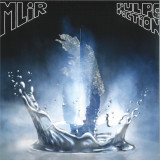
MLiR is one of those rare creative partnerships where personalities and talents perfectly match, an exquisite balance of similarity and polarity leading to ingenuity. In the case of MLiR, this dynamic has resulted in the form of consistently vibrant takes on current, past and future global dance music, an artistic expression
fuelled by equal parts tireless record digging and masterful studio wizardry.
Their two previous EPs on Studio Barnhus count among the label's most played and loved, and the forthcoming debut album Pulpo Fiction, released this October on the Stockholm label, takes it to the next level with a staggering tracklist of 16 new recordings featuring vocal talent as diverse as Kenyan rapper Nah Eeto, American
poet Oliver Grimball and Swedish soul singer Cosima Olu.
The music is as wild a ride as ever with MLiR at the controls – ranging from the nostalgic to the futuristic, the deep to the poptastic – with a firm base in the kind of high-powered, light-footed dancefloor material the duo is so beloved for.
"The seventh Various Artists release on Mary Yuzovskaya's Monday Off imprint arrives on vinyl in October 2024, with Viels, ORBE, D-Leria, and Yuzovskaya contributing tracks.
First up on the record, Italy's End Of Perception founder Viels conjures up a storm with 'Nero', a cerebral cut with crushing, low-end-heavy atmospheres and mysterious alien signals. It is followed by Spanish techno lynchpin and Orbe Records boss ORBE, whose hypnotic 'Rigging' explores the abyss with foreboding sonics and a continual beep sequence that guides the track forward.
On the B-side, Monday Off label head Mary Yuzovskaya presents 'Trouble'. A masterful bassline and bodied kickdrum starts the trip, providing an excellent foundation while alternating between rattling percussion, deep dub hits, and strangely familiar but indecipherable vocal snippets. Sound design wizard D-Leria then closes out the EP with the spellbinding 'Battito', complete with mind-blowing melodies and swirling effects, rounding off another top-draw psychedelic offering on Monday Off.