Catz ‘n Dogz make a standout debut on Crosstown Rebels with two compelling new house tracks on ‘Can’t Stand’, complete with a remix from leftfield innovator Robag Wruhme.
A pairing whose renowned reputation has been built and shaped across an illustrious career, Polish duo Grzegorz Demiañczuk and Wojciech Tarañczuk, aka Catz’ n Dogz, have been serving up their own diverse and varied take on house for more than fifteen years. Founders of their own Pets Recordings imprint, in that time they have released on esteemed labels, from Diynamic to Defected, Glitterbox to Watergate and more, while playing at almost every major club and festival across the globe. Their fresh in-between sounds and knack for cooking up curious and impactful sounds have made them mainstays of the scene, and that run of stellar releases continues here with a debut appearance on Crosstown Rebels as they link with ZenSoFly for ‘Can’t Stand’ - with longstanding German favourite Robag Wruhme on remix duties.
Opener ‘Can’t Stand’ sees the pair reunite with vocalist ZenSoFly, a talent they’ve worked with on notable hits like ‘Wave.’ Her vocals bring soul and attitude over a tight, rubbery and sleazy house beat, underpinned with a heavy bassline - providing the sort of chunky cut to lock in a dancefloor and make it march in unison. Robag Wruhme has been a Pampa label mainstay and famously curveball producer for many years with his scintillating blend of minimalism, melody and unusual sound sources. That is the case again with this remix, a dark workout that hurries along on snappy drums, detuned vocals and scuzzed up, droning synths to ensure maximum impact.
The EP is closed out with ‘Wake Up’, a widescreen and atmospheric cut packed with detail. The bassline is taught, freaky vocals echo within the mix, and synths spray about to dramatic effect, delivering another full flavour house cut with a dark soul and futuristic designs.
out of Stock
Last delivered 2 years ago available to reorder, subject to availability
Teaming up once again the original Spatial production duo open their latest EP serving up a thumping onslaught of amen goodness with Continuum, a track which takes the classic Demon's Theme break and carves it to bits unreservedly with a myriad of chops, cuts & edits. We are treated to some delicious filter work later in the track over a shimmering backdrop of synthwork, glazed with a bunch of micro melodies, bleeps and FX.
A2 - Depth Perception
Meticulously constructed vintage breakbeats immediately set a brisk tone with Depth Perception before a blissful early interlude reminds us to sit back and take a breath, before our breaks return - blanketed with an introspective layer of serene synths & keys which somehow combine perfectly, resulting in a tonal mosaic only ASC & Aural Imbalance can conjure up with their combined skillset.
AA1 - Distant Orbit
Nest up an unsettling, melancholic intro tenuously launches classic atmospheric breaks delivered with that crisp, old school brand new punch we have come to love from the distinctive style of drum n bass Spatial is showcasingand developing with each release. Powered with a lively bassline, it's easy to lose yourself in this piece as the track lives up to its title and sends the listener far beyond the confines of their speaker.
AA2 - Cold Front
An intriguing, inquisitive energy opens Cold Front with an assortment of breakbeats woven together exquisitely in a collage format, DJ-friendly yet mellow at once . The dialed-back airy backdrops showcase a glorious intricacy to the breaks, so detailed with umatched clarity - they almost possess an ASMR-like quality, offering new discoveries to the ear each time on repeated listens.
out of Stock
Last delivered 20 months ago available to reorder, subject to availability
Jackie Mittoo is one of the defining figureheads of reggae music!
From forming The Skatalites, at age 15, alongside Don Drummond, Roland Alphonso, Tommy McCook and others, to his work as writer, arranger, producer at Studio One records during the sixties,
writing and playing for artists such as Alton Ellis, Ken Boothe, Marcia Griffiths and The Heptones (to name a few), to his career as a solo artist as well as leader of bands such as The Soul Brothers, Soul
Vendors and The Sound Dimension, Jackie Mittoo is at the heart of reggae music. He was one of the instigators of Ska, Rocksteady and Reggae. In the seventies, DJ music and Dancehall were based
upon classic rhythms of the sixties, many using the instrumental tracks that Jackie Mittoo created at Studio One at this time.
out of Stock
Last delivered 2 years ago available to reorder, subject to availability
Bunker New York luminary Abby Echiverri joins the Patterns of Perception imprint with her Deformation EP, a diverse collection of playfully psychedelic techno tracks infused with a radiant cosmic energy.
Produced in 2021-22, Abby drew inspiration from the captivating physics simulations her partner was working on at the time, ultimately imbuing the music with an ethereal atmosphere that permeates the entire EP, and from which the tracks derive their names.
PTN03 presents a cohesive yet diverse collection of tracks, blending psychedelic energy with delicate and profound moments. Abby's music carries an almost hopeful quality, with drum programming that leans towards groove and shuffle, and the incorporation of diminished chords and progressions that pose questions to the listener. The Deformation EP is an intricate record that showcases Abby Echiverri's distinctive, three-dimensional approach to techno: one that never feels oppressive, but calls to mind a sense of exploration and freedom.
out of Stock
Last delivered 2 years ago available to reorder, subject to availability
BLANKA the young Spanish artist has been making waves under her Room Trax home since a number of years. With major breakthroughs in releases and international shows in 2022; 2023 seems even bigger and brighter. Her debut SK_eleven release shows how hard she has been working in the studio.
out of Stock
Last delivered 5 months ago available to reorder, subject to availability
Singular Texan musician Craig Clouse hurtles unstoppably towards the 20th birthday of his dancefloor-splintering electronic project Shit And Shine, releasing a landmark LP, his first full-length for The state51 Conspiracy, ‘2222 And AIRPORT’. Acid house, minimal techno, electro, funk, krautrock, hip hop, found sound, spoken word, live percussion and industrial are blown apart stupendously and then reassembled – mad-scientist style, in a way peculiar to Clouse – into 13 hypnotic and transportative tracks.
Lead single SWISS, out 24 March, is a gloriously minimalist funk jam that sounds like the exact point at which someone turns the lights off at a lowkey house party and a wild night for the ages gets under way. An almost scornfully skeletal riff, sounding like a misfiring Cyberdine Systems Model 101 summoning up a Prince circa Sign “O” The Times riff while crashing head first into the hyper-processed early work of Prefuse 73, also featuring a cheeky sample of revered Mancunian DJ Luke Una talking about “existential fucking darkness”.
This is followed on 4 April by INFINITE SHITE, arguably the epic central track to the album, is a Shit And Shine banger for the ages, its dancefloor affect, undeniable. An unforgiving, pulsating Byetone-style bass drone worthy itself of being blasted on a Funktion-One rig, is just the background for a colossal acid b-line, destroying all in its path.
Micro details bristle at the liminal level, threatening to only reveal themselves to those in a club, those listening on headphones or those experiencing a heightened sensory state.
out of Stock
Last delivered 3 years ago available to reorder, subject to availability
Somewhere in the Lower-Franconian vineyards lies a hidden and mostly unknown canyon, a place that often returns to the thoughts and dreams of Läuten der Seele’s Christian Schoppik. Though a much rarer occurrence now as a consequence of environmental change, chance encounters upon the area in the past would sometimes reveal small ponds amongst the reeds, teeming with life and populated by colonies of newts and the now endangered yellow bellied toad. The transience of the water and the wildlife it hosts, dependent on season or climate, lends the area an almost fantastical, dream-like quality. Was it ever even there at all? A secret place that may or may not be present holds vast appeal to some enquiring minds… Ertrunken Im Seichtesten Gewässer, the third Läuten der Seele album in two years, is inspired directly by these experiences. Translating as ‘drowned in the shallowest stretch of water’, a title as pregnant with dread as it is wonder, the themes present speak both to personal memories and a wider understanding of place and time, and how we might interpret our own position within an ever-changing, sometimes disappearing world.
The record is presented as two long-form pieces divided into four separate movements, each titled so as to reflect this natural environment and its intersection with imagination, relying on processes of collage that draw from myriad indeterminable samples, field recordings and various recorded instruments. Those familiar with Schoppik’s work, both as Läuten der Seele and with Brannten Schnüre, will find present many of his signature tropes - the way deeply layered collages render abstracted visions of the past alive in the present - though what is always significant about his approach is not so much aesthetic as the wider concepts it attempts to express and emote. Indeed, emotional response is key to the Läuten der Seele sound, how overlapping notions of nostalgia, memory and identity calibrate experience and understanding of who we are and the world around us, whether it’s a world that’s gone or another imagined into being. If you observe the artwork closely enough, you may find a clue as to the canyon’s location, though such specifics are besides the point. The music itself infers a wider sense of the impermanence that characterises hidden worlds, wherever they might be or whoever they might belong to.
out of Stock
Last delivered 3 years ago available to reorder, subject to availability
"Bastian Epple makes an eagerly anticipated return to marionette under his elusive MinaeMinae guise that imagines rich sonic architectures for the journeying spirit to voyage to. Räumlichkeit is Epple’s debut album and third release to date following Gestrüpp from 2020, venturing further into melodic electronic nostalgia and percussive beat oriented soundscapes.
Growing up in a small village in southern Germany, Bastian Epple was never interested in kitschy folk sounds, rather he took solace in the time he would spend meditating to repetitive and hypnotic patterns. His guitar strumming and what sounded to his mother like a young Philip Glass on a cheap Casio keyboard encouraged little Epple to tread on this self-taught path of developing his own musical language. This led him to start experimenting with a tape recorder and layering sounds with non-musical samples to eventually working with a DAW.
Bastian went on to study Media Art at the Center for Art and Media (ZKM) in Karlsruhe and graduated with a diploma in film and documentary media - where he now works as a freelance filmmaker and lecturer at Stuttgart Media University. However, this never stopped him from creating and playing with wide-eyed sounds, eventually amassing a vast collection of tunes and finally emerging from this anonymity.
Utilizing modular synth, self made tape echos, synthetic sounds, recordings of ethnic percussion and guitar, MinaeMinae understands musical material similar to documentary footage which he would splice, repitch, and rearrange intuitively into captivating worlds."
out of Stock
Last delivered 3 years ago available to reorder, subject to availability
On their sophomore effort Tusky, surrealist duet Robbie & Mona ascend beyond the lo-fi scrawlings of their debut album to something altogether more grandiose. Between the lights down drama of sprawling opener ‘Sensation’, to the ‘roll credits’ coda of closer ‘Always Gonna Be A Dead Man’, Tusky exists as a glitzy, lucid journey playing out before the listener.
While debut album EW captured William Carkeet and Ellie Gray as they were finding their feet with one another, creating Tusky was a wholly symbiotic process from day one. “We got better at knowing what each other wanted,” William offers. “This was the album that we were trying to make from the beginning.”
Simultaneously evoking multiple eras of music, the album drifts through worlds of synth pop, jazz, trap, drill, ballroom waltz and leftfield electronica, with the scatterbrain sound palette melded by a peppering of instrumental motifs and William’s addiction to sampling sounds across multiple tracks. “I wanted there to be this weird dimensional thing going on,” William explains, “where songs from the album are playing in multiple places.”
The record sees an expansive cast of musicians assembled, with a much heavier focus on live instrumentation than previous outings. Alongside the expected fare of crackly synths, samplers and drum machines, Tusky gets its glossy sheen from a rich tapestry of jazz drums, double bass, grand piano and saxophone.
Most of the tracks are laden with improvised saxophone from Campbell Baum (Sorry, Broadside Hacks) and Ben Vince (Housewives, Joy Orbison), much of which was scrambled by William in post-production, lifting scraps from one song and layering them atop an entirely different track. Elsewhere, session musicians were cherry picked, including Bingo Fury, his drummer Henry Terrett, and a string ensemble led by Caelia Lunniss and Jo Silverston (Spindle Ensemble).
Most surprising is a rap feature from Monika (of South-East London collective Nukuluk), who brings album centrepiece ‘Mildred’ to new heights with a fiery verse on pain. Aside from being the most unlikely addendum to a sombre piano ballad, it demonstrates Robbie & Mona’s natural state of playfulness, forever following emotions and sensuality over any notion of traditional compositional boundaries.
Many of Tusky's tracks owe their inception to cinema, be it the soundtrack to Betty Blue, the glowing films of Wim Wenders, or the surprising parallels between La Belle Et La Bete and Bad Boys. Equally, much of Robbie & Mona's new-found sense of tension and spectacle comes from William’s recent work soundtracking independent filmmakers, while Ellie gave greater priority to threading a narrative through her stream of consciousness writing style.
In all its majesty, Tusky celebrates creativity with creation. “If you begin to see fiction as real, you can reincarnate and become different things. You can grow,” Ellie implores. “Nothing stays the same. You can shed old characters in yourself. There’s great joy in that.”
out of Stock
Last delivered 3 years ago available to reorder, subject to availability
Three timeless tracks from the esteemed D.C. LaRue back catalogue get brand new remixes from three equally exciting producers to give a modern spin to these ‘70s classics.
LaRue joined the music industry by recording two top 40 pop records influenced by the teen-idol era. In his early adulthood, he began writing songs about the fast-growing club and bar subculture he frequented where the most outcast of society’s young and marginalized could safely congregate after being ostracized in work, church, school, and often family. In this relatively brief selection of LaRue classics, contemporary remixes paradoxically bring out the timelessness of his songs, in tone, message and musicality.
First up, ‘Do You Want the Real Thing’ gets a fresh update from re-edit royalty Opolopo in the style of the lush yet sharp Motown and Philadelphia production pieces that inspired the arrangement originally, still resonates as a nightly inner dialogue or negotiation, another of LaRue’s literary signatures.
‘Let Them Dance’ greeted in its time as a one of the breakthrough moments of new music technology, is reinterpreted by Dr Packer mainly with its live acoustic tracks, also retaining bright, rhythmic synthesizer hooks with results that are still true to his intentionally oblique lyric, a novelistic portrayal of the drug dealers, the LGBTQ+ underground community, and the powerful upper class elite that made up the multi-racial, socially integrated crowds on the dance floors at the height of disco.
Last up, ‘Indiscreet’ from LaRue’s 1976 concept album, ‘The Tea Dance,’ tells much of the story about how disco had already birthed its own far more popular and influential successor form, Hip-Hop, by the time it was declared dead by the superannuated establishments of the radio, media, and record businesses. Released in a highly limited, personally inscribed 12-inch 45 rpm edition for a select list of top disco DJs, its complex, elastic polyrhythm made it as irresistible to younger black DJs and breakdancing teens as any of the year’s other big street breakouts. Only Good Vibes Music head honchos and Scotland’s finest The Knutsens give it the magic touch for the modern dancefloor.
out of Stock
Last delivered 2 years ago available to reorder, subject to availability
Circles is the sixth and final studio album by Mac Miller. Conceived as a sister album to 2018's full length Swimming, the album was completed with the assistance of Jon Brion, with whom Miller worked on Swimming and had been working together on Circles at the time of his passing. While sonically distinctly different than its predecessor, Circles features many of the hallmarks for which Swimming was critically-acclaimed upon its release -- Miller further realizing his singing voice in addition to rapping, live instrumentation and earnest, confessional lyrical content. Listeners will hear shades of some of the album's influences in its songs, from the T-Rex guitar tone of "Surf" to the Plastic Ono Band-era John Lennon feel of its production and the inspired cover of Arthur Lee's 1972 single "Everybody's Gotta Live." It's a momentous final entry into the discography of an artist that remains at the centre of reimagining the limits of rap.
out of Stock
Last delivered 14 days ago available to reorder, subject to availability
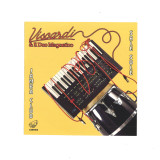
Viscardi & Il Duo Magnetico is the new collaborative project between italo-swiss DJ, producer and singer Pascal Viscardi,
Yavor Lilov and Alain Sandri, respectively drummer and percussionist of the swiss cult band L’Éclair.
The three musicians joined forces in Geneva and worked in the studio for the past two years with Viscardi as the main
vocalist, Lilov producing the tracks and playing drums, bass and keys, and Sandri on guitar, percussion, and backing vocals.
The result is a unique and contemporary version of italian pop, peppered with new-wave, boogie, disco and world music
references.
On Sale Sole Pascal's mellifluous lyrics float on a midtempo boogie groove, projecting visions of sun drenched cities and
summer sunsets. On the flip side Jamba Club is a reggae infused slow burner, reminiscent of night encounters and forgotten
love stories.
Sale Sole / Jamba Club marks the project’s debut release and serves as a sneak peek into the upcoming full-length album,
set to release on Cosmic Romance in fall 2023.
out of Stock
Last delivered 2 years ago available to reorder, subject to availability
The turbocharged Boosted EP from Washington DC's Jackson Ryland drops in Peach Discs. Inspired by the multi-faceted work of hyper-prolific producers such as Paul Johnson, Heiko Laux, K-Hand, Aubrey & Cari Lekebusch, Boosted's four tracks highlight the various layers that make up Jackson's sound, and confirm him as a thrilling and versatile producer whose deep understanding of dance music's history informs his firmly present approach to production.
Recorded between 2018 and 2022, Boosted splits the difference between the booming drums and trippy synth patterns of "Glass Cut" and "Hyp Gruuv," and the complex, evolving textures of "Boosted" and "Lip," the latter representing a side not often heard in Jackson's output to date. Taken as a whole, the EP fits into the long lineage of DC-based music - one defined by an effortless flexibility to flip between emotions while never forsaking the groove.
This is the 2nd release of the year on Shanti Celeste and Gramrcy's Peach Discs.
out of Stock
Last delivered 2 years ago available to reorder, subject to availability
What’s happening in the streets? This right here, a celebrated engineer Yas Inoue and Dj Takaya Nagase come together in the studio and rework the Voltage Brothers rare groove jam “Happening In the Streets” with a cleverly put together edit with filters, effects and sonically tweaking it to perfection. They've created a perfect dance floor masterpiece already championed by Louie Vega, Joe Claussell, Spinna, Mike Dunn, and Rich Medina. This choon has everyone in anticipation for it’s release.
Japanese sound engineer Yas Inoue, based in New York began his career in the world renowned Maw Studios in the late 90s and has engineered for producers such as Masters At Work, Patrick Adams, Leroy Burgess, and Randy Muller contributing to the creation of various New York house and disco hits.
Takaya Nagase, a New York based Japanese Dj started as an A&R for Japanese record label Soundmen On Wax. He learned and studied under the great David Mancuso of the Loft Party NYC and later held his own Joy parties along with other Loft members. Having had regular gigs at Club Shelter from 2006 to 2007 and at Club Output from 2017 until the closing in 2019, he built his dj chops and now currently djs at New York City's top venues such as Le Bain, Good Room and Nowadays along with monthly shows on the famed Lot Radio in Brooklyn.
Together they are Domo Domo and with their first project on Vega Records they are on their way to becoming New York household names in the dance music industry. Look out for “Happening In The Streets” coming soon at all digital and streaming outlets with vinyl releases on 12” and 7”. Lookout everyone, this one’s a sure HIT!!!
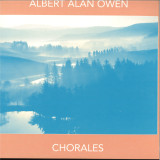
British composer Albert Alan Owen’s first widely available new work in many decades. Chorales is a meandering yet wonderful piano solo album recorded during the summer of 2020.
The album, through a series of beautifully simple piano pieces, features 20 ethereal compositions that are simply allowed to hang there in the air. Deeply emotional and spiritual, Albert Alan Owen’s Chorales ushers minimalism into the intimacy of aprofoundly elevating listening experience. Captivating.
out of Stock
Last delivered 3 years ago available to reorder, subject to availability
The legendary Ultramagnetic MC touches down in London for a one-away collab with We Are The Horsemen, featuring the one and only Kaidi Tatham.
What you sayin’, Kool Keith...? Enter your spaceship for a transatlantic meeting of minds as the legendary Kool Keith links up with We Are The Horsemen (Outernational Sounds head honcho Harvinder Singh Nagi and producer Sub One) and the great Kaidi Tatham for a future-jazz flavoured trip through the great MC’s London adventures.
Kool Keith needs no introduction to hip-hop heads worldwide. As one of the greatest MCs ever to touch the mic, Keith has never stopped innovating and progressing. From his days in the seminal 1980s Bronx unit Ultramagnetic MCs, through his pioneering development of new conceptual characters and styles in the 1990s (Big Willie Smith, Dr. Octagon, Dr. Dooom, Black Elvis), to his continuous run of radically independent recordings in the 2000s and beyond, Kool Keith defines rap longevity and artistic originality. No one else in hip hop has a comparable record of continuous reinvention, conceptual boldness, and stylistic panache.
And after four decades in rap, Keith is still one of the hardest working rappers in the game, perpetually seeking new sounds to spit on and new collaborators from across the musical spectrum. Fresh off the acclaim for his new Black Elvis 2 release, the protean MC has touched down on Outernational Sounds for a unique collab with We Are The Horsemen and Kaidi Tatham. ‘London Is The Place’ finds Keith riding the Horsemen’s atmospheric, break-toughened riddim and reaching back in time to drop kaleidoscopic, stream-of-consciousness impressions of the Ultramagnetic MCs infamous 1989 tour, before flashing forward to the present in order to namecheck Honest Jons Records, saxophone star Nubiya Garcia and master keyboardist and broken beat pioneer Kaidi Tatham, who contributes trademark jazz keys and bruk steez to the AA side remix. The 12” is closed out by a third version, the Horsemen’s own Kool Jazz Mix, bringing see- sawing organ stabs and a neck-snapping Ultra-sampling hook.
Kool Keith, Kaidi Tatham and We Are The Horsemen, taking it higher and overcoming the pressure with ‘music so progressive’, to quote Keith himself! Limited press – don’t sleep on this one!!
out of Stock
Last delivered 2 years ago available to reorder, subject to availability
Post-rock band Ativin (Secretly Canadian, Polyvinyl) returns from a 19-year hiatus with Austere, the group’s most expansive and cinematic work to date and first album for Fonoradar (EU)/Joyful Noise Recordings (US). Eschewing the explosive and aggressive playing that characterizes their earlier work, Austere finds the guitar duo of Daniel Burton (Early Day Miners) and Chris Carothers (Hunting People, Grizzly Daughter) enlisting Chris Brokaw (Codeine, Come) on drums for a more stripped down and skeletal sound. The result is a work of beauty that will undoubtedly evoke a wide range of emotions in those who hear it. Recommend If You Like: Slint, Tortoise, Low, Codeine, Early Day Miners, Pedro The Lion * First Ativin record in 19 years * Recorded by Steve Albini * Secretly Canadian and Polyvinyl alumni
Five years after the release of their last studio album, legendary UK musical institution, Soft Machine, return with a brand new CD/LP,
Other Doors. Boasting new material and two numbers drawn from their extensive historical repertoire, Other Doors finds the band on their usual fiery form.
Featuring John Etheridge (guitars), Theo Travis, (saxes, flutes, Fender Rhodes piano, electronics), Fred Thelonious Baker (Fretless bass),
John Marshall (drums), Other Doors also features two guest appearances from long-serving bassist Roy Babbington, who retired from the band in 2021.
Other Doors was recorded at Temple Music Studios, a facility owned by the late Jon Hiseman during July and August 2022.
It’s a location of which the band is particularly fond, explains John Etheridge. “Working at Jon Hiseman’s studio was special,
especially with Ru Lemer who is a brilliant engineer. He’s fantastically quick and that’s very good as we record mainly live in the studio. It’s come out really well and I think it sounds great.”
On Other Doors they’ve revisited the very first album, originally released in 1968, to include Kevin Ayers ‘Joy Of A Toy. Fred Baker, makes his studio debut with Soft Machine.
A well-known figure on the Canterbury Scene not only is he the perfect choice for the group but he’s also is a long-term fan of the repertoire.
“The way I look at it is that this is all great music which we’re continuing to preserve and keep alive as we play it but also we’re adding to it all the time,” he explains.
The idea for revisiting the number was Theo Travis’ he says and has been part of the band’s live setlist for a while.
The album also contains Penny Hitch, a track originally heard on 1973’s Soft Machine Seven.
If the album ushers in a new member in the shape of Fred Baker, it also acts as a fond farewell to drummer John Marshall, who joined Soft Machine midway through the recording of 1972’s Fifth.
At the age of 81 Marshall has decided to retire making Other Doors his final studio album with the group. “I’ve known John since 1975 when I first joined Soft Machine and of course,
we’ve worked through the years together intermittently ever since. His drumming always meant a lot to me,” says Etheridge.
“We worked over three days in the studio and John played great. It sounds terrific.”
Indeed, Marshall is on whip-cracking form throughout the album bringing his trademark musicality and decisive presence.
With Other Doors, he brings his distinguished career to a rousing conclusion.
Intense, celebratory, and consistently impressive. Other Doors is the sound of a group determined to press forwards with an
integrity and sense of purpose that’s quintessentially and definitively Soft Machine.
Born of a thousand nights lost in a surrender to stillness and contemplation, In The Air is Anna St. Louis’ second full length album and her most considered work yet. St. Louis’ debut If Only There Was a River seemed to emerge fully formed out of the recesses of her mind; a gritty, mesmerizing affair, filled with jagged edges and ghostly apparitions. The type of record that announces a new voice; one haunted by what has come before.
But this time, St. Louis is no longer concerned with what could have been and sets her sights to exploring what could be. It’s an outlook on the world that was formed when her immediate one was small. The intervening years since her last album found St. Louis in a small one-bedroom cabin in the middle of the woods of upstate New York with a new love and time to think of what she wanted to express with her music. For weeks on end, the only trips she took were to and from her job as the front desk clerk at a nearby hotel. The previous years she had spent on tour and performing constantly in the venues of Los Angeles felt like they had occurred in another lifetime.
“It really compelled me to surrender to the unknown,” she says. And in this surrender, she found liberation. St. Louis is more self-assured, open-hearted and ready to say what she wants. St. Louis describes the writing period as one of a slow harvest; a fertile time but one that required a newfound patience. Instead of documenting her first thoughts, she spent more time with each song, going deeper with the themes and ideas she wanted to express.
This slower approach also guided the sonic textures of the album. Working with producer Jarvis Taveniere (Purple Mountains, Woods) in two extended recording sessions in Los Angeles in 2021, St. Louis used the studio in a previously unexplored way, opening up her songs to more experimentation featuring brighter tones and a more orchestral sound to accompany her new perspective. To that end, she was aided by a cast of friends and collaborators including Jess Williamson, Kacey Johansing, Oliver Hill (Kevin Morby, Vagabon) on strings, Alex Fischel (Spoon) on piano, Josh Adams on drums (Bedouine, Tim Heidecker) and Keven Lareau (Cut Worms, Hand Habits).
In the Air has the sound of a joyous consideration of the present moment; a quiet morning revealing a new snowfall outside, steam coming from the kettle, just before it whistles, St. Louis with her guitar, staring out the window, with a few free hours before work. She’s reflecting on the scene in front of her, imagining the times yet to come. You can hear it; she’s a long way from the noisy bars of Los Angeles, the rigors of the road. As she intones in “Rest”: “You spend your whole life believing in the chase. And then you realize that being somewhere doesn’t matter like it used to.” She doesn’t need a river to carry her anymore ... She’s in the air.
Graham Lambkin (of Shadow Ring fame) returns with a long awaited epic double LP, Aphorisms, his first major solo outing since Community (Kye, 2016). Recorded mostly during the early winter months of 2022, in post-pandemic New York and post-Brexit London, Aphorisms assembles the sonic detritus of daily life into hauntingly intimate aural soundscapes. Made between Lambkin's residence in East London and Blank Forms in New York, Aphorisms superimposes the two spaces onto one another creating an imaginary stage where his musical dramas unfold. A transatlantic mediation on the rooms where Lambkin has lived and worked, Aphorisms summons up hallucinatory vistas by way of the composer’s collage technique, layering field recordings, piano, guitar, percussion, vocal fragments, and repurposed elements on top of one another in double, triple, and quadruple exposures. Like the Shadow Ring’s Lindus (Swill Radio, 2001) recorded between Folkestone and Miami Aphorisms ruminates on estrangement and displacement, catching Lambkin as he returns to London after two decades of living in the States, in his words, “leaving home to return home.” Aphorisms continues Lambkin’s synthetic-naturalist approach to sound-making, twisting disparate and unique elements together to create the sensation of a coherent sonic space. At the heart of his practice is the illusion of form, whereby Lambkin combines sonic elements, documenting the moment that they coalesce into music only to disintegrate back into incidental sound. The album is centered around two pianos, one in New York and one in London, sounding together as if through the ether, creating a spectral atmosphere that Lambkin fills with melodic snippets, fragments of songs, spoken-word musings, and guttural barks or “the animal purity of voice,” as he has it. The superimposition of the two spaces is maximized in the album's closing titular track, where, much like on earlier works such as Salmon Run (Kye, 2007) and Softly Softly Copy Copy (Kye, 2009) fragments of familiar melodies float through the mix as though being played from afar. Aphorisms is Lambkin at his best, extending methodologies only hinted at previously and taking his now-idiosyncratic mission statement to a new chapter.
One of Japan’s most riveting artists follows that KAKUHAN mindmelt from last year (our number 5 album, 2022) with an engrossing suite of wild field recordings and polymetric percussion featuring a whole raft of additional players weaving drums, wind and brass instruments, cello and electronics into a bewildering Acousmatic matrix. Highly recommended listening if you’re into Marginal Consort, Beatrice Dillon, Will Guthrie, Mark Fell, François Bayle.
Having made his mark on these pages over the last few years with appearances as part of Japan’s cult entities Goat and YPY, Koshiro Hino’s turn last year as KAKUHAN took things to a whole other level with an album that felt like some alchemical mix of elements borrowed from Autechre, Photek, Arthur Russell and Mica Levi - a complete stylistic futureshock that worked as well in the club as it did fuelling extended flights of the imagination.
For 2023, Hino takes us into a completely different headspace, assembling a cast of 11 players - the mighty Joe Talia and KAKUHAN’s other half Yuki Nakagawa among them - for a suite of untamed field recordings, clanging percussion, brass and synthesis that are about as far removed from the diaristic ambient de jour as you could possibly imagine. Instead, the ensemble conjure vibrant sound ecologies teeming with detail, mirroring the natural world and communal traditions to form shapeshifting, organismic soundworlds.
‘Geist II’ was written for 20 speakers, referencing François Bayle’s acousmatic music and David Tudor’s electro-acoustic environments. It paints a richly detailed scene of a nocturnal rainforest, replete with avian hoots and a skin-crawling patina of insectoid chatter that moves around the soundfield, stealthily growing in density with a more “musical” presence of super low end drone and drums converging form the peripheries to a ritualistic climax. In the second part, focus shifts to remarkably pure percussion-like tropical rain, invaded by swarms of scuttling and winged invertebrates that give way to a water music-like polymetric slosh, resolving to ringing tones and more mellifluous gestures that hark back to GRM’s most poetic, romantic urges.
It's a deeply psychedelic experience that harmonises tiny electronic fluctuations with bird calls and scraped, resonant drones that phase in-and-out of the mix. It's sound you can practically chew, and another crucial despatch from the contemporary Japanese avant-garde.
Third in a trilogy of LPs of Library Music miniatures from composer and multi-instrumentalist Daniel O’Sullivan (Æthenor, Ulver, This is Not This Heat, etc) following 2020’s Electric Māyā and 2021’s Fourth Density. For heads, the term “Library Music” in 2021 might evoke dodgy Italian gray market LPs and crate diggers hunting for “funky breaks” - but London’s venerable KPM Music is working with groundbreakers like Daniel to open up new avenues for composers to experiment. The 15 tracks on “The Physic Garden” are fully-formed and orchestrated compositions, which would be highlights on anyone’s LP, never mind as incidental music. Of the music, Dan says: “The Physic Garden is an album of diverse instrumentals inspired by a swathe of verdant vistas from manicured gardens and follies to urban common land, overgrown and forgotten. Convalescent memories in the shape of psychedelic auditory botanics.”
Key tracks include the droning acoustic folk of the title song; the Canterbury-esque rolling horn and woodwind melody of “Return the Heart” (with expert drum kit from Frank Byng); The prog-ish odd meter interlude “Buttercup Tea”; The quiet ambience and delicate melody of “Dusty Feather:”; and the Eno-like drift of “Vapourer Larvae.”
“Library music. Akasha. Here you accept that music behaves like a thing to accentuate another thing, seemingly unrelated. A beautiful, shining blankness. Not passive. An opportunity to wade. A brief encounter with an open-ended destiny. As in, you never know who or what it will be partnered with. With library music the emphasis tends to be on functionality and less on sonic self-portraiture. So it compels you to be concise, like what is the function of this work? The distance is liberating. It’s less “What Am I? and more “What Is This?”. It compels you to be brief, each little cell is a world of its own in an assemblage of miniatures all vibrating in their collective identity. Then there is the occult nature of library music which is fetishized by many for its ability to induce time travel, often to send us back to some televisual memory. However, despite its broad-brush strokes, the library can be so profoundly alien, especially when experienced independently of the televisual realm; an unruly chimera of genre mutations, compositional curiosities and the deepest wallpaper you ever laid ears on. Perhaps the observances of library music can help unshackle us from our artistic insecurities and delusions, where one is drawn to the shape of music as a whole instrument unto itself; as a vehicle carrying our intention and consisting of everything we have to give at that moment; so things that are seemingly unrelated are ultimately connected.” – Daniel O’Sullivan
Newly formed UK stoner rock / doom metal quintet Wolves In Winter have hit the ground running. Forming between lockdowns in 2020, Wolves In Winter have worked tirelessly to forge a crushing fusion of traditional and contemporary doom metal.
Wolves In Winter are comprised of seasoned veterans from the UK heavy music underground, including former and present members of Solstice, Lazarus Blackstar, Monolith Cult and Slammer, effortlessly building on a wealth of experience and carving a fully realised sound and vision.
A kind of hush pervades throughout Standards Vol VI, the latest release by The National Jazz Trio of Scotland, the ironically named project helmed by Falkirk’s musical polymath, Bill Wells, that is neither a trio, nor a jazz band. If this collection of ten covers probably comes closest to the latter in its late night renditions of actual standards, the presence of long-term NJToS member and collaborator Aby Vulliamy as the record’s lone vocalist adds to its solitary air. This follows Standards Vol IV (2018), which featured fellow NJToS co-founder Kate Sugden as primary vocalist, while Gerard Black, a member of the group since 2016, took centre stage in similar fashion on Standards Vol V (2019). Wells has long been a fan of Vulliamy, both of her work as a viola player with numerous collaborators, and as a singer.
Vulliamy played viola on Everything’s Getting Older, Wells’ 2011 collaboration with Arab Strap vocalist Aidan Moffat. Wells went on to play melodica on Vulliamy’s solo record, Spin Cycle, released on Karaoke Kalk in 2018. With the intent of producing the saddest heartbreak record ever made, Wells sourced a back catalogue of miniature epics, reinterpreting each tale of everyday yearning to make a canon of melancholy loungecore designed for nights in alone, if not always lonely. Beyond the concept of isolation behind Standards Vol VI, practical concerns added to the affair, with Wells recording backing tracks at home in Glasgow, while Vulliamy added her voice from her home in Yorkshire. The result on Standards Vol VI is a thing of quiet beauty that sees Wells and Vulliamy reimagine a panoply of pop classics in their own aloof sounding image.
Shades of Margo Guryan and Claudine Longet abound in Vulliamy’s delivery over Wells’ woozy, low-slung guitar and piano, with samples culled from a session with Teenage Fanclub’s Norman Blake. Little electronic percussive clicks and hisses lend things an even more otherworldly air on a record bookended by opener, Donovan’s proto hippy classic, Catch the Wind, and Dixieland miniature, Careless Love. The eight points in between take in a first half led by The Beatles’ normally jaunty We Can Work it Out, flipping the loveable mop-tops’ perky optimism for something more soul searching. This is followed by I Wish You Love, Albert Beach’s English language version of French songwriter Charles Trenet’s evergreen, Que reste-t-il de nos amours. The Bee Gees lost classic, To Love Somebody, is up next, with more impossible to answer questions coming in Why Can’t I?
The latter is a Rodgers and Hart composition that first appeared in the duo’s 1930 Broadway musical, Spring is Here, in which the show’s two heroines commiserate each other over their shared loneliness. Wells stumbled on the song in a tatty Rodgers and Hart songbook, which, like its subjects, had been left on the shelf before he and Vulliamy brought it in from the cold. The second half of Standards Vol VI leads with Matchmaker, Matchmaker, Jerry Bock and Sheldon Harnick’s much covered evocation of a pre dating app era from their 1964 hit musical, Fiddler on the Roof. This is followed by Billy Rose and Dave Dreyer’s showbiz staple (with Al Jolson also taking a credit), Me and My Shadow. While made famous by showbiz double acts ranging from Frank and Sammy to Robbie and Jonathan, here it flies decidedly solo. Johnny Mercer and Hoagy Carmichael’s Skylark comes next, a song inspired by Mercer’s yearning for Judy Garland. We hear ya, bub. The most downbeat take on Bacharach and David’s The Look of Love you’re ever likely to hear comes next, ushering in the short farewell of Careless Love, before the lights are turned out forever. Yeah, well. Whatever gets you through the night…
From Elvis in Memphis retains the distinction of being the most cohesive, passionate, mature, and emotionally invested record Elvis Presley ever made. Named one of the 500 Greatest Albums of All Time by Rolling Stone, the white-soul landmark features backing by "The "Memphis Boys" and teems with rhythm-heavy country, gospel, R&B, and blues. Lauded for its natural, open sonics, the 1969 set now comes across with remarkable clarity, presence, and warmth courtesy of a premium restoration befitting a king.
Mastered from the original master tapes, pressed on MoFi SuperVinyl at RTI, and strictly limited to 10,000 numbered copies, Mobile Fidelity's UltraDisc One-Step 180g 45RPM 2LP box set of From Elvis in Memphis unearths the ravishing inner detail, sticky rhythms, and brilliant arrangements of Chips Moman's inspired production. In short, this unparalleled reissue unlocks the spirit and gestalt of the recording and takes you inside American Sound Studio. It also brings you up close and personal with Presley's singing – widely considered by many to represent the finest of his career – located dead-centre amidst the instrumental hurricane. Equally impressive are the contributions of the aforementioned Boys, and how their Southern-brewed playing – a balance of leisure with swiftness, grandiosity with concision, freedom with control – dovetails with Presley's vernacular.
The lavish packaging and gorgeous presentation of the UD1S From Elvis in Memphis pressing befit its extremely select status. Housed in a deluxe box, it features special foil-stamped jackets and faithful-to-the-original graphics that illuminate the splendor of the recording. No expense has been spared. Aurally and visually, this UD1S reissue exists as a curatorial artifact meant to be preserved, pored over, touched, and examined. It is made for discerning listeners that prize sound quality and production, and who desire to fully immerse themselves in the art – and everything involved with the album, from the images to the finishes.
Sharing much in common with the full, rich, orchestrated Stax Records sound, From Elvis in Memphis oozes with choice nuances and distinctive flourishes that on this ultra-hi-fi edition not only arise with previously unheard transparency and sharpness, but complement and serve the whole. Take the specific tonalities and blending of violas, cellos, and horns that communicate mood and serve as counterpoints. Or lively performances of the backing quintet, and how the piano and Hammond organ trace the lines of the melodies and Presley's lead. Listen to the uplifting support provided by the cadre of backing vocalists (more than a dozen credited), unrivalled in Presley's canon and a precursor to the approach he'd soon adopt in Las Vegas.
Of course, From Elvis in Memphis precedes the icon's transition into his glitzy jumpsuit phase – and follows his merciful move away from the hoary soundtrack work that consumed nearly a decade of his creative life and prompted a rebirth that began in 1968. As the bridge between eras, the record seizes on Presley's rejuvenated attitude and commitment to quality, facets that drip from the fervency with which he delivers every word. For the same reasons, and for the fact it traces back to Presley's original roots and hip-shaking guise, the album further remains a cornerstone of American music history.
Writing about the work's 40th anniversary for Rolling Stone, James Hunter correctly observed: "From Elvis in Memphis represented the full-on immersion in the Memphis idea of Elvis Presley, the American singer second only to Frank Sinatra for the ability to conjure a particular sonic universe with his merest vocal utterance. And from the album's first song, in which a bluesy Elvis espies a woman 'Wearin' That Loved On Look,' to its last, in which a more straight-up-pop Elvis regrets the injustices of life 'In the Ghetto,' his fully engaged, newly energized voice finds its most logical album setting in years."
Incredibly, Presley and company completed more than two dozen cuts for From Elvis in Memphis. One, "Suspicious Minds," turned into the vocalist's final chart-topping single and lingers as one of his most beloved rock n' roll numbers. Even though it never formally appeared on the record, the non-album song is included here as a bonus track and attains newfound depth, energy, and swagger. Coupled with the other dozen tracks – including the sultry "Power of My Love," balladic take of Dallas Frazier's "True Love Travels on a Gravel Road," and driving cover of Hank Snow's I'm Moving On" – it makes for the finest Elvis listening experience available.
The apartheid boycott In the 80s, the world – rightly - stepped up its boycott against South Africa’s apartheid government. But this had unexpected and sometimes adverse consequences for South Africa’s music professionals and consumers. Musicians still needed to work live shows both at home and abroad, and to make and sell records. The youth still aspired to clubbing and partying at the weekend after hard, poorly paid jobs under the thumb of an oppressive government. Music was their sanctuary: specifically, African- American inspired soul, jazz, boogie, disco and funk. Unique diversity Producing musical excellence was nothing new for South Africa, even in the 80s: both traditional and jazz music of various genres had been performed, showcased and recorded for decades with the assistance of some of the most skilled and ingenious sound-engineers and producers in the world, the jazz players rivalling their American peers in many cases. But what makes Mzansi 80s popular music unique is that it had to – and for the most part, did- appeal to a multi-ethnic, multilingual population almost like no other in the world, for its geographical size. There may have been many tribal and political differences between Zulu, Sotho, Xhosa, Tsonga and others day-to-day, but when it came to the weekend, those differences often melted away for a while on the dancefloor. Paul Ndlovu had kwaZulu fans as well as Shangaan followers; Black Moses and the Soul Brothers had followers and fans with everyone..and so on. And everyone- detractors and lovers alike- were content to settle on the monicker ‘Bubblegum’ as a general description. Mzansi took disco- and slowed it down a bit.. ..exactly as 90s and early 2000s South African DJs and mixers took House- and slowed it down a bit to develop Kwaito, Gqom and – later – Amapiano. The Roland TR-707 sampler came along in 1985- at just the right time for the flowering of Mzansi disco and boogie. And in the artful hands of arrangers, engineers and producers such as Peter “Hitman’ Moticoe, whose work figures on several of the tracks here, it became something unique to South Africa. 'Yebo! Rare Mzansi Party Beats from Apartheid's Dying Years' compiled by John Armstrong is out BBE Music on x3 vinyl set in a gatefold sleeve, CD, and across digital platforms for download and streaming.
Reissued on vinyl for the very first time. Originally released in 1983, this reggae lovers album was recorded by Scientist, produced by Bunny Lee, with the best of Jamaican musicians like Sly & Robbie, Jackie Mittoo, Winston Wright, Earl Chinna Smith ans more...
Edwards was born in Jamaica in 1938 where he was raised with fourteen siblings. Strongly influenced by Nat King Cole, he began performing at the age of 14. He came to the attention of Chris Blackwell in 1959. Edwards had four number one singles in Jamaica between 1960 and 1961, all self-written ballads with Latin-influenced music.
When Blackwell set up Island Records in London in 1962, Edwards travelled with him. Edwards worked as a singer and songwriter for Island, recording as a solo artist and also duets with Millie Small, as well as performing duties such as delivering records. He wrote both "Keep On Running" and "Somebody Help Me", that became number one singles in the United Kingdom for The Spencer Davis Group. He continued to work as a recording artist himself, with regular album releases through to the mid-1980s. Much of his later work was produced by Bunny Lee, and he also worked with The Aggrovators.
Tee Illa is a musician and beat maker based in Pretoria South Africa. This is his 2nd single released on Selected Works and encompasses breaks, Lo-Fi hip hop and house music influences. Tee Illa blends a wide range of musical genres and combines influences such as Hip Hop, house and Breaks music with South African, Afro Futurism and Traditional African music into his own brand of exciting electronica. Coloured and standard black vinyl, comes with art print.
Tee Illa is a musician and beat maker based in Pretoria South Africa. This is his 2nd single released on Selected Works and encompasses breaks, Lo-Fi hip hop and house music influences. Tee Illa blends a wide range of musical genres and combines influences such as Hip Hop, house and Breaks music with South African, Afro Futurism and Traditional African music into his own brand of exciting electronica. Coloured and standard black vinyl, comes with art print.
Brian Jonestown Massacre, Velvet Underground, TOY. “Upon the highways of Freedom, where Evil is like a Ferrari… “ Unbeknownst to its members, Index For Working Musik was born on an evening in late 2019 amidst the discovery of a collection of faded b&w photocopies that had been marinating on the floor of a urine-alley in the Gothic Quarter of Barcelona. An assortment of sacred and profane imagery were crumpled amongst an essay on early Christian hermits, entitled Men Possessed by God, the meaning of which was enticingly vague. Received together, they planted the seeds for a new endeavour. Though Max Oscarnold and Nathalia Bruno were already engaged in a creative ping-pong of sorts, the results to this point had only totaled a 30 min long ½ inch tape containing one track and four interludes. They needed a page and they needed ink, and they needed a place and it needed energy. Suddenly by chance or divine intervention, their experimental venture had been given form and direction. Back home in London’s cursed smog, they moved themselves and their 8-track studio into a basement in E8, where the project’s gravitational pull gained strength, quickly developing into an unexpected collective with the incorporation of drummer Bobby Voltaire, double bass player E. Smith and guitarist J. Loftus. As the world shifted around them and the Plague Years followed, it became increasingly clear that they were not going to leave that small basement room. The scarcity of light or outer world presence was less a limitation, instead the main tool at hand, allowing the recording to stretch for boundaryless days in architectural isolation, and forcing them to make straight forward free guitar music, adopting a ‘first thought, best thought’ approach. 35 minutes of repeat phrased guitars, slow-clipped drums and dulcet vocals where the recurring landscape is the desert. Reel-to reel-loops of Afghan music compete with the found sound overlays of voices recorded at the queue of the pharmacy and drum machines borrowed from Spanish heroes, channelling both far-off climes and snippets from a closer reality. It’s a strange psychic brew, built of imagined mysticism and domestic realities, of fever dreams and days that stretched into weeks of months. What was sparked by that discovery in the Gothic Quarter was actually a realisation that what they were looking for was with them all the while, buried as it was in piles of voice memos and recorded guitar feedback. Men Possessed By God they may be not: it was self-possession that was to guide their way in the end. “Life, despite all its destructive changes, remains indestructibly powerful and joyful
High Focus Records is proud to present 'Put That Soul On Me' a brand new 3 track offering from arguably one of the best voices to emerge from these shores in recent years : Rag N Bone Man.
Since having been introduced to the world via High Focus Records in early 2013, Rag N Bone Man's career has flourished in an incredible way and it has become a widely known fact that, as cliche as it may sound, he is the next big thing. From gathering attention from the likes of tastemakers Zane Lowe, Rob Da Bank, Mistajam & getting daytime radio play on BBC Radio 1 among others to working with Hip Hop legend DJ Premier and touring all over the country with chart toppers Bastille, it is a proven fact that Rag N Bone Man's voice has the power to touch the hearts of millions no matter what genre of music you are into. With such a universally recognised talent, its going to be hard for nay sayers to deny the infectious flute grooves of 'Put That Soul On Me' or the slow pounding bass of 'Across The Sky'.
Dirty Dike, normally known for his outlandish lyrics and larger than life provocative character takes the back seat on this release, allowing his signature crunchy production to do the talking. Dirty Dike's instrumentals provide the perfect back drop for the smooth rumblings of Rag N Bone Man, the pair complement each other perfectly as the beat and the voice are just as heavy as one another, both putting on a fantastic display of skill and raw talent which has been synonymous with all High Focus Releases.
The title track, 'Put That Soul On Me' is a catchy celebration song, a festive underground tune praising 'that neat sweet soul' whilst denigrating those 'wack ass drums and played out synths' over swirling flutes. Following the festivities we have 'Across The Sky', a bass heavy downtempo number which explores the side effects of different drugs, upon which our protagonist asks for a helping hand before the heart wrenching saxophone kicks in. High Focus Records fans will be pleased to see that the infamous Rag N Bone Man 'exclusive Bars' from the HFTV channel is finally seeing an official release. 'My Business', which set the internet on fire upon its release on the channel, getting retweeted by the likes of super producers DJ Premier and 9th Wonder, is the third track on this project and features a guest verse from Contact Play legend Ronnie Bosh. With these three unmissable tracks on one piece of wax, The 'Put That Soul On Me' 12'' is going to be the soundtrack to your summer.
Fantastic masterpiece, considered one of the best Italo-Disco songs ever. A mega-classic produced by Stefano Zito and Carlo Favilli (the latter passed away too soon) characterized by a heartbreaking melody and lush strings that exemplify the mood and rhythm of the Italo-Disco style with the use of some sounds of pre-bleepy keyboard and siren that technically make it one of the very first rave songs ever, inspiring the style of many artists that came later, like Duft Punk. However, many of them don't even come close with their imaginative computers to that bassline and string sounds that melted the souls of many of us back in that distant April 1983, even if it seems that part of the melodic line has been copied not very subtly by Casco from that of El Deux's Computer-Madchen released in 1982 in Switzerland, where Salvatore Cusato was working as a club-DJ. On the flip another excellent remix version by Danilo Braca of the song revisited a few years later. The confirmation of the wisdom and foresight of its producers, aware that the BPM would soon be lowered by a lot. In the more than 8 minutes of "Cyberlover" the constant melancholy background together with the drum/bass/synth lines are preserved intact, giving us a complete reissued product.
out of Stock
Last delivered 8 months ago available to reorder, subject to availability
Far Out Recordings proudly presents Hermeto Pascoal’s remarkable self-titled debut album. Recorded in 1970 at A&R studios in New York, the album features certified North American titans including Ron Carter, Hubert Laws, Joe Farrel and Googie Coppola, and Brazilian stars Airto Moreira and Flora Purim (who also produced the album).
While it was Hermeto’s first album released under his own name, he had spent the decade or so prior making a name for himself in Brazil and internationally as a composer, arranger and instrumentalist with groups including Sambrassa Trio, Quarteto Novo and Brazilian Octopus, before going on to work with (amongst countless others) Edu Lobo, Antonio Carlos Jobim, Donald Byrd, Airto Moreira and Miles Davis, who allegedly called Hermeto “one of the most important musicians on the planet”.
With Hermeto’s otherworldly orchestral arrangements, ghostly vocal performances from Flora Purim and Googie Coppola, and the inimitable drumming and percussion stylings of Airto Moreira, Hermeto easily rivals some of the oft-celebrated MPB albums of the early 1970s, sitting somewhere between the string-heavy magic of Arthur Verocai’s 1972 debut and the unplacable early experimentalism of Pedro Santos’ 1968 album Krishnanda.
With his phenomenal natural musical genius and a ceaseless sense of creative freedom, Hermeto is widely known for using unconventional objects to make music. In the album’s sleeve notes, Airto highlights the track “Velório (Mourning)” explaining how Heremto filled 36 apple juice bottles with different amounts of water and tuned them to precise pitches in order to create the beguiling harmonies heard.
The reissue of Hermeto Pascoal’s Hermeto, follow’s Far Out’s recent unveiling of a previously unheard Hermeto Pascoal live concert Planetario da Gavea from 1981, and 2017’s release of Hermeto Pascoal’s lost 1976 studio album: Viajando Com O Som.
Hermeto will be available on vinyl LP and CD from the 20th May 2022 via Far Out Recordings.
Nothing compares to Lewis Taylor and nobody crafts a "B-Side" quite like him. Indeed, his long deleted B-Sides are the stuff of legend. So, gathered together for the first time on one slice of wax, we present The Damn Rest: an album's worth of B-Sides from the era of the 1996 Lewis Taylor ("Damn") album. More off-the-wall and abstract than the album proper, these rare, underheard tracks burst with Lewis's uncompromising genius. A lot more experimental, the music is still drop dead beautiful. The Damn Rest is the essential bridge between Lewis Taylor and Lewis II.
Lewis Taylor's self-titled masterpiece from 1996 was to be originally called Damn. You can see the word right there on the from cover. However, concerns over distribution in the US scuppered this desired title. When thinking about what to call this collection of essential B-Sides from the era of that first album, we thought The Damn Rest would be appropriate. But these tracks aren't simply throwaways or outtakes, as Lewis himself states: "each little group were recorded specifically for the release of each 'single'." These B-Sides were simply the next thing to happen after self-titled, and before Lewis II. In other words, you need this!
The collection opens with "Asleep When You Come", the A2 on the original "Lucky" 12". It's a slow-mo string-drenched soul offering, cast in cinematic soft-focus with a vocal performance from the heavens set against wonky, shuffling drums and delicate instrumental flourishes. Beautiful. Also from the "Lucky" single, "You Got Me Thinking" may actually be Lewis' funkiest moment and is definitely one of our favourites, a great, gently psychedelic funky club track, that's for sure. Next, the gorgeous, meandering "I Dream The Better Dream" is just sheer, metronomic bliss, with shades of Stevie Wonder. Just ask D’Angelo, who included the track on his Feverish Phantasmagoria show for Sonos. Not only a celebrity-fan-favourite, it's Lewis's, too: "My favourite has always been this track. In my fantasy it’s what early Soft Machine would’ve sounded like if Marvin Gaye was their lead singer."
As we move to the B-sides from the "Whoever" single, the first to feature is "Pie In The Electric Sky / If I Lay Down". It's a brilliantly sprawling classic. A head-nod funk workout in two parts; part psychedelic heavy soul jam, part breezy Marvin-esque near-instrumental of the deeply lush variety. It needs to be heard to be believed. Astonishing! Flip over for "Waves", a shimmering, dramatic, sweeping string-led fan favourite. The climax of the song is just too stunning for words. It's followed by the deep wyrd-soul of "Trip So Heavy" the final, dizzying track from the "Whoever" single and another celestial funk delight featuring strings, organ, twisted bass and heavy drums. From the "Bittersweet" 12", "A Little Bit Tasty" is a building, schizophrenic soul-jazz epic that starts out with Lewis performing a call and (distant) response with himself over a gentle mid-90s drum loop before snatches of heavy, crunching metal guitars blast apart the otherwise neat song structure. Ultimately, it's unarguable that The Damn Rest is worth it for the inclusion of the jaw-dropping "Lewis III" alone. A dazzlingly lush and stunningly sophisticated prog/soul hybrid that owes as much to "Pet Sounds" as "What's Going On" with arrangements that grow and unfold in layers. Just sparkling.
A compilation like this feels like one of those promo-only rarities they used to give out to a select few back in the good old days, so when it came to the artwork it only made sense to follow what Cally Callomon (head of Island’s art department) had done for the singles and promos back in the 90s. He even did us some fresh scribbles of “The Damn Rest” to match his handwriting that’s all over the first album and its singles. We hope you like it as much as the music contained within. Simon Francis’s vinyl mastering ensures these classic recordings sound as great as they deserve to. The record has been cut by Cicely Balston at Air Studios and pressed at Record Industry. We've lost Prince. We still have Lewis.
out of Stock
Last delivered 3 years ago available to reorder, subject to availability
Lewis Taylor's legendary magnum opus: The Lost Album. "Now you're talking. That's my favourite LT album. Unlike all of the others, there isn't anything about it that embarrasses me." Straight from the genius's mouth. What can we say about this? Well, it's the most requested record ever at Be With Towers. The Lost Album was the intended follow-up to his first album but Island rejected it for fear of "confusing" the marketplace and its conception of Lewis as a soul artist. Their loss. It's a breezy sunset masterpiece.
The genesis of this incredible record needs unpicking a bit. Lewis stopped promoting the first album after a year and went home to record a completely different record that was the most un-R&B album you could probably ever hear: "I pushed in such an extreme direction the other way with what eventually became The Lost Album. It was a knee-jerk reaction to a perceived ‘trapped in R&B’ feeling I was going through at the time. Some people around me were in favour of it and others weren’t. In the end I think I lost confidence in it and did Lewis II instead." We did at least get Lewis II, which is a remarkable album, and he kept Island happy...for a bit. Not long after, Lewis was dropped. And what was to become The Lost Album could've been...er...lost. Forever.
Thankfully, however, Lewis and longtime partner Sabina Smyth revisited those scrapped demo tracks in 2003. They decided to re-arrange, re-record and then self-release them. So it was that the brand new version of The Lost Album finally dropped in late 2004. It's sheer perfection, and we don't say that lightly. The Lost Album was a fully 50/50 collaboration between Lewis and Smyth. As well as production, Sabina did a lot more writing on it, from the melody to "Listen Here" to the chord sequence for "Let's Hope Nobody Finds Us." Thankfully, Sabina is credited this time around.
No, it's not straight up "soul music" in the vein of his previous work. Yet, in its perfectly formed suite of one dozen songs, The Lost Album is dripping in soul. It's so warm, so effervescent and so alive with possibilities. It features deep, fresh imprints on well-loved, accessible sounds. It's a proper 70s style double album. Just one listen and the musical influences on The Lost Album are fairly self-explanatory, as Lewis recently told us, but it's always nice to hear that, in case we were in any doubt, he was definitely channeling Love, Yes, Brian Wilson, CSN, Laura Nyro and, of course, Todd Rundgren. The influences don't end there: "I’m particularly fond of my bass playing on that album, there’s a lot of Chris Squire going on which is cool."
Deep orchestral opener "Lost" is a sublime, harp-laced, string drenched gem, a cinematic, melancholic Axelrod-esque mini-epic that simply beguiles. Written by Smyth, it evokes Donny Hathaway's celestial "I Love The Lord, He Heard My Cry" from Extensions Of A Man. The only problem is the brief 90 seconds running time. It segues into the classic Brian Wilson-meets-power-pop-rock splendour of "Listen Here" which, with its outstanding extended harp-licked beatless intro, sounds like the younger cousin to Boston's "More Than A Feeling". We then drift into the ringing guitars of classic 70s rock anthem "Hide Your Heart Away". It's Lewis's personal favourite, "especially the multi-tracked guitar solo – I was listening to Boston at the time, which was fun." A-ha!
A new version of the heart-stopping, shoulda-been-a-massive-pop-hit "Send Me An Angel" opens Side B before the arrival of, in Lewis's completely correct words, "the clear standout, "Leader of the Band"; the perfect distillation of everything that album was trying to achieve." Soaring, piano-led Rundgren-esque power pop that makes the hairs on the back of your next stand on end. Truly, otherworldly. This is pure pop for now (and then) people. The simple jangly brilliance meets experimental prog-rock of "Yeah" sounds like simultaneously like prime CSNY and late 90s Radiohead (if they'd had a slightly more accessible bent and could write better tunes).
Oh, you wish The Beach Boys had continued writing amazing songs beyond Holland? Well, allow us to point you in the direction of the downlifting stunner "Please Help Me If You Can" and the warm textures and brilliant atmospherics of goosebump-inducer "Let’s Hope Nobody Finds Us". Words can't really describe the sheer beauty of these songs. So we'll stop trying. Just listen. Listen, listen, listen. Closing out this remarkable side of music, the accidentally Balearic "New Morning" should be blasting out at every sunrise set in Ibiza, this summer and forevermore.
The final side opens with the vaguely Beatlesey "Say I Love You". It's just classic, soaring pop-rock songwriting and should strictly be canonical. It's that good. The sassy, Stonesy swagger of "See My Way" injects enough rock'n'roll attitude to compensate for the rest of record's peace-loving, AOR sun-dappled vibe whilst album closer, "One More Mystery", emerging out of the rubble of the previous track, comes on initially like a Baroque-Pop George Harrison before piling crunching drums and screeching guitar solos atop the dreamy harmonies til close.
When asked what it means to have these records available on vinyl for the first time, Lewis is in no doubt: "It’s great and it’s really nice to be able to offer fans a different listening experience. There’s a whole other dimension with vinyl that taps into that whole nostalgia thing, well for me anyway. Something about the physical aspect of pulling it out of the sleeve and putting it on, it does tend to make you feel like you’re more engaged."
Lewis was adamant that he wanted all new artwork for The Lost Album vinyl sleeve and his brief was just the sort of classic tropical-beach-at-sunset you’d want to see on the front of a record that sounds like this. On the finished sleeve, the beach at sunset is just where we start out, before heading up through the painterly clouds and heading out into the stars. And yes, the lettering is a definite subtle nod to all those in-between-period Beach Boys bootlegs we all love. Simon Francis's sensitive mastering combines with Cicely Balston's precise cut for Alchemy at AIR Studios so the album sounds appropriately outstanding. The immaculate Record Industry double LP pressing will ensure this previously lost masterpiece stays forever found.
out of Stock
Last delivered 3 years ago available to reorder, subject to availability
First Ever Vinyl Reissue (released in collaboration with the Numero Group)
180g BLACK vinyl limited to 500 copies (w/obi strip). Non-Returnable.
Little is known about the mythical band ‘Heart-Soul & Inspiration’ and their band leader, L.A. drummer and producer Vince Howard…The crooning Howard got his start in 1957 on Herb Newman’s Era label where he released a bunch of excellent Doo Wop, Funk & Soul singles. Over the ensuing decade Howard slowly began piecing together his “Orchestra” consisting of bassist Jimmy Soul, guitarist Ron Carr, and pianist John True.
Howard’s Heart-Soul & Inspiration Orchestra cut their self-titled (and only) album in 1974 for John Spriggs’ Los Angeles-based Viscojon concern under the watchful eye of R&B godfather Johnny Otis.
The result was the birth of an astonishing piece of art filled with playful sexy moans, climaxing grooves and soulful hooks. One of the many highlights on the album (and clocking in at an epic eleven minutes), Vince Howard’s “I’m Gonna Love You More” is a tantric reimagining of Barry White’s 1973 sexually charged classic. Where White was content delivering a subtle and syrupy innuendo, Howard transformed the break-heavy track into a meandering funk workout.
Sadly, after their Barry White/Isaac Hayes facsimile LP failed to gain traction, the group released their final recordings—“Funk on Down” b/w “Fallen Angel”—for Viscojon in 1975 which became a hit among prominent DJ’s in the nightclub circuit. This ushered in the end for Howard’s Heart-Soul & Inspiration project.
Heart-Soul & Inspiration was a true example of a bright light burning out way too quickly. Thankfully we are left with the unique (and very rare) document that is their self-titled album. Almost impossible to get ahold of…a well-deserved reissue has been long overdue. This is an album that deserves a prominent place in every serious Funk & Soul enthusiast’s record collection!
The English is Federico Jusid's sweeping, nostalgic and raw score to Hugo Blick's six part contemporary Western. Giving a nod to 1950s western soundtracks, the score is enriched by Dvořák’s String Quartet No. 12. known as the "American", written during Dvořák’s stay in America, and only three years after the events of the series. Also featured on the album are the beautiful folk songs by The Wailin' Jennys, Melanie, Crooked Still, Ora Cogan and Tom McRae. The second track on the album, Tâtačiksta_ - I Cherish You, features a tender reading by Emily Blunt.
Jusid’s music structure is based on leitmotifs, very simple and symmetric, constantly varied and developed to mirror the protagonists’ journeys. Big orchestral sounds underpin epic and romantic themes. Sound design, processed percussion and ethnic instruments effortlessly blend in with the orchestral material. Federico describes his compositional process – “Unlike other projects, I started working with Hugo Blick, at a very early stage, some time before he even started shooting. Inspired by the scripts, his story board and chatting about the classics, I wrote different piano tunes and first mock-ups and sent them over to him… Often, I have received scenes cut to my own music and that made the process deeply organic and profound. The music became a core element of the structure of the show, instead of a later addition. In the end, Hugo and I worked for an entire year to develop this score”.
The first full-length collaboration from two artists who have expanded the field of rock thru their work over the last 3 decades, both as individuals and in their time together in The Sea and Cake.
out of Stock
Last delivered 3 years ago available to reorder, subject to availability
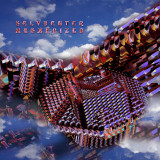
Going past musical genres and instead straight towards something more elemental - Selvhenter’s music creates a strikingly direct, physical experience of sound composed of polyrhythms, acoustic and electric melodies, heavy music and improvised beauty.
Since forming in Copenhagen in 2010, drummers Jaleh Negari and Anja Jacobsen, saxophonist Sonja LaBianca and trombonist Maria Bertel have forged a unique approach to making music that starts with their instrumental setup: two drummers that interlock as frequently as they go their own way, a trombone put through a bass amplifier loud enough to rattle your chest and a saxophone put through a range of effects so that it often sounds unrecognisable. Selvhenter work within their own idiom, drawing from the individual players’ personalities and interests to make a highly collective music, where all four musicians are absorbed into a total sound where an improvised free jazz approach collides with experimental electronic music and avant-garde noise/post-punk sonorities.
Their new LP Mesmerizer - which marks their first physical album release in nearly a decade and their debut on the French label Hands in the Dark - carries forward this process of exploration, deploying original and complex patterns of rhythm through various percussive instruments and finely textured horns and synths. The attention to sonic details is also almost pushed to an extreme on this new offering, making the open auditory adventure suggested by the title of the album all the more captivating. These creative developments have brilliantly kept Selvhenter’s music alive to new uncharted moods and possibilities, while at the same time strengthening their core elements: a propulsive, dense and often ecstatic music.
Marc Richter aka Black To Comm released his debut record 20 years ago. In 2023 he is still busy releasing music under various disguises and is currently signed to the Thrill Jockey label. To celebrate this anniversary his own Cellule 75 label is re-releasing some classic out-of-print vinyl albums that originally came out on the defunct Type and De Stijl labels. The LP will feature a full-colour printed inner sleeve exclusive to this edition.
In 2009 the Type Recordings label run by John Twells had just released seminal records by Grouper, Jóhann Jóhannsson and Yellow Swans when they signed Richter and put out his breakthrough Alphabet 1968 album. The LP sold out within two weeks, receiving a glowing full-page review in The Wire Magazine by the late Mark Fisher (later reprinted in his book Ghosts Of My Life), was selected for Boomkat's Top 10 releases of the year (alongside debut albums by Leyland Kirby, Demdike Stare and Oneohtrix Point Never) and was greeted with universal praise in the underground blog network as well as established magazines such as The New Yorker and Pitchfork.
The music itself played with the notion of nostalgia without being nostalgic itself. It's the sound of half-remembered dreams, a surreal distorted vision of the past, an aural polaroid of long forgotten musics, a ghostly voice from a non-existent era.
From the original Type one-sheet:
"The mission statement for Alphabet 1968 was to write an album of "songs" for want of a better word. Short tracks which represented genre points, the milestones which stuck in Richter's mind when he thought back to his favorite records. What we arrive at is a breathtaking 10-track album which, over the course of 45 minutes, explores world music, techno, noise, avant-garde, ambient music and even exotica. Each track is linked with a loose thread of radio static or environmental sound, dragging you through the album, as if tuning in to a stray broadcast or a particularly adventurous mix. Richter has pieced the album together from hours of recordings made at his studio with home made gamelan, small instruments and loops gathered from a collection of ancient vinyl and 78 records. The scope of the album is admirable, but ignoring this, it is simply a shockingly arresting collection of experimental oddities, with references ranging from Moondog to Basic Channel by way of Bernard Herrmann. It's not hard to fall in love with Alphabet 1968, far harder would be to place exactly where the record should fit into your collection."
Mark Fisher in The Wire:
"But what if we were to take Richter's provocation seriously - what would a song without a singer be like? What would it be like, that is to say, if objects themselves could sing? It’s a question that connects fairy tales with cybernetics, and listening to Alphabet 1968, I’m reminded of a filmic space in which magic and mechanism meet: JF Sebastian’s apartment in Blade Runner. The tracks on the LP are crafted with the same minute attention to detail that the genetic designer and toymaker brought to his miniature automata, with their bizarre mixture of the clockwork and the computerised, the antique and the ultramodern, the playful and the sinister. Richter’s musical pieces have been built from similarly heterogeneous materials - record crackle, shortwave radio, glockenspiels, all manner of samples, mostly of acoustic instruments. ….. JF Sebastian's apartment was itself an update of older spaces in which science and sorcery co-existed: the workshops of ETA Hoffmann's inventor-magicians, or of Pinocchio's creator, Geppetto. I think, too, of Auguste Villiers de l'Isle-Adam's astonishing 1886 tale The Future Eve in which Edison, using the expertise he has recently acquired from inventing the phonograph, sets himself the task of constructing an artificial woman. But if there are songs here, they are sung by the gramophone and other recording and playback machines. Richter so successfully effaces himself as author that it is as if he has snuck into a room and recorded the objects as they played (to) themselves. Rather than simply automating his music, as in the case of Pierre Bastien and his mechanical machines, Richter makes us feel that he has merely recorded the unlife of objects. ….. Indeed, the impression of things winding down is persistent on Alphabet 1968. Entropy has not been excluded from Richter's enchanted soundworld. It feels as if the magic is always about to wear off, that the enchanted objects will slip back into the inanimate again at any moment."