The Lucid Dream return in April with the release of new single 'SX1000', the first taster from the recently completed 4th album.
Driven by fans raising £10,000 to hell replace all equipment robbed after a Paris show in early 2017, a new album became the instant focus for The Lucid Dream in the summer of 2017.
The track is a slice of pure acid house, and will again see them acknowledged for venturing into pastures new, setting themselves apart from 'genres', 'scenes' or what any other band are currently doing.
'SX1000', as with the whole album, was penned over the summer by Mark Emmerson (vocals/guitar/synths), using only the classic Roland 303/808 synths, bass and vocals as tools for writing.
Inspiration for the writing was formed via continuous listening to the Chicago to UK acid house works of 1986-1992, the focus predominantly on the groove. 5 months on from those writing sessions and The Lucid Dream have competed their 4th album in 5 years, this track a perfect indicator as to what awaits. A record made for the dancefloor.
The Lucid Dream formed in Carlisle, Cumbria, in 2008. A string of sold-out 7s was followed by the debut longer player, 'Songs Of Lies and Deceit', in August 2013. The album gained critical acclaim from the likes of Uncut, Q, Rocksound, Clash, The Quietus, and leading French culture magazine, 'Les Inrocks', to name a few. The initial vinyl pressing of the debut album (500 copies) sold out within 2 days, and was backed by a main stage slot at Kendal Calling, and supports to Death In Vegas and A Place To Bury Strangers (full UK tour).
The bands 2nd album ('The Lucid Dream') was released in March 2015 to further acclaim. This included 2 BBC 6 Music sessions, and press from Uncut, The Skinny, Louder Than War, and Drowned In Sound, who named the album #7 UK album of 2015. Further supports to Clinic and A Place To Bury Strangers coincided.
3rd album, 'Compulsion Songs' was released in September 2016, on Holy Are You Recordings. The vinyl pressing of the album sold-out within a day, prompting an immediate 2nd press, with pre-sales of the album topping 1,000 before release. The album was backed by a headline UK tour, and a main slot at Liverpool International Festival of Psychedelia (for which they were singled out for major plaudits from The Quietus, The Skinny and Drowned In Sound). The album again received acclaim from the likes of Mojo, Uncut, Classic Rock Magazine, BBC Radio 2 (Huey Morgan) and across the board on BBC 6 Music (Lauren Laverne, Marc Riley, Tom Ravenscroft, Gideon Coe, Stuart Maconie).
Sacred Summits returns after a two-year hiatus with an album of interpretations of the music of Eric Satie by acclaimed composer Morgan Fisher.
Active for over 50 years Morgan's career has moved from 60's number one hit wonders Love Affair, to 70's rock'n'roll keyboardist in Mott The Hoople, before finally on to 80's ambient, improvisation and soundtracks, working with the likes of Yoko Ono, Haroumi Hosono and Dip In The Pool.
Based in Japan since the mid-80s, Fisher's long-standing admiration for Erik Satie (1866-1925) led to these Inside Satie recordings. Satie's unique work as a precursor to artistic movements such as minimalism, surrealism and repetitive music are acknowledged but for long periods he not given the accolades his music warranted.
A strange, eccentric, surreal man, he was never as acclaimed as the established masters, but influenced not only the likes of Debussy but also many of the Dada artists. On this album Morgan played his music freely after just a brief look at the scores. Recorded in just three days, it features piano, melodica, synthesisers, and Morgan's favoured tape delay system.
'INSIDE SATIE is one of the first albums I recorded in Japan shortly after moving here in 1985. In three days I improvised on several of my favourite Satie themes. Mostly I played piano as well as the rich, analog-sounding Yamaha GS-1 (precursor of the DX-7), and sometimes used long tape delays to build layers of sound. All the pieces were recorded in single takes - no overdubs (no time!)'.
Includes 12' Vinyl and Deluxe CD album, 30 page hard back book
Now that I've been to Nashville,' Kylie Minogue says with audible affection, I understand. It's like some sort of musical ley-line...'
Golden, Kylie's fourteenth studio album, is the result of an intensive working trip to the home of Country music, a city whose influence lingered on long after the pop legend and her team returned to London to finish the record: We definitely brought a bit of Nashville back with us,' she states. The album is a vibrant hybrid, blending Kylie's familiar pop-dance sound with an unmistakeable Tennessee twang. It was Jamie Nelson, Kylie's long-serving A&R man, who first came up with the concept of incorporating a Country element' into Kylie's tried-and-trusted style. That idea sat there for a little while, with Minogue and her team initially unsure about how to bring it to life. Then, when Grammy-winning songwriter Amy Wadge's publisher suggested Kylie should come over to collaborate in Nashville, a city Kylie had previously never visited, something clicked. You know when you're so excited about something,' she recalls, that you repeat it an octave higher and double the decibels I was like that. 'Nashville! Yes! Of course I would!'. I hoped it would help the album to reveal itself. I thought 'If I don't get it in Nashville, I'm not going to get it anywhere.''
Kylie's Nashville trip involved working alongside two key writers, both with homes in the city. One was British-born songwriter Steve McEwan (whose credits include huge Country hits for Keith Urban, Kenny Chesney and Carrie Underwood), and the other was the aforementioned Amy Wadge, another Brit (best known for her mega-selling work with Ed Sheeran). It was then a truly international project: Golden was mainly created with African-German producer Sky Adams and a list of contributors including Jesse Frasure, Eg White, Jon Green, Biff Stannard, Samuel Dixon, Danny Shah and Lindsay Rimes, and there's a duet with English singer Jack Savoretti.
However, the album's agenda-setting lead single Dancing was, significantly, first demoed with Nathan Chapman, the man who guided Taylor Swift's transition from Country starlet to Pop megastar. If anyone knows how to mix those two genres, Chapman does. Nathan was the only actual Nashvillean I worked with. He's got a huge studio in his house, which is probably due to his success with Taylor... there's plenty of platinum discs of her, and others on his walls.' There's something of the spirit of Peggy Lee's Is That All There Is, of Dylan Thomas' Do Not Go Gentle Into That Good Night, even of Liza Minnelli's Cabaret about Dancing, a song which not only opens the album but sets out its stall, providing a microcosm of what is to come. You've got the lyrical edge, that Country feel, mixed with some sampling of the voice and electronic elements, so it does what it says on the label. And I love that it's called 'Dancing', it's immediately accessible and seemingly so obvious, but there's depth within the song.'
The experience of simply being in Nashville was an overwhelming one, before Kylie had even arrived. Once I knew I was going to Nashville, people talked about the place with such enthusiasm. They said without doubt I would love it and, I would come back with songs. They were sending lists of restaurants, coffee shops and bars. It really was a beautiful and genuine response and it felt like I was about to have a life changing experience and in a way, I did.' The reality came as something of a surprise, when she found a far more modern metropolis than the vintage one she'd envisaged. I thought it would be like New Orleans: little houses and bars, with music spilling out onto the street. It reminded me more of Melbourne: apartment blocks going up everywhere! The main strip, Broadway, where the honky tonk bars are, that's where the street was filled with music and it was just amazing.' Mainly, Minogue remembers the heat and humidity. It was 100 degrees. It was like it was raining with no rain.' She also relished the chance to wander around unrecognised, visit a few venerable music bars and soak in the atmosphere. I didn't get to the Grand Ole Opry or the music museums but I managed to go to a couple of the institutions there like The Bluebird Cafe and The Listening Room, and just by being there, through some kind of osmosis, you get this rejuvenated respect for The Song, and the writing of The Song. There's no hoo-hah around it. There's a singer-songwriter there, talking about the song and singing the song, to an audience who are there to listen. Although, I have to confess I was guilty of starting to clap too soon during a long pause at the end of one of the songs. The guy made a bit of a joke out of it and got a laugh from it, but I thought 'Of all people in the audience, no...''
It's probably no coincidence, therefore, that every track on Golden is a Kylie co-write, making it arguably her most personal album to date. The end of 2016 was not a good time for me,' she says, referring to well-documented personal upheavals, so when I started working on the album in 2017, it was, in many ways, a great escape. Making this album was a kind of saviour. I'd been through some turmoil and was quite fragile when I started work on it, but being able to express myself in the studio made quick work of regaining my sense of self. Writing about various aspects of my life, the highs and lows, with a real sense of knowing and of truth. And irony. And joy!'
The songwriting process allowed Kylie to get a few things out of her system. Initially, she admits, it was cathartic, but it also wasn't very good. I think I was writing too literally. But I reached a point where I was writing about the bigger-picture, and that was a breakthrough. It made way for songs like Stop Me From Falling and One Last Kiss. It also meant I had enough distance to write an autobiographical song, like A Lifetime To Repair, with a certain amount of humour. The countdown in that song: 'Six-five-four-three, too many times...'. I don't know if that will be a single, but I can just imagine a girl with framed pictures of past boyfriends, and kind of going 'Oh god, when am I going to get this right'' When she listens back to Golden, Kylie can vividly hear the Nashville in it. It is, she'll agree, probably the first time that a Kylie album has sounded like the place it was made. You wouldn't normally relate my songs to the cities. Can't Get You Out Of My Head sounds more like Outer Space than London. But Shelby '68, for example, was written in London but it was done with Nashville in mind. It's about my Dad's car, and my brother recorded Dad driving it! I don't think I'd have written a number of the songs, including Shelby '68 and Radio On without having had that Nashville experience.'
The latter, she says, is about music being the one to save you.' Throwing herself into the making of the record, she says, crystallised that idea. If there's one love that will always be there for you, it's music. Well, it is for me, anyway.' That song, in particular, carries nostalgic echoes of the golden age of Country, as heard through Medium Wave transistors and tinny home stereos in the distant past. Like any child of the Seventies, Kylie had a basic grounding in Country music, mainly absorbed from older family members. My Step-Grandfather was born in Kentucky and though he lived most of his adult life in Australia, he never stopped listening to his beloved Country artists.' If there's any classic Country singer whose imprint can be heard on Golden, it's Dolly Parton.
Kylie saw Dolly live for the first time at the end of 2016, at the Hollywood Bowl. It was like seeing the light,' she beams. It was incredible. Everyone, whether they know it or not, is a Dolly Parton fan. When I was in Nashville, I did pick up a T-shirt that said 'What Would Dolly Do' Maybe that should be my mantra.' And, whether consciously or otherwise, there's a timbre and trill to Kylie's vocals on Radio On that is distinctly Parton-esque. My delivery is quite different on this album,' she says. A lot of things are 'sung' less. The first time I did that was with Where The Wild Roses Grow. On the day I met Nick Cave, when I recorded my vocals, he said 'Just sing it less. Talk it through, tell the story.' This album wasn't quite to that extreme, but a lot of the songs were done in fewer takes, to just capture the moment and keep imperfections that add to the song. I remember on my last album, a lot of producers were trying to take out literally every vibrato they heard. And that's not natural to my voice. I mean, I can make myself sound like a robot, but it's nice to sound like a human!' Working within the Country genre also gave Kylie permission to write in the Nashville vernacular. Because we were going there, I wasn't afraid to have lines like 'When he's fallen off the wagon we'd still dance to our favourite slow song', 'Ten sheets to the wind, I was all confused', 'I'll take the ride if it's your rodeo'. The challenge of bringing a Country element to the album made the process feel very fresh to me, kind of like starting over. I started to look at writing a different way, singing a different way.'
If ever Kylie lost confidence in the Country-Pop concept, and found herself pondering This is great, but back in the real world - my real world - how will this work', Jamie Nelson was there to badger her into sticking to the path. We found a way to make it a hybrid with what we'll call my 'usual' sound. It had to stay 'pop' enough to stay authentic to me, but country enough to be a new sound for this album. The closer we zoomed in, and the more we honed it, I knew Jamie was right. We sacrificed good songs that weren't right for this album, because we wanted it to be as cohesive as possible. The songs that were hitting the mark were these ones, so we decided to be strong, and that's how we wrapped up the album. What he said, that stuck with me, was that 'I'd hate to get to the end of this and really wish we'd gone for it.'' Having worked with Kylie for so long, Nelson was able to put this latest shift of direction into perspective. He said 'You've traditionally done it throughout your career. You had your PWL time, then you did a complete turn when you went to deConstruction, then another complete turn with Spinning Around, and R&B dance-pop, and then another turn with Can't Get You Out Of My Head, icy synth-pop, and this is another one.' He was right. It felt like the right time to have a change sonically. New label, new stories to tell, and a new decade almost upon me.'
Kylie Minogue will, it's scarcely believable, turn 50 this year. This looming milestone is partly behind the album's title, and title track. I had this line that I wanted to use: 'We're not young, we're not old, we're golden' because I'm asked so often about being my age in this industry. This year, I'll be 50. And I get it, I get the interest, but I don't know how to answer it. And that line, for my personal satisfaction, says it as succinctly as possible. We can't be anyone else, we can't be younger or older than we are, we can only be ourselves. We're golden. And the album title, Golden, reflects all of this. I liked the idea of everyone being golden, shining in their own way. The sun shines in daylight, the moon shines in darkness. Wherever we are in life, we are still golden.' One of the album's shiniest moments is Raining Glitter, an exuberant banger which ventures closest to Kylie's traditional dance-pop comfort zone. Eg White, who is one of the producers and writers and a great character, was talking about disco one day. I said 'I love disco, but you know the brief.' We needed to be going down the Country lane, so to speak. But we managed to bring them both together. When I wrote it, I was thinking about the Jacksons video for Can You Feel It where they're sprinkling glitter over everyone. And I think there's a Donna Summer record that's got that feel to it. I think that's my job: I basically leave a trail of glitter after every show I do anyway.'
Kylie is looking forward to the challenge of incorporating the Golden material into her live shows. Mixing these songs in with my existing catalogue is going to be fun. And it could be fun to do some of those songs with just a guitar. It'll make my acoustic set interesting...'Her incredibly loyal fans - to whom one Golden song, Sincerely Yours, is intended as a love letter' - will, she believes, have no problem with her latest stylistic shift. My audience have been with me on the journey, so I shouldn't be afraid that they won't come with me on this part. I've had fun with it, and I'm sure they will too.'
The time spent making Golden has, Kylie says, been a time of creative and personal renewal. I've met some amazing people, truly inspiring writers and musicians. My passion for music has never gone away, but it's got bigger and stronger.' And if there's an overriding theme to the record, it is one of acceptance. We're all human and it's OK to make mistakes, get it wrong, to want to run, to want to belong, to love, to dream. To be ourselves.'
I was able to both lose and find myself whilst making this album.'
DJ Katapila's Aroo EP is the latest addition to the iconoclastic producer's catalog of fast-paced, pan-West African-influenced dance music. From a young age, Ishmael Abbey was a beloved local DJ in Accra, Ghana's competitive and rapidly-evolving music galaxy. DJ Katapila's debut release with Awesome Tapes From Africa, 2016's reissue of Trotro, ignited international acclaim for the Ghanaian DJ and producer: The New York Times, Pitchfork, Resident Advisor and FACT heaped praise on his work. Katapila launched a touring career beyond his grueling schedule of all-night parties around Ghana's southern coast and neighboring countries, heading to Europe and the UK, where he performed at festivals and clubs the pasty two years. Katapila brought Ghana's street party culture to audiences overseas, a wave of joy and happy dancers were left in his wake. The song Aroo' uses his earlier song Cocoawra' as a jumping off point and expands upon its endearing quick-rhythmed interplay of vocal hiccups and percussive clinks. Katapila thinks of Aroo' as a simple math equation: Francophone rhythms plus techno equals so hot and danceable.' While traveling this past summer in Europe, he continued to work on the minimalist electronic music steeped in his hometown rhythms that has made him a growing and singular voice in West African music. Having never travelled outside his region before, the contemporary sounds of London impacted his sonic palette, triggering new song African Techno.' He explains, In Europe and the UK they like these techno songs and house music. They have songs that sound like African music, and we have songs that sound like house music and techno music.' Ghana Baby DJ' references his ongoing development of Ga dance music style gbe ohe. It also conjures his daughter's voice and inimitable vibe and blends it with the characteristic clave rhythm of this. The EP's final cut is a track released with a an eye-catching music video this summer called "Monkey." Following radio play in Ghana and demand from fans online, this track makes its debut on vinyl. Awesome Tapes From Africa is proud to present new music from this unmistakably original artist with an honesty and unpretentiousness that feels good at this current point in history.
Ichisan's 2017 Aperitiv was so good that we've decided to return for a second helping from his sumptuous album. Four choice cuts have been selected and reworked with a specific instrument focus. The harpsicord version of 'Hotel' keeps the intoxicating melody of the original but allows beats to relax as notes shine with an incandescent brilliance. Drums put their feet up for the Rhodes version of 'Modri Tunel.' Deep stings and lounging lines mingle in this work of smoke swirling seduction. 'Kozmetika (Trumpet Version)' dances to a different tune. Rich bass is again central but this time brash and bold brass intertwine with funk filled bars. The last waltz arrives with the piano version of 'Terminal E.' Alluring notes ascend, rising and falling against heartwrenching guitar strings for a finale to end this ballroom inspired beauty.
First new LP in over 15 years. Builds on 3 successful ATFA reissues of Mergia's music. Legendary artist still active after decades of historic work. Modern Ethiopian jazz built on ancient scales and standards. Capping several successful years traveling the world performing to audiences big and small, Hailu Mergia's Lala Belu has been a long time coming. It builds on Mergia's remarkable career resurgence over the past few years. Beginning in 2013 with the reissue of his dreamy Hailu Mergia and His Classical Instrument followed by the enormous success of his seminal Ethio-jazz masterpiece Tche Belew and continuing with last year's widely acclaimed Wede Harer Guzo, Mergia has received considerable accolades from listeners and press globally, including The New York Times, Pitchfork and The Wire. His old recordings are cherished revelations for Ethiopian music fans; however, Mergia's return to the stage has been just as inspiring and electrifying. Mergia's vintage recordings are known for an inherently mysterious and worn-in quality, while his new recordings echo his band's 21st century live show with modern instrumental interpretations of crucial Ethiopian standards and Mergia's own original compositions. Tony Buck (drums) and Mike Majkowski (bass), who have backed Mergia on tour throughout Europe and Australia, form the bass-drums trio on the recording. Having played venues from Radio City Music Hall and the Kennedy Center to jazz festivals, rock clubs and DIY spaces all over North America, Europe and Australia, Mergia and Awesome Tapes From Africa want to document this moment in his landmark career with a snapshot of Mergia's current sound. Since he emigrated from Ethiopia and built a life in Washington, D.C. around 1981—where he remains working as an airport taxi driver when he is not on tour—Mergia's career has followed a humble trajectory. He made a few recordings in America but they didn't easily reach fans back home. He kept making music on his own and with friends but after the early 80's his gigs in the U.S. mostly dried up. It wasn't until he began working with Awesome Tapes From Africa and putting together bands with the help of booking agents and musicians in Europe and the U.S., that he was able to chart a new path. With a broad audience of young listeners in diverse venues and distant locales, at age 71, Mergia is enjoying his comeback and is not slowing down.
Running Back welcomes Andreas Grosser for the start of it's non-dancefloor series 'Running Back Incantations'. Think Tornado Wallace's 'Lonely Planet' or Suzanne Kraft's 'Missum' who both would have been good and early contenders for a series like that, and you are half way there. Andres Grosser though, was 'there' and that way before. Probably best-known for his 1987 collaboration 'Babel' with Klaus Schulze, Grosser is a bit of a dark horse in the universe whose big bang was krautrock and that went on to be called cosmic, space music or simply new age.
A native East-Berliner, Grosser crossed the Wall in 1981 and next to studying piano, his day job was to advise, sell, maintain and invent electronic music instruments. Naturally, Grosser had a good connection to and support from local Berlin musicians and groups, while working at night in his own studio and in those of others. Fast forward 37 years and Andreas is now one the worlds leading microphone technicians specialising in German and Austrian vintage types.
'Venite Visum' is an anthology of recordings made between 1976 and1980. Released in 1981 on UK's York House Recordings as a cassette tape only, it features some of the most out there, hypnotic and still state-of-the art space music ever to be known to man. For the first time transferred onto vinyl, compact disc and available as a digital download, it was perhaps best described by one reviewer at the time as; "powerfully relentless, repetitive themes which are constantly embellished and subjected to variations in tone colour and instrumentations. The music surges, coming in waves that approach and recede, but with each surge the waves seem to be higher up the shore.'
Now carefully transferred from an archived tape, remastered and compiled on a double album for the first time, it features the previously unreleased and not less mesmerizing 'The Quantum Leap'. Come and visit the hidden and almost forgotten
The second of Alma Negra's 12 Rhythms Series is dedicated to the Maloya sound from La Réunion, a tiny island where a
melting pot of cultures is reflected strongly in its music. Maloya's roots go back to the time of slavery, its quick tempo and raw
energy making it not only a popular dance music but also a powerful protest through movement.
On their Maloya EP, the Basel collective pay tribute to the hypnotic rhythms that were feared both by the Catholic Church and the French government for the musical form's subversive part in the rebellion against colonialism.
The release revolves around two contrasting Alma Negra re-workings of Lindigo's Tany Be. The first takes a classic call &
response structure in 12/8 and 6/8 rhythms, adding a driving bass line and guitar licks. A solid 909-kick locks things in step,
along with a sax flourish and FM synths. Their re-imagining of African and Tamil influences for modern dancers is a triumphant
manifestation of the music's origins.
With the main reworking focusing on a rolling dance floor groove, the Dub Mix concentrates on trance-inducing aspect of
Maloya. Using a modular set up to pick apart layers of percussion, it is a dense and heady trip into the spirit world.
The B side focuses on Christine Salem, one of today's stars of the Maloya scene. Without wanting to squeeze the soul from her
deep tones, Kabaré is slowed down a notch, with drums added sparingly. This sensitive treatment gives the track just enough
weight and tension to punch in on todays dance floors without losing the intent of the original.
The source material for this EP has been road tested from the very beginning of Alma Negra's journey. The collective have gone
to great lengths to ensure the original creators are on board with their treatment of their music and are honoured to be given the
chance to distil their own ethos into a record that is bubbling with today's dance floor drive. Their reverent treatment aims to
preserve the power and beauty of the source material, to bring uncovered gems to a new audience.
Fresh for 2018 the ever pioneering Octave One are bringing us some brand new music for the new year. Using their much loved Random Noise Generation alias the upcoming release entitled 'N2 The Enfinate, contains a new single as well as a remake of 'Rock my Soul' in the form of the 'Reborn Vocal Remix'.
The first Random Noise Generation release was 'Falling in Dub' in 1991 and sounding just as fresh 27 years later, 'Enfinite Soul EP' is due for release this April.
For this single a retro energy has been explored in the title track 'The EnFinate', running parallel to a more contemporary groove and rolling, marauding baseline. The second track on the package, 'Rock my Soul' (Reborn Vocal Remix) starts with a strong intent and a weighty bassline paving the way for precise and bright chord stabs.
The single is taken from the new album 'Endustry', a full body of work encompassing 7 full length cuts, set for release in spring.
After touring and making music for decades the spirit and essential energy of the craft is what keeps them eternally inspired to keep creating and touring the globe... 'Once it takes hold of you you can't stop even if you wanted to.' say the brothers.
On 30thMarch, Wah Wah 45s will release ORANGE WHIP, the new album by their latest signing, Honeyfeet. The outfit, who have received praise from the likes of The Guardian, have also set festivals alight up and down the country with their unique melange of sounds.
For the last couple of years the Honeyfeet (who name from a line in the Blues Brothers film) have been a conduit for the ideas and expressions of an exotic mixture of Manchester based musicians. This genre-defying band incorporate styles including jazz, folk and hip hop into their music. Someone once called it Folk-Hop and Barrelhouse-pop, and that's just vague enough to make sense.
The band are fronted by Ríoghnach Connolly - also known for her work with Real World artists Afro Celt Sound System and The Breath - "a remarkable singer and flautist who...can ease from Irish traditional influences to soul" (The Guardian). The line up is completed by Rik Warren (vocals/harmonica), Gus Fairbairn (tenor sax), Biff Roxby (trombone/vocals), Ellis Davies (guitar), Lorien Edwards (bass guitar), John Ellis (keyboards) and David Schlechtriemen (drums).
ORANGE WHIP finds the band at their most incredibly diverse. Opening with recent single Sinner (received radio play from the likes of 6 Music and BBC Manchester), which showcases Ríoghnach's extraordinary agile and emotive voice, the album moves with dizzying swagger on songs covering a wide range of subjects. Quickball tells the story of being so infatuated with someone you want to eat them, while Whatever You Do addresses the fear-mongering of the press over folk-hop and oom-pah, and Demons deals with love and redemption on a blast of harmonica-driven country, sung by Rik Warren.
Rik also takes lead vocal on a re-working of Robert Johnson's Love in Vain, a song showing Honeyfeet's more reflective side, his Skip James-esque drawl bringing an eerie quality to the lyrics about a doomed relationship. The band reshape the progression too, swinging the tune slowly and creating a little underground blues club in the midst of the recording.
Elsewhere the band go all New Orleanian on Colonel Hathi's Trunk Juice, a sinister tale inspired by trombonist Biff Roxby's horn riff recalling one of the elephants of The Jungle Book. Further showcasing their virtuosity, on one of the album's best moments - especially the nuanced vocal performance by Ríoghnach, who was raised on Irish folk - on Hunt and Gather the band do their own take on prog-folk, with a flute and cello melody running alongside a brass counterpoint.
Ríoghnach turns in another incredible vocal on the album's final track - future single Meet Me On The Corner. With a pounding beat, it is one of the album's main highlights. Guitar and brass propels Ríoghnach to sing lyrics that could be straight out of the playground, but suggest something deeper, possibly mystical even, in it's demands for a dalliance on the street. It closes the album on a high note, for a band who have that rare ability to distil all their disparate influences, while always sounding like their unique selves.
ORANGE WHIP heralds the sound of a remarkable band going overground.
Ltd. edition of 500 numbered copies on clear vinylGnashing, thrashing and teeming with enchanting microtones - Machine Guitars is the definitive recorded work of Remko Scha, although the late Dutch artist didn't play a single note himself. Rather, Scha arranged a motorized, rotating wire brush and saber saw in front of suspended electric guitars and let these metallic torrents flow.Scha was a linguist and generative artist, enamored of computers' capacity for algorithmic creativity. A leading researcher at the University of Amsterdam, he also cofounded the famed arts-space Het Apollohuis in a former cigar-factory in 1980. This haven for intellectuals and underground autodidacts served as the recording studio for most of Machine Guitars (as well as Ellen Fullman's brilliant The Long String Instrument), which originally appeared in 1982 on the small Dutch label Kremlin. Machine Guitars, as the critic Byron Coley has noted, ranks among the best of the era's minimalist-inspired, avant-garde guitar statements by Glenn Branca and Rhys Chatham. The semiautonomous sound-making sculptures also evoke contemporaneous work by Christian Marclay. Scha's work falls somewhere between conceptual art and avant-garde music - a total revelation for minimalists and No Wave fans alike.First-time vinyl reissue. Limited edition of 500 numbered copies on clear vinyl.
aniel Schwerdel aka Acid Lab has been a familiar face on Lossless Music and Dope Plates over the last few years. Turning heads with his tracks 'Ancestors' and 'Tundra', Dan has laid the ground work for a bigger project, a solo album. 'A Matter Of Time' is a stunning 10 track breakbeat odyssey which sees Dan draw on influences from the past as well as futuristic visions which combine to form a body of work that perfectly fits the Dope Plates ethos.
Cover with laser-cutting and printed inner sleeve, ltd. to 500 copies, incl. mp3A Score for Darling is both the sound track for the Danish film "Darling" (2017) as well as a collection of outakes from it. Raúl Pastor Medall (Rauelsson) and Erik K Skodvin (Svarte Greiner & 1/2 of Deaf Center) were paired together to work on the accompanying music after the director, Birgitte Stærmose wanted to try a new direction. Both together and individually they have created a highly affecting collection of pieces to a film that is not afraid of pushing the emotional content to the max, centered around the story of a dancer on the rollercoster ride of her life. This is also the first time either of them have made a full lenght sound track, making it their debut on the big screen.The music and instrumentation heard on the album is brimming with dynamics and diversity, featuring violin by Christoph Berg, cello by Anne Müller as well as a mass of other sounds like church organs, synths, guitar amp violation, electro-acoustics, piano and more, all layered together into 15 beautiful and devastating fragments of mood. The final piece of the album "Breathe" - featuring Otto A Totland on piano and Katinka Fogh Vindelev (We like We) on voice - can be seen as their own lamenting end title to a longer period of work with this album, finally finished.
Pioneers of the electronic music scene, Music Producer and Finiflex Studio Owner, John Vick and DJ, Davie Miller are working together on a new project . . . . FINIFLEX
Bonus Freaks is the second single to be released from the much anticipated forthcoming album SUILVEN, slated for release in May 2018.
FINIFLEX have been playing the new material live since the end of 2016 with gigs in Edinburgh (Neu Reekie), Glasgow (Let's Go Way Back) Skye (Non Stop Easter Weekender) Barcelona (Kosmopolis), Dundee (Carnival 56) and the TA TA OO HA Single Launch Party (TRANSMISSION) in Glasgow.
The show itself is an immersive experience featuring lights, live projections and video graphics, basically a super slick production rammed with back to back bangers.
These new releases may by the first in 20 years but in reality it's not been such a long period of silence. The almost a secret FINIFLEX Studio Complex (FINIFLEX HQ) based in Leith, Edinburgh has continued to work away with some of the best in the genre including the likes of Justin Robertson, Lord Of The Isles, DJ Rolando, Andrew Weatherall, Sparks, Billy McKenzie, John Pleased Wimmin, Paul Oakenfold, Dave Ball (Soft Cell) to name a few.
It's a given that their past assures their pedigree within the electronic music arena but with this NEW release 'Bonus Freaks'. . . . . FINIFLEX brings it all rushing into the future. . . . . .
The Berlin based Gel Abril kicks off his new "Closed Circuits" label in a full form presenting a strong record by talented Polish artist Oskar Szafraniec, a crafted producer, known by his latest 12" on Rawax with Ricardo Villalobos, EPs on Murge Recordings, Cyclo or collaborations with Pier Bucci. For the debut release on Closed Circuits, Oskar has collaborated with the Swedish "Very Addictive" duo and has delivered his best work to date, a music piece called "Borderline", filled with lush vocals and hypnotic pads that kicks the label with a proper bang.
On the A side - the label boss himself, Gel Abril, turning "Borderline" into a burner, with his very own distinctive groove and effected vocals, surely to be one of the main tracks for 2018! On the flip side, already mentioned original mix of "Borderline" and another collaboration by Oskar, this time with legendary Chilean master "Pier Bucci", bringing minimalistic experimental goodness, perfect for those special after hour moments we all love. Gel Abril said: "listening to Borderline for the first time it just blew my mind and gave me that goosebumps feeling you rarely get with most of music out there these days, I felt very inspired remixing such an magnificent vocal, it is one for the books!"
There are some records that manage to sound both of a time and utterly timeless and Bon Voyage Organisation's Jungle Quelle Jungle (a nod to Supertramp's Crisis What Crisis) is one of those albums. Its silken-smooth production, irresistible grooves, funk-tinged guitars, lush soundscapes and general glowing presence could easily lead one to believe that have dug up a lost disco gem from the 1970s. However, behind the disco-pop gleam lies eerie dystopian sci-fi ruminations of a futuristic bent and tones that can often feel as French as they do Asian or African.
This sort of cross-continental exploration is an expansion on BVO's previous two EPs, the man behind the Organisation, Adrien Durand, says. 'I tried to continue the musical expedition between dystopian Science-Fiction Haunted Africa - plus Haitian Vaudou on 'Soleil Dieu' - and futuristic Asia. Addressing, in a double entendre manner, some of the political issues that I am sensitive to.' In fact the jungle in question in the album's title is a metaphorical one and one that creates a vast series of environments for Durand to explore such subjects as world trade, utopian ideals and themes of idols, as well as of time and communication. However, one will need to speak French to decipher such explorations, as well as shake off the natural impulse to move with every glorious beat on its 13 tracks, of which are moved along by Maud Nadal and Agathe Bonitzer's golden vocals.
Durand is a full-time producer based in Paris, working with the likes of Amadou & Mariam, so it makes sense that this record would absolutely sparkle in this department. Durand feeds off the variety of musicians coming and going during recording sessions as well as the rotating members and numbers of people involved with the band but fundamentally he writes all songs on piano first before bringing them to record live. 'We recorded a rhythm section of five - drums, percussion, guitar and myself on bass/synth bass and keyboards - at La Frette which is a studio located in a mansion outside of Paris and fitted with a beautiful 1973 NEVE desk. We only used analogue gear, by taste really, and found it a pretty reliable way of doing things. This simply consists of putting good players together in a room and waiting for the right take to happen.' Two four-day sessions and a 'cooling off' period (to let the recordings settle) soon followed before Durand picked the material back up to give it a final polish.
The resulting album is one loaded with intricacies and idiosyncrasies, something that Durand puts down to his own unique approach. 'I don't consider myself much of a songwriter but I love arranging rhythm sections and I'm pretty proud of the ones on this record.' This applies when it comes to working with such musicians as Inor Sotolongo Zapata, who with Durand used traditional Cuban percussive instruments and explored Haitian rhythms. When Durand expands on some of the ideas and influences that were funnelled into the record, you begin to get a sense of the vastness of the sounds that fill his world, from Trevor Horn's production work on ABC's Lexicon of Love, to the literary work of JG Ballard to the visual flair of the original Blade Runner and even the Tuareg sounds of Tinariwen, due to the fact that his studio neighbours their manager's and he would hear their rhythms bleeding through the walls. You therefore end up with an album that offers tracks such as 'GOMA' that fuses Chinese and African rhythms as well as 'SI D'Adventure' a piece of pop music that is dazzlingly hook-laden.
As a result of this cooking pot of sounds, influences, thoughts and creations, Durand has more of a gumbo approach to making this music than a set-out scientific formula. 'There is no definite recipe for me to like the production of a record,' he says. 'Of course it really sticks out that my work is really influenced by the 1978-1983 period, the golden age and last stand of analogue studios and session musicians.' Whilst Durand adores the traditional and conventional music, he really views this as something bigger and wider. 'I have a taste for the otherworldly vibe from records coming from less sought-after musical scenes, particularly Poland, Haiti, Ethiopia, Somalia, Congo and early Cantonese pop. Languages and the rapport of the people involved in the making of those records really inspires me. I particularly hate the use of the word 'World Music' as a potpourri for everything that doesn't sound quite western enough.'
- Astonishing solo debut by acclaimed cellist and composer Lucy - A daring, non-conformist and deviant approach to composition and instrumentation - One side of filigree, multi-layered autobiographical collage-work, the other of raw and phased cello glissandi - RIYL: Mark Leckey, Alvin Lucier, Beatrice Dillon, Nate Young, Valerio Tricoli, Popol Vuh
Lucy Railton is a prolific performer who has appeared on countless recordings and collaborations with many important figures in contemporary music over the last few years. Paradise 94 is, remarkably, her solo debut - featuring archival, location and studio recordings which serve as a time capsule of all the myriad disciplines and influences that have brought her to this point in time. It both plays up to and shatters expectations of her music, which harnesses a duality of energies - acoustic/electronic, real/imagined, iconic/iconoclastic, pissed-off/romantic; out of place and androgynous - resulting in a visceral emotional insight and rare narrative grasp. Variegated, asymmetric, and located somewhere between her usual fields of exploration, Paradise 94 gives free reign to aspects of her creativity that have previously been subsumed into collaborative processes and interpretations of other composers' work. Here, she's free to probe, sculpt and layer her sounds through a much broader range of techniques and strategies, placing particular focus on non-linear structural arrangements and exploring the way her cello becomes perceptibly synthetic through collaging, rather than FX. At every turn Paradise 94 is bewilderingly unique. The A-side unfolds an oneiric, inception-like sequence traversing temporalities, timbres and tones from what sounds like a spectral ensemble playing on a traffic island in Pinnevik, to bursts of rabbit-in-headlights trance arps emerging from meticulously dissected musique concre`te in The Critical Rush, and a collision of masked vocals, string eruptions and a deeply moving, light-headed Bach rendition in For J.R. On the other hand, Fortified Up on side B tests out a far rawer approach, sampling herself playing the same glissandi over and again, which she layers into a sort of perpetual, sickly motion, the Shepard Tone riffing on the listener's psychoacoustic perceptions before calving off into a cathartic dissonant folk coda in its final throes. In the most classic sense, you can only properly begin to f*ck with something from the inside once you truly know it. Railton's dedicated years of service have more than equipped her with the nous and skill to do just that, gifting us with what will no doubt be looked back on as a raw, exposed and important solo debut in years to come.
Ghanaian music legend Ebo Taylor returns with perhaps his finest album to date.
But don't take our word for it. That's coming straight from the man himself.
And he should know after more than 60 years in the business.
The 81-year-old composer, arranger, guitarist and vocalist has been a key figure in the evolving afro-funk sound since the Seventies, working with the likes of Apagya Show Band, CK Mann and Pat Thomas.
Famously, he rubbed shoulders with Fela Kuti while studying in London in the Sixties, before going on to lead the Ghana Black Star Band (featuring Osei and Sol Amarfio from Osibisa) and later the Uhuru Dance Band back in Ghana. Like Fela, he is always pushing forward, constantly reconceptualising his sound and
attuning it for a new generation. Part teacher, part messenger.
Listen to Yen Ara and you will not only hear the high-energy afrobeat, sweet highlife, jazz and konkoma influences that he's famous for. There is also a disco pulse and hard-hitting percussive edge to the tracks, which were produced by Justin Adams (Tinariwen, Rachid Taha, Robert Plant) and recorded in the live room at Electric Monkey Studio in Amsterdam. An Ebo Taylor for these times, you might say.
His group, the Saltpond City Band, are all handpicked local musicians featuring two of his sons. An appropriate line-up on an album whose titles means we'.
And they are on fine form, ripping through tracks such as 'Krumandey' (a surefire party starter) and 'Mind Your Own Business' (a simple message delivered over a frenetic drum rhythm).
Elsewhere, 'Aboa Kyirbin' will please fans of tough afrobeat grooves, while Taylor could well be inciting a riot at his next gig with 'Mumudey Mumudey', We hear him calling for 'preshaaah' and leading us into a call and response as the trumpet takes us higher. And the lift of those horns on 'Ankoma'm' evokes some
of his finest work such as 'Love & Death' and 'Come Along', the latter recorded with the Pelikans and featured on a recent Mr Bongo reissue.
Inside Out is a brand-new series that invites DJs and producers to blur the boundaries between traditional artist albums and mix compilations. Coming from Aus Music label head and DJ-Kicks curator Will Saul, the concept encourages artists to showcase their own music and or the music of those in their own individual circles. The mix will be release digitally and on CD, while a selection of the tracks will also be available on double gatefold vinyl.
Each instalment will feature 100% new and unreleased music. It is a chance for artists to take sole creative charge, A&R as they see fit and then commission brand new music specifically for the cause. Depending on who is at the helm, Inside Out will take different forms: producers may wish to represent their own sound with only music they have made themselves or with close collaborators, while DJs and label heads may wish to reflect the sounds and scenes that surround them. The results will be a window into an artist's world that works as a coherent mix, but also as a treasure trove of fresh new music that steps outside the usual lines of a dance album.
The idea stems from Will Saul's own approach in the club, which often finds him seeking out brand new and unheard music to play for the first time. That feeling of taking people into the unknown is one that reminds him of the energy and excitement of his early days as a dancer.
For Will's mix he enlists an array of artists who he's worked with over the years, many of whom have released on one of his labels in that time. These include the likes of Lone, Pearson Sound, Move D, Gerd, Youandewan, Martyn, Falty DL, Dauwd, Appleblim and Marquis Hawkes.
It was chance that brought about the release of One/Three, Dabrye's debut album. Early demos were tucked on the B side of a cassette Tadd Mullinix passed to Sam Valenti in 2000 while working at the Dubplate Pressure record shop in Ann Arbor. Mullinix had spent the late '90s producing jungle, techno, house, hip-hop and more using the All Sound Tracker software as a primary instrument. Each style pulled from a similar sound palette as Mullinix used limitations to define the contours of di-erent musical personalities. Dabrye was his hip-hop wildstyle, a captivating collage of sparse instrumentals inspired by the laid back vibes of midwestern hip-hop and east coast boom bap, the futuristic funk of Umma-era Jay Dee, and the calculated subtlety of Detroit dance music. Released in 2001 as the first in an intended trilogy, One/Three announced Dabrye's arrival with an unavoidable contribution to Detroit hip-hop. Ghostly International is reissuing the album in 2017 for the first time, including a long overdue vinyl edition.
On its release One/Three was the rare album that appealed to both fans of Slum Village's smooth yet rugged hip-hop and enthusiasts of the distinct American IDM released by labels like Schematic. Over the following decade, the inadvertent demo submission turned into a body of work that placed Dabrye alongside innovators such as Prefuse 73 amid the cannon of a new generation of producers. Today, One/Three remains a concise and intriguing study in instrumental hip-hop that helps join the dots between J Dilla and Flying Lotus.
One/Three is a record that says much with little. There are no obvious hip-hop tropes. Instead Mullinix captures the ingenious minimalism of '90s hip-hop instrumentals to build tracks both supple and hard, joyous and melancholy, full of sharply angled rhythms and warm rubbery basslines: 'The Lish' throws a sickly sweet saxophone against digitally fragmented melodies, 'How Many Times (with this)' draws you in with an irresistible, clipped guitar groove, the rhythmic stutter of 'Smoking The Edge' makes your head spin with pleasure. Playing with his inspirations, Mullinix injects omitted downbeats for imagined rhymes and repurposes the intricacy of ragga jungle for breakdowns.
But what really defines One/Three is the rhythmic sensibility and metric modulation of Detroit's school of hip-hop production, which Mullinix was a fervent student of. The beats feel like they're constantly escaping a rigid tempo grid even though they are, in fact, pretty tight. A lot of it is nuance,' Mullinix explains. I've been known to say that I'm not impressed by spectacle. I think that nuance is what really captivates people.'
If you like your beats with a dash of class, do not miss this. An essential purchase of the highest order.' -BBC
- First time all tracks from the original 2001 release appear on vinyl.
- Remastered by Daddy Kev
- Standard weight black vinyl is inserted in to 3.5mm matte finish vinyl jacket.
- Download card includes free download of the Payback EP
*2017 repress, New Artwork* A remarkable follow-up to a timeless album that shows the band taking greater risks in songwriting and playfully experimenting with production techniques.
This album is Witch's stunning swansong before the fast-changing music industry and political environment in Zambia took its toll on the group. Again rooted in American FM radio, from soft rock ballads to boogie, this album sees the group embrace their Zambian roots to a greater degree, which is reflected in the rhythms and even the title of the album. This time around Patrick Mwondela pushes his synth work and electronic production to a whole other level. Kuomboka is the unforgettable last voyage of this legendary band.
In the vapor trail of How Does It Make You Feel,' the first track on this self-titled full length, one can smell the burnt ozone of a seventies-full-orchestra-nebula-pop-odyssey, the flakes floating down and landing like snow, giving grave-chills ... the ash of a masterpiece pop song. Once And Future Band: this incredibly accomplished cabal of total prog wizards has circled the earth, but then, these are the accomplished gentlemen of many former pursuits (the formidable Drunk Horse among them) and all of them comets themselves.
The very mid-'70s vibe at work here surpasses pastiche, and crests that lovely anachronistic conceptual peak: a fully realized and meticulously arranged psych record, meant to be listened to from top to bottom, with the lights down low and in a comfy chair perhaps, or while gazing out the window of your life pod. The Dark Side of the Moon feel, with shades of early Yes's technicality, a dash of Steely Dan's vocal prowess and effortless sheen, and some seriously outsized hooks that call to mind the mighty ELO, Le Orme and, yes, even the unsinkable Queen powered on Brian May's tape echo jet fuel and sequined power cells.
This is a head record in the classic sense but utter fealty to The Dark One insures both being trapped and infected by the pop-parasite. That it is largely self-produced (with tracking / engineering on three of the songs by Phil Manley at El Studio) makes it all the more jaw dropping. Making prog cool again, again, and then slightly more complicatedly, again.
Emotional Rescue delves deep in to the past with the release of the first ever recordings by UK post-industrial, ambient pioneers O Yuki Conjugate (OYC). Recorded in Nottingham in 1983, the EP's four tracks showcase OYC's early sound: a beat-driven, lo-fi that places them alongside the early British electronic pioneers.
OYC, celebrating their 35th anniversary this year, are known for their "dirty ambient" sound - but it wasn't always thus. In their earliest incarnation OYC explored a more industrial approach characterised by tortured analogue drum machines, one-finger synth lines, played bass, tape loops and even flute. This naive sound template lasted until their debut album 'Scene in Mirage' (1984) before being jettisoned in favour of more ambient explorations.The story behind these recordings is one of brotherly love between bands. OYC swapped time in their rehearsal space for a day's use of a four-track cassette portastudio owned by their associates, Metamorphosis. Three of the tracks included were recorded on May 1st 1983 at The End Room (literally a studio at the back of one of OYC's parents houses) with the remaining track (live favourite "The Clattering Song") being produced a couple of months later.
To date OYC have remained largely unknown in the UK due to their wilfully obscure approach. They have released a series of very well regarded studio albums and innumerable spin-off and side projects that has recently seen a revival of interest in their early years, including appearances on Cherry Red's compilation of formative UK electronic scene 'Close to the Noise Floor' and Optimo's compilation of Fourth World-style music 'Miracle Steps'.
Accepting their fate as musical outsiders, OYC continue to make music with little reference to the wider world. This EP makes a fine addition to that body of work.
"The enigmatic DOKTA returns with 'London Nights' the third single taken from his forthcoming album -'Metronomic'.
DOKTA has already received support from Seth Troxler, Laurent Garnier, AME, Maya Jane Coles, Archie Hamilton, Mano Le Tough & Damian Lazarus. London Nights is the sound of DOKTA at his best - real musicians and live parts are intricately woven together in ever evolving arrangement. The piece starts with a moment of orchestral bliss before heading directly into a low slung rumble of bass frequencies and tight drum programming, complimented with trippy vocals. London Nights sees remixes from Constant Sounds founder and One Records regular Burnski taking it straight to sunrise at Panorama Bar, providing his trademark groove and euphoric pads. Complimented by a stripped down slice of dub techno contributed by Ralph Lawson, similar to his recent Lost in Time dub production with heavy bottom end sub and heavily worked poly rhythms, as well as Alden Records' Jason Heath, completing the package with a beautifully orchestrated string version.London Nights is out on 26th February and the album 'Metronomic' is out 26th March.
The latest work of Keita Sano's MAD LOVE Records is a 12 inch split by up-and-coming musicians: Daisuke Kondo and Keita Sano. They hail from Okayama!, the alternative dance music label "MAD LOVE Records, and continue to release good quality music one release after another. The fourth release features Daisuke Kondo who is part of a new generation of producers from the same town as Keita Sano.
This EP shows the musical development of the past 2 years in which KAUW has translated their live sound to studio recordings. It's made with the intention to work well for the club, while all of the live elements such as acoustic drums and bass guitar are on the foreground of the tracks. It's important for the band to show the energy of their live shows in the record. In this way, this EP is a switch from the more funky, live first record (which suggests the electronic side) to this EP which is on the crossroads of live music and produced House music.
The A side featuring 'PITCH' is a bit darker and a real dancefloor killer. Hard synths, deep bass, clear drums and an intense dynamic in which you're taken on a Kauwjourney to which it's unable to stand still. The B side featuring 'Nergens' is more funky, light and sweeter with beautiful synths, funky basslines and groovy drums, inspired by the mix of '90's Disco and House. San Proper's remix takes this funky track to a real Proper-world with beautiful guitar melodies, deeper basses and extravagant vocals.
Digipack, 4C print w/ solid color. Cover artwork expands over all pages, liner notes inside.
2 x 12", silver grey vinyl
5 1 1 5 9 3 is the first full-length album release of Vienna based artist Electric Indigo, who started DJing in the late 1980s, worked at the legendary Hard Wax record store in the early 1990s, and effortlessly manages to entertain the dancing crowd at Berghain as much as the contemporary music avant-garde at Wien Modern.
5 1 1 5 9 3 combines influences of both worlds into a consistent and coherent album. Crystalline metallic objects collide, embedded into fractured endless spaces, sparse rhythmical syncopations shaping grids, holding sonic particles in place. Rare vocal transformations inject a human touch. 5 1 1 5 9 3 offers a unique universe, full of color and light, partially flirting with current club music and at other times diving deep into sublime sonic areas.
Aroop Roy has been making waves with his unique sounds for the past few years, with a wealth of successful releases and a busy gig schedule at the helm of some of the best clubs around the world. By fusing elements of Jazz, Afro, Latin, Funk and Soul with the deeper end of House and Disco, Aroop has forged his own style with EPs on revered labels including G.A.M.M, Basic Fingers, Freestyle and Lazy Days. For his Delusions Of Grandeur debut he pulled out all the stops, delivering three original tracks which further show his diversity as an artist and ability to produce left of centre, quality underground music without losing sight of the dancefloor.
Things kick off with Save Our Love, a track that's absolutely brimming with energy thanks to punchy Wurlitzer chops, tension-building Philly strings, and a rock-solid disco groove.
Next up we have What I love which sees Aroop take an altogether more freaky approach flipping an uptempo rolling break, distorted synth line, cross-rhythm stabs and rasping vocal cuts into an edgy dance floor workout.
Closing this brilliant EP is the low-slung bump of Walk That Walk featuring original vocals from Oakland, CA based Blacktroniks who delivers his flow on top of a bass-heavy slice of deep electro boogie.
out of Stock
Last delivered 7 years ago available to reorder, subject to availability
The X Vinyl Series continues with label head Florian Meindl at the helm with the upcoming release Metaphysics. Synonymous with deep, dark techno, Florian does not disappoint with this 4 track EP, enlisting in demand producer and Rabe label boss Denise Rabe on remixing duties. Playing live with his Modular Synth set up, Florian began working on the concept for what would become these three original tracks while playing shows over the last month. The live jam character can clearly be felt in the first two tracks Metaphysics and Holomorphic Function. Florian's original Bell's Theorem has a deep melodic structure. With Denise Rabes interpretation, the track is contorted through some serious distortion pedals and broken beat to match her dark take on the synth line. The outcome is an impressive piece for one of those never ending nights in concrete walled rooms with oversized loudspeakers.
Techno Album of the month March 2018 in Mixmag UK!
Central to the Israeli club scene, Deep'a & Biri have long been defying expectations even within a community they helped construct. Serving as resident DJs, activists and bookers for Tel Aviv's legendary Barzilay Club, the pair helped build a transcendent club scene. Hugely influential artists such as Robert Hood, Derrick May, Rødhad, Ben Klock and Moritz Von Oswald passed through the club, enjoying legendary crowds and what they could surely sense was a genuine air of anarchy, rebellion and unadulterated rave pleasure.
As the duo held down dozens of parties with dozens of DJs, there was no 'eureka' moment for their emerging sound; just a steady stream of brilliant, inspiring electronic music, much of which left an indelible imprint on the pair. Now based in Berlin, for Deep'a & Biri, things are much the same, even if the landscape and the city is different. Always rooted in the fertile ground between machines and emotion, on their second full-length LP, 'Dominance', the duo demonstrate their unique grasp of the sensitive, unfolding relationship between man and machine. Steadfast in their insistence never to remain in one lane in terms of their sound, 'Dominance' flawlessly segues between forcefulness and weightlessness. From beginning to end, this is not a record afraid to show its teeth with an uncompromising, instantly recognisable techno palette that kicks the foundations of any sound system with menace, anger and determination, particularly on tracks such as the dense 'Voltage' and pulsing throughout the more industrial flourishes of 'Ecole De Nancy' and 'Seeking Solace'.
Beyond these grittier, although never mindless, moments of authority, a sense of escapism and curiosity imbues the album. 'Alpha Cephei' offers the first hint of Deep'a & Biri's more wistful concepts, producing a smoke trail of twinkling electronics out of a smudged but distinctive bassline. That understated sense of emotional catharsis carries throughout, to be found between the complex-yet-familiar bells that drive 'Flow Diverter's' rhythm to a Detroit-indebted landscape that will surely instantly elasticate any keen dancers, while 'False Memories' offers big-room techno fulfillment with none of the character or sincerity removed for cheap thrills. Saving the most remarkable moments for last, the pair sign off 'Dominance' with the poignant and purifying 'Astral Trails', fusing an ethereal, ambient landscape with the more pronounced rhythms of their hardware.
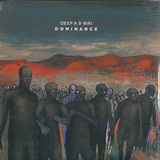
The album's distinctive artwork comes from the studio of Jewish orthodox artist Avraham Guy Barchil, who forged a powerful connection with Deep'a, both was immediately drawn to 'weird atmosphere, amazing technique and emotions involved with his work'. Perhaps one of the most interesting painters from Israel, Avraham is known for his unique perspective, taking his inspiration from the Zohar - the foundational work in the literature of Jewish mystical thought known as Kabbalah. The ambiguous figures represent mystical aspects of the Torah (the five books of Moses), as well as material on mysticism and mythical cosmogony.
Ensuring their natural, conscious touch always remains at the forefront of this unapologetically machine-driven music, Deep'a & Biri have produced an album in the lineage of their heroes and greatest influences. Cerebral yet satisfying, deep yet always engaging, 'Dominance' both reasserts and evolves Deep'a & Biri's forward facing and singular sound.
Tadd Mullinix first made a name for himself as Dabrye in the early 2000s with a pair of instrumental albums combining the rhythmic finesse of Detroit hip-hop with the ingenuity of electronic music. But instrumental beats were only a temporary goal, a way for Mullinix to catch the ears of MCs. On Two/Three, his second Dabrye album for Ghostly International, Mullinix brought together a formidable crew of local and national talent to make the statement he'd always intended. Released in 2006, Two/Three o-ered a fevered vision of rap's future that remains just as intoxicating a decade on. Ahead of the long-await-ed conclusion of Dabrye's hip-hop trilogy in 2018, Ghostly is reissuing Two/Three.
Dabrye's move towards rap began in 2004 with the album's first single, 'Game Over' featuring Jay Dee and Phat Kat. An early inspiration of Dabrye's, Jay Dee invited Mullinix to his crib in 2002 for a listening session during which he picked the 'Game Over' beat to rap on. Crucially everyone involved was in accord that despite perceptions of their respective work this would be a hardcore rap song. Together with Kat, Jay delivered a one-two lyrical punch on 'Game Over' that no one saw coming. Detroit made the world go round and everyone's head spun. 'Game Over' set the tone for the album and, over the next few years, became a Detroit anthem — shortly after Jay's passing in 2006 the audience at Movement Festival sung his verse.
Moody, propulsive, and above all ambitious, Two/Three emerges from a sonic stew of Detroit and UK dance music, Jamaican sound clashes, and hip-hop sampledelia. The guests, a who's who of the mid-'00s underground rap scene, engage in a raucous rhyming session that pays as much attention to the realities of the streets as it does world events. MF Doom, Wildchild, Vast Aire, Beans, and AG represent for the various coasts while local talents — Waajeed, Ta-Raach, Invincible, Finale, Kadence, Guilty Simpson, Big Tone, Phat Kat, and Jay Dee — bring Two/Three alive with an infectious energy. In between bursts of raw rap and hard beats, Dabrye showcases detailed instrumentals that evoke bleak industrial futures, underwater meditations, and smoky late night sessions. With Two/Three Dabrye placed himself at the forefront of hip-hop's new wave, throwing a Molotov cocktail into the rap world as uncompromising as the head-twisting cover art from WK Interact. The independent press praised Mullinix's audacity. Over the following years the impact of Two/Threewas felt in slow increments as Dabrye's music became central to the sonic makeup of a new generation of producers. As this beat scene grew and moved away from rap, it showed Mullinix the influence of his work and the value of his vision for Dabrye as his own brand of Detroit hip-hop.
Darren Cunningham's eagerly~awaited new album is an adventurous, ultramodern, thoroughly British affair, rummaging about in the inner lives of house and techno, and brilliantly elaborating the accomplishments of his debut, Hazyville.
Determinedly off~the~map and resistant to pigeonholing, Cunningham is an enigmatic and playful figure, citing Francis Bacon and Monet as inspirations longside Theo Parrish, Anthony 'Shake' Shakir, Daft Punk, 'binary codes and numeral systems', and The Avengers. He's a hard man to pin down - somehow a key player in the post~dubstep diaspora and yet not there at all - but everything comes across in his shape~shifting, richly textured music.
The South Londoner's acclaimed debut lived up to its name: a series of dreamlike sketches and ideas. For Splazsh the fog has lifted, the sounds are less submerged than before, but still sticky and close - a signature combination of exuberance and introversion, luminescence and puzzlement. Unconstrained by the formal cliches of the dance music he loves, Actress' melodies and arrangements are enthralled by their own genies. Worlds of disturbance and melancholy revolve giddyingly inside the insidious funk of tracks like Get Ohn and Lost. A range of musical influences is redrawn, from speed garage (Always Human) to grime (Wrong Potion), with none crowned king. There is a reflectiveness - the ambient drift of Futureproofing, the radiophonic judder of
Supreme Cunnilingus - in amongst the industrial, synth~wave flavours of Casanova, and the stirring, stately Maze.
Actress has quickly and justly become one of the most respected names in the UK's new dance music underground. His own label, Werk Discs, has proven itself one of the most formidable and taste~making UK independents of recent times, bringing the world extraordinary albums from Zomby, Lukid, Lone and Actress himself. In love with the mysteries of groove and repetition, Splazsh is both a culmination and a new beginning for Actress, a substantial and eccentric work from a brave and coolly individual artist.
With international press interest gathering - photo features in Dazed And Confused, and Fader in the US, and a session with Wolfgang Tillmans for the cover of the German magazine Groove - the stage is set for Actress.
"Shatterdome", cut deep across the whole first side of this record, is a no-prisoners-taken club workout that comes of surprisingly lightheaded with a pushing low-end and dusky athmo-stabs. "Lola T70" is a late night car chase on cyber-highway, reminiscing THX-1138 leaving everything behind in the classic George Lucas sci-fi film: A state of floating acceleration and melancholy. "Say Hi to everyone" is signature.
In an interview with Jazz Magazine in the early 1970s, Dharma, as a collective voice, outlined their method: 'we try to reach, within free jazz, the same sort of rhythmic cohesion as in Bop, a cohesion based not exactly on tempo, but something which feels like tempo. A kind of underlying pulse'. Evidence of these ideas can be heard immediately on listening to Mr Robinson, the first album by the Dharma Quintet, for whom community living seemed obvious, in order to add to the aforementioned cohesion. Through this, the group members played together on a daily basis, trying out things which were worked on day in, day out. They were also listening to a lot of records, with of course a preference for free jazz, but not forgetting Miles Davis in his electric period, notably for the keyboards of Keith Jarrett and Chick Corea. To which should be added esthetical-political concerns based on a refusal of hierarchy, and a desire to escape from a restrictive academic approach... It was within this framework that Jef Sicard and Gérard Coppéré (saxophones, flute, bass clarinet), Patricio Villarroel (electric and acoustic piano), Michel Gladieux (bass) and Jacques Mahieux (drums) formed the first version of a collective united by structured intentions. Because, within Dharma, individual improvisation cannot be envisaged outside of a clearly designated framework, even non-tempo. The result is a beneficial cohesion, and moments of great beauty born of a collective excitement and giving rise to ambiances which seemed almost possessed. The use of modes could seem to link Mr Robinson to the spiritual jazz of the past but that is without taking into account the fact that the benevolent spirit of Eric Dolphy seems to watch over this album. In France, a similar desire for cohesion could be found in the Cohelmec Ensemble, who had parallel preoccupations, to the point where their bassist, François Méchali, ended up by joining Dharma: there is unfortunately no recorded trace of this, just the memories. As a quintet, with however some personnel changes, Dharma recorded three albums (there is also one as a trio, under the name of Dharma Trio), which are all of fundamental importance (Dharma would also accompany, and to great effect, the songs of Jean-Marie Vivier and Colette Magny). Individually, the members would record with musicians passing through (notably Anthony Ortega, Dave Burrell) and participated in other key groups including Machi Oul and Full Moon Ensemble.
Next to the entire All is an astonishing work by Danish experimental sound quartet We like We, consisting of Katrine Grarup Elbo (violin), Josefine Opsahl (cello), Sara Nigard Rosendal (percussion) and Katinka Fogh Vindelev (voice).
Although classically trained, all four share a desire for exploring, experimenting and shaping a sound of their own, something which is truly present on this album. Both instrumentation and composition feel glued together with an abundant sense of playfulness and vision. The record starts with the beautiful I'm not for More which sets the tone for the 10 pieces, hurling you back and forth in a whirlwind of sound and musical intuitivity.
Genre bending as the record can be, it can be seen as somewhat of a contrasting work - as much of northern folk traditions as of an avant-classical work in the spirit of György Ligeti and Meredith Monk. Forest Sketches, as an example, starts with minimal woodblocks and percussive rattling while slow building violins, cello and vocals pull themselves in through the unknown before bursting into a Pagan sounding wormhole of screams and looped cellos. The piece ends with minimal vocal sound scapes fading away into almost pure silence. It could be mirrored with a merger of both the opening and closing scene of Kubrick's classic movie 2001 - creating the sense of beginning of humanity versus the far future, with abstractation and the unknown.
Next to the entire All is both a mind bending and grounded piece of work fitting naturally next to other Sonic Pieces releases such as Hauschka & Hildur Gudnadottir's Pan Tone or Christoph Berg's Conversations, while adding a northern minimalism. A record as hard to shake off as it is to describe.
We're very glad to welcome Argentinian born Manu Belgrano aka Manuk for the 3rd release on our imprint.He has been preparing four stunning original cuts that will keep you up dancing n tripping all night long. Under the pseudonym Bicicleta 99 he presents his latest work and it's fire!Inspired by edgy UK oldschool electro sounds, he definitely nailed down his modern version of the past. Unique soundscapes and very refined work on the drums make In Therapy 03 a must for your record collection.
Since composer Sean McBride unveiled his first utterance as Martial Canterel almost 2 decades ago, he has produced a body of work both substantial and alluring within the field of live analogue electronic music. Effortlessly fusing a variety of styles and influences, Martial Canterel is one of the premiere outfits utilizing analogue electronics and modular synthesizers. In particular FM synthesis is employed to produce clustered polyphonies and organic atmospheres - a staple of his signature style.Three years have passed since Martial Canterel's last full length album Gyors, Lassù was released on Dais Records. During this down time, McBride found himself in a state of flux, ebbing back and forth between material displacement and musical aestheticism. His expert pedigree in electronic sound and arrangement bridges the gap created by an undecidability between life at home and abroad - his new album, Lost At Sea, is an attempt for the artist to locate common ground, mutating fable with reality, exteriority and interiority.
The album's introductory track, Giving Up, has all of the hallmarks that Martial Canterel has utilized in the past...melodic chorus, upbeat rhythm and classic sequential dynamism. Where the song diverges is in its core theme of nature: nature's return to a period of restoration after the failures and recklessness of humankind. Although this first glance refamiliarizes one with the tight, upbeat appeal typically found within the genre, Lost at Sea quickly takes a more serious and sobering tone.The slower pace of songs like Scampia and Puszta yearn for McBride's complex love affair with far flung destinations. Re-evaluating the political strife and social unrest in these historical locations, McBride delves deeper into political and geological reference points creating symbolic representations using mechanized percussion, white noise and various sine waves.The conceptual nature of Lost at Sea reaches even deeper depths within the waveforms of Astralize, a track based upon academic Donna Haraway's pre-civilized theories of human neglect after the 'azstralization'.
About this release *First 10 tracks only come with the limited edition Nijmegen's ESHU welcomes co-founder Ivano Tetelepta for his first solo release on the label. It is also the imprint's first full length, but Tetelepta's second album after the hypnotic drum workout that was True Colours, his debut on Fear of Flying in 2012. It comes as a double vinyl release with the first disc being limited, and finds the producer casting himself free from the dance floor and serving up a beautifully atmospheric soundtrack that would be a perfect companion for a nature documentary. When making EPs and 12"s, Tetelepta's smooth and infectious drums are always front and centre in his work, whether solo or as producing with label mates under the ESHU alias. He's also worked with labels like Siena and KERING, but here he shows another side that focusses on short pieces, melody and blissful sound design. To give this album its perfectly warm analogue sound, the whole thing was recorded via cassette and revox tape. The first ten tracks are short, immersive musical worlds with poignant chords and glistening melodies. Some twinkle and shimmer, some sound like an underwater eco system coming to life, and others seem to come from deepest space where solar winds and sonar pulses pass you by. It's cinematic and evocative stuff that takes you away from the here and now and into a different realm. The four tracks on disc two then start with Senang, a suspensory and multi-layered piece of music that has keys, modulations and samples wrapping all around you before Whistle Of Patience has a supple minimal drum line that slowly gets under your skin. Ede 2 Nijmegen is then a turbulent dub track which builds a darker mood before closer De Test sinks back into supple, rubbery and warm drums laced up with hypnotic pads that circle all around. This is an ambitious album of meditative music that offers a beautiful place to lose your mind.
New York City has had a long history of dance music fused with confrontational performance. Whether it came from within the late 70's No Wave canon projected through venues like the Mudd Club or the downtown avant-garde galleries such as The Kitchen, the feeling that influences and infects Brooklyn-based duo Wetware's overall being as a cohesive and confrontational unit is as much enigmatic as it is familiar. Formed in 2015, Wetware eased into its performative role with their live shows around their home base of Brooklyn, NY.
Vocalist Roxy Farman, who's familiar voice was last seen on Drew McDowall's 'Unnatural Channel' album, stole audience's attention from the moment they started, using her body in tandem with her voice as a weaponised vehicle for the band's anxiety filled performance. Matthew Morandi cut his teeth in the electronic music world through his solo tech-industrial project Jahiliyya Fields and partner to Inhalants, the techno collaboration of Morandi and Max Ravitz (Patricia). The synergy that developed between Farman and Morandi has been explosive. Wetware's live antics and behaviour has caused alarm and envy amongst their local audiences, causing Wetware the group to 'not be missed' on any particular bill that they are allowed to take part in.
Wetware stepped out from their live persona and self-recorded a selection of songs that viewers had grown accustomed to and were debuted on the flawlessly curated Primitive Languages imprint. Shortly following their recorded premier was an EP collection of demo recordings on the much praised Bank NYC label. Once the band reconciled with documenting their work, they set out, with the help of engineer Kris Lapke (Alberich / Hospital Productions) to formalise their most recent output in the context of their first full length album entitled 'Automatic Drawing'.
Given Wetware's penchant for endurance, as displayed by their 3 hour long production at Koenig & Clinton Gallery in the Summer of 2017, one would expect the usual restlessness on Wetware's debut full length. All of the apprehension and unease in Wetware seems to have been channeled into a string of cohesive electronic statements found on songs 'Frequent Dreamlands' and 'Ode to Joe'. Industrial dance rhythms bounce around Farman's poetic stance on 'Where Ever You Were', causing flashbacks of an early 80's dystopia that jumps around a confusing, uncomfortable backdrop. Inter-spliced with modular electronic instrumentals like the album's opener 'Pantomime', Wetware's devastating portrait is that of a society in peril.