
non in magazzino
Ordina ora e ordineremo l'articolo per te presso il nostro fornitore.
Last In: 6 months ago
16,18 €
Ordina ora e ordineremo l'articolo per te presso il nostro fornitore.

dovrebbe essere pubblicato su 26.09.2025

dovrebbe essere pubblicato su 18.08.2025

Karma Sutra had already been a band for five years when they released their elusive one and only album ,released on their own Paradoxical Records label in 1987. The Daydreams of a Production Line Worker came towards the end of the bands life span and all they had to show prior was a few demos and some tracks on compilations on Mortarhate. By the time the band entered the studio KARMA SUTRA was spreading their musical wings, moving from a straight ahead anarcho sound to a more dense and thoughtful place, adding flourishes of post punk and moody atmospheres to their agit-prop political stance thus creating one of the most idiosyncratic concept albums of their time, where situationist politics meet the most ambitious anarcho punk sound.
The album was recorded in Sheffield at Vibrasound Studio and co-produced by Spon of UK DECAY, which added yet another layer to the already complex album.
When released The Daydreams Of A Production Line Worker had little fanfare due to the rigid approach to punk of the time. But as time passed, so did this albums importance. It would sit perfectly in your collection next to bands who had ambition, tunes and thought provoking lyrics like CHUMBAWAMBA, THE MOB or THATCHER ON ACID.
The Daydreams Of A Production Line Worker reissue comes with a reproduction of the originally included 28 page booklet, which the band viewed as an inseparable part of the album to understand the concept. Dense at times and intended to be thought provoking it covers class oppression, gender, culture brainwashing, prison struggle et all the capitalism society illnesses written from an anarchist perspective and aligned with the situationism theory of revolution of every day life.
dovrebbe essere pubblicato su 13.06.2025

Ordina ora e ordineremo l'articolo per te presso il nostro fornitore.

Ordina ora e ordineremo l'articolo per te presso il nostro fornitore.

Broox is pleased to host for its third release the French producers Jam'On and Worker Union. Jam'On offers two punchy cuts with a bass line as subtle as effective. As for Worker Union, this is all about 2 tools exploring with intelligence the breakbeat inspiration mingled with a deep house background.. VINYL ONLY !
Ordina ora e ordineremo l'articolo per te presso il nostro fornitore.

Jacktone Records is pleased to announce our third release: Two dark techno tracks from Oakland's Worker/parasite. J usta909 and S quirm are reverb-soaked four-on-the-floor odysseys of mutating factory noise and gritty analog textures. The release also features remixes from F UNERALS and label co-founder, Dr. Sleep
Ordina ora e ordineremo l'articolo per te presso il nostro fornitore.

Les Points Pay A Twisted Homage To The Early Foundations Of Electronic Music Where Hard To Get Tapes, Dystopia And The Sound Of The Wretched Worker Where Present In Genres Like Post-punk, Industrial, Minimal Synth, New Beat And Wave.
It's changing, the worker searched for post-leftist solutions and got lost.
Nine circles applauded the proletariat and imagined how a community
could be congregated, while screams of violence would be filtered by boiling blood.
Exploiters of labor either find themselves rotting away in a never ending icy rain or are dragging their selfish accumulations on their chests for eternity - while the worker slowly identifies himself as a counter-commodity. Algorhythms (fraud) always mislead - once the worker gets past them only Dis will be awaiting her/him.
Ordina ora e ordineremo l'articolo per te presso il nostro fornitore.

On the mean streets of Chicago's infamous Southside, a music pioneer was born... DJ Slugo, born Thomas Kendricks, is most famous for his influential and fundamental position as the original King of Ghetto House. With 20+ years in the game, over 20 albums in his pocket and over 50 CDs on the street, began a journey that lead him to become one of the original creators of a style of music commonly known as Ghetto House, more recently regarded as Juke.
Ordina ora e ordineremo l'articolo per te presso il nostro fornitore.
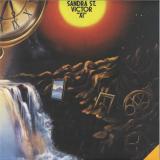
Powerhouse vocalist Sandra St. Victor returns with Eleven, her eleventh studio
album and first solo release in over a decade. From her years with The Family
Stand to collaborations with Roy Ayers, Curtis Mayfield, Chaka Khan, Prince and
Lalah Hathaway, Sandra has built a remarkable career that has consistently
blurred the lines between soul, funk, jazz and gospel.
Executive produced by Sandra St. Victor and Patrick Gibin for Mother Tongue,
Eleven brings together Sandra's longtime collaborators alongside the Mother
Tongue family, bridging her rich musical legacy with a fresh, forward-looking
sound rooted in soul, jazz, boogie and soulful dance music.
The album combines brand new compositions with inspired reinterpretations,
from Kaidi Tatham's stunning reimagining of Captain Sky's Moonchild and his
masterful reinvention of the Leon Ware/Syreeta underground gem Tiki Tiki
Donga, to a beautifully understated new version of Sandra's own Dizzy,
originally released on Gemini: Both Sides in 2001 featuring Questlove, Roy
Ayers and Donald Byrd, here reimagined by Mark de Clive-Lowe. Along the way,
the lo-fi soul of Black Ice, the timeless duet No More Water featuring Lalah
Hathaway, and the straight-up funk of Makes Me Wanna Fall In Love Again and
What Would Miles Do showcase an artist continuing to evolve while remaining
true to her artistic voice.
Rooted in experience yet driven by curiosity, Eleven bridges Sandra's
remarkable musical legacy with the creative vision of Mother Tongue, resulting
in an album that feels both timeless and unmistakably
L'articolo è già in viaggio verso di noi e dovrebbe essere spedito da 30.09.2026.
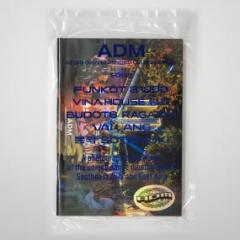
228 page photobook, printed on high quality Japanese paper.
Paperback
Size: 257 x 182 x 7mm
Enclosed in a printed clear plastic bag
Soi48 proudly presents this book, a photographic document of the unique dance music clubs
and culture of Southeast Asia and East Asia. The photos, from the years 2017 through 2025,
were taken in nightclubs, discos, festivals, raves, sound system parties, private parties and
migrant worker clubs — the places where Asia’s unique dance music genres are born and
thrive. ADM, with its exclusive on-the-spot snapshots, provides an extraordinary visual
archive of Asian contemporary dance music. Journeying through Thailand, Vietnam, Laos,
Malaysia, Indonesia, Philippines, Myanmar, Taiwan, Korea and Japan, Soi48 captures
glimpses of how people create their nights, visually comparing the differences between
countries in fashion, dance style, lighting, club interiors, flyers and more, showcasing the
distinctive entertainment culture that each country has created. The 167 photos also feature
the pioneering DJs and track makers who built unique music genres in each country, such
as Budots (Philippines), Vina House (Vietnam) and Saiyo (Thailand). Also of note: the book
provides a valuable record of nightlife during the COVID-19 pandemic; captures the energy
that migrant workers release in clubs on weekends; and in general showcases the ingenuity,
wit and passion of music lovers throughout the region.
Soi48:
A duo, comprising Tokyo natives Keiichi Utsuki and Shinsuke Takagi, that promotes the
magic of Asia and Asian music through DJ-ing, writing, design, and party activities. Their
interests range from traditional music to cutting-edge dance music, released on physical
media as well as on the internet. In addition to supervising the film Bangkok Nights (Kuzoku)
and the EM Records Thai music series, they introduce the joys of Asian music and travel
through talk events, TV, radio appearances, etc. Their books include TRIP TO ISAN: A
Traveling Thai Isan Music Disc Guide (DU BOOKS), OMK#001 (OMK), and ADM: Asia's own
unhinged club culture. As ever, they enthusiastically continue to research dance music and
sound system culture in Asian countries.
dovrebbe essere pubblicato su 30.09.2026
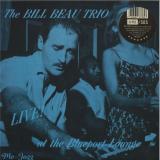
Bill Beau was born in Toronto, Ontario, Canada, but was raised in the western provinces, finishing high school in Edmonton, Alberta. It was while in high school that the "righteous rays" via radio struck Beau in the form of Meade Lux Lewis, Pete Johnson and Albert Ammons at the height of the Boogie Woogie rage. It was while in high school that Bill got his first gig. He played piano and worked with Wilf Harper, a guitarist of local renown. Beau played on weekends and during the week worked as a clothing salesman, stock clerk, refinery worker, service station attendant and freight checker. He travelled all across Canada, and finally landed in Los Angeles, California.
In 1958 his love of music compelled him to direct all of his energy toward the perfection of his musical talent, so he decided to settle permanently in Los Angeles. Beau first worked there as a vibraphonist, gigging with such stars as Ben Webster, Rex Stewart, Pete Fountain, and Stuff Smith. Once, when his regular organist failed to show up for a date, Beau ended up on the Hammond. Beau then formed his own group, and the trio got a standing date at the Blue Port Lounge. The other two members of the trio are Jo Stafford on guitar, Lorenzo Green on drums, plus the pretty and petite vocalist with the group, Chi Chi.
"Live at the Blueport Lounge" by the Bill Beau Trio is mod-soul-jazz at its very best! A stunning treasure rarely to be found - unless it's on Mo-Jazz!
Disponibile in Stock e pronto per la spedizione

As Brice shares, "Anybody can see a sunset, but a sunrise, you gotta earn. Whether you're waking up or just pulled an all-nighter, I tip my hat to you, sunriser." Brice's sixth studio album delivers hopeful and resilient reflections on love, faith, and heartbreak for all sunrisers - from firefighters, nurses, and truck drivers, to blue- collar workers clocking out of graveyard shifts, to tired parents waking up to take care of little ones. Through the lens of what defines who he is -- God, country, and family -- the awardwinning Country star encourages listeners to keep rising.
dovrebbe essere pubblicato su 02.10.2026

dovrebbe essere pubblicato su 12.10.2026

Die Welt war nie bereit für The Monsters, und The Monsters waren nie bereit für diese Welt. Nach vierzig Jahren, in denen sie zu einem echten Monster aus Fleisch und Blut herangereift sind, präsentieren sie ihr neuntes Album: gut ein Dutzend kompromissloser, wilder, lärmiger und fuzz-geladener Tracks. Ein Mix aus Ein-Riff-Beat, Trash, Garage, "Bern Metal", Boogie, Punk und Grunge - Songs, die einen von innen nach außen stülpen, aufgenommen mit "Miracle" Robert "Worker" Butler und abgemischt von Jim "Dirtbomb" Diamond - ein echtes Garage-Punk-Dreamteam. Vor vierzig Jahren, 1986, war die Jugendkultur-Revolution in Bern (Schweiz) in vollem Gange, Jugendliche und junge Erwachsene wollten sich aus den konservativen Fesseln befreien. Die Straßen brannten, Clubs entstanden und eine neue Schweizer Musikkultur wurde geboren. Dies markierte auch den Beginn von The Monsters. Vierzig Jahre später hat sich der Zustand der Musikkultur - oder vielmehr der Welt im Allgemeinen - wohl eher verschlechtert. Individuelles Denken und Schaffen sind nach wie vor nicht sonderlich anerkannt oder gar erwünscht (Hey KI!). Im März 2026 blieb der Band also nichts anderes übrig, als ihre Instrumente, das Aufnahme-Equipment und ihre Ideen in den Proberaum zu verfrachten. Sie verbrachten einen Monat mit Robert Butler (u. a. The Miracle Workers) und seinem mobilen "Two Cent Recording Studio". Sie schrieben Texte (insgesamt etwa 100 Wörter - mal sinnvoll, mal unsinnig, über das ganze Album verstreut), tüftelten am Sound und nahmen Gitarren in allen erdenklichen Variationen auf. Das Ganze wurde gewürzt mit Percussion, Schlagzeug, Bass sowie obskuren Orgeln und Synthesizern, die sie auf Flohmärkten oder in den Kellern von Freunden aufgetrieben hatten. Nach diesem vierwöchigen Trip schickten sie das gesamte Chaos an Jim Diamond (Ghetto Recorders Studios in Detroit, Dirtbombs, White Stripes, Gories, André Williams... klar, worum es geht, ne?!), um es einem umwerfenden Mix-Abenteuer zu unterziehen. Das Ergebnis ist ein Dutzend Songs ohne Kompromisse, Schwächen oder Stärken. Einfach nur roher, ungeschliffener Lo-Fi-Garage-Punk'n'Roll voller Energie - und das mit vierzig Jahren "Nicht-Erfahrung". Erhältlich sind schwarzes Vinyl und eine pinke Picture-Disc (beide mit Insert & DLC), eine höchst audiophile CD sowie Kassette, die bei doppelter Geschwindigkeit leiert! Für Fans von Reverend Beat-Man, VRR, The Mummies, Oblivians, Billy Childish, Damaged Goods, Monks, very early Hives, Garagepunk, Lo-Fi-Roll, Alternative Beat
dovrebbe essere pubblicato su 16.10.2026
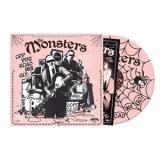
Die Welt war nie bereit für The Monsters, und The Monsters waren nie bereit für diese Welt. Nach vierzig Jahren, in denen sie zu einem echten Monster aus Fleisch und Blut herangereift sind, präsentieren sie ihr neuntes Album: gut ein Dutzend kompromissloser, wilder, lärmiger und fuzz-geladener Tracks. Ein Mix aus Ein-Riff-Beat, Trash, Garage, "Bern Metal", Boogie, Punk und Grunge - Songs, die einen von innen nach außen stülpen, aufgenommen mit "Miracle" Robert "Worker" Butler und abgemischt von Jim "Dirtbomb" Diamond - ein echtes Garage-Punk-Dreamteam. Vor vierzig Jahren, 1986, war die Jugendkultur-Revolution in Bern (Schweiz) in vollem Gange, Jugendliche und junge Erwachsene wollten sich aus den konservativen Fesseln befreien. Die Straßen brannten, Clubs entstanden und eine neue Schweizer Musikkultur wurde geboren. Dies markierte auch den Beginn von The Monsters. Vierzig Jahre später hat sich der Zustand der Musikkultur - oder vielmehr der Welt im Allgemeinen - wohl eher verschlechtert. Individuelles Denken und Schaffen sind nach wie vor nicht sonderlich anerkannt oder gar erwünscht (Hey KI!). Im März 2026 blieb der Band also nichts anderes übrig, als ihre Instrumente, das Aufnahme-Equipment und ihre Ideen in den Proberaum zu verfrachten. Sie verbrachten einen Monat mit Robert Butler (u. a. The Miracle Workers) und seinem mobilen "Two Cent Recording Studio". Sie schrieben Texte (insgesamt etwa 100 Wörter - mal sinnvoll, mal unsinnig, über das ganze Album verstreut), tüftelten am Sound und nahmen Gitarren in allen erdenklichen Variationen auf. Das Ganze wurde gewürzt mit Percussion, Schlagzeug, Bass sowie obskuren Orgeln und Synthesizern, die sie auf Flohmärkten oder in den Kellern von Freunden aufgetrieben hatten. Nach diesem vierwöchigen Trip schickten sie das gesamte Chaos an Jim Diamond (Ghetto Recorders Studios in Detroit, Dirtbombs, White Stripes, Gories, André Williams... klar, worum es geht, ne?!), um es einem umwerfenden Mix-Abenteuer zu unterziehen. Das Ergebnis ist ein Dutzend Songs ohne Kompromisse, Schwächen oder Stärken. Einfach nur roher, ungeschliffener Lo-Fi-Garage-Punk'n'Roll voller Energie - und das mit vierzig Jahren "Nicht-Erfahrung". Erhältlich sind schwarzes Vinyl und eine pinke Picture-Disc (beide mit Insert & DLC), eine höchst audiophile CD sowie Kassette, die bei doppelter Geschwindigkeit leiert! Für Fans von Reverend Beat-Man, VRR, The Mummies, Oblivians, Billy Childish, Damaged Goods, Monks, very early Hives, Garagepunk, Lo-Fi-Roll, Alternative Beat
dovrebbe essere pubblicato su 16.10.2026
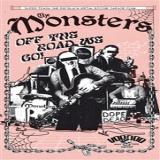
Die Welt war nie bereit für The Monsters, und The Monsters waren nie bereit für diese Welt. Nach vierzig Jahren, in denen sie zu einem echten Monster aus Fleisch und Blut herangereift sind, präsentieren sie ihr neuntes Album: gut ein Dutzend kompromissloser, wilder, lärmiger und fuzz-geladener Tracks. Ein Mix aus Ein-Riff-Beat, Trash, Garage, "Bern Metal", Boogie, Punk und Grunge - Songs, die einen von innen nach außen stülpen, aufgenommen mit "Miracle" Robert "Worker" Butler und abgemischt von Jim "Dirtbomb" Diamond - ein echtes Garage-Punk-Dreamteam. Vor vierzig Jahren, 1986, war die Jugendkultur-Revolution in Bern (Schweiz) in vollem Gange, Jugendliche und junge Erwachsene wollten sich aus den konservativen Fesseln befreien. Die Straßen brannten, Clubs entstanden und eine neue Schweizer Musikkultur wurde geboren. Dies markierte auch den Beginn von The Monsters. Vierzig Jahre später hat sich der Zustand der Musikkultur - oder vielmehr der Welt im Allgemeinen - wohl eher verschlechtert. Individuelles Denken und Schaffen sind nach wie vor nicht sonderlich anerkannt oder gar erwünscht (Hey KI!). Im März 2026 blieb der Band also nichts anderes übrig, als ihre Instrumente, das Aufnahme-Equipment und ihre Ideen in den Proberaum zu verfrachten. Sie verbrachten einen Monat mit Robert Butler (u. a. The Miracle Workers) und seinem mobilen "Two Cent Recording Studio". Sie schrieben Texte (insgesamt etwa 100 Wörter - mal sinnvoll, mal unsinnig, über das ganze Album verstreut), tüftelten am Sound und nahmen Gitarren in allen erdenklichen Variationen auf. Das Ganze wurde gewürzt mit Percussion, Schlagzeug, Bass sowie obskuren Orgeln und Synthesizern, die sie auf Flohmärkten oder in den Kellern von Freunden aufgetrieben hatten. Nach diesem vierwöchigen Trip schickten sie das gesamte Chaos an Jim Diamond (Ghetto Recorders Studios in Detroit, Dirtbombs, White Stripes, Gories, André Williams... klar, worum es geht, ne?!), um es einem umwerfenden Mix-Abenteuer zu unterziehen. Das Ergebnis ist ein Dutzend Songs ohne Kompromisse, Schwächen oder Stärken. Einfach nur roher, ungeschliffener Lo-Fi-Garage-Punk'n'Roll voller Energie - und das mit vierzig Jahren "Nicht-Erfahrung". Erhältlich sind schwarzes Vinyl und eine pinke Picture-Disc (beide mit Insert & DLC), eine höchst audiophile CD sowie Kassette, die bei doppelter Geschwindigkeit leiert! Für Fans von Reverend Beat-Man, VRR, The Mummies, Oblivians, Billy Childish, Damaged Goods, Monks, very early Hives, Garagepunk, Lo-Fi-Roll, Alternative Beat
dovrebbe essere pubblicato su 16.10.2026

Disponibile in Stock e pronto per la spedizione

2026 Repress
The Architects of Shadows explores the volatile undercurrents shaping today's polarized world, where extremes on all sides vie for influence and control. Against a backdrop of rising nationalism, digital echo chambers, and deepening distrust, each track captures a stage in the gradual radicalization of society. Through dark, immersive soundscapes, the album delves into how unseen architects exploit fear, amplify division, and pull the strings of public sentiment, leading society toward ideological extremes. The Architects of Shadows invites listeners to confront the forces behind the fracturing of Western societies in an era marked by profound political and cultural polarization.
Disponibile in Stock e pronto per la spedizione

Aubrey is Allen Saei, a UK techno veteran who shaped the early scene as a DJ and record shop worker, but also with his influential label Solid Groove. It launched in 1991 and burned bright for 13 years with fans including Derrick May and Terry Francis. In 2026, it returns with a brand new EP from the boss himself, following a major studio upgrade. His sound harks back to those golden early days but in subtle ways: 'Timing Shock' has booming kicks and wispy synth details bring a future feel. 'Complex Vortex' is a trippy wormhole, 'Spinning Gravity' is deep, Detroit-style machine warmth and 'Cracker Jacker' burrows into a distant cosmic abyss. A fine return from Aubrey.
Disponibile in Stock e pronto per la spedizione
Questo articolo non è stato ancora rilasciato. È possibile pre-ordinare il prodotto ora.
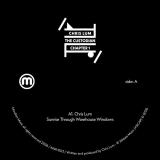
The Memory
A flash of light hits your eyes. Your ears hear muffled bass. As bright white fades to amber, you find yourself in a familiar place. A place you have been to many times. Though the edges of your memory are no longer sharp, the shape of it all is in your DNA.
The smell of rusted metal, dirt-covered floors that once hosted workers, machines and industry mixed with spilled beer and the sweat of a thousand bodies moving to syncopated music. As your vision comes into focus, you’re back there.
A warehouse in the former industrial part of town. You’re surrounded by hundreds of strange but familiar faces, each of you dancing into a frenzy countless times under the moonlight — moving, jumping, laughing and connecting.
Sunlight pours through warehouse windows or appears over a distant horizon.
The DJ plays a song that completes the journey you all just shared. You are desperate to hold on to the feeling of the last song that lands you safely from the night and into a new day. The feeling is deep. Pure.
Especially when communal ecstasy is juxtaposed against the edges of the warehouse floors, the intimacy of city lofts, the spiritual nature of open fields or forests.
The Custodian
I spent just shy of two decades in spaces like that — as a raver in early 1990s Los Angeles, then a DJ, producer, label owner and head of Moulton Studios in San Francisco.
The Custodian Project is a memoir of a life lived deep inside the culture and business of house music from 1990 to when I stepped away from music as a full-time life in 2015 — told through music, stories and DJ events.
Each release of new music draws inspiration from feelings, emotions and memories of that life — different rooms, different eras. It is an exploration to understand and capture what those feelings were, and in some cases still are.
The Music
This EP is the beginning. 1990. When I first found the rave and re-ordered my DNA based on the sounds, songs and feelings of that era that can be summed up in the title track — Sunrise Through Warehouse Windows.
All three tracks here are an attempt to reach back and touch those mornings again. To put the listener back in the warehouses or open spaces where we would dance as the sun rose over the horizon.
To capture what I felt back in 1990 when the night transitioned into daybreak. Bodies moving in unison. People, places and music all connect. An era before algorithms.
(tracklisting)
A1 — Sunrise Through Warehouse Windows — 7:51
B1 — *Truly Amazing — 8:16
B2 — Sunrise Through Warehouse Windows (Floating Beatless Mix) — 4:20
Written and produced by Chris Lum for Abitare Music (ASCAP)
* Written and produced by Chris Lum - Abitare Music (ASCAP) & Jay-J Hernandez Stopped in Time (ASCAP). Originally released on Leaf Recordings 2000
Questo articolo non è stato ancora rilasciato. È possibile pre-ordinare il prodotto ora.
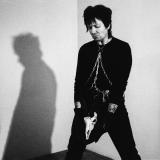
Precisely one year after Lézire, Crush of Souls is back with his third full-length album.
The musical endeavour of Charles Rowell – active in the indie/punk global scene since 2008 with bands like Crocodiles, Flowers of Evil, Issue – is just like its creator: always cooking up something. Relentlessly.
Now, as it was perceivable by the trajectory undertaken by after his previous LP, Captive Youth leaves goth rock and dark folk aside and head swiftly towards some old school 80’s EBM & 90’s Industrial dance vibe. After all, any album exploring themes of dystopia, politics and sexuality requires a strong rhythm. So how could this new chapter not mention seminal synth-pop and body music classics such as Technique by New Order, Belief by Nitzer Ebb, Towards Thee Infinite Beat by Psychic TV and Pressure Points by Anne Clark?
Forever a displaced soul, Charles’ album number three feels like a revision of Crush Of Souls and also a reanimation of his captive youth spent moving from town to town. The energy of the wandering worker poet. Warehouse basslines, artillery fire backbeats. Romance and melancholy wrapped in barbed wire. All this and more oozes from nine new tracks that inevitably deliver that blurry sexy urban vibe that’s become the project’s trademark.
Features collabo hit single Domination with Sade Sanchez from L.A. Witch.
Disponibile in Stock e pronto per la spedizione
Disponibile in Stock e pronto per la spedizione

Childish Gambino is (and isn't) Donald Glover, a recording artist, writer, actor, director, producer and comic who was gifted his alias by an online Wu Tang-Clan name-generator. Originally hailing from Stone Mountain, Georgia - his Mum was a daycare provider and his Dad a postal worker, where TV was banned in the house - Glover first entered the spotlight as a member of sketch-troupe Derrick Comedy, via a stint working on The Daily Show and the invitation to join the '30 Rock' writing staff by Tina Fey before he'd even graduated from NYU. A succession of mini-albums and mixtapes surrounded all of this, parallel to acting roles ranging from The Muppets to NBC's cult hit comedy 'Community'. It was 2011's debut album 'Camp' - his first since signing to Glassnote Records - which marked a breakthrough for Childish Gambino, whose music explores everything from identity, race, and technology to hip-hop culture, class, and family. Follow-up 'because the internet' went top 10 on the Billboard chart, was nominated for 2 Grammy Awards and further assimilated Gambino's multiple disciplines (it was accompanied, for instance, by two films and a standalone 72-page screenplay). Around this time - and between roles in HBO's 'Girls' and movies like 'The Martian' - Glover also announced that he was working on his own TV show: a comedy-drama which he would star in, write and direct, 'Atlanta' premiered on FX this autumn to significant critical acclaim (it's already been described as "Twin Peaks with rappers"). The show was launched alongside the third Childish Gambino, 'Awaken, My Love!', this summer at 'Pharos', a series of secretive, audio-visual live performances which took place in a custom-designed dome in the middle of the desert in Joshua Tree. A second series of 'Atlanta' has already been commissioned, whilst Glover has recently been cast in the forthcoming Spider Man movie and has also been confirmed to play the iconic role of Lando Calrissian in the next Star Wars film (a Han Solo spin-off). His most vital artistic statement to date, Childish Gambino is expected to unveil further music from 'Awaken, My Love!' in the coming weeks.
Disponibile in Stock e pronto per la spedizione

It began with a cassette tape entitled 'Pleased To Meet You' gifted to us at Sessa's Fasching, Stockholm show by Yann Dardenne, the multi-tasking tour manager/sound engineer/producer/merch stall worker and co-owner of Seloki Records. On first listen, the selection of underground Brazilian artists from the Seloki's roster was superb, however, one song stopped us in our tracks. The hauntingly captivating ' GOSTO MEIO DOCE' by Nina Maia and Francisca Barreto, gave us a taste of Nina's ethereal, addictive voice and we knew we needed to hear more. Born in Minas Gerais but now based in Sao Paulo, the 22-year-old has already packed a lot into a relatively short space of time. The singer, songwriter, instrumentalist, and producer, has already collaborated on the soundtracks for six Brazilian feature films, including a track with the vocalists Maria Gadu, Iza, and Liniker. But things enter a new exciting era with this, her remarkable debut album entitled 'INTEIRA', which translates to English as 'whole'.
As much inspired by Billie Eilish and Rosalia, as Milton Nascimento and Toninho Horta and not sounding like other records coming out of Brazil, 'INTEIRA' is unique. Though rich in its Brazilian heritage, inspired by samba cancao, MPB, and the Clube da Esquina movement, it also channels influence from bands such as Portishead and Massive Attack, mixed with jazz, contemporary leftfield and electronic pop artists. Musically, it is not easily pigeonholed, with beautiful, well-crafted songs, sophisticated arrangements, eloquent vocals and intimate lyrics. Each track reflects different moments and stories from Nina's youth but with dialogues, feelings, and questions that span generations and resonate with all. This ambitious debut album is Nina's vision and sound, expressing herself without constraints and making music with her friends. Featuring a lineup of Thalin (drums), Valentim Frateschi (bass), Francisca Barreto (cello and vocals), Thales Hashiguti (viola and violin), Yann Dardenne (acoustic guitar and co-producer) and Nina on piano, Rhodes, guitar and production. The album led to a nomination in Paulista Association of Art Critics (APCA) award's 'Breakthrough Artist' category, who also listed 'INTEIRA' as one of the 50 best albums of 2024.
It also received support from Bandcamp Weekly and Jamz Supernova on BBC 6 Music. Released digitally by Seloki Records in Brazil in 2024, Mr Bongo in partnership with Seloki Records now present this new, deluxe worldwide edition that includes four additional songs. These comprise the brand-new exquisite 'MANHA', as well as an original twist on Vinicius de Moraes' classic 'Serenata Do Adeus'. Elsewhere you'll find a live recording showcasing Nina's remarkable energy on stage courtesy of 'DE DENTRO' and 'GOSTO MEIO DOCE' with the amazing musician/vocalist Francisca Barreto, where our whole story began. Here at Mr Bongo, we are honoured to release music by such a remarkable new talent - one whose musical trajectory is most certainly about to soar.
Disponibile in Stock e pronto per la spedizione

Wilson Tanner return to dry land with Legends, a wine-soaked agricultural fantasy, made among the grapevines at Manon Farm in South Australia. Where their earlier works settled into the sun-struck torpor of a suburban Perth backyard (69) or drifted off-course on a riverboat on Port Phillip Bay (ii), Legends trades salt air for vineyard sweat, the scrape of boots on dry earth and workers’ radios humming with the summer test cricket season.
Through this agricultural haze an image of a working vineyard emerges - ducks, dogs and plovers intrude; tractors and quads fly-by; stainless steel gleams at the edges. Recorded without mains power, the Manon demos overflow with farmyard ingenuity. Wind, brass, balalaika, balloon, pipe and synth are trained onto the staff with wire, tape and string.
A caricature of Australian viticulture, Legends is packed to the horns with the mythology and manure of natural wine. Swigging and belching in camaraderie, Wilson Tanner press their surroundings into something raw and unfiltered, letting bum notes, leftovers and sediment linger in the bottle. A cornucopia of biodynamic sounds.
Disponibile in Stock e pronto per la spedizione
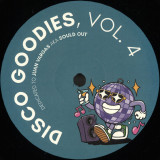
Sundries has already established the now well-known "Disco Goodies" series, with the fourth VA compilation in a row featuring obscure disco and boogie gems that cater to diverse tastes and occasions. This series is dedicated in memory of Juan Vargas aka Sould Out who sadly passed away 2 years ago. This 6-tracks EP kicks off with "Soul Driven Dynamics" by Berobreo, which opens dramatically, setting a curious tone as it builds tension, leaving us anticipating a resolution that arrives unexpectedly in the form of a loose, seductive soul sample cut. Oldchap brings a touch of sunshine with groovy, free-flowing track "Coloridos", that carry the happy spirit of latin disco, perfect for enriching any feel-good DJ set. "Still Come Home" by X Gets The Crest wraps up the A-side, combining a baritone sax and funky bassline into a well-balanced blend of styles. The B-side ventures into Afrobeat house with "People Says" by Alexny, featuring hand-drummed rhythms and chanted vocals layered over solid kicks. Sould Out delivered another boogie-funk gem with the excellent "City Gal", while Workerz closes the EP with "Since You Came" an uplifting track filled with soulful vibes and heartfelt expression.
Order now. Collecting orders for repress.

Disponibile in Stock e pronto per la spedizione

Disponibile in Stock e pronto per la spedizione

As it celebrates its 50th anniversary, Bill Withers' Still Bill remains true to its title – and stands as the greatest male-fronted soul album not made by a singer named Marvin, Al, Sam, James, or Ray. Though the saying "keeping it real" did not exist in popular parlance when Withers released his sophomore effort on Sussex Records, no words better capture the music's approach, mindset, and value. Every facet of Still Bill radiates honesty, truth, and emotion.
These characteristics – along with Withers' strong singing, hybrid arrangements, and deceptively simple songwriting – have allowed the album to endure to the point where it sounds as fresh today as in 1972.
After rising into the Top 5 of the Billboard Album charts and attaining gold status within a year of release, Still Bill has long been evaluated not by sales – but according to its merit, spirit, and agelessness. Included by The Guardian on its "1,000 Albums to Hear Before You Die" list (2007) as well as in Tom Moon's 1,000 Recordings to Hear Before You Die book (2008), its contemporary standing as one of history's most venerated soul efforts eclipses the positive reception it enjoyed in the early ‘70s.
Still Bill walks the same hallowed ground as What's Going On, Call Me, Night Beat, and Genius + Soul = Jazz. Like those landmarks, Still Bill plays with a mix of consistency, effortlessness, and complexity that rewards repeat listening and transcends categorization.
In combining four of the era's predominant styles – Philly soul, sweaty funk, Southern-reared blues, acoustic-based folk – and melding them with standout production borrowed from both minimalist affairs and sophisticated singer-songwriter albums, Still Bill occupies a distinct universe.
Its rhythmic fare is equally laidback and invigorating; relaxing and rollicking; eloquent and muscular; soft and tough. Withers' calm, self-assured voice hovers above it all, doubling as a warm blanket that adds comfort and grace to lyrics steeped in maturity, perspective, and compassion.
Withers' balanced outlook on human desires, needs, and situations stem from his own existence as a former blue-collar employee who believed his time as a musician would soon end. That grounding forever separates Withers from other contemporary soul greats – and stamps Still Bill with a conversational nature and egoless approachability.
"I mean look, I'm really a factory worker," said Withers in 1972. "That's a real job." There's that word again: real. The songs on Still Bill are tethered to modesty and actuality, wedded to a belief in simplicity, and connected to universal truths that link us all – independent of our economic or social standing. No track better exemplifies those principles than "Lean on Me," a feel-good paean to brotherhood and community that hit No. 1 on the pop and R&B charts en route to becoming a mainstream staple.
Withers approaches the plainspoken insight on "Lonely Town, Lonely Street" and heartbreaking vulnerability of "I Don't Want You on My Mind" with similar sincerity and straightforwardness. His proclivity for authenticity extends to the record's other big hit: the sexual, funk-laden "Use Me," which reached No. 2 and reflects the singer's everyman persona. It's an identity couched in keeping it real, the very inclination that ultimately led Withers to retire in the mid-'80s rather than bend to industry pressures or risk credibility.
That commitment to truthfulness and realism helps make Still Bill feel as unaffected as the air we breathe. Looking back on "Lean on Me" years later, Withers said it seemed like "something that was there before I got here" – the kind of song that could be 100 or 10 years old, or one we encounter anew 10 years into the future. The same can be said for every note on Still Bill.
Disponibile in Stock e pronto per la spedizione

• Gil Scott-Heron’s “Pieces Of A Man” is one of the most important albums in the history of black American music. Although it didn’t set the charts alight, it stands as a masterpiece alongside contemporary works such as Marvin Gaye’s “What’s Going On”, Curtis Mayfield’s debut LP, Funkadelic's “Maggot Brain” and Isaac Hayes’ “Shaft”. All were brilliant in their way, but lyrically Scott-Heron was on a different level from almost every other writer.
• It was a landmark album with its bold, poetic lyrical content allied to progressive and melodic music, and it saw producer Bob Thiele help Gil and his musical partner Brian Jackson paint the picture they needed to get their message across. Thiele put Gil and Brian together with Ron Carter, Hubert Laws and Bernard Purdie, giving them the musical heft they wanted.
• For many years the focus was on ‘The Revolution Will Not Be Televised’, which was included in the Grammy Hall Of Fame in 2014, but this focus sometimes overshadowed the heights which Gil reached throughout the album. Today ‘Home Is Where The Hatred Is’ and ‘Lady Day And John Coltrane’ are also considered standards, whilst the album’s title track is a prescient and heart-breaking warning about the way in which big business dehumanises its workers.
• The album reached its landmark 50th year in 2021 and we decided that we would create this special edition to celebrate its incredible sound. The original master tape was taken to Frank Merritt at The Carvery in London, who cut it as a double disc 2 x 45 RPM record, in an all-analogue chain. The original record - especially side two - was long, and serving it up this way allowed the music a greater level of fidelity.
• The release is packaged in the original album’s gatefold sleeve.
Disponibile in Stock e pronto per la spedizione

Named "best kept secret of Canadian funk" by the Quebecois newspaper La Presse, The Brooks are a band of accomplished musicians, well-known in the soul/funk scene across the Atlantic. Expert instrumentalists led by Alexandre Lapointe create a dazzling combo with frontman Alan Prater— an incredibly energetic showman who has worked alongside some of the biggest names in the music industry. This passionate and experienced band fan the sacred fire every time they perform! Thanks to a solid realization, their musical message comes across beautifully. The Brooks go beyond mere interpretation and style exercises: they are a powerful groove machine and a driving force in their sector. 50 years of African American music are condensed in the band's aesthetic. In their live shows and in their records, you can hear James Brown's meticulousness, D'Angelo's delightfulness, Fela Kuti's radiance, Herbie Hancock's intergenerational openness, and J. Dilla's innovative spirit. These heroes of music didn't let rules and trends dictate their messages, and neither do The Brooks. Just like these history makers, they built their reputation with sweat and rigor, outside of conventional channels. The Brooks are incredibly hard workers united in a project where pleasure and complete artistic freedom are the only key words. After 8 years of existence, with an EP and two albums, they have already won many awards and nominations (GAMIQ, Independent Music Awards, ADISQ...) and built a solid reputation in the Quebec indie world.
Who are The Brooks? First, there's the icon, Alan Prater! This Florida-born musician can boast that he shared the stage with the Jacksons! Thanks to his many trips and experiences, he became a key member of Montreal jazz. He is the band's biggest asset: if The Brooks were a sports team, Alan Prater would be captain. Then, at the drums: Maxime Bellavance, one half of the Beat Market duo, whose "dancy and retro futurist" groove can be heard in several major and underground projects in Canada. Philippe Look aces guitar and vocals. His experience as a session musician working with famous bands for 20 years allowed him to take part in different projects: rock, downtempo, trip hop, electro… As one of the founding members of The Brooks, he also wrote many of the band's songs. Keyboardist Daniel Thouin is an integral part of the Montreal jazz scene. He is both an accomplished acoustic piano player and synthesizer player, well versed in writing as well as in improvising, in organic sounds as well as in the latest technologies. Thouin possesses a double vision, which allows him to both exalt and lead productions. Composer Sébastien Grenier wows us with his saxophone. Thanks to his theoretical knowledge and his 20 years of experience, acquired through continuous training all around the world, he is a true guiding force. French trumpetist Hichem Khalfa begun learning the instrument at 7 years old. He attended a musical conservatory before going to the Haute École de Musique and finally pursuing his studies at McGill University. He won prizes at Rimouski International Jazz Festival and received the François Marcaurelle prize at Montreal Off Festival. His successful jazz projects allowed him to work with famous musicians like Blitz the Ambassador, Nomadic Massive, Rhonda Ross and Kalmunity. Philippe Beaudin can be considered an apostle of Afro-Latin percussions, which he teaches and practices with great passion. Thanks to his participation in several projects, you can discover his talent both on stage and onscreen. The Brooks' philosophy is based on art in its rawest form, on perfectionism in musical practice. The choices they make and the directions they take are motivated mostly by instinctive feelings. This is how The Brooks recently crossed the path of Underdog Records during a trip in France. It was love at first sight for the two groups who share a passion for soul. Their chemistry allows them to be completely free in their creative process and natural as ever in their conception-creation-communication approach.
Disponibile in Stock e pronto per la spedizione

Jason Dungan (aka Blue Lake) and Johan Carøe find beauty in the rhythms
and repetitions of domestic life for collaborative album, 'Routine' - out September 25
Copenhagen-based multi-instrumentalists Jason Dungan and Johan Carøe didn't set out to make an album. Instead, as the title 'Routine' suggests, they found their way there through a process of habitual making and listening, developing an intuitive musical language to reflect the dreamlike meanderings and creative play of life's quiet moments. 'Routine' blends pop orientated sounds, Avant-garde minimalism, folk and new age with the emotive depth of film-score.
Their meeting was not entirely coincidental. Previously in bands such as Squares and Triangles, Jason Dungan has since recorded multiple albums under the moniker Blue Lake, including the lauded 'Sun Arcs', pursuing his passion for self-built percussion and multi-string instruments. Johan Carøe meanwhile is a composer whose film soundtrack work has seen him collaborate with Angelo Badalamenti, Arp, and Sofie Birch, at whose Andersabo residency (curated by Dungan) the pair first met, resulting in the highly praised album 'Repair Techniques' written by Birch and Carøe.
'Routine' emerged organically over many years against the backdrop of great personal change. As Carøe said goodbye to his father and welcomed his first child, the pair sent each other fragments of melodies and patterns, working up responses when time allowed to assemble a sonic palette that combined acoustic instrumentation of zither, clarinet, cello, saxophone (among others) with the textures of tape, drum machine and Yamaha DX7 synth. Inspired by the vulnerability and DIY ethos of Arthur Russell's home recordings, the vision of labels like Disques de Crepescule, and the art pop, experimentation inherent to late '70s and early '80s recordings from NYC and Japan alike, Dungan and Carøe conjured new forms for their folk, leftfield pop and avant garde influences from the low-lit living rooms of Copenhagen and rural Sweden. "I'm very interested in the ways in which music and art emerge from our wider experiences as people, workers, parents and in the daydreaming activity of making music," Dungan explains of a process which allowed the duo's individual styles to drift apart and merge together seamlessly. "I think the process was definitely capturing moments in time, but over a long time," Carøe adds. "It was a bit like improvisation, but with time stretched."
The music floats with grace and humility, remaining sophisticated yet acutely introverted.
Whether on 'Clouds', where soft layers of zither and clarinet are moved along by a featherlight bass riff and the hypnotic clip-clop of the primitive groovebox, or the gentle grandeur of cello rising and falling through 'Routine 1', the album reveals itself over 10 instrumental tracks, evoking the ineffable calm that descends when the light changes and the world turns inwards. The act of time passing became a key creative ingredient to the evolution of the album, enriched with the exciting challenge to transform their passing rounds of home recordings via a slow release musical dialogue. Jason found creative moments in the twilight hours to lay down zither, melodica, acoustic guitar to name but few, while Johan utilising "line-in and headphones" would manipulate, stretch and pitch Jason's melodic pathways during newly born naptimes.
Carøe rhythmically plucks and slides the stringed cello instrument, leaving palpable foundations on 'Hymn' and 'Chords', in a treated, stylistic approach akin to Mabe Fratti, while 'Silence' draws to a close with a gospel touch. Dungan's harp-motion zither flourishes reveal more classical connotations on 'Reunion' with inspiration of Bedroom Community's Nico Muhly as organs rise with Moogs, culminating with a climatic choral outro from friend, mezzo-soprano Anna Caroline Olesen.
'Routine' then is their first collaboration, an album of deep and sincere reflection with inviting overtones that gesture with unrushed authenticity. A document of a new-found friendship that opens a window into the most personal of spaces, where the daily practices of music and life exist side-by-side to wondrous effect.
dovrebbe essere pubblicato su 25.09.2026
Die Vorzeige-Band des irischen Städtchens Dundalk, The Mary Wallopers, veröffentlicht ihr drittes Album, produziert von James Skelly (The Coral). "Paddywhackery" folgt auf den hochgelobten Vorgänger "Irish Rock'n'Roll" (2023) und präsentiert eine Band voller musikalischer Geschlossenheit und Kraft, die derzeit in der Musikszene ihresgleichen sucht. Aufgenommen in einer intensiven, zweiwöchigen Phase in Liverpool gemeinsam mit Produzent James Skelly und Tontechniker Chris Taylor, lässt "Paddywhackery" die großartige, wilde Natur von The Mary Wallopers voll zur Geltung kommen. Die Songs strömen mit einer solchen Verve und Wucht aus den Lautsprechern, dass man als Hörer nicht umhin kommt, immer und immer wieder auf Play zu drücken.
dovrebbe essere pubblicato su 18.09.2026
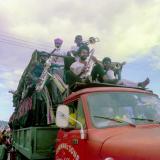
Kaiso Power is a collection of rare jazz, calypso and percussive gems from Trinidad and Tobago from the revolutionary generation of the 1970s, bringing radical new political vision and reclaiming ancient spiritual consciousness through music. At the dawn of the 70s a shift was taking place all around the world. The streets of Port of Spain thronged with Black Power marches, trade union demonstrations and Carnival protest bands - one epicentre in a growing global exchange of ideologies and strategies among Pan Africanist circles in Jamaica, Guyana, London, New York, Montreal, Lagos, Accra and beyond. And when the meetings were over, the revolution moved to the cramped secret dance halls, the Carnival fetes, the steelband yards. The music always had a sharp edge. Searing commentary has always been part of the various types of music in Trinidad, and in the absence of lyrics, the defiant use of the drum maintains the resistance, as well as the re-framing of the playing of European instruments to the needs of the message. Lancelot Layne, Delano Abdul Malik De Coteau, Andre Tanker, Clive Zanda, Mansa Musa were more than artists, they were teachers, community workers and advocates for justice. These recordings are as raw as an all-night Carnival jam, the horns loud, the percussion ringing out, the bass dripping with joy and rebellion. Under the modern influences is a solid rhythm, an unbroken connection to Africa, the songs and keys and cadences brought across the middle passage. These songs are a peep into the untapped treasures of a revolutionary generation, looking at the world with fresh eyes and believing that music was a central part of the mission to build consciousness and regain confidence.
Ordina ora e ordineremo l'articolo per te presso il nostro fornitore.
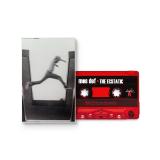
Vinyl[32,35 €]
Originally released in June 2009, The Ecstatic stands as a defining artistic statement from Mos Def (now known as yasiin bey) — a richly textured return to form that reaffirmed his status as one of hip-hop’s most adventurous and intellectually engaged voices. Arriving a decade after his celebrated debut Black on Both Sides, the album was widely regarded as his strongest work in years, earning near-universal praise for its lyrical breadth, eclectic production, and thematic ambition.
Musically, The Ecstatic weaves a global sonic tapestry shaped by an array of forward-thinking producers including Madlib, J Dilla, Oh No, Preservation, Mr. Flash, Chad Hugo (of The Neptunes), and Georgia Anne Muldrow. The resulting soundscape is both rooted in hip-hop tradition and unbound by genre, integrating elements of jazz, soul, Middle-Eastern inflection, and experimental sample work. Tracks like “Supermagic” and “Twilite Speedball” establish a vibrant, restless energy that mirrors the album’s expansive creative scope.
Lyrically, yasiin bey traverses personal, political, and philosophical terrain with characteristic incisiveness, confronting social inequality, Western imperialism, and questions of cultural identity with poetic urgency. Embracing risk and complexity rather than nostalgia, The Ecstatic remains a mature, deeply felt body of work whose ambition, depth, and enduring resonance have solidified its place as a standout entry in Mos Def’s catalog and in modern hip-hop history.
dovrebbe essere pubblicato su 14.08.2026
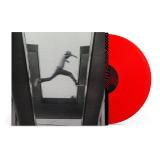
Tape[20,59 €]
,The Ecstatic", das ursprünglich im Juni 2009 erschien, gilt als wegweisendes künstlerisches Statement von Mos Def (heute bekannt als Yasiin Bey) - ein facettenreiches Comeback, das seinen Status als eine der abenteuerlustigsten und intellektuell engagiertesten Stimmen des Hip-Hop bekräftigte. Das Album erschien ein Jahrzehnt nach seinem gefeierten Debüt ,Black on Both Sides" und wurde weithin als sein stärkstes Werk seit Jahren angesehen; es erntete nahezu einhelliges Lob für seine lyrische Bandbreite, die vielseitige Produktion und den thematischen Anspruch. Musikalisch webt ,The Ecstatic" einen globalen Klangteppich, der von einer Reihe zukunftsweisender Produzenten geprägt ist, darunter Madlib, J Dilla, Oh No, Preservation, Mr. Flash, Chad Hugo (von The Neptunes) und Georgia Anne Muldrow. Die daraus entstehende Klanglandschaft ist sowohl in der Hip-Hop-Tradition verwurzelt als auch genreübergreifend und integriert Elemente aus Jazz, Soul, nahöstlichen Einflüssen und experimenteller Sample-Arbeit. Tracks wie ,Supermagic" und ,Twilite Speedball" strahlen eine lebendige, rastlose Energie aus, die den weitreichenden kreativen Spielraum des Albums widerspiegelt. Textlich durchstreift yasiin bey mit seiner charakteristischen Schärfe persönliche, politische und philosophische Themen und setzt sich mit poetischer Dringlichkeit mit sozialer Ungleichheit, westlichem Imperialismus und Fragen der kulturellen Identität auseinander. The Ecstatic setzt eher auf Risiko und Komplexität als auf Nostalgie und bleibt ein ausgereiftes, tief empfundenes Werk, dessen Ehrgeiz, Tiefe und anhaltende Resonanz seinen Platz als herausragender Eintrag im Werk von Mos Def und in der modernen Hip-Hop-Geschichte gefestigt haben.
Ordina ora e ordineremo l'articolo per te presso il nostro fornitore.
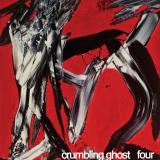
Within the broad church of metal and its many offshoots – rock, doom, stoner and all the rest – it remains a minor thrill to stumble across a group who seem to exist at a slight tangent to everything else. Crumbling Ghost is one such anomaly. Crumbling Ghost are not newcomers. They've been operating for some time, releasing records sporadically, Four' is in fact their fourth release. Along the way they've accumulated a fervent coterie of followers, not to mention the occasional nod of approval from tastemakers such as Stuart Maconie, Stewart Lee and Tom Ravenscroft. And though they've appeared at Roadburn, shared stages with Hawkwind and even Damo Suzuki, they remain (possibly by design) curiously under the radar.
The group's core idea is deceptively simple: traditional folk material refracted through the haze and heft of heavy, fuzzy stoner rock with a chunk of psyche and a smattering of doom. But crucially, this is done without the costumery and theatrical tics that often accompany such collisions. No mock pagan pageantry, no graveyard cosplay, no cartoon Satanism.
What Crumbling Ghost latch onto is not folk as a museum piece, but as a lived experience, the dramas rooted in the culture, stories, and daily lives of ordinary people, the folklore, the tales of love and death, murder and adultery, freedom and oppression. Singer Katie Harnett says. "Doting mothers, possessive, violent partners, vulnerable women, seasonal workers and Royal scandals this album is our representation of the trials and tribulations of human existence and universal experiences that still feel relevant today.
Guitarist John adds. "Themes of murder, betrayal, loss, jealousy, and love are found across the record. In particular, the songs of Martin Carthy have been a particular source of inspiration".
The result is a set of murder ballads, supernatural reckonings and cautionary tales, all wrapped in slabs of heavy, thumping fuzz and atmospheric sonics. Harnett's voice sits at the centre: unmistakably folk rooted, but shorn of prettification, melodic yet capable of real bite.
The album opener 'Bows Of London' is a murder ballad of sisterly hatred and grim sibling rivalry, centred on a haunted fiddle fashioned from a dead sister's bones. The loping relentless, hypnotic backing chillingly and perfectly accompanies the narrative. Of course, the story doesn't end well. 'Bill Norrie' follows, a hooky melody propelled by an insistent bassline and a haunting psych tinged haze punctured with sheets of noise.. The story of young Bill Norrie who sends a token to a married woman, whose jealous husband beheads him, without knowing he was his wife's son from an earlier affair. An instrumental palate cleanser arrives in the shape of 'Valtz Efter Tor Lohne' a Norwegian traditional the band jokingly describe as a "banger".
Then we have 'Lovely Joan' which offers a rare note of sly triumph: a quick witted woman outmanoeuvres a predatory nobleman, escaping with his ring and his horse. Muscular riffs give this tale of empowerment a welcome sense of teeth. 'Gower Wassail' is a traditional Welsh folk tune that captures the raucous spirit of communal ritual, noise making and drink fuelled hope for a good harvest. Captured perfectly here by CG complete with wah wah guitar and a drunken groove catching the song's celebratory chaos. Then we have a little gem in 'Last Of All Sleep' , an original band composition and a genuine highlight: a heavy lidded, shoegaze tinged folk reverie, equal parts distortion and delicacy. It's a drop-dead gorgeous shoegaze-tastic psychedelic grunge mini epic. The album closer 'The Unquiet Grave' is a very apt place to finish. It's about a young man whose constant grief at the death of his true love disturbs her eternal sleep so she cannot rest. Even though the playout on this track, complete with a demonic repeated riff and feedback feels suitably bleak, even this song allows a glimmer of release ... we think.
And there we have it, 7 songs, 7 worlds, all honed to perfection by producer Wayne Adams (Green Lung/Big Lad) that will reward every repeated listen.
Folk and metal/heavy rock do have a connection of course, just look at Green Lung and their 'folk horror' infused musical universe, but Crumbling Ghost are a very different beast.
'Four' amply and beautifully demonstrates that when it comes to 'folk horror' there's nothing quite as horrible as folk ... Here, the horror such as it is, and it must be said, the moments of light, comes not from theatrics, but from the songs themselves – which, after all, is where it's always lived.
Crumbling Ghost are John Mosley – Guitar / Donny Hopkins – Guitar / Ruth O’Loughlin – Bass / Katie Harnett – Vocals / Matthew Atkins- Drums.
dovrebbe essere pubblicato su 07.08.2026
