Fly Free is the newest EP by Jon Dixon on his Hi-Tech Jazz label, 4EVR 4WRD (Forever Forward). He collaborated with 2 good friends and Detroit legends, John "Jammin" Collins and Al Ester to create two unique edits that best suit their personal DJ style. He is no stranger to both jazz heads and techno innovators. He's played with UR's Timeline with Mad Mike, Carl Craig to jazz great Marcus Belgrave. "I wanted to make something that could be the theme song for a Detroit summer regardless of where you're going or coming from," Jon said. "I wanted to create a song that was perfect for cruising down Jefferson heading to Belle Isle, or being stuck in downtown traffic after a game." Jon Dixon took something so familiar to the people of Detroit and transformed it into a piece the world can dance to.
Cerca:world d
- A1: Dark Fantasy
- A2: Gorgeous (Feat Kid Cudi & Raekwon)
- B1: Power
- B2: All Of The Lights (Interlude)
- B3: All Of The Lights
- C1: Monster (Feat Jay-Z, Rick Ross, Nicki Minaj & Bon Iver)
- D1: So Appalled (Feat Jay-Z, Pusha T, T Pryce Cy Hi, Swizz Beatz & The Rza)
- D2: Devil In A New Dress (Feat Rick Ross)
- E1: Runaway (Feat Pusha T)
- E2: Hell Of A Life
- F1: Blamegame (Feat John Legend)
- F2: Lost In The World (Feat Bon Iver)
- F3: Who Will Survive In America
My Beautiful Dark Twisted Fantasy is the fifth studio album by American rapper and producer Kanye West. It was released on November 22, 2010, and featured the singles "Power", "Runaway" "Monster" and "All Of The Lights". Previously only available in the US, this version comes as a 3LP 180 gram vinyl w/ Frameable artwork and Collector’s Posters.
Spencer FM kicks off his new label Madrugada with a diverse five-track EP of psychedelic late-night house. Kicking things off, "Chicken Billy's Last Stand" rides in with dusty film reel textures and gritty drum programming, while "Good God" pays homage to the upper Midwest’s prodigal son with a spaced out deep cut that’s tailor made for those closing moments. "Alpenglow" wraps a spiraling earworm around ethereal pads and a slamming bassline, with "Miss E" conjuring a world where 90s R&B was birthed in a South London basement. Capping things off, Massimiliano Pagliara's remix of "Alpenglow" adds a touch of acid-tinged Italo to round out the record.
Following the release of the single Maqlab, the Marseille-based duo Caïn و Muchi presents their debut full-length album Dounia دنيا.
This takes listeners on a journey through a rich tapestry of industrial gloom woven of dubstep, grime, and contemporary hip-hop. In this album, these ‘labels’ matter as much as they don’t, given the heavy mutations they undergo, in a That’s Hara Kiri fashion (RIP Sd Laika).
At the heart of this record lies a dense yet harmonious sound palette, featuring meticulous vocal processing of lead singer Vanda’s voice, which engages reflection on their shared and individual lives.
As the album progresses, the lyrics reveal layers of stress and trauma linked to colonial experience, intertwined with multiple references to North African ghost stories and legends.
The result is a resonant experience, where the wraithlike and glacial instrumentals crafted by the duo encapsulates the introspective act of witnessing the turmoil of our current world.
The album’s title deftly gestures to the sheer vastness of astronomical dimensions, while simultaneously capturing the musical breadth within, where the eight planets are imagined as the eight notes of an octave. The work draws inspiration not only from earlier compositions —most notably Gustav Holst’s The Planets—but also from the rich astronomical and cultural contexts surrounding these celestial bodies. Here, the focus transcends direct citation of melodic motifs, instead embracing an intriguing conceptual approach on a meta level, unfolding in a series of vividly contrasting soundscapes. These contrasts shape a sweeping sonic journey, one that fully embraces the album format with both arms, inviting the listener to venture into realms both strange and wondrous, feeling the immensity of the interstellar space that lies between them. Contrast, after all, is the brushstroke that enriches our world.
Embarking on an auditory voyage, "Astral Guide" establishes the sonic framework that propels us into the boundless expanses of the cosmos. Its ethereal tones evoke the vastness of space, crafting a mood ripe for exploration within the realms of sci-fi. The subsequent tracks unfold like constellations, weaving a rich tapestry of sound that seamlessly marries cinematic soundscapes with pulsating, club-oriented rhythms. This album invites listeners to traverse its immersive landscapes, whether nestled in the comfort of home or dancing under the starlit sky, each note a guide through the transcendent experience of a nocturnal journey.
"Solar Flares" draws its inspiration from the awe-inspiring expanse of solar phenomena, capturing the majestic power of the sun as it reaches into the cosmos. This track resonates with the idea that energy, while vital, can also be a force of destruction when unleashed with overwhelming intensity. The composition beautifully mirrors the sun’s duality, where brilliance and devastation coexist, inviting listeners to reflect on the delicate balance between creation and annihilation. Through its rich textures and dynamic shifts, "Solar Flares" serves as both a homage to the celestial and a poignant reminder of nature's formidable power.
"Mercury – The Winged Messenger" embodies a meticulously crafted soundscape where artistry meets astronomy. The tempo of 173.6 BPM, derived from precise astronomical data, propels the composition into a vibrant realm that resonates with cosmic energy. Synthwave sound design intertwines seamlessly with the fluid rhythms of Drum’n’Bass, imbuing the piece with an uplifting dynamism that evokes the ethereal grace of Mercury itself. In this sonic exploration, listeners are invited to ascend on wings of sound, navigating the celestial tapestry of the universe with each invigorating beat.
"Venus, The Bringer of Peace" strikes a decidedly cozy note, presenting a poignant contrast to the more tempestuous themes often found in cosmic narratives. This composition evokes a nostalgic vision of an optimistic era, one in which humanity transcended borders and embraced the infinite possibilities of space exploration, where no destination felt too distant. The dense, languid atmosphere envelops the listener, creating a tangible sense of serenity that unfolds gradually, allowing for a meditative journey through sound. Each note serves as an invitation to linger in this tranquil embrace, reflecting on the harmonious potential of our collective aspirations and the beauty of connection in a vast universe.
The central theme of „Gaia, The Bringer of Life“ —originally not part of the planetary cycle— is the profound enabler of life on Earth. The arrangement delicately mirrors the slow, tentative unfolding of this potential, marked by an initially sparse orchestration that gradually builds in momentum. This progression crescendos, embodying the explosive dynamism of the Cambrian burst of life, ultimately culminating in a euphoric fanfare—a triumphant, celebratory flourish echoing life’s victorious emergence.
"Blue Moon" unfolds as a contemplative reverie on the tranquil clarity of a night sky, now seldom glimpsed in its natural purity, unclouded by the relentless haze of urban light. The listener is drawn into the vast embrace of the star-strewn firmament, a journey that sways between euphoric awe at nature’s sublime beauty and a profound melancholy for its fragile and imperiled state. Musically, this duality finds expression in the delicate interplay of modal mixtures, while an ever-shifting triplet groove, poised at the intersection of Outrun and melodic house, lends a pulse that is both nostalgic and forward-looking—echoing the beauty and transience of a world on the brink.
Rather than replicating the original composition of „Mars, The Bringer of War“, this interpretation seeks to evoke its profound, foreboding atmosphere. Cyberpunk emerges here as an ideal genre, channeling the dark, relentless march synonymous with Mars, the ancient god of war. The piece reverberates with intensity, as distorted vocalizations rise, embodying the anguish and visceral torment that shadow war’s violent crescendo. This auditory descent into conflict captures the relentless pulse of warfare, where sound itself becomes an embodiment of suffering and fury.
Majestically, "Jupiter, the Bringer of Jollity" emerges on the celestial stage, sweeping away the somber tones with its radiant vigor. Drawing inspiration from the triumphant strains of the original, and borrowing a melodic motif in the refrain, the piece expresses joy and buoyancy through a shift to a major key and the lilting sway of a danceable 12/8 meter. Spirited and exuberant, it leaps boldly from major to minor and back again, playfully shifting time signatures to capture a mood of unbridled festivity and jollity.
Here, a more conciliatory concept is chosen than in the original inspiration. „Saturn“ aligns with the number six, being the sixth planet from the Sun and bearing the iconic hexagonal pattern at its northern pole. What, then, could be more fitting than to render this piece in a 6/8 time signature? The arrangement unfolds with a multifaceted richness, mirroring the countless stones and ice fragments that form the foundations of Saturn’s majestic rings.
„Uranus“ adopts the theme of a light-footed, dancing instrumentation, giving the impression of perpetual motion, never quite settling. This musical choice harmonizes with the planet’s own orbit, as it spins with breathtaking velocity, teetering and swaying, seemingly unable to attain rest or stability.
The chill and vastness of the cosmos find expression in „Neptune, The Mystic“. At its core, an electronic soundscape envelops a classical arrangement, its unreachability intensified by an ethereal, otherworldly choir. Hovering at the outermost boundaries of the solar system, where warmth is but a distant memory, the composition lingers in a slow, contemplative tempo, evoking a realm where space for speculation stretches wide and silence reigns supreme.
Though Pluto may have lost its planetary status, and its companion Charon never achieved one, this shift in classification subtly aligns with the cosmic scale invoked here—one that mirrors the musical tradition of an eight-note sequence. Fittingly, the album closes with „Kuiper Belt“, a composition emblematic of the turbulence and vitality of countless smaller
celestial bodies that, though diminutive, find their rightful place within the vast architecture of the solar system.
They say nature is the greatest composer, shaping the universe with a symphony of chaos and order, beauty and danger. It is this duality that fuels the artistic vision of Edictum—a producer who, armed with a doctorate in chemistry, delves as deeply into the mysteries of molecules as he does into the depths of sound. In the tension between the vastness of the cosmos and the microscopic processes that dictate life’s rhythm, Edictum creates sonic landscapes that dissolve the boundaries between science and art.
His music is a story of contrasts—a sonic tale where the raw forces of nature clash with the intricate structures of human culture. Opposites intertwine to form a harmonious whole: the primal rhythms of the earth meet the celestial melodies of the cosmos, the rigid laws of physics blend with the boundless freedom of art. Edictum explores these polarities with meticulous devotion, each composition an expedition into uncharted soundscapes—a quest to give voice to the unfathomable.
With over 20 years immersed in the realms of electronic music, Edictum has honed a keen sense for rhythm and movement. His driving beats compel both body and mind into a hypnotic flow. Yet beyond the pulse of dance lies a complex framework of conceptual thought. Today, his creative focus revolves around holistic album projects—self-contained worlds with overarching narratives that embrace contrast and complexity. Each track stands alone as a fragment of the whole, but together, they weave a cohesive tapestry, much like the chapters of a novel that guide the listener on an emotional and sonic journey.
Edictum’s distinctive musical signature has earned him international recognition. With over 150 releases, many on prestigious platforms like the iconic *NewRetroWave* label, and collaborations with artists such as Jan Johnston, Azumi Inoue, Powernerd, and Turbo Knight, he has solidified his place in the global electronic music scene. His latest work, *A Cosmic Scale*, marks his seventh vinyl album and is released under his own label, *Echoes of Expanse*. The label’s name is no coincidence—it captures the essence of his art: echoes of infinity, the vibrations of the universe distilled into a singular sonic experience that carries the listener ever further into the boundless expanse of sound and space.
Embark once again on a captivating journey into the mystical world of Secret Feta, where time flows in all directions, and every sound holds a hidden secret. With the second volume of the Cheese Tricks compilation, the past, present, and future converge in an even more thrilling fusion of enigmatic grooves. Get ready for another unforgettable adventure through the soundscapes of the unknown.
Secret Feta invites you to delve deeper into the etheric world.
In the harmonious universe of Secret Feta, you’ll be transported through various aesthetics of the great family of house and techno.
Don’t mess with GOATS.
Probably the most astonishing hard rock LP out of 1970s Spain, repressed by popular demand and this time offering a very limited transparent blue colour run.
THE STORM hailed from Sevilla and were acclaimed by both audience and press reviewers as one of the best rock bands from Spain. The combo was formed by the Ruiz Geniz brothers (Angel and Diego), on guitar and drums respectively, plus Luis Genil (organ) and José Torres (bass).
Their debut album, originally released on Basf in 1974, is one of the Crown jewells of Spanish hard rock, and changes hands for a small fortune among collectors all over the world, especially since its inclusion in Hans Pokora's 'Record Dreams' books.
This LP really rocks. It's high energy hard rock that follows the line marked by the big organ outfits of the era such as DEEP PURPLE, ATOMIC ROOSTER, BRAM STOKER, MEGATÓN...
It has also a deep classic prog sound root, which reaches the top on 'Un Señor Llamado Fernández De Córdoba'.
We are talking of one of the seminal Spanish hard rock LPs.
Love Raid is first in a series of cassette-only mixtapes with the cult WFMU show and blog Bodega Pop collecting assorted digs from across New York's bodegas and cell-phone stores. This first edition is focused on leftfield, novelty, and protest 45s from across the Arabic world recorded between 1960 & 1974.
"A series of random discoveries in the mid-1990s led me to abandon American and British pop and focus on non-English-language music, predominantly Arabic, for the next two decades.
Feeding my ears required biking down to Bay Ridge, Brooklyn, or hopping on the subway to Steinway Street in Queens, where I would pop into a handful of the local bodegas and immigrant-run cell-phone stores, some of which offered music from North Africa and the Middle East on cassettes and compact discs.
When CDs spiralled into obsolescence in the mid-2010s, I reluctantly made the switch to vinyl, concentrating on 45s and intentionally filling holes not well represented in the digital era – more artists than not hadn't made the transition from analog in the 1980s. This meant focusing on singles by a lot of artists I'd not heard of, and it quickly became evident just how much of the era – from approximately 1960 to 1974, when 7" records were all but abandoned in Egypt and Lebanon – had been forgotten.
What also became evident was the breadth of popular music issued by even hegemonic titan Sono Cairo. The consensus is that state radio and music publishing ignored traditional folk, shaabi, and other lowbrow pop in favor of the exalted art song we associate with Oum Kalthoum, Abdel Halim Hafez, and Farid al-Atrash.
While this active neglect of the broadest Arabic pop spectrum is mostly true, I accumulated a not inconsequential number of what I can only describe as "novelty" records by mostly one- and two-hit wonders. From catchy gimmicks like the "doktor, ya habibi" of Maha's "Doktor" and the "boom boom boom" of twins Thunai Badr's "Love Raid," to the Monty Python-level silliness of Sayed Mandoline's fake Italian crooning and maniacal laughter in "I Present to You the Mandolin," these were sounds I was genuinely surprised to hear.
Even more remarkable were the songs recorded in English: Karim Shukry's celebratory "Ramadan" and Motyaba & Nada's civil-rights plea "No Black No White" are two of my favorites, and thus included in the present collection.
The tracks compiled here are often as beautiful as they are beguiling, but while the intention was to absolutely put together a solid listen, it was also my hope to slightly expand our understanding of Arabic music of this period beyond not just the usual suspects, but also subjects – and treatment of same."
--Gary Sullivan.
For our musical village named after an epic dutch town Sakskøbing we are welcoming fresh face Macé who loves house music just as much as we do and ready to prove it. Made and based in Germany the artist has been living and breathing house music for a while and now is ready to present the world his first solo EP. Digital Heaven consists of five tracks which showcases the artists influences in the genre and dives deep into discovering it. From more club-oriented A side to the more relaxed approach filled with deep pads on the B side this record has shown to a very wholesome and soul soothing approach. Being a while in the making it is great to finally seeing it a light of day with its mission to enter the DJ bags of likeminded individuals around the globe for the love of house.
his new 45 from Karma Chief Records showcases two tracks from Pale Jay's latest LP, Bewilderment. The A side, My Dirty Desire is a warbling slow-disco tribute to the introvert. Pale Jay acknowledges that society rewards extroverts, but he embraces his introverted nature and the benefits of solitude. The B side, Dreaming In Slow Motion' has silken falsetto vocals that float on top of a dusty rhythm section driven by a pulsing bass and laid-back drums. Accompanied by a catchy guitar and a grand string arrangement, Pale Jay invites the listener on a soulful trip to the early morning hours floating between dream and reality. Pale Jay's latest opus showcases his remarkable ability to craft sonic tapestries that transport listeners to a world of profound introspection and sonic bliss. This 45 from Karma Chief Records serves as a tantalizing glimpse into the depths of Pale Jay's musical genius, leaving you craving for more. So sit back, relax, and let the ethereal melodies whisk you away on an extraordinary sonic odyssey.
Archeo Recordings serve a special delight with two extended and alternate reworks from the all star cast behind the recent AR025 Aqua Cheta remix 12”. Dipping into the cool waters of Infradisco’s original LP once again, Hear & Now and Manu Archeo look to the horizon and channel the horizontal with a couple of ambient suites, new age dreamscapes and day trippers, each awash with positive vibrations and healing frequencies.
Perugia's peerless Hear & Now open the 12", cultivating pulsing chords, hazy reverb and elegiac fretwork for a White Isle romance steeped in the sunset lineage of the Café Del Mar. Heart-swelling piano and restrained bass throbs conspire to see the rest of the world melt away, with occasional percussion the only reminder that time is still passing. Though radically different from their dance-floor driven revision on the 12", this is no less impactful, swapping the club sonics for the sensation of sheer beauty.
Not content with making a spectacular production debut via his dubbed out diversion of "Dulcis" last time out, Manu Archeo makes further waves with a meditative masterpiece - spaced out and sprawling through a sultry thirteen minutes. An echo drenched meditation script gradually sinks into the immersive ripple of balmy horn, delicate hand percussion and watery pads, making room for a succession of stunning lead-lines and glistening sequences. If you thought the new age of New Age was over, it's time to open your mind.
Emerging from the depths of the Minneapolis underground scene, The Worm is one of the best underground techno duos in the US, composed of midwest stalwarts Naughty Wood and Heckadecimal. Naughty Wood brings decades of experience, including collaborations on Traxx’s esteemed Chicago imprint Nation. The machine wizard known as Hecka- decimal boasts a deep catalog with releases spanning Always Human Tapes and Great Circles. In early 2016, the mysteri- ous tape-duplicator Ryan Wurst received some demos, which soon became The Worm, a very rare and limited cassette on Always Human Tapes. In April of that year, The Worm flew to Denver to perform live at a basement rave co-hosted by Deep Club and Always Human Tapes, at which Traxx also delivered a DJ set. The Worm’s sound was minted in Ryan Scannura’s brain.
Fast forward 8 years, and Ryan S. saw it time for two absolutely mental tracks from the AHT cassette to finally be pressed to wax, together with two other cuts. The A-side kicks off with “12 Days Of Squirm,” a deep, pulsating acid earworm that builds in intensity. “LISA” could almost be an outtake from a lost Nation session. The tune melds haunting melodies with a demented beat, sure to scare off most casual diggers. Deep Club presents two new-old tracks on side B. “808 Verb Talk” is a slimy, wiggly mix in the vein of 12 Days. Finally, “Pytch1” brings the energy down in an extended, slow-burning closer. Eight years and two Ryans later, this collection is finally ready for turntables in living rooms and foggy basements around the world. Only for the most devoted midwest techno warriors!
J.Wiltshire returns to MUSAR with Sunflower At Day EP — a deep, atmospheric excursion across four tightly woven dance-floor tracks.
Marking MUSAR’s 20th release, this EP showcases some of Wiltshire’s most club- ready work yet, blending outsider house, ambient trance, and Cornish electronic influences.
The title track ‘Sunflower At Day’ is a shoegaze-infused chugger that nods to the ethereal haze of My Bloody Valentine and has a rave energy reminiscent of Future Sound of London. Track two, ‘Cosmic Slap’, takes over with its deep, dub- heavy sounds and off-kilter rhythms, playing to Wiltshire's more experimental side under a techno beat.
On the B side, we dive deeper into Wiltshire's intricate melodic world.
‘Traversing’ unfolds with enveloping, pastoral harmonic patterns, balancing surging intensity with an organic flow.
Finally, the EP closes with the cinematic ‘Rush Point 9’, a late-night noir groove that offers a perfect, reflective finale to this sonic journey.
With Sunflower At Day, Wiltshire fuses intricate textures and melodies with dance- floor intensity, offering another great soundscape from the artist for both club and home listeners.
As 2024 unfolds, DBB008 emerges like a breath of clarity amidst the noise. “Fresh Air” by Ober Dada—an alter ego of Keyn Acid—is a journey between the mechanical and the organic, the familiar and the unexplored. Out both digitally and as a 200-limited vinyl edition, “Fresh Air” invites listeners into a world where space expands, time is unbroken and every beat matters.
Limited 200 copies!
NEW LP PRESSING on Opaque Yellow Wax
Released in September 1978, a mere two months before YMO’s debut, Cochin Moon is a clear precursor to the groundbreaking synth and sequencer-dominated sounds that would come to define the iconic trio. Huge tip!
Credited to Hosono and Pop Art legend Tadanori Yokoo (who created the cover art), Cochin Moon is a fictional soundtrack to a journey into unknown worlds, inspired by Hosono and Yokoo’s trip to India.
The unbelievably prolific Haruomi Hosono is one of the major architects of modern Japanese pop music. With his encyclopedic knowledge of music and boundless curiosity for new sounds, Hosono is the auteur of his own idiosyncratic musical world, putting his unmistakable stamp on hundreds of recordings as an artist, session player, songwriter and producer. Born and raised in central Tokyo, his adolescent obsession with American pop culture informed his early forays into country music, which he would revisit later in his career. Hosono made his professional debut in 1969 as a member of Apryl Fool, whose heavy psychedelia was somewhat at odds with his influences, which leaned towards the rootsy sounds of Moby Grape and Buffalo Springfield. The latter was one of the main inspirations for his next group, Happy End, whose unique blend of West Coast sounds with Japanese lyrics proved to be highly influential over the course of three albums. After the band’s amicable break up in 1973, Hosono began his solo career with Hosono House, an intimate slice of Japanese Americana recorded inside a rented house with recording gear squeezed into its tiny bedroom. Hosono’s solo career would take many twists and turns from this point forward, with forays into exotica, electronic, ambient, and techno, culminating in the massive success of techno pop group Yellow Magic Orchestra (YMO).
Released in September 1978, a mere two months before YMO’s debut, Cochin Moon is a clear precursor to the groundbreaking synth and sequencer-dominated sounds that would come to define the iconic trio. Credited to Hosono and Pop Art legend Tadanori Yokoo (who created the cover art), Cochin Moon is a fictional soundtrack to a journey into unknown worlds, inspired by Hosono and Yokoo’s trip to India. Initially the album was to be a kind of ethnographic musical document, using found sounds and field recordings made by Hosono himself. Instead, after Yokoo introduced Hosono to the sounds of Kraftwerk and krautrock during the trip, Cochin Moon became something much stranger. Created almost entirely on synthesizers and sequencers with the help of future YMO collaborators Ryuichi Sakamoto and Hideki Matsutake, the music on the album is the perfect encapsulation of Hosono’s concept of “sightseeing music,” transporting the listener to an exotic place that may or may not exist. This highly sought-after album sees its first-ever official release outside of Japan.
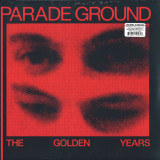
Parade Ground has always been the duo of brothers Jean-Marc and Pierre Pauly from Brussels, Belgium formed in 1981. Taking cues from Post-Punk, Coldwave, Dada and Surrealism, Parade Ground channeled suffering, tension and rage through pulsing synthesizers, skeletal guitar, severe bass and Jean-Marc’s expressive vocals as the most melodic and emotional instrument. The Golden Years is an 11-song, career-spanning collection of Parade Ground’s long out-of-print 7” and 12” singles as well as rare compilation tracks from the pioneers of electronic body music created during 1982-1988.
Parade Ground first appeared on the Nationale Rockmeeting LP in 1982, striking straight to the heart with the passionate plea “I Shut My Eyes.” Later that year the brothers met Daniel B. and Patrick Codenys of Front 242 beginning a collaborative partnership that continues to present day. In 1983 they released their debut 3-song 7” EP Moan On The Sly on the New Dance label, musically a hybrid of Joy Division and Fad Gadget. 1984 brought further explorations into the world of electronic body music with the 3-song Man In A Trance EP and 2 tracks on the live concert compilation Mask Promotion both records released on Front 242's Mask Music label. The following year the single Took Advantage/Moral Support 12” was released incorporating then, state-of-the-art modular synthesizers programmed by Daniel B. and back-up vocals from Flo Sullivan (A Formal Sigh, Shiny Two Shiny). Then in 1987 the brothers collaborated with Colin Newman of British post-punk band Wire, who produced and lent his vocals, guitars and keyboards to two songs ("Moans"/"Action Replay") while Daniel B. produced flipside "Gold Rush" on the Dual Perspective EP that stands alongside 80s anthems from Tears for Fears, Modern English, Echo & The Bunnymen. Finally in 1988 their debut album Cut Up was released on Play It Again Sam Records and featured the singles Strange World and Hollywood. In 1993 the brothers wrote and composed the vocals on two Front 242 albums Up Evil and Off. After 15 years of silence the boys released their second album Rosary in 2007 and continue to write new material and tour with their extensive catalog of dark dance classics. Each LP includes a 6-page press kit with lyrics, discography, photos and liner notes by Daniel B. of Front 242. The history of Belgian electronic music would not be complete without a trip through “The Golden Years” of Parade Ground.
- A1: Teardrops (Don't Stop The Music)
- A2: Getaway Flat Madison Mc Ferrin
- B1: Quiero
- B2: Métamorphosas Flat Natalie Slade
- C1: Olympe Flat Ndrk, Yacine Dessouki
- C2: I Feel Good
- C3: Heart To Heart Flat Sts, Sacha Rudy
- D1: Sunshine Flat Dominique Fils-Aimé
- D2: I Love You More Than Myself Flat Rome Fortune
- D3: Spacer Feat Noemie, Mowg
Electronic music has never been solely about the music itself or its fame. It has been a fight, a totem. Every week it becomes a universal communion, a celebration, a reconciliation with both ourselves and others. No frontiers, no territories, no certainties other than being as authentic as possible.
As a musician and producer, after five albums, I clearly know that my proposition will always be about diversity more than a single crafted sound. This is how I am: multifaceted, nourished by social human exchanges and my encounters in science, art, and technology. I have one life and different bodies. I can be physical and digital, technological and organic, house, techno, and soul. This album is about shedding light in a vertical period where the fight for truth and visibility becomes crucial, where Blockchain might become our right to vote. It's about making complex things sound simpler, joining the dots. A proposition more than a promise: Unshadow.
The metamorphosis is happening; embracing all generations on the same song with Nile Rodgers and Madison McFerrin! Embracing the diversity of backgrounds, styles, and geography, from Sacha Rudy to Dominique Fils-Aimé (Canada), through Natalie Sade (Australia). As a citizen of the world, having traveled endlessly for 30 years now, I know how lucky I have been to experience and experiment with various situations. If this album can simply share some of the joy I have received and spread some goodwill and white magic to the listener, I will be the happiest seeing the light that chases away the shadow.
The story of So-Do is both familiar and completely unique. A classically trained multi-instrumentalist with a poet’s sensibility and a passion for folk music meets a worldly bar owner with a love for psychedelia, post-punk and dub in the small town neither could bring themselves to leave. Over two years, they play dozens of shows in independent live houses across Japan, cut and self-release three singles – two 7”s and a 12” – and leave behind just eight tracks, all of which are set to be reissued for the first time forty years on.
So-Do’s Studio Works ’83-’85 collects the full output of this iconoclastic post-punk phenomenon, whose sparse, syncopated arrangements were infused with a dubbed-out flair that owed more to Dennis Bovell’s productions of Orange Juice, the Jah Wobble basslines of Public Image Limited or Adrian Sherwood’s live dubs of Mark Stewart than even they knew at the time.
Because for lead songwriter Hideshi Akuta, music offered an escape from the existential malaise of small-town life, folding a melancholy nihilism into tracks like ‘Kakashi’ and ‘Hashiru’ (which translates as ‘run’), or taking aim at the inequalities and creeping apathies of the middle classes, as he does on ‘Get Away’ and ‘Nothing’.
And if Talking Heads had CBGBs, Sex Pistols had the Roxy, then So-Do had Buddha. Influenced by Buddha venue owner and amateur producer Atsuo Takeuchi, Akuta turned So-Do’s sound towards dub, crafting playful, ironic and funky compositions that crackle with live energy at the vanguard of Japan’s nascent independent music scene.“So-Do is hard to explain,” Takeuchi says. “It’s been a struggle for years to try to find the words for our music.” The answer perhaps, is just to listen.
Both familiar and completely unique, So-Do extend Time Capsule’s genre-defining exposition of Japan’s reggae-inspired music of the ‘70s and ‘80s, as collected on the label’s two critically acclaimed Tokyo Riddim compilations, and London-based live outfit Tokyo Riddim Band.
Embracing the rip-it-up-and-start-again ethos of the early ‘80s, So-Do burned bright for a short time and then burned out. Their legacy is about to be reignited. Expect it to catch alight once more.
All songs are written & composed by Hideshi Akuta
Produced by Atsuo Takeuchi
Artwork by Ben Arfur
Liner Notes by Anton Spice, Ayana Honma, Kay Suzuki
Curated by Kay Suzuki
Licensed from Atsuo Takeuchi (Oregano Cafe)
Tape Restoration and Mastered by Mike Hillier at Metropolis Studios, London, UK
Time Capsule | TIME023 | 1983-1985 → 2025
The Bombillas have emerged with two new original compositions in their recognizable sound of psychedelic eclectic soul meets world funk. "Hatif" b/w "Kidi Bloom" takes you on a narrative journey into the unknown.
Imagine speeding down Highway 10 into the desert at sunset, top down with one hand on the wheel; you end up all alone at night and hear a mysterious voice calling, screaming in your ear, but nowhere in sight. This imagery sets the stage for Side A, "Hatif." Lead by a driving phased-out strumming acoustic guitar and interweaving melodic lines from David Michael Celia on Keys and Tyler Nuffer on Electric Guitar, "Hatif" takes inspiration from the psychedelic funk and rock sounds of North Africa and The Middle East in the 1970s. Held together by the steady groove of Bassit Josh Wiener and Drummer Joey Campanella, The Bombillas explore sonic imagery and imagination in their interpretation of the Arabian Folklore, Hatif.
Then, on Side B, The Bombillas bring it down a notch with "Kidi Bloom." Featuring Patrick Bailey (Jungle Fire) on lap steel, "Kidi Bloom" continues with the desert imagery and mystical encounters one may find at night, strolling through the endless open landscape. Again, held together by Wiener and Campanella's solid groove, Celia and Bailey weave their melodic voices, creating a conversation of question and answer, or human and higher power. "Kidi Bloom" takes an ethio-inspired groove and flavors it with stoned-out psychedelic funk and country twang for a truly unique cinematic experience.
- A1: Myoptik’s Jp Remix Of Kiss Me Quick V4 Noo
- A2: Jp Buckle - Kiss Me Quick
- B1: Jp Buckle - Flex
- B2: Jp Buckle - Flex - Roy Of The Ravers Dont Mean A Fookin Thing Mix
- C1: Jp Buckle - One For Da Laydeez (Crispy Jason Remix)
- C2: Jp Buckle - One For Da Laydeez
- D1: Inkipak - Kiss Me Quick
- D2: Jp Buckle - Heavy Soil
2025 Reissue
Back in the 90s JP Buckle had releases on Aphex Twin’s legendary Rephlex records and Warp. His debut album Flyin Lo-Fi is true classic in the Rephlex cannon.
These JP Buckle originals are from that album, released in 1998 and out of print on vinyl for 20 years, now re-released on vinyl by Ping-discs with 4 exclusive new remixes from Myoptik, Roy Of The Ravers, Crispy Jason and Inkipak.
This is two slabs of wax with bangin tunes on all four sides. The originals remain classic favourites of Rephlex aficionados the world over, and the remixes come from pedigree artists as well. Myoptik has had releases on many labels, including Mighty Force who first signed Aphex Twin over 30 years ago. Everyone knows Roy Of The Ravers, he has even been played in Aphex Twin’s live sets! Crispy Jason’s amazing music has featured on releases by both artists and Inkipak is the new sensation, with all of his first 4 albums selling out rapidly, indeed his debut album Anomaly is on its 3rd re-release on Pingdiscs now, that’s how in demand he is!
Originals taken from the classic 90s Rephlex album Flyin Lo-Fi.