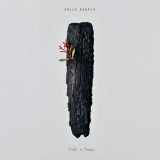
"On “We Are Where We Are,” a glimmering mid-tempo highlight from Annabel’s new album, Ben Hendricks sings of “a modern way to fill the empty space.” Worldviews, the band’s fourth LP and first in nine years finds the band reconciling with the ways the world has changed in the decade since they’ve been away. His protagonists are trying to determine the boundaries between what’s real and imagined, navigating their worldviews and the dominant ones around them, fighting for an escape or at least a distraction, wondering where the time goes, “going through the motions, running in a circle.” That could’ve been Annabel’s fate, too. But the core of the Ohio band is brothers Ben and Andy Hendricks, and as long as they’ve got each other, we’ve still got Annabel. In a world that feels so uncertain and so disconnected, where else is there to turn but back to Annabel? Think of Worldviews less like a comeback and more as the product of years spent gestating.
Hendricks spends the chorus of “All Time” promising to “make up for all the lost time,” and Annabel makes good on that promise for the next half hour. Worldviews is the most locked in the band has ever sounded, perfecting and building on their indie-emo sound. The title track and “Dog” are classic Annabel, sprightly and jangly midwestern rock songs, while “Defense Mechanism” is a rougher-edged update; when they go in the opposite direction, it results in some of their best work: “Every Home Needs a Ghost” is spartan and spectral, worthy of its title, and the beautiful “Small Victories” dabbles in downtempo electronics. They don’t sound like a band returning after nearly a decade; they sound at the same time hungry and lively like scrappy upstarts and wizened and seasoned like they never left."
Buscar:worth way
Named "one of Europe"s most versatile and curious players" by Downbeat Magazine, Polish trumpeter Tomasz Dabrowski returns with the sophomore album from his internationally acclaimed septet. Following their eponymous 2022 debut, the ensemble proudly presents "Better",set to release on March 29th on April Records. With an atypical lineup featuring the cream of the crop of the Polish and Scandinavian contemporary improvisation scenes,"Better" captures the edge and energy of a live performance extended and elevated by the use of electronic instruments and textures. Drawing the listener in with its refined sense of space and pace, the record sees the septet navigate their way through Dabroski"s open compositional ideas, passing melodic structures around the ensemble and evolving through ethereal ambient soundscapes, scorching solos and adventurous cacophonies of collective improvisation. Drawing on a year"s worth of experience performing extensively together as an ensemble, the level of intensive listening, interactivity and trust within the group enables each instrumentalist to fearlessly contribute their voice. "Every track has a unique twist. "Upright" plays with form. "Bonzer", the use of instrumentation. "Hale & Hearty" explores textures." A testament to the ensemble"s commitment to artistic growth and creative evolution, "Better"reminds us to consider what we all can and should strive for. It"s an inspiring message that manifests in the music and radiates through every aspect of life. "We should all strive to do better. To be better versions of ourselves and observe how it resonates within and in those around us," Dabrowski says.
The Telescopes Radio Sessions collects together the essence of three live session recordings in 3 different countries over a three year period between 2016-2019. This is the third in a series of radio session releases from Tapete Records that have so far included The Monochrome Set and Comet Gain. More session releases are being lined up for the rest of the year and beyond - enjoy the sonics and stay tuned. Over the years I have read a lot on people’s impressions of The Telescopes. Some folk think it’s a collective, others imagine it used to be a band and feel nostalgia towards what they consider to be the original line-up (even though many had come before, during and since) and some people refer to it as currently a solo career. In a way this is all true and none of it is. When faced with these kind of questions, along with questions about the style of music that The Telescopes make I often say The Telescopes house has many rooms, which explains things perfectly for me but for people on the outside looking in it only serves to increase their confusion. For me, confusion isn’t such a bad thing. Everything is born into confusion, the sense we try and make of that chaos is interesting and excites me. The universe often disorientates, it sends me a jumble of thoughts and impressions coupled with a feeling of something I need to express… if I could only decipher the encryption. This is how The Telescopes music comes to be and it is also how The Telescopes came to me. I regard The Telescopes as an entity of it’s own that introduced itself in my darkest hour and I was chosen as its vessel. From the second it arrived I was obsessed to the point where there was nothing else. A bit like having an imaginary friend. As the obsession grew it began to infect others, everybody loved my imaginary friend and wanted a piece of it. As its success grew however, so did the corruption, until one day the entity fell silent. The silence lasted for years, I tried everything to reconnect but it was having none of it. I had been a bad caretaker, I had let the house become infested and I had lost my way. This epiphany served to remind me of simpler times when anything felt possible with this entity by my side. It had trusted me with something so simplistically profound and I had let it down. The realisation of this was a eureka moment. I am not The Telescopes, I never was and never will be, I am the caretaker, the lighthouse keeper and if a job is worth doing it is worth doing well. With this dawning, I felt a crack open up in the cosmic egg and a familiar confusion in my head. The entity had returned. It was time to start untangling its tangled threads once more, to make sense of what it was saying, this time without corruption. It’s all about listening. I listen to what my cosmic friend sends me and channel this expression into what you hear through your speakers. It may take one person to achieve this, it may take more. There is no set line up or instrumentation that can hold The Telescopes. Whatever it takes to hit the zone, whatever is available, absolute focus is imperative. Sometimes it takes sabotage to keep that line of vision intact, there is no room for preconceptions or complacency in making the music. The Telescopes music is the now
incarnate and a state of total being is necessary to achieve. From the outside looking in... again, it’s all about listening. What comes through your speakers is the only thing that matters. The music either reaches you or it doesn’t. Everything else may seem interesting or confusing but ultimately it is corruption. So if you’ve bought the record, read the sleeve notes and bought a ticket to see a live show, don’t be surprised if the line-up is or isn’t the same as the recording. The only thing that is for sure is that The Telescopes as an entity is speaking to you in its own voice in every scenario.
Of course the difference between albums and live shows is that you can play the record over and over again to the point where you know every line and every note that was played. Whereas with live events you are left with an impression that can only be replayed in your mind. It can be frustrating at times. When you are touring with a great line-up and feel like something exciting is happening, you want everyone to hear it, not just the people at the shows but the people that couldn’t make it on the night as well. There is no guarantee that there will be the same line-up at a live show as there is on the album. This is why live sessions are important, they document a side of things that is often fleeting. Here we have three sessions, all different people transmitting The Telescopes sound on each. Some are regulars, some dip in and out and some were just passing through. In each case The Telescopes chose them as their vessel and as the lighthouse keeper I did everything I could to help them on that journey while trying to be a good caretaker to the house of many rooms. The Telescopes have been invited in for many sessions over the years, the first two were for John Peel on BBC Radio 1. We also recorded a session for Marc Riley and Mark Radcliffe before their
celebrity when they had a show on BBC Radio Manchester. We could have compiled this album from those sessions, it was certainly considered but Tapete and myself believe this selection gives an exciting glimpse into that fleeting side of The Telescopes in a constant state of flux that is left mostly to myth and imagination. For those who listen to the records but have never had the chance to take in the live experience, welcome to the other side. For those that follow us live, here’s a little reminder and a keepsake. Infinite suns. Stephen Lawrie February 2024.
"Listen to This." As the original working title for Bitches Brew, the instruction and invitation resonates to this day as the best way to approach a record that shattered conventions, altered music history, and, more than five decades after its original release, still sounds far ahead of its time. The aural Mount Rushmore of jazz fusion, Bitches Brew is rightly ranked by virtually every significant outlet among the 100 greatest albums ever made in any genre. Sewn together with vibrant colours, voodoo textures, and ethereal moods, the 1970 landmark emerges with supreme detail on Mobile Fidelity's definitive 180g 33RPM 2LP set.
Sourced from the original master tapes and pressed on 180g vinyl at RTI, this numbered-edition version of Bitches Brew joins the audiophile ranks of other essential Miles Davis sets reissued by Mobile Fidelity. Having established new possibilities for studio-recording techniques, the record can now be experienced to maximum degree by way of a pressing that widens and deepens the soundstage, opens up separation between instruments, and broadens the dynamic range. If ever a jazz album can be said to have gone to outer space and back, this is it.
Davis conceived Bitches Brew by having the musicians stand in a semi-circle, where he pointed at them with vague directions for tempo, solos, and cues. The collective improvisation and interplay spawned a galaxy of melodies and grooves later spliced together by producer Ted Macero. On this reissue, these creations take shape with utmost realism. Compositions stretch across black backgrounds and paint abstract canvasses on par with those of Axis: Bold As Love and Abraxas. Juxtaposed percussion, loose jams, and melodic segues explode with impressionistic verve.
And "verve" defines Bitches Brew. Gathering a Hall of Fame-worthy lineup of musicians and tweaking it according to his desires, Davis follows through on his idea to "put together the greatest rock and roll band you ever heard." Central to his proposition is the presence of two (and sometimes three) drummers and two bassists, a tactical move that thrusts rhythms into central focus. Akin to the futuristic album cover art, the drum-driven suites head toward distant universes and uncharted territories. At once hypnotizing and grooving, they chart maverick adventures with quixotic rock, funk, and R&B elements.
Conceptually, Davis described Bitches Brew as "a novel without words" and "an incredible journey of pain, joy, sorrow, hate, passion, and love." The vast psychedelic expanses of warped echoes, liquid reverb, and tape loops confirm such ambitious contrasts of light and dark, fear and hope. Yet the most absolute characteristic of this watershed effort lies in how it resists definitive interpretation and encourages free thought — the very principles with which Davis conceived the everlasting beauty and fascination that remain Bitches Brew.
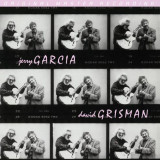
Unadorned with any post-production tricks or overdubs, Garcia/Grisman breathes with naturalism and presence. You will effortlessly detect the full body of the instruments, witness the woody grain textures, and get lost in the surprisingly velvety qualities of Garcia's lullaby-like singing. Our pressing also marks the first time this delightfully joyous affair has been issued in analogue form. You will never hear a better-sounding Americana-styled recording.
Pals since the mid-1960s, Garcia and Grisman bonded over their love for traditional folk and bluegrass. The two teamed up amidst what became a gold rush of top-notch productivity and creativity for Garcia. Partnering with bassist Jim Kerwin and percussionist/fiddler Joe Craven, the pair approaches every passage with innate ease, as if either musician could finish the others sentence. The affable chemistry and soothing interplay wash over a selection of songs as notable for their diversity as the way Garcia and "Dawg" turn them into the equivalent of old friends you haven't seen in years.
Exquisite melodies and jewel-shaped notes decorate the simple, convivial structures of tunes that hop, jump, skip, skitter, and bop. The atmosphere is reminiscent of the legendary gypsy-jazz exchanges between Django Reinhardt and Stephane Grappelli, and equally sharp. Swirling with Middle Eastern modality, the closing 16-minute-plus rendition of Grisman's rippling "Arabia" – complete with a section based on a Cuban fold theme - is alone enough worth the price of admission to this sensational session. But there's so much more.
The quartet delves into Celtic themes ("Two Soldiers"), jazz-grass ("Grateful Dawg"), old-world ballads ("Russian Lullaby"), and Appalachian flavours ("Walkin' Boss") with nonpareil skill and soulfulness. Garcia and Grisman's tandem picking throughout epitomize sublime. And for many listeners, the duo's revised version of the Grateful Dead staple "Friend of the Devil" ranks as the finest-ever recorded, the pace patient, the narrative vocals heartfelt, and the synchronous solos tailor-made for the enveloping progression. Better yet, it's all captured in astonishing fidelity.
Chrome is back again with his 5th full studio album. A new project under the guise of ChromePlus alongside Super JB, A Civilian and Tom Hanna. Chrome has amassed an incredible catalogue since 1990 as member of the mighty Def Tex and collaborating with IllInspired, Whirlwind D, DJar One, Specifik, Crease and DJ Nappa to name but a few.
This album has taken just over 3 years to complete and release but the wait is worth it. Featuring live instruments over sampled drums and turntables it has a vastly different DNA to most Hip Hop based albums, and with this the soundscape is able to stretch out in a way that would be almost impossible when staying in the realm of samples. But with the sampled drums keeping the dynamic energy of more usual Hip Hop production
Chrome’s previous single ‘Anything You Want’ achieved the prestige of ‘BBC Introducing’ single of the week which gives only a hint of the quality that can be expected here. Chrome is always trying something new and pushing his music into territory that many other artists do not attempt and with great results and with the stunning artwork it is the complete package for the decerning Hip Hop listener. There is something for each part of the Hip Hop spectrum here from Fast Rap, thoughtful and experimental guitar driven tracks, instrumentals and the almost forgotten DJ track with the tempo varying accordingly.
Though their album was cut in two days over the course of 2 eight hour sessions their arrangements shine through what was a scattered recording session. "We really worked hard in the studio even though we didn't have enough time to do all the things we wanted to do with music," bassist Robb Murphy remembers. "We were pretty excited. We just had no experience with that sort of thing. We had heard things but never had any experience.
We were really babes in the woods. It was a terrific experience looking back on it. It was really a hell of a lot of fun, we loved the idea of being able to overdub even though we didn't get to do too much of that, it was still fun. That was pretty high tech in those days, being able to lay down a couple of tracks with your voice." guitarist Mike Barnes recalls.
Similar to the Bosstown sound (Orpheus, Ultimate Spinach), Tiffany Shade lean towards harmony-driven vocals that combine their clever pop sensibilities with a versatile showcase of keys, organ, and scintillescent guitars. After their album's release in '68, they had the opportunity to open for Big Brother & Holding Co., but because of poor sales (and like many Mainstream artists) the band didn't last and went their separate ways in '69.
- 01: Absolutely Cuckoo
- 02: I Don't Believe In The Sun
- 03: All My Little Words
- 04: A Chicken With Its Head Cut Off
- 05: Reno Dakota
- 06: I Don't Want To Get Over You
- 07: Come Back From San Francisco
- 08: The Luckiest Guy On The Lower East Side
- 09: Let's Pretend We're Bunny Rabbits
- 10: The Cactus Where Your Heart Should Be
- 11: I Think I Need A New Heart
- 12: The Book Of Love
- 01: Fido, Your Leash Is Too Long
- 02: How Fucking Romantic
- 03: The One You Really Love
- 04: Punk Love
- 05: Parades Go By
- 06: Boa Constrictor
- 07: A Pretty Girl Is Like
- 08: My Sentimental Melody
- 09: Nothing Matters When We're Dancing
- 10: Sweet-Lovin' Man
- 11: The Things We Did And Didn't Do
- 01: Roses
- 02: Love Is Like Jazz
- 03: When My Boy Walks Down The Street
- 04: Time Enough For Rocking When We're Old
- 05: Very Funny
- 06: Grand Canyon
- 07: No One Will Ever Love You
- 08: If You Don't Cry
- 09: You're My Only Home
- 10: (Crazy For You But) Not That Crazy
- 11: My Only Friend
- 12: Promises Of Eternity
- 01: World Love
- 02: Washington, D.c
- 03: Long-Forgotten Fairytale
- 04: Kiss Me Like You Mean It
- 05: Papa Was A Rodeo
- 06: Epitaph For My Heart
- 07: Asleep And Dreaming
- 08: The Sun Goes Down And The World Goes Dancing
- 09: The Way You Say Good-Night
- 10: Abigal, Belle Of Kilronan
- 11: I Shatter
- 01: Underwear
- 02: It's A Crime
- 03: Busby Berkeley Dreams
- 04: I'm Sorry I Love You
- 05: Acoustic Guitar
- 06: The Death Of Ferdinand De Saussure
- 07: Love In The Shadows
- 08: Bitter Tears
- 09: Wi' Nae Wee Bairn Ye'll Me Beget
- 10: Yeah! Oh, Yeah!
- 11: Experimental Music Love
- 01: Meaningless
- 02: Love Is Like A Bottle Of Gin
- 03: Queen Of The Savages
- 04: Blue You
- 05: I Can't Touch You Anymore
- 06: Two Kinds Of People
- 07: How To Say Goodbye
- 08: The Night You Can't Remember
- 09: For We Are The King Of The Boudoir
- 10: Strange Eyes
- 11: Xylophone Track
- 12: Zebra
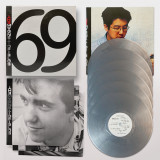
Limited edition silver vinyl anniversary reissue of the Magnetic Fields' classic 1999 rumination on, of course, love. Funny, smart, dark, memorable, and a lifetime's worth of listening. Stephin Merritt solidifies his songwriting genius on his "most ambitious and fully realized work". (AMG) This vinyl reissue is remastered for vinyl and beautifully packaged in a 10" slipcase box with three double gatefold sleeves and a 24 page booklet!
The opening line of Emily Dickinson’s short poem ‘‘Hope’ is the thing with feathers’ inspired the central image of Emily Barker’s new single ‘Feathered Thing’, written while she navigated cumulative grief.
When Barker was first introduced to producer Luke Potashnick (Gabrielle Aplin, Jack Savoretti, Katie Melua) in May 2022, she brought with her a full album’s worth of songs. But after visiting Potashnick’s storied studio, The Wool Hall and hearing his ambitious production ideas, she was inspired to write one more song.
“I also needed to process some heavy news” she comments. Barker and her husband Lukas Drinkwater had been trying to start a family. Following a couple of failed IVF cycles (and other “starts that we’d lost”), they investigated adoption and had decided to relocate to Australia to be closer to Barker’s family.
“It felt like we couldn’t work out what we wanted, but we finally reached a point where we both felt at peace with not having kids,” Barker recalls. “It had been an incredibly intense time, coinciding with a house move and the pandemic.”
And then Barker found she was pregnant. “We’d done all these things to try to make it happen, and then it happened naturally (and against all biological odds). Having previously navigated losses throughout our pregnancy journey, we now had to get our heads around what having this new person in our lives might look like - emotionally and practically.”
Soon after work began on the album, Barker had a miscarriage.
“Songwriting has always been a way of processing throughout my life.” Barker reveals how the new song came quickly as she sat at her piano at home. She shared an early version with Potashnick and remembers him politely asking, “Do you mind telling me what this is about?”
“I think I’d left it too abstract, initially,” she reflects. “It was difficult to open up about the miscarriage, but Luke was very supportive and encouraged me to dig a little deeper without necessarily being specific. I revisited the lyrics, and the result is much stronger.”
“I went to the burnt-out woods/ A tourist with some damaged goods/ Remembered how the trees withstood fires before…”
“The opening line is a metaphor for knowing that I’ll get through this,” Barker clarifies. “It’s about recovery and hope, allowing yourself both the space to grieve and permission to move on”. But Barker’s optimism is never misplaced – she knows the imprint of imagined futures and lost children are carried in hearts and minds forever:
“It’s so hard to let go, wanted to know wanted to know you …”
“I think that it's important to share and normalise these stories, which are all too common, yet not openly spoken about. People hide their pain and don’t want to burden friends and family. I think behind all this anguish, there’s a deep, often untold story.”
Now that Barker is settled back in Western Australia, she’s embracing being an auntie. “I’ve got three younger siblings over here who I’m close to, and they all have kids,” she enthuses. “I look after my brother's kids, aged two and five, one morning a week.”
Recorded - along with the entirety of the new album - at The Wool Hall, ‘Feathered Thing’ begins gently, with oscillating piano and distant drums, until the arrangement gradually transforms into an instrumental dervish of vibrant strings, bass drones and cymbal crashes. Throughout, Barker’s vocals float tantalisingly like a slipstreaming feather.
Watch the video, filmed at The Wool Hall here. The Wool Hall is a studio in Beckington, Somerset, set up by Tears for Fears in the 1980s and used by artists including The Smiths, Pretenders, Joni Mitchell and many more.
Emily Barker is an award-winning singer-songwriter, best known as the writer and performer of the theme to the hugely successful BBC crime drama ‘Wallander’ starring Kenneth Branagh.
Her last album, 2020's ‘A Dark Murmuration of Words’, was produced by Greg Freeman and recorded at StudiOwz, a converted chapel in the Welsh countryside. Lyrically probing, by turns both dark and optimistic, Barker searches for meaning through the deafening clamour of fake news and algorithmically filtered conversation, delivering a timely exploration of the grand themes of our age. It garnered widespread acclaim, with Uncut calling it “…a kind of Australian equivalent of PJ Harvey’s Let England Shake”.
Barker has released music and toured as a solo artist as well as with various bands and collaborations, most notably her long association with Frank Turner, and has written for TV and film, including composing the soundtrack for Jake Gavin’s lauded debut feature ‘Hector’ starring Peter Mullan and Keith Allen.
‘Fragile as Humans’ is scheduled for release on May 3rd 2024 through Everyone Sang/Kartel Music Group. The album will also feature earlier singles: the vast, cinematic ‘Wild to be Sharing This Moment’ and the meditative, crestfallen ‘Loneliness’.
The third studio album from Rebecca Downes with 12 new, original blues-influenced, rock tracks all written by Steve Birkett and Rebecca. Album mixed by Bill Drescher and Chris Childs. With exciting new material that continues the evolution of the music towards rock, More Sinner Than Saint is worth the wait. At the outset, Downes consulted with producer Chris Kimsey, who has previously worked with The Rolling Stones, to select and refine the 12 tracks and to achieve what she and co-writer Steve Birkett see as the perfect expression of their current writing. With five of the fabulous tracks having been mixed by Californian based Bill Drescher, whose previous accolades include working with Rick Springfield and The Bangles, Downes showcases her trademark powerful vocals throughout. With the remainder of the tracks being mixed by Thunder’s Chris Childs, the pedigree of this album is faultless. With her superb studio band that includes Dan Clark, Lloyd Daker and Magnum’s Rick Benton, there was no shortage of artists queuing to join her on the odd track or two. The multi award winning Alan Nimmo (King King) plays guitar on If I Go To Sleep and Magnum’s Tony Clarkin delivers a fabulous guitar solo on Breathe Out. With her signature voice, style and song writing, it was little wonder that last year she was voted Female Vocalist of the Year at the FORM UKBlues Awards. The release of this jubilant new album once again gives her the chance to showcase her formidable powerhouse and gutsy vocals in tracks that have greater range and depth than anything she’s done before. Rebecca said: “We were honoured and humbled to receive Chris Kimsey’s guidance. He gave us confidence about the direction of our writing changing to a rockier sound and advice on the way the material should be recorded. Meeting Bill Drescher in LA was fantastic – such a lovely, down-to-earth guy – and his mixing took the five tracks to the next level. Chris Childs has since done an excellent job on the rest in matching Bill’s mixing style. We are very proud of this album – and the way the music has evolved towards rock. More than ever before we believe it captures the best of our song writing.”
With time, we come to understand the way the joy of connection is mirrored by the void of loss, how the constancy of love is matched only by the impermanence of life, the simple idea that we could not create light if we did not risk the dark - we'd never need to. So it is with METZ, a band once known for blowing out eardrums with songs of joyous rage who have, over their past few records, begun exploring ways to turn abrasiveness into atmospherics, the evolution of their sound not only a reflection of the maturing of the band themselves but also of a changed world that demands nuance and compassion to comprehend and to survive. It was a journey already underway on 2020's Atlas Vending, but one that reaches new heights on Up On Gravity Hill, where the Canadian trio creates a kaleidoscopic sonic world as tender as it is dark, aided once again by engineer Seth Manchester (Mdou Moctar, Lingua Ignota, Battles, The Body). Deep, detailed, and unyieldingly personal, it is not only METZ's most powerful record to date but also their most beautiful. Still three punks from Ontario at heart, guitarist and vocalist Alex Edkins, drummer Hayden Menzies, and bassist Chris Slorach waste no time as opener "No Reservation/Love Comes Crashing" sweeps in like a wave, sonically and thematically setting the scene for the record to come. A dynamic song about feeling suspended in stasis, layers of dissonance melt into a restlessly heady outro marked by escalating crescendos of shimmering noise that reach for the stars - and is that a violin quivering brightly beneath those elegant swells of guitar, those charging drum fills, those intricate bass lines? It is indeed, courtesy of composer Owen Pallett; his presence an immediate indicator that METZ are thinking more cinematically than ever before. The change is partially inspired by Edkins' work as a scorer for film and television and his pop-leaning solo project, Weird Nightmare, where, he says, he learned to write more intuitively, letting his emotions lead the way. But make no mistake: Up On Gravity Hill is a total band effort, the work of three musicians who have been playing together for over a decade, with all the trust that entails. For those who believe in the power of the rock band to exemplify the highest resonance of human connection, there is much on Up On Gravity Hill to lift the spirit, a puzzle worth repeated listening to unlock or just to get lost in again and again. Rather than the music being flattened into a single plane, the band explores "the space above the cymbals," resulting in some of the most spacious, sympathetic, and accessible songs - could we call them pop? - of their career. If this seems contradictory, well, METZ has always been something of a contradiction. "We've never been heavy enough for metal or hardcore purists, but we're way too heavy for indie rock. We just don't have a lane - and that's okay. We exist outside the lines of delineation. I think this record is even more like that," says Edkins.
There's a new guitar in town....nein besser gesagt altbekannte Recken mit neuer Band, die 2022 beim Rebellion-Festival vom Geheimtipp schnell auf sich aufmerksam machten: We proudly presents: ON THE HUH mit ihrem Debut "Bit on the side" und wer auch nur einen Hauch für den good oldschool UK-Streetsound übrig habt wird diese Band lieben! Aufgenommen in den altehrwürdigen Londoner Perry Vale Studios und produziert von Pat-"Vibrators"-Collier verbergen sich hinter der East-Coast-Slangphrase "On the Huh" (meint: slightly on the piss) Musiker von Infa Riot, Braindance und Special Duties und liefern 15 Brickwall-Oi! / Streetpunk Hymnen mit dezentem Glam-Touch der Extraklasse ab! Klassische Singalongs, eine unglaubliche Spielfreude, rotzige Chorals und traditionelle Punkrock-Einflüsse aus vielen Jahrzehnten "Made in Britain" und dabei extrem abwechslungsreich und halt a little "Bit on the side"!
Our fifth chapter is the one where we seek, savor, and settle. The muse found us in the depths of raising children, nurturing relationships, surviving a world-changing virus, bidding farewell, shifting our mindsets, and discovering a sense of peace heretofore unseen. Our third decade of life has proven to be one of routine, rest, and realization, and these songs are about the lessons we’ve learned. We’ve learned to be space-holders and defenders of the people we hold close. We’ve learned from deep, steady love in various forms. We’ve learned to let go of people and perceptions and priorities that just didn’t make the cut as we weighed what is right and important and worth keeping. We’ve learned how all the things we’ve always treasured continue to withstand the pressure of time. If you notice an upward trend to the mood and emotions, you’re on target-we have found calm waters, for now. - The Secret Sisters (2023)
Mind, Man, Medicine by Secret Sisters, released 29 March 2024, includes the following tracks: "If the World Was a House", "Planted", "I Needed You", "Same Water" and more.
This version of Mind, Man, Medicine comes as a 1xCD in a(n) Digipak packaging.
96kHz - 48-bit HD Audio with digital booklet including original photography by Christopher Kayfield and liner notes by Shaun Brady.
Pianist Kevin Hays, bassist Ben Street, and drummer Billy Hart reunite for a second, scintillating trio date, BRIDGES, featuring original compositions by Hays and Hart with classics by Wayne Shorter, Bill Frisell, The Beatles, and Milton Nascimento.
Hays Street Hart, the trio of pianist Kevin Hays, bassist Ben Street, and legendary drummer Billy Hart, recorded their acclaimed 2021 debut, ALL THINGS ARE, under less than optimal conditions. The album began life as a performance in honor of Hart’s 80th birthday in December 2020, live-streamed from an empty Smoke Jazz Club in the final weeks of that grueling pandemic year. Despite those adversities, the music they created that night was spectacular enough to convince all involved that it should be released.
Two years later, the trio has reconvened, this time fully cognizant that they were going to record an album at Sear Sound Studios in NYC. The captivating BRIDGES brilliantly spotlights the unique chemistry and shared spirit of exploration that emerged fully formed on that initial impromptu session. The title succinctly hints at some of the reasons why Hays, Street and Hart work so well together: this is a trio that bridges generations, certainly, as well as a wealth of diverse experience and inspiration. But it also sums up a mutual desire to bring people together through music.
“In this world that seems to be crumbling beneath our feet,” Hays explains, “we sense the need to make allies where there might be adversaries. On the most intimate level, interpersonally and inter-psychically we set out to overcome any number of misunderstandings and adversarial situations.”
Not that there was any antagonism to overcome within the trio itself. More than anything, Hays Street Hart is a mutual admiration society of the highest order. The esteem in which the pianist and bassist hold Billy Hart likely goes without saying. The drummer was ordained in 2022 as an NEA Jazz Master, just one of the many honors he has chalked up over a breathtaking career. He began his career with an apprenticeship under the revered vocalist Shirley Horn and went on to make notable music with such luminaries as Miles Davis, McCoy Tyner, Herbie Hancock, Wes Montgomery, Jimmy Smith, Stan Getz, and as part of the quartet Quest featuring David Liebman and Richie Beirach.
But Hart is if anything, even more laudatory toward his younger bandmates. Street has been a member of the drummer’s stellar quartet for two decades, alongside pianist Ethan Iverson and saxophonist Mark Turner, a tenure that speaks for itself. As for Hays, Hart is quick to place the pianist in the exalted company of some of his iconic former collaborators.
“I’ve been lucky enough to have the chance to perform with Herbie Hancock and McCoy Tyner,” says Hart modestly. “Each generation presents their own equivalent, and Kevin is an example of the latest innovations. There was Herbie and McCoy, then it was Chick Corea and Keith Jarrett, and then you have what's coming next. I think Kevin is definitely part of that continuum.”
Though Hays sticks strictly to the piano on BRIDGES, he is also an accomplished singer whose vocal instincts fuel his inventive and lyrical melodicism. Street points to those facets as key to the connection between the pianist and Hart, who has enjoyed several meaningful collaborations with vocalists.
“It always seems to me that Kevin has the capacity to sing in his mind and then accompany himself on the piano,” Street describes. “That makes for such a nice connection with Billy, who has played with and learned from so many singers. I don't even feel like we're playing as a piano trio most of the time; it feels more like a quartet.”
Those qualities are especially clear on Hays’ “Butterfly,” which opens the album. Though it’s performed here as an instrumental, the pianist has composed lyrics for the piece, and its gorgeous, song-like quality shines through. Hays also contributed the breathtaking ballad “Song for Peace,” highlighted by Hart’s gentle, embracing brushwork and Street’s sturdy, stentorian tone. The pianist’s third original, “Row Row Row,” is constructed on a twelve-tone row, but as the playful title suggests, it has none of the more stringent qualities of the serialist composers.
Hart’s stunning “Irah,” originally recorded on his quartet’s self-titled 2006 debut, is dedicated to the composer’s mother and was recorded at Street’s suggestion. The bassist also brought guitarist Bill Frisell’s reflective “Throughout” to the date, imagining Frisell’s Americana influences would resonate with the similarly inclined Hays, who approaches the tune with a harp-like beauty. Hays’ love of pop and rock music is also reflected by the inclusion of The Beatles classic “With a Little Help from My Friends.”
The trio pays tribute to the late, great Wayne Shorter with “Capricorn,” originally released on the composer’s 1969 Blue Note album SUPER NOVA and later included on the Miles Davis Quintet set WATER BABIES. Hart called Shorter one of a kind. I think of the many times I heard him excel – with the Maynard Ferguson Big Band, with Art Blakey's Jazz Messengers, with Weather Report. And in each case, he was innovative.”
BRIDGES closes with the title track, a dazzling piece by the great Brazilian singer and songwriter Milton Nascimento, which Hays calls “one of my favorite compositions ever, by anybody.”
BRIDGES was recorded under ideal studio conditions by a now-established trio with a weeks-long European tour under their belts. Perhaps what’s most remarkable about the album is not that Hays, Street, and Hart play so masterfully together – with three artists of their caliber, who could expect any less? – but that this second outing maintains the bold spirit of inquisitiveness and spontaneity that its predecessor naturally possessed. Credit that to a trio perpetually determined to discover new bridges worth building.
People Museum's full length album Relic was written and demoed shortly after hurricane Ida displaced our community for many weeks in the late summer of 2021. The first three days of work brought 3 of the album's core songs, including the title track of the record - Relic. Each song on the record contains layers of storytelling that speak to our city while also speaking to personal stories of love, loss, the unknown, catharsis, persistence. Living in New Orleans, we often take for granted the unique magic that is our community, something that the uncertainty of a natural disaster placed in the forefront of our minds. Relic is an attempt to bottle our collective histories, our memories and experiences, our love for our city. A way to hold tightly to the gift we have while we have it. The album uses New Orleans as a character - a lover who nourishes us and breaks our heart. A friend - ever contradictory but always worth fighting for, and someone who will inevitably leave an imprint on your heart.
Band Of Nowhere is a new constellation project by Juanjo Sánchez, together with other collaborators with whom he had previously worked. It is worth mentioning Bob Drake on drums, former member of the legendary formation Thinking Plague (also on Hail, 5UU's, The Science Group) who has also mastered the project from their studio in the Midi-Pyrénées and also to mention the guitarist Jordi Cabayol (Camino al Desván) both Juanjo and Jordi began their career in a significant band of Barcelona of the early eighties, such as Entr'acte.
The becoming of Juanjo Sánchez would take him to other latitudes as a member of Alondra Satori and without losing the lighthouse of his city, he would collaborate with other outstanding musicians such as Quicu Samsó (Koniec, Macromassa).
The fluidity and chromaticism of his previous album Gonza Magilla is still perceived in here, but in a much more electrified way with guitars that are sometimes expansive, other times exuberant wrapped up with contagious synthesizer modulations and very marked rhythms. The production and especially the arrangements are fantastic with those special presences of synthesizers that are not common around here.
Its original improvisation and experimentation is skilfully adjusted by Juanjo Sánchez, giving a much more playful result with unexpected combinations, very much in continuity with a certain European Art Rock such as Aksak Maboul, Etron Fou, Zamla,The Work or the mischievous resonances of The League of Gentlemen; all this mapping the sound transit, to an unpredictable and vibrant non-place.
Housed in it's original hand made artwork with the little upgrade twist of silk-screen printing textured grey cardboard and including a insert colour with photos and text provided by Juanjo Sánchez.
Housed in it's original hand made artwork with the little upgrade twist of silk-screen printing in Plastic clear cover and including a insert colour with photos and text provided by Juanjo Sánchez.
Javier Hernando
a1 Calling All Beginners
a2 Fleeing To the Poles
a3 Ashes
a4 Rouler ma Bosse
a5 Sunday Machinery
b1 lucid Dreams
b2 Twisted Maze
b3 Rolla Bolla
b4 Chinese Forecast
Discovered after spending 58 years on a dusty shelf in the Louis Wayne Moody Pictures vault, this previously unissued soundtrack contains a backpack's worth of grieving guitars, somber surf, and haunting hiss, zipped tight with the teeth of abandonment, dashed dreams, moral ambiguity, fate, tearful goodbyes, and lukewarm diner coffee. Because the long arm of society nips at their heels... THEY MOVE I N THE NIGHT.
London soul star Jordan Mackampa returns with a new album titled Welcome Home, Kid! out 16 February 2024 via AWAL. This new music sees Jordan come back to his love of R&B, soul, funk and gospel with references to Dru Hill and Blackstreet, producing a new sound that nods to his earlier soundcloud works and the nostalgia of his childhood. It's brazen and bold and presents an incredibly assured artist that is no longer afraid to show off their Blackness, queerness, or sexual expression in all their forms. Getting to this place has taken Jordan decades of growth, patience & gruelling lessons to reach this state and now he can stand in his Blackness proudly. This album tells the story of how he got to this place of self-worth and the stories of the varying complex but beautiful perspectives about the Black experience. He is open and honest about sex, intimacy, imposter syndrome and how he navigates healthy love, toxic heartbreak, friendships and forgiveness. The core theme of this record is introspection with Jordan explaining, “This was a big theme for me in writing a lot of these songs because no one else has lived life in my shoes, I really had to take other peoples’ opinions & stories out of the writing and put myself at the forefront of everything. Which in turn, made me put the guitar down more and stand centre stage naked in a way. This new album for me feels even more personal now - I use more self language of “I” over “we” because all of these stories are about me and my life in even more depth than the first record touched upon, whilst covering more bases either through my own first person story telling of something current I’m dealing with or a past situation I’m using music to heal through. The debut was me figuring out shit, this album is me putting the last puzzle piece on the board.”
When Paul Murphy released his critically acclaimed debut solo album, Claremont 56, in 2006, many thought it would be the first of many. In a way, it was, as in the years since he’s released a string of collaborative sets alongside Benjamin J Smith (as Smith & Mudd), and as part of underground ‘supergroups’ Paqua, Bison and Hillside. But that second solo album? Well, it just had to wait. In early 2023, Murphy finally decided to scratch that itch, roping in some of his most trusted collaborators (keyboardist and bassist Michele Chiavarini, percussionist Patrick Dawes, guitarist Dave Noble and HF International’s Kashif included) to lay down a sumptuous set of tracks that not only showcases his now familiar (bit hard to pigeonhole) neo-Balearic sound, but also proves how much he has matured as a writer and producer since 2006.
In The Garden of Mindfulness is richly musically detailed, expertly arranged and full to bursting with fluid instrumental solos, with Murphy and his collaborators serving up tracks that brilliantly blur the boundaries between languid jazz-funk, downtempo, vintage synth-laden krautrock, dubby grooves and sun-splashed soundscapes. It simply sparkles from the moment that opener ‘Eighty Three’ slowly rises like the morning sun, with gentle, undulating synth sounds ushering in a slow-motion jazz-funk excursion rich in twinkling electronics, spacey pads and warming bass. Recent single ‘Katanaboy’, a lusciously layered dub disco-infused dancefloor excursion in Murphy’s familiar style, raises the temperature a touch, before ‘Bonne Anse’ and the sublime ‘Unka Paw’ (whose combination of evocative fretless bass, extended electric piano solos, Clavinet licks and acoustic guitars is genuinely spellbinding) invite a combination of wavy shuffling and flat-on-the-back, eyes-closed appreciation.
And so it continues, with gorgeous title track ‘In The Garden of Mindfulness’ making way for the boogie-influenced, Japanese-British brilliance of ‘Hangsang’ (check the jaunty pianos, yearning breakdown and exotic melodies). Murphy’s long held love of warm, weighty bass, hypnotic disco grooves, colourful analogue synth sounds and jazzy guitars once again comes to the fore on ‘Way Of The Hollow’ before the album reaches a fittingly triumphant conclusion with ‘Late In March’.
A neat sonic summary of all that makes the set such a rewarding and entertaining experience, repeat listens reveals a wealth of musical details, from off-kilter triple-time drums and surprise bass guitar solos, to impeccable piano solos (provided by the immensely talented Chiavarini), fizzing jazz-funk synth doodles and stirring synth-strings. It’s a breathlessly brilliant way to end an album that was genuinely worth waiting for.
- A1: The Rub 2 27
- A2: Money Runner 2 15
- A3: White Elephant Walk 1 24
- A4: White Elephant Walk (Link) 0 07
- A5: Walking Link 0 18
- A6: Master Plan 3 26
- A7: Night Watch 2 12
- A8: The Fence (Version A) 1 49
- A9: The Fence (Version B) 2 11
- A10: Surveillance 1 33
- B1: Total Silence 1 26
- B2: Eyes 0 47
- B3: Drama Backcloth (1A) 1 38
- B4: Drama Backcloth (1B) 0 17
- B5: Drama Backcloth (2) 0 59
- B6: Drama Backcloth (3) 0 17
- B7: Drama Backcloth (4) 0 24
- B8: Scenechange (1) 0 17
- B9: Scenechange (2A) 0 10
- B10: Scenechange (2B) 0 24
- B11: Scenechange (2C) 0 25
- B12: Scenechange (3A) 0 17
- B13: Scenechange (3B) 0 17
- B14: Scenechange (4) 0 15
- B17: Scenechange (6B) 0 21
- B18: Scenechange (7) 0 10
- B19: Scenechange (8A) 0 12
- B20: Scenechange (8B) 0 30
- B21: Scenechange (9) 0 51
- B22: Brass Statement 0 05
- B23: Final Statement 0 47
- B15: Scenechange (5) 0 21
- B16: Scenechange (6A) 0 25
Part I[24,79 €]
It's the pair you've all been waiting for! FINALLY!
Alan Tew's Drama Suite Part II. What can we really say? Honestly? We guess the first thing that strikes you is how clean the drums are. Almost impossibly slick but dripping so, so heavy with the neck-snapping funk you'd expect from perhaps the most sought-after library funk set of them all! The cheapest on Discogs is, currently, £1300+. Now's your chance to remedy that. If you know, you know. And we think you know...
"The Rub" is a cool, low-slung heavy-funk roller with relaxed brass and alto flute phrases. Up next, "Money Runner" is another edgy funk glider, its easy-tempo moving in harmony with slinky rhythmic riffs and featuring a seemingly ad-libbed electric piano solo. Strutting along after, "White Elephant Walk" is another laconic, deeply stoned walking theme with electric piano and alto flutes. There follows a couple of brief "walking" links before the brilliantly tense "Master Plan" slowly builds. Expectancy grows to the main theme around a minute in and then a melodic theme builds slightly to the 3 minute mark before floating down gradually and elegantly to its climax. It's utterly fantastic. The smoky, after-hours "Night Watch" is a slow, cool gem featuring alto flutes and synths.
Now we're talking, "The Fence (a)" is just sensational and worth buying this album all on its own. It's likely the reason you're here, anyway. Another impossibly funky, slow and easy tempo with a bass riff to die for, dramatic guitar with gorgeous electric piano and alto flute phrases. It was sampled for "Action Satisfaction" by J5, way way back. "The Fence (b)" is a slower, more deliberate version of the previous heater, but it's no less essential. Indeed, it's absolutely jaw-drooping. Closing out this remarkable side, "Surveillance" is another horizontal masterpiece of relaxed yet dramatic jazz-funk. Vibes ad-lib in centre section and give you an idea of how Roy Ayers making library funk in the mid-late 70s might've sounded. Sensational.
Flip over for "Total Silence", a near-beatless and understated scene-setter featuring neat interplay of guitar and synthesizer themes over bass and hi-hats. The slow "Eyes" follows, a brief gem with subdued electric piano solo and a light climax. The fantastic "Drama Backcloth (1a)" is up next, a repetitive piano and bass refrain with guitar figures over the top. Its creeping crime-funk vibe was pilfered for "Outta Town Shit" by Ghostface Killah in 2006. "Drama Backcloth (1b)" is a short, subdued version without the guitar figure. "Drama Backcloth (2)" features an expectant, background marimba figure over light rhythm whilst the cool "Drama Backcloth (3)" centres around a relaxed riff and the angular "Drama Backcloth (4)" presents eerie progressions with piano interjections. It's decidedly non-rhythmic!
We're then onto 14 (!) different half-minute "Scenechanges", all jazzy and funky, some cool and dramatic, some slow and rhythmic. All ace and groove-fuelled. The aptly-titled "Final Statement" closes proceedings, a slow, pensive theme on guitar joined by cool brass and a solo trumpet to its climax.
As with all of our KPM re-issues, the audio for Drama Suite Part II comes from the original analogue tapes and has been remastered for vinyl by Be With regular Simon Francis. And as usual, the sleeve reproduction duties were handed over to Richard Robinson, the current custodian of KPM’s brand identity. We're not quite sure what else to say about this landmark record, other than, GET IT!
- A1: Let 'Em Know
- A2: Live And Let Live
- A3: That’s When Ya Lost
- B1: A Name I Call Myself
- B2: Disseshowedo
- B3: What A Way To Go Out
- B4: Never No More
- C1 93: Til Infinity
- C2: Limitations (Feat. Casual & Del Tha Funkee Homosapien)
- C3: Anything Can Happen
- D1: Make Your Mind Up
- D2: Batting Practice
- D3: Tell Me Who Profits
- D4: Outro
Consisting of MCs A+, Phesto, Opio and Tajai (with production by A+, Domino, Del the Funky Homosapien, Jay Biz and Casual), East Oakland’s Souls of Mischief burst onto the scene in the early 90s with an impact that few other West Coast artists had at the time. Culminating in the release of their classic debut, they created a bouillabaisse that was most parts West Coast swagger but - similar to The D.O.C. and Cypress Hill - with a sonic approach that could just as well have stepped off the streets of New York City. Recorded in less than two weeks at San Francisco's Hyde Street Studios, 93 ‘til Infinity doesn’t suffer from a single freshman jitter or misstep. It’s a fully-realized effort, packed from start to finish with ridiculous lyricism - all carried out in impressive four-part, tag-team style - and backed by a wide range of musical possibilities, from hard boom-bap to 70s CTI-jazz-sprinkled grooves. But without worthy music, the group’s high-level lyricism could have fallen by the wayside. Digging deep into crates that other producers had yet to mine, the production crew gave the quartet exactly what they needed, with unpredictable rolling basslines, dusty drums and jazz keyboard and horn stabs and swirls. Non-singles like Disseshowedo (produced by Domino and Jay Biz), Batting Practice (Casual), Limitations (Jay Biz, with Del and Casual contributing verses) and What A Way To Go Out (Domino) made sure that the fast-forward button remained untouched. Get On Down is proud to present a 30th Anniversary pressing of this west coast Hip-Hop classic on cloudy blue and cloudy yellow vinyl, packaged in a gatefold jacket with liner notes and a commemorative 30th Anniversary stamped numbered OBI.
- A1: Brian Bennett – Image 4 29
- A2: Neil Richardson – The Little Orphan 2 27
- A3: David Gold / Gordon Rees – Paradise Island 2 19
- A4: David Gold / Gordon Rees – Forbidden Fruit 2 19
- A5: David Gold / Gordon Rees – The Enchantress 2 56
- A6: David Gold – Phenomena 2 41
- B1: John Scott – Infinite Expanse 1 46
- B2: John Scott – Static Objects 2 31
- B3: John Fiddy – Metamorphosis 2 37
- B4: Neil Richardson – Cubist Pictures 2 12
- B5: Neil Richardson – Analysis 2 04
- B6: Neil Richardson – Crystal Ball 2 38
- B7: Steve Gray – Gliding Through Clouds 2 55
Impossible to find in the wild, KPM's Image is exactly that; this record paints extraordinary, hyper-vivid scenes with music, in the way only the library greats can. Originally released in 1974, Image is an absolutely stunning listen from start to finish, and arguably the most wanted KPM grail that's still not been reissued - until now! Just too good…
Worth the price of admission alone, and likely the reason you're all already drooling about this release, the mellow, dramatic beat of "Image", Brian Bennett's opener and title track, is a Jaylib-sampled firecracker. A reflective, scenic underscore which grows to full orchestra and ends as it begins - it's just beautiful. Next up, swoon to "The Little Orphan" by Neil Richardson featuring strings and harp. It's a deeply emotive, sweeping orchestral piece. Just straight gorgeous. It's followed by "Paradise Island", a lush, horizontal Balearic gem courtesy of Gordon Rees and David Gold; it'll send you into a blissful reverie with its elegant strings and gentle drums. From the same pair, "Forbidden Fruit" is, again, string-drenched but the strings are more insistent, stabbing even, and, with drums and Blaxploitation guitars high up in the mix, it's definitely a funkier proposition. "The Enchantress", again a Rees-Gold special, is a slower, groovy, synthy wonder. Closing out the A-Side, "Phenomena" is a mysterious gem, a Gold solo effort set at a breezier tempo with propulsive percussion and head nod, fast-paced breaks with ace keys.
Flip over for "Infinite Expanse", John Scott's dramatic panorama adorned with proud, triumphant horns. Scott's "Static Objects" paints patient, pastoral scenes; there's a serenity and stillness to the proceedings. Next up, Be With favourite John Fiddy delivers shifting shapes and patterns with his wonderful "Metamorphosis", all wah wah, harps, dramatic percussion and strings. It's by turns billowy and blasting. "Cubist Pictures" follows, Neil Richardson's brilliant nebulous, fragmentary piece. Better yet, Richardson's gorgeous, beatless "Analysis" follows, and it's an orchestral beauty featuring cello, harps and woodwind. It's no exaggeration to describe this as transcendental. His "Crystal Ball" presents more static scenes with cello, twinkling percussion and strings, before Steve Gray's fantastically-titled softly-ace "Gliding Through Clouds" closes out this remarkable set.
As with all of our KPM re-issues, the audio for Image comes from the original analogue tapes and has been remastered for vinyl by Be With regular Simon Francis. And as usual, the sleeve reproduction duties were handed over to Richard Robinson, the current custodian of KPM’s brand identity.
Colbie Caillat is a master storyteller whose breezy SoCal folk-pop songs laced with a country shimmer speak truth to both the pain of endings and hopefulness of what’s to come when you’re brave enough to follow your wild, wild heart. Along The Way, Caillat’s solo country debut, embodies the positivity in heartbreak’s wake. Though her move to Nashville was done as one-half of a romantic partnership - a personal and professional adventure to the southern city for this west coast girl - she thrived in all of life’s changes. In her musical journey and experimentation with new sounds, Caillat vividly captured a moment in her life through song. The California-raised, Nashville-based girl delivered songs with gratitude for having known this love, learned so many lessons and the joys shared along the way. “The love that you shared shouldn’t be wasted: you help each other grow and become a wiser and more evolved person. We needed to be together to become who we are today, even if we didn’t end up together.” If Joni Mitchell’s quintessential Blue is the deep dive into the caverns of grief following a break-up, Along The Way is a bright, shiny compass Caillat offers to guide people through the tough times and raw feelings that accompany any dissolution. Lover, leaver, left, the woman who’s sung at the Nobel Peace Prize Concert wants to sow compassion for all parties involved.
Colbie Marie Caillat (born May 28, 1985 in Malibu, California) is an American acoustic-folk singer and songwriter from Malibu, California. She has won 2 Grammys, namely for "Lucky", her duet with Jason Mraz, and for her collaboration on Taylor Swift's album Fearless in the song "Breathe".
Seven Steps to Heaven arrived at a crucial junction in Miles Davis' career. Recorded at two separate locations in spring 1963, it served as Davis' first release in more than a year – a layoff that was then unprecedented for the jazz visionary who had issued at least one LP a year since debuting in the early '50s. Equally notable, Seven Steps to Heaven marks the point at which the core of Davis' Second Great Quintet started to assemble. The twice Grammy-nominated effort is also Davis' final studio record to blend standards with originals. And it happens to be one of the expressive, well-played albums in the jazz canon.
Sourced from the original master tapes, pressed at RTI, and housed in a Stoughton gatefold jacket, Mobile Fidelity's 180g SuperVinyl LP of Seven Steps to Heaven adds yet another step (or more) towards the bliss suggested by the album title. Playing with standout clarity, detail, tone, and balance, this audiophile reissue pulls back the curtain on the instrumentalists. Afforded the tremendous advantages of SuperVinyl – including a nearly inaudible noise floor, dead-quiet surfaces, and superb groove definition – this numbered-edition version presents Davis and Co. amid a wide, deep soundstage whose dimensions and solidity help bring the record's historical importance and musical merit into focus. Warm, organic, and present, the SuperVinyl LP of Seven Steps to Heaven is what great-sounding hi-fi is all about.
And there's nary a passage on this 1963 landmark that isn't great. That Davis manages to make it feel so cohesive and seamless is a testament to the inspired performances and engaging compositions. Davis didn't draw it up the way it unfolded. No matter. He held trump cards that stayed up his sleeve for the next three decades: A drive to be nothing less than superb, a refusal to settle for mediocrity, and standards to which nearly no other composer or player could match. "The toughest critic I got, and the only one I worry about, is myself," Davis wrote in the liner notes. "The music has to get past me."
Davis' demanding approach partly explains why he switched up his band between the first and second sessions – and underscores how fast his mind was racing with new ideas. Seven Steps to Heaven acts as the stable bridge between the transitional period that followed the dissolution of his First Great Quintet and formation of the Second; without it, Davis perhaps doesn't invite then-23-year-old Herbie Hancock and a still-teenage Tony Williams into the fold. The trumpeter not only got his men – he preserved in amber for the only time (well, magnetic tape anyway) the chemistry and vibe he achieved with pianist Victor Feldman, drummer Frank Butler, tenor saxophonist George Coleman, and bassist Ron Carter.
That line-up gels for half of the six songs on Seven Steps to Heaven. Captured in Los Angeles April '63, the quintet stretches out on a luxurious reading of the late '20s New Orleans staple "Basin Street Blues"; lays on the romance for a candlelit stroll through the '40s standard "I Fall in Love Too Easily"; and explores the rounded contours and melodic crevices of the early blues "Baby Won't You Please Come Home." The performances are refined, elegant, emotional; the band lets the feelings linger and gives the listener time to absorb the colours and textures.
A month later, Davis returned to New York City with Coleman and Carter, and partnered them with Hancock and Williams. Tellingly, the quintet tried its collective hand at the title track and "Joshua" – Feldman-penned songs already recorded in Los Angeles – as well as the yearning "So Near, So Far." Those are the tunes that comprise the other piece of Seven Steps to Heaven, with the revised quintet's liquid pulse, articulate dynamics, and timing shifts a harbinger of things to come.
It's also worth mentioning that the interpretations of the bounding "Seven Steps to Heaven" – a showcase for Davis' trumpet – and interlocking "Joshua" netted considerable radio airplay and attracted the attention of other contemporaries who covered the songs. Keeping Carter and Williams as the rhythmic engine, and Hancock as the anchor between solo flights and structural motifs, Davis would soon soon welcome Wayne Shorter into the family and transform jazz. Again. The aptly – and, in hindsight, perhaps prophetically titled Seven Steps to Heaven – is how he got there.
- No-Shows
- Burial At See
- A Message For The Janesville King
- A Round, A Bout
- Look Spectral!
- The 100-Faced Magma
- A Breathable Liquid
- The Permeable Realm
- Section 2
- Double Orchid
- Part The Thin Painter From His Work
- Every Second Morning
- Section 3
- Me Neithe Contact Twig Entanglement
- New Red Masterpiece
- Cup Cape
- The Bird Renamed
- Psycasts In Love
- Where For Do I Run
- The Home Counties
- Today's Dictation
- Untidled
- Sleep Baguettes Sleep
- Infintu B
- Tree Breather
- The Incredible Waist Of Time
- Nor Yet Door But The One
- The Winner Takes It All
Me Neither is a 29 track double album of instrumental guitar music. While juggling a number of other projects James Elkington began writing "music for which there was no purpose." It became a new way of working for him - waking up each morning and improvising and recording the first thing that came into his head. "The only rules I gave myself were that I should make most of the sounds with a guitar, changing the speed or processing the recordings afterwards to get the effect I was looking for." Before long he had an albums worth of material. About mid-way through the second album Elkington had a liberating thought: he was making his own version of library music "if you're writing library music, you don't have to know what it's for - that can be someone else's job."
Ok – so it’s taken 30 years to make the debut album, but fucking hell, it is worth the wait.
Mari Steven aka Little Red Flames has been writing songs forever, singing in bands throughout the 90s, supporting the likes of The Fall, The James Taylor Quartet and Gil Scott Heron and playing the first T in The Park and then working with dance music producers in the 00s and featuring on several Ibiza chill out albums! With life rooted in music she interviewed every major band from 1994 – 2006 on TV, Radio and in the press and made TV documentaries about Coldcut and Roni Size and Reprazent… but all this good life kept getting in the way of the dream… to record an album.
Non, je ne regrette rien, the life stuff is all brilliant and the time has never been quite right until now.
Produced by legendary Glasgow producer Alex Smoke, ‘Love Feeling’ is a spirit lifting, heart wrenching, emotional rollercoaster of the smoothest electronic synth pop with the darkest most gynormous beats and oh yes, it will make you dance.
- A1: Chasing Shadows - Deep Purple
- A2: One Way Glass - Manfred Mann Chapter Three
- A3: Hold Onto Your Mind - Andwella
- A4: Hot Pants - Alan Parker & Alan Hawkshaw
- A5: Do It - Pink Fairies
- B1: Tomorrow Night - Atomic Rooster
- B2: Taken All The Good Things - Stray
- B3: Out Demons Out - Edgar Broughton Band
- B4: For Mad Men Only - May Blitz
- B5: Back Street Luv - Curved Air
- C1: Ejection - Hawkwind
- C2: Meat Pies ’Ave Come But Band's Not ’Ere Yet - Stackwaddy
- C3: Lovely Lady Rock - James Hogg
- C4: Third World - Paladin
- C5: Taking Some Time On – Barclay James Harvest
- D1: Ricochet - Jonesy
- D2: Led Balloon - Steve Gray
- D3: Big Boobs Boogie - Slowload
- D4: Freelance Fiend - Leaf Hound
- D5: Confunktion - Dave Richmond
“Incident At a Free Festival” is a tribute to the mid-afternoon slots at Deeply Vale, Bickershaw, Krumlin, Weeley, and Plumpton – early 70s festivals that don’t get the column inches afforded the Isle of Wight or Glastonbury Fayre, but which would have been rites of passage for thousands of kids. Bands lower down the bill would have been charged with waking up the gentle hippies and appealing to both the greasy bikers and the girls in knee-high boots who wanted to wiggle their hips. And the best way to do that was with volume, riffs and percussion.
Compiled by the venerated Bob Stanley and Pete Wiggs of Saint Etienne, this is the heavier side of the early 70s they summarised on the acclaimed “English Weather” collection. There’s an air of menace and illicit thrills among tracks by Andwella, Stack Waddy and Leaf Hound (whose “Growers of Mushroom” album is worth well over £1,000). Bigger names include the rabble-rousing Edgar Broughton Band and kings of the festival freakout, Hawkwind. They are represented by their rare version of ‘Ejection’
For every mystical Tyrannosaurus Rex performance there was something like Atomic Rooster’s Tomorrow Night or Curved Air’s Back Street Luv to capture the spirit of the day and stir the loins of festival goers; the tracks on “Incident At a Free Festival” were inspired by both Chicago’s percussive wig-outs and the Pink Fairies’ anarchic spirit. The sounds were heavy and frequently funky, with a definite scent of danger. Their message was clear and simple: clap your hands, stamp your feet, hold on to your mind.
So, put on your wellies in your living room, drop the needle and enjoy...
- A1: Fabienne 15 35
- A2: Großer Terpentinsee 03 31
- B1: The House Of Marvick 01 47
- B2: Pillow Junction 04 37
- B3: Luke's Boutique 06 23
- B4: Die Verwundung 03 54
- C1: Scheusalstage 05 13
- C2: Time To Get Ritchie 02 03
- C3: Navajo Blanket 06 52
- D1: Schlehe 10 35
- D2: Wie Sieht Es Aus? 03 27
- D3: Frausus Iii (Marduk) 04 20
- D4: Sieh Mal An (Edit) 01 44
- D5: I Wish I Had You 02 48
- D6: Counter-Culture Also Very Good 01 46
- D7: Daddy 'N'junior 02 44
- D8: Warning 03 34
God knows enough has been written about Workshop. Surely you haven't read it, but this group has been around since 1985, and what they did was this: musically quite limited, they made the music they wanted to hear, but in an ingenious way. Some played the instruments skillfully and others not so much. Something came out of it! One says: that's just the way I like it. The other one boasts: yes, I understood everything how you play here, sometimes you hit it, or sometimes you play so that the parents cry with joy. In fact, seven records were recorded, which, with the exception of the second LP, are still more than worth listening to today. Are they in danger of being forgotten?
Yes and no. What is worth listening to here has often been banned. One must bring it out again. Make attentive. Against the forgetting. These impetuous songs - just let them get close to you again and listen to them in a new context and forget all the smart-ass talk that was said about them. That means to put the self with all its reality entanglements in the pillory. This is of course not only pleasant. Bravo!
2023 VINYL REPRESS.
The third full-length release for Portland, Oregon-based LIZ HARRIS.
Harris might have achieved a significant fan base thanks to the whispering, near-ambient vocal crusades of her debut album Way Their Crept and its follow-up Wide, but those with a careful ear would have heard slightly more trapped beneath her fuzzy chain of effects.
Dragging A Dead Deer Up A Hill marks a departure of sorts for Liz, which sees her turn down the fuzz boxes which caged (and to some degree defined) her sound and allows her voice to ring out above everything else. It is an album steeped in the world of dream-pop and far from shying away from the reference, Liz has instead grabbed on with both hands, creating an album's worth of perfect, left-field pop songs. Using delicate song structures which are at once both familiar and somehow alien, her vocals cry out hauntingly over stripped-down guitar lines and looped environmental recordings.
These are the future soundtracks to love, despair and ultimately, hope.
“This remarkable album is actually what I personally always wanted 4AD records to sound like, only they never quite delivered the hazy pleasures their beautiful sleeve art promised.”—Pitchfork (8.2)
Channeling the speed of youth and the heaviness of a fleshy, lived life in equal proportion, Upchuck’s second LP, Bite the Hand That Feeds, is a Trojan Horse par excellence, craftily smuggling in waves of sentimental emotion and clever pop songwriting under a veil of pulsing rhythms and scorching riffs. What binds Upchuck together is a purity of intention, an organic loyalty to a thick knot of uncalculated friendships, struggles, and desires. These are songs about the joy of continuing to live, songs that find each other in the rush of a crushing reality, propelling the listener onward towards a collective release, however brief it may last. Themes of surviving through the night, youth-blinded love, cheap champagne soaked back-alley parties, and chaotic street protests are subsumed under a single unifying thread: the needs we have for one another, our shared hunger for connection. In a world saturated with arbitrary rules and paper-thin moralism, Upchuck offer free¬dom through sensation, a type of unserious transcendence found through the swirl of bodies melting into one another in the passion of dance. With Bite the Hand That Feeds, Upchuck isn’t trying to tell anyone how to live. Rather, they are simply trying to find a way to make life more worth living for both themselves and their friends—if the music compels you to move, you might as well consider yourself their friend too. Shortly after the release of their debut album Sense Yourself, Upchuck absconded to Southern California to record Bite the Hand That Feeds, enlisting the production talents of Ty Segall and the airy reprieve of his secluded Topanga Canyon home studio. Upchuck credits Segall, who recorded the entire record live to tape over the span of five days, with helping to elevate the arrangements of their second record to bold new heights—fans of Segall’s extensive catalog will undoubtedly recognize the shadow of his creative touch in Bite the Hand That Feeds’ commanding, layered drum polyrhythms, tasteful use of oddball effects, and fuzzed out, every-guitar-pushed-into-the-red ethos. All the same, final credit for Upchuck’s evolution from Sense Yourself to Bite the Hand That Feeds must be paid to the band itself. Following the release of their debut LP, Upchuck embarked upon a break-neck string of live shows, touring alongside the likes of Segall’s Fuzz, Amyl and the Sniffers, Negative Approach, OFF!, and Sub¬humans. The razor tight focus of Bite the Hand That Feeds was forged in the fire of these live shows, speaking directly to the power of their in-person presence—these are songs meant to be heard pressed up against a barricade, blasted through dimed guitar amps placed so close to your ears that you can practically reach out and touch them. In its totality, Bite the Hand That Feeds offers a sonic portrait of what it feels like to be young and caught up in the thrill of it all, coursing between ripping dance grooves and thundering dirges, anti-self-serious crowd anthems and charming pop hooks.
Full of shimmering guitars, opulent harmonies, and good ol' rock 'n' roll, the band was limited to a handful of singles before going their separate ways. Here you'll find a full LP's worth of The Gestures on vinyl, all killer no filler!
In California, The Gestures were especially well- received, maybe because "Run, Run, Run" had the lightness, the hook, and infectious drive of the California surf and car band hits. Record World's hot picks column called it a surf-like sound that should endear them to teens. The slice is a hard-driving ditty. Cash Box said The Gestures bow was a hard- rock- ing, Liverpool- sounding affair... powerhouse instrumental support on this haunting entry. There's a complete change of pace in the soft-sounding uptempo undercut.
"'Run, Run, Run' hit #1 in the Twin Cities, #3 in Los Angeles, #1 in New York and #3-5 in Oklahoma City. It reached the top of the local C&N Sales jukebox charts, cracked Billboard Magazine's top 40, and as I mentioned before, was even played on Bandstand. It was right up there with records by the Hondells, Gene Pitney, Jay & the Americans, and all the early British bands - including the Beatles."
- Dale Menton (of The Gestures)
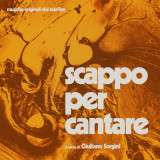
Another dream coming true! One of Giuliano Sorgini's finest and most sought-after titles is finally available as an official LP reissue – the first ever – remastered from the original tapes.
Originally released in 1971on the small library music imprint FAMA, which operated as a sub-label of RCA Italy, the record contains the original music written for Scappo per cantare, a small, pseudo-psychedelic 'musicarello' (musical comedy film) broadcast on RAI television and starring, among others, Italian singers Gianni Morandi and Mauro Lusini.
The only credited album artist is Sorgini, but it's impossible not to perceive, in this record, the hand of his close friend and colleague Alessandro Alessandroni.
This should not come as a surprise. In the early 70s, the two composers and multi-instrumentalists had a fruitful collaboration that saw them, under the monikers Braen (Alessandroni) and Raskovich (Sorgini), produce an abundance of works together, most of which have now gained the recognition they deserve. These include, among others, two 7" singles from their band The Pawnshop, three records in the series Alle sorgenti delle civiltà (Folkmusic), the crime/noir library albums Quarta pagina (Usignolo) and Inchiesta giudiziaria (Octopus Records), as well as the LP Tempo Libero (Panda Records), which was released shortly after the record presented here and in some ways drew rhythmic inspiration from it.
While their collaboration remained unacknowledged on the original release of Scappo per cantare (this was not uncommon at the time, especially in the field of library music), the record sounds perfectly in line with other works composed by Alessandroni in the early 70s, such as Complesso Gisteri's Mostra Collettiva (co-written with Oronzo De Filippi), or even a landmark album like Spontaneous, where Sorgini contributed to a handful of tracks.
So, yes, the sheer beauty of Scappo per cantare is the result of an incredible synergy between two heavyweights of Italian library music! Airy and sweeping melodies à la Zoo Folle, psychedelia à la Under Pompelmo, and various percussion instruments played by Sorgini seamlessly blend and fuse with elements and touches provided by Alessandroni.
More specifically, we find Alessandroni's signature, melancholy whistle in "Desolazione"; the peaceful and dreamy sound of his 12-string guitar in "Scogliere" and "Con Amore"; the trademark harmonies of his vocal ensemble Cantori Moderni in the last two tracks mentioned and in "Per cantare"; and his ingenious use of distortion on his Fender Stratocaster in the suspenseful transitions "Concentrazione" and "Fantocci", as well as in the frantic/hypnotic hippie numbers "Mordente" and "Fendente" (as a side note, it is worth remembering that Alessandroni experimented extensively with distortion in the rock-infused album Underground, co-written with De Filippi and released in 1971 under the moniker Braen's Machine, probably a reference to British psychedelic band Soft Machine).
The creative relationship between Sorgini and Alessandroni was so symbiotic that it would be useless to try to identify in more detail their respective contributions to the sound of Scappo per cantare. The alchemy between these two musical geniuses is the key to the album's exquisitely Italian mixture of cheerful lounge, sweet psychedelia and smooth easy listening.
To do justice to the quality of the music, this remastered reissue is enriched by a new artwork by Eric Adrian Lee, who drew inspiration from the psychedelic visual culture of the period in which the album was written and recorded.
Colbie Caillat ist eine meisterhafte Geschichtenerzählerin, deren luftige Folk-Pop-Songs aus SoCal sich mit schimmernden Country Songs vermischen, die sowohl den Schmerz des Endes als auch die Hoffnung auf das, was kommt, wenn man mutig genug ist, seinem wilden Herzen zu folgen, verkörpern.
Auf ihrer musikalischen Reise und beim Experimentieren mit neuen Klängen hat Caillat einen Moment in ihrem Leben in einem Lied festgehalten. Die in Kalifornien aufgewachsene und in Nashville lebende Sängerin singt voller Dankbarkeit dafür, dass sie diese Liebe kennengelernt hat und so viele Lektionen gelernt und die Freuden auf ihrem Weg geteilt zu haben. "Die Liebe, die ihr geteilt habt, sollte nicht verschwendet werden:
Ihr helft euch gegenseitig zu wachsen und ein weiserer und weiterentwickelter Mensch. Wir mussten zusammen sein, um zu werden, was wir heute sind, auch wenn wir nicht zusammen enden.
- A1: The Ghosts Of Christmas Eve
- A2: Boughs Of Holly
- A3: The World That She Sees
- A4: The World That He Sees
- A5: Midnight Christmas Eve
- B1: The March Of The Kings/Hark The Herald Angel
- B2: The Three Kings And I (What Really Happened)
- B3: Christmas Canon
- B4: Joy/Angels We Have Heard On High
- C1: Find Our Way Home
- C2: Appalachian Snowfall
- C3: The Music Box
- C4: The Snow Came Down
- C5: Christmas In The Air
- D1: Dream Child (A Christmas Dream)
- D2: An Angel’s Share
- D3: Music Box Blues
- D4: Christmas Jam (Live)
clear 2x12"[58,19 €]
Released in 1998, THE CHRISTMAS ATTIC earned double-platinum certification and continues to captivate audiences with fan favorites like “Music Box Blues,” “Boughs Of Holly,” and “Ghosts Of Christmas Eve.” The album also introduced “Christmas Canon,” which has become one of the band’s most popular songs and a modern holiday classic. THE CHRISTMAS ATTIC tells the heartwarming tale of a little girl’s magical night spent in an attic filled with yuletide memories, accompanied by spellbinding guitar solos and soaring choral vocals set against a rock orchestral backdrop. The record serves as the second installment in TSO’s celebrated Christmas trilogy, which also includes Christmas Eve and Other Stories (1996) and The Lost Christmas Eve (2004).
TSO was conceived by the group’s late founder, composer, and lyricist Paul O’Neill. His ambitious vision was to create a progressive rock band that combined rock opera and classical rock with a dazzling live show that featured lights, lasers, and pyrotechnics. In the 1980s and 1990s, O’Neill produced several albums for the influential heavy metal band Savatage, which is how he connected with longtime collaborators Jon Oliva (vocals), Al Pitrelli (guitar), and Robert Kinkel (keyboards/producer).
With more than 10 million albums sold, TSO has inspired generations of fans to rediscover the multi-dimensional art form of rock opera. Since its touring debut in 1999, the band has emerged as one of the world’s top live acts, performing for over 10 million people across the globe, selling more than $280 million worth of tickets, and donating $11 million to charity.
- A1: The Ghosts Of Christmas Eve
- A2: Boughs Of Holly
- A3: The World That She Sees
- A4: The World That He Sees
- A5: Midnight Christmas Eve
- B1: The March Of The Kings/Hark The Herald Angel
- B2: The Three Kings And I (What Really Happened)
- B3: Christmas Canon
- B4: Joy/Angels We Have Heard On High
- C1: Find Our Way Home
- C2: Appalachian Snowfall
- C3: The Music Box
- C4: The Snow Came Down
- C5: Christmas In The Air
- D1: Dream Child (A Christmas Dream)
- D2: An Angel’s Share
- D3: Music Box Blues
- D4: Christmas Jam (Live)
black 2x12"[49,79 €]
Released in 1998, THE CHRISTMAS ATTIC earned double-platinum certification and continues to captivate audiences with fan favorites like “Music Box Blues,” “Boughs Of Holly,” and “Ghosts Of Christmas Eve.” The album also introduced “Christmas Canon,” which has become one of the band’s most popular songs and a modern holiday classic. THE CHRISTMAS ATTIC tells the heartwarming tale of a little girl’s magical night spent in an attic filled with yuletide memories, accompanied by spellbinding guitar solos and soaring choral vocals set against a rock orchestral backdrop. The record serves as the second installment in TSO’s celebrated Christmas trilogy, which also includes Christmas Eve and Other Stories (1996) and The Lost Christmas Eve (2004).
TSO was conceived by the group’s late founder, composer, and lyricist Paul O’Neill. His ambitious vision was to create a progressive rock band that combined rock opera and classical rock with a dazzling live show that featured lights, lasers, and pyrotechnics. In the 1980s and 1990s, O’Neill produced several albums for the influential heavy metal band Savatage, which is how he connected with longtime collaborators Jon Oliva (vocals), Al Pitrelli (guitar), and Robert Kinkel (keyboards/producer).
With more than 10 million albums sold, TSO has inspired generations of fans to rediscover the multi-dimensional art form of rock opera. Since its touring debut in 1999, the band has emerged as one of the world’s top live acts, performing for over 10 million people across the globe, selling more than $280 million worth of tickets, and donating $11 million to charity.
English: Melodies that stay in the ear, with at the same time merciless speed and brutality and always a clear political message – this is what the modern death metal band NECROTTED from Southern Germany stands for now more than 15 years! Founded back in 2008, the band from Abtsgmünd (Baden-Wuerttemberg) has since grown to become a notable force in the scene, constantly thrilling their growing fan base and the music press with both their musical releases and their energetic live shows. In the time of their existence, NECROTTED have already released four albums with ‘Anchors Apart’ (2012), ‘Utopia 2.0’ (2014), ‘Worldwide Warfare’ (2017) and ‘Operation: Mental Castration’ (2021) and two EPs with ‘Kingdom Of Hades’ (2010) and ‘Die For Something Worthwhile’ (2019). In addition, the quintet has played hundreds of live concerts over the years on smaller and bigger stages in various countries. Now, the new album ‘Imperium’ marks another milestone in the band’s history. The LP is once again designed as a concept album and consistently develops the elaborate storyline of its predecessor in a substantial as well as in a visual way. Also, NECROTTED continue to tread experimental parts in a musical way. Their proven recipe of melodic guitar riffs, thundering blast beats and oppressive slams is joined by more and more black metal elements. In the lyrics, which are basically written in English, there are also more and more text passages in the German native language, which are performed as usual in banefully deep growls and strident screams. ‘Imperium’ will be released in September 2023 via the label Reaper Entertainment Europe and will almost certainly leave a resounding echo in the field of contemporary, diversified death metal.
From the mountains of Utah to the trenches of Vimy Ridge, Elliott Brood's songs have travelled the gore and glory of history in equal measure for nearly a decade. With the stomp and thrash of their early albums, Elliott Brood carved their niche drawing from history and memory. As heavy and harrowing the past can be, for Elliott Brood, it is also a generous companion, giving the gift of appreciation for times of peace and grace. With Keeper, Elliott Brood's seventh album, the trio deals with the past in more personal terms. The title, which speaks to loyalty and longevity, sets the tone for an album that explores the strength of conviction, and how that strength is tested, again and again, over time. Thoughts of worthiness and dedication, and their emotional flip sides, inform a collection that sees the band exploring those battlefields much closer to home.
Rare Jazz-Funk album from 1978 by Headhunters founder.
Featuring an all-star line-up including Herbie Hancock.
Originally released in 1978 on Tobisha EMI Japan.
First vinyl reissue outside of Japan released in collab w/Totown Records. Comes with double side insert.
Paul Jackson (born in Oakland, California in 1947) needs little introduction. Paul began playing bass at the age of nine and was considered by many of his teachers to be a musical prodigy. Jackson was known as a “Musician’s Musician” and shaped a sound that launched a new direction in contemporary music: the so-called ‘Pulse Playing’, a trademark sound of close-meshed funk grooves combined with sensational rhythms. With this innovative approach, he influenced entire generations of jazz and funk musicians to come. Paul’s compositions were sampled by big acts from the likes of Prince, TLC, Mobb Deep and NWA…just to name a few.
Paul Jackson was a founding member of the Headhunters under Herbie Hancock (THE group responsible for their ground-breaking fusion and jazz-funk compositions that took the world by storm in the 70’s). The solid union between Hancock and Jackson has been especially evident in the many international tours they have made together…not to mention that he participated on most of the Headhunters albums and Herbie’s solo albums.
Paul has also worked as a producer and as a studio/live musician alongside acts such as Santana, Sonny Rollins and The Pointer Sisters. He was a frequent guest performer at renowned international festivals such as the Montreux and Newport events. Jackson’s composing has not gone without recognition and was nominated for Grammy Awards in 1974, 1975 and 1976. Like other highly talented, creatively motivated engineers of music, Paul has expanded his career to other mediums such as playing on blockbuster movie soundtracks such as “Death wish” and “Dirty Harry”.
Paul Jackson also wrote five solo albums worth listening to – including the monster of an album that is known as “Black Octopus” which is considered to be a kind of lost Headhunters album.
His debut album “Black Octopus” saw the light of day in 1978 and is a total piece of art filled with abstract sticky funky grooves, floating electric piano playing, strong thumping bass lines, raw heavy drums and amazing vocal acrobatics (Jackson himself takes vocals in 3 out of 5 songs, and his soulful singing voice strikes an emotional chord that does not go unnoticed).
On “Black Octopus” you’ll also find some of the best all-star musicians from the likes of Alphonse Mouzon (Roy Ayers, Betty Davis, Azar Lawrence)…and last but not least fellow Headhunters Bennie Maupin and Herbie Hancock himself.
With “Black Octopus” Paul Jackson wrote the book on how a jazz-funk-fusion album should sound like. The fact that the album was only distributed in Japan at the time (Jackson resided in Tokyo since the late 70’s, where he passed away in 2021) continues to increase its reputation as an album that is VERY hard to find. This is a must-have gem…not only for fans of jazz, funk and rare grooves, but also for DJs and collectors around the globe.
- 1: Gee Whiz, Look At His Eyes
- 2: Dance With Me
- 3: A Lovely Way To Spend An Evening
- 4: Your Love
- 5: Fools Fall In Love
- 6: To The Aisle
- 1: The Masquerade Is Over
- 2: A Love Of My Own
- 3: Promises
- 4: It Ain’t Me
- 5: For You
- 6: The Love We Shared
- 1: ‘Cause I Love You – Carla & Rufus
- 2: Deep Down Inside – Carla & Rufus
- 3: (Mama, Mama, Wish Me Good Luck
- 4: In Your Spare Times (Please Think Of Me)
- 5: The Masquerade Is Over
- 1: Kinda Think He Does
- 2: I Can’t Take It
- 3: I’ll Bring It Hone To You
- 4: I Didn’t Believe – Rufus & Friend
- 5: Yeah, Yeah-Ah – Rufus & Friend
This collection gathers together the entire album that made up
Gee Whiz in 1961 and the various singles Carla (and her
father Rufus, in some instances) recorded either side of that
release. As will be quite plainly heard, while Gee Whiz pursued
several other musical paths, the singles were almost entirely
R&B-based. And while Carla may have had to abdicate her
throne of Queen of Soul to Aretha Franklin, she is more than
worthy of her other moniker, the Queen of Memphis Soul.
PRSPCT Recordings and Redrum Recordz are a match made in the underground.
They bring you another groundbreaking release, this time building sonic bridges between the UK and The Netherlands.
Dutch Jungle legend Mike Redman is known for internationally spreading the Hardcore Jungle gospel as Deformer, Voodoom and under his own name since the early 90's. Recently his well received 'Roffadamn Jungle' track set international dance-floors on fire while paying tribute to the nightlife connoisseurs of bygone times, mixing UK inspired Jungle with uncompromising Rotterdam Hardcore.
This time around he's supported by the most legendary artists in the field providing stunning remixes. Such as UK Drum 'n Bass heroes Bizzy B and Ed Rush, both founders of the genre, providing remixes that knock you off your socks. He's also teamed up with hardcore legends Akira, Rotterdam Terror Corps as well as Mackadena providing that original sound of Rotterdam. Not to mention Redman's own ear-shattering remix under his alias Deformer, making this album a must-have for anyone that likes it ruff. By the way, the cover art by legendary graffiti artist Cosh is worth framing too!
Unadorned with any post-production tricks or overdubs, Garcia/Grisman breathes with naturalism and presence. You will effortlessly detect the full body of the instruments, witness the woody grain textures, and get lost in the surprisingly velvety qualities of Garcia's lullaby-like singing. Our pressing also marks the first time this delightfully joyous affair has been issued in analogue form. You will never hear a better-sounding Americana-styled recording.
Pals since the mid-1960s, Garcia and Grisman bonded over their love for traditional folk and bluegrass. The two teamed up amidst what became a gold rush of top-notch productivity and creativity for Garcia. Partnering with bassist Jim Kerwin and percussionist/fiddler Joe Craven, the pair approaches every passage with innate ease, as if either musician could finish the others sentence. The affable chemistry and soothing interplay wash over a selection of songs as notable for their diversity as the way Garcia and "Dawg" turn them into the equivalent of old friends you haven't seen in years.
Exquisite melodies and jewel-shaped notes decorate the simple, convivial structures of tunes that hop, jump, skip, skitter, and bop. The atmosphere is reminiscent of the legendary gypsy-jazz exchanges between Django Reinhardt and Stephane Grappelli, and equally sharp. Swirling with Middle Eastern modality, the closing 16-minute-plus rendition of Grisman's rippling "Arabia" – complete with a section based on a Cuban fold theme - is alone enough worth the price of admission to this sensational session. But there's so much more.
The quartet delves into Celtic themes ("Two Soldiers"), jazz-grass ("Grateful Dawg"), old-world ballads ("Russian Lullaby"), and Appalachian flavours ("Walkin' Boss") with nonpareil skill and soulfulness. Garcia and Grisman's tandem picking throughout epitomize sublime. And for many listeners, the duo's revised version of the Grateful Dead staple "Friend of the Devil" ranks as the finest-ever recorded, the pace patient, the narrative vocals heartfelt, and the synchronous solos tailor-made for the enveloping progression. Better yet, it's all captured in astonishing fidelity.
First ever commercial releases of New Orleans’ legend Alvin Batiste’s Spiritual Jazz albums created with the college band he instructed and led in Baton Rouge - Goes To Africa With Love and Live at The 1971 American College Jazz Festival Originally given away as souvenirs at Southern University, these albums contains deep Batiste originals and, on Live, are paired with excellent John Coltrane, Miles Davis and Freddie Hubbard covers. They are some of the most sought after albums of Americas 70s jazz underground. Each album contains extensive booklet detailing Batiste’s life and his time spent honing and recording this remarkable band of young students. That one of the great Spiritual Jazz albums of the era could be found in duplicate New Orleans thrift store in the 1980s goes a long way in illustrating the lack of acclaim this special and overlooked album maintained, even in a city where the Batiste name is musical royalty. The Southern University albums Alvin Batiste offered the world were novelies, not worthy of serious consideration, a moment captured, but not necessarily worthy of being collected or preserved by anyone not immediately involved in its creation. That changes now. With the release of the two Southern University albums, Now-Again continues a conversation begun with the late Kashmere Stage Band director Conrad O. Johnson and the issue of his high school students’ music as Texas Thunder Soul, and the continued belief that beautiful music created by youth - even under the most adverse circumstances - can always inspire us.
»Outside of the world«, the second album by Japanese trio Usurabi, is a rare pleasure – a guitar pop album that’s deep with spirit, bristling with energy, melodically rich and precious: full of life. It’s even more thrilling than its predecessor, 2021’s Remains of the Light, also released by An’archives, its eight songs falling together just perfectly. If you’ve ever swooned to the sound of rattling, humming organs on countless ‘60s garage rock sides, the wistful beauty of David Roback and Kendra Smith’s music as Opal, the brittle immediacy of those 80s EPs from New Zealand acts like The Clean and The Chills, you’ll find plenty to love here.
The line-up’s still the same: the songs are written by Toshimitsu Akiko, previously a member of Doodles and Aminome; playing behind her is drummer Morohashi Shigeki and bass player Kawaguchi Masami, who’d previously played together in Kawaguchi’s legendary Broomdusters, where Kawaguchi really started to establish himself as one of Japan’s greatest rock guitarists. But Usurabi is very much Toshimitsu’s vehicle, a space for her to gift her gorgeous songs to the world, with Kawaguchi and Morohashi helping guide the songs into the light. Indeed, one thing that’s particularly noticeable about »Outside of the world« is the way all three musicians act in service to what the songs demand.
So »Meet again, outside of the worl«” opens the album with a beautiful 60s garage sway, all buzzing organs and Toshimitsu’s beautifully clear voice. »Even if it’s a lie« bristles with energy and tension, its driving rhythms recalling groups like The Feelies, but with Toshimitsu’s surf rock guitar riding the waves. »Pura« is pensive and melancholy, its graceful slow motion dissolving into a free-form section where Kawaguchi and Morohashi drill down into the earth, a fiercely responsive rhythm duo, while waves of coruscating noise guitar soar out into the ether; »Waves« is a stately closer, crushing guitars cossetting a slow, martial rhythm.
Recorded over 2021 and 2022, »Outside of the world« is a more than worthy follow-up to both »Remains of the Light «and the limited cassette, »Further closer«, released in 2022 on Kawaguchi’s Purifivia imprint. It has Usurabi stretching out, letting their songs breathe when they need, and tightening the screws on other songs so they become perfect pop statements. There’s plenty of joy and pleasure here, and a gentle but determined melancholy; inviting and beautifully sculpted, Outside of the world is a quiet masterpiece.
Edition of 400, comes in a 2 colors (gold & black) silkscreened on heavy jacket with obi (black or patterned light pink), with inserts and a postcard. Special A3 (fold out) full color & duotone insert by Andrew Chalk. Printed by Alan Sherry. Liner notes by Jon Dale.
Singular Texan musician Craig Clouse hurtles unstoppably towards the 20th birthday of his dancefloor-splintering electronic project Shit And Shine, releasing a landmark LP, his first full-length for The state51 Conspiracy, ‘2222 And AIRPORT’. Acid house, minimal techno, electro, funk, krautrock, hip hop, found sound, spoken word, live percussion and industrial are blown apart stupendously and then reassembled – mad-scientist style, in a way peculiar to Clouse – into 13 hypnotic and transportative tracks.
Lead single SWISS, out 24 March, is a gloriously minimalist funk jam that sounds like the exact point at which someone turns the lights off at a lowkey house party and a wild night for the ages gets under way. An almost scornfully skeletal riff, sounding like a misfiring Cyberdine Systems Model 101 summoning up a Prince circa Sign “O” The Times riff while crashing head first into the hyper-processed early work of Prefuse 73, also featuring a cheeky sample of revered Mancunian DJ Luke Una talking about “existential fucking darkness”.
This is followed on 4 April by INFINITE SHITE, arguably the epic central track to the album, is a Shit And Shine banger for the ages, its dancefloor affect, undeniable. An unforgiving, pulsating Byetone-style bass drone worthy itself of being blasted on a Funktion-One rig, is just the background for a colossal acid b-line, destroying all in its path.
Micro details bristle at the liminal level, threatening to only reveal themselves to those in a club, those listening on headphones or those experiencing a heightened sensory state.
The first ever release of electronic Jaglara, an obscure dance music being innovated in an area near the Sudan, Ethiopia, and Eritrea border called Fashaga.
Among the most raucous, hypnotic, addictive, and celestial dance styles being made anywhere in Africa, this heavy, mysterious sound is being led by one man: Jantra, which translates as "craziness," a moniker bestowed to celebrate both his personality and sound. Jantra is a rather unknown quantity even in Sudan, outside of the circles which have granted him cult status to perform at their humble gatherings or at street parties far from the gaze of the cities.
Jaglara, which roughly translates as improvisation, has no songs. Jantra simply freestyles a combination of his melodies incessantly for hours on end, acting as a live producer and DJ for emphatic crowds, where the energy of his 155 - 168 BPM music is known to inspire the odd gunslinger to raise and fire his pistol in the middle of the dance floor. His music is hopeful in a hopeless world, uplifting in spirit, ancient and new, childish and mature, familiar yet refreshingly obscure, fueled by the hypnotic Sera rhythm. His Yamaha keyboard is specially tweaked to achieve what you're hearing — the perfect, sweet key tone, literally universal in its appeal.
A hybrid reissue-contemporary album, Ostinato combined extracted individual melodic patterns, rhythms, and MIDI data from Jantra's Yamaha keyboard with his older cassette and digital recordings to recreate his lengthy sessions into individual dance tracks for a worldwide audience to reach the enviable frenzy of Sudanese crowds. This promising new dance music emerging from the deepest reaches of Sudan has never made its way outside of Jantra's parties, let alone outside of the country.
This record is confirmation that the many electronic styles being exported from Africa have a worthy sibling and rival—Jantra's signature electronic Jaglara from the Fashaga underground. It is a privilege of the highest order to be exposed to this unheralded, incredibly well kept rural Sudanese secret.
First ever commercial releases of New Orleans’ legend Alvin Batiste’s Spiritual Jazz albums created with the college band he instructed and led in Baton Rouge - Goes To Africa With Love and Live at The 1971 American College Jazz Festival Originally given away as souvenirs at Southern University, these albums contains deep Batiste originals and are some of the most sought after albums of Americas 70s jazz underground.
Each album contains extensive booklet detailing Batiste’s life and his time spent honing and recording this remarkable band of young students. Goes To Africa With Love was mixed from the original multi-track tapes and is now presented as a 2xLP with never-before-released instrumentals.
That one of the great Spiritual Jazz albums of the era could be found in duplicate New Orleans thrift store in the 1980s goes a long way in illustrating the lack of acclaim this special and overlooked album maintained, even in a city where the Batiste name is musical royalty. The Southern University albums Alvin Batiste offered the world were novelies, not worthy of serious consideration, a moment captured, but not necessarily worthy of being collected or preserved by anyone not immediately involved in its creation. That changes now.
With the release of the two Southern University albums, Now-Again continues a conversation begun with the late Kashmere Stage Band director Conrad O. Johnson and the issue of his high school students’ music as Texas Thunder Soul, and the continued belief that beautiful music created by youth - even under the most adverse circumstances - can always inspire us.
The Search for God is a wake-up call for a troubled world that’s still worth saving, animated by a belief in the power of small connections to add up to big changes. At 10 songs delivered in a brief 15 minutes, Jimmy Whispers’ long-awaited sophomore album feels present in a way that feels brand new for the cult auteur. Like many of us, Jimmy has been affected by the pressure of the past few years. After embracing sobriety in 2019, and now as a filmmaker sharing the stories of lesser known Los Angeles community members, he’s brought his dreaming down to earth, while turning its direction even further out.
Recorded with his longtime friend Ziyad Asrar of the band Whitney (and re-recorded after a hard drive incident destroyed the original files), The Search for God was created in the wake of Jimmy’s COVID isolation, and returns to some teen influences that are out of step with the chill/lo-fi LA indie rock scene he’s found himself lumped in with. Created mostly with two vintage synths, a single Roland CR5000 drum machine, and a busted karaoke machine, it channels Midwestern emo, the Beach Boys’ Smile, subtle nods at hyper-pop production, and forgotten jewel-box era college radio of the early aughts into a pure pop sound that transcends easy categorization.
The album’s standout single—and its statement of purpose—is “Hellscape,” which packs more into a minute and 40 seconds than you’d think possible: multiple immediately-unforgettable hooks, kaleidoscopic keyboards, and a bracing reminder that even the most transcendent moments are rooted in a world full of suffering. “This is a fucking hellscape,” Jimmy sings. “This is real life / this is happening.”
That may sound like punk nihilism, but The Search for God is anything but. Every lyrical acknowledgment of how fucked things are right now comes with a promise that we can still make positive changes. Jimmy calls it “God”; you might call it Love or Peace or A Place In the Universe That Makes Some Kind of Sense.
Will The Search for God deliver whatever that is to you? Of course not. At its heart, it’s still just a really good pop album. But maybe that’s enough. For a minute or two at a time, Jimmy’s music cracks open a space where the divine can enter our lives. The utopia we’ve all been dreaming of is already here if we’re just willing to build it. Jimmy Whispers is there, ready to add his voice, whenever we want to reach out.
- A1: Madman (4 22)
- A2: Keep Right On (5 30)
- A3: Reconsider (3 51)
- B1: When Will I Ever Learn 2 (3 44)
- B2: Out Of My Head Is The Way I Feel (3 05)
- B3: Carried Away (3 32)
- C1: Stoned Part 2 (4 13)
- C2: Positively Beautiful 2 (4 09)
- C3: Throw Me A Line (3 42)
- D1: Shame 2 (3 34)
- D2: Won’t Fade Away (4 05)
- D3: Keep On Keeping On (4 47)
Part 1[30,21 €]
Stoned Part II is Lewis Taylor's pure, perfect dance-pop album. His second self-released album and fourth album proper, it initially appeared on his own label Slow Reality in 2004. It's been licensed to Be With for this long-awaited double LP release, its first ever vinyl edition. Gravely misunderstood at the time by hardcore fans and the music press alike, it has aged quite magnificently. An experiment in the sounds of contemporary pop and dance music, Lewis's wonky take on funky pop would annihilate anything kicking around the charts, then or now. If only it were given half a chance.
Stoned Part II is brimming with Lewis's trademark soul, his singing as beautiful as ever, but the rhythms throughout are more upbeat, the overall sound a more smooth and slicker dance-funk presentation. Roughly half the tracks are absolutely essential, fascinating re-workings of tracks from the eternal Stoned Part 1, as Lewis explains: "When we were doing Stoned we were trying different approaches with everything so we ended up with more than one version of nearly all the songs which left us with more than an album's worth of material. There was a lot of really cool house tunes around at the time which we were both really into and that shaped the sound and production, some songs more directly than others." Amen to that.
The swoonsome, string-drenched opener "Madman" is quite the departure, a bleepy, bumping soulful disco-house record with a bassline to die for. Is there anything he can't do? It's followed by another huge dancefloor stomper, "Keep Right On" again riding another killer bassline over funky drums and featuring Lewis's dazzling vocals. There's no let-up with the sparkling "Reconsider" which sounds an awful lot like Daft Punk meets Nile Rodgers (prescient as ever, our Lewis). The wide-eyed French filtered house vibe is to the fore here, and how this wasn't picked up by someone like Kylie and taken wholesale to the top of the charts is something we'll never understand.
Opening the B-Side, "When Will I Ever Learn 2" really slaps, presenting a breezier, more upbeat funk take on the brilliant original and incorporating "From The Day We Met" from Stoned Part I. "Out Of My Head Is The Way I Feel" is absolutely fantastic and one of Lewis's very best songs. The vocals, self-harmonising and virtuoso playing are next level. To close out the side, "Carried Away" is a real standout, Lewis's gorgeous falsetto riding a quasi D&B groove to begin with before adorning a more classically funky 2-step rhythm. The marriage of undulating synths and guitars is stunning, giving way to Lewis indulging his goosebump-inducing Brian Wilson harmonies.
The funky, Rhythm King drum machine soul of "Stoned Part 2" refashions the original in the style of an unearthed Sly Stone classic, circa There's A Riot Going On. Yes, it's that good. On we then glide to "Positively Beautiful 2" which, if it's even possible, manages to be better than the original. The epic, orchestral opening truly captivates before Lewis truly gets down with kaleidoscopic dancefloor-slaying Philly soul-funk. It's surely tracks like this which help explain why he was soon to be tapped up by Dangermouse and Cee-Lo for the musical director role with Gnarls Barkley. "Throw Me A Line" closes out the side
"Shame 2" is a blissful, restrained version of the massive original, without the crazy psych-soul wig-out. Definitely more radio-friendly, that's for sure. The gorgeous mellow vibe continues with "Won't Fade Away", featuring more Beach Boys harmonies over a barely-there pulse (a version of which later pops up in an altered state on The Lost Album). The album bows out with - you guessed it - a psych-soul wig-out! "Keep On Keeping On", a real highlight, opens with looped sampled drums a la Massive Attack and Lewis's multi-layered self-harmonising again very much high in the mix. It amps up gradually to feature vocals dripping with tune and bite before screaming guitars and crashing drums really blast this whole set into the stratosphere.
Simon Francis’s vinyl mastering, approved by Lewis himself, presents the twelve tracks over a double LP so it sounds exactly as it should. The records have been cut by Cicely Balston at Air Studios and pressed at Record Industry. Allow Lewis Taylor to get you Stoned, Part II.
- A1: West End Girls
- A2: Love Comes Quickly
- A3: Opportunities (Let's Make Lots Of Money) (Let's Make Lots Of Money)
- A4: Suburbia
- B1: It's A Sin
- B2: What Have I Dont To Deserve This? (With Dusty Springfield)
- B3: Rent
- B4: Always On My Mind
- B5: Heart
- C1: Domino Dancing
- C2: Left To My Own Devices
- C3: It's Alright
- C4: So Hard
- D1: Being Boring
- D2: Where The Streets Have No Name/I Can't Take My Eyes Off You
- D3: Jealousy
- D4: Dj Culture
- D5: Was It Worth It?
- E1: Can You Forgive Her?
- E2: Go West
- E3: I Wouldn't Normally Do This Kind Of Thing
- E4: Liberation
- F1: Yesterday, When I Was Mad
- F2: Paninaro 95
- G4: New York City Boy (Usa Radio Edit)
- H1: You Only Tell Me You Love Me When You're Drunk
- H2: Home & Dry
- H3: I Get Along
- H4: Miracles
- H5: Flamboyant
- I1: I'm With Stupid
- I2: Minimal
- I3: Numb
- I4: Love Etc
- I5: Did You See Me Coming?
- J1: It Doesn't Often Snow At Christmas
- J2: Together
- J3: Winner
- J4: Leaving
- J5: Memory Of The Future
- K1: Vocal
- K2: Love Is A Bourgeois Construct
- K3: Thursday (Feat Example)
- K4: The Pop Kids
- L1: Twenty-Something
- L2: Say It To Me
- F3: Before
- L3: Dreamland (Feat Years & Years)
- F5: Single-Bilingual
- L4: Monkey Business
- G2: Somewhere
- L5: I Don't Wanna
- F4: Se A Vida E (That's The Way Life Is) (That's The Way Life Is)
- G1: A Red Letter Day
- G3: I Don't Know What You Want But I Can't Give It Any More
Teenage Waitress returns with the new album 'Your Cuckoo'. This album is the follow up to the critically acclaimed debut Love & Chemicals. “Melodies and storytelling. . basically" is how Daniel J. Ash of Southampton’s Teenage Waitress describes his eagerly anticipated second album Your Cuckoo. “It’s a bunch of characters singing songs about love, youth, drugs, boredom and of course, dancing”. ‘Your Cuckoo’ is a leap forward in every way for Teenage Waitress. Ash’s trademark ‘story songs’ are set to a backdrop of irresistible melodies, colourful arrangements and impeccable production. While noticeably a more focused effort than Ash’s previous effort Love & Chemicals, this album still offers a little something for everyone. For the recording of ‘Your Cuckoo’ Ash recruited some of his musical friends to join him in the studio, adding a rich new layer of musicianship to his latest songs. “We basically wanted to go a step ahead from where we got to last time. . and I think we’ve done that” smiles Ash “I’ve been a perfectionist in every sense and annoyed a lot of people to get to this point. I hope it was worth it!
“Come, Sweet Death” alternates between brutality and winding single string melodies that brings you back to the golden age of Swedish Death Metal! They say that the more things change the more they stay the same. If there’s one thing that has remained stable despite living in 2023 is that we love Swedish Death Metal. The style has become a favorite of ours over the past 35 years. Something about the guitar tone just makes you want to devour any release that can be described as “Inspired by early Entombed and Dismember”. The good thing is that there’s an incredible wealth of bands that draw from that well. The bad thing is that said wealth leads to a lot of bands becoming indistinguishable due to how same they are. Thankfully, Imperishable’s “Come, Sweet Death” manages to stand out from the pack, in no small part due to breaking away from the genre’s usual trappings. And in a way this is no surprise since the band members were or are involved in Vampire, Portrait, Nominon and Dr. Living Dead! As you might have already gathered, the band draws a lot from the Stockholm scene, more specifically Dismember, that is undeniable. What’s really interesting though is that they draw from their later, and more melodic influenced era as much as from the early days. Imperishable, like their peers effortlessly blends the aggressive buzzsaw riffing with leads brimming with melody, which most modern bands in the style avoid in favor of pure aggression. Said blend can be seen throughout their debut album, though it can be felt more on the longer tracks, like “Teeth of the Hydra” and “Fangs”, where the band has more room to develop their ideas and mix grinding Death Metal with NWOBHM-inspired leads and riffs. In short: Imperishable has great songs, great melodies, well-arranged structures and still is brutal, just like the great old bands were. And the production is spot on for this release. It is good to hear a band experiment beyond the confines of the original old school Swedish Death Metal sound. “Come, Sweet Death” is an extremely promising release, and a small breath of fresh air in an otherwise stale scene. Imperishable’s love for the more melodic aspects of the style make them worth keeping an eye on now and in future.
**BACK IN PRINT ON SINGLE LP**After three albums filled for the most part with quick song bursts and the occasional longer track, the eight-song long Bullhead found the Melvins stretching out a bit more at points, this time allowing the heavily stoned tempos plenty of time to really sprawl all over the place. There are fewer sudden shifts between fast and slow moments as well, and a lot more pure lava-flow beat-over-head feedback sludge and noise. It's not all ten mph deliberation, though - "Zodiac" shows the trio at full speed and blasting aside anything that might be so foolish as to get in its way, not to mention one unhinged Osbourne vocal lead. If grunge was achieving breakthrough status in Seattle, it was being perfected in its rawest sense on this album. Opening cut "Boris" does all this in excelsis - the band's longest recorded song at this point, nearly ten minutes long, it practically drips from the bongwater of eight million potheads, with Osbourne invoking his own brand of demons over the deep crawl of the music. Osbourne here really has got the dramatic, theatrical Ozzy Osbourne attitude down, with the occasional double-tracked vocals adding to the off-kilter intensity of the performances. Crover again shows his worth on the drums - he plays things slow most of the time but, crucially, never once sloppily - while Black keeps the bass going, however relatively unheard under Osbourne's guitar attack. "It's Shoved" is the not-so-secret highlight of Bullhead, Crover's brisker drum work and Black's sharp bass playing heralding a wild lead-guitar melody and a great ensemble performance. However, efforts like "Anaconda," with its slowly uncoiling power, and the intense "If I Had an Exorcism," which gets all the more wired and wound up as it goes (Black's bass here is some of her best), are no slouches. (All Music)
Black vinyl pressing 2022! "Funny to think there was a time not so long ago when Stiff Richards was a name that required explanation - but not to you, of course, o punk connoisseur. This is your territory, after all. Music is your oxygen and the sound of the underground is your clarion call. You can explain the distinction between 'Know Your Product' and 'No, You're Product'. Hey, you're probably pretty good-looking too. You know your shit, either way. So no wonder you're drawn to this relative holy grail of modern garage rock - the 2017 self-titled debut album by the aforementioned Stiff Richards. Originally released on their own Stiff Records (and again by Legless in 2020), it lays down all the elements that made last year's mighty 'State of Mind' LP such an instant classic. OK, we've established you know the drill, but let's recap: scintillating Aus-punk that recalls the heroic high-speed riffs of their countrymen The Saints and Radio Birdman. It sounds like Royal Headache covering Motörhead, or maybe the other way around. It's a full-on riot in 30 minutes - the rawest of rock'n'roll bleeding into the grimiest of power chords with hooks for days. You already know you're gonna love it. Whether going full-throttle and aiming straight for the nerve receptors that get your head a-nodding and your toes a-tapping - like on sub-three-minute highlight 'Strung Out' - or sludgin' their way through groovier cuts like 'Bustin' Out', they're never less than a treat that's guaranteed to get your serotonin flowing and your speakers up to 11 (or beyond). As a certain similarly-named record label once said, if it ain't Stiff, it ain't worth a fuck. Frightfully rude, but that's rock music for you, I suppose. Get it in your ears." - Will Fitzpatrick.
After his first appearance on Specimen Records as a part of the, SPECTRO-017 with his track “React”, Arsonist Recorder now comes with a first solo-EP on the label, Arsonist Recorder now comes with a first solo-EP on the label, in which the producer reaches back into some deeper, almost trippy states of mind, accompanied by some ultimately addictive electro grooves.
The first track, “Vaxxer”, which also titles the EP, puts up a warehouse-worthy beat, handing out bass-punches as it moves along. A rude hi-hat pattern shuffles the groove, and once the rhythm has you hooked, some lush eerie synth patterns start to emerge transporting the listener to the rooftop of a skyscraper in a dystopian city.
Next up is “Oxidant”, which was written with a close friend in mind who was going through some difficult times. The strong determination of the pulsating bass, overlayed by a very emotional melodic element leads you from the contrast to unity, refecting, pushing forward.
“Multiverse” comes in with a thunderous boom, reminiscent of a huge spaceship landing, which could be a metaphor for events that land on top of our heads, which we have no control over and have to deal with. The track introduces an infectious 808-groove, building up, and some chilling synths warp their way straight into your mind to de-program all the viruses in there and set you free from any mind-control.
Finally, finishing off is “Shiffty”. It lands straight away with a heart-pounding beat, with bass-bots bouncing, adding an ultra-funky bassline that will keep your feet moving. Waves of synthy-bliss wash over as this groove connects all your individual elements together.
- A1: Boat
- A2: Salt Water
- A3: Eyes Closed
- A4: Life Goes On
- A5: Dusty
- A6: End Of Youth
- A7: Colourblind
- B1: Curtains
- B2: Borderline
- B3: Spark
- B4: Vega
- B5: Sycamore
- B6: No Strings
- B7: The Hills Of Aberfeldy
White Vinyl[36,93 €]
Ed Sheeran is set to release his new album ‘-‘ (Subtract) - the last in his decade-spanning mathematical album era - on 5 May 2023 through Asylum/Atlantic on vinyl, cassette and CD. An album that revisits Ed’s singer/songwriter roots, and one that was written against a backdrop of personal grief and hope, ‘-’ (Subtract) presents one of the biggest stars on the planet at his most vulnerable and honest.
In Ed’s own words - “I had been working on Subtract for a decade, trying to sculpt the perfect acoustic album, writing and recording hundreds of songs with a clear vision of what I thought it should be. Then at the start of 2022, a series of events changed my life, my mental health, and ultimately the way I viewed music and art.
Writing songs is my therapy. It helps me make sense of my feelings. I wrote without thought of what the songs would be, I just wrote whatever tumbled out. And in just over a week, I replaced a decade’s worth of work with my deepest darkest thoughts.
Within the space of a month, my pregnant wife got told she had a tumour, with no route to treatment until after the birth. My best friend Jamal, a brother to me, died suddenly and I found myself standing in court defending my integrity and career as a songwriter. I was spiralling through fear, depression and anxiety.
I felt like I was drowning, head below the surface, looking up but not being able to break through for air.
As an artist I didn’t feel like I could credibly put a body of work into the world that didn’t accurately represent where I am and how I need to express myself at this point in my life. This album is purely that. It’s opening the trapdoor into my soul. For the first time I’m not trying to craft an album people will like, I’m merely putting something out that’s honest and true to where I am in my adult life.
This is last February’s diary entry and my way of making sense of it. This is Subtract.”
Since he first learnt ‘Layla’ by Eric Clapton on guitar at the age of 12-years-old, Sheeran’s love of the singer/songwriter began. Growing up with the likes of Damian Rice, Bruce Springsteen and Bob Dylan playing on repeat in his parents’ house – artists that his dad, John, introduced him to – ‘-‘was always on Ed’s horizon. Yet as the songs and writing process took on a whole new meaning and direction after a series of hard-hitting events impacted Ed’s world in 2022, one thing that remained untouched was his strong desire to make a record anchored in his love of singer/songwriter compositions. And now, as he gears-up for the release of his most soul-baring work to date, ‘-‘ serves as a timely reminder for why Sheeran remains one of the most gifted lyricists of his generation; an artist who breaks down his own experiences for fans to seek comfort and belonging.
‘-‘ is the result of Sheeran pushing the boundaries of his songcraft, as he delivers the most profound songwriting of his career. Teaming-up with Aaron Dessner (The National) on writing and production after the pair joined forces following an introduction from mutual friend Taylor Swift, Ed and Aaron began crafting the album in February last year. Writing over 30 songs during their month-long studio stint, the album’s fourteen tracks are seamlessly tied together by exquisite production from paired back, folk-leaning textures to bolder, full-band/orchestral arrangements.
Ed Sheeran burst onto the UK music scene in 2011 with his debut album ‘+’. Rapidly establishing himself as a history-making artist, he followed with ‘x’, ‘÷’, ‘No.6 Collaborations Project’ and ‘=’ - a catalogue that has seen Sheeran become one of the world’s biggest musical success stories of the 21st century.
Ed Sheeran is set to release his new album ‘-‘ (Subtract) - the last in his decade-spanning mathematical album era - on 5 May 2023 through Asylum/Atlantic on vinyl, cassette and CD. An album that revisits Ed’s singer/songwriter roots, and one that was written against a backdrop of personal grief and hope, ‘-’ (Subtract) presents one of the biggest stars on the planet at his most vulnerable and honest.
In Ed’s own words - “I had been working on Subtract for a decade, trying to sculpt the perfect acoustic album, writing and recording hundreds of songs with a clear vision of what I thought it should be. Then at the start of 2022, a series of events changed my life, my mental health, and ultimately the way I viewed music and art.
Writing songs is my therapy. It helps me make sense of my feelings. I wrote without thought of what the songs would be, I just wrote whatever tumbled out. And in just over a week, I replaced a decade’s worth of work with my deepest darkest thoughts.
Within the space of a month, my pregnant wife got told she had a tumour, with no route to treatment until after the birth. My best friend Jamal, a brother to me, died suddenly and I found myself standing in court defending my integrity and career as a songwriter. I was spiralling through fear, depression and anxiety.
I felt like I was drowning, head below the surface, looking up but not being able to break through for air.
As an artist I didn’t feel like I could credibly put a body of work into the world that didn’t accurately represent where I am and how I need to express myself at this point in my life. This album is purely that. It’s opening the trapdoor into my soul. For the first time I’m not trying to craft an album people will like, I’m merely putting something out that’s honest and true to where I am in my adult life.
This is last February’s diary entry and my way of making sense of it. This is Subtract.”
Since he first learnt ‘Layla’ by Eric Clapton on guitar at the age of 12-years-old, Sheeran’s love of the singer/songwriter began. Growing up with the likes of Damian Rice, Bruce Springsteen and Bob Dylan playing on repeat in his parents’ house – artists that his dad, John, introduced him to – ‘-‘was always on Ed’s horizon. Yet as the songs and writing process took on a whole new meaning and direction after a series of hard-hitting events impacted Ed’s world in 2022, one thing that remained untouched was his strong desire to make a record anchored in his love of singer/songwriter compositions. And now, as he gears-up for the release of his most soul-baring work to date, ‘-‘ serves as a timely reminder for why Sheeran remains one of the most gifted lyricists of his generation; an artist who breaks down his own experiences for fans to seek comfort and belonging.
‘-‘ is the result of Sheeran pushing the boundaries of his songcraft, as he delivers the most profound songwriting of his career. Teaming-up with Aaron Dessner (The National) on writing and production after the pair joined forces following an introduction from mutual friend Taylor Swift, Ed and Aaron began crafting the album in February last year. Writing over 30 songs during their month-long studio stint, the album’s fourteen tracks are seamlessly tied together by exquisite production from paired back, folk-leaning textures to bolder, full-band/orchestral arrangements.
Ed Sheeran burst onto the UK music scene in 2011 with his debut album ‘+’. Rapidly establishing himself as a history-making artist, he followed with ‘x’, ‘÷’, ‘No.6 Collaborations Project’ and ‘=’ - a catalogue that has seen Sheeran become one of the world’s biggest musical success stories of the 21st century.
Toronto-based retro-soul artist Claire Davis shares her journey of self-worth and love on her debut album "Get it Right", out April 21st 2023, via LRK Records. This lively 10-track analog soul LP was recorded to an 8-track tape machine by engineer Braden Sauder in a converted garage- studio in Toronto, owned by the renowned instrumental jazz/hip-hop group, BADBADNOTGOOD. Featuring some of the city's top-flight musicians in the R&B/Soul scene, the album was laid down live-off-the-floor in one week during the winter of 2022. Davis shares, "My heart really lies in live performance so I wanted to recreate that experience as much as possible for this record by having the musicians all record together to tape. I feel like I personally thrive under the limitations that tape gives you; it offers the opportunity to
capture a vibe of a performance more so than chasing perfection. Knowing that my favourite soul records were recorded this way gives me an even deeper appreciation for the skill and talent involved in this process." "Get it Right" is a record born out of the faith that there's better things on the other side of fear.
Whether that's breaking toxic cycles or being truly honest about what is and isn't working in life. The first song written for the record was the title-track of the album which began as a jam between Davis on guitar, producer Scott McCannell on bass, and drummer Chino deVilla. "The lyrics were inspired by my relationship with my partner and the intention that we both have to work on healing ourselves in order to make our partnership work. I'd like to think that it's a love
song with a strong sense of maturity and understanding to it. And the whole record was really shaped around that idea of my relationships and experiences stemming from my own sense ofself-love add my desire to live and create from an authentic place."
The songs on the album feature co-writes from Scott McCannell, Kyla Charter, and Toronto production house Safe Spaceship Music, in addition to horn and background vocal arrangements by composer La-Nai Gabriel. Musicians include Heather Crawford on guitar,
Scott McCannell on bass, Adrian Hogan on keys, Chino de Villa on drums, Juan Carlos Medrano on percussion, Aphrose, Tegan Michelle Gordon and Chynna Lewis on background vocals, and horn section The Northern Soul Horns.
"Get it Right" follows up Davis' most recent 7" vinyl release of "Long Gone"/ "Times Have Changed" and most recent single release "Intuition" on LRK Records Huey Morgan played "Times Have Changed" on " The Huey Show " on BBC Radio Six
Tune of the week on David Bishops Street Sounds radio.
Karen Gabay played "Intuition" taken from the album on "The People" BBC Manchester
PURPLE VINYL
A Wednesday song is a quilt. A short story collection, a half-memory, a patchwork of portraits of the American south, disparate moments that somehow make sense as a whole. Karly Hartzman, the songwriter/ vocalist/guitarist at the helm of the project, is a story collector as much as she is a storyteller: a scholar of people and one-liners. Rat Saw God, the Asheville quintet's new and best record, is ekphrastic but autobiographical and above all, deeply empathetic. Across the album's ten tracks Hartzman, guitarist MJ Lenderman, bassist Margo Shultz, drummer Alan Miller, and lap/pedal steel player Xandy Chelmis build a shrine to minutiae. Half-funny, half-tragic dispatches from North Carolina unfurling somewhere between the wailing skuzz of Nineties shoegaze and classic country twang, that distorted lap steel and Hartzman's voice slicing through the din. Rat Saw God is an album about riding a bike down a suburban stretch in Greensboro while listening to My Bloody Valentine for the first time on an iPod Nano, past a creek that runs through the neighborhood riddled with broken glass bottles and condoms, a front yard filled with broken and rusted car parts, a lonely and dilapidated house reclaimed by kudzu. Four Lokos and rodeo clowns and a kid who burns down a corn field. Roadside monuments, church marquees, poppers and vodka in a plastic water bottle, the shit you get away with at Jewish summer camp, strange sentimental family heirlooms at the thrift stores. The way the South hums alive all night in the summers and into fall, the sound of high school football games, the halo effect from the lights polluting the darkness. It's not really bright enough to see in front of you, but in that stretch of inky void - somehow - you see everything. The songs on Rat Saw God don't recount epics, just the everyday. They're true, they're real life, blurry and chaotic and strange - which is in-line with Hartzman's own ethos: "Everyone's story is worthy," she says, plainly. "Literally every life story is worth writing down, because people are so fascinating." But the thing about Rat Saw God - and about any Wednesday song, really - is you don't necessarily even need all the references to get it, the weirdly specific elation of a song that really hits. Yeah, it's all in the details - how fucked up you got or get, how you break a heart, how you fall in love, how you make yourself and others feel seen - but it's mostly the way those tiny moments add up into a song or album or a person.
- 01: Eisenhower To The West Side
- 02: Do You Feel Fine?
- 03: Guillotine
- 04: Same
- 05: Money's Ran Off
- 06: Pray To Christ In Heaven
- 07: No Man For No Home
- 08: Last July
- 09: Sister Say
- 10: Dirt
- 11: I Tried
- 12: Summer City
- 13: Jess
- 01: Stay In Line
- 02: Get Your Fix
- 03: On Fear
- 04: Momma's Way
- 05: Herculean House Of Cards
- 06: The Leaving
- 07: In Between - Live
- 08: Ain't Nobody's Fault - Live
- 09: Fool's Gold - Live
- 10: Even Jesus Christ Had Died - Live
- 11: Eisenhower To The West Side (Ballad Reprise) - Live
- 12: Hammer Out The Edges
Gold Vinyl[35,84 €]
Trey Gruber's posthumous debut double LP Herculean House of Cards. A compilation of early demos, studio demos, and live recordings. A tortured songwriter and struggling addict who jolted the tired Chicago DIY scene with his own brand of primal despair, Trey Gruber and his band Parent were on track to join the ranks of Twin Peaks, Mild High Club, and Whitney. His death in 2017 at the age of 26 brought it all to a halt. In his final years Trey wrote and recorded hundreds of previously unheard demos, dandelions in the cracked concrete of 21st century disconnect, an alphabet's worth of which have been compiled by his family and friends for his only album: Herculean House Of Cards. The 26-song 2xLP covers years of material, from home tape recordings, sessions at Mathew Roberts (Mild High Club) & Paul Cherry's home studio, to a studio session with Charles Glanders (Whitney) at Chicago's Foxhall Studios, along with audio taken at The Hideout during his last live performance, among others. Though Gruber was an unrelenting perfectionist who was constantly self-deprecating about his best demos, Herculean House of Cards is a wholly comprehensive and accurate reflection of his infectious charisma and raw songwriting. He had a charmingly distinct way with words but also could be disarmingly vulnerable. Like he was in life, Gruber never shied away from being open with his struggles with alcoholism and addiction. On the vivid opener "Eisenhower to the West Side," he sings in painstaking detail of, "A jail-skin cell, a junkies fight/Corner-boys full of grace/And Jesus Christ full of spite." He told then-future bandmate flautist Rebecca Ridge, "It's not some Lou Reed glorification of drugs _ `makes me feel like a man'_ I talk about the disconnect and the ugliness. They're sad pop songs." But even with the pain and the darkness in his lyrics, Gruber's songs had an unmistakable sense of hope and catharsis.
- A1: Eisenhower To The West Side
- A2: Do You Feel Fine?
- A3: Guillotine
- A4: Same
- A5: Money's Ran Off
- A6: Pray To Christ In Heaven
- A7: No Man For No Home
- A8: Last July
- B1: Sister Say
- B2: Dirt
- B3: I Tried
- B4: Summer City
- B5: Jess
- C1: Stay In Line
- C2: Get Your Fix
- C3: On Fear
- C4: Momma's Way
- C5: Herculean House Of Cards
- C6: The Leaving
- D1: In Between - Live
- D2: Ain't Nobody's Fault - Live
- D3: Fool's Gold - Live
- D4: Even Jesus Christ Had Died - Live
- D5: Eisenhower To The West Side (Ballad Reprise) - Live
- D6: Hammer Out The Edges (Bonus Track)
Black Vinyl[35,84 €]
Trey Gruber's posthumous debut double LP Herculean House of Cards. A compilation of early demos, studio demos, and live recordings. A tortured songwriter and struggling addict who jolted the tired Chicago DIY scene with his own brand of primal despair, Trey Gruber and his band Parent were on track to join the ranks of Twin Peaks, Mild High Club, and Whitney. His death in 2017 at the age of 26 brought it all to a halt. In his final years Trey wrote and recorded hundreds of previously unheard demos, dandelions in the cracked concrete of 21st century disconnect, an alphabet's worth of which have been compiled by his family and friends for his only album: Herculean House Of Cards. The 26-song 2xLP covers years of material, from home tape recordings, sessions at Mathew Roberts (Mild High Club) & Paul Cherry's home studio, to a studio session with Charles Glanders (Whitney) at Chicago's Foxhall Studios, along with audio taken at The Hideout during his last live performance, among others. Though Gruber was an unrelenting perfectionist who was constantly self-deprecating about his best demos, Herculean House of Cards is a wholly comprehensive and accurate reflection of his infectious charisma and raw songwriting. He had a charmingly distinct way with words but also could be disarmingly vulnerable. Like he was in life, Gruber never shied away from being open with his struggles with alcoholism and addiction. On the vivid opener "Eisenhower to the West Side," he sings in painstaking detail of, "A jail-skin cell, a junkies fight/Corner-boys full of grace/And Jesus Christ full of spite." He told then-future bandmate flautist Rebecca Ridge, "It's not some Lou Reed glorification of drugs _ `makes me feel like a man'_ I talk about the disconnect and the ugliness. They're sad pop songs." But even with the pain and the darkness in his lyrics, Gruber's songs had an unmistakable sense of hope and catharsis.
- A1: Believe • A2. Pacifc Coast Highway (Feat. Larry June) • A3. Good Lookiní (Feat. Kamaiyah)
- A4: Helicopter Homicide (Feat. Conway The Machine & Big Body Bes)
- A5: Tonight • A6. Editorials (Feat. Curren$Y • A7. Daytons (Feat. Ramirez)
- B1: Almighty • B2. Stick Up Kids (Feat. Bandgang Lonnie Bands)
- B3: Earth Sky (Feat. Madeintyo) • B4. Monday Motivation
- B5: Winnipeg Winters (Feat. A$Ap Twelvyy) • B6. Six Figure Strolls (Feat. Sha Hef)
- B7: St. Nick The P
aEast Coast meets West Coast when Brooklyn’s own Harry Fraud teams up with Jay Worthy, the Los Angeles based rapper (by way of Canada) and LNDN DRGS front man, for the release of their collaborative album You Take The Credit, We’ll Take The Check. The duo dropped their last joint project back in 2020, Eat When You’re Hungry, Sleep When You’re Tired, which left their fans wanting to hear from the bi-coastal duo. Fraud and Worthy answered the call back in July of 2022, releasing the 14 track album, You Take The Credit, We’ll Take The Check, across all digital platforms to critical and commercial acclaim. Now available for the first time on vinyl,YTCWTC sounds better than ever. Entirely produced by Harry Fraud, YTCWTC features A$AP Twelvyy, BandGang Lonnie Bands, Big Body Bes, Conway The Machine, Curren$y, Kamaiyah, Larry June, MadeinTYO, Ramirez and Sha Hef.
Tape
A Wednesday song is a quilt. A short story collection, a half-memory, a patchwork of portraits of the American south, disparate moments that somehow make sense as a whole. Karly Hartzman, the songwriter/ vocalist/guitarist at the helm of the project, is a story collector as much as she is a storyteller: a scholar of people and one-liners. Rat Saw God, the Asheville quintet's new and best record, is ekphrastic but autobiographical and above all, deeply empathetic. Across the album's ten tracks Hartzman, guitarist MJ Lenderman, bassist Margo Shultz, drummer Alan Miller, and lap/pedal steel player Xandy Chelmis build a shrine to minutiae. Half-funny, half-tragic dispatches from North Carolina unfurling somewhere between the wailing skuzz of Nineties shoegaze and classic country twang, that distorted lap steel and Hartzman's voice slicing through the din. Rat Saw God is an album about riding a bike down a suburban stretch in Greensboro while listening to My Bloody Valentine for the first time on an iPod Nano, past a creek that runs through the neighborhood riddled with broken glass bottles and condoms, a front yard filled with broken and rusted car parts, a lonely and dilapidated house reclaimed by kudzu. Four Lokos and rodeo clowns and a kid who burns down a corn field. Roadside monuments, church marquees, poppers and vodka in a plastic water bottle, the shit you get away with at Jewish summer camp, strange sentimental family heirlooms at the thrift stores. The way the South hums alive all night in the summers and into fall, the sound of high school football games, the halo effect from the lights polluting the darkness. It's not really bright enough to see in front of you, but in that stretch of inky void - somehow - you see everything. The songs on Rat Saw God don't recount epics, just the everyday. They're true, they're real life, blurry and chaotic and strange - which is in-line with Hartzman's own ethos: "Everyone's story is worthy," she says, plainly. "Literally every life story is worth writing down, because people are so fascinating." But the thing about Rat Saw God - and about any Wednesday song, really - is you don't necessarily even need all the references to get it, the weirdly specific elation of a song that really hits. Yeah, it's all in the details - how fucked up you got or get, how you break a heart, how you fall in love, how you make yourself and others feel seen - but it's mostly the way those tiny moments add up into a song or album or a person.
Gargantuan volcanoes erupting with primal force, fountains of molten lava bursting sky high and massive boulders hurtling capriciously through the air. These potent and violently alluring images in the documentary series The Living Planet captivated Raoul Björkenheim's imagination in 1986. The search for a band name had come to an end. -”I was mesmerised. The name Krakatau sounded like a drum fill to me”. After studying at the Helsinki Conservatory for a year and the Berklee College of Music in Boston for three, Björkenheim relocated to Finland where he played in bands with Jone Takamäki, Antti Hytti and Tom Nekljudow, and later went on to work with composer and drummer Edward “Eetu” Vesala (1945-1999). His always original and highly demanding Sound & Fury workshops were a pivotal hotbed in the local improvised music scene, but after four years of Vesala's strict leadership Björkenheim felt a need to leave Sound & Fury behind and direct all of his attention towards Krakatau. The lineup on the first album “Ritual” consisted of reed virtuosos Jorma Tapio and Tapani Rinne, the bassist Sampo Lassila and two drummers, Michel Lambert and Heikki “Lefty” Lehto. “Krakatau’s debut album was very challenging to make, as I felt that it might be my one and only chance to record my own music, so I wanted it to be as intense and effective as possible”, says Björkenheim, “I was lucky enough to work with an incredibly talented cast of musicians. I can still listen to the album and feel satisfied that it really works. The first guitar solo illustrates what was to become my modus operandi: to try and play the electric guitar in unexpected ways.” Svart Records will release an expanded double LP version of Krakatau’s Ritual. Limited to 500 copies and due out on March 24th, the album contains an album’s worth of previously unheard material recorded in 1987 in Studio Helsinki and at the Finnish Broadcasting Corporation studio.
Sometimes, a change of view can transform a person’s world. On ‘Don’t Come Down’, the artist formerly known as Matt Pond PA can be found with his “shoulder on the concrete” of a pavement, scoping out the world anew. This granular realignment of perspective serves as an open door to the debut album from The Natural Lines. At once clearly Pond’s work yet a huge leap forward in its measured songcraft, melodic immediacy, collaborative detail and wryly questioning lyrics, the result is a gorgeous album of intimate reflections from a relocated, renamed, revivified talent.
Recorded with close collaborators and friends over a period that saw Pond make vital adjustments to his life, its stealth emergence reflects his desire to set a fresh pace for himself and come from somewhere new, somewhere more open.
Now based in Kingston, New York, with his partner and wild dog Willa, Matt explains the album’s gestation thus. “It was something different from the start. I wanted to write as purely as I could. Instead of getting stuck in the ‘tour, write an album, release an album, tour’ cycle, which is not a natural way of writing or living, I wanted to write an album and when it was done I wanted to make sure it was done. I didn’t want this feeling of, ‘Oh, we didn’t have time’, or, ‘I don’t know whether I believe in the songs but it’s coming out anyway.’ I used to be always racing to the finish line, but I’m not anymore.”
For Matt, the call to ring the changes came with the recognition of “a certain nihilism or narcissism” involved in making music. “In some ways, you have to get in your own head and I think I went too far with that, with drinking and shutting people out. In something that I believe is collaborative, it’s not helpful.”
“I quit lying,” he adds. “I checked my harsher tones. I cut my drinking down. I went to therapy and figured out how to stop shouting at cars.”
Car troubles inspire ‘No More Tragedies’, the album’s standout second track, where he wryly details his desire to dampen his twinned impulses to take pictures of license plates blocking his parking space or take bricks to said car windshields. Warming melodies and harmonies soothe his rage, a balance maintained elsewhere on the album.
A need for connection underpins the lilting ‘Alex Bell’, where Matt’s lyrics playfully reference the inventor of the telephone over a plaintive cello and bubbling keyboards – evidence of the album’s carefully nurtured arrangements. With nimble sequencing, ‘My Answer’ follows with a question: do artists really need to get messed-up to create? Matt may not have the answer, he admits, but he articulates the question beautifully, channelling the influence of Blue Öyster Cult’s ‘Don’t Fear The Reaper’ into a song of fleet, melodic electric-folk drive.
Featuring 17-year-old MJ Murphy on misty backing vocals, the softly insistent ‘Don’t Come Down’ is an album centrepiece, detailing a need to see things anew. Like The Flaming Lips writing a classicist piano ballad, the twinkling ‘Artificial Moonlight’ finds Matt writing late at night, illuminated by the lights from streetlamps. Finally, ‘Mahwah’ closes the album on a note of arrival. While Matt Pond PA’s albums emerged from the disconnection of touring and living in vans, Pond is now happily – cruel winters aside – ensconced in Kingston. “I have found a place I love. Mercury Rev lives near here. It is a cool place to be, an artistic, mountainous, wild place to live. So – maybe this is it.”
In the case of The Natural Lines, a sense of arrival suggests itself. For Matt, the album follows two decades’ worth of Matt Pond PA records and soundtrack works. In a career he once described as “a series of benign mistakes,” Matt travelled far, moving from his band’s starting point in Philadelphia to Florida, Oakland and beyond while releasing 14 well-received albums. In 2017, he declared his intent to retire the Matt Pond PA name, though it lived on briefly in the reissue of The State Of Gold and EPs such as Free Fall, a tribute to Philadelphia.
Now, the name change honours his collaborators. Among a revolving cast, one constant presence in his work has been Chris Hansen, who plays guitar, bass, keys, saxophone and vocals on The Natural Lines’ debut. Matt’s partner, Anya Marina, contributes vocals. Other band members number Hilary James (cello/vocals), Kyle Kelly-Yahner (drums), Louie Lino (keys), Sarah Hansen (horns), Sean Hansen (drums/bass), Kat Murphy (vocals) and, also on vocals, MJ Murphy, for whom Matt brims with praise: “She can do anything she wants to musically.”
A heartening rebirth for Pond and his friends, the result also pays warming, witty, reflective and infectious testimony to the value of reconfiguring one’s outlook. “Once I took control of my mind, I could see what I wanted to say more clearly,” says Matt. “Instead of random floods of mania and panic, I felt like I was composed and composing. It has become as simple as reading the words of a sentence in the right order. As small as the pause before I hit ‘send’.” A development, you might say, conducted along the most natural of lines.
You reach a point in life where the question of how to stay at the top of your game looms; the only real solution being, you change the game. Our Love, the new album from Caribou, is the sound of Dan Snaith doing just that. Our Love is due October 6th on City Slang and is the sixth studio album from Caribou. The album features collaborations with Jessy Lanza and Owen Pallett. It was mixed by David Wrench and features artwork by Jason Evans/ Matthew Cooper.
Our Love is formed around a mixture of digital pop production, hip hop inspired beats, muted house basslines and a love of shuffling garage that can be traced all the way back to the time of Start Breaking My Heart which are, of course, all filtered through Dan's own unique perspective. The warm analogue sounds of classic soul should not be overlooked either, for they weave themselves most intensely into the records DNA. In fact, Our Love is probably Caribou's most soulful record to date, chock-full of heartfelt lyrics and organic nature which cuts through bubbling synths and blissful euphoria of their synthetic constructions. It's not all downbeat of course, whilst some thoughts linger on mortality, loss and letting go, there is always an element of celebration.
Having followed up his Polaris Prize winning 2007 record Andorra with the universally adored Swim in 2010 (selling nearly 175, 000 copies worldwide and being named 'Album of the Year' by Rough Trade, Mixmag and Resident Advisor whilst also hitting The Guardian, Pitchfork, Spin and Mojo's Top 20), Dan has spent the intervening four years not only touring the world, bringing not only the sounds of Caribou to the stage but proving his immeasurable worth as a DJ with epic 7.5 hour long sets. In 2012 Caribou were personally invited to join Radiohead on the road whilst Dan released his first album under the guise of his dance floor loving pseudonym, Daphni, to widespread critical acclaim. Following the shape shifting sounds of JIAOLONG and the brightly textured, fluid constructions of Swim - both inward looking records in their own way - Dan withdrew to the basement once more to work on Caribou's next opus. Only he didn't: Our Love isn't the sound of isolated creation but the sound of Dan at his most connected - with love for his listeners, his collaborators and those closest to him.
It seems like an age since Icelandic producer Adalsteinn Gudmundsson's last album as Yagya, 2020's "Old Dreams and Memories." The first album to be released on his own label Small Plastic Animals it was followed by the four-track "Always Maybe Tomorrow" EP in 2021. "Faded Photographs" is his ninth studio album, the most involved and time-consuming project to date and collaborative on a scale not seen since 2012's "The Inescapable Decay of My Heart." It also marks an exceptionally confident return to the art of song-writing, but where that earlier album was a more upbeat dub techno-pop affair, "Faded Photographs" is nostalgic, wistful, reflective and steeped in poetic romanticism. Gudmundsson's love of the art of the album is also more pronounced here than ever before, almost every single track tied together by the particularly unifying use of triplet rhythms in combination with 4/4 beats, beguiling hushed vocals and enveloping, molten dub bass tones. Combined with a typical dedication to sound design and production, "Faded Photographs" is rendered an utterly seamless experience, demanding to be heard as a whole. Written and produced when we had become more distant and disconnected from one another than ever before, "Faded Photographs" brings together and showcases an ensemble of artists in a spirit of collaboration that flies in the face of adversity, a true product of its time.
A lot can happen in ten years.
Rewind back to Gateshead in 2008 - the producer Smoove is round his friend and keyboard player - Mike Porter's house. Together they are working on tracks for his project and all of a sudden they hear a heavenly voice from the neighbour. Transfixed by the vocals that are caressing their ears they go and investigate to find a youthful John Turrell doing his thing at a practice with a local band he played with when he wasn't teaching carpentry at the local college. Together they woo him with their Geordie charms and the initial line up of 'Smoove & Turrell' is born. The group instantly gel and soon after have penned the killer track 'I Can't Give You Up'...
Flash forward to 2019 and the carpentry community looks on with jealousy as the group has gone from strength to strength. Signed to the independent label Jalapeno Records they are now five albums deep and they have achieved multiple radio-playlisted singles, won awards, toured with the likes of Chic, gained sync success across the world and continue to wow venues in all continents with their thrilling live shows on the regular.
All of this in an age where attention spans are shorter than ever and there is more access to music than ever. This is certainly an achievement worth celebrating. Doubly so in fact as not only is it their ten year anniversary collection but also it is the 300th official release on Jalapeno Records so it only seems right that the occasion gets commemorated properly - a double gatefold LP with brass coloured vinyl somehow seems appropriate...
Comprising of 18 tracks taken from all five of their studio albums as well as two new barnstorming tunes exclusive to this release - it's a veritable feast of northern funk gems from start to finish. Favourites from their deep catalogue including 'Slow Down', 'Beggarman', 'In Deep', 'Have Love' and 'You Could've Been A Lady' are all present and correct, lining up next to the two newbies which also hold their own.
"But what about the new tracks!" we hear you cry - well Smoove's solo rework of The Spencer Davis Group - I'm A Man is the stuff of legend with physical copies changing hands for huge sums (if you are lucky enough to be able to locate one in the first place!). The track has long been a staple of S&T live sets but they've never laid it down in a studio recording... That is until now. It's a monster of a tune and the perfect way to kick proceedings off on this record.
That's not all though, as the lads also serve up the aptly reflective 'Give it Back'. It's signature Smoove & Turrell stuff - full of soul with deep and heartfelt lyricism. Turrell's chorus refrain "We love the ones who give it back" is typically honest and true of a band that prides themselves on community. Proper canny that. Proper canny.
CRIM, formed in 2011, is arguably the biggest punk band in Catalonia (Spain). These extremely talented musicians have achieved serious local fame, playing to thousands over and over again, and writing powerful songs that are in many ways driving a very much flourishing scene in Northern Spain. Crim's popularity outside the Catalonian region has been growing rapidly, as that same sense of authenticity trickles down into the music itself, and their "no compromise" approach to writing and performing powerful and catchy tunes is in many ways universal - and for fans, easily identifiable and inviting, regardless of what language they speak. Anyone has who is seen this band live or heard their albums can attest to the power and drive that fuels this impressively talented group of free thinking musicians. Their music delivers tenfold, showing people across the world that CRIM are a band worth paying attention to! This LP version is Aside/Bside Evergreen & Brown with lots of gold splatter vinyl! FFO Cock Sparrer, Leatherface, Social Distortion
- A1: Cream - I Feel Free
- A2: Buffalo Springfield - For What It's Worth
- A3: The Chiffons - He's So Fine
- A4: Davie Jones With The King Bees - Liza Jane
- A5: Canned Heat - Going Up The Country
- A6: Sandie Shaw - Long Live Love
- A7: The Delfronics - Didn't I (Blow Your Mind This Time) (Blow Your Mind This Time)
- A8: Rare Earth - Get Ready
- A9: Glenn Campbell - Gentle On My Mind
- B1: The Byrds - Eight Miles High
- B2: Procol Harum - A Salty Dog
- B3: Jackie Deshannon - The Weight
- B4: Jimmy Cliff - Wonderful World, Beautiful People
- B5: Strawberry Alarm Clock - Incense & Peppermints
- B6: Tina Mason - You Can Have Him
- B7: Chuck Berry - You Never Can Tell
- B8: Whistling Jack Smith - I Was Kaiser Bills Batman
- C1: The Spencer Davis Group - Keep On Running
- C2: Joe Cocker - Delta Lady
- C3: Satana - Evil Ways
- C4: Dana Gillespie - You Just Gotta Know My Mind
- C5: Harry Nilson - Everybodys Talkin
- C6: Marvin Gaye - I Heard It Through The Grapevine
- C7: Lesley Gore - Its My Party
- C8: Sam Cooke - (What A) Wonderful World (What A)
- C9: Quicksilver Messenger Service - Who Do You Love Pt.1
- D1: The Hombres - Let It Out (Let It All Hang Out) (Let It All Hang Out)
- D2: The Move - I Can Hear The Grass Grow
- D3: Janis Joplin With Big Brother & The Holding Company - Piece Of My Heart
- D4: The Walker Brothers - Make It Easy On Yourself
- D5: Aretha Franklin - Chain Of Fools
- D6: 13Th Floor Elevators - You're Gonna Miss Me
- D7: Cat Stevens - The First Cut Is The Deepest
- D8: Tommy Roe - Dizzy
- D9: Melanie - Beautiful People
Vol.1[39,87 €]
The Decades Collected compilations are part of the Collected compilation series, which is a collaboration between Universal Music and Music On Vinyl. The compilations bring together the biggest names of each decade, combined with forgotten hits and less discovered gems, giving the listener an experience of listening to their favourite tunes while uncovering new musical grounds at the same time.
Hayley released her highly anticipated sophomore album ‘PANORAMA’, on 29th July 2022 on CD, & vinyl 3rd March 2023. Co-written by Hayley and produced by Kiyoko, Danja (Beyoncé, Britney Spears) and Pat Morrissey & Kill Dave, the transformative 12-track collection featured previously released singles, “For The Girls,” “Deep In The Woods,” “Chance,” and “Found My Friends”
“I went through a period of time after my last album where I'd lost my confidence and my self-worth. Thankfully I was surrounded by friends and family who kept me grounded, always supporting me in my lowest moments and reminding me who I was along the way. ‘Panorama’ was the last song I wrote for this album, in a moment of clarity to enjoy the present and not let my trauma define me. One of my favourite lyrics from this song is ‘I’m done confusing all these ashes with my worth,’ which is a metaphor for when we measure our own value only by our struggles and hardships, but in reality, our worth is unwavering. We just need to give ourselves the space to appreciate the highs and the lows of this beautiful journey.” – HAYLEY KIYOKO
In 2018, Hayley was at a high point. Following the success of her gold-certified anthem “Girls Like Girls,” Hayley’s landmark debut album, EXPECTATIONS, reacted with tastemakers and a legion of fans. Hayley resonated with a newfound community who brought her total streams to just shy of 1 billion as she sold out tours on multiple continents, lit up the stage at Coachella, and picked up “Push Artist of the Year” at the MTV VMAs.
Since her 2015 debut, Hayley has amassed over 606 million+ career WW audio streams, 507 million+ YouTube lifetime video views, and over 6 million followers across socials, notably 1.9m on Instagram and 1.7m on TikTok alone.
Lawrence Hayward knew that he wanted to be a pop star as a teen, and he devised a plan to release ten albums and ten singles over ten years to make that dream come true. A particular and determined individual, he would only be known as Lawrence from that day forward. His hopes for stardom would be pinned on his newly formed band, the succinctly named Felt. Soon signed to Cherry Red Records, Lawrence’s achingly cool vocals and the group’s way with walking melodies were evident on their debut for the label, “Something Sends Me To Sleep.” This compilation collects material from Felt’s Cherry Red period of 1981 to 1985, kicking off with that confident start, assembling numerous high points, and closing with their biggest hit, “Primitive Painters.”
This phase of the band is defined by the songwriting partnership and unique interplay of Lawrence and guitarist Maurice Deebank, with Deebank’s stylish and confident playing the envy of many of their counterparts. He delivers a constant string of shimmering hooks that wrap themselves around and over top of Lawrence’s more traditional beat combo song structures, as if trying to fit four songs worth of ideas into a pre-set radio friendly cutoff time. It works wonderfully as Lawrence always counters with a solid bedrock.
In one of many brushes with the brass ring, in 1984 Felt recorded versions of “Dismantled King Is Off The Throne” and “Sunlight Bathed The Golden Glow,” for the newly formed and Warners-backed label Blanco y Negro, in hopes that the band would follow their A+R man Mike Alway to the executive suite. Despite putting forward two of their finest songs, it was not to be. While major label dreams had to remain on the shelf, fans were delighted to be able to hear these beautifully stripped down and more direct versions when this compilation was released a few years later.
By 1985 the Felt roller coaster was something Maurice Deebank was constantly getting on and off of. As Gary Ainge always kept the beat, and Lawrence never lost focus, they were joined by local teen prodigy Martin Duffy on keyboards, filling out the arrangements, and following Deebank’s racing six-string cascades in “The Day The Rain Came Down” you can even hear a tiny hint of the next phase of the band in Duffy’s organ before Maurice swoops to the finish. The newly expanded Felt would then put everything they had into making one of the defining releases of the 80s: “Primitive Painters.”
Lawrence Hayward knew that he wanted to be a pop star as a teen, and he devised a plan to release ten albums and ten singles over ten years to make that dream come true. A particular and determined individual, he would only be known as Lawrence from that day forward. His hopes for stardom would be pinned on his newly formed band, the succinctly named Felt. Soon signed to Cherry Red Records, Lawrence’s achingly cool vocals and the group’s way with walking melodies were evident on their debut for the label, “Something Sends Me To Sleep.” This compilation collects material from Felt’s Cherry Red period of 1981 to 1985, kicking off with that confident start, assembling numerous high points, and closing with their biggest hit, “Primitive Painters.”
This phase of the band is defined by the songwriting partnership and unique interplay of Lawrence and guitarist Maurice Deebank, with Deebank’s stylish and confident playing the envy of many of their counterparts. He delivers a constant string of shimmering hooks that wrap themselves around and over top of Lawrence’s more traditional beat combo song structures, as if trying to fit four songs worth of ideas into a pre-set radio friendly cutoff time. It works wonderfully as Lawrence always counters with a solid bedrock.
In one of many brushes with the brass ring, in 1984 Felt recorded versions of “Dismantled King Is Off The Throne” and “Sunlight Bathed The Golden Glow,” for the newly formed and Warners-backed label Blanco y Negro, in hopes that the band would follow their A+R man Mike Alway to the executive suite. Despite putting forward two of their finest songs, it was not to be. While major label dreams had to remain on the shelf, fans were delighted to be able to hear these beautifully stripped down and more direct versions when this compilation was released a few years later.
By 1985 the Felt roller coaster was something Maurice Deebank was constantly getting on and off of. As Gary Ainge always kept the beat, and Lawrence never lost focus, they were joined by local teen prodigy Martin Duffy on keyboards, filling out the arrangements, and following Deebank’s racing six-string cascades in “The Day The Rain Came Down” you can even hear a tiny hint of the next phase of the band in Duffy’s organ before Maurice swoops to the finish. The newly expanded Felt would then put everything they had into making one of the defining releases of the 80s: “Primitive Painters.”
- A1: Ringa Ringa (The Old Pandemic Folk Song) (Feat. The Mediaeval Baebes)
- A2: Day One (Feat. Dina Ipavic)
- A3: Are You Alive? (Feat. Penelope Isles)
- B1: You Are The Frequency (Feat. The Little Pest)
- B2: The New Abnormal
- C1: Home (Feat. Anna B Savage)
- C2: Dirty Rat
- C3: Requiem For The Pre-Apocalypse
- D1: What A Surprise (Feat. The Little Pest)
- D2: Moon Princess (Feat. Coppe)
White Vinyl[33,24 €]
DOUBLE BLACK LP : 2 x 140 G Black Vinyl , Sleeve & 2 x Heavy Weight Printed Inner with UV Gloss Finish
Legendary electronic music duo Orbital return Early 2023 with new album “Optical Delusion”, the Hartnoll brothers first studio album since 2018’s Monster’s Exist. Recorded in Orbital’s Brighton studio, “Optical Delusion” includes contributions from Sleaford Mods, Penelope Isles, Anna B Savage, The Little Pest, Dina Ipavic, Coppe, and perhaps most surprisingly, The Medieval Baebes.
Earlier this year, Orbital celebrated their storied history with “30 Something” which, unlike other Best Of’s, contains reworks, remakes, remixes and re-imaginings of landmark Orbital tracks including “Chime”, “Belfast”, “Halcyon”, “Satan”, and “The Box”
SHORT BIOG:
“A human being experiences himself, his thoughts and feelings as something separate from the rest of humanity – a kind of optical delusion of his consciousness. This delusion is a kind of prison for us, restricting us to our personal desires and to affection for a few persons nearest to us. Our task must be to free ourselves from this prison…”
You many have seen this quote attributed to Albert Einstein on social media, the archetypal Smartest Guy Ever apparently having an out-of-character religious epiphany. It certainly leapt out at Paul Hartnoll of Orbital who spotted it in Michael Pollan’s 2018 book How to Change Your Mind: What the New Science of Psychedelics Teaches Us About Consciousness, Dying, Addiction, Depression and Transcendence.
“As soon as I saw ‘optical delusion’ I thought Oh hey, that’s the album title,” says Paul. “It just seemed to say so much about how people construct their own realities, how we see patterns that aren’t there, how we see what we want to see.
“But it’s actually a misquote. He never quite said that. In the German original what he’s really saying is that human experience is as relative as physics. Wouldn’t it be good if we could accept that, and find a kind of universal theory of everything for the human race? Then you look at everything from history to art to your Twitter feed and you think yeah, that’s what we’re all trying to do all of the time…”
Hence ‘Optical Delusion’, the tenth original Orbital album and the latest in a burst of renewed post-pandemic creativity for two brothers who’ve stayed at the top of their game longer than anyone from the post-1988 Class of Acid House.
Now with ‘Optical Delusion’ the Hartnolls dig deeper into the unquiet psyche of our increasingly surreal and disordered world. Sketched out partly during lockdown but fully recorded in the uncertain After Times, the album summons up conflicting emotions and sometimes beguiling images from years when the science fiction doomsdays that the Hartnolls watched on TV as kids finally came true. There are mesmeric tracks with names like ‘The New Abnormal’ and ‘Requiem For The Pre-Apocalypse’ and ‘Day One’. But there are also straight-up bangers and ethereal cosmic dreams, abstract sound wars and deeply human songs of separation and loss.
And it all starts with a bang. Lead single ‘Dirty Rat’, an outright Fall-meets-Front-242 class rant with vocals by Sleaford Mods mob orator Jason Williamson, harks right back to the Hartnolls’ days of politicised anarcho-squatpunk. It began as a remix swap (Orbital did the Sleafords’ ‘I Don’t Rate You’) and morphed into a comic, brutal, bass-driven harangue not so much against our rulers but at the petty, mean-spirited, frightened, Mail-reading voters who put them there: the people who are “blaming everyone in hospital/blaming everyone at the bottom of the English Channel/blaming everyone who doesn’t look like a fried animal.”
Also key to the album is opening track ‘Ringa Ringa (The Old Pandemic Folk Song)’ which returns to an Orbital truism, that time always becomes a loop. This chugging, cyclical Orbital groove gives way to an unnerving past-meets-present timeslip fit for ‘Sapphire And Steel’ as goth maenads The Mediaeval Baebes materialise to sing ‘Ring O’Roses’ – the innocent nursery rhyme whose roots are in the Black Death.
“I’ve always liked folk music and mediaeval sounds,” says Paul, himself an occasional Morris dancer. “I had the basis of that track and I wanted to spin it off somehow.” Trawling his archives he stumbled on The Mediaeval Baebes’ version of ‘Ring O’Roses’ “and my hackles just went up. I was like, my God, this is the original pandemic folk song.”
?his being Orbital, there are collaborations galore on the album, the roles once played by Alison Goldfrapp, Lady Leshurr or David Gray now filled by new talents. London singer-songwriter Anna B Savage contributes a compellingly fragile, Anohni-like vocal to ‘Home’, in which nature reclaims the scorched and vacant mega-cities. ‘Day One’ is a pulsing techno track featuring the singer Dina Ipavic. Paul got in touch with her after working on a score for a sculpture show of giant robotic installations by his friend Giles Walker during the pandemic. First Paul cut up his own score and Ipavic’s vocals on the track The Crane, which appears on the deluxe version of the album. Then he thought, Why not work with her for real? The result is school of ‘Belfast’, a bassy dreamscape with vocalised clouds billowing above.
The pensive ‘Are You ?live?’ adds to the Orbital product range of existential questions (‘Are We Here?’, ‘Where Is It Going?’) in collaboration Bella Union signings Penelope Isles, AKA brother and sister act Lily and Jack Wolter. “They’re our studio mates, they work upstairs!” says Paul happily. “And they’ve both got amazing voices.”
But Orbital are Orbital and never far from the dancefloor. “Eventually the more abrasive bits came back into the fold…” ‘You Are The Frequency’, first of two tracks to feature mysterious vocalist The Little Pest, surrounds the listener with warped voices ordering you to the dancefloor (Phil: “we wanted the idea that the music is kind of absorbing you”). And the second, the sinister ‘What A Surprise’, traps you in a paranoid electronic hall of mirrors.
In another nod to Orbital’s resurgent past the cover artwork once again comes from fine art painter John Greenwood, creator of fantastical grotesques for the covers of ‘Snivilisation’, ‘In Sides’ and Orbital’s most recent album, 2018’s ‘Monsters Exist’. Orbital had just had a slick Mark Farrow cover for ‘30 Something’ – this is a return to the overripe and bulbous techno-organic constructions that somehow express Orbital’s own uncontrollably fertile sound.
There are gaps in the future that Orbital are desperate to fill too; there will be tours and festivals and rooms and fields full of people. Those long paralysed months when we had little to look forward to but a Zoom DJ set made Paul and Phil appreciate the things that make life worth living.
- A1: Ringa Ringa (The Old Pandemic Folk Song) (Feat. The Mediaeval Baebes)
- A2: Day One (Feat. Dina Ipavic)
- A3: Are You Alive? (Feat. Penelope Isles)
- B1: You Are The Frequency (Feat. The Little Pest)
- B2: The New Abnormal
- C1: Home (Feat. Anna B Savage)
- C2: Dirty Rat
- C3: Requiem For The Pre-Apocalypse
- D1: What A Surprise (Feat. The Little Pest)
- D2: Moon Princess (Feat. Coppe)
Black Vinyl[31,05 €]
2 x Solid White LP, 5mm spine Sleeve UV Gloss Finish, 2x Heavy Weight Printed Inner Sleeve UV Gloss finish, marketing sticker.
Legendary electronic music duo Orbital return Early 2023 with new album “Optical Delusion”, the Hartnoll brothers first studio album since 2018’s Monster’s Exist. Recorded in Orbital’s Brighton studio, “Optical Delusion” includes contributions from Sleaford Mods, Penelope Isles, Anna B Savage, The Little Pest, Dina Ipavic, Coppe, and perhaps most surprisingly, The Medieval Baebes.
Earlier this year, Orbital celebrated their storied history with “30 Something” which, unlike other Best Of’s, contains reworks, remakes, remixes and re-imaginings of landmark Orbital tracks including “Chime”, “Belfast”, “Halcyon”, “Satan”, and “The Box”
SHORT BIOG:
“A human being experiences himself, his thoughts and feelings as something separate from the rest of humanity – a kind of optical delusion of his consciousness. This delusion is a kind of prison for us, restricting us to our personal desires and to affection for a few persons nearest to us. Our task must be to free ourselves from this prison…”
You many have seen this quote attributed to Albert Einstein on social media, the archetypal Smartest Guy Ever apparently having an out-of-character religious epiphany. It certainly leapt out at Paul Hartnoll of Orbital who spotted it in Michael Pollan’s 2018 book How to Change Your Mind: What the New Science of Psychedelics Teaches Us About Consciousness, Dying, Addiction, Depression and Transcendence.
“As soon as I saw ‘optical delusion’ I thought Oh hey, that’s the album title,” says Paul. “It just seemed to say so much about how people construct their own realities, how we see patterns that aren’t there, how we see what we want to see.
“But it’s actually a misquote. He never quite said that. In the German original what he’s really saying is that human experience is as relative as physics. Wouldn’t it be good if we could accept that, and find a kind of universal theory of everything for the human race? Then you look at everything from history to art to your Twitter feed and you think yeah, that’s what we’re all trying to do all of the time…”
Hence ‘Optical Delusion’, the tenth original Orbital album and the latest in a burst of renewed post-pandemic creativity for two brothers who’ve stayed at the top of their game longer than anyone from the post-1988 Class of Acid House.
Now with ‘Optical Delusion’ the Hartnolls dig deeper into the unquiet psyche of our increasingly surreal and disordered world. Sketched out partly during lockdown but fully recorded in the uncertain After Times, the album summons up conflicting emotions and sometimes beguiling images from years when the science fiction doomsdays that the Hartnolls watched on TV as kids finally came true. There are mesmeric tracks with names like ‘The New Abnormal’ and ‘Requiem For The Pre-Apocalypse’ and ‘Day One’. But there are also straight-up bangers and ethereal cosmic dreams, abstract sound wars and deeply human songs of separation and loss.
And it all starts with a bang. Lead single ‘Dirty Rat’, an outright Fall-meets-Front-242 class rant with vocals by Sleaford Mods mob orator Jason Williamson, harks right back to the Hartnolls’ days of politicised anarcho-squatpunk. It began as a remix swap (Orbital did the Sleafords’ ‘I Don’t Rate You’) and morphed into a comic, brutal, bass-driven harangue not so much against our rulers but at the petty, mean-spirited, frightened, Mail-reading voters who put them there: the people who are “blaming everyone in hospital/blaming everyone at the bottom of the English Channel/blaming everyone who doesn’t look like a fried animal.”
Also key to the album is opening track ‘Ringa Ringa (The Old Pandemic Folk Song)’ which returns to an Orbital truism, that time always becomes a loop. This chugging, cyclical Orbital groove gives way to an unnerving past-meets-present timeslip fit for ‘Sapphire And Steel’ as goth maenads The Mediaeval Baebes materialise to sing ‘Ring O’Roses’ – the innocent nursery rhyme whose roots are in the Black Death.
“I’ve always liked folk music and mediaeval sounds,” says Paul, himself an occasional Morris dancer. “I had the basis of that track and I wanted to spin it off somehow.” Trawling his archives he stumbled on The Mediaeval Baebes’ version of ‘Ring O’Roses’ “and my hackles just went up. I was like, my God, this is the original pandemic folk song.”
?his being Orbital, there are collaborations galore on the album, the roles once played by Alison Goldfrapp, Lady Leshurr or David Gray now filled by new talents. London singer-songwriter Anna B Savage contributes a compellingly fragile, Anohni-like vocal to ‘Home’, in which nature reclaims the scorched and vacant mega-cities. ‘Day One’ is a pulsing techno track featuring the singer Dina Ipavic. Paul got in touch with her after working on a score for a sculpture show of giant robotic installations by his friend Giles Walker during the pandemic. First Paul cut up his own score and Ipavic’s vocals on the track The Crane, which appears on the deluxe version of the album. Then he thought, Why not work with her for real? The result is school of ‘Belfast’, a bassy dreamscape with vocalised clouds billowing above.
The pensive ‘Are You ?live?’ adds to the Orbital product range of existential questions (‘Are We Here?’, ‘Where Is It Going?’) in collaboration Bella Union signings Penelope Isles, AKA brother and sister act Lily and Jack Wolter. “They’re our studio mates, they work upstairs!” says Paul happily. “And they’ve both got amazing voices.”
But Orbital are Orbital and never far from the dancefloor. “Eventually the more abrasive bits came back into the fold…” ‘You Are The Frequency’, first of two tracks to feature mysterious vocalist The Little Pest, surrounds the listener with warped voices ordering you to the dancefloor (Phil: “we wanted the idea that the music is kind of absorbing you”). And the second, the sinister ‘What A Surprise’, traps you in a paranoid electronic hall of mirrors.
In another nod to Orbital’s resurgent past the cover artwork once again comes from fine art painter John Greenwood, creator of fantastical grotesques for the covers of ‘Snivilisation’, ‘In Sides’ and Orbital’s most recent album, 2018’s ‘Monsters Exist’. Orbital had just had a slick Mark Farrow cover for ‘30 Something’ – this is a return to the overripe and bulbous techno-organic constructions that somehow express Orbital’s own uncontrollably fertile sound.
There are gaps in the future that Orbital are desperate to fill too; there will be tours and festivals and rooms and fields full of people. Those long paralysed months when we had little to look forward to but a Zoom DJ set made Paul and Phil appreciate the things that make life worth living.
On this LP we find Michael Hurley stretching out on six longer than usual compositions that are heartbreaking & beautiful as anything he's ever done. Side one features Hurley on a creaky pump organ and a Hammond organ. Side two starts out with two newer compositions - just Michael on guitar & vocals. The record ends with a stunning version of Tea Song (which Michael originally wrote & recorded way back in 1963). A sustained feeling of loss & need for redemption haunts this record. It ain't easy listening, but then what worth a damn is? Includes insert with Michael's notes on the songs and some artwork.
Mint Condition - A record label focused on excavating the outer fringes of classic House and Techno. Unreleased mixes, classics, overlooked gems and never heard before material, mined from the last 30+ years of contemporary dance music are the order of the day. From Chicago, Detroit and New York to London and beyond. Mint Condition have got their digging hats on to bring you exclusive heat and those rarer than rare jams that have been in your wants list for years. Dig in....
With acclaimed releases on Strictly Rhythm under his belt, much lauded Californian DJ and producer Safar followed up his early success on L.A. based Aqua Boogie. Originally released in 1996, 'Tangerine Train' would become his most sought after release, rightly garnering the attention of the most discerning DJs, record collectors and music heads alike as the eye watering Discogs prices will attest. 4 complimentary mixes of 'Tangerine Train' feature here, so get ready to jump on board.
The 'Absolute Runaway Train Mix' opens proceedings with driving beats and railroad bells. An undulating acid line builds and builds, adding chords that lead to a dramatic breakdown, train FX and strings add to the tension, reaching a mesmeric peak when a killer breakbeat kicks in and the acid line returns. Next up the 'Train Beats Mix' cuts the track back to the percussion and FX for those wanting to get creative in the mix. 'Lost In A Tunnel Of Dub' has all the classic elements of its predecessors, although programmed in a slightly more subtle way, the percussion remains as crisp as ever and a classic organ riff lightens the mood without ever losing the dancefloor energy. Last, but by no means least the 'Last Acid Train To Euphoria Mix' goes on a deeper hypnotic trip, losing the train FX, but adding an ethereal vocal to devastating effect.
Whichever mix you choose to play you can't go wrong, all are worthy of your attention and hard earned cash. The sound design and execution are second to none and what's more your dancefloors will shudder. "Tangerine Train' has been legitimately re-released with the full involvement of Safar, lovingly remastered by London's Curve Pusher from the original DATs especially for Mint Condition. 100% legit, licensed and released. Dug, remastered, repackaged and brought to you by the caring folks at your favourite reissue label -
Mint Condition!
CRU SERVERS return to the 12th Isle after five long years with a new LP's worth of their technicolour machine mulch:
"Part hexagonal lube-pool, part peatman’s gallbladder; EEL marks an encephalitic (onward) plowter for both of us. Like intractable flagellations hoisted through individual druse romps, staminate bleachfields give way to unillustrated gonging, in chiefly 12V 3A veinlets.
EEL – acronymised in ‘pen scrape’ – decontaminates, in our eye, four key baronial globoids, expunging gladly by 5 pin toddy ladle. In the torrential burn below, head hair, jaw hair and clothes sticky, stinking and greased with black charcoaled remains; arms are held aloft, supplicants to a muse long rent from this earth"
500 copies on black vinyl includes bonus 7" featuring two tracks by the mysterious no-wave punks CCV.
All Cru Servers material written and produced by Rickie & Jamie McNeill
CCV are, were and forevermore shall be Jon McNeill & George Cathro
Tape restoration for CCV by Connor Walker at the National Sound Archives of Scotland
RED APPLE MARBLE VINYL REPRESS.
Everything changed for The Beths when they released their debut album, Future Me Hates Me, in 2018. The indie rock band had long been nurtured within Auckland, New Zealand’s tight-knit music scene, working full-time during the day and playing music with friends after hours. Full of uptempo pop rock songs with bright, indelible hooks, the LP garnered them critical acclaim from outlets like Pitchfork and Rolling Stone, and they set out for their first string of shows overseas. They quit their jobs, said goodbye to their home town, and devoted themselves entirely to performing across North America and Europe. They found themselves playing to crowds of devoted fans and opening for acts like Pixies and Death Cab for Cutie. Almost instantly, The Beths turned from a passion project into a full-time career in music.
Songwriter and lead vocalist Elizabeth Stokes worked on what would become The Beths’ second LP, Jump Rope Gazers, in between these intense periods of touring. Like the group’s earlier music, the album tackles themes of anxiety and self-doubt with effervescent power pop choruses and rousing backup vocals, zeroing in on the communality and catharsis that can come from sharing stressful situations with some of your best friends. Stokes’s writing on Jump Rope Gazers grapples with the uneasy proposition of leaving everything and everyone you know behind on another continent, chasing your dreams while struggling to stay close with loved ones back home.
"If you're at a certain age, all your friends scatter to the four winds,” Stokes says. “We did the same thing. When you're home, you miss everybody, and when you're away, you miss everybody. We were just missing people all the time.”
With songs like the rambunctious “Dying To Believe” and the tender, shoegazey “Out of Sight,” The Beths reckon with the distance that life necessarily drives between people over time. People who love each other inevitably fail each other. “I’m sorry for the way that I can’t hold conversations/They’re such a fragile thing to try to support the weight of,” Stokes sings on “Dying to Believe.” The best way to repair that failure, in The Beths’ view, is with abundant and unconditional love, no matter how far it has to travel. On “Out of Sight,” she pledges devotion to a dearly missed friend: “If your world collapses/I’ll be down in the rubble/I’d build you another,” she sings.
“It was a rough year in general, and I found myself saying the words, 'wish you were here, wish I was there,’ over and over again,” she says of the time period in which the album was written. Touring far from home, The Beths committed themselves to taking care of each other as they were trying at the same time to take care of friends living thousands of miles away. They encouraged each other to communicate whenever things got hard, and to pay forward acts of kindness whenever they could. That care and attention shines through on Jump Rope Gazers, where the quartet sounds more locked in than ever. Their most emotive and heartfelt work to date, Jump Rope Gazers stares down all the hard parts of living in communion with other people, even at a distance, while celebrating the ferocious joy that makes it all worth it -- a sentiment we need now more than ever.
- A1: Logic System - Unit
- A2: Kraftwerk - Computerwelt (2009 Remastered
- B1: Whodini - Magic's Wand
- B2: Rocker's Revenger - Walking On Sunshine (Feat Donnie Calvin
- C1: Klein & Mbo - Dirty Talk (European Connection
- D1: Liaisons Dangereuses - Los Niños Del Parque
- D2: Yello - Bostich
- E1: The The - Giant
- F1: The Residents - Kaw-Liga
- G1: Clan Of Xymox - Stranger
- G2: A Split - Second - Flesh
- H1: Severed Heads - Dead Eyes Opened
- H2: The Weathermen - Poison!
- I1: New Order - Blue Monday
- J1: Anne Clark - Our Darkness
- J2: 16 Bit - Where Are You?
- K1: Phuture - We Are Phuture
- K2: Model 500 - No Ufo's (Vocal
- L1: Frankie Knuckles Feat Jamie Principle - Your Love
- L2: Quest - Mind Games (Street Mix
- M1: Jasper Van't Hof - Pili Pili
- N1: Guem Et Zaka Percussion - Le Serpent
- N2: Hugh Masekela - Don't Go Lose It Baby
- O1: Sly & Robbie - Make 'Em Move
- Q1: The Ecstasy Club - Jesus Loves The Acid
- R1: Foremost Poets - Reason To Be Dismal?
- S1: Lhasa - The Attic
- S2: A Guy Called Gerald - Voodoo Ray
- T1: M/A/R/R/S - Pump Up The Volume - Usa 12" Mix
- T2: Bobby Konders - Nervous Acid
- U1: Meat Beat Manifesto - Helter Skelter
- V1: Raze - Break 4 Love
- W1: Sueño Latino With Manuel Goettsching Performing E2-E4 - Sueño Latino (Paradise Version
- X1: Off - Electrica Salsa
- O2: Brian Eno - David Byrne - Help Me Somebody
- P1: Primal Scream - Loaded (Andy Weatherall Mix
For this uniquely personal retrospective spread over twelve vinyl discs, Sven Väth takes us back to the early days of his DJ career. On What I Used To Play we meet great pioneers of electronic music, gifted percussionists, obscure wave bands, and innovative producers of a bygone 'new electronic' era. Rough beats and irresistible grooves from the identification stage of house, techno, and acid remind us not just how far electronic music has evolved over the past four decades, but how great it was to dance to EBM, techno, and house for the very first time.
If there is one protagonist of the electronic music scene who has remained curious, innovative and at the very cutting edge of music for over four decades, it's Sven Väth. His multi-layered artist albums and Sound of the Season mix compilations have been defining the genre for over two decades, and even today, he is constantly on the lookout for the next top tune to add to the highlights of his next set. At least, that's the case when he's not producing them himself as an artist or remixer. "Actually, it's always been part of my DNA to think ahead," and nothing had been further from his mind than looking back at his past, but when in spring of 2020 the international DJ circuit had to be scaled down to virtually zero, the 'restless traveler' suddenly had time. Time to stop and reflect on "how it actually was back then, at the very beginning of my career..."
"It was a great trip and with every track, beautiful memories came flooding back".
In the London apartment, he had just moved into, Sven has set up a "little music room", where he cocooned himself for several days, "to look way back for the first time and review my musical journey through the eighties, so to speak."
The interim result was six thematically oriented playlists with a grand total of 120 tracks from 'early 80s' to 'Balearic late 80s', together with excursions into afrobeat, European new wave, and EBM sounds and a few epochal techno/house tracks from the USA in between. From these 'Best of Sven Väth's favorites', the project What I Used To Play crystallized. Sven remembers how the Cocoon team reacted to his proposal: "They found the idea of making a compilation out of it MEGA from the beginning and everyone said 'Sven, go for it', but then, of course, the work really started, namely, to clear the rights and to get clean sounding masters of the up to 40-year-old tracks. There was also disappointment, of course. We couldn't clear certain titles because the rights holders in the USA had fallen out with each other or simply disappeared from the scene. In short, it wasn't easy, but now I can safely say we got the most important tracks."
Finally, after two years of research, curation, design, and administrative fine-tuning, the "little retrospective" from 1981 to 1990 is available. The exquisitely packaged, and three-kilo heavy box set is not only physically impressive, WIUTP is also the definitive record of Sven Väth's musical development. On each of the twenty-four sides of vinyl, you can trace track by track, what influenced him during which phase, and how he took off as a DJ from his parents' Queen's Pub straight into the spotlight at Dorian Gray. There and at Vogue (later OMEN), Sven became the style-defining player in the DJ booth that he still is today.
1981 - 1990: Future Sounds of Now
In the early eighties, the crowd in clubs like Vogue and Dorian Gray danced to what nowadays we call 'dance classics' - mainly disco, funk, soul, and chart pop. It was up to a new generation of DJs, including Sven Väth, the youngest protagonist in the Rhine-Main area at the time, to create their own club-ready music mix. Good new tracks and potential floor-fillers were rarities that had to be sought out and found, in order to prove oneself worthy.
Without MP3s, internet streaming, or other digital download possibilities, music didn't just gravitate to the DJ, instead, it had to be tracked down. In well-stocked record stores in Frankfurt and Wiesbaden or even in Amsterdam, London, or New York, Sven and friends sourced the material for countless magical nights. On WIUTP we can follow Sven's very personal journey through this wild, innovative era in which synth-pop, funk, hip-hop, and disco were successively replaced as 'club music' by house, techno, acid, and breakbeat. By the end of the decade, it was clear to see that these once exotic 'fringe' phenomena would soon become 'mass' phenomena.
Early 80s
Dirty Talk by the Italian-American duo Klein & M.B.O. represents the most innovative phase of the Italo-disco genre in the early eighties like no other track. Mario Boncaldo (I) and Tony Carrasco relied entirely on the original synthetic drum and percussion sounds of the Roland TR-808, coupled with the raunchy vocals of Rossana Casale and guitar accents of Davide Piatto. Of course, other tracks from this period were also influential in style, most notably Unit by Logic System, which worked as the perfect soundtrack to the laser lighting system at the legendary Dorian Gray club. With stomping beats and robotic rap interludes, Bostich by Yello also belongs on Sven's eternal playlist - after all, it caught the attention of Afrikaa Bambaataa, who invited the Swiss duo to perform at the Roxy in New York in 1983.
EBM Wave - Mid 80s
From today's point of view, the almost ten-minute-long, downtempo track Giant by Matt Johnson's band project The The, would probably not be considered an obvious club classic. However, a closer (re)listen reveals the rhythmic intricacies of the percussion overdubs by JG Thirlwell (aka Foetus) on Johnson's composition, and it becomes clear why this exceptional piece of music is one of Sven's absolute favorites. Other classics from this phase include Kaw-Liga by the mysterious The Residents, the hypnotic-synthetic Our Darkness by Anne Clark (and David Harrow), and last but not least, the somber, monotonous anthem Where Are You? by 16Bit, one of Sven Väth's projects together with Michael Münzing, Luca Anzilotti from 1986.
US House - Late 80s
You certainly can't talk about Chicago house without mentioning Frankie Knuckles. The resident DJ at the Warehouse not only gave the name to an entire genre, but also produced epochal floor fillers on the Trax label like the timeless Your Love, sung (and moaned) by Jamie Principle. Acid house protagonists Phuture also hail from Chicago, and on We Are Phuture (also released on Trax) we hear the chirping acid sounds of the legendary Roland TB-303 in full effect. Another featured classic is No UFO's by Detroit's Model 500 aka Juan Atkins, who is rightly considered the 'Godfather of Techno' even if the genre-defining track from 1985 still breathes with the spirit of hip-hop and electro from the first breakdance era.
Afrobeat
Le Serpent, by Algerian-born Abdelmadjid Guemguem, is a track that sounds completely different from everything else on WIUTP. Made in 1978, it's a monumental, rousing groove created without bass or synths, just with five congas! Even though Guem sadly passed away in 2021, his immortal, acoustic beats are understood all over the world and will continue to enrich many thousands of DJ sets for years to come. Another classic that not only Sven appreciates beyond measure is Hugh Masekela's Don't Go Lose it, Baby. In addition to being one of the most important jazz pioneers, the trumpeter and freedom fighter from Johannesburg was very experimental, integrating electronic sounds into his music in later years, in a similar vein to Miles Davis and Herbie Hancock. Dutch jazz pianist Jasper van't Hof's afrobeat project Pili Pili has also aged well. The trance-like, almost sixteen-minute-long track of the same name, manages to fill a whole side on the seventh of twelve vinyl discs in the WIUTP box.
UK-US-Euro - Late 80s
Time for a change of scene, in the truest sense of the word, and from a musical perspective, this section is like landing on another planet. First up is Andrew Weatherall's classic remix of Primal Scream's Loaded, featuring the iconic Peter Fonda sample (lifted from the 1966 biker film Wild Angels) that came to personify the mood triggered by the British Second Summer of Love in the late eighties: "We wanna be free to do what we wanna do, and we wanna get loaded...". This period also saw the emergence of M/A/R/R/S whose only single, 1987's Pump Up The Volume, became a club classic with support from DJ legend CJ Mackintosh. In this most eclectic of sections, we also encounter New York house and reggae producer Bobby Konders and his seminal Nervous Acid.
Balearic - Late 80s
Those who know him, know that Sven had already lost his heart to the 'magic island' of Ibiza as a teenager, so with that in mind, the WIUTP project couldn't end without a Balearic chapter. Inspired by Manuel Göttsching's E2-E4, the immortal, eponymously titled Sueño Latino belongs in there without question. Equally popular on the island was, and still is Break 4 Love by Raze, which thinking about it, would also fit perfectly into the house chapter. Last, but not least, there's an overdue reunion with Sven Väth himself, in his role as frontman of the successful Frankfurt trio OFF. Together with Michael Münzing and Luca Anzilotti (later of Snap!) this 'Organization For Fun' created the off-the-wall club hit Electric Salsa in 1986 which incidentally turned into an international chart smash, putting Sven in the enviable position of having to decide between pop stardom and a DJ career. Well, we all know how that decision turned out and the rest, as they say, is history. A not insignificant part of his story is What I Used To Play. Enjoy!
Embracing his career path as an emcee/entertainer, CRIMAPPLE returns with his latest solo effort, El Cantante, which serves as an ode to Hector Lavoe and The Fania Era of salsa music's profound storytelling.
Although devoid of any guest appearances, CRIME is joined by a supporting cast of praise-worthy producers throughout the project whom include Bohemia Lynch (Westside Gunn), Michaelangelo (Avenue, Vel the Wonder) as well as his frequent collaborator, Buck Dudley, among others. And while there’s tracks that borrow aesthetics akin to latin music—such as the syncopated rhythm patterns on “Tuesday,” or the looping pan flute heard on “Out the Way”—you’ll still find the archetypal soundscapes that have defined CRIME’s discography. These include the soulful/zone-inducing loops on tracks like the album opener, “My Song,” as well as “Together,” “Encore,” and “Precious.” And then there’s the chest-pounding bangers like “Cosos,” where CRIME lyrically remains in his bag with unrelenting, braggadocious rhymes: “You cheesecake, rappers know I get on this shit and eat great / Get better at any take and drop on anyone’s release date”.
All in all, El Cantante is a self realization of sorts as the New Jersey emcee shares his current life perspectives as he touches on what it’s like to be considered a hip-hop legend by many, while also reflecting on the path that brought him to this point in his career.
Little is known about Norman Feels_but we do know that he was an underground soul sensation in the 1970s. He released two classic albums on Just Sunshine Records (the label that was also responsible for putting out milestone recordings by artists like Betty Davis, Karen Dalton and Arica). Over the years, Norman's songs have been sampled by renowned acts from the likes of Ghostface Killah, Nas and Kanye West. The sound his songs emit reminds of the classic soul coming out of New Jersey at the time, but it just has that extra thing going for it_something alternative and exceptional. This made for an excellent match with the `Just Sunshine' label that released both of his albums. Just like his labelmate Betty Davis, Norman Feels was an artist that was hard to typecast and compare with his contemporaries/peers_this makes Norman's work very interesting and worth every soul/funk connoisseur's time. In 1973 Norman Feels released his self-titled debut album which has become a much sought after funk/soul classic. Behind Norman's floating (and extremely soulful) voice hides a dark and almost psychedelic instrumentation that makes this album particularly unique. The recordings have been beautifully arranged by David Van De Pitte (who is world-famous for the arrangements heard on Marvin Gaye's `What's Going On') and topped off by Sal Scaltro's slick production work. Next to Norman Feels' fascinating writing skills and trademark voice, on this album you'll find complicated (and at times brooding) compositions that takes the listener on a dreamy musical journey filled with themes about struggle, relationships and social commentary. Love, beauty and sadness is lingering in every track on this album_all of this makes his self-titled debut a total `must-have' album that begs for a special place in your record collection! Tidal Waves Music now proudly presents the FIRST ever vinyl reissue of this fantastic album (originally released in 1973 on Just Sunshine Records). This rare record (original copies tend to go for large amounts on the secondary market) is now finally back available as a 180g vinyl edition (500 copies). This reissue comes packaged in a gatefold jacket complete with the original 1973 artwork, photographs and lyrics.
Collectors' limited edition 180g orange coloured vinyl pressing of 'Stan
Meets Chet', comes with a unique sticker
It's said that tenor saxophonist Stan Getz and trumpeter Chet Baker never
particularly liked each other and even though they had musically compatible
styles, they only worked together briefly in three periods. This 1958 session,
produced by Norman Granz, exposes the two musicians' mutual hostility towards
one another in subtle ways, which at the time divided critical opinion on the
release. Nonetheless, this is an LP worthy of being in the collection of any Getz
and Baker fan - musically controversial as the LP might be.
* `Got to be Conscious’ was a massive underground hit back in 2002 and is well worthy of a reissue presented here by Partial Records.
* Backed with `Long Way to Go’, both tracks were featured on King General’s 2009 CD set `Broke Again’ (just released on vinyl for the first time - PRTLP018 – minus these two tracks)
* Mixed and produced in fine style by The Bush Chemists.
* Featuring 3 previously unreleased mixes, including the original cuts, with two additional dub mixes following each vocal.
The Belgian minimal synth band's three releases – a cassette and two vinyl EPs – were all titled »Against The Dark Trees Beyond«. This compilation collects the songs from these records.
"They were interesting times, the early eighties. Against a backdrop of cold war and economic crises, the DIY attitude of the earlier punk movement had spawned near countless new genres where artists and bands broke the three-chord guitar mould and experimented with new content matter, singular song structures and – in many cases – new instruments. Synthesizers became affordable and were no longer the sole privilege of rock millionaires. All around the globe, musical creativity boomed as never before, and Belgium was no exception: Digital Dance, Snowy Red, The Names, Pseudocode, Marine, 1000 Ohm, De Kommeniste, M.Bryo & D.M.T., De Brassers, Struggler, Siglo XX are but a few legendary names of bands and artists who started making a name for themselves.
In Leuven, things were happening as well. Until then, the music scene in this rather provincial town had been dominated by straightforward rock and blues acts. Not for much longer, though: in places like Arno'z and (later) The Gladhouse, where young budding artists met with kindred spirits, bands were often formed on the spot and, more importantly, started to make ripples.
Ludo Camberlin and Karel 'Bam' Saelemaekers already had a certain track record in Leuven's burgeoning music microcosm. But what they shared would become the cornerstone of A Blaze Colour (Against The Dark Trees Beyond): a fascination for new forms and instruments, a penchant for sonic adventure and a profound love for gripping songs. The full band name, by the way, was inspired by a phrase from the Irish-American novelist J.P. Donleavy, a writer who belongs in the definitely-worth-checking-out section.
After appearing on the first No Big Business LP (1981) with the instrumental 'Fisk', A Blaze Colour's first proper release, as was so often the case in those days, was a self-produced cassette. The music – which would later be dubbed 'minimal' – was characterized by the use of basic rhythm machines (Boss Dr. 55, mainly) and analog synthesizers (for the synth geeks: Korg Delta and MS20, Roland SH-2 and Jupiter IV, and the infamous Casio VL-1). Camberlin’s vocals, meanwhile, displayed an aloofness totally in sync with the zeitgeist. Equally important, though: all five tracks on this cassette were bona fide songs with a clear sense of structure, aided by a sonic mastery that demonstrated a high level of experience: 'Means To An End' started out as a proto-industrial track before bursting out into a moroderesque finale. The remix of 'Fisk' was as sprightly as the next river salmon, while 'Or Lie Again' proved the perfect soundtrack to a nightly walk through wet deserted streets. On the other hand, 'Through With Life', rife with disturbing sound effects countered by a slow portamento, could have been a prize track on a post punk 'Lamb Lies Down On Broadway'. And in true dramatic fashion, 'Follow The Signs' was the perfect ending of this five-song cycle: a driving sequencer and gripping chord progression coupled with a simple but powerful vocal line. Considering the limited technical means the duo was working with, this was no less than a triumph.
A few months later, the band released a seven-inch single on its own ABLACO label. 'Dark Trees Beyond', a quirky pop song, was coupled with 'Addict Of Time', a dark and brooding spoken word piece. Not the kind of single to storm hit parades, but it didn't go unnoticed. The Minny Pops' Wally van Middendorp, who had founded the Plurex label in 1978, invited A Blaze Colour to his studio in the Netherlands, to record an EP. It would prove to be a massive step forward: recording in a semi-professional studio offered great possibilities, the recently acquired TR-808 drum machine allowed for a broader rhythm palette, and the three new tracks (next to the re-recording of 'Through With Life') showed a band on the top of their game: 'The New Ones' was a wry and haunting song built around a live drum loop and an ominous bass pattern, while 'Nowhere Else' was a near-pop track with very un-minimal vocal harmonies. And it's a mystery why 'Altitude' – another instrumental – was never used in a stylized, high-profile detective soundtrack.
Another song from these sessions, the revved-up 'Cold As Ever' turned up on the high-profile Plurex "Hours" compilation, where it shone brightly, next to songs of a.o. X-Mal Deutschland, Nasmak, Minny Pops and Section XXV.
Meanwhile, Camberlin had already carved out a bit of a reputation for himself as a producer, while Saelemaekers was a respected graphic designer. It remains uncertain if this played a big part in the end of A Blaze Colour, but the fact remains: as studio recordings go, 'The Ultimate Fight' on the "No Big Business 2" compilation, was to be their swan song. What a way to go, though: maybe their best song ever, this was a synthetic bastard funk groove, complete with shout-out chorus and punch-drunk middle-eight. It shut a door, for sure, but it did so with a resounding bang.
So there it is and there it was. Short, sweet, visionary, pioneering and highly influential. And as anybody listening to this first ever compilation will be able to assess probably one of the most colourful electronic acts of its time.
On a more a personal note, A Blaze Colour proved to be instrumental in my own coming of age as a lyric writer, when Ludo and Bam graciously adopted some of my earlier writings, warts and all. To hear them translated into songs was no less than magic, and it certainly gave me the confidence to start our own band a bit later. And the magic continued when Ludo became our producer and Bam designed our record sleeves. But that’s another story, obviously. Because this is the place and the time to dive back into the wondrous world of A Blaze Colour!"
Bart Azijn (Aimless Device)
“It was so great to see what came back when I gave these tracks from Flicker to various comrades, friends and heroes to play with,” says Andy. “They’ve given them a new technicolour life.” “David Holmes requested the opening track as he had formed a bit of a connection with it, and what he came up with turns the song into an hallucinogenic beast, taking pride of place here as the opening track but in a whole different way to how Flicker opens. “James Chapman AKA Maps has taken ‘It Gets Easier’ to a bigger, brighter and shinier place, he’s given quite a downbeat track a euphoric and epic sheen. James is an absolute master of electronic production and he’s taken the same care and attention over this remix as he does with his own wonderful music. “I couldn’t put Richard Norris’ lovely widescreen take on ‘Something Like Love’ better than the man himself – in his own words he found the ‘hitherto undiscovered sweet spot between ‘Roscoe’ and ‘Outdoor Miner’’ and he tapped into the melancholy euphoria at the core of the song. “bdrmm’s remix of ‘Way Of The World’ is one for headphones. There are so many great moments to love, all held together by a bassline worthy of Jah Wobble (by way of Andrew Weatherall). Astonishing!” A1 The Sky Without You (David Holmes Radical Mycology Remix) A2 It Gets Easier (Maps Remix)B1 Something Like Love (Richard Norris Remix) B2 Way Of The World (bdrmm Remix) Reworkings of songs from Flicker by David Holmes, Maps, Richard Norris and bdrmm.
“Arguably his generation’s best lyricist” – Mojo // “The year’s stand-out album for me” – Stewart Lee // “A sort of modern-day pastoral” – Simon Armitage, Poet Laureate // The follow-up to last year’s first volume, English Primitive II continues the themes introduced previously in a harder, more electric and psychedelic style. The songs were mostly recorded during the same sessions but, if EPII showcased the ‘songs of innocence’, this new set comprises ‘songs of experience’. Callahan's lyrical themes here are frequently the sleaze and corruption of our ‘betters’, the intentional and unintentional brutality meted out on those weaker and the sometimes perverse ways in which this happens. There are moments of reflection among the broken mirrors, but they allow scant solace or reassurance. Dressed in another of Scottish artist Pinkie McClure’s witty and detailed stained glass creations and recorded at home and under a railway arch, EPII rises above its origins and invades the wider world, in all its colour, gritand glory. Each song serves as a monument to its internal tale – in fact, the whole LP is as much a collection of musical short stories as it is an album of songs. Opening with Invisible Man, the impression of a regular person with hidden grievances, biding his time and waiting to lash out is given. Waves of distant samples ebb and fall as the warped guitars swell and crash behind the main themes. We don’t know when this explosion will happen – we only know it will. A sleazy celebration of Britain’s position as the laundering capital of the world follows in the form of Beautiful Launderette. It’s good that we keep everything nice and clean for the whole planet, isn’t it? Business as usual, keeping the globe turning – that’s our role and we love it. The Parrot rocks like only a prolonged evisceration of governmental mouthpieces and their court stenographers can. It’s a thankless task making sure that the powers that be retain their authority in all things and patrolling the borders of what is allowed to be said and believed, but somebody’s got to do it. If you’re providing a service, you’ll need to present a united front against the grievances of the public, so you’ll need The Scapegoat. Mistakes and accidents can’t be the company’s fault, so you’ll need to pay someone to be publicly and repeatedly sacked to make it appear as if you’re solving problems and getting better. Lessons will be learned, going forward. The disturbing tale of Bear Factory begins side two and is the real-life story of the murder of one of the singer’s primary-school classmates in the 1970s, and true in every detail. The victim’s body was never found but the killer justifiably imprisoned for life. A more ancient scent of death pervades The Burnet Rose. This ground-hugging plant covers the graves of the victims in a seventeenth-century plague village on the Yorkshire coast to this day, commemorating their sacrifices when all around have forgotten. It’s this particular songwriter’s favourite flower. Orgy of the Ancients describes the intimate intricacies of ageing politicians and the press as they decide whether to go to war. In grotesque scenarios worthy of Caligula, they decide the fates of our children. And it’s not even half the truth. To finish, the songwriter looks back to an admired predecessor, when he sets William Blake’s famous poem London in a groovier setting than we’re used to – in the form of London by Blakelight. If London swings, it’s from the Tyburn tree. Tracks: Invisible Man / Beautiful Launderette / The Parrot / The Scapegoat / Bear Factory / The Burnet Rose / Orgy Of The Ancients / London By Blakelight
orange vinyl
As &on&on, DJ's Noni and Worth Way have been making some serious waves over the past year, being named one of DJ Mag top artists to check out in 2022 and also featured on Disclosure's DJ Kicks compilation.
On their first release on the label, the duo boast their prowess in composing uplifting, melodic dance music which draws on myriad influences to create unique and innovative sounds. Whilst every track on Mentalphysics has fun and festivity at its core, some take their inspiration from disco ('Mid Valley'), whilst others from groovy deep house ('All Day') or breakbeat ('Delta T'). Finally, 'Melted' subtly evokes speed garage in the way the bass dips, giving the track lots of depth and 'Samo' brings things to an anthemic close with reverberating cymbals filling any space with body and movement.
- A1: Sharon Jones & The Dap-Kings - Ain't No Chimneys In The Project
- A2: Wayne Champion - It's Xmas Time
- A3: Bey Ireland - All I Want For Christmas Is A Go-Go Girl
- A4: Hot & Sassy - Christmas Strutt
- A5: Bill Deal With Pure Pleasure - It Feels Like Christmas
- A6: Major Handy - I Won't Be Home For Christmas
- B1: Sam Applebaum - The Year Around Christmas
- B2: Ray Williams & The Space Men - Santa Claus
- B3: Bobby Peterson - Christmas Presents
- B4: Tiny Powell - Christmas Time Again
- B5: Eddie &The De-Havelons - Xmas Party
- B6: Fred Sabastian - Everybody Is A Santa Claus
- C1: Ruth Harley - Christmas Is
- D1: Ruth Harley - Santa Baby
** INITIAL 400 LPs CONTAIN A BONUS 7" OF A RARE XMAS SOUL 45! **
** THE 4th VOLUME OF RARE & HIP-SHAKING SEASONAL GROOVES!! **
Dear Santa, we just loved "Santa's Funk & Soul Christmas Party," Volumes 1-3 TRLP-9013, TRLP-9027, TRLP-9050, and we have really tried to be good this year! Please bring us a whole 'nother album's worth of rare and obscure Christmas-themed funk and soul!
When the third volume of "Santa's Funk & Soul Christmas Party" was released in 2015, everybody involved was certain that it would be the final one. For years, the curators had been looking for "Christmas Rare Grooves" until they finally realized there was nothing left to discover that would justify a fourth volume. Sure, it would have been an easy task to dig through the catalogues of major labels to come up with 40 minutes of more-or-less trivial Christmas soul music. But who on earth would want that kind of album? Since the foundation of Tramp Records in 2003, the label has gained a high reputation as one of the very few German reissue labels of obscure funk, soul, and jazz music. 99% of the songs originate from 7" singles, the small and handy standard-format of the 1960s, which, like Santa's sleigh magically circling the planet on Christmas Eve, spins at forty-five revolutions per minute on the turntable.
So, what can you expect from this, the fourth volume of a series which had ostensibly been completed with only three volumes? After some seven years of digging across the world wide web with open ears and eyes, never tiring of the hundreds of (mainly) shitty songs, hoping to find that kind of monster soul or funk track that constituted the hallmark of the previous volumes, the compilers slowly and surprisingly began to see a fourth volume taking shape. Finally, after more than two thousand days, a complete album's worth of quality tunes had been discovered and secured for release.
"Santa's Funk & Soul Christmas Party Vol. 4" contains a highly diverse selection of obscure Christmas songs. For example, take Bey Ireland's garage-mod-rocker "All I Want For Christmas Is A Go-Go Girl," is something to get you go-going around the tree! Do you prefer mirror-balls to tinsel? Check out Bill Deal with Pure Pleasure. Too fast? How about the dazzling-melancholic "I Won't Be Home For Christmas"? Do you prefer rap music while you wrap presents? Then your choice is going to be Hot & Sassy. Old-School-Hip Hop at its best. Every single song has a compelling reason to be included in this extraordinary selection. Not least is the opening track by Sharon Jones & the Dap-Kings. Their contribution represents the soul sound of the 21st century. Charming soul music with sociocritical lyrics, something you rarely find in the current musical landscape.
Even though the selected tracks that the two compilers and their worker elves proudly present on "Santa's Funk & Soul Christmas Party Vol. 4" are unbelievable, they are very real and will be the surprise gift from Santa this season that can be enjoyed year-round! It took seven years to complete, but believe us when we say it was well worth the wait. Merry Christmas, everybody!
Key selling points:
- initial 400 LPs contain a BONUS 7" of a ULTRA-RARE Christmas soul 45
- ALL but one song appear on CD, Vinyl LP and digital for the very first-time
- the vinyl LP comes with a full album download code
- fold-out CD-booklet and gatefold LP come with liner notes and label scans
Wütrio is the first in a series of re-issue albums curated by legendary German DJ, producer and rare vinyl collector Rainer Trueby. 'Wütrio' is the critically-acclaimed album first released in 1987 on the Bremen based label, Thein Records . A label started by Friedrich Thein whose musical pedigree includes links to the world class and world famous Thein Brass instrument makers and retailers. 'Wütrio', the band, originally formed in the Bavarian city of Würzburg and went through line-up changes before recording this album with founding members Robert Schulte Hemming and Rudi Engel complemented by Wolfgang Pusching, Martin Kübert, Peter Wirth and the amazing vocal talents of Beate Kynast. The album is a work of art; Jazz it certainly is, but it is so much more than this one genre as it moves like a cabaret aboard the Trans-Europe Express travelling across genres and changing tracks as it picks up Samba, Jazz-Rock, Fusion, Electro-Funk and the New York Avant-Garde on its journey. From his time as one half of production duo 'A Forest Mighty Black', Rainer Trueby has been at the forefront of cutting edge Black music as creator, disseminator and curator. Previous releases through BBE include the must have 2020 compilation 'Soulgliding' and co-productions with DJ Kon on the 'Kon and the Gang' album from 2016. It is worth noting that it is Rainer himself who gave the name 'Soulgliding' to a genre of certain paced and soulful groove of music that now bears that name. His selection of the 'Wütrio' album to kick off a highly collectable series of re-issues is an inspired choice.
We Jazz Records presents the second volume of their reworks albums dealing with source material from the Helsinki-based label's catalog. This time around, it's Carl Stone's turn to tackle the source albums at hand and filter the label's output through his musical lens.
We Jazz Reworks is an idea that repurposes some of the label's output 10 albums at a time. That is, the label invites producers whose music they love on board, and one by one, they tackle 10 albums worth of source material, of which they are free to use as much or as little as they choose. The series evolves chronologically, so this volume being number two, the source material is pulled from We Jazz LPs numbers 11 through 20. The artist has complete freedom.
Volume 2 in the series happens with Carl Stone, a legendary figure in creative music. His career spans decades of unlimited musical innovation. Stone's recent output on Unseen Worlds, the label who has also been instrumental in issuing some of his remarkable earlier work, ranks among the most original art of our time and renders notions such as "genre" virtually meaningless.
Here, We Jazz originals by Terkel Nørgaard, OK:KO, Jonah Parzen-Johnson and more are met here with a fresh sense of discovery, spun around and delivered ready for the turntable once again.
Carl Stone says:
"It was wonderful that We Jazz gave me carte blanche to work with any materials from the set of ten releases in its catalog. This freedom to work with everything could have been a mixed blessing though, as it could be a challenge to try to deal with so much musical information. In the end I did what I almost always do: Let my intuition be my guide and to seize upon any musical items that seemed to fit into an overall approach."
"To make a new piece I usually start with an extended period of what really is just playing, the way a child plays with toys. Experimentation without necessary expectation, leading to (hopefully) discovery of things of musical interest, then figuring out a way to craft and shape these into a structured piece of music. Each track uses a different approach, which I found along the way during this play period."
This conceptual approach becomes complete with the design, in which album graphics are treated in a similar fashion, reworking what's there. This time around, the artwork is reinvented by Tuomo Parikka, a regular cover collage contributor for the We Jazz Magazine.
CURACAO BLUE TRANSPARENT VINYL, INSIDE OUT SLEEVE, OBI W/ LINER NOTES, PRINTED INNER SLEEVE WITH SOURCE ALBUM DESIGN REFLECTIONS.
- A1: Rock This Mother
- A2: Talk To Me Girl
- A3: You Can Find Me
- A4: Check This Out
- A5: Jesus Going To Clean House
- A6: Hope You Understood
- A7: Is It What You Want
- A8: Love Is Everlasting
- A9: This Is Hip-Hop Art
- A10: Opposite Of Love
- A11: Do You Know What I Mean
- B1: Saving All My Love For You
- B2: Look Out Here I Come
- B3: Girl You Always Talking
- B4: Have A Great Day
- B5: Take My Hand
- B6: I Need Your Love
- B7: Your Town
- B8: Talk Around Town
- B9: Booty Head/Take A Little Walk
- B10: I Love My Mama
- B11: I Never Found Anyone Like You
Vinyl LP[23,49 €]
As the sun sets on a quaint East Nashville house, a young man bares a piece of his soul. Facing the camera, sporting a silky suit jacket/shirt/slacks/fingerless gloves ensemble that announces "singer" before he's even opened his mouth, Lee Tracy Johnson settles onto his stage, the front yard. He sways to the dirge-like drum machine pulse of a synth-soaked slow jam, extends his arms as if gaining his balance, and croons in affecting, fragile earnest, "I need your love… oh baby…"
Dogs in the yard next door begin barking. A mysterious cardboard robot figure, beamed in from galaxies unknown and affixed to a tree, is less vocal. Lee doesn't acknowledge either's presence. He's busy feeling it, arms and hands gesticulating. His voice rises in falsetto over the now-quiet dogs, over the ambient noise from the street that seeps into the handheld camcorder's microphone, over the recording of his own voice played back from a boombox off-camera. After six minutes the single, continuous shot ends. In this intimate creative universe there are no re-takes. There are many more music videos to shoot, and as Lee later puts it, "The first time you do it is actually the best. Because you can never get that again. You expressing yourself from within."
"I Need Your Love" dates from a lost heyday. From some time in the '80s or early '90s, when Lee Tracy (as he was known in performance) and his music partner/producer/manager Isaac Manning committed hours upon hours of their sonic and visual ideas to tape. Embracing drum machines and synthesizers – electronics that made their personal futurism palpable – they recorded exclusively at home, live in a room into a simple cassette deck. Soul, funk, electro and new wave informed their songs, yet Lee and Isaac eschewed the confinement of conventional categories and genres, preferring to let experimentation guide them.
"Anytime somebody put out a new record they had the same instruments or the same sound," explains Isaac. "So I basically wanted to find something that's really gonna stand out away from all of the rest of 'em." Their ethos meant that every idea they came up with was at least worth trying: echoed out half-rapped exhortations over frantic techno-style beats, gospel synth soul, modal electro-funk, oddball pop reinterpretations, emo AOR balladry, nods to Prince and the Fat Boys, or arrangements that might collapse mid-song into a mess of arcade game-ish blips before rallying to reach the finish line. All of it conjoined by consistent tape hiss, and most vitally, Lee's chameleonic voice, which managed to wildly shape shift and still evoke something sincere – whether toggling between falsetto and tenor exalting Jesus's return, or punctuating a melismatic romantic adlib with a succinct, "We all know how it feels to be alone."
"People think we went to a studio," says Isaac derisively. "We never went to no studio. We didn't have the money to go to no studio! We did this stuff at home. I shot videos in my front yard with whatever we could to get things together." Sometimes Isaac would just put on an instrumental record, be it "Planet Rock" or "Don't Cry For Me Argentina" (from Evita), press "record," and let Lee improvise over it, yielding peculiar love songs, would-be patriotic anthems, or Elvis Presley or Marilyn Monroe tributes. Technical limitations and a lack of professional polish never dissuaded them. They believed they were onto something.
"That struggle," Isaac says, "made that sound sound good to me."
In the parlance of modern music criticism Lee and Isaac's dizzying DIY efforts would inevitably be described as "outsider." But "outsider" carries the burden of untold additional layers of meaning if you're Black and from the South, creating on a budget, and trying to get someone, anyone within the country music capital of the world to take your vision seriously. "What category should we put it in?" Isaac asks rhetorically. "I don't know. All I know is feeling. I ain't gonna name it nothing. It's music. If it grabs your soul and touch your heart that's what it basically is supposed to do."
=
Born in 1963, the baby boy of nine siblings, Lee Tracy spent his earliest years living amidst the shotgun houses on Nashville's south side. "We was poor, man!" he says, recalling the outhouse his family used for a bathroom and the blocks of ice they kept in the kitchen to chill perishables. "But I actually don't think I really realized I was in poverty until I got grown and started thinking about it." Lee's mom worked at the Holiday Inn; his dad did whatever he had to do, from selling fruit from a horse drawn cart to bootlegging. "We didn't have much," Lee continues, "but my mother and my father got us the things we needed, the clothes on our back." By the end of the decade with the city's urban renewal programs razing entire neighborhoods to accommodate construction of the Interstate, the family moved to Edgehill Projects. Lee remembers music and art as a constant source of inspiration for he and his brothers and sisters – especially after seeing the Jackson 5 perform on Ed Sullivan. "As a small child I just knew that was what I wanted to do."
His older brother Don began musically mentoring him, introducing Lee to a variety of instruments and sounds. "He would never play one particular type of music, like R&B," says Lee. "I was surrounded by jazz, hard rock and roll, easy listening, gospel, reggae, country music; I mean I was a sponge absorbing all of that." Lee taught himself to play drums by beating on cardboard boxes, gaining a rep around the way for his timekeeping, and his singing voice. Emulating his favorites, Earth Wind & Fire and Cameo, he formed groups with other kids with era-evocative band names like Concept and TNT Connection, and emerged as the leader of disciplined rehearsals. "I made them practice," says Lee. "We practiced and practiced and practiced. Because I wanted that perfection." By high school the most accomplished of these bands would take top prize in a prominent local talent show. It was a big moment for Lee, and he felt ready to take things to the next level. But his band-mates had other ideas.
"I don't know what happened," he says, still miffed at the memory. "It must have blew they mind after we won and people started showing notice, because it's like everybody quit! I was like, where the hell did everybody go?" Lee had always made a point of interrogating prospective musicians about their intentions before joining his groups: were they really serious or just looking for a way to pick up girls? Now he understood even more the importance of finding a collaborator just as committed to the music as he was.
=
Isaac Manning had spent much of his life immersed in music and the arts – singing in the church choir with his family on Nashville's north side, writing, painting, dancing, and working various gigs within the entertainment industry. After serving in the armed forces, in the early '70s he ran The Teenage Place, a music and performance venue that catered to the local youth. But he was forced out of town when word of one of his recreational routines created a stir beyond the safe haven of his bohemian circles.
"I was growing marijuana," Isaac explains. "It wasn't no business, I was smoking it myself… I would put marijuana in scrambled eggs, cornbread and stuff." His weed use originated as a form of self-medication to combat severe tooth pain. But when he began sharing it with some of the other young people he hung out with, some of who just so happened to be the kids of Nashville politicians, the cops came calling. "When I got busted," he remembers, "they were talking about how they were gonna get rid of me because they didn't want me saying nothing about they children because of the politics and stuff. So I got my family, took two raggedy cars, and left Nashville and went to Vegas."
Out in the desert, Isaac happened to meet Chubby Checker of "The Twist" fame while the singer was gigging at The Flamingo. Impressed by Isaac's zeal, Checker invited him to go on the road with him as his tour manager/roadie/valet. The experience gave Isaac a window into a part of the entertainment world he'd never encountered – a glimpse of what a true pop act's audience looked like. "Chubby Checker, none of his shows were played for Black folks," he remembers. "All his gigs were done at high-class white people areas." Returning home after a few years with Chubby, Isaac was properly motivated to make it in Music City. He began writing songs and scouting around Nashville for local talent anywhere he could find it with an expressed goal: "Find someone who can deliver your songs the way you want 'em delivered and make people feel what you want them to feel."
One day while walking through Edgehill Projects Isaac heard someone playing the drums in a way that made him stop and take notice. "The music was so tight, just the drums made me feel like, oh I'm-a find this person," he recalls. "So I circled through the projects until I found who it was.
"That's how I met him – Lee Tracy. When I found him and he started singing and stuff, I said, ohhh, this is somebody different."
=
Theirs was a true complementary partnership: young Lee possessed the raw talent, the older Isaac the belief. "He's really the only one besides my brother and my family that really seen the potential in me," says Lee. "He made me see that I could do it."
Isaac long being a night owl, his house also made for a fertile collaborative environment – a space where there always seemed to be a new piece of his visual art on display: paintings, illustrations, and dolls and figures (including an enigmatic cardboard robot). Lee and Issac would hang out together and talk, listen to music, conjure ideas, and smoke the herb Isaac had resumed growing in his yard. "It got to where I could trust him, he could trust me," Isaac says of their bond. They also worked together for hours on drawings, spreading larges rolls of paper on the walls and sketching faces with abstract patterns and imagery: alien-like beings, tri-horned horse heads, inverted Janus-like characters where one visage blurred into the other.
Soon it became apparent that they didn't need other collaborators; self-sufficiency was the natural way forward. At Isaac's behest Lee, already fed up with dealing with band musicians, began playing around with a poly-sonic Yamaha keyboard at the local music store. "It had everything on it – trumpet, bass, drums, organ," remembers Lee. "And that's when I started recording my own stuff."
The technology afforded Lee the flexibility and independence he craved, setting him on a path other bedroom musicians and producers around the world were simultaneously following through the '80s into the early '90s. Saving up money from day jobs, he eventually supplemented the Yamaha Isaac had gotten him with Roland and Casio drum machines and a Moog. Lee was living in an apartment in Hillside at that point caring for his dad, who'd been partially paralyzed since early in life. In the evenings up in his second floor room, the music put him in a zone where he could tune out everything and lose himself in his ideas.
"Oh I loved it," he recalls. "I would really experiment with the instruments and use a lot of different sound effects. I was looking for something nobody else had. I wanted something totally different. And once I found the sound I was looking for, I would just smoke me a good joint and just let it go, hit the record button." More potent a creative stimulant than even Isaac's weed was the holistic flow and spontaneity of recording. Between sessions at Isaac's place and Lee's apartment, their volume of output quickly ballooned.
"We was always recording," says Lee. "That's why we have so much music. Even when I went to Isaac's and we start creating, I get home, my mind is racing, I gotta start creating, creating, creating. I remember there were times when I took a 90-minute tape from front to back and just filled it up."
"We never practiced," says Isaac. "See, that was just so odd about the whole thing. I could relate to him, and tell him about the songs I had ideas for and everything and stuff. And then he would bring it back or whatever, and we'd get together and put it down." Once the taskmaster hell bent on rehearsing, Lee had flipped a full 180. Perfection was no longer an aspiration, but the enemy of inspiration.
"I seen where practicing and practicing got me," says Lee. "A lot of musicians you get to playing and they gotta stop, they have to analyze the music. But while you analyzing you losing a lot of the greatness of what you creating. Stop analyzing what you play, just play! And it'll all take shape."
=
"I hope you understood the beginning of the record because this was invented from a dream I had today… (You tell me, I'll tell you, we'll figure it out together)" – Lee Tracy and Isaac Manning, "Hope You Understand"
Lee lets loose a maniacal cackle when he acknowledges that the material that he and Isaac recorded was by anyone's estimation pretty out there. It's the same laugh that commences "Hope You Understand" – a chaotic transmission that encapsulates the duality at the heart of their music: a stated desire to reach people and a compulsion to go as leftfield as they saw fit.
"We just did it," says Lee. "We cut the music on and cut loose. I don't sit around and write. I do it by listening, get a feeling, play the music, and the lyrics and stuff just come out of me."
The approach proved adaptable to interpreting other artists' material. While recording a cover of Whitney Houston's pop ballad "Saving All My Love For You," Lee played Whitney's version in his headphones as he laid down his own vocals – partially following the lyrics, partially using them as a departure point. The end result is barely recognizable compared with the original, Lee and Isaac having switched up the time signature and reinvented the melody along the way towards morphing a slick mainstream radio standard into something that sounds solely their own.
"I really used that song to get me started," says Lee. "Then I said, well I need something else, something is missing. Something just came over me. That's when I came up with 'Is It What You Want.'"
The song would become the centerpiece of Lee and Isaac's repertoire. Pushed along by a percolating metronomic Rhythm King style beat somewhere between a military march and a samba, "Is It What You Want" finds Lee pleading the sincerity of his commitment to a potential love interest embellished by vocal tics and hiccups subtlely reminiscent of his childhood hero MJ. Absent chord changes, only synth riffs gliding in and out like apparitions, the song achieves a lingering lo-fi power that leaves you feeling like it's still playing, somewhere, even after the fade out.
"I don't know, it's like a real spiritual song," Lee reflects. "But it's not just spiritual. To me the more I listen to it it's like about everything that you do in your everyday life, period. Is it what you want? Do you want a car or you don't want a car? Do you want Jesus or do you want the Devil? It's basically asking you the question. Can't nobody answer the question but you yourself."
In 1989 Lee won a lawsuit stemming from injuries sustained from a fight he'd gotten into. He took part of the settlement money and with Isaac pressed up "Saving All My Love For You" b/w "Is It What You Want" as a 45 single. Isaac christened the label One Chance Records. "Because that's all we wanted," he says with a laugh, "one chance."
Isaac sent the record out to radio stations and major labels, hoping for it to make enough noise to get picked up nationally. But the response he and Lee were hoping for never materialized. According to Isaac the closest the single got to getting played on the radio is when a disk jock from a local station made a highly unusual announcement on air: "The dude said on the radio, 107.5 – 'We are not gonna play 'Is It What You Want.' We cracked up! Wow, that's deep.
"It was a whole racist thing that was going on," he reflects. "So we just looked over and kept on going. That was it. That was about the way it goes… If you were Black and you were living in Nashville and stuff, that's the way you got treated." Isaac already knew as much from all the times he'd brought he and Lee's tapes (even their cache of country music tunes) over to Music Row to try to drum up interest to no avail.
"Isaac, he really worked his ass off," says Lee. "He probably been to every record place down on Music Row." Nashville's famed recording and music business corridor wasn't but a few blocks from where Lee grew up. Close enough, he remembers, for him to ride his bike along its back alleys and stumble upon the occasional random treasure, like a discarded box of harmonicas. Getting in through the front door, however, still felt a world away.
"I just don't think at the time our music fell into a category for them," he concedes. "It was before its time."
=
Lee stopped making music some time in the latter part of the '90s, around the time his mom passed away and life became increasingly tough to manage. "When my mother died I had a nervous breakdown," he says, "So I shut down for a long time. I was in such a sadness frame of mind. That's why nobody seen me. I had just disappeared off the map." He fell out of touch with Isaac, and in an indication of just how bad things had gotten for him, lost track of all the recordings they'd made together. Music became a distant memory.
Fortunately, Isaac kept the faith. In a self-published collection of his poetry – paeans to some of his favorite entertainment and public figures entitled Friends and Dick Clark – he'd written that he believed "music has a life of its own." But his prescience and presence of mind were truly manifested in the fact that he kept an archive of he and Lee's work. As perfectly imperfect as "Is It What You Want" now sounds in a post-Personal Space world, Lee and Isaac's lone official release was in fact just a taste. The bulk of the Is It What You Want album is culled from the pair's essentially unheard home recordings – complete songs, half-realized experiments, Isaac's blue monologues and pronouncements et al – compiled, mixed and programmed in the loose and impulsive creative spirit of their regular get-togethers from decades ago. The rest of us, it seems, may have finally caught up to them.
On the prospect of at long last reaching a wider audience, Isaac says simply, "I been trying for a long time, it feels good." Ever the survivor, he adds, "The only way I know how to make it to the top is to keep climbing. If one leg break on the ladder, hey, you gotta fix it and keep on going… That's where I be at. I'll kill death to make it out there."
For Lee it all feels akin to a personal resurrection: "It's like I was in a tomb and the tomb was opened and I'm back… Man, it feels so great. I feel like I'm gonna jump out of my skin." Success at this stage of his life, he realizes, probably means something different than what it did back when he was singing and dancing in Isaac's front yard. "What I really mean by 'making it,'" he explains isn't just the music being heard but, "the story being told."
Occasionally Lee will pull up "Is It What You Want" on YouTube on his phone, put on his headphones, and listen. He remembers the first time he heard his recorded voice. How surreal it was, how he thought to himself, "Is that really me?" What would he say to that younger version of himself now?
"I would probably tell myself, hang in there, don't give up. Keep striving for the goal. And everything will work out."
Despite what's printed on the record label, sometimes you do get more than one chance.
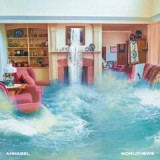
- A1: Strawberry Wine 6 25
- A2: Good Advice 3 09
- A3: California 5 48
- B1: Mornin' Lights 5 10
- B2: Can't Stand Without You 9 59
- C1: Waitin' For Your Call 2 19
- C2: Clouds Flee Before The Wind 4 12
- C3: On The Way Out 4 46
- D1: Can't Stand Without You (Demo Version) 6 33
- D2: Clouds Flee Before The Wind (Demo Version) 4 53
- D3: I Want You To Stay (Demo Version) 7 12
We are proud to present the official 40-year anniversary issue of Imagination's debut album Shake It. Remastered from original tapes, this deluxe edition is a double vinyl LP with gatefold sleeve, featuring a newly available lyric insert.
Shake It covers a diverse spectrum of styles and sounds, all combining to a unique soulful amalgam that ranges from sunshine AOR funk ("Mornin' Lights") and leftfield disco ("Strawberry Wine") to psychy, epic, downtempo, vocoder grooves ("Can't Stand Without You") and more. Originally released in 1980, it fast became one of Germany's most collectible privately-pressed LPs.
Shake It was the creation of young thoroughbreds working hard on becoming professional musicians, trying to take their next big step in the music business. Starting out as a pure jazz-rock combo in the mid '70s (as we hear on the recently released lost studio tapes, I'm Always Right (The WDR Tapes 1977)) Imagination left behind their instrumental roots, incorporating new musical trends and styles.
Uwe Ziss, their saxophonist and flutist, became one of two lead singers in Imagination. He would be joined by the younger Roger Mork, a student of original guitarist Willi Hövelmann, around 1979. Roger's voice would best be heard on the aforementioned "Mornin' Lights", one of the various standout tracks on Shake It. However, there is much more that this album offers.
There are brilliant soulful soft rock ballads like "Clouds Flee Before The Wind" and "Waitin for your Call" or the catchy "California" song that switches from a dreamy Westcoast sound (as the title implies) to danceable rhythm & blues with equal ease. Last but not least, we have unearthed three unissued bonus cuts. On one, the demo take of "Clouds Flee Before The Wind", we hear, for the first time ever, the original refrain of this song, which, for some strange reason, was taken out from the final mix on Shake It.
When all eight original songs were recorded and mastered in June, at the well-equipped West Aix-La-Chapelle studio, the stage was set for Imagination's long-desired career push. They'd initially press about 2500 copies of Shake It selling it mainly, locally, directly to their hometown fanbase in Düsseldorf. Meanwhile, their manager would attempt to arrange a record deal with a music label. Unfortunately, this became more difficult than expected. Negotiations with a smaller publishing company were made by Imagination, and Shake It was repressed on Nash Records in 1981 without their consent, under the false promises of a nationwide promotional tour which would never come to fruition. At the same time, the group would face a UK band under the same name achieving mainstream success, making it difficult (not to say entirely impossible) to perform as "Imagination". Though the band would remain active after Shake It, they'd split shortly after Nash's duplicitous reissue hit store shelves.
Luckily, through time, Shake It itself has remained worthwhile, creatively, for those who stumbled upon it and financially, too, becoming quite the sought after gem in record collecting circles. This deluxe anniversary double vinyl issue makes the LP available once again at a far more reasonable price, featuring the original, illustrious, eye-catching, Roy Lichtenstein-influenced banana art, as well as previously unavailable press pictures and more.
"Since 2004, ALTER BRIDGE has been one of the most consistent bands to successfully represent the rock and metal communities with their driving melodies, blazing guitar riffs and topical lyrics that resonate with fans around the globe. Their seventh album, Pawns & Kings, continues that trend with 10 unforgettable new additions to their catalog. Coming off the launch of what was shaping up to be one of the band’s pinnacle moments with Walk The Sky (#1 US Billboard Top Albums, #1 US Current Rock and Hard Music, #4 UK Official Charts, #1 UK Independent and Rock/Metal, #5 Official German Album Charts), everything came to a halt as the world would forever be changed due to the events of a global pandemic. The time the members of ALTER BRIDGE spent apart sparked a new fire and heaviness when the quartet comprised of Myles Kennedy on vocals/guitars, Mark Tremonti on guitars/vocals, Brian Marshall on bass and Scott Phillips on drums would reconvene for what would eventually become Pawns & Kings. Teaming with longtime producer and collaborator Michael “Elvis” Baskette, the album shines with massive, menacing arena-ready production while emerging as another sonic testament to the seasoned Kennedy/Tremonti songwriting dream-team. The band deliver three epic anthems, including two that clock in at over six minutes – the reflective and absolutely epic title track “Pawns & Kings”, grim-riffed, progressive influenced “Sin After Sin”, and the emotive eight-and-a-half minute journey “Fable Of The Silent Son.” “Silver Tongue” is backed by a punishing intro riff that gives way to one of the band’s most infectious choruses as Myles Kennedy sings, “Truth of a crime. You can’t outrun. Under the spell of my silver tongue,” while tracks like “Holiday” and “Season Of Promise” ebb and flow within the trademark multi-faceted metallic rock attack that has enchanted ALTER BRIDGE fans for a generation. Songs like “This Is War,” “Dead Among The Living” and “Last Man Standing” showcase the heavier side of a band firing on all cylinders, with soaring leads, hair-raising vocals and introspective lyricism abound. Mark Tremonti helms lead vocal duties on the uplifting track “Stay” – an interchanging of skills that first debuted on the band’s fourth album, Fortress, and continues to this day. Nearly 20 years into their celebrated career, one thing is for sure – Pawns & Kings offers a musical snapshot of a band that shows no signs of slowing down and continues to push itself creatively for the whole world to see. before peaking with a frenetic, metallic bridge-breakdown and piercing solo worthy of rock legend.
Tropical Disco continue to rewrite the disco handbook as they clock up an impressive quarter century of vinyl releases with a sublime Volume 25 of their series.
Featuring four disco cuts laced with jazz, funk, touches of electro and lots of dancefloor swagger it perfectly continues to build and diversify the sound of the series. Getting in on the party are a trio of Italian disco lovers Musta, an artist whose releases regularly set the disco and house charts alight, alongside the highly rated Corrado Alunni and the mysterious Fun Kool both of whom also hail from Italy.
Opening proceedings, and in stellar form, is co-label boss Sartorial whose ‘Hootin N Tootin’ is a real jazz funk gem. Incessant piano riffs, a groove of a bassline which edges towards acidic in places, guitar licks aplenty and choppy drums all combine for a track which could be played anywhere from a jazz inspired pool party to the funkiest of clubs. ‘Hootin N Tootin’ is as musical as it is dance worthy, two very handy traits which will see it survive the ever onwards march of time.
Musta’s ‘El Matador’ meanwhile has a high energy, fun-filled approach to life. It’s a track which very much defies pigeon holing but which comes from the same effusive family of earworms as Samin’s ‘Heater’ and may well prove to be just as big a breakthrough hit if it lands in the right hands over the summer. It’s very much a track with a big mischievous smile on its sun worshiping face.
Corrado Alunni’s ‘Funk Decision (Dub Mix)’ falls very much into the early Soulfuric camp of Soulful house music, a sound which Tropical Disco has regularly flirted with recently with some fantastic results. Divine live sax, guitar loops and ass shakin’ bass all merge perfectly for a very classy six = minutes of shimmering dancefloor groove.
Fun Kool’s ‘Low Tow’ sees out the EP and takes us off on an 80’s inspired electro journey. Stabby synths, subtle cowbell and Vangelis-esque keys all combine for a track which brings Metro Area’s take on the genre immediately to mind. ‘Low Toe’ deserves all the plaudits which undoubtedly come its way, a future classic for sure.
That Tropical Disco keep conjuring up EP’s of this quality is a major cause for celebration in itself. Disco in 2022 is a progressively more and more interesting place to live given the multifarious avenues which it continues to open up and this EP is a perfect example of the depth, diversity and incredible quality of a genre overflowing with passion. We very much hope that the first 25 volumes are only the beginning.
B. Bravo (aka Adam Mori) returns to Bastard Jazz with the long-awaited follow-up to his 2017 debut LP, "Paradise," with a fresh full-length offering: "Vizionz." Replete with his signature future funk vibes, infectiously soulful grooves, and talkbox excursions, "Vizionz" sees the multifaceted artist take the classic West Coast into outer space. If B. Bravo's last album sought to get lost in paradise - enjoying the moment here and now - "Vizionz" looks forward, feet placed firmly in an established LA vibe, while the matured eyes of a veteran producer gaze keenly to the future.
"Vizionz" arrives following a slew of diverse singles, which highlight B. Bravo's stunning versatility as a songwriter, producer, and collaborator. Last year's "Lifted (What U Waiting 4)" came first, at the end of May, 2020, pairing g-funk talk-box verses and synth lines with rich vocal harmonies and a dance-floor-ready beat. Frequent collaborator Reva DeVito (Miami Horror, Kaytranada) makes a standout vocal appearance on "Fly Bye," the second single. Here, Adam surrounds Reva's vocals with ambient pads, a Dilla-inspired beat, and an irresistible bassline, while Reva's dreamily sings about getting away from it all. The final single, "Believe," sees Chuck Inglish (of the famed duo The Cool Kids) rhyme in his distinctive baritone over a bass-heavy instrumental meant to rattle some car stereos.
The singles offer a view into the rest of the album: Solo B. Bravo joints include "Moon Bounce," a talk-box boogie jam begging for late-night drives with the top down; the largely-instrumental synth improvisation, "Midnight Rider;" the upbeat "Penelope," which showcases Adam's vocal and harmonic prowess; a bumping g-funk interlude, with "Flip Out;" as well as the laid back album opener, "Da Essence."
Further vocal assists come by way of Sally Green on the flirty "10/10," and Rojai on the slow jam ""No Regrets" . Both singers have worked on B. Bravo projects in the past, with Rojai additionally joining forces with Adam to form the duo Kool Customer, whose self-titled debut album was released on Bastard Jazz in 2018. Two more hip-hop-leaning tracks are aided by Def Sound ("Back Times Two") and Nico Fasho ("Ms. Stardust"); leaning heavy into outerspace G-Funk Hip-Hop vibes.
Taken as a whole, "Vizionz" is a much needed boost of serotonin: Uncompromisingly positive, sometimes nostalgic, sometimes aspirational, but always funky. The range of styles is a testament to Adam's indelible production chops, songwriting skill, and ability to collaborate. While it has been a long 5 years since "Paradise," "Vizionz" proves more than worth the wait.
Born and raised in California, with roots in Japan, B. Bravo's signature style of Cosmic Funk and late night synth grooves have made him a favorite among DJ's, dancers, and music lovers worldwide. A tasteful producer, sought after remixer, party rocking DJ, master of the talkbox, band leader, and alumnus of the Red Bull Music Academy, Mr. Bravo is an accomplished performer both at home and abroad.
Heavily inspired by the synthesizer-enhanced R&B grooves of the late '70s and early '80s, B. Bravo debuted in 2009 with the seven-track "Analog Starship" EP. A deeper impression was made the following year with a shorter extended play, "Computa Love," the title track of which was supported by BBC DJ Benji B months prior to release. Additional strides were made with a batch of singles and EPs that followed throughout the next few years, as Bravo toured and performed at numerous festivals around the world.
His relationship with the Brooklyn tastemaker label, Bastard Jazz Recordings, began in 2016 with the 7" single "I'm For Real / Stay The Night' (which notably featured a Mr. Carmack remix of the latter). Bravo's debut solo LP quickly followed with 2017's critically acclaimed "Paradise" - which shone a light on vocalists and frequent collaborators Reva DeVito, Trailer Limon, Kissey, and Lauren Faith - with a remix album appearing six months later.
Additional solo releases have found a home on Gilles Peterson's Brownswood Recordings and Frite Nite, while production credits have appeared on releases from the legendary Blue Note Records, HW&W, All City, Friends of Friends, and Tokyo Dawn. B. Bravo has worked on projects with the likes of Salva, Mr. Carmack, Teeko, DJ Lean Rock, Reva DeVito, Lauren Faith, and Kate Stewart.
Having toured throughout the US, Latin America, Europe and Asia, he's shared the stage with performers like Erykah Badu, Flying Lotus, DāM-FunK, Hudson Mohawke, at a world-spanning range of festivals such as Detroit Electronic Music Fest, HARD LA, Northern Nights, Laneway Singapore, Sonar in Barcelona, Snowglobe, SXSW, Basscoast, Do-Over, Low End Theory, Boiler Room, and Soulection.
B. Bravo's "Vizionz" LP is out on Brooklyn's Bastard Jazz Recordings Spring, 2022.
Quality over quantity. That’s what characterises Shamek Farrah and Norman Person’s recorded output. They may have a small discography between them but it’s a stable of recordings that centrally locate them in the development of the black jazz of America. BBE Music is delighted to present a new edition of a rare, relatively unknown, and unheard gem. Recorded between 1988 and 1991 across a series of concerts, ‘Live’ was released in 1991 and was only available for sale at their gigs. Issued on audio cassette on Farrah’s private Heritage Industries label, ‘Live’ is a raw, uncompromising selection of deep, conscious jazz featuring three original compositions and two covers: ‘Aisha’, written by Person, was inspired by Person’s daughter and is a majestic joyous groove that extends out into a percussive jam; ‘Negative Forces’ is a fiercely paced hard bopper worthy of the Jazz Messengers. Written by Person, he tells how “it had to be like a torpedo, man. It had to come out strong and fight against those negative forces”. The one Farrah/Person co-write on the album is ‘Timeless Beings’, a short freeform improvisation that creates a distinct moment of space and light in an otherwise intensely focussed, yet highly accessible album. The two covers on the album reflect the instruments of the co-leaders: sax and trumpet. ‘Footprints’, the classic written by the Newark Flash himself, Wayne Shorter, and first heard on ‘Miles Smiles’ in 1967 is delivered deftly by Farrah and co. Here, the band pays a respectful yet adventurous rendition, with some superbly colourful piano from Sonelius Smith. The second cover is a tribute to the great trumpeter Clifford Brown, who died in a car accident in 1956, aged just 25. ‘I Remember Clifford’ written by Benny Golson, is handled with suitably delicate reverence. “I still listen to Clifford Brown today,” says Person. “He’s still my teacher.” On ‘Live’, saxophonist Farrah and trumpeter Person - friends for decades - capture an energy and vibration that is infused with the spirit of their youth – whether drawing on the hard bop of the late 50s and early 60s or the Afrocentric spiritual jazz of the early 70s, of which Farrah is intimately linked via his albums on Strata East, ‘Live’ is a document of two masters at work. ‘Live’ has flown under the radar to many a fan of prime black conscious and spiritual jazz but now BBE brings back this astonishing set by two giant talents accompanied by a group of musicians who shine with brilliance and verve. Available for the first time on CD, digital, and double vinyl set cut at 45rpm by the Grammy-nominated The Carvery mastering studio, ‘Live’ also comes with an extended interview with Shamek Farrah and Norman Person by Tony Higgins.
- A1: Rock This Mother
- A2: Talk To Me Girl
- A3: You Can Find Me
- A4: Check This Out
- A5: Jesus Going To Clean House
- A6: Hope You Understood
- A7: Is It What You Want
- A8: Love Is Everlasting
- A9: This Is Hip-Hop Art
- A10: Opposite Of Love
- A11: Do You Know What I Mean
- B1: Saving All My Love For You
- B2: Look Out Here I Come
- B3: Girl You Always Talking
- B4: Have A Great Day
- B5: Take My Hand
- B6: I Need Your Love
- B7: Your Town
- B8: Talk Around Town
- B9: Booty Head/Take A Little Walk
- B10: I Love My Mama
- B11: I Never Found Anyone Like You
Cassette[11,72 €]
As the sun sets on a quaint East Nashville house, a young man bares a piece of his soul. Facing the camera, sporting a silky suit jacket/shirt/slacks/fingerless gloves ensemble that announces "singer" before he's even opened his mouth, Lee Tracy Johnson settles onto his stage, the front yard. He sways to the dirge-like drum machine pulse of a synth-soaked slow jam, extends his arms as if gaining his balance, and croons in affecting, fragile earnest, "I need your love… oh baby…"
Dogs in the yard next door begin barking. A mysterious cardboard robot figure, beamed in from galaxies unknown and affixed to a tree, is less vocal. Lee doesn't acknowledge either's presence. He's busy feeling it, arms and hands gesticulating. His voice rises in falsetto over the now-quiet dogs, over the ambient noise from the street that seeps into the handheld camcorder's microphone, over the recording of his own voice played back from a boombox off-camera. After six minutes the single, continuous shot ends. In this intimate creative universe there are no re-takes. There are many more music videos to shoot, and as Lee later puts it, "The first time you do it is actually the best. Because you can never get that again. You expressing yourself from within."
"I Need Your Love" dates from a lost heyday. From some time in the '80s or early '90s, when Lee Tracy (as he was known in performance) and his music partner/producer/manager Isaac Manning committed hours upon hours of their sonic and visual ideas to tape. Embracing drum machines and synthesizers – electronics that made their personal futurism palpable – they recorded exclusively at home, live in a room into a simple cassette deck. Soul, funk, electro and new wave informed their songs, yet Lee and Isaac eschewed the confinement of conventional categories and genres, preferring to let experimentation guide them.
"Anytime somebody put out a new record they had the same instruments or the same sound," explains Isaac. "So I basically wanted to find something that's really gonna stand out away from all of the rest of 'em." Their ethos meant that every idea they came up with was at least worth trying: echoed out half-rapped exhortations over frantic techno-style beats, gospel synth soul, modal electro-funk, oddball pop reinterpretations, emo AOR balladry, nods to Prince and the Fat Boys, or arrangements that might collapse mid-song into a mess of arcade game-ish blips before rallying to reach the finish line. All of it conjoined by consistent tape hiss, and most vitally, Lee's chameleonic voice, which managed to wildly shape shift and still evoke something sincere – whether toggling between falsetto and tenor exalting Jesus's return, or punctuating a melismatic romantic adlib with a succinct, "We all know how it feels to be alone."
"People think we went to a studio," says Isaac derisively. "We never went to no studio. We didn't have the money to go to no studio! We did this stuff at home. I shot videos in my front yard with whatever we could to get things together." Sometimes Isaac would just put on an instrumental record, be it "Planet Rock" or "Don't Cry For Me Argentina" (from Evita), press "record," and let Lee improvise over it, yielding peculiar love songs, would-be patriotic anthems, or Elvis Presley or Marilyn Monroe tributes. Technical limitations and a lack of professional polish never dissuaded them. They believed they were onto something.
"That struggle," Isaac says, "made that sound sound good to me."
In the parlance of modern music criticism Lee and Isaac's dizzying DIY efforts would inevitably be described as "outsider." But "outsider" carries the burden of untold additional layers of meaning if you're Black and from the South, creating on a budget, and trying to get someone, anyone within the country music capital of the world to take your vision seriously. "What category should we put it in?" Isaac asks rhetorically. "I don't know. All I know is feeling. I ain't gonna name it nothing. It's music. If it grabs your soul and touch your heart that's what it basically is supposed to do."
=
Born in 1963, the baby boy of nine siblings, Lee Tracy spent his earliest years living amidst the shotgun houses on Nashville's south side. "We was poor, man!" he says, recalling the outhouse his family used for a bathroom and the blocks of ice they kept in the kitchen to chill perishables. "But I actually don't think I really realized I was in poverty until I got grown and started thinking about it." Lee's mom worked at the Holiday Inn; his dad did whatever he had to do, from selling fruit from a horse drawn cart to bootlegging. "We didn't have much," Lee continues, "but my mother and my father got us the things we needed, the clothes on our back." By the end of the decade with the city's urban renewal programs razing entire neighborhoods to accommodate construction of the Interstate, the family moved to Edgehill Projects. Lee remembers music and art as a constant source of inspiration for he and his brothers and sisters – especially after seeing the Jackson 5 perform on Ed Sullivan. "As a small child I just knew that was what I wanted to do."
His older brother Don began musically mentoring him, introducing Lee to a variety of instruments and sounds. "He would never play one particular type of music, like R&B," says Lee. "I was surrounded by jazz, hard rock and roll, easy listening, gospel, reggae, country music; I mean I was a sponge absorbing all of that." Lee taught himself to play drums by beating on cardboard boxes, gaining a rep around the way for his timekeeping, and his singing voice. Emulating his favorites, Earth Wind & Fire and Cameo, he formed groups with other kids with era-evocative band names like Concept and TNT Connection, and emerged as the leader of disciplined rehearsals. "I made them practice," says Lee. "We practiced and practiced and practiced. Because I wanted that perfection." By high school the most accomplished of these bands would take top prize in a prominent local talent show. It was a big moment for Lee, and he felt ready to take things to the next level. But his band-mates had other ideas.
"I don't know what happened," he says, still miffed at the memory. "It must have blew they mind after we won and people started showing notice, because it's like everybody quit! I was like, where the hell did everybody go?" Lee had always made a point of interrogating prospective musicians about their intentions before joining his groups: were they really serious or just looking for a way to pick up girls? Now he understood even more the importance of finding a collaborator just as committed to the music as he was.
=
Isaac Manning had spent much of his life immersed in music and the arts – singing in the church choir with his family on Nashville's north side, writing, painting, dancing, and working various gigs within the entertainment industry. After serving in the armed forces, in the early '70s he ran The Teenage Place, a music and performance venue that catered to the local youth. But he was forced out of town when word of one of his recreational routines created a stir beyond the safe haven of his bohemian circles.
"I was growing marijuana," Isaac explains. "It wasn't no business, I was smoking it myself… I would put marijuana in scrambled eggs, cornbread and stuff." His weed use originated as a form of self-medication to combat severe tooth pain. But when he began sharing it with some of the other young people he hung out with, some of who just so happened to be the kids of Nashville politicians, the cops came calling. "When I got busted," he remembers, "they were talking about how they were gonna get rid of me because they didn't want me saying nothing about they children because of the politics and stuff. So I got my family, took two raggedy cars, and left Nashville and went to Vegas."
Out in the desert, Isaac happened to meet Chubby Checker of "The Twist" fame while the singer was gigging at The Flamingo. Impressed by Isaac's zeal, Checker invited him to go on the road with him as his tour manager/roadie/valet. The experience gave Isaac a window into a part of the entertainment world he'd never encountered – a glimpse of what a true pop act's audience looked like. "Chubby Checker, none of his shows were played for Black folks," he remembers. "All his gigs were done at high-class white people areas." Returning home after a few years with Chubby, Isaac was properly motivated to make it in Music City. He began writing songs and scouting around Nashville for local talent anywhere he could find it with an expressed goal: "Find someone who can deliver your songs the way you want 'em delivered and make people feel what you want them to feel."
One day while walking through Edgehill Projects Isaac heard someone playing the drums in a way that made him stop and take notice. "The music was so tight, just the drums made me feel like, oh I'm-a find this person," he recalls. "So I circled through the projects until I found who it was.
"That's how I met him – Lee Tracy. When I found him and he started singing and stuff, I said, ohhh, this is somebody different."
=
Theirs was a true complementary partnership: young Lee possessed the raw talent, the older Isaac the belief. "He's really the only one besides my brother and my family that really seen the potential in me," says Lee. "He made me see that I could do it."
Isaac long being a night owl, his house also made for a fertile collaborative environment – a space where there always seemed to be a new piece of his visual art on display: paintings, illustrations, and dolls and figures (including an enigmatic cardboard robot). Lee and Issac would hang out together and talk, listen to music, conjure ideas, and smoke the herb Isaac had resumed growing in his yard. "It got to where I could trust him, he could trust me," Isaac says of their bond. They also worked together for hours on drawings, spreading larges rolls of paper on the walls and sketching faces with abstract patterns and imagery: alien-like beings, tri-horned horse heads, inverted Janus-like characters where one visage blurred into the other.
Soon it became apparent that they didn't need other collaborators; self-sufficiency was the natural way forward. At Isaac's behest Lee, already fed up with dealing with band musicians, began playing around with a poly-sonic Yamaha keyboard at the local music store. "It had everything on it – trumpet, bass, drums, organ," remembers Lee. "And that's when I started recording my own stuff."
The technology afforded Lee the flexibility and independence he craved, setting him on a path other bedroom musicians and producers around the world were simultaneously following through the '80s into the early '90s. Saving up money from day jobs, he eventually supplemented the Yamaha Isaac had gotten him with Roland and Casio drum machines and a Moog. Lee was living in an apartment in Hillside at that point caring for his dad, who'd been partially paralyzed since early in life. In the evenings up in his second floor room, the music put him in a zone where he could tune out everything and lose himself in his ideas.
"Oh I loved it," he recalls. "I would really experiment with the instruments and use a lot of different sound effects. I was looking for something nobody else had. I wanted something totally different. And once I found the sound I was looking for, I would just smoke me a good joint and just let it go, hit the record button." More potent a creative stimulant than even Isaac's weed was the holistic flow and spontaneity of recording. Between sessions at Isaac's place and Lee's apartment, their volume of output quickly ballooned.
"We was always recording," says Lee. "That's why we have so much music. Even when I went to Isaac's and we start creating, I get home, my mind is racing, I gotta start creating, creating, creating. I remember there were times when I took a 90-minute tape from front to back and just filled it up."
"We never practiced," says Isaac. "See, that was just so odd about the whole thing. I could relate to him, and tell him about the songs I had ideas for and everything and stuff. And then he would bring it back or whatever, and we'd get together and put it down." Once the taskmaster hell bent on rehearsing, Lee had flipped a full 180. Perfection was no longer an aspiration, but the enemy of inspiration.
"I seen where practicing and practicing got me," says Lee. "A lot of musicians you get to playing and they gotta stop, they have to analyze the music. But while you analyzing you losing a lot of the greatness of what you creating. Stop analyzing what you play, just play! And it'll all take shape."
=
"I hope you understood the beginning of the record because this was invented from a dream I had today… (You tell me, I'll tell you, we'll figure it out together)" – Lee Tracy and Isaac Manning, "Hope You Understand"
Lee lets loose a maniacal cackle when he acknowledges that the material that he and Isaac recorded was by anyone's estimation pretty out there. It's the same laugh that commences "Hope You Understand" – a chaotic transmission that encapsulates the duality at the heart of their music: a stated desire to reach people and a compulsion to go as leftfield as they saw fit.
"We just did it," says Lee. "We cut the music on and cut loose. I don't sit around and write. I do it by listening, get a feeling, play the music, and the lyrics and stuff just come out of me."
The approach proved adaptable to interpreting other artists' material. While recording a cover of Whitney Houston's pop ballad "Saving All My Love For You," Lee played Whitney's version in his headphones as he laid down his own vocals – partially following the lyrics, partially using them as a departure point. The end result is barely recognizable compared with the original, Lee and Isaac having switched up the time signature and reinvented the melody along the way towards morphing a slick mainstream radio standard into something that sounds solely their own.
"I really used that song to get me started," says Lee. "Then I said, well I need something else, something is missing. Something just came over me. That's when I came up with 'Is It What You Want.'"
The song would become the centerpiece of Lee and Isaac's repertoire. Pushed along by a percolating metronomic Rhythm King style beat somewhere between a military march and a samba, "Is It What You Want" finds Lee pleading the sincerity of his commitment to a potential love interest embellished by vocal tics and hiccups subtlely reminiscent of his childhood hero MJ. Absent chord changes, only synth riffs gliding in and out like apparitions, the song achieves a lingering lo-fi power that leaves you feeling like it's still playing, somewhere, even after the fade out.
"I don't know, it's like a real spiritual song," Lee reflects. "But it's not just spiritual. To me the more I listen to it it's like about everything that you do in your everyday life, period. Is it what you want? Do you want a car or you don't want a car? Do you want Jesus or do you want the Devil? It's basically asking you the question. Can't nobody answer the question but you yourself."
In 1989 Lee won a lawsuit stemming from injuries sustained from a fight he'd gotten into. He took part of the settlement money and with Isaac pressed up "Saving All My Love For You" b/w "Is It What You Want" as a 45 single. Isaac christened the label One Chance Records. "Because that's all we wanted," he says with a laugh, "one chance."
Isaac sent the record out to radio stations and major labels, hoping for it to make enough noise to get picked up nationally. But the response he and Lee were hoping for never materialized. According to Isaac the closest the single got to getting played on the radio is when a disk jock from a local station made a highly unusual announcement on air: "The dude said on the radio, 107.5 – 'We are not gonna play 'Is It What You Want.' We cracked up! Wow, that's deep.
"It was a whole racist thing that was going on," he reflects. "So we just looked over and kept on going. That was it. That was about the way it goes… If you were Black and you were living in Nashville and stuff, that's the way you got treated." Isaac already knew as much from all the times he'd brought he and Lee's tapes (even their cache of country music tunes) over to Music Row to try to drum up interest to no avail.
"Isaac, he really worked his ass off," says Lee. "He probably been to every record place down on Music Row." Nashville's famed recording and music business corridor wasn't but a few blocks from where Lee grew up. Close enough, he remembers, for him to ride his bike along its back alleys and stumble upon the occasional random treasure, like a discarded box of harmonicas. Getting in through the front door, however, still felt a world away.
"I just don't think at the time our music fell into a category for them," he concedes. "It was before its time."
=
Lee stopped making music some time in the latter part of the '90s, around the time his mom passed away and life became increasingly tough to manage. "When my mother died I had a nervous breakdown," he says, "So I shut down for a long time. I was in such a sadness frame of mind. That's why nobody seen me. I had just disappeared off the map." He fell out of touch with Isaac, and in an indication of just how bad things had gotten for him, lost track of all the recordings they'd made together. Music became a distant memory.
Fortunately, Isaac kept the faith. In a self-published collection of his poetry – paeans to some of his favorite entertainment and public figures entitled Friends and Dick Clark – he'd written that he believed "music has a life of its own." But his prescience and presence of mind were truly manifested in the fact that he kept an archive of he and Lee's work. As perfectly imperfect as "Is It What You Want" now sounds in a post-Personal Space world, Lee and Isaac's lone official release was in fact just a taste. The bulk of the Is It What You Want album is culled from the pair's essentially unheard home recordings – complete songs, half-realized experiments, Isaac's blue monologues and pronouncements et al – compiled, mixed and programmed in the loose and impulsive creative spirit of their regular get-togethers from decades ago. The rest of us, it seems, may have finally caught up to them.
On the prospect of at long last reaching a wider audience, Isaac says simply, "I been trying for a long time, it feels good." Ever the survivor, he adds, "The only way I know how to make it to the top is to keep climbing. If one leg break on the ladder, hey, you gotta fix it and keep on going… That's where I be at. I'll kill death to make it out there."
For Lee it all feels akin to a personal resurrection: "It's like I was in a tomb and the tomb was opened and I'm back… Man, it feels so great. I feel like I'm gonna jump out of my skin." Success at this stage of his life, he realizes, probably means something different than what it did back when he was singing and dancing in Isaac's front yard. "What I really mean by 'making it,'" he explains isn't just the music being heard but, "the story being told."
Occasionally Lee will pull up "Is It What You Want" on YouTube on his phone, put on his headphones, and listen. He remembers the first time he heard his recorded voice. How surreal it was, how he thought to himself, "Is that really me?" What would he say to that younger version of himself now?
"I would probably tell myself, hang in there, don't give up. Keep striving for the goal. And everything will work out."
Despite what's printed on the record label, sometimes you do get more than one chance.
Whether original or discovered, songs have always come into my life out
of need - I think every song in this record is about a beginning hidden in
an ending, hidden reclamations of ways I've disappointed myself
The record opens with Backup Plan… because I think being absolutely and freely
myself was always stupidly my back up plan. If I couldn't succeed at being the
person I was pretending to be, if I couldn't want the things I'd been pretending to
want, only then would I give myself permission to just be me. Then came Thérèse
and Mermaid Bar - Thérèse is about a misunderstood girl trapped in a painting
and Mermaid Bar is about a girl who tries to end her life by jumping into the
Hudson River and instead becomes a mermaid. Bloomed Into Blue was originally
a poem I had written with a friend in high school called the B-Word Muse. It was a
tribute to Ariel, to Eddie Sedgwick, Marie Thérèse, and so many more… Women
who were always the subject of art and not the creator. Worthy of being spoken
about but not worthy of being listened to. This record reckons with childhood in
Sweet Tooth and Driver, with regret in Luna Moth, Crazy Kid and Sticky Little
Words, with anger in South Elroy, Restless Moon and Over.Above all this record
wants to be about rebirth and acceptance.I'm crawling back to myself. Thank you
for watching- Maya Hawke
LP Translucent Orange Vinyl Tracks: Backup Plan / Bloomed Into Blue / Hiatus /
Sweet Tooth / Crazy Kid (featuring Will Graefe) / Luna Moth / South Elroy /
Thérèse / Sticky Little Words / Over / Restless Moon / Driver / Mermaid Bar
White Vinyl[43,07 €]
Tradition and experimentation are two familiar territories that C"mon Tigre, a duo who find their identity by working with musicians from all over the world, can balance between very well. As they did for their debut album (2014), they have put together a multicolored collective for their second record Racines (2019) and now their third album Scenario. Sailing from the Mediterranean basin and being guided by the fascination for Africa and the Middle East, C"mon Tigre give rise to a personal language, made up of mixtures with jazz, afrojazz, the rhythmics of hip hop, funk, club music. All without ever confining their songs to one style, but pushing the exploration as much as possible, into a dimension that every journey worthy of this name should encompass. With the musicians they work with, the exchange and experimentation continue till the end, the songs can take different directions at any time. The result is a mixed, cosmopolitan record, which escapes from any label for the affirmation of a free attitude. It led C"mon Tigre to seek a connection with dancefloor culture, even if considered only as an evocation to revisit in a personal way. This cinematic imagery pushed C"mon Tigre to translate their musical wandering into a visual form, as they already did in the past with animated videos made with the painter Gianluigi Toccafondo and 3d artist Sic Est for "Underground Lovers" and "Behold The Man", two tracks from the previous record. Now the will to merge music and images is even greater: Scenario is also released in a colored vinyl + book version, including a volume to browse through with a wide selection of photo taken by Paolo Pellegrin. Paolo has spent the last 30 years documenting the world. He lives and testifies to issues regarding living conditions, poverty, sufferance and violence, always implementing an anthropological approach. A subjective but detached gaze, which is both a reflection and an analysis, that coincides with an attitude of openness, respect, and interest in the times of history, an odyssey between human and inhuman. Scenario wants to tell about what defines us as human beings: joy, connection, anger, sense of belonging, pain, anguish, violence, dignity. These are tales of someone observing with stretched ears.
Black Vinyl[28,53 €]
Tradition and experimentation are two familiar territories that C"mon Tigre, a duo who find their identity by working with musicians from all over the world, can balance between very well. As they did for their debut album (2014), they have put together a multicolored collective for their second record Racines (2019) and now their third album Scenario. Sailing from the Mediterranean basin and being guided by the fascination for Africa and the Middle East, C"mon Tigre give rise to a personal language, made up of mixtures with jazz, afrojazz, the rhythmics of hip hop, funk, club music. All without ever confining their songs to one style, but pushing the exploration as much as possible, into a dimension that every journey worthy of this name should encompass. With the musicians they work with, the exchange and experimentation continue till the end, the songs can take different directions at any time. The result is a mixed, cosmopolitan record, which escapes from any label for the affirmation of a free attitude. It led C"mon Tigre to seek a connection with dancefloor culture, even if considered only as an evocation to revisit in a personal way. This cinematic imagery pushed C"mon Tigre to translate their musical wandering into a visual form, as they already did in the past with animated videos made with the painter Gianluigi Toccafondo and 3d artist Sic Est for "Underground Lovers" and "Behold The Man", two tracks from the previous record. Now the will to merge music and images is even greater: Scenario is also released in a colored vinyl + book version, including a volume to browse through with a wide selection of photo taken by Paolo Pellegrin. Paolo has spent the last 30 years documenting the world. He lives and testifies to issues regarding living conditions, poverty, sufferance and violence, always implementing an anthropological approach. A subjective but detached gaze, which is both a reflection and an analysis, that coincides with an attitude of openness, respect, and interest in the times of history, an odyssey between human and inhuman. Scenario wants to tell about what defines us as human beings: joy, connection, anger, sense of belonging, pain, anguish, violence, dignity. These are tales of someone observing with stretched ears.
Part 3[24,79 €]
Rhythm master Klaus Weiss knew he had a good thing going with NIAGARA. The first album was a gathering of every outstanding drummer and percussionist he could get hold of and despite the fact that there were only rhythm instruments featured , it became quite a memorable and unique record. Now for the second album “S.U.B.” he felt he had to go other ways, and recorded with a complete rock outfit plus the one or another brass instrument. ‘S.U.B.’ is definitely worth being traded for 180,00 Euros and more among collectors for a clean original and when the needle hits the groove you will realize why. There is a tightly woven web of rhythms from drums and percussions, as the solid and ever pulsating base with a laid back but really present bass guitar adding more depth and power to the beats and clean rhythm guitars with a nifty wah wah effect for the extra kick. From time to time the guitars fire off a memorable steaming riff on top of the rhythm pulse and the horns answer the call for arms. You really have to look at the backcover to find out that this is a German outfit instead of one of these utterly hot and hip US funk rock cult bands of the time. NIAGARA aka Klaus Weiss waive the vocals so it is an instrumental record you face with ‘S.U.B’, but then this band goes so wild in some of the compositions, that you will be left breathless on your knees by all these simmering performances. Each musician participating in this project is a professional, but they all let the music erupt into a climax of sound you can only achieve, when you put your whole heart and soul into it. A masterpiece of funky and utterly unleashed rock music from the early 70s.
VINYL REPRESS FINALLY ON THE WAY..
*Since the release of 2011’s award winning debut, 'No Time for Dreaming', Charles Bradley has transformed from a rising star in the Daptone galaxy into a bona-fide headliner, now affectionately known across the globe as "The Screaming Eagle of Soul."
*The popularity of 'No Time For Dreaming' resulted in an appearance on 'Later With Jools Holland' in 2012 and such glowing reviews as:
-LEAD 4/5 BOXED REVIEW IN MOJO : “THE GRIT AND GUSTO OF OTIS REDDING, THE RAW POWER OF JAMES BROWN, THE SMOULDER AND SHUDDER OF JAMES CARR, TOGETHER THEY MAKE AN INTOXICATING SOUND.
-LEAD 4/5 REVIEW IN Q MAGAZINE : “THERE'S A NEW/OLD SOUL MAN ON THE BLOCK. 'NO TIME FOR DREAMING' HAS THE GRITTY FEEL OF THE REAL THING, A MAN WHO HAS KNOWN MOSTLY HARD TIMES AND TELLS IT WITH A PLEADING, THROATY ROAR AND BLOOD-CURDLING SCREAM WORTHY OF JAMES BROWN . A REAL FIND.”
*The raw emotion and soulfulness of Bradley's voice lifts him up among the greats of the golden age of Soul - Otis, JB, Wilson Pickett, and Darrell Banks. Anyone who has had the privilege of hearing him sing has experienced how Bradley can captivate an entire audience with a simple "Ooooo..."
*Bradley and writer/producer/multi-instrumentalist Thomas “TNT” Brenneck returned to Dunham studios and recorded the most exciting Daptone release to date, Victim of Love. On this album, Bradley moves past his "Heartaches and Pain" to the great promise of hope and love. Though quite at home among the music that has affirmed Daptone as the world’s #1 authority on Soul Music, Victim of Love proves to be a genre-bending masterpiece, picking up where the early 70’s Temptations left off and edging boldly forward into psychedelic soul exploration.
The long-running Kompakt imprint will release an EP by German DJ and producer Sascha Funke in September. Sharing five tracks that traverse quirky house and techno, Treets marks Funke’s monumental return to Kompakt since his Zug um Zug two-tracker in 2014.
Speaking about Treets, Funke says he is "very happy to be back on the mothership Kompakt" after an eight-year break. As one would expect with Funke, the EP fits the cosmic world of Kompakt to a tee. The title track conveys a weird, tripped-out atmosphere as an alien-like vocal burbles between an acid bassline and squeaky percussion. It's a tantalising glimpse of Funke's freaky underworld. E_Plus follows a similar wonked-out vein, only this time, the vibe is ominous. Funke pairs an orchestral vocal with bleepy pads and signature acid-drenched melody — a solid offering oddball of energy. On Alles Paletti, a 2-step drum pattern and string of bright claps create a sunny soundscape, complemented by a robust bassline and ethereal synth notes. It's fairytale house music, the kind only Funke can produce. The penultimate track Haus More is subdued, as chugging drums slither between a wobbly melody. The Other Version feels futuristic, as Funke goes full-force electro. Extra-terrestrial vocals return, but the pace is cranked up by strident sound FX and thudding drums. An eccentric end to an eccentric EP.
Sascha Funke is a Berlin-based producer and DJ with two decades' worth of releases building his back catalogue. BPitch Control, Turbo Recordings, Endless Flight, Running Back, and several more esteemed imprints have released his work. Today, he continues to create sleek sounds that weave various genres from house, techno, disco, Krautrock, wave, electro and unclassified anomalies. As a DJ, Funke is just as free-wheeling as his productions. He's played E1 in London, Caos in São Paulo and Renate in Berlin, amongst others, displaying his sweeping sound to a worldwide audience. Having been exposed to euro-dance pop as a youngster, you can hear flashes from the genre stitched throughout his work but blended in a way that's quintessential to Funke. Never one to change his sound according to the latest trend, Funke stays true to his creative vision — one of the most significant challenges for producers today.
Das traditionsreiche Kompakt-Imprint wird im September eine EP des deutschen DJs und Produzenten Sascha Funke veröffentlichen. Mit fünf Tracks, die sich durch schrulligen House und Techno auszeichnen, ist “Treets” Funkes monumentale Rückkehr zu Kompakt seit “ Zug um Zug” im Jahr 2014.
Im Gespräch über Treets sagt Funke, er sei "sehr glücklich, nach acht Jahren Pause wieder auf dem Mutterschiff Kompakt zu sein". Wie bei Funke nicht anders zu erwarten, passt die EP hervorragend in die kosmische Welt von Kompakt. Der Titeltrack vermittelt eine seltsame, abgedrehte Atmosphäre, wenn eine außerirdisch anmutende Stimme zwischen einer Acid-Bassline und quietschenden Perkussionsinstrumenten dahinplätschert. Es ist ein verlockender Einblick in Funkes freakige Unterwelt. “E-Plus” geht in eine ähnliche Richtung, nur dass dieses Mal die Stimmung bedrohlich ist. Funke paart einen orchestralen Gesang mit bleepigen Pads und seiner typischen Acid-getränkten Melodie - ein solides Angebot voller Energie. Auf “Alles Paletti” schaffen ein 2-Step-Drum-Pattern und eine Reihe heller Claps eine sonnige Klanglandschaft, die durch eine robuste Bassline und ätherische Synthesizernoten ergänzt wird. Das ist märchenhafte House-Musik, wie sie nur Funke produzieren kann. Der vorletzte Track Haus More ist zurückhaltend, da tuckernde Drums zwischen einer wackeligen Melodie schlittern. “Treets (The Other Version)” fühlt sich futuristisch an, weil Funke hier voll auf Elektro setzt. Der außerirdische Gesang kehrt zurück, aber das Tempo wird durch schrille Soundeffekte und stampfende Drums angezogen. Ein exzentrisches Ende für eine exzentrische EP.
Sascha Funke ist ein in Berlin ansässiger Produzent und DJ mit einem Backkatalog von zwei Jahrzehnten an Veröffentlichungen. BPitch Control, Turbo Recordings, Endless Flight, Running Back und einige andere angesehene Labels haben seine Arbeiten veröffentlicht. Heute kreiert er weiterhin geschmeidige Sounds, die verschiedene Genres wie House, Techno, Disco, Krautrock, Wave, Electro und unklassifizierte Anomalien miteinander verweben. Als DJ ist Funke genauso freizügig wie seine Produktionen. Er hat unter anderem im E1 in London, im Caos in São Paulo und im Renate in Berlin aufgelegt und seinen mitreißenden Sound einem weltweiten Publikum vorgestellt. Da er schon als Jugendlicher mit Eurodance in Berührung kam, sind in seiner Arbeit immer wieder Anklänge an dieses Genre zu hören, die aber auf eine Art und Weise vermischt werden, die ganz typisch für Funke ist. Niemals verändert Funke seinen Sound nach dem neuesten Trend, sondern bleibt seiner kreativen Vision treu - eine der größten Herausforderungen für Produzenten heutzutage.
- Delirious Eyes
- Parish (Overworld Theme)
- Grainer To Chicago
- Fourth Flood
- Endless Eve
- Troy Story
- Perilloux & Sons Llc
- Disorientation Is Normal
- Trinkets
- Behind The Fenceline
- Last House In Dimes
- Ditch Man's Curse
- Planner Will Hide
- Your Pawpaw
- Refinery Fight
- Apocryphon Of Kenner John
- Here Comes The Scum
- True Padu
- The Long Road
- Corrupted Sanctum
- Forgive Me, Father
- Virtual Death
- Homunculus
- View Of A Burning City
Red Vinyl[35,25 €]
Baton Rouge sludge band Thou have released over a dozen LPs worth of music, collaborated with divergent artists like Emma Ruth Rundle and The Body and released covers that run the full gamut of genres. Continuing their practice of bucking typical metal tradition, their latest record, a split release with composer Gewgawly I, is a soundtrack created for the highly anticipated new video game NORCO.
Gewgawly I has created a master work of ambiance, not only reminiscent of some of the best game soundtracks from the 80s and 90s but also a stunning work of contemporary experimental music pushing the genre forward in exciting ways. Thou have rounded out the game’s grit with a wash of downtuned doom and drone. The band has previously been described as “For fans of: alienation, absurdity, boredom, futility, decay, the tyranny of history, the vulgarities of change, awareness as agony, reason as disease,” and these themes
come to life vividly in Thou’s collaboration with the richly illustrated world of NORCO.
“Thou represents an aspect of Louisiana that’s close to my heart. The members know the suburbs of New Orleans and Baton Rouge well. They capture a kind of strange irreverence in their sound and visuals that’s specific to the region and has influenced the game NORCO,” says Yuts from Geography of Robots. ”We’ve been trying to collaborate for a while, and I’m just stoked it’s finally happening!”
- Delirious Eyes
- Parish (Overworld Theme)
- Grainer To Chicago
- Fourth Flood
- Endless Eve
- Troy Story
- Perilloux & Sons Llc
- Disorientation Is Normal
- Trinkets
- Behind The Fenceline
- Last House In Dimes
- Ditch Man's Curse
- Planner Will Hide
- Your Pawpaw
- Refinery Fight
- Apocryphon Of Kenner John
- Here Comes The Scum
- True Padu
- The Long Road
- Corrupted Sanctum
- Forgive Me, Father
- Virtual Death
- Homunculus
- View Of A Burning City
Black Vinyl[33,57 €]
Baton Rouge sludge band Thou have released over a dozen LPs worth of music, collaborated with divergent artists like Emma Ruth Rundle and The Body and released covers that run the full gamut of genres. Continuing their practice of bucking typical metal tradition, their latest record, a split release with composer Gewgawly I, is a soundtrack created for the highly anticipated new video game NORCO.
Gewgawly I has created a master work of ambiance, not only reminiscent of some of the best game soundtracks from the 80s and 90s but also a stunning work of contemporary experimental music pushing the genre forward in exciting ways. Thou have rounded out the game’s grit with a wash of downtuned doom and drone. The band has previously been described as “For fans of: alienation, absurdity, boredom, futility, decay, the tyranny of history, the vulgarities of change, awareness as agony, reason as disease,” and these themes
come to life vividly in Thou’s collaboration with the richly illustrated world of NORCO.
“Thou represents an aspect of Louisiana that’s close to my heart. The members know the suburbs of New Orleans and Baton Rouge well. They capture a kind of strange irreverence in their sound and visuals that’s specific to the region and has influenced the game NORCO,” says Yuts from Geography of Robots. ”We’ve been trying to collaborate for a while, and I’m just stoked it’s finally happening!”
Oli Stewart is Casbah 73. American-born, Madrid-based DJ, producer, vinyl collector and selector extraordinaire with several decades of experience under his belt.
Classic soul, funk and disco at its finest, with releases on mainstay outlets such as Glitterbox and Lovemonk, we're extremely proud to have him in the Boogie Angst record bins.
Casbah 73's Boogie Angst debut is a two-sided live band funk workout reminiscent of early 70's acts and labels such as 24 Carat Black, Black Heat and Strata East, but also connects to the current sounds of Black Jazz Chronicles, Sault and Nu Genea.
Let's Invade the Amazon is a highly grooved piece of live musical wizardry, with vocal performances to match. Beautifully extended and ongoing, the steady backbone interplay with funky electric pianos, with the occasional synth riff popping up for a breath of fresh air. And in the words of Casbah himself: "Quite possibly - no, definitely, the only soul-disco track ever to be inspired by Michael Mann's book "The New Climate War", The Clash, Sun Ra... and Dr Seuss".
On the B-side we find Pale Splash of Blue; some top shelf live Moog-, Rhodes- and Hammond featuring jazz funk. Punchy organs stab away alongside Casbah 73's signature electric piano sprinkles, bouncing around his unique rhythmic groove. All resulting in a driving pace and attractive up-tempo moment; more than worthy of that evening beach club get-together.
Casbah 73's sound is a clear amalgamation of his broad range of influences, and the two songs on this release are a definite showcase of his love for funk, soul and disco.
With some excellent remixes on their way, keep an eye out for the upcoming limited edition vinyl release.
'Casbah 73 – Let's Invade the Amazon' is out on all digital portals on May 20, 2022, via Boogie Angst
One of the first previously-unreleased funk and soul albums issued by Now-Again, way back in 2003, and it still sounds amazing today. Well, it would have to: it's the brainchild of bandleader/drummer/singer/ songwriter Lester Abrams who crafted hit singles like Minute by Minute' by the Doobie Brothers. Yeah, really. Back in early 70s Omaha, however, he brought a multiracial band into the Pacific Avenue studio to cut an album's worth of material. Only one single - Color' b/w Blink Man' - was ever issued, and this album sat on master tapes in Abrams' closet until Egon dug them out in 2001.
Pelican"s debut album Australasia, originally released in late 2003 by Hydra Head Records, is a landmark record in the shifting tides of heavy music that took place at the turn of the millennium. 20 years since its release and several sold out represses, Australasia is a proven essential for any listener exploring the bounds of rock music. Now issued as a deluxe double LP edition of the , newly remastered for vinyl and complete with 3 never-before-released bonus Songs , including a remix by James Plotkin and digital downloads of early Pelican live recordings. Artwork by ISIS and Sumac founder Aaron Turner. Following the release of the band"s auspicious self-titled EP, Australasia"s singular integration of melodic complexity and tremendous density redefined conceptions of what constituted "heavy." Pelican"s unique manipulation of atmosphere and dynamics seamlessly alchemized their disparate influences beyond metal into music grand, mercurial and utterly sublime, worthy of the album"s namesake. Billowing clouds of strange serenity give way to tectonic riffs. Hypnotic rhythms chug at the precipice between doom and euphoria. Guitarists Trevor Shelley de Brauw and Laurent Schroeder-Lebec twirl soaring harmonies around the roaring thunder of bassist Bryan Herwig and drummer Larry Herwig. Throughout the album, the quartet move as one like a glacier, awesome and forever imbuing the landscape with their mark. Australasia stands as a pioneering work, unmatched in the level of unbridled beauty and devastation Pelican wields across the album.
- 01: Enlightenment(?)
- 02: You Are All You Need
- 03: Systematic Feat. Rou Reynolds **
- 04: Eye To Eye *
- 05: Nervous Feat. Simon Neil
- 06: Pyai
- 07: Know Your Worth (Somebody)
- 08: No Defeat For The Brave Feat. Deryck Whibley
- 09: The Enemy Is The Inner *
- 10: Division Street
- 11: Sleeps Society
- 12: Fakers Plague ***
- 13: The Long Way Home *
- 14: You Are All You Need (Acoustic) **
- 15: Call Of The Void
- 16: Dn3 3Ht
Black Vinyl[32,31 €]
Für eine Band, die mehr als ein Jahrzehnt damit verbracht hat, den modernen Metal neu zu definieren, scheint für While She Sleeps das Beste noch bevorzustehen, denn 2022 werden sie auf einigen der größten Sommerfestivals der Welt spielen, in den USA und Australien unterwegs sein und im Herbst eine große
Europatournee mit Parkway Drive absolvieren. Mit ’SLEEPS SOCIETY (SPECIAL EDITION)’ erweitert die Band das erfolgreiche Sleeps Society-Album um drei neue Tracks sowie eine akustische Neubearbeitung von ’YOU ARE ALL YOU NEED’ und ’SYSTEMATIC’ mit Gastgesang von Rou Reynolds von Enter Shikari. Und die Tracks sind nicht einfach nur ”Add-Ons” - sie sind komplett in das Tracklisting des Albums integriert - was ein völlig neues Hörerlebnis
für die Fans schafft!
- 01: Enlightenment(?)
- 02: You Are All You Need
- 03: Systematic Feat. Rou Reynolds **
- 04: Eye To Eye *
- 05: Nervous Feat. Simon Neil
- 06: Pyai
- 07: Know Your Worth (Somebody)
- 08: No Defeat For The Brave Feat. Deryck Whibley
- 09: The Enemy Is The Inner *
- 10: Division Street
- 11: Sleeps Society
- 12: Fakers Plague ***
- 13: The Long Way Home *
- 14: You Are All You Need (Acoustic) **
- 15: Call Of The Void
- 16: Dn3 3Ht
Neon Vinyl[37,61 €]
Für eine Band, die mehr als ein Jahrzehnt damit verbracht hat, den modernen Metal neu zu definieren, scheint für While She Sleeps das Beste noch bevorzustehen, denn 2022 werden sie auf einigen der größten Sommerfestivals der Welt spielen, in den USA und Australien unterwegs sein und im Herbst eine große
Europatournee mit Parkway Drive absolvieren. Mit ’SLEEPS SOCIETY (SPECIAL EDITION)’ erweitert die Band das erfolgreiche Sleeps Society-Album um drei neue Tracks sowie eine akustische Neubearbeitung von ’YOU ARE ALL YOU NEED’ und ’SYSTEMATIC’ mit Gastgesang von Rou Reynolds von Enter Shikari. Und die Tracks sind nicht einfach nur ”Add-Ons” - sie sind komplett in das Tracklisting des Albums integriert - was ein völlig neues Hörerlebnis
für die Fans schafft!
Black 2LP
Some bands play it safe when it comes to taking their next steps. But then, While She Sleeps have never been “some band”. The Sheffield quintet have made a career out of confounding expectations, be it through their dizzying blend of crushing metal, guttural hardcore and arena-worthy hooks, or the way they’ve carried themselves over an explosive, 15-year career'‘SLEEPS SOCIETY (Special Edition)’ sees the band expand the Sleeps Society album with 3 new tracks as well as one acoustic reworking of ‘YOU ARE ALL YOU NEED’ and ‘SYSTEMATIC’ getting guest vocals from Rou Reynolds of Enter Shikari. The original album recorded with producer Carl Bown, ‘SLEEPS SOCIETY’ promises to be another defiant step forwards, The album also sees some unexpected guests including Simon Neil from Biffy Clyro and Deryck Whibley from Sum 41!
LTD Black Marble 2LP
Some bands play it safe when it comes to taking their next steps. But then, While She Sleeps have never been “some band”. The Sheffield quintet have made a career out of confounding expectations, be it through their dizzying blend of crushing metal, guttural hardcore and arena-worthy hooks, or the way they’ve carried themselves over an explosive, 15-year career'‘SLEEPS SOCIETY (Special Edition)’ sees the band expand the Sleeps Society album with 3 new tracks as well as one acoustic reworking of ‘YOU ARE ALL YOU NEED’ and ‘SYSTEMATIC’ getting guest vocals from Rou Reynolds of Enter Shikari. The original album recorded with producer Carl Bown, ‘SLEEPS SOCIETY’ promises to be another defiant step forwards, The album also sees some unexpected guests including Simon Neil from Biffy Clyro and Deryck Whibley from Sum 41!
LTD Pink Edge Glow 2LP
Some bands play it safe when it comes to taking their next steps. But then, While She Sleeps have never been “some band”. The Sheffield quintet have made a career out of confounding expectations, be it through their dizzying blend of crushing metal, guttural hardcore and arena-worthy hooks, or the way they’ve carried themselves over an explosive, 15-year career'‘SLEEPS SOCIETY (Special Edition)’ sees the band expand the Sleeps Society album with 3 new tracks as well as one acoustic reworking of ‘YOU ARE ALL YOU NEED’ and ‘SYSTEMATIC’ getting guest vocals from Rou Reynolds of Enter Shikari. The original album recorded with producer Carl Bown, ‘SLEEPS SOCIETY’ promises to be another defiant step forwards, The album also sees some unexpected guests including Simon Neil from Biffy Clyro and Deryck Whibley from Sum 41!
Like the many Banded Stilts that spread across the cover of her newest album, ‘Flood’, Stella
Donnelly is wading into uncharted territory. Here, she finds herself discovering who she is as
an artist among the flock, and how abundant one individual can be.
‘Flood’ is Donnelly’s record of this rediscovery: the product of months of risky experimentation,
hard moments of introspection, and a lot of moving around.
Donnelly’s early reflections on the relationship between the individual and the many can be
traced back to her time in the rainforests of Bellingen, where she took to birdwatching as both a
hobby and an escape in a border-restricted world. By paying closer attention to the natural
world around her, Donnelly recalls “I was able to lose that feeling of anyone’s reaction to me. I
forgot who I was as a musician, which was a humbling experience of just being; being my small
self.”
Reconnecting with this ‘small self’ allowed Donnelly to tap into creative wells she didn’t know
existed. Soon songs were coming to her in a way she could not control and over the coming
months, Donnelly accumulated 43 tracks as she moved out of Bellingen and around the
country, often finding herself displaced due to border restrictions and a tough rental market.
Though the writing of ‘Flood’ was an intensely personal undertaking, Donnelly still saw the
recording process as one of her most collaborative projects yet. Along with her band members,
co-producing the record beside Anna Laverty and Methyl Ethyl’s Jake Webb helped to foster
an important spontaneity in the studio. With Webb, Donnelly could “dig in” and discover a
“forward-leaning sound” she’d been searching for, while Laverty’s ability to “capture the piano”
and discern the “perfect take” allowed the songwriter to take risks, many of which have clearly
paid off.
Looking back at the Banded Stilt, Donnelly ultimately appreciates how when “seen in a crowd
they create an optical illusion, but on its own it’s this singular piece of art.” While each song in
‘Flood’ is a singular artwork unto itself, the collective shares all of Stella Donnelly in abundance:
her inner child, her nurturing self, her nightmare self; all of herself has gone into the making of
this record and, although it would take an ocean to fathom everything she feels, it’s well worth
diving in
Like the many Banded Stilts that spread across the cover of her newest album, ‘Flood’, Stella
Donnelly is wading into uncharted territory. Here, she finds herself discovering who she is as
an artist among the flock, and how abundant one individual can be.
‘Flood’ is Donnelly’s record of this rediscovery: the product of months of risky experimentation,
hard moments of introspection, and a lot of moving around.
Donnelly’s early reflections on the relationship between the individual and the many can be
traced back to her time in the rainforests of Bellingen, where she took to birdwatching as both a
hobby and an escape in a border-restricted world. By paying closer attention to the natural
world around her, Donnelly recalls “I was able to lose that feeling of anyone’s reaction to me. I
forgot who I was as a musician, which was a humbling experience of just being; being my small
self.”
Reconnecting with this ‘small self’ allowed Donnelly to tap into creative wells she didn’t know
existed. Soon songs were coming to her in a way she could not control and over the coming
months, Donnelly accumulated 43 tracks as she moved out of Bellingen and around the
country, often finding herself displaced due to border restrictions and a tough rental market.
Though the writing of ‘Flood’ was an intensely personal undertaking, Donnelly still saw the
recording process as one of her most collaborative projects yet. Along with her band members,
co-producing the record beside Anna Laverty and Methyl Ethyl’s Jake Webb helped to foster
an important spontaneity in the studio. With Webb, Donnelly could “dig in” and discover a
“forward-leaning sound” she’d been searching for, while Laverty’s ability to “capture the piano”
and discern the “perfect take” allowed the songwriter to take risks, many of which have clearly
paid off.
Looking back at the Banded Stilt, Donnelly ultimately appreciates how when “seen in a crowd
they create an optical illusion, but on its own it’s this singular piece of art.” While each song in
‘Flood’ is a singular artwork unto itself, the collective shares all of Stella Donnelly in abundance:
her inner child, her nurturing self, her nightmare self; all of herself has gone into the making of
this record and, although it would take an ocean to fathom everything she feels, it’s well worth
diving in
Like the many Banded Stilts that spread across the cover of her newest album, ‘Flood’, Stella
Donnelly is wading into uncharted territory. Here, she finds herself discovering who she is as
an artist among the flock, and how abundant one individual can be.
‘Flood’ is Donnelly’s record of this rediscovery: the product of months of risky experimentation,
hard moments of introspection, and a lot of moving around.
Donnelly’s early reflections on the relationship between the individual and the many can be
traced back to her time in the rainforests of Bellingen, where she took to birdwatching as both a
hobby and an escape in a border-restricted world. By paying closer attention to the natural
world around her, Donnelly recalls “I was able to lose that feeling of anyone’s reaction to me. I
forgot who I was as a musician, which was a humbling experience of just being; being my small
self.”
Reconnecting with this ‘small self’ allowed Donnelly to tap into creative wells she didn’t know
existed. Soon songs were coming to her in a way she could not control and over the coming
months, Donnelly accumulated 43 tracks as she moved out of Bellingen and around the
country, often finding herself displaced due to border restrictions and a tough rental market.
Though the writing of ‘Flood’ was an intensely personal undertaking, Donnelly still saw the
recording process as one of her most collaborative projects yet. Along with her band members,
co-producing the record beside Anna Laverty and Methyl Ethyl’s Jake Webb helped to foster
an important spontaneity in the studio. With Webb, Donnelly could “dig in” and discover a
“forward-leaning sound” she’d been searching for, while Laverty’s ability to “capture the piano”
and discern the “perfect take” allowed the songwriter to take risks, many of which have clearly
paid off.
Looking back at the Banded Stilt, Donnelly ultimately appreciates how when “seen in a crowd
they create an optical illusion, but on its own it’s this singular piece of art.” While each song in
‘Flood’ is a singular artwork unto itself, the collective shares all of Stella Donnelly in abundance:
her inner child, her nurturing self, her nightmare self; all of herself has gone into the making of
this record and, although it would take an ocean to fathom everything she feels, it’s well worth
diving in
Recorded under a loft bed in the guest bedroom of his Nashville home, Michael Ruth aka Rich Ruth’s “I Survived, It’s Over” starts in a humble space. And while many contemporary music projects are produced in such an environment, “I Survived, It’s Over” sets itself apart in its transformative properties as well as its transparency. What we have here is honest sound exploration, session musician-level instrumentation, and a true love for nature run through the fingers of a dude who can channel some acute and undeniable magic. This music goes deep. "I conceived much of this record amidst the quiet and tumult of 2020 in my neighborhood that had recently been ravaged by a tornado," Ruth recalls, "I spent most of my days working on these pieces between bicycle rides - watching the beautiful Tennessee ecosystem flourish in Shelby Park, listening to Keith Jarrett’s The Koln Concert and John Coltrane’s Ascension." Underneath the swell of the strings and the shredding of the guitars, this record has hard working, rustbelt, drum-heavy roots all over it (which makes sense as Ruth hails from outside of Toledo, the album was mixed by John McEntire from Chicago band Tortoise). Many of the flutes, saxophones, pedal steel, and other instruments were recorded remotely because we live in the future, but this only adds to the collage of sampled and sample-able material that Rich Ruth has to offer. The organic relationships between the artist and other musicians on the album is evident even in the compilation style sampling that needs to occur in putting such a project together. "Working on this music is a daily meditation," says Ruth. "I constantly experiment with sound until it reflects the way I am feeling and attempt to sculpt something meaningful from it. Through years of being a touring musician, it is a constant inspiration and privilege to collaborate with the individuals that graced this record with their voices." And those relationships pay off, because “I Survived, It’s Over” is a sonic meal. It’s rich (no pun intended) with massive instrumentation that’s usually reserved for more symphonic delights. But at the same time it’s simple and leaves space to breathe–space you didn’t know you needed. In his own words; "I Survived, It’s Over is a meditation on healing, confronting trauma, surrendering, and finding peace. I wanted to encapsulate the tranquility and disarray found within this process." Ruth’s heart and the peace that his presence produces is all over this album. And despite his midwestern humility and willingness to brush off any praise, he’s put together something really special that carries its own weight. It's the kind of record that only comes around every once in a while and it's worthy of all the head-bobs, acclaim, and celebratory potlucks that Mike and the gang have coming their way. “I Survived, It’s Over” is a record you should buy for your friend, your foe, and yourself. It’ll sit perfectly on your shelf between Alice Coltrane and Hiroshi Yoshimura.
Having kicked off in Galway and then quickly on to Brisbane, we travel across the pond to Durham, to pick the brains of one dance music’s freshest minds and most exciting talents, Tommy 2000, for the all-encompassing GTOWN 003 - ‘2K Musik’.
5 tracks that will travel the length and breadth of your brain; from the epic opener and lead single, ‘Whales’, to the algebraic break sequences of ‘T-2000’, Tommy’s follow up to his debut EP on DJ Haus’ Dance Trax is about as mature a sound you could expect from any artist, let alone an 18 year old just dipping his toes in the water.
‘Whales’ leads the way as an almost orchestral breakbeat builder-style track that reaches its peak gradually and really takes us for a ride as we step into the world of 2K Musik. Following on from that, is the most classically-conventional track of the lot, ‘Baff’. The four to the floor backbone lulls the listener to be sucked into what is an entirely unique club track they’ve never even come close to hearing before. That is then spun on its head entirely when Tommy’s almost bookmark sound comes into play on the title track, ‘2K Musik’. Hammering us with breaks and unapologetic bass, this marriage of old school sounds with entirely dynamic arrangement and all around ingenuity tells us exactly what 2K Musik is all about.
We swap over to the B side then, without much of a break for air, and kick off with the ever-nautically themed ‘Tuna’. At this point, it’s more than evident that Tommy 2000 is entirely worthy of his placement as an artist that’s here to stay, as if he’s pulled us underwater to listen to what the sea creatures have to say to us. Totally transforming even more modern sounding breakbeat drum patterns and bending them to his will, GTOWN003 is almost like a portal into the mind of a music genius, not just an EP you sit down and listen to; this is an immersive exhibition into the world of Tommy 2000. The final stop on the line is ‘T-2000’. You want to stop and get off, but you can’t. Everytime you think you’ve got this track figured out, you haven’t. Snares coming crashing down and attacking the breaks just as you’ve began to comprehend the synthlines and pads that eb and flow off of each other as this crescendo takes us home and back to reality, as the needle lifts on what is only the beginning for one of dance music’s brightest stars on one of its realest labels.
GTOWN003 - 2K MusiK by Tommy 2000 lands on G TOWN RECORDS on June 24th. Are you Ready?
180g vinyl pressing.
During the late 2010s, music lovers around the world began obsessively listening to increasingly esoteric albums on Youtube. More often than not, they’d leave the browser on autoplay. This was how Facundo Arena, the composer and producer behind The Kyoto Connection, discovered the technonaturalistic pleasures of Kankyō Ongaku (environmental music), a distinctly Japanese interpretation of European, British and American minimalist composition and ambient music. “It was a kind of algorithmic magic,” he says.
Upload by upload, the utopian music of Hiroshi Yoshimura and his 80s Japanese contemporaries transported Facundo back to his childhood. When he was five, his father placed him in karate lessons and began watching martial arts movies with him. From those early experiences, Facundo became fascinated Japanese history, tradition, and culture, particularly that of Kyoto - the cultural capital of Japan. Kankyō Ongaku reminded him of hearing the sounds of Japanese folkloric instruments as a young boy, and suddenly, the way the influence of Japan had manifested in his music made sense. “I had the sensation that for many years, I’d been doing something similar to the style,” he explains.
Inspired, Facundo used an iPad and an old Akai cassette deck to record Postcards, his homage to Japanese minimalism and Kankyō Ongaku. By this stage, he was twelve years deep with The Kyoto Connection, the musical project he launched in 2005 in his hometown of Buenos Aires, Argentina. Over that late 2000s and 2010s, Facundo, later on joined by collaborators Rodrigo Trado (drums), Jesica Rubino (violin) and Marian Benitez (vocals, now his wife), released numerous D.I.Y albums. Project by project, they followed the threads between 80s synth-pop, ambient, new age, house, techno and acoustic composition.
Postcards introduced The Kyoto Connection to listeners around the world and brought Facundo into our orbit. During Argentina’s covid lockdown, Facundo received a set of soundscapes recorded in Kyoto by the Japanese musician and sound designer Masafumi Komatsu. Over several insular months, he decorated them with synthesisers, samples and subtle rhythms, creating The Kyoto Connection’s next album, The Flower, The Bird and the Mountain to be released via Isle Of Jura offshoot Temples Of Jura.
Ostensibly made up of twelve distinct tracks, listening to The Flower, The Bird and the Mountain feels more akin to spending calm, meditative time in twelve specific environments. Although the foundations they rest on are recordings made in geographic locations around Kyoto, Facundo has yet to visit Japan. As a result, the landscapes he paints sit somewhere between fiction and fact, richly pictorial sonic imagination juxtaposed with echoes of reality. Regardless, as his bubbling melodies and glistening synthesisers glide against Masafumi Komatsu's recordings, Facundo guides us into a blissful zone of tranquillity well worth spending time within.
Black Vinyl[25,17 €]
"Escapism" is the second album produced by Piotr Rajski also known as Pepe.. Once again, he offered us music that is hard to close in one genre and is best described by the artist himself:
At the time of creating this album, the world was absolutely dominated by the pandemic turning our lives upside down. Writing new music has became a way to escape from disturbing reality.
According to Paweł Bartnik who also mixed and mastered my first album "Afterimages", the second one is more colourful and vivid. I think he described well the idea I had in mind while recording the new tracks. I wanted them to stay in that dreamy tone which can't be referred to only one genre.
The record was pressed on 180g vinyl.
Limited version was made in 100 copies - each vinyl record has a different splatter color! "Very Limited Surprise Edition"
I found "Escapism" a great opportunity to combine my UK inspirations ("Vanity Fair", "WQRWY") and rap fascinations from Money Sex Records or Tartelet Records ("Realizm Magiczny"). While working on the album my biggest inspirations were i.a. Madlib, D'Angelo, Samiyam, Ras G, Jai Paul and Overmono.
I'm extremely happy I could create some of the songs with such talented people as Moo Latte, Kasia Siepka from Byty, Paulina Przybysz, Immortal Onion, Baasch and Wuja HZG. Everyone's unique personality enriched the sound and compositions on the album.
The cover was designed by Beata Śliwińska "Barrakuz" and it's based on the summer photo taken by Kuba Olachowski. It's worth mentioning that it was created using analog collage technique.
And where did the title come from?
The songs on the album are for me the way to escape from the pandemic and explore new musical areas. I just wanted to forget about all the laws, quarantines and restrictions. Imagination turned out to be the perfect cure for this.
A question popular among followers of Thrash Metal is undeniably this, “Which is considered the fastest Thrash Metal album of all time?”. There would be a high percentage of answers supporting “Reign In Blood”, Darkness Descends” or “Pleasure To Kill”. Now here’s a startling reality. Wehrmacht’s debut album makes those albums sound as if they were meant to be listed under progressive Metal. The sheer ferocity of these guys is enough to convince you why they were considered the fastest Heavy Metal band in the underground. So what is it that makes this record worthy of being called an underground classic? Right from production to musicianship, the concoction of several different ideas results into one colossal and inevitably unique style of their own. Many of you would probably wonder that there might just be a natural leaning towards sloppy playing especially considering my description of their astoundingly fast nature earlier. But the major surprise here is that all the musicians are extremely tight and precise with no single riff, solo or beat falling out of place. Tito Matos is one of the most versatile Thrash singers one has ever heard till date. His clarity of words and ability to keep up with the rest of the band with his lightning fast singing is simply commendable. The songs in here are all ridiculously speedy pieces of Thrash Metal with practically little or no remorse for the listener. The title track with that brilliant rendition of the famously eerie “Jaws” theme kicks off the onslaught with a tearing main riff that shreds away with speed and precision. Teutonic, Bay Area and a few east coast Thrash Metal bands have been instrumental in forging the whole genre altogether but taking the intensity a couple of notches higher was undoubtedly achieved by bands like Cryptic Slaughter, Soothsayer and finally Wehrmacht. For a year that was 1987, “Shark Attack” was way ahead of its time and has been highly regarded as the release that influenced many a band in the Grindcore and Black Metal genres. To testify this statement of mine, U.K Grindcore pioneers Napalm Death have covered Wehrmacht on one of their studio compilations, thus proving the exemplary effect this band had in the years to come. Yet the irony still stands out as to why only the most devoted of Thrash Metal/Crossover freaks know about this band. As for some of you guys, quit wasting your time listening to the senseless offshoots of Grindcore and shitty Black Metal and get a hold of this classic instead.
Surprise Splatter Vinyl[33,15 €]
"Escapism" is the second album produced by Piotr Rajski also known as Pepe.. Once again, he offered us music that is hard to close in one genre and is best described by the artist himself:
At the time of creating this album, the world was absolutely dominated by the pandemic turning our lives upside down. Writing new music has became a way to escape from disturbing reality.
According to Paweł Bartnik who also mixed and mastered my first album "Afterimages", the second one is more colourful and vivid. I think he described well the idea I had in mind while recording the new tracks. I wanted them to stay in that dreamy tone which can't be referred to only one genre.
The record was pressed on 180g vinyl.
Limited version was made in 100 copies - each vinyl record has a different splatter color! "Very Limited Surprise Edition"
I found "Escapism" a great opportunity to combine my UK inspirations ("Vanity Fair", "WQRWY") and rap fascinations from Money Sex Records or Tartelet Records ("Realizm Magiczny"). While working on the album my biggest inspirations were i.a. Madlib, D'Angelo, Samiyam, Ras G, Jai Paul and Overmono.
I'm extremely happy I could create some of the songs with such talented people as Moo Latte, Kasia Siepka from Byty, Paulina Przybysz, Immortal Onion, Baasch and Wuja HZG. Everyone's unique personality enriched the sound and compositions on the album.
The cover was designed by Beata Śliwińska "Barrakuz" and it's based on the summer photo taken by Kuba Olachowski. It's worth mentioning that it was created using analog collage technique.
And where did the title come from?
The songs on the album are for me the way to escape from the pandemic and explore new musical areas. I just wanted to forget about all the laws, quarantines and restrictions. Imagination turned out to be the perfect cure for this.
Gilmer’s first release came out in 2015, called ‘Brain Poacher’ on Lobster Theremin. Showcasing a production style taht lands between Ancient Methods, Sandwell district and a more rugged version of the live-orientated Karen Sound. Keeping the Rhythms and grooves undulating under booted foot. The next year after the nuclear arms test that was the ‘Brain Poacher’, Gilmer returns to the lobster family via Lucid, Murky sub-label Mörk with his second record called ‘Lost Tapes’. Taking a much more languid and contemplative approach to his follow up. ‘Lost Tapes’ finds itself washed ashore on waves of warm, translucent, salt-infused techno and house giving his next release the opportunity to make his debut in Turbo Recordings with a foour track EP called ‘Baker Shit Ton’. After releasing on Lobster Theremin and Turbo, Gilmer Galibard launches his own imprint ‘Gilmer Galibard Records’. This project is a pure expression of his personal experiences and stories through music and visual art using each release as a timeline of his life. The concept of the label is also to explore boundaries of introspective musical experiences, taking sound design as a way to connect with his body and soul. These tracks were written in a period of uncertainty and a s big change in Gilmer, seeking powerful change in his life and his music. Inspired by Austin Osman Spare and his book ‘Book of Pleasure’ Gilmer gave birth to Novaturient, to honour that important moment of his life. Novaturient (Rainforest Spiritual DUB) is the first track of GIL01 and delivers almost over 7 minutes worth of deep harmonics and metallic textures, manifesting Gilmer’s own sound design. Even though the core ideology remains correlative. B-Sides Komorebi (Getwaway To The Sun Mix) creates its own identity by venturing into a deep industrial techno with drops of light and hope accompanied by an organic percussion through the track. All tracks produced written and Mixed by Gilmer Galibard
Fractal head rearrangement from Keith Fullerton Whitman on his first vinyl release in what feels like years, here blessing Japan’s NAKID label with a new instalment in his forever-evolving Generators project, arcing from bleeping post-Kosmische sounds into completely unexpected drum mutations in footwork and grime modes. It’s properly head melting gear that links the algorithmic mind-fukkery of Laurie Spiegel with the floor-bending rhythmic experimentation of Mark Fell, Rian Treanor or Jana Rush, and the first in a three part series that offers some of the strongest gear we’ve heard from one of the very best in the game.
Modular synth scientist, critic and historian Keith Fullerton Whitman first debuted his »Generators« set in 2009, using a modular setup to create non-repeating melodic patterns that basically came close to generating themselves. Over the course of hundreds of live shows (and a handful of releases on Root Strata, Editions Mego and other labels), Whitman glacially honed his process and allowed the concept to slither down different avenues, mutating as it picked energy from the various venues it was situated in. His rigorous method meant ‘Generators’ was never played out the same way twice, veering from psychedelic Kosmische experimentation to obliterated, off-grid Techno.
In 2019, on the tenth anniversary of the project, Whitman was invited by the GRM in Paris to set up in Studio C, where he avoided the arsenal of pristine, museum-worthy modular synthesizers and instead reprogrammed his classic ‘Generators’ patch. Recorded in a single take using luxe analog- to-digital convertors, the result is a 45-minute durational piece, split into two distinct sides for this release.“Very little manual interaction happened,” Whitman explains. The music is, as its title suggests, generative, and at this point basically sounds as if it reached its most advanced, final form. The first few minutes of the opening side mine the original theme, with clocked LFO shapes triggering oscillator blips in mind-expanding non-looping patterns. Soon, percussion enters the matrix, at first wrong-footing us with a 4/4 fake-out - possibly nodding to the piece’s 2010 Root Strata iteration - before splitting into staccato polyrhythmic abstractions of the most loose- limbed and deadly variety.
General MIDI drums can sound almost hilariously boxed-in, but handled by Whitman they show off a plastic cultural sheen to piercing effect, deployed in a way that re-draws the rhythmic bass music of someone like Jlin while nodding to Mark Fell and Rian Treanor’s quasi-generative dance explorations. These comparisons take on even more weight on the second side, where Whitman opens up his filters to allow the synth bleeps to sing even more loudly, introducing that all- important clap/hat interplay that dialogues with Atlanta and Chicago simultaneously.
A new 6-track mini album from a musician with a long list of credits including South African trumpet legend Hugh Masekela, afrobeat co-creator Tony Allen and Ethiopian jazz originator Mulatu Astatke as well as many Brit-jazz and international roots artists. "It's Time" blends spiritual Afro-jazz groove with free improv, spoken poetry and other-worldly atmosphere, with lyrics and titles hinting at unorthodox takes on reality and the times we live in.
Phil Dawson is a top London guitarist who has worked and schooled himself extensively in many different African, Latin and Brazilian music traditions together with styles that more typically cross the radar of someone with a similar British background: roots reggae, punk rock, blues, soul, R'n'B, jazz and funk. As a sideman, he's played with a host of living legends of Afro-fusion music including South African jazz trumpet giant Hugh Masekela, Nigerian afrobeat co-creator Tony Allen, Ethiojazz pioneer Mulatu Astatke, the Algerian "king of rai" Khaled, and London based Ghanaian afro-rock dons Osibisa. Heavy company for sure.
Now he's releasing a new mini 6 track album of original compositions under his own name and band - Phil Dawson ٤-tet - and he's joined by a stellar cast of London's finest players who include Rowland Sutherland (flutes - Airto Moreira, David Murray, Carla Bley), Khadijatou Doyneh (spoken word - The Heliocentrics, Danny Keane), Gaspar Sena (drums - Alfa Mist, Maria Chiara Argiro), Marius Rodrigues (drums - Oriole, Hermeto Hermeto Hermeto), Lekan Babalola (percussion - Cassandra Wilson, Ali Farka Toure) and Matheus Nova (bass - Antonio Forcione, Ed Motta, Jazzinho). Phil himself features on guitars, Fender Rhodes and piano.
'This is great' - Gilles Peterson, BBC Radio 6 (on 'It's Time)
'Beautiful' - Kassin (producer Caetano Veloso, Sonzeira etc) (on 'It's
Time')
'Rapid-fire guitar work with variety and energy' – The Guardian, UK
'A great guitarist' – Tony Allen
'An absolute killer - irresistible' - Snowboy (on 'Gnostic Hilife')
'Phil Dawson and his (quintet) are really smoking at the mo. No wonder the London jazz young guns are ripping it up with bands
like this leading the way. Miss them at your peril' – Russ Jones (Future World Funk)
Jazzwise Review
The British guitarist Phil Dawson is a fixture of a plethora of Brit-jazz bands and international roots outfits; his nuanced stylings have graced the work of A-listers from Ethio-jazz guru Mulatu Astatke to such late African greats as Tony Allen and Hugh Masekela. Like any an in-demand session player worth his chops Dawson also fronts his own trio/quartet/quintet, all of which allow him to stretch out and do his own thing, which – with his quintet - he does to pleasing effect here.
Buoyed by flute, bass and percussion, It's Time is a six-track brew combining free improv and spoken word with Afro-spiritual groove and a far-out esotericism befitting these strangest of times. Opener 'It's Time (Radio Edit)' is a psychedelic romp through a beneficent cosmos where ringing chords and woodwind trills underpin Khaditjatou Doyneh's pathos-laden musings on love and the universe and one of three variations on a theme. Over three minutes longer at 9:34, 'It's Time (aka Ougama)' is a freewheeling instrumental made dazzling by Dawson's silver-fingered guitar work; Doyneh resumes her pronouncing on the more dissonant but equally mind expanding 'It's Time (Fully Spoken)'. Then there's 'Gnostic Hilife', whose three interpretations each juxtapose the structures of this West African lingua franca in ways tight, spacious and inventive
Funny to think there was a time not so long ago when Stiff Richards was a name that required explanation - but not to you, of course, o punk connoisseur. This is your territory, after all. Music is your oxygen and the sound of the underground is your clarion call. You can explain the distinction between ‘Know Your Product’ and ‘No, You’re Product’. Hey, you’re probably pretty good-looking too. You know your shit, either way. So no wonder you’re drawn to this relative holy grail of modern garage rock - the 2017 self-titled debut album by the aforementioned Stiff Richards. Originally released on their own Stiff Records (and again by Legless in 2020), it lays down all the elements that made last year’s mighty ‘State of Mind’ LP such an instant classic. OK, we’ve established you know the drill, but let’s recap: scintillating Aus-punk that recalls the heroic high-speed riffs of their countrymen The Saints and Radio Birdman. It sounds like Royal Headache covering Motörhead, or maybe the other way around. It’s a full-on riot in 30 minutes - the rawest of rock’n’roll bleeding into the grimiest of power chords with hooks for days. You already know you’re gonna love it. Whether going full-throttle and aiming straight for the nerve receptors that get your head a-nodding and your toes a-tapping - like on sub-three-minute highlight ‘Strung Out’ - or sludgin’ their way through groovier cuts like ‘Bustin’ Out’, they’re never less than a treat that’s guaranteed to get your serotonin flowing and your speakers up to 11 (or beyond). As a certain similarly-named record label once said, if it ain’t Stiff, it ain’t worth a fuck. Frightfully rude, but that’s rock music for you, I suppose. Get it in your ears.
"Svalbard are a great example of a band who have done things The Right
Way
Existing as a band for approximately 4 years before releasing their debut album,
Svalbard played the slow and steady game, holding their cards relatively close to
their chest. This enabled them to finely hone their craft over a number of 7”s, EPs
and split releases, each time improving slightly on their songwriting and recording
methodology, allowing themselves to experiment and push their sound in
different directions along the way. This plan of attack enabled the band to
consistently improve without the stringent spotlight, or pressure thereof, of an
album. It also, rightly, seemed to keep people wanting more… "
Remember Rainbow Bridge', the new album by Croatian Amor, is a homage to youth and the delicate metamorphosis that occurs as childhood trips into maturity. Focused on this tender flux, the songs on 'Remember Rainbow Bridge' are infused with the restless energy of adolescence and a dawning sense of mortality. From the sun-kissed title track, to the night burn and wet pavement of 'Paper Birds', monumental highs are shuffled with great lows that we perhaps feel most clearly and earnestly in those formative years. Since the earliest collages committed to tape under the name of Croatian Amor, Loke Rahbek's alias has at every step gravitated towards constant discovery and experimentation. The sound collages are still present while the unity of each song's construction now often conceals the juxtapositions and overlapping edges. Employing a medley of diffuse electronic music traditions, fantastical synthetic worlds are evoked and while 'Remember Rainbow Bridge' heavily relies on rhythmic structures to propel the compositions, Croatian Amor continues to tend a highly textured field in his own inimitable way. 'Remember Rainbow Bridge' is a celebration of the liminal space between phases of life, the chrysalis of youth. It is a record about coming to terms with our ever-changing place in the world, its title urging us to see the world with a child's eye, to never forget the miraculous at play only an arm's-length away. "This world as we see it is passing away"
From the mountains of Utah to the trenches of Vimy Ridge, Elliott Brood's songs have travelled the gore and glory of history in equal measure for nearly a decade. With the stomp and thrash of their early albums, Elliott Brood carved their niche drawing from history and memory. As heavy and harrowing the past can be, for Elliott Brood, it is also a generous companion, giving the gift of appreciation for times of peace and grace. With Keeper, Elliott Brood's seventh album, the trio deals with the past in more personal terms. The title, which speaks to loyalty and longevity, sets the tone for an album that explores the strength of conviction, and how that strength is tested, again and again, over time. Thoughts of worthiness and dedication, and their emotional flip sides, inform a collection that sees the band exploring those battlefields much closer to home.
‘Oh, Inverted World’, the earth-shattering, indie rock-redefining 2001 debut album by The Shins, is presented here in its finest form, dressed up all nice for its 20th birthday. The classic tunes get new life by way of a full remastering job under band leader James Mercer’s watchful eye, the art is given a little extra zest via a die-cut jacket and a classy inner sleeve and the package is rounded off with a big old booklet with vintage photos, handwritten lyrics and more.
The music, of course, is obviously essential. Aside from a friendly reminder that this is the album with the smash hit ‘New Slang’, as heard in the hit movie ‘Garden State’, the remastering job truly makes this the album James Mercer always wanted it to be. Never quite satisfied with the sonics of the original, Mercer took the 20th Anniversary of the album as his opportunity to finally set the (literal) record straight. And the results sound stellar: great for new fans and well worth the attention of those already on board.
For old times’ sake, here’s what the label had to say about this record back when it came out: “Hailing from Albuquerque, NM, The Shins sprung from the ashes of Flake/Flake Music in 1997 (though those previous incarnations date back nearly a decade) - same members, different instruments, different approach. Counterpoint guitars have given way to a single guitar pitted against calculated keyboard passages; swarming indie rock machinations led to pop-based melodic endeavours (who knew?).”
Includes the hit single ‘New Slang’ which, along with ‘Caring is Creepy’, was featured on the Grammy-winning, platinum-selling ‘Garden State’ soundtrack.
Remastered by Bob Ludwig with personal supervision from band-leader James Mercer.
“A definitive indie rock album of the 2000s” - AllMusic
Recorded during the first few periods of lockdown and originally released as a cassette midway through 2021, O Yuki Conjugate's A Tension of Opposites Vol. 1 & 2 is now to be released as a limited edition, double-disc gatefold LP via World of Echo on 1st April. The enforced conditions of its creation represented a new way of working for O Yuki Conjugate founders, Andrew Hulme and Roger Horberry, a pioneering duo who have worked as close collaborators on multiple projects for almost four decades now. As such, their writing is for the first time divided in two and recognised as distinct, Horberry contributing the shorter eleven tracks that make up Vol. 1 (subtitle: At Variance), and Andrew Hulme the longer four that constitute Vol. 2 (Into the Pleasure Garden). It's fascinating to hear their approaches separated.
At Variance is defined by its mostly short-form approach, characterised by an airless ambience that recalls the late 20th Century modern minimalism of Thomas Koner, Markus Popp and the Mille Plateux universe, while in other parts, an element of the grander aspects of Eno circa Discreet Music, though retaining a characteristically gritty feel. Into the Pleasure Garden provides a notable contrast, forgoing the lightness of the preceding eleven tracks and embracing what might be understood as some of the more 'classic' elements of the OYC sound: their storm cloud-forming, heavy weather, post-industrial, fourth-world dystopia. Together and apart, OYC celebrate their 40th birthday this year, but remarkably, even under challenging circumstances, their music still retains an almost mystical power.
Future releases in the series are planned for later in the year and will continue with this approach, charting the outer reaches of the individual members musical inclinations. In the meantime, it might be worth giving some thought to start considering this pair an institution of sorts, or at least their own cottage industry.
Following the trio of projects they released in 2020 - The OutRunners, The Director’s Cut and the Bonus Footage EP, in the fall of 2021 Harry Fraud and Curren$y (aka Spitta Andretti) dropped Regatta, yet another classic project from this dynamic duo. Clearly they wanted their fans to start 2022 off the right way, as Regatta is now available on a limited vinyl format. Entirely produced by Harry Fraud, with features from 2 Chainz, Larry June, Styles P and Jay Worthy, limited edition vinyl record is a must have for collectors and hip hop fans alike.
Back in May 2019, Vancouver trio Corner Boys released their sole album… and promptly split a few months later. In retrospect, they couldn’t have known that the album’s title (‘Waiting For 2020’) would soon seem grimly ironic - and we all know why, right? No reason to go over all that shit again. But while the past two years have at least seen drummer/songwriter Patrick McEachnie staying active across two essential records with hardcore heroes Chain Whip, lockdown saw him switching roles. Basically, he bought a guitar and made an excellent record all on his lonesome, and as followers of his other projects will have come to expect, it’s fucking excellent. ‘Glad To Be Forgotten’ is the debut album by Pack Rat - in some ways you can see some level of crossover with Corner Boys in its manic energy and dedication to hooks (cuts like ‘Next Time Hit Me’ and ‘My Own Reality’ are so damn catchy, you could be forgiven for thinking you’ve already been listening to ‘em on repeat for the past 20 years). Familiar reference points show up (the melodies of the Pointed Sticks; the garage-slanted rifferama of Rudi or The Undertones) while a tinny budget synth keeps things ticking along nicely, just to remind you that this is a homespun DIY project. But honestly, this has the feel of a fully fleshed-out project and leaves you desperate for another fix of its sweet’n’sour tang. For anyone who loves the collision point between ‘New Rose’, powerpop sunshine and sheer rock’n’roll exuberance, this is essential. For everyone else, this is surely the gateway to all of that good stuff. You want to hear the tunes that’ll star on future generations’ equivalents to the Killed By Death comps? That’ll set your pulse soaring and your pogo muscles into overdrive? That’ll remind you of why this punk rock business still feels worth dedicating your life to, even after all this time? Hey, Pack Rat’s got ‘em. Now do your part
As a confluence of ideas and methods, WILD ROCKET endeavour to interpret the subtle signals of the universe - the interplanetary vibrations - and present them as brash manifestations of sound. Scientists and Shaman alike have endeavoured to interpret the universal whispers, to elucidate meaning from the measurable and the sensible. It is known that to measure and interpret is to alter and colour those signals and this is what drives the development of WILD ROCKET's sound and interpretation.
FORMLESS ABYSS showcases the band's unflinching pummelling style, drifting from repetitive blows to unhinged swirls of din yet always remaining innately infectious and perhaps surprisingly danceable. The record is presented as a continuous piece in three parts.
The title track A FORMLESS ABYSS appears here for the first time in recorded form – a behemoth of a tune which builds around a drone, joined by dual drums and minimal bass locked into a repetitive groove. A groove that is slowly expanded via multiple guitars and synthesis. Vocals eventually join at just the right moment imploring the listener to “leave your criticisms down” and realise “we're all equal now” in the formless abyss or the place between worlds where our earthly preoccupation with human differences are meaningless. We're all in it together, whether we realise it or not.
The second track INTERPLANETARY VIBRATIONS may seem familiar to some in a simpler form. The expanded line up and extended development of the core theme brings a new interpretation and experience that is more than worthwhile. The track's vocals juxtapose the hybrid Germanic language of English with the ancient native Irish language of Gaeilge. Both used to promote meaning and interpretation of the interplanetary vibrations felt by all. The track features large dynamic shifts and changes of pace as the message that “it's time to leave” propagated by the Earth itself becomes more frantic and more desperate. The track culminates in a wash of smashed gongs and distorted guitars, leaving the listener to interpret the message for themselves. Should we leave, to protect ourselves or the Earth itself?
The final track FUTURE ECHOES is a doom/kraut juggernaut coming in at just under twenty minutes. Only one question is asked and none answered, are we doomed to repeat the mistakes of previous civilisations over and over, or can we find the cracks of light that echo through and show us a new way forward? We're left in a swirling formless abyss to consider who we are and where we're headed. Will we ever reach the cosmic truth? Or will we be continuously mocked by the cosmic trout?
WILD ROCKET have proven themselves on the live circuit, playing with such visionaries as Ufomammut, Slomatics, Earth, Boris, The Cosmic Dead and old school rock legends Girlschool. One of the heaviest bands to emerge from the melting pot of talent in the Irish music scene, WILD ROCKET's reputation precedes them wherever they travel and audiences and venues alike are left to piece themselves together in the discombobulation.
First and foremost, deathcrash approached the task of putting together their debut album as music lovers. To all four members, a good album seemed to stamp out periods of their life, capturing a time, a feeling, a mood. This was their approach when trying to make whole two-years-worth of fragmented songwriting. Their songs may differ from each other in certain ways, but they manage to conjure similar feelings. ‘Return’ captures many of the difficult moments of the last couple years in the band members’ personal lives and yet, as a whole its complexity emerges as a beautiful and hopeful message. Amongst other things, writing the album was a cathartic process for the band, and so it can be for the listener too. The first parts of ‘Return’ came from quite a dark and jaded place. To get better can be a path marred by self-sabotage and a desire to hide. It can be easier to have no faith in something new, and rely on the comfort of an old feeling, even if it hurts. There is a reassurance in pain, a familiarity in its narrative. Return asks when things heal, where does the wound go? deathcrash recorded Return with their close friend and producer Ric James, who they’ve worked with since their early recordings. The album was recorded live, with an emphasis on dynamics, bringing together tense intimacy with atmospheric vastness. The members brought things to light they previously hadn’t, and shared words, riffs, ideas and thoughts for the first time. Each band member is able to see something that the others can’t, and write something unique. For deathcrash that is where the magic of making the album happens, when it clicks for everyone. As the album took form, a lot went on, and in many ways deathcrash got back in touch with a newer, more open feeling, sometimes happy, sometimes fearful. Something good returned that had previously been lost, and this is captured on the album. The album aims not to romanticise a dark place however, being equally about hope and renewal.
"Rock and metal music have always been a haven for those who have bigger stories to tell; who have grander emotions to convey. For more than thirty years, Finnish figureheads Amorphis have done their best to carve their very own niche in heartfelt yet aggressive, melancholic yet soothing tunes. On “Halo”, their staggering fourteenth studio effort, the Fins underline their trailblazing status as one of the most original, culturally relevant and rewarding acts ever to emerge from the land of the thousand lakes. In the past, mythology and legend took the role of today’s pop culture: Stories and a set of values uniting us by giving us a voice and a tapestry on which we can find each other and identify with something. By weaving the tales of Finnish national epos “Kalevala” into their songs and interpreting them in a timeless way, Amorphis combine the role of ancient minstrels and luminaries of the modern world, honouring tradition without getting stuck in the past. The vibrant, lively, and touching beauty that is “Halo” highlights their musical and storytelling mastership on a once again soaring level: It’s a progressive, melodic, and quintessentially melancholic heavy metal masterwork plucked from the fickle void of inspiration by original guitarists Esa Holopainen and Tomi Koivusaari, bassist Olli-Pekka Laine, drummer Jan Rechberger, longtime keyboardist Santeri Kallio and vocalist Tomi Joutsen, the band’s long-standing lyrical consciousness Pekka Kainulainen and a selected group of world class audio professionals led by
renowned Swedish producer Jens Bogren. Considering the band’s prolonged journey in the forefront of innovative metal music, it’s difficult to grasp how Amorphis manages to raise the proverbial bar time and time again, presenting a more than worthy finale to the trilogy begun with 2015’s “Under the Red Cloud” followed by 2018’s “Queen of Time.” “It really is a great feeling that we can still produce very decent music as a band,” says Holopainen, a founding member of the band. “Perhaps a certain kind of self-criticism and long experience culminate in these latest albums.” To the songwriter himself, “Halo” sounds both familiar and different. “It is thoroughly recognizable Amorphis from beginning to end but the general atmosphere is a little bit heavier and more progressive and also organic compared to its predecessor,” he elaborates. Tomi Joutsen, the man with vocal cords capable of unleashing colossal, bear-like growls as well as singing soothing, mesmerising lullabies, adds, “To me, ‘Halo’ sounds a little more stripped down compared to ‘Queen Of Time’ and ‘Under The Red Cloud.’ However, don’t get me wrong: when a certain song needs to sound big, then it sounds very big.” He’s right, of course: By stripping down some of the arrangements, the monumental moments become even more monumental. That’s of course also thanks to producing renaissance man Jens Bogren who harvested the thirteen final tracks from a batch of thirty songs Amorphis offered him. “Jens is very demanding, but I really like to work with him,” says Holopainen. “He takes care of the whole project from start to finish, and he allows the musician to focus on just playing. I may not be able to thank Jens enough. Everything we’ve done together has been really great, and this co-operation has carried Amorphis significantly forward.” Indeed. Setting off with the stormy grandeur of opener “Northwards,” Amorphis take us on an epic journey through the lands of the north, their rich cultural and historical heritage and musical traditions. This is not only an album for fans or metal connoisseurs. It’s a must for every imaginative mind out there with a soft spot for cinematic soundscapes, triumphant melodies and breathtaking dynamics measuring the borderlands of light and dark. However, no Amorphis album would be complete without the imaginative and poetic storytelling of renowned lyricist and “Kalevala” expert Pekka Kainulainen. “From day one, Pekka has always been an enthusiastic and prolific lyricist for Amorphis,” says Joutsen. “It is a slow process of translating archaic Finnish poetry into English and adapting it our progressive rhythms. Fortunately, Pekka does everything on time and with great care.” Since 2007’s “Silent Waters,” Kainulainen has been navigating the mythological waters of his homeland with great skill and respect. For “Halo,” he outdid himself once again. “‘Halo’ is a loose themed record filled with adventurous tales about the mythical North tens of thousands of years ago,” he explains. “The lyrics tell of an ancient time when man wandered to these abandoned boreal frontiers after the ice age. While describing the revival of a seminal culture in a world of new opportunities, I also try to reach the sempiternal forces of the human mind.” Thirty-one years after their inception, with uncounted global tours under their belt and fourteen albums deep in their career, Amorphis still proves to be the musical fountain of youth, an extraordinary band constantly reinventing itself without abandoning its mystical roots. With “Halo”, they deliver an astonishing album that deserves to be played everywhere, transcending the realms of metal and rock by its sheer profoundness and musicality."
"Rock and metal music have always been a haven for those who have bigger stories to tell; who have grander emotions to convey. For more than thirty years, Finnish figureheads Amorphis have done their best to carve their very own niche in heartfelt yet aggressive, melancholic yet soothing tunes. On “Halo”, their staggering fourteenth studio effort, the Fins underline their trailblazing status as one of the most original, culturally relevant and rewarding acts ever to emerge from the land of the thousand lakes. In the past, mythology and legend took the role of today’s pop culture: Stories and a set of values uniting us by giving us a voice and a tapestry on which we can find each other and identify with something. By weaving the tales of Finnish national epos “Kalevala” into their songs and interpreting them in a timeless way, Amorphis combine the role of ancient minstrels and luminaries of the modern world, honouring tradition without getting stuck in the past. The vibrant, lively, and touching beauty that is “Halo” highlights their musical and storytelling mastership on a once again soaring level: It’s a progressive, melodic, and quintessentially melancholic heavy metal masterwork plucked from the fickle void of inspiration by original guitarists Esa Holopainen and Tomi Koivusaari, bassist Olli-Pekka Laine, drummer Jan Rechberger, longtime keyboardist Santeri Kallio and vocalist Tomi Joutsen, the band’s long-standing lyrical consciousness Pekka Kainulainen and a selected group of world class audio professionals led by
renowned Swedish producer Jens Bogren. Considering the band’s prolonged journey in the forefront of innovative metal music, it’s difficult to grasp how Amorphis manages to raise the proverbial bar time and time again, presenting a more than worthy finale to the trilogy begun with 2015’s “Under the Red Cloud” followed by 2018’s “Queen of Time.” “It really is a great feeling that we can still produce very decent music as a band,” says Holopainen, a founding member of the band. “Perhaps a certain kind of self-criticism and long experience culminate in these latest albums.” To the songwriter himself, “Halo” sounds both familiar and different. “It is thoroughly recognizable Amorphis from beginning to end but the general atmosphere is a little bit heavier and more progressive and also organic compared to its predecessor,” he elaborates. Tomi Joutsen, the man with vocal cords capable of unleashing colossal, bear-like growls as well as singing soothing, mesmerising lullabies, adds, “To me, ‘Halo’ sounds a little more stripped down compared to ‘Queen Of Time’ and ‘Under The Red Cloud.’ However, don’t get me wrong: when a certain song needs to sound big, then it sounds very big.” He’s right, of course: By stripping down some of the arrangements, the monumental moments become even more monumental. That’s of course also thanks to producing renaissance man Jens Bogren who harvested the thirteen final tracks from a batch of thirty songs Amorphis offered him. “Jens is very demanding, but I really like to work with him,” says Holopainen. “He takes care of the whole project from start to finish, and he allows the musician to focus on just playing. I may not be able to thank Jens enough. Everything we’ve done together has been really great, and this co-operation has carried Amorphis significantly forward.” Indeed. Setting off with the stormy grandeur of opener “Northwards,” Amorphis take us on an epic journey through the lands of the north, their rich cultural and historical heritage and musical traditions. This is not only an album for fans or metal connoisseurs. It’s a must for every imaginative mind out there with a soft spot for cinematic soundscapes, triumphant melodies and breathtaking dynamics measuring the borderlands of light and dark. However, no Amorphis album would be complete without the imaginative and poetic storytelling of renowned lyricist and “Kalevala” expert Pekka Kainulainen. “From day one, Pekka has always been an enthusiastic and prolific lyricist for Amorphis,” says Joutsen. “It is a slow process of translating archaic Finnish poetry into English and adapting it our progressive rhythms. Fortunately, Pekka does everything on time and with great care.” Since 2007’s “Silent Waters,” Kainulainen has been navigating the mythological waters of his homeland with great skill and respect. For “Halo,” he outdid himself once again. “‘Halo’ is a loose themed record filled with adventurous tales about the mythical North tens of thousands of years ago,” he explains. “The lyrics tell of an ancient time when man wandered to these abandoned boreal frontiers after the ice age. While describing the revival of a seminal culture in a world of new opportunities, I also try to reach the sempiternal forces of the human mind.” Thirty-one years after their inception, with uncounted global tours under their belt and fourteen albums deep in their career, Amorphis still proves to be the musical fountain of youth, an extraordinary band constantly reinventing itself without abandoning its mystical roots. With “Halo”, they deliver an astonishing album that deserves to be played everywhere, transcending the realms of metal and rock by its sheer profoundness and musicality."
Maniacal Laughter quickly gives way to a non-stop onslaught of irresistible electronics and a ceaseless, pounding groove. Boom! You are embedded in Maedon’s world. Dark and futuristic, her album “Now I have Become Death” is another worthy addition to the Sonic Groove catalogue. This is music that works the body and captures the mind. It’s her 3rd release for the imprint, following up 2020’s “Escape to Berlin” and 2019’s “Against His Will” EP. Maedon crafts some very melodic jams, with refreshing song structure and storytelling trips achieved through excellent sample work and programming prowress. Make no mistake, this is fghting music. It’s blazing hard, with grueling energy, and a fair for the dramatic. Maedon likes relevant content, as tracks like “Rave-Act Never Forget” expose pathetic pledges from poser politicians who have dared to protest against the dance music scene in their past. You have been exposed Biden. The madness continues with the menacing “Destroyer of Worlds”, a massive rave jam with otherworldly synths based around the words of a certain man’s famously guilty post-atomic quote from the Hindu scripture known as the Bhagavad Gita. It’s a reminder of your sins, Oppenheimer. The selection continues to concoct clever experiments with pressure and feels at times like riding a roller coaster thru outer space “Destroy the Status Quo” with subtly pitch-shifting metallic highs and ravey tone-work captivates the mind as gravity drops jerk the body into uncontrollable motion. “Rudersdorf Trip” is a sick adventure into the darkness, with whispered vocals ‘this is what you want this what you need’ leading the charge of hypnotic, spiraling acid. “Childhood dreams” is an excellent ending to the LP, an innovative melodic charmer with nostalgic future vibes pumped up by a broken techno beat. In truth, all the tracks stand out; a solid efort from start to fnish. It serves as a lesson in production for her peers. She enjoys the process, creating a chance for all to dance away their pain. For Maedon, our ears are like trophies to collect. no one is safe.
Today New York based singer, songwriter and producer Amber Mark announces details of her long-awaited debut album ‘Three Dimensions Deep’, out January 28th via EMI/PMR Records. The announcement of the album is accompanied by a sultry R&B instant-grat track ‘What It Is’ as well as a huge UK, EU and US spring tour announcement including London’s O2 Shepherd’s Bush Empire in March
Amber’s debut album arrives almost 4 years after the release of her second EP ‘Conexão’, an extended process that has proved central to its thematic development. The 17 track album can be divided into three main acts that follow the arc of Amber’s personal and musical development; WITHOUT, WITHHELD and WITHIN. Beginning by acknowledging her insecurities and anxieties before reflecting on her time in denial and spent processing them in all the wrong ways, Amber eventually widens her focus by seeking answers to the world’s negativity and trauma on a cosmic scale. Finding peace and a form of inherent spirituality in the world of astrophysics while writing the album led to a fresh perspective on life and a renewed sense of self. Amber’s debut album is simultaneously a profound concept album and a love letter to herself, richly intertwining messages of self-worth and reflections on the universe beneath a veneer of shimmering pop. In true Amber Mark style, ‘Three Dimensions Deep’ is a kaleidoscopic melting pot of influences and genres, drawing from funk and R&B, soul and hip-hop with international accents influenced by a nomadic childhood spent travelling the world with her late mother.
“Three Dimensions Deep is a musical journey of what questions you begin to ask yourself when you start looking to the universe for answers.” says Amber; “I can only go as deep as the third dimension as that’s how we see the world, but what about when you start looking to the universe within for answers.”
“‘What It Is’ low key is the title track of the album without it actually being the title track” explains Amber; “It comes from going through negative experiences which end up being the gateway to a question I think I’ll be asking for the rest of my life. What is the meaning of life,the universe and everything?”
The three official singles already released from the album ‘Worth It’, ‘Competition’ and ‘Foreign Things’ marked Amber’s first official singles since 2020’s ‘Generous’, though 2020 was still a hugely productive year for Amber. With her hometown of NYC hit hard in the first wave of the pandemic and placed under strict lockdown, Amber turned to her simple home studio to create an acclaimed series of home-produced covers and originals titled ‘Covered-19’, each accompanied by a homemade video and artworks. The series was followed by a collaboration with longtime friend Empress Of on the protest song ‘You’ve Got To Feel’, earning Annie Mac’s Hottest Record, ‘Tune Of The Week’ and a spot on the Radio 1 playlist. Earlier this year Amber was featured on legendary DJ Paul Woolford’s new piano-house track ‘HEAT’, again snagging Annie Mac’s Hottest Record and a long run across the Radio 1 and 2 playlists. Having already amassed over 300 million streams since the release of her breakout debut EP 3:33AM in 2017, Amber has built a global fanbase eager to hear her debut full length -
First released by Britain’s then foremost folk label, Transatlantic Records in 1970, Storyteller’s first album is a forgotten gem of Psychedelic Folk Prog Rock. Warm and silky production courtesy of Andrew Bown and Peter Frampton, fabulous dual vocals and a wistful arrangement of top-drawer UK Folk Prog, make Storyteller a diamond worth digging into. Around 1969, after being a part of the band The Other Two on Decca Records, working with people like Chuck Berry, Duane Eddy and Jerry Lee Lewis, and touring with Chuck Berry and The Animals, Caroline Attard joined a new band that was being formed; Storyteller. A quintet who followed their own inclination, ignoring current fashions and just doing what seemed to come naturally, Storyteller is a crate-digger’s delight. Up there with Fairport Convention, Jefferson Airplane and Steeleye Span, Storyteller were steeped in folklore tales such as on ‘Ballad Of The Three Laps’, bringing the true spirit of folk alive in their own unique way. With songs written primarily by Roger Moon, and Terry Durham as muse of inspiration with his paintings and wonderful Yorkshire stories, Storyteller’s debut has the authentic and honest vibe of the real McCoy. No longer confined to being coveted by collectors and those in the know, this lush remastered reissue via Svart Records comes on gatefold vinyl with updated liner notes and interview. If you treasure Folk, Prog and Psychedelic Rock, make sure this is a tale you don’t miss out on!
Released on Ruf Records in 2021, Pizza Man Blues is a snapshot of the
moment those certainties were snatched away
The Blues Boy of Matthews’ 2006 debut album has been around the block, and
the genre-crossing songs he now recounts on Pizza Man Blues are written from a
place of hard- won maturity. “This last year, we’ve all had to adapt to
circumstances,” refects Matthews. “I’ve been forced off the road, but I’ve tried to
keep the engine alive, keep earning, not lose my passion. I’ve done so many jobs,
like pizza and fower delivery driver, tree surgeon assistant, volunteering for the
NHS. These songs are all about the experiences I’ve had.”The opening charge of
Mayday would make Motörhead’s Lemmy nod approval, serving a feral fuzz lick
and a speaker-ratting chorus that asks the big questions. From the bruised organ
lines of Can’t Keep Us Apart to the thrilling torn-up guitar tone and Stax-worthy
brass on Anti-Social Media, these are songs that defy genre at every turn. “I just
wanted a ‘Krissy Matthews’ vibe,” he shrugs. “This album was the result.” But as
the indelible chorus of Grateful fades – ‘You’ve got to be grateful for what you’ve
got/ even if it ain’t a whole lot’ – it’s that sentiment that resonates. “Being a
professional world touring musician, in a pandemic, with a girlfriend in another
country, during Brexit, is not ideal,” Matthews considers. “But I’ve still found lots
of things to be grateful for and I’m a very lucky man. The only way to get through
hard times is to focus on the good times…”
- First Morning
- Lost In Transit
- The Jungle Floor
- Darkest Days
- The Freek
- A Friend Like Me
- The Naked Ape
- The Way It Is
- The Antidote
- Voices In My Head
- Birds Call Us
- Your Tainted Kiss
- Melancholia
- Centuries
- F
- A Little Bit Mad
- One More Chance
- Whistle Down The Wind
- Sweet Bird Of Youth
- Spider
- Death Letter
- U
- Neorealism
- To Make You See
- Danger
- What You're Thinking
- To The Sea
Former Orange Juice member David McClymont may have been less
noticeable than some of his former band mates over the years but that
doesn't mean he hasn't been busy - He has self-released a number of
albums and eps from his new home in Melbourne
Some months ago Stephen (The Pastels) and Ian (LNFG) were discussing how
good it would be to pull the music together on vinyl and we are delighted to
announce that David agreed. He has been working closely with Stephen to curate
a double album's worth of music and Past Night From Glasgow will be releasing
this album in early 2022.
For a number of years now, A Guy Called Gerald has largely made music only for himself. But this special EP is borne from Gerald’s unique and long-lasting friendship with Analog Room founders Mehdi Ansari, Siamak Amidi and Salar Ansari. They first met in 2013 when Siamak booked Gerald to play his Analog Room party in Dubai – a leading underground light in the UAE’s then emergent scene. Away from the glossy VIP hotels and expensive bottle service parties
typically associated with Dubai, Analog Room only deals with quality bookings of the caliber of Move D, Roman Flügel, Moritz Von Oswald and the likes. Gerald immediately fell in love with the party. Its strict music-first, no-nonsense policy appealed to him and he’s returned many times over the years.
By then, of course, A Guy Called Gerald’s musical legacy was already assured. The Manchester icon is best known for his 1988 hit single Voodoo Ray – the touchstone of his hometown’s dawning acid house scene. As well as being an early member of 808 State, Gerald embraced breakbeat and jungle, ran his own Juice Box Records label and worked with the likes of Columbia, Perlon, K7! and many other vital labels. His skills on everything from synths to keys, samplers to
drum machines stood him apart then – and still do today.
“This release is based on a real friendship,” Gerald explains. “I feel part of the Analog Room family. Back in the early days, that’s how it was. These days, it’s like, ‘Oh, you’re famous, let’s do something.’ I’m not interested in that. I’m not interested in being a celebrity or living that life. I’m the same as I was 30 years ago, all I care about is the music. With Mehdi, we have spent hours jamming in private in Dubai, we have partied together. We’ve vibed together for so long and he’s shown me new parts of the world I should be making and playing music in, away from the trendy scenes in other places. So this is an exclusive just for him.
I’m not looking at doing anything else with anyone, and the music is just about celebrating individuality rather than trying to fit in anywhere.”
When Iranian-born Mehdi decided to start Moozikeh Analog Room – which translates from Farsi as “the music of the Analog Room” – Gerald was one of the first artists he asked to release on the label. It might have taken some time for Britain’s Dirty Little Secret to materialize, but boy it’s been worth the wait.
Says Mehdi, “The magic comes through proper relationships and friendships.
That’s why Analog Room worked. It was a great room, an amazing sound system, with amazing artists doing their thing. Bookings were so on-point because we had agents around the world, on the dancefloors, spying up artists who were killing it,
and Gerald was one of them. He was a perfect fit from the first gig and our friendship grew from there. He’s always been very kind to me. We have this common language of music without any bullshit, and that is where this EP comes from.”
The EP is a mixture of different things. Some of it is unreleased material from the vaults revisited, some of it is brand new. It opens up with the devastating Old Skool – a writhing, physical track with naughty bass. The drums hark back to Gerald’s early days of making jungle but reimagined through a modern perspective. As the synths spray about the mix and the percussion bounces atop the jostling drums, muttered vocals draw you in deeper. Sugoi is an experimental
track that fuses ambient synth design with the spacious and eerie atmospheres of jungle. Nimble drums get you on your toes as the spangled synths twist and turn in all directions. It is a thrillingly original, impossible to define track.
Flash Fight is built on a captivating rhythm that sits in the area where house, techno and jungle intersect. It is warm and cavernous, physical yet elegant as it bounces on rubbery kicks and lithe synths roam in and out of earshot. Perfect for those sweaty, cozy back rooms, it’s another masterclass from Gerald. Closing out the EP is False Religion, a deep-rooted house track with elastic drums and
haunting, wispy pads. As a subtle acid bassline rises and falls way down below,
Gerald’s own mystic whispers leave listeners hypnotized.
Following on from Analog Room co-founder Salar Ansari’s debut release on the label, this EP is a statement of intent. More releases will follow from some of Analog Room’s most frequent international guests, but only when the time is right. Moozikeh Analog Room is a label of love, one that is focused on putting out the best possible music at all times rather than chasing hype.
A timely reminder of why A Guy Called Gerald is one of the world’s most enduring electronic artists.
Soul4Real bring you the last 45 in their trio of previously unreleased Jimmy Gresham Playground Studios recordings from the mid-70’s; a perfect tribute to a great but under-recognized.
“A Million Things” has been a huge collaborative effort, meticulously pieced together in 2020 from an unfinished vocal track. Jimmy’s trademark rich, velvet voice, imbued with soul and inflected with a large pinch of southern grit, has been complemented perfectly by the addition of multitalented Marc Franklin’s evocative vibes, horn and string arrangements. Clayton Lancaster laid down the gorgeous, choppy guitar licks which drive the whole mid-tempo groove, and the absolute pinnacle is formed by the glorious, soaring backing vocals of Jimmy’s sister, Mary.
A recording that sounds as though everybody had been in that same Florida studio in the mid-70’s, bouncing off each other’s talent, on a day when they could feel the electricity in the air and they knew something special had been created.
Flip it over to find Jimmy in a more down-home style on "No Way to Stop It", a worthy track getting its first release on vinyl thanks to the efforts of the Soul4Real team.
On the heels of his breakout year, Swiss indie rocker Sam Himself - New Yorker by choice, ‘Fondue Western’ baritone by trade - prepares to release his debut album, Power Ballads (October 8th). The Brooklyn-based songwriter, performer and multi-instrumentalist has been sounding the bell for his first LP with a number of singles.
This full-length debut follows last year’s acclaimed Slow Drugs EP, the artist’s third which earned him the Swiss National Broadcasting Service’s Best Talent Award in 2020 and a nomination in 2021 for a Swiss Music Award, the most prestigious national prize of its kind in Sam’s home country.
Power Ballads marks the latest collaboration between Sam and his longtime producer, mixing engineer Daniel Schlett (The War On Drugs; Iggy Pop), as well as mastering legend Greg Calbi (Bruce Springsteen; David Bowie). Sam plays most of the instruments on Power Ballads himself, with producer Schlett adding sounds, textures and of course his singular mixing style (as heard recently e.g. on Iggy Pop's cover of The Velvet Underground's European Son).
Sam Himself is set to tour in support of his debut album well into the spring of next year, with some 30+ European dates in Switzerland, Germany, Austria, the Netherlands and beyond (US-dates in planning).
- 1: Atsushi Miura - I Love You (Live At Tokyo Rose)
- 2: Jenny Hval - The Cool, Cool River
- 3: Wilderness - Night Sky
- 4: Oneida - Smokes
- 5: Tim Darcy - Unprecision
- 6: Blacks’ Myths - Free Man
- 7: Drunk - Waltz As Andidote
- 8: Tammar - All's Well That Ends
- 9: Briana Marela - Forever Broken Hearted
- 10: Zodiac Lovers - Why You Hang Around
- 11: Some Nerve - Tvil
- 12: Wilderness - Tomorrow
- 13: Bevel - Blue Umbrella
- 14: Manishevitz - All Mellow People
- 15: Spokane - Useless Things Are Best
- 16: Wold/Fauchion - Beryl Blade Reddening
- 17: Atsushi Miura - I Hate Charlottesville
In most any Dungeons & Dragons adventure worth
completing, the hero must come face-to-face with
themselves in some form - a cursed, mystical mirror that
reveals all that our hero is and is not; a reflection in some
Blood River that displays for our hero the monster they
have become; a doppelganger that reveals how much our
hero has changed since the beginning of the adventure.
So, as their year-long 25th Anniversary campaign enters
its final chapter, Jagjaguwar must also confront their
former self. They’re going all the way back to the
basement of the sushi joint in Charlottesville; all the way
back to when they were just a haphazardly made zine; all
the way back to the original mantra which served at
Jagjaguwar’s early guiding force. The Sentimental Noise
echoing through the caverns of self-discovery is tender
and deafening.
The label have uncovered new and unreleased work from
some of their earliest friends like Drunk, Manishevitz and
Bevel. They’ve called upon necromancers like Norway’s
Jenny Hval, Jagjaguwar legends Wilderness and
Bloomington post-rock heroes Tammar. Mysterious noise
mongers like Canada’s Wold and Oslo’s Some Nerve have
delivered on their promise to absolutely split skulls open.
There are two loving tributes to Patron Saint of Jagjaguwar
John Prine. And they have unearthed two songs from
Atsushi Miura, who once upon a time allowed founder
Darius Van Arman to book shows in the basement of the
sushi restaurant he ran. He dedicates one song to Darius
and in the other, humorously lambasts the college town he
called home for all those years. Today Jagjaguwar dies;
tomorrow Jagjaguwar is reborn.
Double LP on metallic silver vinyl.
« Half of Tiger & Woods on a brillant release for SKYLAX RECORDS » If you ever wondered what it might be like to have a 707 or a Sampler instead of a pacemaker, you could always ask Valerio del Prete aka Delphi, who has been setting dancefloors around the world on fire for years. Delphi has displayed his mastery of acidized arpeggios and deep electronic tropes via an EP on Pigna, before linking up with Roman techno don dada Marco Passarani as the discotech duo Tiger & Woods. Several EPs and two albums of stripped back disco on Editainment and Running Back encapsulate their winning approach – reimagined loops from heady discotheques mixed through the axis of Rome, Chicago and Detroit. In 2016 he released the house/Italo/EBM stomper Blue Tuesday on a split 12” on Tiger & Woods own label T&W Records. For this new release, the brilliant producer (half of tiger & woods we repeat) kicks off the show with the very Italo-discoïde "donuts for dinner", nourished throughout by a monstrous kick and soaring synths. He poses as a worthy heir to the Italian masters of 80s pop who often used the B-side of their songs to experiment with their most adventurous ideas. Zequenz immediately made us think of an imaginary orgy between Ron Hardy and the members of Kraftwerk, this sound is incredibly sharp and would not have denoted on the decks of the legendary DJ. Which leads us straight to the most brawling track on the EP, the aptly named "Ron's lesson" and it is indeed a lesson. This crazy track (obviously dedicated to the legendary chicago DJ) seems to have come straight out of an imaginary session, we must remember how much at that time naivety and therefore distortion (!) Reigned over productions, giving an incredibly raw and edgy side on the dancefloor. Again, this song could have been released 30 years ago. And finally, to come full circle, the very graceful overheat joins the aesthetic of the first track in an elegant and dreamy way. Note that on the label's bandcamp, with the purchase of the vinyl, you can get 3 exclusive bonus tracks (Clutch play, Runinng in place, Sucker). The magic is here, CLEARLY.
LTD. VINEYARD GRAPE VINYL-
Typically, a band's big indie label debut doesn't come 15 albums into its career, but with Constant Smiles' Paragons, here we are. Primary songwriter and sole "constant" member Ben Jones_who considers Constant Smiles a collective_sees its impressive output as a way to document the group's evolution. Since its live debut as a noise duo on Ben's home of Martha's Vineyard in 2009, Constant Smiles has grown to include contributions from 50 other members, all of whom have personal connections to the group's extended family. And while the collective has indulged an array of musical whims along the way - including Ben's penchant for penning a new set's worth of material for each live performance - Constant Smiles' sound has tightened up considerably over their past couple of albums, in large part as a result of Ben's working relationship with Mike Mackey, who has become his main creative partner. This increased focus manifests on Paragons in the band's most cohesive batch of songs to date, ranging from shimmering psych-pop excursions to bittersweet, piano and string-accented strummers, and an execution that feels like a massive step forward for the band. Through its recent forays into dream pop and shoegaze (Control) and synth-pop (John Waters), Constant Smiles has learned how to incorporate its experimental inclinations more fluidly into the mix. Artists like Yo La Tengo, and the more recent Rat Columns, are good touchstones for Constant Smiles' musical approach - tethering to an indie-pop core while perennially mining genres, always finding new ways to intrigue listeners and pursue a unique vision. Paragons was produced and engineered by Ben Greenberg in the last two weeks of December 2020 at Gary's Electric, with additional recording done by Ben Jones at his home studio, The Void, and his Aunt Leanne's house. The album was mixed at Circular Ruin Studio and mastered by Josh Bonati. The band on Paragons consists of Jai Berger (who performed "Introduction"), Spike Currier (bass and synth), Matthew Addison (drums), Emma Conley (violin), Nicky Wetherell (cello), Adam Lipsky (piano), and Ben Greenberg (guitar and Mellotron).
A Svart Mondo release. The original vinyl of “Harvest Time”, the debut album by the Finnish band Elonkorjuu (which means ‘Harvest’ in Finnish), has been the among the most valuable collector’s items in Finnish rock: its average prize in 2021 is over 1200 euros, and even over 2000 euros have been paid for a mint copy. Recorded almost entirely live and originally released in 1972, Elonkorjuu’s “Harvest Time” is a best kept secret for many Scandinavian Prog aficionados. With music inspired by groups like Cream and Free with more progressive and free-jam style, Elonkorjuu is one of the few bands that successfully progressed the whole heavy Blues/Psych Rock style in a way that made them a little unique and ahead of their time. Drawing initially from the schools of bands like Sabbath and Colosseum but expanding on those influences with soulful church organ and cutting guitar from leader Jukka Syrenius, “Harvest Time” is entirely worth it’s reputation as a sought after treasure. A killer album from beginning to end. Heavy guitar work all over and great vocals sung in English,which is rare for a Finnish band of this era.
Finally receiving a worthy reissue from the vinyl obsessives at Svart Records, “Harvest Time” sees the light of day again on gatefold vinyl, including new liner notes. If you have an ear and place in your heart for the shadowy and mysterious world of early heavy progressive rock, then it’s probably “Harvest Time” for you!
Strut return to the rich archives of Black Fire Records for the Drum Message album by Ghanaian master percussionist Okyerema Asante from1977. After playing a short spell early in his career with Ebo Taylor's Blue Monksband at Tip Toe's in Accra, Asante joined the fledgling Hedzoleh Soundz during the early '70s at their Napoleon Club residency in the city. After playing Fela's Shrine, Fela recommended them to Hugh Masekela as an ideal backing band and Hedzoleh joined Masekela on a US tour in December 1973. Sharing the same management company, Charisma, Asante first met Plunky and Oneness Of Juju during an East coast tou rwith Masekela, starting a relationship with the band that has endured until today. Recorded at Arrest Studios in Washington D.C. in October 1977 and featuring musicians from Oneness alongside Gil Scott Heron cohort Brian Jackson on piano, Drum Message represents an important milestone fo rAsante: "This album really came from my heart. I wanted to project the African spirit in the music and come out with some unique African jazz. To be able to record it on Black Fire was extra special." The album also involved some serious physical graft: "The studio was up on the 14th Floor and the elevator was often broken down. I showed up with a van full of African drums and Jimmy Gray from Black Fire and myself had to carry them all the way up there, each day!" The resultant album was well worth the sweat. 'Adowa' adds jazz arrangements to a traditional Asante rhythm and Oneness classic 'FollowMe' is skilfully re-worked ("I used the bass drum in place of the bass guitar so it was all based on rhythms."). New versions of Asante dancefloor favourite 'Sabi' sit alongside the mellow groove of 'Asante Sana' ("I wantedsomething cool like reggae or highlife on that track, a similar vibe. So, Iwent inbetween.").
In September of 2019, Deliluh took flight with sights set on new horizons.
A long plotted scheme to uproot the group from their Toronto home and
airlift them into the touring bastion of Europe seemed like a pot worth
gambling their stack on.
Their future in the old world was read with wide-eyed optimism, emboldened
by two albums newly waxed and tour dates rolling in. Greener pastures with
foreign allure, a promised land chalk full of experimental art and sound, and a
plethora of unconventional venues ripe for the picking... it’s open season, what
could possibly go wrong?
Well, the best laid plans... ‘Amulet’ is the first release since Deliluh’s departure
from Toronto, an opening document of the group’s transition to Europe. Mirrored images of the same composition occupy each side; ‘A’ performed by their
previous four-piece lineup (Kyle Knapp, Julius Pederson, Erika Wharton, Erik
Jude) and ‘B’ by the current active two-piece (Knapp and Pederson). ‘Amulet’
is set to be released July 30th on 10” via Tin Angel Records.
The lyrics depict a jewel thief committing crimes with the conviction of a merciless zealot, and justifying them with a spite for the status quo. The protagonist
amuses with the threat of being “caught”, a fate seemingly imminent and yet
laughable in the crooked context of societal greed. Knapp delivers sharp criticisms with a swagger liberated of fear, imploring us all to root for the anti-hero
in a time when danger is craved en masse.
The tonal contrasts between both versions testify to the group’s versatility.
The A side pulls tension by way of minimalism, leaning into a sinister synth
sequence that navigates a pitch dark sonic terrain. Swooning guitar, plucking
violin, whispering synths and darting tape effects peek in and out of the periphery, circling with unsettled starkness around Jude’s gloomy bass drone, through
until Wharton-Shukster’s string soaring climax.
Flip to the B side, and the immediate motorik groove turns the sequence on its
head, snapping to a gritty dance track for nights long yearned for. Pedersen’s
modular synth takes on a fresh persona of dusted drums and otherworldly high
hats, cracking on the beat while guitar scratches, processed sax, and string
synths build with harmonic euphoria, all until the tape slips and pulls the rug
from under the DIY dance floor.
‘Amulet’ demonstrates Deliluh’s potential growing fearlessly in the face of a
tight game. They promise a plentiful stash of recordings soon to be unearthed,
giving the sense that their recently tested process of creation has been far from
hindered. What comes next is anyone’s guess, though Amulet at the very least
reassures that we’re still, as always, in trusted hands.
Knapp: “It’s ‘adapt or parish’ these days.. We’re fortunate to be safe and
healthy, and thankfully, we’re not afraid of taking risks or evolving.”
Pedersen: “It isn’t the end goal that matters, but what you learn while exploring the paths that lead into unexplored terrain.”
With over 2.5 million album sales and over 2 billion streams under his belt, Kid Ink returns to his indie roots with this first independent release in nearly 10 years. Following the success of his previous independent album Up & Away, as well as two highly acclaimed releases for RCA, Ink returns with his fourth full-length release, Alive. The record’s lead single "Night & Day" is already a staple of radio and across social media platforms. The Los Angeles-based Kid Ink has brought his distinct style to the musical landscape since 2010, combining a contemporary aesthetic with an indie flair, and the spirit of the underground. Across multiple studio releases and innumerable mixtures he effortlessly dances the line between club bangers and more insular, emotive material. This deft penchant for smooth rhymes and seamless flow can be found across Kid Ink's many Billboard-charting singles, including top 20 hits "Show Me" with Chris Brown, and a noteworthy guest turn on Fifth Harmony's "Worth It". He has previously collaborated with the likes of Meek Mill, YG, DJ Mustard, Tyga, Wale, Fetty Wap, Lil Wayne, Usher, and Ty Dolla $ign, among many more.
Contemporary hard driven Jazz Funk from the north of England. Bee To The Flower, initially released under the influence of Newcastle’s finest Warr
Thompson in a much slower and kind of stepped down version has been rearranged and recorded again by the band expressly for Tesla Groove Internation
at the Loft Studios. We have been on this project for a long while and the biggest thing we blame covid for is the goddamn delay it forced into t
development of artistic projects, of which the physical final release is only the latest of the steps. Driving (and very creative) basslines, a beautiful and almo
psychedelic Fender Rhodes intercalate with a vibrafone played with such a mastery I could only remind of thegreat Pharoah Sanders at the time of h
performances with Lonnie Liston Smith and Nathaniel Betties, one of the greatest afro percussionists of all times. All of this on such a hitting drumming I ju
can’t wait to fire it out of a proper soundsystem. Created in 2011 by north-east based Dave Wilde and Chris Jelly, the original jazz/funk fusion sounds of th
seven piece Newcastle based band have carved a niche as some of the finest exponents of the genre in the UK. The band has given exciting dance induci
live performances up and down the country, at Band on the Wall, Hoochie Coochie and many more, supporting the likes of Craig Charles, Roy Ayers an
Lonnie Liston Smith along the way. New material has been in the making for quite a while, but after the enforced lockdown, King Bee are ready to release th
latest recordings at long last. Worth waiting for.
- A2: Say You Love Me
- A3: Dreams
- A4: Oh Well
- A5: Over & Over
- A6: Sara
- A7: Not That Funny
- A8: Never Going Back Again
- A9: Landslide
- B1: Fireflies
- B2: Over My Head
- B3: Rhiannon
- B4: Don’t Let Me Down Again
- B5: One More Night
- B6: Go Your Own Way
- B7: Don’t Stop
- B8: I’m So Afraid
- B9: The Farmer’s Daughter
- A1: Monday Morning
When Fleetwood Mac released their first live album in December 1980, it captured the legendary band’s most iconic lineup on stage demonstrating the full scope of their collective, creative powers. Recorded mostly during the world tour for Tusk, Fleetwood Mac Live delivered a double-album’s worth of exhilarating performances that included massive hits like “Dreams” and “Go Your Own Way,” “Rhiannon,” and “Don’t Stop.”
Back in April, Rhino gave the band’s live debut a much-deserved encore with a new 3-CD/2-LP collection that features a remastered version of the original release plus more than an hour of unreleased live music recorded between 1977 and 1982. Following this, Rhino will make the newly remastered live album available as a double vinyl on 25th June 2021.
a a1. Monday Morning [3:55]
[b] a2. Say You Love Me [4:18]
[c] a3. Dreams [4:18]
[d] a4. Oh Well [3:44]
[e] a5. Over & Over [4:54]
[f] a6. Sara [7:23]
[g] a7. Not That Funny [9:04]
[h] a8. Never Going Back Again [4:13]
[i] a9. Landslide [4:55]
[j] b1. Fireflies [4:25]
[k] b2. Over My Head [3:37]
[l] b3. Rhiannon [7:43]
[m] b4. Don’t Let Me Down Again [3:57]
[n] b5. One More Night [3:43]
[o] b6. Go Your Own Way [5:44]
[p] b7. Don’t Stop [4:05]
[q] b8. I’m So Afraid [8:28]
[2:25]
Rubyworks are pleased to present a vinyl release of 'Marcata', the much-loved 2011 debut album by Dublin rock-trio The Minutes. To celebrate the 10th anniversary of its release. 'Marcata' will be released on a limited edition fluorescent pink vinyl pressing. 'Black Keys' from the album is currently soundtracking a Jameson Whiskey TV advert. 8/10 - The Goes The Fear An underground classic debut from one of Ireland’s loudest - live4ever One of the Top 30 album releases of 2011 - Hot Press. It is as fine a rock record as you'd expect from Ireland, or any other country for that matter - entertainment.ie Artrocker - The greatest rock 'n' roll band in Dublin. **** A cacophonous, confident and crushing slab of authenticity, steeped in the anarchic history of rock 'n' roll – Hot Press “A thundering combination of old school rock 'n roll with modern guitar music. The Minutes have taken their time in getting here and it was worth every second” 8/10 - State.ie **** “You want to bang your head until it and your neck ache” - Irish Daily Mail **** “Loud, energetic and worth the wait” - News Of The World ***1/2 “A melodic and irresistible strut that makes for compelling listening” - Heineken Music *** “This debut booms, bangs and pulsates from the first note. Boiling over with a sense of urgency” - The Sunday Times *** “Fans of straight up, 'classic' rock will find lots to enjoy here” - The Irish Independent “Marcata certainly cements their status as one of the most exciting sounding bands on the scene at the moment” – Goldenplec “Full of raucous thrills and high-voltage riffage” – The Guardian “Authentically gritty, pulse-quickening rock 'n' roll in the grand style” 7/10 – AU magazine “The Minutes’ debut is a classic rock n’ roll album” – We Are Noise “Heavy riffs, urgent vocals, and pounding beats, the way rock'n'roll should be” – The Herald
‘Nurture’ is an album about hope, overcoming despair, faithfully pursuing a sense of purpose, and trying to prove that it’s worthwhile to try.
This album came about during a period of intense creative and emotional struggle. I had structured my life around the expectation that the only thing that made me happy was writing music. But it was exactly that obsession and imbalance that made writing music an impossibility for me for years.
I wanted it too much, was highly self-critical, and I was so scared that I wouldn’t ever be able to write music again. And the more desperate I became to write music, the harder it became.
Only by accepting that I might never be able to do it again, and by embracing and trying to find happiness in aspects of life outside of music, was I able to slowly claw my way into being able to do it again. And on the other side of all this fear and anxiety, I found this life-giving sort of light and beauty. I felt a gratitude towards real life that I used to only feel towards fiction.
I’m really, deeply glad that I wrote this album. It’s my favorite music I’ve ever made, and it made me feel purposeful and happy to write music again. I want to write music that tells people that an earnest and sincere effort to overcome that thing you’re struggling with is the best path forward.
There’s no shortage of fuel for despair and nihilism, but I’ve found that those things don’t help. I want the listener to know that even when it seems impossible and insurmountable, it’s worthwhile to do your best, that there’s no shame in hope, and that purpose and meaning are worth pursuing.
The venerable composer and keyboardist Stale Storlokken follows up his previous Hubro release (and solo debut recording), The Haze of
Sleeplessness, with a second solo album performed entirely on pipe organ and recorded at Steinkjer Church by Stian Westerhus.
He describes the album as “a cavernous cathedral of sound”. While the Norwegian Grammy-nominated ‘The Haze of Sleeplessness’ used a whole keyboardmuseum’s worth of antique synths and contemporary digital software to create
its vast array of sounds, everything on ‘Ghost Caravan’ is the product of one organ’s pedals, pipes and sonic plumbing.
“There’s not so much of a relationship to ‘Haze’, says Stale Storlokken of the new album. “That album was more based on improvised ideas that were tweaked and arranged , while this one is all improvised with almost no editing at all. Everything you hear is from the church organ, with no additional instruments.
The basic concept of the record, and the arrangement of the titles and pieces, is done in such a way that they alternate between a fluent, “on the move”, abstract mood and a more recognisable, concrete and grounded mood. At the same time it should be so open that listeners will hopefully have their own unique experience. The organ at Steinkjer is not a big organ but it has some really nice sounds, with a number of quirks and mechanical eccentricities that suit my music.”
The organ is partly a reconstruction based on a Wagner organ in Nidarosdomen built originally in 1741, the organ is housed in the strikingly modernistic Steinkjer kirke, designed by Olav S. Platou in 1965, and featuring glass panels by the artist Annar Millidahl. What Ghost Caravan does share with its predecessor is a seemingly limitless acoustic space for the listener’s imagination to roam in, with Storlokken creating a cavernous cathedral of sound.
The audio dynamics span an enormous range, capable of stretching from the quietest breathy whisper to a basso profundo squawk or scream, sometimes within seconds of each other. Similarly, the incredible variety of sounds that Storlokken coaxes from the organ can defy rational analysis, with the resolutely analogue instrument appearing to echo the industrial, found-sounds of clanking machinery or buzzing electronics that one might expect to encounter through digital sampling or the tape-based experiments of musique concrete.
Over ten separate improvised pieces which connect into an informal suite through the repetition of key elements and sequential titles (with four ‘Spheres’ and four ‘Cloudlands’, plus ‘Ghost Caravan’ and ‘Drifting on Wasteland Ocean’), Storlokken has made a strikingly unified, self-referential aesthetic world that can stand as a true work of art.