Kintsugi (金継ぎ, "golden joinery") also known as kintsukuroi (金繕い, "golden repair") is the Japanese art of repairing broken pottery by mending the areas of breakage with lacquer dusted or mixed with powdered gold, silver, or platinum, a method similar to the maki-e technique.
As a philosophy, it treats breakage and repair as part of the history of an object, rather than something to disguise.
Moxie’s On Loop imprint proudly presents ‘Manifold’, the highly anticipated debut solo EP from Amaliah. The rising Londoner delivers on her burgeoning ravey promise, unleashing a remarkable trio of percussive club tracks that link UK house aesthetics with global soundsystem influences, and comes with a wonderfully knotty remix from celebrated producer Call Super.
Borne Fruits founder Amaliah has rightfully ascended through the musical ranks of her native city to emerge as one of its most exciting voices. As a DJ and producer, she intersects at the exhilarating crossroads of contemporary house sounds, soundsystem culture and UK club influences to packed dancefloors weekly across the UK and EU. The Manifold EP flexes Amaliah’s parallel trajectory as a wicked tunesmith, offering her long-awaited and most substantial musical offering to date for Moxie’s much-loved On Loop imprint.
Opening track “Helix” curls a percussive membrane around its funky core, pumping along with nocturnal rave menace punctured by sirens and grotty synths. Next up, “Me So” shimmers with bubbling assuredness, diffusing Detroit-inspired melodies atop a bumpy house stepper that spurts with synthetic glee along its way. “Spooky Dub” greets us on the flip, wasting no time in igniting its punchy dembow groove while peppering its rubbery bassline amongst some dub-drenched fx. It briefly retreats for a half-step breakdown before re-launching us straight back to dancefloor salvation. Can You Feel The Sun’s Call Super sees us out with a typically psychedelic labyrinth-like remix of “Helix”, refracting a minimalised Electro groove through a magnificent fairground ride of wide-eyed sound design and intimate melodics.
Early support from Saoirse, Call Super, Parris, Moxie, Niks, Roza Terenzi, ISAbella and featured in Pangaea’s BBC Radio 1 Essential Mix.
Jackie Mittoo is one of the most important artists in the history of Jamaican music. As founding member of the legendary Skatalites, as in-house arranger/producer at Studio One and as a solo artist in his own right leading groups such as The Soul Brothers, Sound Dimension and Soul Vendors.
These classic and rare recordings were made in the mid 1960's at Studio One. The Soul Brothers bridged the gap between Ska and the arrival of Rocksteady mixing it all up with Funk, Jazz and Latin styles. The Soul Brothers recorded at Studio One between 1965-1967. This was the transitionary period between Ska and Rocksteady where the music was a mixture of Funk, Latin and Jazz sometimes with a reminder of Ska and the hint of Rocksteady.
The previous era of Ska had been dominated by the Skatalites, the first in-house band at Studio One who created classic hits such as "Guns of Navaronne", "Man in the Street", "El Pussy Cat" and many more. Unfortunately the strong personalities in the group meant that The Skatalites stayed together for less than two years. It was also around this time that the mentally unwell Don Drummond was arrested for the murder of his girlfriend, the dancer Margerita.
In August 1965, barely a week after the demise of the original Skatalites, The Soul Brothers (featuring ex-Skatalites members Jackie Mittoo, Roland Alphonso, Johnny Moore and Lloyd Brevitt) were up and running as the new house band at Studio One.
The Soul Brothers were essentially a collective, releasing material under their own name or under a nominal leader (usually Jackie Mittoo or Rolando Alphonso). The group line-up changed over time with Bobby Ellis (trumpet), Bryan Atkinson (bass), Dennis Campbell (Sax), Harry Haughton (guitarist) and Joe Isaacs (drummer) replacing various members alongside the ever present Jackie Mittoo.
REVIEWS
"Jackie Mittoo was a true star of Jamaican music; a founder member of The Skatalites, a prolific composer and the keyboard powerhouse behind many a classic tune. His simple, often hypnotic approach, to ska, rocksteady and reggae made him one of the most distinctive sounding musicians of the era." BBC.
"Jackie Mittoo was one of the great names in Jamaican music, manning the keyboards for the Skatalites, the Soul Vendors, and Sound Dimension-- three of the greatest house bands of the 60's
(and I mean anywhere, not just in Jamaica)." PITCHFORK.
Before New Angels is the debut album by Swills & Phil Mills, a Dutch mixed electronic duo in which vibrant talent and solid experience swirl together in a hazy cloud. Ten cinematic ambient tracks that combine the imaginative power of Biosphere and the hallucinatory club DNA of Huerco S and GAS.? Take for instance a track like Common Parlance. It's a centerpiece and forms the beating heart of Before New Angels. With its elongated, shuffling chords and deadpan kicks it seems to come from an early Wolfgang Voigt recording.?? Utrecht-based Sabine Willems is the newcomer of the two. Her work is experimental and does not conform to any genre. She likes to challenge herself by keeping her instrumentation to a bare minimum. Phone recorded samples of the world around her sometimes serve as a building block. But where her earlier tracks still contain rhythm, Before New Angels is virtually beatless.? Phil Mills is the experienced side of the duo. He's from the North of The Netherlands. Anyone who dives into his musical past will come across dance productions that date as far? back as the early nineties. Mills' experience pays out on Before New Angels, where its layered melodies and slow evolving arrangements never smother the minimalist compositions.?Is this one of the better ambient albums of 2023? We tend to think so.?You better lie down and feel for yourself.?
Lee Jeffries Brings Northern Soul Holy Grail 7” to life in live form with the Unsung Wonders playing live and recorded onto 2 inch tape with no editing to give you stunning versions of these northern soul treasures.
The Album was recorded back in 2016 in Leicester with Lee's dad Steve Jeffries, one of the world's leading Northern Soul’s rare record dealers.
Lee's good friend & now pressing manager at Sonic Wax Pressing Manager Adam Bucanan also was involved in the producing and mentoring the young band to deliver these stunning records.
With 50 years of Northern Soul Wigan Casino in 2023 it's great to see new Northern Soul music is being made.
The Rice N Peas is the alternative ego to The Unsung Wonders and give a stunning Lovers Rock / Reggae take on these holy grail tracks.
In apartheid-era South Africa, gospel music provided solace and served as a tool for covert communication to circumvent the censorship of the settler regime. By the 2010s, South African gospel, deeply ingrained in the soul of Soweto, assumed a new role—as a heartfelt cry against persistent failures and shortcomings, a cry mourning a South Africa that never materialized.
A new South Africa needed a new gospel sound.
In 2016, nine young men from different parts of Diepkloof, a celebrated neighbourhood brimming with talent within Soweto's sprawling township, came together to form the sound of a new South Africa under the name Diepkloof United Voice.
Diepkloof United Voice's music has gone viral multiple times on TikTok, YouTube, and Facebook, garnering between 60,000 to 2 million views. The comments section displays flag emojis from Brazil to India, showcasing the global reach of their music.
This album was recorded on site in Soweto, in an abandoned classroom of Lebowa Elementary School in Diepkloof Zone 3, where the choir rehearsed for years. Amid rolling blackouts, Diepkloof United Voice poured their heart, soul, and vocal chords into their debut record, combining classic South Africa gospel, Soweto's own kasi soul, American blues, and Zulu flavor, to present the contemporary gospel sound of a changing South Africa.
The promise of a new South Africa might finally be realized, as Diepkloof United Voice guarantees the country's future is guided by the truth, uttered with each gasp of breath from their inimitable voices.
‘Double Pink’ is the debut album by And Is Phi (Andrea Isabelle Phillips), a multidisciplinary artist from Norway and the Philippines now based in South East London. ‘Double Pink’ is a nuanced world that draws on colours and texture; with influences of Joni Mitchell and Frank Zappa, 90's R&B and Madlib’s ‘Shades Of Blue’ blending languidly to produce a base for uncovering layers of self, a deep release, and fragile new form.
Written by Andrea and co-produced with Fiona Roberts and Lorenz Okello over a nine month period; ‘Double Pink’ thematically explores the many movements of internal change, speaking from a deep inner voice inside the body. The title track is an invitation to be as unapologetically hungry as you please after a long absence of life giving passion and trust in oneself. ‘White Noise’ is a recovery song playing in your soul the first time you made it back out to the dance floor after a heart break so massive it laid rest to the person you used to be. Songs like ‘Working’ and ‘Staaar’ come from a candid and contemplative aspect. Stages of grief and resilience and wonder and wisdom are all touched upon.
“The album explores metamorphosis, liminal spaces, and the multiple faces of love”, says Andrea. “I mention love as a key ingredient, because anyone who has had to push and pull and hold and yield themselves through great loss and transformation knows it ain’t gonna happen without love. Tough times ask for double love, a stronger heart, something like a double pink”.
Andrea’s story dots between periods spent living in Norway, the Philippines and England - experiencing joy and beauty battling corruption and violence in Manila, DJing in Oslo, losing her sizable record collection in a warehouse fire before making friends and family in the jazz scene in London. Every story needs a scene, a landscape, an environment; all things Andrea visualises when writing songs.
“At my heart I am emotional and imaginative, searching for freedom for my spirit. What grounds it all is coming from a family of storytellers. My father played drums and percussion, he was a great dancer and a true collector and connoisseur of music from everywhere. My wise mother instilled in me a sense of faith and grace”.
Andrea is far from new to the scene, having performed with Steamdown, Emma Jean Thackray, Hector Plimmer, Scrimshire, William Florelle and many more as a valuable and inspiring creative force within the South London music scene. Andrea also created the album’s artwork and music videos: musicality and painting evolved from her initial creative languages of drawing and dance. All aspects are dialects of her common language: singing what can’t be painted and painting what can’t be sung.
Steve O'Sullivan's Mosaic label is back with a second volume of its dubs series, this time on nice yellow vinyl with Sub Basics and Fletcher given one side each to shine. Sub Basics goes first with 'Mediterranean', a lovely liquid dub with bottomless depths and perfectly smooth, frictionless drums. Lovely soft melodies drift in and out as the echoing hits and icy hi-hats help oil this most heady of grooves. On the flip, Fletcher offers up 'Sludge' which is a little more tense and menacing, with darker bass and more texture as well as distant groaning pads that keep you guessing and on edge.
SAIS005.5 — a companion piece to the PMA EP by B-2DEP’T released on SAISEI earlier this year — is a unique one-sided 10” EP featuring a remix by Uruguayan producer Z@p.
The Phonoteque resident reworks ‘BSMH’ with a classic 80s electro beat and bassline, funking up the groove for all the breakdancers in the crowd. The original vocodered lyrics — “Body/Sonic/Mental/Health” — resonate today as much as they did back in 1993, acting as a mantra for a new rave generation.
On his new album Layers, Khalab acknowledges and celebrates the encounters that have shaped his ever evolving musical vision. The record, out on September 29th with his own Hyperjazz Records, represents the culmination of a creative journey that began with his Eunoto EP (Black Acre Records, 2015), evolved with the Afro-Futuristic soundscapes of 2018's highly acclaimed album Black Noise 2084 (On The Corner Records/!K7), and has since developed further through a series of experiences and deep musical collaborations. Layers summons all the alchemy of Khalab's live performances, and embodies the transcendental power of music making as a collective art form.
Numbers hold the key to unlock the universe. So, a six-pack can either consist of six bottles of beer, very well developed stomach muscles or in our case: a string of smash hits. To take it even further, it’s exactly six tracks for the sixth part of the VA-series that is One Swallow Doesn’t Make A Summer.
Hit men include friends new and old: Llewellyn, Stereocalypse, Zillas On Acid, Storken & Hammer, Ede, Señor Chugger & Count Van Delicious. The pace is cool and hot at the same time. Rave signals by Ede foil the nouveau disco by Stereocalypse or Storken & Hammer, Llewellyn does a classic house piano hop, Zilles On Acid deliver, well. mid-tempo acid, and last, but not least, Señor Chugger & Count Van Delicious strike a delicious pose.
One for almost everyone! And if not, let your body go with the flow!
Switzerland's music trailblazer embarks on an exhilarating journey as LOT Records launches its inaugural release with the sensational album, "Slam 1987," presented by the visionary artist Quenum. This album represents a true testament to Quenum's unwavering commitment to his distinct minimalistic style.
With a keen focus on crafting a sonic experience that resonates with the most discerning of audiences, Quenum's years of expertise shine through in each of the album's four classic tracks. Expect a mental, atmospheric, and rhythmically dense exploration, artfully constructed with razor-sharp beats that captivate the senses, taking your auditory senses on an unforgettable voyage.
"Slam 1987" is a sonic masterpiece, pushing the boundaries of experimental and minimal music, featuring mesmerizing drone pads and precision-engineered beats that cut through the air like a knife. This musical gem is further enhanced by a groovy deep tech remix by the talented Argentinian artist, Lucio Agustin. His remix is a versatile gem that seamlessly fits into warm-up sessions and peak-time sets, delivering a bass-driven groove complemented by a tantalizing amen break, infusing a touch of spice that truly delights.
Moreover, "We can do it" and "Recyclade" redefine the frontier of experimental and micro-house, enveloping listeners in an otherworldly, mental, and atmospheric embrace. Their meticulous attention to detail within the rhythmic fabric is a testament to their years of experience, resulting in an auditory adventure that will enrapture music enthusiasts across the globe. "Slam 1987" is not just an album; it's a sonic odyssey that invites you to immerse yourself in the boundless creativity of Quenum. Prepare to embark on a unique and mesmerizing auditory journey that will leave an indelible mark on your musical soul.
Kamai Music’s 26th release comes from the Electronic producer duo and live act Kon Faber.
A1: “Ambiguity” is a bouncy, groove- and percussion-heavy collaboration between established producer Iorie,
including a vocal duet.
A2: “Cheer” is an emotional, atmospheric track with a mesmerizing interplay of synth lines and jazzy melodic
licks from professional jazz saxophone player Marius Dick.
A3: “Weberwiese” is a large space with choirs and wide synth pads. The track opens up through a virtuous,
acoustic lead guitar embedded into a hypnotic and bouncy groove.
B1: South African producer Fka Mash gives a deep Afro House twist including a rich bass lead synth.
B2: Kamai’s own Jacob Groening shows a simplistic interpretation of “Cheer” and adds a new depth through a
non-metrically played lead synth.
B3: “Weberwiese” is remixed by Joep Mencke, who adds trance-like melodies and creates a melodic house
spin for the big stage.
First reference of this new label established in Madrid, by DJ Producer Resura (Fede Ruiz) who has already released work on labels such as Analogue Solutions, Dark Forest and RhodRecords, among others.
On this occasion, the work is more conceptual than usual. Nostromo E.P. is a tribute to the film Alien (1979). It will be released in a limited edition of 300 units of 12″ and features high quality Electro Mental and IDM tracks, intended both for listening and for the dancefloor.
Blonde Redhead melden sich mit 'Sit Down for Dinner' zurück, ihrem ersten Album seit sieben Jahren und Debüt bei section1. Der Titel ist eine Anspielung auf das oft zelebrierte kollektive Ritual, eine Mahlzeit mit den Menschen zu teilen, die man liebt. Dieses fesselnde, minutiös ausgearbeitete Album ist Ausdruck eines beständigen Miteinanders und ein Zeugnis der einzigartigen inneren Logik, die Blonde Redhead in den letzten drei Jahrzehnten verfeinert haben. Zurückhaltende, aber dennoch eindringliche Melodien tragen jeden Song und schaffen eine Kulisse für Texte über die unausweichlichen Kämpfe des Erwachsenseins: Kommunikationsprobleme in andauernden Beziehungen, die Frage, wohin man sich wenden soll, das Festhalten an Träumen. Letztendlich ist 'Sit Down for Dinner' das vielleicht stärkste Album in einem ebenso illustren wie abwechslungsreichen Katalog.
As a complete artist, Luna Maria Cedron gently and melancholy brings together the influences and facets of her existence. Behind her alias, Fiesta En El Vacio, the artist summons a number of Latin musicalities that make her career: Castilian flamenco, popular ballads from Venezuela meet the new generations of urban music: reggaeton rythms and sharp electronics. The uncompromising texts leave no alternative: this record claims the emancipation of women, the fight against this order of things that no longer suits anyone. Fiesta En El Vacio is a cry from the heart for and an encouragement to hope.
You know Krash Slaughta right? The man behind the recent wildly successful DOOM/Sugacubes mash-up LP Sugar-Coated DOOM, not to mention his unofficial remixes of the Wu’s K.R.E.A.M. and P.L.O. Style and collab. 45 with Phill Most Chill, Rebel Base? ‘Is he at it again?’ the monkey hears you ask. Yes, he is at it again, though the closest of the the three aforementioned releases to what he’s about to drop is the Wu remix 45. And what he’s about to drop is Diggin Deeper, not a single this time but a whole remix album of one of his (and the monkey’s!) all-time favourite hip-hop LPs – to wit, Niggamortis – more usually known as Six Feet Deep (especially in the U.S., though minus the best track under that name) by hip-hop supergroup Gravediggaz.
As many will know, this LP with its horror-movie fixated lyrics gave birth to a whole hip-hop sub-genre – that of ‘horrorcore.’ However, none of those who came after seemed to manage the lyrical humour of The RZArector, The Grym Reaper and The Gatekeeper (a.k.a. RZA, Poetic and Frukwan) and the only bit of production by The Undertaker (a.k.a. Prince Paul) that they seemed interested in was the sub-metal rap sludge of the shouty Bang Your Head – i.e. the LP’s one weak spot. But don’t worry, Krash isn’t interested in that sort of thing. Not only does he avoid rap-metal beats for Bang Your Head, he doesn’t use any on the LP at all – hurrah! What he does do is employ, arguably, as eclectic an array of sample sources as Prince Paul on the original – though with an entirely different end result. Bang Your Head with its apparently sixties garage band-derived beat for example is one of the standouts. The skeletal piano skank of 6 Feet Deep is another, while a beat featuring spaced-out eighties synths forms the new musical backdrop to Constant Elevation. Two more of the monkey’s favourites on this one are Here Comes The Gravediggaz, now underpinned by double-bass-led funk and the glorious inappropriately joyous bounce of Blood Brothers. The result? Your favourite cuts on this one might not be the same as your favourite cuts on the original. Two different versions of a much-loved LP, then; it’s why people remix hip-hop. All the vocal stems were created by Krash and the ultimate intention is to do a limited vinyl release. Cover art is by the Dead Residents’ Junior Disprol.
The World of Monnom Black makes it triumphant return, unveiling the highly anticipated third iteration of its iconic release and ushering in a wealth of new artistic voices into its ever-expanding universe. Celebrated for curating the finest handpicked music, the series remains a beacon for championing the true essence of techno. Presented on triple vinyl and graced by 19 esteemed artists, marking this as the label's most innovative and important release to date. Welcome to The World Of Monnom Black 3!
Originally released in 1973, Black Pearl’s overall sound is the epitome of cool, orchestral funk / dramatic styles of the 1970s (e.g. “Next Stop LA”, “Collect”, “Oh! Militia”, “Choctaw”, “Black Pearl”, and “Blue Shadow”). Also featured are several more romantic, laid-back, emotive pieces such as “Miraculous Dream”, “Tryst”, “Sunny Monday”, “Melody and Lace”, “Monochrome”, “No Return”. Not to mention a couple of surprise solo honky-tonk piano jaunts – “The Vamp” and “Night of the Garter”.An eclectic mix that is sure to pique anyone’s interest. The album was produced by Alan Parker and Alan Hawkshaw, who is perhaps best-known for composing “The Champ”, which has been widely sampled and emulated by hip hop artists.“Library records are a collection of little one-minute pieces for soundtracks recorded by session musicians for movies, TV, student films, whatever. I don’t actually know the story behind when, why, or where they were made but…there were a bunch of different labels that made them and still probably do, and I was on the hunt for any recorded between 1969 and 1976. They all have random song titles like “Bouncy Strut” with descriptions like “hard-driving beat with percussion.” So imagine how much funky shit is on them. For me, De Wolfe Music was the best.”– Adam “Ad-Rock” Horovitz of the Beastie Boys
Alienist Rec is back with its third installment, presenting a special split EP that showcases the diverse talents of two exceptional artists. Each side of the vinyl is dedicated to a different artist, delivering a captivating blend of underground electronic music.
On the A-side, we are thrilled to introduce Chaou B, a promising young producer from Morocco. Known for his distinct style, Chaou B explores the realms of deep Techno Electro House with two mesmerizing cuts that are not for the faint-hearted.
Track A1, titled "Instinct," is a dynamic composition featuring sharp drums that create an irresistible rhythmic foundation. Combined with a mesmerizingly mental and spiritual bassline, as well as a captivating synthline, this track is sure to take the breath away on every dance floor.
Track A2, "Untitled Groove," takes a more straightforward and loopy approach while maintaining the captivating vibe established in the first track. Chaou B incorporates crispy synth leads that elevate the energy and intensity, keeping the listener fully immersed in the groove.
Flipping over to the B-side, we encounter DJ Void, a seasoned veteran of Vienna's best parties and afters. DJ Void brings forth two groovy and uplifting productions that effortlessly traverse the realms of House and Minimal Techno.
Track B1, "Frankfurt Jaam," is a masterful creation that showcases DJ Void's intelligent arrangement skills. Combining pulsating beats with a meticulously crafted blend of melodic elements, this track will undoubtedly keep your ears focused and your feet moving.
Concluding the EP, Track B2, "Transaction," offers a dynamic journey filled with textured layers and intricate soundscapes. DJ Void skillfully builds anticipation, incorporating drops and evolutions that keep the energy levels high throughout the composition.
Stay tuned for the release of Alienist Rec's third installment on 12" vinyl, available at selected record stores and online platforms. Let the music guide you on a sonic journey through the minds of these talented artists, as they push the boundaries of electronic music and ignite dance floors worldwide.
Voted DJ Mag’s Underground Hero in 2022, DJ & producer Lauren Flax has been a fixture in Brooklyn’s electronic scene for two decades. On her latest project Liz & Lauren EP, she teams up with Liz Wight of shoegaze techno duo Pale Blue, whose sultry vocals explore questions of love and isolation to the tune of Detroit house and acidic techno.
Flax and Wight became fast friends in 2021 after being introduced by Pale Blue member & 2MR co-founder Mike Simonetti, who’d enlisted Flax to remix Pale Blue’s “Breathe.” Naturally, when Flax needed a vocalist for some tracks she was working on shortly after, she knew just who to call. “I was in my last year of grad school doing an internship in community mental health helping kids cope with the trauma of the pandemic,” Wight says of the time. She channelled this experience as she wrote and recorded the lyrics to Liz & Lauren EP from her home in Los Angeles.
As a result, the lyrics on Liz & Lauren EP are open-ended musings on connection, isolation, and convention. Lead single “Fix Everything” can be read both as an indictment of the trappings of marriage or, on Flax’s view, a rousing call to action, applicable to issues ranging from the degradation of the environment to the attack on LGBTQ+ rights in America. As the EP progresses, Wight’s airy vocals consider the pitfalls of love, from the destructive power of infatuation to the pain of outgrowing a relationship.
Sonically, Liz & Lauren EP feels like a natural progression from Flax’s first release on 2MR, 2021’s Out Of Reality, which saw her exploring a more minimalist production style for the first time in her work. “I Don’t Want To Hurt You” and “Fix Everything” pulse with bright, dynamic production, while slow burner “Return To Love” takes a sparser approach, anchored by a muted drumbeat and a simple, earworm synth refrain. “I’d Risk It All To Be With You” is a masterful balance of both; it even gets the club treatment on the EP’s closing remix, courtesy of Flax’s friends Mark Archer and Simon Neale (Shadow Child) of MASC.
Liz & Lauren EP is an impassioned collection that showcases both Flax and Wight’s artistry in equal measure. For both artists, it’s a testament to stepping outside the norm (DJing for Flax, performing in Pale Blue for Wight) and collaborating with others, the fruits of which are sure to be felt on the dancefloor for years to come.
Following on from the recent Elegiac release - a meeting of two mavericks Blurt's Ted Milton and Wire's Graham Lewis we have teamed up with Blurt for a double sided 45 featuring two new tracks "Cry" & "I'll Be There Now".
Milton is a poet, with several volumes under his belt, as well as an avant-garde puppeteer. Yet he's probably best known as vocalist/saxophonist with psycho-funk afro punk fake no-wave pogo jazz trio Blurt. Milton's group has produced an impressive string of albums, not to mention his numerous solo recordings. Brimming with the pogo punk energy the band are known for, the lead side "Cry" is a mesh of raw drums and piercing sax slowing down on the flip side to a head nodding pace with Milton's echoing refrains backed by the raw bounce of the band.
Mit ihren 12 Songs, die von dem spanisch-österreichischen Duo zwischen Barcelona und Wien geschrieben wurden, tauchen ATZUR auf 'Strange Rituals' tief in extreme Gefühle ein, wo wilde und rohe Drums auf dramatische Melodien treffen. Dabei bleiben sie den charakteristischen Elementen ihrer bisherigen EP-Releases treu: Epischer Sound und emotionale Tiefe. Mit ihrem umjubelten Auftritt beim diesjährigen Primavera Sound Festival konnten sie bereits überzeugen und mit Strange Rituals festigen ATZUR ihren Ruf als außergewöhnliche Drama-Pop Band.
Composed, produced and arranged by Evangelia VS, the artist behind Abyss X, Freedom Doll is the culmination of a year of emotional unloading through songwriting, offering an introspective journey into the ocean of her mind. Produced and recorded between an artist residency near the Mayan jungle in Mexico and her Berlin home, the album chronicles transformations the performer tackled mentally during the writing process, tracing the rollercoaster of falling in love during the pandemic, as well as the pleasures and tribulations of womanhood.
Freedom Doll encapsulates the romantic escapade between her voice and the guitar. The amalgamation of seduction, sexual tension, vulnerability and assertiveness pulses throughout the entirety of the album, spiralling out of the cracks spawned from her vocal chords. From the twirling dance between her lush harmonies and the progressions of the acoustic guitar in tracks such as Ascend and From Hot to Cold, to the explosive confrontation between the metallic and operatic qualities of her voice, the searing sound of the electric guitar in industrial rock / psychedelic anthems such as Torture Grove and Banyana and the cathartic momentum found in the gospel inclined chants in A CHEW - Freedom Doll untethers the dramatics and theatricality that defines Abyss X’s vocal performance and music production, while maintaining the sensual vibrations of her creative essence.
Freedom Doll is the encapsulation of the Minoan woman, the elusive harlequin tiptoeing her way through the “circus of terror” that is living and loving her way through womanhood. With this visual reference, Abyss X pays tribute to her ancestors and their groundbreaking ancient artistry. The back cover of the vinyl features a reiteration of depictions of bulls leaping found in Minoan frescoes; an inherently male cultural act that in the ancient Minoan times presumably gave expression to a tension that underlies man's somewhat tenuous mastery of nature. Freedom Doll’s artwork challenges this preconceived notion through an eco-feminist approach, bringing the Minoan woman slash Gaia in the seat of the bull leaper, taming the unhinged and predominantly male earth - threatening human force.
Celebrating two decades of IF Music's scrupulous curation through its record shop, a thriving website, album reissues and compilations in collaboration with BBE Music, parties and radio shows, “IF Music Presents You Need This: 20 years” is a 9 track, double vinyl LP beautifully put together by Jean-Claude. Coming, as it does, as the 9th release in the “You Need This” series of compilations curated by Jean-Claude, this album features music that ranges from 1980 (Christine Schaller's spectacular “Fidji”) to exclusive tracks from the likes of Emanative & Liz Elensky (‘Fall Into Me’) and Tenderlonious (‘Dennison Point’) which both bring us up to the present day. It is Jean-Claude's remarkable ear for music that, as with all the previous “You Need This” releases, creates a wonderfully coherent journey through the decades across the four sides of this masterpiece of a compilation album. As mentioned earlier “You Need This: 20 Years” will be released as a double LP pressed on 180 gramme heavy vinyl, cut at 45rpm and on digital. Whether this starts, adds or completes your collection of Jean-Claude's “You Need This” series of compilations, “20 Years” is a must-have and indeed, you really do need this!
Boss Priester makes his LOCUS debut with his bustling four-track ‘Hotel Dijon’ EP.
Working hard in the studio to develop his own take on minimal-leaning house and techno, The Hague-based DJ/ producer Boss Priester is starting to reap the rewards and emerge as another hotshot from the country’s hotbed of electronic talent. Racking up support from the likes of Dungeon Meat, East End Dubs, Michel de Hey, Dr. Banana and Alec Falconer, his releases on What NxT and Dark Side Of The Sun have accompanied appearances at the likes of Thuishaven, Colorado Charlie and Lovelee. Another fan of the young Dutchman is FUSE and LOCUS boss Enzo Siragusa, and late September brings a first appearance on the latter imprint as he makes his label debut with his four-track ‘Hotel Dijon’ EP.
Title track ‘Hotel Dijon’ comes loaded with raw drum licks, cosmic synths and menacing, swirling low-ends for a heavy-hitting opener set to cause serious dance floor damage, while the slinking ‘ROF66’ mixes eerie stabs with shuffling drums and bouncy baselines for another heavyweight anthem. Next, ‘SUP01’ keeps things ticking nicely on a similar tip with yet more punchy percussion arrangements linking with playful sound design peppered with zippy FX, before closing the show with the hopped-up, bass-driven sonics of final effort ‘Wek’.
Boss Priester ‘Hotel Dijon’ EP drops via LOCUS on 22nd September 2023.
1 december 1944, Thiaroye military camp, right outside of Dakar, Senegal.
1600 French soldiers of West African origin (Benin, Mali, Ivory Coast, Tchad, Senegal , Gabon, Togo etc.) have been quickly evacuated by the French Army during what was subsequentially called the ‘whitening of the colonial troops’ that happened before the armistice signature. The soldiers are awaiting to be paid for their war effort. Things go sideways, protests erupt, and the French military staff decides to open fire. The official number of casualties is 35, although various sources claim several hundred people died on that fatal day.
Since then, several artists have grasped that difficult topic, screaming for recognition and reparation.
Such is the case with a young Senegalese musician and singer named Maxidilick Adioa, with his very first single ever released, ‘Toubab Bile’, in 1987.
At that time, Adioa had been living in France for a few years. He was considered a master percussionist, playing, recording and touring alongside the great Ivorian artist Alpha Blondy. He had just written a beautiful tune, ‘Nao’, for Aminata Fall, one of the biggest actress and singers in Senegal. It seemed like a good time to launch his solo career.
Toubab Bilé remains Adioa’s biggest hit to this day, and one of the best African reggae tune ever recorded.
Adioa ended up signing an album deal with Chris Blackwell’s Island records and toured the world endlessly during the following years.
In 2012, François Hollande was the first French President to officially mention and pay tribute to the Thiaroye massacre in a speech.
KEY GLOCK is a protégé of Young Dolph & who rose to fame in 2017 with his mixtape “Glock Season.” The artist signed to Young Dolph’s label in 2017 and their collaborative album, “Dum and Dummer,” reached #8 on the Billboard 200. As a lead artist, Key Glock has since had one certified platinum single (“Russian Cream”) and 4 certified gold singles (“Since6ix,” “Gang Shit No Lame Shit,” “Mr. Glock,” & “Ambition for Cash”). His debut studio album, “Yellow Tape,” peaked at #14 on the Billboard 200, while the follow-up, “Yellow Tape 2,” rose to #7 on the same chart. A 5-track EP, “”PRE5L,” was released in November 2022 & included the hit track, “Jigsaw.” He is the cousin by marriage of Young Dolph, who sadly passed in November 2021. In a since-deleted IG post, Key Glock called Young Dolph “my lefthand man, my brother, my cousin, and my mentor.”
David Byrne & Fatboy Slim’s acclaimed 2010 album Here Lies Love receives its first-ever vinyl release to coincide with a new production opening on Broadway this summer. Here Lies Love is a double-disc song cycle – improbably poignant, decidedly surreal, surprisingly thought provoking – about the rise and fall of the Philippines' notorious Imelda Marcos. It was conceived by David Byrne; composed by Byrne and DJ/recording artist Fatboy Slim, AKA Norman Cook; and performed by a dream cast drawn from the worlds of indie rock, alt country, R&B and pop. Byrne's taste in collaborators is as imaginative as it is impeccable, including Cyndi Lauper (who recounts, to lighthearted disco beats, Imelda's courtship with Ferdinand Marcos), Steve Earle (as the power-hungry Ferdinand), Dap-Kings vocalist Sharon Jones (recalling Imelda's introduction into New York society) and Natalie Merchant (as spurned Imelda confidante Estrella, anticipating the onset of martial law). Along with vocals turns from such stars as Tori Amos and the B-52's Kate Pierson, Byrne works with rising indie rockers St. Vincent and My Brightest Diamond; New York chanteuses Nellie McKay and Martha Wainwright; and dance-music divas Róisín Murphy and Santigold. Byrne himself appears as the voice of imperialistic America on ‘American Troglodyte’, a send-up that wouldn't have seemed out of places in Talking Heads' True Stories.
Byrne originally envisioned this as a musical theatre piece, to be mounted in disco and nightclub settings, reflecting the globe-trotting Marcos' taste for such velvet-roped spots as Studio 54 and Regine's. In 2006, he performed work-in-progress versions to enthusiastic audiences at New York City's Carnegie Hall and the Adelaide Festival in Australia. While plans for a US theatrical production continued to evolve, he delivered this unique recording. The award-winning theatrical production eventually premiered at The Public Theater in New York in 2013, travelled to London’s National Theater for a sold-out run (2014–15), and was remounted at the Seattle Repertory Theater (2017).
Here Lies Love has an effervescent disco feel, redolent of Fatboy Slim's own dance-floor anthems, with warm undercurrents of the Latin rhythms that have percolated through Byrne's recent solo work. The sunny arrangements act in counterpoint to the reality of the Marcos' increasingly repressive regime, reflecting the imagined inner life of the glamour-obsessed Imelda. Explains Byrne, "For me, the darker side of the excesses are, for the most part, a matter of record. A lot of the audience is going to come with that knowledge already. What's more of a challenge is to get inside the head of the person who was behind all of that, and understand what made them tick." Byrne offers no judgment and avoids the obvious – there is no mention of Imelda's infamous shoe collection.
Many of Byrne's lyrics are, astonishingly enough, constructed from actual Imelda quotes, including the project's title, the words that Imelda, now returned to the Philippines from US-assisted exile in Hawaii, would like to have inscribed on her gravestone. In addition to his new liner note, Byrne illustrates the story with archival photos. In a detailed preface, he reveals what drew him to this subject and the bumpy route he took to launch the project and, ultimately, record this album. The booklet is indeed a page-turner, just as Here Lies Love is a wonderfully old-school album that rewards start-to-finish listening. Once again, Byrne – beloved as musician, thinker and bicyclist-about-town – reveals the breadth and singularity of his vision.
The new production of Here Lies Love will premiere at the Broadway Theatre in New York City. Performances begin June 17, ahead of an official opening night on July 20. Tony Award winner Alex Timbers (direction) and Olivier Award nominee Annie-B Parson (choreography) reunite with Byrne (concept, music, and lyrics) and Fatboy Slim (music) to bring Here Lies Love to Broadway, continuing a ten-plus year collaboration on the project. Tom Gandey and J Pardo contribute additional music. Here Lies Love is produced on Broadway by Hal Luftig, Patrick Catullo, Diana DiMenna for Plate Spinner Productions, Clint Ramos, and Jose Antonio Vargas. The staging at the Broadway Theatre will transform the venue’s traditional proscenium floor space into a dance club environment, where audiences will stand and move with the actors. A wide variety of standing and seating options will be available throughout the theatre’s reconstructed space. The producers of Here Lies Love said, “As a team of binational American producers – Filipinos among us – we are thrilled to bring Here Lies Love to Broadway! We welcome everyone to experience this singularly exuberant piece of theatre. The history of the Philippines is inseparable from the history of the United States, and as both evolve, we cannot think of a more appropriate time to stage this show. See you on the dance floor!”
David Byrne’s recent works include the launch of Reasons to be Cheerful, an online magazine focused on solutions-oriented stories about problems being solved all over the world (2019); Joan of Arc: Into the Fire, a theatrical exploration of the historical heroine that premiered at the Public Theater in New York (2017); The Institute Presents: NEUROSOCIETY, a series of interactive environments created in conjunction with PACE Arts + Technology that question human perception and bias (2016); Contemporary Color, an event inspired by the American folk tradition of color guard and performed at Brooklyn’s Barclays Center and Toronto’s Air Canada Centre (2015); Here Lies Love; Love This Giant, a studio album and worldwide tour created with St. Vincent (2012); and How Music Works, a book about the history, experience, and social aspects of music (2012).
Byrne curated Southbank Centre’s annual Meltdown festival in London in 2015. A co-founder of the group Talking Heads (1976–88), he has released eight studio albums as a solo artist and worked on multiple other projects, including collaborations with Brian Eno, Twyla Tharp, Robert Wilson, and Jonathan Demme, among others. He also founded the highly respected record label Luaka Bop. Recognition of Byrne’s various works include Obies, Drama Desk, Lortel, and Evening Standard awards for Here Lies Love; an Oscar, Grammy, and Golden Globe for the soundtrack to Bernardo Bertolucci’s The Last Emperor; and induction into the Rock and Roll Hall of Fame with Talking Heads. Byrne’s work as a visual artist has been published and exhibited since his college days, including photography, filmmaking, and writing. He lives in New York City. In addition to 2019’s cast album for American Utopia on Broadway, Nonesuch has released eight other David Byrne records since 2003, including 2018’s American Utopia studio album and two versions of his musical Here Lies Love.
Water Machine is an office romance between Hando Morice (they/them), Flore de Hoog (she/her), Jimmy Gage (he/him) and Goda Ilgauskaitė (she/her). An unassuming supergroup formed out of Glasgow institutions including Goth GF, Passion Pusher, Brenda and Soursob, their sound careens between punk, country and alt-rock underpinned by the unique quality they call “Raw Liquid Power”.
Following last year’s self-titled demo tape on Gold Mold Records, and fresh off of shows with the likes of Holiday Ghosts, The Cool Greenhouse and The Orielles, as well as a rollicking Viagra Boys afterparty, the four-piece will release their highly-anticipated first studio effort ‘Raw Liquid Power’ on Upset The Rhythm on August 4th.
The EP opens with a menacing, modulating synth melody. Gage’s guitar enters with a mighty bend before breaking into the chugging rhythm of ‘Water Machine Pt. 2’. This timely reminder to refill your water bottle - “don’t be late, hydrate!” less a wellness mantra than a threat - builds to a spacey outro with flashes of the art-punk weirdness of Suburban Lawns. ‘Stilettos’ marches on indignantly with a spiky riff punctuated by Ilgauskaitė’s cowbells. Staccato talk-singing tells a playful tale of stray cats following you home, but belies a darker subtext as the breakdown gives way to paranoid duelling guitars evoking The Fire Engines.
The anti-anthem ‘At the Drive In’ skewers joyless DIY crowds, reminiscent of much-missed Glasgow punks Breakfast Muff. Water Machine’s irrepressible sincerity can’t help but shine through in the final moments though, as jibes about “late night trade potential” give way to plaintive vocal harmonies. Morice tears public transport a new one on closer ‘Bussy’, a First Bus diss track bemoaning precarious employment amidst crumbling infrastructure. “That’s why I’m not on time!” they roar over de Hoog’s frantic, pounding bass, bringing the record to a skidding, screeching halt.
Sounds Of The Universe | The 12" Singles, a deluxe collector's
edition box set, contains seven 12" vinyl discs presenting
singles--including Wrong, Peace, the double A-side Fragile
Tension/Hole To Feed--alongside B-sides, remixes, dub
versions and other recordings contemporaneous to Depeche
Mode's 12th studio album, Sounds Of The Universe, originally
released by Mute Records in April 2009.
Sounds Of The Universe | The 12" Singles offers a full range of
ear-grabbing mixes--radio, club, dub and more--of Depeche
Mode originals with three discs (Discs Two, Four and Seven)
newly compiled for this collection, bringing together B-sides
and mixes first released across CD and maxi-singles
contemporaneous to the album's release.
When it came time to record the Sounds Of The Universe
album, DM's classic core (Dave Gahan, Martin Gore, Andrew
Fletcher) returned to the studio to make their second album
with producer Ben Hillier, whose intuitive contributions to
their previous studio album, 2005's Playing The Angel, had
created new sonic possibilities for the band expanding
Depeche Mode's vision and repertoire while continuing their
tradition of issuing monumental 12“ singles.
After a 3-year break, the Germany-based label Malonian is back. The label's ninth release comes from the Berlin producer Mental Carnival, who should be known for his Big City Jungle / Fresh EP on La Pena Shots.
This EP features 4 unique tracks that sound like the producer made them specifically for the dancefloor of the romanian Sunwaves Festival. Because that's where the idea for the label with the subtitle "Based on friendships which started in Mamaia" was born in 2014. As usual, the record comes with the label's typical artwork and full cover.
Popular DJs like Ricardo Villalobos, Zip, Margaret Dygas, Sonja Moonear, Raresh, Rhadoo, Petre Inspirescu a:rpia:r, Dan Andrei, Pralsea, Fumiya Tanaka, Barac, Fabe, Arno and many others are already playing this record at this summer's festivals & parties .
You know Krash Slaughta right? The man behind the recent wildly successful DOOM/Sugacubes mash-up LP Sugar-Coated DOOM, not to mention his unofficial remixes of the Wu’s K.R.E.A.M. and P.L.O. Style and collab. 45 with Phill Most Chill, Rebel Base? ‘Is he at it again?’ the monkey hears you ask. Yes, he is at it again, though the closest of the the three aforementioned releases to what he’s about to drop is the Wu remix 45. And what he’s about to drop is Diggin Deeper, not a single this time but a whole remix album of one of his (and the monkey’s!) all-time favourite hip-hop LPs – to wit, Niggamortis – more usually known as Six Feet Deep (especially in the U.S., though minus the best track under that name) by hip-hop supergroup Gravediggaz.
As many will know, this LP with its horror-movie fixated lyrics gave birth to a whole hip-hop sub-genre – that of ‘horrorcore.’ However, none of those who came after seemed to manage the lyrical humour of The RZArector, The Grym Reaper and The Gatekeeper (a.k.a. RZA, Poetic and Frukwan) and the only bit of production by The Undertaker (a.k.a. Prince Paul) that they seemed interested in was the sub-metal rap sludge of the shouty Bang Your Head – i.e. the LP’s one weak spot. But don’t worry, Krash isn’t interested in that sort of thing. Not only does he avoid rap-metal beats for Bang Your Head, he doesn’t use any on the LP at all – hurrah! What he does do is employ, arguably, as eclectic an array of sample sources as Prince Paul on the original – though with an entirely different end result. Bang Your Head with its apparently sixties garage band-derived beat for example is one of the standouts. The skeletal piano skank of 6 Feet Deep is another, while a beat featuring spaced-out eighties synths forms the new musical backdrop to Constant Elevation. Two more of the monkey’s favourites on this one are Here Comes The Gravediggaz, now underpinned by double-bass-led funk and the glorious inappropriately joyous bounce of Blood Brothers. The result? Your favourite cuts on this one might not be the same as your favourite cuts on the original. Two different versions of a much-loved LP, then; it’s why people remix hip-hop. All the vocal stems were created by Krash and the ultimate intention is to do a limited vinyl release. Cover art is by the Dead Residents’ Junior Disprol.
Special vinyl-edition of the legendary cassette, privately produced and
released by Maurizio Bianchi in November 1980.
he undisputed father of nuclearsurgic sound-degeneration and apocalyptic avantgarde produced one of his most radical and uncompromising works entitled COMPUTERS S.P.A., consisting of dense electronic segments, furious pulsations and harsh waveforms, formed by the KORG MS 20-synthesizer plus machinistic recordings from tape.
Maurizio Bianchi describes his early works as TECHNOISE SOUND coming from; strictly personal feeling, frustration and contradiction.
COMPUTERS S.P.A. is completely idiosyncratic piece of music, conceived with dramatic insistence, emotion; irrationality, hysterical scission, schizophrenic energy and madness.
The two improvisations inspired by computerized music can be defined as FINAL INDUSTRIAL MUSIC (term used by M.B.), the last sensation before the end.
After the "concretistic" beginnings and the synthesis between integral
concretism and artificial synthetism, in the autumn After the "concretistic" beginnings and the synthesis between integral concretism and artificial synthetism, in the autumn of 1980 I arrived at the synthetic court of the purest and most uncompromising electronics and thus the "COMPUTERS S. P. A." project was born, consisting of two improvisations on the Korg MS synthesizer-20, free of ancestral prejudice and freely inspired by computerized music that in the second half of the 70s was gaining ground in the academic schools of experimentation. After more than 40 years, these "technical rehearsals" could seem a playful and carefree exercise, while inste@d they cover a dramatic denunciation of the sounds generated without the basic help of emotion and spontaneity, essential elements of the most genuine and constructive avantgarde music.
Special mention about collage art design method in collaboration with Maurizio Bianchi, Siegmar Fricke and myself. A combination with traditional tecnique of collage, 'xeroxed copy' scan and digital treatment in 'Off-set' quality print. Taken original ideas from early 80's 'mailing trade' music on cassette format.
Welcome to Soul4Real’s second album, a collection of originally unreleased tracks which feature a whole host of soul royalty.
First off are two songs from the inimitable Bobby Bland, both of which hail from his prolific period at Duke Records.
Sandwiched between two stunning Chicago recordings by Etta James is the later “I Never Meant To Love Him”, taken from a Philly session she recorded with Bobby Martin.
Fontella Bass brings this side to a close with a mysterious Chicago recording of which, to this day, hardly anything is known.
Side two transports us to Detroit, when Motown was at the peak of its output. 1966 was not a good year to secure the approval of quality control, as proven in the rejection of this wonderful Velvelettes´ version of “Your Heart Belongs To Me”.
It was in that same year that Ashford and Simpson arrived at Hitsville as both singers and songwriters. Their “Love Woke Me Up This Morning” was recorded by Brenda Holloway and produced by Norman Whitfield. Despite being overlooked at the time, its appeal was undeniable, and it later resurfaced on albums by Marvin & Tammi, Valerie Simpson, and the Temptations.
As an integral member of the Motown family for over 14 years, it is surprising that to date only three songs recorded by Johnny Bristol have surfaced. In collaboration with ‘Mickey’ Stevenson “Tell Me How To Forget A True Love” was completed in May 1964.
“One Lucky Day I Found You” was inexplicably not included in the ‘David’ project. Ruffin´s later work with Van McCoy is also featured on this album.
From almost the start of his career, Marvin Gaye had endeavored to project himself as a great balladeer, and nothing could illustrate this better than his rendition of “I Wish I Didn’t Love You So”, which brings this chapter to a perfect end.
Mahalia is set to release her brand-new, sophomore album titled ‘IRL’ on July 14th with the pre-order set to go live on May 11th.The album will feature the singles ‘Terms and Conditions’, ‘Cheat’ and ‘In My Bag’ with album features including Stormzy, JoJo, Joyce Wrice and Kojey Radical.
Aptly titled IRL, Mahalia is particularly incessant on doubling down on vulnerability, internal reflection, and a desire to feel, in the realms of love specifically as demonstrated on her last project. “I feel like there’s even more personality on IRL. I want people to see me how I see myself.” Emboldened by her inflections, insights and young adulthood, Mahalia is not only breaking the mould on IRL, but determined to live life cognizantly. “This is a real reflection of the journeys I've had, what actually happened and a celebration of everyone who got me there. There are names and family members I mention because it all helped in shaping who I am,” Mahalia rationalises. With an innocent, yet assured gleam appearing on her face, “I’m so proud of this project, and so proud of how much I challenged myself to just let those stories out.”
Christened in many Grammy, BRIT, Soul Train and MTV Push nominations over the years, as well as two MOBO-wins for Best Female Act, and Best R&B/Soul Act, Mahalia still proves that beyond the accolades, an overarching dedication to persistence is what’s driven her to look inward, grow and ultimately challenge herself with each and every release to date. Standing as one of British R&B’s most successful contemporary faces, Mahalia continues to grow and establish herself in both her tact as an artist, but in building more robust ruminations sonically. As she evolves, her success becomes even more bonafide, both on home turf, but abroad too (she’s cracked the US Adult R&B Charts three times to date).
With her legion of 3.3M monthly Spotify listeners, the penultimate Saturday slot on the West Holts stage at this year’s Glastonbury festival and an opener performance for Adele at Hyde Park last summer, as well as a stellar prime-time Commonwealth Games closing ceremony set, there’s more territory to break. “I’m almost glad Love and Compromise didn’t go completely sky high, it’s given me room to keep developing, keep growing and go higher than I’ve ever been before. I’m so ready to bridge the gap now, I feel like I’m absolutely playing the long-game.”
5th release coming next, the 8th district is now the subject.
We're super excited to welcome estonian duo Abdul Raeva for the first time on the label and to have close friends like Ginko, Max Cohle, MLM and Takadoum
First nug is the Abdul's bomb, Concorde, which is a track with a lot of energy and starts the release with high notes. Synths, drums and the rumbling techy loops give an original energy to this track.
Second one is the Ginko's track Jungle Palazzo which is a very nice and powerful house track.
To close this side, we welcome our friend Takadoum with a very melancholy track, almost like a lo-fi track but very fast.
On the other hand, murdering tracks with MLM & Max Cohle and their acid groovy track, and the Ginko's one which is a breaky dancefloor killer.
We hope you'll enjoy it :)
James Adrian Brown is a British-born songwriter and former lead guitarist from the alternative rock band ‘Pulled Apart By Horses’. After studying art for six years in Leeds (UK), Brown set up his own independent record label in the city and would soon begin carving out a career as a professional musician. After achieving chart success, touring the world and releasing four critically acclaimed studio albums with PABH, James has begun paving a pathway into the world of instrumental electronic music and composing.
Brown's solo work is heavily electronica-based utilising analogue synths alongside tape machines, piano, strings and walls of ambient atmospherics. His work focuses on the analogue side of capturing and creating sound in the real world with physical hardware.
He’s received support from the likes of Gideon Coe at BBC 6music and also Chris Hawkins who championed him as creating ‘Massive electronic soundscapes in a Mogwai kind of world’. James was also featured on BBC Radio 3’s ‘Unclassified’ show by the show host Elizabeth Alker.
Taking inspiration from influences such as Boards Of Canada, Rival Consoles, Floating Points & Thom Yorke. Brown is discovering, advancing, and pushing his songwriting into new sonic domains.
“There is Space Under Your Seat” is a beautifully constructed piece of electronica which is inspired by a longing to create mental space and pause emotions when things become overwhelming. The title was penned after James found himself on a sold out air-flight with disgruntled passengers complaining of little to no space for their luggage.
James recorded the tracks at *ICP Studios in Belgium after crafting the demos in his own studio in the Yorkshire Dales where the compositions were tracked to his tape machines. It was decided by (Producer) James Mottershead they’d breathe new life and space into the tracks in a new environment/studio, which saw them head to Brussels to complete the recordings.
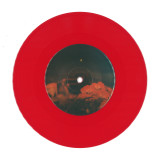
The 7” is released as a deluxe red vinyl single with numbered photo/inserts selected and created by James. The single is issued in a limited edition of 200 copies.
8 years almost to the day after releasing his unique re-interpretation album of his field recordings made in the late 90's in Tanzania, Kink Gong is back with another volume of bushmen madness. Here’s what Kink Gong aka Laurent Jean-neau has to say about his end of millennium trip:
‘’My experience in Tanzania is now over 20 years and most of the so called remix was started in Tanzania and left un-finished, then eventually retouched in Vienna, Paris, Shanghai, Kunming, Dali or Vientiane. 20 years later I searched my Tanzanian files and rediscovered unfinished tracks which are being now refreshed on this new record.
Back to the early days of the XXI century, when I lost my health trying to survive with the HADZAs, the last bushmen in northern Tanzania. In 1999 James Stephenson from NYC invited me to join his Hadzas friends. I would leave the bush to rest in a place with enough food and electricity and start to edit, loop and work on the original recordings, to trans-form them into organic abstract compositions, the only instrument I had recorded a lot with the Hadzas was the malimba and I bought different malimbas in Arusha to take back with me to Europe, I used either the original record-ings or me playing malimbas on some tracks and applied some electronic treatment to it, at that time I used Roland synths for some tracks.
The original recordings are related to scenes at night by the fire with the Hadzas, but also 3 different types of celebra-tions, Epeme Men was recorded on a moonless night with men and women singing and dancing in complete dark-ness in Mangola, an Hadza camp. Irawk Drum Under the Rain was recorded during daytime at a Multi ethnic gathering at the Franciscan Spanish catholic mission with a crowd dancing and singing under heavy rain while an IRAWK large (and wet) drum was being played, Northern Tanzania. Makonde Island was recorded in southern Tanzania at the boarder with Mozambique and is a pure scene of trance taking place on an island where the MAKONDE fishermen off the coast of Mtwara, get wild, hitting plastic containers for the sound, drunk and stoned men and women are hysterical-ly jumping and falling on each other, ending up with a few wounded.
Once again I'm responsible for this act of multicultural sabotage, but don’t forget that you can always listen to the origi-nal recordings on the Kink Gong recs collection. ‘’
Laurent Jeanneau, Berlin 2023
With distorted arpeggiated synthesisers and cold metallic drum-machine patterns, William Wiffen from Yorkshire invites you to his sonic warzone. Höga Nord Rekords proudly presents RED (Rapid Ear Damage), a stripped and harsh take on postpunk, motorik and EBM. With haunting and reverbdrenched synthesizers, Wiffen’s new project sometimes resembles acts like Two Lone Swordsmen in their dirtiest moments.
RED is not a wholesome and pleasant experience. Heavily modified vocals, used more like an additional instrument, breaks through the distorted, hard, backbeat, contributing to the feeling of being trapped in a mental slit trench or bomb shelter: no light coming in – only sound. Set the controls for the heart of the void.
After 3 LP (MEUH! à la petite cuiller and VU A LA TÉLÉ), INTERIM comes back with TRASH, a 4th beautiful blue vinyl LP with electro pop and dub dancing sounds. Electronics and weirdness of all kinds are once again the signature of the duo.
Agnès Rougier (bass, melodica, electronics, lyrics) and Michel Bazieu (electronics, lyrics) hijack words to play with reality and have fun making the machines sing. Lizard men and climate change (Lizard Man), the French state and chlordecone (CLD Banana Dub), the Trump’s space force (Space force Dub), the Chinese social tyranny (Social Control) or Facebook (Up Sugar Mountain): the 9 tracks of TRASH humorously describe the social and political tragedies and excesses of today’s world.
Recorded and mixed by INTERIM. Mastering by Pete Maher. On the cover, an original drawing by Arthur Junier. TRASH is produced by the label MEUH! Productions.
Josh Milan has been recording music professionally for over 30 years.He's played every role from artist to engineer in the studio.This project, Honeysweet, focuses on his production and musicianship.Utilizing only one musician on sax, Josh plays every instrument and sings every note on this project. His songs are packed with soulful dance floor grooves inspired by iconic, soulful groups like Brian Auger, Cymande, Pleasure, Africano, Santana and others.
"I wanted to do music that made me and my family feel good when I was growing up. It's the kind of music that families dance to at gatherings with a record player and no DJ”, says Josh. “Intros, Accents, Breakdowns, Bridges, and endings were all part of the music.” This music will transport Josh's audience to a place of musical freedom. This is music with, seemingly, no rules.
Josh Milan describes each track on the Honeysweet EP “Exodus” in his own words :
"Last Night Changed It All featuring Lawrence Clark on sax is the kind of groove that keeps its dance floor value while holding up the banner of true musicianship. This song was written after hearing a DJ set,where the DJ didn’t seem to be concern about staying within a musical box. He played all sorts of music in one set. I knew then that I’d branch out musically when recording.Rhodes, picked bass guitar, rhythm guitar and drum kit is all that's needed on this one.”
"Exodus the manipulation of major and minor chords in this groove make it complex and interesting. The listener is lead by the organ solo featured here. The song is a mental escape. A mental exodus complete with bongo section.”"Being Free is a message that captures the point of this entire project. Musical freedom and expression is where this project gets its
fuel. Horns, are included on this production. A true expression of soulful music. Being free should be all the time I'm your mind all the time.”
“Cranberries and Cream is my tribute to funk grooves as they were featured on records in 70’s. I’m a fan of that sound and I like to play by own funk grooves when I’m alone. This is one of the tracks on the ep I prefer to rock.”
“And So She Waits has eerie sounding pads in the background. They linger throughout the track. Popping in and out, as though they’re waiting for something. You will hear the change in mood once she is no longer waiting. The groove returns to it’s original state. Only she is no longer waiting, he is.”
“Crazy is me bringing the funk to dirty house music. Complete with house piano in the mix. The chords are unsettling. They are, in fact,Crazy. I though adding a horn arrangement to a house track like this would sound interesting and different.”Honeysweet “Exodus” out at all digital outlets and double pack vinyl set.
A famous anthem once begged: “Don’t Make Me Wait.” Sometimes, though, it’s good to make ‘em wait—even just a little bit. Case in point: The production duo of Fabrizio Mammarella and Phillip Lauer, known to clubbers, DJs and music heads as Black Spuma.
Three years after their last EP—and nearly a decade into their production existence—the duo have finally given us a full-length manifesto. Sure, there have been a smattering of remixes and EPs over the years on labels like Futureboogie, International Feel and Live At Robert Johnson. But on their new LP “No No No,” the Spumas at last get to stretch out and give us their full-meal-deal.
The pair birthed the tracks at Lauer’s famed Pyramide III studio, with 10 tunes finalised and selected remotely, thanks to the wonders of high-speed Internet. While the Spumas are well-known (both together and as solo acts) for their melodic, 80s-tinged club workouts, the album format has allowed the guys to push their sound into parts unknown. The album drops at the end of May on Permanent Vacation, and it distils all the things we love about the duo: The melody, the playfulness and the musicianship of two veterans in full command of their powers.
Take the tune “Obereggen,” which expands a punchy, staccato bassline into that sweet spot where trance and italo can play next to each other. Or the cut “Fracture,” which is built on a Detroit-like chassis but makes room for gorgeous pads, subby bass and a nimble breakbeat.
For the established fans, there’ll be plenty to latch onto, including the title cut (and first single), which sounds like something Robocop may have produced if he’d taught a violence diversion program.
Meanwhile, cuts like “Dillingen” remind us of one of those lost Eurythmics B-sides that show up in the dark corners of MixesDB. The album was mixed and mastered by Lopazz, and boasts a colourful cover from Berlin-based artist Ilja Karilampi.
So, 17 years after initially meeting, we finally have a full album from these Spuma Men. And in the end, it was worth the wait.
The gifted Puerto Rican-American drummer and percussionist Willie Bobo was one of the architects of Latin Jazz. Following mentorship from Machito and Mongo Santamaria, Bobo played with Tito Puente, Cal Tjader, and Herbie Mann, before going solo. Bobo’s Beat is a sure-fire winner from 1962 with excellent support from trumpeter Clark Terry, saxophonist Joe Farrell and keyboardist Frank Anderson, a fully three-dimensional set with fine jazz nuances. It shows that Bobo never accepted less than the best from his counterparts, and there are some bossa nova covers mixed in with the driving Latin originals too. An essential work!
Altered Circuits dives deeper in the world of playful and versatile club music with roots in the early 90's! There's an obvious parallel between Ildec's DJ performances and his own music.
Part of a scene with a focus on extended, broad-minded sets, the Ibiza-based artist lets his yearning to unearth and play obscure gems flood into his production process. The "Ahora Si EP" is testament to this adventurous spirit as it tackles a wide array of tempos, styles and moods.
Opener "El Principio" and closer "Grt Plschr" display Ildec's fondness of hazy, recondite atmospherics. With its sustained ambient chord, delay-washed newsreader samples and manipulated themes, the former sounds like a fever dream radio bulletin.
On the latter, a broody motif meanders alongside loosely played drums, while a buried bass guitar occasionally reveals itself. "El Break Del Dia" furtherly explores some of these elements, but this time with the dance floor front of mind.
Languidly morphing bass sequences and staccato synth salvos build up anticipation. When a slowly emerging, ceaselessly arpeggiating organ lead finally materialises, the track explodes. Natural flow is partly traded for sturdier form on the remainder of the EP. "El Break De La Noche" lets an ever-modulating lead groove alongside rigid, dry drum beats.
Descending tom fills, truncated squeaks and a top layer LFO gone haywire complete this sparse yet exciting cut. "La Nueva Version" has a similarly efficient bassline as its bedrock. An interplay of zaps, risers, transposed percussion, and other dusty cartridge samples pulls it left and right while subtle disorienting hints of speech thicken the mix.
On "Modificacion", Ildec moulds his take on progressive and tech house into its toughest shape. A druggy, bleepy lead twirls in and out of the track, carried by the road-tested combo of a taut drum pattern and a piercing backbeat bass. Ominous chords and equally menacing vocals mark its aim: to create tension in the club. It is a standout on a diverse, daring EP we are delighted to present as the fifth release on our label.
Tapping into the seductive unease of the unexplained, Modula lands on Tartelet Archives with Paranormal Phenomena – The Icelandic Expedition, a nine-track album that evokes alien synth- electro and New Age soundscapes.
During a trip to Iceland in February 2020, Naples native Filippo Colonna Romano (Modula) experienced the raw power of the island’s otherworldly natural forces. Inspired by his field recordings and a rekindled interest in sci-fi, Paranormal Phenomena – The Icelandic Expedition was born. Steeped in haunting LA synthesis and cinematic tension, the album is an imagined soundtrack to a supernatural thriller, cast in the icy tones of the Roland JD-800.
“When I went to Iceland I was so excited about the ambience and sounds,” says Modula. “I felt everything was stronger than normal; the wind was brutal, the waves fast and noisy. I came to the conclusion that what I had captured all sounded strangely eerie and otherworldly. I decided to compose music that had the same vibe as the field recordings – cold and strange, mysterious and alien.”
The album includes nine tracks each representing a scene in the “movie” ranging from alien synth-electro to New Age ambient moods and soundscapes, inviting the listener on a journey through cold landscapes and into dark caves where unknown creatures lurk in the shadows. Paranormal Phenomena leads logically on from Modula’s previous work for Bordello A Parigi and Firecracker, not to mention his Alba – Tempesta – Notturno EP on Tartelet Records which drew on field recordings from the jungles of South America. Merging extreme environments with a rich palette of classic outboard gear, Modula’s music transports listeners through space and time. Given the heavy motion-picture theme present in Paranormal Phenomena – The Icelandic Expedition, the album is a fitting release to inaugurate Tartelet Archives, a new sub-label to Tartelet Records focusing on electronic obscurities and sounds from the past.
Speicher 125 is a most auspicious collaboration between two great, inimitable voices in techno: Kompakt co-founder Michael Mayer, and Magazine’s own Barnt. They’ve both been productive of late, Mayer with his “Brainwave Technology” EP in 2021, Barnt with his first release on Kompakt, "ProMetal Fan Decor Only Product" in 2022. Of course, they’re also busy with their respective record labels, and international DJing schedules.
You may already have heard their first track, which appeared on Michael’s "&" album from 2014, the psychedelic “Und Da Stehen Fremde Menschen”. For Speicher, though, they set their sights firmly on the peak time dance floor – the result is two stunning cuts of techno euphoria.
On “Teller” Barnt and Mayer unleash a synth storm, tense and thrilling. Percussion piles up against the incessant buzz, but before too long we’re submerged in waves of dense texturology, making the track an object lesson in tension and release. “Duration” is a bittersweet anthem about "life long love". A moving voice tells us about "faith in life" while gleaming, synths, choral swarms and snares shower down from above to form an epic tale about duration and devotion.
Weirding the groove and updating the emotions, Speicher 125 is a monster.
Speicher 125 ist die Zusammenarbeit zwischen zwei unnachahmlichen Stimmen des Techno: Michael Mayer, Mitbegründer von Kompakt, und Barnt von Magazine. Beide waren in letzter Zeit nicht unproduktiv, Mayer mit seiner "Brainwave Technology" EP, Barnt mit seiner ersten Veröffentlichung auf Kompakt, "ProMetal Fan Decor Only Product". Natürlich sind sie auch mit ihren jeweiligen Plattenlabels und internationalem DJing beschäftigt.
Vielleicht hast Du schon ihre erste Kollaboration gehört, die auf Michaels "&"-Album von 2014 erschienen ist, das psychedelische "Und Da Stehen Fremde Menschen". Für "Speicher" haben sie den Peak-Time-Dancefloor ins Visier genommen - das Ergebnis sind zwei atemberaubende Stücke voller Techno-Euphorie.
Auf "Teller" entfesseln Barnt und Mayer ein Synthie-Gewitter, spannend und mitreißend. Die Percussion türmt sich gegen das unaufhörliche Summen auf, aber schon bald tauchen wir in Wellen dichter Texturen ein, was den Track zu einer Lehrstunde in Sachen Spannung und Entspannung macht. "Duration" ist eine bittersüße Hymne über "lebenslange Liebe". Eine bewegte Stimme erzählt uns vom "Glauben an das Leben", während schimmernde Synthies, Chorschwärme und Snares von oben herab eine epische Geschichte über Ausdauer und Hingabe prasseln.
Speicher 125 ist ein Monster, das den Groove neu erkundet und die Emotionen auffrischt.
Macht euch bereit für Movie Metal mit einem düsteren Touch!
Die Geschichten von CURSE OF CAIN spielen in einer dystopisch futuristischen Zeit und drehen sich um eine Truppe Aussätziger, die um die Welt reisen und Shows spielen, um unbemerkt ihr Hauptziel zu verfolgen: Die Welt zu retten und sie zu säubern von fiesen Parasiten,
die die Menschheit infizieren - willkommen in der Zukunft des Jahres 2076? Dieses einzigartige Projekt erschafft ein komplettes filmisches Universum mit vielen Charakteren, die uns in Musik, Film und Bildern unheilvolle Cyberpunk-Geschichten erzählen.
Das Album eröffnet das Schicksal eines Charakters namens Cain. Wir befinden uns mitten in der Ära nach dem Roten Krieg im Jahr 2076 und können dort die Kämpfe der Band und Cain hautnah verfolgen. Dieses Debütalbum, gemixt und gemastert von Alexander Backlund, ist das erste von vielen Kapiteln in der Bandgeschichte und erzählt den Anfang aller Legenden: Wie Cain zu dem wurde, was er ist und welche Schlachten er ausfechten muss, um die Menschheit heimlich zu retten.
Releasing solo for years on his self-titled imprint, Berlin-based DJ/producer Amotik launched AMTK+ earlier this year to feature other artists via split EPs. Following the first instalment with the label boss and Deluka, Berlin-based Arthur Robert and Decka team up for the next EP, bringing another dose of deep and grooving techno to the table across four new tracks.
Unterwegs co-founder Decka kicks off the A-side with 'Bridging the gap', bringing punchy kicks under oscillating tones and razor-sharp hats. 'Sulphur' follows with reverberating synths, rattling percussions and moody bass textures, delivering another menacing techno workout.
On the flip, Figure affiliate Arthur Robert provides deep, dark and hypnotic productions with 'Husk' blending warping stabs over a rumbling bass, while 'Charisma' takes us on a futuristic trip, embracing metallic bleeps and staggered hits, luring us into the early hours.
Back in 1993 Alex Neri and Marco Baroni decided to follow the path of experimentation, crossing the bridge between Melodic Italian Deep House and Progressive Music.
This concept is better expressed in the name “Kamasutra” itself, because their music has changed shades, evolving in different “positions” for each version released.
Repressed today including two remixes by Gene on Earth and Mennie.
In a booming Swiss rocksteady and ska scene, COSMIC SHUFFLING is once again affirming itself as a rising star of the genre on a intergalactic scale. The band's first album, MAGIC ROCKET
SHIP, released in the midst of the pandemic, was a huge hit with fans of the Jamaican sound of the 1960s. Three years later, the Geneva-based septet is back in force with a new album, COSMIC QUEST, featuring eleven vocal tracks ranging from fiery ska worthy of the best years of the Skatalites and Soul Brothers ('Eclipse', 'Walk On By'), to exquisitely melancholy rocksteady ballads ('Birds of Spring', 'Dusk Till Dawn'), to bright early reggae with a touch of 1950s mento ('By The
Rivers').
Fans of vintage sound will be delighted by the sound of this new album elaborated in the raw and warm aesthetics of analog saturation that made the beauty of the golden age of Jamaican music.
Under the guidance of Swiss producer Mathias Liengme, the renowned Spanish sound engineer Roberto Sánchez has mixed this superb opus with class and character. The sound is just like the
cover of the album: against a lunar backdrop, in the glowing light of the setting sun, Cosmic Shuffling’s magnificent seven delight the hearts of the convinced as well as the undecided with the
exhilarating sound of their irresistibly danceable Cosmic Quest. Let yourself be carried away!
Als eines der beständigsten Aushängeschilder der Rockund Popgeschichte hat Shaky mehr gesehen und erreicht, als sich die meisten Menschen erträumen können, seit er als Teenager das Publikum zum ersten Mal verzauberte.
Mit "Re-Set" liefert Stevens nun ein weiteres aufregendes Kapitel in dieser einzigartigen Geschichte und freut sich sehr darauf, es mit seinen treuen Fans, aber auch neuen Bewunderern zu teilen. "Im Grunde genommen ist es eine Fortsetzung", sagt er, "aber es ist auch anders.
Die Menschen waren von "Echoes Of Our Times" überrascht, und ich schätze, dass das Gleiche mit "Re-Set" passieren wird."
Wie auch beim Vorgänger "Echoes Of Our Times" erzählen die Songs auf "Re-Set" zutiefst persönliche Geschichten, inspiriert aus der Familienchronik, aber auch auf das Arbeitermilieu anspielend, aus der der junge Michael Barratt heraus seine unglaubliche Karriere startete. Die einzigartige Kombination aus stimmlichem Können und unaufhaltsamer Entschlossenheit half ihm dabei, zu einem Star zu avancieren, der zum meistverkauften britischen Single-Künstler eines
Jahrzehnts wurde. Seine beeindruckende Erfolgsbilanz umfasst 33 Top-40-Hits in Großbritannien, vier Nr. 1-Hits, unzählige Hit-Alben und eine nach wie vor ungebrochene Popularität in ganz Europa und dem Rest der Welt.
After the successful 7-inch release of Agip, Roman producer and composer Azzurro 80 is back on Four Flies with another triple-single that continues his love affair with dreamy synth-pop and Italian Eighties culture and society.
"Notte Inchiesta", on side A, could be the title music to an imaginary '80s investigative/true-crime program broadcast on late-night television. Clearly reminiscent in mood and texture of the soundtracks of late-70s/early-80s Italian detective-action films, it brings back the jazz-funk, post-prog and fusion overtones that characterized the music of those films. In short: a contemporary-retro sound nestled somewhere between Goblin's funk-oriented recordings, Azymuth's "Jazz Carnival", and electronic disco with a sprinkle of new wave.
Side B opens with "Equilibrio", which could serve as additional, more dynamic music for the same TV program mentioned above. The style is once againelectronic jazz-funk, but here we have abreak built upon a trail of notes chasing each other.
In contrast, "Sambuca", the single's closer, is deliberately nostalgic and melancholy. Perfectly suitable for visual narratives of an Italy that no longer exists, it sounds like one of those great Italian soundtrack themes that are able to convey tension and calm at the same time. The track is titled after the anise-flavoured liqueur that Italians often drink after their espresso, because "making references in my music to things that are part of our national popular culture is really important to me", as the artist has explained.
After 6 years, label boss Ewan Jansen circles back to Red Ember’s main with a new EP.
A concept journey equally for the mind and the dancefloor that strays from his house roots with themes of mysticism pushing wider rhythm palettes and creative synthesis.
The opener ‘Solanoid’ marches over the horizon; a solid progression of sun-scorched chords, goaded by some distinctive chanting synths and driving bass.
‘Caravania’ answers as a stomping IDM-esque fable, joined by bubbling rhythms on the ground and a central writhing serpentine synth guided from high above by voices unknown.
The flip side quickly de-camps from the physical, with the organic ‘Mistik’ seeing elements of rave and tribal electronica driven by tuned kicks, sub-bass and resonant rhythms.
Lastly, a stoic tome of stone and water is left with ‘Gecko’ – a skittish chunky groove, with isolated melancholic tones that find harmony in the end.
A royal refugee turned Soul survivor. On his debut album Free Me, Burundian-born JP Bimeni astonishes with a voice that recalls Otis Redding in his prime whilst resonating with the soul of Africa. A refugee who's been living in London since the early 2000s, Bimeni sings songs of love and loss, hope and fear, with a conviction that comes from the extraordinary experiences life has thrown at him.
A descendant of the Burundian royal family, Bimeni fled Burundi aged 15 during the 1993 civil war. Following three attempts on his life - at school he watched as his schoolmates were murdered, he was then chased by motorcycle militia-men and finally poisoned by doctors in hospital - he was given refugee status and fled to the UK where he's remained ever since. Music has provided the solace that Bimeni has needed to move forward with his life: 'If I didn't have music I don´t know how I would have survived everything', he says. With it's classic 60s-sounding Motown and Stax-inspired grooves the album was written by musical director Eduardo Martiìnez and songwriter Marc Ibarz and Bimeni imbues these tales of love and loss with his tragic experiences making 'Free Me' a deep soul soundtrack to his pained life: 'When I sing I feel like I'm cleansing myself: music is a way for me to forget'.
A lost MPB gem from rural Finland! We Jazz presents the first ever reissue of this rare 1990 local release by Brazilian duo Rosanna & Zelia. 7" EP with inside out 3mm spine sleeve. RIYL: Gilberto Gil, Joyce, Musica Popular Brasileira, bossa nova, bossa jazz
Liner notes by Mikko Mattlar:
"Rosanna & Zélia were a Brazilian duo of singers and musicians Rosanna Guimarães Tavares and Zélia Nogueira da Fonseca. They moved from Minas Gerais, Brazil to Europe in 1988, released five albums in Germany between 1993–2004 and featured vocals on an Ian Pooley house track Coração Tambor before Rosanna died of cancer in 2006. Zélia still continues her career in Germany, touring actively and releasing new music.
The duo's journey from Brazil to Germany also included two brief visits to Finland. In the years 1989–1990, they spent time in the small town of Seinäjoki in Ostrobothnia. Rosanna & Zélia performed Brazilian music in Finnish clubs and festivals and recorded a 7" EP for local label Maumau Music. The record was distributed mostly in the Seinäjoki area, but the three songs are well-performed and authentic Brazilian MPB, so the largely unknown record now gets its first reissue for a wider audience on We Jazz Records.
But how did two Brazilian women find their way to a small Finnish town to record an EP? The main reason for this was music journalist and promoter Risto Vuorinen, who was on a holiday in Albufeira, Portugal, where a friend of his lived. The streets were almost empty that evening, but Vuorinen and his friend heard fine guitar playing and singing from a bar. There were Rosanna and Zélia performing on a small stage, and the two Finnish men happened to be the only customers. When the artists ended their performance, Vuorinen's friend, who spoke Portuguese, went to talk to them. Rosanna and Zélia told him they had recently come from Brazil and are trying to gain ground in Europe with their music.
Because Rosanna and Zélia didn't know where they would head next, and because Vuorinen liked their music, he thought of bringing the duo to his hometown, Seinäjoki. They immediately liked the idea, and in the autumn of 1989 they arrived in Finland. The national Finnish jazz festival was held in Seinäjoki, and Vuorinen thought Rosanna & Zélia's Brazilian music would fit right in. They performed at the festival and in November 1989, also made recordings in a local studio with backing musicians from Seinäjoki.
Music enthusiast Pertti Hakala had a record shop and label Maumau Music in Seinäjoki releasing music from local artists. He released a three-track EP from the sessions. with two tracks written by Rosanna & Zelia themselves and their cover version of Extra (Brazilian Reggae), written and originally performed by Gilberto Gil in 1983. A small pressing was made for the Finnish market, and Hakala also sent a box of records to Brazil, but for some reason it was sent back.
After their first visit to Finland, Rosanna & Zélia headed back to central Europe, but Vuorinen decided to organize more performances for them for the next summer. Maybe he also wanted to show them the beautiful Finnish summer, as Rosanna and Zélia had so far seen the country only during the darkest autumn. The duo came back to Finland for the summer of 1990 and performed at the Womad world music festival organized as a part of local Provinssirock. They also played in Nummirock and Puistoblues, both respected music festivals, and performed on TV in Helsinki.
Rosanna and Zélia lived in a small apartment in Seinäjoki and played two to three gigs per week all summer. Because there were only two of them, even small pubs could afford to book them, and in 1990 the economic situation in Finland was good. It was before a major economic depression hit the country. The duo travelled by bus or train, and because they were an acoustic duo, they could easily carry their instruments in public transport. Vuorinen got excellent feedback from organizers. Rosanna and Zélia were good performers, but also really nice people.
With the income from their summer gigs, Rosanna and Zélia could buy a PA mixer and other musical equipment. When the summer 1990 turned to autumn, they continued their journey from Seinäjoki to Germany where they settled down."
Seit gut 30 Jahren zählt Adriana Calcanhotto nun schon zu den größten und einflussreichsten Stimmen jener weiblichen Singer/Songwriter-Generation aus Brasilien, deren Vertreterinnen gleichermaßen als Komponistinnen, Instrumentalistinnen und Dichterinnen erfolgreich sind.
Vor drei Jahren hatten die pandemiebedingten Lockdown-Maßnahmen im Land sie dazu gezwungen, das 2020 veröffentlichte Album "Só" ("einsam/allein") unter ungewöhnlichen Bedingungen aufzunehmen: als virtuelle Zusammenarbeit mit anderen Musiker:innen, die (genau
wie sie selbst) in den eigenen vier Wänden festsaßen.
Kein Wunder, dass das Resultat vor allem jene Einsamkeit zum Ausdruck brachte, unter der in jenen Tagen die meisten Menschen leiden mussten.
Nun jedoch meldet sich die zweifache Latin-Grammy-Gewinnerin
(2006 & 2010) mit einem ganz anders klingenden und sehr viel extrovertierteren Longplayer zurück: "Errante" - was im Deutschen so viel wie "umherziehend" bedeutet.
Tatsächlich bewegt sich Adriana Calcanhotto auf ihrem 13. Studioalbum sehr frei und legt große Distanzen zwischen ganz unterschiedlichen Stilen und Genres zurück (alles von Bossa Nova, Samba-Canção, Xote, Maxixe und Samba-de-Roda bis hin zu Rock/Pop und Funk Carioca (Favela Funk)), wobei auch die Themenpalette ähnlich groß angelegt ist, wenn es etwa um die Liebe und deren Ende geht, ums Flirten, um Verluste, um Trauer und Selbstreflexion.
Before MF DOOM donned his mask and became one of the most prolific MC-producers of modern Hip-Hop, he was a member of KMD, an early ‘90s rap group whose work still goes criminally under-appreciated to this day.
Following their 1991 debut album, Mr. Hood, the former trio shed one member leaving only two remaining – Subroc and his brother, Zev Love X (better known today as MF DOOM). Originally scheduled for release in 1994, their sophomore album Black Bastards showed clear progression from their debut. It was a truly amazing record, both sonically and lyrically, full of youthful creativity and tinged with the stresses of growing up as Black men in urban America. Songs like the lead single “What A N*gga Know”, the slippery, bass-driven “Get U Now”, and the album’s title track explore Black consciousness viewed through young-but-experienced eyes. Musically alternating between bouncy and raw – many times both, concurrently – the tracks gave the MC’s the springboard they needed to express themselves clearly.
Sadly, Subroc would face a sudden and untimely death in 1993, just as the duo were finishing the album. Grief-stricken, his brother Zev Love X – now the sole remaining member of the group – was determined to carry the legacy of KMD onward, but Elektra Records unceremoniously shelved the project in the eleventh hour, due to controversy surrounding the album’s provocative cover art. Following the fallout with Elektra, Zev tried for years to release the album on other labels, but he was continually met with dead ends. Struggling through the pain of losing his brother, coupled with the inability to release their final project together, a discouraged Zev Love X quietly withdrew from the scene and began quietly plotting his revenge on an industry that had broken him spiritually. Thus, in order to understand the true origin story of the super-villain, MF DOOM, one must recognize and appreciate the evolution of his former group, KMD, and the backstory of their pivotal album, Black Bastards.
In the early 1990s, a handful of black metal artists were enticed by the possibility of conjuring new fantastical worlds from the deep isolation of their home setups. Rather than the dense metal sound of their existing projects, this new direction would be centred around intimate synth soundscapes: forlorn organs and otherworldly MIDI theatrics.
The music on ASCEND is predominantly from self-produced, self-distributed releases, typically manufactured in small numbers. Though some artists producing this style of music, most notably Mortiis and Burzum, gained wider recognition outside underground circles, it is only in recent years that the sound and its influence has really been appreciated. This is particularly the case with the late Matthew Davis and his recently reappraised Secret Stairways project, whose song ‘Lammas Tide’ (from the 1997 Enchantment of the Ring album) appears on ASCEND. A simple home recording on a Yamaha KX-W392 manages to be both elegant and tortured, ambiguously devotional and recalling latter years Popol Vuh.
This battle between dark and light is a constant thread through ASCEND, with simple minimal synth lines that can be both delicate and menacing. Compilation opener ‘The Dark Dreamquest’ from Italian black metal group Evol is loaded with occult warning, and Finnish act Kadotus 609’s ‘The Summoning Through Crimson’ is languid, twisted and dark. In spite of the darkness, several pieces of the music on ASCEND have formal similarities with the sometimes saccharine new age music that rose to prominence in that era: but to a rougher, darker ends. The closing song from Darkthrone icon (and past NTS radio host) Fenriz, under his Neptune Towers pseudonym, pulls us further out, with ‘To Cold Void Desolation’ — an astral synth project, akin to ’70s kosmische muzik masters Harmonia.
The gentler side can often amplify an uncannily sinister edge, heard in German act Dolch’s ‘Tumulus’, where orc marching horns contrast against delicate rompler harps and softly whispered chanting. It hammers home a deep loneliness and detachment constant throughout ASCEND, made possible by these unusual contrasts, both unsettling and otherworldly.
Emerging talent Amazingblaze has unveiled his new EP ‘Can’t Stop’, out on 3rd March on Charlotte de Witte’s KNTXT imprint.
A four track release, the EP opens with trance cut ‘Can’t Stop’, an electrifying club record which is reminiscent of the 90s. Next up is ‘Got The Vibe’ following the theme of 90s raving, a pulsating, high energy cut. Combining heavy hitting techno beats, ‘Enter The Rave’ sets the tone of the EP, whilst the emotive ‘On The Grind’ closes off the EP with driving pummeling techno, laced with captivating hip-hop vocals.
“Can't Stop EP has a very individual vibe, this time I decided to go through some classic 90s trance & techno vibes and added some freshness by using hip-hop vocals.” Amazingblaze explains. “Each track has its own story. Here we got massive bangers for big venues and hard hitting tracks for clubs.”
Charlotte de Witte adds: “Amazingblaze is back on KNTXT with some truly magnificent tracks. Can’t Stop EP is filled with masterpieces that always turn out to be one of the highlights of my sets. His very distinctive sound just never disappoints. I’m very happy to have him on board for another massive EP on the label.”
Amazingblaze is a fast-rising newcomer on the scene who caught the attention of Charlotte de Witte with his unique talent and craft. Surrounded by music since childhood, Amazingblaze was intrigued by the mysterious vibrations of sound, which was his initial inspiration to produce electronic music. Arriving in St. Petersburg as a teenager, he met producer BMB Spacekid, who later became his mentor. Amazingblaze went onto releasing on Charlotte de Witte's iconic label KNTXT for the first time in 2022 with his ‘Venture EP’ that turned heads on a worldwide scale.
The ‘Can’t Stop EP’ showcases Amazingblaze’s meticulous craft as a fresh newcomer on the scene.
Alvars Orkester was formed in 1987 in Johannishus, a small village in the south-east of Sweden by a group of young boys interested in the mysteries of psychic sickness, mental institutions, industrial music culture and the power of sound. For the first very creative years, Alvars was very active within the independent cassette culture scene releasing their stuff (that quite soon drifted from the industrialism inspired by Test Dept, TG, SPK and z'ev to an atmospheric, psychedelic and quite ambient version of noise) on small labels in Italy, Portugal, USA etc.
Joachim Nordwall writes: "1990-1991. In the middle of all teen confusion going on, me and Zwarre had a long creative time together. Recording every weekend, connecting with like-minded (or at least we thought so) people around the world and trading tapes with whoever. Our world was analogue synths, Party Zone late Friday nights on MTV, zines and out-there experimental music. By then, we had a few tapes out and had "Nobody Finds Nothing" being released on the Italian super-label (in our opinion) Biotope Art Organization. We were in the midst of something and recorded "Nuthull" for another Italian top level label called Old Europa Café. However, they did not like it and the tape was abandoned and forgotten. Then years and years later, close to present time, Zwarre was in touch with OEC for some reason and had the master returned." - Joachim Nordwall, Gothenburg, 21 February 2023
We've been writing new material as a trio since the first lockdown in the spring of 2020. An organic and electro-acoustic impulse that translates both mine and Eliete's need of self-archiving, re-inventing and auto-cannibalising Tetine's past, present and
future in order to explore other aural landscapes and modes of composing intuitively, while at the same time, re-experiencing moments of our trajectory as a hybrid organism.
Music For Breathing was born as a respiratory, meditative, and improvisatory piece of DIY tropical-mutant-punk "chamber music" written for cello, voice, piano, organ and electronics. The work responds to the suspended acts of breathing and vertigos experienced in contemporary polluted environments in political, social and philosophical transitions, whilst investigating the secret ontologies of inanimate objects and architectures, as well as the echoes and ethics of modes of operating things.
Recorded during the intense period of heatwaves that hit London between July and August 2022, in a small studio set up in our flat's kitchen - so that we could capture the acoustic instrumentation (in particular, for the recording of cellos) without much
noise interference from the street - this vinyl version of the album comprises of 5 distinct yet complementary reflective movements.
Musically and lyrically, it explores the atmospherics and syntaxes of time and space, voice, rhythm, as well as themes such as hearing loss, menopause, pollution and respiration. It builds an expanded suite of unexpected electro-acoustic textures through repetition, minimalistic motives, simple melodies, chromatic developments, free counterpoint and atonalism. Conceived as an ode to the poetics of slowness, the sounds you hear give continuity to the music we composed for the performance-film The Ether - Prelude No.1 over the first lockdown in 2020 as it simultaneously explores the warmth, melodiousness and power of the cello in conjunction with electronics. Music For Breathing evokes this transitory moment: a place and time where language runs out, communication and information lose their functions, sound and meaning do not correspond. Facts do not correspond to contexts. Spaced Out in Paradise. The last degree of the structure, the loss of memory. The lost voice.
The album also features our 12-year-old daughter Yoko Afi on cello and vocals. It reflects a period of free sound experimentation influenced both by romantic composers of the late 19th / early 20th centuries and contemporary electronic music. The pieces you hear were composed, arranged, and recorded with the joy and melancholy of "those who do not know". In other words, "with the arrogance of a second childhood" as Derek Jarman once put it. 'Agile and candid as a child'(1).
1) Manifesto da Poesia Pau-Brasil, Oswald de Andrade, Correio da Manhã, 18 de Março de 1924.
Feedback Moves kicks off 2023 with a new record by @xcrswx and Lolina. @xcrswx are Crystabel Riley (drum-/human-skin) and Seymour Wright (saxophone), they released ‘Call Time/Hard Out’ on Feedback Moves in 2020. Lolina is an electronic and digital musician, who has previously released music as Inga Copeland and was a member of the band Hype Williams.
Their collaborative relationship stems back to 2020. Lolina invited @xcrswx to contribute new work to a radio residency on NTS. They made 3 pieces played across 3 episodes. After these were broadcast, further ideas were exchanged which led to a collaborative audio-visual piece, streamed on Cafe Oto’s website in February 2021. They also performed as a trio live at Café OTO in 2022.
The artists now present a split 10” vinyl. @xcrswx weave the above-mentioned pieces into a 10 minute piece titled ‘FIXES’. The duo strip their sound to bare components. Beginning with the sound of fireworks, the pair then work through stuttered snare shots and warbled, interplaying saxophone.
Lolina presents ‘FM’; some of her strangest and most subtle work to date. Echoing and furthering the abstract turntablism found on previous records ‘Who Is Experimental Music?’ and ‘Fast Fashion’. We hear found sounds, close and distant, rhythmically gathered and dissolved in a swirl of dub tone and timbre.
Tracks have had early play on NTS Radio, Clydebuilt Radio and are expected to be played on BBC Radio 3’s ‘Late Junction’ and ‘Freeness’ show’s.
Paul Hammock es el artista por todos conocido como Cignol, sin lugar a dudas uno de los genuinos revolucionarios dentro del sonido electro de la última década y media. Sus trabajos llevan surcando nuestros Technics desde 2008 a través de los sellos de vanguardia electrónica del nuevo milenio.
En su decimocuarta referencia en vinilo, el sello Valenciano HC Records, tras una imparable y ecléctica línea editorial, publica el nuevo trabajo del genio de Dublín titulado Binary Choices. Un maxi en el que nos domina un profundo sentimiento de melancolía cósmica a través de cuatro cortes que nos sumergen en una odisea espacial.
Adentrarse en cada corte del vinilo es como viajar hasta diferentes cuerpos celestes y dejarse sorprender por su atmósfera ensoñadora, y es que solo es necesario que transcurran 58 segundos de Binary Choices, primer corte de la cara A, para sentirnos arropados por un sentimiento de suma nostalgia, alegría y futurismo. Una inteligente combinación de pads, sintes y brillantes percusiones que nos adentran en un astro inexplorado repleto de extrañas vegetaciones, increíbles seres multicolores y horizontes infinitos que activan nuestra sinestesia.
Un emocionante, decidido y contundente ritmo 4x4 a baja velocidad nos traspasa el alma al surcar la superficie de Broken Circle. Un recuerdo olvidado en forma de aterciopelado sonido se crea frente a nuestros ojos en la consecución del compendio de melodías intimistas que componen sus 4:14 minutos, en los que encuentra sosiego nuestra mente y bálsamo nuestro alma.
La cara B del vinilo regresa al cristalino, eléctrico y veloz ritmo roto con Momentum Gateway, track en el que sus dominantes y ácidas cadenas de bajos se enrollan y juegan en sincronía perfecta con sus diferentes capas de teclados y su vibrante e iridiscente pad.
En el último planeta al que nos transporta Cignol, suena en cada uno de sus parajes Validity Movement, track con el que nos dejamos guiar por su grueso y áspero bajo principal, que contrasta con los delicados sintes y atmósferas que lo rodean. Una experiencia sónica tan delicada, íntima y eficiente que podría servir tanto como banda sonora en la creación de un nuevo universo como en la contemplación de su ocaso final.
Finalmente, por un lado, el trabajo de master del lanzamiento ha sido llevado a cabo por Steve Voidloss en Black Monolith Studios en Londres y, por otro, Dani Requeni completa esta obra con la dirección del arte gráfico de la misma.
Following the success of BLF001, Eastenderz highly anticipated sub-label Belief lets loose the second EP in the series.
Continue to expect consistent groove-driven tracks, made for the dancefloor. Highlighting the freshest of talents, alongside producers who have been on the radar for a while.
On the heels of their monolithic collaborative LP Mental Wounds Not Healing, the collaboration between industrial-noise post-everything bands Uniform & The Body returns with a second entry, Everything That Dies Someday Comes Back. Comprised of an amalgam of abrasive influence that spans Swans-y dirge and purge, Whitehouse’s clenched-jaw noise, middle-period Ministry’s penchant for metallic post-industrial everything, New Order’s nose for melodic emotionality, and Juicy J-inspired beats, Uniform & The Body’s approach delves deeper down the rabbit hole than before, igniting a sonic world of terror and bliss poised to grip the throats of fans yet again. Prepare for a record that the band self-describes as “the middle ground between Robyn and Corrupted, but weirder.”
Much like the collective’s bombastic debut, Everything was built over a series of collaborative sessions with Seth Manchester at Machines with Magnets in Rhode Island, mixing industrial-influenced synths, squalls of harsh noise, manipulated guitar, oodles of samples along with hard rock-inspired riffs, saccharine pop, and the alternately antagonistic and harrowing vocals of Michael Berdan
COLLECTION OF SIGH'S EARLY DEMOS, EP & RARITIES ON VINYL -
INCLUDES AN INTERVIEW & LINER NOTES COURTESY OF MAINMAN
MIRAI KAWASHIMA ON THE FORMATIVE YEARS OF THE JAPANESE
LEGENDS.
Cult Japanese black metal legends Sigh formed in 1989/90, featuring
mainman Mirai Kawashima, Satoshi Fujinami & Kazuki Ozeki
Following initial demos, Shinichi Ishikawa was brought into the band. It was following this shift that the band set about recording the masterpiece debut 'Scorn Defeat' for Euronymous' Deathlike Silence Productions, going on to become one of the country's greatest & most revered metal exports. With a journey through the strange & the psychedelic, incorporating a whole eclectic mix of genre styles & experimentation throughout their career, Sigh has remained a
vital creative force in the avantgarde field. However, at its core, Sigh has always remained true to its roots of old school metal.
'Eastern Darkness' contains a collection of Sigh's early rare works showing their swift musical evolution as well as the strong utilisation of keyboards in their compositional process throughout. The collection includes the band's legendary demo tapes, 'Desolation' & 'Tragedies', plus their 'Requiem For Fools' EP, along with the 'Far East Gate In Inferno' version of 'The Zombie Terror'. 'Eastern Darkness' is presented on the vinyl format & includes an interview with Mirai Kawashima about the early years of the band, along with his recollections of the origins of each title contained within the release, three decades on from Sigh's formation.
RNT brings the heat for their 2nd outing in their Family Affair compilation series, representing both their ever-expanding RNT ménage, as well as their tight knit musical nuclear fam.
Side A welcomes two seasoned producers to the catalog for the first time: Red Axes with their flip of fellow Israeli Nenor’s banger 'Do You Remember', and Chicago legend Boo Williams comes correct with 'Besty Smith', characteristically bumping and soulful.
OG RNT artist Frank Booker delivers his classic sampley deep sound with 'Time Won’t Tell', and Underground System’s Peter Matson takes JKriv’s 'Something Else' in a synthy and modern electro disco direction to round out the B side. Aural hugs all around in this fam jam!
Tod Dockstader's Aerial series, an electronic/drone masterpiece, is cherished among fans of the artist's work and this second volume is available in an audiophile quality double LP edition.
Tod Dockstader's Aerial series is sourced from his life long passion for shortwave radio. Dockstader collected over 90 hours of recordings, made at night, and comprised of cross signals and fragments plucked from the atmosphere.
Opening with airwave drones, Dockstader gradually allows elements to slowly come and go, summoning an ominous atmosphere of ethereal cloud clouds. Malignant placidity continues, giving the feeling of eavesdropping upon late-night audio activity not unlike discovering number stations while sweeping the dials. These sounds pull you in as their density and rhythms come and go.
Backward voices, deep echoing choruses of conversations flowing under the surface, ocean sounds, pulsing electro-rhythms, all seem to be created via the collaging of many hours of source recordings. A masterwork of collage and juxtaposition by an overlooked pioneer of American electronic music.
Artwork by John Brien (Imprec) is inspired by the propagation of shortwave radio signals throughout the earth's atmosphere.
"This return of Dockstader is something to cherish, not just because his output has been so limited and scarce but because what we do have is so intriguing, persuasive and cliche-free; the music of an inspired explorer who trails in nobody's slipstream." The Wire
"One of the great figures of musique concrete composition." Dusted
The Aerial project
I've written before of my interest in shortwave radio, in the notes to the Quatermass CD. Also, in the notes to the Omniphony CD (which has my first "Aerial" mix, "Past Prelude," in it), I mentioned "The Aerial Etudes," which was my working title for what became the three CDs you have. And, at the end of an interview with Chris Cutler (which can be found in the "Unofficial TD Website"), the piece I mentioned I was starting to work on at the time became Aerial.) When I was very young, people got most of their entertainment from radio. They called it "playing the radio," as if it were a musical instrument. That's what I've tried to do in this piece. About this time, a few people encouraged me to look into using a computer for this work.
I'd never used one, but I saw it would allow me to keep my mixes digital - no more transfer losses. So, at the end of 2001, I got a computer and an editing program for it, and spent what seemed a long time learning it. I began selecting mixes and loading them into the computer in late March, 2002. Out of the 580, I selected 90 "best" mixes - eventually reduced to 59, the ones on the CDs. Finally, in assembling the CDs, I followed David Myers' suggestion to allow each piece to flow into the next - making a continuous journey to the end. Tod Dockstader, 14 september 2003
About Tod Dockstader: Dockstader moved to New York in 1958 and became a self-taught sound engineer and sound effects specialist and apprenticed as a recording engineer at Gotham Recording Studios. It was around this time that he started to use his off-work hours to experiment with mixing and manipulating sounds on magnetic tape (musique concrète). By 1960 he had amassed enough material to assemble his first record Eight Electronic Pieces which was released on the Folkways label in 1961 (this would later be used in the soundtrack of Fellini’s Satyricon). The last of the eight pieces was later re-worked into his first stereo piece. In 1961 he applied to use the facilities at the Columbia-Princeton Electronic Music Center and was denied access by Vladimir Ussachevsky. Ussachevsky’s official reason was the “overstrained” scheduling of the studios, although many suspect that Dockstader’s lack of academic training was a factor in the decision. He continued to create music throughout the first half of the 60s, working principally with tape manipulation effects. His last piece at Gotham was Four Telemetry Tapes in 1965, after which he left to work as an audio-visual designer on the Air Canada Pavillion at Montreal’s Expo ‘67. It was around this time in 1966 that some of Dockstader’s pieces were released on three Owl L.P.s, and his work became known to a larger audience. He achieved modest recognition and radio play alongside the likes of Karlheinz Stockhausen, Edgard Varèse, and John Cage.
For this uniquely personal retrospective spread over twelve vinyl discs, Sven Väth takes us back to the early days of his DJ career. On What I Used To Play we meet great pioneers of electronic music, gifted percussionists, obscure wave bands, and innovative producers of a bygone 'new electronic' era. Rough beats and irresistible grooves from the identification stage of house, techno, and acid remind us not just how far electronic music has evolved over the past four decades, but how great it was to dance to EBM, techno, and house for the very first time.
If there is one protagonist of the electronic music scene who has remained curious, innovative and at the very cutting edge of music for over four decades, it's Sven Väth. His multi-layered artist albums and Sound of the Season mix compilations have been defining the genre for over two decades, and even today, he is constantly on the lookout for the next top tune to add to the highlights of his next set. At least, that's the case when he's not producing them himself as an artist or remixer. "Actually, it's always been part of my DNA to think ahead," and nothing had been further from his mind than looking back at his past, but when in spring of 2020 the international DJ circuit had to be scaled down to virtually zero, the 'restless traveler' suddenly had time. Time to stop and reflect on "how it actually was back then, at the very beginning of my career..."
"It was a great trip and with every track, beautiful memories came flooding back".
In the London apartment, he had just moved into, Sven has set up a "little music room", where he cocooned himself for several days, "to look way back for the first time and review my musical journey through the eighties, so to speak."
The interim result was six thematically oriented playlists with a grand total of 120 tracks from 'early 80s' to 'Balearic late 80s', together with excursions into afrobeat, European new wave, and EBM sounds and a few epochal techno/house tracks from the USA in between. From these 'Best of Sven Väth's favorites', the project What I Used To Play crystallized. Sven remembers how the Cocoon team reacted to his proposal: "They found the idea of making a compilation out of it MEGA from the beginning and everyone said 'Sven, go for it', but then, of course, the work really started, namely, to clear the rights and to get clean sounding masters of the up to 40-year-old tracks. There was also disappointment, of course. We couldn't clear certain titles because the rights holders in the USA had fallen out with each other or simply disappeared from the scene. In short, it wasn't easy, but now I can safely say we got the most important tracks."
Finally, after two years of research, curation, design, and administrative fine-tuning, the "little retrospective" from 1981 to 1990 is available. The exquisitely packaged, and three-kilo heavy box set is not only physically impressive, WIUTP is also the definitive record of Sven Väth's musical development. On each of the twenty-four sides of vinyl, you can trace track by track, what influenced him during which phase, and how he took off as a DJ from his parents' Queen's Pub straight into the spotlight at Dorian Gray. There and at Vogue (later OMEN), Sven became the style-defining player in the DJ booth that he still is today.
1981 - 1990: Future Sounds of Now
In the early eighties, the crowd in clubs like Vogue and Dorian Gray danced to what nowadays we call 'dance classics' - mainly disco, funk, soul, and chart pop. It was up to a new generation of DJs, including Sven Väth, the youngest protagonist in the Rhine-Main area at the time, to create their own club-ready music mix. Good new tracks and potential floor-fillers were rarities that had to be sought out and found, in order to prove oneself worthy.
Without MP3s, internet streaming, or other digital download possibilities, music didn't just gravitate to the DJ, instead, it had to be tracked down. In well-stocked record stores in Frankfurt and Wiesbaden or even in Amsterdam, London, or New York, Sven and friends sourced the material for countless magical nights. On WIUTP we can follow Sven's very personal journey through this wild, innovative era in which synth-pop, funk, hip-hop, and disco were successively replaced as 'club music' by house, techno, acid, and breakbeat. By the end of the decade, it was clear to see that these once exotic 'fringe' phenomena would soon become 'mass' phenomena.
Early 80s
Dirty Talk by the Italian-American duo Klein & M.B.O. represents the most innovative phase of the Italo-disco genre in the early eighties like no other track. Mario Boncaldo (I) and Tony Carrasco relied entirely on the original synthetic drum and percussion sounds of the Roland TR-808, coupled with the raunchy vocals of Rossana Casale and guitar accents of Davide Piatto. Of course, other tracks from this period were also influential in style, most notably Unit by Logic System, which worked as the perfect soundtrack to the laser lighting system at the legendary Dorian Gray club. With stomping beats and robotic rap interludes, Bostich by Yello also belongs on Sven's eternal playlist - after all, it caught the attention of Afrikaa Bambaataa, who invited the Swiss duo to perform at the Roxy in New York in 1983.
EBM Wave - Mid 80s
From today's point of view, the almost ten-minute-long, downtempo track Giant by Matt Johnson's band project The The, would probably not be considered an obvious club classic. However, a closer (re)listen reveals the rhythmic intricacies of the percussion overdubs by JG Thirlwell (aka Foetus) on Johnson's composition, and it becomes clear why this exceptional piece of music is one of Sven's absolute favorites. Other classics from this phase include Kaw-Liga by the mysterious The Residents, the hypnotic-synthetic Our Darkness by Anne Clark (and David Harrow), and last but not least, the somber, monotonous anthem Where Are You? by 16Bit, one of Sven Väth's projects together with Michael Münzing, Luca Anzilotti from 1986.
US House - Late 80s
You certainly can't talk about Chicago house without mentioning Frankie Knuckles. The resident DJ at the Warehouse not only gave the name to an entire genre, but also produced epochal floor fillers on the Trax label like the timeless Your Love, sung (and moaned) by Jamie Principle. Acid house protagonists Phuture also hail from Chicago, and on We Are Phuture (also released on Trax) we hear the chirping acid sounds of the legendary Roland TB-303 in full effect. Another featured classic is No UFO's by Detroit's Model 500 aka Juan Atkins, who is rightly considered the 'Godfather of Techno' even if the genre-defining track from 1985 still breathes with the spirit of hip-hop and electro from the first breakdance era.
Afrobeat
Le Serpent, by Algerian-born Abdelmadjid Guemguem, is a track that sounds completely different from everything else on WIUTP. Made in 1978, it's a monumental, rousing groove created without bass or synths, just with five congas! Even though Guem sadly passed away in 2021, his immortal, acoustic beats are understood all over the world and will continue to enrich many thousands of DJ sets for years to come. Another classic that not only Sven appreciates beyond measure is Hugh Masekela's Don't Go Lose it, Baby. In addition to being one of the most important jazz pioneers, the trumpeter and freedom fighter from Johannesburg was very experimental, integrating electronic sounds into his music in later years, in a similar vein to Miles Davis and Herbie Hancock. Dutch jazz pianist Jasper van't Hof's afrobeat project Pili Pili has also aged well. The trance-like, almost sixteen-minute-long track of the same name, manages to fill a whole side on the seventh of twelve vinyl discs in the WIUTP box.
UK-US-Euro - Late 80s
Time for a change of scene, in the truest sense of the word, and from a musical perspective, this section is like landing on another planet. First up is Andrew Weatherall's classic remix of Primal Scream's Loaded, featuring the iconic Peter Fonda sample (lifted from the 1966 biker film Wild Angels) that came to personify the mood triggered by the British Second Summer of Love in the late eighties: "We wanna be free to do what we wanna do, and we wanna get loaded...". This period also saw the emergence of M/A/R/R/S whose only single, 1987's Pump Up The Volume, became a club classic with support from DJ legend CJ Mackintosh. In this most eclectic of sections, we also encounter New York house and reggae producer Bobby Konders and his seminal Nervous Acid.
Balearic - Late 80s
Those who know him, know that Sven had already lost his heart to the 'magic island' of Ibiza as a teenager, so with that in mind, the WIUTP project couldn't end without a Balearic chapter. Inspired by Manuel Göttsching's E2-E4, the immortal, eponymously titled Sueño Latino belongs in there without question. Equally popular on the island was, and still is Break 4 Love by Raze, which thinking about it, would also fit perfectly into the house chapter. Last, but not least, there's an overdue reunion with Sven Väth himself, in his role as frontman of the successful Frankfurt trio OFF. Together with Michael Münzing and Luca Anzilotti (later of Snap!) this 'Organization For Fun' created the off-the-wall club hit Electric Salsa in 1986 which incidentally turned into an international chart smash, putting Sven in the enviable position of having to decide between pop stardom and a DJ career. Well, we all know how that decision turned out and the rest, as they say, is history. A not insignificant part of his story is What I Used To Play. Enjoy!
SHDW & Obscure Shape return to their mothership label From Another Mind with their six-track 'Vergessene Welt' EP, signalling the first material on the imprint for 18 months.
Founded in 2015, the launch of SHDW and Obscure Shape's label From Another Mind saw the Stuttgart-based DJ/producers establish themselves via a wealth of self-released material while welcoming a long list of high-profile remixers, including Rodhad, James Ruskin and Dax J. However, the pair's evolution saw new ventures explored and attention focused wider afield with the launch of their second label Mutual Rytm in 2022. Utilising their A&R skills, the label has seen the duo curate and invite a selection of up-and-coming and established names while also delivering their first EP on the label in Summer, 'Poetic Justice'. Exploring the techno sounds of tomorrow while drawing on influences of the past, the label quickly turned heads and has become a go-to for many. Following a brief hiatus, the attention is now turned back towards From Another Mind as the pair explore their origins and the signature FAM sound once again, opening the New Year with six fresh productions across their 'Vergessene Welt' EP.
Opener 'Planet Der Sturme' is an exhilarating ride through driving basslines, menacing synth lines and hard-hitting percussion to march towards the peak hours and set the tone for what's to come. 'Der Urknall' is a trippy and murky dive through off-kilter textures and regimented percussion, while 'Das Gefallene Konigreich' ups the energy levels further with sharp metallic tones, skittering hats and subtle haunting melodies launching deep into the late night hours.
On the flip, 'Geburt Der Erde' brings a slice of paired-back, groove-led techno as a slick acid line takes control and ebbs and flows throughout the track's six-minute duration, before closing the physical record via the delicate yet compelling sonics of title cut 'Vergessene Welt' - showcasing a deep dive into far-reaching corners of the genre.
In October 1974, the first number of “L'Indépendant du Jazz”, a small self-produced magazine DIY -before punk supposedly invented the concept- was launched by Jef Gilson, Gérard Terronès, Jean-Jacques Pussiau and a few other specialists of a different kind of jazz in France, it looked at the already long career of Jef Gilson and in detail at the album with saxophonist Philippe Maté:
“The ‘Workshop’ is, with Philippe Maté (alto-sax), an undeniable success. Maté is genuinely ‘the’ most inventive French saxophonist since Michel Portal burst onto the jazz scene (who has also worked with Jef Gilson on both “Enfin” and “Gaveau”).”
Even though the author of the article is a mysterious I.H. Dubiniou, and it is difficult to know if it is a real person or a pseudonym used by one of the merry bunch, it is also tempting to hear it as what Jef Gilson really thought about his new discovery. Even more so as the two men would work together over a long period, as Maté became one of the key figures of Gilson’s Europamerica orchestra up until the 1980s.
Philippe Maté had started to make a name for himself with the Acting Trio when they released an album on the BYG label in 1969, and he was also one of the regular sidemen for the Saravah studios (he can notably be heard on albums by Higelin, Fontaine or his cult duo album with Daniel Vallancien).
The album was recorded on 4 February 1972, at the Foyer de Montorgueuil, where Gilson had set up his studio, with more or less the same team found on “La Marche Dans Le Désert” by Sahib Shihab + Gilson Unit (recorded ten days later). This was drummer Jean-Claude Pourtier and pianist Pierre Moret (regular Gilson accomplices since “Le Massacre Du Printemps”), alongside Maurice Bouhana and Bruno Di Gioa on various percussions and/or wind instruments. On bass is Didier Levallet, of the now mythical Perception, (Jean-François Catoire would replace him with Shihab) and Philippe Maté who took top billing, rather than the American saxophonist afterwards. The two albums are however quite different. This “Workshop” is more abrasive, more free. Made up of two long improvisations each of over 22mn, “L'Œil” on side A and “Vision” on side B (Gilson specialists would recognise the nod to one of his albums from the 60s), the album plunges you into the depths, attempting to drown you in electronic waves, dragging you back to the surface by the collar, giving you a good shakedown, before showing you the light, leaving you breathless on the shore after 46mn of the most intense music French has to offer. “An undeniable success”, they said. (by Jérôme "Kalcha" Simonneau)
This mini album was originally published on Semantica Records in 2010 as a extremely limited 100 copy only reference. 12 years later we recover this for the Drivecom’s catalogue and fans of the label. This is a re-press edition with a new mastering and cutting, focused in the audio quality more than trying to get a maximum volume or gain. So this is one of the reasons that the side A cutting is trying to keep the tracks in the outside area of the vinyl in the most possible way, trying to avoid distortions or other artifacts from the inner vinyl curvature.
This 12” contains the same tracks on vinyl as the original edition but a couple of bonuses as a digital download. Those tracks called "Axonal Destruction (1999 Rework)" and "Automatic Reconstruction" were never released.
Note: For the people who purchase a physical copy in the shops, please take a picture of your purchase and share it on social networks, then we’ll send you a special download code.
In the musical eld, this reference was introduced with minimal and repetitive mental synth lines, mainly triggered from TB303 sequenced lines as the vertebral spinae, slow and progressive cadence rhythms with a touch of experimental electro and vocoders on board, exception is the rst tittle “Ultralink” which gives the name to the reference and it’s also the most club-oriented track in the mini album. About the thematic is all surrounded of such as mental driving musical lines so all the tittles were focused in the neuroscience
On every copy sold 2 euros minimum goes to Mealespoirs : An NGO association who fight for Childhood rights, malnutrition and education.
lets talk about music now :
Crazy meet up between 2 monsters !
Atomic Compressor, the GTI number one composer who did the best of KSI records, and more recently a brilliant Komum brings a full side of his best recent tunes : Speed pityless kickerz bringing "le Père Noël Est une Ordure" special Thérèse édition !
On the flip you'll get Leatherface, newcomer from Cellul R production, with 2 Industrial psychedelic rolling kickerz : the first one is a C.Mantle hit combo, light kick mentalism ; and the second a powerfull Brotherhood lesson.