hanks to their first-class training in funk and soul while playing in James Brown’s Band, Fred Wesley and Maceo Parker were the obvious choice when it came to participating in George Clinton’s P-Funk empire – the Godfather of Soul had had an enormous influence on Clinton anyway.
In 1977, Clinton and Bootsy Collins produced "A Blow For Me, A Toot For You", the début album by Fred Wesley & the Horny Horns – an ensemble with Wesley on the trombone, Parker on the tenor and alto saxophone, as well as Rick Gardner and Richard 'Kush' Griffith on the trumpet. The majority of the numbers are by Clinton and Collins, so it is not really surprising that much of the LP is pure P-Funk.
The album begins rather gloomily with a remake of Parliament’s "Up For The Down Stroke", and the influence of Parliament is also unmistakable in the other numbers. With regard to the instrumental numbers, "Four Play" fuses funk and jazz, while Wesley’s atmospheric "Peace Fugue" reflects the CTI sound of the 1970s. Actually "Peace Fugue" is the work which least sounds like Clinton on this LP. "A Blow For Me, A Toot For You" scarcely ranks behind Parliament’s "Mothership Connection" or Funkadelic’s "One Nation Under A Groove" and is certainly more than just a recommendable LP, which every funk lover should get to know.
Suche:x nation
"In Vivo" is the result of the photographic work of Klavdij Sluban at the Fleury-Mérogis Young Offender Institution (France) from 1995 to 2016 Beds in addition to his work from Izalco prison, located in El Salvador, from 2008 [visiting rooms] connected to the music of Gareth Davis.
Gareth Davis is an artist, composer and musician living in Amsterdam. He plays clarinet(s), the result of a somewhat impulsive purchase whilst window shopping in Covent Garden, London, around ten years before the turn of the century. The serendipitous location of a rather wonderful (and equally important, rather cheap) second hand record shop less than 10m from the bus stop required for seven years of schooling, combined with delivering newspapers on a daily basis, lead to a somewhat eclectic, dusty and generally unclassified taste in music.
The result. Activity covering sonic art and contemporary classical music through rock, improvisation and noise with collaborations that have included the premiering of new written pieces by composers such as Bernhard Lang, Peter Ablinger, Toshio Hosokawa and Jonathan Harvey, soloist with orchestras including the SWR Symphonieorchester, Warsaw Philharmonic and Orquesta de la Comunidad de Madrid, performances with groups and performers ranging from the Neue Vocalsolisten and Arditti Quartet through to improvisers Elliott Sharp and Frances Marie Uitti, electronic artists Robin Rimbaud and Merzbow and multimedia work with artists including Christian Marclay and Peter Greenaway.
"In Vivo" is his second solo release after to have recorded a bunch of collaborative albums with artists such as Scanner, Machinefabriek, Steven R. Smith, Kleefstra Brothers, Frances-Marie Uitti, Merzbow, Adain Baker, Duane Pitre and more...
Klavdij Sluban, winner of the European Publishers Award for Photography 2009, of the Leica Prize (2004) and of the Niépce Prize (2000), main French prize in photography, is a French photographer of Slovenian origin born in Paris in 1963.
He develops a rigorous and coherent body of work, nourished by literature, never inspired by immediate and sensational current affairs, making him one of the most interesting photographers of his generation. The Balkans, the Black Sea, the Baltic Sea, the Caribbean, Central America, Russia, China and the Antarctic (first artistic mission in the Kerguelen islands) can be read as many successive steps of an in-depth study of a patient proximity to the encountered real.
His images have been shown in such leading institutions as the Metropolitan Museum of Photography of Tokyo, the Maison Européenne de la Photographie in Paris, the Rencontres d’Arles, the Museum of Photography in Helsinki, the Fine Arts Museum in Canton, the Musée Beaubourg, the Museum of Texas Tech University. His many books include East to East (published simultaneously by Actes Sud, Dewi Lewis, Petliti, Braus, Apeiron & Lunwerg with a text by Erri de Luca), Entre Parenthèses, (Photo Poche, Actes Sud), Transverses, (Maison Européenne de la Photographie) and Balkans -Transit, with a text by François Maspero (Seuil). Since 1995, Sluban has been photographing teenagers in jails. In each prison he organizes workshops with the young offenders to share his passion. First originated in France, in the prison of Fleury-Mérogis with support of Henri Cartier-Bresson during 7 years, as well as Marc Riboud and William Klein punctually. This commitment was pursued in the disciplinary camps of Eastern Europe –Serbia, Slovenia, Ukraine, Georgia, Moldavia, Latvia – and in the disciplinary centres of Moscow and St Petersburg as well as in Ireland. From 2007 to 2012, Sluban has been working in Central America with imprisoned youngsters belonging to maras (gangs) in Guatemala and Salvador. In 2015, he started photographing imprisoned teenagers in Brazil. In 2013, the musée Niépce showed a retrospective of K.Sluban’s work, After Darkness, 1995-2012. In 2015/16, he was awarded the Villa Kujoyama Residence in Kyoto, Japan. K.Sluban is member of national and international jurys, such as prix Niépce, prix de la Jeune Photographie de Niort, prix Leica, All About Photo…
Following the critical acclaim of the 2020 compilation Pyramid Pieces, The Roundtable return with a second offering of modernist jazz from Australia. Another vital document further examining the nation's jazz scene during the late 1960s and 70s. A fertile period that witnessed the birth of an independent movement and the development of a distinct Australian jazz sound. While continuing to focus on the modal forms explored in Volume 1, this second edition shifts direction slightly, this time also surveying other post-bop modes representative of the scene including soul jazz, avant-garde ballet music and Eric Dolphy-inspired free jazz.
Again featuring tracks from the esteemed independent imprints Jazznote and 44 Records, the collection also offers never before published pieces from less obvious Australian jazz groups. Compositions by internationally renowned musicians including Bob Bertles (Nucleus/Neil Ardley), Bruce Cale (The Spontaneous Music Ensemble/Prince Lasha) and Allan Zavod (Frank Zappa) alongside pillars of the local scene, Charlie Munro and Ted Vining plus the lesser-known yet formidable free jazz unit 'Out To Lunch'. Pyramid Pieces 2 is another timely insight into the evolution of the incredible yet obscured Australian modern jazz movement.
A compilation of Australian modern jazz. 1969-1980
Rare modal, soul-jazz and free jazz from artists including The Charlie Munro Trio, Bob Bertles Moontrane, The Bruce Cale Quintet and The Ted Vining Trio.
Tip-on sleeve featuring artwork from renowned Australian modernist painter James Meldrum.
- A1: 20/20 Vsn 00 03:11
- A2: Karþýlýklý (Talk To Me) 00 02:19
- A3: Holy Waters Feat Mulay 00 04:06
- A4: Being Alive Feat Sedric Perry 00 03:17
- A5: Dayrunner Feat Ndo 00 02:14
- A6: Power Feat Young Naughty Soul 00 03:00
- A7: Dream On 00 04:02
- B1: Interlude 00 01:12
- B2: On Me Feat Mike Nasa 00 03:18
- B3: Sex'n'ghetto 00 02:37
- B4: Wholesome Feat Barne 00 03:04
- B5: Resilience 00 04:01
When Berus debuted in January 2021 on Kommerz Records with his “Voyage EP”, he had no idea how precise the title would be for the coming months. A little over a year before the release of “Voyage” the Berlin based multi-instrumentalist and producer had taken his focus away from his, more than a decade lasting, house and techno career towards a new sound, inspired from neo soul and hip-hop. Whilst his electronic projects found home on Kerri Chandler's Madhouse Recordings and DVS1’s infamous Mistress and gained his moniker Frag Maddin worldwide attention, it was part of his progress to focus on himself and Berus, his real name. He took this step not knowing it would lead him into a dark journey of self revelation, identity finding and for the foremost new hope: blue hope.
Berus was born to a Zaza family in Kurdistan, which eventually migrated to Germany escaping prosecution and discrimination of the nationalist regime in Turkey. The family settled in Hamburg and Berus grew up to be a New Release Information
musician. He played the drums, formed teen punk bands and started producing at an early age experimenting and shaping his future as an artist.
Since the beginning of his career Berus releases can be seen like a diary, always expressing his very personal state at the time. For the work on “Blue Hope” two main topics fall into the production of the album: love relationships and seeking identity.
There is a blue melancholy and reflection leading through the album. On “Talk to Me (Karþýlýklý)” Berus opens up about his feelings of true love and the need to set free when they are not answered. Whilst the incredible Mulay who is featured on “Holy Waters” answers with her female perspective. And there is hope. The hope (“Dream On”) and fears (“Being Alive” feat. Sedric Perry) of a young migrant generation. “Blue Hope'' is a coming of age story that’s relatable and yet unique, honest but vulnerable and for the foremost: 100% Berus.
The album is a neatly curated mixtape and delivers a wide range of styles like the jiggy sounding Mike Nasa on “On Me” all the way to “Wholesome” on which Barne delivers a John Mayer-esque performance.
On “Blue Hope” Berus gathered a mixture of old friends and new talent around him to produce the record. The outcome is an LP referencing different influences without the use of any samples.
On the heels of his breakout year, Swiss indie rocker Sam Himself - New Yorker by choice, ‘Fondue Western’ baritone by trade - prepares to release his debut album, Power Ballads (October 8th). The Brooklyn-based songwriter, performer and multi-instrumentalist has been sounding the bell for his first LP with a number of singles.
This full-length debut follows last year’s acclaimed Slow Drugs EP, the artist’s third which earned him the Swiss National Broadcasting Service’s Best Talent Award in 2020 and a nomination in 2021 for a Swiss Music Award, the most prestigious national prize of its kind in Sam’s home country.
Power Ballads marks the latest collaboration between Sam and his longtime producer, mixing engineer Daniel Schlett (The War On Drugs; Iggy Pop), as well as mastering legend Greg Calbi (Bruce Springsteen; David Bowie). Sam plays most of the instruments on Power Ballads himself, with producer Schlett adding sounds, textures and of course his singular mixing style (as heard recently e.g. on Iggy Pop's cover of The Velvet Underground's European Son).
Sam Himself is set to tour in support of his debut album well into the spring of next year, with some 30+ European dates in Switzerland, Germany, Austria, the Netherlands and beyond (US-dates in planning).
‘Live From Blackalachia’ is a live album and movie
composed of dynamic band arrangements from
Moses Sumney’s first two albums. It was recorded
in the Blue Ridge Mountains in the summer of
2020, on a stage built on a hill nestled within a 72-
acre ranch.
In January 2020, Moses Sumney and band
gathered in Western North Carolina to design
festival-ready versions of songs from
‘Aromanticism’ and ‘græ’. After the world shut
down and the tour was cancelled, Moses
maintained a desire to share the show, but in a
new way. Not just a live stream or recording. A film.
A concert film. So, in the summer of 2020, the
band re-convened in Asheville and designed the
show for ‘Live From Blackalachia’. Moses directed
the conceptual concert film and decided to release
it in both audio and visual formats.
The first live album from Moses Sumney.
A live performance spanning Moses Sumney’s
entire catalogue.
Contains previously unreleased track ‘space nation
race place’.
‘Live From Blackalachia’ is a live album and movie
composed of dynamic band arrangements from
Moses Sumney’s first two albums. It was recorded
in the Blue Ridge Mountains in the summer of
2020, on a stage built on a hill nestled within a 72-
acre ranch.
In January 2020, Moses Sumney and band
gathered in Western North Carolina to design
festival-ready versions of songs from
‘Aromanticism’ and ‘græ’. After the world shut
down and the tour was cancelled, Moses
maintained a desire to share the show, but in a
new way. Not just a live stream or recording. A film.
A concert film. So, in the summer of 2020, the
band re-convened in Asheville and designed the
show for ‘Live From Blackalachia’. Moses directed
the conceptual concert film and decided to release
it in both audio and visual formats.
The first live album from Moses Sumney.
A live performance spanning Moses Sumney’s
entire catalogue.
Contains previously unreleased track ‘space nation
race place’.
- A1: ) Fiend Discovered And Titles
- A2: ) Peter And Rosalind In Attic
- A3: ) Rosalind's Madness
- A4: ) Angel's Claw
- A5: ) Claw In Classroom
- A6: ) Judge By Fireside
- A7: ) Peter Fights Devil, Severs Hand
- A8: ) Judge Drives Off
- A9: ) Mark Alone
- A10: ) Death Of Marc
- A11: ) Angel Naked
- A12: ) Angel's First Curse
- A13: ) Angel's Second Curse
- B1: Return From The Graveyard
- B2: Return From The Graveyard
- B3: Kathy Crowned
- B4: Children Into Church
- B5: Kathy's Ceremony
- B6: Kathy's Rape And Death
- B7: Peter's Ride
- B8: Ralph Chops Tree
- B9: Ralph Saves Margaret
- B10: Margaret Escapes
- B11: Ralph's Wound
- B12: Ralph Bewitched
- B13: Finale And Credits - Total Running Time: 48:B8
Blood On Satan’s Claw – AKA Satan’s Skin in the USA, is a cult British horror movie from 1971. It’s a film from the golden age of British horror, and one that ticks most of the horror connoisseur’s boxes - it stars the Devil, Olde England, it has nudity, strange ritualism, a fair smattering of blood and of course, sublime music. Produced by cult masters Tigon, this film was the perfect companion piece to their earlier Witchfinder General (1968). Set in rural 17th century England, it tells the fine story of a small village that quickly falls under the devil’s spell. It’s brilliantly told and quite beautifully shot with a very fine cast of superb character actors.
Over many years the film has slowly gained a cultish reputation, and there are rumours that good old Tim Burton is a very big fan and used the movie as an influence for his “Sleepy Hollow” production.
The score was never released. Written by Marc Wilkinson, former director of music for the National Theatre, this cult soundtrack takes its lead from “The Devil’s Interval”, but more about that in the next paragraph. Musical appearances from the Ondes Martenot (the earliest electronic instrument) and Cimbalom add to the overall spookiness of this recording. And in 38 years the music has lost none of its depth or addictive, evil hooks. The first pressing sold out many years ago and commands high prices. A repress has been requested for many years.
Here’s Marc Wilkinson’s thoughts…
“The descending chromatic scale which features throughout the music omits the perfect fifth (the only true consonant in the chromatic scale) and therefore highlights the diminished fifth, which ever since the middle ages in Europe has been known as the Devil's Interval!!”
BRIEF ARTIST INFO: Marc Wilkinson was musical director of the National Theatre throughout the 1960s. He scored a number of films in the late 1960s and 1970s including “If” for Lindsay Anderson. Wilkinson currently lives in France.
The multi-talented Shay Hazan fuses rubbery North African Gnawa grooves, with haunting jazz horns and hip hop inflected beats on 'Reclusive Rituals'. His first project for international groove artisans, Batov Records. Tel-Aviv based musician Shay Hazan is a composer, producer, bassist & bandleader. His versatile bass is frequently heard on national radio, providing the hits of tomorrow with a foundation in the groove. Hazan's presence has been felt on major international stages having toured with popular hip hop ensemble, Lucille Crew, and Batov fans will have heard his bass lines propelling the grooves of Sandman Project's breakthrough EP, 'Royal Family'. Moreover, Hazan's straight jazz project, the Shay Hazan Quintet has been heavily playlisted across Spotify editorial playlists and recently released a fast-selling 7" on Jazzman Records.
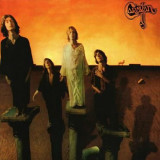
For their first album, Caravan was surprisingly strong. While steeped in the same British psychedelia that informed bands such as Love Children, Pink Floyd, and Tomorrow, Caravan relates a freedom of spirit and mischief along the lines of Giles, Giles & Fripp or Gong. The band's roots can be traced to a British blue-eyed soul combo called the Wilde Flowers. Among the luminaries to have passed through this Caravan precursor were Robert Wyatt, Kevin Ayers, and Hugh Hopper and Brian Hopper (pre-Soft Machine, naturally). The Caravan album never sold in serious numbers, and for much of 1968 and early 1969, the members were barely able to survive -- at one point they were literally living in tents. Suddenly, Caravan was an up-and-coming success on the college concert circuit, even making an appearance on British television's Top of the Pops. With national exposure and a growing audience, the group was at a make-or-break moment in their history. They rose to the occasion with their second Decca LP, In the Land of Grey and Pink, which showed off a keen melodic sense, a subtly droll wit, and a seductively smooth mix of hard rock, folk, classical, and jazz, intermingled with elements of Tolkien-esque fantasy.
- A1: Buppa Saichon - Won Lom Fak Rak
- A2: Sumit Satchethep - Khor Than Rak
- A3: Kawao Siangthong - Wimarn Chamlong
- A4: Banchop Charoenporn - Sao Sao Yah Wao Lai
- A5: Riam Daranoi - Chai Ten
- A6: Kawao Siangthong - Bong Kancha
- B1: Buppa Saichon - Cha Doen Show
- B2: Danchai Sonthaya - Yaak Taai
- B3: Dam Dansuphan - Rak Khao Khan
- B4: Phloen Phromdaen - Kiao Saaw Fang Khong
- B5: Sumalee Saengsot - Sakura Khoi Thoe
- B6: Waiphot Phetsuphan - Lam Loh Thung
This collection of 12 luk thung* songs from the 1960s-70s, all produced by Surin Phaksiri, is a superb showcase of cross-genre/multi-national fertilization, with Latin, jazz, western pop, Indian and Japanese music seamlessly melding with the musical culture of Isan (northeast Thailand), which is strongly rooted in Laotian culture; indeed, the Isan language, as featured in these songs, is a form of Laotian. Esteemed producer Surin Phaksiri, an Isan icon, always strove to drive Thai music forward, with innovative techniques and open ears, introducing international elements as well as Lao influences, including the use of the khaen. Many of the singers here, all famed and respected, have Lao roots, and it is predominantly through music that the Isan Lao-Thai culture has entered the Thai national consciousness. These lovely and joyous songs are, for the most part, previously unavailable outside of Thailand; more than half are first-time reissues. The wide range of songs here includes covers of Japanese folk and pop songs, a paean to marijuana, proto-Thai funk, a ramwong-style** dance tune, a cover of a Bollywood classic, some straight-ahead luk thung, a unique Indian-style luk thung, and a gorgeous answer song to a movie hit. An array of gems, available on vinyl and CD, with English translations of the lyrics and Soi48’s liner notes. Cover art by Shinsuke Takagi (Soi48)
* Lukthung: A musical genre whose name means ‘country person’s song’ or ‘children of the field’. The name became established in the latter half of the 1960s and now has the status of a national genre of popular song unique to Thailand. The lyrics of luk thung songs deal mainly with the rural idyll, comparisons between the city and the countryside, life in the big city and current affairs. There are certain typical traits to the music, but no official musical form.
** Ramwong: A unique form of Thai dance music, fostered as a means of promoting national pride and unity. Similar to Japanese Bon Odori, participants form a circle and dance together. The term can refer to the particular style of music, or the actual dance.
Minimal Wave presents a reissue of the seminal first album from Swiss Wavers, Guyer's Connection. Tibor Csébits and Philippe Alioth formed Guyer''s Connection in Basel, Switzerland when they were only 14 and 15 years old. At the time they were in a new wave rock band called 'Kurtzschluss' which they decided to break from in order to make purely electronic music. They began with two synthesizers, a drum machine, a 4-track tape recorder and a multitude of ideas. They channeled their unique and humorous vision into their first album, entitled Portrait which they produced themselves and self-released in 1983. Over the years, the album became a highly sought after minimal synth cult classic. It stands alone as one of the strongest examples of Swiss Minimal Wave, and probably the only one that is in Baseldytsch.
Some people say it’s the hope that kills you, but statistically dreams are responsible for a lot more casualties. The second album from the Icelandic supergroup, not only acknowledges this but celebrates it. To dream is to slowly digest oneself from the inside.
In January 2021 the team was reunited and have since then been writing, recording and releasing a new song every last friday of each month, much like they did in 2018. Dream is Murder is the result a collection of all 12 songs on one album.
Sin Fang, Sóley and Örvar are all established performers, composers and producers in there own right, but their Team Dreams project is so much more than a sum of it’s parts. Even though each of their individual fingerprints can be found all over the album, the result has a distinctive sound of it’s own.
The first three songs on the album display the diverse nature of the project, Imaginary Love is a catchy pop tune, Calling for Your Touch a sprawling cinematic ballad with hints of both Top Gun and Twin Peaks, then there is Shame a gut wrenching tragedy of being born into decay. Where the Maps Run was specially recorded for Amnesty Inter-national in Iceland and given as a part of Amnesty’s 60 year anniversary.
Artwork for each of the songs was conjured up by the one and only Ingibjörg Birgisdóttir and is as much a part of the whole as the music. Each song was accompanied by a res-in sculpture with leftovers from dreams and daily life cast and preserved in with in it. The music takes up three sides of the 2xLP and the fourth and final side holds an exquisite etching by Ingibjörg, depicting the artifacts within.
Legendary Brazilian group Orquestra Afro-Brasileira are reborn for first new album in over fifty years, produced by Beastie Boys collaborator Mario Caldato Jr.
Led by maverick composer Abigail Moura, Orquestra Afro-Brasileira were one of the most influential yet overlooked groups in Brazilian music history. Operating for almost thirty years until 1970, they released just two albums - the first of which, Obaluayê, has recently been reissued by Day Dreamer Records - and left behind a legacy of Afro-Brazilian consciousness that continues to resonate today.
Combining Yoruba spirituality, folk tales, Candomblé chants and West African percussion with the instrumentation of the big band jazz tradition in the United States, the Orquestra placed Afro-Brazilian heritage in a new and vital context. Weaving emancipatory narratives into complex poly-rhythms and powerful, syncopated horn lines, the group educated and enlightened all those who saw them perform.
For Abigail’s protégé and percussionist on the group’s 1968 album Carlos Negreiros, the message of the group’s music had a profound impact: “I became aware of what it is to be black,” he says, “discovering the extraordinary potential of the Afro-Brazilian culture in the making of the national ethos.” Now the last remaining member of the original Orquestra, Carlos was tracked down by producer Mario Caldato Jr. - whose credits include Beastie Boys, Marcelo D2 and Seu Jorge among others - to oversee the first new album of Orquestra Afro-Brasileira material since 1968.
“I was overwhelmed with the percussive rhythms, beautiful deep vocals and combined energy,” Caldato Jr. explains. “It felt like the most authentic Brazilian roots music I had ever heard. It was raw and dynamic, a pure organic sound and energy. It was a spiritual experience.”
Alongside arranger Caio Cezar, Carlos assembled his Orquestra to record five tracks at Berna Ceppas’ Estudio Maravilha 8 studio in Rio De Janeiro. With percussion, horns and vocals cut in single takes over three days, the session captured the intuitive, pure and natural spirit of the group in full flow.
Following the success of the initial session, five additional tracks were recorded at the iconic Estudio CIA dos Tecnicos in Copacabana to complete the album. Mixed by Caldato Jr., 80 Anos is a contemporary incarnation of Abigail Moura’s vision, bristling with the flair of the original recordings.
Following the success of the label's Cassiopeia reissue, Mysticisms presents a second EP from Nail with four previously unreleased tracks of gliding deep house, dub techno and Balearic sunrise anthems, highlighting this respected talent.
Recorded between 1993 to 1999, predominately at the DiY collective's Strictly 4 Groovers studio in Nottingham, with the ever reliable Damian "Deadbeats" Stanley engineering. While edits and overdubs were completed at home, some were mixed down to DAT and cassette to became part of Nail and friends after party soundtrack, as much for pure enjoyment as appraisal.
Still a teenager for the early years of these recordings, Nail was honing his craft. Utilizing the ever faithful S1000 sampler, Juno 106, Oberheim Matrix 1000 and Roland SH101, influences from Future Sound Of London, the emerging 'West Coast Sound' rising in the US, Maurizio's dub fusion, through to the bouncing free party sounds emanating out from the Midlands to a now nationwide party scene embed in to machines.
Unreleased until now, the Cassiopeia release ignited an interest in these old cassettes and DATs, bringing them to life and offering further proof of Nail's place as one of the UK's best House producers.
Ghost the Mystery.
The Ethiopians are one of the great vocal groups to come out of Jamaica. Singing songs of life and times as they found them, themes that resonated with the people of the Island that made them such a treasured group. Lenard Dillon (b. 9 December, 1942, Port Antonio, Jamaica) the founding member of the Ethiopians began his singing career at Clement 'Coxonne' Dodd's Studio One. Initially he recorded under the name of Jack Sparrow, and backed by the Wailers, cutting 'Ice Water' and 'Suffering In The Land'. Under The Wailers encouragement, he went on to form his
own vocal group. Recruiting singers Stephan Taylor (b.1944, Portland, Jamaica) and Aston 'Charlie' Morris to become The Ethiopians. They cut 'Live Good', 'Why You Gonna Leave Me Now' and 'Owe Me No Pay Me'. Although receiving favourable response, Aston Morris decided to leave the band and the remaining pair carried on and cut 'I'm A Free
Man' and 'Don Dead Already' and 'For You'. On meeting contract builder Leebert Robertson who had recently returned to live in Jamaica, ashad he wanted to get into the music business, a session was booked for Treasure Isle Studios. The session produced their seminal 'Train To Skaville' track, which became an immediate hit in Jamaica and in the UK, when in 1967 it reached number 40 in the charts. They also cut 'Engine 54', which became the title of their debut album. Its
follow up 'I Need You / Do It Sweet', did not fare so well and the band moved over to Sonia Pottinger's stable, where they cut 'The Whip / Cool It Amigo' which revived their fortunes and proved another big hit for the band. Two more hits followed 'Stay Loose Mama' and 'The World Goes Ska', after which the band decided to return to a trio, adding
Melvin 'Mellow' Reid to the line up. The band now hit another run of successes with producer JJ Johnson 'Everything Crash, 'Gun Man', 'Hong Kong Flu' and 'The Selah'. Many hits followed leading the band to work with a variety of Jamaican producers. Such tracks as 'I Want To Be a Better Man, ' Conquering Lion', 'Fire A Mus Mus' Tail', and the timeless 'Reggae Hit The Town' to name a few. Two albums 'Reggae Power' (1969) and 'Woman Capture Man' (1970), pulled a lot of these tunes together. Sadly Taylor was killed in 1975 after been struck by a van in a road accident. Dillon returned to Port Antonio till 1977, when he was persuaded to return to Treasure Isle studios with producer Niney The
Observer and cut the Rasta based album 'Slave Call'. Additional members who joined for this album were Bro Fatty, Bro Ewing, Bro T, Mello and Hychi Dread. An album that showed all the Ethiopians magic had not been lost.
For this release we have included the full 'Slave Call' set, 'Ethiopian National Anthem', 'Slave Call', 'Guilty Conscience', 'Hurry On', 'Mus Follow Babylon'(on CD Edition), 'Train To Skaville (1977 version, on CD Edition), 'Culture', 'Obeah Book', 'Let It Be' and 'I Love Jah'. Alongside some of the bands early hits including the original version of 'Train To Skaville', 'Engine 54', the great and poignant 'Everything Crash', 'Reggae Hit The Town' and 'The Selah'. An interesting set to remind us what a great group the Ethiopians really were.
- A1: Summer (Feat. Matt Blaque & Rydah J Klyde)
- A2: Just A Celebrity (Feat. Sky Balla)
- A3: Glamorous Lifestyle (Feat. Andre Nickatina)
- A4: Greatest Alive (Feat. E-40, Mitchy Slick & Jynx)
- A5: They Don't Know (Feat. Freeway)
- B1: Dream (Feat. Ampichino & Zion I)
- B2: Won't Be Right (Feat. Cellski)
- B3: Keep Callin' (Feat. Devin The Dude)
- B4: Girls
- B5: Scared Money (Feat. Krondon & Ap.9)
- C1: Get It In (Feat. Paul Wall & Masspike Miles)
- C2: What's Your Zodiac (Feat. Phil Da Agony)
- C3: Dopest Forreal
- C4: Callin' My Name (Feat. Mistah F.a.b.)
- C5: What Happened To The World
- D1: The Movement (Feat. Planet Asia)
- D2: Storm (Feat. Cormega)
- D3: Our Heroes (Feat. Dubb 20 & J. Stalin)And "Glamorous Lifestyles Feat. Andre Nickatina
Released in 2009, Tear Gas is the fourth and arguably most notable studio album from The Jacka. Peaking at #93 on the Billboard Top 200, the 19-track album is packed with features from both Bay Area and national legends, such as Andre Nickatina, Matt Blaque, E-40, Mistah F.A.B., Cellski, Zion I, AP.9, Dubb 20, J. Stalin, Devin The Dude, Paul Wall, Masspike Miles, Planet Asia, Cormega, Ampichino, and Freeway. The album features the hit singles, "All Over Me feat. Matt Blaque," and "Glamorous Lifestyles feat. Andre Nickatina"
The Levellers have been a gang on the road for over thirty years and, unable to tour since early 2020 due to COVID, they were bored.
As the band started to arrive at their home for the last quarter of a century - Metway Studios - to film and record a ‘live in the studio’ set, a second nationwide lockdown was announced, making it impossible for Simon to make the trip down from Scotland…what to do?.
With everyone eager to play, there was no turning back. The band sent Simon their final takes, while he recorded his parts at home.
What you can see and hear on The Lockdown Sessions is the Levellers few people get to witness.
Old friends doing what they do best - having a riot. Of their own. The excitement of being back together is palpable.
The Lockdown Sessions is available on three limited edition coloured vinyl LPs or CD, with each format including a DVD of the full film of the Levellers, live in the studio running through songs from the last album, Peace and some of their greatest hits.
Richard Dawson is the diminutive Geordie troubadour
whose moving songs have been described as state-ofthe-nation addresses, even - or perhaps especially -
when he’s singing about pre-medieval peasants. Circle
are the genre-straddling pioneers of The New Wave Of
Finnish Heavy Metal, known for wearing spandex or
dead fish onstage and singing in a made-up language.
Together they are… Richard Dawson & Circle! ‘Henki’
is their epic joint record. It might seem a departure to
those who are most familiar with Dawson from recent
solo albums like 2017’s ‘Peasant’ and ‘2020’ (released
in 2019). In fact, ‘Henki’ fits comfortably into the bigger
picture of two acts who have always strived for
uninhibited originality.
Easily the greatest flora-themed hypno-folk-metal
record you’ll hear this year, ‘Henki’ adds an electrifying
new chapter to the remarkable story of each act,
marking the beginning of a beautiful partnership.
CD in printed inner wallet with 12-page booklet.
Double LP in printed inner sleeves plus digital
download card.
Their roots are firmly planted in heavy rock, melodic aggression and
despair. They have conquered the stoner rock kids and breathed fiery life
into the classic rock snobs.
Now Thulsa Doom’s branches are growing with twigs of Kiss and
Crimson; strong wooden arms hold Skynyrd, Ween and Bob Dylan, and
progressive leaves of soulful, poignant, intricate gems cover the ground.
And there are nuts, lots of nuts. ...and with the release of their new album
“Ambition Freedom” the tree itself will
stretch right in through your bedroom
window and grab you. Just like the one in
Poltergeist.
The band’s sophomore “…And Then Take
You To A Place Where Jars Are Kept”
(2003) earned them two Norwegian
Grammy nominations, and is widely recognized
as one of the best rock-releases
from Norway ever.
«A Keen Eye for the Obvious» was released
in 2018 and was instantly recognized
as the greatest comeback since
Batman.
The band that once was a cherished but
well-kept secret has now become a national
treasure because of the timeless qualities
of their albums and unforgettable live
shows. Relentlessly rehearsing and playing
shows all over Norway and for dubious but
welcoming crowds in central Europe
has once again inspired Thulsa Doom to
make new music. “Ambition Freedom”
will not harm you in any way, but it might
rearrange your heart and refurbish your
belief in Rock.
“Ambition Freedom” will confuse many,
but for others it will lead the way. You will
wish it never stops, and it doesn’t have to.
It’s a record. Spin it again