
4
Originally released in 2019 and pressed up only in limited edition white label form. The repress is sold in a black-die cut sleeve with full-color label artwork.
vorbestellen16. Okt
erscheint voraussichtlich am 16. Okt
19,75 €
Originally released in 2019 and pressed up only in limited edition white label form. The repress is sold in a black-die cut sleeve with full-color label artwork.
erscheint voraussichtlich am 16. Okt

BeatsAmbientElectroExperimental
Corps Perdu emerges from Lamin Fofana’s ongoing practice of creating immersive and multisensory sound environments, informed and inspired by the historically rich texts of scholars and poets working in the tradition of Black Studies. The words of W.E.B. Du Bois, Sylvia Wynter, Dionne Brand, Fred Moten, Édouard Glissant, Suzanne Césaire and Aimé Césaire are transmuted and circulated as sound, offered to listeners through radio, live events, albums and installations. Fofana honours his sources with an audible historical awareness, yet his sounds always simultaneously open out into the turbulent uncertainties of the present.
The music we hear on the album Corps Perdu was previewed within a series of collective reading and listening sessions carried out in Paris, Barcelona, Tunis and New York City, where voices from the audience read aloud fragments from a body of texts Fofana had selected. The spontaneous unfolding of close reading and listening, mixed live by Fofana in these collective listening experiences, speaks to the open-ended quality of Corps Perdu. The album, now published, is but one iteration of this ongoing inquiry into the relationship between sound and text.
Corps Perdu presents an introspective journey with no return, and as such is full of omens of all kinds. Across ten tracks Lamin Fofana creates a sibling or companion to the transformation he initiated in his previous album Works in Metal, building a narrative that takes us into Krakatoa prior to its eruption, and lets us listen to Césaire’s ‘flying seed dreaming very loudly’. The album’s track titles and narrative arc hum in and out and alongside Césaire’s poetry, mainly Césaire’s 1950 collection Corps Perdu, in which the ten poems are accompanied by engravings by Picasso merging fragments of bodies and plants—a collaboration that emerged from their first encounter two years earlier, at the Communist-led World Congress of Intellectuals for Peace, in Wroclaw, Poland.
The music on Corps Perdu labours intuitive hand-held melodies through dense processing. There are many rhythms throughout, though these never surrender to the density of the dancefloor grooves we’ve heard Fofana craft on previous albums (think of the ‘Obscure Light’ pair from Works in Metal for example). Instead, Fofana gently releases the clenched hands Césaire’s Corps Perdu begins with: ‘Among me, from myself, to myself, outside any constellation, clenched in my hands only, the rare hiccup of an ultimate raving spasm, keep vibrating word’. The album carries through sound the scattering and liquid fragmentation that shape the desperate metamorphosis of a ‘lost body’.
erscheint voraussichtlich am 16. Okt
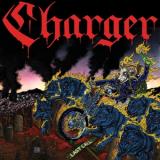
The East Bay's mighty Charger has returned with five new songs on 12" vinyl... Last Call is on its way from Pirates Press Records just in time for your motorcycle trip to hell! Charger members hail from legendary punk bands such as UK Subs, Rancid, and Jello Biafra & The Guantanamo School of Medicine, just to name a few, but make no mistake, this band is its own entity with its own sound forged together! The band laid down these tracks in July 2025 at Studio 2200 in Sausalito, CA - formerly known as the Bay Area's legendary Record Plant - with Chris Dugan at the helm
erscheint voraussichtlich am 23. Okt
erscheint voraussichtlich am 23. Okt

Hanne Lippard and Renato Grieco's Today's Special is a suite of language works synthesising melody and diction that integrates the literary and the audible in a repertoire of songs that bask in the melody of voice and the punctuations of structured composition. Working with methods of reduction rather than opulence in both tonal composition and rhetoric, each piece pegs the poetic to the musical with compositional schematics and methods. It is important to state that there is little to none improvisation here, instead, the duo set up matrices, rules and structural links that facilitated meaningful locus of exchange between their two practices. Lippard's texts are a collection of new and previously completed works. In these, as is typical for her work, she enjoys the easy pleasure of wordplay, iterative language, and decontextualised anecdote, as in opener Portrait of a Betrayal, a piece about the loss of a phone and the way it haunted the owner who dropped it, based on a lived experience. Grieco's instrumentation works with Lippard's language art as a form of acoustic typography. "I studied graphic design and I think about how you can express typography through voice," she says. "Renato's use of the viola da gamba becomes like an underline, or a font's brushstrokes, in ways that feel typographical." In this, the classically-trained composer Grieco often finds and echoes the pitch movements of Lippard's voice, intonation mirrored and revealed, linguistic meaning doubled and shadowed by plucked, strummed or bowed strings. His main instrument is the viola da gamba, the instrument considered closest to the human voice for its tonal range and ability to mimic inflections and timbre, and here he brings it even closer to the voice, building systems by which it moves with and around Lippard. He also plays piano and Wurlitzer, and joins her in speaking on Receiver and in conversation for final track The Black Rose. "Hanne's voice is an artist's voice, embodied as the artwork itself," he says. "But where my approach is from the perspective of a composer, hers is around rhetoric and language. We worked towards each other in this sense, Hanne finding a space to welcome my voice, and me designing an acoustic space to enhance her vocal persona." In some tracks the structural connections are obvious - the matched tumbling delivery and stepped pitches of voice and piano in Aficionado sounding like two tipsy friends descending a staircase. In others, like the triptych of tracks Three Rungs Ladder, structured with rules derived from nursery rhymes, or cumulative song (akin to the 12 Days of Christmas). For the Colour 1 and Colour 2 pieces, the duo worked from palettes of colours connected to clusters of harmonies, which underlined the power of the word and its articulation. The absurd Labradorable personifies a people pleaser, A Story About Being Blue is an imagined playful monologue from the Deep Blue supercomputer - requesting in sing-song stop motion to be called Debbie, and Larry - as Grieco echoes in factual reportage. Hurtbeat unpacks and recomposes a tweeted non-apology by a Russian art collector about owning a piece of racist art, Grieco shadowing Lippard's generating a third `drop-shadow' performer from the resonances between the duo, typographic re-articulation of the source material. The Receiver includes lines from Robert Ashley's Improvement (Don Leaves Linda), Ashley existing as a spiritual parent of sorts to the practices contained on Today's Special, and here interpolated as if he is being quoted and written through within the audible world of the piece in a palimpsest of borrowed sentences. Closing track The Black Rose contains its own self-aware comedy, a lightly distorted conversation sourced from a Reddit thread about whether black roses exist, recorded as if it were an internet radio or a low budget podcast, the casual exchange stilted in the delivery of platitudes as scripted speech. Today's Special was developed in person over the course of a series of small residencies - at Deutsche Akademie Rom Villa Massimo, Rome; Fondazione Morra, Napoli; Callie's, Berlin. In these limited periods that rarely stretched beyond a week, Lippard and Grieco developed strategies for the works, keeping tightly locked to musical concepts. This, for Grieco, is about maintaining a solid, meaningful connection within the compositions, and committing to everything having a purpose for existing within the work. Each element pulls its weight; has something to say, literally and metaphorically speaking. In the same way that Lippard's work leaves nowhere for her to hide, he wants the music to exist with its own naked purpose: "It's is about exposing nudity via reduced materials," says Grieco. "This is a form of courage we want to embrace. Once we take off everything, it needs to be extremely precise to maintain a connection with the audience. We have a lot of tools to hide behind now, to protect ourselves and our identities as artists, performers, and in life more generally. It's something I don't want to do. I want extreme reduction: no hiding."
erscheint voraussichtlich am 30. Okt
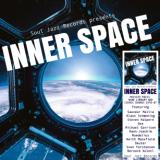
Soul Jazz Records’ new ‘Inner Space’ collection is a mixture of Cosmic electronic music and proto-New Age sounds. The album features a wide range of European, British and American auteur electronic artists, including Hans-Joachim Roedelius, Steven Halpern, Michael Garrison, Ose, Klaus Schønning, Bernard Xolotl and others.
Their cosmic, exploratory music sits somewhere between the worlds of personal, inner space and galactic outer space. All of the music featured here was recorded in the 1970s and 1980s, much of it released on small bespoke private-press record labels, often owned by the artists themselves.
The album also features rare tracks from a number of Library Music artists, all of whom used electronic music to explore a variety of common celestial or Gaian themes – cosmology, spirituality, science, mother earth, wellness, technology, consciousness, exploration, healing and harmony – in their work. These include pieces by Sauveur Mallia, Keith Mansfield and Sven Torstenson.
Here on this album you will find the Sun Ra’s of New Age, the Picassos of Library Music and the Burroughs of space-related electronic music. Away from contemporary music fashions, these unique and highly individual artists remained free in their music to explore new ideas of sound and technological experimentation – together with the larger concepts of time, space and matter – a freedom rarely granted, and one that we celebrate here.
erscheint voraussichtlich am 13. Nov

At the cusp of a new millennium, British electronic music was rapidly changing. Jungle and garage had broken into the mainstream, but were running out of creative gas – what fresh movement would next captivate the underground? On the outer edges of London, a small group of bass lovers had the answer. Through a new strain of subloaded beats that stripped jungle, rave, techno and garage for parts, this scene returned to the dub roots, prizing the fundamentals of soundsystem culture: bass, space and togetherness. They called it dubstep.
In Aftershock: The Seismic Impact of Dubstep, seasoned music writer Lauren Martin charts the origins of one of the 21st century’s most innovative music genres in an oral history format. Through the testimonies of its architects and an immersive array of photography, flyers and unseen scene history, Aftershock chronicles the rise of artists like Skream, Mala, Coki, Loefah, Horsepower Productions and Rusko, as well as labels and parties such as Hyperdub, Tempa, DMZ, FWD>> and Skull Disco.
Together, this movement shook the British underground, exploded onto the internet and, within a decade, had rocked global music at unprecedented scale. Through first-hand storytelling, Aftershock is a testament to how the imagination and persistence of a few can transform culture.
Quotes
“Written via interviews with 28 leading scene figures from London and beyond, Lauren Martin’s oral history of dubstep is a landmark document of British club culture. This heavy, asymmetric music, informed by Jamaican soundsystem culture, garage, grime, breaks and more, could only have mutated in the UK, and Martin’s cast of characters take you back to the Croydon record shops, Shoreditch clubs and online forums where it came together. Amid funny tales of infighting and the inside stories of classic tracks, the artists’ pluck and passion are what shine through brightest, and make this such an inspirational read.” – Ben Beaumont-Thomas, Editor at Guardian Music
Bei uns am Lager und sofort versandfertig

The Producers Press Volume 3 (WEB13-024) is a standout vinyl release celebrating the depth and diversity of House and Garage music. Featuring a strong and well established lineup of producers—Danny J Lewis, Para, Raw Groove, and James Lavonz—this compilation delivers a rich blend of House and Garage music.
Pressed with care for collectors and DJs alike, the record comes housed in a quality paper inner sleeve, paired with striking artwork presented on a printed card outer sleeve which features the artwork from all of the past releases on the Label and is A must-have addition for vinyl enthusiasts and fans of authentic underground House & Garage music, Volume 3 continues the series’ reputation for showcasing refined, forward-thinking production.
Sofort versandfertig

‘Test Press’ originally landed with Erol Alkan long before his monumental B2B2B2B with Busy P, Fred Again and Thomas Bangalter of Daft Punk in Paris in October 2025. A few nips and tucks by Alkan later resulted in his own simple yet highly effective battle weapon, and ‘Test Press’ was ready for the Parisian dancers at the now legendary Pompidou Centre’s closing party, as well as thousands locked into the live stream of this unexpected link-up.
Not content with the edit to merely be confined to a series of YouTube rips and Alkan's own USB key, Felix Da Housecat’s ‘Test Press (Aphrohead Remix / Erol Alkan Re-Edit)’ has been pressed onto a limited edition single-sided while label.
This is not a promotional copy!
Test complete.
Sofort versandfertig
Ein aufmerksamer Zuhörer der Welt zu sein, bedeutet, von Sprache umgeben zu sein. Sprache hallt durch fast jeden Raum, in dem sich Menschen aufhalten, ob unerwünscht oder erwünscht, banal oder tiefgründig. Worte stehen auf der Seite und klingen im Ohr nach, vermehren sich endlos. Diese Überfülle fasziniert den Komponisten und Musiker Ben Vida schon lange, aber in den letzten Jahren hat sie zu einer neuen Art des Musikmachens geführt, die die Vorrangstellung der Sprache in unserer Klang- und Kulturwelt gleichzeitig hervorhebt und hinterfragt. Sanft und spielerisch bricht Vida die Hierarchie von Bedeutung und Klang der Sprache auf, bis sie in egalitärer Harmonie existieren. Oblivion Seekers ist Vidas neuestes Album in diesem Kompositionsstil, nach der Zusammenarbeit mit dem New-Music-Ensemble Yarn/Wire The Beat My Head Hit aus dem Jahr 2023. Wie bei seinem Vorgänger liegt der Fokus der Musik auf koordinierten Duetten aus gesprochenem Wort in neutralem Ton, wobei die variablen Rhythmen der bewegten Worte komplexe interne rhythmische Strukturen schaffen. Er wird von den Stimmen von Nina Dante, Christina Vantzou, John Also Bennett und Félicia Atkinson, die einen einzigartigen Klang erzeugen, der weder ihrer noch seiner ist und in seiner Geschlechtsdarstellung, seinem Akzent und seiner Aussprache fließend ist. Die instrumentalen Kompositionen, die den Hintergrund des Albums bilden, haben den ungezwungenen Fluss eines Dialogs, gesprächig, aber zurückhaltend, selten als Motor der Veränderung. Es herrscht eine ruhige, konzentrierte Stimmung, die durch den zurückhaltenden Rhythmus der Stimmen noch verstärkt wird, sodass man das Gefühl hat, die Musik sei ein langes Mantra, das nie ganz zu seinem Ausgangspunkt zurückkehrt. Der Effekt ist bezaubernd, gleichermaßen einschläfernd und fesselnd, und suggeriert Wiederholung, ohne sich jemals genau gleich zu bewegen. Die Instrumentierung der vier Stücke des Albums variiert; ,Be Yr Own Abyss" wird durch den wellenartigen Kontrapunkt der Saxophone geprägt, während der mehrdeutige Klang des Vibraphons über ,Oblivion Seekers" schwebt und Frasers anschwellender Bass den einzigen dramatischen Auftritt des Albums liefert. Die Musik verändert sich im Ohr, während der Text die Form und Bewegung der Komposition ständig neu definiert und in einen neuen Kontext stellt, auch wenn sie in ihrem jenseitigen Glanz konsistent bleibt. Der Text besteht oft aus Sprachfetzen, denen Vida während seines Lebens beim Komponieren begegnet ist: zufällig mitgehörtes Gemurmel in der Schlange im Supermarkt, eindrucksvolle Sätze aus einem Roman, den er gerade las, Eindrücke von Musik, die er immer wieder auf seinem Plattenspieler hörte. Kleine, ansonsten unbedeutende Details sammeln sich an, nicht um eine Erzählung zu bilden, sondern um einen Eindruck vom komplexen Prozess der Bedeutungsfindung zu vermitteln, der im täglichen Leben stattfindet. Charaktere und Szenen tauchen im Bild auf und verschwinden wieder, und Sätze, die nach einer Erklärung verlangen, dürfen einfach vorbeiziehen. Vidas Liebe zu Robert Ashley ist gut dokumentiert, aber vielleicht noch bedeutender sind Mark E. Smith und The Fall, Neil Tennant und die gesprochenen Verse der Pet Shop Boys, die gesamte Geschichte des Hip-Hop und Meredith Monk. Die Art und Weise, wie die Worte dargeboten werden, ist genauso wichtig wie die Worte selbst und offenbart eine Intentionalität und Direktheit, die Vida mit den abstrakten Konstruktionsmustern des Textes hervorhebt und untergräbt. Auf Oblivion Seekers ist der omnidirektionale Lärm der Marmor, den Vida abträgt, um zu beleuchten, wie wir die unermessliche Fremdheit der Welt verarbeiten. Der Triumph des Albums besteht darin, dass wir nichts von dem schönen Geheimnis verlieren, wie diese Zeichen unsere äußere und innere Welt miteinander verbinden.
Sofort versandfertig

Sofort versandfertig
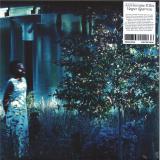
Das Werk von JJJJJerome Ellis bewegt sich mühelos zwischen Stille und Möglichkeiten. Der schwarze, behinderte Künstler mit grenadischen, jamaikanischen und amerikanischen Wurzeln schafft mit Saxophon, Orgel, Hackbrett, Elektronik und Stimme atmosphärische Klanglandschaften. Improvisation ist der Kern - oft werden große Teile von Aufnahmen bearbeitet, um das Werk wie ein Marmorbildhauer freizulegen. Es ist eine expansive und interdisziplinäre Praxis, die es JJJJJerome ermöglicht, sich an jedes Medium und jede Form anzupassen, darunter aufgezeichnete Musik, Live-Theater und Performance-Kunst, Filmmusik, Spoken Word und Storytelling sowie multimediale/visuelle Werke, die Klang integrieren. Als Mensch, der stottert, fiel es ihm in der Kindheit schwer, sich mit dem Mund auszudrücken. Den Künstlernamen ,JJJJJerome" zu buchstabieren, rührt von der Erkenntnis her, dass das am häufigsten gestotterte Wort der eigene Name ist. Trotz einer kurzen Sprachtherapie als Kind - als er in der siebten Klasse zum Saxophon griff, machte es plötzlich Klick. ,Ich stottere immer noch beim Saxophonspielen, aber es ist anders." Als Künstler dreht sich sein kreatives Ethos nun um die Erforschung des Stotterns durch Musik, wobei er die Fähigkeit jedes Einzelnen, Zeit zu gestalten, näher erläutert. Er ehrt das Stottern durch Kunst. Er begann damit, zu CDs von John Coltrane und Billie Holiday auf dem Horn zu improvisieren. Aber als jemand, der sich gerne mit Grenzen auseinandersetzt, hat sich JJJJJerome seitdem zu einem versierten Multi-Instrumentalisten entwickelt, wobei jedes Instrument einen Wendepunkt darstellt, der neue Wege zu potenziellen Klangwelten ebnet. Seine Stimme wird zusätzlich von einer Ehrfurcht vor der Erde und den Vorfahren - sowohl menschlichen als auch anderen - geleitet. Aufgrund der familiären Verbindungen seiner Mutter zur Kirche und den unvergesslichen Geschichten seiner Großmutter, die als Pianistin und Organistin auftrat, hat JJJJJeromes jüngste Affinität zu Tasteninstrumenten eine bedeutende Gewichtung. Das kommende zweite Album ,Vesper Sparrow" (Shelter Press) ist aus dieser Verbindung zur schwarzen religiösen Tradition und zum Erbe entstanden. Es ist eine Fortsetzung der fortlaufenden Auseinandersetzung des Künstlers mit den Schnittstellen zwischen Musik und Klang, Stottern und Schwarzsein aus der Perspektive der Zeit. Das Album besteht aus zwei vollständigen Gedanken und dreht sich um ein aufgezeichnetes Stottern. JJJJJerome teilt die vierteilige Komposition ,Evensong" auf, indem er das Stottern in Teil zwei ausblendet und die Tracks drei und vier (,Vesper Sparrow" und ,Black-Throated Sparrow") dazwischen einfügt. ,Das Stottern wird zu einem strukturierenden Moment", erklärt er in Bezug auf die Möglichkeit, die entstandene Zeit zu füllen. Die Aussetzung wird somit zu einem integralen Bestandteil der musikalischen Sprache von JJJJJerome. Sowohl Stottern als auch Granularsynthese können Momente in der Zeit aussetzen und ,zu vielfältigen Arten des Verweilens, Durchquerens und Verbindens mit anderen in diesen Momenten einladen". Der Künstler greift auch auf Elemente der Pop-Produktion zurück - elektronische Texturen und Verzerrungen, die teilweise vom Indie-Rock inspiriert sind, sowie Spoken Word, Sampling und Audiomanipulationen, die aus der karibischen und afroamerikanischen Musik stammen.
Sofort versandfertig

phatmedia presents UK Rave Flyers 1988 – 1989 includes over 800 flyers from iconic events like Shoom, Hedonism, Future, Spectrum, Land Of Oz, Apocalypse Now, Hypnosis, Sunrise, RIP, Coozz, Trip, Sin, Genesis, Rage, Wetworld, Rave At The Cave, Boilerhouse, Trip City, the Hacienda and many more one-off and smaller promotions.
It also includes commentary from Dave Little, Andy Boilerhouse, Pez, Steve Reid (Shoom), Ellis Dee, Chalk E White, Nicky Holloway, Mr C, Ratpack & many more. Plus, photos from clubs of the era taken by Dave Swindells, Kevin Cummins, Peter J Walsh and Gavin Watson.
Quotes
“We would be lost without Dave’s incredible documentation of flyer history. If we didn’t have his absolute precision in sharing dates within the timeline. So much of the exact history would be lost. phatmedia is an asset to the entire rave scene and history.” Billy Daniel Bunter
“Rave flyers capture an essential piece of cultural history. More than just advertisements, they reflect the creative energy of the early rave scene and serve as a window into the underground music culture of the time. Each flyer tells a story about the events, people, and communities that helped shape the movement.” Eddie Richards
“This book is more than just a collection of flyers; it’s a time machine. It’s a tribute to the birth of a culture that shook the world. We built something from nothing. Every flyer, every illegal rave, every risk we took, it created a movement that would become a multi-million pound industry.” DJ Phantasy
Bei uns am Lager und sofort versandfertig

Bei uns am Lager und sofort versandfertig

Sofort versandfertig

For a glorious ten-year period from 1995 to 2005, hip-hop music received a much-needed shot in the arm from a generation of determined and wildly creative rappers and producers. They rallied against the increasingly formulaic and shallow world of mainstream rap, as well as a music industry unwilling to listen.
By releasing music on their own terms as independent artists—many adopting the mantra of being “independent as fuck” as a mission statement—these hungry creatives reclaimed their artistic freedom and wore it as a badge of honour. Most importantly, they also made a lot of excellent hip-hop. What emerged was a vibrant underground music scene that stretched from New York to Los Angeles, with influence reaching across the world.
Independent As F**: Underground Hip-hop from 1995-2005 explores how a generation of rap artists rebelled against the major record labels and made music on their own terms, celebrating individuality and creative freedom. It also traces the history of some of hip-hop’s most respected artists, including MF DOOM, El-P, Mos Def, Kool Keith, and Madlib.
“Ben is an archivist of the highest regard. His Grown Up Rap pushes the myth and mythology aside for real powerful hip hop facts.” Chuck D
Bei uns am Lager und sofort versandfertig

On the third Ziemia release, Private Press invites their long-time friend Piotr Baranowski, known as Mutual Attraction. Piotr is a veteran of the local Warsaw scene, recently channeling his talent through a combination of jazz and house music. The musical inspirations and absolute joy of studio time shared by Piotr, Jan and Adam (Private Press) form a solid foundation for this compilation.
The first side of the record is dedicated to a signature corroded dub sound, infused with an emphasis on rolling bass and heavily delayed stabs. While A1 is an old-school-leaning take on fast, straightforward techno, A2 is a minimalistic definition of a tool track, executed with metallic chords and a frosty atmosphere.
The situation changes dramatically on the other side, bringing warmer and more uplifting vibes, yet it still maintains the energy as all the artists focus on a moodier, more laid-back sound. Mutual Attraction brings his skills, laying down the smoothest melodies and chords, while Private Press dubs out the sounds to their limits. This collaboration offers a beautiful contrast between the functional roots of club music and more storytelling melodies cut from a late evening jam. It’s all held together by classic house grooves, bridging the familiar sounds of Chicago and Berlin in these two collaborative tracks.
Everything is perfectly finalised by on-point mastering by Wouter Brandenburg and the atmospheric artwork on the label. This record offers a great, cohesive atmosphere from top to bottom.
Sofort versandfertig

Drumz Of The South: The Dubstep Years (2004-2007) is the first photography book to present the early days of dubstep in detail. It features over 200 photographs by Georgina Cook from events and radio stations such as FWD>> at Plastic People, DMZ and Rinse FM, plus pioneering producers, DJs and MCs like Burial, Skream and Benga, Mala & Coki, Loefah and Sgt Pokes, Plastician, Kode9, Hatcha & Crazy D, Skepta and Wiley.
Bei uns am Lager und sofort versandfertig

In July 2019, eleven years after Jay-Z became the first hip-hop artist to headline Glastonbury, Stormzy became the first English rapper to follow suit. Wearing a customised stab-proof vest designed by Banksy, the South London rapper delivered an explosive performance and finished by thanking the “legends for paving the way,” name-checking Wiley, Dizzee Rascal, and Giggs. Despite how unlikely it seemed for decades, UK rap was now firmly a part of pop music and the greater hip-hop canon.
Rich, nuanced, and often misunderstood, the history of UK rap is a story of music that refused to stand still. Factoring in socioeconomics, gender, identity, music industry disruption, and innovation, What Do You Call It? charts the artform’s first four decades, beginning when rap landed on our island in the early 1980s. Shaped by sound system culture, inspired by punk, and accelerated by rave, it has evolved from Britcore, UK hip-hop, and trip-hop of the late twentieth century to garage, grime, and drill.
Through cultural theory, historical research, and original interviews with key figures and collaborators in the UK rap scene, from pioneers like Malcolm McLaren, Soul II Soul, Tricky, Roots Manuva, and Roll Deep to modern artists like Dave, CASISDEAD, Little Simz, Loyle Carner, and Skengdo x AM, adds a rich human dimension to the UK rap story — one that helped change British music and culture forever.
“A long overdue exploration of rap music in the UK and its longstanding – albeit overlooked – legacy and influence. In an era when UK rappers dominate the charts, star in major movies and TV shows and front huge advertising campaigns for multi-national corporations, Kane traces back the arduous journey from maligned sub-culture to celebrated mascot of neoliberal capitalism.” Jehst
“David Kane writes with a deft touch and possesses a disarming and deeply insightful interview style. Sparking life, humour, and sorrow across every page of more than three decades of UK rap history.” Charlie Dark MBE
“Kane builds bridges in a rich musical universe full of heroes and villains—and plot twists. With an inimitable style, he merges culture high and low to bring new meaning to the music. What Do You Call It? is a landmark tome for UK rap music.” Brian DiGenti, Wax Poetics
“A mind rich in ideas” Stanley Ledbetter, The New Yorker
Bei uns am Lager und sofort versandfertig

Sofort versandfertig