Hip Horns Brass Collective presents Brassvillain, a tribute to the cult album Madvillany by MF DOOM and Madlib with the collaboration of Las Ninyas del Corro, Ana Tijoux, Escandaloso Xpósito and Rodrigo Laviña. The catalan brass band covers iconic songs like Figaro, Meat Grinder or All Caps, with the metallic explosion that characterizes them and the voices of some of the best artists on the current rap scene. Daniel Dumile, aka, MF DOOM is not only a musical reference, but also the illustrations that accompanied his project have a great role in the history of hip hop. For this reason, Brassvillain is also a great graphic epic where the versatile artist Hermes LeBleu displays all his versatility. In the featurings appears HO$$$ Benítez, one of the most renowned drummers on the hip hop scene, who has already accompanied them on their previous releases, “The Dream” and “Thunder”. The production is by Hip Horns together with one of the best bassists and musicians in our country, Tito Bonacera, making this tribute a multidisciplinary meeting point between artists who grew up with the masked hero. On the B side we have two new singles from the band, BRAM! and Mulligan, in which they unleash their full potential both in composition and in execution to prove once again that they are one of the leading brass bands of the moment.
Swedish visionary Boko Yout is releasing their long-awaited debut album GUSTO, out via Hoopdiggas Recordings.
GUSTO is Boko Yout’s debut album – a kaleidoscopic journey through memory, trauma, humour and healing. Framed as a fictional therapy programme led by the eccentric Dr. Gusto, each track represents a confrontation with a different shadow of the self: unspoken fears, inherited burdens, or unresolved inner conflicts. But GUSTO is not just about darkness – it’s also about hope, longing and the light that makes those shadows visible in the first place.
Boko Yout weaves together raw emotion, spiritual symbolism and bold experimentation. Referencing vodun philosophy, Jungian archetypes and post-genre production, they draws inspiration from artists like Yves Tumor, Odd Future and LCD Soundsystem. The result is a debut that feels more like a sonic manifesto – driven by love, intention and a deep commitment to artistic freedom.
Parra for Cuva returns in 2026 with a new LP – Nacar – and world tour, marking the next step in his ongoing artistic evolution. Known for creating immersive electronic soundscapes that combine organic instruments with detailed, emotive production, he now extends his vision with a renewed visual language and live experience that deepen the connection between sound and space.
90's techno legend Bryan Zentz, also known as Barada, is back on Sonic Groove with a killer mini LP release. Spanning a wide spectrum of classic techno sounds-from deep, dark, brooding acid, jacking techno, into beautiful, self-reflective Detroit techno-this record is a testament to his timeless artistry. If you're a purveyor of American techno and acid rooted in tradition but modernized to today's high-quality production standards, then this is a must-have release for your collection.
Indie shops only. Limited red vinyl rerelease. 500 for the World (just 80 copies for the UK) After falling out with Sir Coxsone, the legendary head of the Kingston label Studio One, Lee Perry first founded his own band and then, in 1973, set up his own studio in his backyard. What was born out of necessity developed into a unique success story. With both the Upsetters and the Black Ark, Perry made music history - most notably with the 1976 release of the album Super Ape, on which he made the genre of dub bubble and boil from the mixing desk in previously unheard ways. For Perry, the studio is like a living organism. Whether he truly experiences it that way or simply lets too much ganja go up in smoke, for Perry the equipment is organic, empathetic, and intelligent. The catch is that the results sound exactly like that as well. Long before sampling was invented, he layered tracks of deep basslines, echoes, and reverb with various self-recorded sound sequences – often played in reverse - on top of, into, and beneath each other. In other words, Perry was the first producer who made the music instead of the band. Among other things, this earned him the title ‘Salvador Dali of Dub.’
Building up from his multiple appearances on the label, one of our closest producers, Luca Durán, makes his full studio album debut on TraTra. This work is meant to showcase the vast world of influences the diasporic experience comes with: his rhythm-driven tracks coexist in high contrast, but fluidly, with the experimental and textures of his european school of sound. The title itself works amongst these two edges of Luca's aesthetic existence, the softness from the flight of a Mariposa with the harsh hit of a death blow.
Killing Mariposas is filled with seemingly clashing techniques, field recordings, acoustic instruments, and analogue synthesis, which converge with modern and forward-thinking production tools to build heavily layered music. Constructing an emotional narration from the contemplative to the euphoric. A sort of contextual shapeshifter, with hints of cumbia, grasps of reggaetón and dembow, but always submerged deeply in a windy and fragmented memory.
This whole project gets rounded up by the packed lineup of collaborators, both vocal features and production partners. Astute minds from distinct internet niches: Kelman Durán, Gavsborg, Iceboy Violet, Debit, Rosa Pistola, BEBE YANA, Kamohelo & Kacha.
One true reflection of Luca's production abilities and sonic poetry.
Trumpet player Freddie Hubbard's fusion jazz on Red Clay is something that the younger generations within jazz and hip hop admire and aspire to. The title track "Red Clay" was sampled by both A Tribe Called Quest on "Jazz (We've Got)" and Freestyle Fellowship in "Parkbench People", only to be covered by today's new vocal jazz singer José James.
It would take half a day to explain the intricacies of a song like "The Intrepid Fox". Red Clay seamlessly blends bop with soul jazz and fusion in a way that will remain unsurpassed for a long time. Red Clay was Hubbard's first album on CTI Records, after his long stint with Blue Note Records. Accompanying Freddie on this album are Joe Henderson (sax), Herbie Hancock (piano), Ron Carter (bass) and Lenny White (drums). The album was produced by Creed Taylor and recorded and engineered by Rudy Van Gelder in his legendary studio in Englewood Cliffs, New Jersey.
Often credited as the father of multi-media theatre, Alwin Nikolais (1910-1993) took complete creative control over his productions - including cutting-edge approaches to lighting and costume that transformed human bodies into shifting sculptural shapes, while also composing wildly innovative electro-acoustic and synth-based audio as accompaniment.
After initially experimenting with musique concrète and tape manipulation (as demonstrated on the 1959 LP Choreosonic Music of the New Dance Theatre of Alwin Nikolais) Nikolais became the first owner of Robert Moog's synthesizer at the Audio Engineering Society convention in New York in late 1964. Relying heavily on the Moog and later the Synclavier synth/sampler, these 21 tracks document Nikolais' highly-prescient compositions across the mid 1960s through to the late 1980s - existing not only as extensions of his other-worldly choreographic productions, but standalone pieces of foundational mid-century American electronic and experimental music.
"Born in Southington, Connecticut in 1910, Nikolais’s early years and early career were in acting, music and puppetry. It was not until the late 1930s that he began his work as dancer/choreographer in Hartford, Connecticut, where he was commissioned by the Avery Memorial Theatre, a part of the Wadsworth Atheneum, to create an evening-length work to the music of Ernst Krenek. Previously his work and study as a pianist-organist found him accompanying silent films. This sort of accompaniment required from the musician not only a playing skill but also a versatility in improvisation, matching movement to sound, and evoking mood to situation.
Nik was drawn initially to dance by his involvement with the percussion scores used by the illustrious early twentieth century German dancer Mary Wigman. In trying to learn more about percussion, he was lured into dance class and thus his career began. His development of music and dance occurred simultaneously. His introduction to the twelve-tone technique opened his mind to the expanding areas of atonal music, and his dealing with music as sound per se. In 1948, after being appointed director of the Henry Street Playhouse in New York, Nikolais formed the Playhouse Dance Company, later known as the Nikolais Dance Theater, and began his aesthetic orientation toward dance as a study of motion. By the 1950s, he had ceased creating literal dances and began his explorations and eventual milieu as an abstractionist.
Sound became an important part of his abstract theatre. For his first dances, which involved his new thinking of dance as both a visual and kinetic art, he used live percussion scores in which he directed his dancers to play instruments of all nature. There was a combination of children’s toy instruments as well as harsh and resonant automobile brake drums, and other pitched auto parts which he also used to accompany classes. Once he installed his own tape recording machines, he quickly used the limited range these instruments provided in a new way, slowing and increasing speed and reversing sound. He also made the sounds adhere to the choreographic structure (not the other way around), thereby giving the dance its independence from the musical phrasing. But the real need remained: the search for new sound. Nik made a sound library, recording noises and percussion and vocal sounds, which the French aptly called musique concrète. Needless to say, he became a master at splicing bits and pieces.
From 1956 to 1962 Nikolais composed eleven major scores for his theatre pieces using such techniques. In 1963, James Seawright, who at the time was assisting Nik in his productions and also working at the Columbia-Princeton Center for Electronic Music, recorded a sound bank for the production Imago (1963). With this material, Nikolais created his first synthesizer score. Imago won the Paris Grand Prix in 1968 and launched the Nikolais Dance Theatre towards its national and primarily international acclaim.
During the same period, Seawright came to Nik and told him of a young man who had invented and constructed a simplified synthesizer and insisted that Nik visit the electronic fair currently being held in New York. Nik did so and met Robert Moog. He was completely taken by the new machine and after making some suggestions to Moog, (which Moog made), Nik bought the inventor’s first machine with the aid of a Guggenheim Fellowship. Moog himself was astonished by what his machine could produce for Nik. This machine was later acquired by the Museum of Musical Instruments at the University of Michigan at Ann Arbor as the first Moog synthesizer. The Synclavier was Nik’s next source of sound and since the mid-1970s remained the major instrument in the Nikolais soundroom.
Alwin Nikolais has been honored and awarded throughout the world. He has received the French Legion of Honor, the Kennedy Center Honors, National Medal of the Arts, two Guggenheim Fellowships, as well as Mellon, Ford, and Rockefeller grants. He has been a recipient of NEA grants since 1966, been awarded five honorary doctorates, all for his remarkable achievements in Dance Theater. His genius has influenced several generations of artists."
—Murray Louis
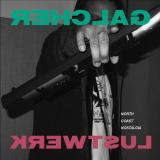
Galcher Lustwerk's 'Vestibule EP' is one of the best of the year if you ask us, (and the remix package by some genuine heavyweights is also worth seeking out). That the leftfield US producer is now back with another outing is literal and metaphorical music to our ears. This one strips away his usual muttered vocals and opens with the stuttering, dubby rhythms of 'North Coast Nostalgia' before 'Cat Video' suspends you in uneasy synths and a skeletal minimal rhythm. 'Thick Description is a deeper, more insular sound for the afters and 'Mock Tudor' is dusty, beautifully imperfect analogue house that is scuffed up and soulful in Lustwerk's signature low-key style.
Breakbeat Paradise Recordings returns with another heavy dose of raw funk and breakbeat pressure in the ever-growing Toxic Funk series – this time bringing together two seasoned groove specialists: The Fritz & Funkanizer. On Toxic Funk Vol. 21 the duo delivers two party-starting cuts packed with vintage breaks, heavyweight basslines and undeniable dancefloor energy.
Opening the A-side, Big Crush rolls in with chunky drums, infectious funk guitars and a soulful groove that feels tailor-made for packed club floors and sweaty late-night sessions. Flipping over to the B-side, Respect 900 turns up the heat with crisp breaks, old-school attitude and a driving funk workout loaded with signature Toxic Funk flavor. Both tracks blend classic funk roots with modern breakbeat production, perfectly capturing the spirit of the series.
With Toxic Funk Vol. 21, The Fritz & Funkanizer continue the tradition of delivering timeless DJ weapons for funk heads, breakbeat lovers and vinyl collectors alike. Another essential 7-inch release from Breakbeat Paradise Recordings, guaranteed to keep the grooves spinning and the dancefloor moving.
Hidden Sounds Record store – with the help of Emotional Recordings – launches the Dark Times label with the first of two club orientated EPs from Canadian brother-production duo Lex and Rew MacCrimmon and their project Alkahest.
Released on their own Post Contemporary label between 1994 – 1996, Alkahest contrasted with the spacious electronica of their influential and still on-going project, Legion Of Green Men.
Growing up in suburban city life in Burlington, Ontario, the MacCrimmon brothers’ interest in music and collecting records started early, always looking for interesting sounds in new places. With a limited local music scene or record stores, the alternative and college radio stations were the only way to discover new music or the type of music they sought.
The German electronic sounds of Kraftwerk, Klaus Schulze and Tangerine Dream were early obsessions, alongside Neu, Cluster (& Eno) and the post punk and synth pop emanating from Britain. The Flying Lizards, John Foxx / Ultravox, Gary Numan and The Normal were favourites, before diving into the 80s industrial experiments of Cabaret Voltaire, Severed Heads, Nurse With Wound and Throbbing Gristle.
Making their own music soon followed, first experimenting with 4 track cassette and digital delay, drum machines and synths soon followed, steadily building their own studio. All these influences merged in the early 90s with the dawn of house and techno and the progression to start the Post Contemporary label launched in 1992.
With the project Legion Of Green Men achieving early success, their diversion with Alkahest explored a post-industrial techno hybrid. Unsubtle, night music, the rhythm and sonic textures are more prominent over melody.
Contact High covers this Alkahest sound, from the 133 bpm trippy, psychedelics of opener Black Tabs, the acid breaks of Ground Zero or the charging nature of closing Séance 333, where all bets are off – together this 4 track EP perfectly captures the early spirit of Canada’s electronic music scene finding its place in dance culture, from the raves of the Toronto’s outer rim to the beaches of Anjuna.
However, in the title cut Contact High, there is something else happening, as electronic dub is explored, where the space in the music, between the beats, is as important at what happens on the surface. A love of this ethereal feeling would lead the brothers to head further in this direction and here is a perfect example of that early journey.
Repress 2026
Two years after releasing the acclaimed Crash Recoil, Anthony Child aka Surgeon returns to Tresor with new LP, Shell~Wave. Retaining the minimal equipment list and studio-version-of-live-show-sets approach of the previous album in order to focus on the work itself, Shell~Wave is a deeply personal document of both where Surgeon is and has been, converging three decades of experience with a continued curiosity in the untested.
“To make this project, I had to dig really deep in terms of what my relationship was to techno; I’ve been involved with it for a really long time and there’s a lot about it I feel dislocated from, so I had to really think hard about what techno is to me. I often get asked “what is techno to you?” but I can’t answer that with words; this album is the answer.” From the complex, twisting track Infinite Eye to the caustic Soul Fire, the eight tracks that make up the body of the album are single-take explorations of the vast, hard yet minimal techno Child is synonymous with.
Neatly dividing the record in two, the emotional centre of the record comes in the form of Dying, a vibrating, beatless piece that with a mantra-like vocal loop steeped in reverberating effects. Further echoes of dub production appear throughout the record as tracks like Divine Shadow, and Empty Cloud have an almost ever-present mist of reverberation, driven by the appearance of a new delay unit in the equipment list; while much of the philosophy of Crash Recoil’s creation is present, the process and the instruments have changed as Child again switches up his approach to studio work.
This insistence on trying novel techniques doesn’t preclude returning to old ones, as this use of modern digital machines with live, hands-on takes that are as inspired by 60s producer Joe Meek and 70s reggae as they are by this year’s synthesiser expos.
“For me, it’s an interesting experience returning to old techniques again after 30 years. I’m always exploring and finding myself back at the beginning. Connecting the present with the past.”
This philosophy of ‘time travel’ is inherent to the music itself as the synchronised loops repeat while the delay and effects branch out, forming unique eddies; distinct quantum moments within the circular whole; the future leaking through the spaces between the sounds. All of the concepts on the album are perfectly communicated through the painting by Taiwanese artist Jazz Szu-Ying Chen which suggests the movement of water, sound waves, and the chitinous shells of sea creatures.
Preceded by his reputation as a rap experimentalist, Bladee is a prolific and highly inventive entity with work spanning and intersecting the worlds of music, art and fashion.
He began his career as a teenager, trading art and lyrics with close friends. After releasing his first projects, international recognition came quickly and his network of Stockholm innovators soon arrived at the vanguard of a new era in music culture.
333 is Bladee's fourth solo album. Produced by Whitearmor, Gud, Mechatok, Lusi of Ripsquad and Joakim Benon of JJ, the album has no guest appearances.
Richard Sen debuts on Phantasy with ‘Space 1999 / Bergen Light Rail’, the first transmission from the illustrious DJ and producer since his vinyl-only solo LP, 2024’s ‘India Man’.
Deeply invested in electronic music for over thirty years, first at the intersection of London’s acid house and graffiti art scenes, evolving in cult duos Padded Cell and Bronx Dogs, and now generously sharing his formidable knowledge of club culture on London’s Do!! You!!! Radio, Sen is known to take listeners anywhere. On this occasion, he locks into two distinct influences from his winding creative journey, with ecstatic results.
The title of ‘Space 1999’ mirrors Sen’s own hand-painted accompanying artwork, yet its sonic influence sits much closer to our own orbit; A tribute to a slice of London nightlife history, Space at Bar Rhumba was a midweek party led by residents Luke Solomon and Kenny Hawes, whose selections helped sculpt the deep house scene at the turn of the millennium. ‘Space 1999’ transports contemporary dancers back there in no less than ten minutes, led by a deep bassline and swinging drums, while an intergalactic melody slowly takes hold, resulting in pure satisfaction.
‘Bergen Light Rail’ embraces a different kind of kosmische, looking to the northern light of space disco and following the tram route of its namesake to the Norwegian city’s beloved Club Ostre, riding a rhythm of pogoing toms and crashing drums. Conjuring a dreamy tête-à-tête between ever-expanding, heavenly synths and tightly-wound arpeggiators, Sen’s transmission to the stars is a deeply human call to dance.
Left-field Brooklyn soulful lounge from Numero’s Private Mind Garden. Seven lo-fi gospel meditations that bridge the gap between Shuggie Otis and Otis G . Johnson. Get lost in Lynn Marshall’s wavering falsetto and producer Norman Marcelle’s Lowery-brand organ and primordial drum machines. 1980 never
sounded so heavy.
Following on from his electric appearance on Diamonds in the Night, Tallac returns with a four‑tracker of low‑orbit elation. Tessitura blends floor‑facing energy with sleek space synths, elegant undercurrents washed in bold bars to produce a one‑of‑a‑kind sound. Drums hit hard on “Carbon Copy,” driving percussion providing the launchpad for synthlines to swoop and soar. Tempos are taken down a notch for the analogue embrace of “Kiss Me Quick.” Notes bend and flow in this smoky dreamscape, samples pulling the listener ever deeper. The rumbling kicks and hissing hi‑hats of “Pythia” are punctured by a throbbing beat; gliding above the rolling snares and luxurious breaks is a melody that thrums with palpable intensity and unbridled joy, a track made to ignite audiences. Never adhering to genre tags or style pigeonholes, Tessitura closes with “Cybersyn.” Touches of cosmic melt into late‑night glow‑stick energy, dawn’s light piercing the warehouse windows while the speakers continue to bounce blissfully.
Nicolas Balmer reveals the heavy silence of his soul.
Facing his own mirror.
The soundscape unfolds.
Fire sets the tone.
Kindling of the abyss, driven to go on and on.
Passion in his language contains suffering.
A silver lining, found in delicately layered noise.
A myriad of intertwined sounds paint the melodies of a life.
Holding the memories of those who danced with his shadows and light.
Nicolas releases his album “Leben” on Zürich based Subject To Restrictions Discs. While moving between New Wave, Kraut and Electronics, his intuition for ambient oozes from each composition, fast-paced or slow. As Nicolas Balmer lays bare his most intimate sources of inspiration with Leben. He holds nothing back.
The album is shaped by a sense of optimistic melancholy: restless and contradictory, yet full of hope. The music is not about arriving, but about the journey: loss and finding oneself; despair, love, guilt and forgiveness. This is an album that does not seek to explain life, but rather embraces it in all its contradictions.
Nicolas Balmer is a Zurich-based multi-instrumentalist, producer and synthesizer enthusiast who has been exploring contemporary music for over fifteen years. Working across music, theatre and interdisciplinary projects, he moves between genres and forms. His work includes the electronic project Nico Sun, the experimental duo Gūsū with Xueyan Chen, the collaborative project Konstant with Angelo Repetto and Kenel/Sonne. He also composes and produces music for theatre and performance, as well as working in mixing and production. Across his projects, Balmer is driven by raw textures, emotional authenticity and a search for an independent musical language.