
10
nicht am Lager
Bestelle jetzt und wir bestellen den Artikel für dich beim Lieferanten.
Last In: vor 3 Jahren
26,60 €
Bestelle jetzt und wir bestellen den Artikel für dich beim Lieferanten.

repressed !
It takes a lot to achieve the status of legendary or era defining in dance music, its sands shift so quickly artists, genres and labels have often come and gone before you realise.
So it's with some pride and deserved justification that Yoshitoshi marks its 20th anniversary with celebratory remix packages of its most iconic tracks.
Already riding high in the Beatport charts with the success of the Uto Karem and Robosonic mixes of Eddie Amadors House Music, the latter of which has spent the past month in the overall top 5, the label now plans a one, two punch with the follow-up: Alcatraz seminal Giv Me Luv.
We thought long and hard about how we scheduled this 20th anniversary project, says label boss Sharam, little point launching big and then following up with a whimper so we deliberately chose Alcatraz for this difficult task.
But the challenge didnt end there; a massive record still deserves a massive remix and I think its safe to say we found the perfect woman for the job...
Step forward undisputed techno titan Nicole Moudaber who leapt at the opportunity to remix the track.
Ive got so many fond memories of Giv Me Luv, it was one of my favourite tunes from my formative clubbing days, recalls Nicole happily, so, when Yoshi mentioned the idea of me remix-ing it I just couldn't say no.
In fact I was so familiar with Alcatraz I was already awash with ideas of what I could, or should, do with it.
As I got into the mix one of those ideas just grew and grew, namely an extended breakdown that constantly builds; layering the memorable vocal to an intense pay-off and (hopeful) moment of real dancefloor drama. Nicoles humble description doesn't quite do the end result justice, which is a modern, masterful take on the classic.
Her iconic techno beats, dark twisted stabs and arrangement of that bassline drive toward the mentioned break, which will undoubtedly rival the fireworks of any impending NYE celebrations. In fact, expect this track to be THE soundtrack to many a dance floor come the all-important hand-over to 2015. And, just in case that weren't enough, Yoshi has also secured the skills of Tent Cantrelle to deliver the perfect deep house foil to Nicoles techno ferocity as Sharam concludes, We wanted a real slice of contemporary funk from the companion mix.
Yoshi is synonymous with exploring the line between deep house and techno, perhaps no more so than during its formative years, so this re-mix completes the package perfectly.
Bestelle jetzt und wir bestellen den Artikel für dich beim Lieferanten.

The Flaming Lips veröffentlichten 2002 "Yoshimi Battles the Pink Robots", welches das meistverkaufte Album der Band ist und in den USA mit über 700.000 verkauften Alben mit Gold ausgezeichnet wurde.
Das Album enthält einen der kultigsten Songs der Band - "Do You Realize?" - sowie die Singles Fight Test, Ego Tripping at the Gates
of Hell und den Titeltrack. Die 20th Anniversary Deluxe Edition 5 LP Vinyl Box Set enthält das Originalalbum, B-Seiten, Demos und Radiosessions sowie weitere Raritäten. Die Vinyl-Box enthält 56 Tracks, von denen über 30 bisher unveröffentlicht sind, und 40, die zum ersten Mal auf Vinyl erhältlich sein werden.
erscheint voraussichtlich am 14.04.2023

Es weihnachtet sehr in Rocky Beach: Auf der Suche nach den passenden Geschenken geraten die drei ??? in einen neuen Fall in 24 Kapiteln.Beim Einkaufsbummel im Kaufhaus Garcy's werden Justus, Peter und Bob Zeugen eines Überfalls. Kein geringerer als der Weihnachtsmann des Garcy´s wird angegriffen. Jemand hat es auf den Sack voller Geschenke abgesehen ... und dieser jemand ist ausgerechnet als Weihnachtself verkleidet. Die drei ??? heften sich an die Fersen des Diebes und finden heraus, auf welches Weihnachtsgeschenk es der Elf abgesehen hat ...Sprecher:innen & MitwirkendeErzähler Axel MilbergJustus Jonas, Erster Detektiv Oliver RohrbeckPeter Shaw, Zweiter Detektiv Jens WawrczeckBob Andrews, Recherchen und Archiv Andreas FröhlichTante Mathilda Karin LienewegOnkel Titus Erik SchäfflerSanta Claus Claus WilckeFotograf Stephan SchadSandy Angela StresemannMutter Pamela PuntiMr. Puckle Christian RudolfMrs. Hatchett Petra KleinertMatty Yoshua Rudolf 1.Security Patrick Berg2.Security Philipp Stumpp3.Security Max König4.Security Tony Curting Pater Achim Schülke Engel Theresa Underberg1.Polizist Patrick Baehr2.Polizist Alexander Mettin3.Polizist Douglas WelbatAngestellte Katrin DeckerLarry Jan LangerLuke Bigelow Harald EffenbergMolly Regine LamsterEmmett Reinhold KammererDurchsage Andrea LüdkeKrankenschwester Scarlett LubowskiMann Helge HalvéBandenchef Lars SchmidtkeBuch und Effekte: André MinningerRedaktion: Maike MüllerRegie und Produktion: Heikedine KörtingTitelmusik: Simon Bertling & Christian Hagitte (STIL)Musik: Constantin Stahlberg, Jens-Peter Morgenstern und Thomas KörtingCover-Illustration: Andreas RuchDesign: Atelier SchoedsackBasierend auf dem gleichnamigen Buch von Marco Sonnleitner, erschienen im Kosmos Verlag, Stuttgart. © 2021Mit freundlicher Genehmigung der Universität Michigan. Based on characters created by Robert Arthur.Die drei ??? © 2022 Franckh-Kosmos Verlags-GmbH & Co. KG(P) & © 2022 EUROPA a division of Sony Music Entertainment GmbH
Bestelle jetzt und wir bestellen den Artikel für dich beim Lieferanten.

YoshimiOizumikiYoshiduO"s debut album To The Forest To Live A Truer Life combines the thrill and precision of masterful improvised music practitioners unearthing new sonic possibilities. Yoshimi P-We, now known as YoshimiO, is best known for her work as one of the founders and drummer in the Japanese rock band Boredoms alongside IzumikiYoshi (synthesizer, sampler, and programmed midi instruments on Vision Creation Newsun and Super æ), and multi-instrumental work in the all female group OOIOO. She has worked as a session player and vocalist on Yoshimi Battles the Pink Robots by The Flaming Lips. A balance of YoshimiO"s live improvisations and IzumikiYoshi"s correlated processed sounds give the pieces a sense of grounding and weightlessness in tandem. Being described by Wayne Coyne (The Flaming Lips) as "one of those strange genius musicians", YoshimiO uses the piano as her primary instrument in addition to her singular voice- every move is bent, stretched, and mutated by IzumikiYoshi"s modular synthesizer into cascades of brightly colored waves and dotted constellations of sound. Rather than taming YoshimiO"s spirited performances, IzumikiYoshi adorns every unique flutter with complementary otherworldly textures. Recorded primarily in a cafe nestled in a forest in Japan, To The Forest To Live A Truer Life is a celebration of pure potential, of music born of the moment expanding in every direction. YoshimiO has collaborated with and worked on numerous projects, most notably a raga band called SAICOBAB, an ambient project called Yoshimi and Yuka, the tribal drum OLAibi, and indie supergroup Free Kitten.
erscheint voraussichtlich am 24.03.2023

erscheint voraussichtlich am 24.03.2023

Diese limitierte Version ist auf grünem Glow In The Dark Vinyl gepresst.
Ego Tripping at the Gates of Hell enthält 7 Tracks aus der "Yoshimi"-Ära, die auf dem 6 CD Yoshimi Battles the Pink Robots 20th Anniversary Box Set enthalten waren, das im November 2022 veröffentlicht wurde.
Ursprünglich als CD EP im Jahr 2003 veröffentlicht, erscheint sie nun
zum ersten Mal auf Vinyl 1st time On Vinyl. Sie enthält zwei Versionen des Titeltracks (eine davon mit einem Remix von Jason Bentley), einen Remix von The Postal Service von "Do You Realize?" und 4 Tracks, die nicht auf dem Album sind.
erscheint voraussichtlich am 17.03.2023

Diese limitierte Auflage ist auf rubinrotem Vinyl gepresst.
"Fight Test" war die dritte Singleauskopplung aus dem
äußerst populären und erfolgreichen Album Yoshimi
Battles the Pink Robots von The Flaming Lips. Die im
Juni 2003 veröffentlichte Single stieg in die US Billboard
Top 100 ein und erreichte Platz 28 in den britischen
Single-Charts. Die 7-Track-EP war Teil des
6-CD-Box-Sets Yoshimi Battles the Pink Robots 20th
Anniversary, das im November 2022 veröffentlicht wurde,
und wird nun zum ersten Mal auf Vinyl veröffentlicht.
Neben dem Titeltrack enthält sie einen Remix von "Do
You Realize?", "Thank You Jack White" und drei
Coverversionen, darunter eine Live-Version des Kyle
Minogue-Hits "Can't Get You Out Of My Head" und
Radioheads "Knives Out".
erscheint voraussichtlich am 17.03.2023

Nachpressung: "Beach Umbrella" Vinyl (2LP Blue)! ,Pacific Breeze" dokumentiert die musikalische Explosion Japans in die Stratosphäre. In den 1960er Jahren erreichte die Nation ein Nachkriegswunder und Japan stieg zur zweitgrößten Volkswirtschaft der Welt auf. Blühende Tech-Exporte wie tragbare Kassettenabspielgeräte, funkelnde Videospiele und glänzende Autos boomten weltweit und pumpten japanische Taschen voller Yen. Der finanzielle Aufschwung Japans durchdrang auch die Populärkultur und brachte den City Pop hervor. Dieser neue Sound entstand Mitte der 70er Jahre und zog sich durch die 80er Jahre und kanalisierte die zeitgenössische Psyche des Landes. Es war anspruchsvolle Musik, die Japans Wohlstand widerspiegelte und einen Soundtrack für aufstrebende Urbanisten lieferte. City Pop verkörpert diese Ära. ,Pacific Breeze" ist eine fachmännisch zusammengestellte Kollektion von ausgesuchten Songs, die von seidigen, glatten Easy Listening Grooves über innovative Techno-Pop-Banger bis hin zu allem, was dazwischen liegt, reicht. Diese Musik wurde bisher noch nie außerhalb Japans veröffentlicht, mit dabei sind Schlüsselkünstler wie Taeko Ohnuki und Minako Yoshida, Haruomi Hosono und Shigeru Suzuki, sowie die Kultfavoriten Hitomi Tohyama und Hiroshi Sato und viele andere. Diese lang erwartete Veröffentlichung enthält auch neu in Auftrag gegebene Cover Paintings des in Tokio lebenden Künstlers Hiroshi Nagai, dessen ikonische Bilder des Resort-Lebens auf den Hüllen vieler klassischer City Pop-Alben der 1980er Jahre zu finden sind. Viele der wichtigsten City Pop-Protagonisten kamen aus der japanischen New Music-Szene der frühen 70er Jahre, wie Light In The Attic's gefeierte ,Even a Tree Can Shed Tears - Japanese Folk & Rock 1969-1973" Compilation, die erste Veröffentlichung der laufenden Japan Archival Series, zeigt. ,Pacific Breeze" versammelt nun einige der besten City Pop Stücke: aufregende Easy Listening mit mutierter Exotica, gekipptem Techno-Pop und dampfendem Boogie, der unter dem Neon-Glanz brodelt.
erscheint voraussichtlich am 10.03.2023

Nachpressung: "Beach Umbrella" Vinyl (2LP Blue)! ,Pacific Breeze" dokumentiert die musikalische Explosion Japans in die Stratosphäre. In den 1960er Jahren erreichte die Nation ein Nachkriegswunder und Japan stieg zur zweitgrößten Volkswirtschaft der Welt auf. Blühende Tech-Exporte wie tragbare Kassettenabspielgeräte, funkelnde Videospiele und glänzende Autos boomten weltweit und pumpten japanische Taschen voller Yen. Der finanzielle Aufschwung Japans durchdrang auch die Populärkultur und brachte den City Pop hervor. Dieser neue Sound entstand Mitte der 70er Jahre und zog sich durch die 80er Jahre und kanalisierte die zeitgenössische Psyche des Landes. Es war anspruchsvolle Musik, die Japans Wohlstand widerspiegelte und einen Soundtrack für aufstrebende Urbanisten lieferte. City Pop verkörpert diese Ära. ,Pacific Breeze" ist eine fachmännisch zusammengestellte Kollektion von ausgesuchten Songs, die von seidigen, glatten Easy Listening Grooves über innovative Techno-Pop-Banger bis hin zu allem, was dazwischen liegt, reicht. Diese Musik wurde bisher noch nie außerhalb Japans veröffentlicht, mit dabei sind Schlüsselkünstler wie Taeko Ohnuki und Minako Yoshida, Haruomi Hosono und Shigeru Suzuki, sowie die Kultfavoriten Hitomi Tohyama und Hiroshi Sato und viele andere. Diese lang erwartete Veröffentlichung enthält auch neu in Auftrag gegebene Cover Paintings des in Tokio lebenden Künstlers Hiroshi Nagai, dessen ikonische Bilder des Resort-Lebens auf den Hüllen vieler klassischer City Pop-Alben der 1980er Jahre zu finden sind. Viele der wichtigsten City Pop-Protagonisten kamen aus der japanischen New Music-Szene der frühen 70er Jahre, wie Light In The Attic's gefeierte ,Even a Tree Can Shed Tears - Japanese Folk & Rock 1969-1973" Compilation, die erste Veröffentlichung der laufenden Japan Archival Series, zeigt. ,Pacific Breeze" versammelt nun einige der besten City Pop Stücke: aufregende Easy Listening mit mutierter Exotica, gekipptem Techno-Pop und dampfendem Boogie, der unter dem Neon-Glanz brodelt.
erscheint voraussichtlich am 10.03.2023

Ten of Tee Fujii’s favourite Three Blind Mice tracks, including “Misty” have been freshly remastered and finally available for the first time on Impex Records’ deluxe 180-gram LP. Tsuyoshi Yamamoto, Isao Suzuki, Ayako Hosokawa, Shoji Yokouchi, and other popular TBM musicians showcase their artistry and passion for jazz under the guidance of Fujii-san and engineer Yoshihiko Kannari. Impex’s 2-LP set is placed in a special gatefold jacket and features heavy board backing, new art and special finishes for a truly bespoke audiophile package.
Limited to 3,000 individually numbered pressings, the famous sound of Tee Fujii won’t be the same when they’re gone.
erscheint voraussichtlich am 27.02.2023

Wie alle drei vorherigen Alben der Band beruht auch dieses auf der konzeptionellen, ideellen und künstlerischen Verbindung zwischen der Musik von FESTLAND und der bildenden Kunst des Malers, Zeichners und Texters Fabian Weinecke, der im Jahr 2012 verstorben ist. Das Trio (DDFM, Thomas Geier, Yoshino) vertont die lyrischen Texte Weineckes in eigenen Kompositionen und nutzt seine Bilder und Zeichnungen zur Covergestaltung. Er ist somit als assoziiertes, viertes Mitglied der Band zu verstehen. "Hippies" wird als Doppelalbum (12"/Vinyl) erscheinen. Es wurde im Parka Sound Studio in Berlin Kreuzberg eingespielt und dort von Berend Intelmann (Paula, Jens Friebe) abgemischt. Norman Nitzsche (Whitest Boy Alive) besorgte das Mastering. Dem Album werden zwei Booklets mit Malerei und Zeichnungen aus den verschiedenen Schaffensphasen Fabian Weineckes beigelegt. Seit dessen Tod an den Folgen einer lebenslangen Mukoviszidose im Jahr 2012 spielen FESTLAND in reduzierter und elektroakustischer Instrumentierung. Zum musikalischen Kern gehört das repetitive und zahnradartig ineinandergreifende Spiel von Geige, Kontrabass und Schlagwerk. Im Zusammenhang mit den witzig-skurrilen, traurigen und poetischen Texten im mehr stimmigen zarten Gesang des Trios ist somit ein ganz eigensinniger musikalischer Kosmos entstanden. Die musikalische Referenz dafür bildet weniger ein klassisches als vielmehr ein popmusikalisches Repertoire, das in der elektronischen Musik von House, Techno und Dub zu verorten ist. Der Journalist Jens Uthoff schrieb in der taz über das dritte Album treffend, es klänge so, als "habe man Kraftwerk die Synthesizer weggenommen". Der Radiomoderator und DJ Klaus Fiehe (1 Live Fiehe, ByteFM) sprach von "Math-Folk".FESTLAND knüpfen konzeptuell nicht nur an elektronische Musik oder Krautrock der 1970er sondern auch an eine Phase avantgardistischer Popmusik und Malerei der 1980er Jahre an (etwa "Neue Wilde"), in denen Künstler*innen in beiden Welten von Musik und bildender Kunst gleichermaßen zu Hause gewesen sind.
erscheint voraussichtlich am 10.02.2023

A pure journey inward into the headspace of an artist, that reveals his gaze at the earth-ly zones he walks in: “Song for Joni”, the new album by Japanese musician Shunji Mori, brings pure natural music full of artificial nuances who create in conversation with ana-logue tones a new kind of musical nature, loaded with vibrant seasons, unknown to us, the unwise humans. moreover, the album is a fine continuation of Japan’s rich ambient leaning music traditions, carrying them into Lorren Connor’s like pending guitar galaxies.
In the 1990s Tokyo based Mori was part of the trip hop, nu-jazz, deep house, and down-tempo duo natural calamity, releasing a string of albums and EP’s on labels like legend-ary London based imprint Nuphonic, Japanese Idyllic Records or Down 2 Earth Record-ings.
In 2003 he launched the instrumental guitar duo Gabby & Lopez with his buddy Masayuki Ishii. Together they created three albums and performed live. Additionally, Mori plays improvisational concerts with Japanese musician, multi-instrumentalist, and stage direc-tor Daiho Soga and finds time to invent his very own, charismatic guitar music.
His solo work now finally gets introduced with a full-length album for Studio Mule, con-sisting of recent and a decade ago compositions, all merely recorded with the electric guitar, pedals, and field recordings.
In the center of “Song for Joni” is the guitar, spreading longing, drifting melodies. Free floating, yet deeply felt compositions, performed in an accurate journey music style. around the string notes, ambient landscapes soar and vanish.
In some moments, the guitar works like a slow-mo yacht rock lead, flying speed less over and under imaginative sonic clouds. Then, Mori’s music distributes psychedelic ef-fects in the tradition of krautrock legends like Günter Schickert, just without the echo fuzz.
Additionally, in warm vibrating seconds, his creations remind on the calm flashes in the musical work of English photographer, musician, and artist designer Steve Hiett, while Mori’s ambient spheres come close to the magic vibe of records like “Pier & Loft” by his fellow countryman Hiroshi Yoshimura.
A mixture, that transports considerate listeners into the meditative world of Shunji Mori, a calm island of bliss, made for all those that follow the heedful path of life.
Bestelle jetzt und wir bestellen den Artikel für dich beim Lieferanten.

• Sony Masterworks is happy to announce the vinyl release of the Netflix live-action series Cowboy Bebop which premiered in November 2021 and is available on Netflix.
• Yoko Kanno and the band SEATBELTS, the artists behind the music in the original anime series of Cowboy Bebop, have returned to bring their signature dynamic, jazzy sound to the Netflix live-action show. The resulting compositions are characters themselves - constant companions to the crew of the Bebop and brimming with just as much personality.
• Cowboy Bebop (Soundtrack from the Netflix Original Series) is a treat for Bebop fans in an additional way - it features over twenty new tracks only available on vinyl! This wide release is pressed on red marble vinyl discs in a gatefold jacket with printed inner sleeves.
• COWBOY BEBOP is an action-packed space Western about three bounty hunters, aka “cowboys,” all trying to outrun the past. As different as they are deadly, Spike Spiegel (John Cho), Jet Black (Mustafa Shakir), and Faye Valentine (Daniella Pineda) form a scrappy, snarky crew ready to hunt down the solar system’s most dangerous criminals — for the right price. But they can only kick and quip their way out of so many scuffles before their pasts finally catch up with them.
• Original anime series director Shinichirō Watanabe is a consultant on the series, and original composer Yoko Kanno returns for the live-action adaptation. The series also stars Alex Hassell and Elena Satine.
• Yoko Kanno is a Japanese composer, arranger and musician best known for her work on the soundtracks of anime films, television series, live-action films, video games, and advertisements. She has written scores for Cowboy Bebop and its live-action adaptation, Darker than Black, Macross Plus, Turn A Gundam, The Vision of Escaflowne, Ghost in the Shell: Stand Alone Complex, Wolf's Rain, Kids on the Slope, Genesis of Aquarion and Terror in Resonance, and has worked with the directors Hirokazu Kore-eda, Yoshiyuki Tomino, Shinichirō Watanabe and Shōji Kawamori. Kanno has also composed music for pop artists Maaya Sakamoto and Kyōko Koizumi. She is also a keyboardist and is the frontwoman for the SEATBELTS, who perform many of Kanno's compositions and soundtracks.
erscheint voraussichtlich am 16.12.2022

LP including booklet with extended liner notes. Channeling wild seventies Impulse vibes, even resonating the guts of early Art Ensemble of Chicago and the tempering spirit of Max Roach's 'We Insist' era: BRAHJA is soul searching their spirit on 'Watermelancholia'.
Devin Brahja Waldman is a New York saxophonist, drummer, synthesizer player and composer who leads the group BRAHJA. Waldman has accompanied his aunt, poet Anne Waldman, since the age of ten. Waldman is a co-founding member of Radical Reversal, Diva of Deva Loka, and Notable Deaths. He has performed with Patti Smith, William Parker, Nadah El Shazly, Malcolm Mooney, Thurston Moore, Godspeed! You Black Emperor, Charles Hayward, Luke Stewart and Yoshiko Chuma. Waldman is also a member of NYC's Heroes Are Gang Leaders (led by poet Thomas Sayers Ellis and saxophonist James Brandon Lewis), of Sam Shalabi's Land of Kush, and of the Norwegian hardcore group MoE.
As a youngster, Waldman was taken under the wing of avant-garde giant Paul Bley. Along with Anne Waldman and cousin Ambrose Bye, Waldman is a co-producer for Fast Speaking Music -a NYC poetry and music label which has released recordings with Amiri Baraka, Meredith Monk, William Parker, Laurie Anderson, Eileen Myles, CAConrad, Fred Moten, Daniel Carter, Clark Coolidge, Thurston Moore, Joanne Kyger and many others.
Ancient to the future 2.0
Watermelancholia is about the law of Karma:
a law so obvious that it often goes unspecified and ignored.
Neglecting this law invites a world of chaos.
It's been articulated in endless ways.
Some have called it Cosmic Law or Natural Law.
Others translate it as Do No Harm.
(liner notes excerpt)
The moment the first bass note of Luke Stewart kicks in on 'Watermelancholia', followed by the swelling drum roll of Malick Koly and the lush leading voice of Janice Lowe you feel Devin Brahja will take you on a deep mind-blowing spiritual journey.
Channeling wild seventies Impulse vibes on 'O.P.K' or, could we say, even resonating the guts of early Art Ensemble of Chicago and the tempering spirit of Max Roach's 'We Insist' era: BRAHJA is soul searching their spirit on 'Watermelancholia'.
A poetic stream of consciousness, backboned by top-notch musicians, transcending the cosmic universe, trying to find answers and musically connecting.
Watermelancholia is a meditation on healing the inner schism between the sense of self - the ego - and the inner being. It is about bringing the ego to justice; putting it on trial, as it were.
Bestelle jetzt und wir bestellen den Artikel für dich beim Lieferanten.

Album Collection[44,16 €]
Directed by Isao Takahata, "Grave of the Fireflies" is now available in the analogue edition series of the popular ""Studio Ghibli"" works! !
Image album collection and soundtrack collection of the movie
"Grave of the Fireflies" released in 1988, two titles
A precious analogue board with the latest remastering and a complete reprint of the jacket, obi,
commentary, roundtable discussion, score, script (excerpt), etc.
Grave of the Fireflies Soundtrack Collection (Original LP release date 1988.6.25) All 20 tracks
Music: Yoshio Mamiya
Yoshio Mamiya is in charge of the music for the main part of the movie.
This album is literally a soundtrack board that contains not only the music but also
the dialogue and sound effects of the movie. Select and record famous scenes.
* Saddle-stitched 16 liner notes (includes the script of the part recorded on the LP) included.
erscheint voraussichtlich am 02.12.2022

From contemporary admirers of Sakamoto's work like Thundercat, Devonté Hynes, and Hildur Gudnadóttir to longtime collaborators and friends like David Sylvian, Alva Noto, Cornelius, and Fennesz, plus some of Sakamoto's personal favourites like Lim Giong, Gabrial Wek, and 404. zero, the included artists reflect the breadth of Sakamoto's influence on contemporary music. Given full access to the musician's extensive catalogue of solo releases and film scores, each artist personally selected their contribution and put their unique spin on Sakamoto's originals.
erscheint voraussichtlich am 02.12.2022

Soundtrack Collection[44,16 €]
Directed by Isao Takahata, "Grave of the Fireflies" is now available in the analog edition
series of the popular "Studio Ghibli" works! !
The image album collection and soundtrack collection of the movie "Grave of the Fireflies
released in 1988 have been remastered with the latest remastering.
A precious analog board with a complete reprint of the gorgeous liner included.
Grave of Fireflies Image Album Collection (original LP release date 1987.11.25)
All 10 songs
Music: Michio Mamiya, Masahiko Sato, Kazuo Kikkawa
An album inspired by the thoughts of three musicians,
Yoshio Mamiya, Masahiko Sato, and Kazuo Yoshikawa,
about "war", and the story of the main characters' young siblings, Seita and Setsuko.
*Saddle-stitched 12-page liner notes
(music/round-table talks by directorTakahata and three composers) included.
erscheint voraussichtlich am 02.12.2022

Sound: An Exhibition of Sound Sculpture, Instrument Building and Acoustically Tuned Spaces opened at the Los Angeles Institute of Contemporary Art in the summer of 1979 (and was also on view later that year at PS1 in New York). Curated by Bob Wilhiteand Robert Smith, the exhibition surveyed the field of sound art. The forty-four participants were painters pivoted toward performance, conceptual artists attracted to time-based mediums, self-styled creators of environments, and musicians (formally trained and otherwise) fashioning new instruments from household items and consumer electronics. They were more or less object-oriented and, at the same time, more or less music-oriented. What brought them all together, as the exhibition catalog gamely asserted, was sculpting in three-dimensional space.
The Sound exhibit included installations, recordings played in the exhibition space and a series of live performances, demonstrating instruments that otherwise rested inert in the gallery. For a broader sense of the show than a single visit provided, the curators also produced a compilation album featuring short pieces, or excerpts from longer works, by many of the participants. (Artists in the exhibition, but not on the LP include Alvin Lucier and Mike Kelley.) Selections from bright lights of the 20th century avant-garde – such as composers Bill Fontana, Yoshi Wada and Paul DeMarinis; conceptual artists and performance artists Terry Fox, Tom Marioni and Jim Pomeroy; experimental vocalist Joan La Barbara; and Los Angeles Free Music Society members Tom Recchion and John Duncan – feature alongside the sounds of Jim Hobart's tuned jars, Ivor Darreg's fretless banjo, Doug Hollis' aeolian harp and Richard Dunlap's rubber bands.
This first-time reissue is limited to 500 numbered copies. Comes with poster.
erscheint voraussichtlich am 25.11.2022

The last flight – we have arrived! Fasten your seatbelt and buckle up – Denn die erfolgreichste Dance- & Trance-Compilation unseres Planeten setzt einmalig zu ihrem letzten Landeanflug an.
Anlässlich des 100. Jubiläums erscheint die beliebte Produktreihe als galaktische Sonderausgabe und Fans dürfen sich neben der 3CD und dem eAlbum auf eine streng limitierte Fan-Box mit 3CD, galaktischem Comic-Poster, Fan-Socken und Schlüsselanhänger freuen. Damit aber noch nicht genug: Diese letzte Ausgabe unserer FUTURE TRANCE erscheint am 25.11.2022 zudem exklusiv als 4LP inkl. Comic-Poster!
Echte Fans werden zudem bei der besonderen Optik ein Flashback erleben – das erste Mal seit der Landung der FUTURE TRANCE Vol. 60 erlebt die Reihe wieder ein Alien-Revival und erscheint in außerirdischem Design.
Die FUTURE TRANCE 100 besticht durch ein randvolles Aufgebot mit den größten Stars der Szene und ihren aktuellen Bangern. Ein letztes Mal zünden wir die Trance-Booster - mit dabei sind z.B. Scooter,
Pulsedriver, Armin van Buuren, Rocco und und und. Abgerundet wird dieser Senkrechtstarter mit einem exklusiven FUTURE TRANCE UNITED Mix „The last flight – we have arrived!“ Hier ist Gänsehaut vorprogrammiert!
Bestelle jetzt und wir bestellen den Artikel für dich beim Lieferanten.

2022 limited edition of this Japanese no wave gem from 1982. With extended liner notes and interviews with band members about the recordings of the album, as well as unpublished photographs from 1981 by Jibiki Yuichi.
The Japanese punk rock movement known as Tokyo Rockers began in the summer of 1978. It incubated an independent music culture as well as a host of fascinating, individualistic musicians. One of the more striking units was the male-female duo Maria 023. NON played bass for them, and it was here that she first attracted attention. However, Maria 023 was short-lived, and NON would not reappear until the following year, August 1979, on stage at the legendary concert event "Drive to 80s". Her unbilled performance at the event consisted of several songs for solo bass and vocals, and her combination of intensity and a distinctly female emotionality made a striking impression. In the months that followed, NON continued to play solo and she became a pivotal presence among the female rockers on the scene at the time.
Finally she shifted from solo to group performance, and formed NON BAND. After several member changes, the line-up stabilized into a unique trio with Kinosuke Yamagishi on violin and clarinet, and Mitsuru Tamagaki on drums. It was with this line-up that the group reached a musical peak. At the same time, the Japanese punk and new wave rock scene was moving in a new direction, as a second generation of artists appeared and mushrooming independent labels began to play an increasingly important role. I myself started a label called Telegraph Records in 1981 and worked hard on record releases and building a distribution network.
Since starting the label, I had wanted to release a record by NON BAND. There were many vicissitudes before it could happen, but in February 1982 NON BAND's first album was released as a 10-inch LP on Telegraph Records, the label's fifth release. In the early Japanese indies scene, if a release sold 1000 copies it was counted as a significant success. The NON BAND album went through several repressing and sold 2000 copies. The album was a hit and the band's critical reception and popularity suddenly took off.
The shows that followed the release of the album were given a boost by the addition of two female rockers, the guitarist Kummy and keyboard player Mitsuwa. The group was reaching a real musical peak and everyone expected more great developments, but just six months after the release of the album the group would grind to a halt. Members quit the band one after another, and with no possible replacements to be found, NON herself faded away from the scene.
NON BAND's career in the early Japanese indies scene was thus short-lived. But their sole album was reissued twice on CD, and remained popular with listeners. However, the group's history was to have a second chapter.
NON ended up returning to her hometown, snowy Hirosaki in the far northern prefecture Aomori. There she raised two children and took over the running of the family business, an arts supplies store. Her thoughts turned once again towards music, and in 1999 she took up her bass again and began to sing. She invited two fabulous musicians, Keiji Haino and Tatsuya Yoshida, to Hirosaki, and performed together with them as well as solo. This marked the beginning of a new phase for her, and she played live in Tokyo and released a solo album, "ie". She got back in touch with Yamagishi and Tamagaki and reformed NON BAND. They added Emi Sasaki on accordion and began to play a handful of gigs each year, bringing a mature depth to their undiminished power and dazzling a new generation of fans. In 2012 the group released an album of recent live performances entitled " NON BAND Liven' 2009-2012". I released the album on the newly reanimated Telegraph Records.
NON still lives in the north, in Hirosaki. The city is famous for its summer Neputa festival. The first track on this album, "Duncan Dancin'" is almost a theme song for NON BAND, but its rhythm is taken from the ohayashi music that is performed in this festival, as large floats and troupes of dancers wind their way through the streets. The title refers to the legendary dancer, Isadora Duncan. The image perfectly represents NON herself: Isadora Duncan dancing to the earthy rhythms bubbling up out of the north land.
Nov 9, 2016 Jibiky Yuichi (Telegraph Factory)
In order to achieve a meticulous sound quality the reissue version is cut on 12" vinyl instead of the original 10" format. The original cover artwork has been reproduced and there are liner notes by Jibiky Yuichi with unpublished photos of NON BAND.
Bestelle jetzt und wir bestellen den Artikel für dich beim Lieferanten.

Hoshina Anniversary offers a new LP of fluid, alchemical dance music in the shape of Hisyochi, on Impatience. Moving well beyond the initial influence of jazz fusion, electronica and his Japanese heritage, Hoshina Anniversary continues to carve deeper into his own cosm, and Hisyochi arguably represents this prolific producer at his most singular, refined and potent yet.
With nowhere to go and little to do, Hoshina was making music at a seemingly unstoppable torrent throughout the pandemic, sometimes sketching close to 100 tracks in any given month. Opening up a session from a previous track, he would erase all but one element, using it as a starting point for a completely new experiment, lending the body of work a subtle yet tangible coherence. Hisyochi was pieced together from a swathe of productions that came out of a particularly fertile period in the first half of 2021, which also birthed his recent release on Patience, Hyakunin Isshu.
Roughly translating to “somewhere cool to relax during a hot summer” according to Hoshina, Hisyochi transcends seasons but undoubtedly runs hot. Drum patterns are crisp, varied and invariably body-moving, basslines ascend at vertigo-inducing velocity, and dimly-lit jazz-bar piano is often the only element anchoring the sound to terra firma.
Following the plaintive, palette cleansing introduction of Rakka, Irahu plots the course with a light arpeggiator over a chugging rhythm before a warbly piano line to creeps in the back door. Misebayana is a jolt of gyrating mutant dance, part video game suspense and part footwork for drums and koto, while Kokoro no Heisei (Peace Of Mind) sees Hoshina deliver a salvo to stillness over a meandering, dubby spacewalk. Roman is an invigorating cut of warped dancehall tango, while the closing title track perfectly encapsulates the essence of the record and Hoshina Anniversary in 2022 in one elegant, acidic rinse.
Hoshina Anniversary is Yoshinobu Hoshina, from Hachioji, outside of Tokyo. He’s released records as Hoshina Anniversary on ESP Institute, Alien Jams and Youth, under his Suemori moniker for Osare! Editions and as Shifting Gears for Toucan Sounds, amongst others.
Hisyochi was written, produced and mixed by Hoshina Anniversary. It was mastered by Josh Bonati in NYC, and artwork is by Luca Schenardi.
Bestelle jetzt und wir bestellen den Artikel für dich beim Lieferanten.

WRWTFWW Records is so happy to announce Poly-Time Soundscapes / Forest Of The Shrine, a brand new release by Japanese producer Taro Nohara (Yakenohara). 8 tracks of pure environmental ambient bliss available on LP housed in a heavy 350gsm sleeve with an artwork from the artist himself.
Based in Tokyo, Taro Nohara is a producer, beatmaker, DJ, and music activist who made a mark with his electronic / ambient unit Unknown Me ( (of Not Not Fun Records fame). His new solo project, Poly-Time Soundscapes / Forest Of The Shrine, is a unique and modern take on Japanese environmental music, a free floating re-interpretation of the sub-genre made famous by Midori Takada, Hiroshi Yoshimura, or Satoshi Ashikawa (and more!) fused with subtle nuances of various origins: downtempo, hip hop, sound design, chill-out, experimental.
Conceived as a two-part adventure of contemplative peace, Taro Nohara’s organic soundscape takes you on a mind-soothing walk through time (or memories) and the beautiful mysteries of luscious forests - don’t resist, let yourself go, explore!
Bestelle jetzt und wir bestellen den Artikel für dich beim Lieferanten.

Some people choose the pages of a diary to spill their innermost feelings
and recount their trials and tribulations - Instead, Chayse Porter has a
palace - It's this metaphorical place where I can go to express myself and
feel safe, he explains
It's this place where you can get all your secrets out in the open and feel at home.
But rather than luxuriate in his regal mental abode, Porter's latest for Earth
Libraries takes listeners on a grand tour, revealing the nooks and crannies of his
heart and mind.Recording on vintage gear and working with producer Brad Timko
redoubles that sense of intimacy, imbuing every take with a bronzy finish. € I've
always really appreciated records that opt for analog, so this one is all just raw
performance, straight to tape, € Porter says. € It gives me time to sit with each
part of the composition, to live more within the song. €
As the album rolls ever forward to its conclusion, the rough edges of the pain and
suffering have softened, and Porter has come to a sense of hopefulness. "It was
very tumultuous to put this album together and express myself openly in this way,
but at the end of the album I'm reassuring myself that there's an opportunity for
growth both personally and interpersonally, having gone through this challenging
time and coming out the other side, € Porter says. At the end of the long and
fascinating tour of Chay's Palace, Porter makes the listener feel the warmth at its
core that he himself has found.
Tracks: Purpling Dawn / Jet Lag / Nobody Wants You (More Than Me) / Penny /
Heat Lamp / Theme from Chay's Palace / Palace Doors / Pacific Inn / Purpling
Dawn Pt. 2 / Blue Star / Yoshi
erscheint voraussichtlich am 30.09.2022

WRWTFWW Records couldn't be happier to announce the release of Yutaka Hirose’s never-heard before 11-track collection TRACE: Sound Design Works 1986-1989, available on double LP and double CD, with liner notes from the artist.
TRACE is a collection of 11 unreleased tracks produced by Yutaka Hirose between 1986 and 1989, during the Sound Process Design sessions, right after the release of his classic Soundscape series album Nova. Sound Process Design was Satoshi Ashikawa's label, home of the Wave Notation trilogy (Hiroshi Yoshimura’s Music For Nine Postcards, Satsuki Shibano's Erik Satie 1866-1925 and Satoshi Ashikawa's Still Way). Following Wave Notation, Sound Process Design worked with museums, cafes and bars to create site-specific soundscapes, starting with the sound design of the Kushiro Museum. Yutaka Hirose was called to work on these projects.
Rather than simply providing pre-recorded compositions, Hirose sought to create a "sound scenery". To achieve this, he participated in the conception of the space and paid particular attention to the accidental combination of sounds by placing the speakers, using a multi-sound source, and following the concept of "sculpturing time through sound".
The composer explains: "sculpturing time through sound means that time, the space itself, the sound played in it, and the audience all become one sculpture. It is close to the idea of a Japanese tea ceremony where you use all of your 5 (or 6) senses to taste the tea."
TRACE: Sound Design Works 1986-1989 is divided into two parts. The Reflection segment is based on an ambient soundscape. It narrates "a sleep that starts with the sound of water droplets at dawn and slowly disappears into darkness" and feels like a natural and soothing progression of Nova. It was played in entrance halls, at events, in cafes and bars. The Voice from Past Technology segment expresses the dream world born out of that sleep and is based on what Yukata Hirose calls hardcore ambient, environmental music with a noise approach. It was played in museums and science centers.
All in all, TRACE is a crucial addition to every Japanese environmental music fan’s collection, alongside Midori Takada’s Through The Looking Glass, Hiroshi Yoshimura’s Green, Satoshi Ashikawa’s Still Way, Motohiko Hamase’s Notes of Forestry, Inoyamaland’s Danzindan-Pojidon, and Yutaka Hirose’s very own Nova.
Bestelle jetzt und wir bestellen den Artikel für dich beim Lieferanten.

Arma X burst onto the hardcore scene in 2019 with a demo that made people take notice from day one, seemingly coming out of nowhere, along with a whole host of new bands from Madrid. Taking the best of heavy hardcore styles, whether it’s Cleveland Straight Edge or NYHC Beatdown, Arma X are making it their own with tunes breathing new life into the genre in their debut album, Violento Ritual. Not for the faint of heart, the band are also redefining just how many dive bombs and breakdowns you can have in one song thanks to guitarists Yoshi and Rodri, and we are here for it! Vocalist Leo sings in Spanish, because there will be no appeasing to the English speaking hardcore masses here and rightly so. The result is vocals that just get taken to another level, delivered with Leo’s huge rasping voice not too dissimilar to Integrity’s Dwid, commanding over what sounds like a straight up war zone. Lyrically Arma X rock about the Straight Edge, naturally, as a true form of outsider behaviour within punk and also dark moments of anger in one’s personal life through occult imagery. Meanwhile drummer Tania and bassist Iker waste no time in pummelling out beats you want to smash heads to in the pit. The group are all hard working members of the Madrid hardcore community keeping their local scene vibrant and inclusive for all, reflected in the band themselves. Thanks to that hard work, along with many others from this new generation, the Madrid scene has been growing from strength to strength for the past 3 years. Arma X are part of this new wave of bands and DIY ethic that is selling out local only shows and making a community that stands strong. XXX. For Fans of Bulldoze, Confront, Integrity, Merauder. Genre: Alternative / Punk & Hardcore
erscheint voraussichtlich am 16.09.2022

Eric Dolphy's final studio album is hailed as one of the finest examples of mid-'60s post bop. Its reputation is purely one of backwards significance. Dolphy, having recorded the album in February 1964, was in Europe less than six weeks later and his all-too-brief life ended less than two months after that. Though likely he never held a copy in his hands or heard any critical opinion of it, it marked his last flurry of original compositions and is considered his apex. It is fascinating to consider whether he would had moved past or away from the album in 1965, had he lived.
Though Dolphy should not be considered an avant-garde musician by the term's most common definitions, most interpretations of Out To Lunch have been done by players working squarely in that area. So it is with this album, the most ambitious in its recreation of the five-tune disc (with one original added to the final "Straight Up and Down, extending the piece to almost thirty minutes). All five compositions from the original quintet LP are revisited in the same order, the record sleeve even duplicates the old album jacket, down to the typeface and black-and-blue color scheme, although a photo taken by Daidō Moriyama inside Tokyo's massive (and massively busy) Shinjuku railway station replaces the Dolphy's album's enigmatic "Will Be Back" sign, whose clock hands indicated no conventional time of expected return.
Otomo Yoshihide first came to international prominence in the 1990s as the leader of the experimental rock group Ground Zero, and has since worked in a variety of contexts, ranging from free improvisation to noise, jazz, avant-garde and contemporary classical. The always surprising and sometimes confounding turntablist, sound artist, onkyo improviser and now avant jazzer heading up a 15-piece aggregation of Japanese and European experimentalists. Who better to grapple with Dolphy's legacy -- so idiosyncratic in its day and yet so influential to creative improvisers who followed -- than a musician with his own singular take on how sounds can be organized in the jazz realm over 40 years later and half a world away? In other words don't expect the conventional from Otomo any more than you would from Dolphy himself. That's not to say that recognizable themes ("Hat and Beard," "Out to Lunch," "Straight Up and Down") don't appear, or that individual players -- including Alfred Harth on bass clarinet bursting into the mix and leaping across the instrument's tonal range in a way that recalls the master himself -- don't carry forward echoes from the past in the spirit of a sincere and heartfelt homage.
However, a good deal of the time all bets are off; in addition to the usual brass, reeds, bass, and drums (and of course a bit of vibraphone, here played by Takara Kumiko in far less prominent role than that of Bobby Hutcherson) are such sonic paraphernalia as sine waves, contact mike, no-input mixing board, and, of course, "computer." (Otomo himself plays skronky electric guitar.) From composition to composition and even during episodes within compositions, the band takes radically different approaches. There are blasts of free jazz energy not too far removed from the Peter Brötzmann Tentet, an impression reinforced by the presence of spluttering wildman Mats Gustafsson on baritone sax. Not surprisingly and often in contrast with the Dolphy original, the music is dense and filled to overflowing with sounds -- sometimes due to fundamental reworkings in structure rather than just the larger size of the ensemble. The middle section of "Something Sweet, Something Tender" somewhat belies the original's title with elongated howls and cries from the horns over slo-mo bass, drums, and electronic noise poised somewhere between dirge and drone, and the sudden explosion of punk-ish rock energy in the following "Gazzelloni" is a startling contrast.
At times, the feeling is that of listening to the original Out To Lunch while a séance is going on to contact Dolphy's ghost, with supernatural sounds swirling around the stereo. The effect is disconcerting, as is the post-apocalyptic cloud hanging over the arrangements, but it makes the effort more than an unnecessary tribute album. Instead, Dolphy is transported into the 21st Century and allowed to romp through modern developments in music. An inspiring concept and an album that will stretch the boundaries of anyone who comes into contact with it.
Bestelle jetzt und wir bestellen den Artikel für dich beim Lieferanten.

David Sylvian describes his 2nd solo album for his own Samadhisound label as being: “A modern kind of chamber music. Intimate, dynamic, emotive, democratic, economical”. Recorded in London, Vienna and Tokyo, the 8 songs and 1 instrumental on ‘Manafon’ bring together “the world’s leading improvisors, and innovators, artists who explore free improvisation, space-specific performance and live electronics” including Evan Parker, Keith Rowe, Christian Fennesz, Sachiko M, Otomo Yoshihide, John Tilbury and members of Polwechsel. This is the first time on 180gram vinyl for this 2LP set
Bestelle jetzt und wir bestellen den Artikel für dich beim Lieferanten.

Black Truffle is thrilled to announce Drumming Up Trouble, the first release of previously unissued music by Alvin Curran on the label. Collecting works recorded between 2018-2021 and a side-long epic dating back to the early 80s, as the title suggests, Drumming Up Trouble focuses on a hitherto almost unknown aspect of Curran’s encyclopaedic and omnivorous musical world: his experiments with sampled and synthesised percussion. As Curran’s wonderful, wildly sweeping liner notes make clear, his fascination with drumming belongs to the radical investigation of music’s fundamental elements that has marked his output since the beginnings of MEV, who aimed (as he says in a recent interview) to return ‘in some collective way to a non-existent start time in the history of human music’. Whatever kind of music our proto-human ancestors played, he writes, ‘drums were front and centre in the mix. Drums rule!’
In a paradox typical of Curran’s approach, Drumming Up Trouble interrogates this most ancient dimension of music with contemporary technology. On the first side, we hear recent pieces performed using the sampling software and full-size MIDI keyboard setup Curran has refined since the 1980s. Two of them are wild real-time improvisations, primarily utilising an enormous bank of hip-hop samples. Building from polyrhythmic layers of drum machine fragments to wild cacophonies of clashing vocal samples, scratching, and frantic pitch shifting, these energetic and at times hilarious pieces occupy a space somewhere between John Oswald’s Plunderphonics, Pat Thomas and Matt Wand in the Tony Oxley Quartet, and the propulsive Kudoro/Grime fusion of Lisbon’s Príncipe label. They are improvisations are accompanied by two austere, minimal compositions realised in collaboration with Angelo Maria Fallo: ‘End Zone’ for orchestral bass drum and high oscillator, and ‘Rollings’, where a snare roll is gradually stretched and filtered by digital means into ‘floating electronic gossamer’.
The incredible breadth of Curran’s output makes it pretty unlikely that a listener familiar with his work would be surprised to find it branching out in a new direction. But no degree of familiarity with his work can really prepare for side B’s epic and bizarre ‘Field it More’. It’s perhaps best to let the maestro describe this unhinged and infectious offering in his own words: ‘It features an 8 bar funky minimal riff à la James Brown, played on synth and an-out-of-tune piano, synced to a pre-paid patch on the Roland drum machine. Over this is laid a heavily processed track of the voices of dancer Yoshiko Chuma and movie-maker Jacob Burckhardt discussing an upcoming performance of theirs at the Venice film festival, capped by a track of my playing an increasingly out of control blues over the top of all of the above’. Only Pekka Airaksinen’s Buddhas of the Golden Light comes to mind as a reference point that might even vaguely compare to this wild home-brew of drum-machine funk, mad improvisation and squelching electronics, which eventually dissolved into a massive, layered cluster. Ancient and modern, synthetic and human, hysterical and rigorous, Drumming up Trouble is 100% Curran.
Bestelle jetzt und wir bestellen den Artikel für dich beim Lieferanten.

Recorded under a loft bed in the guest bedroom of his Nashville home, Michael Ruth aka Rich Ruth’s “I Survived, It’s Over” starts in a humble space. And while many contemporary music projects are produced in such an environment, “I Survived, It’s Over” sets itself apart in its transformative properties as well as its transparency. What we have here is honest sound exploration, session musician-level instrumentation, and a true love for nature run through the fingers of a dude who can channel some acute and undeniable magic. This music goes deep. "I conceived much of this record amidst the quiet and tumult of 2020 in my neighborhood that had recently been ravaged by a tornado," Ruth recalls, "I spent most of my days working on these pieces between bicycle rides - watching the beautiful Tennessee ecosystem flourish in Shelby Park, listening to Keith Jarrett’s The Koln Concert and John Coltrane’s Ascension." Underneath the swell of the strings and the shredding of the guitars, this record has hard working, rustbelt, drum-heavy roots all over it (which makes sense as Ruth hails from outside of Toledo, the album was mixed by John McEntire from Chicago band Tortoise). Many of the flutes, saxophones, pedal steel, and other instruments were recorded remotely because we live in the future, but this only adds to the collage of sampled and sample-able material that Rich Ruth has to offer. The organic relationships between the artist and other musicians on the album is evident even in the compilation style sampling that needs to occur in putting such a project together. "Working on this music is a daily meditation," says Ruth. "I constantly experiment with sound until it reflects the way I am feeling and attempt to sculpt something meaningful from it. Through years of being a touring musician, it is a constant inspiration and privilege to collaborate with the individuals that graced this record with their voices." And those relationships pay off, because “I Survived, It’s Over” is a sonic meal. It’s rich (no pun intended) with massive instrumentation that’s usually reserved for more symphonic delights. But at the same time it’s simple and leaves space to breathe–space you didn’t know you needed. In his own words; "I Survived, It’s Over is a meditation on healing, confronting trauma, surrendering, and finding peace. I wanted to encapsulate the tranquility and disarray found within this process." Ruth’s heart and the peace that his presence produces is all over this album. And despite his midwestern humility and willingness to brush off any praise, he’s put together something really special that carries its own weight. It's the kind of record that only comes around every once in a while and it's worthy of all the head-bobs, acclaim, and celebratory potlucks that Mike and the gang have coming their way. “I Survived, It’s Over” is a record you should buy for your friend, your foe, and yourself. It’ll sit perfectly on your shelf between Alice Coltrane and Hiroshi Yoshimura.
erscheint voraussichtlich am 29.07.2022

Tape
Charlemagne Palestine (born Charles Martin ni 1947 in Brooklyn, New York) wrote intense, ritualistic music in the 1970s, intended by the composer to rub against audiences' expectations of what is beautiful and meaningful in music. A composer-performer, he always performed his own works as soloist. His earliest works were compositions for carillon and electronic drones, and he is best known for his intensely performed piano works. He also performs as a vocalist. Palestine's performance style is ritualistic; he generally surrounds himself (and his piano) with stuffed animals, smokes large numbers of kretek (Indonesian clove cigarettes) and drinks cognac.
Oren Ambarchi (born 1969 in Australia) is a composer and multi-instrumentalist with longstanding interests in transcending conventional instrumental approaches. His work focuses mainly on the exploration of the guitar, "re-routing the instrument into a zone of alien abstraction where it's no longer easily identifiable as itself. Instead, it's a laboratory for extended sonic investigation". (The Wire, UK).
Oren Ambarchi's works are hesitant and tense extended songforms located in the cracks between several schools: modern electronics and processing; laminal improvisation and minimalism; hushed, pensive songwriting; the deceptive simplicity and temporal suspensions of composers such as Morton Feldman and Alvin Lucier; and the physicality of rock music, slowed down and stripped back to its bare bones, abstracted and replaced with pure signal.
From the late 90's his experiments in guitar abstraction and extended technique have led to a more personal and unique sound-world incorporating a broader palette of instruments and sensibilities. On releases such as Grapes From The Estate and In The Pendulum's Embrace Ambarchi has employed glass harmonica, strings, bells, piano, drums and percussion, creating fragile textures as light as air which tenuously coexist with the deep, wall-shaking bass tones derived from his guitar.
Ambarchi works with simple constructs and parameters; exploring one idea over an extended duration and patiently teasing every nuance and implication from each texture; the phenomena of sum and difference tones; carefully tended arrangements that unravel gently; unprepossessing melodies that slowly work their way through various permutations; resulting in an otherworldly, cumulative impact of patiently unfolding compositions.
Ambarchi has performed and recorded with a diverse array of artists such as Fennesz, Otomo Yoshihide, Pimmon, Keiji Haino, John Zorn, Rizili, Voice Crack, Jim O'Rourke, Keith Rowe, Phill Niblock, Dave Grohl, Gunter Muller, Evan Parker, z'ev, Toshimaru Nakamura, Peter Rehberg, Merzbow, Kassel Jaeger, Anthony Pateras, Crys Cole, Giuseppe Ielasi, Judith Hamann, Sunn 0))), James Rushford, Stephen O'Malley and many more.
For 10 years together with Robbie Avenaim, Ambarchi was the co-organiser of the What Is Music? festival, Australia's premier annual showcase of local and international experimental music. Ambarchi now curates the Maximum Arousal series at The Toff In Town in Melbourne and has recently co-produced an Australian television series on experimental music called Subsonics. Ambarchi co-curated the sound program for the 2008 Yokohama Triennale. Ambarchi has released numerous recordings for international labels such as Touch, Southern Lord, Table Of The Elements and Tzadik.
Belgian drummer Eric Thielemans is one of the most idiosyncratic figures in Belgian music, someone who not only demonstrates that special musicians always seek out (and find) their own place, but above all that they always remain students of the art of questioning and listening. No musician better illustrates the difference between playing music and playing with music than percussionist Eric Thielemans. He gets to the heart of the matter with an at times extremely minimalist approach, but on the other hand he frequently relies on a range of objects beyond the regular drum kit: a drum placed on its side, a bicycle wheel with a bow, hands and the body.
erscheint voraussichtlich am 08.07.2022

Tape
Charlemagne Palestine (born Charles Martin ni 1947 in Brooklyn, New York) wrote intense, ritualistic music in the 1970s, intended by the composer to rub against audiences' expectations of what is beautiful and meaningful in music. A composer-performer, he always performed his own works as soloist. His earliest works were compositions for carillon and electronic drones, and he is best known for his intensely performed piano works. He also performs as a vocalist. Palestine's performance style is ritualistic; he generally surrounds himself (and his piano) with stuffed animals, smokes large numbers of kretek (Indonesian clove cigarettes) and drinks cognac.
Oren Ambarchi (born 1969 in Australia) is a composer and multi-instrumentalist with longstanding interests in transcending conventional instrumental approaches. His work focuses mainly on the exploration of the guitar, "re-routing the instrument into a zone of alien abstraction where it's no longer easily identifiable as itself. Instead, it's a laboratory for extended sonic investigation". (The Wire, UK).
Oren Ambarchi's works are hesitant and tense extended songforms located in the cracks between several schools: modern electronics and processing; laminal improvisation and minimalism; hushed, pensive songwriting; the deceptive simplicity and temporal suspensions of composers such as Morton Feldman and Alvin Lucier; and the physicality of rock music, slowed down and stripped back to its bare bones, abstracted and replaced with pure signal.
From the late 90's his experiments in guitar abstraction and extended technique have led to a more personal and unique sound-world incorporating a broader palette of instruments and sensibilities. On releases such as Grapes From The Estate and In The Pendulum's Embrace Ambarchi has employed glass harmonica, strings, bells, piano, drums and percussion, creating fragile textures as light as air which tenuously coexist with the deep, wall-shaking bass tones derived from his guitar.
Ambarchi works with simple constructs and parameters; exploring one idea over an extended duration and patiently teasing every nuance and implication from each texture; the phenomena of sum and difference tones; carefully tended arrangements that unravel gently; unprepossessing melodies that slowly work their way through various permutations; resulting in an otherworldly, cumulative impact of patiently unfolding compositions.
Ambarchi has performed and recorded with a diverse array of artists such as Fennesz, Otomo Yoshihide, Pimmon, Keiji Haino, John Zorn, Rizili, Voice Crack, Jim O'Rourke, Keith Rowe, Phill Niblock, Dave Grohl, Gunter Muller, Evan Parker, z'ev, Toshimaru Nakamura, Peter Rehberg, Merzbow, Kassel Jaeger, Anthony Pateras, Crys Cole, Giuseppe Ielasi, Judith Hamann, Sunn 0))), James Rushford, Stephen O'Malley and many more.
For 10 years together with Robbie Avenaim, Ambarchi was the co-organiser of the What Is Music? festival, Australia's premier annual showcase of local and international experimental music. Ambarchi now curates the Maximum Arousal series at The Toff In Town in Melbourne and has recently co-produced an Australian television series on experimental music called Subsonics. Ambarchi co-curated the sound program for the 2008 Yokohama Triennale. Ambarchi has released numerous recordings for international labels such as Touch, Southern Lord, Table Of The Elements and Tzadik.
Belgian drummer Eric Thielemans is one of the most idiosyncratic figures in Belgian music, someone who not only demonstrates that special musicians always seek out (and find) their own place, but above all that they always remain students of the art of questioning and listening. No musician better illustrates the difference between playing music and playing with music than percussionist Eric Thielemans. He gets to the heart of the matter with an at times extremely minimalist approach, but on the other hand he frequently relies on a range of objects beyond the regular drum kit: a drum placed on its side, a bicycle wheel with a bow, hands and the body.
erscheint voraussichtlich am 08.07.2022
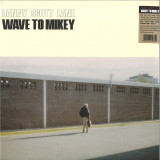
Wave to Mikey, the fourth album from the Los Angeles-based actor, musician and photographer Danny Lane is a nocturnal, neon-lit ode to the friendships that shape us. “I made this album for my friend Mikey from back home,” Danny explains. “We were pretty much inseparable for a large part of our lives, and our musical and social minds were always in sync in a special way. Then with age, we drifted apart, especially since I moved to Los Angeles. This album is just a little wave hello to an old friend and a kindred spirit.”
Equal parts avant-garde composition, instrumental city-pop, ambient, Kankyō Ongaku (environmental music) and Fourth World music, Wave to Mikey is an impressionistic and reflective cycle of eleven richly detailed memory portraits. Throughout the album, the influence of Jon Hassell, Arthur Russell, Hiroshi Yoshimura and Yellow Magic Orchestra hangs in the air like late-night mist, adding character but never overshadowing the rhythmic ambience of Danny’s musical visions.
Wave To Mikey began as a series of sketches on analog synthesisers, guitar, sample and found percussion sketches, initially recorded in Danny’s home studio. Once he’d located the vibe, Danny called on his friends E Talley II, Solange collaborator John Carroll Kirby and Destroyer session musician Joseph Shabason, who respectively added flute, spiritual synth textures and saxophone to the record.
For Glossy Mistakes founder Mario G.R., who originally discovered Danny through his photography, Wave To Mikey captures a vivid feeling of melancholy and peace. “He's able to encapsulate emotions in a very straightforward way, either in his portrait or songs,” Mario says. “I think that's a kind of virtue or skill given to talented artists, no matter the field.”
Born and raised in Staten Island, New York, Danny began playing music with his friends when he was thirteen, before putting that passion on pause to study Fine Arts (Theatre) at Rider University in Lawrence Township in pursuit of an acting career. Acting led him to photography, after playing a photographer in a film, he was inspired to pursue the medium. Danny began shooting photos on film for magazines and lifestyle brands, spent a stint living in New York’s Chinatown neighbourhood, and eventually relocated to Los Angeles in 2017.
Four years ago, Danny started recording and releasing music under his own name, leading to the trilogy of releases that preceded Wave To Mikey, How To Empty A Cup (2019), Memory Record (2019) and CAPUT (2021). Over the course of these releases, he’s revealed himself to be a sophisticated composer and producer with a studied ear from years spent digging through record bins for ambient, experimental, new age, jazz and electronica records from around the globe, with a particular emphasis on Japan.
“Music is something that’s always been involuntary for me,” Danny reflects. “It’s unconditional, always there. It’s something I just have to do. I’ve taken breaks and it’s always gloomy when I’m not playing. I just want to get better and better and understand more and more.”
Here at Glossy Mistakes, Wave To Mikey marks our second contemporary album release, following on from Evenings by Japanese composer Metoronori. We’re proud to be able to present Danny, Metoronori and other modern musicians' work alongside reissues of classic works from Stevia aka Susumu Yokota, Akira Ito, Yuji Toriyama & Ken Morimura, and Takashi Kokubo.
Mastered by Damian Schwartz, Wave To Mikey will be released on Vinyl LP Glossy Mistakes on June 27 2022. Besides the regular black vinyl, a limited clear vinyl will be available in an edition of 100 copies. Both editions come packaged with original cover art photography shot by Danny.
Bestelle jetzt und wir bestellen den Artikel für dich beim Lieferanten.

For our next Time Is Now release, join us as we connect the dots between the Bristol - Leeds musical axis.
"Peaky Time Vol.1" sees us collaborate with the finest independent all-vinyl label the city has to offer, courtesy of the head honcho himself. Having so far received support from the likes of Moxie, Hodge, and Tom Ravenscroft, Tom Meyer has been making some serious waves as Peaky Beats - a name now closely-associated with his illustrious live sets which combine
breaks, dubstep and UKG.
Kicking off proceedings is sunshine banger "Road Runner" which is later flipped by key member of the TIN London faction, Yosh, who puts his inimitable spin on the classic-sounding UKG. With syrup-smooth vocal licks and staccato piano stabs, "Cats From The Back" maintains the theme, sure to be heard at festival stages across the country this summer. Finally on "XL", Peaky brings
the old school ruffage with clattering breaks and a breakdown that leads to a switch-up begging to be reloaded.
Bestelle jetzt und wir bestellen den Artikel für dich beim Lieferanten.

serenitatem, the fifteenth installment of FRKWYS, RVNG Intl.'s collaboration series pairing inter-generational artists in creative conversation, joins Visible Cloaks with Yoshio Ojima and Satsuki Shibano, two trailblazers of the Japanese avant-garde music and visual arts scenes of the 1980s and 90s.
erscheint voraussichtlich am 10.06.2022

The album, which features some incredibly exciting and varied names including neo soul up-and-comer Greentea Peng, American jazz & soul vocalist Lady Blackbird (on ‘Sunlight’) and British blues vocalist Natalie Duncan, shows off both the rich history and calibre of Goldie and James Davidson’s individually but also how they can create something together that’s so cohesive and forward thinking. The sound the duo have been able to create is also partly due to their geographical locations over the past 18 months, bouncing ideas between Davidson’s studio in Bournemouth on the south coast and Goldie’s house in Phuket, Thailand; showing two songwriters and producers at the top of their game responding to a year and a half in very different atmospheres but similar trying circumstances.
Lead single from the album ‘Dassai Menace’ (released with double A-side ‘Fathoms’) was picked up by Virgil Abloh who used it to soundtrack his Louis Vuitton SS22 fashion film ‘Amen Break’ (watch here), with Goldie walking in the accompanying catwalk show. Goldie will also be in residence throughout the month of February 2022 on BBC Radio 1 alongside the likes of world renown DJ’s Sama' Abdulhadi, Folamour, Or:la, LCY and Scratcha DVA.
Bestelle jetzt und wir bestellen den Artikel für dich beim Lieferanten.

180g vinyl pressing.
During the late 2010s, music lovers around the world began obsessively listening to increasingly esoteric albums on Youtube. More often than not, they’d leave the browser on autoplay. This was how Facundo Arena, the composer and producer behind The Kyoto Connection, discovered the technonaturalistic pleasures of Kankyō Ongaku (environmental music), a distinctly Japanese interpretation of European, British and American minimalist composition and ambient music. “It was a kind of algorithmic magic,” he says.
Upload by upload, the utopian music of Hiroshi Yoshimura and his 80s Japanese contemporaries transported Facundo back to his childhood. When he was five, his father placed him in karate lessons and began watching martial arts movies with him. From those early experiences, Facundo became fascinated Japanese history, tradition, and culture, particularly that of Kyoto - the cultural capital of Japan. Kankyō Ongaku reminded him of hearing the sounds of Japanese folkloric instruments as a young boy, and suddenly, the way the influence of Japan had manifested in his music made sense. “I had the sensation that for many years, I’d been doing something similar to the style,” he explains.
Inspired, Facundo used an iPad and an old Akai cassette deck to record Postcards, his homage to Japanese minimalism and Kankyō Ongaku. By this stage, he was twelve years deep with The Kyoto Connection, the musical project he launched in 2005 in his hometown of Buenos Aires, Argentina. Over that late 2000s and 2010s, Facundo, later on joined by collaborators Rodrigo Trado (drums), Jesica Rubino (violin) and Marian Benitez (vocals, now his wife), released numerous D.I.Y albums. Project by project, they followed the threads between 80s synth-pop, ambient, new age, house, techno and acoustic composition.
Postcards introduced The Kyoto Connection to listeners around the world and brought Facundo into our orbit. During Argentina’s covid lockdown, Facundo received a set of soundscapes recorded in Kyoto by the Japanese musician and sound designer Masafumi Komatsu. Over several insular months, he decorated them with synthesisers, samples and subtle rhythms, creating The Kyoto Connection’s next album, The Flower, The Bird and the Mountain to be released via Isle Of Jura offshoot Temples Of Jura.
Ostensibly made up of twelve distinct tracks, listening to The Flower, The Bird and the Mountain feels more akin to spending calm, meditative time in twelve specific environments. Although the foundations they rest on are recordings made in geographic locations around Kyoto, Facundo has yet to visit Japan. As a result, the landscapes he paints sit somewhere between fiction and fact, richly pictorial sonic imagination juxtaposed with echoes of reality. Regardless, as his bubbling melodies and glistening synthesisers glide against Masafumi Komatsu's recordings, Facundo guides us into a blissful zone of tranquillity well worth spending time within.
Bestelle jetzt und wir bestellen den Artikel für dich beim Lieferanten.

Gondwana Records sign LA bassist and composer Seth Ford-Young's Phi-Psonics project and announce a remastered deluxe-edition of The Cradle featuring bonus material
Phi-Psonics is a meditative, immersive instrumental group from Los Angeles, led by bassist Seth Ford-Young and featuring Sylvain Carton on woodwinds, Mitchell Yoshida on electric piano, and Josh Collazo on drums. Their deeply soulfulmusic draws on jazz and classical influences together with Ford-Young's own musical experiences, relationships, and his introduction to spirituality, yoga and philosophy at a young age, to create something uniquely its own. Phi-Psonics' name and ultimate aim is to find 'Phi' – the golden mean – in art, nature and self. Ford-Young explains:
"It's a bit of a cliché, but music saved my life many times and instilled in me a belief in the great power of healing through art. It is my hope and intention that this music provides healing to someone somewhere."
Originally from Washington DC area, Ford-Young moved to California in the early 90s and fell in love with the deep sounds of the upright bass and the music of Charles Mingus, John and Alice Coltrane, and Duke Ellington along with Bach, Chopin, Pärt, and Satie. He immersed himself deeply in music and keen to learn combinedintense personal study with collaborations, tours, and recordings with artists such as Tom Waits, Beats Antique, and John Vanderslice. In 2010 he moved from the San-Francisco Bay area to the Los Angeles hills and continued his explorations. But great music is rarely just about music and Ford-Young's meditative, soulful music draws on more than just the twin wellsprings of jazz and classical music:
"My mother was a yoga teacher from the early 70's until recently and taught me yoga and meditation at an early age, my stepfather is an Aikido instructor and student of the teachings of Gurdjieff. Those were all early areas of study that I came back to many times throughout my life. Phi-Psonics has been a project that unapologetically synthesizes some of these ideas into our music".
It's this mixture of influences, musical and extramusical, that gives the music of Phi-Psonics it's immersive quality and quiet power. Revealingly the music that would becomeThe Cradle, wasn't written specifically for an album, originally Ford-Young was just writing down what was coming through. As time went by and the album began to take shape, the world situation seemed to be getting darker and his compositions aim to offer hope as a response to the negative influences that abound today. Remarkably for such a beautiful sounding record, it was recorded at the composer's home, rather than in a studio, but the relaxed nature of this process gives the music an airy lightness that propels the music to some magical spaces.
Originally self-released on vinyl in a limited run just as the world went into lockdown, The Cradle reached Matthew Halsall (founder of Gondwana Records) when he aws looking for music for his Worldwide FM show and he was blown away, hearing a kindred spirit at work. Halsall explains:
"Phi-Psonics make beautiful, humble and honest music, it's not showy, but it has a deep vibe that will elevate your mind and soul if you let it. When we heard The Cradle we reached out and are really super delighted to welcome Seth and his band to our label". Whereas for Ford Young: "Connecting with Matthew and the Gondwana records family has been a light in the darkness of the last years - to have my music make connections even as we are more isolated."
Ford-Young is currently putting the finishing touches to the second Phi-Psonics record, but aware that only a select few had heard The Cradle, let alone had the chance to buy a copy, and entranced by its deceptive simplicity and elevating energy, Halsall suggested that Gondwana present the album as a remastered 'deluxe edition' with an extended running time featuring extra tracks and new artwork from Daniel Halsall.
The Cradle starts with First Step, perfectly setting the tone for the whole album, it is a beautiful, soulful slice of musical calm gently propelled by Ford-Young's resonant bass and elevated by sublime flute and Wurlitzer electric piano solos. The seductive title track The Cradle was written way back in 2011 during a time of great personal change that led the composer to a feeling of newness and nurture. The magical, winsome Desert Ride is inspired by many rides through the grandly cinematic Mojave Desert. You can experience how incredibly full of life it's harsh landscape is if you slow down to its tempo. The gentle, sublime Mama is a tribute to mothers of all kinds, beautiful and heroic. Drum Talk was largely improvised, Ford-Young and the band agreed on a topic and recorded their conversation. Choosing their notes based on how Josh's drums were tuned. Like Glass is named for the special properties of Glass. Like some music, glass is delicate, yet has structure. The first of the two bonus tracks Still Dancing was written during the early days of 2020 in response to the challenges we all were facing then. It's a reminder that the figurative dance continues and that real dancing is essential. And the second, The Searcher, also written as a response to 2020, is a gently hypnotic song about the introspection and growth that can spring from a difficult situation.
This then is The Cradle, a quiet self-contained masterpiece, life-affirming and elevating in equal measure and the first offering from a wonderful new voice in spiritual jazz and the latest members of the global Gondwana Records family.
Bestelle jetzt und wir bestellen den Artikel für dich beim Lieferanten.

Japanese artist Yama Warashi releases new album "Crispy Moon" via PRAH Recordings. The first material to come out of her relocation to London is a bold advancement of her sound. Much of the move and Yoshino's experiences of being in the capital have made their way into the themes of the record. There are new contributing members, including Cathy Lucas of Vanishing Twin (with whom Yama toured with in 2021), Aletta Verwoerd on drums and Mermaid Chunky's Moina Walker on sax. Compared to the more lo-fi, homespun feel of early releases such as Moon Zero and Moon Egg, there's larger brush strokes at play, a bigger sound and an understated but self-assured grandeur.
erscheint voraussichtlich am 27.05.2022

This is a very serene, almost entracing record that seems to inhabit its very own space, between "classical" ambient music (Eno, Budd), "systems music" (Reich, Glass, Riley, Hassell), japanese kankyo ongaku (Hiroshi Yoshimura, Takashi Kokubo), even hinting at what would become 90's ambient electronica (B12, Nuron, SAWII-era Aphex Twin or the Fax +49-69/40464 label). Actually, Lech would be one of the few artists to perform at the first-ever Sonar Festival (Barcelona) back in 1994 (together with Suso Saiz, Esplendor Geometrico, Mixmaster Morris or Laurent Garnier).
A key early effort from this musician and A/V artist whose career spans well over thirty years and a miriad of works, performances and instalations: Art Futura, Sonar, ISEA, Ars Electrónica (Austria), Festival Videoformes (France), Festival de Nuevas Músicas (Madrid & Sevilla), Ciclo Experimental LEM (Barcelona), Knitting Factory (New York), The Korner (Taipei), Festival Pop Komm (Cologne-Germany), Festival Experimenta (Madrid), Festival DAFT @ Taipei (Taiwan), ART BEIJING, Festival EXIS @ Seúl (South Korea), JMAF (Tokio, Japan) or Artefact:Chernobil 33 (Kiev-Ukraine).
The Wah Wah edition has been mastered from the original tapes, reproduces the original sleeve artwork and and features an insert with photos and info.
It is a strictly limited edition of 500 copies only.
Bestelle jetzt und wir bestellen den Artikel für dich beim Lieferanten.
