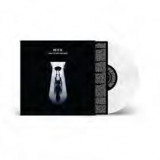
The Library Steps is a new pairing of an old rapper named Jesse
Dangerously and a young producer named Ambition
The duo is named in remembrance of the now demolished stone stairs of the
Halifax Memorial Library entrance, where among a loose and ragtag assortment
of the city's rappers they would gather across generations every Friday as the
doors locked, to freestyle, beatbox, and play tapes in a cipher called Public Rhyme
Distribution. Jesse and Ambition have been members of the Canada- wide
collective Backburner since 2001 and 2009 respectively, but only started making
songs as a rapper/producer duo in the spring of 2017. It took them more than a
decade of intention to pair off as a team. All of the beats and rhymes for Rap Dad,
Real Dad were created in the next few months as a time capsule of that season's
preoccupations. The beats are jazzy, soulful, and moody, with a prominent nod
factor, and the rhymes are confessional and witty, vulnerable and boastful,
intimate and intimidating. Under their fingernails, no microscope is needed to
detect the DNA of golden era rapper/producer teams like Pete Rock & CL Smooth,
Gang Starr, a gentler Beatnuts, or any group that was part of Native Tongues or
Hieroglyphics. Just as present are the influences of turn- of- the- century
underground boundary pushers like Sage Francis, Aesop Rock, MF DOOM, and
Buck 65, and for that matter, just about everyone who was on Roc-A-Fella at its
peak. Refracted here, those chosen ancestors and more recombinate into a hiphop that challenges, from unexpected angles, traditional modes and narratives of
masculinity. They are your rap dads, and they just may be your real dads, too.
Tresor Records is proud to announce 333 Mirrors from Torus, the artist alias of Joeri Woudstra. Coupled with its catalogue number
333, it indicates the large-scale conceptual thoughts behind the record, typical of Woudstra's practice. As an artist, he sets out to
frame re-interpretable references that trigger some subconscious recognition in listeners, with no set way to interpret them but leading to singular feelings and thought processes. The eect, a combination of static electronic sounds and looser field recordings, speaks to each listener differently.
333 Mirrors is, in part, the continuation of a project called These Cars Do Not Exist, made with videographer Mark Prendergast during the Covid-19 limbo. The live performed short film sold out selected popup cinemas in 2020 in a short sprint of shows. Two of the tracks on that project, Sound of the Drums and Chroniko, are re-imagined on 333 Mirrors, emanating as versions created in live performances. Set to be released as a single, Chroniko VIP will be accompanied by an enduring theme from that project, the three-winged bird, this time deceased. On 333 Mirrors, in exploring the ambient, stretched sonic universe of this project more, Woudstra moves from these three winged birds to the phoenix, finding a rebirth on the b-side with tracks that inhabit a similar sound as Deep Mid, Torus's inclusion on the recent Tresor 30 compilation. The sound of Torus places importance on the multi-faceted approach to sampling, pushing the idea behind the practice beyond usual boundaries. How to break the unwritten rules? Woudstra looks within by resampling previous Torus releases and reverse-engineering the sounds of the most revered pop and electronic musicians alive today, references that trigger recognition, melancholy and nostalgia in the listener.
3000 Mirrors features a staccato arpeggiating rigid pattern, the sonic eect of standing in front of a strobe until it becomes the anchor. Silence and interruption are used as a device to explore the physically uncomfortable, more the central compositional tool than the disrupted harmonic structures. Woudstra has never stepped foot in Tresor, so when writing this record, an enduring question spoke to him, what is Tresor when you have never been? How do you sample the essence of an unknown location? The closing track, Omnia, is the sound of anticipation, where the rave beckons. This imagined industrial space is calling for you.
out of Stock
Last delivered 13 months ago available to reorder, subject to availability
Um ihr 40-jähriges Jubiläum zu feiern, begaben sich die Rolling Stones in den Jahren 2002 und 2003 auf eine weltweite Tournee, die 117 Konzerte in verschiedenen Arenen und Stadien umfasste. Diese Show fängt den Auftritt der Stones vom Januar 2003 im Madison Square Garden in New York City ein und enthält einen Gastauftritt von Sheryl Crow bei ”Honky Tonk Women”.
“Licked Live In NYC“ enthält bisher unveröffentlichte Performances von ”Start Me Up”, ”Tumbling Dice”, ”Gimme Shelter” & ”Sympathy For The Devil“. Dazu gibt es 3 Bonusauftritte aus Amsterdam und Probenmaterial.
Das Album erscheint als 2CD, 1CD+DVD, 1CD+Blu-Ray, 3LP und Ltd. Coloured 3LP.
Um ihr 40-jähriges Jubiläum zu feiern, begaben sich die Rolling Stones in den Jahren 2002 und 2003 auf eine weltweite Tournee, die 117 Konzerte in verschiedenen Arenen und Stadien umfasste. Diese Show fängt den Auftritt der Stones vom Januar 2003 im Madison Square Garden in New York City ein und enthält einen Gastauftritt von Sheryl Crow bei ”Honky Tonk Women”.
“Licked Live In NYC“ enthält bisher unveröffentlichte Performances von ”Start Me Up”, ”Tumbling Dice”, ”Gimme Shelter” & ”Sympathy For The Devil“. Dazu gibt es 3 Bonusauftritte aus Amsterdam und Probenmaterial.
Das Album erscheint als 2CD, 1CD+DVD, 1CD+Blu-Ray, 3LP und Ltd. Coloured 3LP.
The music world is most fortunate that the past two decades have witnessed the rediscovery of mind-opening music that went under-recognized when originally released, and the wellspring of musical content produced by a generation of brilliant musicians. One such musician was the late great drummer Steve Reid, whose reissued eclectic recordings on his own Mustevic Sound label gave his career a second wind.
Though teased on a well-received compilation, one Mustevic release never saw reissue: New Life Trio’s Visions Of The Third Eye, a tremendous collaborative effort between Reid, guitarist Brandon Ross and bassist David Wertman.
Due to overwhelming demand, Early Future Records and Finders Keepers Records are proud to announce a second limited edition pressing of the classic and final Mustevic recording. The release also includes a 20-page written zine featuring an in-depth testimonial and interview with Brandon Ross, and an explorative essay by Finders Keepers’ Andy Votel, as well as a wealth of archival photos, scores and reviews.
Reid’s long and varied career began in his native New York City, where he was involved early on as a member of the Apollo Theater House Band and the R&B scene of the 1960s, including recordings with Martha Reeves and James Brown. In the late 1960s, Reid spent three years in West Africa absorbing musical traditions and experimenting with artists such as Fela Kuti, Guy Warren and Randy Weston. After a stint in prison for dodging the draft as a conscientious objector, the drummer came out swinging in the 1970s. He worked regularly as a session and Broadway musician even while immersing himself into the jazz world, from the straight-ahead styles of Freddie Hubbard and Horace Silver to the otherworldly sounds of Sun Ra and Charles Tyler.
The do-it-yourself ethos of the New York Loft Scene inspired Reid to create his own label, Mustevic Sound, on which he began releasing his own recordings and those of a couple of friends. One of these trusted friends was David Wertman, a young bassist from New York who released his own Kara Suite on Mustevic in 1976.
New Life Trio’s story began when Wertman moved from New York to the more sedate but creatively vibrant town of Northampton, Massachusetts. Here Wertman met Brandon Ross, a young guitarist from New Jersey who had relocated there with his brother to join a coterie of New York expats who had found a comfortable, collaborative environment amidst the liberal college towns in the area, including avant-garde legends Archie Shepp and Marion Brown. Wertman and Ross became friends and began to perform together regularly, both formally and informally.
A string trio of Wertman, Ross and violinist Terry Jenoure was set to record, but Jenoure dropped out just prior to the date. This led Wertman to call his friend Steve Reid to come join the two at the Tin Pan Hollow Studios in Vermont to record what would become Visions Of The Third Eye on December 6, 1978. Originally conceived as an all-acoustic date, the recording would morph slightly when Ross added electric guitar muscle on a number of pieces. Reid would then take the helm and release the recording in 1980, giving a very auspicious birth to what has now become a classic spiritual jazz recording.
Fast forward to 1995…..New Life Trio gets a belated second wind from Stuart Baker’s inclusion of the Ross-voiced “Empty Streets” on his Universal Sounds of America compilation. The brief, haunting lead track just hinted at what the full Visions Of The Third Eye album had to offer. Audience awareness resulted in the pursuit of out-of-print original LPs, thus the rarity of Visions Of The Third Eye led to it becoming a kind of “holy grail” record for collectors of jazz and creative music. The album’s cover image was even incorporated into the cover of Freedom, Rhythm & Sound (SJB, 2009), a wonderful coffee table book presenting album covers from those revolutionary decades in Black creative music. The recording’s legend was cemented.
New Life Trio’s legend continues to grow partly due to the brevity of its existence. The triumvirate of Reid, Ross and Wertman would never work together again. Each member would continue along his own path, finding success in numerous projects. Reid’s career was reinvigorated with the reissue of the bulk of his Mustevic Sound recordings in the early 2000s, which led him to a rewarding partnership with Four Tet’s Kieran Hebden until Reid’s untimely passing in 2010. Wertman balanced life between Florida and Massachusetts as a regular in the local jazz scene, recording numerous projects with his wife, Lynne Meryl, before passing away in 2013. The fantastically creative Ross has remained active in the New York creative music scene with a number of projects, most notably with Henry Threadgill, Cassandra Wilson and Harriet Tubman, a wildly eclectic co-led band with underpinnings of rock, dub and free jazz.
Moundabout is a new folk project from Paddy Shine of Gnod and Phil Masterson of Los Langeros/Damp Howl/Bisect, but the words ‘new’ and ‘folk’ need to be treated with care here. Listening to ‘Flowers Rot, Bring Me Stones’ is like entering a trance state while staring at one of the Knowth spiral carvings at Brú na Bóinne in Ireland - the megalithic art in the neolithic “passage tombs” which also contain the oldest known representation of the moon made by man. As the album moves the listener, they are taken on a geographical and geological journey as well as psychological and spiritual, traveling inwards from the coast as well as down beneath the strata. And when you have been primed, it takes you all the way back to commune with older gods on the album’s epic centrepiece, ‘Dick Dalys Dance’, creating the kind of prehistoric drones and trance-inducing rhythms that the echoing, celestially aligned corridors of the Brú na Bóinne were built to amplify. This is not new music but the deep sensations it provokes will be new to most listeners. Imagine for a few minutes something as glorious as a Nurse With Wound List for the 21st Century - were I given such a formidable task as to organise such a collection of mind-bending music, Flowers Rot, Bring Me Stones by Moundabout would be one of the first records I would include.
Having initially met more than a decade ago at a local community radio station, sometimes doing guest slots on each other’s live, improvised noise shows, Cormac Culkeen and Dave Grenon knew they had a mutual interest in working with sonic textures. They listened to each other’s bands for a handful of years, and in 2017, “made good on a threat” that they’d been making for quite a long time: to start a band. At Cormac’s gentle but clear urging—declaring that they’d gone ahead and booked a space in which to record a video—the two wrote their first song, “Sebaldus,” an ambitious 12-minute trip, which also serves as the fireworks finale to their self-titled debut album. With surges of pathos that smooth out into something more soothing in turn, Cormac goes: “The hunter, you’ve seen him / The archer, his arrows are strong / And hunger, you’ve known her / I know the winter is long.” The track is as much about enduring a Canadian winter as it is about the eponymous 8th century hermit, shot through with sublimated desire. As Cormac put it, Joyful Joyful’s songs are “a little bit outside of time.” But while the lyrics beg close, oblique reading unto themselves, there’s also a distinct sense that they’re only one of many more ways that the duo shapes sound. Cormac, whose voice is like a sea with irregular tides, lights up about an idea in traditional sean-nós Irish music that songs already exist and are out there; it’s up to the singer to become the conduit. This belief in music as something to be channelled, and something more than sound, resonates with the singer’s fundamentalist religious past. To paraphrase: lots of group singing, harmonies, no instrumentation, totally unmediated, no priest, congregational—not choral, not a performance, not about talent, the spirit moves through people. “Of course that informs how I think about singing,” Cormac says. So, when they were exiled from the church because of their queerness, they took the music with them, dislocating it from its dogmatic bounds but not from its transcendent potential. This record might be thought of, then, as a kind of queering of sacred, devotional traditions—or at the very least, a space where all of these things can be held at once. Perhaps perceivable by some as contradictions, these intersecting influences create the conditions for an incredibly singular sound. Dave is steady and exploratory in his handling of this multiplicity, arranging sounds as they’re revealed, corralling them, coaxing them into form. “Because Dave is there,” Cormac says, “I get to sing three times higher, and three times lower, and faster, and backwards, and all of these sounds! That are there. They’re all there.” When asked about early musical memories, Cormac recalled an immediate fascination with harmony: from demanding that the first person they ever heard singing it explain what they were doing, to always (still, to this day) singing in harmony with their twin sister around the house, to being part of a children’s choir that sang soprano in Handel’s Messiah—not realizing until they entered the room with all the other ranges that their learned melody was but one part of the whole. Just as tellingly, Dave reflects on his early attraction to “abstraction and becoming abstract,” describing childhood afternoons messing with microphone and speaker feedback loops, producing long, enduring sounds with almost undetectable variations. In a way unique to the coalescing of these two listeners, notions of harmony are central to their output. Dave samples field recordings, old keyboards and synths, and vocal drones, running the live singing through four or five parallel effects chains, sampling and treating everything again in the moment. “Another way to put it is that Cormac’s voice comes into the board and then comes back out shifted, delayed, and shattered; Cormac and I hear it, live with it, and respond,” Dave says. This work is contingent not only on a deep intuition (neither of them read sheet music) of polyphony and due proportion (something St Thomas Aquinas famously listed as an attribute of beauty) but also on their connection to each other and ability to read subtle cues. Dave says they’d hold each other’s hands while performing if it was more convenient to do so, riffing on something else Cormac mentioned about traditional Irish singing: that someone would always hold the singer’s hand, for fear that without a tether to the ground they might find themselves utterly lost, unsure how to return. Joyful Joyful doesn’t shy away from offering such experiences of departure; they’re willing to unsettle their audiences because they themselves are unsettled. Their shared penchant for spooky, heavy music, and self-described “omnivorous” listening practices equip them with an array of sonic concepts that support this effort; Diamanda Galás, The Rankin Family, Pan Sonic, Pauline Oliveros, Keith Fullerton Whitman, Yma Sumac, and Catholic hymnody were just a few that came up. Observing their audience gives them insight about the effect of each song—something they considered while arranging the album. Its arc is marked by soft, sometimes sudden oscillations between cacophony and euphony, day and night (listen for insects), and from sexual, visceral entanglements to more ephemeral, celestial ones. Front to back, it arouses expansion, unraveling. Of lightning, Vicki Kirby writes: “quite curious initiation rites precede these electrical encounters. An intriguing communication, a sort of stuttering chatter between the ground and the sky, appears to anticipate the actual stroke.” By all accounts, something similar seems to happen at Joyful Joyful shows, between those on the stage and those off it, between what’s earthly and what’s beyond. “A lightning bolt is not a straightforward resolution of the buildup of a charge difference between the earth and a cloud … there is, as it were, some kind of nonlocal communication effected between the two,” writes Karen Barad, extrapolating on Kirby’s thought. Cormac acknowledges that while they and Dave play a role in this mysterious charge that comes about, they’re not solely responsible. However ineffable it may be, it’s undoubtedly a form of communion—and a sensuously shocking one at that
Die internationale Pop-Rock-Band As It Is - Patty Walters, Ronald Ish und Alistair Testo - hat ihr brandneues Album „I WENT TO HELL AND BACK” angekündigt.
„I WENT TO HELL AND BACK“ ist in einem Zeitraum von zwei Jahren entstanden, in denen die Band ihre Lebensentscheidungen hinterfragten und mit einer Welt rangen, die sich in einem ständigen Drang chaotischer Ungewissheit befand- aber das vierte Album der Band könnte nicht aufgeregter klingen. Die vierzehn Tracks sind kraftvoll und jagen furchtlos dem Unerwarteten hinterher. Es ist der Sound einer Band, die immer noch sehr großen Spaß hat.
Walters hofft, dass sich „I WENT TO HELL AND BACK“ anfühlt wie „ein Wiedersehen mit einem alten Freund“.
Wir können über all die guten und schrecklichen Dinge sprechen, die passiert sind, und wie wir daran gewachsen sind.
Das Album ist ab dem 4. Februar als 1CD erhältlich und erscheint am 10. Juni als 1LP
As Motorist, LA native Joe Rihn makes music which points in the direction of the soulful, jazz inflections of artists like Wax Doctor and Peshay. Time Is Now White Vol.20 pays testament to his dexterity in creating fully-immersive atmospheres, as well as his penchant for rhythmic experimentation.
The EP's smooth-as-silk opener 'Drip' typifies this, luring you in with the psychedelic-funk tones of wah-pedalled guitar plucks, and the instrumental quality of percussion which cruises along at half-time before Amen breaks pick up the pace. 'Balamb Garden' captures D'n'B's meditative potential, driven by a dynamic syncopation which swings beneath airy pads and piano tinkles before the harder-hitting raw club track 'Caldoria' brings the A-side to a storming close.
'Blast Route' picks things right back up again, together with 'Prism', which nod more to the hardcore proclivities of the likes of DJ Die with distorted drum breaks and warped basslines. 'Rover' strips things back once more, boasting Motorist's capacity for teasing out the slower, more mellow side of 160.
out of Stock
Last delivered 4 years ago available to reorder, subject to availability
serenitatem, the fifteenth installment of FRKWYS, RVNG Intl.'s collaboration series pairing inter-generational artists in creative conversation, joins Visible Cloaks with Yoshio Ojima and Satsuki Shibano, two trailblazers of the Japanese avant-garde music and visual arts scenes of the 1980s and 90s.
Die Power Metal Gnome WIND ROSE stürmen in die epische Schlacht auf Warfront! Nach der Veröffentlichung ihres hochgelobten 2019er Albums Wintersaga mit epischen Geschichten und noch epischeren Riffs kehren WIND ROSE, die mächtigsten Gnome des Power Metal, aus der Schmiede zurück und hämmern auf ihrem neuen Album Warfront (10. Juni via Napalm Records) neue Hymnen auf
den Amboss!
Die fünfköpfige Band aus Pisa, Italien, der mit ihrer viralen Neuinterpretation der Minecraft-Hymne ”Diggy Diggy Hole” (bis dato über 30 Millionen Aufrufe auf YouTube) ihr sensationeller Durchbruch gelang, schärft ihre Schwerter und stürzt sich mit zehn neuen heroischen Songs auf die Schlacht. Egal wie groß der Sturm,
wie eisig die Winterkälte, WIND ROSE’s Gespür für sensationelle Hooks und eingängige Riffs - gekrönt von Francesco Cavalieri’s markanter Stimme - katapultiert sie an die Speerspitze des Folk- und Power Metal, ohne ihre einzigartige Härte einzubüßen!
WIND ROSE liefern auf Warfront jede Menge Gnom-Abenteuer, dramatische Orchesterarrangements und puren Spaß - Replay garantiert!
Heart Attack's upcoming album "Negative Sun" is the perfect amalgamation of roaring modern thrash metal and epic melodies to be released worldwide via Atomic Fire Records on June 10th, 2022. Heart Attack is a four-piece army and an unpredictable groovy blend of modern thrash metal, consisting of Kevin Geyer (rhythm guitars, vocals), Chriss Cesari (lead guitars, keyboards), Will Ribeiro (bass guitar, vocals), and Christophe Icard (drums). The band played prestigious Hellfest, shared the stage with Trivium and Opeth, or opened for Megadeth in Lyon. Heart Attack is for Gojira, Machine Head, and early Metallica fans searching for the definite riff that will help them drive for a long ride under the sun. Long live the famed modern metal scene rising up from France - remember where you heard it first!
The groundbreaking 2015 PlayStation® 4 game Everybody’s Gone to the Rapture tells the story of the inhabitants of a remote English valley who are caught up in world-shattering events beyond their control or understanding. Made by The Chinese Room - the studio responsible for the hauntingly beautiful Dear Esther - this tale of how people respond in the face of grave adversity is a non-linear, open-world experience that pushes innovative interactive storytelling to the next level. This story begins with the end of the world. The game has already won GameSpot’s Best of E3 and was nominated for Best in Show and Best PS4 game by IGN.
The soundtrack features the music by Jessica Curry, who is also joint Studio Head of the developer The Chinese Room. The music was recorded at the famedAIR Studios in London and features solo vocal performances by renowned Welsh soprano Elin Manahan Thomas, ethereal choir, and a tragically beautiful orchestral accompaniment. With her compelling soundtrack, Curry took home the BAFTA Games Award for Best Music.
Everybody’s Gone To The Rapture is available as a 2LP limited edition of 500 individually numbered copies on translucent red coloured vinyl and includes a
4-page booklet.
Prometheus is the 2012 science fiction horror film directed by Ridley Scott, written by Jon Spaihts and Damon Lindelof and starring Noomi Rapace, Michael Fassbender, Guy Pearce, Idris Elba, Logan Marshall-Green and Charlize Theron. It is set in the late 21st century and centers on the crew of the spaceship Prometheus as it follows a star map discovered among the artifacts of several ancient Earth cultures. Seeking the origins of humanity, the crew arrives on a distant world and discovers a threat that could cause the extinction of the human species.
Marc Streitenfeld is a German composer. He has frequently collaborated with director Ridley Scott. Streitenfeld has composed the music for many high-profile Hollywood features as well as critically acclaimed independent films, including American Gangster, Body of Lies, The Grey, Poltergeist and All I See Is You.
Prometheus became the fifth collaboration between the composer and the director. The score was recorded over one week with a 90-piece orchestra at Abbey Road Studios. Streitenfeld began coming up with ideas for the score after reading the script prior to the commencement of filming. To create an “unsettling” sound, he provided the orchestra with reversed music sheets to have them play segments of the score backwards, before then digitally reversing it. The track “Friend from the Past” reprises Jerry Goldsmith’s original main title from the Alien soundtrack.
Peer through the windows of the sun-dappled homes in Sicily and you will be faced with a small, strange ceramic object adorning each hallway. It is a glistening pine cone standing upright – a pigna – the longstanding symbol of Sicilian openness and welcome hospitality.
The pigna is a delightfully unusual and yet apt symbol for the title of the third record from Benjamin Harris, AKA Yarni. Ever since his debut LP release in 2017, Yarni has established a following committed to his musical openness, an intuitive curiosity that has spanned everything from house and techno to cinematic ambience and Japanese percussion, as well as jazz horns and afrobeat fanfares. For Yarni, anything goes and everyone is welcome. Now, Pigna sees Yarni reach his fullest and most musically diverse expression, taking its name and ethos from Sicily, but finding a sonic home in the luscious orchestration of a new ensemble of musicians.
Here, at the helm of a nine-person ensemble, Yarni artfully pieces together live improvisations to create the warmth of a seasoned group performing deep within the groove. Opener “Midnight Getaway” places the listener squarely within the disco-funk of Daft Punk as Yarni’s top-line synth intersects with a rolling bassline and a lyrical flute solo from Rachel Shirley. This optimistic tone of sunlit spaciousness is then heightened on “Utopia”, as Yarni’s horn section comes to the fore to pay homage to the ineffable syncopations of Fela Kuti’s pioneering afrobeat.
Rather than scratch at the surface of these musical genres, Yarni’s attuned ear embodies the emotive essence of his various sounds by paying intimate attention to their creation. There is the punch of that afrobeat sax on “Utopia”; the rhythmic skitter of breakbeats on “The Astral”; the sludging thump of funk in the bassline on “Nova”. Collaborators are given free reign, too, to incorporate their own unique stylings into this remarkable whole, from vocalist Emily Marks’ languid tone on “In A Dream”, to saxophonist Jonoa’s innate swing on “Cherub”, and the metronomic movement of bassist Ally McMahon’s playing throughout.
Listening to Pigna is ultimately to find yourself squarely within the comforting embrace of Yarni’s musical mind. It is a truly LP experience – a record to be placed on the turntable’s platter and then left to play, allowing yourself an immersion in these journeying soundscapes. It is no wonder fellow sonic travellers such as the late Andrew Weatherall and DJ Harvey have been supporters of Yarni’s work, since here is a kindred spirit – an artist shaped in the form of radical openness, speaking the hospitable, universal language of beautiful music.
Peer through the windows of the sun-dappled homes in Sicily and you will be faced with a small, strange ceramic object adorning each hallway. It is a glistening pine cone standing upright – a pigna – the longstanding symbol of Sicilian openness and welcome hospitality.
The pigna is a delightfully unusual and yet apt symbol for the title of the third record from Benjamin Harris, AKA Yarni. Ever since his debut LP release in 2017, Yarni has established a following committed to his musical openness, an intuitive curiosity that has spanned everything from house and techno to cinematic ambience and Japanese percussion, as well as jazz horns and afrobeat fanfares. For Yarni, anything goes and everyone is welcome. Now, Pigna sees Yarni reach his fullest and most musically diverse expression, taking its name and ethos from Sicily, but finding a sonic home in the luscious orchestration of a new ensemble of musicians.
Here, at the helm of a nine-person ensemble, Yarni artfully pieces together live improvisations to create the warmth of a seasoned group performing deep within the groove. Opener “Midnight Getaway” places the listener squarely within the disco-funk of Daft Punk as Yarni’s top-line synth intersects with a rolling bassline and a lyrical flute solo from Rachel Shirley. This optimistic tone of sunlit spaciousness is then heightened on “Utopia”, as Yarni’s horn section comes to the fore to pay homage to the ineffable syncopations of Fela Kuti’s pioneering afrobeat.
Rather than scratch at the surface of these musical genres, Yarni’s attuned ear embodies the emotive essence of his various sounds by paying intimate attention to their creation. There is the punch of that afrobeat sax on “Utopia”; the rhythmic skitter of breakbeats on “The Astral”; the sludging thump of funk in the bassline on “Nova”. Collaborators are given free reign, too, to incorporate their own unique stylings into this remarkable whole, from vocalist Emily Marks’ languid tone on “In A Dream”, to saxophonist Jonoa’s innate swing on “Cherub”, and the metronomic movement of bassist Ally McMahon’s playing throughout.
Listening to Pigna is ultimately to find yourself squarely within the comforting embrace of Yarni’s musical mind. It is a truly LP experience – a record to be placed on the turntable’s platter and then left to play, allowing yourself an immersion in these journeying soundscapes. It is no wonder fellow sonic travellers such as the late Andrew Weatherall and DJ Harvey have been supporters of Yarni’s work, since here is a kindred spirit – an artist shaped in the form of radical openness, speaking the hospitable, universal language of beautiful music.
Markus Acher (best known as singer of The Notwist) typically produces his own music under the name Rayon – this time, however, is a different story. Using his real name, he sends a signal re: the circumstances he recorded the music in - at home in his old apartment in Munich, in a private setting, in a time when there was hardly anything else available. Accordingly, and rather fittingly, the four songs represent a bridge to the outside world: Acher tore the doors to his balcony wide open, inviting the outside in, capturing its sound on tape: rain falling, engine noise of passing cars. And at the same time the songs pushed outward, into that sphere that remained off-limits to us for some time (“Like a plane they can go everywhere”).
The four tracks - arranged for harmonium, acoustic guitar, banjo, glockenspiel, percussion, a children's harp and vocals - were released digitally in 2021 via the Japanese independent platform Minna Kikeru, run by Saya (member of the duo Tenniscoats and Markus Acher's bandmate in Spirit Fest), among others. For two songs of »Like A Plane«, Saya contributed vocal tracks as well.
»Like A Plane« now sees its vinyl release via Morr Music.
SUMMER OF SOUL (…Or, When The Revolution Could Not Be Televised) Original Motion Picture Soundtrack accompanies Ahmir “Questlove” Thompson’s directorial debut documentary SUMMER OF SOUL, which won the Grand Jury Prize and Audience Award at the Sundance Film Festival. Like the documentary, most of the audio recordings that were recorded during the 1969 Harlem Cultural Festival have not been heard for over 50 years, keeping this incredible event in America’s history lost – until now. The SUMMER OF SOUL (…Or, When The Revolution Could Not Be Televised) Original Motion Picture Soundtrack is a joyous musical celebration and the rediscovery of a nearly erased historical event that celebrated Black culture, pride and unity. For the album, Questlove carefully selected 16 live renditions of jazz, blues, R&B, Latin, and soul classics performed over the course of The Harlem Cultural Festival in 1969 as chronicled by the film. Performers include The 5th Dimension, Gladys Knight & The Pips, B.B. King, Nina Simone, The Staple Singers, David Ruffin and Sly & The Family Stone! Extensive promo & marketing activity across all media outlets. The CD format was released in Jan. Standard black vinyl 17 track double LP in gatefold sleeve. Promo/marketing activity.
Following on from the success of 2018’s epic triple album The Saving Of Cadan, Cornwall’s space/psych/folk-rock/post-punk cross-pollinators HANTERHIR are back with a new studio album. After more than a decade, …Cadan finally found the band breaking out of their Redruth bolthole, playing a major headline show at London’s Kernow In The City festival in March 2020, just before lockdown. As with many others, this enforced break from gigging encouraged the band to get creative and the new album was soon progressing…Its Cornish title Nyns Eus Denvydth Bys Trest roughly translates as ‘There is no-one to trust’ – “Writing and recording the album was done over the backdrop of Brexit, a falling apart relationship and then Covid lockdowns,” explains singer, guitarist, and songwriter Ben Harris. “With all the wacky things that have come out of people’s mouths over the past few years I think the title pretty much sums everything up.” A massive labour of love for Ben, …Cadan was a sprawling concept based on Cornish legend, which required him to write within a theme. The creation of this album has therefore been a breath of fresh air, a more organic experience allowing him to write from a more personal and immediate perspective. Displaying elements of Hawkwind’s sturm und drang spacerock and Psychedelic Furs’ sax-driven post-punk squall, opener ‘Always On’ finds the septet celebrating themselves: “We play so many gigs with so many other bands and one thing that strikes me about us is that we're always ready, we don't spend hours soundchecking, just point us in the direction of a stage and we'll play there. “‘Honeybees’ is us singing to the people that it's possibly time to stop voting for the same political parties and following the same failed systems,” he continues. “As far as I can see nothing's got better over the past year, or ten years or whatever, things just get slowly worse and people accept it. ”The song ‘Yeah’, which fuses Steeleye Span folk-rock melody and Sonic Youth chaos with spiralling psych guitar, has backing vocals which translate as “I am the same as you”, which Ben thinks is very important: “We're all the same and no-one is more important that anyone else”. Recorded at MHRCC, The Chapel and VIP Lounge by Peasy and Dare Mason; produced by Peasy and mastered by Anders Petersen at Ghost Sounds, Stockholm.
This compilation is a euphoric mix of Korean electro-pop beats, with a side of dizzy Seoul vibes. It consists of music by 9 Korean independent music artists. These artists are mostly well-known within Korea, but some of them are globally renowned. A number of artists in this record were awarded or nominated the Korean Music Awards (KMA), while some of them have worked collaboratively with the movie industry and the fashion industry. IDIOTAPE has become a globally renowned electronic band in the last decade. Starting from their early global exposure at 2014 SXSW, USA, IDIOTAPE has actively performed every year on big stages worldwide and has collaborated with various brands such as Adidas Originals, Fred Perry, and EA Sports. KIRARA is known for her music being “strong and pretty” since her debut in 2014. She has been actively producing music and performing on stage. She was invited to a number of international music festivals including 2017 Trans Musicales, France and 2019 SXSW, USA. Featuring the amazing artwork by Coen Pohl
Written in early 2020, and inspired by childhood memories of their
forborne General Store in Bishop's Mills ON - 'Front Porch' is a family
production that thrums with alt-roots and Americana warmth
The music also reflects much of the influences that informed Graham's musical
education - with nods to The Beatles, Dolly Parton and Lyle Lovett. In fact, the
entire new album serves as a time capsule filled with precious memories that
only come with being born, raised and homeschooled together in a house in the
woods a kilometer from the nearest neighbour. It was these memories and
moments that culminated in 'Graham's General Store' and it was presented to
their parents as a surprise for their 43rd wedding anniversary.
Bill Evans' 'Easy To Love' plus bonus track pressed on limited edition
180g orange vinyl, includes a unique sticker
Compiled from early sessions for Riverside during 1956, 1958 and 1962, this
elease presents pianist Bill Evens unaccompanied, apart from one trio
performance with bassist Teddy Kotick and drummer Paul Motian. Produced by
Orrin Keepnews, these are among the earliest recordings of Bill Evans under his
own name.
Homemade ambient synth songs that will lead you to a state between deep relaxation and pleasant chemical high. Subtle, sincere, but also strange, Leoni Leoni's music has a powerful attraction and a unique bewitching force. The synthesizers sizzle, the drum machine moves forward sometimes throbbing. Upon it, the Bernese musician and producer sings about life, about love, in their banality and magnificence. With 4 homemade cassettes released since 2019, Leoni Leoni has established herself as a major figure of the Swiss underground. With dozens of concerts across Switzerland and France, she distills to perfection her music in the weirdest places, the craziest parties. A bit of magic, the scent of drugs, the caress of a summer white night... let yourself be carried away.
out of Stock
Last delivered 4 years ago available to reorder, subject to availability
SOUR records is a label based in Paris whose aim is to put underground talents on wax. This second release brings back deep house in the limelight. It contains dope and dirty oldschool grooves with a fresh twist made by parisian producer Ernesto.
The two groovy & jazzy tracks on the A-side are full of club energy. And the beautiful 8-min long electronic journey on the B-side is perfect for stirring up the crowds under a rising sun next summer. Warm samples, groovy analog basslines, bouncing beats and lush ambiances : this E.P. is the kind of cocktail you just can't stop sipping...
Cheers !
out of Stock
Last delivered 2 years ago available to reorder, subject to availability
During the late 2010s, music lovers around the world began obsessively listening to increasingly esoteric albums on Youtube. More often than not, they’d leave the browser on autoplay. This was how Facundo Arena, the composer and producer behind The Kyoto Connection, discovered the technonaturalistic pleasures of Kankyō Ongaku (environmental music), a distinctly Japanese interpretation of European, British and American minimalist composition and ambient music. “It was a kind of algorithmic magic,” he says.
Upload by upload, the utopian music of Hiroshi Yoshimura and his 80s Japanese contemporaries transported Facundo back to his childhood. When he was five, his father placed him in karate lessons and began watching martial arts movies with him. From those early experiences, Facundo became fascinated Japanese history, tradition, and culture, particularly that of Kyoto - the cultural capital of Japan. Kankyō Ongaku reminded him of hearing the sounds of Japanese folkloric instruments as a young boy, and suddenly, the way the influence of Japan had manifested in his music made sense. “I had the sensation that for many years, I’d been doing something similar to the style,” he explains.
Inspired, Facundo used an iPad and an old Akai cassette deck to record Postcards, his homage to Japanese minimalism and Kankyō Ongaku. By this stage, he was twelve years deep with The Kyoto Connection, the musical project he launched in 2005 in his hometown of Buenos Aires, Argentina. Over that late 2000s and 2010s, Facundo, later on joined by collaborators Rodrigo Trado (drums), Jesica Rubino (violin) and Marian Benitez (vocals, now his wife), released numerous D.I.Y albums. Project by project, they followed the threads between 80s synth-pop, ambient, new age, house, techno and acoustic composition.
Postcards introduced The Kyoto Connection to listeners around the world and brought Facundo into our orbit. During Argentina’s covid lockdown, Facundo received a set of soundscapes recorded in Kyoto by the Japanese musician and sound designer Masafumi Komatsu. Over several insular months, he decorated them with synthesisers, samples and subtle rhythms, creating The Kyoto Connection’s next album, The Flower, The Bird and the Mountain to be released via Isle Of Jura offshoot Temples Of Jura.
Ostensibly made up of twelve distinct tracks, listening to The Flower, The Bird and the Mountain feels more akin to spending calm, meditative time in twelve specific environments. Although the foundations they rest on are recordings made in geographic locations around Kyoto, Facundo has yet to visit Japan. As a result, the landscapes he paints sit somewhere between fiction and fact, richly pictorial sonic imagination juxtaposed with echoes of reality. Regardless, as his bubbling melodies and glistening synthesisers glide against Masafumi Komatsu's recordings, Facundo guides us into a blissful zone of tranquillity well worth spending time within.
out of Stock
Last delivered 5 months ago available to reorder, subject to availability
"The dazzling symphonic album he always threatened to produce" UNCUT 5/5
"A soulful symphonic masterpiece" ROLLING STONE
Originally released in Japan only on CD in 2002, Plush's Fed lives up to the cult-like adulation it has garnered ever since. A stunning symphony of Bacharach-inspired pop, Toussaint-swing andMelody Nelson-era-Gainsbourg, it's an album bound together by Liam Hayes' maverick genius, an uncompromising Brian Wilson-esque quest for sonic perfection. Positively indulgent in every way, this sumptuous record has long deserved to be treated to a deluxe vinyl edition. Lovingly overseen by Hayes and recent collaborator Pat Sansone (Wilco/The Autumn Defense), it will finally be available on the format it should've always been, this Record Store Day 2018. Remastered and presented as a double LP - cut specially at 45rpm - it comes housed in a beautiful gatefold jacket with expanded artwork throughout.
Its expansive, singular vision infamously took years to realise, involving Earth Wind & Fire's horn arranger (the legendary Tom Tom MMLXXXIV) amongst other elite personnel. Recorded with five different engineers (including Steve Albini and John McEntire), Hayes meticulously extracted every ounce of pop from each note. A long list of renowned studio ringers (including soul drummer Morris Jennings) and Chicago regulars (McEntire, Rizzo, Parker) among many others provide playing of demonstrably professional precision. As such, Hayes' complex, meandering melodies are rendered far more coherent and satisfying than they otherwise might have appeared, bringing his epic, anguished pop to a rarely seen level of perfection and depth. This unstinting dedication to the overarching vision was rewarded handsomely - artistically, at least.
However, as might have been expected, his deluxe approach resulted in a bill too steep for any American or European label to ultimately support. It has since seemed unlikely that it would see the light of day on either side of the Atlantic. Yet we were determined not to allow Hayes' lifetime achievement to go unnoticed or let music fans across the world miss out on one of the finest albums of this century.
A wide-eyed opus of stunning intensity, Fed oozes Hayes' impeccable influences without ever becoming overwhelmed by them. Incredibly, it touches upon Blaxploitation soul, Boz Scaggs-soft-rock, hints of jazz and blues, timeless baroque and skewed pop. In one long minute, the stabbing, soulful "So Blind" moves through five different melodic segments, horns shift easily from haunting backdrop to explosive forefront, smoothly giving way to strings as Hayes' voice casts its bewitching spell. The ambitious soul of "Having It All" has been described as the diffident cousin of Marvin Gaye's "Save The Children" whilst the breezy "Greyhound Bus Station" is pure 70s AM Gold, evoking the easy warmth of Jimmy Webb's beloved Land's End period. The sublime resignation of "No Education", a beautifully slow number that begins, "Never read a book in my life/ But I feel just fine" is post-rock ballad heaven. Arriving towards the end, the title track arrives as a majestic suite, moving from a horn-and-guitar-led instrumental via shifting melodies to Hayes' compelling vocal bursts.
An album of such brilliance, Fed can comfortably sit alongside such staggering statement pieces as David Bowie's Young Americans, Randy Newman's 12 Songs or Harry Nilsson's Nilsson Schmilsson. Indeed, for all the sprawling elements that went in - lengthy guitar builds, exploding horn sections, solemn strings, female backup chorus - it is a deeply personal and original record. Employing a distinct "more is more" aesthetic, he demonstrates remarkable restraint in producing an album of such intimacy. "My creation has drowned me," he memorably sings on languid opener "Whose Blues", yet he navigates the shifting styles and ideas with enviable ease.
Over the course of eight studio albums, Mary Gauthier has firmly planted herself as a truth teller, a songwriter unafraid to dive into the emotional core of her chosen subject. Her poignant songs move people deeply and often evoke an emotive response. It is one of the many things that connect her so deeply to her fans, and why they love her. On Dark Enough To See The Stars, she mourns the loss of dear friends that include John Prine, Nancy Griffith and David Olney, but Gauthier takes a slightly different course by offering an optimistic side of herself with songs that celebrate the joy of new love and personal contentment. With The Band-inspired opening track “Fall Apart World”, the tender and thoughtful “About Time” and the eternally grateful “Thank God For You”, it’s evident that with Gauthier’s life experience she takes nothing for granted. She also looks at love from a different perspective in remembrance of her departed colleagues and mentors with songs such as “How Could You Be Gone” and “’Til I See You Again”. The title track, co-written with Beth Nielsen Chapman, is a realization that through loss and darkness there can be a beautiful sense of clarity and an understanding about what truly matters.
OFFICIAL RE-ISSUE, DONE IN COOPERATION WITH THE FAMILY OF BOBBY COLE !!!
If you lived in New York during the 1950s through the 1990s and liked jazz, you knew about Bobby Cole. He played piano, sang, composed, arranged and, in 1967, released an album of original compositions titled "A Point of View" (Concentric Records). He had fans but avoided becoming mainstream. He stayed contemporary without becoming current. Jazz, folk, rock, modern dance scores…he wrote and performed them all. He smoked too much, drugged too much, drank too much. He was also cerebral, curious, a prodigious reader of poetry, philosophy, theology, and an uncommonly intelligent and literate lyricist.
On a December night in 1996, he had a heart attack while walking to work. An ambulance brought him to New York Hospital where, a few hours later, he died. Bobby Cole performed throughout Manhattan for forty years, but he spent most of the 1960s headlining at Jilly's, the midtown bistro owned by Frank Sinatra and his friend Jilly Rizzo. Sinatra called Bobby "my favorite saloon singer."
Bobby Cole caught the attention of Judy Garland, who visited Jilly's one night in 1964. She was hosting a weekly television show, and in the midst of a feud with her special materials arranger, Mel Torme. Three weeks later, Mel was out, and Bobby was in. He performed on Judy's show with his Trio. Bobby was scarcely 30 years old and it was his first time on television, but he was unruffled, sophisticated, and so damn cool. After Judy's show ended, Bobby occasionally arranged and conducted for her until she died.
Today, Jilly's is called the Russian Samovar and the piano is in the same spot. My husband and I ate there a few years ago. As we enjoyed our meal, I talked about Jilly's in the Sinatra era. Jilly had an apartment on the upper floor. I pointed up to the apartment and the balcony, where Jilly and Frank would sometimes drop water-balloons on unsuspecting pedestrians below. Another story described Jilly's as "tough, and you had to be tough to work there. Bobby Cole was tough. Frank and Jilly used to throw firecrackers at him to see if they could rattle him, but nothing rattled Bobby Cole. He ignored them and kept on playing." In the 1980s, Bobby headlined at a club called the Café Versailles. His daughter sometimes visited with her friends. She recalled that when she and her father would exit the club after work, a panhandler would be waiting for him. Bobby, who fought his own losing battle with the bottle, would slip the guy twenty dollars and wryly admonish him, "Be sure not to spend it on food." The night my husband and I visited the Russian Samovar there was a guy playing piano there, very young, and trying hard. I talked to him a little bit between his numbers about Bobby and the history of Jilly's and he was sweet, but I could tell he didn't care. I felt like one of those old people who bore young people to death with stories about things that happened before they were born – which, let's face it, is what I was. Nonetheless, when we were ready to leave, I put twenty dollars in his tip jar and said, "This is with compliments from Bobby Cole." After we left my husband said I should have added, "Be sure not to spend it on food."
3rd album by Have You Ever Seen the Jane Fonda Aerobic VHS? Artist: Have You Ever Seen the Jane Fonda Aerobic VHS? Genre: Garage pop Formats: Digital + vinyl (Black Vinyl + Ltd Edition Yellow Vinyl) Finnish“flower-garage”3-pieceHave You Ever Seen the Jane Fonda Aerobic VHS? have carved out a unique sound for themselves, opting to use keyboards instead of guitars. This is after songwriter Ekku Lintunen and drummer Janne-Petteri Pitkälä, on seeing the film Drive, instantly decided to form an 80ssynth-pop band as a side project to the garage-rock act they were in at the time. When Susse Stemma-Sihvolacame in on vocals, bringing her scuzzed out bass tones with her, it ended up being garage-rock with a twist. They are further shaped by the aesthetic and sonics of the underground cassette culture punkbands in their small town of Kouvolarely on, as well as the thread of styles that have tied the towns musical history together through the decades. Amish-mash of 60s girl-groups, punk, glam, grunge and NYC/Manchester indie coming together generates their electrifying style that has given rise to one of the most exciting and infectious bands to come out of the Nordics in recent years. Lintunen likens his songwriting to crafting surreal movies. Starting with a picture in his mind, he throws out lyrical phrases to create this image for the listener. Enough is held back though that there are more questions than answers. Like all great films, the listener interprets as they do. After their debut album Teenage Sweetheartwas released in autumn 2015and following with their sophomore album Jazzbelle 1984 / 1988the trio have been praised in the international music media, and gathered fans around the world.
3rd album by Have You Ever Seen the Jane Fonda Aerobic VHS? Artist: Have You Ever Seen the Jane Fonda Aerobic VHS? Genre: Garage pop Formats: Digital + vinyl (Black Vinyl + Ltd Edition Yellow Vinyl) Finnish“flower-garage”3-pieceHave You Ever Seen the Jane Fonda Aerobic VHS? have carved out a unique sound for themselves, opting to use keyboards instead of guitars. This is after songwriter Ekku Lintunen and drummer Janne-Petteri Pitkälä, on seeing the film Drive, instantly decided to form an 80ssynth-pop band as a side project to the garage-rock act they were in at the time. When Susse Stemma-Sihvolacame in on vocals, bringing her scuzzed out bass tones with her, it ended up being garage-rock with a twist. They are further shaped by the aesthetic and sonics of the underground cassette culture punkbands in their small town of Kouvolarely on, as well as the thread of styles that have tied the towns musical history together through the decades. Amish-mash of 60s girl-groups, punk, glam, grunge and NYC/Manchester indie coming together generates their electrifying style that has given rise to one of the most exciting and infectious bands to come out of the Nordics in recent years. Lintunen likens his songwriting to crafting surreal movies. Starting with a picture in his mind, he throws out lyrical phrases to create this image for the listener. Enough is held back though that there are more questions than answers. Like all great films, the listener interprets as they do. After their debut album Teenage Sweetheartwas released in autumn 2015and following with their sophomore album Jazzbelle 1984 / 1988the trio have been praised in the international music media, and gathered fans around the world.
A question popular among followers of Thrash Metal is undeniably this, “Which is considered the fastest Thrash Metal album of all time?”. There would be a high percentage of answers supporting “Reign In Blood”, Darkness Descends” or “Pleasure To Kill”. Now here’s a startling reality. Wehrmacht’s debut album makes those albums sound as if they were meant to be listed under progressive Metal. The sheer ferocity of these guys is enough to convince you why they were considered the fastest Heavy Metal band in the underground. So what is it that makes this record worthy of being called an underground classic? Right from production to musicianship, the concoction of several different ideas results into one colossal and inevitably unique style of their own. Many of you would probably wonder that there might just be a natural leaning towards sloppy playing especially considering my description of their astoundingly fast nature earlier. But the major surprise here is that all the musicians are extremely tight and precise with no single riff, solo or beat falling out of place. Tito Matos is one of the most versatile Thrash singers one has ever heard till date. His clarity of words and ability to keep up with the rest of the band with his lightning fast singing is simply commendable. The songs in here are all ridiculously speedy pieces of Thrash Metal with practically little or no remorse for the listener. The title track with that brilliant rendition of the famously eerie “Jaws” theme kicks off the onslaught with a tearing main riff that shreds away with speed and precision. Teutonic, Bay Area and a few east coast Thrash Metal bands have been instrumental in forging the whole genre altogether but taking the intensity a couple of notches higher was undoubtedly achieved by bands like Cryptic Slaughter, Soothsayer and finally Wehrmacht. For a year that was 1987, “Shark Attack” was way ahead of its time and has been highly regarded as the release that influenced many a band in the Grindcore and Black Metal genres. To testify this statement of mine, U.K Grindcore pioneers Napalm Death have covered Wehrmacht on one of their studio compilations, thus proving the exemplary effect this band had in the years to come. Yet the irony still stands out as to why only the most devoted of Thrash Metal/Crossover freaks know about this band. As for some of you guys, quit wasting your time listening to the senseless offshoots of Grindcore and shitty Black Metal and get a hold of this classic instead.
The Bobby Hamilton Quintet Unlimited's Dream Queen has been captivating jazz collectors ever since it was first released in 1972. Its meditations on spiritual jazz are profound as they are moving with the deft touch of band-leader Bobby Hamilton on keyboards weaving his way through subtle textures of sound. The backing band is an equally formidable force with each adding to the melting pot as it builds into a frenzy on third track "In the Mouth of the Beast".
out of Stock
Last delivered 4 years ago available to reorder, subject to availability
Ethereal, sensual, subtle. Maria de Fátima is that new favourite singer you think you just discovered, but who had actually always been there. This Brazilian muse from Tijuca (Rio de Janeiro) has worked and recorded with artists such as Milton Nascimento, Gilberto Gil, Arthur Verocai, Airto Moreira & Flora Purim, Chico Buarque, Lincoln Olivetti or José Roberto Bertrami (Azymuth).
We're immensely proud to bring you a deluxe reissue of her only solo album Bahia com H, one of the finest pieces of Brazilian music released outside of Brazil. The album was recorded in 1981 in Uruguay, where Maria had settled with her then husband synthesizer wizard Hugo Fattoruso (OPA), who also takes on production duties. Bahia com H combines Maria's own compositions with her unique takes on some Brazilian classics by Ary Barroso, Denis Brean and Gilberto Gil amongst others, compositions which gain a new significance with Maria's ethereal interpretation and the blended elements of Candombe, provided by the all-star line-up of Uruguayan musicians who joined in for the recording.
First vinyl reissue, preserving the original artwork in its gatefold sleeve, fully licensed and with sound sourced from the original analogue tapes.
Additionally we include a 12-page booklet with photos from Maria’s private archive and liner notes by the mighty producer, journalist, Grammy voting member and living jazz encyclopedia Arnaldo de Souteiro.
out of Stock
Last delivered 4 years ago available to reorder, subject to availability
On textstar+ Jan Jelinek brings together the material from the CMYK series, four EPs he released between 1999 and 2002 under the pseudonym farben (the German word for both colours and paints), on a vinyl double LP for the first time. The selection of tracks has been remastered from the original tapes, joined by two additional pieces that appeared on compilations during the same period.
A Polaroid. Still life with tangled leads and consumer electronics, late twentieth century. Black and various shades of dirty white are the dominant non-colours. The image’s spatial depth remains diffuse, the links between its elements speculative. A note stuck to the wall (a legend, perhaps, or an all-explaining blueprint in text form?) is impossible to decipher. You can’t see what connects the picture’s signs. You have to hear it.
farben says: Every sound is a text. A bearer of meaning in search of a reader. Hoping the ideas inscribed in its autonomous existence will be understood as intended. While its beauty lies precisely in misunderstanding, in reading the coded message a new way every time. A thousand colours of sound, a thousand different ways to hear, to see, to understand.
On textstar+ Jan Jelinek brings together the material from the CMYK series, four EPs he released between 1999 and 2002 under the pseudonym farben (the German word for both colours and paints), on a vinyl double LP for the first time. The selection of tracks has been remastered from the original tapes, joined by two additional pieces that appeared on compilations during the same period. Another new element is the Polaroid, showing the origins of a world: Jelinek’s home studio in Berlin at the time.
farben says: Move your body! The project has its roots in Jelinek’s love of house as a reductionist vision of soul. Of four to the floor as a proposition that can be accessed anywhere. Of electronic dance music as a realm of possibility that can be continually expanded. farben was written as contemporary house music. As a text about excitement and euphoria. The arrangements were made directly while recording to DAT, on a twelve-channel mixing desk. Several track titles suggest a link to live concerts, coupled with the context of machine music and bedroom recording. Others affirm pop music’s most extravagant stock phrases about various states of love.
Jelinek produced the tracks with the aim of making music for dancefloors. An idea that failed very productively. In the locations to which it was originally addressed, the project barely figured. But people did listen, and they listened all the more closely to this music that opened up new acoustic and associative scope for house. farben is the opposite of genre: a music spawning new terms (clicks & cuts, micro-house) that never manage to fully capture it.
farben says: Signifiers. The four CMYK EPs are designed as a network of references that cannot be missed but that can also never be precisely deciphered. The vectors of sound, word and image point to Isaac Hayes and Ornette Coleman, to Detroit and the first generation of the Red Army Faction, to Karl Marx and Friedrich Engels. So multifarious that they are distorted to the point of recognition. Overall we hear sonic docufictions whose appealing vagueness derives precisely from this oscillation between clarity and ambiguity, which is also the source of their poetry: the lyricism of the pure circulation of signs.
The artwork is based on photographs of former Red Army Faction members, broken down into the four colours of the CMYK model. The motifs dissolve into individual dots of a single colour, so close to the faces that their expressions are only hinted at. Taken together, the individual colours compose a new whole out of fragmentary material, defying definition and thus maintaining their vibrancy. The same occurs on the level of sound. The sampler Jelinek used for these tracks had to be fed with floppy disks, imposing a memory limit of 1.44 megabytes per audio quotation from soul or jazz records. As a necessary consequence of this, the individual references, like the dots of colour, are dissolved into details and abstractions. They appear as splinters that recombine in new ways to create new meanings. The joy of collapsing metaphors.
farben says: New departures. Even two decades after its original release, textstar+ does not come across as an epitaph to the modern era. Instead, it appears as a euphoric affirmation of the utopias of the twentieth century, translated into new sound texts via the aesthetic strategies of abstraction, collage, networking and speculation. 1.44 megabytes of history, one thousand signifiers, one album. From “Live ...” to “... Love”.
Arno Raffeiner, 2021
out of Stock
Last delivered 12 months ago available to reorder, subject to availability
London-based composer/bassist, Daniel Casimir returns with his solo debut album Boxed In, a dynamic collision of pulsing modern jazz and orchestral instrumentation.
Featuring Casimir's quintet of fellow British jazz luminaries, including Nubya Garcia, Moses Boyd, Al MacSween and James Copus, the album astutely bridges traditional and contemporary jazz forms enveloping strings, woodwind & brass arrangements.
Boxed In represents Casimir's debut set of compositions written for orchestra. Despite his interest in writing for orchestra while studying jazz and classical music, attending conservatoires and completing a masters degree at Trinity Laban, he was never given the opportunity or choice to fulfil his aspiration. Casimir notes that as only one of two black musicians in his study cohort the normalisation of the situation made it almost easy to miss its inherent injustice.
Coming up through the essential development foundation Tomorrow's Warriors, Casimir has gone on to feature on all of Nubya Garcia's recorded output to date as well as projects by Makaya McCraven and Ashley Henry and has performed with Lonnie Liston Smith and Jason Rebello amongst others.
This album reflects the experiences of navigating prescribed labels traditionally placed on black musicians. As well as being inspired by Wayne Shorter's hybrid orchestral jazz projects, Boxed In was also influenced by a conversation Casimir had in 2018 with legendary composer and producer Quincy Jones who talked a lot about classical music orchestration.
The album is also inspired by Derek Owusu's book Safe which reflects on the Black British male experience and becomes the broad thematic skeleton of Boxed In with the track Safe split into three parts across the album, the first of which opens proceedings in a purposeful up-tempo style with stylistic touches of Roni Size-esque drum & bass (in part courtesy of producer/polymath Moses Boyd). The album's title track follows, with Garcia's soaring tenor taking lead, followed by New Waters and the introduction of vocalist Ria Moran.
Flute, woodwind and brass melodies envelop Casimir's charming string arrangments on Your Side and Safe Part 2, showing off Casimir's command and ease in an orchestral setting. Get Even and Rewind The Time confirm Casimir's penchant for weaving brooding pop vocals with jazz composition while the fanfaric Into The Truth leads literally into The Truth where Copus and MacSween engage throughout to the track's triumphant close.
The closing track Outro is a lively Afrobeat-tipping style with Casimir's deft bass manoeuverings and large ensemble arrangement on full show.
out of Stock
Last delivered 4 years ago available to reorder, subject to availability
Das wirklich großartige zweite Album von Paul Konopacka, Klaus Hoffmann, Kristian Kühl, König Wilhelmsburg und Jörkk Mechenbier aka Trixsi erscheint am 3. Juni auf Glitterhouse Records und hört auf den bescheidenen Namen:'And You Will Know Us By The Grateful Dead'. It's not a trick. It's just TRIXSI. Wie meinte unser erstes Bandinfo noch gleich? "Der Moment, wenn der Pantomime ein Bein gestellt bekommt und mit dem Gesicht in der Torte des Clowns landet, noch ehe dieser sie werfen kann, dann ist TRIXSI." Irgendwie so ähnlich jedenfalls. Stimmt auch eigentlich, bis auf die Sache mit dem Pantomimen. Dafür sind TRIXSI zu laut. Und die Sache mit dem Clown passt ehrlicherweise auch nur auf diesen Mechenbier, diesen Frontkasper, diese brüllende Bühnenbulette. TRIXSI sind schwer in Worte, aber ansonsten leicht zu fassen. Hier happened nicht mehr und nicht weniger, als der ganz normale Magic, den man mit einer handvoll Freunde in einem Topf namens "Band" eben so anrühren kann. Hier verdichtet sich ein wenig Erfindergeist und viel Auge für das, was bereits vollbracht wurde und Sinn ergab mit einem hohen Maß an Kreativität. Hier werden Reifen plattgestochen, statt den Versuch zu unternehmen, Räder neu zu erfinden. Angst oder Stress hat hier keiner mehr. Bock umso mehr. Freude trieft aus jeder Pore und tropft zu Boden, während die Bandmitglieder synchron den Kopf schütteln: Über den Zustand dieser Welt, das menschliche Miteinander im Allgemeinen und die Musikbranche im Speziellen. Die Band aus Hamburg spielt sowohl mit den funktionalen, antrainierten Momenten ihrer vorherigen, musikalischen Leben, als auch mit der Freiheit, die das Wegfallen von klanglichen und thematischen Konzepten wie HERRENMAGAZIN, FINDUS und LOVE A nun eben möglich macht. Da darf man beim Hören dann plötzlich an WEEZER und die EAGLES denken, während im Proberaum noch immer irgendwelche Punkrockplakate an der Wand hängen. Erlaubt ist, was gefällt. Und hier gefällt man sich untereinander gegenseitig. Einer ruft Prost, alle anderen nicken. Who the fuck is niezuvordagewesen? Wo bei deutschsprachiger Rockmusik der Spaß aufhört, fangen TRIXSI erst an. Und es steht zu befürchten, dass sie noch lange nicht fertig sind. - Jörkk Mechenbier (also ich selber) für die Band.
Debut mini-album from 20 year old London-based New Zealander Molly Payton, to be released digitally in Oct 2021 and on vinyl in Feb 2022. Produced by Oli Barton-Wood (Nilüfer Yanya, Porridge Radio, Sorry) and Jimmy Hogarth (Sia, Amy Winehouse).
With their upcoming album "Where Are We Runnin" the German/English Alt Pop band "Mad Hatter's Daughter" have gone all in with a two pronged marketing strategy targeting the UK & GSA markets with their authentically rich and evocative songwriting. The UK team is rapidly growing to catch up with the German side with the latest addition of Grammy nominated engineer & producer Jeremy Murphy (Adele, Mumford & Sons, Emeli Sandé), the band are on an upward trajectory toward the international success they have set out for.