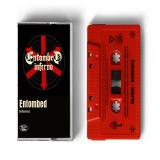
Entombed's 2003 inferno burns anew. Remastered and reignited, this definitive edition unleashes one of the band's dirtiest, most aggressive, and groove-soaked records - where gritty riffs, doom-laden heaviness, and punk-edged energy collide.
Produced and mixed by Per Gunnefeldt (Fireside, also associated with Viagra Boys), the album now returns with a powerful new remaster by Magnus Lindberg (Redmount Studios, known for The Hellacopters, Cult of Luna, Refused, Alcest, and more). The result is sharper, denser, and more forceful than ever - preserving the grainy guitars and thick low-end rumble that define Entombed's trademark sound.
A longtime fan favorite and a bold detour in their catalogue, Inferno showcases Entombed's ability to weave raw death 'n' roll power with punk grit and a heavy, sinister swing. Signature tracks like ""Retaliation,"" ""The Fix Is In,"" ""Incinerator,"" ""Young & Dead,"" and ""That's When I Became A Satanist"" mark the album's feral intensity.
As Swedish Music Hall of Fame inductees and founders of Scandinavian death metal, Entombed forged a legacy that shaped generations of heavy music. Inferno stands as one of their darkest, most visceral statements - now restored for maximum sonic impact.
Formats:
* 2LP + Cassette editions feature 14 tracks, including the bonus cut ""When Humanity's Gone"" between ""That's When I Became A Satanist"" and ""Nobodaddy.""
* CD edition includes 13 tracks, closing with ""Night For Day.""
1. Retaliation 2. The Fix Is In 3. Incinerator 4. Children Of The Underworld 5. Thats When I Became A Satanist 6. When Humanitys Gone 7. Nobodaddy 8. Intermission 9. Young & Dead 10. Descent Into Inferno 11. Public Burning 12. Flexing Muscles 13. Skeleton Of Steel 14. Night For Day
Entombed's 2003 inferno burns anew. Remastered and reignited, this definitive edition unleashes one of the band's dirtiest, most aggressive, and groove-soaked records - where gritty riffs, doom-laden heaviness, and punk-edged energy collide.
Produced and mixed by Per Gunnefeldt (Fireside, also associated with Viagra Boys), the album now returns with a powerful new remaster by Magnus Lindberg (Redmount Studios, known for The Hellacopters, Cult of Luna, Refused, Alcest, and more). The result is sharper, denser, and more forceful than ever - preserving the grainy guitars and thick low-end rumble that define Entombed's trademark sound.
A longtime fan favorite and a bold detour in their catalogue, Inferno showcases Entombed's ability to weave raw death 'n' roll power with punk grit and a heavy, sinister swing. Signature tracks like ""Retaliation,"" ""The Fix Is In,"" ""Incinerator,"" ""Young & Dead,"" and ""That's When I Became A Satanist"" mark the album's feral intensity.
As Swedish Music Hall of Fame inductees and founders of Scandinavian death metal, Entombed forged a legacy that shaped generations of heavy music. Inferno stands as one of their darkest, most visceral statements - now restored for maximum sonic impact.
Formats:
* 2LP + Cassette editions feature 14 tracks, including the bonus cut ""When Humanity's Gone"" between ""That's When I Became A Satanist"" and ""Nobodaddy.""
* CD edition includes 13 tracks, closing with ""Night For Day.""
1. Retaliation 2. The Fix Is In 3. Incinerator 4. Children Of The Underworld 5. Thats When I Became A Satanist 6. When Humanitys Gone 7. Nobodaddy 8. Intermission 9. Young & Dead 10. Descent Into Inferno 11. Public Burning 12. Flexing Muscles 13. Skeleton Of Steel 14. Night For Day
Fabienne Delsol ist mit ihrem fünften Soloalbum zurück! Seit der Veröffentlichung ihres ersten Soloalbums "No Time For Sorrows" im Jahr 2004 hat Fabienne ihren einzigartigen Mix aus Neo- und klassischem Psych, Ye-Ye und vom 60er-Jahre-Beat inspiriertem Pop immer weiter verfeinert. Jetzt steht sie kurz vor der Veröffentlichung ihres brandneuen Studioalbums "Indigo Red". Fabiennes Aufnahme von ,I'm Gonna Haunt You" (aus dem 2004er Album No Time For Sorrows) war in der zweiten Staffel der erfolgreichen BBC-Serie Killing Eve zu hören und machte ihre Musik einem breiteren Publikum zugänglich. Seit ihrem 2019er Album "Four" hat Fabienne an Tracks für ihr neues Album "Indigo Red" gearbeitet. Dies ist ihr erstes Album, das in den Gizzard Studios unter der Leitung von Ed Deegan (ehemals Toe Rag Studios) aufgenommen und von Delsol und Deegan gemeinsam produziert wurde. Mit dabei ist ein erstklassiges Team von Musikern, darunter Thomas Gardner, Carwyn Ellis, Bradley Burgess und Rupert Brown. Das Album vereint neue Originalsongs mit Coverversionen von Künstlern wie Silver Apples, The Count Five, Sharon Tandy und Francoise Hardy.
King Tubby and Producer Bunny ‘Striker’ Lee are intertwined in the birth of Dub Music. After discovering a mistake that made a ‘serious joke’ (more of which later...) they went on to release the first pressings of this new musical genre namely ‘Dub Music’. Tubby’s vast knowledge of electronics and Bunny’s vast catalogue of rhythms would lay the foundations of what today is taken as a standard... the Remix / Version cuts to an existing vocal tune.
Osbourne ‘King Tubby’ Ruddock was born in Kingston, Jamaica on 28th January 1941 and grew up in the High Holborn Street area of downtown Kingston. He studied electronics at Kingston’s National Technical College and also on two correspondence courses from the U.S.A... When he had qualified Tubby began repairing radios and other electrical appliances in a shack in the back yard of his mother’s home. His work in the early days included winding transformers and building amplifiers for Kingston’s Sound Systems. Tubby built his first Sound System in 1957 playing jazz and Rhythm & Blues at local weddings and birthday parties. His reputation as a man who knew and understood both electronics and music grew steadily and as the sixties drew to a close. Tubby purchased his own basic two track equipment. He installed this alongside his dub cutting machine, a homemade mixing console and his impressive collection of Jazz albums in the back bedroom of his home at 18 Dromilly Avenue which he christened his music room.
Tubby and Striker were at Treasure Isle Studio’s one day while Ruddy from Spanish Town was working with the engineer Byron Smith....
“Tubby and myself was talking when Ruddy was cutting some dub but Smithy (engineer) made a mistake through we were talking and forgot to put in the voice. It was two track recording in those days. Ruddy said ‘No Man! Make it stay! and so they cut the rhythm. When I went over to Ruddy’s that Saturday night a dance was in progress and when they played the vocal to the tune... then he said we’re going to play ‘Part Two’. They never called it ‘Version’..and then he played the rhythm track. The song was a catchy song and everybody started to sing along and the deejay started to toast so everything went down well. On Monday morning I went up and I said ‘Tubbs the mistake we made was a serious joke. It mash up Spanish Town! The people went wild. So you have to start to do that now ‘cause when the man put on the ‘Part Two’ everyone start singing this song. It played about twenty times. I said you try Tubbs!’...Well the next Saturday night now when Tubby strung up down the farm U Roy said he’s going to play ‘Part Two’ but Tubby did it different now. He started with the voice then dropped it out and let the rhythm run and then he brought in the voice in the middle and from there Tubby started to get really popular.’’
Bunny ‘Striker’ Lee
Dynamic Sounds upgraded to sixteen track recording in 1972 and Tubby purchased, again with the help of a deal brokered by Bunny Lee. The old four track equipment and the MCI console from their Studio B. The four tracks now gave him far wider scope to work with and he began to create a new musical form where the bass and drum parts were brought up while the faders allowed Tubby to ease the vocal and rhythm in and out of the mix. It was only a matter of time before Tubby’s dub plate experiments began to make it on to vinyl and the first ever long-playing King Tubby releases would feature a collection of his mixes to a selection of Strikers rhythms. So please sit back and enjoy this historic set of sounds, mixed by King Tubby and Mr Prince Phillip Smart and another set of scorcher Bunny Lee rhythms.
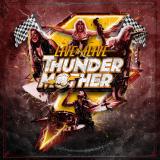
Swedish hard rock powerhouse THUNDERMOTHER is set to unleash a thrilling live album, Live'n'Alive! Founded in 2009 by guitarist Filippa Nässil, the band's highly acclaimed 6th studio album Dirty & Divine (2025) hit the top 3 on the Official German Rock/Metal Charts. Recorded on tour in 2025, Live'n'Alive showcases the band's sensational live energy through 19 tracks from the band's catalogue of electrifying rock anthems, from THUNDERMOTHER classics to newer hit tunes, all live and uncompromised!
Debut EP (1969) by the legendary Bolivian band Climax, recorded during their hard rock period, before evolving their sound toward progressive rock a few years later with the release of their well-known album "Gusano mecánico". Includes versions of 'Born to Be Wild' by Steppenwolf, 'Fire' by The Jimi Hendrix Experience, and 'Sunshine of Your Love' and 'Tales of Brave Ulysses' by Cream. On October 7, 1974, the now-historic "Gusano mecánico" was released - the only full-length album by the legendary Bolivian rock band Climax. Founded in 1968 from the remnants of the disbanded Los Black Byrds and the unrealized project The Turtles, Climax was formed by guitarist José "Pepe" Eguino and bassist Javier Saldías, who developed a strong bond with drummer Alvaro Córdova, cemented by their shared passion for rock. Together, they embarked on a journey of self-discovery, spending several months in the United States during a crucial period straddling the end of the Summer of Love and the lead-up to Woodstock. This period, perhaps the most significant of the 1960s Bolivian countercultural movement, saw an explosion of artistic expression driven by dissatisfaction with the society that the youth had inherited from their parents. Within this context, the influence of iconic bands such as The Jimi Hendrix Experience, Cream, Blue Cheer, and Emerson, Lake & Palmer played a pivotal role in their decision to return to Bolivia and form the country's first 'power trio'. Their early EPs paid tribute to their musical heroes. The first of these is titled "Born to Be Wild" (1969), including versions of 'Born to Be Wild' by Steppenwolf, 'Fire' by The Jimi Hendrix Experience, and 'Sunshine of Your Love' and 'Tales of Brave Ulysses' by Cream. Recording covers was completely normal at the time and was also their way of learning the musical language. It's worth noting that the term "cover" did not carry the meaning it has today; back then, the main goal was to spread the music and bring it to a wider audience. First time vinyl reissue.
Entombed's 2003 inferno burns anew. Remastered and reignited, this definitive edition unleashes one of the band's dirtiest, most aggressive, and groove-soaked records - where gritty riffs, doom-laden heaviness, and punk-edged energy collide.
Produced and mixed by Per Gunnefeldt (Fireside, also associated with Viagra Boys), the album now returns with a powerful new remaster by Magnus Lindberg (Redmount Studios, known for The Hellacopters, Cult of Luna, Refused, Alcest, and more). The result is sharper, denser, and more forceful than ever - preserving the grainy guitars and thick low-end rumble that define Entombed's trademark sound.
A longtime fan favorite and a bold detour in their catalogue, Inferno showcases Entombed's ability to weave raw death 'n' roll power with punk grit and a heavy, sinister swing. Signature tracks like ""Retaliation,"" ""The Fix Is In,"" ""Incinerator,"" ""Young & Dead,"" and ""That's When I Became A Satanist"" mark the album's feral intensity.
As Swedish Music Hall of Fame inductees and founders of Scandinavian death metal, Entombed forged a legacy that shaped generations of heavy music. Inferno stands as one of their darkest, most visceral statements - now restored for maximum sonic impact.
Formats:
* 2LP + Cassette editions feature 14 tracks, including the bonus cut ""When Humanity's Gone"" between ""That's When I Became A Satanist"" and ""Nobodaddy.""
* CD edition includes 13 tracks, closing with ""Night For Day.""
1. Retaliation 2. The Fix Is In 3. Incinerator 4. Children Of The Underworld 5. Thats When I Became A Satanist 6. When Humanitys Gone 7. Nobodaddy 8. Intermission 9. Young & Dead 10. Descent Into Inferno 11. Public Burning 12. Flexing Muscles 13. Skeleton Of Steel 14. Night For Day
Second EP (1970) by the legendary Bolivian band Climax, recorded during their hard rock period, before evolving their sound toward progressive rock a few years later with the release of their well-known album "Gusano Mecánico". Includes a new funky version of 'Born to Be Wild' by Steppenwolf, as well as three original compositions by the band. On October 7, 1974, the now-historic "Gusano mecánico" was released - the only full-length album by the legendary Bolivian rock band Climax. Founded in 1968 from the remnants of the disbanded Los Black Byrds and the unrealized project The Turtles, Climax was formed by guitarist José "Pepe" Eguino and bassist Javier Saldías, who developed a strong bond with drummer Alvaro Córdova, cemented by their shared passion for rock. Together, they embarked on a journey of self-discovery, spending several months in the United States during a crucial period straddling the end of the Summer of Love and the lead-up to Woodstock. This period, perhaps the most significant of the 1960s Bolivian countercultural movement, saw an explosion of artistic expression driven by dissatisfaction with the society that the youth had inherited from their parents. Within this context, the influence of iconic bands such as The Jimi Hendrix Experience, Cream, Blue Cheer, and Emerson, Lake & Palmer played a pivotal role in their decision to return to Bolivia and form the country's first 'power trio'. Their early EPs paid tribute to their musical heroes. Their second EP "Born to Be Wild II" was released in 1970, it featured a new funky version of the Steppenwolf original. It also introduced the band's first original compositions and their new influences: 'Ritmo de la Vida,' an instrumental chord-driven melody with Latin jazz overtones where we begin to hear the influence of Santana; 'El Abrigo Café de Piel de Gallina,' a standard blues number that recalls 'All Your Love' by Otis Rush; and 'The Seeker,' with a Latin vibe and lyrics that include the first reference to drug use in Bolivian music. First time vinyl reissue.
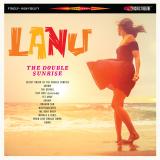
Lance Ferguson (The Bamboos, Menagerie, Rare Groove Spectrum) presents his lush Exotica inspired 2016 album on LP for the first time in a limited edition deluxe gatefold sunset swirl coloured vinyl edition, with each pressing having a unique pattern.
For fans of Air, Martin Denny & DJ Shadow.
'The Double Sunrise' is a re-imagining of Exotica seen through Ferguson’s own lens, which includes Pop and Hip Hop elements plus samplers, synths and drum machines thrown into the mix. That combination of beats and lush cinematics owes as much to Exotica pioneer Martin Denny as it does to Air and DJ Shadow.
Guest vocalists include Melanie Pain (Nouvelle Vague), who brings a sweet Francoise Hardy and Jane Birkin influence to her songs, and Australian singer Meg Washington. As well as her own successful career, Bamboos fans would know Washington from her vocals from “The Wilhelm Scream” and “King Of The Rodeo”, as well as “Beautiful Trash” from the 2011 Lanu album ‘Her 12 Faces’.
Ferguson's own instrumentals are also gems of lush, nostalgic delight.
Reviews for ‘The Double Sunrise’
“Even with the clear influence of South Pacific exotica, this second LP is still typical Ferguson: tight, snappy and doused in retro airs.” - Rolling Stone Magazine
“Bamboos supremo Lance Ferguson uses South Seas exotica as a jumping-off point for a record that deftly crosses datelines. Giddy effervescent soundscapes such as “Tiny Dots” sit back to back with breakbeat grooves like “Nightmarchers””. The Age
“This is one of those summer albums you will return to every year. Stunning.” The Daily Telegraph
“The concept for The Double Sunrise is very specific, but it's executed brilliantly...It's one of those records that evokes a place and a feeling that most of us only ever dream about.” - Double J Radio (Feature Album)
In his most self-aware and sonically refined work to date, JORDY returns with In Retrospect—an 11-track journey through the clarity of hindsight. Transitioning from a breakup record into a manifesto on healing, the album captures the "push-and-pull" of turning 30 and finding power in the wreckage of the past.
Known for his unmistakable blend of "pop precision" and vulnerable storytelling, JORDY moves past the guilt of time wasted to celebrate the person he has become. This is an album about finding yourself again after the noise fades.
In Retrospect is a love letter to the music that shaped a generation. Sonically, JORDY pays homage to his roots, blending the infectious energy of early 2000s pop-punk and Hilary Duff-era bubblegum with the high-gloss production of modern synth-pop.
JORDY commented, “In Retrospect started as a breakup record, but it quickly became something much bigger. It turned into an album about healing. About growing. I think when people find themselves stuck in bad relationships, they often blame themselves for not leaving sooner. They carry guilt over the time they feel they’ve wasted. But writing this album helped me see it differently. The moment I chose to leave the toxicity behind, I felt like I found myself again. I got healthier, mentally and physically. I gave myself permission to mourn the life I thought I’d be living at 30, the future I imagined as a kid. I found peace in remembering that nothing is ever as serious as it feels. I found my power again. In retrospect, the pain and suffering may have been the very thing that saved me.
“Sonically, this album pays homage to my roots - to my younger self blasting Hilary Duff and pop punk bands alone in his room. It’s nostalgic. It’s the kind of music I love to listen to. It feels more like me than anything I’ve made in a long time. It’s funny and catchy, vulnerably heartbreaking, and beautifully hopeful all at the same time. It’s exactly where I am right now,” he added.
Passionate about electronic music from a very young age, Francesco Scarci, aka Deejay Fisherman, is an underground DJ and producer who loves vinyle.
In 2022 he opened his own label Sea Records and released his first Ep. "Dancing with shark". After various experiences as a guest in the dancefloors of Italy and Europe, he became resident in the well - known Italian underground Sound Department.
Today it boasts FIVE EP:
Sea 001; Dancing with shark;
Sea 002; The sound of Sirens;
Sea 003; Jolly roger groove.
Sea 004 ''Revolution'' and several collaborations with international labels, the latest with “Label 2222” with the track “Extasiado” and wit h Sound Department ascolti with the EP ''walking'' and the single bomb track ‘Baby’.
out of Stock
Last delivered 3 months ago available to reorder, subject to availability
Marlon George is a British DJ and producer based in London renowned for his "slightly spacey, casually jazzy, and fully groovy house music," with support from names as illustrious as Kyle Hall and Jimpster. But really, if he's getting signed by the legendary Trelik, then that's all you need to know about his skills. He lays them bare across three tasteful cuts here, starting with the liquid dub of 'My Secrets Are Safe With Me' with its wispy shards of light piercing the water's surface and glistening against the dusty hi-hats. 'Najagen' has more drive but no less depth and warmth to it and 'Do The Rha!' is another smoky, minimal, heady dub house roller that sneaks right under your skin.
out of Stock
Last delivered 18 days ago available to reorder, subject to availability
Ever since the late 1950s bossa-nova revolution, Brazil’s influence on French music has been undeniable. Pierre Barouh, Georges Moustaki and a vast array of lesser known artists, all made the Musica Popular Brasileira (MPB) an axis of promotion at the service of a cool and metaphysical, modern and mixed Brazilian lifestyle. Some were seduced by the poetic languors of the bossa, some were looking for fun, and others just loved the American hybridization of jazz-bossa, jazz-samba.
What is bossa nova? One of its creators, Joao Gilberto said: "Its style, cadence, everything is samba. At the very start, we didn't call it bossa nova, we sang a little samba made up of a single note - Samba de uma nota so .... The discussion around the origins of bossa nova is therefore useless”. It is nevertheless useful to remember that these magnificent Brazilian songs, which the guitarist describes as samba, were shifted and balanced around improbable chords. "I like things that lean, the in-betweens that limp with grace," said Pierre Barrouh, quoting Jean Cocteau.
With emotion, arrangements for violin and supple guitar licks, bossa nova rapidly changed. A transformation that can be heard in the Tchic, tchic, French Bossa Nova 1963-1974 compilation, the result of a cultural reappropriation, which traveled through the United States and supplemented itself in France.
A musical revolution that has remained significant, bossa nova was born in Rio. From 1956 to 1961, Brazil lived through its golden years. In five years, the country had invented its modernist style. Elected president in 1956, Juscelino Kubitschek de Oliveira, an elegant man with a broad forehead, brandished a promising slogan: "Fifty years of progress in five years". He quickly got to work. Not worried about increasing debt, he launched the project for a new federal capital, Brasilia, designed by the communist architect Oscar Niemeyer. Volkswagen opened state-of-the-art factories and created the “fusquinha”, the Beetle. In Rio, the Vespa made its first appearance. The Arpoador Surf Club crew run into the “girl” from Ipanema, Helô Pinheiro - the tanned garota ("chick"), between a flower and mermaid, who at 17 walked by the Veloso bar, where the fiery author and composer, Tom Jobim and Vinicius de Moraes, were getting drunk on whiskey. From then on, bossa symbolized cool.
In 1958, Joao Gilberto recorded Chega de Saudade, which the directors of Philips denied, calling it "music for fagots". The marketing director, who believed in it, secretly pressed 3000 78-inch vinyls and distributed them at schools around Rio, creating a tidal wave.
American jazzmen then took over. In particular, trumpeter Dizzy Gillespie and guitarist Charlie Byrd. In November 1962, the Brazilian Ministry of Foreign Affairs funded a "Bossa-Nova" concert at Carnegie Hall in New York, inviting the genre’s pioneers. Unprepared, the show soon turned to disaster. But the troupe was invited to the White House by Jackie Kennedy. The first lady loved "the new beat" and in particular Maria Ninguem, a song by Carlos Lyra, later covered by Brigitte Bardot.
In Brazil, the 1964 military coup quickly ended this euphoria. The destructive atmosphere that ensued pushed many Brazilian musicians to leave, if not to exile. Thus, Tom Jobim, Sergio Mendes and Joao Gilberto arrived to the United States. In New York, Joao Gilberto met saxophonist Stan Getz. At the time, he was married to the Bahianese Astrud Weinert Gilberto, who had a German father. She had never sung before, but she knew how to speak English. Getz therefore asked her to replace her husband on The Girl From Ipanema. The Getz/Gilberto record with Tom Jobim on piano, was released in March 1964. Phil Ramone, the "pope of pop" was in charge of sound.
Bossa nova arrived in Paris through the classic “guitar-voice” channel (Pierre Barouh, Baden Powell, Moustaki…) But France loved jazz and Paris had already welcomed its American contributors. All these good people were to pass through Saint-Germain-des-Prés. The cabaret l'Escale became the Mecca of Latin American sound where one could find Pierre Barrouh and his friends, such as the Camara Trio, samba-jazz aces, whose only record was published by the Saravah label. With a band strangely called Les Masques (a band that included Nicole Croisille and Pierre Vassiliu, among others), the Camara Trio recorded an interesting Brazilian Sound, including the track Il faut tenir which is present on this tasty compilation of rarities.
Other enlightened musicians can also be found on the compilation, such as Jean-Pierre Sabar (songwriter for Hardy, Auffray, Leforestier ...) and the French pop rock organist Balthazar. In 1975, Sabar recorded Aurinkoinen Musiikkimatka on a Finnish label, which featured the crazy Vai, Vai, included on this record. We are now following the footsteps of Brazilian electronic musicians such as Sergio Mendes, Eumir Deodato or Marcos Valle who created funk and disco sounds on their keyboards and synthesizers. A style that influenced Véronique Sanson when she wrote Jusqu’à la Tombée de la nuit in 1969 for Isabelle de Funès, the niece of Louis and a great friend of Michel Berger - Sanson did end up singing this track on her 1992 Sans Regret record.
The pinnacle of exoticism and travel, Sylvia Fels’ Corto Maltese includes bongos, sea mist and ocean sounds. The title was taken from Jacky Chalard’s concept album written in 1974, Je suis vivant, mais j’ai peur (I am alive, but I am scared), based on Gilbert Deflez’s science fiction novel.
However, bossa nova extended the scope of popularity. "In the 1970s, I was a fan of Sergio Mendes, Getz / Gilberto. I fell in love with this music that I knew because I had been an orchestral singer, " explained Isabelle Aubret, who in 1971 delivered a composite record of covers by the very funky Jorge Ben, Orfeu Negro, Tom Jobim, Vinicius de Morais and Jean Ferrat. "I recorded this album for Meys Records in Paris, far from Brazil, with wonderful musicians, François Raubert, Roland Vincent, Alain Goraguer...". The latter wrote the arrangements for Casa Forte, a very percussive title borrowed from Edu Lobo, one of the initiators of the bossa who spent time in California. "Jazz and bossa came together and produced very rhythmic music. I love singing, it allows me to dream, to have fun, to feel a high on stage, and these songs brought me joy, made me swing, my singing felt like a dance.”
The world tours of French singers and their desire for the tropics, often brought them to Rio with its hills, forests, caipirinhas and tanned bodies. There are surprises though, like this Iemenja (Iemenja is the goddess of the sea in the Afro-Brazilian candomblé religion). Not unlike the composer and musician Jean-Pierre Lang, based in Sao Paulo, Claire Chevalier taught Brazil to Brazil. In 1970, the singer and painter published a 45-inch vinyl, Mon mari et mes amants (My husband and my lovers), under the improbable pseudonym of Clarinha (little Claire). She was then living in Rio, with her husband, Joël Leibovitz, who founded a band called Azimuth, and who owned a record label specialized in "sambas enredos" songs for samba school parades.
For its B side, she asked Pierre Perret to come up with lyrics for a song composed by Carlos Imperial: "Oh goddess of the sea, o goddess Iemenja, I bring a white rose to adorn your long hair ..." . "Perret came to see us, and we had fun, remembers Joël Leibovitz. We wrote Lemenja for fun, we recorded it at the Havaí studio, behind the Central do Brasil the central station. Erlon Chaves, the arranger who worked with Elis Regina, joined us" adding his share of Afro-Brazilian percussions and funky brass to the mix.
There is a common misunderstanding in Franco-Brazilian history: that bossa, admittedly hedonistic, is perceived as funny, even though the poets who wrote the texts are often philosophizing on the human condition. Its French interpreters pull it towards a carnival inspired universe, far removed from its fundamental essence. Thus, Jean Constantin covered the famous Samba da minha terra, an ode to the art of samba written by the classic Bahian composer Dorival Caymmi, renaming it with the enticing title of Pas tant de tchi tchi pompon: "On your pier there is no tchi tchi / when you arch your back, you know everything is alright ”(lyrics by Gérard Calvi). This expedited bossa aims for the absurd, but retains a certain elegance.
Indeed, Jean Constantin was not an idiot, the rather large man had a huge mustache and liked fantasy, (Les pantoufles à papa, Le pacha, inspired by cha-cha-cha-cha, salsa and jazz) but he was also the lyricist of Mon manège à moi interpreted by Edith Piaf, the composer of Mon Truc en plume by Zizi Jeanmaire and the soundtrack of François Truffaut’s 400 Blows. Le Poulpe, published in 1970, from which this bossa is extract, was arranged by Jean-Claude Vannier, an accomplice of Serge Gainsbourg’s Melody Nelson. In short: "There is enough of samba / By looking at the parasol / Because my poor cabeza / Is going to die in the sun".
Even the American actress Marpessa Down, who was at the heart of the bossa nova revolution with her role as Euridyce in Marcel Camus’ film Orfeu Negro, winner of the 1959 Cannes Palme d'or, fed the clichée with Je voudrais parler au petit cuica - "Tell me how you manage to always make people want to dance / It's true, I must admit that I cannot resist your magic" - in consequence, once can hear the cuica, a little drum inherited from the Bantu.
But bossa nova had many angles. Societal, of course, pushing actresses who were symbols of women's liberation like Brigitte Bardot, Jeanne Moreau, or Sophia Loren to engage in the exercise of accelerated bossa. In February of 1963, Sophia Loren made a record in French in Rome, Je ne t'aime plus, featuring the song De jour en jour, a bossa written by two Italians, Armando Trovajoli and Tino Fornai, which was released a little later by Barclay. Bossa accompanied the 1960s, a decade of moral liberation. Ann Sorel, who interpreted La Poupée des favellas, caused a sensation with L’amour à plusieurs, a provocative song written by Frédéric Bottom and Jean-Claude Vannier. As for the actress Andrea Parisy, she displayed her bourgeois cheekiness in Marcel Carné's Les Tricheurs before interpreting Les mains qui font du bien. And Magalie Noël, the friend of Boris Vian, who sung Johnny fais-moi mal, was hired to sing Une énorme Samba, composed by Alain Goraguer (arranger to Gainsbourg, Bobby Lapointe and Jean Ferrat) with lyrics by Frédéric Botton.
But in the end, of what wood is bossa nova made of? The answer is given by Christianne Legrand, daughter of Raymond the conductor, and sister to Michel the composer: "With me, with jà" - jà means "immediately" in Portuguese. In 1972, the singer, an expert in vocal jazz and a member of the Double Six, published Le Brésil de Christianne Legrand. Two songs included on the Tchic Tchic compilation that demonstrate how bossa, jazz, funk, rock, etc. work like a swiss army knife: the music is used to denounce broken systems, or miracles, HLM et ciné roman, Cent mille poissons dans ton filet, two songs from the O Cafona soundtrack, a successful telenovela broadcast, at the time in black and white, on TV Globo. The first was adapted in French by the fighter and friend of the Legrand tribe, Agnès Varda. The second is content with a play on words, jostling them into a summer fun.
Véronique Mortaigne
out of Stock
Last delivered 3 months ago available to reorder, subject to availability
Straight from the weedy fields of swampville Bruxelles we bring you 8 ‘tranches de vie’ of deep zone-hall by weirdtronic bass veteran Michael Crabbé’s best fitting sound costume to date: the mighty Rudi J! You might know him from earlier outfits but that’s not the main issue here. Rudi J is!
When this swamp thing touches the pads, it’s off-road after three seconds, even if you’re in the middle of Europe’s capital. Mixing analog dirt and digital sound bits in a very loose and personal take on dancehall, we’re pretty far away from the dance floor but definitely swinging. It’s a trippy affair wandering around concrete flowers with a deep ambient flavor, but it’s edgy.
A hot summer fever dream following his own lusty path, full of life and wonder but with something sinister hiding around every corner. Often reaching for the stars, a deeper shade of bass keeps things nicely grounded. These sounds are built with a sound system in mind and bass culture at heart. Even if you can definitely surf on it from your couch, picking out all of its ear-pricking details, it will very much come alive on a big sound.
A layered affair with almost jazzy and orchestral elements peeping through the stereo-field, spectral and dissonant but also playful. Like early dubstep, some of these tunes can destroy a clubsound, keeping you skunking out in pedestrian mode and snorting up the atmospherics, finally forgetting about that damn phone.
out of Stock
Last delivered 3 months ago available to reorder, subject to availability
Gold Panda returns with TON UP, a brilliantly stubborn new album for Studio Barnhus: eight rough-hewn dance tracks and two cozy little service-station interludes, all crafted with the robust determination of a producer who knows that 140 bpm is not so much a tempo as a way of life.
Made with Derwin Dicker’s unmistakable sampler-bashing touch, the tracks on Ton Up carry the raw knock of old-school hip-hop instrumentals, pushed through pumping house-music machinery and ready to cause absolute trouble on any half-decent sound system.
Here you’ll find zero of that dreaded, over-explained “maturity” usually demanded of beloved electronic artists several albums deep into the game. Instead, Gold Panda just sounds as happily locked in as ever, carelessly chasing the physical joys of pressure, swing and repetition.
TON UP is functional, funny and oddly tender club music, arriving just when the world needed it the most (June 26 that is.)
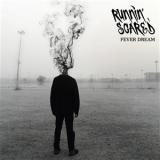
Bone colored vinyl. RUNNIN'SCARED is more than just a musical outlet-it's a way for two longtime friends to share their love for hardcore, stay creative, and keep doing what they've always loved: writing songs together. Though the name may be new, the faces are familiar. Ricky (drums) and Martin (taking care of everything else) first played together back in 1997 in the short-lived band Damage I.D.-and their paths have crossed ever since. Among others, they've been part of bands like Solid Ground, Animal Instinct, Cataract, Liferide, MINE, and Safe State
Paranoid, polyrhythmic ‘crowdrock’ from the not-too-distant future. Synthesised under the supervisory signal of an all-knowing, unofficially named, classified dialup modem that Wah Wah Wino have nicknamed "Sworx”, tasked with sifting through coded waveforms and neatly sorting into a secret filing cabinet. Post-fibre-optic technology idm wav. tablé. Your dreams are being monitored. Tip.
TRACKLISTING AS ON ARTWORK:
d a4. statecellar 641Amix
g b1. Western_intel frontier 2056
out of Stock
Last delivered 60 days ago available to reorder, subject to availability
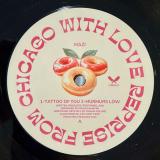
Fresh Meat Records is proud to present the vinyl re-release of From Chicago With Love, a record originally produced and released by Mazi Namvar (aka Audio Soul Project) in 2004. Though it may have flown under the radar upon its initial release, the record has recently gained a cult following, with prices on the secondhand market steadily climbing. A single copy now fetches as much as $170, with a recent test pressing selling for $100. Recognizing the demand, Fresh Meat Records has gone to work offering a beautiful repress of the record—one that truly does justice to the original while adding something special for long-time fans and newcomers alike.
From Chicago With Love Reprise is a celebration of a classic with a new dimension. The record includes a fresh fourth track, “Murmurs Low,” which features the saxophonist Jimmy Tripp and a spoken word performance by Mazi. Together, they add a soulful and atmospheric touch to the original, expanding the sonic palette while retaining the deep, intimate energy of the original release.
The tracklist remains faithful to the original with the standout “Tattoo Of You” leading the way on the A1 side, sounding better than ever thanks to an impeccable re-cut by Lawrie Dunster at Curve Pusher. The deep grooves of “Tattoo Of You” still deliver their deep and mesmerizing house vibes, setting the tone for the rest of the release. In the A2 position, “Murmurs Low” provides a captivating, subdued moment, with the saxophone adding a melodic layer to the evolving rhythm that makes this track truly memorable.
On the B-side, “Down” takes its rightful place as the first track, maintaining a dubby soulful drive and emotional call to action. Closing out the record is “Let Me Know,” a track that brings the journey full circle, providing the perfect outro for the reissue and reminding us why this record is still beloved.
In creating From Chicago With Love Reprise, Mazi Namvar has ensured that every detail is accounted for, from the masterful cutting by Lawrie Dunster to the selection of 8 different color sleeves, offering something for both collectors and music lovers alike. The reissue ensures that this classic can now be enjoyed at a reasonable price, far more accessible than the inflated prices on Discogs. This new pressing is a labor of love, showcasing not only the timelessness of the original tracks but also the care that has gone into its revival.
Whether you’ve been following Mazi Namvar’s work for years or are just discovering this release for the first time, From Chicago With Love Reprise is a powerful reminder of the depth and beauty of house music’s rich history, as well as the enduring passion that drives artists to continue creating for the dancefloor. Get ready to experience this iconic record in a whole new way—one that honors the past while looking forward.
Written, produced, performed, mixed, and arranged by Maziar Namvar.
Additional keys on A1 by Joshua Collins.
Saxophone on A2 by Jimmy Tripp.
Vocals on B1 by Lori Reigler.
Copyright Control
2025 Fresh Meat Records
out of Stock
Last delivered 42 days ago available to reorder, subject to availability
'I live in a gentrified part of Brooklyn, I eat out several times a week, I travel the world sampling the best that cities across the globe have to offer. Do I live in a penthouse loft Am I dinning in five stars restaurants Can you only find me in the most exclusive areas Do I own a jet The answer to all the above is most certainly no. I'm just a regular man from Prince George's county, Maryland that figured shit out. I discovered that I can make a career in an arena dominated by artists that sell false dreams. I realized that although the masses may not know of my body of work, it doesn't take the whole world to have the world I want. Tangible Dream is a mix-tape dedicated to the deconstruction of our traditional ideas of success & shedding light on the possibility of a sustainable rap life. These rhymes were written in economy class seats, these beats were produced on long bus trips & these songs were recorded in airbnb apartments. All I want to do is make music for a living so that I can live to make music. The only dreams I'm interested in are the ones I can grasp. It just so happens that anything you want bad enough can be obtained. Perhaps the world may never know of my accomplishments but accomplishments they are nonetheless.
For fans of Dokken, Lynch Mob, and 80’s Metal! Dokken is one of the defining bands of the 1980s hard rock and heavy metal scene, known for blending melodic hooks with powerful guitar work and emotionally charged vocals.
Formed in Los Angeles in the late 1970s, the band was led by vocalist Don Dokken and featured the virtuosic guitar playing of George Lynch, alongside bassist Jeff Pilson and drummer Mick Brown. Dokken rose to prominence during the peak of the MTV era with a string of platinum-selling albums, including Breaking the Chains (1983), Tooth and Nail (1984), and Under Lock
and Key (1985) racking up sales of more than 10 million albums. Their sound struck a balance between radio friendly melodies and aggressive metal, producing hits like “Alone Again,” “In My Dreams,” and “It’s Not Love.” Their 1987 release Back for the Attack further cemented their legacy, showcasing both commercial success and musical complexity. Released in 1999, Erase the Slate marked a fresh chapter for Dokken, introducing Reb Beach (best known for Winger and later Whitesnake) as the band’s lead guitarist. Erase the Slate blends Dokken’s classic melodic metal roots with a more modern, late-'90s hard rock edge. Reb Beach brought a technically sharp yet fluid guitar style that differed from the flashier, more aggressive approach of former guitarist George Lynch. His playing added a polished, groove-oriented feel while still delivering strong solos and riffs. Remastered and Repackaged on 180g green smoke vinyl.
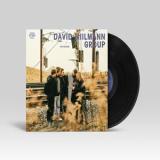
Danish quintet David Miilmann Group return with You Belong, their third album and a vibrant, uplifting statement built around guitarist David Miilmann"s distinctive slide guitar voice. Rooted in soul and blues but shaped within a genre-defying jazz context, the band brings a life-affirming energy to music that moves between groove, melody, and open improvisation with ease. Set for release on April Records on June 12th, 2026, You Belong centres on Miilmann"s approach to the guitar, drawing on the phrasing of singers like Curtis Mayfield, Freddie King and Aretha Franklin. His slide playing - developed as a way of emulating the human voice - sits at the core of the group"s sound, cutting through a warm, rhythmically grounded backdrop that blends jazz, rock, and Brazilian influences. At its core, the album captures a working band in motion. The five musicians move fluidly between composed material and looser, more exploratory sections, guided by close listening and a shared sense of direction. That chemistry comes into focus on "It"s Happening Again," a groove-led track steeped in a warm, 1970s-inspired production style. Built on a relaxed but propulsive feel, it captures the simple joy of time spent with close friends - familiar, unforced, and full of possibility. "The Day After" offers a more spacious counterpoint. Written as a reflection on those rare, quiet mornings following a meaningful moment - a concert, a celebration - it unfolds with a sense of ease and openness, led by Miilmann"s melodic slide guitar and supported by a restrained, attentive rhythm section. The band"s take on "My Favorite Things" reshapes the well-known material through their own ensemble sound, acknowledging the influence of John Coltrane while carving out a more textural, guitar-led approach. The album"s title, You Belong, points to the group"s broader outlook: an inclusive, community-driven approach to making music. That idea runs through both the compositions and the band"s dynamic - less about spotlighting individuals, more about building a collective sound. Since their debut Waiting for Myself (2021), David Miilmann Group have carved out a space with their emotionally direct, genre-fluid approach - earning two DMA Blues nominations, reaching the finals of the Jazz Competition, and receiving regular airplay on P8 Jazz. With You Belong, they refine that approach into something more defined: a warm, groove-driven sound shaped by song, feel, and the unmistakable voice of Miilmann"s slide guitar.
Following releases of the UFO and Supercar soundtracks, Thunderbirds is the third in the series from Gerry and Sylvia Anderson’s iconic TV shows. It is newly compiled, mastered and designed by the creative team at Fanderson (The Official Gerry and Sylvia Anderson Appreciation Society), who have access to Barry Gray's original studio tapes.
The album features 37 tracks from 19 episodes (series 1 and 2), including the Thunderbirds main theme and closing titles. The tracks were not programmed to follow the episode order but to achieve an integrated listening experience. The best bits of the sixties’ soundscapes are here. The Thunderbirds soundtrack is an effective time capsule as Gray’s music veers into British spy genre, Latin pop, exotica, urban jazz and military marches. Beautifully composed and conducted, the score reflects the moods of the scenes, from dangerous to romantic and no-nonsense to silly.
Barry Gray was a classically trained composer and a versatile musician, and was amongst the first composers to use electronic instruments in music for television. Best known for creating the music for most of the Gerry & Sylvia Anderson television series in the 1960's and 70's (Fireball XL5, Thunderbirds, UFO, Space:1999), Barry Gray’s complete musical opus is still not commercially available in its entirety.
Under the moniker Trace Mountains, Dave Benton writes music that asks large questions in quietly profound ways. On the project’s earliest release, the 2014 compilation Buttery Sprouts & Other Songs, these thoughts appeared as lo-fi scraps of wit andtenderness. But by the time A Partner to Lean On, Trace Mountains’ debut full-length, arrived in 2018, Benton’s perceptive indie rock had matured into more existential meditations about identity, existence, and finding sense in an increasingly chaotic world.
In the two years since A Partner to Lean On, Benton’s life has undergone several large changes, namely the dissolution of LVL UP, the indie rock quartet he co-founded in college, and a move to Kingston, a small city in New York’s Hudson Valley. Composed during—but not directly inspired by—this transition, Trace Mountains’ second record, Lost in the Country, reflects Benton’s need toreconnect with his inner world.
Prompted by an urge to access a more authentic voice, Lost in the Country finds Benton digging deeper into candid songwriting. “I wanted to open myself up and write lyrics that are a little bit more direct,” he explains. “I write a lot of songs that are about myself and a lot of songs that aren’t, but on this record, the focus is turned inward either way.” The result is Trace Mountains’ strongest and most assured record yet, 10 songs driven by a desire for introspection and self-discovery. The backdrop for this insularity is an expanse of wide blue skies, seas of trees, and winding roads, ideal locales for thoughts to blossom into greater reflections of the outer world. The slow-burning “Absurdity,” which Benton modestly says is about “hiking and standing in the country,” uses the sublimity of the wilderness to comment on technology’s inescapable presence. Similarly, the driving opener “Rock & Roll” transforms the premise of a “simple song about being a rocker” into a stream-of-consciousness, apocalyptic poem about delusions, regrets, and getting lost in your own limited perspective. This self-examination culminates with the record’s ambitious and anthemic title track. Channeling the cosmic sprawl of the War on Drugs or Kurt Vile, Benton recalls a moment of deep loneliness and depression outside a concert venue in the Netherlands, and how an unexpected moment of compassion led to a moment of awakening.
Despite its frequently bucolic setting, Lost in the Country’s underlying current is an urgent commitment to Trace Mountains and “finding a creative process that requires me to be honest with myself.” “I know I sing to forget, I sing to hold my breath, to feel the thumping in my chest,” Benton sings on “Cooper’s Dream.”This line is “rooted in the importance of music in my life, it’s definitely a reflection on that and how I can keep it in my life, because if I’m not careful and I don’t nurture it, I could lose it.” The self-imposed pressure has been empowering for Benton. “I really like having full control in making a record, deciding what songs are going to be on it, as well as shaping the vibe or narrative of the whole thing,” he says. “It brings a peace of mind knowing that I am responsible for just my voice.”
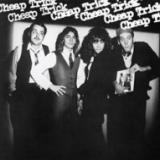
Cheap Trick is the debut studio album by the American rock band Cheap Trick It was released in 1977 and produced by Jack Douglas, who is a frequent collaborator of the band and known for his work with Aerosmith. The record remains a cornerstone of American rock and roll, capturing a raw, almost menacing edge that distinguished the band from their more polished contemporaries. The album features the more popular songs "He's a Whore", "Elo Kiddies" and "Oh, Candy" and entered the Billboard 200 in the United States, marking Cheap Trick's first appearance on the national album chart. It gave the band early visibility and positioned them within the broader rock landscape of the late 1970s. Over time, the album has come to be viewed as the starting point of the band's recorded catalogue.
In our era of post-truth & questioned realities, tin foil hatted folk project their insecurities onto the puppet masters, those holding the strings to us all, the endless psy-op at play. For those opting for psychedelic enlightenment over psychological terror, we find solace in the dance, especially when the music is from heads such as Jeku.
‘Peyote Trance’ follows the Helsinki based artists journey into the “trip”, where mother nature instead pulls the strings. A sound of trance often not followed, continuing the work of forebearers such as eXquisite CORpsE; where the zap of the synapses in the brain connect with the bubble & squeak of electronics. Creating a sound advanced by nature, yet resonating within the concrete walls us ravers know and love. All 4 tracks harness a kinetic energy that nudges you to ascendance, not desperately reaching for it like the heavy handed aesthetics of the genre can. Instead, the heads down motion of the music can take you there, and well, a little bit of Peyote might just help, as mother nature intended.
out of Stock
Last delivered 3 months ago available to reorder, subject to availability
This collaborative album is characterized by the unique taste and qualities of Dutch producers Joop de Graaf (Y.O.P.E.) and Tommy van Leuken (AVVNT MM). Where Y.O.P.E. is known as a live project based on groove, improv and electronic music, AVVNT MM has mainly been known for his soothing ambient projects. With this album these two producers find eachother in perfect harmony. Scratch your brains with some perfectly balanced confusion.
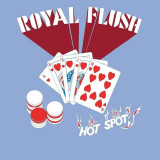
Chicago funk band Royal Flush release sonly one full length on their local Texas label Lucky and that was Hot Spot. They did so in 1980 before later reissuing it via GEC and although it isn't one of the most well known albums amongst funk heads, we think that is rather a crime because it is a top notch if not underrated album. It is couched in the traditions of the genre but with nods to styles like P-Funk. If you can find an OG copy you will have to shell out plenty of money and although this same label put out a CD version in 1994, it has not been reissued on vinyl before.
out of Stock
Last delivered 3 months ago available to reorder, subject to availability
Siren Selector launches its mixtape series with a companion release to Remy Solar’s - ‘Heavy Terrain’ cassette.
“Jamaican music grows in rings like an old tree. From a core of early riddims, the genius of Studio One, versions of original basslines and melodies evolve over time New releases of the same tune follow each other through the 70s, 80s, 90s, into this millennium. Generations of the same family. And then there’s the unreleased versions, the frontier dubs built strictly for sound systems, held close by those who got them and only gradually circulated into the wider audience of selectors and collectors. These are the ones where the bass is heavier, the echoes more mind- bending, the effects wilder and the drums harder. Older sound followers tell stories of how these dubs defined dances, flattened opponents in clashes, inspired a dozen rewinds. Younger followers remember these tales and pass them down. These dubs are folklore.
Who knows how many such versions there are in the vast worldwide archives of Jamaican music? Not me. But as a little taster of a lifetime’s musical journey you can open your ears right now to a few moments: Lacksley’s Castell’s “Unkind”, transported from the sprightly riddim which underpinned it on his Princess Lady album and reengineered into a thunderous version of Ras Michael’s None A Jah Jah Children; “Deceivers” by the Heptones, stripped back into something simultaneously ethereal and bathyspheric; Keith Hudson’s “I’m No Fool” emerging from a pressure cooker of bass and drum; Jah Lloyd’s “Black Moses”, busting down walls with its epic echo and siren opening.
I started collecting these dubs in the late 90s. We were going to Shaka at the Rocket, Aba Shanti in the Arches, then Imperial Gardens. Entebbe somewhere off Mare Street. Iration Steppas in Kingsland Road, Jah Tubby’s in the Rec. We were doing our own parties at the time in east London, Bohemia Place, then Trenz, Dungeons, the old social services office by London Fields. Building up a sound, taking it on the road, crew sitting on the speaker boxes in the back of a Mercedes 508. Under the stars or in warehouses with sweat dripping from the ceiling, lugging crates and amps across fields or up flights of stairs, stringing up boxes under bridges, in car parks or on roundabouts. Waiting for the moment to drop the dubs.
This tape is dedicated to my crew and all the music providers and anyone who also knew or wants to know these moments.“
‘Falling Backwards’ is the debut album from Him & Earl via Wah Wah 45s, serving up a mystic brew of desert blues, English folk, Americana and stirring southern soul, with tentacles stretching out into psychedelia and prog, across 11 hot and hazy tracks.
Singer-songwriter Olly Him and DJ, producer and composer Wyndham Earl both have deeply-dug roots in the south coast of England, with the former making his name as a solo artist before exploring his soulful folk/prog sound with a number of live acts, and the latter collaborating on albums and sharing stages with Bonobo, Khruangbin, Alice Russell and TM Juke, having remixes released by Tru Thoughts and Mr Bongo Records and releasing his solo projects on his Time Spun imprint.
The pair first met in 2015 when Wyndham produced some songs for now defunct hypnotic Afro-folk outfit Creatures Of The Deep, of which Olly was a founder member. They instantly clicked, but after the group broke up it was a few years before serendipity brought them back together; a chance encounter at a gig saw them begin hatching plans to make a full album under the name Him & Earl with Olly writing the songs and Wyndham arranging and producing the project.
After so long floating in the creative ether, the connective power of these songs has been strikingly immediate. The debut Him & Earl live show in early 2026, before any tracks had even come out, blew Olly and Wyndham’s expectations out of the water as their five-piece band found themselves toe-to-toe with a sellout crowd – a sweaty room full of happy music fans, on an otherwise bleak January night, throwing shapes to live percussion showdowns, losing themselves in psychedelic guitar and bass wig-outs, and singing along to choruses they’d never heard a note of before.
Since then, the first two singles “Bottled Up” and “Away” have had high profile airplay from the likes of BBC 6 Music’s Huw Stephens and Cerys Matthews, and Radio X’s John Kennedy, adding to widespread tastemaker and specialist support around the world, as excitement builds for the album.The LP’s introspective and philosophical lyrics are brought to life by a sonorous yet strangely uplifting sound palette that morphs by stealth into a darkly propulsive, psychedelic and bluesy trip.
Opening song “Away” taps straight into a key theme of the record – journeying, in both a physical and mental sense, and the quest to move on and embrace the unknown – and its sunny guitars, trumpet and violin barely even hint at the tumultuous sonic adventure that’s set to unfold. A stronger indication comes in the title track,“Falling Backwards”, as its elegant web of staccato finger-picked hook, fluid piano melodies and strings unfurls into a six-minute exploration of what Olly describes as “going through every day normality while feeling close to chaos and like things could fall apart at any moment… when there is a myriad of different things holding everything together and if one thing goes wrong everything can fall apart around it.”
“Better Days” swiftly restores a sense of upbeat calm, with lively Kora and Afrobeat-inspired guitar licks, atmospheric trumpet and a harmony-clad mantra of hope on the horizon; the folky “Bottled Up” continues that blissful notion with undulating finger-picked guitar, earthy clarinet counter-melodies and celestial murmurations of delicately plucked strings. The magnetic pull toward more mysterious horizons comes via the dusty twang of Wild West-esque guitars on “Open Road”, a nomadic journey of self-discovery through spacious sonic plains embellished with eerie flickers of flute and clarinet. This leftward turn gathers pace in the trancelike
psych-prog depths of “Preside”, an instrumental cut at the album’s pivotal halfway point. Hypnotic, guttural desert blues-infused riffs on “Inside” channel the feeling of a psychedelic or spiritual trip where, in Olly’s words, “something clicks and you understand things on a different level – it makes you see inside yourself and see things in a different way.” “Shadow overhead” brings a lighter touch to a darker subject – the feeling of paranoia and being locked away from the world – drawn from Olly’s own experience and also his years of working in and around mental health.
Exuberant horns lend hope to loosely looping suspense on “Blindside” (about being caught out by the unexpected, and searching for something to see or hear to pick you up again) and then mesh with urgent strings, low-slung guitars and subterranean bass on “Around Again”, which explores the modern fight to stay afloat amid the endless churn of information and distractions. Still plumbing the bassy, bluesy depths of this journey into the psyche, “You Can Only Know” is a dreamlike revelation about finding someone or something that helps to make sense of the world. Luminescent synths duck and weave, while a rock-solid bass riff is tracked by a soul-soothing four-part “hey hey” harmony, reassuring as a glowing lamp in the window at the end of a life-changing trip.
DJ Support: Louie Vega, Ralf Gum, Jihad Muhammad, Zepherin Saint, Mr. V, Doug Gomez DjPope, DJ Beloved & Brutha Basil to name a few.
Sean McCabe’s Good Vibrations Music label opens the vault doors for a peek inside some of its closely guarded & much-loved releases courtesy of this special limited edition 12 inch. Featuring 4 new to vinyl releases & including a raft of luminary names from across the soulful spectrum this is sure to be a be a hot fave with long standing fans of the label.
Glenn Underground’s Jazz-Funk fuelled rework of 'This Place' kicks things off and needs no introduction… heavily supported & much loved through the soulful circles & beyond with the likes of Louie Vega, Dave Lee, Jimpster, Jamie 3:26 & Fred Everything (to name a few!) all loudly banging the drum – people have been clamouring for this to be on vinyl. You spoke, we listened!
Up next is 'Modulate', a collaborative force of the highest order between Sean & long-time friend Black Sonix. Expertly fuzzying the lines across Deep, Soulful & House is somewhat of a speciality for the duo respectively and there’s bags of all 3 intertwined throughout alongside a hefty sprinkling of sun-kissed, Latino-inspired pianos.
'Still Standing Here' kicks things off on the B-side and begin in March 2022 as vocalist Madeeha recorded an accapella vocal idea in a phone voice message, quietly singing into her phone to avoid waking the neighbours. She sent the idea to drum & bass producer from Bristol, DJ Mixjah, who then approached friend Sean McCabe with the idea. Together they produced a hypnotic afro-tinged soulful backing track to fit with the voice message, with an intention to re-record it in a studio environment. Sean and Mixjah soon realised that the music they had created blended perfectly with the sincerity, intimacy & rawness of Madeeha's heartfelt performance in the original voice message and decided to stick with it. A firm fave for Atjazz, Crackazat , DJ Spen & Emmaculate.
Wrapping things up is 'You Don’t Know', a slick & energetic dancefloor bubbler from London based producer/DJ ‘David Bailey’ and Canadian soulful songstress ‘MissFly’. David Bailey is a firm favourite amongst the London house music community. He’s produced standout releases on labels such as Idris Elba's 7wallace, Makin Moves, Good Vibrations Music, Rhemi Music & Unquantize. MissFly is known for her soulful serenades and ability to write songs 'on the fly' in the studio. She has carved out an impressive discography on soulful house nuggets such as '1972,' 'Wanna Love You' and 'Thankful'
5th anniversary limited‑edition vinyl, featuring standout tracks like “Woman,” “Need to Know,” and “Kiss Me More” ft SZA. Pressed on a translucent pale blue vinyl.
United by a shared love of 1960s music and Garage Punk, the band has carved out a distinctive sound rooted in infectious riffs, vintage swagger, and raw energy. Their catalog sits comfortably alongside unearthed '60s Garage Rock and Psychedelic gems, delivering songs that jump between English and Spanish, instrumental and vocal, reflecting both their creativity and diverse musical influences. Onstage, THE KILLING FLOORS are electrifying. Their shows are a whirlwind of highvoltage energy, tight harmonies, and explosive performances that pull audiences straight into their world. Each member is a vital piece of a well- oiled Rock 'n' Roll machine, creating a live experience that's impossible to ignore and even harder to forget. And it's precisely that wild live- energy that has been transported onto their debut album "Los Angeles Chicano R'n'R"!
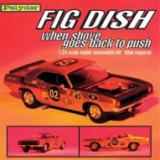
Chicago's FIG DISH didn't name themselves after a soft, sweet, fleshy fruit; rather, the name is a phonetic approximation of the German expletive, fick dich, (make of that what you will) FIG DISH were four high school friends: guitarists/ vocalists Rick Ness and Blake Smith, bassist/vocalist Mike Willison, and drummer Andy Hamilton. In their day (a day that began in the late Winter of 1991 and ended in the early summer of 1998), they were known for catchy songs, memorable (often booze-fueled) live shows, and selfsabotage.
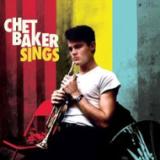
The complete album + 2 bonus tracks - limited edition pressing 180g red coloured vinyl Contains new specially prepared liner notes by Penguin Guide to Jazz's writer Brian Morton and by Paris' prestigious Jazz Magazine . Unique cover photograph by renowned American jazz photographer Bob Willoughby (1927-2009). The complementing talents of Chet Baker (1929-1988) both as a trumpet player and as a singer are now well known. His trumpet and voice are extensions of the same musical personality, and once you have become familiar with both facets of Baker, you expect to hear them both. However, Chet Baker Sings was a revelation at the time and won Baker new fame and a new audience, which was less familiar with jazz than with pop music. Includes the bonus tracks "Let's Get Lost" and "Just Friends"
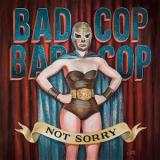
The 2015 debut album from female punk super-group back in print on new burgundy colour vinyl! NOT SORRY is the first full-length album from all female super-group BAD COP BAD COP. Aptly titled, NOT SORRY brazenly blasts out some of the most vibrant pop-punk around today. Laden with catchy hooks, three-part harmonies that'd make The Beach Boys jealous, and tons of attitude, all 13 tracks showcase BAD COP BAD COP's uncanny ability to blend aggressive instrumentation with polished vocals. A quick glance at the band's collective resume (Compton SF, The Radio Sweetheart, The D'Maggs, The City, Angry Amputees, and Cunt Sparrer) will disabuse any doubters of the notion that BCBC can't hand with the boys. From front to back, NOT SORRY brings the rock. Tracks like "Old Dogs", "Nightmare", & "Support", display the bands' hard playing style and strong sense of melody. One listen to NOT SORRY and you'll know why BAD COP BAD COP have generated so much buzz! "This badass bunch of melodic punk rock ladies have been releasing infectious 7" records for a couple years that just play too damn quickly... The album dashes by like a vacation_over sooner than you'd like." _New Noise Magazine "California's Bad Cop Bad Cop lay down the law with an incredible authority: the tunes are concise and compact melodic punk blazers, filled with equal amounts of bite and sugar-sweet harmony." _Alternative Press "These songs are full of three-part harmonies that can make Bad Religion's Greg Graffin and Brett Gurewitz retroactively jealous, and they're catchy enough that they could easily fit onto any of the early Fat Music comps." _Dying Scene Produced by Fat Mike (NOFX) & Davey Warsop (Suedehead) For Fans of: NOFX, Dance Hall Crashers, Masked Intruder Ongoing social media push via artist and label channels Social Media and Digital marketing campaign See Bad Cop Bad Cop on tour in Europe
R&B outsider Zsela joins forces with inc. no world's Daniel Aged and film composer Taul Katz on '4 Dreams', a billowing ambient-neoclassical hallucination that'll tickle fans of Mary Lattimore, Malibu, Nala Sinephro, Gigi Masin. If you only know Zsela thanks to her dramatic 2024 debut album 'Big For You', the mostly beatless, fully reflective '4 Dreams' might come as a surprise. But look a little further back in her catalogue and things will fall into place; remember 'Angels Pharmacy' and Remembrance' from Actress's 'Karma & Desire'? That was Zsela on vocals, so she's got priors. '4 Dreams' started life as the soundtrack to 'Seven Heavenly Senses', an art exhibition from last year at Paris's Hôtel de la Marine, but has since taken on a life of its own. Zsela's breaths are stretched and sculpted into warm, washing biomechanical pads on the opening dream, left to weather tinny arpeggiated FM synths and muggy bass drones. So far, so predictable. But Zsela muddles proceedings with her confident delivery, layering her voice into jazzy, R&B inflected key changes that keep you guessing. Imagine an astral plane answer to Dawn Richard's ambient-inflected pop and you'll have some idea of where this is headed.
Then 'Dream 2' takes an unexpected diversion, the vocals replaced by swirling harp flourishes and the kind of floating synth stabs that draw a core logic from classic Ambient - Harold Budd, Laraaji et al - then adding extra colors just where necessary. And on 'Dream 3', faint, almost folk-y strings enter the frame, calling out from beyond the horizon, almost blotted out by a synth part that's in the thrall of Gigi Masin's legendary 'Clouds' - the track that ended up being repurposed by Björk on 'It's In Our Hands'. Zsela, Katz and Aged keep that momentum for the final track, too, letting cinematic strings echo around subtle synths and vanishing rhythms, hitting those hypnagogic, tranquil notes that so much contemporary ambient music seems to avoid. 'Cause at its heart, '4 Dreams' is deeper than that, a record that's entrenched in jazz, soul and classical minimalism rather than throwaway numbing music, of the contemporary variety.