Lofi-surf producer Shimon Hoshino presents the pre-release single "Nagisa" as a 7-inch vinyl, featuring one of South London’s most promising artists, edbl.
The track combines Shimon Hoshino’s beautiful piano melodies and slow-tempo lofi beats with edbl’s soulful, mellow guitar, creating a gentle wave-like groove that rises
and falls like the shore. The laid-back sound feels comforting, wrapping the listener in a musical embrace that stretches endlessly like the sea.
Another track, "Pages in the Breeze" was inspired by Shimon Hoshino’s home base in the Shonan area, particularly the multi-use commercial complex Shonan T-SITE,
which supports local life while proposing new lifestyles. The track captures the warmth of turning book pages and the gentle flow of everyday moments, resulting in a
soothing sonic experience.
The artwork and design are by UNCUTS, a graffiti artist active on the Chilly Source label.
A miraculous collaboration comes to life! DJ Mitsu the Beats, a globally active member of the Sendai-based hip-hop crew GAGLE, joins forces with beatmaker and
producer STUTS for the new track "Stack Wave" now released as a 7-inch single.
The track features DJ Mitsu the Beats’ gently swaying, looped beats and layered choruses, combined with STUTS’ sophisticated multi-layered instrumentation.
The result is a delicate, immersive sound that evokes the quiet stillness of a seaside setting while capturing the beautiful yet fleeting reverberation of the vast ocean.
Included is the instrumental track "On the edge of the water" from the original album "New Horizon" scheduled for release in November 2025. With jazz-infused beats
and electric piano, the track reflects the theme of sea and chill, creating a relaxed, timeless atmosphere.
The jacket artwork is a collaborative design featuring ocean photography by Yasuma Miura, a photographer based in Shonan and Kamakura who travels the world while
surfing, and design by So Iguchi (soiguchi design), known for his work on outdoor brand catalogs and lookbooks.
DJ and sound producer Sam is Ohm’s new track "STARLIGHT" featuring Rachel from chelmico and singer-songwriter YonYon, is now available as a 7-inch single!
This urban dance track portrays the struggle to live in the moment—embracing both the ever-changing city and the uncertainty that surrounds us—while surrendering to
music and light. With a sparkling, fast-paced groove reminiscent of UK garage and 2-step, Rachel’s lively rap and YonYon’s soothing, crystal-clear vocals blend seamlessly
to create a positive anthem that frees the heart from the chaos of the city nightscape.
The Ruins Of Beverast narrate fables of the darkest secrets in human history and present. ‘Tempelschlaf’ is The Ruins Of Beverast’s seventh full-length output and sees the band continue with their sonic morbidity, noises and melodies of a human habitat in its sunset era, while maintaining and refining the widescreen low end that has been sustaining their sound from the beginning. On the instrumental side, ‘Tempelschlaf’ is stripped of some fat, forging the songs with a reduction in length and layers, cautiously leaning towards the stage part of things. While synths and samples have always played an adamant role in The Ruins Of Beverast’s sound, they reach yet another level of psychedelia and insanity on ‘Tempelschlaf’. The Ruins Of Beverast were formed in early 2003 and named after the most bloodcurdling occasion of the collapse of the giant bridge Bifröst. This incident bears analogy to the musical aura of The Ruins Of Beverast, which builds a sonic landscape of massive, surreal, barren mountain formations. Seven full-length albums and several EPs, splits and compilation releases have been published through Ván Records so far. As a live act, The Ruins Of Beverast became a strong force after Roadburn 2013, a festival the band have played again since with exclusive shows. The Ruins Of Beverast have embarked on several European tours with acts like 1349, Grave Miasma and King Dude, as well as a highly acclaimed US tour that eventually concluded with an iconic show at Fire In The Mountains festival. The band have played such well-established club shows and festivals as Hellfest, Inferno, Incubate, Party.San Open Air and Beyond The Gates, to name just a few.
The label ORED Recordings was founded in 2013 by Circassian friends and fellow musicians Bulat Khalilov and Timur Kodzoko, in order to start an activity which is dedicated to documenting and preserving the traditional and post-traditional music of the North Caucasus. Khalilov and Kodzoko, were just as excited about this music as it sounded like a force that transcends borders and in which time dissolves and community becomes the only compass.
Through hundreds of field recordings, which have been made at communal gatherings, local festivities or family meetings, the label has captured a wide range of individual voices and their unique acoustic manifestations. All recordings on this album capture the raw expressiveness of the mountainside villages. Music performances being played by people who dedicate their love to music and an additional willingness to share intimate emotions.
Whereas most academic ethnomusicologists travel around the world in order to study foreign cultures, Bulat Khalilov and Timur Kodzoko were fascinated by what they just heard in the familiar regions of their then home town Nalchik. In resolute contrast to Russian academic circles, they soon developed a DIY Punk ethos for their far reaching work, beginning to formulate their own language in the field of ethnomusicology and to push the traditions forward.
However, the label’s work goes far beyond mere preservation. »We started traveling around the North Caucasus and did recordings with people from many different ethnic groups. In the North Caucasus, our work had a political dimension because there used to be (and still are) a lot of conflicts between different ethnic groups. We quickly understood that our work is not just about music and art,« states Bulat Khalilov.
The work of the label aims to reflect not only the great music of the Caucasus and its various communities but also to tell the stories behind it. They are stories of struggle, of independence, of working with historical memory in the present times of the 21st century.
Since Bulat Khalilov and Timur Kodzoko are now based at the University of Göttingen, we were able to meet each other many times and to eventually exchange ideas which resulted in the release of this collection of recordings. The compilation »Music from the Caucasus« provides a first introduction to the comprehensive work of ORED Recordings. For this collaborative release on TAL the recordings are being made accessible for the first time ever on vinyl, CD and various digital formats, all coming with extensive liner notes and yet unpublished photographs.
Bulat Khalilov and Stefan Schneider, November 2025
In 1991, Chris Whitley made his debut with the beautiful album Living with the Law, which immediately showcased his brilliant songwriting and unique guitar playing. Blending blues, roots and folk, the debut was positively received by critics and aficionados of these more traditional genres. Growing up, Whitley listened to Southern radio, which played artists such as Muddy Waters, Howlin' Wolf, Bob Dylan and Jimi Hendrix. His career started by playing with artists like Arto Lindsay and Michael Beinhorn. Interestingly, Whitley lived in Belgium for a short time in the 1980s, where he started his career playing guitar for 2 Belgen and Nacht und Nebel. In the 1990s, he started his solo career at Kingsway Studio in New Orleans, owned by none other than Daniel Lanois. The result was an album characterized by the use of traditional instruments such as the slide guitar and banjo. All of this is accompanied by his splendidly timbred voice and honest lyrics exploring themes such as freedom, desire and human struggle. Sadly Chris Whitley passed away in 2005, but his influence on contemporary songwriters and blues artists remains strong. a_Living with the Law is available as a 35th anniversary edition of 1000 individually numbered copies on gold coloured vinyl and includes an insert.
Erstmals steht Yannick Nézet-Séguin beim Neujahrskonzert am Pult der Wiener Philharmoniker. Der Kanadier, schon seit Langem dem Orchester verbunden, ist Chef der Metropolitan Opera in New York und des Philadelphia Orchestra. Er bringt im Goldenen Saal des Wiener Musikvereins neben populären Titeln wie "Rosen aus dem Süden" oder der "Fledermaus-Quadrille" fünf Novitäten, die dort erstmals erklingen - darunter auch Kompositionen der US-Amerikanerin Florence Price (1887-1953) und von Josephine Weinlich (1848-1887), die das erste europäische Damenorchester gegründet hatte. Das Neujahrskonzert ist eines der größten Events der klassischen Musik; es wird in über 150 Länder übertragen und hat über 150 Millionen Zuschauerinnen und Zuschauer.
Das jährliche Neujahrskonzert in Wien ist seit mehr als acht Jahrzehnten, seit 1939, ein großes Ereignis, das im Fernsehen und im Radio übertragen wird und Millionen von Zuschauern in über 90 Ländern der Welt erreicht. Das Konzert wurde bisher von weltberühmten Dirigenten wie Herbert von Karajan, Lorin Maazel, Claudio Abbado, Carlos Kleiber, Zubin Mehta, Riccardo Muti, Nikolaus Harnoncourt, Seiji Ozawa, Mariss Jansons, Franz Welser-Möst, Gustavo Dudamel und anderen geleitet. Als musikalische Botschafter Österreichs senden die Wiener Philharmoniker den Menschen in aller Welt einen Neujahrsgruß im Geiste der Hoffnung, der Freundschaft und des Friedens mit beschwingter und unbeschwerter und zugleich nostalgischer und tiefgründiger Musik aus dem großen Repertoire der Familie von Johann Strauß und seiner Zeitgenossen.
Grupo um celebrate 50 years with release of lost dictatorship-era album nineteen seventy seven!
First time release - vinyl comes with printed innersleeves
Brazilian avant-jazz vanguardists Grupo Um celebrate their 50th anniversary, sharing a second previously lost 1970s album from the vaults. Nineteen Seventy Seven (titled after the year it was recorded) is another rip-roaring instrumental fusion treasure from the band which spawned from within Hermeto Pascoal’s famed mid-1970s São Paulo collective.
Like their debut album Starting Point, Grupo Um’s Nineteen Seventy Seven was recorded when Brazil's military dictatorship was at its most repressive. “There were no open doors to those who dreamt to be protagonists in creative instrumental music”, remembers drummer Zé Eduardo Nazario, “even popular composers and singers had to submit their songs to censors and many records were banned and confiscated from the stores.”
Just like Hermeto Pascoal's Viajando Com O Som (1977) and Grupo Um's previous album Starting Point (1975), both of which remained unreleased until the 21st century, Zé Eduardo asserts that the 1977 album was flatly 'without any chance to be released at that time."
Recorded at Rogério Duprat’s Vice-Versa Studios in São Paulo, the group were under both time and space restraints, “we chose the small Studio B,” Lelo Nazario recalls, “which had a Tascam (TE AC) 12x8 console and a 4-channel AMPEX AG 440 machine. Therefore, we had to record without overdubs, everything straight to tape.”
Expanding from a trio to a quintet, original Grupo Um members Lelo Nazario (keys), Zé Eduardo Nazario (drums), and Zeca Assumpção (bass) were joined by saxophonist Roberto Sion and percussionist Carlinhos Gonçalves. Carlinhos, Zé and Zeca had already played together in the group Mandala, while brothers Lelo and Zé had just finished a stint backing Hermeto Pascoal during his years in São Paulo.
Lelo was deeply immersed in modular synthesizer experimentation during this period, working extensively with the ARP2600 and EMS Synthi AKS. These electroacoustic explorations formed the sonic foundation for "Mobile/Stabile," one of his first compositions to merge modular synthesis with Brazilian music, a fusion that would ripple throughout the Brazilian jazz scene. The piece premiered at the first São Paulo International Jazz Festival in 1978, performed by Grupo Um with guest trumpeter Márcio Montarroyos. In a shocking moment, festival organizers interrupted the show mid-performance, sparking fierce backlash from both audience members and journalists who denounced the incident as artistic censorship during Brazil's era of political and cultural repression. The version on Nineteen Seventy Seven is the first recording of the composition.
Nineteen Seventy Seven combines Afro-Brazilian rhythm, modular synthesis and a plethora of whistles, percussion and effects pedals. Album opener “Absurdo Mudo” - so titled for the absurd difficulty it poses to the musicians performing it - starts out in a cloud of mysterious dissonance, before the haze breaks for a glorious keyboard and saxophone interplay atop an uptempo samba groove. “Cortejo dos Reis Negros (Version 2)” (Procession of the Black Kings), based on the maracatu rhythm, inverts the traditional jazz song structure by beginning with improvisations, which are followed by the theme and a final coda. “The studio also had two Parasound electronic reverb units,” Lelo notes, “and the timbre is very audible on the soprano sax and percussion.”
Grupo Um’s daring music represents a manifesto of resistance during the dictatorship years, but it’s one which remains just as relevant today. As Lelo puts it: “For me, the aesthetic issue has always been about combining contemporary avant-garde languages with Brazilian music, independent of categories and commercial interests. The result of this fusion takes music to a new level.”
Recording credits (1977)
Recorded at Vice-Versa B Studio, São Paulo, November 9, 1977
Produced by Lelo Nazario and Zé Eduardo Nazario
Engineered by Ricardo “Franja” Carvalheira
Lelo Nazario – Wurlitzer electric piano, acoustic piano, signal generator, percussion
Zé Eduardo Nazario – drums, percussion
Zeca Assumpção – electric bass
Carlinhos Gonçalves – percussion
Roberto Sion – soprano sax, clarinet
Release credits (2025)
Produced by UTOPIA Studio, São Paulo
Project Coordination in Brazil by Irati Antonio (Utopia Studio)
Tape Restoration and Digital Mastering by Lelo Nazario at Utopia Studio, July 2025
Liner Notes by Lelo Nazario and Zé Eduardo Nazario
Photography by Jorge Las Heras, Lelo Nazario, and artists' personal archives
Photo Restoration by Lelo Nazario
Artwork and Design by Alessandro Renaldin
On her debut LP 'Memoria', songwriter/producer Lilian Mikorey aka PILLBERT contemplates themes of identity and belonging, hardships and heartbreak in her signature blend of bendy folk guitars, field recordings and intimate vocals.
Moving to London from Munich, not yet 20 years old, Mikorey realized she was leaving her home behind for good. The subsequent state of being lost and alone in a place too temporary to start building the foundation for a new one led her to question the concept of home itself.
Is it friends? Family? A house?
"I started collecting objects, bones, sticks, stones and kept them close", she says, as to create a cosmos traveling with her.
"I was tracing the actual feeling of being home to the point where I built a dreamhouse in my head, as an idea, just to evoke that feeling." Soon enough she would learn that yielding to the yearning of actually going to that house, must be an inevitably sad experience.
A photo she took on a family visit to East-Munich became a reference and starting point for Memoria. It was a small house in her neighbourhood, the windows lit as dusk sets in. To Mikorey, it looked haunting, radiating warmth but somehow looking abandoned at the some time.
"I wanted to make music that sounds like this photo"
She started recording the sounds of the objects she had gathered and of her surroundings, building an archive and sonic material to work with.
From her mid-teens she had learned to produce with Ableton and now she picked up the guitar, too, learning it autodidactically by playing around, creating sounds.
At some point in the process, she realized it's okay to be lost for a while and by enduring the feeling, there's room for something new to grow, far off from any general idea of what home should mean.
The album, over the course of 10 tracks, traces these three phases of building a home in your head, realizing it's not a remedy, nor forever and coming to terms with it. You've grown in the process and the album is a guiding light for everyone who strives to do so, too.
As everything in life changes, one thing is consistently true:
everyone is alone, but loneliness results when there is no self love, reliance, or understanding I hope that this album can encourage whoever listens to reflect introspectively and feel ok being:
alone, and not lonely
This is more than just a book, it’s a hugely evocative celebration of indie, house, acid and remix culture. Across more than 300 pages photos, flyers and stories take us on a rave through every scene that Norm’s been a big part of since he was fifteen.
Boasting more than 800 images, this is a truly dazzling, almost intoxicating visual party of a book. Inside are original art works, flyers and posters which Norm has saved since his first band (formed when he was 15 years old). There are scores of photos tracing his passage from boyhood to pop star with The Housemartins, through clubland infamy to world superstar DJ status, many of them previously unseen.
Having taken their name from a line in Hooray For Hollywood – inspired by the song’s jarring use in Robert Altman’s Philip Marlowe detective movie The Long Goodbye – there is an aptly cinematic quality to Any Young Mechanic’s music.
With intricate scenes, enthralling narratives and unique characters cropping up across the lyrics, and a kaleidoscopic yet coherently interwoven spectrum of moods and emotions stretching through the music, the Adelaide five-piece bring a fresh language to folk music’s natural propensity to spin a good yarn.
So rather than offering borrowed references illuminated by the cosy flickers of campfire flames, on their debut album The Modern Shoe Is Ruining The Foot, the Australian band’s urgent songs conjure up vivid, widescreen vistas that blend the genre’s enduring charms with a musical dexterity and sharp vision reaching beyond folk’s usual corners.
“We are trying to make folk music for now,” suggests frontman Sam Wilson. “Turning it on its head in a new, sometimes uncanny way, because we don't want to just do the old thing again. I don't think it’s interesting to make things again, so we’re searching for a contemporary edge.”
The roots of this original yet inclusive approach, in part, go back to the Adelaide music scene that helped to forge Any Young Mechanic.
Since 2018, BBE Music’s J Jazz Series of compilations and album reissues has been at the forefront in focussing attention on the hitherto cloistered and rarified world of Japanese jazz. True to the ethos of the series, curators Tony Higgins and Mike Peden have once again dug up a truly rare gem in the form of a 45 from the mysterious Christal Zone, originally released in 1971 only as a promo and reissued here for the very first time. Several years before pianist Tohru Aizawa and brothers Tetsuya and Kyoichiro Morimura formed the now-celebrated Tohru Aizawa Quartet — whose 1975 private- press spiritual jazz LP Tachibana Vol 1 has become a cornerstone of the J Jazz canon and previously reissued by BBE — they were already venturing into bold, experimental territory. Their 1971 single Rai Rai, released as a promotional 7-inch on Liberty Records under the short-lived moniker Christal Zone was written and arranged by koto player and composer Hideakira Sakurai. An almost unclassifiable hybrid of jazz, Japanese folk, Algerian raï, and free improvisation. Sakurai’s visionary approach dominates the track, blending traditional Japanese instrumentation with a dense polyrhythmic groove that evokes not only avant-garde jazz but also the raw street energy of Algerian raï — celebratory, unfiltered, and joyfully unrestrained. The story behind the recording of Rai Rai is as spontaneous as the music itself. While casually rehearsing at Sakurai’s villa, the group was overheard by producer Kunihiko Murai, who was so stunned by what he heard that he arranged a studio session for them the very next day. The resulting 7-inch — Rai Rai / Kanashiyana, released under the one-off Christal Zone name — is now one of the rarest artefacts in Japanese jazz, with original copies fetching astronomical prices among collectors. BBE Music has faithfully reproduced the original artwork and packaging to celebrate this extraordinary and super rare piece of J Jazz history. A piece that bridges the ancient and the future, Japan and North Africa, in under four minutes of controlled chaos. A truly one-of-a-kind artefact, Rai Rai is a manifesto from a generation unafraid to rip up the rulebook and follow their own path.
Continuing our Parish series, here's two bad pieces of a killer driving uptempo digi rhythm with the classic '87 sound. Total vibes of the time, with a youthman singjay & deejay both giving you a slice of everyday reality via the tune. One of the best rhythms of this style, both tunes are truly hard to find on originals and both reissued here straight from master tapes, as with all in our Parish series.
This album is about growth... Living and learning, having fun, wordplay, heartbreak, and moving on. Flashes in the dark is pretty much a testament to what can be done with two turntables and a mic to create something different yet brilliant in the hip hop space. The album also shows maturity and a certain vulnerability not being expressed by a lot of other artists at this time.
There is so much going on in the world and this album is J Scienide's expression of what was going on in his world during the time of recording. "As soon as I got beats from Giallo if I was up in the wee hours of the night, I was writing and recording. To me this album shows that even in the darkest hours there's always flashes of brilliance that shine through".
This album is about growth... Living and learning, having fun, wordplay, heartbreak, and moving on. Flashes in the dark is pretty much a testament to what can be done with two turntables and a mic to create something different yet brilliant in the hip hop space. The album also shows maturity and a certain vulnerability not being expressed by a lot of other artists at this time.
There is so much going on in the world and this album is J Scienide's expression of what was going on in his world during the time of recording. "As soon as I got beats from Giallo if I was up in the wee hours of the night, I was writing and recording. To me this album shows that even in the darkest hours there's always flashes of brilliance that shine through".
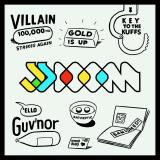
"Key To The Kuffs has aged into excellence in the nearly five years since it first came out" Pitchfork
"On paper, a full collaborative album from NYC's notorious rap villain DOOM and space-age production from Jneiro Jarel can't fail. In practice, it's even better. DOOM is in the form of his life here." Mojo
"Here be GMOs and dead Indians and food and water as a 'secure investment' and an earthquake in Iceland and a discourse on melanin. Here also be the priceless couplet: 'Not to interrupt / But anybody else notice time speeding up?'" 9/10 Robert Cristgau, VICE
"Key To The Kuffs has aged into excellence in the nearly five years since it first came out" Pitchfork
"On paper, a full collaborative album from NYC's notorious rap villain DOOM and space-age production from Jneiro Jarel can't fail. In practice, it's even better. DOOM is in the form of his life here." Mojo
"Here be GMOs and dead Indians and food and water as a 'secure investment' and an earthquake in Iceland and a discourse on melanin. Here also be the priceless couplet: 'Not to interrupt / But anybody else notice time speeding up?'" 9/10 Robert Cristgau, VICE
“My auntie asked me what’s my path?” spits Lord Jah-Monte Ogbon on his debut from the celebrated Lex Records. The lyric relatably references the cross roads he’s at in his current life, especially as someone right on the cusp of rap stardom. “Recently I’ve been thinking more and more about what comes next in my life,” the artist reveals.
It’s fair to say Ogbon’s Lex LP features less of the sh*t-talking court jester of old. Instead, there’s more of an imperfect man re-examining past mistakes so he can avoid any future forks in the road. There’s a particular focus on overcoming heartbreak, inspiring Ogbon to admit he’s haunted by an ex so badly he now needs to call up the Ghostbusters for assistance.
Since emerging in the late 2010s, Lord Jah-Monte Ogbon has consistently lit up America’s underground rap scene and this is thanks to a refreshingly honest writing style. Amid the exquisitely wavy strings of 2021’s The Missing Link / The Sneaky Link, for example, he rapped: “Everyone thinks they’re player, until their bitch doesn’t come home.” Biting and snappy, the nasally vocals carry the playful verve of comedian Richard Pryor bravely excavating personal Demons to solicit giggles.
All this brash, wry Redman-inspired storytelling continues on the new project. Its first single is titled I’m Signed to Lex, Now I’m Up – a name that mirrors what a big moment releasing a project on the label that once housed MF DOOM represents for Lord Jah-Monte Ogbon’s legacy. “I’m really driven by being able to level up and give my family more financial freedom,” he hopes.
And, if auntie asked what his path was right now, what exactly would the rapper say? Lord Jah-Monte Ogbon concludes: “Auntie: this rapping thing feels like it’s finally about to pay off!”
Adventure's self-titled 2000 debut is finally getting the reissue treatment, remastered by Jacob Holm-Lupo. This album got great reviews at the time, and helped kickstart a new Norwegian prog scene. The music was inspired by bands like Kansas, Uriah Heep and Camel, with an added touch of folk music. ADVENTURE is the brainchild of the Norwegian multi-instrumentalist Odd Roar Bakken, who had 23 years of experience in Rock bands playing guitars & mandolins, and singing in bands like Tammatoys and Nordagust until 1990, when he met Nils Larsen, Torkel Aune and eventually the talented guitar player Terje Flessen. They started working together, each time getting closer to the Symphonic sound they aimed for But they still had a hard time finding a singer that could fit their style - until 1995 when they finally met Verbjorn Moen. They soon started work on their self-produced and self-released, self-titled debut album, a process lasting all the way until November 1999, with a release in the year 2000. The album is a great expression of Symphonic Prog - inspired mostly by Camel, but with an added hard rock influence from bands as Ayreon and Uriah Heep. The lineup of their debut album is consists of Odd-Roar Bakken (Keyboards, Acoustic Guitar, Mandolin, Lead Guitar and Backing Vocals), Terje Flessen (Lead Guitars, Rhythm Guitars, Acoustic Guitars and Bass Guitars), Vebjorn Moen (Lead Vocals and Backing Vocals) with some guests like Elisabeth Nilssen and Stine Mostervik on flute and Stein Egil Bratland on drums and backing vocals. ADVENTURE is a rare example of a band that didn't played Progressive Rock by nature: They set out to perform music in the vein of the classic symphonic prog genre - but adding some Norwegian Hard Rock, inspired by the Byron & Thain Uriah Heep line-up, something entirely different manifested itself.
This release resurrects a long-lost cornerstone of Seattle's early grunge history, showcasing Bundle of Hiss, featuring future Mudhoney and TAD guys and singer Jamie lane, one of the genre's missing links. Between 1986 and 1988, when Seattle was still a circuit of small clubs, four-track tapes and bands sharing drummers and singers, Jack Endino went in to record one of the most solid - and most unfairly invisible - outfits of that scene: BUNDLE OF HISS. Two sessions (1986 at Reciprocal and 1987/88 at Audio Design) fell into limbo, stored in the basement of Mudhoney-Drummer Dan Peters and for years they were a kind of pre-grunge legend, everyone knew they existed, but there was no record, until Loveless Records from NYC released both on CD. The second one, Audio Design Sessions, now sees the light of vinyl for the first time, just as it should have come out in the late '80s: a basement document turned into a collectible artifact. For those who want real grunge, not the domesticated version. It gathers the core of those 1987-1988 recordings done by Endino: the moment when the band is tighter, darker and closer to what the press would later call the "Seattle sound": minor-key melodies, thick fuzz, vocals on the edge, and that mix of hard rock, punk and Sabbath-like heaviness we'd later hear in Mudhoney, TAD or early Soundgarden. And Jack Endino himself summed up these sessions: "Vintage Seattle grunge from one of the original practitioners_ I always felt sad that this hard-working band never managed to get a record out and was almost lost to history. It was a pleasure -and a technical pain!- to resurrect all this." Kinda key release of the early grunge days, first-generation material, recorded by the scene's producer, at the exact moment Seattle was shifting from noisy punk to that heavy, shadowy rock that later blew up. It sounds raw, young and dangerous: this is not a polished compilation, it's a snapshot of the scene.
This remastered vinyl reissue of Blind Ear reintroduces The Celibate Rifles' urgent, socially aware punk-rock energy, cementing its place as a cornerstone of Australian alternative rock. 1989 is where The Celibate Rifles take their punk instincts to the next level-garage muscle, surgical precision, and a rock'n'roll pulse that sounds more urgent than ever today. Formed in Sydney ten years ago, the band appears here in full flight: two guitars in constant dialogue, a rhythm section with newfound dynamic range, and a razor-edged vocal that bites without losing melody. The remaster opens up the stereo image, sharpens the six-string detail, and restores to the turntable the physical punch this record demanded from day one; it's the definitive way to (re)discover a key title from the Australian school. The tracklist is pure traction: "Some Kind of Feeling" hits the ground running with speed and focus; "Wonderful Life '88" nails an instant hook and a clear-eyed critique of yuppie culture; and the closer, "O Salvation," lands as an expansive, cathartic statement of intent. Two tracks unusual in Australian rock for their subject matter-"Sean O'Farrell" and "Belfast"-tackle the Northern Ireland conflict head-on and underscore the band's social gaze, while the rest of the album maintains a no-filler intensity. This edition preserves the original LP sequence (the two bonus tracks existed only on the period CD) and stands as an essential piece for collectors and front racks alike: ideal for in-stores, listening bars, and classic alternative rock playlists. If your audience connects with BORED!, Radio Birdman, The New Christs, or The Saints, Blind Ear is an unequivocal yes.
Purple vinyl. With Abyss Calls to Abyss, their third full-length album, Skulld bring to completion a path that began in 2019, a journey through old-school death metal, esoteric mysticism, and radical punk-rooted activism. Written and recorded in 2025, the album unfolds as an eight-track odyssey exploring the furthest edges of human and spiritual experience through a feminist, pagan, and anti-authoritarian lens. The abyss evoked by the album is not only an external, cosmic void, but also an inner, personal, and collective chasm, the place where death and rebirth collide, where wounds and healing, desire and destruction intertwine. Each song delves deep into the essence of being, merging ancestral ritualism, female mythology, social critique, and archetypal symbolism into a single, cohesive vision.
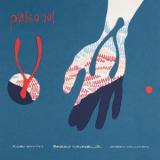
Barry Walker Jr. is a pedal steel player and guitarist whose roots in Americana, Country and Folk traditions influence his melding of minimalism, ambient and spiritual music. The Portland-based instrumentalist is also a member of the Rose City Band, known for his gorgeous phrasing and deft interplay with guitarist Ripley Johnson. On Paleo Sol, Walker demonstrates his singular voice as a pedal steel player and composer. Evoking the American western ranges and basins, the album embodies a longer, geologic view of time that patiently marvels at the ripples of change throughout lifetimes and ages. Walker is joined on Paleo Sol by drummer Rob Smith (Rhytion, Pigeons) and bassist and Mouth Painter bandmate Jason Willmon (Fruited Planes). Paleo Sol"s tranquil landscapes glide, built on warm finger-picked guitar figures and pedal steel swells coupled with deft percussion and bass touches by Smith and Willmon respectively. The trio plays with exceptional fluidity either completing each others phrasing or working together to build momentum. Smith notes: "The drums are not keeping time as much as evidencing its elasticity, mixing into the other instruments, changing phase states." Every gesture on the album is rich with intention, moving with grace and playing with timbre and time.
Forked tongue stuffed deep in their cheek and rubber baby masks stretched over their heads, Ty & the Muggers bottle the free spirits of the Emotional Mugger tour, then heave them into the audience on this stomping BBC performance from 2016. Gloriously guttural and blown-out sonics support Ty"s all-to-the-wall vocal performances on every song. "LIVE" "AT" "THE" "BBC" puts the "sick" back into "satiric" and the "the fuh!?!" back into "FUN!". One side has all the music, the other side"s got a rendering of the babyman mask that"s haunted so many punters over long nights of the soul since then.
The rubber of ER Jurken"s pure pop fantasias meets the road on his second album, aided and inspired by a power trio of players from Chicago"s Junegrass to crank it up and out of the park. Paul Von Mertens" string and horn arrangements highlight the gritted teeth and dripping sweat that belie Ed & Co"s easy riding rock, while Jurken"s heavenly vocal choir provides balm to transcend and defy the stings of everyday misfortune.
Continued Sound is proud to present The Shadow by Ojiji.
In 1979, Rupert “Ojiji” Harvey put out one of the most distinctly original albums of a generation. Combining progressive jazz-fusion arrangements with soul, funk, and reggae from his native Jamaica, Ojiji’s The Shadow is an album only he could create.
Ojiji, along with his brother Carl, were performing in nightclubs before they were old enough to legally enter. At just 15, Ojiji was tapped by reggae keyboard legend Jackie Mittoo to join his band The Cougars. Not long after, the Harvey brothers teamed up with other Cougars members to form the funk band Crack of Dawn. This union proved to be groundbreaking, not just in the soul/funk genre, but for Canadian music as a whole. In 1975, they were signed to a major label, Columbia Records, the first Black Canadian band in history to do so. Tracks like “It’s Alright” and “Keep the Faith” still echo in the halls of Canadian funk history.
Personal and industry differences caused Crack of Dawn to break up in 1977, and a young Rupert Harvey was without a band for the first time. However, the creative mind never rests. Outside of the band, Ojiji had been writing and composing his own personal songs since age 17. These songs were a fusion of the sounds and styles he’d soaked up during his time with his musical mentors mixed with new emerging musical influences he was hearing every day.
With the help of his brother Carl and some Crack of Dawn bandmates, he began recording his debut solo album The Shadow. The band's tightness heard in the intricate arrangements are a testament to their interwoven musicianship at the time. Many tracks were recorded in only one-take. Each song in The Shadow’s eclectic glory paints a picture of a young man's singular lived experience through music. Regaling us with where he’s been. Inviting us to where he’s going.
Robin Pecknold brings light to the bleakest of winters with Fleet Foxes' 'A Very Lonely Solstice,' a 13-track career spanning collection recorded in December 2020, at Brooklyn, NY's St. Ann & the Holy Trinity Church. Now being released for the first time on vinyl, CD and digital formats, 'A Very Lonely Solstice' captures a poignant moment in time. The recording was originally broadcasted as a live-stream event on the winter solstice of 2020, just days after New York declared a state of emergency tightening restrictions again in response to increasing COVID-19 cases. Pecknold describes the set as "me by myself on the longest night of the year... honoring the loneliness of 2020 with a nylon string and some songs new and old." Fans worldwide tuned in while quarantined at home, finding solace and a sense of community in a period of extreme isolation. Much of 'A Very Lonely Solstice' showcases a solo focus on Pecknold who offers up acoustic arrangements of fan-favorite songs spanning Fleet Foxes' catalog. Selections cover all four of the band's studio albums, including their 2008 self-titled debut album ("Tiger Mountain Peasant Song") to 2011's Helplessness Blues ("Blue Spotted Tail") and 2017's Crack-Up ("If You Need To, Keep Time On Me"), all the way to their latest release, Shore. Resistance Revival Chorus joins Pecknold on Shore tracks "Wading In Waist-High Water" and "Can I Believe You." Also featured: a cover of Nina Simone's "In The Morning" and a rearrangement of the traditional "Silver Dagger."
If you've been following the Payfone story over the last 13 years, you'll know that Phil Passera and Jimmy Day's long-running collaborative project has specialised in one-off musical morsels - sublime songs cooked up in cahoots with all manner of guest musicians and vocalists. Never ones to rest on their laurels, Day and Passera have now delivered a full six-track tasting menu in the shape of Lunch, their hotly anticipated debut album.
Recorded over an 18-month period at Passera's Barcelona studio and Day's studio in Brighton, Lunch is an unsurprisingly assured and musically detailed affair that's entirely made up of previously unheard songs. Unlike acid-flecked recent single 'Volt To Volt', which delivered a tweaked take on late 1980s house music, the album's six tracks showcase the trademark sound the duo has been developing since first joining forces 13 years ago.
Trawl back through Passera and Day's high-quality catalogue, which includes outings on Leng, Golf Channel Recordings and Defected as well as their own OTIS imprint, and that distinctive musical recipe becomes clear. Rooted in their love of classic drum machines and their trusty JUNO-60 synthesiser, the Payfone sound combines equal amounts of electronic and organic instrumentation, warm and inviting downtempo and mid-tempo grooves, and pertinent and thoughtful lyrics delivered with panache by an impressive roll call of guest vocalists.
Lunch, then, is a standalone sonic statement - an initially vinyl only album on their own OTIS imprint - that continues this impressive lineage. Like all Passera and Day's collaborative work, it is free of samples, with the pair preferring to create their own sounds from scratch. Opener 'Movin' On', featuring the honeyed vocals of former XL Recordings artist Willis Earl Beal AKA Nobody and slap-bass from Jo Gabriel Harris (who also features on three other songs across the album), is a deep and effortlessly evocative mid-tempo delight that perfectly sets the tone for what's to come.
Brooklyn-born April Pittman and Russian/Armenian vocalist Zara Kian lend their talents to woozy, sun-baked shuffler 'Paperman' before regular Payfone collaborator Ludmilla Rodriguez headlines 'Joan of Arc', a veritable Mediterranean breeze rich in tumbling analogue synth synths, elastic bass and tumbling guitar solos. Those yearning for a touch of lightly disco-flecked dancefloor heat will savour 'Spend The Night', where Los Angeles singer Collette Tibbetts AKA Carmella The Balls, accompanied by virtuoso keys courtesy of Parisian pianist Gabriel Cazes, rises above a sweet, melodious, dub disco-adjacent backing track. In contrast, 'Pamela' is low-slung and hypnotic, with 'Sofian' vocalist Barbara Alcindor ushering us through a deep, heady groove-scape.
Fittingly, Passera and Day round off Lunch via a vibrant and potent sweet treat, 'Pony Bar'. Headed up by the J.J Cale-esque lead vocals of man of mystery Leon Lace, the pedal steel-sporting song joins the dots between dusty Americana, kaleidoscopic Balearic beats and lilting, slow-motion disco. Like the rest of the album, you'll be thinking about it long after you've washed down the last few musical mouthfuls.
out of Stock
Last delivered 3 months ago available to reorder, subject to availability
'In 2023, sound artist and composer Weston Olencki toured across the American South. Beginning in their hometown in South Carolina, they snaked a circuitous path from the mountains of West Virginia to the banks of the Mississippi River. As the miles accumulated, so did the initial seeds of new work.
'Instruments and artifacts they acquired hitched a ride in the backseat, while songs and sounds filled their portable recorder: water in its various states, the familiar insectoid buzz of those summer nights, trains cutting through the landscape, the traditional music that lived alongside the communities that kept it. Olencki took it all in, and over time, found ways that these experiences coalesced into a bramble-like perspective of time, where past, present, and future intersect in ways both barbed and beautiful.
'Broadsides, Olencki’s newest solo full-length is the multilayered result of this journey. The album follows their landmark release Old Time Music from 2022, which presented radical interpretations of traditional tunes from Appalachia and throughout the South alongside original compositions that drew significantly on archival recordings. On Broadsides, Olencki rejects delineations between the unmoored avant-garde and the rootedness of one’s cultural heritage, revealing their porous and intertwined nature. “My mother was a quilter. Her mother before that,” they write in the album’s liner notes. “Quilting, like music, is a practice of embedding knowledge and remembrance into the very core of the thing you are making. It’s not just about the materials, but how they’re reassembled, recontextualized, stitched, woven to form new patterns - the minutiae of craft holding significance to those looking to find it. Stories woven from stories, never told the same way twice.”
'Like all great road trips, Broadsides unfolds slowly and continuously, with moments of dramatic reverie punctuating the endless melt of highway in the rearview. We’re immediately confronted by the uncanniness of revisiting old haunts, as Southern storms break through the initial churn of the freight locomotives of Alabama. Olencki’s interpretation of the bluegrass standard “Foggy Mountain Breakdown” captures the euphoria of melancholy in motion. The permutational plucks of banjo are bounced around the frame by a computer, its pitches determined within algorithmic sequences and transcriptions of classic three-finger licks. The tonalities of old-time are smeared and stretched until all that’s audible is the insistence that Heaven might be real.
'In the album’s second half, “Omie Wise,” a murder ballad made famous by Doc Watson, follows an interlude recorded on the river in North Carolina in which the titular character’s body was laid. Ghostly echoes of a dozen other renditions float through the substrata as Tongue Depressor’s Henry Birdsey accompanies them on the pedal steel guitar. The album’s central composition, “all my father’s clocks,” is a profound meditation on entropy and impermanence. The sound of their father’s extensive clock collection ticks away as Olencki pulls a bow across the length of an autoharp sourced from a rural strip mall. The instrument was left as detuned as it was found, the resonance of its deep bass drone and clanging high-end the result of years of neglect and the warping effects of Southern humidity.
'Historically, broadsides were an early form of broadcasting, an often- musicalized telling of current news pasted in the public square. The name was later taken up by Sis Cunningham and Gordon Friesen in the 1960s, whose Broadside magazine published songs and social commentary when American folk music resurfaced as an urgent way of communicating the multifaceted politics of its time.
'Olencki borrows the phrase to recall both this old form of songmaking and that later prominent reexamination of traditional music’s role in modern life, but also to draw attention to the fragmented and machine- mediated way heritage is diffused in this very different, but no less pivotal, moment.
'As a sanitized past is used as justification for current violence and domination, we can turn to these artifacts to better understand the history of ourselves, but only if they are consciously pushed to evolve. Broadsides represents one personal, striking vision of what far-flung futurisms could be respun from = these high, lonesome sounds: a reflection of the unbridled joy and deep sorrow inherent to living together through time, and a desire to push further into the untold and unknown.'
Kashyyyk was originally released in late 1995. Each copy was recorded onto a blank cassette, almost never new. We'd find boxes of tapes at flea markets and dub the demo over one side of them. Never knew what was on the other side. The collage on the cover evolved over time. Early copies had a sparse cover and later copies had a cover collages like this one. The text also changed over time. Edits were made, the thanks list grew, and the address changed. The text on this rereleases is the same as the last copies made in the '90s, with only tiny changes. Three of these songs were recorded in August of 1995 and originally released as the 8D8 demo. We made an unknown number of copies before we recorded again with Matt on guitar. We added our three new songs to the old and named the demo demo after Chewbacca's home planet. The other collages were put together specifically for this 30th anniversary release. Bonus track: Gage recorded January 19, 1996. This is the original version with Matt on vocals. Gary re-recorded the vocals before it was released on Cry Now Cry Later vol. 4.”—Noothgrush
Although they emerged from Melbourne bayside outer suburbs onto the local live scene with their fresh and spirited indie-rock update of the garage-beat sounds of The Easybeats, Kinks and early Beatles only a year or so ago, Gnome actually started out as a bedroom solo project for teenaged singer/songwriter/ guitarist Jay Millar a few years back. Jay, playing everything himself, started recording and releasing a steady succession of material - quite a few albums' worth - on his own Goblin Records label via Bandcamp. Realizing he needed a band to start playing out, Jay approached some like minded players from Frankston's rehearsal hub Singing Bird, and with Jay on lead vocals and lead guitar, Ned Capp on guitar, Olly Katsianis on bass, and Ethan Robins on drums, Gnome became a band.
Early in 2025, the last solo Jay recordings released under the Gnome name caused something of an international underground sensation when the Bandcamp only I Like It EP - four songs of kranked up Kinks-style mono riffage - was posted by a Spanish garage-punk YouTube page and quickly clocked up over 50,000 views.
At the same time, the band quickly began gaining attention on the thriving Frankston scene and around Melbourne. They started breaking out, sharing bills with the likes of Drunk Mums, Skegss, Split System, The Prize, The Unknowns, Cosmic Psychos, Hockey Dad, Guitar Wolf, The 5.6.7.8's, The Breadmakers, Loose Lips, fellow Frankstoners/Singing Bird alumni The Belair Lip Bombs, and, on a quick trip to Sydney, Cammy Cautious & The Wrestlers.
And now, finally, we have The Gnomes' debut album. Twelve killer tracks that combine the best of the '60s with the best of today. Twelve killer tracks that show off assertive and accomplished songwriting, singing and playing and an explosive and authentic swinging group sound. Twelve killers slices of raw rock'n'roll running the gamut from the savage Rhythm & Blues of "Play With You" and “Better With You” to the vibrant beat pop of "I'll Be There" and "I'm Not The One", with forays into the heavy reverb psych of "Stung", the Cavern/Star Club stylings of "Flippin' Stomp" and the first flyte jangle of "Time Will Tell" along the way. There’s more of course, including a new version of that Kinks-style kranker “I Like It” for good measure.
Frankston’s Fab Four are taking their sound to the world. Join them for the ride!
With a GRAMMY nomination and years of touring experience, this female- forward string band releases a career- defining album with Magic Accident . Longtime supporters of women in roots music, Della Mae teamed up with producer Alison Brown for this new release, their first on Nashville-based Compass Records. Magic Accident showcases the band's range of talents, from Americana songs that evoke early Chicks to energetic bluegrass and dreamy indie folk-inspired tunes.
The band's vocal power and instrumental skill shine throughout this mostly original collection, with standout tracks including "Out Run 'Em," written by guitarist Avril Smith and featuring champion fiddler and band founder Kimber Ludiker, "Lifeline," sung by bassist Vickie Vaughn, and the title track, written and sung by Celia Woodsmith. Guest artists on the project include Mary Bragg (vocals) and Jen Gunderman (accordion), with Brown playing banjo and guitar throughout. Since forming in Boston in 2010, Della Mae has proved to the roots music world that an all-women band is no novelty. Their 2013 Rounder Records release, This World Oft Can Be, earned them their first GRAMMY nomination for Best Bluegrass Album. That same year, the International Bluegrass Music Association named them Emerging Artist of the Year. Della Mae has performed in over 30 countries on behalf of the U.S. State Department. They are favorites on the roots music circuit, where their highenergy performances always get audiences on their feet, inspired by the power of their music and message. Available on turquoise coloured vinyl with 4-page folder and digipak CD editions
Ailise Blake explains the deep, personal meaning behind the album's title, "Soave": "I titled this album "Soave" not only because of the sound of the word itself, which to my ears sounds like the wind, but because for me, soave is what we perceive silently beneath the action of everyday life, that veil of calm and stillness found when we stop to listen to ourselves; it represents the light and the tenderness, yet it is still and untouchable, it is alchemical, it is transcendental, it gives a sense of peace completely subjective to the mind that perceives it."
The album brings together the best songs from the 45 tracks he has been working on recently and shows why Melle is one of the most sincere voices on the Dutch music scene. 'Before I Lose It' is raw, personal and direct. The album is a search for identity and authenticity in sound and lyrics. The album shows that Melle not only seeks authenticity in his music, but also dares to share personal stories in his lyrics. From his long-term relationship to the search for identity and social awareness, he tackles topics such as inequality, discrimination and the influence of capitalism on our daily lives, without ever becoming cliched. This mix of intimate and socially conscious themes makes "Before I Lose It" both relatable and profound
“Yeah Yeah Yeah just arrived out of the blue. I just took a chance. I had some ideas for a new album I’d been working on, but we weren’t planning on recording until the year after. It all happened very fast. There was a window of opportunity- youth was free, the studio was free, and the band were free- and I thought, let providence prevail. No one had heard the songs apart from myself and Alan McGee, but we both thought that we had something. You could feel it, even though none of the songs were really finished, and so we decided to roll with it and go and record them. I think with Yeah Yeah Yeah it was more than just trying to capture a vibe- it was about trying to record something majestic, which is how youth describes the record. There are gospels and strings on tracks like Free Love and don’t look away, which have kind of turned into these massive anthems. It has P.P. Arnold as a featured vocalist on a couple of tracks- the first, the single poison vine, which has a groove and a blistering chorus. She’s also on another song that’s a psychedelic funk track: the way it’s gotta be (oh yeah). Songs like Teardrops or Birds Heading South- we’ve tried to capture that classic, slightly
Wistful theme- whereas the weight of the world just rocks out. There’s also a little acoustic track to break it all up called the devil and the deep, which is a favourite of mine. We recorded the album over in Spain at space mountain, Youth’s studio, way up in the mountains, just as the almond trees were in blossom- which I took as a good omen for the session”.
“Yeah Yeah Yeah just arrived out of the blue. I just took a chance. I had some ideas for a new album I’d been working on, but we weren’t planning on recording until the year after. It all happened very fast. There was a window of opportunity- youth was free, the studio was free, and the band were free- and I thought, let providence prevail. No one had heard the songs apart from myself and Alan McGee, but we both thought that we had something. You could feel it, even though none of the songs were really finished, and so we decided to roll with it and go and record them. I think with Yeah Yeah Yeah it was more than just trying to capture a vibe- it was about trying to record something majestic, which is how youth describes the record. There are gospels and strings on tracks like Free Love and don’t look away, which have kind of turned into these massive anthems. It has P.P. Arnold as a featured vocalist on a couple of tracks- the first, the single poison vine, which has a groove and a blistering chorus. She’s also on another song that’s a psychedelic funk track: the way it’s gotta be (oh yeah). Songs like Teardrops or Birds Heading South- we’ve tried to capture that classic, slightly
Wistful theme- whereas the weight of the world just rocks out. There’s also a little acoustic track to break it all up called the devil and the deep, which is a favourite of mine. We recorded the album over in Spain at space mountain, Youth’s studio, way up in the mountains, just as the almond trees were in blossom- which I took as a good omen for the session”.