S
oundtrack-Klassiker zum Kultfilm – neu aufgelegt auf rotem Vinyl
Monty Python’s The Meaning of Life erschien 1983 als Soundtrack zum gleichnamigen Film – und ist nun zum ersten Mal seit Jahrzehnten wieder erhältlich, diesmal als rote Vinyl-Edition.
Die Platte ist ein wilder Mix aus Sketchen, Songs und absurden Zwischenspielen – darunter „Every Sperm Is Sacred“, „Galaxy Song“ und das schräg-romantische „Penis Song (Not the Noël Coward Song)“. Ergänzt wird das Ganze durch Bonus-Dialoge, Soundeffekte und Auftritte von Michael Palin und Terry Gilliam, die eigens fürs Audioformat eingespielt wurden.
Ein absurdes, geniales Hörerlebnis – ganz in Monty Python-Tradition.
Human Leather have always been a ferocious live act, unbelievably loud for a 2 piece. Their gigs are often an overwhelming wall of sludge, howls and amphetamine-addled drums, with spectators flying joyously around the pit. Previous recordings did full justice to the impact of the live show; however, the second helping is something else. On Here Comes the Mind, There Goes the Body the sludge is still present, rising, and lapping at your ankles, but there's a new clarity showing off exactly how f*cking good those riffs are. There are ear worm riffs for days, shout along vocals that roar, shriek and reform into a Greek chorus, drums that thump you repeatedly in the chest and then the whole thing vanishes in just under 30 minutes, leaving you bruised, deafened and with Some Questions about your life. Squint your ears a bit and you'll hear the influences of bands like Karp, Torche and Big Business but they're thrown into a much crustier stew. The lyrics span a variety of political issues, not limited to the landed gentry, global warming and consumerist harbingers of doom. Importantly the songs are also not afraid to discuss class issues (unlike many political bands who you suspect have a much sturdier security net). While this could easily feel preachy, every line is delivered with the knowing wink of the underdog and good humour (I am going to smile every time I think of "clod damn" or "QVC Hands" staring up at me from the lyric sheet), and the vibes are as they've always been in difficult times - "we know we're fucked, tonight we mosh, tomorrow we march". And what is the point of a revolution you can't dance to? Speaking of dancing, the final track features an honest-to-god dance beat, acid squelches and disembodied vocal samples, pointing to an alternative universe in which Human Leather are a heavy electroclash band. Here comes the record of the year, bring what is left of your eardrums. You didn't need that body anyway
If you're a serious music fan but not a native Kiwi, your first awareness of New Zealand's fab music scene may have come from the debut of The Chills' mesmerising Kaleidoscope World collection of early singles. Within a few years, a great number of NZ acts saw music released by various UK and US labels . . . generally to great praise and enthusiasm. That this occurred without any of these acts having to move abroad to further their chances was nearly as delightful a feat as the music itself. The exception to this was Dead Famous People, radical in a snap decision after a five-song 12" for Flying Nun, Lost Persons Area, to change hemispheres and make a go for it in London. It started well. Three London recordings were added to three from their Flying Nun EP and put out by Billy Bragg's Utility label - about as perfect a mini-album as there's ever been. Response was positive, more songs recorded, the group did a John Peel session and played out often, but the vaguely impoverished group began to fall apart. Singer and primary writer Dons Savage - determined to make it - had a near-miss at becoming Saint Etienne's singer on an early take of their 'Kiss And Make Up' cover, and there was a fine performance from her on The Chills' 'Heavenly Pop Hit' . . . but dismay had set in. Upon learning of her mum's passing back home, Dons returned to NZ and was quiet for decades. Most of their London recordings were later released later in minuscule quantities by very small labels, but these saw scant press or attention and enjoyed next-to-no sales. Their moment had passed, and the band has suffered the strange fate of being the least-known of the truly brilliant acts associated with Flying Nun. Listening to these `lost' songs, it seems unfathomable that they could have fallen by the wayside. No NZ songwriter comes as close to equalling Martin Phillipps' pop brilliance as Dons. Her superbly sweet vocals, delicious harmonies and sophisticated arrangements aside, the songs dealt perceptively with universal follies of youth and yearning in tandem with a then-unusual twist of lyrics dealing matter-of-factly with her sexuality at a time when `women's music' was seen as exclusionary (segregated into its own bin in shops, if it existed there at all), and the riot grrrl movement was years away, later breaking through due to its radical stance. Dons is a pioneer in myriad ways, the irony of her transcendent brilliance failing to propel a greater career may rest in the fact that she leapt to the head of the class too quickly for people to grasp it; a fate that's befallen so many musical geniuses acknowledged today but less in their time - something rather tragically acknowledged in old pal Martin Phillipps' song with The Chills, 'A Song For Randy Newman, Etc.' None of these thirteen songs fails to deliver something both immediate and unique. And we're proud to debut 'Vampirella"', a magical fantasy song of longing and intrigue - surely one of the most perfect tunes to ever sit around unreleased for decades! Dons is again busy conjuring new songs; in the meantime we're delighted to unveil these obscure gems from the past.
A unique sonic journey blending jazz, candombe, dub, hip-hop, and electronic music. Written, sequenced, and recorded by Ian Lampel (Uruguay), the album captures Montevideo's vibrant essence with innovative beats and deep roots. Embark on a sonic journey through the rich tapestry of Ian Lampel's multicultural heritage with his debut solo album, "The Parque Rodó Tapes." From the echoes of his grandparents' wartime exodus from Europe's tumultuous past to the rhythms of daily life in Parque Rodó, Lampel's artistic vision was shaped by a kaleidoscope of influences: Science fiction and fantasy books, graphic design annuals, comics, films, early computers and videogames as well as music; the haunting melodies of Russian and Polish classical composers hummed by his grandmother while cooking, the choir and hammond music of the synagogue, his early explorations in club music and dub or the syncopated drumming of candombe and carnaval echoing in the streets of Montevideo. The composer, producer and bass player, wrote, sequenced and recorded practically everything that is heard throughout the album. With meticulous attention to detail, he has crafted a sonic landscape that seamlessly blends elements of jazz and Uruguayan music with the innovative spirit of dub, hip-hop and electronica; from the infectious rhythms of candombe and the raw energy of murga, to breakbeats, moog's and samples. Drawing from a treasure trove of samples collected over two decades, "The Parque Rodó Tapes" weaves together a tapestry of sound that is both nostalgic and forward-thinking, from the haunting voice of Marosa Di Giorgio and the vibrant cacophony of a carnival field recording by Lauro Ayestaran, to the guest contributions from notable musicians including Lampel's wife, singer/songwriter Eco Lopez, multi-instrumentalist Luciana Giovinazzo on flute, and Ferna Nunez on repique drum. Each track is a testament to Lampel's eclectic vision. A debut album with a certain degree of melancholy that works as a soundtrack to the world in which the artist grew up, a world now gone, without cellphones or social networks, in which everything had to be proactively pursued "in the streets".
Shelter is a Hardcore punk band formed by Ray Cappo. After releasing previous works through independent labels, the band signed a deal with the legendary heavy metal and hard rock label Roadrunner Records. Originally released in
1995, the critically acclaimed album Mantra was the first
release by the band on the label.
By the time Shelter released the album Mantra, the punk rock scene was in evidence in America, especially in California, with bands like Bad Religion, Rancid, The Offspring and Green Day achieving mainstream popularity.
With Mantra the band moved away from the more punk pop style and created a melodic hardcore style. The song Here We Go' became an anthem. Lyrically the album focused mainly on Hare Krishna philosophy and the problems the Western Civilization creates. The first song, Message of the Bhagavad', is introduced by an excerpt of a Bhagavad Gita verses reading.
This classic album is now finally available again on vinyl!
Freak Show is the second album by the popular Australian band Silverchair, which charted in different lists all over the world (US, UK, Australia, Canada and many more). After their debut Frogstomp they were fusing more elements together in their music. Freak Show contains a lot of strong hooks and the song writing skills increased. This post-grunge album is more versatile in comparison to their earlier work and it marks the beginning of the definitive band sound.
Silverchair were an Australian rock band formed in 1992, who have sold over 9 million albums worldwide. Their sounds evolved during the years from the grunge and alternative rock to pop and art rock. In 2011 they announced their “indefinite hibernation” and it is still unknown if they ever going to return on stage.
Freak Show is available as a limited edition of 5000 individually numbered copies on flaming (red & yellow swirled) vinyl.
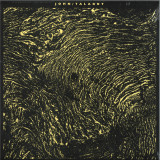
If there is one person, who has been causing a stir on the international club circuit recently, it is Barcelona's John Talabot. Already his debut “My Old School“ (which is meant literally by the way) on Permanent Vacation in 2009 and shortly after that the single “ Sunshine”, which he put out on his own Hivern Disc imprint, made him one of the most promising musicians of the Spanish electronic scene. And those two releases also already set the mark for John Talabot’s unparalleled music: raw, loopy, heavy on the kick drum, sample based, moderate on the tempo, distorted on the drums and light years away from the clean and ever revolving house sound of today. This unique style which also blends influences from afro beat, Detroit techno, Chicago house and cosmic disco, but also northern soul or the energy of Flamenco, immediately turned some heads around. James Murphy, Âme and Aeroplane started including Talabot music in their sets like it was the most natural thing. However - and this is quite rare - he not only gained legions of fans in the house and disco community, but also amongst the leftfield pop and indie rock followers. NME and Resident Advisor both had “Breakthrough“ features on John Talabot and he can be proud of a “Best New Music“ dubbing on
Pitchfork. (Being rather elusive on showing his face in magazines or the web it also came to some funny rumors that John Talabot was the alter ego of a well-known techno producer from Detroit).
At the same time he drew the attention of like-minded artists like James Holden and Luke Abott from Border Community, Blondes or Delorean, which lead to a bunch of fertile collaborations: Luke Abbott and Blondes remixed Talabot’s “Sunshine“ single , John Talabot remixed a track by Delorean and vice versa Delorean’s Ekhi contributed vocals to the track “Journeys “ on John’s album). Another example is the Young Turks Label (home of Jamie XX, Holy Fuck, El Guincho or SBTRKT ) on which he released the “Families“ EP in 2010. It was praised beyond limits. Pitchfork for
instance hailed: “… where pop and house influences sweetly buffer up against one another to provide an unyielding sense of elation“ and even brought Talabot a comparison with artists like Four Tet or Caribou.
While staying true to his sound, John Talabot has nevertheless shown a constant evolution as a producer since his first release. He has traced a solid musical path that has turned him into one of the big references of European House and has made him also a highly in demand Remixer (for the likes of The XX, Francesco Tristano’s “Aufgang” project, Shit Robot on DFA, Thaiti 80, Joakim or Teengirl Fantasy to name just a few ).
A progression that now crystallizes in “ƒin”, his first full-length album for Permanent Vacation. A record, in which the Barcelona mastermind sets aside the danceable immediacy to expand his stylistic palette more than ever. For that purpose, Talabot melts all the elements that have constructed his distinctive sound until now and makes them emerge from a new perspective, in which the construction of complex song structures, intricate rhythms and superpositions of ever-evolving melodies and atmospheres pick up the baton of the “a kick-drum and a sampler” philosophy of his initial productions. The result brings us 11 tracks (we should call them songs really!) dominated by dark ambiances, gaseous textures and bittersweet moods that, above all, reveal a kind of vivacity that’s really hard to find in contemporary electronics. “Fin” is far from being a track collection. From the majestic opener “Depak Ine“ to it’s solemn ending with
“So Will Be Now“ , one of the two tracks that features Talabot’s soul and label mate Pional, each song traces an overall dialogue with the rest, culminating a highly emotional journey through Talabot’s always compelling and unique musical vision.
out of Stock
Last delivered 6 months ago available to reorder, subject to availability
JUST. LIFE. is FDC's second endeavour after their 2022 debut 'Some Kind Of Wisdom'. The A-side draws inspiration from everyday life. Things that are often overlooked. Birds whistling. Just being somewhere spending time together. Whereas the first 4 tracks open up a can of playful jazz the B-side explores more heavy conceptualizations. Birth and love for a child & the passing of a friend. Life and death. The cyclicity of it all.
Fruit Distro Collective is a project by long-time friends Boris van der Hoff & Tristan Coco. Raised on boombap beats, schooled through Jazz composition and inspired by Afro & Latin styles. Pour some reel-to-reel tape sauce over it et voilá.
To All That We Lose And All We Fight For is the debut album by Vera Logdanidi - the
culmination of nearly two decades of musical evolution. Her journey began in the world of drum & bass and jungle, gradually expanding into deep explorations of house, dub techno, and techno. Over the years, Vera has performed on leading stages across Ukraine and internationally, while also mentoring a new generation of DJs and producers, hosting radio shows, and supporting the scene through her label and community work.
This album was written during a time of deep upheaval. The outbreak of full-scale war forced Vera to leave behind a well-established life and begin again on the international stage. While the music often feels dreamy and introspective, To All That We Lose And All We Fight For is a profoundly personal record - a sonic refuge shaped by grief, uncertainty, and resilience.
The album doesn't follow formulas; it's driven by intuition, texture, and a genuine connection to sound. It's rich, emotional, and occasionally unexpected. The tracks form the core of Vera's current live set, which has resonated at major festivals such as Draaimolen or Strichka - captivating audiences with its depth and subtle, immersive energy.
The cover art, created in close collaboration with Vera's longtime visual team, is a real
photograph - not a digital effect. It captures the tension between anxiety and hope: a glance back, and a step forward into the unknown. This visual metaphor reflects the emotional landscape of the album - the fragility of what's been lost, and the courage to embrace what lies ahead.
This release also marks a new chapter for Rhythm Buro Records - one that moves towards music that is more personal, intimate, and unconstrained by expectations.
To All That We Lose And All We Fight For is released alongside another important Rhythm Buro release: RB011 - Your Curves EP by Na Nich. Ukrainian producer Oleksandr Pavlenko, formerly known as Sunchase, returns to his roots in broken beats and bass music, blending them with house and techno sensibilities. The four-track EP ranges from deep grooves to melancholic late-night moods - a compelling counterpoint to Vera's album and a testament to the label's evolving identity.
Order RB012 n
out of Stock
Last delivered 5 months ago available to reorder, subject to availability
After a ten-year absence that left a palpable void in the hearts of millennial emo kids, MOTION CITY SOUNDTRACK are finally back-and yes, it"s everything we hoped for. The Same Old Wasted Wonderful World feels like coming home: a dizzying, emotionally articulate blast of guitar-laced pop-punk that reminds us why this band meant so much in the first place. It"s a sonic time machine, sure, but it never gets stuck in the past. Instead, it builds on it-older, a little bruised, but somehow more alive. Justin Pierre"s voice still wobbles gloriously between a scream and a sigh, only now it carries the weight of experience, not just anxiety. Rather than reinventing themselves, MOTION CITY SOUNDTRACK double down on what they"ve always done best: big hooks, bigger feelings, and that perfect tightrope walk between chaos and control. Tracks like "Particle Physics" (with Patrick Stump of Fallout Boy) and "Your Days Are Numbered" (featuring Mat Kerekes of Citizen) channel the kind of clarity that only comes after surviving your own worst years. In a world drowning in lazy nostalgia, The Same Old Wasted Wonderful World is a rare and welcome return that feels less like a reunion and more like a long-overdue continuation.
After a ten-year absence that left a palpable void in the hearts of millennial emo kids, MOTION CITY SOUNDTRACK are finally back-and yes, it"s everything we hoped for. The Same Old Wasted Wonderful World feels like coming home: a dizzying, emotionally articulate blast of guitar-laced pop-punk that reminds us why this band meant so much in the first place. It"s a sonic time machine, sure, but it never gets stuck in the past. Instead, it builds on it-older, a little bruised, but somehow more alive. Justin Pierre"s voice still wobbles gloriously between a scream and a sigh, only now it carries the weight of experience, not just anxiety. Rather than reinventing themselves, MOTION CITY SOUNDTRACK double down on what they"ve always done best: big hooks, bigger feelings, and that perfect tightrope walk between chaos and control. Tracks like "Particle Physics" (with Patrick Stump of Fallout Boy) and "Your Days Are Numbered" (featuring Mat Kerekes of Citizen) channel the kind of clarity that only comes after surviving your own worst years. In a world drowning in lazy nostalgia, The Same Old Wasted Wonderful World is a rare and welcome return that feels less like a reunion and more like a long-overdue continuation.
out of Stock
Last delivered 6 months ago available to reorder, subject to availability
Can a self-portrait be a collage? Can empathy be autobiographical? What's the point of living if we're not trying to understand all the horror and humor that surrounds everything? These are a few of the questions lurking under the bleachers of Wednesday's new album Bleeds, an intoxicating collection of narrative-heavy Southern rock that_like many of the most arresting passages from the North Carolina band's highlight reel so far_thoughtfully explores the vivid link between curiosity and confession. Bleeds is not only the best Wednesday record_it's also the most Wednesday record, a patchwork-style triumph of literary allusions and outlaw grit, of place-based poetry and hair-raising noise. Karly Hartzman_founder, frontwoman, and primary lyricist_credits Wednesday's tightened grasp on their own identity to time spent collaborating on previous albums, plus a tour schedule that's been both rewarding and relentless. "Bleeds is the spiritual successor to Rat Saw God, and I think the quintessential `Wednesday Creek Rock' album," Hartzman said, articulating satisfaction with the ways her band has sharpened its trademark sound, how they've refined the formula that makes them one of the most interesting rock bands of their generation. "This is what Wednesday songs are supposed to sound like," she said. "We've devoted a lot of our lives to figuring this out_and I feel like we did." Just like Rat Saw God, one of the defining rock & roll records of the 2020s so far, Bleeds came together at Drop of Sun in Asheville and was produced by Alex Farrar, who's been recording the band since Twin Plagues. Hartzman again brought demos to the studio, where she and her bandmates _X andy Chelmis (lap steel, pedal steel), Alan Miller (drums), Ethan Baechtold (bass, piano), and Jake "M.J." Lenderman (guitar) _ worked as a team to bulk-up the compositions with the exact right amounts of country truth-telling, indie-pop hooks, and noisy sludge. More than ever, the precise proportions were steered by the lyricism_not only its tone or subject matter, but also the actual sound of the words, as well as Hartzman's masterfully subjective approach to detail selection. Every image or scene is filtered through Hartzman's agile, writerly brain. The particulars deemed essential all contain revelations about Hartzman's specific obsessions and vulnerabilities, about the fragmented way she processes the world. Maybe sometimes the best way to locate truth or pain or dignity within your own life story, Bleeds suggests, is by crawling into someone else's.
Can a self-portrait be a collage? Can empathy be autobiographical? What's the point of living if we're not trying to understand all the horror and humor that surrounds everything? These are a few of the questions lurking under the bleachers of Wednesday's new album Bleeds, an intoxicating collection of narrative-heavy Southern rock that_like many of the most arresting passages from the North Carolina band's highlight reel so far_thoughtfully explores the vivid link between curiosity and confession. Bleeds is not only the best Wednesday record_it's also the most Wednesday record, a patchwork-style triumph of literary allusions and outlaw grit, of place-based poetry and hair-raising noise. Karly Hartzman_founder, frontwoman, and primary lyricist_credits Wednesday's tightened grasp on their own identity to time spent collaborating on previous albums, plus a tour schedule that's been both rewarding and relentless. "Bleeds is the spiritual successor to Rat Saw God, and I think the quintessential `Wednesday Creek Rock' album," Hartzman said, articulating satisfaction with the ways her band has sharpened its trademark sound, how they've refined the formula that makes them one of the most interesting rock bands of their generation. "This is what Wednesday songs are supposed to sound like," she said. "We've devoted a lot of our lives to figuring this out_and I feel like we did." Just like Rat Saw God, one of the defining rock & roll records of the 2020s so far, Bleeds came together at Drop of Sun in Asheville and was produced by Alex Farrar, who's been recording the band since Twin Plagues. Hartzman again brought demos to the studio, where she and her bandmates _X andy Chelmis (lap steel, pedal steel), Alan Miller (drums), Ethan Baechtold (bass, piano), and Jake "M.J." Lenderman (guitar) _ worked as a team to bulk-up the compositions with the exact right amounts of country truth-telling, indie-pop hooks, and noisy sludge. More than ever, the precise proportions were steered by the lyricism_not only its tone or subject matter, but also the actual sound of the words, as well as Hartzman's masterfully subjective approach to detail selection. Every image or scene is filtered through Hartzman's agile, writerly brain. The particulars deemed essential all contain revelations about Hartzman's specific obsessions and vulnerabilities, about the fragmented way she processes the world. Maybe sometimes the best way to locate truth or pain or dignity within your own life story, Bleeds suggests, is by crawling into someone else's.
out of Stock
Last delivered 13 months ago available to reorder, subject to availability
múm are returning with a new album on Morr Music. »History of Silence« is the first full body of work by the Icelandic collective since 2013's »Smilewound« and their seventh studio album to date—recorded, deconstructed, put back together again, refined and finished over the course of two years. Vibrantly oscillating around a carefully curated palette of electronic and analogue sounds, the eight new tracks reflect the group's continuous strive to explore sonic spaces through subtle yet gripping songwriting.
For a long time now, múm have been exploring the idea of distance in their music. In the beginning, this was born purely out of necessity. Founded in Iceland in the late 1990s, the members soon began embarking on journeys across the world—collectively while touring, but also individually, exploring new places to live and create. Settling in, moving on, catching up: The concept of distance soon became an integral part of the collective's process. »History of Silence« leans into this idea, with space and time becoming indispensable pillars of the arrangements. While being coherent and structured, they echo their origins from different seasons, cities, and spaces—neatly stitched together with unparalleled craftsmanship. They breathe an overall airy and intimate atmosphere, yet resonate with the structural heft of time.
On »History of Silence« time manifests in unexpected, liberating, and mesmerizing ways. It does not move reliably forward; it drifts, takes twists and turns, even disappears completely. Electronic textures blur into acoustic sounds, voices flicker and dissolve, melodies stumble and repeat. The arrangements often feel like they’re wandering, gently resisting direction. »Our Love is Distorting,« for instance, begins with a subtle piano motif, playing hide and seek with feedback noises, digital artefacts, and lush—yet very quiet—string arrangements, before gradually forming into a distinctive song. It's a perfect illustration of múm's general approach on this album. »Mild at Heart« turns this idea upside-down, flowing freely from start to finish with moments of silence sprinkled in—serving to emphasize the musical elements. The music on »History of Silence« moves like weather: unexpected, intimate, quietly detailed. Contrasted with vivid phrases, rhythmic shifts, and small hooks, the album offers a new angle of compositional clarity and vision.
Work on »History of Silence« began at Sudestudio in southern Italy. Additional recordings were made in Reykjavík, Berlin, Athens, Helsinki, New York, and Prague. The strings were recorded by Sinfonia Nord at the Hof concert hall, Akureyri, arranged and conducted by Ingi Garðar Erlendsson, who has worked with the band for many years. The orchestral elements don’t dominate the record—instead, they surface gently, adding depth and resonance to the songs without disturbing the songs' fragility.
Contrary to what the album title suggests, »History of Silence« is a collection of bold and colorful songs, no matter how muted they might sound at times. They tickle like a feather drifting through the wind, ending up in unexpected places, stimulating long-forgotten thoughts and feelings, intimate moments of introspection. The songs move through the echoes those moments leave behind: the emotional traces of things unsaid, the weight of stillness. Offering closeness by means of distance and much-needed support.
múm are returning with a new album on Morr Music. »History of Silence« is the first full body of work by the Icelandic collective since 2013's »Smilewound« and their seventh studio album to date—recorded, deconstructed, put back together again, refined and finished over the course of two years. Vibrantly oscillating around a carefully curated palette of electronic and analogue sounds, the eight new tracks reflect the group's continuous strive to explore sonic spaces through subtle yet gripping songwriting.
For a long time now, múm have been exploring the idea of distance in their music. In the beginning, this was born purely out of necessity. Founded in Iceland in the late 1990s, the members soon began embarking on journeys across the world—collectively while touring, but also individually, exploring new places to live and create. Settling in, moving on, catching up: The concept of distance soon became an integral part of the collective's process. »History of Silence« leans into this idea, with space and time becoming indispensable pillars of the arrangements. While being coherent and structured, they echo their origins from different seasons, cities, and spaces—neatly stitched together with unparalleled craftsmanship. They breathe an overall airy and intimate atmosphere, yet resonate with the structural heft of time.
On »History of Silence« time manifests in unexpected, liberating, and mesmerizing ways. It does not move reliably forward; it drifts, takes twists and turns, even disappears completely. Electronic textures blur into acoustic sounds, voices flicker and dissolve, melodies stumble and repeat. The arrangements often feel like they’re wandering, gently resisting direction. »Our Love is Distorting,« for instance, begins with a subtle piano motif, playing hide and seek with feedback noises, digital artefacts, and lush—yet very quiet—string arrangements, before gradually forming into a distinctive song. It's a perfect illustration of múm's general approach on this album. »Mild at Heart« turns this idea upside-down, flowing freely from start to finish with moments of silence sprinkled in—serving to emphasize the musical elements. The music on »History of Silence« moves like weather: unexpected, intimate, quietly detailed. Contrasted with vivid phrases, rhythmic shifts, and small hooks, the album offers a new angle of compositional clarity and vision.
Work on »History of Silence« began at Sudestudio in southern Italy. Additional recordings were made in Reykjavík, Berlin, Athens, Helsinki, New York, and Prague. The strings were recorded by Sinfonia Nord at the Hof concert hall, Akureyri, arranged and conducted by Ingi Garðar Erlendsson, who has worked with the band for many years. The orchestral elements don’t dominate the record—instead, they surface gently, adding depth and resonance to the songs without disturbing the songs' fragility.
Contrary to what the album title suggests, »History of Silence« is a collection of bold and colorful songs, no matter how muted they might sound at times. They tickle like a feather drifting through the wind, ending up in unexpected places, stimulating long-forgotten thoughts and feelings, intimate moments of introspection. The songs move through the echoes those moments leave behind: the emotional traces of things unsaid, the weight of stillness. Offering closeness by means of distance and much-needed support.
múm are returning with a new album on Morr Music. »History of Silence« is the first full body of work by the Icelandic collective since 2013's »Smilewound« and their seventh studio album to date—recorded, deconstructed, put back together again, refined and finished over the course of two years. Vibrantly oscillating around a carefully curated palette of electronic and analogue sounds, the eight new tracks reflect the group's continuous strive to explore sonic spaces through subtle yet gripping songwriting.
For a long time now, múm have been exploring the idea of distance in their music. In the beginning, this was born purely out of necessity. Founded in Iceland in the late 1990s, the members soon began embarking on journeys across the world—collectively while touring, but also individually, exploring new places to live and create. Settling in, moving on, catching up: The concept of distance soon became an integral part of the collective's process. »History of Silence« leans into this idea, with space and time becoming indispensable pillars of the arrangements. While being coherent and structured, they echo their origins from different seasons, cities, and spaces—neatly stitched together with unparalleled craftsmanship. They breathe an overall airy and intimate atmosphere, yet resonate with the structural heft of time.
On »History of Silence« time manifests in unexpected, liberating, and mesmerizing ways. It does not move reliably forward; it drifts, takes twists and turns, even disappears completely. Electronic textures blur into acoustic sounds, voices flicker and dissolve, melodies stumble and repeat. The arrangements often feel like they’re wandering, gently resisting direction. »Our Love is Distorting,« for instance, begins with a subtle piano motif, playing hide and seek with feedback noises, digital artefacts, and lush—yet very quiet—string arrangements, before gradually forming into a distinctive song. It's a perfect illustration of múm's general approach on this album. »Mild at Heart« turns this idea upside-down, flowing freely from start to finish with moments of silence sprinkled in—serving to emphasize the musical elements. The music on »History of Silence« moves like weather: unexpected, intimate, quietly detailed. Contrasted with vivid phrases, rhythmic shifts, and small hooks, the album offers a new angle of compositional clarity and vision.
Work on »History of Silence« began at Sudestudio in southern Italy. Additional recordings were made in Reykjavík, Berlin, Athens, Helsinki, New York, and Prague. The strings were recorded by Sinfonia Nord at the Hof concert hall, Akureyri, arranged and conducted by Ingi Garðar Erlendsson, who has worked with the band for many years. The orchestral elements don’t dominate the record—instead, they surface gently, adding depth and resonance to the songs without disturbing the songs' fragility.
Contrary to what the album title suggests, »History of Silence« is a collection of bold and colorful songs, no matter how muted they might sound at times. They tickle like a feather drifting through the wind, ending up in unexpected places, stimulating long-forgotten thoughts and feelings, intimate moments of introspection. The songs move through the echoes those moments leave behind: the emotional traces of things unsaid, the weight of stillness. Offering closeness by means of distance and much-needed support.
The songs of Louisiana's Francophone and Creole heritage have flowed through the bayous for centuries, shaped by African, Native American, French, and Caribbean influences. Combining a vinyl record and a bilingual book, Pasé Bél Tan: Francophonies and Creolities in Louisiana celebrates this cultural legacy. It pairs historical recordings with contemporary reflections, inviting artists and scholars to explore this ever-evolving soundscape. Bridging a vibrant present with a painful past, it creates a space for dialogue around identity, memory, and the ongoing transformation of Louisiana’s musical traditions.
The double vinyl compilation and its OBI strip features a staggering 34 songs, ranging from French ballads and Creole renditions to zydeco hooks and reinterpretations by a wide array of contemporary artists such as Madteo, Tanz Mein Herz, Radio Hito, Cyril Cyril, and Deafkids, among others. With archival recordings and contemporary creations side by side, it serves as a bridge across the vast bayou of Louisiana music.
The book is a 272-page bilingual (French/English) publication that seeks to encapsulate the far-reaching implications of Louisiana’s musical heritage within both Louisianan and American society. It explores how this culture has shaped—and been shaped by—its surroundings. With contributions from many key figures of the scene—musicians, researchers, club owners, and other vital witnesses—it aims to present the intricate and singular relationship that exists between Louisiana and its music.
The book only is not available through distribution but only as a bundle with the 2LP version.
The songs of Louisiana's Francophone and Creole heritage have flowed through the bayous for centuries, shaped by African, Native American, French, and Caribbean influences. Combining a vinyl record and a bilingual book, Pasé Bél Tan: Francophonies and Creolities in Louisiana celebrates this cultural legacy. It pairs historical recordings with contemporary reflections, inviting artists and scholars to explore this ever-evolving soundscape. Bridging a vibrant present with a painful past, it creates a space for dialogue around identity, memory, and the ongoing transformation of Louisiana’s musical traditions.
The double vinyl compilation and its OBI strip features a staggering 34 songs, ranging from French ballads and Creole renditions to zydeco hooks and reinterpretations by a wide array of contemporary artists such as Madteo, Tanz Mein Herz, Radio Hito, Cyril Cyril, and Deafkids, among others. With archival recordings and contemporary creations side by side, it serves as a bridge across the vast bayou of Louisiana music.
The book is a 272-page bilingual (French/English) publication that seeks to encapsulate the far-reaching implications of Louisiana’s musical heritage within both Louisianan and American society. It explores how this culture has shaped—and been shaped by—its surroundings. With contributions from many key figures of the scene—musicians, researchers, club owners, and other vital witnesses—it aims to present the intricate and singular relationship that exists between Louisiana and its music.
The book only is not available through distribution but only as a bundle with the 2LP version.
Following the "rich jangle and big, well-developed songs" (Bandcamp) of 2023's Bananasugarfire, Edling sought to deconstruct his creative process by centering collaboration instead of a more solitary pursuit in songwriting, even as personal matters made isolation a more natural instinct. He describes taking time to make notes of the ways, timing and forms in which songs came to him in the process of demoing the record, and regularly questioning if his approach was like that of "watching a pot of water boil" or waiting for a bolt of light to appear in the sky. In many ways, Shooting Star is an appeal to the muse, a record of "songs about writing songs" born from Edling's desire to trust his instincts despite the posturings of inner demons and creative roadblocks, and to celebrate the little wins along the way. The result is a sprawling new work packed to the brim with playful eccentricities and dynamism, one that owes as much of its inspiration to mid-century folkies like Michael Hurley and Karen Dalton as it does to alt rock of the nineties like Yo La Tengo and Stereolab. Shooting Star is a constellation of influences, experiences, reckonings-with the state of the world, with others, with creativity, with oneself-with no two songs created in the same way. Instead of holing up in a recording studio, the creation of the record was formed by a patchwork of collaborations in a variety of recording locales, all which were later alchemized by mix engineer Matthew Schimelfenig. - RIYL Sparklehorse, John Cale, Yo La Tengo, Superviolet, Spirit of the Beehive, Horse Jumper of Love, Of Montreal
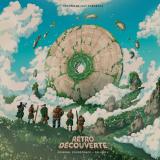
These albums are the end result of a collaboration between Cartridge 1987 and the YouTuber Edward who created the YouTube channel "Retro Discovery". With over 200,000 subscribers, this YouTube channel aims to highlight everything related to the "Retro Gaming" culture and the nostalgia that surrounds it.
These albums put together all the musical credits of the 3rd and 4th seasons of Edward's YouTube channel. All the remixes come from the games featured in Edward’s videos.
This is like a tribute to the original composers of these tracks, who have carried these videogames even further than expected, thanks to their musical talents.
if we think about what's the best italo disco label considering the number of release and success, Hole Records would be on the top three of each italo disco lover. Aimed by Mikki Chieregato and Roberto Turatti, every single release on the label is a gem. Joe Yellow, Den Harrow or Stylóo started an succesfull carreer on the label but also Fred Ventura. He was the vocalist of Flexxy-Ball. Produced by Chieregato and Turatti and bring it to light at the Manlio Cangelli studio Love Theme From Flexxy-Ball, Love Theme from Flexxy-Ball is a record that can be missed in any italo shelf.
out of Stock
Last delivered 8 months ago available to reorder, subject to availability
Will Johnson und die verbleibenden Mitglieder der beliebten Band Magnolia Electric Co. haben sich für neue Aufnahmen als Magnolia & Johnson Electric Co. zusammengetan. Im September werden Magnolia & Johnson Electric Co. ihrem verstorbenen Kollegen Jason Molina Tribut zollen und vom 18. bis 21. September 2025 vier Konzerte in Texas geben. Will Johnson ist der texanische Songwriter von Centro-matic, South San Gabriel und derzeitiges Mitglied der 400 Unit mit Jason Isbell. Johnson veröffentlichte im April 2025 sein zehntes Soloalbum "Diamond City" und war Teil des 2009 erschienenen Gemeinschaftsalbums "Molina and Johnson", für das eine Tournee aufgrund von Molinas Alkoholproblemen abgesagt werden musste. Die vier Konzerte folgen den ausgetretenen Pfaden von Molina und Magnolia während ihrer sieben Jahre als Magnolia Electric Co. und markieren den 20. Jahrestag einer Texas-Tournee, die 2005 zur Unterstützung der Alben "What Comes After the Blues" und "Trials and Errors" stattfand. Magnolia & Johnson Electric Co. (mit Will Johnson und Mike Brenner, Jason Evans Groth, Michael Kapinus, Mark Rice und Pete Schreiner) trafen sich Anfang des Jahres in Texas, um neue Studioversionen der Songs von Molina und Johnson aufzunehmen, angelehnt an die 2018er Zusammenarbeit "Goshen Electric Company" von Magnolia und Oaks erinnern. Die Sessions wurden von Johnsons langjährigem Kollegen Britton Beisenherz aufgenommen und gemischt und von Magnolia-Mastering-Ingenieur Matthew Barnhart gemastert. Das Cover ziert ein ikonisches Artwork von Will Schaff, dessen Kunstwerke mittlerweile untrennbar mit Jason Molinas Songwriting verbunden sind.
Strut Records proudly presents the official reissue of Hidden Fire Volumes 1 & 2, the final album released by Sun Ra on his El Saturn label in 1988.
Captured live over three nights at the Knitting Factory in New York City, these performances mark the closing chapter of a 33-year odyssey of radical, independent music-making. Originally issued in tiny quantities with minimal packaging and cryptic artwork—often featuring hand-written labels or Ra’s own handmade designs—Hidden Fire was among the most elusive entries in Sun Ra’s vast discography.
Musically, these recordings stand apart from Ra’s other '80s compositions. Here, Hidden Fire plunges into darker, more dissonant territory. Ra performs exclusively on the Yamaha DX7 synthesiser, pushing its digital sound palette into alien dimensions. The Arkestra lineup is uniquely configured, featuring a rare and heavy string section with three violins, including the legendary Billy Bang, and the singular space vocalist Art Jenkins, whose eerie textures and vocalisations had not been heard so prominently since the early 1960s Choreographers Workshop sessions. The music is raw, unsettled, and often overwhelming.
“Retrospect / This World Is Not My Home” opens with a palindromic riff that evokes Ellington before unraveling into a stark sermon from Ra, warning of death’s dominion over Earth-bound minds. “Hidden Fire Improvisation” is a furious explosion of tone science, with Marshall Allen, Billy Bang, and John Gilmore delivering fire-breathing solos over relentless drumming and Ra’s cascading synth clusters. “Hidden Fire Blues” offers a warped, electrified version of Ra’s familiar blues feature, led by Bruce Edwards on guitar and Rollo Radford on electric bass, transformed through the haze of DX7 textures. “My Brothers The Wind And Sun #9” evokes the experimental weight of The Heliocentric Worlds with its crashing percussion, pulsing synth-vocal duets, and string- driven chaos that seems to spiral into oblivion.
Even the quieter moments—such as “Hidden Fire II,” a duet between Ra and Art Jenkins—feel thick with unease and shadowy beauty. These performances represent a Sun Ra less concerned with cosmic joy or outer-space swing, and more focused on conjuring portals to the unknown.
Remastered from original sources and presented with archival photos, new liner notes by Paul Griffiths, and restored artwork inspired by the original Saturn editions, this reissue offers a definitive window into the last creative surge of one of music’s most visionary figures across two Vinyl LP’s.
Joan Shelley folgt ihrem von der Kritik gefeierten Album ,The Spur" aus dem Jahr 2022 mit ,Real Warmth". Ihr siebtes Album, das in Toronto mit dem Produzenten Ben Whiteley (The Weather Station) aufgenommen wurde, enthält 13 Titel mit zahlreichen Gästen aus der fruchtbaren Musikszene der Stadt (Tamara Lindenman, Doug Paisley). Shelley tourte bereits mit Richard Thompson, Patty Griffin, Wilco und anderen um die Welt. Sie spielte im Lincoln Center, beim Newport Folk Festival, war auf den Covern des Acoustic Guitar Magazine und des Fretboard Journal zu sehen und war zu Gast bei WTF with Marc Maron und Fresh Air.
The Ocean And Me is the seventh studio album by Swedish singer/songwriter Sophie Zelmani.
With no musical background and without ever having performed in public, Zelmani rose to the top of the charts in
995 with her self-titled debut album. Until now, she has released up to fifteen albums and was described as
Sweden's answer to Norah Jones. The Ocean And Me, featuring 12 self-written songs combining Nordic folk with
melancholic country-pop, was well received by critics and is influenced by the likes of Bob Dylan, Norah Jones,
Leonard Cohen and Van Morrison.
The Ocean And Me is now available as a limited edition of 750 individually numbered copies on crystal clear vinyl and includes a 4-page booklet with lyrics.
Released in 2005, The Aftermath is a compelling live album by Danish alternative rock band Kashmir.
The album includes live versions of tracks like Surfing the Warm Industry, Rocket Brothers, and selections from No Balance Palace, highlighting the band’s musical evolution and stage presence.
The Aftermath is available on black vinyl.
John Calvin Abney rises again from the Oklahoman prairies with his latest album Transparent Towns. The ten songs focus on how we remember, and ultimately accept, though he is not always certain the memories we carry adequately mark the moments that make us. "This record is wrapped around the passage of time, whether or not we can trust the memories that we swear on, how we forgive ourselves and others as seasons turn, and how we define what is important as we roll the boulder back up the hill," Abney says of Transparent Towns. "We build these routines and live our stories, we rely on our histories and our memories - spoken and recorded. Now, we're relying on copies of copies, memories of memories, all packed like sardines into our phones, and we're losing the ability to tell our own stories. I have to constantly remind myself, as well as redefine what matters at the end of a day." Transparent Towns is the seventh studio album for Abney, and his first since 2022's Tourist, which he crafted after spending the pandemic as an itinerant writer. In contrast Abney penned most of the album's 10 tracks during a period of introspection and convalescence while recovering from vocal cord surgery in 2023. The time to himself - "I didn't sing for nearly a year, and after surgery, I couldn't talk for a month, and couldn't sing for over three months," he says, left him contemplating how to trace his experiences in the silence. The album's title track is Abney's take on the inaccessible past, witnessing loss and grief through the years, damning the "days we let go left unsaid", and accepting the uncontrollable circumstances we are sometimes placed in. "The troubles and the joys exist vibrantly in your memory, but you're wondering if you remember correctly," Abney remarks. "I've sometimes had this sort of confusion between memory and dreams - you crafted this ideal in your head of how things were or might be, in order to soften the blow of a harsher reality." The places we inhabit dictate how our memories form, and for Abney, there is one place to which he is constantly drawn: Oklahoma. Although he was born in the biggest little city in America, Reno, Nevada, he grew up learning guitar and piano in Tulsa, playing bars and DIY spaces from Norman to Stillwater. His affinity for the land that raised him is evident in the production of Transparent Towns. Abney self-produced the record, tracking most of it at Cardinal Song outside of Oklahoma City, with Michael Trepagnier handling mixing and engineering. The band was comprised mostly of Sooner State musicians too, along with Lydia Loveless and John Moreland contributing harmony vocals. His signature vulnerable voice and lyrical handiwork comes through in each of the songs, along with his penchant for alternative pop melodies set against colorful chords and subtle soundscapes. Having toured for years backing up artists like Moreland, Wild Child, Ben Kweller, and S.G. Goodman, Abney embraces a lead role again, as he presses forward with the loving lament and defiant joy throughout Transparent Towns, calling us to leave behind the pressures we place on our ourselves and recognize that just because there is an ending, it doesn't mean it's the end.
The Knowledge Imprint 'Selected Reissues' series brings together handpicked tracks from the label's back catalogue to be pressed for the first time on high quality vinyl. Previously available only as digital and small-batch dubplate editions, these tracks will also be given new life with fresh remastering and simple repackaging.
This second release of the edition brings together a collection of standout tracks that have been highly requested on vinyl since their initial releases between 5 and 7 years ago. Yant & William Arist's tracks were the foundation of the 10th label release back in 2020, while label-owner Deano's track 'Tension' was largely responsible for putting the label on the radar in 2018. VIL's 'Golpe de Estado' taken from the label's first VA back in 2019 closes the package.
Marking his first full EP on Mechatronica, PRZ unveils Beyond the Void-a sharp- edged fusion of driving electro and techno pressure. Across six tracks, he crafts a world of mechanical tension, heavy low-end propulsion, and shadowy atmospheres. The release also features a standout collaboration with Unklevon, pushing the intensity even further into the void.
out of Stock
Last delivered 8 months ago available to reorder, subject to availability
The Pusher Distribution / info@thepusher.fr
Hyperjazz Records presents the self-titled debut album from Tera Tera, an unexpected collaboration between two
visionaries of the Italian music scene. Drummer Jacopo Battaglia, founder of the cult Italian trio Zu and collaborator with
Mike Patton and The Bloody Beetroots, joins forces with guitarist Adriano Viterbini, founder of the rising sensation I Hate
My Village and collaborator with Rokia Traorè and Bombino. Born from two intense jam sessions of pure improvisation, this
album emerged through multiple phases of fragmentation, psychedelic experimentation, and sonic reconstruction. Hours
of raw material were distilled into structures, then subjected to further manipulation and synthesis, documenting the inherent
chemistry between two sound wanderers. Tera Tera's primary interest lies in exploring sound, creating new pathways
toward transcendence. Their music defies genre boundaries, pushing beyond conventional limitations into uncharted
psychedelic territories.
Jacopo Battaglia
Jacopo Battaglia has established himself as one of the most innovative and respected drummers in the Italian experimental
music scene. As a founding member of the cult band Zu, he pushes the boundaries of music since 1997. Blending elements
of noise rock, free jazz, and avant-garde into a distinctive style, he’s a pivotal figure in the “evolutionofavant - gardemusic”
internationally.
Adriano Viterbini
Over the years, Adriano Viterbini has built an international credibility like few other Italian musicians. He’s one of the most
inspired guitarists of contemporary Italian music, best known as founding member of I Hate My Village and Bud Spencer
Blues Explosion bands. An entire career voted to the research of the purest language of blues, Viterbini's impact extends
far beyond Italy, influencing a new generation of musicians with his dynamic approach to composition and performance.
Impressed is partnering with Burning Rope Records & Faction Records to bring you an exclusive Australian pressing of James Vincent McMorrow's debut album - Early in the Morning, celebrating it’s 15th anniversary and his forthcoming tour.
Originally released in 2010, and recorded in isolation at a house on the Irish coast, James Vincent McMorrow produced every sound on the album himself, including piano, guitar, and drums - resulted in an album that captivated the world.
The album quickly garnered critical acclaim for its warmth and intimacy. Critics highlighted McMorrow's soft falsetto and the Americana/Folk influences present in the tracks. The opening song, If I Had a Boat, begins with a cappella harmonies before developing into a reflective ballad, illustrating the album’s understated style.
The hotly anticipated follow-up to 2007"s Horizons, Deep Blue raised the bar in every conceivable way. While maintaining the band"s uncompromising metallic-hardcore style at its core, it pushed into exciting new realms, drawing from a wider scope of influence, incorporating everything from anthemic pop-punk to bloodcurdling death metal. With improved musical abilities and a thoroughly inspired approach to songwriting, Parkway Drive has tied the music and lyrics together into one all-encompassing concept. "It"s basically about the search for truth in a world that seems to be devoid of that," says vocalist and lyricist Winston McCall, explaining the narrative running through Deep Blue. "The story is told through the eyes of a man who wakes up and realizes that his life is a lie and nothing he believes in is real. So he tries to find the truth within himself and his journey takes him to the bottom of the ocean and back again."
Big one from Milanese maestro Inner Lakes. Hell-bent on making 2025 his year, the Kalahari debutant maintains form and momentum with the latest in a flurry of vital releases.
A meticulously-crafted 4-tracker imbued with menace and urgent, late nite throb, it’s precisely the spiralling, nocturnal kinda style that has become his hallmark. Streetwise, upfront and packing a sizeable amount of f*ck-off NRG.
Expect noirish, night-stalking rave suspense and hardware-fuelled, high-velocity torque. Best heard in the company of shadow-dwelling spectres, or perhaps, at the event horizon of a black hole.
DJ tools reveal greater depth and nuance upon closer inspection, and disembodied vocals lure inquisitive ears deep into the dream state. Finely measured throughout, it’s a masterful balance between functionality and full-blown dancefloor immersion, all courtesy of a fella at the top of his game.
Written and Produced by Inner Lakes.
Mastered and cut by Kassian Troyer at Dubplates & Mastering.
Distributed by One Eye Witness.
Artwork by S.O.N.S