Machine's self-titled album is shrouded in mystery. Supposedly released in 1972 on All Platinum Records, it completely disappeared without a trace and only a few copies seem to have survived, making it one of the rarest Funk albums on the planet. The album, only known to a handful of hardcore collectors, fetches prices in excess of $5000 whenever one turns up on the auction market, which happened four times in the last twenty years. Consisting of three young session musicians backing their label mates The Whatnauts, the group display a superb mix of socially-conscious hard-hitting funk and earthy soul, the album is reissued here in its original artwork and remastered by Colorsound Studio in Paris. It includes a 2-page insert with new liner notes by Charles Waring. Masterminded by singer and guitarist Michael Watson accompanied by bass player Curtis McTeer and drummer Donald McCoy, the album Machine came straight out of the New Jersey-based All Platinum studios where the label was based. The musicians had been active as session musicians for the label since the late 60s, mainly backing such label acts as The Whatnauts. As a matter of fact, the Whatnauts' manager, Bunch Herndon, makes guest appearance on the album as percussionist. Beside the core group of Watson, McTeer and McCoy, the album's line-up features several other cult musicians and also the orchestrator Sammy Lowe, a seasoned professional who had been arranging for Sam Cooke, James Brown and Nina Simone to name just a few. âÇ
Buscar:z people
"One Sunday afternoon in 1990, I had a phone call from Keith saying that Sarah Records had received the demo cassette the two of us had recorded on a 4-track in a friend's shed and were interested in putting out two of the songs as a single. T
hey were Clearer and Alison. Delighted by this news, we booked some recording time with a studio we'd regularly used in our previous incarnation as Feverfew, the White House in Weston-super-Mare.
This was the first time we'd ever played a note of music that was using someone else's money, so the pressure was being felt. We recorded Clearer, Fearon and Chelsea Guitar, with Clearer becoming Sarah 55, the first of eight singles for the band across two labels. At that time, we were still toying with a name for ourselves and had settled with the Art Bunnies.
While driving us back home from Weston, though, I declared that I really couldn't see how people would take us seriously with a name like that. Disappointed, Keith (Girdler) then got out a piece of paper upon which he'd written several other contenders. These included Opal Trumpet, the Smiling Monarchs and (thankfully) Blueboy."
A Colourful Storm presents Blueboy's singles collection and the band's final retrospective release. Beautiful gatefold sleeve designed by Sarah Records' own Matt Haynes with original artwork insert, postcard and liner notes by Paul Stewart.
Repress!
Robert Cotters lange verschollenes New York Funk Meisterwerk mit der pre-Chic 'Big Apple Band' mit den Mitgliedern Nile Rodgers, Bernard Edwards, Tony Thompson und Robert Sabino zum ersten Mal seit 1976 neu aufgelegt mit Original Artwork, Remastered Audio und neuen Liner Notes von Barbie Bertisch & Paul Raffaele (Love Injection).
“Upopo Sanke“ means “Let's sing a song" in the Ainu language. Umeko Ando (1932-2004) was one of the best-known artists of the Ainu, an indigenous, long-suppressed community in northern Japan. She sings their traditional songs together with Oki Kano on the Tonkori harp, who also recorded the album. The two are supported by members of the female vocal group Marewrew as well as Ainu percussionists, a string player and a male singer who provides rhythmic shouts and also throat singing. The call-and-response structure of many of the songs is performed with a mantric quality in a vocal style that is perhaps best described as elastic and breathing. There seems to be a gentle smile in every note and syllable. This music softly hits the heart.
Upopo Sanke was recorded on a farm in Tokachi in the summer of 2003. We hear dogs barking, a distant thunderstorm and voices imitating animals. The liner notes that accompany the 2LP release gather the anecdotal memories of Umeko Ando and Oki Kano about the stories of the 14 songs. Oki Kano is a musical ambassador of the Ainu culture who tours worldwide with his Oki Dub Ainu Band and also gives solo concerts, always playing the Tonkori, the five-stringed Ainu harp.
The Ainu have suffered from the oppression of their culture and language by Japan, especially since the 18th and 19th centuries. Only recently, in 2008, were the Ainu officially recognized again as an indigenous people culturally independent of Japan. As a result of the marginalization, there are now only a few hundred native speakers of the Ainu language left, making it a particularly worthy object of preservation.
"Upopo Sanke" was mixed again in part by Oki Kano, before being mastered and cut to vinyl by Kassian Troyer. The 2LP plays on 45rpm and it sounds fantastic. This album was the second album by Umeko Ando, the follow-up to „Ihunke" and also re-released in 2018 by Pingipung together with Oki Kano.
Made when mono was still king, Bob Dylan's self-titled 1962 debut is as understated of an entrance as any significant musician as ever made. Already well-versed in American roots music, Dylan simultaneously pays homage to tradition and extends it by putting his own stamp on classic material that metaphorically functions as the soil of our contemporary songs and styles. Free of ego, and performed with masterful conviction, Bob Dylan ranks with the debut efforts of similar artistic giants Elvis Presley and the Rolling Stones.
Mastered from the original master tapes, pressed at RTI, and limited to 3,000 copies, Mobile Fidelity's restored 180g mono 45RPM 2LP version brings the contents of this seminal release as closest as they've ever come to master tape-quality in the original mono configuration. Transparent to the source, the simple sounds of Dylan's voice, acoustic guitar, and harmonica take on lifelike perspective and directness – the "husk and bark" to which Robert Shelton referred in his now-legendary New York Times review of a Dylan appearance at Gerde's Folk City. MoFi has made possible an inexpensive time-traveling trip back to the Greenwich Village coffeehouses and folk clubs in which Dylan cut his teeth, albeit in much better fidelity and without any annoying background chatter. Wider grooves mean more information reaches your ears.
As the preferred mix at the time of the recording, the mono version presents Dylan as he and his producers originally intended. Since the separation of the stereo versions isn't as sharp, the mono edition places Dylan's vocals in the heart of the musical action and as one with the accompaniment. It paints listeners an incredibly accurate portrait of the attention-getting, concrete mass of sound that features no artificial panning and straight-ahead immersion into the music. This is how almost everyone first heard this timeless album – making the mono mix all the more historically valuable and truthful.
Much has been made of the commercial indifference that greeted the album upon its low-key release. Yet focusing on sales figures and the reaction of a public not yet hip to Dylan's name or music is to miss the forest for the trees. Distinguished from the era's other folk efforts by way of the determination, brazenness, and lived-through-this worldliness Dylan approaches the material and sings the songs, Dylan lays the groundwork for the path he'd soon trailblaze and everyone else would follow.
By nodding to Woody Guthrie at the same time he completely re-imagines a sobering tune such as Blind Lemon Jefferson's "See That My Grave Is Kept Clean," Dylan straddles the past and future. He also displays, with challenging authority and savant-like expertise, the ability to handle weighty topics such as death, sorrow, and lamentation with the vaudeville flair, bluesy mannerisms, and poignant command of an artist three times his age.
As Dylan scholar and pop-culture critic Greil Marcus observed in 2010, "Everybody knew Joan Baez and the Kingston Trio; if you knew Bob Dylan, you knew something other people didn't, something that soon enough everybody had to know. Within a year, an album could put an adjective in front of the singer's name as if it were already common coin." It all starts here.
Track List
Whispers is the first proper P.G. Six album since 2011"s Starry Mind. Time passes slowly, as they"ve been known to say out in the country, and before you know it, there"s a bunch of it behind you. After five releases in the first decade of P.G. Six, it may seem a bit of a surprise to have not heard something new in the past twelve years - but a cursory listen to Murmurs & Whispers will answer why, as the deep acoustic focus of the tracks imply an investment of the type of compassion and understanding that takes time and concentrated effort to conjure. Additionally, Pat Gubler"s always got a few pots going at once in his ever-expanding musical universe. He"s been active since the mid-90s, first with Memphis Luxure and Tower Recordings, then as P.G. Six, and as a member of Metal Mountains, Wet Tuna, Garcia Peoples and Weeping Bong Band. Additionally, some time was spent making collaborative records with Dan Melchior (in 2019) and Louise Bock (in 2021). Pat"s been playing the harp for more years than he"s been in bands, but when he realized that he was writing a set of songs centered around harp compositions, he spent some time in the woodshed with his instrument, a late 80s model Triplett Celtic 34 String Harp (which replaced a lovely Paraguayan harp he"d played for years previously). After the previous P.G. albums of electric band arrangements, he was in a place of writing songs with more silence in them. He ended up playing a lot of the parts himself on Murmurs & Whispers, adding guitar, bass, keyboards, recorder and hurdy gurdy, in addition to his harp and vocals. Clark Griffin and Wednesday Knudson, who Pat plays with in Weeping Bong Band, played and sang a bit themselves, and the record was recorded piece by piece in houses around upstate New York by Mike Fellows. Returning to the quiet acoustic sound of the first couple of P.G. Six albums, Parlor Tricks and Porch Favorites (which has seen a much-needed reissue in the past year after too many years OOP) and The Well of Memory, Murmurs & Whispers is more straightforward in expressing its vision of rural celestial wonder. Bucolic and comfortably lived in, Murmurs & Whispers nonetheless projects the transcendent heart of P.G. Six once again, and as ever, it is magnificent to hear it passing through us.
Mit wenig mehr als einer unerbittlichen Reihe von Live-Auftritten und einem zweimal gepressten (und anschließend ausverkauften) selbstbetitelten Demo hat sich die in New York ansässige Band Lathe of Heaven als ein starkes und zusammenhängendes Element inmitten der Flut von Punk und synthiegetriebenem Pop-Revival erwiesen, das derzeit im US-Underground wuchert. Die 2021 gegründete Band setzt sich aus Mitgliedern bemerkenswerter Brooklyner Projekte wie Pawns, People's Temple, Porvenir Oscuro, Android, Hustler und anderen zusammen. Obwohl diese Liste vergangener und alternativer musikalischer Bestrebungen ein breites Spektrum an Genres und Fähigkeiten aufzeigt, kann Lathe of Heaven nur als eine Abkehr von solchen Einflüssen verstanden werden und erforscht einen völlig eigenen Sound. Nun, fast zwei Jahre später, sind Lathe of Heaven endlich bereit, ihr Debütalbum "Bound by Naked Skies" zu veröffentlichen. Die elf Tracks umfassende LP verbindet Elemente von düsterem britischem New-Wave und finnischem Post-Punk zu einer nuancierten Gegenüberstellung von 80er-Jahre-Soundwahn. "Bound by Naked Skies" greift Themen der klassischen und zeitgenössischen Science-Fiction auf, die den einzigartigen und bewussten Sound prägt, und verdankt seinen literarischen Einflüssen ebenso viel wie der Musik. Als kraftvolle Hommage an die unheimlichen Welten der Autoren Arthur C. Clarke, Octavia Butler, Ken Liu und natürlich Ursula Le Guin (nach deren Roman die Band benannt ist), verweben sich Themen der Kosmologie ("Ekpyrosis"), Simulation ("Heralds of the Circuit-Born"), Geisteskrankheit ("Moon-Driven Sea") und Ontologie ("Entropy", "The Spider" etc.), und ziehen sich wie ein roter Faden durch das Album. Ein Einblick in die Gedankenwelt derer, die von der Ungewissheit der erschreckenden und gar nicht so fernen Zukunft der Menschheit geplagt werden.
Innercity Griots is an album with a legendary status among fans of hidden Hip Hop gems of the 90's.
At the heart of Innercity Griots is the unique sound and style of Freestyle Fellowship. This group of four talented MCs (Aceyalone, Myka 9, Self Jupiter, and P.E.A.C.E) and their producer, J-Sumbi, created a sound that was both experimental and deeply rooted in the traditions of hip-hop.
The sound of the group is recognizable with a unique jazz-infused style. What really sets the group apart from other jazz-influenced Hip Hop from that era is their incredible lyricism. The raps are packed with dense wordplay, complex metaphors, and social commentary. This all together makes it a rich and rewarding listen.
Long festering on the West Coast, Frankie and the Witch Fingers have carved out a niche that’s equal parts molten tar pit teardown and end-stage anxious careen. As they wind out of the stoned-ape psychedelics of their 2020 opus Monsters Eating People Eating Monsters… their sound, over a series of singles, has begun to thicken and throb. It’s coalesced into a darker strain that ingests the explosive impulses of R&B, the rhythmic insistence of 70’s German Progressives, and the elasticity of funk fusionists alike. They weld their arsenal of influences to a chassis of nail-bitten bombast. On the upcoming Data Doom the band hurtles the listener head first into the wood-chipper of technological dystopia, systemic rot, creeping fascism, the military-industrial profit mill, and a near-constant erosion of humanity that peels away the soul bit by bit. With a fuse lit by these modern-day monstrosities the band seeks to find salvation through a thousand watt wake-up of rock n’ roll exfoliation.
Black cloud is descending – Black Magic Six set to release their fifth album in September, new single Blood of Babylon out now The title of Black Magic Six’s upcoming album Black Cloud Descending really sums up the mood and thoughts of its creators during the album making process. It tells stories of constant escaping, accepting defeat, destinies of outcasts, failures, and drunks. Tales of the wiser, exaggerated lies, vague rumours, fuzzy states of mind and suspicious circumstances – even the thought in the back of your head about the possibility of redemption while standing on the edge of the cliff right before falling in; it’s all there. The album’s first single Blood of Babylon is a garage rocking song about Sam Berkowitz’s relationship with Sam Carr’s speaking dog. Lyrical themes of the upcoming album are moving between reality and the imaginary world; remembering the moments at Belo Horizonte, how to use the powder that protects you from the evil eye, how it felt to wonder in the same alleyways with the werewolf of Istanbul or diving to safety to the bottom of a pond in Northern Savo. Listen Blood of Babylon here: https://youtu.be/S7mEujUIlrw Musically the album is on a narrow path. All the sounds heard on Black Cloud Descending are produced by Taskinen and Motherfuckin’ Japa. Sure, there are two exceptions; the gong heard in the end of Werewolf of Istanbul was recorded by Sakke Koivula at his home and the church bells in the outro of Full House Blues are ringed by unknown. Previous albums of BM6 had lots of guests playing guitar, percussions, harmonica, and visiting singers. People that one could call actual musicians. These past albums have had a softer, more versatile, and maybe even a livelier touch to them. This time around there’s only the core; the percussionist and the singing guitar player. The result is more raw, rugged, and rougher than before. Black Cloud Descending is out on September 1st on vinyl, CD, and digital platforms. The album was produced, recorded, and mixed by Mitro Kylliäinen at Kung Fu Audio along with BM6 during 2022-2023. Original art used for the album cover was made by Greger Grönholm. The band will play selected live shows to celebrate the new album in Finland, Germany, Denmark, and Spain. Dates of these gigs will be announced closer to the release date of the album.
i am fortunate to play with amazing musicians - always have had my ear to the 6 winds to assess players and their strengths and the music we would make...
electric or acoustic, 2 or 5 people, country, folk, blues, string players, grass,
rocking, quiet or loud - WHATEVER the category does not matter (as it is just a category) - there has always been a group of great musicians near to help me get there - and yes, i am lucky
on this recording MATT FLINNER (mando and banjo), SHAD COBB (fiddle)
and BRYN DAVIES (double bass) & ALL folks on vocals and me on dobro/piano/banjo and guitar -mostly ben bullington's 1933 D18- we had been playing anytime a festival wanted a fiddle/banjo/mando/double bass/acoustic guitar instrumentation sound from me- in one way, it can easily be called "bluegrass" -( not a big stretch )- i kinda think "string band " is as good or a better name (certainly less used)... so enter this DARRELL SCOTT STRING BAND
(a rose by any other name)
HERE'S HOW THIS RECORD CAME ABOUT- we had 2 consecutive weekend gigs (arkansas and colorado) and rather than sending us... more
'Ain't Ever Easy' is the best example to date. The muscular, chooglin' beat of the country funk heater "Can't Take Back" opens Ryan Curtis' sophomore album 'Ain't Ever Easy.' Like a steam train gliding into some high desert station, it bears the strong vintage machinery of Curtis' "alt-country from the high country" sound. The song lopes in on oozing guitar and keys over a backbeat that pulses sexier than a
breakup song has the right to be. Regret has rarely sounded this happy, but Curtis is capable of turning love and loss into dripping hot, powerful songs. Over the last decade the various styles of country have become Curtis' stock-in-trade. With a gravelly growl he paints cinematic pictures of picaresque people from the Midwest and the badlands; down and out townies, bar room drifters, forlorn lovers, and resilient loners fill his visionary tales, mournful subject matter he turns into country gold.
- The Watchman's Gone
- Sea Of Tranquility
- Now And Then
- All The Lovely Ladies
- Drifters
- A Painter Passing Through
- Christian Island
- Rainy Day People
- Shadows
- Beautiful
- Carefree Highway
- Did She Mention My Name
- Ribbon Of Darkness
- Sundown
- Sweet Guinevere
- The Wreck Of The Edmund Fitzgerald
- Never Too Close
- Don Quixote
- Minstrel Of The Dawn
- I'd Rather Press On
- Let It Ride
- If You Could Read My Mind
- Restless
- Baby Step Back
- Early Morning Rain
- Waiting For You
What will always stay the same with Blue Cranes no matter how much they change as people, as players and as composers is the vibrant emotional core within the music they create. Each song on My Only Secret has a core memory attached to it, whether it is the birth of a child ("Sloan"), a parent's comfort after the death of a beloved pet ("Rhododendron"), or the agony of the 2016 election results ("Forward"). They feel every moment of every song deeply, something which colors every note they play. "We're a good emotional band," says Cunningham. "We can go to that place." The beauty of My Only Secret, like all of the work Blue Cranes has produced to date, is that they want anyone and everyone to join them.
You have said too much to a stranger in a bar bathroom; your back is killing you because of everything you haven’t said; you’ve overwatered your houseplants again. Small Million is here for you. Flowing from the collaboration of longtime creative partners Ryan Linder and Malachi Graham, the Portland-based indie pop outfit welds deeply affecting sonic production to smart lyrics about intuition and inhibition, losing control and ending up in unexpected places, being willing to fuck up, bodies hurt and bodies joyful.
The effect is both intimate and epic, delicate and fierce. Listen to it to ache, dance to it to heal. In the time since Small Million's last release, years of chronic pain have led lead vocalist and lyricist Malachi Graham to deep explorations of embodiment that have changed everything from her singing voice to her dance moves to her observation of human frailty. “There’s one side of chronic pain that leads you towards intuition, self-discovery, and listening closely to yourself. But it also means you end up sitting on the side of the room a lot, watching people and paying attention. Also you’re pissed,” notes Graham. Producer and instrumentalist Ryan Linder’s background as a filmmaker informs the textured richness and intelligent restraint of his song building. He approaches production with obsessive technical rigor that’s always in service of centering intense emotion.
Graham’s clear, unadulterated vocals breathe at the heart of Linder’s rich sonic terrain, drawing comparisons to The Cranberries and Florence + the Machine. Linder and Graham have been writing as a duo for a decade, but for their newest chapter they've expanded the band, enlisting Ben Tyler (Small Skies) on drums and Kale Chesney (Lo Pony) on bass and harmonies.
Small Million's evolution into a four-piece has expanded the band’s sound from their synth pop origins to encompass more organic, raw indie rock energy. Small Million has played with artists like Fakear, IDER, Hatchie, HÆLOS, Lo Moon, and Loch Lomond, and their tracks have been featured on compilations by Tender Loving Empire, PDX Pop Now!, and Vortex Music Magazine. They released their debut EP Before the Fall in June 2016, their follow-up, Young Fools, in Fall 2018, and singles “Saintly” and “Tarot” in 2019. Their newest music is dropping throughout 2022.
First Word Records is very proud to welcome Ruby Wood to the label, with her debut solo EP 'Sincerely'.
Ruby is a vocalist & songwriter hailing from Huddersfield, West Yorkshire. Her soulful yet distinctive voice has enabled her to front numerous projects; perhaps best known as lead vocalist of the critically acclaimed Submotion Orchestra, since 2009.
She also toured as lead vocalist for Bonobo's live band, for Nubiyan Twist, and with hugely successful 1940's-esque vocal trio, The Sugar Sisters. There have also been features for dance outfits such as GLXY & Franky Wah, additionally to writing & recording for the likes of Krept & Konan, Alfa Mist, Roska, Hemai, Barney Artist and XOA, to name just a few.
In 2021, Ruby was awarded a DYCP Arts Council grant to fund her own creative project, which was taken as an opportunity to go back to the drawing board creatively, spending time working out how her own music would sound and what messages she wanted to convey.
After initial sketches on her Native Instruments Maschine, she began to work with fellow Submotion Orchestra member, Chris 'Fatty' Hargreaves; a long time friend and collaborator, and a revered musician in his own right, with his low-end theory science triumphantly stamped across his other projects, such as Pengshui and Outlook Orchestra. Ruby and Chris began bouncing ideas back and forth, and gradually this solo project started to take shape and form the bulk of this debut EP.
In Ruby's words "After years of working in big projects with lots of people, I often struggled to feel like my voice was being heard. Branching out on my own is an opportunity for me to make music that I would actually listen to myself! This process has been healing for me, and I'm so proud of myself for continuing to learn and develop my craft, whilst learning how to produce songs from scratch.
Becoming a mother also changed me for the better, and provided me with a wealth of experiences and challenges that have gone on to fuel my lyrics. I've grown a lot, and this EP gives a snippet of my life thus far".
'Sincerely' is comprised of five tracks, firmly based in the realms of hip hop soul and neo soul sonically, with an unashamedly '90s R&B vibe throughout. Throughout the EP, Ruby's story tells tales of motherhood, relationships, commitment, independence and inspirations. Further collaborations on the set come from vocalist Isaac Malibu (on 'Mr. Unavailable'), wind player Arran Kent (on 'My Favourite Song'), and assistance on a couple of beats from acclaimed hip hop producer, Pitch 92 and San Diego's Martel Howard, along with more Submotion alumni, Danny Templeman, Dom Howard and Bobby Beddoe and the debut performance from Ruby's daughter, Amber!
A truly triumphant body of work, this is just the start of a new chapter for Ruby Wood.
Blow Your Brains Out formed in 2019 with members of Stand United, Inside, Die Birth, Civil Defense and Soul Vice from Tokyo and Kanagawa. The band are all active members of their local hardcore communities whether it's putting on shows or running a popular radio show called Sick People. Hardcore fans were hyped for the demo with its instant hit mix of Cro-mags and Dynamo style influenced hardcore, and were excited to hear what the band would do next. However, as with all things at this time, they had to put everything on pause. Fast forward to 2023 and the band have recorded their debut 12” ‘The Big Escape’. This sees the band keep true to their demo influences but with greater flair, and will have you humming the tunes in no time at all. It was important for vocalist Kai to sing in Japanese, a language with a unique rhythm and flow that he wanted to match to the riffs, as well as to communicate about topics important to the local, as well as global community, using powerful Japanese words. ‘The Big Escape’ 12” talks about cult religions, political corruption, domestic violence, and companies that force people to work in poor conditions, as well as the suppression of citizens who resist authoritarian forces. I see through their lies and madness and act with the determination I have squeezed out, without succumbing to after-the-fact sophistry or threats. The underlying theme is the understanding that structural issues in society and politics cannot be easily solved, but it’s important to voice dissatisfaction and anger, and resist, and sometimes that’s by running away to survive, but it’s difficult to put this into practice in everyday life. However, there is hope that one day, the big escape will be achieved.
Following up on the incredible success of El Michels & Black Thought's Glorious Game album the duo treat us to another 7" with two of the standouts from the album. The A Side "Hollow Way" is a testament to the chemistry between Leon & Thought. EMA uses his signature sound with a new approach pulling records from his collection and sampling them. The result is a gritty lofi sonic backdrop that Black Thought flexes his lyrical brilliance on weaving a tune about guns and gun violence. The beat change at the end drives the point home, leaving any samples behind and lets the band remind people why they are one of the most in demand acts out there today. The B side "I'm Still Somehow" is a deeply introspective tune that Thought rhymes about vulnerability and overcoming challenges with heavy lines like "a happy black boy is like an alien" and "one crown, who was run down, somehow still standing tall". Michels again takes his ear and sensibility to the sampler, chopping up an old 45 that makes the perfect backdrop for this powerful and timeless song.
The show, which rolled over the open-air stage of the Greek Theatre night after night in the late summer of 1963, attracted fans as if on a pilgrimage to the mountains of Hollywood. Many who could not get hold of a map climbed the surrounding trees to be able to admire the Calypso man at least from a distance.
Also on the lookout and with sound equipment at the ready were the people of the company RCA, which released the eagerly awaited album the following year. Some of the songs like the wriggling "Zombie Jamboree", "Look Over Yonder" and the wonderfully dripping Schmonzette "Try To Remember" were previously only available as studio versions. Most of the other numbers were brand new and sounded for the first time in a sparkling live atmosphere, which is authentically reproduced on this record.
Here a laugh as a receipt for a casual saying, there a rumble of boards, then again concentrated silence of a spellbound listening audience - something like this only happens on stage.
For Belafonte connoisseurs, these recordings are regarded as the crowning glory of the artistically highly productive phase of the years 1959 to 1963. Of the many good albums, this is one of the best.
Personnel: Harry Belafonte (voc); Howard Roberts (cond); William Eaton (clavietta); Ernest Calabria, Jay Berliner (g); John Cartwright (b); Percy Brice (dr); Ralph MacDonald (perc), choir and orchestra
- A1: We Crossed The Atlantic
- A2: The Love You Bring
- A3: When I Was Howard Hughes
- A4: Failed Adventure
- B1: Stars (Twilight Mix)
- B2: Grand Central
- B3: International Exiles
- B4: Merry-Go-Round
- B5: Radios Appear
- C1: City Terminus
- C2: Min Min Light
- C3: Oregon Snow
- C4: Cherry Lake
- C5: Blackout
- D1: Please Don’t Say Goodbye
- D2: Museum Station
- D3: Blue Train
- D4: You Were There
- D5: Something Better Beginning
Selected Songs 1997-2003 compiles some of the finest moments in the recording history of Hydroplane, the Melbourne-based indie-pop three-piece that operated alongside The Cat’s Miaow through the second half of the nineties. It’s the third release in what feels, now, like a loosely planned series by World Of Echo, documenting the music made by this group of friends in Melbourne sharehouses (The Cat’s Miaow’s Songs ’94-’98, 2022), or in the case of The Shapiros (Gone By Fall, 2023), while traversing the International Pop Underground.
Hydroplane would be familiar to anyone already following these breadcrumb trails – Andrew Withycombe, Bart Cummings and Kerrie Bolton were the group’s core, all members of The Cat’s Miaow. With Cat’s Miaow drummer Cameron Smith itinerant, having moved to London, the trio used this opportunity to expand their music. It’s a subtle, but important shift. If The Cat’s Miaow was about the perfect, minimalist, two-minute pop song, Hydroplane’s music was far more open-ended, embracing the loops and drones, sampled house-y shuffle beats, the burbling of a Roland Jupiter-4 synth, all of which the trio joined, effortlessly, to their endless capacity for moving, elegant melodicism.
They may have only planned to release one seven-inch single, but the sound Hydroplane created was so bewitching, so compelling, that the project’s lifespan ran for around half a decade, and they ended up releasing three albums, including a self-titled debut recently reissued by Efficient Space, and seven singles. There are all kinds of compelling things happening in the music compiled here – the hazy repetition of the gentler side of Krautrock is in here, somewhere, which also suggests Stereolab at their most intimate and disarmed; the gently drifting guitars, gauzy and oneiric, set the songs adrift and floating, each one lost in its own imagined, distracted world. Songs like “The Love You Bring” set indistinct tonal floats across dance rhythms, in a way not quite heard since My Bloody Valentine’s “Instrumental” – but with the added gift of Bolton’s gorgeous voice.
This loose coalition with dance music, and the quiet experimentalism at the heart of Hydroplane, also gestures towards peers like Hood, Acetate Zero and Other People’s Children, and releases on renegade labels like Wurlitzer Jukebox and Enraptured. Like those groups and labels, The Cat’s Miaow were reconciling independent pop music’s past – sweet melody and melancholy, chiming and droning guitars – with the futures promised by DIY electronics and nascent digitalia, the interface of indie and IDM that led to some of the underground’s most blissful, texturally swoonsome music. All that is here, but also, the poise of the melodies is pure Cat’s Miaow, though, with Bolton’s voice sailing, pacifically, over some of the most pared-down, gorgeous music made during their decade.
It was a time, too, when such music could make waves – “We Crossed The Atlantic”, one of their early singles, was picked up by John Peel, who played it repeatedly on his legendary radio show, the song reaching #13 on his 1997 Festive 50. That the song itself was a cover of a tune by 1960s Australian beatnik-pop-poet Pip Proud felt even more perfect – a group of outsiders paying tribute to another outsider, played on the radio one of the few broadcasters brave and human enough to take a chance on this music. But it was a time where everything was up for grabs, and genres were flowing into each other: folk songs went drone; indie re-discovered noise; ambient pop floated, again, out onto the dancefloor. And while they may have been sequestered away in Melbourne, Australia, Hydroplane felt core to that scene, a quietly driving force.
Compiling material from across their brief but mercurial career, this double album perfectly captures the magic and mystery of Hydroplane’s dreamlike, perfect pop songs.
Monsieur Dimitri from Paris works his magic on Casbah 73's organic disco grooves with a remix treatment that surpasses all expectations.
'To Be Free' and 'Doing Our Own Thing' had a fantastic response when released on 12", at the end of 2019. It received wide support from people in the know like Red Greg, Danny Krivit, Folamour, Soul Clap, Kenny Dope and many others. The first pressing quickly sold out and the tracks were sounding strong on discerning dancefloors until, well, "The Thing" hit and everything stopped.
Despite this, the record has continued to grow by word of mouth, and so we thought it would be wonderful to have a 7" version with an edit or even a remix of the jazzy funky disco banger 'Doing Our Own Thing'. No one better than Dimitri from Paris for the job, one of the DJs who happened to tell us he loved the track. His two-part edit of 'Doing Our Own Thing' is a bomb that will make people dance for years to come.
Coke Bottle Clear Vinyl. High Vis were formed in 2016 from the ashes of some of the UK's best hardcore bands. Gild-toothed frontman Graham Sayle's anguished lyrics about life in working class Britain were familiar to fans of Tremors' full-throttle thrash, but alongside his former bandmate Edward `Ski' Harper and veterans of Dirty Money, DiE and The Smear, High Vis sought to transform that energy and intensity into something entirely new.Like scene-mates Chubby and the Gang did by pulling in unlikely source material from classic doo-wop or Micromoon have by combining everything from psychedelia and metal into their high potency mix, High Vis' 2019 debut album, No Sense No Feeling showed the band were never going to be constrained by any sense of genre rules or regulations. Its claustrophobic rattle bore traces of Joy Division, Bauhaus, Crisis, The Cure and Gang Of Four lurking in the shadows. 2020's synth-driven EP, Society Exists, was further evidence of the band's restless creative MO.High Vis' second album Blending sees them open their viewfinder wider than ever before. Alongside longstanding favourites such as Fugazi and Echo and The Bunnymen; Ride and even Flock Of Seagulls were shared reference points as the band worked on the album together.From the anthemic sweep of opener "Talk For Hours", through the title track's psychedelic swirl and "Fever Dream"'s baggy groove, it sees High Vis' sound blossoming into something with an unlimited richness. The hazy drift of "Shame" or the melodic jangle of "Trauma Bonds" may take them until uncharted waters, but they still have all the power and bite that made No Sense No Feeling so remarkable.Lyrically, the album represents another leap forward too. Talking frankly about poverty, class politics, and the challenges of everyday life, Sayle's lyrics have always addressed the downtrodden and discarded communities across Britain slipping below the waterline. This time around, Sayle's lost not of that social consciousness, but he's looked at himself and his own emotional landscape, and in the process created something that feels more universal, that reaches a hand-out to people and ultimately gives a message of hope."To me, the lyrics are less selfish," reflects Sayle. "In the past, I couldn't see past whatever was going on with me. It's about accepting things and being open to conversations and learning to talk to people rather than just thinking that we're all doomed."The song "Talk for Hours" is a prime example of that. Born out of an afternoon meeting up with an old group of mates "repeating the same thing and not actually learning anything about each other" it offers to actually break the cycle and to listen and speak frankly about shared feelings and experiences. "Trauma Bonds", meanwhile, traces the broken lines of those living in lost communities, but ultimately realises that despite our shared scars, there's still hope to move on to a better future."The message of the album is you're not who you're told you are," Sayle summarises. "You're not your class background. Whatever it is, you're not that. Don't resign yourself to thinking you can't be this and you can't be that."It's a vitally important message right now, and one that could be the motto for not only Blending, but for High Vis themselves.
- 1: Offerings (The Swarm) Iv
- 2: Concordat (The Pact) I
- 3: Chalice (Vessel Consanguineous) Viii
- 4: Homunculus (Spirit Made Flesh) Ix
- 5: Invocation (Chthonic Merge) X
- 6: Megaron (Sunken Chamber) Vi
- 7: Convulse (Words Of Power) Iii
- 8: Altar (Unify In Carnage) V
- 9: Exile (Defy The False) Ii
- 10: Circle (Eye Of Ascension) Vii
Death Metal icons INCANTATION prepare the masses for their new album, Unholy Deification, via Relapse Records. Edified over three-plus decades of experience, Unholy Deification is the group's 13th full-length album. Validated by peers seasoned and new, INCANTATION are more vital than ever - the lineup, featuring founding guitarist/vocalist John McEntee, drummer Kyle Severn, bassist Chuck Sherwood, and guitarist Luke Shively, displays death metal know-how and the power of determination. "I'm not interested in playing it safe," McEntee asserts. "I think other people feel that there are limits to what we do. However, I don't see it that way. If it feels right, then it's Incantation. The songs we write are an honest expression of ourselves. 'Sect of Vile Divinities' was a stressful recording for me and the band. We felt fed up and were just happy to be done with it. When people hear the new album, I hope they think, 'Why are these guys so pissed off?!' Rage gives focus, which is why this album turned out the way it did." Lyrically, Unholy Deification originates with Sherwood. An avid reader and occult logician, the INCANTATION bassist wanted to capture a fully-realized concept of evolution through enlightenment. Expect thought-provoking, historically-derived intellection. That the mortal-to-deity narrative interacts with the merciless musical conflagration of hard-hitting tracks such as "Concordat (The Pact) I," "Homunculus (Spirit Made Flesh) IX," and "Invocation (Chthonic Merge) X". Make no mistake - the ferocious new album, featuring guests Jeff Beccera (Possessed), Henry Veggian (ex-Revenant), and Dan Vadim Von (Morbid Angel), is pure Death Metal. INCANTATION's sepulchral pandemonium is visually enhanced by award-winning artist and longstanding collaborator Eliran Kantor (Immolation, Bloodbath). The end result is an interpretation of Italian Renaissance masters, but thrust into INCANTATION's cauldron of chromatic malice.
The UK’s cosmic, psychedelic-funk ensemble issue their first album on maverick producer Madlib’s label, Madlib Invazion. The Heliocentrics’ albums are all confounding pieces of work. Drawing equally from the funk universe of James Brown, the disorienting asymmetry of Sun Ra, the cinematic scope of Ennio Morricone, the sublime fusion of David Axelrod, Pierre Henry’s turned-on musique concrète, and Can’s beat-heavy Krautrock, they have – regardless of the label on which they’ve released their music - pointed the way towards a brand new kind of psychedelia, one that could only come from a band of accomplished musicians who were also obsessive music fans. Drummer Malcolm Catto and bassist Jake Ferguson are the Heliocentrics’ masterminds and producers, and they are obsessive weirdos in today’s musical climate, searching, progressive humans who are often out-of-time with current trends. They have been playing together for nearly two decades and their collective drive is to find an individual voice. The Heliocentrics search for it in an alternate galaxy where the orbits of funk, jazz, psychedelic, electronic, avant-garde and “ethnic” music all revolve around “The One.” With Madilb’s label Madlib Invazion for Infinity of Now, the Heliocentrics have returned to develop their epic vision of psychedelic funk, while exploring the possibilities created by their myriad influences, Latin, African, and more.
- 1: I'm Not Getting Excited - Live
- 2: Great No One - Live
- 3: Whatever - Live
- 4: Mars, The God Of War - Live
- 5: Future Me Hates Me - Live
- 6: Introduction
- 7: Jump Rope Gazers - Live
- 8: Uptown Girl - Live
- 9: Bird Talk
- 10: Happy Unhappy - Live
- 11: Out Of Sight - Live
- 12: Thank You
- 13: Don't Go Away - Live
- 14: Little Death - Live
- 15: Dying To Believe - Live
- 16: River Run - Live
The anticipation is there in Elizabeth Stokes’ solo guitar riff under the opening lines of “I’m Not Getting Excited”: a frenetic, driving force daring a packed Auckland Town Hall to do exactly the opposite of what the track title suggests.
As the opener of The Beths’ Auckland, New Zealand, 2020 expands to include the full band, the crowd screeches and bellows. It’s a collective exhalation, in one of the few countries where live music is still possible.
The album title, and film of the same name, deliberately include the date and location, lead guitarist Jonathan Pearce says. “That’s the sensational part of what we actually did.” In a mid-pandemic world, playing to a heaving, enraptured home crowd feels miraculous.
In March 2020, everything seemed on track for another huge year for The Beths. Home after an 18-month northern hemisphere tour, they had just finished recording sophomore album Jump Rope Gazers and were primed for more extensive touring. But within days, New Zealand’s lockdown split the band between three separate houses. All touring was cancelled.
“It was existentially bad,” Stokes says. As well as worrying about economic survival, they lost something crucial to the band’s identity: live performance. “It's a huge part of how we see ourselves... What does it mean, if we can't play live?”
The band found an outlet through live-streaming, returning to the do-it-yourself mentality of their early days to connect with a global audience. The album and film have their genesis in that urge to share the now-rare experience of a live show, as widely as possible.
The fuzzy-round-the-edges live-streams pointed the way aesthetically. Native birds, wonkily crafted by the band from tissue paper and wire, festoon the venue’s cavernous ceiling while house plants soften and disguise the imposing pipes of an organ. The presence of the film crew isn’t disguised: much of the camerawork is handheld; full of fast zooms and pans.
With much of the material still fresh, the band was less focused on re-invention than playing “a good, fast rock show”, Pearce says. The tempo is up on crowd favourites “Whatever” and “Future Me Hates Me” (released as a live single on its third anniversary) as both band and audience feed off the mutual energy in the room.
Certain songs have taken on special resonance post-Covid. Pearce has found “Out Of Sight”, a tender rumination on long-distance relationships, hits particularly hard with live audiences.
Album closer “River Run” visibly brings Stokes to tears as a mix of achievement and relief kicks in. “You can finally relax at that point … You play the last note, breathe out a sigh and look up - and you’re in a giant room full of people happy and smiling.”
The free folk/jazz sound of modern Los Angeles. Featuring a heavy bunch of musicians and vocalists including Moor Mother.
"Fearlessly Accessing the Divine Spirit From Here on Out" is the vinyl debut from pianist, composer, and producer Diego Gaeta. He has previously released projects as Club Diego and with the trio Human Error Club (whose members Mekala Session and Jesse Justice helped produce this record). He has quickly become a fixture in a number of Los Angeles musical environments, working with Lionmilk, The Pan Afrikan Peoples Arkestra, Carlos Niño, Black Nile among others. This album is a synthesis of these many LA environments, and carries chamber, jazz, ambient, and folk influences, ultimately giving it an uncategorizable feel similar to works by Arthur Verocai or David Axelrod.
Gaeta recorded the initial ideas for the album by himself after experiencing a burst of creativity during the lockdown of 2020, in the aftermath of a season of protests in Los Angeles, on a piano at his home in El Sereno. "I was constantly not in tune with myself, always awaiting outrage and tragedy in a very unstable world. However, hitting the streets in support of various ongoing pandemic community actions felt necessary and it marked a point in time that ushered in large societal changes. The weight of that era made me feel allergic to making art at the time. All of these ideas came after that period, expressing my reflections subconsciously. I remember that the ideas came in a short amount of time, and then they developed."
Once he had created the tracks as Ableton sessions, he realized the gravity and context of how he was processing his ideas so he, as he puts it, "felt like taking them outside the hands of midi and into the hands of friends." Gaeta was able to assemble his dream band, which ended up being a 9-piece ensemble, or a nonet. "I felt that at some point I was channeling the geometrical balance of that nonet...it's almost as if I had a sextet and then the three of the sextet that's not the rhythm section were doubled. It's a really dense sextet, that's how I see it."
The recording process began the following summer in June 2021 as the musicians were all adjusting to the newfound dynamic of getting tested for COVID, waiting a few days, and then meeting up to record. "We were eating Indian food, some of us were smoking, it was a nice memory, but I felt a little stressed, because I was the bandleader, and I felt the emotional weight of my music."
The title track and single, featuring vocals by Jimetta Rose, begins with a speech by Gaeta delivered when playing with Black Nile in 2019 at the Levitt Amphitheatre in MacArthur park. Gaeta provides the following account: "Even though it was in 2019, socio-political tensions and issues were at the forefront for me at that time. I wrote a speech that was intended to be critical of the US but it ended up becoming a collage inspired by different women that had messages of freedom that spoke to me the most. I quoted Nina Simone and Georgia Anne Muldrow, it wasn't something that I read but something that she said "kicking it with consciousness and style" that phrase stuck with me, so I used it in that speech. Although critical, the speech had a positive feeling to it, and it was hopeful. I gave that speech while fireworks were going off."
Moor Mother & Zeroh are found on their respective tracks, Memory Screen & Eccolo - both delivering a distinct, commanding vocal performance. Low Leaf colors the track Soft Spot with harp, a beautiful ballad nestled in the center of the album. Other players include Gregory Uhlmann on guitar, Jon Kaye on violin, Devin Daniels on alto saxophone, Caleb Buchanan on bass, Dante Luna on vibraphone, Patrick Behnke on viola, Bryan Baker on tenor saxophone/flute, and Mekala Session on drums.
"I’d like for us tonight to embody a freedom oriented life. Freedom isn’t just a dream, it’s a place we must all arrive at together, as one by one the people of the Earth help each other to be Free of power, hate, and insecurities. Let’s kick it with consciousness and style. Can y’all dig that? YEAH. I can too. So now we’d like to present to you a spiritual transmission I like to call: 'Fearlessly Accessing the Divine Spirit of Freedom From Here On Out.' YEAH" - Diego Gaeta
As time moves forward, it becomes increasingly clear that the need for emotional expression through artistry is more important than ever, especially in the wake of emerging AI technology that threatens to replace human creativity. Minus & MRDolly's new album, "Giant Stops," is a testament to the enduring power of art to connect with audiences on a deep emotional level.
Named in direct reference to arguably one of the greatest albums ever created, "Giant Steps" by John Coltrane, "Giant Stops" pays homage to the rich legacy of jazz while pushing the boundaries of the genre with a contemporary twist. The album seamlessly blends jazz, hip-hop, and electronic elements to create a unique sonic landscape that is both nostalgic and modern.
For Minus & MRDolly, "Giant Stops" represents a new chapter in his evolution as a musician, showcasing his growth and commitment to pushing boundaries in his genre-bending style. Taking inspiration from the creative process of Makaya McCraven, the album features dynamic instrumentals backed by a live band, with Minus & MRDolly's signature lyricism and storytelling shining through both the instrumentals and the lended work of guest musician such as Meta_ or Luca Argel. By using this production method the album takes a bold stand for the importance of sampling as an art form hoping to encourage listeners to appreciate the rich history and evolution of hip hop and to recognize the essential role that sampling has played in shaping the genre.
As a nod to his Portuguese roots, "Giant Stops" represents a deeper exploration of the artist's identity and a commitment to looking inward to find creative inspiration. With this album, Minus & MRDolly hopes to inspire others to embrace their own unique perspectives and use them to create art that connects with audiences on a deeply emotional level.
In a world where technology threatens to replace human creativity, "Giant Stops" is a reminder that the power of art to connect with people on a fundamental level is enduring and will continue to shape our world for generations to come.
Mit wenig mehr als einer unerbittlichen Reihe von Live-Auftritten und einem zweimal gepressten (und anschließend ausverkauften) selbstbetitelten Demo hat sich die in New York ansässige Band Lathe of Heaven als ein starkes und zusammenhängendes Element inmitten der Flut von Punk und synthiegetriebenem Pop-Revival erwiesen, das derzeit im US-Underground wuchert. Die 2021 gegründete Band setzt sich aus Mitgliedern bemerkenswerter Brooklyner Projekte wie Pawns, People's Temple, Porvenir Oscuro, Android, Hustler und anderen zusammen. Obwohl diese Liste vergangener und alternativer musikalischer Bestrebungen ein breites Spektrum an Genres und Fähigkeiten aufzeigt, kann Lathe of Heaven nur als eine Abkehr von solchen Einflüssen verstanden werden und erforscht einen völlig eigenen Sound. Nun, fast zwei Jahre später, sind Lathe of Heaven endlich bereit, ihr Debütalbum "Bound by Naked Skies" zu veröffentlichen. Die elf Tracks umfassende LP verbindet Elemente von düsterem britischem New-Wave und finnischem Post-Punk zu einer nuancierten Gegenüberstellung von 80er-Jahre-Soundwahn. "Bound by Naked Skies" greift Themen der klassischen und zeitgenössischen Science-Fiction auf, die den einzigartigen und bewussten Sound prägt, und verdankt seinen literarischen Einflüssen ebenso viel wie der Musik. Als kraftvolle Hommage an die unheimlichen Welten der Autoren Arthur C. Clarke, Octavia Butler, Ken Liu und natürlich Ursula Le Guin (nach deren Roman die Band benannt ist), verweben sich Themen der Kosmologie ("Ekpyrosis"), Simulation ("Heralds of the Circuit-Born"), Geisteskrankheit ("Moon-Driven Sea") und Ontologie ("Entropy", "The Spider" etc.), und ziehen sich wie ein roter Faden durch das Album. Ein Einblick in die Gedankenwelt derer, die von der Ungewissheit der erschreckenden und gar nicht so fernen Zukunft der Menschheit geplagt werden.
Vinyl includes lyric booklet with hand-written lyrics and exclusive photos and download card. Has collaborated with MF Doom, Czarface, Ghostface Killah, Dennis Coffey, and more. Kendra Morris, the Brooklyn-based Artist is back with her fifth LP, entitled I Am What I’m Waiting For, on Colemine/Karma Chief Records. Co-Written and Produced by Torbitt Schwartz (Run The Jewels, Killer Mike, Rubble Kings, Chin Chin), this collection is Kendra’s most personal album to date. It was spring of 2022 and Kendra had just released Nine Lives, her first new album in almost a decade and her first release on Colemine Records. She felt an urgency to get back into the studio, but something felt different this time. Returning to her usual ways, places, and people that she had been creating with felt like dragging herself back to a familiar and comfortable place - but that wasn’t what she was looking for. “I had to step into a new, unknown process because I knew it was the only way that I’d continue to grow,” she explained. She took a small batch of songs to Torbitt’s studio and the two began to write. “He challenged me to find the best version of every lyric,” she shared. “When I listen back, I’m so proud of the time we spent, because every single line is deliberate. I challenged myself to write just to write. No love songs this time around. Torbitt and I wanted to create a record that felt like you cracked open the ooze in my head. There are a lot of layers to me but I only recently through age and experience have fully accepted the weird little nuances that I’m made of. I’m a messy introvert that pretends to be an extrovert so I can feel like I fit in.” From top to bottom, I Am What I’m Waiting For is sincere. It’s a fresh take on a timeless sound, and Kendra exudes power. “My heart has always been in soul music,” she shared. “On this record, you’ll hear my influences and then some. You’ll hear all the bits of me….the vulnerable bits, the silly bits, all of it.This record is my melting pot.” Whether you’re a longtime listener or just now beginning to explore the whimsical world of Kendra Morris, the relatable lyrics and modern soul sounds on I Am What I’m Waiting For are sure to turn you into a fan
Vol.2[12,40 €]
Head hydro-tripper Black Eyes has risen from the depths of the deep to release his debut solo record Hydro-Trip vol 1. Fresh off the sea creature's back from co-producing the 'Planet People - Terra Firma EP' with synth botherer Reedale Rise which came out earlier this year. His solo endeavour takes us on a jazzier vibe yet still keeping true to the deep ways of the water. Lead track 'Understood Sea Being' plunges us on a rugged ride with deep Detroit chords and Black Eyes's own punk-like vocals throughout. 'Let's Get Deeper' slows the pace up with chopped up samples and introduces us to the classic hydro-trip sound we've grown to love down here in the underwater cities; it's deep and trippy. 'Scuba Lyfe' picks up the pace a bit but evolves into a low down dubby groove mixed with some hi-tek jazz. Asking Rolando (who we all know was part of the infamous Underground Resistance and Los Hermanos, as well being a Berghain resident DJ more recently) to come on board the subterranean vessel was an obvious choice for remix. He switches the gears and adds some fluid Detroit techno to finish off the EP. Berlin based Deskai masters the EP who also mastered the Planet People EP so you know what to sonically expect.
. It started in a cafe in Chico, California, with a flier, covered in glitter, wires, feathers, and assorted melted items, with a three-word advertisement: “Noise person wanted.” It wasn’t a sign. It was a sample. A tiny piece lifted from the visionary environment that the band XDS would continue building over the next couple of decades, hoarding an eclectic stockpile of collage materials/influences/approaches for assembling psychedelic dance-punk jams played with homemade instruments, blown-out samples, off-kilter drumming and dub baselines. Shoko Horikawa had come from Japan to (the small, music-crazy college town) Chico for school, and responded to Jesse Hall’s mysterious flier and a pitch to collaborate on making interesting sounds. The partnership would end up featuring her syncopated polyrhythmic drums alongside his vocals (through a duct tape-and-PVC-pipe mic) and custom-built Guitar-o-bass, plus synths/samplers and various noise-making devices. The two-piece Experimental Dental School eventually morphed into XDS as the duo moved the operation from Chico to Oakland to Portland and back to Chico, touring the world (playing alongside the likes of Deerhoof and other innovators) and releasing 11 recordings (on Cochon Records, German label TCWGA, etc.) as they went. On the new XDS album, Bicycle Ripper, the band’s genre-bending roots are as deep as ever, but the goal now is to be less “noise” people and more “fun” people. The songs are weird yet cohesive, with jittery grooves and inventive hooks. Throw a dart at the album and hit “Hot Panther, Cold Moon” for one random sample: an unrelenting fuzzed-out bass dances with a insistent drums; a sharp turn into sparse tin-can-guitar break; then a return to the dance floor with a bonus overdriven bass riff and full-throttle drums. The Panther stays hot whether she’s under the “hot hot sun” or the “cold cold moon.” It’s all very irresistible and, yes, really really fun
If you've seen David Lynch's classic film Mulholland Dr, you might
recognize the title of Paerish's third full-length, You're In Both Dreams
(And You're Scared) - It's a line spoken by one of the two men having a
conversation in that movie's incongruous diner scene - Paerish vocalist/
guitarist Mathias Court was watching the film for maybe the tenth time
last year, and, given the insecurity of being a musician during the COVID
pandemic, that line stood out to him like never before
Given that Paerish was formed when Court was at film school with bassist Martin
Dupraz, it's little surprise that the band--now completed by guitarist Frederic Wah
and drummer Loic Fouquet--would use a cinematic reference for its title. The first
two records were peppered with them, and many of their songs started with Court
fiddling with his guitar while watching something in the hopes that he'd capture
the emotion of whatever was onscreen. This time around, the title is the only
thing directly inspired by the moving image. Whereas on 2016's Semi Finalists
and 2021's Fixed It All, Court would utilize other people's art to draw parallels to
how he was feeling, this time it was his own internal wranglings that influenced
his songwriting.
By December 2021, Court had demoed the album. A year later, Paerish flew to
Philadelphia to record with Will Yip. The band's familiarity with Yip lends a natural
confidence to this album that disproves the very insecurities that inspired it. It
turned into the album Paerish have always wanted to make.
"When I listen to these songs," says Court, "I almost don't realize this is our album.
I feel like we got even closer to our final form. This is the one we've been wanting
since we were kids. I'm so proud of it.
- A1: Psycho Killer
- A2: Heaven
- A3: Thank You For Sending Me An Angel
- A4: Found A Job
- A5: Slippery People
- A6: Cities
- B1: Burning Down The House
- B2: Life During Wartime
- B3: Making Flippy Floppy
- B4: Swamp
- C1: What A Day That Was
- C2: This Must Be The Place (Naive Melody) (Naive Melody)
- C3: Once In A Lifetime
- C4: Big Business/I Zimbra
- D1: Genius Of Love
- D2: Girlfriend Is Better
- D3: Take Me To The River
- D4: Crosseyed & Painless
Attarazat Addahabia & Faradjallah's album came to us as quite a mystery. Our friends from Radio Martiko got access to the studio archive of the Boussiphone label and a reel labeled “Faradjallah” was among the items they had found there. After listening to the selection of reels they borrowed, Radio Martiko felt it was not a fit for their label and helped us licensing it from Mr. Boussiphone instead. We knew nothing about the band. We just had the reel with the music but very little information. What we knew was that the music was incredible and very unique. Gnawa sounds were combined with funky electronic guitars, very dense layers of percussions and female backing vocals more reminiscent of musical styles further south than Morocco. We started asking around whether anyone knew the band with no immediate success until we asked Tony Day, a musician from Morocco who helped us during our search for Fadoul’s family. His sharp memory came through once again, remembering all the names of the Attarazat Addahabia band members and even how to contact the bands singer and leader Abdelakabir Faradjallah. After visiting him at his home in Casablanca with our Moroccan colleague Sabrina multiple times, he shared his personal story. His father arrived in Casablanca from Aqqa at the age of six and his mother came from Essaouira. Abdelakabir was born in the neighbourhood of Benjdia in 1942. Abdelakabir Faradjallah studied fine arts in Casablanca, graduating in 1962. He also played soccer in the second team of "Jeunesse Societe One". His brother-in-law Ibrahim Sadr worked for one of the biggest football teams of the time in Morocco called "Moroco Sportive Union", which allowed him to travel to France occasionally. While Ibrahim was never part of the band he brought along a few instruments from trips.
Yet the majority of the instruments they could not afford to buy were build by Faradjallah and Abderrazak, Faradjallah's brother who passed away early. For instance they had built a Spanish guitar and a drum made of wood barrel and sheepskin by themselves.During the 1950s Faradjallah was booked as a singer for surprise parties with friends. He started to write his first songs including "L’gnawi" in 1967 and wanted to make people discover Gnawa culture, or maybe rather his take on the culture to be more exact. Faradjallah recalls his first interaction with the genre in the streets of the Dern neighbourhood, where he used to go to elementary school. Gnawa is one of the essential musical genres of Morocco. It combines ritual poetry with traditional dances and music linked with a spiritual foundation. Musically a lot of influences originated from West Africa as well as Sudan. Gnawa is usually played by a selection of specific instruments such as the qaraqab (large iron castanets centrally associated with the music), the hajhouj (a three string lute), guembri loudaâ (a three stringed bass instrument) and the tbel (large drums). People would put shells on their clothes and instruments and use incense at their parties. "Sidi darbo lalla - lala derbo khadem..." came from Gnawa verses Faradjallah used to sing when he was 14. The lyrics tackle a global (im)balance of power and the question of social status in this course. The band Attarazat Addahabia was formed in 1968. The original line-up included 14 members, all from the same family. They played their first small concerts here and there starting in 1969. Later in 1973 they performed bigger shows for instance at the Municipal Theatre followed by the "Al Massira Show" at Velodrome Stadium in downtown Casablanca. Their first album "Al Hadaoui" (the one you are listening to) was recorded at Boussiphone studios in 1972 and was never released before. Nobody seems to remember the exact reason why Boussiphone ended up deciding not to put the album out. The album's title track also served as the basis for Fadoul's "Maktoub Lah", who frequented the same circles as the band for some time.
Their shows sometimes could go as long as 12 hours, starting at 5pm in the afternoon, with an occasional break here and there. In the 1980s the band took a brief break. Faradjallah recalled the reason for that break like this: "Zaki, the bands drummer, had fallen in love with a young girl from Mohammedia. Soon after, he fell very ill. The group members were convinced that the girl had given him ‘s'hor’ (a kind of local Moroccan version of "black magic"). For four years, the whole group stopped playing. It was unthinkable to find another drummer to replace Zaki, even temporarily." So they waited four years for Zaki to "get back on his feet" before going back on stage. Apart from very few gigs here and there Faradjallah stopped playing music in the mid 1990s. Some members from the younger generations formed a new band and still play frequently to this day. Faradjallah runs a television repair shop coupled offerings beverages and snacks in the Belevedere /Ains Sbaa district of Casablanca. While Faradjallah was primarily a musician, he would work for the local cinema and paint their posters for new movies by hand and he designed all artworks and cover posters of the band.
And this eventually led to him participating actively in our first exhibition dealing with Habibi Funk’s work in Dubai 2018. He helped us by creating calligraphic complementations on large photo prints for that show.
- A1: Fk Pres Director’s Cut Feat. Jamie Principle – Baby Wants To Ride (Re-Directed)
- A2: Fk Pres Director's Cut Feat. Sybil - Let Yourself Go (A Director's Cut Master)
- B1: Fk Pres Director’s Cut Starring Inaya Day - Let's Stay Home (A Director's Cut Classic Club Mix)
- B2: Fk Pres Director’s Cut Feat. B. Slade – You Make Me Feel (Mighty Real) (Dj Meme's Mix Of Epic Proportions)
- C1: Lou Rawls - You’ll Never Find Another Love Like Mine (Kenny Summit, Frankie Knuckles & Eric Kupper Unreleased Anthem)
- C2: Soulful Session Starring Lynn Lockamy - Hostile Takeover (Director's Cut Remix)
- D1: Hardsoul Feat Ron Carroll - Back Together (Director's Cut Classic Club Mix)
- D2: Spencer Parker & Dan Beaumont - The Look (Director's Cut Signature Mix)
There are few people across the globe, who will have not been touched by the work of Frankie Knuckles. Forever regarded as ‘The Godfather of House’. A Grammy Award winner, Frankie had a street in Chicago named after him where the old Warehouse once stood to commemorate the first ever Frankie Knuckles Day on 25th August 2004. Five years ago, Frankie passed away in Chicago on 31st March 2014 leaving behind one of the greatest house music legacies spanning almost four decades.
Now he is commemorated once again by long time writing and production partner Eric Kupper who will release part II of the special commemorative album on vinyl around this date. Eric, himself a seasoned DJ producer and writer, working side by side with Frankie on many his seminal classics, as well as personally working on over 116 Billboard #1 Dance Records. Having both worked together for many years they established themselves at ‘Director’s Cut’ from 2011 and set about producing original releases and remixes based on the classic ‘Def Mix’ sound while sharing equal credits for their creations.
The album features some of Directors Cut’s best works with the Re-Directed version of the seminal classic ‘Baby Wants To Ride’ plus their re rubs of Inaya Day, Sybil, Hardsoul and Lou Rawls - You’ll Never Find Another Love Like Mine (Kenny Summit, Frankie Knuckles & Eric Kupper Unreleased Anthem).
This album is to be released in collaboration with The Frankie Knuckles Foundation who work to continue Frankie’s legacy whilst focusing on music in schools, LGBTQ youth homelessness, AIDS research / prevention & diabetes research / education.
Silver Vinyl. Real people music recorded at a Quaker Boarding school in the mid-'70s. Mixing soft psych, vocal jazz, and sunshine soul, Shira Small and her high school music teacher Lars Clutterham created a peerless artifact of outsider magic. Imagination, wonder, the existential dread of Vietnam and math class and getting caught smoking weed in Nixon's America... it's all here. Is your life alright?
Margaret Glaspy’s third album Echo The Diamond emerged from a deliberate stripping-away of artifice to reveal life for all its harsh truths and ineffable beauty. Informed by profound loss, the album finds the New York-based musician sorting through that pain to piece together indelible fragments of wisdom. Produced by Glaspy with her partner, guitarist/composer Julian Lage, it expands on the frenetic vitality of her widely acclaimed debut Emotions and Math. On the new album, Glaspy recorded with bassist Chris Morrissey (Andrew Bird, Lucius, Ben Kweller) and drummer/percussionist David King of The Bad Plus.
Audiences who were lucky enough to have seen the film during its special theatrical sneak preview have already discovered that this highly anticipated sequel is nothing short of epic - and much of that is due to the gorgeous, sweeping score by Nathan Johnson. Johnson keeps intact the delicate balance that made KNIVES OUT such a clever score, never undermining the danger that is around every corner, but also brings an intoxicating romanticism to every gorgeous landscape. It’s playful, and sinister all at once.
“I’m thrilled to announce the release of my score for Glass Onion on vinyl, but more specifically, I’m over the moon to be able to join forces again with the wonderful folks at Mondo,” says Johnson. “Everything they do is one-of-a-kind, but with this release they’ve gone above and beyond. We’ve mastered this version specifically for vinyl so that it retains all the orchestral dynamics I’ve written into the score, and I can’t wait for people to get their hands on the artwork and peel back all of the beautiful layers. I know we live in a world of digital ephemera, but I’ll say it again and again: thank God for Mondo.”
Real people music recorded at a Quaker Boarding school in the mid-'70s. Mixing soft psych, vocal jazz, and sunshine soul, Shira Small and her high school music teacher Lars Clutterham created a peerless artifact of outsider magic. Imagination, wonder, the existential dread of Vietnam and math class and getting caught smoking weed in Nixon's America... it's all here. Is your life alright?
- A1: Doctor Who Opening Title Theme
- A2: Death And Taxes
- A3: Mahogany
- A4: One Thousand Metres
- A5: Six Suns
- A6: The Others
- A7: Subway 13
- A8: Subway 13 (Continued)
- A9: A Heart As Big As Your Mouth
- A10: A Little Hop
- A11: Jelly Babies
- A12: Something In The Air
- A13: K9, Bite!
- A14: Humbug
- A15: The P45 Return Route
- B1: The P45 Return Route (Reprise)
- B2: Morton's Fork
- B3: I’ve Heard That One, Too
- B4: The Rebellion Begins
- B5: Static Loop
- B6: The Steaming
- B7: The Steaming Continued
- B8: Gentlemen, Good Luck
- B9: Nobody Works Today
- B10: The Gatherer Excised
- B11: Doctor Who Closing Title Theme (53" Version)
Green Vinyl[26,47 €]
The Sun Makers (written by Robert Holmes) aired in November and December of 1977 with Tom Baker as the Doctor and is set on a tax-crippled planet Pluto. Along with trusty assistant Leela and faithful K9, he exposes the corrupt Company, defeating the Collector and freeing the population from financial misery.
Composer Dudley Simpson (1922-2017) wrote prolifically for the BBC, producing hundreds of soundtracks for Doctor Who, The Tomorrow People, Blake’s Seven and many others. The Sun Makers was scored for just six musicians and recorded, for the main part, live in the studio. However, such is the musicianship of the players, several of whom where multi-instrumentalists, the resulting sound is much bigger. The sleeve includes full notes by Mark Ayres.
- A1: Doctor Who Opening Title Theme
- A2: Death And Taxes
- A3: Mahogany
- A4: One Thousand Metres
- A5: Six Suns
- A6: The Others
- A7: Subway 13
- A8: Subway 13 (Continued)
- A9: A Heart As Big As Your Mouth
- A10: A Little Hop
- A11: Jelly Babies
- A12: Something In The Air
- A13: K9, Bite!
- A14: Humbug
- A15: The P45 Return Route
- B1: The P45 Return Route (Reprise)
- B2: Morton's Fork
- B3: I’ve Heard That One, Too
- B4: The Rebellion Begins
- B5: Static Loop
- B6: The Steaming
- B7: The Steaming Continued
- B8: Gentlemen, Good Luck
- B9: Nobody Works Today
- B10: The Gatherer Excised
- B11: Doctor Who Closing Title Theme (53" Version)
Orange Vinyl[26,47 €]
The Sun Makers (written by Robert Holmes) aired in November and December of 1977 with Tom Baker as the Doctor and is set on a tax-crippled planet Pluto. Along with trusty assistant Leela and faithful K9, he exposes the corrupt Company, defeating the Collector and freeing the population from financial misery.
Composer Dudley Simpson (1922-2017) wrote prolifically for the BBC, producing hundreds of soundtracks for Doctor Who, The Tomorrow People, Blake’s Seven and many others. The Sun Makers was scored for just six musicians and recorded, for the main part, live in the studio. However, such is the musicianship of the players, several of whom where multi-instrumentalists, the resulting sound is much bigger. The sleeve includes full notes by Mark Ayres.
- A1: I Wanna Dance With Somebody (Who Loves Me) (Who Loves Me)
- A2: Just The Lonely Talking Again
- A3: Love Will Save The Day
- A4: Didn't We Almost Have It All
- A5: So Emotional
- B1: Where You Are
- B2: Love Is A Contact Sport
- B3: You're Still My Man
- B4: For The Love Of You
- B5: Where Do Broken Hearts Go
- B6: I Know Him So Well
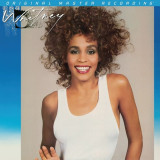
Whitney did more than turn Whitney Houston into a pioneering sensation known around the world by her first name. Originally released in June 1987, the singer's blockbuster sophomore record became the first album by a female artist to debut at No. 1 on the Billboard 200 chart — a position it claimed for a total of 11 weeks en route to selling more than 10 million copies in the U.S. The Diamond platinum effort also contains four No. 1 Hot 100 hits that, when combined with the three chart toppers from her 1985 debut, gave her seven consecutive No. 1 singles — an accomplishment that no other artist has accomplished. Commercially and creatively, Whitney stands on hallowed ground — especially now that the record plays with a sound that puts into perspective just how extraordinary, engaging, and vital Houston's music remains.
Mastered from the original master tapes and pressed on MoFi SuperVinyl at RTI, Mobile Fidelity's 180g 33RPM SuperVinyl LP of Whitney invites listeners to experience the Rock & Roll Hall of Fame inductee's pivotal album in audiophile quality for the very first time. Free of the dynamic limitations and tonal flatness prevalent on prior vinyl and CD pressings, it lets the music breathe and reveals the copious detail, nuance, and texture within the immaculately produced songs. MoFi's SuperVinyl profile offers further advantages in the forms of a nearly inaudible noise floor, dead-quiet surfaces, and superb groove definition.
In addition to featuring extreme clarity and immediacy, this numbered-edition reissue does wonders for the attribute that inspired more than 20 million people around the globe to add Whitney to their record collections: that inimitable voice. Houston's trademark mezzo-soprano — an acrobatic instrument equally capable of taking off on fantastic flights and unwinding for hushed meditations — benefits from the fantastic airiness and transparency afforded by this meticulously restored edition. Whitney has never sounded or looked better. The crossover landmark deserves nothing less.
Issued just two years after Houston's breakthrough debut, Whitney immediately signalled the genre-defying singer's intent to continue to push ahead and expand her palette. Shot by photographer Richard Avedon, the album cover depicts an iconic image of Houston — captured with a gleaming smile, bright eyes, teased-out afro, toned arms, and a right hand that appears to wave a friendly hello — whose active, athletic profile stands in contrast to the extremely formal sit-down shot of her that graces her '85 record. The change is telling: Whitney overflows with unfettered joy, rhythmic vibes, and deep-seated emotions that forever endeared her to the hearts and minds of countless listeners — and which set the standard for the wave after wave of divas that followed in her footsteps.
It's no coincidence that the first track on Whitney is the declarative "I Wanna Dance with Somebody (Who Loves Me)." Like Michael Jackson's "Billie Jean" and Madonna's "Material Girl," the feel-good smash is one of the quintessential '80s gems — a lithe, melodic, celebratory release of pent-up energy and loneliness that glides across club floors, shouts to the rooftops, and shrugs off any concerns about vulnerability or embarrassment. Houston's swooping voice moves in sync with the sleek beats and dipping-and-diving synths. She practically takes her fellow musicians by their hand and leads them in a blissful dance that nobody would dare sidestep. Focusing on Houston's singing — a task made challenging only because of the impossible-to-ignore hooks and grooves — showcases the virtuosic facets of not only her register but her control, discipline, smoothness, and warmth.
That she replicates those feats for the entirety of the nearly 53-minute-long album makes Whitney that much more special. Houston reaches back and channels her childhood gospel training on the R&B-flared "So Emotional"; effortlessly slips into Quiet Storm mode on the duet with her mother, gospel great Cissy Houston, on "I Know Him So Well"; flirts with smooth jazz and collaborates with tenor saxophonist Kenny G on the lush "Just the Lonely Talking Again"; conjures dreamscapes and shadow-boxes with supple funk on a romantic cover of the Isley Brothers' "For the Love of You"; and, for the majestic power ballad "Didn't We Almost Have It All," displays the sky-scraping reach of her vocals amid a grand arrangement made even bigger by Houston's sweeping performance and triumphant finish.
Houston's once-in-a-generation talents weren't lost on the adoring public, radio deejays, or industry experts. In addition to harbouring four No. 1 hits and receiving nominations for four Grammy Awards, Whitney generated another Top 10 success in the guise of the Afro-Cuban-leaning "Love Will Save the Day." The album also netted Houston four American Music Awards; two Billboard Music Awards; back-to-back People's Choice Awards; a Soul Train Award; and various other accolades. It all makes the crux of the Washington Post's July '87 review of the album appear prophetic: "Her voice sounds stronger still and the songs are varied but so consistent she could garner 10 Top 10s out of a field of 11."
That claim still holds true. A brilliant fusion of pop, R&B, smooth jazz, and soul, Whitney is a showstopper – and one of the key reasons Houston is the most-awarded female artist of all time.
How sad, if timely: this stunning reissue of the 1994 live album arrived in the very week that trumpeter Masekela passed away. One of the most successful ambassadors ever for African music, his fusing of the continent's rhythms and instruments with contemporary jazz and rock proved irresistible. Nearly every one of you has heard him, thanks to guess spots with The Byrds and Paul Simon. His breakthough hit from 1968 — the infectious "Grazing In The Grass" — is here, along with another 11 tracks recorded at Blues Alley, the U.S. club that gave us Eva Cassidy. Notably, despite its early-1990s origins, this is all-analogue." — Sound Quality = 90% - Ken Kessler, HiFi News, May 2018
"...Hope is one of those intensely visceral, large as life, and immediately present recordings that will make pretty much any system sound at least very good, and will cause better ones to raise goose bumps." - Wayne Garcia, The Absolute Sound, August 2008
"...The high quality original mix plus Analogue Productions' superb mastering has resulted in a terrific, very transparent sonic with great impact." - John Henry, Audiophile Audition
What more can be captured from the masterpiece that the late trumpet great Hugh Masekela left devoted fans, the effervescent Hope. Now cut at 45 RPM and spread over four 200-gram premium LPs, you're about to discover the answer to that question. The eight sides of vinyl reduce distortion and high frequency loss as the wider-spaced grooves let your stereo cartridge track more accurately. And this set is plated and pressed at Quality Record Pressings, Acoustic Sounds' own industry-lauded LP manufacturer. Virtually silent surfaces coupled with sharp delineation of musical detail are QRP pressing hallmarks.
Two Stoughton Printing old-style tip-on gatefold jackets house the four LPs, which are contained in a custom-designed slipcase reproducing the original artwork.
A longtime audiophile demonstration disc. Hope will show off your system's dynamic range as well as any record ever released. Hugh Masekela, the outstanding South African trumpeter, assembled a seven-piece group and recorded this great set live at Washington, D.C.'s Blues Alley. The songs stretch over a period of nearly five decades and serve as an informal guided tour of Masekela's life. The songs are honest and bare, and as for the sound — WOW!
Unlike a prior 45 RPM version that included seven songs, this 45 RPM reissue contains the full program as originally recorded with all 12 tracks included! Plus, as an added bonus, we've included a special insert — featuring an exclusive interview with Grammy/Emmy Award-winning engineer David Hewitt, who recorded Hope originally.
"Hugh's record is right up near the top for a lot of reasons," Hewitt says.
Hewitt and his team were afforded the time they needed, and they pulled out all the stops to pull off what's now recognized as an all-time great recording. They used better-quality microphones, they were mic-ing the room for ambient sound, and Masekela was performing for a sophisticated and appreciative audience.
"We used stuff from our stash of mics as opposed to what you'd find typically at a jazz club. We actually had control via the record label and producers, so we could take our time. We had the ability to mic the room for abient sound. ... you've got people that actually know and appreciate the music and respond accordingly. What you've got there is all the right stuff at the right time and the right people, and then something magical happens."
Listen to that magic unfold — put on this Analogue Productions 45 RPM 4LP reissue of Hope, and be transported.
This summer, Merge will reissue A Giant Dog's first two full- lengths_2012's Fight and 2013's Bone _worldwide on limited- edition colored vinyl, reintroducing the world to the quintet Spoon's Britt Daniel calls "the greatest American rock and roll /punk band since I don't know when." Recording for the first time with a proper producer (Mike McCarthy) in a proper environment (a studio lol), A Giant Dog Bone, on pink vinyl for the reissue, still manages to kool-aid man its way through the speakers with the immediacy of the band's live shows, a hit parade for the party people. Sabrina Ellis and Andrew Cashen add another baker's dozen tunes to the band's repertoire just a year following their debut, with songs like "All I Wanted," "Dammit Pomegranate," and "Another World" cementing them as a conspicuous songwriting duo.
Sean Huber, best known as the drummer of the beloved & defunct band Modern Baseball, has been releasing music with his band Steady Hands since 2013.
Back for the first time since 2018 with new album “Cheap Fiction,” Huber pays homage to all of the deities you’d expect someone with a New Jersey birth certificate and a dog named Bruce to wor- ship, with rollicking saxophone and piano over tales of hard- on-their-luck neighborhoods, and stadium-rock-ready guitar zaps over odes to the misrepresented people of Florida.
He grapples with lapsed religion like so many with Irish names have done before him. And he fits in real nicely with the mod- ern heroes of Philadelphia’s punk scene, blending the best of heartland rock and straight-up punk with his own penchant for the tropical. Huber’s lyrics tell stories of a very real world where people in power use it for evil, the people who need help don’t get it, but the person at home makes life beautiful despite it all, and
- 1: History (Extended Version) 03:37
- 2: Then You Run 01:7
- 3: The Pool 01:0
- 4: Daydream 01:56
- 5: Stink's Dream 01:41
- 6: Uncle Reagan 01:17
- 7: Teamwork 01:45
- 8: Stand Off 01:31
- 9: A Great Artist Knows When To Stop 02:01
- 10: For Mirko 01:25
- 11: Herd 02:57
- 12: Two Minds 04:09
- 13: Closer 02:15
- 14: Fingertip 01:25
- 15: The Hotel 03:55
- 16: I Know Him 01:51
- 17: Death Drive 02:12
- 18: In The Blood 02:02
- 19: Summer's Not Over 03:31
GAZELLE TWIN - aka composer, producer, singer, and visual artist Elizabeth Bernholz - has scored Sky's brand new TV series "Then You Run".
Created for television by Ben Chanan (The Capture), based on the novel YOU by Zoran Drvenkar, Then You Run follows four rebellious London teenagers on a city getaway to Rotterdam. This contemporary eight-part series boasts an incredible cast of rising stars; Leah McNamara (Normal People) as Tara, Vivian Oparah (Rye Lane) as Stink, Yasmin Monet Prince (Hanna) as Ruth and newcomer Isidora Fairhurst as Nessi.
The four friends embark on what should have been the perfect summer break which soon spirals into a dark and perilous adventure. When their attempt to take on some of the most dangerous people in Europe doesn’t quite go to plan, they find themselves on the run with three kilos of heroin, more questions than answers about Tara’s family, and a gang of deadly criminals tracking their every move.
Invada Records have previously released two recent Gazelle Twin scores (2020’s Nocturne and 2021’s The Power).
Her 2018 acclaimed album Pastoral was described by Pitchfork as “...belonging to a proud tradition of English satire, plumbing the depths of the nation’s psyche and twisting it to wryly discomforting ends”.
Big Crown Records is proud to present the debut full length offering from Les Imprimés, Rêverie. The stirring and ethereal sounds of Les Imprimés have been making fans of anyone who hears them since their first 7" single hit the speakers. Morten Martens is the man behind the band. Born, raised, and working in Kristiansand, Norway, he keeps a low prole while making his heart felt, highly infectious, and unique music. This album is a long time coming for Martens and it is sure to make him a name to be reckoned with. The first thing you notice listening to Les Imprimés is the high level of musician-ship. Martens plays nearly every instrument on the recordings and handles the production and arranging. He has been making records for decades, winning a Spellemann Award (aka, the Norwegian Grammy) in 2006 for producing a HipHop album as well as getting nominations across three other genres. While awards and accolades speak to the level of his talent, this new album really shows who he is an artist on his own terms. Moving away from being a hired gun on the touring scene naturally led him to start doing more studio work. Slowly collecting gear and getting more experi-ence behind the boards he built his own studio on the island of Odderoya and was making a living playing with and recording other people's music. As the story goes, after those sessions would end he would work on his own project into the wee hours of the night. From these late night sessions, Les Imprimés was born and Rêverie began to take shape. However, "it wasn't until COVID, when things locked down, that I was really able to nd the time to focus on Les Imprimés" Morten says about creating and leading his own solo project. "It was a scary time. But I knew I had to do something with it." He took the sum of his inuences, combined them with his own vibe and got busy writing the music, playing the instruments, and singing the songs. "It's soul music, but I don't exactly have the soul voice," Morten explains humbly. "But I do it my own way, in a way that's mine. "It is his sound, his fingerprint, his sensibility, that makes his music hard to put in a box. The album showcases both Martens' range and his ability to make a cohesive album. The lead single "Falling Away" starts with a raw drum break and turns into a lushly arranged tune that paints the picture of love when it slips away. On "Still Here" he professes his resilience through life's twists and turns over a thundering track that puts a new spin on the B side ballad genre. Songs like "You" and "Our Love" mix tones from 60s and 70s Soul with arrangement nods to Doo Wop records while Martens' lyrics and delivery leave you singing the melodies long after they finish. "Love & Flowers" finds Martens in a moment of clarity with a song that ts the niche sub genre of happy break up tunes, the four on the floor track will move the dancefloor or while the message will resonate with anyone who put too much effort into the wrong situation in their lives. However, it is songs like "Muse" and "Chess" that really encapsulate the uniqueness of Les Imprimés as they push the boundaries of genre, one a profession of love for music and the other a cover of an electronic record respectively. Martens' lyrics, emotion, and delivery truly make the whole thing come together and stand out from any of his peers. There's an infectiousness and a pop sensibility in the writing that is done with the utmost class and taste giving Les Imprimés the rare quality of immediate attraction that only deepens the more you listen.
Big Crown Records is proud to present the debut full length offering from Les Imprimés, Rêverie. The stirring and ethereal sounds of Les Imprimés have been making fans of anyone who hears them since their first 7” single hit the speakers. Morten Martens is the man behind the band. Born, raised, and working in Kristiansand, Norway, he keeps a low profile while making his heartfelt, highly infectious, and unique music. This album is a long time coming for Martens and it is sure to make him a name to be reckoned with.
The first thing you notice listening to Les Imprimés is the high level of musicianship. Martens plays nearly every instrument on the recordings and handles the production and arranging. He has been making records for decades, winning a Spellemann Award (aka, the Norwegian Grammy) in 2006 for producing a Hip Hop album as well as getting nominations across three other genres. While awards and accolades speak to the level of his talent, this new album really shows who he is as an artist on his own terms.
Moving away from being a hired gun on the touring scene naturally led him to start doing more studio work. Slowly collecting gear and getting more experience behind the boards he built his own studio on the island of Odderøya and was making a living playing with and recording other people's music. As the story goes, after those sessions would end he would work on his own project into the wee hours of the night. From these late night sessions, Les Imprimés was born and Rêverie began to take shape.
However, "it wasn't until COVID, when things locked down, that I was really able to find the time to focus on Les Imprimés" Morten says about creating and leading his own solo project. "It was a scary time. But I knew I had to do something with it." He took the sum of his influences, combined them with his own vibe and got busy writing the music, playing the instruments, and singing the songs. "It's soul music, but I don't exactly have the soul voice," Morten explains humbly. "But I do it my own way, in a way that's mine."
It is his sound, his fingerprint, his sensibility, that makes his music hard to categorize. He has crafted an album of songs with different energies that all fit together to make one gorgeous record. The lead single “Falling Away” starts with a raw drum break and turns into a lushly arranged tune that paints the picture of love when it slips away. On “Still Here” he professes his resilience through life’s twists and turns over a thundering track that puts a new spin on the B side ballad genre. Songs like “You” and “Our Love” mix tones from 60s and 70s Soul with arrangement nods to Doo Wop records while Martens’ lyrics and delivery leave you singing the melodies long after they finish. “Love & Flowers” finds Martens in a moment of clarity with a song that fits the niche sub genre of happy break up tunes, the four on the floor track will move the dancefloor while the message will resonate with anyone who put too much effort into the wrong situation in their lives. However, it is songs like “Muse” and “Chess” that really encapsulate the uniqueness of Les Imprimés as they push the boundaries of genre, one a profession of love for music and the other a cover of an electronic record respectively. Martens’ lyrics, emotion, and delivery truly make the whole thing come together and stand out from any of his peers. There’s an infectiousness and a pop sensibility in the writing that is done with the utmost class and taste giving Les Imprimés the rare quality of immediate attraction that only deepens the more you listen.
Auf ihrer neuen EP „Sugar EP“ verbindet Tash Sultana kunstvoll Klänge ihrer früheren Werke („NOTION“, „Flow State“ und „Terra Firma“) und schafft somit einen ausgereiften musikalischen Ansatz. Tash verwebt diese Elemente gekonnt miteinander und vermittelt Lektionen aus gegenwärtigen Momenten. Mit ihrer einzigartigen Mischung aus musikalischem Talent und Introspektion wird Tash Sultana ihre Fans weiterhin fesseln und inspirieren und mit ihrer neuen EP eine transformative und tief bedeutsame Erfahrung liefern.
Werewolves formed in 2019 and have proceeded to release an album a year to increasing acclaim and global calamity. Three full lengths and one EP later, the band performs an act of creative peristalsis with album four “My Enemies Look And Sound Like Me” due out 11th August 2023. Bassist/vocalist Sam (The Antichrist Imperium, The Berzerker) says: “Here it finally is, the recording that will cement our place in the technical death metal world as some of the greatest soloists and most thought-provoking lyricists working in music today. Our ability to shape raw art from ethereal nuance is second only to our famously slow craftmanship.” He continues “Of course I’m fucking kidding. This album is as idiotic as the rest, if not more. CAVEMAN RIFFS. Blasting. Screaming. Bowing to a shrine with pictures of Mortician, Marduk, and Angelcorpse. This isn’t going to be the album that brings people together and catalyses world peace. Apparently it has greater emotional reach than our earlier work but we haven’t noticed that ourselves, we’re morons. I can confirm that there is more swearing on this album than all the others, it’s positively Australian-esque”.
In 2018, New York based composer and improviser Lucie Vítková made recordings in caves in the Czech Republic and an abandoned Gothic church in Slovakia. Their album Cave Acoustics combines a beguiling exploration of the physicality and acoustics of these unique locations with profoundly personal themes of family legacy and roots.
Lucie performed with their sisters in Výpustek Cave – an underground system of tunnels and former Soviet-era bunker. The choreography-based piece creates crescendos of metallic noise as the trio moves around the spaces. It begins with echoing clanks of tins and coins and accelerates towards a rattling cacophony with distant singing floating up from deep in the shadows. Bearing in mind the siblings had never performed together before, their frenzied kinetic outpourings seem even more special, a wordless cohesion forming between them. Lucie clearly doesn’t shy away from a physically full on experience; they embarked on a Fitzcarraldo-style journey to carry heavy props up a steep hill and across a river to reach the less accessible Jáchymyka Cave.
‘Hair Score’ is an attempt to process the death of the siblings’ mother through a serene then slightly unsettling swaying ritual, with rising and falling waves of wailing and emergency siren sounds growing in intensity as they emerge from their mourning mouths.
After the cavernous acoustics, ‘Stones’ by American experimental classical composer Christian Wolff feels more immediate with its textural sounds and fast, insistent rhythms, as we hear different sized stones knocked together rapidly, following the composer’s instructions not to break anything.
‘Inside the Ritual’ was a “transformative” experience for Lucie, where they felt their body merge with the forest and hills in Slovakia. The 23-minute long track is hypnotic, listening to cowbells and chirping insects at the end of a hot summer’s evening. Things get stranger as metallic clatter is punctuated with Lucie’s voice and reedy tones from their Japanese hichiriki flute.
The album is a calm, contemplative but also energetic and moving reflection of these rare and unheard environments and Lucie’s reunion with the people and places that have shaped them.
- A1: A Gente Acaba (Vento Em Rosa)
- A2: Don’t Forget You’re Precious
- A3: Fucking Let Them
- A4: The World Is Mine
- A5: The Sound Of My Feet On This Earth Is A Song To Your Spirit
- B1: I’m Gonna Say Seven
- B2: Do You Know A Human Being When You See One?
- B3: Visitors Yt15B – Jerusalem, Palestine
- B4: I’m Good At Not Crying
- B5: Now (Stars Are Lit)
- B6: Again
- C1: Mrs Calamari
- C2: People What’s The Difference?
- C3: Visitors Xt8B – Oak
- C4: Who Is A Fool
- C5: I Will Not Be Safe
- D1: Visitors Yt15 – Krupp Steel Condition Pivot
- D2: Broken Like
- D3: Now (Pink Triangle, Blue Valley)
GOLD, the follow-up to Alabaster DePlume's widely-acclaimed, 2020-released cinematic instrumental LP To Cy & Lee: Instrumentals Vol. 1, introduces the world to the artist’s truest self.
Incredible jazz / prog / folk score to groundbreaking tattoo film by maverick filmmaker. Unreleased until now, so don’t go saying it’s a reissue because it isn’t, but I’m sure some people will because they always do.
John Samson (1946 - 2004) was a truly great documentary maker. He must be as I’ve been obsessed with his work for many years. Educated first at Glasgow School Of Art (circa 1963) and then finally in the art of film making at The National Film And Television School in Beaconsfield - he headed there in its opening year of 1971 having made a short film that got him a scholarship.
It was at the NFTS that Samson met Mike Wallington, who was to become his right hand man and eventual producer; together as a quite brilliant team they made a handful of inspiring, entertaining and hugely prescient films about important, overlooked, unseen and marginal fringes in society. Tattoo (1975) Exploring the rather clandestine world of tattooing in the UK. Dressing For Pleasure (1977) Exploring the rather clandestine world of festish in the UK. Brittania (1979) A film about railway enthusiasts and a steam train restoration.
Arrows (1979) The life of dart player Eric Bristow. Drag Ball (1981) An unreleased film about the annual Porchester Hall Drag Ball. The Skin Horse (1983) BAFTA winning film about The Outsiders Club, a dating agency for disabled people. The subject matter in all films was always unusual for the time, and Samson managed to navigate his way with compassion, interest and subtlety, immersing himself in the chosen scene and producing moving, fascinating and sometimes darkly amusing situations. His documentaries also do not rely on traditional voiceovers, with stories, facts and narrative threads being dictated by the subjects.
I’ve tried for a long time to find the music for a couple of his early films (there was actually an original 7” for Arrows) - so far this is the only unreleased soundtrack I have found. This one was written by Steve Jolliffe, who met Samson at the NFTS. Joliffe was the resident composer and had a room at the college complex where he could work on scores for the fledgling film makers. Jolliffe was and still is a multi-instrumentalist and prolific composer who had met Edgar Froese at the Berlin Konservatorium in the late 1960s and played in an early incarnation of Tangerine Dream. He toured with blues rock outfit Steamhammer, before hanging out at the NFTS, making this recording (and many others) and eventually rejoining Tangerine Dream in the late 1970s. Jolliffe still writes, records and releases today and once i had made contact with him we traced the original Tattoo master tape to a box at his brother’s house. Musically it’s charming, slightly folky, a touch baroque, there’s a whiff of prog too, and it perfectly suited this early documentary about the art and desire of tattoos. I only wish it was longer. But the film is only 16 minutes long. Seek it out if you can. Try and find all the Samson films, they really are a joy.
As well as featuring intimate footage of tattooed people, the film also includes a rare and very early interview with Alan Oversby (better known as Mr Sebastian), a seminal character in the development of tattoos and body modifications worldwide - it was he who eventually was to tattoo and pierce Genesis P-Orridge.
The images for this vinyl release were all found in Mike Wallington’s Tattoo documentary research folder from 1974, and were photos sent in to Mike and John by people who wanted to feature in the film. Most answered an advert in Time Out, and others included people from my home town of Aldershot where tattooist Bill Skuse and his wife, Rusty (the most tattooed woman in Britain at the time, and featured in the film) were based. His parlour was situated at the back of the arcade where we all used to lose all our pocket money in the slot machines.
The Musicians:
Steve Jolliffe - keyboards, flute, sax Geoff Jolliffe - bass guitar Julian Furniss - guitar Mick Kirby - drums
New album from West Virginia based singer-songwriter, William Matheny, set for release on Tyler Childers' Hickman Holler Records. While That Grand, Old Feeling is a document of Matheny’s own journey as a seeker, he hopes that the album can inspire anyone else out there searching for meaning in their own lives, whether they’re searching at a truck stop or in an album of old photographs.“I feel like I've just been trying to recapture that youthful excitement my entire life, trying to regain that clarity and that feeling of purpose,” he says. “And it comes and goes. I mostly seem to be looking for it at gas stations and rest areas and at gigs. But I think a lot of people are probably looking for it in a lot of places like that, too. Pilgrim to pilgrim, I hope you find it.”
Put Webbed Wing’s Taylor Madison up against some of rock’s most celebrated songwriters––he’s ready. On their new EP, Right After I Smoke This..., the Philly-based guitarist and singer puts on the kind of unforgettable performance that can take everyday people and turn them into musical heroes for the masses.
For those in the know, Webbed Wing––incomplete without Jake Clarke (drums) and Mike Paulshock (bass)––have long-since reached cult status; the project follows Madison and Clarke’s already-decorated career in their band, Su- perheaven. Here, each member freely flexes their innate genre-bending musicality, taking notes from the likes of The Lemonheads, Teenage Fanclub, and Weezer.
In just three songs, Right After I Smoke This... channels everything lyrically-gripping about rock music and everything vibrant about pop. There’s as much earnest twang in their toolkit as there is snotty skate-park punk and intense metal; it’s a celebration of the genre as they’ve come to love it, resulting in something highly palatable and new.
Joshua Ray Walker announces NEW RECORD “What Is It Even?” - lending his signature alt-country style to iconic pop songs - paying homage to female-identified powerhouse vocalists and their influence on global culture. Launching with his reimagination of Lizzo’s “Cuz I Love You,” Walker pushes himself and his band to respectfully and artfully build a bridge between two seemingly polar styles of music. What Is It Even? Album Rollout 6/2 - “What Is It Even?” Preorder launch & IG1 “Cuz I love You” 7/7 - "Linger" 8/4 - “What Is It Even?” Street Date The catalyst of Joshua Ray Walker’s new album, What Is It Even?, was sparked on the patio of the Tulsa, Oklahoma music venue and dive bar Mercury Lounge, a fitting origin story for any country record. But this is far from an ordinary country record. It was on that Tulsa patio, deep into tour, when Walker and drummer Trey Pendergrass were half joking about what their gospel jump blues version of Whitney Houston’s “I Wanna Dance With Somebody” would sound like, wondering “what if the Blues Brothers covered a Whitney Houston song?” At that point, it was still unclear how the Dallas native would follow up his trio of critically acclaimed, interconnected albums, all of which were packed tight with character-driven songs that put multiple national-tours worth of crowds on the precipice of staining their shirts with either beers or tears, depending on the song. The third of the trio, See You Next Time, led to Walker appearing on The Tonight Show and CBS Saturday Morning, brought with it performances at the Ryman Auditorium in Nashville and Gruene Hall in Texas, landed him on Rolling Stone’s “Best of 2021” list, and prompted SPIN to call him “one of country’s most exciting storytellers.” Those stories about dive bar dwellers running out of last chances made listeners feel a gauntlet of emotions. What Is It Even?, a 10-track covers album consisting of songs made famous by female pop acts, produced with John Pedigo and arranged alongside his touring band of Pendergrass, bassist Billy Bones, and pedal-steel player Adam Kurtz, was born out of wanting to make people feel joy.
Now here's a cover album with a few interesting angles to it -
First there is the fact that Matthews Southern Comfort have a, let's call it:
Woodstock history - Well over 6 million spotify streams confirm the
legendary status of Matthews Southern Comfort's global hit
And of course: although this collection is called the Woodstock Album, the song
itself is not featured on this album as it was written post festival and therefor
never performed at Mac Yasgur's farm.
In 2022 MSC were looking for a way to reactivate the band as a viable and touring
unit again. The concept they came up with was a Matthews Southern Comfort reinterpretation of songs that were all performed at the Festival by artists like Joe
Cocker, Creedence Clearwater Revival, Jimi Hendrix, John Sebastian and The
Grateful Dead
The songs very much speak for themselves, as do these new versions with a
distinct Matthews Southern Comfort signature.
Roach is Miya Folick's clearest and most direct work yet, eschewing
some of the lyrical and musical obfuscations she layered onto her 2018 debut album,
Premonitions With ear- worm melodies, heart- wrenching poetry, eclectic production and anchored by Folick's once-in-a-lifetime voice, Roach straddles a line between pop and something more experimental.
She enlisted a team of collaborators who she
trusted to bring out the grittier side of her artistry, including Gabe Wax (War on
Drugs, Fleet Foxes), Mike Malchicoff (King Princess, Bo Burnham), Max
Hershenow (MS MR) and a team of some of LA's best players. The result is an
album that sounds as honest and intimate as the subject matter at hand, a
candid snapshot of where she is now and what it took to get there
- 1: Frownland
- 2: The Dust Blows Forward 'N The Dust Blows Back
- 3: Dachau Blues
- 4: Ella Guru
- 5: Hair Pie: Bake 1
- 6: Moonlight On Vermont
- 7: Pachuco Cadaver
- 8: Bills Corpse
- 9: Sweet Sweet Bulbs
- 10: Neon Meate Dream Of A Octafish
- 11: China Pig
- 12: My Human Gets Me Blues
- 13: Dali's Car
- 14: Hair Pie: Bake 2
- 15: Pena
- 16: Well
- 17: When Big Joan Sets Up
- 18: Fallin' Ditch
- 19: Sugar 'N Spikes
- 20: Ant Man Bee
- 21: Orange Claw Hammer
- 22: Wild Life
- 23: She's Too Much For My Mirror
- 24: Hobo Chang Ba
- 25: The Blimp (Mousetrapreplica)
- 26: Steal Softly Thru Snow
- 27: Old Fart At Play
- 28: Veteran's Day Poppy
Trout Mask Replica is a touchstone in the history of recorded music. The mix of dada absurdist blues and previously unexplored experimental avenues has long been praised as one of the greatest albums of all time. As so eloquently put by John Peel, "If there has been anything in the history of popular music which could be described as a work of art in a way that people who are involved in other areas of art would understand, then Trout Mask Replica is probably that work.” In full partnership with the Zappa Family Trust and to celebrate the relaunch of the seminal Bizarre label imprint, Third Man Records is proud to announce Captain Beefheart and the Magic Band's Trout Mask Replica. Out of print on vinyl for nearly ten years, this remaster was helmed by industry legend Bob Ludwig and cut by the estimable Chris Bellman at Bernie Grundman Mastering. Utilizing crystalline-quality safety masters kept in the Zappa family vault for decades by the trustworthy Joe Travers, the audio here is positively glorious. Every last skronk breathes full life into the room. Every twisted guitar figure uncurls onto paths previously unpaved. Every last bark and howl shines resolute through the vast emptiness of your mind. Previous countless Trout Mask Replica repressings used scans of scans of scans of the cover image, but the original Cal Schenkel cover photo has been tracked down and reproduced here at its clearest — its resolution from the original release in 1969. If you’ve only ever seen a jpg online or fuzzy, smeared-looking CD issues from the 90’s, be prepared to be wowed by the fully engaging spectrum this iconic image casts. This 2xLP is pressed on heavyweight 180-gram black vinyl for that full-on frenetic feeling.
Toshiko Mariano Quartet is the 1961 album from fourteen time Grammy
Nominated pianist and composer Toshiko Akiyoshi - then known as
Toshiko Mariano
Women have long been denied the credit they deserve in jazz. It must be noted
that as a Japanese women in jazz, Akiyoshi had to battle for acceptance on many
fronts. Jazz has been a patriarchy community from the beginning, and even
critical praise of her playing could not help but take note of her gender. Leonard
Feather, for example, writing at the time in the Encyclopedia of Jazz called out
Akiyoshi's playing as "fiery, powerfully articulated and exceptionally fluent," but
added that there was "nothing delicately feminine." Even today it is still hard for
people to see Jazz in any other way. We are pleased to be a part of shifting the
narrative and shine a spotlight on this talented artist and this wonderful album.
While she was later to compose using themes, harmonies, and instruments
connected to her Japanese heritage, this album captures the pianist early in her
career playing a straight ahead, harp bop style. This was already her 7th album as
a band leader, and it is a shining example of her confidence and mastery of her
instrument and as a band leader. Recorded at the Nola Penthouse Studios in New
Your City in December of 1960, the LP includes extraordinary liner notes by
Candid A&R man and producer Nat Hentoff giving a context and insight that adds
to the experience of hearing these extraordinary performances
The group was formed by three members of Descendents (Bill Stevenson,
Karl Alvarez, and Stephen Egerton)
The ninth release from the original high octane pop punkers, Problematic furthers
the ALL vision by innovating the genre they helped create. ("Go for ALL")
Caffinated, sharp- witted lyrics over tight, highly memorable riffs and choruses
continue to set them ahead of the pack from others who have followed in their
footsteps.
Features 18 classic romantic- angst ridden tunes that will be certain to please
fans ALL over the world.
After taking time out from working together to focus on separate musical projects, maverick composer Alan Roberts (Jim Noir) and crowd-rousing vocalist Leonore Wheatley (International Teachers of Pop / The Soundcarriers) have re-joined forces to introduce Co-Pilot. Each the other’s wing person, they’re plotting an escape through Manchester’s claustrophobic grey skies with the pencil case colour of a hand-sewn multi-coloured primary school patchwork quilt. “We are both the creators in charge of navigating Co-Pilot’s overall sound which changes from track to track,” Leonore hints at what to expect. “There are about 6 different genres on one album, it's a pick n mix record!”
Happy in the haze of many boozy hours the album was recorded over just a few months whilst holed up and hanging out in Al’s city centre Dookstereo studio. The former Mill allowed the pair to relax, laugh and create without constraint. Armed with their original demos and vocal recordings from Al’s flat, they’d nip by the offie to pick up some Dutch courage before setting to work: building arrangements from a drum beat and basic chord pattern, the pair were so in tune they rarely spoke, allowing only the music to lead the way. “We’d communicate through nods of agreement or grimaces of dismay,” Leonore recalls. “Using the instruments with Al in production mode, we let the sound dictate the process whilst being drunk enough to follow it.”
The sound of life coming full circle after honing their separate crafts, Leonore had previously played keys and vocals in Jim Noir’s live band before moving on to front International Teachers of Pop for two critically lauded albums of joyous dancefloor filling bangers - their self-titled debut (2019) and Pop Gossip (2020). During that time Al would further expand Jim Noir’s universe with AM Jazz, which was celebrated as the no.1 album in Piccadilly Records’ ‘End of Year Review’ (2020), followed by the Deep View Blue E.P. (2021) cementing his status as one of Manchester’s finest songwriters.
As Leonore added her vocal magic to Al’s early demos of what would eventually become Co-Pilot’s ‘Spring Beach’ and a crooked original version of closing track ‘Corner House’, the vibe was prophetic “like the ending of Grease as Danny and Sandy take flight through the clouds”, letting their imaginations fly. The songs were the catalyst to spark a new phase of the pair working together, picking up where they left off. “From messing about with sounds during rehearsals in the very beginning it was always clear we liked the combination of sounds we made,” Leonore recalls.
Powered by a ‘try anything’ approach, Co-Pilot blends the musical DNA of what you’ve come to expect from each of the pair’s previous flight paths. “Whatever is switched on or nearby gets used. There's no 'correct' for us. If it sounds good, record it,” Al tells. United through typically turbulent wonky pop and lurking samples, whether culled from 70s TV themes or recreations of past and found sounds (see Al’s 60s tropicalia guitar on ‘Brick’, or the innocent ‘Swim to Sweden’ which opens with an ice cream van jingle Al recorded from his bedroom window) their process offers up a bucket load of Easter eggs. The album even features snippets from dearly departed pal Batfinks whilst ‘Motosaka’ is perhaps the most expensive 2-minutes on the album, featuring a Columbia Records Japan-cleared sample of Ryuichi Sakamoto’s ‘Thousand Knives’. Its synth squelches and Tom Tom Club funk also received the blessing of Haroumi Hosono, Godfather of Japanese Electronica, who agreed to being sampled in an original version of the song. “We just kept listening back and hitting gold,” Al recalls. “I was thinking ‘yeah, not sure what this is but I like it! We were buzzing with what we had made.”
But the sound wouldn’t come without self-imposed instrumental challenges. Thanks to an old mellotron sample on ‘Move To It,’ the moog riff and nautical accordion breaks on ‘Swim To Sweden’ and the 6/8 and 7/8 jaunt of ‘Brick’, time signatures were lovingly skewed to create Co-Pilot’s unique mood. “It was a bastard getting the drums right,” Leonore reveals, “but I like the wonkiness”. Levelling up through the lyrics, the words of smoky and evocative ‘She Walks In Beauty’ are based on a Lord Byron poem, with the sentiment of remembering Leonore’s late grandparents. “I wanted to see how much I could get away with just singing on one note, and how I could harmonically change everything else around it vocally,” she says. Elsewhere ‘Can You See’ was written from the perspective of a concerned sister to a brother which tells of keeping someone safe. “The lyrics are quite metaphorical about day-to-day happenings, people loved and lost. Others are rhythmic nonsense! It’s up to the listener to figure out what’s true.”
It’s clear from Al’s productive production techniques and Leonore’s knack for vocals and lyricism, Co-Pilot’s course is engineered by two aeronautically adept sonic storytellers. “We share a pretty similar sense of humour,” Al tells, “It is funny listening to this quite serious album but knowing we were giggling as we recorded it all. It’s been great to have another brain to bounce off.” Their destination might be unknown, but the clouds are about to part for a sound that is light years ahead. “You'll like at least one song,” Leonore suggests, “and hopefully them all.”
Raised on Colombia's Caribbean coast and united by its capital, Bogota, Ghetto Kumbé combines the rich musical heritage of their home, to invoke the spirit of digital rumba in audiences all over the world. The secret behind their irresistible electronic ritual lies in their powerful percussion base; Caribbean house beats and traditional afro-Colombian rhythms inherited from West Africa. The album's co-producer, The Busy Twist, adds all the legacy of UK's Bass scene to the Afrofuturistic sounds of the 3 Colombians. Inspired by the different revolutionary movements emerging all over the world, Ghetto Kumbé will release their first full-length album in July 2020 on pioneering Latin Ameri-can electronic label ZZK. Their self-titled debut is visceral, committed, and rebellious, denouncing through frantic rhythms the inequalities and abuses imposed by corrupt governments, while simultaneously enticing listeners to join in the fight. Dance mingles with awareness to create a global community, where family, friends, and strangers come together through our shared love of music and activate change amongst themselves. Using musical motifs from Africa and Colombia's Caribbean coast such as the gaita, call-and-response vocals, and an array of hand drums and rhythms, coupled with the elegant electronic production of Tech/House, Ghetto Kumbé creates an Afro-futurist soundscape with lyrics to motivate, elevate, and inspire. Their first single to come out, `Vamo a Dale Duro', is a fluorescent criticism of the unjust divide between the poor and the rich, the rising prominence of dirty politicians, and the ethics of the capitalist sys-tem while encouraging people to stand up and fight for a dignified existence. The al-bum's tone fluctuates fluidly between tracks that include ancestral chants, voices both deep and resounding, and anthems to uplift and inspire, as well as features by up-and-coming Réunion island artist Melanie and the Palenque-based folk/hip-hop band Kombilesa Mi. In the Americas, Ghetto Kumbé has become one of the most important alternative groups to come out of Colombia. They've played Barranquilla's world famous Carnival, Bogotá's recent Boiler Room, and have even opened for Radiohead. The ancient yet modern sound of the three powerful musicians has made them a legitimate representative of the new Afrohouse scene burgeoning all over the world.
- A1: Frankie Knuckles Pres. Director’s Cut – The Whistle Song (Re-Directed)
- A2: Frankie Knuckles Pres. Director’s Cut Feat. Jamie Principle – Your Love (Director's Cut
- B1: Frankie Knuckles Pres. Director’s Cut Feat. B. Slade – Get Over U (Director's Cut Mix
- B2: Frankie Knuckles Pres. Director’s Cut Feat. Jamie Principle – I'll Take You There
- C1: Ashford & Simpson - Bourgie Bourgie (A Director's Cut Exclusive)
- C2: Joey Negro & The Sunburst Band Feat. Donna Gardier & Diane Charlemagne – The
- D1: Artful & Ridney Feat. Terri Walker - Missing You (Eric Kupper’s ‘Director's Cut Tribute To
- D2: Marshall Jefferson Feat. Curtis Mcclain – The House Music Anthem (Move Your Body)
There are few people across the globe, who will have not been touched by the work of Frankie Knuckles. Forever regarded as ‘The Godfather of House’ for his unrivalled contribution to the house music we know today; what started as an underground movement in Chicago has grown to international heights thanks to Frankie. His records earned him recognition on a global scale, allowing him to work with some of the globes biggest names including the likes of Diana Ross, Whitney Houston and Michael Jackson.
Five years ago, Frankie passed away in Chicago on 31st March 2014 leaving behind one of the greatest house music legacies spanning almost four decades. Now he is commemorated by long time writing and production partner Eric Kupper. Eric, himself a seasoned DJ producer and writer, has worked on over 116 Billboard #1 Dance Records and played a pivotal role in a many of Frankie’s productions. Having both worked together for many years they established themselves at ‘Director’s Cut’ from 2011 and set about producing original releases and remixes based on the classic ‘Def Mix’ sound while sharing equal credits for their creations.
Together they re-produced and re-purpose classic cuts for modern dancefloors, with reworks including tracks from Marshall Jefferson, Ashford & Simpson, Artful & Ridney and The Sunburst Band, alongside Frankie Knuckles originals. These releases have now been brought together by Eric to feature on special album called ‘The Directors Cut Collection’ on SoSure Music. It includes the Director’s Cut reworks of Frankie’s classic cuts such as ‘Your Love’ and ‘Take You There’ with Jamie Principle, alongside Frankie’s first #1 single - ‘The Whistle Song’ on which Eric shares writing credits.
Within a multitude of classic reworks, highlights include a previously unreleased version of Ashford & Simpson’s ‘Bourgie Bourgie’ and a huge Director’s Cut Retro Signature mix of Marshall Jefferson’s 'The House Music Anthem (Move Your Body)' featuring Curtis McClain.
The Director’s Cut Collection is a fitting tribute to commemorate the fifth anniversary of Frankie’s passing whilst giving Eric a platform to tell his side of the creative story. This album is to be released in collaboration with The Frankie Knuckles Foundation who work to continuing Frankie’s legacy well into the future.
- 1: 5-4-3-2
- 2: Yes!
- 3: The Sun Returns
- 4: Breeze Of Time
- 5: Your Name Gonna Ring The Bell
- 6: New Future
- 7: Droids!
- 8: The Concord Hour
- 9: Future City
- 10: Mins Past The Hour
- 11: Support The Youth (With Sound)
- 12: The Beat
- 13: Las Niñas Estan Escuchando (The Children Are Listening)
- 14: Flitting Splits Reverb Adage
- 15: Twilight Shimmer
- 16: Suspense In The Grip Of Suspense
- 17: Polaris Radio
- 18: Drop
color LP[30,46 €]
In a hyperactive 40-minute, 18-track suite that runs like a boombox mixtape, the two prolific multi-media artists contemplate community, transformation, and the future through the programmatic format of a pirate radio station for the people.
- 1: 5-4-3-2
- 2: Yes!
- 3: The Sun Returns
- 4: Breeze Of Time
- 5: Your Name Gonna Ring The Bell
- 6: New Future
- 7: Droids!
- 8: The Concord Hour
- 9: Future City
- 10: Mins Past The Hour
- 11: Support The Youth (With Sound)
- 12: The Beat
- 13: Las Niñas Estan Escuchando (The Children Are Listening)
- 14: Flitting Splits Reverb Adage
- 15: Twilight Shimmer
- 16: Suspense In The Grip Of Suspense
- 17: Polaris Radio
- 18: Drop
black LP[30,46 €]
In a hyperactive 40-minute, 18-track suite that runs like a boombox mixtape, the two prolific multi-media artists contemplate community, transformation, and the future through the programmatic format of a pirate radio station for the people.
*REISSUED ON LIMITED EDITION BLUE VINYL*
London-based electronic songwriter Ryan Lee West aka Rival Consoles to release his most personal work to date in the form of a mini-album titled ‘Night Melody’ through Erased Tapes on 5th August 2016. During the release of his acclaimed full-length album ‘Howl’ and heavy touring in late 2015, Ryan came out of a 13-year long relationship and found himself making music throughout the winter months. The result of his efforts is a 34-minute, 6-track mini album ‘Night Melody’, born out of and shaped by long hours working into the night. It’s nocturnal in sound; mysterious in the way that the early hours so often are.
“I found myself, in a silent home, with the days getting dark very early. I’ve never before in my life been affected by the lack of light so much. I just remember it always being night time. I would either make music into the night, go out drinking with friends, or go to parties and dance into the early hours, every day, week after week, month after month, until eventually the days became brighter again.” The opening statement ‘Pattern of the North’ starts off with a collage of spliced synth melodies, inspired by anxiety that accompanies going home for Christmas. It’s followed by ‘Johannesburg’, an early sketch gradually filled out during his tour in South Africa.
“After playing it around some of the cities, I got a lot of inspiration to bring it to life and push it into something that really moves me. I think this is one of my most colourful pieces of music, with its driving rhythm and almost a homage to Terry Riley’s ‘In C’ towards the end, with a build of very simple, hypnotic parts. I especially love that for over five minutes the piece is tied to just one note. This makes the ending very dramatic, because all of a sudden there is this harmonic change.” ‘Lone’ started life around the time Ryan was working on his ‘Sonne’ EP in 2014. It’s the result of constant adjustments to find the perfect balance of fragility and assurance. As everything on the album, it’s a carefully considered, emotionally mature piece. “I think, as I get older, I need music to represent something and not just sound interesting, though of course the two are connected.” The closing statement ‘What Sorrow’ is a fitting end to the album, building from gentle melancholia to a joyous crescendo. It’s a sensibility that’s central to the record; joy and sorrow both find their counterpoints.
“This record is very personal to me and I hope it offers something for other people, as it helped me to make it and to listen to it. Almost every synth line was recorded intuitively, without perfection but with a lot of intention and expression. I’m not interested in making something sad or making something happy. I want music to be bittersweet, to be more complex, like life – containing moments of vibrant colour and hope, as much as darkness and sadness.” This summer will see Ryan follow on from his recent North American Tour with the appearance at many festivals including Lovebox, Secret Garden Party, La Route Du Rock, Sea Change and Tale of Us-curated Afterlife party at Space, Ibiza.
Lori McKenna titled her album 1988 after the year she married her husband, Gene, yet the 10 songs within also serve as a love letter to lifelong friendships, people she’s lost, and her family. Recorded with producer Dave Cobb in Savannah, Georgia, 1988 naturally has its nostalgic moments, even if not every ending is a happy one. With more of an electric edge than her past projects, 1988 feels in step with classic ‘90s albums by Sheryl Crow or Gin Blossoms, where the lyrics pulled you in as much as the melody or production. Playing together on acoustic guitars while facing one another in the studio, McKenna and Cobb tracked the album live, giving it a feeling of immediacy and authenticity.
If you ever thought Debris was Oklahoma's only entry into the bloodstream of feral, batshit rock, guess again. Mag Amplitude's, Wizards Of Today appeared in a miniscule, self released edition of 100 in 1983 & was the brainchild of a blind, guitarist-vocalist by the name of Matt Muncil. On Wizards Of Today, Muncil-considered by the psychedelic mafia to be the 'Higney of Heavy Rock'—& drummer Scott Roher proceed to lay down over 7 tracks an incredible wall of wildly fuzzed & primitive bash that is a singular testament to loner, outsider brilliance. Heavy on double tracked guitar riffs & growling, incomprehensible vocals concerning outer space, rocket ships & rock, Mag Amplitude's Wizards Of Today is a half hour slab of muzzed disorder of the highest possible recommendation. This Zaius Tapes reissue is in a one time pressing of 292 copies. Our first foray into (re) introducing fans & collectors into the cimmerian forest of American real people/outsider psych rock."—Johan Klepp, for Zaius Tapes
- 1: Splitterty Splat
- 2: Wreck And Roll
- 3: You?Re Full Of Shit
- 4: Tidal Wave
- 5: Refrigerator (Alt)
- 6: Cold Meat
- 7: Spinach Blasters
- 8: Jaguar Ride
- 9: Zoot Zoot
- 10: Giganto (Cyclotron)
- 11: Bunnies
- 12: Roll On, Big O
- 13: You Crummy Fags
- 14: No No
- 15: Sewercide (Alt)
- 16: Silver Daggers
- 17: As If I Cared
- 18: Natural Situation
- 19: Cards And Fleurs
- 20: Agitated (Orig)
- 21: Cyclotron
- 22: Black Leather Rock
- 23: Dead Man?S Curve
- 24: Safety Week
- 25: Accident
- 26: Anxiety
- 27: No Nonsense
The electric eels were the first punk band, full stop. They may not have “started” the genre, but they were the first to tick all the boxes. The eels rejected every 1970s rock convention—professionalism, virtuosity, subject matter, image. Dave E.’s caustic vocals, complete with an aggressive lisp and a head full of snot, would become de rigeur a few years after the group disbanded. Meanwhile, the songs’ focus on car crashes, suicide, neuroses, and generally hating people were as far out of the mainstream as possible. The two eels tracks that do approach the subject of romance couch it in terms of not really caring that much about it (“Jaguar Ride”) or placing it in the context of a grisly murder (“Silver Daggers”). Also consider John Morton’s signature guitar sound, a nails-on-chalkboard tone with brutally free soloing inspired more by Albert Ayler than the blues or aspirations to technical facility. Ditto Dave E.’s clarinet playing and affection for lawnmowers and vacuums during live performance. They were notoriously violent not only among themselves, but towards audiences, police, and anyone unfortunate enough to be around them when things went south. Then of course there are the leather jackets, the clothing festooned with rat traps or safety pins. And no bass player, why bother. There is simply no other “proto” band to have had all these pieces in place circa 1973- 1975. Yet it is a mistake to consider the eels exclusively in such a context. Yes, the eels could and did shock anyone who encountered them, but they also had great songs. While both Dave and John were visionary writers, they also had rhythm guitarist Brian McMahon, a melody and riff machine who wrote many of the band’s signature songs. And they were no one-trick pony. Although much of the band’s material is appropriately high-energy, there is also the downer eels—morbid, harmonically risky, and in full existential crisis. Although it’s not a focus of this compilation, the eels also had a penchant for completely free improvisation. Over the last forty plus years, there have been several electric eels compilations. Spin Age Blasters is quite simply the best one ever assembled, every single key track is here in its best version, properly mastered by John Golden, and sequenced with an eye towards both flow between tracks as well as individation between sides. A true monster of an album.
The Side Eyes are back with the follow up to their 2017 self-titled debut album and are asking the question What’s Your Problem? Anyone suspecting that the Southern California band may have mellowed out in the five years between albums will have those suspicions shattered within the first twenty seconds of the opening track “Get Me Out.” If anything, the band is now harder, faster and angrier than they were the first time around. Vocalist Astrid McDonald is in fiery fine form calling out everything from phonies to shit-talkers to people that simply aren’t nice. Brothers Kevin and Chris Devine on guitar and bass and drummer Sam Mankinen thunder through the twelve tracks here at a breakneck speed that is positively pummeling. While The Side Eyes sound like a throwback to early Southern California hardcore punk rock like Circle Jerks and the Adolescents, the band also sites more recent bands like Ceremony, Glue and Babes In Toyland as influences. Produced by Steve McDonald (Redd Kross / Melvins) and clocking in at under twenty minutes (while spinning at 45 RPM), What’s Your Problem is a modern punk rock gem that blows past the sonic barriers of their past inspirations. This is great stuff!
- A1: On Tape
- A2: Time To Time
- A3: Heroes & Villains
- A4: Just Another Minute
- A5: Teenage High
- A6: 123 Red Light
- A7: When The Night Falls
- B1: Dying For It
- B2: I Know Someone Who Knows Someone Who Knows Alan Mcgee Quite Well
- B3: Sex Head
- B4: Foxy Boy
- B5: Dare True Kiss Promise
- B6: Do It Again (A Little Bit Slower) (A Little Bit Slower)
- B7: Indiepop Aint Noise Pollution
‘Mellifluous’... is a word you won’t hear much when conversation turns to early Pooh Sticks records. But ‘noise pollution’, sure: that comes up. I’ve even used it myself. So look away now if you must: ‘Straight Up: Noise Pollution C88-90’ is a selection of some of the most loved/despised/ignored tracks released by The Pooh Sticks on however many records it was before it all went wilfully ‘American’ sometime around dotted-lining for BMG mega-corp in 1991.
The record has highlights and lowlights. You and me, we’d probably agree on most of them. We chose a reasonable cross-section, I think (although there could’ve been more tambourine), including:
- “On Tape” - zeitgeist-nailin’ strum and strangle.
- “I Know Someone Who Knows Someone Who Knows Alan McGee Quite Well” - long title
- “Teenage High” - breathy sweetness sneaked onto the depraved Sympathy For The Record Industry label.
- “Dying For It” - the Vaselines cover which beat Nirvana by a full two years (though theirs sold better).
... and more! It’s like Christmas (no, blocking up the chimney won’t help: we’ve cut spare keys). And all of this in a nice gatefold sleeve, and on Steve McQueen’s- eyes blue vinyl. And there’s even a repro poster for the March ’89 Pastels/Pooh Sticks/Vaselines gig up London way (“I swear I was there”, people say).
On behalf of the group, I hope you enjoy it. No, really. It was all a long time ago but I remember we had fun. Maybe you were even there having fun with us.
Bush Tetras have made punk music at the fringes for over four decades. Flashes of reggae, bursts of noise, guitars that rattle, shake and snake, born out of a gutter behind CBGBs. Over the years they have respawned time and time again, contorting their sound, tweaking the vision, remaining singular and indispensable. In the late 2010s the group-Pat Place, Cynthia Sley, and Dee Pop-reformed again, releasing an EP, Take the Fall, in 2018. It was their first offering of new music in over a decade. A few years later in, 2021, they released a career spanning box set called Rhythm and Paranoia. The New York Times called the box set an artifact that "proves for decades that Bush Tetras continued to evolve in surprising yet intuitive directions." Around the same time, the band began working on a full length record, writing sessions during the pandemic over Zoom. Right before the release of the box set, beloved drummer Dee Pop passed away. Determined to complete the record to honor his memory, the Tetras went into the studio to finish what they'd started, once the timing was right. They brought in a new drummer, Sonic Youth's Steve Shelley, who also served as producer. Enter They Live in My Head. The band's 3rd official LP (a misleading fact when viewed along - side a catalog as expansive as it is influential), They Live in My Head is a collection of songs that sometimes reflect on the past and sometimes reckon with our current reality. From "Ghosts of People," on which Pat Place's legendary guitar meanders through closed doors and portals, to the scorching "2020 Vision," a matter- of-fact call to arms to get on the streets and get something done, the album addresses new and old, in both abstract and specific terms. But whether they're looking forward or backward, Bush Tetras have always been a political band, a band that calls out all kinds of bullshit. And, in that sense, They Live in My Head is absolutely no exception.
Der in Philadelphia geborene, in Kanada lebende Sänger, Songwriter und Komponist hat jahrzehntelang unzählige musikalische Praktiken auf eine einzige, leuchtende Überzeugung hin ausgerichtet: dass Musik uns von dem befreien kann, was uns voneinander abschottet. Sein facettenreiches Werk gibt sich der Schönheit, dem Schmerz und der großen Fähigkeit zur Heilung hin, die das Leben durchzieht. Glenn-Copelands neues Album 'The Ones Ahead' - das erste neue Album seit fast zwei Jahrzehnten - vertieft diese Erkundungen und wirft ein forschendes Licht darauf, wie wir alle die Schäden dieser Welt auflösen und uns gegenseitig in die nächste tragen müssen.
- 1 5: 4-3-2-1
- 2: Yes!
- 3: The Sun Returns
- 4: Breeze Of Time
- 5: Your Name Gonna Ring The Bell
- 6: New Future
- 7: Droids!
- 8: The Concord Hour
- 9: Future City
- 10 10: Mins Past The Hour
- 11: Support The Youth (With Sound)
- 12: The Beat
- 13: Las Niñas Estan Escuchando (The Children Are Listening)
- 14: Flitting Splits Reverb Adage
- 15: Twilight Shimmer
- 16: Suspense In The Grip Of Suspense
- 17: Polaris Radio
- 18: Drop
color vinyl[28,28 €]
New Future City Radio is the first duo collaboration of longtime creative partners Damon Locks & Rob Mazurek. In a hyperactive 40-minute, 18-track suite that runs like a boombox mixtape, the two prolific multi-media artists contemplate community, transformation, and the future through the programmatic format of a pirate radio station for the people. It"s a deep avant-garde echo of the legendary Bomb Squad (Locks even sounding a bit like a tape-delayed Check D on the vox), with beat artifacts spanning the whole gamut from pre to post golden era hip-hop - mixing OG Brooklyn boombox sound with the sci-fi boom-bap of late 90s Def Jux and/or Dan The Automator"s 75 Ark.
- 1 5: 4-3-2-1
- 2: Yes!
- 3: The Sun Returns
- 4: Breeze Of Time
- 5: Your Name Gonna Ring The Bell
- 6: New Future
- 7: Droids!
- 8: The Concord Hour
- 9: Future City
- 10 10: Mins Past The Hour
- 11: Support The Youth (With Sound)
- 12: The Beat
- 13: Las Niñas Estan Escuchando (The Children Are Listening)
- 14: Flitting Splits Reverb Adage
- 15: Twilight Shimmer
- 16: Suspense In The Grip Of Suspense
- 17: Polaris Radio
- 18: Drop
black vinyl[24,83 €]
New Future City Radio is the first duo collaboration of longtime creative partners Damon Locks & Rob Mazurek. In a hyperactive 40-minute, 18-track suite that runs like a boombox mixtape, the two prolific multi-media artists contemplate community, transformation, and the future through the programmatic format of a pirate radio station for the people. It"s a deep avant-garde echo of the legendary Bomb Squad (Locks even sounding a bit like a tape-delayed Check D on the vox), with beat artifacts spanning the whole gamut from pre to post golden era hip-hop - mixing OG Brooklyn boombox sound with the sci-fi boom-bap of late 90s Def Jux and/or Dan The Automator"s 75 Ark.
- A1: Greetings From Planet Love
- A2: Rainbow People
- A3: Love Tonight
- A4: Chasing My Tail
- A5: Swirl
- B1: Tuba Rye And Will’s Son / Balloon In The Sky
- B2: King Of Showbiz
- B3: Whirl
- B4: Freelove Baby
- B5: Groovy Party At Jimmy’s Magic
- C1: It’s Beautiful
- C2: Wink Of The Third Eye
- C3: It Has No Eyes But Sight
- C4: Twirl
- C5: Space And Time
- C6: Time Is Standing Still
- D1: Ride The Snake
- D2: Mr Plastic Business Man
- D3: Ccosmicc Ccarnivall
- D4: Tomorrow Drop Dead
The very first vinyl edition of Andrew Gold’s pastiche
psychedelic masterpiece ‘The Fraternal Order of the All –
Greetings from Planet Love’.
Initially released in 1997, the album was conceived by
Andrew Gold as a tribute to late 60s psychedelic rock. His
remarkable compositions were wonderful stylistic
evocations of artists such as The Beatles, The Beach
Boys, The Byrds and The Doors.
The project saw Gold create the fictitious band The
Fraternal Order of the All, in reality Andrew playing
most of the instrumentation and singing, along with guest
musicians such as Graham Gouldman.
This Esoteric Recordings limited edition double LP is
pressed on 10-inch coloured splatter vinyl and features a
newly designed lavish gatefold sleeve.
The second EP of the Axis Expressionist series includes two new tracks: ?The Wise One" and "Don't Ask Me Why". "Wind Walkers" original version was released in digital as "Every Dog Has Its Day vol.12" (2020). Here in 2023er mix. All tracks are available on vinyl for the first time and on vinyl only.
Axis Expressionist Series
A collection of vinyl and limited digital releases, curated by Millsart, an alias of Jeff Mills, of his most eclectic and transcendent compositions that derive from his Every Dog Has Its Day project as well as new unreleased works. Vernacular creations that fall off from the "other side" of the Electronic Music tree, this project is designed for the experienced Techno music listener, and its goal is to reflect upon the pure artistry of the craft of storytelling. A realization between music and life. Whereas "dancing" is the goal of Dance Music, the goal of this music is about "reflecting on the complexity and simplification of life". Soundtracks for people in their evolutionary process.
"Don't Ask Me Why" by Millsart is conceived, composed and produced by Jeff Mills for Axis Records / Frontcover artwork: Andromède debout et Persée by Félix¦Vallotton (1907).
- A1: Curtis Mayfield - Move On Up
- A2: Marlena Shaw - California Soul
- A3: James Brown - The Payback Pt. 1
- A4: Bill Withers - Use Me
- A5: Minnie Riperton - Inside My Love
- A6: Sly & The Family Stone - Stand!
- A7: Bobby Womack - I’m A Midnight Mover
- A8: The Delfonics - Ready Or Not Here I Come (Can’t Hide From Love)
- A9: Gil Scott-Heron - The Revolution Will Not Be Televised
- B1: Marvin Gaye - What’s Going On
- B2: Wilson Pickett - In The Midnight Hour
- B3: Ike & Tina Turner - Workin’ Together
- B4: Clarence Carter - Patches
- B5: Jerry Butler - Never Give You Up
- B6: Irma Thomas - Anyone Who Knows What Love Is (Will Understand)
- B7: Willie Hightower - Walk A Mile In My Shoes
- B8: The Isley Brothers - That Lady Pt. 1
- C1: Fontella Bass - Rescue Me
- C2: Otis Redding - Fa-Fa-Fa-Fa-Fa (Sad Song)
- C3: Donny Hathaway - The Ghetto Pt. 1
- C4: Smokey Robinson & The Miracles - I Second That Emotion
- C5: Aretha Franklin - Chain Of Fools
- C6: The Impressions - People Get Ready
- C7: Odetta - Hit Or Miss
- C8: The Brothers Johnson - Strawberry Letter 23
- D1: Isaac Hayes - Walk On By
- D2: Solomon Burke - Everbody Needs Somebody To Love
- D3: The Staple Singers - The Weight
- D4: The Temptations - War
- D5: Freda Payne - Band Of Gold
- D6: James Carr - The Dark End Of The Street
- D7: Etta James - I’d Rather Go Blind
- D8: Lamont Dozier - Fish Ain’t Bitin
Soul music originated in the African American community throughout the United States in the late 50s and 60s. Having its roots in African American gospel music and rhythm & blues, it became popular for dancing and listening with prominent record labels as Motown, Atlantic and Stax.
On this 2LP compilation classic soul songs by Curtis Mayfield, Marlene Shaw, Bill Withers, and Aretha Franklin are paired with funky soul stompers by James Brown, Sly & The Family Stone, The Isley Brothers, and poetic soul by Gil Scott-Heron, Marvin Gaye, The Impressions and many more influential artists and groups.
Soul Collected is available as a limited edition of 2000 individually numbered copies on yellow (LP2) and orange (LP2) coloured vinyl and includes an insert.
The Counts formed in Michigan in 1964 as the Fabulous Counts, releasing two singles, ‘Jan Jan’ and ‘Get Down People’ on the Moira label in 1968 and 1969 that became R&B chart hits. This led to the album “Jan Jan”, issued by Cotillion in 1969.
Snapped up by Westbound, the line-up that recorded “What’s Up Front That Counts” included Mose Davis (Organ), Leroy Emmanuel (guitar), Demetrius Cates (sax) and Andrew Gibson (drums). Although tenor player Jim White is on the front cover, he left the band shortly before the album was recorded. Extended, mostly instrumental tracks like ‘Why Not Start All Over Again’ and the title track are now recognized as some of the juiciest funk ever laid down in the studio. Shorter tracks like ‘Rhythm Changes’, ‘Thinking Single’ and ‘Bills’ are equally sweet. What gives the album such powerful musical chemistry was the fact that the Counts were jazz players weaned on the likes of Miles Davis who were also into the funk of James Brown and Sly & The Family Stone so every track features groove-driven interplay. One might argue this is the sound that Miles Davis was trying to find on his early 70s albums.
The Counts were to tour with Funkadelic and record more singles and albums but it is this 1971 offering that is, and remains, an all-time classic. Indeed, the track ‘What’s Up Front That Counts’ has been sampled by artists like Queen Latifah and Eric B & Rakim, keeping the music of the Counts firmly in the minds of a young contemporary audience.
Out of print on vinyl for nearly two decades, Ace is proud to reissue this beauty
The year is 1989. Techno’s second generation has begun to permeate the globe leading a young Carl Craig to a tiny village in the countryside of Belgium. It is here, undistracted and determined to break out, that Craig encounters one of the country’s only drum machines, an Alesis controlled midi-808. In a single session he composes and mixes a handful of records that are still to this day regarded as some of his most raw and explosive contributions to the fabric of electronic music history.
Carl revisits this fateful chapter through the lens of a famed cut from his Psyche alias ‘From Beyond’, with a ‘C2 2023 Mix’ and remixes from Seth Troxler, Ataxia and Admn, out July 14 on Planet E Communications.
The Psyche alias, known for early Transmat releases like ‘Crackdown’ and ‘Elements’, embodied a stripped back, less sample based yin attitude to the yang of Carl’s more aggressive 69 and sample-forward BFC and Paperclip People identities. ‘From Beyond’, first released in 1990 via the ‘Crackdown’ 12” on Transmat, offers an eerie glimpse into the simplistic production that came through Carl’s mastery of the 808 and the sonic value of restricting himself to this movement defining tool.
This new ‘From Beyond’ package sees Carl lift and bend the original in his ‘C2 2023 Mix’ alongside a package of remixes from artists near to the hearts of Detroit and the Planet E fold. Seth Troxler brings a subdued acid tinge to the package, while label regular Ataxia pays homage to the source material with a renewed percussive energy, followed by a soulful rework by Admn.
Whether it be through the 30 year repertoire of his seminal Planet E, his Party / After-Party sound and light installation now on display at Los Angeles’ MOCA, or his continuous work as a champion of Black-led creativity, the Carl Craig mission remains the same: to always rep Detroit and be the realest mutha f***a alive.
Beverly Glenn-Copeland announces his long-awaited new album, The Ones Ahead, due out 28th July via Transgressive and available to preorder here. The Ones Ahead is Glenn-Copeland’s first studio LP in almost 20 years and the first since the extraordinary career renaissance triggered by the rediscovery of his now-classic Keyboard Fantasies album.
Hitler Bad, Vandals Good ist das bahnbrechende Album von The Vandals auf dem Punkrock-Label Nitro Records. Die kalifornische Band veröffentlichte 1998 ihr bisher kommerziell erfolgreichstes Album, das die Single My Girlfriend’s Dead”, die Fan-Favoriten Idea for a Movie” und People That Are Going To Hell” sowie eine Coverversion von So Long, Farewell” enthält. Zum 25-jährigen Jubiläum ab dem 21.07 als limitierte blaue 1LP verfügbar.
- Latin Blues Band - Take A Trip
- Orquesta Olivieri - African Guajira
- Frankie Nieves - The Four Corners
- Pijuan Y Su Sexteto - Shake It Don't Break It
- Milton Zapata - Sweet Soul Music
- Dave Cortez* With The Moon People - Fishin' With Sid
- The Moon People - Indian Soul
- The Real Thing - Heavy Together
- Willie (Baby) Rodriguez - Hot Buns
- Tony Middleton - Spanish Maiden
- Joe Pappy & His Combo - Oye Tomasito
VOL 1[28,15 €]
Dr. Lonnie Smith’s 1969 album Turning Point featured the organ virtuoso with a dynamic band featuring Lee Morgan on trumpet, Julian Priester on trombone, Bennie Maupin on tenor saxophone, Melvin Sparks on guitar, and the funky drummer Leo Morris (aka Idris Muhammad). Highlights include covers of “See Saw” and “Eleanor Rigby” plus soulful originals.
This Blue Note Classic Vinyl Edition is stereo, all-analog, mastered by Kevin Gray from the original master tapes, and pressed on 180g vinyl at Optimal
The 1974 debut album Ojinga’s Own and single Basa Bongo/Black Pepper by Guyanese Afro-Folk band The Yoruba Singers has been remastered for vinyl and digital.
The Yoruba Singers formed in Georgetown, Guyana in 1971. Despite their name they were not from Nigeria, but identified strongly with the area from which so many of the African diaspora in Guyana and neighbouring regions were originally descended.
The group started adapting Guyanese traditional folk music as well as writing their own - blending a mixture of protest, social commentary, blues, and genres inspired by the times. Beginning with about 12 people sharing vocal duties, most of the early repertoire was inspired
by folk songs that started life on plantations or in religious settings accompanied by a few sparse musical instruments.
Integral to the Yoruba Singers’ sound are echoes of Obeah traditions which are very closely related to the Santería religion of Cuba and the Orisha and Shango traditions of Trinidad and Tobago. Calypso and steel band culture from nearby Trinidad and Tobago was to some extent part of the musical DNA of the group, but they were naturally also influenced by the massive volume of rocksteady and roots-reggae coming from Jamaica.
»A Magnetic Road to Hell« is Robert Millis and Bardo Todol’s first release as a duo. Recorded transcontinentally throughout 2021 and 2022 they traded sounds and ideas between Cordoba, Argentina and Seattle, USA with a stop in Mexico along the way: screamings, rivers, kids, radios, mellotron, records, 78rpm shellac, wax cylinders, field recordings, birds, electronics, guitars, percussion, haze, static, a destroyed Indian piano, talkative violins, talkative people from the 1920s, talkative black and white dreams, tin cans from the streets, Argentinian children's tales about cows being teachers, and more. You’re riding on an unspooling reel of tape, through sounds real and imagined, the tape flapping dangerously, shredding; we are all of us magnetized, attracting together, pushing apart, unwinding onto the floor, stumbling along the road to hell.
Robert Millis and Bardo Todol have each released music on many different labels: Sublime Frequencies, Dinzu Artefacts, The Helen Scardale Agency, Discrepant, Abduction Records, Dust-to-Digital, Fire Breathing Turtle, Sub Pop, and Ikuisuus.
- 1: Marrakesh Vertigo
- 2: Out Of The Atlas Pt
- 3: Fait Atencion, Pas De Confiance
- 4: Ali Baba
- 5: Tetfout Radio Loop
- 6: Pista De Olhinhos Frogs And People In Ain Tamda Park, Zaouiat Cheikh - 08.08.17
- 7: On The Road To Ouarzazate -09.08.1 21-08
- 8: Festivities In Boumalne Du Dadès -10.0.17 17-55
- 9: Raining In The Desert, Ziz Valley -11.08.17 16-36
- 10: Raining In The Desert Plains, N13 Road, Middle Way Between Rissani And Merzouga 11.08.17 18-58
- 11: Street Shop With A Radio In Merzouga -12.08.17 13-52
- 12: Morning In The Mountains By Chefchauen -15.08.17 10-05
- 13: Stranded In The Port Of Ceuta - 16.08.17 23-56
- 14: Out Nowhere — Ferry Between Ceuta And Algeciras -16.08.17 05-17
Companion piece to O Morto's album »Dans la Gorge d'un Monstre«. The diaristic approach goes deeper where field recordings and fragments of memory take center stage , O Morto expands his LP masterpiece to a very direct and free-flowing tape. Also based on a number of field recordings taken during a life-changing trip to Morocco that felt like a fever dream, ‘Iffrits Habitent‘ is the perfect companion piece with a more impressionistic and unadulterated account of the same travel that could well be this side of the mirror. Then again, maybe he never made it from the other side. Who’s to know?
- A1: Conjunto Universal - Alla Tu
- A2: Paul Serrano - Latin Soul Boogaloo
- A3: Pijuan Y Su Sexteto - Do Your Shing-A-Ling
- A4: Paul Ortiz - Mi Negra Va A Gozar
- A5: Latin Blues Band - (I'll Be A) Happy Man
- B1: Orquesta Olivieri - A Swingin' Combination
- B2: Tony Middleton & Bobby Matos - Return To Spanish Harlem
- B3: The Real Thing - One Way Ticket
- B4: Frankie Nieves - Symphony Sid In Acapulco
- B5: Sounds Tropicana - Brass Boogaloo
- B6: Moon People - Hippy Skippy Moon Strut
- B7: Orquesta Olivieri - There's No Other Girl
VOL 2[28,15 €]
For the last twenty years, Sami Yenigun has DJed, thrown parties, released records and built community in Washington DC. He lived in and helped produce the underground event space Subterranean A. He's a co-founder of the DC mega party ROAM. He started the label 1432 R alongside Joyce Lim and Dawit Eklund. He's made music for Future Times, World Building, Rhythm Section, and Ghostly International. He’s produced for Dreamcastmoe and jammed with the Lifted crew.
Sami's also an award-winning journalist and Executive Producer of the largest afternoon news broadcast in radio, All Things Considered. He's won a Peabody, a Murrow, A World Press Photo Award and a National Press Club Award for his work, which includes creating a show with the legendary DJs Stretch and Bobbito, serving as editor of NPR's podcast about race, Code Switch, and covering elections, epidemics, insurrections, and of course, music.
It’s a lot, but whether finding a flute that fits, an extra battery for his Marantz, or the energy to make beats after a week of telling stories, Sami's enthusiasm for life, and the people in it, make it work.
The latest record, Elevate, is a testament to that enthusiasm. Four tracks that crackle and pulse with the same electricity that runs through all of what he makes. Just as Sami's interests in his personal and professional life are ranging, so are his tastes for club fare, and you can hear it on this release.
Four views of mother nature: a forest and a mountain range; a wicked city and a well. Traced from house and techno, through a lens and back.
It's a body of work that continues to branch and build. Elevate is a step into Sami's next chapter: Where flutes, stories, queerness and truth curve together.
Shiftyman is a slider. He slides through his world like butter. People know him in his town. But only as a slider. What hardly anyone knows is that he also likes to listen to music. A few of his favorite songs can be found on this record. When you play this, it’s like Shiftyman’s day.
The four slider friends Andreas, Lutger, Michael and Raphael have painstakingly put together the songs over the past few years. They slid through Shiftyman’s world and felt good.
Written and performed by Andreas Haslacher, Lutger Lonin, Michael Roggon and Raphael Schindler. Mastered by Quendolin Fender.
Shapes of Rhythm is proud to present the self-titled debut LP of Turkish psychedelic pop from MLDVA & Çınar Timur. This record is a celebration of the classic music and culture typically of the 70s and 80s, but which also leans into western jazz funk and soul jazz moments. If you're into the Turkish music legends of the 70s and 80s such as Barış Manço and more recently Altın Gün or Derya Yıldırım & Grup Şimşek, you've come to the right place.
MLDVA were formed in Krakow, Poland in 2013 as a DJ and production outfit. Under the influence of Greek and Turkish folk and psych-rock music they began to transform into a band, taking up instruments including the Saz which is one of the most recognisable trademarks of the Turkish sound. Two years later in 2015 they invited Turkish instrumentalist Çınar Timur to join them and this completes the line up on their debut. This electric album is packed with excellently-recorded expansive tracks which are full of energy, psychedelic deep grooves, hard-hitting breakbeats and everything else you'd expect with classic Turkish sounds.
The instrumental double-header of Neşat Erkaş' Zülüf Dökülmüş Yüze, moving into the time-honoured traditional Kozan Dağıis the perfect opening track. The introduction is an overture of sorts with two minutes of Çınar Timur's pondering guitar. This tees up the record perfectly before heading into a break-beat driven workout with the band matching Çınar's evocative and energetic riffing. The result is a tight sound and a heavy groove that sets the tone for what's to come.
With the band unveiled, Sarı Çizmeli Mehmet Ağa, written by Barış Manço (a legend in Turkish popular music), hits a relaxed, deeper and more psychedelic groove, dominated by Wojciech Długosz's dreamy Rhodes piano, set against choppy wah-wah guitar licks that characterize that classic electric Turkish pop sound. We're introduced to Ulaş Çıbuk's vocals for the first time, telling the historic tale of a charitable village lord Mehmet Ağa from 19c Anatolia known for his generosity. He shared his fortune with people inneed and as a result, died penniless. This track also features the unique sound of Çınar's Mictrotonal electric guitar.
Bir Adım Öte is MLDVA & Çınar Timur's magnificent mellow moment, marking the halfway point in their debut. The group shows that it's not all about the frenetic in a nod to western Soul-Jazz constructs. They showcase restraint, emotion and that joy in repetition of a wonderful guitar refrain. Not content with holding this down, Wojciech Długosz's Rhodes solo steps into a world that's US-influenced Soul jazzand is a lesson in reduction and feeling. Çınar Timur then takes a solo turn, keeping it western-influenced with an on the spot improvisation. When the three minutes of solos are over, we're brought back out of thedream and towards the East again.
Adımız Miskindir Bizim kicks off like a hip hop/funk crossover tune, until the chord changes muscle in, to remind you where you are in the world. As with other tracks on the debut, the tune is marked by recurring motifs, this time from Çınar's microtonal electric guitar. We've more solo Rhodes action, thist ime busier and more urgent. The lyrics–originally written by Yunus Emre – criticizevalues such as holding grudges that destroy ideas of love, friendship and peace among people which causes hostility. Adımız Miskindir Bizim concludes with an uplifting vocal vamp which switches it up unlike any of thetracks on the LP.
In Fesupanallah– made most popular by Erkin Koray – Ulaş Çıbuk sings about the simple subject ofbeing patient with never ending problems in life, and trying to find a solution for them. This cut takes a rhythmical side-step to the rest of the album. The kick drum maps out a solid four-four, but the vocals and guitar lines move around it to impose Fesupanallah as being the record's most traditionally Turkish-sounding cut.
The album's closing track Ölüm Allah'ın Emri (another Manço classic) was recorded live in the band's more familiar surroundings of Krakow's Cheder Cafe during 2020's Jewish Culture Festival. The lyrics tell the tale of someone who has accepted death but cannot accept the separation that comes with it. We open with a dreamy, psychedelic mood before progressing into a heavy-riffing rock feeling with probing synths. Ulaş delivers his vocals over the top of a stripped back, shuffling groove. As the track progresses towards a frenetic conclusion, drummer Szymon Piotrowski cuts loose, combining with Grzegorz Dąbek's synth lines.
MLDVA & Çınar Timur's debut LP is not the sound of a band starting out. Taking time to hone their craft and let influences across the global spectrum of music mature, this is the result of years of jamming, gigging and collaborating. Now, after prestigious festival appearances and their place on Saz Power – an essential modern Turkish music compilation – they're making a lasting contribution to a rich, time-honored culture. MLDVA & Çınar Timur releases Friday 30 June 2023 on limited edition vinyl LP and digital download/streaming services on Shapes of Rhythm. Global distribution by Kudos Records.
- A1: Let 'Em Know (Produced By Domino)
- A2: Live And Let Live (Produced By Domino)
- A3: That's When Ya Lost (Produced By Del Tha Funkee Homosapien)
- B1: A Name I Call Myself (Produced By Del Tha Funkee Homosapien)
- B2: Disseshowedo (Produced By Domino And Jay Biz)
- B3: What A Way To Go Out (Produced By Domino)
- B4: Never No More (Produced By A-Plus)
- C1: 93 'Til Infinity (Produced By A-Plus)
- C2: Limitations Feat. Casual (Produced By Jay Biz)
- C3: Anything Can Happen (Produced By A-Plus)
- D1: Make Your Mind Up (Produced By Del Tha Funkee Homosapien)
- D2: Batting Practice (Produced By Casual)
- D3: Tell Me Who Profits (Produced By Domino)
- D4: Outro (Produced By Domino)
Repress!
Repressed, note price increase. Remastered from the original masters and pressed extra loud for DJs. There are very few albums across any genre that stand the test of time better than 93 ‘Til Infinity, the classic debut record from the Hieroglyphics crew’s very own Souls of Mischief. In an era where Gangsta Rap and G-Funk dominated the West Coast Rap scene, Souls broke ground on a completely unique and thoroughly west coast sound. While the Dr. Dre’s and the Snoop Doggs were garnering much of the mainstream attention, Souls were quietly forging a charismatic, critically acclaimed, and cohesively shaped record that when categorized, sounded much closer to A Tribe Called Quest than N.W.A. The sound of their debut is characteristic of the distinct style explored by the collective, including a rhyme scheme based on internal rhyme and beats centered around a live bass and obscure jazz and funk samples. 93 ‘Til Infinity was propelled into success by its title track and lead single, which reached #32 on the Billboard Hot 100. It also featured singles “That’s When Ya Lost” and “Never No More” which also reached the Hot Rap Singles. In 1998, the album was selected as one of The Source’s 100 Best Rap Albums of All Time. Considered by many to be a textbook “slept-on” classic Rap record, 93 ‘Til Infinity has only grown better with age. The album simply defines the Hiero golden age with a sound that would later be fine tuned with strong releases from MCs Del The Funkee Homosapien, Casual and Pep Love. It takes some serious bravado to name your album 93 ‘Til Infinity, but certainly the goal of creating a Hip Hop “classic” must have been on the collective minds of group members A-Plus, Tajai, Opio, and Phesto when recording this landmark moment in Hip Hop history. It’s true, even seventeen years after the album’s initial release many people are still discovering it, and with this re-mastered reissue on double vinyl, fans all over the world will once again discover the brilliance that 93 ‘Til Infinity delivers and will continue to deliver beyond infinity. A1. Let ‘Em Know (Produced by Domino) A2. Live and Let Live (Produced by Domino) A3. That’s When Ya Lost (Produced by Del tha Funkee Homosapien) B1. A Name I Call Myself (Produced by Del tha Funkee Homosapien) B2. Disseshowedo (Produced by Domino and Jay Biz) B3. What a Way to Go Out (Produced by Domino) B4. Never No More (Produced by A-Plus) C1. 93 ‘til Infinity (Produced by A-Plus) C2. Limitations feat. Casual (Produced by Jay Biz) C3. Anything Can Happen (Produced by A-Plus) D1. Make Your Mind Up (Produced by Del tha Funkee Homosapien) D2. Batting Practice (Produced by Casual) D3. Tell Me Who Profits (Produced by Domino) D4. Outro (Produced by Domino)
Five years after the release of ‘Luyando’, Zimbabwe’s most celebrated music export returns with their long-awaited follow-up album ‘Tusona: Tracings in the Sand’. The six musicians from Victoria Falls are refining their unique sound: infectious Afro grooves deeply connected to Zimbabwe’s cultural DNA. ‘Tusana’ is their most danceable album to date, a DIY production recorded in Zimbabwe. It features horns by Ghanaian highlife outfit Santrofi.
Every Sunday, there is a gathering in the sweltering heat on grounds of an old local beer hall in the Chinotimba township in Mosi-o-Tunya (Victoria Falls). Entertainment is provided by various traditional groups including the Luvale Makisi masquerade. It is a day full of singing, drumming, dancing and storytelling. Mokoomba’s lead vocalist Mathias Muzaza can often be found here singing with a voice both soaring and vulnerable. In the course of the afternoon the other band members - guitarist Trustworth Samende, bass player Abundance Mutori, keyboard player Phathisani Moyo, percussionist Miti Mugande and drummer Ndaba Coster Moyo - often join in with singing. The drum driven song “Bakalubale” featured on their new album invites you to this gathering.
Mokoomba recorded ‘Tusona: Tracings in the Sand’, the follow-up album to ‘Luyando’ (2017, Outhere), in Zimbabwe during the pandemic. Instead of working with outside producers like Manou Gallo or Steve Dyer as they have in the past, this album was entirely recorded in a DIY fashion by Mokoomba. The collective from Zimbabwe put in all the experiences made over the previous years and have forged their music into a unique Zimbabwean sound. On popular demand from their fans in Zimbabwe they have even re-recorded three songs from their last more acoustic album ‘Luyando’ turning them into dancehall bangers (featured on the CD and digital versions of the album). In short, this album is more Mokoomba than any of the ones before.
On the album Mokoomba are singing about love, loss, courage in a changing society. The first single “Nzara Hapana” means “no money” in Shona. The song talks about a man who wants to ensure the future of his wife and family and is trying to protect them against the greed of his relatives. The danceable up-tempo song “Nyansola” praises the goddess of harvest and asks her for rain. “Makisi” is sung in Luvale. It celebrates the beauty of the initiation ceremony for which the whole community comes together. “Manina” is a song about losing a loved one. It was written during the pandemic and features the young singer Ulethu from Harare. Mokoomba sing in many different local languages. Their songs are in Tonga, Luvale, Shona, Nyanja and even Lingala used in “Makolo” when they team up with Congolese singer Desolo B. (The album also features horns by Nobert Wonkyi Arthur (trumpet), Bernard Gyamfi (trombone) and Emmanuel Arthur (sax) from Ghanaian highlife outfit Santrofi.)
The title of the album is a nod towards their immense respect for tradition. ‘Tusona’ refers to an ancient system of signs and symbols, drawn in the sand and used for instruction during initiation ceremonies by the Luvale in Southern Africa. Another important part of the Mukanda initiation ceremony is the incredible Makisi masquerade. Since 2008 the Makisi dances are on the UNESCO list of intangible heritage. The Makisi are masked characters, representing the spirit of deceased ancestors. During the yearly initiation ceremony the Makisi return to the living world to teach the young children to become responsible adults among the Lubale people of Southern Africa. In the last decade the interest - especially among the young people – has faded and the Makisi dances have nearly died out.
“Our inspiration comes from these gatherings”, Trustworth Samende explains, “from listening to and playing pure traditional music with everyone in the township. We then add influences from music that we listened to in our homes growing up and the sounds we experience travelling around the world.” It is the connection with the cultures around them that gives Mokoomba’s music its spiritual power. When you hear Mathias Muzaza singing and you watch closely, you will see the music carrying him away to a different sphere, a place where he is singing with the ancestors. Only a split second later though Trust Samende’s sparkling guitar riffs kick in, blending Congolese influences from neighbouring Kasai with Zamrock and Mbira inspired Chimurenga music, making you want to hit the dancefloor. It is this unique blend of local musical styles with contemporary dance music that is at the heart of Mokoomba’s music. The strong reference to tradition is also reflected in the cover illustration by young Zimbabwean visual artist Lomedy Mhako.
It has been nearly 10 years since this young energetic band from Zimbabwe has exploded onto the international music scene. Since then they have shared their music with fans all over the world: Mokoomba have performed in over 40 countries, rocking audiences in places like Roskilde festival (Denmark), WOMAD festival (UK), Sziget festival (Hungary), SXSW (USA), Apollo Theatre (New York) to name but a few.
Like anywhere in the world Africa’s musical output has become more and more producer based. Mokoomba are the living proof that Africa’s great guitar band heritage is well alive and ready to set any dancefloor on fire. Most important though is that deep below the surface of Mokoomba’s sound - flowing like the Zambezi River - you can still hear the heartbeat and the rhythm of a community connected by its music. Like ‘Tusona’, it is a source of rejuvenation, resilience and strength in these changing times. May the tracings in the sand not fade.
The best R&B songwriter and soul singer that most people have never heard of, Sam Dees has written songs for countless artists, including Gladys Knight, Aretha Franklin, Whitney Houston, George Benson, the Temptations, Teddy Pendergrass, Millie Jackson, Jackie Wilson, the Manhattans, Regina Belle, KC & the Sunshine Band, Willie Clayton, and many others. He's also a pretty fine singer, having recorded for the Chess, Atlantic, Polydor, and SSS labels, and he had a nice string of his own hits in the 1970s. His 1975 Atlantic album The Show Must Go On has long been regarded by Southern soul aficionados as one of the best of the genre. Sounding a bit like a deeper-voiced Curtis Mayfield (in both style and theme), Dees sings with assurance, wisdom, passion, and a whole lot of soul here. Songs like "Child of the Streets", "Troubled Child," & "What's It Gonna Be," share Mayfield's commitment to social commentary, and Dees knows his way around a love song, too. It's absolutely essential.
- 1: Lullaby (Live At Hampden Park)
- 2: Sometimes (Live At Hampden Park)
- 3: What Have You Done (Live At Hampden Park)
- 4: Ghost (Live At Hampden Park)
- 5: Fortune Favours The Bold (Live At Hampden Park)
- 6: Sun Queen (Live At Hampden Park)
- 7: Fickle Mcselfish (Live At Hampden Park)
- 8: Dark Days (Live At Hampden Park)
- 9: Roll The Credits (Live At Hampden Park)
- 10: Belter (Live At Hampden Park)
- 1: Sacred (Live At Hampden Park)
- 2: War Song Soldier (Live At Hampden Park)
- 3: The Bonny (Live At Hampden Park)
- 4: Mayhem (Live At Hampden Park)
- 5: Diamonds In The Mud (Live At Hampden Park)
- 6: Discoland/Wonderful Days/I Wanna Be A Hippy (Medley) (Live At Hampden Park)
- 7: I Wish I Was In Glasgow (Live At Hampden Park)
- 8: Where We're Going (Live At Hampden Park)
- 9: Kampfire Vampire (Live At Hampden Park)
- 10: Canter (Saturday) (Live At Hampden Park)
- 11: Canter (Sunday) (Live At Hampden Park)
Gerry Cinnamon, an already legendary live performer, made history last summer after selling out Scotland's national football stadium twice over to become the first independent act - and the first Scot - to sell out multiple nights at Hampden Park. A year on, the definitive live album from the multi-platinum singer/songwriter will be released on 14 July 2023. "Well that was a trip and a half. Played all sorts of gigs all over the world but that was something else. Over 100,000 of us. Music is a magical thing that connects people in a special way. History made. Memories made more importantly. Felt the Hampden roar right in my chest and it was mighty." - Gerry Cinnamon. The homecoming shows concluded his 350,000-capacity UK and Ireland tour, originally due to happen in 2020, instead taking place across 2021-22, also included sold out shows at Birmingham and Manchester Arena, London’s iconic Alexandra Palace, the 25,000 capacity Malahide Castle, Dublin, and Musgrave Park Stadium, Cork.
- A1: The Faith – It's Time
- A2: The Faith – Face To Face
- A3: The Faith – Trapped
- A4: The Faith – In Control
- A5: The Faith – Another Victim
- A6: The Faith – What's Wrong With Me?
- A7: The Faith – What You Think
- A8: The Faith – Confusion
- A9: The Faith – You're X'd
- A10: The Faith – Nightmare
- A11: The Faith – Don't Tell Me
- A12: The Faith – In The Black
- B1: Void – Who Are You?
- B2: Void – Time To Die
- B3: Void – Condensed Flesh
- B3: Void – Ignorant People
- B5: Void – Change Places
- B6: Void – Ask Them Why
- B7: Void – Organized Sports
- B8: Void – My Rules
- B9: Void – Self Defense
- B10: Void – War Hero
- B11: Void – Think
- B12: Void – Explode
- A1: The Uniques - Love And Devotion
- A2: Roy Shirley - If I Don't Know
- A3: Glen Adams - Taking Over Orange Street
- A4: Lester Sterling - It Might As Well Be Spring
- A5: The Uniques - Girl Of My Dreams
- A6: Roy Shirley - Good Ambition
- A7: Lester Sterling - Soul Voyage
- B1: Glen Adams - Hold Down Miss Winey
- B2: Errol Dunkley - I'm Going Home
- B3: George Dekker - Foey Man
- B4: The Uniques - Hooray
- B5: Don T Lee - It's Reggae Time
- B6: Webber Sisters - My World
Rocksteady took Over Orange Street, Jamaica around 1966, the same time that an extreme heatwave hit the Jamaican island. Some say the previous jerky Ska Rhythms proved too strenuous of an activity to partake in, during the all night Sound System sessions .So it proved a winning formula to slow the beat down to a more leisurely pace.
Whatever the reasons were this two year period that ran until 1968, would see some of the power escape from the big three producers, Clement ‘Coxone’ Dodd, Prince Buster and Duke Reid, who up until this period had ruled the airwaves .It was time to make room for a new wave of up and coming producers that also had something to offer the people. Such names as Joel Gibson ( Joe Gibbs ), Sonia Pottinger, Derrick Harriott and most prolific of them all Mr Bunny Lee.
These new names would unleash some fine music in what would be a short lived chapter in the ever changing and moving beat that is reggae’s history. We have compiled some of the biggest hits from the Rocksteady period, alongside some lesser known cuts we believe deserve to be re-evaluated. Rocksteady was an inspirational and somewhat over looked sound that provided us with some outstanding music. So sit back and enjoy some Rocksteady straight from the dances of Jamaica.
- 01: Hard Livin
- 02: Peace Of Mind
- 03: Echo
- 04: God Bless The Usa
- 05: Eye
- 06: Eternal Recurrence
- 07: Round The Corner
- 08: Through The Night
- 09: Anyway I Find You
- 10: River Flows
Second pressing on 180g ultra-clear vinyl, printed inner-sleeve, download card included.
"When everyone left NYC, the sewer opened and we crawled out." Prolific Brooklyn institution The Men return with their ninth studio album, 'New York City'. Arriving following 2020's 'Mercy', the new LP is released February 3rd 2023 on the group's new label home Fuzz Club Records and marks a return to the more scuzzy and abrasive rock ploughed over their decade and a half spent coursing through the grimy sewers of NYC. Here, nocturnal proto-punk meets a timeless, all-guns-blazing rock'n'roll gusto. That the album leans into a more primitive, back-to-basics sound owes largely to the way in which was forged, an earlier version of the record scrapped in favour of four people playing in a room together. "The New York City album was revised, reorganized and shaped until it became clear that things fall into place like the hammer driving the nail or the scythe's swipe through the tall grass." The end result is a series of cuts played live and recorded to 2" tape in Travis Harrison's (Guided By Voices, Built To Spill) Brooklyn studio. New York City' is a record that doesn't stop moving for a second, packed full of the kind of energy you can only really capture in a live setting. "These songs became the blood of the band as the band could only exist for and of these songs. There was no place else to hang their hats. Without making this record, the group would not exist, so there really wasn't another option. NYC is fluid. It means a lot of different things to all kinds of people. We present the record in that spirit."
- A1: Occam's Razor
- A2: The Blind House
- A3: Great Expectations
- A4: Kneel & Disconnect
- A5: Drawing The Line
- B1: The Incident
- B2: Your Unpleasant Family
- B3: The Yellow Windows Of The Evening Train
- B4: Time Flies
- C1: Degreee Zero Of Liberty
- C2: Octane Twistd
- C3: The Seance
- C4: Circle Of Manias
- C5: I Drive The Hearse
- D1: Flicker
- D2: Bonnie That Cat
- D3: Black Dahlia
- D4: Remember Me Lover
Black Vinyl[39,92 €]
Having announced that Snapper Music will be representing Porcupine
Tree’s Transmission label worldwide, new CD and LP reissues of the band’s catalogue continue to be rolled out throughout 2021.
The concept for ‘The Incident’ (the band’s much lauded 10th and most recent studio album from 2009) emerged as Porcupine Tree’s creator Steven Wilson, was caught in a motorway traffic jam whilst driving past a road accident.
“There was a sign saying ‘POLICE - INCIDENT’ and everyone was slowing down to see what had happened... Afterwards, it struck me that ‘incident’ is a very detached word for something so destructive and traumatic for the people involved. The irony of such a cold expression for such seismic events appealed to me, and I began to pick out other ‘incidents’ reported in the media and news, I wrote about the evacuation of teenage girls from a religious cult in Texas, a
family terrorising its neighbours, a body found floating in a river by some people on a fishing trip, and more.
Consisting of 18 tracks, each song is written in the first person, attempting to humanise the detached media reportage of each associated event. The first 14 tracks form part of a 55-minute song cycle, with the last 4 having been recorded later (and originally released as a second disc to stress their independence from the song cycle).
The album was nominated for a Grammy Award for Best Surround Sound Album and reached the Top 25 in the US and UK album charts. It was awarded “Album Of The Year” in Classic Rock and German magazine Eclipsed.
‘The Incident’ marked another step forward in the incredible journey of the band that began as a solo studio project and grew to a multi-Grammy nominated act and one of the world’s most revered live bands, selling out arenas across the globe and wowing fans with their incredible performances.
This new Transmission 2021 reissue of ‘The Incident’ remains faithful to the original artwork and all 18 album tracks are presented on one disc housed in a digipack with 8-page booklet or as a gatefold double LP on 140g black vinyl.
“An intriguing and truly inspiring album” - Rock Sound
“The title suite is the Tree’s finest hour: a mounting drama of memoir and realnews trauma, animated with slicing guitars, ghost-song electronics, mile-high harmonies and smart pop bait - Rolling Stone
Pachinko Round 3 ..
After a brief hiatus the pachinko crew are back again with showing no signs of slowing down . Continuing pachinkos theme of dancefloor only tracks , these 4 are guaranteed to keep the floor on its toes .
Renowned Italian spiritual jazz master, DJ, producer, guitarist, and bandleader Nicola Conte proudly presents his new album Umoja via London based label Far Out Recordings.
A joyous exultation across ten tracks, Umoja taps into the abundant well of knowledge Conte has amassed over his career as connoisseuring compiler and archivist of deep jazz, latin, afrofuturist, bossa-nova and soul music from around the world. Expressing unity, oneness and harmony in Swahili, Umoja coalesces universal feelings through the multifaceted global music Conte has spent his life studying and researching.
Having released music with Blue Note, Impulse! and Schema records, Nicola Conte’s relationship with Far Out began over a shared love of hard-edged bossa-nova and swinging samba-jazz. Between 2009-2013 Nicola Conte compiled five volumes of forgotten 60s Brazilian music for his Viagem series. He then released his critically acclaimed Natural album: a collaboration with vocalist Steffania Dippiero, featuring jazz standards alongside covers of lesser known Brazilian gems.
The music of Umoja draws on the deep-dug 70's independent spiritual and free jazz sounds, private-press soul records, and African and Afro Caribbean rhythms in Conte’s collection. But he equally recognises his debt to many of the decade’s more celebrated musical icons, such as North American cosmic jazz masters Lonnie Liston Smith and Gary Bartz, and Afrobeat originators Fela Kuti and Tony Allen.
Since founding the Bari-based bohemian cultural movement and club night Fez at the dawn of the nineties, Conte has proven to be a pillar of the contemporary, international soul-jazz scene. Composed alongside his long time friend, guitarist Alberto Parmegiani, Conte brings together a dazzling host of guests from around the world, including award winning British vocalist Zara Mcfarlane, acclaimed Finnish saxophonist Timo Lassy, french vibes player Simon Mullier, US vocalist Myles Sanko, rising South African drummer Fernando Damon, former Roy Hargrove bassist Ameen Saleem and Serbian flute sensation Milena Jancuric.
Proudly revivalist, Umoja was recorded direct to analog tape, with just two takes for each track. “Searching for an unadulterated, spontaneous, almost improvised feeling”, Nicola made sure that the few overdubs were also transferred to tape in order to retain the colour and warmth of the analog sound. “Very little post production or editing has been added, so what you hear is largely what happened in those magical live sessions”.
"Soap Opera" ist das vierzehnte Studioalbum der Kinks aus dem Jahr 1975 und eine Fortsetzung des theatralischen Musikstils der Band aus "Preservation Acts 1 & 2". "Soap Opera" ist das großartigste Konzeptalbum, das die Kinks je gemacht haben. Ray Davies thematisiert darin, wie "gewöhnliche Menschen" mit ihren Träumen vom Starruhm dem Trübsinn entkommen. Darin tauscht ein Musiker namens "Starmaker" das Leben mit einem gewöhnlichen Mann namens Norman, um das Leben besser zu verstehen. Herausragende Stücke sind "A Face In The Crowd?, "Underneath The Neon Sign? und das hervorragende "You Can't Stop The Music".
Diese originalgetreu reproduzierte schwarze 1LP mit Klappcover ist die erste Neuauflage des Albums seit der ursprünglichen LP-Veröffentlichung, abgesehen von einer limitierten US-Pressung im Jahr 2008. Eine weitere erfolgreiche Veröffentlichung, vor allem in den Vereinigten Staaten, wo es auf Platz 45 der Charts einstieg.
Salute to the Sun: Live at Halleì St Peter's documents a very special concert recorded at the iconic Manchester venue during lockdown.
Released in November 2020, Matthew's Halsall's Salute to the Sun was the trumpeter's first album since 2015's Into Forever, and marked the debut of his new band. A hand-picked ensemble featuring some of Manchester's finest young musicians. The album drew it's energy from the band's weekly sessions and was inspired by Halsall's love of nature. Lush and spiritual it received universal praise, but Halsall and his band were frustrated that they were unable to share their beautiful new sound live with an audience.
On November 25th 2020, Halsall took his band into the iconic Manchester venue, Hallé St Peter's, for a concert recording in aid of the charity Mind, that was streamed on January 21st 2021 to a global audience in the thousands. The concert was also recorded for posterity.
"When we recorded Salute to the Sun, I wanted to create something playful but also quite earthy and organic that connected to the sounds in nature. It seemed to strike a chord with people and I was blown away by the response to the album. Our concert film, recorded at the height of last winter's lockdown was a special moment for us all and I feel that the concert recording captured something beautiful that we wanted to share".
Salute to the Sun: Live at Halleì St Peter's features Matthew Halsall– trumpet, Matt Cliffe- flute & saxophone, Maddie Herbert– harp, Gavin Barras– bass, Liviu Gheorghe– piano, Alan Taylor– drums and Jack McCarthy- percussion
The recording has been mixed by Matthew Halsall and George Atkins at 80 Hertz and is mastered by Peter Beckmann at Technology Works. The vinyl was cut at Calyx in Berlin and the album is pressed at Optimal in Germany. It is presented in the form of a limited edition 2LP set with artwork by legendary designer Ian Anderson of The Designers Republic.
Spread over three sides of the vinyl LP for maximum fidelity the fourth side of the LP (side D) features an etching of Daniel Halsall's now iconic artwork for the album Salute to the Sun and copies are strictly limited with just 3000 available in total. The album will also be available for download and on streaming platforms.
ME LOST ME led by Newcastle-based artist Jayne Dent announces a new album RPG via Upset The Rhythm on 7th July, and is touring across the UK including support dates with Pigs x7. RPG (recorded in Blank Studios with Sam Grant of Pigs x7) is ME LOST ME’s fourth outing as a collective, having transitioned from an ambitious solo project in 2017, Jayne now regularly collaborating with acclaimed North-East jazz musicians Faye MacCalman and John Pope.
ME LOST ME delights in experimenting with songwriting and storytelling, creating a beguiling mix of soaring vocals and atmospheric electronics that playfully weave together disparate genres, drawing influence from folk, art pop, noise, ambient and improvised music. Hauntological in part, RPG is concerned with tales and with time - are we running out of it? Does insomnia cause a time loop? Do the pressures of masculinity prevent progress? Jayne Dent asks these questions and more on RPG, her homage to worldbuilding and the story as an artform, calling back to those oral traditions around a campfire, as well as modern day video games - bringing folk music into the present day as she does so.
ME LOST ME presents sound reaching in opposite directions, straddling time towards the archaic and timeless traditions of folktales, and towards the possible and potential futures of pastoral Britain and the world at large. Part speculation, part reminiscence, what results on the new album RPG is music that sounds ultimately displaced and yet omnipresent, adjacent to a hapless Vonnegut hero whose life is scattered throughout time and history, but full of wonder and curiosity rather than fear.
On track “The Oldest Trees Hold The Earth”, we see time stretched out between the branches of impossibly old beings in the woods. This track was co-written in Aarhus, Denmark with fellow Newcastle folk musician (with Danish heritage) Ditte Elly. The pair wordlessly passed a sheet of paper between each other to write the lyrics, inspired by Højbjerg and Mosegård, the woods they were sitting in. “How long should I wait/Before the moss grows?/On my skin, on my outstretched arms,” the lyrics are sung in a round, the close harmonies delicate and detailed.
A central thesis of this album is the joy of creation, something which is paid homage to in the album’s final track, “Science And Art” (Not because we need it to last/just because we needed to make it - so we invented the words/this language). It is also reflected in the definition that Jayne gives for “folk” itself. She comments, “To me, folk is quite an expansive idea. I think of it as creative work that's often made ad-hoc, with things that are at hand and more often than not it's born of a DIY ethos. It is songs and stories of the people, as in the traditional sense, but also creative coding, game design etc. Whatever outlet someone has for their creative expression could be described as folk. It's the things we make because humans need to make things, and the stories we tell about ourselves and the world around us.”
Crucially, on latest album RPG, Dent expands her songwriting and looks towards the unreal locations of worldbuilding in video games for inspiration. She comments, “I think the main similarity is the importance of a song's setting/environment to inform its narrative and textures, I'm often most inspired when out walking in the natural landscape, in cities and travelling to places I've never been before - the environment I'm in really impacts the work I make. While writing this album, however, I found myself inspired by imaginary landscapes, those in video games, paintings, etc. I was writing stories into these unreal locations instead. Even the songs inspired by real places, like The Oldest Trees Hold the Earth, have a very surreal quality to them in the songs, like they're being warped and turned into something not of this world. I think that's the main difference for me in terms of the thematic content and inspiration behind this album - I've been getting more and more interested in balancing surreal and fantastical environmental elements with ordinary and everyday settings.”
RPG upends the concept of the eternal return - we may be in the midst of inevitable repetition, but we tell stories whilst awaiting the passage of time.
"Being familiar with, and a fan of Jayne's earlier work, it was great to get the opportunity to work with her on the production of her new record. I had in mind a sense of what the record might be, but what came of the sessions, led by the vision Jayne had for the record, totally exceeded my expectations. As far as albums go, it has a breadth of writing and a sonic depth that made it a truly brilliant record. Having Jayne join us on a leg of the Pigs x7 tour in April is going to be ace. The creative nature, the sincerity and bold strokes of ME LOST ME put it in that space outside of any genre pigeonholes, and between our two sets I imagine the audience is going to have a proper sonic bath..."
Sam Grant, Pigs Pigs Pigs Pigs Pigs Pigs Pigs, 2023
“The music of Me Lost Me is beguiling, idiosyncratic and cinematic - or should that be video-game-omatic? This suite of songscapes often hits the sweet spot between ancient and modern with its masterful blend of stark folk, neon electronic burbling and unusual arrangements. Jayne's singing is refreshingly straightforward and nuanced - it's exquisite! - and perfectly punctures the nebulae of synths and brass which billow around the old wooden frames of the songs. Whilst listening I had images in my mind of what Northumberland might look like through the eyes of Simon Stalenhag - foggy moors, a robot looking across the sea to Lindisfarne, twinkling lights on metal towers.... that sort of thing. It's a really great album.”
Richard Dawson, 2023
"Spirals" goes back to the roots of jazz, funk, and disco and brings elements of these music streams into house music. In the appearance of swing, jazz was originally a dance music genre, which later developed in many directions. Various other genres were born from it. Even electronic music streams like house belong to those genres.
Bearing this in mind, "Spirals" connects different points in the history of these genres. Bringing this fusion to life, the MIMIKOTO project works with electronic elements (analogue synths, drum computers, electronic modulations) as well as acoustic instruments (saxophones, keys, trumpet, bass, drums and percussions).
The MIMIKOTO project was founded in 2019 by Fabio Kumori as a collective of musicians related to jazz, funk, soul and electronic music, after a certain period of composing and playing as duo, trio and quartet. One of the central goals of the MIMIKOTO project is to include people from different backgrounds - to be inclusive regarding the music and the musicians themselves.
May the sound of "Spirals" be a social room in which everyone is invited to participate, and may this idea be spread everywhere where it will be played.
Tresor is proud to present the debut split 12" from Chloe Lula and Ireen Amnes. Meeting in the darker, harder-edged side of the Berlin techno scene in 2019, the pair have regularly collaborated and performed together, but Synergy marks the first time they've shared a record sleeve. Amnes describes Synergy as "the world we built while thinking about our journey as friends and the connection we share as people and artists," and while the record highlights their relationship and shared influences, it also showcases how each has grown into their respective lane.
Amnes' tracks lean into significantly more distorted territory, characterized by a dense fog of grainy pads punctured by sharp, expertly-programmed percussion. On "Our Bodies," these fragments are sculpted into driving hardware gear, replete with distant vocals and acidic squelches, where "Fragments of Desire" makes space for a more somber attitude, descending into murky, psychedelic electro.
In counterpoint to Amnes' deep atmospherics, Lula's contributions are driven by intricate sound design and a focus on dancefloor
impact. Taking cues from Regis and the Birmingham techno sound, she reins in the distortion of 2021's Errant Bodies for aufnahme + wiedergabe in favor of rolling techno and breakbeat-inspired rhythms that nod to her EBM influences. Making use of the extra space, she builds tension through heaving, textured basslines and crescendos of noise, and on EP closer "Event Horizon," she carves through the beat with her own metallic vocals.
Synergy includes a digital bonus track from each artist. Lula's sees her pushing deeper into finely-tooled techno territory, her drums at a swift, driving gallop, surrounded by ominous swaths of reverb. In contrast, Amnes crafts a gritty warehouse trip, sharpening the angles of her drums and detuning her synths until they sound bent and alien. Complete with the EP's physical cuts, these tracks are a testament to how the pair can simultaneously complement and contrast with each other, departing from their shared sonic origins and ending up in wildly dierent destinations.
With platinum and gold selling accolades across their catalogue of 5 albums The Pigeon Detectives return with album 6, an album influenced by their biggest hits but matured beyond them. Feeling like a band reborn The Pigeon Detectives have never really gone away, having quietly built a resurgent following at headline gigs and festivals across the UK with their high octane live show, the set is peppered with sing-a-long hits that have passed the test of time with flying colours attracting a younger audience to shows alongside a contingent of Pigeon ‘die hards’. Produced by Rich Turvey (Blossoms / The Courteeners / The Coral / Vistas / Oscar Lang / Jamie Webster) the album holds onto the infectious energy that drove the band to huge audiences on their early records, but has a contemporary feel to the production, arrangements and lyrics reflecting a band that have honed their craft and grown as a band and people.
The state51 Conspiracy is proud to announce Wacław Zimpel’s long-awaited fourth solo album, ‘Train Spotter’, due for release on 31 March 2023 on state51 Records.
In the seven years since the release of his debut solo album, ‘Lines’, Wacław Zimpel has developed from his idiosyncratic approach to jazz to growing into a potent and inventive force in the field of electronic music.
‘Train Spotter’ was created for a specific brief from The City of Warsaw: to capture the Sound of the City of Warsaw. But, as Zimpel soon found out, the sounds of a city don’t exist in isolation; they’re part of a wider environment that is itself undergoing upheaval against a background of internal and external forces.
“Train Spotter is about my experience of a city that recently went through a pandemic, endless anti-government demonstrations against human rights violations against women’s right to choose and the LGBTQ community, as well as waves of war refugees from Ukraine and the extraordinary solidarity of people willing to help and unite across political divides to help others in need.”
Spread over six tracks, the manipulated samples are blended with Zimpel’s own electronic production flourishes and playing to create a seamless blend that’s uniquely his. Recording a variety of mechanised and repetitive sounds including tramlines, baggage carousels and bouncing basketballs in municipal parks among many other found sources, Zimpel fed the results through a host electronic equipment including synthesisers, keyboards and plug-ins.
For all its production methods, ‘Train Spotter’ bears an organic warmth that reflects the city that inspired it. But what also adds to the sonic intrigue is a rise in intensity within each of the individual tracks that themselves become ever more forceful as the album continues.
Post-rock band Ativin (Secretly Canadian, Polyvinyl) returns from a 19-year hiatus with Austere, the group’s most expansive and cinematic work to date and first album for Fonoradar (EU)/Joyful Noise Recordings (US). Eschewing the explosive and aggressive playing that characterizes their earlier work, Austere finds the guitar duo of Daniel Burton (Early Day Miners) and Chris Carothers (Hunting People, Grizzly Daughter) enlisting Chris Brokaw (Codeine, Come) on drums for a more stripped down and skeletal sound. The result is a work of beauty that will undoubtedly evoke a wide range of emotions in those who hear it. Recommend If You Like: Slint, Tortoise, Low, Codeine, Early Day Miners, Pedro The Lion * First Ativin record in 19 years * Recorded by Steve Albini * Secretly Canadian and Polyvinyl alumni
- 1: ) I’m In Your Mind
- 2: ) I’m Not In Your Mind
- 3: ) Cellophane
- 4: ) I’m In Your Mind Fuzz
- 5: ) The Wholly Ghost
- 6: ) Sleepwalker
- 7: ) Am I In Heaven
- 8: ) Head On / Pill
- 9: ) Robot Stop
- 10: ) Hot Water
- 11: ) Trapdoor
- 12: ) I’m In Your Mind
- 13: ) I’m Not In Your Mind
- 14: ) Cellophane
- 15: ) I’m In Your Mind Fuzz
- 16: ) Gamma Knife
- 17: ) People Vultures
- 18: ) The River
- 19: ) Evil Death Roll
- 20: ) Cut Throat Boogie
This King Gizzard And The Lizard Wizard ‘Live In Austin’ bootleg album is comprised of two performances recorded at the 2014 and 2016 LEVITATION festivals in Austin, Texas. Capturing a historic moment for King Gizz, the 2014 set was the band’s first-ever North American show and includes raw early versions of fan favourites from the ‘I’m In Your Mind Fuzz’, ‘Oddments’ and ‘Float Along - Fill Your Lungs’ LPs.
The 2016 show on discs 2 and 3 captures their return to Austin two years later hot off the heels of the release of ‘Nonagon Infinity’, and also sees them storm through Gizz bangers from ‘Paper Mache Dream Balloon’, ‘Quarters’ and ‘12 Bar Bruise’. This bootleg is remastered exclusively for Fuzz Club and arrives as a triple LP box set with new and exclusive artwork by Elzo Durt. Each box-set also includes a 62cm x 62cm poster
- A1: Lost (1 32)
- A2: Listen Here (4 18)
- A3: Hide Your Heart Away (4 52)
- B1: Send Me An Angel (4 48)
- B2: Leader Of The Band (4 29)
- B3: Yeah (4 46)
- C1: Please Help Me If You Can (4 20)
- C2: Let’s Hope Nobody Finds Us (4 42)
- C3: New Morning (5 45)
- D1: Say I Love You (4 43)
- D2: See My Way (4 01)
- D3: One More Mystery (4 49)
Lewis Taylor's legendary magnum opus: The Lost Album. "Now you're talking. That's my favourite LT album. Unlike all of the others, there isn't anything about it that embarrasses me." Straight from the genius's mouth. What can we say about this? Well, it's the most requested record ever at Be With Towers. The Lost Album was the intended follow-up to his first album but Island rejected it for fear of "confusing" the marketplace and its conception of Lewis as a soul artist. Their loss. It's a breezy sunset masterpiece.
The genesis of this incredible record needs unpicking a bit. Lewis stopped promoting the first album after a year and went home to record a completely different record that was the most un-R&B album you could probably ever hear: "I pushed in such an extreme direction the other way with what eventually became The Lost Album. It was a knee-jerk reaction to a perceived ‘trapped in R&B’ feeling I was going through at the time. Some people around me were in favour of it and others weren’t. In the end I think I lost confidence in it and did Lewis II instead." We did at least get Lewis II, which is a remarkable album, and he kept Island happy...for a bit. Not long after, Lewis was dropped. And what was to become The Lost Album could've been...er...lost. Forever.
Thankfully, however, Lewis and longtime partner Sabina Smyth revisited those scrapped demo tracks in 2003. They decided to re-arrange, re-record and then self-release them. So it was that the brand new version of The Lost Album finally dropped in late 2004. It's sheer perfection, and we don't say that lightly. The Lost Album was a fully 50/50 collaboration between Lewis and Smyth. As well as production, Sabina did a lot more writing on it, from the melody to "Listen Here" to the chord sequence for "Let's Hope Nobody Finds Us." Thankfully, Sabina is credited this time around.
No, it's not straight up "soul music" in the vein of his previous work. Yet, in its perfectly formed suite of one dozen songs, The Lost Album is dripping in soul. It's so warm, so effervescent and so alive with possibilities. It features deep, fresh imprints on well-loved, accessible sounds. It's a proper 70s style double album. Just one listen and the musical influences on The Lost Album are fairly self-explanatory, as Lewis recently told us, but it's always nice to hear that, in case we were in any doubt, he was definitely channeling Love, Yes, Brian Wilson, CSN, Laura Nyro and, of course, Todd Rundgren. The influences don't end there: "I’m particularly fond of my bass playing on that album, there’s a lot of Chris Squire going on which is cool."
Deep orchestral opener "Lost" is a sublime, harp-laced, string drenched gem, a cinematic, melancholic Axelrod-esque mini-epic that simply beguiles. Written by Smyth, it evokes Donny Hathaway's celestial "I Love The Lord, He Heard My Cry" from Extensions Of A Man. The only problem is the brief 90 seconds running time. It segues into the classic Brian Wilson-meets-power-pop-rock splendour of "Listen Here" which, with its outstanding extended harp-licked beatless intro, sounds like the younger cousin to Boston's "More Than A Feeling". We then drift into the ringing guitars of classic 70s rock anthem "Hide Your Heart Away". It's Lewis's personal favourite, "especially the multi-tracked guitar solo – I was listening to Boston at the time, which was fun." A-ha!
A new version of the heart-stopping, shoulda-been-a-massive-pop-hit "Send Me An Angel" opens Side B before the arrival of, in Lewis's completely correct words, "the clear standout, "Leader of the Band"; the perfect distillation of everything that album was trying to achieve." Soaring, piano-led Rundgren-esque power pop that makes the hairs on the back of your next stand on end. Truly, otherworldly. This is pure pop for now (and then) people. The simple jangly brilliance meets experimental prog-rock of "Yeah" sounds like simultaneously like prime CSNY and late 90s Radiohead (if they'd had a slightly more accessible bent and could write better tunes).
Oh, you wish The Beach Boys had continued writing amazing songs beyond Holland? Well, allow us to point you in the direction of the downlifting stunner "Please Help Me If You Can" and the warm textures and brilliant atmospherics of goosebump-inducer "Let’s Hope Nobody Finds Us". Words can't really describe the sheer beauty of these songs. So we'll stop trying. Just listen. Listen, listen, listen. Closing out this remarkable side of music, the accidentally Balearic "New Morning" should be blasting out at every sunrise set in Ibiza, this summer and forevermore.
The final side opens with the vaguely Beatlesey "Say I Love You". It's just classic, soaring pop-rock songwriting and should strictly be canonical. It's that good. The sassy, Stonesy swagger of "See My Way" injects enough rock'n'roll attitude to compensate for the rest of record's peace-loving, AOR sun-dappled vibe whilst album closer, "One More Mystery", emerging out of the rubble of the previous track, comes on initially like a Baroque-Pop George Harrison before piling crunching drums and screeching guitar solos atop the dreamy harmonies til close.
When asked what it means to have these records available on vinyl for the first time, Lewis is in no doubt: "It’s great and it’s really nice to be able to offer fans a different listening experience. There’s a whole other dimension with vinyl that taps into that whole nostalgia thing, well for me anyway. Something about the physical aspect of pulling it out of the sleeve and putting it on, it does tend to make you feel like you’re more engaged."
Lewis was adamant that he wanted all new artwork for The Lost Album vinyl sleeve and his brief was just the sort of classic tropical-beach-at-sunset you’d want to see on the front of a record that sounds like this. On the finished sleeve, the beach at sunset is just where we start out, before heading up through the painterly clouds and heading out into the stars. And yes, the lettering is a definite subtle nod to all those in-between-period Beach Boys bootlegs we all love. Simon Francis's sensitive mastering combines with Cicely Balston's precise cut for Alchemy at AIR Studios so the album sounds appropriately outstanding. The immaculate Record Industry double LP pressing will ensure this previously lost masterpiece stays forever found.
Originally released in October 1993, “The Crossing” was Paul
Young’s fifth and final album for Columbia Records. Produced
mainly by Don Was and featuring top musicians such as Billy
Preston, The Memphis Horns, Jeff Porcaro and Pino Palladino,
the album is regarded by fans and critics as one of Paul
Young’s very best solo works. When interviewed for this 30th
Anniversary release, Paul Young said: “If you were to ask me
the albums I most enjoyed making they would be the first
and the last for Columbia Records; No Parlez and The
Crossing. On The Crossing, it was the caliber of the musicians
that I worked with and I was working with my musical heroes,
some of which I’d admired since I was a teenager. The
sessions were so relaxed and all the people in the studio
were such lovely people to work with, I will remember it
forever.” 7A Records is reissuing The Crossing on 180g coloured vinyl and CD. The recordings have been remastered and
the packaging will include rare photos, extensive liner notes, an exclusive Paul Young interview and lyrics to all of the
songs. The vinyl version comes in a gatefold sleeve and pressed on 180g Turquoise Viny
- A1: The Limit Of A Man
- A2: The Light In Us (Feat. Laville)
- A3: Now That You Want Me Back (Feat. Melba Moore)
- A4: Deeper Love (Feat. Paul Weller)
- A5: Next Time Around
- B1: Beverley
- B2: Carry The News
- B3: Season Of Change (Feat. Bettye Lavette)
- B4: Hold On To Love (Feat. Durand Jones)
- B5: Your Balloon Is Rising (Feat. Paul Weller)
- C1: Summer Feeling
- C2: Standing On The Top
- C3: Echoes Of Joy
- C4: Let The Light
- C5: To Find The Spirit
- C6: The Night Teller (Feat. Graham Parker)
- D1: Strange People (Feat. William Bell)
- D2: B What U R (Feat. Shirley Jones)
- D3: Pushing Your Love
- D4: Tracing Paper (Feat. Nolan Porter)
- D5: Outside Looking In (Edit)
- D6: Back In The Game (Feat. Paul Weller)
Clear Vinyl[34,41 €]
UK soul stalwarts Stone Foundation celebrate 25 years and 10 studio albums together with a career retrospective. The tracklist includes their biggest collaborations (Paul Weller, Durand Jones, Graham Parker, Melba Moore, William Bell, Bettye LaVette, Nolan Porter, Mick Talbot and many more) alongside their best known tracks plus 2 brand new songs.
- A1: The Limit Of A Man
- A2: The Light In Us (Feat. Laville)
- A3: Now That You Want Me Back (Feat. Melba Moore)
- A4: Deeper Love (Feat. Paul Weller)
- A5: Next Time Around
- B1: Beverley
- B2: Carry The News
- B3: Season Of Change (Feat. Bettye Lavette)
- B4: Hold On To Love (Feat. Durand Jones)
- B5: Your Balloon Is Rising (Feat. Paul Weller)
- C1: Summer Feeling
- C2: Standing On The Top
- C3: Echoes Of Joy
- C4: Let The Light
- C5: To Find The Spirit
- C6: The Night Teller (Feat. Graham Parker)
- D1: Strange People (Feat. William Bell)
- D2: B What U R (Feat. Shirley Jones)
- D3: Pushing Your Love
- D4: Tracing Paper (Feat. Nolan Porter)
- D5: Outside Looking In (Edit)
- D6: Back In The Game (Feat. Paul Weller)
Black Vinyl[31,05 €]
UK soul stalwarts Stone Foundation celebrate 25 years and 10 studio albums together with a career retrospective. The tracklist includes their biggest collaborations (Paul Weller, Durand Jones, Graham Parker, Melba Moore, William Bell, Bettye LaVette, Nolan Porter, Mick Talbot and many more) alongside their best known tracks plus 2 brand new songs.
'Chaos For The Fly', das Solo-Debütalbum des Fontaines D.C. Sängers, erscheint am 30. Juni via Partisan Records.
Das gesamte Album, jeden einzelnen Teil, von den Chord Progressions bis hin zu den String Arrangements, so Chatten, konnte er mit einem Mal hören. Bei einem windgepeitschten Nachtspaziergang entlang des Stoney Beach, dreißig Meilen nördlich von Dublin. Er arbeitete die Songs mit der Gitarre aus und nahm erste Demos auf, ganz alleine. 'Chaos For The Fly' handelt von Isolation und Verletzlichkeit. Vom Verlust des Glaubens an die Menschheit. Und an sich selbst. Die Songs haben meist einen dunklen Unterton und strahlen doch eine berauschende Stärke aus. Chatten verarbeitet auf dem Album schmerzliche Emotionen, Geschichten aus seinem Leben und verpackt sie auf eindrucksvolle Art und Weise in seine bisher wohl poetischsten Texte.
Koproduziert hat wie auch schon die Alben seiner Band der langjährige Fontaines D.C. Produzent Dan Carey.
A wild and funky collection of Afro grooves that was ahead of its time in 1977 and has become a collector’s item in recent years, especially due to the growing international interest in Colombian picó sound system culture. Fruko and his studio bands Wganda Kenya and Kammpala Grupo treat us to a diverse set of African and Caribbean styles, laced with crazy synths, psychedelic guitar and infectious pan-African polyrhythms. By the time Discos Fuentes released the album “Wganda Kenya Kammpala Grupo” in 1977, Wganda Kenya’s discography was expanding with many 45 singles and appearances in various artists collections. The group’s 1975 debut record “África 5.000” was a full length LP in the U.S. and a various artists compilation in Colombia, which was followed by the self-titled long player the following year. However, Kammpala Grupo, which shared the album’s title and was credited to three songs on the record, had never appeared before, yet was basically the same studio group as Wganda Kenya. Most likely the creation of this short-lived studio band was just a ploy by the label to make it seem like there were more groups playing the type of exotic afro tracks favored by the picotero DJs of Colombia’s Caribbean coast (especially in Barranquilla and Cartagena). 1974 Discos Fuentes’ management had sent musician, band leader and producer Julio Ernesto “Fruko” Estrada to the coast on an A&R mission to discover what people were dancing to in the verbenas (communal open air neighborhood parties) run by the owners of picó sound systems (decorated mobile DJ rigs). Always game for an adventure, Fruko was tasked with bringing some popular examples of these esoteric, hard-to-find African, French and Dutch Antillean records back to Medellín to serve as inspiration (or to outright copy) so that the label could enter into the growing regional market and spread its popularity to the interior of Colombia and other Latin American countries via its own studio creation, Wganda Kenya. Fuentes was always returning to exploit the rich African-rooted culture of the coast as it had with the cumbia and other regional genres before, so in a way it was not surprising that they were attuned to this particular niche phenomenon from a marginalized sector of the population. The most popular genres with the champeta dancers in the 70’s and 80’s were styles like Congolese rumba, highlife, afrobeat, juju, mbaqanga and soukous as well as the music of Haiti, Guadeloupe, Martinique, Curaçao and Dominica, all of which were fiercely guarded by the DJs who had managed to acquire them often through extreme means of travel, barter and intense digging. The record kicks off with the joyful ‘El Gallo Africano’ which features exquisite interplay between Sepúlveda’s highlife style guitar and an authentic-sounding African style saxophone, perhaps played by Carlos Piña. In reality it was ‘Go Call Police Chief’ by prolific Nigerian highlife guitarist Chief Oliver Sunday Akanite, aka Oliver De Coque. Next up is Kammpala Grupo’s ‘La Yuca Rayá’ (‘Grated Yuca’), written by Isaac Villanueva in a style he termed son haitiano which sounds much more like Zimbabwe Shona mbira music. Wganda Kenya’s ‘Caimito’ (star apple, a type of tropical fruit), on the other hand, is actually a cover of a relatively well-known Haitian merengue song. Kammpala Grupo then takes us from the French Antilles to the multi-cultural discotheques of Paris, where a cover version of Black Soul’s Afro-boogie anthem ‘Black Soul Music’ is retooled and renamed ‘King Kong’, perhaps in a nod to the 1976 remake of the monster flick of the same name. Side two introduces us to the infectious merengue rebita of Angola via ‘La riphyta’ with “Paparí”, aka Mariano Sepúlveda, doing the vocals and faithfully replicating the Angolan guitar style. ‘La Trompeta Loca’ (‘The Crazy Trumpet’), probably the nuttiest track on the album, is an ingenious cover of ‘Ye Gbawa Oo Baba (Tribute To Nigeria)’ by Joe Mensah of Ghana. As with all their covers of African tunes, this rendition tightens up the original with some pop sheen, more consistent drumming and higher production values, remaking it into a powerful slow-burning dance floor filler. This is followed by one of the most powerfully original songs to come out of the entire Wganda Kenya project, Mike Char’s reggae anthem ‘El Nativo’ with Joe Arroyo on vocals. The record ends on a more authentically Caribbean sounding note with the instrumental ‘El testamento’, a cheerful islands banger with bright brass, syncopated calypso beats and chunky cuatro guitar (or ukulele). The original was in the mento genre and titled ‘Sweet meat’, written and recorded by Jamaican trumpeter Bobby Ellis. First time reissue. 180g vinyl.
- 1: Helplessly - Moment Of Truth
- 2: After You've Had Your Fling - The Intrepids
- 3: Welcome To The Club - Blue Magic
- 4: I Can't Move No Mountains - Margie Joseph
- 5: Supernatural Thing Part 1 - Ben E King
- 6: Mellow Me - Faith, Hope & Charity
- 7: Georgia's After Hours - Richard "Popcorn" Wylie
- 8: Date With The Rain - Eddie Kendricks
- 9: Just As Long As We're Together - Gloria Scott
- 10: Wendy Is Gone - Ronnie Mcneir
- 11: Got To Get You Back - Sons Of Robin Stone
- 12: Night Of The Wolf (Tema Del Lupo) - Ivano Fossati
- 13: Good Things Don't Last Forever – Ecstasy, Passion & Pain
- 14: Tell Me What You Want - Jimmy Ruffin
- 15: Keep It Up - Betty Everett
- 16: Free & Easy - Satyr
- 17: Each Morning I Wake Up - Major Harris
- 18: It's The Same Old Story - Act I
- 19: You Can't Hide Love - Creative Source
- 20: The Whole Damn World Is Going Crazy – John Gary Williams
- 21: If That's The Way You Feel - White Heat
- 22: Wake Up Everybody - Harold Melvin And The Bluenotes
Before there was Saturday Night Fever there was underground disco. DJs across America went out and found the music to play; dancers went out and found the clubs. At this point, in the early seventies, the disco was the venue and not a genre of music.
By the time Nik Cohn’s short story Tribal Rites of the New Saturday Night was published by New York magazine in June 1976, disco was the biggest genre of music on the charts and was about to get bigger still, becoming an all-enveloping cultural phenomenon. Cohn sold the film rights to Robert Stigwood, and his classic club yarn became Saturday Night Fever.
“Tribal Rites Of The New Saturday Night” is the soundtrack to Cohn’s story, where disco began; a 1975 score for the underground clubs of Brooklyn and Queens that played R&B, soul and Latin beats to people who lived for the weekend.
Bob Stanley has put this collection together, sourcing what was actually played in Brooklyn discos in 1974 and 1975. Only a few specific records were mentioned in Cohn’s feature, but two of them – Ben E King’s ‘Supernatural Thing Part 1’ and Harold Melvin’s ‘Wake Up Everybody’ - were cosmically great and both are included here, alongside underground favourites like Moment Of Truth’s Four Tops-like ‘Helplessly’ and Gloria Scott’s Barry White-produced modern soul classic ‘Just As Long As We’re Together’. Ivano Fossati’s incredible ‘Night Of The Wolf’ has fans in northern soul, disco and prog circles.
Without Cohn’s original story, it’s quite possible that disco would have remained an underground phenomenon – “Tribal Rites Of The New Saturday Night” paints a scene in full flower. Saturday Night Fever would eventually, if unintentionally, wreck the underground nature of this scene, and clubs like Studio 54 would destroy the democracy of the party, but for two or three years the scene was largely undocumented and magical. This album is the sound of disco before it was captured.
From Alehouse to Playhouse Bjarte Eike and his barnstorming Barokksolistene capture the vital spark of Restoration London’s entertainment scene with a captivating new recording for Rubicon Classics! The Playhouse Sessions will be released on 23 September 2022 to coincide with Barokksolistene’s concert double-bill at London’s Southbank Centre.
‘A smattering of Purcell, dances from Playford’s Dancing Master, shanties, reels and ballads succumb to a nine-piece ensemble drawing on Baroque, jazz and folk styles for a no holds barred hooley of riotous improvisatory give and take,’ (BBC Music Magazine review of The Alehouse Sessions, August 2019)
London’s musicians, pushed in the 1650s, to the margins of society by order of Oliver Cromwell, found room for new forms of entertainment in city-centre taverns and alehouses. They remained there long after the restoration of the monarchy, performing sets of dances, theatre songs and bawdy ballads to audiences glad to be free from Puritan constraints on pleasure.
Norwegian violinist Bjarte Eike and his Barokksolistene have restored the spirit and substance of those long-forgotten performances with their Alehouse Sessions, hailed by The Times as ‘irresistible’ and ‘fabulously unrestrained’ by The Guardian. Five years ago the Norwegian violinist and his band scored a best-selling album with The Alehouse Sessions on Rubicon Classics. They return to the label with another compelling collection of music and words of the kind on offer more than three centuries ago at Henry Purcell’s favourite Westminster watering holes. The Playhouse Sessions, set for release on Rubicon Classics on 23 September 2022, reflects the uplifting energy and engaging emotional contrasts of Barokksolistene’s Alehouse performances.
“The album contains a sort of inner narrative that runs through the recording,” says Bjarte Eike. “It has become like a play in its own right, with each track being a small tale within a larger story.” The recording’s tracklist includes Eike’s beguiling arrangements of music from Purcell’s semi-opera The Fairy Queen and his own original compositions on words from the play on which it is based, Shakespeare’s A Midsummer Night’s Dream; popular songs and ballads such as ‘The Irish Washerwoman’, ‘I often for my Jenny strove’ and ‘The Three Ravens’; tunes from Purcell’s welcome odes and stage shows, Come ye sons of art and Dido and Aeneas among them; the ‘Willow Song’ from Shakespeare’s Othello; Eike’s own voice in Puck’s monologue from Act 5 of A Midsummer Night’s Dream; and John Dowland’s sublime air ‘Can she excuse my wrongs’.
London’s theatres were closed at the start of the English Civil War in 1642 and remained shut until the Restoration. Alehouses offered redundant musicians, actors and dancers a place to scrape a precarious living and soon became their creative refuge. “Although a few surviving theatres reopened in 1660 with the return of Charles II, there was little money around to rebuild those that had been demolished,” observes Bjarte Eike. “And a generation of musicians had already found an audience in places like the Black Horse in Aldersgate Street. So popular were their alehouse sessions that Cromwell tried to abolish them! But they outlived him and became part of Restoration musical life.” The form of a Barokksolistene Alehouse, he adds, is like a creative room. “Within its framework I can frequently refurbish the show with new contents. The Playhouse project is likewise an extension of the ever-evolving Alehouse Sessions. Together they tell the story of music and theatre in London during Cromwell’s time and after the Restoration. Of course there’s an historical context to what we do. But there’s also the practical context – which is even more important to me – of connecting with a contemporary twenty-first century audience. An Alehouse / Playhouse performance is not something for the museum; it's about music made in the present moment, just as it was in the London alehouses of Purcell’s day -- with their playhouses annexed to the rear of the beer-drinking saloons. The encounter of musicians onstage and the audience in the hall is the real magic of it. We have to fuse the audience into the action of our performance!”
The Playhouse Sessions will be launched on Friday 23 September with a late-night concert at the Purcell Room and a post-concert Alehouse Session in the foyer of the Queen Elizabeth Hall. Soprano Mary Bevan is set to join Eike and his Alehouse Boys for the first half of their Southbank Centre double-bill, offering unique interpretations of songs from Purcell shows and other hits from the late seventeenth-century London stage. “The Southbank Centre is a direct descendant of concerts given in the 1650s in the alehouses of London,” notes Eike. “These alehouses after all staged some of the world’s first public concerts. Later, after the Restoration, it became common for promoters to advertise alehouse concerts in the press and offer subscription tickets. Purcell and his fellow musicians were thus just as at home performing there as they were in the chambers of the royal court or in London’s new theatres.”
Bjarte Eike launched his Alehouse Sessions in company with like-minded musicians 15 years ago. The ensemble comprises a core of regular performers, all of whom have committed to memory a huge setlist of up to four hours of music. Typically they meet a day or so before a concert tour to share a meal and make music together; then next day, re-grouping thirty minutes before the show, they discover Eike’s select-menu for the evening. “That ensures that every show is fresh,” he notes. “I make sure we never repeat the same programme twice. It’s therefore essential to work with people who share my outlook and dare to adventure. We’re into a high-risk sport, with lots of traps and places where the unexpected appears - for good or for ill. And so the audience knows we’re vulnerable. But our skill is seen in how we re-act on the hoof to the unpredictable. That’s authenticity and honesty - and above all it’s a performance that’s genuine.”
Armed with a classical training and a background in folk music and improvisation, Bjarte Eike was drawn naturally to Early Music in all its stylistic variety. “I never really felt at home with only one genre,” he recalls. “Early Music allowed me to study profound, complicated compositions, but performing it has also opened up the chance of rebellion and uproar! Early music offers wide, multi-faceted areas of musical exploration for me. You find, for instance, links to different types of music wherever you look in seventeenth-century English repertoire. And I am fascinated by all these connections. They offer a foundation for the Alehouse Sessions and for all Barokksolistene performance more generally. Every member of the group plays, sings, dances and improvises without limitation. We’re all interested in the many different fields of being a stage performer and pushing hard at the ‘normal’ boundaries of what it means to be a classical musician.”
Sarah Connors drittes Studioalbum ”Key To My Soul” wurde bereits bei seiner Erstveröffentlichung im Jahr 2003 ein weiterer Erfolg für die deutsche Sängerin. Das Album eroberte die deutsche Pop-Landschaft
im Sturm und erreichte Platz 8 der Charts, in denen es sich für fast 30 Wochen hielt. Sarah Connors gefühlvoller Gesang und sanften Melodien berührten die Herzen der Zuhörer und weiter zementierten Sarah Connors besonderen Status in der deutschen Musikszene.
OVERVIEW:
Lip Filler is a project we’ve become so involved in that it’s basically completely taken over our lives. We’ve put every part of ourselves into the music that we write. It’s a projection of our living situation, how we’ve all changed as people over the past few years, and a reflection on the human aspect of us growing up in our flat together. What started out as a bunch of housemates pissing about in their living room getting noise complaints, has turned into something we are all so invested in and excited for.
When Belgian Adolphe Sax invented the saxophone in the mid-19th century, he could not have imagined what he had set in motion with his invention. Neither in classical music nor in military music did his new woodwind instrument find much appreciation. It was only long after his death that it became the most important instrument in jazz music via swinging big bands. It would probably have amazed Mr. Sax if he had been able to witness a young trio from Germany playing loudly against climate change and the lack of political consequences with two noisy saxophones and a drum set on a stage in front of the Reichstag in Berlin in front of more than 50,000 people jumping up and down during the climate strike in September 2021: BRASS RIOT.
The trio around Constantin von Estorff (Sax), Simon Sasse (Drums) and Carl Weiß (Sax) have been a band since their school days in Lüneburg. What started there as street music became a permanent and sought-after formation through the proximity to political initiatives, above all the Fridays-For-Future movement, and appearances at countless demonstrations. The band's name is slightly misleading, as "brass" in music refers to brass instruments such as the trumpet or tuba, even though most brass bands always include a saxophone. Moreover, the word "brass" means something in the German language, which in turn fits perfectly with this young, energetic trio: Fury.
On the heels of their debut album "Matschsafari" (2018), their second studio album "The Never Acting Story" is now released on Fun In The Church. The album title, in critical allusion to the world-famous fantasy book by Michael Ende, sums up well what the music of BRASS RIOT is about at its core: the possibility to get a noisy outlet for all the fury about the failed politics of the last decades and the frustrations and fears that go with it, and to free oneself from it for a moment. That this path has produced the wildest live music on this crisis-ridden planet is an irony of history - and certainly not the first time it has happened. It's no different in the jazz of Charlie Parker than in the songs of Patti Smith, the raps of Little Simz or the Afro-beat of Fela Kuti.
Musically, BRASS RIOT move more in the area of the melodic ska-pop of Madness, the fake jazz of the Lounge Lizards and contemporary rave brass ensembles like MEUTE between house music and electro beats. The fact that they have managed to politicize their sound so strongly over the years, despite all the party that goes with it, and without any song lyrics at all, is truly phenomenal.
- A1: Welcome Wav
- A2: Life Is Perfecto
- A3: Nostalgic Body
- A4: Model Castings (Ft No Joy)
- B1: Suburbilude
- B2: Punksong
- B3: Night/Day/Work/Home
- B4: Gravure Idol
- C1: I Regret The Jet-Set
- C2: Self Service 1999
- C3: Slippery Plastic Euphoric
- C4: After The After
- D1: Dirty
- D2: End — Curve Of Forgetting
- D3: Heaven (Ft Sarah Bonito)
- D4: The Ultraviolet Room
Repress!
Montreal’s eclectic producer CFCF (aka Mike Silver) follows 2019’s effusive corporate jungle opus Liquid Colours with a kaleidoscopic capital-E Electronica album that takes a range of styles from his earliest formative listening years (1997-2000) and throws them in a blender. Elements of jungle, house, UK garage, trance, pop and post-grunge are blended to form a glossy picture of restless youth in an
identity crisis: memoryland.
Inspired as much by Sonic Youth and Smashing Pumpkins as the Chemical Brothers and Basement Jaxx; as much by films like Millennium Mambo, Demonlover, Morvern Callar, Safe and Perfect Blue as late 90’s Prada — CFCF jumps across genres as a means of portraying a breadth of overlapping milieus and identities in this hyperactive Y2K period-piece that both explores and criticizes our own nostalgic impulses. From the opening intro’s announcement of arrival to the final credits, it’s an album as film as RPG, with the listener as its protagonist.
Opener “welcome.WAV” functions as a start-up sound file for the journey ahead: from “Life is Perfecto”, a propulsive breakbeat-dreampop hybrid, to a grotesquely-remixed ultra-French-house version of previously released single “Self Service”, and the recursive, metaphysical garage of “After the After”. Two guest vocalists lend their talents: Montreal neo-shoegaze icons No Joy, fresh off their own genre-defying Y2K exploration Motherhood, laconically lists off advice for aspiring fashion ingenues with bite in the alt-rock-IDM “Model Castings”, while Kero Kero Bonito’s Sarah Bonito sweetly delivers the penultimate “Heaven”, grunge-pop paean to the myth of Icarus.
In CFCF’s words:
“I was feeling fatigued by an overabundance of ‘calming’, productivity-oriented music, and wanted to explore something angsty, messy, and dark, while also applying a pop sheen. I see a loose narrative across the album: your early 20’s, a new city, new people, new temptations and new traps. Losing your sense of self to the whims of your surroundings and trends in music and fashion; the wrong people, and trying to dig yourself out of that hole. There’s a hope of moving forward that glimmers in the last quarter of the album, but it’s out of reach and seems to come at a price. And then the looking back on it later with perspective; or the looking forward to it before with anticipation. As a kid I couldn’t wait to be in my 20’s; in my 30’s it’s bittersweet to look back. That’s the core of memoryland: the gulf between the fantasy, the reality, and the memory, and how we live inside each of those at different points.”
In 2016, After Reissuing Two Bruce Haack Albums, Haackula And Electric Lucifer Book Ii, Telephone Explosion Began Speaking With Ted Pandel (bruce's Lifelong Friend And Business Partner) About Working On The 1970 Masterpiece The Electric Lucifer. It Turned Out There Was Another Matter That He Wanted To Discuss: Finding A Final Resting Place For The Bruce Haack Archive.
We Were Shown Test-pressings Of The Electric Lucifer Board Mixes From His Columbia Studio Sessions, Countless Pieces Of Written Music, A Large Number Of Personal Photos, An Invitation From Raymond Scott Inviting Bruce To Play His Newly Created Electronium
Instrument (now Owned By Devo's Mark Mothersbaugh), Poems, Press Clippings, And, Most Importantly, A Heavyduty Shelf Containing 213 Reel-to-reel Tapes. All Of The Chosen Material On The Preservation Tapes Is Unreleased, Has Only Been Heard By A Handful Of People And Showcases A Relatively Unknown Period In Bruce's
Musical Career Where Bruce Was Recording For Sparrow Records (who Billed Themselves As "america's Best Christian Music Record Label'). Bruce's Signature Farad Vocoder Continues To Feature Prominently, But The Lyrical Content Is Decidedly More Religious.
The Bruce Haack Archive Is Now Resting In The Provincial Archives Of Alberta, In Edmonton,
Alberta, Canada.
Skepta and fellow BBK member Jammer launch house label Más Tiempo, with the pair collaborating for the debut EP ‘Mas Murder’
The release sees the Mercury Prize-winning MC, songwriter, and producer showcase his house sounds ahead of the label launch party at London’s KOKO on 30th April 2023.
Skepta, the influential Mercury Prize-winning MC, producer, designer, director, and founding member of seminal British grime collective Boy Better Know, unveils his new label Más Tiempo on 28th April alongside instrumental LOTM founder and BBK mainstay Jammer, as the pair launch the house-centric project with their ‘Mas Murder’ EP.
Featuring London talents J Kolo and Ossie (Club Bad/Madhouse), the debut EP showcases a first glimpse of the musical direction of the label, with the imprint set to provide a platform for producers to ‘expand their current portfolio range’ - with Skepta building on his iconic DC10 debut for Circoloco last summer, plus forthcoming appearances in Milan, Ibiza and more.
“‘This generation rules the nation, with version’... that really resonated with us for the Más Tiempo journey. Musical Youth sampled on ‘Mas Murder’ was perfect to showcase the way we feel about giving people our spin on house production with instrumentals while paying homage to the ones that came before us.” - Jammer.
Collaborating on the lead cut, Skepta and Jammer’s ‘Mas Murder’ is a low-slung, heady house cut shaped for bustling terraces and built for clubs, fusing crisp percussion, a snaking bassline and eerie melodies for a heads-down effort. Handing over to Jammer, who links up with J Kolo and Ossie, ‘Touch Me’ draws from UK house influences for a skippy, slinking production.
Alongside the EP, Más Tiempo will also take over legendary London venue KOKO on 30th April, with the event being the first standalone show for the collective, having collaborated with The Martinez Brothers and Cuttin Headz at The Beams in December. Featuring performances from Benji B and DJ Maximum alongside sets from both label heads, the show will see Skepta return to the venue for the first time since 2016 following the release of his critically acclaimed LP ‘Konnichiwa’.
Underground mainstay Guy Gerber is back on his own Rumors label with new EP Leave It On. Across three tracks he showcases his famously emotive and melodic house sounds.
Gerber has been a core part of the underground for years, headlining the world's most revered clubs and festivals, collaborating with P. Diddy, bringing all new party concepts to Ibiza, and serving up serene and synth heavy soundscapes that move people physically and emotionally on labels like Cocoon, Italians Do It Better and Rumors.
This one kicks off with the lush deep house elegance of 'Leave It On' with its languid bass and live sounding drums. Swirling pads and atmospheric vocals bring a romantic feel to this late-night jam. 'Leave Me' then picks up the pace with more percussive but still smooth grooves, this time doused in sweeping chords that bring sunshine and soul. 'Jupiter Blues' closes out with a cosmic exploration, the gently tinkling keys shining like stars as warm, rubbery drums carry you onwards and upwards.
This is another classy EP from Guy Gerber.
Egyptian-Australian DJ/producer moktar announces his second boundary-pushing five track EP, ‘Immigrant’. An expressive and considered journey that combines his Middle Eastern heritage and influential club sounds in one.
‘Immigrant’ sees moktar continue to bring traditional Arabic instrumentation into the club by weaving samples like polyrhythmic drumming and the Arabic Oud into experimental club music which has captured the attention of many tastemakers. Giant Swan, Anz, Tash LC, Raji Rags, Jamie XX, Bonobo, Groove Armada, Hudson Mohawke, Mary Anne Hobbs and Jamz Supernova all championed his highly favoured self-titled EP in 2021, which topped the Australian community radio charts as a number #1 most played alongside the global support it received. The release represented re-learning the value of his Egyptian heritage following racism and stereotyping growing up. ‘Immigrant’ expands on the story.
Debut single ‘Immigrant’ was released in September and served as a backdrop for moktar to air the stories of many as well as his own, told through a chopped vocal sample of Arsenal Football Club’s host and hype man, Frimpon. ‘North Africa’ and ‘Al-Duqqi’ are a homage to moktar’s roots. ‘Crossroads’ represents his need to push himself and grow in life and music, and ‘Send it’ (a term in Australia that means you're about to do something wild) also aims to represent Middle Eastern communities in Bankstown, Sydney.
moktar explains - “Through Immigrant I wanted to highlight the struggle many people all over the world go through to be accepted, while representing the community in Egypt, North Africa and Australia. Fusing Middle Eastern sounds into sounds into my music has been a big part of helping me become proud of who I am. I feel passionate about bringing these sounds to a wider audience in the hope it helps others in the identity struggle feel a sense of pride too”
The EP falls just as moktar’s highly anticipated debut EU tour comes to a close, playing b2b with DJ Plead at Phonox for Yung Singh, Adaptations Festival, Repercussions Festival, Werkhaus Festival, b2b with Mr Scruff at Field Day, Lost Village, Amsterdam for ADE with Kode 9, Rex Club in Paris, and Takseer festival Berlin.
While Duster went into hibernation in the year 2000, Clay Parton's four-track never stopped rolling. Recorded alone at home over several years, Birds In The Ground is an album of 30-something, post-9/11 malaise. Under his Eiafuawn (Everything Is All Fucked Up And What Not) acronym, Parton hides beneath layers of fuzzy and clean guitars, his hesitant, cottony vocal disappear into noise. This deluxe pressing is packaged in a gorgeous tip on sleeve and includes the complete lyrics for this cryptic entry of the Dusterverse.
Bunny White Vinyl! While Duster went into hibernation in the year 2000, Clay Parton's four-track never stopped rolling. Recorded alone at home over several years, Birds In The Ground is an album of 30-something, post-9/11 malaise. Under his Eiafuawn (Everything Is All Fucked Up And What Not) acronym, Parton hides beneath layers of fuzzy and clean guitars, his hesitant, cottony vocal disappear into noise. This deluxe pressing is packaged in a gorgeous tip on sleeve and includes the complete lyrics for this cryptic entry of the Dusterverse.
- A1: Psychonautic Escapism (Cold Alienation) (Cold Alienation)
- A2: Acetoxyhexorchid I (Cluster Phase) (Cluster Phase)
- B1: Lattice Dysmorphism Of Lysothymic Oneiroid
- B2: Ultraviolet Circumzenithal Arc
- C1: Trench Through Pink Death
- C2: Acetoxyhexorchid Ii (Dispersed Phase) (Dispersed Phase)
- D1: Sirencipher Eidolon In Chimeric Photisms (Cascade Xenofluora Entwining) (Cascade Xenofluora Entwining)
- D2: Sun Shimmer Repeater
Born from the fractal innerworld of Vymethoxy Redspiders,
better known as Urocerus Gigas from Leeds-based xenofeminist
crisis energy rock duo Guttersnipe, The Ephemeron Loop's
debut is a synaesthetic acid bath that cracks open the doors of
perception to reveal a sonic landscape of ineffable beauty,
divine femininity and continual transformation.
"PsychonauticEscapism" sublimes Guttersnipe's teeth-gnashing spacegrindaesthetic leaving washes of dream pop ambience, dilated
speedcore fusillades and shapeshifting psychedelic dub effects.
It's an album that lodges itself creatively between Cocteau
Twins, Arca, Basic Channel and Napalm Death, lysergically
fluxing imperceptibly between seemingly contradictory sonics
and philosophies. Miss VR took 14 long, difficult years to write
the album, which developed cautiously as she broke through
the misery of her pre-transition life with shoegaze music, rave
and psychedelic drugs in Leeds' queer underground. An
existence languishing in negativity, soundtracked by extreme
music was replaced with the opportunity to experience
euphoria, elation and ecstatic freedom, emotions that coalesce
sensually on "Psychonautic Escapism".
These formativeexperiences are the album's initial building blocks, assembled between 2007 and 2018 as Miss VR came to grips with her
reality as an autistic/ADHD trans woman and the multidimensional psychotropic experiences that assisted that realization. And as V's worldview expanded and shifted as she lived a fresh life, the music itself developed spiritually. In 2018,after being impressed with producer Ross Halden's work with Guttersnipe, Miss VR asked him to assist her with developing The Ephemeron Loop's fragmented songs and visions. "I learned a lot about why people don't usually combine various kinds of sounds or styles in music," she admits. "It is very difficult to get it to all work together!" But after two-and-a-half years of the duo navigating a "labyrinth of fragmented Reason 5 and Logic
projects," re-recording and processing, and working tirelessly on
complex arrangements and compositions, they eventually found
a light at the end of the tunnel. The finished album is towering
and ambitious, Escher-like in its illusory reconstruction of
familiar elements into brain-altering forms. The album begins
with 'Psychonautic Escapism (Cold Alienation)', decorating Miss
VR's disembodied moans with throbbing dub techno synths,
insectoid digital percussion and disorientating high-BPM
electronics.
Her vocals hover weightlessly between My Bloody Valentine's Bilinda Butcher and Cocteau Twins' Elizabeth Fraser, and on 'Lattice Dysmorphism of Lysothymic Oneiroid Cytoterrain' drift against grinding industrial hardcore kicks, serrated bass and Lorenzo Senni-esque trance pointillism. On 'Trench Through Pink Death', Miss VR's voice mutates into a shrill scream as she directs the music from splattered freeflowing doom into harsh hyper-speed death metal and
breakcore. Woven together with both precision and delicacy, "Psychonautic Escapism" turns a rough patchwork of ideas,
experiences, feelings and vivid emotions into a glorious neon
tapestry. In living and exploring the realities of autism, ADHD
and trans identity, Vymethoxy Redspiders has masterminded a
sonic language that feels fresh, urgent and shockingly honest.
Psychedelic is a term that gets thrown around far too loosely at
the moment - in this case there's just no better way of
describing the album's scope.
The ever-prolific and established artist Alan Abrahams aka Portable makes a swift and very welcome return to Circus Company with the impressive lead single "Guiding Me", giving us an early taste of his forthcoming album Augmented Dreams to be released in the fall.
Conceptually the direction of this new project refers to the use of technology to alter our dreams, inadvertently or not, as so much tech advancement becomes available and ingrained in our daily lives. The timely lead single here inspired by Abraham's South African ancestors the Khoi San people and the guidance they provide, appropriately exuding both futurist formed sonics and dream-like tenderness in content, led by his dulcet-toned vocals and delivered with the super solid production we've come to expect. Wonderful multi-purpose electronic music which will find itself right at home on late-night discerning dance floors, or indeed guiding the listener through their respective travels, solo meditations or get-downs in headphones.
Along with the excellent "Guiding Me" original mix, we are graced with a masterful remix by Hamburg's Lawrence of Smallville and Dial fame, who takes the track into an even more floor-focussed realm with his patented rolling sub-bass lines which will guarantee plenty of summertime sound system finessing, as well as the EP-exclusive B2 track "Vigor" in which Portable goes even deeper in tone with classic styled vocal cut-ups and repurposed shards of tasty sound design added to keep the dancers endlessly entranced when and wherever they may be.
Did you know that if we go back 10 generations, we could count for each of us some 2,046 ancestors, going back 20 generations there would be 2.097.150 ancestors and going back 40 generations each of us would have more than a trillion ancestors, which is more than all the people who have ever lived on earth?
This complicated paradox, known as the Pedigree Collapse, however, leads to the simple conclusion that we all share at least one ancestor with each other.
Inspired by this reflection, "How many ancestors do we have?" is the latest EP by Woxow, sound mixologist and mastermind of Little Beat More, translating the concept into a profound journey in search of the roots of music, to find that ancestral vibration that has resonated in every human being since the dawn of time.
Jazz atmospheres, refined hip hop beats, world music overtones, dub rhythms and reggae reminiscences, all enriched by the dense and meaningful voices of London's Reggae RoastMC Natty Campbell, the eclectic and electric Raashan Ahmad and the legendary rapper and
performance poet Azeem, bringing to light the infinite connections that unite all humanity.
The album is further enriched by the precious remixes of underground legend Koralle, electronic shaman Deela, dub master Paolo Baldini Dubfiles, and gifted hip-hop head Luke Beats, who hybridise Woxow's ancestral vision with their skillful artistry, giving a new dimension to the tracks.
The artwork by visual artist and filmmaker Simone Brillarelli captures the essence of the album in a vibrant bloom of colourful flowers sharing the same soil, and ultimately the same planet, reiterating the message of shared family and unity that is celebrated in the music.
The EP is available both as a gatefold with two 7-inch vinyls and as a single 12-inch vinyl, as well as digital. Join the family now.
Did you know that if we go back 10 generations, we could count for each of us some 2,046 ancestors, going back 20 generations there would be 2.097.150 ancestors and going back 40 generations each of us would have more than a trillion ancestors, which is more than all the people who have ever lived on earth?
This complicated paradox, known as the Pedigree Collapse, however, leads to the simple conclusion that we all share at least one ancestor with each other.
Inspired by this reflection, "How many ancestors do we have?" is the latest EP by Woxow, sound mixologist and mastermind of Little Beat More, translating the concept into a profound journey in search of the roots of music, to find that ancestral vibration that has resonated in every human being since the dawn of time.
Jazz atmospheres, refined hip hop beats, world music overtones, dub rhythms and reggae reminiscences, all enriched by the dense and meaningful voices of London's Reggae RoastMC Natty Campbell, the eclectic and electric Raashan Ahmad and the legendary rapper and
performance poet Azeem, bringing to light the infinite connections that unite all humanity.
The album is further enriched by the precious remixes of underground legend Koralle, electronic shaman Deela, dub master Paolo Baldini Dubfiles, and gifted hip-hop head Luke Beats, who hybridise Woxow's ancestral vision with their skillful artistry, giving a new dimension to the tracks.
The artwork by visual artist and filmmaker Simone Brillarelli captures the essence of the album in a vibrant bloom of colourful flowers sharing the same soil, and ultimately the same planet, reiterating the message of shared family and unity that is celebrated in the music.
The EP is available both as a gatefold with two 7-inch vinyls and as a single 12-inch vinyl, as well as digital. Join the family now.
- A1: Solid As A Rock Feat Natty Campbell
- A2: Blueprint Feat Raashan Ahmad
- A3: Enough Is Enough Feat Azeem
- B1: Blueprint Feat Raashan Ahmad (Koralle Remix)
- B2: Enough Is Enough Feat Azeem (Deela Remix)
- B3: Solid As A Rock Feat Natty Campbell (Paolo Baldini Dubfiles Remix)
- B4: Enough Is Enough Feat Azeem (Luke Beats Remix)
Did you know that if we go back 10 generations, we could count for each of us some 2,046 ancestors, going back 20 generations there would be 2.097.150 ancestors and going back 40 generations each of us would have more than a trillion ancestors, which is more than all the people who have ever lived on earth?
This complicated paradox, known as the Pedigree Collapse, however, leads to the simple conclusion that we all share at least one ancestor with each other.
Inspired by this reflection, "How many ancestors do we have?" is the latest EP by Woxow, sound mixologist and mastermind of Little Beat More, translating the concept into a profound journey in search of the roots of music, to find that ancestral vibration that has resonated in every human being since the dawn of time.
Jazz atmospheres, refined hip hop beats, world music overtones, dub rhythms and reggae reminiscences, all enriched by the dense and meaningful voices of London's Reggae RoastMC Natty Campbell, the eclectic and electric Raashan Ahmad and the legendary rapper and
performance poet Azeem, bringing to light the infinite connections that unite all humanity.
The album is further enriched by the precious remixes of underground legend Koralle, electronic shaman Deela, dub master Paolo Baldini Dubfiles, and gifted hip-hop head Luke Beats, who hybridise Woxow's ancestral vision with their skillful artistry, giving a new dimension to the tracks.
The artwork by visual artist and filmmaker Simone Brillarelli captures the essence of the album in a vibrant bloom of colourful flowers sharing the same soil, and ultimately the same planet, reiterating the message of shared family and unity that is celebrated in the music.
The EP is available both as a gatefold with two 7-inch vinyls and as a single 12-inch vinyl, as well as digital. Join the family now.
- Asking Is There Anything You Believe That You Would Be Willing To Die For, And The Difference Between The Way That Most Beliefs Have Been Accepted/Tolerated And
- A1: Broken And Beaten In 5/8 Time Part 1. Beaten 6:34
- 2: What's It All For?10:39
- 3: Broken And Beaten In 5/8 Time Part 2. Broken 7:6
- 4: Mass Exodus (A Hymn)
- Acceptance Is Not Respect Part One: The Revolution Of Defiance(23:19)
- 1: Anthem For A New Beginning
- 2: Slide Down To Power Off
- 3: What Failure Looks Like
- 4: And So We Rise Again Part Two: Three Martyrs: Pressing, Stoning And Saltire 1/St. Stephen 6:29
- 2: St. Andrew 7:7
- 3: St. Margaret 7:50
In August 2020, following some typical delays at the plant, Fourth Dimension Records released the limited edition 2LP (and now sold out) set of Kleistwahr's This World Is Not My Home and Over Your Heads Forever albums, originally released by the same label in 2014 and 2016 respectively. Packaged together in a single sleeve with printed inners reproducing all the artwork found on the original CDs, the 2LP was always designed to represent the first volume in a series of them. This next volume gathers everything on the next two albums, Down But Defiant Yet and Acceptance is Not Respect, both also initially released on CD in, respectively, 2017 and 2018, and presented in the exact same way. 2017's long sold out at source album, Down But Defiant Yet, collects four lengthy cuts which catch Gary Mundy (also known for Ramleh, Breathless and Broken Flag Records) furrowing his distinct and recognisable take on a kinda contemporary psychedelia with dystopian leanings. Each piece nods towards the fug generated by certain ‘krautrock’ groups whilst retaining threads of those uncompromising power-noise surges he built his reputation on, this is music guaranteed to take you to new spaces before forcing you to nervously look over your shoulder. 2018's Acceptance is Not Respect collects two lengthy pieces themselves broken down into seven parts often tempered to the point restraint assumes new, often disturbed (and disturbing) psychedelic or even filmic, properties, this music arrives like a spitting and foaming scream into the insanity of the void and the myriad challenges and questions it inexorably keeps hurling at us. Whereas Ramleh captures the sound of at least two people dealing as best they know how with the constantly rising rivers of shit around us, Kleistwahr is akin to one man having scaled a great height poking out of an infinite chasm and wondering why he bothered. This is uneasy listening sometimes renderedvirtually elegiac by dint of a prowess rarely found in such realms. Of this, Gary himself quite prophetically, in light of how events have shaped the world since said, “I was trying to make the music more spiritual sounding this time as the album is about belief. The first half is about personal and political belief and the second half about religious belief. I was wondering about whether in the 21st Century, you can seriously get anyone to completely change their beliefs and [am] asking is there anything you believe that you would be willing to die for, and the difference between the way that most beliefs have been accepted/tolerated and [are] supposedly respected in recent times in [the UK]. Now our society is starting to break down, it becomes clear that that acceptance tends not to actually be the same thing as respect at all.”
...And I Mean It is an amalgam of girl group, new wave, blues, pop, and folk-rock by Genya Ravan. To hear her exquisite voice on "Night Owl" soaring above her own backing vocals is intense, imagine Etta James backed by the Sex Pistols doing a rock version of "Earth Angel." Of all Ravan's work, ...And I Mean It is possibly the most concise and picture-perfect statement of what the woman is musically about. A girl group pioneer who worked with Richard Perry prior to his finding the Pointer Sisters groove, there is no doubt Ravan influenced that major producer, and his work did the same for her. "Pedal to the Medal" is high-end treble rock before it came into vogue. This is the other side of Siren, the album Genya produced for Ronnie Spector, with more emphasis on a good-time rocking party. "I'm Wired, Wired, Wired" is a rock & roll anthem for people who burn the candle at both ends, while "I Won't Sleep on the Wet Spot" embodies the unbridled sexuality of this album. The music crunches while Ravan uses her voice, her production skills, and her legacy to create something far removed from her days in Ten Wheel Drive. The horns are replaced by searing guitars and Charlie Giordano's magical piano work. The sound of the keyboard and its erratic splashes really are key to "I Won't Sleep on the Wet Spot," while the guitar and bass battle it out. "Steve...," on the other hand, is Goldie & the Gingerbreads ten years after. This Ravan/Conrad Taylor composition was the 45 from the album, and it has "hit" written all over it. 20th Century just didn't have the right mechanisms in place to get some of the great music they put out on radio, such a pity as Harriet Schock, Randy Edelman, and the fake soundtrack for All This and World War II (a Beatles tribute album) contained songs that should have been big hits. What did hit off this album, on FM radio as an album track, is the brilliant duet by Ian Hunter and Ravan, the subtle and folky "Junkman." Released on Hunter's excellent Once Bitten Twice Shy CD on Legacy in 2000, the song and the performance are timeless. Ravan once said: "I was asleep with the tv on, and was saying to myself...that's my voice...that's my song...that's me! I woke up to find "Junkman" on TV in a film." The song got placed in a cable movie without the producer's knowledge! "Junkman" was a sound not heard on FM radio prior to its release, much like MTV's "unplugged" versions of songs, but it is more unplugged than most of this material -- take the rocked-out version of Motown that is the cover of Marvin Gaye's "Stubborn Kinda Girl," or the Springsteen-style blast that is "It's Me," a tune Springsteen should cover.
- A1: Where Drug Dealers Take Their Kids
- A2: Gone To The Dogs
- A3: The Wreckage
- A4: Dead Man's Underpants
- A5: Lil Deadshit
- A6: Laneway Dave
- A7: Instant Coffee
- A8: Dog Tranquiliser
- A9: I Think My Neighbour Is Planning To Kill Me
- A10: Horse Meat
- B1: How To Make Gravox
- B2: Deathbed Darren
- B3: Tontined
- B4: Fireworks
- B5: Hospitality & Violence
- B6: Those People
- B7: Old Mate Neck Tattoo
- B8: Finally I Can Get Arrested In This Town
- B9: Thought It Was Yoga But It Was Ketamine
Black Vinyl[23,32 €]
Sie haben die Bühne mit jedem geteilt, von NOFX bis Nickelback, und dabei die Leute gleichermaßen beleidigt und unterhalten, wurden in den Leben der Leute willkommen geheißen und aus den Radiosendern verbannt. Ihr 10. Studioalbum enthält 19 Tracks, die von guten Zeiten, geliebten Freunden und etwas weniger freundlichen Typen handeln und von heißen Riffs und Licks, brillanten Basslinien und verheerenden Drum-Bits in Szene gesetzt, die jeden Frenzal Rhomb-Fan zufriedenstellen werden.
- A1: Where Drug Dealers Take Their Kids
- A2: Gone To The Dogs
- A3: The Wreckage
- A4: Dead Man's Underpants
- A5: Lil Deadshit
- A6: Laneway Dave
- A7: Instant Coffee
- A8: Dog Tranquiliser
- A9: I Think My Neighbour Is Planning To Kill Me
- A10: Horse Meat
- B1: How To Make Gravox
- B2: Deathbed Darren
- B3: Tontined
- B4: Fireworks
- B5: Hospitality & Violence
- B6: Those People
- B7: Old Mate Neck Tattoo
- B8: Finally I Can Get Arrested In This Town
- B9: Thought It Was Yoga But It Was Ketamine
Green Vinyl[26,85 €]
Sie haben die Bühne mit jedem geteilt, von NOFX bis Nickelback, und dabei die Leute gleichermaßen beleidigt und unterhalten, wurden in den Leben der Leute willkommen geheißen und aus den Radiosendern verbannt. Ihr 10. Studioalbum enthält 19 Tracks, die von guten Zeiten, geliebten Freunden und etwas weniger freundlichen Typen handeln und von heißen Riffs und Licks, brillanten Basslinien und verheerenden Drum-Bits in Szene gesetzt, die jeden Frenzal Rhomb-Fan zufriedenstellen werden.
A native of Los Angeles, Henry Franklin came of age while the city was producing a crop of exciting jazz talent. Frankin’s lasting impact on jazz can be evidenced by the long list of legends who sought him out for tours and recording sessions, Stevie Wonder, Bobby Humphrey, Freddy Hubbard, & Pharaoh Sanders to name a few. Franklin’s solo output is best remembered for his two solo outings with the Black Jazz label- “The Skipper” & “The Skipper At Home”. Together, they form one of the most compelling diptychs in the entire post-bop canon. Recognised by his peers and contemporaries, Franklin’s entry for Jazz Is Dead gives the living legend his flowers and recognises the contributions The Skipper has made as one of jazz’s most influential heartbeats.
- A1: Sleepwalking
- A2: Ashes Ft Rider Shafique
- A3: Freedom Of Speech Ft Prynce Mini
- A4: Skullz & Bonez Ft Gardna & Mādły
- A5: Cool & Deadly Ft Solo Banton
- A6: Dead! Ft Killa P & Jman
- B1: Weeper's Lament
- B2: In The Night Ft Charli Brix & Gardna
- B3: Tira Ft Nãnci Correia
- B4: Loving Cause Ft Catching Cairo
- B5: Living People Ft Joe Yorke
- B6: End (Operator)
“Solid foundations of polished drums and deep sub bass are coloured with moody, cinematic melodies and intricate effects” - begins to unearth the futuristic sounds of KREED.
Based in Bristol UK, his signature sound is commonly interpreted as contemporary sound system music, as first and foremost it fully delivers that essential low end needed to generate waves in the dance whilst making regular visits down some well trodden paths across a wide scope of genres. As we move forwards through KREED’s soundscape, we find that each track cleverly hooks you in with a combination of theatrical songwriting, dynamic arrangements, twisting melodies and naturally intricate production values. Imagine an orchestra playing Casio keyboards to a silent movie set in the Wild West but filmed in Bristol - or something like that. KREED dreams up a world for his music to exist in, with each track being complete with scenery, characters and a story to tell.
In collaboration with Croatian label Sareni Ducan, Discom proudly presents an official reissue of a very rare self-titled album of Yugoslavian 80’s funk band Boom Selekcija.
Boom Selekcija was a short-living group of musicians from Belgrade, active from 1979 to 1983. They recorded their debut and only album for the label Diskos in 1983 and after that disbanded. The line-up included musicians from Boban Petrovic’s backing band and Silva Delovska from Kim Band on vocals. The quality of recorded material and the complete lack of information about the band set them as a cult act among DJs and crate diggers. This is one of the albums which makes you ask ”What is this?” when you hear it, but nobody around could tell you an honest answer.
A side of the record begins with a track called Moje Cake (eng. My Tricks). It is a groovy theme with mellow vocals-a story of the poser who thinks he is very interesting. The same groove continues in the song Rokenrol Štipaljke (Rock And Roll Easy Girls) where friends are preparing for a crazy go out in a discotheque. It ends in a Balearic atmosphere in the songs Studentski San ( eng. A Student’s Dream)- a song about dreaming luxurious life on the Adriatic coastline) and Vladina Gitara (eng. Vlad’s guitar)-a nice dreamy guitar instrumental in the 70’s Yugoslavian style.
Equally groovy and interesting B side portrays naive and charming 80’s Belgrade: discotheques, parties, girls, tough guys, urban stories about real-common people and their destinies … all packed with such style and grace like you are in New York City suburbs in the late ’70s and enjoy perfect funk/soul musicianship. In this sense, you can hear: amazing slap bass by Vladan Mracic in the song Zuljas Me ( eng. You Are Going To My Nerves); cool funky guitar licks by Aleksandar Stefanovic in the song Bora Klej; authentic soul singing style of Mile Perisic and beautiful electric piano solo of Oliver Polak in song Frizerka Nada (eng. Nada, The Hairdresser) and convincing funk rhythm drumming by Zoran SImovski all way through.
This record will remain a significant point for investigating Yugoslavian funk history and it will be welcomed on every dance floor in the world that favors lesser-known grooves. We hope that we will manage to bring it closer to the younger audience and show how people used to live and have a good time in Belgrade and Yugoslavia.
In Togo, Gazo doesn’t need any special occasion to resonate with people. Like an everyday life soundtrack, it is present when everything is fine but also when sadness sets in. In France, electronic music is also a popular remedy at any time, but it is often far away when we look at the money we spent the night before with watery eyes. Ago Gazo set the scene for a hybrid genre in which the notions of trance and liberation are palpable. Percussion, instruments and traditional chants from Togo, analogical machines and modular synths share a common destiny in this project : bruising emotions like a boxer’s ears.
Bruce Falkian is a world famous contemporary artist who exhibits at the world's most prestigious art galleries and fairs. Bruce Falkian moonlights as an agent of espionage against the Terrorism Industrial Complex. Wait... what?
To understand Bruce Falkian we first must understand the link between image and war. In the late 1800s the precursor to the video camera was invented. It was directly inspired by guns, specifically, Samuel Colt's Revolver. It borrowed not only its barrel mechanics, swapping bullets for exposures, but its terminology too. Load, point, scope, aim, shoot, flash. The camera and the gun, united by cordite, would go on to prove the most efficacious tools in shaping the modern world.
The 20th century was a laboratory when it comes to killing and image making, glorified through Hollywood and the Western genre. Propaganda would prove highly effective in creating and sustaining support for militaries fighting for ideological global control. Devised first in the aptly title 'Propaganda' (1928) by Edward Bernays, a nephew of Sigmund Freud, Advertising and Public Relations became the leading media industries, learning how to control the population through images, usually just to buy random crap they didn't need, but other times to overthrow democratically elected politicians in foreign countries. Eventually Western Liberal Democracy assumed domination, built of course on the enslavement of all peoples and nations who didn't fall in line with its specific ideas of living. The Red Scare inspired countless anti-leftist, anti-communist works of art throughout the Cold War, notably and most bizarre, funding the abstract expressionist movement as a non-ideological alternative to socialist realism art. When the Soviet Union fell, Western Liberal Democracy was able to promulgate its unhindered views around the world through its various media empires and actor states. Is it a coincidence that a third of the almost $85 billion dollar global camera equipment market is represented by the greatest propaganda beast the world has ever seen, the USA?
Guns are dangerous because of the obvious. Images are dangerous because we are bad at perceiving what is real (as any jump scare, deepfake, newsreel will attest to.) Videos aren't technically real, they are only a collection of rapidly changing static images which give the illusion of movement. It's easy for us to collectively decide that a video is real, because that's the way our brains perceive reality. People who lead the world of media understand this, which is how they are able to control us, make us invade foreign countries, vote for specific politicians, feel ugly or fat etc. However, ubiquitous as they are, it seems that the image is in crisis. It seems that we've run out of them. Or perhaps our understanding of an image is changing, with the aid of near instantaneous text-to-image AI technology. So what does this mean for guns? What does this mean for war? How will images be used as an aid to war in the 21st century? It remains to be seen, but Bruce Falkian will be a useful agent.
Die beliebte Band Bright Eyes mit der dritten Welle von Veröffentlichungen im Rahmen ihres laufenden Companions-Reihe. Das Projekt sieht vor, dass die Band ihren gesamten Katalog neu auflegt, wobei jedes Originalalbum von Neueinspielungen begleitet wird. Diese Companion EPs enthalten dazu Gastauftritte von Johanna and Klara Söderberg (aka First Aid Kit), Gillian Welch und Alynda Segarra (Hurray For The Riff Raff) sowie eine Coverversionen von "Wrecking Ball" von Gillian Welch. Eines der Dinge, die Conor Oberst auffielen, als er und seine Band durch mehr als zwanzig Jahre Musik gingen, war, dass er vielleicht tatsächlich die ganze Zeit über denselben Song geschrieben hat. Natürlich nicht klanglich, aber konzeptionell. Diese letzte Welle enthält mit Noise Floor frühe Bright Eyes-Songs, die so roh sind, dass Oberst sie damals nicht direkt veröffentlicht hat, sowie mit Cassadaga und The People's Key die ausgefeiltesten und anspruchsvollsten Alben der Band. Als Bright Eyes mit Cassadega auf Tournee gingen, spielten sie 7 ausverkaufte Abende in der Town Hall in New York. Was gibt es Erwachseneres als einen Rockstar? Und doch ... "Thematisch unterscheiden sich diese frühen Songs gar nicht so sehr von denen, die ich jetzt mache", sagt Oberst und schüttelt den Kopf. "Es hat etwas Bestätigendes und Entmutigendes an sich. Man fragt sich: Habe ich mich wirklich verändert oder bin ich gewachsen? Aber vielleicht liegt es auch nur daran, dass ich von Anfang an wusste, worüber ich schreiben wollte. Es war eine interessante Reise, all diese alten Songs wieder aufzugreifen und neu zu interpretieren."
Die beliebte Band Bright Eyes mit der dritten Welle von Veröffentlichungen im Rahmen ihres laufenden Companions-Reihe. Das Projekt sieht vor, dass die Band ihren gesamten Katalog neu auflegt, wobei jedes Originalalbum von Neueinspielungen begleitet wird. Eines der Dinge, die Conor Oberst auffielen, als er und seine Band durch mehr als zwanzig Jahre Musik gingen, war, dass er vielleicht tatsächlich die ganze Zeit über denselben Song geschrieben hat. Natürlich nicht klanglich, aber konzeptionell. Diese letzte Welle enthält mit Noise Floor frühe Bright Eyes-Songs, die so roh sind, dass Oberst sie damals nicht direkt veröffentlicht hat, sowie mit Cassadaga und The People's Key die ausgefeiltesten und anspruchsvollsten Alben der Band. Als Bright Eyes mit Cassadega auf Tournee gingen, spielten sie 7 ausverkaufte Abende in der Town Hall in New York. Was gibt es Erwachseneres als einen Rockstar? Und doch ... "Thematisch unterscheiden sich diese frühen Songs gar nicht so sehr von denen, die ich jetzt mache", sagt Oberst und schüttelt den Kopf. "Es hat etwas Bestätigendes und Entmutigendes an sich. Man fragt sich: Habe ich mich wirklich verändert oder bin ich gewachsen? Aber vielleicht liegt es auch nur daran, dass ich von Anfang an wusste, worüber ich schreiben wollte. Es war eine interessante Reise, all diese alten Songs wieder aufzugreifen und neu zu interpretieren."
Long out-of-print release available digitally for the first time. Extensive notes by a local writer in English and French. Previously unpublished family photos. Urbanized traditional music at a dance-floor-friendly tempo. The very definition of an "Awesome Tape From Africa". Roger Bekono made a deep mark in the contemporary history of Cameroonian music through the four-on-the-floor, ribald intensity of bikutsi. The Ewondo-language dance-pop style that forms an undulating tapestry of interlocking triplet rhythmic interplay came to international prominence in the European "world music" scene as the 90s began. But the relentless sound of bikutsi developed in Yaoundé at the hands of Bekono and many others, as it developed from a village-based singing style performed mostly by women into a cosmopolitan music force that rivaled the popularity of established musics like Congolese rhumba, merengue and makossa. With his unique—some say suave—voice, Bekono contributed much over a period of more than 10 years as part of the evolution of this traditional rhythm-turned-urban dance movement. Bekono worked with legendary producer Mystic Jim, who had built a prolific home studio along with a crack team of musicians. They joined as part of the production of his self-titled album, which became known locally as "Jolie Poupée," the name of the album's lead single and most popular song. For "Jolie Poupée" Mystic Jim programmed the kick or bass drum, adding effects to have a heavier bass. Overall the album represented a new level of finesse and professionalism for his second release. In the middle of 1989, Jolie Poupée was released by the label Inter Diffusion System and aggressively hit the radio, discos and national television. The music video for the title track was on loop on TV. It felt like everyone was talking about it, even artists in adjacent music scenes like makossa. The album came out on vinyl and cassette and remains Bekono's best-selling recording to this day. With Jolie Poupée Bekono finally made an impact outside Cameroon as the record captured listeners in some Central African countries like Equatorial Guinea, Gabon, Republic of Congo and Sao Tome & Principe. In these countries, we find the Fang or Mfan people (also known as Ekang), Bantu-speaking ethnic groups that are also found in Cameroon. This umbrella language group includes the language in which bikutsi is mainly sung. Most of Bekono's songs are in French, Ewondo (of which Beti is a dialect) and Pidgin. The four songs on Jolie Poupée are all considered bikutsi classics. On September 15, 2016, Bekono died of a long illness at the age of 62. In the wake of his passing the media published a wave of tributes, thanking him for what he did for Cameroonian music. He was an admired musician, songwriter and guitarist, and some of his old colleagues and some of the new generation of performers showered Bekono with vibrant tributes via social media, many of which noting something to the effect of: "The artist dies but his works remain."
The next chapter of the Natural Information Society is here. Since Time Is Gravity, credited to Natural Information Society Community Ensemble with Ari Brown, presents a newly expanded manifestation of acclaimed composer & multi-instrumentalist Joshua Abrams nearly 15 year, 7 albums &-counting flagship ensemble. Joining the core NIS of Abrams (guimbri & bass), Lisa Alvarado (harmonium) Mikel Patrick Avery (drums) & Jason Stein (bass clarinet) are Hamid Drake (percussion), Josh Berman & Ben Lamar Gay (cornets), Nick Mazzarella & Mai Sugimoto (alto saxophones & flute), Kara Bershad (harp) & Chicago living legend of the tenor saxophone Ari Brown. Recorded live to tape at Electrical Audio & The Graham Foundation, cover painting Vibratory Cartography: Nepantla, by Lisa Alvarado. 2xLP on Eremite USA, 2xLP & CD on Aguirre/Eremite Europe. Out 14-04.
Since first developing Natural Information Society in 2010, Joshua Abrams has been gradually expanding the group’s conceptual underpinnings, its musical references & the sheer number of the group’s members. Its music is, in a sense, an expansive form of minimalism, based in repeated & overlaid rhythmic patterns, ostinatos & modality. Its roots, its scale & its meaning become clearer in time. If time is gravity, it also allows us to carry more. Having begun as fundamentally a rhythm section with Abrams’ guimbri at its core, the version here can stretch to a tentet, including six horns.
Abrams has been expanding his minimalism gradually, but he has long understood a key to minimalism’s potential: the breadth of its roots in the late 1950s & early 1960s, ranging from the dissatisfaction of young European-stream composers with the limitations of serialism to the simultaneous dissatisfaction of jazz musicians with the dense harmonic vocabulary of bop & hard bop. The former began exploring rhythmic complexity & narrow tonal palates in place of harmonic abstraction (Steve Reich’s Drumming, Philip Glass’ Music with Changing Parts; perhaps above all Terry Riley’s In C & his late ‘60s all-night organ & loop concerts); the later reduced dense chord changes to scales (signally with Miles Davis' Kind of Blue, but rapidly expanding with John Coltrane’s vast project). In the 1950s the LP record opened the world with documentation of Asian & African musics, key influences on both minimalists & jazz musicians. If John Coltrane’s soprano saxophone suggested the keening shehnai of Bismillah Khan, the instrument was rapidly taken up by two key minimalists, LaMonte Young & Riley, similarly appreciative of its flexible intonation, the same thing that kept it out of big bands.
If the guimbri, the North African hide-covered lute that Abrams plays with NIS, involves a rich tradition of hypnotic healing music associated with the Gnawa people, Abrams’ music also touches on other musics as well — other depths, memories & healings, different drones, rhythms & modes. As the group expands on Since Time Is Gravity, he has made certain jazz traditions in the same stream more explicit as well. If there is a mystical & elastic quality involved in the experience of time, both in direction & duration, you will catch it here. The parts for the choir of winds expand on the roles of Abrams’ guimbri, Mikel Patrick Avery & Hamid Drake’s percussion & Lisa Alvarado’s harmonium: at times, the winds are almost looping in the tentet version, each hitting a repeating note in turn, at once drone & distinct inflection on temporal sequence. The brilliance of the work resides in Abrams’ compositions, the NIS’ intuitive execution & in Ari Brown’s singular embodiment of the great tenor saxophone tradition, including the oracular genius of Eddie “Lockjaw” Davis, & Yusef Lateef. The three pieces by the expanded NIS featuring Brown —the opening “Moontide Chorus” & “Is” & the ultimate “Gravity”— have an immediate impact, & togther might be considered a kind of concerto for tenor saxophone. Here Brown presses almost indistinguishably from composed melody to improvised speech, getting so close to language that he might have a text. Everything here is a sign. Note the tap of the Rhythm Ace that links “Moontide Chorus” to “Is”, the attentive heart always present, even when signed by a machine. There’s a link here to the methodologies & meanings of dub music & the linear & vertical collage of beats, textures & tongues: treated with reverence, a sample of a beat-box can be as soulful, as hypnotic, as a mbira or a tamboura. If those pieces with Brown are heard as a suspended concerto, the three embrace & enfold the other works, like the sepals of a flower. That placement will also touch on the mysteries of our perception of time.
Particularly in “Is”, but elsewhere as well, a phenomenon of transcendence arises in which time appears to be tripartite, at once moving backwards & forwards & standing still. This is an act of technical brilliance certainly, but also an illumination of music’s ability to represent temporal consciousness through polymetrics. This particular listener has only heard it before in a few places, including the horn shouts & bowed basses of Coltrane’s Africa, in moments of Charles Mingus’ The Black Saint & the Sinner Lady, in certain pieces where tapes were literally running backwards, & earlier still in Dizzy Gillespie’s Cubana Be, Cubana Bop, in which the composer George Russell & conguero Chano Pozo found a music that spoke at once in the voices of Stravinsky’s Rite of Spring & the vestigial rites, rhythms & songs of the Yoruba language & Santeria religion of inland Cuba.
In Joshua Abrams’ compositions & the realization of them by the NIS, in the time of one’s close listening & memory thereof, distinctions between the “natural” & the “social”, the “quotidian” & the “transcendent” are erased, suspended or perhaps irrelevant. Consider two of the ensemble pieces, one named for nature, the other social science. In “Murmuration” the repeated wind figures of flute & alto saxophone combine with the interlocking patterns of harp, guimbri & frame drum (tar) to create a perfect moving stillness, not an imitation but a witness to the miracle of the starlings’ astonishing collective art, a surfeit of beauty that might be the ultimate defense tactic.
“Stigmergy” takes its name & concept from the Occupy movement’s Heather Marsh, who proposes a social system based on a cooperative rather than competitive models, one in which ideas are freely contributed & developed as ideas rather than an individual’s property. In its form, Abrams’ “Stigmergy” is the closes thing to traditional jazz, a series of accompanied solos by each of the wind players. However, the composed accompaniment is a radically collectivist notion: a repeated rhythmic figure, call it ostinato or riff, in which the different winds each play only a note or two of the figure, a concept both more collectivist & individualistic in its conception than any typical unison figure. It suggests another of the underlying recognitions that propel the Natural Information Society, the group as social organism, the teleology of hypnotic anarchy, all parts in place, functioning systematically, evolving & expressing itself, its nature & society, as a transformative organism.
George Lewis has described music as “a space for reflection on the human condition”. This suggests that, rather than a “distraction”, at least some music might serve as a distraction from distraction. It’s a focus, a clarity, a awareness, an external invitation to interiority, as if music itself is a model for form & contemplation, an organism contemplating for us or as us. If that is a possibility, & I am sure I have heard such musics, than this music is among them. How many of our rhythms, melodies & harmonies (cultural, historical, biological, psychic) might such music carry, translate & transform in the particulate ecstasy of our own murmuration? (Stuart Broomer, April 2022)
On June 16th, 2023, Steven Julien and Kyle Hall return with their first EP together in ten years, CROWN. The record follows earlier EPs the duo created under their former alias Funkinevil, 2013's Ignorant and 2012's Night/Dusk. The record once again brings together two artists from opposite sides of the pond—Julien hailing from London and Hall representing Detroit—with a shared love for soul in its purest essence.
Opening "Page 1", a pitched-down vocal by James Massiah pronounces, "My plan—won't let you take it from hand." That alone could be considered the nut graph of a record about taking ownership, created by two vanguards in the electronic music scene that, a decade ago, insisted on infusing their music with soul in a commercial club circuit lacking in it.
Assembled from a few years-worth of studio jams in Julien's studio, Crown dials up the staticky warmth present on earlier Funkinevil tracks like "Dusk" and "In The Grid." Across seven songs, Funkinevil shaves off some of their tougher elements, instead shooting for pastoral melodies and funky basslines, like on "Page 2", where Vicky Flint's flute flutters sleepily over breaks and a groovy Korg synthesizer. But the atmosphere on the EP is also grander than ever—on "Page 5," Cloud's wistful melisma soars over Flint's bleating saxophone and wandering sci-fi synths.
With all this attention to funky musicality, it's only fitting that two legends specializing in the craft would land on the B-side—Däm Funk revs up "Page 3" with a slamming kick and his unmistakable coolness, and Reggie B turns "Page 5" into a sludgy, jazzy dance party.
In the words of Julien, "I think a lot of people have forgotten about what this whole thing is about. Musically, artistry and everything. So I'm happy this is what we represent on this project."
Z Lovecraft AKA Rhythm Section International's Mali Baden-Powell, offers up four originals on the Utopia Club Tracks label that showcase the disco/house end of his varied output. 'Exotic Passage' coasts along serenely with gently slapped bongos and warm electric piano, definitely a weapon to have in one's warm up arsenal. 'Release (The Tension)' ups the heat a little with a busier bassline, filters and disco licks, before B-side opener 'Lust In Denial' comes with more jazz-slanted piano riffs and 'People Get Too Deep' closes proceedings with the most spacious and dubby arrangement of the quartet. Musically refreshing and understated but lively enough to move feet onto dancefloors, this is the business.
Paul Terzulli & Eddie Otchere
Who Say Reload: The Stories Behind The Classic Drum & Bass Records Of The 90s
• Contributions from over 40 of the biggest names in jungle/drum & bass such as Andy C, Fabio, LTJ Bukem and DJ Fresh
• In-depth commentary on the anthems and classics that defined the scene
• Previously unseen images from photographer Eddie Otchere’s extensive archive
• Deluxe coffee table hardback book in full colour on 130 gsm matt art paper.
Who Say Reload is a knockout oral history of the records that defined jungle/drum & bass straight from the original sources. The likes of Goldie, DJ Hype, Roni Size, Andy C, 4hero and many more talk about the influences, environment, equipment, samples, beats and surprises that went into making each classic record.
This is the story of music forged from raw breakbeats and basslines that soundtracked a culture of all-night raves, specialist record shops and pirate radio stations. It’s the story of young producers embracing and re-appropriating new technology, trying to best their peers and create something that would have hundreds of people screaming for a rewind on Saturday night.
Photography is provided by Eddie Otchere who has an extensive archive of images from the period in question, having been the photographer at Goldie’s seminal Metalheadz nights. His previously unseen visuals capture the essence of the music in a way that only someone who was fully immersed in the culture at the time could, and are the perfect accompaniment to the story being told.
“Who Say Reload is essential reading for fans of the golden era of 90s drum n bass” - J Majik
“Nice to see a different take on DnB’s history as Who Say Reload captures the early productions that laid down the music’s foundations.” - LTJ Bukem
“Jungle is the most unique and influential musical movement to come out of England. It’s important that the pioneers get to tell their stories like this. It’s great to see underground legends represented and put on a platform that highlight their contributions to a music genre that has become a worldwide phenomenon.” - Mampi Swift