* In 1980 Gerald Moore - of G.T. Moore and the Reggae Guitars and Heron fame - was in Kingston, Jamaica working with Lee Perry on the `Return of Pipecock Jackxon’ LP. Gerald went into Harry J’s studio with James Lascelles (Global Village Trucking Company, The Breakfast Band) and Bud Beadle (Ginger Baker & Salt) alongside members of Zap Pow: Don Grant, Cornell Marshall and Dwight Pinkney.
* `Jerusalem’, a meditative and reflective track was one of four tunes recorded.
* Previously released on the `Harry J Sessions’ on Partial Records (PRTLLP001/CD001), this is the first time this cut of `Jerusalem’ appears on 45. Backed with a previously unreleased dub version, mixed by Dougie Wardrop direct from the master tapes.
Search:zap
With 10 years in the 'biz' firmly under his belt, Jiah Wells is poised to release the first full-length LP of his Galtier project, Pulchra Es Elementis. Whilst Galtier is arguably one of the originators of the percussive style that would eventually fall under the Hard Drum label, the heightened theatrics of his recent output have seen him channel Blade Runner-styled sonics and move further away from absolute club functionality. Whilst Galtier's output often seems to soundtrack hypothetical, off-planet words, Pulchra Es Elementis turns the focus inwards: towards Wells' own emotional constellation, his evolving spirituality and his attempts to tap into planes of existence beyond the tangible. The album's Latin title translates to 'Elements are Beautiful' and encapsulates the artist's belief that there is grace in all of life's aspects; pushing past what we deem as good or bad, minuscule or massive.
Pulchra Es Elementis begins with Crystalised Larva, a brooding opener of breathy pad synths and expansive kick drums which reverberate through the mix as if the hits originate from the bottom of a valley. There's an indistinct sense of tension on this track, in part due to a central melody, which never resolves but only descends lower in pitch. This tension turns to explorative wonder on Wilfull Saviour, where a mirage of musical ideas come in and out of focus. Although the sonic worlds Galtier explores are internal to him, Wilfull Saviour still possesses that sense of a cosmic journey we've come to expect from Wells; an ardent fan of dystopian films and literature.
Continuing this emotional odyssey, Bruised, But Not Broken sees the artist push deeper into the psychological undergrowth; its murky tonality juxtaposes crisp, Reggaeton-inspired drum patterns with a heavily compressed one-note synth line that modulates wildly - cutting through the mix like a nagging thought that won't leave your mind. Next up is U Were, U Are & What U Will Be, one of the more club-ready tracks of the LP, which gets us moving with a snarling bassline and layers upon layers of percussive hits and inflections.
At Pulchra Es Elementis' mid-point is the LP's title track, a drumless interlude where blissful, shimmering synths create a patchwork of intensities. Galtier's approach to songwriting shines through here; ignoring musical pragmatics, he opts to feel his way through his compositions without knowing where they might end up. Following on from that weightless breather, Phantasiai turns up the freneticism with its head-spinning mix of drum programming and a glitched-out synth line that yo-yos up and down octaves. Things get even more furious on the Superficie-featuring Cavernam, a hollow Hard Drum banger inspired by Eskibeat sensibilities and designed to create a sense of self-implosion.
The album's penultimate track, (U Are) Beautiful, is a tale of two halves: beginning with a moment of serenity as synthesizers swell like an ocean tide before evolving into a marching crescendo of raw energy. Rounding off the album, Shine Forth hurtles through pacey drum work and all manner of strange zaps and klaxons before giving way to a final dose of nebulous ambience.
A musical journey unlike any other 'club music' albums, Pulchra Es Elementis is an LP that demands to be consumed in one sitting. Reflecting on his place within the universe and the musical landscape, the album could be viewed as a musical exorcism which sees Galtier working through and shedding huge chunks of his ego that stuck to him out of fear of the unknown. Pulchra Es Elementis begins on an insecure, overwhelming or, even, existential note before rounding off with a related sense of vastness seen with new, more positive eyes. It's a voyage we hope you will join him on.
Caleb Landry Jones is a continual creator. The Texan-born star found fame as an actor - you’ll recognise him from key roles in X-Men: First Class, Three Billboards Outside Ebbing, Missouri, amongst others - but music is perhaps his first love, and his source of greatest comfort. A chance encounter with famed auteur Jim Jarmusch brought him into the orbit of Sacred Bones, and the stalwart independent released Caleb’s 2020 debut album The Mother Stone. Psychedelic in a defiantly non-retro way, this indulgent, freewheeling trip won critical acclaim, but masked a secret - he’d already finished another album.
Filming alongside Tom Hanks in dystopian themed Finch, Caleb found himself writing during those long evenings after the shoot in locations across New Mexico, idling away his hours by focusing on creativity. “I need it,” he says, “I’ve tried working without it. On one acting job, I intentionally didn’t bring a guitar to try and do it without music... but that didn’t last long. I need to create
something - it could be a drawing, it could be a song - because otherwise I feel like I’m wasting time. Which is something I do plenty of on my own!”
With his creative faculties burning, Caleb knew he had to get straight back into the studio when filming stopped. Linking with the same cast who formed The Mother Stone, he resumed his partnership with producer Nic Jodoin, based out of the elegant Valentine Recording Studio in Los Angeles. A studio steeped in history - everyone from Bing Crosby to Frank Zappa worked there - he interrupted mixing sessions for his own debut album in order to focus on something different.
Gadzooks Vol. 1 is unlike anything you’ve heard before - comparisons range from Skip Spence’s fractured masterpiece Oar through to skewed troubadour Robyn Hitchcock, via John Lennon’s black moods on The White Album and Frank Zappa’s caustic surrealism. Recording to tape, Caleb would hack away at each take, re-assembling the songs like Escher diagrams. “It’s like when you’re swimming in the pool,” he smiles, “and you’re doing a bit of butterfly, and then that gets old after a while. So then you start doing breaststroke, and then that gets old after a while. I think it’s just a reaction from the place where we were before.”
Part of a flood-tide of creativity - as its title suggests, a second half to this album is already on the horizon - Gadzooks Vol. 1 is thrilling, shocking, and wonderfully entertaining. Each song starts and finishes in entirely unique places, often totally divorced from each other. “I’m trying to write something very simple,” he says, “And it gets really abstract because I don’t know any other way.”
- Follow up to the critically acclaimed debut The Mother Stone
- Actor in Finch, Get Out, Twin Peaks, Three Billboards Outside Ebbing, Missouri
- Positive press for The Mother Stone ran in Pitchfork, Billboard, Entertainment Weekly, FLOOD, Newsweek, The AV Club, Document Journal, The New Yorker, The FADER, NPR and others
Caleb Landry Jones is a continual creator. The Texan-born star found fame as an actor - you’ll recognise him from key roles in X-Men: First Class, Three Billboards Outside Ebbing, Missouri, amongst others - but music is perhaps his first love, and his source of greatest comfort. A chance encounter with famed auteur Jim Jarmusch brought him into the orbit of Sacred Bones, and the stalwart independent released Caleb’s 2020 debut album The Mother Stone. Psychedelic in a defiantly non-retro way, this indulgent, freewheeling trip won critical acclaim, but masked a secret - he’d already finished another album.
Filming alongside Tom Hanks in dystopian themed Finch, Caleb found himself writing during those long evenings after the shoot in locations across New Mexico, idling away his hours by focusing on creativity. “I need it,” he says, “I’ve tried working without it. On one acting job, I intentionally didn’t bring a guitar to try and do it without music... but that didn’t last long. I need to create
something - it could be a drawing, it could be a song - because otherwise I feel like I’m wasting time. Which is something I do plenty of on my own!”
With his creative faculties burning, Caleb knew he had to get straight back into the studio when filming stopped. Linking with the same cast who formed The Mother Stone, he resumed his partnership with producer Nic Jodoin, based out of the elegant Valentine Recording Studio in Los Angeles. A studio steeped in history - everyone from Bing Crosby to Frank Zappa worked there - he interrupted mixing sessions for his own debut album in order to focus on something different.
Gadzooks Vol. 1 is unlike anything you’ve heard before - comparisons range from Skip Spence’s fractured masterpiece Oar through to skewed troubadour Robyn Hitchcock, via John Lennon’s black moods on The White Album and Frank Zappa’s caustic surrealism. Recording to tape, Caleb would hack away at each take, re-assembling the songs like Escher diagrams. “It’s like when you’re swimming in the pool,” he smiles, “and you’re doing a bit of butterfly, and then that gets old after a while. So then you start doing breaststroke, and then that gets old after a while. I think it’s just a reaction from the place where we were before.”
Part of a flood-tide of creativity - as its title suggests, a second half to this album is already on the horizon - Gadzooks Vol. 1 is thrilling, shocking, and wonderfully entertaining. Each song starts and finishes in entirely unique places, often totally divorced from each other. “I’m trying to write something very simple,” he says, “And it gets really abstract because I don’t know any other way.”
- Follow up to the critically acclaimed debut The Mother Stone
- Actor in Finch, Get Out, Twin Peaks, Three Billboards Outside Ebbing, Missouri
- Positive press for The Mother Stone ran in Pitchfork, Billboard, Entertainment Weekly, FLOOD, Newsweek, The AV Club, Document Journal, The New Yorker, The FADER, NPR and others
Louie Vega and Dave Lee remix Anané’s single ‘Tell Me That I’m Dreaming’ on Nervous Records this summer.
The powerful yet intimate voice of Anané Vega, owner of Nulu Music, radiates rhythm, soul and style. Billboard Magazine described Anané as “combining earthiness with glamour and roots-deep house music knowledge with pop wise diversity” - a quote that her music and fashion adhere to effortlessly.
‘Tell Me That I’m Dreaming’ sees Anané join the legendary NYC label's roster as she combines funky electronic, funk-infused grooves and a compelling voice that gracefully floats over Louie Vega’s sensual production. A leader in global dance music and Grammy Award Winner, Louie Vega has painted an award-winning career from a palette mixed with everything from house, salsa and afro-beat, to jazz, hip hop, gospel and soul. Vega continues to lay down genuinely timeless music, rightfully earning him the title as one of The Kings of House Music.
Renowned UK artist Dave Lee blends low-slung disco rhythms, irresistible slap bass and acid zaps in his remix that sits wonderfully above Anané’s vocals that inspire strength and pure love.
La Castanya is releasing “Gran Sur” on vinyl for the first time, originally released on CD in 2004. Very Limited/Non-Returnable.
Hello Cuca, inspired by the DIY philosophy and the Riot Grrrl movement, toured the United States with The Make Up (Dischord / K Records) and Spain with Bratmobile (Lookout! Records / Kill Rock Stars).
Hello Cuca released on vinyl a handful of EPs between the late nineties and the two thousands and then an album released on CD, Gran Sur, an out of print release right up until now that La Castanya is going to release it on vinyl for the first time.
In Gran Sur Lidia Damunt (the same Lidia Damunt who has now gone solo) was joint by her sister Mabel Damunt on the bass and Alfonso Melero (the same Alfonso Melero from Villarrobledo’s much-missed indie aristocracy) on drums. She sang Mabel’s lyrics about a place in-between the Spanish Levante Coast and the West Coast of the United States. A place for Mabel’s dream-theories about love and sisterhood and how we learn how to be people when we talk to each other, when a name is given to us, when we do things and let the others see we have done them.
There they were, and there they are still. Lidia shouting that madness of lyrics and
playing the guitar and Mabel and Alfonso doing their badaboom-badaboom from behind.
It was incredible to watch, it is irresistible, they are the best without question. I think a lot
about Hello Cuca. — Manolo Martínez, Astrud
In 1971, following his tenure with Frank Zappa’s Mothers of Invention, George Duke took Joe Zawinul’s seat with the Cannonball Adderley Quintet. During this secondment, Duke was also commissioned by Hans Georg Brunner Schwer’s MPS to produce what would unfold as a landmark album, fusing electric experimentation with latin percussion and African instrumentation. This single draws two of the highlights from this date, with the jazz dance behemoth ‘My Soul’ on the A side, and the funky trip ‘Au Right’ on the flip.
Uruguayan groove and multicultural sophistication - 40th anniversary special edition, 500 copies, including 20 page booklet
With a unique mix of music roots and cosmopolitan sounds Jaime Roos would become one of the most successful and significant artists of Uruguayan music.
Aquello, his third album, recorded in France in 1980 with an impressive cast of international musicians, reflects Europe’s multicultural landscape during the late seventies. Psychedelic folk, afro-candombe, murga, rock, new tango and jazz-fusion are combined in a surprising way in a one-off album that exudes strangeness and sophistication.
Before there was Rimarimba, Suffolk-born, Felixstowe-based musician and home recording enthusiast Robert Cox assembled a cast of friends, some musicians and some not so much, for an experiment in group exploration and ecstatic expression under the name The Same. Sonically and gravitationally defined by Cox’s collaboration with guitarist Andy Thomas (a partnership which formed in 1976 to record as General Motors), Sync or Swim, The Same’s one and only album, also featured keyboards by Florence Atkinson and Paul Ridout, and vocals by Robert’s sister Rebecca.
Originally released in small cassette and vinyl quantities on Unlikely Records, Cox’s imprint and a meeting point for many other musicians found at the fringe, the back cover of the original album jacket is as much a map of the personnel, place, and process
fundamental to Sync or Swim as it is a table of contents for DIY music-making at the beginning of the 80s: “Recorded in peaceful Wiltshire between September 18th and October 6th 1981 (using a miscellany of home made devices) onto a Teac A-3300SX via a Teac A-3440. No noise reduction systems were used.”
The additional equipment listed – a combination of consumer technology and DIY innovation – speaks to an unpretentious, improvisational ethos that pilots Sync or Swim, and Cox’s career as a whole. Rimarimba, whose near complete discography Freedom To Spend made available again in 2019, showcased Cox’s simultaneously hermetic and prolific creative process, while The Same celebrates making sound for sound’s sake and the serendipity surrounding those moments.
Wiltshire, home to the Stonehenge stone circles and a county of empty plains in the southwest of England, is worlds away from the commerce and industry of Glenn Branca’s New York City or Neu’s Düsseldorf. While The Same may feel in some ways like a British blend of these minimalist and motorik machinations, Cox and Thomas were curiously fascinated with The Grateful Dead and Frank Zappa’s brand of psychedelic music.
Cox’s own definition of British psychedelia is “folk music meeting technology and going bonkers.” It’s by this definition that Sync or Swim takes unexpected forms, from tape-speed tomfoolery, concrète sound collage and analog delayed marimbas, to the colorful spectrum of interwoven guitar play between Cox and Thomas reminiscent of Ghanaian Highlife but more accurately indebted to Jerry Garcia.
- Bass Tone - Squidgy Black
- Bass Tone - Cem4430
- Bass Tone - Sleepy Sweep
- Bass Tone - Eric’s Wobble
- Bass Tone - Fisherman’s Friend
- Bass Tone - Hollow Cat
- Bass Tone - Shadows From The Moon
- Bass Tone - Ripley’s Insides
- Lead Tone - Mind Ray
- Lead Tone - Horny Solo
- Lead Tone - Mrs Pipes
- Lead Tone - Hand Sync
- Lead Tone - Speak To The Hand
- Lead Tone - Numan’s Car
- Lead Tone - Escape From New York
- Lead Tone - Year 2106Atonal Scratch Sounds
- Evolving Drum Sequence
- 133: 33 Bpm Bass Phrases
- Funk Bass Phrases
- Funk Phrases With Cm To Gm Blues Scale Bass And Lead
- Funk Progressions 1 With Em To Bm Blues Scale Bass And Lead
- Funk Progressions 2
- Soul Phrases And Chords 1 With Cm To Gm Blues Scale Bass And Lead
- Soul Phrases And Chords 2 With Em To Bm Blues Scale Bass And Lead
- Soul Phrases And Chords 3 With Dm To F Major Blues Scale Bass And Lead
- Soul Phrases And Chords 4 With D#M To F# Major Blues Scale Bass And Lead
- Major 7Th Chords - Circle Of 5Ths Sequence
- Major 7Th Chords - Circle Of 5Ths Sequence Variation 2
- Major 7Th Chords - Circle Of 5Ths Sequence Variation 3
- Minor 7 Chords - Circle Of 5Ths Sequence
- Minor 7 Chords - Circle Of 5Ths Sequence Variation 2
- Minor 7 Chords - Circle Of 5Ths Sequence Variation 3
- Experimental Tone - Avant Guard Dog
- Experimental Tone - Contact Made
- Experimental Tone - Tank Zapper
- Experimental Tone - Off Limits
- Experimental Tone - Arp Attack
- Skip Proof - Vocoded Fresh Ahh
- Skip Proof - Atonal Noise Sweeps
- Skip Proof - Atonal Noise Sweeps 2
Tones 1.0 is a record specifically made for the purpose of melodic scratching, although it is not limited to just that; it can be also used as a production tool.
Think of Tones 1.0 as a synthesized toolkit that blurs the lines between live performance and production.
Side A consists of 16 locked modulating tones (8 bass tones and 8 lead tones) that have been recorded from various analog synthesizers. They were recorded live while manipulating cut-off frequencies, resonance and LFOs to a click track at 133.33 BPM. This gives the tones extra rich sonics and more depth while being scratched. Each bass tone is recorded at middle C (C3) while each lead tone has been recorded an octave higher (C4).
Side B consists of musical phrases, chords, drums, experimental tones and skip-proof atonal scratch sounds, all of which have been recorded at 133.3 BPM.
You’ll find a rich tapestry of ideas to choose from ranging from funk basslines/chords and licks, soul chords and licks, drums, atonal scratch sounds and experimental tones that create futuristic atmospheres. Major and minor 7th chords follow the circle of 5ths so that they are all relative to each other, perfect for creating music quickly. Once you’ve created a beat/sketch you can then jump to the skip-proof atonal scratch sounds and solo over the top. Enjoy.
"Certain loud guitar rock records serve as brain erasers, a form of shock therapy zapping through aural inputs and (to mix metaphors) cleaning the proverbial clock. Lightning Bolt is one such thing." - LA Times Since their first moment it seems like they've been as electric as their name suggests. Lightning Bolt, their first album, captures that energy in a raw form. Famously lo-fi, this is the album that's been described as most feeling like being at one of their shows. It's difficult to listen and not want to jump with the crowd it feels like must be huddled around the amp producing an incredible wave of noise, astonishingly coming from just two musicians. You can hear the threads of their later work; use of repetition, a sense of grinding and building, noise melting to guitar solos. This album is loud, and the riffs repeated become mesmerizing as they warp slowly thru the songs. Long saught after, this record has not been available new on vinyl since it's first pressing. This edition includes songs which have never before been released on vinyl. A must have for any Lightning Bolt fan, or really anyone who loves noise.
2021 Repress
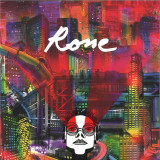
Rone is a stalwart of the French electronic scene and returns with his fourth album, 'Mirapolis', a synesthetic journey with features from Bryce Dessner (The National), Baxter Dury, John Stanier (Battles) and Saul Williams. The artwork was created by the critically acclaimed director Michel Gondry.
Stepping into Rone's music is like sleepwalking through a vividly colourful dream, eventually stumbling across a strange, scintillating Megapolis of saturated light and colours: 'Mirapolis'. Its twelve tracks / districts, each with their own specific planning, pulsate as though animated by their musical mastermind.
The project was an opportunity to get reacquainted with long- time stage and studio partners John Stanier, Gaspar Claus and the Vacarme band and Bryce Dessner (guitarist for The National,) while bringing in new collaborators (and thus, new interpretation of Rone's dreams). We find American slam-poet Saul Williams, who happened to be in Paris for a moment and contributes a searing anti-Trump screed, Baxter Dury, who brings an irresistible East London touch to 'Switches', a kind of fan fic that reimagines the Beatles' Sergeant Pepper lounging pensive in a club chair, Israeli electronic music muse Noga Erez, who inspired 'Waves' which, despite being recorded remotely, betrays a euphoric partnership, and finally, Kazu Makino, Blonde Redhead's bewitching singer and multi- instrumentalist, who contributes to the album's closer, the gauzy 'Down For The Cause'.
Rone remains a producer of grand instrumental pieces, which cannot be easily categorized in the architectural canon of our electronic music galaxy. Hypnotic, cinematic opening track 'I Philip' is an offshoot from the score for the first French virtual reality fiction, built around Philip K Dick - the perfect gate into a city that then opens up myriad temporal perspectives.
- A1: Permanent Flebo
- A2: Lieve Affranto (Moderato Dolore)
- A3: Io Ti Spacco La Faccia (Dal Vivo)
- A4: Makaroni
- A5: Io Sono Un Pestone
- A6: Non Puoi Troncarmi Un Rock
- A7: Permanent Flebo Reprise
- B1: Sono Rozzo, Sono Grezzo
- B2: Blues A Balues
- B3: Io Vi Odio
- B4: Spacco Tutto
- B5: Inascoltabile (Strumentale)
- B6: Io Te La Do Su
- B7: Tutti Fatti
Back in print ! Inascoltable is the first album from Bolognese group Skiantos, the band that added a completely different flavor to the italian underground with their delirious performances and over the top lyrics. Released through Oderso Rubini's Harpo's Bazaar label (later Italian Records) in 1977 on cassette format, the album was recorded in one night in November 1977 in a session that was almost improvised. It was later printed on LP in 1979. This reissue from the original master does full justice to the insanely creative playing of the band fronted by Freak Antoni, who were true forerunners of demented rock and virtuous artists capable of colorfully interpreting all the non-standard rock movements from the British and American underground. This record wouldn't be out of place in the Zappa discography, although the whole turned out a little bit more punk...
Gaspard Augé hat schon immer brillant reißerische, musikalische Welten geschaffen, in denen man sich
verlieren kann. Am bekanntesten ist er als eine Hälfte von Justice, dem Duo, das Mitte der 2000er Jahre
Rock und Rave vereinte und dessen Dancefloor-Smashes eine ganze Generation definierten. Sein diesjähriges
Solo-Debütalbum „Escapades“ besiegelt seinen Ruf als Meister des Maximalismus, ein elektronischer Autor,
dessen imaginäre Soundtracks ein erfrischender Ruck aus der Realität sind. Seine köstlich massiven Traumlandschaften beschwört Bilder von progressiven, heidnischen Ritualen im Orbit oder Spaghetti-Western auf
einer Raumstation herauf. Seien wir ehrlich, der Zappa-artige Produzent hatte nie vor, eine introspektive
Platte zu schreiben: „Ich war schon immer davon besessen, überlebensgroße Musik zu machen“, sagt er.
„Vor allem, weil es mehr Spaß macht“.
Das letzte Mal hörten wir von Augé, als er und Xavier De Rosnay von Justice einen Grammy 2019 für ihr
Album ”Woman Worldwide” gewannen, ein Überarbeitungspaket ihres Katalogs aus dem letzten Jahrzehnt.
”Das Tolle an den Grammys ist, dass man im Voraus nicht weiß, ob man gewonnen hat oder nicht, also kam
es völlig überraschend”, sagt Augé. Es war eine verdiente Anerkennung für ihre gemeinsame, bahnbrechende
Arbeit. ”Wir haben uns einfach gefreut und dachten: ’Wir müssen etwas richtig gemacht haben’”, sagt
Augé. ”Und wir dachten: ’Okay, jetzt können wir dieses Kapitel abschließen’.”
- A1: Zapp - More Bounce To The Ounce
- A2: Zapp - Be Alright
- A3: Roger - I Heard It Through The Grapevine
- A4: Roger - So Ruff, So Tuff
- B1: Roger - Do It Roger
- B2: Zapp - Dance Floor (Pt. I)
- B3: Zapp - Doo Wa Ditty (Blow That Thing)
- B4: Zapp - I Can Make You Dance (Pt. I)
- B5: Zapp - Heartbreaker (Pt. I, Pt. Ii)
- C1: Roger - In The Mix
- C2: Roger - Midnight Hour (Pt. I)
- C3: Zapp - Computer Love
- C4: Roger - Night And Day
- D1: Roger - I Want To Be Your Man
- D2: Zapp - Curisosity 93
- D3: Zapp & Roger - Slow And Easy
- D4: Zapp - Mega Medley
Zapp & Roger’s ‘All the Greatest Hits’ is the band's first Greatest Hits compilation, a collection covering their first four albums performed as a band. The album was originally released on Reprise in 1993 and is now available to pre-order on two-colour per LP Violet and Magenta / Orange and Pink 140g coloured vinyl.
‘All the Greatest Hits’ includes signature hits ‘More Bounce To The Ounce’ sampled by The Notorious BIG, and ‘Computer Love’ sampled by ‘2Pac’ as well as ‘Doo Wa Ditty (Blow That Thing),’ ‘So Ruff, so Tuff’ and ‘Be Alright.’
[f] b2. Zapp - Dance Floor (Pt. I) [Single Version]
[k] c2. Roger - Midnight Hour (Pt. I) [Single Version]
"On June 18, Zappa’s historic, final American show will be released for the first time as the new live album, Zappa ’88: The Last U.S. Show via Zappa Records/UMe. The first posthumous archival release from the ‘88 touring band, the album features 29 unreleased performances including two additional performances from the same tour: Zappa’s wild interpretations of the Allman Brothers Band’s “Whipping Post” from the March 16 show in Providence, R.I. and Led Zeppelin’s “Stairway To Heaven” from the March 23 Towson, Md. show. The record is also notable for containing the first official release of the much talked about “The Beatles Medley.”
Zappa ’88: The Last U.S. Show will be released on 2 CD or as a 4LP 180-gram vinyl box. Fully authorized by the Zappa Trust and produced by Ahmet Zappa and Zappa Vaultmeister Joe Travers, the recordings have been newly mixed by Craig Parker Adams in 2020 from the 48-track digital master tapes. The shows were recorded using two Sony 3324 DASH PCM 24 track tape recorders synced together using a Lynx Time Code Module, thus providing 48 track recording capabilities. "
- 1: Bonjour Klaus - Jeff Özdemir & Daniel Raymond Gahn 03:58
- 2: He's A Woman - Jeff Özdemir With Knarf Rellöm & Dj Patex 03:51
- 3: I Follow My Heartbeat - F.s.blumm & Jeff Özdemir 0:25
- 4: Saatler, Dakikalar Ve Saniyeler Gelip Geçiyor - Jeff Özdemir & Ertan Doğancı 02:29
- 5: Kleistpark - Vackrow 04:22
- 6: Love Letters - Jeff Özdemir & Joanna Gemma Auguri 03:31
- 7 52: Nd Street Und Dann Die Erste Rechts - Jeff Özdemir 05:14
- 8: Campagne (Band Version) - Désolé Léo 04:46
- 9: Disco - Beige Gt 03:40
- 10: Losin' - Jeff Özdemir & Zap 04
- 11: Complètement Perdu - Jeff Özdemir & Alexandre Thiercelin 02:18
- 12: Zu Viele Erinnerungen - Otto Von Bismarck 08:23
- 13: That's Not What Friends Are For - Jeff Özdemir's New Hard Drive 02:58
- 14: Bremerhaven, Das Kann Ich Dir Nicht Antun - Jeff Özdemir 03:26
- 15: The Day - Eng°N Featuring Jeff Özdemir 05:43
- 16: Güneș - Jeff Özdemir & Treetop 01:51
- 17: Bored - Elke Brauweiler & Jeff Özdemir 04
- 18: Die Quelle Von Hermidas - Jeff Özdemir With Elmer Kussiac 02:19
In the past years, the multi-instrumentalist, composer, producer and music enthusiast Jeff Özdemir had been focusing on organising the Live-Mixtape series in Berlin, inviting numerous artists to join him on stage for every single event. However, the year 2020 put an end to this for all the painfully obvious and obviously painful reasons. Undeterred, he instead put together the third instalment of the »Jeff Özdemir & Friends« series, working with singers, musicians and groups such as Knarf Rellöm & DJ Patex, F.S. Blumm, Joanna Gemma Auguri, Elke Brauweiler and Elmer Kussiac for an 18-track … Now, is this a compilation or an artist album? Well, why just either this or that when it can just be both at once? This is »Jeff Özdemir & Friends Vol. 3« after all, emphasis on »&«.
Released on Karaoke Kalk like its two predecessors from the years 2015 and 2017, respectively, »Jeff Özdemir & Friends Vol. 3« sees the man behind Kreuzberg’s 33rpm record store and the 33rpm Records label showcase his qualities as a people remixer, songwriter and versatile musician. He put together a collection of groovy tunes picking up on funk and afrobeat rhythms, introspective ballads, a musically channeled punk attitude, shoegaze sentiments, spoken word passages, drones, glockenspiel sounds, seriously fun experimentation and much more. Just like on the cover artwork - courtesy of Marion Eichmann, Özdemir’s favourite visual artist - everything here seems to discreetly exist for itself while being tightly connected to everything else at same time.
While artists like Ertan Doğancı, Désolé Léo, eng°n, F.S. Blumm and Zap have been long-term collaborators of Özdemir and were featured on previous instalments of the »Jeff Özdemir & Friends« series, new faces and forces also enter the mix. The melancholic »Love Letters« for example marks the first (though hopefully not last) collaboration with singer Joanna Gemm Auguri, while Knarf Rellöm & DJ Patex’s appearance has been dreamt of collectively but hasn’t been fully realised until now.
Whether it’s Désolé Léo’s French crooner soul, the lo-fi synth pop song »Bored« featuring former Commercial Breakup singer Elke Brauweiler or the many different sounds and styles presented under the name Jeff Özdemir: no decision is ever made between either that or this musical direction, but all are being joyfully enjoyed together. Thus, throughout its 70 minutes, the stylistic diversity of »Jeff Özdemir & Friends Vol. 3« does not once border on randomness. Instead, these sometimes very different songs are marked by a shared atmosphere - a direct result of these very different musicians approaching their studio time together less as a chance to make music but more of a chance to carefully listen to and interact with each other.
Just like you’d expect it from someone deeply connected with the local music community who also happens to run a record store, Özdemir is also the kind of person who’ll hand you the worn copy of a record he has just fished out from the bargain bin because he knows about its potential to change your life. The contributions by Vackrow (»Kleistpark«), Gebrüder Teichmann’s old band BeigeGT (»Disco«), and Otto von Bismarck (»Zu viele Erinnerungen«, produced by The Whitest Boy Alive’s Daniel Nentwig) do not even feature Özdemir, but are simply musical pearls that were (almost) lost in the shuffle of music history and unearthed for this very special occasion. That’s just what friends do, don’t they?
With Bending the Golden Hour, the third album from Memphis, Tennessee’s Aquarian Blood, husband and wife team J.B. Horrell (Ex-Cult) and Laurel Horrell (formerly of the Nots) continue the gorgeously stripped-down and atmospheric direction set on their critically acclaimed previous effort A Love That Leads to War.
While Aquarian Blood has roots as a chaotic punk rock six-piece, the band shifted gears after two raucous cassette-only releases on ZAP Cassettes, a pair of seven-inches, and 2017’s Last Nite in Paradise, released on Goner Records. After drummer Bill Curry broke his arm, the Horrells redefined
Aquarian Blood, reemerging in early 2018 as the more intimate, mostly acoustic balladeers behind the staccato, fever dream sound of A Love That Leads to War. Like its immediate predecessor, Bending the Golden Hour was recorded at the Horrell's Midtown Memphis home. The band turned over 43 tracks to Goner co-owner Zac Ives, who handpicked 17 songs for the album.
The final result is shimmering and hopeful; as beautiful and sparse as a Rockwell Kent snowscape. Bending the Golden Hour begins ominously with “Channeling,” which sounds like an outtake from Paul Giovanni’s soundtrack to 1973’s pagan nightmare The Wicker Man. Then the band upshifts for “Time in the Rain,” a sweet duet set to a rigid snare beat. From there, Aquarian Blood zigs to country and zags to psychedelic folk, brooding on one song and soothing listeners with the next. And while the music, feel, and experience is different, Aquarian Blood naturally brings to mind some legendary musical partnerships: Richard and Linda Thompson, Lee Hazlewood and Nancy Sinatra, Johnny and June Carter Cash, Gram Parsons and Emmylou Harris; not to mention similarly-bent-but-beautiful luminaries like Roy Harper, Pentangle circa 1967 -1973, and Jackson C. Frank.
There’s a big middle ground, like folk-psych, or weirder country music,” he says, reeling off names like Skip Spence and Syd Barrett as stepping stones between the genres of punk and folk.
Inspirations for Bending the Golden Hour come from myriad sources that document the milestones and minutiae in a family’s full life. Some lyrics name a time or a place; others reflect the fleeting moments that elapse unnoticed. “Come Home,” which is sung by J.B. and his daughter Ava, was written the day Ava got her driver’s license. “Ava took the car out by herself afterwards, and I wrote the song immediately—she sang her part when she got home that evening,” J.B. recalls. Whether or not the listener knows the backstory, the song rings sentimental, with subtle, supportive instrumentation that underscores guitar and vocals. The bewitching “Rope and Hair,” on the other hand, is less sketched out, with lyrics that are simply a recitation of the talismen found on a silver sabertooth charm that J.B. purchased for Laurel at a Latin strip mall in southeast Memphis. That’s all to be said. “Sometimes when you know too much about what the song is about, it takes away the magic,” says J.B. “Alabama Daughter,” says Laurel, is about a place where a childhood friend lived called Castleberry Holler. “It was really rural, just a lot of shacks without electricity—the kind of place you didn’t go to unless you were invited,” she says. “Probable Gods” is a hazy reflection on the struggle of such a strange year. “It’s been very cathartic to put all of this into words and not have it live
With unfettered access to the Zappa Trust and all archival footage, ZAPPA explores the private life behind the mammoth musical career that never shied away from the political turbulence of its time. Alex Winter’s (Bill & Ted’s movie franchises, The Lost Boys) assembly features appearances by Frank’s widow Gail Zappa and several of Frank’s musical collaborators including Mike Keneally, Ian Underwood, Steve Vai, Pamela Des Barres, Bunk Gardner, David Harrington, Scott Thunes, Ruth Underwood, Ray White and others. The soundtrack is a perfect complement to the film available as a limited edition 5-LP 180-gram vinyl set for the Zappa completist. Showcasing 69 total songs, there are 12 previously unreleased recordings from the Zappa archive along with his 1978 Saturday Night Live performance; 24 additional Zappa songs from his extensive catalog spanning four decades; songs from Zappa’s labels Straight / Bizarre Records like “No Longer Umpire” by Alice Cooper and “The Captain’s Fat Theresa Shoes” by The GTO’s; 2 classical compositions by Edgard Varese and Igor Stravinsky; and 26 Original Score cues newly composed by John Frizzell for the documentary – all of which give the universe a sonic exploration into the musical brilliance of Frank Zappa. A 2LP edition on 180-gram clear vinyl will also be available, collecting together eight of the unreleased recordings from the Zappa archive, the SNL performance and 13 recordings from Zappa’s extensive recording career.