At this point the vast swathes of unreleased Muslimgauze material Bryn Jones left behind when he passed away over 25 years ago is as legendary as any of his work. And sure enough, there's still some being unearthed today. The new »Single #One« is the first in a series of four (three 7"s and one 12") taken from one of Jones' customary completely unlabelled DATs he sent to labels seemingly as fast as he finished them. Both sides here indicate that, even on what might have been throwaway efforts for other artists, Jones was constantly chasing his muse around new corners.
Side A begins with the kind of tough percussion loop often found on Muslimgauze releases, but even as foreboding synths start to swell in the background, Jones introduces a rhythmic, peppy little keyboard riff far jauntier than most things he created. Side B, meanwhile, takes Jones' looped hand percussion in a dubbier direction, but unlike other times he explored that space there are some elements (phased zaps, a slightly skanking rhythm) that, while not reggae exactly, makes this feel more like a traditional dub than Jones tended to make. Both sides stand in testament to a creator who never stayed in one place for very long.
out of Stock
Last delivered 11 months ago available to reorder, subject to availability
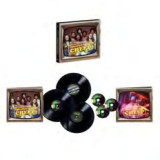
In den frühen 70er Jahren war Fernsehen ein wichtiges Mittel, um Musiker in den eigenen vier Wänden bekannt zu machen. Frank Zappa, der mit seiner Tournee-Lichtshow und seinem Bühnenaufbau voll ausgestattet war, versuchte, Videomaterial für seine eigene Fernsehproduktion aufzunehmen, um es den großen Sendern anzubieten. Genau wie bei den Dreharbeiten zu The Roxy Performances Monate zuvor gab es technische Probleme, die letztendlich dazu führten, dass das Filmmaterial beiseite gelegt wurde. 50 Jahre später, mit den Fortschritten bei den Bearbeitungswerkzeugen für die Nachbearbeitung, präsentieren wir ”Cheaper Than Cheep”. Dieses neue 2-stündige Konzertprogramm bietet klassische Auftritte der Mothers-Besetzung von 1974, direkt von den neu restaurierten Original-Audio- und Videoband-Mastern aus dem Archiv. Die offzielle Zappa-Veröffentlichung Nr. 130 erscheint in einer speziellen, limitierten Super Deluxe-Edition mit dem remasterten Konzertvideo und brandneuem Dolby Atmos, 5.1 Surround sowie Stereo-Mix auf einer Blu-ray, dem Stereo-Soundtrack auf 2 CDs und 3 LPs auf 180 Gramm schwarzem Vinyl, einem ausführlichen Booklet mit seltenen, bisher unveröffentlichten Bildern und Linernotes von Ruth Underwood und Joe Travers, alles in einem ausziehbaren Schuber verpackt. Weitere Formate sind eine komplette 2-CD + Blu-ray und ein eigenständiger Soundtrack auf 3 LPs auf 180 Gramm schwarzem Vinyl
In den frühen 70er Jahren war Fernsehen ein wichtiges Mittel, um Musiker in den eigenen vier Wänden bekannt zu machen. Frank Zappa, der mit seiner Tournee-Lichtshow und seinem Bühnenaufbau voll ausgestattet war, versuchte, Videomaterial für seine eigene Fernsehproduktion aufzunehmen, um es den großen Sendern anzubieten. Genau wie bei den Dreharbeiten zu The Roxy Performances Monate zuvor gab es technische Probleme, die letztendlich dazu führten, dass das Filmmaterial beiseite gelegt wurde. 50 Jahre später, mit den Fortschritten bei den Bearbeitungswerkzeugen für die Nachbearbeitung, präsentieren wir ”Cheaper Than Cheep”. Dieses neue 2-stündige Konzertprogramm bietet klassische Auftritte der Mothers-Besetzung von 1974, direkt von den neu restaurierten Original-Audio- und Videoband-Mastern aus dem Archiv. Die offzielle Zappa-Veröffentlichung Nr. 130 erscheint in einer speziellen, limitierten Super Deluxe-Edition mit dem remasterten Konzertvideo und brandneuem Dolby Atmos, 5.1 Surround sowie Stereo-Mix auf einer Blu-ray, dem Stereo-Soundtrack auf 2 CDs und 3 LPs auf 180 Gramm schwarzem Vinyl, einem ausführlichen Booklet mit seltenen, bisher unveröffentlichten Bildern und Linernotes von Ruth Underwood und Joe Travers, alles in einem ausziehbaren Schuber verpackt. Weitere Formate sind eine komplette 2-CD + Blu-ray und ein eigenständiger Soundtrack auf 3 LPs auf 180 Gramm schwarzem Vinyl
This is an album made during a crucial period in South Africa’s history during which there was a palpable feeling of a slow turning towards the collapse of the apartheid state side by side with an increasingly well-organised culture of resistance through the formation of the United Democratic Front (UDF) and various affiliated bodies. However, as a result, there was increased pushback from the state security establishment, a turning to dirty tricks and the formation of hit squads whose members murdered and tortured many of our friends and created chaos throughout South Africa as well as neighbouring countries.
This album is situated in this political environment however it took advantage of the new do-it-yourself music technologies available at that time. Technologies that made it possible to make and release records without interference from traditional record company executives. Two musician friends of mine pooled their resources after their respective bands had broken up. Ivan Kadey (National Wake) and Lloyd Ross (Radio Rats) built an 8-track recording studio control room and fitted it out in a second hand caravan and called it Shifty. They parked it in a garage attached to the only house left in a demolished and derelict mining village near Soweto on the outskirts of Johannesburg.
All the work on this album was completed there, mainly after hours and mostly alone where I enjoyed an exhilarating freedom to develop a whole new set of musical skills and ideas, incorporating my love of a wide range of music I’d grown up with. Influences of 1970s progressive/kraut/and psychedelic rock combined with mbaqanga bass styles, early reggae/dub and Indian tabla rhythms. Stockhausen, early Zappa and Holgar Czukay were radio text and shredding influences, and Chris Cutler’s band Henry Cow & Art Bears helped me see a way to political expression. Mostly though was the exciting post-punk and no-wave music coming through to us from Europe and America: bands like This Heat, the Mekons, Raincoats, Sonic Youth and Pere Ubu were immensely important to me as was my reading from the period: J.M.Coetzee’s first 3 novels are strong influences on Free State Fence; the stark landscape, superstition, ritual, and sexual repression are in many of his settings. JG Ballard was a constant presence throughout that period, especially whilst living in such a surreal environment, surrounded by mine dumps, but mostly I think the whole French post-modern philosophical movement—Derrida, Foucault and of course, Baudrillard’s Simulacra and Simulation—set out a new sense of possibilities, possible ways to express oneself, ways to think, and ways to try and analyse the political intersection of public and private life. Most important at that time was the influence of sound recordings I had made and experiences garnered from working as a sound recordist on documentary films. These financed my work and later the studio and were consistent employment throughout the 1980s. Film work also enabled me to experience much of South Africa that was hidden from most. The track Independence Day is a good example; drawn from some time spent in the rural homeland of Venda. This then was the first full length Kalahari Surfers album, completed in summer of 1984 it was taken to EMI pressing plant but rejected by the cutting engineer as being ""political, pornographic and anti religious"". Chris Cutler at Recommended Records took up the challenge and released the album through his label. He wrote the original liner note
"Instant Holograms On Metal Film" ist das erste Stereolab-Album seit 15 Jahren mit 13 neuen Studioaufnahmen. Eingespielt wurde das Werk von Laetitia Sadier, Tim Gane, Andy Ramsay, Joe Watson und Xavi Muñoz, mit Gastbeiträgen von Cooper Crain und Rob Frye von Bitchin Bajas, Ben LaMar Gay (Komponist/Jazz-Multiinstrumentalist), Holger Zapf (Cavern Of Anti Matter), Marie Merlet (Monade) und Molly Read, und weiteren. Die Band wird das ganze Jahr 2025 über live spielen - in Europa, Nordamerika, Südamerika und Großbritannien. Das neue Album folgt auf "Not Music" aus dem Jahr 2010, remasterte und erweiterte Neuauflagen von sieben ihrer Alben im Jahr 2019 sowie die Bände 4 und 5 der "Switched On"-Reihe, die 2021 bzw. 2022 erschienen.
out of Stock
Last delivered 15 months ago available to reorder, subject to availability
Mit nur drei Akkorden und plakativen Texten revolutionieren die RAMONES im Jahr 1976 in Form ihres selbstbetitelten Debütalbums "Ramones" die zunehmend im Bombast erstarrende Rockszene mit dem rohen Energieausbruch des Punk. Die New Yorker beeinflussten über Jahrzehnte einige der bekanntesten Rock-, Punk- und Metal-Bands wie BLACK FLAG, NIRVANA, METALLICA, CIRCLE JERKS, WHITE ZOMBIE, PEARL JAM und GUNS N' ROSES - um nur einige zu nennen. MOTÖRHEAD haben den RAMONES sogar einen Song gewidmet. Die Band verkörperte den Punk-Underground, den sie beginnend im Jahr 1974 mit ins Leben gerufen hatten. Die Amerikaner blieben ihrem Sound und Stil über mehrere Dekaden treu, inspirierten Generationen von Musiker und erlangten ewige kulturelle Bedeutung, obwohl sie selbst kaum große kommerziellen Erfolg feiern durften. Die Redux-Serie von Magnetic Eye wurde als Hommage an klassische Alben aus der Musikgeschichte ins Leben gerufen. Zusammen mit "Ramones Redux" präsentieren wir auch das Begleitalbum "Best of Ramones Redux", das weitere Klassiker und Raritäten aus dem ebenso umfangreichen wie einzigartigen Katalog der US-Punk Legende enthält. Die Magnetic Eye Redux-Reihe lässt ausgewählte Künstler handverlesene klassische Alben aus der Geschichte des Rock und Metal komplett neu interpretieren und respektvoll in das neue Jahrtausend übertragen. Bisher hat das Label solche Meilensteine wie PINK FLOYDs "The Wall", HELMETs "Meantime", BLACK SABBATHs "Vol. 4", JIMI HENDRIX' "Electric Ladyland", "Dirt" von ALICE IN CHAINS, AC/DCs "Back in Black", SOUNDGARDENs "Superunknown" und den JETHRO TULL-Klassiker "Aqualung" in Redux-Versionen veröffentlicht. Unter vielen anderen haben sich solch herausragende Künstler wie MATT PIKE, PALLBEARER, THE MELVINS, ALL THEM WITCHES, KHEMMIS, ASG, ZAKK WYLDE, MARK LANEGAN, SCOTT REEDER an diversen Redux-Projekten beteiligt. Angeschnallt und zugestiegen bei Magnetic Eyes neunter Expedition ins Redux-Abenteuer, mit dem wir den legendären US-Punk Pionieren RAMONES die gebührende Ehre erweisen!
Mit nur drei Akkorden und plakativen Texten revolutionieren die RAMONES im Jahr 1976 in Form ihres selbstbetitelten Debütalbums "Ramones" die zunehmend im Bombast erstarrende Rockszene mit dem rohen Energieausbruch des Punk. Die New Yorker beeinflussten über Jahrzehnte einige der bekanntesten Rock-, Punk- und Metal-Bands wie BLACK FLAG, NIRVANA, METALLICA, CIRCLE JERKS, WHITE ZOMBIE, PEARL JAM und GUNS N' ROSES - um nur einige zu nennen. MOTÖRHEAD haben den RAMONES sogar einen Song gewidmet. Die Band verkörperte den Punk-Underground, den sie beginnend im Jahr 1974 mit ins Leben gerufen hatten. Die Amerikaner blieben ihrem Sound und Stil über mehrere Dekaden treu, inspirierten Generationen von Musiker und erlangten ewige kulturelle Bedeutung, obwohl sie selbst kaum große kommerziellen Erfolg feiern durften. Die Redux-Serie von Magnetic Eye wurde als Hommage an klassische Alben aus der Musikgeschichte ins Leben gerufen. Zusammen mit "Ramones Redux" präsentieren wir auch das Begleitalbum "Best of Ramones Redux", das weitere Klassiker und Raritäten aus dem ebenso umfangreichen wie einzigartigen Katalog der US-Punk Legende enthält. Die Magnetic Eye Redux-Reihe lässt ausgewählte Künstler handverlesene klassische Alben aus der Geschichte des Rock und Metal komplett neu interpretieren und respektvoll in das neue Jahrtausend übertragen. Bisher hat das Label solche Meilensteine wie PINK FLOYDs "The Wall", HELMETs "Meantime", BLACK SABBATHs "Vol. 4", JIMI HENDRIX' "Electric Ladyland", "Dirt" von ALICE IN CHAINS, AC/DCs "Back in Black", SOUNDGARDENs "Superunknown" und den JETHRO TULL-Klassiker "Aqualung" in Redux-Versionen veröffentlicht. Unter vielen anderen haben sich solch herausragende Künstler wie MATT PIKE, PALLBEARER, THE MELVINS, ALL THEM WITCHES, KHEMMIS, ASG, ZAKK WYLDE, MARK LANEGAN, SCOTT REEDER an diversen Redux-Projekten beteiligt. Angeschnallt und zugestiegen bei Magnetic Eyes neunter Expedition ins Redux-Abenteuer, mit dem wir den legendären US-Punk Pionieren RAMONES die gebührende Ehre erweisen!
Mia Zapata was the greatest rock singer of her time. She may have likely been the greatest blues singer in punk rock history, the woman who married the 78 and the '78. Tragedy did not make this true. Mia Zapata made this true, and the ferocious, spring-loaded shrapnel frame that was built around her by Andy Kessler (guitar: metronomic and furious), Matt Dresdner (bass: fluid, punching, beat-addicted and melodic), and Steve Moriarty (drums: martial and explosive) - who, with Mia, combined to form The Gits - made it true. The Gits were formed at Antioch College in Yellow Springs, Ohio in mid-1986, grabbing and swapping pieces of art, thrash, noise, punk rock, classic rock, and all the sorts of magical silly and bookish jingle bells that an old-school liberal arts education handed you; for the next few years they worked on turning it all into something tough, sensitive, both brutal and kind. Andy, Matt, Mia, and Steve moved to Seattle in middish 1989, landing in a house on Capitol Hill where they (and fellow travelers) wood-shedded and rehearsed for the next few years. The Gits put out three EPs in 1990 and '91 before signing with C/Z Records and releasing their first full-length album, Frenching the Bully. Seattle quickly claimed the quartet as their own and embraced the Gits blend of ferocious fangs and soft heart, the slug/slap of the guitars, and the gorgeous, soft underbelly of the poetic emotions. These qualities not only fit in with the doe-eyed/sharp-clawed grunge ethos but earned the Gits the respect of their peers, including Nirvana, who tapped them to open a major local show in 1990. Then other stuff happened, and their frantic, confessional barbed-heart snowball began rolling up hill very, very fast; the Gits "quickly" (hah! After half a decade learning to implode and explode hearts and stomping their boots on manifold beer-softened, Marlboro-weeded wood stages!) inspired rapture, awe, and the levitation that happened when peak emotion meets peak grindage in front of amps spitting out something that sounded like the mad marriage of Bolan swagger and Dischord tension_ all fronted by a genuinely incomparable woman who held her heart in her mouth and shared it, in all its celebration and fear, without hesitation. The Gits were an angry, inflamed slinky fully in tune with and tuned by the Bessie Patti Smith of her time, truly the only singer who could summon Joplin, Poly Styrene, Sam Cooke, Iggy Pop and Ian MacKaye all in the same goddamn song. In 1993, less than four weeks after accepting an offer from Atlantic Records, Mia died. I leave it at that, because this is not about death; it's about an extraordinary life. I do not say, "You should have been there," I say, "We are lucky so many of us were, and I am so glad we have this extraordinary evidence of the power and gifts of Mia and the Gits that you now can hold in your hands." And I note that Frenching the Bully, this extraordinary testament to the soul, shock, fury and feeling of the Gits, has been long out of print on vinyl and CD, and this new edition - remastered by legendary Seattle engineer Jack Endino - joyfully rectifies that. -Tim Sommer
As time marched on, many of the DJs I had been working with such as Pete Tong, Paul Oakenfold, Trevor Fung, Simon Dunmore and Johnny Walker got involved in the world-leading UK dance scene, raking in cash by making records. I thought ‘I’ll Have some of that!’ This led to my first foray into the studio creating the proto-acid jazz classic 12”, ‘Psychedelic Jack (That’s Where It’s At)’, which cheekily sampled Frank Zappa, Soft Machine and Gong. With me and Gilles on vocals, it got us signed to Acid Jazz Records, who released in 1988 under the name of Extasis.
That was just the start and nearly 35 years later (gulp!) I’ve had a ball, producing Galliano and Paul Weller, working with Mick Talbot, Roy Ayers, Linda Clifford and Sharon Redd, remixing Will Downing, Ce Ce Rogers and Blaze. I’ve made house tunes with Faith’s Terry Farley, run the legendary Dadhouse Records label with Dave Jarvis. I also set up my own studio and released music under a variety of names, both for my own labels and Acid Jazz Records. Recent releases include my solo albums “Firebird” (2023) and “Dream World” (2024). There was also “Back To Business” with Mick Talbot, released in 2023.
"Instant Holograms On Metal Film" ist das erste Stereolab-Album seit 15 Jahren mit 13 neuen Studioaufnahmen. Eingespielt wurde das Werk von Laetitia Sadier, Tim Gane, Andy Ramsay, Joe Watson und Xavi Muñoz, mit Gastbeiträgen von Cooper Crain und Rob Frye von Bitchin Bajas, Ben LaMar Gay (Komponist/Jazz-Multiinstrumentalist), Holger Zapf (Cavern Of Anti Matter), Marie Merlet (Monade) und Molly Read, und weiteren. Die Band wird das ganze Jahr 2025 über live spielen - in Europa, Nordamerika, Südamerika und Großbritannien. Das neue Album folgt auf "Not Music" aus dem Jahr 2010, remasterte und erweiterte Neuauflagen von sieben ihrer Alben im Jahr 2019 sowie die Bände 4 und 5 der "Switched On"-Reihe, die 2021 bzw. 2022 erschienen.
This was Don Thigpen's first recording as an artist, but he was no stranger to the studio. In fact he was the individual behind many heavy tunes that came out of the Jackson area. He and good friend Sam Anderson also cut a record on his CJR labelb (Capitol Jackson Records) called "Shirley Baby", also a highly coveted record if you got a copy to sell or record let us know). The name "LEO" became Dons preforming pseudonym. Leo was also his zodiac sign, which he deemed edgy enough to marquee this electro heavy track "Fee Fi Fo Fum". The inspiration for the song came from the computer craze of the 80s. Much like Zapp & Roger's track "Computer Love" an inanimate object is worshipped and then romanticized by a love affair. The song literally depicts a computer falling in love with a woman and attempts to communicate with her by seductively flashing the words "Fee Fi Fo Fum" on the screen.
out of Stock
Last delivered 17 months ago available to reorder, subject to availability
La Revolución de Emiliano Zapata was the Mexican psychedelic rock band that achieved the most commercial success internationally in the early 70s. Their self-titled and much sought-after debut LP (1971) is considered one of the best acid rock albums in Mexico, recorded under the influence of groups like Credence Clearwater Revival or the Who but also adding their own style featuring an original and stunning guitar sound. Remastered from the original tapes. Includes poster. 180g vinyl. Despite not participating in the legendary Avándaro festival, La Revolución de Emiliano Zapata was the Mexican psychedelic rock band that achieved the most commercial success internationally in the early 70s. Their fantastic 'Nasty Sex', along with other songs like 'If You Want It' or 'Melynda' boosted their first album at the top of the sales charts worldwide. Although their sound changed over time, their debut LP (1971) is considered one of the best acid rock albums in Mexico, recorded under the influence of groups like Credence Clearwater Revival or the Who but also adding their own style featuring an original and stunning guitar sound. Sadly, Mexican record labels lost interest in local rock bands due to the repression of La Onda movement by the Mexican Government, resulting in rock bands being banned. This, in addition to internal disagreements between members of the group, eventually led to the end of their relationship with Polydor in 1973. La Revolución de Emiliano Zapata entered a new artistic phase in their career, focusing on ballads and adopting different new musical trends over the years.
Opening DNO Records’ 2025, Clearlight returns to the label alongside new signee Sentient, bringing four creepy cuts of insectoid minimalism that reanimate the drum & bass exoskeleton.
On the A-side, ‘Mandibles’ aims to stun. Hurtling forth with hulking drums, this tunnelling rhythm is beset by swarms of glitchy percussion and synth zaps that’ll frazzle minds with their sheer chaotic energy.
‘Suboptimal’ reveals what’s lurking in the deep, as heavyweight bass and incessant kicks burrow through a murky soundscape of croaks and rattles, only to be sprayed by a chirping acid line that cuts through the mix with deadly precision.
Flip over and the Belgian-British pairing delivers two extended jams. The seven-minute ‘Psychodrifter’ is packed with an overdriven low-end that crackles and heaves like it's trying to talk with a mouthful of bees, while globular whoops and twinkling pads squirm and beckon like bioluminescent lures.
‘Kukulu’ is longer still, building and building and building in intensity. Waves of warning bells and skittering background noise, bongo flourishes and spurts of grinding bass come together with hive-mind-like cooperation to form an enrapturing epic.
Another example of visionary world-building from the DNO camp, the ‘Mandibles’ EP will wriggle down your earhole and have you itching for a dark basement full of bass bins.
Rhythms of postmodern realism at the very bottom of the DNO.
out of Stock
Last delivered 17 months ago available to reorder, subject to availability
Following Sydenham, Njai and Punchard’s fresh take on Kraftwerk’s classic earlier this year, which picked up support from the likes of Optimo, India Jordan, DJ Bone, and more, Radio Slave recruits a pair of all-star remixers in Ricardo Villalobos and Gerd Janson to deliver a scintillating set of interpretations for his Rekids imprint.
Running Back’s Gerd Janson injects slap bass, funk-laden guitars, and twinkling synths over the original’s vocals for the ‘Dance’ mix, followed by a stripped-back instrumental version to kick off the A side. On the flip, Villalobos delivers a typically trippy affair, bringing constantly evolving strokes of modular mayhem and zapping percussion for over ten minutes, nervously settling into a chugging and deeply satisfying halftime groove.
out of Stock
Last delivered 7 months ago available to reorder, subject to availability
Es ist ein Fall von popkultureller Archäologie. Eine Spurensuche der elektronischen Musik. Nach über 30 Jahren tauchen verschollene Tapes von Holger Czukay wieder auf, die er einst "zur freien Verfügung" eingespielt hatte. Eine Sound-Meditation von 1997, die nun erstmals neu gemastert im Original und in einer "Version" von die ANGEL (Ilpo Väisänen / Dirk Dresselhaus) und Zappi W. Diermaier von der Krautrock-Legende Faust vorliegt.
Die Arbeiten aus dem Czukay-Studio sind eigenwillige Klangstrukturen, die Mastering-Ingenieur Dresselhaus alias Schneider TM einschätzt als "futuristisches Kleinod, das für seine Entstehungszeit musikalisch weit vorne ist." Für ein abstraktes Klanggebilde "tief und emotional" wie er sagt. Eine Komposition, die mit Avantgarde oder Neue Musik nur unzureichend beschrieben ist. Ein echter Czukay eben. Die Genese dieser Aufnahmen führt in die freigeistigen 1990er, als Holger Czukay in Köln mit jüngeren Techno-Kollegen wie Dr. Walker von Air Liquide mit Beats experimentierte und sich ansonsten sehr für die leise Explosion der digitalen Medien interessierte.
Es war der Tech-Pionier und Medienkünstler Arthur Schmidt alias Gvoon, der ihn in langen Gesprächen auf die (damals futuristische) Data-Maschine "RealityEngine" brachte, mit der sich virtuelle Welten erschaffen ließen. Vom Full-Body-Tracking-System bis zum gemeinsamen Prototyp eines "Internet-TV-Senders". Darauf liefen experimentelle Czukay-Videos, die er mit neuen Samples und Klangfragmenten ausstattete. Später wurde eine kontemporäre Show namens "Czukay/Gvoon:Magazine" daraus und auch die "Can-Live-Soloprojekts" im März 1999, ausgestattet mit der Body-Tracker-Technik von Gvoon. Die DDR-Vergangenheit seines Tech-Sparringspartners Schmidt, der ihm von seiner Zeit in Stasi-Haftanstalten erzählte, setzte in Czukay einen kreativen Prozess frei. Er setzte dieses Trauma in Töne um und machte ihm ein musikalisches Geschenk. "Gvoon-Brennung 1", eine Gabe, die Schmidt "irgendwann" einmal verwenden könne. Einfach so. Ein Soundtrack, der ganz profan auf Digital Audio Tape übergeben wurde.
Über 20 Jahre später brachte Schmidt das "Czukay-Geschenk" für eine zum Kunstwerk umfunktionierte Verhörzelle des Ministeriums für Staatssicherheit (MfS) wieder zum Einsatz. Als Installation für einen stockfinsteren, bedrückenden Raum mit Gummiwänden. Hier stieß wiederum Dresselhaus auf das Material. Ihm wurde klar, dass er dort mehr hörte als irgendwelche 1990er-Fragmente: "Es ist irgendwie Blues-mäßig, auf eine kybernetische und abstrakte Art." "Mit einem sehr langsamen Groove, der einen die gesamte Strecke aufmerksam hält", sagt Dresselhaus. Er beschreibt den Mastering-Prozess sowie die Neubearbeitung in Form der "Gvoon-Version 1" als Balanceakt zwischen Respekt vor dem historischen Material und einer zeitgemäßen Studio-Bearbeitung.
Eine respektvolle Verbeugung zum 87sten Geburtstag von Holger Czukay im März 2025.
out of Stock
Last delivered 18 months ago available to reorder, subject to availability
'001-015' is a "best of" compilation celebrating the first 15 sample packs made by Frollen Music Library. Launching in late 2021, the sample house has since been featured in productions by ScHoolboy Q, Leon Thomas, Devin Malik and more. This retrospective "best of" traverses a wide range of styles and moods to appeal to every music enthusiast as well as producers and songwriters alike. Whether it's bouncing Hip Hop beats or evocative cinematic etudes, FML's 3- piece house band, comprising Henry Jenkins, Darvid Thor and Hudson Whitlock have a deep love and respect for many musical styles. FML'sdiverse catalogue takes cues from the 'Third Stream' composer David Axelrod, as well as drawing upon cinematic themes from 60's and 70's Italian film score composers a la Ennio Morricone and Riz Ortolani. There are 90's New York boom bap beats, as well as synthesiser music inspired by Tonto, , utilising a locally made synthesiser from Melbourne Instruments. Jenkins, Thor and Whitlock have been playing in bands and producing music for their local music scene for the last 15 years. Recording and performing with The Cactus Channel, Karate Boogaloo, Mo'Ju, Surprise Chef and many many more. Not only is this brand-new LP a great musical collage worthy of any music library enthusiast, but also functions as a tremendous sampler demonstrating the many styles of FML. Fast, slow, sweet AND sour!
'001-015' is a "best of" compilation celebrating the first 15 sample packs made by Frollen Music Library. Launching in late 2021, the sample house has since been featured in productions by ScHoolboy Q, Leon Thomas, Devin Malik and more. This retrospective "best of" traverses a wide range of styles and moods to appeal to every music enthusiast as well as producers and songwriters alike. Whether it's bouncing Hip Hop beats or evocative cinematic etudes, FML's 3- piece house band, comprising Henry Jenkins, Darvid Thor and Hudson Whitlock have a deep love and respect for many musical styles. FML'sdiverse catalogue takes cues from the 'Third Stream' composer David Axelrod, as well as drawing upon cinematic themes from 60's and 70's Italian film score composers a la Ennio Morricone and Riz Ortolani. There are 90's New York boom bap beats, as well as synthesiser music inspired by Tonto, , utilising a locally made synthesiser from Melbourne Instruments. Jenkins, Thor and Whitlock have been playing in bands and producing music for their local music scene for the last 15 years. Recording and performing with The Cactus Channel, Karate Boogaloo, Mo'Ju, Surprise Chef and many many more. Not only is this brand-new LP a great musical collage worthy of any music library enthusiast, but also functions as a tremendous sampler demonstrating the many styles of FML. Fast, slow, sweet AND sour!