A blend of Metal Indus and Bass Music, VIOLENCE is an ambitious and atypical project produced by Niveau Zero, one of the pioneers of French Bass Music. Composed of Fabio Meschini (Guitar / Ex: As They Burn) , Morgan Sansous (Drums), John Kazadi (Lead Vocal) and Frédéric Garcia aka Niveau Zero ( Machines and Vocal ).
OPUS I', their 1st album (2021), composed in collaboration with choice guests such as Billy Graziadei (Biohazard, Powerflo), Bastien Hennaut (HORSKH) and Code: Pandorum... has frankly succeeded in arousing the enthusiasm of both Metal and Bass Music audiences.
On stage, the band has not been outdone, offering a crescendo of increasingly furious performances over the last year alongside bands like Biohazard, Mass Hysteria, Ten 56, Horskh, Shaargot, Novelist, Revnoir, King Yosef.
Scandi figurehead Per Hammar switching things up for the Kalahari debut.
No stranger to a curveball, as demonstrated here. The dub techno donny goes anthemic, bouyant and triumphant on the first one, full frontal techno tessellations for the rest.
Flashes of braindance, the groove militant where it’s required and he goes liberal with the samples. Earworm potential and sound sensitive inclinations on display, as we’ve come to expect, but always on the front foot. Rude, direct and never at risk of taking itself too seriously.
Time-stretched modulations and head-spinnin’ flourishes of hauntological detail underpin the insistent technoid throb. A masterful balance between dancefloor utility, dubwise dynamixxx and sheer variety.
Absolutely zero bloat, every track a stone-cold killer. Proper ruff ’n’ ready torque.
out of Stock
Last delivered 4 months ago available to reorder, subject to availability
Intricate structures with an intertwining of spontaneity and randomness, meeting the diverse genre influences of the band members from mediaeval music to shoegaze to noise. That is Unravel, the new album, and first in six years, from Czech band Manon Meurt.
"Unravel reflects the different stages of dissociation, a person's thoughts, observations - whether of the environment or of oneself - and admiration for the beauty and cruelty that nature mirrors," multi-instrumentalist and lyricist Kateřina Elznicová says of the album.
Produced by Eddie Stevens (Freakpower, Zero 7, Moloko, Roisin Murphy) the album was pieced together from recorded fragments, meticulously pieced together. The title Unravel refers to the development of the band, unravelling what they are to find the full potential of their music as well as uncovering the layered nature of the songs and emotions.
"Eddie Stevens’ approach to recording was a big surprise. We understood that there was no one right version of the songs. Each of our themes carries a certain energy that can manifest and blossom in many ways. Compared to previous records, the vision of each member was much more evident, while we learned not to cling to our individual ideas of a signifying break or a nu-metal bounce at the end of an ambient song. The main thing was a common concept," adds keyboardist David Tichý on creating the seven songs on the record.
Abum producer Eddie Stevens describes the collaboration, “Each album is an adventure. You do some preparation, check the route over and over, prepare for any eventuality that your packing space and imagination will allow, plan some places to stop and rest en route, places to eat, sleep, then consider the challenges - the ice wall, the summit, even just finding your way in foreign land. But despite all that planning, you can never really say for sure what’s going to happen, what unexpected path you might take, what strangers might invite you in for a cup of tea and to what ends. So it was making Unravel with Manon Meurt and engineer and studio owner Lukas Martinek at Svárov studios and of course back home in the relative safety of my studio. Musicians who quickly became friends showed me more than I showed them, people with ideas, with creativity seeping from their pores. Music making the right way: no blinkers, no walls, no preconceptions, no barriers, no rules. What a pleasure, and what a magical, technicoloured,
kaleidoscopic album we’ve made together, “
The combination of industrial material with plant motifs in the work Untitled_1 by Ukrainian artist Liza Libenko, which adorns the cover of Unravel, strongly attracted the band. After all, floral motifs have always been close to Manon Meurt's music. Libenko, a student of the Academy of Fine Arts and a finalist of the prestigious Austrian Strabag Artaward International Prize, has recently been working on overcoming the narrative boundaries of the canvas, the paintings "attack"the viewer. Sunflowers are a powerful symbol of life and the sun; in Libenko's paintings they are black and burnt, serving as an allegory for contemporary conditions. The work was photographed by photographer and artist Marcel Rozhoň, and the final processing of the Unravel album was done by graphic artist Zuzana Malá.
If there is a year zero for the introduction of reggae music to Japan, you’d be forgiven for thinking it was 1979 when Bob Marley and the Wailers toured the country, trailed by an entourage of journalists, photographers and fans ready to spread the message of the music into all corners of Japanese society.
But the story of Japanese reggae is not a linear one, and the music that is collected on Tokyo Riddim 1976-1985 captures the moment J-reggae entered the broader public consciousness, merging commercial city pop style with an infectious backbeat, that has drawn comparisons with the emergence of Lovers Rock in the UK.
Rather than look directly to Jamaica, many producers and artists in Japan were inspired instead by the more approachable sounds of The Police and UB40, their reggae fix arriving pre-filtered through the lens of new wave pop from the UK. Playful and groovy, these album deep cuts have been overlooked for too long.
Among them are Miki Hirayama, the idol singer who borrowed the bassline from Bob Marley’s Natural Mystic on ‘Denshi Lenzi’, Chu Kosaka, who headed to Hawaii to cut the Jimmy Cliff-inspired ‘Music’ and Marlene, the Philippine songstress whose cover of Roberta Flack’s ‘Hittin’ Me Wear It Hurts’ owed much to her producer’s obsession with Sly & Robbie’s Compass Point sound.
Then there was Izumi “Mimi” Kobayashi, who enlisted the Babylon Warriors to perform on a dubbed-out version of her own track ‘Lazy Love’, the city pop-meets-new wave reggae sound of Miharu Koshi’s ‘Coffee Break’, Junko Yagami’s anti-apartheid deep cut ‘Johannesburg’ and Lily, whose ‘Tenkini Naare’ was produced by Ryuichi Sakamoto and closes out the compilation with a flourish.
While these stories may not always conform to neat narratives, they do provide a more accurate reflection of the indirect ways in which styles infiltrate one another and, in their naivety, have the potential to create something beautifully strange and entirely new. Previously only available in Japan, the tracks on this compilation are a testament to that curious alchemy.
Tokyo Riddim 1976-1985 is released on vinyl and as a full album download (no streaming), featuring original artwork by Japanese Fukuoka-based artist Noncheleee, whose cover pays homage to the iconic dancehall album art of Wilfred Limonious.
Released on 1st September, Tokyo Riddim 1976-1985 is part of Time Capsule's Nippon Series, a loose series of compilations exploring different musical scenes from Japan between the 1960s and 2010s.
out of Stock
Last delivered 8 months ago available to reorder, subject to availability
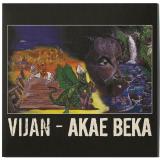
Vijan, originally released in 2003 by I Grade Records, is a seminal release from the “golden era” of St. Croix roots reggae, now available for the first time on 12” vinyl courtesy of Before Zero Records.
Produced by the legendary combination of Vaughn Benjamin and Laurent “Tippy I” Alfred, Vijan balances the raw, spiritual intensity of Vaughn’s songwriting with the sophisticated, melodic arrangements that became the hallmark of the I Grade sound.
This album features an incredible lineup of musicians who helped shape the sound of Virgin Islands reggae. The production credits boast the textured guitar layers of Tuff Lion , the deep, driving bass of Kenyatta Itola , and the rhythmic precision of Dion “Bosie” Hopkins. Uniquely, this album also showcases Vaughn Benjamin’s versatility as a multi-instrumentalist, contributing drums, bass, and keys on standout tracks like “All Ye Naashan” and “Thanks for Life”.
Akae Beka’s inimitable style of rich, deep, multi-layered songwriting and uncompromising devotion to RasTafari is on full display here. At the point of his untimely passing in 2019, Vaughn Benjamin had released over 70 albums, solidifying his place as one of the most prolific reggae artists ever known. Vijan remains
a glowing highlight in this expansive catalogue, capturing a specific moment of creative brilliance in the early 2000s.
The vinyl reissue allows listeners to engage with the album’s analogue richness and features the striking original artwork by Marcus Wilson, presented here as a 12” square masterpiece.
On Hungry Animal, Luke Temple continues to trace the invisible lines between the personal and the cosmic _ between what we feel, what we observe, and what we inherit simply by being alive. The album reunites Temple with Doug Stuart (bass) and Kosta Galanopoulos (drums), the core of his Cascading Moms ensemble, whose instinctive chemistry anchors the record's balance of rhythmic precision and melodic drift. Together they shape a sound that feels handmade and fluid, delivering sharp observations in soft focus. The album opens with "Clean Living," a tenderly libidinous groove, unraveling purity myths and self-discipline _ less a confession than a celebration of the futility of striving for perfection in a flawed world. From there, "Echo Park Donut" shifts into the memory of an unsettling vignette drawn from a violent incident outside Temple's Los Angeles home. The band moves with a quiet pulse beneath the story, suggesting both detachment and the surreal intimacy of fear. The title track, "Hungry Animal," grounds the album's broader questions: how well can we really know one another, or ourselves? Temple's lyrics circle around the idea that we are animals among animals, driven by instinct and affection alike. It's both playful and philosophical, one of the record's emotional centers. Temple's bandmates bring an understated mastery to these pieces. Stuart's melodic, infectious grooves converse fluidly with Galanopoulos's drumming, which breathes life into each song even as it gently propels them forward. The trio's interplay feels both weightless and deeply rooted _ commanding the listener's attention and empathy without ever forcing it. With Hungry Animal, Luke Temple and the Cascading Moms create a world where reflection becomes rhythm and consciousness gains texture _ a record of quiet revelations and deliberate grace.
SACRED COWBOYS are a moody hard rock band with a dry sense of humor. They started playing in murky Melbourne dive bars in 1982 attracting a rabid following. With the release of their iconic first single, Nothing Grows in Texas, they were catapulted to national TV notoriety on Countdown, Australia's version of Top of the Pops. 2025 saw founders Garry Gray and Mark Ferrie enlist Timothy Deane, Anthony Paine, and Damian Fitzgerald. You will soon be holding in your hands the new album, 'In the Manifesto.' 'In the Manifesto' was mastered by Mikey Young, who worked on the last six Mark Lanegan records and plays in Eddie Current Suppression Ring. All new songs are written by Garry and the band. 'In the Manifesto' shows the Sacred Cowboys do not indulge in one musical style. It's a complex, atmospheric soundtrack with Gray's uber cool delivery over sometimes sparse, sometimes weaving guitars and rich harmonies. Channeling a Sonic Youth ethos and grinding the gears in the engine room of the Cosmos Factory, 'In the Manifesto' is as wide and expansive as the Australian desert skies. Radio 3CR's Paul 'Dr Gonzo' Elliott got a sneak preview and says. "Garry Gray returns with Sacred Cowboys and a brand-new album . a 12-track tour de force titled, 'In the Manifesto'. The Sacred Cowboys have performed intense live shows and transported that energy and mood onto this new album, 'In the Manifesto.' It is all killer and a tour de force. Garnering the attention of Andrew McGee at Torn & Frayed Records, Australia and combining with French allies Seb Blanchais and Romain Michon at BEAST Records, France, the rest is about to become history.
Her natural command on stage, paired with a voice that feels quietly seasoned, has made her one of the most exciting young live musicians emerging from the region. Now, with her first release, a double single featuring the raw, one-take folk recording 'Poison Ivy' and the dreamlike, psychedelic shimmer of 'Forget About' -- Grant introduces the full spectrum of her sound. One track close to the bone, the other lost in a dream, both unmistakably hers. 'Poison Ivy' was recorded when Grant was just 16, in a spontaneous midnight session after finally playing her songs to her dad. With only one microphone, no click, and a single take, the track became a time capsule of her earliest songwriting voice -- fragile, real, and impossible to recreate.
Now featuring Dan Bridgewood-Hill's evocative violin, it stands as a folk recording filled with warmth, instinct and unfiltered emotion. "I tried re-recording it," she says, "but nothing touched the magic of that first take." In contrast, 'Forget About' showcases Grant's emerging production instincts. Influenced by Zero 7, the song began as a kitchen jam before evolving into a lush mix of psychedelic keys, airy electronics and indie- rock textures. Self- recorded in Logic, the track reveals a new dimension to her writing, cinematic and rhythmically hypnotic
After spending much of the last years focusing on the evolution of his own instrument, the drummophone, the release of ZERO,999… reveals a new paradigm in La Foresta's work and career.
In this album he collects fragments of live performances and site-specific installations conducted over the last decade, with and without the drummophone — reimagining and repurposing them as compositional elements that he has interwoven with recent studio recordings and collaborations to form eleven viscerally powerful pieces of overwhelming rhythmic and textural density.
La Foresta weaves together these captured moments in time, while employing combinatory strategies inspired by Italo Calvino's tarot stories in "Il castello dei destini incrociati," forging relationships and connections between recordings from the collaborators and his own. In approaching accompanying and augmenting these recordings, Riccardo, in the role of percussionist and composer explores the tension between his personal and academic focus on rhythmic structures and his fascination with repurposing the drum as a durational instrument.
Contributions from collaborators include the synthetic textures of Valerio Tricoli, Anthony Pateras, Aleksandra Słiż, and Renato Grieco, the vocalizations of Antonina Nowacka and Sara Persico, and the guitar experimentations of Ale Hop and Stefano Pilia, bringing together a distributed ensemble of musicians pulling apart the orthodoxies of their own instruments and techniques. Through the interaction of these elements, La Foresta imagines a causal network that binds, integrates and informs fragmented contexts, performers and performances, exploiting new possibilities of the drummophone.
ZERO,999… is conceived as a suite where sound and time are communicated simultaneously at different orders of scale, a single strike of a drum is a drone if slowed down one thousand times, an hour-long drone is a brief tick in the clock of geological time. A seemingly static object, such as the number 1, can both be defined by its fixedness, and as a process in which eternally approaching (0,999...) is the same as arriving.
k 11: EyeContact (Nereo`s) feat. Stefano Pilia
out of Stock
Last delivered 8 months ago available to reorder, subject to availability
Capcom and Laced Records invite you to return to a world of Reploids and cyber-elves, betrayal and Bio-Metals...
Thoughtfully sequenced with a disc covering each of the Mega Man Zero games, and a fifth covering ZX and ZX Advent, this box set will allow fans to fully ensconce themselves in the series.
ultimatemaverickx returns as sleeve artist, producing lore-faithful, vibrantly colorful panels depicting memorable story moments and highlighting major characters in iconic poses.
The Mega Man Zero/ZX soundtracks' glorious mix of urgent acid house, ambient, face-melting metal, and even soaring pop feel downright prophetic in the modern music landscape. Transported from their '00s hardware origins to your turntable come the sounds of our present, broadcast from the past - and it rips.
Born out of the Northern California DIY scene, Moms With Bangs started as a ragtag group of high schoolers looking to build a musical community filled with loud, chaotic, unfiltered energy. Quickly becoming known for their loud experimental sound and unhinged live shows. Moms With Bangs become legendary for being high-volume, high-energy, and having zero barrier between them and their audience. It was these qualities that caught the attention of Jello Biafra
himself, who was so impressed he signed them to his label Alternative Tentacles Records, making Moms With Bangs the youngest signing in the history of the label. Recorded at Tiny Telephone in Oakland, CA over the course of two days in January of 2024, Leo Hirsch, Michael Cook, Austin Kennedy, Axel Sanchez, and Oliver John live-tracked these songs in one large recording room, recording at the same time facing each other, to make sure the recording captured the unfiltered energy of the live show as much as possible. As for the name of the 7”? “Do What’s Delicious” came from a suggestion from Jello Biafra himself, while the band was in the studio, as a name he once considered for a Dead Kennedys release. The two tracks on “Do What’s Delicious” capture the throttling high energy rhythms of bands like Thee Oh Sees. Showcasing an affinity for the off-kilter groove of bands like Deerhoof or Black Midi. Moms With Bangs aims to disgust and delight with no limits! We couldn’t be more excited.
EMEX is the emergent project of Modular Expansion. The "né.on" project expresses a contemporary retrofuturism that is based on current but simultaneously changing concepts of "the future". Retrofuturism embodies two overlapping trends that can be summarized as the future as seen from the past and the past as seen from the future.
out of Stock
Last delivered 9 months ago available to reorder, subject to availability
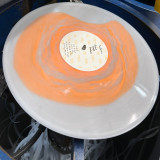
Laconic Zero is a one man music machinery aka Trond Harald Jensen. Utilizing Commodore 64 programming combined with a heavy wall of distorted bass, Laconic Zero produce complex dagger-stabs of metaldriven chiptunes. Sun to Death is a killer presented on smoked orange vinyl, CD and Cassette. Laconic Zero has shared stages with Lighning Bolt, the famed Sonic Youth and Swans producer Martin Bisi and collaborated with the late music prodigy Joey Hopkins.
For his last solo record ‘Through a Room’, Bill Nace shifted his usual saturated guitar sound and added tapes, hurdy gurdy, doughnut pipe, bird calls and the mysterious Japanese taishōgoto. Setting up for the final night of his three day residency at OTO with only the taishōgoto soundchecked, Nace hoped that Parker would arrive with his small soprano as its opposite. “I’ve been interested in state change, you know, playing until there’s a shift in time.” Known for his development of multiphonics to produce a constantly shifting pattern, Evan Parker has evolved an instantly recognizable sound - his work the soprano most distinct. Happily, it was the soprano Evan brought with him and as soon as the two start to play they entwine - taking off in a double helix of keys and reed primed for endless reconfiguration. Space warps under the velocity of playing, the pitch rising unrelentingly. It felt like unending lift off in the room, sheer energy until the last note makes remember your feet have been on the floor the whole time. Total time bending shredding.
–
"They had never played together before. They had never even met each other before this springtime 2024 concert at London’s Café Oto.
Evan Parker, circular breathing maestro of the saxophone, a legend in the universe that is Free Improvisation since the late 1960s and Bill Nace, one of the most intriguing experimental “noise” guitarists of the 1990s/2000s underground scene.
For those of us who have been enamored by the live and documented work of both these gents, this Café Oto duo was a must-hear event. It could have gone anywhere musically and that would have been totally fine. Particularly with Evan having a history of being thrown into a variety of challenging collaborations throughout his career, employing the learned elegance of trust in his own sensitivity to listening, responding, leading, following, sparring, intertwining, dialoguing, creating in the instant and, essentially, dignifying the non-hierarchical grace of chance.
The aesthetics of socialist consideration in Evan Parker’s playing, in his community of expanded and personal technique, for a younger player such as Bill Nace, strikes an exemplary model. This notion of respect would be entirely the reason Nace, when offered a residency at the most critical “new music” room in England, would request to play in duo with Parker.
Bill Nace came to prominence mostly during the apex of experimental music activity in and around Western Massachusetts in the early days of the aughts, with a focus on visual art and free improvisation guitar action. He could be found in the daytime hours, his head hanging down over a notepad, penning fine-tuned illustrations and abstract line drawings, while in the evenings he’d be attending any number of basement noise gigs, many of which he’d be participating in. His guitar style came across as being informed as much as by the physicality of his writing utensils in friction to the page as it was to his hearing and redefining of radical recordings ranging anywhere from the Black Unity Group to Black Flag.
Utilizing various metal files and other small cylindrical objects Bill would allow his guitar and amplifier to be in tandem with the improvisatory movements of his body as the instrument balanced, intentionally and, at times, precariously, upon his lap. The performances came across thrilling and daring and they would be mostly in the context of venues nothing more than a low-ceilinged damp and dank New England basement, a clutch of people hanging onto rusty pipes or sitting up on dilapidated washer/dryer machines, the shards of Bill’s “file guitar” sounds ringing out like the most alive music on Earth.
By the time Bill reached Café Oto in early 2024 he had relocated to Philadelphia all the while releasing a succession of collaborative LPs on his Open Mouth label to present his developing progression of solo and collaborative work. He also would find himself considerably engaged with playing the electric taishōgoto, a keyboard-activated string instrument from Japan which can exist as a one, two, four, five, or six string oblong sound object. Bill’s approach to the taishōgoto would not be too unlike his approach to the traditional electric guitar, though no outboard implements such as files, sticks, and rocks are utilized. The similarity would lie wholly with Bill’s full immersion of high velocity action-playing where, with the taishōgoto, an electric drone beauty occurs. The flurry of sonics and resultant harmonics emanating from the amplifier (which Bill opts to dial into with borderline loud-as fuck volume settings) furthers the meta-mantra properties of the instrument in an astounding display of drone dynamism.
This sound world of Bill’s two-stringed taishōgoto on this Café Oto night worked beautifully with Evan Parker’s improvisatory saxophone conceptions. The duology achieved instant lift off at ground zero only to find it’s eventual finale as if it were organically ordained. Time seemingly morphed from its ancient human construct of control, rendered inconsequential to the torrential transcendence of the room wildly activated by the magic resonance of the multi-directional pan-spatial sonance of the music as if it were some beatific blessing. It was one of those nights where art as a liberating force of spirit gifted the listeners with an offering of exaltation and joy. It was entirely mystical and mind blowing. A night of Total Music."
Red Vinyl. 'The Ugliest Of All' is a devastating album with zero let-up or mercy, a thoroughly unenjoyable assault of horrific battering that will bring no pleasure to the listener whatsoever. Previous albums had catchiness and levity, but this one is dark, vicious, hateful. 'Fools Of The Trade' opens with anger at the rest of the metal scene, before segueing into 'I Want To Be Offended', a catchy middle-aged attempt at whining like millennials. 'Skullbattering' is a stomping Angelcorpse-tinged ode to mass suicide. 'Logorrhea' continues the WEREWOLVES tradition of ripping into their own fans, and title track 'The Ugliest Of All' closes the album with a fearsome chorus, stupendous velocity, and dynamite fretboard dexterity.
An enthralling weave of cathartic, introspective spirituality and thrumming, industrial darkness; The Wounded Healer is the first full-length from PREYRS, the new incarnation of Irish singer-songwriter Amy Montgomery and her band as one formidable entity. From the fourpiece's new janiform name; a twisting, conflicting play on the tenderness and innocence of prayer and the deadly dance of prey and predator to the band's fiercely independent journey, PREYRS is a project already steeped in story. After breathtaking album opener `Humble Eyes', lead single `Wave of Wisdom' immediately lays this concept bare as Amy's incandescent delivery of uncertainty, "lesson learned / don't know how / but here I am again / stronger than before", soars over a defiantly discordant clash of alt-folk slide guitar and Mormecha's pummeling industrial percussion. Elsewhere, the high-octane `Zeros, Ones & Lies' wrestles with the spiritual toll of being fed constant footage of atrocity and catastrophe by a media that accepts no responsibility for their part in the global race to the bottom. As such, the track bursts into furious life with urgent, double-time drums met by guitars distorted to the brink of destruction before the song all but caves in on itself as Amy quietly asks of us "Can you feel it? / like a river / it flows so silently / it flows so violently". By contrast, `Bring Ur Bruises' radiates resplendent, self-empowering positivity. Centred once again on the concept of the wounded healer, `Bring Ur Bruises' implores the listener to welcome their trauma in, to own it and wear it as a paradoxical means of ultimately letting it go as triumphant, reverb-soaked guitars soar ever higher. If it wasn't already clear, PREYRS are no strangers to doing things differently and, across every iteration, the band have always taken a DIY approach to every aspect of their existence. From covering themselves in paint and rolling over every single early album cover to, until recently, booking all of their own shows and festivals as diverse as Glastonbury, Green Man (UK), Blizzarrrd Rock (GER) and Bloodstock (UK), last year the band found themselves touring the UK as Amy Montgomery in support of musical heroes and British post-punk legends New Model Army. In November 2025 they will be joining New Model Army again on tour across Europe, but this time as PREYRS performing tracks from The Wounded Healer, the same four people but an entirely different beast. FOR FANS OF Nine Inch Nails, Chelsea Wolfe, Sonic Youth, Julie Christmas, Alanis Morissette, My Bloody Valentine, Siouxsie and The Banshees, Melvins
An enthralling weave of cathartic, introspective spirituality and thrumming, industrial darkness; The Wounded Healer is the first full-length from PREYRS, the new incarnation of Irish singer-songwriter Amy Montgomery and her band as one formidable entity. From the fourpiece's new janiform name; a twisting, conflicting play on the tenderness and innocence of prayer and the deadly dance of prey and predator to the band's fiercely independent journey, PREYRS is a project already steeped in story. After breathtaking album opener `Humble Eyes', lead single `Wave of Wisdom' immediately lays this concept bare as Amy's incandescent delivery of uncertainty, "lesson learned / don't know how / but here I am again / stronger than before", soars over a defiantly discordant clash of alt-folk slide guitar and Mormecha's pummeling industrial percussion. Elsewhere, the high-octane `Zeros, Ones & Lies' wrestles with the spiritual toll of being fed constant footage of atrocity and catastrophe by a media that accepts no responsibility for their part in the global race to the bottom. As such, the track bursts into furious life with urgent, double-time drums met by guitars distorted to the brink of destruction before the song all but caves in on itself as Amy quietly asks of us "Can you feel it? / like a river / it flows so silently / it flows so violently". By contrast, `Bring Ur Bruises' radiates resplendent, self-empowering positivity. Centred once again on the concept of the wounded healer, `Bring Ur Bruises' implores the listener to welcome their trauma in, to own it and wear it as a paradoxical means of ultimately letting it go as triumphant, reverb-soaked guitars soar ever higher. If it wasn't already clear, PREYRS are no strangers to doing things differently and, across every iteration, the band have always taken a DIY approach to every aspect of their existence. From covering themselves in paint and rolling over every single early album cover to, until recently, booking all of their own shows and festivals as diverse as Glastonbury, Green Man (UK), Blizzarrrd Rock (GER) and Bloodstock (UK), last year the band found themselves touring the UK as Amy Montgomery in support of musical heroes and British post-punk legends New Model Army. In November 2025 they will be joining New Model Army again on tour across Europe, but this time as PREYRS performing tracks from The Wounded Healer, the same four people but an entirely different beast. FOR FANS OF Nine Inch Nails, Chelsea Wolfe, Sonic Youth, Julie Christmas, Alanis Morissette, My Bloody Valentine, Siouxsie and The Banshees, Melvins
Due to demand (and that we zero copies of their vinyl studio album left, and only a few of their live vinyl album), we've compiled all the tracks from both (and more - see below), we're reissuing them both on a 2xCD with a 24-page booklet. Before Suicide had really made it to the West Coast, Grey Factor were working in a similar realm - early post-punk, a little before punk (as such) and proto-industrial music. Here's what the band has to say: The future is tricky - and while we may have been left behind, this is our attempt to catch up with it. We offer a double CD capturing everything we've ever recorded. The Future Arrives Without You includes the previously released vinyl LPs - 1979-1980 A.D. Complete Studio Recordings and A Peak In The Signal: Live 1979-1980_plus a few surprises, including our first new studio tracks in 45 years. Both songs are covers, Wire's 12XU and Campag Velocet's Sauntry Sly Chic, and nine more lost studio tracks. 12XU was a jolt of pure adrenaline_two minutes of perfection from one of the era's best bands, a huge influence on us. Sauntry Sly Chic, from a group few remember but we never forgot, had one of the most infectious grooves we had ever heard. We also loved their lead singer's live getup: a cycling helmet and fencing gear. Perfection. These tracks inspired us to head back into the studio after four decades away. On A Peak In The Signal, we've added nine unreleased pieces we call the In-Betweens. Created out of necessity in 1979-1980, pre-recorded and played between our live performances, these sonic interludes filled the dead space while we reprogrammed our temperamental analogue synths between songs. Absurd, experimental, audience favourites.
Acclaimed electronic musicians, producers and sound architects Max Cooper and Rob Clouth team up for a new collaborative EP; a dark, playful four-track dive into ambient, breakbeat and techno’s subconscious flow, featuring a standout vocal performance from South London rapper FLOHIO.
Recorded over a series of spontaneous London sessions, “8 Billion Realities” channels years of creative exchange between two of the genre’s most quietly innovative artists and is a result of a decision between the longtime friends to refrain from conceptual overthinking in favour of instinct and joy.
As long-time admirers of each other’s audio/visual work, Cooper and Clouth collaborated in London together after both emerging from intense, idea-heavy album cycles. What followed was a series of exploratory sessions, half-improvised, half-built around half-formed thoughts.
The result is a club-ready EP that feels alive and human: imperfect and hypnotically rich.
“Rob Clouth has been one of my favourite electronic music producers since I first heard his work in 2011,” says Cooper. “His work is more full of ideas and structure than anyone else.” “We were both coming from extensive conceptual studio albums and both in the mood for simplifying things and having some fun with the music, so that’s what we did”.
For Clouth, no stranger to Max Coopers Mesh label having previously released an array of EP’s plus his 2020 debut album “Zero Point” this record marks a new chapter, both creatively and personally.“Something pretty new for me is collaborating,” he says. “You kind of have to when to stop, because if you develop an idea all the way to its endpoint, the other person has nowhere to jump in.”
The first “A Moment Set Aside” began as a break from another idea, a live, unplanned improvisation based around arps and ambience. “The track was written in about as long as it took to play it,” says Cooper. “It was pulled from a 1 hour recording session, more or less as you hear it… the energy and excitement grew as the unplanned moment bore some magic.”
“The lesson being that sometimes it’s helpful to set aside a moment without forcing results, and let the subconscious have something to say.” What followed was darker, heavier. “Asymptote” is detuned techno. Subversive and euphoric in its descent. “We found a sort of brain mangling, half consonant, half wandering detuned techno pulse, which we started chatting about being a sort of pit of spiralling body parts we were falling into,” says Cooper. “It was a lot of fun to work on and let loose with bigger kicks than I usually ever get to unleash.”
Then came “8 Billion Realities”, featuring a standout rap performance from FLOHIO; an emerging figure in the UK grime and rap scene. The track was inspired by conversations about algorithmic echo chambers and hyper-personalised online worlds. Frantic, direct, and South London to the core, FLOHIO brings this tension to life. Her sharp, intense flow cuts through distortion and rhythm, landing the track somewhere between chaos and control instantly making it one of the most striking moments in either artist’s catalogue. “A different reality for all 8 billion of us,” says Cooper. “We weren’t sure if it would work… but there was something about the energy of the percussive idea and the story which felt like it might fit.” “Then FLOHIO had a play with it and straight off the bat absolutely killed it, not just with the lyrics and energy, but the harmonising too, it was a beautiful process.”
The final piece on the EP “Candeleda” originated from Clouth’s solo experiments with a live rig made entirely of vocals and keys, using his self-developed “cheatbox” system. “He put forward a beautiful stumbling melodic sequence which we bounced back and forth adding harmonies and synth layers,” says Cooper. “It rounds off a collection covering some of the breadth of music that we both love.”
out of Stock
Last delivered 10 months ago available to reorder, subject to availability
Deep black, with ghostly glimmers of an old car melting into the tarmac: the cover of Never En-ding Rodeo sets the tone. This isn't just a late-night drive, but a controlled skid across the borders of Post-Rock, Noise and Psych. The engine roars, the ground shakes, the white lines blur. Six years after the release of Ain't That Mayhem, the Lyon-based band returns with a dense, smoke-veiled record. Never Ending Rodeo: a deceptively playful, almost cartoonish title for such an intense album. As if, after circling endlessly around dust, bucking, and stampedes, Zëro had carved out its own orbit. Unstable, inevitably. But magnetic. Éric Aldéa (guitar, vocals), Franck Laurino (drums), Ivan Chiossone (Persephone, synths), and now Varou Jan (guitar, bass) - (Le Peuple de l'Herbe, Condense) - have lost none of their bite. Better still: this new album marks a turning point in production quality, thanks in particular to the mixing work of Niko Matagrin. The sound is broader, more inhabited. Every snare crack, every synth layer sits precisely in a meticulously sculpted space. "As if Tom Waits had collided with Nine Inch Nails. Before a frightening modernity hurled this so-nic convoy into a headlong rush." ~ Indiepoprock "You don't simply pass through Never Ending Rodeo: you step inside, you lock yourself in, drawn irresistibly by its magnetism." ~ Solénopole
fabric presents salute features music from pioneers and contemporaries alike, including Kerri Chandler, Bodhi, Dorian Concept, Junior Sanchez, Redhead and more, alongside two originals from salute. More than a collection of tracks, it’s a cultural statement: a journey through club culture, personal identity, and global roots. To celebrate the release, salute will headline fabric’s Room 2 on 10th October, joined by a handpicked lineup (TBA), bringing their vision full circle from mix to dancefloor.
Lead single ‘double luxury’ sets the tone for the project, capturing salute’s signature blend of soulful energy, deep groove, and euphoric release. Built on spacious low-end and an undercurrent of euphoria, warped vocals twist through sleek, propulsive drums to form a house cut that channels the emotional intensity and groove at the heart of their sound. Arriving off the back of a huge summer, with standout sets at Coachella, Glastonbury, a North American tour and All Points East, ‘double luxury’ provides a fitting entry into a milestone chapter for one of the most vital voices in club culture.
salute says:
“my contribution to the fabric presents compilation series is my way of contextualising the music i've been writing over the last couple of years. i wanted to include bits of all the things that make up the salute sonic palette: loopy, sample based house music, dense and soulful chords and beautiful synths, slick and groovy drum work. it's an exercise in beautiful house and techno music, or my definition of it anyway.”
Launched in 2019, fabric presents has become one of electronic music’s most respected mix platforms, with contributions from Andrew Weatherall, Laurent Garnier, The Martinez Brothers, SHERELLE, Bonobo, Overmono, Confidence Man, The Streets, and more. Rooted in the legacy of fabric’s monthly CD mixes, the series now embraces a wider range of releases across digital, CD, and vinyl, each paired with a performance at the iconic London venue. With fabric presents: salute, they take their place in this lineage, joining the dots between underground heritage and the future of club culture.
Vienna-born salute has become more than a producer: they are a cultural innovator representing a club scene that is diverse, queer, and community-driven. Since emerging as one of the UK’s most exciting electronic voices, they have built a reputation for balancing raw emotion with dancefloor ecstasy, weaving grime, UK garage, electro, French house, jazz, gospel, R&B and hip hop into a singular, unmistakable vision.
Their music channels as much emotional resonance as physical release, tracks that turn longing into euphoria, intimacy into collective celebration. This ability has not only won over audiences worldwide but also earned praise from heavyweights including Four Tet, DJ Seinfeld, Floating Points, Skrillex, Fred again.., Annie Mac and Benji B. Their now-legendary Melbourne Boiler Room set, one of the platform’s most-watched, further cemented salute’s reputation as a defining force in the global underground.
The release of their 2024 debut album True Magic on Ninja Tune solidified salute as one of dance music’s most vital voices, its success confirming what the underground had long known. With fabric presents, they mark another milestone, bringing their curatorial vision and boundary-pushing sound to one of electronic music’s most iconic platforms.
out of Stock
Last delivered 6 months ago available to reorder, subject to availability
Harry Romero and Samaran remix Radio Slave and Kameelah Waheed’s ‘All Rize’ on Rekids It follows the release of the original single in May 2025, arriving this October. NYC House legend Harry Romero and respected Paris DJ, producer, and sound designer Samaran step up to remix Radio Slave and Kameelah Waheed’s ‘All Rize’, arriving via the label 24th October 2025. Originally released in May ‘25, ‘All Rize’ was dubbed a ‘perfect moment’ tune by Mano Le Tough, with support from the likes of Bradley Zero, Call Super, Sean Johnston, and more.
“Glad to be working a lot closer with Radio Slave on his label and projects. It’s just one of those brands that put out quality. So before I even heard what I was asked to remix for Matt, my answer was yes. My idea was to put a completely different twist on the original and make a new version that was peak time. So glad I took a chance!” - Harry Romero
“I wanted to create a darker club vibe for All Rize, adding another bassline, just keeping the vocal elements that have a strong character and some percussion to keep some organic groove to it. The idea was to keepa minimal idea as the original and make it Rize for darker clubs.” – Samaran
Founded in 2006, Radio Slave’s Rekids has since launched the Techno-focused Rekids Special Projects in 2017 and its latest sublabel, REK’D, in 2024. With Matt Edwards as the sole A&R, Rekids has been instrumental in developing emerging artists and remains a trusted home for House and adjacent sounds, recently featuring names such as Hilit Kolet, Tal Fussman, Frankey & Sandrino, Mathias Kaden, Huxley, and many more.
out of Stock
Last delivered 6 months ago available to reorder, subject to availability
Released in 2015, Get To Heaven is the third studio album by British art-rock band Everything Everything. The album blends elements of indie rock, electronic, and experimental pop, showcasing the band's signature complex rhythms, sharp lyricism, and dynamic vocal performances by frontman Jonathan Higgs.Featuring standout tracks like "Distant Past", "Regret", and "No Reptiles", the album explores themes of political unrest, media influence, and societal anxiety, wrapped in vibrant, high-energy production. Get To Heaven received widespread critical acclaim for its bold sound and thought-provoking lyrics, solidifying Everything Everything as one of the most innovative bands of the 2010s.With its infectious hooks, intricate instrumentation, and emotionally charged songwriting, Get to Heaven remains a defining album in modern alternative music, appealing to fans of intelligent, genre-blending rock.This much sought-after cult classic is now reissued on 1LP for the first time in a decade. Get To Heaven is available as a limited edition on translucent magenta coloured vinyl.
In 2047, amidst the deafening yet oh-so-familiar soundscape of the Movement Festival in Detroit, we met again: I, pdqb, and Scape One, known as two of the most respected electronic music composers worldwide. The air pulsed not only with the latest beats but also with a barely perceptible energy only the two of us knew. We hadn't simply flown in; we'd arrived with our fantastic "Diskmind" time-travel machine, an incredible invention, capable of effortlessly catapulting us through the centuries.
"It's unbelievable, isn't it?" I shouted over the bass, eyebrows raised. "A machine that lets us travel through all of history, and there isn't a single song that honors it! Not one!"
Scape One nodded vigorously, his gaze sweeping over the stage lights. "That's absurd! How can such a revolutionary invention remain unsung? It's almost an insult to music history itself."
We looked at each other, a silent understanding in our gazes. The mission was clear: The "Diskmind" needed its anthems. And who, if not us, who used and loved it, should create them?
And so, we decided to become the musical chroniclers of the "Diskmind," ready to tell the story of our time machine across four different eras...
For Synaptic Cliffs, it's an extraordinary honor to present these three Scape One variations of the original song 'Diskmind' (first released on The Electrifying Dojo, 2025). Each masterpiece was recorded in different future decades of the 21st century (of ourse with the help of the Diskmind time travel machine) and reflects the corresponding trend in electronic music. A1: A timeless, pristine Electro composition from the year 2035. A2: An IDM marvel from late summer 2075, recorded in the Zero gravity of Space Station 775. B: An Experimental Electronica symphony recorded at pdqb's Studio 577 on Mars Outpost 47A. Only musical equipment that doesn't currently exist was used for this release
out of Stock
Last delivered 6 months ago available to reorder, subject to availability
Vines, the solo project of New York-based multi-instrumentalist and composer Cassie Wieland, offers a window into her inner world through expansive swaths of sound. She pieces together a celestial mix of synths, percussion, strings, and vocoded voice, making music that is at once deeply personal and cinematic in scope. This diaristic approach first took shape with her 2023 EP Birthday Party, and is crystallized on her debut LP, I’ll be here. With the sweeping and vulnerable I’ll be here, Vines arrives fully formed as an artist who crafts deeply resonant and open music–the kind that invites listeners in to listen, reflect, and share in the journey of learning through living.
“It was through making music that I was able to meet myself,” Wieland said. “Anything I’m going through or feeling is something that somebody else out there can relate to, and that’s really special to me.”
I’ll be here is both a culmination of years spent creating gossamer soundscapes and an opening to a new journey for Wieland as an artist. The album grew out of her years as a composer and songwriter, and builds on the language she developed on Birthday Party, which transformed the tumultuous feelings of the passing of time into minimalist meditations. It was just a start, though–a prologue, a development of the kind of language and ideas she wanted to express. With I’ll be here, she digs deeper and writes music that feels more sprawling, further solidifying her singular voice.
Wieland’s musical composition process is similar to journaling, lending itself to the music’s honesty. When she writes, she makes room for all the ideas she has; in these sessions, there are no wrong ideas, and she allows the music to be attuned to the experiences she’s having at the time. With I’ll be here, Wieland zeroes in on themes of anxiety, loneliness, navigating human connection, and having to grow up from a young age, ultimately coming to a place of acceptance. And though it began as a journal written in solitude, her collaborators shape the music with her.
Working with friends, in fact, was a crucial part of bringing the record to life. “Everything that was supposed to happen came together so easily because of the people involved,” Wieland said. I’ll be here was co-produced and recorded with Wieland’s longtime collaborator Mike Tierney, a four time Grammy-nominated engineer who has worked with artists across the contemporary classical and experimental scene like minimalist pioneer Steve Reich, LA’s preeminent classical ensemble Wild Up, and various bands on Bang on a Can’s Cantaloupe Music label. Percussionist and composer Adam Holmes and violinist Adrianne Munden-Dixon are two other longtime collaborators who are frequent fixtures of her live show. Holmes plays synths, drums, and banjo; in live settings, his kit is loaded with elements of the songs that are then triggered by MIDI, making the music an interactive, evolving experience. The album’s gentle, filamented edges are colored by Munden-Dixon, whose poignant string melodies elevate Wieland’s introspective compositions, as well as cellist Helen Newby, saxophonists Julian Velasco and Jordan Lulloff, and bassist Pat Swoboda.
Wieland takes an economic approach to writing music, building the swirling and immersive landscapes of Vines through short melodies, lyrics, and phrases. As each element layers and interweaves, they grow into sprawling webs of ghostly sound. Prior to Vines, Wieland composed pieces for other people to play using a minimalist’s sensibility, writing slowly unfolding melodies for instruments like violin and saxophone. In recent years, she sharpened her solo style across a variety of singles and covers which have garnered significant attention on social media for their emotional resonance (“being loved isn't the same as being understood” in particular went massively viral on TikTok in 2024). Birthday Party, her debut as Vines, brought her writing to a much more intimate space, centering on her vocoded voice cloaked in feathery reverb. A series of recent singles, meanwhile, including “I am my home,” showcase the way that Wieland’s music is born from the story of her innermost feelings, extending far beyond just the self.
Though Wieland’s music often deals with dark themes, it unfolds with tender melancholy, the kind that feels like a warm embrace. On “Evicted,” Wieland wonders if she’s getting sick or moving on, if she’s lost or found. Her vocals expand with each lyrical repetition, as the instrumentals slowly encircle and the music’s rhythm grows and bursts into a heart-wrenching, yet radiant wave reminiscent of post-rock bands like Explosions in the Sky. “Tired” follows a similar trajectory, building from a looping, melancholy rhythm and floating lyrics into a solemn resignation. Elsewhere, Wieland takes a more ruminative approach: “Omw” begins with twinkling piano and melancholy strings that gradually transform into an undulating mass. It is a song born out of the warm feeling of reminiscence, the slight return of hope that comes with nostalgia.
With any searching journey, there is also a point of understanding. The title track closes the album with the freedom of acceptance. A marching drum beats steadily beneath Wieland’s open vocals, moving forward, ever onward as it flies into the ether. In Wieland’s delicately textured music, there is room to come into yourself, and learn to love whomever that is. I’ll be here is a special space that can be all your own, one in which to feel what needs to be felt. “This is music for your story,” Wieland said. “I want you to use it how you need it.”
REPRESSED !!
Exhumed '77 OST frond 'Riddles Of The Sphinx'...magick Mike Ratledge unfurls coils of ARP, Moog &VCS-AKS via Denys 'Lucifer' Irving's hacked Z-80 sequencer...these post-Soft Machine plumes spiralin stasis to the frame pans and lockdown Maddox's
& Mulvey's dialogue like SE17 dunes...the concentric riddle of the missing original master tapes...film reel audio prised from the BFI vaults & transferred straight to zeros & ones by hieroglyphic
happenstance...this acrobatic dredge has revealed more than enough mercury to further protract the riddles within..."You've got my number if you need anything"...IBM 'The film's ground-breaking electronic score, by The Soft Machine's Mike Ratledge, was composed on synthesisers which were developed in collaboration
with Denys Irving (the man behind the mysterious and controversial 1970s band Lucifer).'Film extract (Official BFI Trailer: http://youtu.be/UlBaUd5Y58M)
Please note: The digital will be available to
download from Monday 28th of October. The
vinyl will start shipping from Friday 8th of
November....
out of Stock
Last delivered 14 months ago available to reorder, subject to availability
BIOGRAPHY BY IRVINE WELSH
I discovered the Beta Band, like I discovered a lot of great music, basically through eventually surrendering to the enthused urgings of a mate who was cooler than me. He continually evangelized about the EP's. I was lost to the concert hall and firmly ensconced on the dancefloor by then and highly resistant, but quite taken by the idea that a band would bring out extended plays rather than singles. When I did check them out, I was instantly smitten by their originality and power.
The band, therefore, were pivotal for me in terms of my own musical journey, in that they represented a gateway back into indie guitar music, which I'd basically given up since becoming obsessed with rave and acid house.
The Beta Band were definitely a band for the cool cognoscenti- like my buddy- the ones you make a bit of a tit of yourself trying to convert quite straight boring people to.
The emotions they induced were a kind of throwback to school days when you were very pompous and prescriptive about what you liked, and derisive towards non believers. It's a testimony to the power of the music that they could take me to the raw state of the younger man.
I took it personally that they didn't hit the mainstream commercial base. At least two of the three albums they made deserved quadruple platinum status. Hot Shots II and Heroes to Zeros are permanently lodged very high in my top one hundred albums of all time.
So, the return of the Beta Band has me moving into the same mode of immature, adolescent anticipation. Everyone should have the Beta Band albums and EP's in their collection. It still kind of annoys me - in fact it bugs the shit out of me - that most of them don't.
Black Hole Superette, the latest album from Aesop Rock, delves into the invisible forces that shape our lives and psyches. It's about the small, often overlooked moments_the everyday experiences that blur the lines between the real and the unreal, waking and sleeping. Aesop's signature gift for transforming the mundane into something dreamlike gives the album a surreal quality, leaving listeners questioning what's truly real as they navigate its vivid, half-remembered imagery. Entirely self-produced, Black Hole Superette is one of Aesop Rock's most technically accomplished works to date. The album's intricate beats and complex structures provide the perfect backdrop for his expansive lyricism, balancing cerebral exploration with emotional depth. From the reflective 'Movie Night' and the eccentric 'Send Help' to the wistful 'Black Plums,' Aesop channels the spirit of a mad scientist, experimenting with sound and concept in ways that defy the ordinary. With a stellar lineup of collaborators that includes Lupe Fiasco, Armand Hammer, Hanni El Khatib, Open Mike Eagle and Homeboy Sandman, Black Hole Superette is dense and kinetic, an album that deftly navigates between complexity and instinct. It's clear this project stands as one of Aesop Rock's most multifaceted and ambitious works yet.
out of Stock
Last delivered 15 months ago available to reorder, subject to availability
Netherlandsbased artist Heckerman delivers four tracks of surrealist and textured techno on 47. Laced with swirling sequences, snarling basslines and jagged motifs, 47046 swells with soaring to more introspective moods, streaked with an idiosyncratic flair. 47046 is out July 4th available
out of Stock
Last delivered 11 months ago available to reorder, subject to availability
VERY LIMITED 2025 REPRESS ON BEAM OF LIGHT VINYL .
Everything changed for The Beths when they released their debut album, Future Me Hates Me, in 2018. The indie rock band had long been nurtured within Auckland, New Zealand’s tight-knit music scene, working full-time during the day and playing music with friends after hours. Full of uptempo pop rock songs with bright, indelible hooks, the LP garnered them critical acclaim from outlets like Pitchfork and Rolling Stone, and they set out for their first string of shows overseas. They quit their jobs, said goodbye to their home town, and devoted themselves entirely to performing across North America and Europe. They found themselves playing to crowds of devoted fans and opening for acts like Pixies and Death Cab for Cutie. Almost instantly, The Beths turned from a passion project into a full-time career in music.
Songwriter and lead vocalist Elizabeth Stokes worked on what would become The Beths’ second LP, Jump Rope Gazers, in between these intense periods of touring. Like the group’s earlier music, the album tackles themes of anxiety and self-doubt with effervescent power pop choruses and rousing backup vocals, zeroing in on the communality and catharsis that can come from sharing stressful situations with some of your best friends. Stokes’s writing on Jump Rope Gazers grapples with the uneasy proposition of leaving everything and everyone you know behind on another continent, chasing your dreams while struggling to stay close with loved ones back home.
"If you're at a certain age, all your friends scatter to the four winds,” Stokes says. “We did the same thing. When you're home, you miss everybody, and when you're away, you miss everybody. We were just missing people all the time.”
With songs like the rambunctious “Dying To Believe” and the tender, shoegazey “Out of Sight,” The Beths reckon with the distance that life necessarily drives between people over time. People who love each other inevitably fail each other. “I’m sorry for the way that I can’t hold conversations/They’re such a fragile thing to try to support the weight of,” Stokes sings on “Dying to Believe.” The best way to repair that failure, in The Beths’ view, is with abundant and unconditional love, no matter how far it has to travel. On “Out of Sight,” she pledges devotion to a dearly missed friend: “If your world collapses/I’ll be down in the rubble/I’d build you another,” she sings.
“It was a rough year in general, and I found myself saying the words, 'wish you were here, wish I was there,’ over and over again,” she says of the time period in which the album was written. Touring far from home, The Beths committed themselves to taking care of each other as they were trying at the same time to take care of friends living thousands of miles away. They encouraged each other to communicate whenever things got hard, and to pay forward acts of kindness whenever they could. That care and attention shines through on Jump Rope Gazers, where the quartet sounds more locked in than ever. Their most emotive and heartfelt work to date, Jump Rope Gazers stares down all the hard parts of living in communion with other people, even at a distance, while celebrating the ferocious joy that makes it all worth it -- a sentiment we need now more than ever.
PHASE SHIFTING INDEX is a time capsule record of Jeremy Shaw's vast original artwork that includes audio excerpts, voiceover passages and music composed by There in Spirit and Konrad Black. Shaw's seven-channel video, sound and light installation-that premiered at Centre Pompidou in 2020-uses science fiction, documentary, visual effects and synchronisation to induce an ecstatic experience in narrative temporality. Each video details the belief systems of one of seven fictional subcultural groups spread across time that aspire to induce parallel realities that could redirect the evolution of the human species through embodied forms of ritual, ideology and movement. The vinyl release serves as a gathering of the piece's key audio elements, focussing on their importance to the engineering of the artwork and their stand-alone listening qualities. Side A of the record follows the dramaturgy of the artwork in full-swing, including audio segments from four of its five distinct chapters. Written by long time collaborators Konrad Black and Jeremy Shaw together as There in Spirit, "Cross- Temporal Sync" soundtracks the strobing peak of the installation at the moment when all seven disparate videos fall into a unified choreography in which every person on every screen performs the same ecstatic series of slow-motion movements. The pulsing, hypnotic dirge aligns with the locked choreography in mood and action, caught somewhere between ecstatic trance and somatic takeover. A steady sub line, clipped stabs and a swooping choral gasp harmonise with the dancers movements onscreen while restrained filters open slowly to reveal a submerged melody that builds in intensity towards the chaotic rupture of Black's "Mosh". Here the score breaks into digital shards as heard through analog bodies colliding and pixelating into each other. The dancers eventual dissolution into "Particles" sounds like the field recording of a disembodied neural cosmos. The B-side of the record contains a narrative outline edit of the artwork comprised of music, excerpts and pieces of narration from each video. Listeners can follow along in an accompanying thirty-six page booklet of full-bleed film stills documenting each of the seven groups as they move through the five chapter dramaturgy. Composer Konrad Black's authentically backwards-glancing production and sound design is as disparate as the groups represented on screen. From the bespoke-16mm-tribal-techno of "The Cyclical Culture" and retro-cyber-funk of the "Zero-Ones," to the VHSdark- wave of "The Violet Lux" and skewed vocal/piano minimalism of the "Quantum Modern," each group exists in its own custom-made world out-of-time. The record ends where it began, with the full sequence of "Ramping" playing out as each subcultural world begins to lose control, galvanise, sync, rupture, atomise and scatter throughout the universe, only to loop back into another inevitable beginning. Phase Shifting Index premiered at Centre Pompidou, Paris, in 2020 and has since been exhibited in nine international venues including ARoS, Denmark, MONA, Tasmania, MAC, Montreal and Hamburger Bahnhof, Berlin
Black Hole Superette, the latest album from Aesop Rock, delves into the invisible forces that shape our lives and psyches. It's about the small, often overlooked moments_the everyday experiences that blur the lines between the real and the unreal, waking and sleeping. Aesop's signature gift for transforming the mundane into something dreamlike gives the album a surreal quality, leaving listeners questioning what's truly real as they navigate its vivid, half-remembered imagery. Entirely self-produced, Black Hole Superette is one of Aesop Rock's most technically accomplished works to date. The album's intricate beats and complex structures provide the perfect backdrop for his expansive lyricism, balancing cerebral exploration with emotional depth. From the reflective 'Movie Night' and the eccentric 'Send Help' to the wistful 'Black Plums,' Aesop channels the spirit of a mad scientist, experimenting with sound and concept in ways that defy the ordinary. With a stellar lineup of collaborators that includes Lupe Fiasco, Armand Hammer, Hanni El Khatib, Open Mike Eagle and Homeboy Sandman, Black Hole Superette is dense and kinetic, an album that deftly navigates between complexity and instinct. It's clear this project stands as one of Aesop Rock's most multifaceted and ambitious works yet.
out of Stock
Last delivered 13 months ago available to reorder, subject to availability
Welcome to the ancient Disboard where the 10 rules of the game did not yet exist. War consumes the world, splits the heavens, destroys the stars and even threatens the human race. In the midst of this chaos, a young man named Riku tries to lead humanity towards a tomorrow he firmly believes in. One day, in the ruins of an Elven city, he finds Schwi, an "ex-machina" android who wishes to understand the heart of Man. Their meeting will change the course of history...
Music composed by Yoshiaki Fujisawa, arranger and composer. He is a member of the group Franz Maxwell I. He worked on the anime of LoveLive!, Issekai Cheat Magician and GATE.
He knew, through his music, to transport us in the universe at the origin of this "Issekai" to make us feel all the emotion of a meeting between two completely different beings.
With over 2 decades of formal exploration and exhilarating abstraction Get On is, somewhat surprisingly, only the fourth solo Pita full length. Peter Rehberg has always been vouched for pushing the very limits of the technology du jour, be it software or in recent years a complex modular set. Rehberg’s motives are one of unbridled exploration often resulting in extreme and exhilarating audio works.
Having spearheaded the contemporary electronic sound with his uncompromising explorations of noise, rhythm and extreme computer music, he has also worked with numerous experimental musicians in collaboration. Rehberg stands in the wake of a sonic revolution, once fringe, which transformed over time into the sound of a generation of experimental geeks and club freaks worldwide.
Get On follows on from the 2016 release Get In. As with other titles in his ‘Get’ series we have an unwieldy blend of noise, abstraction, gnarled rhythm and blurred melody. Both analogue and digital tools are deployed as a means of expressing something outside of everyday electronics. ‘AMFM’ launches proceedings with some delightfully disorientating ricocheting electronics setting off a subversive sonic spectrum. ‘Frozen Jumper’ presents some ugly skittering electronics which rotate into exquisitely mangled forms before launching into an unsettling euphoria. The last piece ‘Motivation’ is a towering sensitive work, simultaneously haunted and emotionally moving. Get On marks another monumental work in the ongoing evolution from one of the ground zero pioneers of contemporary radical electronic music. As uncompromising as ever this is Pita in his prime. Emotion rung from the most twisted of frames.
If this LP exists it is thanks to the vision, energies, work and perseverance of Thomas M. Lopez, aka Meatball Fulton. He is the president and one of the founding members of the ZBS Foundation (ZBS stands for Zero Bullshit), where the audio dramas written by Lopez himself were born. Dramatic programs with stories that blended noir, comedy and science-fiction genres such as Ruby The Galactic Gumshoe or Jack Flanders were produced to critic and public acclaim. It was in Ruby The Galactic Gumshoe that the Android Sisters, who would later have their own spin-off series, first appeared. The characters represent two robotic siblings that Tom Lopez created under big influence from Do Androids Dream of Electric Sheep?, the Philip K. Dick novel that was taken to cinema by Ridley Scott in Blade Runner. The Androids were performed by actresses Ruth Maleczech and Valeria Wasilewski.
The big success of these “cosmic and comic” sci-fi series, as they are described in the ZBS Foundations website, led to the releasing of cassette tapes, CDs, USBs and podcasting of the stories. Along with these, several music albums were also released in different formats. One of them is Songs Of Electric Despair, the first of two released by the Android Sisters. The songs contained are written by Tom Lopez and his long time collaborator experimental musician Tim Clark.
The Android Sisters Songs Of Electronic Despair LP was originally released as a ZBS Foundation cassette and also as a vinyl LP on Vanguard in 1984. It featured 11 compositions (two bonus tracks not on the original LP have been added to the Wah Wah reissue) on which the experimental synthesizer music of Tim Clark finds a perfect counterpoint in the deliciously surrealistic, cosmic social satire of Tom Lopez’s texts, magically performed by the robotic, yet sensual voices of the Android Sisters as performed by Maleczech and Wasilewski. Clark composed and performed the backing tracks on the Synclavier II synthesizer.
The Wah Wah reissue comes with two bonus tracks not on the original 1984 LP, respects the beautiful original album artwork and enhances it with a 4 pages full colour insert with notes and lyrics of the songs.
BARBARELLA MEETS PHILLIP K. DICK!
RIYL : SYNTH POP CYBERPUNK with DEVO’s sense of humor, LOGIC SYSTEM, FRANK CHICKENS or even some 1990s things to come such as LIKE A TIM or ARPANET.
If this LP exists it is thanks to the vision, energies, work and perseverance of Thomas M. Lopez, aka Meatball Fulton. He is the president and one of the founding members of the ZBS Foundation (ZBS stands for Zero Bullshit), where the audio dramas written by Lopez himself were born. Dramatic programs with stories that blended noir, comedy and science-fiction genres such as Ruby The Galactic Gumshoe or Jack Flanders were produced to critic and public acclaim. It was in Ruby The Galactic Gumshoe that the Android Sisters, who would later have their own spin-off series, first appeared. The characters represent two robotic siblings that Tom Lopez created under big influence from Do Androids Dream of Electric Sheep?, the Philip K. Dick novel that was taken to cinema by Ridley Scott in Blade Runner. The Androids were performed by actresses Ruth Maleczech and Valeria Wasilewski.
The big success of these “cosmic and comic” sci-fi series, as they are described in the ZBS Foundations website, led to the releasing of cassette tapes, CDs, USBs and podcasting of the stories. Along with these, several music albums were also released in different formats. One of them is Songs Of Electric Despair, the first of two released by the Android Sisters. The songs contained are written by Tom Lopez and his long time collaborator experimental musician Tim Clark.
The Android Sisters Songs Of Electronic Despair LP was originally released as a ZBS Foundation cassette and also as a vinyl LP on Vanguard in 1984. It featured 11 compositions (two bonus tracks not on the original LP have been added to the Wah Wah reissue) on which the experimental synthesizer music of Tim Clark finds a perfect counterpoint in the deliciously surrealistic, cosmic social satire of Tom Lopez’s texts, magically performed by the robotic, yet sensual voices of the Android Sisters as performed by Maleczech and Wasilewski. Clark composed and performed the backing tracks on the Synclavier II synthesizer.
The Wah Wah reissue comes with two bonus tracks not on the original 1984 LP, respects the beautiful original album artwork and enhances it with a 4 pages full colour insert with notes and lyrics of the songs.
BARBARELLA MEETS PHILLIP K. DICK!
RIYL : SYNTH POP CYBERPUNK with DEVO’s sense of humor, LOGIC SYSTEM, FRANK CHICKENS or even some 1990s things to come such as LIKE A TIM or ARPANET.
LINKIN PARK—Mike Shinoda, Brad Delson, Phoenix, Joe Hahn, alongside new members Emily Armstrong of critically acclaimed band Dead Sara as co-vocalist and Colin Brittain songwriter/producer for G Flip, Illenium, One OK Rock as drummer—share their first brand new music in seven years.
The iconic band shared a new single “The Emptiness Machine,” which is also the herald for the arrival of LINKIN PARK’s first album since 2017, FROM ZERO, on November 15.
About the new era, Shinoda stated, “Before LINKIN PARK, our first band name was Xero. This album title refers to both this humble beginning and the journey we’re currently undertaking. Sonically and emotionally, it is about past, present, and future—embracing our signature sound, but new and full of life. It was made with a deep appreciation for our new and longtime bandmates, our friends, our family, and our fans. We are proud of what LINKIN PARK has become over the years, and excited about the journey ahead.”
Right out of the gate, “The Emptiness Machine” channels the DNA of LINKIN PARK, harnessing the band’s explosive energy and retaining the hallmarks of their instantly identifiable and inimitable sound. A chameleonic and catchy anthem, Shinoda’s hypnotic melodies hand off to Armstrong’s blistering chorus, over distorted riffs and head-nodding drums.
Ultimately, with FROM ZERO, the band is looking to harness the purest energy of their past, present, and future. The new era has officially begun.
To celebrate the 30th Anniversary of its release in 1995, Roadrunner Records is making available again the sixth album by legendary Florida metallers Death on vinyl.
“Symbolic” received widespread critical acclaim when it was originally released and has been regarded as one of the greatest death metal albums of all time.
Once regarded as an up-and-comer to watch, it’s fair to say that the past eighteen months have seen Dutch DJ/producer and live artist Locklead establish himself as one of the most in-demand artists emerging onto the global house stage. From his collaborative ‘Across Boundaries’ with close friend Chris Stussy to music via Dungeon Meat, Pilot, and Up The Stuss, the Utrecht-based talent has set his stall and is showing no signs of slowing. Adding to a first outing on sister label LOCUS two years ago, April welcomes a big debut appearance on FUSE as head honcho Enzo Siragusa invites him to the label for the first time to release his latest EP, ‘Kemickal Affairs’.
Opening the record, A1 ‘Zero’s Delight’ is a funk-fulled and spacey ride armed with resonant chords and swirling leads, while ‘State of Peace’ is a blissful ride through rich yet driving house spheres and showcases the second of two heavily requested anthems that have been go-to records for the likes of Stussy and Siragusa over recent months. The flip sees title cut ‘Kemickal Affairs’ open the b-side with authority, as bumping kicks and slinking grooves go to work beneath swirling synth lines and hazy tones, before wrapping things up with more modulated goodness and off-kilter vocal snippets on the chunky and trippy ‘Morning Krew’ - expect this to come out to play in those weird and wonky early-hours afters!
DJ Feedback:
Laurent Garnier - Very cool Ep
Jamie Jones (Hot Creations / Paradise) - Feeling this.
Joseph Capriati (REDIMENSION) - nice, will try soon. thanks !
Seth Troxler (Circoloco / Lost Souls Of Saturn) - lov
Paul Woolford / Special Request - State Of Peace is a killer house record, lovely chords and groove, thanks!!
East of Asteroid is the highly anticipated debut album from Norwegian progressive rock band Moonsoon. Helge Nyheim, an accomplished drummer, vocalist, and artist from Bergen, is the driving force behind Moonsoon. With decades of experience, Helge has worked with countless musicians across various genres, and his distinctive drumming and vocals lay the foundation for the band's sound. Daniel Hauge, co-songwriter, producer, and arranger, has also been instrumental in shaping the album's direction. Daniel has produced other artists in the Apollon Records roster, such as Dobbelgjenger. Known for his work as a producer, Daniel has contributed greatly to the overall sonic texture and dynamics of the album. He also mixed and mastered the album. Helge and Daniel, together with the talented guest musicians, have shaped the sonic identity of the album, blending atmospheric textures, dynamic compositions, and captivating storytelling.