In keeping with tradition, the new year brings another offering from Portuguese pianist and composer Tiago Sousa.
The fourth volume of the Organic Music Tapes series concludes this cycle that has significantly transformed Tiago Sousa’s music. Compositions in a fluid state, forming nebulae of sounds with vague contours for piano, organ, and tape loops, based on techniques pioneered by American minimalism, particularly by composers such as Steve Reich, Terry Riley, and Charlemagne Palestine.
While throughout this series the electric organ has played a more prominent role in contrast with pre-recorded loops, this is the moment when this technique is extended to the piano compositions. New opportunities arise for the repetition and variation of small motifs to induce subtle perceptions and psychoacoustic effects. This final edition represents the maturation of the Portuguese composer’s intentions surrounding the idea of organic music. In music, too, the organic world is quite different from the one built on the rules of syntax and grammar. It refers instead to a type of interdependent relationships and patient, repetitive processes that are simultaneously spontaneous and unpredictable, which shape rivers and mountains, the grain of wood, muscle fibers, or marks on a jade stone.
Enter then the fourth volume and be locked in a new theatre of eternal music by an artists that keeps pushing his own style to ebullient highs.
out of Stock
Last delivered 8 months ago available to reorder, subject to availability
Eddie Kendricks was the falsetto voice of The Temptations during the group’s heyday years at Motown Records. Signed as a solo artist with the Tamla label he achieved further success with an array of hits (including the No.1 single “Keep On Truckin’”) and popular album tracks that remain in demand today. “Date With The Rain” was originally released in 1972 (from the album “People…Hold On”), “Intimate Friends” later in 1977 (from the album “Slick”), a song written by Garry Glen who would go on to write for Al Hudson (“Spread Love”), Phyllis Hyman (“Be Careful How You Treat My Love”) and Anita Baker (“Caught Up In The Rapture”) among many. More. “Intimate Friends” has also been sampled over 80 times by artists including Alicia Keys (in “Unbreakable”), Erykah Badu and a significant number or r&b/hip hop artists. “Date With The Rain” has also been much sampled and covered most notably by Jamie Principle in 1990.
out of Stock
Last delivered 8 months ago available to reorder, subject to availability
The third instalment in the Disco Pogo Tribute series celebrates the best electronic post-punk band on the planet, LCD Soundsystem.
This follows the hugely successful Disco Pogo Tribute books on Daft Punk and Aphex Twin that have been reprinted numerous times.
As with both previous books the people behind Disco Pogo have a long-standing relationship with James Murphy, LCD Soundsystem and the wider DFA crew which gives them a unique insight into the band.
The book is edited by Disco Pogo editor Jim Butler and features interviews, essays and features from the best music journalists working today, alongside a timeline, family tree, gear and gig lists. There are also archive LCD Soundsystem features from Jockey Slut and Dummy magazine.
The book features an iconic cover portrait of James Murphy by unofficial/official LCD photographer Ruvan Wijesooriya, plus a huge amount of exclusive, never-before-seen photography from Ruvan, Tim Soter, Tim Saccenti and other photographers who have been close to LCD since the very beginning of their career.
The book is hardback, even chunkier than the previous books at 308 pages and is beautifully designed and printed with a (sound of) silver ribbon and spine cloth.
The book is the same size and format as the two previous books and will sit perfectly alongside them on any music lover's bookshelf.
The second volume in Death Is Not The End's survey of a form of Brazilian country music known as música caipira ("hillbilly music") - a stripped-back forerunner to música sertaneja, the Brazilian equivalent to US country & western which in it's contemporary form has come to dominate the domestic music industry in recent decades. This collection covers some of the earliest recordings made by the pioneering folklorist Cornélio Pires at the end of the 1920s, through to records from the 30s, 40s & 50s and the beginning of the 60s.
Somewhat rooted in Portuguese troubadour folk traditions, música caipira is typically performed by a duo singing in parallel thirds and sixths, drawing upon a Portuguese-Brazilian style known as moda de viola - with the viola being the viola caipira, a Brazilian-style ten-string guitar that is the core instrument of the music. Born out of the "outback"-style region in north-eastern Brazil, these songs tell stories of pain, love, loss & betrayal - often backed by homemade guitars using invented tunings. Away from the polished pop country & western-stylings of the sertaneja, these recordings could be viewed as the Brazilian equivalent to the roots music of the American dustbowl or Appalachia.
out of Stock
Last delivered 3 months ago available to reorder, subject to availability
Felix Kubin's Der Tanz Aller is an energetic, rhythmically charged soundtrack created for the performance of the same title by the experimental arts collective LIGNA. The group specialized in site-specific, participatory works. Der Tanz Aller is based on Rudolf von Laban's radical 1920s concept of 'Bewegungschoere' (movement choirs), collective dances in public space that aimed to reimagine social order through shared movement. Combining minimal electronics, acoustic percussion, and brass, Kubin's compositions reflect both the experimental spirit of Laban and the political charge of mass choreography, inviting listeners to become dancers themselves.
out of Stock
Last delivered 8 months ago available to reorder, subject to availability
'3 x hullo, hullo' is the latest work from Jeugdbrand, the duo of Dennis Tyfus and Jeroen Stevens. A collection of fragmented snapshots, with odd phrases and playful remarks colliding, while musical ideas are tossed about with ease. Instead of a clear narrative, it's a series of disconnected sketches--emotions shift quickly, laughter turns to tears, and the ride is anything but smooth.
out of Stock
Last delivered 8 months ago available to reorder, subject to availability
Deep, fragile, rhythmic, dubby and funny - the album Tremor by Silva is a collaboration between Moa Franzen, artist and performer, and Magnus Dahl, artist and music producer. With clarinet as the leading instrument, backed by cello, synths and drum machines, they build a world at the intersection of different genres, influenced by dance music, jazz and ambient.
out of Stock
Last delivered 8 months ago available to reorder, subject to availability
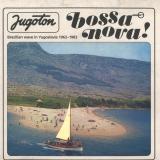
Rich musical history of Yugoslavia reveals a long-lasting love for the music of Latin America.
Entwined in Afro-Cuban rhythms, ballrooms were shakin', swayin' and swingin', gathering musicians who were heavily into jazz bands and orchestras, most notably in Ljubljana, Zagreb, and Belgrade. Jazz could be heard on the streets of Split way back in 1919 when dancing became a symbol of freedom. Radio was the most loved household item, newest sheet music was in demand and collecting records was hip like today. In the aftermath of Second World War, jazz went underground but little by little, things changed and Ella, Satchmo, Dizzy and Miles came to visit, among others. Music festivals shaped the music for entertainment and variety of popular styles showed influences from all over the world. In the early sixties, one particular rhythm crashed on the coast of the Adriatic Sea: the rhythm of bossa nova!
In the whirlwind of various musical styles, Latin American music still played important part of the scene in the early sixties Yugoslavia. Beguine, tango, rhumba, samba, calypso, mambo and cha-cha-cha all found their place on the festivals inspired by famous Sanremo, festival of Italian popular song that largely shaped the musical taste of Europe. It was the era of instrumental rock, R & B and rock'n'roll - sounds of "imperialist America" now played freely on imported and hand-made electric guitars. While dancing halls had been turning into concert venues, bossa nova has come! Eydie Gorme with Blame It on the Bossa Nova and Paul Anka with Eso Besso (That Kiss!) tried to make us learn some new dance moves but it was Joao Gilberto's gentle singing and his new way of playing samba songs, along with Tom Jobim's modern dissonant harmonies and poetry of Vinicius de Moraes that created the magic. When American alto saxophonist and flautist Bud Shank visited Zagreb and Ljubljana in 1963 (with Boško Petrović in his quintet) "it was the first time we heard bossa nova!" remembers Stjepan Braco Fučkar. Jugoton, the biggest record company in Yugoslavia, released 4-track EP Bossa Nova by Bogdan Dimitrijević and his ensemble that same year! While not being fully accepted or understood completely, the archives of Jugoton reveal to us various interpretations of this new trend from their vast catalogue.
out of Stock
Last delivered 8 months ago available to reorder, subject to availability
At a time when Hawaiians were reclaiming their language and most new music was written in Hawaiian, Teresa boldly revisited the largely forgotten hapa-haole style - Hawaiian-themed songs in English that once dominated American radio in the early 20th century.
From her earliest work in the 1980s, she treated the genre as serious art, not nostalgia, reviving classics like “My Little Grass Shack,” “Sadie, The South Seas Lady,” and her own modern hit “Uwehe, ‘Ami, and Slide,” which won Song of the Year at the 1988 Na Hoku Hanohano Awards. Her voice brought sophistication and sensuality to songs once considered dated, giving them new life.
With Tropic Rhapsody (2008), created alongside arranger Kit Ebersbach, she perfected that vision. Blending Hawaiian warmth with jazz and Latin rhythms, the album moved gracefully from the shimmering “Lei of Stars” to the lively “Pagan Love Song” and the tender closing of “Aloha ‘Oe.”
In an era dominated by Hawaiian-language releases, Teresa’s decision to make a primarily English-language album was both confident and heartfelt. Tropic Rhapsody remains a modern classic - elegant, adventurous, and unmistakably Hawaiian, just like Teresa herself.
'Triple Pocket Napkin Fold' brings together the work of 12 artists, poets, musicians and theatre makers, facilitated by GHOST, a DIY nomadic platform working between Rotterdam, NL, and Marseille, FR.
out of Stock
Last delivered 8 months ago available to reorder, subject to availability
‘Butter’ is 10-tracks of intricately crafted modern soul from CHERISE and testament to CHERISE’s ability for creating gorgeous, honeyed Wonky Soul that’s the perfect soundtrack for chilled evenings in company of Steve Lacy, Moses Sumney, and Tierra Whack.
Showcasing CHERISE’s passion for collaboration, the project features rising artists Frida Touray and Meduulla and follows CHERISE’s acclaimed debut album ‘Calling’ - a sonic homage to her elders who journeyed to England as part of the Windrush generation.
A truly multi-faceted artist, CHERISE is fast proving herself to be one of the most fiercely talented young musicians in the UK. Her effortless, irresistible vocals, alongside her honest, soulful songwriting manage to be simultaneously both contemporary and timeless. In everything, she’s guided by knowing who she came from, who she is, and what she has to say. Now with ‘Butter’, CHERISE embraces her impulses and redefines what it means to be a modern day Soul artist.
out of Stock
Last delivered 8 months ago available to reorder, subject to availability
Vor 25 Jahren: Today's Empires, Tomorrow's Ashes ist das einflussreiche dritte Studioalbum der kanadischen Punkband Propagandhi, das 2001 auf ihrem Label G7 Welcoming Committee Records (und außerhalb Kanadas bei Fat Wreck Chords) veröffentlicht wurde. Es zeichnet sich durch schnellen, politisch aufgeladenen, metallischen Punk mit kraftvollen Texten und Riffs aus und wurde 2021 zum 20-jährigen Jubiläum überarbeitet (Remaster, neuer Mix). Seit 2021 als CD erhältlich, jetzt wieder auf schwarzem und farbigem Vinyl. Eine der besten politischen Punkbands seit den 90ern! 14 Tracks (plus 4 Bonustracks auf CD) mit nachhallenden Donner auf einem umwerfenden Album! Wissen ist Macht. Seid bereit.
Mighty Joseph is the combination of emcees Vast Aire (Cannibal Ox) with his long-time rhyme ally Karniege. The duo's sole album, Empire State (2008) was released during the tail-end of the last great non-commercial Hip-Hop period.
Never released on vinyl before, the album will be available soon on a double LP edition.
Rooted in the concrete streets but lyrically abstract, features and beats are provided by equal musical foils including Madlib, Camu Tao, Murs, J-Zone, Poison Pen and Vordul Mega (Cannibal Ox) among others.
Fan and critical attention were positive with All Hip Hop summing the album as "solid post-millennium product that bridges the gap between gritty street tales and a paranoid view of the future."
Plug One Magazine added that "Empire State" "unravels a unique perspective, documenting not only much personal change between the two emcees but also the changes in the streets of New York City. From poverty, to the September 11 attacks, to the abuse of Hip Hop culture in general, "Empire State" stands strong as a snapshot of the city."
XL Recordings is proud to mark the 10th anniversary of Archy Marshall’s (aka King Krule) A New Place 2 Drown with the release of a newly remastered instrumental edition.
Originally released on 10 December 2015, A New Place 2 Drown remains a singular entry in the Archy Marshall catalogue. Known to many for his work as King Krule, Marshall released A New Place 2 Drown under his own name, highlighting a different facet of his creative identity. An atmospheric blend of submerged beats, woozy textures, and diaristic storytelling, the project earned widespread acclaim upon release, including Pitchfork’s Best New Music.
Developed in parallel with a visual world shaped with his brother and longtime collaborator Jack Marshall, the quietly influential project stands as a multidisciplinary love letter to their home of South London, originally released alongside a Will Robson-Scott–directed short film and a book of artworks, photography, and poetry by the Marshall brothers.
The 2025 instrumental edition offers a newly illuminated perspective on the record’s sonic core, drawing fresh attention to the production craft that underpins the project. By stripping the songs back to their foundations, the release highlights the intricate textures, rhythmic detail, and atmospheric depth that have helped A New Place 2 Drown grow into a cult favourite over the past decade.
“A New Place 2 Drown evokes a septic world filled with flickering halogen bulbs, sticky synth keys, and corroded outputs. Marshall has made tremendous strides as a producer, gorgeously reproducing the gloom and loneliness of early '90s hip-hop and finding a way to integrate it into his own style.” - PITCHFORK
Mandrake Handshake announce new remix version of lead single Hypersonic SuperAsterid from W.H.Lung's Tom Sharkett released 24th November and the Special Limited Eco- Green Vinyl Edition of their critically acclaimed debut LP 'Earth- Sized Worlds', set for release 12th December via cult indie label Tip Top Recordings The concept tying together every last note and lyric of 'Earth- Sized Worlds' - the debut album from the London/ Oxford self- dubbed 'Flowerkraut' collective Mandrake Handshake - is an awfully simple one: 'Welcome to Space Beach' .Varying anywhere between 7-10 members - including a dedicated, flamboyant tambourine shaker - their pristine, multi-limbed spectacle of a live show has journeyed up and down the UK and EU in recent times. With multiple headline tours to their name, including a sold- out show at London's iconic 100 Club earlier this year, the group have already ticked off slots at the likes of Wide Awake, Green Man and Manchester Psych Fest, as well as shows with psych-figureheads W.H Lung, Pale Blue Eyes, Triptides and Sugar Candy Mountain, and Del Amitri as their profile soars.
Flickering in ultraviolet, there is an elusive place where blue pill meets red, ups become downs, and day merges with night. Those liminal spaces where anything is possible is where you’ll find Nightbus and their hypnotic debut album Passenger. Doom, uncertainty, and opportunity lurk in the shadowy corners of their murky existence with stops at disassociation, co-dependency, and addiction before reaching its final destination - a glimmer of hope.
The in-between of Nightbus’ own Gotham lies where Manchester’s city pulse meets Stockport’s outer realm. An audio-visual entity formed among a musical family of friends, freaks, and foes in messy mills and after hours on dancefloors alike, their sound bleeds from tension where collective creative forces are bound together and collide with the fallout of being torn apart. Before even playing a show, their So Young released single ‘Mirrors’ – a knowing nod of respect to some well-known gloomy Northerners - may have made old school indie heads shimmy at shows in Salford’s The White Hotel but also signalled the duo’s knack for offering listeners a Bandersnatch approach to hitchhiking their own personal Nightbus in whatever direction they choose to take. “Everyone can have their moment with our songs; the music is our response to who we are as young people, living in the city full of this energy right now,” they say.
Whilst reverb hefty melodies and dread-filled loops embody isolation from writing at each of their home studio set-ups, magic happens in the ether across 90s trip-hop, indie sleaze and electronica; Jake’s production layers Olive’s pop sentimentality with drums and samples whilst tales of a cast of faceless characters place Olive as puppet master; her severed self’s perspective manipulating their stringed limbs at arm’s length to see how their stories play out when scenes reflecting her own lie close to the bone. “It’s a bit fucked; like having this out of body experience with a made-up movie running through my head,” she says. “As I write I can see they’re all from a similar world, but they allow me to explore different feelings without giving away part of myself.”
Recorded at The Nave in Leeds with producer-engineer Alex Greaves (Heavy Lungs, Working Men’s Club), surprise and danger lies in every crevice. Brooding whispers turn to chants on 6-minute opus ‘Host.’ Improvised when performed live, its immersive shift in tempo leads to hefty dub courtesy of Jake’s pedals. Even then, you won’t know shit’s hit the fan until its mid-point reveal when ominous bass blasts a thunderous soundtrack as its protagonist defiantly walks away after committing the perfect crime. “It makes you wait, and more songs should have sirens,” Olive grins.
Leaning deeper into alter-egos via the video game-psychological horror of a Silent Hill dystopia, the band’s Fight Club moment ‘Angles Mortz’ turns its literal translation of death angles on its head as it reflects upon kink and internalised shame reincarnated as pride. Elsewhere the ice cool ‘Landslide’ is a Requiem for a Dream about the addiction of being in a band; ‘The Void’ explores co-dependency and estranged relationships; and carefully selected samples revive house track ‘Just A Kid’ from the band’s early incarnation. Passenger’s every direction is to face challenges head on. “That is what’s so great about horror; you can see through predictable patterns so when the unexpected occurs it's more realistic and uncomfortable… I want to own the dark stuff!”
As for Passenger’s first single, the pulsating ‘Ascension’ is a spiralling deep dive into death, suicide, and legacy around who or what we leave behind. A noughties club banger by way of NYC beats - ergonomically designed for those who like to stay out a little too often and too late - it throbs like a house party’s partition wall as the literal levelling up undergoes a neon transformation; blue glitching to pink, diffusing the white construct of the Nightbus Matrix. “It really does feel like the end of something and was purposely written that way,” they say, “the ascension is like a firework going off!”
With wheels in motion, Nightbus has become a movement surpassing sonic realms. Between shows from Porto to Brighton taking in The Great Escape, Rotterdam’s Left Of The Dial and Paris’ Supersonic; DJing; remixing; guesting (BDRMM’s Microtonic album); and even enlisting talented like-minds to craft a 3-part queer coming-of-age music video series which ties in with a new ‘hyperpop’ phase in the evolution of their popular Nightbus Soundsystem club night, heads are now being turned from sports brands to high-end fashion designers. “There are things we can’t reveal just yet,” tells Olive, “but we’re excited about the direction this beast we’ve created is heading.” As the album philosophises and asks one ultimate question; what does it truly mean to be ‘Passenger’? Nightbus may not claim to offer a definitive answer, but it might make you feel a bit better about those demons.
‘Pilot’ is the debut album from London quintet Miniseries. Channelling the epic sweep of TV themes and movie soundtracks into resplendent space rock they explore themes of youth and ageing, heartbreak and paranoia, euphoria and existential dread.
Songwriter Doug Morch (Longview) had been working on largely acoustic folk songs when he met Angela Gannon (The Magic Numbers) at Glastonbury 2017. Romance and musical collaboration ensued. The band coalesced in the hallowed environs of Farringdon's The Betsey Trotwood pub – a musical nexus where burgeoning indie and Americana scenes collide – where they met fellow songwriter and guitarist Dermot Watson (from Brighton's The Dials) and drummer Danny Abbasi and were joined by Doug's former bandmate Aidan Banks on bass. When they came together, their indie folk mutated into motorik art rock, with their first single being an eight-minute jam called "Road".
When it came to capturing their sound, the band reached for maverick musician and producer Sean Read. They recorded tracks at Read's Famous Times studio in Clapton, London, as well as at Edwyn Collins' Clashnarrow in Helmsdale, Scotland – one of the world's most breathtaking and idiosyncratic studio locations, adding unquantifiable magic to the proceedings.
For the closing track "May You Always", they headed to another studio imbued with tangible inspiration: Blueprint Studio in Salford with producer Craig Potter (Elbow) at the helm. For the song, Dermot drew cinematic inspiration from the Withnail & I line "I'll never play The Dane", the song is about realising that the things you aspired to in youth will never come to pass and being at peace with that realisation.
The recurring themes of youth and ageing are apparent in the resplendent lead track ‘You're Gold’ – a heartfelt call for young people to reject materialism and exploitative influencer culture in search of life's deeper meaning, with stylistic nods to The Pixies and early Stereolab.
On the opposite end of the spectrum, "Sepia" explores old age and fading memories through dementia, where the ending descends into chaos like a fragmenting mind. Elements of "Sepia" are foreshadowed in the album's opening track, the instrumental "Pilot Theme", which pays homage to TV theme music, invoking spy thrillers or perhaps something otherworldly from science fiction.
“Offcumdens” is a Calder Valley, Yorkshire term for people who live in the area but come from somewhere else. Hailing from Bury, Lancashire, Morch wrote the song while living in Hebden Bridge (and watching too much Happy Valley) and found himself being an offcumden. It’s a pop at the kind of local nativism which breeds intolerance and an illustration of the sinister rise of wider political populism.
Miniseries' Pilot is just the beginning of the story. Enthralling and atmospheric, the London quintet have created something familiar yet timeless. As singer Doug Morch says, "It's the Miniseries Pilot episode. Like the TV episode a studio makes to test whether it's viable.” In the age of streaming and box-sets, this is an album to truly binge on. We can’t wait to hear what happens next.
Die Welt wird immer verrückter. Gut, dass es Musik gibt, die uns in eine positive, optimistische Welt gleiten lässt. SCHILLER präsentiert mit dem neuen Studioalbum "Euphoria" ein kraftvolles musikalisches Gegengewicht zur Unberechenbarkeit unserer Zeit: voller Energie, positiver Schwingungen und cineastischer Klangwelten. Musik zum Abschalten, Auftanken - und zum Eintauchen in eine hypnotische Atmosphäre.
Die limitierte Color Vinyl im Gatefold beinhaltet das "Euphoria"-Album auf 2 audiophilen 180g Vinyls in den Farben Neonpink und Carouso - jeweils in einer gepolsterten Innentasche verpackt
"Euphoria" ist ein mitreißendes Klangabenteuer - episch, bildgewaltig und berührend.
About SCHILLER
Hinter SCHILLER steht der deutsche Elektronik-Künstler Christopher von Deylen, der seit über zwei Jahrzehnten internationale Maßstäbe in der elektronischen Musik setzt. Seine Werke verbinden elektronische Sounds mit orchestralen Elementen, packenden Rhythmen und atmosphärischer Tiefe. SCHILLER ist weltweit bekannt für ausverkaufte Live-Tourneen, hohe Chartplatzierungen und musikalische Kooperationen mit internationalen Top-Künstlern.
Mit zahlreichen Gold- und Platinauszeichnungen sowie unzähligen Nummer-1-Erfolgen gilt SCHILLER als einer der erfolgreichsten deutschen Elektronik-Acts - und als musikalischer Grenzgänger zwischen Pop, Ambient, Klassik und Klangkunst.
out of Stock
Last delivered 4 months ago available to reorder, subject to availability
With their 12th studio album, "Set The Dark On Fire," and their return to the Steamhammer/SPV label, Edenbridge explores new soundscapes without abandoning their tried-and-tested trademarks. This is primarily due to a significantly heavier basic sound, which harmonizes perfectly with the lyrical and visual direction of the Austrian quintet around singer Sabine Edelsbacher and composer/guitarist/keyboardist Lanvall.
Graues Vinyl, limitiert auf 200 Exemplare. Huntdown ist eine Hardcore-Band aus Paris, gegründet im Jahr 2022. Die Mitglieder sind erfahrene Musiker der französischen Szene und bringen Einflüsse von Metallic Hardcore bis Thrash ein. Ihr Sound ist roh, direkt und kompromisslos - Hardcore ohne Schnörkel. 2023 erschien das Demo First Strike, kurz darauf folgte die EP Chasing Demons, aufgenommen im UFO Studio und gemastert von Chris "Zeuss" Harris. Mit wuchtigen Riffs, Breakdowns und intensiver Live-Energie verkörpert Huntdown die Kraft des Hardcore in seiner reinsten Form.
OSI's classic album Fire Make Thunder reissued on vinyl for the first time in January Fire Make Thunder is the fourth and final studio album by American progressive rock band OSI. Originally released by Metal Blade Records in 2012, this cult album is now reissued on vinyl with new limited colorways on January 16th via Svart Records. OSI (Office of Strategic Influence) began as a supergroup pairing between Fates Warning guitarist Jim Matheos and Chroma Key / ex-Dream Theater keyboardist Kevin Moore in 2002. Known for their extremely solid songwriting, critically acclaimed albums, and for having a unique sound of their own, OSI truly perfected the formula of progressive metal- and rock. Fire Make Thunder is a grand, imaginative album that has been stated as the band's greatest work. OSI left a mark on not only progressive metal, but many genres on this album. Filled with stirring and pleasing sounds, Fire Make Thunder shows the exquisite songwriting duo of Moore and Matheos excelling themselves.
OSI's classic album Fire Make Thunder reissued on vinyl for the first time in January Fire Make Thunder is the fourth and final studio album by American progressive rock band OSI. Originally released by Metal Blade Records in 2012, this cult album is now reissued on vinyl with new limited colorways on January 16th via Svart Records. OSI (Office of Strategic Influence) began as a supergroup pairing between Fates Warning guitarist Jim Matheos and Chroma Key / ex-Dream Theater keyboardist Kevin Moore in 2002. Known for their extremely solid songwriting, critically acclaimed albums, and for having a unique sound of their own, OSI truly perfected the formula of progressive metal- and rock. Fire Make Thunder is a grand, imaginative album that has been stated as the band's greatest work. OSI left a mark on not only progressive metal, but many genres on this album. Filled with stirring and pleasing sounds, Fire Make Thunder shows the exquisite songwriting duo of Moore and Matheos excelling themselves.
MidnightRoba is the solo project of vocalist, songwriter and producer Roba El-Essawy. The voice of Attica Blues (Mo Wax 1997, Sony 2000), Raise A Symphony is MidnightRoba's second solo album. Her first album, Golden Seams, very much rooted in jazz, received support, airplay and features from DJs such as Gilles Peterson (BBC Radio 6), Tony Minvielle and China Moses (Jazz FM), Robert Elms (BBC London Live) and Kevin Le Gendre on J to Z (BBC Radio 3). Single releases from this second album have been played by Gilles Peterson (WorldWideFM & BBC Radio 6), Kate Hutchinson (Soho Radio), Marshmello (NTS), Rob Luis (Tru Thoughts), Kev Beadle, Patrick Steele, DJ Amazon, and more.
'Raise A Symphony' is music of our time. A 15-track electronic offering, it comments on topics ranging from colonialism to complicity of silence; from compromised politicians to the power of protest and gratitude to those on the frontlines of change; from displacement and sea migration to the desire to protect our loved ones and the need for kindness; to have faith in the future and the importance of searching for joy in the meantime. The self-produced album 'Raise A Symphony' sees contributions from Saul Williams, Deschanel Gordon, Michael King and Tony Kofi, amongst others. The album title takes it's name from Martin Luther King's 'I Have A Dream' speech where King calls for the nation to rise to gather together and form a 'beautiful symphony of brotherhood'.
"..in Raise A Symphony, Midnight Roba has transmuted talent into something more powerful, where bridges built from her exquisite, unique harmonies, soaring songs and percussive productions allow competing emotions to co-exist and feed into each other. This album itself is a form of community; voices in unison, reaching outwards and offering restoration and upliftment throughout this remarkable work of love and fury." Emma Warren
Leave it to Langhorne Slim - a pioneer of raw, rule-breaking Americana for more than two decades - to reach far beyond the genre he helped inspire.
The Dreamin' Kind finds the Nashville transplant strapping on an electric guitar and embracing his longtime love of larger-than-life rock & roll. With it's chugging power chords, 1970s-sized riffs, and richly layered arrangements, The Dreamin' Kind is fueled not only by sheer amplification, but by the soul-baring songwriting that's become Slim's calling card, too. Tucked between those anthems are acoustic-driven songs that skirt the outer orbits of folk music, from the bare-boned heartbreak of ''Stealin' Time'' to the organic, orchestral sweep of ''Dance On Thru.'' The result is the more explorative and expansive album of Slim's career: a record made for rock clubs, campfires, and garages alike, produced by Greta Van Fleet's Sam Kiszka, and anchored by a lifelong desire to break down new walls.
''It felt like I was blowing some old shit up so I could plant some new flowers,'' Slim says of the creation process. ''I love acoustic music. I love folk music. But those aren't my only loves. Rock & roll has always tickled the same place in my soul as great singer-songwriter music, and I wanted to explore those influences. Raw songs that make you feel something: that's the stuff I'm after.''
„Weihnachten ist wirklich die schönste Zeit des Jahres“! „Im Laufe der Jahre habe ich viele originelle Weihnachtslieder geschrieben und ich hatte das Gefühl, dass es jetzt an der Zeit ist, die besten davon auf einem Album zu bündeln. Und hier ist es: Ein wundervolles Weihnachtsalbum mit einer Vielzahl von Liedern, von denen jedes ein wesentliches Element der Weihnachtsstimmung enthält, jetzt in einer Deluxe-Edition. 15 Songs, die ich sorgfältig ausgewählt habe. Ich habe 9 der 11 Originale mit den Amerikanern Jeff Franzel und Maria Christensen geschrieben und die anderen 2 Originalsongs mit den niederländischen Songwritern Simon Gitsels und Karel Schepers. Die Cover auf diesem Album sind Songs, die ich so sehr liebe, dass ich ihnen meine eigene Note geben und ihnen einen Platz auf dem Album geben wollte.“ Vier erfolgreiche Studioalben, mehreren Theatertourneen in den Niederlanden und erste internationale Shows, die allesamt ausverkauft waren. Es folgten bereits zahlreiche Auszeichnungen, darunter eine Goldene Schallplatte und bereits zweimal der renommierte Edison Jazz Award (der Holländische Grammy). Keine alltägliche Errungenschaft im Jazzbereich oder wie „Crooner“ Dennis es lieber nennt, im Swing, einem Stil, der für ihn unvergleichlich ist.
With "sYn," Soulbound present their most uncompromising work to date. The fourth studio album from the melodic industrial metal band strikes a dark, direct tone, remaining both catchy and unsettling.
Katie Schecter is for fans of Sharon Van Etten, Caroline Rose, and Amy Winehouse. Raised in NYC, it feels as if Katie Schecter time traveled to present day from a chicer and more sonically cool yesteryear of the future. She effortlessly blends the half-cool, half-kitsch of her home in Nashville that is neither new nor timeless. Deeply soulful and introspective indie rock vibes await the listener when you drop the needle on this LP. Produced with love and care by Nick Bockrath of Cage The Elephant with an incredible set of musicians (Homer Stenweiss, Leon Michels to name a few!) this LP is one that reveals more of itself the more you spin it.
Baro Sura’s Today & Always is a cinematic album told in three parts; it’s cosmic, cyclical, and impossibly human. As Baro writes, “Love is the universe… it is not linear… it can be lonely… it is recursive & contradictory yet eternal.” This album moves through devotion, doubt, persistence, and quiet reconciliation with each track as a signpost in an astrological journey. “Yours Now, Yours Next” opens the project with a Taurus-like groundedness, capturing the paradox of steadfastness and emotional weight. “i Still Care” teeters like Libra’s scales, a reflection on indecision, contradiction, and the heart’s refusal to let go. Blending spiritual storytelling with an ambient soul, Baro invites listeners into a world of intentional vulnerability where silence speaks and love echoes, today & always.
Wiccans only make noise when they feel like it. A band that’s been uttered in reverence for nearly two decades with only a handful of releases, each one a stand-alone classic.
You see, it’s hard to pinpoint a band that actually has the equal influences of American psychedelia and hard rock all anchored in the glorious benevolence of American Hardcore. A tonne of bands dance around and flirt with each but it rarely lands in the sweet spot. They’re not trying to fit some supposed perfect space and that’s the very point so many others miss.
Wiccans are creating the space. Breaking rules and allowing a bit of breadth to what is often a claustrophobic style of music. This might sound scary as everyone knows that the more Hardcore evolves the worse it is - at least on record. The formula that Wiccans are playing with on Phase IV should scare you. It’s totally potent with odd songwriting, intensely creative and varied guitar work and completely pissed vocals. Phase IV does whatever the fuck it wants and passes the bar that only Wiccans could have set for themselves. All of this is propelled by a far stronger production quality than previous efforts and instead of having that expose some fault line it’s secured it as a modern classic.
It’s the kind of shit that will shake the dandruff from the beard of a Third Man collector but will also make that guy stop going to DIY gigs because they’re “too rough” or whatever. I’m just sitting here wondering if this is maybe what might have happened if Poison Idea wrote Hidden World. There’s always space for a carbon copy Negative Approach destroying someones basement and they usually put out a record that is clearly brilliant but fuck me if I can’t help but yawn.
Am I getting old or is Hardcore painting by numbers? In a slough of legitimately top tier Hardcore Punk releases, this one actually sounds like something truly special.
Auf dem vierten Album von Chrystia Cabral als SPELLLING verwandelt die Künstlerin aus der Bay Area ihr gefeiertes Avant-Pop-Projekt in einen Spiegel. Cabrals Texte auf „Portrait of My Heart“ befassen sich mit Liebe, Intimität, Angst und Entfremdung und tauschen den allegorischen Ansatz vieler ihrer früheren Werke gegen einen Blick in ihr menschliches Herz. Die thematische Unverblümtheit des Albums spiegelt sich in den Arrangements wider und macht es zum bisher schärfsten und direktesten SPELLLING-Album. Vom düsteren Minimalismus ihrer frühesten Musik über den üppig orchestrierten Prog-Pop von „The Turning Wheel“ aus dem Jahr 2021 bis hin zu diesem neuen energiegeladenen Ausdruck ihres kreativen Geistes hat Cabral immer wieder bewiesen, dass SPELLLING alles sein kann, was sie braucht. Der Titeltrack mit seinem treibenden Drum-Groove und dem hymnischen Refrain von „I don't belong here“ ist die stärkste Verkörperung der Hinwendung des Albums zu emotionaler Direktheit. Sobald sich die Hauptmelodie herauskristallisiert hatte, nutzte Cabral den Song als Werkzeug, um ihre Ängste als Performerin zu verarbeiten, und entschied sich für eine straffere, rockigere Komposition. Diese Transformation spiegelt die allgemeine Verlagerung des Albums in Richtung Energie und Unmittelbarkeit wider, die von der Kernband Wyatt Overson (Gitarre), Patrick Shelley (Schlagzeug) und Giulio Xavier Cetto (Bass) vorangetrieben wird, deren Zusammenarbeit neue Konturen des SPELLLING-Sounds offenbart. Cabral schreibt und demontiert immer noch alleine, aber die Präsentation der Songs für „Portrait of My Heart“ vor ihren Bandkollegen hat ihr geholfen, die späteren lebendigen, organischen Formen zu entdecken. Das gilt auch für die Zusammenarbeit mit einem Produzententrio: Drew Vandenberg, der Tontechniker von „The Turning Wheel“, Rob Bisel, der mit SZA zusammenarbeitet, und Psymun, der Produzent von Yves Tumor. Wichtige Gastbeiträge prägen das Album zusätzlich. Chaz Bear (Toro y Moi) liefert SPELLLINGs erstes Duett auf „Mount Analogue“, Turnstile-Gitarrist Pat McCrory verwandelt Cabrals ursprüngliches Piano-Demo für „Alibi“ in die knackige, rifflastige Version, die auf dem Album zu hören ist, während Braxton Marcellous von Zulu „Drain“ seine schlammige Wucht verleiht. Diese Teile fügen sich nicht nur nahtlos in das Album ein, sie fühlen sich wie ein integraler Bestandteil seines Universums an. Letztendlich ist Portrait of My Heart jedoch niemandes Platte, sondern die von Cabral. Sie zieht furchtlos den Vorhang über Teile ihrer selbst zurück, die sie in SPELLLING noch nie gezeigt hat - ihre Gefühle als Außenseiterin, ihre übermäßig vorsichtige Art, die Art und Weise, wie sie sich rücksichtslos in intime Beziehungen stürzen kann, um sie dann genauso schnell wieder abzubrechen. „Es ist wie ein offenes Tagebuch all dieser Empfindungen“, sagt sie.
GAMM is proud to welcome New Zealand born, but these days based in Berlin, Philippa to our camp.
Over the last years, Philippa has been releasing amazing, warm, soulful, and highly distinctive dance music on labels like Slothboogie and Freerange as well as building her DJ roster. For her premier GAMM release,'Cloud Walking EP', Philippa has three amazing tracks that all mix up samples, live musicality, and vocals. If you put Moodymann and Henrik Schwarz in a blender somewhere in the Balearic Islands, you're kinda close. Either way, it's deep, organic, and almost kinda orchestral at some points. If you ask us, we would simply call it dance MUSIC.
Opening the EP is the title track 'Cloud Walking' which is a deep Fender Rhodes affair with vocals inspired by Aretha's Day Dreaming classic. Moving on, on 'Hear Me' Philippa shows off her musical piano skills with a lush and atmospheric deep house jam. On 'Return To The Red Kite' we follow a similar theme but with big warm orchestral strings, spoken words, and live guitars. Again, very Balearic yet very soulful and incredibly pleasant to your ears :)
out of Stock
Last delivered 56 days ago available to reorder, subject to availability
"Ensomheden Vi Deler" ("The Loneliness We Share") is the result of a dialogue between the collages and the music of øjeRum, initiated by IIKKI, between December 2024 and July 2025.
øjeRum is Copenhagen based musician and collage artist Paw Grabowski.
With his collages, the distinctive feature of øjeRum's works is their ability to combine different historical and artistic periods, such as ancient sculpture, medieval frescoes, classical painting and photography, and to make them interact with one another. øjeRum is also renowned for his work as a musician, where he stands out for his surreal, mysterious and poetic universe. His music and art are closely linked. These two sides of the artist's work are constantly intertwined.
In his øjeRum guise, he plucks and strums his treated acoustic instruments, sounding at times like church bells, at times like angelic harp, at time like drones, and suspends the listener in the magic of his melodies. With a deep back-catalogue of releases since 2014 - spanning labels such as eilean rec., Room40, Line, Opal Tapes and many more - he continues exploring his minimal, textural and deeply personal style of ambient music.
The collage and music project "Ensomheden Vi Deler" ("The Loneliness We Share") is an exploration of loneliness, closeness and distance. A meditation on the fragile architectures and hidden shapes of human connection. This is his second release on IIKKI.
Fine Art Book, Ltd. to 500 copies:
Hand numbered & hand stamped / first edition and only edition (no re-print) / hardcover book (15 cm x 21 cm) on Wibalin Natural Cotton White / 80 pages, 35 collages printed on Freelife Vellum 120g/m2 / Swiss Binding / Coloured edges with neon green pantone / Neon Green pantone on front and back cover (logo, slot and circle) / Sticker on front cover.
out of Stock
Last delivered 8 months ago available to reorder, subject to availability
blickwinkel warmly welcomes Brussels-based composer Roxane Métayer to the label with her new album »Vies Sylvestres«, out on November 21 on vinyl and digital formats. The album was conceived and developed during performances and travels in Japan in 2023, where its sounds and ideas gradually came together.
»Vies Sylvestres« continues the direction of her previous release on Kraak, where Métayer built imagined narratives unfolding in forests or urban spaces inhabited by animal and plant characters. On this new album, however, the presence of these elements becomes more explicit and central. Field recordings are not solely used as backdrops but become compositions, complementing the instrumental works and expanding the album’s narrative into the realm of lived sound and place.
The listener encounters recordings of crickets and birds but we're also witnessing a scenery at a Buddhist temple. As such, combined with violin, electronics, and voice, Métayer explores the relationship between the natural environment and human culture. Her work bridges both worlds, showing how sound can connect different spaces and contexts.
out of Stock
Last delivered 9 months ago available to reorder, subject to availability
Editions Mego presents The Psychologist, the sophomore album by the Istanbul born and raised, Berlin based electronic music composer and sound artist Hüma Utku.
As the title suggests, The Psychologist, is a series of sonic essays based around themes of psychological phenomena and can be read as a musical enquiry into the human condition. With Utku’s background as a graduate of Psychology and her current practice as a conceptual music composer we see the two main threads in her professional career intertwine on this unique and ambitious release.
Including recordings of Buchla 200 from Utku’s Elektronmusikstudion residency in October 2020,The Psychologist is a genre aversive work that embodies elements of synthesiser music, electroacoustic, experimental techno, industrial, modern composition and spoken word. Piano, string compositions and vocals hold weight throughout a number of pieces providing a dramatic acoustic edge to the psychological explorations contained within.
The foreboding mood of much of this release is the product of investigation that lends the unsettling theme of anticipatory grief to the mood of the tracks Light of All Lights and Continuing Bonds. Islands of Consciousness refers to Jungian metaphor for consciousness whilst the unnerving Rüya twists around dream analysis in Gestalt psychology. Fuel For The Flames proceeds as a buzzing and swirling representation of alchemy and psychological symbolism. Dissolution of I is haunted by a strange sensation of dissociation whilst defense mechanisms support the sublime Sublimation. The bright shapes of Chironian Wound represent archetypes and analytical psychology whilst the fried soundscapes and rhythms of Ataxia encapture neurological states.
The results unravel with both the clockwork rhythms of the human body and the unpredictable nature of the psyche, the pieces follow arrhythmic patterns in a harmonious way. It tells the raw and intimate story of the human experience with a new work whereby the predictable operates in parallel with the unexpected and like human experience itself, is dark and complex.
Composed, Written & Produced by Hüma Utku
Piano by Hüma Utku
Vocals by Hüma Utku
Double Bass performed by Adam Pultz Melbye
Cello performed by Florina Speth (aka Schloss Mirabell)
Violin performed by Marta Forsberg
Cover photography & art by Gözde Güngör
Design by Eloise Leigh
out of Stock
Last delivered 9 months ago available to reorder, subject to availability
Reissue of the 3rd full length by Thomas Bücker aka Bersarin Quartett.
Melancholia. Longing. It is difficult to speak about these moods or states of the mind without invoking stereotypes. In ancient medicine, melancholia was considered to be one of the four temperaments, matching the four humours. In fact, melancholia, meaning "black bile" in Ancient Greek, was thought to be caused by an excess of this very body substance. By contrast, in more modern interpretations, literates and Freudians relate many variations of longing to the one primordial longing, the desire to return to one's mother's womb. In this context, the womb is considered to be the place of absolute comfort and cosiness, of total bliss. Thus it should not be surprising that to many of us melancholia is a mood which we like to invoke and to maintain, we like to envelop ourselves in it like in a warm blanket. Our brain and our sensory systems appear to be made for perceiving and emotionally responding to music in a very immediate fashion. Consequently music is the obvious drug for all of us melancholia-addicts. However, there is a thin line between melancholia and sadness, and music which is meant to be melancholic too often crosses this line by far. Only very few artists succeed in avoiding this crossing, and in creating music which is melancholia in its most pure form. It is safe to say that BERSARIN QUARTETT - the electronic music project of Thomas Bücker - is one of them.
After his debut in 2008 and the sophomore "II" in 2012 - album of the month in many magazines and in numerous "Best of the year" lists - Bücker in 2015 returned with his third BERSARIN QUARTETT album "III". Much like his two predecessors, III is a pure paradox. It is the creation of a perfectionist, an adamant control freak. Every element, be it a note, an ambience layer, a string arrangement, a field recording, a baseline, a vocal (Clara Hill on Track 11) or a beat, is meticulously modified and then assigned its place in Bücker's vast but still minimalistic arrangements. Thus, superficially Bücker's pieces seem to radiate a certain mechanical bleakness. However, there is a unique reduced warmth and liveliness emerging from these stainless compositions and transcending them. This transcendence is precisely the point where Bücker ironically looses control over his creations. In contrast to the first two BERSARIN QUARTETT albums, III offers a few darker shades and succeeds even further in narrowing down the arrangements to the absolute essentials without loosing the characteristic grandeur of Bücker's sound. Whereas BERSARIN QUARTETT's debut was merely a description of melancholia in its most pure form, III maybe even goes as far a defining what melancholia really is. It is the only emotion in the vast spectrum of human states of mind which one can bear forever.
out of Stock
Last delivered 9 months ago available to reorder, subject to availability
Peter Rehberg is known for his pioneering electronic work with computer software which over time evolved into a modular set up alongside running MEGO and then Editions Mego labels.
Rehberg was a prolific collaborator, with other musicians and with contemporary dance and theatre productions, most notably with French artist and choreographer, Gisèle Vienne with whom he created a series of soundtracks from Showroomdummies, released under the name DACM in 2002 (Showroomdummies MEGO 056), to Crowd in 2017. A collection of Rehberg’s solo works for Vienne was released in 2008 (Work for GV 2004-2008 EMEGO 092). The outfit KTL, with Stephen O’Malley, was initiated by Gisèle Vienne for her work Kindertotenlieder and subsequently made a series of soundtracks for Vienne’s works branching off into a prolific series of live shows. The work Rehberg did for theatre and performance teased out aspects of his practice one may not have encountered in his own solo work as PITA or that of collaborations with other musicians.
Editions Mego is proud to present a previously unreleased theatre soundtrack made for Icelandic choreographer Margrét Sara Guðjónsdóttir, whom Rehberg had a decade long collaboration with until his untimely passing in 2021. The original composition for Liminal States was created by Rehberg for the performance Pervasive Magnetic Stimuli in 2018 and then revisited as a catalyst for the concepts behind Liminal States. This work is based on an ongoing artistic research conducted by the choreographer into altered states of perception through phenomenological embodiment. It is the last in a trilogy dealing with the notion of larger forces that act on us beyond our conscious mind. The trilogy consists of Pervasive Magnetic Stimuli (2018), Boundless Ominous Fields (2024) and now Liminal States (2024).
Rehberg's score for Liminal States is a vast canvas of spectral ambience at once tangible and unfathomable in its constantly shapeshifting lysergic dread. The results are a psychological journey through the mental effects of sound on space and subsequently the mind. The first part presents cascading waves of shimmering electronics laying the groundwork for the second part where the psychological illusion splinters into all manner of sonic effects taking the listener on a deep mental voyage. If references are witnessed the late period long form hallucinatory works of Coil, such as Time Machines and Constant shallowness leads to evil, are amongst a similar mind message delivered here. Unlike any other release in Rehberg’s output Liminal States is a single long form work which, despite the form, retains Rehberg’s idiosyncratic sound vision.
Guðjónsdóttir and Rehberg’s collaboration blurs that relationship into a greater force which truly enables the theme of liminal states to unfold in a brave new fashion. Rich in timbre and sonic invention this is powerful work easily holding its own outside of the intended performance whilst still complimenting the missions statement entirely. This profound collaboration has the cumulative effect where the concept and soundtrack are one and may be one of the strongest works in the entire Rehberg canon.
out of Stock
Last delivered 9 months ago available to reorder, subject to availability
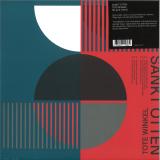
In spring 2022, Sankt Otten released their album “Symmetrie und Wahnsinn”, and now the next record is ready to enlighten our maltreated minds. “Tote Winkel” (Blind spots) is once again part of an album series with a geometric context, both creatively and musically.
Stephan Otten and Oliver Klemm made productive use of 2021, which has been decelerated to the maximum by Corona. For the first time, an external studio was booked (Mühle der Freundschaft, Bad Iburg) and the pool of analog synthesizers and other sound generators there was dusted off. Sankt Otten came up with the master plan to first free the spirit of 50 years of German electronic music trapped in the antiquated keyboards and oscillator housings, then to dismantle it, turn it inside out and reinterpret it. Echoes of music from Düssel- dorf are joined by sounds familiar from the Weserbergland, or mystical, sublime arcs of sound and, of course, the sequences typical of the Berlin School - whether side by side or interwoven. In a departure from the usual way of working, the majority of the tracks were created in the studio and in part from improvisations, which makes “Tote Winkel “ the most organic material we have heard from Sankt Otten to date.
New York-based Rafael Anton Irisarri mastered “Tote Winkel”, as he has done on productions by Biosphere, Ryuichi Sakamoto, Tycho, Terry Riley, Fennesz and many more. As part of the series of graphic covers, this extraordinary die-cut artwork was also designed by Daniel Castrejon. The vinyl version comes in a die-cut cover and colored vinyl, the CD in an elegant cardboard slipcase.
The Osnabrück duo Sankt Otten, founded in 1999, have been releasing on DENOVALI since 2009. “Tote Winkel” is their 14th album of timeless (instrumental) music. The band has dedicated itself to the holy trinity of Krautrock, Ambient and contemporary Elecronics.
out of Stock
Last delivered 9 months ago available to reorder, subject to availability
The vinyl LP at the heart of this éthiopiques 31 tracks 2 to 11 was one of the very last vinyl records ever released in Ethiopia. But above all it represents, we felt, the absolute masterpiece of the Ethiopian Groove – the Swan Song of Swinging Addis. The album leaves a clear idea for posterity of the level of sophistication and mastery that modern Ethiopian music had achieved, before being crushed under the Stalino-military heel of the Derg – as the bloody revolution that was unfolding came to be called.
Ethiopia1976.
The Revolution that broke out in February 1974 rolled on in a ruthless march. The whole of Ethiopian society was utterly stunned. The bouquets of flowers handed joyfully to the first tanks of the coup d'état were to wilt very rapidly. From September 1976 to February 1978, 18 months of Red Terror (the name given by the junta itself) spilled blood throughout the country. This fratricidal conflict took its heaviest toll among students and youth. The shift from feudalism to a cruel and primitive Stalinism left the country's citizens deeply traumatised, and snuffed out any pretence of activism, whatever the sector of society. This ice age was to last for seventeen long years.
ሙሉቀን፡መለሰ Mulukèn Mellèssè Muluqän Mälläsä
It was three tracks by Muluken that served as the opener for éthiopiques-1 more than 25 years ago. Seven more tracks appeared on éthiopiques-3 and 13, all accompanied by The Equators, which was soon to become the Dahlak Band.
The first track, Hédètch alu, also the very first piece that Muluken ever recorded, left audiences both unsettled and amazed. Reflecting the singer's extremely young age (he was just 17 at the time), this angelic voice mystified many, who thought they were in fact listening to a feminine voice. He was not yet 22 when he released his last vinyl record in 1976 with Kaifa Records (KF 39LP), one of the very last to be issued in Ethiopia, before the cassette tape became the dominant medium for music distribution – and before the new revolutionary regime put a stop to all independent musical life, via an unspeakable barrage of prohibitions and other persecutions.
Mulu qèn, literally, “A well filled day”. This tender maternal intention wasn't enough to ward off the cruelty of fate. His mother's premature death drove Muluken to leave his native Godjam, in northeast Ethiopia, to live with an uncle in Addis Ababa. Born Muluken Tamer, he took his uncle's last name – Mèllèssè.
The spelling Muluken appeared in his administrative records. Transcription of Amharic to the Latin alphabet, both in Ethiopia and for scholars, gives rise to controversies and quibbles that can never be neatly settled. French allows for a closer approximation of the original pronunciation, thanks to its battery of accent marks, confusing as they may be to anglophones.
Between rather accommodating administrative record-keepers and the various versions that pop up in interviews given by the artist, Muluken's year of birth oscillates between 1953 and 1955…
1954? One thing is certain: the artist's talent made itself known very early indeed, because he got his start in 1966-67, at the age of 13 or 14. Photos from the period attest to his extreme youth. It's a strange sort of initiation for a very young teenager to become a sensation in the heart of Addis's nightlife at the time, Woubé Bèrèha – the Wilds of Woubé. And what's more, in the club of the Queen of the Night, the Godjamé Assègèdètch Alamrèw herself, the very same that was portrayed by Sebhat Guèbrè-Egziabhér in his novel-memoir Les Nuits d’Addis Abeba2… The legendary female club owner who is remembered to this day by the capital's ageing boomers.
Muluken first tried his hand at the drums, before he grabbed the microphone. He emigrated briefly to the Zula Club, across the street from the old Addis Post Office, one of the ground-breaking bars of the burgeoning musical scene, before joining the Second Police Band in 1968, for around three years. He spent a few months with the short-lived Blue Nile Band founded by saxophonist Besrat Tammènè. As the musical scene grew increasingly successful, and pulled slowly but decisively away from its institutional ties, Muluken released his first 45rpm single in February 1972 (Amha Records AE 440). It was included in two LP Ethiopian Hit Parade compilation albums in September of the same year. All in all, Muluken released eight two-track 45s and the same number of original cassette tapes between February 1972 and 1984, the year that he departed for permanent exile in the USA. After converting to Pentecostalism in 1980, Muluken gradually abandoned all secular musical activity. In 1985, at the end of a concert in Philadelphia, he decided to quit concerts and recording for good. Mèlakè Gèbré, the historic bass player from the Walias band who was playing with him that night, recalls that everything appeared so irredeemably diabolical in Muluken's eyes, that it was to be the end of his contribution to Ethiopian Groove.
The end of the story, the beginning of a legend.
Dahlak Band, forgotten by History
Aside from his personal history and vocal talents, it must be remembered that Muluken Mèllèssè was one of the biggest names in the musical innovations that marked the end of the imperial period. These éthiopiques aim to convince those who are just discovering this hidden gem... As for Ethiopians themselves, they are to this day captivated by this singular and atypical figure in the Abyssinian pop landscape – even though he withdrew from public life some 40 years ago. Incorrigible devotees of poetic twists, of more or less hidden meanings, Ethiopians appreciate above all the care Muluken took in choosing his lyrics and the writers who penned them, such as Feqerte Haylou, Alemtsehay Wodajo and, here, Shewalul Mengistu (1944-1977). Love songs, written by women, a far cry from the conventional drivel that pleases sappy sentimentalists.
Muluken is equally acclaimed for his perfectionism when it came to music, the opposite of the overly casual approach that is all too common. He remained a faithful partner of musicians who came from a lineage that borrowed from several inventive and pioneering bands (Venus, Equators, Dahlak). Amongst them were certain artists who began their musical lives with Nersès Nalbandian at the Haile Sellassie Theatre and who come of age in around 1973 – at just the wrong time, you might say. Among them were the pillars Shimèlis Bèyènè (trumpet), Dawit Yifru (keyboards) and Tilayé Gèbrè (sax & flute). Most notably Tilayé Gèbrè, certainly one of the most important musicians, composers and arrangers of his generation, of the end of the imperial era, and of the early years of the Derg.
It was only in 1981 that a miraculous opportunity arose for Tilayé to escape the Stalinist paradise of the dictator Menguistou Haylè-Maryam. Once again it was Amha Eshèté (1946-2021) who provided a solution. The spirited and courageous producer, who had been in exile in Washington since 1975, succeeded, thanks to his incredible perseverence, in bringing the Walias Band to the USA. It was, in fact an extended Walias Band comprising ten musicians3, six of whom chose to slip away after a few concerts and the recording of an LP (The Best of Walias, WRS 100). Tilayé Gèbrè was one of these. He has been living in the USA ever since. There he joined the then-nascent Ethiopian diaspora, which lived largely unto itself, and was making only very modest headway in the American musical market. It seems unfair that Tilayé Gèbrè and the Dahlak Band were not able to benefit earlier from the public recognition that they do deserve.
A similar draining away of the top-rate talents would lead to the reorganization of the major groups of the “Derg Time”. The remaining artists spread themselves around between Ibex Band (renamed Roha Band), Ethio Star Band and a remodeled Walias Band. That spelled the end of the Dahlak Band.
With this record, produced by the essential Ali Abdella Kaifa a.k.a. Ali Tango, we can appreciate everything that the Derg not only destroyed, but also prevented from flourishing. This gem of Ethiopian-style afrobeat came out in 1976 (and, by way of a parenthesis, before the FESTAC 1977 in Lagos, which was attended by an impressive delegation of Ethiopian musicians — although Fela was already personna non grata in his own country). Despite everything that might distinguish this ethio-groove from Fela’s music – no colonial axe to grind, no question of political confrontation with the authorities, no claims to negritude or Africanism for the Ethiopian musicians, and less extrovertion! –, this LP fits beautifully into the saga of intense and electrified soul of the new “African” groove that Fela and Manu Dibango embodied so well from that point onwards.
In restoring this record to its place in the afrobeat epic, it can be seen that, if nothing else, the timeline bestows a legitimate pedigree and a historical primacy to works that had no international impact when they were originally released.
Warning! Masterpiece!
out of Stock
Last delivered 3 months ago available to reorder, subject to availability