“I've always dreamed of making an album where I could bring together artists I deeply admire, curating voices, energies, and sensibilities that have inspired me,” says Brussels-born producer and multidisciplinary artist ShunGu of his new record, Faith in the Unknown. “It took time, and it grew into something very human, rooted in trust, patience, and creative risk. These songs are conversations, not just between me and the artists, but between worlds, eras, and ways of feeling.”
That spirit of dialogue and discovery is what defines Faith in the Unknown. Emerging from years of steady, meticulous work in the underground, the album is both a bold statement of identity and an invitation into Shungu’s world. Across 14 tracks, each a self-contained vignette, ShunGu guides the listener through shifting moods and perspectives- moments of intimacy, defiance, reflection and release, coalescing into a much larger story.
His distinct touch threads through the surefire cast of collaborators - Pink Siifu, Liv.e, Fly Anakin, Chester Watson, Fatima, Maxo, Navy Blue, Dreamcastmoe, Ruqqiyah, Zekeultra and Goya Gumbani — each track unfolding as a new dimension in the same universe.
ShunGu has long been a boundary-pusher, known for weaving jazz-inflected samples, skilfully constructed textures, and MPC-driven grooves into production that feels timeless yet untethered. With Faith in the Unknown he pushes further still: a project as much about collective energy as it is about personal vision. It’s a leap into uncertainty, carried by trust in the process and the people involved.
From the lo-fi beat tapes that first won him a cult following, to collaborations that span the globe, Shungu has forged a body of work rooted in exploration and community. Faith in the Unknown crystallises those qualities into his most ambitious statement yet; a record that doesn’t just blur boundaries between genres, but asks what happens when vulnerability and experimentation are treated as shared ground.
The result is a record that trades in subtlety. Each artistic contribution adds its own shade to the larger mosaic, pulling the listener deeper into an expanding narrative. If Faith in the Unknown has a message, it’s that art can thrive in uncertainty - that in the spaces where trust, risk, and vulnerability intersect, something entirely new can emerge.
“I've always dreamed of making an album where I could bring together artists I deeply admire, curating voices, energies, and sensibilities that have inspired me,” says Brussels-born producer and multidisciplinary artist ShunGu of his new record, Faith in the Unknown. “It took time, and it grew into something very human, rooted in trust, patience, and creative risk. These songs are conversations, not just between me and the artists, but between worlds, eras, and ways of feeling.”
That spirit of dialogue and discovery is what defines Faith in the Unknown. Emerging from years of steady, meticulous work in the underground, the album is both a bold statement of identity and an invitation into Shungu’s world. Across 14 tracks, each a self-contained vignette, ShunGu guides the listener through shifting moods and perspectives- moments of intimacy, defiance, reflection and release, coalescing into a much larger story.
His distinct touch threads through the surefire cast of collaborators - Pink Siifu, Liv.e, Fly Anakin, Chester Watson, Fatima, Maxo, Navy Blue, Dreamcastmoe, Ruqqiyah, Zekeultra and Goya Gumbani — each track unfolding as a new dimension in the same universe.
ShunGu has long been a boundary-pusher, known for weaving jazz-inflected samples, skilfully constructed textures, and MPC-driven grooves into production that feels timeless yet untethered. With Faith in the Unknown he pushes further still: a project as much about collective energy as it is about personal vision. It’s a leap into uncertainty, carried by trust in the process and the people involved.
From the lo-fi beat tapes that first won him a cult following, to collaborations that span the globe, Shungu has forged a body of work rooted in exploration and community. Faith in the Unknown crystallises those qualities into his most ambitious statement yet; a record that doesn’t just blur boundaries between genres, but asks what happens when vulnerability and experimentation are treated as shared ground.
The result is a record that trades in subtlety. Each artistic contribution adds its own shade to the larger mosaic, pulling the listener deeper into an expanding narrative. If Faith in the Unknown has a message, it’s that art can thrive in uncertainty - that in the spaces where trust, risk, and vulnerability intersect, something entirely new can emerge.
Heavyweight groove from ERP — deep electro pressure with Microcentric on the flip, plus a killer Convextion remix. Pure machine soul for late-night heads.
DJ Feedbacks :
Pariah : amazing
Erol Alkan (Phantasy Sound) : Downloading Thanks!
Ben Sims : Now downloading... will check asap!
Luke Slater : Thanks!
Dave Clarke (white noise radio) : Seismic and well crafted, full support
Peverelist (Livity Sound) : Awesome, thanks!
Tensal (Tensal, Falling Ethicss) : great, Gerard always on point, thx
Call Super (Houndstooth) : thxxxx
Confidential Recipe (Rekids Special Projects) : great ep!
DJ Bone (FURTHER) : The Convextion remix is fire.
Monty Luke (Rekids / Black Catalogue) : solid ep
GiGi FM : <3
Jon Hester (Rekids, EDEC, Les Enfants Terribles, L.A.G.) : Fantastic EP across the board, amazing stuff!!
Jako Jako (BPitch Control, Tresor) : Schön!
Dan Beaumont (Chapter 10 / NTS) : Brilliant! love the Convextion mix
Satoshi Tomiie (Abstract Architecture) : Next level production and quality. Hats off
MoMa Ready (RAVE UNIT, HAUS of ALTR, Method 808) : great remix
Josh Wink (Ovum) : Usually good and sensual Electro from E.R.P.
Carista : love the remix of convextion
DVS1 : Thanks!
Inland : Ace! the remix is so lush! Thanks
Laurent Garnier : Ohhh whaouuuu - THIS IS SUPERB Full support
Radio Slave (Rekids) : I'm sold... This is great and I really love all the tracks.
Marcel Dettmann : thx
2562 / A Made Up Sound (Delsin, Clone) : The Convextion version is fire! Thanks :)
Bake (All Caps/Rinse FM) : love! <3
Interstellar Funk (Rush Hour) : Sounds great! Thank you
Efdemin (Dial) : Insanely good ep from the master!
Darko Esser / Tripeo (Balans / Clone) : Always good in my book, fantastic record!
Bailey Ibbs (Metafloor Records / Habits / Dansu Discs) : Make Electro Great Again!!
Nathan Jonson (Hrdvision) : rad!!!!
Uncertain (RSPX, WRKTRX, Suara) : convextion remix for me
Dj Deep (Deeply Rooted) : super nice release!
ROD / Benny Rodrigues : !!!!!
Surgeon (Dynamic Tension Records) : Great work. Love all tracks. Will play Convexion remix in my DJ sets for sure.
Steffi (Dolly) : simply grea!!!!!!
Kr!z (Token Records) : absolutely fantastic, as always
Phase Fatale (Ostgut Ton, BITE, Hospital Productions, Jealous God) : awesome!
Theo Nasa (Rekids) : WICKED!!!
Kosh (Syncrophone) : Lovely release
Subradeon (Subradeon Records) : interesting stuff! thanks for sending. Convextion rmx is my fav!
Gramrcy (Peach Discs/FTD) : Convextion remix is sick
Stephanie Sykes (Vent) : All tracks are sounding Super nice!!! TY!!! especially feeling Four Alone, so beautifully nostalgic. Cant wait to play!
Tal Fussman (Survival Tactics / Innervisions / Cod3QR / Drumpoet / Rekids) : oh yes
Richie Hawtin (M_Nus) : downloaded for r hawtin
Alan Oldham (DJ T-1000) : Super high quality electro, but the Convextion remix is the one I'm more likely to play out. Will support!
Ben UFO (Hessle Audio / Rinse FM) : convextion remix!
Truncate : Dope cuts thanks
Jonas Kopp : Excellent stuff, but this more of the pre-existent material.
The Advent : amazing stuff, digging all the tracks.. 2 - E.R.P - Microsentric my Fav..
Ste Roberts : Absolutely out of order! Anything Gerard touches turns to gold. 10/10
Joris Voorn (Spectrum) : Downloaded, thanx.
Roberto / R.M.K / Fossil Archive (Fossil Archive) : Love this!
Raffaele Attanasio (Axis) : nicee1!!!
DJ Assassin (Recode Records / Cross Section / Connaisseur) : wicked
Bringing together the elder statesman of the Zulu guitar Madala Kunene and internationally acclaimed Sibusile Xaba, kwaNTU pulls two generations of South African guitar mastery into a single point of focus. Under-represented on recordings outside of South Africa, Madala Kunene (b. 1951), the ‘King of the Zulu Guitar’, is revered as the greatest living master of the Zulu guitar tradition. Sibusile Xaba, whose collaboration with Mushroom Hour Half Hour reaches back to his first recording in 2017 (Open Letter To Adoniah/Unlearning), has garnered international acclaim for his unique voice and virtuoso guitar stylings, which bring together multiple South African guitar lineages in an original, spiritualised fusion. Collaborating with Mushroom Hour and New Soil for kwaNTU, the two players come together to weave a filigree sonic fabric which reaches down to the heartwood of Zulu guitar music but moves resolutely outward, building on the past to create a deeply rooted statement about present conditions and future travels. kwaNTU – which can be roughly translated ‘the place of the life-spirit’ – is also conclave of teacher and student, as Xaba has been taught by Kunene for the last decade. Meditative, rich and sonically sui generis, kwaNTU finds these two musicians linking up within the inimitable space of sound and spirit that they share through Kunene’s teaching.
The great masters of South African music have not all had equal exposure. For many years the generation of musicians who were exiled during apartheid took centre stage, as the regime made it very difficult for those at home to be heard. More recently, a new cohort of important voices, especially in jazz, has broken through to international consciousness. But for the generation of musicians in between – those who shone like beacons in the most difficult final years of apartheid and immediately afterward – international recognition has been slow in coming.
Madala Kunene, ‘the King of the Zulu Guitar’, is among this number. A revered figure for current generations of South African musicians, Kunene began his recording career in 1990, at the bitter end of apartheid, with a now classic self-titled LP for David Marks’ storied Third Ear imprint. Born in 1951 in Cato Manor, near Durban, he had determined to be a musician from early childhood, and by the time he first entered a recording studio he had already had a long career as a popular performer. His virtuoso absorption and transformation of the venerable Zulu maskanda guitar tradition and his richly spiritualised approach to music immediately marked him out as someone special, and in the years that followed, Kunene cemented his position as one of South Africa’s musical elders. He is without doubt the grand master of the Zulu guitar tradition, but his sound and sensibility ranges far beyond it into varied sonic terrain, and he has collaborated with a wide range of musicians both at home and abroad. Now in his mid-seventies, he remains a shining light for those that are making music in contemporary South Africa.
‘He is really an amazing person,’ says the guitarist Sibusile Xaba, who has been mentored by Kunene for over a decade, and now invites a collaboration with him on kwaNTU. ‘As a mentor, he's really powerful in showing us the way. For us to have this opportunity to make music together and have a project together is really a blessing to me.’
Xaba himself grew up in Newcastle, KwaZulu-Natal, where his mother had been in a band and his father sang in a church choir, and from early childhood Xaba played homemade tin guitars. He only later realised that music was his calling. ‘I just loved music. I was fortunate. My parents loved music. And when it was time for me to leave home and go to study outside Newcastle, I knew that music was what I wanted to do. There was no second option. It was just music.’ Moving to Pretoria to study music formally, Xaba committed himself to his craft, developing a unique style that draws on both US jazz masters such as Wes Montgomery and Jim Hall, and the rich and varied heritage of the South African guitar, from inspirational jazz players such as Allen Kwela and Enoch Mthalane, to the music of the Malombo groups and Dr. Philip Tabane (Xaba has previously collaborated with Dr. Tabane’s late son, Thabang), and the Zulu guitar tradition embodied by Kunene.
‘I was really in love with the jazz guitar, I really admired it, and I was digging a lot in that direction,’ says Xaba, recalling his first encounter with Kunene’s music, over a decade ago. ‘And then one day on my timeline, Kunene popped up, and I was like – “What's this sound?” I was so connected to it. It really touched me deep. I started checking out his records, and then I found out he's from the same region as I am, which is Zululand.’ After Kunene played a show at the Afrikan Freedom Station in Johannesburg, Xaba make contact with him, and visited him at home in Durban. They struck up a friendship, and Xaba became the elder’s student, as Kunene began to pass on his knowledge and his inimitable way of playing.
kwaNTU is a tribute to this relationship and the deep learning that has defined it. The album was recorded in Zululand in the town of Utrecht, at a cultural centre called Kwantu Village, which gives its name to the album. ‘It's such a broad word,’ Xaba says, ‘but the elders teach us that Ntu is basically an energy, almost chi, an energy, a force that all living beings have within them. It's a living energy, so kwaNTU is like, almost the place of this energy.’ The two men sequestered themselves for five days of jamming, improvising and planning, and then the session was recorded in one take over a single night, with Gontse Makhene joining on percussion and backing vocals and Fakazile on vocals. Other voices and overdubs were later added in the studio in Johannesburg.
The result is a rich and meditative recording that finds two generations in a deeply engaged dialogue. Teaching and passing on his knowledge, the elder Kunene has brought Xaba into a space of sound and knowledge that they now share; Xaba’s own practice of deep communion with nature and his dedication to his musical craft make him the perfect interlocutor for Kunene. The result is an album that foregrounds the two musicians engaged at the highest levels of responsive listening, sympathetic unity, and collaborative concentration. Bringing an elder statesman of South African music to an international listening audience for the first time in decades by pairing him with one of South Africa’s most important new voices, kwaNTU is a meeting of generations and a powerful demonstration of musical lineage and continuity.
‘Before music, there is sound,’ Xaba observes, speaking of Kunene’s unique approach to music. ‘And sound is like a common compartment…it's not restricted to particular people or particular geographic places, you know what I mean? It's sound. Everybody can hear it. So when he constructs that sound into music, I think everybody resonates with the energy behind his construction of sound into song. Here at home, we really love him for preserving our history through the guitar, through his stories as well the music, the songs that he writes. We really, really admire him.’
Steve Moore reprises his beloved Lovelock guise by presenting his unique riff on the library breaks genre. Business And Pleasure contains grimy groove and sleazy, funk-laden lounge music.
This vinyl release is hyper-limited, with just 500 pressed for the world.
The LP is ushered in by the spacey synth-funk of the sleazy, woozy title track. This is that serious slo-mo cosmic-balearic head-nod shit. Laidback bass, heavy funk with dreamy synth and electric guitars. An outstanding opener. Up next, the dynamic, swaggering "Last Call" is a sophisticated, elegant stroll - sweeping, mellow strings, a smooth bassline and gorgeous percussion with urgent keys and swelling synths.
"Slinky Strut" is another spaced-out, sleazy funk groove with jazz rock by way of a heavy, heavy guitar riff, mellotron and bass breakdowns which build to brass crescendos. Gigantic. "First Class" closes out the side, and, like classic Hawkshaw / Bennett noir, it's got that mysterious and murky stretched out sleuth / detective soul with a great bassline and percussive elements, with swelling strings, ace synths and smooth Rhodes piano melodies entering the mix halfway through. Dramatic guitars and groovy percussion add extra intrigue. It's 7 minutes of funk!
Side B opens with the stretched-out psychedelic funk and jazz groove of "Stank 49". It takes its sweet time to unfurl, creating enormous - almost sensual - anticipation for the ensuing beauty but, as it does, we're left beguiled and straight-up hypnotised. Heaven-sent synth flourishes and a laidback bassline over smooth drums cement its simple, vivacious grace. "Dangerous Man" is that creeping crime funk we all love; heavy bass and fuzzy guitar riffs, mellow strings and sumptuous piano/synths. It's irresistible, it's ominous and it's pretty gargantuan. It's basically like an El-P hip-hop instrumental. We need to get some rappers over this stuff, stat!
"Stinkbug" is a dazzling and funky groove-fuelled jazz-rock workout with fizzing synth riffs joined by full percussion and drum breaks, building with strings to a strong swagger. Vigour! To close out this remarkable set, the breezy "Win Or Lose" is laidback soul-inflected funk, utilising urgent, skipping drums and galloping basslines. Just stunning.
This collection was written and recorded in Spring and Summer of ’24. Everything was tracked at Steve's home studio in Albany, NY except the drums and percussion, which were recorded by Jeff Gretz at his space in NYC. The whole collection is basically a rhythm section feature, so Steve's Rickenbacker 4003 and Fender Jazz Bass play very prominently. The bass guitar serves as lead instrument in a lot of these tracks. Also, lots of Rhodes and stringers (Solina, Logan etc) and guitar (Strat and Les Paul). He even dusted off my sax for this one, which he doesn’t do as often as he’d like!
This type of groove-oriented library music has been a steady part of Steve's diet since the late 90’s. In heavy rotation while writing this collection were the following classics: “Time Signals” by Klaus Weiss, “Tilsley Orchestral No. 10” by Reg Tilsley, and “Heavy Truckin’” by Simon Haseley. “Voyage” by Brian Bennett was also a big one.
Lovelock started as a dedicated Italo-disco project, but over the years Steve expanded it to include anything directly informed by the commercial/pop side of the music of his childhood (70s/80s). Writing and recording this album was, like a lot of Steve's music these days, basically a test to see whether or not he could do it.
The song titles, like the music, are meant to be evocative yet vague. But there is a bit of a travel theme. Steve imagined this record being the soundtrack to a sleazy salesman’s business trip. The kind of guy who, when asked if he’s traveling for business or pleasure, responds “both.” Beyond the traveling salesman comparison, the title directly relates to the creation of this album. This was something he wanted to do just for his own enjoyment. Yet, like our sleazy salesman, he still found a way to get paid.
The album’s cover was designed by Chris Stevenson, with no little direction from Steve. He knew that he wanted to go with something photography-based for this cover so, in true DIY/cheapskate spirit, Steve started by looking through his own photos. He found the cover image on his phone, taken through an almost empty bottle of beer, and it clicked. The whole album has a very boozy vibe (especially with titles like “Last Call”) so this shot seemed appropriate. We, hic, agree.
Mastering for this vinyl edition was overseen by Be With regular Simon Francis, and it was cut by the esteemed Cicely Balston at Abbey Road Studios to be pressed in the Netherlands by Record Industry.
What makes チトチック/クラクラ (CHITOTIHC/KULA-kura) so fascinating is that, in some weird way, it’s a meeting of minds and musical language of disparate artists at the forefront of a new kind of groove. There might be no “L” in the Japanese language but that doesn’t stop it from trying to find a working substitute. Similarly, Chito enlisted members from his Asiabeat and East Pulse, others from Mu-Project, K2, and Adi, and brought in Haruomi Hosono to play mercurial bass. In the great expanse of experimental Japanese-made pop music all of them might have gone in “out-there” in separate directions but on this record it was Chito who pointed their focus all on the same track.
“Bayou (バイヨー)” presents this floating idea of dance music with beats and rhythms that hover among the ethereal. Other like “Scribble Dance (らくがき)” use Harry’s acid bass lines to dig cavernous grooves that only come up for air via adrenaline-fueled jumps by Haruo Kubota’s quite Adrian Belew-esque guitar lines. Perhaps, Discipline-era King Crimson is an apt comparison to what Chito and his crew pull off here.
Where Discipline signaled a way to reconcile the most out-there polymeter music of prog with the more satisfying parts of post-punk and the new electronic wave, so to do I think チトチック/クラクラ (CHITOTIHC/KULA-kura) has that bit of heart/spirit in mind. This is the out-there of Japanese experimental music satisfying the best parts of the, then, new electronic wave. It takes a certain degree of proficiency and sheer chutzpah to go from “11” to the wonderfully impressionistic, ambient minimalism of a track like “Sanghyang (サンヤン)”.
It’s the joy of not knowing what each new track will hold and just letting yourself follow the hard-working hands of such learned musicians that brings the most out of Chito’s vision. It’s this very liquid music that keeps you on your toes on tracks like “Astral Lamp (無影灯)”. Tracks like “Jagg-chagg (ジャグチャグ)” and “Filament (フィラメント)” present a fourth world music bifurcated in exponential parts by the glitch of newer, modern, electronic modalities, intersected by expressions by differing voices. Every track you switch to presents a new way to get lost in the many phases and places Chito wants you to travel to.
In the end, as always, it’s not the destination but the journey through it that plants this album in your memory. – Diego Olivas
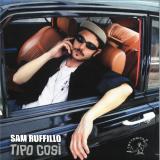
Italian producer, musician, DJ, and groove architect Sam Ruffillo drops his long-awaited debut album Tipo Così on Toy Tonics – a sun-drenched, genre-blurring statement that blends classic house with Mediterranean flair, romantic funk, and tongue-in-cheek Italo vibes. Over 11 expertly crafted tracks, Ruffillo delivers a dancefloor-ready, emotionally rich LP that connects deep musicality with irresistible rhythm and light-hearted elegance.
After three acclaimed EPs and collaborations with revered artists such as Barbara Boeing, Kapote, and Fimiani, Ruffillo has firmly cemented himself as a core artist on the Berlin-based label. Known for his unmistakable signature sound — a warm mix of vintage disco, 90s house, and Italian vocals — Sam’s music has garnered widespread DJ support from tastemakers like Gerd Janson, Palms Trax, Seth Troxler, and DJ Tennis, while becoming a staple on Italian airwaves. His infectious summer anthems like Danza Organica and Perfetta Così have soundtracked countless club nights and festivals, creating a loyal following that eagerly awaited this full-length debut.
Tipo Così is the natural culmination of a musical journey that’s both playful and profound — a travel diary written in grooves, synth stabs, and melodies that feel like postcards from a parallel Mediterranean universe. The album expands and deepens Ruffillo’s world into a fully immersive experience: lush emotional chords meet tight syncopated grooves, vintage synth textures collide with irresistibly catchy pop refrains, and the boundary between sincerity and playful irony is exquisitely blurred.
Entirely written, produced, and recorded in Italy, in his beloved hometown of Bologna, the album finds Ruffillo at the helm on keys, drum machines, and production, supported by a talented cast of musicians contributing live bass, guitar, and other organic elements — further enriching his trademark fusion of electronic grooves and natural instrumentation. There’s a tactile warmth in these tracks, a hands-on feel that adds soul and depth to every beat.
This album also marks Ruffillo’s heartfelt return to singing in Italian, with standout tracks like House Tipo Così, Mi Fa Volare, Ancora, and Dentro Di Me, where romantic naïveté meets pulsing club energy in a way that feels both timeless and refreshingly new. The vocal performances add an intimate, human touch to the music, reinforcing the personal stories woven into each song. There’s poetry in the casual, a bittersweet elegance in the way the lyrics float over groove-heavy production.
Having toured extensively across Europe, Australia, Indonesia, New Zealand, and Mexico — with sets at iconic venues like Panorama Bar and festivals such as Sónar Barcelona — Ruffillo has fine-tuned much of this album in front of live audiences. The real-world testing ground infused the record with a dynamic energy and immediacy that only comes from genuine crowd interaction. These songs weren’t just made in the studio — they were lived on dancefloors around the world.
Tipo Così is not just a collection of tracks. It’s a philosophy — playful, stylish and unmistakably personal. A modern club album bursting with heartfelt emotion and sophistication. Music for dancers with taste; for lovers of beauty, rhythm, and the little imperfections that make things feel real.
But what exactly is Tipo Così? More than just a phrase, it’s a way of being. It’s about embracing elegance without effort, mixing irony with sincerity, and letting nostalgia slip into the room without taking over the party. It’s Sam Ruffillo’s signature language: relaxed, confident, meticulous yet never rigid — where a chord progression can say as much as a lyric, and every beat carries intention.
The album’s visual identity complements this vision perfectly. The artwork and promotional materials lovingly reference Italian design from the ’80s and ’90s, combining bold graphic elements with playful pop culture nods. This aesthetic mirrors Ruffillo’s music — a fusion of vintage warmth and contemporary freshness, delivered with authenticity and charm.
Sam Ruffillo belongs to a new generation of European artists who are reshaping electronic music by blending past and present, analog and digital, groove and emotion — without nostalgia or pose. His artistic universe is coherent, vibrant, and alive; a rich tapestry of sound, images, and stories that coexist with lightness, precision, and a distinctive voice.
Reflecting on his artistic journey, Sam describes music as a vital, deeply human impulse — a tribal connection to rhythm and body that has driven him since he was a teenager. His creative process balances meticulous planning with room for spontaneity, usually sparked by clear melodic ideas that evolve naturally. Collaborations with close friends, especially vocalists like Ninfa, add warmth and authenticity, exemplified in tracks like “House Tipo Così.” For Sam, music is honest self-expression — crafted for listeners who crave memorable melodies and rhythms imbued with genuine feeling.
While technical perfection is tempting, Sam prioritizes emotion, knowing that what truly resonates is the soul behind the sounds. His long-standing partnership with Toy Tonics has been key in nurturing his vision, offering a blend of creative freedom and professional support. Looking ahead, Sam Ruffillo is excited to broaden his live performances, and release new projects that continue to blend electronic grooves with organic, heartfelt sounds — maintaining the delicate balance between playful irony and sincere emotion that defines Tipo Così.
Kurzversion:
Italian DJ, producer and musician Sam Ruffillo drops his debut album Tipo Così on Toy Tonics - a sunny blend of house, funk, Italo and pop, full of groove and emotion. Written and recorded in Bologna with live instruments and Italian vocals, it’s a playful, elegant journey shaped on dancefloors worldwide. A stylish, sincere club album where nostalgia, irony and rhythm meet in perfect harmony.
- Mi Fa Volare
Road-tested across continents and now finally released, “Mi Fa Volare” channels 90s uplifting euphoria with big breakbeats, lush chords, and Italian vocals built to stick. Somewhere between balearic bliss and piano house nostalgia, it’s a feel-good club weapon made for peak-time moments - already sung back by crowds after just one listen.
- Ancora
“Ancora” is a vibrant hi-NRG track inspired by 80s Italo disco, sung entirely in Italian. It blends driving rhythms with dreamy melodies, capturing the radiant spirit of the decade. This fresh yet nostalgic song delivers euphoric vibes and timeless energy, making it a perfect fit for both dancefloors and reflective listening moments worldwide.
- Dentro Di Me
“Dentro Di Me” channels ‘90s sensuality through a fast-paced, UK house-inspired lens. Entirely in Italian, it’s a bold and contemporary dance track where hypnotic vocals meet high-energy grooves. Blending nostalgic textures with forward-thinking production, the result is a seductive and euphoric trip - equal parts emotional and club-ready.
- Amigo
“Amigo” blends Latin groove, acoustic guitar-driven rhythm, and Mediterranean flair into a warm, magnetic, cross-cultural dance anthem. Sung in Spanish and Italian, it celebrates connection, inclusivity, and the joy of moving together - whether stranger or friend. With its unstoppable rhythm and vibrant energy, it’s a feel-good track with a unifying spirit.
- Ma Sei Fuori
“Ma Sei Fuori” is a tongue-in-cheek dancefloor bomb blending raw house energy with catchy vocal phrases and a nod to classic French touch. Driven by hypnotic vocal lines and a playful attitude, it doesn’t take itself too seriously - while still proving serious club impact. Built for late-night moments, it’s bold, bouncy, and impossible to ignore.
In 2025, Roger 23 makes his return to Night Defined Recordings. Following his 2022 album “Bounds of a Moral Principle and Established Standard Behavior”, the unmistakable Saarländer revisits his teenage memories of the Saarbrücken-Leicester connection through a collaboration with his UK kindred spirit, Tom Dicicco. In just two months, the duo has created a collection of ten tracks rich in sonic depth, embodying their dedication to and belief in the power of exploration.
In a world where it’s easy to point fingers or resist change, Tom Dicicco and Roger 23 choose a different path. They see creativity not just as self-expression but as a way to inspire future generations. Their mission is to challenge norms, trust the process, and create with purpose.
This album is more than just a musical project — it’s a statement that true innovation arises from freedom and risk-taking. The journey has taught them more than music production — it has reinforced the importance of conviction and trusting their vision. Their work serves as a reminder that leadership is about breaking new ground and inspiring others to do the same.
DESTIN CONRAD, is a sultry R&B singer hailing from Tampa, Florida. A newcomer to the music industry, DESTIN actually got his start on Vine, amassing over 1M followers. Years later he received his first major writing credits on Kehlani's Billboard #2 album, It Was Good Until It Wasn’t. DESTIN’s debut project, COLORWAY, was released in 2021 and has surpassed over 120 million streams. He spent 2022 on the road opening for artists Syd and Kehlani on their respective tours.
DESTIN CONRAD did his first headlining tour in EU and UK in 2023, where he sold out shows in Amsterdam, Paris, and three nights in London. His sophomore project, SATIN, was released November 2022 and has been just as successful as COLORWAY. Fader described his catalog as, "lush, intimate earworms infused with a gentle touch." The following releases, SUBMISSIVE, & SUBMISSIVE2, showcased a new era of growth for DESTIN, landing major features on both projects and embarking on a massive 47 show global tour.
All of this has culminated in the release of DESTIN CONRAD’s debut album, LOVE ON DIGITAL, setting himself up as one of the new promising voices in R&B. Previously released singles include “The Last Time (feat. Teezo Touchdown),” “KISSING IN PUBLIC,” & “DELUSIONAL.”
A new release on Keinemusik is coming up, and ‘if you want it’ might be a bit of a rhetorical question to ask. The groundwork for „Crazy For It“ came together when Rampa and Boys Noize were exploring project ideas, and it was only a matter of time until things fell into place. Jack-of-all-creative-trades Vinson stepped in, and laid down those heartfelt vocals. The production was refined exclusively within the Keinemusik circle, and was premiered live together with Vinson at Coachella, showcasing „Crazy For It“ to be the most soulful, passionate, and driving tune you’ll be dancing your heart out to this year. Chances are you might even go crazy for it.
Journeys are never just about distance. They stretch time, reshape perception, and demand transformation. With its latest vinyl split EP, Standard Deviation presents four tracks by Nastya Vogan and Phase Fatale that serves as a vessel for tracing displacement, memory, and the liminality of return. These melancholic yet powerful techno cuts serve both the concrete dance floor and moments of intimate self-reflection. Two artists--Nastya Vogan and Phase Fatale--approach Kyiv from different trajectories, but they both keep returning to the city. Vogan, a Ukrainian musician and resident DJ of Kyiv, and Phase Fatale (Hayden Payne), Berlin-based producer, Berghain and Khidi resident and founder of BITE Records, share a longstanding musical friendship. They've played B2B sets at K41 and Vogan, appeared on BITE's ''Shedding Skin'' compilation in 2023, and they share a vision for music selection, from aesthetics to philosophy. Vogan's 'Transitioning Territory' and 'This Is Not a Love Song' unravel the psycho-geography of transition. The first track captures the 24-hour journey to Kyiv as a rite of passage where 'time seems to fold; you are profoundly present yet paradoxically far from the world you left.' In this suspended state, memories surface and ordinary life recedes as the train's rhythm becomes its own meditation. Her second track explores Lacanian limerence--consciously falling for something not fully known, filling absences with personal projections as a way to discover what lies within oneself. Phase Fatale's contributions capture movement and distance with mechanical precision. 'Kekkai,' takes its name from the Japanese word for boundary, echoing 'respect my borders' ethos while reflecting on crossing into wartime Ukraine. The term also suggests a protective force field in Buddhist thought--much like Kyiv's current aura of resistance. 'Neosyazhna Rosa' (Unreachable Rose) honors Payne's Ukrainian grandmother Rose, weaving family history into his present connection with Ukraine. Both pieces balance melancholy with light, their sound palette of lush pads and rhythmic breaks crafted with K41's dance floor in mind.
London-based producer, vocalist, and DJ System Olympia is set to unveil her latest project, M3 Opera,
a five-track EP that fuses her signature sensual synth soundscapes with a bold conceptual twist.
Dropping on April 25th 2025 via her own Okay Nature Records, the EP features a unique collaboration with five distinct female vocalists, each lending their voice to a standalone "act" in this sonic drama.
Inspired by the sleek power of the BMW M3 and the theatrical grandeur of opera, M3 Opera reimagines the EP format as a multi-act narrative.
Each song accelerates through a different emotional gear—romance, tension, liberation—while the lush pads, gritty drums, and dreamy melodies System Olympia is known for provide the horsepower. "This is about motion and drama," System Olympia explains. "The M3 is that late-night drive, the pulse of the road. The opera is the story unfolding with every voice, every act."
The EP showcases an all-female lineup of vocalists, each bringing their own flavour to the journey. From sultry confessions to soaring crescendos, the tracks weave together a tapestry of feminine energy that’s both intimate and expansive—think *Delta of Venus* meets horsepower under green neon lights.
Following the success of 2024’s *Sanctified* EP with Working Men’s Club and her acclaimed NTS Radio residency, M3 Opera solidifies System Olympia’s reputation as a visionary who blends retro-futuristic
sounds with raw emotion. The EP promises to be a ride worth taking, whether cruising the streets or losing yourself on the dance floor.
Gangsta rap history makes a comeback for RSD 2025 with the re-release of Tweedy Bird Roc’s 1994 album, 'No Holds Barred.' This album, which was previously only available on CD, is now available for the first time as a LP vinyl after 30 years. It was the second and final project produced by the Compton rapper, who passed away in 2020 at the age of 52. One of his most significant achievements was organising and recording a collaborative album featuring both Bloods and Crips rappers and gang members (Tweedy Bird Roc, an active Crips member), aiming to promote peace between the rival gangs. Limited edition.
Brussels-based artist Adja Fassa releases her debut album, two years after her well-received EP IRONEYE - and it is promising to be quite a ride.
This contemporary body of work showcases 11 stories, each telling their story of the impact our capitalistic society has on our most intimate moments: from dystopian neo-soul tales of Deliveroo-drivers being stalked by telemarketers (both of them selling/delivering literal 'hope and dreams'), to re-imagined jazz standards and classical songs about conditional friendships, based on time and money. We even get her take on the 'stick-it-to-the-man-sing-along-rock-song', which she called 'Sucking on my Emphatitties'. And then we have the title song 'Golden Retrieve Her' which is as much an accumulation of feelings as of musical curiosities
" 'Golden Retrieve Her' is a wordplay on wanting to retrieve my kindness in a violent social system. Simultaneously, it is criticizing the fact that we, the masses, are often asked to either be naive or pretend we are. All of this accumulated in a visual image of what our social system considers 'the perfect, obedient nuclear family': a kind couple with 2.4 children, a house in the suburbs and... a Golden Retriever." ~ Adja
Serious and concrete topics, wrapped up in a symbolic package, as Adja values both straightforwardness, critical thinking and, paradoxically, a bit of mysticism. For her visual artwork, she created four, self-made tarot cards, that represent the four themes on the album:
'The Wheel Of Fortune', embodies the desire to get the upper hand in a system that doesn't align with your values. 'The Mirror', represents projection and likeness within lost connections (whether with strangers or with friends), 'The Dark Wheel' embodies the turning point of the wheel of fortune, where one is completely surrendered to their own moral demise and 'The Cave' stands for the - sometimes painful, sometimes blissful - return to one's own mind and heart.
Musically, this album contains as much variety as song titles, as Adja continues to explore her own depths as an artist and musician, together with her partner-in-crime, guitarist, composer and jazz-arranger Alexis Nootens. She collaborated with music producer Adam Scrimshire, who was featured in the Guardian as UK's one of three most significant soul music producers alongside Swindle and Inflo, and renowned Belgianproducer, mixer and musician Koen Gisen, who both mentored her into deepening her own productional skills. Last but not least, she gathered 13 musicians to deliver the sound she brings to her album, among them her 5 steady band members and 8 studio musicians from all over Europe. As we said: it promises to be quite a ride.
LIVE:
09/05 : Ancienne Belgique, Brussels
11/05 : Jazz à Liège
Strictly Ragga is a track that me & Mr Sensi finished together in 2014, but at the time, there was no label interest in it and besides some DJ support from Bailey, Equinox, Double O & a few others at the time, we sort of forgot that it had existed. Recently though, whilst organising my projects folder, I rediscovered the tune and thought it was worth releasing myself now that I'm able to do that on Future Retro London.
FM Dial, I sort of can't really remember the exact process behind it being made. If I remember right, Kid Lib sent me the parts of a tune called Unauthorized around 2013 (I think?), it was quite fully formed but it had no bassline on it. I never made time to work on it, so I think he sent it to Mr Sensi, who did some work on it but also didn't finish it. Then last year, I found a folder that Mr Sensi had sent me years back, which had the parts for a tune that he never finished, which I then finished. I sent the tune to Kid Lib when it was done, having forgotten about Unauthorized and it turned out that I finished a version that Mr Sensi had worked on of Kid Lib's track, without knowing anything about Mr Sensi's involvement in Unauthorized. All a bit confusing I know, but anyway, all that matters was that the tune was finished.
Nice one to Mr Sensi & Kid Lib for their involvement in this release and to Bailey, Equinox, Double O and everyone else that gave Strictly Ragga some support in its initial existenc
Unspecified Enemies, the project led by Louis Digital (Numbers, Counterattack, Arcola) present their debut album Romance in the Age of Adaptive Feedback.
Written and produced by Louis Digital, the album incorporates fragments of music data generated by long-time collaborator CiM (Ann Aimee, Delsin). Describing the title track, Louis Digital states:
“It’s the microelectronic sound of a city playing strange light games with itself, evoking bitcrushed desires and floating images, an urban phantasy stored on the broken circuits of an Ensoniq ASR-10.”
The origins of Romance in the Age of Adaptive Feedback trace back to 2006, when Louis Digital launched Diamond Sea, a series of events at London’s ICA that introduced the Unspecified Enemies project and a label called City of Quartz. The vision was to merge the hi-tech electronic textures of contemporary R&B with the sampling and sequencing techniques of pioneers like Anthony Shakir and Soundhack. However, the music was lost in time, and City of Quartz never released a single record.
Yet, the story took an unexpected turn. At one of these events, Spencer from Numbers received a CD containing early recordings. Years later, Numbers encouraged Louis Digital to reconstruct the lost music for an album. The result is a work resurrected from the past and reimagined for the future—retrieved in fragments from a broken Iomega Jazz SCSI Drive.
Expanding on the album’s themes, Louis Digital reflects:
“By the late ’90s the cinematic image of Los Angeles and the sound of Detroit techno had crystallised a new style of living in time and space. In 1997 Mike Davis — the political activist, urbanist, writer and historian of Los Angeles — suggested that it all had “something to do with a microelectronic aesthetic of very transient and decaying states”. It was a romantic vision — one where the city’s glass surfaces reflected a musical desire for futurity not yet dominated by data-driven corporate life. These were strange days to live through. This album evokes the embers of this fibre-optic moment, when urban revolution in an age of digital reification still felt possible.”
The album features full sleeve artwork and a poster designed by Ben Drury. In support of the release, an NTS show titled Romance and Reification will explore the cinematic and electronic music influences behind the album.
Proudly presenting, ‘Калі ты запытаеш (If You Ask)’, a brand new, blissed-out pop production with a ‘70s AOR touch, by the ever-on-point SOYUZ (СОЮЗ). Coming at a period between albums, the single features guest appearances from the sensational musicians, Biel Basile (O Terno, Sessa) and Anthony Ferraro (Toro Y Moi, Astronauts, Etc.). Friends of the band, they add their signature touch on the drums and synth respectively. To complete the package, SOYUZ back the title track with a short but sweet, Wurlitzer-laden, MPB-tinged number, ‘Tenório’.
‘Калі ты запытаеш (If You Ask)’ tells the story of lost dreams. A track that can be interpreted either as a bittersweet longing for childhood times, or for a native place you can’t return to. For the writer Alex Chumak he suggests, "In my case, as in the case of many Belarusians, it’s both".
For this song, Alex chose to sing in his native Belarusian tongue. As he explains this language "to me feels underrepresented in pop music, also it’s a beautiful legacy and sonority that I wanted to share with the listeners of our project around the world". One of the key inspirations was a Belarusian band “Песняры” (“Pesniary”), who produced a host of great progressive folk, jazz fusion and AOR, from the ‘70s to the ‘90s, predominantly sung in Belarusian.
Another key influence was the music coming out of the Brazilian state of Minas Gerais in the ‘70s, drawing inspiration from the sentimental and harmonious music of Beto Guedes, Lô Borges, Fernando Oly and Wagner Tiso.
Having parted ways with their drummer Anton, SOYUZ needed to find a new way to produce songs. The answer was to go remotely. Alex contacted the brilliant Biel Basile, who had recorded Sessa's contemporary classic ‘Estrela Acesa’, in which Alex also participated. Utilising Biel and Sessa’s newly built studio in São Paulo, SOYUZ had Biel record the drums directly to tape to get the rich sound they were after. Adding the final magic into the mix, California’s Anthony Ferraro provided a beautiful Solina String Ensemble synth arrangement, with drummer/recording engineer Albert Karch expertly assisting with the production.
To capture the essence of the single visually, Alex and the Brazilian one-man-industry visual artist Gabriel Rolim, spent a blazing sunny May day in Berlin shooting film and stills – one of which became the perfect cover image. We hope you enjoy this little nugget of SOYUZ mastery, a sweet taster to savour while the new album is recorded.
Emerging producer Très Mortimer dishes out eight huge heaters on the highly-anticipated ‘M1 City’ release, a dedication to the mighty Korg M1, coming to Seth Troxler’s Slacker 85 on 25th October.
Kicking off ‘M1 City’ is the simplistic, but refined and booth-rattling ‘Work That Body’. A crisp M1 stab is the main character in this, amplified by thunderous and high energy drums.
Then there’s ‘Secrets’, a house jam inspired by the likes of MK that utilises TR-909 drums, a subtle rolling bassline, intimately whispered and soulfully sung vocal shots, and, of course, classic Korg M1 synth stabs. Together with dramatic contemporary builds, a highly danceable house smasher is formed.
‘No More’ is pure gasoline for the dancefloor. Très pairs another barrage of clean M1 stabs with a rousing vocal sample that leads into, with the help of a rolling snare, another highly effective house drop. Following the extremely saucy ‘Big Daddy’ skit, we’re dropped straight into ‘One Of Those Nights’, a show-stopping track complete with cutting, sharp stabs, a bulging bassy synth and a West Coast-esque synth sound.
‘Bitch I’m From Chicago’ feat. Gleebz is, as the title suggests, a dedication to the city where house music found its name. Batting off all the poser cities like LA and Miami in the sassy lyrics, it embodies the spirit of Chicago with hefty kick drums and weighty chord stabs.
At the tail end of the release, ‘Let Me Go’ and ‘Love’ (featuring vocalist 7000 (7K)), bring things to a rousing emotive close. Both tracks see Très put clean vocals over piano riffs, giving off differing moods – the former is euphoric, the latter melancholic. Synths bubble beneath, and each track funnels their own respective house grooves, resulting in two tracks fit for both the dancefloor and headphones.
Très Mortiner explains: “The M1 sound is classic. It automatically transports you back to those timeless house songs that never get old. For me, house music is all about connection. People experiencing a little moment of euphoria together when they hear a riff that they all know on the dance floor. That’s what it’s all about. With this project I wanted to tap into that 90s rave sound and spirit. I wanted it to sound like the OG Chicago rave scene.”
“M1 City is my first project to be released on vinyl. I think vinyl is very much alive. It’s essentially for music connoisseurs now. I don’t expect people to have a vinyl collection when all music is always available to everyone on their phones. Nevertheless, I love the idea of some random DJ finding this record in a shop in 10 years. Who knows what I’ll be producing then?”
Très Mortimer is a key figure in Chicago's house scene, steadily building a strong following with his no-nonsense, dancefloor-driven sound. Drawing inspiration from his Polish roots, Trés has signed with major labels like Mad Decent, Insomniac’s IN/Rotation, and Ministry of Sound, while also launching his own imprint, Optics Records. He made his mark with a clever rework of Zombies' 1968 hit ‘Time Of The Season’ (1M+ streams). Standout releases include his downtempo collaboration with plumpy, "BAMBU," and his latest single, "At Night I Think Of You," which was recently given a remix makeover by Seth Troxler and Nick Morgan.
Slacker 85, launched in 2023, is the record label behind ‘M1 City’. Founded by Seth Troxler, it aims to give a platform to "oddball, esoteric and diverse sounds," positioning itself as a counter to the polished, refined dance artists dominating the scene. Troxler, upon the label’s launch, declared that he wanted to create something for "the anti-hero, the kids who could have done it but didn’t care to try”—essentially, "the slacker." So far, it’s delivered a range of releases from artists like Jackmaster, Danny Daze, Dan McKie, and Andre Salmon, offering tracks rooted in house music's past but evolving within its present boundaries.
‘M1 City’, this ode to a piece of gear that consistently finds itself at the heart of house music history, highlights Très Mortimer’s respect for and knowledge of the scene and its key gear. Trè combines this admiration and inspiration of house music’s greats with a modern sensibility, resulting in eight tracks worthy of today’s dancefloors and today’s ravers.
Open Space is proud to present our first ever full-length LP by LA’s newest 3-man band, Puli. Some words from our dear friend Matt McDermott below:
In recent years, a cadre of musicians from the east side of Los Angeles have reestablished the city of angels as the first city of Balearica. Alex Ho’s “Move Through It” followed in the lumbering footsteps of Project Sandro’s “Blazer.” Now, there’s a new landmark for the floating west coast sound. Swirling, the first album from LA supergroup Puli.
If you’ve got your ear to the ground you know the names involved here. Drummer and producer Damon Palermo’s pedigree stretches back a good 15 years or so, starting off with dub punks Mi Ami. Phil Cho is one of the busiest DJs, musicians and advocates for the deep stuff in LA, throwing legendary hillside parties under the Third Place banner. John Jones, the preternaturally talented guitarist and electronic tinkerer, records as AV Moves, is a key member of the Suzanne Kraft and Baba Stiltz live configurations and plays in The Trilogy Tapes-affiliated act Geo Rip.
But this listing of personnel and credentials puts too fine a point on it. Puli are three close friends who go to parties, DJ and get tacos together, repairing to their Chinatown studio a few times a week and coming out with remarkably textured, idiosyncratic downtempo jams. Building off the solid foundation of their 7-inch of heavyweight dubs for Melbourne’s Constant Delay, Swirling is an exploration of new horizons in chill out.
“Ramona” acts a statement of purpose—with halftime/double-time dub-tinged rhythms, hazy yet bright synth motifs and atmospheric guitar from Jones, not terribly far from the expansive approach of Japanese dub aesthetes Pecker. “Cloudy,” meanwhile, is a sort of deconstructed and bittersweet Balearic pop featuring Cho’s ethereal vocals. “Bongo Springs” is steppers’ house not far from close LA peer Benedek or the Mood Hut crew up north.
But what truly sets this record apart is the space and layers in the production—while it’s nominally an electronic record, Puli is a band that has slowly crafted these songs in the rehearsal space. “Havana Jam” cruises along a sliding roundwound bass guitar take with dubby chords and textural guitars. Palermo’s hand drums and live percussion enmesh perfectly with icy pads on “Leech Seed Dub.” Cho is back on the mic for the gorgeous closer, “C.S.B.”, underpinned by breakbeat and trunk-rattling sub bass. Puli doesn’t sound like anyone else, and is ultimately reflective of the city itself. Listening to Swirling feels like navigating a warren of side streets in the eternal sunshine. Take the drive and dive.
Sameheads & Mutant Radio are going a teenie weenie bit further and unifying their ongoing collab in plastic. The kind you play, not the stuff you throw away.
Released in Spring, at a party we’re throwing together in Tbilisi, this little beaut is a double sided 7”.
The MUTANTHEADS split 7” features some solid sound rep from both projects….
For Sameheads, Andrea & Alexander release their first material together, acting as a kind of trailer to an upcoming album released later this year on R-I-O. The track “Olias” finally gets its press after once being performed live at the fabled Sameheads festival “City of a Thousand Suns”… those were the days eh…..
On the Mutant Radio side, fresh talent TINA delivers her debut release, and for that matter, the first ever track Mutant have put onto a piece of vinyl….. The track “Vacation” is the squelchy black sheep counter balance to the silky synth vibe of the other side. Just how they like it.
The release will be up for pre-order from next week, and the digital stuff too…. Just the 300 copies available…… So,,, fix up look sharp……
Full of bounce and experimentation in equal measure, ‘Triple Transit,’ Braille’s new album for Hotflush is about leaving his Sepalcure project (with Machinedrum) in the rear mirror, moving back to New York and using its energy to fuel new moves, confronting our hyper layered world and overcoming personal difficulties by being creative.
Focused squarely on utilising modular synthesis in sprawling studio sessions, the album covers a wide stylistic range and draws on the artist’s formidable battery of experience to craft a body of work that packs real emotional punch as well as a dancefloor sensibility.
We had a quick chat with him to wet your appetite…
Praveen Sharma aka Braille:
Moving on from Sepalcure
“That period of time when Sepalcure was at its peak was really inspiring. I’m still really in awe and humbled by the fans. It’s always amazing to hear about how music you’ve made has brightened up other people’s lives in some way, but ‘Triple Transit’ is really about transitioning from that period to something new. I’m intentionally not using many vocal samples on this album. That became quite a crutch for Sepalcure and I wanted to try and find ways to evoke those emotions and connect with the audience in other ways.”
The roots of his Bounce
‘Sour Patch Kiss’ and ‘While We’re Free’ are inspired by classic house and some early Detroit stuff. Songs like ‘Big Fun’ (Inner City), ‘I Wanna Be there’ (Model 500) and slowed down ‘Sex on The Beach’ (DJ Assault) have stuck with me since the beginning. I used to listen to this slowed down and doubled version of ‘Sex on The Beach’ on an early Juan Atkins mix cd on REPEAT when I was in high school.
Getting ambient
Triple Transit slows down and transitions through a bit of sadness and eventually acceptance at the end of the album. A lot of the music I’m making these days is trying to recreate that manic feeling so many of us have in 2024. Between social media, ridiculous hustle culture expectations and depressing global and national political events, it’s hard to not feel overwhelmed. I feel like Triple Transit is kind of a parabolic curve from mania to joy to a sober realization that yeah, actually the world is just fucked but somehow we carry on.
Romania’s Floog has grown to become a reputed figure in the microhouse scene for his releases on the likes of Visionquest, TARTOUFFE, Moscow, Enfasi and Atipic among many others and here we see him teaming up with Brizman the minimal alter ego of Techno stalwart Gel Abril, his music under this guise has found a home on the likes of Caprices Records, Subtil Records and SCI + TEC. This new collaborative project however will see its release via Adam’s Bite and follow recent output from IULY.B, Lumieux and Audio Werner.
Title-track ‘Lose Connection’ leads, laying down a bouncy sub bass line underneath a crunchy saturated drum groove, twitchy synth licks and glitched out vocal lines before ‘That Hook’ edges into more dynamic and meandering realms, fusing an amalgamation of synth lines, modulating flutters and vocal whispers atop a heavily swung rhythm section.
‘True Believer’ then rounds out the EP, featuring Stockholm, Sweden’s Linn Stern, the powerful collabrative closing cut embraces a more anthemic feel with cinematic atmospherics, robotic voices, fluttering arpeggio licks and skippy, raw drums intertwined with powerful vocal lines.
Mariah was a Japanese outfit in the field of art pop, way back in the very late 70s and early 80s with 5 albums up their score from 1980 to 1983. The album from 1979 entitled as “Mariah” was actually made before the band Mariah was formed, and was released as a solo album by Yasuaki Shimizu. The album at hand is the fifth and for the time being last album in this row, released as a double vinyl back in 1983. Original copies, that are at least in very good condition, are hard to find. The brand new reissue on Everland, unlike the original and the first vinyl reissue from 2015, comes housed in a thick and artfully designed gatefold sleeve with OBI, which finally does justice to the progressive spirit of the music you will find here.
The musical basement of Utakata No Hibi is a fusion of dreamy synthesizer pop and haunting new wave music, that could be found all around the globe back in 1983. In the vein of TEARS FOR FEARS or more adventurous DAVID BOWIE stuff, with a touch of KRAFTWERK or even BRIAN ENO here and there, but all this gets spiced up with an atmosphere of Japanese traditionalism, with a few bits and pieces from the old music from this Far East island, which sounds so magic to us Westeners. The progressive, wacky art pop of this project was led by the popular Japanese composer and musician Yasuaki Shimizu, a relentlessly exploratory saxophonist who even dared to rework Johann Sebastian Bach’s cello suites for saxophone.
As brilliant as this man is, the music on „Utakata No Hibi“ turns out to be. And the master himself approved and much appreciated the brandnew remastering of this album by assisting a highly professional team of sound engineers who dusted off the ancient tape reels. For certain the record sounds and feels 80s through and through, electronic to the very rhythmical bone of each song sugar coated with catchy melodies that resemble Japanese classic and Enka music, which is a kind of folksy pop music. The listener gets directly drawn into a feverish dream of steaming Far Eastern cities and their darkest and most depraved corners where you find everything cheap in sleazy bars and unlighted backyards and alleys. The next moment he strolls through a beautiful Japanese park surrounded by a sea of blossoms. This change in mood and style you will experience in the sparsely instrumented tune „Shisen“, which indeed comes closest to classic Japanese folk tunes without any too catchy and pop oriented melodies. But we certainly find these harmonies allover the album. Some tunes even feel like ancient BEACH BOYS compositions and Brian Wilson creations played by a then contemporary electronic pop act and sung in Japanese.
An amazingly colorful album with songs that are based on solid substance rather than cheap pop structures. This is music for the bold listeners and music lovers and this awesome reissue should quickly find it’s way into the record collections of 80s synth and art pop aficionadoes.
Yasuaki Shimizu did what he wanted with MARIAH, pushed the borders of popular music further than anybody would have thought. Listen to a track like „Shonen“ with a repetitive rhythm pattern that hypnotizes you and somehow silky melodylines by saxophone and synth piano upon which a female voice sings in a very spiritual way. Praising pop or whatever this can be called, it is sheer magic put in music. I wonder if this would have made it into the charts back then, but you never know. It is a piece of musical art that shall be listened to.
Just a few months after the release of "Shine," his debut solo album featuring some of the finest R'n'B voices of the moment, Stefano Cosi presents his new single "That's On Point" on Angis Music, already home to the HUMA project of which he is part along with pianist Alberto Lincetto. The single, which boasts the important collaboration with UK soul legend Omar, was written and produced remotely during Covid, waiting for the right moment to be released. Now it seems that the moment has finally arrived and to complete the offer alongside the original version are two remixes by Abacus, prominent figure in the deep house scene since the '90s, plus a mid-tempo dub version by Italian talent Edoardo Della Bitta aka EDB. Don't miss out on this future classic!
The Late Night Tales compilation is a bit of a ‘stealth’ project for me personally. I’m very proud of it, but at the time, I probably didn’t appreciate it as much as I do now because there was so much going on. You do these things in-between touring and you don’t really have time to reflect on them because you’re immediately onto the next thing. It’s nice to know that it’s getting re-released. George Evelyn - Nightmares on Wax May 2024 This ain't no normal nightmare, kid. This is Nightmares On Wax, aka DJ EASE, aka George Evelyn. Born under a bad sign, with lino in hand, Mr. Evelyn went forth into the world and breakdanced (brokedance?). It's what you did in the 80s when you were young, loved hip hop and couldn't rap for toffee. When house arrived they turned their clever hands to it. Bleeps and beats is what it was. That's what everyone said. But there was always a bit more than a bunch of bleeps to what Nightmares On Wax did. The north never really took the name very seriously (Sweet Exorcist even named their album Clonk as a pisstake). Then George flipped the script and went and did Smokers Delight, the beats not so much seminal as semolina: gloopy and slow and sweet and lovely. And now we have this: a 2024 reissue of his seminal Late Night Tales compilation. Tom Scott's 'Sneakin' In The Back' — one of the most sampled beats in hip hop — makes an appearance in its full glory, while Quincy Jones, the inspiration for NOW's 'Nights Interlude', backs up the classics with ‘Listen (What It Is)’. Evelyn's hip hop sensibility is to the fore throughout and nowhere is this more evident than on ‘Intergalactic Throwdown' by former Freestylers' DJ, Mad Doctor X. And can we forget the sublime version of the Classic IV's 'Spooky' by darling Dusty? No, we can't. Finally — oh, finally! — there is the now-traditional cover version, with George serving up a soupy version of 'Brothers On The Slide' that gives a nod of respect to the original British funk soul brothers, Cymande. This ain't no nightmare at all: it's Nightmares On Wax.
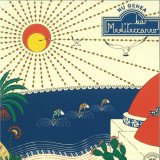
Four years after Nuova Napoli, Nu Genea are back with Bar Mediterraneo, a new album and journey, which projects the sounds of the Neapolitan duo formed by Massimo Di Lena and Lucio Aquilina even further.
Nu Genea's Bar Mediterraneo is an idea of a shared place where people meet and fuse together; a space that leaves its doors open to travellers and their lives, always exposed to the whims of fate. Some of this can be experienced through the multitude of sounds that come together in the tracks, layers of different acoustic instruments, voices and synthesizers merging in a unique musical blend.
Opening up to the voices of many different people, separated by languages but united by the sea and the music, Nu Genea's hometown, Napoli, becomes a true place of encounter.
You can hear this all along. In "Gelbi", a gorgeously deep and propulsive Ney flute plunges into murky waters of the melancholic Tunisian dialect sung by Marzouk Mejri. In "Marechia'", unbridled happiness and sun ooze from the delicate vocals of Célia Kameni and create an acrobatic bridge between French and Neapolitan language. In "Straniero", your soul is arrested from the moment the slow spell-binding mandolin ignites the hypnotic patterns recorded by the legendary Afrobeat drummer Tony Allen. In "Bar Mediterraneo", the title track, bittersweet guitar’s riffs, analog waves and choirs are overwhelming the song giving you what you would like to hear on a boat trip along the Amalfi Coast.
Nu Genea couldn't afford to overlook their firmly anchored roots into the Neapolitan culture and its dialect with "Tienaté", where the power of neapolitan language (interpreted by Fabiana Martone) supports those quarter-tone strings and the uncessant folk-disco groove that spreads to the entire song. In "Praja Magia", repetitive mandolin riffs lead the song, giving space to a choral yet tight vocal line that speaks of Varcaturo, a village close to Napoli. In "Rire", a volley of poetic, deceptively laidback, lyrical fury interpreted by Sicilian Marco Castello intimately combines with a highly musical, multi-textured instrumental backbone and the swoon of a chanson in its heart. In "La Crisi'', the lyrics of a Raffaele Viviani’s poem from 1930 have been adapted to a laidback jazz-funk groove in full NG style. In "Vesuvio", revaluing the evocative verses and powerful mantra of Vesuvio, Nu Genea re-adapted to the dancefloor a folk song by the working-class band E’ Zezi from Pomigliano D'Arco, combining the voices of a school choir with Jupiter-6 arpeggios and bold percussions.
Bar Mediterraneo is the place where people constantly return to transform curiosity into participation, tradition into sharing, unfamiliar into familiar. When travellers come through its “doors”, carrying their treasures of words and emotions, they aren’t strangers any more. They take part in a shared experience, enriching themselves and others by leading to unexpected musical journeys.
On My Own Terms / Time, a new non-label created for Yorobi's self-released projects.
The first ep "Projection Palace" features 4 tracks across various genres and tempo's.
From bass heavy breaks and house to sound along the hardcore jungle continuum.
The name of the ep refers to a psychological principle of "projection", whereby you project certain (negative) qualities onto others without them being necessarily right.
Quite often the projections say a lot more about the person who's doing the projecting rather than the person on the receiving end.
The idea then was to make an EP that revolved around this theme. The palace bit being a metaphor as if you were a house which would show you all these mirrors which are wonky and distorted, like a fun house on a fairground
New edits label from the Deep&Disco crew outta NYC. 2 Killer cuts given a revamp and shine for the dancefloor.
Pressed on heavy weight 180g vinyl limited to 300 pressings hand stamped.
DJ FEEDBACK
Craig Smith (6th Borough Project) - Lovely edits, well produced and expertly put together. Good luck with the label chaps
Guy (Sleazy Beats, Monsieur Monod) - What a delightful debut for your new label. Feel The Rhythm is an irresistable boogie groover. We'll be playing these puppies all over the place! All the best with the release and label.
aliOOFT (OOFT! Music) - Being playing this for ages, good to see it being released. Best of luck with the label - I look forward to more Razor N Tape jams!
Sleazy McQueen (Whisky Disco) - Dig it, man!
Onur Engin (OE Edits) - Nice one! I'll definitely support this.
Jimpster (Freerange) - Nicely done. always a good one to have in the bag. cheers for the good edits.
Trujillo (Apersonal Music) - So Tight is a dope warm disco for the dance floor!, will spin it!
The Glue (Kolour) - Great edits both of them, we will keep an eye out for more stuff from you guys for sure!
Leftside Wobble (Futureboogie) - A pair of filtered boogie beauties.
Alkalino (Much Love) - Like both, but "Feel the Rhythm" is my fav.cheers!
Matthew Bandy (Z Records) - Solid edits here, will be getting support on both from me. Cheers.
Sell by Dave (Bedmo Disco, Juno Plus) - Excellent first release lads - enjoying both tracks. The edits scene needs some fresh cuts/styles, and you've delivered on these. Major props - can see both getting plenty of plays in Bedmo Disco sets this summer x
Daz (Get Down Edits) - So Tight never fails but this is my first time hearing Feel The Rhythm & cant wait to play it out its sounds excellent, have a gig @ Disco Deviance this sat & cant wait to play these at it :)
Mike W (Kolour Recordings) - Been looking forward to RNT001 and it does not disappoint one bit! edits that drip with funk & soul .. just like they should. got a nice batch of gigs in the pipes and these will definitely be seeing their way into my rotation as well as the full gambit of chart support! cheers j. kriv & aaron dae .. got yourselves off to a nice & tidy start .. best of returns to ya!
Nelue (Groove Democracy) - Both sound great!
South West Seven (SWS Music) - Love it!
Kid Color (Dollar Disco) - Slammin' work if I could say so myself!
The Beat Broker (Flexx) - So Tight is exactly that. Killer unstoppable groove. Love it!
Bright Magus is an instrumental quintet born under the influence of Miles Davis' metaphysical electric period, a visceral and magical passion always shared by Giovanni Calella and Leziero Rescigno. Davis' most eclectic and psychedelic period, that of recordings for Columbia from 1969 throughout the 70s. Albums like “In a Silent Way”, “Bitches Brew”, “A tribute to Jack Johnson”, “On The Corner”, “Big Fun” made them immerse themselves in one of the most fascinating experiments that Miles has generated in his long and prolific career. We are talking about music that is difficult to fit into one genre, in these masterpieces you can feel the contemporaneity of that historical period. Electric Jazz, Funk, Psychedelia, Rock, Afrobeat, Ambient, drag you into something absolutely new, mysterious and sometimes furious. Just a year ago Giovanni and Leziero took courage and started recruiting musicians who had to have the right attitude and knowledge. Guitarist Alberto Turra was the first to be interested in the project, then came Mauro Tre, pianist and keyboard player and Gianni Sansone on trumpet. All seduced by Miles and in love with that magical period.
Before making the first album "Jungle Corner", the band did some live shows to amalgamate all the ideas that came out during the improvs recorded by Tullio Treffiletti in the trumpeter's home studio (later baptized Selim Studio). At the Isola Studio in Manuel Agnelli's space and with the help of the very talented Guido Andreani, Bright Magus then recorded in three days live all the material which in the meantime had been enriched with more structured melodic themes and less casual drafts . Mauro's contribution was very important in this. The finalization of the album was then managed by them in the small "Diabolicus Studio" taking care of editing, post production and mixing.
Guest on the album in two songs, Enrico Gabrielle of Calibro 35 on flute and clarinet.
The cover design is a work by Barba Ughi alias BAX.
Orphic Apparition follow up their inaugural release by RAFRAM, the collaborative project of Toronto's Raf Reza aka Raf Rizzla and UK acid house luminary Ramjac Corporation, with a new two-tracker from the transatlantic bass warriors. Where the RAFRAM 12" gifted us five variations on the same live jam cut from Grow Tottenham, here we have a spontaneous track written by Paul (Ramjac) on the A-side and a fully warped dancehall mix from Raf on the B. (short)
'Press 1 to Repeat' began as an on-the-spot demonstration of the musical self, a natural response to being asked 'What is it that you do?'. Within a few minutes Ramjac had his laptop out and was bashing out a quintessentially English sort of kitchen tabletop version of Kraftwerk - Numbers, the tongue in cheek automated voice on the other end of the line querying his account balance in tow. Proudly showing his friend Ryoko his improvisatory skills, a £10 hifi from a Japanese 2nd hand shop served as the portable monitors whilst the track waited to be brought back to his studio in London. The track is anchored by a bouncy, Irdial-reminiscent percussive workout which punches above its weight for its humble beginnings. Add the dubbed out synth pads and sort of electrical static FX in the background and everything syncs together in cosmic harmony. Hopefully Ryoko now gets the gist!
Raf Rizzla takes the stems and channels some inspiration from the Jamaican movie “Third World Cop” by turning the track on its head with a double-time baseline and half-time melody to craft a big dancehall version with a bit of a modern day On-U twist. Here Raf shows yet another side to his truly versatile production chops which have seen him release house, trance, breaks and downtempo cuts on a variety of Canadian labels prior to starting Orphic Apparition.
On March 26, 2015, a surprising announcement sent shockwaves through the Belgian music scene. Noe?mie Wolfs declared her departure from Hooverphonic, the band she had fronted as the lead singer for over five years. She described it as the end of an incredible chapter in her life and expressed her desire to forge her own musical path, which she did by releasing her critically acclaimed debut album "Hunt You" a year later.
In February 2020, the long-anticipated second solo album by Noe?mie arrived, titled "Lonely Boy's Paradise," brimming with melancholic hues. Taking her time to craft and record this album, Noe?mie delivered a collection of songs that resonated even more deeply with her. At the production helm was Yello Staelens (also known as Yong Yello). With "Lonely Boy's Paradise," her confidence grew, allowing her to embrace risk and unconventional ideas. However, the international lockdown soon threw a spanner in the works, as the society shut down a day after her celebrated sold-out release show at the Ancienne Belgique. Rather than sit by, she therefore retreated to her home studio to work on new music.
Making music from the heart has always been in the DNA of Belgian singer Noémie Wolfs and yet this time it is a tad different as she's gearing up to release her third album, "Wild At Heart," in November. This time around, she joined forces again with her partner in crime, Simon Casier (of Balthazar and Zimmerman), to write and produce the album in their home studio. Despite being in the business for years, the upcoming project also immediately presented a challenge for her because this time she was involved both as a writer, but more importantly as a producer, giving the album an even more personal touch. Everything was done from an emotion or a vision, you notice and hear the love for enchanting arrangements immediately.
The ten tracks on "Wild At Heart" promise a distinct sound, enriched with meticulous attention to detail. The melodies are interwoven with dreamy, melancholic strings and an array of synths, revealing a new facet of Noémie's musical evolution. The new sound of Noémie evolved from a hip-hop-oriented use of samples on her second album "Lonely Boys Paradise" to a more electronic approach, where danceable beats with analog synths join forces with big orchestrated strings to capture the different facets of a love story.
"Strings are actually very hopeful or often form a warm blanket for many people, but can also be very frightening, oppressive, dark, and sad. It might even be my favourite instrument, which is why I definitely wanted to use them on this album. Sometimes you can even hear 42 violins at the same time, with which we wanted to capture the grandeur of Hollywood," she says about including strings.
The upcoming album is not a sonic continuation of her previous albums, but a deliberate exploration of what has always inspired her. "Wild At Heart" tells the story of two lovers who cannot live with each other, but also cannot live without each other. The dramaturgy of the album also reflects itself musically, which is immediately evident with the first single "Lonely Heart". In almost eight minutes, you feel the matchless passion in her music and her voice remains the narrative thread that makes you forget time and space around you for a moment. Noémie Wolfs' new music is therefore the perfect way to take a break from the daily grind and digs deep into all forms of romance.
"Wild At Heart" is Noémie Wolfs' reintroduction and her most personal project so far. For dreamers, lovers, and travelers.
The latest offering from Astral Black comes in the form of the 'Metropolis N' LP, courtesy of Queens, New York's number premier importer/exporter of Jungle & D&B, NIGELTHREETIMES. Having initially garnered a name for themselves as one of New York City's most versatile club DJ's, with the release of their 'Call Of The Void; project in 2020 Nigel also began to build a reputation as a producer in their own right. Resulting in residencies on Rinse FM & The Lot Radio, radio support from the likes of Tom Ravenscroft & Uniiqu3 and press support from Resident Advisor, OkayPLAYER & Mixmag – amplifying their talents throughout New York City and beyond.
With 'Metropolis N' NIGELTHREETIMES distills their eclectic influences through the lens of rolling 160bpm breaks – taking in Jazz, 8-bit game soundtrakcs, science fiction & jump up D&B. Starting off the LP with the rhodes tinged double header of 'TSQ MELTDOWN' & 'EARLY MORNING FROM 103RD STREET', the latter featuring some of the best double bass work heard on a jungle track since 'Brown Paper Bag'. Elsewhere, on 'ROAD2RAILS' and 'PHANTOM SHORES', the producer ditches the instrumentation in favour of oscillated square waves, dubbed out vocal FX & 8-bit melodies, without ever losing site of the projects underlying sense of optimism. On the album closer 'INTERNATIONAL SPACE STATION', 3X manages to bring together the influences heard throughout the project, tying together a muted rhodes chords, squarewave basslines, flutters of alien melodies and finely tuned, slices breakbeats into a 5 minute symphony.
The consistency and exacting production skills heard throughout the offering elevate this project from another drop in the digital ocean to a landmark opus, from a producer carrying the torch for this timeless sound and making the project worthy of a spot alongside some of the classics this genre has produced.
'Metropolis N' is available Oct 13th on digital and limited edition vinyl via Astral Black.
Unhuman & Petra Flurr is the collaborative synthpunk-technoid project of BITE label stalwart, Berlin-based Greek artist Unhuman and legendary queer wave figure Petra Flurr. 'Mala Vida' is their debut album on BITE that further evolves their sound beyond genre borders. The duo deliver an 8-track LP consisting of punk body music exhibiting the team's mastery on production, their androgynous vision and diverse influences. Petra Flurr's staggered, often effected, vocals cruise over pounding beats, bold iconic hooks and psychedelic atmospheres. His lyrics reference the seedy underbelly of Berlin's sex underground. Meanwhile, Unhuman's productions broadly range from the post-punk references of 'Labyrinth' to the new beat grooves of 'Short Life' featuring Ukrainian duo Garden Krist to the melodic orchestrations of 'Rush'. All this is reinterpreted by techno duo New Frames on a digital remix of 'Unzivilisiert'. 'Mala Vida' is a direct inspiration from their debut performance at Berghain for last year's BITE label night. After which, they swiftly retreated to the studio to compose, still in their platform heels. The two paint a coat of neon red over their preexisting batcave of sound. While the artwork by Liam Noonan compliments the gender fluidness of the album, distorting and digitally manipulating images of the creators themselves. Using heavy rhythmics, wavy mandates, an androgynous stare and unavoidable sexuality, Unhuman & Petra Flurr introduce us to their culled brand of queer death techno. Always with a wink.
Finally, our debut album is out. It is based on a well-calibrated selection of tracks chosen from intense live performances since our project's inception in 2018.
Dream Dome is a small window in our studio that looks out into the sky - a symbol of the musical vision of two opposites whose style and DAWless music-making skills have created 13 tracks, carefully calibrated by us on the dance floor.
Dream Dome is a blend of musical styles closest to leftfield house and techno. It is characterized by warm analog timbres, polyrhythmic structures, and the self-expression of our individuals.
Dream Dome is available on limited 180g vinyl with 8 tracks + download code for full extended 13 tracks.
*MILKY CLEAR VINYL - 300 COPIES ONLY FOR WORLD!!* Technology + Teamwork’s fizzling synths, interweaving textures and punchy rhythms are beguiling on their long-awaited debut album We Used To Be Friends. However, at the heart of it all it’s the connection between the group’s two members, Anthony Silvester and Sarah Jones, the friendship the much-travelled duo have managed to maintain for nearly 15 years and a showcase of the slow-burning construction of the electronic world that they’ve surrounded themselves with. We Used To Be Friends is ultimately the tale of two storied artists in their own right, holding onto each other through personal and career twists and turns, relocations and broader movements through respective phases of their lives. Silvester and Jones first met and then collaborated as part of biting post-punk five-piece XX Teens in 2008, eventually breaking off to forge their own path together even as the latter’s demand as a drummer grew. Performing with everyone from Hot Chip, Harry Styles and Bloc Party among many others, Jones has been a constant percussive presence across the sphere of alternative UK pop music – she’s also found time for her own solo project Pillow Person and played on records by the likes of Puscifer and Kurt Vile. Silvester meanwhile has performed in art galleries across Europe including: Fridericianum in Kassel, Kölnischer Kunstverein in Cologne, and Vleeshal in Middelburg, as well as providing sound design and composing work for several art films. Technology + Teamwork is the constant throughout all of that though. “Technology + Teamwork's name perfectly describes how we work” Silvester explains. “Sometimes the teamwork is between each other and sometimes it’s between us and the technology.” Although going by the name Technology + Teamwork as far back as 2014, two events conspired that pulled the project into focus for the pair of them: firstly, Silvester spent a year constructing a soundproof studio shed on the border of London and Essex where he lives. Secondly, inevitably, the pandemic brought the globe-trotting Jones back home to just seven miles away from her long-time collaborator and friend. “We probably hung out more than we had for a few years” says Silvester. “Also, after all her Pillow Person releases Sarah had gotten really good with recording vocals and knowing what did and didn’t work and had a really good home studio set up. We still worked separately though, exchanging ideas via email and WhatsApp.” As with many artists through 2020 and early 2021, working separately was a new necessity that they were forced to adapt to. However, it became clear that there were creative benefits to it. “It really changed our sound and our sounds became a lot more focused as a result” Jones says. “I wanted to use the same ideas of improvisation that I might use while playing the drums for myself and apply that to melodies and lyrics.” The album bristles with hyperpop modernity. You can hear it in the manipulated vocals most prominently on Big Blue’s disco strut and on Moving Too’s heady mix of pitched up voice and burrowing sub bass. However, the pair also looked to San Francisco and the West Coast synthesis movement of the 60s, Silvester inspired by the likes of Suzanne Ciani and Don Buchla. The plaintive lo-fi and melancholy of Amsterdam incorporates Mutable Instrument’s Marbles by Émilie Gillet which – inspired by Buchla’s own synthesis work – outputs random voltages to give the track an air of unpredictability. It’s something that occurs throughout the album, the duo revelling in the happy accidents that disrupt the flow of their hook-laden pop. “The ‘Buchlian’ ideas of music having randomness and uncertainty, completely freed us up” Silvester explains. “It felt a bit like having more members in the band, machines that didn't do what you expected or intended.” Perhaps more subtly, is the influence of 17th and 18th century Baroque music, with Silvester drawing a line between it and the 90’s R’n’B he and Jones both love – exemplified perhaps best on K+B’s percussive claps and sultry grooves. The portentous juddering synthpop of the title track, meanwhile, alludes specifically to Handel’s Sarabande. It’s typical of an album that only needs a scratch of its seemingly glossy surface to unearth a myriad of contorted touchstones and reference points that’ve fermented beneath it. Thematically there’s an anxious sense to the record, with tracks often balancing above a quiet sense of unerring tension even at their most bombastic. Moving Too is the result of an existential doubt that hit Silvester while out cycling, with the outro refrain "it's not enough to die you also have to be forgotten" a take on something Samuel Beckett once said. These worries are echoed on the album’s closing track What A Year, which borrows a lot of lines from the late drag performer and fashion designer Dorian Corey including the grimly defiant "you're gonna leave your mark somewhere in this world just by getting through it”. Those clouds offer a counter point to We Used To Be Friends, but then isn’t that what great pop albums do? Technology + Teamwork undoubtedly love the craft of the hook and the song, but they always position themselves left of centre, prepared to scuff things up, pull something out of shape or manipulate something to leave it sounding warped. Much like their friendship, nothing here is particularly linear – and it’s all the better for it. Bio: Anthony Silvester & Sarah Jones first collaborated as part of biting post-punk five piece XX Teens in 2008, eventually breaking off to forge their own path together even as the latter's demand as a drummer grew. Performing with everyone from Hot Chip, Bat for Lashes, Harry Styles and Bloc Party (among many others), Jones has been a constant percussive presence across the sphere of alternative UK pop music - she's also found time for her own solo project Pillow Person and played on records by the likes of Puscifer and Kurt Vile. Silvester meanwhile has performed in art galleries across Europe including Fridericianum in Kassel, Kölnischer Kunstverein in Cologne, and Wleeshal in Middelburg, as well as providing sound design and composing work for several art films. Technology & Teamwork is the constant throughout all of that though. "We Used To Be Friends" proves that Technology & Teamwork undoubtedly love the craft of the hook and the song, but they always position themselves left of centre, prepared to scuff things up, pull something out of shape or manipulate something to leave it sounding warped. Much like their friendship, nothing hear is particularly linear - and it's all the better for it.
JIMMY EDGAR's latest release for Innovative Leisure, LIQUIDS HEAVEN, is a psychedelic canvas of future R&B, euphoric bass, mutant tear-theclub-up rap, foundation-splintering noise, and gossamer soul.
On a surface level, it is a starburst of avant-garde fusion, collecting a diverse cast of eccentric geniuses and re- configured into an anthology of n - musique concrete.
As with all of his work, there is a deeper and subversive intent.
Do not mistakenly believe that LIQUIDS HEAVEN is merely a technicolor dream of ethereal abstractions. It bangs as hard as anything to ever bump from a subwoofer.
Over a polychromatic blast of crunk, bounce on Everybody like a rap
rave inside a 31st century space station. Bite That 2 finds Trinidad James spitting flames over booty- shaking, wall- crumbling bass. On Ya, 645AR chirps over a metallic chassis of booming industrial funk.For all the high energy propulsion, there is a counter-balance of melancholic beauty.
The album's opener, Euphoria features a Liz Y2K vocal that levitates with plaintive longing. The Milk- aided Dreams 1000000 sounds like the chimerical soundtrack to a manga utopia that needs to be imagined. Milk also appears on the finale, Never Leave, which
captures a bittersweet sadness, the wistful emotion of the tide slipping away.
Jimmy's career has been a series of fascinating left- turns. Signed to Warp Records as a teenage electronic music prodigy, his work needs a scholarly bibliography to properly assess. He's recorded for the world's most respected imprints (Warp, K7, Hotflush, Innovative Leisure and his own New Reality Now).
Raised in Detroit, there have been stints soaking up inspiration in Berlin, Atlanta, LA, and New York. His list of close collaborators includes the most innovative musicians of the millennium, including Hudson Mohawke, Danny Brown, SOPHIE, DAWN, Mykki Blanco, Vince Staples, and several full projects with Machinedrum
as J-E-T-S.
MOOD CHILD is the new artistic platform of DJ/Producers, SIRUS HOOD & MANDA MOOR.
Evolving from a collective idea during our difficult pandemic period, MOOD CHILD is, at its centre, about community, collaboration, friends and family. Working together, feeding each others creativity and forging fresh and exciting new sounds and projects.
MOOD CHILD is an invitation to a journey that blends different feelings, emotions and desires. To activate your inner child. Reinvigorate the wild, primitive and unfiltered state of being and create an almost divine sense of unity. All through the power of music and art.
Their collective sensibility is nurtured upon the dancefloor and last summer they were blessed to have presented a first MOOD CHILD experience in collaboration with Hï and Café Mambo in Ibiza. The mood then took them to Bagatelle in Zürich and Lovefest in Serbia and they now prepare to launch their 2023 campaign alongside the elrow family for a sold out event in Andorra 1st of April.
However, what is a party without its soundtrack? Their first release, as its title suggests, brilliantly displays the labels primal perception… ‘Homo Sapiens’ is the mood child of Sirus Hood and Malikk. Four carnal creations, all guaranteed to ignite a rabid dancefloor response.
‘Booty Side’ uses its compass to expertly navigate its way through bubbling acid and rolling snares as we go in search of Jack, while the title track will have us going ape to its chest-beating bump and knuckle-dragging groove.
Silverback beats swing low on the flip too as ‘King MTF Kong’ bites hard with its heavy Chicago hustle and detuned synth, while the feral Juke-infused finale, ‘Gorilla Walk’, is a break-neck bass-driven and bruising encounter that is more Jersey club than Empire State building.
The ‘Home Sapiens’ EP is released on the 14th April and will be available on vinyl and digital formats, alongside a series of exclusive NFTs.
MOOD CHILD’s official online store will launch soon and feature not only the music and digital art projects, but also an official clothing brand, sample packs and exclusive content from their artists.
»Love As Projection« is the new album by Frankie Rose, her fifth studio LP and second for Night School following the reissue of her interpretation of The Cure’s »Seventeen Seconds«. Frankie Rose has forged an enviable musical legacy, from playing with bands like Crystal Stilts and The Vivian Girls but on »Love As Projection« she takes a bold step into electronic pop production. A sumptuous recorded statement, it dances in ecstasy and broods on the tumult of the western world’s decay in equal proportion. At the heart of the album is glowing, confident songwriting, resplendent in hooks and choruses but still touched with an optimism undimmed.
After spending nearly two decades establishing herself across New York and Los Angeles independent music circles, Rose re-emerges after six years with a fresh form, aesthetic, and ethos. Celebrated over the years for her expansive approach to songwriting, lush atmospherics, and transcendent vocal melodies and harmonies, »Love As Projection« is a reintroduction of her established style through the lens of contemporary electronic pop. Recorded with producer Brandt Gassman and mixed with long-term collaborator Jorge Elbrecht this is the album Frankie Rose has been building up to her entire career.
More than a rebirth, a refinement, a resurgence, »Love As Projection« boasts a widescreen scope: a long- form project heavily considered for half of a decade, culminating in the most personal and accessible collection of art-pop that Frankie has ever written. When Rose aims for the pop jugular as in first lead track »Anything«, the result is unstoppable. A majestic pop song built for radio, it erupts into an irresistible chorus that marries classic epic 80s American pop with the cult effervescence of Strawberry Switchblade »It’s like a prom scene in a John Hughes movie. It’s a hopeful song about abandoning fear even if the world is quite literally on fire.. In the end, at least we have each other,« says Rose. »Sixteen Ways« further boasts a propulsive, massive chorus, though tempered by a cynicism built in global post-truth, global malaise. »It’s about getting your hopes up, but simultaneously making lists in your head about how it will never work out in your favour.«
The big anthems don’t let up there. On »DOA« some massive, rolling drums lathered in big mid-80s gated reverb dovetail with a syncopated baseline for the ages as Rose’s vocal sails effortlessly above. The effect isn’t unlike ethereal vocalists Clannad circa Howard’s Way or Enya jamming with Simple Minds in their stadium-conquering heyday. Rose tempers the adrenalin with heart-tugging bittersweet tones and there are plenty of them. »Sleeping Night And Day« takes its time with an off-the-cuff chorus, swirling around in harmony and chorus-bass. »Saltwater Girl« picks up the balladeering baton with another nod to album track-mode Switchblade, deep space opening up in the mid-tempo drum track and soupy, digital atmospherics. Album closer »Song For A Horse«, reimagines modern Pop production a-la-PC Music but shorn of the meta-atmosphere. Pianos, swelling synths, minor keys cut through with major. These moments, also seen in Feel Light offer ballast to the soaring pop choruses. Moments like these are big oceans of emotion to fall into before being led out by Rose into a bright new day.
»Love As Projection« is released in the USA by Slumberland.
For this uniquely personal retrospective spread over twelve vinyl discs, Sven Väth takes us back to the early days of his DJ career. On What I Used To Play we meet great pioneers of electronic music, gifted percussionists, obscure wave bands, and innovative producers of a bygone 'new electronic' era. Rough beats and irresistible grooves from the identification stage of house, techno, and acid remind us not just how far electronic music has evolved over the past four decades, but how great it was to dance to EBM, techno, and house for the very first time.
If there is one protagonist of the electronic music scene who has remained curious, innovative and at the very cutting edge of music for over four decades, it's Sven Väth. His multi-layered artist albums and Sound of the Season mix compilations have been defining the genre for over two decades, and even today, he is constantly on the lookout for the next top tune to add to the highlights of his next set. At least, that's the case when he's not producing them himself as an artist or remixer. "Actually, it's always been part of my DNA to think ahead," and nothing had been further from his mind than looking back at his past, but when in spring of 2020 the international DJ circuit had to be scaled down to virtually zero, the 'restless traveler' suddenly had time. Time to stop and reflect on "how it actually was back then, at the very beginning of my career..."
"It was a great trip and with every track, beautiful memories came flooding back".
In the London apartment, he had just moved into, Sven has set up a "little music room", where he cocooned himself for several days, "to look way back for the first time and review my musical journey through the eighties, so to speak."
The interim result was six thematically oriented playlists with a grand total of 120 tracks from 'early 80s' to 'Balearic late 80s', together with excursions into afrobeat, European new wave, and EBM sounds and a few epochal techno/house tracks from the USA in between. From these 'Best of Sven Väth's favorites', the project What I Used To Play crystallized. Sven remembers how the Cocoon team reacted to his proposal: "They found the idea of making a compilation out of it MEGA from the beginning and everyone said 'Sven, go for it', but then, of course, the work really started, namely, to clear the rights and to get clean sounding masters of the up to 40-year-old tracks. There was also disappointment, of course. We couldn't clear certain titles because the rights holders in the USA had fallen out with each other or simply disappeared from the scene. In short, it wasn't easy, but now I can safely say we got the most important tracks."
Finally, after two years of research, curation, design, and administrative fine-tuning, the "little retrospective" from 1981 to 1990 is available. The exquisitely packaged, and three-kilo heavy box set is not only physically impressive, WIUTP is also the definitive record of Sven Väth's musical development. On each of the twenty-four sides of vinyl, you can trace track by track, what influenced him during which phase, and how he took off as a DJ from his parents' Queen's Pub straight into the spotlight at Dorian Gray. There and at Vogue (later OMEN), Sven became the style-defining player in the DJ booth that he still is today.
1981 - 1990: Future Sounds of Now
In the early eighties, the crowd in clubs like Vogue and Dorian Gray danced to what nowadays we call 'dance classics' - mainly disco, funk, soul, and chart pop. It was up to a new generation of DJs, including Sven Väth, the youngest protagonist in the Rhine-Main area at the time, to create their own club-ready music mix. Good new tracks and potential floor-fillers were rarities that had to be sought out and found, in order to prove oneself worthy.
Without MP3s, internet streaming, or other digital download possibilities, music didn't just gravitate to the DJ, instead, it had to be tracked down. In well-stocked record stores in Frankfurt and Wiesbaden or even in Amsterdam, London, or New York, Sven and friends sourced the material for countless magical nights. On WIUTP we can follow Sven's very personal journey through this wild, innovative era in which synth-pop, funk, hip-hop, and disco were successively replaced as 'club music' by house, techno, acid, and breakbeat. By the end of the decade, it was clear to see that these once exotic 'fringe' phenomena would soon become 'mass' phenomena.
Early 80s
Dirty Talk by the Italian-American duo Klein & M.B.O. represents the most innovative phase of the Italo-disco genre in the early eighties like no other track. Mario Boncaldo (I) and Tony Carrasco relied entirely on the original synthetic drum and percussion sounds of the Roland TR-808, coupled with the raunchy vocals of Rossana Casale and guitar accents of Davide Piatto. Of course, other tracks from this period were also influential in style, most notably Unit by Logic System, which worked as the perfect soundtrack to the laser lighting system at the legendary Dorian Gray club. With stomping beats and robotic rap interludes, Bostich by Yello also belongs on Sven's eternal playlist - after all, it caught the attention of Afrikaa Bambaataa, who invited the Swiss duo to perform at the Roxy in New York in 1983.
EBM Wave - Mid 80s
From today's point of view, the almost ten-minute-long, downtempo track Giant by Matt Johnson's band project The The, would probably not be considered an obvious club classic. However, a closer (re)listen reveals the rhythmic intricacies of the percussion overdubs by JG Thirlwell (aka Foetus) on Johnson's composition, and it becomes clear why this exceptional piece of music is one of Sven's absolute favorites. Other classics from this phase include Kaw-Liga by the mysterious The Residents, the hypnotic-synthetic Our Darkness by Anne Clark (and David Harrow), and last but not least, the somber, monotonous anthem Where Are You? by 16Bit, one of Sven Väth's projects together with Michael Münzing, Luca Anzilotti from 1986.
US House - Late 80s
You certainly can't talk about Chicago house without mentioning Frankie Knuckles. The resident DJ at the Warehouse not only gave the name to an entire genre, but also produced epochal floor fillers on the Trax label like the timeless Your Love, sung (and moaned) by Jamie Principle. Acid house protagonists Phuture also hail from Chicago, and on We Are Phuture (also released on Trax) we hear the chirping acid sounds of the legendary Roland TB-303 in full effect. Another featured classic is No UFO's by Detroit's Model 500 aka Juan Atkins, who is rightly considered the 'Godfather of Techno' even if the genre-defining track from 1985 still breathes with the spirit of hip-hop and electro from the first breakdance era.
Afrobeat
Le Serpent, by Algerian-born Abdelmadjid Guemguem, is a track that sounds completely different from everything else on WIUTP. Made in 1978, it's a monumental, rousing groove created without bass or synths, just with five congas! Even though Guem sadly passed away in 2021, his immortal, acoustic beats are understood all over the world and will continue to enrich many thousands of DJ sets for years to come. Another classic that not only Sven appreciates beyond measure is Hugh Masekela's Don't Go Lose it, Baby. In addition to being one of the most important jazz pioneers, the trumpeter and freedom fighter from Johannesburg was very experimental, integrating electronic sounds into his music in later years, in a similar vein to Miles Davis and Herbie Hancock. Dutch jazz pianist Jasper van't Hof's afrobeat project Pili Pili has also aged well. The trance-like, almost sixteen-minute-long track of the same name, manages to fill a whole side on the seventh of twelve vinyl discs in the WIUTP box.
UK-US-Euro - Late 80s
Time for a change of scene, in the truest sense of the word, and from a musical perspective, this section is like landing on another planet. First up is Andrew Weatherall's classic remix of Primal Scream's Loaded, featuring the iconic Peter Fonda sample (lifted from the 1966 biker film Wild Angels) that came to personify the mood triggered by the British Second Summer of Love in the late eighties: "We wanna be free to do what we wanna do, and we wanna get loaded...". This period also saw the emergence of M/A/R/R/S whose only single, 1987's Pump Up The Volume, became a club classic with support from DJ legend CJ Mackintosh. In this most eclectic of sections, we also encounter New York house and reggae producer Bobby Konders and his seminal Nervous Acid.
Balearic - Late 80s
Those who know him, know that Sven had already lost his heart to the 'magic island' of Ibiza as a teenager, so with that in mind, the WIUTP project couldn't end without a Balearic chapter. Inspired by Manuel Göttsching's E2-E4, the immortal, eponymously titled Sueño Latino belongs in there without question. Equally popular on the island was, and still is Break 4 Love by Raze, which thinking about it, would also fit perfectly into the house chapter. Last, but not least, there's an overdue reunion with Sven Väth himself, in his role as frontman of the successful Frankfurt trio OFF. Together with Michael Münzing and Luca Anzilotti (later of Snap!) this 'Organization For Fun' created the off-the-wall club hit Electric Salsa in 1986 which incidentally turned into an international chart smash, putting Sven in the enviable position of having to decide between pop stardom and a DJ career. Well, we all know how that decision turned out and the rest, as they say, is history. A not insignificant part of his story is What I Used To Play. Enjoy!
Your Old Droog is back with another exhilarating hip-hop opus. Fresh off a series of outstanding projects, the prolific rhyme author is now debuting the new album Yod Stewart. Featuring captivating beats by Tha God Fahim, Nicholas Craven, Conductor Williams, Lee Scott, and more, the collection illuminates YOD's world-class songwriting and highly relatable storytelling prowess. Yod Stewart is a conceptual endeavor set within an intriguing narrative context: a recording artist comes across a Rod Stewart wig, takes it home, falls asleep, and becomes the pop star of his dreams. Follow the superstar on his turbulent but ultimately rewarding journey filled with musical meditations on lucid dreaming, keys to success, lost friendships, toxic relationships, teenage heartbreaks, and more. Your Old Droog does it all, again.