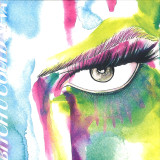
"Los Angeles-born music producer, artist, and DJ DF Tram is thrilled to announce the release of his highly anticipated new album, Bittersweet Afternoon on Orbscure Records. Orbscure Records, founded by Alex Paterson of the legendary electronic act The Orb, continues its tradition of championing innovative and boundary-pushing artists with this remarkable release. About DF Tram DF Tram is a leading figure in the global downtempo electronic scene, celebrated for his meticulously crafted audio-visual performances and immersive storytelling through sound. His work seamlessly blends ambient, sampling, spoken word, vocals, and psychedelia into genre-defying sonic journeys, offering listeners a unique and transformative experience. Bittersweet Afternoon Written and recorded between DF Tram’s Zagreb and Vienna studios during the pandemic and finished last year. Bittersweet Afternoon represents the next chapter in his storied career. The album surprises listeners with his vocals, bittersweet lullabies, and signature collage and spoken word style. Featuring atmospheric soundscapes and cinematic influences, the project reflects the spirit and playfulness of Alex Paterson and Orbscure’s commitment to fostering experimental, forward-thinking music. Adding to the album’s rich tapestry are collaborations with Alex Paterson himself on two tracks, as well as contributions from multi-talented contemporary classical violinist Violeta Vicci on another pair of songs. The first single and video, "The Librarian," offers an immersive glimpse into the world of DF Tram and “Bittersweet Afternoon”. Available on a limited edition transparent blue vinyl, card gatefold CD.
In Marking A Boundary With The Turning Point, Ard Bit and Radboud Mens explore the tension between stasis and movement. Operating within the realm of drone and electroacoustic music, they construct a sonic landscape where sustained tones and microscopic events constantly shape and reshape each other. What initially appears static reveals itself to be rich with detail: tiny acoustic shifts breathe life into apparent stillness, inviting focused and attentive listening. The album emerged from a process where sound research, improvisation, and sound design merge. Self-built instruments, the search for timbre and texture, and recordings of the learning process itself form the foundation of these compositions. Rather than following a traditional musical structure, the result is a sonic field in which the minimal continually transforms, depending on the listener's perspective. Ard Bit (Ard Janssen) is a composer, sound artist, and field recordist based in Rotterdam, trained at the Institute of Sonology in The Hague. His work moves between improvisation and system-based composition, exploring the space between ambient, drone, and sound art. Radboud Mens is a sound artist with a decades-long practice grounded in minimalism, acoustic subtlety, and physical resonance. His work focuses on the perception of sound, the materiality of audio, and the creation of spatial listening experiences. Together, they present a layered and handcrafted album that doesn't narrate but questions. Marking A Boundary With The Turning Point is not a boundary, it's an invitation to listen beyond expectation.
The Ramones were punks before punk rock was even invented. With their catchy, sing-along tunes, iconic hair styles and outfits, Joey, Dee Dee, Johnny and Tommy rewrote rock history and are now, as part of the first wave of US punk, firmly considered part of the subcultural world heritage. In the DUB-cultural world, on the other hand, their footprint has been pretty slim, particularly if one considers their stomping, three-chord songs, instantly recognizable chants (“Gabba gabba hey!”) and laconic humour. There are a few reggae and Latin versions of their songs online, but never before have the Ramones been honoured with an entire album in early reggae style…until now, bang on time for the band's 50th anniversary in 2024. The label Echo Beach, a bit of a specialist for missions such as these with a string of releases including “Bad Brains in Dub”, “Dubby Stardust”, got together with André Meyer (production, bass) and Manougazou (production, guitar). Both were part of the 2008 Echo Beach New Wave/Dub project DubXanne and were involved in the production and subsequent live shows. Also back in the team is keyboarder and DubXanne mastermind Guido Craveiro, who plays Hammond organ and piano on half of the tracks. The other two additions to the core team are singer and all-round instrumentalist Sebastian Sturm and drummer Raul Pfeffer. Together they homed in on the 11 most iconic Ramones three-minute-singalongs, including "Blitzkrieg Bop", "I Wanna Be Sedated", "Pet Sematary" and "Rock'n'Roll Highschool", and treated them to a reggae make-over. The whole process was kicked off by a slightly off-beat question (reggae music does that to you): What if Joey, Johnny, Tommy and Dee Dee had gotten together not in NYC, but in Kingston? And then stepped up to the mic alongside local singing and deejay greats? In musical terms the answer is surprisingly plausible and the line-up is sensational, even for a label like Echo Beach with its unrivalled connections. From up-and-coming youngsters to living legends, everyone is included, albeit with a focus on the elder statemen and stateswomen: the vast majority of the guests are over 60 and look back on deeply impressive careers! The artists come from Jamaica, the USA, the UK and Germany. All contributed one or two songs, and all of them tackle the songs in pairs with infectiously good humour, transforming legendary punk rock bangers into unpredictable dub tracks. Ramones’ classics such as "Blitzkrieg Bop" with its trademark battle cry "Hey! Ho! Let's Go!", "Sheena Is A Punkrocker" and "The KKK Took My Baby Away" are slowed down and underpinned with roots and rocksteady riddims. It almost goes without saying that the lyrics have been adapted to everyday Jamaican life with a great deal of fun and creativity. And amidst all the icons of early reggae, the Ramones also make an appearance: in the opening track "Pinhead", for example, we learn that the Ramones did actually listen to reggae and had even been planning a reggae album. Features guest vocals from Susan Cadogan, Ranking Joe, Ranking Ann, Prince Alla, Welton Irie, U Brown, Earl Sixteen, Dennis Alcapone and more
Three LPs packed in a trifold jacket. Pressed on Deep Ocean Pearl, Gold & Dark Green Vinyl. Take up your sword, channel your magic or board your Mech. Chained Echoes is a 16-bit style RPG set in a fantasy world where dragons are as common as piloted mechanical suits. The game is set on the continent of Valandis during the time of a multi-generational war between three kingdoms, Taryn, Gravos and Escanya. After a great catastrophe caused by Grand Grimoire shakes the continent, the kingdoms agree to sign a peace treaty. One year later, an unknown force strives to begin a new war. A group of unlikely heroes joins forces and eventually becomes the clan of Crimson Wings in order to stop it. The outstanding soundtrack for Chained Echoes was passionately composed, arranged and recorded over four years by Eddie Marianukroh as well as many other musicians who worked under his direction. It includes 50 tracks at two hours in length. Even the game has been out for a while, Marianukroh's admiration and enthusiasm for the game and his addition to it remain undiminished: "It has been over two years now since the release of Chained Echoes, which is rather difficult for me to believe. Time really flies, and it's honestly a bit frightening when I think about it. But, despite that, when I listen to the music I've written for this game, I still very much remain proud of what I composed. I really did give my all for this soundtrack. I will forever be grateful to Matthias for trusting me with the music for his game. I can vividly remember how I felt when I first came across his project, and how I nervously reached out to him about the composer position. I truly, truly cannot thank him enough for giving me this memorable experience that I will always hold dear. Thank you, my friend."
In 2020, when I had just started Future Retro London & was messaging producers I wanted to work with on tracks for the Meeting Of The Minds releases, I reached out to Worldwide Epidemic and we made "Losing Control" on Vol. 2 of Meeting Of The Minds, one of my favourites of the series.
I was quite keen on getting him back on the label at some point in the future & I can't remember exactly the chain of events that transpired during then and now (I'm sure I told him at some point to work on some music for me but I honestly can't remember how or when I did this, sorry Dan!) but around the start of 2023, he sent me Bells Of Arptazia & I knew it was perfect for the label.
Without a doubt, it's my favourite tune of his and to be honest, I'm actually a bit jealous of how lush and intricate that intro is and when I was in New Zealand on tour in March this year, he showed me the project file for it and the amount of detail that went into this tune, I'm really glad that he was willing to let me release this tune on Future Retro London.
To accompany his tune, there's remixes from Kloke, me & Dust-e-1, all taking the original into different directions to make for hopefully a well rounded release, representing a variety of styles & flavours.
Thanks to Liquid Silk for his fantastic track, to Kloke & Dust-e-1 for their remix work & to James Lacey (aka Pointless Illustrations) for the artwork.
out of Stock
Last delivered 16 months ago available to reorder, subject to availability
When we last heard from Bay Area producer DEAD PERRY, he was riding high on the critical success of "The Art Of Re-Animation" album. That album was a re-imagining of legendary Hieroglyphics crew emcee Casual's work from his "Big Head Science" album.
However on the forthcoming "Acoustic Shadows" album, as the title implies things get a bit dark. As he relays "when I made (The Art Of Reanimation) with Cas, I wanted to cater to the specific sound that Hieroglyphics has, but put my spin on it without making it too dark (though there are a couple of dark gems sprinkled throughout). I knew that my next album was going to be a solo LP and I wanted it to be something special. Dark and grimy has always been my style of beat making so I wanted to showcase that with this record."
However, the title also has a double meaning to the producer. "The term Acoustic Shadows comes from a Civil War phenomenon that refers to a sonic blind spot. Due to geographical obstructions disrupting sound waves you could think you are a great distance from the battlefield while you could already be in it. It also refers to my style keeping to the shadows and out of the limelight, when I only appear in photos wearing a mask, it's not because I'm on that post MF Doom craze, it's because I came from graffiti and graffiti artists let their art be their only face to the public."
That style is showcased throughout the forthcoming album, including his choice of collaborators include Casual, Daniel Son, Estee Nack, Al Divino, Raz Fresco, Ill Bill, Goretex, Hus Kingpin, Crimeapple, Planet Asia, Da Flyy Hooligan, Izrell, P-Dirt, J-Spliff and cuts from DJ Eclipse. Concepts also lent itself to the grime including the John Carpenter-esque synth laden "Call Me Snake" track, which inadvertently inspired the emcees. As DEAD PERRY relates "I give the beats a place-holder title until the track is done so this one was 'Die Kurt Russ.' P-Dirt chose to create the concept off the beat title. Crafting that song was a fun experience." It also has a full circle moment as DEAD PERRY and Casual expand their "White Crown" single from their previous project on this release enlisting Planet Asia to drop an additional Afro-Centric verse.
When we last heard from Bay Area producer DEAD PERRY, he was riding high on the critical success of "The Art Of Re-Animation" album. That album was a re-imagining of legendary Hieroglyphics crew emcee Casual's work from his "Big Head Science" album.
However on the forthcoming "Acoustic Shadows" album, as the title implies things get a bit dark. As he relays "when I made (The Art Of Reanimation) with Cas, I wanted to cater to the specific sound that Hieroglyphics has, but put my spin on it without making it too dark (though there are a couple of dark gems sprinkled throughout). I knew that my next album was going to be a solo LP and I wanted it to be something special. Dark and grimy has always been my style of beat making so I wanted to showcase that with this record."
However, the title also has a double meaning to the producer. "The term Acoustic Shadows comes from a Civil War phenomenon that refers to a sonic blind spot. Due to geographical obstructions disrupting sound waves you could think you are a great distance from the battlefield while you could already be in it. It also refers to my style keeping to the shadows and out of the limelight, when I only appear in photos wearing a mask, it's not because I'm on that post MF Doom craze, it's because I came from graffiti and graffiti artists let their art be their only face to the public."
That style is showcased throughout the forthcoming album, including his choice of collaborators include Casual, Daniel Son, Estee Nack, Al Divino, Raz Fresco, Ill Bill, Goretex, Hus Kingpin, Crimeapple, Planet Asia, Da Flyy Hooligan, Izrell, P-Dirt, J-Spliff and cuts from DJ Eclipse. Concepts also lent itself to the grime including the John Carpenter-esque synth laden "Call Me Snake" track, which inadvertently inspired the emcees. As DEAD PERRY relates "I give the beats a place-holder title until the track is done so this one was 'Die Kurt Russ.' P-Dirt chose to create the concept off the beat title. Crafting that song was a fun experience." It also has a full circle moment as DEAD PERRY and Casual expand their "White Crown" single from their previous project on this release enlisting Planet Asia to drop an additional Afro-Centric verse.
When we last heard from Bay Area producer DEAD PERRY, he was riding high on the critical success of "The Art Of Re-Animation" album. That album was a re-imagining of legendary Hieroglyphics crew emcee Casual's work from his "Big Head Science" album.
However on the forthcoming "Acoustic Shadows" album, as the title implies things get a bit dark. As he relays "when I made (The Art Of Reanimation) with Cas, I wanted to cater to the specific sound that Hieroglyphics has, but put my spin on it without making it too dark (though there are a couple of dark gems sprinkled throughout). I knew that my next album was going to be a solo LP and I wanted it to be something special. Dark and grimy has always been my style of beat making so I wanted to showcase that with this record."
However, the title also has a double meaning to the producer. "The term Acoustic Shadows comes from a Civil War phenomenon that refers to a sonic blind spot. Due to geographical obstructions disrupting sound waves you could think you are a great distance from the battlefield while you could already be in it. It also refers to my style keeping to the shadows and out of the limelight, when I only appear in photos wearing a mask, it's not because I'm on that post MF Doom craze, it's because I came from graffiti and graffiti artists let their art be their only face to the public."
That style is showcased throughout the forthcoming album, including his choice of collaborators include Casual, Daniel Son, Estee Nack, Al Divino, Raz Fresco, Ill Bill, Goretex, Hus Kingpin, Crimeapple, Planet Asia, Da Flyy Hooligan, Izrell, P-Dirt, J-Spliff and cuts from DJ Eclipse. Concepts also lent itself to the grime including the John Carpenter-esque synth laden "Call Me Snake" track, which inadvertently inspired the emcees. As DEAD PERRY relates "I give the beats a place-holder title until the track is done so this one was 'Die Kurt Russ.' P-Dirt chose to create the concept off the beat title. Crafting that song was a fun experience." It also has a full circle moment as DEAD PERRY and Casual expand their "White Crown" single from their previous project on this release enlisting Planet Asia to drop an additional Afro-Centric verse.
Tuskegee returns with serious intent and a fresh club weapon from a recognised statesman of house music, Junior Sanchez. Having written and collaborated with artists including Daft Punk, Armand Van Helden, Todd Terry, and Roger Sanchez, ‘Bitch U Could Neva’ pairs Sanchez with vocalist and songwriter Dave Giles II, riding high himself following link-ups with Honey Dijon, Mike Dunn, and a producer on Beyonce’s anthemic ‘Cozy’.
‘Bitch U Could Neva’ is a powerful, instantaneous trip back into the underground style and attitude shared between both artists, reflecting the vibe of Sanchez’s rise to success in the halcyon days of New York nineties clubbing, alongside Giles II’s own youth in the Chicago creative scene. Living up to the attitude of its title, ‘Bitch U Could Neva’ bumps with peak-time energy, jackhammer drums and chopped-up vocals never undermining its fundamental sensuality, an increasingly rare link between true, authentic dancefloors past and present.
The pair then look to London for a confident, stripped-back take from prestigious record collector and curator GIDEON. The founder of dance music institutions Adonis and Glastonbury’s infamous Block 9 goes deep to find the track’s potential as a minimal, vogue-adjacent house workout, scattered with telephone dial tones and an upfront disclosure; “Bitch, I’m serving.”
Back across the Atlantic, Physical Therapy and Michael Mangan team up under their Fatherhood project to give ‘Bitch U Could Neva’ a seriously bouncy redress, winding tight drums atop a rubbery bassline and paying their own Twilo and Tunnel-era tributes with cut-up vocals and an ecstatic onslaught of rave stabs.
out of Stock
Last delivered 17 months ago available to reorder, subject to availability
A stellar collaboration between composer Michael Cashmore (Current 93) and vocalist Marc Almond of Soft Cell fame. Two complementary creative sensibilities in intimate interlock; supreme compositional and vocal talents fusing to make uniquely dramatic musical and vocal interpretations of searing beauty and insight. Specifically, this suite of songs feature the heightened lyricism of a stunning array of cult poets, both contemporary and of yesteryear. 'Feasting With Panthers' is a stellar collaboration between composer Michael Cashmore (Current 93) and vocalist Marc Almond of Soft Cell fame, in the nearest thematic echo and nod, in the latter's vast back catalogue, to the darker gothic influences of his celebrated Marc And The Mambas period and his acclaimed 'L'Absinthe' and 'Jacques' twisted chanson solo albums. This album's defining aesthetic is the setting of outsider poems to music. Poems by Count Eric Stenbock plus unique lyrical translations - by celebrated poet Jeremy Reed - of works by Jean Genet, Jean Cocteau, Arthur Rimbaud, Paul Verlaine, as well as Reed's own poetry. The emphasis throughout is on 'decadent' poems of thwarted love, ill-fated romance, self-destruction and death: many poems are woven with homo-eroticism, laced with opium dreamstates and all are accompanied by Michael Cashmore's haunting and melancholic music that lends the verses a deft yearning for beauty and a bittersweet, melancholic longing for lost innocence and youth. Originally released in 2011 and long since deleted, 'Feasting With Panthers' is now restored to back catalogue availability as a double vinyl album - it's first ever vinyl edition - with a variant of the original album artwork and two printed, full colour inner sleeves complete with lyrics and pictures and featuring four bonus tracks. The album was recorded over several years by the artists sending music files back and forth by e-mail and post; the artists never once recording together in the studio. Berlin based Michael Cashmore worked at home composing the music, playing all of the instruments and adding Marc's vocals from files recorded in London. The resulting album is a glorious union of sensual talents, both in voice and music, complementing the intriguing and evocative poetic texts. The project began after Current 93's David Tibet gave Marc a book of poems by the Baltic German poet Count Stanislaus Eric Stenbock. Marc was instantly attracted to the dark eroticism and the melancholic yearning of the verse and, so, contacted Michael Cashmore, whom he had previously worked with on Current 93's reading of 'Idumea'. He felt Michael would have the right understanding of the verse with his intricate, beautiful musical compositions. From this, the project developed to include many of Marc's favourite poems by some of his favourite 'outsider' poets with common thematic ground.
"The album was created in this back and forth of snapshots - we made most of the decisions impulsively without much questioning. That takes a lot of trust." — Violeta García & Hora Lunga
"I'll Wait For You In The Car Park", the first full length collaboration between Argentinian cellist, improviser and composer Violeta García and Swiss musician and composer Hora Lunga, is a work of extremes. Drawing from the realities of life on two continents, and embodying moods ranging from stoic desire to violent bursts, the album enciphers so-called ordinary moments from everyday life into an alluring collection of musical scenes. Seemingly inconspicuous moments are condensed into a tale of synchronicity: colliding time zones and seasons, metropolitan rhythms raining down onto a glacier's ice field, exploring places through street view, the serendipity of loitering at a kiosk. As such, "I'll Wait For You In The Car Park" brings documentary film essays to mind that carefully observe the private and everyday occurrences.
Violeta García and Hora Lunga crossed paths by chance in 2023 and began discussing and sharing music shortly afterwards. What started as a loose exchange of ideas, sending back and forth sketches and demos between South America and Europe, grew into several studio sessions in 2024. Being sucked into a "quite extraordinary flow", the two musicians recorded, arranged and intervened on a level playing field, using the studio as a playground to record musical layers and interweave them with field recordings and audio notes gathered over the course of a year. Speaking a kindred musical language, they quickly realized how their ideas clung to each other like two familiar souls, complementing, intertwining and merging. From gauzy and eerie textures, musical miniatures floating through time, howling and screaming strings, to tumbling and thundering basses – the sound of the ordinary shapes a body that vibrates, writhes and breathes.
Violeta García is a cellist, improviser and composer from Buenos Aires, Argentina. Based in Spain, she tours a lot with her band Blanco Teta. She is a performer in many art forms, including free improvisation, contemporary and trans-media experimental repertoire in violoncello and electronics and collaborations with dancers, film makers and visual artists. After years of studying classical and popular music on violoncello and, later, contemporary composition and improvisation, Violeta has developed her own musical voice needed to emerge beyond outside specific genres.
Throughout Swiss composer and musician Hora Lunga's work, the focus lies is on exploring boundaries, both musically and in terms of performance and content. Above all, genre designations lose all meaning, as the music always takes place within a dramaturgically conceived overall framework. In recent years, his projects have ranged from pop music productions to experimental works and sound performances, as well astheatre and film productions. His ensemble WIRREN consists of up to fifteen performers.
Kennedy Mann, indie singer-songwriter and lead singer of dream-pop band Highnoon, is a rising artist from the Philly DIY scene, in which she has become memorable for her poignant lyricism, tender vocals, and sharp melodic skill. Combining the analog sounds of dream pop, indie folk, and slowcore, Kennedy Mann's compositions strike you in the heart and linger like a bittersweet memory. Kennedy's journey as a songwriter began with the debut of Highnoon's first album Semi Sweet, a project consisting of self-written pop-rock tunes. As Kennedy continued to write, she quickly gathered a collection of demos that felt too intimate and singular for the traditional rock band format - a world of music she kept to herself like a secret. Kennedy finally launched her solo project in 2023 as a way to bring some of her most personal musical ideas to life. A prolific songwriter and creative force, she began performing her original acoustic demos on TikTok, quickly building a small devoted following around her vocals and songwriting. Through TikTok, Kennedy began to build her own music community, befriending fellow songwriters Kai Warrior, Tofusmell, and Leith Ross along the way. In recent months, Kennedy Mann embarked on the European leg of Leith Ross' first headline tour, allowing her the opportunity to bring her idiosyncratic talents to the world stage. In July of 2023, she released her debut solo single ?Crooked," a charming Kimya Dawson-inspired slowcore track that finds Kennedy pining over her partner's ?ugliest? and most undesirable traits.
j.o.y.s. is both the moniker of and the debut self-titled LP by the Los Angeles based artist Ramon Narvaez. j.o.y.s. is an acronym for “jump out of your skin”. While the phrase can conjure moments of shock and surprise, Narvaez, however uses the phrase as a foot lamp illuminating a path towards momentary transcendence through creating beautifully conjured ambient music that recalls work by Daniel Lanois, suss, Dean Hurley and Tim Hecker. While the pedal steel is prominent, j.o.y.s., as a project, is more in conversation with shoegaze and noise than what has recently been deemed ambient country. Heavy brutalist slabs of noise, swirling feedback create the sound bed of these songs. Collaborator Justin Gaynor’s pedal steel on this album operates as important connective tissue as both the road and the traveler between the light and shadow zones. Drones are wrapped in distortion, processed just below the threshold where we’d throw the word “harsh” around. Rather, there is a delicate dance between Gaynor’s top-rope pedal steel lines - always sweet and always just a bit mournful - with Narvaez’s ringing bass notes and noise chatter. j.o.y.s. revels in intransigence. Nothing can last. As Matt Colquhoun puts in the introduction to Mark Fisher’s heartbreaking Ghosts of My Life - our identity and relationship to the past are “portals in perpetual collapse”. Depression, friendship, longing are all briefly satiated while in the peak experience of creating something as a response to them. But even that is impermanent. These sounds - improvised, exploratory, ecstatic - are eventually edited, whittled down and pressed to wax - not tombs but portals to the past.
‘The Return of Pachyman’ is a supernatural force
from a brave new world that’s a little bit San Juan,
a little LA, and a whole lot of Channel One in
Kingston, Jamaica. Designed to be a resurrection
of sound systems from the past through which we
can celebrate a post-Trump future, the record
shows that blasting off into reggae’s deep space
has never gone out of style.
Pachy García (aka Pachyman) is perhaps best
known as the drummer / vocalist for the LA-based
band Prettiest Eyes, a unique pop-noise project
that reflects his other formative interest, synth
punk. He thinks of ‘The Return of Pachyman’ the
same way King Tubby might - an ‘X-ray’ of reggae
music, breaking it down to its bare bones.
Originally a guitarist, he moved to Los Angeles in
the early 2010s and developed his passion for
dub. From there, he started recording bass, drums
and piano and collecting recording equipment in
his basement studio, which he calls 333 House.
With ‘The Return of Pachyman’, García wants to
show how the Caribbean flow is transnational, a
vibe that resounds from Jamaica to San Juan to
Southern California. “With this project, I was
looking to make positive music and radiate good
energy; something to kinda disconnect from the
negative things that were happening at the
moment,” Garcia explains. “I am trying to make this
project a service for humanity in the sense that I
just wanted to shine a positive light.”
out of Stock
Last delivered 18 months ago available to reorder, subject to availability
Apollo / R&S are delighted to welcome back The Primitive Painter, aka the duo of Roman Flügel and Jörn Elling Wuttke for a timely reissue of their 1994 lost classic self-titled album of sonorous IDM.
Growing up in Frankfurt, in the 80s and 90s the duo met at an indie rock club in their home town of Darmstadt, bonding over their shared obsession with the first wave of acid, Chicago house and early Detroit techno as well as their patronage of now iconic Frankfurt club nights like The Omen or Dorian Gray or the infamous Delirium Record shop run by scene stalwarts Ata (Robert Johnson) and Heiko MSO (Playhouse).
Taking inspiration from the likes of The Black Dog and Transmat as well as seminal compilations such as Planet E’s Intergalactic Beats and Warp’s Artificial intelligence compilation the duo honed their inventive take on the Detroit techno blueprint under the monicker Acid Jesus, debuting on their freshly minted Klang Elektronik label. The label was started in conjunction with Ata and Heiko after Fluegel & Wuttke (regular patrons of the Delirium store) pressed a demo on them, muttering the immortal line; “Please listen to the tape, we are big Mr. Fingers fans.”
Through the mid ’90s the project flourished giving rise to a classic album and a brace of singles that number amongst the best of the era’s techno, winning them a influential fans most notably Sven Väth, David Holmes and Andrew Weatherall who invited them to play live at one of the legendary Sabresonic parties in London.
Alongside the success of the Acid Jesus project, the duo found great inspiration in outside of the club, including an ambient happening when the KLF came to play Frankfurt; “There were live sheep eating grass on stage while they played at Mark Spoon’s club XS”, as well as cinematic influence from the likes of Jim Jarmush and Wim Wenders. It was however the euphonic IDM grandeur of Apollo Recordings self titled compilation of 1993 that really got their creative juices flowing: “It was a ten track compilation with artists like David Morley, Model 500, Aphex Twin which still sounds so good today,” Jörn enthuses. “ It was really the trigger to go away from the Detroit sound and more towards the big melodies of B12 etc.”
Deciding to make their tribute to this style of music the duo turned out 10 tracks of gauzy, melodious electronica in a white hot fever, one after another over the ensuing months. Settling on a name for the new project they picked ‘The Primitive Painters’ taking inspiration from the band Felt. “We are both children of the C86 movement,” explains Jörn. “this attitude of noisy art school influenced rock like Primal Scream, MBV, The Jesus & Mary Chain really inspired us to take a DIY approach to our music.”
They sent the resulting demo cassette to Renaat at R&S / Apollo. “We really had no expectations,” Jörn explains. “So we were shocked and delighted when we received a fax saying that he wanted to release it”.
The resulting release was bungled by an R&S mix up that attributed the album to the duo’s own Klang Elektronik label which confused both fans and distributors alike, denying the release the critical boost and attention that it so richly deserved. Accordingly the release slipped out without much fanfare, with a chastened Fluegel & Wuttke returning to their Acid Jesus activities which would eventually lead to their blockbusting success as Alter Ego.
Over the ensuing years the reputation of The Primitive Painter album has only grown, with second hand copies (only 500 vinyl were pressed) changing hands for exorbitant amounts on Discogs, leading us to this opportune moment of a richly deserved ‘first’ release on the label for which the project was started, Apollo / R&S.
“This really brings us full circle,” says Jörn. “Apollo / R&S meant and means so much to us as artists and so it was bittersweet to not have the official release - to put that right all these years later feels really good.”
This new vinyl release comes in re-created original gatefold artwork and includes all original 10 tracks (Stoned Soul Picnic was previously on the CD only).
out of Stock
Last delivered 14 months ago available to reorder, subject to availability
AFTER ALMOST A YEAR OF LIFE, SUPER PLASTIC RECORDS PRESENTS ITS FIRST LP OF SEVERAL ARTISTS. WE WANTED TO DO SOMETHING A BIT SPECIAL SO THAT OUR PRESENTATION ON VINYL RECORD WOULD BE REMEMBERED FOR THE EFFORT AND LOVE PUT INTO THIS PROJECT.
THAT'S WHY WE HAVE PRODUCED A 12 IN A FULL COLOUR GATEFOLD CASE, WITH THE INSIDE DEDICATED TO THE ARTISTS WITH PHOTOS, COVERS OF THE DIGITALLY RELEASED TRACKS AND A SHORT SUMMARY OF THE HISTORY OF SOUTHERN BREAK BEAT. WE HAVE ALSO INCLUDED A BOOKLET WITH STICKERS OF THE ARTISTS LOGOS, WHICH IS SO FASHIONABLE AT THE MOMENT.
EVERYTHING WILL BE SHRINK-WRAPPED SO THAT IT REACHES THE CUSTOMER WITH GOOD PROTECTION.
THE 12' 45 RPM DISC IS LOADED WITH 6 TRACKS, THREE MELODIC TRACKS FOR PIANO LOVERS, SUNG TRACKS WITHOUT LACKING THAT PISTERO TOUCH.
THE OTHER THREE TRACKS ARE A BIT MORE ELECTRONIC, WITH STRONG BASSES AND STRONG BASES.
out of Stock
Last delivered 18 months ago available to reorder, subject to availability
I talk quite regularly with Basic Rhythm about all sorts of topics and he regularly sends me music that he's working on, of varying styles and sounds. When he sent me Gargantua last year, there was something about it where even though it wasn't very sonically similar to a lot of the other music I've put out on Future Retro London, there was something about that piqued my interest. I played it out a few times and noticed that there was an energy to it that I enjoyed and I eventually got over my hesitations and signed it for the label. I also did my own remix of Gargantua to try out a few ideas I had for how it could sound a bit different but still maintain the spirit of the original.
Selectors Convention was initially made for a forthcoming joint label project (which is to come hopefully next year, fingers crossed) but was better suited for coming out on a release with Gargantua, as I thought it was similar in the hard edge dancefloor approach that is embodied in Gargantua. I also did a VIP of Selectors Convention, based off wanting a special version of it to play at a Future Retro London event.
Thanks to Basic Rhythm for Gargantua (and letting me remix it) as well as supplying the source images for the artwork.
out of Stock
Last delivered 19 months ago available to reorder, subject to availability
Sopa Boba is a Belgian-Dutch electronic, modern classical project. The idea behind the form is a so-called Oratorio from the present age which unfolds a dramatc tale within a sociopolitcal framework. The compositons incorporate a neo-classical style string quartet, harsh modular sytnhs and spoken word vocals. It features Pavel Tchikov (Ogives) and G.W. Sok (The Ex, Oiseaux-Tempête).
That Moment is an adaptation of the eponymous text by Moldavian writer Nicola Esinencu. The starting point of That Moment takes place in a real fact, which happened in present-time Moldavia, where a father cut his son's finger with an axe, as a punishment for stealing a bit ofmoney from the father's wallet. From there the author combines the tale and its reality with a caustic irony, interrogating an unbridled capitalist society, where everything and everyone is for sale. The total playing-tme is 55 minutes, somewhere in between a hybrid electronic - modern classical oratorio and a concept album, with seven tracks that serve as seven chapters of an ironic and satiric story about the downward spiral of the capitalist society.
Running Back’s Double Copy subsidiary for house music history returns with four musical masterpieces from Chicago, London and an international cast from Italy on its first various artist sampler.
Originally released on Roy Davis Jr.’s Undaground Therapy outlet, Destination Heaven by the enigmatic Earth Boys project delivers a piece of cloud-nine-deep-house that was a staple at Frankfurt’s Wild Pitch Club and during the early days of its successor Robert Johnson. Produced by Cloudy Eyes and Cole Brooks, we unfortunately have never heard from the duo again. Luckily, Family of Few have been a little bit more productive. Also known as Mind Readers, Kevin Elliot and Billy ‚Jack“ Williams produced some of the more tender moments on Detroits 430 West label. Intervoles is amongst the most peculiar and catchy tracks that slow-burning dance floors can hope for.
The flip side turns the attention to the conclusions that Europe drew from its US-role-models. Released in 1992 on Rena Records with the involvement of New York’s JoVonn (a distinct genius of deep grooves himself), the keyboard skills of Pierre Audetat and the production work of I. Betti, M. Clemente and W. Brown, Dummy Head is one of a kind. Swirly echoes, dubby textures and a heavy bass line mate on the Edit Mix of I Have Been Wanting You to create one of the very first examples of fully formed dub-house.
Similar pioneering properties can be ascribed to the work of Rob Mello. We don’t have enough room here to list all his merits, but rest assured that the UK’s house scene wouldn’t be the same without him (Luxury Service Records, Classic et al). Under the Karim guise, Mello delivered a unique stroke of genius. Distilling the essence of deep house, while looking far into the future, In My Mind is many things at once: broken beat, electro, house with embracing chords, and – if you will – a warm-up banger. and does, what all the tracks in here do: turning heads then, turning heads now. Hardcore Deep House!
out of Stock
Last delivered 6 months ago available to reorder, subject to availability
Loyle Carner will release his highly anticipated sophomore record, 'Not Waving, But Drowning' on 19 April via AMF Records.
'Not Waving, But Drowning' follows Loyle's BRIT (Best Male, Best Newcomer) and Mercury Prize nominated, top 20 debut 'Yesterday's Gone'. The bedrock of honest and raw sentimentality that you heard on 'Yesterday's Gone' left an inextinguishable mark on music in general and UK Hip Hop in particular, standing out as an ageless, bulletproof debut.
'Not Waving, But Drowning', Loyle's new album, gives yet more evidence - as if it were needed - of his razor-sharp flow and his unique storytelling ability. Yes, he can rap, but he allies that with the sensitivity of a poet, the observational skills of a novelist, and warmth of your best friend. The album opens with 'Dear Jean', a letter to his mother in which he's telling her that he has found the love of his life, 'a woman from the skies', and he's moving out.
It goes without saying that Loyle's music is hard to categorise, but what is even more impressive is that for someone who grew up listening to Mos Def, Biggie Smalls, Roots Manuva, and Wu Tang Clan, he doesn't sound like any of them. Although he might from time to time give lyrical nods to them, he's no imitator.
Loyle loves cooking. There are two tracks on this album named after chefs. The British-Israeli chef Yotam Ottolenghi, and the now deceased Italian chef Antonio Carluccio. 'Ottolenghi' the first single from the album was featured on the BBC Radio 1 B-list, BBC 6 Music A-list and has already been streamed over 5 million times.
Loyle refers to real life for everything, the title of 'Yesterday's Gone' came from a song of his step father, the title of his new album 'Not Waving, But Drowning' comes from a poem by his grandfather, which in turn came from a Stevie Smith poem. What you hear on the track 'Krispy' is real. He is pouring his heart out to his best friend Rebel Kleff after their relationship went downhill, he invites him on the track to say his piece but he doesn't turn up, so we get a flugel solo instead.
Loyle also has his own personal black consciousness movement. When he refers to his 'fathers' in the track 'Looking Back' he really is referring to two fathers. His biological father, a black man who he knows, but knows very little of, and his step father, a poet and musician who happens to be a white man but died a sudden unexpected death from epilepsy (SUDEP). With no real emotional ties to his biological father, but a deep connection with a deceased step-father, where does a young child turn He succinctly captures many of the great, unspoken, cultural and historical paradoxes of multicultural Britain on 'Looking Back'.
An album like this is hard to find. It is for those who like their Hip Hop to have soul, and their soul to have spirit. This is because it works on so many levels, but it is reflecting the personality of its creator. There are a host of collaborators here, Jorja Smith, Rebel Kleff, Kiko Bun, Kwes, Jordan Rakei, Sampha, Tom Misch and more, but none are overpowering. They blend righteously into place.
Loyle is not bitter with people who have let him down, or a society that lets so many down, but the combination of anger and love he has gives his voice the perfect blend of strength and vulnerability. This might be a coming of age album, but it's also a coming of ageless album. Loyle's 2019 Spring tour - which includes London's Roundhouse - sold out within 20 minutes of being on sale.
Not Waving, But Drowning
A rapper that raps about family is hard to find. The boys in the 'hood' tend not to be that interested in how much a 'brother' loves his mother, or how much he misses his dad, or even how much he misses his best friend. The boys in the 'hood' tend to be obsessed with the size of their cars, girls, bank accounts, and other personal 'possessions'. Loyle Carner's Mercury and BRIT Prize nominated debut 'Yesterday's Gone' (Released 2017), made it clear that he wasn't that kind of rapper. In fact, every time I talk to him about his work we talk about the world, and we tended to confuse ourselves by calling his work rap, poems, or songs, sometimes in the same sentence. They are in truth all of these things.
Here's some poetry.
Honestly I need them.
I hate them but I grieve them
I think I've finally found the reason
Trust
Like the fire needs the air.
I won't burn unless you're there.
'Not Waving, But Drowning', Loyle's forthcoming new album, gives us yet more evidence, (if it were needed), that he still has what rappers call, flow, but he hasn't lost any of his story telling qualities. Yes, the boy can rap, but a rapper with the sensitivity of a true poet, the observational skills of a novelist, and warmth of your best friend. The album opens with 'Dear Jean', a letter to his mother in which he's telling her that he has found the love of his life, (a woman from the skies), and he's moving out. He really loves the woman from the skies, but he still loves his mum, and so he reassures her that there is no competition, and tells her that 'She's not behind me or behind you, but beside we and beside two', his words. Or to put it another way, moving out without moving out. My words.
It goes without saying that Loyle's music is hard to categorise, but what is even more impressive is that for someone who grew up listening to Mos Def, Biggie Smalls, Roots Manuva, and Wu Tang Clan, he doesn't sound like any of them. Although he might from time to time give lyrical nods to them, he's no imitator. He says finding his own voice was something he always found easy. Although young, (in terms of a musical career), he has confidence in his own words and his own voice, and has never been tempted to sound like he's been hanging out in the USA, or rolling in 'Grime' on the mean streets of East London. And so when it comes to the creative process he doesn't simply find a beat to jump on and ride. Beats are important, but they are tenderly layered with samples, keyboards, or live drums, all imaginatively assembled for the laying on of words. Some tracks start with the idea, some with poetry, and some with a verse from a singer or some other melodic inspiration, but there is no formula.
Here's some poetry.
Don't hold any memories of us
Rather hold you everyday until the memories are dust
Yo we only caught the train
Cos you know I hate the bus
A prolific reader, who has dyslexia is hard to find. Add ADHD (Attention deficit hyperactivity disorder) to that and life should become even more difficult. To deal with your difficulties you devise coping strategies, which can differ from person to person. Loyle loves cooking. There are two tracks on this album named after chefs. The British-Israeli chef Ottolenghi, and the now deceased Italian chef Antonio Carluccio. Loyle describes himself as 'weird' because he is happy to read a cookbook as if he was reading a novel or a book of poetry. He has opened a cookery school for young adults not just because he loves food and wants to make more of it, but because it is one of the few things that can focus the ADHD mind. And when it comes to his other love, football, his approach is the same. Focus. He wanted to be a striker he says, up front scoring goals, but found his best position was in midfield because he was able to focus, check options, and see passes ahead of time, providing passes for other players just when they needed them. He says, 'You don't grow out of ADHD, you grow into it.' Loyle is also working with Levi's® on their music project where he is mentoring young musicians over a six month period, culminating at Liverpool Sound City festival.
More poetry.
When the going is tough
I wait till it falls on deaf ears
Hearsay
Without the boundaries of love
He also said, 'Ask most people and they will say that they love their mothers, but most are not going to rap about her'. On his first album Loyle's mum Jean wrote about the 'scribble of a boy' that growing up would take things apart to see how they worked. On this album she speaks with pride about a man who has found his place in the world.
Yes, poetry.
I'm still looking for the answers
Trying to find the right questions
Still waiting for my fathers
But can't break them in to sections
This poetry is serious. Loyle has his own personal black consciousness movement. He told me that he always felt safe at home, and being the darkest one in the family never meant a thing, but then when he had to face the outside world he felt hostility. It shook him up. Now he had to start asking questions, but what were the questions. This is serious. When he refers to his 'fathers' in the verse above taken from the track 'Looking Back' he really is referring to two fathers. His biological father, a black man who he knows, but knows very little of, and his step father, a poet and musician who happens to be a white man but died a sudden unexpected death from epilepsy (SUDEP). So to whom would a young black (or mixed race) kid turn He succinctly captures many of the great, unspoken, cultural and historical paradoxes of multicultural Britain when he says, 'My great grandfather could of owned my other one.' We are a people descended from enslaved people on one hand, and enslavers on the other, something we are still struggling to come to terms with, and this can be apparent in one family. A big book could have told you that, but here we get it in one line on the track, Looking Back.
Loyle refers to real life for everything. The album is peppered with captured moments that he records on his phone. These moments can range from conversations with taxi drivers, to capturing the moment when England scores a goal in the world cup. The title of 'Yesterday's Gone' came from a song of his step father, the title of his new album 'Not Waving but Drowning' comes from a poem by his grandfather, which in turn came from a Stevie Smith poem. What you hear on the track 'Krispy' is real. He is pouring his heart out to his best friend after their relationship went downhill, he invites him on the track to say his piece but he doesn't turn up, so we get a flugel solo instead. Yes people, this is real.
An album like this is hard to find. It is for those who like their Hip Hop to have soul, and their soul to have spirit, this is an album for those who have, (I'm sorry, I'm going to say it), emotional intelligence. This is because it works on so many levels, but it is reflecting the personality of its creator. There are a host of collaborators here, Jorja Smith, Rebel Kleff, Kiko Bun, Jordan Rakei, Sampha, Tom Misch and more, but none are overpowering. They blend righteously into place. Loyle is not bitter with people who have let him down, or the society that has let him down, but the combination of anger and love he has gives his voice the perfect blend of strength and vulnerability. This might be a coming of age album, but it's also a coming of ageless album. His first album worked, and this second album is a continuation of that work. Not creating a form, but being formless, as someone like Bruce Lee once said.
And here's some poetry from mum.
We talked long in to the darkest hours
Until we saw the burnished sky
And our eyes stung
As our words blurred and became thoughts
As we were silenced by the dawn
We clung to each other like sailors in a storm
out of Stock
Last delivered 19 months ago available to reorder, subject to availability
As Jess Sylvester finished his Hardly Art debut as Marinero in the fall of 2020, he realized it was time for a change. Sylvester grew up in Marin County, on the doorstep of San Francisco. It was a nurturing community for a high-school punk with a pompadour and, later, for a sober songwriter with a proclivity for moody psychedelia. But he wanted to be challenged and inspired by a new setting and scenario around strangers who prompted him to approach his music in unexpected ways. So in September 2020, as the world continued to reel in lockdown, Sylvester headed several hours south to Los Angeles, a city that, despite the relative proximity, the film buff knew largely from classic and cult films situated there. When he arrived, he kept digging into that cinematic past-Robert Altman's The Long Goodbye, with John Williams' classic theme, or classic 90s movies about East LA, many featuring Edward James Olmos. They shaped his understanding of his new town just as it began to open. This is one pillar of the multivalent and endlessly lush La La La, Marinero's new album about sobriety, identity, and fantasy that is playfully named both for the city that helped shape it and the sophisticated pop it contains. Sylvester wrote about characters outside of himself, whether considering the heroine reckoning with her own version of keeping clean or the screenwriters whose work was deemed communist simply as a political convenience. He linked those songs with motivational anthems about self-acceptance and playful numbers about flirting through food, shaping a 12-song set rich with humor, empathy, and encouragement. Sure, La La La is a continuation of the slippery genre play Sylvester started with 2021's Hella Love, 2019's Trópico de Cáncer, or even before that. But it also feels like a fresh beginning for Marinero, as Sylvester realizes how boundless this project can be. He began to think about the music of his childhood, how his mother is from San Francisco with Mexican roots, and how he'd heard so much salsa growing up as an impetuous teenager. So he wrote "Taquero," a red-hot salsa tune that uses tacos and their trappings as a source of endless metaphors for come-ons. And then there was the Ray Barreto or Santana-inspired "Pocha Pachanga," with organ gliding and percussion pulsing beneath his yearning vocals, warped as if by desert winds. In Los Angeles, he found a wealth of players who spoke this music like language itself (including Chicano Batman's Eduardo Arenas), all ready to play with and push these familiar forms. Sylvester has also been sober for 21 years, since a cross-country sojourn to attend college in Boston ended in a chemical haze. Today, he sees friends facing the same decisions he made two decades ago, and he brings bits of that experience to bear in songs that feel like self-help anthems. Recorded with a musical hero (and labelmate) of his, Chris Cohen, "Sea Changes" feels like sunshine breaking through dark clouds, as Sylvester acknowledges the newfound confidence and clarity in a friend who has stepped away from destructive habits. In the past, Sylvester has been intractably linked to his identity as a Mexican-American, born to parents from Mexico and Irish- American descent who settled in San Francisco. That can be limiting, of course, tying him to notions of sound and style that aren't always correct. On La La La, he simultaneously steps into and out of those preconceptions, singing tracks above salsa in joyous Spanish or pondering the dynamics of the Hollywood Ten and blacklists above mysterious lap steel and teasing trumpet. His identity, then, should now be clear: He is a Californian, making music shaped by the diversity of encounters and experiences that are a central part of that state's fabric. Never before has he presented himself so fully and unabashedly on tape as with La La La, an album Sylvester built with new inspirations to deliver new charms.
Volume 1 of this expertly curated project of 90s Italian House - put together by Don Carlos.
If Paradise was half as nice… by Fabio De Luca.
Googling “paradise house”, the first results to pop up are an endless list of European b&b’s with whitewashed lime façades, all of them promising “…an unmatched travel experience a few steps from the sea”. Next, a little further down, are the institutional websites of a few select semi-luxury retirement homes (no photos shown, but lots of stock images of smiling nurses with reassuring looks). To find the “paradise house” we’re after, we have to scroll even further down. Much further down.
It feels like yesterday, and at the same time it seems like a million years ago. The Eighties had just ended, and it was still unclear what to expect from the Nineties. Mobile phones that were not the size of a briefcase and did not cost as much as a car? A frightening economic crisis? The guitar-rock revival?! Certainly, the best place to observe that moment of transition was the dancefloor. Truly epochal transformations were happening there. From America, within a short distance one from the other, two revolutionary new musical styles had arrived: the first one sounded a bit like an “on a budget” version of the best Seventies disco-music – Philly sound made with a set of piano-bar keyboards! – the other was even more sparse, futuristic and extraterrestrial. It was a music with a quite distinct “physical” component, which at the same time, to be fully grasped, seemed to call for the knotty theories of certain French post-modern philosophers: Gilles Deleuze, Félix Guattari, Paul Virilio... Both those genres – we would learn shortly after – were born in the black communities of Chicago and Detroit, although listening to those vinyl 12” (often wrapped in generic white covers, and with little indication in the label) you could not easily guess whether behind them there was a black boy from somewhere in the Usa, or a girl from Berlin, or a pale kid from a Cornish coastal town.
Quickly, similar sounds began to show up from all corners of Europe. A thousand variations of the same intuition: leaner, less lean, happier, slightly less intoxicated, more broken, slower, faster, much faster... Boom! From the dancefloors – the London ones at least, whose chronicles we eagerly read every month in the pages of The Face and i-D – came tales of a new generation of clubbers who had completely stopped “dressing up” to go dancing; of hot tempered hooligans bursting into tears and hugging everyone under the strobe lights as the notes of Strings of Life rose up through the fumes of dry ice (certain “smiling” pills were also involved, sure). At this point, however, we must move on to Switzerland.
In Switzerland, in the quiet and diligent town of Lugano, between the 1980s and 1990s there was a club called “Morandi”. Its hot night was on Wednesdays, when the audience also came from Milan, Como, Varese and Zurich. Legend goes that, one night, none less than Prince and Sheila E were spotted hiding among the sofas, on a day-off of the Italian dates of the Nude Tour… The Wednesday resident and superstar was an Italian dj with an exotic name: Don Carlos. The soundtrack he devised was a mixture of Chicago, Detroit, the most progressive R&B and certain forgotten classics of old disco music: practically, what the Paradise Garage in New York might have sounded like had it not closed in 1987. In between, Don Carlos also managed to squeeze in some tracks he had worked on in his studio on Lago Maggiore. One in particular: a track that was rather slow compared to the BPM in fashion at the time, but which was a perfect bridge between house and R&B. The title was Alone: Don Carlos would explain years later that it had to be intended both in the English meaning of “by itself” and like the Italian word meaning “halo”. That wasn’t the only double entendre about the song, anyway. Its own very deep nature was, indeed, double. On the one hand, Alone was built around an angelic keyboard pattern and a romantic piano riff that took you straight to heaven; on the other, it showcased enough electronic squelches (plus a sax part that sounded like it had been dissolved by acid rain) to pigeonhole the tune into the “junk modernity” section, aka the hallmark of all the most innovative sounds of the time: music that sounded like it was hand-crafted from the scraps of glittering overground pop.
No one knows who was the first to call it “paradise house”, nor when it happened. Alternative definitions on the same topic one happened to hear included “ambient house”, “dream house”, “Mediterranean progressive”… but of course none were as good (and alluring) as “paradise house”. What is certain is that such inclination for sounds that were in equal measure angelic and neurotic, romantic and unaffective, quickly became the trademark of the second generation of Italian house. Music that seemed shyly equidistant from all the rhythmic and electronic revolutions that had happened up to that moment (“Music perfectly adept at going nowhere slowly” as noted by English journalist Craig McLean in a legendary field report for Blah Blah Blah magazine). Music that to a inattentive ear might have sounded as anonymous as a snapshot of a random group of passers-by at 10AM in the centre of any major city, but perfectly described the (slow) awakening in the real world after the universal love binge of the so-called Second Summer of Love.
For a brief but unforgettable season, in Italy “paradise house” was the official soundtrack of interminable weekends spent inside the car, darting from one club to another, cutting the peninsula from North to centre, from East to West coast in pursuit of the latest after-hours disco, trading kilometres per hour with beats per minute: practically, a new New Year’s Eve every Friday and Saturday night. This too was no small transformation, as well as a shock for an adult Italy that was encountering for the first time – thanks to its sons and daughters – the wild side of industrial modernity. The clubbers of the so-called “fuoriorario” scene were the balls gone mad in the pinball machine most feared by newspapers, magazines and TV pundits. What they did each and every weekend, apart from going crazy to the sound of the current white labels, was linking distant geographical points and non-places (thank you Marc Augé!) – old dance halls, farmhouses and business centres – transformed for one night into house music heaven. As Marco D’Eramo wrote in his 1995 essay on Chicago, Il maiale e il grattacielo: “Four-wheeled capitalism distorts our age-old image of the city, it allows the suburbs to be connected to each other, whereas before they were connected only by the centre (…) It makes possible a metropolitan area without a metropolis, without a city centre, without downtown. The periphery is no longer a periphery of any centre, but is self-centred”.
“Paradise house” perfectly understood all of this and turned it into a sort of cyber-blues that didn’t even need words, and unexpectedly brought back a drop of melancholic (post?)-humanity within a world that by then – as we would wholly realise in the decades to come – was fully inhuman and heartless. A world where we were all alone, and surrounded by a sinister yellowish halo, like a neon at the end of its life cycle. But, for one night at least, happy.
out of Stock
Last delivered 86 days ago available to reorder, subject to availability
First Word Records is extremely proud to welcome aboard Takuya Kuroda.
A highly-respected trumpeter born in Kobe, Japan, Takuya is a forward-thinking musician that has developed a unique hybrid sound, blending soulful jazz, funk, post-bop, fusion and hip hop music.
After following the footsteps of his trombonist brother playing in big bands, he relocated to New York to study jazz & contemporary music at The New School in Union Square; a course he graduated from in the mid-noughties. It was here that Takuya met vocalist José James, with whom he worked on the 'Blackmagic' and 'No Beginning No End' projects.
Following graduation, Takuya established himself further in the NYC jazz scene, performing with the likes of Akoya Afrobeat and in recent years with DJ Premier's BADDER band (also including acclaimed bass player, Brady Watt). Premier said "The BADDER Band project was put together by my manager, and an agent I've known since the beginning of my Gang Starr career. He said, 'What if you put a band together that revolved around a trumpet player from Japan named Takuya Kuroda? He's got a hip-hop perspective and respect in the jazz field…"
Takuya Kuroda is already incredibly prolific, releasing five albums in the past decade and fortifying a solid reputation in the global jazz scene. 2011 saw the release of Takuya's independently-produced debut album, 'Edge', followed by 'Bitter and High' the following year and 'Six Aces' on P-Vine in 2013. Takuya was signed to the legendary Blue Note Records in 2014 for his album 'Rising Son', as well as appearing on their 2019 cover versions project, 'Blue Note Voyage'. He released his 5th album 'Zigzagger' on Concord in 2016, which also featured Antibalas on a reimagining of the Donald Byrd classic 'Think Twice'.
Late Summer 2020, Takuya Kuroda returns with his sixth album 'Fly Moon Die Soon'.
In his words, "this album is about the irony between the greatness of nature and the beautiful obsceneness of humanity. Melodies and grooves fly back and forth from being spiritual to being vulgar."
It took two years to make this album. In 2018, I decided I just couldn't make albums the same way I had been in the past anymore. As a birthday treat to myself, I booked a studio in Brooklyn for two days, with only myself and an engineer, Todd Carder. I brought along some tracks I'd been building at home to see if we could complete them within that time. We began replacing sounds and adding texture, sampling noises from all over the studio; me sipping coffee, hitting a 26" kick drum, speeding up snares. At the end of the two days we were like "wow, I didn't know we could make tracks this good in this way". This is how the process of the full album started. Everything was based on my beats I made at home, inviting musicians in one by one, adding or replacing parts. I was very careful when developing these tracks; just note by note, part by part. I wanted to make the music effectively from a blend of two different recording methods; one very slickly produced part and one very organic part played by live musicians. I remember mixtapes from when I was kid, and wanted to make an album that wasn't just a bunch of flashy singles, trying to catch people's attention in the first 30 seconds, or full of guest features. Instead, I'm essentially just trying to let the grooves breath."
The album consists of nine tracks of excellence. The uptempo jazz-funk of 'ABC' and 'Moody' sit alongside soulful jazz cuts like 'Fade' and 'CHANGE', also featuring Corey King on vocals. The title track is a downtempo groove lead by a heavy Moog bassline, whilst 'Do No Why' contains an infectious piano riff throughout. Aside from Takuya's original compositions, he revisits two classics from Ohio Players ('Sweet Sticky Thing' featuring Alina Engibaryan on vocals) and Herbie Hancock ('Tell Me A Bedtime Story') whilst the album closes with the epic 'TKBK'.
Takuya adds "this special cover was inspired by the Golden Moon I saw during a photoshoot in Death Valley with my homie Hiroyuki Seo".
Takuya Kuroda is a truly unique talent, and this album is a realisation of the evolution of his sound.
'Fly Moon Die Soon' is released on Worldwide Award-winning UK label First Word Records on vinyl & digital in September 2020.
out of Stock
Last delivered 18 months ago available to reorder, subject to availability
From a world of its own, somewhat like ours, yet a bit different. Familiar sound, but in a slightly different order, upside down or backwards, with different instruments or in another language just beyond comprehension, that still, somehow, makes sense and carries us further in search of musical discovery. With playful and creative interaction and exceptional chemistry, Mari Kvien Brunvoll, Stein
Urheim, and Moskus take another step into uncharted musical territory. The result is the Album Barefoot in Bryophyte. The members of this quintet are frequent figures in the Hubro discography but had not played together before this project. The collaboration began as the commissioned work Branches & Limits for Voss Jazz Festival in 2023. The music has an immediacy, an unusual combination of song material spontaneous improvisation and musicianship that made the concert a favorite among both critics and audience at the festival. Mari Kvien Brunvoll and Stein Urheim have written the songs that were further developed together with Moskus. The open and improvisational approach is evident, in the blending of the known and unknown in their songs. They have a curious approach to creativity, with lyrics that are both open for interpretation and poignant at the same time
Crimson Red Vinyl. The Atomic Bitchwax, originally formed in the mid 90s as a side project of Monster Magnet by veterans of a thriving New Jersey stoner rock scene, quickly carved out their own reputation with a handful of searing releases and near-constant road ethic. Twenty five years after their debut release, the band's lineup features founder Chris Kosnik on bass and vocals, joined by Bob Pantella on drums and Garrett Sweeny on guitar.
The "Birth" remixes breath new life into Madison Willing's debut album, as COIDO, Ehua, Sinistarr, Synkro, and Itoa each add their unique sonic signatures to the project. These reinterpretations expand on the album's emotional depth, infusing it with fresh rhythms, textures, and dynamic energy. By reshaping the original's cinematic qualities, the remixes amplify the contrast between light and dark, further exploring the interplay of beauty and discomfort. The result is a collection that not only complements the original album but also pushes its boundaries, inviting listeners into new worlds of sound.
out of Stock
Last delivered 19 months ago available to reorder, subject to availability
From Karma Recordings comes their tenth EP.
A massive milestone for the label in these trying times since releasing their first EP in December 2021. It seemed fitting to bring back producer Blame to remix the massive title track Crystals from DJ Ande, the original on KR002, the Neo EP which was also remixed by Blame.
It also seemed the perfect time to cut Neo’s Reality from DJ KOS as a nod to Blame and the superb Neo’s Real Future. The third and final track is Crushed Ribs from DJ Terrace who is becoming a bit of a staple to the Karma Recordings label, being featured on KR003 and KR008 as well as projects for the future. Keep an eye on this label, they are slowing down for no-one.
Album was made in two version (with two different covers). Classic black vinyl and limited (hand numbered 100 copies) with color vinyl. Both versions has 180g vinyl records.
Himalaya Collective is probably the biggest crew of beatmakers in Poland (more than 30 official members). Collaborations are the theme of this third album for U Know Me Records, resulting in a multi-genre album that showcases Himalaya Collective's strength in all its glory.
"After two years since "Latawce", we are back with our third vinyl album released by U Know Me Records. We have been working on a unique, fully collaborative project for over a year. Each track is a result of cooperation - without restrictions on the choice of artists and collaborators.
The idea was simple: each member of the collective was to enrich their track with the vision of another person. They could be producers, vocalists, instrumentalists - both from within the collective and from further corners of the world. This is how a network of artistic connections was created, which reflects the way in which Himalaya Collective has been growing since 2016 - as a team united by passion, inspiring each other and involving other exceptional people in cooperation.
Album was made in two version (with two different covers). Classic black vinyl and limited (hand numbered 100 copies) with color vinyl. Both versions has 180g vinyl records.
Himalaya Collective is probably the biggest crew of beatmakers in Poland (more than 30 official members). Collaborations are the theme of this third album for U Know Me Records, resulting in a multi-genre album that showcases Himalaya Collective's strength in all its glory.
"After two years since "Latawce", we are back with our third vinyl album released by U Know Me Records. We have been working on a unique, fully collaborative project for over a year. Each track is a result of cooperation - without restrictions on the choice of artists and collaborators.
The idea was simple: each member of the collective was to enrich their track with the vision of another person. They could be producers, vocalists, instrumentalists - both from within the collective and from further corners of the world. This is how a network of artistic connections was created, which reflects the way in which Himalaya Collective has been growing since 2016 - as a team united by passion, inspiring each other and involving other exceptional people in cooperation.
Jazz re:freshed are proud to present the third studio album by bassist and composer Daniel Casimir.'Balance'encapsulates 'Big Band Energy', with his signature combination of Classical, Jazz and cinematic sounds.
The albumpays homage to the traditions of big band composition and historical significance whilst illustrating contemporary sensibilities.
This ambitious project explores the balance between two large and full sounds of a big band and a string section and is inspired by icon Wayne Shorter's album'Emanon'which made a deep impression on Casimir during the process of creating the album.
An organic development of Casimir's last critically acclaimed album'Boxed In'which featured a jazz quintet alongside a mini chamber Orchestra and was comprised of a woodwind, brass, with a string quartet,'Balance'is a self produced album that takes his musical vision to the next level in his most ambitious body of work to date, leading 26 musicians.
Recorded in November 2022 at Livingston Studios, in a very conscientious recording process which saw piano, bass, and drums recorded together first, followed by trumpet, trombone, saxophone, and the string section and an all star band that consists of figures from the UK Jazz scene, Cassie Kinoshi, Binker, Nubya Garcia, Rosie Turton, Sheila Maurice-Grey and Jay Phelps to name a few alongside a stunning string section performed by the London Contemporary Orchestra.
The final day of recording enlisted the powerful vocal prowess' of Zola Marcelle and Ria Moran to finesse the masterpiece. The track'Music Not Numbers'is an encouraging call to all musicians to not allow streaming culture to affect their creative process and to continue expanding the intrinsic nature of music. Whereas track,'Search for Goldilocks'explores the second meaning behind the album title 'Balance', which is to seek balance within and discover the qualities in life that are "just right".
out of Stock
Last delivered 22 months ago available to reorder, subject to availability
"This is the time that we, who have benefitted from the Last Poets shouldbe able to say, 'it's the Last Poets. It's them we should be honouring, because we did not honour them for so many years_"
KRS One wasn't just addressing the hip hop fraternity when he uttered
those words by way of introducing the video for Invocation - a poem
written thirty years ago, around the time of the Last Poets' last significant comeback. He was speaking to everyone who's been affected by the word, sound and power issuing from the most revolutionary poetry ever witnessed, and that the Last Poets had introduced to the world outside of Harlem at the dawn of the seventies.
In 2018 the two remaining Last Poets, Abiodun Oyewole and Umar Bin
Hassan, embarked on another memorable return with an album -
Understand What Black Is - that earned favourable comparison with theirseminal works of the past, whilst showcasing their undimmed passion andlyrical brilliance in an entirely new setting - that of reggae music. Trackslike Rain Of Terror ("America is a terrorist") and How Many Bullets demonstrated that they'd lost none of their fire or anger, and their essential raison d'etre remained the same.
"The Last Poets' mission was to pull the people out of the rubble o f their lives," wrote their biographer Kim Green. "They knew, deep down that poetry could save the people - that if black people could see and hear themselves and their struggles through the spoken word, they would be moved to change."
Several years later and the follow-up is now with us. The project started when Tony Allen, the Nigerian master drummer whose unique polyrhythms had driven much of Fela Kuti's best work, dropped by Prince Fatty's Brighton studio and laid down a selection of drum patterns to die for. That was back in 2019, but then the pandemic struck. Once it had passed, the label booked a studio in Brooklyn, where the two Poets voiced four tracks apiece and breathed fresh energy, fire and outrage into some of the most enduring landmarks of their career. Abiodun, who was one of the original Last Poets who'd gathered in East Harlem's Mount Morris Park to celebrate Malcolm X's birthday in May 1968, chose four poems that first appeared on the group's 1970 debut album, called simply The Last Poets. He'd written When The Revolution Comes aged twenty, whilst living in Jamaica, Queens. "We were getting ready for a revolution," he told Green. "There wasn't any question about whether there was going to be one or not. The truth was many of us still saw ourselves as "niggers" and slaves. This was a mindset that had to change if there was ever to be Black Power." He and writer Amiri Baraka were deep in conversation one day when Baraka became distracted by a pretty girl walking by. "You're a gash man," Abiodun told him. The poem inspired by that incident, Gash Man, is revisited on the new album, and exposes the heartless nature of sexual acts shorn of intimacy or affection. "Instead of the vagina being the entrance to heaven," he says, "it too often becomes a gash, an injury, a wound_" Two Little Boys meanwhile, was inspired after seeing two young boys aged around 11 or 12 "stuffing chicken and cornbread down their tasteless mouths, trying to revive shrinking lungs and a wasted mind." They'd walked into Sylvia's soul food restaurant in Harlem, ordered big meals, then bolted them down and run out the door. No one chased after them, knowing that they probably hadn't eaten in days. Fifty years later and children are still going hungry in major cities across America and elsewhere. Abiodun's poem hasn't lost any relevance at all, and neither has New York, New York, The Big Apple. "Although this was written in 1968, New York hasn't changed a bit," he admits, except "today, people just mistake her sickness for fashion." Umar is originally from Akron, Ohio, but had arrived in Harlem in early 1969 after seeing Abiodun and the other Last Poets at a Black Arts Festival in Cleveland. That's where he first witnessed what Amiri Baraka once called "the rhythmic animation of word, poem, image as word- music" - a creative force that redefined the concept of performance poetry and stripped it bare until it became a howl of rage, hurt and anger, saved from destruction by mockery and love for humanity. When Umar's father, who was a musician, was jailed for armed robbery he took to the streets from an early age where he shined shoes and raised whatever money he could to help feed his eight brothers and sisters. By the time he saw the Last Poets he'd joined the Black United Front and was ready to join the struggle. Once in Harlem, Abiodun asked him what he'd learnt in the few weeks since he'd got there. "Niggers are scared of revolution," Umar replied. "Write it down" urged Abiodun. That poem still gives off searing heat more than fifty years later. In Umar's own words, "it became a prayer, a call to arms, a spiritual pond to bathe and cleanse in because niggers are not just vile and disgusting and shiftless. Niggers are human beings lost in someone else's system of values and morals." And there you have it. It's not just race or religion that hold us back, but an economic system that keeps millions in poverty and living in fear - a system born from political choice and that's now become so entrenched, so bloated on its own success that it's put mankind in mortal danger. It was many black people's acceptance of the status quo that inspired Just Because, which like Niggers Are Scared Of Revolution, was included on that seminal first album. Along with their revolutionary rhetoric, it was the Last Poets' use of the "n word" that proved so shocking, but it would be wrong to suggest that they reclaimed it, since it never belonged to black people in the first place. There's never any hiding place when it comes to the Last Poets. They use words like weapons, and that force all who listen to decide who they are and where they stand. Umar's two remaining tracks find him revisiting poems first unleashed on the Poets' second album This Is Madness! Abiodun had left for North Carolina by then where he became more deeply enmeshed in revolutionary activities and spent almost four years in jail for armed robbery after attempting to seize funds related to the Klu Klux Klan. Meanwhile, the 21 year old Umar was squatting in Brooklyn and had developed close ties with the Dar-ul Islam Movement. A longing for purity and time-honoured spiritual values underpins Related to What, whilst This Is Madness is a call for freedom "by any means necessary," and that paints a feverish landscape peopled by prominent black leaders but that quickly descends into chaos. "All my dreams have been turned into psychedelic nightmares," he wails, over a groove now powered by Tony Allen's ferocious drumming. Those sessions lasted just two days, and we can only imagine the atmosphere in that room as the hip hop godfathers exchanged the conga drums of Harlem for the explosive sounds of authentic Afrobeat. Once they'd finished, the recordings and momentum returned to Prince Fatty's studio, since relocated from Brighton to SE London. This was stage three of the project, and who better to fill out the rhythm tracks than two key musicians from Seun Anikulapo Kuti's band Egypt 80? Enter guitarist Akinola Adio Oyebola and bassist Kunle Justice, who upon hearing Allen's trademark grooves exclaimed, "oh, the Father_ we are home!" Such joy and enthusiasm resulted in the perfect fusion of Nigerian Afrobeat and revolutionary poetry, but the vision for the album wasn't yet complete. He wanted to create a new kind of soundscape - one that reunited the Poets with the progressive jazz movement they'd once shared with musicians like Sun Ra and Pharoah Sanders. It was at that point they recruited exciting jazz talents based in the UK like Joe Armon Jones from Mercury Prize winners Ezra Collective, also widely acclaimed producer/remixer and keyboard player Kaidi Tatham, who's been likened to Herbie Hancock, and British jazz legend Courtney Pine, whose genius on the saxophone and influence on the UK's now vibrant jazz scene is beyond question. The instrumental tracks on Africanism are in many ways as revelatory and exciting as the Last Poets' own. It's important to remember that the kaleidoscope of styles and influences we're presented with here aren't the result of sampling but were played "live" by musicians responding to sounds made by other musicians. That's where the magic comes from, aided by Prince Fatty's peerless mixing which allows us to hear everything with such clarity. Music fans today have grown accustomed to listening to all kinds of different genres. Their tastes have never been so broad or all- encompassing, and so the music on this new Last Poets' album is as groundbreaking as their lyrics, and perfectly suited to the era that we're now living in. John Masouri
Smiling with No Teeth is the full length debut studio album by Ghanaian Australian artist Genesis Owusu.
The record channels Owusu's experiences with racism and depression into a gloriously chaotic collage of mutant rap, digital dub, electro-punk and psychedelic funk, heralding the arrival of Australia’s most unpredictable auteur.
Smiling with No Teeth was incredibly well received by fans and critics alike, winning 4 x ARIAS at the 2021 awards including album of the year.
The record was featured on multiple end of year best of lists including NME, Paste and triple j. Spin Magazine called it - "Equal parts musical shape-shifter, limitless creative beast, badass, humorous and undefined, Genesis Owusu is a little bit of everything and everyone. This Daybreaker has come onto the scene with a monstrously diverse and impactful project, "Smiling With No Teeth", which has quickly positioned him as an ambitious artist with mass potential to be a true pioneer in today's music scene."
Hunger Anthem is an indie rock band from Athens, Georgia with an unabashed penchant for distortion drenched, gritty, tightly executed power pop immediacy, deeply rooted in a lo-fi approach and ever-evolving, bearing an evident DIY punk rock work ethic and ethos Started as a solo project of singer/songwriter Brendan Vaganek in Buffalo, NY. Lift was recorded by Mike Albanese (Maserati, Bit Brigade, The Bad Ends, Life In Vacuum) and mastered by Joel Hatstat (Archers of Loaf, Jeff Rosenstock, Worriers). It's borne of love and sweat, and pulls deeply from the well of observation, longing, acceptance, and perseverance.
Introducing Wishy, a brand new band from celebrated Indiana songwriters Kevin Krauter and Nina Pitchkites. Wishy came to life as a musical partnership between the two Indianapolis musicians when Pitchkites moved back home from Philadelphia in 2021. The two bonded over their love for 90s alternative bands like The Sundays and My Bloody Valentine and soon began crafting their own brand of swirling pop-rock with an introspective, grungy flair. By day Krauter works as a music teacher, giving drum and guitar lessons to students, while Pitchkites is a seamstress by trade and often makes embroidered merch for the band. While Krauter spent the better part of the last decade cementing his place as a torchbearer of Midwestern dream pop with 2018's Toss Up and 2020's Full Hand, Pitchkites delved into her own indie electro-pop project Push Pop, writing songs like "Spinning" that would later be reworked for Wishy. To round out the live band, Pitchkites and Krauter enlisted guitarist Dimitri Morris, bassist Mitch Collins, and drummer Conner Host. Across two trips to Los Angeles in late 2022 and early 2023, Krauter and Pitchkites linked up with friend and producer Ben Lumsdaine, who had some spare time between Durand Jones tours to record the pair's newly written songs. The result of their fruitful time in sunny California is the aptly named Paradise, a breezy and melodic EP that puts on full display the songwriter's musical fluency. Tastefully blending shoegaze, dreampop, and alt-rock into a heavenly haze, Wishy delivers a strong 5-song introduction that's dense with melodic earworms and stirring sentiment. Wishy's debut single for new label home Winspear, the driving and distorted "Donut," showcases Pitchkites' hypnotic vocal and Krauter's melancholic wash of guitars. Written after a period when Pitchkites was driving on a spare, "Donut" laments the cynical capitalism of Midwest living and the reliance on a car to get around. Of the song Pitchkites says "When you've got the possibility of the open road plus the limitations of your shitty car-and you're stuck driving on a donut spare tire- it's a Catch 22." Throughout Paradise, the band laments on American loneliness and idealism as it relates to our everyday lives. Across the EP's five tracks, Pitchkites and Krauter trade bittersweet reflections on love and self actualization over vast, scrappy guitar chords. The whole thing feels equally indebted to early aughts alt-rock and '90s jangle pop. Wishy's music is cathartic, yet underlined by a subtle brooding energy-sitting nicely alongside the work of their contemporaries like Momma or Tanukichan, both of whom Wishy will have shared the stage with. Wishy will be touring this Fall supporting Tanukichan, and the band will make their first festival appearance at LEVITATION in Austin, TX. After that, they have their eyes set on finishing their debut album, slated for release via Winspear in 2024
out of Stock
Last delivered 22 months ago available to reorder, subject to availability
Back in 2019 when we launched Vinyl Fanatiks we dropped the first two of the Ellis Dee Project series. Well, its taken us a while but 5 years later we follow up with Part 3! And what an absolute monster release it is!
A little bit of extra info on the remix that Rennie sent me today (25.9.24):
'I was honoured to be asked to remix Dance Factor for a couple of reasons. Firstly, Roy AKA Ellis Dee was the first person in the Rave scene I met and he made the time to encourage me and believe in me and he became one of the most important DJs in the scene. Secondly, it was literally my first ever remix out of about 100. It’s a bit crazy, but back then, things were pretty crazy. I even had hair!'
b b1 | Dance Factor Rennie Pilgrem Remix)
out of Stock
Last delivered 20 months ago available to reorder, subject to availability
As a key representative of French neo-soul with ambitious intentions, the singer, songwriter, and composer Enchantée Julia has truly made her mark on the French scene with her second EP LONGO MAÏ, released in 2022 and available on vinyl for the first time. On this cathartic yet hedonistic project, whose title is a nod to her southern origins, she collaborates with the Saint-Etienne duo Terrenoire and rapper Benjamin Epps.
Julia places even more emphasis on vocal harmonies and sophisticated arrangements, whether on upbeat, sunny tracks or delicate, intimate ballads like "MOUSSA" (produced by The Hop), a personal and sensitive ode to the one she shares her life with—a mix of cathartic song and a message of hope, referencing the tough challenges they’ve faced together. The fear of happiness and love slipping through her fingers is also present in "VÉNUS," composed and arranged by Bastien Cabezon and Oscar Emch. As the opening track of the EP, it showcases Julia’s mastery in blending the French language with neo-soul influences from across the Atlantic, laying the foundation for a unique universe that unfolds throughout the project. The second single, "PLUS FORT QUE MOI," breaks down genre barriers: Julia’s enchanting voice is wrapped in a pop-driven production with electronic hints, crafted by Terrenoire. She continues this pop momentum with "QUESTIONS," where she releases her torments—both trivial and profound—over a groove-laden production with sharp percussion, courtesy of the much sought-after Parisian producer Crayon. Julia's bewitching voice shines on the bittersweet "SOS," which bears the scars of a past relationship. On "LONGO MAÏ," a dreamy ballad with trap-inspired rhythms, Enchantée Julia invites rapper Benjamin Epps for an anthem about brighter days ahead, reminding us of the importance of familial love. To close this second EP, Julia reunites with long-time friends, brothers Théo and Raphaël Herrerias, who form the duo Terrenoire. "TOUCHER TOI" forms a diptych with the track "MOUSSA" and reveals Julia's full potential, as she shines here in a French chanson style that she has previously explored less.
Benny The Butcher and 38 Spesh helped put Upstate New York rap on the map when they released Stabbed and Shot, their now classic collaborative album. Since then each rapper has reached new levels of commercial and critical success while cementing their legendary status in the rap game. However, throughout their rise, fans of Benny & Spesh have never stopped asking for the duo to reunite for a full-length album. More than six years after the initial release of Stabbed & Shot, the wait is finally over as Benny & Spesh are drop Stabbed & Shot 2, their long-awaited, full-length collaborative album, and follow up to Stabbed & Shot. The new 16-track project was worth every bit of the wait, as the duo trade bars with each other alongside featured guests Ransom, ElCamino, Klass Murda, OT The Real & Busta Rhymes over production by Daringer, Harry Fraud, V Don, StreetRunner & Chup the Producer and more
PRESSED ON CLEAR WITH RED & BLACK SWIRL COLORED VINYL
Limited to 1000 copies
Benny The Butcher and 38 Spesh helped put Upstate New York rap on the map when they released Stabbed and Shot, their now classic collaborative album. Since then each rapper has reached new levels of commercial and critical success while cementing their legendary status in the rap game. However, throughout their rise, fans of Benny & Spesh have never stopped asking for the duo to reunite for a full-length album. More than six years after the initial release of Stabbed & Shot, the wait is finally over as Benny & Spesh are drop Stabbed & Shot 2, their long-awaited, full-length collaborative album, and follow up to Stabbed & Shot. The new 16-track project was worth every bit of the wait, as the duo trade bars with each other alongside featured guests Ransom, ElCamino, Klass Murda, OT The Real & Busta Rhymes over production by Daringer, Harry Fraud, V Don, StreetRunner & Chup the Producer and more
Available for the first time on vinyl! Death Valley Girls - Live From the Astral Plane. Originally recorded back in 2020 in the heart of a global pandemic, the band reunited to record a live film in their practice space in Los Angeles, CA. "Wow! Getting to do this project was such an honor, and a treat! We finished recording our record Under the Spell of Joy one day before lock down. Rolling out an album under normal circumstances is a huge, and all consuming job. Then figuring out how to compassionately, respectfully, and successfully roll out an album during a world wide catastrophe, and especially an album about spells, and incantations for joy, was a real head scratcher! Getting to work on this live recording during that period allowed us to focus on a way we could be most helpful in a world of sorrow, and forced us to be creative. We were desperate to be of service. We realized astral projection - and concepts around leaving the 3D experience was an exciting idea. If we could connect people on the astral plane, we wouldn’t have to feel so alone! So we decided to start the session with an introduction on how to astral project! Learning how to meditate on this concept turned out to be the greatest gift, and a lasting escape during this terrible time. This recording finally getting to be on vinyl is so exciting! The idea that we can all meet up in sky, and leave our problems behind for a bit is such a fun exercise! Now all you gotta do is drop that needle and fly! Thank you for letting us !" - Death Valley Girls
arottenbit is an electronic music project born in 2008 by Alessandro 'Otto' Galli (FOH Sound Engineer for Messa, Deafheaven, Pallbearer, Truckfighters, Bongzilla, Fuoco Fatuo). Playing solo with a 1989 NINTENDO GAME BOY or accompanied by hardcore punk drummer Guido Montanarini (PARADISE LOST, IMPLORE, THE SECRET), he soon found himself opening for some of his favorite bands like MELVINS, ATARI TEENAGE RIOT, THE BODY, MELT BANANA, AUTHOR & PUNISHER, FULL OF HELL and performing at major international festivals like ROADBURN 2022, HELLFEST 2022. "You Don't Know What Chiptune Is" is a bold exploration of the chiptune genre, pushing the boundaries of 8-bit music with an experimental and innovative approach. Each track on the album is a unique specimen, meticulously crafted to showcase the versatility and depth of chiptune sounds. The album is characterized by its inventive use of 8-bit sound chips, evoking the essence of vintage gaming consoles like Game Boy. arottenbit skillfully manipulates these sounds to create a wide range of textures and atmospheres. The lo-fi, raw quality of the 8-bit era is preserved, while contemporary production techniques enhance the overall listening experience.