With “chapters left unread” , 22-year-old Berlin artist Dust of Apollon presents his debut album: an electrifying yet deeply emotional work that moves between electronic and rock elements. Across 14 tracks, the album revolves around themes such as identity, inner conflict, love, depression, and healing. Throughout, there is a recurring sense of looking back on the unread chapters of one’s own life: moments that once felt impossible to understand, and wounds that only years later found their words. The focus track, “end of the road, ” stands as one of the album’s most intense moments. It tells the story of two lovers who draw closer to each other in the night, only to drift apart again when daylight breaks. A raw and honest conflict between hope and letting go, between closeness and the fear of reopening a wound that may never fully heal Thus, “chapters left unread” becomes not only a musical debut, but an intimate self-portrait: a look back at what once was, and an attempt to make peace with one’s past...chapters left unread that are now finally being read!
Ten years after their last collaboration, Jacques Duvall and Benjamin Schoos return with Plein Sommeil, a duo album that is at once melancholic, ironic, and tender—a poetic mirror of the fatigue of the modern world.
The legendary lyricist for Lio, Chamfort, and Daho meets the indie pop producer and sonic adventurer of Freaksville, in a generational union as improbable as it is natural.
Between Brussels and Paris, they weave songs about slowness, worn-out love, and resistance through gentleness.
Blending original compositions and delicate covers (The Kinks, Higelin, Daho), the album evokes a sensual and lucid refuge amid the overheating of everyday life.
Recorded with Bertrand Burgalat, The Loved Drones, and lush string arrangements, Plein Sommeil embraces a handcrafted, timeless aesthetic.
Its motto: “Slow business” — a manifesto against the speed and emptiness of contemporary times.
Each song, balancing irony and elegance, celebrates fragility and humanity.
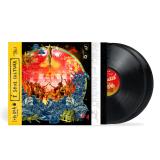
Born in Douarnenez, at the far edge of Brittany (France), Komodor has quickly established itself as one of the most vibrant names in the French rock landscape. Their high-energy rock, fueled by fuzz, sweat, and vocal harmonies woven in the spirit of MC5 and T. Rex, immediately drew attention: Rolling Stone, Rock & Folk, Libération and Rock Hard Germany all praised the fiery impact of their debut album Nasty Habits (which sold over 2,000 vinyl copies). Since then, the quintet has mostly lived on the road: a long European tour, followed by the larger-than-life saga of Komodrag & The Mounodor, carrying them to stages such as Hellfest, Les Vieilles Charrues, and the Francofolies de La Rochelle, among many others.
Their second album, Time & Space, reveals a band in full metamorphosis. Without abandoning the explosive force that defines them, Komodor widens its scope: volcanic riffs, more sinuous grooves, mist-laden harmonies, psychedelic flashes… The energy is still wild, but more inhabited, more liberated, almost ceremonial at times. The record opens with two telling bursts: Bliss & Joy, a libertarian charge with the feel of a manifesto, and Soul Tricker, a rock incantation where trance overtakes sheer electric assault. Two sides of the same coin, pulled taut between urgency and enchantment.
On stage, Komodor remains a true shockwave, forged across European festivals (Freak Valley, Motocultor, Fête du Bruit, and more) and now awaited at the legendary Desertfest London. Their music feels made for such spaces: a visceral, flesh-and-amp kind of rock, drawing from the seventies’ heritage to speak even more vividly to the present. A band moving forward at full volume, without nostalgia or calculation, carried by a simple conviction: as long as the amps are hot, rock can still burn.
In short: Komodor is the band of friends from Douarnenez bringing pencil-and-paper rock into the streaming age while preserving its analog soul (with the album mastered at the legendary Miraval Studios), the smell of warm tubes, the grain of vinyl. With this second album, they hit harder, truer, and more vividly than ever.
Time & Space stands as a “must-have French rock record”, a tangible piece worth cherishing in any collection.
Born in Douarnenez, at the far edge of Brittany (France), Komodor has quickly established itself as one of the most vibrant names in the French rock landscape. Their high-energy rock, fueled by fuzz, sweat, and vocal harmonies woven in the spirit of MC5 and T. Rex, immediately drew attention: Rolling Stone, Rock & Folk, Libération and Rock Hard Germany all praised the fiery impact of their debut album Nasty Habits (which sold over 2,000 vinyl copies). Since then, the quintet has mostly lived on the road: a long European tour, followed by the larger-than-life saga of Komodrag & The Mounodor, carrying them to stages such as Hellfest, Les Vieilles Charrues, and the Francofolies de La Rochelle, among many others.
Their second album, Time & Space, reveals a band in full metamorphosis. Without abandoning the explosive force that defines them, Komodor widens its scope: volcanic riffs, more sinuous grooves, mist-laden harmonies, psychedelic flashes… The energy is still wild, but more inhabited, more liberated, almost ceremonial at times. The record opens with two telling bursts: Bliss & Joy, a libertarian charge with the feel of a manifesto, and Soul Tricker, a rock incantation where trance overtakes sheer electric assault. Two sides of the same coin, pulled taut between urgency and enchantment.
On stage, Komodor remains a true shockwave, forged across European festivals (Freak Valley, Motocultor, Fête du Bruit, and more) and now awaited at the legendary Desertfest London. Their music feels made for such spaces: a visceral, flesh-and-amp kind of rock, drawing from the seventies’ heritage to speak even more vividly to the present. A band moving forward at full volume, without nostalgia or calculation, carried by a simple conviction: as long as the amps are hot, rock can still burn.
In short: Komodor is the band of friends from Douarnenez bringing pencil-and-paper rock into the streaming age while preserving its analog soul (with the album mastered at the legendary Miraval Studios), the smell of warm tubes, the grain of vinyl. With this second album, they hit harder, truer, and more vividly than ever.
Time & Space stands as a “must-have French rock record”, a tangible piece worth cherishing in any collection.
E The Artist presents Six, his debut album for Nyahh Records; an incendiary opus of blown-out electronics and daring sonic abstractions, inspired by the seven seals, that posits E as a daring force within the Irish underground.
Garnering a fierce reputation both in Ireland and abroad despite minimal recorded output, the artist known as E instead boasts his infamy on the live circuit. The Nigerian-born, Dublin-based musician impressed over the years with a slew of memorable performances inspired by AfroPunkism, recontextualising contemporary black club genres into their loudest and most intense iterations. Following a brief side quest to Vienna early in 2025, E returned to Dublin relieved by the tangibility in familiarity of his surroundings. This inspired a period of personal reflection on self, mortality and religion in his cramped studio; from these sessions emerged his most substantial body of work to date in Six.
Inspired by the opening of the seven seals in the Book of Revelation, Six acts as a radical departure for E. Opener IDTYEK signals this change, a freak folk oddity that ill-prepares you for the road ahead. From MANTRAS’ obtuse techno through to RISE’s power electronics, E fulfils a listening experience intent on submission rather than interpretation. Dynamic contrasts temper the parameters of its sonic catharsis, a crescendo of geometric flow that challenges convention.
Six also extends the artist’s circle of collaborators. Ruby Eastwood and Mel Keane lend BRIDGE their poetry and creative instability respectively, frequent live collaborator Julia Louise Knifefist douses BLACKOUT with his signature guttural cries while KRAF’s obscured lyrics gives LINT a wayward edge. Bulgarian Umbrella offers the record its most substantial contribution on DROGO, a twenty minute meditation on life and death which forms the core inspiration for the album as a whole.
Six exists as a world obsessed with rationalising finality, a disorienting space between certainty and myth that stands as E The Artist’s most ambitious and strangely beautiful work to date.
It's hard to fathom Martin Bramah's trajectory from his beginnings as a guitarist/writer behind two crazily influential postpunk albums - The Fall's Live At The Witch Trials and Blue Orchids' The Greatest Hit (Money Mountain) (vocalist on the latter too, of course) - then nearly three decades of sporadic-at-best activity, offering releases just frequently enough to remind fans of his peculiar brilliance . . . before another stay in the void. Chalk it up to what you want - Mark E. Smith's utter usurpation of The Fall, his split from partner Una Baines after Blue Orchids' debut, the vague collapse of rash experimentation in `underground' music as early `80s nu-pop and American college rock diluted any real spirit, a few failed attempts at working with with Mark again . . . and maybe just life getting in the way. A sense of lost opportunities isn't tough to justify. Inasmuch as Martin was originally the singer for The Fall - Mark began as guitarist but couldn't play! - and given that the group's mythology was born in an era before that gang of Mancunian misfits had even thought of playing, it's high irony that 49 years after The Fall began, Martin has both become wildly prolific and the leader of a band with more rights of inheritance to The Fall's credibility than any other living person could justify . . .yet the band isn't remarkable for that as it is for the range and wealth extent of their collective powers and talent: two great and original guitarists, three of the UK's most daringly-skilled drummers, a genuine bass legend, and a brilliant spare Blue Orchid guitarist. Four albums in, the HOUSE Of ALL is getting ambitious, with each album a subtle improvement on the last, forging a path away from their pasts without denying a thing. Inklings differs from the first three for not having being largely improvised at first, with sounds, rhythm, groove and melody later forged into songs. They rehearsed! They had fun doing it! They're going on an extended tour! There were even extra tracks! We'll leave it to fans and critics to sit down and analyse the specifics of it all, but Steve, Si, Pete, Phil, Karl and Martin have made a bold and powerful album unlike any other you'll hear in 2026 . . . stately, majestic, bold and worthy of a group of real survivors. In perverse form, the album will be officially announced and preceded by a song not on the album!
Mixed by Simon Lam (Kllo, Armlock) and mastered by Grammy-nominated engineer Andrei Eremin, the album features collaborations with British talent including rising spoken-word artist Emmeline, Mancunian ambient producer Frameworks, and Nattica from Fickle Friends on the single 'Oh My'. Speaking on the album, Fractures says: "There's no overarching theme to this album, not lyrically anyway. It's cobbled together like short diary entries of someone journeying through a sort of middling stasis in their life, a time of nothing particularly noteworthy, and that in itself provokes deeper and maybe darker introspection.
I didn't feel like needlessly plugging holes with lyrics, just light dabs here and there, light and shade to complete the visual I pictured in my head. The through line of the album is more within the sonic palette. There's a murkiness, a sort of dust in the audio that is cast over every song. Noth
In 2026, 62 years after the first release, she releases the LP Tomorrow's Yesterday, and it cannot be ruled out that this may be her last physical album. All the songs are recorded in duo or trio format. The musical sounds are excitingly combined with her voice and Rob Luft on guitar, John Surman on saxophone/ bass clarinet on side A. Whilst on side B we hear Karin Krog with Erlend Slettevoll on piano/electric piano and Rob Waring on vibraphone.
Formed in 1987 by Fruitbat and Jim Bob, Carter The Unstoppable Sex Machine burst onto the scene with their signature style of punk-pop infused with samples, drum machines, and social commentary. Join Jim Bob and Fruitbat, as they take a retrospective look back at the complete Carter U.S.M. singles, from 1988 to 1997.
First released in 1995, 'Straw Donkey' is an essential introduction to Carter The Unstoppable Sex Machine, featuring the U.K. Top 20 singles 'The Only Living Boy In New Cross', 'After The Watershed (Early Learning The Hard Way)', 'Rubbish', and 'Lean On Me I Won't Fall Over', along with classics such as 'Sheriff Fatman', 'Anytime Anyplace Anywhere' and 'Bloodsport For All'.
Spanning dance and indie movements since their formation in Liverpool at the end of the last millennium, Ladytron have earned a unique position by carving out new sonic and conceptual space, and refusing to abide by formula or trend. In the early 2000s, the fiercely individual group were placed at the forefront of the so-called electro-clash scene (which now enjoys another revival), but with time, they came to appreciate the pop cultural moment that they had reluctantly become part of. The new album follows a period of renewed cultural presence for the band. Their 2002 single "Seventeen" unexpectedly went viral on TikTok, introducing Ladytron's sound to a new generation and amassing hundreds of thousands of fan- made clips. Their legacy was further acknowledged recently with "Destroy Everything You Touch," one of their most celebrated tracks, featured in the GRAMMY- nominated original Motion Picture Soundtrack of cult movie Saltburn, reaffirming Ladytron's enduring appeal
With two deeply cherished compilations already in the bag, Luke Una steps up for the third volume in his É Soul Cultura series on Mr Bongo. A love letter to the dancefloor and its power to unite people from all corners of society amid growing division and extremist politics. Genre-spanning in nature, the 15 tracks travel between cosmic soul, boogie, proto-house, slo-mo technoid grooves, drum machine afro, astral bass-bugging futurism, jazz funk, dance, and disco. Each having the ability to move the body as much as the heart.
From his formative years in Sheffield to co-founding Manchester’s much-fabled Electric Chair with Justin Crawford, through to helming the iconic LGBTQ institutions of Homoelectric / Homobloc, Luke has spent 40 years immersed in dance music. His latest outlet, É Soul Cultura, has grown from a label to a globe-spanning events series with Luke holding residencies and embarking on tours across the world from Japan and Australia to America and Europe.
“For me, the dancefloor was never about a one-dimensional, thudding, 130 BPM beat only. It's a much more dynamic, broader vision than that. I cut my teeth in an era where a 100 BPM record had as much impact, excitement, and energy as a 134 BPM dancefloor jazz funk or techno record”, Luke mentions. É Soul Cultura Volume 3 is the perfect embodiment of that notion: “It’s about four decades in the trenches playing dance music, the late-night afters, the shebeens, the basements, warehouse parties, the eight-hour journeys in East London, through to festival sets at Houghton and We Out Here. It’s music unconstrained by genre or tempo and more about making your body move”.
But this isn’t simply a collection of disparate dance tracks; they carry meaning and soul. “It’s less about escapism, more about reconnection. My experience of post-covid has been the coming together of all the clans in various clubs and gatherings. A reaction to a very toxic world out there, where the aggro rhythms of division have sought to divide us, and people don't meet as often. The coming back together face-to-face in clubs has encouraged a real love in the air, there's a real togetherness and collective spirit”.
Opening up the compilation is a track that channels that very message, the transcendental, soul-rousing Harris & Orr ‘Spread Love’. Joining the dots from there, to the low-slung deep house closer of Fatdog ‘Remember’, you’ll find electronic drum machine Nigerian funk, sitting side by side with dancefloor Cape Verdean brilliance, a post-punk cover of Fela Kuti, rubbing shoulders with cosmic electro, and an Una-championed, 8-minute, kickless DJ Harvey remix. There’s jazz funk in various guises moving from boogie synth to astral travelling, slo-mo acidic raw techno, and a ‘79 soul stepper, alongside swirling percussive Italo disco and tribal-charged house. All infused with an innate ability to bring people together.
As society becomes increasingly fractured, É Soul Cultura Volume 3’s message is more than movement. It’s about dance music’s power to unify people from all walks of life and break down the barriers that divide us.
out of Stock
Last delivered 29 days ago available to reorder, subject to availability
This EP marks a natural convergence for Primal Instinct. Built around pure dancefloor intent, it presents a focused spectrum of moods, unified by intent. Each track is unmistakably Temudo, and unmistakably Primal Instinct: physical, driven, and designed to move bodies first and foremost.
The release is the result of close collaboration between Temudo and the label. A shared framework took shape, allowing Temudo to adapt to the vision without altering his sound, forming a joint effort where two aesthetics align.
Visually, an image rooted in memories of Carnival in Temudo's hometown becomes the perfect symbol: chaotic, social, and in constant motion, reflecting the absurdity of life and the human condition.
out of Stock
Last delivered 47 days ago available to reorder, subject to availability
Dorian Concept returns with "Miniatures," a collection of his renowned one-take synthesizer recordings that he’s been known for sharing online since the mid-2000s. “This release was right under my nose” he says. Over the past two decades, Dorian Concept has uploaded videos of himself "fooling around" on various synthesizers and keyboards – long before the rise of short-form content. These signature one- to two-minute performances have sparked countless covers, remixes and reinterpretations by musicians and producers alike. Through this project, Dorian Concept aims to celebrate a long-standing bond with his instruments and honor it in the form of a photo album.
In his own words:
As a kid, every night before bed, I would sit in the same place and draw a comic. I rarely finished them, but I couldn’t go to sleep without having started one. These "Miniatures" and the preceding videos I’ve recorded come from the same place. They’re the expression of a ritual.
Around 2020, I created a compact setup using three devices – a mono synthesizer, an analogue reverb and a looper –which I separated from the rest of the studio. Every day, before I started working, I would improvise on this small setup and at the end of every month, I would record a video and share it with the world. These songs were made in front of you, in a Truman-Show like fashion.
Now they feel like diary-entries that capture the timeline of a deepening relationship, the harvest of limitation and repetition, and the beauty of simplicity.
The cover art is a drawing by the esteemed Austrian artist Leopold Strobl (courtesy of Gallery Gugging), who is known for his distinctive small-format work. The closing track, “An Unopened Letter,” features the genre-defying guitarist and producer Bibio.
ESCAPE-ISM — the found-sound dreamdrama— are back in action & out in front. And this time, they’re leading a “Charge of the Love Brigade. ”This “charge” isn’t the traditional scramble across a muddy, bloody field though, like in the days of yore. This one is a furtive insinuation into the senses of the tuned-in listener.
Their fifth record, and fourth “sound” record — (the third one was “A Protest Against Sound”- an entirely silent LP) — “Charge of the Love Brigade” is revolutionary in its own right. Besides being packed with tunes — super-hits such as “Black Gold,” “Last Of The Sellouts,” “The Rebel Outlaw,” & “Fire in Malibu,” for exam- ple, Charge of the Love Brigade proposes a reformation of the traditional notes and scales; an entire new sound alphabet!
That’s right, ESCAPE-ISM —the “act of musical vandalism”— famous for their development of new prototypes for stomping & smashing, are reforming the scales, chords, & notes (e.g. A, B, F#, etc) that comprise musical literacy to achieve the group’s primary aim: the repurposing of music as we know it. Though many musicians of note have operated their instruments with "alternative tunings," up until now no one has obliterated tuning absolutely or abolished letter-notes for the destruction of bourgeois society.
According to ESCAPE-ISM, this will have a very profound effect: “Music will no longer be cordoned off from the rest of experience as a commodified, specialty freak show, but instead be a pastime which can be prac- ticed and enjoyed –not only by non-musicians and amateurs– but also by plant life, wild animals, and even inanimate objects such as rocks.
“The violent overthrow of musical conventions will lead to the reintegration of humanity into the natural order, the reordering of life itself into a cosmic congruity. This means the convention of time itself will be ended.” Like so-called nature itself, the ESCAPE-ISM group is also on a “loop.”
Play “Charge of the Love Brigade” and listen as ESCAPE-ISM go “over the top” against the note-letters of accepted musicality in a world premiere of a new upside-down antiscale.
out of Stock
Last delivered 6 months ago available to reorder, subject to availability
Strut Records presents a fresh look at Oblivion Express, the 1971 album that marked Brian Auger’s shift into a new musical frontier. After years spent shaping the sound of British jazz-soul with the Trinity, Auger stepped into the new decade with a leaner, electrified ensemble and a renewed sense of purpose. This record captures the moment that transformation took shape.
Oblivion Express introduced a sound that was distinctly Auger’s own. Rather than echoing the fusion emerging in the United States, Auger developed a language rooted in the UK’s jazz underground, culminating in a spaced out jazz- rock / prog-fusion album awash with larger than life drum fills and Auger’s virtuosic organ playing. Between bassist Barry Dean and drummer Robbie McIntosh the album moves effortlessly between tight, articulated phrases and broader, improvisational passages. The trio’s interplay forms the backbone of the album and sets the tone for the sound that would define the early years of the Express.
Album opener “Dragon Song” launches with a restless drive that immediately signals Auger’s new direction. Auger chose to record this version of John McLaughlin’s piece (his friend and former bandmate in 'The Niddy Griddys') after hearing McLaughlin’s album Devotion during its mix at New York’s Record Plant Studios. Auger was blown away, recalling, “Oh my god, this is amazing. I wanted to record that myself - and I did!”. Pieces like “Total Eclipse” demonstrate the Oblivion Express’ command of dynamic contrast, and title track “Oblivion Express” explores the cinematic and compositional prowess of the group through stripped back, building moments vs. explosive melodic breakdowns. Riff-heavy “The Sword” later became known through Madlib’s usage in 2014 tracks “Yeti Movie” and “Parodies”.
In retrospect, Oblivion Express stands as a jazz leaning, prog-rock masterpiece and foundational moment in Auger’s catalogue. It captures the starting point of a new sound that is more focused, more urgent, and fully committed to the possibilities of jazz-rock at the dawn of the seventies. The album remains a vivid document of a band discovering its identity and setting the stage for the further array of influential releases that would follow.
out of Stock
Last delivered 6 months ago available to reorder, subject to availability
* More from the vaults of Alpha and Omega in the shape of `Warrior Dub’, previously an LP-only track appearing on the `Everyday Life’ LP in 1993, with the dub cut on vinyl for first time.
* As always from A&O, they reliably unleash a heavy-weight, mystical shimmering slice of 90s-style dub.
out of Stock
Last delivered 6 months ago available to reorder, subject to availability
'Trying Times' is a record about being in love whilst battling the limits of the self against a backdrop of global uncertainty. James Blake explores the tension between intimacy and isolation, the pressure to curate and perform even as everything, inside and out, feels fragile and precarious. Themes of reflection, both literally and metaphorically, run through the record’s visual presentation, as Blake holds a mirror to the contradictions of modern connection - how we see ourselves, how we’re seen by others, and what gets lost in between. It’s about the disorienting loop of joy and dread: feeling safe in love, yet knowing the bubble could burst at any moment; struggling to stay present while global anxiety and private doubt pull you in different directions. A meditation on love, identity, and fragility in an age where the world feels balanced on a knife edge
13 Track Album is James' seventh studio album and first fully independent release Album features British rapper Dave, and singer-songwriter Monica Martin Marketing plan will support long term growth, audience building and connecting with super fans Strong Content Plan including Single / Focus Track Performance Videos Alternative album versions TBC inducing deluxe, piano version and more
out of Stock
Last delivered 6 months ago available to reorder, subject to availability
This new EP on OCD is once again another project into which we’ve poured all our love and attention, carefully working with the artist to compile a release that would, at least in our vision, stand the test of time.
Our friend Harsh (Reformed Society) caught our attention through his outstanding double EP on Basic Moves. A subsequent, very synchronistic real-life encounter with him in Barcelona led to this EP, which pays homage to the early 2000s Progressive House era.
This era played an important role in our musical journey, as it did in Harsh’s own. Within this project, he fuses the influences of that time with his own refined taste, resulting in three tracks that could easily pass as unreleased material unearthed from old dusty DATs from that era.
out of Stock
Last delivered 3 months ago available to reorder, subject to availability
Wild Oats proudly presents a new record by Byron the Aquarius, Gone Today Here Tomorrow. The 6-track EP explores the nature of reality and being, the pursuit of ecstasy and bliss, and embracing the ephemeral.
out of Stock
Last delivered 6 months ago available to reorder, subject to availability
Six years after his Grammy-nominated LP5, Sascha Ring - aka Apparat - takes a bold dive into the complexities of life with his sixth studio album.
A Hum Of Maybe is detailed, finely crafted, and wonderfully unpredictable. At its core, the record is about love - for himself, his wife, and his daughter - and holding onto it, protecting it, and constantly recalibrating as it is in a constant state of flux. As the title suggests, the songs explore being stuck in between: not a clear yes or no, but A Hum Of Maybe.
Ring elegantly combines the perspectives of an electronic producer and a classical composer, working closely with long-time collaborators Philipp Johann Thimm (cello, piano, guitar) - who also co-wrote and co-produced the record - Christoph “Mäckie” Hamann (violin, keyboard, bass), Jörg Wähner (drums), and Christian Kohlhaas (trombone). The album also features Armenian-American artist KÁRYYN - Apparat’s Mute labelmate - on ‘Tilth’, and Berlin-and Rome-based musician Jan-Philipp Lorenz (aka Bi Disc) on ‘Pieces, Falling’.
A Hum Of Maybe is complex, deeply personal, and embraces a state of limbo, marking an exciting new chapter for Apparat.
out of Stock
Last delivered 6 months ago available to reorder, subject to availability
Soundwriters maps a hidden chapter of postwar music history. Sixty two rare and overlooked releases by Indonesian diaspora artists recorded in the Netherlands and Suriname, from soul and funk to reggae and pop. Built from deep archive work and crate digging, this book traces how migration shaped sound, scenes, and record culture between 1969 and 1989.
An homage to the unsung heroes of the underground and deserved recognition for the diaspora pioneers.
Michiel Sekan (Amsterdam, 2025)
Soundwriters: The Incomplete Guide to Indonesian Diaspora Music (1969–1989) is a book and catalogue devoted to artists whose work shaped the cultural life of postcolonial Netherlands, yet rarely entered official archives.
Written by Michiel Sekan with additional research by Harry “Munir” Septiandry, the book combines historical analysis with personal reflection. Essays move between migration histories, colonial legacies, family memory, and music culture. At its core sits a catalogue of sixty two releases that document the range of sounds created by Indo-European, Moluccan, Papuan, Javanese Surinamese, Peranakan, and broader Indonesian diaspora communities.
Soul, funk, pop, reggae, rock, and protest songs appear side by side. Together they form an aural record of resistance, adaptation, and creativity across continents.
Printed in Jakarta and published by Jiwa Jiwa in three languages, Dutch, English, and Indonesian, Soundwriters positions music as both archive and testimony. It asks how sound preserves stories when written records fall short, and how listening can reconnect personal memory with shared history.
The project extends beyond the page through exhibitions, listening rooms, documentaries, and public programs in the Netherlands and Indonesia.
SHORT ABOUT THE AUTHOR
Michiel Sekan is an Amsterdam based DJ, curator, and multidisciplinary artist. Through his platform Jiwa Jiwa he researches and presents music from the Indonesian archipelago and diaspora across radio, exhibitions, publishing, and club culture. His work links record collecting with archival study and personal history. Soundwriters is his first book.
MF Robots return with a euphoric blend of Afro-soul-funk, delivering a release brimming with optimism, tight vocals, and the inescapable grooves that have become their signature. This album is a celebration of life, love, and musical joy, radiating positivity from start to finish.
Co-founder Jan Kincaid describes the track Glide as “a celebration of the unfolding of a love story.” From its romantic, reflective instrumental introduction to the soulfully upbeat opening bars, the listener is immediately swept into a journey.
True to MF Robots’ style, the track is joyful and celebratory, yet it pushes further—exploring the path love takes over time, and how, when it works, we can glide through life’s challenges with the right person by our side.
The album’s vibe is exuberant and full of energy, paying homage to soulful greats while adding a modern twist. There’s a subtle nod to legends like Earth, Wind & Fire, but what truly shines through is the sense of fun—the feeling that MF Robots are having an absolute ball singing, playing, and creating music that moves both body and soul.
MF Robots return with a euphoric blend of Afro-soul-funk, delivering a release brimming with optimism, tight vocals, and the inescapable grooves that have become their signature. This album is a celebration of life, love, and musical joy, radiating positivity from start to finish.
Co-founder Jan Kincaid describes the track Glide as “a celebration of the unfolding of a love story.” From its romantic, reflective instrumental introduction to the soulfully upbeat opening bars, the listener is immediately swept into a journey.
True to MF Robots’ style, the track is joyful and celebratory, yet it pushes further—exploring the path love takes over time, and how, when it works, we can glide through life’s challenges with the right person by our side.
The album’s vibe is exuberant and full of energy, paying homage to soulful greats while adding a modern twist. There’s a subtle nod to legends like Earth, Wind & Fire, but what truly shines through is the sense of fun—the feeling that MF Robots are having an absolute ball singing, playing, and creating music that moves both body and soul.
If you could go back in time ten years, what would you want to tell yourself? This was a question Khruangbin posed to themselves when approaching the ten-year anniversary of their debut album, the once cult classic, now genre-defining work The Universe Smiles Upon You. “If we could go back and tell ourselves how much was going to happen to us after that record, what would we want to
celebrate?” asked Laura Lee, bassist, vocalist, and founding member of the band. Instead, they thought: “Let’s do it again.”
The Universe Smiles Upon You ii was recorded on January 4-6, 2025, in the same family barn of guitarist Mark Speer, across the
same dates where TUSUY was first conceived ten years earlier. Though the conditions were the same–dirt floor, brutally cold,
minimal sound isolation, all takes live–the songs aren’t. They’re re-approached, some changed more than others, harnessing the lightning-in-a-bottle energy of TUSUY while discovering what would be unique this time around, in this stage of the band’s life.
The result moves like ripples on the water across ten hypnotizing tracks, the barn creating a sense of spaciousness, serenity and creative freedom, nearby wildlife (listen out for the birds on “August Twelve ii”), rattles and creaks of the barn and all. It’s a tapestry of small movements in nuanced arrangements, slowly revealing the new life, stories and character of someone you’ve met again for the first time in ten years.
Colton Bowlin grew up in the hills of Albany, Kentucky, where hard work and family shaped everything he knew. He grew up working six days a week at his late grandfather’s feed mill, grounding his songwriting in genuine small-town values and working-class experiences. On his new album Grandpa’s Mill, Bowlin traces memory, legacy, and the passing of time with the same quiet honesty that’s always been at the heart of his work, blending songs about his real life experiences with hard lessons learned and tales of rural life in Appalachia. The album was recorded and produced in Athens, Georgia with David Ferguson (Sturgill Simpson, Tyler Childers, Johnny Cash).
Period Music is a research process involving Susanna Gonzo, Merma Suelo, Tuce Alba, Elizabeth
Gallon Droste, Agnese Menguzzato, and Farah Hazim. The six artists aim to attune to the different
temporalities experienced through our bodies, drawing from multiple meanings of period – from the
menstrual cycle to musical repetitions and astronomical revolutions.
r'tu
A central meaning of the Sanskrit word for ritual, r'tu, is menstruation, the original ritual. The root of
r'tu is in arithmetic and rhythm/.
Period Music has been staying with essential matters on how we listen to time and rhythms in our
bodies and in the world. Questioning the tempo of everyday life in an accelerated system like that of
modern society, the group has opened up co-creation spaces to listen to embodied memories.
Through dialogue, improvisation and jam sessions, the six artists attuned to e ach other’s processes,
composing music, word scores and drawings – ultimately sounding together.
This work embodies other notions of community through archetypes, embracing the impermanence
that reveals the countless rhythms of life. Period Music speaks of friendship and connection, and
invites you to take on a journey of interconnectedness between our rhythms and the broader social
structures influencing our lives.
The project emerges from conversations that began in Berlin in the fall of 2023, including a one-week
residency at Atelier Josepha in Ahrenshoop by the Baltic Sea in April 2024. The first physical iteration
of this project will consist of a book and a vinyl. The album features looping improvisational compositions encoded with messages about multiple temporalities. The accompanying book gathers poetic memories, letters, photographs, symbols, and drawings that emerged during the process
1. Special remarks: 116 pages A5 format, risograph printing with thread binding, exposed spine
2. GENRE/S: Poetry/Art/Photography
3. SHORT INFO:
Period Music is a research process involving Susanna Gonzo, Merma Suelo, Tuce Alba, Elizabeth Gallon Droste, Agnese Menguzzato, and Farah Hazim. The six artists aim to attune to the different temporalities experienced through our bodies, drawing from multiple meanings of period – from the menstrual cycle to musical repetitions and astronomical revolutions.
r'tu
A central meaning of the Sanskrit word for ritual, r'tu, is menstruation, the original ritual. The root of r'tu is in arithmetic and rhythm1.
1Judy Grahn, Blood, Bread, and Roses: How Menstruation Created the World (Boston: Beacon Press, 1993), 45.Period Music has been staying with essential matters on how we listen to time and rhythms in our bodies and in the world. Questioning the tempo of everyday life in an accelerated system like that of modern society, the group has opened up co-creation spaces to listen to embodied memories.
Through dialogue, improvisation and jam sessions, the six artists attuned to each other’s processes, composing music, word scores and drawings – ultimately sounding together.
This work embodies other notions of community through archetypes, embracing the impermanence that reveals the countless rhythms of life. Period Music speaks of friendship and connection, and invites you to take on a journey of interconnectedness between our rhythms and the broader social structures influencing our lives.
The project emerges from conversations that began in Berlin in the fall of 2023, including a one-week residency at Atelier Josepha in Ahrenshoop by the Baltic Sea in April 2024. The first physical iteration of this project will consist of a book and a vinyl. The album features looping improvisational compositions encoded with messages about multiple temporalities. The accompanying book gathers poetic memories, letters, photographs, symbols, and drawings that emerged during the process
Doug Gomez is one of NYC's esteemed Afro-Latin and deep house tastemakers and he delivers a formidable follow-up to his last outing with 'Signals '2 on Merecumbe Recordings. This first volume in the collector's series offers four club-ready cuts that showcase Gomez's refined rhythmic vocabulary. The A-side opens with the irresistibly funky 'Get Down,' while the flip features Tedd Patterson's coveted edit of 'Baby Powda' which is a percussion-driven peak-time weapon. Gomez then teams with South Africa's Lukamusic on 'My Life in the Sunshine,' a lush, Roy Ayers-inspired groove awash in synths and muted trumpet. Already championed by heavyweights like Louie Vega and DJ Spinna, this one is a no-brainer.
out of Stock
Last delivered 4 months ago available to reorder, subject to availability
When Aretha Franklin passed away on August 16, 2018 we lost the Queen of Soul, acknowledged as the foremost female singer of her generation, someone who sold over 75 million records in her glittering career. The sadness that so many soul fans felt at that time was most acute knowing that we would never hear her beautiful voice on any new recordings. So it is with great pleasure that we present a live set from Aretha never before heard on a commercial CD. And it is with pride that we can say that the recordings, made in a TV studio in Cologne during her first European tour in 1968, are smack in the middle of soul’s Golden Age. The musical quality - the great artist at her peak – is so high that this issue can only enhance her reputation. This is prime Aretha Franklin – and soul music doesn’t get much better than this. Notes by John Ridley.
Abdou El Omari was born in 1945 in Tafraout, south of Agadir -- a village suspended between the pink granite peaks of the Anti-Atlas and the waves of the Atlantic. A landscape already musical in itself. He grew up in the dry mountain light, surrounded by the rhythms of nature and Berber's culture. Very little is known about the man -- a veil of mystery still surrounds his life, only deepening the fascination. In the 1970s, as Morocco was transforming, Abdou El Omari shaped a sound of his own -- a visionary blend of spiritual jazz, psychedelic funk, Moroccan traditions, and early electronic experimentation. Today, his work is resurfacing, rediscovered by a new generation of listeners in search of lost horizons. This record stands among its rarest and most precious fragments. At twenty-two, he founded his first group, Les Fugitifs, which gained him local fame. Soon after, he released records and cassettes on labels such as Cléopâtre, Hassania, Boussiphone, Hilali, and his own, Al Awtar, while performing on RTM (national radio and television). He also composed for artists like Naima Samih, Laila Ghofran, and Aicha El Waad. In 1976, through the label Gam, he released his only vinyl album, Nuits d'été -- a record that would become cult decades later, reissued in 2017 by Radio Martiko. In the 1980s, his music grew quieter, more secret. He tried to recover his old tapes from the studios he had recorded in, but gradually withdrew from the scene and returned to hairdressing. A pioneer of musical fusion, he opened paths that would remain unexplored for years. He passed away in 2010, never witnessing the rediscovery of his music by diggers, bloggers, and collectors online. One day, his close friend and poet Aziz Essamadi, rescued a cardboard box from the trash -- a box containing Abdou El Omari's personal archives. It was later entrusted to Casablanca based collector Ahmed Khalil, founder of the label Dikraphone. Inside were treasures preserved by chance: demos, rehearsals, private recordings, unseen photographs -- and a stunning, almost forgotten cassette. Here, El Omari sounds bolder than ever, exploring territories where pop, cosmic disco, electric blues, and Moroccan tradition merge without boundaries. Armed with his ARP Odyssey synthesizer, hypnotic grooves, and the celestial layers of his Farfisa, he expanded the dialogue between deep roots and electronic exploration. This album is the continuation of a vision -- a music of the Moroccan future: rooted, but reaching for the unknown. Colorful, magnetic and timeless, here is music for dancing as much as for dreaming.
Solid Ball of Rock is the tenth studio album by legendary heavy metal band Saxon and was originally released in 1991. Five of its eleven tracks were written by new bassist Nibbs Carter, who co-wrote another three songs.
The addition of young bassist Nibbs Carter seemed to inject new life into the group, which unleashed some of its most aggressive songs in years, including the full-on thrashing "Altar of the Gods" and positively scorching "Baptism of Fire."
"For our audience – and without an audience there is no band – our focus returned on Solid Ball of Rock…" noted singer Biff Byford. "Since then, we've been right on it."
Solid Ball of Rock is available as a limited edition of 1000 individually numbered copies on silver vinyl and includes an insert.
Headline: Alexis Taylor von Hot Chip setzt seine Soloreise fort.
Alexis Taylor zählt zu den markantesten Singer-Songwritern des UK, der mit seiner unverwechselbaren Stimme ein beachtliches Solowerk geschaffen hat. "Paris In The Spring" ist sein bisher persönlichstes Album, das individuelle wie auch universelle Gefühle offenbart. Die Texte scheuen sich nicht vor eindringlichen Themen, doch musikalisch präsentiert sich die LP unbeschwert, beschwingt und zeitgemäß, mit eleganten Disco-House-Elementen, sinnlichen Basslinien und von Vangelis inspirierten Klanglandschaften.
Taylor hat für diese lebendige Klangwelt namhafte Künstler ins Boot geholt, darunter Nicolas Godin (Air), The Avalanches, Lola Kirke, Oli Bayston, Étienne de Crécy, Elizabeth White (Pale Blue) und Green Gartside (Scritti Politti). In dieser Welt trifft ein intimer Country-Stil auf die eingängige Popmelodie von Paul McCartney, den futuristischen Funk von Sly & The Family Stone und, so Taylor, "Synthesizer, die im Regen stehen gelassen wurden". Hier verschmelzen britisches Americana und französisches Flair – irgendwo auf dem Mars. Das Ergebnis ist ein Album über die Freiheit von Zwängen, von Vorurteilen, von Genregrenzen. Taylor experimentiert mit verschiedensten Musikstilen – Country, Folk, Disco – und hat sie zu etwas Einzigartigem verwoben.
Danny Scott Lane is a New York-based musician, photographer and sound artist whose work drifts between jazz, ambient, and gentle funk. Originally an actor and singer before turning to photography, Lane brings a cinematic and emotional sensibility to his recordings - music that feels intimate, tactile, and quietly surreal. He has scored films and commercials, and his eclectic taste has taken him to DJ booths around the world.
Since his first tape release in 2019, Lane has released nine albums, five of them with WRWTFWW Records, each expanding his distinct blend of warmth, rhythm, and daydream. His tenth LP, House of Alice, welcomes back three-time collaborator David Lackner and introduces Michael Gagliardi, further deepening the reflective world Lane continues to build.
The album's title is derived from the Alice Austen House. Danny took an interest in the prolific 'street' photography of Alice where she often captured everyday life and intimate depictions of women's lives beautifully. Inspiring images that reflect in his own photography as well. We will continue to stand on the shoulders of giants.
Expect a gentle mix of electronic new age jazz and soft funk.
Danny Scott Lane is a New York-based musician, photographer and sound artist whose work drifts between jazz, ambient, and gentle funk. Originally an actor and singer before turning to photography, Lane brings a cinematic and emotional sensibility to his recordings - music that feels intimate, tactile, and quietly surreal. He has scored films and commercials, and his eclectic taste has taken him to DJ booths around the world.
Since his first tape release in 2019, Lane has released nine albums, five of them with WRWTFWW Records, each expanding his distinct blend of warmth, rhythm, and daydream. His tenth LP, House of Alice, welcomes back three-time collaborator David Lackner and introduces Michael Gagliardi, further deepening the reflective world Lane continues to build.
The album's title is derived from the Alice Austen House. Danny took an interest in the prolific 'street' photography of Alice where she often captured everyday life and intimate depictions of women's lives beautifully. Inspiring images that reflect in his own photography as well. We will continue to stand on the shoulders of giants.
Expect a gentle mix of electronic new age jazz and soft funk.
WHAT-A-NIGHT’S, formed by members of Minority Blues Band and I Excuse who spearheaded Snuffy Smile in the 2000s.
Their second album, infusing their solid rock sound into melodic punk, finally arrives from POWER ELEPHANT!"
Demetrio Castellucci and Massimo Pupillo present the music of Sleep Technique, a performance by Dewey Dell inspired by the Chauvet cave and its ancient cave paintings.
The music comes to life anew on record, an immersion into the depths of sonic particles, moist electroacoustic rhythms, the repeated forms of speleothems, and the electric bass that scrapes the walls, shaping them into concave or convex surfaces. A voice that moves incredibly slowly, yet is in constant motion, like the millennia-old, unceasing erosion of water.
The album’s journey follows the geography of the cave in reverse, moving from its deepest chamber back to the entrance.
Demetrio Castellucci is a composer and sound designer who has been involved in theater productions, choreography, and film since 2004. Around the same time, he began performing as a DJ, favoring an omnitemporal approach geared toward dance that transcends musical genres. Since 2006, he has been a member of the dance company Dewey Dell, and since 2007, he has been active as Black Fanfare, a maximalist electroacoustic project. He has collaborated on performances by Andreco and Enrico Ticconi/Ginevra Panzetti, as well as on films by Ahmed Ben Nessib, Beatrice Pucci, and Ilaria di Carlo. After living in London and Berlin, he settled in Vilnius, where in 2018 he founded Unarcheology, a digital platform that publishes music and radio programs. He is also active as Airport Gad, an ambient project which, together with Unarcheology, launched its own “Airline Company”: concerts in a flight simulator built from cardboard, where the pilots are also the musicians.
Massimo Pupillo is best known as a founding member of the band Zu, with whom he has released 18 albums and performed over 2,000 live shows worldwide. He has maintained a highly open and multidisciplinary approach that has led him to work with some of the most acclaimed figures in the contemporary art world: South African photographer Roger Ballen, actors Malcolm McDowell and Marton Csokas, Romeo Castellucci and Chiara Guidi of Societas Raffaello Sanzio, American choreographer Meg Stuart, poet Anne Waldman, and Italian poet Gabriele Tinti, among others. He has collaborated live and in the studio with avant-garde musicians and composers such as Alvin Curran, piano duo Katia & Marielle Labèque, and classical virtuosos like Viktoria Mullova and Giovanni Sollima. He has also worked with some of the most influential names in the international rock scene, including Mike Patton, Thurston Moore, Jim O’Rourke (Sonic Youth), Guy Picciotto & Joe Lally (Fugazi), Buzz Osborne (Melvins), and Damo Suzuki (CAN).
In the field of improvised music, he has collaborated with Peter Brötzmann, Toshinori Kondo, Mats Gustafsson, Ken Vandermark, and Tony Buck, among others. Within the experimental music scene, his collaborations include Oren Ambarchi, David Tibet (Current 93), Thighpaulsandra (Coil), Stephen O’Malley (Sunn O))), Abul Mogard, Mick Harris (Scorn), Gordon Sharp (This Mortal Coil), FM Einheit (Einstürzende Neubauten), and many more. In cinema, he composed the score for Kirill Serebrennikov’s film LIMONOV, presented at Festival de Cannes in 2024.
"No Regrets" wurde 2003 veröffentlicht und ist das vierte Album der schwedischen Hardrock-Band Hardcore Superstar. Das Album setzt ihre charakteristische Mischung aus Sleaze-Rock, Glam-Metal und Punk-Energie fort und liefert eine Sammlung von rohen und hochoktanigen Tracks.
Herausragende Songs wie "Still I'm Glad", "Honey Tongue" und "No Regrets" zeigen das Gespür der Band für ansteckende Melodien, düstere Gitarrenriffs und rebellische Attitüde. Während sie ihren unverkennbaren Sound beibehalten, ist das Album im Vergleich zu seinem Vorgänger etwas härter und düsterer ausgefallen.
Obwohl "No Regrets" ihr letztes Album vor einer kurzen stilistischen Veränderung war, bleibt es ein Fan-Favorit und ein wesentlicher Teil der Entwicklung von Hardcore Superstar. Vollgepackt mit Attitüde und hymnischen Hooks festigte das Album ihren Ruf als eine der führenden schwedischen Hardrockbands, die Fans von Sleaze und Classic Rock gleichermaßen anspricht.
"No Regrets" ist in einer limitierten Auflage von 666 einzeln nummerierten Exemplaren auf Translucent Red Vinyl erhältlich