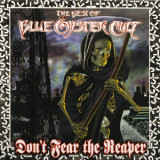
Released in 2000, Don't Fear The Reaper: The Best of Blue Öyster Cult is a comprehensive compilation album showcasing the most iconic tracks from Blue Öyster Cult's storied career. Spanning their early 1970s beginnings to their success through the 1980s, the album features hits like the legendary "Don’t Fear The Reaper," the hard-hitting "Godzilla," and the haunting "Burnin' for You." Known for blending hard rock with elements of metal and psychedelia, Blue Öyster Cult’s complex guitar work and enigmatic lyrics shine throughout this collection. The album highlights the band’s innovative sound, which helped shape the rock genre with its unique mix of heavy riffs, intricate harmonies, and dark themes. For both longtime fans and new listeners, Don't Fear The Reaper: The Best of Blue Öyster Cult is a must-have, offering a perfect introduction to the band's most influential and timeless tracks. Don't Fear The Reaper: The Best Of Blue Öyster Cult is a limited edition of 2000 numbered copies on translucent blue coloured vinyl.
The genius of Lord Kitchener has been the mainstay of our series. In this volume devoted to his post-war London recordings, Kitch plays his many roles with signature aplomb and poised subtlety. First there is the hooligan chantwell, up for anything in the hurly-burly of carnival proper; and then the casual reporter, firing off postcards to Trinidad about taxis, flashy booze, fast women and football in Manchester, with homesickness and grievance nestled just behind the optimism, pride and tentative senses of belonging. There is the bearer of news from home, in detailed accounts of murders, tales of stupid local coppers, and reminiscences about food and particular mango trees; the political thinker, considering racism and Africa; and the diarist, with his vivid tales of infidelity, and disclosure of the break-up of his marriage, and his desire to get away. One foot in the UK, the other in Trinidad; but the man himself somewhere in-between. Kitch In The Jungle, nobody around. A ‘diasporic explorer’; a key twentieth-century witness, alongside such hallowed figures as Samuel Selvon and Edward Kamau Braithwaite. Though in frustration Kitch would sometimes take over double-bass duties himself, the musicianship of Rupert Nurse, Fitzroy Coleman and co is top-notch. The original glorious sound is down to Denys Preston, recording for Melodisc, often at Abbey Road Studios (where we transferred and restored the 78s compiled here). Presented in a lovely gatefold sleeve, with a full-size booklet containing superb, specially-commissioned sleevenotes by Kitch biographer Anthony Joseph, and fabulous, previously-unseen photographs.
It has been twenty years since the first Back To Mine release but still the series is going strong. These personal after-hours soundtracks have never sounded more relevant than now, and next up is GRAMMYr Award-nominated, San Francisco-based artist Tycho. It finds him going deeper than one of his famous Burning Man sets as he heads into otherworldly, cinematic headphone territory with tunes from Lancaster, Little Dragon, Octo Octa, Ulrich Schnauss and many more across four fantastic sides of vinyl.
out of Stock
Last delivered 18 months ago available to reorder, subject to availability
It’s abundantly clear from the first bars of their 5th studio album Through Other Reflection, that this is, and could only ever be, The Soundcarriers. From the enchanting vocal duets of folk-bidden Chanteuses Leonore Wheatley and Dorian Conway; to the precise bass lines of Paul Isherwood and the limber, jazz-cool, Hal Blaine-esque drums of his his co-songwriter Adam Cann; from the fairy-like flutes, 60s-garage guitars and organ sounds pilfered from the archives of exotica - listening to the Soundcarriers resembles a rediscovery of all the most prized, esoteric corners of the 1960s, all bundled up, warped and refracted through the quartet’s astutely modern cultural lens. Channelling Tropicalia, Middle Eastern psychedelic Jazz/Funk, The French Library sounds of Nino Nardini, and a whole host of lavish obscurites beside, Through Other Reflection delivers another sonic adventure from one of the most unique and distinctive voices of British Psychedelia. After an 8 year wait for their album 4 - 2022’s Wilds - it thankfully didn’t take so long for the follow-up this time round. In many ways, this feels like a companion to Wilds; recording again at their Nottingham warehouse studio, Through Other Reflection retains that same organic glow, all the passions and imperfections of a tightly clipped unit jamming out these living, breathing pop-art nuggets as if straight onto the acetate.”We wanted to keep an air of spontaneity with this album and not get too bogged with the recording process”, explains Cann, “It was more a case of getting the songs as tightly written and arranged as possible first so we could get them down quickly in the studio. It always takes longer than you think” Less packed with strident pop hooks as its predecessor however, the music of Through… has been given extra licence to breathe, stretch out, and wander more uncharted terrains. While gleaming psych-pop of tracks like ‘The City Was’, or ‘Already Over’ confidently carry on from where they left off, from the album’s 2nd track ‘Always’, the trip becomes a little less predictable. Starting out as a smoky Procol Harum-meets-French-Psych organ ballad, the music drifts, as if of its own accord into an eerie, garage trance that lingers, cycles, and hypnotises, growing ever stranger, reaching ever-further away from its point of conception. And almost every track on Through Other Reflections holds that outer-body moment, where the band fix themselves on a limber, lysergic groove, lose all grip on time and reality, and melt themselves away into a liquid state of blind euphoria. There are sequences on this record that feel more like rituals than songs, built upon a single hypnotic rhythm which, like the centre of a vortex, pulling everything under its beatific command. Take the finale to ‘What We Found’ for instance, sounding like a ghostly march across the psychedelic moors, or ‘Feel The Way’, where a single athletic drum-loop rises and rises, growing ever more urgent and suspenseful underneath its frantic harpsichords and rasping flutes. Full of such rich stylisms as these, The Soundcarriers showcase themselves as abstract storytellers par excellence by virtue of their textures and arrangements alone. Resembling Romantic composer Maurice Ravel, but if he had just a four-piece rock band at his disposal, Through Other Reflects is rich with detail; there’s shakers, rattles, clarinets, booming drums; there’s synthesiser swarms, chiming xylophones, vintage organs and experimental Cluster & Eno-esque ambiences. Within all this nuance the music flows like some undisclosed narrative swathed in a magnetic secrecy. “It almost comes across like a story in some ways”, says Cann of the album, “the music is quite sectional with elements of exotica and cinematic type layers, it's a good balance of grooves, tunes and weirdness”. No more is this “epic cinematic feel” heard more proudly than on short instrumental ‘Sonya’s Lament” - its innate, hauntological atmospheres befitting a Peter Strickland soundtrack, or the classics of Lex Baxter, the so-called ‘Founder of Exotica’ himself. On the other hand, providing a greasier undercurrent to all these bucolic sounds is a leaning towards a more “direct” lyricism referencing more “external concerns. Laying down the first tracks for the album in the wintry gloom of pre-lockdown 2020, and drawing inspiration from time spent in Berlin, Through Other Reflections returns to some of the post-apocalyptic futurism explored in 2014’s Entropicalia - a loose concept album inspired by J.G Ballard’s The Drowned World. “The songs explore a disillusionment with the way things are going particularly after 40 years of neoliberalism”, says Cann, “They follow that folk-song tradition of wanting to escape to an imagined time, but here it’s more urban than pastoral. The first couple of ideas I came up with when doing some music in Berlin and had some time to wander aimlessly. And think the atmosphere seeped in, particularly on The City Was and Already Over. He continues, “One aspect of the title, ‘Through Other Reflections’ is about synthesis and layers of influence. How things can be filtered through other things and change the perspective. This is something you get in cities as well.” Though, as with everything The Soundcarriers make, “It can mean anything. It also just sounds kind of cool.”
En Esch's corrosive new album decimates both standards and dance floors alike.
Anyone familiar with industrial luminary En Esch and his essential work in groups like KMFDM and PIG knows he is no stranger to political statements through his art. Now, on his first LP in eight years, Dance Hall Putsch, Esch decimates your standards and dance floors with vitriol. With carefully-sown and complimenting features from fellow KMFDM alumnus Raymond Watts, Guenter Schulz and Mark Durante, plus Vas Kallas (Hanzel und Gretyl), Mea Fisher and Erica Dilanjian (Lords of Acid), Hope Nicholls (Pigface) and more, Dance Hall Putsch delivers everything an industrial fan could want. From opener "Get Lost," with its categorically punishing industrial-metal riffs to the slicing EBM electronics of "Yum Yum Beauty & The Nasty Thief," it's all here and in no less than four languages throughout. En Esch's signature rasp is often contrasted by the sparkling vocals of his female counterparts, and the album is lush with brutal honesty, humor, and even a bonus En Esch-lullaby.
"I began work on Dance Hall Putsch in the early days of Covid-19. I was trying to create an upbeat, rather positive and very danceable album to leave the pandemic days behind us. Then it happened that a war began near where I live with tens of thousands of civilians killed and wounded so far. Everyone was caught by surprise and it influenced me, especially lyrically. "This current conflict is just 500 miles away from Berlin, and while that does not make it more horrific than other wars, it is very close to home. From living with this 'war next door,' the album turned out much more sinister than originally planned. It became a rather political album that reflects on the senselessness and nastiness of all the current wars around us. It's always the innocent and those who hold no power that suffer the most. Their fate isn't always death, but many times indescribable and long-term suffering. We must not forget them or turn a blind eye. "I’m very pleased that I had the opportunity to collaborate with different and interesting colleagues here. Thanx everybody for your interest in my musical works and for your love and support."
For Greg Mendez, reflection doesnüft mean a static image in a mirror, or even a face he recognizes. Itüfs more a kaleidoscopic mirage, where paths taken shapeshift with the prospect of paths untread, and the subconscious merges with the intentional. On his self-titled new album, the Philadelphia-based songwriter and multi-instrumentalist investigates the shaky camera of memory, striving to carve out a collage that points to a truth. But there isnüft a regimented actuality here; instead, Mendez highlights the merit in many truths, and many lives, and how even the hardest truths can still contain some humor. While this is technically Mendezüfs third full-length album, his back catalog boasts an extensive range of EPs and live recordings. Heüfs a prolific and thoughtful songwriter, understanding the joy in impulse, and shying away from the clinical sheen of overproduction. 2017üfs ügüP/ _(c)_ /üPüh and 2020üfs Cherry Hell garnered acclaim for their quiet, lo-fi urgency, exploring themes of addiction and heartbreak with an intentional, authentic haze, and itüfs this approach that has solidified Mendez as a staple in the DIY community for years. Greg Mendez was written in fragments, some stretching across more than a decade, with Mendez reworking old ideas and arrangements, and others blossoming much more recently. The weight of time..and perhaps the anxiety in running out of it..clouds the album, as Mendez prods at some painful experiences from his childhood and early adulthood. The common thread connecting the characters is their evident imperfections, and the various degrees of damage they cause, both knowingly and unknowingly. But where do we draw the line between a good person and a bad person? For Mendez, itüfs never been that easy. Greg Mendez is an intimate dialogue between the chapters weüfve experienced, and how they can inform the reality we perceive. Itüfs a reminder that we are constantly shifting, ever-changing selves and that if we ruminate too long, we may find ourselves stuck in the seriousness of it all. Here, Mendez allows us to take the time to notice what happens outside of the framework we may have built for ourselves, and the beauty that can occur when we finally do.
The Norwegian indie-pop super-group with members from Making Marks, The Little Hands of Asphalt, Mildfire, Flight Mode and Elva return with a third album of original Christmas songs.
Get into that alternative, Nordic Christmas spirit! Christmas III at its heart is an alt-Christmas album: the songs are firmly rooted in December’s festivities, albeit not usually relying on the season’s traditional reference points. The songs hone in on the more ambivalent sides of Christmas - family, customs and the passing of time - with a keen eye towards the holidays’ most obvious function in countries close to the Artic circle: getting through the cold and dark times to celebrate the winter solstice and the turning of the sun. Drawing from Sufjan Stevens’ epic indie Christmas compendium and Phil Spector’s wall of sound classic A Christmas Gift From You, Christmas III is built on shimmering guitars, snow filled piano lines, gentle strings, springy vocals and dynamic drums - all steadily conducted by Sunturns’ own Sjur Lyseid (Flight Mode, The Little Hands of Asphalt) in the producer’s seat at his Globus studio in Oslo. With 3 songwriters (Ola Innset, Einar Stray & Sjur Lyseid) contributing to Christmas III, there’s an ever shifting sense of reflections. Parenthood and the struggles of the dark Norwegian winter is behind Ola’s track First Winter. “Sometimes I feel bad about bringing children into such a difficult world. Not so much with respect to daylight and the seasons, they’re just going to have to learn how to live with it, but with many other things – like war, poverty, climate change and even just death.” Back In Town might have been inspired by a discussion over whether Thin Lizzy’s “The Boys Are Back In Town” is a Christmas song or not, but it’s written about his youngest daughter Klara, to his elder daughter, about taking holidays with your family in a town you once lived. Einar pulls in Phoenix and Mew by the way of Jesus and Mary Chain on Crash Course Christmas, resulting in a seasick wave of a pop tune. “It’s a song about the guilt of not prioritizing your relationships. It’s been year of rainchecks and Christmas finally gives you some time to reflect. You’ve experienced so much and changed so much as a person that you almost forget your origins. Coming home for Christmas can then be a ritual of finding your way back to what you left behind." Drawing on the knitwear from the film Love, Actually, Turtle Neck, taps into the Backstreet Boys by way of Mac Demarco, with a sneaky reference to the legendary Norwegian Christmas hit En Stjerne Skinner I Natt. Album closer This Christmas / Next Christmas leans in on the hook for the Norwegian Christmas TV show Jul i Blåfjell, a multi-generational seasonal staple (essentially a daily children’s advent calendar kids show). “The song is about your parents ageing and needing your help – possibly really far away - while at the same time having your own children to take care of”. The cover artwork is a homage to Christmas dress codes for Norwegian men. Suits and shirts are a rarity in day to day life, but there are a handful of occasions that require some form of formal attempt at a suit: New Year’s Eve, National Day, weddings & funerals, and Christmas Eve: resulting in various degrees of sartorial elegance on the day (and on this instance, a hot summer’s day stifling the Christmas vibes, with ambiguous apparel instructions ahead of the photoshoot!).
Naoki Zushi. Perhaps best known for his stellar guitar contributions to psych folk group, Nagisa Ni Te, Zushi has had a parallel career, for several decades, slowly releasing solo albums that spotlight his exultant guitar playing. Originally released to CD only by Shinji Shibayama of Nagisa Ni Te’s Org imprint in 2018, IV has Zushi playing and writing at a peak, its six songs slowly unfurling with a kind of paradoxical understated grandeur. This is psychedelic guitar music at its most paced and considered, yet given to flights of inspiration, and in this respect, Zushi sits within a lineage of guitarists who’ve used their instrument both as textural anchor and improvisatory tool – think of figures like Phil Manzanera and Robert Fripp, but also Roy Montgomery, Liz Harris of Grouper, even Tom Verlaine on his instrumental solo albums. Like those artists, Zushi locates moments of deep emotional resonance amidst luxuriant textural and melodic exploration. Zushi’s history stretches back to the mid 1970s. While for many, he first appeared on the scene as a founding member of noise legends Hijokaidan, alongside Jojo Hiroshige, his musical contributions predate that encounter. He started out playing progressive rock and improvised music, making home recordings of when he was in high school. He was a member of Rasenkaidan (Spiral Staircase) alongside Hiroshige and Idiot (Kenichi Takayama), the group that soon mutated into Hijokaidan (Emergency Staircase). Zushi and Takayama would soon form Idiot O’Clock, in 1982; Zushi also led his own Naoki Zushi Unit, starting in 1983. But for many, Zushi’s first significant appearance on record was as a member of Shinji Shibayama’s mid-eighties psych-pop group, Hallelujahs, whose sole album was recently reissued on vinyl. That group mutated into Nagisa Ni Te, and Zushi has played a significant role as their lead guitarist for several decades. His own solo music has appeared sporadically – Paradise (1987), Phenomenal Luciferin (1998), III (2005) and IV, with a few recent, meditative offerings, For My Friends’ Sleep (2021) and Nocturnes (2022). With IV, though, Zushi achieved something remarkable, a kind of extended exploration of the time-altering properties of echoplexed, hypnotically spiralling guitar interplay. The opening ‘Mirror’, “a song about the mirror inside me,” Zushi explains, starts out as a lush psych-folk song, slow and gentle, but soon takes to the skies with a cat’s cradle of Fripp-esque guitars, before thick, droning chords sweep the song to a drowsy coda. ‘Nocturne’ weaves silver skeins of guitar melody around a cyclical chord pattern; it gathers energy and quiet intensity through insistent repetition. The rest of the album explores the nuance Zushi can draw out of simple elements, building on what ‘Mirror’ and ‘Nocturne’ offer – the profundity of a chord change; the melancholy of a few quietly sighed words; the exhilaration of a guitar solo bursting out of the speakers; the subtle shifts in emotional register offered by tone and touch. Throughout, there’s something quiet, yet ineffable, shading the contours of the songs, such that it makes perfect sense when Zushi says, “What I want to express through music may be ‘sense of mystery’.” A few of the songs had their basic parts recorded at LM Studio and Studio Nemu with Shibayama and Masako Takeda joining on bass and drums, respectively; much of the album, however, was tracked at Zushi’s home studio. That seems appropriate for a collection of songs that are expansive in their intimacy. Asked what drove the sessions, Zushi answers, “I thought I’d make IV an album that particularly focuses on the guitar play.” And focus it does, as Zushi’s sky-scraping, soaring, elemental tone is front and centre throughout. But these are no guitar heroics; rather, Zushi uses the guitar as conduit and diviner, a tool for spirit location, and IV is his most eloquent expression yet of such singular magic.
out of Stock
Last delivered 22 months ago available to reorder, subject to availability
The second offering from Mud Trax, a division of MixCult Records is a compilation to remember.
With Dub Tech laid out in all its many forms and moods by a dynamic assortment of rhythms, it is nothing less than exquisitely fresh pop manipulative.The album features contributions from Kirill Matveev, Ataneus, Genning and Etzu Mahkayah. With an electrifying mix of dub's sprawling scope and acid's driving rhythm, even a record that pushes sound the way this one does can come off totally funky.
Kirill Matveev & Wiklauri's Ioli (Kirill's Version) makes for a promising opening, melding into deep dub its ethos of acid, a psychedelic blend that touches the nerves of those who love to dance. Ataneus takes it further on A2 with Napolitaner, a track that is like nothing else: dense, dub-coloured layers of sound, which create a steadily seductive momentum able to steal listeners away into temporal plunge.
On the other side, B1's Red Lights by Genning is at once a punchy piece and a dancefloor phalanx of sound. A work meticulously sculpted by the speakers, yet redolent with natural energy-Geistgemäss.
The journey is brought to a close by Etzu Mahkayah's Cs-137 on B2, hypnotic grooves offering equal parts reflectivity and pumping energy.
Taken together these tracks provide an experience that is euphoric yet absorbing, each not only embodying Dub Tech but also pushing it in new directions.
out of Stock
Last delivered 3 months ago available to reorder, subject to availability
The medium is the message! Vinyl has always been our preferredmedium for releasing music and without this tactile form ofpresentation, Samurai Music would not continue in its current form.Vinyl is the ultimate personification of what the label wishes torepresent. Music always comes first, but the vinyl artefact is king forus.
Hyaku is the 100th Vinyl release on the Samurai Music label.Through the many twists and turns of the industry in our almost 17years of existence, the Samurai Music vinyl releases havemaintained their aspiration for quality, unique design that stands thetest of time. Praise and thanks always to our long time designerRyan Quinlivan and the many pressing plants we have worked withover the course of our labels lifespan.
To celebrate this milestone we have assembled a gang of producersthat best represent the Samurai Music sound of now to contributetracks that they feel best encapsulates their take on our sound. Hyaku is a mutable mix of vibrations that navigates from the searingambient drift of Ancestral Voices all the way through to the headsdown assault of Dom and Roland. Singular takes that capture theartistry of this impressive crew of creators at their glistening best.
Finally we'd like to thank everyone who has ever and continues tosupport our vinyl releases. We are forever grateful!
out of Stock
Last delivered 21 months ago available to reorder, subject to availability
Bicoastal disco aficionado, Super Elevation label/shop owner, and all-around legend of the scene, Tom Noble brings forth a sprawling project 15 years in the making with his House of Spirits full length LP on Razor-N-Tape.
Slow-cooked over more than a decade, the eight tracks that stretch across this double 12 inch pack are the realization of Tom’s unique vision of modern dancefloor soul, with lush live instrumentation and deviously catchy hooks. Boasting a near encyclopedic knowledge of decades of club music, Tom draws on influences like Patrick Adams & the Mizell Brothers to build a sound that’s both reverent to the past, but feels extremely fresh and immediately timeless.
The lead off singles ‘Times Are Changing’ and ‘Please Take Me There’ and respective remixes by Harvey Sutherland, Makez and Sizmo have already garnered huge support, and ‘Holding On’ the beloved original House Of Spirits single from 2020 appears with a shiny new mix. The album opens with ‘Love Trip,’ an uptempo invitation to the sonic world to follow, and moves through various moods, like the Brit-funk vibe of ‘Time Is Running Out,’ the mid-tempo groover ‘I Get Lifted’ and the downtempo R&B smoothness of ‘Diamond Eyes’ featuring dreamcastmoe on vocals.
The cheeky dollar bin artwork rounds out this package perfectly, and with the tracks mixed to perfection and cut tough for the floor, this is an essential record that will surely find a permanent home in the bag.
out of Stock
Last delivered 12 months ago available to reorder, subject to availability
Before we pack away the poppers for another year, let Red Laser take you for one last spin on the waltzers.
Tried and tested at our recent road block parties in Manchester, these edits shine a light on four primo-grade Italo face melters. Fervently excavated by Bosco over countless visits to Bel Paese and streamlined for the hydrofoil, with some extra added calories for the club.
Opener 'Destiny' tweaks and shudders under analogue arpeggios, dazzling Strat chops and cosmic bass interplay before dropping into a simply glorious female vocal that, thankfully, gets plenty of airtime before Bosco calls close. A track so close to perfection we had to make it longer.
'Flavio', up next - and half sung in Italian so we only know a bit of what she's on about - is another supreme slice of Italo disco from the upper echelons that Bosco snaffled between glugs of Barolo and a face full of worm cheese. Sure to instigate group hugs, 4AM declarations of love, tears of happiness and huge pelvic thrusts dependant on environment and inebriation.
The tingles continue on side B with another supernova burning bright across the stars. 'Newsin' introduces itself with a joyous marriage of marimba and synth before yet another vocal proves Italians really do, do it better when it comes to writing some of the catchiest hooks and choruses in the universe.
'Lace', featuring the record's only male vocal appearance, has a romantic, proto-goth-new-wave vibe; like if Robert Smith and Richard Butler had a chem-sex love child after a wild night in Baia Degli Angeli.
Not sure who the woman in lace is, but we'd defo like to see her down The White Hotel one night...
out of Stock
Last delivered 7 months ago available to reorder, subject to availability
Gavin Vanaelst runs the space Aboli Bibelot in Antwerp where exhibitions and musical performances can happen side to side with dealings in centuries-old furniture and unique pieces of folk art or volkskunst. Gavin makes music under the aliases DJ Charme, Kassett and So Sorry. This is the first album under his birth name. Takeaway Loops cycles back to the days when Gavin was working as a courier for .
is a food delivery company. Their couriers - ehm, brand ambassadors, as the company prefers to call them - dressed in bright orange, they race their bikes around the city. They deliver meals and groceries for all sorts. Thanks to them, the privileged can stay tucked in their private spaces. Interaction between the two groups - the privileged and the brand ambassadors - is mostly kept to the bare minimum. And sparse communications are often driven by annoyances - “my Coke is warm because you kept it too close to the French Fries.” And on the streets the general public dis-approaches the brand ambassadors with pity. We tell our peers: “That’s not a good job,” and “stay away from the Sharing Economy.” Because, you know, in our capitalistic dollhouse we all stand our grounds and play our parts wholeheartedly.
During his shifts for , Gavin recorded location sounds on his phone at fast food restaurants while waiting on the orders he had to pick up and deliver. Later in his home studio Gavin added piano and electronics to this source material. The result: a gloomy soundtrack for a shadow world. Seven songs in evening blue with a bright orange glare.
A few years ago, our favorite Belgian publishing house Het Balanseer released Seizoenarbeid by Heike Geissler (available in English trough Semiotext(e)). Geissler writes about her job at Amazon in Leipzig. Because her writing and freelance work did not pay the bills any longer, she was forced towards this underprivileged shadow-world of unwanted jobs. Seizoenarbeid shed a light on freedom in an unfree world. A monument of ‘we are all in this, but not together’. Takeaway Loops gives us a similar peak in a world that is at the same time so visible, but then also very veiled for many. A world that we prefer to use, yet that most of us prefer not to see - a world that we don’t like to enter.
Last year at Harbourland subway station in Kobe i was mesmerized by its sound design, created by Hiroshi Yoshimura. For each part of the subway station he composed a short phrase. While walking trough the station, a full composition grows in your head. The looping melodies guide you trough a microworld. Trough a blue world of commuters, of the homeless, of the lonely, of the fast paced, of the tourist. Gavin creates a similar effect with Takeaway Loops. The tonality somehow corresponds to Yoshimura’s work. Yet instead of being guided trough a building, we are now taken to the after dark. You feel the concrete evening heat of the city. You hear the rain. Stiff fingers during cold winters’ nights. You are alone on the bike, cruising. Your maps app telling you where to go. You just left the fake leather bench of the well-lit pastiche interior of a fast food restaurant.
Next order, number ECN44! Please wait outside, sir?
The making of a maiden album can be a capricious process. One moment of outright musical flow paired with another period of sustained creative struggle are feats experienced by seasoned producers the world over. So when Miraclis was forced to hole away in his makeshift studio - in the midst of a global pandemic - the stage was set for something magical. Now it will see the light of day for the very first time.
Having released two singles on Secret Teachings to critical acclaim already this year, Chilean talent Miraclis will accomplish a milestone achievement in July with the release of his debut album: Origin Of Truth.
Difficult experiences were fundamental to the creation of such work, as were Miraclis’ inherent musical interests. He explains: “Origin Of Truth had its birth during the pandemic. I created it as a way of communicating to myself the sensations and feelings that were spinning around my head at the time. I've always been inspired by Bristol trip hop, as well as classical rock, and these genres definitely contributed to the making of these melancholic tracks. In a way I wanted to fuse all the musical influences that were part of my childhood, up until this point now, so this album really means a lot to me. It was my way of communicating, when there was a lack of social contact and communication itself was hard to come by.”
It's this meditative quality that initially drew Damian Lazarus to the project. “It’s a record that has its roots in electronic music, but it’s a very alternative, very deep, melancholic album. I find it both soothing and stirring at the same time, and that’s a quite interesting juxtaposition in that it feels edgy but delicious at the same time,” says Lazarus. “The fact that this was written in this place surrounded by the most incredible desert landscapes makes this a very important piece of work to me. It doesn’t sit in any particular genre, which is why it feels right for a Secret Teachings release. It hints at so many genres that I as a DJ am quite into, and it feels like a first as it’s unique and unclassifiable. That mystical, esoteric, edgy feel makes this a perfect release for the label.”
Sonnet opens proceedings, with ghostly vocals residing next to raw instrumental elements throughout. Miraclis’ signature guitar riffs soon converge on saddened keys, paving the way for Scienter. It takes the form of an instrument-based, electronic-inspired cut, building slowly before reaching a crescendo midway through via an enrapturing acoustic solo.
Floating Child comes next, brimming with a darker intensity courtesy of broody synth pulses and rhythmic hi-hats, as Shiver arrives next. There’s a rock-leaning sensibility to the piece that gives way to earnest lyrical offerings, opening swiftly into the breakbeat-esque world of Perceptions. Hard-hitting drums act as the focal point, with electric chords adding depth and intrigue, whilst Bright continues in a similarly heartfelt vein.
Introspective pads leave us feeling pensive, ahead of Interstellar taking us on a celestial journey through warped bass tones. Acting as the LP’s penultimate number, it’s a four-and-a-half minute showcase of guitar-based musical goodness and one that perfectly sets the stage for Trapped, a closing saga of suitably emotive proportions.
Miraclis earned his stripes as a DJ under the name Max Clementi in his native Chile, as well as Spain after a stint at the Barcelona SAE Institute. Playing and writing music since his parents gave him his first guitar at age twelve, he found himself inspired by synth wave, electronic pop, trip hop, and psychedelic rock of the ‘80s and ‘90s, drenching himself in music by the likes of Massive Attack, Tricky, Depeche Mode, and Nine Inch Nails. However, it wasn’t until he had to move back to Pucón to take care of his father during the pandemic that he began working on what would become Origin Of Truth.
Serendipity seems to play a large part in Crosstown Rebels’ new label Secret Teachings. Just look at the story of how Damian met Miraclis in the first place. It involved a chance midnight encounter in Pucón, Chile at a woodland campfire after the DJ was locked out of his hotel room. This meeting of minds was the start of a remarkable friendship, where Miraclis invited Lazarus to stay at his house and break bread with his family. The two kept in touch, exchanging music and ideas as a result.
out of Stock
Last delivered 4 years ago available to reorder, subject to availability
Continuing our quest to get all of the classic early AMT albums released on vinyl, we turn to 2004’s 'Mantra Of Love’, and with the help of Makoto Kawabata’s studio wizardry, we’ve made it possible.
This latest instalment in the ‘Acid Mothers Temple Vinyl Archives - First Time On Vinyl’ series (as with the three previous SOLD OUT releases in the series) have all been meticulously put together with the help of Makoto Kawabata with the original CD artwork recreated for these vinyl editions from archive photos stored in the vaults at the Acid Mothers Temple in Osaka, Japan and the original audio remastered by James Plotkin.
Here’s what others had to say upon it’s original CD only release back in 2004 …
“Acid Mothers are strong folk. You'd think they'd tire quickly, all tucked away on their island, strewn about on tree roots while baking their lungs and throats to a knotty green tinge. But instead of waltzing through life like hippies, they manage to not only tour and put out records every year, but also to fill those albums with 30-minute jams and assorted freakouts. And while evil jam bands would fill that space with guitar work taken from the Classic Rock Manual of Clichés, Makoto Kawabata and company assault listeners with frighteningly dense walls of white noise, psychedelic swirl effects and, yes, even guitar solos-- albeit ones that are more Merzbow or Keiji Haino than Gary Rossington. Truly, AMT's endurance and threshold for cosmic lashings are both worthy of admiration.
But how much AMT can you take in one sitting? If there's anything this band has taught us-- via records such as 2002's Electric Heavyland and the ferocious Acid Mothers Temple & the Melting Paraiso U.F.O-- it's that they're not afraid to reach for the upper regions of consciousness. On Mantra of Love, they offer two titles over the course of one hour, never faltering along the way, and it's as if we listeners are just brief visitors passing through a never-ending, spontaneous group trip. For all I know, Kawabata has hundreds of hours of this stuff on his hard drive-- at any single moment, this record's sheer volume of sound is a clamor to behold. However, if you aren't dialed into that the particular space AMT inhabits (for me, it's the mystical fire-baptism standby), you might not hear their glorious noise for all the, well, glorious noise.
"La Le Lo" begins as a lengthy psychedelic ballad sung by Cotton Casino (who doubles on "beer & cigarettes"), who is accompanied by her own ghostly backing vocals. The band is playing a mantra as Casino waxes earth-mother stylings to the moon. The serenity is broken by a patented AMT rave led by Kawabata's electric sitar (!) solo. Ace rhythm section Tsuyama Atsushi ("monster bass") and Koizumi Hajime hold things together, as does the generally decent recording quality (not a given for these guys), but the real money is in effects-- lots and lots effects. Much like France's Richard Pinhas or AMT's countrymen in Les Rallizes Denudes and High Rise, the band understands the collaborative power of solo + overdriven Moog sirens and screams. And, also like those artists, Acid Mothers can go on all night if need be. About 25 minutes into this piece, any hell that hadn't already broken loose gets its due, and the band speeds to a fiery climax before winding down into glimmering astro-ambience.
The second track, "L'Ambition dans le Miroir", also begins as a minor ballad featuring Casino's haunting solo vocal. The Mothers set her up with a faux-blues drag and a thick buffer of synth-rays; when Casino actually enters, she fights for airtime with an array of falling stars and cosmic dust. However, this time there is no overwhelming solo to power the comedown. Casino intermittently coos in the background while droning horns keep the auxiliary pixie haze from evaporating. As they showed on In C and La Novia, AMT are more than adept at creating calmer storms-- listeners just have to catch them in the right light. Mantra of Love doesn't necessarily capture the most inspired moments in their canon but as usual with this band's records, it's rarely at a loss for moments of horror or grandeur.”
Less than a year after Botanical Illustration takes patience and Skill EP, Giovanni Natalini aka CO-PILOT, comes back on Simona Faraone’s label, New Interplanetary Melodies, with the Green Machine album, which is its natural prosecution: inside it we also find the three tracks previously published by the same label in audio cassette format only (NIM001- MC).
Green Machine is a concept album, which takes up and develops the ecological issues already treated by the artist in his previous work, namely the increasingly tricky dichotomy between nature and machine and the harmful impact of humans on it.
The A side opens with the already published Botanical Illustration takes patience and Skill (A1), an 8 minutes suite in which the powerful Live drum breaks are perfectly combined with synths and vocal samples, transporting us to the tops of exotic mountains, to continue with the ecstatic Himawari (A2) that sounds like a “desert session” made on Mount Fuji, for a result of pure musical mysticism and finally, Mother Love Nature pt.1 (A3), a track that takes us back to more familiar territories, winking at the most experimental British trip hop of recent memory and Mother Love Nature pt.2 (A4) characterized by a background of modular synths and nature sounds effects that precede Giovanni’s powerful drums, underlining once again this perfect fusion of organic and synthesized sounds.
Side B opens with the psychedelic choruses of Dancing Like Fela (B1) supported by synthetic arpeggios and a frenetic drumline sounds like a breakbeat. Continuing along this side, we come to the unsettling use of vocal samples on the beautiful Halo (B2), the ethereal and danceable art-pop of Lost You - In Translation - (B3) to conclude with the evocative Playing the Zurna in Ulan Bator (B4), a track with a pressing rhythm and elegant arrangements that once again underlines Giovanni Natalini’s mastery in mixing sounds and suggestions that are apparently far away but that always find the right place.
Green Machine sounds like a valid attempt to finally find a “solid” balance between humans and nature, but it also demonstrates how the continuous mixing of sounds is the most effective way to escape from the homologation that is increasingly widespread in contemporary society.
out of Stock
Last delivered 4 years ago available to reorder, subject to availability
The Iconic 80s Band, Berlin, Return with Strings Attached to Take Your Breath Away
Nearly 40 years after their founding, the Los Angeles-based synth pop group, Berlin, return with an album of their classic tracks_with strings attached. Working with a full philharmonic orchestra, Strings Attached sees the band revisit some of their classic tracks, from their formation in the early 1980s through to today, including, of course, the iconic theme to the movie, Top Gun, Take My Breath Away. Featuring the classic line-up of Terri Nunn, John Crawford and David Diamond, Strings Attached is perfect for both existing fans of one of the most legendary bands of the 80s and those who are being introduced for the first time.
Founded by bassist John Crawford, singer Terri Nunn, and keyboard player David Diamond, Berlin made its first national impression with the provocative single Sex (I'm A...) from the gold-selling debut EP, Pleasure Victim in 1982. The group was filled out by guitarist Rick Olsen, keyboard player Matt Reid, and drummer Rob Brill. Berlin's first full-length LP was the gold Love Life in 1984. In 1985, the group was pared down to a trio of Crawford, Nunn, and Brill. Berlin topped the charts around the world in 1986 with the single Take My Breath Away, the love theme from the Tom Cruise movie Top Gun, a track which won an Academy Award, a Golden Globe and which has cemented itself as one of the most memorable songs featured in a film of all time.
Lily Seabird is a perceptive songwriter who can channel moments when everything feels raw and overwhelming into something healing and galvanizing. With Alas, the Burlington, VT-based artist's sophomore album, she confronts grief with palpable clarity on tracks that careen from delicate folk to blistering indie rock. While it's her second LP, it serves as a proper introduction to an undeniable and idiosyncratic voice. "Alas, sounds way more like me," she says. "This is the album I wanted to make in the first place." Though Seabird is now known as a solo artist and collaborator in Burlington's vibrant music community as the bassist for Greg Freeman and other acts, her journey started in Pennsylvania when she picked up the saxophone as a kid. At 14, she learned guitar and started performing as Lily Seabird. After a brief stint in New York City playing in bands, she moved to Vermont, which has been her home since 2018. "When I came to Vermont, I was playing solo a lot but then I started a band with Greg Freeman," she says. "Since 2018, it's been me and Greg and a bunch of different casts of characters have been in the band since then it's an ever-evolving thing. It's just us playing my songs."The songs on Alas, came from a particularly unmoored period for Seabird. "I wrote this album in 2021 and 2022 on the road, trying to figure out who I am," she says. "A lot of them also deal with the time when my close friend passed away. The title Alas, meant a lot to her." Even if the songs don't always directly tackle this specific loss, there's a sense of mourning in how relationships change and dissolve. Take "Grace," a reflection on female friendship, which features the lines, "I hope she's happy now she should be 25 / She taught me something that I thought I'd always hide." Elsewhere, the knotty and unpredictable "Dirge" finds her singing, "I don't know if I believe in god / I don't know if I know how to go on." Seabird and Benny Yurco produced Alas, which was recorded at Burlington's Little Jamaica Studios with Freeman and drummer Zack James (Benny Yurco). It's a quietly expansive album full of subdued, organic textures and moods. Songs like "Cavity" are lush and inviting with silky guitar and Seabird's expressive saxophone playing. The 10 songs on Alas, stretch out and leave space for introspection and deep listening with some tracks taking nearly seven minutes to mesmerizingly unfold. It's a remarkably assured and vital statement from one of the most promising new songwriters alongside peers Merce Lemon, Squirrel Flower, and Allegra Krieger."The album is about loss, coming of age, and sadness but there are also all these moments where happiness takes over," says Seabird. "It can be two things at once: life isn't just pain and sadness, there's also joy. They can all exist at the same time. Alas, is an expression of grief but it's also for letting go."
B. Rupp’s take on pop music culminates in a debut album that’s deep, emotive, tough & full of noise. A few years in the making and all orchestrated by himself, trademark crunchy vocals and moody swamped out bass lines - it’s B. Rupp in his element.
Mastered by Rupert Clervaux, Photography by Tia Cousins & Alt Design by Ciaran Birch.
The songs that grace this comprehensive double vinyl package all come from the golden age of country music. For nearly a century now, country music has been captured on cylinder, vinyl, tape and compact disc. In America during the 1950s, while rock & roll battled calypso as the nation’s favourite sound, meanwhile in the background, these classic country songs could be heard across the land - all the way from the Gulf of Mexico, right up to the frozen wastes of Minnesota. After the golden age of what might be called pure country, came country-rock, alt-country and Americana. But the century of songs gathered together here is plain and simple country music - at its best
"Join the Kyle Shepherd Trio on 'A Song More Sweetly Played' as they explore, collaborate and improvise on the ‘songs we like to play’. The album’s title is a dedication to the celebrated South African artist William Kentridge, with whom Shepherd collaborated on a joint-work “Waiting for Sybil” that has toured world-wide. In addition to ten Shepherd originals, perhaps most unexpected is the inclusion of an exquisite reading of Massive Attack’s ‘Teardrop’ and a deconstructed take of Journey’s ‘Don’t Stop Believing’, a favourite rock anthem that Shepherd describes as a ‘guilty pleasure’.
‘The inclusion of the Massive Attack and Journey tunes – that’s something out of character to me,’
observes Shepherd. The selection rests well within the grand jazz tradition of repurposing popular songs as vehicles for improvisation, thought, and pleasure. ‘It just came down to playing some tunes that we like and we can flow with, so that we can be inspired and express ourselves in a very natural organic way,’ he says. ‘We walked away from the from the studio feeling like – you know, we actually really enjoyed playing this record! I felt less attached to any sort of predetermined concepts except that we would play some music that I wrote that we like – a selection of things that we like to play. It felt like a bit of a tonic – every musician gets a chance to breathe through the music, and the music just flows and moves as organically as we could make it.’
To hear one of South Africa’s foremost pianists play with intention, freedom and enjoyment, in the tradition and beyond it, is above all a gift to the listener, and Matsuli Music is proud to be able to share the Trio’s first album in a decade, A Dance More Sweetly Played.
Kyle Shepherd is one of South Africa’s leading jazz, film and theatre music composers and pianists of his generation, internationally recognised for his distinctive compositional style and performances. He was the Standard Bank Young Artist of the Year for Jazz in 2014 and the UNISA piano competition winner in 2019, and has performed in 28 countries around the world, including 11 concert tours to Japan."
The Kyle Shepherd Trio: Kyle Shepherd (Piano), Shane Cooper (Double Bass) and Jonno Sweetman (Drums).
All Compositions by Kyle Shepherd except “Teardrop” by Massive Attack and “Don’t Stop Believing” by Journey.
Recorded May 2024 at Sunset Studios, Cape Town
Recording Engineer - Jürgen von Wechmar
Mixed by Martin Ruch.
Mastering by Frank Merritt.
Artwork and Design by English Designed and produced with support from the Baxter Theatre, Cape Town.
Auf dieser Tribute-Compilation finden sich Interpretationen von Margo-Guryan-Songs von TOPS, Rahill, Clairo, June McDoom, MUNYA und Kainalu, Frankie Cosmos und Good Morning, Kate Bollinger, Pearl & The Oysters, Bedouine und Sylvie, Empress Of, Barrie, und Margo Price. Die meisten unserer Geschichten über Kultmusiker, die ein oder zwei Alben machen und dann zu verschwinden scheinen, sind von Trauer, Verzweiflung und ausgefranstem Ehrgeiz umrahmt. Nicht so bei Margo Guryan, einer begeisterten Jazz-Ausnahmeerscheinung, die Popmusik verachtete, bis sie 1966 „God Only Knows“ hörte, das ihr ein Fenster zu den Wundern öffnete, die diese Musik-Form enthalten konnte. Nur zwei Jahre später veröffentlichte sie auf dem Album „Take a Picture“ ihre eigenen kleinen Popsinfonien und erntete dafür großes Lob und hohe Erwartungen. Aber da sie sich bereits von dem Posaunisten Bob Brookmeyer hatte scheiden lassen, lehnte sie es ab, ein Musikerleben zu führen und auf Tournee zu gehen oder auch nur darüber zu sprechen. Ihre Zurückhaltung führte dazu, dass „Take a Picture“ bald in den Regalen der Discounter und letztlich in den Mülleimern landete. Sie schrieb weiterhin Songs und nahm noch jahrelang auf, arbeitete sogar mit der Band von Neil Diamond zusammen, aber meistens schien sie mit ihrem relativ privaten Leben zufrieden zu sein. Wie es sich für eine so atemberaubende und subtile Musik gehört, erlebte die 2021 verstorbene Guryan in den letzten sechs Jahrzehnten mehrere Wiederauferstehungen. Und jetzt geschieht es wieder: Kurz nachdem ihre fast geflüsterte und liebeskranke Hymne „Why Do I Cry“ sie 2021, im selben Jahr, in dem sie starb, zum TikTok-Star machte, startete die Numero Group eine Wiederveröffentlichungskampagne, aus der 2024 das hochgelobte Set „Words and Music“ hervorging. Und jetzt haben ein Dutzend Künstler - von denen keiner geboren war, als „Take a Picture“ entstand - das gesamte Album (plus einen Bonustrack) für „Like Someone I Know: A Celebration of Margo Guryan“ neu interpretiert. Empress Of, Margo Price, Clairo, June McDoom: Sie alle bestätigen Guryans Schärfe als Songwriterin und die Brillanz eines Albums, das den Werbezyklus, den Guryan vor so langer Zeit ablehnte, bei weitem übertroffen hat. Guryan wurde in einer weitläufigen Familie in Far Rockaway geboren, als der Ort noch größtenteils von Bäumen umrahmt war. Während ihres Kompositionsstudiums an der Boston University stolperte Guryan in einen Auftritt als Pianistin zwischen den Konzerten des Miles Davis Quintet, unterschrieb einen Vertrag als Songwriterin bei Atlantic Records und verpatzte eine Session mit Nesuhi Ertegun. Aber sie war nicht darauf aus, ein Gesangsstar zu werden. 1959 ging sie an die Lenox School of Jazz in den Berkshires, um für Ornette Coleman und Don Cherry zu schreiben, die Aufmerksamkeit des Dozenten Max Roach zu gewinnen und in Gunther Schuller einen langjährigen Mentor und Freund zu finden. Sie wurde eine versierte Texterin und schrieb nicht nur für Coleman und Nancy Harrow, sondern auch für Harry Belafonte und Gary MacFarland. Aber es war die spätere Begegnung mit den Beach Boys, die Guryan die Tür zu „Take a Picture“ und einer Reihe anderer großartiger Songs öffnete, von denen viele auf „Words and Music“ erschienen sind. „Take a Picture“ ist eine ausgefeilte Bestandsaufnahme der Romantik und Unentschlossenheit der Mittzwanziger, vom koketten Treiben in „Sunday Morning“ und der Verliebtheit in „Can You Tell“ bis zur verzweifelten Hilflosigkeit in „What Can I Give You“. Ihre ewig weiche Stimme, ihre kühne Songkunst und ihre völlige Offenheit: Guryan machte 1968 und darüber hinaus gewagte Musik, egal wie sanft sich diese Klänge zu bewegen schienen. „Like Someone I Know: A Celebration of Margo Guryan“ unterstreicht die Stärke von Guryans Liedern, indem es einem Dutzend verschiedener Künstler erlaubt, sie auf ihre eigene Reise mitzunehmen. Im Laufe der letzten Jahrzehnte ist immer deutlicher geworden, wie gut Guryan war, wie stabil ihre Lieder inmitten der wechselnden Geschmacksrichtungen. „Like Someone I Know: A Celebration of Margo Guryan“ ist eine absolute Bestätigung, ein Zeugnis für die anhaltende Relevanz und Brillanz von Guryans Arbeit. Ein Teil des Erlöses dieses Albums wird für die Bereitstellung von und den Einsatz für erschwingliche reproduktive Gesundheitsdienste gespendet.
Computer Future is the sprawling and ambitious third album by amorphous Brisbane, Australia garage rock outfit Velociraptor! The 14-song opus is the best recorded capture yet of everything that makes the ‘Raptors so beloved, a stream of addictively catchy rockers characterised by stupidly infectious melodies, an overabundance of earworm hooks, guitars aplenty plus of course their trademark gang vocals and harmonies. The shadowy cabal behind Velociraptor have returned from a spell away from the spotlight with renewed vigour and focus, more committed to and appreciative of their combined talents and chemistry than their younger selves, who were perhaps more about concerned about chasing good times rather than long ones. These days there are more cooks in the ‘Raptors kitchen than before but that’s only allowed them to expand the palette of the Computer Future menu without compromising on quality. Their distinctively melodic take on the garage rock form is still entirely evident, only it’s now augmented by quirkily compelling sonic detours into psych and new wave realms, the band all the while sounding wholly like themselves and nobody but themselves (apart from perhaps the Devo-indebted title tracks). In their halcyon days Velociraptor were a force to be reckoned with, an amorphous collective sometimes up to 12 members strong - many of them wielding guitars of some description - who partied hard and played even harder, attacking their live shows with unbridled glee and genuine gusto. They toured Europe/UK, and staged with bands the calibre of Black Lips, New York Dolls, OFF!, Radio Birdman and Violent Soho. The unparalleled camaraderie of their renowned live blitzes - plus sheer size of the band - at times threatened to overshadow the genuine strength of their songwriting and recorded output, but now with Computer Future those concerns are firmly in the past!
Anadol and Marie Klock have teamed up for a joint album, La Grande Accumulation. They met two years ago at a festival in England crowded with violent seagulls and outsider musicians. Klock being prone to barking on stage and Anadol not laughing at jokes she doesn’t find funny, they straight away had the intuition that they would meet again. And so they did, a few months later, at Anadol’s studio in Istanbul.
Today, the two Pingipung artists present the fruit of this musical friendship. La Grande Accumulation was born out of the peculiar atmosphere of the studio neighbourhood in Büyükada, an island where thousands of cats run free and humans randomly destroy things during apocalyptic times when parts of Turkey had just been turned into dust by terrible earthquakes. The French lyrics are inspired by hours of conversations, the music is consequently drenched in absurdity, overflowing with a strong urge to live and enjoy. According to the LP sticker, this album has been certified “Best handshake of 2024”, and stickers never lie.
La Grande Accumulation brings together Marie Klock's mysterious metaphors and Anadol's intriguing radiophonic psych-pop. Stretching forms beyond common sense to see how long they can resist is probably their favourite game. The result are six highly imaginative tracks that challenge the sub-3-minutes standards of Spotify pop.
Gözen Atila aka Anadol is well known to the Pingipung audience, with three solo LPs on the label. Her music follows a kind of collage logic, she interweaves countless styles, combining field and studio recordings with obscure quotation marks here and there. "I hope no one will come and explain this music to me, because it's the most beautiful music there is", says Kristoffer Cornils about her solo album Felicita.
Marie Klock is a French writer and musician who produces songs oscillating between synthpop and neo-folk, full of anarchic humour and existential dread. Her recent solo LP on Pingipung was a captivating tribute to the recently deceased poet Damien Schultz entitled Damien est vivant.
Marie Klock delivers her lyrics in song or spoken word, stream-of-consciousness musings on strange human adventures, and her rich keyboard melodies culminate in a nonchalant dialogue with the bass trombone (La Reine des Bordels). In the opulent opening piece (La Grande Accumulation), a woman is cursed to take home everything she kicks in the street; a bit later, we stumble upon a ghoul hiding in the gutter (Sirop amer), Mona Lisa loses her teeth (Sonate au Jambon) and a warthog struggles to climb the stairs of a silver tower (Sabots triviaux).
La Grande Accumulation was mixed and mastered by Jonas Romann at Chaos Compressor Club in Hamburg and cut to vinyl by Kassian Troyer at D&M in Berlin. It's an audiophile LP that invites to focus on every detail in this heap of musical ideas.
out of Stock
Last delivered 21 months ago available to reorder, subject to availability
"Since 2017, Thirdface has intrigued their audiences and peers alike with their raw, intense technicality. The Nashville quartet consisting of drummer Shibby Poole, guitarist David Reichley, bassist Maddy Madeira, and vocalist Kathryn Edwards bring an atypically musical approach to hardcore with release after invigorating release. Thirdface takes the most harrowing elements of punk, grindcore, and death metal and fuses them into a ferocious sound that is quite considerably their own. From their inception, Thirdface has developed consistently, culminating in their new release Ministerial Cafeteria, due through stalwart unconventional rock label Exploding in Sound Records.
Thirdface is decidedly remarkable in their dedication to Nashville DIY. Edwards runs the beloved all ages venue Drkmttr; Poole is a go-to recording engineer for local bands; and all four members have played in various other projects over the years. Within the constellation of Nashville’s DIY scene, Poole, Reichley, and Madeira were already well acquainted with each other’s playing styles through a previous band. Starting as a side project in 2017, the three shifted gears and began leaning toward a more intense sound requiring a vocal presence unburdened by an instrument. Since then, the release of 2021’s self-recorded Do It With A Smile led Thirdface to regional tours with the likes of Touché Amoré and City of Caterpillar.
On Ministerial Cafeteria, Thirdface loosens the reins only a little more than on Do It With A Smile, but the small change makes a profound difference. Thirdface’s onslaught of blasts and D-beats are no less present than ever, but now ‘grooves’ are allowed a little more life, stretching for an extra measure or for a full repetition before they’re snatched away. Simply, Ministerial Cafeteria gives more space for the dancers, but their faces will still be on the ground as they try to process what they’re hearing."
Acony Records proudly presents the debut album from Old Crow Medicine Show, available for the first time on vinyl. O.C.M.S. was originally recorded on analog tape at Woodland Sound Studios in Nashville, TN, and includes some of Old Crow’s most enduring songs, like “Take ‘Em Away”, “CC Rider,” and the platinum selling “Wagon Wheel.” The album, originally produced by David Rawlings, has been lovingly mastered for vinyl on Rawlings’ custom Ortofon amplifiers to a Neumann VMS-80 cutting system, plated and pressed at the all new Paramount Plating and Pressing in Denver, CO., and is presented in a deluxe gatefold package from Stoughton Printing.
Moon White Vinyl. All her life, Emma Hardyman has wrestled with contradictions. After all, she was practically rendered a living, breathing contradiction the moment she was born into her half-Peruvian, half-white working-class Mormon family. In young adulthood, Hardyman became increasingly disillusioned with Mormonism's righteous black-and-white thinking, as well as its exclusionary elitism, and decided to leave the church. But she also acknowledged that the institution's all-or-nothing philosophy had become a part of her, resulting in a considerable test of grace and unlearning. As the singer-songwriter behind Little Moon, the Tiny Desk Contest-winning, Utah-based avant-folk project, Hardyman uses music as an outlet to illuminate contradictions of all kinds. Following the release of her 2020 debut LP Unphased, Hardyman set out to write a romantic album about her newlywed husband Nathan (who also sings and plays guitar in Little Moon), but the universe had other plans. After Nathan's mother tragically passed away, Hardyman recalibrated her vision and started work on a love-as-grief, grief-as-love album titled Dear Divine. The record serves as a mirror for the darkest parts of ourselves, allowing us to examine our ego_not to dismantle it, but to better understand how we love, process adversity and move through the world. Centering the classical music, folk, video game soundtracks and Tabernacle Choir hymns she grew up with, as well as ephemeral snapshots of personal significance, Dear Divine is an abundant tapestry of Hardyman's life. As enlivening melodies radiate from a string trio, you can envision the classical music that thrums from her parents' radio 24/7, as Hardyman sings in an otherworldly coo, you can imagine her younger self swooning over the tranquil records of Vashti Bunyan and Joan Baez, and as arpeggiated synths twinkle, you can visualize the enchanting kingdom of Hyrule from The Legend of Zelda: Ocarina of Time that she still adores. Songs like "now" and "messy love" embrace the gloriously jumbled stew of life, with the former chronicling Hardyman's arduous quest for love and trust and the latter patiently navigating the ways romantic partners can mirror each other's shortcomings. As Dear Divine attests, Emma Hardyman may not have it all figured out, but that's kind of the point. Through grief, faith crises and all-encompassing love, she's found the most wisdom in life's maddeningly consistent inconsistencies, as well as the subtle ways one can cultivate a feeling of home. Dear Divine doesn't take a red pen to life, it brings an open heart, an open mind and achingly beautiful, opulently weird folk songs.
DJ MAG:
"Spanning 10 tracks, 'The Fifth Chakra (Ambient Space Tea)' explores sound system culture, covering one of the British-Jamaican artist's biggest influences. The record is largely beatless and focuses on the power of sub-bass and other electronics, moving away from the percussive house energy of much of his past material."
909Originals:
"The largely ambient album is a departure from the thumping beats that Mr G has become famous for, but it also displays his personal, emotional side - tracks like Constant, Solar Eclipse NYC and The 5th Chakra encapsulate an artist allowing himself the freedom to roam through his influences."
Resident Advisor:
"Never did I think I'd get to a meditative place and learn restraint,' he said. "This is the album I've always wanted to make, never thinking I could. Also, after loving others' bass-heavy albums, it's a joy to put my own into the mix. But I always remember my thing is weight and tone in whatever I take on. Especially in this flat, compressed world."
out of Stock
Last delivered 6 months ago available to reorder, subject to availability
"""Population Four"" is the fourth studio album by the British alternative rock band Cranes, released in 1997. This album marks a major change in the lineup. With bassist Cope leaving the band, Jim Shaw took on the role of lead guitar, Francombe transitioned to bass, and new member Manu Ros joined as the drummer. The album showcases a more traditional sound, as Cranes move away from stark and mysterious vocals toward acoustic guitars and standard drums, while maintaining their distinctive ethereal blend of dream pop and gothic rock. Alison Shaw's haunting vocals continue to take center stage, as the band embraces a more mature and refined sound. Tracks such as ""Brazil"" and ""Angel Bell"" demonstrate their ability to blend lush melodies with introspective lyrics. The single “Can’t Get Free” is a haunting and atmospheric track that encapsulates the band's unique ethereal style, cementing their status as a cult favorite. This re-release comes as a limited edition of 1000 individually numbered copies on silver & black marbled vinyl."
Thirty years after it was released on CD and cassette, Fuemana’s cult classic New Urban Polynesian album is finally available on vinyl. Born from the blood, sweat and tears of the late great Polynesian renaissance man Phil Fuemana and his family and friends, Fuemana’s music transports the listener back to the autumn and winter days of 1994 in the antipodes, where they turned love, loss, grief and acceptance into the finest R&B/street soul album ever recorded in Aotearoa New Zealand.
Fuemana spent several late nights tracking one-take sessions at The Lab Recording Studio with engineers Simon Taylor, Chris Sinclair and Mark Tierney. From there, New Urban Polynesian came together quickly. Across the album, Phil showed off his prodigious skills as a multi-instrumentalist and producer, playing most of the smooth, sophisticated, and heartfelt music himself. In the studio, he shared the lead with Christina and Matty J, supported by a cast of backing vocalists, musicians and guest vocalists, including a young Carly Binding.
From the lush openings of their soulful Roberta Flack, Donny Hathaway, and Stevie Wonder covers ‘Closer’ and ‘Rocket Love’ to the misty new jack swing serenade of his original ‘Seasons,’ Phil’s goal was to craft material that would let the music industry know the Fuemanas had arrived while also inspiring the next generation.
In 1995, the Fuemana family’s youngest sibling, Pauly, borrowed the initials from Ōtara Millionaires Club and began performing as OMC. Not long after, he changed everything for New Zealand music by recording the feelgood guitar-laced Polynesian pop global mega-hit ‘How Bizarre’ with producer Alan Jansson.
Consumed by a desire to do more musically, Phil established Urban Pacifika Records, where he launched the careers of a new wave of Pacific hip-hop and R&B talent, including Lost Tribe, Moizna, AKA Brown, and Sani Sagala, aka Dei Hamo.
In 2005, Phil tragically passed away from a heart attack aged 41. Five years later, Pauly, equally tragically, joined him after an extended battle with a rare neurological disorder, leaving Tony and Chirstina to grieve and make sense of their family’s extraordinary story.
When New Urban Polynesian first hit record store shelves in 1994, the Fuemanas dedicated the album to their father, Takiula Fuemana. Three decades later, it has expanded in meaning to become a remembrance of their youngest brother Pauly and a celebration of the life and times of their big-hearted big brother, Mr. Fuemana, Mr. Phil Fuemana.
Words by Martyn Pepperell in conversation with Tony & Christina Fuemana.
Gazebo Records feel honoured for the opportunity to share this important album for our inaugural release, now available for the first time on vinyl with remastering by Mikey Young.
All proceeds from this record flowing to the Fuemana family.
out of Stock
Last delivered 19 months ago available to reorder, subject to availability
Having established a legacy as one of the most highly regarded contemporary UK Jazz musicians of the past decade, Newham-based pianist Alfa Mist’s discography boasts such stone cold classics as ‘Antiphon’ ‘Bring Backs’ and ‘Nocturne’. Alfa is yet to be boxed into a specific genre as his music spans everything from hip-hop beat-making to producing for artists such as rapper Loyle Carner, composing neo-classical works for the London Contemporary Orchestra, and reworking tracks from composer Ólafur Arnalds and pioneering jazz label Blue Note, not to mention his collaborations with the likes of Jordan Rakei, Tom Misch and drummer Richard Spaven, producer Lester Duval and singer Emmavie.
Now unveiling his next offering, Alfa revisits his stellar 2024 performance with Manchester’s extraordinary string outfit Amika Quartet at heralded venue Kings Place (London), capturing the magic of the evening within this awe-inspiring live album. Featuring a handful of brand new, never-before-heard tracks (alongside a number of expansions of previous releases), ‘Recurring’ sees Alfa drawing inspiration from classic live Jazz recordings, capturing a unique moment in time that can never be replicated or replayed. Creating an authentic, unpolished and electric feel, feeding his long-running mission of real-time musical expressions that evolve with each performance. On the genesis of the record, Alfa says: ‘Some of my favourite albums are captured live performances. I came home from a long year of touring and decided to work on some music for Amika Quartet who I've been working with for years on a few different shows and projects. A lot of the music I release is recorded in whole takes, I think there's something nice about doing the best you can with the moments you have. I wanted to take that one step further by recording it as a live show and seeing what happens.'’
Due for release via Alfa’s own Sekito Records imprint, a potent, raw and spontaneous energy permeates the release. Marking his first project with a full string arrangement, the iconic Kings Place venue’s reputation for spectacular acoustics, as well as intimate setting made an ideal location for the live recording. The decision to record in a live venue rather than a studio was driven by Alfa’s desire to push beyond his comfort zone and explore new creative territories. On first single ‘Checkpoint’, Alfa also takes to the microphone, breaking away from his usual introspective lyrical style to make comments on the current state of the world. He explains: “ 'I've written lyrics before but this is the first time I've ever tried to write a poem and it ended up being about the double standards of violence we see in this world everyday”. This offering is a testament to Alfa’s continuous evolution as an artist, blending his introspective lyric with broader societal observations, all while maintaining the improvisational spirit of jazz.
out of Stock
Last delivered 9 months ago available to reorder, subject to availability
lp wiBola’s music melds sheer force of spirit with a sound not often heard by ears outside the remote Upper East Region of Ghana. This man who grew up herding livestock in the savannah, far away from the tropical coast and cosmopolitan cities of Accra and Kumasi, has aligned himself with national and international means of expression to transform his hometown sound into something downright avant-garde. His bold fury stems from the kologo—a two-stringed lute with a calabash gourd resonator—and Frafra language vocals, emitted in raspy bursts.
Traditionally, kologo performances occur at pito (local beer made from fermented millet or sorghum) bars, weddings, funerals, festivals or spontaneous jams on the street, which are the environments where Bola honed his craft as a solo musician. In recent years, he came into contact with people like his mentor Guy One who helped him get into the studio to document what is some of the most dynamic music to come out of Ghana since the emergence of hiplife in the mid-'90s.
Volume 7, which came out in 2009, is just one entry in a brilliant series of recordings Bola has released on CD and cassette. Although he employs a traditional instrument and the age-old mode of griot story-telling, Bola embraces elements of up-to-the-minute mainstream Ghanaian music—drum machines, synths, bone-shaking bass. Inspired by pioneering kologo greats like King Ayisoba, Bola has taken a dynamic instrument used by traditional healers and herbalists to sing to god in search of advice and taken it to futuristic heights.
The 25th anniversary edition of Mariah Carey’s multi-platinum selling record, Rainbow has been pressed on rainbow vinyl and includes rare photos from the era. Rainbow is Mariah’s seventh studio album, with #1 hits, “Heartbreaker” (ft. Jay-Z), “Thank God I Found You” (ft. Joe & 98 Degrees), the globally successful cover of "Against All Odds" plus more fan favorites. This deluxe album also features several bonus tracks including, ‘Rainbow’s End,’ a brand-new recording.
The 25th anniversary edition of Mariah Carey’s multi-platinum selling record, Rainbow has been pressed on rainbow vinyl and includes rare photos from the era. Rainbow is Mariah’s seventh studio album, with #1 hits, “Heartbreaker” (ft. Jay-Z), “Thank God I Found You” (ft. Joe & 98 Degrees), the globally successful cover of "Against All Odds" plus more fan favorites. This deluxe album also features several bonus tracks including, ‘Rainbow’s End,’ a brand-new recording.
Distance as a measure of time and place informs Kelly Finnigan's, A Lover Was Born with a grit and grace that turns passion into virtue. The latest solo release from The Monophonics frontman roots itself in the best traditions of midwest soul labels like King, Curtom, Dakar, and the Bodie Recording Company. A Lover Was Born is a testimony that these deep cut grooves are not resigned to nostalgia, instead, they are at the burning heart of longing and hope. The journey Finnigan takes listeners on over Lover's eleven tracks echo the state of motion and growth since his solo debut, The Tales People Tell (2019). These two records bookend a prolific period of output, including a pair of Monophonics albums, a Christmas album, a mixtape, and a full slate of producing other artists (The Ironsides, Alanna Royale, the Sextones). "There's nothing like making records," says Finnigan. "It feels like that's my purpose _ the reason I was put on this earth." Written in California, Ohio, and Staten Island, Kelly Finnigan collaborated with old friends in and outside the studio. "I enjoy working alone but it's not how you want to make a record_almost everybody I brought in for this album I've worked with, toured with or spent a great deal of time with." Max and Joe Ramey (The Ironsides), Jimmy James (Parlor Greens), Sergio Rios (Orgone), Joey Crispiano (Dap Kings) and Jay Mumford (aka J-Zone) all contribute to the overall sound of A Lover Was Born. Dramatic influences like Isaac Hayes (check out the piano on "Be Your Own Shelter") and Jerry Ragovoy are chopped and folded into Northern Soul uptempo numbers to create stompers like "Get a Hold of Yourself" or "Chosen Few". Finnigan's take on Deep Soul is captured brilliantly on "Walk Away from Me" and "Love (Your Pain Goes Deep)", while Boom Bap pervades on hard hitters "His Love Ain't Real" & "Cold World". Slower songs such as "Let Me Count the Reasons", the emotional "All That's Left", and the soul-stirring album closer "Count Me Out" show the honest and tender side that has become Finnigan's calling card. All the while, the voice is raw and earthy _ in the best tradition of R&B shouters like Otis Redding, Lee Moses, and David Ruffin. The songs on A Lover Was Born reconfigure the spliced and sampled DNA of hip hop (extracted by crate diggers like Dilla and RZA) to create something new, underscoring both the spectrum and depth of soul while making a case to the timelessness of Finnigan's sound.
Distance as a measure of time and place informs Kelly Finnigan's, A Lover Was Born with a grit and grace that turns passion into virtue. The latest solo release from The Monophonics frontman roots itself in the best traditions of midwest soul labels like King, Curtom, Dakar, and the Bodie Recording Company. A Lover Was Born is a testimony that these deep cut grooves are not resigned to nostalgia, instead, they are at the burning heart of longing and hope. The journey Finnigan takes listeners on over Lover's eleven tracks echo the state of motion and growth since his solo debut, The Tales People Tell (2019). These two records bookend a prolific period of output, including a pair of Monophonics albums, a Christmas album, a mixtape, and a full slate of producing other artists (The Ironsides, Alanna Royale, the Sextones). "There's nothing like making records," says Finnigan. "It feels like that's my purpose _ the reason I was put on this earth." Written in California, Ohio, and Staten Island, Kelly Finnigan collaborated with old friends in and outside the studio. "I enjoy working alone but it's not how you want to make a record_almost everybody I brought in for this album I've worked with, toured with or spent a great deal of time with." Max and Joe Ramey (The Ironsides), Jimmy James (Parlor Greens), Sergio Rios (Orgone), Joey Crispiano (Dap Kings) and Jay Mumford (aka J-Zone) all contribute to the overall sound of A Lover Was Born. Dramatic influences like Isaac Hayes (check out the piano on "Be Your Own Shelter") and Jerry Ragovoy are chopped and folded into Northern Soul uptempo numbers to create stompers like "Get a Hold of Yourself" or "Chosen Few". Finnigan's take on Deep Soul is captured brilliantly on "Walk Away from Me" and "Love (Your Pain Goes Deep)", while Boom Bap pervades on hard hitters "His Love Ain't Real" & "Cold World". Slower songs such as "Let Me Count the Reasons", the emotional "All That's Left", and the soul-stirring album closer "Count Me Out" show the honest and tender side that has become Finnigan's calling card. All the while, the voice is raw and earthy _ in the best tradition of R&B shouters like Otis Redding, Lee Moses, and David Ruffin. The songs on A Lover Was Born reconfigure the spliced and sampled DNA of hip hop (extracted by crate diggers like Dilla and RZA) to create something new, underscoring both the spectrum and depth of soul while making a case to the timelessness of Finnigan's sound.
Distance as a measure of time and place informs Kelly Finnigan's, A Lover Was Born with a grit and grace that turns passion into virtue. The latest solo release from The Monophonics frontman roots itself in the best traditions of midwest soul labels like King, Curtom, Dakar, and the Bodie Recording Company. A Lover Was Born is a testimony that these deep cut grooves are not resigned to nostalgia, instead, they are at the burning heart of longing and hope. The journey Finnigan takes listeners on over Lover's eleven tracks echo the state of motion and growth since his solo debut, The Tales People Tell (2019). These two records bookend a prolific period of output, including a pair of Monophonics albums, a Christmas album, a mixtape, and a full slate of producing other artists (The Ironsides, Alanna Royale, the Sextones). "There's nothing like making records," says Finnigan. "It feels like that's my purpose _ the reason I was put on this earth." Written in California, Ohio, and Staten Island, Kelly Finnigan collaborated with old friends in and outside the studio. "I enjoy working alone but it's not how you want to make a record_almost everybody I brought in for this album I've worked with, toured with or spent a great deal of time with." Max and Joe Ramey (The Ironsides), Jimmy James (Parlor Greens), Sergio Rios (Orgone), Joey Crispiano (Dap Kings) and Jay Mumford (aka J-Zone) all contribute to the overall sound of A Lover Was Born. Dramatic influences like Isaac Hayes (check out the piano on "Be Your Own Shelter") and Jerry Ragovoy are chopped and folded into Northern Soul uptempo numbers to create stompers like "Get a Hold of Yourself" or "Chosen Few". Finnigan's take on Deep Soul is captured brilliantly on "Walk Away from Me" and "Love (Your Pain Goes Deep)", while Boom Bap pervades on hard hitters "His Love Ain't Real" & "Cold World". Slower songs such as "Let Me Count the Reasons", the emotional "All That's Left", and the soul-stirring album closer "Count Me Out" show the honest and tender side that has become Finnigan's calling card. All the while, the voice is raw and earthy _ in the best tradition of R&B shouters like Otis Redding, Lee Moses, and David Ruffin. The songs on A Lover Was Born reconfigure the spliced and sampled DNA of hip hop (extracted by crate diggers like Dilla and RZA) to create something new, underscoring both the spectrum and depth of soul while making a case to the timelessness of Finnigan's sound.